Article

Identifying Pre-Existing Ballistic Trauma in Burnt Bone

by
Laura Hallett
1,
Irina Ellenberg
1,
Katya Essam
1,
Richard Critchley
2,
Kate Hewins
2 and
Nicholas Márquez-Grant
1,*
1
Cranfield Forensic Institute, Cranfield University, Bedford MK43 0AL, UK
2
Cranfield Defence and Security, Cranfield University, Defence Academy of the UK, Shrivenham SN6 8LA, UK
*
Author to whom correspondence should be addressed.
Heritage 2025, 8(12), 527; https://doi.org/10.3390/heritage8120527
Submission received: 4 November 2025 / Revised: 27 November 2025 / Accepted: 10 December 2025 / Published: 12 December 2025
(This article belongs to the Special Issue Advanced Analysis of Bioarchaeology, Skeletal Biology and Evolution)

Abstract

Distinguishing peri-mortem trauma from heat-induced trauma is often a challenging aspect of forensic anthropology casework where fire has been used as a means of concealing evidence. This paper aims to explore the extent to which peri-mortem ballistic trauma characteristics are still present after burning and whether they can be distinguished from heat-induced fractures. This research used Sus domesticus femora and ribs that had been manually defleshed and shot with 7.92 × 57 mm Mauser ammunition at a shooting distance of 3 m, 10 m and 20 m. This type of firearm and ammunition were commonly used in a number of conflicts, such as the Spanish Civil War (1936–1939). The fracture patterns as a result of the ballistic trauma were analysed prior to placing the samples in an electric furnace, where they were heated at a peak temperature of 850 °C for 30 min. Post-burning, each fragment was analysed for ballistic and heat-induced trauma. Following reconstruction, entry and exit wound morphology and radiating fractures remained, with entry wounds being more clearly defined than exit wounds. Ballistic trauma characteristics such as bevelling were still apparent after burning. The results of this study reveal that pre-existing ballistic trauma is still identifiable after bones have been exposed to heat and it is possible to reconstruct the bones to gain a better interpretation.

1. Introduction

Skeletal trauma assessment is one of the roles of forensic anthropologists. In both humanitarian contexts and medico-legal cases, the interpretation of the manner and cause of death can be aided through trauma assessment [1]. Firearms are commonly used in humanitarian and human rights’ contexts, resulting in thousands of deaths each year [2]. Firearm-related fatalities, resulting from homicides, suicides and accidents, remain a common method of killing in the United Kingdom. Between March 2022 and March 2023 in England and Wales, there were 29 reported homicide victims killed by shooting, 1 more than the previous year [3]; followed by a further 22 reported homicide victims killed during March 2023–March 2024. The use of sharp instruments is the most common method of killing in England and Wales, followed by blunt force trauma, and has been for several years [4]. The anthropological literature reflects this, as trauma research is widely available for sharp and blunt force trauma [5,6,7,8,9,10]; however, it is lacking for ballistic trauma. In studies that do focus on ballistic trauma, there is a distinct lack of research on the interpretation of ballistic trauma in burnt bone [11,12].
Ballistic wounds on bone are produced by high-velocity projectiles passing through soft tissue, penetrating bone [13]. The damage inflicted by firearms is dependent on various factors, such as the type of ammunition and distance of shooting, amongst others. As the bullet impacts the bone, fractures extend across the bone. Differences in fracture patterns can be interpreted by forensic anthropologists to understand the type of ammunition used in a medico-legal investigation [14,15].
Ballistic wounds to the head and chest often results in fatalities, as the bullet passes through the bone and perforates vital organs. In the forensic anthropological literature, studies on ballistic trauma tend to focus on cranial bones and flat bones for this reason [12,16]. However, injuries to the extremities can be just as fatal, for example, through excessive blood loss following the rupture of the femoral artery [15]. There has been an increase in recent literature that focuses on ballistic trauma to long bones [17,18,19], highlighting the continued need for ballistic wound research on long bones as well as cranial bones and ribs.
Perpetrators can use a variety of methods to conceal evidence of trauma to a body, one of these methods being fire [19]. When a bone is burnt, it undergoes various chemical and structural changes, such as dehydration, inversion and fusion [6]. These chemical changes result in heat-induced characteristics seen on burnt bone, namely discolouration, shrinkage, warping, fracturing and fragmentation [6]. These changes not only alter the appearance of the bone itself but will mimic or mask the appearance of pre-existing peri-mortem trauma to the bone [20].
Burnt bone characteristics can be recorded macroscopically by size, colour and weight. The fracture patterns created have been categorised into longitudinal, transverse, curved transverse, delamination and patina [12,20,21]. These fracture patterns are recognisable as heat-induced fractures; however, they need to be carefully distinguished from peri-mortem trauma. This requires forensic anthropologists to be able to distinguish between certain fracture patterns, determining whether they are a result of pre-burning peri-mortem trauma or post-mortem burning.
The aim of this study is to determine how identifiable peri-mortem and pre-burning ballistic trauma is on thermally altered skeletal remains. This research contributes to the existing literature and may assist forensic anthropologists in their trauma assessment of an individual who has been subjected to fire peri- or post-mortem.

2. Materials and Methods

2.1. Samples

Four adult pig (Sus domesticus) femora and four adult pig ribs were chosen from two previous studies where the remains were prepared and shot [22,23]. All eight samples were shot with direct impact using the same ammunition (see Table A1 in Appendix A.1 for the selected samples). Both studies [22,23] collected the samples from a local butcher in 2023 and defleshed the samples manually to remove all soft tissue from the bones. The samples had been stored in a cool, dry cupboard prior to the current experiment starting in 2024.
Pig bone was a suitable alternative to human bone for this study due to their similarities in structures and common use in the previous literature, allowing for comparison with other studies [10,24,25].

2.2. Previous Experimental Studies: Setup and Ballistic Trauma

The samples in the previous studies [22,23] were suspended in blocks of 20% ballistic gelatine solution (Gelita® ballistic 1). The femora were suspended vertically from a metal rod, whereas the ribs were suspended horizontally. The gelatine was allowed to cool and set for 24 h before the samples were shot.
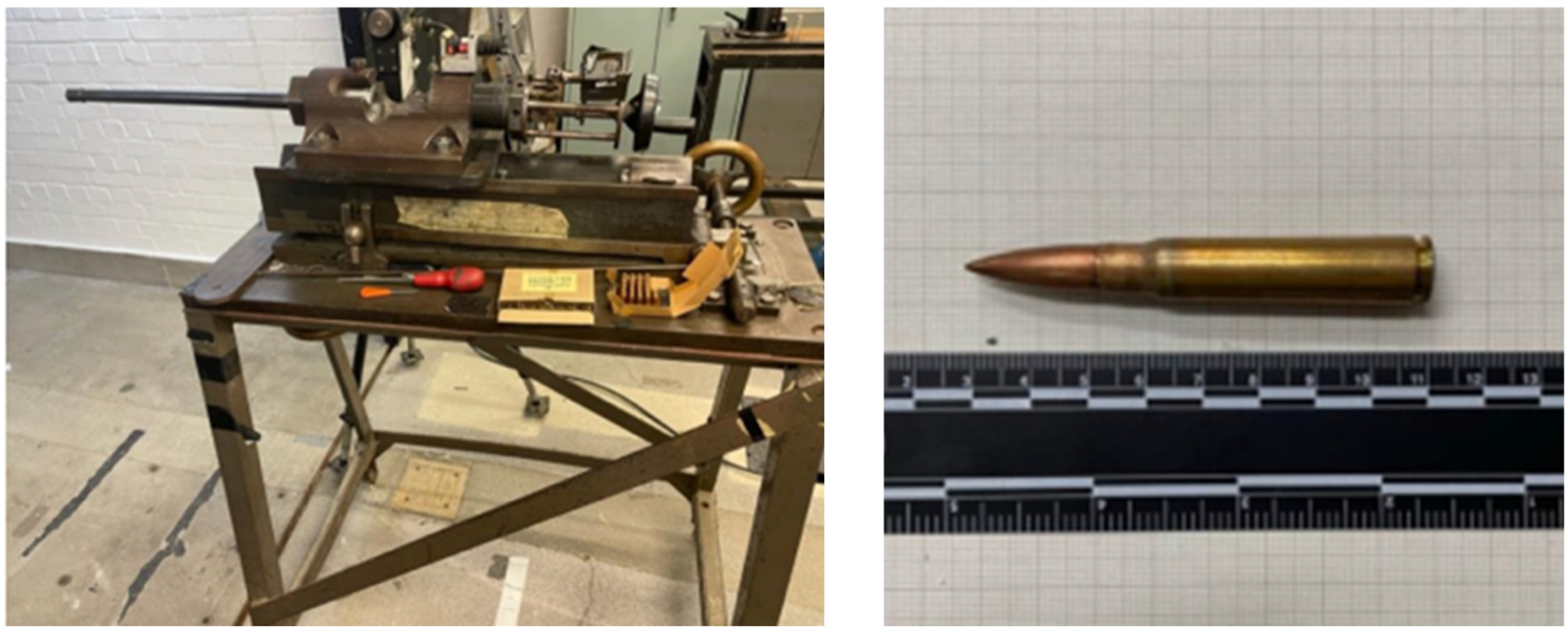
A number 3 proof mount was set with a standard Mauser barrel rifle, which fired 181 grain, full metal jacket, 7.92 × 57 mm Mauser ammunition using an electronic solenoid remote trigger mechanism and an optical laser aiming device (Figure 1). The gelatine blocks were set at various distances throughout both studies, either 3 m, 10 m or 20 m (see Table A1, Appendix A.1), to reflect shooting distances seen in conflict [26,27]. The impact velocities of the bullets can be seen in Table A1, Appendix A.1. All samples were shot once; the ribs were shot from the external to internal surface, whereas the femora were shot from anterior to posterior (expect Femur 2, which was accidentally shot medial to lateral). Both firing methods simulated a real-life scenario where an individual is shot in either chest or upper leg, while facing the perpetrator. After shooting the bones, the gelatine was removed, and the bones were reconstructed using superglue. The shooting took place at the ballistic range at Cranfield Defence and Security, The Defence Academy of the UK, Shrivenham.

2.3. Thermal Alteration

The thermal alteration component reproduced a closed-compartment fire. A Carbolite CWF 1300 electric furnace at Cranfield Forensic Institute, Shrivenham, UK, was used to burn the remains in a controlled environment. Each burn session followed the same setup, whereby the remains were placed in the centre of a solid fire-proof slab that was placed in the middle of the furnace. The femora were burnt one at a time to ensure that no samples contaminated each other. As the ribs were smaller, two ribs were placed on the slab, ensuring there was a large gap between the two, and were burnt together in one session. The furnace increased at a rate of 15 °C/min to a peak temperature of 850 °C, where it was held for 30 min to achieve complete calcination, similarly to previous research [24,25]. The furnace was allowed to cool overnight to room temperature prior to the samples being removed; this prevented a sudden cooling effect, which could have caused fracture formation.

2.4. Analysis

All ballistic trauma on individual fragments were documented and photographed macroscopically by the first author (LH) before and after burning, specifically focusing on the fracture patterns and ballistic characteristics defined in Table A2 in Appendix A.2, all of which are commonly documented in previous studies [12,16,17,18].
After burning, individual fragments were also documented macroscopically and photographed, specifically assessing the fracture patterns and heat-related characteristics defined in Table A3 in Appendix A.3 [19,28].
Following individual fragment analysis, the samples were reconstructed using Zap-a-gap glue and Zip Kicker accelerant, to allow for a more holistic interpretation of the fracture patterns and to analyse the entry and exit wounds. Length (mm), width (mm) and mass (g) measurements were taken before and after burning, as well as entry wound diameter (mm) and exit wound diameter (mm).
In order to compare differences before and after burning, two-sample t-tests were performed on length (mm), width (mm), mass (g), maximum entry wound size (mm), maximum exit wound size (mm) and fragment number for the femora and ribs.

3. Results

3.1. Ballistic Trauma: Morphology

The reconstructed bones from the two previous studies were initially assessed for ballistic trauma by the first author (LH) and all fractures were categorised into a fracture type. Irrespective of fracture pattern type, all fractures appeared with rough, jagged edges. All fractures appeared to be of similar depths, with the majority penetrating the full thickness of the cortical bone. There were no apparent differences in fracture type, fragmentation or entry and exit wounds when it came to distance of shooting. Table 1 and Table 2 show which fracture types were present or absent on each rib and femur sample, pre- and post-burning.
Each bone displayed similar ballistic trauma characteristics; however, there were differences between the ribs and femora. All samples displayed comminuted and radiating fractures (in the form of longitudinal, transverse and oblique fractures) pre-burn, and these remained identifiable post-burn on all samples. Pre-burn, concentric fractures were seen on 50% of the rib samples and on 75% of the femora samples. These were identifiable post-burn on all samples, except on Rib 3, making concentric fractures the only fracture type to be inconsistently identifiable post-burn. The two concentric fractures on Rib 3 were still present; however, due to warping of the bone, they were no longer identifiable as concentric fractures.
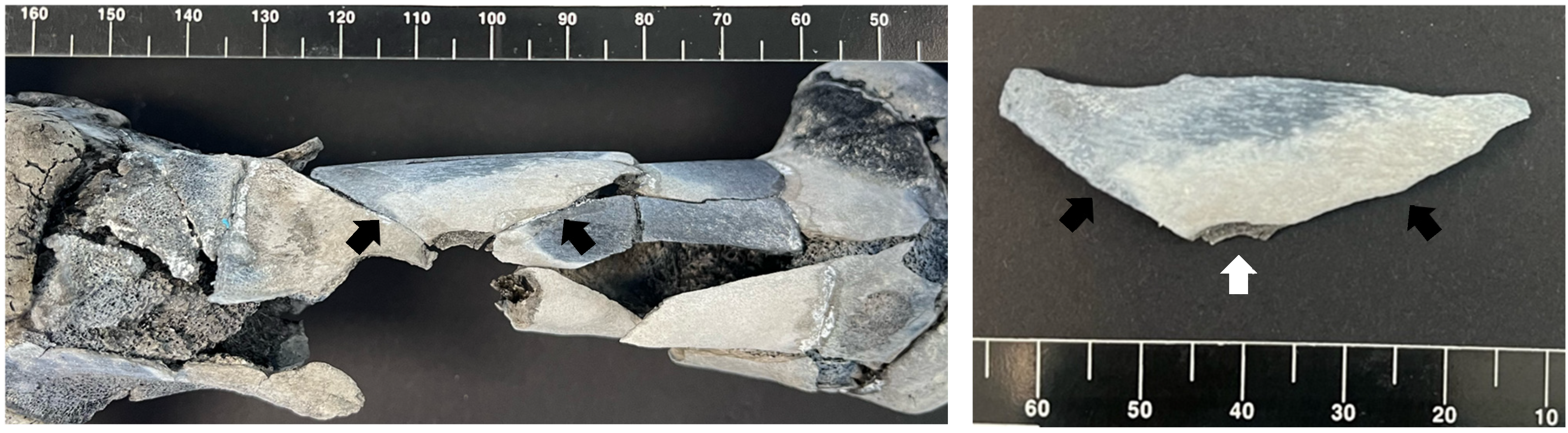
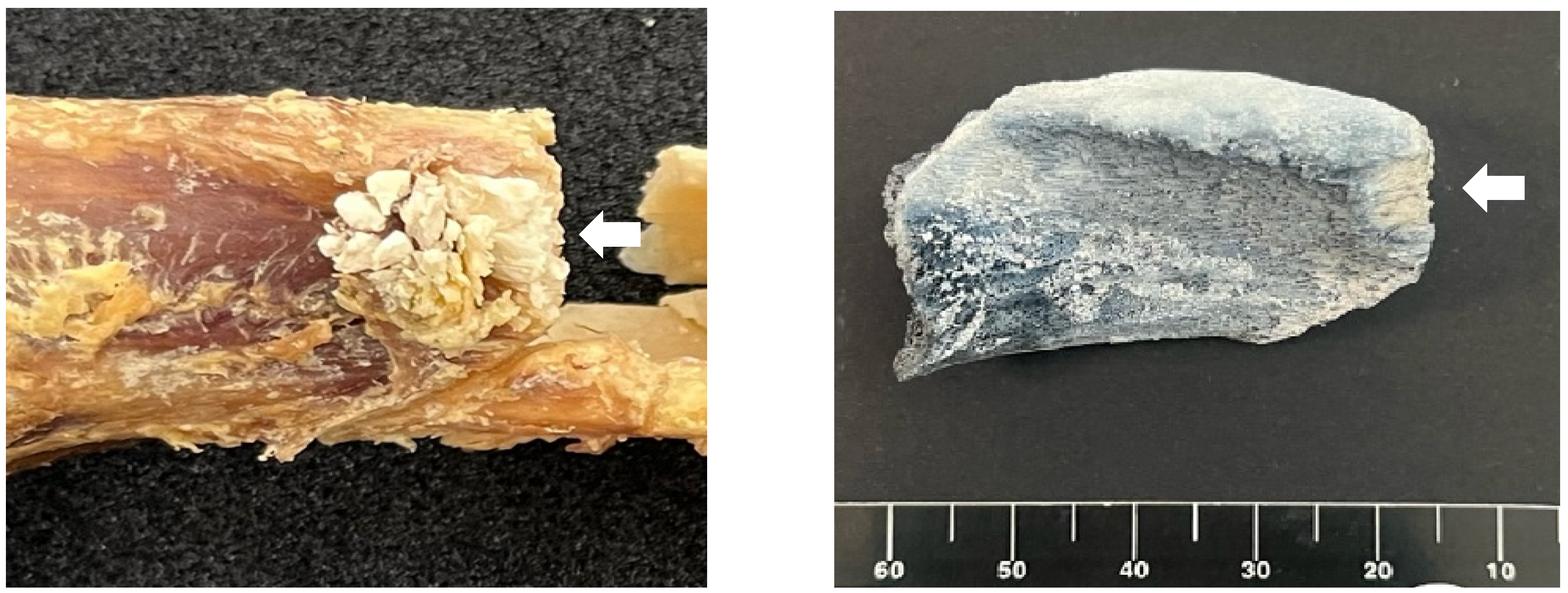
Butterfly and double butterfly fractures are a key feature of ballistic trauma [18]. One rib and three femora (50% of the samples) displayed a butterfly or double butterfly fracture pre-burn. Post-burn, this fracture pattern could not be identified on the individual fragments; however, when the bones were reconstructed, this fracture pattern type was identifiable on all four samples (Figure 2). Bevelling, being another key feature of ballistic trauma, was present on two ribs and one femora (37.5% of the samples) pre-burn. Typically, bevelling is present on the internal table of entry wounds and on the external table of exit wounds [18,29]. Ribs 2 and 4 displayed external bevelling on the exit wounds, whereas Femur 1 displayed external bevelling on the entry wound (Figure 2). Despite this, all bevelling remained identifiable post-burn. Cortical flaking appeared to be specific to the femur and was present on the exit wounds of 75% of the femora samples. Cortical flaking was the only ballistic trauma characteristic that was not obviously identifiable post-burn. Femur 2 displayed cortical flaking pre-burn, and was the only bone to show what could have been the remanence of cortical flaking post-burn, as there was damage in the same area on the lateral side of the cortical bone post-burn (Figure 3).
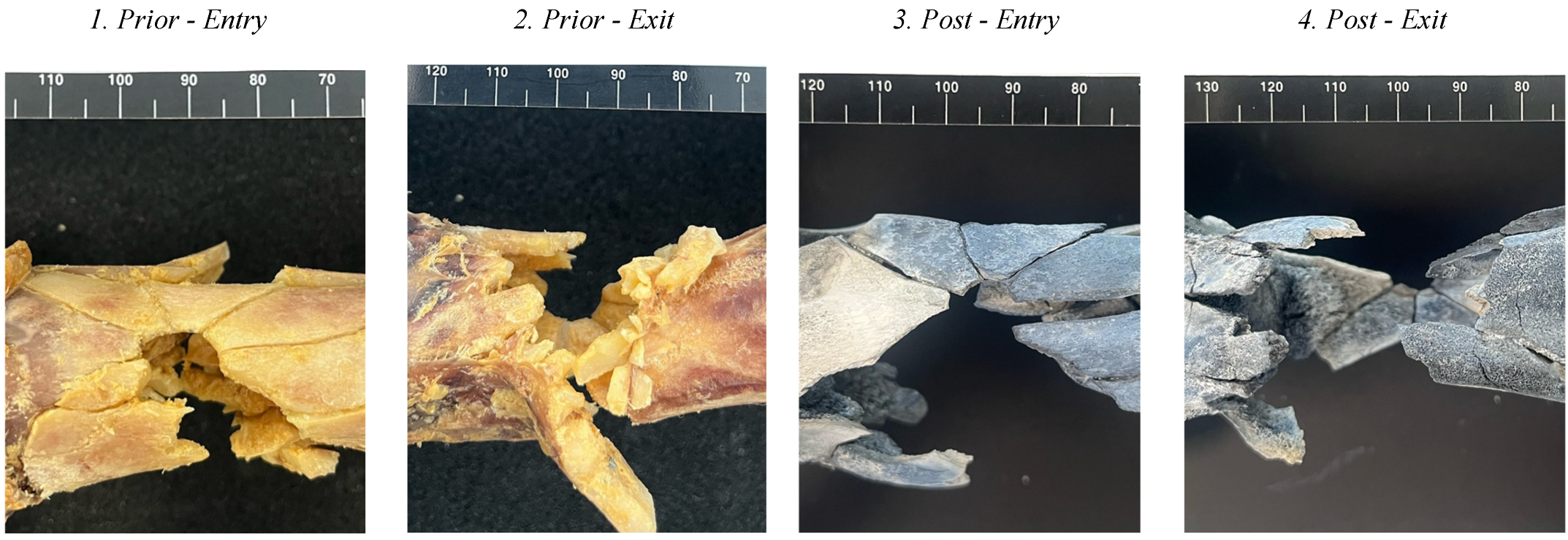
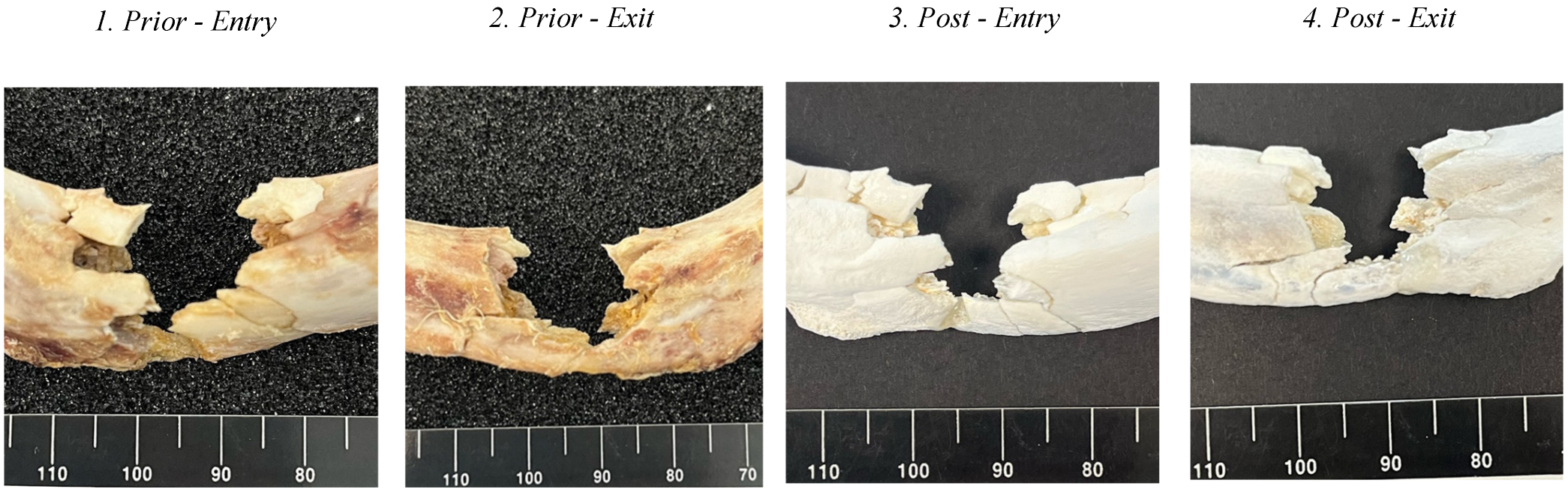
Pre-burn, the majority of fractures could be traced to a common origin, either the entry or exit wound. The entry and exit wound morphology of the ribs appeared relatively semi-circular, with the superior edge fragmented, leaving the vertebral and sternal ends separated. Fracturing on the inferior edge meant that the vertebral and sternal ends could be mechanically fitted through reconstruction. Post-burn and post-reconstruction, the entry and exit wound morphology on the ribs remained relatively intact. The semi-circular entry wound was visible on all four ribs post-burn. Warping caused the shape to change slightly; however, they were still recognisable as semi-circular entry wounds. Figure 4 shows the semi-circular entry and exit wound shapes of Rib 1, before and after burning.
The femora appeared to have clear entry wound morphology (semi-circular or keyhole) but jagged exit wound shapes, with the exception of Femur 2, which was shot in the medial to lateral position and exhibited differently (sub-rectangular) shaped entry and exit wounds. Similarly to the ribs, warping caused the morphology of the entry and exit wounds to change slightly; however, all entry and exit wound characteristics were still identifiable post-burn. Figure 5 shows the keyhole entry wound and jagged exit wound on Femur 3, before and after burning.

3.2. Thermal Trauma: Morphology

After the burning process, all samples were calcined. The ribs were uniformly burned and appeared white and chalky, whereas the femora were less uniform, with an overall grey-blue colour that varied across the surface of the bones. Visual observations of the samples revealed that there were heat-induced fractures on all samples. Table 3 shows the presence or absence of the type of heat-induced fracture characteristic observed on each bone.
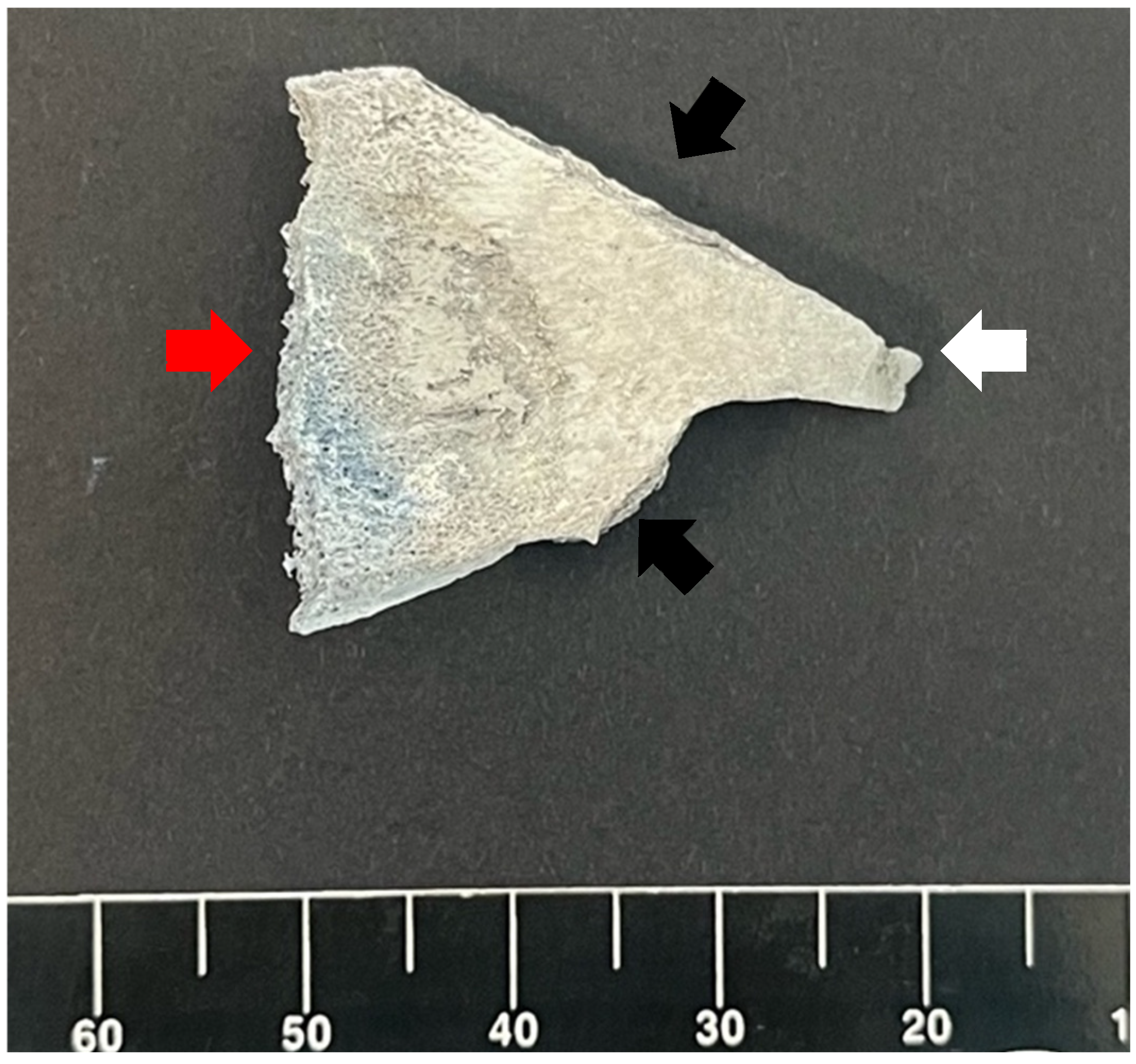
Longitudinal and transverse fractures were the most common heat-induced fracture identified, with all samples showing multiple fractures of this kind. Step fractures are a specific fracture type seen through thermal alteration [20]. Two ribs and two femora (50% of the samples) displayed a step fracture. The majority of step fractures observed in this study were along (longitudinal) the shaft of the bones; however, a step fracture was observed running along the external table of a pre-existing radiating ballistic fracture on a fragment from Femur 3 (Figure 6). Patina fracturing was present only on the femoral epiphyseal regions and did not interfere with the ballistic trauma. Delamination was specific to the femora and only presented on the distal ends, with the cortical bone on the anterior surface coming away from the trabecular bone. This did not appear to interact with the ballistic trauma.
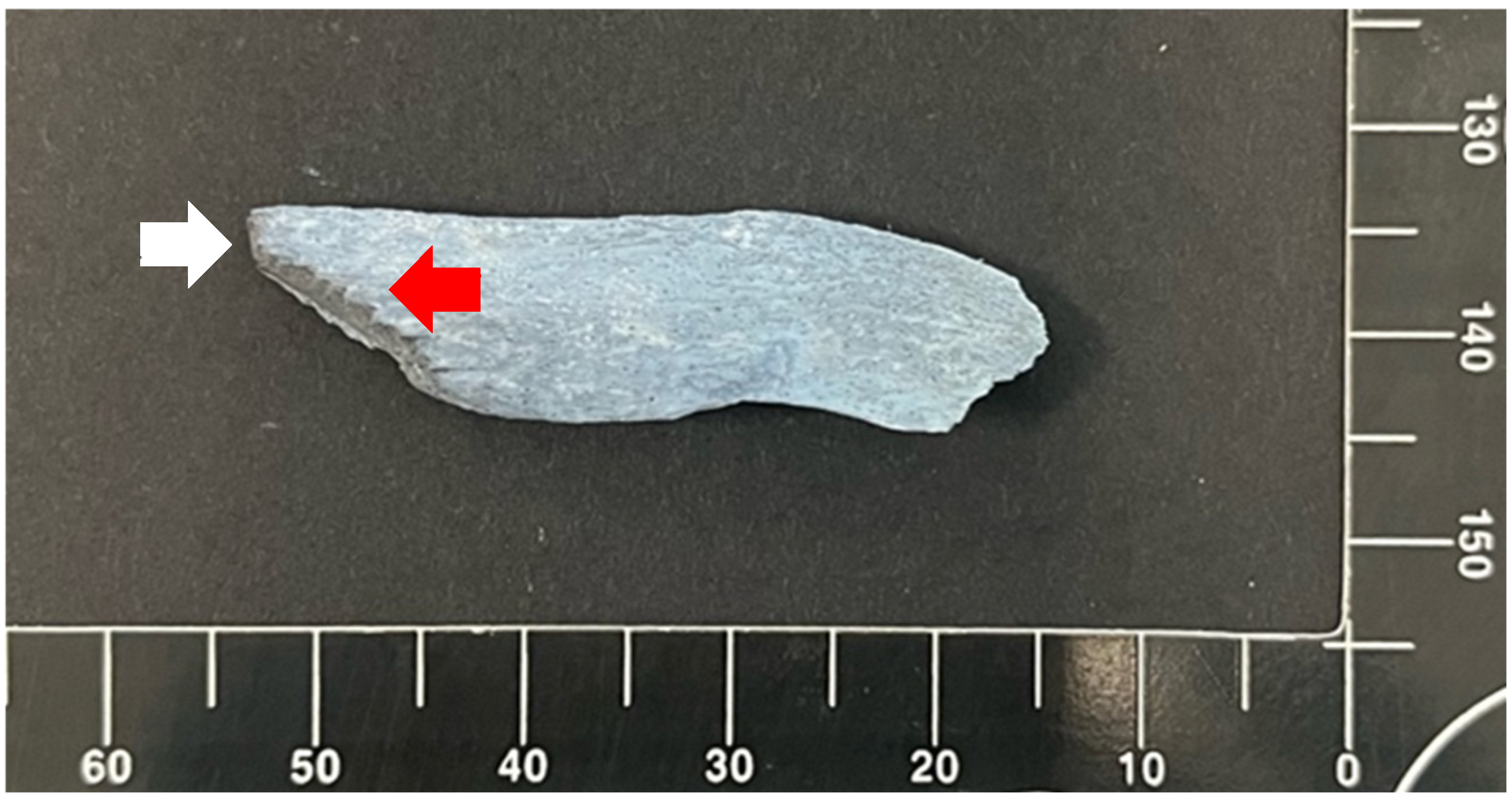
Heat damage resulted in additional fragmentation of the bones. The edges of each fragment were identified as either ballistic trauma or thermal trauma. Some of these individual fragments displayed both ballistic trauma and thermal trauma edges, which could be differentiated from one another. The pre-existing ballistic fractures tended to have more defined, sharper edges on both the external and internal surfaces, whereas the heat-induced fractures tended to be more jagged. Figure 7 shows a fragment from Femur 1 that was a result of both ballistic and thermal trauma. Pre-burn, this fragment was attached to the bone but displayed two radiating ballistic fractures from the entry wound. Post-burn, the heat-induced transverse fracture on the left (red arrow) caused the fragment to break away from the bone, and therefore causing the fragment to display both ballistic edges (radiating fractures) and a heat-induced edge (transverse fracture).
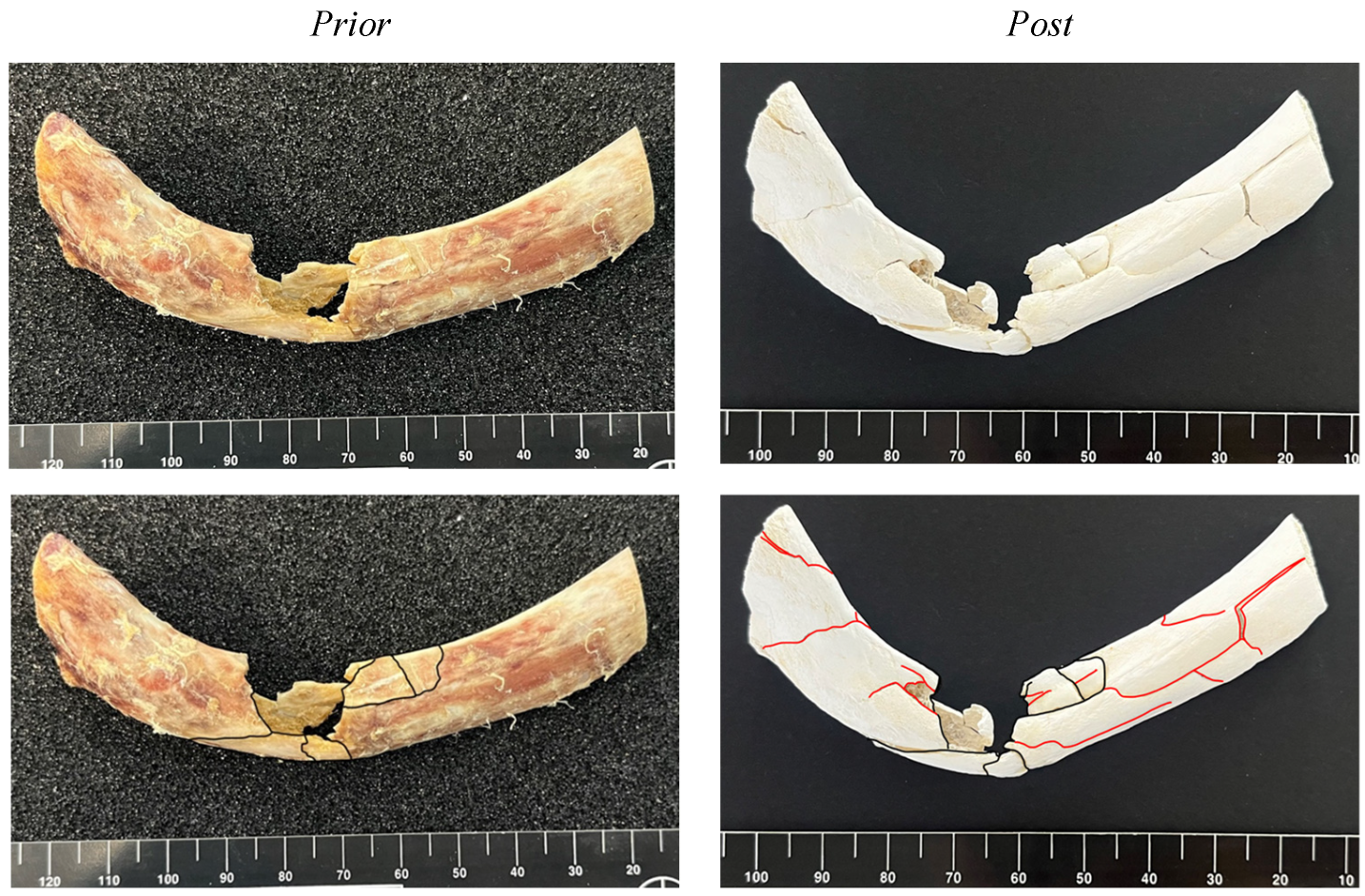
The heat-induced fracture patterns observed on the samples interacted with the ballistic fracture patterns differently on the ribs and on the femora. On the ribs, the heat-induced fractures tended to originate along the entire shaft, as well as intersect the pre-existing ballistic trauma fractures. Figure 8 shows the ballistic trauma fractures and the heat-induced fractures observed on the anterior surface of Rib 2.
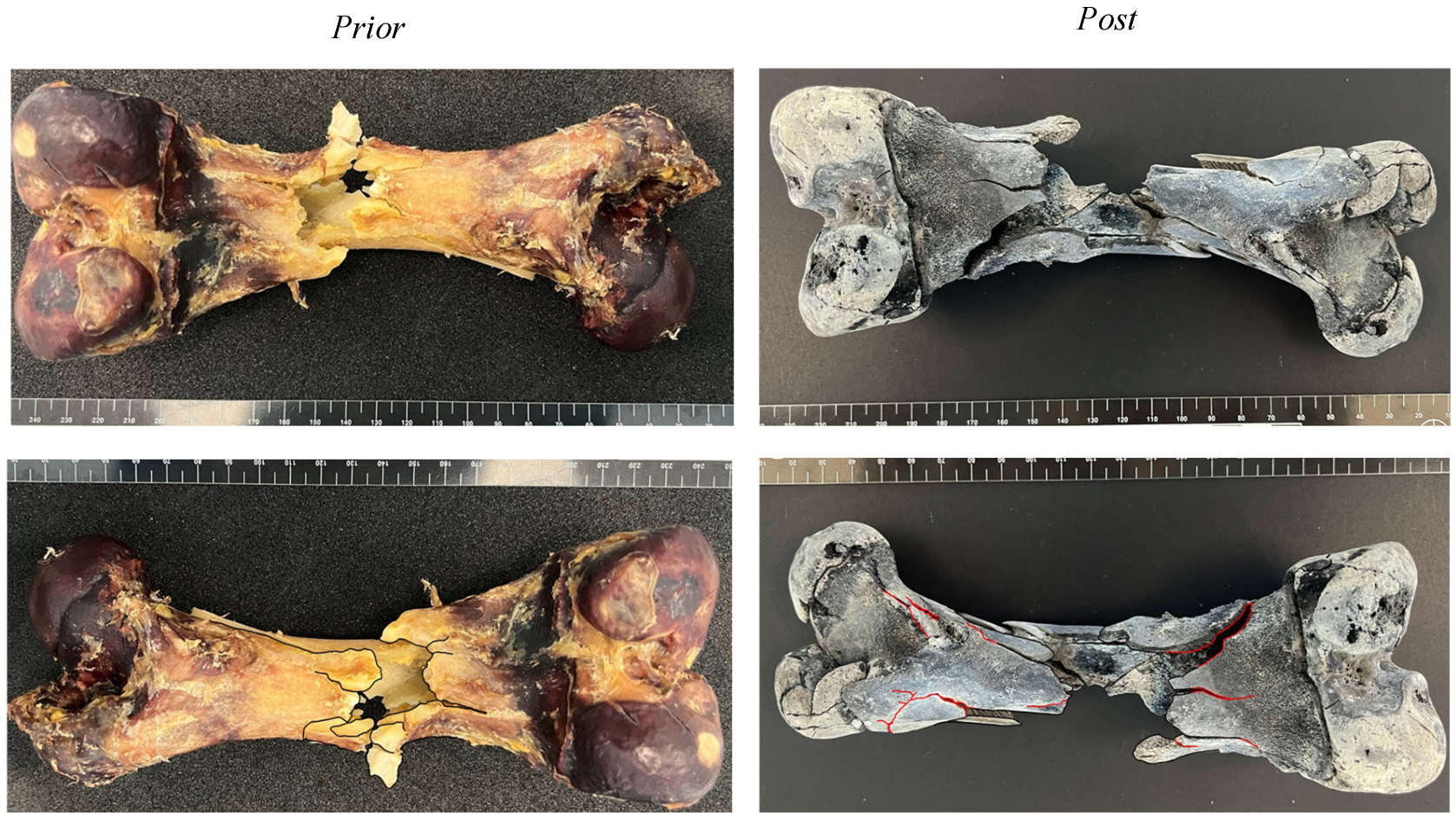
On the femora, the ballistic trauma fractures tended to be exacerbated by heat as the fractures widened and extended further along the shaft of the bones. Figure 9 illustrates the exacerbated ballistic trauma fractures and heat-induced fractures on the posterior surface of Femur 1.

3.3. Dimensions

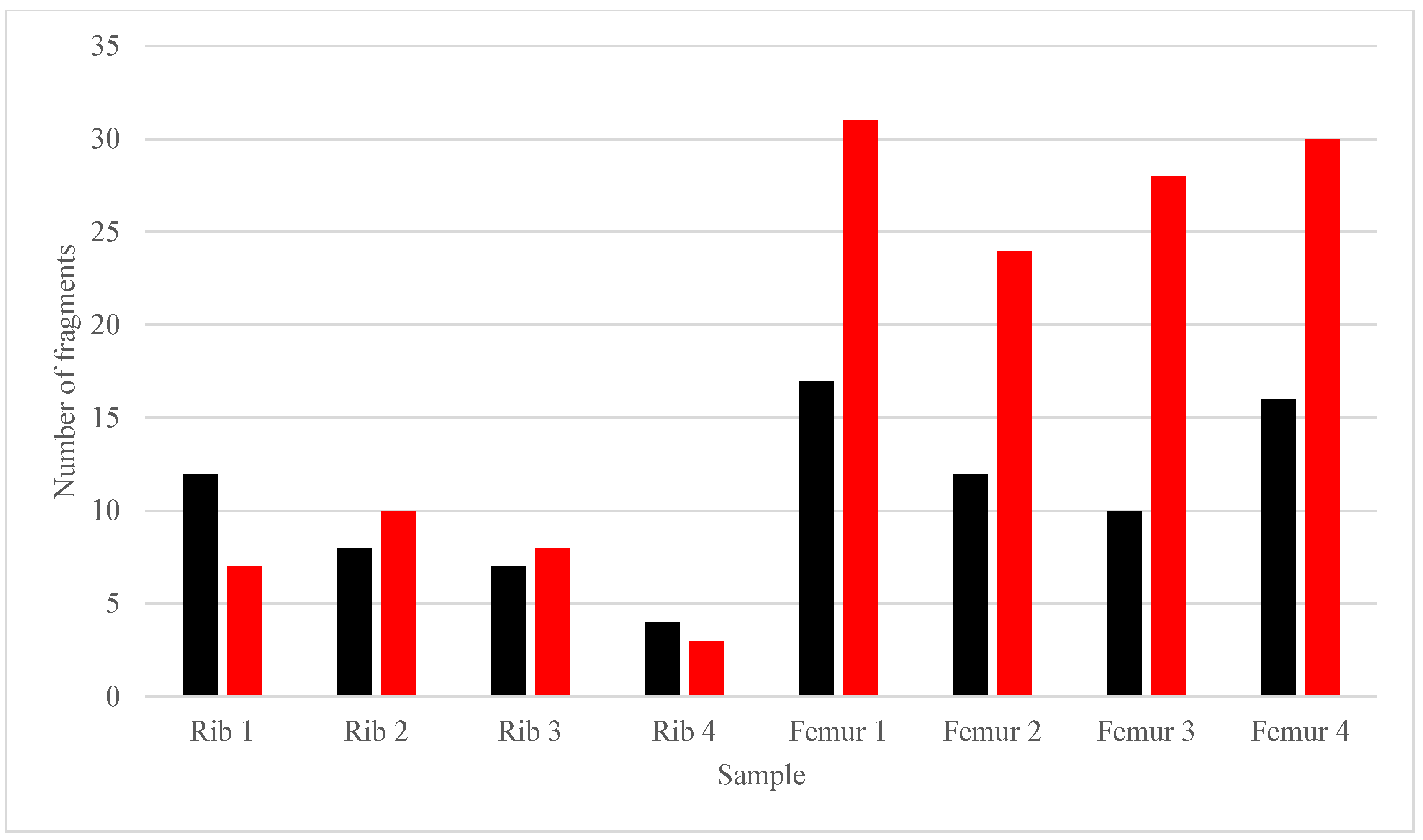
The ballistic trauma resulted in all bones displaying comminuted fractures. The majority of samples fragmented further as a result of thermal damage. The ribs maintained more structural integrity following burning than the femora did. Figure 10 shows the difference in number of fragments produced by ballistic trauma and thermal trauma for each sample. There was a significant difference (t = −11.52, p = 0.005) between fragmentation before and after burning for the femora, whereas there was no significant difference for the ribs. All samples fragmented more as a result of heat than they did as a result of ballistic trauma, except for Ribs 1 and 4, which fragmented more from the ballistic trauma.
Table 4 and Table 5 include the measurements of the ribs and femora, respectively, taken pre- and post-burn. All samples showed a decrease in size (length and width) after burning. There was a significant difference between mass before and after burning for the ribs (t = 5.26, p = 0.025) and for the femora (t = 9.79, p = 0.005). Although it was not a significant difference, entry and exit wound size decreased in the ribs after burning. Entry wound size for the femora decreased post-burn; however, exit wound size tended to increase post-burn, following reconstruction.

4. Discussion

4.1. Pre-Burn

In this study, four pig ribs and four pig femora were shot using a Mauser rifle and 7.92 × 57 mm Mauser ammunition at a distance of either 3 m, 10 m or 20 m.
When a bullet makes contact with a bone, a shockwave is generated and sent along the bone. Studies have shown that when the bullet passes through the bone it generates a lateral pressure, which causes the temporary cavity to expand, subsequently causing the bone to fracture [30,31]. There are various factors that further affect the fracturing of the bone, including both bone and ballistic variations.
Bones are a biological tissue that will inevitably display natural variation between samples. As individual bones were selected from two previous studies, it cannot be certain that the bones came from the same pig. Due to the natural variation displayed in all bones, the ballistic trauma appeared slightly different on each bone. This is consistent with a real-life setting, as there are natural variations between humans, such as height and age, that can result in variations in the bones, ultimately meaning that the ballistic patterns seen will vary slightly from person to person [25,32].
Most studies use pig bone as a substitute for human bone due to their similarities in structure, allowing for a reliable comparison to be made [8,10,11,12,24,25,33,34]. The bones used in 2023 were fresh, representing wet bone, meaning the fracture pattern displayed would be representative of peri-mortem trauma [35]. The absence of soft tissue was accounted for through the presence of gelatine, meaning that the ballistic trauma fracture patterns seen on the bones were realistic in comparison to a real-life scenario where a living individual was shot in the chest or upper leg [36].
Not only are there variations in the bones themselves that can impact the trauma seen to the bone, but variations to the bullets can have an effect too. The apical morphology of the bullet, as well as the bullet structure itself, can have an effect on the bone fracturing. Only one type of bullet was used in this study, so to further the experiment, different bullet types could be used to assess the difference in ballistic trauma. The energy of impact will also vary the type of bone fractures sustained, and this can be affected by both the weight of the bullet and the amount of propellent used in the ammunition, as well as the type of weapon system used (e.g., rifle vs. handgun) [17,18].
To maintain consistency with the ballistic trauma, an electric remote trigger and laser aiming device were used in the previous studies [22,23]. This ensured that the samples were shot in the middle of the shaft and in the same orientation (ribs shot external to internal, femora shot anterior to posterior). This accuracy was maintained throughout the study; however, Femur 2 was accidentally shot medial to lateral. This could potentially explain the different entry and exit wound shapes seen on Femur 2 compared to the other femora. Further research could explore the effect of the impact site location on the bone and the subsequent fracturing patterns and entry and exit wound shapes. In addition to this, further analysis could have been conducted on the bullets themselves. Analysis of the impact damage to the recovered bullets could provide further insight into the impact damage of the bones.
The ballistic trauma displayed on the samples shows similar characteristics to other studies [15,18,37]. However, previous work has shown that there tends to be a difference in fracture patterns depending on the distance of shooting [14]. The authors showed that on pig ribs, the presence of more than three fracture lines indicated that the range of shooting was 5 m, whereas less than three fractures were indicative of a range of 20 m. They stated that more fracturing at closer distances was due to more force being applied to the bone, which exceeds the threshold for the bone’s plastic deformation, causing more fracturing. The ribs in this current study reflected the findings here, as there was slightly more fragmenting in the ribs shot at 3 m (Rib 1 and 2) compared to the ribs shot at 10 m (Rib 3 and 4). Applying this knowledge to the femora in this study, there was no difference in number of fractures or fragments between the femora shot at 10 m and at 20 m.
It is important to mention that ballistic trauma and sharp force trauma can appear similar in their fracture patterns. However, the key difference is that ballistic trauma typically exhibits entry and exit wounds, whereas sharp force trauma does not [38]. To strengthen this study, further bones could have been inflicted with sharp force trauma and compared to those inflicted with ballistic trauma.

4.2. Burning Process

For forensic anthropologists, it is important to be able to detect peri-mortem trauma on burnt bone [20]. The previous literature shows that sharp and blunt force trauma survive on burnt bone [5,6,7,8,9,10,24,25]; however, there is a lack of research into whether ballistic trauma survives [12]. This experiment showed that ballistic trauma is still identifiable on bone that has been burnt at 850 °C in an electric furnace.
An electric furnace was used for this experiment, as the temperature could be controlled and monitored throughout. Electric furnaces are often used to control the temperature [7,9,16,24,25]. Other studies, however, use an actual outdoor fire to simulate a real forensic scenario [5,8,10,12]. Due to the facilities available for this study, it was not appropriate to use an outdoor fire, meaning that an electric furnace was the most suitable method of heat-induced damage.
All samples were burnt at the same temperature and for the same duration, with the intention of all samples being fully calcified. Full calcification was reached for the ribs; however, the same level of burning was not reached for the femora. This is apparent in the difference in colour. Flat bones are smaller and thinner than long bones, meaning that they will dehydrate and burn quicker [38]. Compared to the previous literature involving sharp force trauma, long bones that had been burnt at a lower temperature than in this study produced fully calcined white bones [7,9]. This inconsistency in level of burning indicates that further research is needed; however, the same conclusion can still be drawn that peri-mortem trauma is identifiable post-burn.
The burning aspect of this experiment occurred on bones without soft tissue present that had also been dried for some time. This is not very realistic, as fire is often used to destroy a body that has soft tissue [20]. Soft tissue has been shown to have an effect on various aspects of the burning process, including discolouration [39]. Certain heat-induced fractures, such as curved transverse fractures, are created through the presence of soft tissue reacting with the fire and pulling on the bone [20]. As no soft tissue was present in this study, these fractures were not observed. However, in a real-life scenario, these fractures could be present and could have interacted with the ballistic trauma. More research could be undertaken on bones with soft tissue present to determine its effects on the survival of ballistic trauma.

4.3. Post-Burn: Morphology

Heat had different effects on the ribs and femora. The heat-induced fractures seen on the ribs tended to be new fractures on the vertebral and sternal ends, as well as fractures which occasionally intersected pre-existing ballistic fractures. This can be compared to the femora, which had heat-induced fractures that exacerbated the pre-existing ballistic fractures. This result has been found in the previous literature, showing the magnification of peri-mortem sharp force trauma on femora through thermal action [9]. In addition, there was a difference in the appearance of the ballistic fractures and the heat-induced fractures. The ballistic fractures appeared sharp and defined, whereas the heat-induced fractures appeared more jagged. A similar study involving knife cut marks showed that microscopically, heat-induced fractures generally had smoother surfaces than the cut marks, as well as a random crack path [25]. The observations in this study were only made macroscopically, so further research could be carried out microscopically to distinguish key differences between peri-mortem ballistic fractures and heat-induced fractures. In addition, more detailed inventory of the bones (to include completeness of the fractures), as well as up-close photographs of the bones prior to burning, would allow for a more detailed comparison post-burning.
Reconstructing the bones provided a more holistic overview of the morphology of the fracture patterns, allowing for better interpretation [39]. The limited number of fragments produced post-burn on the ribs meant that reconstruction was relatively quick and easy. All fragments for the ribs could be placed and reconstructed back together in their correct positions. However, the femora produced a high degree of fragmentation, making it difficult to reconstruct, leaving multiple fragments for each femur unplaced. Reconstructing the bones allowed for visualisation of the entry and exit wounds. Previous studies have shown that rib entry wounds present with clear punched-out round wounds [40]. All four ribs in this study were consistent with this description. Post-burn, the punched-out circular appearance was still present on all ribs. This is likely due to the low number of fragments created post-burn, as well as the majority of fragments originating from the pre-existing ballistic fractures. The heat-induced fractures seen on the ribs tended to be superficial, thus not penetrating the bone to create a fragment.
All femora samples showed delamination in the same place—anterior surface on the distal end. The radiating fractures originating from the entry wounds extended along the shaft of the femora towards the distal end, where a heat-induced transverse fracture intersected the radiating fractures, causing the cortical bone to flake off and revealing the trabecular bone underneath. Delamination occurs due to the dehydration of the bone during burning, separating the cortical bone from the trabecular bone [20]. No rib samples displayed delamination in this study. Rib 2 (Figure 8) had a post-mortem break when handling, which caused a small fragment to flake off, appearing like delamination. Previous burnt bone studies have encountered delamination on various bones including ribs [25], cranial bones [12] and radii [7]. The specific location of the delamination seen on the femora in this study could be due to the ballistic trauma and radiating fractures; thus, further research could be conducted to investigate this.

4.4. Post-Burn: Dimensions

When a bone undergoes burning, the organic components within the bone are destroyed, thus resulting in shrinkage and warping [13]. All samples shrunk in length, post-burn, with the majority of the samples shrinking in width, post-burn. The width in Femur 2 increased post-burn, potentially due to the warping and repositioning of fragments after reconstruction. The overall mass of each sample significantly decreased post-burn. Measurements of the entry and exit wounds can be used to determine the type of ammunition used in a shooting [41]. In this current study, determining the type of firearm/ammunition could be difficult, as the entry and exit wound measurements changed drastically post-burn, most likely due to the warping and realignment of the fragments during reconstruction. This was specifically seen in the exit wounds of the femora, which increased in size post-burn.
Previous studies have shown that burning bone results in a high degree of fragmentation [10,12,13,25,42]. The results of the femora in this study were consistent with previous work and showed a significant statistical increase (p < 0.005) in the number of fragments produced post-burn compared to before burning. However, the ribs contradicted the previous literature, as two out of the four rib samples (Rib 1 and 4) fragmented more from the ballistic trauma than from thermal trauma. Previous studies have stated that the thin cortical bone of ribs makes them more susceptible to heat-related breakage compared to long bones, which have thicker cortical bone [38]. For all samples, most fragments were created from the pre-existing ballistic fractures, with some fragments having predominately ballistic fracture edges and one or two heat-induced fracture edges, which caused the fragment to break off. Due to the difference in structure between ribs and femora, there were more initial ballistic fractures on the femora than on the ribs, which would explain why the femora fragmented more.
This study further stresses the need for careful handling of thermally altered skeletal remains, as a few samples had loose fragments or fractures that had not fully dissected the bone; but upon handling of the samples, these fractures deepened, causing extra fragments to break off [13,25].

5. Conclusions

This study has investigated the effect thermal trauma has on peri-mortem ballistic trauma on Sus domesticus ribs and femora. The shaft of each bone was shot with one round of Mauser 7.92 × 57 mm ammunition at a distance of either 3 m, 10 m or 20 m. The ballistic trauma was macroscopically analysed before each bone was burnt in a furnace at 850 °C for 30 min. The samples were removed from the furnace, and each fragment was analysed for ballistic trauma and heat-induced trauma before being reconstructed. The key finding of this study is that ballistic trauma remained identifiable on all samples after burning. It should be noted that fractures were slightly less obvious on the burnt bone compared to unburnt bone. Cortical flaking was the only ballistic trauma characteristic that was not identified post-burn; all other ballistic trauma characteristics observed in this study were identified. Heat-induced fractures tended to intersect the ballistic fractures on the rib samples but tended to exacerbate the ballistic fractures on the femora samples. Entry and exit wound shapes remained relatively intact after the bones were reconstructed; however, the exit wound shape did tend to increase in size for the femora. There was a significant increase in number of fragments created post-burn, with the femora fragmenting more than the ribs. The main aim of this study was to assess how identifiable ballistic trauma is after burning, so only macroscopic analysis was performed. Further work would necessitate the use of microscopic analysis to further interpret the effect thermal trauma has on ballistic trauma, as well as using a real outdoor fire to simulate a forensic scenario.

Author Contributions

Conceptualization, L.H. and N.M.-G.; methodology, L.H., N.M.-G., K.H., R.C., I.E. and K.E.; software, L.H.; validation, L.H.; formal analysis, L.H. and N.M.-G.; investigation, L.H.; resources, L.H., N.M.-G., I.E., K.E., K.H. and R.C.; data curation, L.H.; writing—original draft preparation, L.H.; writing—review and editing, N.M.-G. and K.H.; visualisation, L.H.; supervision, N.M.-G. and K.H.; project administration, L.H.; funding acquisition, N.M.-G. All authors have read and agreed to the published version of the manuscript.

Funding

This research received no external funding.

Data Availability Statement

The original contributions presented in this study are included in the article. Further inquiries can be directed to the corresponding author.

Acknowledgments

The authors thank the experts at Cranfield University for the knowledge, equipment and support needed to carry out this research project. Their thanks are also extended to Heritage journal for the opportunity to publish this research.

Conflicts of Interest

The authors declare no conflicts of interest.

Appendix A

Appendix A.1

Table A1. Conversion of sample names from the previous studies, the distance (m) each sample was shot at (measured from the barrel to the front face of the gelatine block) and the impact velocity (m/s) of the bullet.
Previous Sample NameNew Sample NameDistance of Shot (m)Impact Velocity (m/s)
Rib 1.5Rib 1 3815.8
Rib 1.6Rib 23820.4
Rib 2.2Rib 310822.7
Rib 2.3Rib 410825.1
Femur 2/1Femur 110816.9
Femur 2/3Femur 210805.3
Femur 1/3Femur 320818
Femur 1/1Femur 4 20820.4

Appendix A.2

Table A2. Definitions of ballistic trauma fractures and characteristics documented in this study.
TermDefinition Used for Identification
Comminuted The bone fractures and breaks into more than two pieces [15].
RadiatingFractures originating from the entry or exit wound that radiate away from the wound defect. These fractures are in the form of longitudinal, transverse or oblique fractures [15].
ConcentricFractures which curve around the entry or exit wound [17].
ButterflyTwo oblique radial fracture lines dispersing away from the impact site, meeting to create a large triangular or wedge-shaped fragment [43].
Double butterflyFour oblique radial fracture lines dispersing away from the impact site, in the form of an X shape, forming two wedge-shaped fragments [43].
BevellingCone-shaped fracture on the edge of an entry/exit wound [15].
Cortical flakingFlaking of the outer layer of cortical bone away from the trabecular bone underneath [15].
Keyhole pattern The edge of the circular entry or exit wound extends into a triangular shape, appearing like a keyhole [44].

Appendix A.3

Table A3. Definitions of heat-induced fractures and characteristics documented in this study.
TermDefinition Used for Identification
Longitudinal Fractures extending along the shaft of the bone [20].
TransverseStraight fractures running perpendicular to the shaft of the bone [20].
StepA transverse fracture extending from the margin of a longitudinal fracture [20].
Curved transverseCurved/semi-circle fractures (also known as thumbnail fractures) extending in a stacked arch formation [20].
PatinaA fine mesh of uniformly patterned cracks on the surface of cortical bone, can appear as a mosaic-like pattern [20].
DelaminationThe flaking away of cortical bone, revealing the trabecular bone underneath [20].
DiscolourationDegree of colour change, on scale of white, blueish-white, grey, brown and black [45].
Shrinkage The decrease in size and loss of volume of a bone [28].
WarpingUnusual bone alignment or deformity [28].

References

  1. Cattaneo, C. Forensic Anthropology: An introduction. In Encyclopedia of Forensic Sciences, 2nd ed.; Siegel, J.A., Saukko, P.J., Houckn, M.M., Eds.; Elsevier: London, UK, 2013; pp. 9–11. [Google Scholar]
  2. Florquin, N. Gun violence: Insights from international research. Glob. Crime 2021, 22, 288–311. [Google Scholar] [CrossRef]
  3. Homicide in England and Wales: Year Ending March 2023. Available online: https://www.ons.gov.uk/peoplepopulationandcommunity/crimeandjustice/articles/homicideinenglandandwales/yearendingmarch2023#cite-this-article (accessed on 24 November 2025).
  4. Homicide in England and Wales: Year Ending March 2024. Available online: https://www.ons.gov.uk/peoplepopulationandcommunity/crimeandjustice/articles/homicideinenglandandwales/yearendingmarch2024#the-most-common-methods-of-killing (accessed on 24 November 2025).
  5. Marciniak, S.M. A preliminary assessment of the identification of saw marks on burned bone. J. Forensic Sci. 2009, 54, 779–785. [Google Scholar] [CrossRef]
  6. Dirkmaat, D.C.; Olson, G.O.; Klales, A.R.; Getz, S. The role of forensic anthropology in the recovery and interpretation of the fatal-fire victim. In A Companion to Forensic Anthropology, 1st ed.; Dirkmaat, D.C., Ed.; Blackwell Publishing Ltd.: West Sussex, UK, 2012; pp. 113–135. [Google Scholar] [CrossRef]
  7. Macoveciuc, I.; Márquez-Grant, N.; Horsfall, I.; Zioupos, P. Sharp and blunt force trauma concealment by thermal alteration in homicides: An in-vitro experiment for methodology and protocol development in forensic anthropological analysis of burnt bones. Forensic Sci. Int. 2017, 275, 260–271. [Google Scholar] [CrossRef]
  8. Alunni, V.; Nogueira, L.; Quatrehomme, G. Macroscopic and stereomicroscopic comparison of hacking trauma of bones before and after carbonization. Int. J. Leg. Med. 2018, 132, 643–648. [Google Scholar] [CrossRef]
  9. Tutor, P.M.; Márquez-Grant, N.; Rojas, C.V.; García, A.M.; Guzmán, I.P.; Sánchez, M.B. Through fire and flames: Post-burning survival and detection of dismemberment-related toolmarks in cremated cadavers. Int. J. Leg. Med. 2021, 135, 801–815. [Google Scholar] [CrossRef]
  10. Keys, K.; Ross, A.H. Identifying blunt force traumatic injury on thermally altered remains: A pilot study using Sus scrofa. Biology 2022, 11, 87. [Google Scholar] [CrossRef]
  11. Herrmann, N.P.; Bennett, J.L. The differentiation of traumatic and heat-related fractures in burned bone. J. Forensic Sci. 1999, 44, 461–469. [Google Scholar] [CrossRef]
  12. Pope, E.J.; Smith, O.C. Identification of traumatic injury in burned cranial bone: An experimental approach. J. Forensic Sci. 2004, 49, 431–440. [Google Scholar] [CrossRef]
  13. Symes, S.A.; L’Abbé, E.N.; Chapman, E.N.; Wolff, I.; Dirkmaat, D.C. Interpreting traumatic injury to bone in medicolegal investigations. In A Companion to Forensic Anthropology, 1st ed.; Dirkmaat, D.C., Ed.; Blackwell Publishing Ltd.: West Sussex, UK, 2012; pp. 340–389. [Google Scholar] [CrossRef]
  14. Fragkouli, K.; Hakeem, E.A.; Bulut, O.; Simmons, T. The effect of range and ammunition type on fracture patterns in porcine postcranial flat bones. J. Forensic Leg. Med. 2018, 53, 1–12. [Google Scholar] [CrossRef]
  15. Watson, K.; Henwood, B.J.; Hewins, K.; Roberts, A.; Hazael, R. Ballistic impact of hollow-point ammunition on porcine bone. J. Forensic Sci. 2023, 68, 1121–1132. [Google Scholar] [CrossRef]
  16. Collini, F.; Amadasi, A.; Mazzucchi, A.; Porta, D.; Regazzola, V.L.; Garofalo, P.; Blasio, A.; Cattaneo, C. The erratic behaviour of lesions in burnt bone. J. Forensic Sci. 2015, 60, 1290–1294. [Google Scholar] [CrossRef]
  17. Martrille, L.; Symes, S.A. Interpretation of long bones ballistic trauma. Forensic Sci. Int. 2019, 302, 109890. [Google Scholar] [CrossRef]
  18. Schwab, N.; Jordana, X.; Monreal, J.; Garrido, X.; Soler, J.; Vega, M.; Brillas, P.; Galtés, I. Ballistic long bone fracture pattern: An experimental study. Int. J. Leg. Med. 2024, 138, 1685–1700. [Google Scholar] [CrossRef]
  19. DeHaan, J.D. Fire and bodies. In The Analysis of Burned Human Remains, 2nd ed.; Schmidt, C.W., Symes, S.A., Eds.; Elsevier Science & Technology: London, UK, 2015; pp. 1–15. [Google Scholar]
  20. Symes, S.A.; Rainwater, C.W.; Chapman, E.N.; Gipson, D.R.; Piper, A.L. Patterned thermal destruction in a forensic setting. In The Analysis of Burned Human Remains, 2nd ed.; Schmidt, C.W., Symes, S.A., Eds.; Elsevier Science & Technology: London, UK, 2015; pp. 17–60. [Google Scholar]
  21. Keough, N.; L’Abbé, E.N.; Steyn, M.; Pretorius, S. Assessment of skeletal changes after post-mortem exposure to fire as an indicator of decomposition stage. Forensic Sci. Int. 2015, 246, 17–24. [Google Scholar] [CrossRef]
  22. Essam, K. Comparison of Direct and Indirect Ballistic Trauma to Porcine Femora: A Contribution to the Interpretation of Patterns of Skeletal Trauma in Conflict Casualties. Master’s thesis, Cranfield University, Bedford, UK, 2023. Available online: https://dspace.lib.cranfield.ac.uk/handle/1826/24686 (accessed on 24 November 2025).
  23. Ellenberg, I. Analysis of Ballistic Trauma to Ribs in Connection to Firearms Used by the German Military During World War II. Master’s thesis, Cranfield University, Bedford, UK, 2023. Available online: https://dspace.lib.cranfield.ac.uk/handle/1826/24685 (accessed on 24 November 2025).
  24. Vachirawongsakorn, V.; Márquez-Grant, N.; Painter, J. Survival of sharp force trauma in burnt bone: Effects of environmental factors. Int. J. Leg. Med. 2022, 137, 809–823. [Google Scholar] [CrossRef]
  25. Vachirawongsakorn, V.; Painted, J.; Márquez-Grant, N. Knife cut marks inflicted by different blade types and the changes induced by heat: A dimensional and morphological study. Int. J. Leg. Med. 2022, 136, 329–342. [Google Scholar] [CrossRef]
  26. Ríos, L.; García-Rubio, A.; Martínez, B.; Herrasti, L.; Etxeberria, F. Patterns of peri-mortem trauma in skeletons recovered from mass graves from the Spanish civil war (1936–9). In The Routledge Handbook of the Bioarchaeology of Human Conflict, 1st ed.; Knüsel, C., Smith, M.J., Eds.; Routledge: London, UK, 2013; pp. 621–640. [Google Scholar]
  27. Owen, L.S. Timoteo Mendieta Alcalá and the pact of forgetting: Trauma analysis of execution victims from a Spanish Civil War mass burial site at Guadalajara, Castilla la Mancha. Forensic Sci. Int. Synerg. 2021, 3, 100156. [Google Scholar] [CrossRef]
  28. Adserias-Garriga, J. Skeletal alteration of burnt remains through fire exposure. In Burnt Human Remains, 1st ed.; Ellingham, S., Adserias-Garriga, J., Zapico, S.C., Ubelaker, D.H., Eds.; John Wiley & Sons Ltd.: Hoboken, NJ, USA, 2023; pp. 113–132. [Google Scholar] [CrossRef]
  29. DiMaio, V.J.M. Gunshot Wounds: Practical Aspects of Firearms, Ballistics and Forensic Techniques, 3rd ed.; CRC Press: Boca Raton, FL, USA, 2016. [Google Scholar]
  30. Breeze, J.; Sedman, A.J.; James, G.; Newbery, T.W. Determining the wound effects of ballistic projectiles to inform future injury models: A systematic review. J. R. Army Med. Corps 2013, 160, 273–278. [Google Scholar] [CrossRef]
  31. Kieser, D.C.; Carr, D.J.; Leclair, S.C.J.; Horsfall, I.; Theis, J.C.; Swain, M.V.; Kieser, J.A. Gunshot induced indirect femoral fracture: Mechanism of injury and fracture morphology. BMJ Mil. Health 2013, 159, 294–299. [Google Scholar] [CrossRef]
  32. Bellemare, F.; Fuamba, T.; Bourgeault, A. Sexual dimorphism of human ribs. Respir. Physiol. Neurobiol. 2006, 150, 233–239. [Google Scholar] [CrossRef]
  33. Bonney, H.; Goodman, A. Validity of the use of porcine bone in forensic cut mark studies. J. Forensic Sci. 2020, 66, 278–284. [Google Scholar] [CrossRef]
  34. Bradley, A.L.; Swain, M.A.; Waddell, J.N.; Das, R.; Athen, J.; Kieser, J.A. A comparison between rib fracture patterns in peri- and post-mortem compressive injury in a piglet model. J. Mech. Behav. Biomed. Mater. 2014, 33, 65–75. [Google Scholar] [CrossRef]
  35. Wescott, D.J. Postmortem change in bone biomechanical properties: Loss of plasticity. Forensic Sci. Int. 2019, 300, 164–169. [Google Scholar] [CrossRef]
  36. Dąbrowska, A.K.; Rotaru, G.M.; Derler, S.; Spano, F.; Camenzind, M.; Annaheim, S.; Stämpfli, R.; Schmid, M.; Rossi, R.M. Materials used to simulate physical properties of human skin. Ski. Res. Technol. 2015, 22, 3–14. [Google Scholar] [CrossRef]
  37. Langley, N.R. An anthropological analysis of gunshot wounds to the chest. J. Forensic Sci. 2007, 52, 532–537. [Google Scholar] [CrossRef]
  38. Friedlander, H.; Moore, M.; Mayne Correia, P. Techniques for the differentiation of blunt force, sharp force, and gunshot traumas from heat fractures in burnt remains. In Burnt Human Remains: Recovery, Analysis, and Interpretation, 1st ed.; Ellingham, S., Adserias-Garriga, J., Zapico, S.C., Ubelaker, D.H., Eds.; John Wiley & Sons Ltd.: Hoboken, NJ, USA, 2023; pp. 167–189. [Google Scholar]
  39. Ubelaker, D.H. The forensic evaluation of burned skeletal remains: A synthesis. Forensic Sci. Int. 2009, 183, 1–5. [Google Scholar] [CrossRef]
  40. Kieser, J.A.; Tahere, J.; Agnew, C.; Kieser, D.C.; Duncan, W.; Swain, M.V.; Reeves, M.T. Morphoscopic analysis of experimentally produced bony wounds from low-velocity ballistic impact. Forensic Sci. Med. Pathol. 2011, 7, 322–332. [Google Scholar] [CrossRef]
  41. Berryman, H.E.; Lanfear, A.K.; Shirely, N.R. The biomechanics of gunshot trauma research considerations within the judicial climate. In A Companion to Forensic Anthropology, 1st ed.; Dirkmaat, D.C., Ed.; Blackwell Publishing Ltd.: West Sussex, UK, 2012; pp. 390–399. [Google Scholar] [CrossRef]
  42. Galtés, I.; Scheirs, S. Differentiation between peri-mortem trauma and heat-induced damage: The use of peri-mortem traits on burnt long bones. Forensic Sci. Med. Pathol. 2019, 15, 453–457. [Google Scholar] [CrossRef]
  43. Cohen, H.; Kugel, C.; May, H.; Medlej, B.; Stein, D.; Slon, V.; Hershkovitz, I.; Brosh, T. The impact velocity and bone fracture pattern: Forensic perspective. Forensic Sci. Int. 2016, 266, 54–62. [Google Scholar] [CrossRef]
  44. Kneubuehl, B.P.; Coupland, R.M.; Rothsschild, M.A.; Thali, M.J. Wound Ballistics: Basics and Applications, 3rd ed.; Springer: Berlin/Heidelberg, Germany, 2011. [Google Scholar]
  45. Shipman, P.; Foster, G.; Schoeninger, M. Burnt bones and teeth: An experimental study of colour, morphology, crystal structure and shrinkage. J. Archaeol. Sci. 1984, 11, 307–325. [Google Scholar] [CrossRef]
Figure 1. LEFT: Image of No.3 proof mount with Mauser barrel rifle. RIGHT: Image of 7.92 × 57 mm Mauser ammunition [23].
Heritage 08 00527 g001
Figure 2. Images of anterior surface of Femur 1, after burning. LEFT: Reconstructed fragments of Femur 1 showing butterfly fractures radiating from entry wound (black arrows). RIGHT: Fragment from Femur 1 showing external bevelling (white arrow) on the external surface of the entry wound.
Heritage 08 00527 g002
Figure 3. Images of the lateral side of Femur 2. LEFT: Pre-burn image of distal end of exit wound of Femur 2 showing cortical flaking (white arrow). RIGHT: Post-burn fragment of external surface of Femur 2 showing damage to the cortical bone, potentially as a result of cortical flaking (white arrow).
Heritage 08 00527 g003
Figure 4. Images of Rib 1 entry and exit wounds after reconstruction, described left to right (1. Entry wound on external surface of Rib 1, before burning. 2. Exit wound on internal surface of Rib 1, before burning. 3. Entry wound on external surface of Rib 1, after burning. 4. Exit wound on internal surface of Rib 1, after burning).
Heritage 08 00527 g004
Figure 5. Images of Femur 3 entry and exit wounds after reconstruction, described left to right (1. Femur 3 entry wound before burning, 2. Femur 3 exit wound before burning, 3. Femur 3 entry wound after burning, 4. Femur 3 exit wound after burning).
Heritage 08 00527 g005
Figure 6. Fragment from the anterior surface, proximal half of a keyhole entry wound on Femur 3. The white arrow shows the edge of the semi-circular entry wound, and the red arrow shows a step fracture on the external table of the ballistic radiating fracture (edge of keyhole).
Heritage 08 00527 g006
Figure 7. Fragment from the anterior surface, distal end of Femur 1 showing heat-induced transverse fracture (red arrow), radiating fractures from entry wound (black arrows) and external bevelling on the edge of the entry wound (white arrow).
Heritage 08 00527 g007
Figure 8. Anterior surface (entry wound) of Rib 2, pre-burn (left) and post-burn after reconstruction (right). Bottom images with ballistic fractures (drawn in black) and heat-induced fractures (drawn in red) to highlight difference.
Heritage 08 00527 g008
Figure 9. Posterior surface (exit wound) of Femur 1, pre-burn (left) and post-burn after reconstruction (right). Bottom images with ballistic fractures (drawn in black) and heat-induced fractures (drawn in red) to highlight difference.
Heritage 08 00527 g009
Figure 10. Bar chart showing the number of fragments produced by ballistic trauma (pre-burn in black) and by thermal trauma (post-burn in red) for each sample.
Heritage 08 00527 g010
Table 1. Ballistic trauma characteristics (fracture pattern type, entry and exit wound morphology) observed on the ribs taken prior to burning and post-reconstruction (✔ = present, 🗶 = absent).
Ballistic Trauma Characteristic ObservedSample
Rib 1Rib 2Rib 3Rib 4
PriorPostPriorPostPriorPostPriorPost
Comminuted fracture
Radiating fracture
Concentric fracture🗶🗶🗶🗶🗶
Butterfly fracture🗶🗶🗶🗶🗶🗶
Bevelling🗶🗶🗶🗶
Semi-circular entry wound
Semi-circular exit wound🗶🗶🗶🗶
Table 2. Ballistic trauma characteristics (fracture pattern type, entry and exit wound morphology) observed on the femora prior to burning and post-reconstruction (✔ = present, 🗶 = absent).
Ballistic Trauma Characteristic ObservedSample
Femur 1Femur 2Femur 3Femur 4
PriorPostPriorPostPriorPostPriorPost
Comminuted fracture
Radiating fracture
Concentric fracture🗶🗶
Butterfly fracture🗶🗶🗶🗶
Double butterfly fracture🗶🗶🗶🗶🗶🗶
Bevelling🗶🗶🗶🗶🗶🗶
Cortical flaking🗶🗶🗶🗶🗶
Semi-circular entry wound🗶🗶
Square entry wound🗶🗶🗶🗶🗶🗶
Keyhole entry wound🗶🗶🗶🗶
Square exit wound🗶🗶🗶🗶🗶🗶
Table 3. Heat-induced fracture characteristics observed on the ribs and femora, recorded after reconstruction (✔ = present, 🗶 = absent).
Heat-Induced Trauma CharacteristicSample
Rib
1
Rib
2
Rib
3
Rib
4
Femur 1Femur 2Femur 3Femur 4
Longitudinal fracture
Transverse fracture
Step fracture🗶🗶🗶🗶
Curved transverse🗶🗶🗶🗶🗶🗶🗶🗶
Patina🗶🗶🗶🗶
Delamination🗶🗶🗶🗶
Warping🗶
Table 4. Measurements of the ribs taken prior to and after burning (post-reconstruction).
MeasurementSample
Rib 1Rib 2Rib 3Rib 4
PriorPostPriorPostPriorPostPriorPost
Length (mm)98.1691.4997.1682.17100.8887.5100.5968.58
Width (mm)15.3314.9614.0411.0912.2510.5613.9512.41
Mass (g)10.627.7814.596.2812.795.4412.865.45
Entry wound (mm)13.7110.4114.6710.699.568.7217.5814.8
Exit wound (mm)15.9513.7220.6715.4412.619.7919.449.95
Table 5. Measurements of the femora taken prior to and after burning (post-reconstruction).
MeasurementSample
Femur 1Femur 2Femur 3Femur 4
PriorPostPriorPostPriorPostPriorPost
Length (mm)194189214210191179193171
Width (mm)28.6226.6630.1734.329.6827.6227.7627.6
Mass (g)231.3580.21245.45103.46174.866.3164.1365.78
Entry wound (mm)12.529.0219.2516.7812.499.1610.117.59
Exit wound (mm)11.2434.9312.9510.0713.0225.1519.5523.44
Disclaimer/Publisher’s Note: The statements, opinions and data contained in all publications are solely those of the individual author(s) and contributor(s) and not of MDPI and/or the editor(s). MDPI and/or the editor(s) disclaim responsibility for any injury to people or property resulting from any ideas, methods, instructions or products referred to in the content.