Article

Chemical Investigation of Sicilian Red-Figure Pottery: Provenance Hypothesis on Vases from Gela (Italy)


1
Department of Ancient and Modern Civilizations, University of Messina, Polo Universitario SS. Annunziata, 98168 Messina, Italy
2
Department of Biological Geological and Environmental Sciences, University of Catania, Corso Italia, 57, 95129 Catania, Italy
3
Department of Humanistic Studies, University of Calabria, Via P. Bucci, 87036 Rende, Italy
4
Department of Earth Sciences, University of Florence, Via G. la Pira, 4, 50121 Florence, Italy
*
Author to whom correspondence should be addressed.
Heritage 2025, 8(12), 505; https://doi.org/10.3390/heritage8120505 (registering DOI)
Submission received: 29 September 2025 / Revised: 19 November 2025 / Accepted: 26 November 2025 / Published: 1 December 2025
(This article belongs to the Section Archaeological Heritage)

Abstract

The identification and location of Sicilian red-figure pottery workshops remain an unresolved issue in archaeological research. Recent studies propose various hypotheses based on the typological and stylistic analyses of the vases and on the distribution of the finds. This paper examines a corpus of red-figure vases from Gela (Sicily), dating from the late 5th to mid-4th centuries BC, attributed to prominent painters from Sicily and Magna Graecia. For the first time, a corpus of fourteen red-figures vases is subjected to X-ray fluorescence elemental analysis (XRF) to compare the results with established compositional data for fine ware Sicilian productions, including those from sites identified in the archaeological literature as potential red-figure workshop centers or areas with relevant attestations. The aim is to geochemically fingerprint the Gela corpus to assess its manufacturing origin and test the prevailing stylistic attribution hypotheses. The compositional similarity in the geochemical fingerprint of the studied corpus points definitively to a single, highly cohesive production area—namely the so-called “Strait of Messina” area, which is distinct from Siracusa which has been traditionally considered the main producer. This finding challenges the existing model of red-figure production in the region and strongly suggests the presence of a major, previously unidentified workshop center serving Gela.

1. Introduction

The Sicilian red-figure pottery discussed in this study is the variant in Sicily (Italy) of the more famous Attic production. In fact, in the second half of the 5th century BC, in Southern Italy and later in Sicily, production of red-figure vases began, emulating the Attic vases, and this continued until the early 3rd century BC (Figure 1). The archaeological excavations in these areas have uncovered numerous products of these Western–Greek workshops and have led scholars, most notably A.D. Trendall, to distinguish different ceramic schools (Apulian, Lucanian, Sicilian and Campanian) and to identify individual painters or groups of painters [1,2,3,4,5,6]. However, only a few sites (Metaponto, Taranto and Paestum in Southern Italy, and Gela and Castiglione di Sicilia in Sicily) have provided archaeological evidence of workshops involved in the production of red-figure vases [7,8,9,10,11,12]. In most cases, the identification of production sites remains hypothetical and primarily based on the distribution of archaeological findings and their quantitative analysis.
In Sicily, for example, recent studies suggest that some Greek cities may have started the first red-figure pottery workshops dating from the late 5th century BC, based on the locations and the distribution of vases discovered in archaeological excavations. A.D. Trendall already believed that Siracusa was the main centre for the production and distribution of vases of the first generation of Sicilian painters (specifically the Chequer and Santapaola Groups), possibly along with Camarina (Painter of Siracusa 24000) [1,2,4,13]. Furthermore, the area between the rivers Belice and Salso, in south-western Sicily, has been proposed as the location of the workshop for the earliest phase of the activity of the so-called Locri Group, followed possibly by Siracusa itself, until the final relocation to Locri [13,14,15,16,17,18,19,20]. On the Tyrrhenian coast, Himera has been traditionally associated with the production of the eponymous painter [13,18,21,22,23].
For the second generation of painters (Dirce, Prado-Fienga, and Revel Groups), active from the early 4th century BC, the quantity and distribution of the red-figure vases found would suggest, once again, Siracusa as the principal manufacturing center. For the same phase, Lentini is indicated as a possible location for the activity of the Painter of Lentini and his Groups (including the Painter of Hekate, the Havana Group, and the Rancate Group); additionally, Lipari or the area around the “Strait of Messina” area are considered potential locations for the workshop of the Painter of Louvre K 240 [13,21,24,25,26]. Current evidence demonstrates the continuity of the production of some workshops throughout the second and third quarters of the 4th century BC [24,25,26], challenging previous hypotheses of a crisis in Sicilian red-figure vase production connected to the political instability of the last years of the reign of Dionysius I, which would have caused the migration of ceramists and painters from Sicily to Campania [1] (p. 202–221), [2] (p. 99–113), [3] (p. 22–51), [4] (p. 29–30). This movement to Campania was suggested by A.D. Trendall to explain the stylistic affinities between some of the Sicilian and the first Campanian and Paestan workshops; today, recent studies reconsider these similarities in terms of mobility of artisans and circulation of practices and knowledge [18,22] (p. 191–193), [23,27,28,29,30,31] and underline the close trade relations between the two areas [13,21].
The ages of Timoleon and Agathocles, in the third and last quarter of the century, are traditionally recognized as the period of greatest activity of the Sicilian workshops (Lentini-Manfria, Borelli, Etna and Lipari Groups), based on the increase in the number of the vases found and of the discovery sites (including central Sicily and the Etna area), which suggests an increase in the number of production centres. In addition to Siracusa, Lentini and Lipari, in fact, other workshops are thought to have been active, such as Gela, Manfria, Troina, Morgantina, Adrano and Centuripe. However, as already mentioned, the only productive centre of this period that has been confirmed by both archaeological and archaeometric evidence is located in Gela, as documented by the unfinished fragments of fine pottery and red-figured pottery, attributed to Borelli Group, which were found in kiln remains at the S. Giacomo’s church [1,10,32]. Another production area has recently been discovered in Castiglione di Sicilia [11,12].
The overview presented here indicates that the precise locations of the workshops remain largely hypothetical, especially due to the limits of the study methods adopted so far, based mainly on the stylistic characteristics of the scenes depicted on the vases and on the geographical distribution of the archaeological finds. This uncertainty on the production site locations leaves numerous archaeological questions unresolved, including the characterization of individual workshops, the understanding of the specific sites where craft practices developed, and the processes through which technological knowledge was transmitted. Additionally, there is a need to explore potential technological differences or similarities between the ateliers. In this context, archaeometry plays a crucial role in supporting archaeological research by investigating the provenance of artifacts and the sources of raw material supply.
To date, the literature includes some archaeometric studies focused on the technological aspects of red-figure pottery production [33,34,35,36,37,38,39]; however, provenance studies concerning southern Italian productions are largely lacking. Notable exceptions include research on Locri, which proposed the possibility of a Locrian production phase for the Locri Group [40], studies on Apulian specimens from workshops of Taranto [36,41,42] and a recent study that, based on the chemical composition of the clays, has proposed the geographical area of Messina as the most probable for the manufacture of two famous vases by the Louvre Painter K 240 [43].
In the context of contributing to the debate on the location of Sicilian red-figure workshops, a sampling campaign at the Museo di Gela provided an opportunity to analyze, for the first time, a selection of fragments representative of different painters operating within the same chronological interval. These vases, identified through stylistic classification, have been attested throughout Sicily and Southern Italy in various archaeological contexts.
The fragments were subjected to elemental compositional analysis (e.g., X-ray fluorescence—XRF), and the resulting data were compared with reference groups, following a well-established procedure in ceramic archaeometry [44], specifically by using compositional data from fine ware pottery produced at sites identified in the archaeological literature as potential red-figure workshop centers or areas with relevant attestations (e.g., Siracusa, Lentini, Gela, “Strait of Messina area”). This comparative approach, based on geochemical fingerprinting, aimed to investigate potential new evidence regarding the precise locations of red-figure workshops active during the 5th to mid-4th centuries BC.

2. Materials and Methods

2.1. Sicilian Red-Figures Vases from Gela

The red-figure vases examined in this study were uncovered during archaeological excavations conducted between the 1950s and 1970s in Gela, an important Greek colony founded by Rhodians and Cretans in the early 7th century BC along the southern coast of Sicily (Figure 1). Specifically, the specimens are from the residential area of the ancient city located on the northern slope of the hill known as Molino a Vento, traditionally identified as the acropolis of the Greek polis due to the presence of templar buildings [45,46,47,48]. The fragments of red-figure vases were discovered across a vast excavation area. However, they were, unfortunately, not found in the contexts of use of the houses, but rather on the upper surfaces of the excavated layers or in the streets of the urban district. As a result, the deposition process of the finds and the associations with other materials in the area do not offer chronological data (which can only be derived from the typological and stylistic analysis of the individual pieces) and are not helpful for reconstructing the specific context of provenance of the fragments (such as whether they originated from one or more houses, or from a nearby sanctuary area).
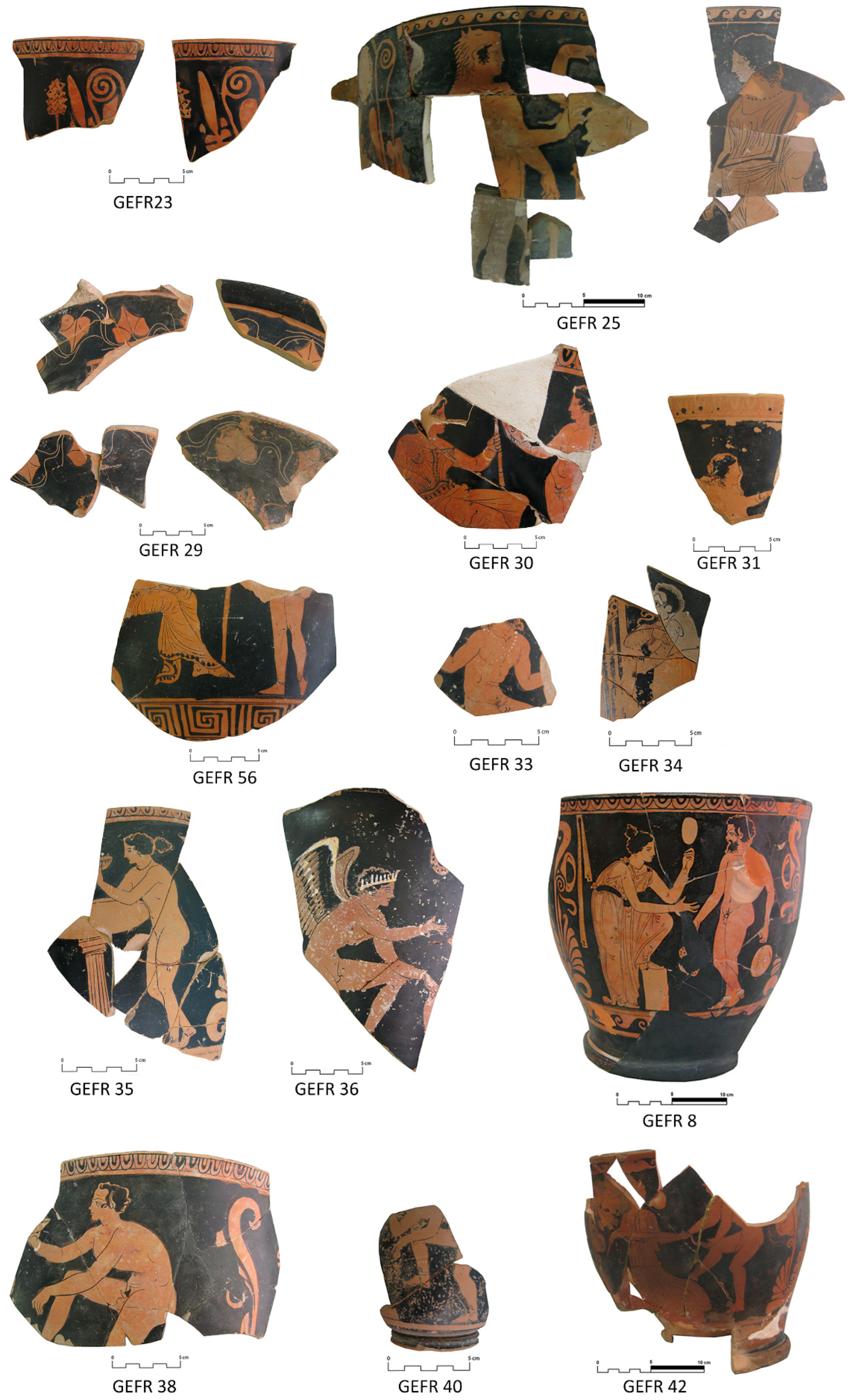
Fourteen samples of Sicilian red-figure pottery (Figure 2; Table 1) were selected for the study, being representative of the main painters and groups considered operating in Sicily and Magna Graecia between the late 5th and mid-4th centuries BC.
Typologically, all examined vases (in fragments) include calyx and bell kraters (GEFR 29, 33–34, 56), large skyphoi (GEFR 8, 23, 25, 30–31, 35–36, 38, 42) and a squat lekythos (GEFR 40). Many of these fragments represent scenes related to the Dionysian world (satyrs and maenads) and female figures (young women and erotes); one specimen illustrates a mythological episode (Heracles and Apollo with the Delphic tripod, GEFR 25), while another one reports a phlyax scene (GEFR 34).
With regard to the clay paste, naked eye observation shows a general homogeneity of all the fragments: they are mostly hard and compact, depurated, with a few small white inclusions in some cases; the color is orange (M 7.5YR 7/6, 6/6; M 5YR 6/6, 6/8) with variations toward darker browns (M 7.5YR 6/3, 6/4, 5/4, 5/3; M 5YR 5/4, 6/4), which is likely resulting from firing conditions (Table 1). The black glaze is generally opaque, compact, and homogeneous; some fragments exhibit overpainting in white and yellow.
Regarding the painter’s attribution, the skyphoi GEFR 23, 30, and 8 have been attributed by A.D. Trendall to the Painter of the Chequer, the Painter of Dirce and the Rancate Group, respectively [1,3]. The recently published skyphos GEFR 25 has been attributed to the advanced Sicilian production phase of the Locri Group [49]. The remaining specimens, still unpublished, have been stylistically assigned by the author to the Dirce Group (GEFR 29, 31, 56), the Painter of Louvre K 240 (GEFR 33–34), the Painter of Lentini (GEFR 35–36) and the Rancate Group (GEFR 38, 40); one skyphos (GEFR 42) remains of uncertain attribution. Overall, the group of specimens examined is heterogeneous and includes vases from workshops of early Sicilian production, still linked to Attic or Italic traditions, as well as artifacts from workshops that document the figurative characteristics typical of the Sicilian red-figure tradition.
Archaeologists have identified southeastern Sicily, particularly Siracusa and Lentini, as the production sites for many of the selected vessels (fragments from the Groups of the Chequer, Locri, Dirce, Lentini, and Rancate), while a location in the Strait of Messina area or Lipari has been proposed as the workshop of the Painter of Louvre K 240, based on the influences exerted on Tyrrhenian pottery workshops, especially during the early phases of Asteas production [21,24,25,43].

2.2. Analytical Methods

To determine the bulk composition, the surface treatment was carefully removed by using a scalpel; subsequently, the samples were ground in an agate mortar prior to analysis. To provide weight loss data, termogravimetric analysis (TGA) was performed using an SII ETG/DTA 7200 EXSTAR Seiko instrument (Chiba, Japan). Before analysis, all samples were dried under vacuum at 40 °C for 18 h. Samples of 5–10 mg were placed in alumina sample pans (70 μL) and runs were carried out at the standard heating rate of 10 °C·min−1 from 30 to 910 °C under air (200 mL·min−1).
The selected specimens have been analysed using X-ray fluorescence (XRF). X-ray fluorescence (XRF) analysis was performed on pressed powder pellets, realized using 1 g of sample pressed on a boric acid substrate at a maximum working pressure of 25 bar, to obtain the chemical composition of the samples (major and trace elements).
X-ray fluorescence (XRF) analysis was conducted using a wavelength-dispersive X-ray fluorescence spectrometer, Primus II by Rigaku, equipped with a 4 kW Rhodium (Rh) X-ray source. Each detector—scintillation and flow counter—was mounted on a goniometer with an angular range of 5° to 148°. Specific slits were selected for each detector. The primary diaphragm used had a diameter of 30 mm, with an additional 10 mm diaphragm selected for further optimization. The intensity of the fluorescence Ka lines was measured for all elements, except for Cerium (Ce), whose concentration was estimated from the Lb1 line. For Tin (Sn), the Ka line was measured with a Zr filter to reduce interference from the Rh tube lines. All elements were analyzed under conditions of 50 kV and 60 mA. The pulse height analysis (PHA) window was set to 100–300 for all elements, except magnesium (Mg) and sodium (Na), for which the window was adjusted to 100–250. Calibration curves were constructed using twelve international standards, which were prepared following the same procedure as the samples. The accuracy for each element, calculated based on the calibration curves, ranged from 0.005 to 6%, with the exceptions of Zr, Ce, and Ba, which had accuracy values of 10.3%, 22.2%, and 34.4%, respectively. The precision of the measurements ranged from 0.1% to 0.01%. Matrix coefficients for absorption/enhancement corrections were calculated using the JIS model, with SiO2 as the primary base component and Al2O3 as the secondary base component. Additionally, calibration curves for Ba and Y were corrected for the overlap of Ba, while the Ni calibration curve was corrected for the overlap of Y.
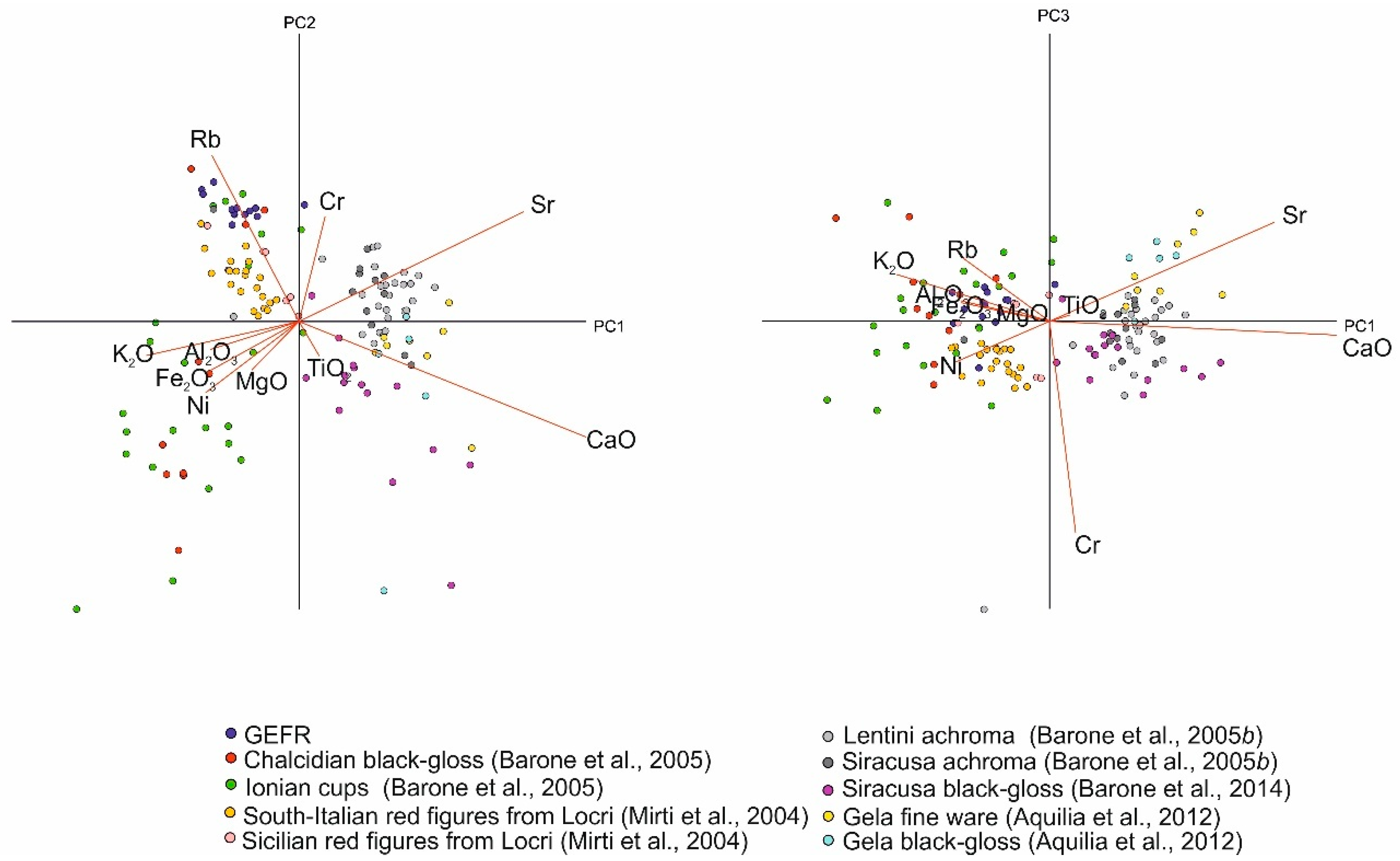
Chemical data were analyzed using the Aitchison (1986) approach for compositional data, implemented in the freeware CoDaPack [50]. Log-ratio transformations were applied to account for the closed nature of compositional datasets, and principal component plots of the transformed data were generated to visualize variability and relationships between samples.

3. Results

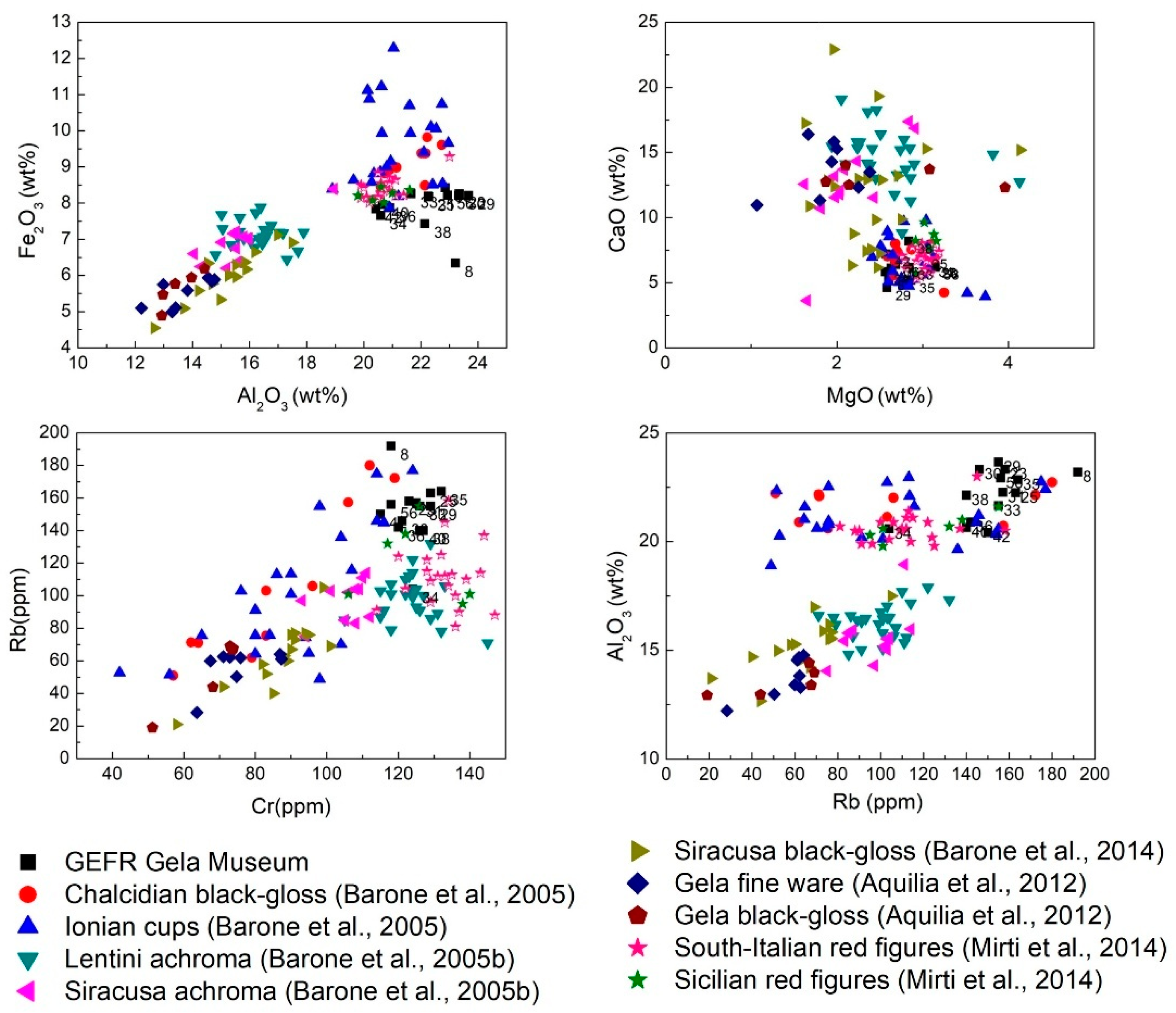
All the studied samples exhibit a quite homogenous geochemical profile, specifically characterized by intermediate-high iron (Fe), low calcium (Ca), high aluminium (Al), rubidium (Rb) and chromium (Cr) (Table 2 and Table 3).
This profile can be interpreted based on the established discrimination criteria for ceramic raw materials in Sicily; in fact, Sicilian Plio-Pleistocene clays show distinct geochemical signatures imprinted by their different geological environment [51]: high Rb, Al, and K characterizes sediments from the “Strait of Messina area” (imprinted by micas and related to metamorphic basement); high Ca and low Fe marks clays from Siracusa (derived from foreland limestone sequences), Gela and Agrigento (derived from the front of the Sicilian trust belt); high Cr and Fe tenors distinguish clays from Lentini (outcropping on basaltic lava cover and limestone sequences). While refinement can cause chemical trends to differ between raw clays and final ceramics, these geochemical markers are fundamentally linked to the sediment’s geological origin, allowing for robust provenance determination.
The major and minor elements obtained from the XRF were subjected to comparative analysis to determine possible matches with fine ware ceramic productions of known provenance. The comparative dataset was carefully selected to include productions sharing similar technological manufacturing processes with the red-figure vessels (e.g., black-gloss pottery). This comparison targeted locations relevant to red-figure production, including the area of discovery (Gela), the major Sicilian districts proposed in the literature as workshop centers (namely Siracusa, Lentini, and Agrigento), and the “Strait of Messina area” (encompassing districts on both the Sicilian and Calabrian coasts facing the strait of Messina).
These locations were specifically chosen not only for their potential as workshop centers but also because they have attested productions technologically similar to the red-figure vessels, ensuring a comprehensive assessment of potential production origins. In this perspective, the analyzed red-figure samples were compared with Chalcidian and Ionian cup fine-wares attributed to the “Strait of Messina area” [52,53], achroma wares produced in Siracusa and Lentini [54], Siracusa black-gloss fine-wares [55], Geolan black-gloss fine ware [56], and previously studied red-figure productions from southern Italy [40] (Figure 3).
The measure of the dissimilarities among the studied corpus and groups of ceramic fine ware productions would suggest a dissimilarity from the Siracusa, Lentini and Gela productions, while indicating a similarity with the so-called Chalcidian and Ionian cup productions attributed to the “Strait of Messina area” [52,53] (Figure 4). Furthermore, similarities can be suggested with a specific group of Sicilian red figures vessels found at Locri [40].

4. Discussion and Conclusions

Since the study by Mirt et al. [40], the similarity in chemical composition between Sicilian red-figure vases and black gloss pottery from Locri Epizephiri emphasized the need for chemical analysis to broaden our understanding of regional production networks, raising questions about the traditional attribution of these vessels to Sicilian workshops solely based on style. In this context, the investigation of red-figures vessels preserved in the Gela Museum provided important information that opened new perspectives for defining the localization and understanding the organization of the Sicilian workshops, providing for the first time a geochemical dataset on Sicilian red-figures vases found in Sicily.
The analysis of chemical data would in fact suggest that all the selected specimens, although found in Gela, were not produced locally but imported: in fact, the comparison with Geloan local productions [56] has revealed the absence of chemical affinity. Additionally, the chemical profile of studied fragments show dissimilarity from clays and fine ceramics from Siracusa and Lentini [51,54,55], traditionally considered production centres as suggested by A.D. Trendall. On the contrary, results would indicate a similarity with the so-called “strait of Messina area” (e.g., a wider area which includes numerous centres along both Sicilian and Calabrian coast facing the Strait of Messina) [53], which was proposed in the literature and confirmed by archaeometric analyses as the possible location for the solely workshop of the Group of Louvre K240 [21,24,43].
In view of this evidence, the production of Sicilian red-figure vases may have relocated to a site different from the traditionally attributed one, inviting also to reconsider the hypothesis of a possible Locrian production phase for the figurative specimens attributed to the painters of Dirce and Prado-Fienga found in Locri [40,57]. In fact, given the chemical similarities between the sites facing the Strait of Messina and its surroundings (Messina, Milazzo, Reggio Calabria and Locri), these findings from Locri could also be linked to other production centres within this wider area (Figure 1). However, a significant challenge remains, namely the possibility of identifying geological markers that could pinpoint and discriminate precise production centres within the wide “Strait of Messina area” [51,52,53]. This is primarily due to the similarity of the parental rocks and, consequently, the sediments that outcrop on both sides of the “Strait of Messina area” [51,52,53]. Moreover, the practice of mixing clays from different, but geographically nearby sources to enhance the technical quality of the ceramics further complicates the task of identifying the exact location of the production centers.
The intense urbanization of the modern cities of Messina and Reggio, built atop the archaeological remains of their respective Greek poleis, along with the varying levels of publication of the contexts (which are not always fully published or are only partially published), and the limited extent of archaeological excavations (for example, the late 5th-4th century BC necropolises—where the majority of figured vases are found—have not been extensively investigated), hinder the availability of a substantial number of red-figure vases from these two centers. However, the corpus of known vases from Messina has been gradually increasing over time [24,25,58,59,60,61].
Moreover, the existence in the so-called “Strait of Messina area” of a pre-existing and consolidated manufacturing tradition is documented by the production of fine ceramics, banded and black-glazed, the so-called Chalcidian aniconic ceramics [52,53,62]. This evidence, in our opinion, may support the hypothesis that a specialized ceramic production existed in the area, which provided the basis for the development of red-figure workshops. Additionally, the strategic position of the “Strait of Messina area”—naturally oriented towards both the Tyrrhenian and Ionian regions—along with its strong commercial propensity, likely reinforced its central role in the production and distribution of red-figure pottery. The emergence and development of various workshops within this shared geographical area could help explain the stylistic connections previously identified in the literature among the vases of the proto-Sicilian painters under study [21,24,25,26].
In conclusion, to definitively assess the key role of the “Strait of Messina area” in the production and commercialization of red-figured vessels between the late 5th and mid-4th centuries BC, a broader sampling is essential. Chemical characterization of more specimens attributed to different painters and workshops could confirm or challenge the hypothesis proposed that a single or multiple production centers, to be identified within the “Strait of Messina area”, distributed red-figure pottery along the Sicilian, Calabrian and Campanian coasts.

Author Contributions

A.S. wrote the introduction section. S.R. wrote the results section. A.S. and S.R. co-authored the materials and methods, discussion and conclusions sections. D.M. carried out the XRF analysis. S.R. carried out data processing. S.R., P.M. and G.B. co-supervised the project. All authors have read and agreed to the published version of the manuscript.

Funding

This research received no external funding.

Data Availability Statement

All data supporting the findings of this study are included within the manuscript in the form of tables.

Acknowledgments

The authors are grateful to Arch. Emanuele Turco, former Director of the Archaeological Museum of Gela, for generously giving us free access to the archaeological materials and for granting permission to study and select the samples for analysis. Our thanks also go to the Museum’s custodial staff who facilitated access to the storage rooms. We also thank Stefano Columbu (University of Cagliari, Italy), Francesca Cicogna (CNR-ICCOM, Italy), and Raffaella De Luca (University of Calabria, Italy) for their support in executing the analytical routines.

Conflicts of Interest

The authors declare no conflicts of interest.

References

  1. Trendall, A.D. The Red-Figured Vases of Lucania, Campania and Sicily; Oxford University Press: Oxford, UK, 1967; pp. 189–221, 575–664. [Google Scholar]
  2. Trendall, A.D. The Red-Figured Vases of Lucania, Campania and Sicily, Third Supplement; Oxford University Press: London, UK, 1983. [Google Scholar]
  3. Trendall, A.D. The Red-Figured Vases of Paestum; The British School at Rome: London, UK, 1987. [Google Scholar]
  4. Trendall, A.D. Red Figure Vases of South Italy and Sicily. A Handbook; Thames and Hudson: London, UK, 1989. [Google Scholar]
  5. Denoyelle, M.; Iozzo, M. La Céramique Grecque d’Italie Mériodionale et de Sicile. Productions Coloniales et Apparentées du VIIIe au IIIe Siècle av. J.-C.; Picard: Paris, France, 2009; ISBN 9782708408395. [Google Scholar]
  6. Todisco, L. (Ed.) La Ceramica a Figure Rosse della Magna Grecia e della Sicilia, I–III; L’Erma di Bretschneider: Roma, Italy, 2012; ISBN 9788882656201. [Google Scholar]
  7. Dell’Aglio, A. La forma della città: Aree e strutture di produzione artigianale. In Taranto e il Mediterraneo, Atti del 41esimo Convegno di Studi sulla Magna Grecia; Istituto per la Storia e l’Archeologia della Magna Grecia (ISAMG): Taranto, Italy, 2002; pp. 171–193. [Google Scholar]
  8. Silvestrelli, F. Le fasi iniziali della ceramica a figure rosse nel kerameikos di Metaponto. In La Céramique Apulienne Bilan et Prospectives, Actes de la Table Ronde Organisée par l’École Française de Rome; Denoyelle, M., Lippolis, E., Mazzei, M., Pouzadoux, C., Eds.; Centre Jean Bérard: Naples, Italy, 2005; pp. 113–123. [Google Scholar]
  9. Rizzo, M.L. Aree e Quartieri Artigianali in Magna Grecia; Dipartimento di Scienze del Patrimonio Culturale dell’Università Degli Studi di Salerno: Capaccio, Italy, 2019; ISBN 9788887744842. [Google Scholar]
  10. Santostefano, A. Studio multidisciplinare sulla ceramica a figure rosse siceliota: Una produzione dall’area dello Stretto? Arch. Stor. Messin. 2025, 105, 123–140. [Google Scholar]
  11. Pappalardo, E.; Merendino, A.; Idà, L.; Vaccaro, M. Attività di ricerca archeologica in contrada Acquafredda/Imbischi (Castiglione di Sicilia) del DiSFor UNICT e della Soprintendenza di Catania (relazione preliminare). Cronache Archeol. 2023, 42, 293–308. [Google Scholar]
  12. Barresi, S.; Merendino, A.; Pappalardo, E. L’officina del vasaio di Acquafredda/Imbischi (Castiglione di Sicilia). In Dialoghi sull’Archeologia della Magna Grecia e del Mediterraneo, Atti del IX Convegno Internazionale di Studi; Fondazione Paestum-Pandemos: Paestum, Italy, 2024; in press. [Google Scholar]
  13. Spigo, U. La ceramica siceliota a figure rosse: Variazioni sul tema. Boll. Arte 1987, 44–45, 1–24. [Google Scholar]
  14. Elia, D. La diffusione della ceramica figurata a Locri Epizefiri nella prima metà del IV secolo: Problemi di stile, produzione e cronologia. In La Céramique Apulienne. Bilan et Prospectives, Actes de la Table Ronde; Denoyelle, M., Lippolis, E., Mazzei, M., Pouzadoux, C., Eds.; Centre Jean Bérard: Naples, Italy, 2005; pp. 155–162. [Google Scholar]
  15. Elia, D. Locri Epizefiri VI. Nelle Case di Ade. La Necropoli in Contrada Lucifero. Nuovi Documenti; Edizioni dell’Orso: Alessandria, Italy, 2010; ISBN 9878862742214. [Google Scholar]
  16. Elia, D. Birth and development of red-figured pottery between Sicily and South Calabria. In The Contexts of Painted Pottery in the Ancient Mediterranean World (Seventh-Fourth Centuries BCE); Paleothodoros, D., Ed.; BAR-IS 2364; BAR-IS: Oxford, UK, 2012; pp. 101–116. [Google Scholar]
  17. Elia, D. Il Gruppo di Locri in Calabria meridionale: Sviluppo di una tradizione siceliota. In Mobilità dei Pittori e Identità Delle Produzioni; Denoyelle, M., Pouzadoux, C., Silvestrelli, F., Eds.; Centre Jean Bérard: Naples, Italy, 2018; pp. 77–95. [Google Scholar]
  18. Barresi, S. Sicilian Red-Figure Vase Painting. In Sicily. Art and Invention Between Greece and Rome; Lyons, C.L., Bennett, M., Marconi, C., Eds.; Getty Publications: Los Angeles, CA, USA, 2013; pp. 210–219. [Google Scholar]
  19. Barresi, S. Sicilian Red-figure Vase-painting: The Beginning, the End. In The Regional Production of Red-Figure Pottery: Greece, Magna Graecia and Etruria; Sabetai, V., Schierup, S., Eds.; Aarhus University Press: Aarhus, Denmark, 2014; pp. 235–246. [Google Scholar]
  20. Barresi, S. Il Gruppo di Locri in Sicilia. In Mobilità dei Pittori e Identità Delle Produzioni; Denoyelle, M., Pouzadoux, C., Silvestrelli, F., Eds.; Centre Jean Bérard: Naples, Italy, 2018; pp. 41–63. [Google Scholar]
  21. Spigo, U. Brevi considerazioni sui caratteri figurativi delle officine di ceramica siceliota della prima metà del IV secolo a. C. e alcuni nuovi dati. In La Sicilia dei due Dionisî, Atti della Settimana di Studio; Bonacasa, N., Braccesi, L., De Miro, E., Eds.; L’Erma di Bretschneider: Rome, Italy, 2002; pp. 265–293. [Google Scholar]
  22. Serino, M. La Bottega del Pittore di Himera e le Altre Officine Protosiceliote. Stile, Iconografia, Contesti, Cronologia; Scienze e Lettere: Rome, Italy, 2019; ISBN 9788866871521. [Google Scholar]
  23. Serino, M. Attic influences, Italiote experiences. The beginnings of red-figure pottery production in Sicily. In Μεγίστη καὶ Ἀρίστη Νῆσος, Symposium on Archaeology of Sicily; Fuduli, L., Lo Monaco, V., Eds.; Arbor Sapientiae: Rome, Italy, 2019; pp. 192–196. [Google Scholar]
  24. Spigo, U. Rapporti fra Lipari e l’area dello Stretto di Messina nel IV sec. a.C. e nella prima età ellenistica. In Messina e Reggio Nell’antichità: Storia, Società, Cultura, Atti del Convegno della S.I.S.A.C.; Gentili, B., Pinzone, A., Eds.; Rubbettino: Soveria Mannelli, Italy, 2002; pp. 47–81. [Google Scholar]
  25. Spigo, U. Presenze di ceramica figurata siceliota di età dionigiana (e non solo…) a Messina. Sicil. Antiq. 2025, 22, 63–74. [Google Scholar]
  26. Santostefano, A. Riferimenti cronologici per la ceramica a figure rosse siceliota tra V e IV sec. a.C. Quad. Archeol. Univ. Messina 2020, 10, 75–108. [Google Scholar]
  27. Serino, M. Forma e immagine nelle officine protosiceliote. Una rilettura degli “inizi” delle prime produzioni a figure rosse attraverso possibili indizi di mobilità artigianale tra Campania e Sicilia. In Forma e Immagine, International Conference Proceedings; Salvadori, M., Baggio, M., Eds.; Poligrafo Casa Editrice: Padova, Italy, 2022; pp. 137–162. [Google Scholar]
  28. Serino, M. Some New Perspectives on the Study of Craftspeople’s Mobility in the Red-figure Pottery Production of Magna Graecia and Sicily. In People on the Move Across the Greek World; Mauro, C.M., Chapinal-Heras, D., Valdés Guía, M., Eds.; Editorial Universidad de Sevilla: Sevilla, Spain, 2022; pp. 91–107. [Google Scholar]
  29. Serino, M. From Micro to Macro, and Vice Versa. Technology Studies and Network Analysis on Red-figure Vase Production, between Sicily and Campania. In Technology, Crafting and Artisanal Network in the Greek and Roman World. Interdisciplinary Approaches to the Study of Ceramics; Elia, D., Hasaki, E., Serino, M., Eds.; De Gruyter: Berlin, Germany; Boston, MA, USA, 2024; pp. 223–240. [Google Scholar]
  30. Denoyelle, M.; Pouzadoux, C.; Silvestrelli, F. (Eds.) Mobilità dei Pittori e Identità delle Produzioni; Cahiers du Centre Jean Bérard: Naples, Italy, 2018; ISBN 9782918887805. [Google Scholar]
  31. Robinson, T. Potters and mobility in southern Italy (500–300 BCE). In Production, Trade, and Connectivity in Pre-Roman Italy; Armstrong, J., Cohen, S., Eds.; Routledge: London, UK; New York, NY, USA, 2022; pp. 82–98. [Google Scholar]
  32. Adamesteanu, D. Uno scarico di fornace ellenistica a Gela. Archeol. Class. 1954, 6, 129–132. [Google Scholar]
  33. Mangone, A.; Giannossa, L.C.; Ciancio, A.; Laviano, R.; Traini, A. Technological features of Apulian red figured pottery. J. Archaeol. Sci. 2008, 35, 1533–1541. [Google Scholar] [CrossRef]
  34. Mangone, A.; Giannossa, L.C.; Colafemmina, G.; Laviano, R.; Traini, A. Use of various spectroscopy techniques to investigate raw materials and define processes in the overpainting of Apulian red figured pottery (4th century BC) from Southern Italy. Microchem. J. 2009, 92, 97–102. [Google Scholar] [CrossRef]
  35. Mangone, A.; Caggiani, M.C.; Giannossa, L.C.; Eramo, G.; Redavid, V.; Laviano, R. Diversified production of red figured pottery in Apulia (Southern Italy) in the late period. J. Cult. Herit. 2013, 14, 82–88. [Google Scholar] [CrossRef]
  36. Giannossa, L.C.; Mininni, R.M.; Laviano, R.; Mastrorocco, F.; Caggiani, M.C.; Mangone, A. An archaeometric approach to gain knowledge on technology and provenance of Apulian red-figured pottery from Taranto. Archaeol. Anthropol. Sci. 2016, 9, 1125–1135. [Google Scholar] [CrossRef]
  37. Giannossa, L.C.; Muntoni, I.M.; Forleo, T.; Patete, S.; Pouzadoux, C.; Laviano, R.; Mangone, A. Artisanal Experiences in Arpi: Colours and Raw Materials of Apulian Red Figure Production. J. Archaeol. Sci. Rep. 2022, 45, 103618. [Google Scholar] [CrossRef]
  38. Barone, G.; Di Bella, M.; Mastelloni, M.A.; Mazzoleni, P.; Quartieri, S.; Raneri, S.; Sabatino, G. Pigments characterization of polychrome vases production at Lipára: New insights by noninvasive spectroscopic methods. X-Ray Spectrom. 2018, 47, 46–57. [Google Scholar] [CrossRef]
  39. Elia, D.; Davit, P.; Re, A.; Gulmini, M. Magnific Magnification at Locri Epizephyrii: An Insight into the Surface of Western Red-figured Vases. In Technology, Crafting and Artisanal Network in the Greek and Roman World. Interdisciplinary Approaches to the Study of Ceramics; Elia, D., Hasaki, E., Serino, M., Eds.; De Gruyter: Berlin, Germany; Boston, MA, USA, 2024; pp. 157–172. [Google Scholar]
  40. Mirti, P.; Gulmini, M.; Pace, M.; Elia, D. The provenance of red figure vases from Locri Epizephiri (Southern Italy): New evidence by chemical analysis. Archaeometry 2004, 46, 183–200. [Google Scholar] [CrossRef]
  41. Giannossa, L.C.; Muntoni, I.M.; Laviano, R.; Mangone, A. Building a step by step result in archaeometry. Raw materials, provenance and production technology of Apulian Red Figure pottery. J. Cult. Herit. 2020, 43, 242–248. [Google Scholar] [CrossRef]
  42. Doménech-Carbó, A.; Giannuzzi, M.; Mangone, A.; Giannossa, L.C. Electrochemical methods to discriminate technology and provenance of Apulian red-figured pottery. II: EIS. Archaeometry 2022, 64, 1124–1137. [Google Scholar] [CrossRef]
  43. Conventi, A.; D’Ignoti, K.D.; Lazzarini, L.; Tesser, E. Archaeometric investigations of the materials and techniques of two red figured kraters by the Painter of Louvre K 240. Techné 2020, 49, 124–133. [Google Scholar] [CrossRef]
  44. Hein, A.; Kilikoglou, V. Ceramic raw materials: How to recognize them and locate the supply basins: Chemistry. Archaeol. Anthropol. Sci. 2020, 12, 180. [Google Scholar] [CrossRef]
  45. Orlandini, P. Tipologia e cronologia del materiale archeologico di Gela dalla nuova fondazione di Timoleonte all’età di Ierone II. Archeol. Class. 1957, 9, 44–75. [Google Scholar]
  46. Adamesteanu, D.; Orlandini, P. Gela. L’acropoli di Gela. Not. Degli Scavi 1962, 16, 340–408. [Google Scholar]
  47. De Miro, E.; Fiorentini, G. Gela: Scavi dell’acropoli 1973–1975. Kokalos 1976–1977, 22–23, 430–447. [Google Scholar]
  48. Santostefano, A. Gela, Molino a Vento. Gli isolati I e II (scavi Orlandini 1955–1961); Dipartimento di Civiltà Antiche e Moderne dell’Università degli Studi di Messina: Rome, Italy, 2024; ISBN 9788854915961. [Google Scholar]
  49. Santostefano, A. Un nuovo skyphos del Gruppo di Locri dall’acropoli di Gela. In Mobilità dei Pittori e Identità delle Produzioni; Denoyelle, M., Pouzadoux, C., Silvestrelli, F., Eds.; Cahiers du Centre Jean Bérard: Naples, Italy, 2018; pp. 65–75. [Google Scholar]
  50. Comas-Cufí, M.; Thió-Henestrosa, S. CoDaPack 2.0: A stand-alone, multi-platform compositional software. In Proceedings of the CoDaWork’11: 4th International Workshop on Compositional Data Analysis, Sant Feliu de Guíxols, Spain, 9–13 May 2011; pp. 1–10. [Google Scholar]
  51. Barone, G.; Mazzoleni, P.; Spagnolo, G.; Raneri, S. Artificial neural network for the provenance study of archaeological ceramics using clay sediment database. J. Cult. Herit. 2019, 38, 147–157. [Google Scholar] [CrossRef]
  52. Barone, G.; Ioppolo, S.; Majolino, D.; Migliardo, P.; Sannino, L.; Spagnolo, G.; Tigano, G. Contributo delle analisi archeometriche allo studio delle ceramiche provenienti dagli scavi di Messina. Risultati preliminari. In Da Zancle a Messina. Un percorso Archeologico Attraverso gli Scavi; Bacci, M.G., Tigano, G., Eds.; Regione siciliana, Assessorato dei Beni Culturali e Ambientali e della Pubblica Istruzione: Messina, Italy, 2002; Volume II, pp. 87–117. [Google Scholar]
  53. Barone, G.; Ioppolo, S.; Majolino, D.; Branca, C.; Sannino, L.; Spagnolo, G.; Tigano, G. Archaeometric analyses on pottery from archaeological excavation in Messina (Sicily, Italy) from the Greek archaic to the Medieval age. Period. Mineral. 2005, 74, 11–41. [Google Scholar]
  54. Barone, G.; Lo Giudice, A.; Mazzoleni, P.; Pezzino, A. Chemical characterization and statistical multivariate analysis of ancient pottery from Messina, Catania, Lentini and Siracusa (Sicily). Archaeometry 2005, 47, 745–762. [Google Scholar] [CrossRef]
  55. Barone, G.; Mazzoleni, P.; Aquilia, E.; Barbera, G. The Hellenistic and Roman Syracuse (Sicily) Fine Pottery Production Explored by Chemical and Petrographic Analysis. Archaeometry 2014, 56, 70–87. [Google Scholar] [CrossRef]
  56. Aquilia, E.; Barone, G.; Mazzoleni, P.; Ingoglia, C. Petrographic and chemical characterisation of fine ware from three Archaic and Hellinistic kilns in Gela (Sicily). J. Cult. Herit. 2012, 13, 442–447. [Google Scholar] [CrossRef]
  57. Elia, D. Nuovi dati sulla produzione e sulla circolazione della ceramica italiota a figure rosse nel IV secolo a.C. a Locri Epizefiri. In Archaeological Methods and Approaches: Industry and Commerce in Ancient Italy, Proceedings of the Conference, American Academy in Rome-École Française de Rome; De Sena, E.C., Dessales, H., Eds.; BAR-IS 1262; BAR-IS: Oxford, UK, 2004; pp. 144–158. [Google Scholar]
  58. Spigo, U. Esemplari di ceramica siceliota ed italiota a figure rosse e sovradipinta al Museo Regionale di Messina. Quad. Mus. Reg. Messina 1992, 2, 9–28. [Google Scholar]
  59. Spigo, U. Nuovi rinvenimenti di ceramica siceliota da Lipari e dalla provincia di Messina. In The Archaeology of the Aeolian Islands, Proceedings of the Conferences Held at the Universities of Melbourne and Sydney; Descœudres, J.P., Ed.; Meditarch: Sydney, Australia, 1993; Volume 5/6, pp. 33–47. [Google Scholar]
  60. Spigo, U. Nota sulle produzioni di ceramica a decorazione sovradipinta e sulla coroplastica ellenistica a Messina. In Da Zancle a Messina. Un Percorso Archeologico Attraverso Gli Scavi; Bacci, M.G., Tigano, G., Eds.; Regione siciliana, Assessorato dei Beni Culturali e Ambientali e della Pubblica Istruzione: Messina, Italy, 2002; Volume II, pp. 59–70. [Google Scholar]
  61. Spigo, U. Rinvenimenti di ceramica siceliota dalla provincia di Messina: Breve nota di aggiornamento. In Studi Classici in Onore di Luigi Bernabò Brea; Bacci, G.M., Martinelli, M.C., Eds.; Regione Siciliana—Museo Archeologico Regionale Eoliano “Luigi Bernabò Brea”: Messina, Italy, 2003; pp. 103–118. [Google Scholar]
  62. Tigano, G. Isolato S, Via Industriale. Lo scavo e i primi dati sui materiali. In Da Zancle a Messina. Un Percorso Archeologico Attraverso gli Scavi; Bacci, M.G., Tigano, G., Eds.; Regione siciliana, Assessorato dei Beni Culturali e Ambientali: Messina, Italy, 1999; Volume I, pp. 123–155. [Google Scholar]
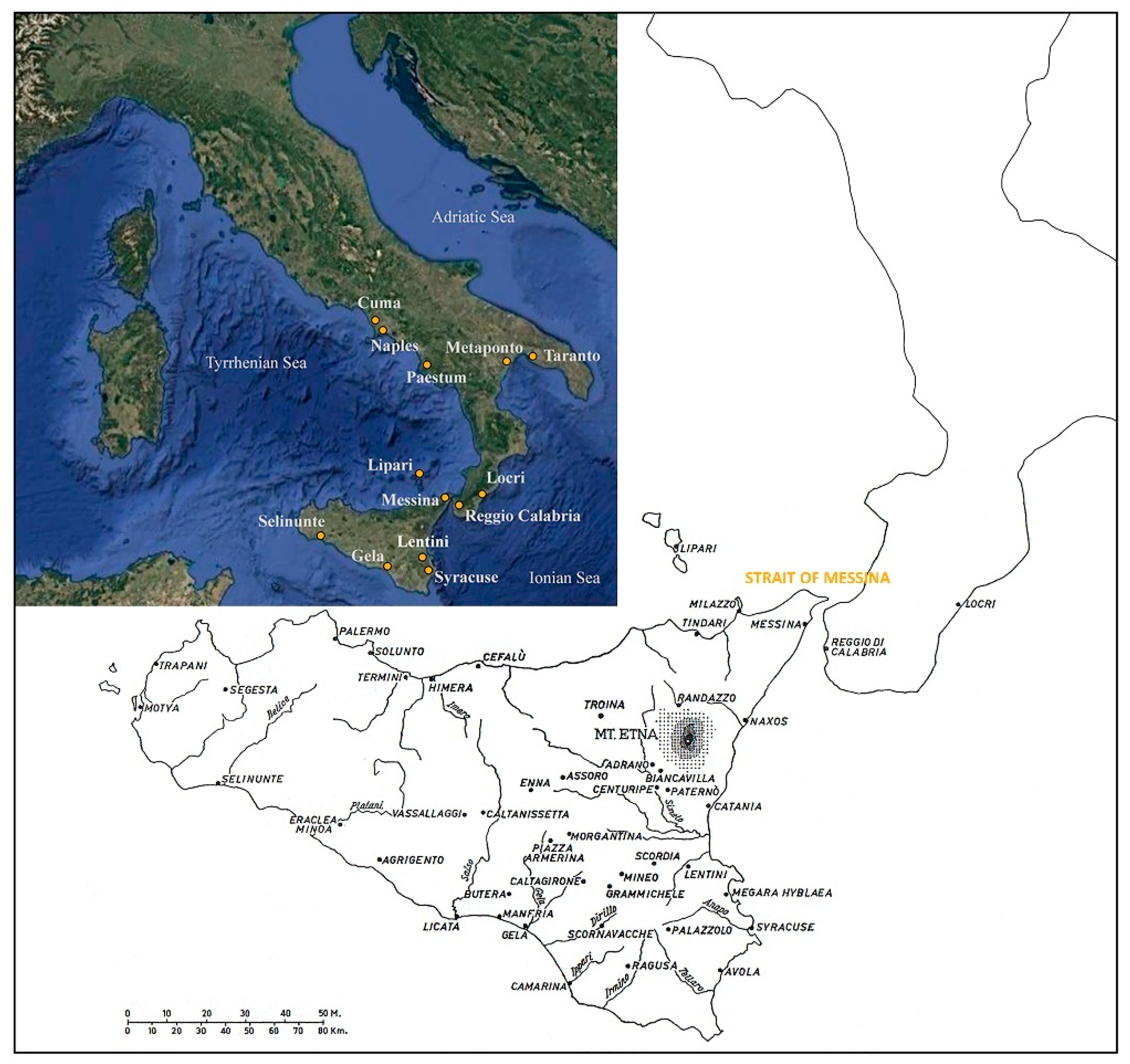
Figure 1. Map indicating the sites relevant for the study of red-figures production and circulation in south-Italy and Sicily (modified from Trendall, 1967 [1] (p. 578), Figure 16).
Heritage 08 00505 g001
Figure 2. Pictures of the Sicilian red-figure vases analysed in this study.
Heritage 08 00505 g002
Figure 3. Binary diagrams Al2O3 (wt%) vs. Fe2O3 (wt%), MgO (wt%) vs. CaO (wt%), Cr (ppm) vs. Rb (ppm), and Rb (ppm) vs. Al2O3 (wt%) evidencing the chemical signature of studied fragments in comparison with Sicilian fine-ware productions in Sicily (Barone et al., 2005; 2005b; 2014; Aquilia et al., 2012) [53,54,55,56] and Locrian and Sicilian red-figures vessels found in Locri (Mirti et al., 2014) [40].
Heritage 08 00505 g003
Figure 4. Plots of CLR-transformed data (following Aitchison method [50]) providing a measure of similarity or dissimilarity between red figure vessels from Gela, and fine-ware black-gloss ceramics productions of known provenance in Sicily (Barone et al., 2005; 2005b; 2014; Aquilia et al., 2012) [40,53,54,55,56], Locrian and Sicilian red-figures vessels found in Locri (Mirti et al., 2014) [40].
Heritage 08 00505 g004
Table 1. List of the samples analyzed. For each artifact, we report the inventory number (if present), the painter’s attribution and dating based on stylistical analysis, the vessel’s shape, the provenance from the excavation site and the color of the ceramic body based on the Munsell color chart.
Sample IDAttributionType and ChronologyProvenanceMunsell Colour
GEFR 23
(no inv.)
Chequer Painter
[1] (p. 199), n. 17
Skyphos (fr.)
Late 5th cent. B.C.
Gela. Molino a Vento,
(excavation 1953)
M 7.5YR 6/6 (reddish yellow)
GEFR 25
(no inv.)
Locri Group
[49]
Skyphos (fr)
Late 5th-early 4th cent. B.C.
Gela. Molino a Vento
(excavation 1973–74)
M 5YR 5/6 (yellowish red); M 5YR 6/4 (light reddish brown); M 7.5YR 5/3 (brown)
GEFR 30
(no inv.)
Dirce Painter
[3] (p. 26), n. 12
Skyphos (fr.)
Early 4th cent. B.C.
Gela. Molino a Vento
(excavation 1953)
M 7.5YR 6/6
(reddish yellow)
GEFR 29
(no inv.)
Dirce Group
(unpublished)
Calyx-krater (fr.)
Early 4th cent. B.C.
Gela. Molino a Vento
(excavation 1973)
M 7.5YR 6/3 (light brown)
GEFR 56
(no inv.)
Dirce Group
(unpublished)
Bell-krater (fr.)
Early 4th cent. B.C.
Gela. Molino a Vento
(excavation 1955)
M 5YR 6/8
(reddish yellow)
GEFR 31
(no inv.)
Dirce Group
(unpublished)
Skyphos (fr.)
Early 4th cent. B.C.
Gela. Molino a Vento
(excavation 1973)
M 7.5YR 6/6
(reddish yellow)
GEFR 33
(no inv.)
Painter of Louvre K 240 (unpublished)Krater? (fr.)
End of first 4th cent. B.C.
Gela. Molino a Vento
(excavation 1973)
M 5YR 5/4
(reddish brown)
GEFR 34
(no inv.)
Painter of Louvre K 240 or Asteas (new attribution)Krater? (fr.)
End of first 4th cent. B.C.
Gela. Molino a Vento
(excavation 1973)
M 7.5YR 6/4
(light brown)
GEFR 35
(no inv.)
Lentini Painter
(unpublished)
Skyphos (fr.)
First quarter 4th cent. B.C.
Gela. Molino a Vento
(excavation 1973)
M 7.5YR 6/6
(reddish yellow)
GEFR 36
(no inv.)
Lentini Painter
(unpublished)
Skyphos (fr.)
First quarter 4th cent. B.C.
Gela. Molino a Vento
(excavation 1973)
M 7.5YR 6/3
(light brown)
GEFR 8
(inv. 8565)
Rancate Group
[1] (p. 591), n. 37, Table 229, 6
Skyphos (fr.)
Second quarter 4th cent. B.C.
Gela. Molino a Vento
(excavation 1953)
M 5YR 6/6
(reddish yellow)
GEFR 38
(no inv.)
Rancate Group
(unpublished)
Skyphos (fr.)
Second quarter 4th cent. B.C
Gela. Molino a Vento
(excavation 1973)
M 5YR 6/6
(reddish yellow)
GEFR 40
(no inv.)
Rancate Group
(unpublished)
Squat lekythos (fr.)
Second quarter 4th cent. B.C
Gela. Molino a Vento
(excavation 1953)
M 5YR 6/6
(reddish yellow)
GEFR 42
(no inv.)
Not attributedSkyphos (fr.)
Second quarter 4th cent. B.C. (?)
Gela. Molino a Vento (excavation 1973–74)M 7.5YR 5/4 (brown)
Table 2. XRF-derived chemical composition of the studied fragments. Major elements are given in mass%. Analytical conditions are detailed in the Section 2.
AttributionSample IDSiO2TiO2Al2O3Fe2O3MnOMgOCaONa2OK2OP2O5
Chequer PainterGEFR_2353.10.823.38.30.13.16.31.33.50.2
Locri GroupGEFR_2553.80.822.28.20.13.07.01.63.10.2
Dirce GroupGEFR_2955.11.123.78.20.12.64.61.23.10.2
Dirce PainterGEFR_3053.20.823.38.20.13.16.31.33.40.2
Dirce GroupGEFR_3154.10.822.38.20.13.16.41.43.50.1
Dirce GroupGEFR_5653.60.822.98.20.13.16.21.43.40.1
Painter of Louvre K 240GEFR_3355.30.821.78.30.12.86.21.43.30.2
Painter of Louvre K 240 or AsteasGEFR_3457.90.820.67.70.12.65.81.43.00.2
Lentini PainterGEFR_3554.70.822.88.40.12.95.21.43.50.2
Lentini PainterGEFR_3656.50.920.97.90.12.76.41.43.10.2
Rancate GroupGEFR_856.21.023.26.30.12.65.41.04.10.1
Rancate GroupGEFR_3854.21.022.17.40.12.88.20.93.00.2
Rancate GroupGEFR_4056.90.920.68.00.12.66.11.33.10.2
Not attributedGEFR_4256.20.720.47.80.12.67.21.63.10.1
Table 3. XRF-derived chemical composition of the studied fragments. Minor elements are given in ppm (parts per million). Analytical conditions are detailed in the Section 2.
AttributionSample IDBaCeCrNiPbRbSnSrYZnZr
Chequer PainterGEFR_236238312347581581335134160196
Locri GroupGEFR_2544786129551761631135832159186
Dirce GroupGEFR_296256312945331551532339127266
Dirce PainterGEFR_306247212146561462031939154192
Dirce GroupGEFR_3158610912549361571533235145199
Dirce GroupGEFR_566928711848511561834635151205
Painter of Louvre K 240GEFR_3354710012642621551329138141246
Painter of Louvre K 240 or AsteasGEFR_345154712439481042421837119213
Lentini PainterGEFR_3563910213246541641427940144237
Lentini PainterGEFR_365378412040651421334036126248
Rancate GroupGEFR_899311711850461921427735110221
Rancate GroupGEFR_386828512742411401448233111202
Rancate GroupGEFR_405098212641431401730341133258
Not attributedGEFR_4254110411537641501129831127261
Disclaimer/Publisher’s Note: The statements, opinions and data contained in all publications are solely those of the individual author(s) and contributor(s) and not of MDPI and/or the editor(s). MDPI and/or the editor(s) disclaim responsibility for any injury to people or property resulting from any ideas, methods, instructions or products referred to in the content.