Article

Preservation of Vernacular Cultural Landscape and Sustainable Tourism: A Case Study from the Western Carpatho-Balkan Region


by
Zlata Vuksanović-Macura
1,*,
Gorica Ljubenov
2 and
Tamara Gajić
1
1
Geographical Institute “Jovan Cvijić”, Serbian Academy of Sciences and Arts, 11000 Belgrade, Serbia
2
Academy of Technical and Art Applied Studies, School of Civil Engineering and Geodesy, 11000 Belgrade, Serbia
*
Author to whom correspondence should be addressed.
Heritage 2025, 8(12), 493; https://doi.org/10.3390/heritage8120493
Submission received: 21 October 2025 / Revised: 10 November 2025 / Accepted: 19 November 2025 / Published: 21 November 2025
(This article belongs to the Section Cultural Heritage)

Abstract

This research examines the role of preserving the vernacular cultural landscape in sustainable tourism, with a focus on the Stara Planina area in Serbia. The goal was to determine how the perception of cultural heritage preservation, the use of resources and the impact of European regulations shape attitudes about sustainable tourism among tourists and local residents. Using structural equation modeling (SEM), multiple group analysis (MGA), and machine learning (Random Forest and Gradient Boosting), clear differences in perception were revealed: tourists more strongly associate the preservation of the vernacular landscape with sustainability, while local residents prioritize economic benefits. Generational analyses indicated that younger groups are more supportive of European regulations and environmental measures, while older populations show a more pragmatic approach. The findings confirm that EU regulations have a significant moderating effect in shaping attitudes about sustainability and balancing cultural and economic goals. This work expands the understanding of the relationship between the preservation of vernacular architecture and tourism policy in non-EU countries, offering a theoretical and practical framework that can contribute to shaping sustainable development models not only for Serbia but also for other rural regions of Europe and the world that strive to preserve an authentic cultural landscape.

1. Introduction

The determination of vernacular heritage varies across disciplines and professions [1]. When considered as a unified form of natural, cultural, spiritual, and built heritage, the term represents the idea of a vernacular cultural landscape [2,3,4,5]. Pan et al. [6] see the vernacular cultural landscape as a comprehensive regional system that encompasses elements such as the natural environment and settlements, as well as folk customs and beliefs. They reflect the relationship between people and their environment and express the interaction of tangible and intangible aspects of heritage. These intangible aspects, such as traditional building skills, inherited knowledge, social practices, and emotional attachments to houses and places, are important elements for maintaining community continuity and local identity [7,8,9].
The concurrent pursuit of sustainable development and the preservation of vernacular cultural landscapes has increasingly become the subject of scholarly inquiry, attracting the attention of policymakers and decision-makers alike. This increased interest can be explained by the complex socio-economic conditions these regions are exposed to, such as depopulation and land abandonment [10,11,12], deterioration caused by human activity [3,13] and functional decline accompanied by the gradual vanishing of vernacular buildings [14]. The appreciation of vernacular heritage and landscape can build on the concept of the symbiosis among cultural preservation [15], environmental responsibility, and economic sustainability [1]. According to Zhao et al. [9], the maintenance of vernacular heritage depends on the continued use and interaction of local communities. In this regard, scholars have also studied how tourism can serve as a driver for the long-term protection of vernacular heritage and territorial development, despite problematic trends [16,17,18,19,20].
This research deals with the preservation of the vernacular cultural landscape in the context of sustainable tourism. The focus is on the western part of the Carpathian-Balkan region, namely the western slopes of Stara Planina Mountain in Serbia. The cultural importance of this region is reflected in preserved traditions, architecture of vernacular villages and pastoral landscapes, which align with European standards for the protection of rural heritage [21,22]. The relation of relief, vegetation, distinctive vernacular architecture, and village settlement structures creates distinct landscape patterns, giving the research area a unique identity and character [23,24,25]. From the aspect of nature protection, the Stara Planina mountain range is part of Natura 2000, the European Union ecological network [26,27]. In Serbia, the Stara Planina Nature Park is one of the largest protected areas in the country [28], with the status of IUCN Protected Landscape (Category V) [29], highlighting the coexistence of ecological and cultural values. The preservation of this heritage is becoming more and more important, as the region faces socio-economic challenges and an increase in tourist activities that can threaten the authenticity of the area.
There is a growing body of scholarly research on Stara Planina, particularly studies on its natural assets and biodiversity, especially in the sections of the mountain situated within Bulgaria [30,31,32]. Also, some studies deal with the protection and revitalization of vernacular architecture in certain villages [24,25], while there is a lack of studies that address the entirety of the area’s natural and cultural, both tangible and intangible heritage, especially in the part of Stara Planina in Serbia. To the authors’ knowledge, no previous studies have systematically analyzed how these elements are perceived by both tourists and local residents, and how such perceptions relate to European sustainability regulations.
In this paper, we investigated the relationship between environmental values, tourism policies, and the preservation of vernacular cultural landscapes by exploring how different generations and social groups in Serbia perceive sustainability in practice. By combining structural modeling and machine learning, an advanced analytical framework was developed that enables the identification of key patterns of behavior and value orientations of actors in tourism.
By adopting an interdisciplinary approach and merging inputs from architectural heritage studies, cultural geography, and tourism studies, the paper presents an innovative model explaining how perceptions of vernacular heritage evolve under the influence of institutional and socio-economic conditions. The paper aims to determine how various social groups—tourists and local residents—perceive the interaction between the preservation of vernacular landscapes, resource use, and sustainable tourism, with a particular examination of the influence of European regulations on sustainable practices in non-EU regions. In doing so, the paper contributes to bridging a gap in current research, which has rarely quantified generational differences in sustainability attitudes, and to understanding how regulations shape perceptions of heritage conservation among key stakeholders, especially in non-EU countries.

2. Theoretical Background

Research on vernacular heritage increasingly emphasizes its role as a resource that fosters sustainable, and place-based tourism [3,33,34]. Scholars also highlight the linkage between the preservation of natural and cultural heritage and the appeal of local environments and communities [10,11,35]. Building on this notion, Cao et al. [10] argue that rural areas have gained a new cultural meaning to urban tourists, and vernacular heritage has become a cultural and developmental resource. This dual position of vernacular heritage, between protection and development, makes it an important asset in creating sustainable tourism strategies [36,37].
According to Chambers [38], the spirit of place comprises traditional lifestyles, the surrounding landscape, and architectural heritage and expresses the continuation of human–environment relationships that make the rural identity. When all these components are incorporated into tourism development, they boost authenticity as well as the quality of the experience [38]. As Giannakopoulou et al. [39] suggest, authentic vernacular architecture possesses a substantial social and economic set of values that enhance the tourist appeal of the rural landscape. In this regard, the authenticity and identity also refer to intangible elements, such as traditional crafts, local knowledge and symbolic meanings, and local beliefs [7,9]. These intangible dimensions play a mediating role between the custodians of physical elements of vernacular heritage and community attitudes towards sustainable tourism, a relationship that we seek to examine in our work empirically.
According to some scholars, the combination of local resources and the unique local products with tourism may help to revive the local economy and facilitate sustainability in rural regions. Thus, Adamov et al. [40], Ciolac et al. [41], and Iorio and Corsale [42] show how heritage–based tourism can contribute to the revitalization of rural economies (agrotourism), stimulate the revival of local crafts and the consumption of local food. This synergistic potential, as Frullo and Mattone [43] argue, links local community involvement, the use of local resources, and tourist satisfaction. Therefore, the preservation of vernacular heritage is closely linked to the concept of sustainable tourism, as it involves the use of natural resources, respect for the cultural identity of local communities and their traditions, the inclusion of local people in planning and decision-making, and the encouragement of local community participation [40,41].
However, as it is stressed by García-Esparza and Altaba Tena [44], vernacular landscapes may be extremely fragile, so it may be quite complicated to create tourism since they are diverse and delicate. Thus, the growing number of tourists can lead to overloaded infrastructure [13], tensions in the local community and the loss of local identity [45], and might deteriorate authenticity, which sustainable tourism seeks to protect. Furthermore, Knapik and Król [36] underline that one of the greatest challenges to the sustainability of the vernacular heritage is the loss of traditional occupations and crafts, habits, cultural landscapes, and buildings, along with recipes, types of plants, and animals. Therefore, the sustainable use of vernacular heritage requires integrated planning that supports both conservation and the adaptive reuse of local resources [19].
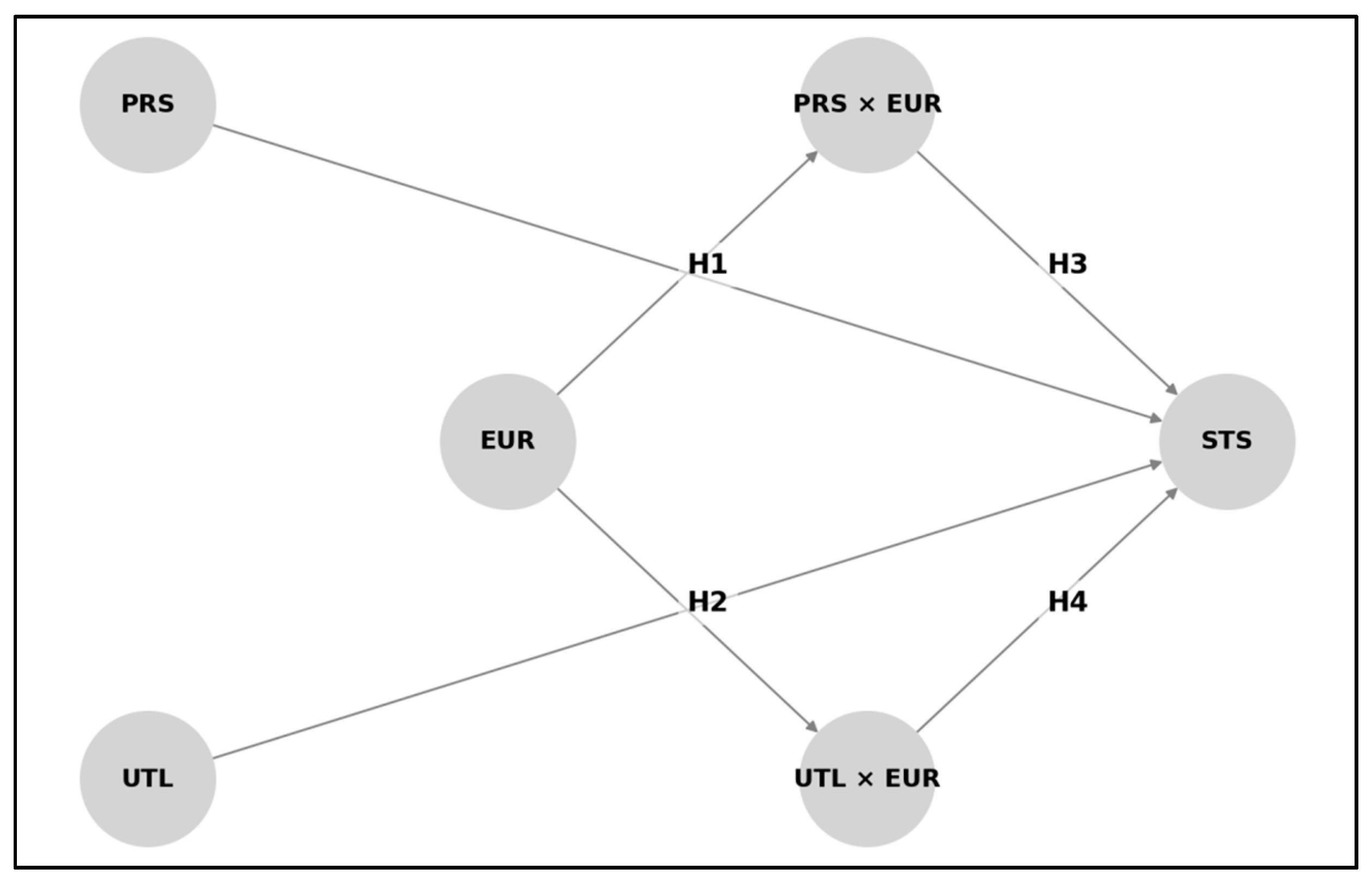
The findings of Yanan et al. [34] based on a literature review show that research on rural tourism has mainly been viewed from the perspective of meeting the needs of tourists, rather than the needs of the local population. They argue that “sustainable tourism development has been approached from a tourism-centric perspective, with an emphasis on ensuring the sustainability of tourism itself” [34] (p. 3). Within this context, and in relation to the present study, an important issue arises regarding the attitudes of local residents and tourists towards the preservation of vernacular architecture and tourism development; thus, the hypothesis is formulated as follows:
H1: 
The perception of the preservation of vernacular architecture by local residents and tourists (PRS) has a positive effect on attitudes towards sustainable tourism (STS).
The findings of diverse research indicate challenges arising from the increasing pressure and strain on tourism resources [46]. In their study of the Yellow River Source National Park in China, Zeng et al. [47] suggest that ecotourists and local residents mainly hold a positive attitude towards the preservation of environmental and cultural heritage, but also identify conflicts arising from differences in landscape utilization preferences between tourists, tourism enterprises, and residents. In their study on the motivation and perception of tourists visiting the Apuseni Natural Park in Romania, Telbisz et al. [48] show visitors recognize the importance of natural resources and attractions, but also have a relatively low level of awareness of some specific natural features, such as karst. According to Trišić et al. [49], sustainable tourism can be achieved when its development simultaneously enhances local livelihoods and improves visitor experience. Abadi and Khakzand [50] in their study of Charqoli village in Iran showed that when local actors recognize that tourism depends on renewable, locally embedded resources, such as traditional farming, local materials, and ecological production, they develop stronger pro-sustainability attitudes. Therefore, the effective utilization of local resources in vernacular tourism fosters positive attitudes toward sustainable tourist practice; thus, the next hypothesis was developed:
H2: 
Resource utilization in the context of vernacular tourism (UTL) has a positive effect on attitudes among local residents and tourists towards sustainable tourism (STS).
Vernacular heritage is often viewed in the context of local identity, authenticity, and continuity of culture [51]. These perceptions, however, can also restrict its modern use, since communities may seek to avoid commodification and cultural loss processes [44,52,53,54]. In this regard, Frullo and Mattone [43] argue that proposals for the new use of vernacular heritage should follow the needs and interests of both actors, local residents who live and maintain these structures (“insiders”), as well as tourists (“outsiders”) who find this type of heritage interesting and can represent a source of economic resources necessary to preserve heritage over time. International policy frameworks [8,55], including recent initiatives, such as the New European Bauhaus [56] and the 2022 Mondiacult [57], have offered mechanisms that support environmental responsibility and sustainable utilization of cultural goods and services to overcome this challenge. The subsequent hypothesis is developed as
H3: 
Perceptions of local residents and tourists regarding the interaction between the preservation of vernacular architecture and EU regulations (PRS × EUR) have a significant effect on attitudes towards sustainable tourism (STS).
In the Serbian context, EU-supported programs in rural tourism and cultural heritage protection contributed to the inclusion of sustainability standards, fostering the integration of vernacular architecture into the tourism offer [58]. Within the framework of the introduction of sustainable tourism practices, the models of management that involve the participation of stakeholders, tourism diversification, and integrated sustainability indicators are habitually encouraged by EU-supported programs [59,60]. However, the translation of these policy frameworks to practice is still uneven. There is a tendency towards poor regulatory enforcement, weak institutional coordination, and a lack of financial and technical capacities in local heritage protection, especially in depopulated and economically disadvantaged rural localities [61]. It can therefore be expected that the interaction between perceived effectiveness of heritage conservation and the visible influence of EU regulatory frameworks significantly shapes public perceptions and levels of support for sustainable tourism development; thus, the last hypothesis is developed as
H4: 
The interaction between resource utilization and EU regulations (UTL × EUR) has a significant effect on attitudes of local residents and tourists towards sustainable tourism (STS).
Environmental attitudes are frequently measured using the Two Major Environmental Values (2-MEV) model, which distinguishes between preservation and utilization of natural resources, which is of specific significance in sustainable tourism studies. For example, Varah et al. [62] showed that education raises environmental awareness, but such knowledge does not necessarily lead to action. Reis Neto et al. [63] confirmed the 2-MEV model using structural modeling and quantile regression, although applications in large part remain confined to a student population. In more recent works, Schmäing and Grotjohann [64,65] examined whether non-formal education can improve the environmental awareness of students, proving that field activities play an important role in providing more knowledge and a better attitude to nature. However, the question arises whether the same can be applied to adult tourists who usually arrive with already held attitudes. Within the framework of the perception of environmental limits in tourism, Peters and Fuchs [66] examined the perceptions of tourists towards nature protection in the protected areas. They found that participants who have stronger preservationist attitudes accept the restrictions better. In contrast, those who have stronger beneficial attitudes have a negative attitude towards the restrictions as a barrier to satisfaction. Nevertheless, their research fails to consider the effect of destination policies and marketing strategies that can inform how tourists perceive constraints. This leads to the question of the effectiveness of tourism destinations to communicate sustainable behaviors, particularly in the rural and ecotourism setting, where tourist education may be prominent in the adoption of environmental laws. Based on these findings, this study adapts the 2-MEV concept for tourism within a unified theoretical framework that incorporates both heritage preservation and resource utilization with EU regulatory perception Figure 1.

3. Materials and Methods

3.1. Study Area

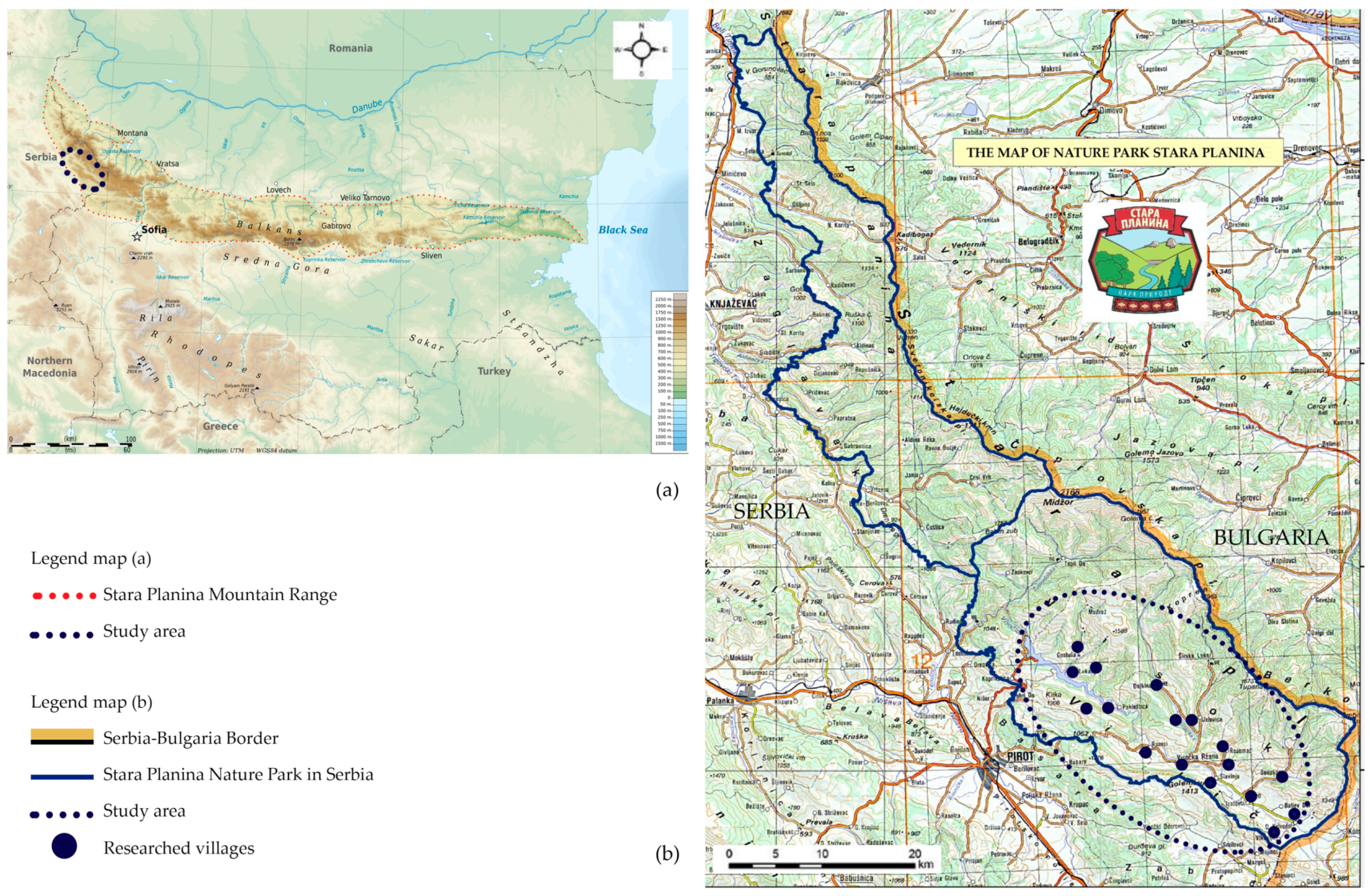
The Stara Planina mountain range, also named the Balkan Mountains, is part of the Carpathian-Balkan Mountains, 530 km long (Figure 2a). One-fifth of the range is in Serbia, and the rest is in Bulgaria. The research area is located in the southeast of Serbia, including the mountain villages in the Upper, Middle, and Lower Visok and Zabrđ areas (Figure 2b). The research area contains the highest concentration of zones enjoying high, first, and second degrees of protection, indicating that they contain natural and cultural values of special importance [67].
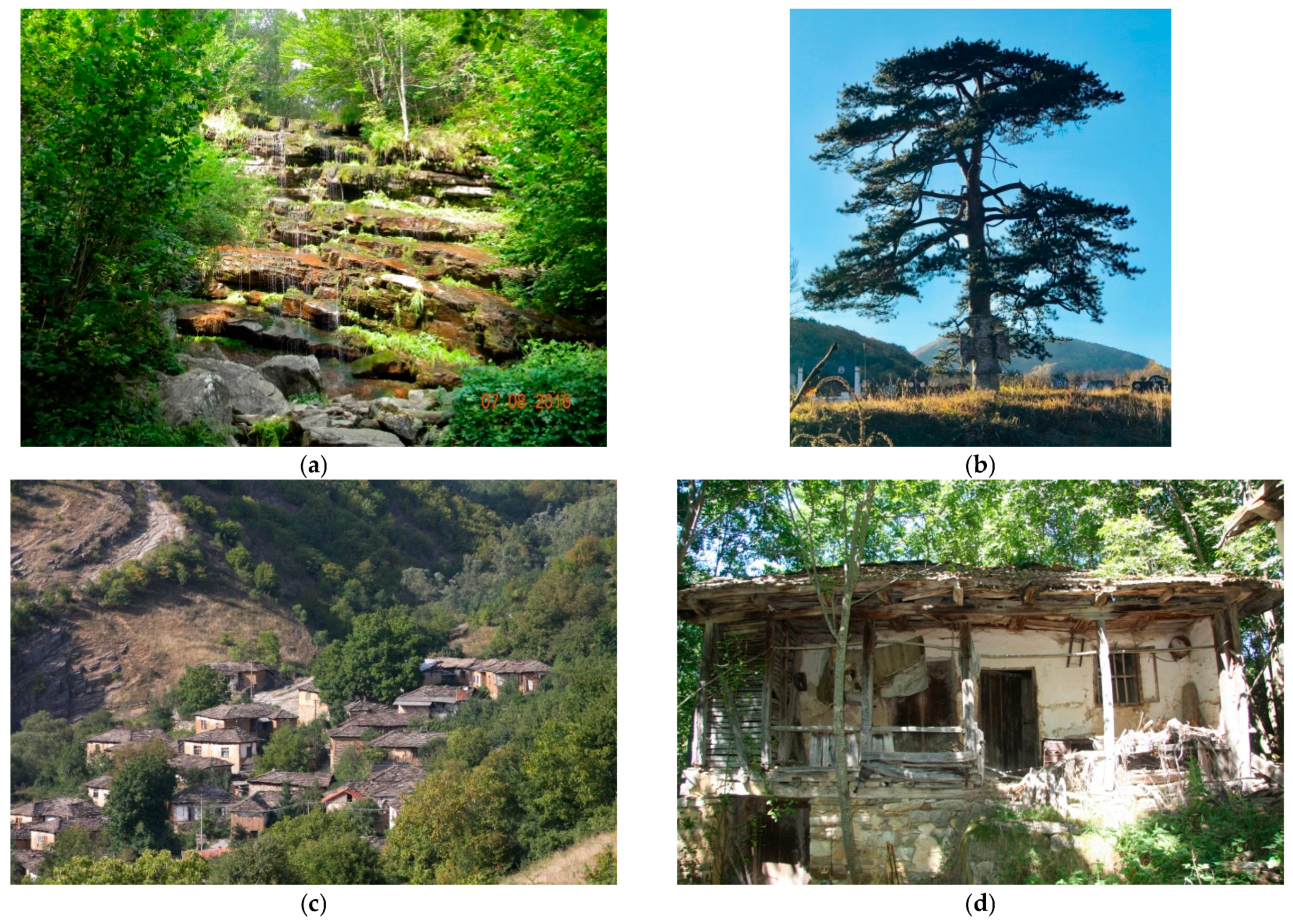
Stara Planina is characterized by various geomorphological, geological, hydrological, and hydrogeological features and places, such as Tupavica waterfalls, Slavinjsko grlo, Senokoški waterfall, Petrlaška cave, Ponor and many others, which represent natural attractions (Figure 3a,b). In the Visok area, geoheritage objects such as the fossil-bearing Rsovci-Jelovica stratum (where layers of the Triassic, Jurassic and Lower Cretaceous alternate) and the Senokos-Rosomač stratum (a profile of Jurassic sediments) are particularly significant [69].
The architecture of the Stara Planina villages represents a distinctive and inventive form created by the hands of local builders, with buildings that have been built since the beginning of the 19th century. The beauty of the traditional houses of Stara Planina is reflected in their spatial and structural elements, as well as in specific architectural and decorative details [70]. Through the continuous evolution of spatial organization schemes and building techniques that relied exclusively on locally available natural materials, human-scaled houses comfortable for living were created.
According to construction methods and techniques, the area of Stara Planina was initially characterized by log and semi-log houses, and later, as the bondruk structural system replaced the earlier building system, other types emerged, such as čatmare, kovanice, tuglare, and ćerpičare [24]. Roofs covered with stone slabs from nearby quarries represent a particular value of this vernacular heritage (Figure 3c). In the area of Stara Planina, numerous valuable examples of vernacular residential architecture have been officially recognized and recorded [71]. However, due to neglect, disuse, and the inherent properties of the natural materials applied, many buildings have collapsed or become unusable [23] (Figure 3d).
The revitalization of rural settlements represents a major socio-economic and demographic challenge faced by the Stara Planina region in Serbia [72,73]. Various initiatives have been launched to preserve traditional rural architecture [58], including smaller economic and tourism-related activities that, however, failed to ensure continuity [74]. More significant tourism activities on Stara Planina developed during and after the COVID-19 pandemic, with natural heritage and vernacular architecture forming the basis of the tourist offer. In this context, the study examined the attitudes of local residents and tourists regarding the role of preserving vernacular landscapes and heritage in the framework of sustainable tourism.

3.2. Survey Implementation and Sample Overview

Initial research in the study area was conducted within the framework of the project “Preservation of Traditional Musical and Architectural Heritage in the Republic of Serbia” (January 2023–December 2025). This included field visits, research into natural heritage and the vernacular architecture, interviews with experts and local residents, as well as a survey among local residents and tourists visiting this area. The survey, discussed in this paper, was conducted in the period from December 2024 to June 2025 and included 841 respondents, among whom 502 were tourists, while 339 were members of the local population, including residents of villages with preserved vernacular architecture and the wider rural area. Considering the characteristics of the respondents and the objectives of the research, the data were collected exclusively in the field, without using online methods, to ensure the inclusion of elderly participants and individuals with limited digital literacy. The survey was conducted through direct interviews, where two methodological techniques were used. For older respondents and those with a lower level of education, the PAPI (Paper and Pencil Interviewing) method was used, in which answers were written down on printed questionnaires [75]. With younger and more technologically literate respondents, the CAPI (Computer-Assisted Personal Interviewing) method was used [76], where the interviewers entered answers directly into the digital database via a tablet, which enabled more accurate data recording and reduced the possibility of processing errors. Before conducting the main phase of the research, a pilot study was conducted on a sample of 50 respondents, including tourists and local residents. This phase enabled the assessment of the comprehensibility of the questionnaire and its adaptability to different groups of respondents, especially older people and those with a lower level of education. Based on the feedback received, individual questions were further simplified and refined to ensure full understanding of all research claims and concepts. The consulted specialists were the representatives of the national and local institutions, such as the representatives of the Institute of Protection of Cultural Monuments of Serbia, the Ministry of Tourism and Youth, and the local offices of the Stara Planina Nature Park management. It was made clear to all the experts that their professional feedback would only be used to advance the research design, not to evaluate the research. They signed a written consent, which stated that they were purely voluntary participants and that their recommendations might be incorporated in the methodological framework of this research. Their primary suggestions involved simplification of terminology used in the survey questions, and the addition of a number of questions which were associated with local tourism governance and cultural heritage interpretation and this was later taken up in the final version of the questionnaire. The research was conducted by trained interviewers who had previously undergone training on the correct application of methodology and ethical guidelines in working with respondents.
The research was conducted in accordance with the principles of anonymity and confidentiality, in order to reduce potential moral hazard and ensure honest answers from the participants. This approach enabled the collection of reliable and representative data, which forms the basis for further analysis of the relationship between sustainable tourism and the preservation of cultural heritage in the area of Stara Planina. The representativeness of the sample was confirmed using the G*Power test (version 3.1), which calculated the required sample sizes based on predefined research parameters [77]. The analysis was carried out for structural equation modeling (SEM) and the Random Forest model, where the following parameters were used: for the SEM model (effect size f2 = 0.12, significance level α = 0.05, power of the test 1-β = 0.95, expected number of latent variables = 4, number of observed variables = 20 [78], while for the Random Forest model the parameters were used (minimum number of trees = 500, maximum depth trees = 10, minimum number of samples per leaf = 5) [79]. The obtained results indicated that the minimum required sample for reliable analyses was 780 respondents for the SEM model and 800 respondents for the Random Forest model, which confirms that the collected sample size of 841 respondents provides adequate statistical power and valid analyses.
The sample is generationally diverse, with the largest share of Millennials (28.89%) and Generation X (25.68%), while other groups have a similar representation. Gender distribution is balanced in all categories. The majority of respondents from Gen Z are students (95 out of 134), but a significant number already have a university degree (50), which indicates the presence of young people who completed their studies quickly. Among Millennials and older generations, the majority of respondents are employed, while unemployment is lowest among the Gen X and Boomers groups. The educational structure shows that younger generations mostly have high school or basic academic studies, while older generations have more MSc and PhD qualifications, which is expected due to longer education and professional development (Table 1).
The scope of the generational classification applied in the present study relies on the principles suggested by the Pew Research Center [80]: Generation Z (born 19972012), Millennials/Generation Y (19811996), Generation X (19651980), Late boomers (19551964), and Early boomers/Silent Generation (before 1955). This classification is categorical in nature to guarantee conceptual clarity and cross-cultural comparability, which identifies that the boundaries between generations can be a bit different in different sociocultural environments.

3.3. Measurements

This research uses a measurement model based on the work of Surat et al. [81], who examined the environmental attitudes of local communities towards the preservation of cultural landscapes, as well as the Two Major Environmental Values (2-MEV) model, which was first developed by Bogner and Wiseman [82] in order to quantify environmental attitudes and values. This model was later extended and validated in different contexts of environmental protection, sustainable tourism, and environmental education [83,84,85]. The 2-MEV model is based on the distinction between preservation (PRS) and utilization (UTL) of natural resources, where preservation refers to attitudes that support the protection of natural and cultural heritage, while utilization implies the perception of benefits from the exploitation of resources for the purpose of economic development. Due to its wide application in sustainability research, this model was also adapted in our research to analyze the perception of vernacular heritage and sustainable tourism. The validity and reliability of the measurement scales were checked using confirmatory factor analysis (CFA), Cronbach’s α coefficient, and indicators of convergent and discriminant validity (AVE, CR, HTMT). The novelty of the model is reflected in the integration of the classic constructs of the 2-MEV model with the dimensions of sustainable tourism and European regulations, thus expanding the application of this approach in cultural heritage research.
The measurement instrument includes several latent factors, with the key constructs preservation (PRS) and utilization (UTL) taken from the 2-MEV model, while additional factors support for sustainable tourism (STS) and EU regulations (EUR) were developed based on the literature on tourism policies and sustainability. In order to examine the moderating effect of EU regulations (EUR), a moderator was added to the model, in accordance with the theoretical framework proposed in the research of Surat et al. [81]. All constructs were measured using a seven-point Likert scale (1 = strongly agree to 7 = strongly disagree), allowing respondents to express different degrees of agreement with the statements (Table 2).
The novelty in data collection is reflected in the combination of expert interviews and survey research, which enabled a deeper understanding of the perception of sustainable tourism and heritage from different perspectives. The structure of the research model was additionally innovated by including the moderating variable of EU regulations (EUR), which until now was not part of the standard 2-MEV framework, expanding the research in the direction of linking environmental values and management policies in the context of tourism.

3.4. Data Analysis

All statistical analyses were performed using SPSS v.29 for descriptive and correlation analyses, SmartPLS v.4 for SEM and MGA, and Python 3.11 (scikit-learn, pandas, numpy) for machine learning and clustering models. Both parametric and non-parametric analytical techniques were employed in this research. Parametric procedures included correlation analysis (Pearson’s r), exploratory and confirmatory factor analyses (EFA, CFA), and SEM analysis applied within the PLS framework. These methods rely on assumptions of linearity and normal distribution to assess relationships between constructs. In addition, several non-parametric and algorithmic procedures were used, such as K-Means clustering and Harman’s single-factor test, which do not assume normality of data distribution. The combination of parametric and non-parametric methods ensured robustness and validity of the findings.
Descriptive statistics (means, standard deviations, and factor loadings) were calculated to examine central tendencies and variability of responses, as well as to assess initial reliability indicators. Correlation analysis using Pearson’s r coefficients was applied to explore the strength and direction of relationships among the constructs before conducting factor analyses [86].
The analysis of the latent factor structure was carried out using exploratory factor analysis (EFA) with Varimax rotation, in order to achieve the maximum interpretability of the constructs for both investigated groups [87]. The adequacy of the sample was confirmed by the Kaiser-Meyer-Olkin (KMO) test, where the obtained values indicated a high quality of data for factor analysis, both among tourists (0.847) and among the local population (0.829) (values above 0.80 indicate meritorious adequacy, 0.70–0.79 are considered middling, and below 0.60 suggest unsatisfactory adequacy for factor extraction [88]. Bartlett’s test of sphericity was significant in both cases (χ2 = 2453.76; p < 0.001 for tourists and χ2 = 2389.42; p < 0.001 for locals), confirming that the variables are sufficiently correlated for further analysis [89].
In accordance with Kaiser’s criterion (Eigenvalue > 1), the factors were separated, with the total explained variance amounting to 61.38% for tourists, while for the local population, it is slightly lower and amounts to 58.92%, which indicates adequate representativeness of the constructs in both groups [90]. In order to confirm the stability of the factor structure, a confirmatory factor analysis (CFA) was conducted within the framework of SEM, whereby the obtained model fit indicators showed high validity [91]. The values of the comparative fit index (CFI = 0.964), the Tucker–Lewis index (TLI = 0.953), the square root mean square error of approximation (RMSEA = 0.054), and the standardized root mean square of the residual values (SRMR = 0.047) show that the model fits the empirical data well on the sample of tourists. The indicators among the local population are a little less, but the indicators remain within acceptable ranges (CFI = 0.955, TLI = 0.973, RMSEA = 0.059, SRMR = 0.049), and it proves the stability of the factor structure. The extracted variance (AVE) was used to assess convergent validity, that is, the degree to which items of the same construct share a high proportion of common variance [78]. The AVE values ranging from 0.658 to 0.712 for tourists and 0.658 to 0.714 for the local population confirm that each construct explains more than 50% of the variance of its observed indicators, which is above the recommended threshold (AVE ≥ 0.50). This result confirms that the latent factors are well defined and that their measurement items consistently represent the same underlying dimension [92]. Both samples had an average variance extracted (AVE) that was above 0.50, and composite reliability (CR) surpassed 0.70, which supported the convergent validity of the model [93]. These findings show that the latent dimensions are sufficiently explained and that the model and the data gathered agree with each other to a satisfactory level [94,95].
To ensure discriminant validity and to control for potential multicollinearity, the Variance Inflation Factor (VIF) was examined, where values below 5 indicated acceptable levels [96]. Discriminant validity was further assessed using the Fornell–Larcker criterion and the Heterotrait-Monotrait (HTMT) ratio, ensuring that each construct was sufficiently distinct from the others [92,97]. To identify significant differences in structural relationships between tourists and local residents, an MGA was performed [97]. In addition, a K-Means clustering algorithm was applied to segment respondents based on their attitudes toward sustainable tourism. The optimal number of clusters was determined using the Elbow method, and the validity of cluster separation was confirmed through Silhouette, Dunn, and Calinski–Harabasz indices [98].
The key factors that determine the differences between the generations in the perception of sustainable tourism were analyzed with the help of the Machine Learning models, such as the Random Forest and Gradient Boosting, to identify such factors [99]. The models were coded in the Python ecosystem, with a training and evaluation of models performed with the scikit-learn libraries, and data processing performed with pandas and numpy. Model performance was evaluated using precision, recall, F1-score, and accuracy metrics [100].
Procedural remedies were used in order to reduce possible common method bias during the data collection process, such as randomization of items and guaranteeing respondent anonymity. Also, a single-factor test by Harman was performed to statistically analyze the existence of bias. The unrotated exploratory factor analysis created six factors whose eigenvalues were above 1.0, and their cumulative variance was 67.84%. The former accounted for 29.7 percent of the overall variation, which is significantly less than the mark of 50 percent, and demonstrates that no issue of common method bias was in place. These findings verify that systematic response bias was not a threat to the internal validity of the study.

4. Results

4.1. Descriptive and Factor Analysis

The data in Table 3 indicate differences in the perception of sustainable tourism between tourists and the local population, whereby tourists are generally more inclined to support the preservation of cultural and natural heritage, while the local population shows greater pragmatism in relation to the economic exploitation of resources. The standard deviations show that the responses of local residents are somewhat more variable, while tourists have more pronounced attitudes in favor of sustainable practices. Factor reliability (Cronbach’s alpha) is satisfactory in both groups, whereby the constructs are uniformly validated through factor loadings. Most respondents to the question of what they tend to use as their sources of information about heritage conservation, the majority of respondents (approximately 44% of them) said that they turn mostly to social media and local cultural events when seeking information. About 27% of candidates cited television and radio shows, and about 18% cited institutional websites and online portals operated by public heritage bodies. The smaller percentage of 11 percent reported that they obtain such information from printed materials, brochures, or even educational programs held at local levels. These findings prove that informal and community-based channels of communication still prevail in delivering information on the protection of the heritage, whereas formal institutional channels are still minor. This observation explains the need to reinforce institutional strategies of outreach to tourists and create more consistent education and policy communication instruments to facilitate awareness on heritage conservation amongst tourists and the local communities.
The findings of the exploratory (EFA) and confirmatory factor analysis (CFA) provide evidence of the stability of the constructs and the satisfactory validity of the model using both groups of respondents. The internal consistency of the factor is high and Cronbach alpha (α) is above 0.70, the composite reliability (CR) is above 0.70, and the values of composite reliability (CR) and alpha are above 0.70, which demonstrate a good measurement structure (according to Hair et al. [78] values above 0.90 indicate excellent reliability, 0.80–0.89 good reliability, 0.70–0.79 acceptable, 0.60–0.69 questionable, 0.50–0.59 poor, and below 0.50 unacceptable). Values above 0.70 are generally considered satisfactory for research purposes, confirming that items within each factor are internally consistent. The extracted variance (AVE) is more than 0.50, which proves sufficient convergent validation. The conservation factor (PRS) exhibits the greatest explained variance (67.45%) among the tourists, which demonstrates that the attitudes regarding the significance of cultural and natural heritage protection are highly expressed. The resource use factor (UTL) explains the greatest percentage (65.08) among the local population, indicating a greater interest in the economic issues of tourism. This result proves that people who visit a destination tend to be more willing to practice sustainability, whereas the local population is more practical in pursuing the economic gains of tourism. The confirmatory factor analysis also verifies that all the factors are modeled well, as the Eigenvalues (Ei) and the percentage of explained variance (% Var) are satisfactory (Table 4).

4.2. Correlation Analysis

The results of the correlation analysis show a moderate association between the factors, with positive correlations between conservation (PRS) and support for sustainable tourism (STS) (r = 0.421), indicating that greater awareness of the preservation of cultural and natural heritage encourages support for sustainable practices. Similarly, EU regulations (EUR) show a positive correlation with STS (r = 0.412), which confirms the role of policies in promoting sustainable approaches to tourism. The negative correlation between conservation (PRS) and EU regulations (EUR) (r = −0.278) suggests that regulations alone do not guarantee heritage protection if they are not aligned with local priorities. On the other hand, the correlation between resource utilization (UTL) and EU regulations (r = 0.298) shows that the economic valorization of tourist destinations can be supported by regulations, but also that there is a certain conflict between the economic and ecological dimensions of sustainability. The interaction variables PRS_EUR and UTL_EUR, which represent the combined effects of conservation and resource utilization in the context of EU regulations, further confirm these trends. The positive correlation between PRS_EUR and PRS (r = 0.356) suggests that EU regulations can act as a mechanism to protect cultural heritage, while the negative correlation between UTL_EUR and EUR (r = −0.316) indicates that stricter regulations can limit economic opportunities in tourism (Table 5).

4.3. Results of SEM and MGA

Structural equation modeling (SEM) was applied to analyze the relationships between key factors that influence the perception of sustainable tourism by tourists and local residents. To ensure model validity and reliability, additional analyses, including multicollinearity, convergent, and discriminant validity, were conducted. The Variance Inflation Factor (VIF) analysis showed that no variable had a problem with multiple collinearity, with all values below 5.0, which is within acceptable limits (VIF ≤ 5.0). This result confirms that there is no significant overlap between the factors that could affect the stability of the model. By testing the Heterotrait–Monotrait Ratio (HTMT) criterion, the values were below the recommended threshold of 0.85, which confirms the adequate discriminant validity of the constructs (HTMT < 0.85). This means that the investigated factors are clearly distinguished from each other and that there is no significant overlap in their measurement. For an additional check of discriminant validity, the Fornell–Larcker criterion was implemented, which confirmed that the root Average Variance Extracted (AVE) for each latent factor is greater than its correlations with other factors (AVE > mutual correlations), which indicates that each latent variable explains more variance within its indicators than it shares with other constructs.
The output of the SEM model in SmartPLS was the coefficient of determination (R2), which indicated the proportion of the variation in the endogenous variable Support of Sustainable Tourism (STS) that was explained by the exogenous latent variables Preservation (PRS), Utilization (UTL) and EU Regulations (EUR). The R2 of 0.612 and 0.534 with the tourists and the local population mean that 61.2 and 53.4% of the variance in STS is accounted for by the predictive factors that are put in the model, respectively. These values are not outside the framework of substantial explanatory power as given by Hair et al. [78] (R2 ≥ 0.50) and confirm that the proposed model offers an adequate amount of predictive power in both groups. The results of the model evaluation show a good fit of the data in both groups, with the values of χ2/df, RMSEA, and SRMR being within acceptable limits, which confirms the stability of the model. High values of CFI and NFI indicate a good adaptation of the model to empirical data (Table 6).
The results of the SEM analysis show that the direct effects of the unmoderated factors Preservation (PRS) and Utilization (UTL) on Sustainable Tourism Support (STS) indicate a significant relationship, with Utilization having a stronger influence in both groups. Indirect effects, which represent moderation through EU regulations (EUR), further strengthen the influence of these factors on STS, with their contribution being more pronounced among the local population (Table 7).
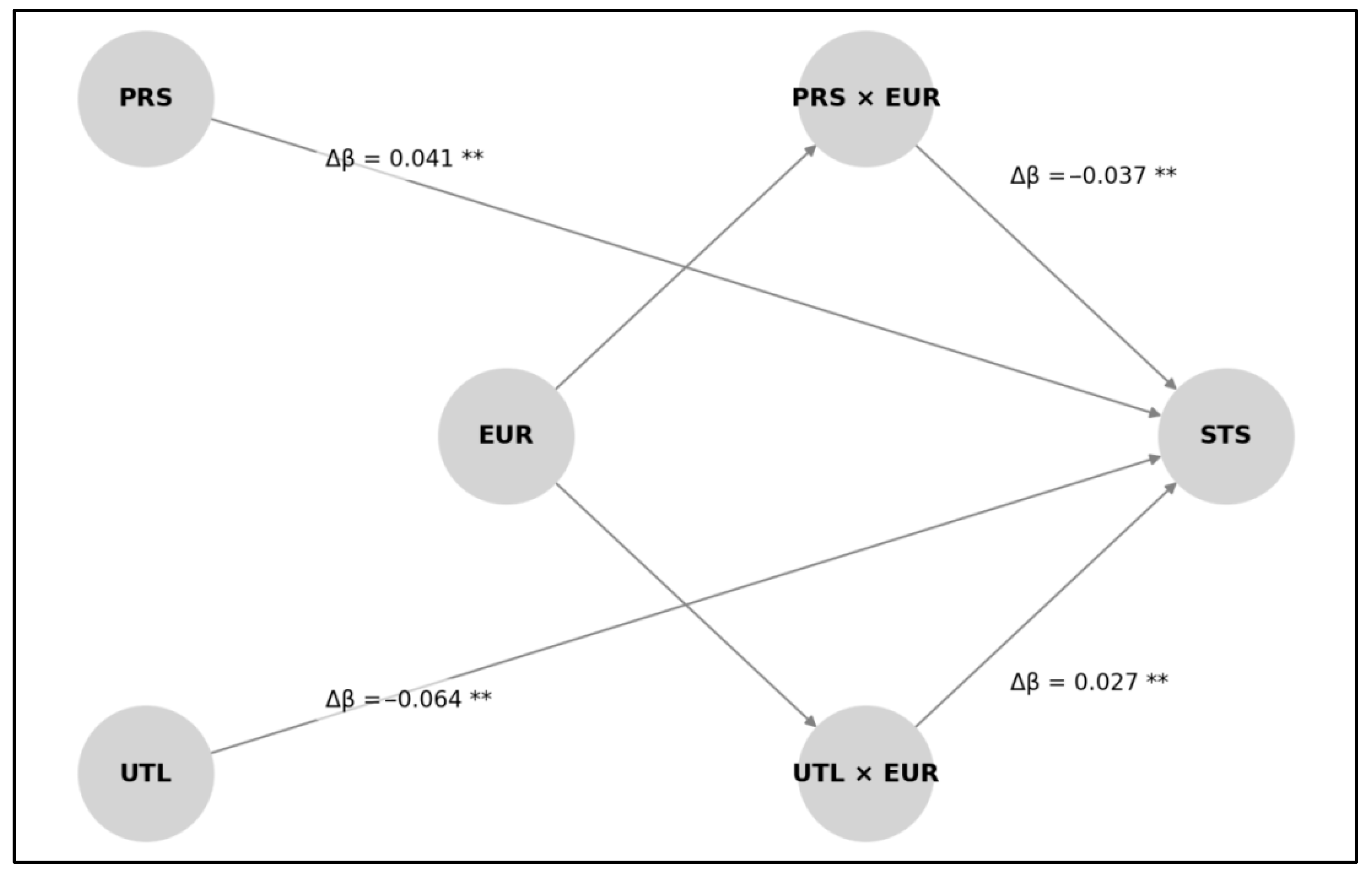
In both groups, the preservation of cultural and natural heritage (H1: PRS → STS) has a positive and significant effect on the perception of sustainable tourism, but this effect is somewhat more pronounced among tourists (β = 0.512, p = 0.012) than among local residents (β = 0.471, p = 0.008). This suggests that tourists are more inclined to associate conservation with sustainable tourism, while the local community, although positively evaluating the importance of heritage protection, takes economic aspects into account to a greater extent. On the other hand, resource utilization (UTL) shows a statistically significant effect on STS in both groups (H2: UTL → STS), but this effect is stronger among local residents (β = 0.502, p = 0.014) than among tourists (β = 0.438, p = 0.021). These results indicate that the local population attaches greater importance to the economic benefits of tourism compared to tourists, who are more inclined towards more sustainable practices. The combined effects of conservation and EU regulation (H3: PRS × EUR → STS) have a positive impact on support for sustainable tourism, but this effect is more pronounced among local residents (β = 0.328, p = 0.039) than among tourists (β = 0.291, p = 0.046). This may indicate that the local community recognizes EU regulations as a useful framework for the protection of cultural and natural heritage, while tourists, although they support conservation, rely less on formal regulations. In the case of the interaction of resource use and EU regulations (H4: UTL × EUR → STS), the effects are similar in both groups, but are somewhat more pronounced among tourists (β = 0.376, p = 0.029) compared to local residents (β = 0.349, p = 0.032). These results suggest that EU regulations can act as a stabilizer between tourism development and resource protection, whereby tourists value regulations to a greater extent as a guarantee of sustainable tourism practices (Table 8).
The results of the multiple group analysis (MGA) show clear differences in the perception of sustainable tourism between tourists and local residents. Heritage preservation (PRS → STS) has a stronger influence among tourists (β = 0.512) than among local residents (β = 0.471), which indicates that tourists value the protection of cultural heritage more within the framework of sustainable tourism. On the other hand, the use of resources (UTL → STS) has a greater influence among local residents (β = 0.502) than among tourists (β = 0.438), which indicates a stronger economic orientation of locals. These differences were confirmed by statistically significant values of Δβ.
The effect of European regulations further highlights the differences between groups. The interaction of heritage preservation and EU regulations (PRS × EUR → STS) has a greater influence among local residents (β = 0.328) than among tourists (β = 0.291), which indicates that regulations additionally strengthen local awareness of the importance of protection. In contrast, the interaction of resource utilization and EU regulations (UTL × EUR → STS) shows the opposite trend, where tourists have a slightly stronger influence (β = 0.376) compared to local residents (β = 0.349), suggesting that regulations can reduce tourists’ concerns about resource exploitation. The values of Q2 confirm the predictive relevance of the model in both groups, while the differences in f2 indicate a stronger effect of UTL → STS in the local population (Table 9).
European regulations (EUR) act as a significant moderator in the relationship between key factors and sustainable tourism (STS). The effects of heritage preservation and resource utilization differ significantly depending on the interaction with EU regulations, whereby changes are observed in the intensity of the impact on the perception of sustainable tourism. The role of the EUR further emphasizes the need for policies that balance the preservation of cultural heritage and the economic viability of tourist destinations (Figure 4).

4.4. Examination of Differences Between Generational Groups

To analyze the demographic characteristics of the cluster, K-Means clustering (k = 4) was used, which enables the grouping of respondents based on their views on sustainable tourism. The analysis was performed in Python using the scikit-learn library, while the optimal number of clusters was determined using the Elbow method, where the inflection point was observed at k = 4, which confirms the stability of the clustering. Validation of the model was carried out using the Silhouette Score (0.47), which confirmed a clear separation of the clusters, while the Dunn Index (2.13) indicated a good distance between the groups. Additional validation using the Calinski–Harabasz index (382.41) confirmed the consistency of the cluster structure. Pro-ecological tourists (Cluster 0) have the most positive attitude towards the preservation of vernacular heritage and natural resources, strongly support environmental measures and EU regulations, and are characterized by higher education and an average age of 35.4 years, with equal gender representation. Pragmatic visitors (Cluster 1) recognize the value of sustainability, but accept it only if it does not threaten their tourist experience and economic benefits, while the respondents are younger (average 29.1 years), with a higher proportion of women (60%). The local population with an economic orientation (Cluster 2) prioritizes the economic benefit of tourism and shows lower support for stricter environmental regulations, especially those they consider an obstacle to local development, while they are predominantly older respondents (41.8 years old), with a higher proportion of men (55%). The indeterminate group (Cluster 3) does not have clearly expressed attitudes towards sustainability, oscillates between environmental awareness and economic benefits, where the respondents are represented with an average age of 37.2 years, with an even gender distribution and a heterogeneous educational structure (Table 10).
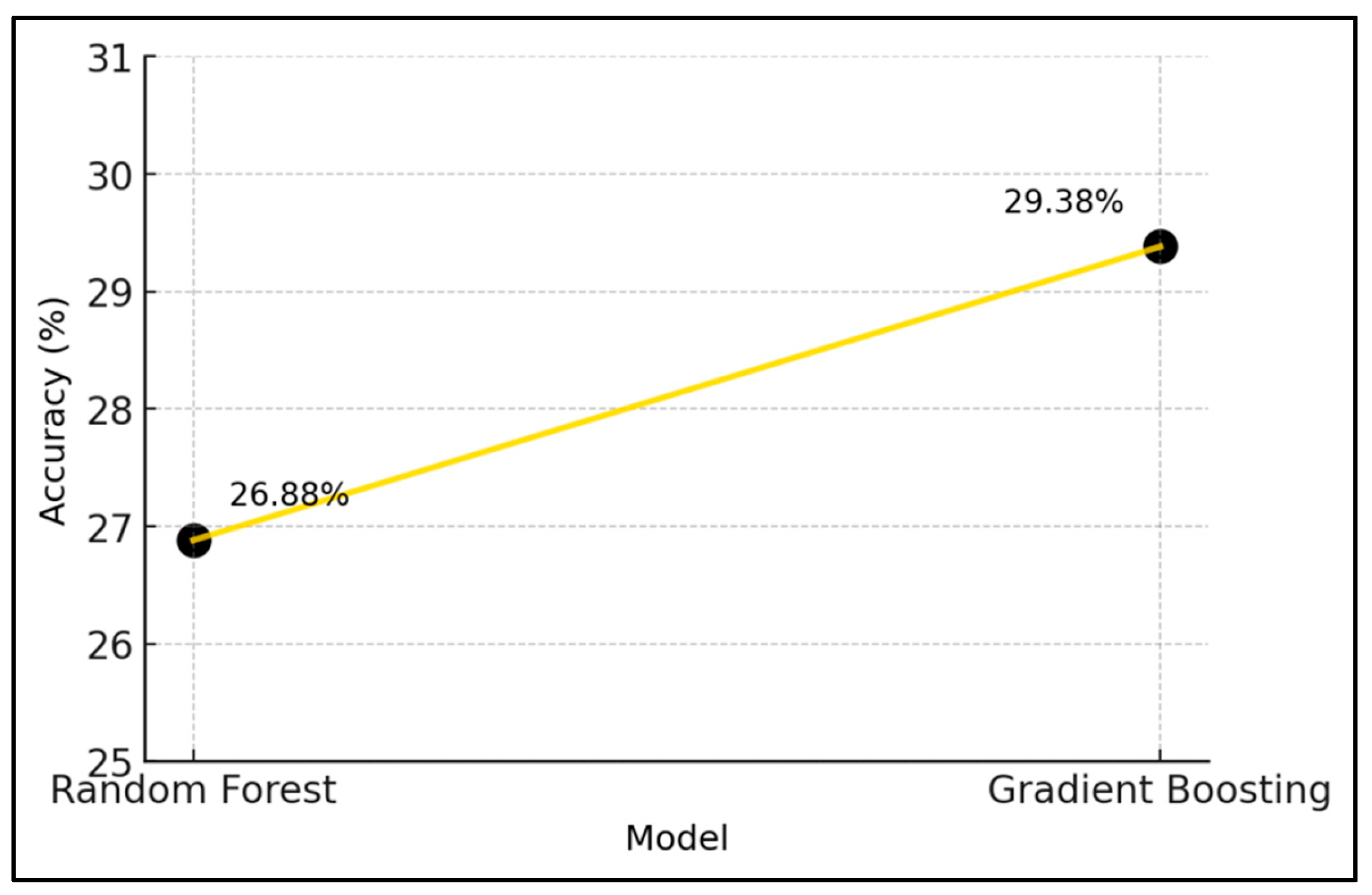
Random Forest and Gradient Boosting, implemented in Python using the scikit-learn library, were used to analyze the differences between the generation and the other groups. The model was trained on the data obtained from the previous SEM analysis. The accuracy of the model for the classification of all generations is relatively low, indicating challenges in distinguishing between generations when only factors from SEM analysis are used. The yellow line shows the comparative accuracy trend between the two machine learning models, Random Forest and Gradient Boosting. Its role is to visually show the increase in performance (Figure 5). Although both models showed limited accuracy, Gradient Boosting provided slightly better results compared to Random Forest, with an accuracy of 29.38% compared to 26.88% for Random Forest. This suggests that while the models provide useful insights, there is room for improvement, which may include adding more factors or optimizing the model to achieve greater accuracy in generation classification.
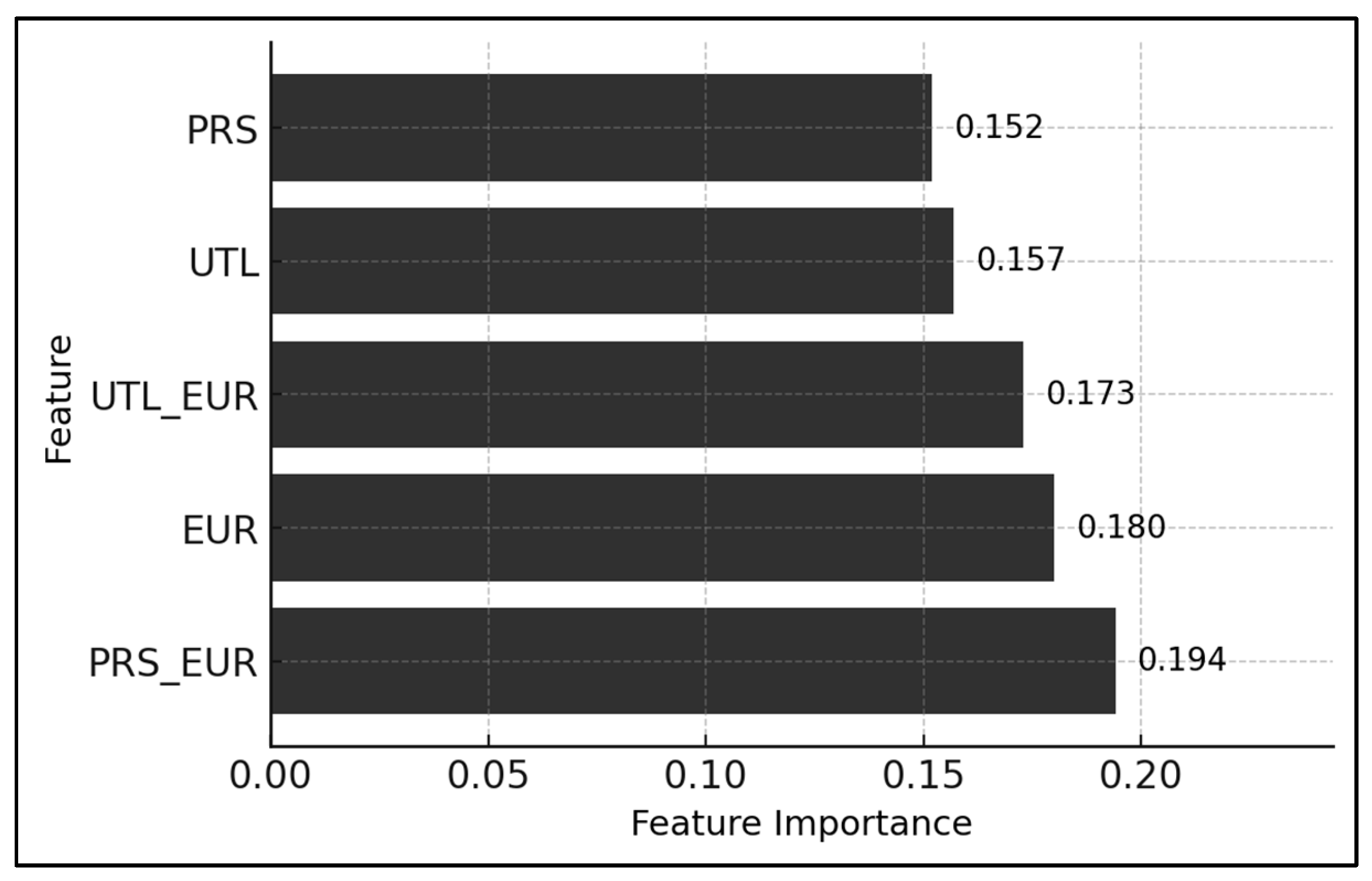
The analysis shows that the interaction between resource utilization and EU regulations (PRS_EUR) has the greatest influence on generational prediction, which suggests that EU regulations, together with the perception of heritage conservation, play a key role in differentiating attitudes between generations. EU regulations (EUR) and resource utilization in the EU context (UTL_EUR) also stand out as important factors shaping attitudes towards sustainable tourism among different generations. These results indicate that EU regulations and heritage conservation are keys to shaping attitudes about sustainable tourism across generations, while resource utilization plays an important role, but to a lesser extent (Figure 6).
Analysis of the accuracy of the generation classification model shows that the Z generation is best recognized, with the highest values of precision and sensitivity, while the other generations have significantly lower values. The accuracy for Generation Z is 31.88%, while the sensitivity is 43.14%, which indicates that the model identifies this group relatively well. Millennials and Gen X have similar results, with slightly lower accuracies and sensitivities, indicating greater overlap in attitudes between these generations. Boomers are the most difficult to classify, with very low values of sensitivity (3.57%) and F1-score (5.41%), which suggests that the model hardly distinguishes their attitudes from other groups (Table 11).

5. Discussion

The results of the research clearly indicate that perceptions of sustainable tourism among tourists and the local population are not homogeneous but are deeply conditioned by value approaches to the preservation and economic use of cultural and natural heritage. The obtained correlation coefficients (r = 0.421 between PRS and STS) confirm that awareness of heritage preservation directly encourages support for sustainable tourism, which is in line with the research of Abadi and Khakzand [50] and García-Esparza and Altaba Tena [44], who showed that the authenticity of cultural landscapes contributes to the perception of tourism quality and long-term sustainability. Therefore, it affirms that authenticity extends beyond the physical environment to intangible aspects that enhance the sense of place [7,8]. At the same time, the positive relationship between EU regulations (EUR) and support for sustainable tourism (r = 0.412) emphasizes the importance of institutional mechanisms in raising awareness, while the negative correlation between conservation and regulations (r = −0.278) suggests that regulations alone do not guarantee effective protection, if they are not in accordance with local priorities and realities, which is confirmed by the findings of Cimbaljević et al. [61], who indicate the limited capacity of local communities to implement European policies.
Analysis of the structural model (SEM) additionally confirms the stability of the relationships in the model (CFI = 0.941; RMSEA = 0.059; SRMR = 0.088), which shows that the model is theoretically and empirically grounded. The obtained R2 values (0.612 for tourists and 0.534 for local residents) indicate that tourists better associate sustainable tourism with cultural and natural preservation, while local communities are more focused on economic aspects. This finding partially deviates from the study by Parlato et al. [37], which showed the dominant role of the local community in preserving identity in rural regions of Italy. However, our results are consistent with Chambers’ [38] concept of spirit of place, according to which tourists view heritage through esthetic-environmental value, while local residents see it as a resource for economic sustainability. Our findings also suggest that local residents perceive resource utilization as a path to living heritage, which aligns with Su et al.’s [19] point on the need for continuous preservation and revitalization at the landscape level.
Path coefficients (β = 0.512, p = 0.012 for PRS → STS among tourists and β = 0.471, p = 0.008 among locals) confirm that both segments recognize the importance of conservation, but to a different extent. On the other hand, the effect of resource use (UTL → STS) was more pronounced among local residents (β = 0.502, p = 0.014) than among tourists (β = 0.438, p = 0.021), which indicates a more pragmatic approach of local communities, in accordance with the observations of Zong et al. [54] and Ergöz Karahan et al. [52], who state that local communities perceive sustainability through material benefits, while tourists value intangible aspects of identity. Conversely, in Frullo and Mattone’s [43] research, formal regulations had a negative effect on tourists’ perceptions of sustainability, which shows that contextual factors significantly influence the understanding of institutional policies. The PRS × EUR and UTL × EUR interaction effects showed that EU regulations act as a stabilizer between conservation and economic development (β = 0.328 for local residents; β = 0.291 for tourists), confirming that regulations can alleviate tensions between environmental and economic interests. This result is similar to the findings of Hidalgo Zambrano et al. [15], who indicate that the legal framework contributes to the preservation of traditional structures only if it is combined with local knowledge and community participation. However, the negative correlation between UTL_EUR and EUR (r = −0.316) in our research shows that excessive regulation can limit local development opportunities, which is contrary to the optimistic approach of Knapik and Król [36], who pointed out that institutional supervision encourages the economic regeneration of the cultural environment.
The obtained values of Q2 and f2 (Q2 = 0.401; f2 = 0.407 for tourists and Q2 = 0.390; f2 = 0.429 for the local population) confirm the predictive relevance of the model and its ability to explain the behavior of both groups of respondents, which is in accordance with the methodological standards highlighted by Hair et al. [78] and Sarstedt et al. [94]. These findings confirm that the perception of sustainable tourism is multi-layered and depends on the degree of institutional trust and local engagement, but also on socio-demographic factors such as education and generation.
At the generational level, our results show that younger generations (Z and Millennials) have a higher level of understanding of the sustainability and importance of EU regulations, while older generations (Boomers) remain more focused on the practical use of resources. This is confirmed by the findings of Tayyebi [13], according to which younger populations associate traditional architecture with environmental responsibility, as well as the recommendations of UNESCO [57] on the inclusion of culture as a global public good that drives sustainable development. Nevertheless, our research shows that the differences in the degree of acceptance of institutional measures are more pronounced than in the studies of Knapik and Król [36], which points to the regional specificities of the Balkans and the limited participation of citizens in making policies.
Overall, the results show that vernacular heritage in the context of sustainable tourism must be viewed as a dynamic system in which economic, cultural and regulatory dimensions are intertwined. Our findings support the thesis of Giannakopoulou et al. [39] that preservation must not be a passive process, but an active revitalization that connects local economy, participation and cultural identity. This confirms that sustainability does not rest on regulations, but on their local adaptation and the willingness of the community to turn them into a tool for the long-term development and resilience of the cultural environment.

6. Conclusions

The contribution of this research is reflected in the deepening of the understanding of the interaction between vernacular architecture, sustainable tourism, and regulatory frameworks, thereby enriching the existing theoretical knowledge on the preservation of the cultural landscape in non-EU countries. The significance of it can be reflected especially in the situation with Stara Planina, when the particular problems of preservation of the vernacular cultural landscape demand the implementation of modified, yet systemically oriented management measures. The major contribution of the work lies in the review of the generational difference in the vision of vernacular tourism, where the younger generations are more supportive of formalized conservation policies and harmonization with European models, with older respondents focused on the economic functionality and sustainability of heritage. The research results are especially useful to the academic community, scholars of the research in the sphere of tourism, architecture and cultural heritage, and to policymakers who work on the strategies of sustainable development. They can be used both at the national and local levels in the planning and decision-making process; however, there is a broader international perspective where the issue of maintenance of authenticity versus economic development emerges. The study provides recommendations to urban planners, architects and decision-makers, but it also promotes a transdisciplinary approach of linking cultural, economic and environmental objectives. The validity of the methodological approach was also validated through both a quantitative and a model analysis, which allows gaining a deeper insight into the attitudes and values of various interest groups. The findings are well put and accessible to the rest of the scholarly and professional community; therefore, the work offers an insight into future research and tangible projects to manage vernacular tourism and landscapes sustainably. Being a constituent of the Balkan mountain system and site of exceptional cultural and ecological significance, Stara Planina is simultaneously the signifier of the greater dilemma of numerous rural and mountainous European regions The significance of the need to protect it can be verified through its vernacular villages and architecture, and its pastoral landscape, as reflected in European and international conservation programs such as Natura 2000 [26,27] and IUCN Protected Landscape (Category V) [29]. In this respect, the significance of such research is not limited to the Serbian territory only, and the provided theoretical and practical framework is applicable to those for whom it is crucial to attain the balance between the progress of tourism and the maintenance of the true landscapes of the world.

6.1. Theoretical Implications

The theoretical contribution of the research goes beyond the empirical support for the relationship among vernacular architecture, sustainable tourism, and EU regulatory frameworks. Applying the Two Major Environmental Values (2-MEV) model and structural modeling, along with multi-group analysis, means that the present study will offer an integrative framework, which will explain how preservation and utilization values will collaboratively influence the sustainability perceptions of culturally sensitive destinations. This research contributes to the models in environmental psychology because it illustrates how environmental psychology models can be relevant in the tourism setting of transitional economies that are not EU and where regulatory, economic, and cultural influences are more dynamic than in a mature political environment.
In addition, the use of EU regulatory perception as a moderating variable will add value to the current theories of sustainability governance, similar to the Policy Integration Framework and Social Exchange Theory. This method demonstrates that attitudes towards sustainability should not only be value-mediated but also institutionally mediated, exploring how the environments of policy affect the stakeholder behavior. The generational level of the model is a novel analytical level in the literature by introducing the interrelation between socio-demographic and cognitive variables to generate differentiated sustainability attitudes between age cohorts.
All in all, this paper makes contributions to the theory in (a) generalizing the 2-MEV model to fit institutional moderation effects, (b) empirically supporting the inclusion of cultural heritage preservation in sustainability theory, and (c) conceptually linking behavioral and policy-oriented frameworks in vernacular tourism research. This multidimensional study offers a basis for future research aiming to connect environmental value systems, policy adherence, and community involvement in rural and heritage-based destinations, in their contexts.

6.2. Practical Implications and National Specificity: The Case of Serbia

The results of this paper have direct implications for the sustainable management of vernacular heritage and tourism planning in Serbia. The existing Strategy of Tourism Development of the Republic of Serbia 2016–2025 [101] focuses on the diversification of rural destinations and cultural heritage valorization as the engine of balanced territorial development. Nonetheless, these strategic priorities have not been fully enforced due to the lack of institutional coordination, the lack of adequate funding mechanisms, and the lack of cross–sectoral coordination between ministries, local governments and heritage protection institutions. These connections should be strengthened by the incorporation of vernacular architecture in the policies of tourism and spatial planning.
Stara Planina, in this case, is a good example of how national and local institutions could follow the European systems like the Cultural Routes of the Council of Europe and Natura 2000 network to ensure sustainable utilization of cultural landscapes. To enhance the effectiveness of the policies, it is advisable to encourage participatory governance, where the local population participates in decision-making, restoration, and interpretation of the heritage, and this can play a role in the long-term sustainability. The results of the study, therefore, indicate the necessity of aligning the national frameworks that make a combination of EU sustainability principles and locally adapted management models to the rural and mountain areas of Serbia. In this context, future studies could focus more on exploring the potential and building evidence for Stara Planina to be included on the UNESCO World Heritage List, especially on the criteria for a UNESCO Man and Biosphere Reserve, where it could gain additional protection and recognition as part of a global network of sustainable natural and cultural landscapes.

6.3. Limitations and Future Research Recommendations

Although this study contributes to the existing body of knowledge on the perception of vernacular tourism and the conservation of cultural landscapes, it has a number of shortcomings that have to be noted. To start with, the research was dedicated to the case of Stara Planina, which, although representative, can restrict the extrapolation of the results to other areas with other cultural or ecological specifics. The comparative analysis of vernacular destinations in different geographical and institutional settings, such as EU member countries, should be part of future research to determine how various heritage protection policies affect the sustainable development of tourism. The design was methodologically based on the high-end quantitative methods, including Structural Equation Modeling (SEM) and machine learning, which guaranteed the accuracy of testing the cause–effect relationships. Nevertheless, this framework can be expanded in the future using qualitative methods, including in-depth interviews, focus groups, and in-person fieldwork, to ensure a more profound analysis of the values and attitudes of various stakeholder groups. Longitudinal designs would also be useful in order to capture changes in perceptions of vernacular tourism over time, particularly under the dynamic heritage and economic policy frameworks.
Another weakness concerns the generalizability of the sample to the population. Even though a wide range of groups was considered, the domestic tourists and the local residents, the sample is still quite geographically limited and does not take into account international visitors whose perceptions might differ significantly. Future studies can be used to generalize this analysis as a transnational study, where the impact of cultural and regulatory variations on the sustainability of vernacular tourism is investigated.
Lastly, although the role of EU regulations was admitted as a major moderating factor in the formation of sustainability perceptions, the study did not clearly focus on the possible implications of the process of acceding to the EU on the country of Serbia. The policy of aligning the policies of protecting Serbian heritage with European standards should then be analyzed in terms of its benefits and limitations in the future, and the institutions’ adaptations to the principles of such alignment should be evaluated by the analysts on how the rural and cultural tourism would be impacted by the institutional changes. The generational disparities identified, with the younger respondents indicating a preference for formalized preservation policies and the older groups indicating a preference for economic utility, also need to be further examined. Further research might explore the impact of education, digital literacy, and social innovation on generational attitudes and the sustainable behavior change in the long-term perspective of the vernacular tourism sector.

Author Contributions

Conceptualization, Z.V.-M., T.G. and G.L.; methodology, Z.V.-M., T.G. and G.L.; software, T.G.; validation, Z.V.-M. and T.G.; formal analysis, T.G.; investigation, Z.V.-M., T.G. and G.L.; resources, Z.V.-M., T.G. and G.L.; data curation, T.G.; writing—original draft preparation, Z.V.-M., T.G. and G.L.; writing—review and editing, Z.V.-M., T.G. and G.L.; visualization Z.V.-M., T.G. and G.L.; supervision, Z.V.-M. and T.G. All authors have read and agreed to the published version of the manuscript.

Funding

This research was supported by the Ministry of Science, Technological Development and Innovation of the Republic of Serbia through institutional financing of the Geographical Institute, “Jovan Cvijić” SASA, Belgrade (Contract No. 451-03-136/2025-03/200172).

Data Availability Statement

The original contributions presented in the study are included in the article; further inquiries can be directed to the corresponding author.

Acknowledgments

Z.V.-M. and T.G. acknowledge funding from the Ministry of Science, Technological Development and Innovation of the Republic of Serbia, through institutional financing of the Geographical Institute, “Jovan Cvijić” SASA, Belgrade (Contract No. 451-03-136/2025-03/200172). G.L. and Z.V.-M. carried out this study as part of the Individual Project “Preservation of traditional musical and architectural heritage in the Republic of Serbia” by the Department of Arts, Serbian Academy of Sciences and Arts, funded by the Fund for Scientific Research of the Serbian Academy of Sciences and Arts from 2023 to 2025.

Conflicts of Interest

The authors declare no conflicts of interest.

References

  1. Nursanty, E.; Cauba, A.G.; Waskito, A.P. Vernacular Branding: Sustaining City Identity through Vernacular Architecture of Indigenous Villages. Place Brand. Public Dipl. 2024, 20, 482–503. [Google Scholar] [CrossRef]
  2. Altaba Tena, P.; García-Esparza, J.A. The Heritagization of a Mediterranean Vernacular Mountain Landscape: Concepts, Problems and Processes. Herit. Soc. 2018, 11, 189–210. [Google Scholar] [CrossRef]
  3. García-Delgado, F.J.; Martínez-Puche, A.; Lois-González, R.C. Heritage, Tourism and Local Development in Peripheral Rural Spaces: Mértola (Baixo Alentejo, Portugal). Sustainability 2020, 12, 9157. [Google Scholar] [CrossRef]
  4. Liu, J.; Zhang, M.; Nikita, N. Agent-Based Design Research to Explore the Effectiveness of Bottom-up Organizational Design in Shaping Sustainable Vernacular Landscapes: A Case in Hailar, China. Landsc. Urban Plan. 2021, 205, 103961. [Google Scholar] [CrossRef]
  5. Yan, J.; Du, S.; Zhang, J.; Yu, W. Analyzing Transregional Vernacular Cultural Landscape Security Patterns with a Nature–Culture Lens: A Case Study of the Yangtze River Delta Demonstration Area, China. Land 2023, 12, 661. [Google Scholar] [CrossRef]
  6. Pan, Z.; Chen, Y.; Huang, Y.; Zheng, L. The Vernacular Cultural Landscape in Traditional Villages: Global Hotspots, Emerging Trends, and a Case Study of China’s Qilu Cultural District. Front. Earth Sci. 2024, 12, 1511292. [Google Scholar] [CrossRef]
  7. ICOMOS. International Charter on the Built Vernacular Heritage. 1999. Available online: https://admin.icomos.org/wp-content/uploads/2023/01/vernacular_e.pdf (accessed on 4 November 2025).
  8. UNESCO. Convention for the Safeguarding of the Intangible Cultural Heritage. 2003. Available online: https://ich.unesco.org/en/convention (accessed on 3 November 2025).
  9. Zhao, X.; Greenop, K. From ‘Neo-Vernacular’ to ‘Semi-Vernacular’: A Case Study of Vernacular Architecture Representation and Adaptation in Rural Chinese Village Revitalization. Int. J. Herit. Stud. 2019, 25, 1128–1147. [Google Scholar] [CrossRef]
  10. Cao, H.; Tamás, A.M.; Sztranyák, G.; Zhang, E. Regeneration and Sustainable Development of Vernacular Architecture. Pollack Period. 2022, 17, 151–156. [Google Scholar] [CrossRef]
  11. Dragan, A.; Ispas, R.T.; Crețan, R. Recent Urban-to-Rural Migration and Its Impact on the Heritage of Depopulated Rural Areas in Southern Transylvania. Heritage 2024, 7, 4282–4299. [Google Scholar] [CrossRef]
  12. Cáceres-Feria, R.; Hernández-Ramírez, M.; Ruiz-Ballesteros, E. Depopulation, Community-Based Tourism, and Community Resilience in Southwest Spain. J. Rural Stud. 2021, 88, 108–116. [Google Scholar] [CrossRef]
  13. Tayyebi, A. Preserving the Past, Shaping the Future: Integrating Vernacular Architecture and Sustainable Design Into Dezful’s Tourism Development. In Advances in Hospitality, Tourism, and the Services Industry; Hosseini, F., Bhartiya, S., Eds.; IGI Global: Hershey, PA, USA, 2025; pp. 309–330. ISBN 979-8-3693-7388-0. [Google Scholar]
  14. Komarzyńska-Świeściak, E.; Wancel, A.A. Reintegrating Marginalized Rural Heritage: The Adaptive Potential of Barn Districts in Central Europe’s Cultural Landscapes. Sustainability 2025, 17, 7166. [Google Scholar] [CrossRef]
  15. Hidalgo Zambrano, R.V.; Milanes, C.B.; Pérez Montero, O.; Mestanza-Ramón, C.; Nexar Bolivar, L.O.; Cobeña Loor, D.; García Flores De Válgaz, R.G.; Cuker, B. A Sustainable Proposal for a Cultural Heritage Declaration in Ecuador: Vernacular Housing of Portoviejo. Sustainability 2023, 15, 1115. [Google Scholar] [CrossRef]
  16. Ducros, H.B. Confronting Sustainable Development in Two Rural Heritage Valorization Models. J. Sustain. Tour. 2017, 25, 327–343. [Google Scholar] [CrossRef]
  17. Hashimoto, A.; Telfer, D.J.; Telfer, S. Life beyond Growth? Rural Depopulation Becoming the Attraction in Nagoro, Japan’s Scarecrow Village. J. Herit. Tour. 2021, 16, 493–512. [Google Scholar] [CrossRef]
  18. Zhong, D.; Pan, J.; Li, R.; Luo, Q. Let Residents Interpret the Artwork: Connecting Art and Local Communities by Sharing Local Knowledge at Rural Art Festivals. J. Sustain. Tour. 2025, 1–25. [Google Scholar] [CrossRef]
  19. Su, Y.; Chen, X.; Almodovar-Melendo, J.-M. A Comparative Analysis of Preservation and Revitalization Policies for Traditional Villages in China and Italy. Buildings 2025, 15, 3515. [Google Scholar] [CrossRef]
  20. Zhang, S.; Li, Z.; Liu, S. Understanding Perceptions of Tourism Impact on Quality of Life in Traditional Earthen–Wooden Villages: Insights from Residents and Tourists in Meishan. Buildings 2024, 14, 2670. [Google Scholar] [CrossRef]
  21. European Commission. Harnessing the Economic and Social Potential of Rural Heritage. 7 April 2025. Available online: https://eu-cap-network.ec.europa.eu/publications/harnessing-economic-and-social-potential-rural-heritage_en (accessed on 8 November 2025).
  22. Stankov, U.; Stojanovic, V.; Dragicevic, V.; Arsenovic, D. Ecotourism: An Alternative to Mass Tourism in Nature Park “Stara Planina”. J. Geogr. Inst. Jovan Cvijic SASA 2011, 61, 43–59. [Google Scholar] [CrossRef]
  23. Ljubenov, G.; Vuksanović-Macura, Z. An Architectural Reserve as a Heritage Preservation Structure: The Example of Stara Planina Villages. Arhit. Urban. 2022, 54, 44–59. [Google Scholar] [CrossRef]
  24. Ljubenov, G. Tradicionalno Arhitektonsko Nasleđe u Regionu Stare Planine–Arhitektura koja Nestaje; Orionart; SANU: Belgrade, Serbia, 2020. [Google Scholar]
  25. Stanimirovic, M.; Vasov, M.; Mancic, M.; Rancev, B.; Medenica, M. Sustainable Vernacular Architecture: The Renovation of a Traditional House on Stara Planina Mountain in Serbia. Buildings 2023, 13, 1093. [Google Scholar] [CrossRef]
  26. European Commission. Natura 2000. Available online: https://environment.ec.europa.eu/topics/nature-and-biodiversity/natura-2000_en (accessed on 8 October 2025).
  27. Republic of Serbia, Ministry of Environmental Protection. Natura 2000 Network in Serbia. Available online: http://www.natura2000.gov.rs/en/natura-2000-network-in-serbia/ (accessed on 8 October 2025).
  28. Official Gazette of the Republic of Serbia. Prostorni Plan Područja Parka Prirode i Turističke Regije Stara Planina; Official Gazette of the Republic of Serbia: Belgrade, Serbia, 2008; Available online: https://pravno-informacioni-sistem.rs/eli/rep/sgrs/vlada/uredba/2008/115/1 (accessed on 8 October 2025).
  29. UNEP-WCMC. Protected Planet: The World Database on Protected Areas (WDPA) and World Database on Other Effective Area-Based Conservation Measures (WD-OECM) November 2025. Available online: https://www.protectedplanet.net/16397 (accessed on 9 November 2025).
  30. Aneva, I.; Zhelev, P.; Lukanov, S.; Peneva, M.; Vassilev, K.; Zheljazkov, V.D. Influence of the Land Use Type on the Wild Plant Diversity. Plants 2020, 9, 602. [Google Scholar] [CrossRef]
  31. Jarić, S.; Kostić, O.; Miletić, Z.; Marković, M.; Sekulić, D.; Mitrović, M.; Pavlović, P. Ethnobotanical and Ethnomedicinal Research into Medicinal Plants in the Mt Stara Planina Region (South-Eastern Serbia, Western Balkans). J. Ethnobiol. Ethnomedicine 2024, 20, 7. [Google Scholar] [CrossRef]
  32. Tzonev, R.; Pachedjieva, K.; Petrova, G.; Gussev, C.; Dimitrov, M.; Iakushenko, D. High Mountain Grassland and Shrub Vegetation of Central Balkan Mountains (Central Stara Planina Mountains, Bulgaria). Plant Biosyst. Int. J. Deal. Asp. Plant Biol. 2025, 159, 458–475. [Google Scholar] [CrossRef]
  33. Mileto, C.; Vegas López-Manzanares, F. Strategies for the Regeneration of Rural Settlements Facing Depopulation: Analysis Methodology and Case Studies. Land 2024, 13, 1782. [Google Scholar] [CrossRef]
  34. Yanan, L.; Ismail, M.A.; Aminuddin, A. How Has Rural Tourism Influenced the Sustainable Development of Traditional Villages? A Systematic Literature Review. Heliyon 2024, 10, e25627. [Google Scholar] [CrossRef]
  35. Samalavičius, A.; Traškinaitė, D. Traditional Vernacular Buildings, Architectural Heritage and Sustainability. J. Archit. Des. Urban. 2021, 3, 49–58. [Google Scholar] [CrossRef]
  36. Knapik, W.; Król, K. Inclusion of Vanishing Cultural Heritage in a Sustainable Rural Development Strategy–Prospects, Opportunities, Recommendations. Sustainability 2023, 15, 3656. [Google Scholar] [CrossRef]
  37. Parlato, M.C.M.; Valenti, F.; Porto, S.M.C. Sustainable Promotion of Traditional Rural Buildings as Built Heritage Attractions: A Heritage Interpretation Methodology Applied in South Italy. Sustainability 2022, 14, 16206. [Google Scholar] [CrossRef]
  38. Chambers, E. From Authenticity to Significance: Tourism on the Frontier of Culture and Place. Futures 2009, 41, 353–359. [Google Scholar] [CrossRef]
  39. Giannakopoulou, S.; Xypolitakou, E.; Damigos, D.; Kaliampakos, D. How Visitors Value Traditional Built Environment? Evidence from a Contingent Valuation Survey. J. Cult. Herit. 2017, 24, 157–164. [Google Scholar] [CrossRef]
  40. Adamov, T.; Ciolac, R.; Iancu, T.; Brad, I.; Peț, E.; Popescu, G.; Șmuleac, L. Sustainability of Agritourism Activity. Initiatives and Challenges in Romanian Mountain Rural Regions. Sustainability 2020, 12, 2502. [Google Scholar] [CrossRef]
  41. Ciolac, R.; Adamov, T.; Iancu, T.; Popescu, G.; Lile, R.; Rujescu, C.; Marin, D. Agritourism-A Sustainable Development Factor for Improving the ‘Health’ of Rural Settlements. Case Study Apuseni Mountains Area. Sustainability 2019, 11, 1467. [Google Scholar] [CrossRef]
  42. Iorio, M.; Corsale, A. Rural Tourism and Livelihood Strategies in Romania. J. Rural Stud. 2010, 26, 152–162. [Google Scholar] [CrossRef]
  43. Frullo, N.; Mattone, M. Preservation and Redevelopment of Cultural Heritage Through Public Engagement and University Involvement. Heritage 2024, 7, 5723–5747. [Google Scholar] [CrossRef]
  44. García-Esparza, J.A.; Altaba Tena, P. Time, Cognition, and Approach: Sustainable Tourism Strategies for Abandoned Vernacular Landscapes. Sustainability 2018, 10, 2712. [Google Scholar] [CrossRef]
  45. Vythoulka, A.; Caradimas, C.; Delegou, E.; Moropoulou, A. Cultural Heritage Preservation and Management in Areas Affected by Overtourism—A Conceptual Framework for the Adaptive Reuse of Sarakina Mansion in Zakynthos, Greece. Heritage 2025, 8, 288. [Google Scholar] [CrossRef]
  46. Tesin, A.; Kovacic, S.; Jovanovic, T.; Vujicic, M.; Obradovic, S. Ecotourism Constraints: What Prevents Domestic Tourists in Serbia from Visiting Eco-Destinations? J. Geogr. Inst. Jovan Cvijic SASA 2020, 70, 255–271. [Google Scholar] [CrossRef]
  47. Zeng, Y.; Zhong, L.; Li, Y. Identifying Key Areas of Managing Landscape Use Conflicts among Ecotourism Stakeholders in National Parks. Landsc. Urban Plan. 2026, 265, 105515. [Google Scholar] [CrossRef]
  48. Telbisz, T.; Imecs, Z.; Máthé, A.; Mari, L. Empirical Investigation of the Motivation and Perception of Tourists Visiting the Apuseni Nature Park (Romania) and the Relationship of Tourism and Natural Resources. Sustainability 2023, 15, 4181. [Google Scholar] [CrossRef]
  49. Trisic, I.; Stetic, S.; Privitera, D. The Importance of Nature-Based Tourism for Sustainable Development—A Report from the Selected Biosphere Reserve. J. Geogr. Inst. Jovan Cvijic SASA 2021, 71, 203–209. [Google Scholar] [CrossRef]
  50. Abadi, A.; Khakzand, M. Extracting the Qualitative Dimensions of Agritourism for the Sustainable Development of Charqoli Village in Iran: The Promotion of Vernacular Entrepreneurship and Environment-Oriented Preservation Perspectives. Environ. Dev. Sustain. 2022, 24, 12609–12671. [Google Scholar] [CrossRef]
  51. Correia, M. VERSUS: Heritage for Tomorrow. Vernacular Knowledge for Sustainable Architecture, 1st ed.; Firenze University Press: Florence, Italy, 2014; ISBN 978-88-6655-742-5. [Google Scholar]
  52. Ergöz Karahan, E.; Göçer, Ö.; Boyacıoğlu, D.; Shrestha, P. Measuring “Sustainable Development” in Vernacular Settlements: A Case Study Behramkale, Türkiye. J. Cult. Herit. Manag. Sustain. Dev. 2025, 15, 613–632. [Google Scholar] [CrossRef]
  53. Sharpley, R. Ecotourism: A Consumption Perspective. J. Ecotour. 2006, 5, 7–22. [Google Scholar] [CrossRef]
  54. Zong, J.; Wan Mohamed, W.S.; Zaky Jaafar, M.F.; Ujang, N. Sustainable Development of Vernacular Architecture: A Systematic Literature Review. J. Asian Archit. Build. Eng. 2025, 24, 3558–3574. [Google Scholar] [CrossRef]
  55. Council of Europe. Framework Convention on the Value of Cultural Heritage, Faro 2005. Available online: https://rm.coe.int/1680083746 (accessed on 17 October 2025).
  56. European Commission. New European Bauhaus: Beautiful, Sustainable, Together. 2021. Available online: https://new-european-bauhaus.europa.eu/system/files/2021-09/COM(2021)_573_EN_ACT.pdf (accessed on 17 October 2025).
  57. UNESCO. Mondiacult 2022 Ministerial Declaration. 2022. Available online: https://www.unesco.org/en/articles/unesco-world-conference-cultural-policies-and-sustainable-development-mondiacult-2022?hub=758 (accessed on 3 November 2025).
  58. Vasić Petrović, E. Studija Zaštite Sela Gostuša u Opštini Pirot: Sa Predlogom Za Proglašenje Za Prostornu Kulturno-Istorijsku Celinu; Zavod za Zaštitu Spomenika Kulture, Fondacija Arhitekta Aleksandar Radović: Niš, Serbia, 2016. [Google Scholar]
  59. Matović, S.; Lović Obradović, S.; Gajić, T. Sustainable Tourism in Protected Areas: Comparative Governance and Lessons from Tara and Triglav National Parks. Sustainability 2025, 17, 7048. [Google Scholar] [CrossRef]
  60. Stojanovic, V.; Obradovic-Strålman, S.; Milic, D.; Mijatov-Ladicorbic, M.; Bukvic, J. Innovative Approaches to Sustainable Tourism in Highland Wetlands: Insights from Community-Based Initiatives. J. Geogr. Inst. Jovan Cvijic SASA 2025, 75, 401–417. [Google Scholar] [CrossRef]
  61. Cimbaljevic, M.; Panic, A.; Kovacic, S.; Knezevic, M.; Pavlukovic, V. What Factors Do Tourists Consider Most Important When Evaluating the Competitiveness of Tourism? The Focus on Developing Economy. J. Geogr. Inst. Jovan Cvijic SASA 2025, 75, 67–85. [Google Scholar] [CrossRef]
  62. Varah, F.; Mahongnao, M.; Francis, D.J.; Shimrah, T. Measuring Environmental Attitudes and Behaviors: A Study of Undergraduate Students in Delhi. Nat. Hazards 2020, 103, 1291–1306. [Google Scholar] [CrossRef]
  63. Reis Neto, J.F.D.; Souza, C.C.D.; Muñoz-Gallego, P.A.; Bitencourt, T.D.A.; Soares, D.G.; Melo Neto, P.L.D. Medindo a Percepção Ambiental de Universitários Com a Escala 2-MEV: Validação Com a Modelagem de Equações Estruturais e a Regressão Quantílica. Res. Soc. Dev. 2021, 10, e15710212213. [Google Scholar] [CrossRef]
  64. Schmäing, T.; Grotjohann, N. Out-of-School Learning in the Wadden Sea: The Influence of a Mudflat Hiking Tour on the Environmental Attitudes and Environmental Knowledge of Secondary School Students. Int. J. Environ. Res. Public Health 2022, 20, 403. [Google Scholar] [CrossRef]
  65. Schmäing, T.; Grotjohann, N. Environmental Education in Teaching Science on the Wadden Sea Ecosystem: What Are the Effects on Environmental Psychological Constructs? Environ. Educ. Res. 2023, 29, 232–247. [Google Scholar] [CrossRef]
  66. Peters, A.; Fuchs, M. A Relational Exploration of Tourists’ Environmental Values and Their Perception of Restrictions in Protected Nature. J. Sustain. Tour. 2025, 33, 28–45. [Google Scholar] [CrossRef]
  67. Srbijašume. Plan Upravljanja Parkom Prirode “Stara Planina” Za Period 2020–2029. Available online: https://far.rs/wp-content/uploads/2019/05/predlog.plana_.upravljanja.pp_.stara_.planina_24.04.2019.pdf (accessed on 3 November 2025).
  68. Wikipedia. A Physical Map of Bulgaria, with the Balkan Mountains Highlighted. Available online: https://en.wikipedia.org/wiki/Balkan_Mountains#/media/File:MontesBalcanes_(en).svg (accessed on 3 November 2025).
  69. Protić, M. Geološki Sastav i Tektonika Stare Planine; Geološki Institut Kraljevine Jugoslavije: Belgrade, Serbia, 1934. [Google Scholar]
  70. Ljubenov, G.; Cvetković, V. Umetničko-Zanatski Izraz Tradicionalne Narodne Arhitekture u Regionu Stare Planine. Zb. Za Likovne Umet. Matice Srp. 2016, 44, 291–305. [Google Scholar]
  71. Institute for the Protection of Cultural Monuments of Serbia. Atlas Narodnog Graditeljstva Srbije. Narodno Graditeljstvo Opštine Knjaževac–Stara Palanina; Institute for the Protection of Cultural Monuments of Serbia: Belgrade, Serbia, 2003.
  72. Veličković, J.; Jovanović, S. Problems and Possible Directions of the Sustainable Rural Development of Republic of Serbia. Econ. Sustain. Dev. 2021, 5, 33–46. [Google Scholar] [CrossRef]
  73. Macura, V. Opadanje Gradova i Opština, Izumiranje Sela, Promene u Sistemu Naselja–Kakva Je Budućnost Prostora Srbije? In Gradovi Srbije u Budućnosti; Akademija Inženjerskih Nauka Srbije; Akademska Misao: Belgrade, Serbia, 2019; pp. 36–39. ISBN 978-86-7466-786-6. [Google Scholar]
  74. Milošević, M.V.; Marinković, M. Održivi Turizam–Utilizacija Prostora Planinskih Pograničnih Regija Na Primeru Stare Planine. Zb. Rad. Geogr. Fak. Univ. Beogr. 2004, 52, 43–58. [Google Scholar]
  75. Tate, A.; Smallwood, C. Comparing the Efficiency of Paper-Based and Electronic Data Capture during Face-to-Face Interviews. PLoS ONE 2021, 16, e0247570. [Google Scholar] [CrossRef]
  76. Mubeen, R.; Han, D.; Abbas, J.; Hussain, I. The Effects of Market Competition, Capital Structure, and CEO Duality on Firm Performance: A Mediation Analysis by Incorporating the GMM Model Technique. Sustainability 2020, 12, 3480. [Google Scholar] [CrossRef]
  77. Kang, H. Sample Size Determination and Power Analysis Using the G*Power Software. J. Educ. Eval. Health Prof. 2021, 18, 17. [Google Scholar] [CrossRef]
  78. Hair, J.F., Jr.; Hult, G.T.M.; Ringle, C.M.; Sarstedt, M. A Primer on Partial Least Squares Structural Equation Modeling (PLS-SEM), 3rd ed.; SAGE Publications: Los Angeles, CA, USA, 2021. [Google Scholar]
  79. Osenberg, M.; Hilger, A.; Neumann, M.; Wagner, A.; Bohn, N.; Binder, J.R.; Schmidt, V.; Banhart, J.; Manke, I. Classification of FIB/SEM-Tomography Images for Highly Porous Multiphase Materials Using Random Forest Classifiers. J. Power Sources 2023, 570, 233030. [Google Scholar] [CrossRef]
  80. Pew Research Center. Where Millennials End and Generation Z Begins; Pew Research Center: Washington, DC, USA, 2019. [Google Scholar]
  81. Surata, S.P.K.; Puspawati, D.A.; Ariati, P.E.P.; Putri, I.G.A.P.E. The Ecological Views of the Balinese toward Their Subak Cultural Landscape Heritage. Environ. Dev. Sustain. 2022, 24, 12994–13010. [Google Scholar] [CrossRef]
  82. Bogner, F.X.; Wiseman, M. Toward Measuring Adolescent Environmental Perception. Eur. Psychol. 1999, 4, 139–151. [Google Scholar] [CrossRef]
  83. Bogner, F.X.; Johnson, B.; Buxner, S.; Felix, L. The 2-MEV Model: Constancy of Adolescent Environmental Values within an 8-Year Time Frame. Int. J. Sci. Educ. 2015, 37, 1938–1952. [Google Scholar] [CrossRef]
  84. Bogner, F.X.; Wiseman, M. Adolescents’ Attitudes towards Nature and Environment: Quantifying the 2-MEV Model. Environmentalist 2006, 26, 247–254. [Google Scholar] [CrossRef]
  85. Kaiser, F.G.; Oerke, B.; Bogner, F.X. Behavior-Based Environmental Attitude: Development of an Instrument for Adolescents. J. Environ. Psychol. 2007, 27, 242–251. [Google Scholar] [CrossRef]
  86. Daley, A.J.; Bloch, I.; Kokail, C.; Flannigan, S.; Pearson, N.; Troyer, M.; Zoller, P. Practical Quantum Advantage in Quantum Simulation. Nature 2022, 607, 667–676. [Google Scholar] [CrossRef]
  87. Orcan, F. Exploratory and Confirmatory Factor Analysis: Which One to Use First? Eğitimde Ve Psikolojide Ölçme Ve Değerlendirme Derg. 2018, 9, 414–421. [Google Scholar] [CrossRef]
  88. Eze, N.M.; Asogwa, O.C.; Eze, C.M. Principal Component Factor Analysis of Some Development Factors in Southern Nigeria and Its Extension to Regression Analysis. J. Adv. Math. Comput. Sci. 2021, 36, 132–160. [Google Scholar] [CrossRef]
  89. Kyriazos, T.A. Applied Psychometrics: Sample Size and Sample Power Considerations in Factor Analysis (EFA, CFA) and SEM in General. Psychology 2018, 09, 2207–2230. [Google Scholar] [CrossRef]
  90. Rahman, M.M.; Sadik, N. Measuring Scale for Digital Financial Services, Economic Growth, Performance, and Environmental Sustainability: Evidence from EFA and CFA. Qual. Quant. 2025, 59, 1661–1694. [Google Scholar] [CrossRef]
  91. Marsh, H.W.; Guo, J.; Dicke, T.; Parker, P.D.; Craven, R.G. Confirmatory Factor Analysis (CFA), Exploratory Structural Equation Modeling (ESEM), and Set-ESEM: Optimal Balance Between Goodness of Fit and Parsimony. Multivar. Behav. Res. 2020, 55, 102–119. [Google Scholar] [CrossRef]
  92. Fornell, C.; Larcker, D.F. Evaluating Structural Equation Models with Unobservable Variables and Measurement Error. J. Mark. Res. 1981, 18, 39. [Google Scholar] [CrossRef]
  93. Purwanto, A.; Sudargini, Y. Partial Least Squares Structural Equation Modeling (PLS-SEM) Analysis for Social and Management Research: A Literature Review. J. Ind. Eng. Manag. Res. 2021, 2, 114–123. [Google Scholar] [CrossRef]
  94. Sarstedt, M.; Hair, J.F.; Nitzl, C.; Ringle, C.M.; Howard, M.C. Beyond a Tandem Analysis of SEM and PROCESS: Use of PLS-SEM for Mediation Analyses! Int. J. Mark. Res. 2020, 62, 288–299. [Google Scholar] [CrossRef]
  95. Ural, N. The Significance of Scanning Electron Microscopy (SEM) Analysis on the Microstructure of Improved Clay: An Overview. Open Geosci. 2021, 13, 197–218. [Google Scholar] [CrossRef]
  96. Kalnins, A.; Praitis Hill, K. The VIF Score. What Is It Good For? Absolutely Nothing. Organ. Res. Methods 2025, 28, 58–75. [Google Scholar] [CrossRef]
  97. Rosli, M.S.; Awalludin, M.F.N.; Han, C.T.; Saleh, N.S.; Noor, H.M. Unlocking Insights: A Comprehensive Dataset Analysis on the Acceptance of Computational Thinking Skills among Undergraduate University Students through the Lens of Extended Technology Acceptance Model, HTMT, Covariance-Based SEM, and SmartPLS. Data Brief 2024, 54, 110463. [Google Scholar] [CrossRef] [PubMed]
  98. Ibrahim, N.; Mohamad, N.I.; Farinordin, F.A.; Mohd Soffian Lee, U.H.; Ismail, A. Psychological Empowerment Link Using Employee Performance and Organizational Commitment on the Generation Gap: PLS-MGA Analysis. Gadjah Mada Int. J. Bus. 2024, 26, 23. [Google Scholar] [CrossRef]
  99. Callens, A.; Morichon, D.; Abadie, S.; Delpey, M.; Liquet, B. Using Random Forest and Gradient Boosting Trees to Improve Wave Forecast at a Specific Location. Appl. Ocean Res. 2020, 104, 102339. [Google Scholar] [CrossRef]
  100. Yoon, J. Forecasting of Real GDP Growth Using Machine Learning Models: Gradient Boosting and Random Forest Approach. Comput. Econ. 2021, 57, 247–265. [Google Scholar] [CrossRef]
  101. Government of the Republic of Serbia, Ministry of Trade, Tourism and Telecommunications Tourism Development Strategy of the Republic of Serbia. 2019. Available online: https://mto.gov.rs/extfile/sr/213/TOURISM%20DEVELOPMENT%20STRATEGY%20OF%20RS%202016-2025.pdf (accessed on 8 October 2025).
Figure 1. Proposed theoretical research model.
Heritage 08 00493 g001
Figure 2. (a) Position of the Stara Planina mountain range; (b) Research area within Nature Park Stara Planina in Serbia. Source: authors’ interpretation based on (a) [68]; (b) [67] (p. 7).
Heritage 08 00493 g002
Figure 3. Natural and built features of the Stara Planina studied area: (a) Tupavica waterfalls; (b) sacred tree in Rsovci village; (c) panoramic view of Gostuša village with roofs covered with stone slabs; (d) residential house and granary under the same roof in Boljev Dol village. Photo credits: Gorica Ljubenov (a,d); Vladimir Manić (b,c).
Heritage 08 00493 g003
Figure 4. MGA—differences in beta coefficients. Note: ** p < 0.01.
Heritage 08 00493 g004
Figure 5. Comparison of model accuracy for generational classification.
Heritage 08 00493 g005
Figure 6. Feature importance in the gradient boosting model for generational classification.
Heritage 08 00493 g006
Table 1. Sociodemographic characteristics of respondents according to generations.
Category18–24
(Gen Z)
25–34
(Millennials/Gen Y)
35–44
(Gen X)
45–54
(Late Boomers)
55+
(Early Boomers/Silent Gen)
No.134243216123125
Percent (%)15.93%28.89%25.68%14.63%14.86%
Gender
Male551221036058
Female791211136367
Status
Students95802052
Employed35150185110115
Unemployed4131188
Education
High School80115805545
Faculty501151206065
MSc-1310510
PhD--635
Table 2. Items and abbreviations.
FactorItemsAbbreviations
Preservation (PRS)Vernacular landscapes must be protected from excessive tourism development.PRS1
Preserving vernacular architecture is essential for maintaining the authenticity of a destination.PRS2
Tourism development should not endanger ecosystems or biodiversity.PRS3
Sustainable tourism should support local communities in safeguarding their cultural heritage.PRS4
Environmental standards in tourism must be stricter to ensure heritage conservation.PRS5
Utilization (UTL)Tourism development should proceed regardless of ecological consequences.UTL1
Vernacular landscapes should be commercialized to attract more tourists.UTL2
Natural resources should be used to increase tourism revenue.UTL3
The construction of new tourism infrastructure should be a priority for destination growth.UTL4
Conservation efforts should not restrict tourism industry expansion.UTL5
Sustainable Tourism Support (STS)Tourism should be developed in a way that preserves both natural and cultural heritage.STS1
The number of visitors in ecologically sensitive areas should be limited.STS2
Sustainable tourism can contribute to the economy without disrupting cultural landscapes.STS3
Tourism policies should encourage environmentally responsible behavior.STS4
Local governments should invest more in sustainable tourism practices.STS5
EU regulative
(EUR)
Serbia should align its tourism laws with EU sustainability standards.EUR1
EU member states have more effective environmental policies for tourism.EUR2
The implementation of EU regulations could enhance sustainable tourism in Serbia.EUR3
National policies for heritage conservation remain under-implemented.EUR4
The lack of EU-standardized policies hinders sustainable tourism development.EUR5
Table 3. Descriptive statistics for items.
ItemsTouristsLocal Population
msdαλmsdαλ
PRS16.3031.2320.7650.7395.9541.0870.8870.752
PRS23.1240.6560.9470.5233.8970.7450.9010.548
PRS35.9651.1010.9040.7835.5821.2100.8790.771
PRS42.5821.4700.7900.8333.0671.3950.8620.821
PRS53.3490.6820.7510.5734.1040.7840.8480.610
UTL15.1251.0340.8290.6924.8731.1520.8420.705
UTL23.7541.1450.8770.7183.4311.2150.8730.734
UTL34.9821.2380.9110.7655.1071.3260.9180.759
UTL46.0100.9820.7840.8115.7841.0120.7920.826
UTL54.5730.8760.7960.6244.8250.9450.8030.647
STS16.2450.9420.9040.8016.1071.0340.9040.814
STS25.3421.1120.8670.7595.4211.1760.8730.764
STS34.7811.0280.9230.8324.9231.0320.9280.819
STS45.9030.9780.8760.7705.7541.1050.8910.781
STS54.6541.1230.8090.7234.7821.1640.8270.734
EUR15.1261.0310.8940.7445.3421.0240.8960.750
EUR24.7850.9870.8120.7124.6230.9760.8320.728
EUR35.4321.1290.9180.7985.6541.0950.9240.803
EUR44.2381.0820.8750.6874.3871.1480.8820.692
EUR55.6741.0510.7890.7415.8211.0370.7940.753
Note: m—arithmetic mean, sd—standard deviation, α—Cronbach alpha, λ—factor loading.
Table 4. Assessment of reliability and convergent validity for factors.
TouristsLocal Population
FactormsdEi% Var αAVECRmsdEi% Var αAVECR
PRS5.3841.2354.25667.450.9120.7120.9055.2161.1784.12864.170.8820.7140.890
UTL3.8971.4983.13258.730.8940.6890.8923.9781.4293.21265.080.8590.5840.927
STS5.6721.1022.47951.620.8790.6750.8815.4831.0842.75356.290.8930.6820.904
EUR4.8921.4121.76545.280.8620.6580.8674.9821.3411.81648.120.8710.6920.879
Note: m—arithmetic mean, sd—standard deviation, α—Cronbach alpha, Ei—eigenvalue, % variance explained, CR—composite reliability, AVE—average variance extracted.
Table 5. Correlations among variables.
FactorsPRSUTLSTSEURPRS_EURUTL_EUR
PRS1.0000.3120.421−0.2780.356−0.291
UTL0.3121.000−0.2450.298−0.3220.384
STS0.421−0.2451.0000.412−0.2870.273
EUR−0.2780.2980.4121.0000.215−0.316
PRS_EUR0.356−0.322−0.2870.2151.0000.452
UTL_EUR−0.2910.3840.273−0.3160.4521.000
Note: the diagonal is the AVE square root of each construct.
Table 6. Model fit indices.
StatisticTouristsLocal Population
χ2/df1.7471.771
RMSEA0.0590.060
CFI0.9410.950
SRMR0.0880.090
NFI0.9940.991
R20.6120.534
Table 7. Structural model results—predictive validity and effect sizes.
Tourists
FactorsR2Q2f2Direct EffectIndirect EffectTotal Effect
PRS0.4740.3570.3770.3050.1350.440
UTL0.4290.3970.2920.3610.2300.591
STS0.5880.4010.4070.5310.1490.680
EUR0.5730.3660.3430.4600.2640.724
Local Population
FactorsR2Q2f2Direct EffectIndirect EffectTotal Effect
PRS0.5020.3420.3940.3280.1720.500
UTL0.4480.3780.3190.4020.2180.620
STS0.5630.3900.4290.5120.1920.704
EUR0.5900.3750.3610.4720.2810.753
Note: R2—Coefficient of determination, Q2—Predictive relevance—Stone-Geisser’s criterion, f2—Cohen’s f2.
Table 8. Hypothesis testing through path analysis.
Tourists
PathβmsdtpConfirmation
H1PRS → STS0.5125.3841.2353.4250.012
H2UTL → STS0.4384.9781.3022.8910.021
H3PRS × EUR → STS0.2914.8211.1672.1340.046
H4UTL × EUR → STS0.3764.6821.1943.0290.029
Local Population
PathβmsdtpConfirmation
H1PRS → STS0.4715.2161.1783.7320.008
H2UTL → STS0.5024.8921.3413.4150.014
H3PRS × EUR → STS0.3284.7651.2142.5420.039
H4UTL × EUR → STS0.3494.5721.2632.9910.032
Note: β—effect size and direction, m—arithmetic mean, sd—standard deviation, t—t value, p—statistical significance.
Table 9. Multi-group analysis.
GroupT (β)LP(β)ΔβΔtΔpSignificanceQ2 TQ2 LPf2 Tf2 LP
PRS → STS0.5120.4710.0413.7850.031**0.2750.2710.3600.172
UTL → STS0.4380.502−0.0643.9660.036**0.2700.2710.4460.262
PRS × EUR → STS0.2910.328−0.0372.6120.041**0.4870.4970.3760.263
UTL × EUR → STS0.3760.3490.0271.7510.039**0.3900.3560.4220.183
Note: T—tourists, LP—local population, significance ** p < 0.05.
Table 10. Demographic profile of the respondent cluster.
ClusterAverage Age% Male% FemaleMost Common Education LevelCluster NameSustainability Attitude
035.452%48%Higher EducationPro-ecological TouristsStrong support for environmental regulations
129.140%60%Secondary EducationPragmatic VisitorsModerate support, if it does not affect experience
241.855%45%Higher EducationLocals with Economic OrientationLow support, focus on economic benefits
337.250%50%MixedUndefined GroupNeutral stance, fluctuating between ecology and economy
Table 11. Model performance metrics across generational cohorts.
GenerationPrecisionRecallF1-ScoreSupport
Z Generation31.88%43.14%36.67%51
Millennials22.22%29.17%25.23%48
Gen X31.58%18.18%23.08%33
Boomers11.11%3.57%5.41%28
Accuracy26.88%---
Disclaimer/Publisher’s Note: The statements, opinions and data contained in all publications are solely those of the individual author(s) and contributor(s) and not of MDPI and/or the editor(s). MDPI and/or the editor(s) disclaim responsibility for any injury to people or property resulting from any ideas, methods, instructions or products referred to in the content.