


Evaluating Earth Construction Techniques on Ancient Architecture: An Exploratory Use of Empirical Field Tests in West Asia (Tell Zurghul/Nigin)



Abstract
1. Introduction
1.1. Significance and Challenges of Cultural Heritage Conservation
1.2. Archaeological Earthen Architecture and Its Vulnerabilities
1.3. Preliminary Empirical Field Assessments and Their Role in Conservation
2. Materials and Methods
2.1. Material Dataset and Sampling Context
2.2. Methodology
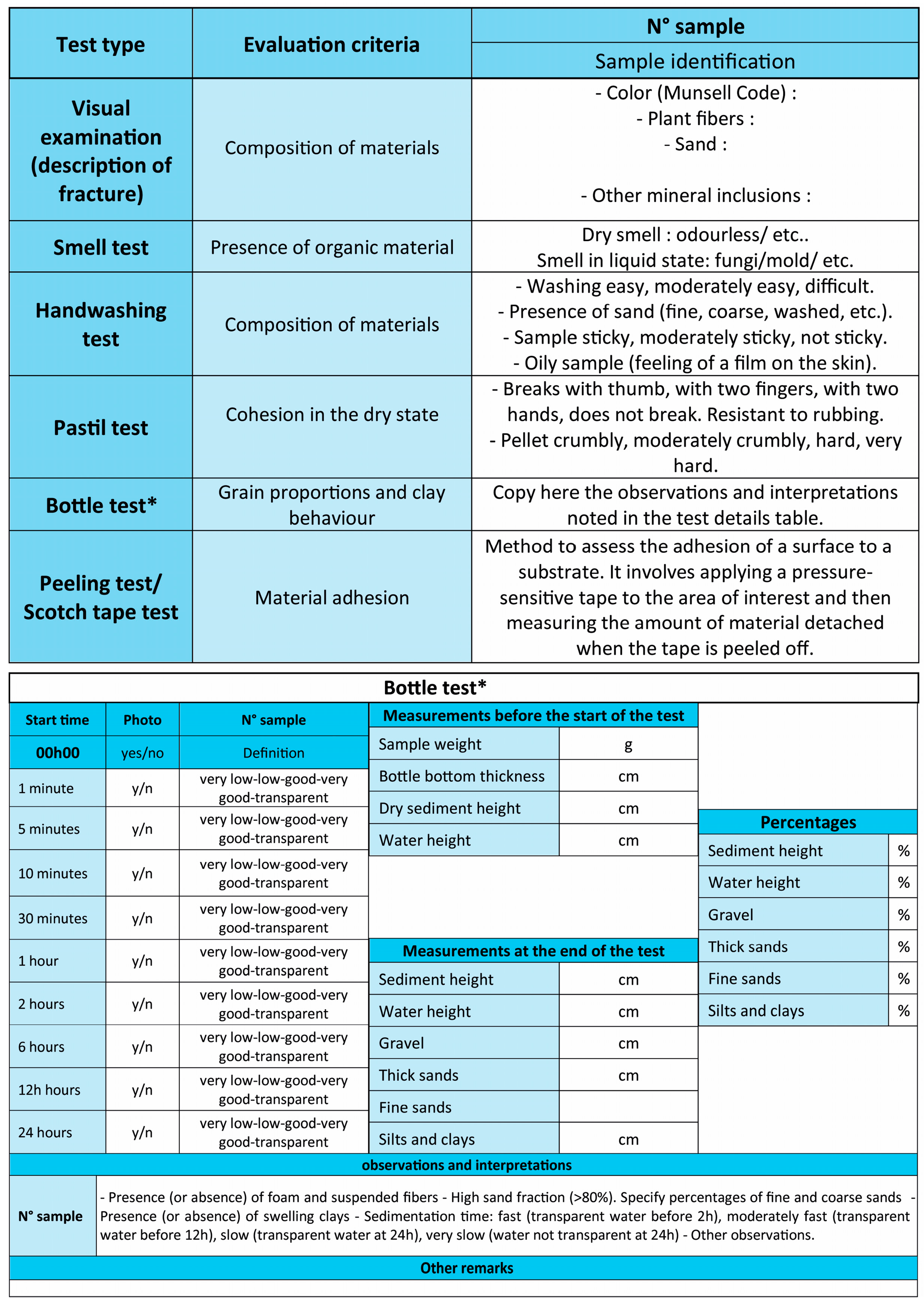
- Colour description: colour properties can provide information about sediment composition, and they are relevant for registering visual properties of archaeological adobe to be considered in the restoration phase. Colour is registered through the Munsell Soil Color Chart book, a standardised system based on three components, such as hue (a specific colour), value (lightness), and chroma (intensity).
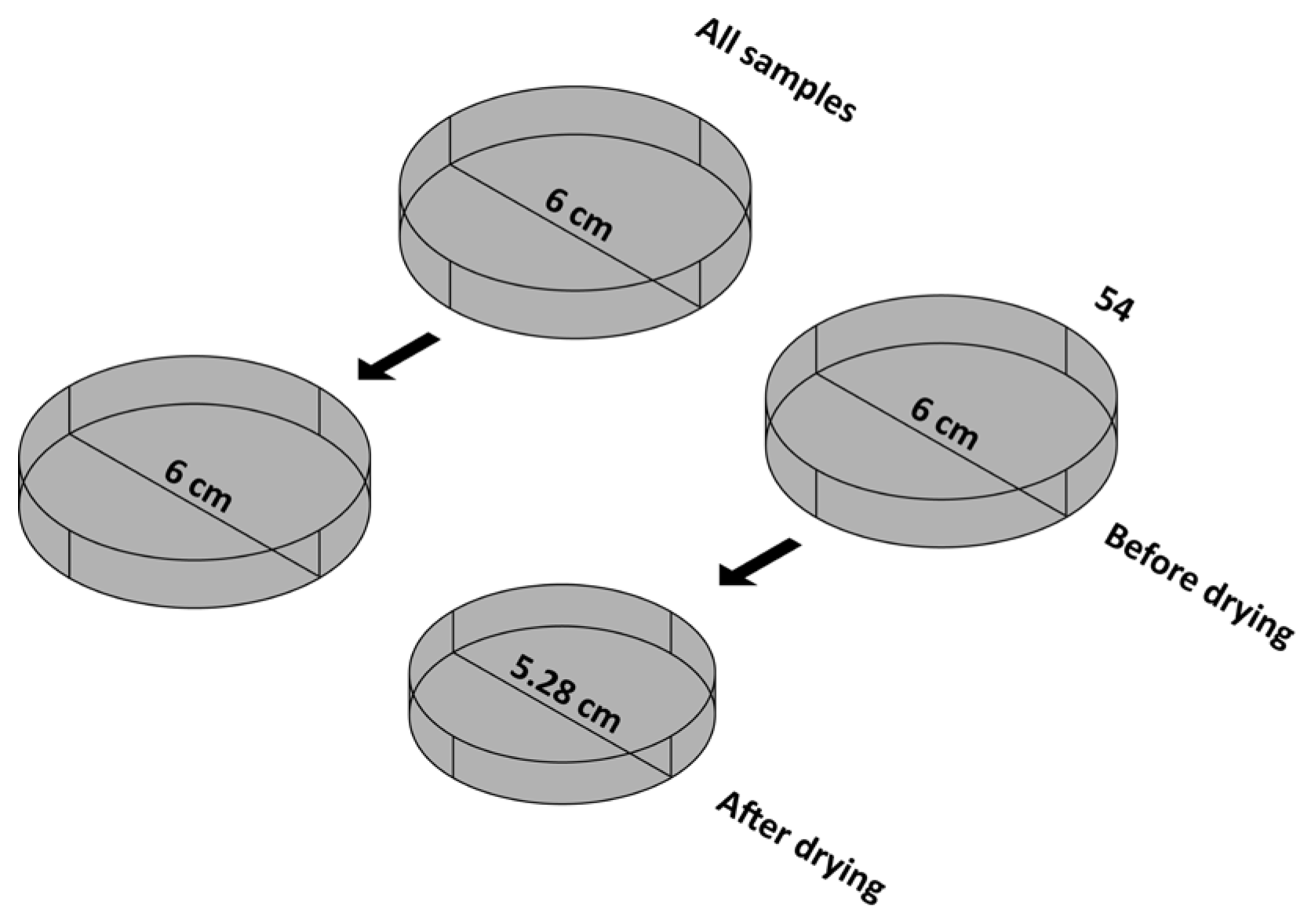
- “Pad” or dry strength test: the plastic-state soil is moulded into pastilles within a metal ring. A linear shrinkage is then observed after drying. The soil presents good qualities if the sample has a shrinkage of less than 1 mm and if it is difficult to reduce the tablet to powder [28] (p. 43), [29] (p. 4).
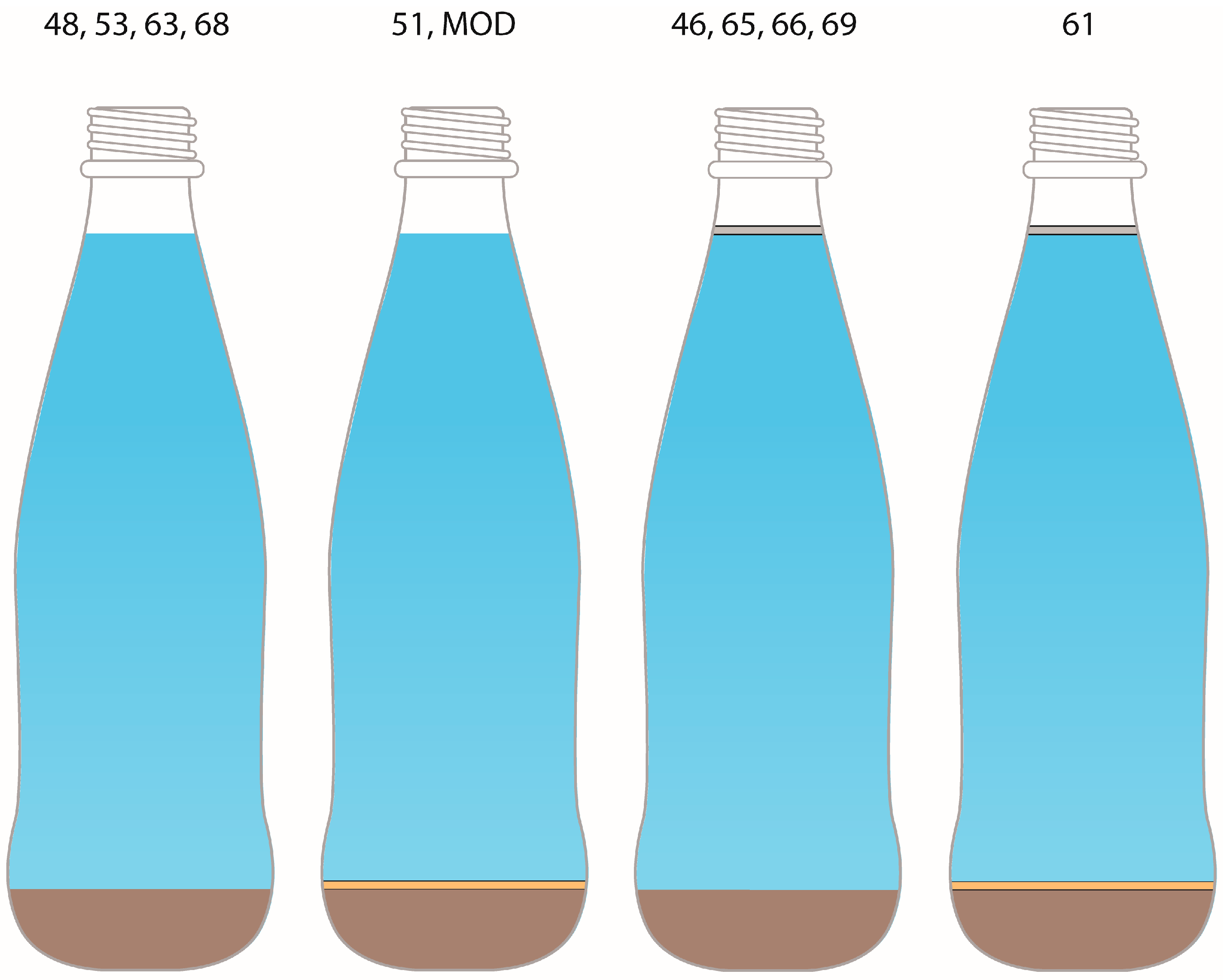
- Sedimentation test: a quantity (100 g) of weighed soil is inserted into a water bottle (1 L) to evaluate the percentages of solid elements. Measurements are taken with a ruler at given intervals during one day of sedimentation. The heavier materials (crushed stone and sand) settle to the bottom, while the finer, lighter materials (clay and silt) remain on the surface [28] (p. 38).
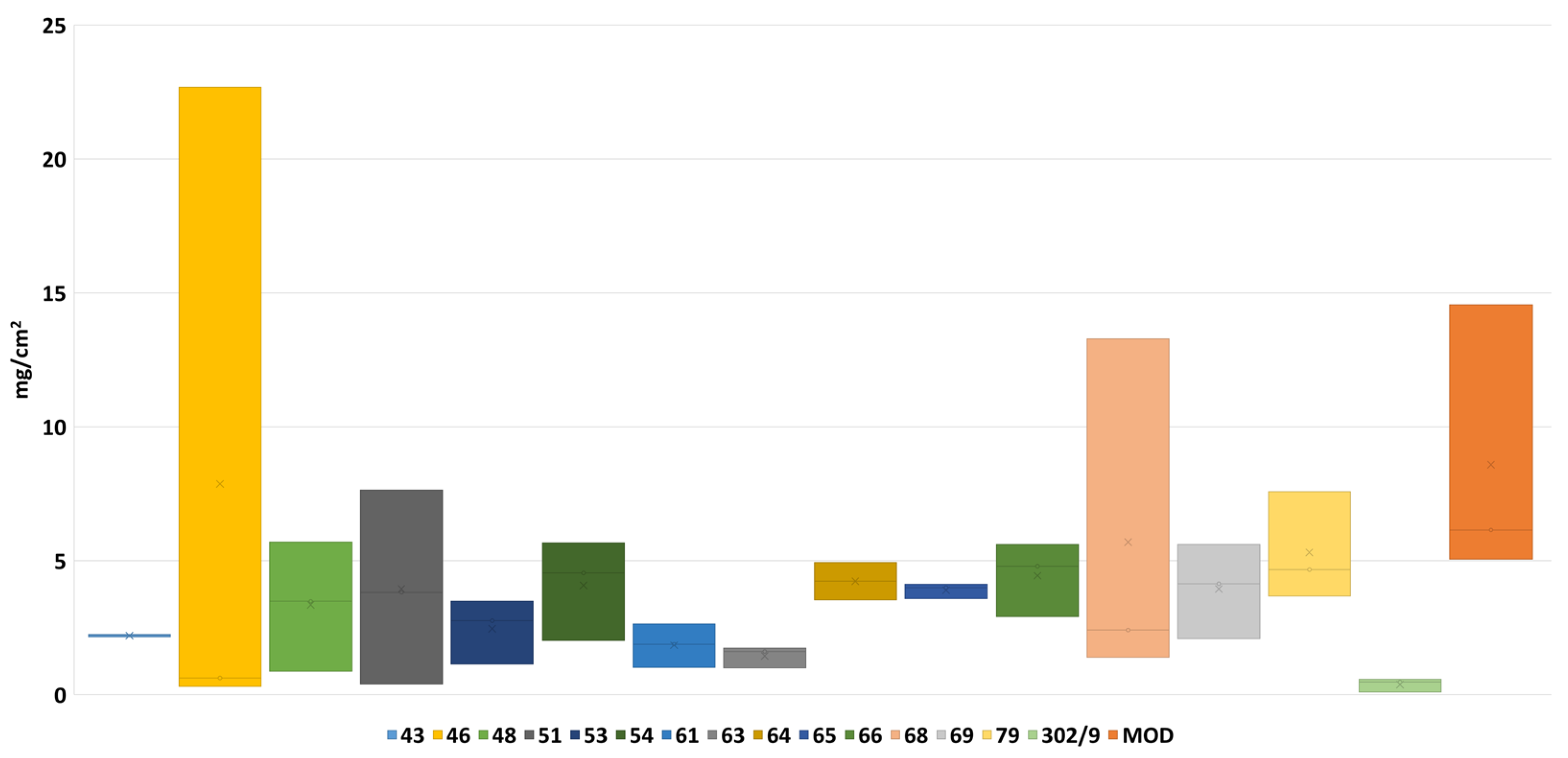
- Peeling or Scotch Tape test: the test is performed to assess surface cohesion, and to provide an indication of the surface deterioration of adobe. For this, 2.6 × 3.1 paper labels (approximately 8 cm2) with double-sided tape were prepared and weighed (unladen weight). The paper labels were attached to a flat sample face (both surface and core) with homogenous pressure (up to six pressures, adhesion time: 0.30 min). The labels were stripped off (tear-off angle of approximately 90°) and re-weighed to quantify the amount of material remaining adhered to the tape. Two to three measurements were taken on each sample, depending on their nature and preservation [31].
3. Results
4. Discussion
5. Conclusions
Author Contributions
Funding
Data Availability Statement
Acknowledgments
Conflicts of Interest
Abbreviations
| SBAH | The Iraqi State Board of Antiquities and Heritage |
| BCE | Before Common Era |
| AP | Architectural Phases |
| MOD | Modern sample |
References
- Otero, J. Heritage Conservation Future: Where We Stand, Challenges Ahead, and a Paradigm Shift. Glob. Chall. 2022, 6, 2100084. [Google Scholar] [CrossRef] [Scilit]
- Vecco, M. A definition of cultural heritage: From the tangible to the intangible. J. Cult. Herit. 2010, 11, 321–324. [Google Scholar] [CrossRef] [Scilit]
- Meissner, M. Intangible Cultural Heritage and Sustainable Development: The Valorisation of Heritage Practices; Springer: Cham, Switzerland, 2021. [Google Scholar]
- Emberling, G.; Hanson, K. Cultural Heritage across the Middle East, Ancient and Modern. In A Companion to Ancient Near Eastern Art; Gunter, A.C., Ed.; John Wiley & Sons, Inc.: Hoboken, NJ, USA, 2019; pp. 637–660. [Google Scholar]
- Alhadad, E.; Meparishvili, T. Cultural Heritage Tourism as an Innovative Catalyst of Local Development: Strategies and Actions. Int. J. Herit. Mus. Stud. 2019, 1, 107–115. [Google Scholar] [CrossRef] [Scilit]
- Osama, N.; Mohammad, A.K.; Agrawal, R. Exploring the Tangible Conservation of Architectural Heritage and History: Bringing Past into the Future. Am. J. Civ. Eng. Archit. 2022, 10, 147–156. [Google Scholar]
- Ippolito, A.; Inglese, C. (Eds.) Analysis, Conservation, and Restoration of Tangible and Intangible Cultural Heritage; IGI Global: Hershey, PA, USA, 2019. [Google Scholar]
- Ruiz, J.C. Los Valores Propios del Patrimonio Histórico: Gestación y Caracterización. In Cuadernos De Arte De La Universidad De Granada; Universidad de Granada: Granada, Spain, 1998; Volume 29, pp. 229–239. [Google Scholar]
- Martínez Yáñez, C. El Patrimonio Cultural: Los Nuevos Valores, Tipos, Finalidades y Formas de Organización. Ph.D. Thesis, Universidad de Granada, Granada, Spain, 2006. [Google Scholar]
- Freitas, I.; Koskowski, M.R. Heritage and Sustainable Development: Capacity Building Through Tourism. In Capacity Building Through Heritage Tourism. An International Perspective; Srivastava, S., Ed.; Apple Academic Press: Palm Bay, FL, USA, 2021; pp. 113–131. [Google Scholar] [CrossRef] [Scilit]
- Yunis, E. Sustainable Tourism at Archaeological World Heritage Sites. In Of the Past, for the Future: Integrating Archaeology and Conservation, Proceedings of the Conservation Theme at the World Archaeological Congress, Washington, DC, USA, 22–26 June 2003; Agnew, N., Bridgland, J., Eds.; Getty Conservation Institute: Los Angeles, CA, USA, 2006; pp. 148–156. [Google Scholar]
- Sadozaï, C. Regards Croisés Sur la Conservation d’une Architecture de Terre Millénaire à Partir du cas d’Ulug Dépé (Turkménistan). Master’s Thesis, École Nationale Supérieure d’Architecture de Grenoble, Grenoble, France, 2012. [Google Scholar]
- Cooke, L. Conservation Approaches to Earthen Architecture in Archaeological Contexts; BAR: Oxford, UK, 2010. [Google Scholar]
- Matero, F. Mud Brick Metaphysics and the Preservation of Earthen Ruins. Conserv. Manag. Archaeol. Sites 2015, 17, 209–223. [Google Scholar] [CrossRef] [Scilit]
- Bacoup, P.; Prévost-Dermarkar, S. Climatic Conditions and Technical Choices in Earthen Architecture: The Example of Late Neolithic Dikili Tash (Eastern Macedonia, Northern Greece). In Earthen Construction Technology, Proceedings of the XVIII UISPP World Congress, Paris, France, 4–9 June 2018; Daneels, A., Torras Freixa, M., Eds.; Archaeopress: Oxford, UK, 2021; Volume 11, Session IV-5; pp. 55–70. [Google Scholar]
- Fazio, A.T.; López, M.M.; Temperini, M.L.A.; de Faria, D.L.A. Surface Enhanced Raman Spectroscopy and Cultural Heritage Biodeterioration: Fungi Identification in Earthen Architecture from Paraíba Valley (São Paulo, Brazil). Vib. Spectrosc. 2018, 97, 129–134. [Google Scholar] [CrossRef] [Scilit]
- Fonseca de la Torre, H.J.; Arróniz Pamplona, L.; Calvo Hernández, C.; Cañada Sirvent, L.; Meana Medio, L.; Bayer Rodríguez, X.; Pérez Legido, D. The Problematic Conservation of Adobe Walls in the Open-Air Site of El Castillar (Mendavia, Navarre, Spain). In Earthen Construction Technology, Proceedings of the XVIII UISPP World Congress, Paris, France, 4–9 June 2018; Daneels, A., Torras Freixa, M., Eds.; Archaeopress: Oxford, UK, 2021; Volume 11, Session IV-5; pp. 109–117. [Google Scholar]
- Randazzo, L.; Montana, G.; Hein, A.; Castiglia, A.; Rondonò, G.; Donato, D.I. Moisture Absorption, Thermal Conductivity and Noise Mitigation of Clay Based Plasters: The Influence of Mineralogical and Textural Characteristics. Appl. Clay Sci. 2016, 132–133, 498–507. [Google Scholar] [CrossRef] [Scilit]
- Meschini, R. La Musealizzazione In Situ: Strategie e Tecniche di Valorizzazione e di Comunicazione dei siti Archeologici. Ph.D. Thesis, Università degli Studi di Ferrara, Ferrara, Italy, 2009. [Google Scholar]
- Ferrari, F.; Meschini, R. Development of Integrated Procedures for Survey, Analysis and Monitoring of Historical Buildings and Antique Monuments. In 1º Congreso Internacional Ciudad y Territorio Virtual; Centre de Política de Sòl i Valoracions: Barcelona, Spain, 2004; Volume 3, pp. 173–184. [Google Scholar] [CrossRef] [Scilit]
- ICOMOS/ISCARSAH. Guidelines for the Analysis, Conservation and Structural Restoration of Architectural Heritage. 2024. Available online: https://iscarsah.org/wp-content/uploads/2025/04/iscarsah-guidelines.-approved-september-2024-1.pdf (accessed on 17 September 2025).
- Roca, P. Considerations on the Significance of History for the Structural Analysis of Ancient Constructions. In Structural Analysis of Historical Constructions: Possibilities of Numerical and Experimental Techniques; Modena, C., Lourenço, P.B., Roca, P., Eds.; Balkema: Leiden, The Netherlands, 2004; pp. 63–73. [Google Scholar]
- Roca, P.; Cervera, M.; Gariup, G.; Pelà, L. Structural Analysis of Masonry Historical Constructions: Classical and Advanced Approaches. Arch. Comput. Methods Eng. 2010, 17, 299–325. [Google Scholar] [CrossRef] [Scilit]
- Benidir, A.; Mahdad, M.; Brara, A. Earth Construction Durability: In-Service Deterioration of Compressed and Stabilized Earth Block (CSEB) Housing in Algeria. In Current Topics and Trends on Durability of Building Materials and Components Proceedings of the XV Edition of the International Conference on Durability of Building Materials and Components (DBMC 2020); Serrat, C., Casas, J.R., Gibert, V., Eds.; International Center for Numerical Methods in Engineering (CIMNE): Barcelona, Spain, 2020. [Google Scholar] [CrossRef] [Scilit]
- Canivell, J.; Rodríguez-García, R.; González-Serrano, A.; Romero-Girón, A. Assessment of Heritage Rammed-Earth Buildings: Alcázar of King Don Pedro I, Spain. J. Archit. Eng. 2020, 26, 05020003. [Google Scholar] [CrossRef] [Scilit]
- Richards, J.; Viles, H.; Guo, Q. The importance of wind as a driver of earthen heritage deterioration in dryland environments. Geomorphology 2020, 369, 107363. [Google Scholar] [CrossRef] [Scilit]
- Venton, C.; Crépy, M.; Redon, B. First insights on the earthen architecture of the site of Plinthine. In Nile’s Earth 2023 International Conference: Study and Conservation of Earthen Archaeological Sites in Ancient Egypt and Sudan, 4-5-6 July 2023. Proceedings; Joffroy, T., Crosby, T., Gandreau, D., Hubert, A., Marchi, S., Spencer, J., Eds.; CRAterre: Villefontaine, France, 2024; pp. 122–128. [Google Scholar]
- Achenza, M.; Atzeni, C.; Mocci, S.; Sanna, U. Il Manuale Tematico Della Terra Cruda: Caratteri, Tecnologie, Buone Pratiche; Dei—Tipografia del Genio Civile: Roma, Italy, 2008. [Google Scholar]
- Aedo, W.C. Adobe: Anti-Seismic Construction Handbook; CRAterre: Villefontaine, France, 2003. [Google Scholar]
- Doat, P.; Hays, A.; Houben, H.; Matuk, S.; Vitoux, F. Construire en Terre; Éditions Alternatives et Parallèles: Paris, France, 1979. [Google Scholar] [CrossRef]
- Otero, J.; Charola, A.E. Assessing Surface Cohesion: The Scotch Tape Test. In Built Heritage Evaluation. Manual Using Simple Test Methods; Charola, A.E., Otero, J., Depriest, P.T., Koestler, R.J., Eds.; Smithsonian Institution Scholarly Press: Washington, DC, USA, 2021; pp. 13–18. [Google Scholar]
- Guillaud, H. Characterization of Earthen Materials. In Terra Literature Review. An Overview of Research in Earthen Architecture Conservation; Avrami, E., Guillaud, H., Hardy, M., Eds.; The Getty Conservation Institute: Los Angeles, CA, USA, 2008; pp. 21–31. [Google Scholar]
- Love, S. Field Methods for the Analysis of Mud Brick Architecture. J. Field Archaeol. 2017, 42, 351–363. [Google Scholar] [CrossRef] [Scilit]
- Licitra, N.; Venton, C. Briques, Mortiers et Enduits de Terre de la Vallée du Nil Ancienne: L’apport des Essais de Terrain à Leur Caractérisation. Traverse 2025. [Google Scholar] [CrossRef]
- Bendakir, M. Les Vestiges de Mari: La Préservation d’une Architecture Millénaire; Ed. de la Villette: Paris, France, 2009. [Google Scholar]
- Gandreau, D.; Sadozaï, C.; Moriset, S. Earthen architecture on archaeological sites: Sustainability principles vs decay processes. In Earthen Construction Technology, Proceedings of the XVIII UISPP World Congress, Paris, France, 4–9 June 2018; Daneels, A., Torras Freixa, M., Eds.; Archaeopress: Oxford, UK, 2021; Volume 11, Session IV-5; pp. 5–14. [Google Scholar]
- Sadozaï, C.; Gandreau, D. Outils stratégiques et techniques pour la conservation des sites archéologiques en terre. In Chantiers et Matériaux de Construction de l’antiquité à la Révolution Industrielle en Orient et en Occident. Actes du Colloque tenu au Château de Guédelon (23–25 Septembre 2015); Baud, A., Charpentier, G., Eds.; Maison de l’Orient et de la Méditerranée—Jean Pouilloux: Lyon, France, 2020; pp. 255–269. [Google Scholar]
- Rigassi, V. Compressed Earth Blocks: Manual of Production; Network—BASIN: Braunschweig, Germany, 1985. [Google Scholar]
- Kerroum, N.; Nouibat, B.; Benyahia, A.; Redjem, A. Study of the Performance of Adobe Brick Coated for Sustainable Construction in the Algerian Sahara. Mater. Tech. 2018, 106, 401. [Google Scholar] [CrossRef] [Scilit]
- Vissac, A.; Bourgès, A.; Gandreau, D.; Anger, R.; Fontaine, L. Argiles & Biopolymères—Les Stabilisants Naturels pour la Construction en Terre; CRAterre: Villefontaine, France, 2017; Available online: https://hal.archives-ouvertes.fr/hal-01682536 (accessed on 1 November 2025).
- Volpi, L.; Santoro De Vico, F.; Arizzi, A.; Lanzaro, N.; Nadali, D. Chemical-Mineralogical Features and Physical Properties of Archaeological Mudbricks: The Evidence from Tell Zurghul/Nigin (Dhi Qar, Iraq) in View of Conservative Solutions. Forthcoming.
- Nadali, D.; Verderame, L. Fragments of the Third Millennium BC from Nigin. IRAQ 2021, 83, 105–118. [Google Scholar] [CrossRef] [Scilit]
- Nadali, D.; Volpi, L. The 3rd Millennium BCE Pottery Sequence of Southern Mesopotamia: Pottery Chronology as Seen from Tell Zurghul/Nigin, Mound A, Iraq. IRAQ 2025, 86, 257–295. [Google Scholar] [CrossRef] [Scilit]
- Volpi, L. Revisiting the South: A Typochronological Approach to the Analysis of the Ubaid Pottery Based on the New Data from Tell Zurghul (Dhi Qar, Iraq). Paléorient 2022, 48, 175–199. [Google Scholar] [CrossRef] [Scilit]
- Volpi, L. The ‘Ubaid’ Mound at Tell Zurghul. A Reappraisal in the Light of New Evidence from MAIN Expeditions 2021 and 2022. In Proceedings of the 13th International Congress on the Archaeology of the Ancient Near East, Copenhagen, Denmark, 22–26 October 2023, Vol. 2, Field and Lab Reports; Haddow, S., Mazzucato, C., Thuesen, I., Eds.; Harrassowitz Verlag: Wiesbaden, Germany, 2025; pp. 389–401. [Google Scholar] [CrossRef] [Scilit]
- Anger, R.; Fontaine, L.; Houben, H.; Doat, P.; Van Damme, H.; Olagnon, C.; Jorand, Y. Voyage au cœur de la matière Terre. Composition de l’eau et cohésion des briques de terre crue. In Les Cultures Constructives de la Brique Crue. Troisièmes Échanges Transdisciplinaires sur les Constructions en Terre Crue; de Chazelles, C.-A., Klein, A., Pousthomis, N., Eds.; Éditions de l’Espérou: Montpellier, France, 2011; pp. 477–488. [Google Scholar]
- Aedo, W.C.; Douline, A. Adobe, Manuel de Production: Zone Tropicale—Humide; [Rapport Technique]; CRAterre: Villefontaine Misereor, France, 2004; Available online: https://hal.univ-grenoble-alpes.fr/hal-03174007 (accessed on 1 November 2025).
- Bizzarri, S.; Esposti, M.D.; Careccia, C.; Gennaro, T.D.; Tangheroni, E.; Avanzini, N. The Use of Traditional Mud-Based Masonry in the Restoration of the Iron Age Site of Salūt (Oman). A Way towards Mutual Preservation. In HERITAGE2020 (3DPast|RISK-Terra) International Conference on Vernacular Architecture in World Heritage Sites. Risks and New Technologies (Volume XLIV-M-1-2020); Mileto, C., Vegas, F., García-Soriano, L., Cristini, V., Eds.; ISPRS: Hannover, Germany, 2020; pp. 1081–1088. [Google Scholar] [CrossRef] [Scilit]
- Lorenzon, M.; Nitschke, J.L.; Littman, R.J.; Silverstein, J.E. Mudbricks, construction methods, and stratigraphic analysis: A case study at Tell Timai (Ancient Thmuis) in the Egyptian Delta. Am. J. Archaeol. 2020, 124, 105–131. [Google Scholar] [CrossRef] [Scilit]
- Morgenstein, M.E.; Redmount, C.A. Mudbrick Typology, Sources, and Sedimentological Composition: A Case Study from Tell el-Muqdam, Egyptian Delta. J. Am. Res. Cent. Egypt 1998, 35, 129–146. [Google Scholar] [CrossRef] [Scilit]
- Cardoso, R.; Pinto, J.; Paiva, A.; Lanzinha, J.C. Earth-based construction material field tests characterization in the Alto Douro Wine Region. Open Eng. 2017, 7, 435–443. [Google Scholar] [CrossRef] [Scilit]
- Zhang, Y.; Jiang, S.; Quan, D.; Fang, K.; Wang, B.; Ma, Z. Properties of Sustainable Earth Construction Materials: A State-of-the-Art Review. Sustainability 2024, 16, 670. [Google Scholar] [CrossRef] [Scilit]
- Tan, W.; Zhou, T.; Zhao, X.; Li, D.; Zhang, L.; Liang, Z. Experimental study on seismic performance of recycled adobe brick reinforced masonry. Eng. Struct. 2025, 324, 119351. [Google Scholar] [CrossRef] [Scilit]
- La Noce, M.; Lo Faro, A.; Sciuto, G. Clay-Based Products Sustainable Development: Some Applications. Sustainability 2021, 13, 1364. [Google Scholar] [CrossRef] [Scilit]
- Brito, M.R.; Marvila, M.T.; Linhares, J.A.T., Jr.; Azevedo, A.R.G.d. Evaluation of the Properties of Adobe Blocks with Clay and Manure. Buildings 2023, 13, 657. [Google Scholar] [CrossRef] [Scilit]
- Saliba, J.; Al-Shaar, W.; Delage, M. Comparison of Field and Laboratory Tests for Soil Suitability Assessment in Raw Earth Construction. Appl. Sci. 2025, 15, 1932. [Google Scholar] [CrossRef] [Scilit]
- Lagouin, M.; Laborel-Préneron, A.; Magniont, C.; Geoffroy, S.; Aubert, J. Effects of organic admixtures on the fresh and mechanical properties of earth-based plasters. J. Build. Eng. 2021, 41, 102379. [Google Scholar] [CrossRef] [Scilit]
- Turco, C.; Paula Junior, A.C.; Teixeira, E.R.; Mateus, R. Optimisation of Compressed Earth Blocks (CEBs) using natural origin materials: A systematic literature review. Constr. Build. Mater. 2021, 309, 125140. [Google Scholar] [CrossRef] [Scilit]
- Karbala, G.; Belin, P.; Archez, J.; Vandamme, M.; Keita, E. Drying-Induced Cracking of Raw-Earth Plaster. In Second RILEM International Conference on Earthen Construction. ICEC 2024; RILEM Bookseries; Beckett, C., Bras, A., Fabbri, A., Keita, E., Perlot, C., Perrot, A., Eds.; Springer: Cham, Switzerland, 2024; Volume 52, pp. 165–174. [Google Scholar] [CrossRef] [Scilit]
- Touati, K.; Guern, M.L.; Mendili, Y.E.; Azil, A.; Streiff, F.; Carfrae, J.; Fox, M.; Goodhew, S.; Boutouil, M. Earthen-based building: In-situ drying kinetics and shrinkage. Constr. Build. Mater. 2023, 369, 130544. [Google Scholar] [CrossRef] [Scilit]
- Zhang, S.; Yue, J.; Huang, X.; Zhao, L.; Wang, Z. Study on Cracking Law of Earthen Soil under Dry Shrinkage Condition. Materials 2022, 15, 8281. [Google Scholar] [CrossRef] [Scilit]
- Zhang, Z.; Yang, J.; Yue, J.; Li, W.; Gao, H. Research on the Mechanism and Prevention Methods of the Drying Shrinkage Effect of Earthen Sites. Materials 2022, 15, 2595. [Google Scholar] [CrossRef] [Scilit] [PubMed]
- Concha-Riedel, J.; Antico, F.C.; López-Querol, S. Mechanical strength, mass loss and volumetric changes of drying adobe matrices combined with kaolin and fine soil particles. Constr. Build. Mater. 2021, 312, 125246. [Google Scholar] [CrossRef] [Scilit]
- Jia, Q.; Chen, W.; Tong, Y.; Guo, Q. Laboratory Study on Shrinkage and Cracking Behavior of Earthen Plaster. Eng. Geol. 2023, 318, 107096. [Google Scholar] [CrossRef] [Scilit]
- Sumanasena, V.; Rajabipour, A.; Bazli, M.; Kutay, C.; Guo, D. Strength and erosion resistance of mudbrick as an alternative local material for Australia’s Northern Territory remote housing. Case Stud. Constr. Mater. 2022, 16, e01023. [Google Scholar] [CrossRef] [Scilit]
- Ciancio, D.; Jaquin, P.; Walker, P. Advances on the assessment of soil suitability for rammed earth. Constr. Build. Mater. 2013, 42, 40–47. [Google Scholar] [CrossRef] [Scilit]
- Elert, K.; Biçer-Simşir, B.; Correa, E.; Rodríguez-Navarro, C.; Gulotta, D. Surface characterization of consolidated earthen substrates using an innovative multi-analytical strategy. Constr. Build. Mater. 2024, 438, 137154. [Google Scholar] [CrossRef] [Scilit]
- Tonelli, M.; Camerini, R.; Baglioni, P.; Ridi, F. Activation of ground granulated blast-furnace slag with calcium hydroxide nanoparticles towards the consolidation of adobe. Constr. Build. Mater. 2024, 439, 137285. [Google Scholar] [CrossRef] [Scilit]
- Drdácký, M.; Lesák, J.; Rescic, S.; Slížková, Z.; Tiano, P.; Valach, J. Standardization of peeling tests for assessing the cohesion and consolidation characteristics of historic stone surfaces. Mater. Struct. 2011, 45, 505–520. [Google Scholar] [CrossRef] [Scilit]
- Margaritis, E.; Oikonomou, A.; Nikita, E.; Rehren, T. (Eds.) Field Sampling for Laboratory Analysis in Archaeology; The Cyprus Institute Nicosia: Nicosia, Cyprus, 2023; Available online: https://repository.cyi.ac.cy/handle/CyI/2308 (accessed on 27 October 2025).
- Bintliff, J.; Degryse, P. A review of soil geochemistry in archaeology. J. Archaeol. Sci. Rep. 2022, 43, 103419. [Google Scholar] [CrossRef] [Scilit]
- Martini, R.; Rodríguez-Mariscal, J.; Carvalho, J.; Solís, M.; Varum, H. Towards a Methodology for Use of Sonic and Ultrasonic Tests in Earthen Materials. In 12th International Conference on Structural Analysis of Historical Constructions—SAHC 2021, Online, 29 September–1 October 2021; Roca, P., Pelà, L., Molins, C., Eds.; International Centre for Numerical Methods in Engineering (CIMNE): Barcelona, Spain, 2021; pp. 852–862. [Google Scholar] [CrossRef] [Scilit]
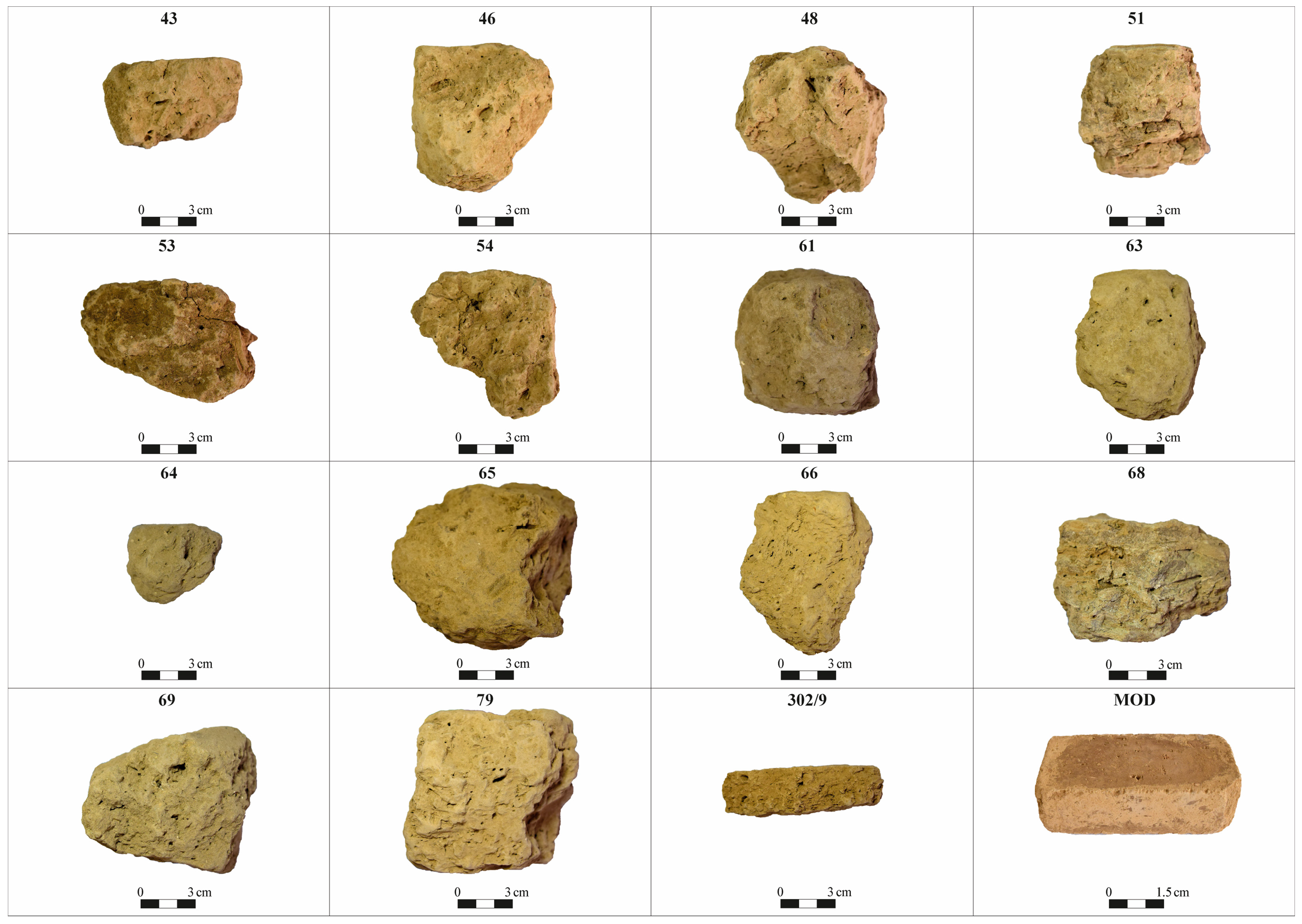
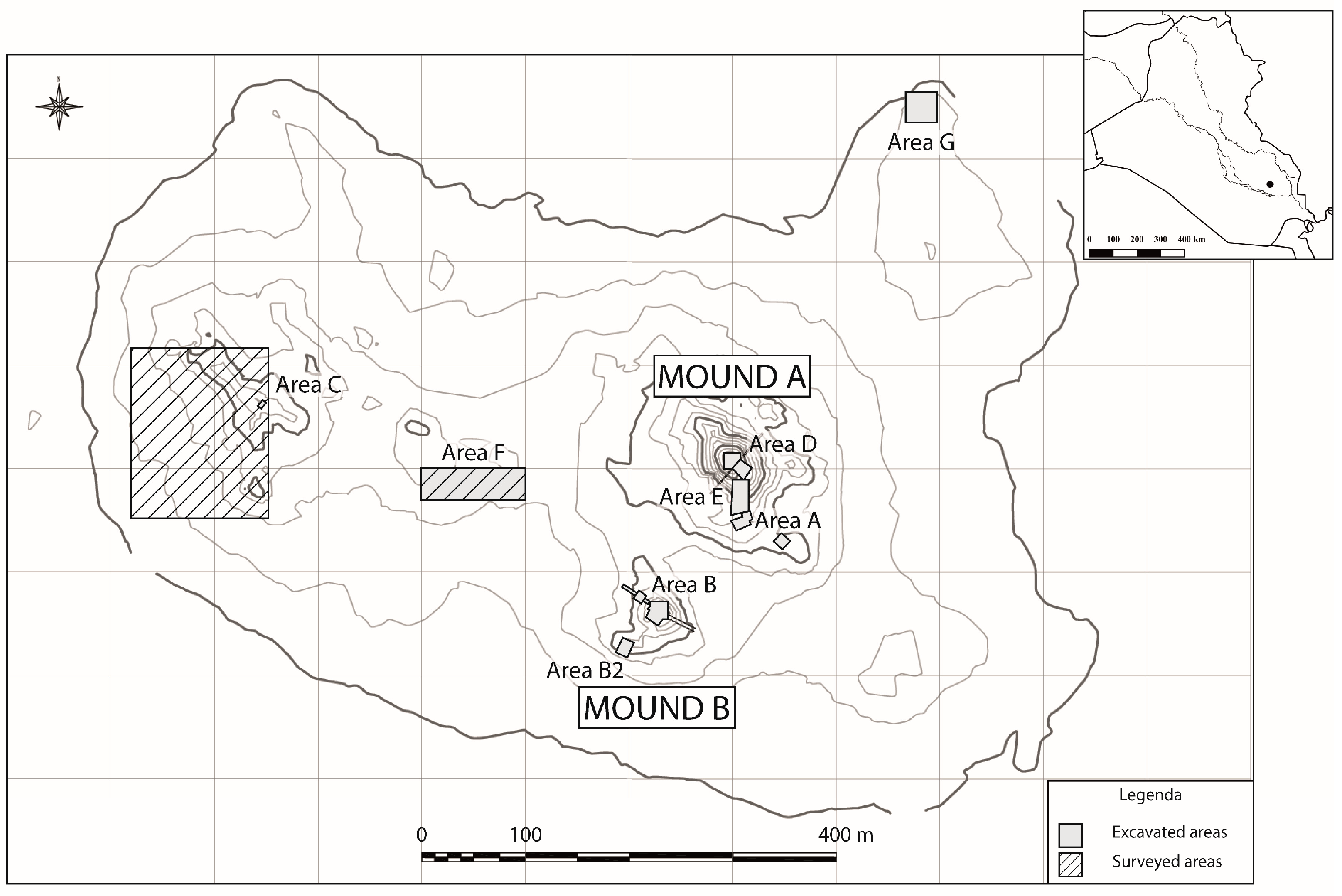
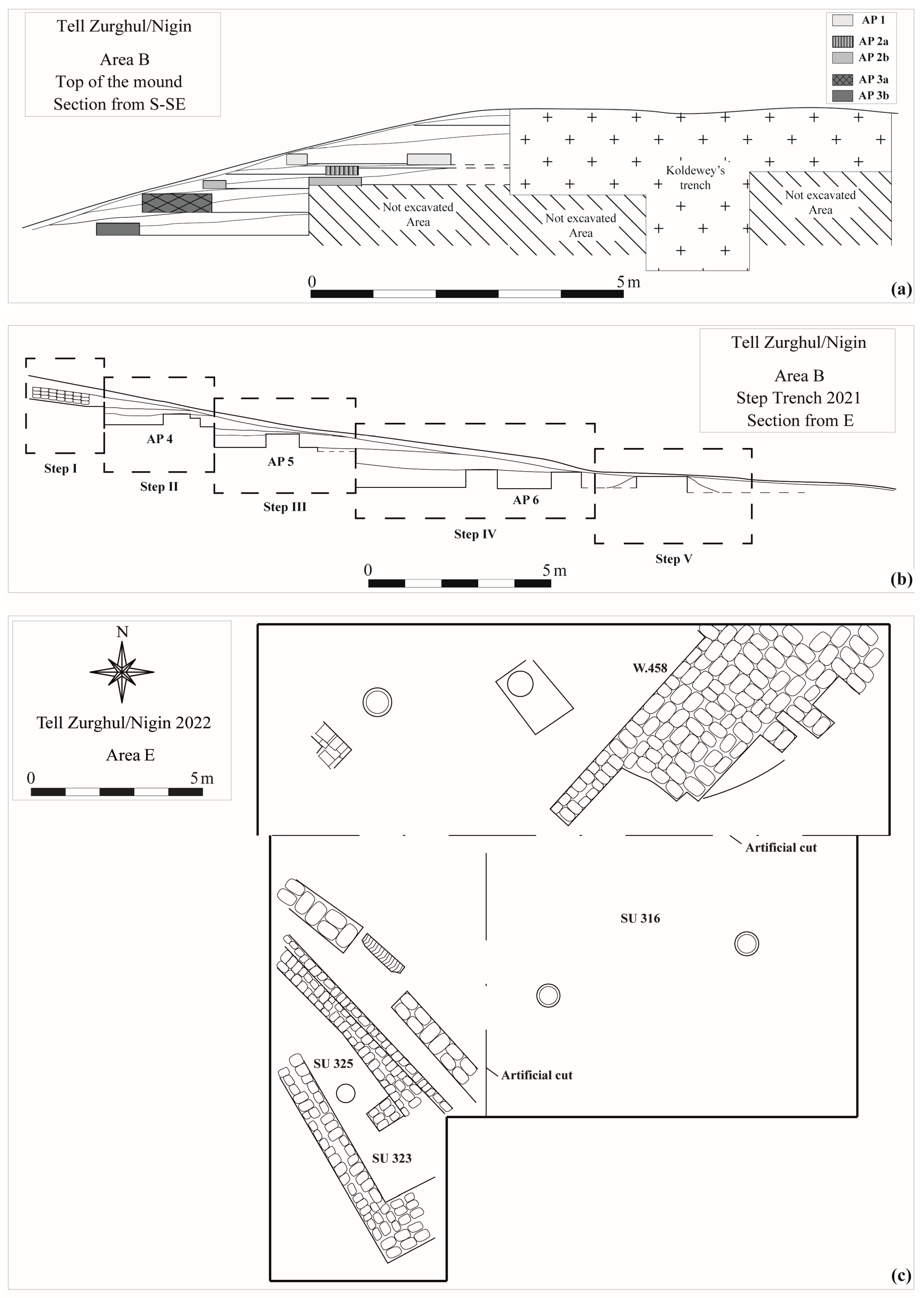

| ID | Archaeological Context | Archaeological Dating | Typology |
|---|---|---|---|
| 43 | Mound B, Step V (W.389) | Uruk period | Adobe |
| 46 | Mound B, Step V (W.389) | Uruk period | Adobe |
| 48 | Mound B, AP 6 (SU 861) | Late Ubaid period | Adobe |
| 51 | Mound B, AP 4 (W.382) | Late Ubaid period | Adobe |
| 53 | Mound B, Step V (W.389) | Uruk period | Adobe |
| 54 | Mound B, AP 5 (W.386) | Late Ubaid period | Adobe |
| 61 | Mound B, AP 2b (W.362) | Late Ubaid period | Adobe |
| 63 | Mound B, AP 2b (W.362) | Late Ubaid period | Adobe |
| 64 | Mound B, AP 3a (W.701) | Late Ubaid period | Adobe |
| 65 | \ | Late Ubaid period | Adobe |
| 66 | Mound B, AP 3a (W.701) | Late Ubaid period | Adobe |
| 68 | Mound B, AP 2c (W.361) | Late Ubaid period | Adobe |
| 69 | Mound B, AP 3a (W.701) | Late Ubaid period | Adobe |
| 79 | Mound A (W.458) | Mid-3rd Mill. BCE | Adobe |
| SG.22.E.302/9 | Mound A (W.458) | Mid-3rd Mill. BCE | Earthen plaster |
| ID | Visual | Tactile | Odour/Washing |
|---|---|---|---|
| 43 | Compact, traces of organic/vegetal inclusions | Fine and slightly abrasive, easy to crumble | Earthy and dusty smell when dry, fungus scent when wet. Sticky, difficult washing. |
| 48 | Compact, traces of organic/vegetal inclusions | Fine and slightly coarse and abrasive, easy to crumble | Earthy and dusty smell when dry, fungus scent when wet. Easy to wash. |
| 51 | Compact, possible charcoal | Fine, hard to crumble | Earthy and dusty smell when dry, fungus scent when wet. Slightly sticky, medium washing. |
| 53 | Very compact, clayey | Fine, abrasive, hard to crumble | Earthy and dusty smell when dry, fungus scent when wet. Slightly sticky, medium washing. |
| 54 | Compact, clayey | Soft, hard to crumble | Earthy and dusty smell when dry, fungus scent when wet. Sticky, difficult washing. |
| 61 | Compact, clayey | Coarse, easy to crumble | Earthy and dusty smell when dry, fungus scent when wet. Slightly sticky, easy washing. |
| 63 | Compact, possible gypsum traces? | Coarse, easy to crumble | Earthy and dusty smell when dry, fungus scent when wet. Slightly sticky, medium washing. |
| 64 | Compact, traces of organic/vegetal inclusions | Fine and soft to the touch, crumbles with difficulty | Earthy and dusty smell when dry, fungus scent when wet. Easy to wash. |
| 65 | Friable on fractures, compact elsewhere, charcoal traces | Fine, abrasive, crumbles easily | Earthy and dusty smell when dry, fungus scent when wet. Earthy, sandy, easy washing. |
| 66 | Very compact, clayey | Fine, hard to crumble | Earthy and dusty smell when dry, fungus scent when wet. Slightly sticky, possible silt. |
| 68 | Very compact, clayey | Coarse, hard to break | Earthy and dusty smell when dry, fungus scent when wet. Sticky, difficult washing. |
| 69 | Very compact, clayey | Fine, easy to crumble | Earthy and dusty smell when dry, fungus scent when wet. Not sticky, possible silt, easy washing. |
| 79 | Compact, traces of organic/vegetal inclusions | Fine and slightly abrasive, easy to crumble | Earthy and dusty smell when dry, fungus scent when wet. Medium easy to wash. |
| 302/9 | Friable, mostly sandy traces of organic/vegetal inclusions | Slightly coarse and abrasive, easy to crumble | Odourless, easy to wash |
| MOD | Friable sandy soil, very small white mineral inclusions | Fine and slightly coarse texture, easy to crumble | Odourless, moderate washing difficulty |
| ID | Shrinkage (Pad Test) | Sedimentation | Peeling Test (mg/cm2) | Notes |
|---|---|---|---|---|
| 43 | \ | \ | a = 2.25; b = 2.16; c = 2.21 1 | |
| 48 | \ | \ | a = 5.7; b = 3.48; c = 0.87 | |
| 51 | No shrinkage (6 → 6 cm) | No foam | a = 7.63; b = 3.82; c = 0.4 | Similar to 63 but more cohesive |
| 53 | No shrinkage | Moderate foam | a = 1.15; b = 2.76; c = 3.48 | Balanced clay–silt |
| 54 | Shrinkage (6 → 5.28 cm) | \ | a = 2.05; b = 4.55; c = 5.67 | High plasticity, low stability |
| 61 | No shrinkage (6 → 6 cm) | No foam | a = 3.53; b = 1.91; c = 3.78 | Coarse and workable |
| 63 | No shrinkage (6 → 6 cm) | No foam | a = 1.61; b = 1; c = 1.73 | Possible mineral inclusions |
| 64 | \ | \ | a = 4.93; b = 3.53 | |
| 65 | No shrinkage (6 → 6 cm) | Foam with black dots | a = 4; b = 4.12; c = 3.58 | Good workability, organic traces |
| 66 | No shrinkage (6 → 6 cm) | Moderate foam | a = 2.92; b = 5.61; c = 4.8 | Good plastic balance |
| 68 | No shrinkage (6 → 6 cm) | No foam | a = 13.28; b = 1.4; c = 2.41 | Highly clayey, strong cohesion |
| 69 | No shrinkage (6 → 6 cm) | Moderate foam | a = 4.13; b = 2.1; c = 5.61 | Likely silt presence |
| 79 | \ | \ | a = 3.68; b = 7.57; c = 4.67 | |
| 302/9 | \ | \ | a = 0.57; b = 0.47; c = 0.1 | |
| MOD | No shrinkage (6 → 6 cm) | No foam | a = 6.15; b = 14.55; c = 5.06 | Presence of fine sand grains; a very thin (1 mm) yellow layer composed of clay and lime observable during sedimentation test |
Disclaimer/Publisher’s Note: The statements, opinions and data contained in all publications are solely those of the individual author(s) and contributor(s) and not of MDPI and/or the editor(s). MDPI and/or the editor(s) disclaim responsibility for any injury to people or property resulting from any ideas, methods, instructions or products referred to in the content. |
© 2025 by the authors. Licensee MDPI, Basel, Switzerland. This article is an open access article distributed under the terms and conditions of the Creative Commons Attribution (CC BY) license (https://creativecommons.org/licenses/by/4.0/).
Share and Cite
De Vito, L.; Volpi, L. Evaluating Earth Construction Techniques on Ancient Architecture: An Exploratory Use of Empirical Field Tests in West Asia (Tell Zurghul/Nigin). Heritage 2025, 8, 479. https://doi.org/10.3390/heritage8110479
De Vito L, Volpi L. Evaluating Earth Construction Techniques on Ancient Architecture: An Exploratory Use of Empirical Field Tests in West Asia (Tell Zurghul/Nigin). Heritage. 2025; 8(11):479. https://doi.org/10.3390/heritage8110479
Chicago/Turabian StyleDe Vito, Licia, and Luca Volpi. 2025. "Evaluating Earth Construction Techniques on Ancient Architecture: An Exploratory Use of Empirical Field Tests in West Asia (Tell Zurghul/Nigin)" Heritage 8, no. 11: 479. https://doi.org/10.3390/heritage8110479
APA StyleDe Vito, L., & Volpi, L. (2025). Evaluating Earth Construction Techniques on Ancient Architecture: An Exploratory Use of Empirical Field Tests in West Asia (Tell Zurghul/Nigin). Heritage, 8(11), 479. https://doi.org/10.3390/heritage8110479

