Article

Interdisciplinary Approaches to the Knowledge of Ancient Monuments: Integrating Archaeological, Archaeometric, and Historical Data to Reconstruct the Building History of the Benedictine Monastery of Catania


by
Roberta Occhipinti
1,
Maura Fugazzotto
1,
Cristina Maria Belfiore
1,
Lucrezia Longhitano
1,
Gian Michele Gerogiannis
2,
Paolo Mazzoleni
1,*,
Pietro Maria Militello
2 and
Germana Barone
1
1
Department of Biological, Geological and Environmental Sciences, University of Catania, Corso Italia 57, 95129 Catania, Italy
2
Department of Human Science, University of Catania, Monastero dei Benedettini, Piazza Dante, 32, 95124 Catania, Italy
*
Author to whom correspondence should be addressed.
Heritage 2025, 8(11), 467; https://doi.org/10.3390/heritage8110467
Submission received: 29 September 2025 / Revised: 1 November 2025 / Accepted: 4 November 2025 / Published: 6 November 2025
(This article belongs to the Special Issue History, Conservation and Restoration of Cultural Heritage)

Abstract

The Monastery of San Nicolò l’Arena in Catania, a UNESCO World Heritage site, embodies a complex architectural and historical stratigraphy, reflecting successive construction phases, functional changes, and the impact of catastrophic events, including the 1669 lava flow and the 1693 earthquake. As part of the CHANGES project, this study combines historical–archaeological research with non-invasive in situ scientific analyses to investigate the materials and the conservation state of the monumental complex. Stratigraphic analysis identified multiple masonry and plaster units, allowing the reconstruction of five main construction phases and related functional changes. Portable X-ray Fluorescence (pXRF), Diffuse Reflectance Infrared Fourier Transform Spectroscopy (DRIFT), and handheld optical microscopy provided rapid insights into the chemical and mineralogical composition of plasters and mortars, highlighting lime-based binders with variable aggregate, including volcanic clasts, sand, and cocciopesto. In situ diagnostic analyses allowed us to distinguish pre- and post-earthquake materials, while historical data contextualized construction phases and functional transformations. The integration of archaeological and scientific approaches proved to be complementary: historical evidence guides the selection of analytical targets, while diagnostic results enrich and validate the interpretation of the building’s evolution. This interdisciplinary methodology establishes a robust framework for the understanding and valorization of complex cultural heritage sites.

1. Introduction

The study and conservation of historical structures require detailed knowledge of their material composition and structural condition. In this context, non-destructive and/or minimally invasive techniques have become increasingly valuable, as they allow for comprehensive assessments while preserving the integrity of the original materials [1,2,3]. Some of these methods, which include magnetic radiation, acoustic techniques, and infrared detection, are commonly employed to investigate the mechanical and structural properties of architectural elements [4]. They enable the identification of defects (e.g., fractures, detachments, voids), differentiation of materials by category, evaluation of thickness, and assessment of surface preservation conditions. Other techniques are addressed to investigate the intrinsic characteristics of the building materials. Among these, portable X-ray Fluorescence (pXRF) is used as a powerful tool for in situ chemical analysis [5,6]. It offers several advantages, including rapid data acquisition, the ability to analyze large or immobile objects, and reduced need for sample removal. However, it is acknowledged that portable techniques may offer less precision than laboratory analyses, primarily providing surface-level rather than bulk data [7].
Another powerful non-destructive method recently appearing in the panorama of mineralogical and geological studies is the Diffuse Reflectance Infrared Fourier Transform Spectroscopy (DRIFT), generally applied for the characterization of both organic and inorganic materials [8,9,10,11]. It allows for more rapid information compared to transmission IR spectroscopy due to the very short time needed for sample preparation.
In this study, in situ analyses were carried out to investigate some artificial stone materials of a valuable monumental building in the city of Catania (Sicily, Italy), namely the Benedictine Monastery.
The architectural context of the Benedictine Monastery is a multi-layered one of great historical value to the city, as well as a case study of particular interest.
In particular, the complex history of its construction, its stylistic and architectural characteristics, its interaction with various volcanic–seismic events, its changes and continuities in use, its integration with archaeological stratigraphy, its connection to the Baroque and late Baroque urban fabric, and its centrality for tourism but also for its citizens, have created a unique and, at the same time, highly complex context. Written sources, but also and above all the material itself, gather information on all of this.
To develop conservation, protection, and enhancement strategies, it is therefore essential to approach the context by combining technical–diagnostic methods with historical–archaeological and stratigraphic approaches directly related to the subject matter, which is the focus of our work. So far, many studies have been published on case studies and applications, from advances in analytical methods [12] to characterization of ancient masonries [13,14]. However, most of them focus either on the application of non-destructive diagnostic techniques and modeling approaches, or on stratigraphic analyses conducted within the framework of architectural archaeology. Only a limited number of studies effectively integrate material diagnostics with stratigraphic interpretation of the building fabric (e.g., [15,16]).
In this sense, the Benedictine Monastery of Catania, now home to the Department of Humanities at the University of Catania, exemplifies the integration of theory and practice in research. Its classrooms, libraries, and study spaces are not merely physical settings for academic activity; they foster a vibrant intellectual environment where teaching, investigation, and dissemination converge. The monastery’s central location in the heart of the historic city, combined with its institutional role, supports a multidisciplinary approach, encouraging dialog among scholars from diverse fields and grounding contemporary knowledge in a historical layering that reaches back to the city’s founding. In this way, the monastic complex functions not only as a research site but also as a crossroads of knowledge, memory, and innovation. It is within this framework that the present study is situated.
Within the monastic complex, specific rooms have been selected to investigate the mineralogical–petrographic and chemical features of the construction materials, as well as to assess the state of conservation of historical masonries. Portable X-ray Fluorescence (pXRF), Diffuse Reflectance Infrared Fourier Transform Spectroscopy (DRIFT), and a portable optical microscope have been used as non-destructive techniques to preliminarily investigate the composition of the materials. Measurements were conducted on various wall sections, including mortars, plasters, bricks, and rock fragments.
The in situ characterization of the materials and the assessment of their state of conservation was carried out in this phase by using portable analytical instrumentation, allowing for rapid and non-destructive assessment from both chemical and mineralogical-petrographic perspectives. This approach enabled the identification of the most representative and relevant areas for the investigation of materials and associated weathering forms. The adoption of in situ techniques significantly reduces the need for sampling, supporting sustainable conservation practices that respect both the integrity of the cultural heritage and environmental considerations. However, it must be underlined that the diagnostic investigations carried out in situ during this research are only preliminary and that the data obtained here will be verified through laboratory investigations (already in progress) on small-sized samples collected from the same structures here analyzed.
As mentioned, scientific data must be cross-referenced with historical data both to gain credibility and value. Integrating the methods and thus applying an interdisciplinary study allows for the following:
Framing scientific findings within a historical context;
Increasing or refining knowledge of the building;
Addressing decisions in restoration interventions by using historically based technical data.
The innovativeness of this paper consists of just the integrated approach that correlates the historical–stratigraphic reconstruction with the scientific data coming from the diagnostic analyses. Moreover, this is the first study that reports diagnostic data on the construction materials of such a valuable monument in the city center of Catania.
This study falls within the research activities of the PNRR project CHANGES—Spoke 5 (Science and Technologies for Sustainable Diagnostics of Cultural Heritage) and Spoke 6 (History, Conservation and Restoration of Cultural Heritage). The first oriented towards the development of innovative scientific methods, new approaches, and digital technologies for sustainable diagnostics of cultural heritage, whereas the second focuses on the historical knowledge and planning of strategies for conservation and restoration in multi-layered contexts of cultural heritage.

2. Case Study: The Benedictine Monastery in Catania
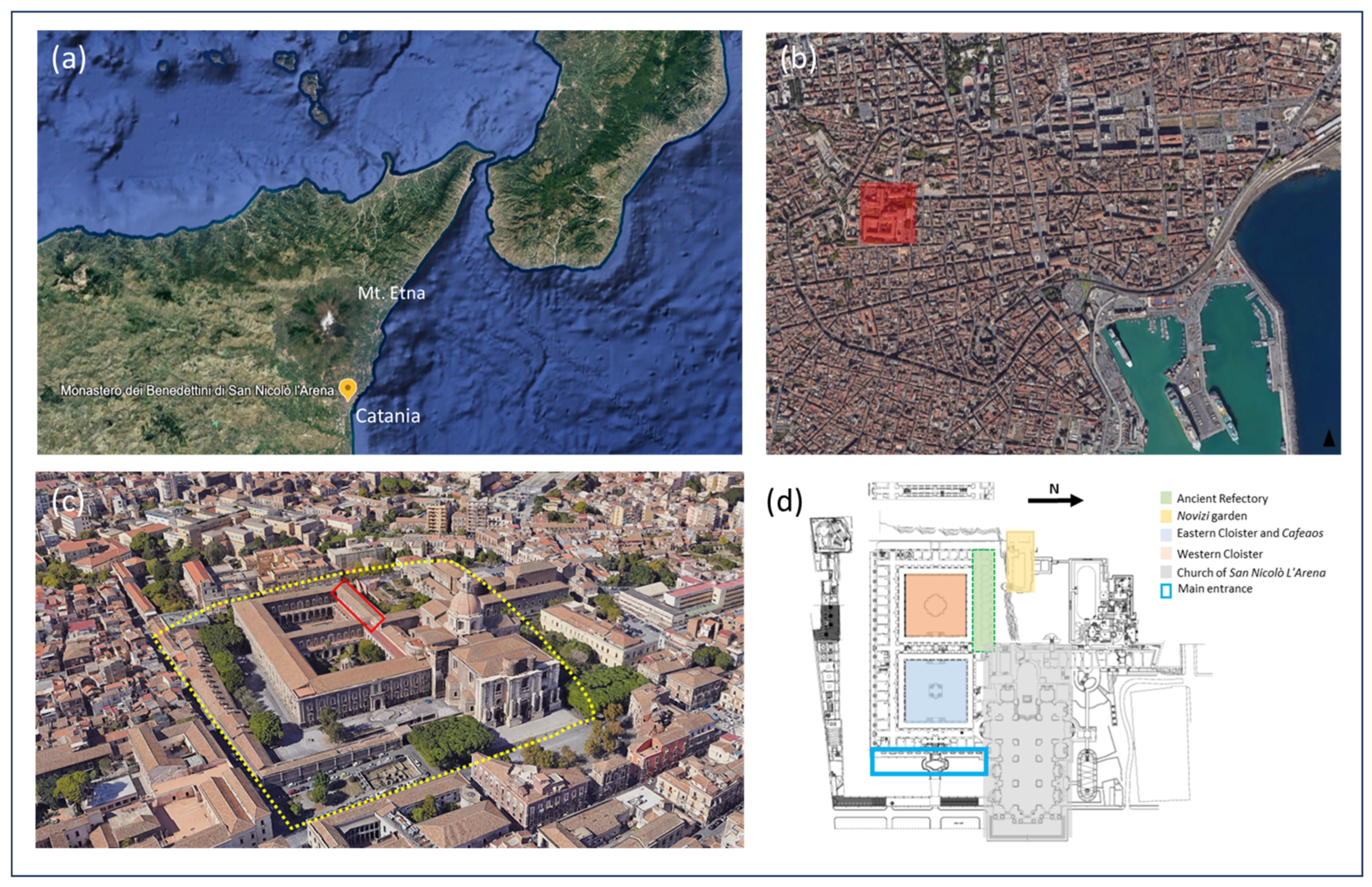
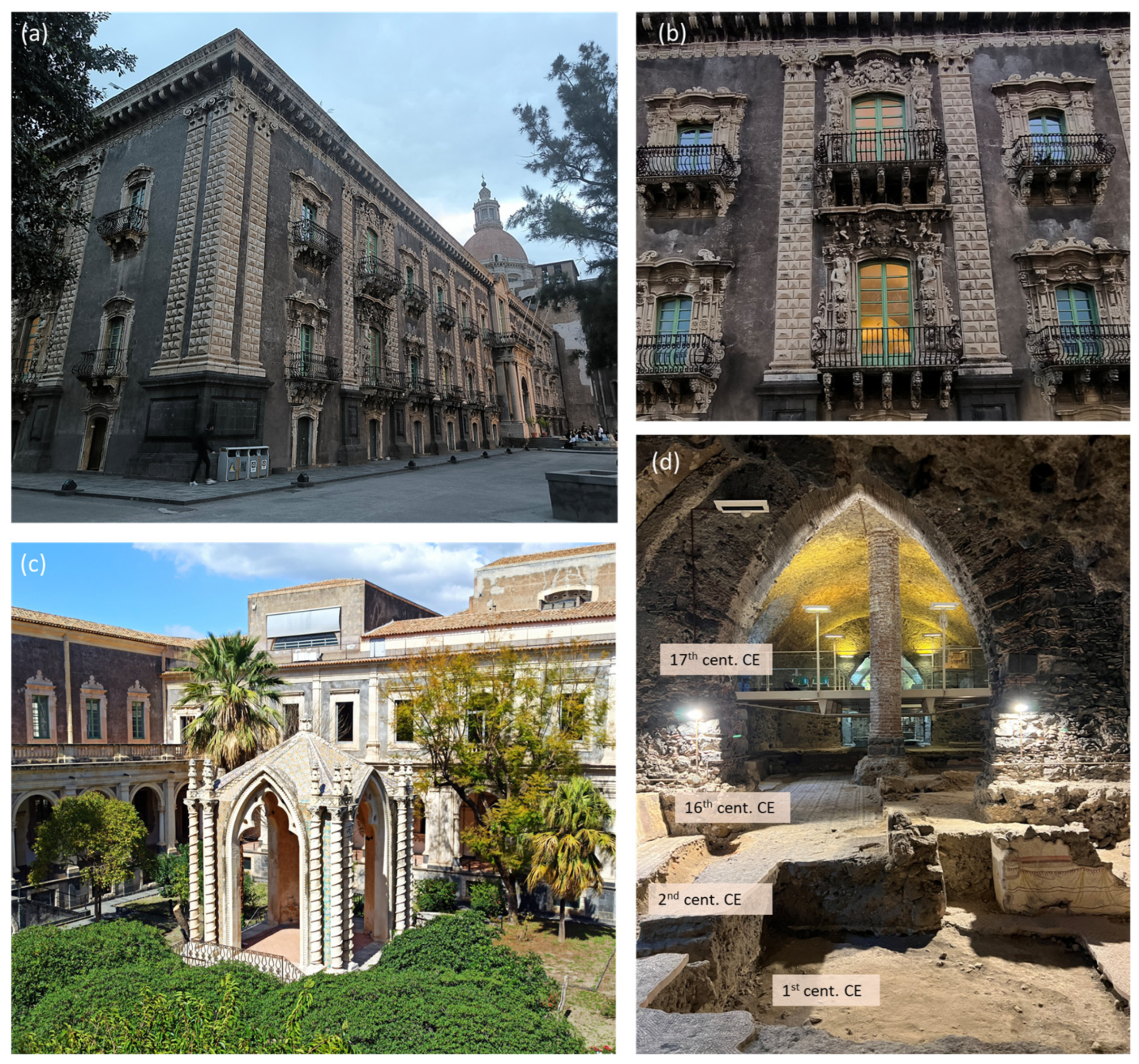
The Benedictine Monastery is a monumental edifice, located in Catania (Italy, Figure 1a,b), belonging to the late Baroque architecture of south-eastern Sicily, which in 2002 has been included in the UNESCO World Heritage List. Originally founded in the 16th century, the monastery has undergone various transformations over the centuries.
Figure 1. (a,b) Geographic localization of the Benedictine Monastery (red shadow in Figure 2b) in Catania (eastern Sicily), (Images: Google Earth); (c) general view of the monumental complex (yellow dotted line, image taken from Google Earth), with indication of the study area, marked by the red rectangle, which corresponds to the ancient refectory rooms; (d) plant of the monumental complex. The original structures were partially destroyed by the lava flow of 1669 and later completely razed to the ground (along with the entire city of Catania) by the earthquake that occurred in 1693. Following these events, the monks decided to rebuild the monastery once again, expanding it towards the east with the construction of a second cloister (eastern cloister) (Figure 2c) and an imposing church (Church of San. Nicolò l’Arena) (Figure 1d).
Heritage 08 00467 g001
Figure 2. (a) General view of the main complex of the Benedictine Monastery; (b) particular of the baroque style; (c) eastern cloister and Cafeaos; (d) view of the Roman domus as an example of historical multi-layered context.
Heritage 08 00467 g002
The Benedictine Monastery of Catania represents a complex system of cores and wings that can be divided into three sections: one southern, one central, and one northern. The southern section of the building consists of two adjacent quadrangular cloisters, one to the west and one to the east (Figure 1c,d), surrounded by rectangular structures on all four sides. Such structures contain several floors and basement rooms resulting from modifications and additions. This part of the building is the oldest.
In the central section, the hanging garden is located to the west and the church of San Nicolò L’Arena to the east (Figure 1c,d). In the northern section, with an inverted L-shaped plan, are the rooms associated with monastic life, added after the 1693 earthquake.
The monumental edifice desired by the monks remained unfinished due to the directive of King Vittorio Emanuele II, which imposed the suppression of the most powerful religious orders. Subsequently, the monastery passed into the hands of the municipal government around 1866. From that moment on, the monastery underwent several adaptations for new and different intended uses, such as schools, military detachments, and offices. It was also damaged during the Second World War, and although the damage was repaired, it is still visible today in the eastern cloister.
The turning point for the monastery came around 1970 when it was donated to the University of Catania. The commitment was to restore it and make it the headquarters of its departments. Today, it is indeed the headquarters of the Department of Humanities.
Its architectural significance lies in the Baroque style, characterized by ornate decorations, intricate details, and a sense of magnificence.
The Benedictine Monastery complex represents an example of a multi-layered context of cultural heritage (as shown in Figure 2d, where the vertical succession of different construction phases in the Roman domus can be observed), suitable for the inter- and multi-disciplinary approach. It combines unlike contexts of artistic, historical, archaeological, and architectural interest, as well as different building/decorative materials and construction techniques used over time. It represents a key site for understanding not only the history of the monastery itself but also the broader history of the city of Catania [17]. Archaeological investigations carried out here from 1978 to 1996—marking the first urban stratigraphic excavations in the city—have provided extraordinary data, allowing direct insight into the city’s history. Beneath the courtyards and the monastery’s massive foundations lies a true stratigraphic and architectural palimpsest, capable of offering exceptional information: a continuous, detailed testimony that traces the history of this site from prehistory to the modern and contemporary periods [18].
The area of the Benedictine Monastery of San Nicolò l’Arena in Catania shows continuous occupation well before the Greek colony of 728 BCE [19]. Eneolithic remains, including a cist tomb and traces of huts [20], together with scattered ceramics, attest a prehistoric presence continuing through the Bronze and Iron Ages [21].
With the arrival of the Greeks, the site coincided with Montevergine, identified as the acropolis of ancient Catania [20]. Despite later transformations caused by lava flows and the modern city, the original topography remains visible in street alignments such as Via Antonino di Sangiuliano. Excavations in the monastery courtyards revealed remains of the city’s first walls and residential buildings [22]. The earliest Archaic houses, oriented NW-SE, were replaced in the late 5th century BCE by a new N-S grid, likely introduced after Dionysius I’s conquest in 403 BCE [20,21,22,23]. This phase shows residential use with possible cultic functions, as suggested by votive pits [22].
From the 3rd century BCE to the 2nd century CE, the hill hosted an extensive residential quarter [22]. Notable is the Hellenistic “Casa della tavola imbandita,” in use until the 1st century CE (Figure 2d), decorated with painted plaster, tessellated floors, and opus scutulatum pavements [24]. In the Roman phase, continuity of habitation is confirmed by houses along Cardo I. A peristyle domus, built over the earlier Hellenistic house, preserves three porticoed sides, wall paintings, and rich mosaics [22,24,25] (Figure 2d). The Dionysian grid remained in use until the 6th–7th centuries, when it was progressively replaced by modest dwellings and irregular lanes, marking early medieval decline [22,26].
The Benedictine Monastery was founded in 1558, within the city walls, with Santino Cannavali directing construction until the inauguration of 1578 [27,28]. Its layout, organized around cloisters and spaces prescribed by the Rule of Saint Benedict, included dormitories, refectory, church, and library [28]. By the end of the 16th century the main structures were complete, with the marble cloister by Giulio Lasso standing until the 1693 earthquake [28].
During the 17th century, the monastery reached great prestige but was struck by disasters: the 1669 eruption destroyed gardens and stables [28], while the 1693 earthquake collapsed the church and killed 34 monks [27]. Reconstruction begun in 1702 by Antonino Amato, was expanded by Vaccarini, Battaglia, Ittar, and Battaglia Santangelo, who added monumental refectories, library, dome, main staircase, and façades [27]. In 1841, Mario Musumeci completed the southern cloisters and service spaces, consolidating the monastery as one of the most significant monuments of Baroque Catania.
Its architecture reflects the layered history of the site: from prehistoric occupation to Greek and Roman urban layouts, and finally to the Benedictine monumental complex, marked by resilience and transformation in the face of natural disasters.

Studied Areas: “Ancient Refectory Rooms”

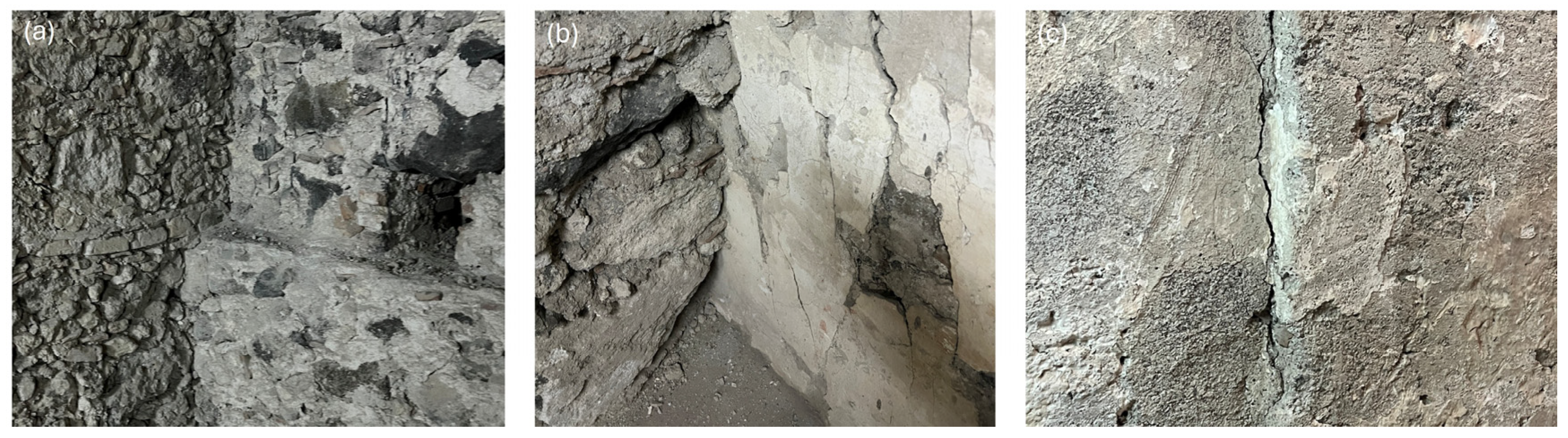
A specific area of the building, now accessible from the storage rooms of the current library, was chosen to carry out the investigations and studies. In particular, such area was selected because it preserves coexisting materials from different periods in a largely unaltered state. Being located in disused spaces with restricted public access, it remains undisturbed, allowing us to perform in situ analyses and, where appropriate, collect samples for subsequent laboratory investigations. This area, called “ancient refectory” belongs to the original 16th–17th century structure, later abandoned after the renovations following the 1693 earthquake. The area is situated near what was the first floor of the northern arm of the western body, as well as the original nucleus of the monastery before the post-earthquake transformations of 1693 (Figure 1c,d). This area was dedicated to shared activities and comprises the “ante-refectory room” (a), the “refectory room” (b), and the “sacristy” (c) (Figure 3a–c).
The rooms, which were originally large and directly accessible from the western cloister, are today narrow and difficult to access due to changes in roof height and the addition of wall partitions.
The ante-refectory space is currently unconnected from the refectory, unlike its original state. It is a rectangular room with plastered walls, containing a deposit of stone materials. The refectory area currently presents a complex system of multi-layered rooms and spaces, created by a succession of additions and modifications. To the east, there is the area of the original sacristy, still accessible from the current library. The walls are partly covered with plaster (especially the perimeter ones) and partly with exposed brickwork, and this includes both walls and arches.
The stratigraphic evidence and the various construction techniques reveal transformations and modifications that have occurred over time, which, if carefully read and analyzed, broaden the complex picture of the events it has undergone. Due to their material–stratigraphic complexity, the environments are interesting to explore in an interdisciplinary way.
The studies that were therefore carried out are on the one hand, direct stratigraphic studies on the masonry, with particular focus on the refectory area, and on the other, non-destructive diagnostic studies on all three areas.
The initial investigations have been focused on the visible wall sections—plastered and unplastered—in the refectory, and were carried out to clarify the multi-stratification of the sections with respect to known historical data. The method, in fact, involved a combination of historical–bibliographic research and direct stratigraphic analysis.
In situ measurements were conducted in the selected areas in order to study the textural, mineralogical, and chemical features of both natural and artificial materials, as well as to assess the state of conservation of historical masonry, with a particular attention to mortars and plasters.
The different approaches, although apparently separate, have instead been set up in a cross-cutting manner with the aim of integrating, supporting, and directing each other so as to obtain a knowledge framework that is as complete and correct as possible and, therefore, useful in the case of conservative intervention. This study specifically aims to assess whether non-invasive diagnostic techniques can reliably distinguish pre- and post-earthquake construction phases, and how their integration with historical and archaeological data can improve the understanding of the building’s developmental history.

3. Materials and Methods

3.1. Investigated Materials

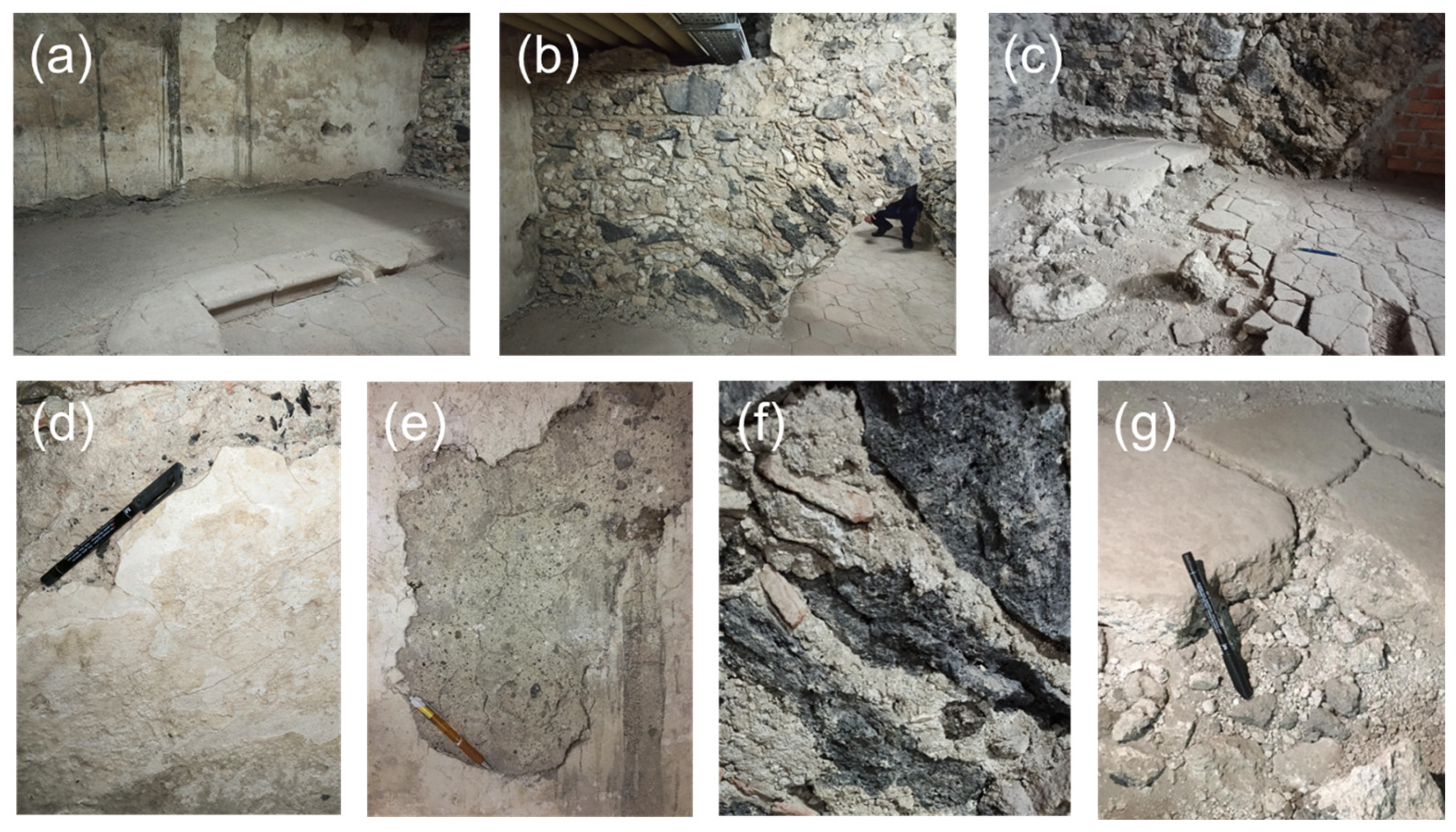
Images in Figure 4a–g represent the areas where in situ diagnostic analyses were conducted, along with details of the investigated materials. In particular, the analyses have involved plasters and coating mortars from the ante-refectory and refectory room likely dating back to 16th and 17th century (Figure 4a–e). This masonry is predominantly composed of volcanic stone blocks and brick fragments, held together by a mortar with volcanic aggregates (Figure 4b,e,f). In the ante-refectory rooms, fragments of charcoal are also observed within the mortars (Figure 4d) that for the other aspects appear similar to the others. Furthermore, reused stone elements are frequently found as well.
The plaster has shown a generally whitish color, although some portions show more yellowish tones probably due to alteration (Figure 4a). Mortars from the masonry unit that divides the refectory into two sections, by the load-bearing arches, (Figure 4b,f) were also analyzed. Lastly, mortars located beneath the flooring (Figure 4c,g), supposed to belong to the original construction phase and thus part of the pre-earthquake monastery, were also examined.

3.2. On-Site Stratigraphic Analysis of Masonries

The analyses that were carried out in the refectory environment with archaeological approaches fall within the disciplinary branch of Architectural Archaeology, specifically applying the stratigraphic analysis of the walls [29,30,31].
It is a method of understanding the building (intended as a multi-layered palimpsest), which allows us, through a mainly direct study of the material (which can also be integrated with other sources and analyses) to identify the “units” equivalent to natural or anthropic actions, present in the form of traces or positive and negative parts on the masonry, to understand their mutual chronological relationship [32].
The aim is to reconstruct a sequence that clarifies the life and transformations of the structure over short and long periods. The fieldwork involved a combination of direct on-site analysis, indirect study, and in-depth analysis (through photographic documentation and surveys), and historical-documentary research, all of which were cross-referenced.
On-site, we started from the identification of the stratigraphic units, distinguishing Masonry Stratigraphic Units (USMs) for the vertical units (the walls); Stratigraphic Units (USs) for the horizontal units such as the floors; Cladding Stratigraphic Units (USRs) for the plasters.
Each unit was identified, distinguished, and documented based on its characteristics, such as construction techniques.
For each unit, the stratigraphic relationships (contemporaneity, anteriority, and posteriority) with adjacent units were documented through detailed analysis of contact points and a careful examination of the placement of materials (Figure 5).

3.3. On-Site Diagnostic Analyses Through Portable Non-Destructive Instruments

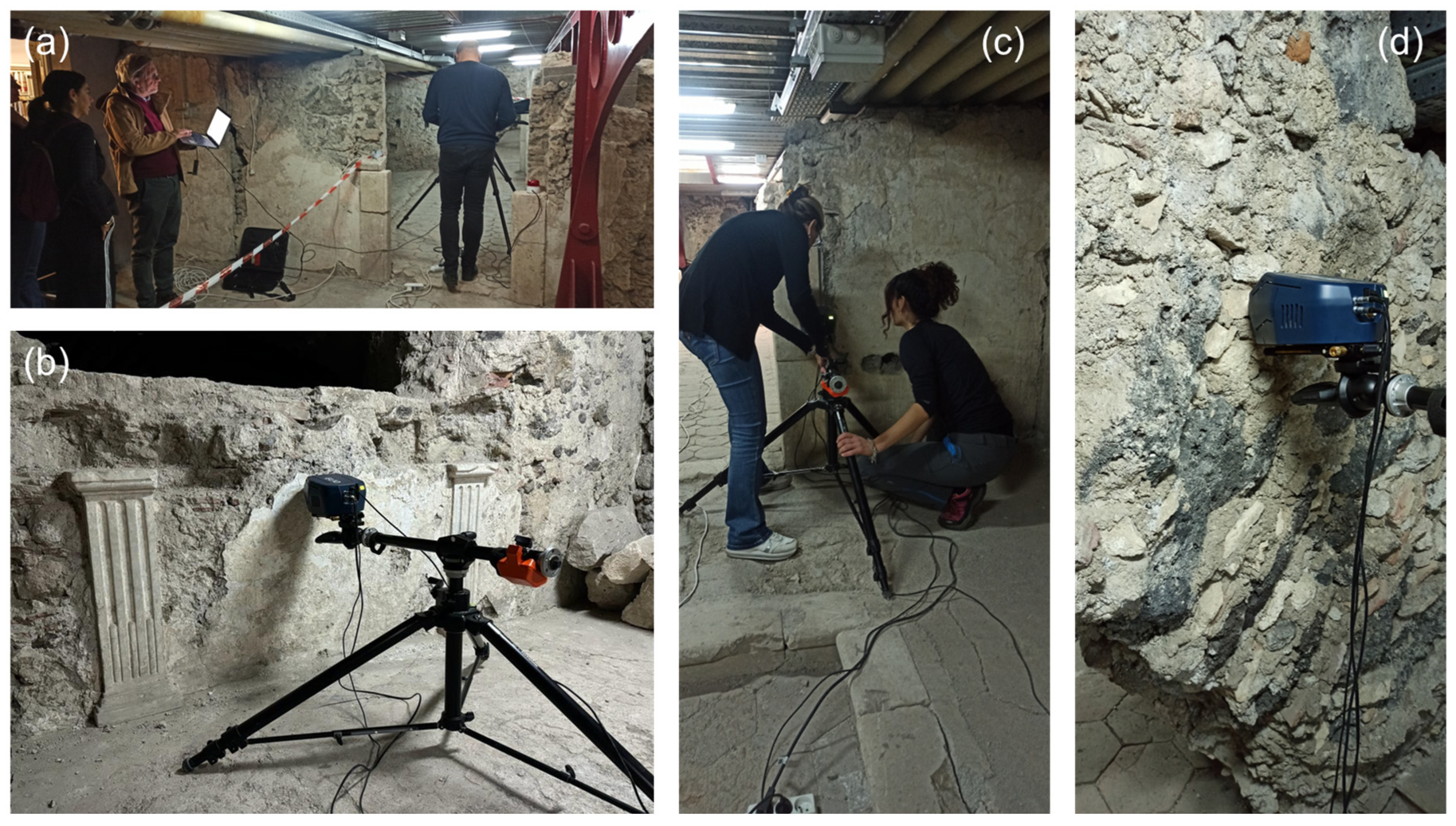
In situ analyses by using non-invasive portable instrumentation were carried out to obtain preliminary textural, chemical, and mineralogical information, including digital handheld microscope, X-ray Fluorescence, and DRIFT spectroscopy. These techniques offer several advantages, allowing for fast and repeated measurements on large-scale objects without the need for sample removal. Figure 6 shows an example of on-site data collection by using various portable instruments.

3.3.1. Digital Handheld Microscope

High magnification images on the fresh surfaces were acquired by digital microscopy Dino-Lite AM7915MZTL, using visible, infrared, and ultraviolet illumination, long working distance, 5 MP images, 10×–140×, in order to investigate the texture and features of the decorative rocks.

3.3.2. Portable X-ray Fluorescence (pXRF)

Chemical analyses were performed by means of a portable XRF spectrometer, a Bruker Elio system equipped with a Rh target X-ray tube and a Silicon Drift Detector. The following setup parameters were used for measurements: acquisition time 60 s, tube voltage 40 kV, and tube current 20 μA. Two consecutive measurements per spot were carried out and then the average composition was calculated for each spot. The major elements determined included Si, Ti, Al, Ca, Fe, K, Mn, and S, expressed in weight percentages (wt.%). The values are intended to be considered semi-quantitatively.

3.3.3. Diffuse Reflectance Infrared Fourier Transform Spectroscopy (DRIFT)

Mineralogical information was gained by means of DRIFT analyses, performed through an Agilent Cary 630(R) spectrometer, modified by Madatec srl with an accessory for Non-Contact Measures (MadaIR). The spectral range covered is 650–5500 cm−1 with a spectral resolution of 4 cm−1.

4. Results

4.1. Direct Archaeological Studies and Stratigraphic Analysis of Masonries

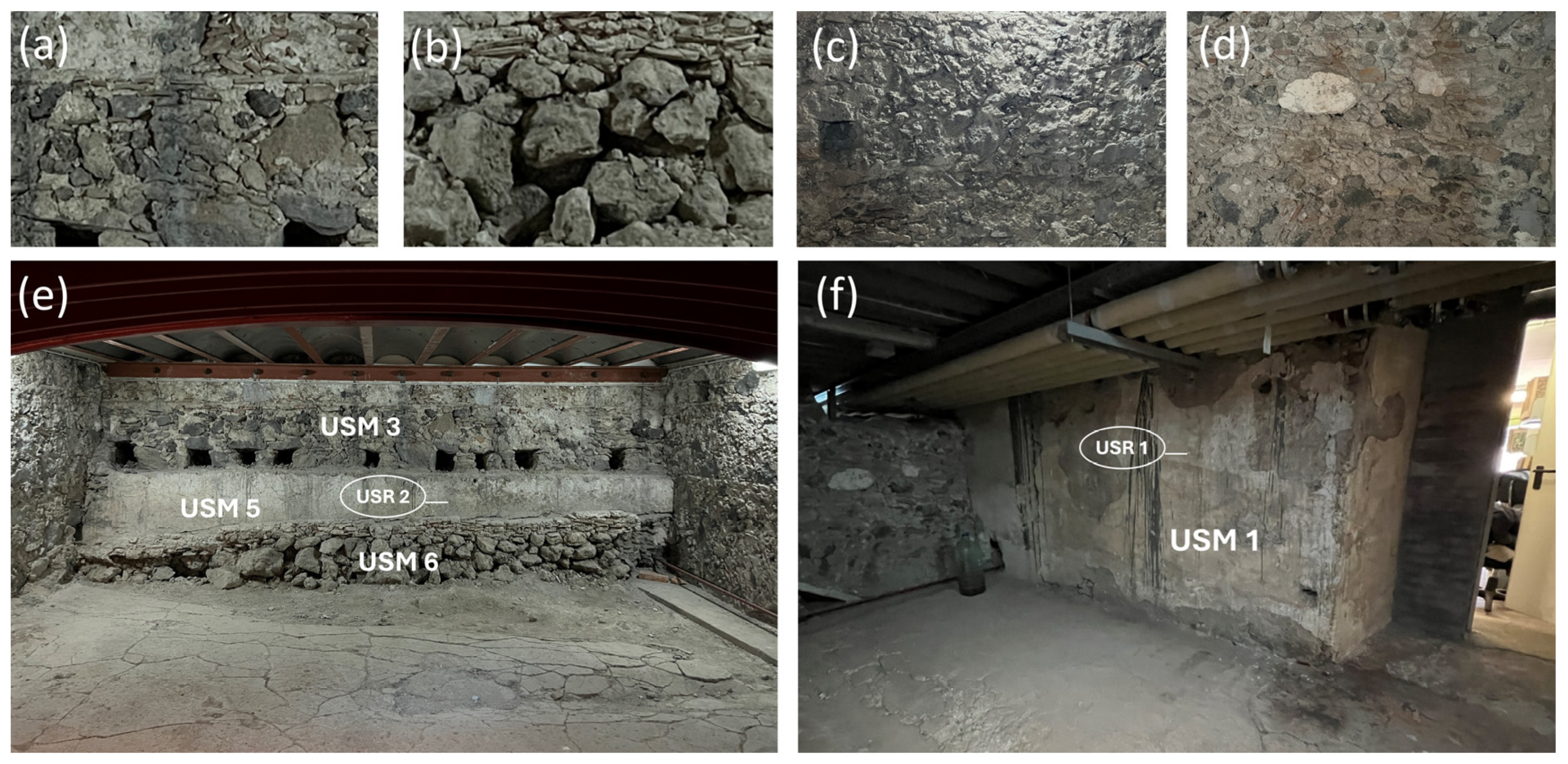
Thanks to the stratigraphic analysis of the walls carried out, a total of 49 units and four different Masonry Techniques (indicated with the acronym TM) associated with the units (Figure 7a–d) have been identified. In addition to the wall stratigraphic units, it was also possible to distinguish different wall textures. Once the data collection phase was completed, the data was reprocessed, aimed at cross-referencing the information, organizing it, and tracing the relative chronological sequence between the parts. This was then dated through chronological clues and cross-referencing with documentary sources.
Cross-referencing with historical documentation and with what is known about the events allowed us to identify and distinguish five stratigraphic phases as well as five moments in which the environment has undergone changes and transformations, some of which can be considered as “macro” transformations (Phase 1, Phase 2A and Phase 4), while others as “micro” transformations (Phase 2B, Phase 2C, Phase 3).
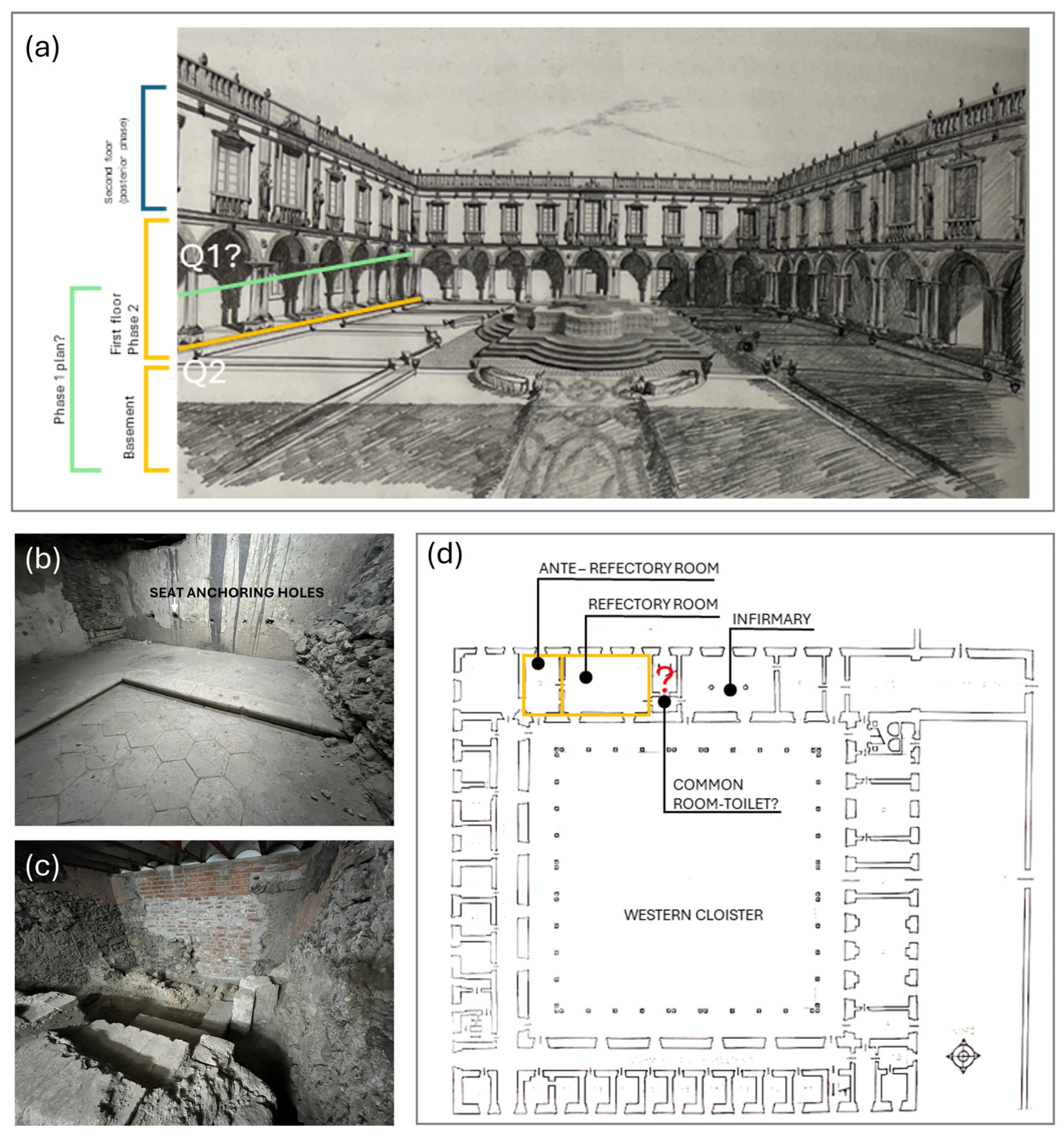
The first phase identified (Phase 1) can be called the “first roof phase”. The refectory room was not the one we see today. In fact, there was a room that was always developed in length but at a lower level (Q1) (Figure 8a) than the current one, covered by a floor or roof of parallel wooden beams of which the placement holes remain evident near the north wall (USM3), (Figure 7e). Also, near this wall is a step (USM 5) connected to USM 3 placed to support the beams. It is not clear which wall was opposite, that is, the southern perimeter wall. It could be the current entrance wall to the refectory (USM 1) (Figure 7f) and it cannot be ruled out that it could be the wall bordering the western cloister.
This is followed by Phase 2A, which we can call the “plaster phase”, characterized by important modifications such as the division of the Phase 1 environment into two floors (basement and first floor), eliminating the roof slab and raising the floor level (Q2) (Figure 8a) which is in line with the level of the cloister.
In this phase, the refectory was created, plastering the walls with a light-colored covering, which can be seen in parts (USR 1-2-6-7-12-13-14-15) on the various visible wall fronts and is linked to the US 4 flooring (characterized by hexagonal tiles and showing a perimeter step designed to accommodate the tables and seats for the canteen, of which the anchoring holes in the wall remain) and to the US 1 flooring (composed of beaten mortar) into the area defined by historical studies as an “infirmary”. The room is always rectangular and elongated, preceded to the west by the ante-refectory (Figure 8b). Even less clear at the current state of research is the situation in the eastern part of the refectory, an area where water flows through a small channel (USM 6) and where there are several walls of complex stratification that allow glimpses of pools and steps (Figure 8c). As interpreted by the published studies, it was probably a common area connected to the toilets (Figure 8d).
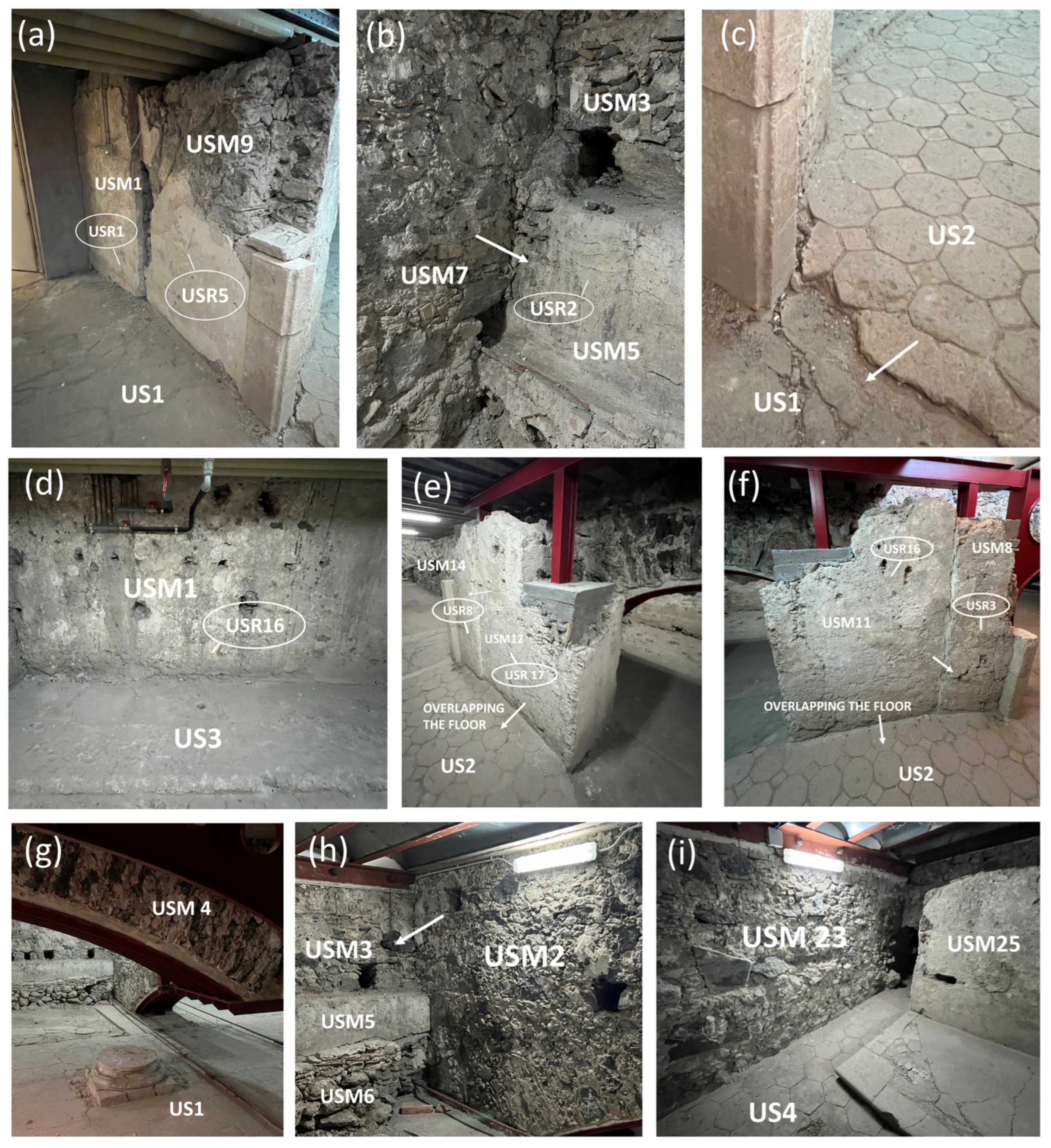
A phase of modifications follows which we call Phase 2B, during which this common area would appear to have been better delimited and defined with the addition of walls (USM 7, 8, 9, 17, 13, 14) leaning against the pre-existing walls (USM 1 and 3) (Figure 9a,b).
These walls are also covered with plaster (USR 10, 5, 9, 8, 3) similar to those of Phase 2A. In this area, a new flooring (US2) is laid over the previous one (US4), characterized by octagonal tiles divided by small diamonds (Figure 9), also creating two openings (opening 2 and 3).
In the space thus created to the south, between the new wall partitions (USM 13 and 9), leaning against the perimeter wall USM 1, holes visible in the wall and near the flooring could be interpreted as evidence of the use of the area for services (Figure 9d), probably “baths” for body care and washing that the monks used to do before sitting down to meals.
The changes do not seem to stop; in fact, there seems to be evidence of a new “sub-phase”, which we have called Phase 2C. This phase saw only small modifications, always in the common area, with the addition of two wall partitions (USM 12 and USM 11, respectively, attached to and not connected to the walls USM 14 and USM 8). These were also covered with plaster such as USR 17 and USR 16, similar to the previous ones (Figure 9e–f)
The column base visible in the area defined as the infirmary can be placed in a separate phase, which we identify as Phase 3. Since this base is broken from the floor of Phase 2A, we can place it with certainty in succession. However, since there are no points of contact with the architectural parts of Phases 2B and C, we do not know the chronological and stratigraphic relationship with these. Therefore, it is considered a separate intervention that occurred at a time we identify as the third phase (Figure 9g).
Phase 4, the final one, was clearly separated from the previous ones and with a significant impact on the environment. This was the final stage of transformation of the refectory, and, in general, of the entire northern area of the monastery, at the level of the sixteenth-century refectory, which saw the insertion of a series of massive and important arches (USM 2-4-15-19-20-24) and wall partitions (USM 22-23-16), characterized by a new masonry technique (TM1) and all placed in evident support and abutment with respect to the other wall sections. These partitions clearly have a purely structural function, suggesting a new change in height, as they support a very low roof, and a functional abandonment of the space, as their presence makes it unusable. We can therefore affirm that the refectory lost its function in this phase and it was necessary to make structural support insertions to consolidate and sustain a new floor above (Figure 9h–i) The modifications that followed from this point on were mainly post-ancient and modern, with materials such as concrete and steel, for the purposes of restoration and structural consolidation, fitting into the post-monastic phase of use of the building.

4.2. Diagnostic In Situ Analyses by Portable Instrumentation

4.2.1. Digital Handheld Microscope

Observations carried out in situ under the handheld optical microscopy allowed gaining preliminary information on both textural and compositional features of the examined plasters and mortars.
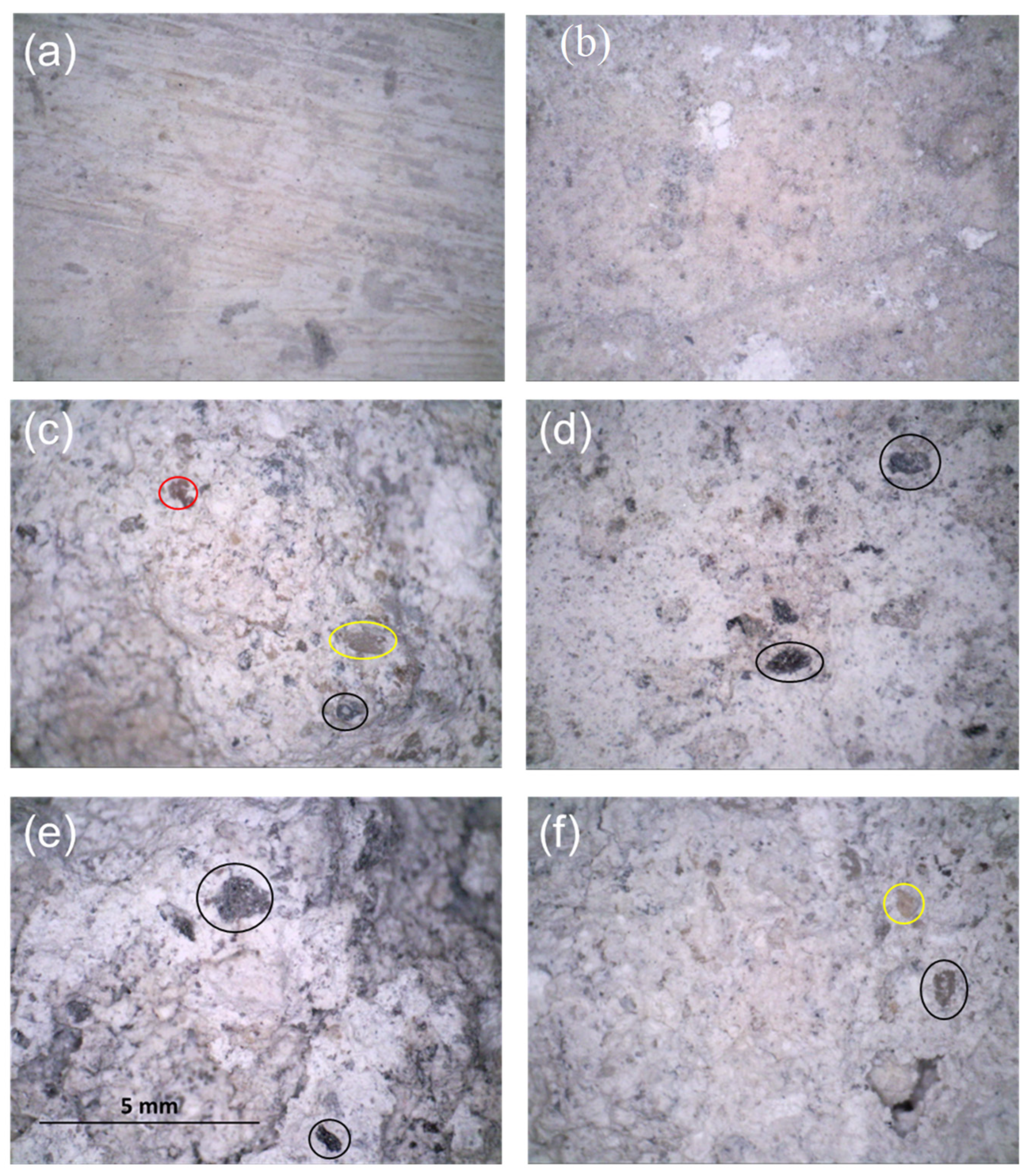
Figure 10a–f shows surfaces of plasters and mortars from the walls of the refectory and sacristy. In particular, Figure 7a,b present two examples of plaster surfaces which exhibit a whitish base layer, upon which an upper yellowish layer can be observed, the latter being probably due to alteration. Additionally, the presence of parallel striations is evident (Figure 7a), likely resulting from manual surface finishing.
Figure 10c,d refer to mortar samples that apparently date back to Phase 2A and 2B of the building, respectively. At this scale, it is possible to observe, among the aggregates, the presence of brownish fragments resembling cocciopesto (crushed brick, red circle), along with dark gray volcanic clasts (black circles) and possible sand grains (yellow circles). The matrix of the mortar appears to be quite heterogeneous both in the color, ranging from gray to beige, and in the grain size of aggregate clasts.
Figure 10e,f, on the other hand, show mortars likely belonging to a later phase, possibly associated with post-earthquake reconstruction interventions, namely Phase 4A. These samples seem to contain only dark gray volcanic aggregates, though in variable amounts depending on the sample, and occasional beige fragments that could be identified as sand. No brownish cocciopesto aggregates have been identified. Even in these mortars, the matrix is rather heterogeneous, showing differently sized aggregate grains and a variable color, though the latter is slightly lighter than that observed in the earlier mortars.

4.2.2. Portable X-ray Fluorescence (pXRF)

Both materials belonging to the 16th century and those applied during the reconstruction after the earthquake were investigated, particularly plasters and mortars. All the data are shown in Table 1, where the related elements’ abundances are also highlighted with colored bars.
The plaster was measured on the walls of the refectory and ante-refectory. Calcium (Ca) appears to be the most abundant element in all the measurement points. Specifically, it is possible to distinguish two groups according to the Ca/S ratio (S = sulfur). The majority of the measurement points show a high calcium content (up to 86 wt.%), suggesting the presence of lime-based binders. Some other points, which are randomly distributed on the surfaces, are characterized by similar content of sulfur, suggesting the hypothesis of the existence of gypsum.
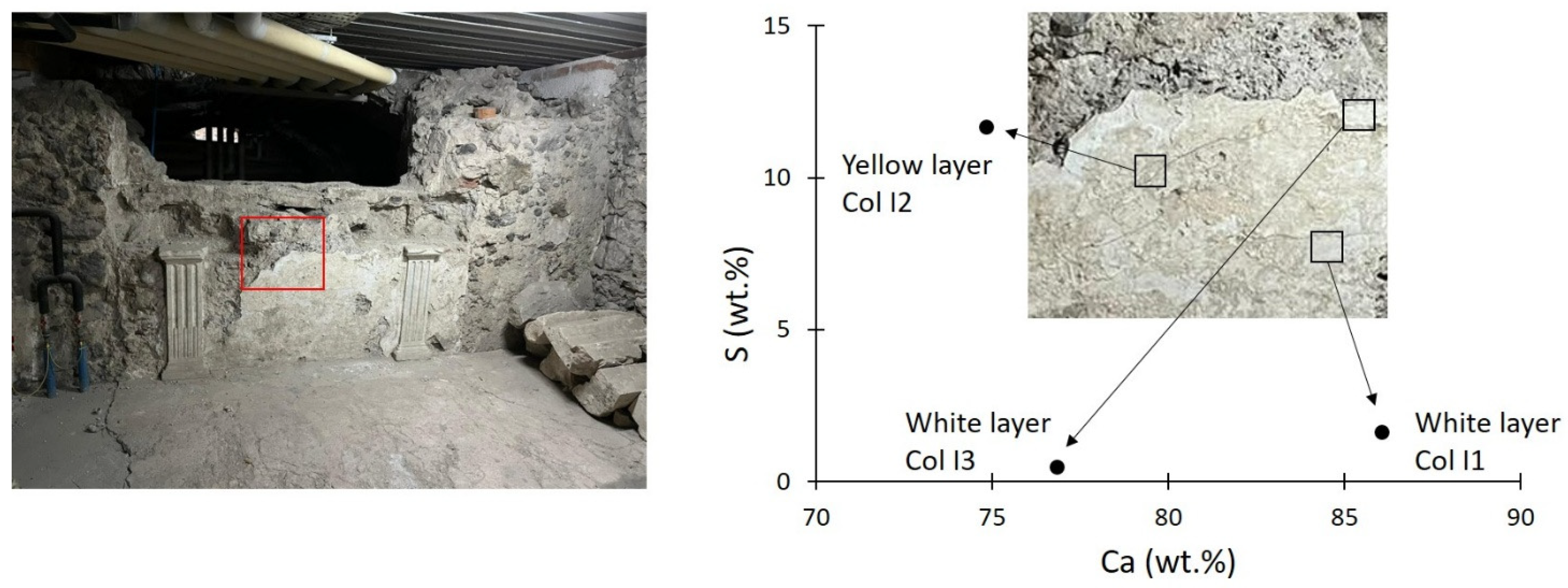
In the ante-refectory room, areas of multiple layers due to chromatic variations were observed. This suggests the presence of a degradation process of the plaster itself or of an earlier protective treatment. This observation is consistent with the detected sulfur variations. pXRF analyses reveal slightly differing concentrations of sulfur and calcium comparing the two areas: the more yellow-toned plaster is richer in sulfur, while the whitish layers show higher calcium content (Figure 11).
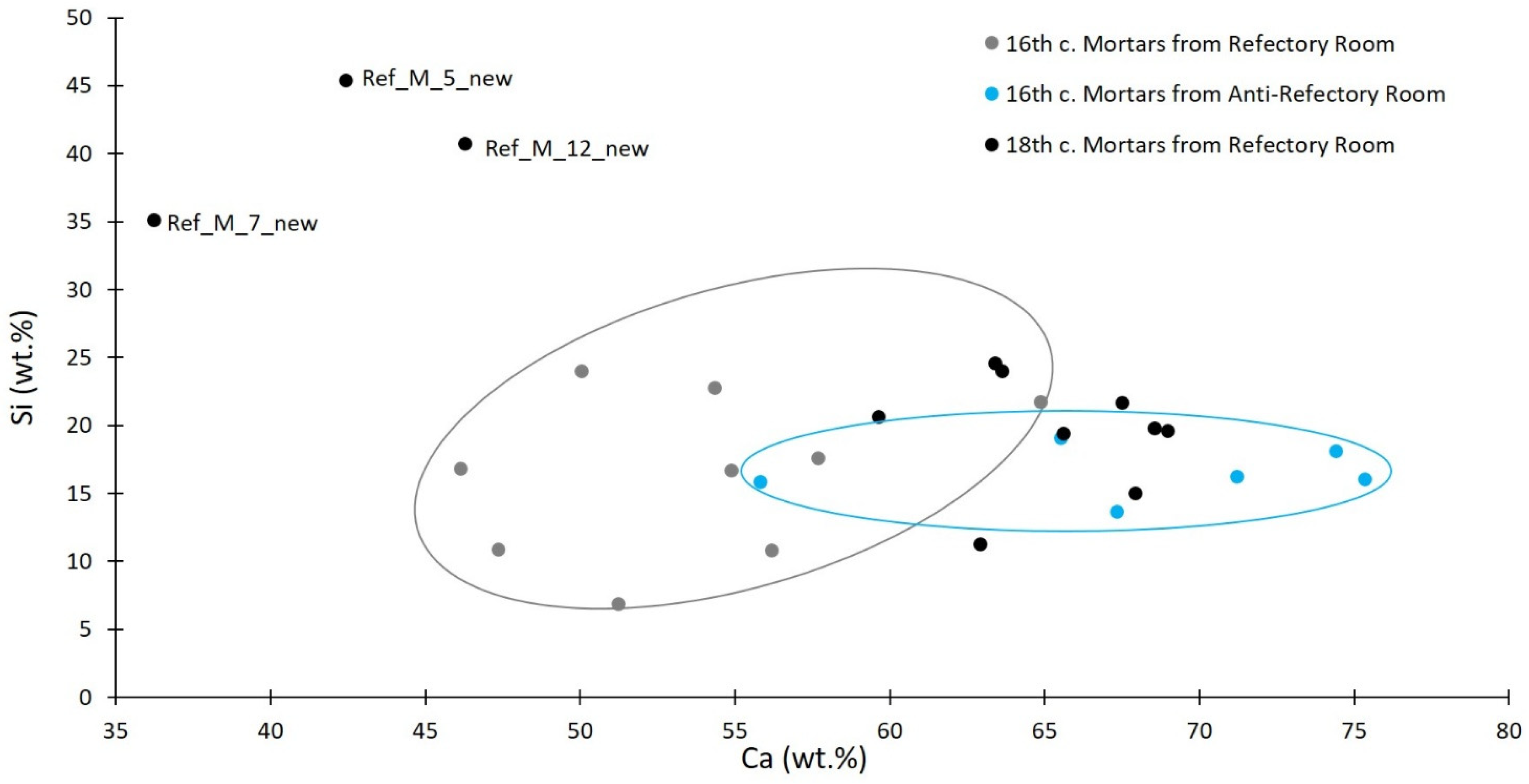
Regarding the mortars, the data collected from the surface show an elemental composition dominated by calcium (up to 75 wt.%) and silicon (Si) (up to 45 wt.%), with some points also rich in sulfur. Aluminum appears to be another important element in mortars, with content ranging between 4 and 16 wt.%. A slight variation sees the mortars from ante-refectory bearing a higher calcium content compared to those from the refectory room (Figure 12). The graph of Figure 12 also shows the distribution of the measurements acquired on mortars dated back to 16th and 18th centuries, particularly of the refectory room. Except for the samples Ref_M_5_new, Ref_M_7_new, and Ref_M_12_new, the obtained results do not indicate significant compositional differences among the mortars sampled from different historical periods (Table 1). The abovementioned samples, instead, are clustered with a higher silicon content and lower calcium. These three points can indicate the presence of mortars with different characteristics within the same reconstruction, namely after the earthquake.
Nevertheless, the apparent general homogeneous elemental distribution of the employed materials could be attributed to the intrinsic limit of the portable instrumentation, which hinders to separate the binder fraction of the mortar from the aggregates, thus the chemical composition detected is an averaged signal coming from both. In order to identify the mortar as hydraulic or air-hardening, samples should be taken and used to calculate the hydraulicity index [33].
The pXRF campaign is to be intended as general overview of the areas, which appear more similar than what was thought. The measurements could be considered in order to plan a sampling strategy for laboratory-focused analyses.

4.2.3. In Situ DRIFT Analyses

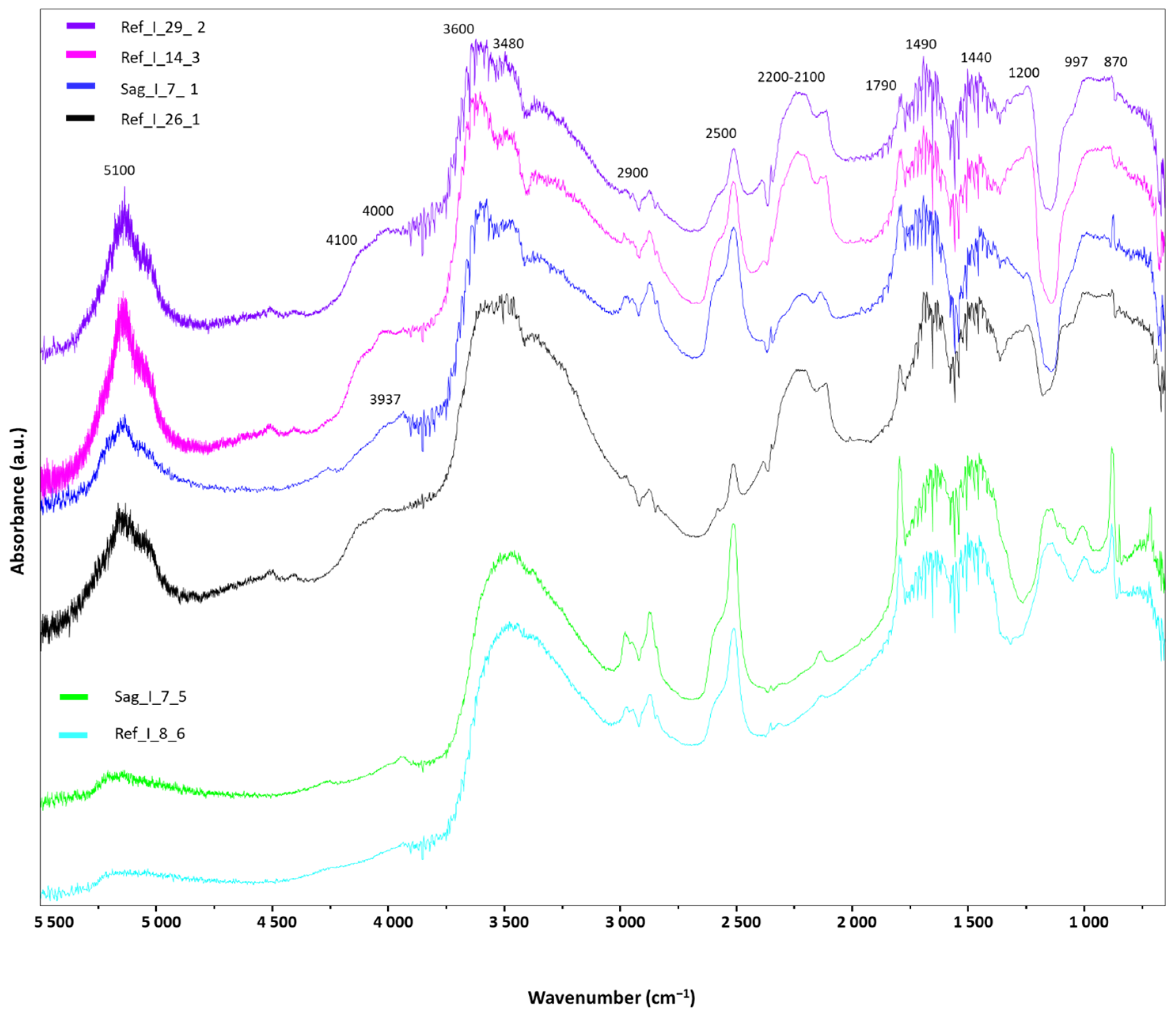
Diffuse Reflectance Infrared portable analyses were performed on both plasters and mortars of the refectory and sacristy rooms, and the spectra are reported in Figure 13 and Figure 14, respectively.
The measurements were made on the surface as it is and this led, in some cases, to partially distorted spectra due to the presence of specular and diffuse components because of a not very smooth surface.
Specifically, Figure 13 shows the spectra of plasters collected both in the refectory and sacristy rooms. Different bands or groups of bands have been identified. Specifically, bands centered at around 5100 cm−1 are related to H2O stretching and bending vibrations; near 4000 cm−1, a possible combination of OH stretching bands is present, while the region between 3700 and 3000 cm−1 corresponds to OH group stretching related to structural water hydroxyls typical of clay minerals or hydroxides [34]. Some samples (Ref_I29 and Ref_I14) show more pronounced peaks, likely due to a higher content of hydrated phases or residual moisture.
The peaks at around 2500 cm−1 correspond to both OH group stretching and carbonate group [10]. Region at 1789–1400 cm−1 is related to carbonates and water. Strong bands around 1490–1440 cm−1, typical of the asymmetric vibration of CO32−, are attributed to the presence of calcite (CaCO3) [8], the main component of historical lime plasters. Peaks at around 870 cm−1 can further confirm the presence of calcite [35], the main matrix of the plaster [36]. Some spectra (from samples Sag_I_7 and Ref_I_8) show these bands sharper and more intense, likely indicating a purer carbonate matrix.
The region at 1200–900 cm−1 is generally related to silicates and sulfates. Peaks centered at around 1000–1030 cm−1 are typical of Si–O–Si vibrations in silicates (such as quartz sands, clays). Peaks are more visible in the spectra of samples Sag_I7, Ref_I8_3, and Ref_I8_6. Moreover, the contribution at 1100 cm−1 could be attributed to sulfates (e.g., gypsum—CaSO4·2H2O), even though this phase should be confirmed by a distinct peak also at around 600 cm−1 [8].
Therefore, the mineralogical composition of the samples is predominantly characterized by calcite, formed as a result of the carbonation process of historical aerial lime. Silicate minerals are present as aggregates or natural impurities within the mortar matrix. Minor or trace phases include gypsum, potentially related to alteration phenomena or past restoration interventions.
No significant compositional differences were observed between the plasters of the two rooms, and spectral variability appears to depend mainly on the specific sampling location and the conservative conditions of the analyzed surface.
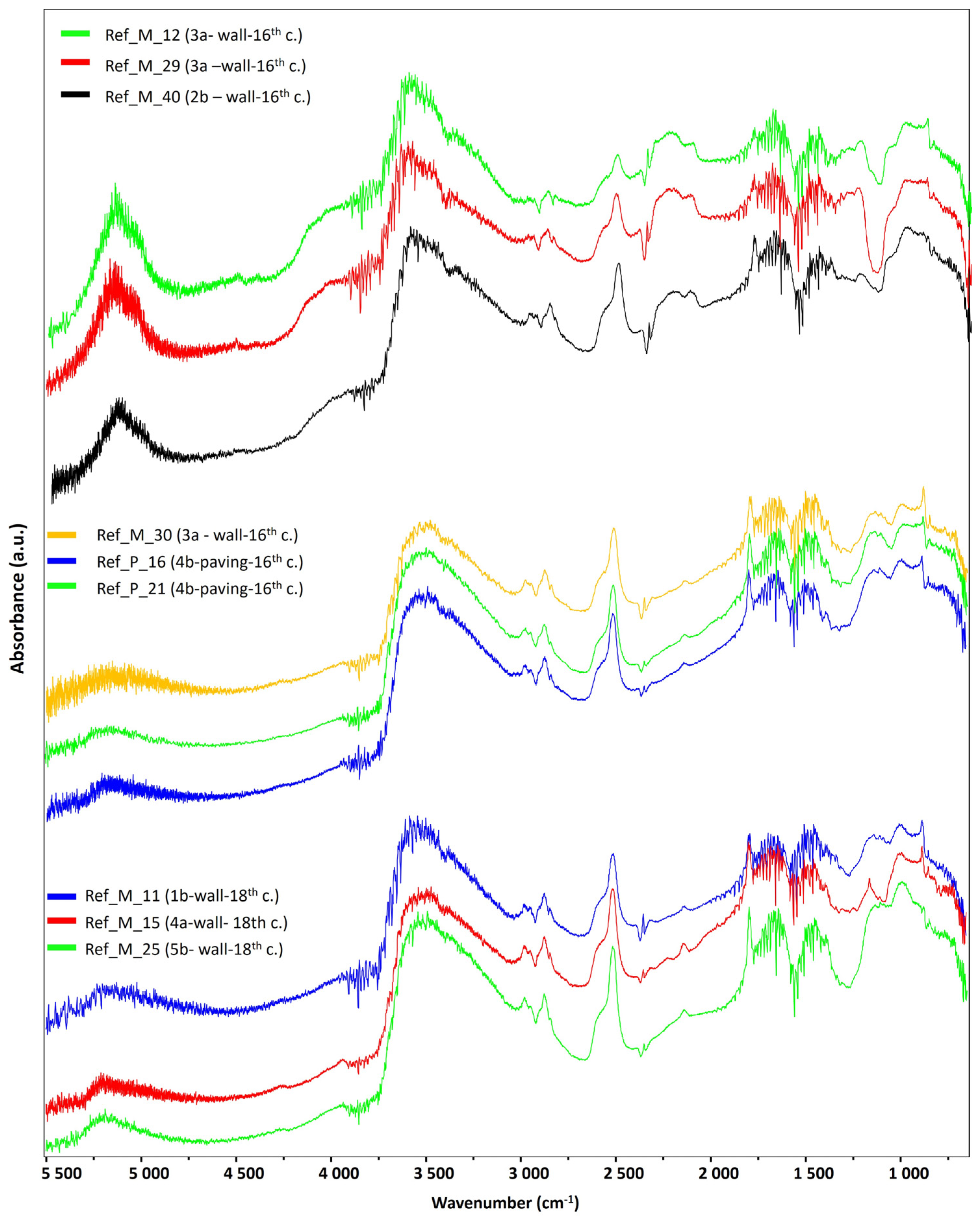
The DRIFT spectra of the analyzed mortars are reported in Figure 14. Mortar’s spectra were grouped according to their presumed construction phase and their location within the building, distinguishing between masonry and pavement mortars.
All spectra display bands consistent with those reported in the literature for lime-based mortars [10,37]. In the high wavenumber region, as observed for plasters, a broad band centered around 5100 cm−1 is attributed to the combination bands of H2O stretching and bending, indicating the presence of adsorbed water [34,38].
The region between 3700 and 3000 cm−1 displays a broad OH stretching feature, typically assigned to structural hydroxyl groups of clay minerals or iron hydroxides [38]. In some spectra, these bands are more intense, suggesting a higher content of hydrated phases or residual moisture.
In the mid-infrared region, between 1780 and 1400 cm−1, strong absorptions at 1420–1470 cm−1 are characteristic of the asymmetric stretching of the CO32− group, confirming the dominance of calcite (CaCO3) as the main binder phase in these historical lime mortars [8,35,36].
The 1100–900 cm−1 region is associated with silicate phases, particularly quartz and feldspars [38,39]. Several spectra, especially those within the second group (green, blue curves), show sharp bands at ~1030–1050 cm−1, attributed to Si–O–Si stretching vibrations of quartz. Weaker multiple bands observed between 1000 and 950 cm−1 suggest the presence of other silicate minerals, possibly derived from the Etnean volcanic aggregates used in the mortar formulation. Additional contributions in the band at 1100 cm−1 may indicate the presence of sulfates, particularly gypsum (CaSO4·2H2O).
The DRIFT analyses carried out on the mortars highlight both features and compositional differences that can be linked to construction phases, functional use, and raw material variability. Overall, all spectra are dominated by calcite bands (~1420–1450 cm−1 and ~875 cm−1), confirming the use of lime-based binders as the primary matrix. However, differences in the sharpness and intensity of these bands can suggest variations in the degree of carbonation or in the relative purity of the lime employed.
Within the first group (Ref_M_12, Ref_M_29, Ref_M_40), which includes mortars belonging to Phases 2A and 2B, the comparison between the green and red spectra shows a variation in carbonate band intensity. The green spectrum also exhibits a more pronounced quartz signal (~1030 cm−1), indicating a higher silicate content. This may point to variability in mortar recipes even within the same historical period (16th–17th century), an observation that requires confirmation through complementary petrographic and mineralogical analyses. Such a distinction is less evident in the Ref_M_40 spectrum.
The second group (Ref_M_30, Ref_P_16, Ref_P_21) includes one wall mortar and two floor mortars, the latter likely associated with stratigraphic unit US2 and Phase 2B. Compared to the first group, these spectra show greater variability in the 1000–1100 cm−1 region, which may reflect differences in the aggregate fraction (composition or granulometry) or variations in the clay content. This variability could be linked to the functional use of the mortars, since the floor samples (Ref_P_16, Ref_P_21) would have been prepared differently from wall mortars. By contrast, the Ref_M_30 spectrum, taken from a wall beneath the plaster, is more consistent with typical masonry mortars.
The third group (Ref_M_11, Ref_M_15, Ref_M_25), assigned to Phase 4, shows spectra comparable to those of the second group (Phase 2B). Within this group, the blue spectrum displays sharper quartz-related peaks, whereas the red spectrum is characterized by more intense calcite bands.

5. Discussion

Chronological Framework of Identified Phases

If we now want to put forward a chronological framework for the phases, it is appropriate to cross-reference the direct stratigraphic data with the known historical construction events. Thanks to published studies and documentation [28,40,41], we know that the building has undergone several periods of evolution and transformation. The building’s life, especially throughout its first phase, saw a succession of phases and plans that changed before they were even completed. Construction began in 1558, and after just a few years we know that the basement to the north and west (now the area above the Roman domus) had been built. Therefore, around 1560, the building must have already had a basement and was a single level. We could associate our Phase 1 with this phase.
A pause ensued due to the death of the master builder in charge of these works, but we know that construction resumed around 1570, when there is evidence of the building structures being raised above the basement level (1569–1583). This suggests a change in elevation that could coincide with the material and stratigraphic changes observed in Phase 2A.
The chronological classification of phases 2B and 2C is now somewhat more difficult, as they are small changes that, as often happens in these cases, are evidenced only by material data and not by historical sources and data.
Phase 2B, which saw the transformations in the central common area, could be traced back to three different moments in which we know that works were carried out in the area. These moments are as follows:
1593, when work on the first floor resumed after a seven-year hiatus, but likely in the southern area (dormitories).
Early 1600s: when new contracts were signed for the completion of the ground floor and it seems that the first floor has been added. By 1613, the first floor would have been completed, including the rooms we are interested in; payments for work in the ante-refectory area are documented in 1610 [28].
A third potential period is in the range 1617–1630, when the final work on the common areas, such as the ante-refectory, refectory, and infirmary, took place.
As can be seen, the works never had a precise end point. Various transformations took place in our areas of interest between 1593 and 1630. We can therefore place Phase 2B in this chronological range, also hypothesizing that the gap from Phase 2C was not that great.
We can more certainly frame Phase 3, as it is known that in 1673 there was a period of restoration in the aftermath of the 1669 lava flow, which was also associated with seismic shocks that affected the building and acted as a watershed [28]. It was precisely at this time that the entire monastery was equipped with columns (it is not excluded that the brick columns visible in the cellars are also associated with this phase).
A further watershed event was the 1693 earthquake, which definitively led to the abandonment of the refectory area in favor of a major renovation of the building and the move to a new refectory, given the significant damage it sustained. Phase 4 can be referred to this new phase as the added walls were essential to the new design and the building’s stability, given the problems resulting from the 1693 earthquake.
These results were significantly enriched by the in situ diagnostic investigations carried out on plasters and mortars.
In particular, the analyses highlighted how some mortars and plasters, with good probability, can be attributed to the pre-earthquake phase, distinguishable by their compositional and chromatic characteristics, which differ from those of the post-earthquake masonry where volcanic stone blocks and brick fragments predominate. Such hypothesis is confirmed by the observations carried out in situ by optical handheld microscope, which have provided a valuable framework for interpreting the other collected results, as the DRIFT spectra of the mortars and plasters. The identification of whitish plaster layers with overlying yellowish areas is consistent with the infrared spectroscopic evidence of a dominant calcitic matrix. pXRF data support the identification of a lime-based plaster type; however, yellow areas are characterized by higher content of sulfur, which could find correspondence on the spectra of gypsum acquired by DRIFT. Therefore, according to these preliminary and non-destructive acquisitions, it seems more reliable the occurrence of an alteration of the plaster surface in some areas of the monument, due to calcium carbonate sulphation process or the only exogenous materials deposition (e.g., secondary gypsum).
The heterogeneous texture of the mortars, with volcanic clasts, sand grains, and occasional cocciopesto fragments in Phases 2A–2B (from 1593 up to 1630), matches the spectral variability observed in the 1000–1100 cm−1 region, where silicate and quartz contributions become more prominent. In contrast, Phase 4A mortars (post-earthquake 1693 period), characterized by volcanic aggregates without cocciopesto, display spectra with sharper carbonate bands and less pronounced silicate features, indicating a simpler aggregate composition. Overall, the integration of microscopic observations and DRIFT spectroscopy highlights slight but consistent differences between building phases, suggesting a general continuity in the use of lime-based binders but a variability in the aggregate fraction, which reflects changes in material selection and construction practices over time. The identification of reused stone elements and, in some cases, fragments of charcoal embedded within the mortars, further confirmed the complexity of the building sequence, suggesting episodes of rapid construction and adaptive interventions in response to contingent conditions. In Table 2, a scheme is reported that summarizes samples with construction phase and historical period.
The variability observed is probably the reason for the difficulty to distinguish mortars kinds used before and after the earthquake by pXRF, where the carbonate matrix is confirmed, with contemporary presence of other components of which identification could not be ensured.
The integration between the historical–archaeological approach and scientific diagnostic analyses has therefore proved to be essential. While stratigraphy and written sources provide a chronological and functional framework, diagnostic investigations offer precise characterization of materials, either confirming hypotheses or opening new interpretative perspectives. This methodological synergy enables a more complete and multidimensional understanding of the monastic complex, an approach that is not only fundamental for historical reconstruction but also crucial for developing future conservation and valorization strategies.

6. Conclusions

This study of a portion of the Monastery of San Nicolò l’Arena demonstrates how the integration of historical–archaeological research and scientific analyses enables a deeper understanding of a highly stratified architectural context shaped by construction phases, functional changes, and catastrophic events. The main conclusions could be summarized as follows:
Stratigraphic and historical research established a framework of construction phases and functional transformations, while in situ diagnostic analyses offered rapid, non-invasive insights into the composition of the materials.
Scientific investigations confirm lime-based binders as the main component of both plasters and all the mortars, notwithstanding the époque. Variability is mostly linked to the aggregate fraction: wall mortars show a purer carbonate matrix, while floor mortars contain more silicates and clays. Slight differences between phases suggest both continuity in construction techniques and minor variations in raw material supply or recipes. Differences in color appearance could be linked to degradation processes.
The integration of these approaches confirmed the importance of methodological synergy: historical and archaeological evidence guides the scientific investigation, while diagnostic data validate and enrich the historical interpretation.
Further laboratory-based investigations on a selected set of samples will be carried out to obtain bulk compositional data and perform traditional mineralogical and petrographic analyses. These will be essential to confirm the working hypotheses presented in this study and to refine the characterization of construction materials.

Author Contributions

Conceptualization, R.O., M.F. and C.M.B.; Methodology, R.O., M.F., C.M.B., L.L., G.B. and P.M.; Formal Analysis, R.O., M.F., C.M.B. and P.M.; Investigation, R.O., M.F., C.M.B., L.L., P.M. and G.B.; Data Curation, R.O., M.F., C.M.B. and L.L.; Writing—Original Draft Preparation, R.O., M.F., C.M.B., L.L. and G.M.G.; Writing—Review and Editing, R.O., M.F., C.M.B., P.M. and G.B.; Visualization, P.M., P.M.M. and G.B.; Supervision, P.M. and G.B.; Project Administration, P.M., P.M.M. and G.B.; Funding Acquisition, P.M.M. All authors have read and agreed to the published version of the manuscript.

Funding

The research has been supported by MUR in the framework of PNRR Mission 4, Component 2, Investment 1.3 under project CHANGES, Spoke 5—CUP B53C22003890006 and Spoke 6—CUP E63C22001960006.

Data Availability Statement

The original contributions presented in this study are included in the article. Further inquiries can be directed to the corresponding author.

Acknowledgments

The research of R.O., M.F., C.M.B., G.M.G., P.M., P.M.M. and G.B, has been financially supported by MUR (Ministry of Education, Universities and Research) in the framework of PNRR Mission 4, Component 2, Investment 1.3 under project CHANGES, Spoke 5—CUP B53C22003890006 and Spoke 6—CUP E63C22001960006.

Conflicts of Interest

The authors declare no conflicts of interest.

References

  1. Tejedor, B.; Lucchi, E.; Bienvenido-Huertas, D.; Nardi, I. Non-destructive techniques (NDT) for the diagnosis of heritage buildings: Traditional procedures and futures perspectives. Energy Build. 2022, 263, 112029. [Google Scholar] [CrossRef]
  2. Bolborea, B.; Baeră, C.; Gruin, A.; Vasile, A.-C.; Barbu, A.-M. A review of non-destructive testing methods for structural health monitoring of earthen constructions. Alex. Eng. J. 2025, 114, 55–81. [Google Scholar] [CrossRef]
  3. Bosiljkov, V.; Uranjek, M.; Žarnić, R.; Bokan-Bosiljkov, V. An integrated diagnostic approach for the assessment of historic masonry structures. J. Cult. Herit. 2010, 11, 239–249. [Google Scholar] [CrossRef]
  4. Martinho, E.; Dionísio, A. Main geophysical techniques used for non-destructive evaluation in cultural built heritage: A review. J. Geophys. Eng. 2014, 11, 053001. [Google Scholar] [CrossRef]
  5. Barbera, G.; Barone, G.; Crupi, V.; Longo, F.; Maisano, G.; Majolino, D.; Mazzoleni, P.; Raneri, S.; Teixeira, J.; Venuti, V. A multi-technique approach for the determination of the porous structure of building stone. Eur. J. Mineral. 2014, 26, 189–198. [Google Scholar] [CrossRef]
  6. Occhipinti, R.; Stroscio, A.; Maria Belfiore, C.; Barone, G.; Mazzoleni, P. Chemical and colorimetric analysis for the characterization of degradation forms and surface colour modification of building stone materials. Constr. Build. Mater. 2021, 302, 124356. [Google Scholar] [CrossRef]
  7. Frydrych, A.; Jurowski, K. Portable X-ray fluorescence (pXRF) as a powerful and trending analytical tool for in situ food samples analysis: A comprehensive review of application—State of the art. TrAC Trends Anal. Chem. 2023, 166, 117165. [Google Scholar] [CrossRef]
  8. Arrizabalaga, I.; Gómez-Laserna, O.; Aramendia, J.; Arana, G.; Madariaga, J.M. Applicability of a Diffuse Reflectance Infrared Fourier Transform handheld spectrometer to perform in situ analyses on Cultural Heritage materials. Spectrochim. Acta Part A Mol. Biomol. Spectrosc. 2014, 129, 259–267. [Google Scholar] [CrossRef]
  9. Arrizabalaga, I.; Gómez-Laserna, O.; Carrero, J.A.; Bustamante, J.; Rodríguez, A.; Arana, G.; Madariaga, J.M. Diffuse reflectance FTIR database for the interpretation of the spectra obtained with a handheld device on built heritage materials. Anal. Methods 2015, 7, 1061–1070. [Google Scholar] [CrossRef]
  10. Krizova, I.; Schultz, J.; Nemec, I.; Cabala, R.; Hynek, R.; Kuckova, S. Comparison of analytical tools appropriate for identification of proteinaceous additives in historical mortars. Anal. Bioanal. Chem. 2018, 410, 189–200. [Google Scholar] [CrossRef]
  11. Gómez-Laserna, O.; Cardiano, P.; Diez-Garcia, M.; Prieto-Taboada, N.; Kortazar, L.; Ángeles Olazabal, M.; Madariaga, J.M. Multi-analytical methodology to diagnose the environmental impact suffered by building materials in coastal areas. Environ. Sci. Pollut. Res. 2018, 25, 4371–4386. [Google Scholar] [CrossRef] [PubMed]
  12. Pozzi, F.; Stephens, C.H. Advances in Analytical Methods for Cultural Heritage. Appl. Sci. 2024, 14, 7587. [Google Scholar] [CrossRef]
  13. Trizio, I.; Savini, F.; Giannangeli, A.; Boccabella, R.; Petrucci, G. The Archaeological Analysis of Masonry for the Restoration Project in Hbim. Int. Arch. Photogramm. Remote Sens. Spat. Inf. Sci. 2019, XLII-2/W9, 715–722. [Google Scholar] [CrossRef]
  14. Centauro, I.; Vitale, J.G.; Calandra, S.; Salvatici, T.; Natali, C.; Coppola, M.; Intrieri, E.; Garzonio, C.A. A Multidisciplinary Methodology for Technological Knowledge, Characterization and Diagnostics: Sandstone Facades in Florentine Architectural Heritage. Appl. Sci. 2022, 12, 4266. [Google Scholar] [CrossRef]
  15. Blanco-Rotea, R.; Sanjurjo-Sánchez, J.; Freire-Lista, D.M.; Benavides-García, R. Absolute dating of construction materials and petrological characterisation of mortars from the Santalla de Bóveda Monument (Lugo, Spain). Archaeol. Anthropol. Sci. 2024, 16, 7. [Google Scholar] [CrossRef]
  16. Fais, S.; Casula, G.; Cuccuru, F.; Ligas, P.; Bianchi, M.G. An innovative methodology for the non-destructive diagnosis of architectural elements of ancient historical buildings. Sci. Rep. 2018, 8, 4334. [Google Scholar] [CrossRef]
  17. Malfitana, D.; Catania, A.M. La Città Antica e Quella del Futuro. Archeologia, Topografia, Urbanistica per la Riqualificazione dello Spazio Urbano; Studia arc.; L’Erma Di Bretschneider: Roma, Italy, 2023. [Google Scholar]
  18. Pautasso, A. Giovanni Rizza e l’archeologia urbana a Catania nella seconda metà del XX secolo. In Catania Antica. Nuove Prospettive di Ricerca; Dipartimento dei Beni Culturali e dell’Identità Siciliana: Sicily, Italy, 2015; pp. 721–739. [Google Scholar]
  19. Mattaliano, F. Thuc. VI 3, 2: I Corinzi, Ortigia e Siracusa polyanthropos. In Dal Mito Alla Storia: La Sicilia nell’Archaiologhia di Tucidide: Atti del VIII Convegno di Studi; Sciascia: Sicily, Italy, 2012. [Google Scholar]
  20. Frasca, M. Gli scavi all’interno dell’ex monastero dei Benedettini e lo sviluppo urbano di Catania antica. In Catania Antica, Nuove Prospettive di Ricerca; Dipartimento dei Beni Culturali e dell’Identità Siciliana: Sicily, Italy, 2015; pp. 163–177. [Google Scholar]
  21. Nicoletti, F. L’acropoli di Catania nella preistoria. In Catania Antica. Nuove Prospettive di Ricerca; Dipartimento dei Beni Culturali e dell’Identità Siciliana: Sicily, Italy, 2015; pp. 33–98. [Google Scholar]
  22. Branciforti, M.G. Da Katane a Catina. In Tra Lava e Mare. Contributi All’archaiologhia di Cataniua; Private and Various Editions: Catania, Italy, 2010; pp. 135–258. [Google Scholar]
  23. Tortorici, E. Catania antica: La carta archeologica. In Catania Antica; Archeologica, S., Ed.; L’ERMA di Bretschneider: Roma, Italy, 2016; pp. 1–472. [Google Scholar]
  24. Caliò, L.M.; Camera, M. Le pitture parietali degli scavi al Monastero dei Benedettini. In Proceedings of the Atti Delle Giornate Gregoriane XIII Edizione, Agrigento, Italy, 29 November–1 December 2019; Ante Quem: Bologna, Italy, 2020; pp. 195–204. [Google Scholar]
  25. Branciforti, M.G. Mosaici di età imperiale romana a Catania. In Atti del IV Colloquio dell’Associazione Italiana per lo Studio e la Conservazione del Mosaico, Palermo, 9–13 dicembre 1996; Carra Bonacasa, R.M., Guidobaldi, F., Eds.; Edizioni del Girasole: Ravenna, Italy, 1997; pp. 165–186. [Google Scholar]
  26. Arcifa, L. Da Agata al Liotru: La costruzione dell’identità urbana nell’alto medieovo. In Tra Lava e Mare. Contributi All’archaiologhia di Catania; Private and Various Editions: Catania, Italy, 2010; pp. 355–386. [Google Scholar]
  27. Militello, P. Un monumento di gloria della nostra Catania» Il monastero benedettino di San Nicolò l’Arena tra XVI e XIX secolo. In Breve Storia del Monastero dei Benedettini di Catania; Giuseppe Maimone Editore: Taormina, Italy, 2014; pp. 35–43. [Google Scholar]
  28. Calogero, S.M. Il Monastero Catanese di San Nicolò l’Arena. Dalla Posa della Prima Pietra alla Confisca Post-Unitaria; Editoriale Agorà: Milan, Italy, 2014. [Google Scholar]
  29. Boato, A. L’archeologia in Architettura. Misurazioni, Stratigrafie, Datazioni, Restauro; Marsilio: Venice, Italy, 2008. [Google Scholar]
  30. Brogiolo, G.P.; Cagnana, A. Archeologia Dell’architettura. Metodi e Interpretazioni; All’Insegna del Giglio: Sesto Fiorentino, Italy, 2012. [Google Scholar]
  31. Doglioni, F. Stratigrafia e restauro. In Tra Conoscenza e Conservazione Dell’architettura; Lint Editoriale: Trieste, Italy, 1997. [Google Scholar]
  32. Beltramo, S. Stratigrafia Dell’architettura e Ricerca Storica, 2009th ed.; Bussole, Ed.; Carrocci Editore: Rome, Italy, 2009. [Google Scholar]
  33. Arizzi, A.; Cultrone, G. Mortars and plasters—How to characterise hydraulic mortars. Archaeol. Anthropol. Sci. 2021, 13, 144. [Google Scholar] [CrossRef]
  34. Frost, R.L. Combination Bands in the Infrared Spectroscopy of Kaolins—A Drift Spectroscopic Study. Clays Clay Miner. 1998, 46, 466–477. [Google Scholar] [CrossRef]
  35. Farmer, V.C. (Ed.) The Infrared Spectra of Minerals; Mineralogical Society of Great Britain and Ireland: Middlesex, UK, 1974. [Google Scholar]
  36. Bouchard, M.; Smith, D.C. Catalogue of 45 reference Raman spectra of minerals concerning research in art history or archaeology, especially on corroded metals and coloured glass. Spectrochim. Acta Part A Mol. Biomol. Spectrosc. 2003, 59, 2247–2266. [Google Scholar] [CrossRef]
  37. De Lorenzi Pezzolo, A.; Colombi, M.; Mazzocchin, G.A. Spectroscopic and Chemometric Comparison of Local River Sands with the Aggregate Component in Mortars from Ancient Roman Buildings Located in the X Regio Between the Livenza and Tagliamento Rivers, Northeast Italy. Appl. Spectrosc. 2018, 72, 1528–1537. [Google Scholar] [CrossRef] [PubMed]
  38. Madejová, J. FTIR techniques in clay mineral studies. Vib. Spectrosc. 2003, 31, 1–10. [Google Scholar] [CrossRef]
  39. Ricciardi, P.; Colomban, P.; Tournié, A.; Macchiarola, M.; Ayed, N. A non-invasive study of Roman Age mosaic glass tesserae by means of Raman spectroscopy. J. Archaeol. Sci. 2009, 36, 2551–2559. [Google Scholar] [CrossRef]
  40. Giarrizzo, G. Catania e il Suo Monastero: S. Nicolò l’Arena, 1846; Giuseppe Maimone Editore: Catania, Italy, 1990. [Google Scholar]
  41. Zito, G. Documenti sui benedettini siciliani dal monastero di S. Nicola l’arena all’archivio storico diocesano di Catania. In Stud Mem di don Faustino Avagliano; Sodalitas, Ed.; Pubblicazioni Cassineri: Cassino, Italy, 2016; pp. 1251–1266. [Google Scholar]
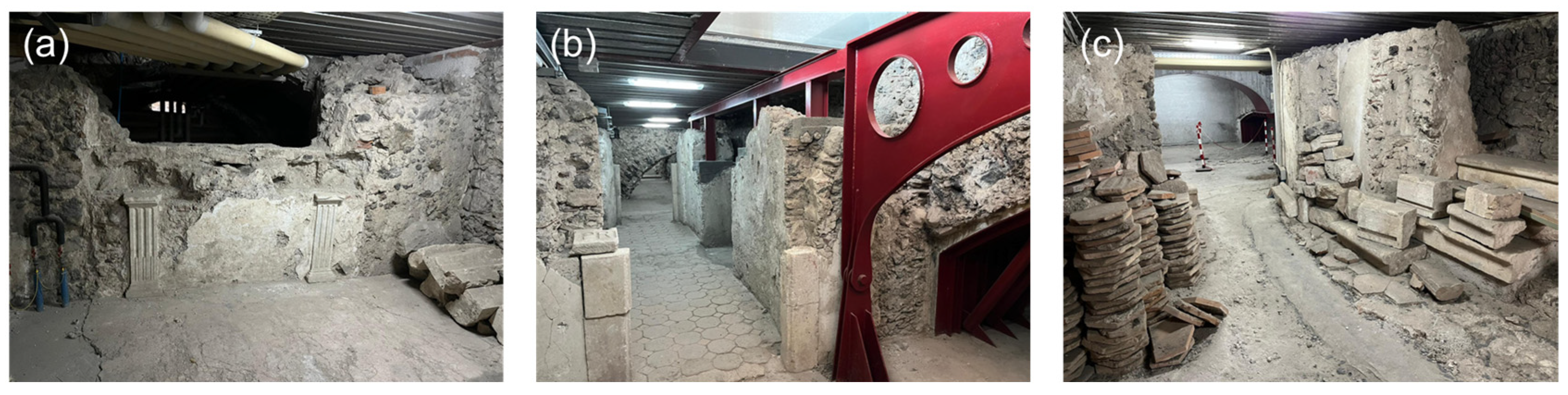
Figure 3. Investigated areas within the library deposits: (a) ante-refectory room; (b) refectory room; (c) sacristy.
Heritage 08 00467 g003
Figure 4. (ag) Materials investigated: (a) wall plasters and underlying mortars; (b) bedding mortars and masonry units; (c) mortars beneath ancient floorings; (d) plaster details; (e,f) details of masonry units; (g) pavement details.
Heritage 08 00467 g004
Figure 5. Three different examples of contact points between walls stratigraphic units: (a) USM 7 up USM 3; (b) USM 19 up USM 1; (c) USM 11 up USM 8.
Heritage 08 00467 g005
Figure 6. Example of in situ pXRF analyses: (a) preparation tests of the monument area; (b) measurements on plaster; (c) measurements on mortar beneath the plaster; (d) measurements on bedding mortars.
Heritage 08 00467 g006
Figure 7. (a) TM2 of unit USM3; (b) TM3 of unit USM 6; (c) TM4 of unit USM 7; (d) TM1 of unit USM 2; (e) USM 3 wall with the holes of the beams and the step USM 5 to support them; (f) USM 1, located to the south (in the images, the masonry units are indicated with the acronym placed above them, the acronym of the cladding units “USR” is placed in a circle; the arrows indicate the stratigraphic trend).
Heritage 08 00467 g007
Figure 8. (a) Reconstruction of the 16th century monastic system (western cloister) with hypotheses of the different citations between Phase 1 and 2A [28]; (b) refectory with perimeter step and holes in the wall to accommodate the seats; (c) unclear central area of common use; (d) plan of the first sixteenth-century building with indication of the study rooms [28].
Heritage 08 00467 g008
Figure 9. (a) New plastered walls from Phase 2B (USM9) against the previous walls of Phase 1 and 2A (USM1); (b) Phase 2B wall (USM7) against the wall and gutter from the previous phase; (c) new flooring (US2) superimposed on the previous US1; (d) USM 1 wall with a double row of holes, perhaps linked to structures/coat hangers; at the bottom of the US 3 flooring, there is a hole; (e) new USM 12 wall added; (f) new USM 11 wall added; (g) column base placed in break with respect to the floor; (h) example of an arched wall (USM2); (i) wall USM 23 of Phase 4 that cuts the environment (in the images, the masonry units are indicated with the acronym placed above them, the acronym of the cladding units “USR” is placed in a circle; the arrows indicate the stratigraphic trend).
Heritage 08 00467 g009
Figure 10. (af) Digital handheld microscopy images showing surfaces of plaster and mortars from the refectory and sacristy: (a,b) plaster from refectory (Ref_I 30) and sacristy (Sag_I_7); (c,d) mortars belonging to Phases 2A and 2B, respectively; (e,f) mortars likely dating to Phase 4.
Heritage 08 00467 g010
Figure 11. Portable X-ray Fluorescence analyses on plasters, example of three representative points of analysis on the ante-refectory wall. The investigated area is indicated by a red rectangle.
Heritage 08 00467 g011
Figure 12. Portable X-ray Fluorescence analyses on mortars, Ca (wt.%) vs. Si (wt.%) values measured on mortars of pre- and post-earthquake walls in refectory room and pre-earthquake walls of the ante-refectory.
Heritage 08 00467 g012
Figure 13. Spectra of plasters from refectory (labeled Ref) and sacristy (Sag) rooms.
Heritage 08 00467 g013
Figure 14. Comparison between DRIFT spectra of mortar samples from Phase 2 (2A and 2B) and Phase 4.
Heritage 08 00467 g014
Table 1. pXRF results (element wt.%) on plasters and mortars of ante-refectory and refectory rooms, and the related abundance of the element wt.% for each typology of material (namely, plasters and mortars) and of their Ca/S ratio.
Elemental Composition (wt.%)AlCaFe KMnSSiTiCa/S
Plasters
Refectory Room—16th c.
Ref 1b I13.6683.591.430.560.054.346.070.3019
Ref 1b I26.4870.951.570.890.064.7514.960.3415
Ref 1b I35.8876.680.870.400.038.687.270.199
Ref 1a I13.3150.730.110.310.0242.433.030.061
Ref 1a I35.5545.440.130.180.0147.051.560.081
Ref 1a I25.5845.520.240.240.0243.374.900.121
Ref 1a I47.7570.520.150.070.0317.433.980.084
Ref 1a I5 4.1545.620.150.080.0246.453.480.051
Ref 1a I6 2.2250.680.240.230.0342.813.680.101
Ref 1a I7 8.7044.870.260.240.0240.735.080.111
Ref 1a I89.4875.420.120.190.0311.692.930.146
Ref 1a I910.0576.280.240.300.018.704.280.149
Ref 3a I18.6381.430.160.300.052.207.080.1437
Ref 3a I22.4566.230.170.100.0226.844.030.142
Ref 3a I36.2170.240.180.160.0213.199.870.125
Ref 3a I46.9185.120.290.410.051.425.610.1960
Ante-Refectory Room
Col I15.7486.050.240.080.031.626.090.1553
Col I23.4874.850.490.500.0411.678.730.246
Col I318.3876.840.100.100.020.483.980.09162
Mortars
Refectory Room—16th c.
Ref 1a M19.2746.142.391.200.0723.5916.820.502
Ref 1a M26.2764.872.791.400.122.3121.710.5328
Ref 3a M113.2654.902.040.980.0511.6816.670.415
Ref 3a M29.4050.051.491.020.0413.6624.000.344
Ref 3a M316.0157.691.570.780.065.9417.580.3810
Ref 3a M45.4854.341.891.300.0413.8222.770.364
Ref 2b M16.1156.180.880.840.0424.8310.810.312
Ref 2b M211.9147.380.830.620.0228.1610.880.202
Ref 2b M312.7451.240.820.230.0427.626.880.432
Ante-Refectory Room—16th c.
Col M14.5474.431.071.510.050.0118.090.30>100
Col M210.4071.220.870.390.090.5916.200.24>100
Col M34.6875.340.850.440.062.3316.010.2932
Col M414.2955.812.211.040.0610.3815.840.375
Col M55.3865.532.111.030.066.1719.100.6211
Col M614.1667.351.690.640.112.1013.660.3032
Refectory Room—18th c.
Ref_M_2_new9.3263.631.281.300.050.1323.960.32>100
Ref_M_3_new5.1167.522.762.080.070.1521.650.65>100
Ref_M_4_new7.2563.401.981.920.040.3724.580.45>100
Ref_M_5_new7.8642.451.221.620.021.1745.360.3036
Ref_M_7_new8.6836.243.372.620.0813.2235.070.723
Ref_M_9_new5.0162.931.450.970.0417.9711.250.384
Ref_M_10_new12.2759.642.241.390.063.2820.600.5218
Ref_M_12_new6.3646.303.021.910.060.8940.700.77>100
Ref_M_13_new13.3267.941.741.110.060.4514.980.39>100
Ref_M_14_new6.1368.972.851.590.090.1319.570.66>100
Ref_M_15_new10.3165.622.261.540.070.2819.360.55>100
Ref_M_17_new5.2168.553.351.590.100.1119.800.80>100
Table 2. Recap of samples associated with construction phase and historical period.
Data Integration Table
Phase 1Phase 2APhase 2BPhase 2CPhase 3Phase 4
Chronology1558–15621569–1583Range
1593–1630
Range
1593–1630
Post 1669, about 1673Post1693 (XVIII century)
USM1–3–526–25–67–8–9–17–13−1412–11282–4–15–16–19–22–20–23–24
TM234//1
US 1–42–3///
USR 1–2–6–7–12–13–14–1510–5–9–8–317–16–11//
SamplesRef_M_23 Ref_M_26 Ref_M_27
Ref_M_28
Ref_M_12
Ref_M_40 Ref_M_23
Ref_M_29
Ref_M_30
Ref_M_-11
No sample No sampleRef_M_11
Ref_M_15
Ref_M_25
Disclaimer/Publisher’s Note: The statements, opinions and data contained in all publications are solely those of the individual author(s) and contributor(s) and not of MDPI and/or the editor(s). MDPI and/or the editor(s) disclaim responsibility for any injury to people or property resulting from any ideas, methods, instructions or products referred to in the content.