1. Introduction
As will be explained, a specimen in a conventional cyclic triaxial test is subjected to a total stress path that differs from that experienced by a soil element in the field during an earthquake. One major difference—and the primary motivation for this study—is that, in the field, the soil element experiences changes in all-around total stress. In a conventional cyclic triaxial test, however, these changes in total stress are not applied.
To replicate field conditions more accurately in a cyclic triaxial test, the cell pressure would need to vary at the same frequency as the deviator stress, with an amplitude equal to one-half of the deviator stress and a phase angle of 180°. In this paper, this condition is referred to as a cyclic triaxial test with varying cell pressure. Such testing is not commonly performed.
The reason the cell pressure is not varied in a standard cyclic triaxial test is that it is assumed that, for a saturated specimen (i.e., on with a Skempton’s pore pressure coefficient, B = 1), the change in cell pressure applied to the specimen would create a change in pore pressure equal to the change in cell pressure (i.e., the change in total stress), thus resulting in no change in the effective stress acting on the specimen. Because the effective stress controls the strength, deformation and liquefaction behavior of the soil, it is assumed that the behavior of the specimen is the same whether the cell pressure is varied or held constant. The study reported in this paper was performed to evaluate the validity of that assumption.
This paper examines how the total stress conditions acting on a soil element in the field are modeled in laboratory testing and whether these modeling assumptions influence the liquefaction behavior of the soil. First, a brief background on cyclic triaxial testing is provided. Next, the assumptions commonly made in cyclic triaxial testing regarding field total stress changes, as represented by total stress paths, are discussed as is energy dissipation and its relationship with pore pressure generation. Finally, the methodology and results of a study conducted to evaluate the effects of these assumptions are presented, and conclusions are drawn.
1.1. Note on Previous Publication
A portion of the test results presented in this paper, together with preliminary analyses of the corresponding data, was previously reported by the author in 2013 [
1]. In the present study, additional test data for another soil type have been incorporated, and more advanced statistical analyses have been performed. The study also includes an evaluation of the energy dissipated within the soil during cyclic triaxial testing. In addition, a detailed explanation is provided regarding the mechanisms underlying the assumption that changes in total stress are offset by corresponding changes in pore water pressure, thereby supporting the validity of cyclic triaxial tests conducted under constant cell pressure conditions. Finally, the paper expands upon the discussion of stress states experienced by soils under both field and laboratory loading conditions.
1.2. Background on Cyclic Triaxial Testing
Cyclic triaxial testing is commonly used to simulate the stresses acting on a soil mass during seismic loading. The liquefaction resistance, or cyclic strength, of soils is most commonly evaluated in the laboratory using reconstituted specimens subjected to cyclic triaxial loading. Although this testing approach is widely accepted, it is important to recognize that significant differences exist between the stress conditions experienced by a soil element in the field and those imposed on a laboratory specimen during cyclic triaxial testing. In a typical load- or stress-controlled cyclic triaxial test [
2], a cylindrical soil specimen is saturated and consolidated to a prescribed stress state, which is most commonly isotropic. Following consolidation, the specimen is subjected to cyclic loading through a varying axial deviator stress, which is generally applied in a sinusoidal manner. For loose specimens of cohesionless soils, increases and decreases in the applied deviator stress result in the progressive generation of excess pore water pressure. As pore water pressure builds up, the effective stress within the specimen decreases, leading to the development of axial strains during cyclic loading.
Liquefaction in cyclic triaxial testing is typically defined using one of two criteria. The first criterion defines liquefaction as the point at which the excess pore water pressure becomes equal to the initial effective confining stress. This condition, commonly referred to as initial liquefaction, corresponds to zero effective horizontal confining stress acting on the soil. The second criterion defines liquefaction based on the attainment of a specified axial strain level, representing significant deformation of the specimen. The cyclic loading applied during the test is commonly quantified using the cyclic stress ratio (CSR), which is defined as the ratio of the maximum applied shear stress to the initial effective confining stress. In a cyclic triaxial test, the maximum shear stress acts on planes inclined at 45° to the horizontal and is equal to one-half of the applied axial deviator stress. Consequently, the cyclic stress ratio for a cyclic triaxial test is expressed as the ratio of the applied deviator stress to twice the initial effective confining stress.
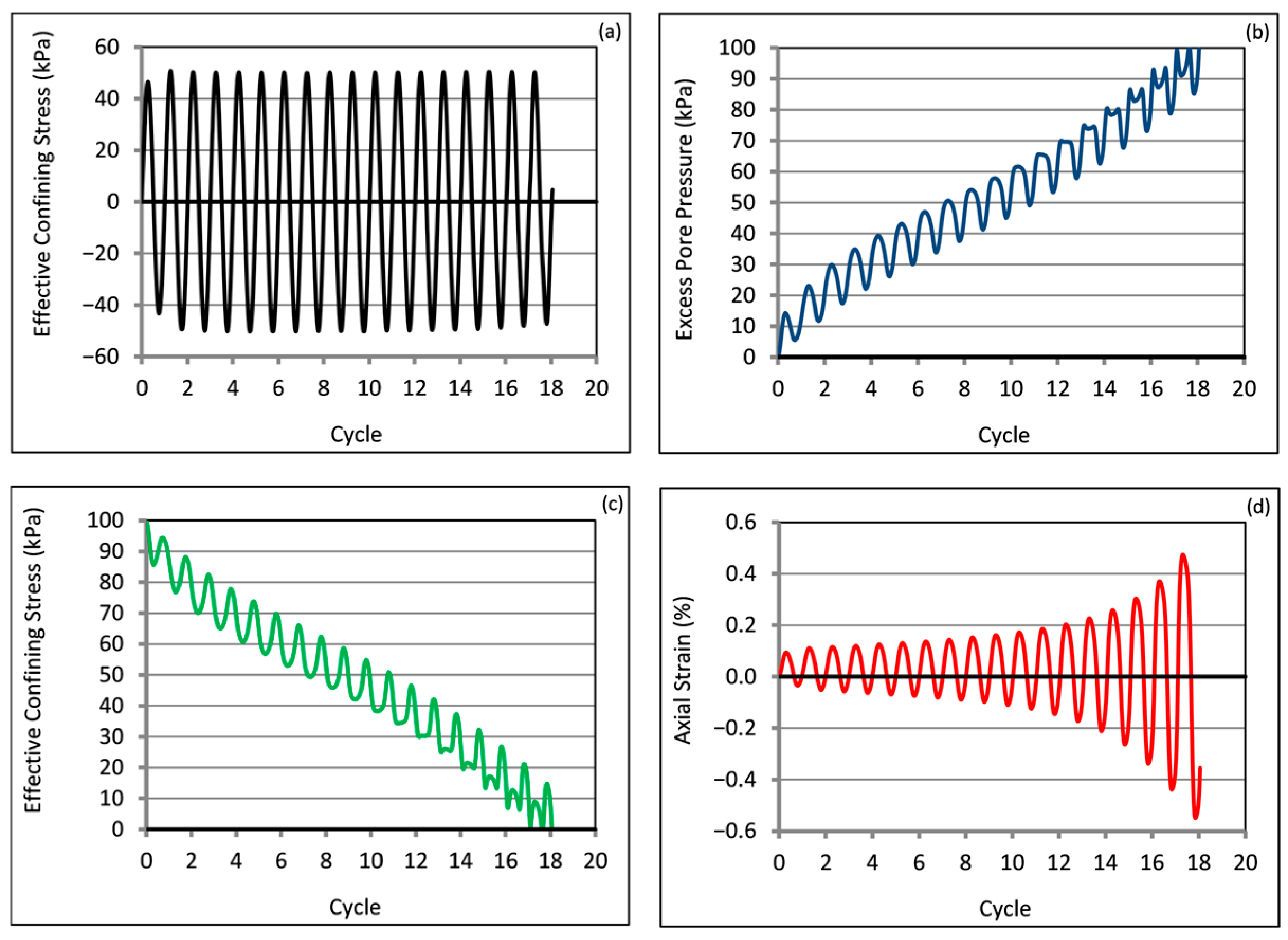
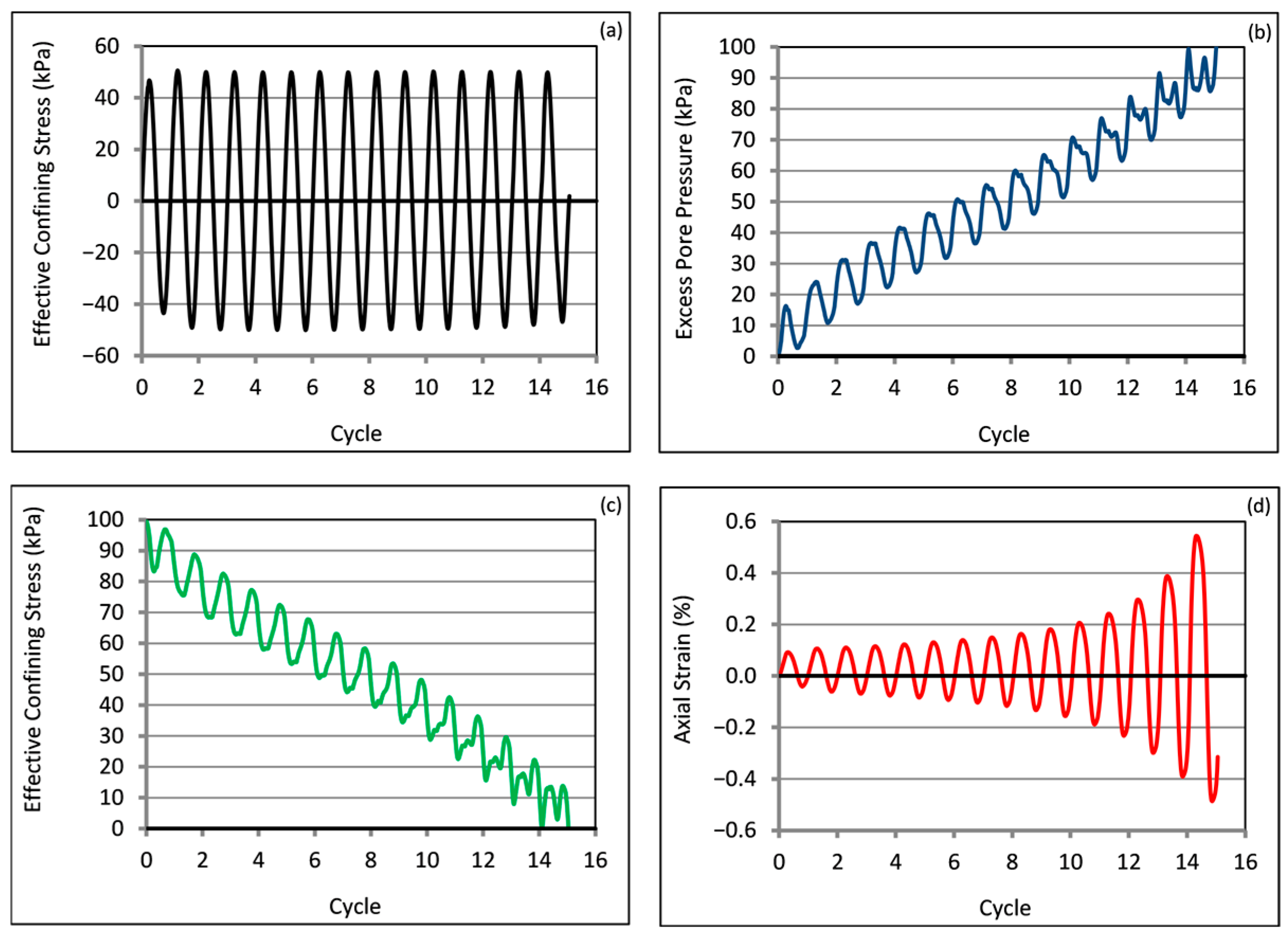
Representative results from a cyclic triaxial test are presented in
Figure 1. The data was collected during a test conducted on New Martin sand by the author. The specimen was prepared by moist tamping to a void ratio of 0.47, corresponding to a relative density of 40% [
3]. The specimen was subjected to cyclic loading at a cyclic stress ratio of 0.27 and reached initial liquefaction during the seventeenth cycle of loading.
Figure 1a presents applied deviator stress,
Figure 1b shows the development of excess pore pressure in the specimens,
Figure 1c contains the evolution of effective stress, while
Figure 1d shows the corresponding axial strain. In the figure, all four of the parameters are plotted as functions of the number of loading cycles.
Liquefaction resistance may be evaluated in the laboratory by performing a series of cyclic loading tests. These tests are conducted at different cyclic stress ratios on identically prepared soil specimens. Typically, three to five cyclic triaxial tests are performed, with each test applying a distinct level of cyclic stress while maintaining consistent specimen preparation, saturation, and consolidation conditions.
Upon completion of the testing program, the cyclic stress ratio used in each test is plotted against the number of loading cycles required to induce liquefaction in the corresponding specimen.
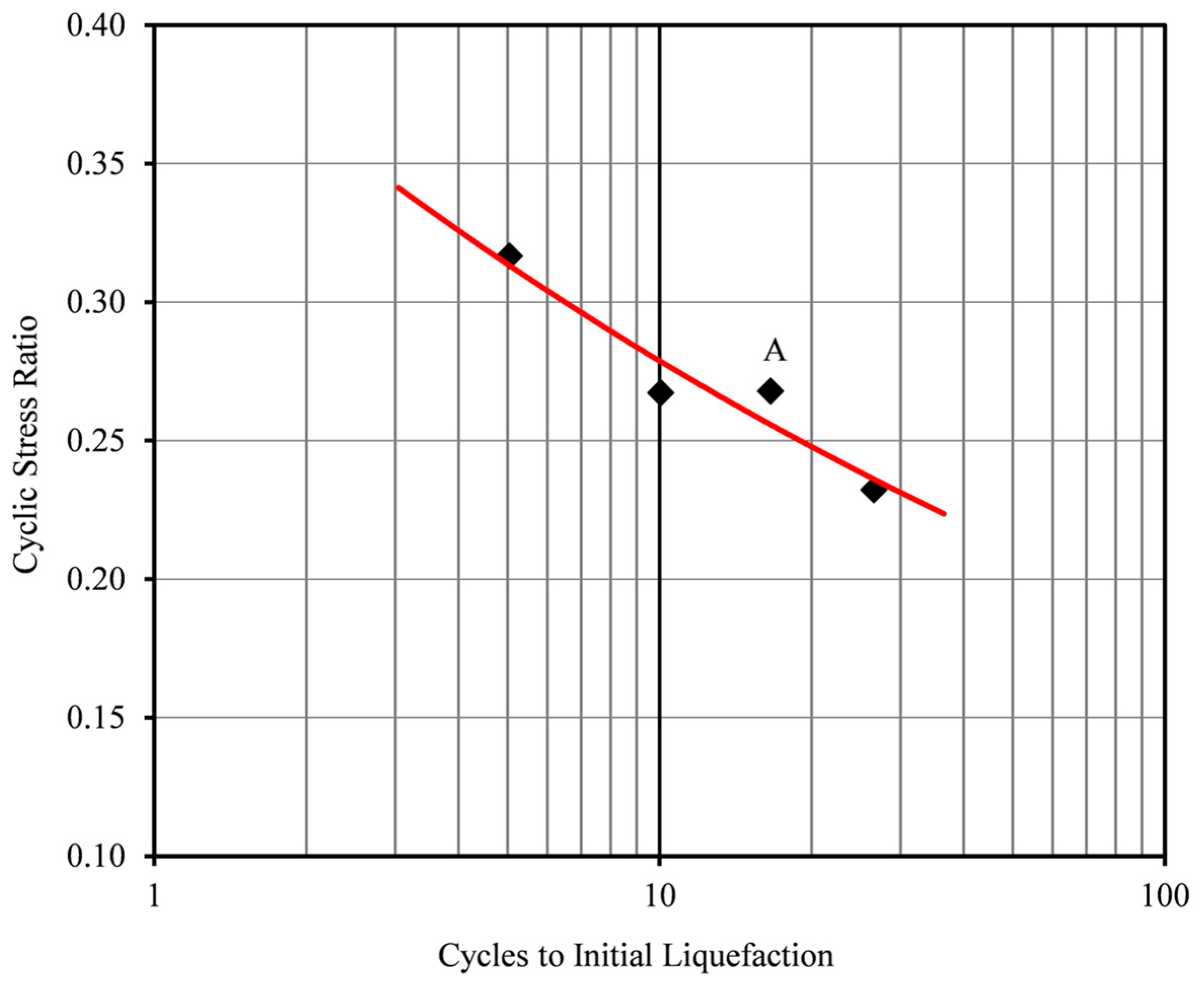
The relationship obtained from this plot is commonly referred to as the cyclic resistance curve. This curve defines the combinations of loading magnitude, expressed in terms of cyclic stress ratio, and the number of loading cycles required to induce liquefaction for a soil at a specified density and effective consolidation stress. As such, the cyclic resistance curve provides a concise representation of the cyclic resistance characteristics of the soil and forms the basis for laboratory-based liquefaction assessments.
Figure 2 presents the cyclic resistance curve for New Martin sand specimens prepared by moist tamping to a relative density of 40%. The data point labeled “A” in
Figure 2 corresponds to the results of the cyclic triaxial test discussed previously and illustrated in
Figure 1, thereby linking the individual test response to the overall liquefaction resistance behavior of the soil.
1.3. Correcting Laboratory Cyclic Stress Ratios for Use in the Field
Cyclic triaxial tests results are commonly modified prior to their use in evaluating the liquefaction susceptibility of soils under field conditions. This modification is most often accomplished by applying a correction factor to the cyclic stress ratio determined in the laboratory. The need for such a correction arises from fundamental differences in consolidation conditions between laboratory specimens and in situ soils. In the field, soils are typically anisotropically consolidated (often under at-rest or K0 earth pressure conditions), whereas specimens tested in cyclic triaxial tests are most commonly isotropically consolidated (i.e., to a uniform all-around stress).
Seed and Peacock [
4] provide a comprehensive discussion of the influence of consolidation conditions on liquefaction resistance and recommend correction factors ranging from approximately 0.4 to 0.6 for normally consolidated cohesionless soils. These correction factors are intended to account for the differences in effective stress conditions associated with isotropic-consolidation versus anisotropic-consolidation. In the context of the present study, it is important to emphasize that the proposed correction factors are based solely on differences in effective consolidation stresses and do not consider the differences in total confining stresses that exist between laboratory testing conditions and in situ earthquake loading.
1.4. Differences Between Cyclic Triaxial and In Situ Earthquake Loadings
Cyclic triaxial tests are widely used to evaluate the cyclic strength and liquefaction resistance of soils. However, the stress paths imposed during these laboratory tests differ significantly from those experienced by a soil element in the field during earthquake loading. Seed and Lee [
5] and Seed and Peacock [
4] described the stress conditions acting on a soil element subjected to seismic loading and compared them with the stresses applied to an isotropically consolidated specimen during cyclic triaxial testing. The fundamental differences between these loading conditions are discussed in this section. First, the stresses acting on a soil element in the field during an earthquake are described. This is followed by a discussion of the stresses applied to a soil specimen during a conventional cyclic triaxial test and, finally, during a cyclic triaxial test with varying cell pressure.
1.4.1. Stresses Applied During an Earthquake
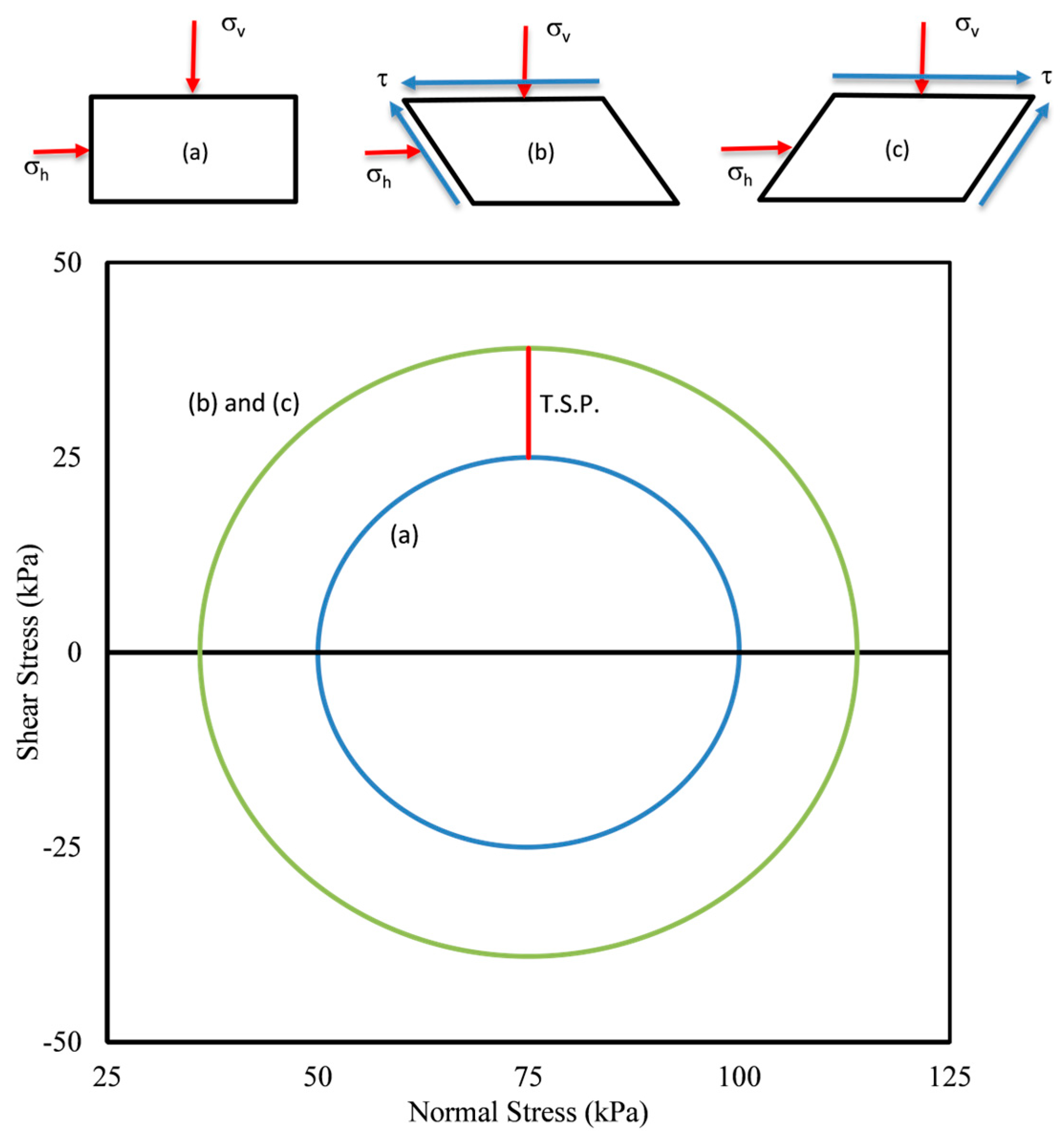
Prior to seismic excitation, a soil element beneath level ground is subjected to different initial vertical and horizontal stresses, as illustrated in
Figure 3a. Under these conditions, the horizontal stress is typically equal to the at-rest earth pressure. Before earthquake loading begins, the vertical and horizontal stresses act as principal stresses, and no shear stresses are present on the horizontal or vertical faces of the soil element.
During an earthquake, the soil element is subjected to a series of horizontally reversing shear stresses that deform the element while the vertical and horizontal confining stresses remain unchanged. These shear stresses result from the upward propagation of shear waves through the soil profile and are repeatedly applied as successive shear waves pass through the element. The resulting stress conditions are illustrated schematically in
Figure 3b,c.
The corresponding Mohr’s circles for these stress states are also shown in
Figure 3. The smaller inner Mohr’s circle, labeled “Case (a),” represents the initial K
0-consolidated condition in which the vertical and horizontal stresses are principal stresses. During seismic loading, the application of shear stresses, τ, on the horizontal planes, together with complementary shear stresses on the vertical faces of the element, produces the larger Mohr’s circles labeled “Cases (b) and (c).” Because the magnitudes of the shear stresses acting on the horizontal and vertical planes are equal, the Mohr’s circle expands and contracts concentrically. Consequently, the mean confining stress acting on the soil element remains constant, provided the influence of the intermediate principal stress, σ
2, is neglected.
Equation (1) presents the formula for the mean total confining stress, s
m, if the intermediate effective stress, s
2, is neglected and
Table 1 provides a numeric example for the case shown in
Figure 3. As shown in the table, the mean stress acting on the soil element, s
m, remains constant throughout the loading cycle.
1.4.2. Seismically Induced Changes in Total Confining Stress and Pore Pressure
During an earthquake, a soil element is subjected to cyclic shear stresses generated by the upward propagation of seismic shear waves through the ground. These shear stresses act on the horizontal and vertical planes of the soil element and cause the orientation and magnitude of the principal stresses to change continuously during loading. Although the vertical overburden stress and the at-rest horizontal stress may initially remain unchanged, the addition of cyclic shear stresses alters the stress state within the soil element, causing the major and minor principal stresses to rotate and vary in magnitude throughout the loading cycle.
As the shear stresses increase and reverse direction, the stress condition represented by Mohr’s circle expands and contracts. This produces cyclic changes in the principal stresses acting on the soil element. Consequently, the total confining stress experienced by the soil element varies during earthquake loading because the seismic shear stresses modify the combined stress state acting within the soil mass. In saturated soils, these changes in total stress are often accompanied by corresponding changes in pore water pressure, which influence the effective stress and liquefaction response of the soil.
The pore water pressure in a saturated soil changes in response to changes in total stress because of the fundamental relationship between total stress, pore water pressure, and effective stress established by Terzaghi’s effective stress principle. Terzaghi proposed that the behavior of a saturated soil is controlled not by the total stress acting on the soil mass, but by the effective stress acting between the soil particles.
When a saturated soil is subjected to a rapid change in total stress, such as during earthquake loading, the pore water initially carries a portion of the applied load because water is nearly incompressible and drainage cannot occur quickly enough. Skempton quantified this response through his pore pressure parameters, particularly the B-parameter, which describes the change in pore pressure caused by a change in confining stress under undrained conditions. Skempton’s equation for the pore pressure parameter B is presented as Equation (2) [
6].
where B is the ratio of the change in pore pressure, Δu, resulting from a change in total all-around confining stress, Δσ
3.
For a fully saturated soil, B approaches 1.0, meaning that an increase in total confining stress produces an approximately equal increase in pore water pressure. As a result, the effective stress remains nearly unchanged even though the total stress varies. This concept forms the basis for the assumption used in cyclic triaxial testing that variations in total confining stress during earthquake loading are offset by equivalent pore pressure changes in saturated soils.
Rotation of Principal Stresses
The rotation of principal stresses that occur in a soil loaded in the field are very different than those that occur in a soil loaded in a cyclic triaxial test. In the case of a soil in the field under level ground, the soil is loaded by the application of a horizontal shear stress resulting from the upwardly propagating shear wave. As a result, the vertical and horizontal stresses, which were originally principal stresses, remain the same but cease to be principal stresses. The new principal stress planes are no longer vertical and horizontal but are inclined. This change in orientation is referred to as the “rotation of principal stresses”.
The angle through which the principal stresses rotate is a function of the magnitude of the shear stress applied. For a soil element with an initial vertical stress of 100 kPa and an initial horizontal stress of 50 kPa, the application of a 10 kPa shear stress results in a cyclic stress ratio of 0.10 and a rotation of principal stress of approximately 11°. The application of a 50 kPa shear stress to the same soil element yields a CSR of 0.50 and a rotation of principal stress of approximately 32°.
1.4.3. Stresses Application in a Conventional Cyclic Triaxial Test
The stress conditions imposed on a soil specimen during a conventional cyclic triaxial test do not directly reproduce the stress state experienced by a soil element in the field during earthquake loading. Rather than applying cyclic shear stresses to the specimen, cyclic triaxial loading is achieved by increasing and decreasing the axial total stress through the application of a cyclic deviator stress, while maintaining a constant horizontal total stress. This loading mechanism results in stress paths and principal stress rotations that differ fundamentally from those associated with in situ seismic loading.
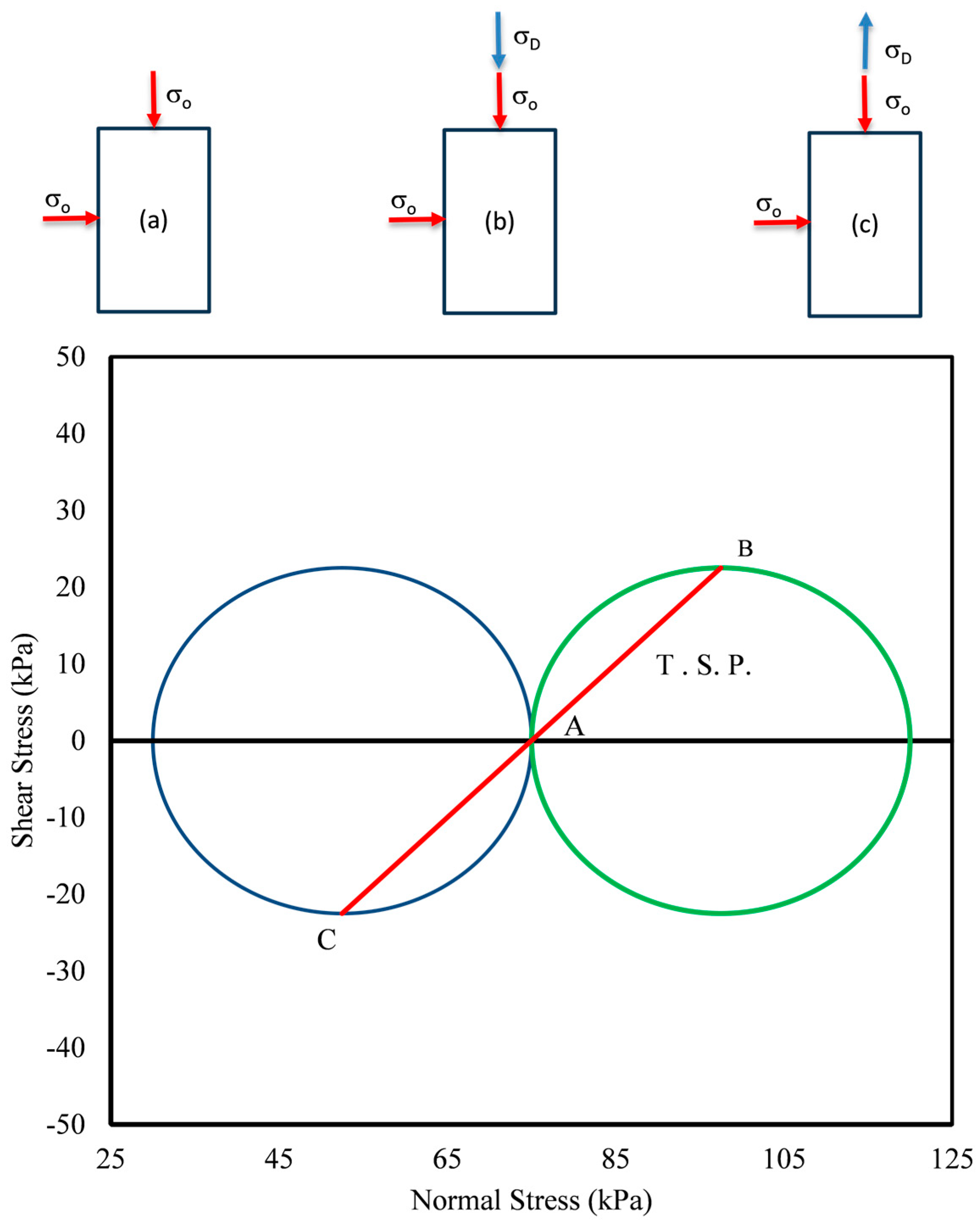
During a cyclic triaxial test on an isotropically consolidated specimen, the stresses acting on a plane inclined at 45° to the horizontal simulate the stresses acting on a horizontal plane within a soil element subjected to seismic loading in the field. On this inclined plane, the applied loading generates a shear stress equal to one-half the deviator stress and a normal stress equal to the mean confining stress. The shear stress acting on this plane represents the maximum shear stress within the specimen. The corresponding Mohr’s circles for this loading sequence are shown in
Figure 4, where the tops of the circles represent the combinations of shear and normal stresses acting on the 45° plane.
During the test, the mean total confining stress varies from a minimum equal to the initial total confining stress minus one-half the deviator stress to a maximum equal to the initial total confining stress plus one-half the deviator stress. This variation in mean confining stress contrasts with field loading conditions, in which the mean confining stress remains essentially constant during seismic loading.
Table 2 provides a numeric example for the case shown in
Figure 4. As shown in the table, the mean stress acting on the soil element, s
m, varies throughout the loading cycle.
Rotation of Principal Stresses
Unlike soils in the field that can be subjected to a range of rotations of principal stresses, specimens in an isotropically consolidated cyclic triaxial test the rotation of principal stresses can only take one of two values. If the deviator stress applies a compressive stress, the vertical stress acting on the specimen becomes the major principal stress, the horizontal stress acting on the specimen becomes the minor principal stress, and the angle through which the principal stress rotate is 0° (i.e., there is no rotation). This condition is shown as Case (b) in
Figure 4.
Conversely, if the deviator stress applies a tensile stress, the vertical stress acting on the specimen becomes the minor principal stress, the horizontal stress acting on the specimen becomes the major principal stress, and the angle through which the principal stress rotate is 90°. This condition is shown as Case (c) in
Figure 4.
1.4.4. Stresses Applied During a Cyclic Triaxial Test with Variable Cell Pressure
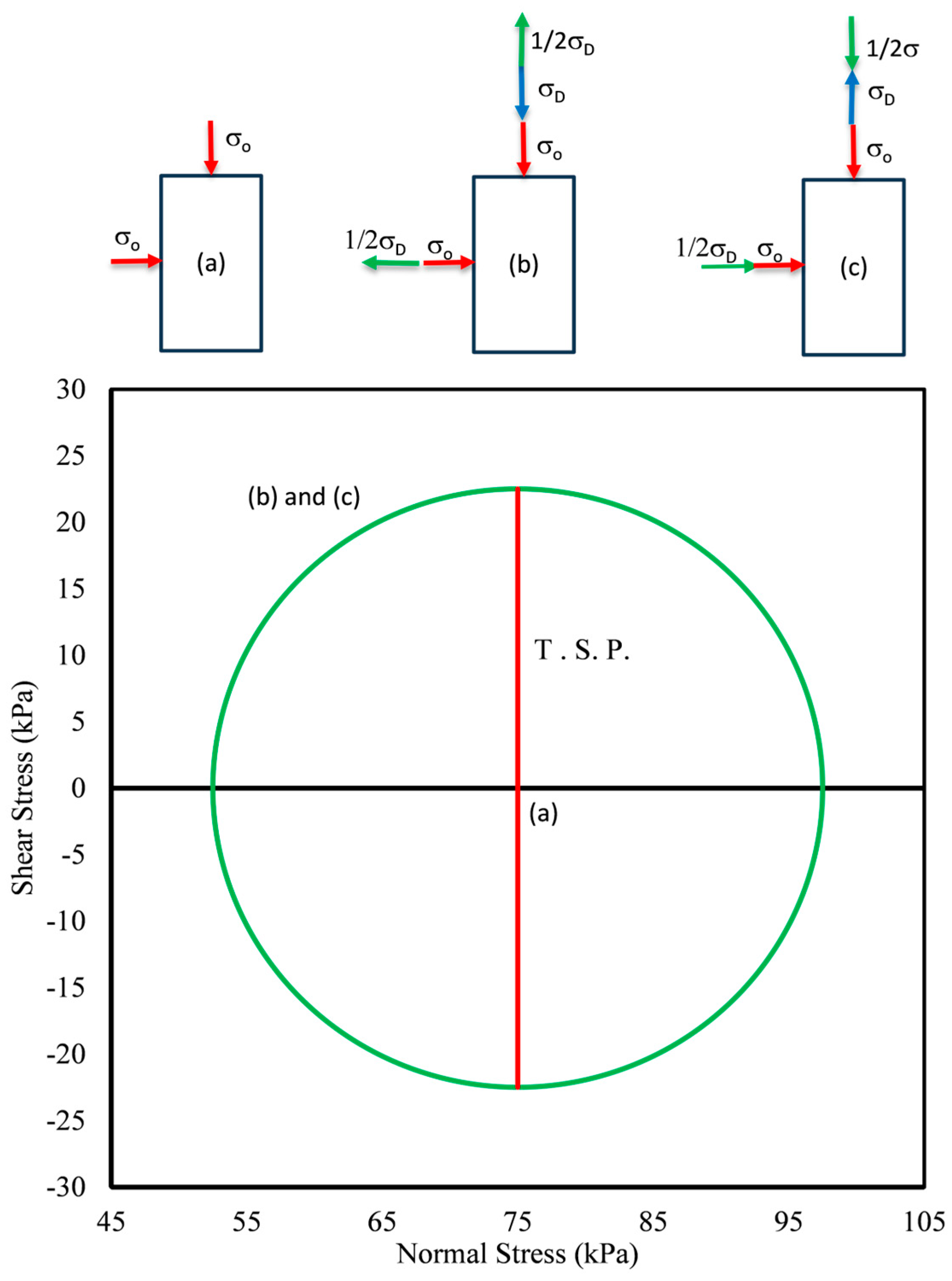
By varying the cell pressure during the application of axial deviator stress, a conventional cyclic triaxial test can be modified so that the mean total confining stress remains constant, consistent with the stress conditions experienced by a soil element during seismic loading in the field. As the axial deviator stress increases during a loading cycle, the cell pressure is simultaneously reduced by an amount equal to one-half of the deviator stress increase. Conversely, as the deviator stress decreases, the cell pressure is increased by one-half of the corresponding decrease in deviator stress. Through this coordinated adjustment of axial and radial stresses, the mean total confining stress acting on the specimen is maintained at a constant value throughout the loading cycle. This loading mechanism and the corresponding Mohr’s circle representation are illustrated in
Figure 5.
Figure 5 illustrates the stress conditions and corresponding Mohr’s circle representations for a soil element subjected to cyclic triaxial loading with varying total confining stress. Under these conditions, the shear stress acting on a plane inclined at 45° to the horizontal varies from negative one-half of the applied deviator stress to positive one-half of the applied deviator stress, while the normal stress acting on that plane remains constant and equal to the initial total confining stress.
This stress state, characterized by a constant normal stress combined with a cyclically varying shear stress, closely resembles the stress conditions acting on a horizontal plane beneath level ground during earthquake loading in the field. Consequently, cyclic triaxial testing with variable cell pressure provides a closer approximation of in situ seismic stress paths than conventional cyclic triaxial testing conducted under constant total confining stress.
Table 3 provides a numeric example for the case shown in
Figure 5. As shown in the table, the mean stress acting on the soil element, σ
m, remains constant throughout the loading cycle.
Rotation of Principal Stresses
Although the stresses applied in a cyclic triaxial test with varying cell pressures are smaller than those applied in a conventional cyclic triaxial test, the rotation of principal stress is still either 0° or 90°.
1.5. Comparison of Total Stress Paths for Cyclic Triaxial Tests
The total stress path for a soil in the field or in a laboratory test, results from the total external stresses initially acting on the soil element and the total stresses applied during loading. These can be thought of as externally applied stresses. It has long been established that soils subjected to earthquake loading in the field follow a different total stress path than soils in a conventional cyclic triaxial test. This section of the paper will provide a direct comparison of the total stress paths used in a conventional cyclic triaxial test, which is performed with the cell pressure being held constant, and a cyclic triaxial test performed with varying cell pressure.
Figure 4 shows that, when a conventional cyclic triaxial test is performed, the total stress path consists of a line inclines at 45° to horizontal. This results in the mean stress (the average of the major and minor principal stresses acting on the specimen) ranging from
to
, where
is the initial effective confining stress and
is the magnitude of the applied deviator stress.
Figure 5 shows that, when a cyclic triaxial test is performed with a cell pressure that varies at half the magnitude and opposite in sign to the deviator stress, the total stress path is a vertical line. This is because the mean stress acting on the specimen remains constant as the shear stress varies from
to
. This stress path is much more similar to the stress path encountered in the field than it is to the stress path produced during a conventional cyclic triaxial test. In fact, if a cyclic triaxial test with variable cell pressure was performed on a specimen initially consolidated to K
0 conditions, it would produce the same stress path as the soil in the field.
1.6. Dissipated Energy and Pore Pressure Generation
The normalized dissipated energy per unit volume represents the energy dissipated within a soil specimen during cyclic loading and is dependent on both the applied stress conditions and the resulting soil strains. This parameter has become increasingly important in geotechnical engineering, particularly as a fundamental input in energy-based pore pressure generation models [
7,
8,
9,
10,
11,
12,
13,
14]. These models are based on the premise that excess pore pressure generation during cyclic loading is governed not only by stress amplitude, but also by the cumulative energy imparted to the soil.
Prior to the development of energy-based approaches, liquefaction evaluations were primarily conducted using stress-based methods. Such approaches typically relate the cyclic stress ratio (CSR) required to induce liquefaction to a specified number of loading cycles. However, energy-based methods have gained prominence because they more directly reflect the physical mechanisms responsible for pore pressure generation and deformation in soils subjected to repeated loading.
The effectiveness of energy-based models stems from their ability to account for the irreversible rearrangement of soil particles caused by cyclic shearing. This particle rearrangement results in both energy dissipation and excess pore pressure generation, thereby establishing a direct relationship between these two processes. The dissipated energy per unit volume is commonly normalized by the initial mean effective confining pressure to produce a dimensionless parameter referred to as the normalized dissipated energy per unit volume, Ws.
During cyclic triaxial testing, Ws may be calculated using Equation (3) [
15]:
where σ
D,i and σ
D,i+1 represent the axial stresses at two successive loading increments, ε
a,i and ε
a,i+1 are the corresponding axial strains, n is the total number of increments considered, and σ
o′ is the initial effective confining pressure applied to the specimen.
2. Materials and Methods
A laboratory investigation was conducted using stress-controlled cyclic triaxial tests on three soil types: a uniform sand tested at two densities, a silty sand, and a non-plastic silt. The objective of the study was to evaluate the validity of the commonly adopted assumption that changes in total confining stress experienced by soils in the field during an earthquake are offset by corresponding changes in pore water pressure. Under this assumption, no net change in effective stress occurs, and the liquefaction susceptibility measured in cyclic triaxial tests performed under constant total confining stress is considered equivalent to that obtained from tests in which the cell pressure is appropriately varied during loading.
The experimental program consisted of two series of stress-controlled cyclic triaxial tests performed for each of the four soil groups. The first series comprised four tests conducted under constant total confining stress, achieved by maintaining a constant cell pressure throughout loading. The second series comprised four tests performed under varying total confining stress, achieved by adjusting the cell pressure during cyclic loading.
All tests were conducted using a sinusoidally varying axial deviator stress. For the tests with varying total confining stress, the cell pressure was also varied sinusoidally, with an amplitude equal to one-half that of the deviator stress and with the opposite sign. Upon completion of the testing program, the results from the two series for each soil were compared using cyclic resistance curves derived from the test data.
2.1. Materials
Three soils were evaluated in this study: a clean sand, a silty sand, and a silt. The clean sand specimens were tested at relative densities of 40% and 70%, the silty sand specimens at a relative density of 40%, and the silt specimens at a relative density of 56%.
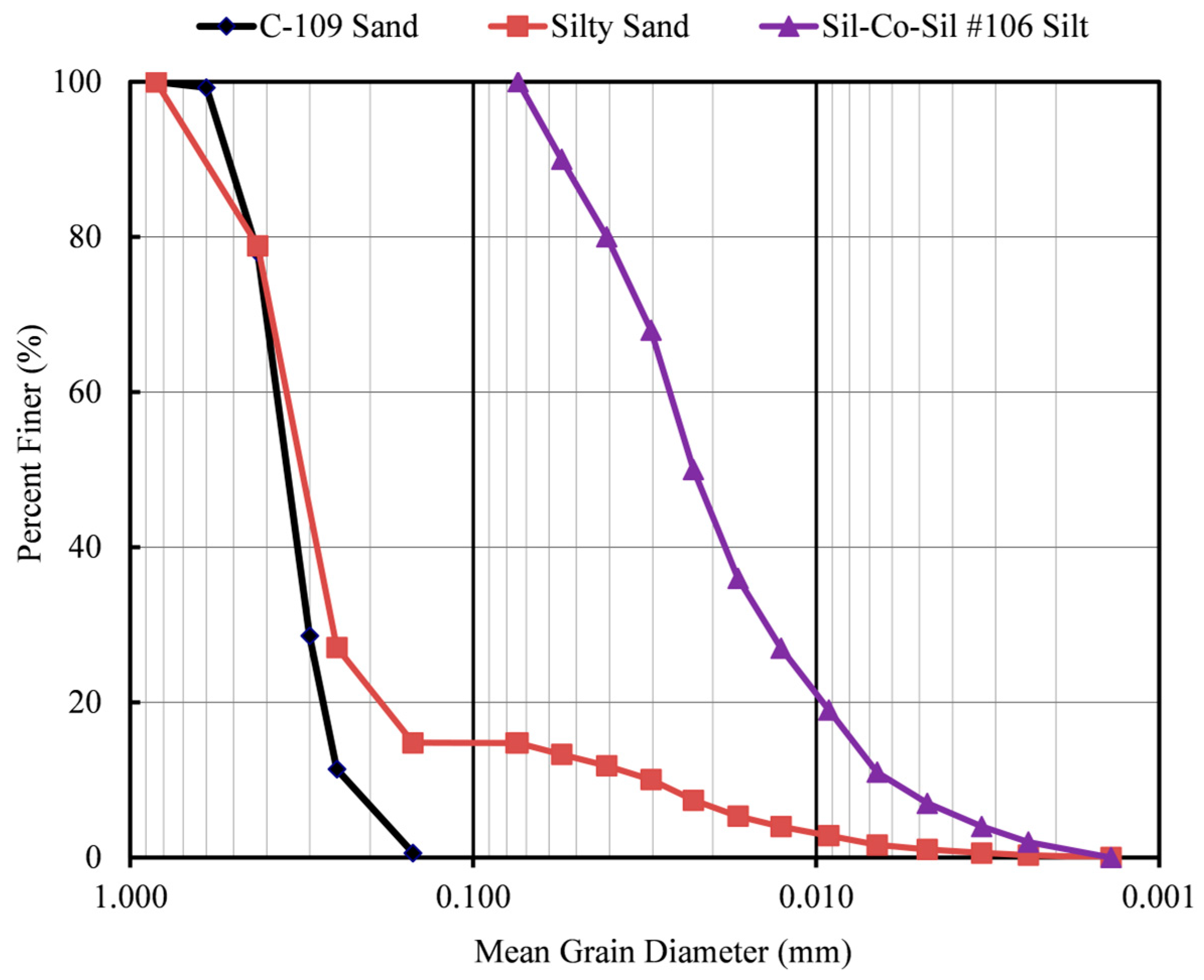
The sand used in the testing program was Ottawa C-109 sand, a commercially produced material obtained from Illinois. Ottawa C-109 sand is classified as a poorly graded medium-to-fine sand. The silt used in the study was #106 Sil-Co-Sil silt, a commercially produced ground silica obtained from West Virginia. This material exhibits no discernible liquid or plastic limits and is therefore classified as a non-plastic silt (ML). The silty sand was prepared by blending Ottawa C-109 sand with #106 Sil-Co-Sil silt at a silt content of 15% by dry weight.
The index properties of the soils are summarized in
Table 4, and the corresponding grain-size distribution curves are presented in
Figure 6.
2.2. Methodology
All testing was conducted using an electro-hydraulic cyclic triaxial testing system [
16]. The apparatus provided full computer control of applied axial loads for stress-controlled testing, imposed displacements for strain-controlled testing, and independent regulation of both cell pressure and back pressure. The data acquisition system continuously recorded axial deviator stress, axial strain, cell pressure, and pore water pressure at a rate of 100 samples per loading cycle.
Cyclic triaxial tests were performed in accordance with ASTM D5311–11,
Standard Test Method for Load Controlled Cyclic Triaxial Strength of Soil [
2]. All specimens were cylindrical, measuring 70 mm in diameter and 154 mm in height, and were enclosed in latex membranes with a thickness of 0.64 mm. Because of the relatively small particle size and membrane thickness, no membrane penetration correction was applied.
Specimens were prepared using the moist tamping method with the undercompaction procedure described by Ladd [
17]. Moist tamping was selected to minimize particle segregation in the silty sand specimens, which can occur during dry pluviation. The same procedure was also used for the silt specimens to reduce segregation effects and account for potential hydrocompression behavior. Partially saturated silt specimens prepared by moist tamping exhibited significant volume changes during saturation. To compensate for this behavior, the silt specimens were initially prepared at a void ratio of 1.30 (23% relative density), which decreased to approximately 1.03 (56% relative density) after saturation and consolidation.
After specimen preparation and placement in the triaxial cell, saturation was achieved by flushing carbon dioxide (CO2) through the specimen, followed by the flow of at least three pore volumes of de-aired water. Back pressure was then applied as cell pressure was increase at the same rate, thereby maintaining a constant effective stress of approximately 50 kPa to prevent overconsolidation. Saturation was considered complete when Skempton’s pore pressure coefficient, B, reached a value of at least 0.94. Following saturation, the specimens were isotropically consolidated to an effective confining stress of 100 kPa. Consolidation durations were two minutes for the clean sand specimens, 30 min for the silty sand specimens, and two hours for the silt specimens.
After consolidation, the specimens were subjected to cyclic loading at the selected cyclic stress ratio using a sinusoidally varying deviator stress until liquefaction occurred. Liquefaction was defined as initial liquefaction, corresponding to the point at which the excess pore water pressure became equal to the initial effective confining stress, resulting in zero effective stress acting on the specimen.
For specimens tested under varying total confining stress conditions, the cell pressure was varied simultaneously with the deviator stress under full software control. The cell pressure variation was sinusoidal, with an amplitude equal to one-half that of the deviator stress and applied 180° out of phase with the deviator stress. Both the deviator stress and the changes in cell pressure were applied at a frequency of 0.1 Hz, corresponding to a loading period of 10 s.
2.3. Results
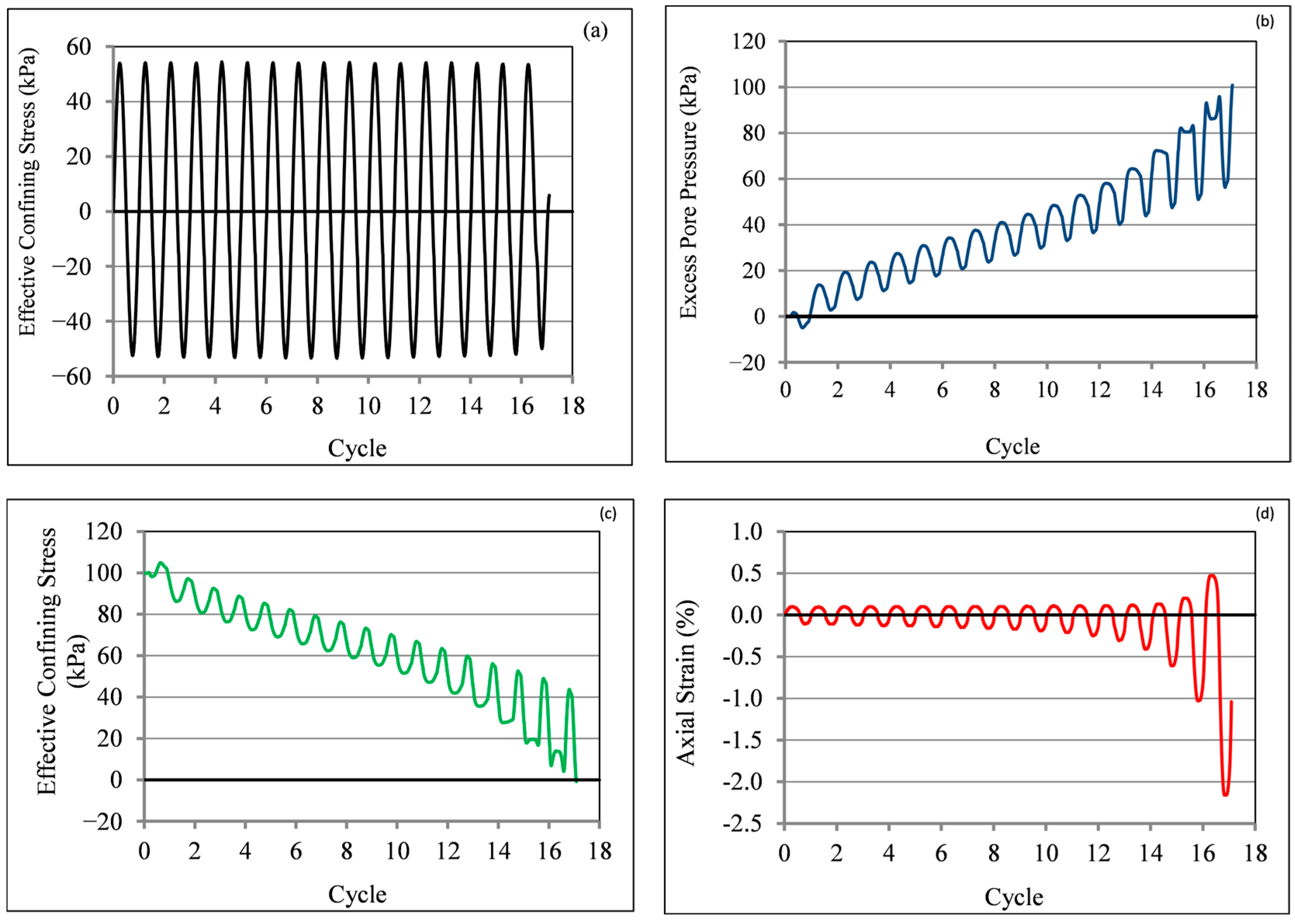
Representative results from the testing program are presented in
Figure 7 and
Figure 8.
Figure 7 shows the response of a silty sand specimen tested under constant cell pressure at a cyclic stress ratio (CSR) of 0.25, while
Figure 8 presents the response of a silty sand specimen tested under varying cell pressure at the same CSR. Initial liquefaction occurred after 18.1 loading cycles in the test conducted under constant cell pressure and after 15.5 cycles in the test conducted under varying cell pressure.
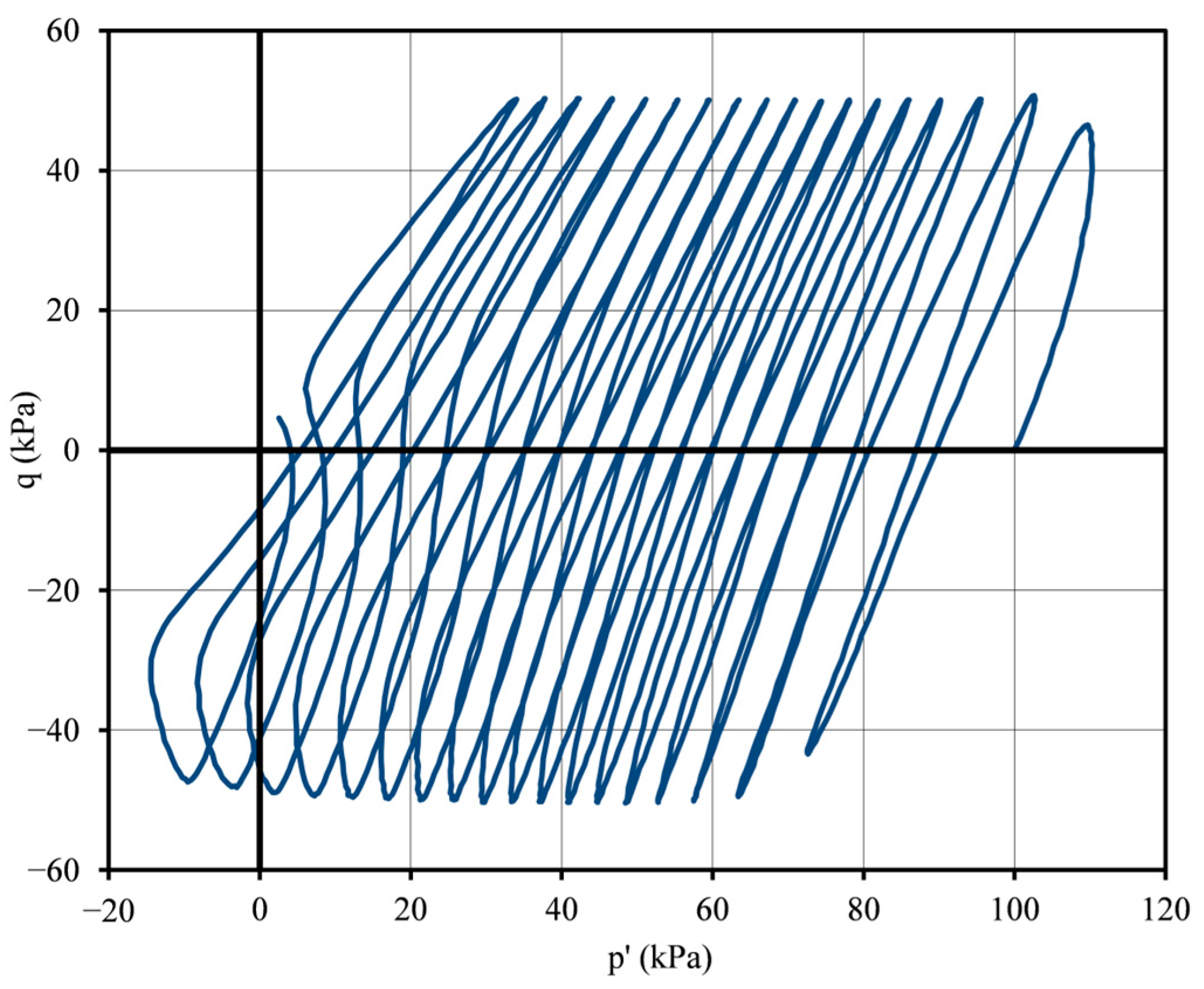
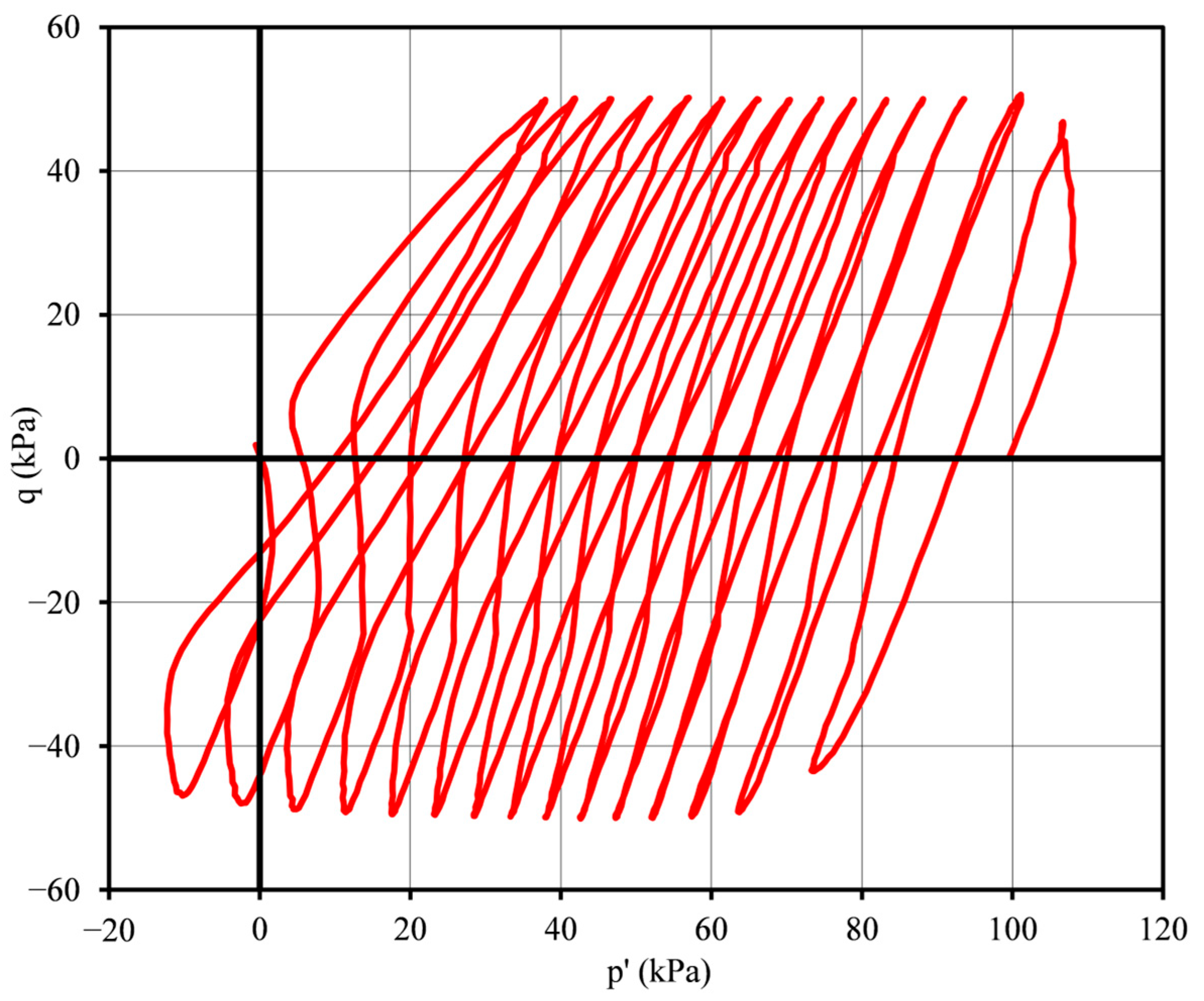
The corresponding effective stress paths for these tests are shown in
Figure 9 and
Figure 10, respectively.
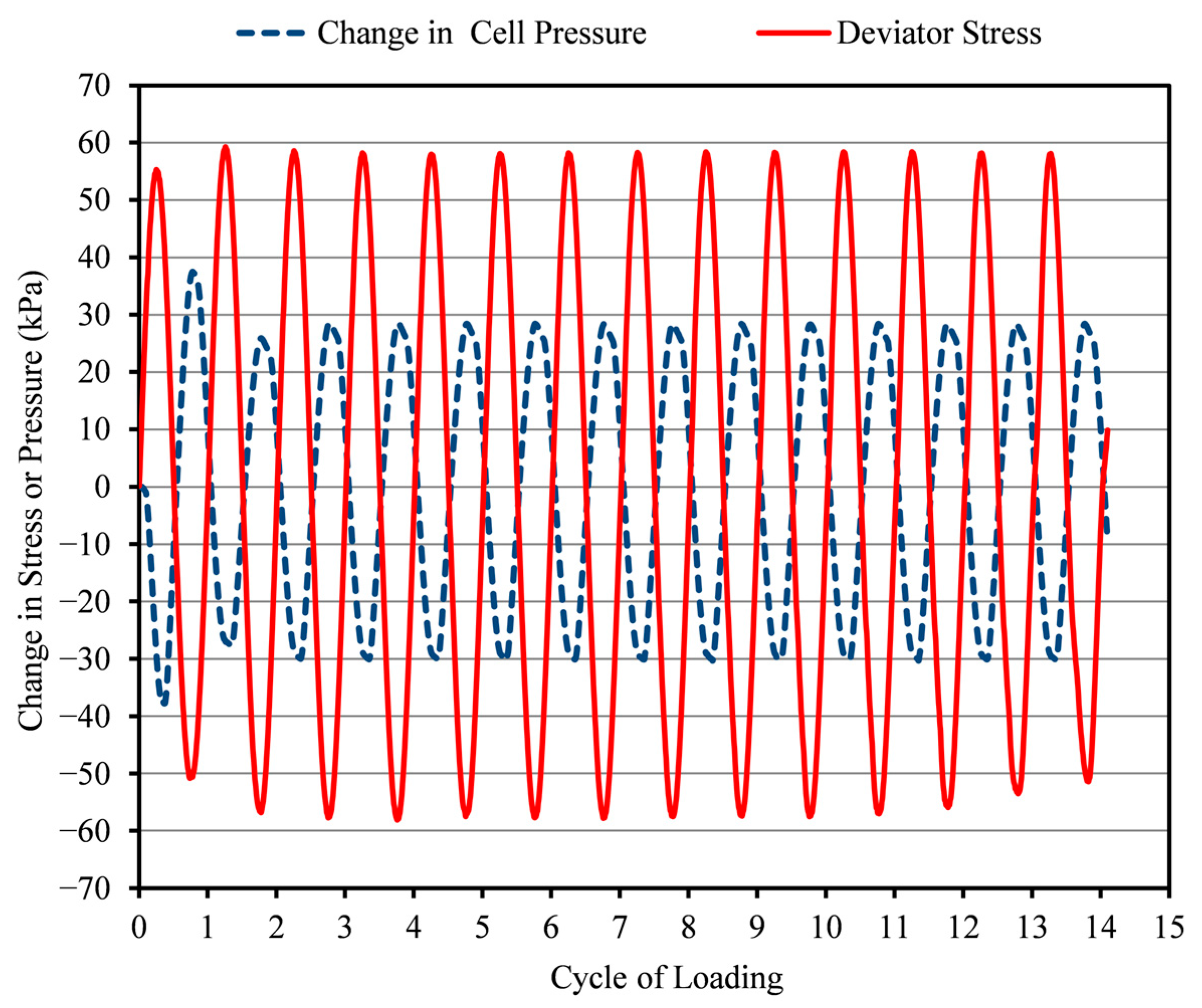
Figure 11 illustrates the applied deviator stress and the associated variation in cell pressure for the test performed under varying cell pressure conditions.
During the cyclic loading phase of the test shown in
Figure 11, the total confining stress was varied by ±28 kPa, while the deviator stress was varied by ±56 kPa. At any point during the loading cycle, the magnitude of the cell pressure variation was equal to one-half the magnitude of the deviator stress, and the two load components were opposite in sign. Thus, increases in deviator stress were accompanied by decreases in cell pressure, and vice versa.
3. Evaluation of Results
The results of the cyclic triaxial testing program were analyzed in terms of both their cyclic resistance curves and the energy dissipation required to initiate liquefaction.
3.1. Evaluation of Cyclic Resistance Curves
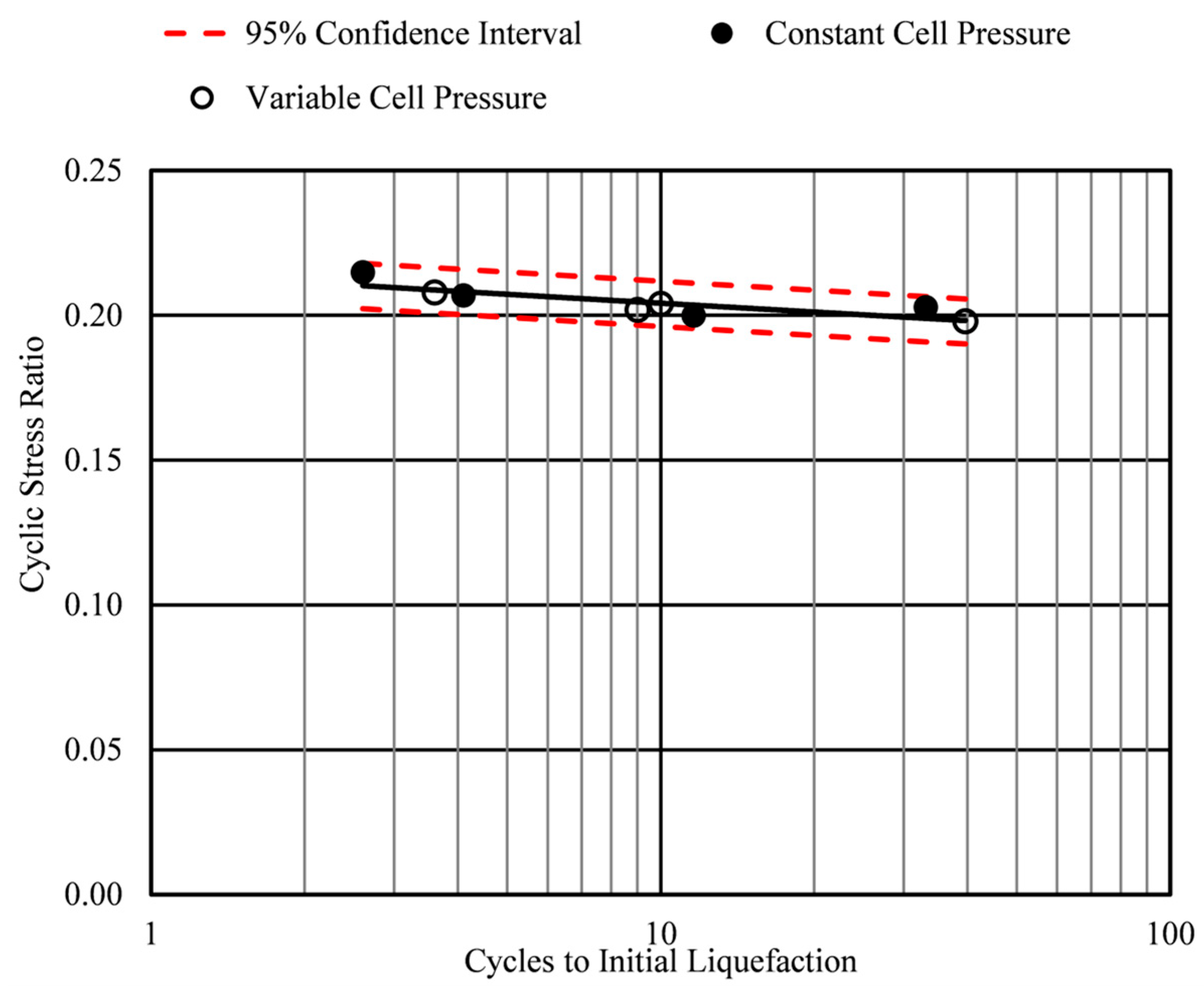
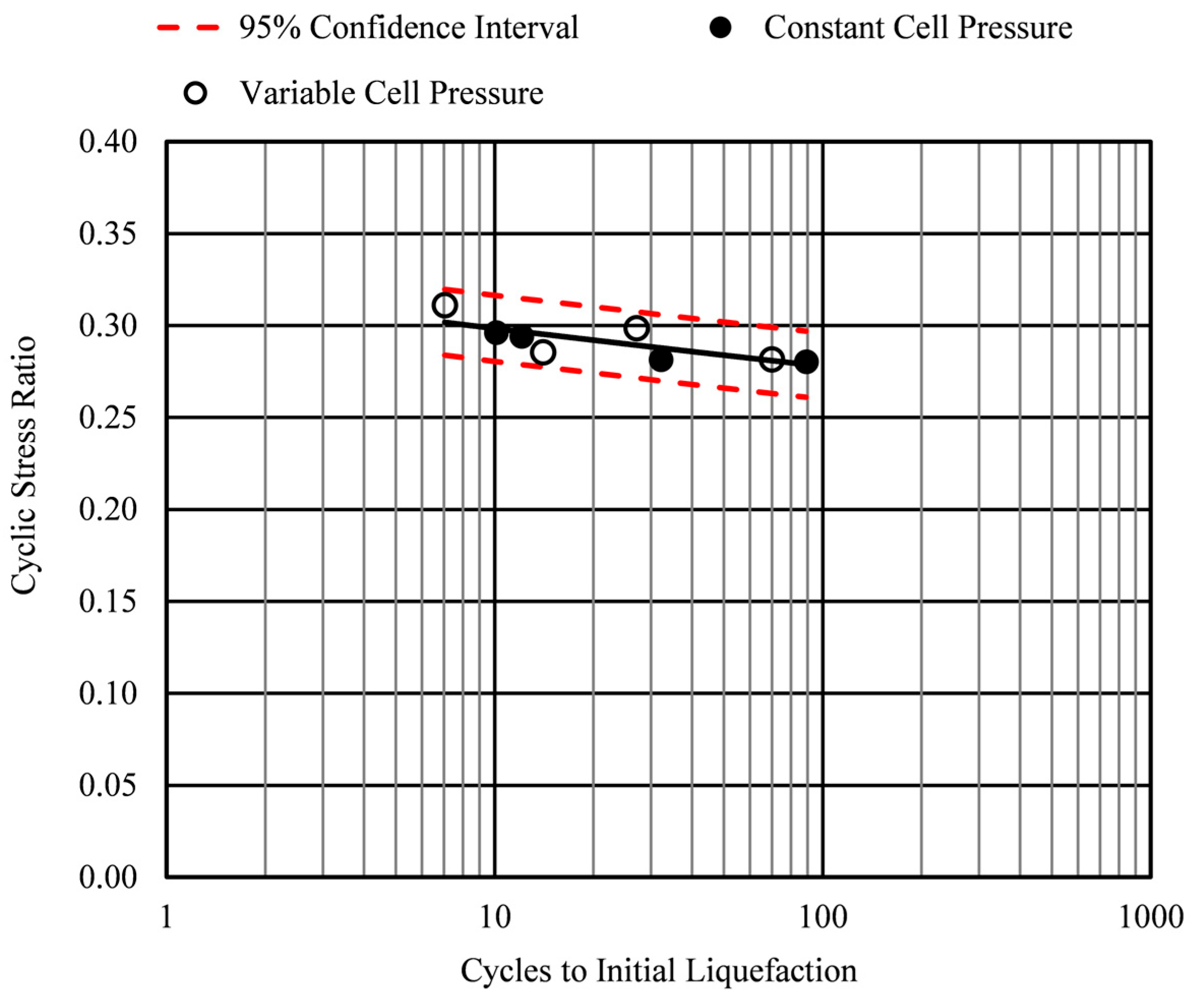
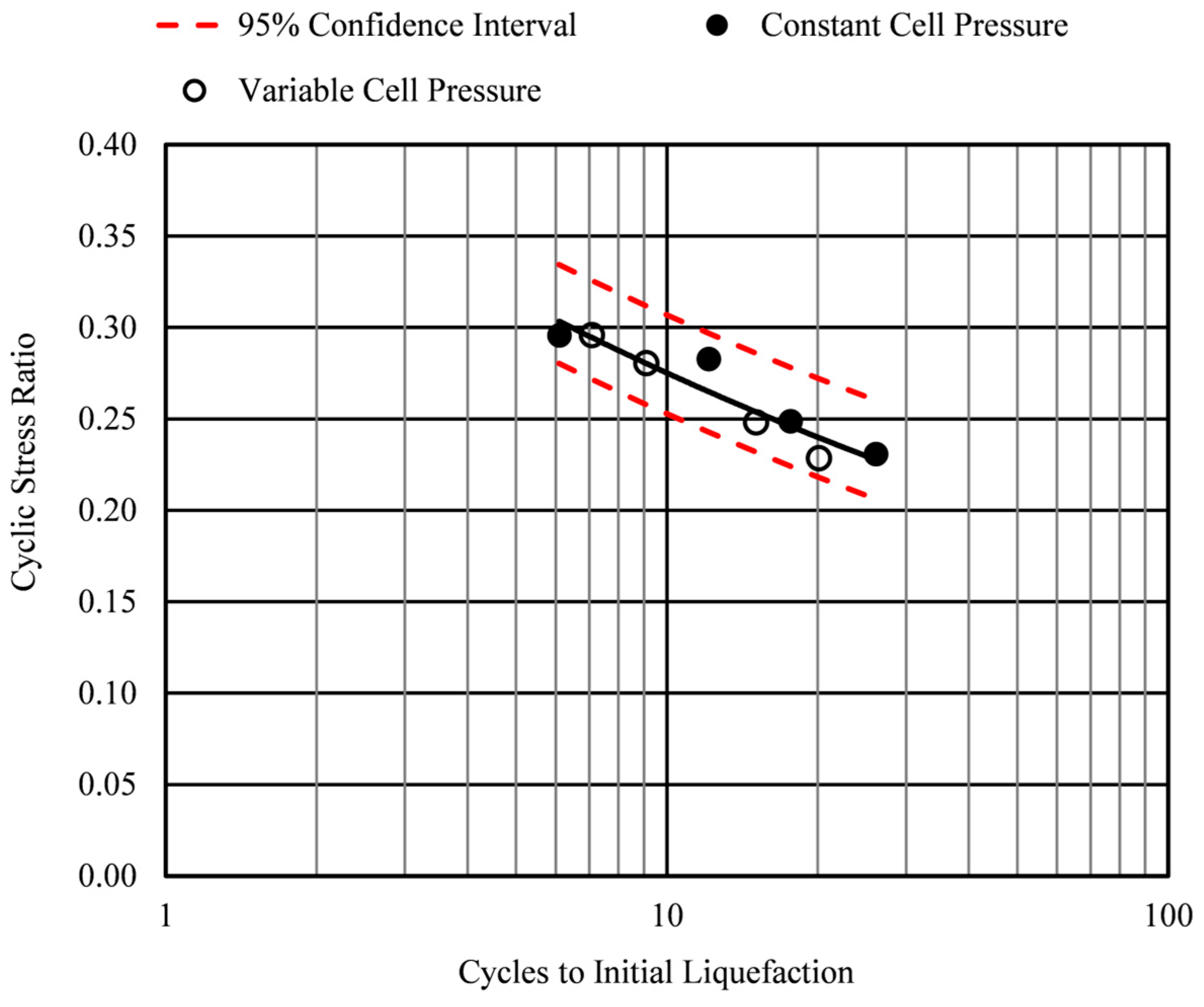
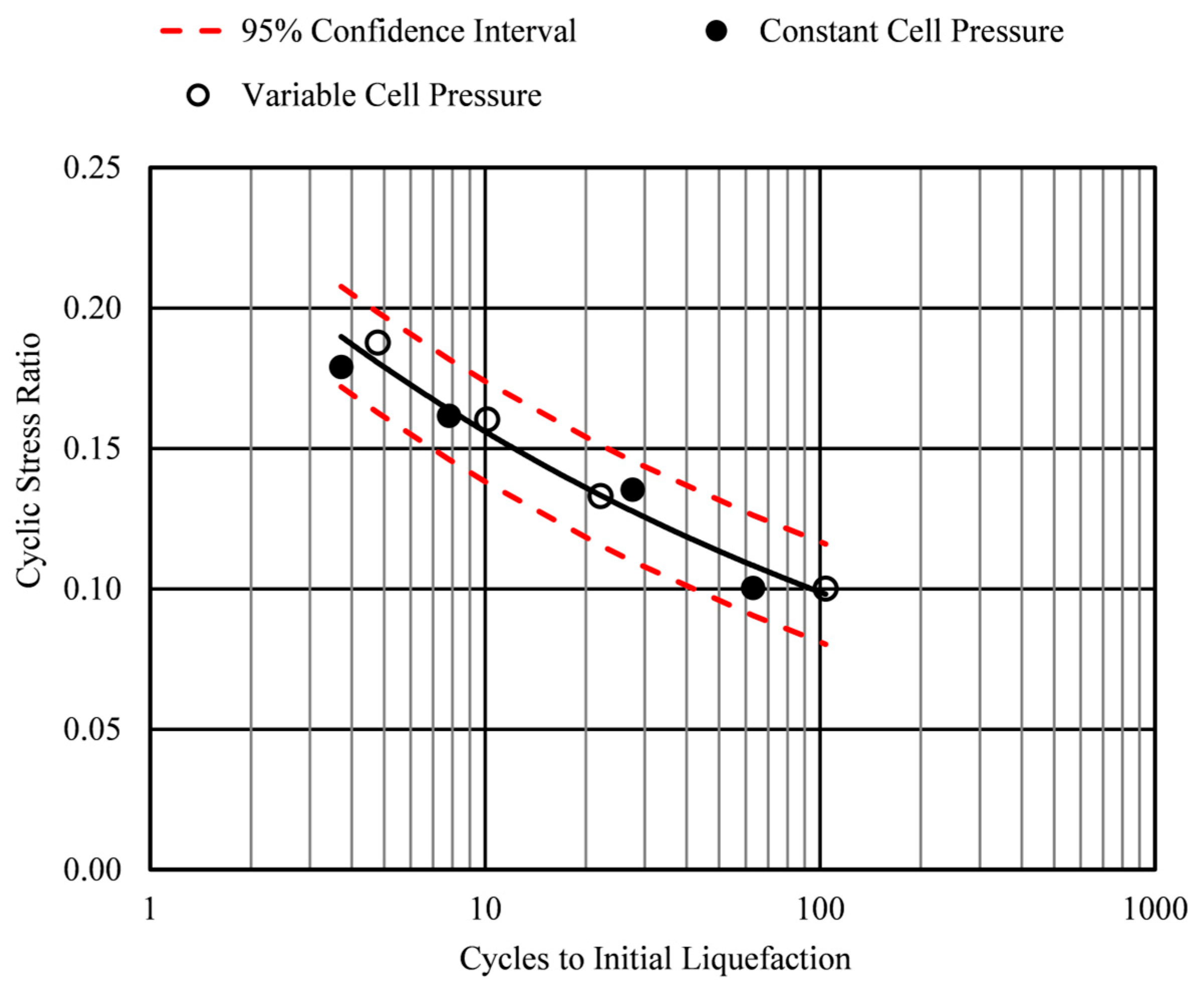
The laboratory test results are presented in
Figure 12,
Figure 13,
Figure 14 and
Figure 15. The results are shown in the form of cyclic resistance curves developed by combining the data obtained from tests conducted under constant cell pressure conditions with those obtained under varying cell pressure conditions into a single best-fit relationship.
Figure 12 presents the cyclic resistance curve for Ottawa C-109 sand at a relative density of 40%, while
Figure 13 presents the corresponding curve for Ottawa C-109 sand at a relative density of 70%. The cyclic resistance curves for the silty sand and silt are presented in
Figure 14 and
Figure 15, respectively.
For all four soils, the data obtained from both testing conditions align closely along a single cyclic resistance curve when the cyclic stress ratio is plotted against the number of cycles required to initiate liquefaction. These results indicate that the cyclic resistance behavior is effectively independent of whether the confining stress was maintained constant or allowed to vary during testing.
Also plotted in
Figure 12,
Figure 13,
Figure 14 and
Figure 15 are lines marking the 95% confidence interval. In a cyclic resistance curve such as the one shown, the lines representing the 95% confidence interval define the range within which the true regression relationship is expected to lie with 95% confidence. More specifically, these bounds quantify the statistical uncertainty associated with the fitted regression line derived from the experimental data.
In this figure, the central trend represented by the regression line describes the relationship between cyclic stress ratio (CSR) and the number of cycles to initial liquefaction. The upper and lower dashed lines indicate the 95% confidence limits on the estimated mean regression response. Thus, if similar experiments were repeated many times, 95% of the resulting regression lines would be expected to fall within these bounds.
Narrow confidence intervals indicate relatively low uncertainty and good agreement among the data points, whereas wider intervals indicate greater uncertainty in the estimated cyclic resistance relationship. As may be seen in the figures, the confidence interval lines closely bound the cyclic resistance curve derived from the combined data (i.e., the tests performed with constant cell pressure and the tests performed with variable cell pressure). This indicates excellent agreement between the two data sets.
Although
Figure 12,
Figure 13,
Figure 14 and
Figure 15 provide strong visual evidence that the cyclic resistance curves obtained under constant and varying cell pressure conditions are nearly identical, formal hypothesis testing was conducted to quantitatively evaluate whether statistically significant differences existed between the two cases. For each soil, the hypothesis testing involved comparing the slopes and intercepts of the best-fit regression lines derived from the cyclic resistance data.
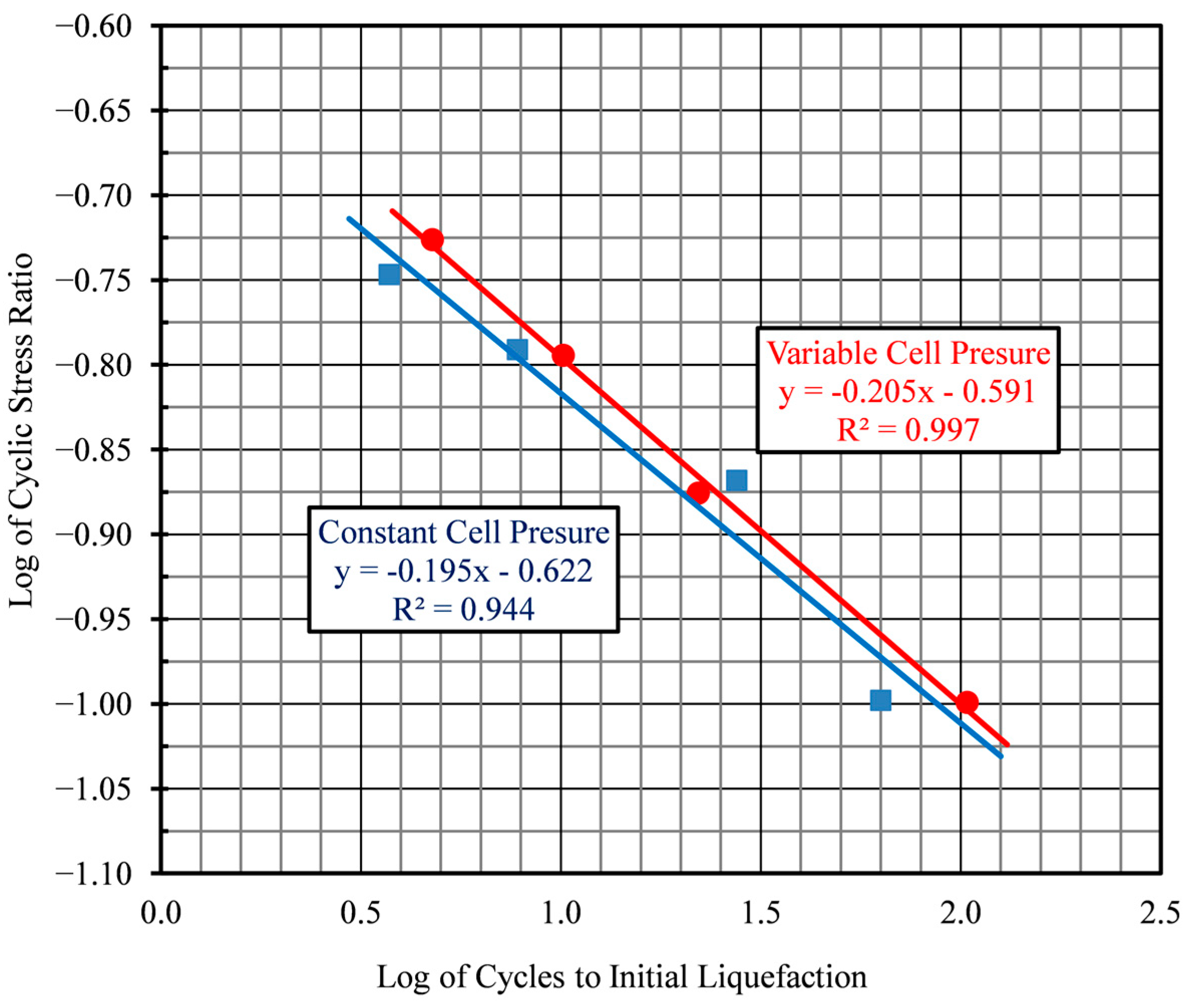
To facilitate the analysis, the data were linearized by plotting the cyclic resistance relationships on log–log axes and fitting linear regression models to the datasets obtained from the constant and varying cell pressure tests. The regression curves developed for the silt specimens are presented in
Figure 16, and the corresponding regression equations and coefficients of determination (R
2) are summarized in
Table 5.
Although
Figure 16 provides visual evidence that the cyclic resistance curves for each soil are highly similar under the two confining stress conditions, statistical hypothesis testing was conducted to further evaluate whether the cyclic resistance curves for specimens subjected to varying cell pressure differed significantly from those for specimens subjected to constant cell pressure. This analysis was performed independently for each soil type.
Following the development of the linear regression models, hypothesis testing [
18] was performed to compare both the slope coefficients and intercepts of the best-fit regression lines for each soil. The null hypotheses stated that (1) the slopes of the two regression lines were equal and (2) the intercepts of the two regression lines were equal. Statistical testing was conducted at the 5% significance level (α = 0.05) using pooled error variance. The results of the hypothesis tests for the slope coefficients and intercepts are presented in
Table 6 and
Table 7, respectively. In all cases, the null hypotheses could not be rejected, indicating that the slopes and intercepts of the regression lines corresponding to the different cell pressure conditions are statistically indistinguishable for each soil.
3.2. Evaluation of Energy Dissipation
The effects of varying cell pressure on the amount of dissipated energy, Ws, required to trigger liquefaction was evaluated. For each soil group, the mean dissipated energy for the four specimens tested with constant cell pressure was compared to the mean dissipated energy for the four specimens tested with varying cell pressure using hypothesis testing. The null hypothesis that the means are the same (i.e., the change in cell pressure conditions has no effect on the amount of energy dissipation required to trigger liquefaction) was evaluated using Student’s t-tests with unequal variances [
19]. The α-value was set at 0.05 and the testing procedure was the same as that used for evaluating the slopes and intercepts of the cyclic resistance curves. The means of the quantity of dissipated energy required to trigger liquefaction in each soil group under each test condition is provided in
Table 8.
The results of the hypothesis tests for the mean of the dissipated energies are presented in
Table 9. In all cases, the null hypotheses could not be rejected, indicating that the quantity of dissipated energy required to trigger liquefaction corresponding to the different cell pressure conditions are statistically indistinguishable for each soil.
4. Discussion of Results
One important difference between the cyclic loading conditions experienced by soils in the field during earthquakes and those imposed during cyclic triaxial testing is the behavior of the total confining stress during loading. In saturated soils, it is commonly assumed that changes in total stress occurring in the field are offset by corresponding changes in pore water pressure, resulting in no net change in effective stress and, consequently, no change in liquefaction susceptibility. This assumption forms the basis for the widespread practice of conducting cyclic triaxial tests under constant total confining stress conditions.
To evaluate this assumption, comparisons were made between corresponding pairs of cyclic triaxial tests. Each pair consisted of tests performed on the same soil at the same density and subjected to the same cyclic stress ratio. Within each pair, one test was conducted under constant cell pressure, while the other was conducted under varying cell pressure conditions.
Examination of the pairs indicate that the difference in cell pressure did not make a difference in the effective stress behavior of the specimens.
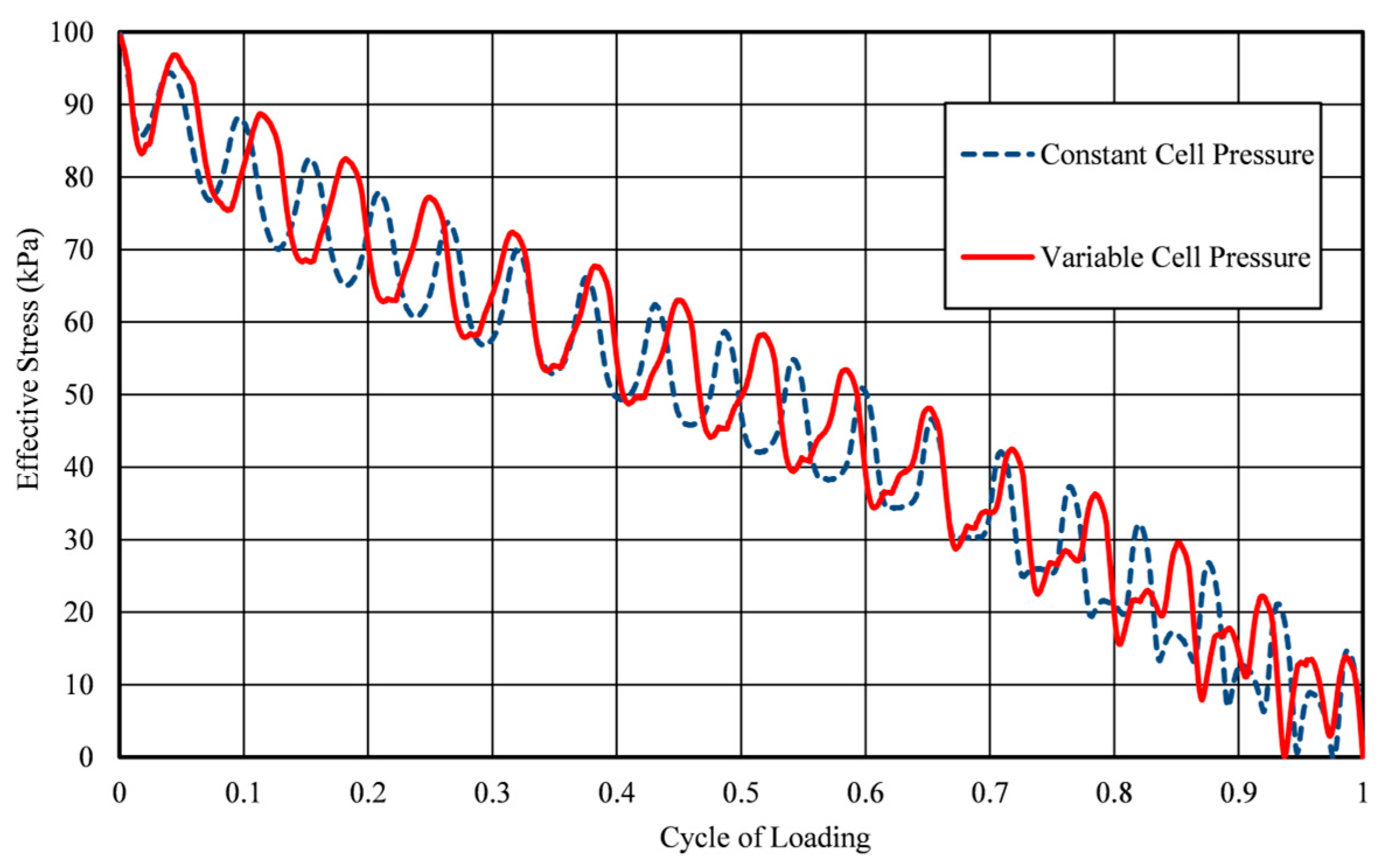
Figure 17 plots the effective stress versus cycle ratio for the tests performed on silty sand at a CSR of 0.25 previously shown in
Figure 7 and
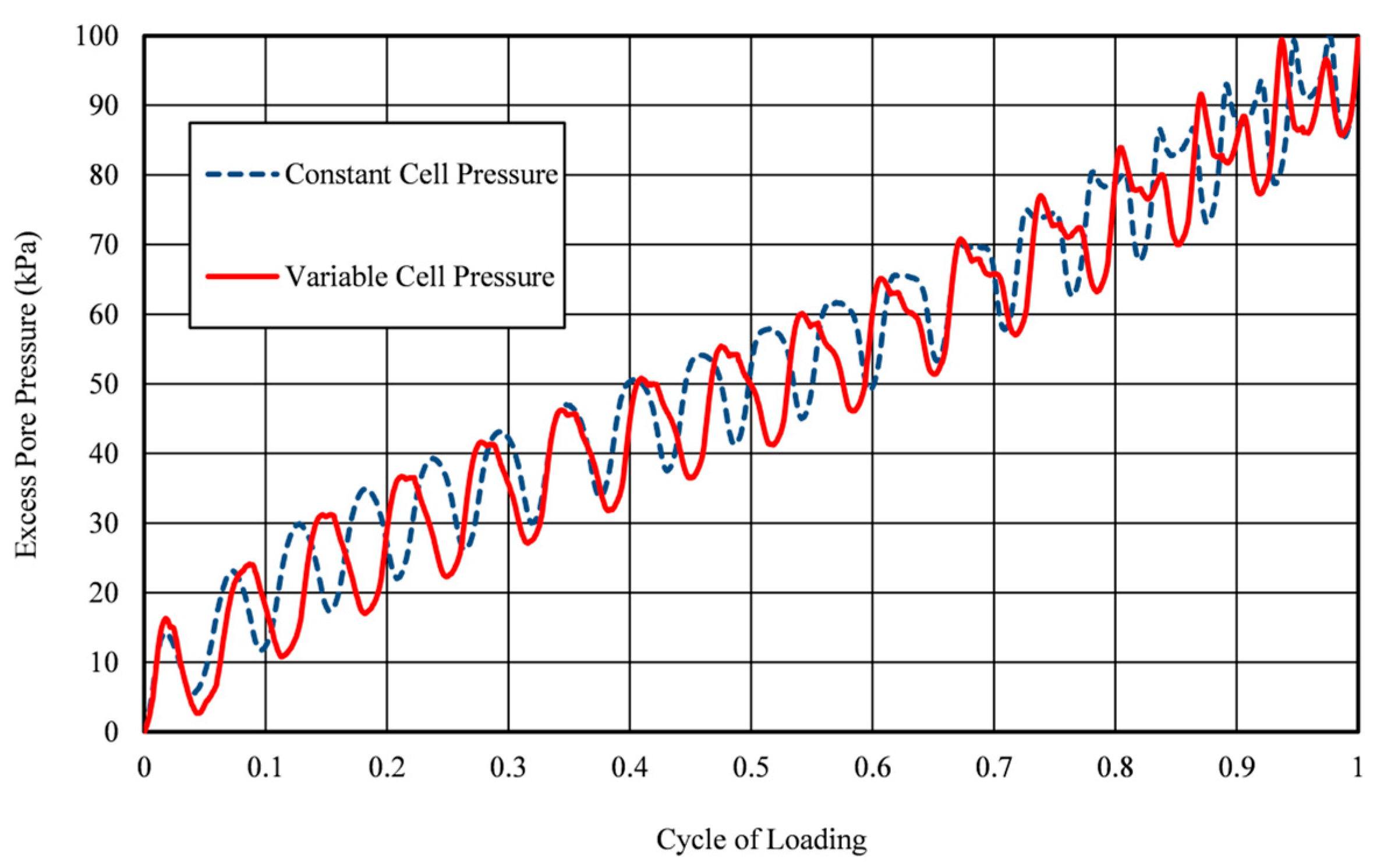
Figure 8. The effective stress was plotted against the cycle ratio, defined as the ratio of the current loading cycle to the total number of cycles required to trigger liquefaction, rather than against the actual number of loading cycles. This normalization was used to account for the difference in the number of cycles required to induce liquefaction in the two tests (15 cycles versus 18 cycles). Similarly,
Figure 18 plots the pore pressure generation versus cycle ratio for these same tests.
Lastly,
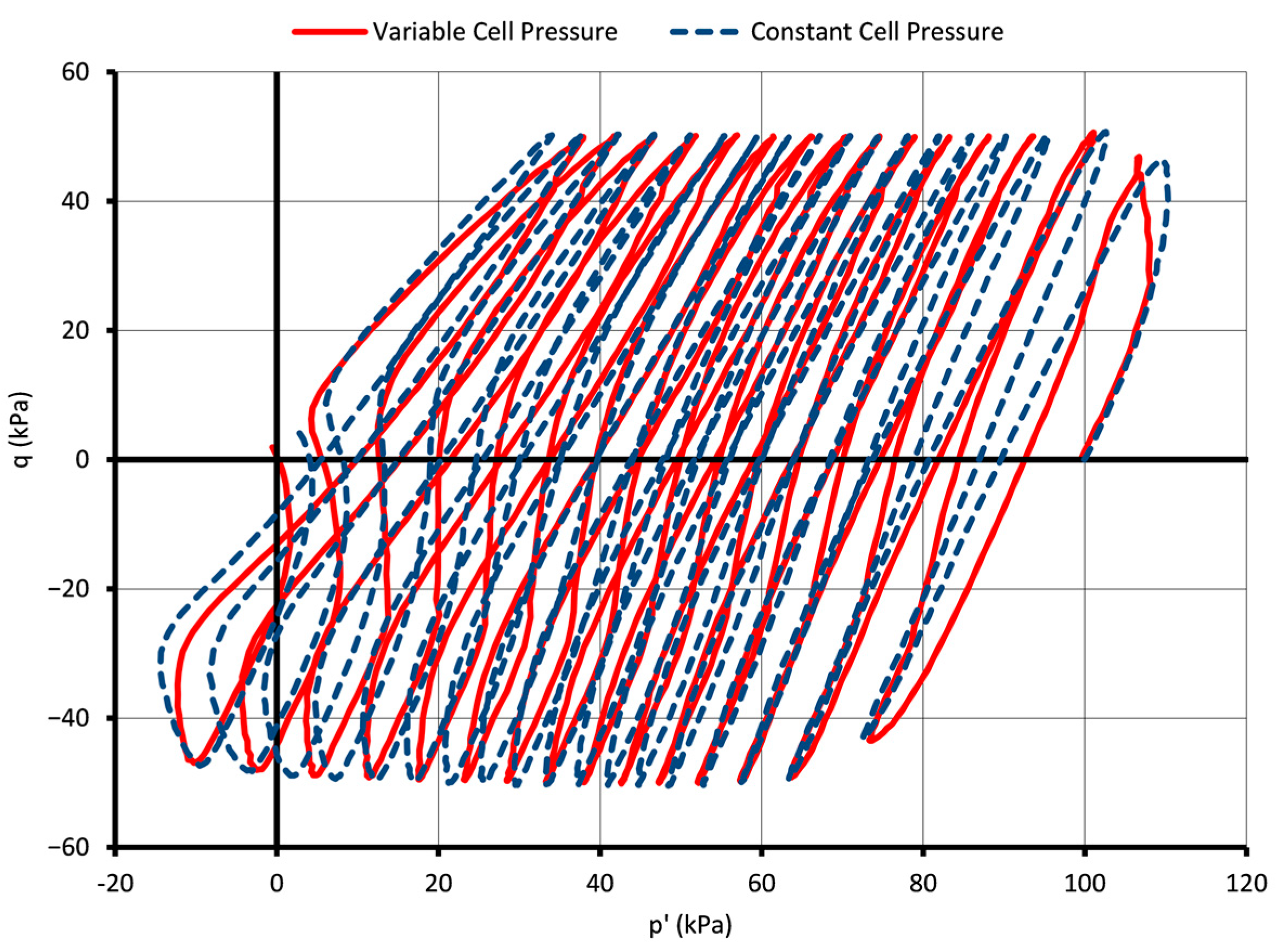
Figure 19 presents the effective stress paths for the two tests. Aside from a slight offset resulting from the difference in the number of loading cycles required to initiate liquefaction, the effective stress paths for the two tests are nearly identical.
These findings indicate that the increase in total stress acting on the specimen, resulting from the variation in cell pressure during cyclic triaxial testing, produces an equivalent increase in pore water pressure because the specimen is fully saturated. Consequently, the change in cell pressure does not produce a net change in effective stress within the specimen. As a result, essentially the same effective stress conditions develop whether the cell pressure is maintained constant or varied during testing.
Similarly, the two total stress conditions examined produced the same results in terms of dissipated energy. The average quantity of dissipated energy required to initiate liquefaction in each soil type was equal whether the cell pressure was held constant or if it was varied.
5. Limitations of the Study and Future Work
The study has several limitations that should be considered when interpreting the results. First, the experimental program evaluated only four soil type–density combinations, consisting of reconstituted laboratory specimens of clean sand, silty sand, and non-plastic silt. While these materials represent a useful range of cohesionless soils, the findings may not fully capture the behavior of natural soils with cementation, aging effects, fabric anisotropy, or plastic fines. Second, all specimens were isotropically consolidated to a single effective confining stress of 100 kPa, whereas in situ soils are typically anisotropically consolidated and may experience a wider range of stress conditions during earthquakes. In addition, the tests were performed at a single loading frequency of 0.1 Hz and under controlled sinusoidal loading, which does not fully replicate the irregular and multi-directional nature of seismic loading in the field. Finally, the study focused primarily on liquefaction triggering and effective stress response; therefore, additional research is needed to evaluate whether varying cell pressure influences post-liquefaction deformation behavior or cyclic strain accumulation under more complex loading conditions.
Potential future research could expand the experimental program to include a broader range of soil types, densities, and consolidation conditions in order to further evaluate the applicability of the findings to field conditions. In particular, additional testing on soils containing plastic fines, naturally aged deposits, and cemented soils would help determine whether the observed equivalence between constant and varying cell pressure conditions remains valid for more complex geomaterials. Future studies could also investigate the influence of anisotropic consolidation and stress histories representative of in situ conditions, as most natural soil deposits are not isotropically consolidated.
Additional work is also needed to evaluate the effects of varying confining stress under irregular earthquake loading histories, multidirectional loading, and higher loading frequencies more representative of seismic events. Furthermore, extending the investigation to post-liquefaction deformation behavior, cyclic strain accumulation, and energy-based liquefaction analyses may provide additional insight into the broader implications of total stress path assumptions in cyclic triaxial testing.
6. Conclusions
This study evaluated whether the differences in total stress paths between field earthquake loading conditions and conventional cyclic triaxial testing significantly influence the liquefaction behavior of saturated soils. In particular, the investigation examined the long-standing assumption that changes in total confining stress occurring during seismic loading are offset by equivalent changes in pore water pressure, thereby producing little or no net change in effective stress. To assess the validity of this assumption, cyclic triaxial tests were performed using both conventional constant cell pressure conditions and varying cell pressure conditions intended to better simulate the total stress changes experienced in the field.
The results of the testing program indicate that the liquefaction response of the specimens was largely unaffected by whether the cell pressure was held constant or varied during cyclic loading. Comparisons of pore pressure generation, effective stress reduction, and effective stress paths demonstrated that the specimens developed nearly identical effective stress conditions throughout loading despite the different total stress paths imposed during testing. Although minor differences were observed in the number of cycles required to initiate liquefaction in some tests, these differences did not produce meaningful changes in the overall liquefaction behavior of the soils.
These findings support the fundamental assumption underlying conventional cyclic triaxial testing procedures: for fully saturated soils, increases in total confining stress during cyclic loading are accompanied by corresponding increases in pore water pressure, resulting in negligible changes in effective stress. Consequently, cyclic triaxial tests conducted under constant cell pressure provide a valid and representative means for evaluating liquefaction susceptibility and pore pressure generation behavior. The results therefore reinforce the continued applicability of conventional cyclic triaxial testing methodologies for laboratory-based liquefaction investigations and engineering analyses, despite inherent differences between laboratory loading conditions and in situ earthquake stress paths.