Opinion

CsPbI3 Perovskites at the Edge of Commercialization: Persistent Barriers, Multidisciplinary Solutions, and the Emerging Role of AI


Institute for Microelectronics and Microsystems, National Research Council (CNR-IMM), Zona Industriale Strada VIII, No. 5, 95121 Catania, Italy
Submission received: 3 February 2026 / Revised: 23 March 2026 / Accepted: 4 April 2026 / Published: 13 April 2026
(This article belongs to the Section Chemistry & Material Sciences)

Abstract

All-inorganic cesium lead iodide (CsPbI3) has been investigated for more than a decade as an absorber for perovskite photovoltaics thanks to its attractive bandgap, thermal robustness compared with hybrid perovskites, and compatibility with tandem concepts. Yet, despite remarkable efficiency progress, CsPbI3 remains far from widespread commercialization. The core roadblock is the metastability of the photoactive black perovskite phases (α/γ/β) against transformation to the photoinactive yellow δ-phase under realistic conditions, amplified by defect chemistry, ion migration, and interfacial reactions. Additional barriers arise from scale-up constraints (film uniformity, throughput, solvent management), long-term operational stability (humidity, heat, UV, bias), and environmental/safety requirements, especially lead containment, sequestration, and end-of-life strategies. This review critically analyzes the intertwined physical, chemical, and engineering factors that still limit CsPbI3 deployment, with emphasis on how solutions in one domain can fail without co-design in others. This review summarizes state-of-the-art stabilization strategies (size/strain engineering, additive/doping routes, surface/interface passivation, and encapsulation), highlight scalable manufacturing pathways including solvent-minimized and vacuum-assisted approaches, and discuss lead-mitigation technologies such as Pb-adsorbing functional layers. Finally, I argue that artificial intelligence (AI)—from machine-learning stability models to process monitoring, robotic optimization, and digital twins—has become essential to navigate the enormous parameter space of CsPbI3 materials and manufacturing. It concludes with actionable recommendations and future directions toward bankable, scalable, and sustainable CsPbI3 photovoltaics.

1. Introduction

Perovskite solar cells (PSCs) have achieved unprecedented efficiency gains in a short time, but commercialization requires more than record power-conversion efficiency (PCE): devices must be manufacturable at scale with tight statistical control, pass standardized stress tests, and meet environmental and safety constraints. CsPbI3 is a particularly attractive absorber because its bandgap is well-positioned for tandem photovoltaics and semitransparent applications, and because replacing organic A-site cations can improve thermal stability. However, the photoactive black phases of CsPbI3 are thermodynamically disfavored at room temperature relative to the yellow δ-phase. As a result, film formation, interfaces, and encapsulation must be engineered to suppress δ-phase nucleation, slow transformation kinetics, and prevent degradation under moisture, heat, illumination, and electrical bias. This review focuses on why CsPbI3—despite years of intense research—still struggles to reach large-scale deployment, and why solving the remaining problems demands a multidisciplinary approach spanning solid-state physics, synthetic chemistry, materials engineering, manufacturing equipment, and data-driven optimization. Early demonstrations of inorganic CsPbI3 PSCs and key phase-stabilization strategies are reported in Refs. [1,2,3,4,5], while broader stabilization perspectives are discussed in recent reviews [6,7]. Scale-up, encapsulation and qualification requirements for bankable PV products are summarized in Refs. [8,9,10,11,12,13]. To make the commercialization discussion quantitative, I define the default acceptance frame assumed in this review as: (i) fully encapsulated devices/mini-modules, (ii) reporting MPP-tracked stability endpoints (e.g., T80) under heat/light/bias, and (iii) passing or mapping results to IEC-type stress sequences (e.g., damp-heat/thermal-cycling) together with yield statistics over multiple devices/areas [11,12,13].

2. Physical Origin of Instability in CsPbI3

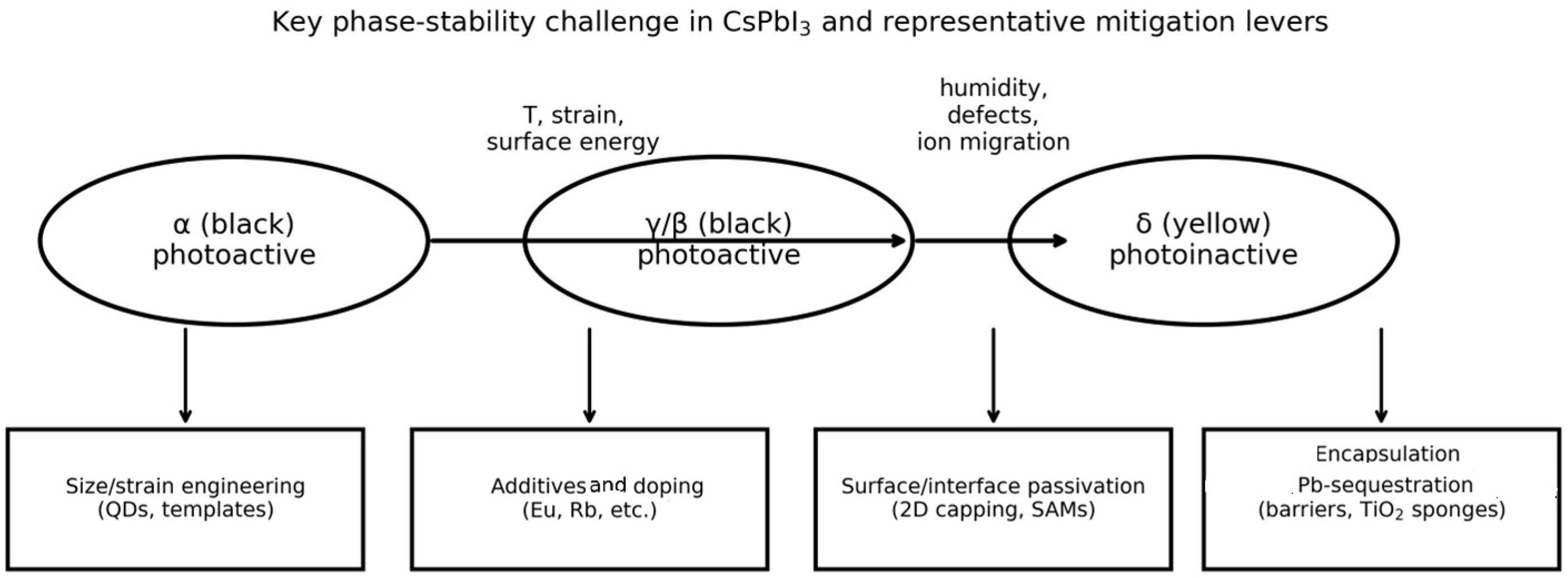
CsPbI3 exhibits multiple polymorphs. The high-temperature cubic perovskite α-phase and related black polymorphs (β/γ) offer suitable optoelectronic properties, whereas the non-perovskite δ-phase is photoinactive. The black-to-yellow conversion is driven by a combination of thermodynamics (Goldschmidt tolerance factor and lattice strain), surface and grain-boundary energetics, and kinetic pathways enabled by defects and ion migration. In thin films, the competition between bulk free energy and surface energy means that nanoscale size effects, strain, and surface termination can stabilize black phases that are unstable in bulk. Nevertheless, realistic operating conditions introduce strong perturbations: humidity can catalyze decomposition and promote δ-phase nucleation; light and bias can accelerate ion migration and interfacial reactions; and thermal cycling can induce mechanical stress, delamination, and crystallographic relaxation. A central message is that the phase problem cannot be reduced to a single knob: it is a coupled, multiscale phenomenon. The thermodynamic/kinetic competition between black and δ phases and the impact of defects/ion migration have been extensively analyzed [6,7]. Size- and surface-energy stabilization routes, including quantum-dot approaches, further highlight the multiscale nature of the problem [2]. The coupled drivers and mitigation levers are summarized in Figure 1. For a sharper analysis, I distinguish (a) bulk CsPbI3 (rapid black→δ relaxation at room temperature) from (b) thin-film/nanoscale CsPbI3, where surface energy, strain and interfaces can kinetically stabilize black phases; δ-nucleation is frequently initiated at surfaces, grain boundaries and buried interfaces and can compete with parallel degradation routes such as PbI2 formation (chemical decomposition) and interface-driven redox reactions [6,7,14,15,16]. In CsPbI3 devices, similar PCE losses can originate from distinct mechanisms—(i) black-to-δ phase transformation, (ii) chemical decomposition/iodide depletion, (iii) ion-migration-driven electrochemical drift, and (iv) interfacial/contact reactions—so stability claims should specify the dominant failure mode and the diagnostic used to attribute it (see Figure 1). To strengthen scientific depth, operational stability should be discussed as a competition among distinct routes—(i) black-to-δ conversion (often nucleated at surfaces/GBs/buried interfaces), (ii) chemical decomposition to PbI2/iodide depletion, and (iii) interface-driven redox/contact reactions—therefore key claims should be supported by operando phase tracking (XRD/GIWAXS) together with chemical/byproduct and interface diagnostics under light/heat/bias.

3. Chemical and Material Strategies to Stabilize the Black Phase

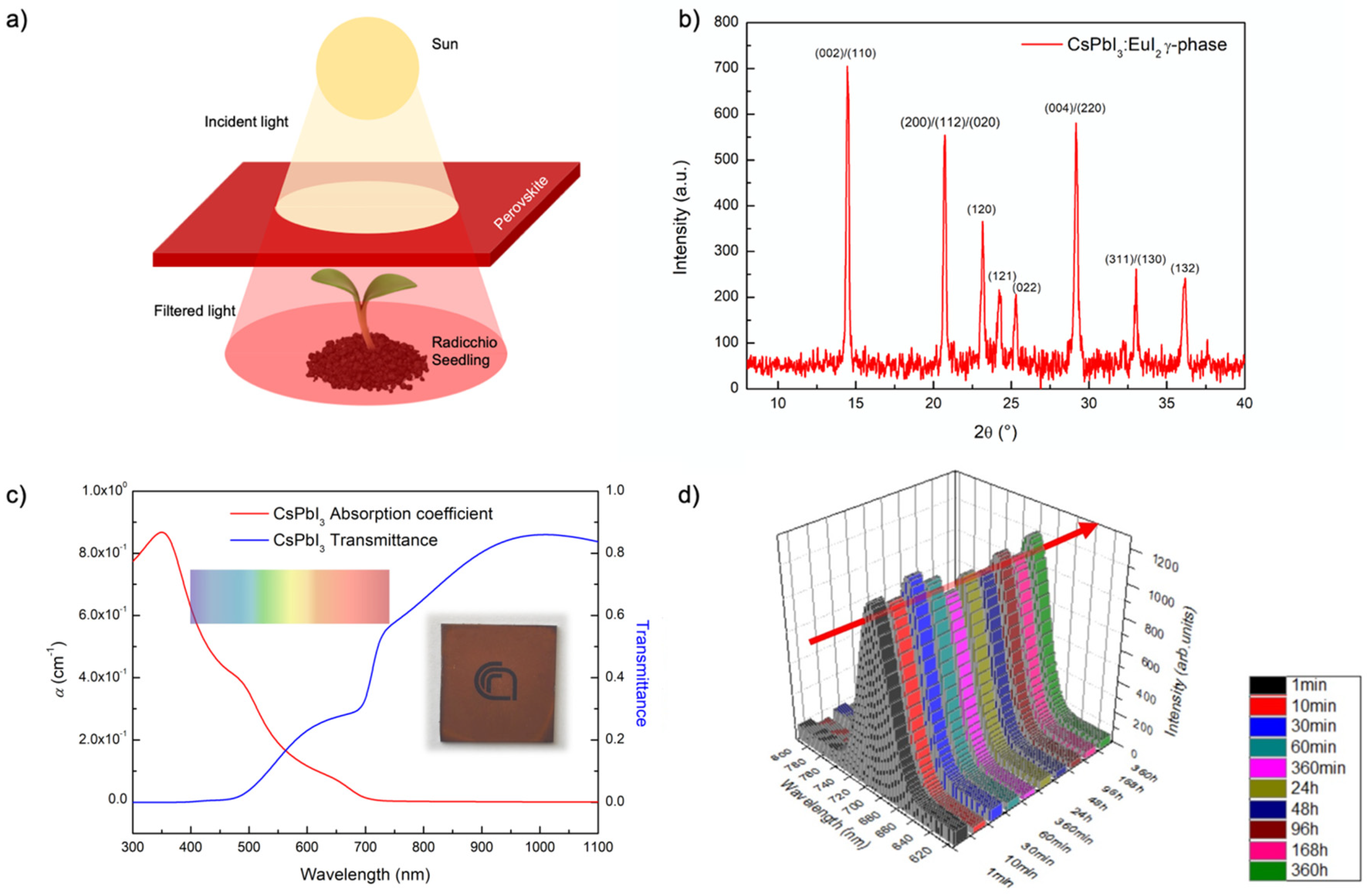
Stabilization strategies can be grouped into: (i) size/strain engineering; (ii) additive and doping approaches that modify crystallization pathways, lattice parameters, or defect formation energies; (iii) surface and interface passivation that suppresses δ-phase nucleation at grain boundaries; and (iv) compositional engineering (e.g., halide mixing or A-site alloying) that trades bandgap against stability. Additives such as hydroiodic acid and bulky organic ammonium salts have been used to distort the lattice and form protective surface layers, while inorganic dopants (e.g., Eu-based routes) can reduce defect density and stabilize photoactive phases. Nanocrystals and quantum dots can exploit surface-energy stabilization, but scaling ligand chemistry and film formation remains challenging. Critically, many stabilization demonstrations rely on laboratory conditions (dry atmosphere, low UV, small area) and should be re-evaluated under device-relevant stress protocols. Representative stabilization routes based on compositional engineering and dopant/additive design have been demonstrated across multiple studies [2,3,4,5,6,7,17,18,19]. An example of EuI2-assisted CsPbI3 stabilization and related characterization is shown in Figure 2 [20]. Table 1 is supported by representative CsPbI3 stabilization studies and recent reviews (e.g., [2,3,4,5,6,7,17,18,19]) and by encapsulation/lead-mitigation perspectives where relevant [11,12,21,22].

4. Interfaces, Device Architectures, and Degradation Pathways

Even when the perovskite bulk remains in the black phase, interfaces often dominate long-term stability. Charge-transport layers can catalyze halide exchange, induce interfacial strain, or promote redox reactions under illumination and bias. Metal electrodes can diffuse, while ionic species from transport layers can penetrate the perovskite. Consequently, architecture choices (n–i–p vs. p–i–n), electrode stacks, and interlayers must be co-optimized with the perovskite chemistry. For CsPbI3, particularly critical themes include: (i) controlling the buried interface where nucleation and residual stress are established; (ii) suppressing ion migration pathways and electrochemical side reactions; and (iii) ensuring that passivation schemes do not introduce insulating barriers or hysteresis. Standardized operando characterization (impedance spectroscopy, in situ XRD/PL, and accelerated stress tests) is essential to link microscopic mechanisms to macroscopic lifetime. Interfacial stabilization concepts and accelerated aging studies underscore that device lifetime is frequently interface-limited rather than bulk-limited [12,14,15,16]. Although TiO2-based ETLs/scaffolds are used here as an illustrative platform (also for Pb sequestration), compact low-temperature ETLs such as SnO2 (and other inorganic ETLs) are widely adopted in scalable perovskite processing; their different surface chemistry/defect landscape can change CsPbI3 nucleation and interfacial degradation, so TiO2 vs. SnO2 stacks should be benchmarked under identical stability/acceptance criteria [8,9,12].

5. Process and Equipment Engineering for Scale-Up

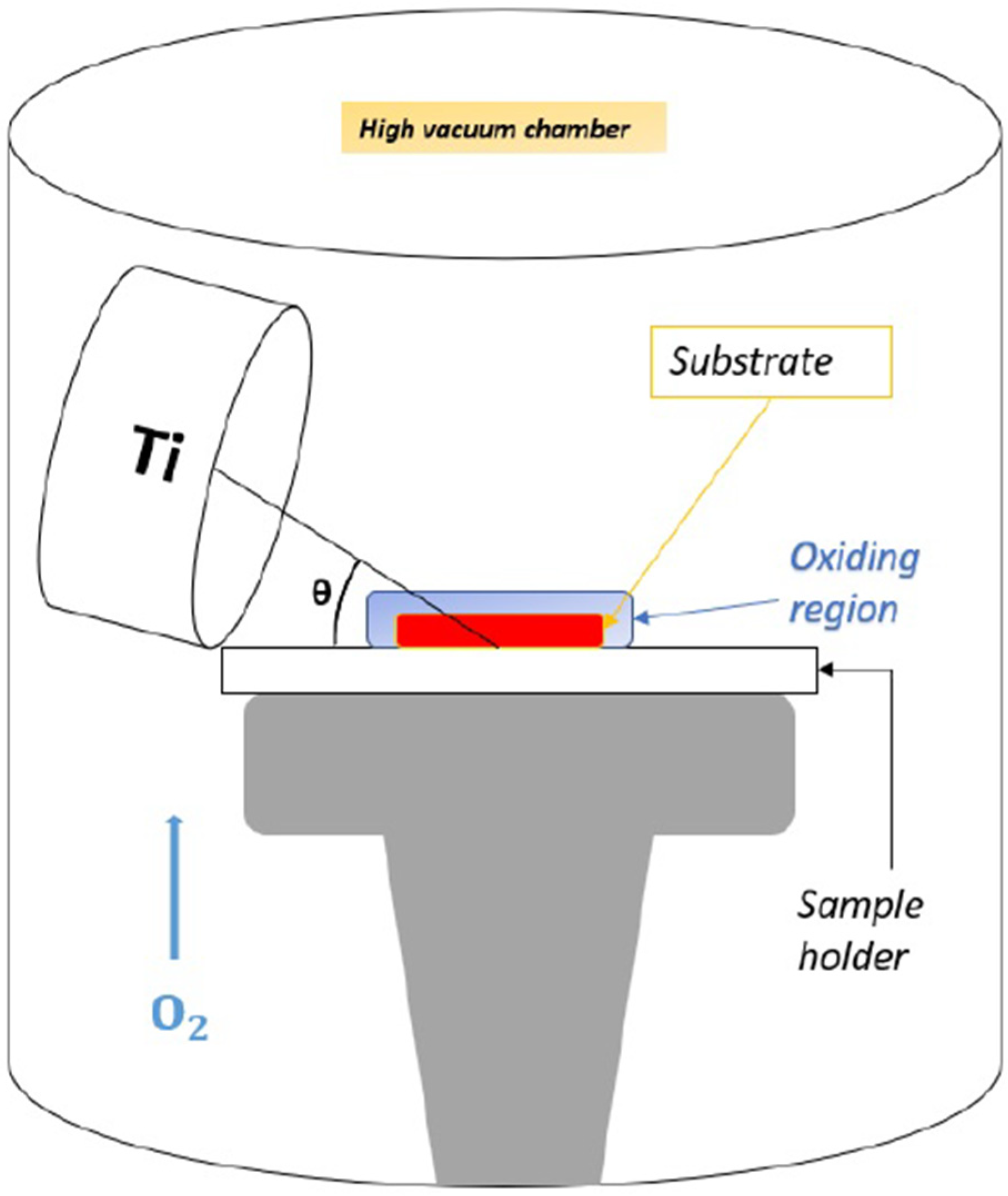
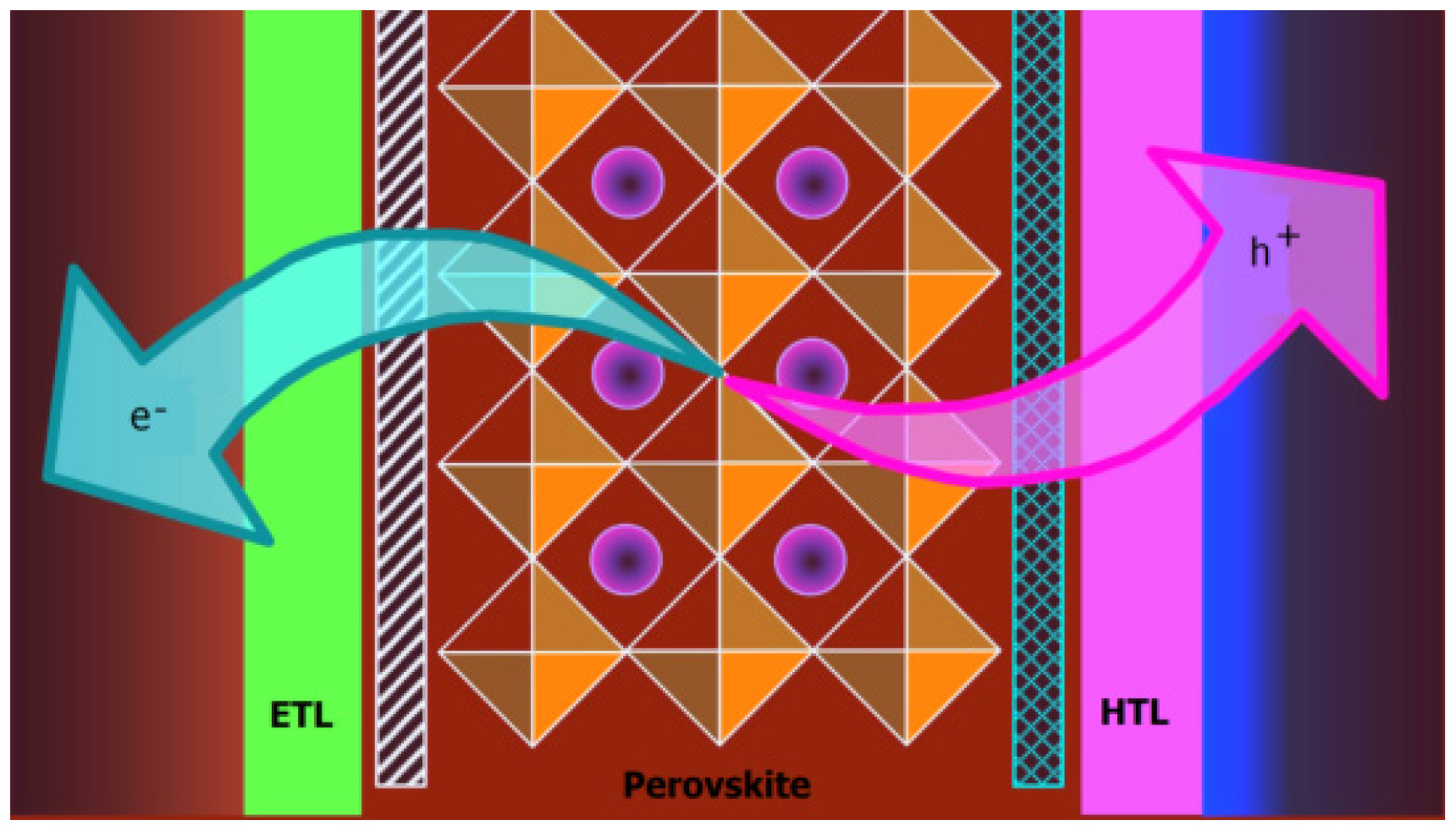
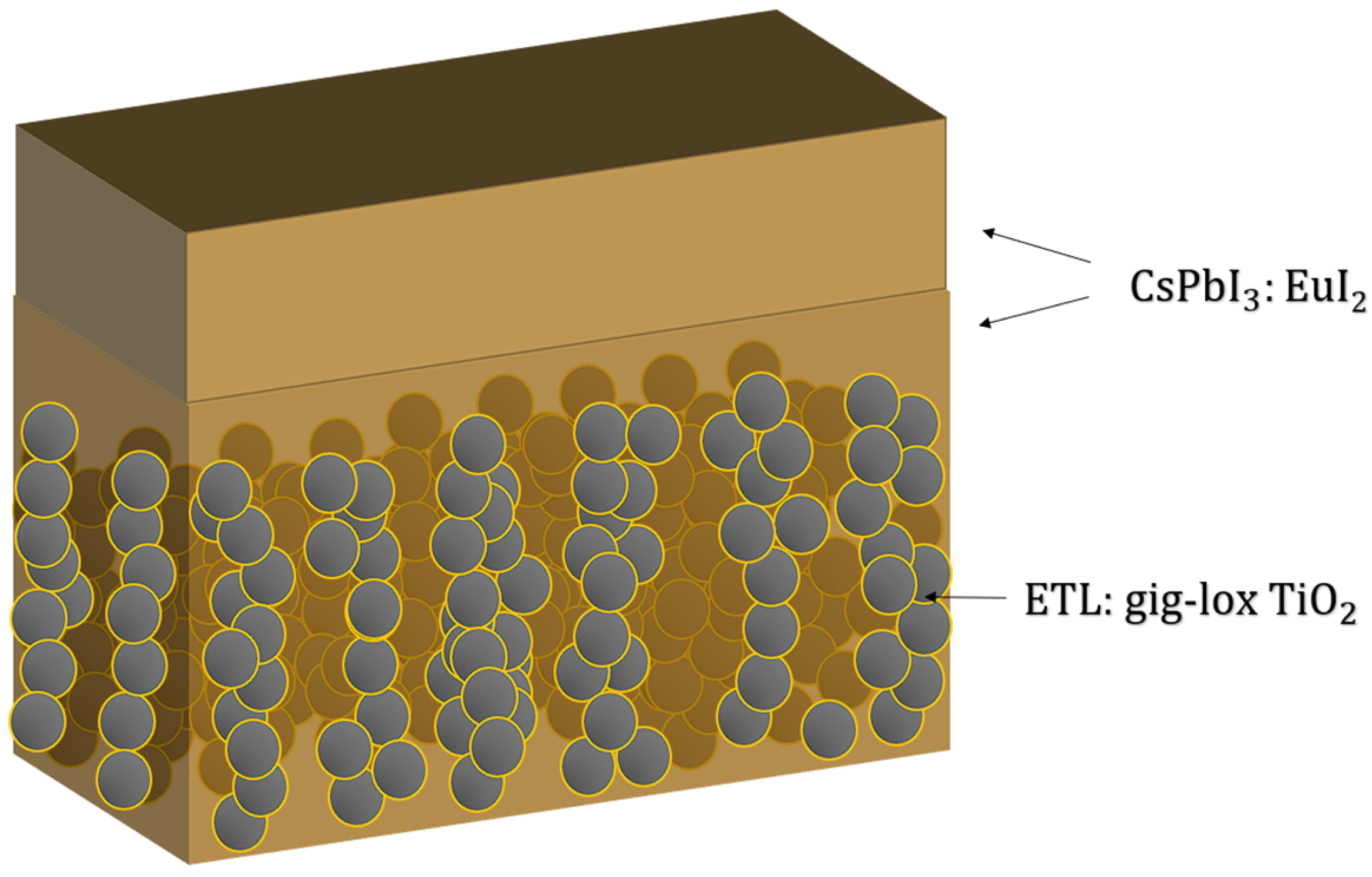
Most CsPbI3 device demonstrations rely on spin coating, which is inherently wasteful and difficult to translate to large-area manufacturing [21,22,23,24]. Scalable solution routes—blade coating, slot-die coating, spray coating, and inkjet printing—must manage solvent evaporation, nucleation kinetics, and thermal budgets over large substrates while maintaining the black phase. Vacuum and hybrid approaches can reduce solvent-related variability and enable tighter process control. For example, grazing-incidence sputtering assisted by local oxidation (gig-lox) provides a route to grow mesoporous TiO2 layers with high porosity and thickness control, enabling infiltration of CsPbI3 solutions while keeping a solvent-minimized, scalable oxide process. Such platform technologies also align with the need for reproducible equipment-qualified recipes (pressure, gas flow, power, web speed) and in-line metrology that industry requires. Scalable coating routes and the lab-to-fab transition for perovskites have been reviewed in detail, highlighting the need for controlled drying, solvent management and in-line metrology [2,3,11,21]. Figure 3 contextualizes the PSC stack, while Figure 4 and Figure 5 illustrate a solvent-minimized oxide scaffold platform (gig-lox TiO2) and representative gig-lox-assisted CsPbI3:EuI2 processing concepts relevant to scalable architectures [12,25,26,27,28]. To keep this review platform-agnostic, I emphasize that gig-lox/mesoporous TiO2 scaffolds are presented as one illustrative manufacturing-compatible route, while alternative scale-up pathways (slot-die/blade coating, vapor or hybrid vapor-solution deposition, and roll-to-roll compatible drying/annealing strategies) remain equally relevant for CsPbI3 commercialization and should be benchmarked against the same acceptance criteria [2,3,11,21]. Table 2 summarizes scale-up constraints and mitigation options broadly reported across scalable coating/manufacturing reviews and slot-die studies [2,3,11,21].

6. Environmental and Safety Constraints: Lead Containment and End of Life

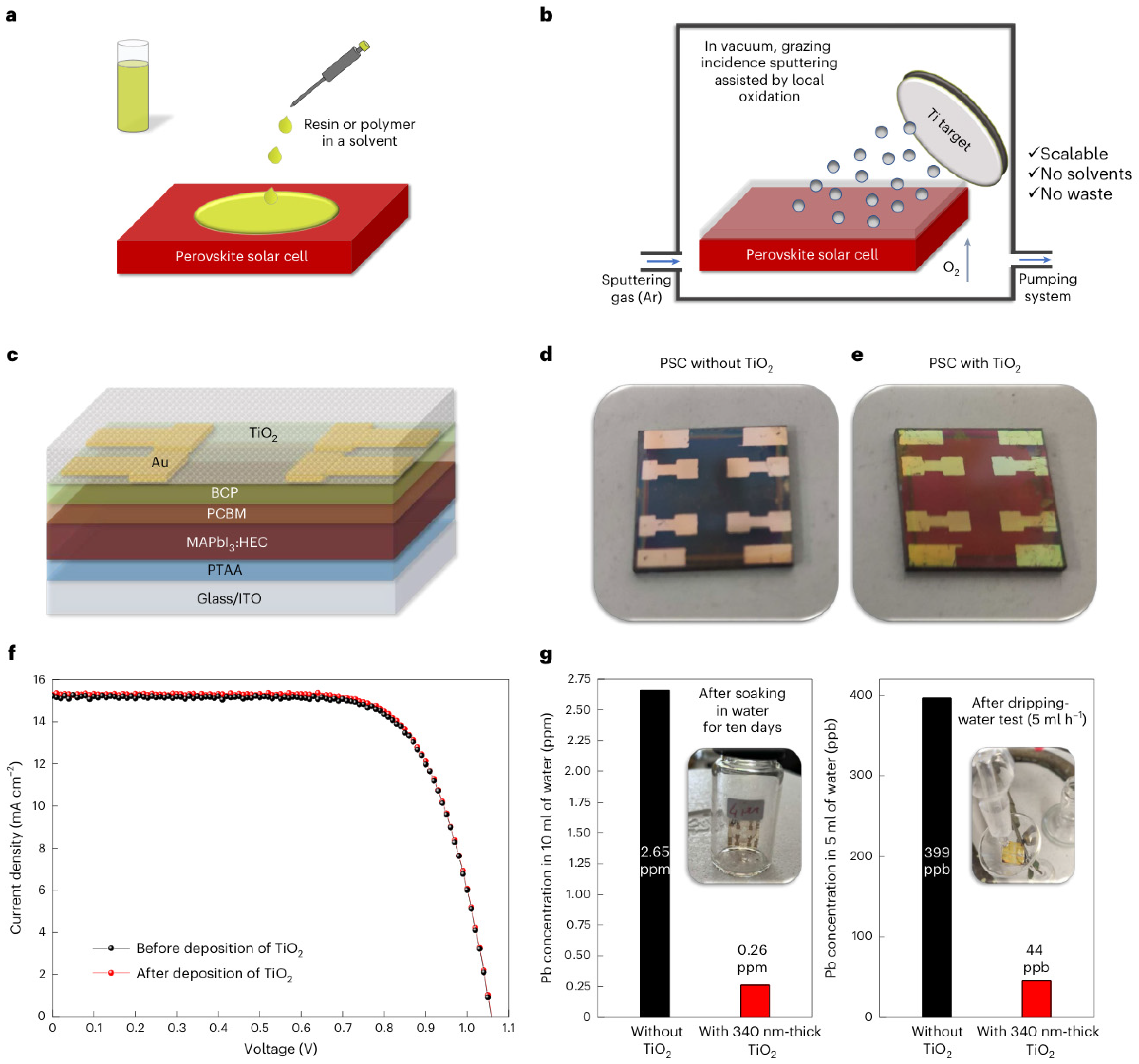
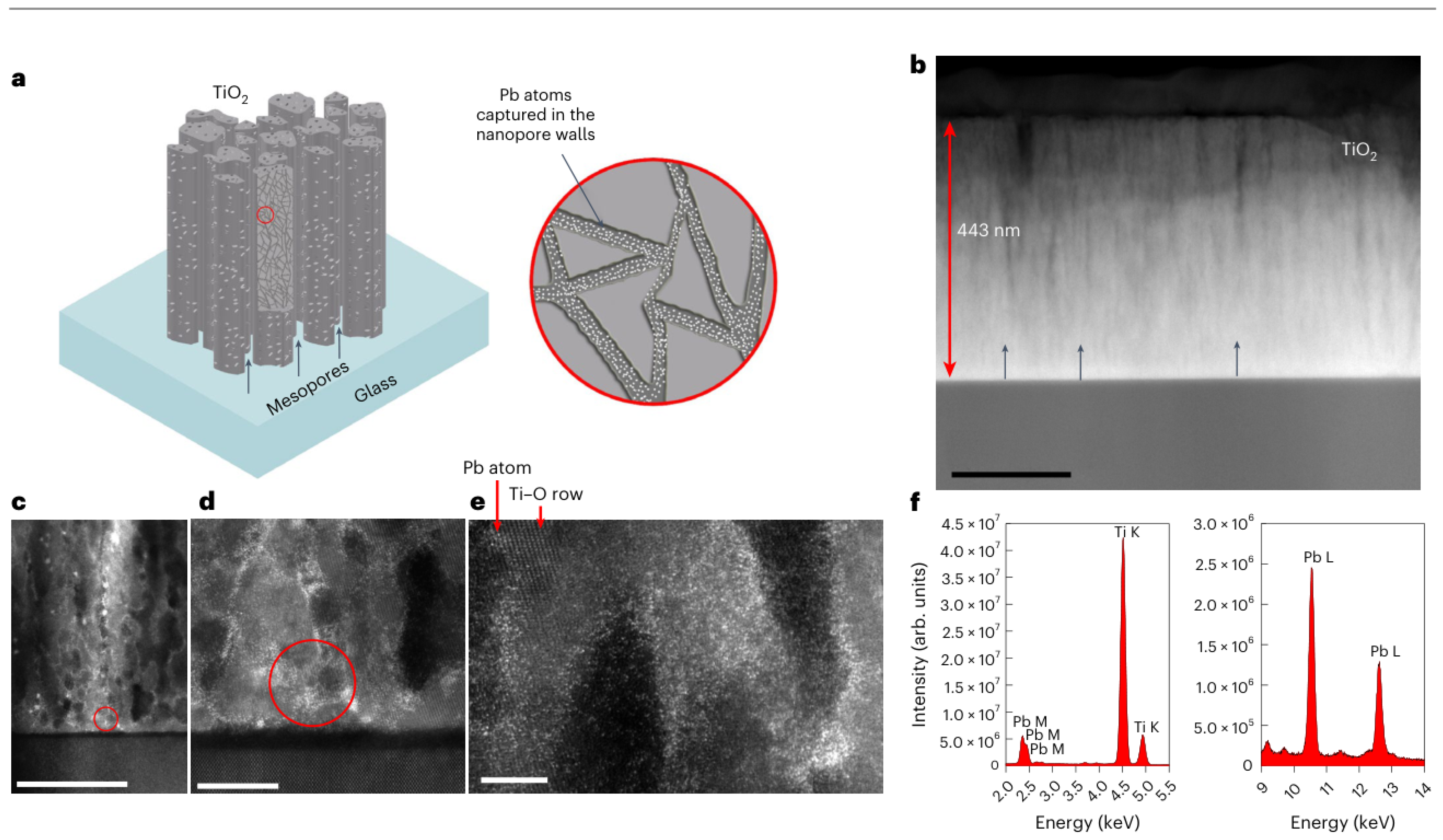
Even if device performance and stability are solved, lead management remains a non-negotiable requirement for bankable products. Lead leakage can occur during catastrophic breakage, weathering, or improper disposal. Therefore, commercialization pathways must integrate: (i) robust encapsulation that limits water ingress and ionic transport; (ii) functional layers that actively sequester Pb2+ in the event of damage; and (iii) recycling strategies that recover valuable components and prevent environmental release. A promising concept is to integrate Pb-adsorbing or chemisorbing materials directly in the device stack—e.g., mesoporous TiO2 sponges that can capture leaked Pb within their nanopore walls while remaining compatible with scalable deposition. Comprehensive analyses of lead-risk mitigation emphasize that Pb containment must be integrated at the device/module design stage, not treated as an external add-on [21,22]. A transparent TiO2 “sponge” approach for Pb sequestration is illustrated in Figure 6 and Figure 7 [29]. For practical deployment, lead-mitigation must specify the targeted scenario: (i) acute Pb release upon catastrophic breakage (rain/leaching exposure) versus (ii) end-of-life handling and recycling; success should be quantified via standardized leaching-type tests and Pb mass balance, while reporting any optical (parasitic absorption/haze) and electrical (series resistance/contact) penalties introduced by sequestration layers or barrier stacks [21,22,29].

7. Artificial Intelligence as an Enabling Technology: A Roadmap

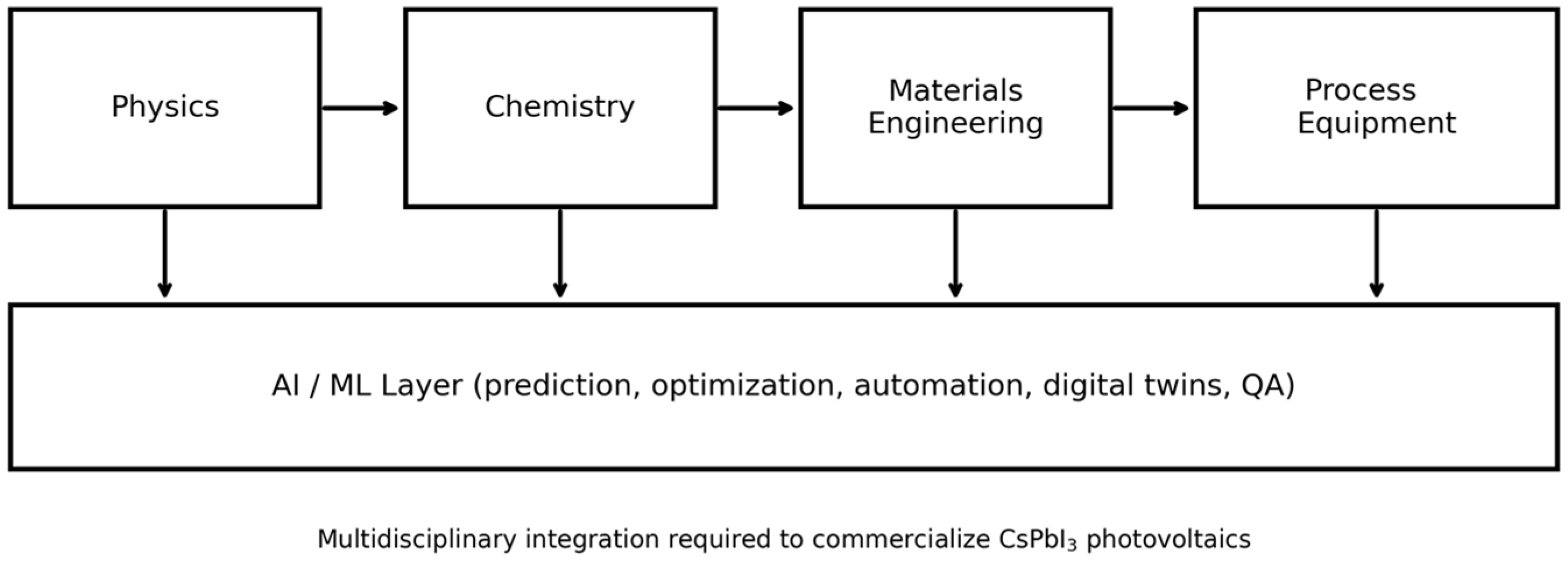
The parameter space of CsPbI3 commercialization is enormous: precursor chemistry, additives, substrate and transport layers, thermal profiles, ambient conditions, coating parameters, and encapsulation. Traditional one-factor-at-a-time optimization is too slow and often produces non-transferable recipes. AI methods—particularly machine learning (ML) combined with Bayesian optimization and automation—can accelerate discovery and translate laboratory advances into manufacturable processes [30,31]. Key opportunities include (i) stability prediction models trained on standardized stress-test datasets; (ii) real-time process monitoring using computer vision and spectroscopy to detect defects and phase transitions; (iii) digital twins for process equipment that enable virtual experiments, predictive maintenance, and recipe robustness; and (iv) data-driven screening of encapsulants and Pb-sequestration materials that optimize optical/electrical impact while meeting safety constraints. Recent roadmaps and demonstrations [32] show how ML, Bayesian optimization, deep learning-based process monitoring and digital twins can accelerate perovskite discovery and manufacturing control [13,23,24,33,34]. A multidisciplinary co-design view with an AI/ML layer is summarized in Figure 8. We temper this claim with current deployment barriers: perovskite datasets are often small, non-standardized, and generated under inconsistent protocols, which limits model transferability. A realistic AI roadmap therefore prioritizes (i) community-agreed data schemas with metadata for stress tests/encapsulation, (ii) in-line metrology to generate high-volume labeled data, and (iii) robust, uncertainty-aware models (and, where needed, federated learning) that can generalize across tools and fabs rather than optimizing a single lab recipe [13,23,24,33,34]. Table 3 draws on published ML/digital-twin roadmaps and demonstrations for perovskites and photovoltaics manufacturing control [13,23,24,33,34]. A concise failure-mode-aware validation matrix is reported in Table 4.

8. Discussion: Gaps That Still Block Commercialization

The literature demonstrates that individual bottlenecks can be mitigated in isolation, but commercial products require simultaneous satisfaction of multiple constraints: high efficiency, long-term stability in the field, high manufacturing yield, and safe end-of-life handling. Three recurring gaps emerge. First, stability claims often lack comparability because stress protocols, encapsulation states, and failure criteria vary. Second, many stabilization strategies are chemistry-specific and do not survive scale-up because they rely on fragile processing windows or lab-only environments. Third, device and module engineering (edge seals, barrier stacks, interconnects) is underrepresented in CsPbI3 research relative to absorber chemistry. Addressing these gaps requires a shift toward design for manufacturability and reliability—including standardized datasets and AI-ready process monitoring that can convert tacit know-how into transferable manufacturing recipes. These gaps align with broader community calls for standardized stability protocols, realistic encapsulation states and statistically meaningful reporting [11,12,13]. Because phase/operational stability is the commercialization gatekeeper for CsPbI3, I explicitly recommend reporting encapsulated, MPP-tracked stability endpoints (e.g., T80) while coupling performance decay to operando phase/chemistry readouts to identify whether δ-conversion, PbI2 formation, or interface failure dominates under realistic stressors (heat, humidity, UV, bias). To address acceptance criteria explicitly, I add a concise commercialization-facing reporting checklist (Table 5) defining encapsulation state, stability endpoints, and yield assumptions used throughout this review [11,12,13]. To translate lab stabilization into bankable reliability, I recommend the following minimal three-level validation set: (Level 1) materials proof with time-resolved phase/chemistry tracking, (Level 2) device-operando tests (MPP tracking, bias stress, operando PL/EL) to separate ionic vs. interfacial losses, and (Level 3) pre-industrial robustness (encapsulated cycling and larger-area statistics); a concise mapping between failure modes and required tests is provided in Table 4.

9. Conclusions and Future Directions

Despite the remarkable progress achieved in recent years, the transition of CsPbI3-based perovskite photovoltaics from laboratory-scale demonstrations to reliable, industrially viable technologies remains constrained by a combination of interrelated challenges, primarily associated with phase stability, environmental robustness, and process scalability. This work has highlighted how these limitations are not isolated issues but part of a tightly coupled materials–device–manufacturing ecosystem that must be addressed through coordinated strategies rather than incremental optimizations.
A key message emerging from this perspective is that future advances will depend on bridging the gap between fundamental material engineering and industrial implementation. In particular, stability must be treated as a system-level property, where bulk composition, interface energetics, and encapsulation strategies are co-optimized under realistic operating conditions. Equally important is the transition from proof-of-concept fabrication methods to scalable, reproducible processes compatible with high-throughput manufacturing.
In this context, we outline the following key recommendations for future research and technological translation:
Adopt standardized and transparent stability protocols, explicitly defining testing conditions (including encapsulation state, illumination, temperature, and atmosphere), and reporting statistical dispersion across meaningful sample sizes rather than single-device metrics. This will enable fair benchmarking and accelerate cross-laboratory comparability [11,12,13].
Co-design bulk stabilization strategies with interface chemistry, ensuring that passivation approaches are not only effective in suppressing phase degradation and defect states, but also compatible with scalable deposition techniques and do not hinder charge transport or device integration [6,7,14,15,16].
Prioritize scalable deposition routes, such as blade coating, slot-die coating, and hybrid vacuum–solution processes, and move toward the development of equipment-qualified, industrially relevant fabrication protocols supported by in-line monitoring and metrology tools [8,9,23,24].
Integrate lead-management strategies directly into device design, combining barrier layers, sequestration materials, and end-of-life recycling pathways. These aspects should be considered intrinsic components of technology rather than external add-ons, in order to meet environmental and regulatory requirements [21,22,29].
Promote the creation of open and interoperable datasets for CsPbI3 materials and devices, enabling the application of artificial intelligence and machine learning tools for multi-objective optimization. In this framework, the development of digital twins for process and device engineering represents a promising pathway to accelerate scale-up and reduce experimental trialanderror [30,31,32,33,34].
Overall, the path toward commercialization of CsPbI3-based technologies will require a paradigm shift from isolated material innovations to integrated, scalable, and data-driven approaches. By aligning research efforts with industrial constraints and sustainability considerations, it will be possible to unlock the full potential of all-inorganic perovskites and enable their deployment in next-generation photovoltaic systems.

Funding

This research received no external funding.

Institutional Review Board Statement

Not applicable.

Informed Consent Statement

Not applicable.

Data Availability Statement

No new data were created or analyzed in this study.

Conflicts of Interest

The authors declare no conflicts of interest.

References

  1. Eperon, G.E.; Paternò, G.M.; Sutton, R.J.; Zampetti, A.; Haghighirad, A.A.; Cacialli, F.; Snaith, H.J. Inorganic caesium lead iodide perovskite solar cells. J. Mater. Chem. A 2015, 3, 19688–19695. [Google Scholar] [CrossRef]
  2. Swarnkar, A.; Marshall, A.R.; Sanehira, E.M.; Chernomordik, B.D.; Moore, D.T.; Christians, J.A.; Chakrabarti, T.; Luther, J.M. Quantum dot-induced phase stabilization of α-CsPbI3 perovskite for high-efficiency photovoltaics. Science 2016, 354, 92–95. [Google Scholar] [CrossRef]
  3. Wang, Y.; Zhang, T.; Kan, M.; Li, Y.; Wang, T.; Zhao, Y. Efficient α-CsPbI3 photovoltaics with surface-terminated organic cations. Joule 2018, 2, 2065–2075. [Google Scholar] [CrossRef]
  4. Wang, Y.; Zhang, T.; Kan, M.; Zhao, Y. Bifunctional stabilization of all-inorganic α-CsPbI3 perovskite for 17% efficiency photovoltaics. J. Am. Chem. Soc. 2018, 140, 12345–12348. [Google Scholar] [CrossRef]
  5. Wang, Y.; Dar, M.I.; Ono, L.K.; Zhang, T.; Kan, M.; Li, Y.; Zhang, L.; Wang, X.; Yang, Y.; Gao, X.; et al. Thermodynamically stabilized β-CsPbI3-based perovskite solar cells with efficiencies >18%. Science 2019, 365, 591–595. [Google Scholar] [CrossRef]
  6. Tan, X.; Wang, S.; Zhang, Q.; Liu, H.; Li, W.; Zhu, L.; Chen, H. Stabilizing CsPbI3 perovskite for photovoltaic applications. Matter 2023, 6, 691–727. [Google Scholar] [CrossRef]
  7. Jin, H.; Zeng, Y.-J.; Steele, J.A.; Roeffaers, M.B.J.; Hofkens, J.; Debroye, E. Phase stabilization of cesium lead iodide perovskites for photovoltaics. npj Asia Mater. 2024, 16, 24. [Google Scholar] [CrossRef] [PubMed]
  8. Park, N.-G.; Zhu, K. Scalable fabrication and coating methods for perovskite solar cells and solar modules. Nat. Rev. Mater. 2020, 5, 333–350. [Google Scholar] [CrossRef]
  9. Li, Z.; Klein, T.R.; Kim, D.H.; Yang, M.; Berry, J.J.; van Hest, M.F.A.M.; Zhu, K. Scalable fabrication of perovskite solar cells. Nat. Rev. Mater. 2018, 3, 18017. [Google Scholar] [CrossRef]
  10. Matteocci, F.; Cinà, L.; Lamanna, E.; Cacovich, S.; Divitini, G.; Midgley, P.A.; Ducati, C.; Di Carlo, A. Encapsulation for long-term stability enhancement of perovskite solar cells. Nano Energy 2016, 30, 162–172. [Google Scholar] [CrossRef]
  11. Dipta, S.S.; Rahim, A.; Uddin, A. Encapsulating perovskite solar cells for long-term stability and prevention of lead toxicity. Appl. Phys. Rev. 2024, 11, 021301. [Google Scholar] [CrossRef]
  12. Wang, Y.; Ahmad, I.; Leung, T.; Lin, J.; Chen, W.; Liu, F.; Ng, A.M.C.; Zhang, Y.; Djurišić, A.B. Encapsulation and stability testing of perovskite solar cells for real-life applications. ACS Mater. Au 2022, 2, 55–77. [Google Scholar] [CrossRef]
  13. IEC 61215-2:2021; Terrestrial Photovoltaic (PV) Modules—Design Qualification and Type Approval—Part 2: Test Procedures. International Electrotechnical Commission: Singapore, 2021.
  14. Steele, J.A.; Braeckevelt, T.; Prakasam, V.; Degutis, G.; Yuan, H.; Jin, H.; Solano, E.; Puech, P.; Basak, S.; Pintor-Monroy, M.I.; et al. An embedded interfacial network stabilizes inorganic CsPbI3 perovskite thin films. Nat. Commun. 2022, 13, 7513. [Google Scholar] [CrossRef]
  15. Chen, R.; Hui, Y.; Wu, B.; Wang, Y.; Huang, X.; Xu, Z.; Ruan, P.; Zhang, W.; Cheng, F.; Zhang, W.; et al. Moisture-tolerant and high-quality α-CsPbI3 films for efficient and stable perovskite solar modules. J. Mater. Chem. A 2020, 8, 9597–9606. [Google Scholar] [CrossRef]
  16. Zhao, X.; Liu, T.; Burlingame, Q.C.; Liu, T.; Holley, R.; Cheng, G.; Yao, N.; Gao, F.; Loo, Y.-L. Accelerated aging of all-inorganic, interface-stabilized perovskite solar cells. Science 2022, 377, 307–310. [Google Scholar] [CrossRef]
  17. Sun, N.; Fu, S.; Li, Y.; Chen, L.; Chung, J.; Saeed, M.M.; Dolia, K.; Rahimi, A.; Li, C.; Song, Z.; et al. Tailoring crystallization dynamics of CsPbI3 thin films for scalable photovoltaics. Adv. Funct. Mater. 2024, 34, 2309894. [Google Scholar] [CrossRef]
  18. Duan, Y.; Wang, J.; Xu, D.; Ji, P.; Zhou, H.; Li, Y.; Yang, S.; Xie, Z.; Hai, X.; Lei, X.; et al. 21.41%-efficiency CsPbI3 perovskite solar cells enabled by an effective redox strategy. Adv. Funct. Mater. 2024, 34, 2312638. [Google Scholar] [CrossRef]
  19. Liu, X.; Zhang, J.; Wang, H.; Miao, Y.; Guo, T.; Ono, L.K.; Yuan, S.; Wang, Y.; Ji, P.; Chen, H.; et al. CsPbI3 perovskite solar module with certified aperture area efficiency >18% based on ambient-moisture-assisted surface hydrolysis. Joule 2024, 8, 2851–2862. [Google Scholar] [CrossRef]
  20. Spampinato, C.; Valastro, S.; Calogero, G.; Smecca, E.; Mannino, G.; Arena, V.; Balestrini, R.; Sillo, F.; Ciná, L.; La Magna, A.; et al. Improved radicchio seedling growth under a CsPbI3 perovskite rooftop in a laboratory-scale greenhouse for Agrivoltaics application. Nat. Commun. 2025, 16, 2190. [Google Scholar] [CrossRef] [PubMed]
  21. Wu, P.; Wang, S.; Li, X.; Zhang, F. Beyond efficiency fever: Preventing lead leakage for perovskite solar cells. Matter 2022, 5, 1137–1172. [Google Scholar] [CrossRef]
  22. Zhang, Z.; Shi, Y.; Chen, J.; Shen, P.; Li, H.; Yang, M.; Wang, S.; Li, X.; Zhang, F. Preventing lead leakage in perovskite solar cells and modules with a low-cost and stable chemisorption coating. Mater. Horiz. 2024, 11, 2449–2456. [Google Scholar] [CrossRef]
  23. Duarte, V.C.M.; Andrade, L. Recent advancements on slot-die coating of perovskite solar cells: The lab-to-fab optimisation process. Energies 2024, 17, 3896. [Google Scholar] [CrossRef]
  24. Shin Thant, K.K.; Seriwattanachai, C.; Jittham, T.; Thamangraksat, N.; Sakata, P.; Kanjanaboos, P. Comprehensive review on slot-die-based perovskite photovoltaics: Mechanisms, materials, methods, and marketability. Adv. Energy Mater. 2025, 15, 2403088. [Google Scholar] [CrossRef]
  25. Spampinato, C.; La Magna, P.; Valastro, S.; Smecca, E.; Arena, V.; Bongiorno, C.; Mannino, G.; Fazio, E.; Corsaro, C.; Neri, F.; et al. Infiltration of CsPbI3:EuI2 Perovskites into TiO2 Spongy Layers Deposited by gig-lox Sputtering Processes. Solar 2023, 3, 347–361. [Google Scholar] [CrossRef]
  26. Spampinato, C.; Calogero, G.; Mannino, G.; Valastro, S.; Smecca, E.; Arena, V.; La Magna, P.; Bongiorno, C.; Fazio, E.; Alberti, A. A Sputtered Gig-Lox TiO2 Sponge Integrated with CsPbI3:EuI2 for Semitransparent Perovskite Solar Cells. J. Phys. Chem. C 2025, 129, 16338–16346. [Google Scholar] [CrossRef]
  27. Sanzaro, S.; Fazio, E.; Neri, F.; Smecca, E.; Bongiorno, C.; Mannino, G.; Puglisi, R.A.; La Magna, A.; Alberti, A. Pervasive infiltration and multi-branch chemisorption of N-719 molecules into newly designed spongy TiO2 layers deposited by gig-lox sputtering processes. J. Mater. Chem. A 2017, 5, 25529–25538. [Google Scholar] [CrossRef]
  28. Sanzaro, S.; Fazio, E.; Neri, F.; Smecca, E.; Mannino, G.; Bongiorno, C.; Pellegrino, G.; Malandrino, G.; Catalano, M.R.; Condorelli, G.G.; et al. Multi-scale-porosity TiO2 scaffolds grown by innovative sputtering methods for high-throughput hybrid photovoltaics. Sci. Rep. 2016, 6, 39509. [Google Scholar] [CrossRef]
  29. Valastro, S.; Smecca, E.; Mannino, G.; Bongiorno, C.; Fisicaro, G.; Goedecker, S.; Arena, V.; Spampinato, C.; Deretzis, I.; Dattilo, S.; et al. Preventing lead leakage in perovskite solar cells with a sustainable titanium dioxide sponge. Nat. Sustain. 2023, 6, 974–983. [Google Scholar] [CrossRef]
  30. Srivastava, M.; Howard, J.M.; Gong, T.; Dias, M.R.S.; Leite, M.S. Machine learning roadmap for perovskite photovoltaics. J. Phys. Chem. Lett. 2021, 12, 7867–7877. [Google Scholar] [CrossRef]
  31. Lüer, L.; Peters, I.M.; Smith, A.S.; Dorschky, E.; Eskofier, B.M.; Liers, F.; Franke, J.; Sjarov, M.; Brossog, M.; Guldi, D.M.; et al. A digital twin to overcome long-time challenges in photovoltaics. Joule 2024, 8, 295–311. [Google Scholar] [CrossRef]
  32. Laufer, F.; Götz, M.; Paetzold, U.W. Deep learning for augmented process monitoring of scalable perovskite thin-film fabrication. Energy Environ. Sci. 2025, 18, 1767–1782. [Google Scholar] [CrossRef] [PubMed]
  33. de la Asunción-Nadal, V.; Iliffe Sprague, C.; Guijarro-Berdiñas, B.; Cappel, U.B.; García-Fernández, A. Machine learning for perovskite solar cells: A comprehensive review on opportunities and challenges for materials scientists. EES Sol. 2025, 1, 927–957. [Google Scholar] [CrossRef]
  34. Zhang, J.; Wu, J.; Le Corre, V.M.; Hauch, J.A.; Zhao, Y.; Brabec, C.J. Advancing perovskite photovoltaic technology through machine learning-driven automation. InfoMat 2025, 7, e70005. [Google Scholar] [CrossRef]
Figure 1. Phase-stability challenge in CsPbI3 and representative mitigation levers (schematic created by the authors).
J 09 00012 g001
Figure 2. Experimental setup for radicchio cultivation under the perovskite greenhouse rooftop: (a) schematic view of the laboratory-scale greenhouse, (b) photographs of the greenhouse systems with perovskite-coated and bare-glass rooftops, and (c,d) optical comparison of the transmitted light through the glass and perovskite rooftops. Reproduced with permission from Ref. [20].
J 09 00012 g002
Figure 3. Simplified scheme for a typical perovskite solar cell structure (glass/FTO/electron-transport layer/perovskite/hole-transport layer/metal electrode stack). Reproduced with permission from Ref. [25].
J 09 00012 g003
Figure 4. Experimental setup of the sputter system used for gig-lox TiO2 deposition. Reproduced with permission from Ref. [25].
J 09 00012 g004
Figure 5. Representation of the procedure used for the CsPbI3:EuI2 deposition on gig-lox TiO2. Reproduced with permission from Ref. [26].
J 09 00012 g005
Figure 6. (a) Schematic of the resin/polymer precursor solution deposited onto the perovskite solar cell surface. (b) Illustration of the vacuum grazing-incidence sputtering process used to form the TiO2 coating under local oxidation conditions. (c) Device architecture of the PSC, comprising Glass/ITO/PTAA/MAPbI3-HEC/PCBM/BCP/Au, with the TiO2 protective layer deposited on top. (d,e) Photographs of PSCs without and with the TiO2 overlayer, respectively. (f) J–V curves measured before and after TiO2 deposition, showing that the coating process preserves the photovoltaic performance. (g) Pb-release analysis after prolonged soaking and drip-testing, demonstrating the markedly reduced Pb leakage for TiO2-coated devices compared with uncoated PSCs. Reproduced with permission from Ref. [29].
J 09 00012 g006
Figure 7. (a) Schematic illustration of the mesoporous TiO2 scaffold on glass, highlighting the trapping of Pb atoms within the nanoporous network. (b) Cross-sectional TEM image of the TiO2 mesoporous layer, showing a thickness of about 443 nm. (c,d) Higher-magnification electron microscopy images of the interfacial region, with the circled areas indicating localized features associated with Pb-containing species. (e) High-resolution TEM image evidencing the atomic arrangement at the TiO2 region, with Pb atoms identified near the Ti–O rows. (f) EDX spectra confirming the presence of Ti, O, and Pb signals in the analyzed areas. Reproduced with permission from Ref. [29].
J 09 00012 g007
Figure 8. Multidisciplinary co-design roadmap for CsPbI3 commercialization, highlighting the cross-cutting AI/ML layer (schematic created by the authors).
J 09 00012 g008
Table 1. Representative stabilization strategies for CsPbI3 and their typical trade-offs.
Strategy ClassTypical ApproachesMain BenefitKey Limitation(s) for Commercialization
Size/strain engineeringQuantum dots; templated growth; strain lockingStabilizes black phase via surface/strain energyLigand management; thickness/coverage limits; scale-up complexity
Additives and dopantsHI/PEAI; metal halides; Eu-based routes; alkali saltsControls crystallization and reduces defects; improved phase retentionProcess sensitivity; impurity risks; long-term diffusion/segregation
Surface/interface passivation2D/3D capping; SAMs; polymer interlayersSuppresses δ-nucleation and interfacial recombinationMay hinder transport; needs compatibility with large-area deposition
Encapsulation and barrier designGlass–glass, ALD layers, multilayer polymersBlocks moisture/oxygen and slows volatilizationCost and throughput; edge-seal reliability; IEC compliance
Lead mitigationPb-absorbing layers; chemisorption; recycling schemesReduces environmental risk in failure scenariosAdds layers/steps; must preserve optics/electrical performance
Table 2. Scale-up challenges for CsPbI3 and process-level mitigation options.
Manufacturing ChallengeRoot CauseImpactEngineering Mitigation
Film non-uniformity on large areaSpatial gradients in drying/temperature; wetting defectsLocal δ-phase, shunts, yield lossMeniscus control; substrate heating zoning; in-line thickness/PL mapping
Narrow processing windowMetastable phase + coupled kineticsBatch-to-batch variabilityDesign-of-experiments + closed-loop control; robust precursor chemistry
Solvent management and EHSHigh-boiling polar solvents (DMF/DMSO) and additivesRegulatory burden; costSolvent substitution; solvent recovery; vacuum/hybrid deposition
Interface sensitivityInterlayers and transport layers interact chemicallyAccelerated degradation; hysteresisSelf-assembled monolayers; inorganic CTLs; diffusion barriers
Encapsulation and edge-seal reliabilityWater ingress and mechanical stressField failuresMultilayer barriers; improved edge sealants; qualification protocols
Table 3. Representative artificial intelligence (AI) tasks across the perovskite photovoltaic development pipeline, highlighting the main data modalities exploited at each stage and the corresponding concrete outputs or key performance indicators (KPIs), from materials discovery and film formation to device optimization and reliability assessment.
Pipeline StageData ModalityAI TaskConcrete Output/KPI
Material discoveryDFT + experimental metadataSurrogate models; active learningShortlist dopants/additives maximizing stability vs. bandgap
Film formationIn-line video, PL, ellipsometryComputer vision; anomaly detectionEarly defect detection; yield prediction
Device optimizationElectrical curves, impedance, JV hysteresisMulti-objective optimizationPareto-optimal stacks (PCE, stability, cost)
ReliabilityAccelerated stress test logsLifetime modeling; hazard modelsTime-to-failure prediction; IEC pass probability
ManufacturingTool sensor streams (pressure, flow, power)Digital twin + controlClosed-loop recipe control; reduced variability
SustainabilityLifecycle inventory; recycling metricsOptimization under constraintsMinimized Pb-risk and cost; improved circularity
Table 4. Failure-mode-aware validation matrix for CsPbI3 (minimal recommended tests).
Dominant Failure ModeTypical Device SignatureMinimal Validation (Operando Where Possible)Representative Mitigation Lever
Phase transformation (black→δ)Loss of absorption/PL; XRD peak shift; rapid PCE drop under heat/humidityTime-resolved XRD/GIWAXS during stress; in situ PL; post-mortem phase mappingSize/strain locking; dopant/additive phase stabilization; surface termination control
Chemical decomposition/iodide depletionI2-related bleaching; new Pb–I/Pb–O species; increased trap densityXPS/FTIR for byproducts; ToF-SIMS depth profiles; mass loss/volatile species trackingBarrier/encapsulation; antioxidant/interfacial scavengers; solvent/additive purification
Ion migration/electrochemical driftJV hysteresis drift; Voc loss; impedance changes under bias/lightBias-stress + MPP tracking; impedance spectroscopy; transient ion-drift protocolsDefect passivation; ionic-blocking interlayers; grain-boundary engineering
Interfacial/contact reactionsFast FF/Voc decay; increased interfacial recombination; delamination hotspotsOperando EL/PL mapping; cross-sectional TEM/EDS; interface-specific XPS/ToF-SIMSEnergy-level matched CTLs; diffusion barriers; stable electrodes/adhesion layers
Table 5. Commercialization-facing acceptance criteria and minimum reporting checklist (adapted from stability/encapsulation literature and IEC guidance [11,12,13]).
ItemAssumed State in This ReviewQuantitative Endpoint to ReportPractical Validation Route
Encapsulation stateFully encapsulated device/mini-module (edge-sealed)Encapsulation stack and barrier spec (e.g., WVTR if available)Report encapsulation design; include unencapsulated control [11,12]
Stability endpointOperating-relevant stability under MPPT80 (or T95) under specified stress; report burn-in separatelyMPP tracking under light/heat/bias; disclose stress protocol [11,12]
Qualification mappingIEC-type stress sequences where possibleDamp-heat and thermal-cycling pass/fail + performance retentionMap tests to IEC 61215-2 procedures; report outcomes [13]
Manufacturing statisticsStatistics across batches/areasSample size (N), yield (% within spec), PCE distribution (mean ± σ)Report batch-to-batch distributions and failure-mode breakdown
Disclaimer/Publisher’s Note: The statements, opinions and data contained in all publications are solely those of the individual author(s) and contributor(s) and not of MDPI and/or the editor(s). MDPI and/or the editor(s) disclaim responsibility for any injury to people or property resulting from any ideas, methods, instructions or products referred to in the content.