
Affinity and Correlation in DNA


Istituto di Chimica dei Composti OrganoMetallici (UOS Pisa)—CNR, Area della Ricerca di Pisa, Via G Moruzzi, 1, 56124 Pisa, Italy
J 2022, 5(2), 214-231; https://doi.org/10.3390/j5020016
Submission received: 28 January 2022
/
Revised: 6 March 2022
/
Accepted: 8 April 2022
/
Published: 14 April 2022
(This article belongs to the Section Biology & Life Sciences)
Abstract
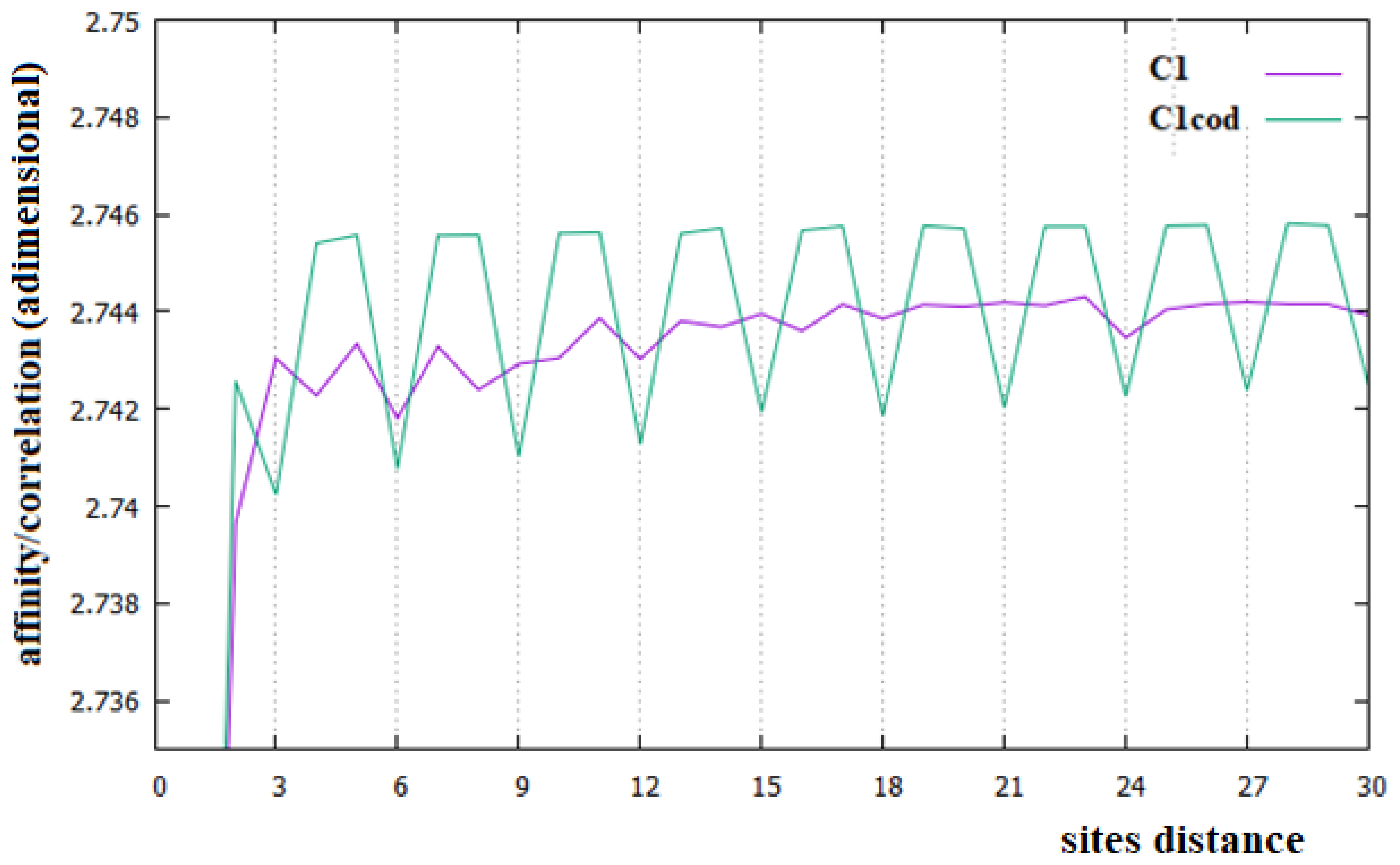
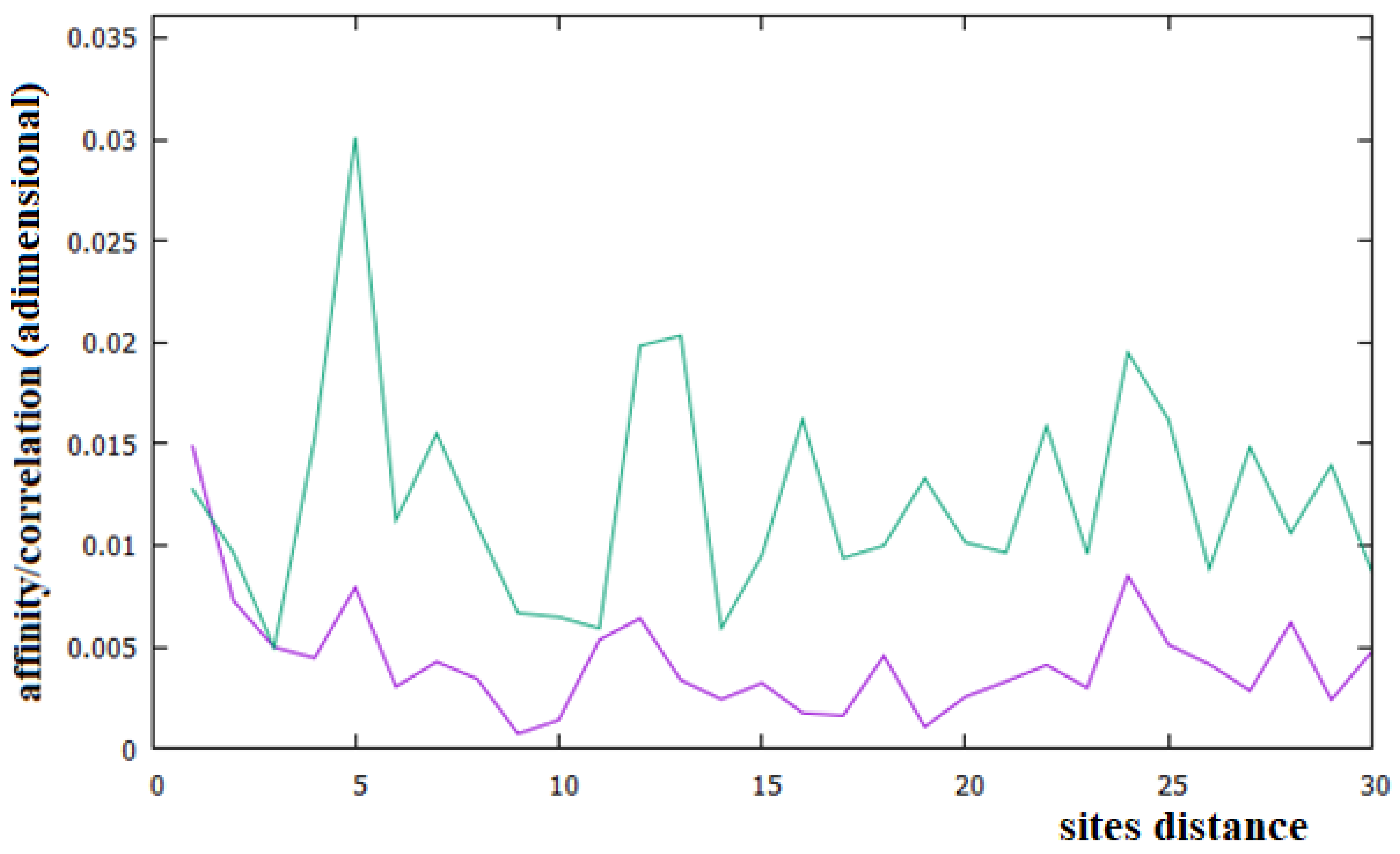
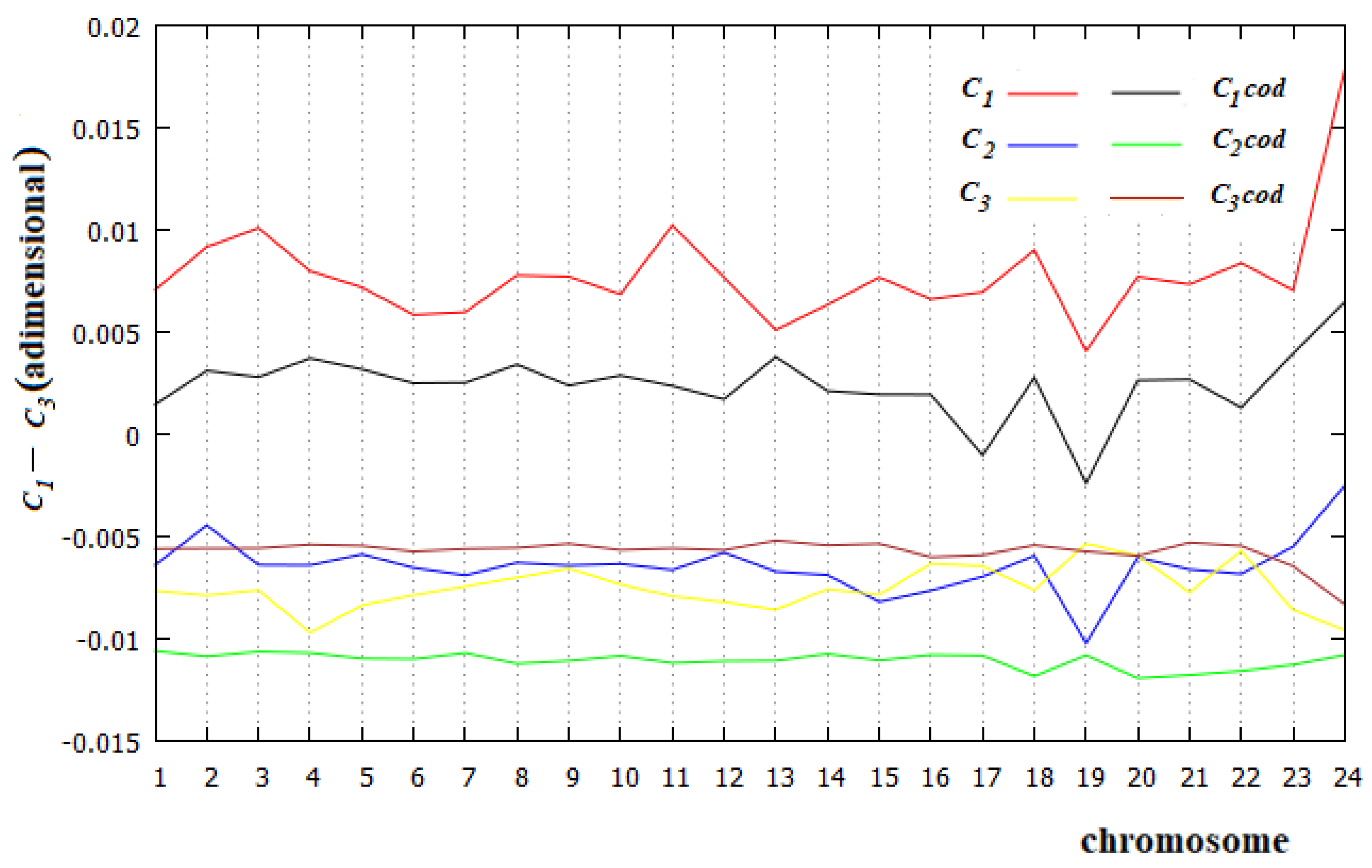
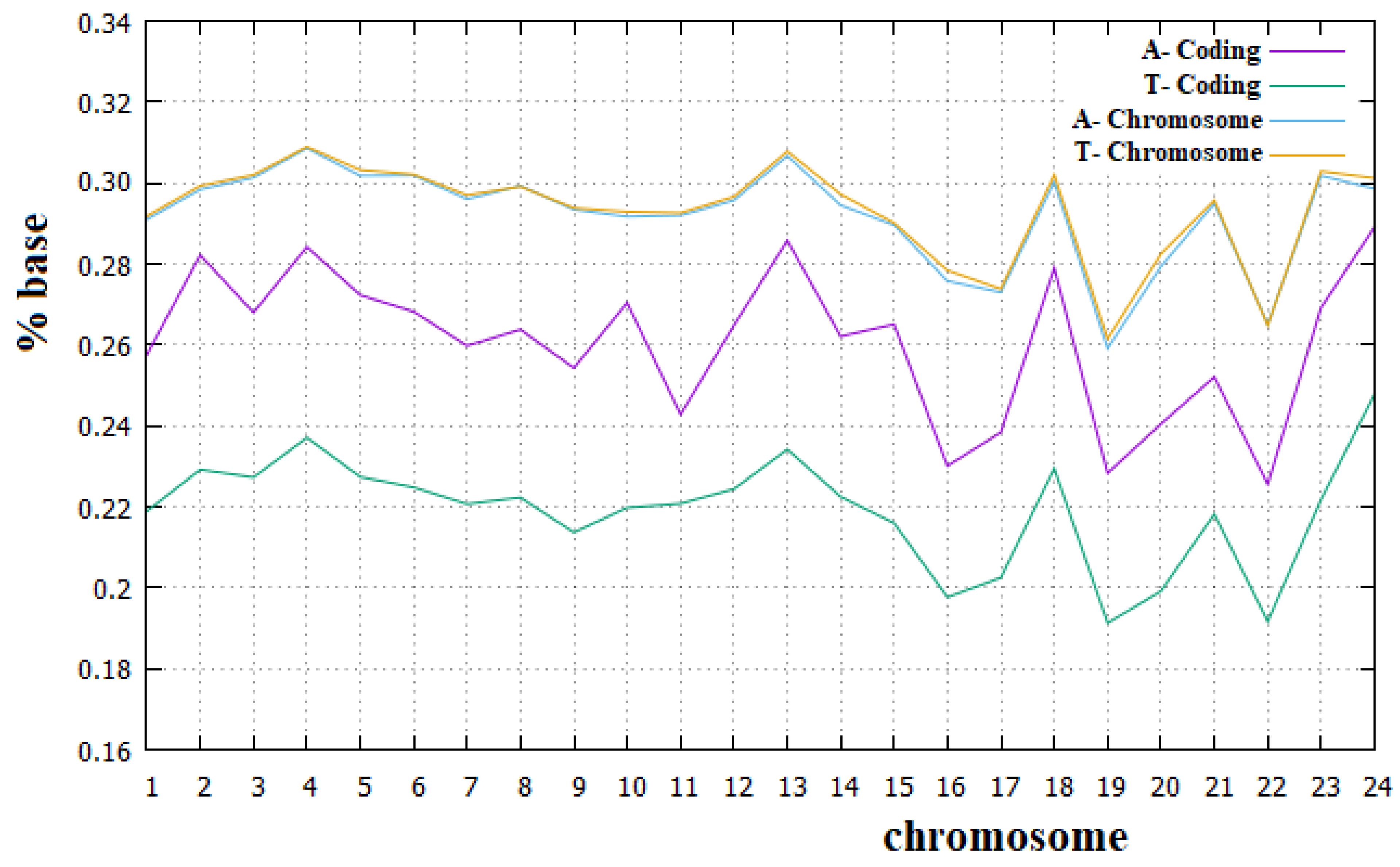
A statistical analysis of important DNA sequences and related proteins has been performed to study the relationships between monomers, and some general considerations about these macromolecules can be provided from the results. First, the most important relationship between sites in all the DNA sequences examined is that between two consecutive base pairs. This is an indication of an energetic stabilization due to the stacking interaction of these couples of base pairs. Secondly, the difference between human chromosome sequences and their coding parts is relevant both in the relationships between sites and in some specific compositional rules, such as the second Chargaff rule. Third, the evidence of the relationship in two successive triplets of DNA coding sequences generates a relationship between two successive amino acids in the proteins. This is obviously impossible if all the relationships between the sites are statistical evidence and do not involve causes; therefore, in this article, due to stacking interactions and this relationship in coding sequences, we will divide the concept of the relationship between sites into two concepts: affinity and correlation, the first with physical causes and the second without. Finally, from the statistical analyses carried out, it will emerge that the human genome is uniform, with the only significant exception being the Y chromosome.
Share and Cite
MDPI and ACS Style
Villani, G. Affinity and Correlation in DNA. J 2022, 5, 214-231. https://doi.org/10.3390/j5020016
AMA Style
Villani G. Affinity and Correlation in DNA. J. 2022; 5(2):214-231. https://doi.org/10.3390/j5020016
Chicago/Turabian StyleVillani, Giovanni. 2022. "Affinity and Correlation in DNA" J 5, no. 2: 214-231. https://doi.org/10.3390/j5020016
APA StyleVillani, G. (2022). Affinity and Correlation in DNA. J, 5(2), 214-231. https://doi.org/10.3390/j5020016