
Article

Ce2O3/BiVO4 Embedded in rGO as Photocatalyst for the Degradation of Methyl Orange under Visible Light Irradiation


by
Damian C. Onwudiwe
1,2,*,
Boitumelo M. Phadi
1,2 and
Opeyemi A. Oyewo
3
1
Material Science Innovation and Modelling (MaSIM) Research Focus Area, Faculty of Agriculture, Science and Technology, North-West University (Mafikeng Campus), Private Bag X2046, Mmabatho 2735, South Africa
2
Department of Chemistry, School of Physical and Chemical Sciences, Faculty of Natural and Agricultural Science, North-West University (Mafikeng Campus), Private Bag X2046, Mmabatho 2735, South Africa
3
Department of Science and Technology education, University of Johannesburg, P.O. Box 524, Auckland Park 2006, South Africa
*
Author to whom correspondence should be addressed.
J 2021, 4(2), 154-168; https://doi.org/10.3390/j4020013
Submission received: 15 April 2021 / Revised: 25 May 2021 / Accepted: 31 May 2021 / Published: 7 June 2021

Abstract

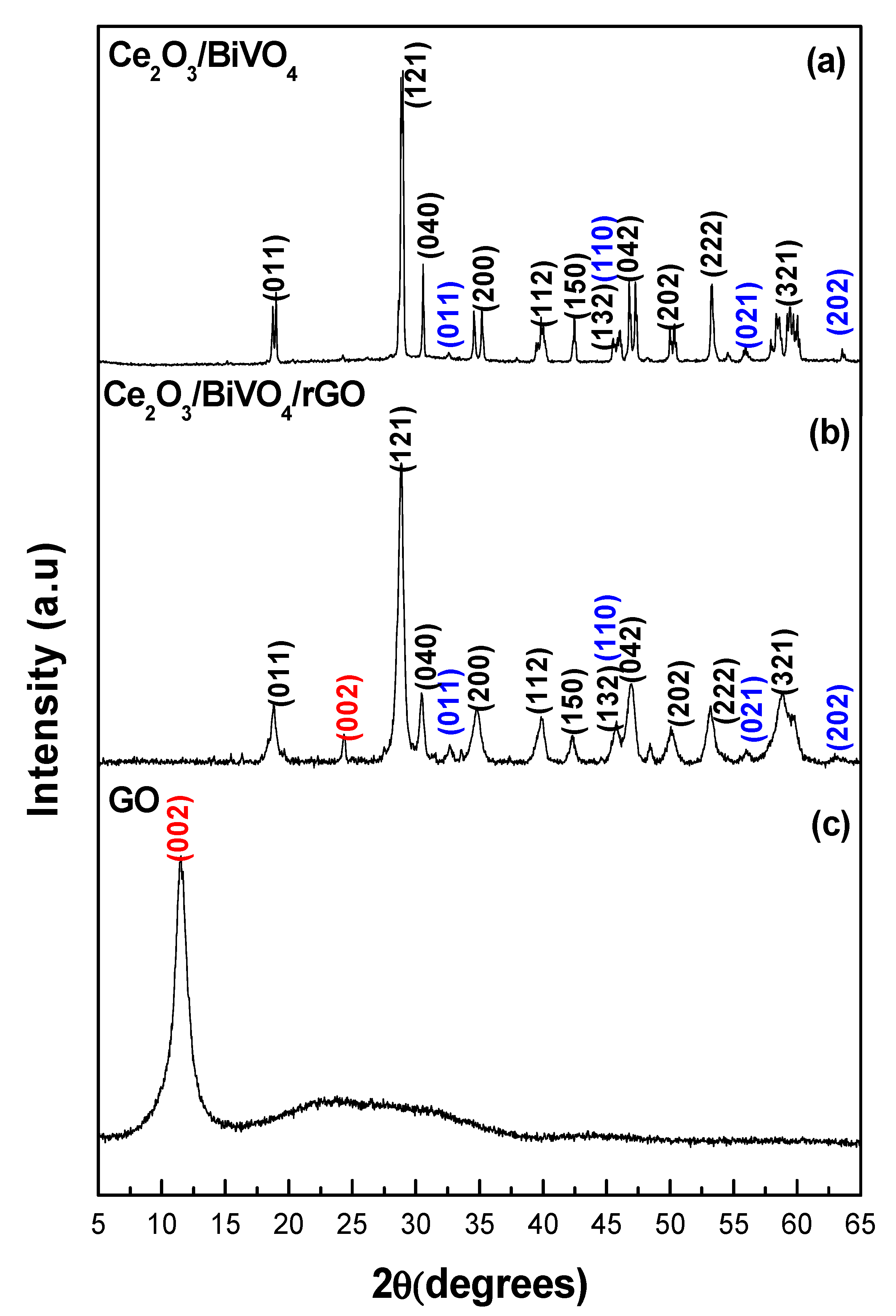
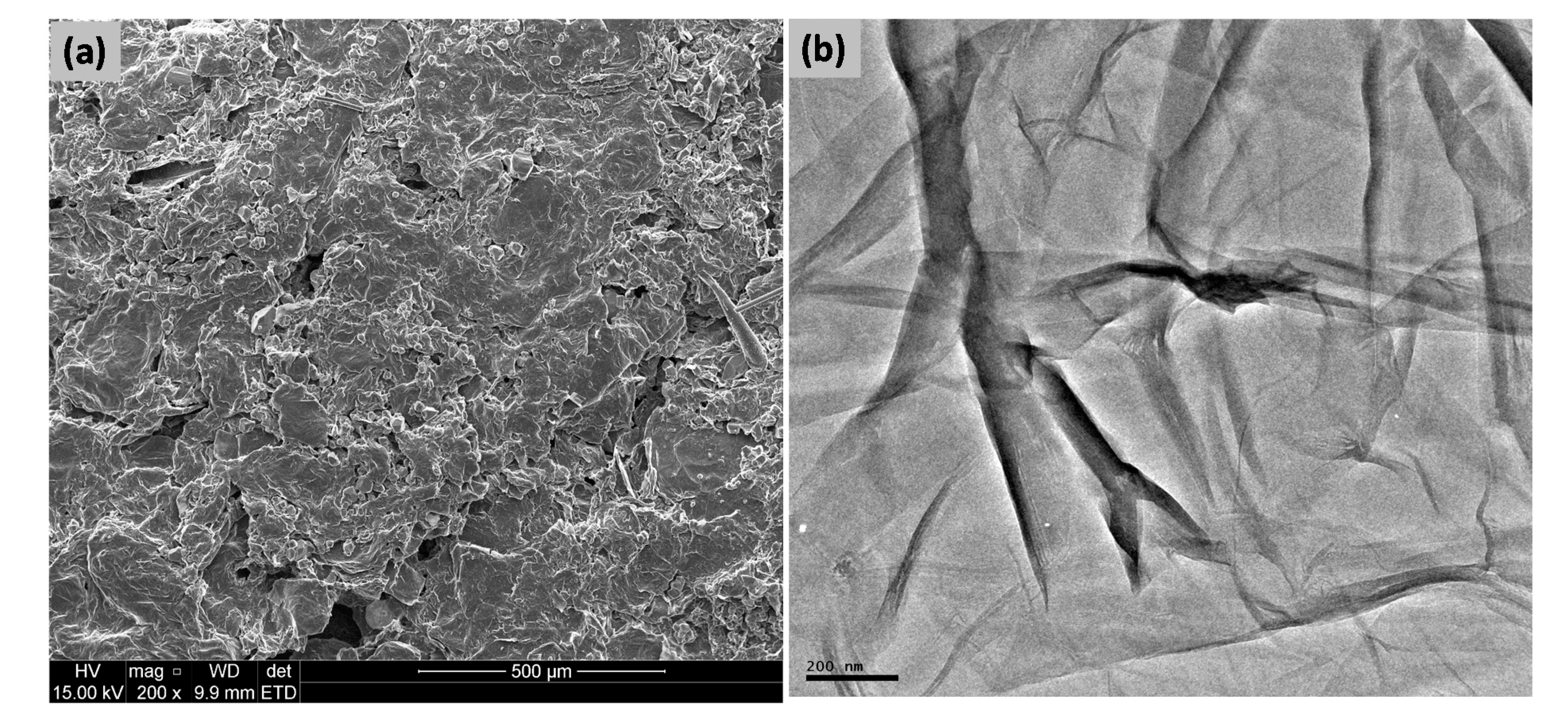
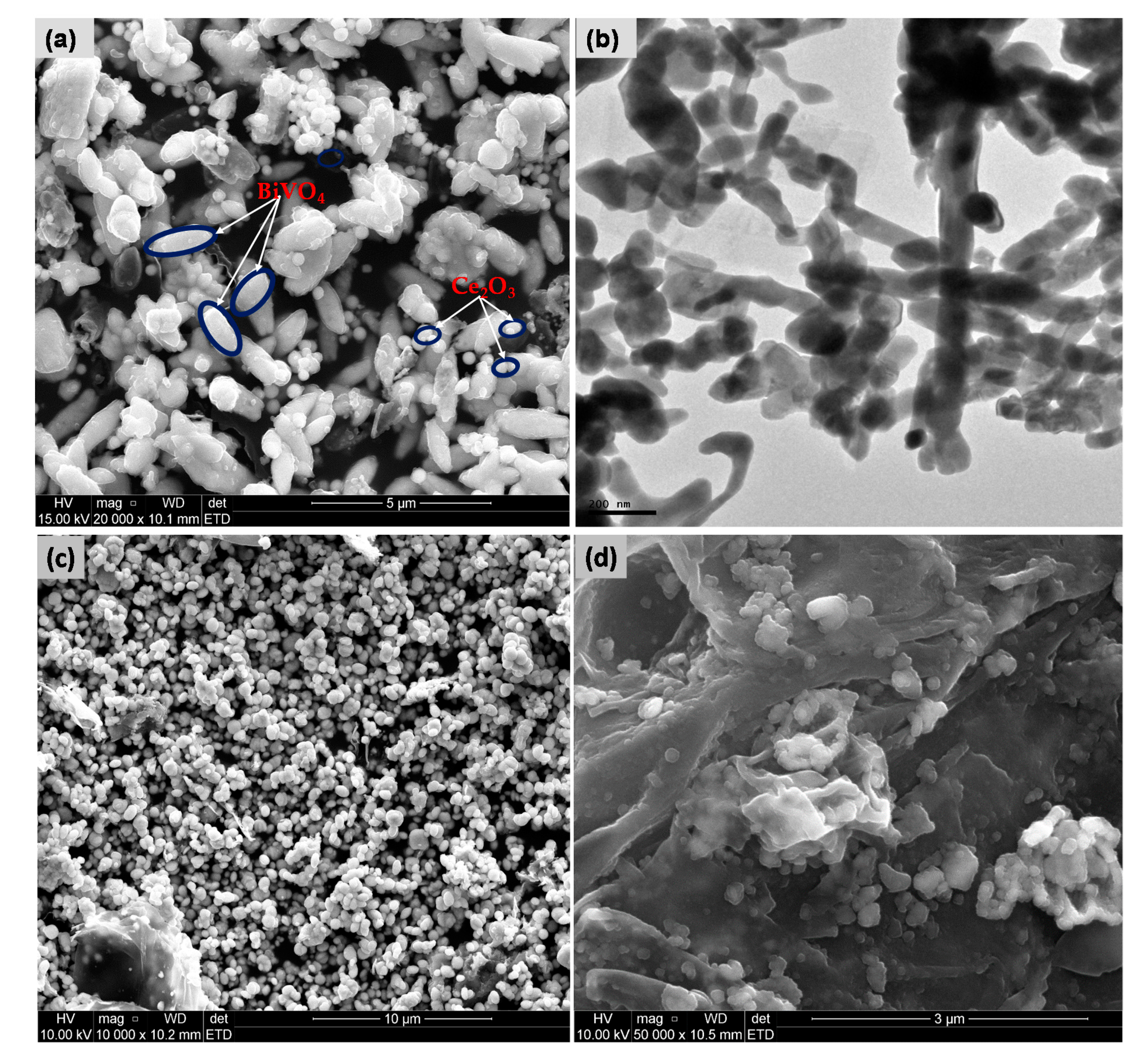
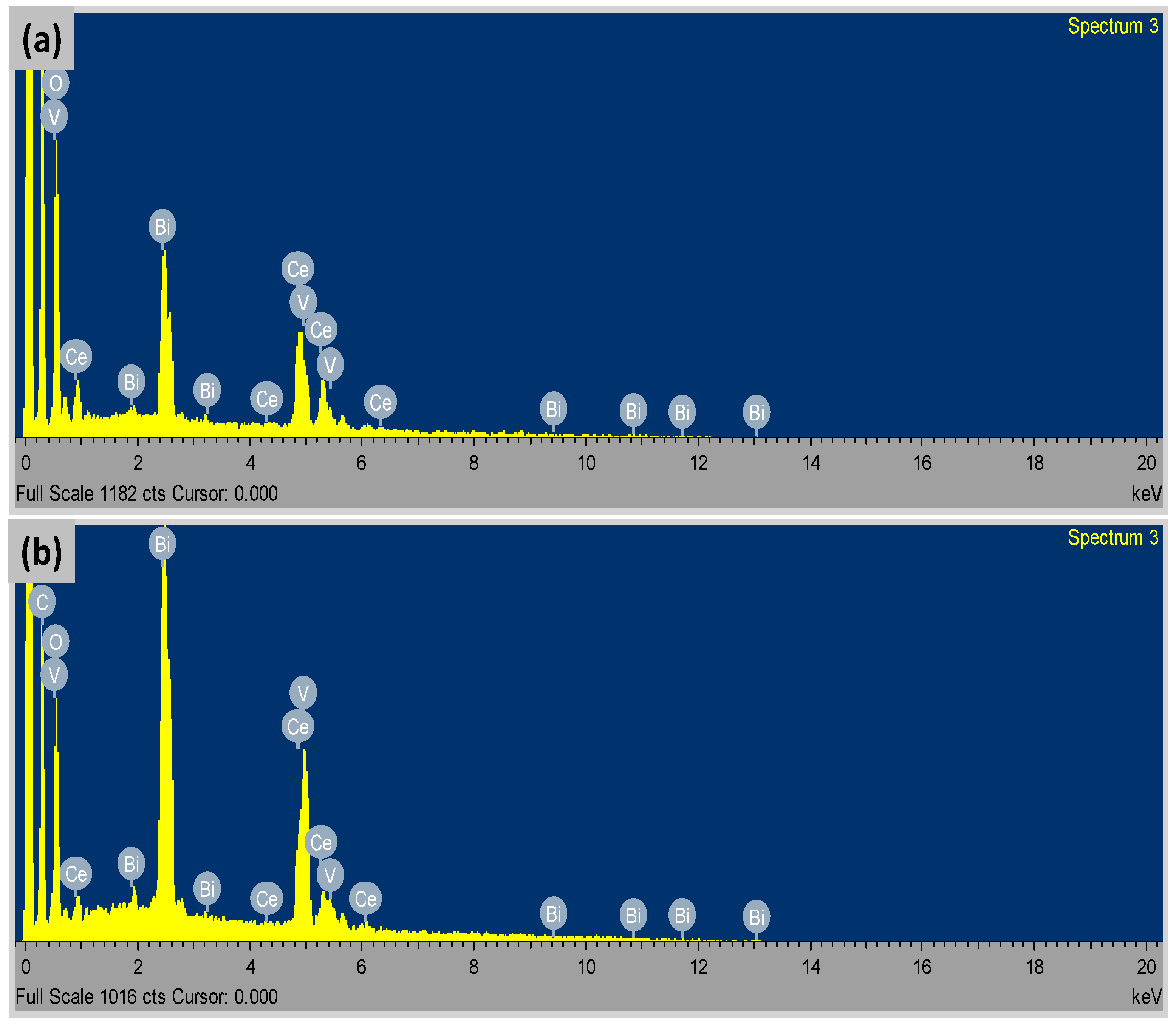
A p–n heterojunction semiconductor structure composed of Ce3O4 and BiVO4 has been synthesized and then incorporated into reduced graphene oxide (rGO) by the hydrothermal method. The ternary composites were characterized by X-ray diffraction, transmission electron microscopy (TEM), scanning electron microscopy (SEM), electron diffraction spectroscopy (EDS), and UV–vis spectroscopy. The efficiency of the composites as photocatalysts was determined by studying the oxidative degradation of methyl orange in aqueous solution under visible light irradiation. The effect of parameters such as pH, catalyst loading, and concentration of the dye solution was examined in order to determine their influence on the photocatalytic activity of the composites. The composite incorporated into reduced graphene oxide presented the highest percentage (above 90%) in 2 h time, attributed to the effect of the increased surface area. The process of the enhanced photocatalytic activity has been discussed based on the energy band positions of the nanoparticles within the composite.
Keywords: Ce2O3/BiVO4 photocatalyst; p–n heterojunction; reduced GO; photocatalysis; visible light; dye degradation Ce2O3/BiVO4 photocatalyst; p–n heterojunction; reduced GO; photocatalysis; visible light; dye degradation