Article

Tribo-Electrostatic Separation for Recovery of Plastic Polymers from Waste Electrical and Electronic Equipment

by
Annarita Fiorente
,
Germano D’Agostino
,
Andrea Petrella
,
Francesco Todaro
* and
Michele Notarnicola
Department of Civil, Environmental, Land, Building Engineering and Chemistry (DICATECh), Polytechnic University of Bari, Via E. Orabona n. 4, 70125 Bari, Italy
*
Author to whom correspondence should be addressed.
Clean Technol. 2026, 8(4), 129; https://doi.org/10.3390/cleantechnol8040129
Submission received: 20 May 2026 / Revised: 11 June 2026 / Accepted: 29 July 2026 / Published: 12 August 2026

Highlights

What are the main findings?
  • By optimizing key parameters of the tribo-electrostatic separator—electrode voltage, drum rotation, and electrode distance—high purity (up to 86%) and recovery rates (up to 91%) can be achieved, enabling WEEE plastics to be reused as Secondary Raw Materials.
  • Beyond separation efficiency, technology shows strong potential for industrial scale-up, offering an eco-friendly, fully dry process with very low specific energy consumption (95 kWh/ton).
What are the implication of the main findings?
  • The optimized dry process, which avoids chemical pretreatments and wastewater generation, provides a highly sustainable route for converting complex WEEE plastic waste into valuable, market-ready Secondary Raw Materials.
  • The successful integration of the tribo-charger and separator into a single unit demonstrates practical scalability. Combined with mechanical simplicity, adaptable components, and extremely low energy consumption (0.095 kWh/kg), the system offers a cost-effective solution for industrial waste management facilities.

Abstract

The fastest growing waste stream worldwide is represented by Waste from Electrical and Electronic Equipment (WEEE). One of the main critical issues related to the recovery of such waste is the mixed plastic fraction, which is difficult to sort and can contain flame retardants and additives that pose a risk to human health and the environment. This study aims to validate the possibility of using tribo-electrostatic separator technologies to sort plastic polymers (e.g., PP, PA6, PS and PVC) obtained after a size-reduction operation of WEEE. The experimental study was conducted on a 10 kg/h laboratory-scale pilot plant. Several parameters were analysed during the tribo-charging and electrostatic separation processes, including the rotation speed and residence time of the particles in the tribo-charging device as well as electrode voltage, and the distance between the deflectors and the electrodes in the electrostatic separator. The results show that the tribo-electrostatic separation technologies are promising and efficient for plastic waste recycling. In fact, under specific conditions, it is possible to achieve high recovery rates (>70%) and purity levels (>76%) that allow the reintegration of plastic polymers into the economic cycle as a secondary raw material.

1. Introduction

Technological innovation, digital transformation, the planned obsolescence of electrical and electronic equipment (EEE) and their increasingly frequent replacement have led to a significant increase in the generation of Waste from Electrical and Electronic Equipment (WEEE), which represents the fastest growing waste stream globally [1]. Approximately 62 billion kg of WEEE was generated globally in 2022 (an average of 7.8 kg per capita) [2].
WEEE contains ferrous and non-ferrous metals (e.g., Cu and Al), plastic, glass, and other materials, making it a valuable secondary resource [3]. On the one hand, this waste is composed of hazardous and toxic materials, which can cause environmental pollution and impair human health [4].
One of the main critical issues related to the recovery of WEEE is the mixed plastic fraction, as it consists of numerous types of polymers that require multiple separation steps to be recovered and reintroduced into the economic cycle. The polymer composition of individual equipment is highly heterogeneous, varying significantly among different types of household appliances [5]. A washing machine is mainly made of polypropylene (PP), which accounts for about 76% of the total, followed by polystyrene (PS) and polyvinyl chloride (PVC), each accounting for around 6%, while the rest is made up of other types of plastic [6]. A dishwasher is also mainly composed of PP (approximately 69%), followed by PS and PVC [7]. Ovens, on the other hand, are generally made of mixed plastics [8]. PA is the main plastic polymer in induction hobs (44%); the remaining part consists of expanded polystyrene (EPS), PVC and LDPE [9]. Moreover, WEEE plastics typically contain a high content of additives, such as fillers, plasticizers, stabilisers and brominated flame retardants (BFRs), which are hazardous substances for the environment and human health [10]. This increases the complexity of the recovery of plastics from WEEE, thereby promoting their disposal in landfills [11].
A wide range of polymer separation techniques are currently employed in the mechanical recycling industry: density separation (wet methods such as the sink–float technique and dry methods such as the densimetric table) and sensor-based sorting techniques such as near-infrared spectroscopy (NIR), Fourier transform infrared spectroscopy (FTIR) and X-ray fluorescence (XRF) [12,13]. Density separation techniques, although inexpensive and applicable on an industrial scale, have limitations because some polymers have very similar densities and are therefore not easily separable. Furthermore, the presence of additives and flame retardants modifies the density of plastics, increasing the likelihood of error in selection [14]. NIR and FTIR selection techniques are extremely accurate and capable of identifying mixtures containing multiple polymers; however, they have limitations in identifying black plastics and multilayer polymers [15]. The XRF technique is capable of detecting the presence of brominated flame retardants (BFRs); however, this method requires a fairly long analysis time and is therefore of limited applicability at the industrial scale.
In this context, the research aims to investigate the technical feasibility of tribo-electrostatic separation technology for plastics from WEEE. Tribo-electrostatic separation is a dry separation method for insulating material granules, based on the application of electrical forces acting on electrically charged particles in a static electric field [16]. The process consists of two steps: tribo-charging and electrostatic sorting. Tribo-charging is the process in which plastic particles acquire a positive or negative surface charge as a result of collisions and friction with each other or with the inner walls of a tribo-charging device. Electron transfer from one material to another depends mainly on the physicochemical properties of material surfaces, such as chemical composition, electrical resistance, electron work function and surface morphology. Other variables, such as collision velocity on impact, contact area between the particle and surface, and collision time, are also significant [17]. Sorting of plastic polymers takes place in an electrostatic separation device. Indeed, the tribo-charged granules, due to the positive and negative charges acquired, are separated within the separator by an electric field generated by various electrode configurations, connected to high-voltage supplies: the particles of the same charge as the electrode are repelled and those of opposite charge are attracted, through electric Coulomb forces that deflect their trajectory, directing them into different compartments [18].
Several studies have been conducted on tribo-electrostatic devices. Achouri et al. [19] tested a laboratory multi-cylinder rotating tribo-charger device and fluidized bed to charge plastics (i.e., ABS, PS, PP and PE with an average particle diameter between 4 mm and 6 mm) with good results and tested an electrostatic drum separator. Labiod et al. [20] studied the two-stage tribo-electrostatic process to treat a mixture consisting of 55% ABS, 38% PS and 7% other plastics, obtaining at the output of the first stage an ABS concentrate with a purity greater than 97% and a recovery rate of about 95%, and—after the second stage—a PS product with a purity of 93.5% and a recovery rate of 87.5%. Li et al. [21] employed vibrating and cyclone-type tribo-chargers to charge mixed plastic granules of polypropylene (PP), acrylonitrile butadiene styrene (ABS), polyvinyl chloride (PVC) and polystyrene (PS), and achieved separation efficiencies in the range of [65.2–72.4%]. The experiments reported in the literature were conducted using laboratory-scale devices, with mixtures of around 50–100 g per test.
The purpose of this study was to analyse the process parameters for optimising the performance of a tribo-electrostatic separation prototype plant with a treatment capacity of 10 kg/h. In particular, the influence of particle size, particle residence time in the device and rotation speed on tribo-charging (in terms of the charge density acquired by the particles) was analysed. Experimental tests were conducted using different polymers from a WEEE treatment plant in southern Italy, which were characterised and shredded to obtain the most suitable particle size for separation. Separation tests were carried out on two polymer mixtures: (i) PP and PA6; (ii) PS and PVC.

2. Materials and Methods

2.1. Plastic Waste

The plastic fraction recovered from a WEEE treatment plant was used for the experimental activities. The plant, located in southern Italy, processes WEEE belonging to the “Large equipment” category [22]. In particular, the facility treats large household appliances such as dishwashers, washing machines, ovens, hobs and electric stoves.
Within the facility, plastic waste is recovered through the following treatment process: (i) the disassembly of the equipment; (ii) removal of hazardous components; (iii) pre-shredding of the appliances; (iv) manual sorting of internal components; (v) separation of ferrous and non-ferrous metals; (vi) separation of non-ferrous metals from the other material through an eddy current separator (ECS); (vii) recovery of the plastic fraction with a particle size larger than 10 mm by means of a vibrating screen.
Plastic samples larger than 10 mm were characterised using a MiroSpark laboratory instrument (IoSys, Ratingen, Germany), which combines Near-Infrared Spectroscopy (NIRS) and Sliding Spark (SSS2) techniques. The predominant polymers identified in the plastic fraction were PS, PVC, PP and PA6 [12]. Based on these results, the most representative polymers of the “Large equipment” category were selected for the experimental investigation.
The Retsch SM 300 (Retsch GmbH, Haan, Germany) cutting mill was used to grind plastic samples larger than 10 mm. The particle size range of 1.5–2.5 mm was selected based on the granulometric distribution obtained after the shredding and sieving of WEEE plastics. This fraction was the most abundant across all the investigated polymers under the experimental conditions applied.
Four main plastic polymers present in “Large equipment” WEEE (i.e., PS, PVC, PP and PA6), with a particle size range of 1.5–2.5 mm, were considered for tribo-charging tests.
Tribo-electrostatic separation tests were conducted using the following two mixtures:
-
Mix 1: 50% polypropylene (PP) and 50% polyamide 6 (PA6);
-
Mix 2: 50% polystyrene (PS) and 50% polyvinyl chloride (PVC).
The mixture compositions were selected based on the tribo-electric charging tendency of the polymers. Tribo-electric series reported in the literature indicate the tendency of materials to acquire positive or negative charges during tribo-electric charging. In particular, PS and PA6 tend to charge positively, whereas PVC and PP tend to charge negatively [23,24,25]. To ensure a balanced assessment of the tribo-electrostatic separation process, the polymers were tested using equal proportions in the mixtures.

2.2. Equipment

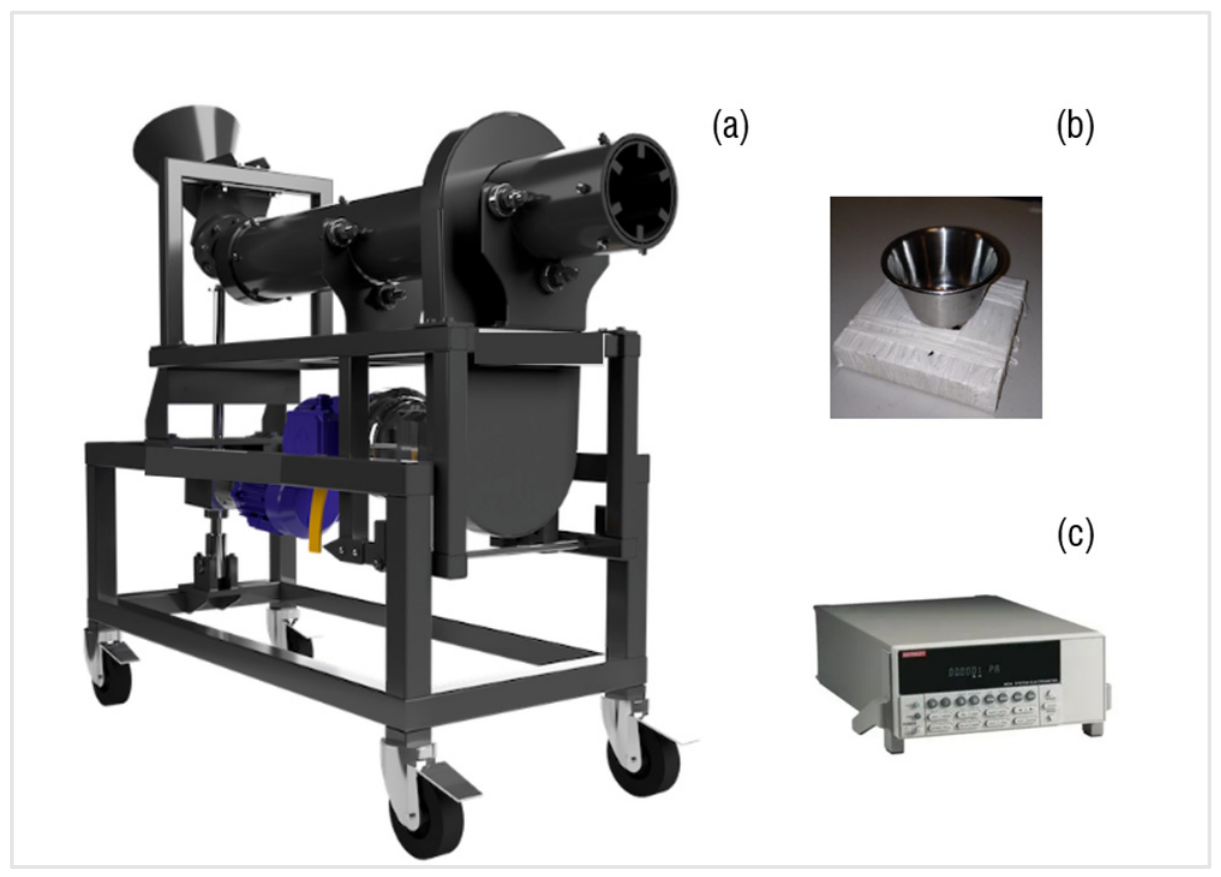
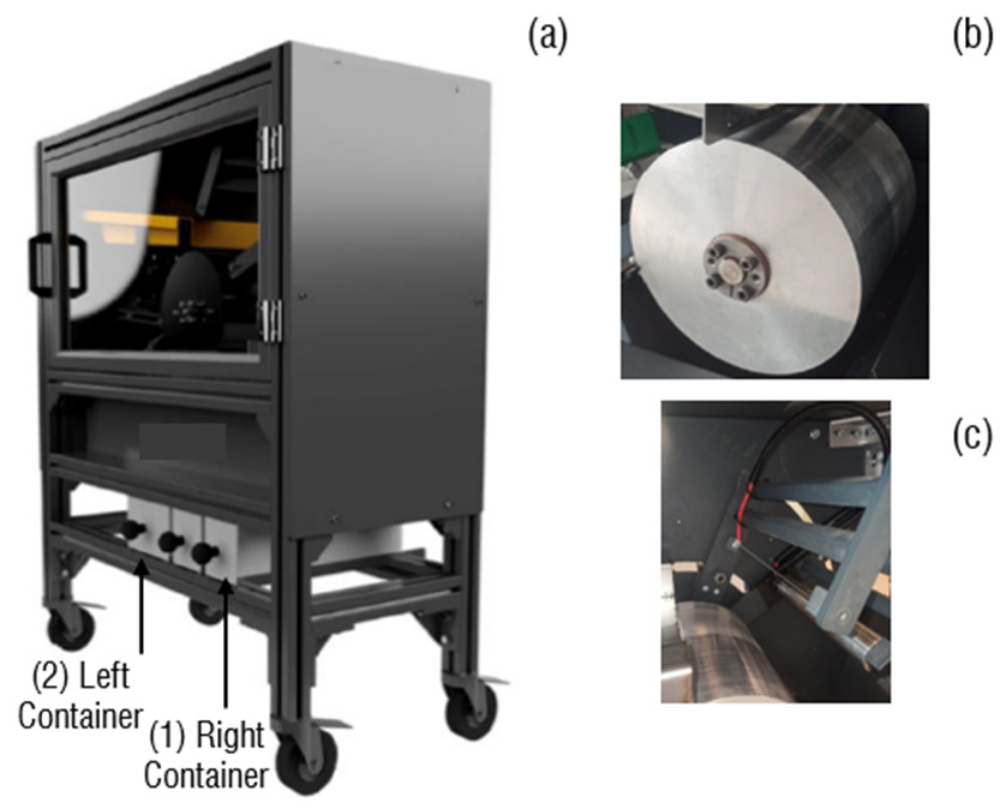
Experimental tests were conducted using a prototype tribo-electrostatic separation plant with a treatment capacity of 10 kg/h, composed of two main units: the tribo-charger (Figure 1) and the electrostatic separator (Figure 2).

2.2.1. Tribo-Charger

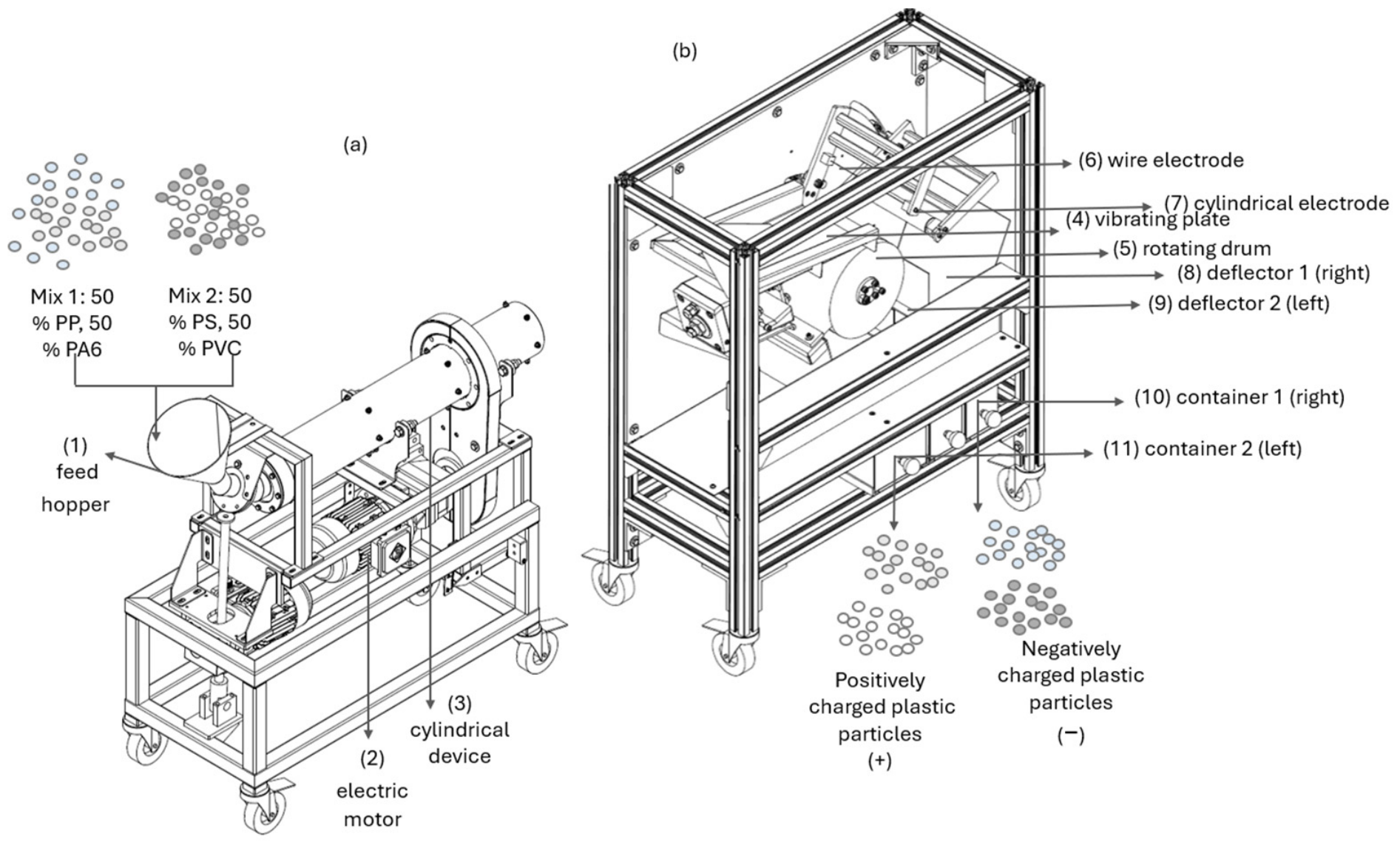
The tribo-charger (Seltek S.r.l., Udine, Italy) is a cylindrical device equipped with a feed hopper (Figure 3a(1)) that allows for the controlled introduction of polymers into the treatment chamber and is powered by an electric motor (Figure 3a(2)) that ensures the cylinder (Figure 3a(3)) rotates at an adjustable speed. The internal chamber, made of polyethylene (PE), has protruding sections that promote friction and interaction between the polymer particles, increasing contact both between them and with the internal surface of the device (Figure 1a). This material occupies a central position in the tribo-electric series reported in the technical and scientific literature, between PS and PVC on one side and PP and PA6 on the other, thereby enhancing the charge acquired by the plastic particles [23,24,25].
The tribo-charging device can be controlled via a control panel that allows the following parameters to be adjusted: (i) cylinder rotation speed (40–160 rpm); (ii) inclination (0–20°).
To evaluate the electric charge density acquired by plastic particles, a Faraday cage constructed in the laboratory (Figure 1b), connected to a Keithley electrometer, model 6514 (Keithley Instruments, Solon, Ohio, USA) was used (Figure 1c).

2.2.2. Electrostatic Separator

The selection of plastics charged by the tribo-electric effect was performed using an electrostatic separator (Seltek S.r.l., Udine, Italy) (Figure 2a). The tribo-charged particles fall onto a vibrating plate (Figure 3b(4)) that distributes the granules evenly. The device consists of a rotating drum (Figure 2b and Figure 3b(5)) onto which the particles fall by gravity; it is also equipped with two electrodes, one wire and one cylindrical (Figure 2c and Figure 3b(6,7)), both of which are supplied with positive voltage. The distance between the electrodes and the rotating cylinder is adjustable, allowing the efficiency of the separation process to be optimised according to the properties of the materials being processed. At the base of the device are two deflectors (Figure 3b(8,9)), the inclination of which is adjustable, to direct the particles towards the respective collection containers.
The electrostatic separation device can be controlled via a control panel that allows the following parameters to be adjusted: (i) drum rotation (inverter range 16–64 rpm); (ii) power plane vibration (inverter range 1–10 Hz); (iii) electrode voltage (2–29 KV). In addition, it is also possible to mechanically adjust: (iv) the distance between electrode 1 (wire) and electrode 2 (cylinder); (v) the distance between deflector 1 (right) and deflector 2 (left).

2.3. Treatability Test

2.3.1. Tribo-Charging Tests

An analysis was conducted on the factors influencing tribo-charging: (i) particle size; (ii) residence time of the material inside the tribo-charger; (iii) cylinder rotation speed.
Laboratory tests were performed using PS in three different particle size ranges (1.5–2.0, 2–2.5 and 1.5–2.5 mm) by varying the residence time of the material in the device in a range between 1 and 5 min, keeping both the rotation speed and the inclination of the tribo-charging device constant (105 rpm and 0°, respectively).
Further tests were conducted using plastic waste (i.e., PS, PVC, PP or PA6) with a particle size range of 1.5–2.5 mm, varying the material’s residence time in the device within a range of 1 to 9 min, keeping both the rotational speed and the inclination of the tribo-charger cylinder constant (105 rpm and 0°, respectively).
Additionally, to evaluate the influence of rotational speed on tribo-charging, laboratory tests were conducted, varying the rotational speed to values of 65, 105 and 145 rpm, while keeping both the residence time and the inclination constant. The selected particle size range and residence time reflect those that achieved the best charge density levels in previously conducted tests.
All tests were conducted in “normal” conditions (relative humidity ranging from 46% to 52%, at a temperature of 18 °C ± 1 °C) and were performed in triplicate.
The data recorded during the tribo-charging tests allowed the determination of the charge density (D), calculated using the following formula:
D = q m
q (nC): electric charge (measured using the Keithley multimeter, model 6514) (Keithley Instruments, Solon, Ohio, USA);
m (g): weight of the material collected in the Faraday cup.

2.3.2. Electrostatic Separation Tests

Treatability tests were then conducted using two different polymer mixtures: Mix 1—PA6 and PP; Mix 2—PS and PVC. Each mixture was first fed to the tribo-charger device, setting the combination of operating parameters that, based on previously performed tests, maximises the charge density difference and, therefore, the separation performance of the selected polymer mix.
Subsequently, the tribo-charger material was conveyed into the feed hopper of the electrostatic separator. The latter was operated while keeping the following parameters constant: (i) infeed plane vibration 7 Hz; (ii) drum rotation 32 rpm. The remaining operating parameters were varied as follows: (i) electrode voltage 26–28 kV; (ii) electrode distance wire/cylinder 5–7 cm; (iii) distance between deflector 1 (right) and deflector 2 (left) 1.5–2.5 cm.
Firstly, laboratory tests were carried out by feeding the device with a mixture of material consisting of 50% PP and 50% PA6 with a particle size within [1.5–2.5] mm.
Laboratory tests for Mix 2 were performed by feeding the device with a mixture material consisting of 50% PS and 50% PVC with a particle size within [1.5–2.5] mm.
Plastic polymers that tend to acquire a negative charge fall into container 1 (right), whereas those that tend to acquire a positive charge are collected in container 2 (left).
The plastic waste collected in separator containers (right and left) was characterised using a system known as SiRoPAD (IoSys, Ratingen, Germany), a device that employs NIR spectrometry to measure flakes and pellets of all the most common thermoplastic polymers. The sample was spread evenly across the measurement plate, and the measurement parameters (3 mm step size and speed 2) and the dimensions of the scan area were set. Upon completion of the measurement, the software displayed a screen showing the polymers comprising the analysed plastics and their respective percentages. The tests were conducted in triplicate.
The recorded data were used to determine the purity values (P) and the recovery rate (R).
P PW 1 = PW 1 right PW 1 right + PW 2 right · 100
P PW 2 = PW 2 left PW 2 left + PW 1 left · 100
where
P PW 1 = purity of type 1 plastic waste (%);
PW 1 right = mass of PW1 collected in the right container (kg);
PW 2 right = mass of PW2 collected in the right container (kg);
P PW 2 = purity of type 2 plastic waste (%);
PW 2 left = mass of PW2 collected in the left container (kg);
PW 1 left = mass of PW1 collected in the left container (kg).
R PW = PW selected PW total · 100
where
PWselected = plastic waste (type 1 or 2) selected correctly (%);
PWtotal = total mass of plastic waste in the feed.
The overall performance of the separation process can be expressed through a single parameter representing the total efficiency of the separation process (E %). The performance index of a binary separator, developed by Worrell and subsequently modified by Stessel [26], was calculated as follows:
E   =   RPW 1 · RPW 2 · 100

3. Results

3.1. Tribo-Charging Tests

3.1.1. Influence of Particle Size

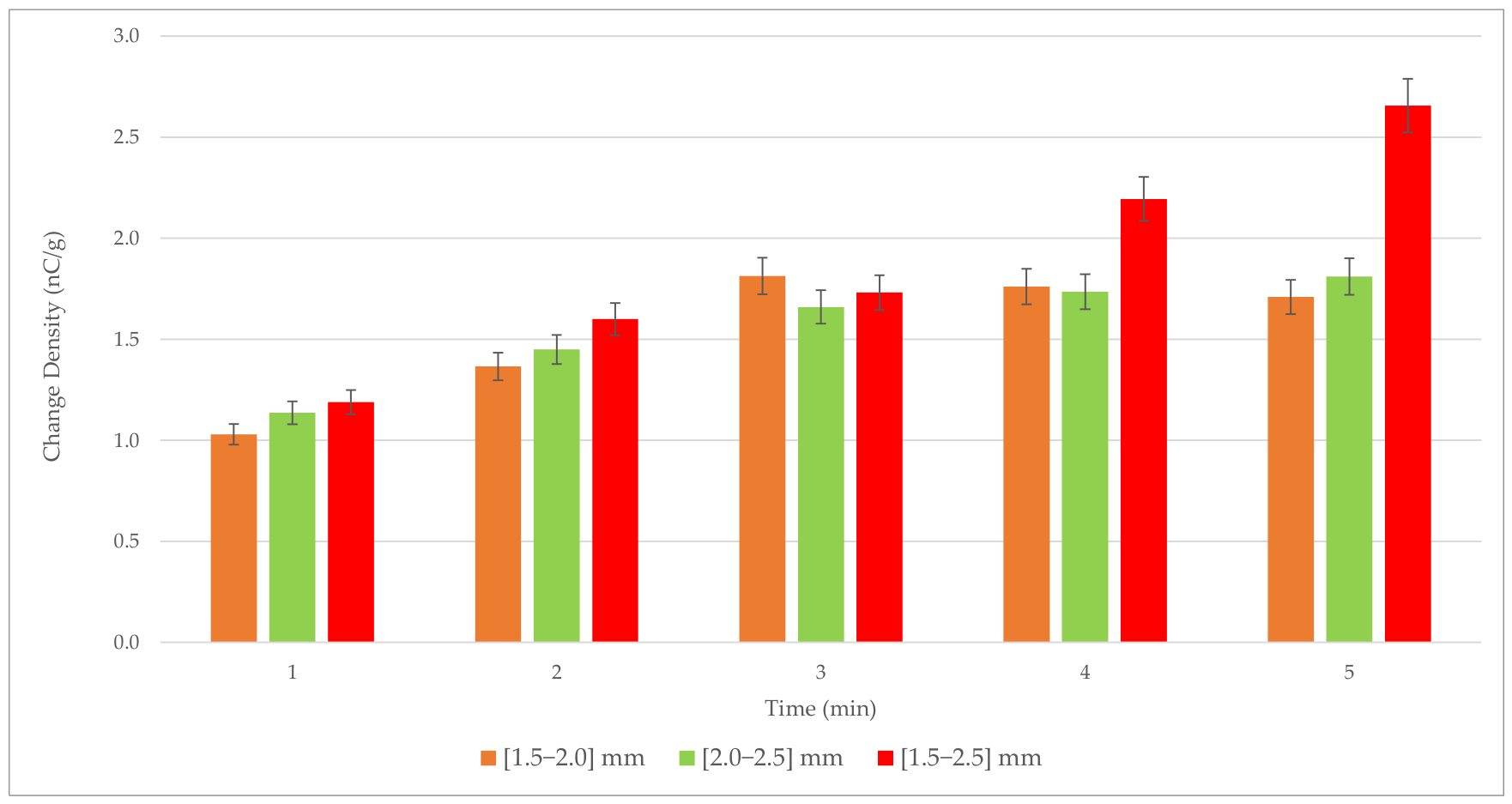
Figure 4 shows the average values of charge density acquired by PS (with different particle sizes) at residence times of 1–5 min in the device, keeping both the rotation speed and the inclination of the tribo-charging device constant (105 rpm and 0°, respectively).
The results show that the charge density of particles increased continuously with the residence time. The maximum values of 1.5–2.0 mm and 2.0–2.5 mm particles are about 1.8 nC/g (3 and 5 min, respectively). Instead, for the material with a particle size of 1.5–2.5 mm, the highest average charge density is obtained at a residence time of 5 min, with a value of 2.7 nC/g.
With increasing particle size distribution heterogeneity, the surface charge of particles increases because of an increase in the number of contacts or in collisions between particles and an inner wall of the charger. Consequently, the particle size range that gives the best results in terms of charge density is in the range of 1.5–2.5 mm.

3.1.2. Influence of Residence Time

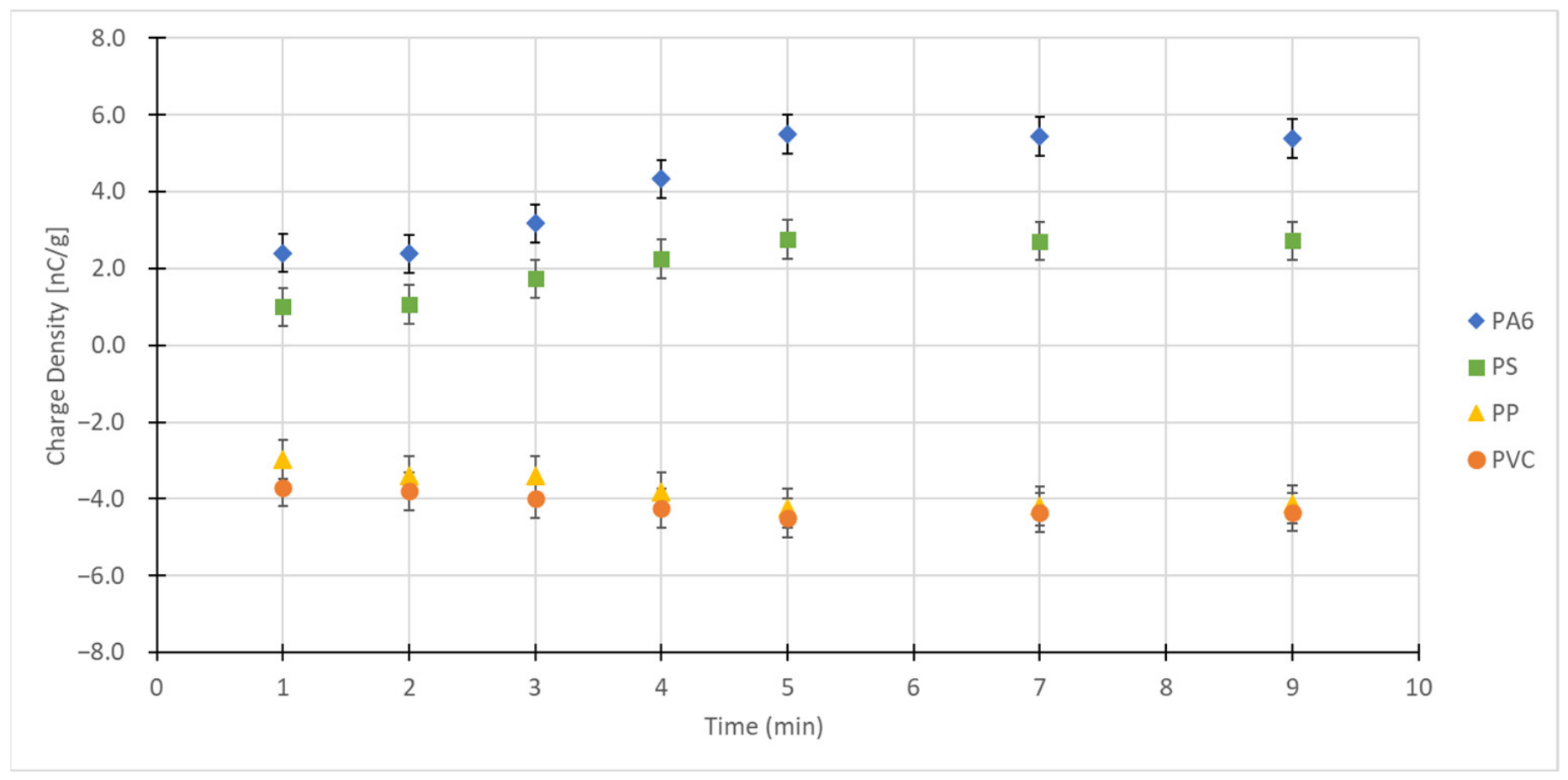
Figure 5 shows the effects of residence time on the charge density of the plastics (i.e., PS, PVC, PP and PA6). PS and PA6 acquired a positive charge that increased with the residence time; instead, PVC and PP acquired a negative charge as a result of the tribo-electric charging process.
The results show that, in absolute terms, the increase in residence time causes a progressive increase in the average charge density value until a maximum is reached at 5 min. If the retention time is longer than 5 min, the samples have a saturation charge density without a clear variation.

3.1.3. Influence of Rotation Speed

The study of the influence of rotation speed on the charge density acquired by the particles was conducted using a particle size range of [1.5 and 2.5] mm and keeping the cylinder inclination (0°) and residence time (5 min) parameters constant, corresponding to the optimal conditions identified in previous tests performed using different polymers.
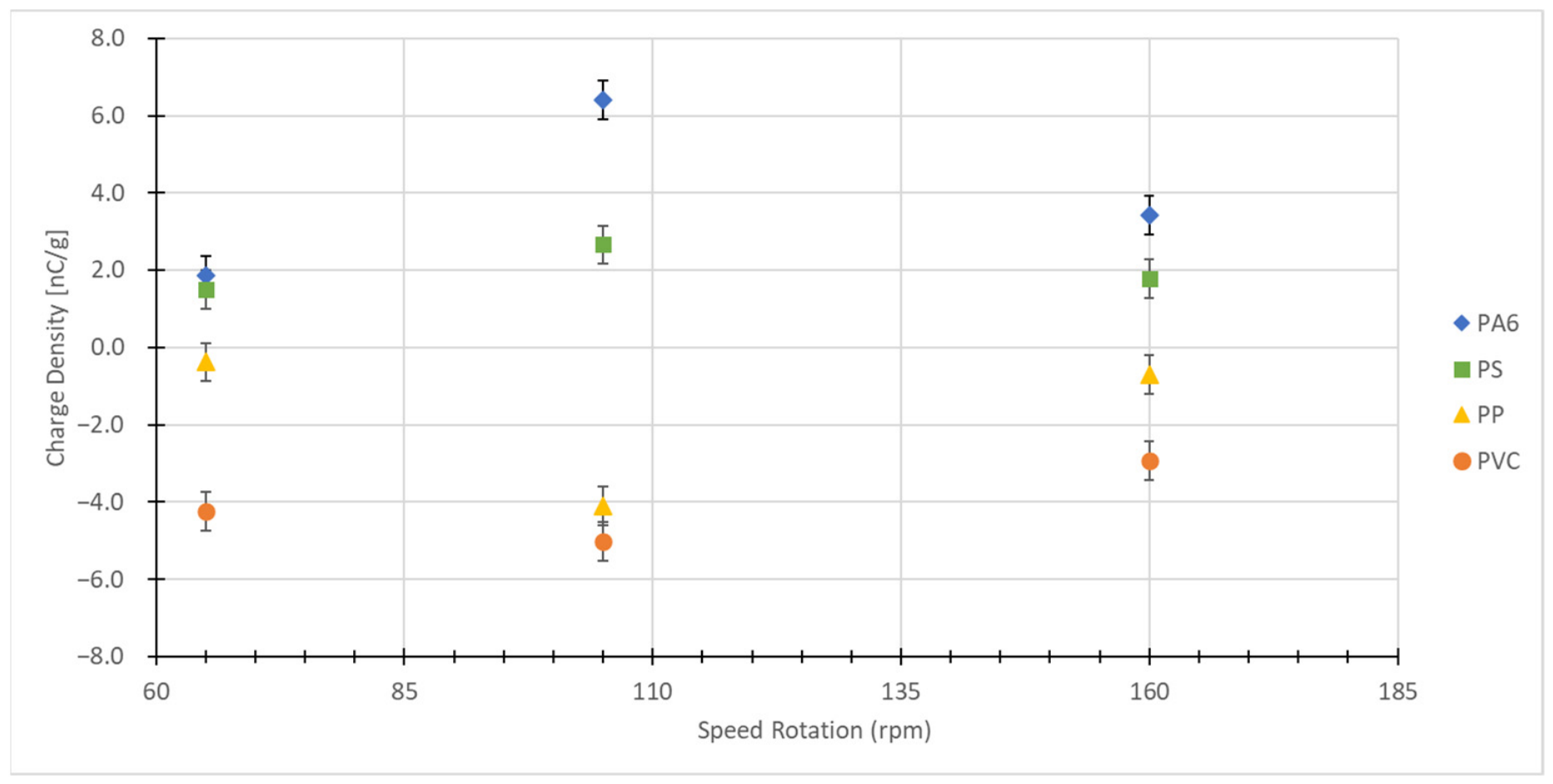
Figure 6 shows the trend of average charge density values obtained as a function of rotation speed for each polymer (i.e., PVC, PS, PA6 and PP). For all the polymers studied, the average value of the charge density progressively increases until it reaches a peak at a speed of 105 rpm (40 Hz), while the minimum value is recorded at a speed of 65 rpm (25 Hz).

3.2. Electrostatic Separation Tests

Table 1 lists the combinations of parameters for the set of 18 tribo-electrostatic separation tests of the mix consisting of PP and PA6, keeping constant the infeed plane vibration (7 Hz) and drum rotation (32 rpm), and the recovery and purity values obtained.
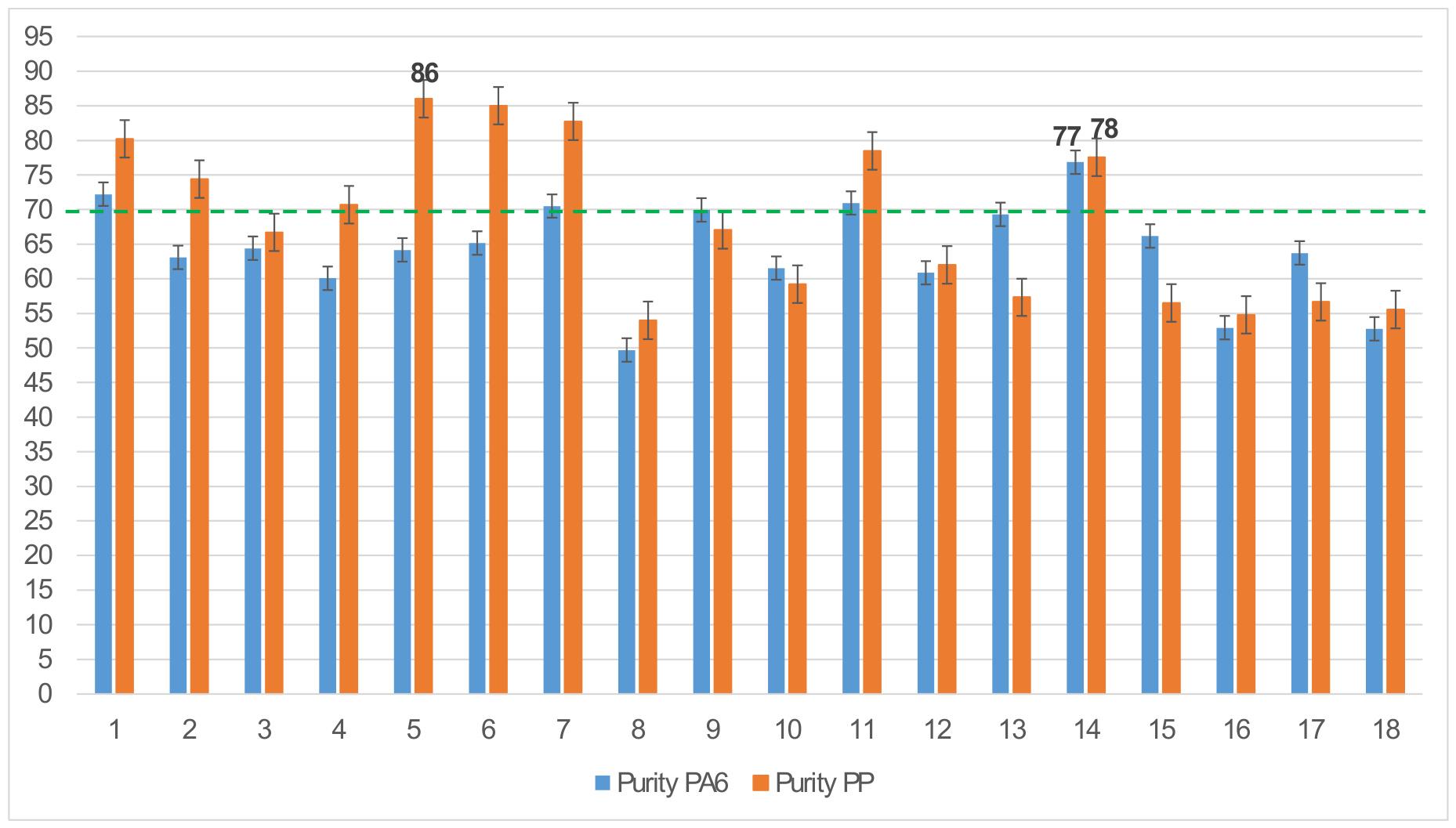
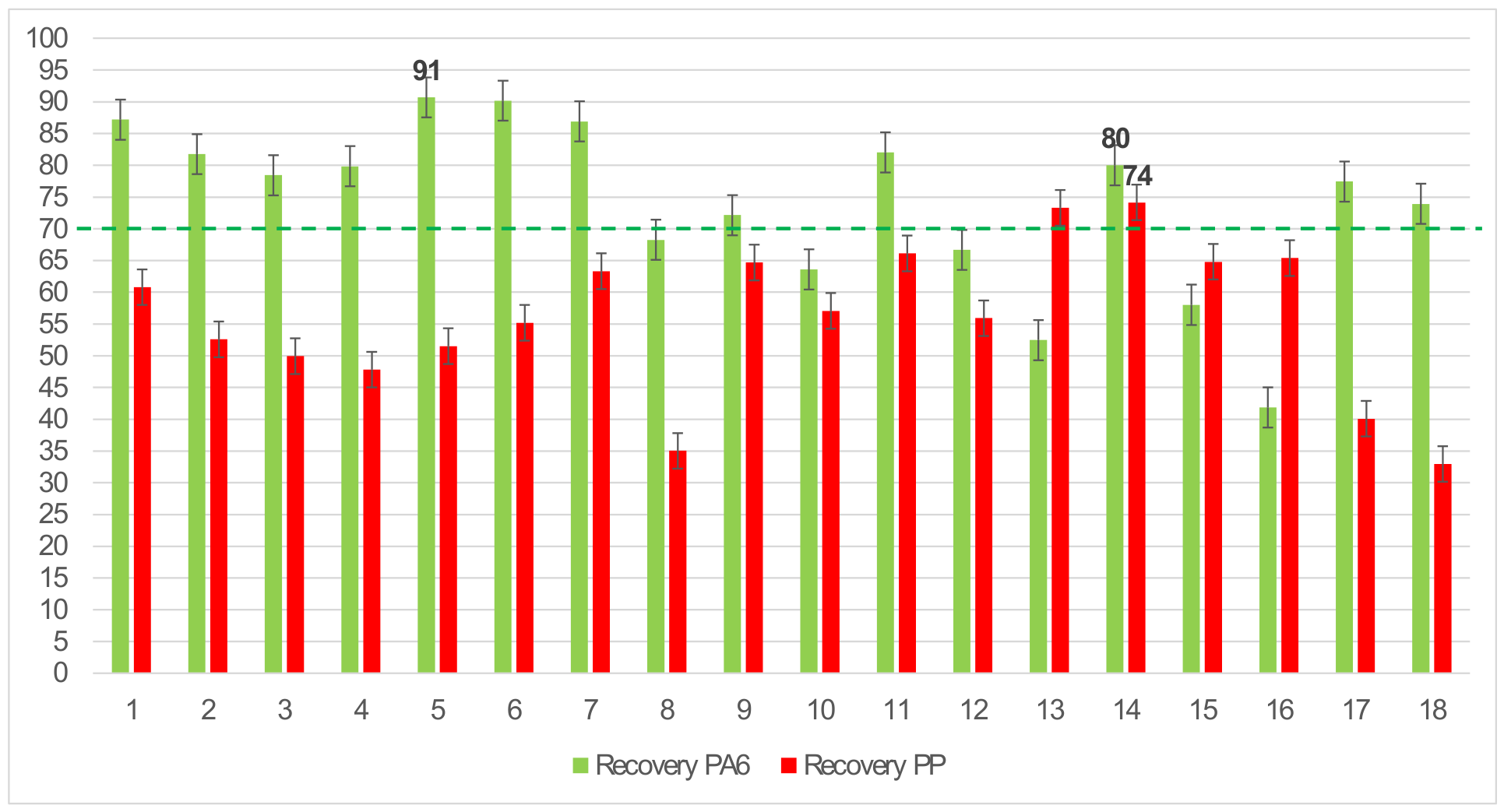
Figure 7 and Figure 8 graphically represent the results of the set of 18 separation tests, respectively, in terms of purity degree (PPP [%], PPA6 [%]) and recovery rate (RPP [%], RPA6 [%]).
According to the experimental plan, tests achieving purity and recovery values above 70% were considered satisfactory; therefore, the threshold value was highlighted in the graphs by a green line.
The Results Show That:
-
The only test that simultaneously exceeds 70% for both polymers considered is test no. 14, characterised by PPP = 78%, PPA6= 77%, and recovery rates RPP = 74% and RPA6 = 80%.
-
The test that achieves the highest degree of purity for PP and the highest degree of recovery for PA6 is test no. 5, characterised by PPP = 86% and RPA6 = 91%.
The tests that yielded the best results for the PP and PA6 mixture were conducted with a distance of 2 cm between the deflectors. For this reason, this value was also adopted in the tests carried out on PVC and PS, keeping constant the infeed plane vibration (7 Hz) and drum rotation (32 rpm). The distance between the two electrodes and the electrode voltage were varied, considering the values that had produced the best performance in previous tests. Table 2 lists the combinations of parameters for the set of 6 tests of tribo-electrostatic separation of the mix consisting of PS and PVC, and the recovery and purity values obtained.
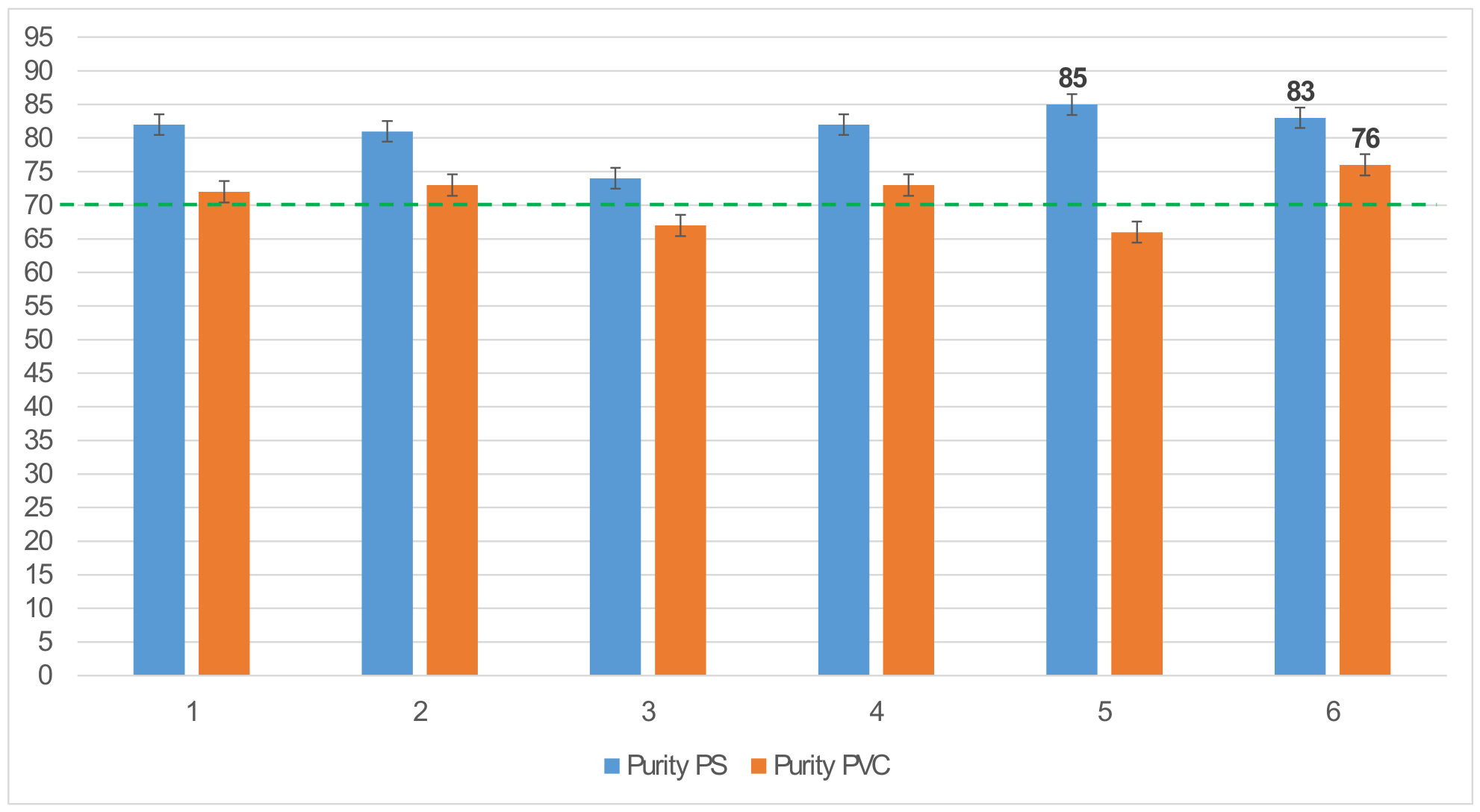
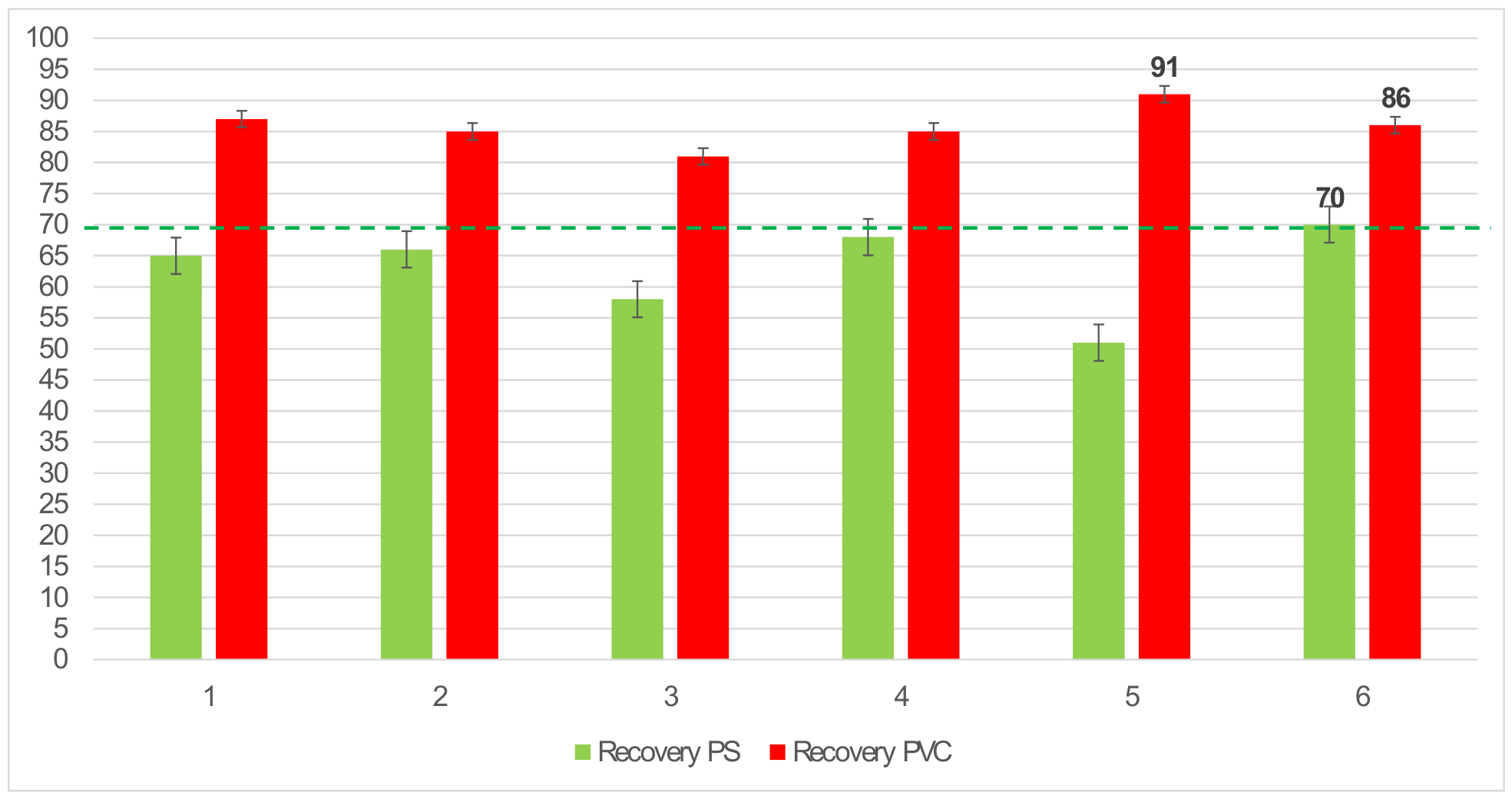
Figure 9 and Figure 10 graphically represent the results of the set of 6 separation tests, respectively, in terms of purity (PPS [%], PPVC [%]) and recovery rate (RPS [%], RPVC [%]).
The Results Show That:
-
The only test that simultaneously reaches or exceeds the threshold value of 70% for both polymers considered is test n° 6, characterised by PPS = 83%, PPVC = 76%, and recovery rates RPS = 70% and RPVC = 86%;
-
The test that achieves the highest degree of purity for PS and the highest degree of recovery for PVC is test no. 5, characterised by PPS = 85% and RPVC = 91%.

4. Discussion

The study focused on analysing the factors that influence the tribo-charging process, with the aim of identifying the optimal combination of parameters capable of maximising the efficiency of plastic polymer separation in an electrostatic separator.
Particle size is a critical parameter in mechanical recycling processes for plastic fractions [16]. Tests conducted on polystyrene (PS) showed that the most effective size class in terms of charge density falls within the range [1.5–2.5] mm. These results are consistent with those reported in the literature: the reduction in size increases the specific surface area of the granules, promoting greater electron transfer [27,28]. Another parameter that affects the intensity of tribo-charging is the dimensional heterogeneity of the granular mixture. Dimensional heterogeneity increases the probability of collisions between particles of different shapes and sizes, thereby increasing charge transfer [29]. The results obtained in this study for PS confirm this finding: a wider dimensional range has enabled superior performance to be achieved in the tribo-charging process.
The experimental results obtained by varying the residence time of the polymers in the device and the rotation speed confirm the trends reported in the technical–scientific literature. In particular, PS and PA6 acquired a positive charge, while PVC and PP acquired a negative charge. This behaviour is consistent with the tribo-electric series reported in the literature, which allow the empirical prediction of the tendency of specific materials to acquire a positive or negative charge during tribo-charging. Diaz and Felix-Navarro et al. in 2004 [23] identified the following tribo-electric series in which polymers are ordered according to their tendency to become positively or negatively charged: (+) PA6, PVAc, PVOH, PMMA, PC, PS, PE, PI, PP, PET, PVC (−). Similarly, Iuga et al. in 2005 [24] proposed the series: (+) Al, PMMA, PE, PET, PP, PVC (−). In another study, Park et al. in 2008 reported the following tribo-electric series: (+) PMMA, PS, ABS, PC, PET, PE, PVC (−) [23,24,25]. The material of the inner wall of the cylinder plays a crucial role in optimising the tribo-electrostatic separation process, as it influences the charge acquired by the polymer particles during particle–wall collisions. Its main function is to maximise the charge difference between the polymers to be separated, thereby enhancing electrostatic separation efficiency. In our study, the inner wall of the cylinder was made of PE, as this material occupies a central position in the tribo-electric series reported in the technical and scientific literature, between PS and PVC and between PP and PA6.
Plastic polymers showed higher charge density when the particles were kept in the device for a residence time of approximately 5 min, with a cylinder inclination of 0° and a rotation speed of 105 rpm (which represents the average value used in the experiments within a range of 40–145 rpm). The study by Benabderrahmane in 2017 [30] highlights how a residence time of between 4 and 5 min in the cylindrical tribo-charger allows high purity and recovery values to be obtained in the tribo-electrostatic separation of PP and PS. Achouri et al. in 2022 [19] demonstrated that, within a rotation speed range of 50–90 rpm, the optimal performance of the cylindrical device in terms of particle charge density is reached at an average rotation speed of 70 rpm.
To determine the polymer pairs that maximise separation efficiency in the electrostatic separator, the average charge density trends for each polymer were analysed as a function of residence time and cylinder rotation speed, and the corresponding charge density difference was assessed. An analysis of the trends reveals that the polymer mixtures exhibiting the highest differences in average charge density are: Mix 1—PA6 and PP and Mix 2—PS and PVC (Figure 5 and Figure 6).
The tests in the electrostatic separator were conducted while maintaining the infeed plane vibration at 7 Hz and drum rotation speed at 32 rpm. Therefore, average values were considered for both parameters. Tilmatine et al. (2010) [31] reported that too low drum speeds do not provide satisfactory recovery and purity, while excessively high speeds reduce separation efficiency. Furthermore, Maammar et al. (2022) [32] demonstrated that, in roll-type electrostatic separators, very low rotational speeds are generally unfavourable because particles tend to remain attached to the drum surface. Conversely, increasing the rotational speed enhances the centrifugal force and promotes particle detachment and trajectory deviation. Based on these findings, an intermediate rotational speed of 32 rpm was selected for the experimental tests.
The distance between the deflectors plays a crucial role in the electrostatic separation process, as it influences the trajectory of the particles attracted by the electrodes and determines the collection containers in which they are deposited. Experimental results have shown that the best performance is obtained with the distance between the deflectors equal to 2 cm. These results are consistent with those reported by Silveira et al. (2018) [33], who demonstrated that increasing the distance between the deflectors leads to a progressive reduction in the recovery of plastic polymers, since the particles are unable to pass over the deflector and are deflected into the wrong container.
Benabderrahmane et al. in 2017 [30] demonstrated that the voltage applied to the electrodes, which optimises separation efficiency, is in the range of 25–26 kV. The results of the laboratory tests carried out show that the best performance in terms of polymer recovery and purity was achieved with a voltage of 26 kV. Regarding the distance between the electrodes, optimal results were achieved with a value equal to 5 cm. The configuration of these parameters allowed the following results to be achieved: for the PS/PVC mixture, purity PPS = 83% and PPVC = 76%, and recovery rates RPS = 70% and RPVC = 86%; for the PP/PA6 mixture, purity PPP = 78% and PPA6 = 77%, and recovery rates RPP = 74% and RPA6 = 80%. Good results were also obtained using an electrode distance of 7 cm and an applied voltage of 28 kV, which made it possible to achieve PPP = 86%, PPS = 85%, and recovery rates RPVC = 91% and RPA6 = 91%.
Tribo-electrostatic separation is undoubtedly a promising technology for the treatment of granular plastic waste, due to its mechanical simplicity, low cost, high separation efficiency, and ability to handle a wider range of particle sizes compared to other separation systems [17]. Moreover, it is environmentally sustainable: it is a dry process that does not require any chemical pretreatment or costly wetting reagents, while simultaneously eliminating issues related to wastewater treatment [20]. The main advantage of the pilot plant used in the laboratory experiments lies in its ability to facilitate industrial application, as it integrates a tribo-charging device and a drum-type electrostatic separator into a single unit. The pilot plant was designed to ensure operational flexibility in its applications. Indeed, the cylinder inside the tribo-charger can be easily removed from the equipment and replaced with other materials. This feature allows for further experimentation with various mixtures of plastic polymers.
This configuration ensures mechanical simplicity and low energy consumption. According to the manufacturer, the tribo-charger has a power consumption of 0.45 kW, while the electrostatic separator requires 0.5 kW. Therefore, the total installed power of the plant is 0.95 kW. Considering a treatment capacity of 10 kg/h, the specific energy consumption is 0.095 kWh/kg.

5. Conclusions

Tribo-electrostatic separation was tested for the dry separation of plastic particles from WEEE R2, using a pilot plant consisting of a tribo-charger and a system for selecting plastic particles based on their surface electrical charge.
In the first phase, the effect of tribo-charging on the material was studied; in the second phase, the electrostatic separation of charged plastic polymers was tested. The tribo-charging of plastic granules from WEEE (i.e., PS, PVC, PP and PA6) was evaluated in terms of the charge density—D (nC/g)—acquired by the granules.
The results show that the particle size range that gives the best results in terms of charge density (D) is in the range of [1.5–2.5] mm. In addition, the results show that the residence time of 5 min and the rotation speed 105 rpm represent the tribo-charger operating parameters that maximise the electrostatic separation performance of two mixtures: (i) PP and PA6; (ii) PS and PVC.
The set of operating parameters that yields the best overall performance in terms of recovery and purity for both polymers in the PP/PA6 and PS/PVC mixtures is the following: infeed plane vibration of 7 Hz, drum rotation speed of 32 rpm, distance between deflectors of 2 cm, electrode voltage of 26 kV and distance between the electrodes of 5 cm. Under these conditions, the laboratory tests produced the following results: for the PS/PVC mixture, purity PPS = 83% and PPVC = 76%, and recovery rates RPS = 70% and RPVC = 86%; for the PP/PA6 mixture, purity PPP = 78% and PPA6 = 77%, and recovery rates RPP = 74% and RPA6 = 80%.
Furthermore, when operating the electrostatic separator with the following configuration—feeding plane vibration at 7 Hz, drum rotation at 32 rpm, distance between deflectors of 2 cm, distance between the electrodes of 7 cm and applied electrode voltage of 28 kV—it is possible to achieve the following results: PP purity of 86%, PA6 recovery of 91%, PS purity of 85% and PVC recovery of 91%.
The use of the tribo-electrostatic separation of plastic polymers from WEEE can guarantee a high recovery rate and, under specific conditions, purity levels that allow the reintegration of these materials into the economic cycle as secondary raw materials.

Author Contributions

Validation, F.T.; Formal analysis, F.T.; Investigation, A.F. and G.D.; Data curation, A.F., G.D. and F.T.; Writing—original draft, A.F.; Writing—review & editing, A.P. and F.T.; Visualization, A.F. and G.D.; Supervision, F.T. and M.N.; Project administration, M.N.; Funding acquisition, M.N. All authors have read and agreed to the published version of the manuscript.

Funding

This research received no external funding.

Data Availability Statement

The original contributions presented in this study are included in the article. Further inquiries can be directed to the corresponding author.

Acknowledgments

The authors gratefully acknowledge Seltek S.r.l. (Udine, Italy) for the construction of the pilot plant, as well as for technical support and assistance.

Conflicts of Interest

The authors declare no conflict of interest.

References

  1. Shahabuddin, M.; Uddin, M.N.; Chowdhury, J.I.; Ahmed, S.F.; Uddin, M.N.; Mofijur, M.; Uddin, M.A. A review of the recent development, challenges, and opportunities of electronic waste (e-waste). Int. J. Environ. Sci. Technol. 2023, 20, 4513–4520. [Google Scholar] [CrossRef] [Scilit]
  2. Cornelis, P.B.; Kuehr, R.; Yamamoto, T.; McDonald, R.; D’Angelo, E.; Althaf, S.; Bel, G.; Deubzer, O.; Fernandez-Cubillo, E.; Forti, V.; et al. Global E-Waste Monitor 2024; International Telecommunication Union (ITU) and United Nations Institute for Training and Research (UNITAR): Geneva, Switzerland; Bonn, Germany, 2024. [Google Scholar]
  3. Govindan, K.; Asgari, F.; Fard, F.S.N.; Mina, H. Application of IoT technology for enhancing the consumer willingness to return E-waste for achieving circular economy: A Lagrangian relaxation approach. J. Clean. Prod. 2024, 459, 142421. [Google Scholar] [CrossRef] [Scilit]
  4. He, X.; Zhong, Z.; Ouyang, Y.; Wang, J. Investigation of tribo-electrostatic separation mechanism for thermoplastics in e-waste based on functional group distribution and surface potential. Sep. Purif. Technol. 2025, 362, 131764. [Google Scholar] [CrossRef] [Scilit]
  5. Nève, N.; Mackré-Delannoy, X.; Fayolle, B.; Gervais, M.; Pompidou, S.; Charbuillet, C.; Sollogoub, C.; Perry, N. A Review of Methods and Data on the Recycling of Plastics from the European Waste Stream of Electric and Electronic Equipment. Recycling 2025, 10, 148. [Google Scholar] [CrossRef] [Scilit]
  6. Jofre, S.; Morioka, T. Waste management of electric and electronic equipment: Comparative analysis of end-of-life strategies. J. Mater. Cycles Waste Manag. 2005, 7, 24–32. [Google Scholar] [CrossRef] [Scilit]
  7. Buekens, A.; Yang, J. Recycling of WEEE plastics: A review. J. Mater. Cycles Waste Manag. 2014, 16, 415–434. [Google Scholar] [CrossRef] [Scilit]
  8. Landi, D.; Consolini, A.; Germani, M.; Favi, C. Comparative life cycle assessment of electric and gas ovens in the Italian context: An environmental and technical evaluation. J. Clean. Prod. 2019, 221, 189–201. [Google Scholar] [CrossRef] [Scilit]
  9. Pina, C.; Elduque, D.; Javierre, C.; Martínez, E.; Jiménez, E. Influence of mechanical design on the evolution of the environmental impact of an induction hob. Int. J. Life Cycle Assess. 2015, 20, 937–946. [Google Scholar] [CrossRef] [Scilit]
  10. Pocheville, A.; Uria, I.; Espana, P.; Arnaiz, S. Raman spectroscopy integrated with machine learning techniques to improve industrial sorting of Waste Electric and Electronic Equipment (WEEE) plastics. J. Environ. Manag. 2025, 373, 123897. [Google Scholar] [CrossRef] [Scilit] [PubMed]
  11. Martinho, G.; Pires, A.; Saraiva, L.; Ribeiro, R. Composition of plastics from waste electrical and electronic equipment (WEEE) by direct sampling. Waste Manag. 2012, 32, 1213–1217. [Google Scholar] [CrossRef] [Scilit] [PubMed]
  12. Fiorente, A.; D’Agostino, G.; Petrella, A.; Todaro, F.; Notarnicola, M. Recovery of Plastics from WEEE through Green Sink–Float Treatment. Materials 2024, 17, 3041. [Google Scholar] [CrossRef] [Scilit] [PubMed]
  13. Ragaert, K.; Delva, L.; Van Geem, K. Mechanical and chemical recycling of solid plastic waste. Waste Manag. 2017, 69, 24–58. [Google Scholar] [CrossRef] [Scilit] [PubMed]
  14. Bill, A.; Haarman, A.; Gasser, M.; Böni, H.; Rösslein, M.; Wäger, P.A. Characterizing plastics from large household appliances: Brominated flame retardants, other additives and density profiles. Resour. Conserv. Recycl. 2022, 177, 105956. [Google Scholar] [CrossRef] [Scilit]
  15. Chaine, C.; Hursthouse, A.S.; McLean, B.; McLellan, I.; McMahon, B.; McNulty, J.; Miller, J.; Viza, E. Recycling plastics from WEEE: A review of the environmental and human health challenges associated with brominated flame retardants. Int. J. Environ. Res. Public Health 2022, 19, 766. [Google Scholar] [CrossRef] [Scilit] [PubMed]
  16. Perez-Vaquero, J.; Landauer, J.; Foerst, P. Tribo-electrostatic separation of binary mixtures from polymeric and food materials. J. Electrost. 2023, 121, 103772. [Google Scholar] [CrossRef] [Scilit]
  17. Daioui, K.; Zeghloul, T.; Perbet, N.; Dascalescu, L. Tribo-electrostatic separation of plastic flakes originating from packaging waste. J. Electrost. 2025, 134, 104046. [Google Scholar] [CrossRef] [Scilit]
  18. Wu, G.; Li, J.; Xu, Z. Triboelectrostatic separation for granular plastic waste recycling: A review. Waste Manag. 2013, 33, 585–597. [Google Scholar] [CrossRef] [Scilit] [PubMed]
  19. Achouri, I.E.; Boukhoulda, M.F.; Medles, K.; Richard, G.; Zeghloul, T.; Dascalescu, L. Electrostatic separation of tribocharged granular mixtures of two or more plastics originating from WEEE. IEEE Trans. Ind. Appl. 2022, 58, 7701–7708. [Google Scholar] [CrossRef] [Scilit]
  20. Labiod, S.; Bendilmi, M.S.; Daioui, K.; Zeghloul, T.; Tomasella, F.; Dascalescu, L. Influence of Moisture Content and Triboelectric Charging Conditions on the Tribo-Electrostatic Separation of Actual Granular Mixtures of Waste Plastics. J. Electrost. 2025, 138, 104157. [Google Scholar] [CrossRef] [Scilit]
  21. Li, J.; Xu, Z. Compound tribo-electrostatic separation for recycling mixed plastic waste. J. Hazard. Mater. 2019, 367, 43–49. [Google Scholar] [CrossRef] [Scilit] [PubMed]
  22. Directive 2012/19/EU of the European Parliament and of the Council of 4 July 2012 on Waste Electrical and Electronic Equipment (WEEE). Available online: http://data.europa.eu/eli/dir/2012/19/oj (accessed on 20 March 2026).
  23. Diaz, A.F.; Felix-Navarro, R.M. A semi-quantitative tribo-electric series for polymeric materials: The influence of chemical structure and properties. J. Electrost. 2004, 62, 277–290. [Google Scholar] [CrossRef] [Scilit]
  24. Iuga, A.; Calin, L.; Neamtu, V.; Mihalcioiu, A.; Dascalescu, L. Tribocharging of plastics granulates in a fluidized bed device. J. Electrost. 2005, 63, 937–942. [Google Scholar] [CrossRef] [Scilit]
  25. Park, C.H.; Park, J.K.; Jeon, H.S.; Chun, B.C. Triboelectric series and charging properties of plastics using the designed vertical-reciprocation charger. J. Electrost. 2008, 66, 578–583. [Google Scholar] [CrossRef] [Scilit]
  26. Worrell, W.A.; Vesilind, P.A. Solid Waste Engineering, 2nd ed.; Global Engineering; Cengage Learning: Boston, MA, USA, 2012. [Google Scholar]
  27. Atroune, S.; Tilmatine, A.; Alkama, R.; Samuila, A.; Dascalescu, L. Comparative experimental study of triboelectric charging of two size classes of granular plastics. Part. Sci. Technol. 2015, 33, 652–658. [Google Scholar] [CrossRef] [Scilit]
  28. Zeghloul, T.; Benhafssa, A.M.; Richard, G.; Medles, K.; Dascalescu, L. Effect of particle size on the tribo-aero-electrostatic separation of plastics. J. Electrost. 2017, 88, 24–28. [Google Scholar] [CrossRef] [Scilit]
  29. Li, J.; Wu, G.; Xu, Z. Tribo-charging properties of waste plastic granules in process of tribo-electrostatic separation. Waste Manag. 2015, 35, 36–41. [Google Scholar] [CrossRef] [Scilit] [PubMed]
  30. Benabderrahmane, A.; Richard, G.; Tilmatine, A.; Maria, D.A.; Zeghloul, T.; Dascalescu, L. Modeling and optimization of a roll-type tribo-electrostatic separator for granular plastic mixtures. In Proceedings of the ESA’17-Annual Meeting of the Electrostatics Society of America, Ottawa, ON, Canada, 13–15 June 2017. [Google Scholar]
  31. Tilmatine, A.; Medles, K.; Younes, M.; Bendaoud, A.; Dascalescu, L. Roll-type versus free-fall electrostatic separation of tribocharged plastic particles. IEEE Trans. Ind. Appl. 2010, 46, 1564–1569. [Google Scholar] [CrossRef] [Scilit]
  32. Maammar, M.; Zeghloul, T.; Aksa, W.; Touhami, S.; Achouri, I.; Dascalescu, L. Factors that influence the trajectories of charged insulating particles in roll-type electrostatic separators. J. Electrost. 2022, 115, 103672. [Google Scholar] [CrossRef] [Scilit]
  33. Silveira, A.V.M.; Cella, M.; Tanabe, E.H.; Bertuol, D.A. Application of tribo-electrostatic separation in the recycling of plastic wastes. Process. Saf. Environ. Prot. 2018, 114, 219–228. [Google Scholar] [CrossRef] [Scilit]
Figure 1. (a) Tribo-charger; (b) Faraday cup; (c) Keithley electrometer—model 6514 (Keithley Instruments, Solon, Ohio, USA).
Cleantechnol 08 00129 g001
Figure 2. (a) Electrostatic separator; (b) rotating drum; (c) electrodes (wire and cylinder) (Seltek S.r.l., Udine, Italy).
Cleantechnol 08 00129 g002
Figure 3. (a) Tribo-charger: (1) feed hopper; (2) electric motor; (3) cylindrical device. (b) Electrostatic separator: (4) vibrating plate; (5) rotating drum; (6) wire electrode; (7) cylindrical electrode; (8) deflector 1 (right); (9) deflector 2 (left); (10) container 1 (right); (11) container 2 (left) (Seltek S.r.l., Udine, Italy).
Cleantechnol 08 00129 g003
Figure 4. PS charge density values (nC/g) depending on residence time.
Cleantechnol 08 00129 g004
Figure 5. Charge density as a function of residence time.
Cleantechnol 08 00129 g005
Figure 6. Charge density as a function of rotation speed.
Cleantechnol 08 00129 g006
Figure 7. Results of the set of 18 separation tests: purity of PP and PA6 (the green line is the threshold value 70%).
Cleantechnol 08 00129 g007
Figure 8. Results of the set of 18 separation tests: recovery of PP and PA6 (the green line is the threshold value 70%).
Cleantechnol 08 00129 g008
Figure 9. Results of the set of 6 separation tests: purity of PS and PVC (the green line is the threshold value 70%).
Cleantechnol 08 00129 g009
Figure 10. Results of the set of 6 separation tests: recovery of PS and PVC (the green line is the threshold value 70%).
Cleantechnol 08 00129 g010
Table 1. Combination of PP and PA6 separation parameters, and purity and recovery values obtained.
N° TestDistance
Between the Electrodes (cm)
Electrode Voltage (KV)Distance Between the
Deflectors (cm)
PPA6PPPRPA6RPPE
17262.57280876173
27262.06374825366
37261.56467785062
47282.56071804862
57282.06486915168
67281.56585905570
76262.57183876374
86262.05054683549
96261.57067726568
106282.56259645760
116282.07178826674
126281.56162675661
135262.56957527362
145262.07778807477
155261.56657586561
165282.55355426552
175282.06457774055
185281.55356743349
Table 2. Combination of PS and PVC separation parameters, and purity and recovery values obtained.
N° TestDistance Between
the Electrodes (cm)
Electrode Voltage (KV) PPSPPVCRPSRPVCE
16288272658775
27268173668575
35287467588169
46268273688576
57288566519168
65268376708676
Disclaimer/Publisher’s Note: The statements, opinions and data contained in all publications are solely those of the individual author(s) and contributor(s) and not of MDPI and/or the editor(s). MDPI and/or the editor(s) disclaim responsibility for any injury to people or property resulting from any ideas, methods, instructions or products referred to in the content.