
Mesophilic Anaerobic Digestion of Municipal Sewage Sludge Under High Sodium Propionate Concentrations in Semi-Continuous Conditions: Inhibition and Microbial Community Shifts

 ,
,  , , , ,
  and
and 
Highlights
- Sewage sludge digesters tolerated sodium propionate concentrations up to 20.3 mmol·L−1 (1.5 g·L−1 propionic acid equivalent) in semi-continuous reactors.
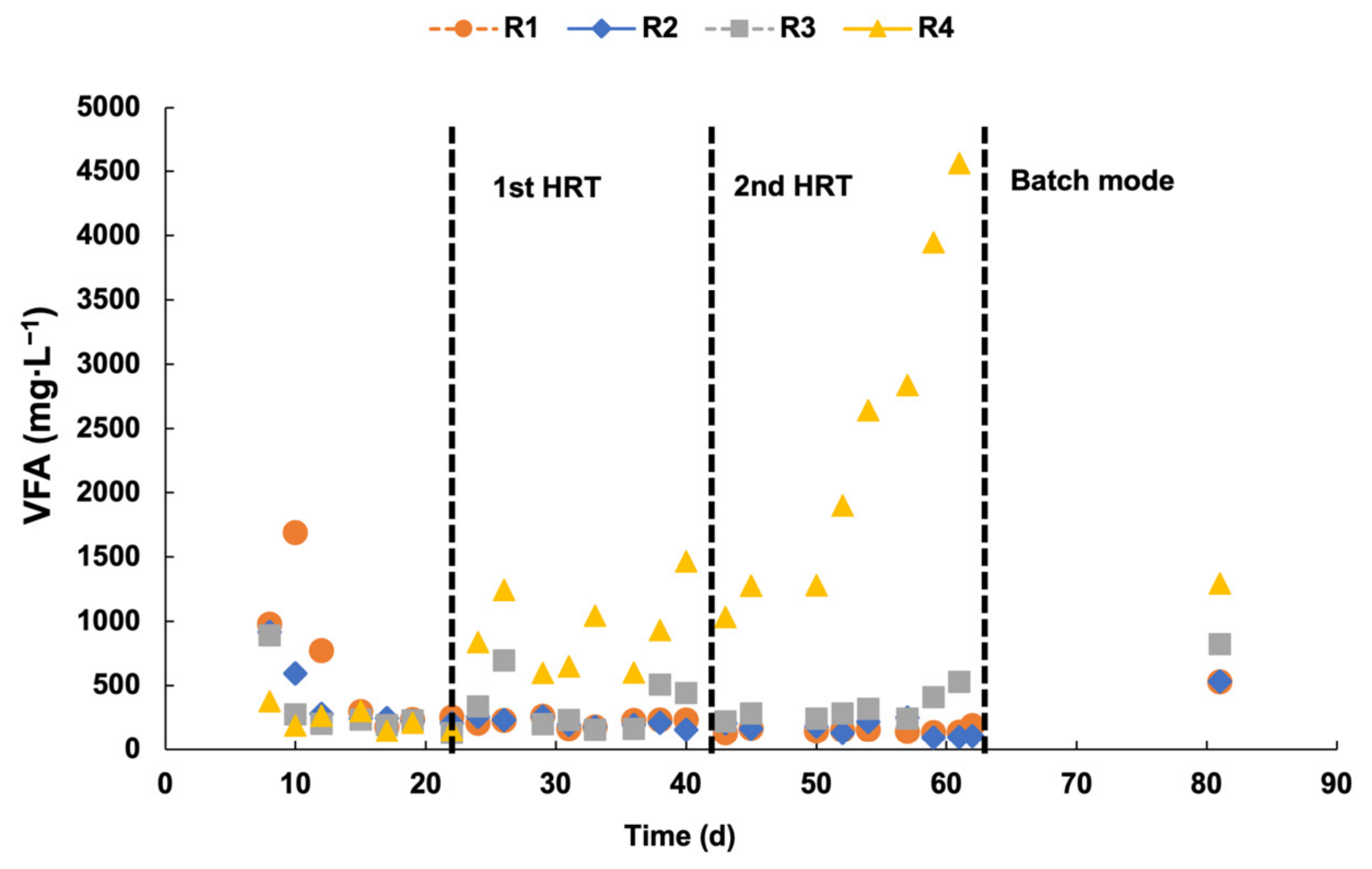
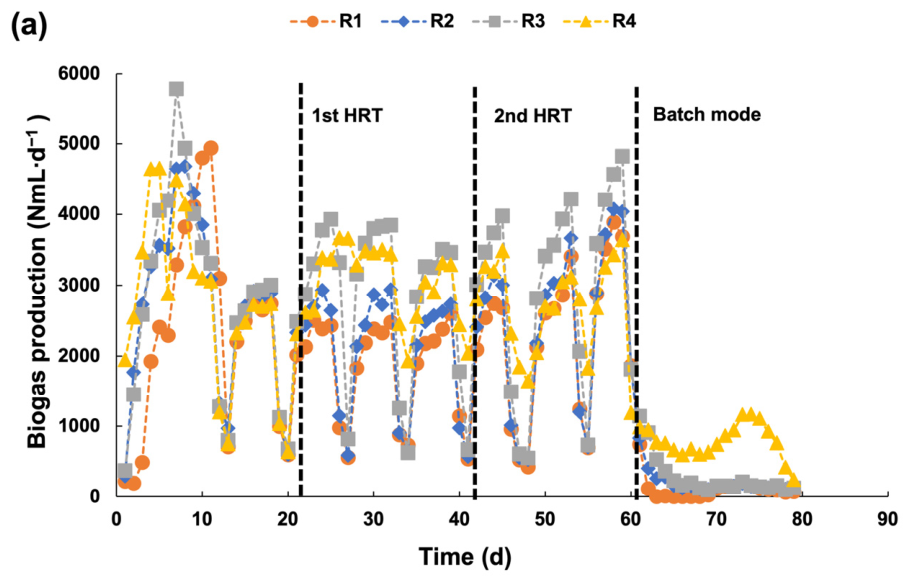
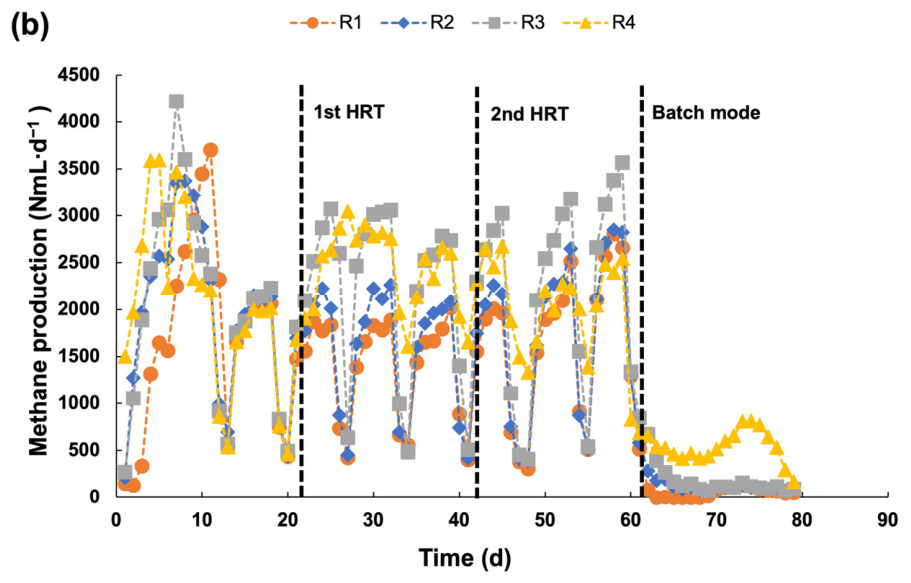
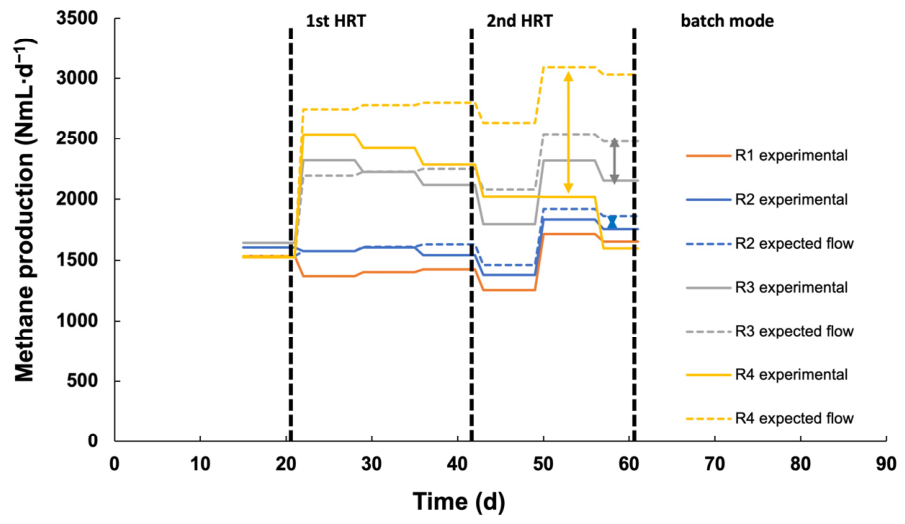
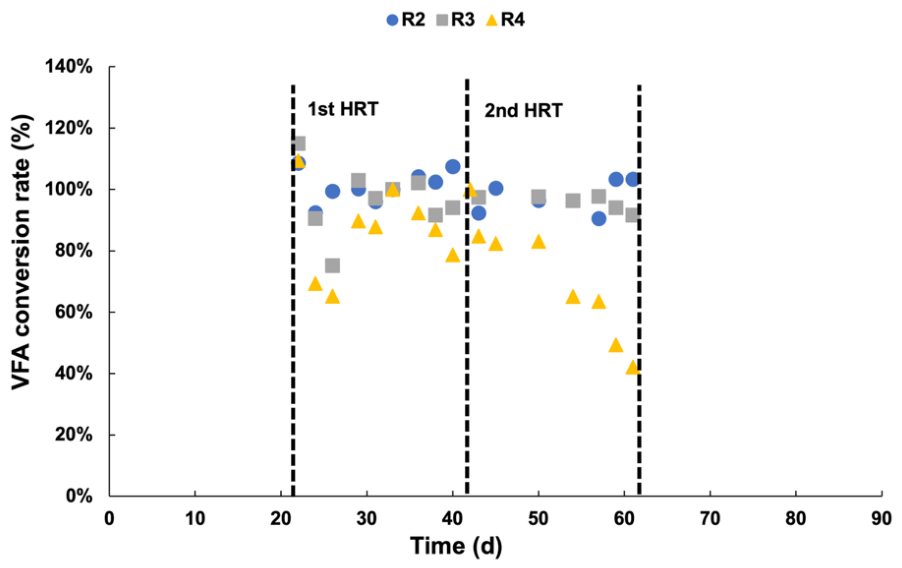
- A sodium propionate loading of 135.3 mmol·L−1 (10 g·L−1 propionic acid equivalent) caused VFA accumulation (>4.5 g·L−1), reduced methane production by approximately 40%, and altered microbial community structure.
- The identified propionate/propionic acid inhibition thresholds can support improved monitoring and management of anaerobic sludge digesters. The switch to batch mode (stopping feeding and heating) could be an interesting strategy for the system stressed by propionate to recover.
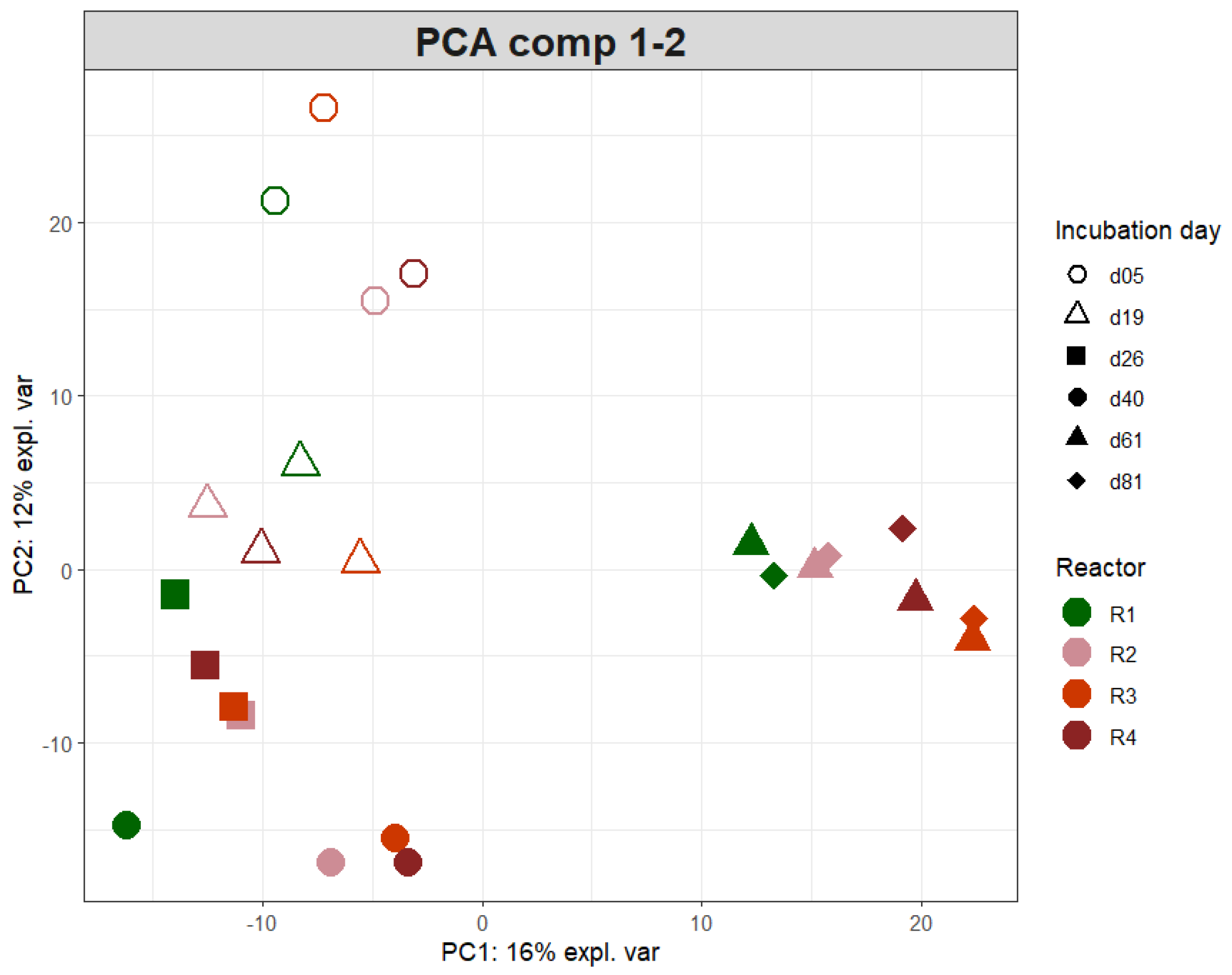
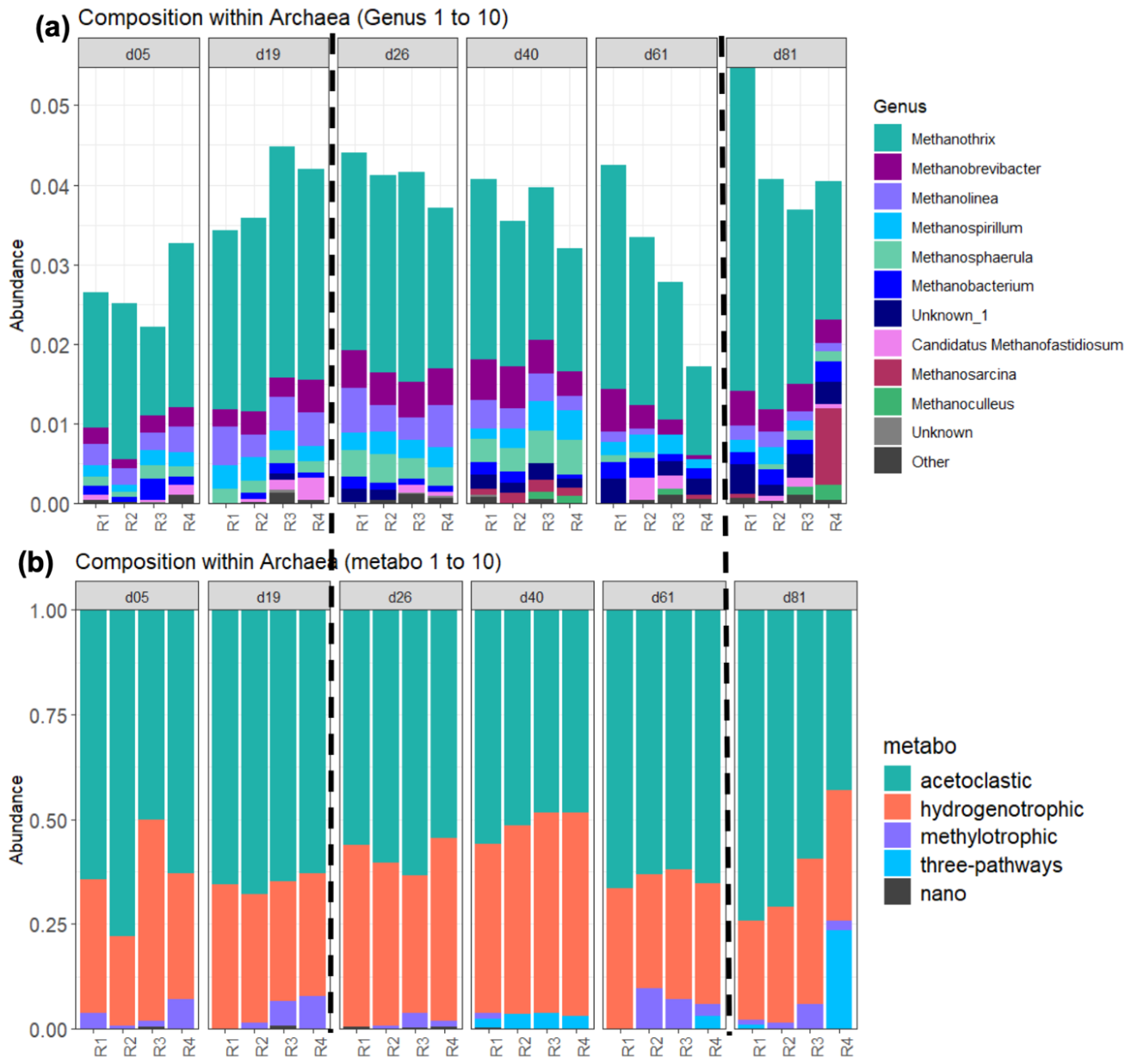
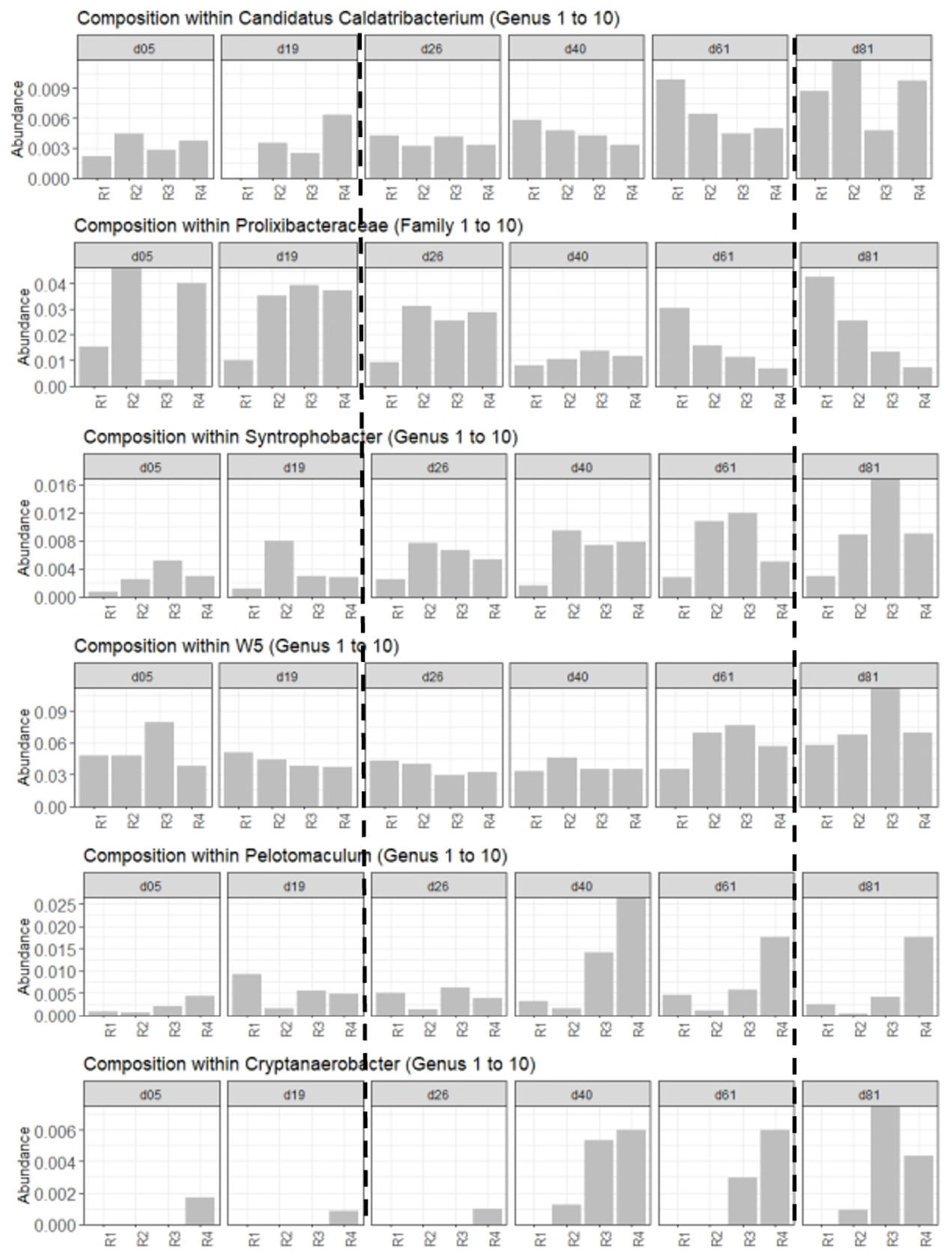
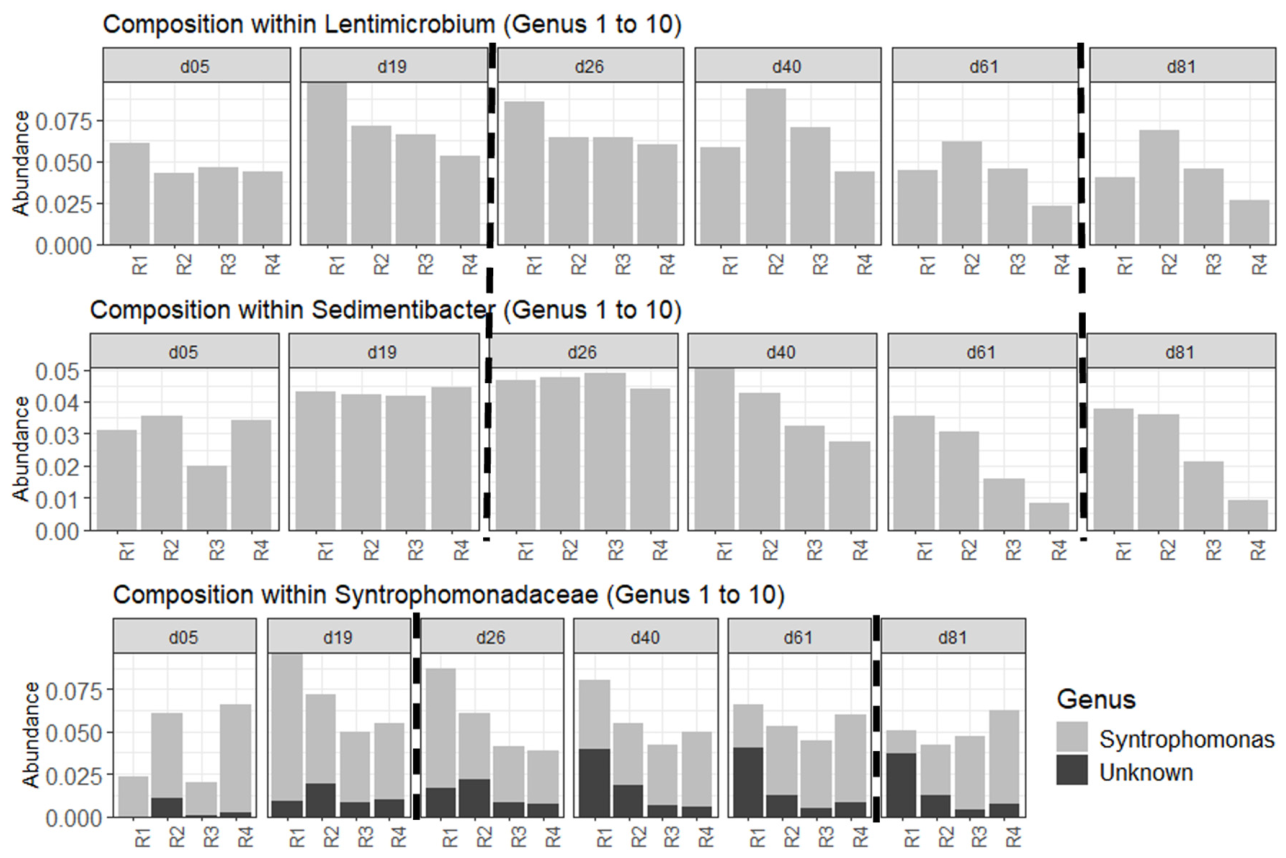
- The observed microbial shifts (Methanothrix, Methanobrevibacter, Pelotomaculum, and Methanosarcina) may provide early biological indicators of propionate stress and digester recovery.
Abstract
Share and Cite
Agumah, J.A.; Liu, X.; André, L.; Auneau, C.; Thibault, S.; Bureau, C.; Guérin, S.; Rocher, V.; Lacroix, C.; Chapleur, O.; et al. Mesophilic Anaerobic Digestion of Municipal Sewage Sludge Under High Sodium Propionate Concentrations in Semi-Continuous Conditions: Inhibition and Microbial Community Shifts. Clean Technol. 2026, 8, 89. https://doi.org/10.3390/cleantechnol8030089
Agumah JA, Liu X, André L, Auneau C, Thibault S, Bureau C, Guérin S, Rocher V, Lacroix C, Chapleur O, et al. Mesophilic Anaerobic Digestion of Municipal Sewage Sludge Under High Sodium Propionate Concentrations in Semi-Continuous Conditions: Inhibition and Microbial Community Shifts. Clean Technologies. 2026; 8(3):89. https://doi.org/10.3390/cleantechnol8030089
Chicago/Turabian StyleAgumah, Joel Awinzure, Xiaojun Liu, Laura André, Camille Auneau, Sophie Thibault, Chrystelle Bureau, Sabrina Guérin, Vincent Rocher, Carlyne Lacroix, Olivier Chapleur, and et al. 2026. "Mesophilic Anaerobic Digestion of Municipal Sewage Sludge Under High Sodium Propionate Concentrations in Semi-Continuous Conditions: Inhibition and Microbial Community Shifts" Clean Technologies 8, no. 3: 89. https://doi.org/10.3390/cleantechnol8030089
APA StyleAgumah, J. A., Liu, X., André, L., Auneau, C., Thibault, S., Bureau, C., Guérin, S., Rocher, V., Lacroix, C., Chapleur, O., Bize, A., Roose-Amsaleg, C., Pauss, A., & Ribeiro, T. (2026). Mesophilic Anaerobic Digestion of Municipal Sewage Sludge Under High Sodium Propionate Concentrations in Semi-Continuous Conditions: Inhibition and Microbial Community Shifts. Clean Technologies, 8(3), 89. https://doi.org/10.3390/cleantechnol8030089