
Article

Green Synthesis of Ag-Modified ZnO Nanoparticles for Solar-Driven Photocatalytic Degradation of Organic Pollutants

by
María Teresa Maldonado-Sada
1,*,
Carlos Adrián Calles-Arriaga
2,
José Adalberto Castillo-Robles
2,
Jacinto Treviño-Carreon
1 and
Enrique Rocha-Rangel
2,*
1
School of Engineering and Science, Autonomous University of Tamaulipas, Victoria City 87149, Mexico
2
Research and Postgraduate Department, Victoria Polytechnic University, Science and Technology Park, Victoria City 87138, Mexico
*
Authors to whom correspondence should be addressed.
Clean Technol. 2026, 8(3), 87; https://doi.org/10.3390/cleantechnol8030087 (registering DOI)
Submission received: 21 March 2026 / Revised: 12 May 2026 / Accepted: 28 May 2026 / Published: 6 June 2026
(This article belongs to the Topic Sustainable Development of Clean Water and Sanitation)

Abstract

In this work, ZnO nanoparticles were synthesized via a plant-mediated green route using Prosopis tamaulipana extract as a reducing and stabilizing agent and subsequently modified with silver to obtain Ag-modified ZnO powders. Structural and morphological characterization techniques confirmed the formation of nanocrystalline ZnO with a hexagonal wurtzite structure, submicrometric agglomerates composed of nanosized primary particles and a high degree of phase purity, indicating the effectiveness of the synthesis approach. The photocatalytic performance of the Ag-modified ZnO materials was evaluated under natural solar irradiation using methylene blue as a model organic contaminant in aqueous solution. Visual observations, together with absorbance, temperature and electrical conductivity measurements, demonstrated an effective and progressive degradation of the dye over a 5 h irradiation period. The observed increase in electrical conductivity under illumination was associated with enhanced charge carrier generation and improved separation efficiency, as well as the formation of reactive oxygen species, promoted by the presence of Ag as an electron sink. These results confirm that green-synthesized Ag-modified ZnO nanoparticles exhibit enhanced photocatalytic activity and are promising multifunctional materials for sustainable water sanitation applications.

1. Introduction

Nanoparticles (NPs) have attracted considerable scientific and technological interest owing to their unique physicochemical, optical and catalytic properties, which emerge from their reduced dimensions, high surface energy and controlled morphology, distinguishing them noticeably from their bulk counterparts [1,2]. The exceptionally high surface-to-volume ratio and tunable surface chemistry of NPs enable the enhancement of interfacial interactions, making them highly attractive for a wide range of applications, including catalysis, biomedicine, energy conversion and environmental remediation [3]. In general terms, nanoparticles are classified into three main categories: organic, inorganic and carbon-based nanomaterials. Among these, inorganic nanoparticles such as metals (Fe, Au, Ag, and Ni), ceramic oxides (SiO2, ZrO2, and Al2O3) and semiconductor oxides (TiO2 and SnO), particularly zinc oxide (ZnO), stand out due to their remarkable chemical stability, photocatalytic efficiency and intrinsic antimicrobial activity, which are especially advantageous for water remediation and purification technologies [4,5]. Conventional synthesis routes for inorganic nanoparticles, including sol-gel processing, chemical precipitation, hydrothermal synthesis and physical vapor deposition, allow for precise control over particle size, crystallinity and morphology. However, these methods often involve hazardous chemicals, toxic solvents, expensive and complex methodologies, high energy consumption and severe reaction conditions, raising environmental and occupational health concerns while limiting scalability for large-scale water treatment applications [6,7,8]. Consequently, the development of sustainable and environmentally benign synthesis strategies has become a priority, consistent with the green chemistry principles and circular economy concepts [9,10,11]. In this context, green synthesis has emerged as a promising and sustainable alternative for nanoparticle production [12,13]. This approach exploits renewable biological resources, including plant extracts (leaves, fruits, seeds, bark and roots) and microbial systems (bacteria, fungi and algae), which act simultaneously as reducing, capping and stabilizing agents. Bioactive compounds such as flavonoids, phenolic acids, terpenoids, alkaloids, proteins and polysaccharides play a key role in metal ion reduction and nanoparticle stabilization, enabling the formation of well-dispersed nanostructures without the use of toxic reagents [14,15,16].
Binary oxide ceramics have emerged as key materials in solar energy research due to their versatility, chemical stability and tunable electronic properties. This is exemplified in the study by Suchikova et al. [17], which presents a comparative analysis of several prominent oxides (TiO2, ZnO, Al2O3, SiO2, CeO2, Fe2O3, and WO3). These materials have shown great potential for applications in the field of solar energy, but their use in water treatment has not been as widespread.
For ZnO NPs, green synthesis is particularly attractive, as it combines sustainability with enhanced surface functionality, which is beneficial for photocatalytic and antimicrobial applications [18]. Regarding water treatment, ZnO NPs have demonstrated outstanding potential due to their ability to degrade a wide range of organic contaminants, including dyes, pharmaceuticals, endocrine disruptors and pesticides, under UV or solar irradiation via photocatalytic mechanisms [19]. Upon light excitation, ZnO generates electron-hole pairs that promote the formation of reactive oxygen species (ROS), such as hydroxyl radicals (OH) and oxide anions (O2−), which oxidize complex organic molecules into environmentally benign products such as CO2 and H2O [15,20]. In parallel, ZnO exhibits inherent antimicrobial activity through multiple pathways, including ROS generation, membrane disruption and metal ion release, enabling the effective inactivation of pathogenic bacteria and fungi commonly found in contaminated water sources [21]. These combined photocatalytic and antimicrobial properties position ZnO NPs as multifunctional nanomaterials capable of addressing both chemical and biological water pollution simultaneously [22]. The functional performance of ZnO NPs can be further enhanced through doping with noble metals, particularly silver. Ag-modified ZnO NPs exhibit improved visible-light absorption and suppressed electron–hole recombination due to the formation of Schottky junctions and surface plasmon resonance effects, resulting in superior photocatalytic efficiency under solar irradiation [23,24]. Additionally, silver nanoparticles are well known for their strong and broad-spectrum antimicrobial activity. When integrated with ZnO, a synergistic effect arises, significantly enhancing microbial inactivation rates and extending efficacy against antibiotic-resistant strains [25,26]. This dual enhancement makes Ag-ZnO NPs highly promising materials for integrated and efficient water sanitation systems.
It is well established that the photocatalytic and antimicrobial efficiency of ZnO-based nanomaterials strongly depends on synthesis parameters, including precursor concentration, pH, reaction temperature, reaction time and the phytochemical composition of the biological extract employed in green synthesis routes [27,28]. Careful optimization of these parameters allows for fine control over nanoparticle size, morphology, crystallinity and surface chemistry, which directly govern their reactivity and stability in aqueous environments. Consequently, this work aims to synthesize ZnO NPs via a green, plant-mediated approach and to develop Ag-modified ZnO NPs to further enhance their photocatalytic and antimicrobial performance. The study focuses on optimizing key synthesis parameters and systematically evaluating the effectiveness of Ag-modified ZnO NPs in the degradation of organic pollutants, with particular emphasis on their application in sustainable water sanitation and environmental remediation systems.

2. Materials and Methods

Ecofriendly synthesis protocol: For nanoparticle synthesis, zinc sulfate heptahydrate (ZnSO4•7H2O, Jalmek brand, San Nicolás de los Garza, Mexico) served as the zinc precursor, while sodium bicarbonate (NaHCO3, Fermont, Monterrey, Mexico, ACS reagent grade) was used to adjust and maintain the reaction pH.
(a)
Plant extract preparation of Prosopis tamaulipana.
  • Prosopis tamaulipana (Tamaulipan mesquite) was taxonomically authenticated by an expert in the native flora of Tamaulipas, Mexico with verification supported by current botanical references. Leaves and seed pods were collected from healthy specimens on the campus of the Faculty of Engineering and Sciences, Universidad Autónoma de Tamaulipas, Ciudad Victoria, Tamaulipas, Mexico (23.714983, −99.152768) and subsequently used to obtain bioactive compounds used as reducing and stabilizing agents in the green synthesis of zinc-based nanoparticles for water contaminant removal;
  • Collected leaves were thoroughly rinsed with distilled water to remove surface impurities prior to extraction. Approximately 30 g of fresh Prosopis tamaulipana leaves were homogenized in 400 mL of deionized water using a Coors-brand mortar and pestle until complete depigmentation was achieved, yielding a crude plant extract rich in reducing agents;
  • The homogenized leaf suspension was transferred to a 500 mL beaker and placed on a heating and stirring plate (Thermo Fisher Scientific, Tijuana, Mexico), where it was continuously stirred with a magnetic stir bar at 85 °C for 26 min. Temperature was closely monitored throughout the process to minimize fluctuations and preserve the bioactive compounds;
  • Following heating, the mixture was vacuum-filtered using a Laboport bomb (Laboport UN 816.1.2 KTP, Sigma Aldrich, Burlington, MA, USA) setup through 617 grade filter paper in a Buchner funnel with Kitasato flask, producing a visually clear, green-colored extract. The pH of the filtrate was measured using a Thermo Scientific Orion star pH meter (model A221, Waltham, MA, USA) and gradually adjusted to a basic pH of 8.3 with 1 M sodium bicarbonate solution to optimize conditions for the subsequent green synthesis of zinc-based nanoparticles.
(b)
Green synthesis to obtain nanoparticles of ZnO using analytical-grade zinc sulfate heptahydrate [ZnSO4•7H2O] as a metal precursor.
  • A total of 100 mL of the previously filtered and pH-adjusted plant extract was combined with 100 mL of 0.3 M of [ZnSO4•7H2O] solution in a beaker. The mixture was placed in the Thermo Fisher scientific heating and stirring plate. It ran at 420 rpm using a magnetic stir bar for 126 min at 90 °C, and temperature was constantly monitored. As a result, a light green-greyish precipitate with a pudding-like consistency was observed;
  • The mixture (precipitate and solution) was left at room temperature (25 °C) and then poured into centrifuge test tubes. The tubes were agitated in a Centurion scientific centrifuge (PrO ED, Chichester, UK) at 1807 rpm for 10 min;
  • The supernatant liquid was removed from the test tubes, and the precipitate was transferred to porcelain pods;
  • The precipitate was calcinated at 400 °C for 120 min in a Thermo scientific thermolyne (Type 1500 muffle furnace, Asheville, NC, USA).
(c)
Powder mixture preparation
  • The powders used for the preparation of the photocatalytic materials consisted of ZnO synthesized following the methodology described previously and commercial silver nanoparticles (<100 nm, 99.9% purity; SkySpring Nanomaterials, Inc., Houston, TX, USA). Silver was incorporated at concentrations of 1 wt.%;
  • The ZnO and silver powders were homogenized by high-energy planetary ball milling using a PM 100 mill (Retsch, Haan, Germany). The milling process was carried out under dry conditions for 6 h at a rotational speed of 300 rpm, employing 0.05 mL isopropyl alcohol as a process control agent and maintaining a ball-to-powder weight ratio of 10:1.
(d)
Powder characterization
  • After the grinding stage, the particle size distribution was determined by laser diffraction using a Mastersizer 2000 system (Malvern Panalytical, Almelo, The Netherlands). The morphological characteristics of the powders were examined by scanning electron microscopy (SEM) using a JEOL 6300 microscope (Akishima, Tokyo, Japan);
  • The crystalline structure was analyzed by X-ray diffraction (XRD) employing a Bruker D8 Advance diffractometer (Billerica, MA, USA). Data were collected over a 2θ range of 20–100°, with a step size of 0.016° and a counting time of 10 s per step. The resulting diffraction patterns were analyzed using X’Pert HighScore Plus software (version 2.2b).
(e)
Absorbance measurements
  • Optical absorbance measurements were carried out using a deuterium lamp with UV-Vis emission as the light source. All optical measurements were performed with a compact Correlated Color Temperature (CCD) spectrometer (Thorlabs CCS200, Newton, NJ, USA), operating over a wavelength range of 200–1000 nm. Absorbance was determined by first recording the transmission spectrum of distilled water in a standard quartz cuvette (optical path length of 10 mm) as the reference. Subsequently, the transmission spectrum of Ag-modified ZnO suspensions in distilled water, contained in identical quartz cuvettes, was measured;
  • Optical absorbance was then calculated using the spectrometer software based on these reference and sample measurements. The photocatalytic activity of Ag-modified ZnO NPs was evaluated through the photocatalytic degradation of methylene blue in water under natural solar irradiation for 5 h. The experiments were conducted in a glass beaker containing 200 mL of distilled water, 0.05 g of the Ag-modified ZnO photocatalyst and 0.05 mL of methylene blue used as a tracer. The suspension was magnetically stirred at 500 rpm throughout the experiment. Aliquots of the solution were collected at 60 min intervals to monitor the degradation kinetics and assess the water decontamination efficiency.
It is important to note that the pH of the solution was monitored at the beginning, during and at the end of each photochemical experiment, and the experiments were always conducted at the same location and at the same time of day. In addition, each experiment was conducted five times with the recycled powder, and the average values for each measurement were reported. Alternatively, the same procedure was carried out using contaminated water collected from stagnant zones along a riverbank. It should be noted that all experiments were systematically performed under identical conditions, including the time of day, geographic location (23°44′06″ N, 99°07′51″ W) and season of the year. Furthermore, solar irradiance was continuously monitored using an SM206 solar meter (Anaheim Scientific, Yorba Linda, CA, USA) to ensure experimental consistency. Finally, microbiological analyses were conducted in accordance with Mexican standards [29] at 0 and 150 min to evaluate the effect of Ag-modified ZnO on water decontamination. Water samples selected for microbiological testing (before and after treatment) were kept at temperatures below 0 °C and protected from sunlight. All analyses were completed within 1 h of sample collection.

3. Results

3.1. Particle Size

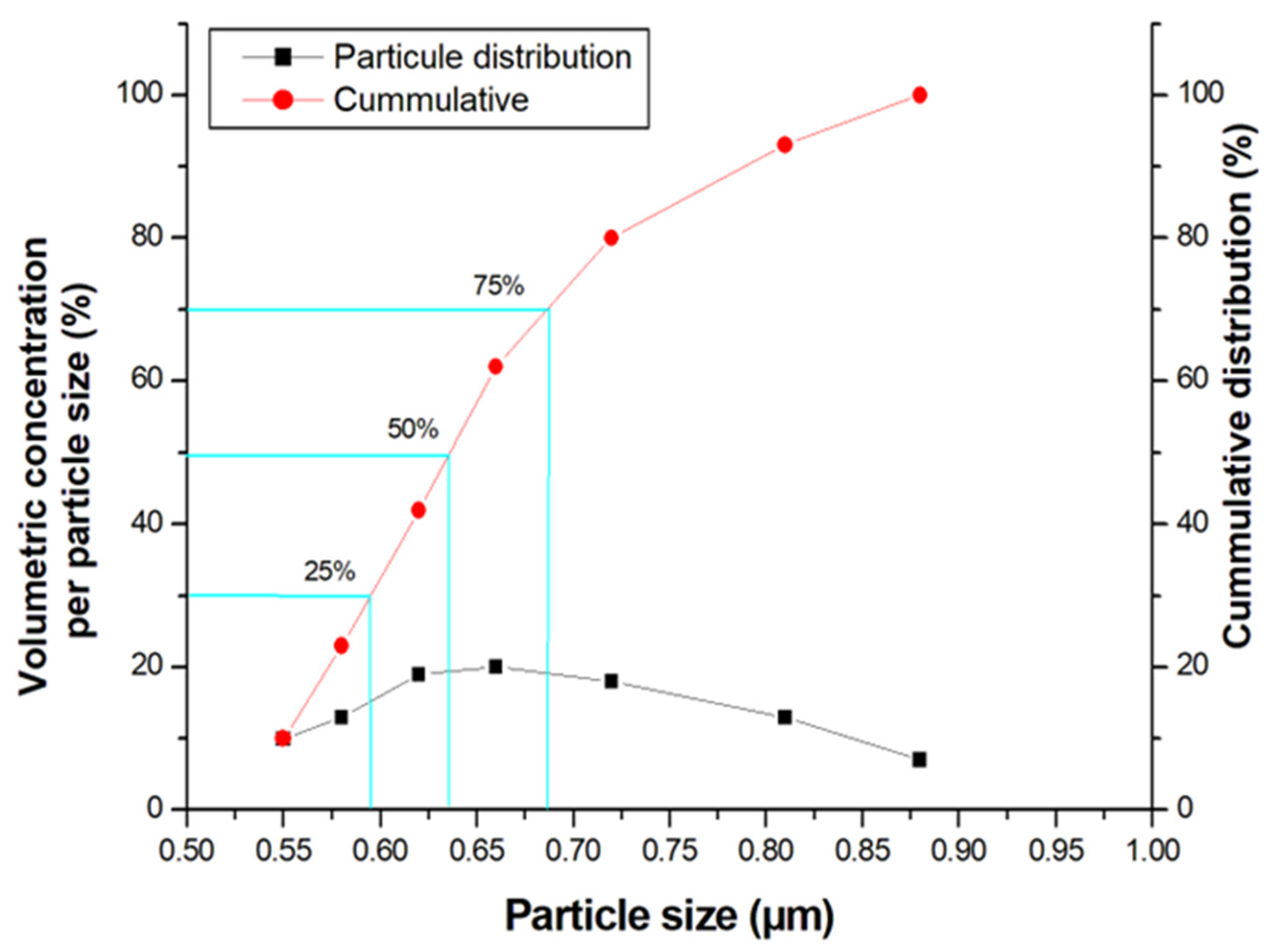
Figure 1 shows the particle size distribution and cumulative fraction of the Ag-modified ZnO mixed powder. The results indicate that the particle size is predominantly within the submicrometric range, extending from approximately 0.5 to 0.85 µm. According to the cumulative distribution (red line), about 75% of the particles exhibit sizes between 0.5 and 0.67 µm, evidencing a strong predominance of fine particles. Additionally, approximately 25% of the particles present sizes below 0.6 µm, confirming the presence of an ultrafine fraction. Conversely, around 25% of the particles exceed 0.67 µm, corresponding to the coarser tail of the distribution. The continuous nature of the size distribution suggests a homogeneous milling process without pronounced bimodality. The dominance of fine, submicrometric particles is advantageous for photocatalytic applications, as it promotes a higher specific surface area and improved dispersion stability in aqueous media, thereby favoring enhanced photocatalytic performance.

3.2. Particle Morphology

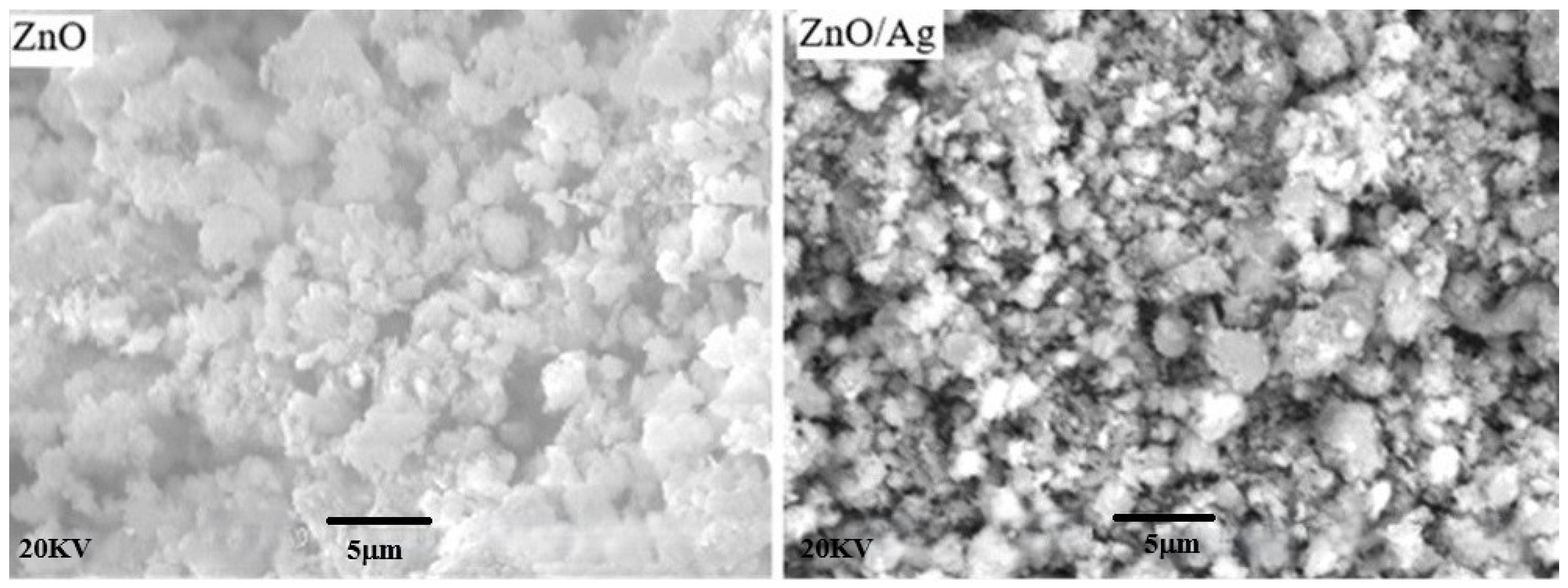
Figure 2 presents scanning electron microscopy (SEM) micrographs of the milled powders for both the original ZnO sample and the Ag-modified ZnO (ZnO/Ag), complementing the particle size distribution discussed in Figure 1. In both cases, the images reveal that the primary particles exhibit a predominantly spherical-like morphology, with individual sizes slightly above 100 nm. However, the Ag-modified ZnO sample shows a comparatively higher degree of particle agglomeration, which can be attributed not only to the intrinsic high surface energy of ZnO nanoparticles but also to the presence of Ag species that promote interparticle interactions and possible bridging effects. This observation is consistent with the submicrometric size distribution obtained by laser diffraction.
The granulometric results, indicating an apparent particle size range between 0.5 and 0.85 µm, can therefore be interpreted as the size of soft agglomerates rather than isolated primary particles in both systems, although these agglomerates appear to be more compact in the Ag-modified ZnO sample. SEM observations support this interpretation, as clusters of nanosized particles form larger secondary structures, with a slightly denser packing in the modified material. Additionally, subtle contrasts in the Ag-modified ZnO micrographs may be associated with the presence of Ag nanoparticles or nanodomains distributed over the ZnO surface.
The relatively smooth particle surfaces observed in both samples suggest limited plastic deformation during mechanical milling, indicating that fracture and cold-welding processes remained balanced under the selected conditions. Nevertheless, the Ag-modified ZnO sample exhibits a slightly higher morphological heterogeneity, with more frequent irregular or elongated features, likely resulting from localized mechanical impacts and the influence of Ag incorporation on particle growth dynamics. Despite the increased agglomeration, the predominance of fine primary particles and the formation of loosely bound agglomerates in the Ag-modified ZnO system are expected to be advantageous for photocatalytic applications. The incorporation of Ag not only preserves a high effective surface area but also enhances light–matter interactions by acting as an electron sink, reducing electron–hole recombination and improving the photocatalytic efficiency under solar irradiation compared to the original ZnO.

3.3. Crystalline Structure

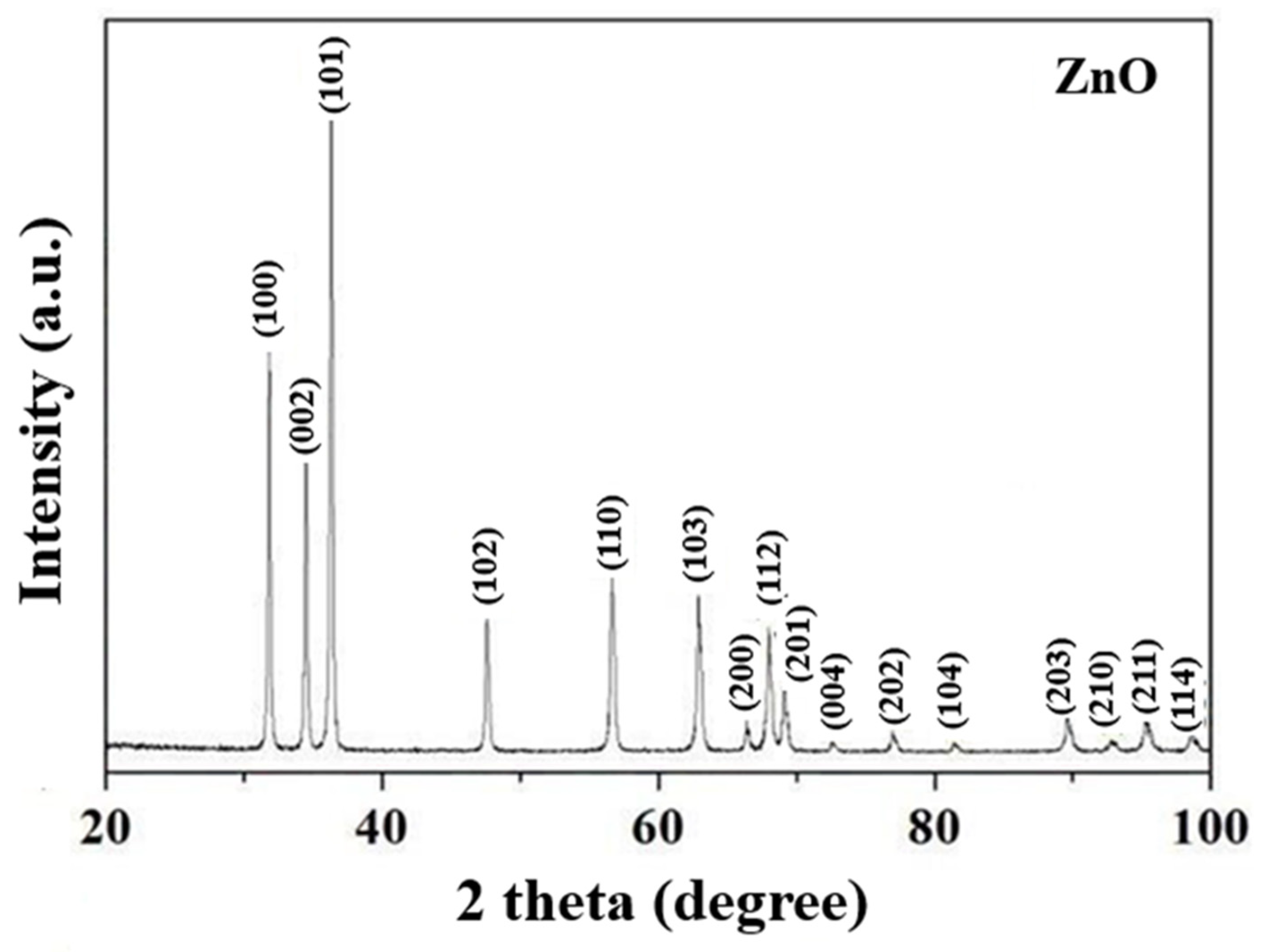
Figure 3 shows the X-ray diffraction (XRD) pattern of the ZnO powder synthesized using the previously described green method. All diffraction peaks were indexed to the hexagonal wurtzite crystal structure of ZnO, confirming the successful formation of the thermodynamically stable phase. The presence of all characteristic reflections associated with the main crystallographic planes indicates a well-crystallized material. No additional diffraction peaks associated to secondary crystalline phases or residual precursor compounds are detected, indicating the high phase purity of the synthesized ZnO and confirming the success of the green synthesis route. This high structural purity is particularly important for photocatalytic applications, as foreign phases may act as recombination centers and negatively affect charge carrier dynamics. The average crystallite size, estimated using the Scherrer equation from the full width at half maximum of the most intense diffraction peak (101), was calculated to be 9.8 nm, indicating the formation of nanocrystalline ZnO. This nanometric crystallite size is consistent with the SEM observations, where primary particles with dimensions slightly above 100 nm form submicrometric agglomerates. Such nanocrystalline features are advantageous for photocatalysis, as they increase the density of active surface sites while preserving sufficient crystallinity for efficient charge transport.

3.4. Mapping

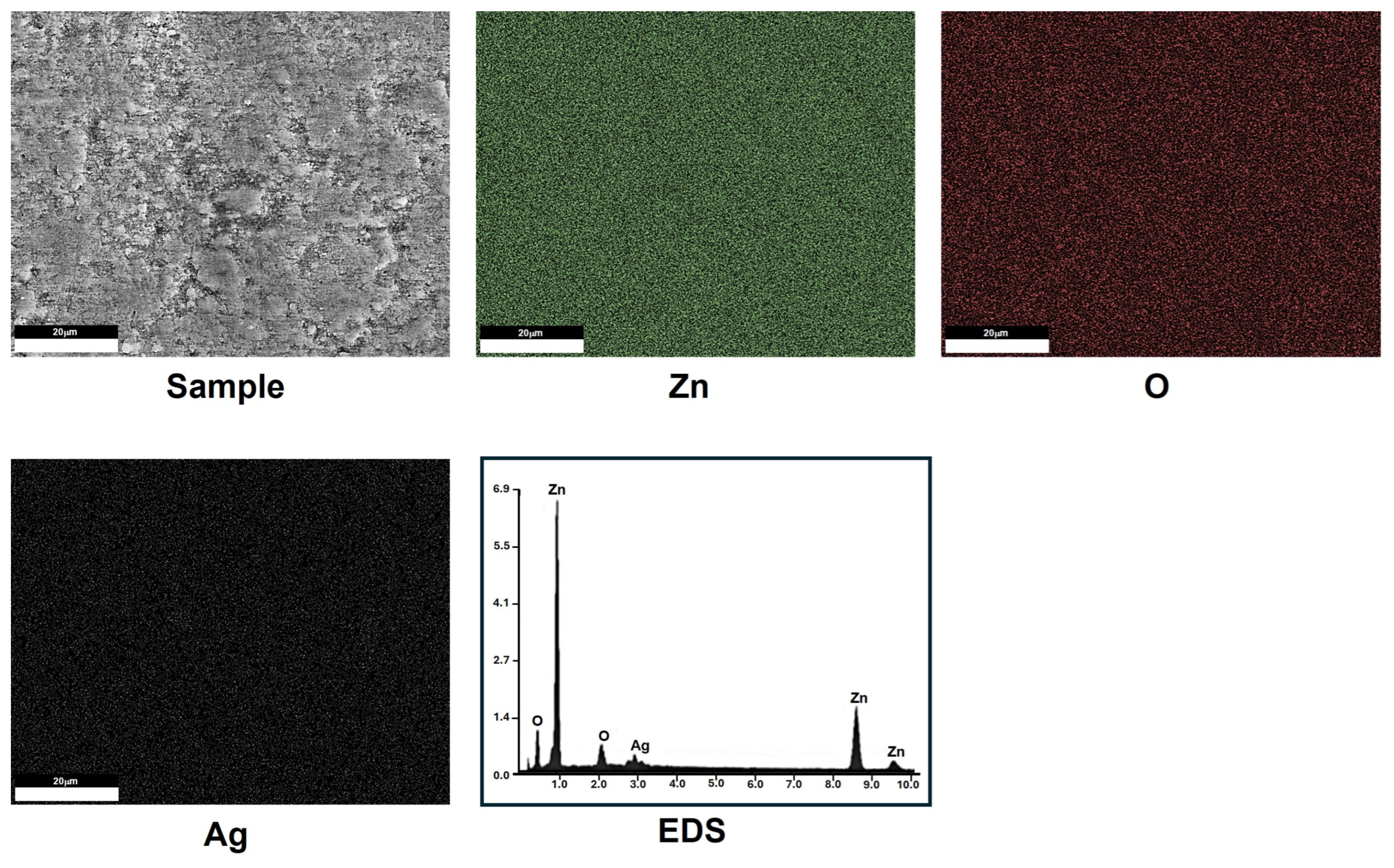
Figure 4 presents the elemental mapping of Ag-modified ZnO, where the characteristic signals of Zn and O are clearly observed, confirming that the fundamental chemical structure of the ZnO matrix is preserved after the modified process. In addition, the presence of Ag is distinctly detected in the modified samples, evidencing its successful incorporation into the system; through this analysis, the presence of silver in the material is unequivocally confirmed. Although the Ag signal corresponds to low concentrations, its homogeneous spatial distribution across the analyzed area suggests that the synthesis method enables the effective dispersion of the modifier, minimizing the formation of segregated phases favoring a uniform modification of the ZnO surface. Furthermore, the absence of additional elemental signals indicates that no significant impurities were introduced during the synthesis, supporting the chemical purity of the composite. The elemental maps also reveal a strong spatial correlation between Zn and O, consistent with the expected stoichiometry of ZnO, while the Ag signal appears to be finely distributed rather than localized, which is desirable for enhancing surface-related properties such as photocatalytic activity. Complementary Energy-Dispersive X-ray Spectroscopy (EDS) spectra reinforce these findings by displaying the characteristic peaks of Zn and O along with the detectable presence of Ag, thereby confirming the formation of a Ag-modified ZnO composite system. In general, these results demonstrate that the adopted synthesis route is effective in incorporating silver into the ZnO matrix while maintaining structural integrity and achieving a homogeneous distribution of the modifier.

3.5. Photocatalytic Activity

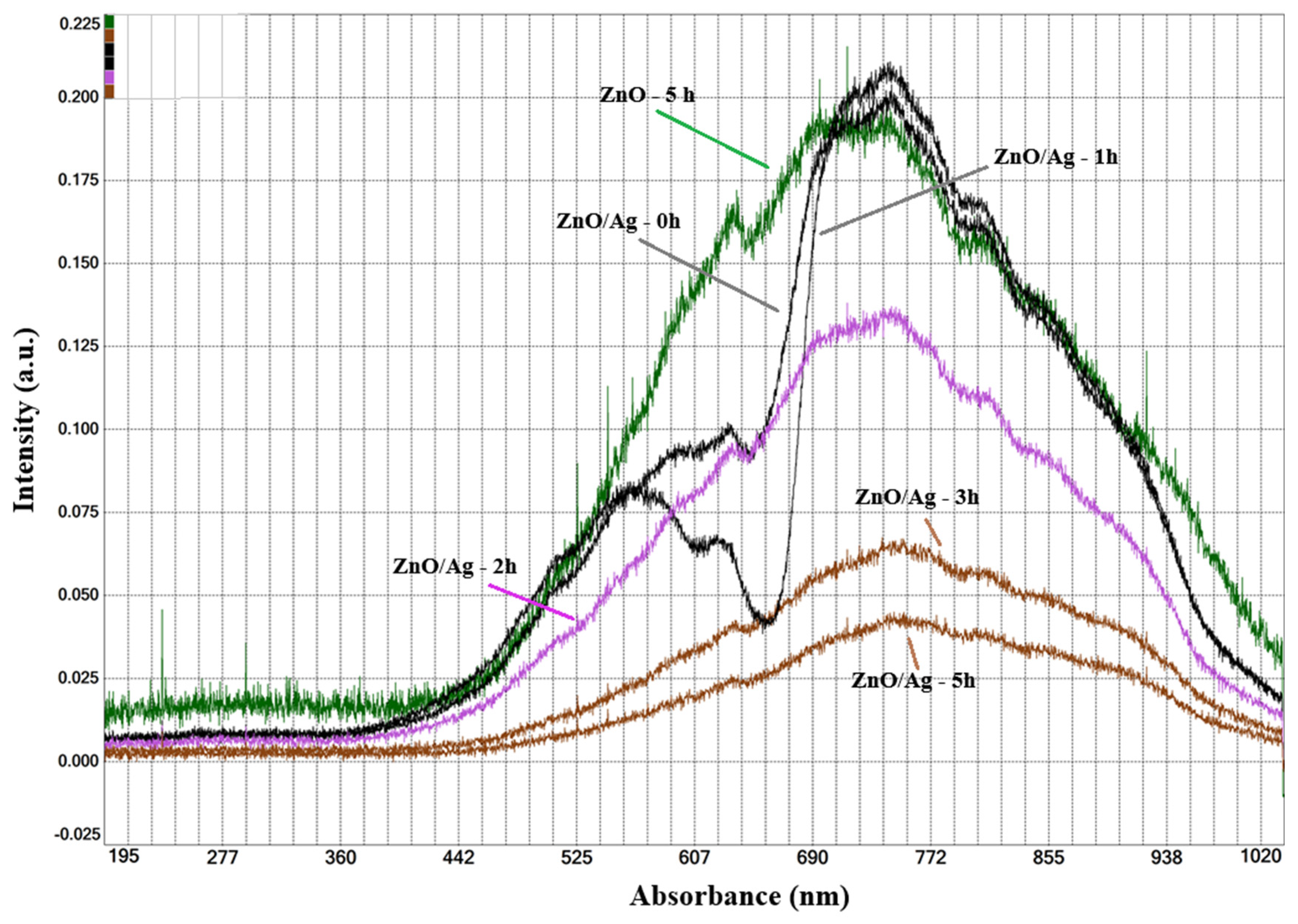
Figure 5 shows the evolution of the visible absorption spectra of methylene blue (MB) aqueous solutions treated with Ag-modified ZnO under solar irradiation. The initial sample (red curve) exhibits two absorption bands centered at 557 nm and 748 nm. Pure methylene blue (MB) exhibits an absorption peak around 664 nm [30]. The blue shift from 664 nm to 557 nm can be attributed to the high absorption at shorter wavelengths from Ag-modified ZnO as shown in Figure 5. Likewise, the red shift from 664 nm to 748 nm corresponding to the characteristic π–π* transition of MB chromophores in the red region of the visible spectrum can be also associated with the strong absorption of Ag-modified ZnO in the near-infrared region. Optical absorbance of MB at around 750 nm has previously been linked to protonation [31]. As the solar exposure time increases, a progressive decrease in absorbance is observed throughout the visible region, indicating gradual MB photodegradation. The sample treated for 1 h (green curve) already shows a bathochromic shift of the shorter-wavelength band from 557 nm to 639 nm together with a slight reduction in the 748 nm band intensity, consistent with the early-stage structural modification of MB molecules (e.g., N-demethylation and the disruption of conjugation).
With longer irradiation times, the sample for treated 2 h (pink curve) retains only the long-wavelength band but with markedly reduced absorbance, while the samples treated for 3 and 4 h exhibit the further attenuation of the entire visible spectrum. The lowest absorbance values are reached by the sample treated for 5 h (black curve), confirming that the MB concentration decreases monotonically with solar exposure time and that advanced decolorization is achieved at the final stage. The temporal evolution of the UV-Vis spectra therefore demonstrates the continuous photocatalytic degradation of MB driven by the Ag-modified ZnO system under natural sunlight.
This time-dependent spectral attenuation correlates with the crystalline structure identified by XRD. Diffraction peaks assigned to hexagonal wurtzite ZnO confirm the preservation of the host lattice, whereas the absence of metallic Ag reflections indicates that the silver content lies below the XRD detection limit, consistent with successful incorporation without lattice alteration. In this case, the preserved wurtzite ZnO phase provides the semiconductor framework, while Ag species act as electron traps and plasmonic centers that enhance visible-light absorption and prevent electron–hole recombination. Subsequently, the structurally stable Ag-modified ZnO crystalline system observed by XRD supports the progressive decrease in MB absorbance with solar irradiation time observed by UV-Vis, evidencing the efficient sunlight-driven photocatalytic removal of methylene blue from the aqueous solution [32,33,34]. The pH values of the water and the levels of solar irradiation did not vary significantly over the course of the tests; the average values were 6.86 ± 0.3 and 988 ± 22 W/m2, respectively.
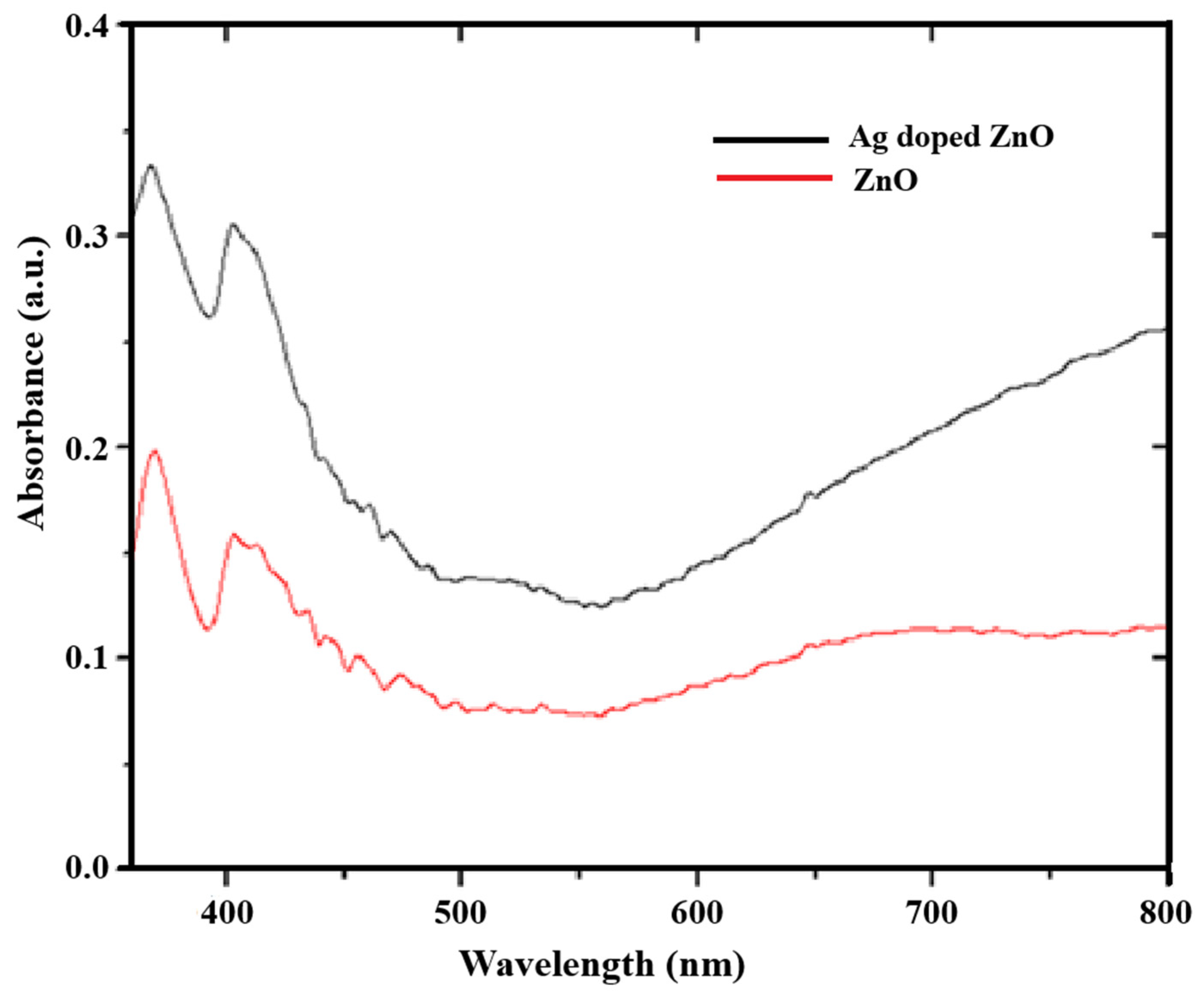
Figure 6 presents the absorbance spectra of ZnO and Ag-modified ZnO in the ultraviolet (UV) to near-infrared (NIR) range. Both materials display a prominent absorption peak at approximately 368 nm, corresponding to the intrinsic band-to-band transition of ZnO. Additionally, a secondary feature is observed around 402 nm in both samples, which may be associated with defect states or surface-related electronic transitions. As expected, the strong absorption in the UV region is characteristic of ZnO due to its wide band gap. Nevertheless, the Ag-modified ZnO sample exhibits a noticeable enhancement in overall absorbance intensity compared to the original ZnO. This increase can be attributed to the incorporation of Ag species, which may introduce localized electronic states and promote surface plasmon-related effects, thereby improving light–matter interaction. Furthermore, Figure 5 reveals a significant rise in absorbance in the NIR region, particularly around 600 nm, for the Ag-modified ZnO sample. This prolonged optical response toward longer wavelengths suggests improved solar light harvesting capability, which is highly beneficial for photocatalytic applications under natural sunlight irradiation.
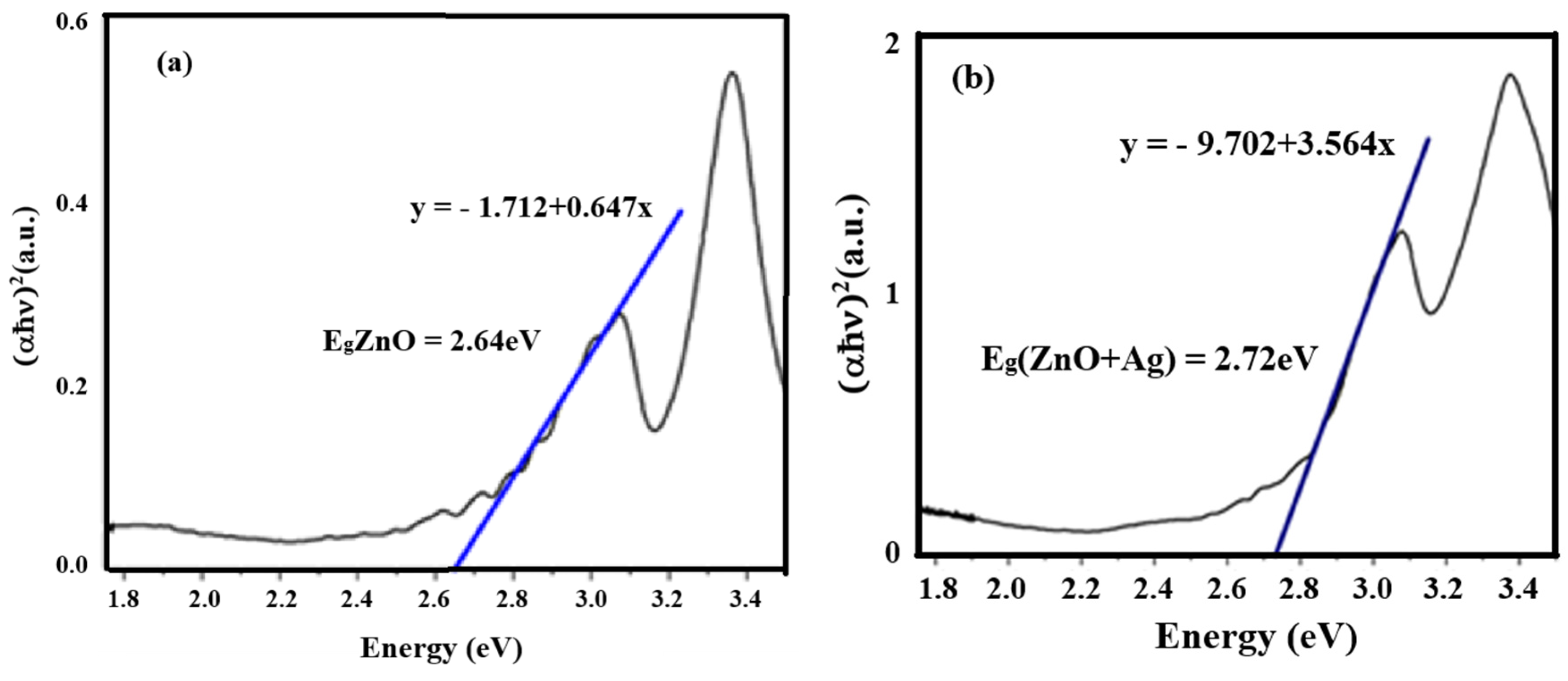
The band gap was determined via the Tauc method based on established literature procedures [35]. According to the Tauc equation for direct band gaps, αhν = A(hν − Eg)n, where α is the absorption coefficient, hν is the photon energy, A is a proportionality constant, Eg is the energy of the band gap and n is equal to ½ for the direct transition band gap. We determined the band gap energy by plotting (αhν)1/n vs. the photon energy. The band gap energies were obtained by a linear regression of the linear regions in Figure 7a,b, followed by extrapolation to (αhν)2 = 0. The band gap energy of ZnO was determined to be 2.64 eV, while Ag-modified ZnO exhibited an increased value of 2.72 eV, as shown in Figure 6. As can be seen from these results, the Ag incorporation has a moderate effect on the band structure established during the synthesis process. The ZnO sample was produced by a green route, whereas the theoretical band gap of bulk ZnO is 3.37 eV; thus, the ~0.7 eV red-shift is evidence for significant band-gap narrowing induced by the eco-friendly synthesis. This reduction is likely associated with defect states (e.g., oxygen vacancies), residual organic species and lattice disorder introduced during green processing, which create sub-band-gap levels and shift the absorption edge toward the visible region [36,37]. The relatively close values for ZnO and Ag-modified ZnO suggest that Ag mainly acts as a surface or defect-related modifier that facilitates charge separation rather than further narrowing the band gap. Although Ag modification slightly increased the band gap, both samples exhibited lower values than bulk ZnO, supporting enhanced near-visible light absorption and potential photocatalytic performance.

3.6. Kinetic Absorbance

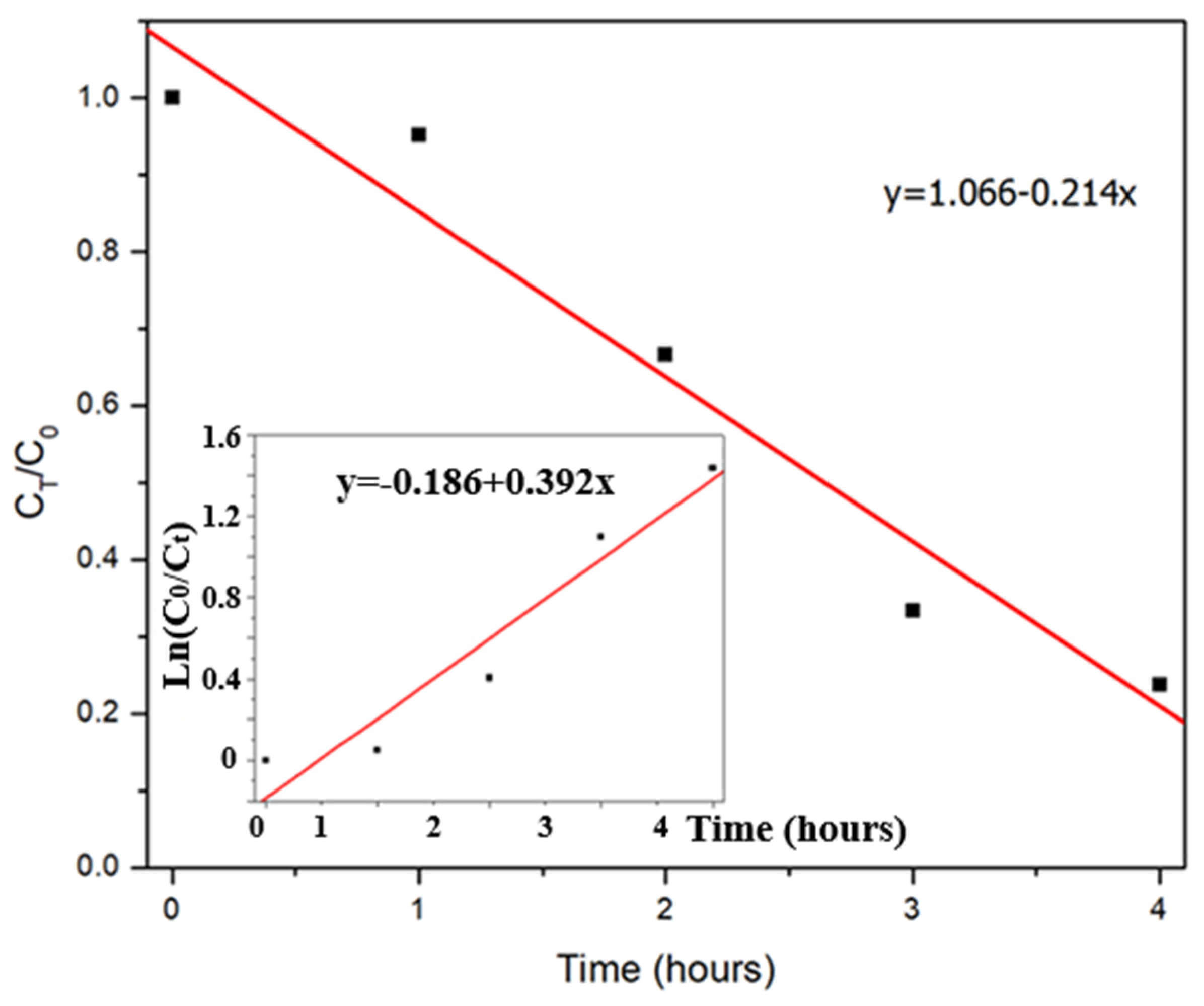
The temporal evolution of methylene blue (MB) absorbance in the presence of the Ag-modified ZnO photocatalyst under solar irradiation is presented in Figure 8. As observed, the characteristic MB absorption decreases sharply during the first time of exposure, dropping from an initial value of ~ 0.21 a.u. to approximately 0.04 a.u. after 4 h. This rapid decline is fully consistent with the UV-Vis spectral results (Figure 5), where the progressive attenuation of the main MB absorption band confirms the efficient degradation of the dye chromophore. To analyze the photodegradation kinetics, we use the pseudo-first-order kinetics model [38]. In order to calculate the apparent pseudo-first-order rate constant, kapp, we used the Langmuir–Hinshelwood model [39]: Ln(C0/Ct) = kappt. This function was plotted, and the slope corresponding to kapp was determined to have a value of 0.392 h−1 (R = 0.965, SD = 0.192), as shown in Figure 8. As already mentioned, in the Ag-modified ZnO system, Ag nanoparticles act as electron sinks and surface plasmon enhancers, promoting charge separation and facilitating the generation of reactive oxygen species (OH and O2−). These species accelerate the initial MB degradation, explaining the steep absorbance decrease, while the transient accumulation of partially oxidized intermediates accounts for the slight absorbance stabilization at longer irradiation times.
As a whole, the combined XRD, UV-Vis and kinetic absorbance analyses demonstrate that Ag deposition significantly improves the photocatalytic performance of ZnO NPs synthesized via a green chemistry approach, enabling very rapid MB degradation under solar irradiation, with the greatest amount of chromophore removal occurring within the first 4 h. This behavior highlights the synergistic effect between plasmonic Ag nanoparticles and the environmentally friendly ZnO semiconductor matrix in promoting efficient solar-driven photocatalysis.

3.7. Photocatalytic Test

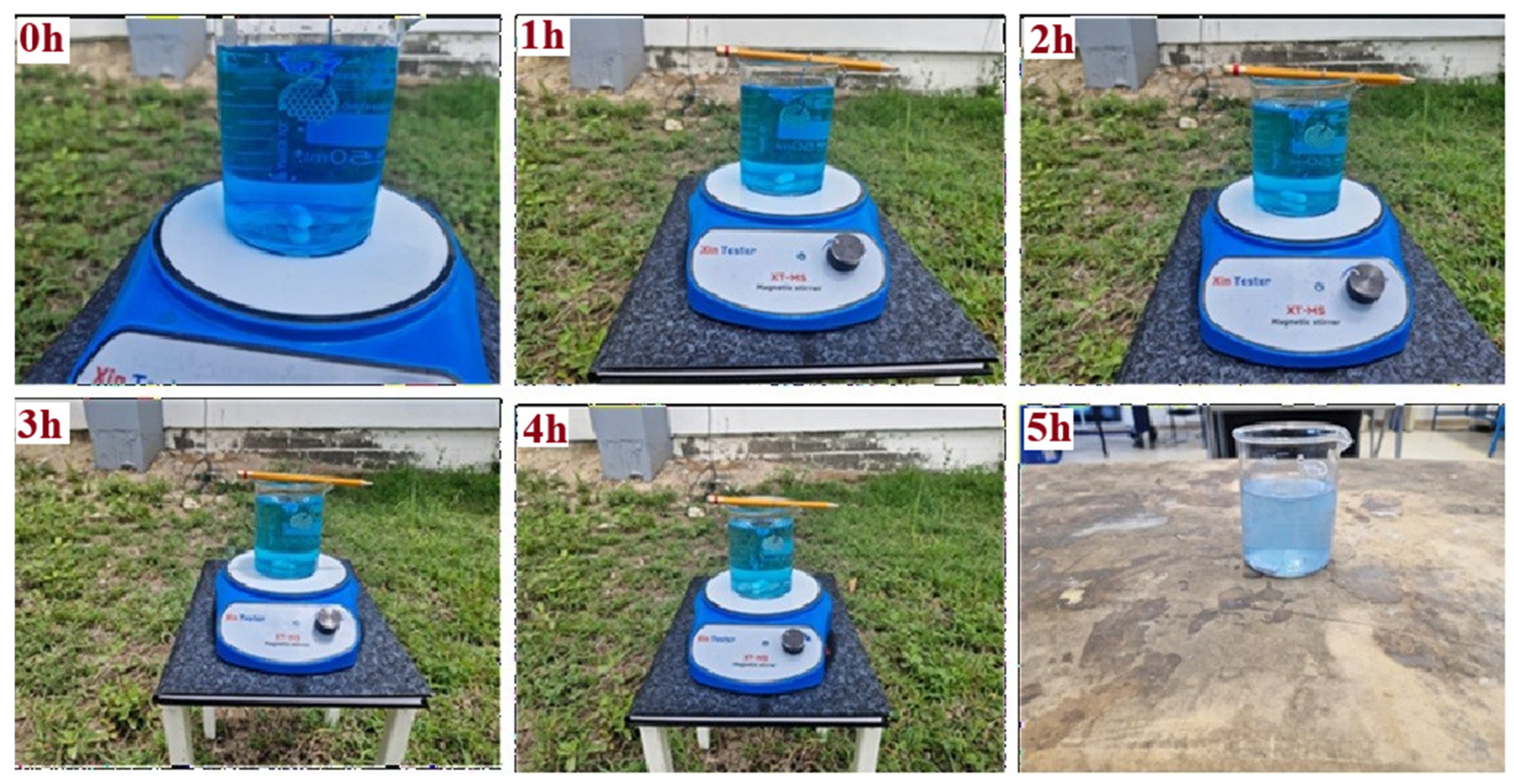
As already mentioned, the photocatalytic test was carried out for a total period of 5 h under direct solar irradiation and with constant agitation. Figure 9 visually shows that, as time passes, the blue color of the aqueous solution gradually diminishes until it becomes noticeably discolored, which demonstrates the degradation of the organic contaminant and confirms the photocatalytic activity of the Ag-modified ZnO material. This color change is associated with a decrease in the concentration of methylene blue dye in solution, resulting from its photoinduced decomposition on the surface of the photocatalyst. Under solar irradiation, ZnO generates electron–hole pairs (e−/h+) after excitation from the valence band to the conduction band. The presence of silver nanoparticles promotes charge separation due to the formation of a Schottky-type junction at the Ag-modified ZnO interface, where Ag acts as an electron trap, reducing recombination and prolonging the lifetime of the carriers. As a result, electrons transferred to silver react with dissolved oxygen to produce reactive oxygen species (O2−), while holes in ZnO oxidize water molecules or surface hydroxyl groups, generating hydroxyl radicals (OH), highly oxidizing species responsible for breaking the chromophore bonds of the dye, as previously reported [40,41,42].
Another important point is that the gradual color attenuation observed visually is consistent with the decrease in the characteristic absorbance of methylene blue in the visible region (~664 nm), confirming the kinetics of photo-assisted degradation. Furthermore, the almost complete discoloration at the end of the test suggests the high photocatalytic efficiency of the Ag-modified ZnO system under solar conditions, attributable both to the surface plasmonic effect of silver, which broadens absorption in the visible range, and to improved charge separation. Based on the water absorption values at the beginning and end of the test, the degradation efficiency of methylene blue was 79.8%. Taken together, these qualitative results support the ability of Ag-modified ZnO material to degrade organic pollutants in aqueous media through photocatalytic processes activated by sunlight.

3.8. Temperature and Electrical Conductivity

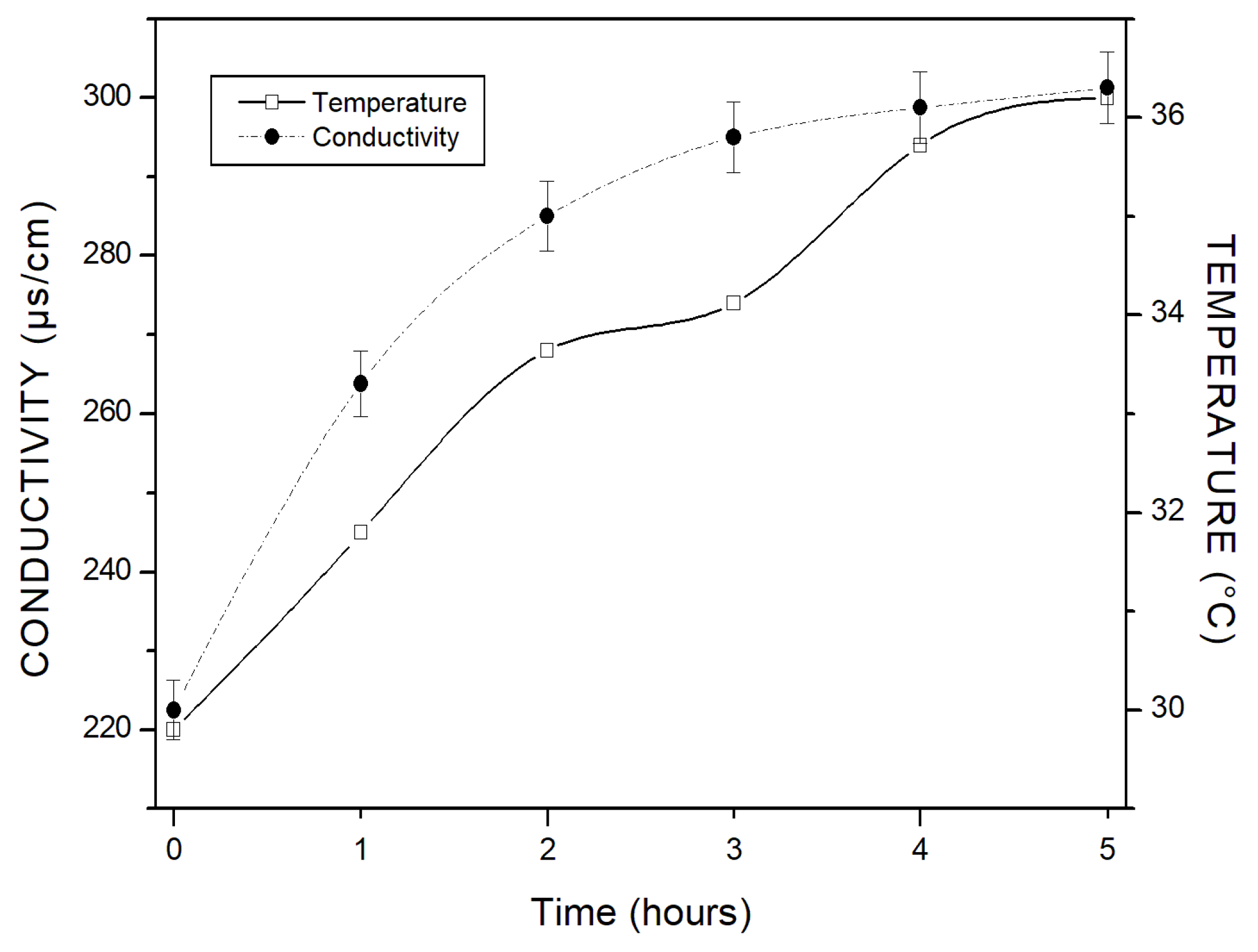
Throughout the photocatalytic experiment under direct solar irradiation, the temperature and electrical conductivity of the dye solution were monitored at hourly intervals. As shown in Figure 10, a gradual and slight temperature increase was observed over the 5 h exposure period, which is attributed to the continuous solar irradiation of the suspension containing the Ag-modified ZnO. However, the most relevant behavior is observed in the evolution of the electrical conductivity of the solution, which shows a sustained increase over the reaction time. This increase in conductivity may be associated with the generation and mobility of charge carriers induced by solar irradiation. Under illumination, ZnO is excited and promotes electrons from the valence band to the conduction band, a process that is favored by the presence of Ag, which acts as an electron trap, decreasing electron–hole recombination and prolonging the lifetime of photogenerated electrons. As a result, the concentration of charged species in the solution increases, which is directly reflected in the increase in conductivity. As already mentioned, the released electrons interact with oxygen dissolved or adsorbed from the air, leading to the formation of reactive oxygen species, such as radicals (O2−), which play a key role in the degradation of the dye. Simultaneously, photogenerated holes can react with water molecules or hydroxyl groups to form highly oxidizing radicals such as (OH). These reactive species attack the molecular structure of the contaminant, breaking the bonds responsible for the blue color initially observed. Taken together, the visual, thermal and electrical results confirm that the Ag-modified ZnO material exhibits effective photocatalytic activity under solar irradiation, promoting electron transfer processes and the generation of reactive species that lead to the degradation of the contaminant and, consequently, to the clarification of the aqueous solution.

3.9. Photocatalytic Antibacterial Activity

Table 1 presents the microbiological results obtained for contaminated water after 150 min of solar irradiation in the presence of 0.025% Ag-modified ZnO. The data reveal a significant reduction in microbial load, with total coliforms decreasing by 88.8% and fecal coliforms by more than 96%, indicating a strong disinfection capability of the system. This high efficiency can be attributed to the synergistic effect between ZnO and silver, where Ag acts as an electron trap, reducing the recombination rate of photogenerated electron–hole pairs and enhancing the formation of reactive oxygen species (ROS), such as hydroxyl radicals and superoxide ions. These species are highly oxidative and capable of damaging bacterial cell walls, membranes and intracellular components, ultimately leading to cell inactivation. Furthermore, the presence of Ag may also contribute a direct antimicrobial effect, reinforcing the overall performance of the photocatalytic process. Therefore, these results confirm that Ag-modified ZnO is a promising material for solar-driven water disinfection, significantly improving water quality by effectively eliminating pathogenic microorganisms.

4. Discussion

Collectively, the results show a clear relationship between the material’s microstructure, its optical properties and its photocatalytic performance. Granulometric and morphological analysis shows that the Ag-modified ZnO powder consists of nanoscale primary particles (~100 nm) that form submicron agglomerates (0.5–0.85 µm). This hierarchical structure is consistent between laser diffraction and SEM and is advantageous because it combines a high surface area with adequate dispersion stability, key factors for maximizing active sites in photocatalytic processes. From a structural perspective, the XRD results confirm the formation of ZnO in the highly crystalline, wurtzite-type hexagonal phase, free of secondary phases. The crystallite size (~9.8 nm) supports the nanocrystalline nature of the material, which is essential for promoting a higher density of active sites without compromising charge transport. The absence of Ag peaks suggests effective dispersion or incorporation at low levels, sufficient to modify surface properties without altering the crystal lattice. With regard to optical properties, it is observed that green synthesis induces a significant reduction in the bandgap (~2.72 eV compared to the theoretical 3.37 eV), shifting the absorption into the visible region. Although Ag doping does not substantially alter this value, it does increase the absorbance in the UV-Vis-NIR range, which is attributed to plasmonic effects and the introduction of surface electronic states. This improves light–matter interaction and enhances the utilization of solar radiation. These structural and optical properties are directly reflected in the photocatalytic activity. The degradation of methylene blue shows a progressive decrease in absorbance over time, with rapid kinetics in the first few hours, followed by a stabilization phase associated with reaction intermediates. The efficiency of the process is due to the action of Ag as an electron trap, which reduces electron–hole recombination and promotes the formation of reactive species such as OH and O2− [40,41,42]. Finally, changes in electrical conductivity and visual discoloration confirm the formation of charged species and the mineralization of the contaminant. Taken together, the results demonstrate a synergistic effect between the ZnO nanocrystalline structure obtained via green synthesis and the Ag-induced surface modification, enabling efficient photocatalysis under solar irradiation.
It is important to comment that biological extracts (derived from plants, bacteria or fungi) contain a wide variety of active compounds whose concentrations can vary depending on factors such as species, the age of the organism, climatic conditions and the extraction method; this variability means that the resulting properties of the nanoparticles such as size, shape and physicochemical characteristics are not always reproducible, which hinders the standardization of the process on an industrial scale. Furthermore, compared to conventional chemical or physical methods, green synthesis offers less control over key parameters such as the size, morphology, crystallinity and dispersion of nanoparticles, which can affect their performance in specific applications.

5. Conclusions

This study demonstrated the viability of a green, sustainable and reproducible synthesis route for obtaining ZnO NPs using Prosopis tamaulipana plant extract as a reducing and stabilizing agent. The developed method enabled the successful formation of ZnO NPs with a wurtzite-type hexagonal structure, high phase purity and a crystallite size in the nanometer range, which is highly favorable for photocatalytic applications;
The incorporation of silver through a mechanical mixing process led to the production of Ag-modified ZnO materials with suitable structural and morphological characteristics, maintaining a high effective surface area associated with the presence of submicrometric agglomerates formed by primary particles of nanometric sizes. SEM and size distribution analyses confirmed that these agglomerates are composed of fine particles, which favors light–matter interaction and the generation of active sites;
Photocatalytic tests under direct solar irradiation showed efficient degradation of the organic pollutant used as a tracer, accompanied by a sustained increase in the electrical conductivity of the solution, attributable to the generation and mobility of charge carriers and the formation of reactive oxygen species. The presence of Ag acted as an electron trap, reducing electron–hole recombination and improving the photocatalytic efficiency of the system;
The results further indicate that the sustainable synthesis approach does not compromise structural crystallinity or photocatalytic efficiency, while offering an eco-friendly alternative for the preparation of high-performance Ag-modified ZnO photocatalysts;
In summary, the results confirm that Ag-modified ZnO materials synthesized using a green approach are multifunctional, efficient and environmentally friendly with high potential for applications in water purification and environmental remediation under solar irradiation conditions.

Author Contributions

Conceptualization, M.T.M.-S. and E.R.-R. methodology, J.T.-C. and C.A.C.-A.; validation, J.A.C.-R.; formal analysis, M.T.M.-S., C.A.C.-A. and E.R.-R.; investigation, M.T.M.-S., C.A.C.-A. and E.R.-R.; data curation, J.T.-C. and J.A.C.-R.; writing—original draft preparation, M.T.M.-S., C.A.C.-A. and E.R.-R.; writing—review and editing, J.T.-C. and J.A.C.-R.; supervision, E.R.-R.; project administration, M.T.M.-S. and E.R.-R. All authors have read and agreed to the published version of the manuscript.

Funding

This research received no external funding.

Data Availability Statement

The original contributions presented in this study are included in the article. Further inquiries can be directed to the corresponding authors.

Conflicts of Interest

The authors declare no conflicts of interest.

Abbreviations

The following abbreviations are used in this manuscript:
NPsNanoparticles
ROSReactive oxygen species
SEMScanning electron microscopy
XRDX-ray diffraction
UVUltraviolet
NIRNear-infrared
MBMethylene blue

References

  1. Ogochukwu, O.O.; Fabiyi, M.B.; Aworunse, O.S.; Oyewole, O.A.; Isibor, P.O. Nanoparticle Properties and Characterization. In Environmental Nanotoxicology; Isibor, P.O., Devi, G., Enuneku, A.A., Eds.; Springer: Cham, Switzerland, 2024. [Google Scholar] [CrossRef]
  2. Gupta, D.; Varghese, B.S.; Suresh, M.; Panwar, C.; Gupta, T.K. Nanoarchitectonics: Functional nanomaterials and nanostructures—A review. J. Nanoparticle Res. 2022, 24, 196. [Google Scholar] [CrossRef]
  3. Xu, Y.; Zhang, Y.; Li, C.; Ye, Z.; Bell, S.E.J. SERS as a Probe of Surface Chemistry Enabled by Surface-Accessible Plasmonic Nanomaterials. Acc. Chem. Res. 2023, 56, 2072–2083. [Google Scholar] [CrossRef] [PubMed]
  4. Elhenawy, S.; Khraisheh, M.; AlMomani, F.; Al-Ghouti, M.; Selvaraj, R.; Al-Muhtaseb, A. Emerging Nanomaterials for Drinking Water Purification: A New Era of Water Treatment Technology. Nanomaterials 2024, 14, 1707. [Google Scholar] [CrossRef]
  5. Raj, V.J.; Ghosh, R.; Girigoswami, A.; Girigoswami, K. Application of zinc oxide nanoflowers in environmental and biomedical science. BBA Adv. 2022, 2, 100051. [Google Scholar] [CrossRef]
  6. Pal, G.; Rai, P.; Pandey, A. Chapter 1–Green synthesis of nanoparticles: A greener approach for a cleaner future. In Micro and Nano Technologies; Shukla, A.K., Iravani, S., Eds.; Elsevier: Amsterdam, The Netherlands, 2019; pp. 1–26. [Google Scholar] [CrossRef]
  7. El-Kalliny, A.S.; Abdel-Wahed, M.; El-Zahhar, A.A.; Hamza, I.A.; Gad-Allah, T.A. Nanomaterials: A review of emerging contaminants with potential health or environmental impact. Discov. Nano 2023, 18, 68. [Google Scholar] [CrossRef]
  8. Khan, H.; Piccolella, S.; Pacifico, S. Harnessing plant extracts for green nanoparticle synthesis: Toward a sustainable future. Mater. Today Sustain. 2025, 31, 101195. [Google Scholar] [CrossRef]
  9. Kurul, F.; Doruk, B.; Topkaya, S.N. Principles of green chemistry: Building a sustainable future. Discov. Chem. 2025, 2, 68. [Google Scholar] [CrossRef]
  10. Abaday, M.M.; Mohammed, D.M.; Soliman, T.N.; Shalaby, R.A.; Sakr, F.A. Sustainable synthesis of nanomaterials using different renewable sources. Bull. Natl. Res. Cent. 2025, 49, 24. [Google Scholar] [CrossRef]
  11. Sah, M.K.; Thakuri, B.S.; Swami, K.R.; Anwar, F.; Edbey, K.; El-Hashani, A.; Ismael, R.G.; Gardas, R.L.; Bhattarai, A. Nanoparticles: Integrating sustainability for circular economy and eco-UN-SDGs through multidisciplinary synthesis. Nanotechnol. Environ. Eng. 2025, 10, 86. [Google Scholar] [CrossRef]
  12. Osman, A.I.; Zhang, Y.; Farghali, M.; Rashwan, A.K.; Eltaweil, A.S.; El-Monaem, E.M.A.; Mohamed, I.M.A.; Badr, M.M.; Ihara, I.; Rooney, D.W.; et al. Synthesis of green nanoparticles for energy, biomedical, environmental, agricultural, and food applications: A review. Environ. Chem. Lett. 2024, 22, 841–887. [Google Scholar] [CrossRef]
  13. Bokolia, M.; Baliyan, D.; Kumar, A.; Das, R.; Kumar, R.; Singh, B. Biogenic synthesis of nanoparticles using microbes and plants: Mechanisms and multifaceted applications. Int. J. Environ. Anal. Chem. 2025, 105, 2069–2097. [Google Scholar] [CrossRef]
  14. Harini, P.; Uptal, D. Green nanomaterials from Senna (Cassia angustifolia): Phytochemical assisted fabrication of metal and metal oxide nanoparticles. Plant Nano Biol. 2026, 15, 100234. [Google Scholar] [CrossRef]
  15. El-Khawaga, A.M.; Elsayed, M.A.; Gobara, M.; Suliman, A.A.; Hashem, A.H.; Zaher, A.A.; Mohsen, M.; Salem, S.S. Green synthesized ZnO nanoparticles by Saccharomyces cerevisiae and their antibacterial activity and photocatalytic degradation. Biomass Convers. Biorefin. 2025, 15, 2673–2684. [Google Scholar] [CrossRef]
  16. Zuhrotun, A.; Oktaviani, D.J.; Hasanah, A.N. Biosynthesis of Gold and Silver Nanoparticles Using Phytochemical Compounds. Molecules 2023, 28, 3240. [Google Scholar] [CrossRef] [PubMed]
  17. Suchikova, Y.; Nazarovets, S.; Konuhova, M.; Popov, A.I. Binary Oxide Ceramics (TiO2, ZnO, Al2O3, SiO2, CeO2, Fe2O3 and WO3) for Solar Cell Applications: A Comparative and Bibliometric Analysis. Ceramics 2025, 8, 119. [Google Scholar] [CrossRef]
  18. Alshameri, A.W.; Owais, M. Antibacterial and cytotoxic potency of the plant-mediated synthesis of metallic nanoparticles Ag NPs and ZnO NPs: A review. OpenNano 2022, 8, 100077. [Google Scholar] [CrossRef]
  19. Raghavendra, V.B.; Shankar, S.; Govindappa, M.; Pugazhendhi, A.; Sharma, M.; Nayaka, S.C. Green Synthesis of Zinc Oxide Nanoparticles (ZnO NPs) for Effective Degradation of Dye, Polyethylene and Antibacterial Performance in Waste Water Treatment. J. Inorg. Organomet. Polym. Mater. 2021, 32, 614–630. [Google Scholar] [CrossRef]
  20. Murali, R.; Amirthavalli, C. Defect assisted Reactive Oxygen Species generation for photocatalytic degradation of methylene blue by nano-structured zinc oxide synthesized in CTAB medium. Mater. Chem. Phys. 2023, 294, 127014. [Google Scholar] [CrossRef]
  21. Singh, K.K.; Singh, A.; Rai, S. A study on nanomaterials for water purification. Mater. Today Proc. 2022, 51, 1157–1163. [Google Scholar] [CrossRef]
  22. Quevedo-Robles, R.V.; Gaynor-Soto, N.; Barrios-Navarro, F.A.; Vilchis-Nestor, A.R.; Rosillo de la Torre, A.; Luque-Morales, P.A. Optical properties, photocatalytic activity, and antimicrobial performance of plant-based ZnO semiconductor nanoparticles for wastewater treatment. Opt. Mater. 2025, 167, 117305. [Google Scholar] [CrossRef]
  23. Al-Ghafry, S.S.A.; Al-Shidhani, H.A.; Al-Farsi, B.; Sofin, R.G.S.; Al-Hosni, A.S.; Alsharji, Z.; Al-Sabahi, J.; Al-Abri, M.Z. The photocatalytic degradation of phenol under solar irradiation using microwave-assisted Ag-doped ZnO nanostructures. Opt. Mater. 2023, 135, 113272. [Google Scholar] [CrossRef]
  24. Zheng, A.L.T.; Abdullah, C.A.C.; Chung, E.L.T.; Andou, Y. Recent progress in visible light-doped ZnO photocatalyst for pollution control. Int. J. Environ. Sci. Technol. 2023, 20, 5753–5772. [Google Scholar] [CrossRef]
  25. Verma, A.; Kumar, N.; Agarwal, R.; Chauhan, S.; Jain, V.K.; Sengupta, S. Fabrication and evaluation of ZnO-Ag nanocomposites exhibiting enhanced antibacterial properties and their potential applications. React. Kinet. Mech. Catal. 2024, 137, 3037–3045. [Google Scholar] [CrossRef]
  26. Huang, C.; Cai, Y.; Chen, X.; Ke, Y. Silver-based nanocomposite for fabricating high performance value-added cotton. Cellulose 2022, 29, 723–750. [Google Scholar] [CrossRef]
  27. Tabassam, L.; Khan, M.J.; Hussain, S.; Khattak, S.A.; Shah, S.K.; Bhatti, A.S. Structural, optical and antimicrobial characteristics of ZnO green nanoparticles. J. Sol-Gel Sci. Technol. 2022, 101, 401–410. [Google Scholar] [CrossRef]
  28. Szczyglewska, P.; Feliczak-Guzik, A.; Nowak, I. Nanotechnology-General Aspects: A Chemical Reduction Approach to the Synthesis of Nanoparticles. Molecules 2023, 28, 4932. [Google Scholar] [CrossRef] [PubMed]
  29. Microbiological Test Methods. NOM-210-SSA1. 2015. Available online: https://platiica.economia.gob.mx/normalizacion/nom-210-ssa1-2014/ (accessed on 14 April 2026).
  30. Khan, I.; Saeed, K.; Zekker, I.; Zhang, B.; Hendi, A.H.; Ahmad, A.; Ahmad, S.; Zada, N.; Ahmad, H.; Shah, L.A.; et al. Review on Methylene Blue: Its Properties, Uses, Toxicity and Photodegradation. Water 2022, 14, 242. [Google Scholar] [CrossRef]
  31. Deng, G.; Zhang, S.; Peng, X.; Ma, G.; Liu, L.; Tan, Y.; Gong, P.; Tang, B.Z.; Cai, L.; Zhang, P. Methylene Blue: An FDA-Approved NIR-II Fluorogenic Probe with Extremely Low pH Responsibility for Hyperchlorhydria Imaging. Chem. Biomed. Imaging 2024, 2, 683–688. [Google Scholar] [CrossRef]
  32. Houas, A.; Lachheb, H.; Ksibi, M.; Elaloui, E.; Guillard, C.; Herrmann, J.-M. Photocatalytic degradation pathway of methylene blue in water. Appl. Catal. B 2001, 31, 145–157. [Google Scholar] [CrossRef]
  33. Ong, C.B.; Ng, L.Y.; Mohammad, A.W. A review of ZnO nanoparticles as solar photocatalysts: Synthesis, mechanisms and applications. Renew. Sustain. Energy Rev. 2018, 81, 536–551. [Google Scholar] [CrossRef]
  34. Modi, S.; Yadav, V.K.; Amari, A.; Alyami, A.Y.; Gacem, A.; Harharah, H.N.; Fulekar, M.H. Photocatalytic Degradation of Methylene Blue Dye from Wastewater by Using Doped Zinc Oxide Nanoparticles. Water 2023, 15, 2275. [Google Scholar] [CrossRef]
  35. Brik, M.G.; Srivastava, A.M.; Popov, A.I. A few common misconceptions in the interpretation of experimental spectroscopic data. Opt. Mater. 2022, 127, 112276. [Google Scholar] [CrossRef]
  36. Mia, S.; Farook, O.; Hossain, T.; Azad, A.S.; Bhowmik, S.; Alam, A. Green synthesis of ZnO and Ag- ZnO nanocrystalline materials: Optical band gap engineering and multi-model XRD size–strain investigation. Results Chem. 2026, 20, 103022. [Google Scholar] [CrossRef]
  37. Gherbi, B.; Laouini, S.E.; Meneceur, S.; Bouafia, A.; Hemmami, H.; Tedjani, M.L.; Thiripuranathar, G.; Barhoum, A.; Menaa, F. Effect of pH Value on the Bandgap Energy and Particles Size for Biosynthesis of ZnO Nanoparticles: Efficiency for Photocatalytic Adsorption of Methyl Orange. Sustainability 2022, 14, 11300. [Google Scholar] [CrossRef]
  38. Rytwo, G.; Zelkind, A.L. Evaluation of Kinetic Pseudo-Order in the Photocatalytic Degradation of Ofloxacin. Catalysts 2021, 12, 24. [Google Scholar] [CrossRef]
  39. Kanwal, F.; Javed, T.; Hussain, F.; Wasim, M.; Batool, M. Enhanced dye photodegradation through ZnO and ZnO-based photocatalysts doped with selective transition metals: A review. Environ. Technol. Rev. 2024, 13, 754–793. [Google Scholar] [CrossRef]
  40. Nosaka, Y.; Nosaka, A.Y. Generation and detection of reactive oxygen species in photocatalysis. Chem. Rev. 2017, 117, 11302–11336. [Google Scholar] [CrossRef]
  41. Regmi, C.; Joshi, B.; Ray, S.K.; Gyawali, G.; Pandey, R.P. Understanding Mechanism of Photocatalytic Microbial Decontamination of Environmental Wastewater. Front. Chem. 2018, 6, 33. [Google Scholar] [CrossRef]
  42. Bhosale, A.S.; Abitkar, K.K.; Sadalage, P.S.; Pawar, K.D.; Garadkar, K.M. Photocatalytic and antibacterial activities of ZnO nanoparticles synthesized by chemical method. J. Mater. Sci. Mater. Electron. 2021, 32, 20510–20524. [Google Scholar] [CrossRef]
Figure 1. Particle size and cumulative distribution.
Cleantechnol 08 00087 g001
Figure 2. SEM micrographs of ZnO and Ag-modified ZnO milled powders.
Cleantechnol 08 00087 g002
Figure 3. XRD pattern of green ZnO synthesized powder.
Cleantechnol 08 00087 g003
Figure 4. EDS element distribution maps of Ag-modified ZnO.
Cleantechnol 08 00087 g004
Figure 5. Absorbance behavior of Ag-modified ZnO and pure ZnO under visible-light irradiation over 300 min.
Cleantechnol 08 00087 g005
Figure 6. Optical absorbance of ZnO and Ag-modified ZnO.
Cleantechnol 08 00087 g006
Figure 7. Band gap for: (a) ZnO and (b) Ag-modified ZnO.
Cleantechnol 08 00087 g007
Figure 8. Photodegradation kinetics of methylene blue (MB) at 748 nm in the presence of the Ag-modified ZnO photocatalyst under solar irradiation.
Cleantechnol 08 00087 g008
Figure 9. Photographic images showing the progressive color degradation of water exposed to sunlight in the presence of Ag-modified ZnO.
Cleantechnol 08 00087 g009
Figure 10. Effect of sunlight exposure time on the temperature and electrical conductivity of water in the presence of Ag-modified ZnO.
Cleantechnol 08 00087 g010
Table 1. Microbiological analysis.
ContaminantOriginal
(NMP/100 mL)
Treated
(NMP/100 mL)
Efficiency
(%)
Total coliforms5846588.8
Fecal coliforms41<1.696
Disclaimer/Publisher’s Note: The statements, opinions and data contained in all publications are solely those of the individual author(s) and contributor(s) and not of MDPI and/or the editor(s). MDPI and/or the editor(s) disclaim responsibility for any injury to people or property resulting from any ideas, methods, instructions or products referred to in the content.