
Article

Catalytic Upgrading of Microalgae-Based Bio-Oils for Sustainable Jet Fuel Production

1
Bioenergy and Biorefineries Unit, National Laboratory of Energy and Geology, I.P. (UBB/LNEG), Estrada Paço do Lumiar, 22, 1649-038 Lisbon, Portugal
2
MARE—Marine and Environmental Sciences Centre & ARNET, Aquatic Research Network Associated Laboratory, Department of Sciences and Environmental Engineering, NOVA School of Science and Technology, NOVA University Lisbon, Campus da Caparica, 2829-516 Caparica, Portugal
3
MEtRiCS, Mechanical Engineering and Resource Sustainability Centre, NOVA School of Science and Technology, NOVA University Lisbon, Campus da Caparica, 2829-516 Caparica, Portugal
*
Authors to whom correspondence should be addressed.
Clean Technol. 2026, 8(2), 34; https://doi.org/10.3390/cleantechnol8020034

Submission received: 9 December 2025 / Revised: 27 February 2026 / Accepted: 2 March 2026 / Published: 5 March 2026

Abstract

The transition to sustainable energy systems has intensified the search for renewable alternatives to reduce greenhouse gas emissions and reliance on fossil fuels. In this context, microalgae have emerged as a promising third-generation feedstock for biofuel production due to their rapid development, high lipid content, and ability to grow in wastewater without competing with freshwater resources. In this study, the hydrotreatment of biocrudes derived from C. vulgaris, T. obliquus, and a mixed microalgal culture cultivated in domestic wastewater is investigated. Catalytic upgrading was applied using sulphided CoMo/Al2O3 (sCoMo) and Pt/Al2O3 catalysts. The results demonstrated that catalytic upgrading enhanced the upgraded bio-oils’ quality compared to non-catalysed reactions, confirming the crucial role of catalysts in improving bio-oil properties. Compared with the Pt catalyst, sCoMo produced higher yields of upgraded bio-oil, greater enrichment in carbon and hydrogen, and higher heating value (HHV), while effectively enhancing nitrogen and oxygen removal. However, when compared with the non-sulphided CoMo, the sulphiding treatment did not significantly improve denitrogenation and treated oil yields. The highest fraction of components within the jet fuel boiling range (37.7%) was obtained using a Pt catalyst, while the non-catalysed process yielded the lowest (26.6%). In this sense, catalytic upgrading of microalgae-based biocrude represents an important step towards the production of advanced and environmentally sustainable fuels.

1. Introduction

The continuous reliance on fossil fuels has accelerated the depletion of finite natural resources and intensified GHG emissions, contributing to climate change and global instability [1]. The urgent need to transition to sustainable energy systems has stimulated extensive research into alternative energy sources that can reduce environmental footprints. Among these alternatives, third-generation biofuels, derived from microalgae, have gained increasing attention due to their potential to mitigate emissions and avoid competition with food-based resources which characterise first and second-generation biofuels [2]. Producing renewable liquid fuels from such sources represents one of the most promising frontiers in sustainable engineering [3].
In this sense, microalgae have emerged as a highly promising feedstock for renewable fuel production, given their rapid growth rates, high lipid content, and flexibility to grow in diverse environments, including wastewater [4,5,6,7]. Their cultivation does not compete with arable land or freshwater resources, and their ability to fix atmospheric CO2 enhances their environmental benefits [6]. Additionally, microalgae can efficiently remove nutrients and organic contaminants from wastewater while converting waste streams into valuable biomass for biofuel production. This advantage aligns closely with the biorefinery concept, in which waste treatment is integrated with the recovery of high-value resources, to improve the sustainability of the process and contributing to the circular economy [8,9].
It is important to highlight that a wide diversity of microalgal species remains underexplored for biofuel production. Recent studies have emphasised that the application of modern biotechnology tools, such as strain selection, can significantly enhance biomass productivity and fuel properties [10,11,12,13]. Comprehensive reviews have demonstrated that different species exhibit distinct biochemical compositions and conversion behaviours, which strongly influence downstream processing and fuel quality [10,11]. Therefore, expanding research beyond conventionally studied monocultures to include both isolated species and naturally occurring mixed microalgal cultures is essential to fully exploit the potential of microalgae-based biofuels.
Among the available technologies for converting biomass into bio-oil, hydrothermal liquefaction (HTL) has attracted considerable attention for its ability to process wet biomass without the need for energy-intensive drying [8]. HTL can produce bio-crude from the entire biomass and can also be applied to a wide range of feedstocks, including various types of residues and non-algal biomasses [5]. In this sense, the elimination of the drying step, combined with the flexibility to handle various feedstocks, makes HTL a cost- and energy-efficient conversion route [8]. Although the resulting biocrude already exhibits high energy density, it still contains significant amounts of oxygen, nitrogen, and sulphur, which can reduce its stability and increase viscosity [14].
To comply with fuel specifications, microalgae-based biocrude usually requires catalytic upgrading to eliminate heteroatoms and increase its energy content [15]. The catalytic upgrading process in the presence of hydrogen converts biocrude into upgraded bio-oil, gas, coke, and water-soluble compounds (WSC). The catalytic hydrodeoxygenation (HDO) process is favoured over other upgrading routes as it facilitates oxygen removal mainly as water, while simultaneously increasing the H/C ratio and reducing the O/C ratio [16]. In parallel, hydrodenitrogenation (HDN) and hydrodesulphurization (HDS) reactions lead to the conversion of nitrogen and sulphur into ammonia (NH3) and hydrogen sulphide (H2S), respectively [15].
Catalytic hydroprocessing using CoMo/Al2O3 and Pt/Al2O3 catalysts has demonstrated high effectiveness in reducing nitrogen and oxygen-containing compounds while increasing hydrocarbon yields [14,17]. Patel et al. [18] upgraded algal crude oil using 10 wt% of Pt/Al2O3 catalyst, obtaining an upgraded bio-oil yield of approximately 65%, along with 9.5% of nitrogen removal and 84.0% of oxygen removal. Silva et al. [15] processed a biocrude derived from a microalgal mixed culture using 33 wt% of CoMo/Al2O3 loading. The authors achieved 70.3% of treated oil production, with 32.7% of denitrogenation and 3.6% of deoxygenation. Mustapha et al. [19] performed the upgrading of a T. obliquus bio-oil using Zr-HZSM-5 and obtained 52.8% of bio-oil yield with 1.4 and 10.5% of nitrogen and oxygen levels, respectively.
In recent years, the development of microalgae-based aviation fuels has gained strategic importance as the aviation industry seeks carbon-neutral alternatives to conventional jet fuel [1,20]. Bio-jet fuel derived from upgraded algal biocrude aligns with international initiatives to reduce aviation emissions and represents a viable pathway toward achieving long-term sustainability in global air transport.
In this sense, this work aims to compare the catalytic performance of two commercial and relevant catalysts (sulphided CoMo/Al2O3 and Pt/Al2O3) in the hydrodeoxygenation and hydrodenitrogenation of bio-oils produced from three microalgal feedstocks (C. vulgaris, T. obliquus, and a mixed culture of microalgae and bacteria). By simultaneously addressing catalyst type, catalyst state, and feedstock variability, this study provides a comprehensive and novel assessment of catalytic upgrading for microalgae-derived bio-oils. Unlike previous studies that typically evaluate a single catalyst with different microalgal feedstocks, or compare different catalysts using the same biomass, this work integrates two commercial and relevant catalysts (Pt/Al2O3 and sulphided CoMo/Al2O3) with three distinct microalgal biomasses (T. obliquus, C. vulgaris, and a mixed culture), all cultivated in domestic wastewater. Moreover, the catalytic performance was systematically compared with non-catalytic experiments, using both reused sulphided CoMo/Al2O3, and non-sulphided CoMo/Al2O3, allowing the effects of catalyst activation and reuse to be clearly assessed. This integrated approach provides a more realistic and comprehensive understanding of catalyst–feedstock interactions while offering practical guidance on catalyst selection for upgrading microalgae-based bio-oils. Furthermore, this study addresses the existing gap in the literature by analysing the fuel properties of the upgraded bio-oils and evaluating their potential as intermediates for bio-jet fuel production.

2. Materials and Methods

2.1. Microalgae Cultivation

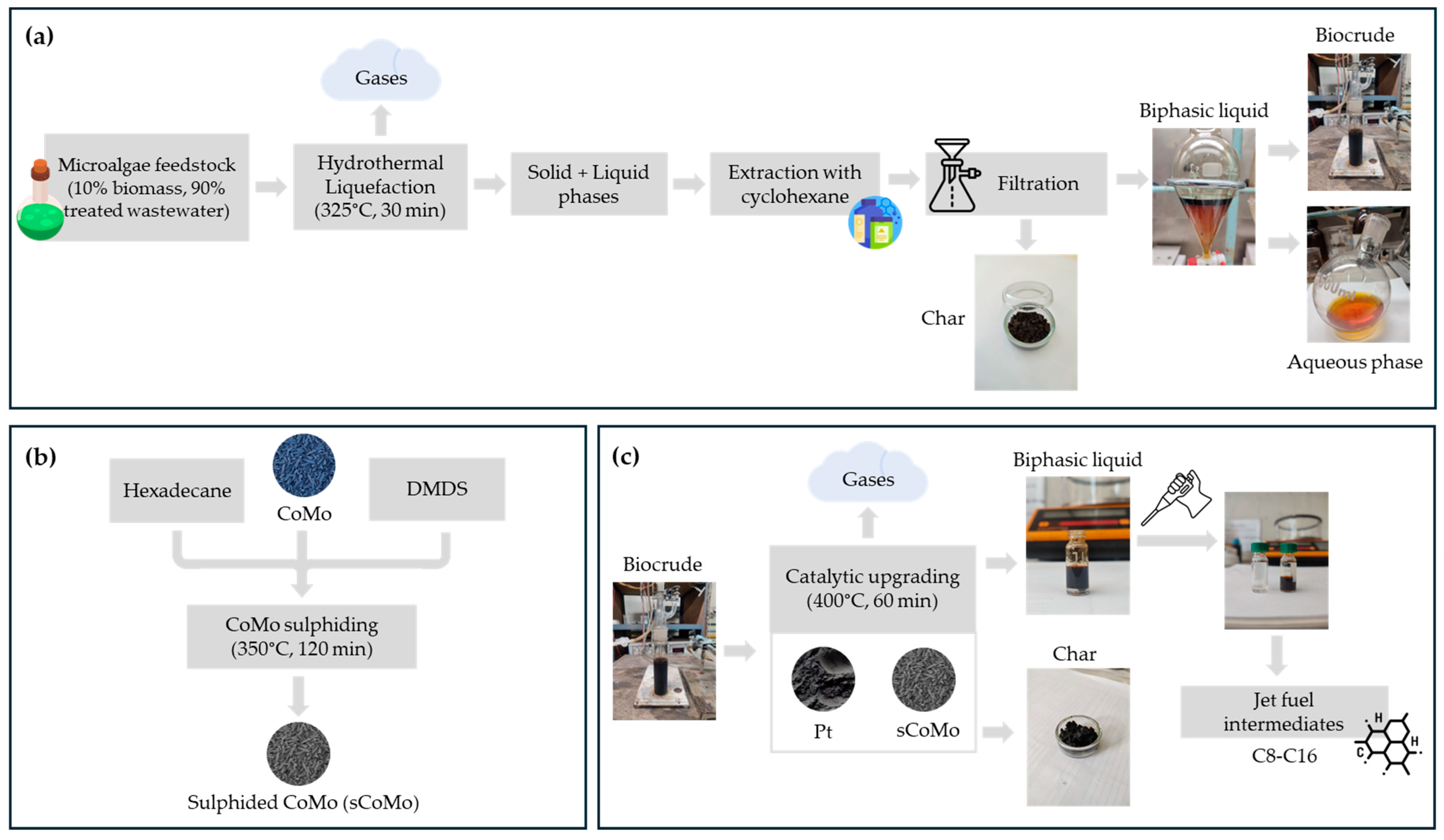
Figure 1 provides a schematic overview of the upgraded bio-oil production process.
Tetradesmus obliquus (ACOI 204/07, ACOI Culture Collection, University of Coimbra, Portugal), Chlorella vulgaris (INETI 58, LNEG-UBB, Lisbon, Portugal), and a consortium of microalgae and bacteria were cultivated in bench-scale photobioreactors (working volume: 800 mL), using domestic wastewater as feedstock. Two independent reactors were operated simultaneously for each microalgal culture. The assays were conducted in batch mode for 7 days under a light intensity of 65 μ mol·photons·m−2·s−1 and a 24:0 photoperiod (light:darkness). At the end of the wastewater treatment, the biomass was harvested by sedimentation and subsequently used in HTL processes at a biomass-to-water ratio of 1:10 [21]. The biomass yield at the end of the 7 operational days was 1258 mg·L−1 for T. obliquus, 917 mg·L−1 for C. vulgaris, and 1267 mg·L−1 for the mixed culture. The biochemical characterisation of the three types of biomass is presented in Table 1.

2.2. Hydrothermal Liquefaction (HTL) Process

The biomass was liquefied in a Hastelloy C-276 autoclave (Parr Instrument Company, Moline, IL, USA) with a working volume of 0.16 L at 325 °C for 30 min [22]. The autoclave was purged three times with nitrogen prior to each test to remove oxygen from the reactor headspace and create an inert atmosphere. An initial N2 pressure of 4 MPa was applied to maintain the recommended pressure range of 10–25 MPa during the HTL reactions [23]. After the cooling step, cyclohexane was used to recover the organic phase, and product separation was performed according to the method described by Silva et al. [15]. The HTL reactions resulted in four products: aqueous phase, gases, solid phase, and the bio-oil used in the upgrading tests. The bio-oil yields (dry base, %wt) were 44.8 ± 1.7% for T. obliquus, 41.4 ± 4.5% for C. vulgaris, and 41.9 ± 1.7% for the mixed culture.

2.3. Hydrodeoxygenation and Hydrodenitrogenation Tests

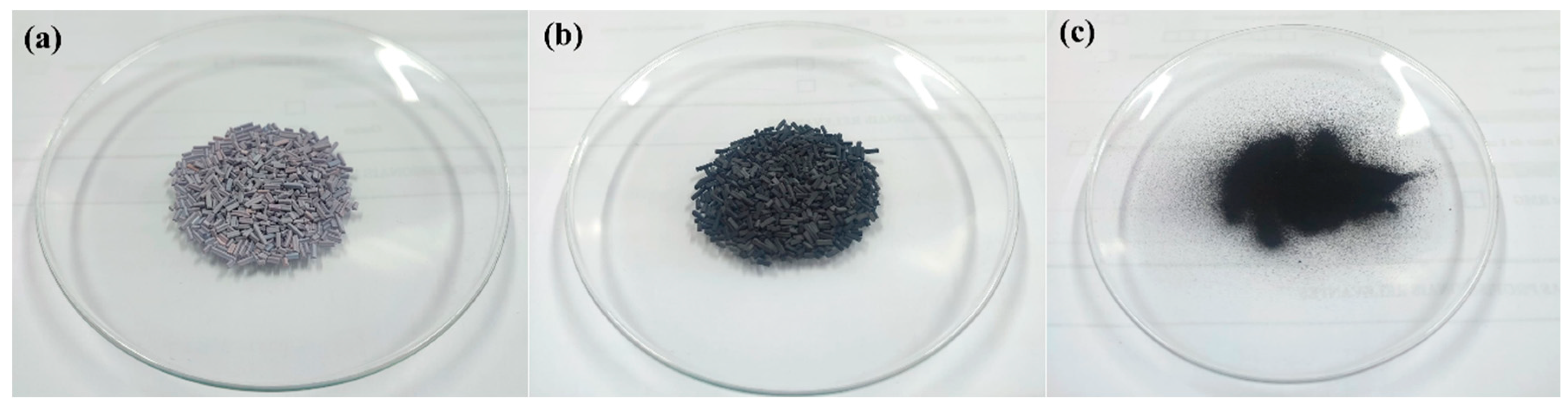
The assays were carried out in the same reactor used for the HTL experiments, using approximately 3 g of oil per test. The heterogeneous catalysts Pt/Al2O3 and sulphided CoMo/Al2O3 (sCoMo) were evaluated for T. obliquus (Tet-Pt and Tet-sCoMo), C. vulgaris (Chl-Pt and Chl-sCoMo), and mixed culture (Mix-Pt and Mix-sCoMo) bio-oils. In addition to the described tests, three parallel assays were performed: (1) without any catalyst, using T. obliquus crude oil (No-cat); (2) with non-sulphided CoMo, using T. obliquus crude oil (CoMo); and (3) with reused sulphided CoMo after a washing step with hexane and overnight drying at 70 °C (rsCoMo) for mixed culture crude oil upgrading. Figure 2 presents the three types of catalysts applied in this study.
The sulphiding of CoMo catalyst was performed in liquid-phase using the procedure described by van Haandel et al. [24]. The catalyst was wetted at room temperature with 5% DMDS, using n-hexadecane as solvent. The sulphiding agent was mixed with CoMo-γ-alumina in equal volumes, and the reaction was carried out at a heating rate of 6 °C·min−1 up to 350 °C. The final temperature was maintained for 2 h to ensure the complete conversion of DMDS into H2S and CH4. After cooling, the sulphided catalyst was washed with n-pentane and dried at 50 °C overnight.
All the upgrading reactions were performed in duplicate independent runs, and the results are expressed as the mean values obtained from the tests. The assays were carried out at 400 ± 10 °C for 1 h, using a catalyst loading of 20%. The autoclave was purged three times with H2 before each test. The reactor headspace volume was approximately 157 mL, and an initial hydrogen pressure of 3.6 MPa was applied to establish a reducing environment. The reactions occurred under a heating rate of 17.0 ± 1.9 °C·min−1. The final and highest pressure achieved during the assays was 7.9 ± 0.1 MPa. After the reaction, the autoclave was cooled in an ice bath until it reached room temperature.
To estimate the gas production, the reactor was weighed both before and after the reaction. Total gas was calculated as the difference between the weight of the reactor at the beginning and at the end of each assay. The biphasic liquid (upgraded bio-oil + water) was separated without the use of any organic solvent. After liquid removal, the autoclave was weighed again to quantify the coke production.
The yield of the products (Yproducts) is reported on a dry weight (wt.%) basis as the ratio of the product mass (mproduct) to the initial crude bio-oil mass (mcrude oil), excluding the catalyst mass (Equation (1)).
Y p r o d u c t s ( w t . % ) = m p r o d u c t m c r u d e   o i l × 100 %
At the end of the process, coke, the catalyst, and a fraction of the oil remain associated in a single solid phase. Therefore, the coke yield was calculated as the difference between the total mass of the solid recovered after the experiment and the mass of catalyst initially added. Thus, the oil adhered to the catalyst was considered as coke for yield calculation purposes.
The overall mass balance (mcrude oil) is expressed as the sum of all products (mtreated oil, maqueous phase, mgases, mcoke):
m c r u d e   o i l = m   t r e a t e d   o i l + m a q u e o u s   p h a s e   + m g a s e s + m c o k e
Minor mass losses of up to 4% were identified during the experimental procedure. These losses are attributed to handling and transfer steps and were compensated by normalising the product yields.

2.4. Analytical Chemistry

Gas samples were collected and analysed in an Agilent/HP GC6890 gas chromatograph equipped with Molecular Sieve 5A and Porapak Q columns (Santa Clara, CA, USA). The columns can detect CO2, N2, CH4, CO, and light hydrocarbons (C2 to C5).
The HTL biocrude and upgraded oils were characterised in terms of C, H, N, and S contents using a PerkinElmer Series II 2400 elemental analyser (Waltham, MA, USA). Oxygen content was calculated by difference, and the higher heating value (HHV) was determined using the Dulong-Berthelot modified method (Equation (3)) [25].
H H V   ( M J · k g 1 ) = ( 0.3414 × C ) + ( 1.4445 × H ) N + O 1 8
The composition of the bio-oils was analysed in an Agilent 8890 GC system equipped with an Agilent DB-5ms column coupled with a 5977B GC-MSD mass spectrometer (Santa Clara, CA, USA) [15]. The relative amount of each compound was quantified based on its respective peak area, and the results were expressed as the percentage of each peak (>1%) relative to the total chromatographic area.

3. Results and Discussion

3.1. Influence of Catalysts on the Yield of the Upgraded Products

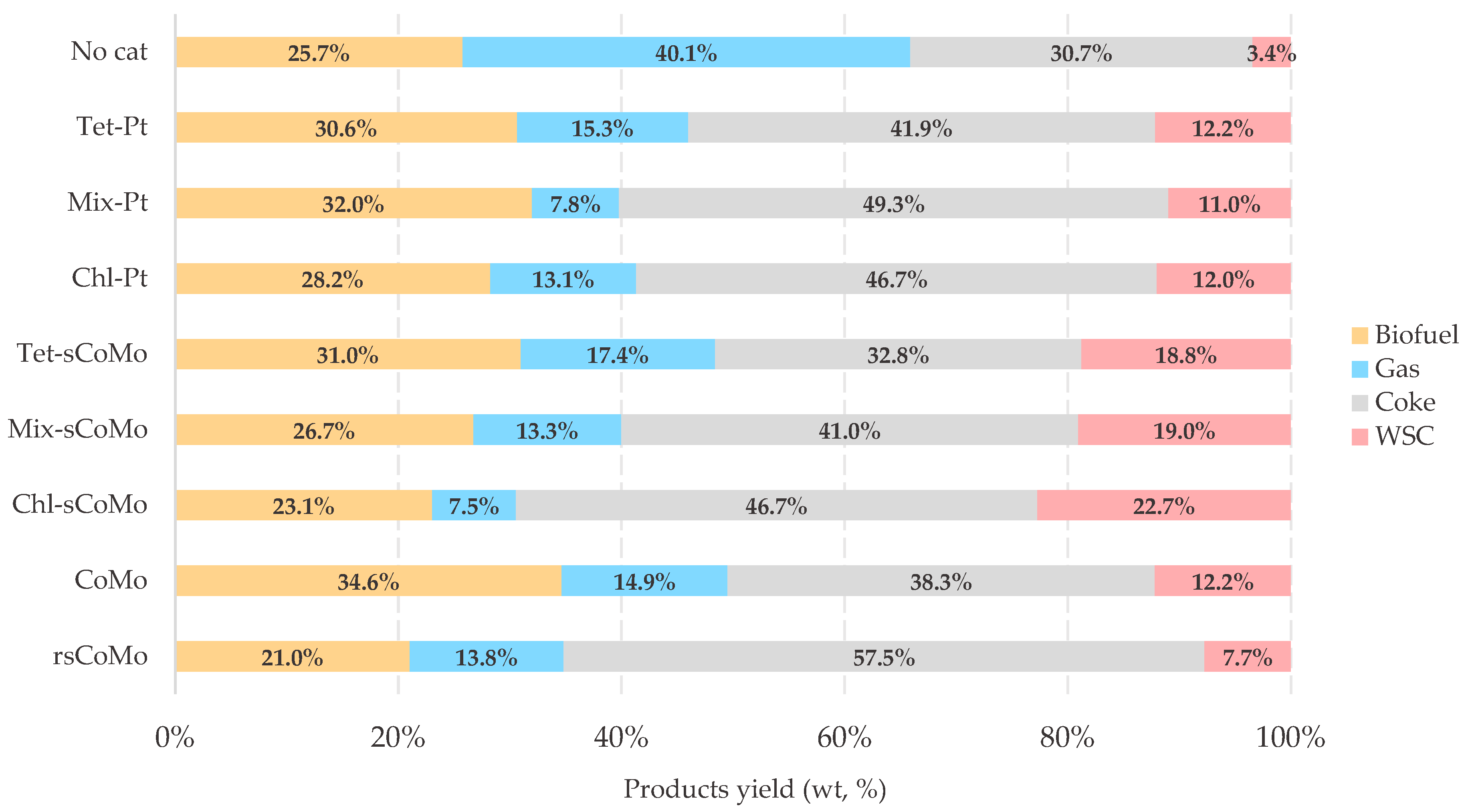
Figure 3 presents the yields of the four products (dry basis) obtained in each upgraded reaction. The maximum upgraded bio-oil yield (34.6%) was obtained with the non-sulphided CoMo catalyst, indicating that the sulphuration process had no significant effect on oil yield. The lowest yield (21.0%) was obtained with the reused sulphided CoMo catalyst, representing a decrease compared to its first use (26.7%). Catalyst reuse typically reduces its surface area by about 50% after the first cycle [26], which may explain the observed decline in bio-oil yield for rsCoMo. For the three upgraded biocrudes, the sulphided CoMo catalyst presented higher treated bio-oil yields compared to the Pt catalyst.
Table 2 summarises recent literature reports on the catalytic upgrading of microalgae-derived bio-oil. Silva et al. [15] reported 70.5% of treated bio-oil production using non-sulphided CoMo for upgrading a mixed microalgal bio-crude, while Duan et al. [26] achieved 64.8% using Pt/Al2O3 for Chlorella pyrenoidosa biocrude. Since the liquid product obtained from hydrotreatment consisted of two well-separated phases (upgraded bio-oil and WSC), no organic solvent was used to recover the retained oil fraction. So, a fraction of the upgraded bio-oil remained adhered to the catalyst’s surface. To recover this portion, extraction and recovery processes can be performed using organic solvents in an extraction system [15,26]. Otherwise, further investigation is required to assess whether the potential increase in yield justifies the application of these processes in terms of energy and chemical demands.
Gas production was lower in the catalysed reactions than in the non-catalysed one, reflecting the limited activity of the catalysts in cracking reactions and suggesting that gas formation is mainly driven by thermal processes [14]. Coke was the most abundant product in all tests, except for the mixed culture with sulphided CoMo and T. obliquus with Pt. The highest coke production (53.1%) was achieved with the reused sulphided CoMo catalyst. Coke formation is typically associated with high catalyst loadings. For instance, Duan et al. [14] reported just 16.6 wt.% of coke production using 5 wt.% Pt/Al2O3. WSC formation was relatively low across all assays. Water production during hydrotreatment mainly results from hydrodeoxygenation, in which hydrogen reacts with oxygenated compounds in the biocrude [16].

3.2. Effect of the Catalysts on the Elemental Composition of the Upgraded Oils

Table 3 summarises the elemental composition, atomic ratios (H/C, O/C, N/C), HHV, energy recovery (ER), and nitrogen and oxygen levels of the biocrudes and treated oils.
The carbon and hydrogen contents of the oils treated with the sulphided CoMo catalyst (Tet-sCoMo, Mix-sCoMo, and Chl-sCoMo) were higher than those of the corresponding crude oils. Since higher C and H levels correlate with greater energy density and HHV [14,32], these results indicate improved fuel quality. Similar performance was observed in the reused catalyst test, suggesting that, even without improving the upgraded bio-oil yield, sulphiding enhances C and H retention and that these benefits are maintained upon reuse. In contrast, the non-sulphided CoMo catalyst produced a lower C content with an increase in H (from 6.0% in the biocrude to 8.5% in the treated oil).
The Pt catalyst exhibited variable behaviour depending on the feedstock: T. obliquus and mixed-culture biocrudes showed increased C and H contents, while C. vulgaris oil showed decreases in both. Overall, regardless of the type of biocrude used, the sulphided CoMo catalyst produced better results in terms of C and H improvements compared with the Pt catalyst. The uncatalyzed reaction yielded the lowest carbon levels, consistent with previous reports showing that catalytic hydrotreatment improves carbon content and HHV compared to non-catalytic processes [14,33,34]. Among the feedstocks, T. obliquus exhibited the highest H/C ratio for both catalysts. A high H/C ratio indicates low aromaticity and greater hydrogenation, a desirable property in upgraded oils [35,36].
Oxygen content strongly influences fuel stability and performance. The reaction with no catalyst presented the highest oxygen levels (21.7%) and O/C ratio (0.24). Further, the three samples treated with sulphided CoMo showed lower oxygen contents than the one performed with non-sulphided CoMo catalyst. Silva et al. [15] reported only 3.6% of deoxygenation efficiency using a non-sulphided CoMo catalyst, highlighting the importance of the catalyst sulphiding process for effective oxygen removal. The reused sulphided CoMo catalyst presented higher oxygen contents than the samples treated with sulphided CoMo. This result indicates that reuse may partially interfere with the catalytic hydrodeoxygenation activity. According to Duan and Savage [37], catalyst loading also plays a key role in oxygen removal, as no catalyst or excessive loading can promote light products and coke formation, transferring carbon from the oil phase to other phases. The authors obtained good results with catalyst loadings above 5%, with the best performance observed at 20%. Regardless of feedstock, the sulphided CoMo catalyst achieved superior oxygen removal compared to Pt, reaching up to 88.2% for T. obliquus oil. This result can be attributed to its high metal loading, which improves the active sites of the catalyst surface [14,38].
The Pt/Al2O3 treatment of C. vulgaris biocrude resulted in a 50% increase in oxygen content, which may be attributed to specific interactions between the feedstock composition and the catalyst surface, or reactive intermediates formed during the process. The presence of phenolic compounds, such as 4-n-Dodecylresorcinol and 2(3H)-Furanone, 5-dodecyldihydro-, in the C. vulgaris biocrude may also have influenced both the performance of the Pt catalyst and the quality of the upgraded oil. Noble metal catalysts are known to exhibit a strong affinity for phenolic species, leading to competition for the active sites [39]. Moreover, these compounds have been reported to produce upgraded bio-oils with low H/C ratios [3], which was also observed in the Chl-Pt sample.
High oxygen content leads to the production of biofuels with lower HHVs. The Tet-sCoMo assay achieved the highest HHV (45 MJ·kg−1), which is higher than the value typically reported for commercial jet fuels (42.8 MJ·kg−1) [1]. Further, all tests with sulphided CoMo catalysts exhibited higher HHVs and ERs than the non-sulphided CoMo test, confirming the importance of the sulphiding step in improving the oil quality.
Nitrogen removal also occurred during hydrotreatment, along with partial desulphurization in all cases. Across all feedstocks, sulphided CoMo achieved higher nitrogen removal than Pt. The non-sulphided CoMo catalyst presented similar nitrogen removal performance to that of the sCoMo tests, suggesting that sulphiding primarily enhances HHV and oxygen removal rather than nitrogen depletion. After reuse, the sulphided CoMo catalyst showed a nitrogen removal capacity of 37.4%, corresponding to approximately 72% of its initial efficiency, demonstrating its potential for reuse. The non-catalysed reaction achieved only 17.2% N removal, while the Mix-sCoMo system removed 52.1% of N, confirming the essential role of catalysis in improving fuel quality through the reduction of oxygenated and nitrogenated species. All treated oils showed lower sulphur contents than the corresponding biocrudes, except for C. vulgaris treated with Pt and the non-catalysed reaction. The presence of nitrogen and sulphur compounds affects fuel quality and contributes to NOx and SOx emissions during combustion [36].
Fuel viscosity is another critical factor affecting fuel quality, as excessive viscosity may compromise engine combustion efficiency [7]. Furthermore, high concentrations of nitrogen and oxygen-containing heterocyclic compounds typically increase viscosity [40]. In this study, all treated oils exhibited lower viscosity than their respective crude oils. Further, the non-catalytic product showed similar viscosity to the catalysed ones, suggesting that viscosity is more dependent on reaction temperature and pressure than on catalyst type and loading.

3.3. GC-MS Analysis

Table 4 presents the composition of the upgraded oils (% peak area). Individual peaks were clustered and reported in five main groups: saturated hydrocarbons, unsaturated hydrocarbons, aromatic compounds, nitrogenated compounds, and oxygenated compounds. The reported compounds represent at least 65% of the total peak area, and some compounds were classified in more than one group (e.g., 1H-Indole, 2,6-dimethyl-, and 4-Ethylbenzylamine are both nitrogenated aromatics).
Fatty acids originally present in the biocrude of the three biomasses were not detected in the treated oils, while the concentration of saturated hydrocarbons increased. This result suggests the complete conversion of fatty acids into straight-chain alkanes through hydrogenation and/or decarboxylation. During the upgrading, fatty acids and amides are converted into alkanes, and aromatics into lighter molecules [2]. Palmitic acid, for example, undergoes decarboxylation to pentadecane in the presence of Pt catalysts [34].
Straight-chain alkanes were the most abundant component in the treated bio-oils, particularly C15 to C18, which exhibited the highest peak areas, consistent with previous reports [15,41]. These specific alkanes are desirable in commercial fuels due to their high energy density and stability. The non-catalysed assay still produced 39.6% saturated hydrocarbons, demonstrating that the reaction conditions can alone facilitate alkane formation, though with lower efficiency compared to catalytic processes [14]. Treated bio-oils from Chlorella vulgaris exhibited the lowest saturated hydrocarbon content for both Pt and sulphided CoMo catalysts.
The concentration of unsaturated hydrocarbons is relatively low in all samples, with the highest values observed in the non-catalysed test. This aligns with the expected hydrogenation of unsaturated hydrocarbons during catalytic upgrading [33].
Aromatic compounds are usually associated with high efficiency of fuel combustion. Toluene was the most abundant aromatic compound in all the analysed samples and its presence is usually associated with improved thermal efficiency at lower engine speeds without promoting NOx formation [42]. Magalhães et al. [2] noted that aromatic compounds are difficult to convert, often resulting in lower nitrogen removal efficiency. Indeed, the C. vulgaris oils (Chl-sCoMo and Chl-Pt) with higher aromatic content exhibited greater deoxygenation and lower denitrogenation.
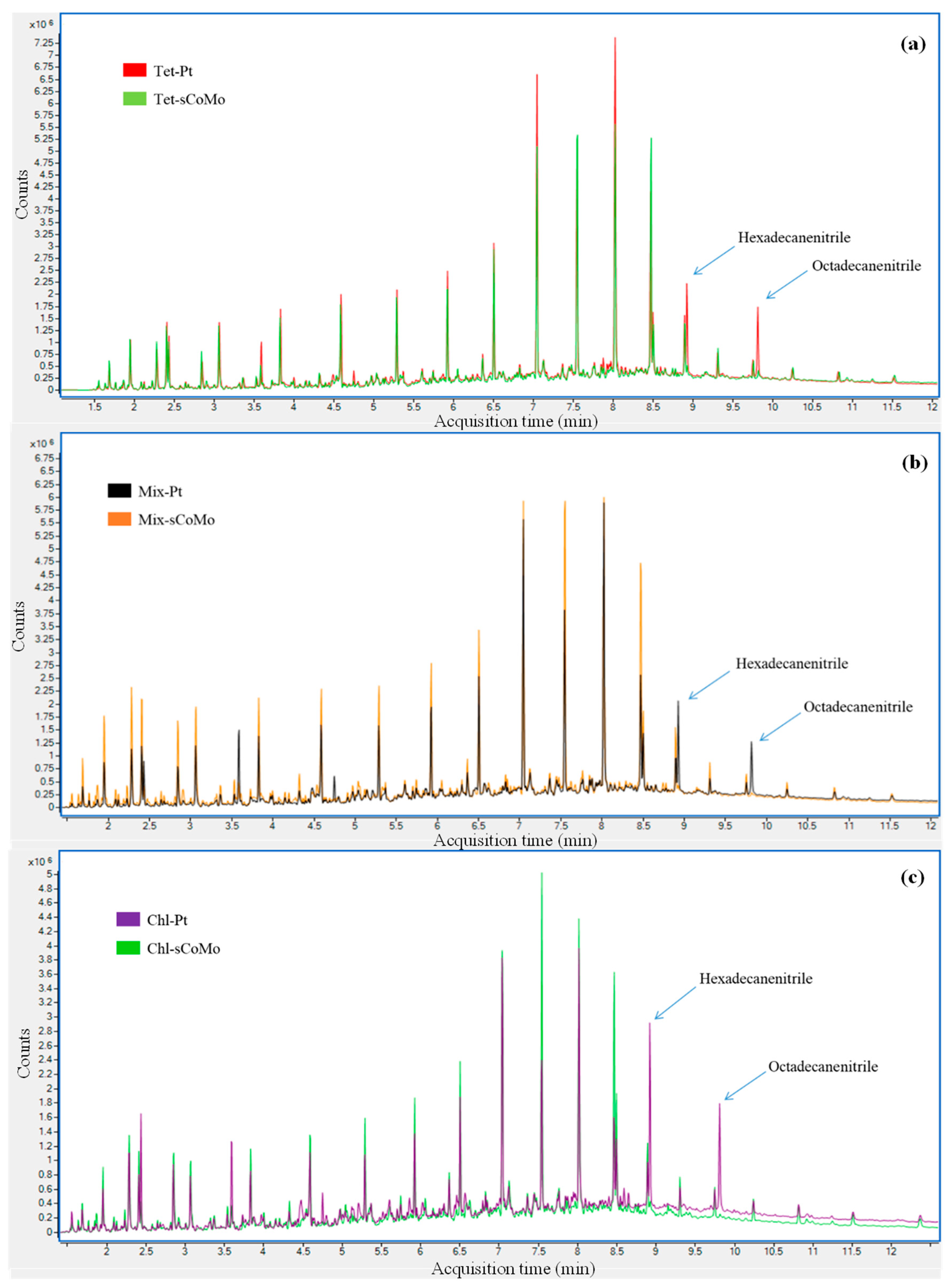
Nitrogenated compounds were substantially reduced in all treated oils compared to the biocrudes, confirming that hydrotreatment plays a key role in nitrogen removal. Fatty acid amides such as hexadecanamide, octadecenamide, and palmitoleamide were absent in upgraded oils, while nitriles (e.g., hexadecanenitrile and octadecanenitrile) became dominant, indicating conversion via reactions between fatty acids and ammonia [37]. Figure 4 highlights the two main nitrile peaks (hexadecanenitrile and octadecanenitrile) identified in the treated samples. The treated bio-oils from C. vulgaris achieved the highest nitrogen compound content for both catalysts, but overall, the sulphided CoMo catalyst produced lower nitrile peaks than Pt. As previously discussed, the non-sulphided CoMo catalyst presented high nitrogen removal, confirming that sulphiding did not significantly enhance the active sites for denitrogenation. In the absence of a catalyst, the hydrotreatment showed higher concentrations of nitrogen compounds than those observed in the catalysed runs (except for the C. vulgaris samples). As noted by Deng et al. [38], removing nitrogenated compounds without catalytic hydrotreatment remains a major challenge. The presence of active sites on the catalyst surface facilitated the adsorption and subsequent removal of these compounds, providing a more efficient approach than hydrothermal processing alone.
The reused CoMo catalyst exhibited lower levels of nitrogen and oxygen removal, indicating partial deactivation after the first cycle. Deactivation is typically associated with both decreased surface area and pore volume [15]. The water generated during deoxygenation may also alter the catalyst support or metal phases, accelerating deactivation [43]. Furthermore, rsCoMo oil was the only sample in which cobalt was detected, suggesting partial leaching of active metal species due to catalyst degradation.
GC–MS analysis of oxygenated compounds showed trends that are not directly comparable with those obtained from the ultimate analysis (Table 3). This behaviour is expected, as GC–MS quantifies the relative abundance of oxygenated species within the detectable volatility range of the instrument, whereas ultimate analysis determines the elemental oxygen content of the bio-oils by difference. Consequently, these techniques provide complementary but fundamentally different information.
In this sense, Pt-treated bio-oils exhibited the lowest relative percentages of oxygenated compounds detected by GC–MS (ranging from 1.5 to 3.4%), while their elemental oxygen contents varied substantially depending on the feedstock, reaching 20.2% for Chl–Pt. A similar lack of direct proportionality was observed for sulphided and non-sulphided CoMo catalysts, where samples with relatively low percentages of oxygenated compounds detected by GC–MS (e.g., CoMo and rsCoMo) still presented comparatively high elemental oxygen contents. This apparent discrepancy reflects that oxygenated compounds may contain widely different oxygen-to-carbon ratios and additional heteroatoms, and, therefore, their relative abundance cannot be compared to total elemental oxygen content.
Moreover, GC–MS does not capture the entire oxygenated fraction of the bio-oils, as highly polar, high-molecular-weight, or low-volatility oxygen-containing species fall outside the analytical detection range of the technique and may therefore remain undetected. These limitations also explain why trends in oxygenated compounds detected by GC–MS do not necessarily explain the elemental oxygen contents obtained from ultimate analysis [44,45].

3.4. Upgraded Bio-Oils Toward Jet Fuel

The technical specifications for aviation fuels, including sustainable aviation fuels (SAF), are defined by ASTM International [46] and are based on a combination of physicochemical properties such as distillation behaviour, density, freezing point, flash point, aromatic content, stability, and contaminant levels. The straight-chain alkanes between C8 and C16 present in the algal bio-oil indicate the potential presence of compounds relevant to aviation fuel applications [1]. It is important to highlight that the presence of hydrocarbons within the C8–C16 carbon number range alone does not indicate compliance with aviation fuel specifications nor the direct suitability of the product as a drop-in jet fuel. Comprehensive fuel-specification testing would be required to assess the final product as a finished aviation fuel.
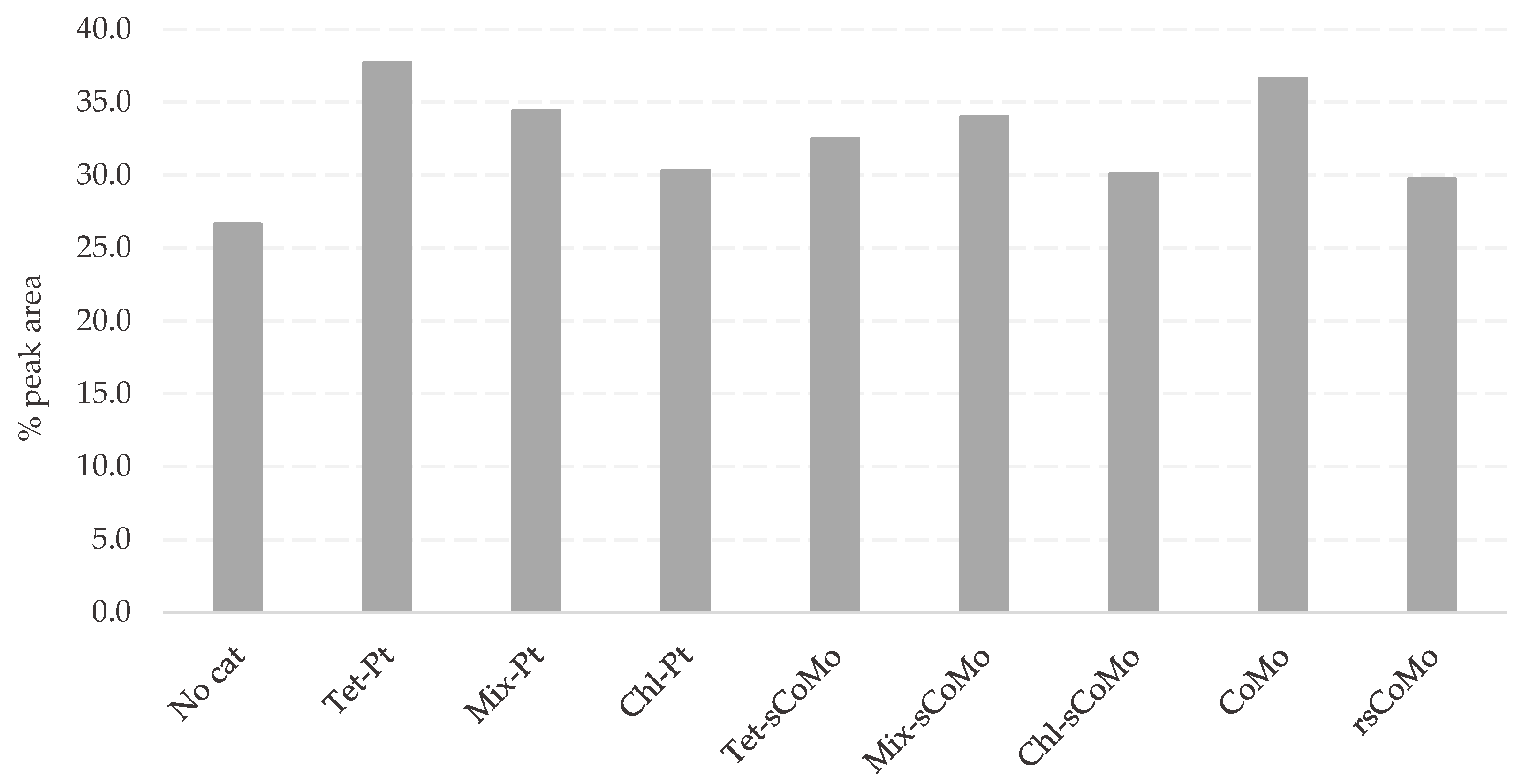
Figure 5 presents the relative GC–MS peak-area contribution of hydrocarbons assigned to the C8–C16 range under different catalytic conditions.
Within this comparative framework, the Pt-based catalyst (Tet-Pt) exhibited the highest relative GC–MS signal associated with C8–C16 hydrocarbons (37.7%), while the non-catalysed bio-oil showed the lowest contribution (26.6%). These results indicate that catalytic hydrotreatment promotes the upgrading of microalgae-based bio-oils toward commercial fuel applications. Also, noble metal catalysts, such as Pt, are usually employed in upgrading processes to enhance the octane number of the resulting fuels [47].
Pongsiriyakul et al. [17] produced upgraded bio-oil from the hydrothermal liquefaction of Nannochloropsis sp. using Ni-Cu-Re/Al2O3 (10-5-2.5%) catalyst at 350 °C for 4 h under an initial pressure of 75 bar. The authors achieved approximately 30% of the bio-jet fuel fraction during the distillation process. Likewise, Guo et al. [48] reported 8.85% jet fuel composition after upgrading Nannochloropsis gaditana biocrude with NiW/Al2O3 at 400 °C for 4 h and 6 MPa of initial pressure. Spirulina biocrude was also treated with a NiMo/Al2O3 catalyst at 400 °C for 2 h with 70 bar of H2 preloaded [5], reaching 34.5% of the corresponding jet fuel fraction. Castello et al. [3] also worked with Spirulina-derived biocrude and achieved 26.5% jet-fuel recovery using NiMo/Al2O3 under 400 °C, 4 h reaction, and 8 MPa of initial H2 pressure. These studies highlight the relevance of catalytic upgrading in enhancing the yield of jet fuel-range hydrocarbons from microalgae-derived biocrudes.
The chromatographic profiles also show prominent peaks corresponding to alkanes in the C15–C18 range, which are also present in the composition of commercial diesel. This result suggests that microalgae-derived bio-oils, after catalytic upgrading, may offer versatility for producing hydrocarbons relevant to both jet and diesel fuel applications. Nonetheless, further fuel characterisation, such as simulated distillation or true boiling point analysis, would be required to assess compliance with aviation or diesel fuel standards.

3.5. Gas Analysis

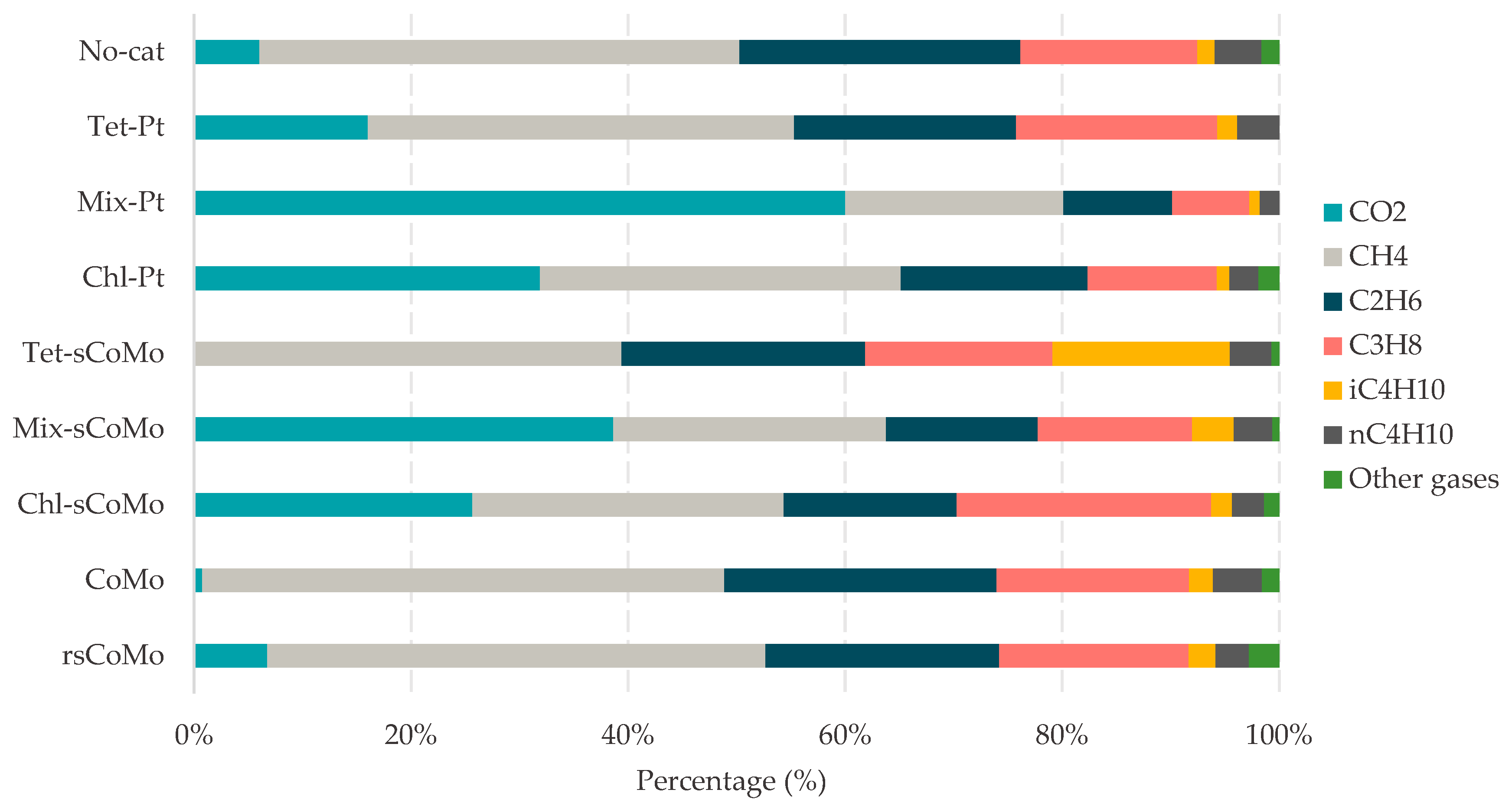
Figure 6 shows the average composition of the gases produced during the upgrading tests (hydrogen-free basis). The final compositions indicate remaining hydrogen in all produced gases, suggesting that the system was not hydrogen-limited. The highest H2 consumption occurred in the assay with no catalysts applied (1.1 L·g biocrude−1) and the lowest ones in the assays with Mix-sCoMo and Chl-Pt (0.7 L·g biocrude−1).
CO2 and CH4 together accounted for at least 60% of the total gas composition in all assays. Higher temperatures enhance hydrogenation reactions, increasing H2 consumption for oxygen removal through water formation. Likewise, at higher temperatures and longer residence times, intensified thermal reactions and catalytic cracking enhance methane formation through CO2 conversion [15,48]. The mixed culture oils produced the highest CO2 concentrations for both sulphided CoMo and Pt catalysts, while T. obliquus exhibited the lowest values (with Tet-sCoMo showing no detectable CO2 formation). The decarboxylation of fatty acids was likely the main source of CO2 formation [38]. No nitrogen-containing compounds were detected, suggesting that nitrogen removal during upgrading primarily occurred through the formation of ammonia in the aqueous phase [34]. Nevertheless, the confirmation of this mechanism would require direct quantification of ammonia in the aqueous phase.
The CH4 produced can be combusted through a Combined Heat and Power (CHP) system to simultaneously generate heat and electricity. This process releases CO2 as a by-product, which can be efficiently captured and redirected to the microalgae cultivation system, providing a valuable carbon source that enhances algal growth. Meanwhile, the heat and electricity generated from methane combustion can be reused within the process, for instance, to supply thermal energy to the HTL reaction. This integration minimises external energy demand and promotes a circular economy approach, in which both energy and carbon are recycled to improve sustainability and process efficiency.

4. Conclusions

The hydrotreatment of microalgae-based biocrudes and their potential as commercial fuels were investigated. Catalytic upgrading improved bio-oil quality compared with the non-catalysed reaction, confirming the essential role of catalysts in enhancing fuel properties. Among the tested catalysts, non-sulphided CoMo (CoMo) achieved the highest upgraded bio-oil yield (34.6%). It should be noted that the reported yields correspond to values obtained without a solvent-extraction step to separate retained oil from the coke/char. Therefore, the upgraded bio-oil yield may be underestimated, while coke formation may be overestimated, since retained oil was treated as solid material. Compared to Pt, sulphided CoMo (sCoMo) exhibited greater performance in increasing C, H, and HHV contents and in promoting nitrogen and oxygen removal. However, the sulphiding process did not enhance denitrogenation, as CoMo presented lower nitrogen levels than sCoMo samples. Phenolic compounds appeared to interfere with the Chlorella vulgaris assays using Pt, likely due to the strong affinity of noble metals for these compounds, which can cause active-site competition and catalyst deactivation. Gas analysis revealed CO2 and CH4 as the main components for all samples. The Tet-Pt assay produced the highest fraction of components within the jet fuel boiling range (37.7%), whereas the non-catalysed process yielded the lowest (26.6%). These findings highlight that appropriate catalyst selection is crucial to optimising bio-oil upgrading and maximising the final biofuel quality for sustainable energy applications. Furthermore, the development of algal biofuels offers a viable approach to sustainable conventional fuel production, contributing to a circular economy by converting wastewater-derived feedstocks into valuable resources.

Author Contributions

Conceptualization, B.T.F., A.R. and P.C.; methodology, B.T.F., A.R. and P.C.; validation, B.T.F., A.R. and P.C.; formal analysis, B.T.F., F.P., A.R. and P.C.; investigation, B.T.F., A.R. and P.C.; resources, M.M., A.L.F., A.R. and P.C.; data curation, B.T.F., F.P., A.R. and P.C.; writing—original, B.T.F. and A.R.; writing—review and editing, A.R. and P.C.; visualisation, B.T.F., A.R. and P.C.; supervision, M.M., A.L.F., A.R. and P.C.; project administration, A.R. and P.C.; funding acquisition, M.M., A.L.F., A.R. and P.C. All authors have read and agreed to the published version of the manuscript.

Funding

This research received no external funding.

Data Availability Statement

Data will be made available on request.

Acknowledgments

The authors gratefully acknowledge the financial support provided by the Fundação para a Ciência e a Tecnologia (FCT), Portugal, in partnership with the MIT Portugal Program (grant number PRT/BD/152820/2021). We also acknowledge the Biomass and Bioenergy Research Infrastructure (BBRI-LISBOA2030-FEDER-01318200), supported by the Lisbon Portugal Regional Operational Programme (Lisboa 2030), Portugal 2030, and the European Union. The authors further thank the Bioenergy and Biorefineries Unit of the National Laboratory of Energy and Geology (LNEG), Portugal, the Mechanical Engineering and Resource Sustainability Centre (MEtRiCS) under the project UID/04077/2025 (https://doi.org/10.54499/UID/04077/2025), and the projects UID/4292/2025 and UID/PRR/4292/2025 granted to MARE—Marine and Environmental Sciences Centre, as well as project LA/P/0069/2020 (https://doi.org/10.54499/LA/P/0069/2020) granted to the Associate Laboratory ARNET—Aquatic Research Network. The authors also gratefully acknowledge Natércia Sousa and Graça Gomes for their valuable support in microalgae cultivation.

Conflicts of Interest

The authors declare no conflicts of interest.

References

  1. Lim, J.H.K.; Gan, Y.Y.; Ong, H.C.; Lau, B.F.; Chen, W.H.; Chong, C.T.; Ling, T.C.; Klemeš, J.J. Utilization of Microalgae for Bio-Jet Fuel Production in the Aviation Sector: Challenges and Perspective. Renew. Sustain. Energy Rev. 2021, 149, 111396. [Google Scholar] [CrossRef]
  2. da Costa Magalhães, B.; Matricon, L.; Ramirez Romero, L.A.; Checa, R.; Lorentz, C.; Chambonniere, P.; Delrue, F.; Roubaud, A.; Afanasiev, P.; Laurenti, D.; et al. Catalytic Hydrotreatment of Bio-Oil from Continuous HTL of Chlorella sorokiniana and Chlorella vulgaris Microalgae for Biofuel Production. Biomass Bioenergy 2023, 173, 106798. [Google Scholar] [CrossRef]
  3. Castello, D.; Haider, M.S.; Rosendahl, L.A. Catalytic Upgrading of Hydrothermal Liquefaction Biocrudes: Different Challenges for Different Feedstocks. Renew. Energy 2019, 141, 420–430. [Google Scholar] [CrossRef]
  4. Mujtaba, G.; Lee, K. Treatment of Real Wastewater Using Co-Culture of Immobilized Chlorella vulgaris and Suspended Activated Sludge. Water Res. 2017, 120, 174–184. [Google Scholar] [CrossRef]
  5. Haider, M.S.; Castello, D.; Michalski, K.M.; Pedersen, T.H.; Rosendahl, L.A. Catalytic Hydrotreatment of Microalgae Biocrude from Continuous Hydrothermal Liquefaction: Heteroatom Removal and Their Distribution in Distillation Cuts. Energies 2018, 11, 3360. [Google Scholar] [CrossRef]
  6. Calijuri, M.L.; Silva, T.A.; Magalhães, I.B.; Pereira, A.S.A.d.P.; Marangon, B.B.; Assis, L.R.d.; Lorentz, J.F. Bioproducts from Microalgae Biomass: Technology, Sustainability, Challenges and Opportunities. Chemosphere 2022, 305, 135508. [Google Scholar] [CrossRef]
  7. Griffiths, G.; Hossain, A.K.; Sharma, V.; Duraisamy, G. Key Targets for Improving Algal Biofuel Production. Clean Technol. 2021, 3, 711–742. [Google Scholar] [CrossRef]
  8. Choudhary, P.; Assemany, P.P.; Naaz, F.; Bhattacharya, A.; de Siqueira Castro, J.; do Couto Couto, E.D.A.; Calijuri, M.L.; Pant, K.K.; Malik, A. A Review of Biochemical and Thermochemical Energy Conversion Routes of Wastewater Grown Algal Biomass. Sci. Total Environ. 2020, 726, 137961. [Google Scholar] [CrossRef] [PubMed]
  9. Melikoglu, M. Waste Valorization Strategies with Inputs for Microalgae Biorefineries: A Global Review. Clean. Water 2025, 4, 100125. [Google Scholar] [CrossRef]
  10. Brennan, L.; Owende, P. Biofuels from Microalgae—A Review of Technologies for Production, Processing, and Extractions of Biofuels and Co-Products. Renew. Sustain. Energy Rev. 2010, 14, 557–577. [Google Scholar] [CrossRef]
  11. Khan, M.I.; Shin, J.H.; Kim, J.D. The Promising Future of Microalgae: Current Status, Challenges, and Optimization of a Sustainable and Renewable Industry for Biofuels, Feed, and Other Products. Microb. Cell Fact. 2018, 17, 36. [Google Scholar] [CrossRef]
  12. Chisti, Y. Biodiesel from Microalgae. Biotechnol. Adv. 2007, 25, 294–306. [Google Scholar] [CrossRef]
  13. Raslavičius, L.; Striūgas, N.; Felneris, M. New Insights into Algae Factories of the Future. Renew. Sustain. Energy Rev. 2018, 81, 643–654. [Google Scholar] [CrossRef]
  14. Bai, X.; Duan, P.; Xu, Y.; Zhang, A.; Savage, P.E. Hydrothermal Catalytic Processing of Pretreated Algal Oil: A Catalyst Screening Study. Fuel 2014, 120, 141–149. [Google Scholar] [CrossRef]
  15. Silva, T.A.; do Couto, E.d.A.; Assemany, P.P.; Costa, P.A.C.; Marques, P.A.S.S.; Paradela, F.; Reis, A.J.D.d.; Calijuri, M.L. Biofuel from Wastewater-Grown Microalgae: A Biorefinery Approach Using Hydrothermal Liquefaction and Catalyst Upgrading. J. Environ. Manag. 2024, 368, 122091. [Google Scholar] [CrossRef]
  16. Gollakota, A.R.K.; Shu, C.M.; Sarangi, P.K.; Shadangi, K.P.; Rakshit, S.; Kennedy, J.F.; Gupta, V.K.; Sharma, M. Catalytic Hydrodeoxygenation of Bio-Oil and Model Compounds-Choice of Catalysts, and Mechanisms. Renew. Sustain. Energy Rev. 2023, 187, 113700. [Google Scholar] [CrossRef]
  17. Pongsiriyakul, K.; Kiatkittipong, W.; Adhikari, S.; Lim, J.W.; Lam, S.S.; Kiatkittipong, K.; Dankeaw, A.; Reubroycharoen, P.; Laosiripojana, N.; Faungnawakij, K.; et al. Effective Cu/Re Promoted Ni-Supported γ-Al2O3 Catalyst for Upgrading Algae Bio-Crude Oil Produced by Hydrothermal Liquefaction. Fuel Process. Technol. 2021, 216, 106670. [Google Scholar] [CrossRef]
  18. Patel, B.; Arcelus-Arrillaga, P.; Izadpanah, A.; Hellgardt, K. Catalytic Hydrotreatment of Algal Biocrude from Fast Hydrothermal Liquefaction. Renew. Energy 2017, 101, 1094–1101. [Google Scholar] [CrossRef]
  19. Mustapha, S.I.; Mohammed, U.A.; Bux, F.; Isa, Y.M. Catalytic Hydrothermal Liquefaction of Nutrient-Stressed Microalgae for Production of High-Quality Bio-Oil over Zr-Doped HZSM-5 Catalyst. Biomass Bioenergy 2022, 163, 106497. [Google Scholar] [CrossRef]
  20. Bwapwa, J.K.; Anandraj, A.; Trois, C. Possibilities for Conversion of Microalgae Oil into Aviation Fuel: A Review. Renew. Sustain. Energy Rev. 2017, 80, 1345–1354. [Google Scholar] [CrossRef]
  21. Couto, E.A.; Pinto, F.; Varela, F.; Reis, A.; Costa, P.; Calijuri, M.L. Hydrothermal Liquefaction of Biomass Produced from Domestic Sewage Treatment in High-Rate Ponds. Renew. Energy 2018, 118, 644–653. [Google Scholar] [CrossRef]
  22. Costa, P.A.; Mata, R.M.; Pinto, M.F.; Paradela, F.; Dutra, F. Hydrothermal Liquefaction of Microalgae for the Production of Biocrude and Value-Added Chemicals. Chem. Eng. Trans. 2022, 94, 865–870. [Google Scholar] [CrossRef]
  23. Gollakota, A.R.K.; Kishore, N.; Gu, S. A Review on Hydrothermal Liquefaction of Biomass. Renew. Sustain. Energy Rev. 2018, 81, 1378–1392. [Google Scholar] [CrossRef]
  24. van Haandel, L.; Bremmer, G.M.; Hensen, E.J.M.; Weber, T. Influence of Sulfiding Agent and Pressure on Structure and Performance of CoMo/Al2O3 Hydrodesulfurization Catalysts. J. Catal. 2016, 342, 27–39. [Google Scholar] [CrossRef]
  25. Channiwala, S.A.; Parikh, P.P. A Unified Correlation for Estimating HHV of Solid, Liquid and Gaseous Fuels. Fuel 2002, 81, 1051–1063. [Google Scholar] [CrossRef]
  26. Duan, P.; Bai, X.; Xu, Y.; Zhang, A.; Wang, F.; Zhang, L.; Miao, J. Catalytic Upgrading of Crude Algal Oil Using Platinum/Gamma Alumina in Supercritical Water. Fuel 2013, 109, 225–233. [Google Scholar] [CrossRef]
  27. Hu, Y.; Zhang, W.; Yan, J.; Yuan, C.; Cao, B.; Ni, J.; Qian, L.; Wang, Q.; Wang, S. Effect of Ni, Mo and W on Hydrothermal Co-Liquefaction of Macroalgae and Microalgae: Impact on Bio-Crude Yield and Composition. J. Energy Inst. 2023, 110, 101311. [Google Scholar] [CrossRef]
  28. Goswami, G.; Kumar, R.; Sinha, A.; Birazee, B.; Chandra Dutta, B.; Bhutani, S.; Das, D. ALGLIQOL: A Two Stage Integrated Process towards Synthesis of Renewable Transportation Fuel via Catalytic Hydrothermal Liquefaction of Lipid Enriched Microalgae Biomass and Distillation. Energy Convers. Manag. 2022, 263, 115696. [Google Scholar] [CrossRef]
  29. Li, J.; Li, C.; Ma, X.; Tang, X.; Meng, X.; Wang, X. Investigation of Catalytic Hydrothermal Co-Liquefaction of Oil Shale and Algal Biomass. J. Anal. Appl. Pyrolysis 2025, 186, 106974. [Google Scholar] [CrossRef]
  30. Moazezi, M.R.; Bayat, H.; Tavakoli, O.; Hallajisani, A. Hydrothermal Liquefaction of Chlorella vulgaris and Catalytic Upgrading of Product: Effect of Process Parameter on Bio-Oil Yield and Thermodynamics Modeling. Fuel 2022, 318, 123595. [Google Scholar] [CrossRef]
  31. Zhang, P.; Feng, L.; Su, B.; Li, X. Microalgae Cultivated in Wastewater Catalytic Hydrothermal Liquefaction: Effects of Process Parameter on Products and Energy Balance. J. Clean. Prod. 2022, 341, 130895. [Google Scholar] [CrossRef]
  32. Shakya, R.; Adhikari, S.; Mahadevan, R.; Shanmugam, S.R.; Nam, H.; Hassan, E.B.; Dempster, T.A. Influence of Biochemical Composition during Hydrothermal Liquefaction of Algae on Product Yields and Fuel Properties. Bioresour. Technol. 2017, 243, 1112–1120. [Google Scholar] [CrossRef]
  33. Duan, P.; Savage, P.E. Catalytic Treatment of Crude Algal Bio-Oil in Supercritical Water: Optimization Studies. Energy Environ. Sci. 2011, 4, 1447–1456. [Google Scholar] [CrossRef]
  34. Duan, P.; Savage, P.E. Upgrading of Crude Algal Bio-Oil in Supercritical Water. Bioresour. Technol. 2011, 102, 1899–1906. [Google Scholar] [CrossRef]
  35. de Siqueira Castro, J.; Assemany, P.P.; de Oliveira Carneiro, A.C.; Ferreira, J.; de Jesus Júnior, M.M.; de Ávila Rodrigues, F.; Calijuri, M.L. Hydrothermal Carbonization of Microalgae Biomass Produced in Agro-Industrial Effluent: Products, Characterization and Applications. Sci. Total Environ. 2021, 768, 144480. [Google Scholar] [CrossRef]
  36. Duan, P.; Wang, B.; Xu, Y. Catalytic Hydrothermal Upgrading of Crude Bio-Oils Produced from Different Thermo-Chemical Conversion Routes of Microalgae. Bioresour. Technol. 2015, 186, 58–66. [Google Scholar] [CrossRef]
  37. Duan, P.; Savage, P.E. Catalytic Hydrotreatment of Crude Algal Bio-Oil in Supercritical Water. Appl. Catal. B Environ. 2011, 104, 136–143. [Google Scholar] [CrossRef]
  38. Deng, G.Z.; Tang, X.D.; Li, J.J.; Zhang, L.Y.; Yang, Z.; Yang, F.X. Study on the Nitrogen Migration of Different Biomass by Activated Carbon-Based MOF Catalyst in Hydrothermal Environment. Fuel 2025, 388, 134411. [Google Scholar] [CrossRef]
  39. Mortensen, P.M.; Grunwaldt, J.D.; Jensen, P.A.; Jensen, A.D. Screening of Catalysts for Hydrodeoxygenation of Phenol as a Model Compound for Bio-Oil. ACS Catal. 2013, 3, 1774–1785. [Google Scholar] [CrossRef]
  40. Guo, Y.; Yeh, T.; Song, W.; Xu, D.; Wang, S. A Review of Bio-Oil Production from Hydrothermal Liquefaction of Algae. Renew. Sustain. Energy Rev. 2015, 48, 776–790. [Google Scholar] [CrossRef]
  41. Duan, P.; Xu, Y.; Wang, F.; Wang, B.; Yan, W. Catalytic Upgrading of Pretreated Algal Bio-Oil over Zeolite Catalysts in Supercritical Water. Biochem. Eng. J. 2016, 116, 105–112. [Google Scholar] [CrossRef]
  42. He, Z.; Zhao, W.; Liu, G.; Qian, Y.; Lu, X. Effects of Short Chain Aromatics in Gasoline on GDI Engine Combustion and Emissions. Fuel 2021, 297, 120725. [Google Scholar] [CrossRef]
  43. Yan, P.; Kennedy, E.M.; Rabiee, H.; Weng, Y.; Peng, H.; Ma, B.; Zhu, Z.; Stockenhuber, M. Recent Advances in Heterogeneous Catalysts for Biocrude Hydrodeoxygenation. Green Chem. 2025, 27, 3375–3397. [Google Scholar] [CrossRef]
  44. Garc, J.; Freije-carrelo, L.; Moldovan, M.; Bouyssiere, B.; Giusti, P.; Encinar, J.R. Sensitive Detection and Quantification of Oxygenated Compounds in Complex Samples Using GC-Combustion-MS. Anal. Chem. 2024, 96, 10756–10764. [Google Scholar] [CrossRef] [PubMed]
  45. Vilas-boas, A.C.M.; Tarelho, L.A.C.; Moura, J.M.O.; Gomes, H.G.M.F.; Marques, C.C.; Pio, D.T.; Nunes, M.I.S.; Silvestre, A.J.D. Journal of Analytical and Applied Pyrolysis Methodologies for Bio-Oil Characterization from Biomass Pyrolysis: A Review Focused on GC-MS. J. Anal. Appl. Pyrolysis 2025, 185, 106850. [Google Scholar] [CrossRef]
  46. ASTM D7566-24d; Specification for Aviation Turbine Fuel Containing Synthesized Hydrocarbons. ASTM International: West Conshohocken, PA, USA, 2024.
  47. Ramirez, J.A.; Brown, R.J.; Rainey, T.J. A Review of Hydrothermal Liquefaction Bio-Crude Properties and Prospects for Upgrading to Transportation Fuels. Energies 2015, 8, 6765–6794. [Google Scholar] [CrossRef]
  48. Guo, B.; Walter, V.; Hornung, U.; Dahmen, N. Hydrothermal Liquefaction of Chlorella vulgaris and Nannochloropsis gaditana in a Continuous Stirred Tank Reactor and Hydrotreating of Biocrude by Nickel Catalysts. Fuel Process. Technol. 2019, 191, 168–180. [Google Scholar] [CrossRef]
Figure 1. Schematic diagram of the bio-oil production process: (a) hydrothermal liquefaction; (b) catalyst sulphiding; and (c) catalytic upgrading.
Cleantechnol 08 00034 g001
Figure 2. (a) CoMo/Al2O3 catalyst; (b) sulphided CoMo/Al2O3 catalyst; (c) Pt/Al2O3 catalyst.
Cleantechnol 08 00034 g002
Figure 3. Yields of the upgraded samples of treated bio-oil, gas, coke, and WSC in the hydrotreatment tests (wt%, dry basis).
Cleantechnol 08 00034 g003
Figure 4. Total ion chromatograms highlighting the main nitrile peaks for the bio-oils treated with sulphided CoMo and Pt catalysts for (a) Tetradesmus obliquus; (b) mixed culture; (c) Chlorella vulgaris.
Cleantechnol 08 00034 g004
Figure 5. Relative amount of the hydrocarbons C8 to C16, corresponding to jet fuel cut, in terms of peak area.
Cleantechnol 08 00034 g005
Figure 6. Composition of the gaseous products obtained in the upgrading assays.
Cleantechnol 08 00034 g006
Table 1. Biochemical characterisation of the microalgae biomass used as feedstock for bio-oil production.
Microalgae BiomassUltimate Analysis
(wt%, Dry Basis)
Immediate Composition (%)HHV (MJ·kg−1)
CHONSMoistureAshOrganic Matter
Tetradesmus obliquus52.46.927.55.10.44.77.587.831.3
Chlorella vulgaris53.26.823.88.20.64.97.288.829.3
Mixed culture51.47.028.36.20.53.56.490.133.8
Table 2. Operational parameters of upgrading tests and treated bio-oils characteristics.
BiomassGrowth
Medium
Catalyst
Loading (%, wt)
Temperature (°C)Reaction Time (min)Bio-Oil Yield (%)HHV (MJ·kg−1)N (%)O (%)Ref.
Chlorella
vulgaris
Synthetic20% sulphided NiW/Al2O337530063.746.30.60.7[2]
Mixed cultureDomestic wastewater33% CoMo/Al2O33756070.538.93.78.0[15]
Co-culture of Chlorella vulgaris and Enteromorpha clathrate **Commercial biomass10% Ni/MCM-413503018.035.04.714.0[27]
Chlorella sp.Optimised BG11 medium10% Pd/Al2O3 + 7.73% formic acid300.97128.741.05.05.6[28]
Co-liquefaction of oil shale and Chlorella sp. *Commercial biomass5% Ce/HZSM-53003032.639.85.510.0[29]
Chlorella pyrenoidosa **Commercial biomass5% Pt/Al2O3400164.839.74.86.3[26]
Chlorella vulgaris *Commercial biomass5% Ni-Mo/Al2O32874056.241.16.88.2[30]
Tetradesmus obliquus *BG11 medium5% Zr-HZSM-53506052.843.61.410.5[19]
Nannochloropsis sp.-10% Pt/Al2O34006065.045.42.91.6[18]
Mixed culture *Wastewater5% ZSM-53256039.739.34.27.5[31]
* The authors performed catalytic HTL; ** the authors performed catalytic upgrading in supercritical water.
Table 3. Elemental composition, atomic ratios, HHV, nitrogen and oxygen removal, and energy recovery of the bio-oils (400 °C, 60 min, 20% catalyst loading).
Bio-OilElemental Composition
(wt%, Dry Basis)
H/CO/CN/CHHV (MJ·kg−1)N (wt%)O (wt%)ER in the Bio-Oil (%)
CHONS
Tet biocrude 73.06.015.63.91.50.990.160.0531.33.915.6-
Mix biocrude71.25.317.84.71.00.890.190.0629.34.717.8-
Chl biocrude72.87.713.55.01.01.270.140.0633.85.013.5-
No cat68.06.321.73.20.81.110.240.0429.33.221.724.1
Tet-Pt79.411.36.22.70.31.710.060.0342.52.76.241.6
Mix-Pt79.910.26.23.40.31.540.060.0440.93.46.244.7
Chl-Pt69.05.820.24.30.81.000.220.0528.94.320.224.2
Tet-sCoMo84.411.41.82.00.31.630.020.0245.02.01.844.5
Mix-sCoMo81.310.55.72.30.31.550.050.0242.12.35.738.4
Chl-sCoMo81.310.45.42.60.31.540.050.0342.02.65.428.6
CoMo72.28.516.92.00.41.420.180.0234.72.016.911.0
rsCoMo73.89.813.23.00.31.590.130.0337.43.013.244.3
Table 4. Molecular composition of the treated bio-oils (% of total peak area by GC–MS).
Upgraded Bio-OilSaturated HydrocarbonsUnsaturated HydrocarbonsAromaticsN-CompoundsO-Compounds
No cat39.64.54.711.86.0
Tet-Pt58.61.95.68.43.4
Mix-Pt51.73.38.211.33.0
Chl-Pt45.31.91115.11.5
Tet-sCoMo56.52.57.75.34.6
Mix-sCoMo51.31.411.47.04.5
Chl-sCoMo49.11.814.67.23.3
CoMo55.91.77.02.73.1
rsCoMo44.90.911.17.55.0
Disclaimer/Publisher’s Note: The statements, opinions and data contained in all publications are solely those of the individual author(s) and contributor(s) and not of MDPI and/or the editor(s). MDPI and/or the editor(s) disclaim responsibility for any injury to people or property resulting from any ideas, methods, instructions or products referred to in the content.