
From Biomass to Biofabrication: Advances in Substrate Treatment Technologies for Fungal Mycelium Composites

 , , , , ,
  and
and
Highlights
- Substrate treatment critically determines hyphal colonization, microstructural uniformity, and the resulting mechanical performance of mycelium-based composites (MBCs).
- Optimized physical, chemical, biological, and hybrid pretreatments enhance digestibility, interfacial bonding, and composite strength; however, over- or under-treatment negatively affects performance.
- Scalability, reproducibility, moisture sensitivity, and durability remain key technical challenges limiting industrial adoption.
- Substrate engineering must be treated as a core material design parameter to achieve consistent and predictable MBC properties.
- Standardized and energy-efficient pretreatment protocols are essential for regulatory compliance and sustainable large-scale manufacturing.
- Integrating advanced monitoring and modeling tools can improve reproducibility and accelerate the commercialization of MBC technologies.
Abstract
1. Introduction
2. Overview of Substrate Treatment Techniques
2.1. Physical Treatments
2.1.1. Comminution (Milling and Grinding)
2.1.2. Thermal Treatments (Autoclaving, Pasteurization, and Drying)
2.1.3. Mechanical Densification and Sieving
2.2. Chemical Treatments
2.2.1. Alkali and Acid Hydrolysis
2.2.2. Oxidative Treatments and Photocatalysis
2.3. Biological Treatments
2.3.1. Enzymatic Pre-Digestion
2.3.2. Microbial Co-Culturing
2.3.3. Advantages and Limitations
3. Recent Technological Advancements in Substrate Treatment
3.1. Microwave-Assisted Hydrolysis
3.2. Ultrasound (Sonication) Pretreatment
3.3. Steam Explosion and Hydrothermal Pretreatment
3.4. Plasma Sterilization and Surface Activation
3.5. Irradiation (Gamma, UV) for Decontamination and Activation
3.6. Comparative Efficiency, Scalability, and Environmental Footprint

| Treatment Technique | Advantages | Limitations | Industrial Potential | Environmental Impact | Applications in MBCs | Source |
|---|---|---|---|---|---|---|
| Microwave-assisted hydrolysis | Fast heating; reduced energy use; uniform treatment; shorter incubation time | Possible sugar degradation and inhibitor formation at high power; reactor cost | Moderate—scalable with continuous systems, best for small-to-medium biorefineries | Moderate—minimal chemicals but electricity-dependent | Enhances growth rate, density, and uniformity of MBCs using DDGS, sawdust, or straw | [27,40] |
| Ultrasound (sonication) | Operates at mild temperatures; enhances enzymatic hydrolysis; lowers chemical use | Non-uniform treatment in dense biomass, equipment wear, and high energy demand | High for slurry or continuous systems; limited for dry materials | Low—minimal chemicals, moderate energy | Enhances initial mycelial colonization; improves moisture retention and nutrient transfer | [10,30,43] |
| Steam explosion/Hydrothermal pretreatment | Chemical-free; scalable; improves porosity and fungal access | High steam energy demand; sugar degradation; variability between batches | Very high—industrially proven in biomass biorefineries | Moderate—recyclable steam systems possible | Suitable for large-scale agricultural residues in MBCs | [32,33] |
| Plasma sterilization/activation | No chemicals; low temperature; rapid sterilization; surface functionalization | Surface-limited effects; high energy cost; needs specialized systems | Moderate—feasible for thin or conveyor-based treatment | Low—no waste or chemical residue | Surface activation and sterilization for improved fungal adhesion | [19,34,36] |
| Irradiation (gamma, UV, e-beam) | Effective sterilization; dry process; penetrates dense substrates | High capital and safety cost; may overharden cellulose | Moderate—scalable at centralized irradiation facilities | Low chemical impact but energy-intensive | Used for sterile, high-value MBCs in biomedical or packaging sectors | [37] |
4. Optimization Parameters and Process Control
4.1. Temperature and pH Regulation
4.1.1. Temperature Effects on Mycelial Growth
4.1.2. Technological Control and Monitoring
4.1.3. pH Influence on Enzymatic Activity and Fungal Metabolism
4.2. Interactions Between Temperature and pH
4.3. Optimization Approaches
4.4. Carbon-to-Nitrogen Ratio Adjustment
4.4.1. Role of Carbon and Nitrogen in Mycelial Growth
4.4.2. C:N Ratio and Enzymatic Activity
4.4.3. Substrate Composition and C:N Ratio Modulation
4.4.4. Monitoring and Process Control
4.4.5. Optimization Strategies in Practice
4.4.6. Implications for Composite Performance
4.4.7. Environmental and Sustainability Considerations
4.5. Particle Size and Porosity Optimization
4.5.1. Fundamental Concepts of Particle Size and Porosity
4.5.2. Influence on Mycelial Growth Kinetics
4.5.3. Mechanical Implications for Composite Properties
4.5.4. Pre-Treatment and Processing Effects
4.5.5. Analytical Techniques for Measuring Particle Size and Porosity
4.5.6. Interactions with Other Growth Parameters and Optimization
4.5.7. Sustainability and Energy Considerations
4.6. Aeration and Mixing Control
4.6.1. Fundamentals of Aeration Dynamics in Mycelial Systems
4.6.2. Role of Mixing and Substrate Homogeneity
4.6.3. Bioreactor Design and Aeration Strategies
4.6.4. Environmental and Process Control
4.6.5. Modeling and Computational Approaches
4.6.6. Aeration–Contamination Interactions, Comparative Studies and Performance Outcomes
5. The Impact of Substrate Treatment on Mycelium Growth and Composite Properties
5.1. Substrate Treatment Influence on Hyphal Density
5.1.1. Thermal Pretreatment
5.1.2. Physical Optimization
5.1.3. Chemical Pretreatment
5.1.4. Biological and Biotechnological Enhancements
5.2. Enhancement of Structural Uniformity
- (a)
- Inoculum Distribution and Mixing
- (b)
- Controlled Aeration and Moisture Content
- (c)
- Particle Gradation and Packing Density
- (d)
- Post-Growth Consolidation
6. Improvements in Mechanical Strength
6.1. Mechanisms of Strength Improvement
6.2. Empirical Evidence
6.3. Processing Guidelines
- Chemical: Mild alkaline washing (0.5–1% NaOH) to remove extractives, followed by thorough rinsing.
- Physical: Bimodal particle size distribution for optimal contact and porosity.
- Thermal: Pasteurization preferred over sterilization when contamination control is feasible.
- Biological: Even inoculum distribution and moisture/aeration control during growth.
- Mechanical: Controlled densification post-growth to maximize modulus without crushing hyphal bonds.
7. Social and Market Acceptability of Mycelium-Based Composites
7.1. Public and Professional Perceptions
7.2. Market Emergence: Early Commercialization and Applications
- Sustainable Packaging and Insulation: Academic and corporate partnerships in Asia, North America, and Europe are developing MBCs as biodegradable packaging alternatives to Expanded Polystyrene (EPS) and plastic foams, intending to reduce landfill waste and greenhouse gas emissions associated with petroleum-derived materials [84].
- Eco + Design Products: Firms and startups in Europe and North America have marketed mycelium products as acoustic panels, interior fittings, and decorative elements, leveraging their long-term viability and distinct esthetic as selling points for ecologically aware designers and consumers. Although not yet popular, such offerings indicate first market niches where ecological benefits exceed unfamiliarity or cost constraints [82,85].
- High-End and Emerging Applications: Beyond structural uses, research into wearable bio-materials, fungal electronics, and reactive biosensing systems suggests that MBC market potential extends into innovative technology sectors, albeit currently at the laboratory or prototype level [85].
7.3. Barriers to Wider Adoption
- Awareness and Education Gaps: Limited exposure among experts and consumers results in limited familiarity, which inhibits the desire to adopt MBCs for everyday use [81].
- Esthetics and Material Expectations: MBCs’ natural, porous, and uneven appearance may contrast with established expectations for surface uniformity, color consistency, and perceived longevity, particularly in mainstream furniture and architectural goods [80].
- Price and Scale: Currently, production costs and a lack of automated, large-scale manufacturing techniques restrict MBCs in the premium or artisanal segments, limiting consumer access. Cost differences with conventional plastics or timber composites continue to be a challenge for general market uptake [82].
- Regulatory and Standards Gaps: Innovative materials frequently encounter tardy regulatory acceptance, with building codes, safety requirements, and industry certifications falling behind material innovation. Without defined performance benchmarks, architects and builders may be hesitant to specify MBCs, especially in load-bearing or safety-critical applications [84].
7.4. Cultural and Regional Variation
7.5. Outlook: Education, Exposure, and Market Evolution
8. Conclusions
Author Contributions
Funding
Data Availability Statement
Conflicts of Interest
Abbreviations
| AI | artificial intelligence |
| BET | Brunauer-Emmett-Teller |
| CER | CO2 evolution rate |
| CFD | computational fluid dynamics |
| C:N | carbon-to-nitrogen |
| DDGS | dried distiller’s grains with solubles |
| HEPA | high-efficiency particulate air |
| IoT | Internet of Things |
| MBCs | mycelium-based composites |
| Micro-CT | micro-computed tomography |
| ML | machine learning |
| OUR | oxygen uptake rate |
| RSM | response surface methodology |
| SEM | scanning electron microscopy |
| TCA | tricarboxylic acid |
References
- Womer, S.; Huynh, T.; John, S. Hybridizations and reinforcements in mycelium composites: A review. Bioresour. Technol. Rep. 2023, 22, 101456. [Google Scholar] [CrossRef]
- Huang, Z.; Wei, Y.; Hadigheh, S.A. Variations in the properties of engineered mycelium-bound composites (MBCs) under different manufacturing conditions. Buildings 2024, 14, 155. [Google Scholar] [CrossRef]
- Dong, Z.; Li, D.; Li, Y.; Xiao, S.; Han, X. The Influences of Different Mixing Methods for Fungi and Substrates on the Mechanical and Physicochemical Properties of Mycelium Composites. Biology 2025, 14, 322. [Google Scholar] [CrossRef]
- Aiduang, W.; Kumla, J.; Srinuanpan, S.; Thamjaree, W.; Lumyong, S.; Suwannarach, N. Mechanical, Physical, and Chemical Properties of Mycelium-Based Composites Produced from Various Lignocellulosic Residues and Fungal Species. J. Fungi 2022, 8, 1125. [Google Scholar] [CrossRef]
- Elsacker, E.; Vandelook, S.; Brancart, J.; Peeters, E.; De Laet, L. Mechanical, physical and chemical characterisation of mycelium-based composites with different types of lignocellulosic substrates. PLoS ONE 2019, 14, e0213954. [Google Scholar] [CrossRef]
- Schultz, N.; Fazli, A.; Piros, S.; Barranco-Origel, Y.; Cruz, P.D.; Schneider, Y. Characterization of Mycelium Biocomposites under Simulated Weathering Conditions. ACS Appl. Bio Mater. 2024, 7, 8408–8422. [Google Scholar] [CrossRef] [PubMed]
- Stelzer, L.; Hoberg, F.; Bach, V.; Schmidt, B.; Pfeiffer, S.; Meyer, V.; Finkbeiner, M. Life Cycle Assessment of Fungal-Based Composite Bricks. Sustainability 2021, 13, 11573. [Google Scholar] [CrossRef]
- de Siqueira, F.G.; de Siqueira, A.G.; de Siqueira, E.G.; Carvalho, M.A.; Peretti, B.M.P.; Jaramillo, P.M.D.; Teixeira, R.S.S.; Dias, E.S.; Félix, C.R.; Filho, E.X.F. Evaluation of holocellulase production by plant-degrading fungi grown on agro-industrial residues. Biodegradation 2010, 21, 815–824. [Google Scholar] [CrossRef]
- Saini, S.; Sharma, K.K. Fungal lignocellulolytic enzymes and lignocellulose: A critical review on their contribution to multiproduct biorefinery and global biofuel research. Int. J. Biol. Macromol. 2021, 193, 2304–2319. [Google Scholar] [CrossRef] [PubMed]
- Zhou, M.; Fan, G.; Xia, H.; Zhang, X.; Teng, C.; Li, X. Ultrasound-Assisted Production of Xylo-Oligosaccharides From Alkali-Solubilized Corncob Bran Using Penicillium janthinellum XAF01 Acidic Xylanase. Front. Bioeng. Biotechnol. 2021, 9, 755003. [Google Scholar] [CrossRef] [PubMed]
- Wiberth, C.-C.; Casandra, A.-Z.C.; Zhiliang, F.; Gabriela, H. Oxidative enzymes activity and hydrogen peroxide production in white-rot fungi and soil-borne micromycetes co-cultures. Ann. Microbiol. 2018, 69, 171–181. [Google Scholar] [CrossRef]
- Miyauchi, S.; Rancon, A.; Drula, E.; Hage, H.; Chaduli, D.; Favel, A.; Grisel, S.; Henrissat, B.; Herpoël-Gimbert, I.; Ruiz-Dueñas, F.J.; et al. Integrative visual omics of the white-rot fungus Polyporus brumalis exposes the biotechnological potential of its oxidative enzymes for delignifying raw plant biomass. Biotechnol. Biofuels 2018, 11, 201. [Google Scholar] [CrossRef] [PubMed]
- Subedi, K.; Basnet, B.B.; Panday, R.; Neupane, M.; Tripathi, G.R. Optimization of Growth Conditions and Biological Activities of Nepalese Ganoderma lucidum Strain Philippine. Adv. Pharmacol. Pharm. Sci. 2021, 2021, 1–7. [Google Scholar] [CrossRef]
- Wu, Y.; Guo, H.; Rahman, S.; Chen, X.; Zhang, J.; Liu, Y.; Qin, W. Biological pretreatment of corn stover for enhancing enzymatic hydrolysis using Bacillus sp. P3. Bioresour. Bioprocess. 2021, 8, 92. [Google Scholar] [CrossRef]
- Beri, D.; Herring, C.D.; Blahova, S.; Poudel, S.; Giannone, R.J.; Hettich, R.L.; Lynd, L.R. Coculture with hemicellulose-fermenting microbes reverses inhibition of corn fiber solubilization by Clostridium thermocellum at elevated solids loadings. Biotechnol. Biofuels 2021, 14, 24. [Google Scholar] [CrossRef] [PubMed]
- Swaminaathan, P.; Saravanan, A.; Thamarai, P. Utilization of bioresources for high-value bioproducts production: Sustainability and perspectives in circular bioeconomy. Sustain. Energy Technol. Assess. 2024, 63, 103672. [Google Scholar] [CrossRef]
- Gezer, E.D.; Uçar, E.; Gümüşkaya, E. Physical and mechanical properties of mycelium-based fiberboards. BioResources 2024, 19, 3421–3435. [Google Scholar] [CrossRef]
- Agu, O.S.; Tabil, L.G.; Dumonceaux, T. Microwave-Assisted Alkali Pre-Treatment, Densification and Enzymatic Saccharification of Canola Straw and Oat Hull. Bioengineering 2017, 4, 25. [Google Scholar] [CrossRef]
- Abolore, R.S.; Jaiswal, S.; Jaiswal, A.K. Green and sustainable pretreatment methods for cellulose extraction from lignocellulosic biomass and its applications: A review. Carbohydr. Polym. Technol. Appl. 2023, 7, 100396. [Google Scholar] [CrossRef]
- Ceaser, R.; Rosa, S.; Montané, D.; Constantí, M.; Medina, F. Optimization of softwood pretreatment by microwave-assisted deep eutectic solvents at high solids loading. Bioresour. Technol. 2023, 369, 128470. [Google Scholar] [CrossRef]
- Zou, R.; Zhou, X.; Qian, M.; Wang, C.; Boldor, D.; Lei, H.; Zhang, X. Advancements and applications of microwave-assisted deep eutectic solvent (MW-DES) lignin extraction: A comprehensive review. Green Chem. 2024, 26, 1153–1169. [Google Scholar] [CrossRef]
- Al-Rajhi, A.M.H.; Bazaid, A.S.; Abdulfattah, A.M.; Abdelghany, T.M.; Shater, A.-R.M.; Selim, S. Evaluation of lignocellulatic activity of enzymes from microwave-irradiated Pleurotus sajor-caju cultivated with wheat straw. BioResources 2024, 19, 8882–8893. [Google Scholar] [CrossRef]
- Mikulski, D.; Kłosowski, G. High-pressure microwave-assisted pretreatment of softwood, hardwood and non-wood biomass using different solvents in the production of cellulosic ethanol. Biotechnol. Biofuels Bioprod. 2023, 16, 19. [Google Scholar] [CrossRef]
- Wu, N.; Tian, F.; Moodley, O.; Song, B.; Jia, C.; Ye, J.; Lv, R.; Qin, Z.; Li, C. Optimization of agro-residues as substrates for Pleurotus pulmonarius production. AMB Express 2019, 9, 184. [Google Scholar] [CrossRef]
- Jiang, L.; Walczyk, D.; McIntyre, G.; Chan, W.K. Cost modeling and optimization of a manufacturing system for mycelium-based biocomposite parts. J. Manuf. Syst. 2016, 41, 8–20. [Google Scholar] [CrossRef]
- Ethaib, S. Microwave-assisted pretreatment for lignocellulosic biomass energy conversion path. Bioresour. Technol. Rep. 2024, 28, 102006. [Google Scholar] [CrossRef]
- Venegas-Vásconez, D.; Orejuela-Escobar, L.M.; Villasana, Y.; Salgado, A.; Tipanluisa-Sarchi, L.; Romero-Carrillo, R.; Alejandro-Martín, S. Microwave Pretreatment for Biomass Pyrolysis: A Systematic Review on Efficiency and Environmental Aspects. Processes 2025, 13, 3194. [Google Scholar] [CrossRef]
- Xu, J.; Si, C.; Dai, L.; Hemming, J.; Pranovich, A.; Xu, C. Microwave-assisted deep eutectic solvent extraction of lignin from spruce heartwood and sapwood, targeting the comparison of different biorefinery concepts. Chem. Eng. J. 2025, 505, 159232. [Google Scholar] [CrossRef]
- Peng, X.-P.; Bian, J.; Yao, S.-Q.; Ma, C.-Y.; Wen, J.-L. Effects of P-Coumarate 3-Hydroxylase Downregulation on the Compositional and Structural Characteristics of Lignin and Hemicelluloses in Poplar Wood (Populus alba × Populus glandulosa). Front. Bioeng. Biotechnol. 2021, 9, 790539. [Google Scholar] [CrossRef]
- Alvarez, J.; Gurovic, M.S.V.; Silbestri, G.F. Advanced conditioning of lignocellulosic wastes through imidazolium salts and ultrasound energy. R. Soc. Open Sci. 2025, 12, 250332. [Google Scholar] [CrossRef]
- Gladysheva, E.K. Liquid Hot Water and Steam Explosion Pretreatment Methods for Cellulosic Raw Materials: A Review. Polymers 2025, 17, 1783. [Google Scholar] [CrossRef]
- Sarker, T.R.; Pattnaik, F.; Nanda, S.; Dalai, A.K.; Meda, V.; Naik, S. Hydrothermal pretreatment technologies for lignocellulosic biomass: A review of steam explosion and subcritical water hydrolysis. Chemosphere 2021, 284, 131372. [Google Scholar] [CrossRef] [PubMed]
- Wang, Z.; Li, J.; Wang, P.; Liu, T.; Bushra, R.; Guo, J.; Zhu, W.; Khan, M.R.; Cao, H.; Xiao, H.; et al. Steam explosion-treated mushroom substrate for robust and water-resistant wood composites. Sustain. Mater. Technol. 2024, 40, e00992. [Google Scholar] [CrossRef]
- Nowinski, D.; Czapka, T.; Maliszewska, I. Effect of multiple nonthermal plasma treatments of filamentous fungi on cellular phenotypic changes and phytopathogenicity. Int. J. Food Microbiol. 2024, 408, 110428. [Google Scholar] [CrossRef] [PubMed]
- Liadi, M.A.; Tawabini, B.; Shawabkeh, R.; Jarrah, N.; Oyehan, T.A.; Shaibani, A.; Makkawi, M. Treating MTBE-contaminated water using sewage sludge-derived activated carbon. Environ. Sci. Pollut. Res. 2018, 25, 29397–29407. [Google Scholar] [CrossRef] [PubMed]
- Bakhtiarvandi, S.; Samadlouie, H.R.; Hosseini, S.I.; Mojerlou, S.; Cullen, P.J. Enhanced disinfestation in grain spawn production through cold plasma and sodium hypochlorite synergy. Sci. Rep. 2024, 14, 28718. [Google Scholar] [CrossRef]
- Ogura, I.; Moriyama, A.; Iizumi, Y.; Endoh, S.; Fujita, K.; Horie, M.; Okazaki, T.; Matsuzawa, T. Effect of gamma irradiation on cellulose nanofibers. J. Wood Sci. 2025, 71, 37. [Google Scholar] [CrossRef]
- Bartolomeu, M.; Braz, M.; Costa, P.; Duarte, J.; Pereira, C.; Almeida, A. Evaluation of UV-C Radiation Efficiency in the Decontamination of Inanimate Surfaces and Personal Protective Equipment Contaminated with Phage ϕ6. Microorganisms 2022, 10, 593. [Google Scholar] [CrossRef]
- Wattanavichean, N.; Phanthuwongpakdee, J.; Koedrith, P.; Laoratanakul, P.; Thaithatgoon, B.; Somrithipol, S.; Kwantong, P.; Nuankaew, S.; Pinruan, U.; Chuaseeharonnachai, C.; et al. Mycelium-Based Breakthroughs: Exploring Commercialization, Research, and Next-Gen Possibilities. Circ. Econ. Sustain. 2025, 5, 3211–3253. [Google Scholar] [CrossRef]
- Liu, Z.; Cong, Y.; Sossah, F.L.; Sheng, H.; Li, Y. Identification of bacterial communities associated with needle mushroom (Flammulina filiformis) and its production environment. Front. Microbiol. 2024, 15, 1429213. [Google Scholar] [CrossRef]
- Alaux, N.; Vašatko, H.; Maierhofer, D.; Saade, M.R.M.; Stavric, M.; Passer, A. Environmental potential of fungal insulation: A prospective life cycle assessment of mycelium-based composites. Int. J. Life Cycle Assess. 2024, 29, 255–272. [Google Scholar] [CrossRef]
- Volk, R.; Schröter, M.; Saeidi, N.; Steffl, S.; Javadian, A.; Hebel, D.E.; Schultmann, F. Life cycle assessment of mycelium-based composite materials. Resour. Conserv. Recycl. 2024, 205, 107579. [Google Scholar] [CrossRef]
- Zhang, X.; Hu, J.; Fan, X.; Yu, X. Naturally grown mycelium-composite as sustainable building insulation materials. J. Clean. Prod. 2022, 342, 130784. [Google Scholar] [CrossRef]
- Nero, G.; Kivirand, K.; Ben Othman, S.; Rinken, T. Amperometric method for the determination of cellulase activity and its optimization using response surface method. J. Anal. Sci. Technol. 2022, 13, 21. [Google Scholar] [CrossRef]
- Yang, L.; Park, D.; Qin, Z. Material Function of Mycelium-Based Bio-Composite: A Review. Front. Mater. 2021, 8, 737377. [Google Scholar] [CrossRef]
- Madusanka, C.; Udayanga, D.; Nilmini, R.; Rajapaksha, S.; Hewawasam, C.; Manamgoda, D.; Vasco-Correa, J. A review of recent advances in fungal mycelium based composites. Discov. Mater. 2024, 4, 13. [Google Scholar] [CrossRef]
- Aiduang, W.; Jatuwong, K.; Luangharn, T.; Jinanukul, P.; Thamjaree, W.; Teeraphantuvat, T.; Waroonkun, T.; Lumyong, S. A Review Delving into the Factors Influencing Mycelium-Based Green Composites (MBCs) Production and Their Properties for Long-Term Sustainability Targets. Biomimetics 2024, 9, 337. [Google Scholar] [CrossRef]
- Fritz, C.; Olivera, J.F.; Garrido-Manque, V.; Garay, R. Development and Evaluation of Mycelium-Based Composites from Agroforestry Residues: A Sustainable Approach to the Design of Innovative Building Materials. Buildings 2025, 15, 1764. [Google Scholar] [CrossRef]
- Karuppusamy, M.; Kalidas, S.; Palanisamy, S.; Nataraj, K.; Nandagopal, R.K.; Natarajan, R.; Samraj, A.; Ayrilmis, N.; Sahu, S.K.; Giri, J.; et al. Real-time monitoring in polymer composites: Internet of things integration for enhanced performance and sustainability—A Review. BioResources 2025, 20, 8093. [Google Scholar] [CrossRef]
- Chong, J.L.; Chew, K.W.; Peter, A.P.; Ting, H.Y.; Show, P.L. Internet of Things (IoT)-Based Environmental Monitoring and Control System for Home-Based Mushroom Cultivation. Biosensors 2023, 13, 98. [Google Scholar] [CrossRef]
- Han, J.; Sun, R.; Huang, C.; Xie, H.; Gao, X.; Yao, Q.; Yang, P.; Li, J.; Gong, Z. Effects of Different Carbon and Nitrogen Ratios on Yield, Nutritional Value, and Amino Acid Contents of Flammulina velutipes. Life 2024, 14, 598. [Google Scholar] [CrossRef]
- Gao, L.; Sun, M.H.; Liu, X.Z.; Che, Y.S. Effects of carbon concentration and carbon to nitrogen ratio on the growth and sporulation of several biocontrol fungi. Mycol. Res. 2007, 111, 87–92. [Google Scholar] [CrossRef]
- Di Lonardo, D.P.; van der Wal, A.; Harkes, P.; de Boer, W. Effect of nitrogen on fungal growth efficiency. Plant Biosyst.—Int. J. Deal. All Asp. Plant Biol. 2020, 154, 433–437. [Google Scholar] [CrossRef]
- Jones, M.P.; Lawrie, A.C.; Huynh, T.T.; Morrison, P.D.; Mautner, A.; Bismarck, A.; John, S. Agricultural by-product suitability for the production of chitinous composites and nanofibers utilising Trametes versicolor and Polyporus brumalis mycelial growth. Process. Biochem. 2019, 80, 95–102. [Google Scholar] [CrossRef]
- Song, B.; Ye, J.; Sossah, F.L.; Li, C.; Li, D.; Meng, L.; Xu, S.; Fu, Y.; Li, Y. Assessing the effects of different agro-residue as substrates on growth cycle and yield of Grifola frondosa and statistical optimization of substrate components using simplex-lattice design. AMB Express 2018, 8, 46. [Google Scholar] [CrossRef]
- Suwannarach, N.; Kumla, J.; Zhao, Y.; Kakumyan, P. Impact of Cultivation Substrate and Microbial Community on Improving Mushroom Productivity: A Review. Biology 2022, 11, 569. [Google Scholar] [CrossRef] [PubMed]
- Parhizi, Z.; Dearnaley, J.; Kauter, K.; Mikkelsen, D.; Pal, P.; Shelley, T.; Burey, P. The Fungus Among Us: Innovations and Applications of Mycelium-Based Composites. J. Fungi 2025, 11, 549. [Google Scholar] [CrossRef] [PubMed]
- Zhang, M.; Xue, J.; Zhang, R.; Zhang, W.; Peng, Y.; Wang, M.; Cao, J. Mycelium Composite with Hierarchical Porous Structure for Thermal Management. Small 2023, 19, e2302827. [Google Scholar] [CrossRef]
- Shen, S.C.; Lee, N.A.; Lockett, W.J.; Acuil, A.D.; Gazdus, H.B.; Spitzer, B.N.; Buehler, M.J. Robust myco-composites: A biocomposite platform for versatile hybrid-living materials. Mater. Horizons 2024, 11, 1689–1703. [Google Scholar] [CrossRef]
- Sharma, D.; Le Ferrand, H. 3D printed gyroid scaffolds enabling strong and thermally insulating mycelium-bound composites for greener infrastructures. Nat. Commun. 2025, 16, 5775. [Google Scholar] [CrossRef]
- Schmidt, B.; Freidank-Pohl, C.; Zillessen, J.; Stelzer, L.; Guitar, T.N.; Lühr, C.; Müller, H.; Zhang, F.; Hammel, J.U.; Briesen, H.; et al. Mechanical, physical and thermal properties of composite materials produced with the basidiomycete Fomes fomentarius. Fungal Biol. Biotechnol. 2023, 10, 1–15. [Google Scholar] [CrossRef]
- Enriquez-Medina, I.; Bermudez, A.C.; Ortiz-Montoya, E.Y.; Alvarez-Vasco, C. From purposeless residues to biocomposites: A hyphae made connection. Biotechnol. Rep. 2023, 39, e00807. [Google Scholar] [CrossRef]
- Oostra, J.; le Comte, E.P.; Heuvel, J.C.v.D.; Tramper, J.; Rinzema, A. Intra-particle oxygen diffusion limitation in solid-state fermentation. Biotechnol. Bioeng. 2001, 75, 13–24. [Google Scholar] [CrossRef] [PubMed]
- Alam, Z.; Mamun, A.A.; Qudsieh, I.Y.; Muyibi, S.A.; Salleh, H.M.; Omar, N.M. Solid state bioconversion of oil palm empty fruit bunches for cellulase enzyme production using a rotary drum bioreactor. Biochem. Eng. J. 2009, 46, 61–64. [Google Scholar] [CrossRef]
- Hashimoto, K.; Kawakami, Y. Effectiveness of Airborne Fungi Removal by using a HEPA Air Purifier Fan in Houses. Biocontrol Sci. 2018, 23, 215–221. [Google Scholar] [CrossRef]
- Houette, T.; Maurer, C.; Niewiarowski, R.; Gruber, P. Growth and Mechanical Characterization of Mycelium-Based Composites towards Future Bioremediation and Food Production in the Material Manufacturing Cycle. Biomimetics 2022, 7, 103. [Google Scholar] [CrossRef]
- Appels, F.V.; Camere, S.; Montalti, M.; Karana, E.; Jansen, K.M.; Dijksterhuis, J.; Krijgsheld, P.; Wösten, H.A. Fabrication factors influencing mechanical, moisture- and water-related properties of mycelium-based composites. Mater. Des. 2019, 161, 64–71. [Google Scholar] [CrossRef]
- Elsacker, E.; Vandelook, S.; Damsin, B.; Van Wylick, A.; Peeters, E.; De Laet, L. Mechanical characteristics of bacterial cellulose-reinforced mycelium composite materials. Fungal Biol. Biotechnol. 2021, 8, 18. [Google Scholar] [CrossRef] [PubMed]
- Dikec, J.; Olivier, A.; Bobée, C.; D’angelo, Y.; Catellier, R.; David, P.; Filaine, F.; Herbert, S.; Lalanne, C.; Lalucque, H.; et al. Hyphal network whole field imaging allows for accurate estimation of anastomosis rates and branching dynamics of the filamentous fungus Podospora anserina. Sci. Rep. 2020, 10, 3131. [Google Scholar] [CrossRef]
- Meškauskas, A.; Fricker, M.D.; Moore, D. Simulating colonial growth of fungi with the Neighbour-Sensing model of hyphal growth. Mycol. Res. 2004, 108, 1241–1256. [Google Scholar] [CrossRef] [PubMed]
- Fuhr, M.; Schubert, M.; Schwarze, F.; Herrmann, H. Modelling the hyphal growth of the wood-decay fungus Physisporinus vitreus. Fungal Biol. 2011, 115, 919–932. [Google Scholar] [CrossRef] [PubMed]
- Eilertsen, L.; Hultberg, M.; Lee, N.; Saroj, P.; Swaine, M.; Chen, F.; Xiong, S. The Microbial Community in a Substrate of Solid-State Fermentation by Lentinula edodes: A Preliminary Study. Fermentation 2023, 9, 736. [Google Scholar] [CrossRef]
- Jones, M.; Bhat, T.; Kandare, E.; Thomas, A.; Joseph, P.; Dekiwadia, C.; Yuen, R.; John, S.; Ma, J.; Wang, C.-H. Thermal Degradation and Fire Properties of Fungal Mycelium and Mycelium—Biomass Composite Materials. Sci. Rep. 2018, 8, 17583. [Google Scholar] [CrossRef] [PubMed]
- Jiang, L.; Walczyk, D.; Mooney, L.; Putney, S. Manufacturing of Mycelium-Based Biocomposites. 2013. Available online: https://www.researchgate.net/publication/289663184 (accessed on 8 May 2013).
- Haneef, M.; Ceseracciu, L.; Canale, C.; Bayer, I.S.; Heredia-Guerrero, J.A.; Athanassiou, A. Advanced Materials from Fungal Mycelium: Fabrication and Tuning of Physical Properties. Sci. Rep. 2017, 7, 41292. [Google Scholar] [CrossRef]
- Jinanukul, P.; Kumla, J.; Aiduang, W.; Thamjaree, W.; Oranratmanee, R.; Shummadtayar, U.; Tongtuam, Y.; Lumyong, S.; Suwannarach, N.; Waroonkun, T. Comparative Evaluation of Mechanical and Physical Properties of Mycelium Composite Boards Made from Lentinus sajor-caju with Various Ratios of Corn Husk and Sawdust. J. Fungi 2024, 10, 634. [Google Scholar] [CrossRef]
- Gough, P.; Globa, A.; Reinhardt, D.I.E. Mycelium-Based Materials for the Built Environment: A Case Study on Simulation, Fabrication and Repurposing Myco-Materials. In Sustainability and Toxicity of Building Materials; Elsevier: Amsterdam, The Netherlands, 2024; pp. 547–571. [Google Scholar] [CrossRef]
- Santos, I.S.; Nascimento, B.L.; Marino, R.H.; Sussuchi, E.M.; Matos, M.P.; Griza, S. Influence of drying heat treatments on the mechanical behavior and physico-chemical properties of mycelial biocomposite. Compos. Part B Eng. 2021, 217, 108870. [Google Scholar] [CrossRef]
- Pelletier, M.; Holt, G.; Wanjura, J.; Bayer, E.; McIntyre, G. An evaluation study of mycelium based acoustic absorbers grown on agricultural by-product substrates. Ind. Crop. Prod. 2013, 51, 480–485. [Google Scholar] [CrossRef]
- Bonenberg, A.; Sydor, M.; Cofta, G.; Doczekalska, B.; Grygorowicz-Kosakowska, K. Mycelium-Based Composite Materials: Study of Acceptance. Materials 2023, 16, 2164. [Google Scholar] [CrossRef]
- Lewandowska, A.; Bonenberg, A.; Sydor, M. Mycelium-Based Composites: Surveying Their Acceptance by Professional Architects. Biomimetics 2024, 9, 333. [Google Scholar] [CrossRef]
- Patel, J.Y.; Sharma, J. A Review of Mycelium-based Bio-Composites and their Possible Applications in Architecture. ShodhKosh J. Vis. Perform. Arts 2023, 4, 213–225. [Google Scholar] [CrossRef]
- Campos, B.M.; Jouenne, J.-B.; Begrem, S.; Jouannot-Chesney, P.; Mosrati, R.; Bréard, J. Bio-based and biodegradable polymers for composites: Sustainability, challenges, and future perspectives. J. Environ. Chem. Eng. 2025, 13, 119306. [Google Scholar] [CrossRef]
- Biby, S.R.; Surendran, V.; Kundanati, L. Mycelium biocomposites from agricultural and paper waste: Sustainable alternative to plastic foam based secondary packaging. Bioresour. Technol. Rep. 2025, 31, 102177. [Google Scholar] [CrossRef]
- Camilleri, E.; Narayan, S.; Lingam, D.; Blundell, R. Mycelium-based composites: An updated comprehensive overview. Biotechnol. Adv. 2025, 79, 108517. [Google Scholar] [CrossRef] [PubMed]
- Popescu, C.; Dissanayake, H.; Mansi, E.; Stancu, A. Eco Breakthroughs: Sustainable Materials Transforming the Future of Our Planet. Sustainability 2024, 16, 10790. [Google Scholar] [CrossRef]


| Treatment Type | Example Methods | Advantages | Limitations | References |
|---|---|---|---|---|
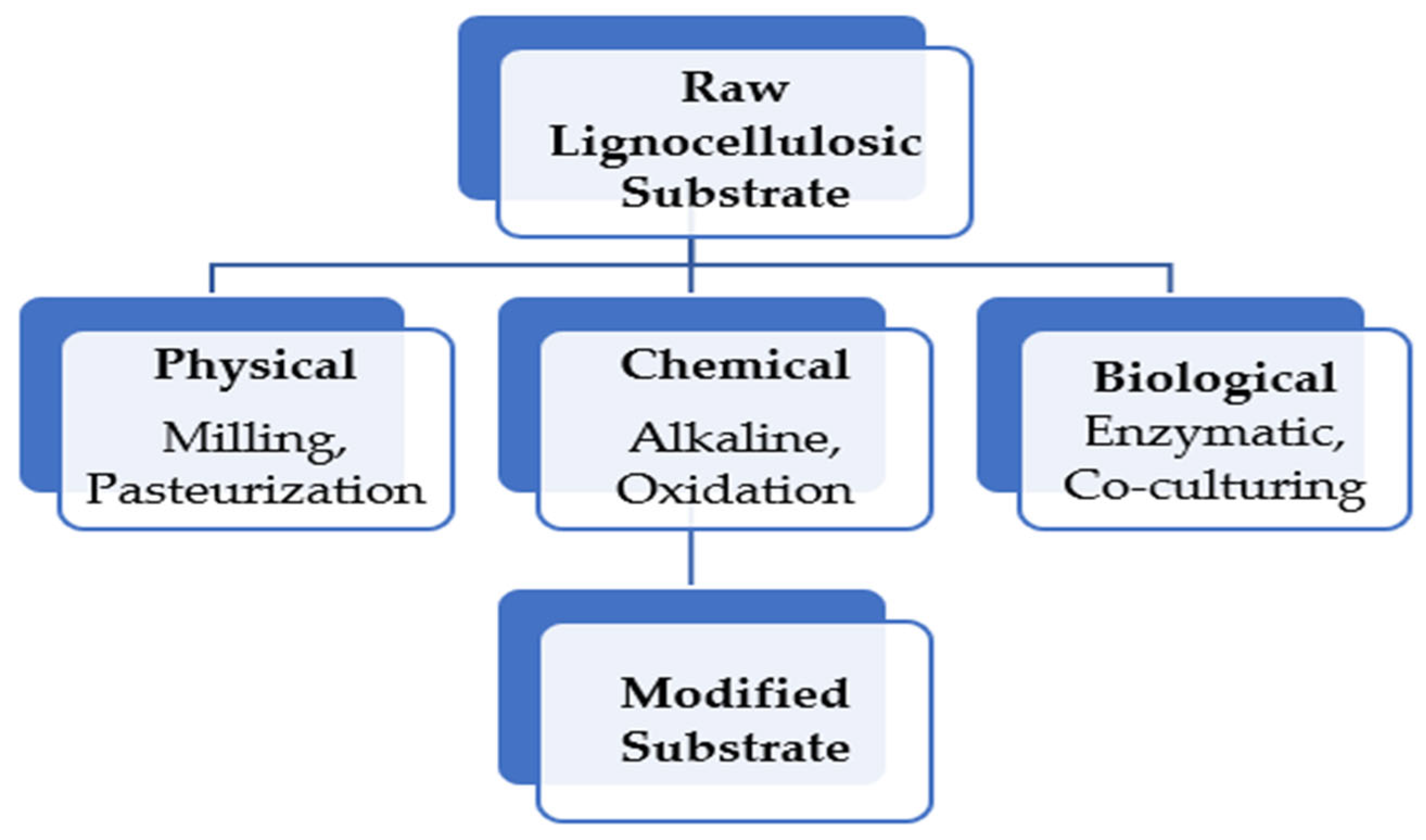
| Physical | Milling, autoclaving, and pasteurization | Simple, effective sterilization; improves surface area | Energy-intensive; nutrient degradation | [4,5] |
| Chemical | NaOH, H2SO4, H2O2, ozone | Enhances cellulose accessibility; improves fungal binding | Toxicity, pH imbalance, waste disposal issues | [6] |
| Biological | Enzymatic pre-digestion, microbial co-culture | Eco-friendly; improves bioavailability | Slower; needs process control | [2,3] |
| Parameter | Optimal Range | Control Methods | Effect on Mycelium Growth | Ref |
|---|---|---|---|---|
| Temperature | 20–28 °C (species dependent) | Thermocouples, thermostatic incubators | Regulates enzyme activity and colonization rate | [3,45] |
| pH | 5.5–7.0 | pH meter, buffer agents (CaCO3) | Ensures enzyme stability and nutrient solubility | [51] |
| Moisture Content | 55–65% | Gravimetric, IR sensors, automated humidifiers | Promotes enzyme diffusion and aeration balance | [47,48] |
| C:N Ratio | 20:1–60:1 | Elemental analysis, feedstock blending | Balances mycelial metabolism and mechanical strength | [51] |
| Particle Size | 1–5 mm | Sieving, image-based granulometry | Balances porosity and density | [6] |
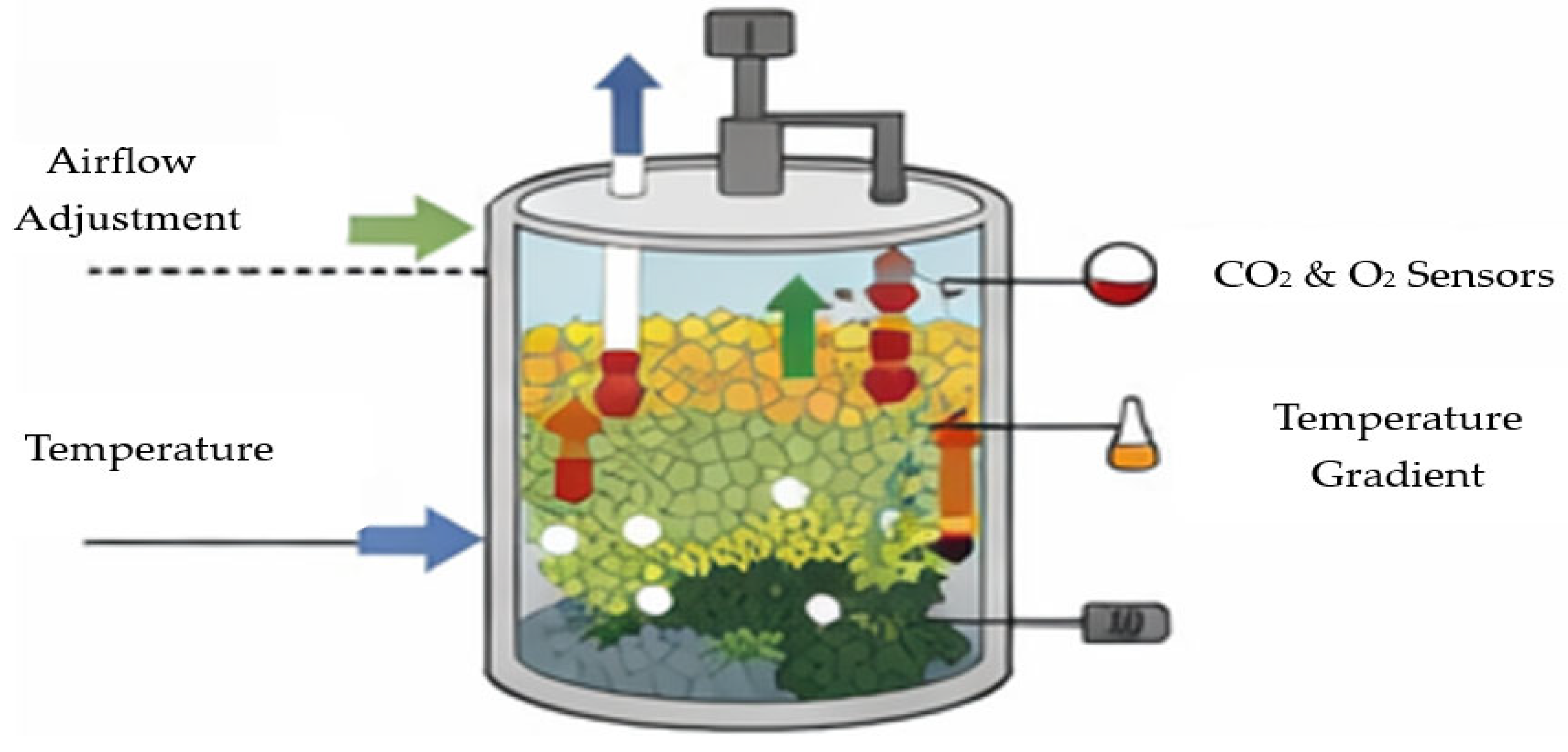
| Aeration | 0.5–2 L air/min/kg substrate | CO2/O2 sensors, forced ventilation | Prevents anaerobic zones and supports aerobic metabolism | [45] |
| Sterility | Pasteurization or Autoclaving | Temperature/time monitoring, microbial plating | Reduces contamination, ensures uniform growth | [32,47] |
| Sector/Application | Context | Key Focus | Market/Social Status | Representative Source |
|---|---|---|---|---|
| Sustainable Packaging | India (IIT Madras research) | Biodegradable packaging from agricultural waste | Early commercialization, startup formation | [84] |
| Architecture and Interiors | Europe (architect surveys) | Perception, esthetic acceptance in design | Mixed awareness; positive receptivity with exposure | [81] |
| Furniture and Bio-Design | University settings | Consumer “likability” studies | Emerging interest; ecology valued | [83] |
| Art and Sustainable Design | Global design literature | Eco art, prototypes, exhibitions | Niche adoption; esthetic experimentation | [82] |
| Emerging Tech (Bio-electronics) | Research labs | Sensing, fungal electronics, smart materials | Lab-level prototypes; future potential | [82,83,86] |
Disclaimer/Publisher’s Note: The statements, opinions and data contained in all publications are solely those of the individual author(s) and contributor(s) and not of MDPI and/or the editor(s). MDPI and/or the editor(s) disclaim responsibility for any injury to people or property resulting from any ideas, methods, instructions or products referred to in the content. |
© 2026 by the authors. Licensee MDPI, Basel, Switzerland. This article is an open access article distributed under the terms and conditions of the Creative Commons Attribution (CC BY) license.
Share and Cite
Liadi, M.A.; Ayodele, T.O.; Tijani, A.; Bello, I.A.; Chandra Sarker, N.; Igathinathane, C.; Ademola, H.M. From Biomass to Biofabrication: Advances in Substrate Treatment Technologies for Fungal Mycelium Composites. Clean Technol. 2026, 8, 30. https://doi.org/10.3390/cleantechnol8020030
Liadi MA, Ayodele TO, Tijani A, Bello IA, Chandra Sarker N, Igathinathane C, Ademola HM. From Biomass to Biofabrication: Advances in Substrate Treatment Technologies for Fungal Mycelium Composites. Clean Technologies. 2026; 8(2):30. https://doi.org/10.3390/cleantechnol8020030
Chicago/Turabian StyleLiadi, Musiliu A., Tawakalt O. Ayodele, Abodunrin Tijani, Ibrahim A. Bello, Niloy Chandra Sarker, C. Igathinathane, and Hammed M. Ademola. 2026. "From Biomass to Biofabrication: Advances in Substrate Treatment Technologies for Fungal Mycelium Composites" Clean Technologies 8, no. 2: 30. https://doi.org/10.3390/cleantechnol8020030
APA StyleLiadi, M. A., Ayodele, T. O., Tijani, A., Bello, I. A., Chandra Sarker, N., Igathinathane, C., & Ademola, H. M. (2026). From Biomass to Biofabrication: Advances in Substrate Treatment Technologies for Fungal Mycelium Composites. Clean Technologies, 8(2), 30. https://doi.org/10.3390/cleantechnol8020030