


Abstract
The widespread use of petroleum derivatives in industrial settings poses a challenge due to their toxicity and the difficulty of removing them from tanks, pipes, and equipment. Conventional degreasers are generally expensive, toxic, and harmful to workers’ health and the environment. In this study, an environmentally friendly biodetergent formulated from natural ingredients was produced in a pilot plant with 480 L h−1 capacity, in 250 L homogenizers, at 3500 rpm and 80 °C, and its performance evaluated under different operating conditions. Furthermore, the biodetergent efficiency was compared with that of commercial degreasers commonly used in industrial settings. Stability tests indicated 100% stable emulsion with 2.0% fatty alcohol and 1.0% stabilizing gum after one week of storage. In application tests, the biodetergent promoted up to 100% removal of heavy fuel oil (OCB1) and diesel from metal surfaces, both in concentrated and (1:1 v/v) diluted forms. In direct comparisons, the product performed equally or better than commercial degreasers, notably removing >95% of OCB1 in 10 min and maintaining efficiency after multiple reuse cycles. Unlike acidic or solvent-based formulations, the biodetergent did not induce corrosion on pieces or release toxic vapors when applied to heated surfaces. In summary, the developed bioproduct demonstrated industrial scalability and high efficiency, constituting a sustainable alternative for petrochemical cleaning operations in onshore and offshore environments.
1. Introduction
Detergents are found in nearly every aspect of daily and industrial life. Their uses range from household chores to critical fields like the chemical, pharmaceutical, and petrochemical industries. The primary role of these compounds is to help remove deposits from various surfaces, including fabrics, metals, and substrates that are hard to dissolve in water. The success of cleaning depends on both the material being cleaned and the detergent’s formulation. Because of these varying needs, a wide range of formulations are available, as shown by recent comparative studies [1,2,3,4].
The increasing use of cleaning products has become a worldwide concern due to the presence of harmful ingredients, such as certain synthetic compounds based on phosphorus and nitrogen, bleaches, and acids common in traditional detergents, which damage water resources. This has led to the development of environmentally friendly alternatives made from natural, biodegradable surfactants that are considered safer, more plentiful, scalable, and biocompatible, offering good cleaning performance [5,6,7,8].
Contamination of solid surfaces is a common issue across various fields, including healthcare, food, transportation, electronics, and industrial processes, with severity depending on the environment and activity. Removing these residues is often crucial to maintain the integrity, functionality, and safety of materials. Gas–liquid interfaces, such as those in foams and emulsions, are key to this process, as they help displace contaminants through interfacial forces, viscous and capillary tensions, which are affected by the surface’s polarity and electrical potential. Combining these mechanisms with additional physical methods, like heating or agitation, speeds up surfactant penetration, shortens contact time, and boosts cleaning efficiency [9].
International regulations have also promoted this shift. Laws like the Pollution Prevention Act [10], supported by the US Environmental Protection Agency (EPA), emphasize the need to decrease or eliminate hazardous substance generation, reinforcing the concept of green chemistry. In this context, the industry has aimed to adopt principles favoring the use of renewable surfactants as alternatives to petroleum derivatives to meet increasing environmental and occupational safety standards [5,10].
In industrial processes, especially in sectors that use large amounts of fuel oil, like thermal power plants, the production of oily waste from maintenance, operation, and cleaning of parts, floors, and equipment presents a major challenge [11,12]. Commercial detergents and degreasers currently in use, most of which are petroleum-based, are highly toxic and can release hazardous secondary residues such as Benzene, Toluene, Ethylbenzene, and Xylenes (BTEX) and polycyclic aromatic hydrocarbons (PAHs), which pose significant environmental and human health risks [13]. Additionally, many of these products contain solvents that are persistent in the environment and have low biodegradation potential.
In the industrial cleaning segment, there has been a transparent migration towards biodegradable and water-based detergents. According to Global Growth Insights, water-based cleaners are projected to account for 52% of the global market in 2024, driven by rising occupational health and environmental compliance requirements [14].
Recent studies have emphasized the need for environmentally friendly cleaning formulations that can replace traditional solvent-based degreasers. Aqueous and biodegradable systems have proven to be effective not only because of their lower environmental impact and improved workplace safety but also due to their ability to remove heavy oily residues while minimizing corrosion and surface degradation in industrial settings.
Chemical companies, such as Stepan Company, are already adopting green formulations, such as a vegetable oil-derived methyl ester (STEPAN® C-65), which combines biodegradability, low Volatile Organic Compound (VOC) content, and effectiveness in industrial cleaning applications [15,16]. This trend reinforces the central role of green chemistry in replacing harmful petrochemical inputs [17].
In this scenario, clean technologies based on naturally occurring compounds have emerged as promising alternatives to synthetic cleaning agents, reducing environmental impacts and improving workplace safety [18]. Important aspects include increased production scale, a crucial step for technological validation, and the industrial viability of sustainable formulations. Moving bench-scale production to industrial reactors or homogenizers requires strict control of process variables to ensure the stability, homogeneity, and effectiveness of the final product [6,19].
Given this context, this research aimed to evaluate the performance of a biodetergent formulated with natural, non-toxic components, developed on a pilot scale, in removing petroleum derivatives under different application conditions. Additionally, we sought to compare its performance and toxicity with those of commercial degreasers widely used in industry, with the goal of demonstrating its viability as a sustainable and economically competitive alternative for cleaning operations in industrial environments.
2. Materials and Methods
2.1. Scale-Up of Biodetergent Production
The formulated biodetergent consisted of biodegradable and non-toxic synthetic components, including 2.0% of a thickening fatty alcohol (classified as a surfactant), 0.5% of an emulsion-stabilizing gum, and 20.0% of a vegetable-based organic solvent, with water in sufficient amounts to make up 100% of the formulation. The biodegradability and non-toxicity of the formulation were previously evaluated and reported in published studies [20,21], while additional biodegradability tests and toxicity assessments were carried out by a certified laboratory as a technical service.
More detailed chemical analyses, such as spectroscopic techniques (FTIR—Fourier Transform Infrared Spectroscopy and NMR—Nuclear Magnetic Resonance), were not included in this study because the biodetergent composition has already been characterized, and such analyses could reveal sensitive structural details related to the formulation currently protected by a granted patent. Therefore, the present work focuses on evaluating the biodetergent scale-up and cleaning performance under industrially relevant conditions. The composition used is protected by patent BR 10 2019 017525 7 [22].
According to a previous study, the most economical way to produce a similar biodetergent on a bench scale was using a mechanical stirrer (Tecnal LTDA, Piracicaba, SP, Brazil) in 10 L batches, stirred at 3200 rpm for 15 min at 80 °C [20]. These parameters were based on prior laboratory-scale optimization, where higher stirring speeds enhanced homogenization and formulation stability, while 80 °C provided optimal conditions for thermal integration of the components.
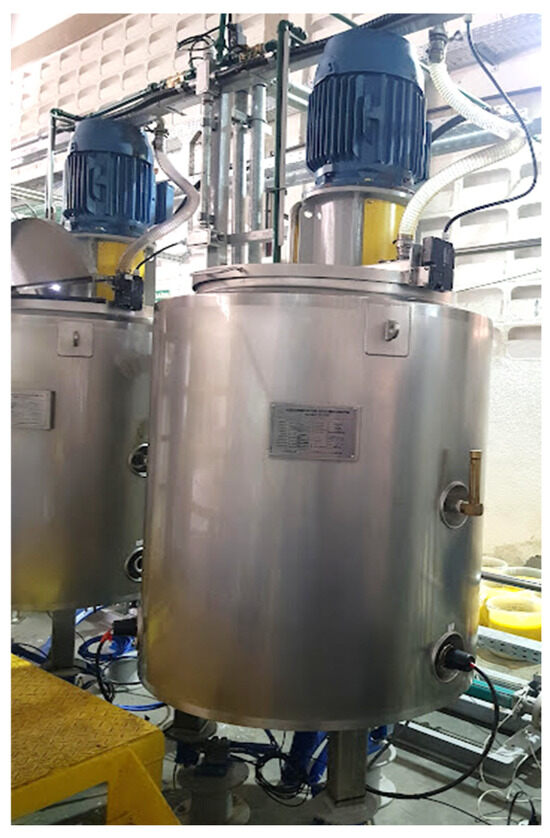
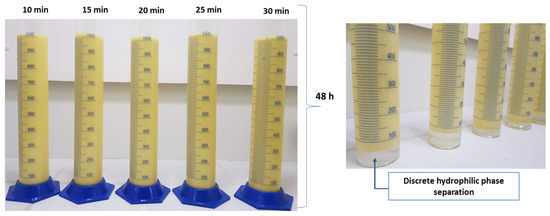
In this study, we evaluated the scale-up of biodetergent production in a homogenizing tank belonging to a pilot production plant of the Advanced Institute of Technology and Innovation (IATI, Recife, Brazil), within the R&D project supervised by the Brazilian Electric Energy Agency (ANEEL) under identification code PD-07236-0009/2020 (Figure 1). The batch volume was 250 L, the agitation speed 3500 rpm, and the temperature 80 °C, using the maximum safe operational agitation available for the equipment to ensure uniformity and process reproducibility. Samples were collected at different agitation times (10, 15, 20, 25 and 30 min).
Figure 1.
Homogenizing tank, with a capacity of 250 L, belonging to the biodetergent production pilot plant of the Advanced Institute of Technology and Innovation (IATI).
Additionally, the interaction between two components of the formulation was investigated by varying the concentrations of the thickening fatty alcohol (1.5, 2.0, and 2.5%) and the stabilizing gum (0.6, 0.7, 0.8, 1.0, and 1.5%). After mixing, samples (1 L) were removed, stored in graduated beakers, and kept at room temperature (28 °C) for 48 h. Subsequently, the stability of the formulation and the removal efficiency of Special Fuel Oil B1 (OCB1) oil from metal surfaces were evaluated.
2.2. Evaluation of the Efficiency of Heavy Oil Removal from Impregnated Metal Surfaces
Standardized metal pieces (screws) were uniformly impregnated by immersion in heavy fuel oil (OCB1), oven-dried at 40 °C for 30 min, and weighed. The tests were conducted statically, with the pieces immersed in the biodetergent and allowed to rest for 3 min. They were then immersed in distilled water to remove excess test solution and destabilized surface residues. After drying, the pieces were weighed again. The oil removal efficiency (I) was calculated using the equation proposed by Rocha e Silva et al. [23]:
where
- Mc = mass of the piece after impregnation with OCB1;
- Ml = mass of the piece after washing with biodetergent;
- Mi = initial mass of the clean piece before impregnation.
2.3. Immersion Cleaning Using Concentrated Biodetergent
Small standardized metal pieces (screws) were impregnated with heavy fuel oil (OCB1) by immersion, remaining stationary for 48 h to ensure adhesion. For tests involving lower-viscosity petroleum derivatives, such as diesel, a hydrophobic dye (scarlet red) was used as a visual marker. After impregnation, the pieces were heated in an oven at 100 °C for 48 h to volatilize light fractions and enhance oil adhesion [20,24].
Besides the standardized parts, truck pistons naturally contaminated by the engine they belonged to were supplied by Retífica Padrão LTDA (Recife, Brazil) and used directly, without artificial impregnation.
Cleaning tests involved immersing the pieces in concentrated biodetergent for 10, 20, 40, and 50 min, as well as for 1 h and 24 h. Three standardized metal pieces were tested after each cleaning interval. For the pistons, the removal of carbonized diesel was monitored during two immersion periods (1 h and until the dirt was completely gone). After each immersion, all samples were rinsed in distilled water without applying mechanical stress. The oil removal performance was evaluated through photographic documentation after each time point, enabling the monitoring of cleaning progress over time.
2.4. Immersion Cleaning Using Diluted Biodetergent
To achieve the desired cleaning performance with increased efficiency and cost-effectiveness, the dilution of the biodetergent and the immersion time were considered to optimize the use of the solution.
Small standardized metal pieces (screws) were previously impregnated with petroleum derivatives, according to the methodology described by Farias et al. [20] and Selva Filho et al. [24]. The biodetergent was then diluted 1:1 (v/v) in water, and the pieces were immersed in the solutions for different times (10, 20, 40, and 50 min, as well as 1 h and 24 h). For each contact time, three pieces were used as replicates.
After each immersion, the samples were rinsed with distilled water without applying mechanical stress. The oil removal performance was assessed through photographic records, enabling the monitoring of cleaning progress over time.
2.5. Application of Concentrated Biodetergent and Biodetergent Diluted by Immersion to Remove Petroderivatives from Heated Pieces
This test was conducted to simulate industrial conditions where equipment and components stay heated due to continuous operation. To achieve this, oil-impregnated metal pieces were heated in an oven to 100 °C and, immediately after removal, treated with biodetergent. This procedure enabled us to evaluate the product’s effectiveness in situations that require cleaning still-hot equipment, thereby reducing operational downtime. Two conditions were tested: applying the concentrated biodetergent and the biodetergent diluted in water at a 1:1 (v/v) ratio. For each concentration and contact time (5 and 10 min), three standardized pieces were used.
2.6. Determination of the Capacity of Destabilizing Petroderivatives in Comparison to Commercial Products
The aim of this test was to evaluate the biodetergent’s ability to destabilize heavy oil and diesel compared to commercial degreasers under conditions typical of routine industrial cleaning. The biodetergent was tested in its concentrated form and diluted in water (1:1, v/v), while the commercial degreasers were used following standard operational practices and technical guidelines adopted in thermal power plants, which adhere to the usage instructions specified by the manufacturers’ manuals. This approach ensured that the comparison was conducted under realistic industrial conditions. Commercial products classified as NH (formulated with ammonium hydroxide) and HG (designed with aliphatic and naphthenic hydrogenated solvents) were used in their concentrated forms, while those classified as RX (based on sodium silicates, amines, and alcohols) and AC (containing phosphoric acid and paint strippers) were diluted in water at a 1:3 (v/v) ratio.
Glass Petri dishes (12 cm Ø) were previously weighed to determine the initial mass (Mi), then uniformly impregnated with heavy oil or diesel and left to rest for 2 days to ensure proper adhesion. In tests with diesel, a hydrophobic dye was added to make removal visible. Under these conditions, the dishes were further heated in an oven at 100 °C for 48 h to volatilize light fractions and strengthen adhesion. After impregnation, the contaminated mass (Mc) was recorded.
Portions of each product (5, 10, and 15 mL) were applied to the impregnated oil layer without mechanical agitation, remaining in contact for 5, 10, and 30 min. After this period, the plates were rinsed in distilled water without manual effort, dried in an oven at 50 °C for 30 min, and weighed again (Ml) at room temperature.
The removal rate was calculated according to Equation (1) presented in Section 2.2, while the removal efficiency was checked by photographic recording after each test.
2.7. Evaluation of the Economics of Biodetergent Application in Cleaning Metal Surfaces Compared to Commercial Products
To complement the comparative evaluation of the biodetergent and commercial degreasers, the costs of product application were also analyzed. The biodetergent was tested either in its concentrated form or diluted with water (1:1, v/v), while the commercial degreasers were used following standard practices in thermal power plants. Specifically, NH and HG were tested in their concentrated form, whereas RX and AC were tested diluted in water (1:3, v/v).
Metal pieces (screws) impregnated with heavy oil or diesel were immersed in solutions of each product (40 mL) for 5, 10, and 30 min. After each cleaning cycle, the same solution was reused for subsequent pieces under identical conditions. Removal efficiency was visually assessed by counting the number of pieces effectively cleaned by each formulation within the fixed contact time. Loss of efficiency during reuse was operationally defined as the product’s inability to entirely remove the petroderivative within the established time, indicated by residual oil on the metal surface after rinsing. Based on these results, a comparative economic performance was estimated, defined as the number of units cleaned per volume of product used.
2.8. Statistical Analyses of Data from Experiments
The data were expressed as means ± standard deviation from tests performed in triplicate. Analysis of variance (ANOVA) was employed, with a p-value < 0.05 considered statistically significant.
3. Results and Discussion
3.1. Scale-Up of Biodetergent Production in a Pilot Plant
Agitation time is one of the most critical parameters in process scaling, as it directly influences the formulation’s physical and chemical characteristics after the resting period. According to the National Health Surveillance Agency [25], the physical characteristics of a product are crucial for its market acceptance.
Even considering the most economical biodetergent formulation described by Sarubbo et al. [22], this study aimed to provide information on the product’s behavior from large-scale production to storage over time. In this context, the interaction between the formulation components and the optimal dispersion time during mixing were evaluated. Using this approach for the new production scale adjustment, the behavior of the biodetergent was observed in a 250 L homogenizer with agitation times ranging from 10 to 30 min.
Regardless of the processing time, the formulation maintained its creamy appearance, mild odor, good flowability, and absence of phase separation immediately after processing. In addition to these qualities, product stability during storage and its fluidity level are important factors, as physical characteristics influence the choice of the most suitable application method, such as blasting, immersion, or manual application. The results below illustrate the relationship between physical processing conditions, which directly affect the final characteristics of the product after a certain resting period.
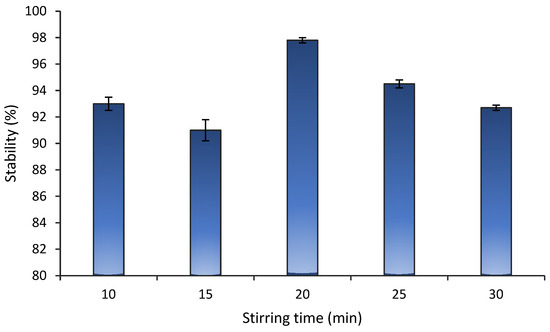
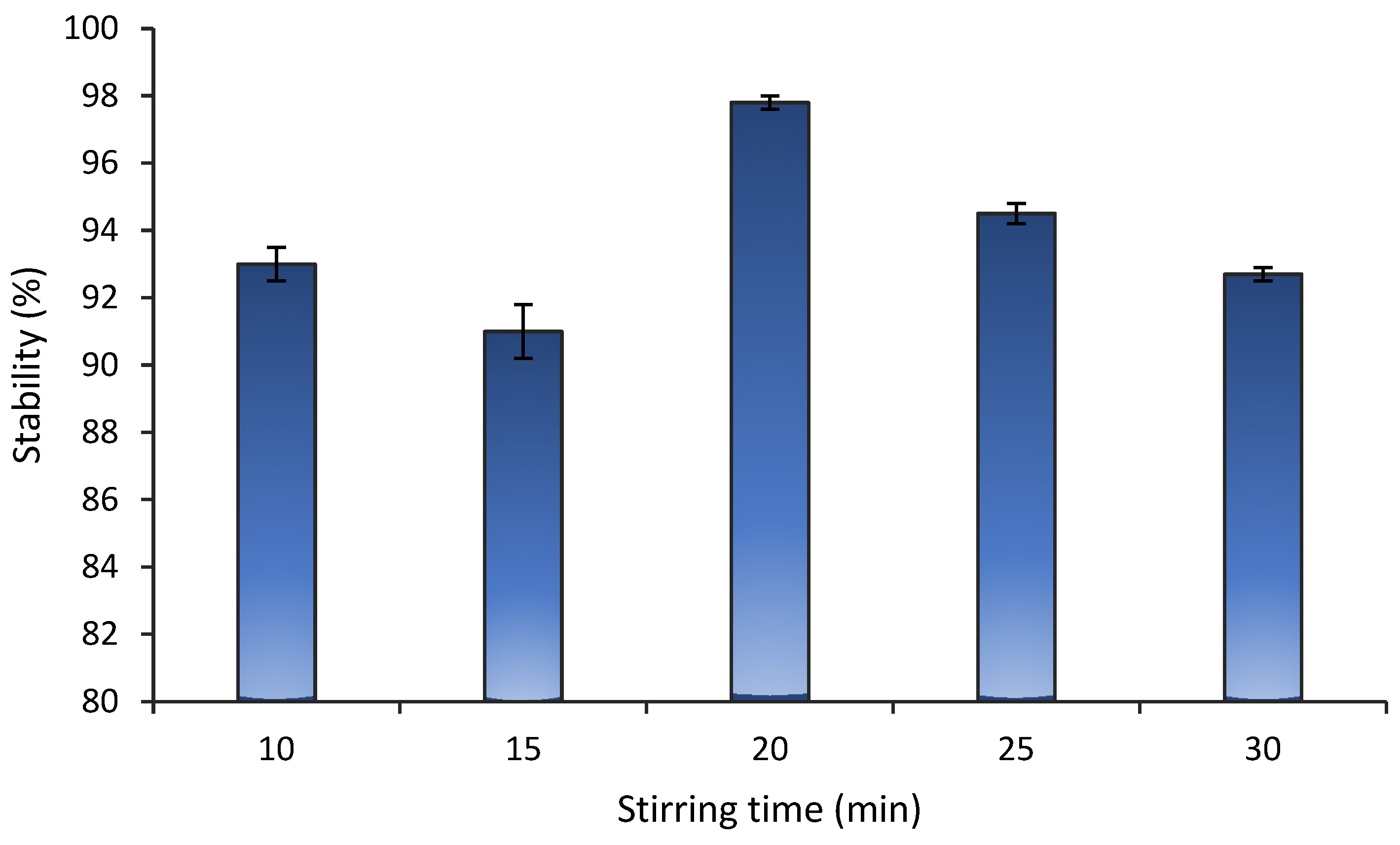
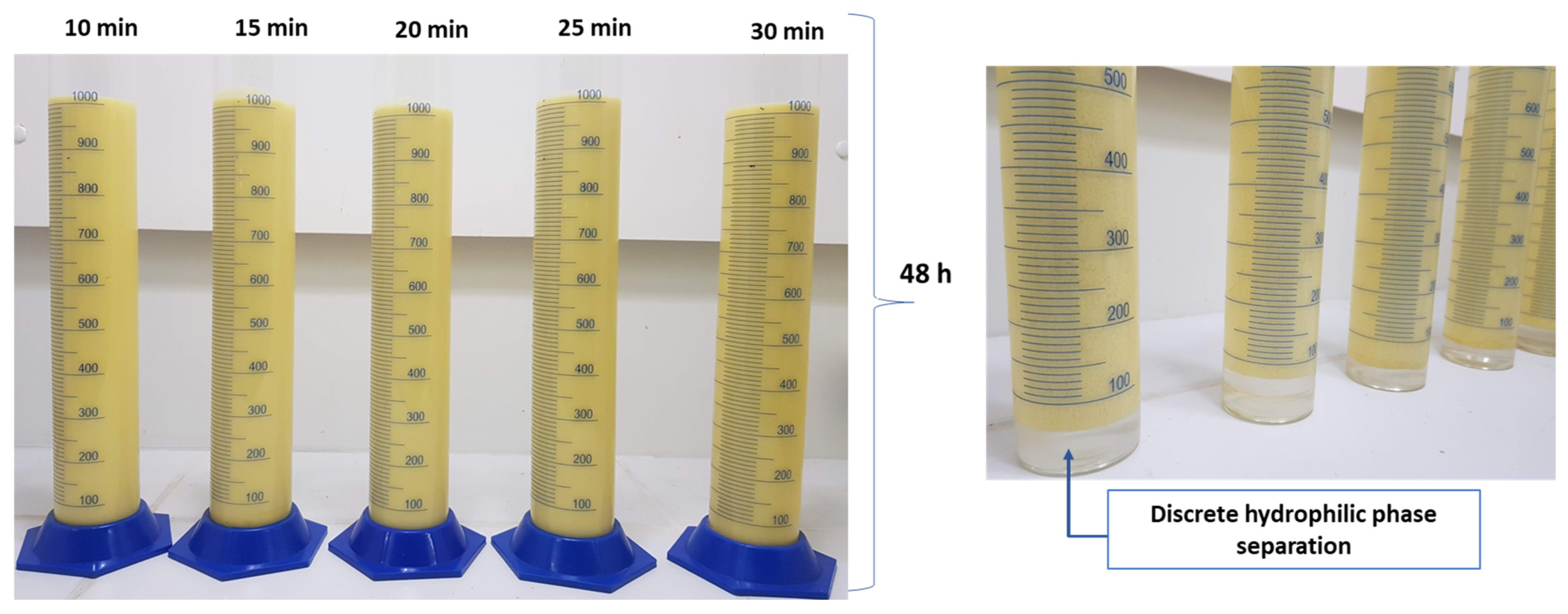
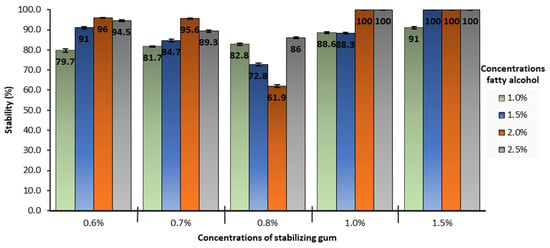
These events were more accurately described after assessing the stability percentage. Monitoring stability for 48 h showed that a 20 min stirring time reached about 98% stability (Figure 2), making it the most suitable choice for pilot-scale production.
Figure 2.
Influence of the stirring time on the biodetergent stability in the pilot-scale production process, after 48 h of rest.
As shown in Figure 3, minimal phase formation was observed in the lower part of the container, due to the hydrophilic part of the formulation. This partial separation caused by gentle manual agitation was reversible, showing that the system is stable and can be easily re-homogenized. There was also a slight rise in emulsion viscosity, but it did not affect potential product application methods.
Figure 3.
Illustration of the biodetergent stability (%) tests evaluating different agitation times (10, 15, 20, 25 and 30 min) in the pilot plant, after 48 h of rest.
The observed behavior aligns with reports for oil/water (O/W) systems stabilized by nonionic surfactants (such as fatty alcohol ethoxylates) and hydrocolloids, where a moderate increase in continuous phase viscosity and steric stabilization decrease coalescence and flocculation; the synergistic effects of xanthan and guar on stability and release have already been shown [26,27].
To ensure product quality, it is crucial to carefully evaluate its stability and aim to minimize any phase separation. Variations in the concentrations of the formulation’s stability- and efficiency-related components were tested to find more robust combinations for scaled production [28]. Fine-tuning of concentrations is common in commercial formulations because differences in input characteristics, depending on the supplier, and the requirements of the scale-up process can affect the product’s physicochemical properties. Therefore, stability and efficiency should be assessed with appropriate analytical methods to ensure the formulation’s consistency and performance under real-world conditions.
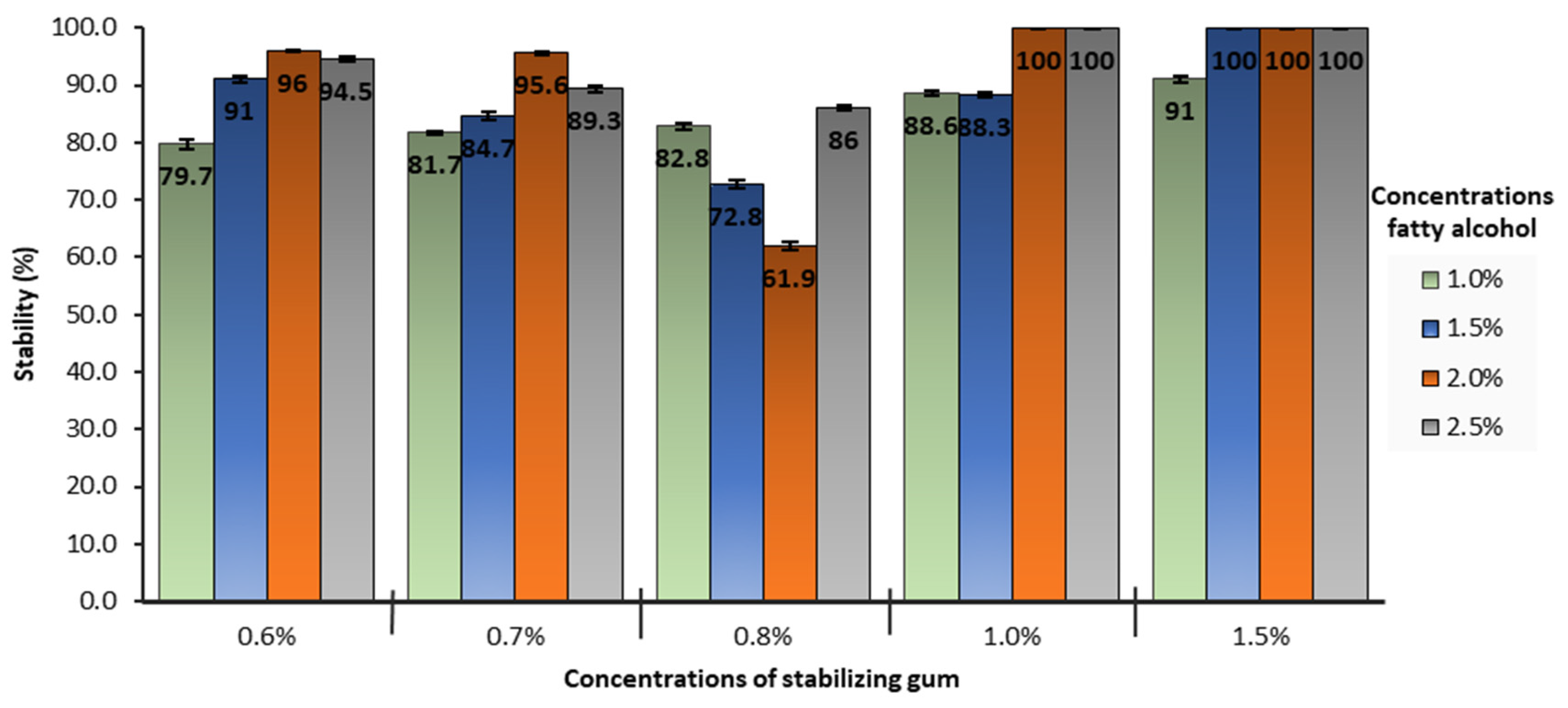
This study assessed the effects of stabilizing gum concentrations (0.6–1.5%) and thickening fatty alcohol levels (1.5–2.5%). All tests yielded excellent results, but it is important to note that using stabilizing gum at 1.0% or higher, combined with 2.0% fatty alcohol, achieved 100% stability with no phase separation after 48 h, and maintained even better stability after a week of rest (Figure 4). This confirms the formulation’s robustness, which is crucial for large-scale production and storage.
Figure 4.
Stability (%) of the biodetergent produced on a large scale in the pilot plant, evaluating different concentrations of stabilizing gum and thickening fatty alcohol, after 8 days of rest.
These results show that an efficient production process relies on proper scaling. In this study, both the component proportion and the homogenizer’s rotational speed were essential for achieving high formulation stability, confirming the process’s robustness during scaled-up production.
Coutinho et al. [29] reported similar findings, observing excellent stability in creams produced at different agitation speeds (4000, 10,000, and 16,000 rpm) using a rotor-stator homogenizer, emphasizing the importance of controlling this parameter for stable emulsions. In a related study, Farias et al. [20] tested the biodetergent on a bench scale, varying agitation time (5–10 min) and batch volume (4–10 L). After 96 h of storage, the tests showed nearly 100% stability, with 7 min of agitation identified as the most effective duration for all volumes tested.
Results from Rocha e Silva et al. [23] also corroborate this study by demonstrating that formulations containing 20% cottonseed oil and 0.0078% saponin remained homogeneous and fluid using carboxymethyl cellulose (CMC) and glycerin as stabilizers, without compromising heavy oil removal.
So, the findings presented here reinforce the importance of precise adjustment of processing variables to ensure stability and performance of the biodetergent, constituting a solid basis for the application methodologies described below, which simulate different cleaning conditions in an industrial environment.
3.2. Application of Biodetergent on Metal Surfaces
3.2.1. Concentrated Biodetergent
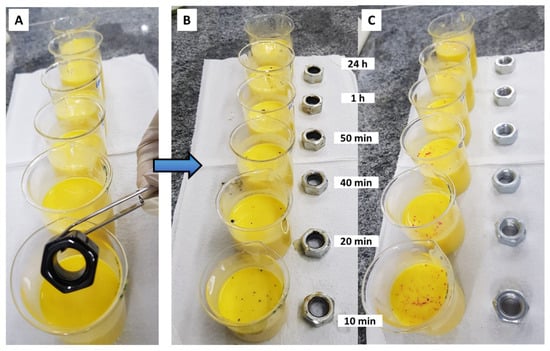
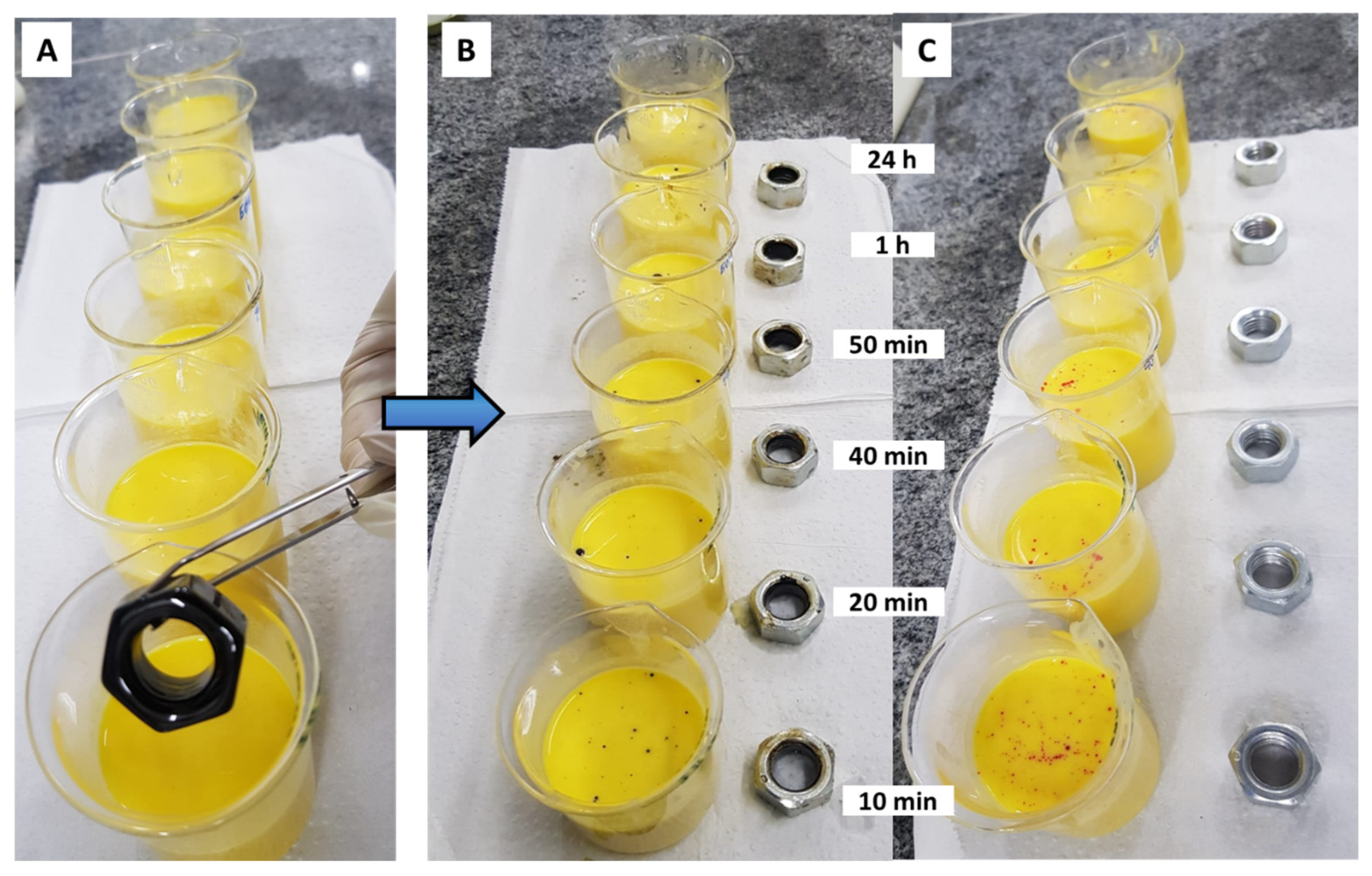
After immersing and rinsing the standardized metal pieces, complete removal of petroleum derivatives (OCB1 and diesel) was observed at all established contact times, confirming the high efficiency of the biodetergent in cleaning metal surfaces (Figure 5). Achieving complete removal even at the shortest contact times offers a significant operational advantage, as it reduces equipment downtime, optimizes maintenance scheduling, and results in direct savings in man-hours and cleaning costs. These findings support the viability of its use in industrial degreasing processes for equipment contaminated with hydrocarbons.
Figure 5.
Cleaning of metal pieces impregnated with petroleum derivatives by immersion in biodetergent for different times. Pieces impregnated before immersion (A). Pieces after removal of OCB1 oil by the immersion process (B). Pieces after oil removal (C).
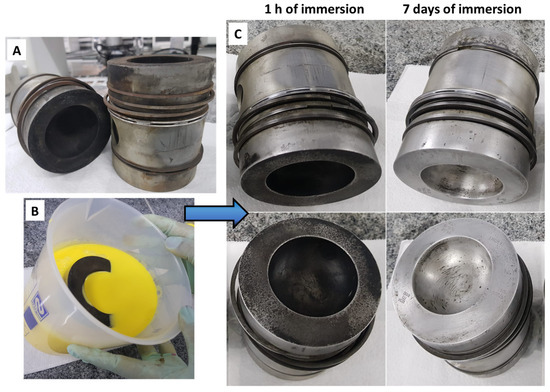
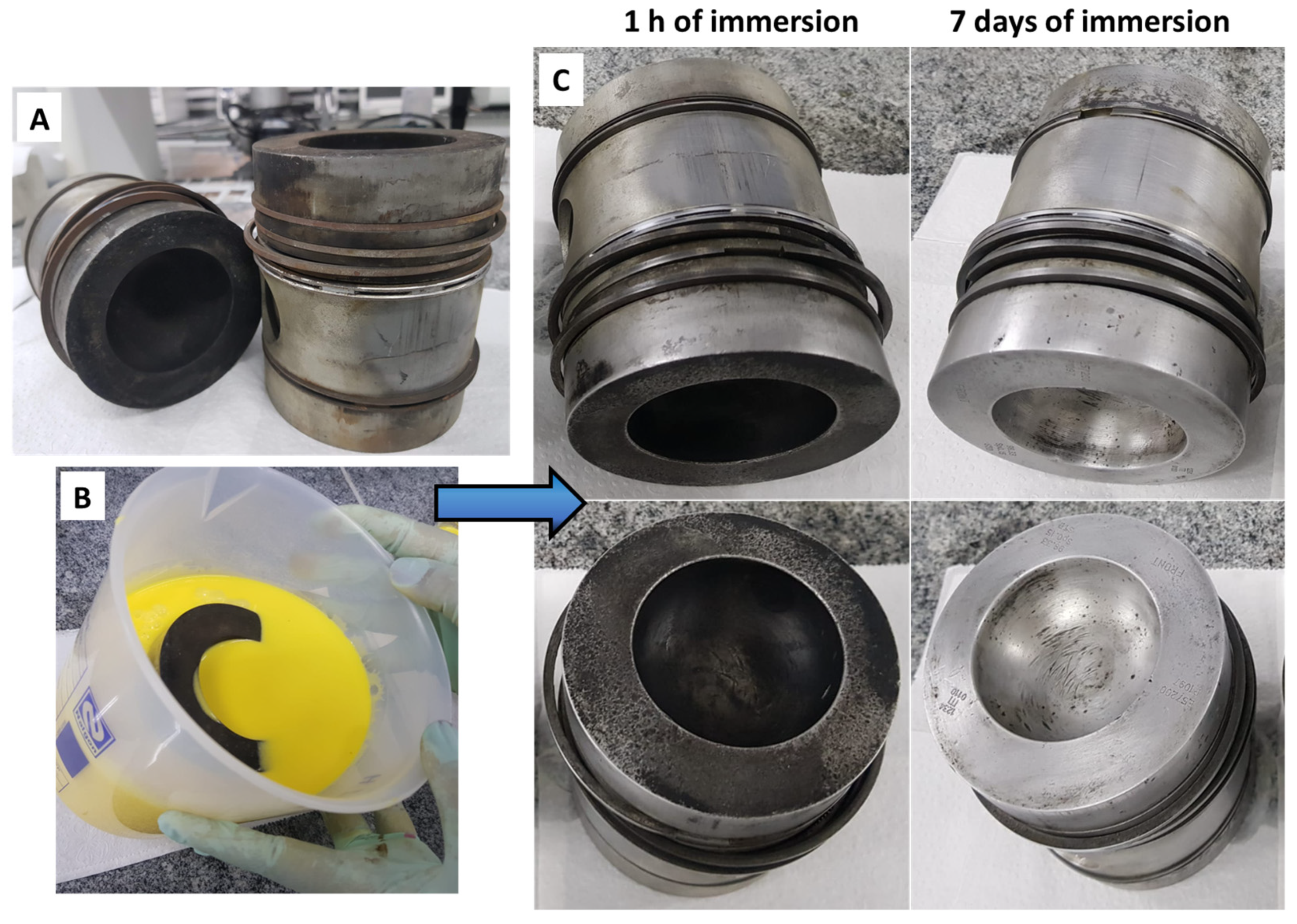
In larger pieces, such as diesel engine pistons, polymerized and carbonized hydrocarbons were formed through thermal degradation and oxidation of fuels and lubricants during engine operation. This type of deposit is notably more adherent and resistant to removal, as it has a partially cross-linked structure and strong adhesion to the metal surface, requiring high solvent power and surfactant action for removal.
The use of pistons with this type of dirt gave greater realism to the test, as it reproduces a critical condition found in the automotive and engine maintenance industry, allowing us to evaluate the biodetergent’s ability to remove severely encrusted residues.
After 1 h of immersion in the biodetergent, significant removal of dirt was observed, demonstrating the product’s ability to act on more adherent, older deposits typical of engines in prolonged operation (Figure 6A,B).
Figure 6.
Petroderivatives cleaning by immersion. Pistons impregnated with carbonized diesel (A). Piston immersed in biodetergent (B). Pistons after cleaning by immersion in biodetergent for 1 h and 7 days (C).
For samples with a high level of impregnation, complete removal was only achieved after 7 days of continuous immersion, emphasizing that contact time is a key factor in severe contamination cases. This finding is important for optimizing cleaning protocols and planning immersion periods that minimize the need for mechanical stress.
Figure 6C provides a visual comparison of pistons subjected to different immersion times, illustrating the evolution of the cleaning process and the formulation’s effectiveness even under severe conditions.
3.2.2. Diluted Biodetergent
Proper dilution of concentrated products is essential for safety, efficiency, and cost savings. It is widely used in sectors like healthcare, food industry, hospitality, professional cleaning, and facility maintenance. Diluting products accurately saves money and maintains cleaning effectiveness.
In this study, the biodetergent dilution and immersion time were identified as key variables to achieve the desired performance, ensuring efficiency and cost-effectiveness of the process. Therefore, standardized metal pieces were immersed in the solution for predetermined times. In all conditions tested, complete removal of petroleum derivatives (OCB1 and diesel) was observed, confirming the product’s effectiveness even in diluted form and highlighting its potential for industrial use.
Together with the findings for the concentrated biodetergent, these results strengthen the formulation’s versatility for various contamination scenarios and application methods, broadening its potential for use in industrial degreasing processes. Maintaining high performance even after dilution confirms the formulation’s robustness, allowing for product savings, reduced waste generation, and increased operational efficiency without sacrificing cleaning effectiveness.
The improper disposal of synthetic detergents is recognized as a significant source of environmental impact due to their persistence and potential toxicity to aquatic ecosystems. As a result, industry interest in more environmentally friendly, biodegradable, and renewable alternatives is increasing. Rocha and Silva et al. [23] described a sustainable biodetergent formulated with cottonseed oil as a natural solvent, a plant-based surfactant, and stabilizers such as carboxymethyl cellulose and glycerin, which demonstrated high stability, non-toxicity, and efficiency by removing 100% of heavy oil from glass and metal surfaces. These findings strengthen the potential of green formulations for industrial use, especially for cleaning equipment and floors heavily contaminated with oil and grease.
Similarly, Farias et al. [21] developed a biodegradable biodetergent that fully removed OCB1 from various surfaces, demonstrating performance that is comparable to or even better than commercial products. These findings show that replacing petrochemicals with sustainable options is possible without sacrificing effectiveness.
In line with these findings, Farias et al. [20] observed the removal of petroleum derivatives from contaminated metal surfaces when in contact with biodetergent diluted in 1:1, 1:3, 1:5, and 1:7 (v/v) ratios or with the undiluted product. The authors reported that the biodetergent exhibited an efficiency greater than 90% when diluted at 1:1 (v/v) and achieved complete removal in its concentrated form.
Other studies support the importance of naturally occurring surfactants. Almeida et al. [30] observed oil removal rates between 78.4 ± 0.6% and 82.6 ± 0.5% when applying a plant-based surfactant to steel pieces, confirming its potential for commercial use and as a replacement for synthetic surfactants. Azuokwu et al. [31] examined biodetergents made from inedible seed oils (Ricinus communis and Azadirachta indica), comparing them with a commercial drilling detergent used in the Niger Delta. The Biochemical Oxygen Demand (BOD) values indicated that the biodetergents are more easily biodegradable, and physicochemical analyses showed they meet the specifications for drilling detergents compared to commercial products, supporting their environmentally safe potential.
3.3. Application of Concentrated Biodetergent and Biodetergent Diluted by Immersion to Remove Petroderivatives from Heated Pieces
This type of test sought to simulate real operating conditions found in an industrial environment, where equipment and components are often hot due to recent machinery operation. The objective was to determine whether the high temperature would alter the biodetergent removal efficiency.
The results showed that the biodetergent, whether in its concentrated form or diluted 1:1 v/v, was effective at removing OCB1 and diesel across all tested conditions. The high temperature of the parts did not affect the product’s appearance or its effectiveness; in fact, exposure to heat enhanced the removal of grease and oily residues, accelerating the cleaning process. It is important to note that, because it is made with water and natural, biodegradable, non-toxic ingredients, the biodetergent does not emit harmful gases when used on hot surfaces, helping to ensure the safety of workers. These findings support that the product can be used immediately after machinery is turned off, reducing downtime and increasing equipment availability—benefits that improve the efficiency of industrial plants.
Temperature is a critical factor in the mobilization or agglomeration of oily residues in industry. Some findings in the literature highlight the importance of assessing how temperature affects cost-efficiency and peak performance when cleaning parts and equipment contaminated with petroleum derivatives. Bikov et al. [32], using synthetic detergents, showed that the effectiveness of contaminant removal from the surface mainly depended on the wash solution temperature, while the duration of washing had little impact. The best cleaning results were observed at temperatures of 80–90 °C, whereas washing below 70 °C significantly reduced detergency and wettability, regardless of how long the wash lasted. Likewise, Fadeev et al. [33] optimized washing parameters—including duration, temperature, detergent composition, and concentration—and examined how detergency relates to solution temperature. They discovered that additives such as potassium monoborate enabled high cleaning efficiency even at lower temperatures, thereby lowering costs during the washing process.
3.4. Capacity of Destabilizing Petroderivatives Compared to Commercial Products
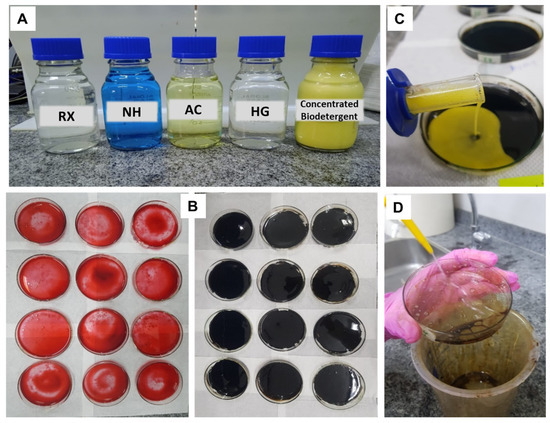
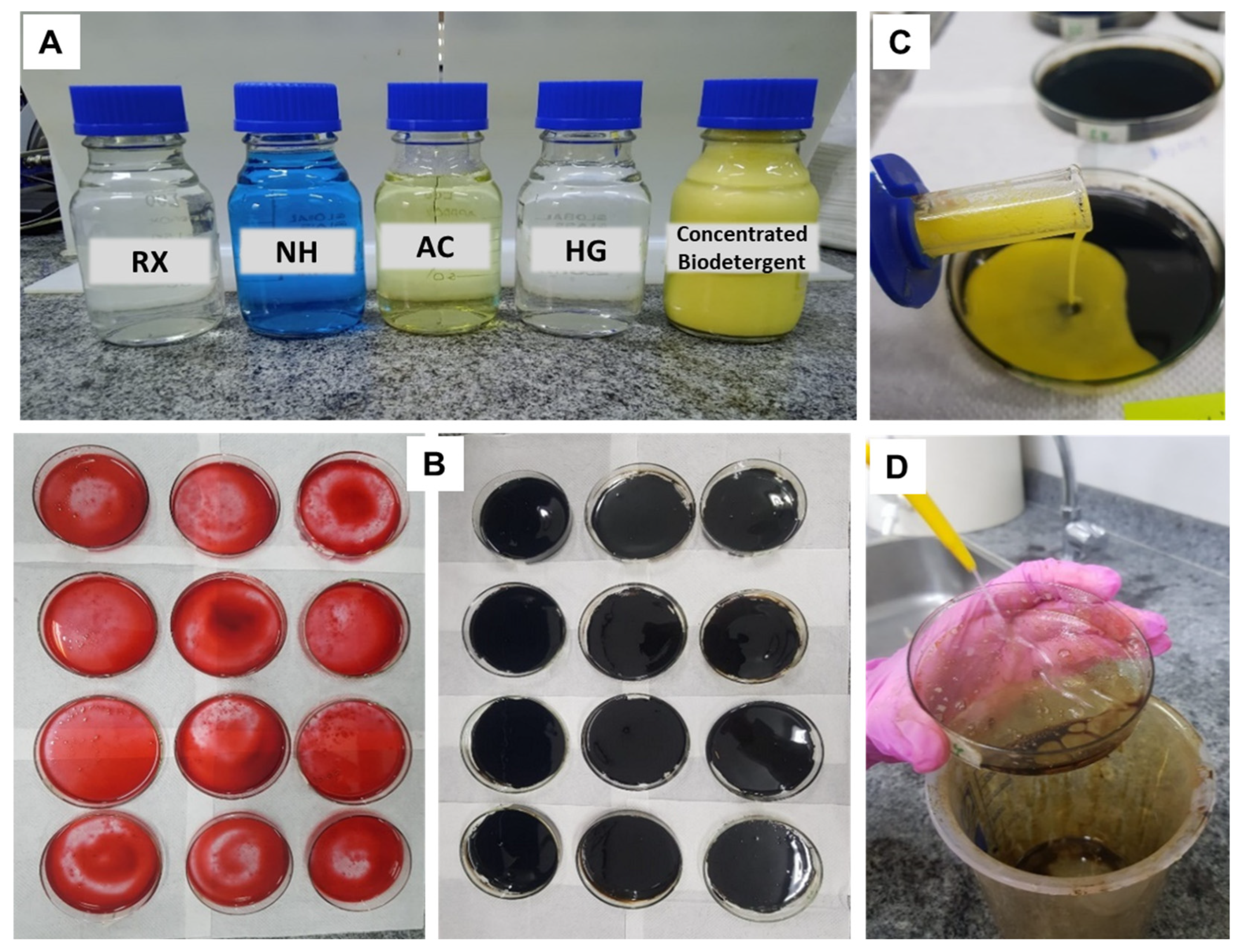
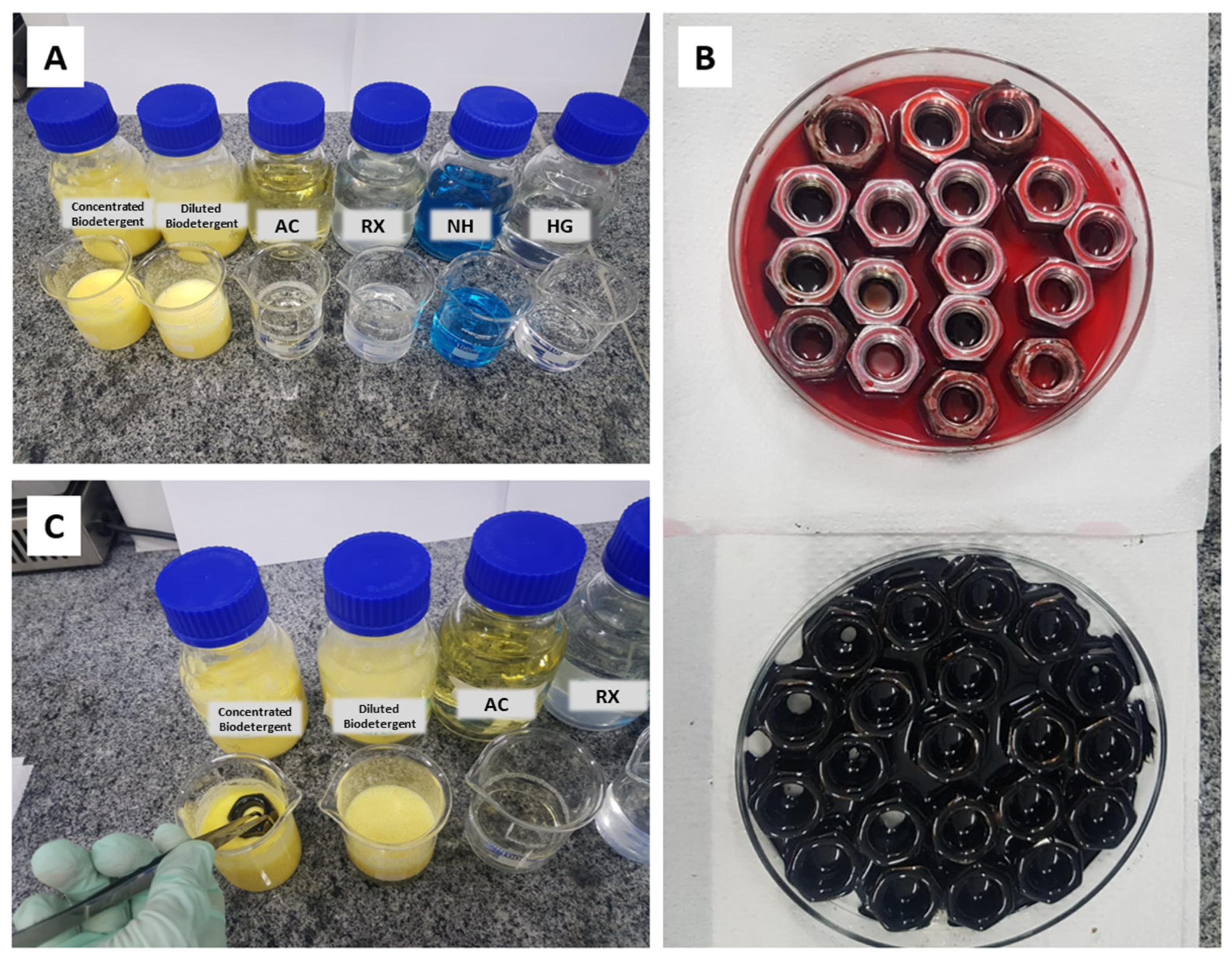
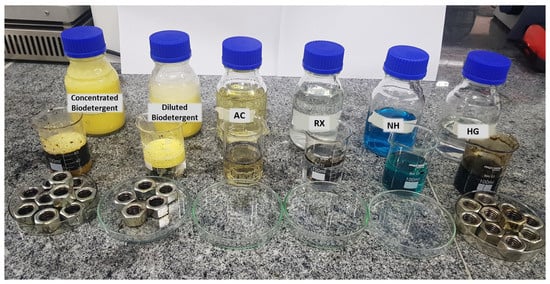
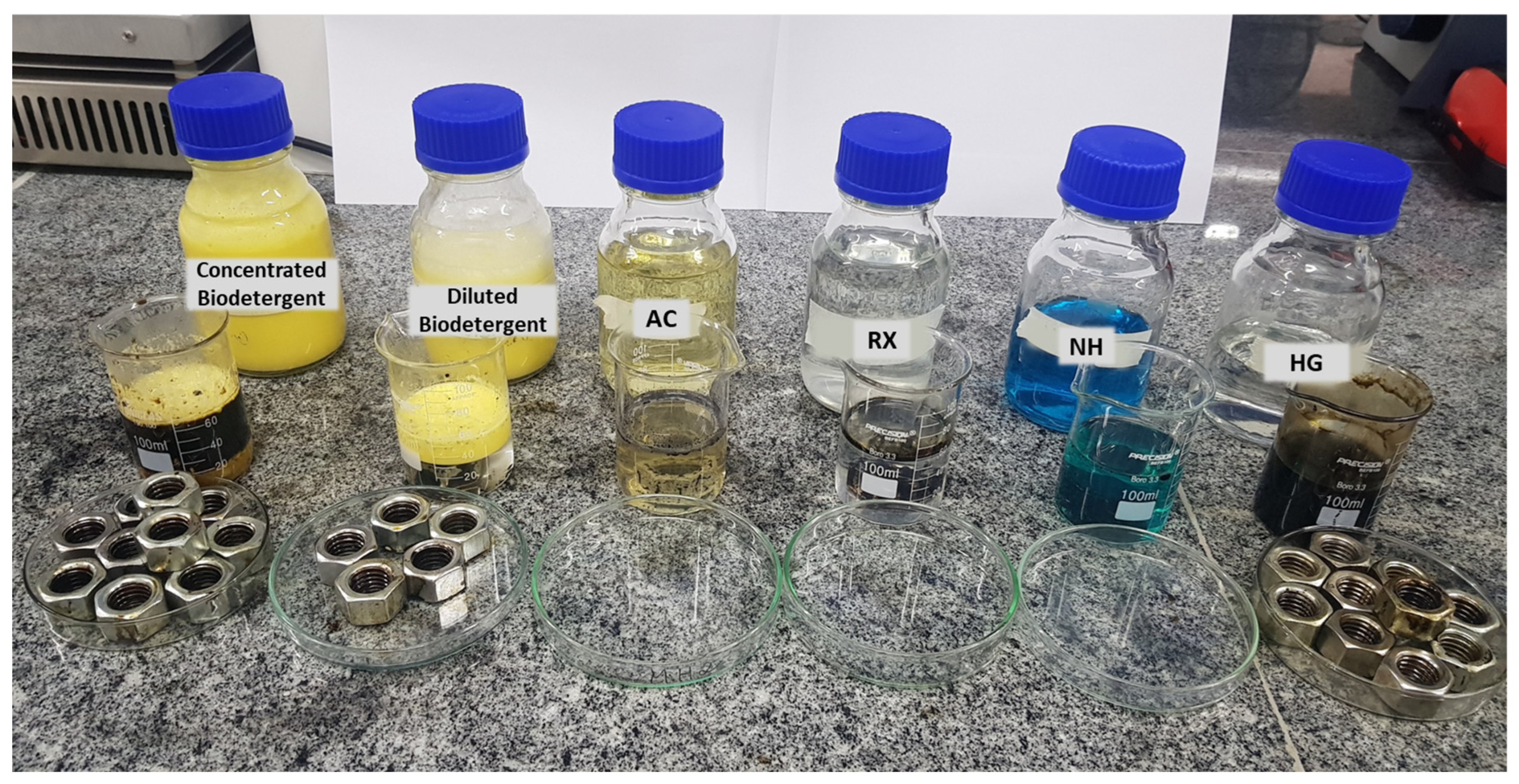
This analysis aimed to evaluate the biodetergent ability to destabilize petroleum derivatives on smooth surfaces, comparing it to that obtained with commercial products widely used in thermal power plants. The test included OCB1 and diesel, employing a standardized methodology for solubilizing and mobilizing contaminants (Figure 7).
Figure 7.
Results of petroderivatives destabilization by the biodetergent compared to commercial products. Commercial detergents (NH—formulated based on ammonium hydroxide; HG—formulated with aliphatic and naphthenic hydrogenated solvents; RX—formulated based on sodium silicates, amines, and alcohols, and AC—formulated based on phosphoric acid and paint strippers) and concentrated biodetergent (A). Plates impregnated with petroderivatives (B). Application of biodetergent to the impregnated plate (C). Rinsing after the resting time (D).
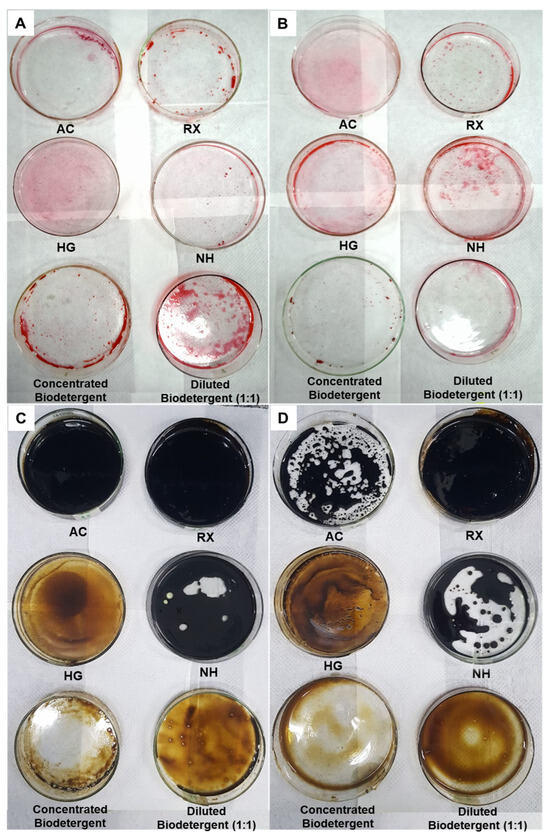
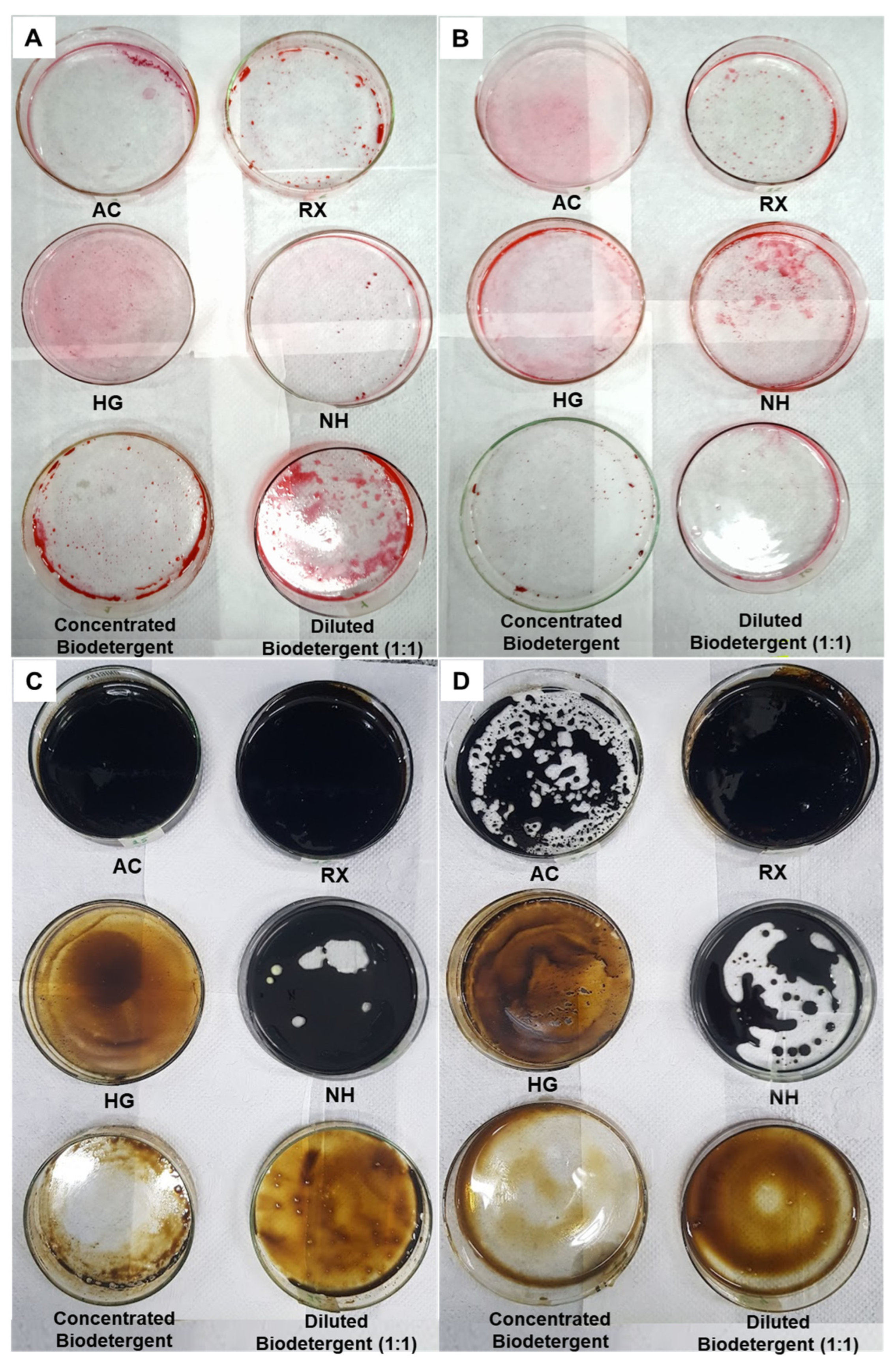
The results shown in Figure 8 and Table 1 demonstrate that the biodetergent was very effective at removing both petroleum derivatives, achieving the best results after 10 min of contact. The duration of exposure was essential for complete removal, especially on impregnated surfaces, where more interfacial mobilization is needed for destabilization.
Figure 8.
Removal of diesel oil (A,B) and OCB1 (C,D) from glass plates after application of concentrated biodetergent, 1:1 (v/v) diluted biodetergent, and commercial degreasers, namely AC (based on phosphoric acid paint strippers, 1:3 v/v), RX (based on sodium silicates, amines, and alcohols, 1:3 v/v), NH (based on ammonium hydroxide), and HG (formulated with aliphatic and naphthenic hydrogenated solvents). Evaluations were performed after 5 min (A,C) and 10 min (B,D) of contact.
Table 1.
Removal of diesel oil and OCB1 by the biodetergent and commercial detergents on smooth surfaces after 5 and 10 min of contact.
For greater precision, the results of the comparative tests between commercial detergents and the biodetergent are listed in Table 1, expressed as percentage removal of the analyzed petroderivatives.
As shown in Table 1 and Figure 8, the biodetergent performed highly satisfactorily compared to conventional products used in industry. For diesel, the static removal rate was coincident to that of other commercial products, with particular emphasis on the concentrated biodetergent formulation, which outperformed most of the other formulations tested.
Regarding OCB1 removal, the results show that the biodetergent is highly competitive with traditional degreasers, offering equal or better efficiency, especially in its concentrated form, with removal rates above 95%. Notably, among conventional products, the HG degreaser produced the best results, performing similarly to the 1:1 (v/v) diluted biodetergent. However, due to the proven toxicity of the former, the biodetergent is a preferred alternative because it combines high efficiency, biodegradability, and non-toxicity, meeting occupational safety and sustainability standards.
Overall, the biodetergent showed high effectiveness under all tested conditions for the chosen petroleum derivatives, providing better or equal performance compared to commercially available products for cleaning contaminated surfaces in industrial settings. Additionally, the comparison tests offer useful information for evaluating the technical and economic feasibility of using it in real-world degreasing processes, such as those used in oil-fired power plants, delivering consistent results even in high oil load scenarios.
The observed performance difference between OCB1 and diesel aligns with the physicochemical properties of these fuels. OCB1, due to its higher viscosity and greater chemical complexity—including higher levels of resins and asphaltenes, a broader molecular weight distribution, and increased aromaticity—forms more cohesive and firmly adhered deposits with higher interfacial rigidity, which take longer contact time for complete removal. Conversely, diesel, because of its lower viscosity and polarity, reduced asphaltene content, and lower molecular cohesion, was removed more quickly and efficiently. These trends support previous studies demonstrating the role of natural surfactants in lowering interfacial tension and modifying the rheological properties of contaminants, which are critical factors for cleaning efficiency [21,23,34,35].
3.5. Economics of Biodetergent Application in Cleaning Metal Surfaces Compared to Commercial Products
This test aimed to simultaneously evaluate the capacity to destabilize OCB1 oil and diesel, as well as the volume savings of the biodetergent compared to commercial degreasers used in thermal power plants. The methodology depicted in Figure 9.
Figure 9.
Methodology for evaluating the economics of biodetergent application compared to commercial products (NH—formulated based on ammonium hydroxide; HG—formulated with aliphatic and naphthenic hydrogenated solvents; RX—formulated based on sodium silicates, amines, and alcohols, and AC—formulated based on phosphoric acid and paint strippers). Biodetergent and commercial detergents (A). Pieces impregnated with petroleum derivatives (diesel and OCB1) (B). Immersion of oil-impregnated metal pieces in each container containing the cleaning products (C).
Based on the results, Table 2 was prepared, which shows the number of pieces effectively cleaned by each product over a fixed time of 10 min.
Table 2.
Number of metal pieces impregnated with diesel oil and OCB1 actually cleaned with the biodetergent or with various cleaning products used in industry, after 10 min of contact.
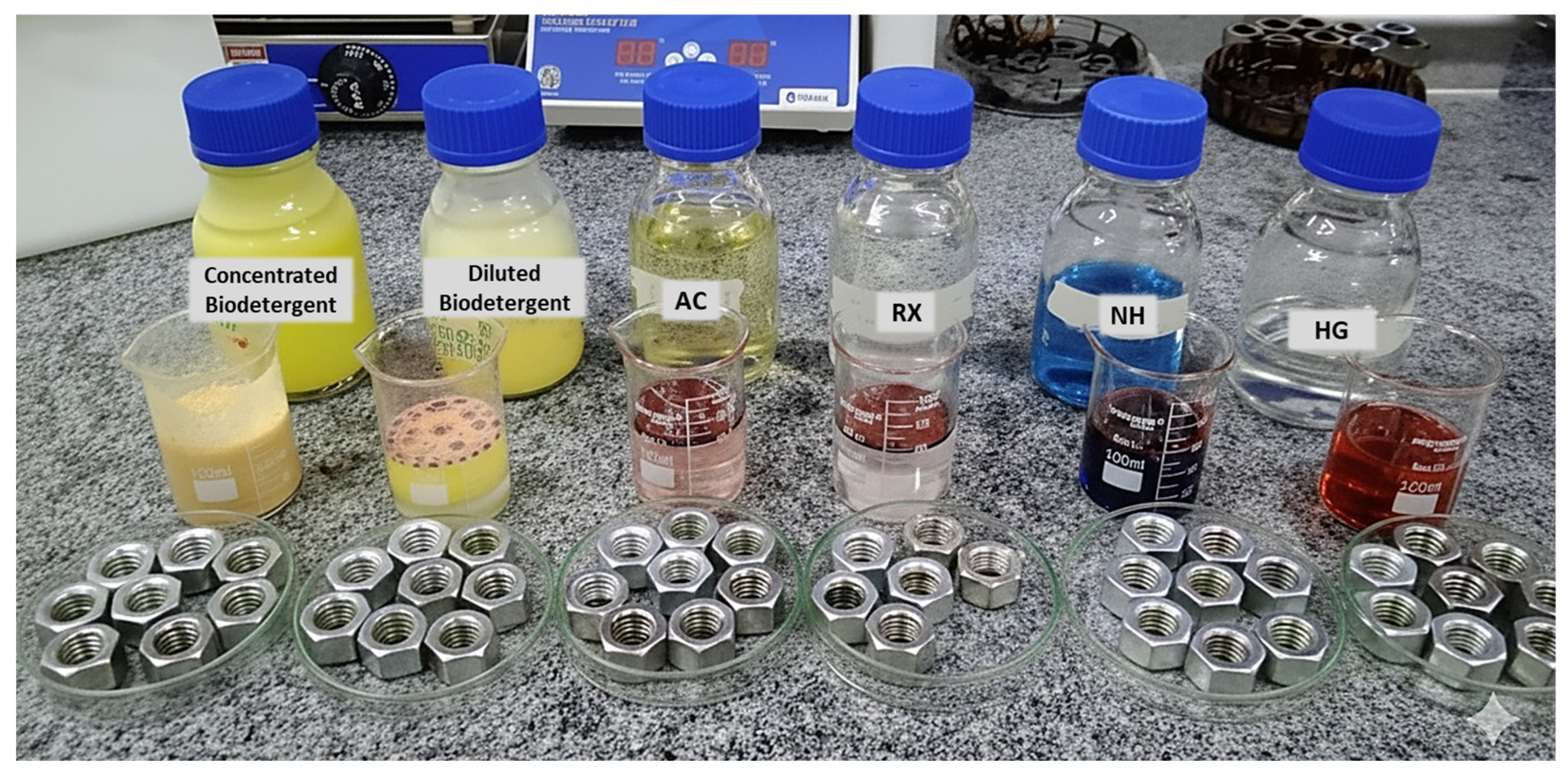
All tested products were expected to remove diesel oil from metal specimens more effectively due to the greater compatibility of this petroleum derivative with cleaning agents and its lower viscosity, which aids in the solubilization process. Among the degreasers, RX was less efficient, showing a slower removal rate. Diesel oil cleaning efficiency is shown in Figure 10.
Figure 10.
Metal pieces impregnated with colored diesel oil, after immersion in concentrated biodetergent, 1:1 (v/v) diluted biodetergent and commercial degreasers, namely AC (based on phosphoric acid paint strippers, 1:3 v/v), RX (based on sodium silicates, amines, and alcohols, 1:3 v/v), NH (based on ammonium hydroxide), and HG (formulated with aliphatic and naphthenic hydrogenated solvents).
Regarding OCB1 oil, the concentrated biodetergent performed similarly to the HG degreaser, with both cleaning the same number of items up to the 10th use, when efficiency began to decline. The 1:1 (v/v) diluted biodetergent maintained good performance up to the 5th use, demonstrating potential for solution savings compared to other products. The results are shown in Figure 11.
Figure 11.
Metal pieces impregnated with OCB1 oil, after immersion in concentrated biodetergent, 1:1 (v/v) diluted biodetergent and commercial degreasers, namely AC (based on phosphoric acid and paint strippers, 1:3 v/v), RX (based on sodium silicates, amines and alcohols, 1:3 v/v), NH (based on ammonium hydroxide) and HG (formulated with aliphatic and naphthenic hydrogenated solvents).
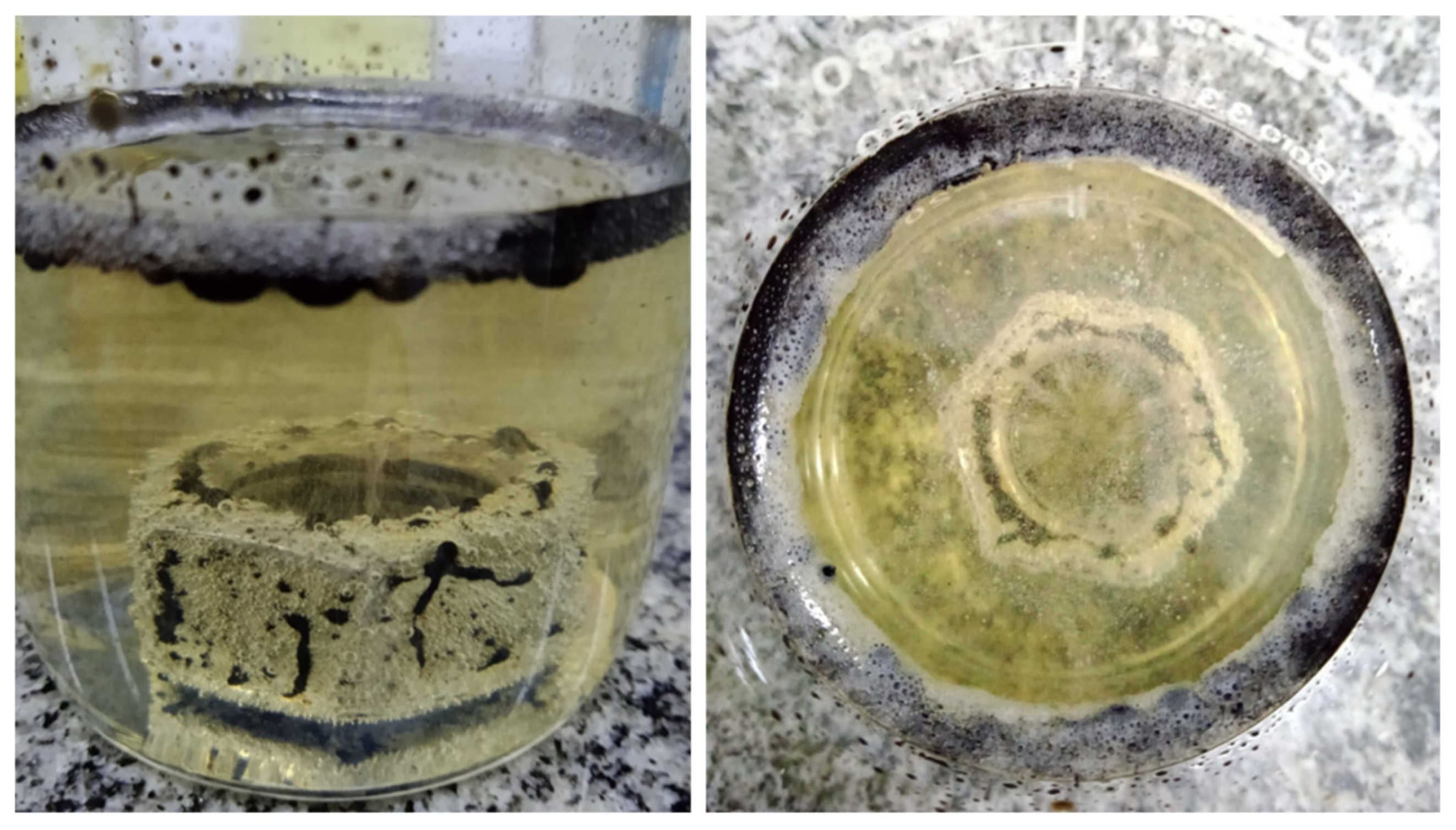
On the other hand, the degreasers AC, RX, and NH were unable to remove OCB1 within the same test duration. The AC degreaser, besides being ineffective, caused noticeable corrosion on the metal pieces, as shown in Figure 12. Although corrosion was not designated as a primary response variable in this study, these effects were qualitatively observed during the cleaning assays under conditions typical of industrial use. In contrast, the biodetergent did not cause abrasion or visible surface degradation and provided a lubricating effect, which may help preserve the cleaned metal surfaces and reduce their susceptibility to corrosion. The qualitative corrosion observed with acidic commercial degreasers aligns with literature reports indicating that acidic or solvent-based cleaning agents can accelerate corrosion processes in ferrous and non-ferrous metals by disrupting passive films and promoting electrochemical dissolution, especially under repeated cleaning cycles. Conversely, formulations based on organic compounds may decrease metal degradation by forming protective interfacial layers, thereby enhancing material compatibility during industrial cleaning operations [36,37,38].
Figure 12.
Metal piece undergoing chemical corrosion during immersion in AC commercial degreaser (based on phosphoric acid and paint strippers, 1:3 v/v).
These results reinforce the high efficiency of the biodetergent, especially in its concentrated form, and demonstrate its reusability without significant loss of performance. Furthermore, it showed comparable performance to the HG degreaser, but with the advantage of being biodegradable, non-toxic, and non-corrosive. This helps reduce occupational health and environmental risks and extends the lifespan of the items cleaned. This feature lowers indirect costs related to ventilation systems, emission monitoring, and the need for additional personal protective measures typically required for solvent-based products [21,23].
The overall results of this study show that the biodetergent offers a good cost–benefit ratio and potential for reuse, outperforming three of the four tested commercial products and matching HG, which, despite similar efficiency, has significantly higher toxicity.
These findings align with the literature, which shows the technical and economic feasibility of using aqueous and biodegradable alternatives in industrial settings, including oil-fired power plants. Partial replacement of solvent-based degreasers with green formulations results in equal or better performance, with lower toxicological impact and reduced operating costs. This is due to more useful cycles per bath, fewer changes needed, less input consumption, and less waste generated. Overall, this evidence strengthens the case for biodetergent as a competitive and sustainable option for cleaning metal parts contaminated with diesel and heavy oil [20,21].
Farias et al. [21] compared a biodetergent made with biosurfactants and plant inputs to commercial products and reported complete removal (100%) of OCB1 on various contaminated surfaces, supporting the results of this study. Similarly, Helmy et al. [39] developed a formulation that included sodium tripolyphosphate as a building agent, sodium sulfate as an additive, and rhamnolipid as a surfactant, which demonstrated high oil removal efficiency, confirming the potential of green formulations as promising alternatives to conventional synthetic detergents.
4. Conclusions
The results of this study confirmed the high effectiveness of the developed biodetergent in cleaning industrial parts and equipment made of various materials and sizes contaminated with heavy fuel oil (OCB1) and diesel. The product demonstrated consistent performance, often outperforming commercial degreasers, regardless of the application method, by efficiently removing contaminants without causing abrasion, corrosion, or damage to the treated surfaces. Besides promoting hydrocarbon removal, the biodetergent also offered a residual lubricating effect, helping to prevent corrosion and extend the equipment’s service life. Its biodegradable, non-toxic, and solvent-free profile is a breakthrough in occupational safety and environmental sustainability, reducing risks for operators and lowering costs related to emission control. These findings suggest that the developed biodetergent has strong potential for industrial-scale use, offering a green, cost-effective solution for degreasing in key sectors like petrochemicals, automotive, and thermoelectric power generation.
5. Patent
These results come from an R&D research regulated by the Brazilian Electric Energy Agency (ANEEL), under the identification code PD-07236-0009/2020.
Sarubbo, L.A.; Luna, J.M.; Rocha e Silva, N.M.P.; Almeida, D.G.; Almeida, F.C.G.; Freire Soares da Silva, R.C.; Meira, H.M.; Souza, T.C. Natural and non-toxic biodegradable industrial detergent for oily residue removal (original title: Detergente industrial biodegradável natural e atóxico para remoção de resíduos oleosos). Invention Patent granted by the National Institute of Industrial Property (INPI) on 17 September 2024. Registration number: BR 10 2019 017525 7. Depositors: Advanced Institute of Technology and Innovation—IATI; Centrais Elétricas da Paraíba S.A.—EPASA.
Author Contributions
All authors contributed to this work. Conceived the project and designed the experiments, L.A.S. and R.d.C.F.S.d.S.; performed the experiments, R.d.C.F.S.d.S., T.C.d.S., C.B.B.F., I.A.d.S. and J.A.d.O.; analysed the data, L.A.S. and R.d.C.F.S.d.S.; writing—original draft preparation, R.d.C.F.S.d.S., T.C.d.S., R.L.G., C.B.B.F., I.A.d.S. and J.A.d.O.; writing—review and editing, L.A.S., R.d.C.F.S.d.S., A.C. and R.L.G.; revised the manuscript, validated the data, and supervised the experiments, L.A.S.; supervision, L.A.S.; project administration, L.A.S.; funding acquisition, L.A.S. All authors have read and agreed to the published version of the manuscript.
Funding
This study was funded by the Research and Development Program from the Brazilian Agency of Electrical Energy (ANEEL) and Thermoelectric EPASA (Centrais Elétricas da Paraíba), Thermoelectric EPESA (Centrais Elétricas de Pernambuco S.A.) and Termocabo S.A. SUAPE. This work was also supported by the Brazilian fostering agencies Conselho Nacional de Desenvolvimento Científico e Tecnológico (CNPq—National Council of Scientific and Technological Development), Fundação de Amparo à Ciência e Tecnologia do Estado de Pernambuco (FACEPE—State of Pernambuco Science and Technology Assistance Foundation) and Coordenação de Aperfeiçoamento de Pessoal de Nível Superior (CAPES—Coordination for the Advancement of Higher Education Personnel; Finance Code—001) and Advanced Institute of Technology and Innovation (IATI- Instituto Avançado de Tecnologia e Inovação), Brazil.
Data Availability Statement
The original contributions presented in this study are included in the article. Further inquiries can be directed to the corresponding author.
Acknowledgments
The authors are grateful to the laboratories of the Instituto Avançado de Tecnologia e Inovação (IATI) and the Escola de Tecnologia e Inovação, Universidade Católica de Pernambuco (UNICAP), Brazil.
Conflicts of Interest
The authors declare no conflicts of interest.
References
- Lucchetti, M.G.; Paolotti, L.; Rocchi, L.A.; Boggia, A. The Role of Environmental Evaluation within Circular Economy: An Application of Life Cycle Assessment (LCA) Method in the Detergents Sector. Environ. Climatol. Technol. 2019, 23, 238–257. [Google Scholar] [CrossRef] [Scilit]
- Vargas-Parra, M.V.; Rovira-Val, M.R.; Gabarrell, X.; Villalba, G. Rainwater harvesting systems reduce detergent use. Int. J. Life Cycle Assess. 2019, 24, 809–823. [Google Scholar] [CrossRef] [Scilit]
- Rebello, S.; Anoopkumar, A.N.; Sindhu, R.; Binod, P.; Pandey, A.; Aneesh, E.M. Comparative Life-Cycle Analysis of Synthetic Detergents and Biosurfactants—An Overview; Kumar, R.P., Gnansounou, E., Raman, J.K., Baskar, G., Eds.; Academic Press: Cambridge, MA, USA, 2020; p. 23. [Google Scholar] [CrossRef] [Scilit]
- Bzdek, B.R.; Reid, J.P.; Malila, J.; Prisle, N.L. The surface tension of surfactant-containing, finite volume droplets. Proc. Natl. Acad. Sci. USA 2020, 117, 8335–8343. [Google Scholar] [CrossRef] [Scilit]
- Stubbs, S.; Yousaf, S.; Khan, I. A review on the synthesis of bio-based surfactants using green chemistry principles. DARU J. Pharm. Sci. 2022, 30, 407–426. [Google Scholar] [CrossRef] [Scilit]
- Villota-Paz, J.M.; Osorio-Tejada, J.L.; Morales-Pinzón, T. Comparative life cycle assessment for the manufacture of bio-detergents. Environ. Sci. Pollut. Res. 2023, 30, 34243–34254. [Google Scholar] [CrossRef] [Scilit]
- Abdoli, S.; Asgari Lajayer, B.; Dehghanian, Z.; Bagheri, N.; Vafaei, A.H.; Chamani, M.; Rani, S.; Lin, Z.; Shu, W.; Price, G.W. A review of the efficiency of phosphorus removal and recovery from wastewater by physicochemical and biological processes: Challenges and opportunities. Water 2024, 16, 2507. [Google Scholar] [CrossRef] [Scilit]
- Kugaji, M.; Ray, S.K.; Parvatikar, P.; Raghu, A.V. Biosurfactants: A review of different strategies for economical production, their applications and recent advancements. Adv. Colloid Interface Sci. 2025, 337, 103389. [Google Scholar] [CrossRef] [Scilit] [PubMed]
- Stubenrauch, C.; Drenckhan, W. Cleaning solid surfaces with liquid interfaces and foams: From theory to applications. Curr. Opin. Colloid Interface Sci. 2024, 72, 101818. [Google Scholar] [CrossRef] [Scilit]
- United States Environmental Protection Agency (EPA). Pollution Prevention Act; U.S. Government Publishing Office: Washington, DC, USA, 1990. Available online: https://www.epa.gov/greenchemistry/basics-green-chemistry#definition (accessed on 10 August 2025).
- Rocha e Silva, N.M.P.; Meira, H.M.; Almeida, F.C.G.; Soares da Silva, R.C.F.; Almeida, D.G.; Luna, J.M.; Rufino, R.D.; Santos, V.A.; Sarubbo, L.A. Natural surfactants and their applications for heavy oil removal in industry. Sep. Purif. Rev. 2019, 48, 267–281. [Google Scholar] [CrossRef] [Scilit]
- Farias, C.B.B.; Almeida, F.C.G.; Silva, I.A.; Souza, T.C.; Meira, H.M.; Silva, R.C.F.S.; Luna, J.M.; Santos, V.A.; Converti, A.; Banat, I.M.; et al. Production of green surfactants: Market prospects. Electron. J. Biotechnol. 2021, 51, 28–39. [Google Scholar] [CrossRef] [Scilit]
- Selva Filho, A.A.P.; Converti, A.; Soares da Silva, R.d.C.F.; Sarubbo, L.A. Biosurfactants as Multifunctional Remediation Agents of Environmental Pollutants Generated by the Petroleum Industry. Energies 2023, 16, 1209. [Google Scholar] [CrossRef] [Scilit]
- Global Growth Insights. Industrial Cleaning Detergents Market. 2024. Available online: https://www.globalgrowthinsights.com/pt/market-reports/industrial-cleaning-detergents-market-115222 (accessed on 26 August 2025).
- Lavanya, M.; Machado, A.A. Surfactants as biodegradable sustainable inhibitors for corrosion control in diverse media and conditions: A comprehensive review. Sci. Total Environ. 2024, 908, 168407. [Google Scholar] [CrossRef] [Scilit] [PubMed]
- Associação Brasileira das Indústrias de Produtos de Limpeza e Afins—ABIPLA. O Futuro da Limpeza é Biodegradável, Verde e Sustentável. Available online: https://abipla.org.br/futuro-da-limpeza-e-biodegradavel-verde-e-sustentavel/ (accessed on 26 August 2025).
- Market Research Intellect. From Green to Clean: Innovations Shaping the Chemical Detergent Market. 2024. Available online: https://www.marketresearchintellect.com/pt/blog/from-green-to-clean-innovations-shaping-the-chemical-detergent-market/ (accessed on 26 August 2025).
- Vega, R.G.; Stampino, G.P. Bio-Based Surfactants and Biosurfactants: An Overview and Main Characteristics. Molecules 2025, 30, 863. [Google Scholar] [CrossRef] [Scilit]
- Rizvi, H.; Ashish. A critical review on scale-up strategies of biosurfactant production and its applications. Tenside Surfactants Deterg. 2024, 61, 297–309. [Google Scholar] [CrossRef] [Scilit]
- Farias, C.B.B.; Silva, R.d.C.F.S.d.; Almeida, F.C.G.; Converti, A.; Santos, V.A.d.; Sarubbo, L.A. Physicochemical upgrading of a biodetergent for application in the industrial energy sector. Energies 2022, 15, 463. [Google Scholar] [CrossRef] [Scilit]
- Farias, C.B.B.; Silva, R.C.F.S.; Almeida, F.G.A.; Santos, V.A.; Sarubbo, L.A. Removal of Heavy Oil from Contaminated Surfaces with a Detergent Formulation Containing Biosurfactants Produced by Pseudomonas spp. PeerJ 2021, 9, e12518. [Google Scholar] [CrossRef] [Scilit]
- Sarubbo, L.A.; Luna, J.M.; Rocha e Silva, N.M.P.; Almeida, D.G.; Almeida, F.C.G.; Freire Soares da Silva, R.C.; Meira, H.M.; Souza, T.C. Detergente Industrial Biodegradável Natural e Atóxico Para Remoção de Resíduos Oleosos. Brazil Patent BR 10 2019 017525-7, 17 September 2024. [Google Scholar]
- Rocha e Silva, N.M.P.; Almeida, F.C.G.; Rocha e Silva, F.C.P.; Luna, J.M.; Sarubbo, L.A. Formulation of a biodegradable detergent for cleaning oily residues generated during industrial processes. J. Surfactants Deterg. 2020, 23, 1111–1123. [Google Scholar] [CrossRef] [Scilit]
- Selva Filho, A.A.P.; Faccioli, Y.E.S.; Converti, A.; Casazza, A.A.; Soares da Silva, R.d.C.F.; Sarubbo, L.A. The Application of a New Microbial Biosurfactant to Remove Residual Oil from Electric Power Plant and to Inhibit Metal Corrosion in a Salty Environment. Energies 2025, 18, 3359. [Google Scholar] [CrossRef] [Scilit]
- Brasil. Ministério da Saúde. Agência Nacional de Vigilância Sanitária (ANVISA). Resolution RDC No. 346, of 16 December 2002—Special Authorization for the Operation of Companies Interested in Carrying Out the Activity of Storing Goods under Health Surveillance at Waterway Terminals, Organized Ports, Airports, Border Posts, and Customs Enclosures. Available online: http://www.anvisa.gov.br/legis/resol/2002/346_02rdc.pdf (accessed on 23 January 2025).
- Rincón-Romero, J.F.; Ríos, F.; Reyes-Requena, A.; Luzón-González, G.; Gárcia-López, A.I. Surface and thermodynamic properties of commercial fatty-alcohol ethoxylate surfactants. J. Mol. Liq. 2023, 662, 130992. [Google Scholar] [CrossRef] [Scilit]
- Ribeiro, S.; Almeida, R.; Batista, L.; Lima, J.; Sarinho, A.; Nascimento, A.; Lisboa, H. Investigation of guar gum and xanthan gum influence on essential thyme oil emulsion properties and encapsulation–release using modeling tools. Foods 2024, 13, 816. [Google Scholar] [CrossRef] [Scilit]
- Da Silva, I.A.; de Almeida, F.C.G.; Alves, R.N.; Cunha, M.C.C.; de Oliveira, J.C.M.; Fernandes, M.L.B.; Sarubbo, L.A. The formulation of a natural detergent with a biosurfactant cultivated in a low-cost medium for use in coastal environmental remediation. Fermentation 2024, 10, 332. [Google Scholar] [CrossRef] [Scilit]
- Coutinho, V.P.; Júnior, D.B.S.; Santos, N.G.D.O.; Silva, C.A.S.D.; Santana, R.D.C. Effect of the homogenization process speed on the properties of cosmetic emulsions. J. Eng. Exact Sci. 2018, 4, 0240–0245. [Google Scholar] [CrossRef] [Scilit]
- Almeida, F.; Rocha e Silva, N.; Souza, T.; Almeida, D.; Luna, J.; Farias, C.B.B.; Rufino, R.; Sarubbo, L. Surfactant Activity of Artocarpus heterophyllu Fruit Extract and Application in Oil Removal of Solid Surface. Chem. Eng. Trans. 2019, 74, 1135–1140. [Google Scholar] [CrossRef] [Scilit]
- Azuokwu, A.A.; Yerima, Y.; Rowland, U.A. Production and performance evaluation of biodetergents as an alternative to conventional drilling detergent. In Proceedings of the SPE Nigeria Annual International Conference and Exhibition, Lagos, Nigeria, 3–5 August 2021. Paper Number: SPE-207167-MS. [Google Scholar] [CrossRef] [Scilit]
- Bikov, V.V.; Zagorodskih, B.P.; Rementsov, A.N.; Yudin, V.M. Influence of temperature of solutions of synthetic detergents on their washing ability. Izv. Low Volga Agro-Univ. Complex Sci. High. Prof. Educ. 2019, 1, 249–255. [Google Scholar] [CrossRef] [Scilit]
- Fadeev, I.; Danilov, I.; Marusin, A.; Marusin, A.; Ruchkina, I.; Eremeev, A. A new technology of vehicle parts’ washing at low temperatures. Transp. Res. Procedia 2021, 57, 163–171. [Google Scholar] [CrossRef] [Scilit]
- Lam-Maldonado, M.; Aranda-Jiménez, Y.G.; Arvizu-Sanchez, E.; Melo-Banda, J.A.; Díaz-Zavala, N.P.; Pérez-Sánchez, J.F.; Suarez-Dominguez, E.J. Extra-heavy crude oil viscosity and surface tension behavior using a flow enhancer and water at different temperatures conditions. Heliyon 2023, 9, e12120. [Google Scholar] [CrossRef] [Scilit] [PubMed]
- Medeiros, A.D.M.; Silva Junior, C.J.G.; Amorim, J.D.P.; Durval, I.J.B.; Costa, A.F.S.; Sarubbo, L.A. Oily wastewater treatment: Methods, challenges, and trends. Processes 2022, 10, 743. [Google Scholar] [CrossRef] [Scilit]
- Verma, C.; Ebenso, E.E.; Quraishi, M.A. Corrosion inhibitors for ferrous and non-ferrous metals and alloys in ionic sodium chloride solutions: A review. J. Mol. Liq. 2017, 248, 927–942. [Google Scholar] [CrossRef] [Scilit]
- Abbas, A.; Adesina, A.Y.; Suleiman, R.K. Influence of Organic Acids and Related Organic Compounds on Corrosion Behavior of Stainless Steel—A Critical Review. Metals 2023, 13, 1479. [Google Scholar] [CrossRef] [Scilit]
- Elsamani, I.; Oni, O.; Ji, Y.; Gupta, S. Development and Evaluation of Bio-Based Anionic Surfactants from Corn Oil for Corrosion Protection of Mild Steel. ACS Omega 2025, 10, 55975–55988. [Google Scholar] [CrossRef] [Scilit] [PubMed]
- Helmy, Q.; Gustiani, S.; Mustikawati, A. Application of rhamnolipid biosurfactant for bio-detergent formulation. IOP Conf. Ser. Mater. Sci. Eng. 2020, 823, 012014. [Google Scholar] [CrossRef] [Scilit]

Disclaimer/Publisher’s Note: The statements, opinions and data contained in all publications are solely those of the individual author(s) and contributor(s) and not of MDPI and/or the editor(s). MDPI and/or the editor(s) disclaim responsibility for any injury to people or property resulting from any ideas, methods, instructions or products referred to in the content. |
© 2026 by the authors. Licensee MDPI, Basel, Switzerland. This article is an open access article distributed under the terms and conditions of the Creative Commons Attribution (CC BY) license.