
Neuroinflammation and Neurological Sequelae of COVID-19: Insights from Clinical and Experimental Evidence

 , , , , , , , ,
Abstract
1. Introduction
2. Neuroinflammation in COVID-19
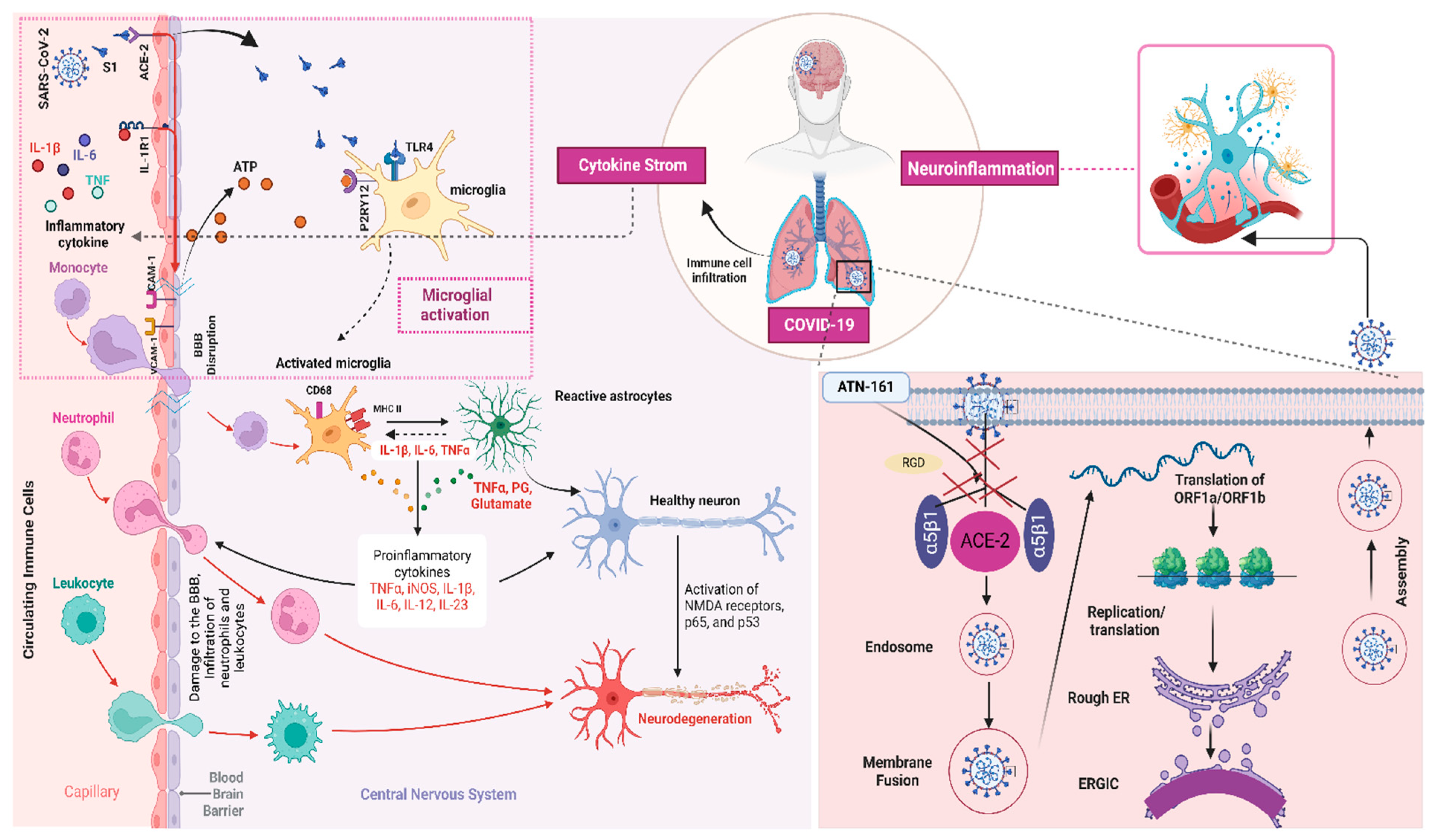
2.1. Mechanisms of Neuroinflammation
2.2. Neurodegenerative and Autoimmune Disorders Linked to COVID-19
3. Clinical Evidence of COVID-19-Related Neurological Complications
3.1. Neurological Manifestations of COVID-19
3.2. Key Biomarkers of COVID-19-Related Neuroinflammation
3.3. Neuroimaging in COVID-19 Neuroinflammation

| Category | Findings | Mechanisms | Diagnostic Methods | Potential Treatments | References |
|---|---|---|---|---|---|
| Neurological Symptoms |
|
|
|
| [16,54,133,134,135,136,137,138,139,140,141,142] |
| Biomarkers of Neuroinflammation |
|
|
|
| [102,103,106,107,108,109,110,111] |
| Imaging Studies |
|
|
|
| [113,114,115,116,117,118,129,130] |
4. Therapeutic Strategies for COVID-19-Related Neuroinflammation
4.1. Anti-Inflammatory and Neuroprotective Pharmacological Treatments
| Category | Medications | Mechanism of Action | Clinical Outcomes | References |
|---|---|---|---|---|
| Corticosteroids | Dexamethasone, Methylprednisolone | Suppress immune responses, reduce cytokine production, diminish neuroinflammation | Reduces mortality, improves outcomes in hospitalized COVID-19 patients, mitigates neuronal damage | [125,161,162] |
| Immunomodulatory Agents | Tocilizumab | Targeting IL-6 receptor, inhibits IL-6-mediated inflammatory signaling | Improved clinical outcomes in severe respiratory distress, potential reduction in neuroinflammation | [143,144] |
| Baricitinib | Janus kinase (JAK) inhibitor, suppresses pro-inflammatory cytokines and immune activation | Potential mitigation of neuroinflammatory responses, improved neurological outcomes | [143,145] | |
| Antiviral Medications | Remdesivir | Inhibits viral RNA synthesis (nucleotide analog prodrug), reduces viral load | Shortens recovery time, potential anti-inflammatory effect contributing to neuroinflammation mitigation | [146,147] |
| Favipiravir | Interferes with viral RNA polymerase activity, broad-spectrum antiviral agent | Improved clinical outcomes, especially when administered early, potential reduction in neuroinflammation | [148] | |
| Monoclonal Antibodies | Sarilumab | Inhibits IL-6 signaling pathways, modulates immune response | Potential reduction in neuroinflammation and cytokine storm, improved neurological outcomes | [150,151] |
| Infliximab | Inhibits TNF-α signaling pathways, reduces immune system overactivation | Attenuation of neuroinflammatory processes, potential reduction in COVID-19-related neurological damage | [149,151] |
4.2. Non-Pharmacological Therapies for Neurological Recovery
5. Future Research on COVID-19 Neuroinflammation and Therapeutic Targets
6. Conclusions
7. Limitations of This Study
Author Contributions
Funding
Institutional Review Board Statement
Informed Consent Statement
Data Availability Statement
Conflicts of Interest
References
- Wang, D.; Hu, B.; Hu, C.; Zhu, F.; Liu, X.; Zhang, J.; Wang, B.; Xiang, H.; Cheng, Z.; Xiong, Y.; et al. Clinical Characteristics of 138 Hospitalized Patients with 2019 Novel Coronavirus–Infected Pneumonia in Wuhan, China. JAMA 2020, 323, 1061–1069, Erratum in JAMA 2021, 325, 1113. https://doi.org/10.1001/jama.2021.2336. [Google Scholar] [CrossRef]
- Astuti, I.; Ysrafil. Severe Acute Respiratory Syndrome Coronavirus 2 (SARS-CoV-2): An overview of viral structure and host response. Diabetes Metab. Syndr. Clin. Res. Rev. 2020, 14, 407–412. [Google Scholar] [CrossRef]
- Müller, G.; Ruelens, M.; Wouters, J. The Role of the World Health Organization in the COVID-19 Pandemic. Leuven Cent. Glob. Gov. Stud. 2021, 37, 1–102. [Google Scholar]
- Malik, Y.A. Properties of coronavirus and SARS-CoV-2. Malays. J. Pathol. 2020, 42, 3–11. [Google Scholar] [PubMed]
- Alsaadi, E.A.J.; Jones, I.M. Membrane Binding Proteins of Coronaviruses. Future Virol. 2019, 14, 275–286. [Google Scholar] [CrossRef]
- Más, V.; Melero, J.A. Entry of Enveloped Viruses into Host Cells: Membrane Fusion. In Structure and Physics of Viruses: An Integrated Textbook; Mateu, M.G., Ed.; Springe: Dordrecht, The Netherlands, 2013; pp. 467–487. [Google Scholar] [CrossRef]
- Wędrowska, E.; Wandtke, T.; Senderek, T.; Piskorska, E.; Kopiński, P. Coronaviruses fusion with the membrane and entry to the host cell. Ann. Agric. Environ. Med. 2020, 27, 175–183. [Google Scholar] [CrossRef] [PubMed]
- Chen, N.; Zhou, M.; Dong, X.; Qu, J.; Gong, F.; Han, Y.; Qiu, Y.; Wang, J.; Liu, Y.; Wei, Y.; et al. Epidemiological and clinical characteristics of 99 cases of 2019 novel coronavirus pneumonia in Wuhan, China: A descriptive study. Lancet 2020, 395, 507–513. [Google Scholar] [CrossRef] [PubMed]
- Baj, J.; Karakuła-Juchnowicz, H.; Teresiński, G.; Buszewicz, G.; Ciesielka, M.; Sitarz, R.; Forma, A.; Karakuła, K.; Flieger, W.; Portincasa, P.; et al. COVID-19: Specific and Non-Specific Clinical Manifestations and Symptoms: The Current State of Knowledge. J. Clin. Med. 2020, 9, 1753. [Google Scholar] [CrossRef]
- Yang, W.; Cao, Q.; Qin, L.; Wang, X.; Cheng, Z.; Pan, A.; Dai, J.; Sun, Q.; Zhao, F.; Qu, J.; et al. Clinical characteristics and imaging manifestations of the 2019 novel coronavirus disease (COVID-19):A multi-center study in Wenzhou city, Zhejiang, China. J. Infect. 2020, 80, 388–393. [Google Scholar] [CrossRef]
- Singhal, T. A Review of Coronavirus Disease-2019 (COVID-19). Indian J. Pediatr. 2020, 87, 281–286. [Google Scholar] [CrossRef]
- Gupta, A. Is Immuno-modulation the Key to COVID-19 Pandemic? Indian J. Orthop. 2020, 54, 394–397. [Google Scholar] [CrossRef]
- Silva-Lagos, L.A.; Pillay, J.; van Meurs, M.; Smink, A.; van der Voort, P.H.J.; de Vos, P. DAMPening COVID-19 Severity by Attenuating Danger Signals. Front. Immunol. 2021, 12, 720192. [Google Scholar] [CrossRef] [PubMed]
- Noroozi, R.; Branicki, W.; Pyrc, K.; Łabaj, P.P.; Pospiech, E.; Taheri, M.; Ghafouri-Fard, S. Altered cytokine levels and immune responses in patients with SARS-CoV-2 infection and related conditions. Cytokine 2020, 133, 155143. [Google Scholar] [CrossRef] [PubMed]
- Awan, H.A.; Diwan, M.N.; Aamir, A.; Ali, M.; Di Giannantonio, M.; Ullah, I.; Shoib, S.; De Berardis, D. SARS-CoV-2 and the Brain: What Do We Know about the Causality of ‘Cognitive COVID? J. Clin. Med. 2021, 10, 3441. [Google Scholar] [CrossRef]
- Carrillo-larco, R.M.; Altez-fernandez, C.; Vaira, L.A. Anosmia and dysgeusia in COVID-19: A systematic review [version 1; peer review: 2 approved, 1 not approved]. Wellcome Open Res. 2020, 5, 94. [Google Scholar] [CrossRef]
- Haverty, R.; McCormack, J.; Evans, C.; Purves, K.; O’Reilly, S.; Gautier, V.; Rochfort, K.; Fabre, A.; Fletcher, N.F. SARS-CoV-2 infects neurons, astrocytes, choroid plexus epithelial cells and pericytes of the human central nervous system in vitro. J. General. Virol. 2024, 105, 002009. [Google Scholar] [CrossRef]
- Pellegrini, L.; Albecka, A.; Mallery, D.L.; Kellner, M.J.; Paul, D.; Carter, A.P.; James, L.C.; Lancaster, M.A. SARS-CoV-2 Infects the Brain Choroid Plexus and Disrupts the Blood-CSF Barrier in Human Brain Organoids. Cell Stem Cell 2020, 27, 951–961.e5. [Google Scholar] [CrossRef]
- Klein, R.; Soung, A.; Sissoko, C.; Nordvig, A.; Canoll, P.; Mariani, M.; Jiang, X.; Bricker, T.; Goldman, J.; Rosoklija, G.; et al. COVID-19 induces neuroinflammation and loss of hippocampal neurogenesis. Res. Sq. 2021. [Google Scholar] [CrossRef]
- Valizadeh, H.; Abdolmohammadi-Vahid, S.; Danshina, S.; Gencer, M.Z.; Ammari, A.; Sadeghi, A.; Roshangar, L.; Aslani, S.; Esmaeilzadeh, A.; Ghaebi, M.; et al. Nano-curcumin therapy, a promising method in modulating inflammatory cytokines in COVID-19 patients. Int. Immunopharmacol. 2020, 89, 107088. [Google Scholar] [CrossRef]
- Roczkowsky, A.; Limonta, D.; Fernandes, J.P.; Branton, W.G.; Clarke, M.; Hlavay, B.; Noyce, R.S.; Joseph, J.T.; Ogando, N.S.; Das, S.K.; et al. COVID-19 Induces Neuroinflammation and Suppresses Peroxisomes in the Brain. Ann. Neurol. 2023, 94, 531–546. [Google Scholar] [CrossRef] [PubMed]
- Kwon, J.-S.; Kim, J.Y.; Kim, M.-C.; Park, S.Y.; Kim, B.-N.; Bae, S.; Cha, H.H.; Jung, J.; Kim, M.-J.; Lee, M.J.; et al. Factors of Severity in Patients with COVID-19: Cytokine/Chemokine Concentrations, Viral Load, and Antibody Responses. Am. J. Trop. Med. Hyg. 2020, 103, 2412–2418. [Google Scholar] [CrossRef]
- Qin, C.; Zhou, L.; Hu, Z.; Zhang, S.; Yang, S.; Tao, Y.; Xie, C.; Ma, K.; Shang, K.; Wang, W.; et al. Dysregulation of Immune Response in Patients with Coronavirus 2019 (COVID-19) in Wuhan, China. Clin. Infect. Dis. 2020, 71, 762–768. [Google Scholar] [CrossRef]
- Blanco-Melo, D.; Nilsson-Payant, B.E.; Liu, W.-C.; Uhl, S.; Hoagland, D.; Møller, R.; Jordan, T.X.; Oishi, K.; Panis, M.; Sachs, D.; et al. Imbalanced Host Response to SARS-CoV-2 Drives Development of COVID-19. Cell 2020, 181, 1036–1045.e9. [Google Scholar] [CrossRef] [PubMed]
- Huang, C.; Wang, Y.; Li, X.; Ren, L.; Zhao, J.; Hu, Y.; Zhang, L.; Fan, G.; Xu, J.; Gu, X.; et al. Clinical features of patients infected with 2019 novel coronavirus in Wuhan, China. Lancet 2020, 395, 497–506. [Google Scholar] [CrossRef]
- Xu, Z.-S.; Shu, T.; Kang, L.; Wu, D.; Zhou, X.; Liao, B.-W.; Sun, X.-L.; Zhou, X.; Wang, Y.-Y. Temporal profiling of plasma cytokines, chemokines and growth factors from mild, severe and fatal COVID-19 patients. Signal Transduct. Target. Ther. 2020, 5, 100. [Google Scholar] [CrossRef] [PubMed]
- Wu, D.; Chen, Q.; Chen, X.; Han, F.; Chen, Z.; Wang, Y. The blood–brain barrier: Structure, regulation and drug delivery. Signal Transduct. Target. Ther. 2023, 8, 217. [Google Scholar] [CrossRef]
- Abbott, N.J. Blood–brain barrier structure and function and the challenges for CNS drug delivery. J. Inherit. Metab. Dis. 2013, 36, 437–449. [Google Scholar] [CrossRef]
- Ballabh, P.; Braun, A.; Nedergaard, M. The blood–brain barrier: An overview. Neurobiol. Dis. 2004, 16, 1–13. [Google Scholar] [CrossRef] [PubMed]
- Dias, M.C.; Mapunda, J.A.; Vladymyrov, M.; Engelhardt, B. Structure and Junctional Complexes of Endothelial, Epithelial and Glial Brain Barriers. Int. J. Mol. Sci. 2019, 20, 5372. [Google Scholar] [CrossRef]
- Keep, R.F.; Jones, H.C.; Drewes, L.R. Brain Barriers and brain fluids research in 2020 and the fluids and barriers of the CNS thematic series on advances in in vitro modeling of the blood–brain barrier and neurovascular unit. Fluids Barriers CNS 2021, 18, 24. [Google Scholar] [CrossRef]
- Alquisiras-Burgos, I.; Peralta-Arrieta, I.; Alonso-Palomares, L.A.; Zacapala-Gómez, A.E.; Salmerón-Bárcenas, E.G.; Aguilera, P. Neurological Complications Associated with the Blood-Brain Barrier Damage Induced by the Inflammatory Response During SARS-CoV-2 Infection. Mol. Neurobiol. 2021, 58, 520–535. [Google Scholar] [CrossRef]
- Adesse, D.; Gladulich, L.; Alvarez-Rosa, L.; Siqueira, M.; Marcos, A.C.; Heider, M.; Motta, C.S.; Torices, S.; Toborek, M.; Stipursky, J. Role of aging in Blood–Brain Barrier dysfunction and susceptibility to SARS-CoV-2 infection: Impacts on neurological symptoms of COVID-19. Fluids Barriers CNS 2022, 19, 63. [Google Scholar] [CrossRef]
- Block, M.L.; Zecca, L.; Hong, J.-S. Microglia-mediated neurotoxicity: Uncovering the molecular mechanisms. Nat. Rev. Neurosci. 2007, 8, 57–69. [Google Scholar] [CrossRef] [PubMed]
- Fetler, L.; Amigorena, S. Brain Under Surveillance: The Microglia Patrol. Science (1979) 2005, 309, 392–393. [Google Scholar] [CrossRef]
- de Andrade, E.; Šimončičová, E.; Carrier, M.; Vecchiarelli, H.A.; Robert, M.-È.; Tremblay, M.-È. Microglia Fighting for Neurological and Mental Health: On the Central Nervous System Frontline of COVID-19 Pandemic. Front. Cell. Neurosci. 2021, 15, 647378. [Google Scholar] [CrossRef] [PubMed]
- Theophanous, S.; Sargiannidou, I.; Kleopa, K.A. Glial Cells as Key Regulators in Neuroinflammatory Mechanisms Associated with Multiple Sclerosis. Int. J. Mol. Sci. 2024, 25, 9588. [Google Scholar] [CrossRef] [PubMed]
- Burkhart, A.; Helgudóttir, S.S.; Mahamed, Y.A.; Fruergaard, M.B.; Holm-Jacobsen, J.N.; Haraldsdóttir, H.; Dahl, S.E.; Pretzmann, F.; Routhe, L.G.; Lambertsen, K.; et al. Activation of glial cells induces proinflammatory properties in brain capillary endothelial cells in vitro. Sci. Rep. 2024, 14, 26580. [Google Scholar] [CrossRef]
- Sochocka, M.; Diniz, B.S.; Leszek, J. Inflammatory Response in the CNS: Friend or Foe? Mol. Neurobiol. 2017, 54, 8071–8089. [Google Scholar] [CrossRef]
- Cho, B.P.; Song, D.Y.; Sugama, S.; Shin, D.H.; Shimizu, Y.; Kim, S.S.; Kim, Y.S.; Joh, T.H. Pathological dynamics of activated microglia following medial forebrain bundle transection. Glia 2006, 53, 92–102. [Google Scholar] [CrossRef]
- Brown, G.C.; Vilalta, A. How microglia kill neurons. Brain Res. 2015, 1628, 288–297. [Google Scholar] [CrossRef]
- Polazzi, E.; Contestabile, A. Reciprocal Interactions Between Microglia and Neurons: From Survival to Neuropathology. Rev. Neurosci. 2002, 13, 221–242. [Google Scholar] [CrossRef]
- Zecca, L.; Zucca, F.A.; Albertini, A.; Rizzio, E.; Fariello, R.G. A proposed dual role of neuromelanin in the pathogenesis of Parkinson’s disease. Neurology 2006, 67, S8–S11. [Google Scholar] [CrossRef]
- McGeer, P.L.; Rogers, J.; McGeer, E.G. Inflammation, anti-inflammatory agents and Alzheimer disease: The last 12 years. J. Alzheimer’s Dis. 2006, 9, 271–276. [Google Scholar] [CrossRef]
- Kim, Y.S.; Joh, T.H. Microglia, major player in the brain inflammation: Their roles in the pathogenesis of Parkinson’s disease. Exp. Mol. Med. 2006, 38, 333–347. [Google Scholar] [CrossRef]
- Matschke, J.; Lütgehetmann, M.; Hagel, C.; Sperhake, J.P.; Schröder, A.S.; Edler, C.; Mushumba, H.; Fitzek, A.; Allweiss, L.; Dandri, M.; et al. Neuropathology of patients with COVID-19 in Germany: A post-mortem case series. Lancet Neurol. 2020, 19, 919–929. [Google Scholar] [CrossRef] [PubMed]
- Schurink, B.; Roos, E.; Radonic, T.; Barbe, E.; Bouman, C.S.C.; de Boer, H.H.; de Bree, G.J.; Bulle, E.B.; Aronica, E.M.; Florquin, S.; et al. Viral presence and immunopathology in patients with lethal COVID-19: A prospective autopsy cohort study. Lancet Microbe 2020, 1, e290–e299. [Google Scholar] [CrossRef] [PubMed]
- Al-Dalahmah, O.; Thakur, K.T.; Nordvig, A.S.; Prust, M.L.; Roth, W.; Lignelli, A.; Uhlemann, A.-C.; Miller, E.H.; Kunnath-Velayudhan, S.; Del Portillo, A.; et al. Neuronophagia and microglial nodules in a SARS-CoV-2 patient with cerebellar hemorrhage. Acta Neuropathol. Commun. 2020, 8, 147. [Google Scholar] [CrossRef] [PubMed]
- Song, E.; Zhang, C.; Israelow, B.; Lu-Culligan, A.; Prado, A.V.; Skriabine, S.; Lu, P.; Weizman, O.-E.; Liu, F.; Dai, Y.; et al. Neuroinvasion of SARS-CoV-2 in human and mouse brain. J. Exp. Med. 2021, 218, e20202135. [Google Scholar] [CrossRef]
- Meinhardt, J.; Radke, J.; Dittmayer, C.; Franz, J.; Thomas, C.; Mothes, R.; Laue, M.; Schneider, J.; Brünink, S.; Greuel, S.; et al. Olfactory transmucosal SARS-CoV-2 invasion as a port of central nervous system entry in individuals with COVID-19. Nat. Neurosci. 2021, 24, 168–175. [Google Scholar] [CrossRef]
- Sharma, S.; Jagadeesh, H.; Saxena, A.; Chakravarthy, H.; Devanathan, V. Central nervous system as a target of novel coronavirus infections: Potential routes of entry and pathogenic mechanisms. J. Biosci. 2021, 46, 106. [Google Scholar] [CrossRef]
- Kumar, D.; Jahan, S.; Khan, A.; Siddiqui, A.J.; Redhu, N.S.; Wahajuddin; Khan, J.; Banwas, S.; Alshehri, B.; Alaidarous, M. Neurological Manifestation of SARS-CoV-2 Induced Inflammation and Possible Therapeutic Strategies Against COVID-19. Mol. Neurobiol. 2021, 58, 3417–3434. [Google Scholar] [CrossRef]
- Baazaoui, N.; Iqbal, K. COVID-19 and Neurodegenerative Diseases: Prion-Like Spread and Long-Term Consequences. J. Alzheimer’s Dis. 2022, 88, 399–416. [Google Scholar] [CrossRef]
- Whitmore, H.A.B.; Kim, L.A. Understanding the Role of Blood Vessels in the Neurologic Manifestations of Coronavirus Disease 2019 (COVID-19). Am. J. Pathol. 2021, 191, 1946–1954. [Google Scholar] [CrossRef] [PubMed]
- Garcia, M.A.; Barreras, P.V.; Lewis, A.; Pinilla, G.; Sokoll, L.J.; Kickler, T.; Mostafa, H.; Caturegli, M.; Moghekar, A.; Fitzgerald, K.C.; et al. Cerebrospinal fluid in COVID-19 neurological complications: No cytokine storm or neuroinflammation. medRxiv 2021. [Google Scholar] [CrossRef]
- Dhouib, I.E. Does coronaviruses induce neurodegenerative diseases? A systematic review on the neurotropism and neuroinvasion of SARS-CoV-2. Drug Discov. Ther. 2020, 14, 262–272. [Google Scholar] [CrossRef]
- Ludlow, M.; Kortekaas, J.; Herden, C.; Hoffmann, B.; Tappe, D.; Trebst, C.; Griffin, D.E.; Brindle, H.E.; Solomon, T.; Brown, A.S.; et al. Neurotropic virus infections as the cause of immediate and delayed neuropathology. Acta Neuropathol. 2016, 131, 159–184. [Google Scholar] [CrossRef] [PubMed]
- Davidson, A.M.; Wysocki, J.; Batlle, D. Interaction of SARS-CoV-2 and other coronavirus with ACE (angiotensin-converting enzyme)-2 as their main receptor: Therapeutic implications. Hypertension 2020, 76, 1339–1349. [Google Scholar] [CrossRef]
- Salamanna, F.; Maglio, M.; Landini, M.P.; Fini, M. Body localization of ACE-2: On the trail of the keyhole of SARS-CoV-2. Front. Med. 2020, 7, 594495. [Google Scholar] [CrossRef]
- Mozafar, M.; Mirmotalebisohi, S.A.; Sameni, M.; Zali, H. Investigating Neurological Manifestations of SARS-CoV-2. J. Neuroimmune Pharmacol. 2021, 16, 695–698. [Google Scholar] [CrossRef] [PubMed]
- Pattanaik, A.; Bhandarkar, B.S.; Lodha, L.; Marate, S. SARS-CoV-2 and the nervous system: Current perspectives. Arch. Virol. 2023, 168, 171. [Google Scholar] [CrossRef]
- Greene, C.; Connolly, R.; Brennan, D.; Laffan, A.; O’keeffe, E.; Zaporojan, L.; O’callaghan, J.; Thomson, B.; Connolly, E.; Argue, R.; et al. Blood–brain barrier disruption and sustained systemic inflammation in individuals with long COVID-associated cognitive impairment. Nat. Neurosci. 2024, 27, 421–432. [Google Scholar] [CrossRef] [PubMed]
- Oh, J.-W.; Van Wagoner, N.J.; Rose-John, S.; Benveniste, E.N. Role of IL-6 and the Soluble IL-6 Receptor in Inhibition of VCAM-1 Gene Expression. J. Immunol. 1998, 161, 4992–4999. [Google Scholar] [CrossRef] [PubMed]
- Singh, V.; Kaur, R.; Kumari, P.; Pasricha, C.; Singh, R. ICAM-1 and VCAM-1: Gatekeepers in various inflammatory and cardiovascular disorders. Clin. Chim. Acta 2023, 548, 117487. [Google Scholar] [CrossRef]
- Saggu, S.; Pless, A.; Dew, E.; Ware, D.; Jiao, K.; Wang, Q. Monoamine signaling and neuroinflammation: Mechanistic connections and implications for neuropsychiatric disorders. Front. Immunol. 2025, 16, 1543730. [Google Scholar] [CrossRef]
- Lull, M.E.; Block, M.L. Microglial Activation and Chronic Neurodegeneration. Neurotherapeutics 2010, 7, 354–365. [Google Scholar] [CrossRef] [PubMed]
- Haroon, E.; Miller, A.H. Rewiring the brain: Inflammation’s impact on glutamate and neural networks in depression. Neuropsychopharmacology 2025, 50, 312–313. [Google Scholar] [CrossRef] [PubMed]
- García-Domínguez, M. Neuroinflammation: Mechanisms, Dual Roles, and Therapeutic Strategies in Neurological Disorders. Curr. Issues Mol. Biol. 2025, 47, 417. [Google Scholar] [CrossRef]
- Kip, E.; Parr-Brownlie, L.C. Healthy lifestyles and wellbeing reduce neuroinflammation and prevent neurodegenerative and psychiatric disorders. Front. Neurosci. 2023, 17, 1092537. [Google Scholar] [CrossRef]
- Deng, S.; Xie, H.; Xie, B. Cell-based regenerative and rejuvenation strategies for treating neurodegenerative diseases. Stem Cell Res. Ther. 2025, 16, 167. [Google Scholar] [CrossRef]
- Paul, B.D.; Snyder, S.H.; Bohr, V.A. Signaling by cGAS–STING in Neurodegeneration, Neuroinflammation, and Aging. Trends Neurosci. 2021, 44, 83–96. [Google Scholar] [CrossRef]
- Zhang, H.; Wang, Z.; Nguyen, H.T.T.; Watson, A.J.; Lao, Q.; Li, A.; Zhu, J. Integrin α5β1 contributes to cell fusion and inflammation mediated by SARS-CoV-2 spike via RGD-independent interaction. Proc. Natl. Acad. Sci. USA 2023, 120, e2311913120. [Google Scholar] [CrossRef]
- Beaudoin, C.A.; Hamaia, S.W.; Huang, C.L.-H.; Blundell, T.L.; Jackson, A.P. Can the SARS-CoV-2 Spike Protein Bind Integrins Independent of the RGD Sequence? Front. Cell Infect. Microbiol. 2021, 11, 765300. [Google Scholar] [CrossRef] [PubMed]
- Rahman, M.T.; Idid, S.Z. Can Zn Be a Critical Element in COVID-19 Treatment? Biol. Trace Elem. Res. 2021, 199, 550–558. [Google Scholar] [CrossRef]
- Zarkesh, K.; Entezar-Almahdi, E.; Ghasemiyeh, P.; Akbarian, M.; Bahmani, M.; Roudaki, S.; Fazlinejad, R.; Mohammadi-Samani, S.; Firouzabadi, N.; Hosseini, M.; et al. Drug-Based Therapeutic Strategies for COVID-19-Infected Patients and Their Challenges. Future Microbiol. 2021, 16, 1415–1451. [Google Scholar] [CrossRef]
- Ornelas-Ricardo, D.; Jaloma-Cruz, A.R. Coronavirus Disease 2019: Hematological Anomalies and Antithrombotic Therapy. Tohoku J. Exp. Med. 2020, 251, 327–336. [Google Scholar] [CrossRef]
- Mitra, J.; Kodavati, M.; Provasek, V.E.; Rao, K.; Mitra, S.; Hamilton, D.J.; Horner, P.J.; Vahidy, F.S.; Britz, G.W.; Kent, T.A.; et al. SARS-CoV-2 and the central nervous system: Emerging insights into hemorrhage-associated neurological consequences and therapeutic considerations. Ageing Res. Rev. 2022, 80, 101687. [Google Scholar] [CrossRef]
- Lotan, I.; Nishiyama, S.; Manzano, G.S.; Lydston, M.; Levy, M. COVID-19 and the risk of CNS demyelinating diseases: A systematic review. Front. Neurol. 2022, 13, 970383. [Google Scholar] [CrossRef] [PubMed]
- Montgomery, S.; Vingeliene, S.; Li, H.; Backman, H.; Udumyan, R.; Jendeberg, J.; Rasmussen, G.; Sundqvist, M.; Fall, K.; Hiyoshi, A.; et al. SARS-CoV-2 infection and risk of subsequent demyelinating diseases: National register–based cohort study. Brain Commun. 2024, 6, fcae406. [Google Scholar] [CrossRef] [PubMed]
- Michelena, G.; Casas, M.; Eizaguirre, M.B.; Pita, M.C.; Cohen, L.; Alonso, R.; Garcea, O.; A Silva, B. ¿ Can COVID-19 exacerbate multiple sclerosis symptoms? A case series analysis. Mult. Scler. Relat. Disord. 2022, 57, 103368. [Google Scholar] [CrossRef]
- Elechi, K.W.; Nkem, O.O.; Chibueze, N.T.; Elechi, U.S.; Chimaobi, K.F. Long-term Neurological Consequences of COVID-19 in Patients with Pre-existing Alzheimer’s and Parkinson’s Disease: A Comprehensive Review. Neurosci. Insights 2025, 20, 26331055251342756. [Google Scholar] [CrossRef]
- Miller, S.J.; Dhodapkar, R.M.; Sutova, H.E.; Xue, Y.; Lee, S.; Logan, R.; Ran, C.; Bhatta, S.; Gomm, A.; Ju, I.G.; et al. SARS-CoV-2 induces Alzheimer’s disease–related amyloid-β pathology in ex vivo human retinal explants and retinal organoids. Sci. Adv. 2025, 11, eads5006. [Google Scholar] [CrossRef] [PubMed]
- Duff, E.P.; Zetterberg, H.; Heslegrave, A.; Dehghan, A.; Elliott, P.; Allen, N.; Runz, H.; Laban, R.; Veleva, E.; Whelan, C.D.; et al. Plasma proteomic evidence for increased β-amyloid pathology after SARS-CoV-2 infection. Nat. Med. 2025, 31, 797–806. [Google Scholar] [CrossRef]
- Shan, D.; Xu, Y.; Yang, C.; Crawford, T.J.; Holland, C. COVID-19 infection associated with increased risk of new-onset vascular dementia in adults ≥ 50 years. NPJ Dementia 2025, 1, 28. [Google Scholar] [CrossRef]
- Iodice, F.; Cassano, V.; Rossini, P.M. Direct and indirect neurological, cognitive, and behavioral effects of COVID-19 on the healthy elderly, mild-cognitive-impairment, and Alzheimer’s disease populations. Neurol. Sci. 2021, 42, 455–465. [Google Scholar] [CrossRef] [PubMed]
- Boutoleau-Bretonnière, C.; Pouclet-Courtemanche, H.; Gillet, A.; Bernard, A.; Deruet, A.L.; Gouraud, I.; Mazoue, A.; Lamy, E.; Rocher, L.; Kapogiannis, D.; et al. The Effects of Confinement on Neuropsychiatric Symptoms in Alzheimer’s Disease During the COVID-19 Crisis. J. Alzheimer’s Dis. 2020, 76, 41–47. [Google Scholar] [CrossRef] [PubMed]
- Rosenberg, P.B.; Nowrangi, M.A.; Lyketsos, C.G. Neuropsychiatric symptoms in Alzheimer’s disease: What might be associated brain circuits? Mol. Asp. Med. 2015, 43–44, 25–37. [Google Scholar] [CrossRef]
- Zhang, N.K.; Zhang, S.K.; Zhang, L.I.; Tao, H.W.; Zhang, G.-W. The neural basis of neuropsychiatric symptoms in Alzheimer’s disease. Front. Aging Neurosci. 2024, 16, 1487875. [Google Scholar] [CrossRef]
- Fearon, C.; Fasano, A. Parkinson’s Disease and the COVID-19 Pandemic. J. Park. Dis. 2021, 11, 431–444. [Google Scholar] [CrossRef] [PubMed]
- Boura, I.; Qamar, M.A.; Daddoveri, F.; Leta, V.; Poplawska-Domaszewicz, K.; Falup-Pecurariu, C.; Chaudhuri, K.R. SARS-CoV-2 and Parkinson’s Disease: A Review of Where We Are Now. Biomedicines 2023, 11, 2524. [Google Scholar] [CrossRef]
- Putri, C.; Hariyanto, T.I.; Hananto, J.E.; Christian, K.; Situmeang, R.F.V.; Kurniawan, A. Parkinson’s disease may worsen outcomes from coronavirus disease 2019 (COVID-19) pneumonia in hospitalized patients: A systematic review, meta-analysis, and meta-regression. Park. Relat. Disord. 2021, 87, 155–161. [Google Scholar] [CrossRef]
- Rahmati, M.; Yon, D.K.; Lee, S.W.; Soysal, P.; Koyanagi, A.; Jacob, L.; Li, Y.; Park, J.M.; Kim, Y.W.; Shin, J.I.; et al. New-onset neurodegenerative diseases as long-term sequelae of SARS-CoV-2 infection: A systematic review and meta-analysis. J. Med. Virol. 2023, 95, e28909. [Google Scholar] [CrossRef] [PubMed]
- Wang, A.S.; Perez, J.A.; Gunzler, S.A. Frequency of Parkinson disease following COVID-19 infection: A two-year retrospective cohort study. Park. Relat. Disord. 2023, 111, 105433. [Google Scholar] [CrossRef] [PubMed]
- Salari, M.; Zali, A.; Ashrafi, F.; Etemadifar, M.; Sharma, S.; Hajizadeh, N.; Ashourizadeh, H. Incidence of Anxiety in Parkinson’s Disease During the Coronavirus Disease (COVID-19) Pandemic. Mov. Disord. 2020, 35, 1095. [Google Scholar] [CrossRef]
- Mameli, F.; Zirone, E.; Capetti, B.; Mellace, D.; Ferrucci, R.; Franco, G.; Di Fonzo, A.; Barbieri, S.; Ruggiero, F. Changes in non-motor symptoms in patients with Parkinson’s disease following COVID-19 pandemic restrictions: A systematic review. Front. Psychol. 2022, 13, 939520. [Google Scholar] [CrossRef]
- Tufail, M.; Wu, C. Psychological impact of COVID-19 pandemic on Parkinson’s disease patients. Heliyon 2022, 8, e09604. [Google Scholar] [CrossRef]
- Pimentel, V.; Luchsinger, V.W.; Carvalho, G.L.; Alcará, A.M.; Esper, N.B.; Marinowic, D.; Zanirati, G.; da Costa, J.C. Guillain–Barré syndrome associated with COVID-19: A systematic review. Brain Behav. Immun.-Health 2023, 28, 100578. [Google Scholar] [CrossRef]
- Xu, E.; Xie, Y.; Al-Aly, Z. Long-term neurologic outcomes of COVID-19. Nat. Med. 2022, 28, 2406–2415. [Google Scholar] [CrossRef] [PubMed]
- Pezzini, A.; Padovani, A. Lifting the mask on neurological manifestations of COVID-19. Nat. Rev. Neurol. 2020, 16, 636–644. [Google Scholar] [CrossRef]
- Chatterjee, S.; Bhattacharya, M.; Nag, S.; Dhama, K.; Chakraborty, C. A detailed overview of SARS-CoV-2 omicron: Its sub-variants, mutations and pathophysiology, clinical characteristics, immunological landscape, immune escape, and therapies. Viruses 2023, 15, 167. [Google Scholar] [CrossRef]
- National Academies of Sciences, Engineering, and Medicine. Long-Term Health Effects of COVID-19: Disability and Function Following SARS-CoV-2 Infection; National Academies Press: Washington, DC, USA, 2024. [Google Scholar]
- Yan, J.; Bandodkar, S.; Dale, R.C. Cerebrospinal fluid metabolomics: Detection of neuroinflammation in human central nervous system disease. Clin. Transl. Immunol. 2021, 10, e1318. [Google Scholar] [CrossRef]
- Garcia, M.A.; Barreras, P.V.; Lewis, A.; Pinilla, G.; Sokoll, L.J.; Kickler, T.; Mostafa, H.; Caturegli, M.; Moghekar, A.; Fitzgerald, K.C.; et al. Cerebrospinal fluid in COVID-19 neurological complications: Neuroaxonal damage, anti-SARS-CoV2 antibodies but no evidence of cytokine storm. J. Neurol. Sci. 2021, 427, 117517. [Google Scholar] [CrossRef]
- Zhang, W.; Xiao, D.; Mao, Q.; Xia, H. Role of neuroinflammation in neurodegeneration development. Signal Transduct. Target. Ther. 2023, 8, 267. [Google Scholar] [CrossRef]
- Dietz, S.M.; Schantell, M.; Spooner, R.K.; Sandal, M.E.; Mansouri, A.; Arif, Y.; Okelberry, H.J.; John, J.A.; Glesinger, R.; May, P.E.; et al. Elevated CRP and TNF-α levels are associated with blunted neural oscillations serving fluid intelligence. Brain Behav. Immun. 2023, 114, 430–437. [Google Scholar] [CrossRef]
- Dharra, R.; Kumar, A.; Datta, S. Cytokine Emerging aspects of cytokine storm in COVID-19: The role of proinflammatory cytokines and therapeutic prospects. Cytokine 2023, 169, 156287. [Google Scholar] [CrossRef] [PubMed]
- Silva, M.J.A.; Ribeiro, L.R.; Gouveia, M.I.M.; Marcelino, B.d.R.; dos Santos, C.S.; Lima, K.V.B.; Lima, L.N.G.C. Hyperinflammatory Response in COVID-19: A Systematic Review. Viruses 2023, 15, 553. [Google Scholar] [CrossRef] [PubMed]
- Steardo, L.; Steardo, L.; Verkhratsky, A. Psychiatric face of COVID-19. Transl. Psychiatry 2020, 10, 261. [Google Scholar] [CrossRef]
- Sandi, D.; Füvesi, J.; Fricska-nagy, Z.; Bencsik, K. Emerging Biomarkers of Multiple Sclerosis in the Blood and the CSF: A Focus on Neurofilaments and Therapeutic Considerations. Int. J. Mol. Sci. 2022, 23, 3383. [Google Scholar] [CrossRef] [PubMed]
- Jamal, M.; Bangash, H.I.; Habiba, M.; Lei, Y.; Xie, T. Immune dysregulation and system pathology in. Virulence 2021, 12, 918–936. [Google Scholar] [CrossRef]
- Sweetman, E.; Kleffmann, T.; Edgar, C.; de Lange, M.; Vallings, R.; Tate, W. A SWATH-MS analysis of Myalgic Encephalomyelitis/Chronic Fatigue Syndrome peripheral blood mononuclear cell proteomes reveals mitochondrial dysfunction. J. Transl. Med. 2020, 18, 365. [Google Scholar] [CrossRef]
- Radmanesh, A.; Raz, E.; Zan, E.; Derman, A.; Kaminetzky, M. Brain Imaging Use and Findings in COVID-19: A Single Academic Center Experience in the Epicenter of Disease in the United States. Am. J. Neuroradiol. 2020, 41, 1179–1183. [Google Scholar] [CrossRef]
- Moonis, G.; Filippi, C.G.; Kirsch, C.F.E.; Mohan, S.; Stein, E.G.; Hirsch, J.A.; Mahajan, A. The Spectrum of Neuroimaging Findings on CT and MRI in Adults with COVID-19. Am. J. Roentgenol. 2021, 217, 959–974. [Google Scholar] [CrossRef]
- Kremer, S.; Lersy, F.; De Sèze, J.; Ferré, J.-C.; Maamar, A.; Carsin-Nicol, B.; Collange, O.; Bonneville, F.; Adam, G.; Martin-Blondel, G.; et al. Brain MRI Findings in Severe COVID-19: A Retrospective Observational Study. Radiology 2020, 297, E242–E251. [Google Scholar] [CrossRef]
- Rubin, A.; Waszczuk, Ł.; Trybek, G.; Kapetanakis, S.; Bladowska, J. Application of susceptibility weighted imaging (SWI) in diagnostic imaging of brain pathologies—A practical approach. Clin. Neurol. Neurosurg. 2022, 221, 107368. [Google Scholar] [CrossRef]
- Van Der Knaap, N.; Ari, M.J.H.; Van Der Horst, I.C.C.; Jacobus, F.; Jansen, A. NeuroImage: Clinical On the merits and potential of advanced neuroimaging techniques in COVID-19: A scoping review. NeuroImage Clin. 2024, 42, 103589. [Google Scholar] [CrossRef] [PubMed]
- Li, X.; Wang, F.; Liu, X.; Cao, D.; Cai, L.; Jiang, X. Changes in Brain Function Networks in Patients with Amnestic Mild Cognitive Impairment: A Resting-State fMRI Study. Front. Neurol. 2020, 11, 554032. [Google Scholar] [CrossRef] [PubMed]
- Kuo, P.H.; Chen, A.Y.-C.; Rodriguez, R.J.; Stuehm, C.; Chalasani, P.; Chen, N.-K.; Chou, Y.-H. Transcranial Magnetic Stimulation for the Treatment of Chemo Brain. Sensors 2023, 23, 8017. [Google Scholar] [CrossRef] [PubMed]
- Huang, S.; De Brigard, F.; Cabeza, R.; Davis, S.W. Connectivity analyses for task-based fMRI. Phys. Life Rev. 2024, 49, 139–156. [Google Scholar] [CrossRef]
- Soares, J.F.; Abreu, R.; Lima, A.C.; Sousa, L.; Batista, S.; Castelo-Branco, M.; Duarte, J.V. Task-based functional MRI challenges in clinical neuroscience: Choice of the best head motion correction approach in multiple sclerosis. Front. Neurosci. 2022, 16, 1017211. [Google Scholar] [CrossRef]
- Pesaresi, I.; Sabato, M.; Desideri, I.; Puglioli, M.; Moretti, P.; Cosottini, M. 3.0T MR investigation of CLIPPERS: Role of susceptibility weighted and perfusion weighted imaging. Magn. Reson. Imaging 2013, 31, 1640–1642. [Google Scholar] [CrossRef]
- Jahng, G.-H.; Li, K.-L.; Ostergaard, L.; Calamante, F. Perfusion Magnetic Resonance Imaging: A Comprehensive Update on Principles and Techniques. Korean J. Radiol. 2014, 15, 554. [Google Scholar] [CrossRef]
- Mohammed, W.; Xunning, H.; Haibin, S.; Jingzhi, M. Clinical applications of susceptibility-weighted imaging in detecting and grading intracranial gliomas: A review. Cancer Imaging 2013, 13, 186–195. [Google Scholar] [CrossRef] [PubMed]
- Mittal, S.; Wu, Z.; Neelavalli, J.; Haacke, E.M. Susceptibility-Weighted Imaging: Technical Aspects and Clinical Applications, Part 2. Am. J. Neuroradiol. 2009, 30, 232–252. [Google Scholar] [CrossRef]
- VanElzakker, M.B.; Bues, H.F.; Brusaferri, L.; Kim, M.; Saadi, D.; Ratai, E.-M.; Dougherty, D.D.; Loggia, M.L. Neuroinflammation in post-acute sequelae of COVID-19 (PASC) as assessed by [11C]PBR28 PET correlates with vascular disease measures. Brain Behav. Immun. 2024, 19, 713–723. [Google Scholar] [CrossRef]
- Iking, J.; Staniszewska, M.; Kessler, L.; Klose, J.M.; Lückerath, K.; Fendler, W.P.; Herrmann, K.; Rischpler, C. Imaging Inflammation with Positron Emission Tomography. Biomedicines 2021, 9, 212. [Google Scholar] [CrossRef]
- Snellman, A.; Ekblad, L.L.; Koivumäki, M.; Lindgrén, N.; Tuisku, J.; Perälä, M.; Kallio, L.; Lehtonen, R.; Saunavaara, V.; Saunavaara, J.; et al. ASIC-E4: Interplay of Beta-Amyloid, Synaptic Density and Neuroinflammation in Cognitively Normal Volunteers with Three Levels of Genetic Risk for Late-Onset Alzheimer’s Disease—Study Protocol and Baseline Characteristics. Front. Neurol. 2022, 13, 826423. [Google Scholar] [CrossRef]
- TLuu, G.; Kim, H.-K. 18F-Radiolabeled Translocator Protein (TSPO) PET Tracers: Recent Development of TSPO Radioligands and Their Application to PET Study. Pharmaceutics 2022, 14, 2545. [Google Scholar] [CrossRef]
- Brandão, S.C.S.; Ramos, J.O.X.; de Arruda, G.F.A.; Godoi, E.T.A.M.; Carreira, L.C.T.F.; Lopes, R.W.; Grossman, G.B.; de Souza Leão Lima, R. Mapping COVID-19 functional sequelae: The perspective of nuclear medicine. Am. J. Nucl. Med. Mol. Imaging 2020, 10, 319–333. [Google Scholar]
- Komaroff, A.L.; Lipkin, W.I. Insights from myalgic encephalomyelitis/chronic fatigue syndrome may help unravel the pathogenesis of postacute COVID-19 syndrome. Trends Mol. Med. 2021, 27, 895–906. [Google Scholar] [CrossRef] [PubMed]
- Seeley, M.-C.; O’bRien, H.; Wilson, G.; Coat, C.; Smith, T.; Hickson, K.; Casse, R.; Page, A.J.; Gallagher, C.; Lau, D.H. Novel brain SPECT imaging unravels abnormal cerebral perfusion in patients with postural orthostatic tachycardia syndrome and cognitive dysfunction. Sci. Rep. 2025, 15, 3487. [Google Scholar] [CrossRef] [PubMed]
- Fields, B.K.K.; Demirjian, N.L.; Dadgar, H.; Gholamrezanezhad, A. Imaging of COVID-19: CT, MRI, and PET. Semin. Nucl. Med. 2020, 51, 312. [Google Scholar] [CrossRef]
- Khateb, M.; Bosak, N.; Muqary, M. Coronaviruses and Central Nervous System Manifestations. Front. Neurol. 2020, 11, 13–17. [Google Scholar] [CrossRef] [PubMed]
- Haidar, M.A.; Jourdi, H.; Hassan, Z.H.; Ashekyan, O.; Fardoun, M.; Wehbe, Z.; Maaliki, D.; Wehbe, M.; Mondello, S.; Abdelhady, S.; et al. Neurological and Neuropsychological Changes Associated with SARS-CoV-2 Infection: New Observations, New Mechanisms. Neuroscientist 2022, 28, 552–571. [Google Scholar] [CrossRef]
- Chavez, S.; Long, B.; Koyfman, A.; Liang, S.Y. Coronavirus Disease (COVID-19): A primer for emergency physicians. Am. J. Emerg. Med. 2021, 44, 220–229. [Google Scholar] [CrossRef]
- Balcom, E.F.; Nath, A.; Power, C. Acute and chronic neurological disorders in COVID-19: Potential mechanisms of disease. Brain 2021, 144, 3576–3588. [Google Scholar] [CrossRef]
- Davies, D.A.; Adlimoghaddam, A.; Albensi, B.C. The Effect of COVID-19 on NF-κB and Neurological Manifestations of Disease. Mol. Neurobiol. 2021, 58, 4178–4187. [Google Scholar] [CrossRef]
- Zamani, R.; Pouremamali, R.; Rezaei, N. Central neuroinflammation in COVID-19: A systematic review of 182 cases with encephalitis, acute disseminated encephalomyelitis, and necrotizing encephalopathies. Rev. Neurosci. 2022, 33, 397–412. [Google Scholar] [CrossRef]
- Tuma, R.L.; Guedes, B.F.; Carra, R.; Iepsen, B.; Rodrigues, J.; Camelo-Filho, A.E.; Kubota, G.; Ferrari, M.; Studart-Neto, A.; Oku, M.H.; et al. Clinical, cerebrospinal fluid, and neuroimaging findings in COVID-19 encephalopathy: A case series. Neurol. Sci. 2021, 42, 479–489. [Google Scholar] [CrossRef] [PubMed]
- Nikbakht, F.; Mohammadkhanizadeh, A.; Mohammadi, E. How does the COVID-19 cause seizure and epilepsy in patients? The potential mechanisms. Mult. Scler. Relat. Disord. 2020, 46, 102535. [Google Scholar] [CrossRef]
- Khan, Z.; Ahmad, U.; Ualiyeva, D.; Amissah, O.B.; Khan, A.; Noor, Z.; Zaman, N. Guillain-Barre syndrome: An autoimmune disorder post-COVID-19 vaccination? Clin. Immunol. Commun. 2022, 2, 1–5. [Google Scholar] [CrossRef] [PubMed]
- Chasco, E.E.; Dukes, K.; Jones, D.; Comellas, A.P.; Hoffman, R.M.; Garg, A. Brain Fog and Fatigue following COVID-19 Infection: An Exploratory Study of Patient Experiences of Long COVID. Int. J. Environ. Res. Public health 2022, 19, 15499. [Google Scholar] [CrossRef]
- Bhaskar, S.; Sinha, A.; Banach, M.; Mittoo, S. Cytokine Storm in COVID-19—Immunopathological Mechanisms, Clinical Considerations, and Therapeutic Approaches: The REPROGRAM Consortium Position Paper. Front. Immunol. 2020, 11, 1648. [Google Scholar] [CrossRef]
- Angriman, F.; Ferreyro, B.L.; Burry, L.; Fan, E.; Ferguson, N.D.; Husain, S.; Keshavjee, S.H.; Lupia, E.; Munshi, L.; Renzi, S.; et al. Interleukin-6 receptor blockade in patients with COVID-19: Placing clinical trials into context. Lancet Respir. Med. 2021, 9, 655–664. [Google Scholar] [CrossRef] [PubMed]
- Arnaldez, F.I.; Oday, S.J.; Drake, C.G.; A Fox, B.; Fu, B.; Urba, W.J.; Montesarchio, V.; Weber, J.S.; Wei, H.; Wigginton, J.M.; et al. The Society for Immunotherapy of Cancer perspective on regulation of interleukin-6 signaling in COVID-19-related systemic inflammatory response. J. Immunother. Cancer 2020, 8, e000930. [Google Scholar] [CrossRef] [PubMed]
- Cao, Y.; Deng, Q.; Dai, S. Remdesivir for severe acute respiratory syndrome coronavirus 2 causing COVID-19: An evaluation of the evidence. Travel. Med. Infect. Dis. 2020, 35, 101647. [Google Scholar] [CrossRef]
- Hashemian, S.M.; Farhadi, T.; Velayati, A.A. A Review on Remdesivir: A Possible Promising Agent for the Treatment of COVID-19. Drug Des. Dev. Ther. 2020, 14, 3215–3222. [Google Scholar] [CrossRef]
- Joshi, S.; Parkar, J.; Ansari, A.; Vora, A.; Talwar, D.; Tiwaskar, M.; Patil, S.; Barkate, H. Role of favipiravir in the treatment of COVID-19. Int. J. Infect. Dis. 2021, 102, 501–508. [Google Scholar] [CrossRef]
- Amruta, N.; Chastain, W.H.; Paz, M.; Solch, R.J.; Murray-Brown, I.C.; Befeler, J.B.; Gressett, T.E.; Longo, M.T.; Engler-Chiurazzi, E.B.; Bix, G. SARS-CoV-2 mediated neuroinflammation and the impact of COVID-19 in neurological disorders. Cytokine Growth Factor. Rev. 2021, 58, 1–15. [Google Scholar] [CrossRef]
- Bahari, Z.; Jangravi, Z.; Ghoshooni, H.; Afarinesh, M.R.; Meftahi, G.H. Pharmacological mechanism of immunomodulatory agents for the treatment of severe cases of COVID-19 infection. Inflamm. Res. 2021, 70, 389–405. [Google Scholar] [CrossRef]
- Strzelec, M.; Detka, J.; Mieszczak, P. Immunomodulation—a general review of the current state-of- the-art and new therapeutic strategies for targeting the immune system. Front. Immunol. 2023, 4, 1127704. [Google Scholar] [CrossRef] [PubMed]
- Papadopoulou, P.; Polissidis, A.; Kythreoti, G.; Sagnou, M.; Stefanatou, A.; Theoharides, T.C. Anti-Inflammatory and Neuroprotective Polyphenols Derived from the European Olive Tree, Olea europaea L., in Long COVID and Other Conditions Involving Cognitive Impairment. Int. J. Mol. Sci. 2024, 25, 11040. [Google Scholar] [CrossRef] [PubMed]
- Zaa, C.A.; Espitia, C.; Reyes-Barrera, K.L.; An, Z.; Velasco-Velázquez, M.A. Neuroprotective Agents with Therapeutic Potential for COVID-19. Biomolecules 2023, 13, 1585. [Google Scholar] [CrossRef]
- El Mohsen, M.M.A.; Kuhnle, G.; Rechner, A.R.; Schroeter, H.; Rose, S.; Jenner, P.; Rice-Evans, C.A. Uptake and metabolism of epicatechin and its access to the brain after oral ingestion. Free Radic. Biol. Med. 2002, 33, 1693–1702. [Google Scholar] [CrossRef]
- Marín-Palma, D.; Tabares-Guevara, J.H.; Zapata-Cardona, M.I.; Flórez-Álvarez, L.; Yepes, L.M.; Rugeles, M.T.; Zapata-Builes, W.; Hernandez, J.C.; Taborda, N.A. Curcumin Inhibits In Vitro SARS-CoV-2 Infection In Vero E6 Cells through Multiple Antiviral Mechanisms. Molecules 2021, 26, 6900. [Google Scholar] [CrossRef] [PubMed]
- Sarkar, S.; Karmakar, S.; Basu, M.; Ghosh, P.; Ghosh, M.K. Neurological damages in COVID-19 patients: Mechanisms and preventive interventions. MedComm 2023, 4, e247. [Google Scholar] [CrossRef]
- Alvarado, W.; Perez-Lemus, G.R.; Menéndez, C.A.; Byléhn, F.; de Pablo, J.J. Molecular characterization of COVID-19 therapeutics: Luteolin as an allosteric modulator of the spike protein of SARS-CoV-2. Mol. Syst. Des. Eng. 2022, 7, 58–66. [Google Scholar] [CrossRef]
- Munafò, F.; Donati, E.; Brindani, N.; Ottonello, G.; Armirotti, A.; De Vivo, M. Quercetin and luteolin are single-digit micromolar inhibitors of the SARS-CoV-2 RNA-dependent RNA polymerase. Sci. Rep. 2022, 12, 10571. [Google Scholar] [CrossRef] [PubMed]
- Kempuraj, D.; Thangavel, R.; Kempuraj, D.D.; Ahmed, M.E.; Selvakumar, G.P.; Raikwar, S.P.; Zaheer, S.A.; Iyer, S.S.; Govindarajan, R.; Chandrasekaran, P.N.; et al. Neuroprotective effects of flavone luteolin in neuroinflammation and neurotrauma. BioFactors 2021, 47, 190–197. [Google Scholar] [CrossRef] [PubMed]
- Karwasra, R.; Akram, U.; Ahmed, N.; Sharma, N.; Gupta, G.; Patil, U.K.; Javed, G.; Kesharwani, P. Unani Medicine in post-COVID-19 Recovery: Integrative Perspectives and Evidence Mapping for Symptom Management. Silico Res. Biomed. 2025, 1, 100109. [Google Scholar] [CrossRef]
- Ahmed, M.H.; Hassan, A. Dexamethasone for the Treatment of Coronavirus Disease (COVID-19): A Review. SN Compr. Clin. Med. 2020, 2, 2637–2646. [Google Scholar] [CrossRef]
- Yang, Z.; Liu, J.; Zhou, Y.; Zhao, X.; Zhao, Q.; Liu, J. The effect of corticosteroid treatment on patients with coronavirus infection: A systematic review and meta-analysis. J. Infect. 2020, 81, 13–20. [Google Scholar] [CrossRef]
- Raza, M.L.; Bhojani, A.; Batool, S.K.; Zehra, D. Non pharmacoligical approaches for neurodegenerative diseases: A narrative review. Exp. Gerontol. 2024, 198, 112620. [Google Scholar] [CrossRef]
- Sacks-zimmerman, A.; Bergquist, T.F.; Farr, E.M.; Cornwell, M.A.; Kanellopoulos, D. Rehabilitation of Neuropsychiatric Symptoms in Patients with Long COVID: Position Statement. Arch. Phys. Med. Rehabil. 2023, 104, 350–354. [Google Scholar] [CrossRef] [PubMed]
- Nibras, S.; Kentor, R.; Masood, Y.; Price, K.; Schneider, N.M.; Tenenbaum, R.B.; Calarge, C. Psychological and Psychiatric Comorbidities in Youth with Serious Physical Illness. Children 2022, 9, 1051. [Google Scholar] [CrossRef] [PubMed] [PubMed Central]
- Surmai, M.; Duff, E. Cognitive Behavioural Therapy: A Strategy to Address Pandemic-Induced Anxiety. J. Nurse Pract. 2022, 18, 36–39. [Google Scholar] [CrossRef]
- Duffy, D.; Enrique, A.; Connell, S.; Connolly, C.; Richards, D. Internet-Delivered Cognitive Behavior Therapy as a Prequel to Face-To-Face Therapy for Depression and Anxiety: A Naturalistic Observation. Front. Psychiatry 2020, 10, 902. [Google Scholar] [CrossRef]
- Paredes, M.R.; Apaolaza, V.; Fernandez-Robin, C.; Hartmann, P.; Yañez-Martinez, D. The impact of the COVID-19 pandemic on subjective mental well-being: The interplay of perceived threat, future anxiety and resilience. Personal. Individ. Differ. 2021, 170, 110455. [Google Scholar] [CrossRef]
- Apolinário-Hagen, J.; Drüge, M.; Fritsche, L. Cognitive behavioral therapy, mindfulness-based cognitive therapy and acceptance commitment therapy for anxiety disorders: Integrating traditional with digital treatment approaches. In Anxiety Disorders: Rethinking and Understanding Recent Discoveries; Springer: Berlin/Heidelberg, Germany, 2020; pp. 291–329. [Google Scholar] [CrossRef]
- Osama, H.; Rabea, H.M.; Abdelrahman, M.A. The impact of mindfulness-based stress reduction on psychological health among patients with chronic diseases during COVID-19 outbreak lockdown. Beni Suef Univ. J. Basic Appl. Sci. 2023, 12, 50. [Google Scholar] [CrossRef]
- Duarte, D.F.B.; Libório, J.R.; Cavalcante, G.M.E.; de Aquino, T.L.; Bezerra, L.D.C.; Martin, A.L.D.A.R.; de Lacerda, J.V.R.; Friary, V.; Paula, J.D.A.d. The effects of mindfulness-based interventions in COVID-19 times: A systematic review. J. Human. Growth Dev. 2022, 32, 315–326. [Google Scholar] [CrossRef]
- Paudel, K.R.; Patel, V.; Vishwas, S.; Gupta, S.; Sharma, S.; Chan, Y.; Jha, N.K.; Shrestha, J.; Imran, M.; Panth, N.; et al. Nutraceuticals and COVID-19: A mechanistic approach toward attenuating the disease complications. J. Food Biochem. 2022, 46, e14445. [Google Scholar] [CrossRef]
- Kurowska, A.; Ziemichód, W.; Herbet, M.; Piątkowska-Chmiel, I. The Role of Diet as a Modulator of the Inflammatory Process in the Neurological Diseases. Nutrients 2023, 15, 1436. [Google Scholar] [CrossRef]
- Grosu, C.; Ignat, E.B.; Alexa, D.; Ciubotaru, A.; Leon, M.M.; Maștaleru, A.; Popescu, G.; Cumpăt, C.M.; Cucu, L.-E.; Smihor, M.I.; et al. The Role of Nutrition and Physical Activity in Modulating Disease Progression and Quality of Life in Multiple Sclerosis. Nutrients 2025, 17, 2713. [Google Scholar] [CrossRef]
- Park, H.; Ni, M.; Le, Y. Neuroinflammation and nutrition in Alzheimer’s disease. Front. Neurol. 2025, 16, 1622571. [Google Scholar] [CrossRef] [PubMed]
- McGrattan, A.M.; McGuinness, B.; McKinley, M.C.; Kee, F.; Passmore, P.; Woodside, J.V.; McEvoy, C.T. Diet and Inflammation in Cognitive Ageing and Alzheimer’s Disease. Curr. Nutr. Rep. 2019, 8, 53–65. [Google Scholar] [CrossRef]
- Clemente-Suárez, V.J.; Martín-Rodríguez, A.; Curiel-Regueros, A.; Rubio-Zarapuz, A.; Tornero-Aguilera, J.F. Neuro-Nutrition and Exercise Synergy: Exploring the Bioengineering of Cognitive Enhancement and Mental Health Optimization. Bioengineering 2025, 12, 208. [Google Scholar] [CrossRef] [PubMed]
- Razi, O.; Tartibian, B.; Laher, I.; Govindasamy, K. Multimodal Bene fi ts of Exercise in Patients with Multiple Sclerosis and COVID-19. Front. Physiol. 2022, 13, 783251. [Google Scholar] [CrossRef]
- Godse, A.; Godse, A.; Shejwal, B. Effects of suryanamaskar on relaxation among college students with high stress in Pune, India. Int. J. Yoga 2015, 8, 15–21. [Google Scholar] [CrossRef]
- He, X.-F.; Liu, D.-X.; Zhang, Q.; Liang, F.-Y.; Dai, G.-Y.; Zeng, J.-S.; Pei, Z.; Xu, G.-Q.; Lan, Y. Voluntary Exercise Promotes Glymphatic Clearance of Amyloid Beta and Reduces the Activation of Astrocytes and Microglia in Aged Mice. Front. Mol. Neurosci. 2017, 10, 144. [Google Scholar] [CrossRef] [PubMed]
- Seo, D.-Y.; Heo, J.-W.; Ko, J.R.; Kwak, H.-B. Exercise and Neuroinflammation in Health and Disease. Int. Neurourol. J. 2019, 23, S82–S92. [Google Scholar] [CrossRef] [PubMed]
- Ainslie, P.N.; Cotter, J.D.; George, K.P.; Lucas, S.; Murrell, C.; Shave, R.; Thomas, K.N.; Williams, M.J.A.; Atkinson, G. Elevation in cerebral blood flow velocity with aerobic fitness throughout healthy human ageing. J. Physiol. 2008, 586, 4005–4010. [Google Scholar] [CrossRef]
- Pretty, J. Nature-Based Interventions and Mind—Body Interventions: Saving Public Health Costs Whilst Increasing Life Satisfaction and Happiness. Int. J. Environ. Res. Public Health 2020, 17, 7769. [Google Scholar] [CrossRef]
- Farhang, M.; Miranda-Castillo, C.; Rubio, M.; Furtado, G. Impact of mind-body interventions in older adults with mild cognitive impairment: A systematic review. Int. Psychogeriatr. 2019, 31, 643–666. [Google Scholar] [CrossRef] [PubMed]
- Schepanski, S.; Ngoumou, G.B.; Koch, A.K.; Schröter, M.; Roehle, R.; Seifert, G. Mind–body therapies and their interplay with the immune system in children and adolescents: A protocol for a systematic review and meta-analysis. Syst. Rev. 2025, 14, 78. [Google Scholar] [CrossRef] [PubMed]
- Riley, K.E.; Park, C.L. How does yoga reduce stress? A systematic review of mechanisms of change and guide to future inquiry. Health Psychol. Rev. 2015, 9, 379–396. [Google Scholar] [CrossRef]
- Chuang, H.; Lin, C.; Hsiao, M.; Wang, T.; Liang, H. ScienceDirect Long COVID and rehabilitation. J. Formos. Med. Assoc. 2024, 123, S61–S69. [Google Scholar] [CrossRef]
- Hampshire, A.; Trender, W.; Chamberlain, S.R.; Jolly, A.E.; Grant, J.E.; Patrick, F.; Mazibuko, N.; Williams, S.C.; Barnby, J.M.; Hellyer, P.; et al. Cognitive deficits in people who have recovered from COVID-19. EClinicalMedicine 2021, 39, 101044. [Google Scholar] [CrossRef]
- Walter, J.C.; Casto, S.D.C.; Gates, E. Inpatient Occupational Therapy Management for a Pediatric Patient with COVID-19 and Multisystem Inflammatory Syndrome in Children: A Case Report. Am. J. Occup. Ther. 2021, 75, 7511210020p1–7511210020p9. [Google Scholar] [CrossRef]
- Chalmers, S.; Clunie, G. A retrospective study of patients presenting with speech and language therapy needs within multidisciplinary Long COVID services: A service evaluation describing and comparing two cohorts across two NHS Trusts. Int. J. Lang. Commun. Disord. 2023, 58, 1424–1439. [Google Scholar] [CrossRef]
- Harris, B.N.; Kuhn, M.; Evangelista, L.; Davis, S. Speech and Swallow Therapy. In Complex Head and Neck Microvascular Surgery; Springer International Publishing: Cham, Switzerland, 2023; pp. 231–248. [Google Scholar] [CrossRef]
- de Melo, G.D.; Perraud, V.; Alvarez, F.; Vieites-Prado, A.; Kim, S.; Kergoat, L.; Coleon, A.; Trüeb, B.S.; Tichit, M.; Piazza, A.; et al. Neuroinvasion and anosmia are independent phenomena upon infection with SARS-CoV-2 and its variants. Nat. Commun. 2023, 14, 4485. [Google Scholar] [CrossRef] [PubMed]
- Chen, M.; Pekosz, A.; Villano, J.S.; Shen, W.; Zhou, R.; Kulaga, H.; Li, Z.; Smith, A.; Gurung, A.; Beck, S.E.; et al. Evolution of nasal and olfactory infection characteristics of SARS-CoV-2 variants. J. Clin. Investig. 2024, 134, e174439. [Google Scholar] [CrossRef]
- Mukherjee, S.; Singer, T.; Venkatesh, A.; A Choudhury, N.; Giraldo, G.S.P.; Jimenez, M.; Miller, J.; Lopez, M.; A Hanson, B.; Bawa, A.P.; et al. Vaccination prior to SARS-CoV-2 infection does not affect the neurologic manifestations of long COVID. Brain Commun. 2024, 7, fcae448. [Google Scholar] [CrossRef]
- Taquet, M.; Sillett, R.; Zhu, L.; Mendel, J.; Camplisson, I.; Dercon, Q.; Harrison, P.J. Neurological and psychiatric risk trajectories after SARS-CoV-2 infection: An analysis of 2-year retrospective cohort studies including 1 284 437 patients. Lancet Psychiatry 2022, 9, 815–827. [Google Scholar] [CrossRef] [PubMed]

Disclaimer/Publisher’s Note: The statements, opinions and data contained in all publications are solely those of the individual author(s) and contributor(s) and not of MDPI and/or the editor(s). MDPI and/or the editor(s) disclaim responsibility for any injury to people or property resulting from any ideas, methods, instructions or products referred to in the content. |
© 2026 by the authors. Licensee MDPI, Basel, Switzerland. This article is an open access article distributed under the terms and conditions of the Creative Commons Attribution (CC BY) license.
Share and Cite
Aktaruzzaman, M.; Rahman, F.A.; Akter, A.; Jafre Shovon, M.H.; Hasan, A.R.; Islam Tareq, M.M.; Imtiaz, M.; Ahasan Setu, M.A.; Islam, M.T.; Maha, N.M.; et al. Neuroinflammation and Neurological Sequelae of COVID-19: Insights from Clinical and Experimental Evidence. Neuroglia 2026, 7, 4. https://doi.org/10.3390/neuroglia7010004
Aktaruzzaman M, Rahman FA, Akter A, Jafre Shovon MH, Hasan AR, Islam Tareq MM, Imtiaz M, Ahasan Setu MA, Islam MT, Maha NM, et al. Neuroinflammation and Neurological Sequelae of COVID-19: Insights from Clinical and Experimental Evidence. Neuroglia. 2026; 7(1):4. https://doi.org/10.3390/neuroglia7010004
Chicago/Turabian StyleAktaruzzaman, Md., Farazi Abinash Rahman, Ayesha Akter, Md. Hasan Jafre Shovon, Al Riyad Hasan, Md Mohaimenul Islam Tareq, Md. Imtiaz, Md. Ali Ahasan Setu, Md. Tarikul Islam, Nusrat Mahjabin Maha, and et al. 2026. "Neuroinflammation and Neurological Sequelae of COVID-19: Insights from Clinical and Experimental Evidence" Neuroglia 7, no. 1: 4. https://doi.org/10.3390/neuroglia7010004
APA StyleAktaruzzaman, M., Rahman, F. A., Akter, A., Jafre Shovon, M. H., Hasan, A. R., Islam Tareq, M. M., Imtiaz, M., Ahasan Setu, M. A., Islam, M. T., Maha, N. M., Hossain, N., Sezin, S. N., Rayhan, R., Rana, S., Uddin, M. J., Newaz, M., & Raihan, M. O. (2026). Neuroinflammation and Neurological Sequelae of COVID-19: Insights from Clinical and Experimental Evidence. Neuroglia, 7(1), 4. https://doi.org/10.3390/neuroglia7010004