1. Introduction
Parkinson’s disease (PD), the second most common neurodegenerative disorder, is characterized by the progressive loss of dopaminergic neurons in the substantia nigra
pars compacta (SNpc) and the resulting dopamine depletion in the caudate-putamen (striatum), which underlies its cardinal motor symptoms [
1]. For decades, its pathogenesis was viewed predominantly through a neurocentric lens, with research efforts largely focused on the intrinsic vulnerability and progressive loss of dopaminergic neurons in the SNpc [
2,
3]. This perspective has driven major advances in understanding neuronal dysfunction, identifying mitochondrial impairment, oxidative stress and α-synuclein aggregation as central pathogenic events [
4,
5,
6,
7]. However, by emphasizing neurons as the primary locus of disease, this neurocentric view has historically overshadowed the contribution of the complex multicellular interactions that shape the disease. In fact, increasing evidence now highlights that non-neuronal cells are main actors in PD pathology.
Among these, microglia and astrocytes have emerged as critical players, capable of influencing neuronal survival. In response to injury or disease, glial cells undergo a process known as glial reactivity, characterized by dynamic and context-dependent molecular, morphological, and functional changes that alter their homeostatic roles [
8,
9,
10,
11,
12,
13]. This reactive state can result in both protective and detrimental outcomes and has traditionally been framed within a binary classification comprising pro-neurotoxic/pro-inflammatory A1 astrocytes and M2 microglia, versus neuroprotective/anti-inflammatory A2 astrocytes and M1 microglia [
12,
14]. However, accumulating transcriptomic, spatial, and functional evidence indicates that this dichotomous model is overly simplistic, as glial cells can adopt multiple, context-dependent reactive states [
10,
13,
15].
Within this framework, neuroinflammation is tightly linked to glial reactivity and is characterized by the release of pro-inflammatory cytokines, reactive oxygen and nitrogen species, and complement factors, together with blood–brain barrier dysfunction. These mediators can propagate neuroinflammation across neural circuits, transforming an initially localized inflammatory response into a self-amplifying and chronic process that generates a hostile microenvironment and exacerbates neuronal vulnerability, including that of dopaminergic neurons [
11,
12].
Several studies on postmortem tissue from PD patients have revealed gliosis and neuroinflammatory changes in affected regions like the SNpc and striatum, highlighting that an important neuroinflammatory reaction occurs in PD [
16,
17,
18,
19]. In addition, several preclinical studies indicate that inflammation is not merely a secondary reaction to neuronal loss but an active driver capable of accelerating neurodegeneration in PD [
20]. Accordingly, several reports have identified glial phenotypes that may contribute to dopaminergic neuron damage in experimental models of PD [
21,
22,
23,
24]. However, it remains unclear whether the presence of proinflammatory microglia and astrocytes contributes to the disease-initiating process.
Harmful glial phenotypes have been documented in rodent models of neurodegenerative diseases, which are characterized by a prominent inflammatory component. The first report described an astrocyte-like cell obtained from the spinal cord of animals within the context of an amyotrophic lateral sclerosis (ALS) model, which exhibited an increased proliferation rate and neurotoxicity toward motor neurons in culture [
25]. Recently, glial cells exhibiting toxic effects on primary cortical neuron cultures were isolated from triple-transgenic Alzheimer’s disease mice [
26]. These harmful phenotypes have not yet been clearly identified in the context of animal models of PD, but astrocytes expressing the complement component C3, a marker linked to neurotoxic properties for astrocytes
in vitro, have been observed in samples from PD patients [
12]. Moreover, preclinical models of the disease demonstrate that robust immune activation can precede dopaminergic neuron degeneration in the SNpc [
27,
28,
29,
30], and direct injection of lipopolysaccharide, a potent proinflammatory stimulus, into the SNpc is sufficient to trigger dopaminergic neuron loss [
31].
To further investigate whether glial cells with neurotoxic phenotypes can arise in the pathological milieu of PD, we employed the classical 6-hydroxydopamine (6-OHDA) model in rats [
32] to isolate and characterize glial cells from the damaged SNpc. Rats were chosen instead of mice to obtain larger tissue samples, allowing the isolation of greater numbers of cells for culture. Our results indicate that cells obtained from the toxin-induced inflammatory microenvironment displayed features of neurotoxic glia, both when co-cultured with neuron-like cells and when implanted into the SNpc of naïve animals, where they caused the degeneration of dopaminergic neurons. We called these cells damage-derived reactive glia (DDRG).
2. Methods
2.1. Reagents and Materials
Dulbecco’s Modified Eagle Medium (DMEM, 12100-061), TrypLE Express Enzyme for cell dissociation (12604-013), heat-inactivated horse serum (HS, 26050088), and fetal bovine serum for glial cultures (FBS, 12657011) were obtained from GIBCO, Thermo Fisher Scientific (Massachusetts, MA, USA). Fetal bovine serum used for maintenance of the PC12 cell line (FBS-11A) was purchased from Capricorn Scientific (Ebsdorfergrund, Germany). Plasticware for cell culture was supplied by Greiner Bio-One (Gloucestershire, UK).
RPMI medium (R6504) and other reagents—including bovine serum albumin (BSA, A2153), L-ascorbic acid (A-7631), 6-OHDA (H4381), HEPES buffer (H3375), paraformaldehyde (PFA, 158127), Triton X-100 (1000945815), and D.P.X. mounting medium (317616) were purchased from Sigma-Aldrich (St. Louis, MO, USA).
Primary antibodies anti-connexin 43 (Cx43) (ab11370) and anti-tyrosine hydroxylase (TH) (ab112) were obtained from Abcam (Cambridge, UK). Anti-Glial Fibrillary Acidic Protein (GFAP) (G9269), anti-β-tubulin III (T8578), and anti-α-tubulin (T6199) antibodies were obtained from Sigma-Aldrich. Anti- Ionized calcium-binding adapter molecule 1 (Iba1) (019-19741) was obtained from Wako Chemicals (Osaka, Japan).
Secondary antibodies including goat anti-rabbit IgG conjugated to Alexa Fluor 488 (A-11008) or Alexa Fluor 594 (A-11012), and goat anti-mouse IgG conjugated to Alexa Fluor 488 (A-11001) or Alexa Fluor 594 (A-11005), were from Thermo Fisher Scientific. Goat anti-rabbit IgG conjugated to biotin (A16114) was obtained from Invitrogen, Thermo Fisher Scientific.
Fluorescent probes including acridine orange (A-2886) and Hoechst 33258 33342 (B-2262) were obtained from Sigma-Aldrich, while Isolectin IB4 (L21411) was from Thermo Fisher Scientific.
2.2. Animals
Male and female Sprague-Dawley rats weighing 230–260 g were used. Animals were bred at the Reagents and Experimental Biomodels Unit of the University of the Republic and housed in the animal facility of the Instituto de Investigaciones Biológicas Clemente Estable (IIBCE) during the experiments. They were kept under controlled conditions (20–22 °C; 12:12 h light/dark cycle) with ad libitum access to standard rat diet and water.
All experimental procedures were approved by the Committee on Ethical Care and Use of Laboratory Animals of the IIBCE (protocol numbers 002/03/2011, 002/05/2012, and 001/01/2014) and conducted in accordance with the Uruguayan Animal Experimentation Law (Law No. 18.611). The ARRIVE guidelines were followed in each step involving animals.
Across all experimental groups, sex distribution was balanced, with comparable numbers of males and females.
2.3. 6-OHDA Administration
Animals were anesthetized with ketamine/xylazine (80 and 5 mg/kg i.p., respectively) and a 6 or 12 µg of 6-OHDA (2 µL) was stereotaxically injected into the right SNpc (coordinates H − 5, L − 2.2, V − 7.2 from Bregma) or right and left SNpc (coordinates H − 5, L + 2.2, V − 7.2 from Bregma) [
33]. The vehicle solution consisted of 2 mg/mL L-ascorbic acid and 0.05% artificial cerebrospinal fluid (0.3 M NaCl 0.3 M, 2.3 M KCl 2.3 M, 0.03 M CaCl2 0.03 M, 0.05 M MgCl2 0.05 M).
Animals were sacrificed either 3 days post-lesion (for cell culture and inflammation assays) or 30 days post-lesion (for behavioral and nigrostriatal integrity studies). The 3-day time point was selected to obtain cells during an active neuroinflammatory/neurodegenerative process, whereas the 30-day time point corresponds to a stage at which nigrostriatal damage is already established in this experimental model [
34,
35].
2.4. Immunohistochemistry to Assess Neuroinflammation and Nigro-Striatal Integrity After 6-OHDA Lesioning
At 3 days post neurotoxin injection, immunofluorescence labeling was used to assess tissue inflammation at the time of DDRG extraction. Briefly, animals were anesthetized as previously described and perfused intracardially with 4% PFA. Brains were dissected, post-fixed for 10 days in 4% PFA at 4 °C. Serial coronal sections (30 μm) were obtained using a vibratome (Leica VT1000S, Durham, NC, USA) and stored free-floating in 0.05% sodium azide at 4 °C until immunohistochemical processing.
2.4.1. Inflammation Assessment
Sections containing the SNpc were selected to compare lesioned and non-lesioned sides. After permeabilization with 0.3% Triton X-100, sections were blocked with 5% BSA and incubated for 48 h at 4 °C with primary antibodies against Iba1 (1:500) or GFAP (1:500). After washes, fluorescent secondary antibodies were applied for 90 min, followed by mounting with 50% glycerol containing Hoechst 33258. Images were acquired with a confocal fluorescence microscope (LSM ZEISS 800, Oberkochen, Germany), covering the entire SN area in each section.
Image analysis was performed to determine the percentage of the area occupied by the signal (%Area) and the mean gray value (MGV) using Fiji (ImageJ version 1.54; NIH, Bethesda, MA, USA).
2.4.2. Nigro-Striatal Integrity Assessment
Diaminobenzidine (DAB) based immunostaining was performed on free-floating tissue sections to evaluate the nigrostriatal pathway integrity of these animals. Sections per animal including SNpc and striatum were processed. After blocking endogenous peroxidase (1% H2O2, 30 min) and further blocking/permeabilizing with 5% BSA and 0.3% Triton X-100 for another 60 min, sections were incubated overnight at room temperature with an anti-TH antibody (1:1000). The following day, sections were incubated with a biotinylated anti-rabbit IgG secondary antibody for 90 min, followed by incubation with ABC solution from VECTASTAIN® ABC KIT (VectorLabs PK-6100, Newark, CA, USA) for 60 min. Subsequently, the sections were treated with developer solution (0.02% DAB and 0.003% H2O2 in distilled water) for 10 min or until an adequate stain was observed. Stained sections were then mounted with DPX and imaged using a binocular stereo microscope (Nikon SMZ745T, Tokyo, Japan).
Nigrostriatal integrity was assessed by quantifying the number of TH-positive dopaminergic neurons in the SNpc and TH-positive fiber density in the striatum (%Area).
2.5. Primary Cell Cultures
Animals were sacrificed by decapitation. Cultures were maintained at 37 °C in a humidified incubator with 95% air and 5% CO2 until use.
2.5.1. Damage-Derived Reactive Glia (DDRG) Cell Cultures
DDRG were obtained from the SN of rats injected with 6-OHDA 3 days after surgery. A 2 mm diameter and 2 mm thick tissue sample was collected from each SN. For DDRG characterization SN, striatum and hippocampus samples were collected from rats unilaterally treated with the toxin and dissected bilaterally (ipsilateral/contralateral to lesion). DDRG for in vivo studies were obtained from the SN of animals bilaterally injected in order to increase cell culture yield by pooling the samples from both hemispheres.
Cultures were prepared according to Saneto and De Vellis [
36] with minor modifications. Samples were mechanically dissociated, followed by enzymatic dissociation for 20 min at room temperature. Cell suspensions were plated on plastic or glass surfaces according to experimental requirements in glial culture medium consisting of high-glucose DMEM supplemented with 15% fetal FBS, 3.6 g/L HEPES, penicillin (100 IU/mL) and streptomycin (100 IU/mL).
2.5.2. Mixed Glial Cultures
Primary mixed glial cultures were obtained from the cerebral cortex according to Saneto and De Vellis [
36] with minor modifications. Cortices were mechanically dissociated in glial culture medium. The resulting cell suspension was plated on 60 mm Petri dishes, and after 48 h, 25% fresh medium was added. Thereafter, the medium was replaced every two days. After approximately 14 days
in vitro (DIV), the cultures reached confluence and were ready for subsequent experiments.
2.6. DDRG Culture Yield and Morphology Assessment
SN, striatum and hippocampus cell suspensions were seeded in duplicate for each condition onto Tef-Tek microscope slides with hydrophobic partitions (D116-0620-1020, PorLab Scientific, Nanjing, China, D116-0620-1020). At 3 DIV, live cells were stained with acridine orange (1 mg/mL in serum-free DMEM) for 20 min at 37 °C. Following three washes, cells were immediately imaged using a confocal fluorescence microscope (LSM ZEISS 800). Four images per well were acquired at 20× magnification in cross-field positions for subsequent counting and morphological analysis. Additional high-magnification images were captured for detailed morphological documentation.
The total cell yield of DDRG cultures derived from 6-OHDA injected rats was manually quantified using the Cell Counter plugin in Fiji (ImageJ) software. Cell counting was performed manually. For each animal and brain region, individual counts were summed to obtain a total cell number per condition. Data were expressed as the number of cells per unit area relative to each analyzed region.
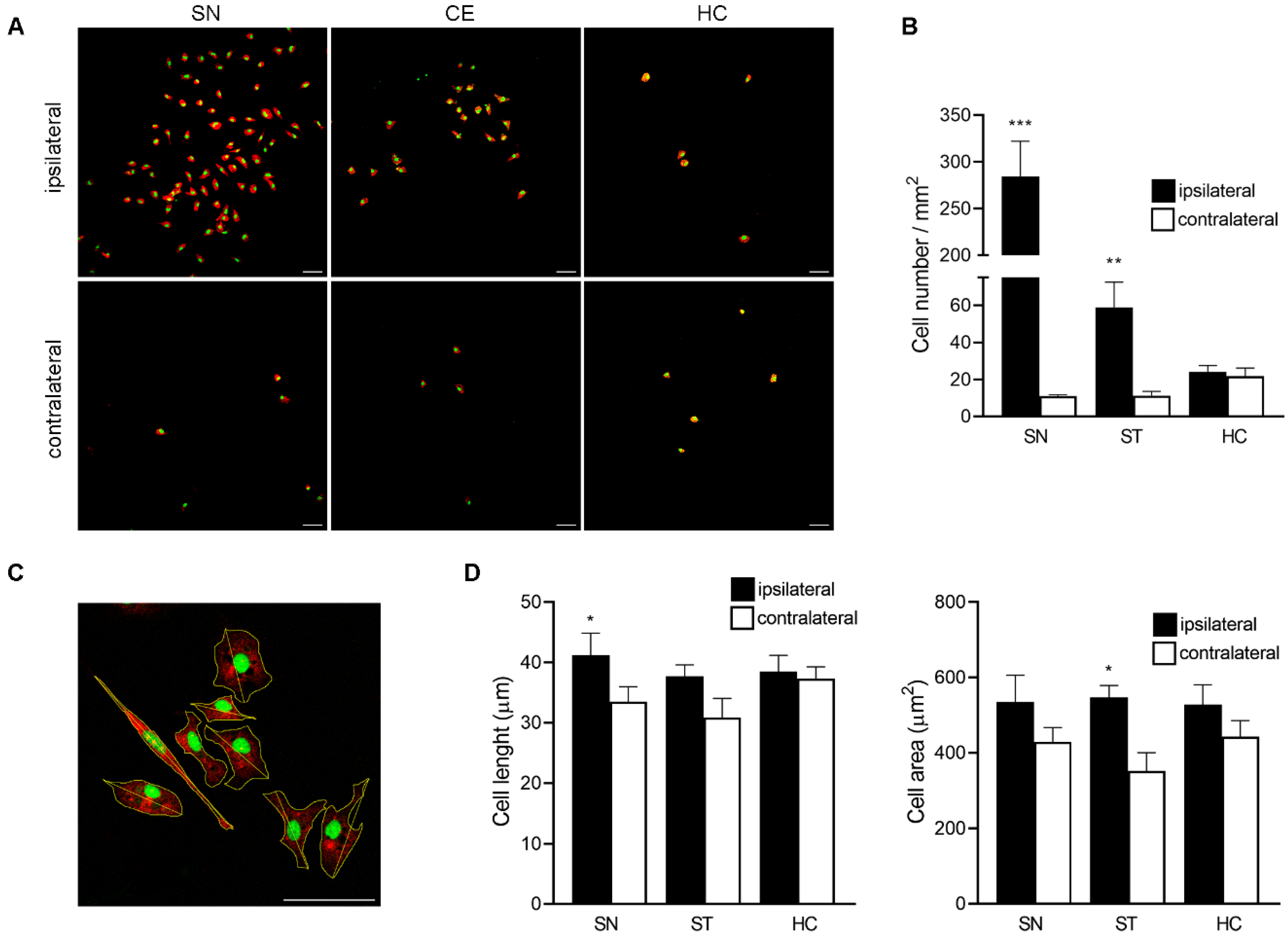
Cell morphology was assessed by measuring two size parameters: cell area and cell length. In Fiji (ImageJ), the cell perimeter was manually traced to determine the area, and the maximal straight-line distance across the cell body was used to define cell length (Figure 2C). Mean values were calculated per region and per experiment.
2.7. DDRG Lineage Determination
For cell-type characterization, DDRG were seeded directly into 96-well plates (50 μL per well) and maintained under standard culture conditions. After 3 DIV, cells were fixed with 4% PFA at 37 °C for 20 min and permeabilized with 0.1% Triton X-100 for 20 min. After blocking nonspecific binding with 5% BSA for 30 min, the cultures were incubated with the primary antibodies/fluorescent probes diluted in the blocking solution at 4 °C overnight: Iba1 (1:500) and IB4 (1:100) for microglia, GFAP (1:500) and Cx43 (1:750) for astrocytes, and α-tubulin (1:1000) as a constitutive marker for all cells. Cells were then incubated with secondary anti-bodies (1:1000) at RT for 1 h, followed by nuclear staining with Hoechst 33258.
After image acquisition (same as for culture yield and morphology), the expression of each glial marker was evaluated by manually counting the number of positive cells for each specific marker relative to the total number of cells (α-tubulin-positive).
2.8. In Vitro DDRG Neurotoxicity Assessment Using PC12 Co-Cultures
Neurotoxicity of GRDD was evaluated in vitro using PC12 cells co-cultured with either DDRG or mixed glial cells as control.
PC12 cells (American Type Culture Collection-ATCC-, Manassas, VA, USA, CRL-1721) were cultured as described previously [
37,
38]. Briefly, cells were grown in collagen-coated flasks at 37 °C in a humidified atmosphere of 5% CO
2, using RPMI-1640 medium supplemented with 5% FBS, 10% horse serum (IHS), 0.1% penicillin, and 0.1% streptomycin. Three days prior to the experiments, the culture medium was replaced with glial medium to adapt the cells to the experimental conditions. Cells were maintained by half-medium changes every 3–4 days and passaged weekly.
DDRG were directly cultured into 96-well plates and maintained under standard culture conditions. Mixed glial cells were seeded at 3000 cells per well. At 3 DIV, 1000 PC12 cells were seeded onto each well. Controls included PC12 cells plated on collagen-coated wells without other cells and all conditions were performed in duplicate.
After 24 h, co-cultures were immunostained for ꞵ-tubulin III (1:1000) as a neuronal marker to identify PC12 cells. Iba1 (1:500) was used to identify DDRG. After image acquisition (same as for culture yield and morphology), the number of ꞵ-tubulin III-positive cells for each condition was quantified.
2.9. In Vivo Neurotoxicity Assessment of GRDD
The in vivo neurotoxic potential of DDRG was evaluated by unilateral stereotaxic injection of the cells into the SNpc of naïve rats. Control groups received mixed glial cells, serum-free DMEM (cell vehicle). DDRG at 3 DIV and confluent mixed glial cultures were enzymatically detached and resuspended at the concentration of 10,000, 40,000 and 100,000 cells/μL. Stereotaxic surgery followed the same protocol described for 6-OHDA injections. Rats were monitored until full recovery and then housed under standard conditions at the IIBCE facility, with daily observation until sacrifice.
Motor performance was evaluated using the cylinder test between days 27 and 29 post-treatment. Following a 15 min acclimation period, animals were placed individually in an acrylic cylinder (60 cm height, 15 cm diameter) and behavior was recorded for 3 min to quantify the number of wall contacts made with each forepaw during rearing. Data were expressed as the percentage of wall touches performed with the lesioned (left) forepaw relative to the total number of forepaw contacts.
At 30 days post-injection, animals were processed for nigro-striatal integrity assessment as previously described.
2.10. Statistical Analysis
Statistical analyses were performed using GraphPad Prism 8 (GraphPad Software, San Diego, CA, USA). Data was tested for normal distribution. Comparisons between two groups were conducted using Student’s t-test, while comparisons among three or more groups were performed using one-way analysis of variance (ANOVA) followed by Tukey’s multiple comparisons test. Differences were considered statistically significant at p < 0.05. Data are presented as the mean ± standard error of the mean (SEM).
3. Results
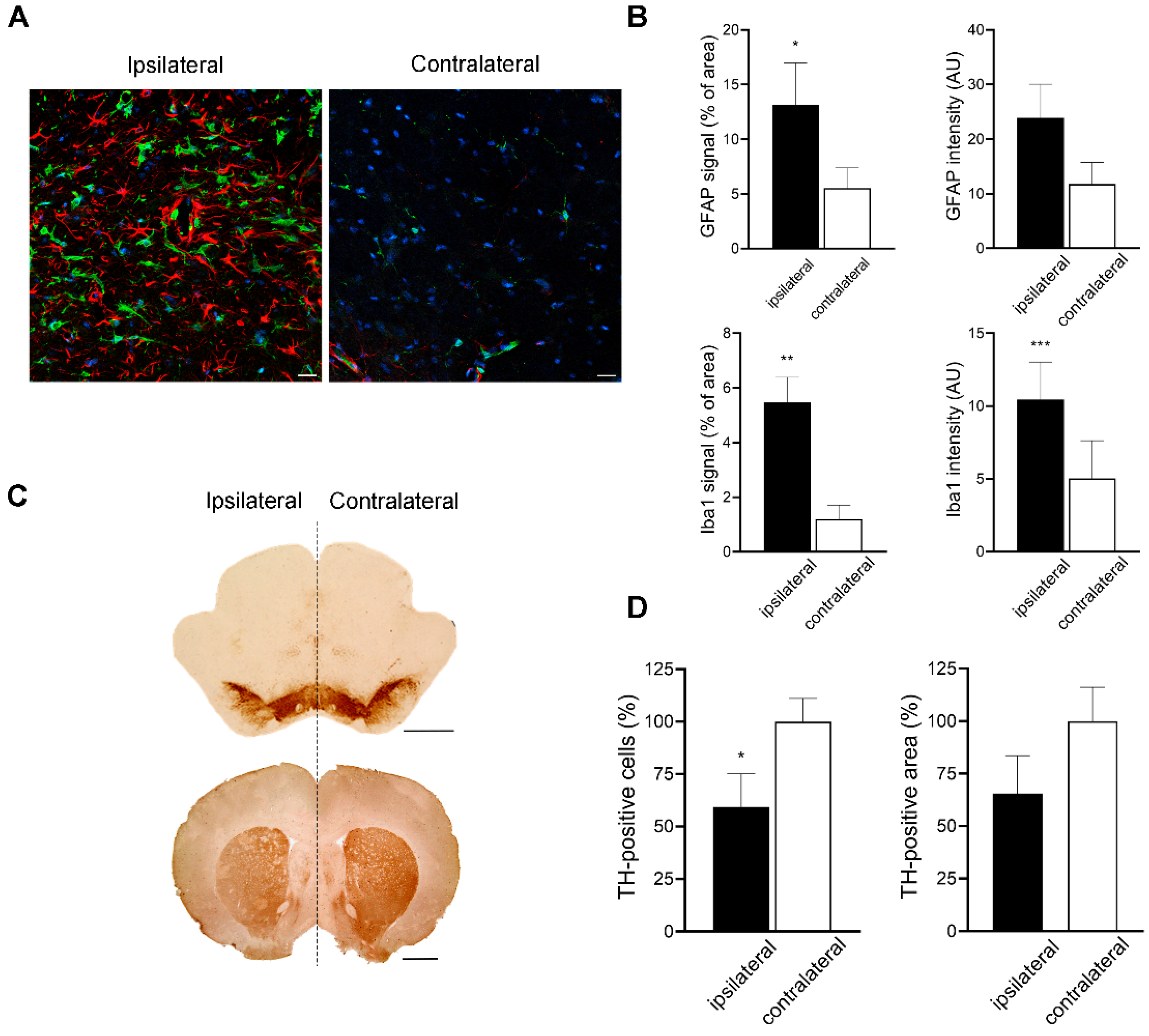
Three days post-unilateral injection of 6-OHDA into the SNpc, the analysis of the tissue microenvironment revealed a significant glial reactivity on the injected side, evidenced by an increased GFAP- and Iba1-covered area and Iba1 intensity compared to the contralateral side (
Figure 1A,B). In addition, a reduction in dopaminergic neuron density in the SNpc and TH-positive area in the striatum was observed on the ipsilateral side (
Figure 1C,D). At this time point, the SN, striatum, and hippocampus from both hemispheres were dissected and separately cultured using a standard glial cell culture protocol.
After 3 DIV, cell numbers were approximately 25-fold higher in ipsilateral SN cultures and 5-fold higher in ipsilateral striatal cultures than in contralateral cultures, whereas hippocampal cultures showed similar cell numbers on both sides (
Figure 2A,B).
Following administration of a half dose of 6-OHDA, the number of glial cells obtained displayed a similar profile across regions but the increase was markedly reduced in absolute terms (
Supplementary Figure S1A). Further characterization revealed that cells derived from the ipsilateral SN displayed a longer major axis, while those from the ipsilateral striatum exhibited an increased cell area compared to their contralateral counterparts (
Figure 2C,D). No significant sex-related differences were observed in either cell number or morphological parameters in the SN cultures (
Supplementary Figure S1B). Based on these findings, mixed SN cultures from both sexes were used in subsequent experiments.
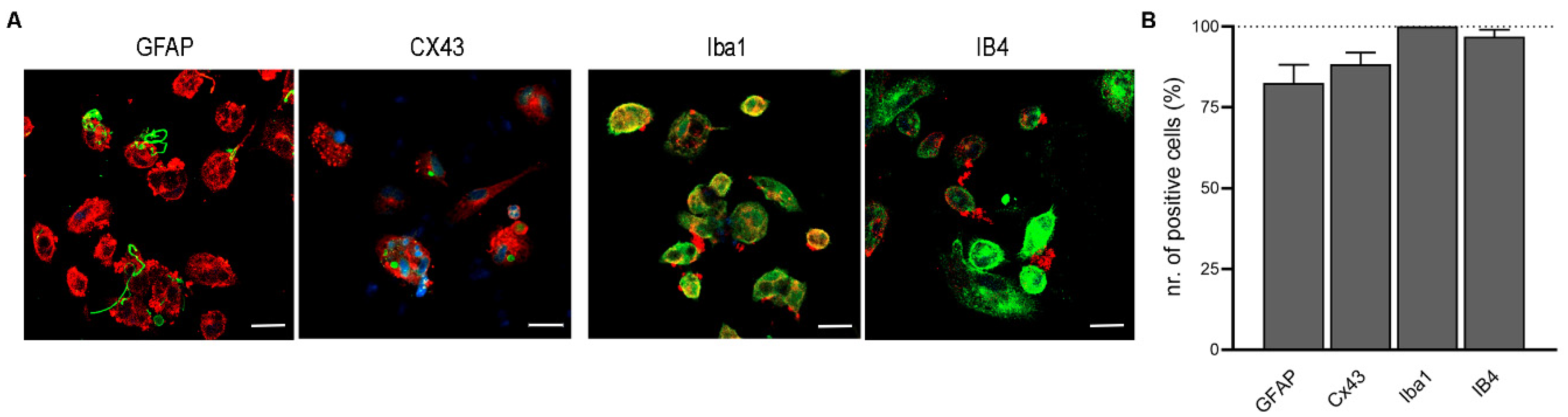
Analysis of classical glial marker expression in cultures derived from the ipsilateral SN revealed substantial co-expression of astrocytic and microglial markers within individual cells. Specifically, 82% and 88% of the cells expressed the astrocytic markers GFAP and CX43, respectively, while 100% and 96% of the cells expressed the microglial markers Iba1 and IB4, respectively (
Figure 3A,B). Interestingly, GFAP signal appears in long disordered filaments and Cx43 as big dotted aggregates, whereas Iba1 and IB4 staining was cytoplasmic with different intensities. Since we could not attribute astrocytic or microglial phenotype to these glial cells, we named them damage-derived reactive glia (DDRG).
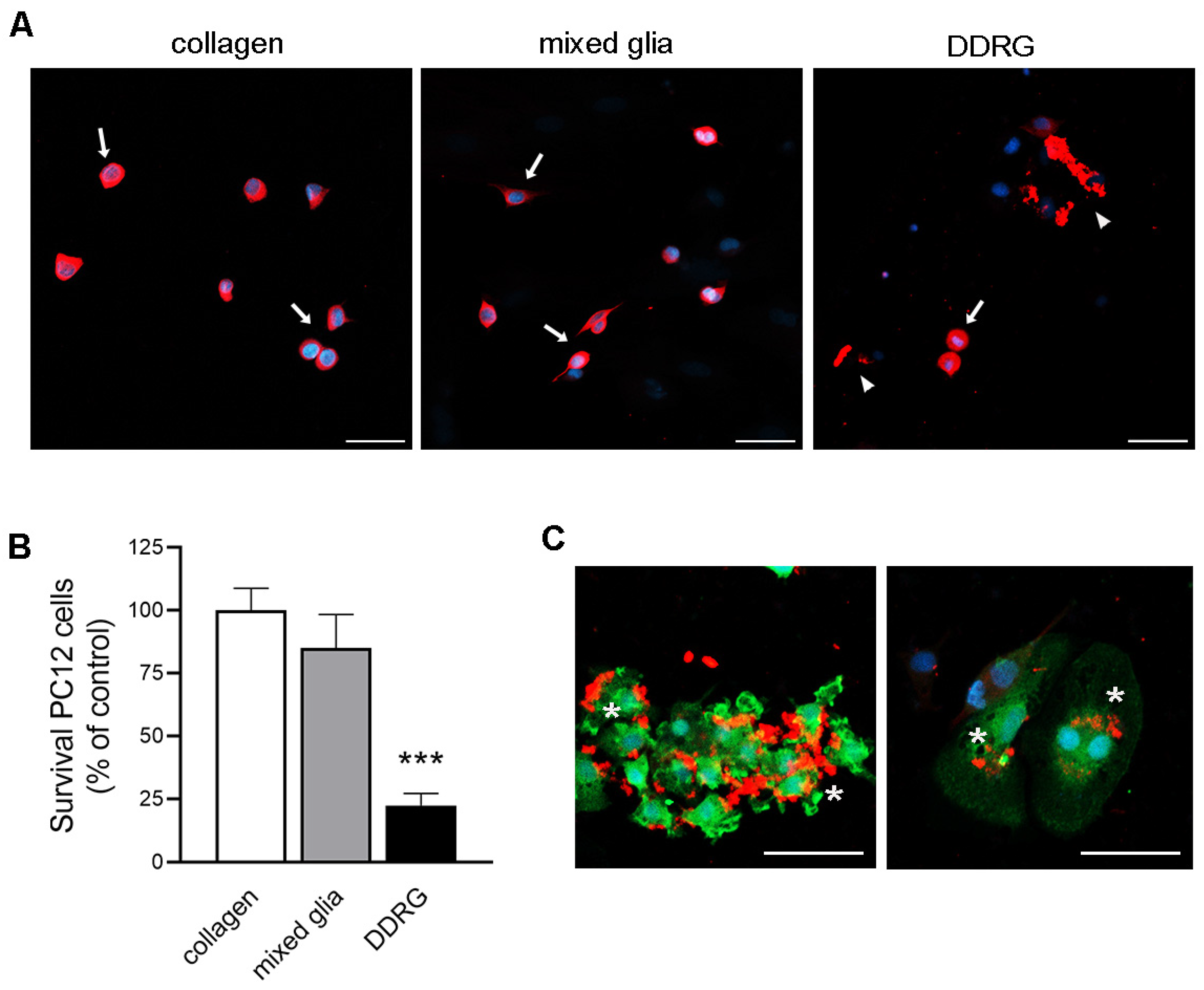
To evaluate whether DDRG cells provide either trophic support or are toxic to neurons, they were co-cultured with PC12 cells. Since glial cultures from the contralateral SNpc yielded very few cells, mixed glial cortical cultures from the cortex were used as controls. The results showed that the number of viable PC12 cells co-cultured with DDRG was significantly lower compared to cultures on the classical substrate collagen or when co-cultured with mixed glial cultures (
Figure 4A,B). Furthermore, TH-positive inclusions were observed inside DDRG, suggesting that they may have phagocytosed PC12 cells (
Figure 4C).
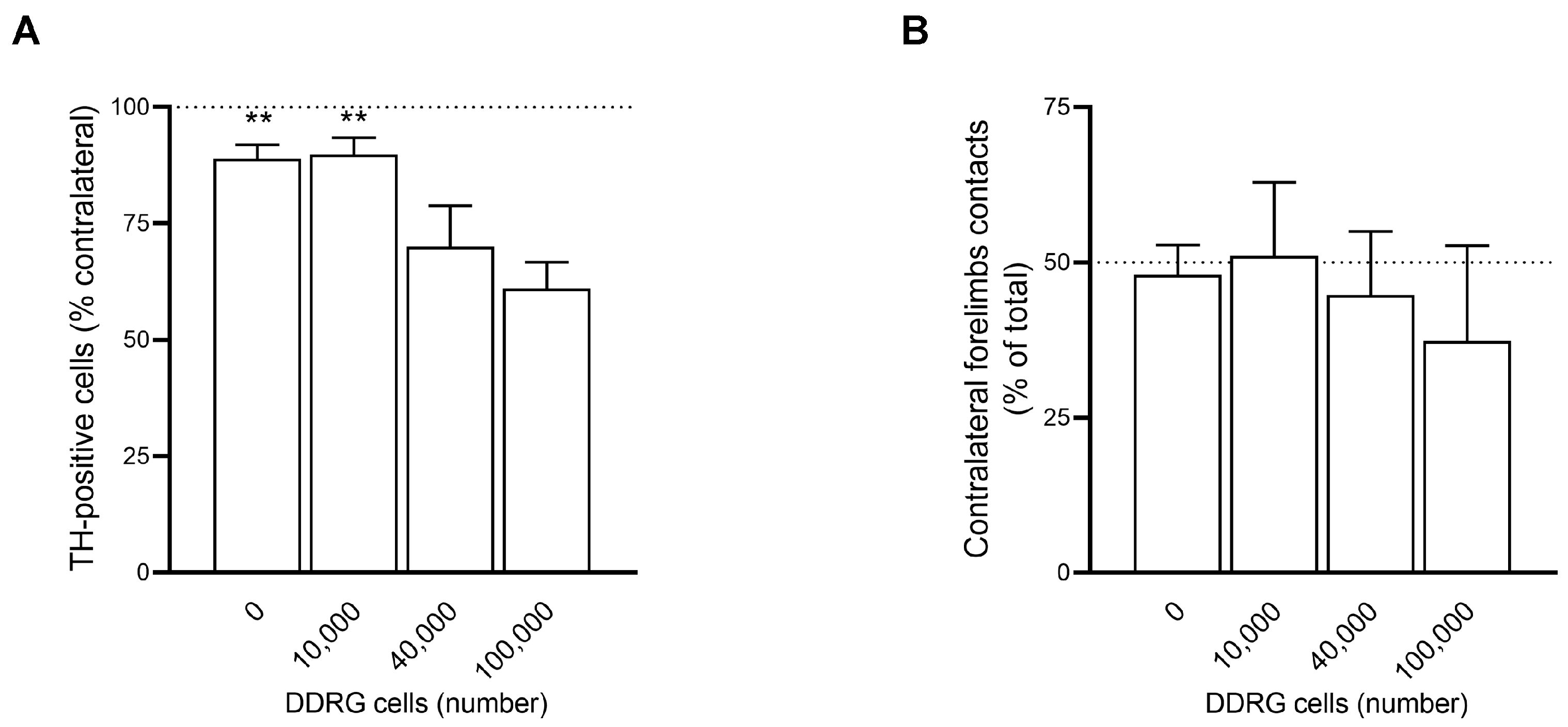
We then evaluated the effect of unilateral DDRG implantation into the SNpc of control animals. Remarkably, degeneration of TH-positive cells in the SNpc increased with the number of transplanted DDRG, and this was accompanied by a corresponding trend toward motor impairment in the cylinder test 30 days after DDRG injection. Implantation of 10,000, 40,000, and 100,000 cells resulted in approximately 10%, 30%, and 40% reductions in TH-positive neurons, and contralateral paw use of about 51%, 45%, and 37%, respectively (
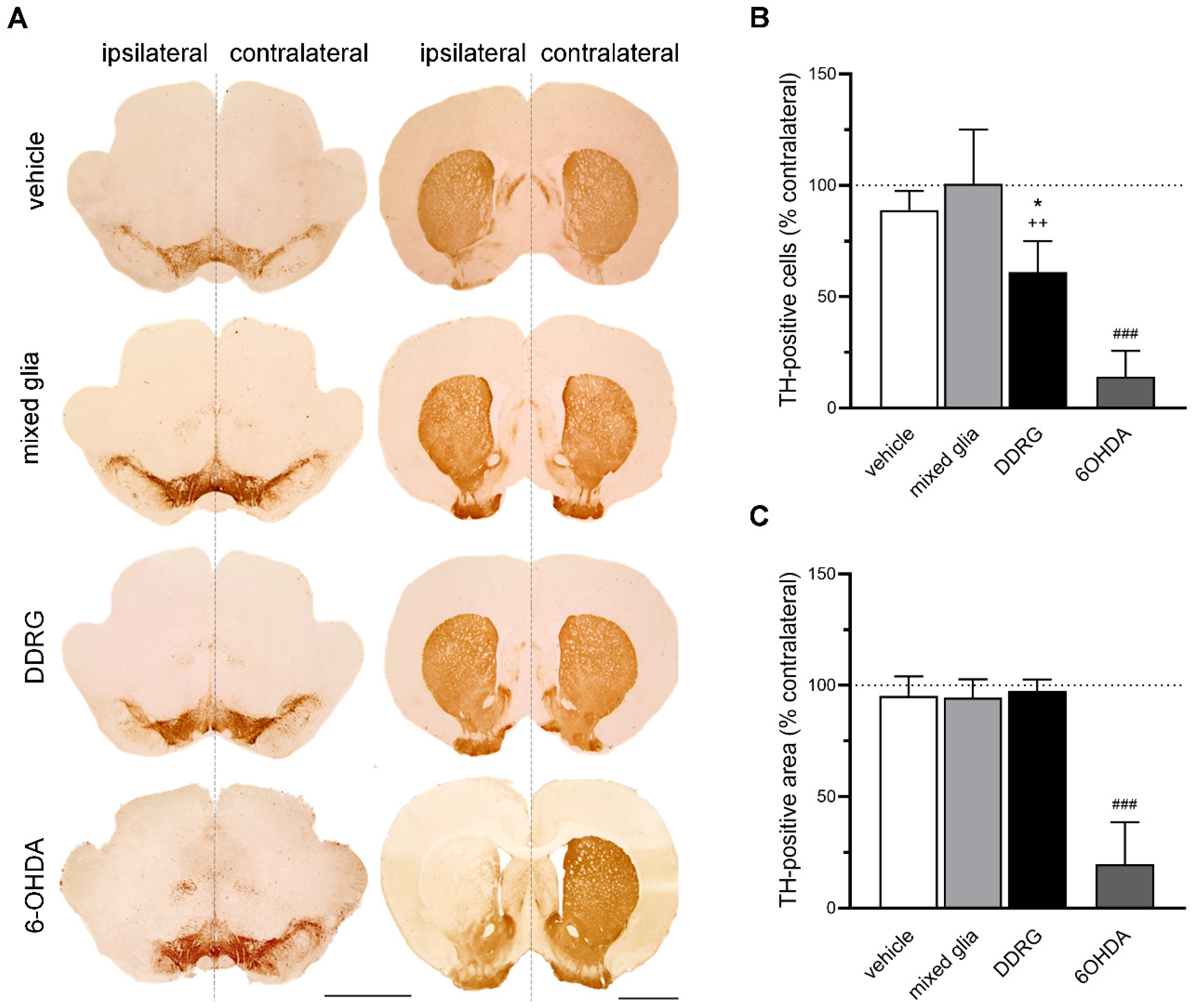
Figure 5A,B). Based on these results, we selected the 100,000-cell injection paradigm for further characterization of DDRG effects. At this dose, the percentage of surviving dopaminergic neurons in the ipsilateral SNpc relative to the contralateral side was significantly lower than in animals injected with vehicle or mixed glial cells obtained from control age-matched animals (
Figure 6A,B). Neurodegeneration did not differ between female and male animals receiving DDRG injections (
Supplementary Figure S2). Analysis of the TH-immunoreactive area in the striatum revealed no significant changes following DDRG administration (
Figure 6A,B).
Related to functional effects in the cylinder test, DDRG-injected animals showed significantly fewer contralateral forelimb touches than those receiving mixed glia, and a non-significant trend toward fewer touches compared to vehicle-injected animals (
Table 1). Finally, DDRG administration resulted in significantly less dopaminergic neuronal loss and a smaller reduction in the TH-positive area in the striatum compared to the 6-OHDA positive control, while no significant differences were observed in the cylinder test (
Figure 6 and
Table 1).
4. Discussion
This study supports the hypothesis that inflammatory conditions in the SNpc promote the emergence of altered glial phenotypes with the capacity to initiate a PD-like neurodegenerative cascade. We used the classical PD model of injection of 6-OHDA in the SNpc to characterize glial cells derived from the immunoreactive and degenerating environment. These cells exhibited distinctive characteristics when compared to those from the non-injected side. For instance, cultures obtained from the SNpc ipsilateral to the toxin injection yielded markedly higher numbers of cells after 3 DIV than cultures from the contralateral side. This increase may reflect enhanced glial proliferation under neuroinflammatory conditions, while also involving other non-mutually exclusive mechanisms, including increased cell survival and/or peripheral cellular infiltration [
39,
40]. A similar but less pronounced effect was observed from cells obtained from the striatum, whereas no differences were detected in the more distantly related hippocampal region. These results suggest that the neurotoxic insult in the SNpc may be associated with the emergence of these glial cells not only in the vicinity of the injection site but also in regions innervated by the affected neurons. This observation is relevant in the context of Parkinson’s disease, in which degeneration of the nigrostriatal pathway is a hallmark feature [
1].
Furthermore, an additional observation was that the magnitude of the ipsilateral–contralateral difference in glial cell numbers scaled with the severity of the noxious stimulus, supporting the notion that the intensity of the insult directly influenced the magnitude of the cellular response. This finding is consistent with the broader damage reported for higher toxin concentrations [
41,
42].
Another relevant observation regarding the cells derived from the ipsilateral SN is that they displayed a mixed expression profile of astrocytic and microglial markers. Notably, the distribution of the astrocytic marker GFAP appeared atypical in DDRG cells, with staining organized in bundles and aggregates. This pattern suggests an altered organization of intermediate filaments, resembling features of astrocytic pathology reported in Alexander disease [
43]. Given this mixed and atypical phenotype, which did not fit any classical glial lineage, we defined them as damage-derived reactive glia (DDRG). Such a mixed phenotype is uncommon, but it has been reported in human neoplastic glioblastoma of multiform cells, and in the SOD1G93A ALS model, both conditions associated with an important inflammatory component [
44,
45,
46]. Particularly relevant to our study, aberrant glial cells with an astrocyte-like phenotype (AbA cells), simultaneously expressing astrocytic and microglial markers, were observed in close proximity to degenerating motor neurons in the spinal cord of a transgenic ALS model [
45].
Functionally, DDRG showed a markedly reduced capacity to sustain neuronal viability in culture. PC12 cells co-cultured with DDRG exhibited reduced survival compared to cultures maintained on collagen or mixed glia, and the presence of TH-positive inclusions within DDRG suggests a phagocytic activity toward neuronal elements. These results indicate that DDRG cells do not provide a supportive substrate for neurons and may directly contribute to neuronal damage. Further studies are needed to elucidate the mechanisms by which DDRG affect PC12 cells, including whether these effects involve direct cytotoxicity, phagocytosis, or the release of soluble neurotoxic factors. The in vivo transplantation experiments showing that DDRG grafted into the SNpc of naïve animals induced a substantial loss of dopaminergic neurons strongly support the view that DDRG possess neurotoxic properties and are able to propagate their effects to the surrounding microenvironment. The fact that implanted DDRG cell number influenced the magnitude of neurodegeneration suggests a dose-dependent effect and highlights the potent neurotoxic potential.
Moreover, the results obtained in animals receiving the same number of mixed glial cells and did not exhibit neurodegeneration indicates that the DDRG’s toxic effect is not a general property of glial cells but is specific to the DDRG phenotype. Although no reduction in dopaminergic innervation in the CE, as assessed by TH immunoreactivity, was detected 30 days after the DDRG’s implantation, the animals presented functional impairments in the cylinder test, reinforcing the pathological relevance of DDRG. It is possible that a higher yield of implanted cells or a longer survival time after cell injection may be required to reveal a loss of dopaminergic innervation in the CE.
The mixed astrocytic–microglial identity of DDRG, combined with their deleterious impact on neuronal survival, supports the hypothesis that maladaptive glial phenotypes may play a central role in disease progression in PD. Similar neurotoxic glial populations have been described in the symptomatic phase in preclinical models of ALS and Alzheimer’s disease. In particular, AbA cells were shown to exert high toxicity toward motor neurons in culture [
25], and a neurotoxic astrocytic population capable of damaging cortical cultures was isolated from the brains of symptomatic 3xTg-Alzheimer’s mice [
26]. To our knowledge, the present report provides the first demonstration of glial cells isolated from a neurodegenerative tissue environment that could elicit significant
in vivo toxicity in a healthy brain. This result is especially relevant because even when AbA cells obtained from ALS symptomatic rats were implanted into the spinal cord of wild-type rats, they did not induce motoneuron degeneration despite eliciting a local inflammatory reaction [
47].
Another relevant aspect of our work concerns the choice of control cells. Previous studies assessing glial toxicity in models of neurodegenerative disorders have used neonatal glial cultures as control cells [
25,
26,
45,
47]; however, the marked phenotypic differences between neonatal and adult glial cells limit their suitability as controls in adult disease models [
48,
49,
50]. Ideally, glial cells obtained from the contralateral SN would represent the most appropriate control for our studies; however, the low yield of these cultures renders this approach impractical. Therefore, we employed glial cells derived from the cortex of age-matched animals. This control strategy strengthens the interpretation that the neurotoxic effects observed in DDRGs are associated with their damage-induced phenotype rather than reflecting differences related to donor age.
At present, it remains unclear whether DDRG corresponds to previously described reactive glial states that have been proposed to negatively influence dopaminergic neuronal viability. Given the diversity of glial activation states, it is plausible that multiple distinct glial phenotypes may contribute to dopaminergic neuron vulnerability, with strong dependence on the cellular environment and disease-specific cues [
8,
13,
51]. Indeed, several glial phenotypes have been suggested to contribute to dysfunction and increased vulnerability of dopaminergic neurons. For instance, astrocytes derived from pluripotent stem cells of familial PD patients were shown to exert neurotoxic effects when co-cultured with dopaminergic neurons, an effect associated with alterations in chaperone-mediated autophagy machinery [
21]. In addition, reactive astrocyte phenotypes with potential pro-toxic features, characterized by increased levels of the cystathionine γ-lyase–Yes-associated protein complex, have been reported in the 1-methyl-4-phenyl-1,2,3,6-tetrahydropyridine (MPTP) mouse model and in the SNpc of PD patients [
24]. Similarly, cultured microglial cells exposed to PD patient-derived α-synuclein fibrils in combination with inflammatory mediators were reported to polarize into a distinct activation state displaying mixed M1- and M2-related features and exhibiting pronounced neurotoxic activity [
23]. Further studies integrating molecular profiling with functional assays will be required to determine the relationship between DDRG and other described glial states associated with PD pathogenesis.
Importantly, the present study raises several open questions regarding DDRG biology. For instance, further work will be required to elucidate the molecular mechanisms underlying DDRG emergence, to determine whether this glial state appears before the neuronal death, and to assess whether its distinctive phenotype represents a transient response to the inflammatory microenvironment or is maintained over time. In addition, characterizing the fate of DDRG following transplantation—including their persistence within host tissue, spatial distribution, and maintenance of reactive features— will be essential for better understanding their contribution to the observed neurodegeneration. Furthermore, additional studies are required to determine whether DDRG neurotoxicity is specific to dopaminergic neurons or also impacts other neuronal phenotypes. Integrative approaches combining molecular analyses with lineage-tracing assays and functional studies are likely to be particularly informative in addressing these questions and clarifying the phenotype and functional properties of DDRG cells. Finally, it would be of interest to investigate whether DDRG are generated in other preclinical models of PD and whether they can ultimately be identified in patients with PD.
In conclusion, our results indicate that a neuroinflammatory/neurodegenerative environment in the SNpc is associated with the emergence of altered glial states that, under the experimental conditions used, can contribute to dopaminergic neuron degeneration when implanted into an SNpc with a physiological environment. DDRG may represent a glial population with potential pathogenic relevance, supporting the notion that maladaptive glial responses could represent an early event contributing to dopaminergic neuron vulnerability, and raising the possibility that targeting such maladaptive states could offer therapeutic benefit in PD and other neurodegenerative disorders.