Review

Unraveling the Link Between COVID-19 and Memory Deficits: The Role of Brain Microglia Activation


by
Md. Aktaruzzaman
1,2,†,
Md. Ahsan Abid
1,†,
Md. Asaduzzaman Rakib
3,†,
Md. Sazzadul Islam
4,
Humayra Afroz Dona
5,
Afrida Tabassum
5,
Nazmul Hossain
6,
Sabekun Nahar Sezin
6,
Chowdhury Lutfun Nahar Metu
7 and
Md. Obayed Raihan
8,*
1
Department of Pharmacy, Faculty of Biological Science and Technology, Jashore University of Science and Technology, Jashore 7408, Bangladesh
2
Laboratory of Advanced Computational Biology, Biological Research on the Brain (BRB), Jashore 7408, Bangladesh
3
Department of Pharmaceutical Technology, Faculty of Pharmacy, University of Dhaka, Dhaka 1000, Bangladesh
4
Department of Pharmaceutical Sciences, Duquesne University, 600 Forbes Avenue, Pittsburgh, PA 15282, USA
5
Department of Genetic Engineering and Biotechnology, Jagannath University, Dhaka 1100, Bangladesh
6
Department of Pharmacy, Gono Bishwabidyalay, Savar, Dhaka 1344, Bangladesh
7
Department of Biochemistry and Molecular Biology, Gopalganj Science and Technology University, Gopalganj, Dhaka 8100, Bangladesh
8
Department of Pharmaceutical Sciences, College of Health Sciences and Pharmacy, Chicago State University, Chicago, IL 60628, USA
*
Author to whom correspondence should be addressed.
These authors contributed equally to this work.
Neuroglia 2026, 7(1), 10; https://doi.org/10.3390/neuroglia7010010
Submission received: 21 December 2025 / Revised: 26 February 2026 / Accepted: 6 March 2026 / Published: 16 March 2026

Abstract

The coronavirus disease 2019 (COVID-19) pandemic has been associated with a wide range of neurological complications, among which persistent cognitive impairment and memory deficits are increasingly recognized as key symptoms of the post-acute sequelae of SARS-CoV-2 infection (PASC or long COVID). Although clinical and epidemiological studies have documented these symptoms across diverse patient populations, the underlying neurobiological mechanisms remain incompletely understood. Growing evidence from human studies, neuropathological analyses, and experimental models indicates that neuroimmune and inflammatory processes plays a central role in COVID-19-associated cognitive dysfunction. As the brain’s resident immune cells, microglia are vital for synaptic health, neuroplasticity, and memory, yet these processes may be compromised after SARS-CoV-2 infection. Systemic inflammation, blood–brain barrier (BBB) disruption, endothelial injury, and cytokine signaling can induce sustained microglial activation and priming, leading to inflammasome activation, complement-mediated synaptic remodeling, oxidative stress, and impaired hippocampal neurogenesis. These processes collectively disrupt neural circuits involved in learning and memory and may underlie the persistent “brain fog” reported by COVID-19 survivors. This review synthesizes clinical, biomarker, neuroimaging, and mechanistic evidence linking SARS-CoV-2 infection to microglia-mediated neuroinflammation and memory impairment. In contrast to prior reviews that broadly describe neuroinflammation in COVID-19, we integrate multidimensional evidence into a microglia-centric immunovascular framework that highlights converging pathogenic pathways underlying cognitive symptoms. We further discuss emerging biomarkers of glial activation and evaluate current and prospective therapeutic strategies targeting microglial and neuroimmune pathways. Understanding the role of microglial dysregulation in post-COVID cognitive impairment may facilitate the development of targeted interventions to mitigate long-term neurological consequences of COVID-19.

1. Introduction

Severe acute respiratory syndrome coronavirus 2 (SARS-CoV-2), the etiological agent of coronavirus disease 2019 (COVID-19), was first identified as a respiratory pathogen. Currently, it is established as a systemic virus with significant involvement in neurological impairment [1,2]. Emerging evidence demonstrates that SARS-CoV-2 can perturb central nervous system (CNS) homeostasis through mechanisms such as immune-mediated neuroinflammation, neurovascular injury, neurotropism, disruption of the blood–brain barrier, and immune-mediated neuroinflammation, contributing to a spectrum of acute and chronic neurological sequelae [3]. Though SARS-CoV-2 infection starts by respiratory system invasion, studies have proved it can be multisystemic with significant dysregulation in the brain. There is an accumulating evidence that the range of neurological presentations is broad in spectrum [4]. At the critical phase of the COVID-19 infection, patients may suffer from systemic inflammation, pulmonary injury, coagulopathy, and multi-organ stress. Emerging evidence indicates that SARS-CoV-2 can affect the CNS through vascular, immune, and glial routes, either directly or indirectly [4,5,6]. Neuroinflammation, disrupted neurovascular integrity, hypoxia, and potential viral invasion into the neural tissue have been implicated in the neurological sequelae of COVID-19 [7,8]. Neuropathological reports have documented microglial nodules, astrogliosis, and perivascular inflammatory infiltrates, supporting CNS [9] involvement while direct viral RNA detection in brain tissue is uncommon [10,11,12].
In the span of the pandemic, an increasing number of cohort studies and clinical reports have shown not only persistent cognitive dysfunction in survivors of COVID-19 but also long-term effects including Alzheimer’s Disease (AD) and Parkinson’s Disease (PD) [13] after resolution of acute infection [12,14]. Patients have repeatedly reported “brain fog,” including loss of attention, with 61% [15] of them also reporting memory impairment (especially in working memory and episodic recall) and slowed information processing [16]. Objective neurocognitive testing frequently corroborates these complaints, revealing deficits [17] in attention, fatigue, executive function, and processing speed months after infection. In a 2025 study, cognitive impairment (“brain fog”) was found among 40% of patients, and 37% exhibited objective evidence of cognitive deficits on computerized tests months after infection [18,19,20,21]. Systematic reviews found similar observations: approximately 20–60% of COVID-19 survivors report lingering cognitive or memory complaints [22], which may persist as part of the “long COVID” syndrome [23,24]. Post-COVID-19 brain fog can arise from cognitive performance deficits and noncognitive factors like fatigue, depression, sleep disruption, and psychiatric illness. These elements may mediate or independently cause brain fog, paralleling findings of increased fatigue among individuals without COVID-19 during the pandemic [15,22]. In COVID-19-affected patients, neuroimaging studies (e.g., FDG-PET and MRI) have reported frontoparietal and limbic hypometabolism and white matter changes have been marked in some cohorts, consistent with network-level dysfunction underlying cognitive symptoms [25,26].
There are numerous possible mechanisms that may link COVID-19 to memory deficits, but among them, microglia—the resident immune cells of the brain—play a vital role because they regulate neuroinflammation and activity-dependent synaptic remodeling [7,27,28]. SARS-CoV-2 can invade into the immune system through converting the angiotensin-converting enzyme 2 (ACE2) and then entering the different organs such as the brain. It has also been demonstrated that systemic inflammation, cellular senescence and multi-organ damage associated with viral toxicity occur during infection time [29]. Under normal conditions, microglia surveil the local milieu, prune synapses, and support synaptic remodeling and plasticity; these functions are crucial for learning and memory processes [30]. In COVID-19 patients, peripheral cytokines storm or ‘cytokine release syndrome’ (e.g., IL-1β, IL-6, and TNF) and danger signals (e.g., HMGB1) can prime microglia via Toll-like receptors, TNF-1 pathways, and purinergic (P2 × 7) signaling [31]. These evidences result in the shifting of morphological changes to an activated state that leads to the release of cytokines and reactive species. In extreme cases, microglia can engulf synaptic elements via complement pathways (e.g., C1q/C3)—a process often termed synaptic stripping or microgliosis—possibly damaging neuronal circuits underlying cognition [30,32,33]. Moreover, microglial dysregulation and excessive complement-mediated synapse loss are directly interlinked with memory deficits in other viral or inflammatory disorders [34]. During the COVID-19 outbreak, experimental and postmortem work indicates that microglial inflammatory pathways can be induced by SARS-CoV-2 or its spike protein through TLR2/4 signaling [35] and NLRP3 inflammasome activation, leading to neural injury [8,36,37]. However, most mechanistic evidence remains associative rather than causative, and the extent to which these pathways drive human cognitive symptoms is still under investigation. Additional contributory factors include endothelial dysfunction with BBB leakage, hypoxia-related mitochondrial stress, astrocyte–microglia crosstalk, and sustained immune activation (“microglial priming”) after acute illness [38]. Indeed, therapeutic modulation of microglial activity and downstream inflammatory cascades (e.g., IL-1 blockade, NLRP3 inhibition, P2X7 antagonism [39] complement pathway modulation) have been proposed to alleviate COVID-19-associated cognitive dysfunction (“brain fog”) [40].
Unlike prior reviews that broadly discuss neuroinflammation in COVID-19, the present article explicitly integrates clinical, biomarker, neuroimaging, and mechanistic evidence into a microglia-centric immunovascular framework that seeks to explain how systemic infection may give rise to persistent cognitive symptoms. By synthesizing convergent evidences across human and experimental domains, we propose a structured model linking peripheral inflammation, BBB disruption, microglial priming, and synaptic dysfunction to post-COVID memory impairment. This integrative perspective aims to clarify current knowledge, highlight translational gaps, and inform therapeutic strategies targeting microglial and neuroimmune pathways.
Literature Search and Evidence Selection
Inclusion criteria:
This narrative review is based on a structured, integrative appraisal of the literature examining cognitive impairment because of SARS-CoV-2 infection followed by Medical Subject Headings (MeSH) terminology.
The relevant and most recent studies from years 2020 to 2026 were considered through keyword-based searches using terms. The use of Boolean operators was applied to refine the search including (“COVID-19”OR “COVID19” OR “COVID-19” OR “COVID-19 Vaccines” OR “COVID-19 Vaccines” OR “COVID-19 serotherapy” OR “COVID-19 serotherapy” OR “COVID-19 Nucleic Acid Testing” OR “COVID-19 nucleic acid testing” OR “COVID-19 Serological Testing” OR “COVID-19 serological testing” OR “COVID-19 Testing” OR “covid-19 testing” OR “SARS-CoV-2” OR “SARS-CoV2” OR “SARS-CoV-2” OR “Severe Acute Respiratory Syndrome Coronavirus 2” OR “2019 NCOV” OR (“sars-cov-2” OR SARS-CoV-2) AND (“memory disorders” OR Memory Deficits OR (“physiopathology” OR Dysfunction) AND (“brain” OR Brain) AND (“microglia” OR Microglia) AND Activation AND (“immunoglobulins” OR “antibodies” OR “immunoglobulins” OR “antibodies” Antibody AND “COVID-19” AND “post-acute sequelae” or “blood–brain barrier,” AND synaptic pruning, or “COVID19” AND “hippocampus,” AND “Brain Imaging” or “PET scan” AND “brain fog”, “COVID19” AND “Marker” or “COVID-19” AND “Microglia marker” “COVID-19” AND “In Vivo” or “COVID19” AND “In Vivo” AND “COVID19” AND “In Vitro”)). Evidence from human clinical, biomarker, neuroimaging, and neuropathological studies was prioritized where available, while experimental models were used to contextualize mechanistic pathways. Given substantial heterogeneity across cohorts, reported associations are interpreted with appropriate caution, and causal inference is avoided unless supported by convergent human evidence.
Exclusion criteria:
We excluded those papers which were not from peer-reviewed journals, with only abstract or preprints. Any retracted papers were excluded from our literature study. Papers before the year 2020 were also excluded unless it shared any information with necessary insights. This search was limited to humans, English language and age.

2. Clinical Evidence and Mechanistic Insights into Memory Deficits in COVID-19

The prevalence of cognitive symptoms following COVID-19 has been widely reported, though estimates differ considerably across studies [5,41,42]. A longitudinal study of 766 individuals revealed that 36% experienced cognitive difficulties in the first three months, with early cognitive impairment doubling the likelihood of persistence [43]. Though certain elevated risks seem to be temporary, these symptoms are common in post-COVID-19 condition (PCC), also called long COVID-19 [44], defined by WHO as fatigue, breathlessness, and cognitive dysfunction that remain for ≥2 months, whereby diagnostic rates that persist for ≥3 months after infection can cause stroke, insomnia, and mood and anxiety disorders, as well as impair daily function, being unexplainable by other causes [45,46].
Clinically, the PCC’s cognitive phenotype frequently includes deficits in attention, processing speed, executive control, and episodic memory domains dependent on frontoparietal and hippocampal circuitry, providing a coherent clinical anchor for hypothesized microglia-mediated synaptic and network dysregulation [43,47,48,49,50].
Evidence from a meta-analysis of 1.2 million symptomatic patients has indicated that 2.2% reported persistent cognitive impairment at 3 months [51]. Heterogeneity across cohorts (≈2–60%) reflects differences in symptom ascertainment versus objective testing, follow-up duration, and illness severity; nonetheless, across designs, greater inflammatory burden during acute illness correlates with worse cognitive outcomes, implicating immunological drivers of neurocognitive sequelae [45,52,53]. These associations align with a pathophysiological model in which peripheral cytokines and danger signals (e.g., IL-6, IL-1β, TNF; HMGB1) prime microglia via TLR2/4 and inflammasome (NLRP3) pathways, seeding prolonged neuroinflammation that can impair cognition [54,55]. Importantly, these links remain largely associative in human cohorts.
In the UK, survey data from March 2023 estimated that 1.7 million adults (2.7% of the population) were living with PCC, with a majority (69%) experiencing prolonged symptoms beyond one year, underscoring the long-term burden on individuals and healthcare systems [43]. Similar trends have been observed in community cohorts’ study, including non-hospitalized individuals, indicating that persistent cognitive symptoms are not solely attributable to critical care exposures. Some individuals recovering from COVID-19 show prolonged cognitive deficits, including memory, attention, and executive dysfunction that may persist for >3 months or, in some cases, up to 2 years. Biomarker studies support biological injury: elevations in neurofilament light chain (NfL) [56] and glial fibrillary acidic protein (GFAP) [42,57] during and after acute COVID-19 correspond with cognitive complaints, consistent with axonal and astroglia damage [58]. Convergent evidence of BBB disruption and sustained systemic inflammation in patients with PCC-associated cognitive impairment provides a plausible gateway by which peripheral signals access the CNS and activate microglia [59,60].
Studies have consistently shown cognitive disruption in COVID-19 survivors, including short- and long-term memory impairment [61]. A review of 13 studies reported poor verbal learning in 6–58% of cases, along with deficits in long-term (4–58%) and short-term (4–37%) verbal memory, respectively [42,62]. Neuropsychological profiles often reveal disproportionate deficits in episodic memory and executive functions—domains sensitive to hippocampal and front striatal circuitry—consistent with inflammatory disruption of synaptic plasticity and network efficiency [63,64]. Neuroimaging studies (MRI, FDG-PET) have demonstrated frontoparietal and limbic hypometabolism and microstructural white matter changes. Parallelly, these neuropathology showed complementary activation and neurovascular injury, supporting a biological substrate for cognitive symptoms and providing indirect support for microglial involvement [26,65]. Where available, advanced imaging techniques and translational studies reported glial activation signatures and hippocampal abnormalities in PCC cohorts, further linking clinical deficits to glia-centric mechanisms [66].
Some argued that cognitive impairment was common after critical illness and not unique to COVID-19. However, a case–control study comparing 85 COVID-19 patients with 60 ICU-matched controls found worse Montreal Cognitive Assessment scores at six months among COVID survivors, with a greater proportion below mild cognitive impairment thresholds, indicating infection-specific cognitive consequences [66,67,68,69]. Autopsy and postmortem case series identified microglial nodules, perivascular immune infiltrates, astrogliosis, and white matter lesions—even when direct viral RNA detection in brain is limited—consistent with microglia-driven neuroinflammation as a candidate mechanism for post-infectious cognitive dysfunction [70,71]. Mechanistically, SARS-CoV-2-related endothelial injury (e.g., Mpro-mediated NEMO cleavage), neurovascular unit stress, and BBB dysregulation can expose microglia to peripheral cytokines and DAMPs, priming inflammasome (NLRP3) and TLR2/4 signaling. Downstream complementary activation tagging (C1q/C3) and purinergic P2X7 activation may promote maladaptive synaptic pruning and network disconnection that manifest as “brain fog” and memory deficits [72,73]. Astrocyte–microglia crosstalk (e.g., via CX3CL1/CX3CR1; CCL2/CCR2) and microvascular ischemic stress further amplified microglial responses, offering a biologically coherent bridge from clinical observations to cellular mechanisms [74].
Translational signals point toward modifiability: observational and experimental studies suggested that targeting IL-1β/IL-6 axes, NLRP3, and P2X7 can attenuate cognitive dysfunction in post-COVID models and cohorts, and vaccination has been associated with reduced IL-1β-mediated cognitive deficits [74,75,76,77]. Collectively, the epidemiology, neuropsychology, biomarkers, imaging, and neuropathology converge on a mechanistic hypothesis that persistent cognitive symptoms in PCC are, at least in part, orchestrated by microglial activation and neuroimmune signaling, providing a clinical–biological foundation for the subsequent section on microglia-centric pathways and therapeutic targets [60].

3. Microglial Regulation of Memory: Synaptic Pruning, Plasticity, and Homeostatic Functions

Microglia are yolk-sac-derived, CNS-resident myeloid cells that serve as dynamic regulators of neural circuit architecture and function. They can play a pivotal role in shaping learning and memory by orchestrating synaptic pruning, synaptic plasticity, and memory consolidation across developmental and adult stages [50]. During brain development, microglia actively survey the environment and remove weak or redundant synapses through complement-mediated pruning (C1q/C3 signaling), thereby refining neuronal connectivity and optimizing network efficiency throughout the life [50].
In the adult hippocampus, microglia influence long-term potentiation (LTP) and long-term depression (LTD)—key processes underlying synaptic plasticity—both of which are essential for encoding and storing new memories [78]. Microglia can modulate dendritic spine density, release neurotrophic factors (e.g., BDNF), and maintain synaptic health, ensuring that memory circuits remain functionally robust [79]
The physiological impact of microglia on memory processes depended on their activation state. In their homeostatic state, microglia maintain surveillance of the neural environment, secrete neurotrophic factors, and support synaptic integrity [80]. They also regulate glutamatergic signaling by releasing glycine to enhance NMDA receptor-mediated responses, facilitating hippocampal LTP-a cellular substrate for learning and memory [81]. However, with their activation by injury or immune challenges, microglia undergo morphological and functional changes, producing pro-inflammatory cytokines (IL-1β, TNF-α, IL-6) and reactive oxygen species, which can disrupt synaptic plasticity and impair memory [79]. Excessive or prolonged activation could lead to aberrant synaptic pruning and dendritic spine loss, which are mechanisms implicated in cognitive decline and neurodevelopmental disorders [78,82]. Such maladaptive microglial responses represent a potential bridge between systemic inflammation and the memory impairments observed in post-infectious states.
Thus, the balance between homeostatic and activated microglial states is critical for memory fidelity. Dysregulation of this balance—whether through genetic, environmental, or inflammatory triggers—can compromise synaptic remodeling and network connectivity, predisposing patients to memory impairment observed in neurodegenerative and post-infectious conditions such as COVID-19 [81,83,84]. This framework underscores why microglia are central to understanding how SARS-CoV-2-related immune activation may perturb hippocampal-dependent memory processes.

4. Microglial Activation in COVID-19: Mechanisms Linking Neuroinflammation to Cognitive Dysfunction

SARS-CoV-2 enters into host cells via ACE2 and TMPRSS2, with ACE2 highly expressed in cerebrovascular endothelium and increasing with age [85,86]. This interaction can compromise the BBB, enabling peripheral inflammatory mediators and occasionally viral components to access the CNS [55,87]. Proposed routes include olfactory and hematogenous spread, with additional neural or leukocyte-mediated conduits [74]. While coronaviruses can interact with neurons, astrocytes, and microglia, widespread SARS-CoV-2 neuro-invasion remains uncommon; neuropathology instead points to vascular injury and immune activation as primary drivers of CNS involvement rather than extensive viral replication within the neural tissue [74,88,89].
Postmortem studies consistently reveal microglial activation, particularly in the brainstem and hippocampal regions, with white matter involvement in the cerebellum and brainstem [90]. Young patients showed higher activation than controls [91] and CSF markers such as TREM2 and YKL-40 confirm glial activation in encephalitic cases [92]. Complement deposition, perivascular immune cuffs, and neurovascular injury are frequent findings, even when viral RNA is minimal [90], further suggesting that immune-mediated mechanisms predominate over direct viral invasion.
Mechanistically, systemic cytokines (IL-1β, IL-6, TNF-α) prime microglia via TLR2/4 and NLRP3 inflammasome pathways, impairing synaptic plasticity, and chemokine CCL11 activates hippocampal microglia and suppresses neurogenesis [92,93]. Complement tagging (C1q/C3) and microglial phagocytosis drive maladaptive synaptic loss. Purinergic P2X7 signaling amplifies inflammatory cascades; antagonism improves cognition in post-COVID models [94,95]. Astrocyte–microglia crosstalk and endothelial stress sustain this primed state, creating a durable substrate for “brain fog” and memory deficits [74,96]. Taken together, these pathways illustrated how systemic immune disturbances may converge on microglial dysregulation to produce hippocampal and frontoparietal network dysfunction.
Biomarker and imaging data reinforced these links: NfL and GFAP elevations track with cognitive complaints [97], while neuroimaging reveals frontoparietal and hippocampal hypometabolism and changes in white matter [97,98]. BBB disruption with persistent systemic inflammation provided a gateway for chronic microglial activation; CCL11 has emerged as a candidate biomarker [7,43]. These multimodal signals supported a model in which microglial activation is part of a broader immunovascular disturbance rather than an isolated cellular phenomenon.
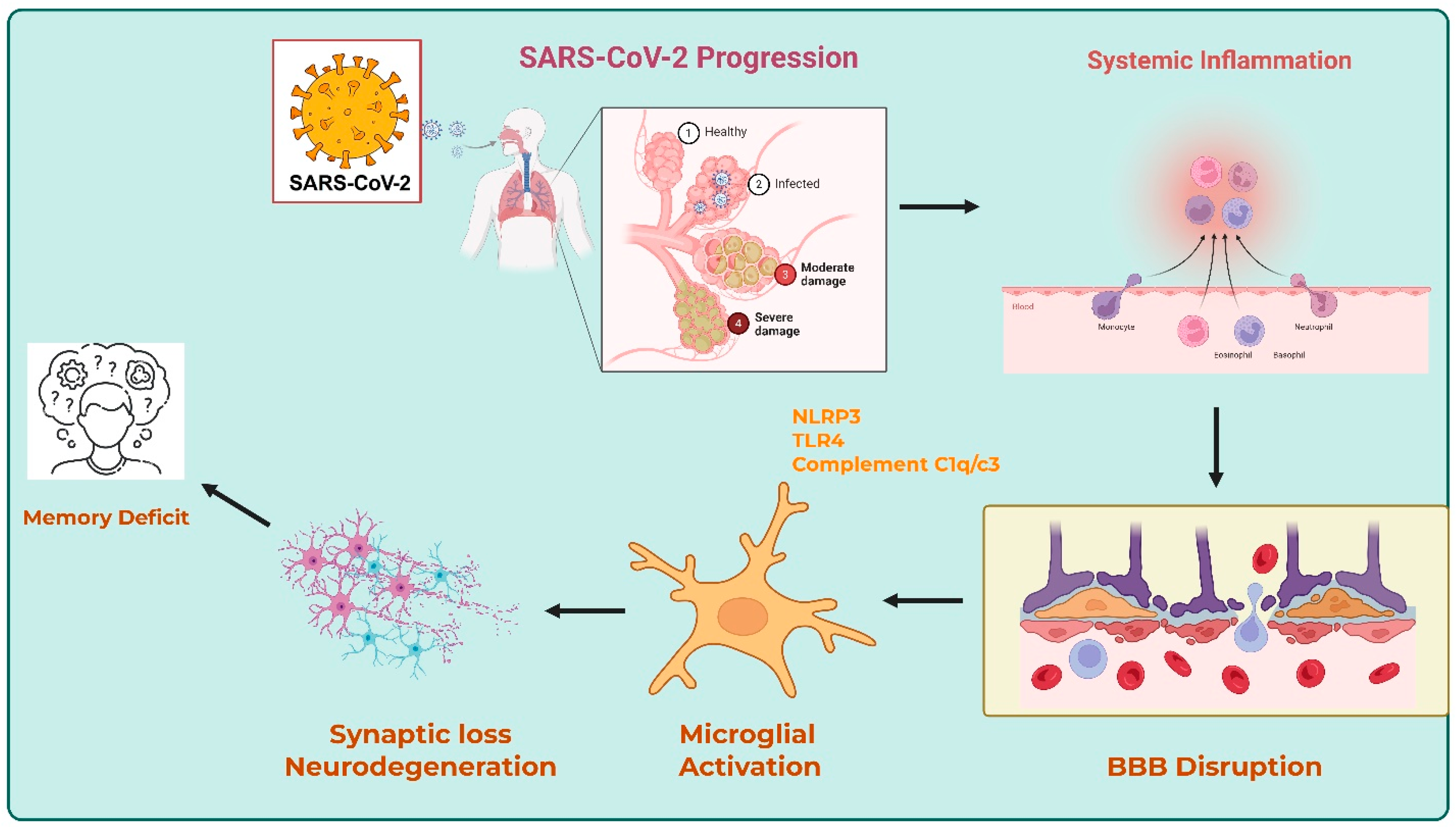
Therapeutic strategies targeted IL-1/IL-6 signaling, NLRP3, P2X7, and complemented pathways; vaccination correlated with reduced IL-1β-mediated cognitive deficits. Overall, the evidence supports a microglia-centric model with neurovascular injury and sustained immune signaling, rather than extensive viral neurotropism, which drives the cognitive sequelae of COVID-19 [99,100,101,102]. These mechanistic pathways are mapped in Figure 1, which illustrates how peripheral inflammation, BBB compromise, and microglial priming interacted to produce maladaptive synaptic remodeling and cognitive dysfunction.

5. Microglia-Mediated Mechanisms of Memory Impairment

COVID-19 can impair brain function through multiple converging mechanisms, including systemic cytokine signaling, BBB disruption, and microglial activation rather than widespread viral neuro-invasion [103]. These processes collectively compromise hippocampal circuits critical for memory and may contribute to the heterogeneous cognitive symptoms reported after SARS-CoV-2 infection.

5.1. Dysregulated Synaptic Pruning and Circuit Disconnection

Microglial synaptic pruning, essential for circuit refinement, became maladaptive under chronic activation during or after SARS-CoV-2 infection. Inflammation-driven upregulation of C1q/C3 tags synapses for elimination, and hyperreactive microglia phagocytose these marked synapses, reducing dendritic spine density and weakening excitatory connectivity in hippocampal networks [34,103]. That synaptic loss impaired the encoding and retrieval of episodic memories, contributing to “brain fog.” Animal and postmortem studies confirmed that excessive microglial pruning correlates with cognitive deficits in viral and neurodegenerative contexts, positioning complement modulation as a potential therapeutic strategy [104,105,106]. However, direct human evidence linking complement-mediated pruning to specific long-COVID-19 memory phenotypes remains limited.

5.2. Chronic Neuroinflammation and Cytokine-Driven Plasticity Loss

Homeostatic microglia supported memory by releasing neurotrophic factors (e.g., BDNF) and maintaining synaptic integrity [30]. Upon activation, microglia secrete IL-1β, IL-6, and TNF-α, which infiltrate hippocampal circuits and disrupt long-term potentiation (LTP), which is a cellular substrate for memory [8]. Persistent cytokine signaling activated MAPK and NF-κB pathways, downregulating synaptic proteins and impairing plasticity. Elevated IL-6 has been linked to hippocampal atrophy in inflammatory states, suggesting a parallel mechanism in COVID-19 survivors [8,107,108]. Neuroimaging and rodent models corroborate that chronic neuroinflammation impairs hippocampal-dependent memory, underscoring cytokine-targeted immunomodulation as a promising intervention [109]. Still, most data are correlative and longitudinal human studies integrating cytokine profiles with cognitive trajectories are needed.

5.3. Oxidative Stress and Reactive Species-Induced Synaptic Damage

Activated microglia releases reactive oxygen and nitrogen species (ROS/RNS), overwhelming antioxidant defenses and creating a neurotoxic environment [110]. Oxidative stress amplifies inflammatory cascades, damages dendritic spines, and disrupts neuronal signaling essential for memory consolidation [111]. BBB integrity was further compromised, allowing peripheral immune infiltration and accelerating neuroinflammation. These processes collectively underlie cognitive complaints such as “brain fog” and persistent attentional deficits in COVID-19 survivors [112]. Although oxidative stress was a plausible mechanistic contributor, direct evidence in long-COVID-19 patients remains emerging.

5.4. Blood–Brain Barrier Breakdown and Neurovascular Dysfunction

BBB breakdown in COVID-19 occurs via multiple mechanisms:
Endothelial Injury and Junctional Integrity Loss: SARS-CoV-2 Mpro cleaves NEMO, and induces endothelial apoptosis and “string vessel” formation; viral infection upregulates MMP-9 and activates RhoA signaling, degrading basement membrane and weakening junctional integrity [113].
ACE2-Mediated Viral Interaction and Barrier Compromise: ACE2 expression in neurovascular units facilitates viral interaction, leading to tight junction disruption and the leakage of fibrinogen and pro-inflammatory molecules into the brain tissue, compounding neurovascular inflammation and neuronal injury [114]. BBB dysregulation provided a mechanistic bridge between systemic inflammation and microglial priming, but the temporal dynamics of BBB repair versus persistent leakage in PCC remain under active investigation.

5.5. Maladaptive Neuron–Astrocyte–Microglia Crosstalk

Tripartite communication among neurons, astrocytes, and microglia orchestrates immune responses and synaptic remodeling. In COVID-19, this crosstalk became maladaptive: astrocyte reactivity and microglial priming amplified cytokine release, impairing neuronal function [114,115]. SARS-CoV-2 S1 protein induced reactive astrocytes via TANK-binding kinase 1, further destabilizing neuron–glia signaling and promoting neurodegeneration. Chronic inflammatory signaling in these networks may accelerate cognitive decline and increase vulnerability to Alzheimer’s-like pathology [116,117,118]. These interactions provided a conceptual link to observed neuropsychiatric and cognitive symptoms, although definitive causal chains have yet to be fully resolved.

6. Interaction with Risk Factors

Several factors amplified the impact of microglial activation on memory impairment in COVID-19 survivors, suggesting that host vulnerability interacted with immunovascular mechanisms to shape cognitive outcomes.

6.1. Age and Immunosenescence

Older adults (>60 years) exhibited significantly worse cognitive outcomes following COVID-19. Severe cases showed markedly lower TICS-40 scores (22.98 ± 7.12 vs. 30.46 ± 5.53; p < 0.001) and higher IQCODE scores (4.06 ± 1.39 vs. 3.33 ± 0.68; p < 0.001) compared to non-severe cases. Age (OR: 1.024; 95% CI: 1.003–1.046), severe COVID-19 (OR: 2.277; 95% CI: 1.308–3.964), hypertension, and mechanical ventilation predict longitudinal cognitive decline [119,120].
Microglial priming, a heightened responsiveness to inflammatory stimuli, was prominent in aged brains, particularly in individuals with pre-existing cognitive disorders. Combined with immune senescence and inflammaging, this state amplified neuroinflammation and reduced adaptive immunity, predisposing older patients to delirium and hippocampal dysfunction [121]. These age-related vulnerabilities may exacerbate the effects of COVID-19-associated systemic inflammation on microglial reactivity and memory circuits.

6.2. Pre-Existing Neurodegenerative Conditions

Individuals with Alzheimer’s disease (AD) and Parkinson’s disease (PD) exhibited higher susceptibility to COVID-19, along with elevated risks of severe outcomes and mortality [122]. Dementia increased the likelihood of a positive SARS-CoV-2 test (OR = 1.83, 95% CI: 1.16–2.87), as did AD (OR = 2.86, 95% CI: 1.44–5.66) and PD (OR = 1.65, 95% CI: 1.34–2.04). Moreover, pre-existing dementia predicted severe COVID-19 (OR = 1.43, 95% CI: 1.00–2) and higher hospitalization rates (pooled OR range: 1.60–3.72) [123].
SARS-CoV-2 might invade the brain via direct neural infection or chronic inflammatory responses, leading to neuropsychiatric and neurological impairments such as cognitive decline, depression, dizziness, and delirium, conditions that accelerate neurodegenerative processes. In AD, neuroinflammation exacerbated by Aβ accumulation and tau hyperphosphorylation, while in PD, α-synuclein aggregation plays a critical role. COVID-19 can worsen AD symptoms and, in PD patients, aggravate motor dysfunction, fatigue, and urinary complaints [123,124]. These interactions suggested that pre-existing neuropathology may synergize with COVID-19-related immunovascular stressors to intensify microglial activation and cognitive decline.

6.3. Genetic Susceptibility: APOE ε4 Allele

The APOE ε4 allele, a major genetic risk factor for Alzheimer’s disease also predisposed COVID-19 patients to cognitive impairment. A 2023 study reported a higher prevalence of APOE ε4 among patients with cognitive difficulties compared to those with normal cognition (30.8% vs. 16.4%; p = 0.038) [125,126]. Subsequent findings in 2025 confirmed APOE ε4 in 32% of COVID-19 patients with subjective cognitive impairment, independent of age, sex, or education [17,127].
Microglia-mediated neuroinflammation is strongly linked to APOE ε4, promoting neurodegenerative progression post COVID-19. Reduced cerebrospinal fluid Aβ42, which is a hallmark of AD pathogenesis, is also associated with this allele. Consequently, APOE ε4 carriers exhibit lower Word List Memory Immediate Recall scores compared to individuals with normal global cognition [128,129]. These genetic interactions might amplify vulnerability to post-COVID cognitive decline by enhancing microglial responsiveness to inflammatory cues.

7. Biomarkers of Microglial Activation in COVID-19

Reliable biomarkers were critical for detecting neuroinflammation, monitoring disease progression, and guiding therapeutic interventions in COVID-19-related cognitive impairment. Current evidence identified fluid-based and neuroimaging markers that reflect microglial activation and associated neuropathology. However, many of these markers lack disease specificity and should be interpreted within the broader context of systemic inflammation and neurodegeneration.

7.1. Fluid Biomarkers

7.1.1. GFAP: Astrocytic Activation Marker

GFAP is a structural protein of astrocytes and a sensitive marker of astrocytic activation. Elevated plasma GFAP levels have been consistently observed in severe COVID-19 cases, particularly those with neurological symptoms such as encephalopathy. High GFAP is correlated with poor clinical outcomes and may indicate astrocyte–microglia crosstalk driving neuroinflammation. Persistent GFAP elevation beyond the acute phase suggests ongoing glial stress, making it a candidate for longitudinal monitoring [130,131]. However, GFAP elevations are not unique to COVID-19 and can occur in other neuro-inflammatory, traumatic, or neurodegenerative conditions, limiting its specificity as a standalone biomarker.

7.1.2. NfL: Indicator of Axonal Injury

NfL is a cytoskeletal protein released during axonal injury. Plasma and CSF NfL levels rise sharply during acute COVID-19 and gradually normalize post-recovery, reflecting transient but clinically significant neuroaxonal damage. Persistent elevation in some patients may predict long-term cognitive decline, positioning NfL as a prognostic marker for neurodegeneration risk after COVID-19 [132,133]. Despite this utility, NfL elevations were not specific to microglial activation and instead reflect broader neuronal injury, necessitating multimodal interpretation.

7.1.3. Pro-Inflammatory Cytokines: Immune Activation Signatures

IL-6, TNF-α, and IL-1β are key mediators of microglial activation and systemic inflammation. Elevated IL-1β in the hippocampal tissue and systemic IL-6/TNF-α levels correlates with impaired synaptic plasticity and memory deficits [30,134]. These cytokines not only serve as biomarkers but also represent therapeutic targets for immunomodulatory interventions aimed at reducing neuroinflammation. However, cytokine levels fluctuate with systemic illness, comorbidities, and stress, limiting their reliability as CNS-specific indicators.

7.1.4. sTREM2: Microglial Activation Marker

sTREM2, a marker of microglial activation and phagocytic activity, increased in COVID-19 patients with encephalopathy and inflammatory neurological syndromes [135]. Its elevation parallels disease severity and may serve as a prognostic indicator for neuroimmune dysregulation and synaptic remodeling failure. Nonetheless, sTREM2 is not exclusively tied to COVID-19 pathology and could rise in other neurodegenerative or inflammatory states, underscoring the need for combined biomarker panels. The findings indicated that altering sTREM2 activity might affect the progression of AD, presenting a comprehensive insight into sTREM2’s diverse function in AD [136].

7.2. Neuroimaging Biomarkers

7.2.1. TSPO-PET: In Vivo Glial Activation

Translocator Protein (TSPO) PET imaging provided in vivo visualization of glial activation. Increased TSPO binding in limbic and frontal regions had been reported in COVID-19 patients, aligning with circuits involved in memory and executive function. TSPO-PET offered spatial resolution of neuroinflammation and could complement fluid biomarkers for precision diagnostics and treatment monitoring [137,138,139,140]. However, TSPO binding reflects activation of both microglia and astrocytes, and genetic polymorphisms affecting TSPO expression can complicate interpretation. TSPO-PET may serve as an important resource in diagnosing and monitoring the treatment of COVID-19-associated encephalitis, especially in instances with negative MRI results [141].

7.2.2. MRI and MR Spectroscopy: Structural and Metabolic Indicators

MRI studies revealed altered cerebral blood flow, increased free water content, and microstructural white matter changes, while MR spectroscopy detected elevated myo-inositol and choline—metabolites linked to glial activation [142]. These findings indicated network-level dysfunction and metabolic stress, correlating with cognitive symptoms such as “brain fog” and memory impairment. A notable impact of COVID-19 was observed in the brain, including hypoperfusion of cerebral blood flow, increased gray matter (GM) volume, and diminished cortical thickness [143]. COVID-19 was linked to alterations in cerebral microstructures. These irregularities in brain regions could be linked to behaviors, as well as mental and neurological changes that should be thoughtfully addressed in upcoming research.
Nevertheless, MRI and MRS abnormalities are not specific to microglial activation and may arise from hypoxia, vascular injury, or systemic inflammation, highlighting the importance of integrating imaging with molecular biomarkers.

8. Therapeutic Strategies for Microglial Modulation in COVID-19

Targeting microglial activation and associated neuro-inflammatory cascades offered a promising approach to mitigate cognitive impairment in COVID-19 survivors. Current strategies focus on inflammasome inhibition, signaling pathway modulation, microglia-targeted therapies, and systemic anti-inflammatory interventions. However, most candidate agents remain supported primarily by preclinical or observational evidence, and their translational relevance to long-COVID-19 cognitive symptoms requires further validation.

8.1. NLRP3 Inflammasome Inhibitors

The NLRP3 inflammasome is a key innate immune sensor that activated caspase-1, driving IL-1β and IL-18 release and amplifying neuroinflammation. Inhibiting NLRP3 [144] could reduce microglial activation, synaptic loss, and cognitive deficits. Most of the evidence was derived from animal models or non-COVID neurological conditions, emphasizing the need for COVID-specific clinical trials [145,146,147].
OLT1177 (Dapansutrile) is an oral NLRP3 inhibitor shown to restore synaptic plasticity and memory in Alzheimer’s models and reduce microglial activation. Preliminary studies suggested potential relevance for COVID-19-related inflammation, but clinical data remain limited [146].
Glibenclamide is a sulfonylurea with anti-inflammatory properties that inhibit NLRP3 and oxidative stress, potentially protecting BBB integrity during SARS-CoV-2 infection [147]. The evidence was primarily mechanistic; CNS penetration at therapeutic doses remains uncertain.
MCC950 is a highly selective NLRP3 inhibitor that reduced microglial inflammasome activation and improved survival in hACE2 mice infected with SARS-CoV-2; it also improves cognition in ischemic and diabetic models [148,149]. Despite robust preclinical effect, MCC950 has not yet been validated in human COVID-19 studies.
Tranilast blocks NF-κB and NLRP3 signaling, reducing cytokine storms and neuroinflammation in acute COVID-19. Its role in chronic post-COVID cognitive symptoms remains speculative [150].

8.2. Modulating Microglial Signaling Pathways

8.2.1. PPARγ Agonists

PPARγ activation suppresses NF-κB and Toll-like receptor signaling, reducing microglial and astrocytic cytokine release. Pioglitazone and 15d-PGJ2 had shown efficacy in dampening neuroinflammation and improving cognition in preclinical models. The pioglitazone was also proposed for COVID-19 patients with metabolic comorbidities. A study indicated that pioglitazone treatment did not offer any extra clinical advantages to type 2 diabetes patients hospitalized due to a COVID-19 infection [151]. However, its cognitive benefits in long-COVID remain untested, and peripheral metabolic effects complicate interpretation.

8.2.2. p38 MAPK Inhibitors

p38 MAPK activation in microglia drives TNF-α, IL-1β and nitric oxide release. Chelerythrine, tanshinone IIA and pinocembrin and other inhibitors could attenuate cytokine storms and CNS complications of COVID-19 [151,152,153]. Yet, evidence of direct cognitive benefit or microglia-specific modulation in long-COVID-19 populations is currently lacking.

8.2.3. (NMDAR) Antagonists

NMDAR antagonists such as memantine, remarkably in elderly individuals with neurological disorders who were treated with N-methyl-d-aspartate receptor (NMDAR) antagonists, like memantine, experienced lower rates and severity of COVID-19. That receptor antagonist represented a classical type of drug recognized for its neuroprotective properties in excitotoxic settings. These conditions show the way excessive activation of NMDARs could lead to cell death and it might also inhibit the onset of severe neuro-inflammatory responses [154].
NMDAR antagonists comprise memantine, an FDA-approved agent with some off-target effects, and ifenprodil, a selective antagonist targeting the receptor subunit believed to be most linked to excitotoxicity [154,155].
Studies have reported that memantine improves memory dysfunction linked to Alzheimer’s disease. Aminoadamantanes affect communication between nerve cells by supporting the neurotransmission of monoamines. Clinical studies have found that these drugs benefit patients with chronic neurodegenerative diseases (NDs), who have depression, fatigue, loss of attention or concentration deficits. These brain function problems may also appear to some extent due to COVID-19 infection. This finding suggested that aminoadamantanes could improve these problems in COVID-19 patients in both the short and long term [156].

8.3. Microglia-Targeted Therapies

8.3.1. Minocycline

Minocycline is an antibiotic with neuroprotective properties that reduced microglial activation and improved cognition in stroke and chronic fatigue syndromes. Repurposing minocycline for long COVID-19 is under investigation [157,158]. Early signals were promising, but heterogeneous dosing regimens and limited trial data warrant caution.

8.3.2. CSF1R Inhibitors

CSF1R blockade depletes microglia, reducing neuroinflammation and memory deficits in preclinical models. PLX5622 and other CSF1R inhibitors are being explored for COVID-19-related cognitive impairment [7,158,159]. Because microglial depletion had complex effects on brain homeostasis, including potential detrimental consequences, translation to human therapy requires rigorous safety assessment. The mortality rate among individuals suffering from COVID-19 pneumonia and systemic hyperinflammation is considerable. Mavrilimumab, a monoclonal antibody targeting the granulocyte–macrophage colony-stimulating factor receptor-α, enhances clinical results in patients with COVID-19 pneumonia and systemic hyperinflammation when used alongside standard treatment. Mavrilimumab was tolerated well, with no reactions to the infusion. Among the 26 patients in the control group, three (12%) experienced infectious complications [160,161].

8.3.3. P2 × 7 Antagonists

P2 × 7 receptor hyperactivation by extracellular ATP during SARS-CoV-2 infection triggers NLRP3 activation and neuroinflammation JNJ. P2 × 7 antagonists have shown efficacy in reducing neurobehavioral deficits in post-COVID-19 models. Although mechanistically compelling, P2 × 7 antagonists have yet to demonstrate cognitive benefit in clinical long-COVID-19 cohorts [39,162,163].

8.4. Systemic Anti-Inflammatory Agents

The SARS-CoV-2 caused COVID-19 pandemic had posed extraordinary challenges for global public health, requiring the swift creation of efficient treatment strategies. Systemic inflammation and occasionally hyper-inflammatory responses featuring cytokine storms correlate with disease severity, poor prognosis, and potential mortality. Multiple inflammatory features, including C-reactive protein (CRP), Ferritin, D-dimers, and various cytokines including IL-6, IL-10, and TNF-α, have been documented to lead to improved survival rates and fewer hospitalizations. The efficacy and safety of anti-inflammatory drugs in COVID-19, such as corticosteroids, IL-6 inhibitors, JAK inhibitors, and colchicine, among others, have been examined. Different research methods explore the potential synergistic effects of anti-inflammatory medications by pinpointing new targets and pathways involved in inflammation following COVID-19 infection [164].

8.4.1. Corticosteroids

Corticosteroids (aspirin, anti-interleukin therapy, tocilizumab/sarilumab) reduced systemic cytokine load and might indirectly limit microglial activation by decreasing lung-derived inflammatory mediators. Their role in chronic cognitive symptoms remains uncertain due to side-effect profiles and unclear CNS impact [165,166]. Remdesivir was the initial antiviral drug authorized for COVID-19 and continues to be endorsed due to its effectiveness in enhancing outcomes for patients with mild-to-moderate COVID-19 [167].

8.4.2. Etanercept

A TNF inhibitor administered peri-spinally showed rapid cognitive improvement in a severe long COVID-19 case, suggesting that TNF-driven neuroinflammation may be reversible. Etanercept reduced autoimmune-like symptoms by blocking platelet factor 4 and lowering TNF-α [168]. Elevated cytokines, particularly tumor necrosis factor, play a crucial role in COVID-19 pathogenesis, correlating with severe outcomes like mortality. Tumor necrosis factor blockers, used for rheumatoid arthritis, showed promise in reducing pro-inflammatory cytokines, warranting further studies to prevent disease progression in COVID-19 patients [169]. However, that evidence was derived from a single case report; controlled trials are needed to assess the safety, efficacy, and durability of response.

9. Recent Findings on Cognitive Impairments in SARS-CoV-2 Infection

Emerging evidence from human and animal studies consistently implicate microglial activation, neuroinflammation, and hippocampal dysfunction as central mechanisms underlying post-COVID cognitive deficits. Table 1 summarizes representative human and experimental studies from 2021 to 2025, specifying cohort size and cognitive domains assessed in clinical studies, as well as experimental models and behavioral assays used to evaluate memory and cognition in animal studies. Although these findings represent convergent signals across research domains, most remain correlative rather than demonstrative of direct causation in human long-COVID-19 cohorts.

Key Observations and Mechanistic Insights

(a) Microglial Activation and Gliovascular Failure: Postmortem studies revealed that SARS-CoV-2 infection triggers microglial hyperactivation, IL-1/IL-6-driven inflammation, and vascular injury, suggesting a gliovascular failure model for COVID-19 neuropathology [7]. These findings supported the hypothesis that microglial responses are tightly linked to vascular disturbances rather than widespread neuronal infection.
(b) Hippocampal Neurogenesis Disruption: Multiple studies report selective deficits in hippocampus-dependent memory tasks linked to impaired neurogenesis and microglial priming [97,170]. However, human evidence remained indirect, with most mechanistic insights derived from postmortem tissue or animal models.
(c) Synaptic Loss and TLR4 Signaling: Experimental models showed that SARS-CoV-2 spike protein induces hippocampal microgliosis and synapse elimination via TLR4 signaling, recapitulating long-COVID-19 cognitive symptoms [171]. These data suggested potential pathway-specific mechanisms but require further validation in longitudinal human studies.
(d) Systemic-to-CNS Inflammatory Axis: Transcriptomic and biomarker studies confirmed that prolonged lung inflammation and circulating cytokines (IL-1β, IL-6) activate microglia, bridging systemic infection to CNS dysfunction [172]. This systemic-to-central inflammatory gradient is increasingly recognized as a key driver of microglial priming.
(e) BBB Disruption and Neurodegeneration Risk: Long-COVID cohorts exhibited BBB breakdown, sustained systemic inflammation, and elevated CCL11, correlating to memory loss and increased vulnerability to neurodegenerative diseases [173]. These associations support an immunovascular model but do not establish causality between BBB injury and persistent cognitive symptoms.
(f) Direct Microglial Infection: In vitro and animal studies demonstrated SARS-CoV-2’s ability to infect microglia, causing cytopathic effects and apoptosis, further amplifying neuroinflammation [134,174]. Whether such direct infection occurs at meaningful levels in humans remains debated, with most human evidence favoring secondary immune-mediated mechanisms.
Table 1. Selected human and experimental studies (2021–2025) reporting associations between SARS-CoV-2 infection, microglial activation, and cognitive- or memory-related outcomes.
YearKey FindingsSizeResearch ModelStudy Type Ref.
2025Microglial activation tied to viral load and IL-1/IL-6 inflammation; gliovascular failure hypothesisControl n = 23
Case n = 11
Human brain (autopsy)Spatial correlation[7]
2025Selective hippocampal memory deficits linked to impaired neurogenesis and neuroinflammationControl n = 495
Case, n = 910
Human brainQuestionnaires
(Linear regression)
[170]
2024Short working memory impairment associated with hippocampal microglial activationCase n = 8
Control n = 8
Male Wistar rats (Thioacetamide (TAA) administration (100 mg/kg i.p injection)
Timeline: 10 days
Behavioral test (Y-maze, T-Maze, Novel object recognition; NOR)[175]
2024Lung inflammation and cytokines driving microglial activation; transcriptomic evidenceControl n = 13
Case n = 5
Human brain, rodent and murine modelsPostmortem
Brain (flow cytometry analysis)
[172]
2024Long COVID-19 linked to BBB disruption and systemic inflammation causing memory lossControl n = 25
Case n = 76
Human brain Partial correlations
Sample type: serum and plasma
[60]
2024Hippocampal neuroinflammation mediates post-COVID-19 memory disorderControl n =11
Case n = 13
Human brainPostmortem
Brain
[66]
2023Spike protein induces cognitive dysfunction via TLR4 signaling and hippocampal microgliosisControl n = 10
Case n = 10
Mice model (C57BL/6)
Age: 8 weeks
Behavioral study (NOR, novel location tests; elevated plus maze test; open field test)[176]
2023Autopsy confirms IL-1/IL-6-driven microglial reactivity and vascular failureControl n = 6
Case n = 13
Human postmortem brainNanoscale microscopy, single-cell RNA sequencing; qPCR study; Pearson correlation analysis
Sample type: CSF
[177]
2022SARS-CoV-2 infects microglia, causing apoptosis and neuroinflammationControl n = 2
Case n = SARS-CoV-2 virus
HMC3 cells (Human) and K18-hACE2 transgenic miceiPSC lines (males)
[178]
2022Hippocampal cytokine surge disrupts neurogenesis and memory. There is a chance of SARS-CoV-2 infection can cause specific region alterations in human BBB environment.Control n = 5,
Case n = 7
Hamster model and humanolfactory neuroepithelial and brain tissue[179]
2022Mild respiratory COVID-19 induces white matter microgliosis and cognitive deficitsMice:
CD1
Control n = 5
Case n = 4
BALB/c
Control, n = 5
Case n = 3
Mice(CD1 strain; BALB/c) and humansbehavioral sickness
CSF cytokines analysis
Plasma level cytokines analysis
Sample type: cortex, white matter
[173]
2021BBB permeability changes and hippocampal microglial activation impair learning and memoryControl n = 10
Male; 9
Female; 1
Case n = 9
Human (postmortem brain)[180]
Human studies reported cohort size and the nature of the cognitive assessment, distinguishing between objective neuropsychological testing and subjective cognitive complaints. Experimental studies specified the animal or cellular model and the behavioral assays used to assess memory or cognition. Findings summarized here represent associative evidence across heterogeneous models and do not establish direct causality between microglial activation and persistent memory impairment in humans.

10. Knowledge Gaps and Future Directions

Although evidence increasingly links COVID-19 to cognitive impairment, several critical gaps persist. The causal relationship between microglial activation and memory deficits remains unclear, as most studies provided correlative rather than mechanistic data. Standardized cognitive assessment tools for post-COVID-19 syndrome are lacking, limiting comparability across cohorts. Furthermore, the specificity of microglial biomarkers, such as sTREM2 and TSPO-PET, in distinguishing COVID-19-related neuroinflammation from other etiologies remains uncertain. The long-term trajectory of cognitive symptoms and their interaction with genetic risk factors (e.g., APOE ε4) and comorbid neurodegenerative conditions also require deeper investigation. Additional gaps included limited human longitudinal datasets linking biomarker dynamics with cognitive outcomes and insufficient mechanistic clarity regarding how systemic inflammation transitions into sustained microglial priming.
To address these gaps, future research should prioritize longitudinal studies integrating neuropsychological testing, fluid biomarkers, and advanced imaging to monitor cognitive outcomes over time. Mechanistic studies employing single-cell transcriptomics and spatial omics are needed to characterize microglial phenotypes in post-COVID brains. Such approaches could help resolve whether specific microglial subtypes mediate persistent cognitive symptoms or reflect broader neuroimmune activation. Clinical trials should adopt biomarker-driven designs to evaluate targeted interventions such as NLRP3 inhibitors, P2 × 7 antagonists, and complement modulators. Additionally, harmonizing cognitive assessment protocols and developing predictive models that incorporate age, genetics, and inflammatory burden will be essential for personalized therapeutic strategies. Greater integration of epidemiology, immunology, and computational modeling may further clarify which individuals are most vulnerable to long-term neurocognitive sequelae.

11. Conclusions

Microglial activation emerges as a plausible driver of memory impairment in post-COVID-19 syndrome, mediated by systemic inflammation, BBB disruption, and maladaptive synaptic pruning. While preliminary evidence supports this immunovascular model, definitive causal links and effective interventions remain uncertain and require further validation. Current advances across neuroimaging, biomarker studies, and experimental models provide important clues, but translational gaps persist, particularly regarding the temporal dynamics of microglial priming and its relationship to persistent cognitive symptoms.
Advancing this field will require integrated clinical, biomarker, and mechanistic research capable of linking molecular pathways to cognitive outcomes and guiding the rational development of targeted therapies that mitigate the long-term neurological burden of COVID-19.

12. Limitations of This Study

This review is limited by the heterogeneity of available studies, which vary in sample size, follow-up duration, and cognitive assessment methods. Many mechanistic insights are derived from animal models or postmortem analyses, which may not fully capture the complexity of human disease. Furthermore, therapeutic recommendations are based largely on preclinical evidence or small observational studies, underscoring the need for rigorous randomized controlled trials. Additionally, variation in study design, inconsistent definitions of post-COVID-19 cognitive impairment, and limited longitudinal datasets constrain the ability to draw firm causal inferences. These limitations highlight the importance of harmonizing research methodologies and integrating multimodal evidence in future investigations.

Author Contributions

M.A., M.A.A., M.A.R. and M.O.R. conceptualized and supervised the study. M.S.I., H.A.D., A.T. and C.L.N.M. wrote the manuscript. N.H. and S.N.S. contributed to data curation and visualization. All authors have read and agreed to the published version of the manuscript.

Funding

This research received no external funding.

Institutional Review Board Statement

Not applicable.

Informed Consent Statement

Not applicable.

Data Availability Statement

Not applicable.

Acknowledgments

To refine the final draft of the article, the author(s) utilized a GenAI tool (Microsoft CoPilot) to assist in identifying and correcting grammatical errors and enhancing the overall readability of the final draft. After using this tool/service, the author(s) reviewed and edited the content as needed. The author(s) take(s) full responsibility for the content of the publication.

Conflicts of Interest

The authors declare no competing interest in this work.

References

  1. Chen, Y.; Yang, W.; Chen, F.; Cui, L. COVID-19 and cognitive impairment: Neuroinvasive and blood-brain barrier dysfunction. J. Neuroinflamm. 2022, 19, 222. [Google Scholar] [CrossRef] [PubMed]
  2. Borczuk, A.C.; Yantiss, R.K. The pathogenesis of coronavirus-19 disease. J. Biomed. Sci. 2022, 29, 87. [Google Scholar] [CrossRef]
  3. Tremblay, M.E.; Madore, C.; Bordeleau, M.; Tian, L.; Verkhratsky, A. Neuropathobiology of COVID-19: The Role for Glia. Front. Cell. Neurosci. 2020, 14, 592214. [Google Scholar] [CrossRef]
  4. Ermis, U.; Rust, M.I.; Bungenberg, J.; Costa, A.; Dreher, M.; Balfanz, P.; Marx, G.; Wiesmann, M.; Reetz, K.; Tauber, S.C.; et al. Neurological symptoms in COVID-19: A cross-sectional monocentric study of hospitalized patients. Neurol. Res. Pract. 2021, 3, 17. [Google Scholar] [CrossRef]
  5. Aderinto, N.; Olatunji, G.; Kokori, E.; Ogieuhi, I.J.; Yusuf, I.A.; Egbunu, E.; Ukoaka, B.M.; Babalola, A.E.; Adefusi, T.O.; Aboje, J.E.; et al. COVID-19 and cognitive impairment: A review of the emerging evidence. Discov. Ment. Health 2025, 5, 56. [Google Scholar] [CrossRef]
  6. Popa, E.; Popa, A.E.; Poroch, M.; Poroch, V.; Ungureanu, M.I.; Slanina, A.M.; Bacusca, A.; Coman, E.A. The Molecular Mechanisms of Cognitive Dysfunction in Long COVID: A Narrative Review. Int. J. Mol. Sci. 2025, 26, 5102. [Google Scholar] [CrossRef]
  7. Fekete, R.; Simats, A.; Bíró, E.; Pósfai, B.; Cserép, C.; Schwarcz, A.D.; Szabadits, E.; Környei, Z.; Tóth, K.; Fichó, E.; et al. Microglia dysfunction, neurovascular inflammation and focal neuropathologies are linked to IL-1- and IL-6-related systemic inflammation in COVID-19. Nat. Neurosci. 2025, 28, 558–576. [Google Scholar] [CrossRef] [PubMed]
  8. Vanderheiden, A.; Klein, R.S. Neuroinflammation and COVID-19. Curr. Opin. Neurobiol. 2022, 76, 102608. [Google Scholar] [CrossRef]
  9. Krasemann, S.; Haferkamp, U.; Pfefferle, S.; Woo, M.S.; Heinrich, F.; Schweizer, M.; Appelt-Menzel, A.; Cubukova, A.; Barenberg, J.; Leu, J.; et al. The blood-brain barrier is dysregulated in COVID-19 and serves as a CNS entry route for SARS-CoV-2. Stem Cell Rep. 2022, 17, 307. [Google Scholar] [CrossRef]
  10. Verkhratsky, A.; Butt, A.; Li, B.; Illes, P.; Zorec, R.; Semyanov, A.; Tang, Y.; Sofroniew, M.V. Astrocytes in human central nervous system diseases: A frontier for new therapies. Signal Transduct. Target. Ther. 2023, 8, 396. [Google Scholar] [CrossRef] [PubMed]
  11. Poloni, T.E.; Medici, V.; Moretti, M.; Visonà, S.D.; Cirrincione, A.; Carlos, A.F.; Davin, A.; Gagliardi, S.; Pansarasa, O.; Cereda, C.; et al. COVID-19-related neuropathology and microglial activation in elderly with and without dementia. Brain Pathol. 2021, 31, e12997. [Google Scholar] [CrossRef]
  12. Awogbindin, I.O.; Ben-Azu, B.; Olusola, B.A.; Akinluyi, E.T.; Adeniyi, P.A.; Di Paolo, T.; Tremblay, M.È. Microglial Implications in SARS-CoV-2 Infection and COVID-19: Lessons from Viral RNA Neurotropism and Possible Relevance to Parkinson’s Disease. Front. Cell. Neurosci. 2021, 15, 670298. [Google Scholar] [CrossRef]
  13. Maruki, T.; Morioka, S.; Kutsuna, S.; Kimura, Y.; Mochizuki, H.; Ohmagari, N. The potential association between COVID-19 and Parkinson’s disease-like symptoms. GHM Open 2024, 4, 32. [Google Scholar] [CrossRef]
  14. Doskas, T.; Vavougios, G.D.; Kormas, C.; Kokkotis, C.; Tsiptsios, D.; Spiliopoulos, K.C.; Tsiakiri, A.; Christidi, F.; Aravidou, T.; Dekavallas, L.; et al. Neurocognitive Impairment After COVID-19: Mechanisms, Phenotypes, and Links to Alzheimer’s Disease. Brain Sci. 2025, 15, 564. [Google Scholar] [CrossRef]
  15. Arbula, S.; Pisanu, E.; Bellavita, G.; Menichelli, A.; Lunardelli, A.; Furlanis, G.; Manganotti, P.; Cappa, S.; Rumiati, R. Insights into attention and memory difficulties in post-COVID syndrome using standardized neuropsychological tests and experimental cognitive tasks. Sci. Rep. 2024, 14, 4405. [Google Scholar] [CrossRef] [PubMed]
  16. Haywood, D.; Rossell, S.L.; Hart, N.H. Cutting through the fog: Recognising brain fog as a significant public health concern. BMC Public Health 2025, 25, 1230. [Google Scholar] [CrossRef] [PubMed]
  17. Tarantini, L.; Möller, C.; Schiestl, V.; Sordon, S.; Noll-Hussong, M.; Wittemann, M.; Menzie, N.; Riemenschneider, M. Objectifying persistent subjective cognitive impairment following COVID-19 infection: Cross-sectional data from an outpatient memory-clinic in Germany. Eur. Arch. Psychiatry Clin. Neurosci. 2025, 276, 235–245. [Google Scholar] [CrossRef] [PubMed]
  18. Rupp, S.K.; Weimer, K.; Goebel-Stengel, M.; Enck, P.; Zipfel, S.; Stengel, A. Is the Pandemic Wearing Us Out? A Cross-Sectional Study of the Prevalence of Fatigue in Adult Twins without Previous SARS-CoV-2 Infection. J. Clin. Med. 2022, 11, 7067. [Google Scholar] [CrossRef]
  19. Badenoch, J.B.; Rengasamy, E.R.; Watson, C.; Jansen, K.; Chakraborty, S.; Sundaram, R.D.; Hafeez, D.; Burchill, E.; Saini, A.; Thomas, L.; et al. Persistent neuropsychiatric symptoms after COVID-19: A systematic review and meta-analysis. Brain Commun. 2022, 4, fcab297. [Google Scholar] [CrossRef]
  20. Denno, P.; Zhao, S.; Husain, M.; Hampshire, A. Defining brain fog across medical conditions. Trends Neurosci. 2025, 48, 330–348. [Google Scholar] [CrossRef]
  21. McNeill, R.; Marshall, R.; Fernando, S.A.; Harrison, O.; Machado, L. COVID-19 may Enduringly Impact Cognitive Performance and Brain Haemodynamics in Undergraduate Students. Brain. Behav. Immun. 2025, 125, 58–67. [Google Scholar] [CrossRef]
  22. Hou, Y.; Gu, T.; Ni, Z.; Shi, X.; Ranney, M.L.; Mukherjee, B. Global Prevalence of Long COVID, Its Subtypes, and Risk Factors: An Updated Systematic Review and Meta-analysis. Open Forum Infect. Dis. 2025, 12, ofaf533. [Google Scholar] [CrossRef]
  23. Alim-Marvasti, A.; Ciocca, M.; Kuleindiren, N.; Lin, A.; Selim, H.; Mahmud, M. Subjective brain fog: A four-dimensional characterization in 25,796 participants. Front. Hum. Neurosci. 2024, 18, 1409250. [Google Scholar] [CrossRef]
  24. Papri, N.; Hayat, S.; Mohammed, A.; Afsar, M.N.A.; Hasan, I.; Rahman, A.; Jahan, I.; Islam, Z. Guillain-Barré syndrome associated with SARS-CoV-2 infection: A case report with long term follow up. J. Neuroimmunol. 2021, 356, 577590. [Google Scholar] [CrossRef]
  25. Huang, B.; Sawicki, S.; Habiger, C.; Mattis, P.J.; Gordon, M.L.; Franceschi, A.M.; Giliberto, L. Memories and mimics: Unveiling the potential of FDG-PET in guiding therapeutic approaches for neurodegenerative cognitive disorders. Front. Neurol. 2024, 15, 1428036. [Google Scholar] [CrossRef] [PubMed]
  26. Huang, Y.; Ling, Q.; Manyande, A.; Wu, D.; Xiang, B. Brain Imaging Changes in Patients Recovered from COVID-19: A Narrative Review. Front. Neurosci. 2022, 16, 855868. [Google Scholar] [CrossRef] [PubMed]
  27. Li, J.; Zhou, Y.; Ma, J.; Zhang, Q.; Shao, J.; Liang, S.; Yu, Y.; Li, W.; Wang, C. The long-term health outcomes, pathophysiological mechanisms and multidisciplinary management of long COVID. Signal Transduct. Target. Ther. 2023, 8, 416. [Google Scholar] [CrossRef]
  28. Peluso, M.J.; Deeks, S.G. Mechanisms of long COVID and the path toward therapeutics. Cell 2024, 187, 5500–5529. [Google Scholar] [CrossRef]
  29. Mitra, J.; Kodavati, M.; Provasek, V.E.; Rao, K.S.; Mitra, S.; Hamilton, D.J.; Horner, P.J.; Vahidy, F.S.; Britz, G.W.; Kent, T.A.; et al. SARS-CoV-2 and the central nervous system: Emerging insights into hemorrhage-associated neurological consequences and therapeutic considerations. Ageing Res. Rev. 2022, 80, 101687. [Google Scholar] [CrossRef]
  30. Dey, R.; Bishayi, B. Microglial Inflammatory Responses to SARS-CoV-2 Infection: A Comprehensive Review. Cell. Mol. Neurobiol. 2023, 44, 2. [Google Scholar] [CrossRef] [PubMed]
  31. Tang, Y.; Liu, J.; Zhang, D.; Xu, Z.; Ji, J.; Wen, C. Cytokine Storm in COVID-19: The Current Evidence and Treatment Strategies. Front. Immunol. 2020, 11, 1708. [Google Scholar] [CrossRef]
  32. Hiti, L.; Markovič, T.; Lainscak, M.; Farkaš Lainščak, J.; Pal, E.; Mlinarič-Raščan, I. The immunopathogenesis of a cytokine storm: The key mechanisms underlying severe COVID-19. Cytokine Growth Factor Rev. 2025, 82, 1–17. [Google Scholar] [CrossRef]
  33. Ghaffarpour, S.; Ghazanfari, T.; Ardestani, S.K.; Naghizadeh, M.M.; Vaez Mahdavi, M.R.; Salehi, M.; Majd, A.M.M.; Rashidi, A.; Chenary, M.R.; Mostafazadeh, A.; et al. Cytokine profiles dynamics in COVID-19 patients: A longitudinal analysis of disease severity and outcomes. Sci. Rep. 2025, 15, 14209. [Google Scholar] [CrossRef]
  34. Xie, M.; Wang, T.; Feng, J.; Ma, D.; Feng, L.; Hao, Y. Roles of Microglia in Synaptogenesis, Synaptic Pruning, and Synaptic Plasticity in Physiological Conditions and Central Nervous System Disorders. Curr. Neuropharmacol. 2025, 24, 2–35. [Google Scholar] [CrossRef]
  35. Zheng, M.; Karki, R.; Williams, E.P.; Yang, D.; Fitzpatrick, E.; Vogel, P.; Jonsson, C.B.; Kanneganti, T.D. TLR2 senses the SARS-CoV-2 envelope protein to produce inflammatory cytokines. Nat. Immunol. 2021, 22, 829. [Google Scholar] [CrossRef]
  36. Zaki, H.; Khan, S. TLR2 senses spike protein of SARS-CoV-2 to trigger inflammation. J. Immunol. 2022, 208, 125.30. [Google Scholar] [CrossRef]
  37. Stassi, C.; Mondello, C.; Baldino, G.; Cardia, L.; Asmundo, A.; Spagnolo, E.V. An Insight into the Role of Postmortem Immunohistochemistry in the Comprehension of the Inflammatory Pathophysiology of COVID-19 Disease and Vaccine-Related Thrombotic Adverse Events: A Narrative Review. Int. J. Mol. Sci. 2021, 22, 12024. [Google Scholar] [CrossRef]
  38. Aljadah, M.; Khan, N.; Beyer, A.M.; Chen, Y.; Blanker, A.; Widlansky, M.E. Clinical Implications of COVID-19-Related Endothelial Dysfunction. JACC Adv. 2024, 3, 101070. [Google Scholar] [CrossRef] [PubMed]
  39. Ribeiro, D.E.; Oliveira-Giacomelli, Á.; Glaser, T.; Arnaud-Sampaio, V.F.; Andrejew, R.; Dieckmann, L.; Baranova, J.; Lameu, C.; Ratajczak, M.Z.; Ulrich, H. Hyperactivation of P2X7 receptors as a culprit of COVID-19 neuropathology. Mol. Psychiatry 2020, 26, 1044–1059. [Google Scholar] [CrossRef]
  40. Paranga, T.G.; Mitu, I.; Pavel-Tanasa, M.; Rosu, M.F.; Miftode, I.L.; Constantinescu, D.; Obreja, M.; Plesca, C.E.; Miftode, E. Cytokine Storm in COVID-19: Exploring IL-6 Signaling and Cytokine-Microbiome Interactions as Emerging Therapeutic Approaches. Int. J. Mol. Sci. 2024, 25, 11411. [Google Scholar] [CrossRef] [PubMed]
  41. O’Mahoney, L.L.; Routen, A.; Gillies, C.; Ekezie, W.; Welford, A.; Zhang, A.; Karamchandani, U.; Simms-Williams, N.; Cassambai, S.; Ardavani, A.; et al. The prevalence and long-term health effects of Long Covid among hospitalised and non-hospitalised populations: A systematic review and meta-analysis. eClinicalMedicine 2023, 55, 101762. [Google Scholar] [CrossRef] [PubMed]
  42. Panagea, E.; Messinis, L.; Petri, M.C.; Liampas, I.; Anyfantis, E.; Nasios, G.; Patrikelis, P.; Kosmidis, M. Neurocognitive Impairment in Long COVID: A Systematic Review. Arch. Clin. Neuropsychol. 2025, 40, 125–149. [Google Scholar] [CrossRef]
  43. Zhao, S.; Toniolo, S.; Hampshire, A.; Husain, M. Effects of COVID-19 on cognition and brain health. Trends Cogn. Sci. 2023, 27, 1053–1067. [Google Scholar] [CrossRef]
  44. Taquet, M.; Sillett, R.; Zhu, L.; Mendel, J.; Camplisson, I.; Dercon, Q.; Harrison, P.J. Neurological and psychiatric risk trajectories after SARS-CoV-2 infection: An analysis of 2-year retrospective cohort studies including 1,284,437 patients. Lancet Psychiatry 2022, 9, 815–827. [Google Scholar] [CrossRef] [PubMed]
  45. Vos, T.; Hanson, S.W.; Abbafati, C.; Aerts, J.G.; Al-Aly, Z.; Ashbaugh, C.; Ballouz, T.; Blyuss, O.; Bobkova, P.; Bonsel, G.; et al. Estimated Global Proportions of Individuals with Persistent Fatigue, Cognitive, and Respiratory Symptom Clusters Following Symptomatic COVID-19 in 2020 and 2021. JAMA 2022, 328, 1604–1615. [Google Scholar] [CrossRef]
  46. Callard, F.; Perego, E. How and why patients made Long Covid. Soc. Sci. Med. 2021, 268, 113426. [Google Scholar] [CrossRef]
  47. Leech, R.; Sharp, D.J. The role of the posterior cingulate cortex in cognition and disease. Brain 2013, 137, 12. [Google Scholar] [CrossRef] [PubMed]
  48. Leech, R.; Kamourieh, S.; Beckmann, C.F.; Sharp, D.J. Fractionating the Default Mode Network: Distinct Contributions of the Ventral and Dorsal Posterior Cingulate Cortex to Cognitive Control. J. Neurosci. 2011, 31, 3217–3224. [Google Scholar] [CrossRef]
  49. Woo, M.S.; Malsy, J.; Pöttgen, J.; Seddiq Zai, S.; Ufer, F.; Hadjilaou, A.; Schmiedel, S.; Addo, M.M.; Gerloff, C.; Heesen, C.; et al. Frequent neurocognitive deficits after recovery from mild COVID-19. Brain Commun. 2020, 2, fcaa205. [Google Scholar] [CrossRef]
  50. Paolicelli, R.C.; Bolasco, G.; Pagani, F.; Maggi, L.; Scianni, M.; Panzanelli, P.; Giustetto, M.; Ferreira, T.A.; Guiducci, E.; Dumas, L.; et al. Synaptic pruning by microglia is necessary for normal brain development. Science 2011, 333, 1456–1458. [Google Scholar] [CrossRef]
  51. Marjenberg, Z.; Leng, S.; Tascini, C.; Garg, M.; Misso, K.; El Guerche Seblain, C.; Shaikh, N. Risk of long COVID main symptoms after SARS-CoV-2 infection: A systematic review and meta-analysis. Sci. Rep. 2023, 13, 15332. [Google Scholar] [CrossRef] [PubMed]
  52. Fernández-de-las-Peñas, C.; Palacios-Ceña, D.; Gómez-Mayordomo, V.; Florencio, L.L.; Cuadrado, M.L.; Plaza-Manzano, G.; Navarro-Santana, M. Prevalence of post-COVID-19 symptoms in hospitalized and non-hospitalized COVID-19 survivors: A systematic review and meta-analysis. Eur. J. Intern. Med. 2021, 92, 55. [Google Scholar] [CrossRef]
  53. O’Mahoney, L.L.; Routen, A.; Gillies, C.; Jenkins, S.A.; Almaqhawi, A.; Ayoubkhani, D.; Banerjee, A.; Brightling, C.; Calvert, M.; Cassambai, S.; et al. The risk of Long Covid symptoms: A systematic review and meta-analysis of controlled studies. Nat. Commun. 2025, 16, 4249. [Google Scholar] [CrossRef]
  54. Wulandari, S.; Hartono; Wibawa, T. The role of HMGB1 in COVID-19-induced cytokine storm and its potential therapeutic targets: A review. Immunology 2023, 169, 117–131. [Google Scholar] [CrossRef]
  55. Kelley, N.; Jeltema, D.; Duan, Y.; He, Y. The NLRP3 Inflammasome: An Overview of Mechanisms of Activation and Regulation. Int. J. Mol. Sci. 2019, 20, 3328. [Google Scholar] [CrossRef] [PubMed]
  56. Cheetham, N.J.; Penfold, R.; Giunchiglia, V.; Bowyer, V.; Sudre, C.H.; Canas, L.S.; Deng, J.; Murray, B.; Kerfoot, E.; Antonelli, M.; et al. The effects of COVID-19 on cognitive performance in a community-based cohort: A COVID symptom study biobank prospective cohort study. eClinicalMedicine 2023, 62, 102086. [Google Scholar] [CrossRef]
  57. Khalil, M.; Teunissen, C.E.; Lehmann, S.; Otto, M.; Piehl, F.; Ziemssen, T.; Bittner, S.; Sormani, M.P.; Gattringer, T.; Abu-Rumeileh, S.; et al. Neurofilaments as biomarkers in neurological disorders—Towards clinical application. Nat. Rev. Neurol. 2024, 20, 269–287. [Google Scholar] [CrossRef]
  58. Hagberg, L.; Zetterberg, H.; Gisslén, M. Neurofilament light chain as a biomarker for neuronal injury in CNS infections. Expert Rev. Mol. Diagn. 2025, 25, 419–424. [Google Scholar] [CrossRef] [PubMed]
  59. Che, J.; Sun, Y.; Deng, Y.; Zhang, J. Blood-brain barrier disruption: A culprit of cognitive decline? Fluids Barriers CNS 2024, 21, 63. [Google Scholar] [CrossRef]
  60. Greene, C.; Connolly, R.; Brennan, D.; Laffan, A.; O’Keeffe, E.; Zaporojan, L.; O’Callaghan, J.; Thomson, B.; Connolly, E.; Argue, R.; et al. Blood–brain barrier disruption and sustained systemic inflammation in individuals with long COVID-associated cognitive impairment. Nat. Neurosci. 2024, 27, 421–432. [Google Scholar] [CrossRef]
  61. Li, Z.; Zhang, Z.; Zhang, Z.; Wang, Z.; Li, H. Cognitive impairment after long COVID-19: Current evidence and perspectives. Front. Neurol. 2023, 14, 1239182. [Google Scholar] [CrossRef] [PubMed]
  62. Llana, T.; Zorzo, C.; Mendez-Lopez, M.; Mendez, M. Memory alterations after COVID-19 infection: A systematic review. Appl. Neuropsychol. Adult 2024, 31, 292–305. [Google Scholar] [CrossRef]
  63. Velichkovsky, B.B.; Razvaliaeva, A.Y.; Khlebnikova, A.A.; Manukyan, P.A.; Kasatkin, V.N. Attention and memory after COVID-19 as measured by neuropsychological tests: Systematic review and meta-analysis. Acta Psychol. 2023, 233, 103838. [Google Scholar] [CrossRef]
  64. Sobrino-Relaño, S.; Balboa-Bandeira, Y.; Peña, J.; Ibarretxe-Bilbao, N.; Zubiaurre-Elorza, L.; Ojeda, N. Neuropsychological deficits in patients with persistent COVID-19 symptoms: A systematic review and meta-analysis. Sci. Rep. 2023, 131, 10309. [Google Scholar] [CrossRef]
  65. Verger, A.; Barthel, H.; Tolboom, N.; Fraioli, F.; Cecchin, D.; Albert, N.L.; van Berckel, B.; Boellaard, R.; Brendel, M.; Ekmekcioglu, O.; et al. 2-[18F]-FDG PET for imaging brain involvement in patients with long COVID: Perspective of the EANM Neuroimaging Committee. Eur. J. Nucl. Med. Mol. Imaging 2022, 49, 3599. [Google Scholar] [CrossRef] [PubMed]
  66. Zorzo, C.; Solares, L.; Mendez, M.; Mendez-Lopez, M. Hippocampal alterations after SARS-CoV-2 infection: A systematic review. Behav. Brain Res. 2023, 455, 114662. [Google Scholar] [CrossRef]
  67. Wu, K.; Yin, L.; Han, J.; Cai, Q.; Guo, Y.; Jin, X.; Wu, J.; Cheng, Y. Case–control study on risk factors for in-hospital mortality in patients with severe COVID-19. Front. Public Health 2024, 12, 1424720. [Google Scholar] [CrossRef]
  68. Ghosh, P.; Niesen, M.J.M.; Pawlowski, C.; Bandi, H.; Yoo, U.; Lenehan, P.J.; Kumar-M, P.; Nadig, M.; Ross, J.; Ardhanari, S.; et al. Case-control study on post-COVID-19 conditions reveals severe acute infection and chronic pulmonary disease as potential risk factors. iScience 2024, 27, 110406. [Google Scholar] [CrossRef] [PubMed]
  69. Torgersen, J.; Hole, J.F.; Kvåle, R.; Wentzel-Larsen, T.; Flaatten, H. Cognitive impairments after critical illness. Acta Anaesthesiol. Scand. 2011, 55, 1044–1051. [Google Scholar] [CrossRef]
  70. Alrø, A.B.; Nedergaard, H.K.; Svenningsen, H.; Jensen, H.I.; Dreyer, P. Patients’ experiences of cognitive impairment following critical illness: A scoping review protocol. BMJ Open 2022, 12, e056156. [Google Scholar] [CrossRef]
  71. Remmelink, M.; De Mendonça, R.; D’Haene, N.; De Clercq, S.; Verocq, C.; Lebrun, L.; Lavis, P.; Racu, M.L.; Trépant, A.L.; Maris, C.; et al. Unspecific post-mortem findings despite multiorgan viral spread in COVID-19 patients. Crit. Care 2020, 24, 495. [Google Scholar] [CrossRef]
  72. Sofizan, N.M.F.B.N.; Rahman, A.F.B.A.; Soon, L.P.; Ly, C.K.; Abdullah, N.Z.B. Autopsy findings in COVID-19 infection-related death: A systematic review. Egypt. J. Forensic Sci. 2022, 12, 22. [Google Scholar] [CrossRef] [PubMed]
  73. Kakavandi, S.; Zare, I.; VaezJalali, M.; Dadashi, M.; Azarian, M.; Akbari, A.; Ramezani Farani, M.; Zalpoor, H.; Hajikhani, B. Structural and non-structural proteins in SARS-CoV-2: Potential aspects to COVID-19 treatment or prevention of progression of related diseases. Cell Commun. Signal. 2023, 21, 110. [Google Scholar] [CrossRef] [PubMed]
  74. Murta, V.; Villarreal, A.; Ramos, A.J. Severe Acute Respiratory Syndrome Coronavirus 2 Impact on the Central Nervous System: Are Astrocytes and Microglia Main Players or Merely Bystanders? ASN Neuro 2020, 12, 1759091420954960. [Google Scholar] [CrossRef]
  75. Lu, C.L.; Wang, J.; Ho, C.L.; Wu, Y.J.; Lu, K.C.; Yang, C.C. Risk of hematologic malignancies following herpes zoster after COVID-19: A global cohort study. Front. Med. 2025, 12, 1651614. [Google Scholar] [CrossRef]
  76. Zaremba, S.; Focosi, D.; Pruter, W.W.; Franchini, M.; Collantes Hoyos, D.B.; Cruciani, M.; Miller, A.J.; Ripoll, J.G.; Casadevall, A.; Tulledge-Scheitel, S.M.; et al. COVID-19 convalescent plasma for B-cell depleted patients: A systematic review and individual patient data meta-analysis. Front. Med. 2025, 12, 1658593. [Google Scholar] [CrossRef]
  77. Fan, C.; Wu, Y.; Rui, X.; Yang, Y.; Ling, C.; Liu, S.; Liu, S.; Wang, Y. Animal models for COVID-19: Advances, gaps and perspectives. Signal Transduct. Target. Ther. 2022, 7, 220. [Google Scholar] [CrossRef]
  78. Sipe, G.O.; Lowery, R.L.; Tremblay, M.; Kelly, E.A.; Lamantia, C.E.; Majewska, A.K. Microglial P2Y12 is necessary for synaptic plasticity in mouse visual cortex. Nat. Commun. 2016, 7, 10905. [Google Scholar] [CrossRef] [PubMed]
  79. Salter, M.W.; Stevens, B. Microglia emerge as central players in brain disease. Nat. Med. 2017, 23, 1018–1027. [Google Scholar] [CrossRef] [PubMed]
  80. Helmut, K.; Hanisch, U.K.; Noda, M.; Verkhratsky, A. Physiology of microglia. Physiol. Rev. 2011, 91, 461–553. [Google Scholar] [CrossRef]
  81. Goto, A. Synaptic plasticity during systems memory consolidation. Neurosci. Res. 2022, 183, 1–6. [Google Scholar] [CrossRef]
  82. Collier, A.R.Y.; McMahan, K.; Yu, J.; Tostanoski, L.H.; Aguayo, R.; Ansel, J.; Chandrashekar, A.; Patel, S.; Apraku Bondzie, E.; Sellers, D.; et al. Immunogenicity of COVID-19 mRNA Vaccines in Pregnant and Lactating Women. JAMA J. Am. Med. Assoc. 2021, 325, 2370–2380. [Google Scholar] [CrossRef]
  83. Chagas, L.d.S.; Serfaty, C.A. The Influence of Microglia on Neuroplasticity and Long-Term Cognitive Sequelae in Long COVID: Impacts on Brain Development and Beyond. Int. J. Mol. Sci. 2024, 25, 3819. [Google Scholar] [CrossRef] [PubMed]
  84. Liu, Y.; Jiang, Q.; Huang, Y.; Zhang, X.; Kang, H.; Yu, C.; Xia, Y.; Liu, Y.; Zhang, H. Hypothalamic Microglia as Dual Hubs Orchestrating Local and Systemic Homeostasis in the Periphery–Central–Periphery Axis. Cells 2025, 14, 1780. [Google Scholar] [CrossRef] [PubMed]
  85. Bielanin, J.P.; Sun, D. Significance of Microglial Energy Metabolism in Maintaining Brain Homeostasis. Transl. Stroke Res. 2022, 14, 435–437. [Google Scholar] [CrossRef]
  86. Beyerstedt, S.; Casaro, E.B.; Rangel, É.B. COVID-19: Angiotensin-converting enzyme 2 (ACE2) expression and tissue susceptibility to SARS-CoV-2 infection. Eur. J. Clin. Microbiol. Infect. Dis. 2021, 40, 905–919. [Google Scholar] [CrossRef]
  87. Jackson, C.B.; Farzan, M.; Chen, B.; Choe, H. Mechanisms of SARS-CoV-2 entry into cells. Nat. Rev. Mol. Cell Biol. 2021, 23, 3–20. [Google Scholar] [CrossRef]
  88. Haverty, R.; McCormack, J.; Evans, C.; Purves, K.; O’Reilly, S.; Gautier, V.; Rochfort, K.; Fabre, A.; Fletcher, N.F. SARS-CoV-2 infects neurons, astrocytes, choroid plexus epithelial cells and pericytes of the human central nervous system in vitro. J. Gen. Virol. 2024, 105, 002009. [Google Scholar] [CrossRef] [PubMed]
  89. Meinhardt, J.; Streit, S.; Dittmayer, C.; Manitius, R.V.; Radbruch, H.; Heppner, F.L. The neurobiology of SARS-CoV-2 infection. Nat. Rev. Neurosci. 2023, 25, 30–42. [Google Scholar] [CrossRef]
  90. Younger, D.S. Postmortem neuropathology in COVID-19: An update. Brain Pathol. 2023, 33, e13204. [Google Scholar] [CrossRef]
  91. Matschke, J.; Lahann, H.; Krasemann, S.; Altmeppen, H.; Pfefferle, S.; Galliciotti, G.; Fitzek, A.; Sperhake, J.P.; Ondruschka, B.; Busch, M.; et al. Young COVID-19 Patients Show a Higher Degree of Microglial Activation When Compared to Controls. Front. Neurol. 2022, 13, 908081. [Google Scholar] [CrossRef]
  92. Nabizadeh, F.; Seyedmirzaei, H.; Karami, S. Neuroimaging biomarkers and CSF sTREM2 levels in Alzheimer’s disease: A longitudinal study. Sci. Rep. 2024, 14, 15318. [Google Scholar] [CrossRef] [PubMed]
  93. Garlanda, C.; Di Ceglie, I.; Jaillon, S. IL-1 family cytokines in inflammation and immunity. Cell. Mol. Immunol. 2025, 22, 1345–1362. [Google Scholar] [CrossRef] [PubMed]
  94. Tapia, V.S.; Daniels, M.J.D.; Palazón-Riquelme, P.; Dewhurst, M.; Luheshi, N.M.; Rivers-Auty, J.; Green, J.; Redondo-Castro, E.; Kaldis, P.; Lopez-Castejon, G.; et al. The three cytokines IL-1β, IL-18, and IL-1α share related but distinct secretory routes. J. Biol. Chem. 2019, 294, 8325. [Google Scholar] [CrossRef]
  95. Rotondo, J.C.; Mazziotta, C.; Lanzillotti, C.; Stefani, C.; Badiale, G.; Campione, G.; Martini, F.; Tognon, M. The Role of Purinergic P2X7 Receptor in Inflammation and Cancer: Novel Molecular Insights and Clinical Applications. Cancers 2022, 14, 1116. [Google Scholar] [CrossRef]
  96. Han, Q.Q.; Shen, S.Y.; Liang, L.F.; Chen, X.R.; Yu, J. Complement C1q/C3-CR3 signaling pathway mediates abnormal microglial phagocytosis of synapses in a mouse model of depression. Brain. Behav. Immun. 2024, 119, 454–464. [Google Scholar] [CrossRef]
  97. Lennol, M.P.; Ashton, N.J.; Moreno-Pérez, O.; García-Ayllón, M.S.; Ramos-Rincon, J.M.; Andrés, M.; León-Ramírez, J.M.; Boix, V.; Gil, J.; Blennow, K.; et al. Transient Changes in the Plasma of Astrocytic and Neuronal Injury Biomarkers in COVID-19 Patients without Neurological Syndromes. Int. J. Mol. Sci. 2023, 24, 2715. [Google Scholar] [CrossRef] [PubMed]
  98. Nouraeinejad, A. The functional and structural changes in the hippocampus of COVID-19 patients. Acta Neurol. Belgica 2023, 123, 1247–1256. [Google Scholar] [CrossRef]
  99. Kao, J.; Frankland, P.W. COVID fog demystified. Cell 2022, 185, 2391–2393. [Google Scholar] [CrossRef]
  100. Rose-John, S.; Jenkins, B.J.; Garbers, C.; Moll, J.M.; Scheller, J. Targeting IL-6 trans-signalling: Past, present and future prospects. Nat. Rev. Immunol. 2023, 23, 666–681. [Google Scholar] [CrossRef]
  101. Swaroop, A.K.; Negi, P.; Kar, A.; Mariappan, E.; Natarajan, J.; PK, K.N.; Selvaraj, J. Navigating IL-6: From molecular mechanisms to therapeutic breakthroughs. Cytokine Growth Factor Rev. 2024, 76, 48–76. [Google Scholar] [CrossRef]
  102. Schumertl, T.; Lokau, J.; Garbers, C. IL-6 Signaling in Immunopathology: From Basic Biology to Selective Therapeutic Intervention. ImmunoTargets Ther. 2025, 14, 681–695. [Google Scholar] [CrossRef]
  103. Jamil Al-Obaidi, M.M.; Desa, M.N.M. A review of the mechanisms of blood-brain barrier disruption during COVID-19 infection. J. Neurosci. Res. 2023, 101, 1687–1698. [Google Scholar] [CrossRef] [PubMed]
  104. Pereira-Iglesias, M.; Maldonado-Teixido, J.; Melero, A.; Piriz, J.; Galea, E.; Ransohoff, R.M.; Sierra, A. Microglia as hunters or gatherers of brain synapses. Nat. Neurosci. 2024, 28, 15–23. [Google Scholar] [CrossRef]
  105. Illes, P.; Yin, H.Y.; Tang, Y. Focal neuropathologies in the brain of COVID-19-infected humans: Inflammation, primary gliovascular failure and microglial dysfunction. Signal Transduct. Target. Ther. 2025, 10, 263. [Google Scholar] [CrossRef] [PubMed]
  106. Guskjolen, A.; Cembrowski, M.S. Engram neurons: Encoding, consolidation, retrieval, and forgetting of memory. Mol. Psychiatry 2023, 28, 3207–3219. [Google Scholar] [CrossRef]
  107. Low, R.N.; Low, R.J.; Akrami, A. A review of cytokine-based pathophysiology of Long COVID symptoms. Front. Med. 2023, 10, 1011936. [Google Scholar] [CrossRef]
  108. Guo, Q.; Jin, Y.; Chen, X.; Ye, X.; Shen, X.; Lin, M.; Zeng, C.; Zhou, T.; Zhang, J. NF-κB in biology and targeted therapy: New insights and translational implications. Signal Transduct. Target. Ther. 2024, 9, 53. [Google Scholar] [CrossRef]
  109. Heneka, M.T.; Golenbock, D.; Latz, E.; Morgan, D.; Brown, R. Immediate and long-term consequences of COVID-19 infections for the development of neurological disease. Alzheimers. Res. Ther. 2020, 12, 69. [Google Scholar] [CrossRef] [PubMed]
  110. Simpson, D.S.A.; Oliver, P.L. ROS Generation in Microglia: Understanding Oxidative Stress and Inflammation in Neurodegenerative Disease. Antioxidants 2020, 9, 743. [Google Scholar] [CrossRef]
  111. Singh, A.; Tiwari, V.; Roy, S. Multifaceted role of oxidative stress in neurological disorders. Mol. Biol. Rep. 2025, 52, 640. [Google Scholar] [CrossRef]
  112. Galea, I. The blood–brain barrier in systemic infection and inflammation. Cell. Mol. Immunol. 2021, 18, 2489–2501. [Google Scholar] [CrossRef]
  113. Wenzel, J.; Lampe, J.; Müller-Fielitz, H.; Schuster, R.; Zille, M.; Müller, K.; Krohn, M.; Körbelin, J.; Zhang, L.; Özorhan, Ü.; et al. The SARS-CoV-2 main protease Mpro causes microvascular brain pathology by cleaving NEMO in brain endothelial cells. Nat. Neurosci. 2021, 24, 1522–1533. [Google Scholar] [CrossRef] [PubMed]
  114. Amelimojarad, M.; Amelimojarad, M. The dual role of ACE2 in viral infections and neurodegeneration: Mechanisms and therapeutic opportunities. J. NeuroVirol. 2025, 31, 397–406. [Google Scholar] [CrossRef]
  115. Wan, H.; Cui, Y.; Zeng, Y.; Hu, J.; Li, M.; Xiao, Z. Microglia-Astroglia-Neuron network following stroke: Novel insight into extracellular vesicles communication. Brain Res. Bull. 2025, 231, 111537. [Google Scholar] [CrossRef]
  116. Sun, M.; You, H.; Hu, X.; Luo, Y.; Zhang, Z.; Song, Y.; An, J.; Lu, H. Microglia–Astrocyte Interaction in Neural Development and Neural Pathogenesis. Cells 2023, 12, 1942. [Google Scholar] [CrossRef]
  117. Rhea, E.M.; Logsdon, A.F.; Hansen, K.M.; Williams, L.M.; Reed, M.J.; Baumann, K.K.; Holden, S.J.; Raber, J.; Banks, W.A.; Erickson, M.A. The S1 protein of SARS-CoV-2 crosses the blood–brain barrier in mice. Nat. Neurosci. 2020, 24, 368–378. [Google Scholar] [CrossRef] [PubMed]
  118. Chang, M.H.; Park, J.H.; Lee, H.K.; Choi, J.Y.; Koh, Y.H. SARS-CoV-2 Spike Protein 1 Causes Aggregation of α-Synuclein via Microglia-Induced Inflammation and Production of Mitochondrial ROS: Potential Therapeutic Applications of Metformin. Biomedicines 2024, 12, 1223. [Google Scholar] [CrossRef] [PubMed]
  119. Ngo, H.; Kang, Y.J.; Diep, Y.N.; Tran, V.T.A.; Kim, S.; Park, S.; Lee, L.P.; Cho, H. SARS-CoV-2 S1-Inducing Reactive Astrocyte and Proteinopathies via TANK-Binding Kinase 1 in Human Neuroglia Model. BioChip J. 2025, 19, 818–835. [Google Scholar] [CrossRef]
  120. Liu, Y.H.; Wang, Y.R.; Wang, Q.H.; Chen, Y.; Chen, X.; Li, Y.; Cen, Y.; Xu, C.; Hu, T.; Liu, X.D.; et al. Post-infection cognitive impairments in a cohort of elderly patients with COVID-19. Mol. Neurodegener. 2021, 16, 48. [Google Scholar] [CrossRef]
  121. Poloni, T.E.; Medici, V.; Zito, A.; Carlos, A.F. The long-COVID-19 in older adults: Facts and conjectures. Neural Regen. Res. 2022, 17, 2679–2681. [Google Scholar] [CrossRef]
  122. Yu, Y.; Travaglio, M.; Popovic, R.; Leal, N.S.; Martins, L.M. Alzheimer’s and Parkinson’s Diseases Predict Different COVID-19 Outcomes: A UK Biobank Study. Geriatrics 2021, 6, 10. [Google Scholar] [CrossRef]
  123. Smadi, M.; Kaburis, M.; Schnapper, Y.; Reina, G.; Molero, P.; Molendijk, M.L. SARS-CoV-2 susceptibility and COVID-19 illness course and outcome in people with pre-existing neurodegenerative disorders: Systematic review with frequentist and Bayesian meta-analyses. Br. J. Psychiatry 2023, 223, 348–361. [Google Scholar] [CrossRef]
  124. Wan, D.; Du, T.; Hong, W.; Chen, L.; Que, H.; Lu, S.; Peng, X. Neurological complications and infection mechanism of SARS-CoV-2. Signal Transduct. Target. Ther. 2021, 6, 406. [Google Scholar] [CrossRef]
  125. Maliha, S.T.; Fatemi, R.; Araf, Y. COVID-19 and the brain: Understanding the pathogenesis and consequences of neurological damage. Mol. Biol. Rep. 2024, 51, 318. [Google Scholar] [CrossRef]
  126. de Almeida Gomes, I.; Braga-Neto, P.; Matos, T.L.; da Silva, E.L.; de Oliveira, L.L.B.; Lima, L.B.; Tavares-Júnior, J.W.L.; Moura, A.E.F.; de Andrade, M.H.; de Maria Frota Vasconcelos, T.; et al. Associations Between APOE Polymorphisms, Neurological Symptoms, and Cognitive Assessments in Long COVID Patients: An Analysis of SNPs rs7412 and rs429358. Mol. Neurobiol. 2025, 63, 113. [Google Scholar] [CrossRef]
  127. Serrano-Pozo, A.; Das, S.; Hyman, B.T. APOE and Alzheimer’s Disease: Advances in Genetics, Pathophysiology, and Therapeutic Approaches. Lancet Neurol. 2021, 20, 68. [Google Scholar] [CrossRef] [PubMed]
  128. Hazarika, L.; Sen, S. Apolipoprotein-ε4 (APOE) Gene Is a Risk Factor for Human Coronary Artery Disease. In Apolipoprotein E; Springer Nature: Cham, Switzerland, 2025; pp. 1–29. [Google Scholar] [CrossRef]
  129. Verduzco Espinoza, A.P.; Na, N.; Campanati, L.; Ngo, P.; Baldwin, K.K.; Cline, H.T. Microglia-to-neuron signaling links APOE4 and inflammation to enhanced neuronal lipid metabolism and network activity. Proc. Natl. Acad. Sci. USA 2025, 122, e2516103122. [Google Scholar] [CrossRef] [PubMed]
  130. Wogram, E.; Prinz, M. APOE set the microglia free. Nat. Immunol. 2023, 24, 1790–1791. [Google Scholar] [CrossRef] [PubMed]
  131. Heimfarth, L.; Passos, F.R.S.; Monteiro, B.S.; Araújo, A.A.d.S.; Quintans Júnior, L.J.; Quintans, J.d.S.S. Serum glial fibrillary acidic protein is a body fluid biomarker: A valuable prognostic for neurological disease—A systematic review. Int. Immunopharmacol. 2022, 107, 108624. [Google Scholar] [CrossRef]
  132. Aktaruzzaman, M.; Rahman, F.A.; Akter, A.; Shovon, M.H.J.; Hasan, A.R.; Tareq, M.M.I.; Imtiaz, M.; Setu, M.A.A.; Islam, M.T.; Maha, N.M.; et al. Neuroinflammation and Neurological Sequelae of COVID-19: Insights from Clinical and Experimental Evidence. Neuroglia 2026, 7, 4. [Google Scholar] [CrossRef]
  133. Narayanan, S.; Shanker, A.; Khera, T.; Subramaniam, B. Neurofilament light: A narrative review on biomarker utility. Fac. Rev. 2021, 10, 46. [Google Scholar] [CrossRef]
  134. Kahn, O.I.; Dominguez, S.L.; Glock, C.; Hayne, M.; Vito, S.; Sengupta Ghosh, A.; Adrian, M.; Burgess, B.L.; Meilandt, W.J.; Friedman, B.A.; et al. Secreted neurofilament light chain after neuronal damage induces myeloid cell activation and neuroinflammation. Cell Rep. 2025, 44, 115382. [Google Scholar] [CrossRef]
  135. Ferri, E.; Rossi, P.D.; Geraci, A.; Ciccone, S.; Cesari, M.; Arosio, B. The sTREM2 Concentrations in the Blood: A Marker of Neurodegeneration? Front. Mol. Biosci. 2021, 7, 627931. [Google Scholar] [CrossRef] [PubMed]
  136. Lin, C.; Kong, Y.; Chen, Q.; Zeng, J.; Pan, X.; Miao, J. Decoding sTREM2: Its impact on Alzheimer’s disease—A comprehensive review of mechanisms and implications. Front. Aging Neurosci. 2024, 16, 1420731. [Google Scholar] [CrossRef] [PubMed]
  137. Visser, D.; Golla, S.S.V.; Palard-Novello, X.; Verfaillie, S.C.J.; Verveen, A.; Koch, D.W.; Rikken, R.M.; van de Giessen, E.; Nieuwkerk, P.T.; den Hollander, M.E.; et al. Varying Levels of Inflammatory Activity in Brain and Body of Patients with Persistent Fatigue and Difficulty Concentrating After COVID-19: A TSPO PET Study. J. Nucl. Med. 2025, 66, 1787–1794. [Google Scholar] [CrossRef]
  138. Wischmann, J.; Bartos, L.M.; Brendel, M.; Albert, N.L.; Forbrig, R.; Straube, A.; Masouris, I. Translocator protein (TSPO)-PET as diagnostic and monitoring tool in COVID-19 related MRI-negative brainstem encephalitis: A case report. J. Neurol. 2023, 270, 2853–2856. [Google Scholar] [CrossRef]
  139. Cumbers, G.A.; Harvey-Latham, E.D.; Kassiou, M.; Werry, E.L.; Danon, J.J. Emerging TSPO-PET Radiotracers for Imaging Neuroinflammation: A Critical Analysis. Semin. Nucl. Med. 2024, 54, 856–874. [Google Scholar] [CrossRef]
  140. Werry, E.L.; Bright, F.M.; Piguet, O.; Ittner, L.M.; Halliday, G.M.; Hodges, J.R.; Kiernan, M.C.; Loy, C.T.; Kril, J.J.; Kassiou, M. Recent Developments in TSPO PET Imaging as A Biomarker of Neuroinflammation in Neurodegenerative Disorders. Int. J. Mol. Sci. 2019, 20, 3161. [Google Scholar] [CrossRef] [PubMed]
  141. VanElzakker, M.B.; Bues, H.F.; Brusaferri, L.; Kim, M.; Saadi, D.; Ratai, E.M.; Dougherty, D.D.; Loggia, M.L. Neuroinflammation in post-acute sequelae of COVID-19 (PASC) as assessed by [11C]PBR28 PET correlates with vascular disease measures. Brain. Behav. Immun. 2024, 119, 713–723. [Google Scholar] [CrossRef]
  142. Zhao, Y.; Liang, Q.; Jiang, Z.; Mei, H.; Zeng, N.; Su, S.; Wu, S.; Ge, Y.; Li, P.; Lin, X.; et al. Brain abnormalities in survivors of COVID-19 after 2-year recovery: A functional MRI study. Lancet Reg. Health–West. Pac. 2024, 47, 101086. [Google Scholar] [CrossRef] [PubMed]
  143. Alhazmi, F.H.; Alsharif, W.M.; Alshoabi, S.A.; Gameraddin, M.; Aloufi, K.M.; Abdulaal, O.M.; Qurashi, A.A. Identifying cerebral microstructural changes in patients with COVID-19 using MRI: A systematic review. Brain Circ. 2023, 9, 6–15. [Google Scholar] [CrossRef]
  144. Albornoz, E.A.; Amarilla, A.A.; Modhiran, N.; Parker, S.; Li, X.X.; Wijesundara, D.K.; Aguado, J.; Zamora, A.P.; McMillan, C.L.D.; Liang, B.; et al. SARS-CoV-2 drives NLRP3 inflammasome activation in human microglia through spike protein. Mol. Psychiatry 2022, 28, 2878. [Google Scholar] [CrossRef]
  145. Wu, A.G.; Zhou, X.G.; Qiao, G.; Yu, L.; Tang, Y.; Yan, L.; Qiu, W.Q.; Pan, R.; Yu, C.L.; Law, B.Y.K.; et al. Targeting microglial autophagic degradation in NLRP3 inflammasome-mediated neurodegenerative diseases. Ageing Res. Rev. 2021, 65, 101202. [Google Scholar] [CrossRef]
  146. Chen, Y.H.; Jan, J.S.; Yang, C.H.; Yen, T.L.; Linh, T.T.D.; Annavajjula, S.; Satapathy, M.K.; Tsao, S.Y.; Hsieh, C.Y. Cognitive Sequelae of COVID-19: Mechanistic Insights and Therapeutic Approaches. CNS Neurosci. Ther. 2025, 31, e70348. [Google Scholar] [CrossRef]
  147. Batiha, G.E.S.; Al-kuraishy, H.M.; Al-Gareeb, A.I.; Alruwaili, M.; AlRuwaili, R.; Albogami, S.M.; Alorabi, M.; Saad, H.M.; Simal-Gandara, J. Targeting of neuroinflammation by glibenclamide in COVID-19: Old weapon from arsenal. Inflammopharmacology 2023, 31, 1–7. [Google Scholar] [CrossRef]
  148. Jiao, J.; Zhao, G.; Wang, Y.; Ren, P.; Wu, M. MCC950, a Selective Inhibitor of NLRP3 Inflammasome, Reduces the Inflammatory Response and Improves Neurological Outcomes in Mice Model of Spinal Cord Injury. Front. Mol. Biosci. 2020, 7, 37. [Google Scholar] [CrossRef]
  149. Zheng, Y.; Zhang, X.; Wang, Z.; Zhang, R.; Wei, H.; Yan, X.; Jiang, X.; Yang, L. MCC950 as a promising candidate for blocking NLRP3 inflammasome activation: A review of preclinical research and future directions. Arch. Pharm. 2024, 357, e2400459. [Google Scholar] [CrossRef] [PubMed]
  150. Marcaccio, C.L.; Schermerhorn, M.L. Tranilast ameliorates experimental abdominal aortic aneurysm by inhibiting the NLRP3 inflammasome pathway. J. Pharm. Anal. 2025, 34, 101453. [Google Scholar] [CrossRef]
  151. Baagar, K.; Alessa, T.; Abu-Farha, M.; Abubaker, J.; Alhumaidi, H.; Franco Ceruto, J.A.; Hamad, M.K.; Omrani, A.; Abdelrahman, S.; Zaka-Ul Haq, M.; et al. Effect of pioglitazone on inflammatory response and clinical outcome in T2DM patients with COVID-19: A randomized multicenter double-blind clinical trial. Front. Immunol. 2024, 15, 1369918. [Google Scholar] [CrossRef]
  152. Valipour, M. Therapeutic prospects of naturally occurring p38 MAPK inhibitors tanshinone IIA and pinocembrin for the treatment of SARS-CoV-2-induced CNS complications. Phytother. Res. 2023, 37, 3724–3743. [Google Scholar] [CrossRef] [PubMed]
  153. Mittal, P.; Khandelwal, N.; Chander, Y.; Verma, A.; Kumar, R.; Putatunda, C.; Barua, S.; Gulati, B.R.; Kumar, N. p38-MAPK is prerequisite for the synthesis of SARS-CoV-2 protein. VirusDisease 2024, 35, 329–337. [Google Scholar] [CrossRef]
  154. Prantzalos, E.R.; Chesser, J.P.; Logan, J.S.; McLaurin, K.A.; Anderson, C.D.; Gabbard, J.D.; Severson, W.E.; Palmer, K.E.; Mullins, B.J.; Dwoskin, L.; et al. NMDA receptor antagonists mitigate COVID-19-induced neuroinflammation and improve survival in a mouse model. Sci. Rep. 2025, 15, 19603. [Google Scholar] [CrossRef]
  155. Brison, E.; Jacomy, H.; Desforges, M.; Talbot, P.J. Novel Treatment with Neuroprotective and Antiviral Properties against a Neuroinvasive Human Respiratory Virus. J. Virol. 2014, 88, 1548–1563. [Google Scholar] [CrossRef]
  156. Fischler, P.V.; Soyka, M.; Seifritz, E.; Mutschler, J. Off-label and investigational drugs in the treatment of alcohol use disorder: A critical review. Front. Pharmacol. 2022, 13, 927703. [Google Scholar] [CrossRef] [PubMed]
  157. Aghajani Shahrivar, A.; Khakpourian, Z.; Majdi, F.; Sobhani, S.; Coleman-Fuller, N.; Gholami, M.; Motaghinejad, M. Hypothesized neuroprotective effect of minocycline against COVID-19-induced stroke and neurological dysfunction: Possible role of matrix metalloprotease signaling pathway. Biologia 2022, 77, 3027. [Google Scholar] [CrossRef]
  158. Miwa, K. Oral minocycline therapy as first-line treatment in patients with Myalgic encephalomyelitis and long COVID: A pilot study. eNeurologicalSci 2025, 38, 100537. [Google Scholar] [CrossRef] [PubMed]
  159. León-Rodríguez, A.; Grondona, J.; Marín-Wong, S.; López-Ávalos, M.D. Partial Inhibition of Csf1r Signaling Reverses Long-Term Microglial Priming. IBRO Neurosci. Rep. 2023, 15, S280–S281. [Google Scholar] [CrossRef]
  160. De Luca, G.; Cavalli, G.; Campochiaro, C.; Della-Torre, E.; Angelillo, P.; Tomelleri, A.; Boffini, N.; Tentori, S.; Mette, F.; Farina, N.; et al. GM-CSF blockade with mavrilimumab in severe COVID-19 pneumonia and systemic hyperinflammation: A single-centre, prospective cohort study. Lancet Rheumatol. 2020, 2, e465–e473. [Google Scholar] [CrossRef]
  161. Wang, Q.; Lu, Y.; Li, R.; Jiang, Y.; Zheng, Y.; Qian, J.; Bi, E.; Zheng, C.; Hou, J.; Wang, S.; et al. Therapeutic effects of CSF1R-blocking antibodies in multiple myeloma. Leukemia 2017, 32, 176. [Google Scholar] [CrossRef]
  162. Carvalho-Barbosa, N.C.; Cristina-Rodrigues, F.; Temerozo, J.R.; Souza, T.M.L.; Gouvêa, A.L.; Canetti, C.A.; Kurtenbach, E.; Bou-Habib, D.C.; Benjamim, C.F.; Takiya, C.M.; et al. The role of the P2X7 receptor in inactivated SARS-CoV-2-induced lung injury. Purinergic Signal. 2024, 21, 465–483. [Google Scholar] [CrossRef] [PubMed]
  163. Leite-Aguiar, R.; Bello-Santos, V.G.; Castro, N.G.; Coutinho-Silva, R.; Savio, L.E.B. Techniques for evaluating the ATP-gated ion channel P2X7 receptor function in macrophages and microglial cells. J. Immunol. Methods 2024, 532, 113727. [Google Scholar] [CrossRef]
  164. Sarkar, S.; Kumar, S.; Basu, M. The Role of Anti-inflammatory Agents in the Management of COVID-19. In Pathogenesis, Management and Socio-Economic Impact of COVID-19 Pandemic; Springer Nature: Singapore, 2025; pp. 287–303. [Google Scholar] [CrossRef]
  165. Al-Hajeri, H.; Baroun, F.; Abutiban, F.; Al-Mutairi, M.; Ali, Y.; Alawadhi, A.; Albasri, A.; Aldei, A.; AlEnizi, A.; Alhadhood, N.; et al. Therapeutic role of immunomodulators during the COVID-19 pandemic—A narrative review. Postgrad. Med. 2022, 134, 160–179. [Google Scholar] [CrossRef]
  166. Bahsoun, A.; Fakih, Y.; Zareef, R.; Bitar, F.; Arabi, M. Corticosteroids in COVID-19: Pros and cons. Front. Med. 2023, 10, 1202504. [Google Scholar] [CrossRef]
  167. Santoro, M.G.; Carafoli, E. Remdesivir: From Ebola to COVID-19. Biochem. Biophys. Res. Commun. 2021, 538, 145–150. [Google Scholar] [CrossRef]
  168. Zhang, L.; Li, H.; Shi, L.; Geng, J.; Zhang, H.; Chen, H.; Zhao, P.; Xiao, Y.; Lu, J.; Li, Z.; et al. Mechanism and Efficacy of Etanercept in Treating Autoimmune-like Manifestations of Coronavirus Disease 2019 in elderly individuals. Immunobiology 2025, 230, 152898. [Google Scholar] [CrossRef]
  169. Patel, S.; Wadhwa, M. Therapeutic use of specific tumour necrosis factor inhibitors in inflammatory diseases including COVID-19. Biomed. Pharmacother. 2021, 140, 111785. [Google Scholar] [CrossRef]
  170. Meyer, P.; Zaiser, A.K. Insights on the neurocognitive mechanisms underlying hippocampus-dependent memory impairment in COVID-19. Sci. Rep. 2025, 15, 20114. [Google Scholar] [CrossRef] [PubMed]
  171. Fontes-Dantas, F.L.; Fernandes, G.G.; Gutman, E.G.; De Lima, E.V.; Antonio, L.S.; Hammerle, M.B.; Mota-Araujo, H.P.; Colodeti, L.C.; Araújo, S.M.B.; Froz, G.M.; et al. SARS-CoV-2 Spike protein induces TLR4-mediated long-term cognitive dysfunction recapitulating post-COVID-19 syndrome in mice. Cell Rep. 2023, 42, 112189. [Google Scholar] [CrossRef]
  172. Grant, R.A.; Poor, T.A.; Sichizya, L.; Diaz, E.; Bailey, J.I.; Soni, S.; Senkow, K.J.; Pérez-Leonor, X.G.; Abdala-Valencia, H.; Lu, Z.; et al. Prolonged exposure to lung-derived cytokines is associated with activation of microglia in patients with COVID-19. JCI Insight 2024, 9, e178859. [Google Scholar] [CrossRef] [PubMed]
  173. Fernández-Castañeda, A.; Lu, P.; Geraghty, A.C.; Song, E.; Lee, M.H.; Wood, J.; O’Dea, M.R.; Dutton, S.; Shamardani, K.; Nwangwu, K.; et al. Mild respiratory COVID can cause multi-lineage neural cell and myelin dysregulation. Cell 2022, 185, 2452–2468.e16. [Google Scholar] [CrossRef] [PubMed]
  174. Jeong, G.U.; Lyu, J.; Kim, K.-D.; Chung, Y.C.; Yoon, G.Y.; Lee, S.; Hwang, I.; Shin, W.-H.; Ko, J.; Lee, J.-Y.; et al. SARS-CoV-2 Infection of Microglia Elicits Proinflammatory Activation and Apoptotic Cell Death. Microbiol. Spectr. 2022, 10, e0109122. [Google Scholar] [CrossRef] [PubMed]
  175. El-Mansoury, B.; Smimih, K.; El Khiat, A.; Draoui, A.; Aimrane, A.; Chatoui, R.; Ferssiwi, A.; Bitar, A.; Gamrani, H.; Jayakumar, A.R.; et al. Short Working Memory Impairment Associated with Hippocampal Microglia Activation in Chronic Hepatic Encephalopathy. Metabolites 2024, 14, 193. [Google Scholar] [CrossRef]
  176. Oh, J.; Cho, W.H.; Barcelon, E.; Kim, K.H.; Hong, J.; Lee, S.J. SARS-CoV-2 spike protein induces cognitive deficit and anxiety-like behavior in mouse via non-cell autonomous hippocampal neuronal death. Sci. Rep. 2022, 12, 5496. [Google Scholar] [CrossRef]
  177. Fekete, R.; Simats, A.; Liesz, A.; Dénes, Á. Infection-induced vascular inflammation in COVID-19 links focal microglial dysfunction with neuropathologies through IL-1/IL-6-related systemic inflammatory states. bioRxiv 2023. [Google Scholar] [CrossRef]
  178. Samudyata, N.; Oliveira, A.O.; Malwade, S.; Rufino de Sousa, N.; Goparaju, S.K.; Gracias, J.; Orhan, F.; Steponaviciute, L.; Schalling, M.; Sheridan, S.D.; et al. SARS-CoV-2 promotes microglial synapse elimination in human brain organoids. Mol. Psychiatry 2022, 27, 3939–3950. [Google Scholar] [CrossRef] [PubMed]
  179. Soung, A.L.; Vanderheiden, A.; Nordvig, A.S.; Sissoko, C.A.; Canoll, P.; Mariani, M.B.; Jiang, X.; Bricker, T.; Rosoklija, G.B.; Arango, V.; et al. COVID-19 induces CNS cytokine expression and loss of hippocampal neurogenesis. Brain 2022, 145, 4193–4201. [Google Scholar] [CrossRef] [PubMed]
  180. Lee, M.H.; Perl, D.P.; Steiner, J.; Pasternack, N.; Li, W.; Maric, D.; Safavi, F.; Horkayne-Szakaly, I.; Jones, R.; Stram, M.N.; et al. Neurovascular injury with complement activation and inflammation in COVID-19. Brain 2022, 145, 2555–2568. [Google Scholar] [CrossRef] [PubMed]
Figure 1. Proposed immunovascular pathway linking SARS-CoV-2 infection to memory impairment. SARS-CoV-2 infection initiates a robust peripheral immune response characterized by systemic inflammation, circulating cytokines, and the activation of innate immune cells. Progressive pulmonary involvement leads to widespread inflammatory signaling that compromises blood–brain barrier (BBB) integrity, facilitating the entry of peripheral immune mediators and inflammatory factors into the central nervous system. BBB disruption promotes microglial priming and activation through key inflammatory pathways, including NLRP3 inflammasome activation, Toll-like receptor 4 (TLR4) signaling, and complement cascade components C1q and C3. Activated microglia induced aberrant synaptic pruning, synaptic loss, and neurodegenerative processes, ultimately impairing neuronal network integrity. These cumulative neuro-inflammatory and neurodegenerative events contribute to cognitive dysfunction and memory deficits observed in post-acute and long-term neurological sequelae of COVID-19.
Neuroglia 07 00010 g001
Disclaimer/Publisher’s Note: The statements, opinions and data contained in all publications are solely those of the individual author(s) and contributor(s) and not of MDPI and/or the editor(s). MDPI and/or the editor(s) disclaim responsibility for any injury to people or property resulting from any ideas, methods, instructions or products referred to in the content.