Article

Guided Wave Inspection of Bars in Reinforced-Concrete Beams Using Surface-Mounted Vibration Sensors


Institute of Sound and Vibration Research, University of Southampton, Hampshire SO17 1BJ, UK
*
Author to whom correspondence should be addressed.
Vibration 2020, 3(4), 343-356; https://doi.org/10.3390/vibration3040023

Submission received: 25 August 2020 / Revised: 21 September 2020 / Accepted: 23 September 2020 / Published: 27 September 2020
(This article belongs to the Special Issue Health Monitoring and Non-Destructive Evaluation of Structures)

Abstract

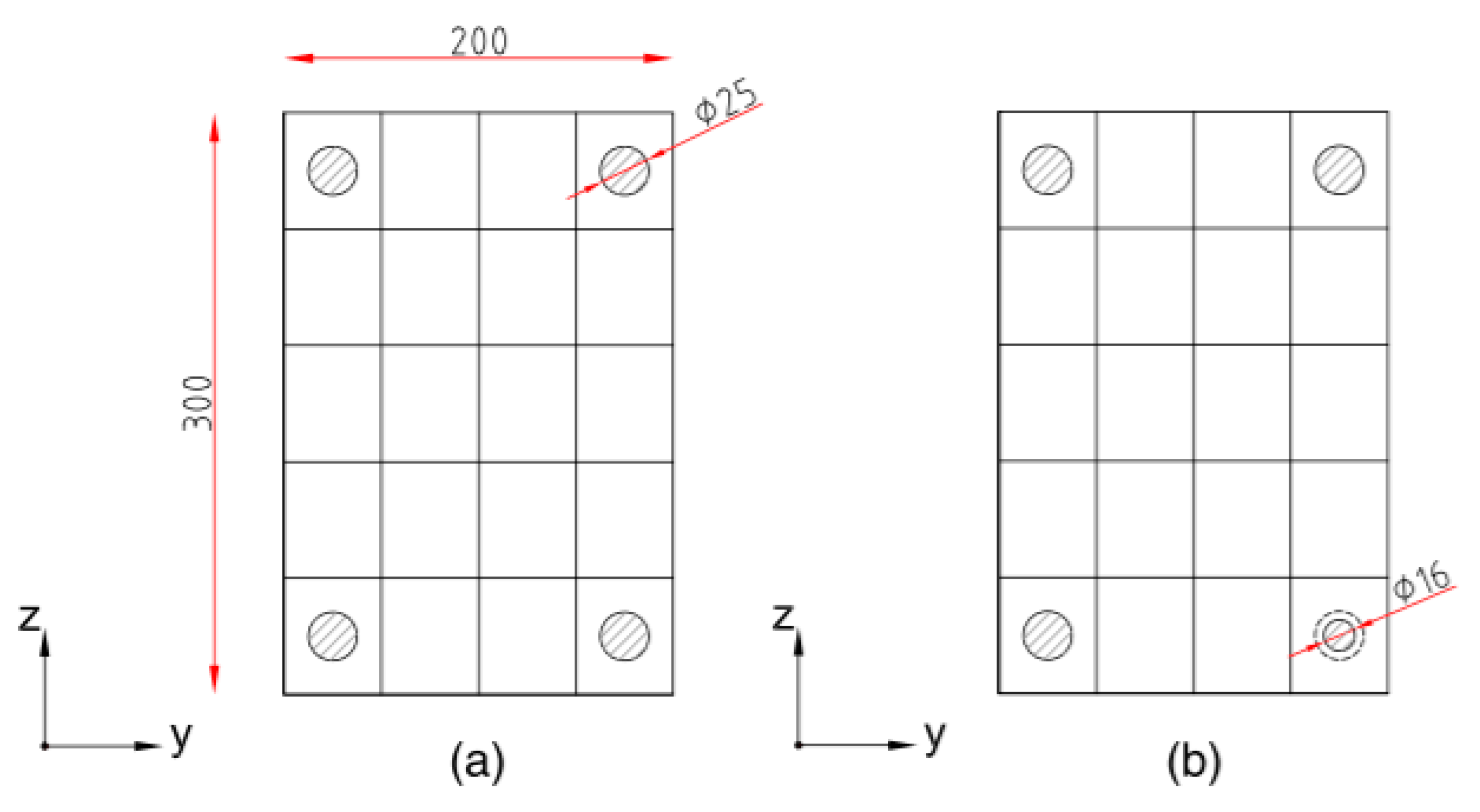
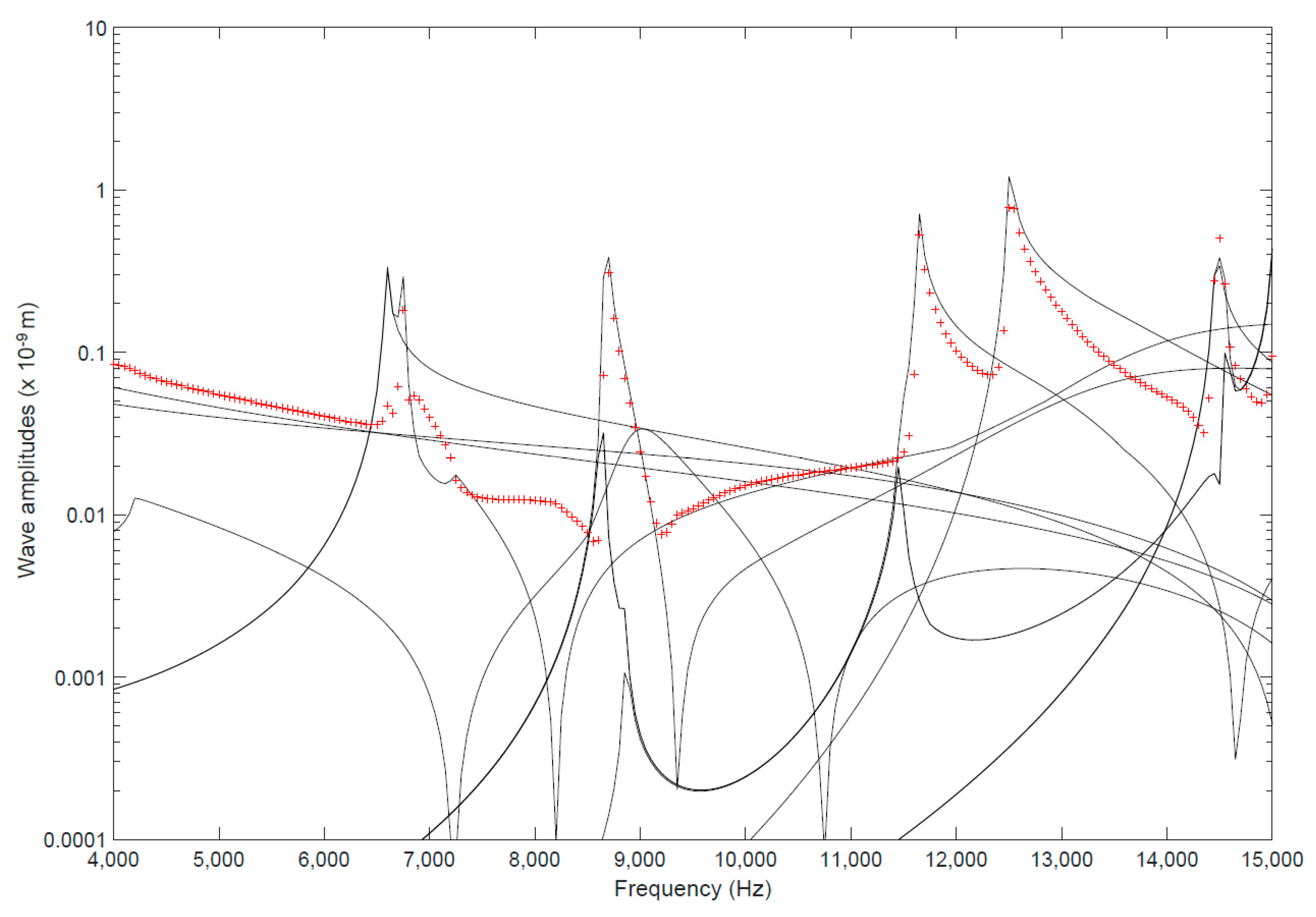
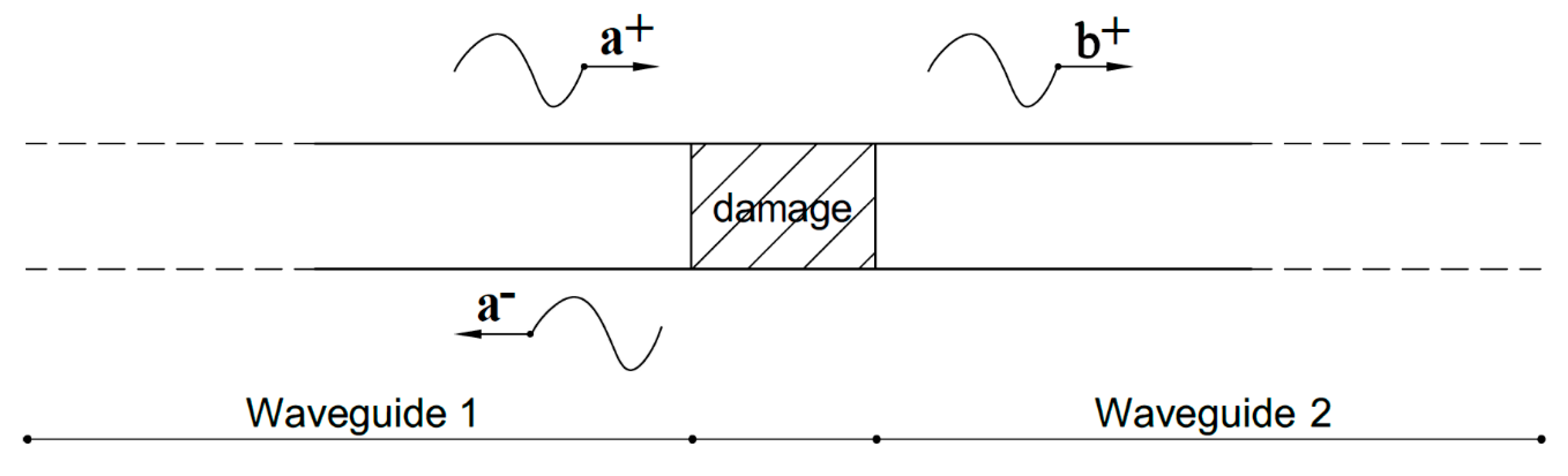
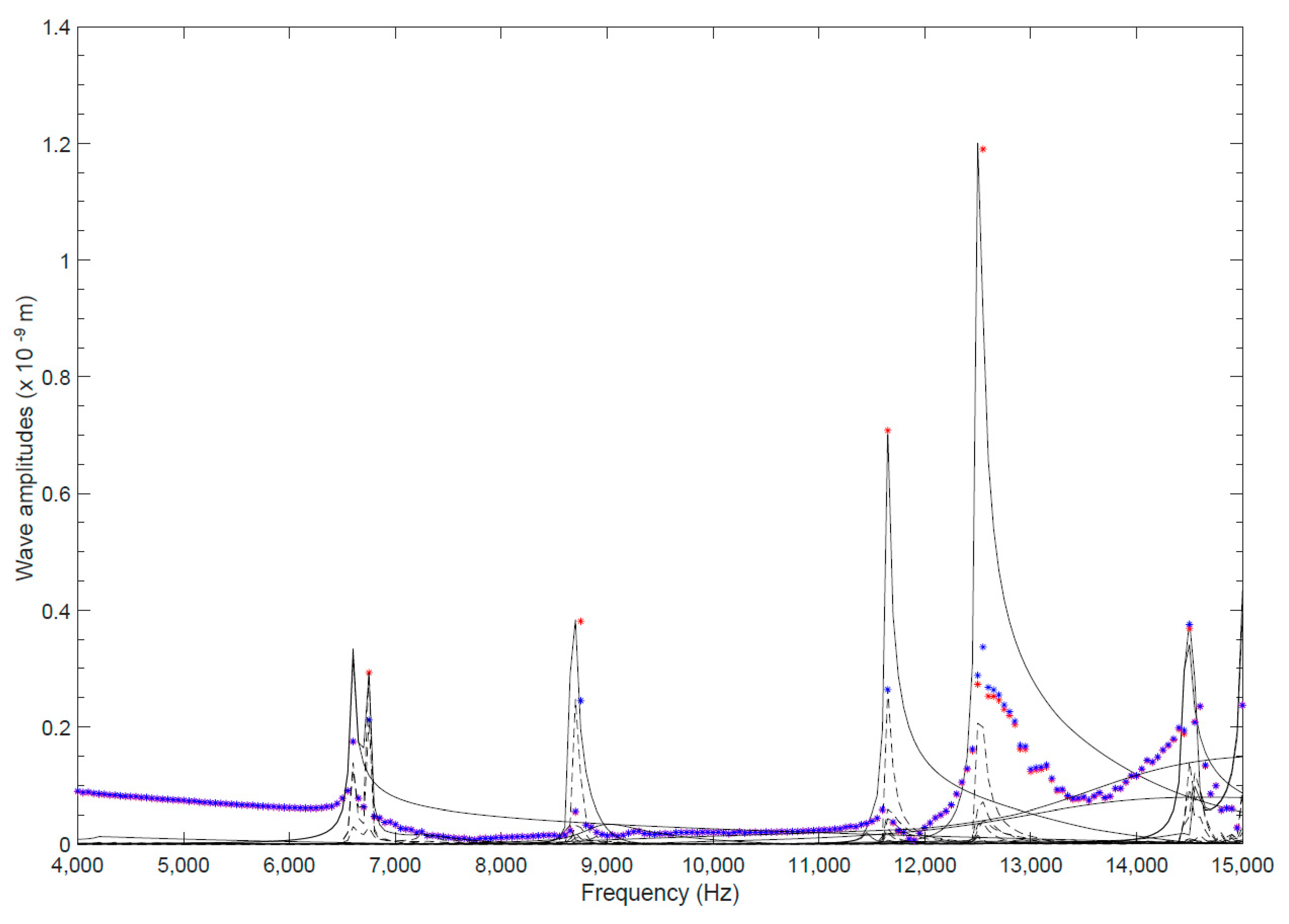
Steel reinforcement bars (rebars) in concrete structures are inaccessible and not conducive to many inspection methods. This paper proposes a non-invasive technique based on guided waves for detecting localised abnormalities in rebars embedded in concrete beams. The technique is predicated on previously published observations that guided waves are strongly reflected by discontinuities at the frequency at which they begin to propagate, i.e., at cut-on. The reflection coefficient at cut-on is estimated using a simple wave decomposition in which a near-zero wavenumber value is assumed. A simulated study is first carried out to evaluate the technique on a concrete beam featuring four rebars. The wave finite element approach is adopted to model two uniform beams which are coupled via a short, damaged section modelled in conventional finite element analysis. Estimated reflection coefficients arising from the discontinuity are close to the true values at cut-on and independent of frequency elsewhere, so that no prior knowledge of cut-on frequencies is required. Three steel-reinforced concrete beams were fabricated—one uniform and two with localised rebar damage—and reflection coefficients were estimated from measured transfer functions. As predicted, abrupt deviations in the reflection coefficient occurred at cut-on frequencies for both damaged beams.
Keywords: guided waves; reinforced concrete; damage; non-destructive evaluation guided waves; reinforced concrete; damage; non-destructive evaluation