
Passive Fire Prevention Intervention Mechanisms for Timber-Framed Buildings: A Systematic Review (2016–2026)

 ,
,  ,
,  ,
,  ,
,  ,
,  ,
,  and
and 
Abstract
1. Introduction
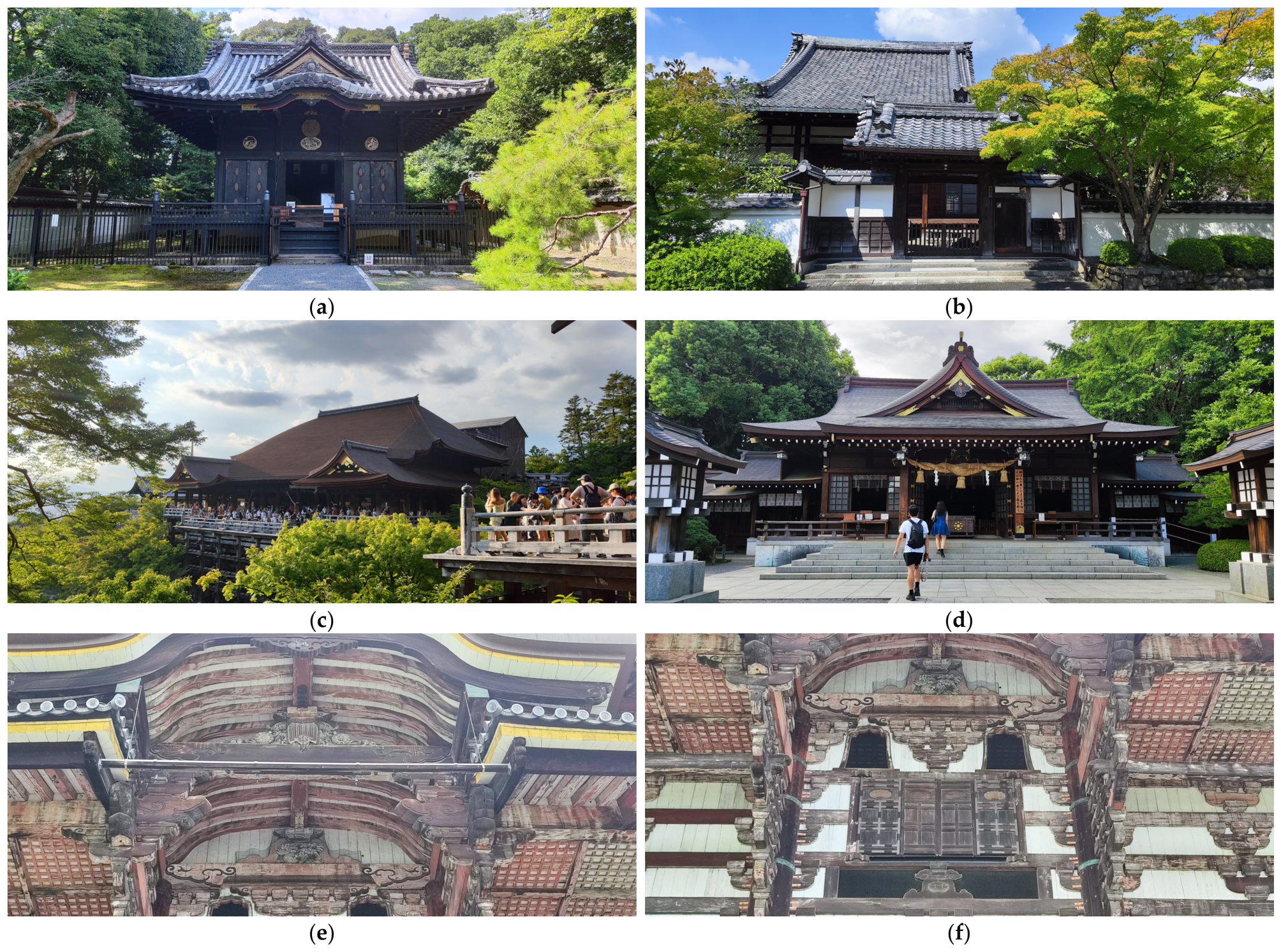
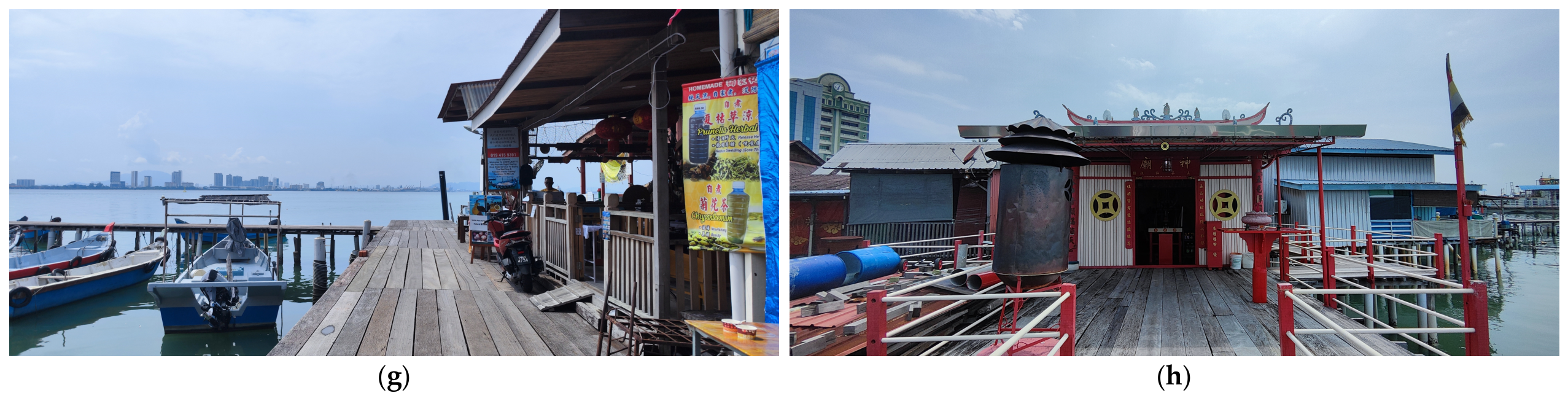
1.1. Research Background
1.2. Research Objectives and Questions
1.2.1. Research Objectives
1.2.2. Core Research Questions
- (1)
- The publication time trend, distribution of core research efforts, hot topic evolution, and frontier development patterns in the field of passive fire prevention for timber-framed buildings.
- (2)
- What are the different categories of core intervention mechanisms for passive fire prevention in timber-framed buildings, and what are the core working principles of each mechanism?
- (3)
- What are the actual fire prevention application effects, advantages, disadvantages, and engineering application scenarios of different passive fire prevention intervention mechanisms?
- (4)
- What are the current limitations of passive fire protection research on timber structures in terms of methodology and engineering application? What are the core research gaps and key development directions for the future?
1.2.3. Research Scope and Boundaries
2. Literature Review
2.1. Fire Risk and Basic Characteristics of Timber Buildings
2.2. Passive Fire Protection Technology and Design Applications for Timber Buildings
2.3. Limitations of Existing Review Studies
3. Materials and Methods
3.1. Research Design
3.2. Database Selection and Search Strategy
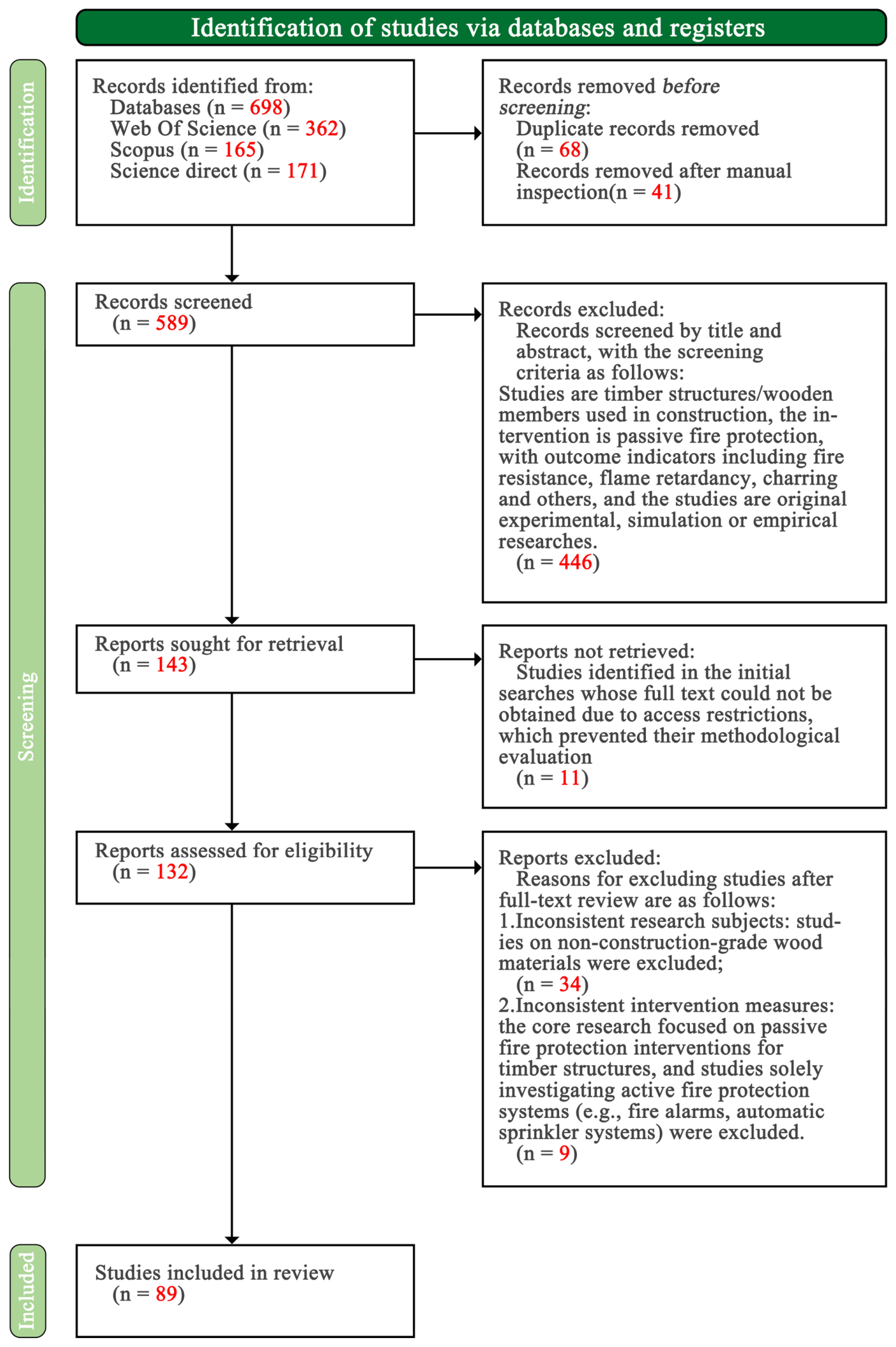
3.3. Inclusion and Exclusion Criteria
- (1)
- The literature type was original academic papers published in peer-reviewed journals;
- (2)
- The research object was timber structures or wooden components used in building engineering;
- (3)
- The core intervention was passive fire protection of timber structures, and the outcome indicators included core parameters related to passive fire protection such as fire resistance, flame retardancy, and charring behavior.
- (4)
- The research type was original experimental research, numerical simulation research, or empirical research;
- (5)
- The language of publication was English.
- (1)
- Duplicate publications;
- (2)
- Non-academic literature, including conference papers, editorials, book reviews, industry reports, patent documents, etc.;
- (3)
- Research subjects that do not match the themes, such as research on non-building wood materials;
- (4)
- Intervention measures that do not match the theme, such as research only on active fire protection systems (fire alarm systems, automatic sprinkler systems, etc.);
- (5)
- Literature not directly related to the core theme of passive fire prevention intervention for timber buildings;
- (6)
- Literature for which the full text was unobtainable or for which methodological and content assessments were infeasible.
3.4. Data Extraction and Analysis Process
4. Results
4.1. Bibliometric Analysis
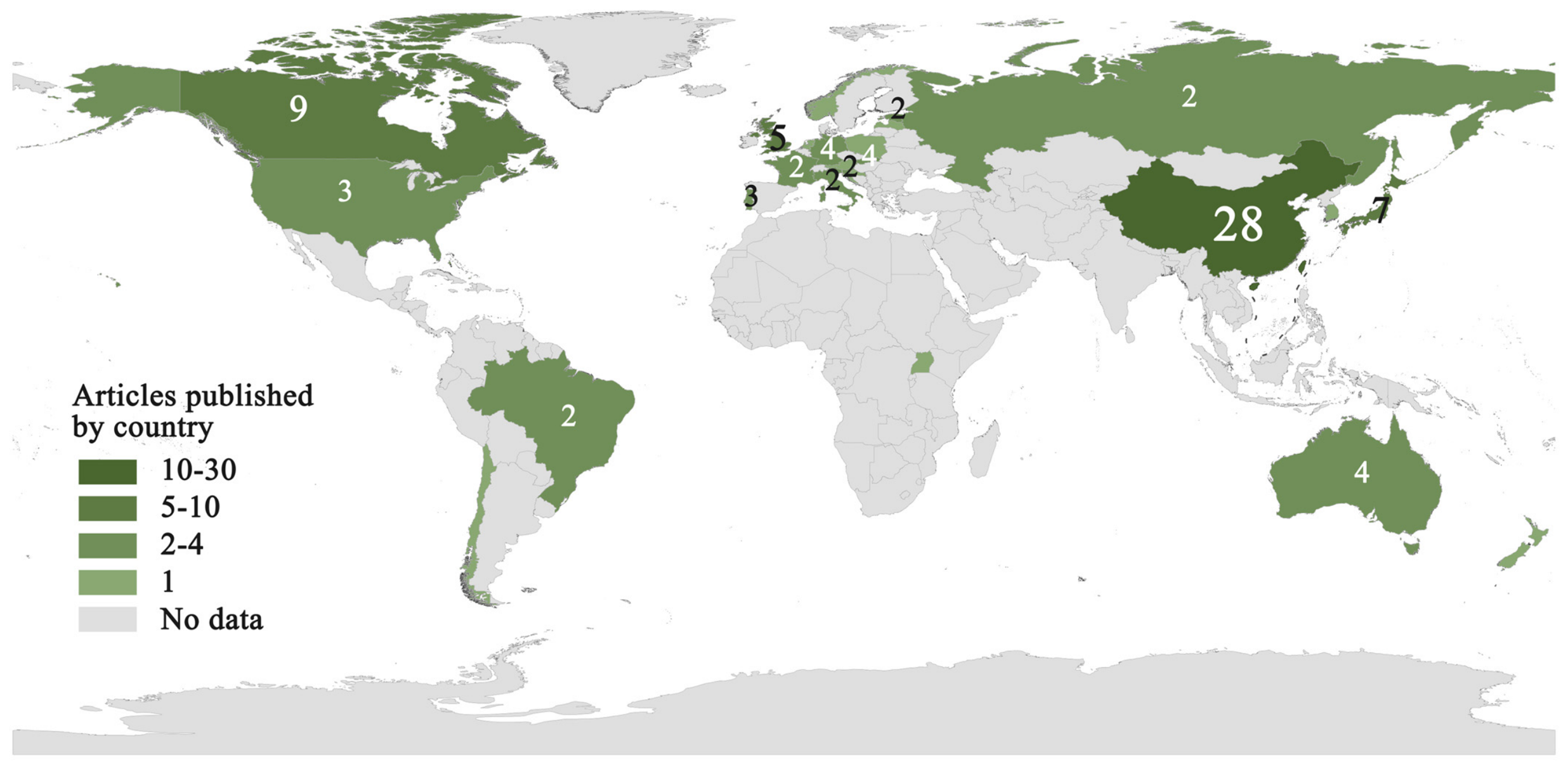
4.1.1. Number of Publications and Geographical Distribution
4.1.2. Publishers and Journals
4.1.3. Authors and Citations
4.2. Keyword Analysis
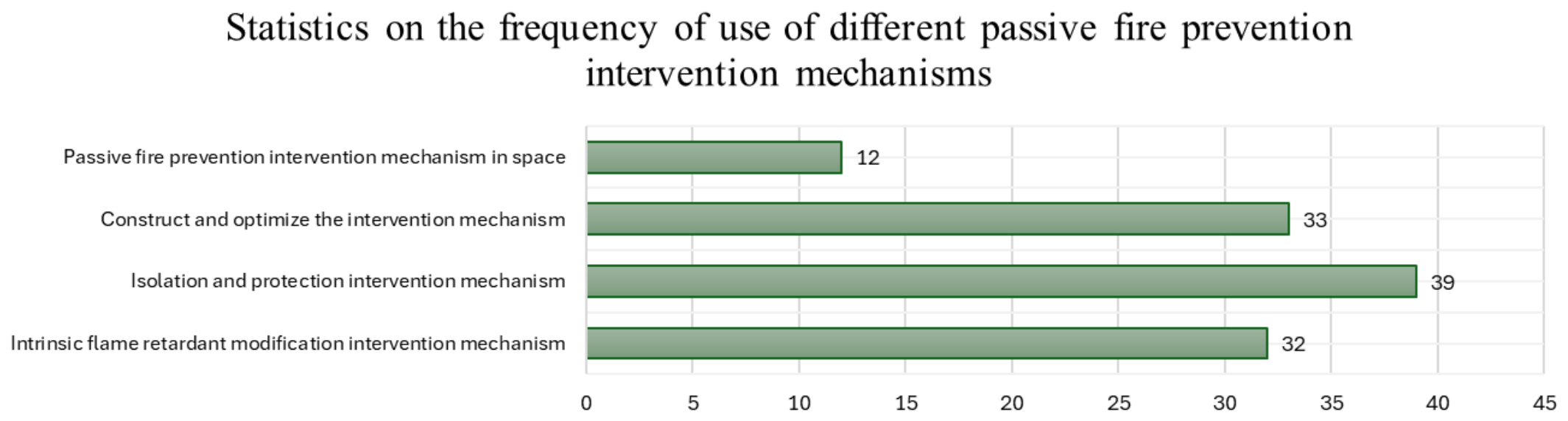
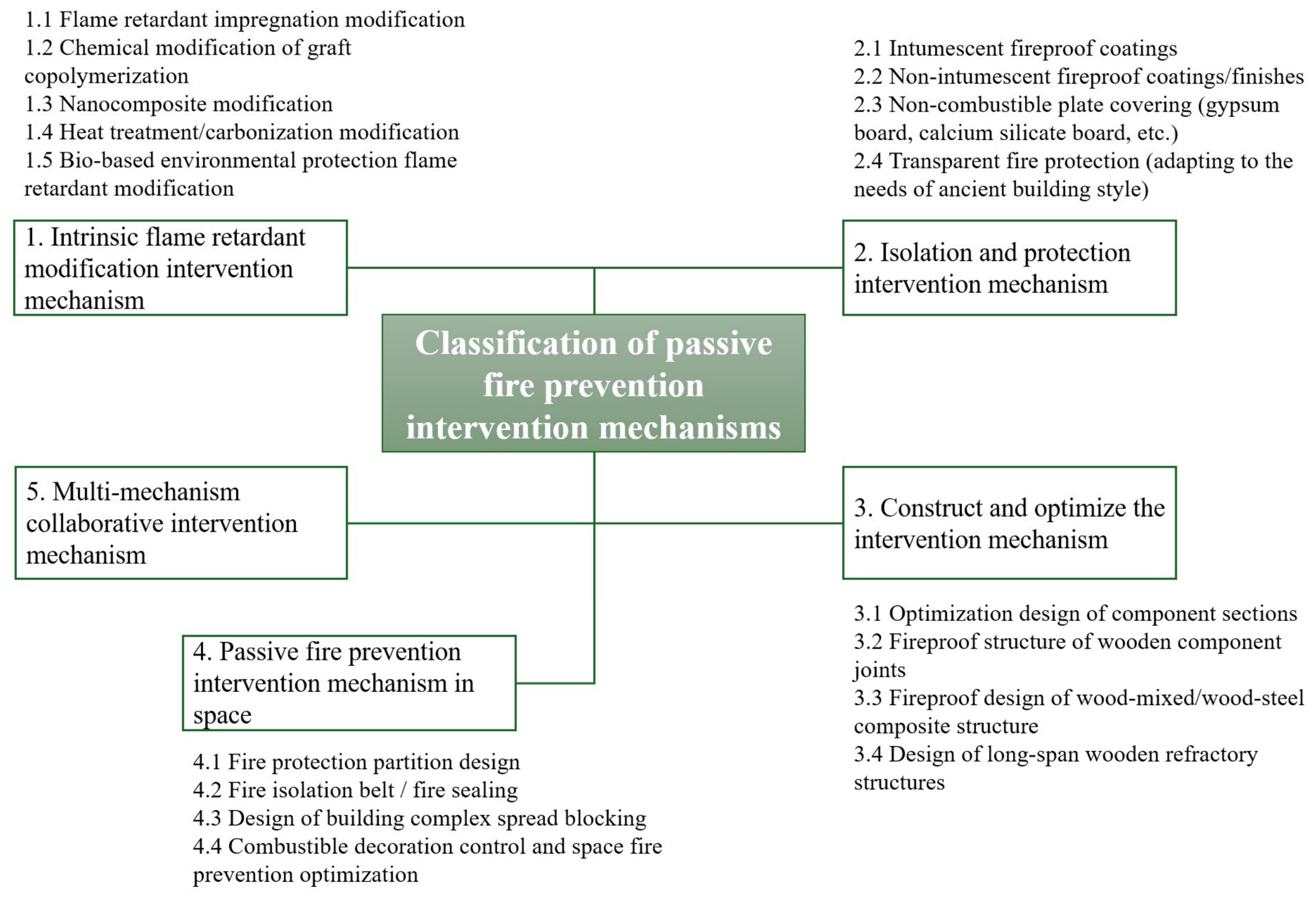
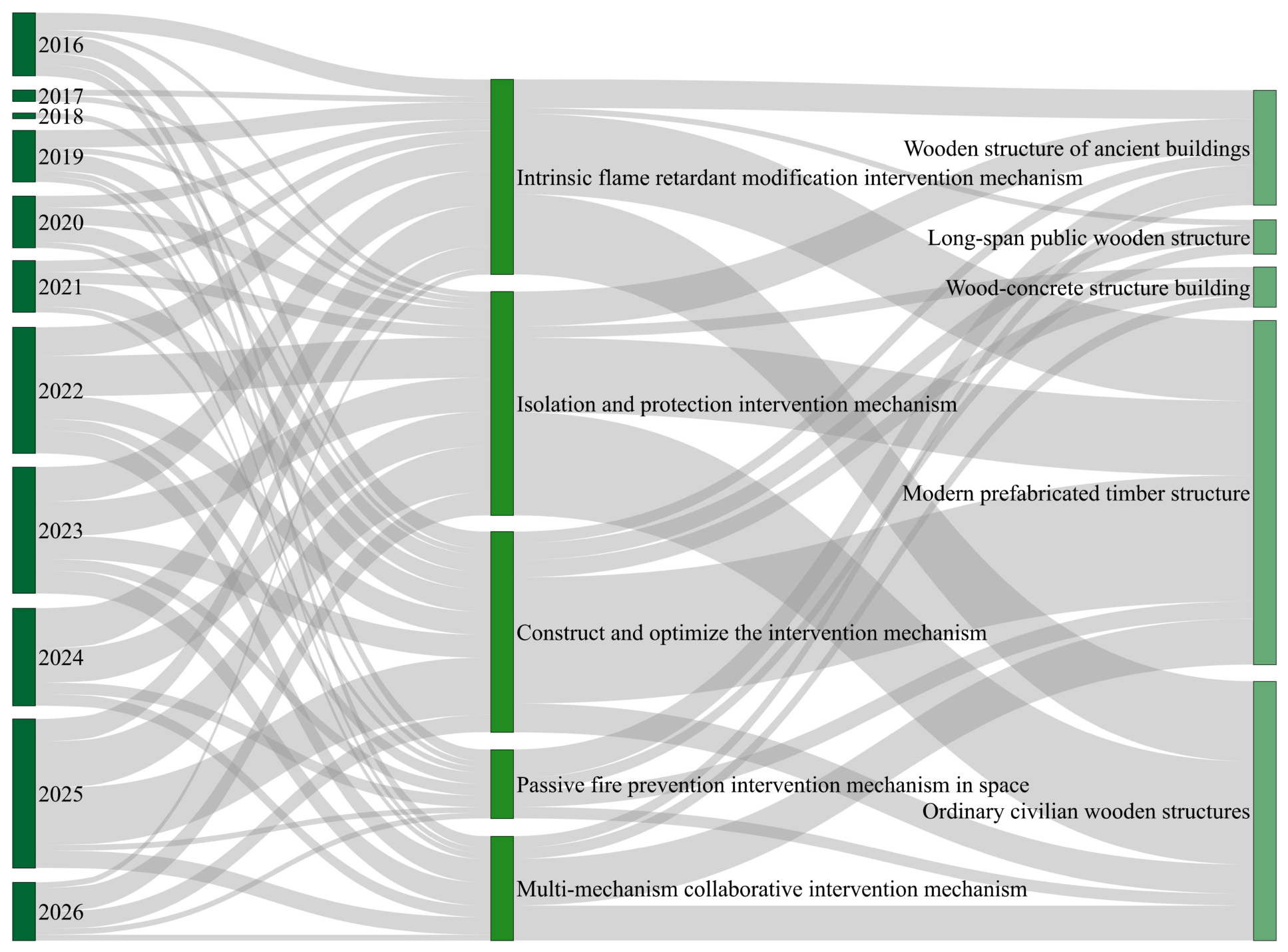
4.3. Classification and Mechanism of Core Intervention Mechanisms for Passive Fire Protection in Timber Buildings
4.4. Comparison of Application Effects, Advantages, and Disadvantages of Different Passive Fire Prevention Intervention Mechanisms
5. Discussion
5.1. Interpretation of Key Findings
5.2. Comparison with Previous Related Studies
5.3. Engineering Application Adaptability and Practical Implications of Different Passive Fire Intervention Mechanisms
5.4. Prescriptive-Based and Performance-Based Fire Safety Paradigms and Their Linkages with the Established Passive Fire Intervention System of the Present Study
5.4.1. Core Definition and Characteristic Differences of Prescriptive-Based and Performance-Based Fire Safety Paradigms
5.4.2. Correlation Between Four Passive Fire Intervention Categories and Dual Design Paradigms
- (1)
- Intrinsic flame-retardant modification mechanism: Mature bio-based modification formulas (e.g., chitosan-supramolecular adhesive modified wood) with stable test indicators can be summarized into prescriptive specification parameters and incorporated into code clauses [34], while modification schemes targeting naturally aged or biologically degraded Chinese fir and Masson pine require a customized formulation design according to material aging degrees, which belongs to typical performance-based technical application [28,29].
- (2)
- Isolation and protection mechanism: Conventional gypsum board cladding and ordinary intumescent coatings with mature application data have formed standardized construction requirements applicable to prescriptive design; transparent ceramizable nano-coatings and MXene intelligent warning coatings, which prioritize ancient building texture protection without unified code specifications, rely on cone calorimeter and full-scale fire test data for performance-oriented selection [35,73].
- (3)
- Structural optimization mechanism: Standardized reserved sacrificial charring cross-section of glulam beams is compatible with prescriptive design; regional traditional fire-resistant structures such as Chinese brick gable walls and horse-head walls lack unified international code values, whose fire resistance effects need quantitative verification via FDS simulation to realize performance-based structural optimization [39].
- (4)
- Spatial passive fire control mechanism: Fixed building separation distances specified in various national codes serve as a prescriptive design basis; for mountainous clustered wooden settlements affected by terrain gradient and wind field, the safe fire separation distance must be recalculated via fire dynamic simulation to achieve performance-based settlement layout planning [81,82].
5.5. Limitation Analysis
5.6. Future Research Directions and Application Gaps
6. Conclusions
- (a)
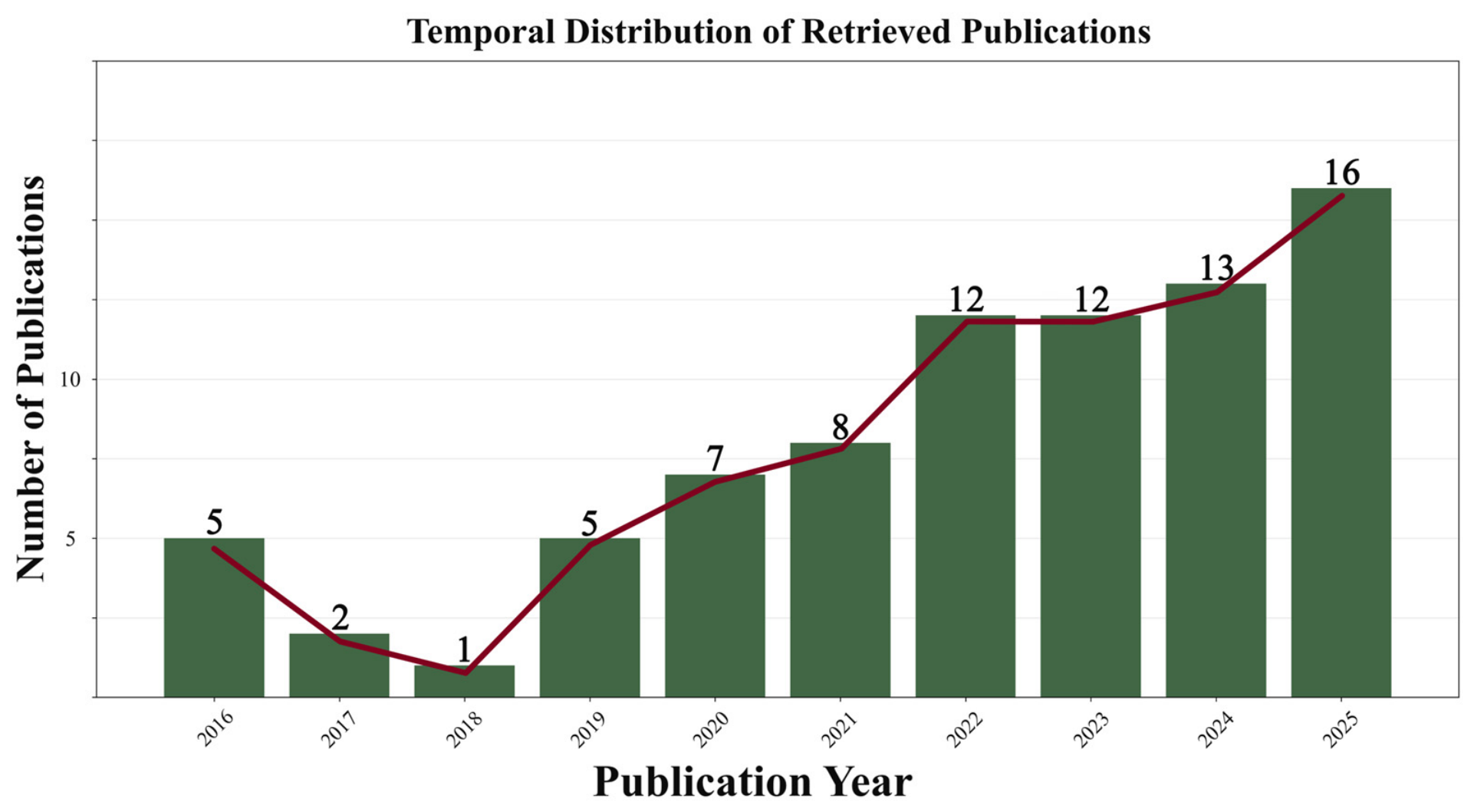
- The overall number of publications in this field showed a continuous upward trend from 2016 to 2025, with China ranking first globally with a publication share of 31.46%.
- (b)
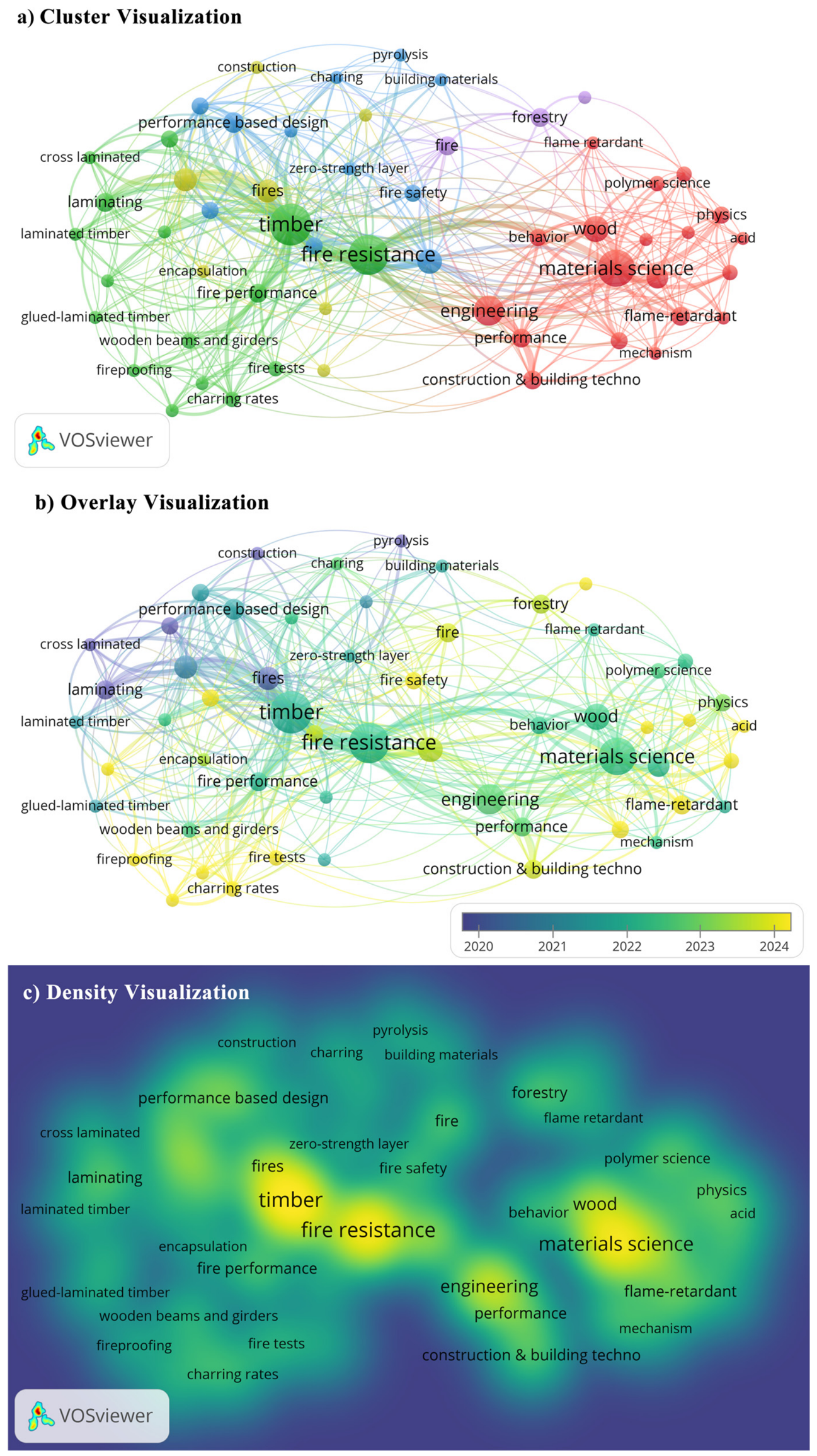
- The research pattern, hotspot evolution, and cutting-edge development directions of this field were identified, centering on the fire resistance performance of wood and encompassing three major thematic clusters: engineering applications, basic theory, and material intervention.
- (c)
- This systematic review constructed a core system for intervention mechanisms in passive fire prevention for timber-framed buildings, covering four categories: intrinsic flame-retardant modification, isolation and protection, structural optimization, and spatial control. It comprehensively analyzed the working principles, application effects, core advantages and disadvantages, and engineering adaptation scenarios of each mechanism.
Author Contributions
Funding
Institutional Review Board Statement
Informed Consent Statement
Data Availability Statement
Conflicts of Interest
Appendix A. Literature Search Formulas for the Three Platforms
References
- Hildebrandt, J.; Hagemann, N.; Thrän, D. The contribution of wood-based construction materials for leveraging a low carbon building sector in Europe. Sustain. Cities Soc. 2017, 34, 405–418. [Google Scholar] [CrossRef] [Scilit]
- Steinhardt, N.S. The Tang Architectural Icon and the Politics of Chinese Architectural History. Art Bull. 2004, 86, 228–254. [Google Scholar] [CrossRef] [Scilit]
- Yamato, S. The Tradition of Wooden Architecture in Japan; Agency for Cultural Affairs: Kyoto, Japan, 2006; Volume 25. [Google Scholar]
- Wang, H.-F.; Chiou, S.-C. Research on the Sustainable Development of Traditional Dwellings. Sustainability 2019, 11, 5333. [Google Scholar] [CrossRef] [Scilit]
- Song, Y.; Liao, C. Structural Materials, Ventilation Design and Architectural Art of Traditional Buildings in Guangdong, China. Buildings 2022, 12, 900. [Google Scholar] [CrossRef] [Scilit]
- Li, W.-F. Strategies for the Inheritance and Innovation of Rural Wooden Architecture Space. Shanxi Archit. 2026, 52, 37–40. (In Chinese) [Google Scholar] [CrossRef]
- Lin, K.-X.; Lin, Z.; Huang, H.; Wang, Y. Innovative Application of Foamed Ceramics in Dong Ethnic Wooden Architecture. China Ceram. Ind. 2026, 33, 20–24. (In Chinese) [Google Scholar] [CrossRef]
- Han, S.-Z. Research on Strategies for Improving the Living Quality of Wooden Dwellings in Sanjiang, Guangxi from the Perspective of Inheritance of Traditional Building Techniques. Comp. Stud. Cult. Innov. 2025, 9, 74–78. (In Chinese) [Google Scholar]
- Liu, Y.-J. A Study on the Green Performance Evaluation System of Timber Structure Buildings Based on Full Life Cycle Carbon Emissions. Master’s Thesis, Jinan University, Guangzhou, China, 2025. (In Chinese) [Google Scholar] [CrossRef]
- Liu, S.-M. Research on the Landscape Application of Modern Timber Structure Buildings Under the Background of Rural Tourism. Master’s Thesis, Anhui Agricultural University, Hefei, China, 2025. (In Chinese) [Google Scholar] [CrossRef]
- Zhong, Y.-Z. Simulation Analysis and Fire Prevention Strategies for Traditional Wooden Houses in Mountainous Areas of Guangxi. Master’s Thesis, Guangxi Arts University, Nanning, China, 2025. (In Chinese) [Google Scholar] [CrossRef]
- Qiu, Z.; Gao, M.-M.; Wang, Z.; Wang, S.-C.; Hua, Y. Causes and prevention strategies of fires in traditional wooden houses under the coupling of “behavior-space”. New Archit. 2025, 1, 101–105. (In Chinese) [Google Scholar]
- Shi, C. Simulation and Optimization Measures for Fires in Traditional Multi-Type Wooden Buildings of Dong Ethnic Group in Western Hunan. Master’s Thesis, Central South University, Changsha, China, 2022. (In Chinese) [Google Scholar] [CrossRef]
- Guo, H.-Y. On the Dilemma of Modern Inheritance of Traditional Chinese Wooden Architecture. New Archit. 2023, 6, 76–81. (In Chinese) [Google Scholar]
- Jiang, H.L.; Teng, J.; Wang, D.; Zhou, L.; Chen, Y.R. Numerical Investigation of the Wan’an Bridge Fire and the Protection Effect of Intumescent Flame-Retardant Coatings. Fire 2025, 8, 184. [Google Scholar] [CrossRef] [Scilit]
- Ye, Y.-B.; Zhang, Y.-P.; Zhai, Y.-Y. Thoughts on fire prevention and renovation strategies for traditional wooden dwellings of the Dong ethnic group in Guangxi. Herit. Prot. Res. 2018, 3, 1–3. (In Chinese) [Google Scholar] [CrossRef]
- Feng, R.-D.; Gao, Y.; Ji, L. New fire prevention planning and design for traditional wooden ancient buildings in Jinggang Ancient Town, Changsha. Hunan Packag. 2022, 37, 163–167. (In Chinese) [Google Scholar] [CrossRef]
- Rui, T.; Shu, Y.; Zhanyu, F.; Zhi, L. Fire prevention wisdom and renewal strategies for traditional wooden buildings in southeastern Yunnan—Taking Chaoyang Tower in Jianshui as an example. Archit. Cult. 2021, 7, 97–99. (In Chinese) [Google Scholar] [CrossRef]
- Wang, S.-R. Protection for the people—A preliminary discussion on practical protection techniques for Dong ethnic wooden architectural heritage. Archit. Cult. 2022, 12, 199–202. (In Chinese) [Google Scholar] [CrossRef]
- Huč, S.; Pečenko, R.; Hozjan, T. Predicting the thickness of zero-strength layer in timber beam exposed to parametric fires. Eng. Struct. 2021, 229, 111608. [Google Scholar] [CrossRef] [Scilit]
- He, Z.-R. Study on Fire Resistance Improvement of Traditional Wooden Houses of Tujia Ethnic Group in Xiangxi Under Numerical Simulation. Master’s Thesis, Central South University, Changsha, China, 2024. (In Chinese) [Google Scholar] [CrossRef]
- Hua, B. Study on Fire Spread Law of Traditional Houses in Huizhou Based on FDS Simulation. Master’s Thesis, Anhui University of Architecture, Hefei, China, 2024. (In Chinese) [Google Scholar] [CrossRef]
- Guan, X.; Xie, L.; Guo, E.P.; Chen, Y.X. Fire Prevention in Traditional Dwellings of Southern Hunan: A Case Study of Zhoujia Compound. Fire 2025, 8, 416. [Google Scholar] [CrossRef] [Scilit]
- Liao, D.Y.; Zhuo, X.L.; Tao, J. A dynamic fire risk assessment method for compact historic villages based on the improved FRAME. Int. J. Disaster Risk Reduct. 2024, 114, 104935. [Google Scholar] [CrossRef] [Scilit]
- Li, M.; Hasemi, Y.; Tanaka, W.; Nozoe, Y.; Nagasawa, M. A Fire Prevention Measure for Disaster Prevention Planning Based on Resident Conditions and Community Characteristics in Preserved Historic Districts/Village in Japan. Int. J. Archit. Herit. 2025, 19, 194–215. [Google Scholar] [CrossRef] [Scilit]
- Ji, J.; Hu, H.W.; Qi, Z.Y. Ignition, combustion, and flame spread in wooden heritage building fires. Fire Saf. J. 2026, 163, 104784. [Google Scholar] [CrossRef] [Scilit]
- Long, M.T.; Yi, L.; Yan, L.; Xu, Z.S.; Zheng, J.X. Comparative analysis of microstructure, combustion characteristics and mechanical properties of Pinus massoniana lamb. under natural aging conditions. Therm. Sci. Eng. Prog. 2024, 48, 102425. [Google Scholar] [CrossRef] [Scilit]
- Zhao, J.Y.; Lu, S.P.; Song, J.J.; Ming, H.Q.; Xing, K.X.; Chen, X.K.; Shu, C.M. The evolution law of combustion characteristic parameters of Chinese fir with the degree of biological aging. J. Therm. Anal. Calorim. 2025, 151, 4749–4762. [Google Scholar] [CrossRef] [Scilit]
- Liu, H.; Li, M.; Jiang, L.; Xu, Q. Experimental and theoretical study on ignition and combustion characteristics of aging woods by cone calorimetry. J. Therm. Anal. Calorim. 2023, 148, 10573–10582. [Google Scholar] [CrossRef] [Scilit]
- Vural, T.; Erbas, M.; Ketenci, H. A forensic disciplinary investigation of deaths caused by traditional wooden house fires; A 10-year autopsy study in Turkey. Med. Sci. Law 2026. ahead of print. [Google Scholar] [CrossRef] [Scilit] [PubMed]
- Zeng, F.Z. Research on Fire Spread Simulation and Fire Safety Performance Improvement in Traditional Commercial Towns in Western Hunan. Master’s Thesis, Central South University, Changsha, China, 2022. (In Chinese) [Google Scholar] [CrossRef]
- Sheng, G. A Comparative Study on the Architectural Characteristics of Traditional Ancestral Halls in Central and Southern Anhui. Master’s Thesis, Anhui University of Architecture, Hefei, China, 2025. [Google Scholar] [CrossRef]
- Zhang, C.-J. A Study on the Development of Wooden Dwellings in Wuchuan Gelao and Miao Autonomous County, Wuling Mountain Area. Master’s Thesis, Central Academy of Fine Arts, Beijing, China, 2019. Available online: https://kns.cnki.net/kcms2/article/abstract?v=H8HwaL3t0AsrAqBHLbGz6rFZkfQNDUZrCiR0Eox8JrVp_qNe-WtZz5GsPDSuTzpST0jVUmHWf3SHjkGAxqRGv6jqKffPpOdK_CSt3ekRV-meyI61FgKRvfTIt_BxWx3HEnfiJ27KzUQO2E95QQMpOy-QLQbPiXwaZ4Khtvq6i2x3In5tCX7aqw==&uniplatform=NZKPT&language=CHS (accessed on 7 May 2026). (In Chinese)
- Huang, Y.F.; Yang, Y.H.; He, D.; Liu, L.; Wang, P.; Bi, W.; Kan, Z.Q.; Xu, K.M.; Du, G.B.; Zhang, L.P. Supramolecular self-assembly for synthesis of novel chitosan-based adhesive in wood composites so as to improve waterproofing and flame retardancy. Int. J. Biol. Macromol. 2025, 284, 138121. [Google Scholar] [CrossRef] [Scilit] [PubMed]
- Wang, Y.J.; Guo, B.F.; Lv, L.Y.; Cao, C.F.; Lv, P.Y.; Li, Y.; Zhang, G.D.; Gao, J.F.; Song, P.G.; Cao, K.; et al. Thermally induced cyclic resistance transition of a transparent and flame-retardant layered oxidized MXene composite nanocoating for remote-sync fire monitoring. J. Mater. Chem. A 2025, 13, 14. [Google Scholar] [CrossRef] [Scilit]
- Lan, Z.-Y. Research on the Fire Resistance Performance of Fire-Resistant Structures in Traditional Chinese Buildings. Master’s Thesis, Southeast University, Nanjing, China, 2021. (In Chinese) [Google Scholar] [CrossRef]
- Kátai-Urbán, L.; Cimer, Z.; Lublóy, E.E. Examination of the Fire Resistance of Construction Materials from Beams in Chemical Warehouses Dealing with Flammable Dangerous Substances. Fire 2023, 6, 293. [Google Scholar] [CrossRef] [Scilit]
- Zhu, Z.-N. Research on Construction and Joint Design of Modern Wooden Buildings. Master’s Thesis, Xi’an University of Architecture and Technology, Xi’an, China, 2019. (In Chinese) [Google Scholar] [CrossRef]
- Xu, Z.-G. Research on the Deterioration Mechanism and Health Monitoring Method of Wooden Buildings in Western Hunan. Master’s Thesis, Hunan University, Changsha, China, 2023. (In Chinese) [Google Scholar] [CrossRef]
- Zhang, Y.-K. Research on Energy-Saving Design of Prefabricated Wooden Housing Envelope System in Cold Regions. Master’s Thesis, Tianjin University, Tianjin, China, 2023. (In Chinese) [Google Scholar] [CrossRef]
- Zhang, W.-X. Construction and Expression of the External Envelope of Modern Wooden Buildings. Master’s Thesis, Nanjing University, Nanjing, China, 2021. (In Chinese) [Google Scholar] [CrossRef]
- Yang, S.-L. Development and Evolution of Wooden Skin and Its Design Research in Small and Medium-Sized Buildings. Master’s Thesis, North China University of Technology (NCUT), Beijing, China, 2023. Available online: https://oversea.cnki.net/kcms2/article/abstract?v=nTS8fe6ew4pksUqFhF2bhkugjZw3L_WOQfYniUNywMJrdE4BqyW8yI60UMg-4QAICwcHpR3_IcjZYUFE5fAIpfLwA3ac3nGrXwignno2IyqveWQB7bgNcTBHuUPdtv7IqRav5n5TtqZgIT3r54H1M6YqxwcDFGAJaf6ZL4GSh43Hn8RQc8-l_zY3OXMu4fwG&uniplatform=OVERSEA&language=CHS (accessed on 7 May 2026). (In Chinese)
- Tang, S. Research on the Appropriate Technology Strategies for the Renovation of Dwellings in the Southern Dong Region of Guizhou—Taking Dimeng Village as an Example. Master’s Thesis, Beijing University of Civil Engineering and Architecture, Beijing, China, 2023. Available online: https://oversea.cnki.net/kcms2/article/abstract?v=nTS8fe6ew4ooWqPokSPY0lvB7hu4RzT83pgNqV0MgRjo9JZql0u_p5wMccRSlqDhHO9YmWANwmrYMkzDNbwdUSaIz9Mflehs0dRiLgAh8Y1u5qLf-1sOc1DbCVg2X5Mpw5uQkrgwc0P2TIMLfugkdEdfKXaXTqdwwQPH6SwxckdsMTXcKYvTszrQnuUBM5pV&uniplatform=OVERSEA&language=CHS (accessed on 7 May 2026). (In Chinese)
- Qin, Y. Study on Simulation and Optimization Measures of Fire Spread in Kitchen of Traditional Wooden Houses in Xiangxi. Master’s Thesis, Central South University, Changsha, China, 2024. (In Chinese) [Google Scholar] [CrossRef]
- Deng, Z. Research on the Modernization Renovation of Kitchens in Traditional Dwellings of the Tujia Ethnic Group in Western Hunan. Master’s Thesis, Hunan University, Changsha, China, 2022. Available online: https://oversea.cnki.net/kcms2/article/abstract?v=nTS8fe6ew4o48VF-e8mQJNxTYmYD0cgSyi-mxO__zda0Dt_C45ZU4T76fRpiEm7ukezYCst-FDw_s8MGNRlBFTavhgyHcnyHimR5NQMp-Z0v3VYHej4QbpsJVlKXFfmvy3aRTGmaiCTJmHnKE1oDlTj6HvT1CbhSNooX_zp9k68D1r9KZlgSjDzy2xVAIAIC&uniplatform=OVERSEA&language=CHS (accessed on 7 May 2026). (In Chinese)
- Lei, F. Research on the Homestay Renovation Design of Traditional Wooden Dwellings of the Miao Ethnic Group in Western Hunan. Master’s Thesis, Hunan University of Science and Technology, Xiangtan, China, 2024. (In Chinese) [Google Scholar] [CrossRef]
- Xu, L.; Ren, M.Y.; Liu, J.P.; Li, X.; Zou, D.L. Research on Fire Spread and Prevention in Wooden Clusters with a Directed Graph Model. Fire Technol. 2025, 61, 5461–5487. [Google Scholar] [CrossRef] [Scilit]
- Chi, Z. An Empirical Study on Traditional Fire Prevention Strategies in Ancient Villages in Western Hunan Based on FDS. Master’s Thesis, Central South University, Changsha, China, 2022. Available online: https://oversea.cnki.net/kcms2/article/abstract?v=nTS8fe6ew4p2-Id-BibjTGYe5Pso6R8voMi9uiiNn9CIF5Mhl6LI_FO_tDtzSSfw4Fb5wFoC8hcqm60-OVsEw3UhGTXynR5v-lHN6YUB_ii4Fqpa9NdKzD8UYjWaF5PYNRtOkkSHwijFeZNPradU1RKY7CylRui7T7DgOqTu_yO90rgSsG0oGxtCJnoQUhiu&uniplatform=OVERSEA&language=CHS (accessed on 7 May 2026). (In Chinese)
- Xing, Z. Research on Fire Safety Optimization of Historical Towns in Sichuan and Chongqing. Master’s Thesis, Chongqing University, Chongqing, China, 2021. (In Chinese) [Google Scholar] [CrossRef]
- Wang, Y. A Study on the Correlation between Security Defense and Spatial Morphology of Traditional Villages in Huizhou. Doctoral Dissertation, Hefei University of Technology, Hefei, China, 2017. Available online: https://kns.cnki.net/kcms2/article/abstract?v=H8HwaL3t0AsZE3rjZHJopuvTg0uIUqHnA9s6TYMV6EKxZnEB0NmYqm1AoQUo0lciNqWKGNMxcnd4P82eo3cBn4iNU9e2IMx1OHo3KkBWLx35ViJmYzqDwvjMrOFC-0mVLPAs4UJgvftUPXDc7wUANLMu3VRdGOww4mUcNy3ppfPGE4O-h47xfLFxTCCMG7h7&uniplatform=NZKPT&language=CHS (accessed on 7 May 2026). (In Chinese)
- Zhang, S.-K. Analysis of Fire Prevention Measures for the Ancient Wooden Building Complex in Wudang Mountain. Master’s Thesis, Huazhong University of Science and Technology, Wuhan, China, 2021. (In Chinese) [Google Scholar] [CrossRef]
- Xu, H. Research on Organic Disaster Prevention Spatial Pattern of Tujia Traditional Villages in Southwest Hubei. Master’s Thesis, Southwest University of Science and Technology, Mianyang, China, 2021. (In Chinese) [Google Scholar] [CrossRef]
- Han, X.F. Research on Fire Prevention Countermeasures of Dense Traditional Building Areas in Suzhou. Master’s Thesis, Suzhou University of Science and Technology, Suzhou, China, 2022. (In Chinese) [Google Scholar] [CrossRef]
- Yan, L.; Chen, H.; Dand, J.A. High-rise timber buildings: Benchmarks in structural systems, fire safety, prefabrication efficiency and environmental insights of world’s 10 tallest completed mass timber projects. Front. Archit. Res. 2026, in press. [Google Scholar] [CrossRef] [Scilit]
- Wiesner, F.; Xu, H.; Lange, D.; Gupta, V.; Pope, I.; Torero, J.L.; Hidalgo, J.P. Large-scale compartment fires to develop a self-extinction design framework for mass timber-Part 2: Results, analysis and design implications. Fire Saf. J. 2025, 152, 104346. [Google Scholar] [CrossRef] [Scilit]
- Su, J.Z. Fire safety of CLT buildings in Canada. Wood Fiber Sci. 2018, 50, 102–109. [Google Scholar] [CrossRef] [Scilit]
- Hayajneh, S.M.; Naser, J. Fire Spread in Multi-Storey Timber Building, a CFD Study. Fluids 2023, 8, 140. [Google Scholar] [CrossRef] [Scilit]
- Qiu, L.; Tao, Y. Case analysis and development trend research of European high-rise timber structure buildings. Build. Technol. 2022, 53, 285–290. (In Chinese) [Google Scholar]
- Qiu, L. An Exploration of Ultra-Low Energy Prefabricated Timber Buildings in Germany. Build. Technol. 2020, 51, 326–332. (In Chinese) [Google Scholar]
- Ma, Z.W.; Zhang, J.Z.; Maluk, C.; Yu, Y.M.; Seraji, S.M.; Yu, B.; Wang, H.; Song, P.A. A lava-inspired micro/nano-structured ceramifiable organic-inorganic hybrid fire-extinguishing coating. Matter 2022, 5, 911–932. [Google Scholar] [CrossRef] [Scilit]
- Gan, W.T.; Chen, C.J.; Wang, Z.Y.; Pei, Y.; Ping, W.W.; Xiao, S.L.; Dai, J.Q.; Yao, Y.G.; He, S.M.; Zhao, B.H.; et al. Fire-Resistant Structural Material Enabled by an Anisotropic Thermally Conductive Hexagonal Boron Nitride Coating. Adv. Funct. Mater. 2020, 30, 1909196. [Google Scholar] [CrossRef] [Scilit]
- Liu, J.; Yue, K.; Xu, L.; Wu, J.; Chen, Z.; Wang, L.; Liu, W.; Lu, W. Bonding performance of melamine-urea–formaldehyde and phenol-resorcinol–formaldehyde adhesive glulams at elevated temperatures. Int. J. Adhes. Adhes. 2020, 98, 102500. [Google Scholar] [CrossRef] [Scilit]
- Wiesner, F.; Bisby, L.A.; Bartlett, A.I.; Hidalgo, J.P.; Santamaria, S.; Deeny, S.; Hadden, R.M. Structural capacity in fire of laminated timber elements in compartments with exposed timber surfaces. Eng. Struct. 2019, 179, 284–295. [Google Scholar] [CrossRef] [Scilit]
- Crielaard, R.; van de Kuilen, J.-W.; Terwel, K.; Ravenshorst, G.; Steenbakkers, P. Self-extinguishment of cross-laminated timber. Fire Saf. J. 2019, 105, 244–260. [Google Scholar] [CrossRef] [Scilit]
- Xu, Z.S.; Liu, D.L.; Yan, L.; Xie, X.J. Synergistic effect of sepiolite and polyphosphate ester on the fire protection and smoke suppression properties of an amino transparent fire-retardant coating. Prog. Org. Coat. 2020, 141, 105572. [Google Scholar] [CrossRef] [Scilit]
- Zhang, L.; Huang, Y.B.; Sun, P.; Hai, Y.; Jiang, S.H. A self-healing, recyclable, and degradable fire-retardant gelatin-based biogel coating for green buildings. Soft Matter 2021, 17, 5231–5239. [Google Scholar] [CrossRef] [Scilit] [PubMed]
- Qian, J.; Yue, K.; Liu, S.; Lu, D.; Wu, P.; Li, Q. Augmenting bamboo strength and thermal stability for sustainable construction. J. Clean. Prod. 2024, 451, 142073. [Google Scholar] [CrossRef] [Scilit]
- Wang, C.; Huo, S.Q.; Ye, G.F.; Cao, C.F.; Hong, M.; Pan, Y.T.; Song, P.A.; Wang, H.; Wang, T.L.; Liu, Z.T. Tick-inspired, self-healing, and strongly-adhesive coatings with biodegradability and phosphorus-free fire retardancy. J. Mater. Sci. Technol. 2026, 260, 229–240. [Google Scholar] [CrossRef] [Scilit]
- Richter, F.; Kotsovinos, P.; Rackauskaite, E.; Rein, G. Thermal Response of Timber Slabs Exposed to Travelling Fires and Traditional Design Fires. Fire Technol. 2021, 57, 393–414. [Google Scholar] [CrossRef] [Scilit]
- Xu, Z.S.; Zhao, W.J.; Yan, L.; Tang, X.Y.; Feng, Y.W.; Wang, Z.Y. Processing of Pinus sylvestris L. into a heat-insulating, thermally stable, and flame-retarded material by combining the flame-retardant impregnation and densification treatment. Holzforschung 2023, 77, 762–775. [Google Scholar] [CrossRef] [Scilit]
- Wang, X.; Zhang, S.; Wan, Z. Charring rate and temperature distribution of timber in fire: The role of fire-retardant treatments, moisture, and tree species. Structures 2025, 75, 108676. [Google Scholar] [CrossRef] [Scilit]
- Bi, X.Q.; Guan, P.F.; Li, P.; Zhang, Y.; Li, X.G.; Zuo, Y.F. Selecting the Technology of Sodium Silicate Modified Poplar with the Highest Performance by Fuzzy Orthogonal Method. J. Renew. Mater. 2023, 11, 2399–2415. [Google Scholar] [CrossRef] [Scilit]
- Guo, B.F.; He, Y.M.; Chen, Y.M.; Yang, T.C.; Peng, C.H.; Luo, W.A.; Zeng, B.R.; Xu, Y.T.; Dai, L.Z. Layered Double Hydroxide Nanosheets Incorporated Hierarchical Hydrogen Bonding Polymer Networks for Transparent and Fire-Proof Ceramizable Coatings. Nano-Micro Lett. 2025, 17, 116. [Google Scholar] [CrossRef] [Scilit] [PubMed]
- Zheng, X.; He, M.; Li, Z.; Lou, G.; Li, G.-Q. Experimental investigation into the effect of transparent fireproof coatings on charring behavior of glued laminated timber exposed to fire. Fire Saf. J. 2024, 150, 104274. [Google Scholar] [CrossRef] [Scilit]
- Li, Y.P.; Yeo, S.; Zou, W.H.; Dai, S.B. Assessing the Fire Properties of Various Surface Treatments on Timber Components in Ancient Chinese Buildings: A Case Study from the Xianqing Temple in Changzhi, Shanxi, China. Coatings 2024, 14, 1326. [Google Scholar] [CrossRef] [Scilit]
- Liblik, J.; Nurk, M.; Just, A. Charring performance of timber structures protected by traditional lime-based plasters. Constr. Build. Mater. 2022, 347, 128572. [Google Scholar] [CrossRef] [Scilit]
- Ando, K.; Hattori, N.; Harada, T.; Kamikawa, D.; Miyabayashi, M.; Nishimura, K.; Kakae, N.; Miyamoto, K. Drill and laser incising of lamina for fire-resistive glulam. Wood Mater. Sci. Eng. 2016, 11, 176–181. [Google Scholar] [CrossRef] [Scilit]
- Fukumoto, K.; Kouda, M.; Saito, M.; Okazaki, T.; Isoda, H.; Yasui, N. A case study and future subjects of steel frame hybrid structure with clt infill shear walls. AIJ J. Technol. Des. 2020, 26, 923–928. [Google Scholar] [CrossRef] [Scilit]
- Zhao, Z.H.; Liu, H.B.; Chen, Z.H.; Zhao, S.X.; Guo, L.L.; Zhao, J.X. Analytical and numerical investigation of the fire behavior of glulam bolted joints incorporating a central core tube. Structures 2025, 80, 109805. [Google Scholar] [CrossRef] [Scilit]
- Zhao, Z.; Liu, H.; Wang, X.; Chen, Z.; Zhao, S.; Guo, L.; Zhao, J.; Zhao, J. Experimental and analytical investigation on temperature development of members in single-layer glulam reticulated shell structures under fire exposure. Eng. Struct. 2026, 356, 122469. [Google Scholar] [CrossRef] [Scilit]
- Wang, Y.; Ruan, H.L.; Xia, T.; Gibson, L. Fire Safety of Ethnic Minority Traditional Settlements in Southwest China. Fire Technol. 2022, 58, 1713–1739. [Google Scholar] [CrossRef] [Scilit]
- Waly, M.S.; Yeoh, G.H.; Ghodrat, M. Wind-Driven Structure-to-Structure Fire Spread: Validating a Physics-Based Model for Outdoor Built Environments. Fire 2026, 9, 119. [Google Scholar] [CrossRef] [Scilit]
- Du, F.; Okazaki, K. Building improvement responses to multi-hazard risk in the historic Dali Dong Village, Guizhou, China. Int. J. Disaster Risk Reduct. 2016, 19, 64–74. [Google Scholar] [CrossRef] [Scilit]
- Cui, Z.K.; Chun, Q. Experimental and numerical study on fire development process and fire risk assessment of historic timber lounge bridges. Herit. Sci. 2024, 12, 404. [Google Scholar] [CrossRef] [Scilit]
- Yi, X.; Lu, S.; Zhong, Y.; Zhang, J.; Guo, Y. Numerical simulation and safety assessment of fires in historic timber structures based on fire load investigation. Herit. Sci. 2024, 12, 222. [Google Scholar] [CrossRef] [Scilit]
- Zhou, B.; Yoshioka, H.; Noguchi, T.; Wang, X.; Lam, C.C. Experimental Study on Fire Performance of Weathered Cedar. Int. J. Archit. Herit. 2019, 13, 1195–1208. [Google Scholar] [CrossRef] [Scilit]
- Jiang, B.Y.; Wu, J.; Huang, Y.X.; Yu, W.J.; Zhang, S.D.; Zhang, Y.H. Producing high-performance flame-retardant composite from bamboo via a facile approach. Chem. Eng. J. 2025, 521, 166541. [Google Scholar] [CrossRef] [Scilit]
- Quiquero, H.; Gales, J.; Abu, A.; Al Hamd, R. Finite Element Modelling of Post-tensioned Timber Beams at Ambient and Fire Conditions. Fire Technol. 2020, 56, 737–767. [Google Scholar] [CrossRef] [Scilit]
- Zhang, S.; Wang, R.P.; Liu, J.X.; Huo, S.Q.; Song, P.G.; Hu, X.R.; Li, B.; Xu, M.J. Ultra-efficient, organic-inorganic hybrid, highly-intumescent fire-retardant coatings for various construction materials. Constr. Build. Mater. 2025, 489, 142439. [Google Scholar] [CrossRef] [Scilit]
- Piloto, P.A.G.; Vergara, D. Light timber framed wall under fire: Effect of the load and cladding. Eng. Struct. 2023, 280, 115696. [Google Scholar] [CrossRef] [Scilit]
- Verma, N.; Salem, O. Comparitive study on the flexural behaviour of glulam built-up beams based on ambient and standard fire tests. Eng. Struct. 2021, 233, 111759. [Google Scholar] [CrossRef] [Scilit]
- Li, X.Z.; Ji, S.Y.; Mou, Q.Y.; Chen, Z.J.; Li, X.J. Evaluation of flammability for bamboo products treated with water-soluble flame retardants. Wood Mater. Sci. Eng. 2024, 19, 302–310. [Google Scholar] [CrossRef] [Scilit]
- Zhang, Y.W.; Chen, H.W.; Cai, X.P.; Wan, X.Y.; Zhang, X.F.; Ou, J.J.; Ni, W.B.; Ji, K.Q.; Zou, Z.J.; Wang, L. Research on damage quantitative evaluation of laminated bamboo lumber under realistic fire exposure. Constr. Build. Mater. 2025, 473, 141093. [Google Scholar] [CrossRef] [Scilit]
- Han, T.; Tesfamariam, S. Multi-fidelity modelling for uncertainty quantification of timber beam-column connections exposed to standard fire. Reliab. Eng. Syst. Saf. 2026, 265, 111467. [Google Scholar] [CrossRef] [Scilit]
- Lucherini, A.; Pitelková, D.Š.; Mózer, V. Estimating the effective char depth in structural timber elements exposed to natural fires, considering the heating and cooling phase. Eng. Struct. 2025, 323, 119255. [Google Scholar] [CrossRef] [Scilit]
- Lai, Y.; Liu, X.; Li, Y.; Leonidas, E.; Fisk, C.; Yang, J.; Zhang, Y.; Willmott, J. Investigating the fire-retardant efficiency of intumescent coatings on inclined timber: A study on application strategies and heat transfer mechanisms. Constr. Build. Mater. 2023, 407, 133586. [Google Scholar] [CrossRef] [Scilit]
- Mitrenga, P.; Vandlicková, M.; Konárik, M. Experimental Investigation of Fire-Technical Characteristics of Selected Flame Retardants for the Protection of Wooden Structures. Coatings 2025, 15, 193. [Google Scholar] [CrossRef] [Scilit]
- Perera, D.; Upasiri, I.R.; Poologanathan, K.; Perampalam, G.; O’Grady, K.; Rezazadeh, M.; Rajanayagam, H.; Hewavitharana, T. Fire performance analyses of modular wall panel designs with loadbearing SHS columns. Case Stud. Constr. Mater. 2022, 17, e01179. [Google Scholar] [CrossRef] [Scilit]
- Chorlton, B.; Forrest, B.; Gales, J.; Weckman, B. Performance of type X gypsum board on timber to non-standard fire exposure. Fire Mater. 2021, 45, 885–900. [Google Scholar] [CrossRef] [Scilit]
- Menis, A.; Fragiacomo, M.; Clemente, I. Fire resistance of unprotected cross-laminated timber floor panels: Parametric study and simplified design. Fire Saf. J. 2019, 107, 104–113. [Google Scholar] [CrossRef] [Scilit]
- Tereňová, Ľ.; Vidholdová, Z.; Valigurský, Ľ. Influence of Bio-Based Infill Materials on the Fire Resistance of Panelised Timber Wall Assemblies—A Pilot Study. Polymers 2025, 17, 2420. [Google Scholar] [CrossRef] [Scilit] [PubMed]
- Nishio, Y.; Noguchi, T.; Ando, T.; Yoshioka, H.; Kanematsu, M.; Hase, Y.; Hayakawa, T. Fire Spread Caused by Combustible Facades in Japan. Fire Technol. 2016, 52, 1081–1106. [Google Scholar] [CrossRef] [Scilit]
- Shabanian, M.; Braxtan, N.L. Thermomechanical behavior of Glulam-beam connected to CLT-wall assemblies with steel doweled connections before, during and after fire. J. Struct. Fire Eng. 2023, 14, 365–384. [Google Scholar] [CrossRef] [Scilit]
- Solarte, A.; Numapo, J.; Do, T.; Bolanos, A.; Hidalgo, J.P.; Torero, J.L. Understanding fire growth for performance based design of bamboo structures. Fire Saf. J. 2021, 120, 103057. [Google Scholar] [CrossRef] [Scilit]
- Korjenic, A.; Teichmann, F. Building with renewable materials. At-Automatisierungstechnik 2024, 72, 679–686. [Google Scholar] [CrossRef] [Scilit]
- Mindeguia, J.-C.; Cueff, G.; Dréan, V.; Auguin, G. Simulation of charring depth of timber structures when exposed to non-standard fire curves. J. Struct. Fire Eng. 2017, 9, 63–76. [Google Scholar] [CrossRef] [Scilit]
- Osvaldova, L.M.; Mitrenga, P.; Jancik, J.; Titko, M.; Efhamisisi, D.; Kosutova, K. Fire Behaviour of Treated Insulation Fibreboards and Predictions of its Future Development Based on Natural Aging Simulation. Front. Mater. 2022, 9, 891167. [Google Scholar] [CrossRef] [Scilit]
- Zhang, X.; Mehaffey, J.; Hadjisophocleous, G. Life risks due to fire in mid- and high-rise, combustible and non-combustible residential buildings. J. Build. Eng. 2016, 8, 189–197. [Google Scholar] [CrossRef] [Scilit]
- Ramirez, J.; Berrio, M.E.; Díaz-Gómez, A.; Montoya, L.F.; Jaramillo, A.F.; Montalba, C.; Fernández, K.; Medina, C.; Meléndrez, M.F. Comparative study of fire-resistant coatings based on high and low molecular weight tannins. J. Coat. Technol. Res. 2022, 19, 453–465. [Google Scholar] [CrossRef] [Scilit]
- Xiang, Y.L.; Li, L.L.; Xiao, Y.Y.; Zhang, Z.X.; Yang, H.; Wu, H.; Zhang, H.P.; Cheng, X.D.; Pan, Y.L. Toward ceramifiable thermal barriers: A multiscale organic-inorganic aerogel coating with integrated fireproofing and insulation. Chem. Eng. J. 2026, 530, 173348. [Google Scholar] [CrossRef] [Scilit]
- Marcolan Júnior, A.C.; Dias de Moraes, P. Probabilistic model for determining the failure time of steel-to-timber connections with multiple dowel-type fasteners exposed to fire. Fire Saf. J. 2022, 133, 103646. [Google Scholar] [CrossRef] [Scilit]
- Horne, P.; Abu, A.; Palermo, A. Moment response of post-tensioned timber beam-column connections in fire—Experimental behaviour of a simple connection. Fire Saf. J. 2023, 141, 104008. [Google Scholar] [CrossRef] [Scilit]
- Kakae, N.; Sasaki, N.; Miyamoto, K. Influence of fire performance materials and screws to fire-preventive glued laminated timber. AIJ J. Technol. Des. 2023, 29, 1350–1355. [Google Scholar] [CrossRef] [Scilit]




| Country | Number of Articles | Country | Number of Articles |
|---|---|---|---|
| Peoples R China | 28 | Republic of Estonia | 2 |
| Canada | 9 | Russia | 2 |
| Japan | 7 | Austria | 1 |
| UK | 5 | Chile | 1 |
| Australia | 4 | Croatia | 1 |
| Germany | 4 | Holland | 1 |
| Slovak Republic | 4 | Latvijas Republika | 1 |
| USA | 3 | New Zealand | 1 |
| Portugal | 3 | Norway | 1 |
| Republic of Slovenia | 2 | Poland | 1 |
| Brazil | 2 | Republic of Korea | 1 |
| France | 2 | Uganda | 1 |
| Italy | 2 |
| Author | Number of Documents | Total Link Strength |
|---|---|---|
| Hidalgo, J. P. | 3 | 4 |
| Wang, H. | 3 | 3 |
| Gales, J. | 3 | 2 |
| Huo, S. Q. | 2 | 5 |
| Li, B. | 2 | 5 |
| Xu, M. J. | 2 | 5 |
| Zhang, S. | 2 | 4 |
| Noguchi, T. | 2 | 3 |
| Song, P. A. | 2 | 3 |
| Torero, J. L. | 2 | 3 |
| Title | Citations | Authors | Year |
|---|---|---|---|
| A lava-inspired micro/nano-structured ceramifiable organic-inorganic hybrid fire-extinguishing coating [60] | 208 | Z. W. Ma, J. Z. Zhang, C. Maluk, Y. M. Yu, S. M. Seraji, B. Yu, H. Wang and P. A. Song | 2022 |
| Fire-Resistant Structural Material Enabled by an Anisotropic Thermally Conductive Hexagonal Boron Nitride Coating [61] | 153 | W. T. Gan, C. J. Chen, Z. Y. Wang, Y. Pei, W. W. Ping, S. L. Xiao, J. Q. Dai, Y. G. Yao, S. M. He, B. H. Zhao, S. Das, B. Yang, P. B. Sunderland and L. B. Hu | 2020 |
| Bonding performance of melamine-urea–formaldehyde and phenol-resorcinol–formaldehyde adhesive glulams at elevated temperatures [62] | 78 | J. Liu, K. Yue, L. Xu, J. Wu, Z. Chen, L. Wang, W. Liu and W. Lu | 2020 |
| Structural capacity in fire of laminated timber elements in compartments with exposed timber surfaces [63] | 65 | F. Wiesner, L. A. Bisby, A. I. Bartlett, J. P. Hidalgo, S. Santamaria, S. Deeny and R. M. Hadden | 2019 |
| Self-extinguishment of cross-laminated timber [64] | 60 | R. Crielaard, J.-W. van de Kuilen, K. Terwel, G. Ravenshorst and P. Steenbakkers | 2019 |
| Synergistic effect of sepiolite and polyphosphate ester on the fire protection and smoke suppression properties of an amino transparent fire-retardant coating [65] | 39 | Z. S. Xu, D. L. Liu, L. Yan and X. J. Xie | 2020 |
| A self-healing, recyclable, and degradable fire-retardant gelatin-based biogel coating for green buildings [66] | 36 | L. Zhang, Y. B. Huang, P. Sun, Y. Hai and S. H. Jiang | 2021 |
| Augmenting bamboo strength and thermal stability for sustainable construction [67] | 34 | J. Qian, K. Yue, S. Liu, D. Lu, P. Wu and Q. Li | 2024 |
| Tick-inspired, self-healing, and strongly-adhesive coatings with biodegradability and phosphorus-free fire retardancy [68] | 31 | C. Wang, S. Q. Huo, G. F. Ye, C. F. Cao, M. Hong, Y. T. Pan, P. A. Song, H. Wang, T. L. Wang and Z. T. Liu | 2026 |
| Thermal Response of Timber Slabs Exposed to Travelling Fires and Traditional Design Fires [69] | 30 | F. Richter, P. Kotsovinos, E. Rackauskaite and G. Rein | 2021 |
| Type | Core Advantages | Limitations |
|---|---|---|
| Intrinsic flame-retardant modification intervention mechanism | Preserves wood’s original shape, appearance, and stress structure; stable long-term flame retardancy; applicable to new and existing wooden components [67,70] | Chemical systems cause flame retardant loss and mechanical property degradation; eco-friendly technologies have high costs; lack of verification for aged ancient building wood [71,72]. |
| Isolation and protection intervention mechanism | Flexible post-renovation; no impact on original stress system; transparent coatings preserve wood texture; meets fire resistance rating requirements [73,74]. | Non-transparent materials conflict with architectural style conservation; coatings degrade over time; improper application of traditional coatings increases fire risks [75,76]. |
| Construct and optimize the intervention mechanism | Integrates with original structural logic; stable long-term fire resistance; precise protection for load-bearing components; balances safety and regional style inheritance [77,78]. | Requires early design-stage intervention; limited adaptability for existing buildings; structural measures alter spatial proportions; complex joints have high construction difficulty [79,80]. |
| Passive fire prevention intervention mechanism in space | Full-scale fire control from micro to macro scale; prevents large-scale fire spread; inherits traditional fire prevention wisdom; no subsequent maintenance costs [81,82]. | High implementation difficulty for existing environments; high renovation costs; fire separation requirements conflict with original spatial patterns; insufficient solutions for high-density mountainous settlements [24,83]. |
| Multi-mechanism collaborative intervention mechanism | Balances style protection, structural safety, and fire resistance; enhances system redundancy; adaptable to full scenarios; enables differentiated solutions [75]. | Increased design/construction complexity and costs; lack of quantitative evaluation for synergistic effects; no established cross-mechanism collaboration standards [84,85]. |
| Types of Timber Buildings | Adaptive Improvement Measures/Products | Core Performance Improvement |
|---|---|---|
| Traditional Timber Heritage Buildings | Transparent fire-retardant nano-coatings, bio-based flame-retardant impregnating agents, traditional lime-based plaster, intumescent fire-retardant coatings. | Transparent coatings can increase the limiting oxygen index (LOI) of wood to 37.3% and reduce the charring rate by more than 30% after 1 h of fire; lime-based plastering can delay the ignition time of wood by more than 300 s [73,74,76,86]. |
| Modern Prefabricated High-Rise/Multi-Story Timber Buildings | Flame-retardant modified CLT/glulam, multi-layer gypsum board cladding structures, steel–wood hybrid fire protection systems, inorganic fire-retardant cladding panels. | Three-layer gypsum board cladding can enable wood components to achieve a 2 h fire resistance limit; the peak heat release of flame-retardant modified CLT is reduced by 72%, meeting the fire protection requirements for high-rise wood structures [90,98,99,100]. |
| Large-Span Public Timber Buildings | Sectional sacrificial carbonization layer reservation, high-performance ceramicized fire-retardant coatings, specialized fire-retardant structures for joints, multi-mechanism synergistic protection systems. | Synergistic protection can increase the load-bearing capacity retention rate of large-span reticulated shell components under fire conditions by more than 60%; ceramic coating can increase the fire resistance limit of steel–wood joints to more than 90 min [79,80,91,101]. |
| Rural Timber Dwellings and Traditional Ethnic Minority Settlements | Local brick fire-resistant walls, low-cost intumescent fire-retardant coatings, settlement firebreaks, optimized building spacing. | Fire separation distances of more than 3.3 m can block the spread of fire between buildings; local fire-resistant construction can increase the fire resistance limit of residential buildings to 60 min, reducing renovation costs by more than 50% [24,67,81,102]. |
| Timber–Steel/Timber–Concrete Hybrid Buildings | Fire-retardant wrapping structures for connectors, fire-retardant sealing treatment of interfaces, optimized cross-sectional design of hybrid components. | Fireproof wrapping of joints can increase the fire resistance limit of bolted joints by 88.5%; interface optimization can eliminate the problem of accelerated local carbonization caused by thermal bridging [78,79,103]. |
Disclaimer/Publisher’s Note: The statements, opinions and data contained in all publications are solely those of the individual author(s) and contributor(s) and not of MDPI and/or the editor(s). MDPI and/or the editor(s) disclaim responsibility for any injury to people or property resulting from any ideas, methods, instructions or products referred to in the content. |
© 2026 by the authors. Licensee MDPI, Basel, Switzerland. This article is an open access article distributed under the terms and conditions of the Creative Commons Attribution (CC BY) license.
Share and Cite
Deng, Q.; Liang, J.; Zhou, S.; Guo, Z.; Niu, L.; Huang, Y.; Zheng, L.; Chen, Y. Passive Fire Prevention Intervention Mechanisms for Timber-Framed Buildings: A Systematic Review (2016–2026). Fire 2026, 9, 265. https://doi.org/10.3390/fire9060265
Deng Q, Liang J, Zhou S, Guo Z, Niu L, Huang Y, Zheng L, Chen Y. Passive Fire Prevention Intervention Mechanisms for Timber-Framed Buildings: A Systematic Review (2016–2026). Fire. 2026; 9(6):265. https://doi.org/10.3390/fire9060265
Chicago/Turabian StyleDeng, Qingnian, Jingwei Liang, Shihui Zhou, Zekai Guo, Liyan Niu, Yuhao Huang, Liang Zheng, and Yile Chen. 2026. "Passive Fire Prevention Intervention Mechanisms for Timber-Framed Buildings: A Systematic Review (2016–2026)" Fire 9, no. 6: 265. https://doi.org/10.3390/fire9060265
APA StyleDeng, Q., Liang, J., Zhou, S., Guo, Z., Niu, L., Huang, Y., Zheng, L., & Chen, Y. (2026). Passive Fire Prevention Intervention Mechanisms for Timber-Framed Buildings: A Systematic Review (2016–2026). Fire, 9(6), 265. https://doi.org/10.3390/fire9060265