1. Introduction
The sustained expansion of the global population leads to a steady increase in energy requirements. On the one hand, traditional fossil fuels have limited total reserves; on the other hand, they emit large amounts CO
2, during the combustion process. These CO
2 emissions are considered one of the important factors leading to the frequent occurrence of heatwaves and other extreme weather events [
1]. Against this background, hydrogen energy, due to its high energy density and zero-carbon emission characteristics, has been widely applied in fields such as chemical industry, aerospace, and fuel cell vehicles. Compared with gaseous hydrogen at ambient temperature, cryogenic liquid hydrogen (LH
2) has a significantly higher volumetric energy density, thus it is generally regarded as a more economically feasible option.
The laws and key influencing factors of liquid hydrogen (LH
2) leakage and diffusion are core issues in hydrogen energy safety research, and scholars worldwide have conducted relevant systematic studies. Sun et al. [
2] employed ANSYS FLUENT to systematically examine how storage pressure, leak source height, and leakage direction influence the distribution of combustible regions in an LH
2 refueling station, revealing that higher storage pressure significantly enlarges the flammable zone. Holborn et al. [
3] applied FLACS to model large-scale LH
2 pool releases and established hazardous distance correlations applicable to facility safety planning. Yuan et al. [
4] conducted a comprehensive CFD investigation of leakage and explosion scenarios in China’s first LH
2 refueling station, providing quantitative risk data for real-world station design. Jin et al. [
5] and Wu et al. [
6] analyzed the influence of environmental and operational factors on LH
2 dispersion behavior using CFD, while Pu et al. [
7] and Statharas et al. [
8] focused on open-space and inter-building scenarios, respectively, demonstrating that spatial configuration significantly alters cloud morphology and hazardous extent. Beyond dispersion modeling, risk quantification and predictive tools have received considerable attention. Yang et al. [
9] developed a quantitative risk assessment model for fuel cell buses with a prediction error below 7.6%, providing a basis for vehicle safety design under component leakage scenarios. Xiao et al. [
10] integrated CFD with an artificial neural network to achieve rapid prediction of flammable vapor cloud formation, improving prediction efficiency by over 80% while maintaining an error below 6.8%—a significant advancement for real-time risk assessment applications. Liu et al. [
11] found that seasonal changes lead to a fluctuation of risk peaks up to 28%. While these approaches excel at hazard characterization and prediction, they provide limited guidance on active mitigation strategies, leaving a gap between risk quantification and engineering control solutions.
In terms of mitigation technologies, several approaches have been explored for hydrogen leakage control. Regarding facility layout optimization, Zhao et al. [
12] numerically evaluated protective measures for a skid-mounted hydrogen refueling station, while Zeng et al. [
13] optimized facility layouts for an integrated station based on ISO and national standards, and Oh et al. [
14] investigated explosion risk mitigation strategies for container-based hydrogen refueling stations. Wang et al. [
15] provided a comprehensive review of leakage prevention and control technologies for hydrogen refueling station infrastructure. These studies demonstrate the importance of spatial arrangement in reducing explosion risk, but do not address the integration of active suppression structures.
Regarding active suppression technologies, Rong et al. [
16] numerically investigated liquid hydrogen leakage protection strategies and verified the effectiveness of air curtains in containing FHC. Liang et al. [
17] simulated the protection performance of barrier walls (wind walls) during LH
2 leakage, finding that a wind speed of 5 m/s can reduce the FHC dispersion range by 48%. However, these studies examined air curtains and barrier walls in isolation, without investigating their potential synergistic interaction or optimal parameter matching between the two. In related fields, Chen et al. [
18] and Luo et al. [
19] studied air curtain applications for smoke confinement in tunnel fires; Safarzadeh et al. [
20] investigated their use in multi-floor building fire control; Shih et al. [
21] applied air curtains to pollutant containment in cleanrooms; Foster et al. [
22] analyzed three-dimensional effects of air curtains in cold room infiltration control; and Yang et al. [
23], Shu et al. [
24], Costa et al. [
25], and Elicer-Cortés et al. [
26] examined air curtain aerodynamic performance in building ventilation contexts. While these studies collectively establish the fundamental fluid mechanics of air curtain operation, their direct applicability to cryogenic LH
2 leakage scenarios—characterized by extreme temperature differentials, two-phase flow, and high-momentum jets—has not been systematically validated or exploited.
However, several notable gaps remain in the existing literature. First, the practical influencing factors in LH2 dispersion studies have been treated in a fragmented manner. Second, there is a limited translation of risk assessment findings into actionable mitigation strategies. Third, there is a lack of systematic research on the synergistic interaction between barrier walls and air curtains, as well as their optimal parameter matching. Fourth, the performance of air curtains under cryogenic LH2-specific conditions has not been sufficiently investigated, given that most prior studies focus on smoke control or building ventilation scenarios. Fifth, there is an absence of evaluation on active suppression structures within realistic full-scale IHPRS layouts. In view of these limitations, the present study presents the following novel contributions. First, a synergistic mitigation structure integrating a barrier wall and an air curtain is proposed and, for the first time, systematically investigated for LH2 leakage suppression in an IHPRS; through comprehensive parametric analysis across different barrier wall dimensions, heights, and air curtain velocities, the optimal configuration is identified as a barrier wall with a planar size of 36 m × 12 m and a height of 3 m combined with an air curtain velocity of 40 m/s. Second, departing from idealized scenarios adopted in prior studies, the reliability of the proposed synergistic structure is evaluated within a full-scale, real-world IHPRS layout under four practical influencing factors—natural wind direction, flash evaporation mass fraction, leakage mass flow rate, and ambient temperature—thereby providing quantitative safety guidance directly applicable to engineering practice.
3. Results and Discussion
3.1. Synergistic Mitigation Structure with Barrier Walls and Air Curtains
An air curtain is a planar jet sprayed along a specific boundary, which can form an air barrier with a certain momentum between two regions, thereby inhibiting gas transport, heat exchange, and mass exchange. The barrier wall intercepts the horizontally propagating FHC and redirects it upward, while the air curtain arranged along the wall top supplies a high-momentum jet that actively lifts the redirected cloud, enhances turbulent mixing with ambient air, and suppresses leeward re-dispersion. The two components operate synergistically: the barrier wall concentrates the cloud at its top edge, creating an optimal interception point for the air curtain to maximize vertical lifting and dilution—an effect neither component can achieve independently. In practical engineering applications, the air curtain should be triggered upon confirmation of an LH2 leakage event through multi-signal detection, including hydrogen concentration sensors registering a volume fraction exceeding 0.4–1.0 vol% (10–25% of the lower flammability limit), abnormal pressure drops in the storage pipeline, or cryogenic temperature sensors detecting a sudden temperature decrease near the connection points. Given that the FHC reaches a hazardous scale within approximately 10–15 s of leakage onset, the total system response time—encompassing sensor detection, signal processing, and air curtain activation—should be controlled within 10 s. The pre-pressurized air supply systems are recommended to minimize activation delay. Even in the event of air curtain activation failure, the permanently installed barrier wall ensures a baseline level of passive protection. Based on this operational framework, the following sections systematically investigate the structural parameters and suppression performance of the proposed synergistic system.
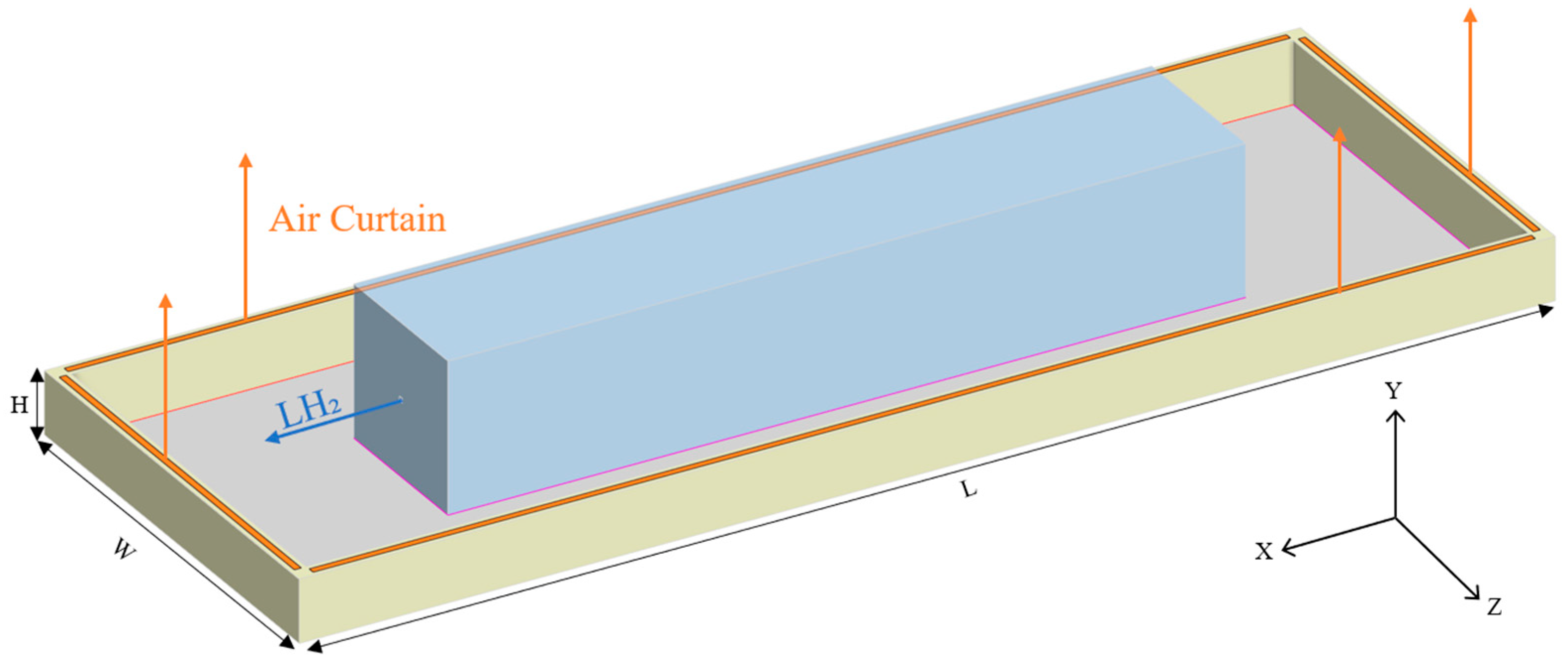
This chapter selects the liquid hydrogen storage tank in an actual hydrogen refueling station as the research object. As shown in
Figure 2, The tank has a length of 23.5 m, a diameter of 4.8 m, a working pressure of 0.7 MPa, and a total volume of 300 m
3, consistent with the design specifications of large-scale commercial LH
2 storage systems and the pressure range stipulated in relevant safety standards such as GB/T 34584 [
31] and ISO 13985 [
32]. Considering that the connection between the liquid hydrogen storage tank and the hydrogen transmission pipeline is a structurally vulnerable location prone to seal failure, flange leakage, and mechanical damage, the leakage is assumed to occur at this connection point. This paper extends 20 m in all horizontal directions around the storage tank and sets the total height of the calculation domain to 80 m. The 20 m horizontal extension is consistent with domain sizing practices in comparable LH
2 leakage studies and ensures that the pressure outlet boundaries are sufficiently remote from the core region to avoid artificial boundary effects. The 80 m height was specifically determined by preliminary simulations that showed the FHC approaching the top boundary at 60 m under high-velocity air curtain conditions, confirming that 80 m is the minimum height needed to fully capture the vertical dispersion process.
3.2. Parametric Effects on the Synergistic Structure of Barrier Walls and Air Curtains
3.2.1. Influence of Barrier Wall Structure Without Air Curtain
To study the effects of the combined structure of a barrier wall and an air curtain on the dispersion of leaked LH
2, nine configurations of barrier walls are employed in this section, as listed in
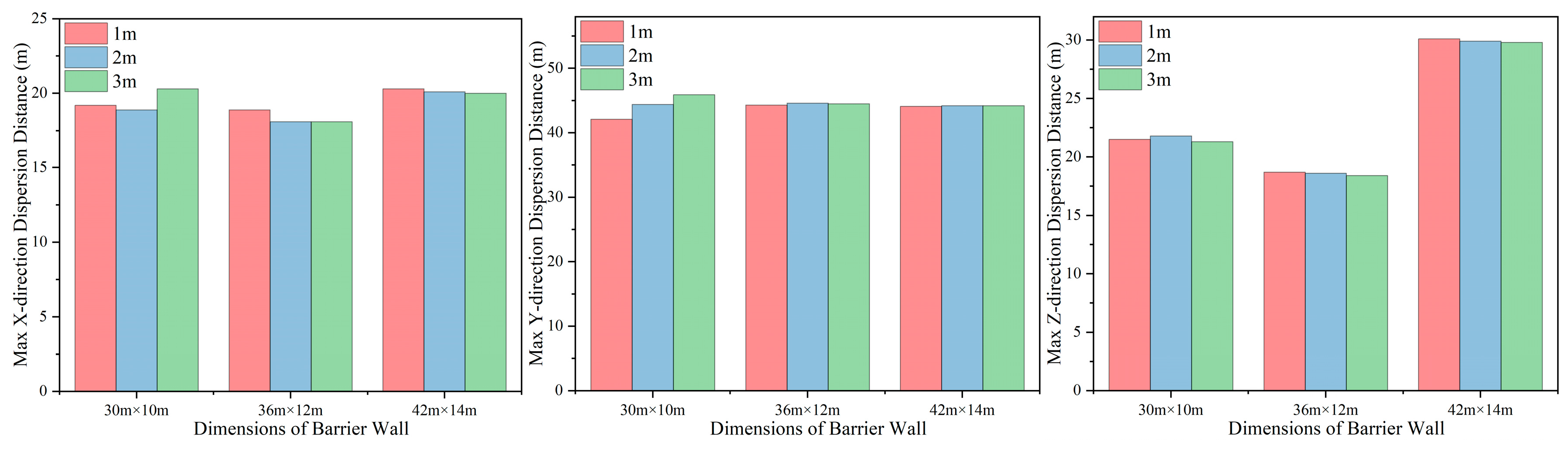
Table 1. In the analysis, the maximum dispersion distances of the FHC in the different directions are mainly adopted to evaluate the prevention and control performance under different structural parameters.
As shown in
Figure 3, there are significant discrepancies in the maximum FHC dispersion distances among the nine types of barrier wall structures. The influence of the planar dimension of the barrier wall on the dispersion behavior of the FHC is noticeably greater than that induced by the variation in wall height. The barrier wall structure with dimensions of 36 m × 12 m and a height of 3 m achieves the best comprehensive suppression effect in both the X- and Z-directions. Meanwhile, its effect on promoting vertical lifting is only inferior to that of the optimal structure. Taking all factors into account, this structure exerts the optimal inhibitory effect on the FHC in the absence of an air curtain.
3.2.2. Influence of Barrier Wall Structure with Air Curtain
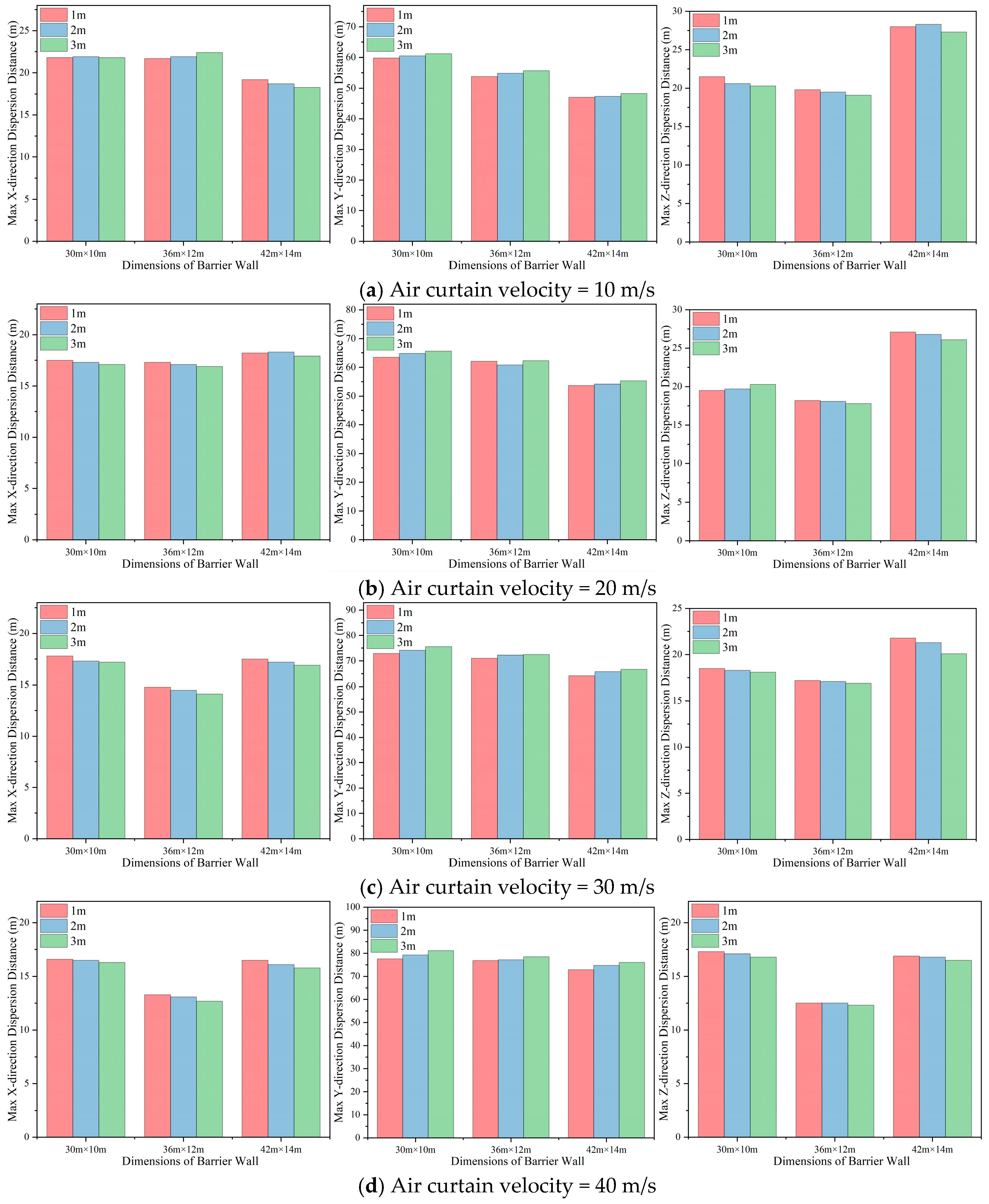
Upon the introduction of the air curtain, the dispersion characteristics of the FHC change significantly. Overall, as the air curtain velocity increases, the dominant effect of air curtain momentum on the cloud structure is continuously enhanced, while the influence of barrier wall height gradually diminishes. Nevertheless, the planar dimension of the barrier wall remains the key factor determining the control performance of horizontal dispersion (
Figure 4).
At an air curtain velocity of 10 m/s, the overall height of the FHC is relatively high under the 30 m × 10 m structure. This indicates that a smaller planar dimension brings the barrier wall and air curtain closer to the leakage source, enabling earlier confinement of the cloud and enhanced vertical lifting. In contrast, although the 42 m × 14 m structure provides satisfactory control over dispersion in the X-direction, its suppression performance in the Z-direction is rather weak. Considering the balance between horizontal dispersion suppression and vertical lifting, the 30 m × 10 m structure with a height of 3 m exhibits superior performance at this time.
When the air curtain velocity is increased to 20 m/s, the influence of the air curtain on the FHC is significantly enhanced. Differences between various barrier wall structures in the X-direction diminish rapidly, whereas those in the Z-direction remain distinct. Under this condition, the 36 m × 12 m structure with a height of 3 m achieves favorable equilibrium in both the X- and Z-directions, and is therefore regarded as the comprehensively optimal configuration.
As the air curtain velocity is raised to 30 m/s, the effect of wall height variation on the maximum dispersion distance becomes extremely limited. A comparison of different cases reveals that the 36 m × 12 m structure with a height of 3 m outperforms other configurations in suppression efficiency for both the X- and Z-directions, while maintaining a small deviation from the optimum lifting case in the Y-direction, demonstrating better overall balance.
When the air curtain velocity reaches 40 m/s, the momentum of the air curtain becomes the dominant factor governing the dispersion behavior of the FHC. And the 36 m × 12 m barrier wall with a height of 3 m provides the strongest suppression capability for both horizontal and lateral dispersion, and only differs slightly from the optimal structure in the Y-direction, thus yielding the best overall performance.
3.3. Parameter Optimization for the Synergistic Structure of Barrier Walls and Air Curtains
Based on the above analysis, the optimal barrier wall structures under different air curtain velocities can be obtained respectively. To further determine the final collaborative prevention and control scheme applicable to the liquid hydrogen storage area of the IHPRS, the five representative combinations are denoted as A, B, C, D, and E in this section, as listed in
Table 2. A comprehensive comparison is conducted from the perspectives of cloud evolution morphology, maximum dispersion distance, volume change, and duration.
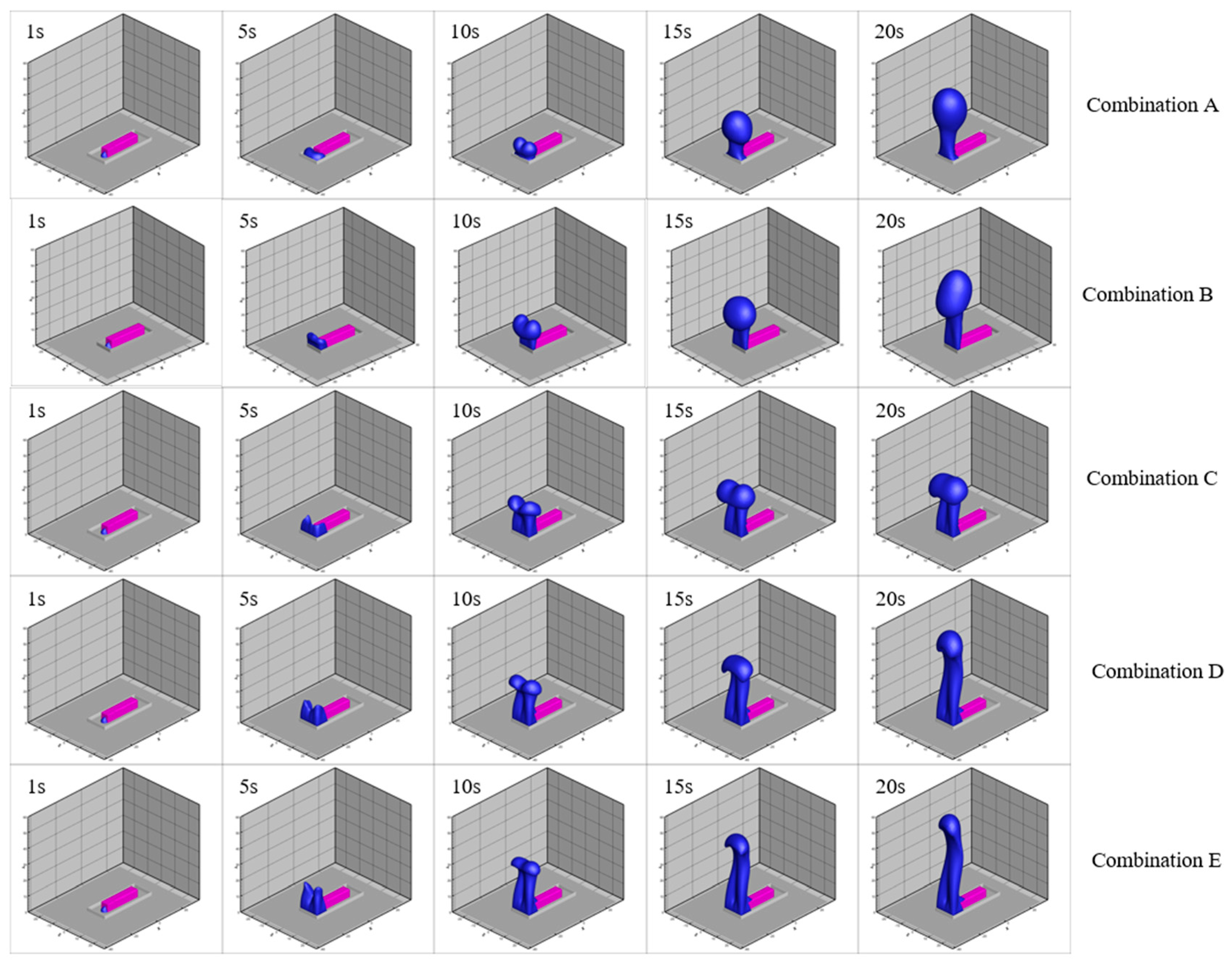
As observed in
Figure 5, during the initial stage of leakage, FHC under all combinations are mainly concentrated near the leakage source with small volumes, and no obvious overall differences are observed. As the leakage proceeds, the effect of the air curtain gradually emerges. In Combination A without an air curtain, the cloud volume expands continuously, resulting in a large hazardous area near the ground. In Combinations B, C, D and E, with increasing air curtain velocity, the cloud height rises significantly, indicating that the air curtain dominates the macroscopic dispersion path of the cloud.
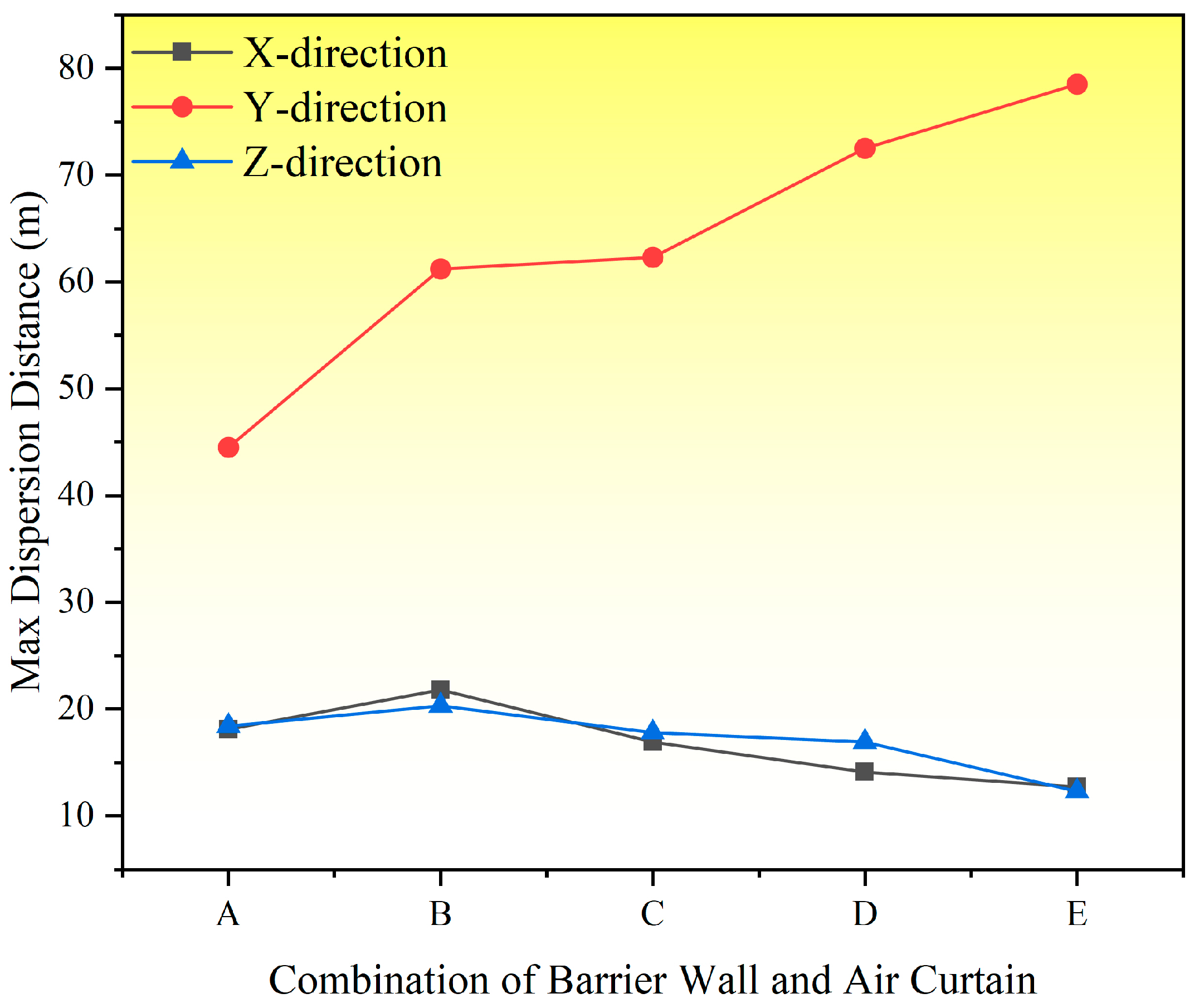
Figure 6 presents the maximum dispersion distances of FHC under different structures. Combination E exhibits the smallest maximum dispersion distances in both horizontal and lateral directions, suggesting the most pronounced compression effect on the near-ground hazardous zone. Meanwhile, it shows strong vertical dispersion capacity, which can effectively lift the cloud to higher altitudes and thus reduce threats to surrounding buildings and equipment in the hydrogen storage area.
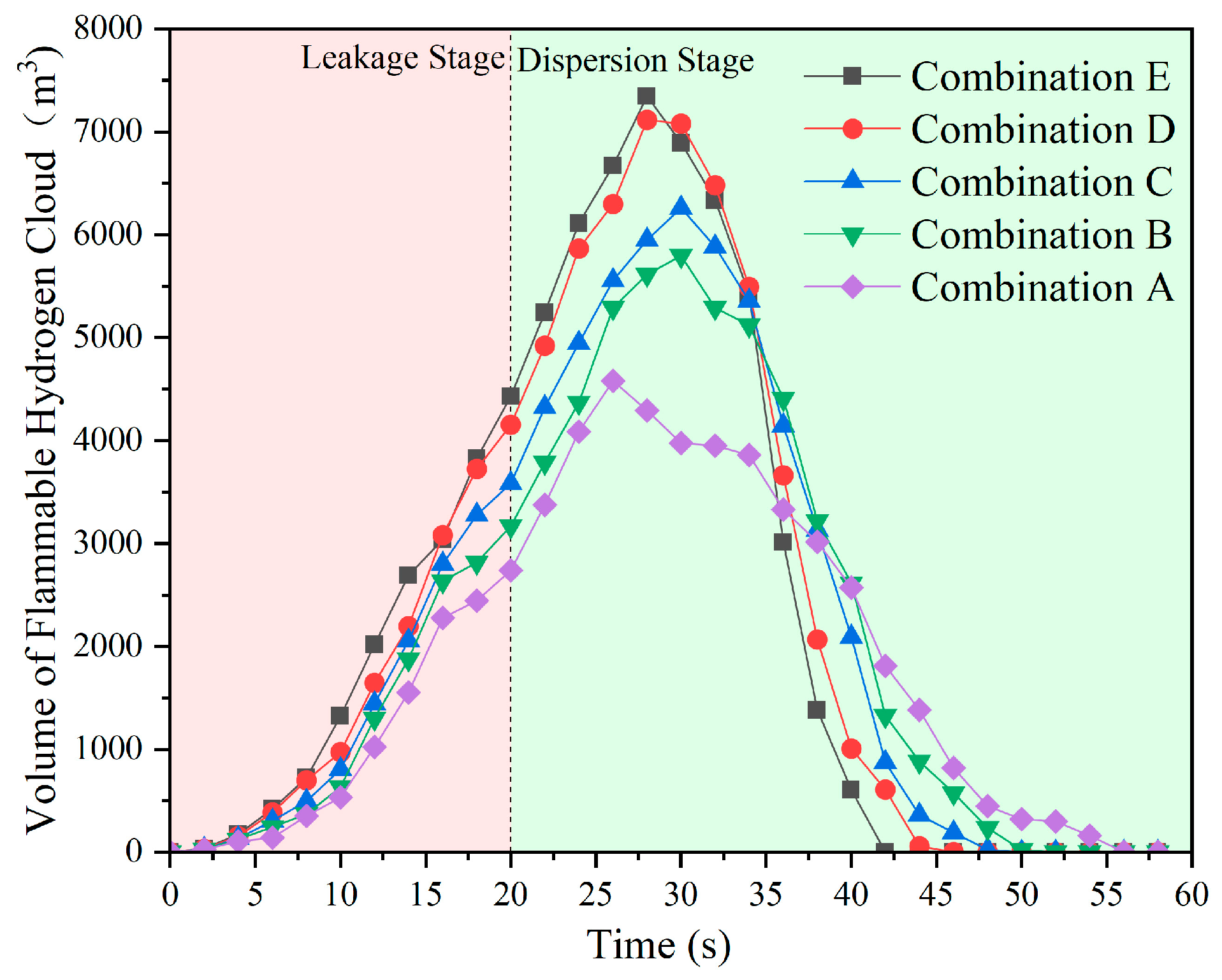
Figure 7 illustrates the time-dependent variation of FHC volume under different structures. The volume of FHC under all combinations first increases and then decreases, reflecting the complete evolution process of cloud formation, accumulation, expansion, dilution and dissipation during liquid hydrogen leakage. Although the peak FHC volume increases with higher air curtain velocity, this does not indicate greater hazard. To understand this apparent paradox, it is important to distinguish between geometric cloud volume and hazard content—defined here as the instantaneous mass of hydrogen within the flammable concentration range. The high-velocity air curtain lifts and spatially redistributes the near-ground high-concentration hydrogen over a larger volume, increasing geometric size while simultaneously diluting local concentrations below the lower flammability limit (4 vol%). This dilution enhancement can be interpreted semi-quantitatively through two complementary analyses. First, the turbulent mass diffusivity
∝
scales with the square of the air curtain velocity, since the turbulent kinetic energy
increases substantially with jet speed. The 40 m/s air curtain therefore introduces turbulent diffusivity approximately one order of magnitude greater than that driven by natural convection alone (~1–3 m/s), accelerating hydrogen–air mixing at the cloud boundary. Second, the Richardson number
provides a dimensionless measure of the competition between buoyancy-driven stratification and inertia-driven turbulence. Without the air curtain,
≫ 1, buoyancy dominates the flow field and restrains turbulent mixing, leading to slow dissipation of FHC, and the hazardous cloud duration is 56 s. With the 40 m/s air curtain,
≪ 1, inertial forces dominate the flow, which greatly intensifies the turbulent entrainment of ambient air and rapidly narrows the hazardous range of FHC, and the hazardous cloud duration is reduced to 42 s—a reduction of approximately 25%. This confirms that the essential role of the high-velocity air curtain is not merely geometric redistribution but active acceleration of the turbulent dilution process, reducing the total hazard exposure time despite the transient increase in peak cloud volume. It should be noted that while
Figure 5 presents the total FHC volume evolution, the near-ground component of the cloud (below 1–2 m) is of particular relevance to personnel safety. The rapid vertical lifting induced by the air curtain in Combination E effectively transfers the FHC from ground level to higher altitudes, thereby substantially reducing the hydrogen concentration in the personnel-accessible zone. This vertical redistribution, combined with the shortened overall cloud duration of approximately 42 s compared to 56 s in Combination A, indicates that the proposed synergistic structure provides meaningful improvement in near-ground personnel safety.
Comprehensive comparisons show that Combination E whose collaborative structure consists of a barrier wall with planar dimensions of 36 m × 12 m and a height of 3 m coupled with a 40 m/s air curtain achieves the optimal prevention and control performance. This structure can effectively restrict the dispersion of FHC in the X- and Z-directions, reduce the near-ground hazardous area, strengthen vertical lifting of the cloud, shorten the cloud duration, and accelerate its dilution and dissipation.
3.4. Liquid Hydrogen Leakage and Dispersion Model of a Hydrogen Production Station
Through analysis of the liquid hydrogen leakage and dispersion behavior in the hydrogen storage area of a hydrogen production station, the optimal parameter combination of the collaborative prevention and control structure composed of a barrier wall and an air curtain is determined, namely a barrier wall with planar dimensions of 36 m × 12 m and a height of 3 m, paired with an air curtain velocity of 40 m/s. To verify the reliability of this collaborative structure in an actual IHPRS under various external factors such as natural wind, ambient temperature, flash mass fraction, and mass flow rate, a corresponding analysis model for liquid hydrogen leakage and dispersion is established.
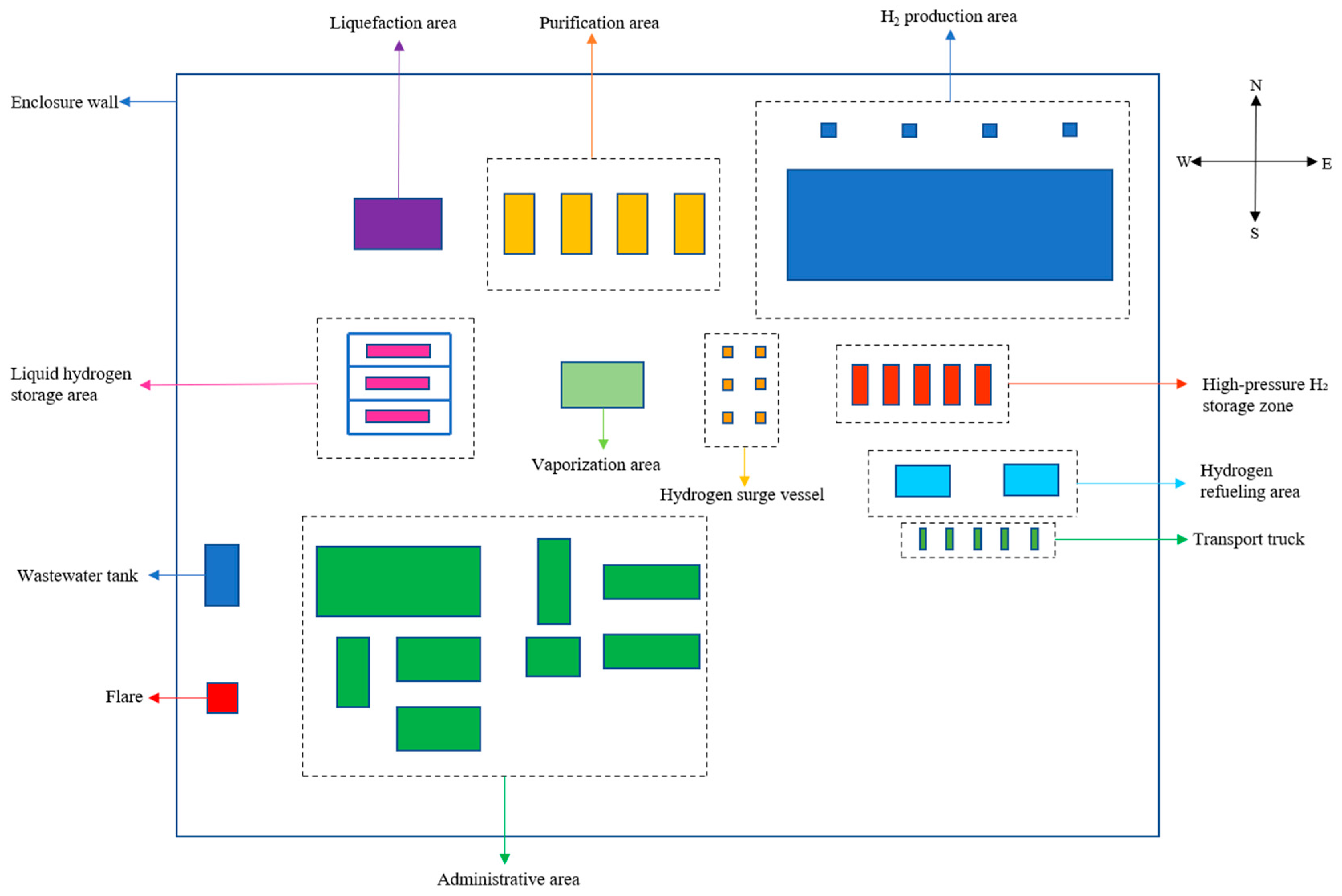
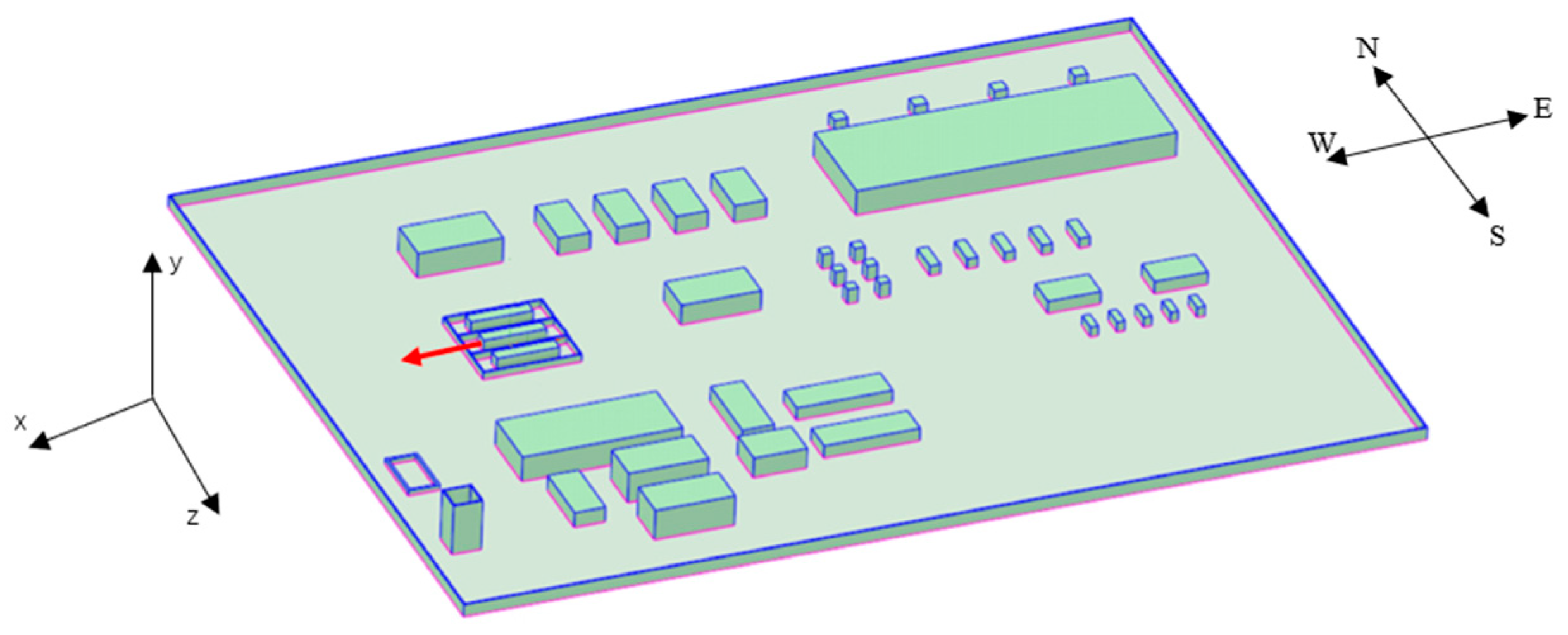
The overall layout of the hydrogen production station is shown in
Figure 8 and
Figure 9, with a length of 360 m and a width of 280 m. Considering the leakage and dispersion behavior of hydrogen within the computational domain, the entire domain is extended outward in all directions, resulting in final computational domain dimensions of 400 m (length), 300 m (width), and 120 m (height).
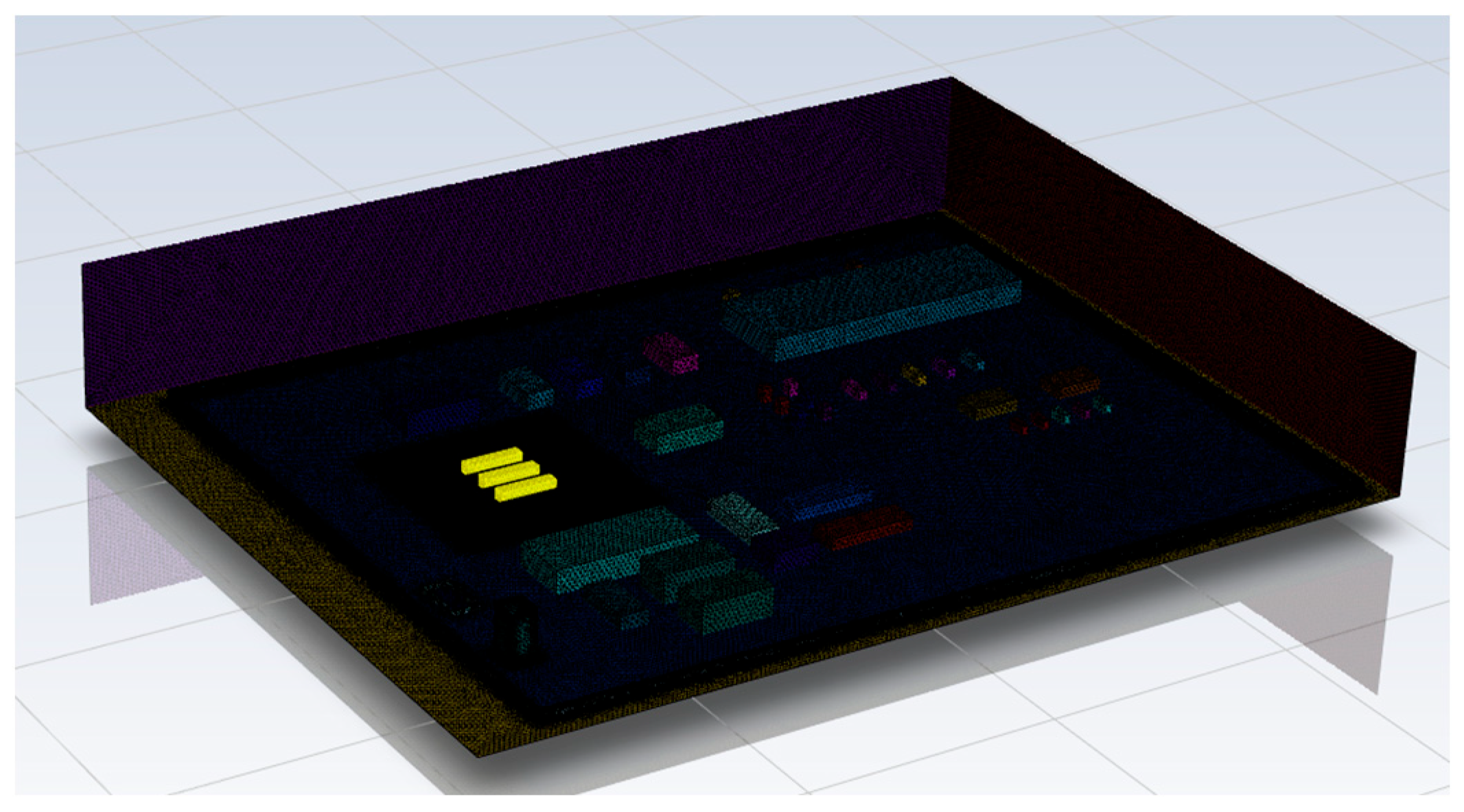
Figure 10 presents the computational mesh used for the entire IHPRS. Given the criticality of flow calculations near the liquid hydrogen leakage port, the BOI method in Fluent Meshing is adopted to refine the mesh around the liquid hydrogen storage tank.
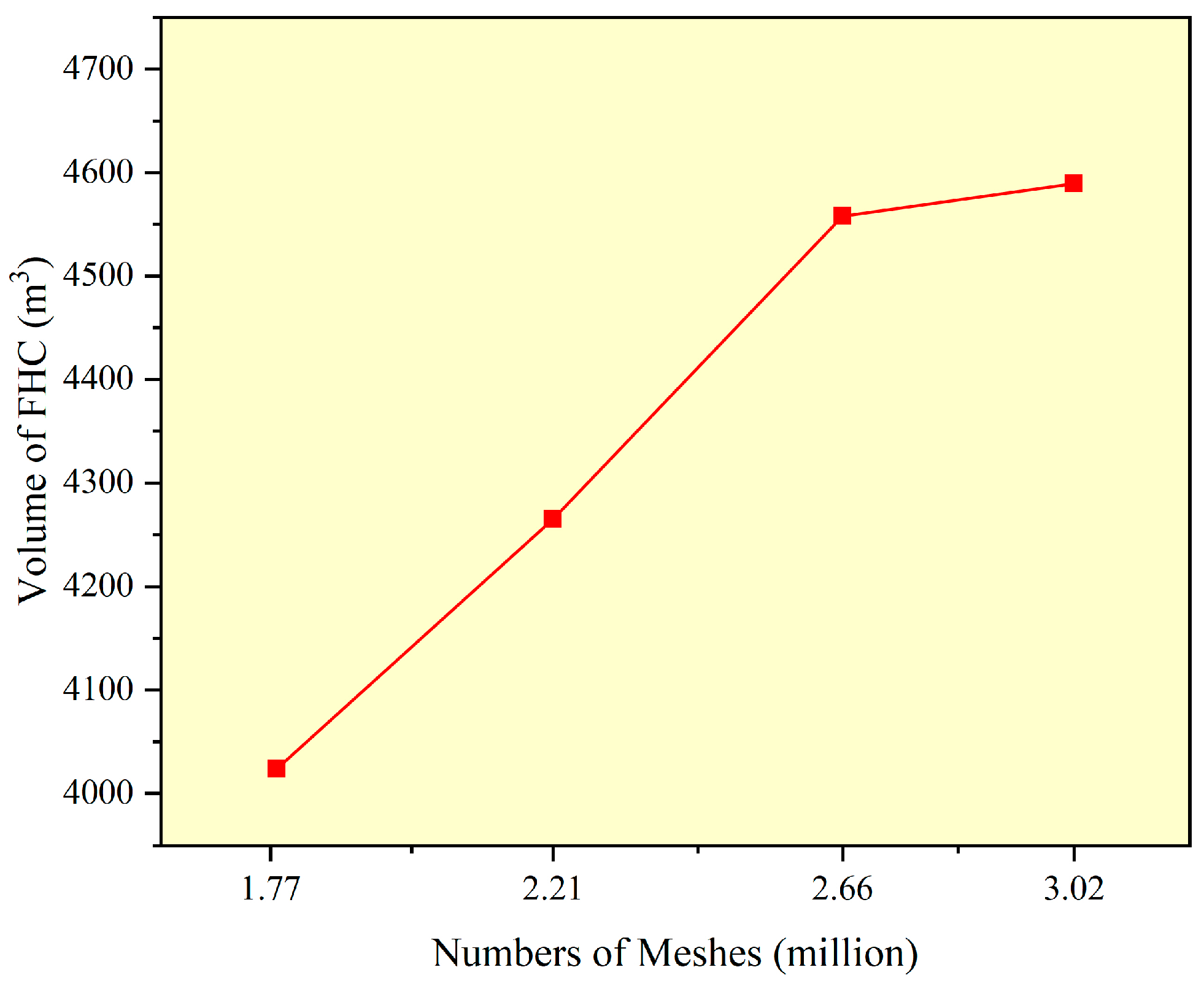
Figure 11 shows that when the number of meshes was elevated to 3.02 million, the simulation result was basically the same as that with 2.66 million meshes, so 2.66 million were chosen in this study to carry out subsequent simulation studies, taking into account the time cost and the accuracy.
3.5. Effect of Natural Wind on Liquid Hydrogen Leakage and Dispersion
In practical scenarios, natural winds with different directions exert significant impacts on the diffusion behavior of the FHC. Therefore, to evaluate the performance of the collaborative structure of barrier walls and air curtains under various natural wind conditions, this section imposes natural winds of 6 m/s from the east, south, west, and north directions respectively, and investigates the dispersion behavior of the FHC.
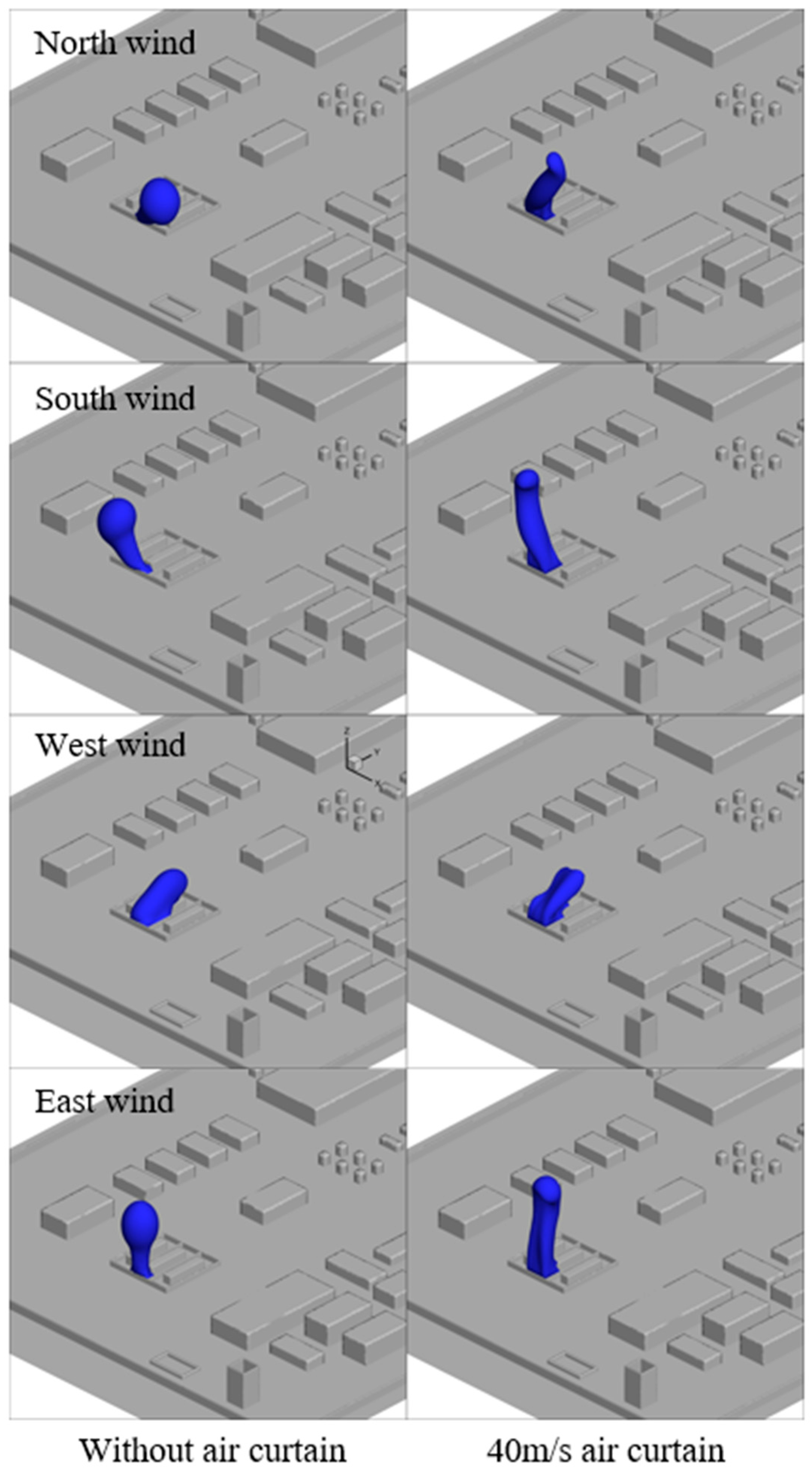
Figure 12 shows the distribution of FHCs under different natural wind conditions at 20 s after leakage. In the case without an air curtain, the cloud diffuses significantly toward the downwind direction. Under the 40 m/s air curtain condition, the air curtain exerts a pronounced influence on the cloud morphology for all wind directions. The expansion at the top of the cloud is considerably reduced, while the cloud height increases and the downwind dispersion distance is shortened, resulting in a more elongated overall structure. This indicates that the momentum of the air curtain effectively modifies the structure of the FHC. On the one hand, it weakens the downwind advection of the cloud driven by the wind field; on the other hand, it enhances the vertical dispersion capacity, redirecting the cloud from horizontal diffusion toward vertical lifting.
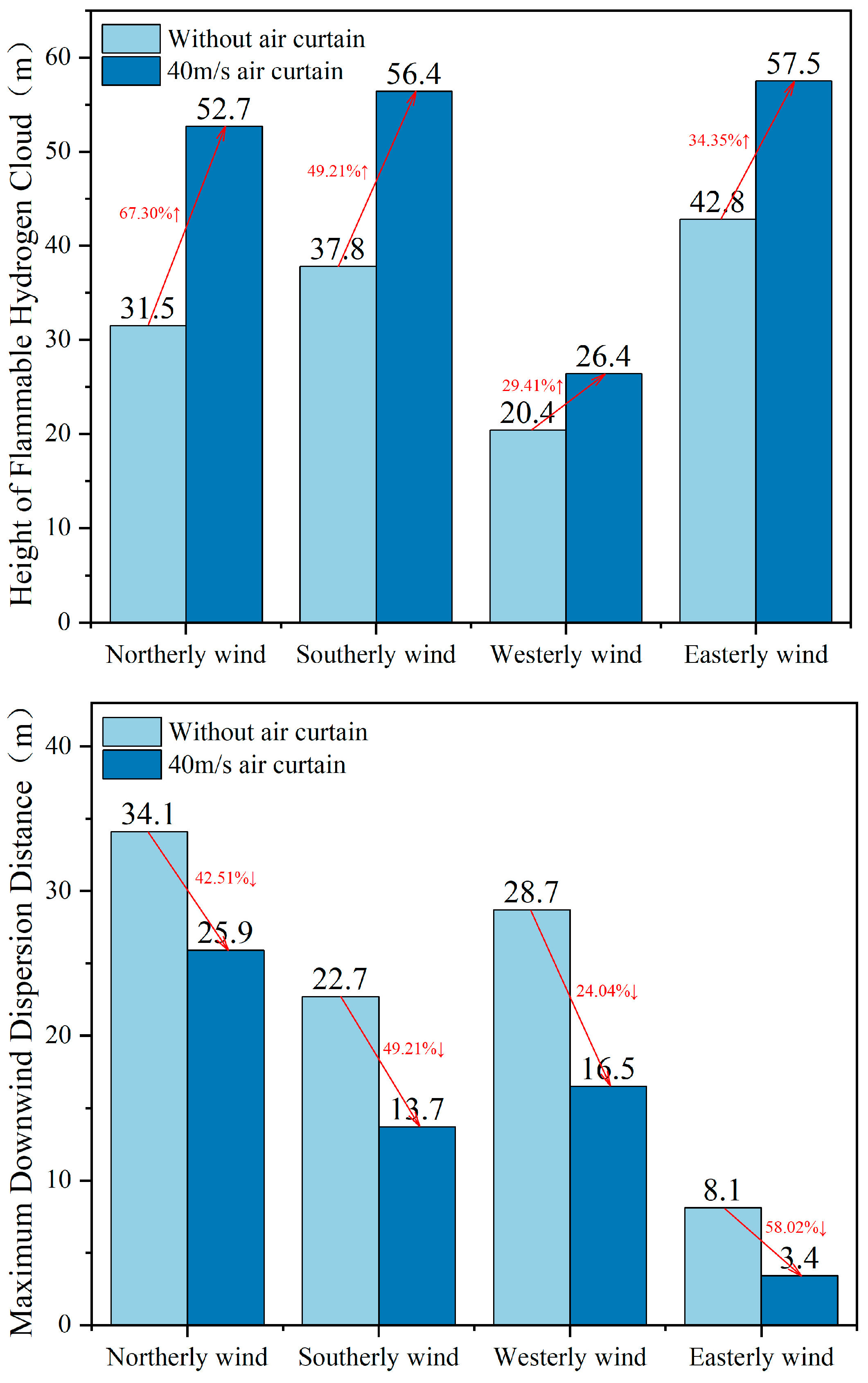
Figure 13 compares the variations in FHC height and maximum downwind dispersion distance with and without the air curtain under different natural wind conditions. The results show that with the introduction of a 40 m/s air curtain, the cloud height increases significantly and the maximum downwind dispersion distance decreases markedly under all working conditions, indicating that the air curtain can alter the dispersion pattern of FHC. This is attributed to the high momentum of the air curtain, which strengthens the vertical lifting of the FHC on the one hand, and weakens its downwind dispersion capacity on the other, gradually transforming the FHC from horizontal diffusion to vertical lifting. Under south and north winds, the air curtain mainly promotes vertical lifting of the cloud; under west and east winds, it mainly suppresses downwind dispersion. This demonstrates that the dominant control effect of the air curtain on FHC differs under various natural wind conditions.
3.6. Effect of Flash Mass Fraction on Liquid Hydrogen Leakage and Dispersion
During actual liquid hydrogen leakage, due to the pressure difference between the inside and outside of the liquid hydrogen storage tank, part of the liquid hydrogen rapidly vaporizes into gaseous hydrogen when ejected from the leakage port, a phenomenon known as flash vaporization. To investigate the performance of the collaborative barrier–air curtain structure under different flash mass fractions, three cases with flash mass fractions of 0, 10%, and 20% are set in this study, and the leakage and dispersion behavior of liquid hydrogen is analyzed accordingly. A flash mass fraction of 0% represents the ideal subcooled liquid hydrogen leakage state without any phase change, which is defined as the baseline condition for comparative analysis. By contrast, flash mass fractions of 10% and 20% are the most typical and widely adopted values for liquid hydrogen tank leakage under normal operating pressure. These values fall within the typical range of 5–20% for liquid hydrogen flash evaporation reported in experimental and numerical simulation studies, and can well cover the actual flash level of liquid hydrogen in real industrial leakage accidents and the leakage and dispersion behavior of liquid hydrogen is analyzed accordingly.
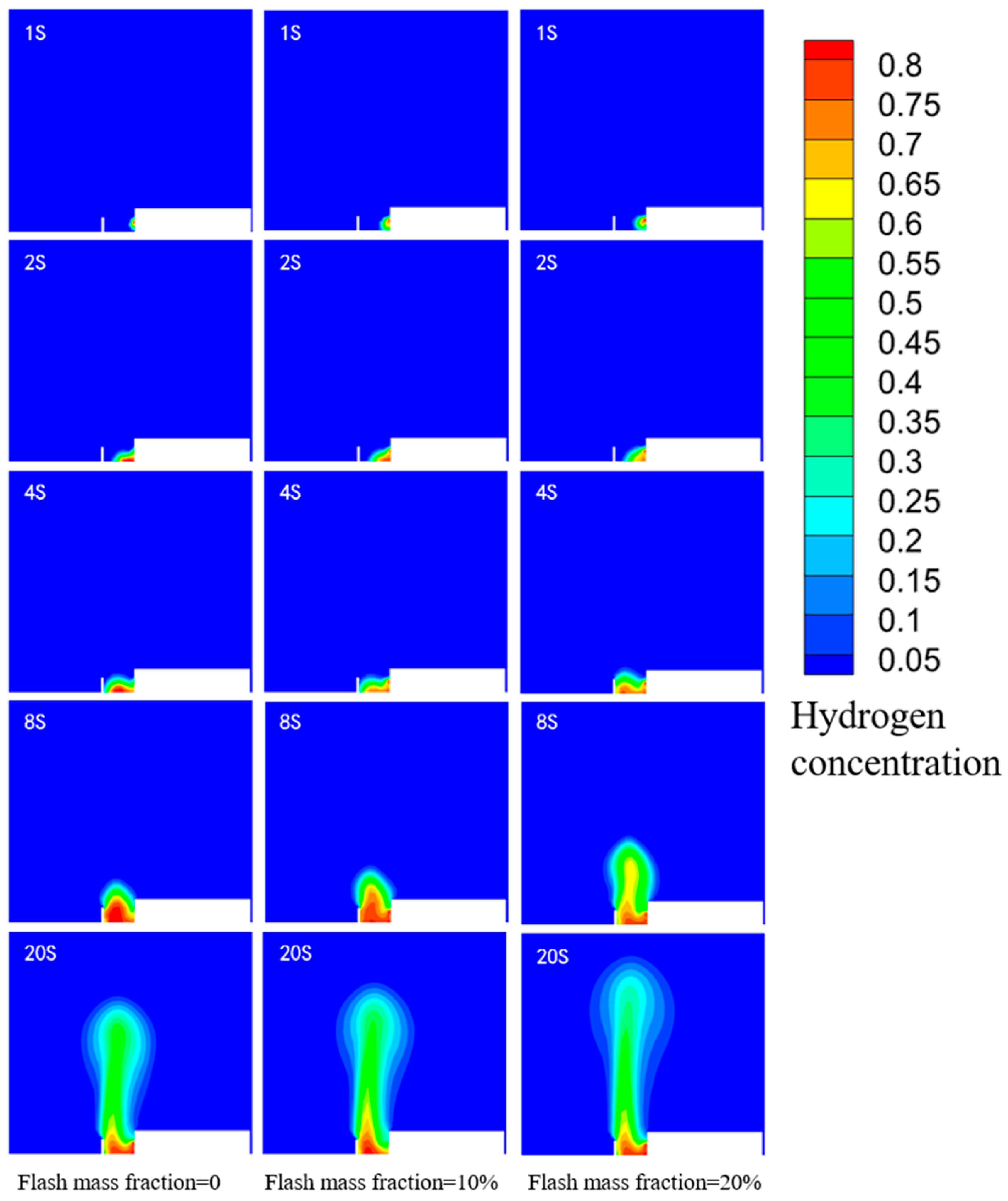
Figure 14 shows the evolution of hydrogen concentration distribution at various moments under different flash mass fractions without the air curtain. The flash mass fraction mainly changes the formation mode and spatial distribution of FHC. In the early stage of leakage, a higher flash mass fraction leads to the rapid formation of a large volume of gaseous hydrogen near the leakage port. In the middle stage, the case with no flash tends to form a larger liquid hydrogen pool, which produces more gaseous hydrogen through evaporation, resulting in higher near-ground hydrogen concentration. In the late stage, the FHC structures under the three cases tend to be consistent, with the highest cloud height and largest top expansion volume under the 20% flash condition. As the flash mass fraction increases, the proportion of gaseous hydrogen rises, making the cloud more prone to vertical diffusion, with more significant overall lifting and expansion.
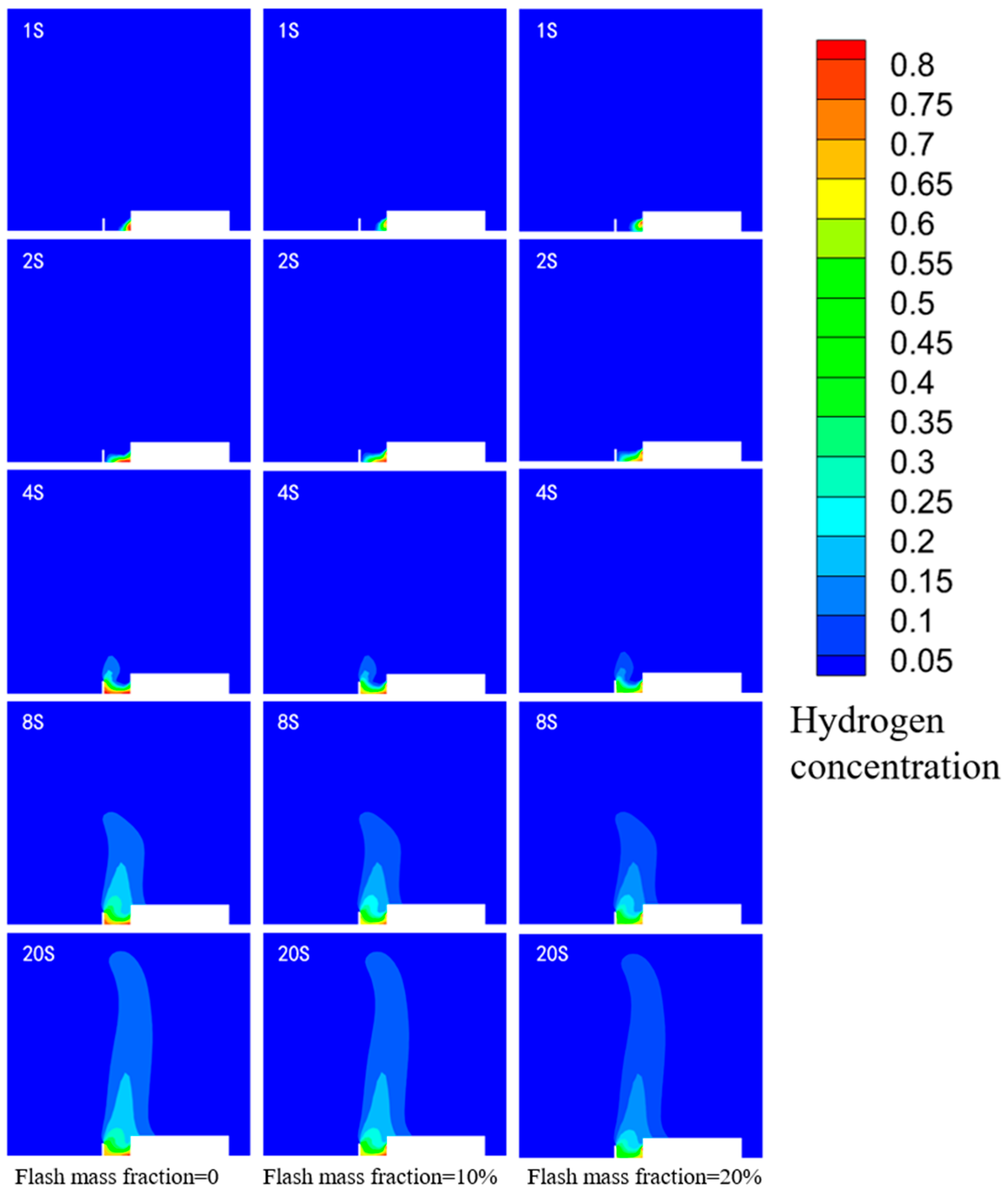
Figure 15 presents the evolution of hydrogen concentration distribution at various moments under different flash mass fractions with a 40 m/s air curtain. Under the effect of the air curtain, the influence of different flash mass fractions on FHC still exists but is significantly weakened. Small differences in FHC distributions among the three cases indicate that the dispersion behavior is dominated by the air curtain, and the effect of flash mass fraction is greatly suppressed.
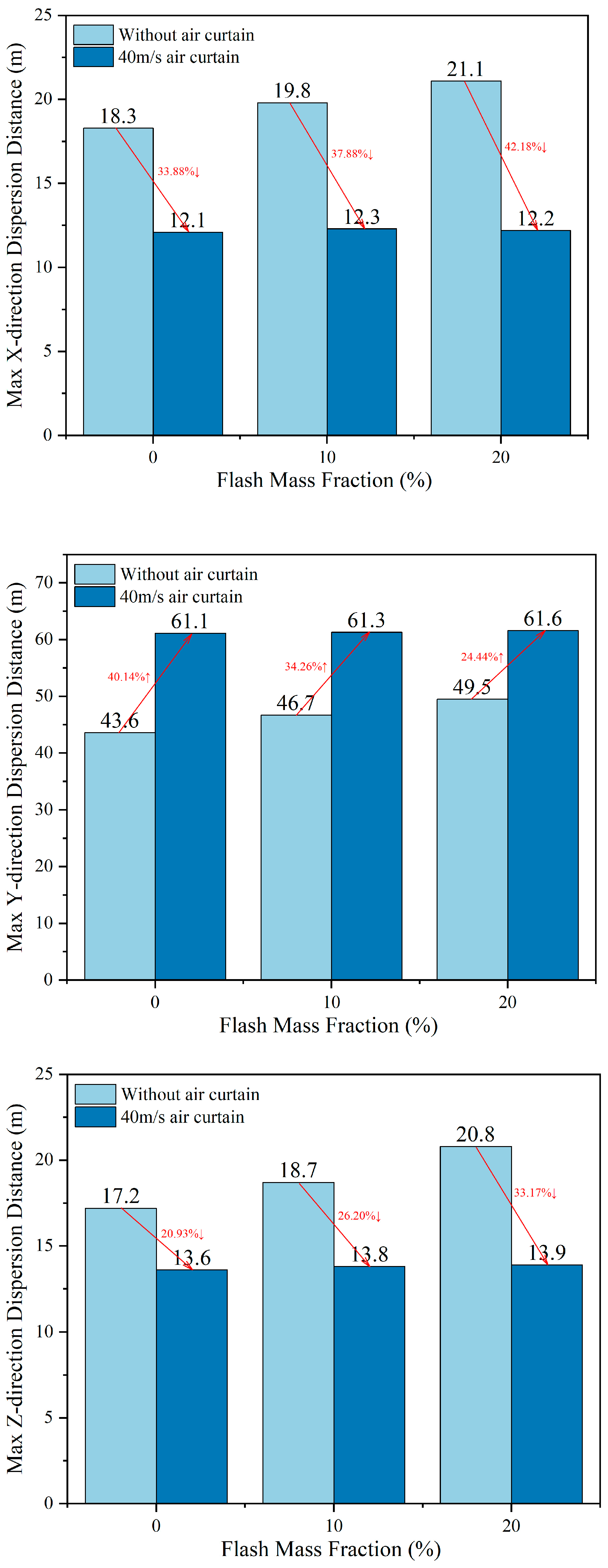
Figure 16 presents the maximum dispersion distances in the X- and Z-directions under all three flash mass fraction conditions, with and without the air curtain. The air curtain consistently reduces the X-direction dispersion distance by 33.88%, 37.88%, and 42.18% at flash mass fractions of 0%, 10%, and 20%, respectively, and reduces the Z-direction dispersion distance by 20.93%, 26.20%, and 33.17% accordingly. Meanwhile, the cloud height increases by 40.14%, 31.26%, and 24.44% across the same conditions. Notably, while the absolute dispersion distances increase moderately with rising flash mass fraction—from 18.3 m to 21.1 m in the X-direction without the air curtain—the corresponding distances with the air curtain remain nearly constant at approximately 12.1–12.3 m, indicating that the air curtain effectively neutralizes the influence of flash mass fraction on horizontal dispersion. These results confirm quantitatively that the air curtain’s momentum-driven control dominates the dispersion behavior, rendering the cloud evolution largely insensitive to flash mass fraction variations within the range investigated. The air curtain exhibits stable and effective control over FHC under all flash mass fraction conditions. The suppression of horizontal dispersion becomes more pronounced at higher flash mass fractions, indicating that the air curtain can effectively reduce the near-ground hazardous area under various flash intensities, restrain horizontal diffusion, and prevent FHC from endangering other buildings within the hydrogen production station.
3.7. Effect of Mass Flow Rate on Liquid Hydrogen Leakage and Dispersion
Leakage mass flow rate refers to the fluid mass passing through a cross-section per unit time; a larger mass flow rate results in a greater amount of liquid hydrogen released into the environment. To investigate the performance of the collaborative barrier–air curtain structure under different mass flow rates, this section adopts three leakage rates: 1 kg/s, 5.15 kg/s, and 10 kg/s, and analyzes the leakage and dispersion behavior of liquid hydrogen accordingly.
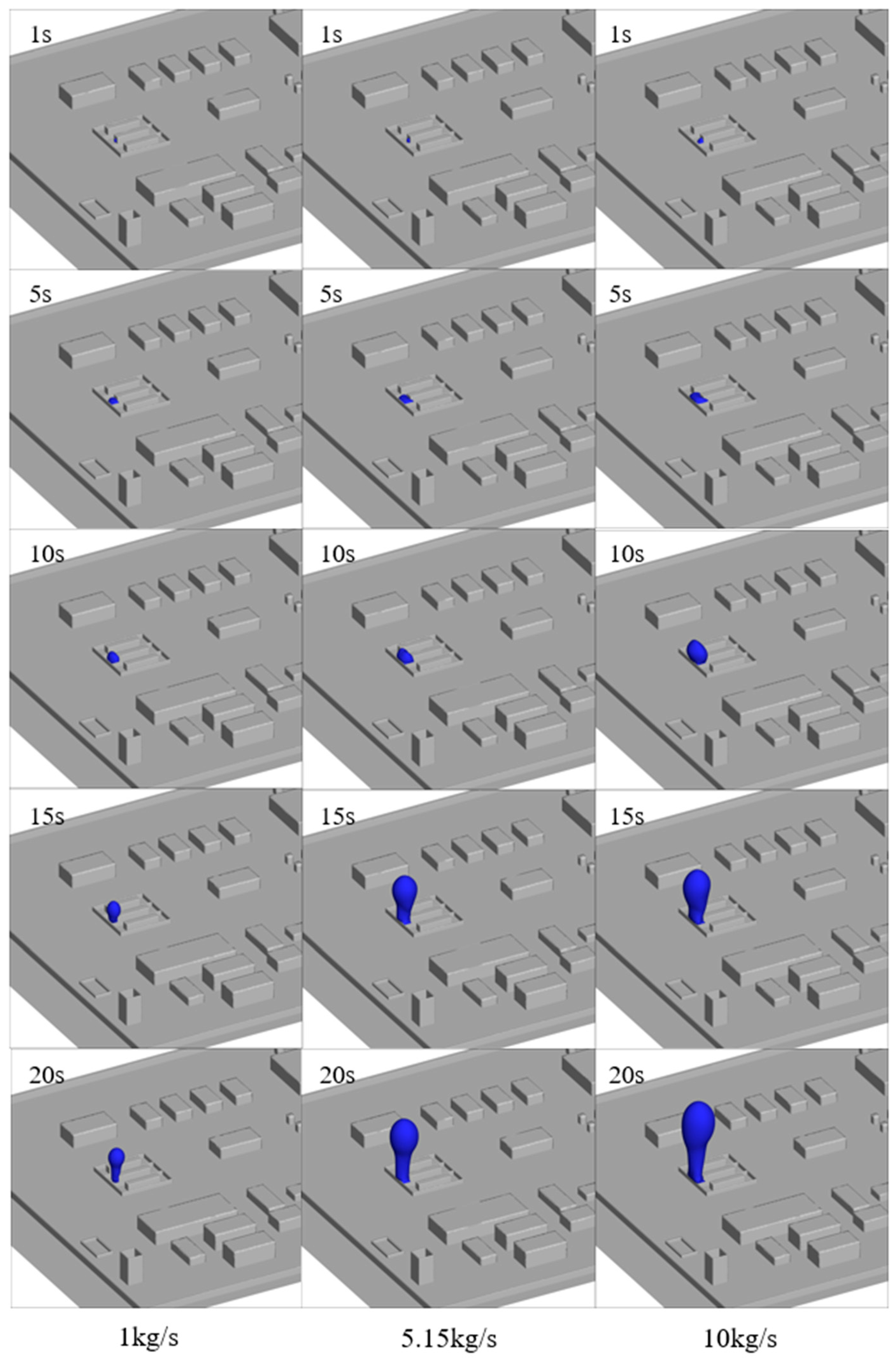
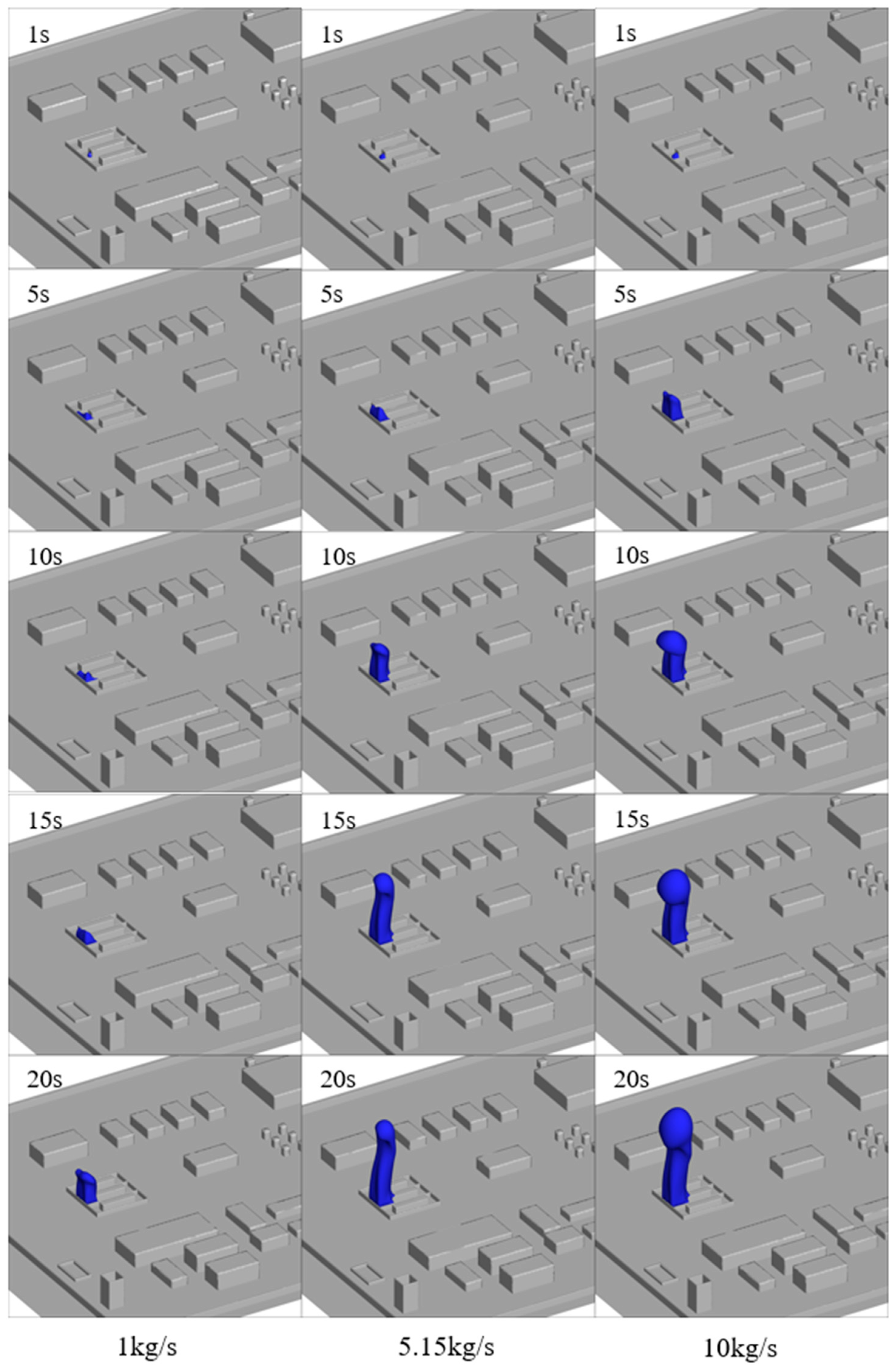
In
Figure 17, as the leakage mass flow rate increases, FHC form more rapidly and exhibit a larger overall volume. This is because the mass flow rate directly governs the total amount of hydrogen entering the environment per unit time, thereby determining the formation rate and total volume of the cloud. In the early stage of leakage, a higher mass flow rate generates a larger FHC. As leakage proceeds, the volume difference between clouds under different mass flow rates gradually enlarges. At 20 s after leakage, the cloud under the 10 kg/s condition reaches the largest scale, yet the overall cloud morphology remains similar across the three flow rates. This indicates that an increase in mass flow rate does not fundamentally alter the macroscopic shape of FHC, but significantly increases their volume.
As shown in
Figure 18, after introducing a 40 m/s air curtain, the overall volume of FHC still increases noticeably with rising leakage mass flow rate, consistent with the case without an air curtain. The difference is that, under the air curtain, the vertical lifting of FHC becomes more pronounced, and the cloud volume expands further. The leakage mass flow rate determines the total amount of hydrogen and initial momentum entering the environment per unit time, thus directly controlling the overall cloud volume, whereas the air curtain governs the dispersion behavior via high-momentum jetting. A clear positive correlation exists between cloud volume and leakage mass flow rate: a larger flow rate produces a larger FHC, corresponding to greater potential safety hazards.
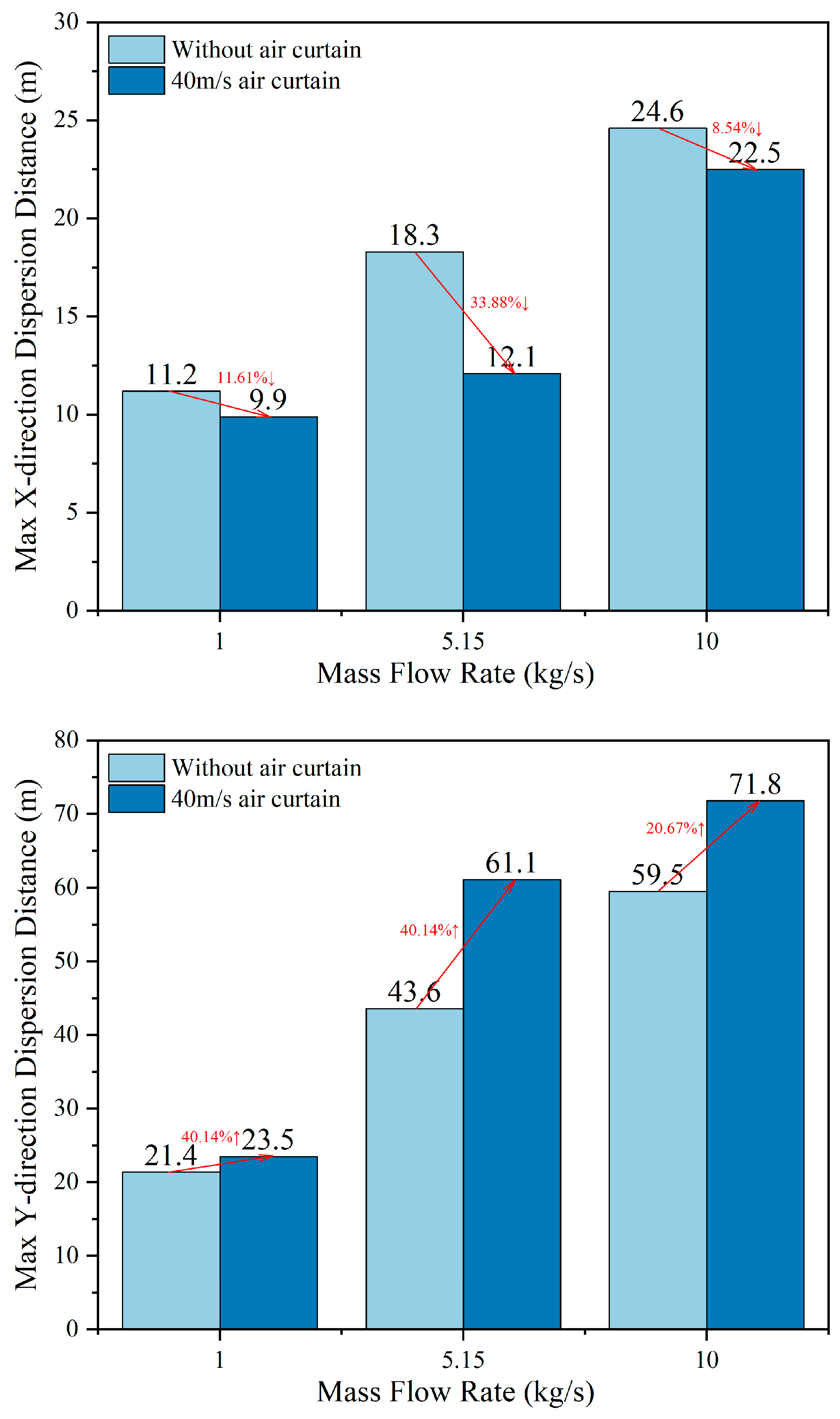
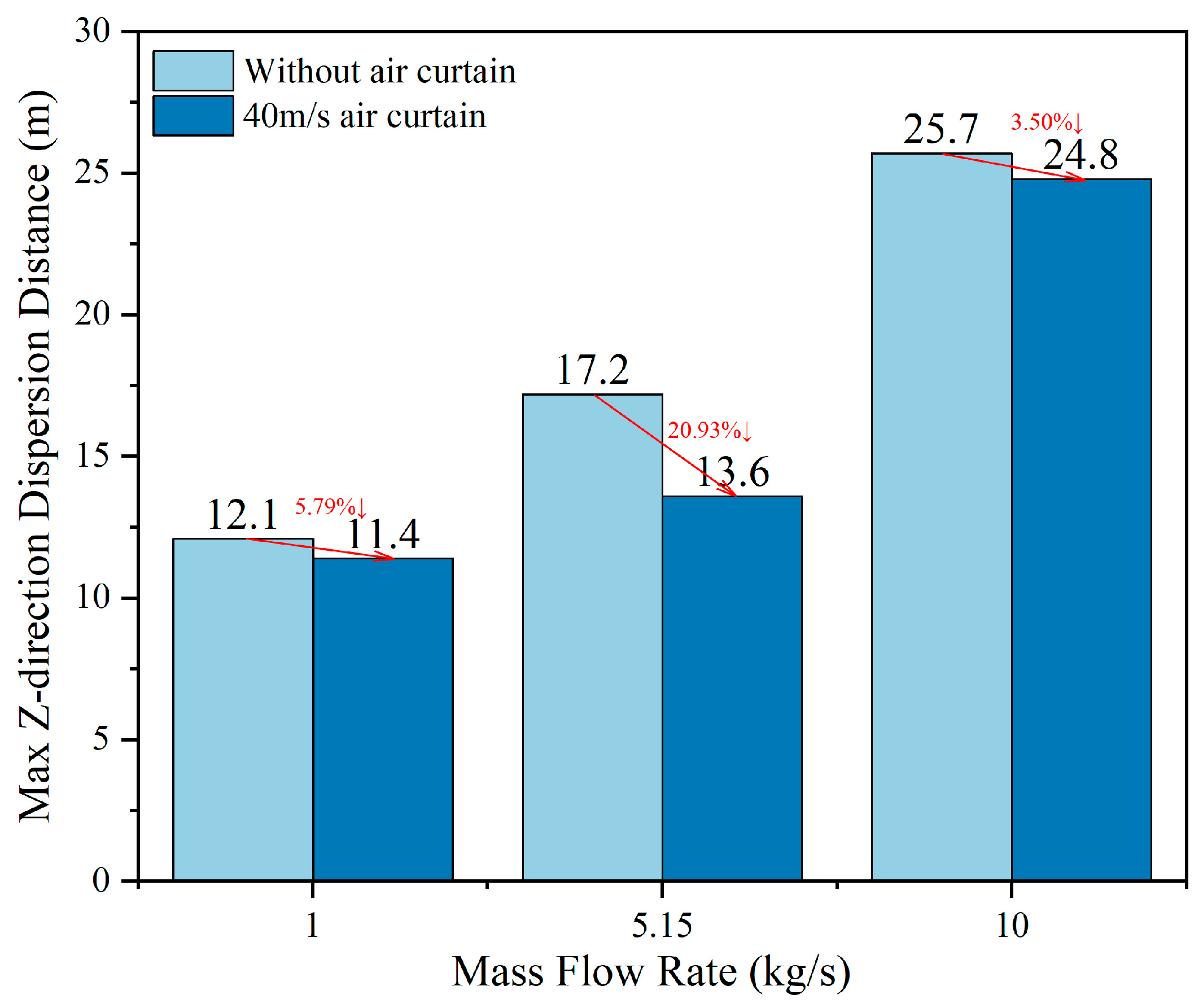
Figure 19 compares the maximum dispersion distances of hydrogen clouds under different mass flow rates. The air curtain exerts a definite control effect on hydrogen clouds for all leakage mass flow rates, mainly by suppressing horizontal dispersion and enhancing vertical lifting. However, this control effect does not strengthen with increasing mass flow rate, but depends on the relative relationship between the momentum of the air curtain and that of the liquid hydrogen jet. The comprehensive suppression effect of the air curtain is most pronounced at a mass flow rate of 5.15 kg/s, with the dispersion distances reduced by 33.88% in the X-direction and 20.93% in the Z-direction, respectively, and the cloud height increased by 40.14%. This indicates that the high-momentum air curtain jet can transport hydrogen clouds from near-ground horizontal dispersion to higher altitudes, thereby accelerating the cloud dilution rate. The essential role of the air curtain is to enhance the mixing rate between the hydrogen cloud and ambient air, promoting subsequent dilution and dissipation.
3.8. Effect of Ambient Temperature on Liquid Hydrogen Leakage and Dispersion
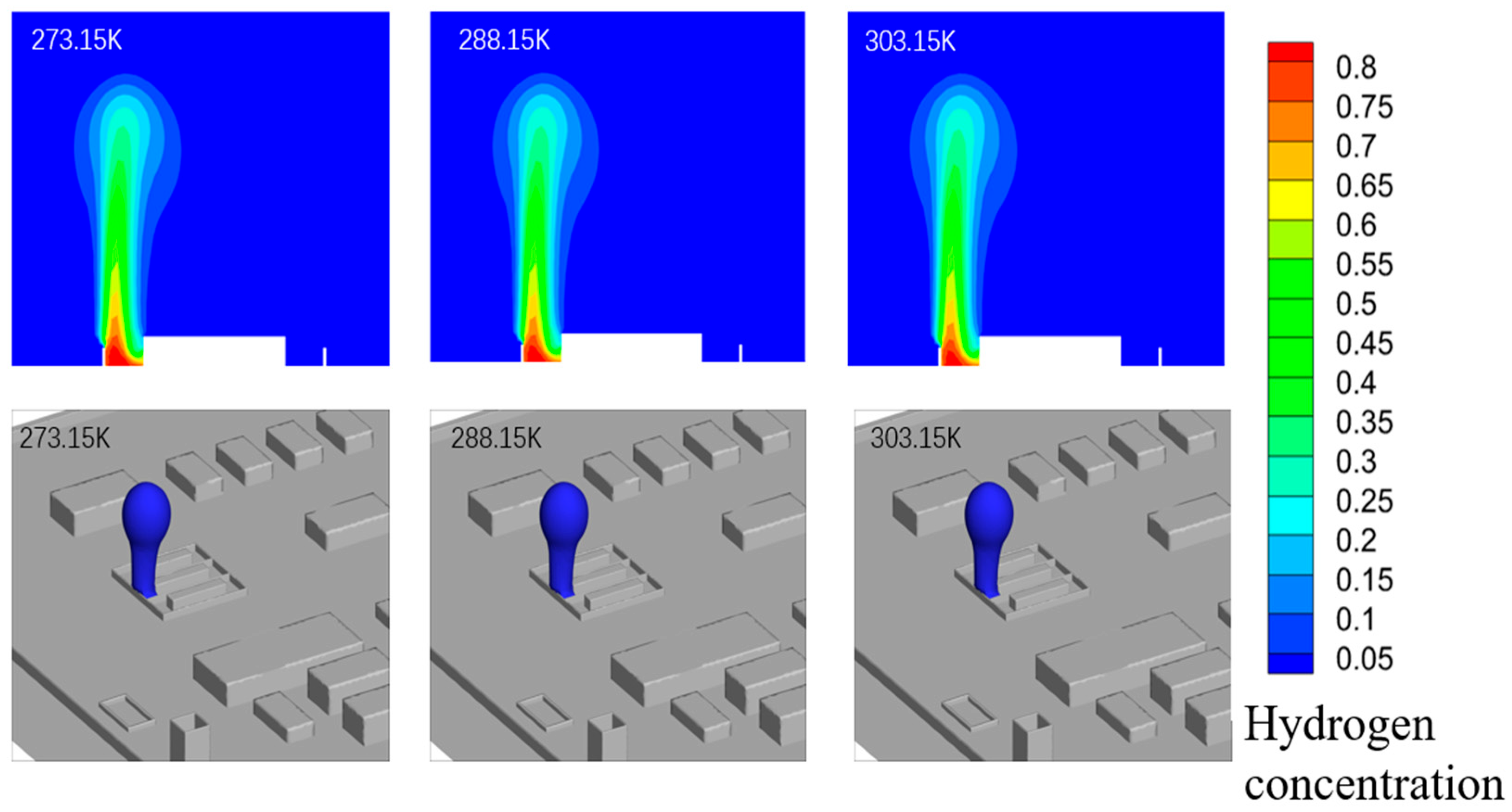
During liquid hydrogen leakage, liquid hydrogen continuously evaporates and undergoes phase change to produce a large amount of gaseous hydrogen. To simulate the dispersion behavior during liquid hydrogen leakage accidents at hydrogen stations in different seasons, ambient temperatures of 0 °C (273.15 K) for winter, 15 °C (288.15 K) for spring and autumn, and 30 °C (303.15 K) for summer are set.
It can be seen from
Figure 20 that the hydrogen concentration distribution and the morphology of FHC show very small differences. Since the storage temperature of liquid hydrogen is approximately 20.35 K, the temperature differences between liquid hydrogen and the ambient environment under the three simulated conditions are approximately 253 K, 268 K, and 283 K, respectively, representing a variation of only ~6% relative to the total temperature difference. To further interpret this finding, the relative contributions of the dominant physical mechanisms are considered. First, regarding convective heat transfer between ambient air and the leaked liquid hydrogen, the driving force is the temperature differential
. A 30 K change in ambient temperature (from 273 K to 303 K) alters
by approximately 10.6–11.9%, which translates to a proportionally modest change in convective heat flux. This variation is insufficient to meaningfully accelerate the evaporation rate or alter the phase transition behavior of liquid hydrogen at the leakage source. Second, liquid hydrogen pool spreading is primarily governed by the initial jet momentum, gravitational spreading forces, and the thermophysical properties of liquid hydrogen at its saturation temperature (20.35 K), none of which are significantly sensitive to ambient temperature within the investigated range. The pool geometry and spreading rate therefore remain largely unchanged across the three temperature conditions. Collectively, these mechanisms explain why the macroscopic dispersion behavior and FHC morphology remain largely insensitive to ambient temperature variations within the range of 273–303 K, confirming that air curtain momentum, rather than seasonal temperature variation, is the dominant factor governing cloud dispersion in the present configuration.
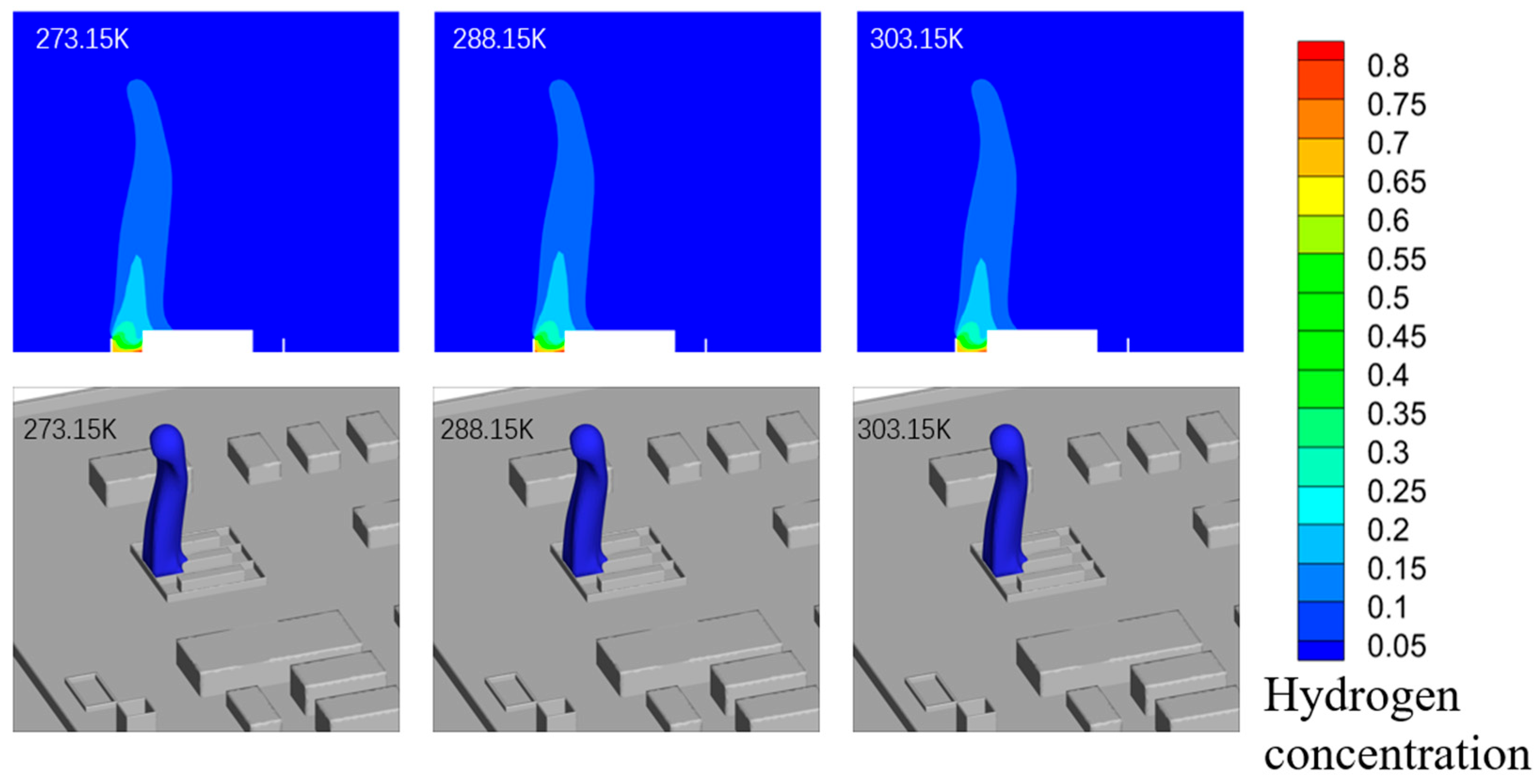
As can be observed in
Figure 21, under the action of the air curtain, the differences in hydrogen concentration and cloud morphology remain negligible, which further verifies the above conclusion that temperature variations cannot noticeably alter the macroscopic structure and concentration distribution of FHC.
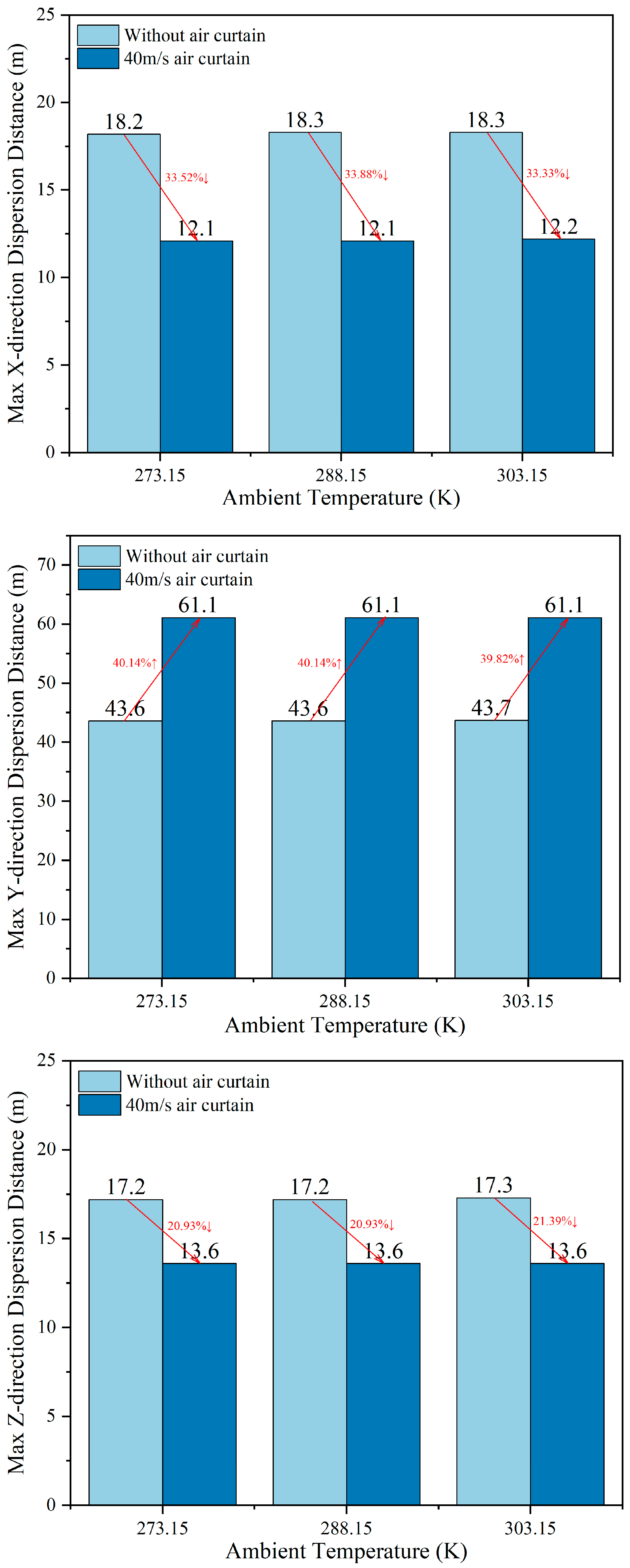
Figure 22 compares the effect of the air curtain on the maximum dispersion distances of FHC under different ambient temperature conditions. Across all simulated ambient temperatures, the air curtain consistently demonstrates stable and effective control over FHC dispersion. It reliably suppresses horizontal diffusion and enhances vertical transport, with these key effects remaining largely unaffected by changes in ambient temperature. Consequently, these variations are not enough to alter the fundamental impact of the air curtain on FHC dispersion behavior. This confirms that the momentum of the air curtain, rather than ambient temperature, is the dominant factor governing the diffusion characteristics of FHC in this context.




 ,
,