Skip to Content
FireFire
  • Article
  • Open Access

12 March 2026

Enhancing Fire Safety Education Through PLC and HMI-Driven Interactive Learning

,
,
,
and
1
Mechatronics Engineering Department, University of Jordan, Amman 11942, Jordan
2
Independent Consultant of Computing and Systems Engineering, Liverpool, UK
*
Author to whom correspondence should be addressed.

Abstract

Fire safety plays a vital role in protecting lives, property, and the environment, and it keeps communities and organizations running safely. Many existing fire pump control systems fall short in educational and small-to-medium industrial settings: they often control only one pump at a time, rely heavily on manual monitoring, and come with high costs that limit accessibility. To address these gaps, we developed an affordable, hands-on educational kit that brings real-world fire safety systems into the classroom using modern automation technology. The system is built around a Delta DVP12SA211R PLC chosen for its built-in real-time clock, integrated RS-232/RS-485 ports for reliable communication, and expanded with DVP16SP11R digital I/O and DVP04AD-S2 analog input modules to interface with simulated sensors mimicking smoke detection and water pressure. Students interact with the system through a Delta DOP-110IS HMI, which features Ethernet connectivity for remote observation, electrical isolation for safe operation, and a 200 ms screen update rate to ensure responsive, realistic feedback. The kit enables learners to explore critical emergency scenarios, including automatic switching between jockey and main pumps, low-pressure alerts, and system failover, transforming theoretical concepts into tangible skills. In user evaluations, 57.1% of students with no prior experience reported that the simulations closely mirrored real-world systems, while 80% of those with a fire safety background found the kit reinforced their existing knowledge; notably, 57.1% of instructors rated it as highly effective for teaching core fire safety principles across diverse learner profiles. By integrating industrial-grade hardware with scenario-based learning, this tool not only deepens understanding of fire protection systems but also better prepares future engineers for the practical demands of fire safety and industrial automation careers.

1. Introduction

Fire is a rapid oxidation process that releases heat, light, and various by-products, often escalating into a dangerous conflagration. In buildings, fire protection systems are essential for early detection and swift response. These systems typically use pressurized water-filled pipes with strategically placed sprinklers. When a fire breaks a sprinkler, it triggers a drop-in pressure, which activates the fire pumps’ control panels. These panels supply continuous water for extinguishing the fire, thereby minimizing damage and ensuring occupant safety [1]. The effectiveness of these systems depends not only on their proper installation but also on the reliability of their control panels, which manage the fire pumps in the event of a fire.
However, the current state of fire system control panels presents several critical challenges. One significant issue is that many panels are designed to control only one pump at a time, while most modern fire systems include two or more pumps, such as jockey, electric, and diesel-driven pumps. According to NFPA’s national fire loss data, failures in fire suppression equipment, including pump control systems, remain a significant factor in uncontrolled fire spread in commercial facilities [2]. Additionally, the monitoring of these systems is often carried out manually on site, which can result in overlooked maintenance, especially in settings where the systems are not regularly checked. This manual oversight increases the risk of system failure during an actual fire. Without automated monitoring and testing features, conventional panels may allow for unnoticed failures, which could have catastrophic consequences in emergencies. Hence, there is a growing need for an upgraded control panel capable of continuous monitoring, automated testing, and maintenance, ensuring that systems are ready for activation at any given moment.
Another challenge is the high cost associated with certified fire control panels, which limits their accessibility, particularly in commercial and industrial settings where multiple systems may be required. Certified NFPA 20-compliant controllers are costly, which limits access for educational and small-scale users [3]. This financial barrier restricts the widespread implementation of advanced fire safety solutions. The fire pump room, a critical part of the fire suppression system, typically houses three pumps: a small electric jockey pump for maintaining pressure, a primary electric motor-driven pump for fire suppression, and a backup diesel engine-driven pump for redundancy. These pumps are positioned slightly below the fire tanks to ensure water flows into them through gravitational force. Despite their design, these systems require reliable control panels to operate efficiently under emergency conditions. Upgrading these panels can ensure that all pumps function seamlessly, further enhancing the overall safety of the fire protection system.
To improve education and training in fire safety and prevention, it is essential to equip students with practical tools that simulate real-world scenarios, enabling hands-on experience with the systems they are likely to encounter in their professional careers. Consequently, fewer engineering programs offer hands-on experience with PLC-based fire safety systems [4]. As industrial automation advances, particularly in fire prevention systems, the development of specialized training kits that combine theory with practical application has become a necessity. These kits provide students with first-hand experience in understanding the operational mechanics and safety standards involved in fire safety systems, including fire pumps, PLC-based control systems, and Human–Machine Interfaces (HMIs) [5].
This paper presents an innovative educational fire safety kit that incorporates Programmable Logic Controllers (PLCs) and Human–Machine Interfaces (HMIs), designed to bridge the gap between theoretical knowledge and practical application by providing students with hands-on experience. Its primary objectives are to enhance understanding of the operational mechanics, safety standards, and real-world applications of fire safety systems while promoting interactive, accessible, and cost-effective learning. This approach not only equips students with critical technical skills but also prepares them for the evolving demands of modern industrial environments.
This study presents an affordable, hands-on educational kit for fire safety training, integrating PLCs, HMIs, and simulated sensors to replicate real-world fire pump systems. The proposed system overcomes key challenges in existing fire safety systems, including limited pump control, lack of automated maintenance, and high costs. By integrating automation and continuous monitoring, it enables simultaneous control of multiple pumps, performs self-diagnostic checks, and conducts automated testing to ensure system readiness. Students can interact with scenarios such as multi-pump coordination, low-pressure alerts, and system failover, providing practical experience in fire safety and industrial automation. Evaluations showed that students and instructors found the system realistic, engaging, and effective for learning core fire safety principles. By combining industrial-grade hardware with interactive learning, the kit bridges the gap between theory and practice, delivering a reliable, efficient, and cost-effective solution that enhances both education and fire protection.
The rest of this paper is organized as follows: we begin by reviewing relevant work in educational automation and fire safety training. Next, we describe the design and development of our kit, covering its hardware components and software implementation. We then present the results of functional testing alongside feedback from students and instructors on the kit’s usability and educational value. This is followed by a discussion of what these findings mean for fire safety education, and we conclude with reflections on the kit’s potential impact and opportunities for future enhancement.

3. Materials and Methods

This section starts with an overview of the control panel for the main pumps, providing an exterior view of the fire pump safety kit and highlighting the key inputs and outputs that enable efficient system monitoring. It also includes a detailed layout of the fire pump room. Following this, the mechanical design of the proposed educational safety kit and its electrical components are described. The section then explains the system software, offering insights into its functionality and integration.

3.1. Overview

In this section, we outline the process involved in designing and implementing a kit for fire pump regulation, integrating mechanical, electrical, and software elements. The methodology starts with creating a mechanical design that ensures the system’s practical usability, followed by a detailed exploration of the electrical components that form the backbone of the system. Finally, software implementation is discussed, including the development of PLC pseudocode for system control and HMI pseudocode for monitoring and interaction. These stages are crucial in developing a fire prevention system that is both educational and operational, allowing students to engage with real-world industrial processes while learning the intricacies of fire safety engineering.
The operation sequence begins with the jockey pump, which responds to minor drops in system pressure, successfully rectifying them. Yet, if the pressure drop exceeds the jockey pump’s capacity, signaling a potential fire hazard, the pump stops working. Subsequently, the primary electric pump activates, increasing water flow to restore system pressure. If the pressure continues to decrease beyond the primary electric pump’s capacity, this signals a failure in the activation of the fire pump. Consequently, the diesel pump initiates its operation as a backup in case of electrical failure, a scenario that occurs commonly during a fire.
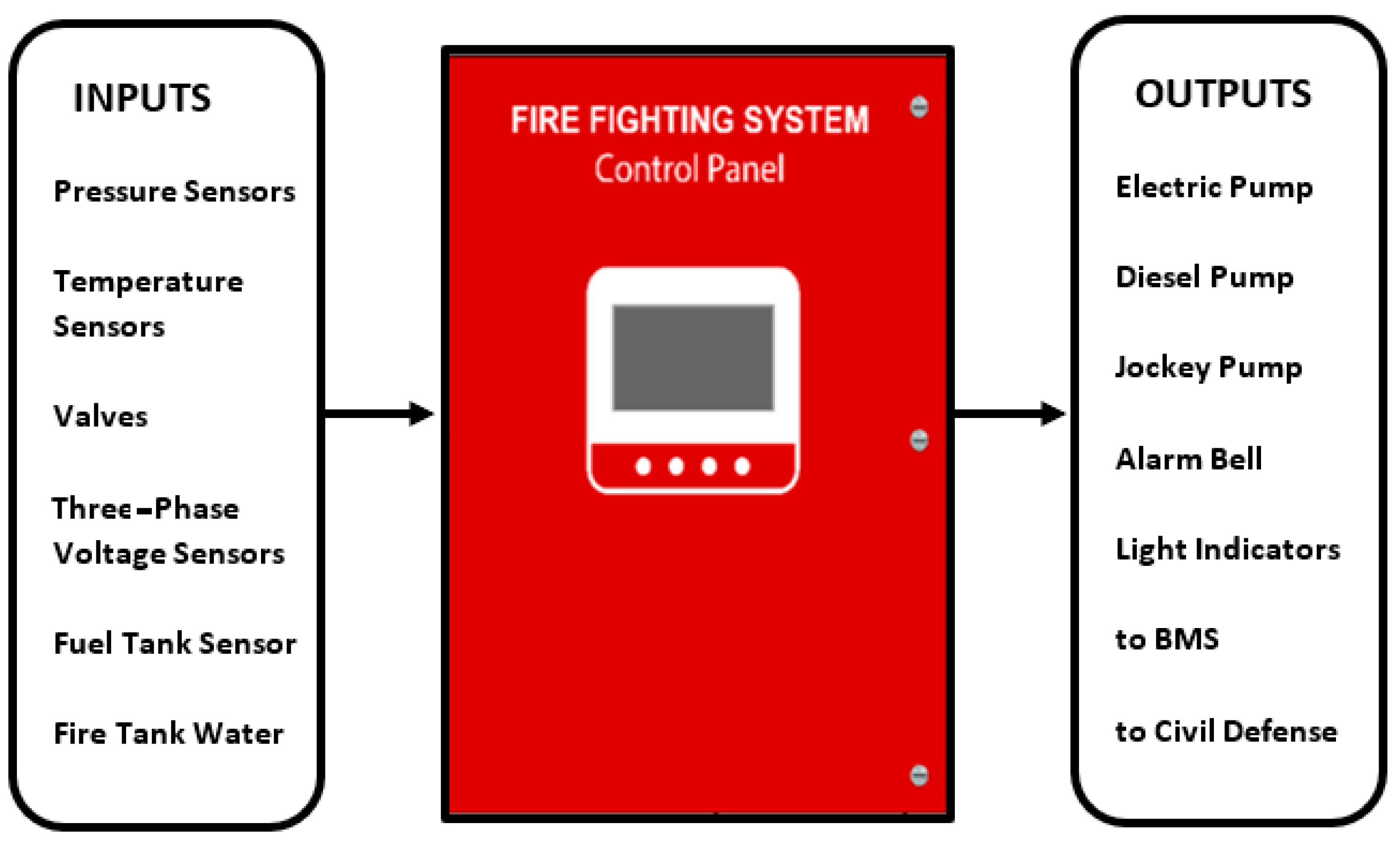
Figure 1 illustrates a block diagram for the fire pump safety kit, highlighting some of the key inputs and outputs that contribute to the system’s efficient monitoring and control. The kit integrates essential components like the electric pump, diesel pump, and jockey pump, each controlled by the Programmable Logic Controller (PLC) (Delta Electronics, Taiwan, China, DVP SA2, ISPSoft 3.16), which monitors sensor data such as pressure, temperature, and voltage to ensure optimal system performance. The kit is equipped with alarms and lights for fault notifications, and outputs for external systems like Building Management Systems (BMS) and Civil Defense, ensuring seamless integration and rapid emergency response.
Figure 1. Block diagram of the fire pump safety kit, showing key inputs and outputs.
The kit also includes an HMI (Human–Machine Interface) (Delta Electronics, Taiwan, China, DOP-110IS, DOPSoft 4.00.10.17), which provides a user-friendly interface for operators to monitor system statuses, configure settings, and control pump operations. Critical sensors, such as pressure sensors at the pump outlets and voltage sensors for motor monitoring, feed real-time data into the system, allowing the PLC to automate fire pump operations and alert operators to any issues. Additionally, the kit’s design includes backup power sources like the diesel motor battery, ensuring system reliability even during electrical outages.
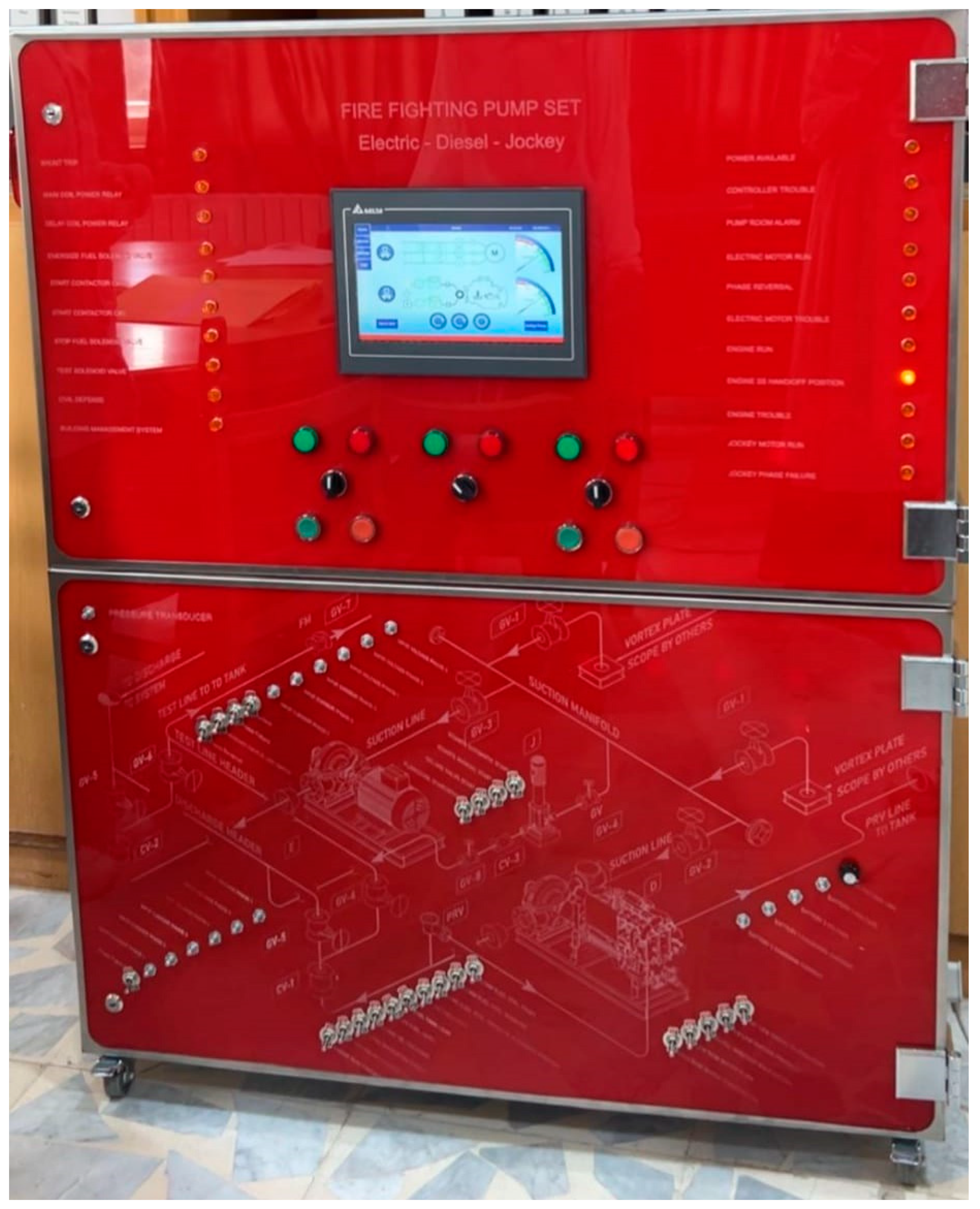
The mechanical layout of the kit provides a visual representation of the arrangement of electrical components within the system, showcasing their placement and interaction. Detailed mechanical drawings will be provided, illustrating the three-dimensional organization of these electrical components, offering a clear understanding of the system’s structure and functionality. As shown in Figure 2, the drawing illustrates the kit’s exterior view. It offers a detailed view of the kit’s dimensions, enabling the user to arrange the main walls correctly based on the maximum depth of the internal components prior to assembly.
Figure 2. External view of the fire pump safety kit.

3.2. Electrical Components

In fire safety, the electrical blueprint of an integrated fire system kit is crucial. It serves as a detailed map, illustrating how electrical components such as fuses, circuit breakers, and relays interact to detect fires, trigger alarms, and activate sprinklers, safeguarding buildings from fire hazards. A comprehensive understanding of the placement and connection of wires, sensors, and switches is key to grasping the control panel’s operation and its importance in fire protection. Key components include:
  • Fuses: These serve as a safety mechanism, protecting circuits from overloads by breaking under excessive current. While cost-effective, the need for fuse replacement increases operational costs compared to circuit breakers, which can be reset.
  • Circuit Breakers: Circuit breakers provide protection from overcurrent and can be manually or automatically reset after a disruption. This makes them an efficient alternative to fuses in high-maintenance environments.
  • Relays: Acting as electronically controlled switches, relays manage the flow of electricity by opening and closing circuits. They are widely used in control panels, building automation, and manufacturing to manage power and ensure equipment protection.
  • Power Supplies: These are the backbone of the electrical system, providing the necessary voltage and current to keep devices running smoothly and reliably.
To ensure proper alignment and connection within the control panel, rails are used to organize and secure electrical components such as circuit breakers and relays. Additionally, trunks that serve as larger cables or conductors facilitate efficient power and signal transmission between different components of the system, ensuring seamless power distribution throughout the control panel. Together, these components form the backbone of the fire kit’s electrical design, contributing to its overall effectiveness in protecting buildings from fire hazards.

3.3. Software Implementation

To enable effective monitoring and control of the system, operators must easily identify component statuses and make informed decisions to ensure optimal system performance. The PLC functions as the control system, continuously monitoring the status of connected devices and managing inputs and outputs based on a user-defined program.
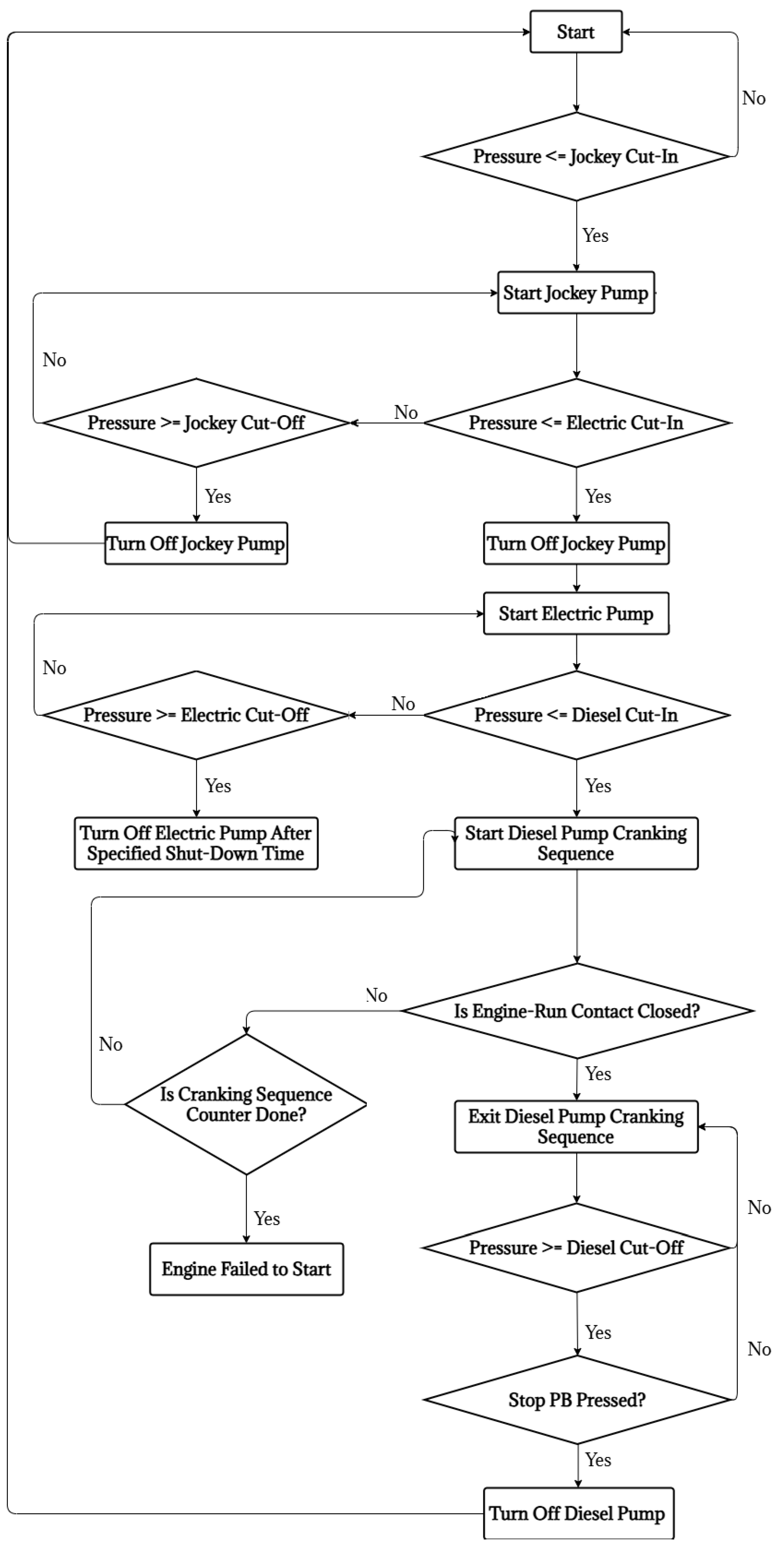
The PLC software (ISPSoft 3.16) is responsible for controlling the pump operating sequence and defining the alarm trigger conditions for each pump. To clarify this operational logic, a flowchart is presented in Figure 3.
Figure 3. PLC software flowchart showing the main control and decision processes.
The fire pump system consists of three primary pumps:
  • Jockey pump: This pump operates automatically when minor pressure drops (e.g., leaks) occur. It can also be manually activated using external push buttons.
  • Main electric pump: It is the primary pump that is activated when the system pressure drops below the predefined cut-in value. If the pump fails to start or is unable to maintain sufficient pressure, the diesel pump is initiated as a backup.
  • Diesel pump: In case the electric pump fails or does not provide sufficient pressure, the diesel pump engages once the pressure drops below its cut-in threshold. The cranking sequence starts, and the diesel engine continues to run until the system pressure is restored or a failure condition is detected.
Shutdown of the diesel pump is restricted to critical fault conditions, such as engine overspeed or low suction pressure. All other fault conditions generate alarms without initiating pump shutdown and require operator intervention. In addition, regular weekly test runs are implemented to ensure pump readiness and to prevent mechanical issues associated with prolonged idle periods.
Alarms are categorized into electric pump alarms, diesel pump alarms, jockey pump alarms, general alarms, and warnings, enabling operators monitor system performance and respond promptly to abnormal conditions.

4. Results

A functional educational fire safety kit has been developed to bridge the gap between theoretical knowledge and practical experience in fire safety and automation systems. Designed to simulate real-world fire safety scenarios, the kit incorporates key components such as PLCs and HMIs, providing hands-on experience for learners.

4.1. Functional Tests

The developed prototype has been tested successfully by fire safety experts and practically used in the training program. This is achieved through the integration of the Human–Machine Interface (HMI) and Programmable Logic Controller (PLC). The HMI serves as an interactive platform, facilitating communication and interaction between operators and the system.
Together, the HMI and PLC work in harmony to optimize system performance and streamline operations. In designing the Human–Machine Interface (HMI) for the fire kit control panel, we prioritized clarity, usability, and visual ergonomics. A well-defined color scheme was employed to improve readability and quickly convey critical information. Static elements are presented in grayscale, while dynamic data and alarms are highlighted with selective color to ensure immediate recognition. The interface design aims to minimize visual clutter, enhancing operator focus and reducing cognitive load. Animations, such as blinking elements, are strategically used to draw attention to high-priority issues, and all text is legible to facilitate clear communication.
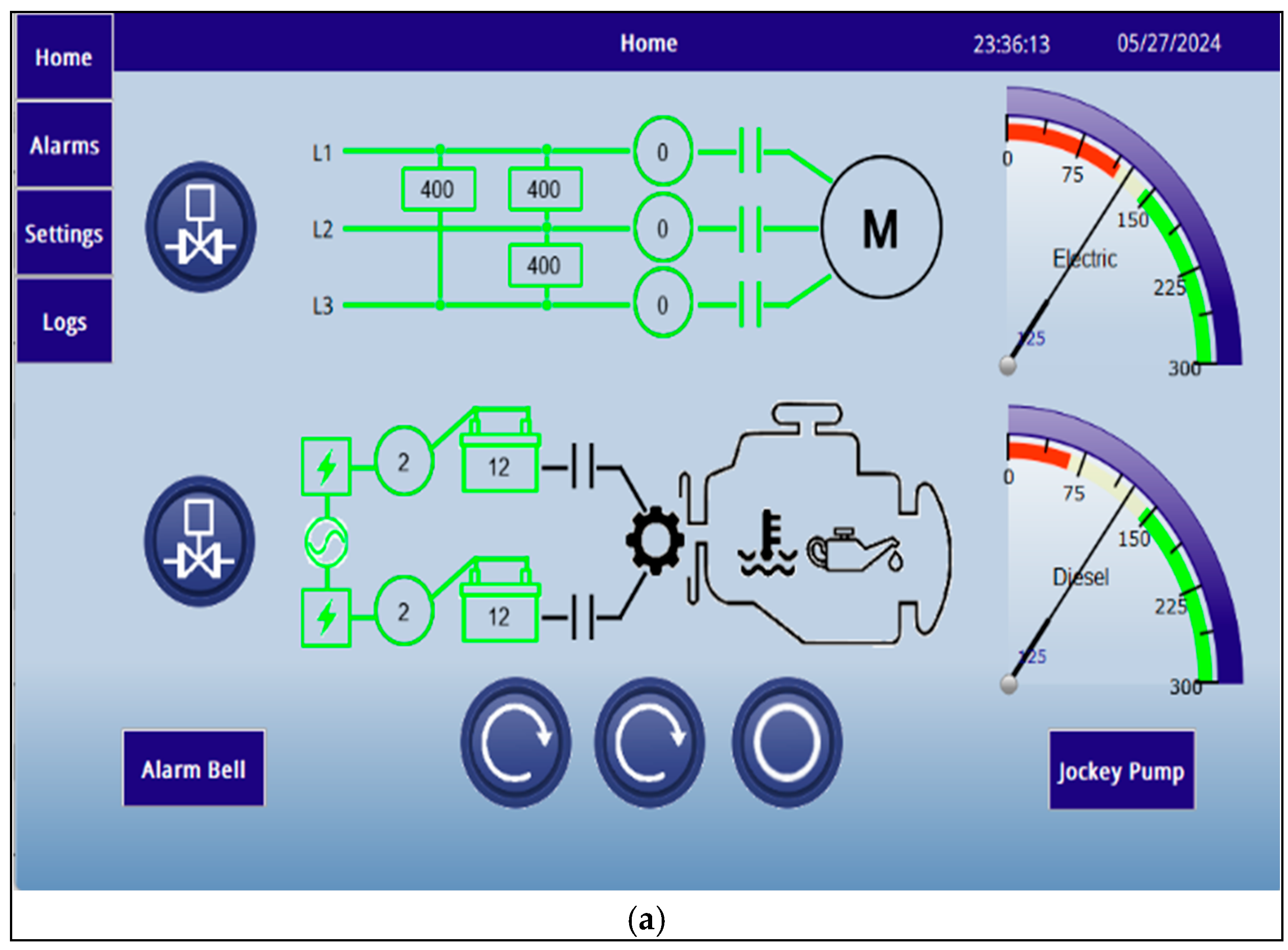
The HMI consists of four main pages. Each page has specific functions that contribute to the overall functionality of the system:
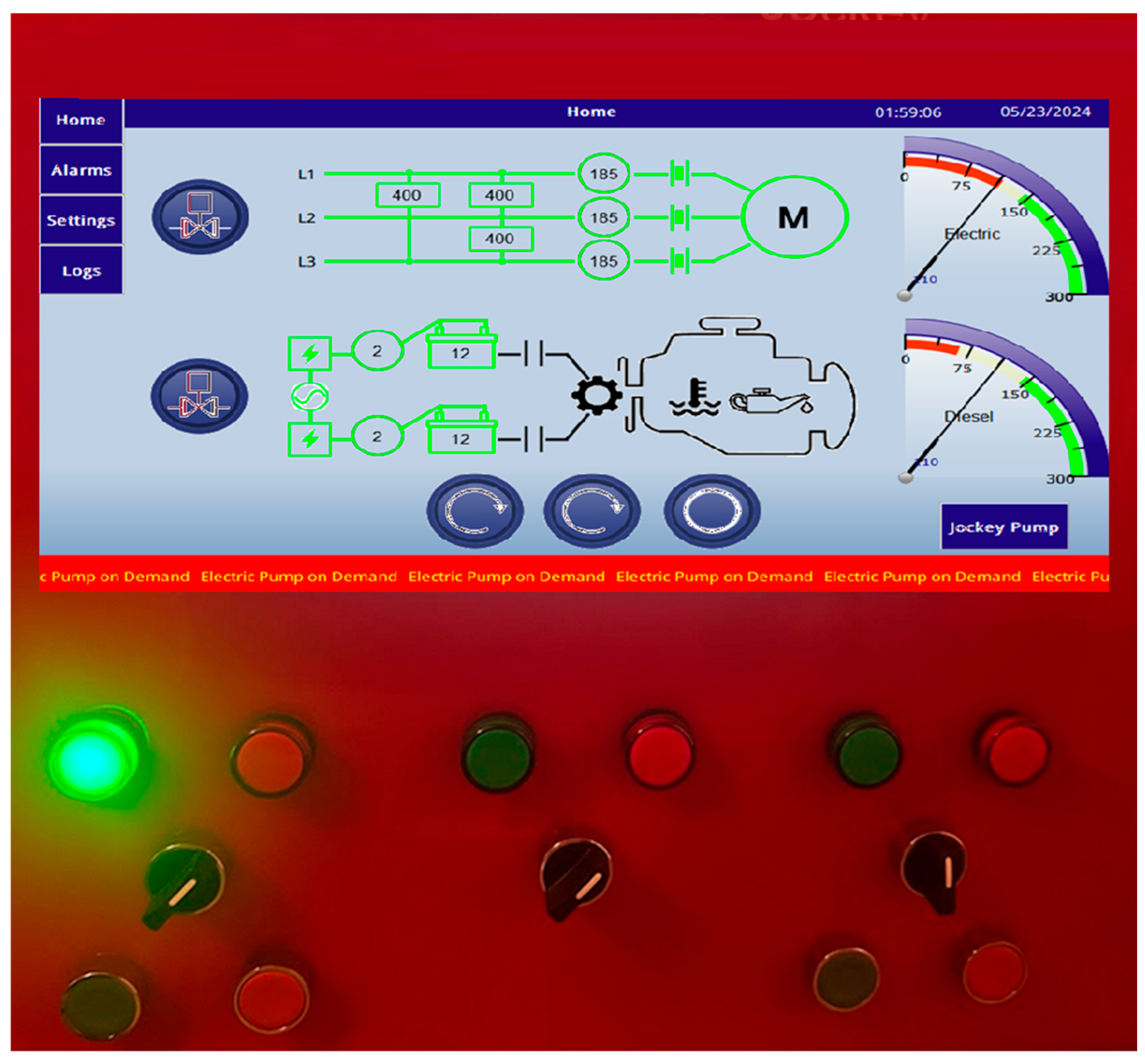
  • Home: Displays representations of the electric motor and diesel engine, including line currents, voltages, and pressure meters for the pumps. Manual control buttons for the diesel engine and a red alarm ribbon are included.
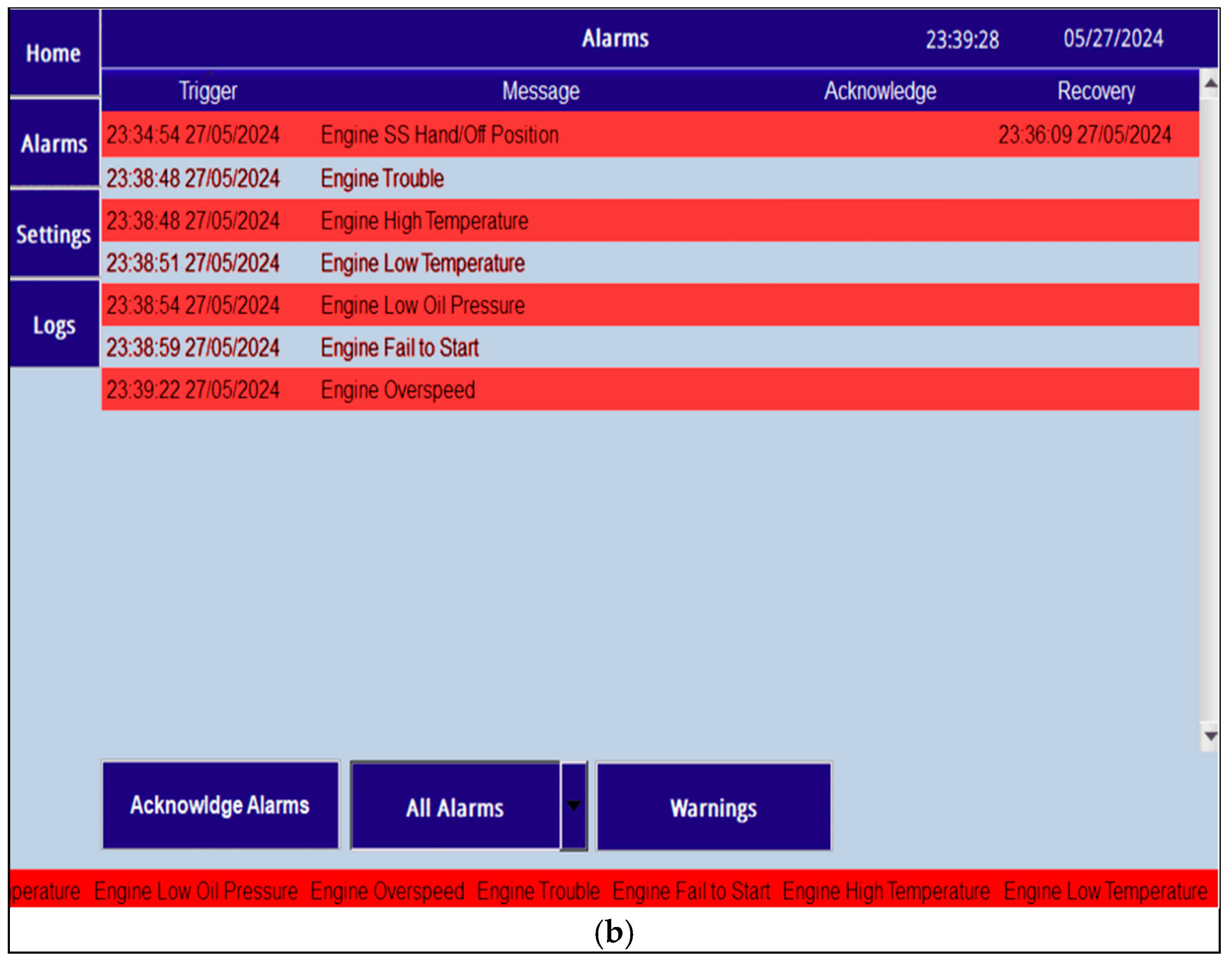
  • Alarms: A table lists current and previous alarms, with an option to acknowledge all alarms.
  • Settings: Contains subpages for setting parameters for the electric, diesel, and jockey pumps, such as cut-in/cut-out pressures and test durations.
  • Logs: A log page displays system and HMI changes during operation for record-keeping and analysis.
The Home and Alarms pages are illustrated in Figure 4a and Figure 4b, respectively.
Figure 4. Sample HMI GUI screenshots: (a) Homepage; (b) Alarms page.

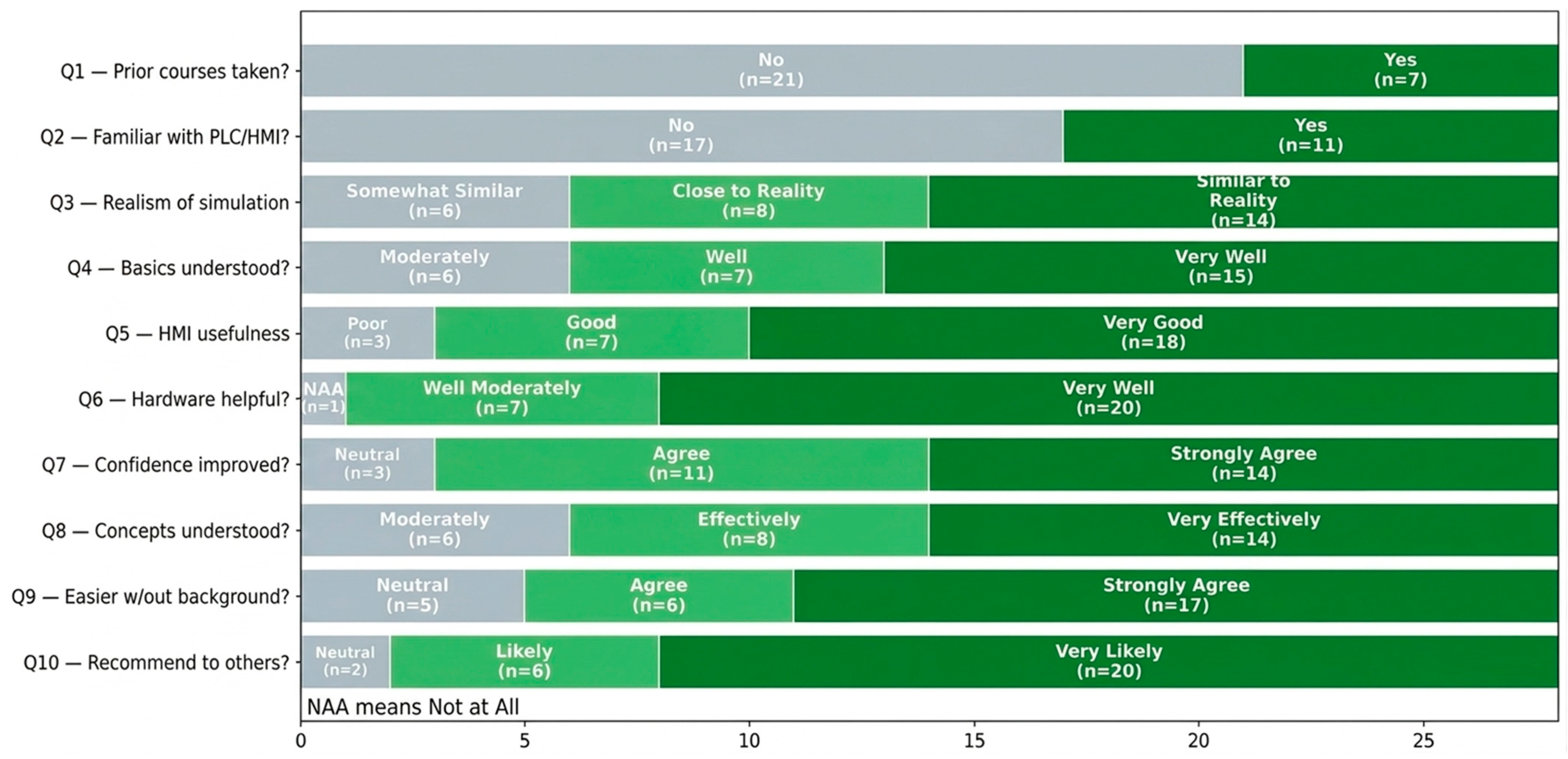
4.2. Feasibility and Acceptability Assessment

The feasibility and user acceptability of the developed kit were assessed through training sessions conducted in Jordan, involving three participant groups:
  • Group I consisted of undergraduate engineering students (ages 19–22) with no prior coursework or experience in fire protection.
  • Group II consisted of graduate students and certified technicians (ages 23–30) who had completed fire safety training or held relevant certifications.
  • Group III consisted primarily of faculty members and lab coordinators (ages 25–59) who used the kit in their teaching curriculum.
A total of 108 participants contributed to the survey. These participants were drawn from the University of Jordan and multiple industrial automation training companies across Jordan, and were categorized into the three subgroups based on their background and experience levels, as detailed in Table 1. The survey aimed to collect feedback on the usability and acceptance of the developed kit, evaluate its effectiveness in enhancing learning outcomes, and determine its overall contribution to understanding fire safety systems and automation technologies. The responses were analyzed to identify trends in user engagement, clarity of content delivery, and the perceived educational value of the kit across all participant categories.
Table 1. Participants’ groups.

4.2.1. Group 1—Student Responses Lacking Prior Fire Safety and Automation Experience

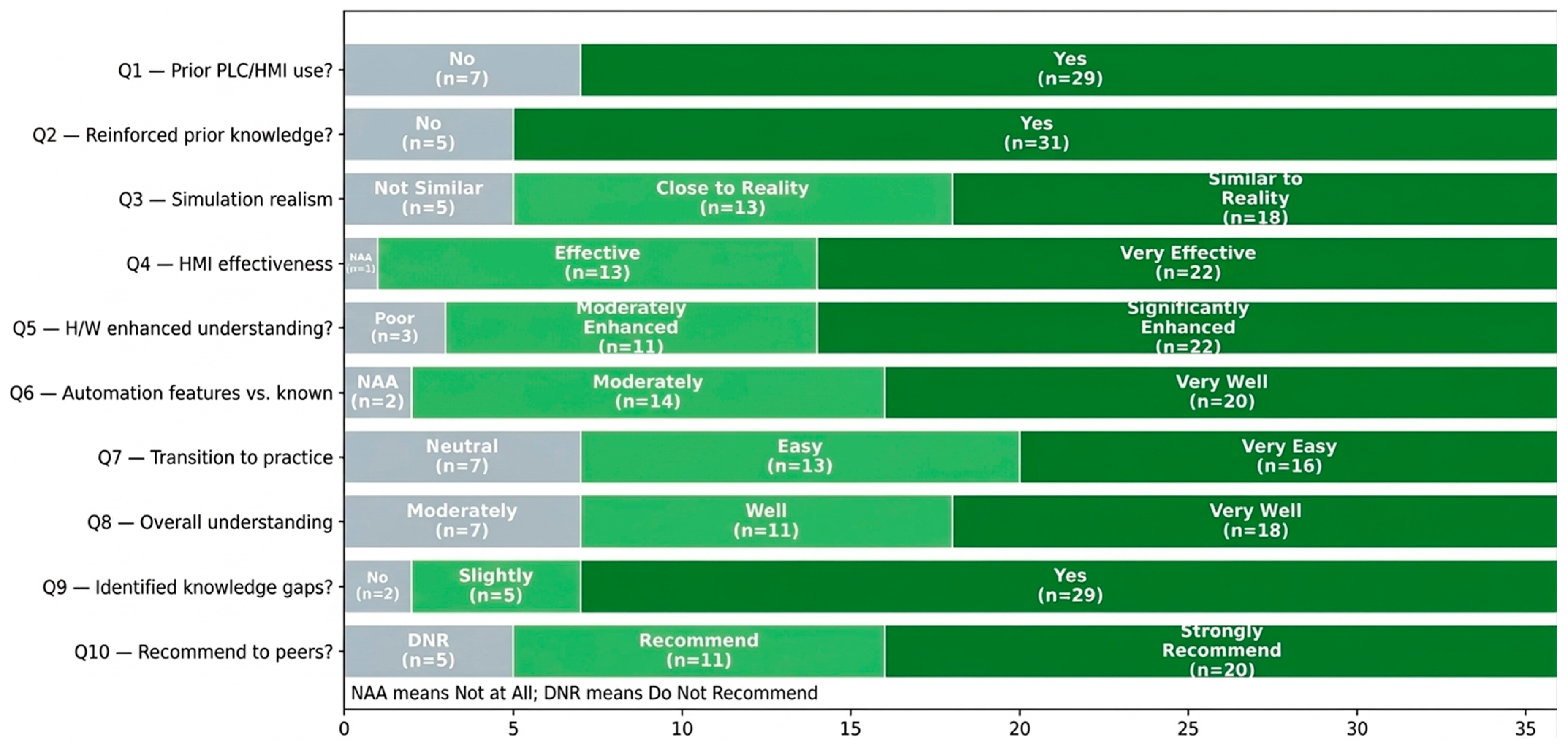
The first group that took part in the feasibility and acceptability assessment, illustrated in Figure 5, involved participants with no prior background in fire safety or automation. These students were selected to evaluate the educational value of the fire safety kit when introduced to learners encountering automation and fire protection systems for the first time. Their feedback is critical in measuring the kit’s success as an introductory educational tool.
Figure 5. Survey responses from Group 1 students lacking a prior fire safety and automation background.
Based on the responses collected, 78.6% of the students indicated they had not taken any courses related to fire safety systems or automation prior to using the kit, while only 21.4% reported having such prior exposure. This finding affirms that the majority of participants were encountering the core concepts of PLCs, HMIs, and automated fire safety systems for the first time during the kit-based training experience. Likewise, 57.1% reported being unfamiliar with Programmable Logic Controllers (PLCs) or Human–Machine Interfaces (HMIs) before the session began. This level of inexperience highlights the importance of designing educational materials that are both accessible and intuitive for beginners.
Despite their lack of prior knowledge, the kit appeared to provide an effective and engaging introduction to fire safety systems. When asked how closely the system simulated real-life fire scenarios, 57.1% responded that it was “Similar to reality”, while 21.4% believed it was “Close to reality” and another 21.4% viewed it as “Somewhat similar.” Notably, no participants selected the lower-end options of “Not similar” or “No resemblance to reality.” These results suggest that even novice users recognized the kit as an authentic and realistic representation of practical fire safety environments. This realism is critical to bridging the gap between theory and practice in engineering education.
A significant strength of the kit is the inclusion of the Human–Machine Interface (HMI), which provides students with an interactive method to observe and manage system behavior. According to the survey, 64.3% of participants reported that the HMI had a “Very good” impact on their understanding of system control and remote monitoring, while 28.6% found it “Good.” Only 7.1% rated the impact poorly. This feedback emphasizes the HMI’s central role in enhancing digital literacy and operational understanding among students new to automation technologies.
The kit’s hardware components, including sensors, relays, and actuators, also contributed positively to the learning process. An overwhelming 71.4% of respondents stated that the hardware components helped them understand how fire safety systems function “Very well,” while 21.4% selected “Well/Moderately.” Only 7.1% chose “Not at all,” which may suggest isolated cases of difficulty or confusion—possibly due to limited prior technical experience. Nevertheless, these responses reflect the overall success of the kit’s hardware interface in fostering system-level comprehension.
Regarding student confidence, 50% of participants strongly agreed that using the kit increased their confidence in understanding fire safety concepts and automation, and 42.9% agreed. Only 7.1% selected “Neutral,” and no participants expressed disagreement. This indicates that hands-on, experiential learning using real-world components successfully boosted the students’ assurance in their abilities and knowledge, even in entry-level contexts. These ratings strongly affirm the educational value of the system in transmitting basic principles and providing an intuitive introduction to complex topics like system logic, interlocks, alarms, and automated responses.
Finally, the recommendation metric was very strong. 71.4% of participants indicated they were “Very likely” to recommend this kit to other students without a background in fire safety and automation, and 21.4% responded “Likely.” Only 7.1% selected “Neutral,” and none indicated reluctance to recommend the kit. This level of satisfaction and endorsement reflects a high degree of perceived value and learning impact.

4.2.2. Group 2—Student Responses with Previous Experience Fire Safety and Automation Background

The second group in the feasibility and acceptability assessment, shown in Figure 6, consisted of students who had prior exposure to fire safety systems and automation technologies. These participants provided insight into how the educational fire safety kit complemented or expanded upon their existing knowledge base. Evaluating this group’s responses was essential for determining the kit’s value in reinforcing previously learned concepts and its ability to deliver more advanced or real-world educational experiences.
Figure 6. Survey responses from Group 2 students with a previous fire safety and automation background.
From the survey, 80% of participants indicated they had previously used PLC or HMI-based systems before interacting with the kit, while 20% had not. This suggests that the majority were not encountering the technology for the first time but instead used the kit to consolidate their learning or engage with fire automation systems in a more structured environment. Because this group came in with some expectations of how such systems should operate, their feedback provides a benchmark for assessing how realistically and functionally the kit simulates actual field conditions.
When asked whether the kit helped reinforce their prior knowledge, the responses were largely favorable: 55% of students strongly agreed, and 30% agreed, while only 10% remained neutral and 5% disagreed. These results indicate that for 85% of the students, the kit supported or expanded on their pre-existing understanding. This reinforces the kit’s value not only as an introductory tool but also as a means to deepen comprehension through experiential learning.
A key metric for advanced users was the realism of the system simulation. According to the results, 45% rated the simulation as “Similar to reality,” 30% as “Close to reality,” and 20% as “Somewhat similar.” Only 5% selected “Not similar,” and none found the kit completely unrealistic. These ratings suggest a high level of fidelity, with nearly all participants recognizing the simulation as a credible representation of real-world fire safety automation systems. The few who were less satisfied with the realism may have had exposure to more complex systems in the field or were expecting scenarios involving broader automation features such as SCADA or remote alarms.
The use of the Human–Machine Interface (HMI) proved to be one of the most appreciated components in this group. A combined 100% of students rated the HMI as either “Very effective” (60%) or “Effective” (40%) in monitoring and controlling system components such as pumps and alarms. This full approval reflects the kit’s ability to replicate key interface interactions students might face in industrial or building automation settings. Additionally, it underscores the design’s success in enabling students to make informed decisions, read sensor feedback, acknowledge alarms, and test equipment behavior—all in real time.
Another core strength of the system was its physical hardware components. When asked if components like sensors, relays, and pumps enhanced their understanding of real-world fire systems, 60% of students said the experience “Significantly enhanced” their understanding, while 35% selected “Moderately enhanced.” Only 5% selected “Confusing,” with no participants saying the kit had no educational effect. These numbers reflect the kit’s role in turning theoretical wiring diagrams and device functions into tangible actions. The few who found it confusing might have encountered issues with interpreting signal behavior or logic wiring, which could be addressed with expanded documentation or instructor-led demonstrations.
The kit also appeared to improve students’ ability to identify system failures and maintenance needs, a critical skill in real fire system diagnostics. A total of 65% strongly agreed that the kit increased their fault-identification capabilities, with an additional 30% agreeing and only 5% remaining neutral. This is especially important in the context of automation, where identifying pressure failures, circuit breaks, phase loss, or diesel pump faults quickly can prevent catastrophic outcomes. Students likely gained experience navigating through alarm logic, interpreting visual indicators, and simulating pump failures to test response logic.
The transition from theoretical to practical understanding is often a challenge for engineering students, but this kit made that transition easier for most. A total of 40% of students rated the transition as “Very easy,” 30% as “Easy,” and the remaining 30% as “Neutral.” No one reported it as difficult. This shows that the kit helped bridge the gap between lecture-based learning and hands-on skills, a gap that is frequently cited in engineering pedagogy literature. The interface, system logic, and layout appear to have made it easier for students to apply their textbook knowledge in a physical setting.
When asked how the kit’s automation features compared to systems they had previously encountered, 50% of respondents said “Very well,” 30% said “Well,” 15% said “Moderately,” and 5% said “Slightly.” These results indicate that for most users, the kit was consistent with what they had experienced before—perhaps in industrial training sessions or co-op environments. For those who rated it as less comparable, further expansion into advanced features such as remote connectivity, fire panel integration, or multi-zone control might align more closely with their expectations.
One particularly promising result came from the question about whether the kit helped students identify gaps in their prior knowledge. An overwhelming 95% responded “Yes,” while only 5% were neutral. This finding is a testament to the educational value of combining physical system exposure with thoughtful design—by interacting directly with real sensors, visual interfaces, and pump logic, students discovered holes in their understanding that theoretical courses alone may not reveal.
Finally, when asked whether they would recommend the kit to students who already have experience in fire safety and automation, 65% said they would “Strongly recommend” it, and 35% said they would “Recommend” it. None were neutral or negative. This 100% endorsement from experienced students validates the kit as a multi-level teaching resource capable of serving both novices and those preparing to enter the industry.

4.2.3. Group 3—Feedback from Instructors Using the Kit for Teaching

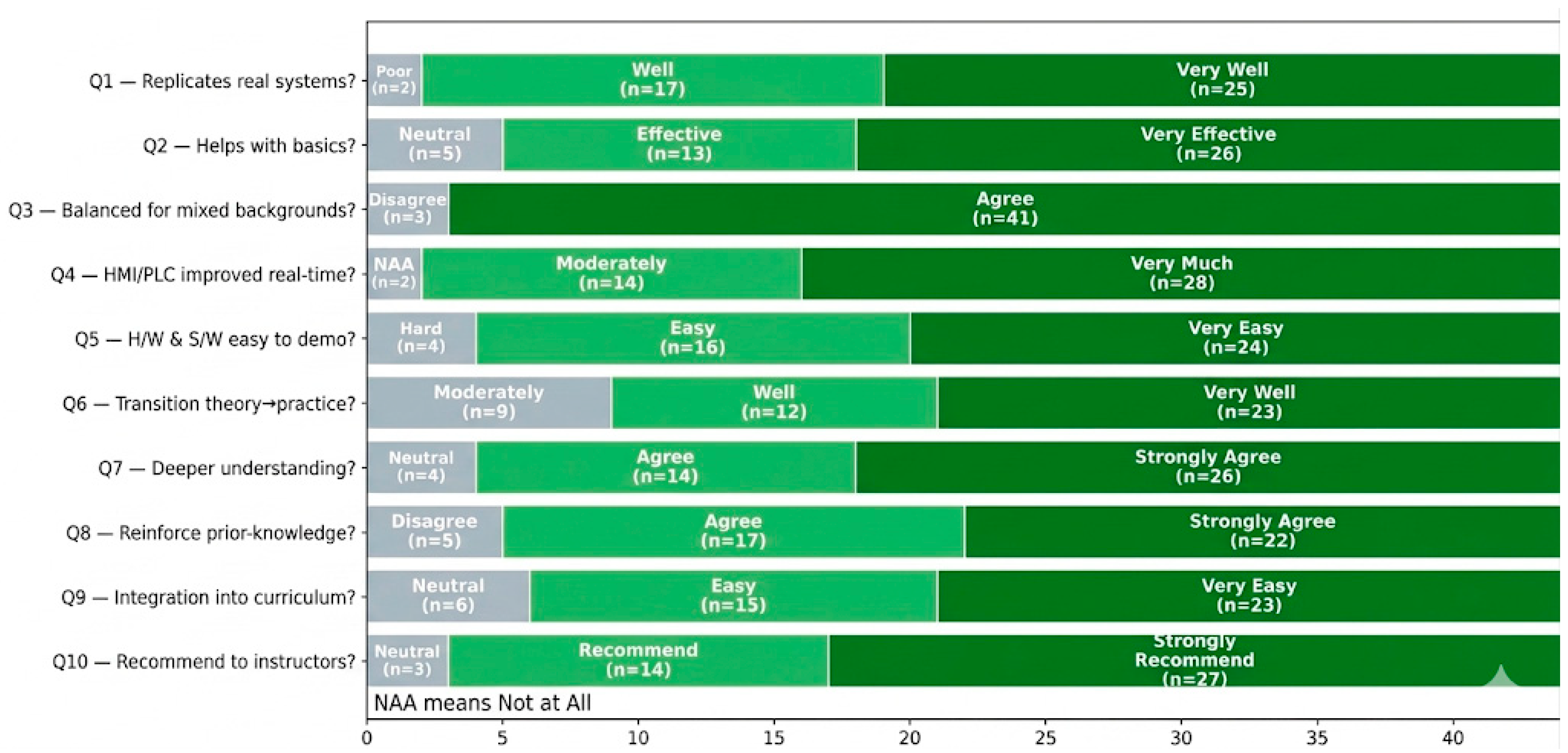
The third group in this evaluation, presented in Figure 7, consisted of instructors who actively used the educational fire safety kit within their teaching environments. Their feedback offers a critical perspective on the kit’s pedagogical value, usability in a curriculum, and overall effectiveness in conveying fire safety and automation concepts. Instructors play a pivotal role in bridging theory and practice for students, making their insights essential in evaluating how well the kit performs as a hands-on teaching tool.
Figure 7. Survey responses from Group 3 instructors using the kit for teaching.
When asked how well the kit replicates real-life fire safety and automation systems in an educational setting, all instructors provided positive responses, with 42.9% indicating “Very well” and 57.1% choosing “Well.” Not a single respondent selected any of the lower ratings (Moderately, Poorly, or Very Poorly), confirming that the kit provides an accurate and relevant representation of field systems. These results validate the kit’s practical design, which aims to mirror industrial standards while remaining accessible for academic use.
The next question addressed the effectiveness of the kit in helping students—both with and without prior knowledge—understand the basic concepts of fire safety systems. A total of 57.1% of instructors rated the kit as “Very effective,” and another 35.7% as “Effective.” Only 7.1% were neutral, and no one reported it as ineffective. This high level of effectiveness reflects the kit’s ability to support differentiated instruction, catering to both beginners and more experienced students by offering multiple layers of learning, from basic pump logic to integrated HMI-PLC automation.
When asked if the kit provided a balanced learning experience for students with varying levels of prior knowledge, instructors unanimously agreed: 50% “Strongly agreed” and 50% “Agreed.” This balanced response highlights the flexibility and inclusiveness of the kit design. Whether a student is new to automation or has prior lab experience, the system’s layout, component accessibility, and adjustable complexity allow instructors to tailor activities that suit all learners. This is especially important in multidisciplinary classrooms where not all students may have the same foundational exposure to control systems or fire engineering.
The integration of the HMI and PLC was another important aspect evaluated by instructors. All agreed on its instructional value, with 50% saying it improved comprehension “Very much” and the remaining 50% choosing “Moderately.” These figures suggest that the combination of HMI and PLC helped students grasp core ideas of real-time monitoring, remote control, feedback loops, and status indication—features that are not easily conveyed through textbooks alone. The live visualization of pump operation, alarm conditions, and pressure readings, all facilitated through the HMI, adds a practical dimension that traditional teaching methods often lack.
Regarding the ease of demonstrating the kit’s components, 50% of instructors rated it as “Very easy” and 50% as “Easy.” None found it difficult to explain or showcase. This indicates that the kit’s layout, labeling, and documentation are well-aligned with educational use. Features like pre-configured wiring, visual indicators, manual/auto selectors, and clearly defined I/O ports simplify demonstrations, allowing instructors to focus on teaching rather than troubleshooting hardware.
The instructors also evaluated the kit’s ability to help students move from theoretical knowledge to practical hands-on application. Here, 50% reported the transition as “Very well,” 42.9% as “Well,” and 7.1% as “Moderately.” These results highlight the kit’s strength in reinforcing classroom lectures with interactive experiences. From writing ladder logic and uploading it to the PLC to interacting with the HMI and observing system responses, students are empowered to test what they have learned in real-world simulations.
Importantly, instructors also reported on how well the kit helped students with no prior background gain a deeper understanding of fire safety automation. A total of 57.1% “Strongly agreed” and 35.7% “Agreed,” with only 7.1% remaining neutral. These results suggest the kit’s beginner-friendly nature is strong, particularly in demonstrating foundational concepts like pump sequencing, pressure monitoring, alarm triggering, and failover logic. The consistent layout and color-coded indicators likely made the learning curve more manageable for newcomers.
In parallel, instructors also affirmed the kit’s utility for students who already had prior knowledge. Half (50%) strongly agreed and half (50%) agreed that the kit successfully challenged and reinforced the knowledge of advanced learners. This is significant because it confirms that the kit is not too simplistic for experienced users. Features like a diesel pump cranking simulation, engine fault detection, and manual override operations give students with a background in automation or fire safety a space to test and refine their knowledge.
The survey also inquired about how easily instructors were able to integrate the kit into their lesson plans or curriculum. A total of 28.6% found it “Very easy,” 50% “Easy,” and 21.4% “Neutral.” These numbers suggest that while most instructors faced no issues incorporating the kit into their existing teaching frameworks, a small group may benefit from more structured lesson plans, tutorials, or pre-written lab exercises. Offering downloadable instructional packages or sample experiments could improve this integration even further.
Lastly, instructors were asked whether they would recommend the kit to other educators. The response was highly favorable: 50% said they would “Strongly recommend” the kit, 28.6% would “Recommend” it, and 21.4% remained neutral. No instructor selected a negative response. This shows strong confidence in the kit’s ability to enhance engineering education, and it also supports future scalability across institutions or departments.
During the hands-on session, students carry out a step-by-step simulation of real-world fire pump operations to gain a practical understanding of system behavior. The exercise begins with students verifying the status and operation of all pumps in manual mode, ensuring familiarity with basic controls. They then switch the system to automatic mode and gradually reduce system pressure to reach the jockey pump’s cut-in threshold of 125 psi. When the jockey pump activates, students observe its operation and then restore pressure to witness its automatic shutdown.
Afterwards, the jockey pump is turned off, and system pressure is further reduced until the main electric pump engages automatically at its designated cut-in point, as illustrated in Figure 8. Throughout this process, students directly experience the principles of pressure-based control logic, pump sequencing, and the fail-safe behavior of fire protection systems. The session reinforces how the system prioritizes pumps, responds to pressure variations, and triggers alarms under fault conditions, all within a safe and controlled learning environment. By simulating both normal and backup operation scenarios, students gain hands-on insight into operational decision-making and troubleshooting strategies used in real fire protection systems.

Figure 8. An example of the final output during automatic mode with the electric pump running.

5. Discussion

The results from this study demonstrate the effectiveness of the educational fire safety kit in improving both students’ understanding and practical skills related to fire safety and automation. The survey data, gathered from students with and without prior background in automation, as well as from instructors, provide valuable insights into how the kit enhances learning outcomes, promotes hands-on experience, and bridges the gap between theory and practice. These findings highlight the kit’s significance in fostering a deeper understanding of fire safety systems and automation technologies in educational settings.
While this study emphasizes the design and practical implementation of the educational kit, the user feedback provides valuable insight into its perceived value. Notably, both novice and experienced students found the simulation realistic (79% and 86%, respectively), suggesting the interface successfully bridges theory and practice regardless of background. Instructors strongly endorsed its teaching utility, with 89% rating it “Effective” or “Very Effective.” The consistency of positive responses across diverse users, students with no prior exposure, those with fire safety experience, and professional educators, supports the conclusion that the kit is accessible, engaging, and pedagogically sound.
The educational fire safety kit has strong potential for application in engineering laboratory courses. It offers students a hands-on experience that closely simulates real-world fire safety systems, thereby improving both their theoretical knowledge and practical skills. The kit’s integration of Human–Machine Interface (HMI) and Programmable Logic Controller (PLC) technology is particularly beneficial in preparing students for industry standards, exposing them to tools and systems they are likely to encounter in professional environments. Furthermore, the kit is equally effective for students with varying levels of prior knowledge, making it a scalable and versatile tool for fire safety education at different stages of learning.
One limitation of the study is that although the kit is highly functional and effective for educational purposes, some feedback indicated that its size is relatively large for a typical educational tool. This may present logistical challenges for classroom use, such as space constraints or ease of transportation. Future iterations could explore more compact designs without compromising the system’s ability to simulate real-world fire safety scenarios. Nevertheless, the kit remains user-friendly and provides a comprehensive, hands-on learning experience for students.
This study underscores the practical applications of the fire safety kit in educational environments. By offering a realistic simulation of fire safety systems, the kit enables students to bridge the gap between theoretical concepts and practical applications. Instructors can use the kit to demonstrate key principles of fire safety and automation, ensuring that students not only understand the material but also gain valuable hands-on experience that prepares them for real-world situations. The kit’s practical benefits make it a valuable resource for both students and instructors, enhancing the overall educational experience in fire safety and automation.

6. Conclusions

This study demonstrates the successful design and implementation of an educational fire safety kit that integrates Programmable Logic Controllers (PLCs) and Human–Machine Interfaces (HMIs) to provide hands-on experience with fire safety systems. By simulating real-world fire emergencies, the kit effectively bridges the gap between theoretical knowledge and practical skills, preparing students for the demands of modern fire safety engineering and automation technologies. The results from the survey reveal that the kit significantly enhances student understanding, even for those with no prior experience in automation. It also reinforces the knowledge of students with prior experience, while instructors found the kit useful for conveying critical concepts and providing a balanced learning experience.
The positive feedback from over 100 users, including students with no prior exposure, those with fire safety experience, and professional instructors, demonstrates that the kit successfully bridges theory and practice. Notably, realism, usability, and teaching effectiveness were consistently rated highly across all groups, suggesting the design is both accessible to beginners and valuable for advanced learners. While this work focuses on the development and educational integration of the system, this broad consensus reinforces its potential as a practical, low-cost solution for fire safety education in academic and vocational settings.
Future research will explore the long-term impact of using the fire safety kit on student retention and the application of knowledge. Assessing how the kit performs in different educational settings, such as vocational schools or professional training programs, could also provide valuable insights into its versatility. Additionally, expanding the kit to include more advanced fire safety scenarios or integrating further automation features could enhance its educational value for students with higher levels of expertise. Despite minor limitations, such as the kit’s relatively large size for classroom use, its educational value and practical applications make it a valuable tool for fire safety education across various learning environments.

Author Contributions

Conceptualization, M.A.-Y.; methodology, M.A. (Miral AlMashayeikh) and M.A. (Majd AlFedailat); software, M.A. (Miral AlMashayeikh); validation, M.A.-Y., A.M.A.M. and M.A.-T.; formal analysis, M.A. (Majd AlFedailat); investigation, A.M.A.M.; resources, M.A.-Y.; data curation, M.A. (Majd AlFedailat); writing—original draft preparation, M.A. (Miral AlMashayeikh); writing—review and editing, M.A.-T.; visualization, A.M.A.M.; supervision, M.A.-T.; project administration, M.A.-Y. All authors have read and agreed to the published version of the manuscript.

Funding

This research received no external funding.

Data Availability Statement

Data is available upon request.

Acknowledgments

We would like to extend our sincere gratitude to all individuals who contributed to the successful completion of this work. Special thanks are due to the instructors and students at the University of Jordan, and King Abdullah University of Science and Technology for their valuable participation in the survey and the insightful feedback they provided.

Conflicts of Interest

The authors declare no conflicts of interest.

References

  1. Babiker, L.M.A.; Awouda, A.E. PLC Based Fire-Fighting Pumps Control. Master’s Thesis, Sudan University of Science and Technology, Khartoum, Sudan, 2017. Available online: https://repository.sustech.edu/handle/123456789/18763 (accessed on 4 February 2024).
  2. National Fire Protection Association. Fire Loss in the United States During. 2024. Available online: https://www.nfpa.org/education-and-research/research/nfpa-research/fire-statistical-reports/fire-loss-in-the-united-states (accessed on 12 January 2026).
  3. Ruhrpumpen Fire Pumps. Available online: https://www.ruhrpumpen.com/en/products/fire/packaged-fire-systems.html (accessed on 1 March 2026).
  4. Negi, P.; Pathani, A.; Bhatt, B.C.; Swami, S.; Singh, R.; Gehlot, A.; Thakur, A.K.; Gupta, L.R.; Priyadarshi, N.; Twala, B.; et al. Integration of Industry 4.0 Technologies in Fire and Safety Management. Fire 2024, 7, 335. [Google Scholar] [CrossRef]
  5. Ojochide, A.H.; Haruna, Z.; Yusuf, S. Industrial Automation of Fire-Fighting System with the Aid of Programmable Logic Controller PLC: A Technical Proposal. ATBU J. Sci. Technol. Educ. 2023, 11, 2. [Google Scholar]
  6. Khairudin, A.R.M.; Abu-Samah, A.; Aziz, N.A.S.; Azlan, M.A.F.M.; Karim, M.H.A.; Zian, N.M. Design of Portable Industrial Automation Education Training Kit Compatible for IR 4.0. In Proceedings of the 2019 IEEE 7th Conference on Systems, Process and Control (ICSPC), Melaka, Malaysia, 13–14 December 2019; pp. 38–42. [Google Scholar] [CrossRef]
  7. Soares, F.; Leão, C.P.; Machado, J.; Carvalho, V. Experiences in Automation and Control in Engineering Education with Real-world Based Educational Kits. Sens. Transducers 2015, 193, 10. [Google Scholar]
  8. Sukir; Sa’adilah; Hartoyo; Sunaryo; Saifullizam, B.P. Performance of Trainers kits for Industrial Automation Based on Programmable Logic Controllers. J. Phys. Conf. Ser. 2021, 2111, 012040. [Google Scholar] [CrossRef]
  9. Maarif, E.S.; Suhartinah, S. Compact Portable Industrial Automation Kit for Vocational School and Industrial Training. IOP Conf. Ser. Mater. Sci. Eng. 2018, 384, 012011. [Google Scholar] [CrossRef]
  10. Das, S.; Dhar, A.; Das, A.; Gayen, P.K.; Pal, B.; Biswas, P. Design and Development of Fire Fighting System Using Hot Redundant PLC in COVID Situation. J. Phys. Conf. Ser. 2021, 1797, 012049. [Google Scholar] [CrossRef]
  11. Chamorro-Atalaya, O.; Arce-Santillan, D.; Diaz-Leyva, T.; Diaz-Choque, M. Supervision and control by SCADA of an automated fire system. Indones. J. Electr. Eng. Comput. Sci. 2021, 21, 92–100. [Google Scholar] [CrossRef]
  12. Singlar, S.; Tunlasakul, K.; Arunrungrusmi, S.; Poonthong, W.; Mungkung, N. Demonstration kit for industrial automation with PLC and HMI. In Proceedings of the International Conference on Science, Technology and Education (ICSTE 2020), Pattaya, Thailand, 16–18 September 2020; pp. 46–49. [Google Scholar]
  13. NFPA 20; Standard for the Installation of Stationary Pumps for Fire Protection. NFPA: Quincy, MA, USA, 2025.
  14. EN 12845:2015+A1:2019; Fixed Firefighting Systems—Automatic Sprinkler Systems—Design, Installation and Maintenance. European Committee for Standardization: Brussels, Belgium, 2019.
  15. Takacs, A.; Eigner, G.; Kovacs, L.; Rudas, I.J.; Haidegger, T. Teacher’s Kit: Development, Usability, and Communities of Modular Robotic Kits for Classroom Education. IEEE Robot. Automat. Mag. 2016, 23, 30–39. [Google Scholar] [CrossRef]
  16. Mahadi, M.; Amin, N.A.M.; Rahim, M.A.; Majid, M.S.A. PLC Trainer Kit Simulator: An Improvement for Automation Study in Polimas. AMM Appl. Mech. Mater. 2015, 786, 367–371. [Google Scholar] [CrossRef]
  17. Liu, H.; Liu, J.; Hu, X. Design of Safety Monitoring System for Electrical Laboratory in Colleges and Universities under the Background of Informatization. In Proceedings of the 2021 International Symposium on Advances in Informatics, Electronics and Education (ISAIEE), Frankfurt, Germany, 17–19 December 2021; pp. 276–280. [Google Scholar] [CrossRef]
  18. Li, W.; Gu, T.; Qian, L.; Leng, R. Beyond Visuals and Audio: What Is the Effect of Olfactory Stimulus in Immersive Virtual Reality Fire Safety Training? Educ. Sci. 2025, 15, 1386. [Google Scholar] [CrossRef]
Disclaimer/Publisher’s Note: The statements, opinions and data contained in all publications are solely those of the individual author(s) and contributor(s) and not of MDPI and/or the editor(s). MDPI and/or the editor(s) disclaim responsibility for any injury to people or property resulting from any ideas, methods, instructions or products referred to in the content.

Article Metrics

Citations

Article Access Statistics

Article metric data becomes available approximately 24 hours after publication online.