

Effects of Fire Source Transverse Position and Curvature Radius on the Critical Velocity and Smoke Back-Layering Length in L-Shaped Tunnels

Abstract
1. Introduction
2. Numerical Simulation Method
2.1. FDS Model
2.2. Grid Independence Test
2.3. Design of Simulation Cases
3. Theoretical Analysis
3.1. Critical Velocity
3.2. Smoke Backlayering Length
4. Results and Discussion
4.1. Critical Velocity
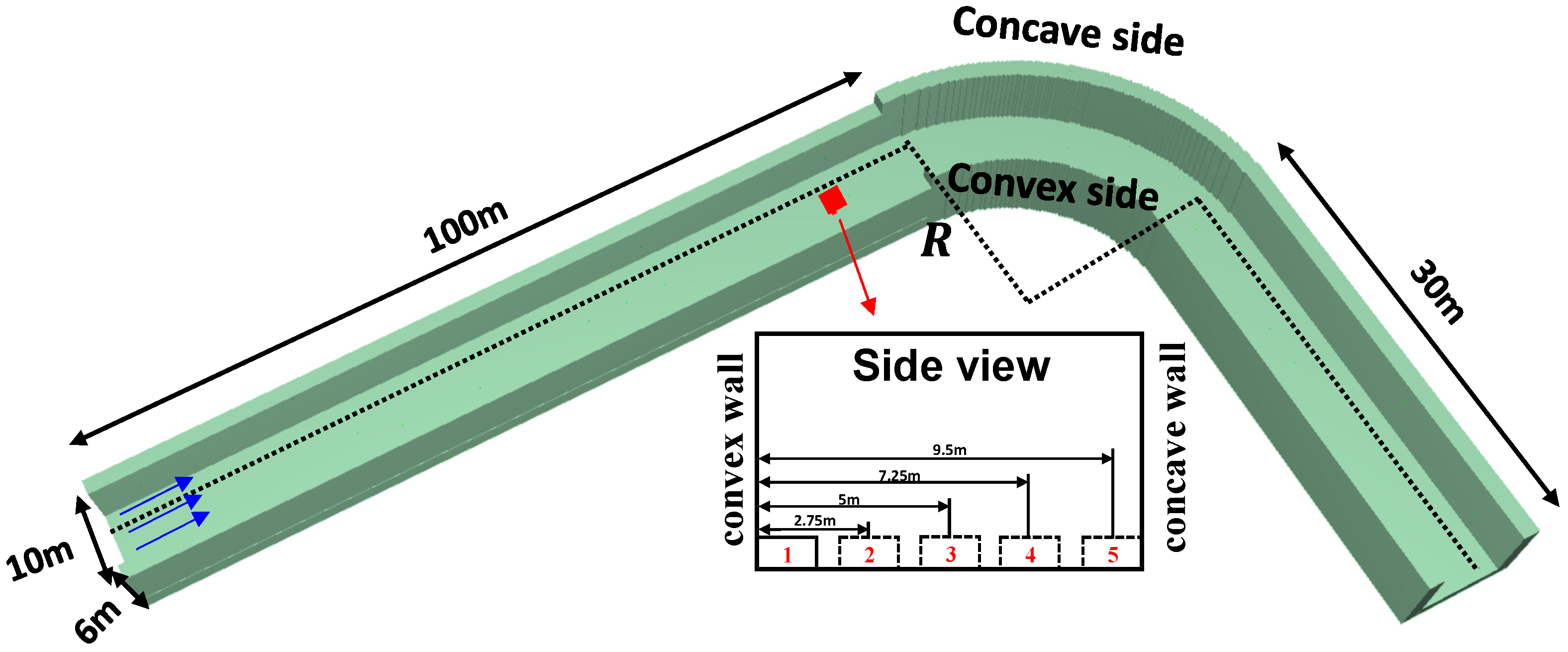
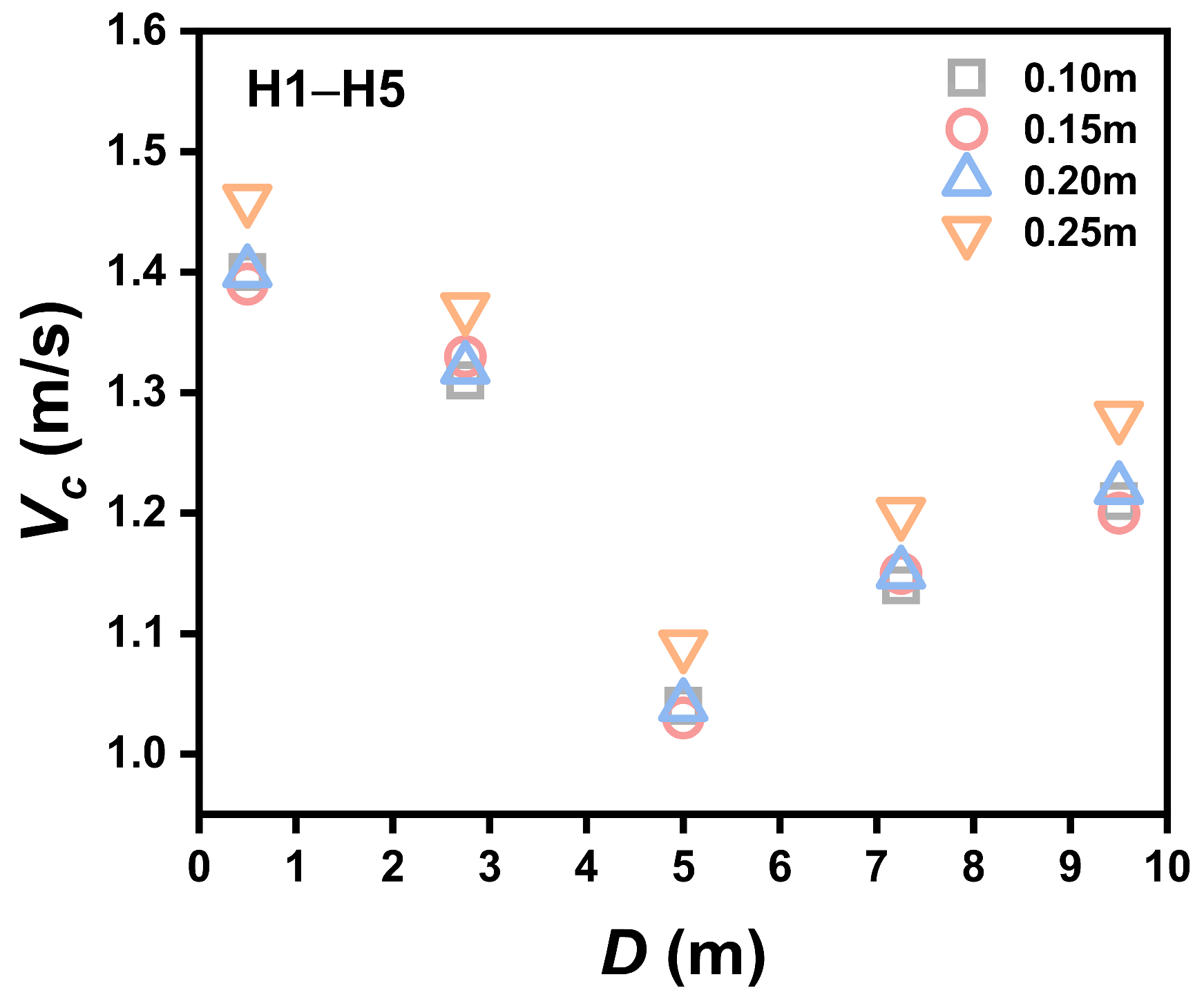
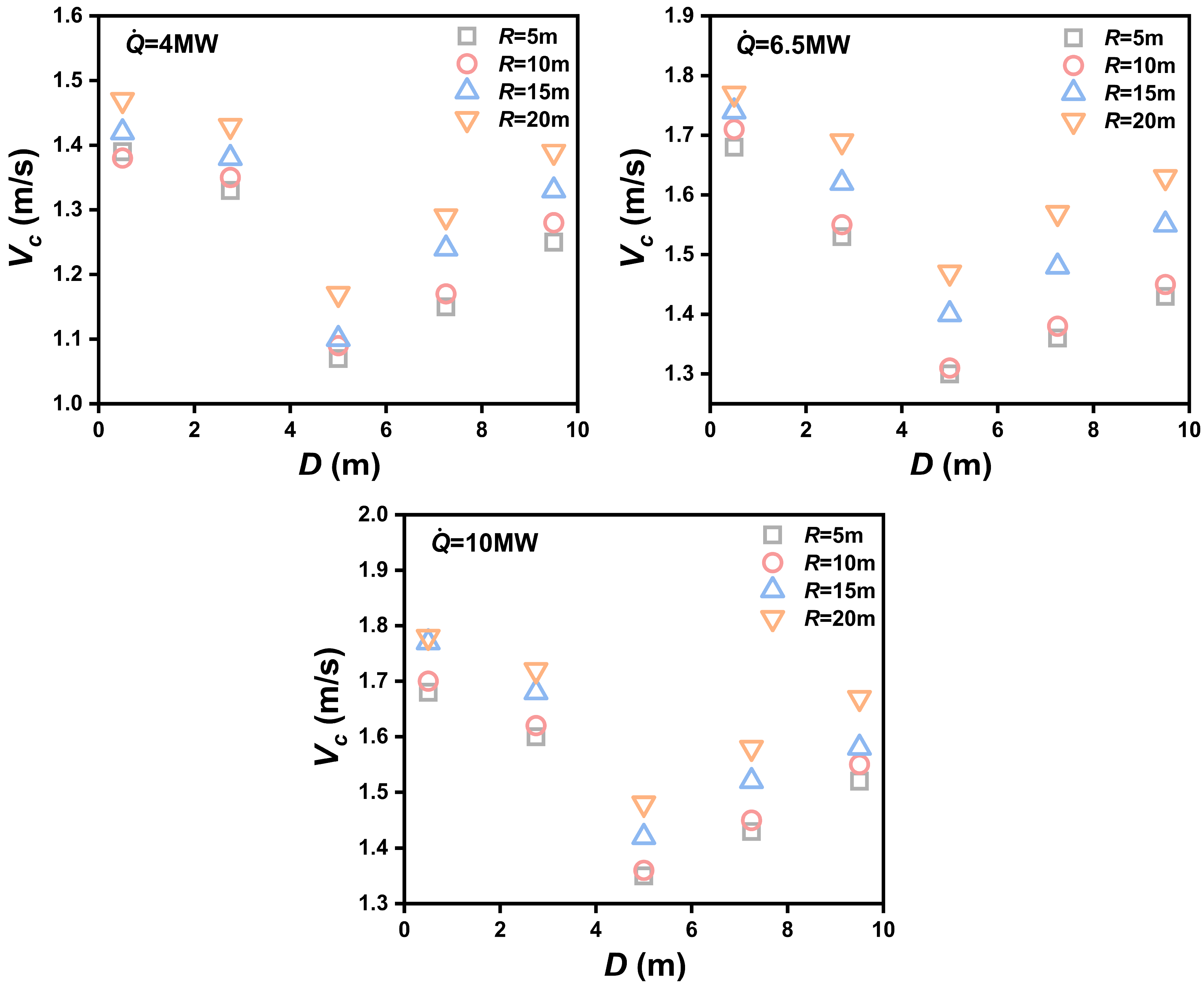
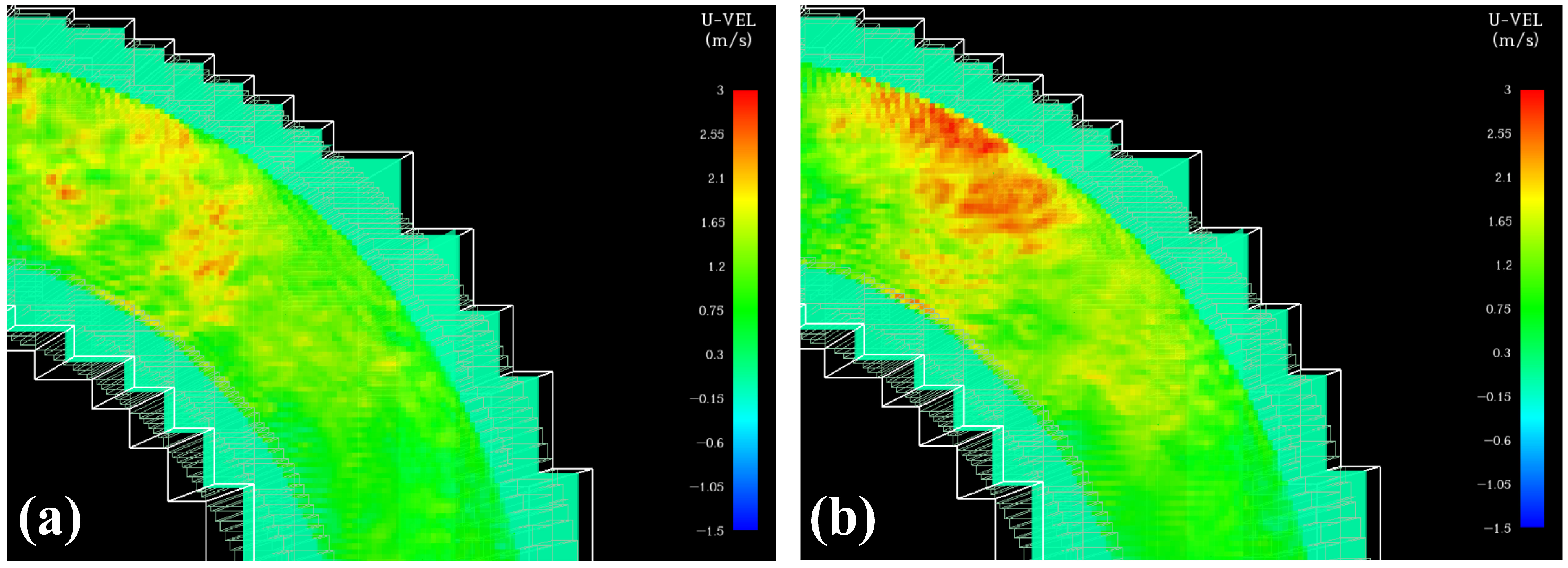
- The variation in critical velocity with fire source offset follows a notable V-shaped behavior. The smallest critical velocity appears when the ignition point is positioned along the tunnel centerline (). As the fire moves closer to either the concave () or convex wall (), a pronounced increase in the critical velocity is observed. For a case with a 10 m curvature radius and a 4 MW heat release rate, the critical velocity reaches 1.09 m/s at the centerline but increases to 1.38 m/s and 1.28 m/s when the ignition point is placed close to the convex and concave walls, respectively. Two key physical reasons explain why the fire’s lateral position influences the critical velocity. First, proximity to a sidewall restricts air entrainment around the flame, lowering combustion efficiency. Such modifications to the smoke concentration and temperature fields disrupt the smoke-layer stability, leading to an increased ventilation demand to eliminate upstream back-layering. Second, in the curved segment, the airflow structure on the concave and convex sides becomes asymmetric (as shown in Figure 7). When the fire is close the concave wall, smoke is driven toward the convex side by centrifugal force, producing a more complex flow pattern. Conversely, when the fire is near the convex side, the local velocity is lower, and smoke accumulation becomes more pronounced. Under both circumstances, the smoke layer becomes asymmetric and less stable, which in turn demands a higher ventilation velocity to restrain smoke propagation effectively.
- With firepower and position held constant, larger curvature radii require higher critical ventilation velocities. Specifically, with a 6.5 MW fire situated near the convex wall, increasing the curvature radius from 5 m to 20 m elevates the critical velocity from 1.68 m/s to 1.77 m/s. Because the curvature radius directly influences the centrifugal force acting on the smoke, a smaller radius (sharper bend) intensifies the centrifugal effect, driving smoke accumulation along the convex wall and potential flow separation near the concave wall. This enhances the interaction between smoke buoyancy and the inertia of longitudinal airflow, thereby slightly weakening upstream back-layering and reducing the required critical velocity. When the curvature radius grows, the centrifugal action on the smoke diminishes, making it necessary to apply a greater ventilation velocity to counteract upstream backflow [33].
- The critical ventilation velocity increases with increasing fire heat release rate. Specifically, for a case where the fire lies on the tunnel centerline and the curvature radius is 10 m, boosting the heat release rate from 4 MW to 10 MW elevates the critical velocity from 1.09 m/s to 1.36 m/s. This trend, consistent with previous findings, arises because a higher heat-release rate strengthens plume buoyancy and upward momentum, intensifying the upstream smoke backflow tendency. Buoyancy can be overcome only by increasing the longitudinal airflow, thereby sustaining a unidirectional smoke flow.
4.2. Smoke Back-Layering Length
5. Conclusions
- (1)
- An increase in heat release rate leads to a higher critical velocity, consistent with classical theory. The fire source’s lateral placement and the tunnel curvature radius also play key roles. When the ignition point is located on the tunnel’s central axis, the critical velocity reaches its lowest value; moving the fire toward either sidewall causes the velocity to rise, forming a clear “V-shaped” pattern. Furthermore, for identical fire conditions, a larger curvature radius corresponds to a higher required critical velocity.
- (2)
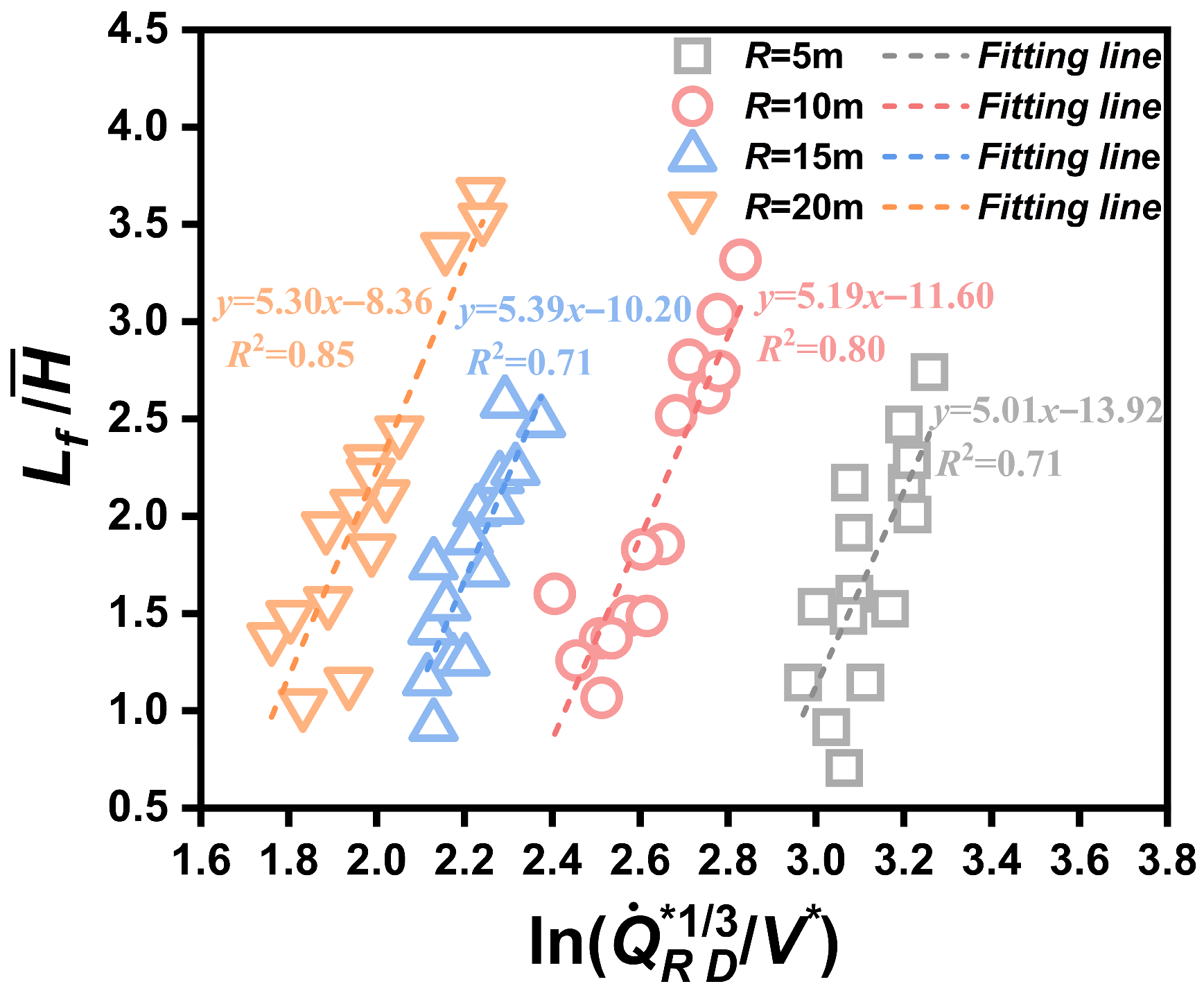
- The back-layering length exhibits strong sensitivity to both the curvature radius and the transverse fire source location. Increasing the curvature radius produces a noticeably longer back-layering distance. The fire’s lateral position, however, plays the decisive role: as the fire nears either sidewall, the back-layering length grows sharply, with the maximum value appearing when the fire is placed adjacent to the convex wall.
- (3)
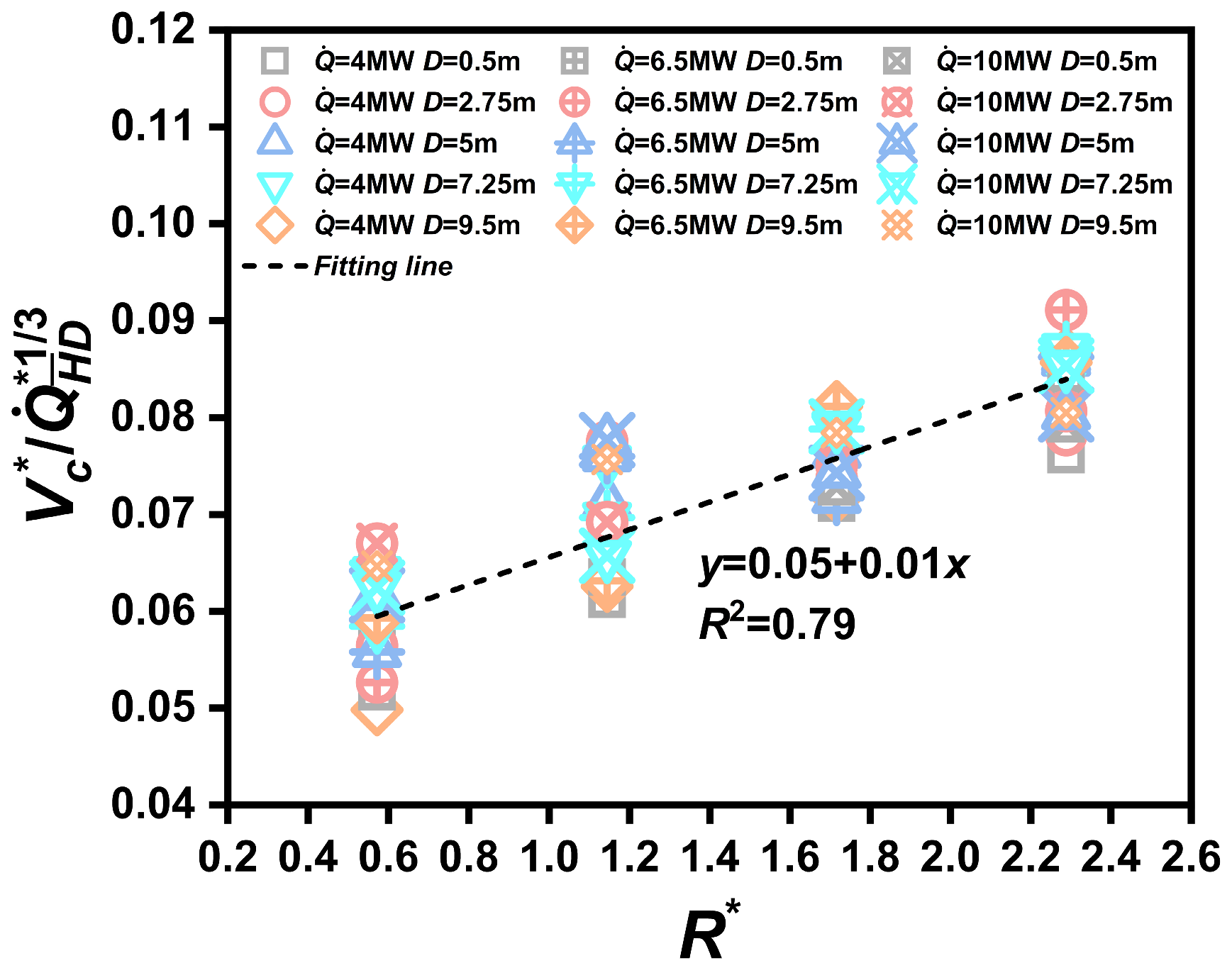
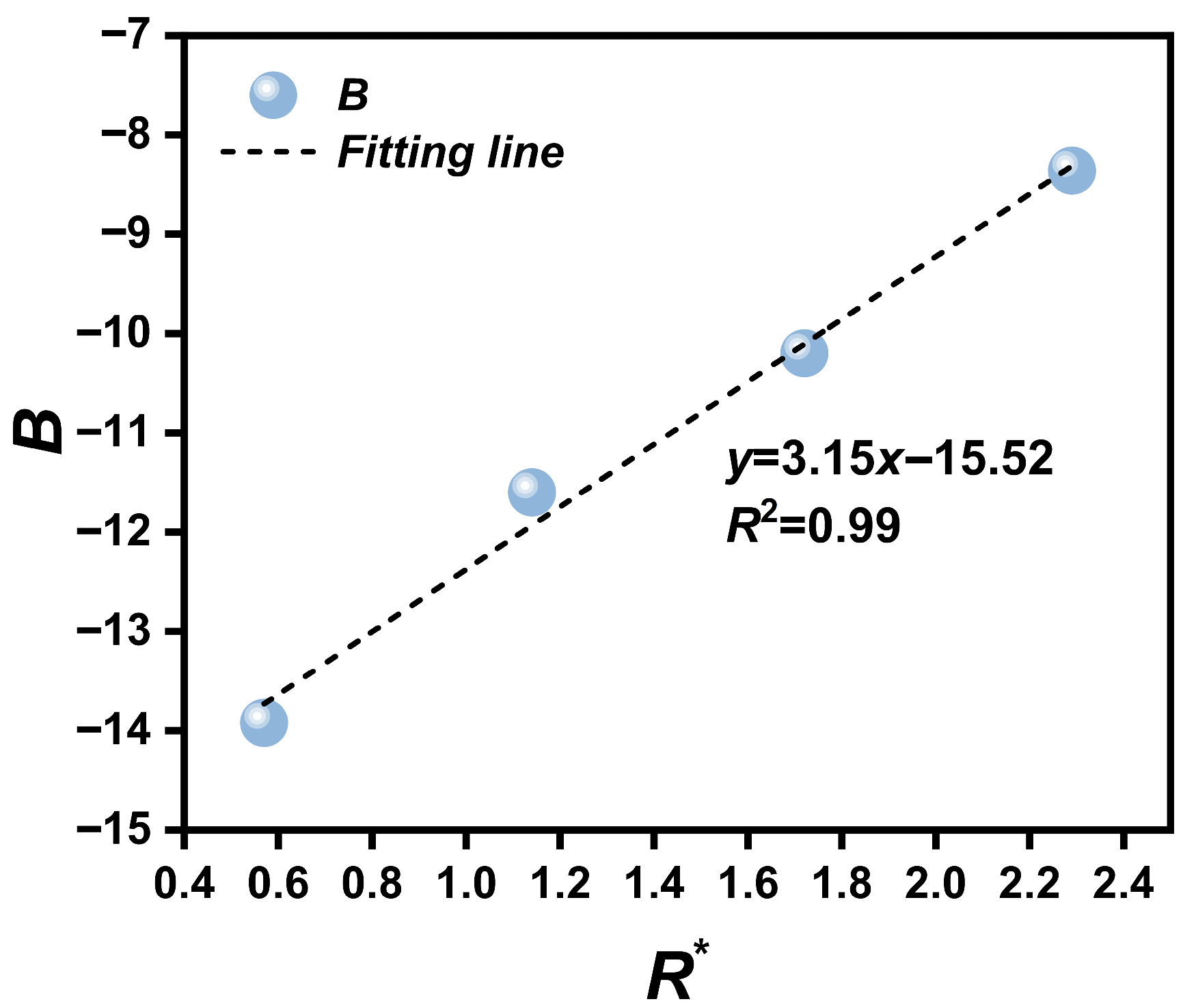
- By integrating the influences of curvature geometry and fire-source offset into the dimensional analysis, a revised form of the dimensionless heat release rate was introduced. This revised parameter enabled the development of a predictive model for the dimensionless critical velocity that reflects the coupled effects of curvature and ignition location. Meanwhile, a theoretical framework was established for evaluating the smoke back-layering length, and the relevant empirical coefficients were obtained by fitting the numerical results.
Author Contributions
Funding
Institutional Review Board Statement
Informed Consent Statement
Data Availability Statement
Conflicts of Interest
References
- Jie, D.; Xu, X.; Guo, F. The future of coal supply in China based on non-fossil energy development and carbon price strategies. Energy 2021, 220, 119644. [Google Scholar] [CrossRef] [Scilit]
- Bartel, S.; Janssen, G. Underground spatial planning—Perspectives and current research in Germany. Tunn. Undergr. Space Technol. 2016, 55, 112–117. [Google Scholar] [CrossRef] [Scilit]
- Lotero, S.; Androulakis, V.; Khaniani, H.; Hassanalian, M.; Shao, S.H.; Roghanchi, P. Optimizing fire emergency evacuation routes in underground coal mines: A lightweight network flow approach. Tunn. Undergr. Space Technol 2024, 146, 105637. [Google Scholar] [CrossRef] [Scilit]
- Villiers, D.J.; Mathews, M.J.; Maré, P.; Kleingeld, M.; Arndt, D. Evaluating the impact of auxiliary fan practices on localised subsurface ventilation. Int. J. Min. Sci. Technol. 2019, 29, 933–941. [Google Scholar] [CrossRef] [Scilit]
- Szlqzak, N.; Obracaj, D.; Korzec, M. Analysis of connecting a forcing fan to a multiple fan ventilation network of a real-life mine. Process Saf. Environ. Prot. 2017, 107, 468–479. [Google Scholar] [CrossRef] [Scilit]
- Bassan, S. Sight distance and horizontal curve aspects in the design of road tunnels vs. highways. Tunn. Undergr. Space Technol. 2015, 45, 214–226. [Google Scholar] [CrossRef] [Scilit]
- Brodny, J.; Tutak, M. Applying computational fluid dynamics in research on ventilation safety during underground hard coal mining: A systematic literature review. Process Saf. Environ. Prot. 2021, 151, 373–400. [Google Scholar] [CrossRef] [Scilit]
- Jafari, S.; Farhanieh, B.; Afshin, H. Numerical investigation of critical velocity in curved tunnels: Parametric study and establishment of new model. Tunn. Undergr. Space Technol. 2023, 135, 105021. [Google Scholar] [CrossRef] [Scilit]
- Kashef, A.; Saber, H.; Gao, L. Optimization of emergency ventilation strategies in a curved section of a road tunnel. In Proceedings of the 13th International Symposium on Aerodynamics and Ventilation of Vehicle Tunnels, New Brunswick, NJ, USA, 13–15 May 2009; pp. 167–181. [Google Scholar]
- An, W.; Tang, Y.; Liang, K.; Cai, M.; Wang, T.; Wang, Z. Study on temperature distribution and CO diffusion induced by cable fire in L-shaped utility tunnel. Sustain. Cities Soc. 2020, 62, 102407. [Google Scholar] [CrossRef] [Scilit]
- Muduli, L.; Jana, P.K.; Mishra, D.P. Wireless sensor network based fire monitoring in underground coal mines: A fuzzy logic approach. Process Saf. Environ. Prot. 2018, 113, 435–447. [Google Scholar] [CrossRef] [Scilit]
- Caliendo, C.; Ciambelli, P.; De Guglielmo, M.L.; Meo, M.G.; Russo, P. Numerical simulation of different HGV fire scenarios in curved bi-directional road tunnels and safety evaluation. Tunn. Undergr. Space Technol. 2012, 31, 33–50. [Google Scholar] [CrossRef] [Scilit]
- Muhasilovic, M.; Deville, M.O. Tunnel-Curvature’s Influence on the Propagation of the Consequences of Large-Scale Accidental Fire-a CFD-Investigation. Turk. J. Eng. Environ. Sci. 2007, 31, 391–402. [Google Scholar]
- Barros-Daza, M.J.; Luxbacher, K.D.; Lattimer, B.Y.; Hodges, J.L. Real Time Mine Fire Classification to Support Firefighter Decision Making. Fire Technol. 2022, 58, 1545–1578. [Google Scholar] [CrossRef] [Scilit]
- Tripathy, D.P.; Parida, S.; Khandu, L. Safety Risk Assessment and Risk Prediction in Underground Coal Mines Using Machine Learning Techniques. J. Inst. Eng. (India) Ser. D 2021, 102, 495–504. [Google Scholar] [CrossRef] [Scilit]
- Ghosh, A. Risk Assessment of Occupational Injuroes in Underground Coal Mines. J. Mines Met. Fuels 2010, 58, 243–248. [Google Scholar]
- Lu, K.; Xia, K.; Shi, C.; Yang, M.; Wang, J.; Ding, Y. Investigation on the Tunnel Curvature Effect upon the Ceiling Temperature of Tunnel Fires: A Numerical Simulation. Fire Technol. 2021, 57, 2839–2858. [Google Scholar] [CrossRef] [Scilit]
- Liu, Y.; Duan, Z.; Cui, Y.; Jiang, F.; Gao, F.; Wang, W. Study on Multi-Parameter Variation of Smoke Flow in Inclined Roadway Fire. Combust. Sci. Technol. 2025, 197, 5701–5720. [Google Scholar] [CrossRef] [Scilit]
- Yao, Y.; Qu, B.; Zhu, H.; Wang, J.; Zhao, S.; Wang, Q. Theoretical and numerical study on critical velocity and driving force for preventing smoke backlayering in a connection roadway fire of coal mines. Tunn. Undergr. Space Technol. 2022, 127, 104566. [Google Scholar] [CrossRef] [Scilit]
- Li, L.; Si, J.; Li, Z. Characteristics of the spatial and temporal evolution of the environmental parameters for belt fire in underground coal mine roadway. Case Stud. Therm. Eng. 2023, 49, 103346. [Google Scholar] [CrossRef] [Scilit]
- Li, B.; Li, Y.; Sun, Y.; Zhang, W.; Li, J.; Zhang, Z.; Cui, Y.; Dong, J.; Liu, H. Study on the influence of forced ventilation on the maximum fire temperature in roadway heading. Sci. Rep. 2025, 15, 9830. [Google Scholar] [CrossRef] [Scilit]
- Peng, S.; Huang, Z.; Dong, D. Numerical Simulation Study On Fire Hazard Of A Coal Mine Transport Roadway. Min. Sci 2022, 29, 33–52. [Google Scholar] [CrossRef] [Scilit]
- Xu, Z.; Zhou, D.; Tao, H.; Zhang, X.; Hu, W. Investigation of critical velocity in curved tunnel under the effects of different fire locations and turning radiuses. Tunn. Undergr. Space Technol. 2022, 126, 104553. [Google Scholar] [CrossRef] [Scilit]
- Hu, L.; Huo, R.; Peng, W.; Chow, W.; Yang, R. On the maximum smoke temperature under the ceiling in tunnel fires. Tunn. Undergr. Space Technol. 2006, 21, 650–655. [Google Scholar] [CrossRef] [Scilit]
- Han, J.; Liu, F.; Wang, F.; Weng, M.; Liao, S. Full-scale experimental investigation on smoke spreading and thermal characteristic in a transversely ventilated urban traffic link tunnel. Int. J. Therm. Sci 2021, 170, 107130. [Google Scholar] [CrossRef] [Scilit]
- Wang, Z.; Zhu, L.; Guo, X.; Pan, X.; Zhou, B.; Yang, J.; Jiang, J.; Hua, M.; Feng, L. Reduced-scale experimental and numerical study of fire in a hybrid ventilation system in a large underground subway depot with superstructures under fire scenario. Tunn. Undergr. Space Technol. 2019, 88, 98–112. [Google Scholar] [CrossRef] [Scilit]
- Caliendo, C.; Russo, I.; Genovese, G. CFD Modeling to Evaluate User Safety by Using Flame Retardants in Asphalt Road Pavements during Large Tunnel Fires. CMES—Comput. Model. Eng. Sci. 2025, 144, 693–715. [Google Scholar] [CrossRef] [Scilit]
- Emori, R.I.; Saito, K. A Study of Scaling Laws in Pool and Crib Fires. Combust. Sci. Technol. 1983, 31, 217–231. [Google Scholar] [CrossRef] [Scilit]
- Guo, J.; Cai, G.; Liu, Y.; Wen, H.; Jin, Y. Temperature distribution and characteristics induced by fire smoke in L-shaped utility tunnels with small curvature radii. Case Stud. Therm. Eng. 2021, 28, 101470. [Google Scholar] [CrossRef] [Scilit]
- Chow, W.K.; Gao, Y.; Zhao, J.H.; Dang, J.F.; Chow, C.L.; Miao, L. Smoke movement in tilted tunnel fires with longitudinal ventilation. Fire Saf. J. 2015, 75, 14–22. [Google Scholar] [CrossRef] [Scilit]
- Kunsch, J.P. Critical velocity and range of a fire-gas plume in a ventilated tunnel. Atmos. Environ. 1999, 33, 13–24. [Google Scholar] [CrossRef] [Scilit]
- Zhang, S.; Yang, H.; Yao, Y.; Zhu, K.; Zhou, Y.; Shi, L.; Cheng, X. Numerical Investigation of Back-Layering Length and Critical Velocity in Curved Subway Tunnels with Different Turning Radius. Fire Technol. 2017, 53, 1765–1793. [Google Scholar] [CrossRef] [Scilit]
- Wang, F.; Wang, M.; Carvel, R.; Wang, Y. Numerical study on fire smoke movement and control in curved road tunnels. Tunn. Undergr. Space Technol. 2017, 67, 1–7. [Google Scholar] [CrossRef] [Scilit]
- Wu, Y.; Bakar, M.Z.A. Control of smoke flow in tunnel fires using longitudinal ventilation systems—A study of the critical velocity. Fire Saf. J. 2000, 35, 363–390. [Google Scholar] [CrossRef] [Scilit]



| Test No. | Heat Release Rate (MW) | Curvature Radius (m) | Fire Transverse Position (m) |
|---|---|---|---|
| G1–G4 | 4 | 5, 10, 15, 20 | 5 |
| H1–H5 | 4 | 5 | 0.5, 2.75, 5, 7.25, 9.5 |
| Test No. | Heat Release Rate (MW) | Ventilation Velocity (m/s) | Curvature Radius (m) | Fire Transverse Position (m) |
|---|---|---|---|---|
| 1–140 | 4 | 0.95–1.44 | 5, 10, 15, 20 | 0.5, 2.75, 5, 7.25, 9.5 |
| 141–280 | 6.5 | 1.26–1.75 | ||
| 281–420 | 10 | 1.33–1.78 |
| 0.95 | 1.09 | 1.2 | 1.28 | 1.33 | 1.35 | 1.38 | 1.39 | 1.42 | 1.44 | ||
|---|---|---|---|---|---|---|---|---|---|---|---|
| 5, 5 | 23 | 0 | 0 | 0 | 0 | 0 | 0 | 0 | 0 | 0 | |
| 10, 5 | 40 | 0 | 0 | 0 | 0 | 0 | 0 | 0 | 0 | 0 | |
| 15, 5 | 47 | 13 | 0 | 0 | 0 | 0 | 0 | 0 | 0 | 0 | |
| 20, 5 | 60 | 20 | 0 | 0 | 0 | 0 | 0 | 0 | 0 | 0 | |
| 5, 0.5 | \ | \ | \ | 60 | 48 | 32 | 12 | 0 | 0 | 0 | |
| 10, 0.5 | \ | \ | 79 | 68 | 50 | 29 | 0 | 0 | 0 | 0 | |
| 15, 0.5 | \ | \ | \ | \ | 62 | 40 | 29 | 13 | 0 | 0 | |
| 20, 0.5 | \ | \ | \ | \ | \ | 80 | 64 | 54 | 32 | 14 | |
| 5, 9.5 | \ | 30 | 8 | 0 | 0 | 0 | 0 | 0 | 0 | 0 | |
| 10, 9.5 | \ | 42 | 13 | 0 | 0 | 0 | 0 | 0 | 0 | 0 | |
| 15, 9.5 | \ | 62 | 28 | 11 | 0 | 0 | 0 | 0 | 0 | 0 | |
| 20, 9.5 | \ | \ | \ | 68 | 49 | 30 | 13 | 0 | 0 | 0 | |
Disclaimer/Publisher’s Note: The statements, opinions and data contained in all publications are solely those of the individual author(s) and contributor(s) and not of MDPI and/or the editor(s). MDPI and/or the editor(s) disclaim responsibility for any injury to people or property resulting from any ideas, methods, instructions or products referred to in the content. |
© 2025 by the authors. Licensee MDPI, Basel, Switzerland. This article is an open access article distributed under the terms and conditions of the Creative Commons Attribution (CC BY) license.
Share and Cite
Zhao, W.; Miao, B.; Chen, G.; Xiao, Z.; Yang, M. Effects of Fire Source Transverse Position and Curvature Radius on the Critical Velocity and Smoke Back-Layering Length in L-Shaped Tunnels. Fire 2026, 9, 5. https://doi.org/10.3390/fire9010005
Zhao W, Miao B, Chen G, Xiao Z, Yang M. Effects of Fire Source Transverse Position and Curvature Radius on the Critical Velocity and Smoke Back-Layering Length in L-Shaped Tunnels. Fire. 2026; 9(1):5. https://doi.org/10.3390/fire9010005
Chicago/Turabian StyleZhao, Wenjie, Bin Miao, Guangyan Chen, Zhuoting Xiao, and Mingxing Yang. 2026. "Effects of Fire Source Transverse Position and Curvature Radius on the Critical Velocity and Smoke Back-Layering Length in L-Shaped Tunnels" Fire 9, no. 1: 5. https://doi.org/10.3390/fire9010005
APA StyleZhao, W., Miao, B., Chen, G., Xiao, Z., & Yang, M. (2026). Effects of Fire Source Transverse Position and Curvature Radius on the Critical Velocity and Smoke Back-Layering Length in L-Shaped Tunnels. Fire, 9(1), 5. https://doi.org/10.3390/fire9010005