Article

Performance Assessment of Fire-Damaged and CFRP-Repaired Bridge Columns Under Single Unit Truck Impact and Blast


by
Qusai A. Alomari
1,* and
Daniel G. Linzell
2
1
Midwest Roadside Safety Facility, Department of Civil and Environmental Engineering, University of Nebraska-Lincoln, Lincoln, NE 68583, USA
2
Department of Civil and Environmental Engineering, University of Nebraska-Lincoln, Lincoln, NE 68586, USA
*
Author to whom correspondence should be addressed.
Fire 2025, 8(6), 227; https://doi.org/10.3390/fire8060227
Submission received: 30 April 2025 / Revised: 2 June 2025 / Accepted: 5 June 2025 / Published: 9 June 2025

Abstract

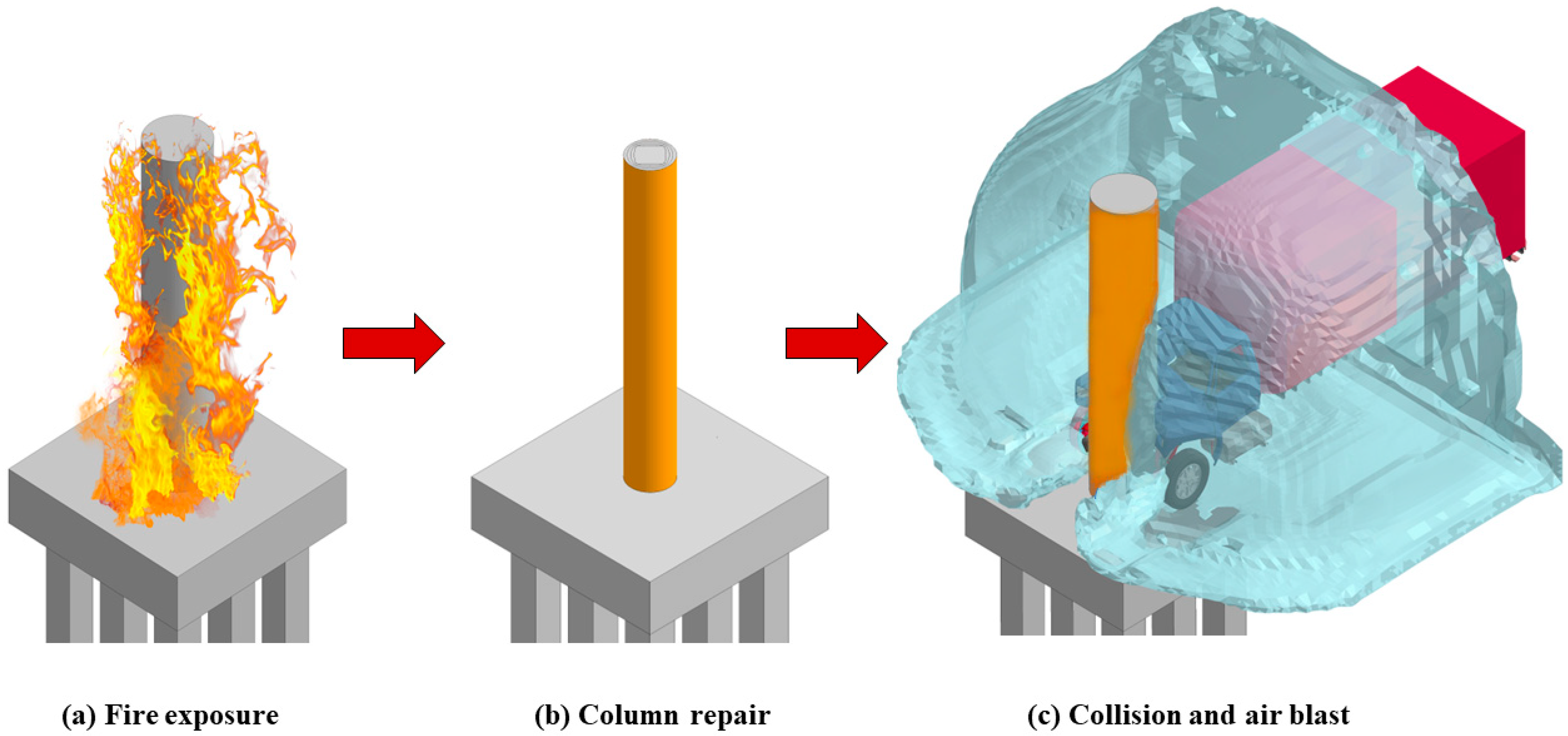
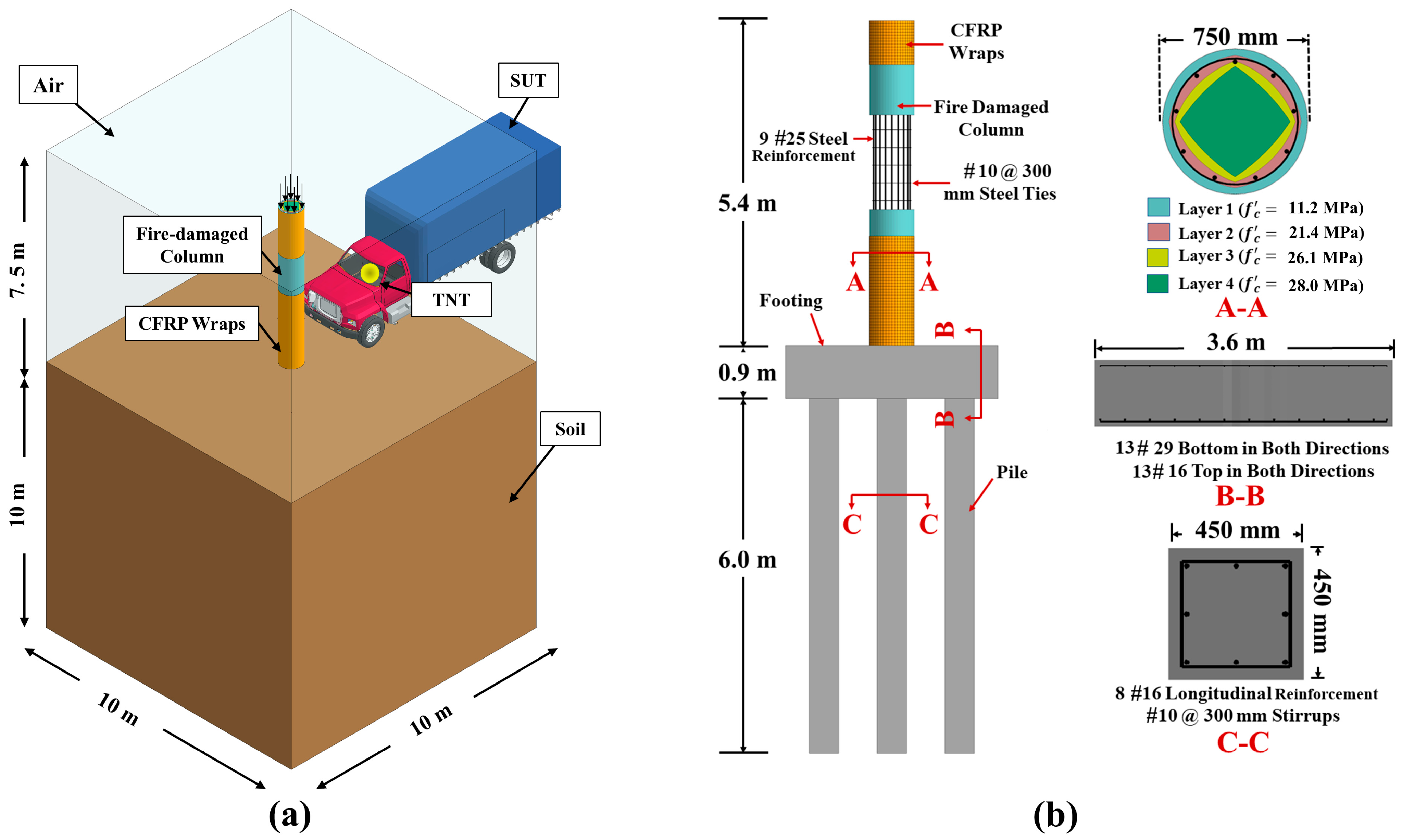
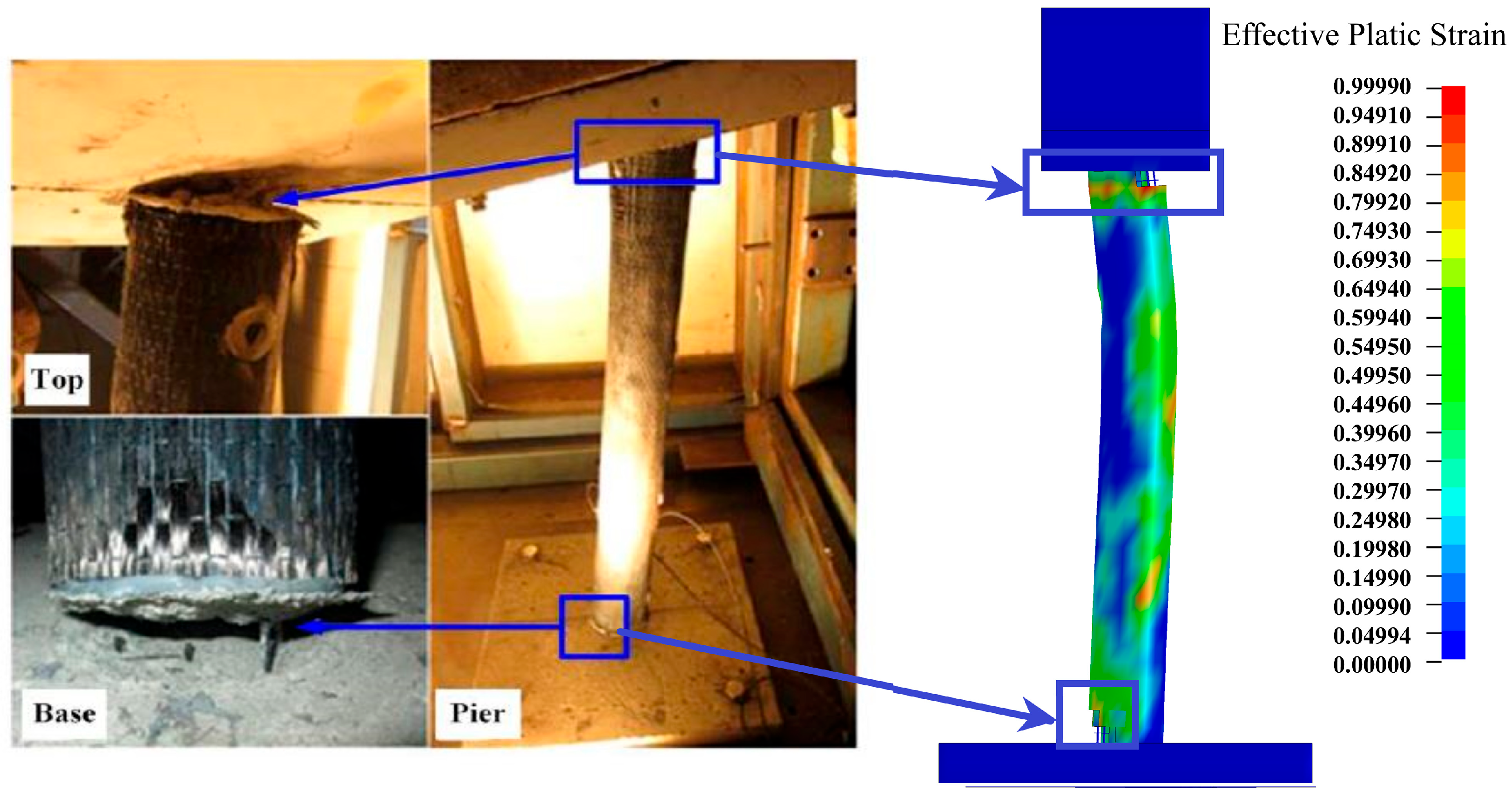
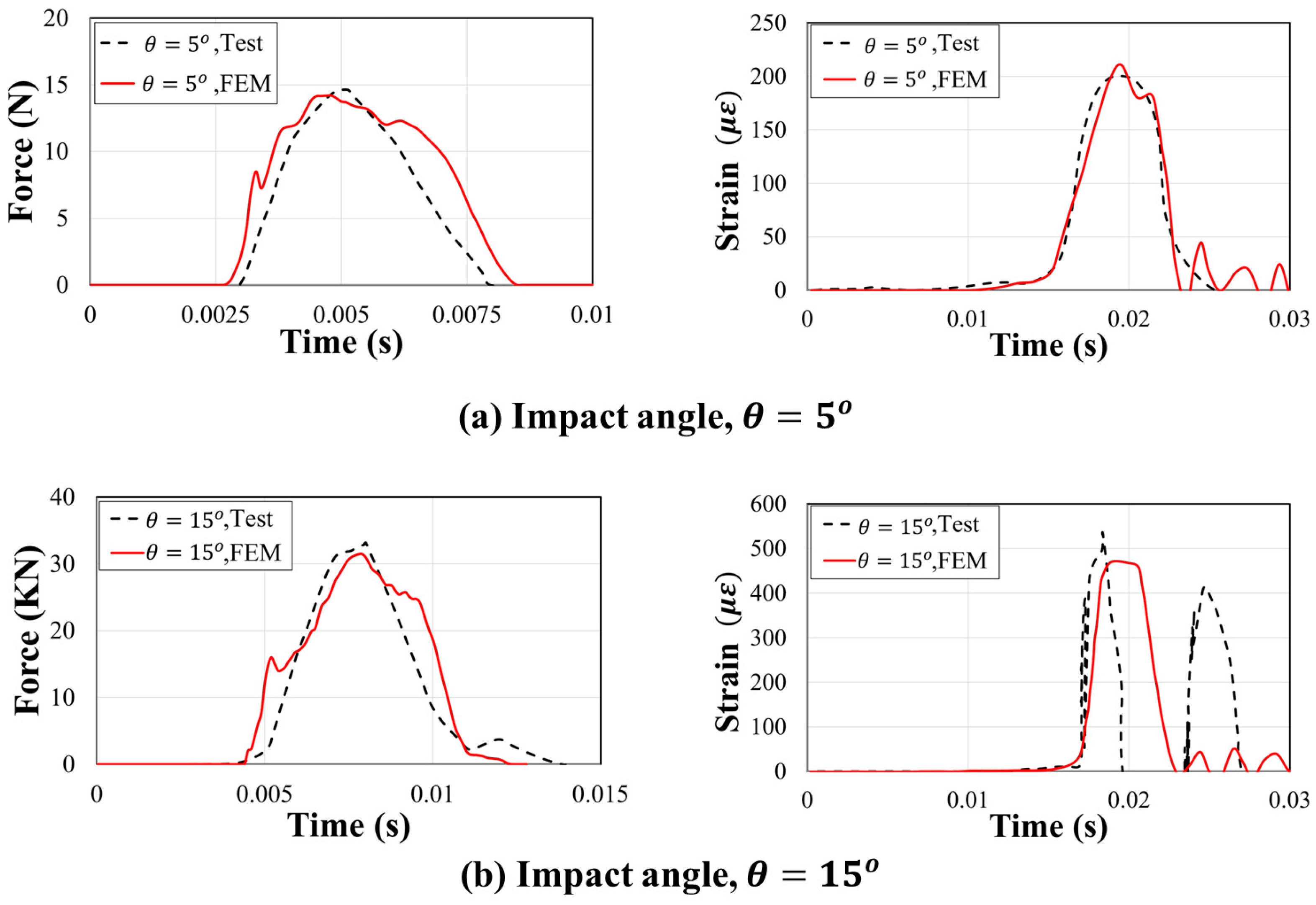
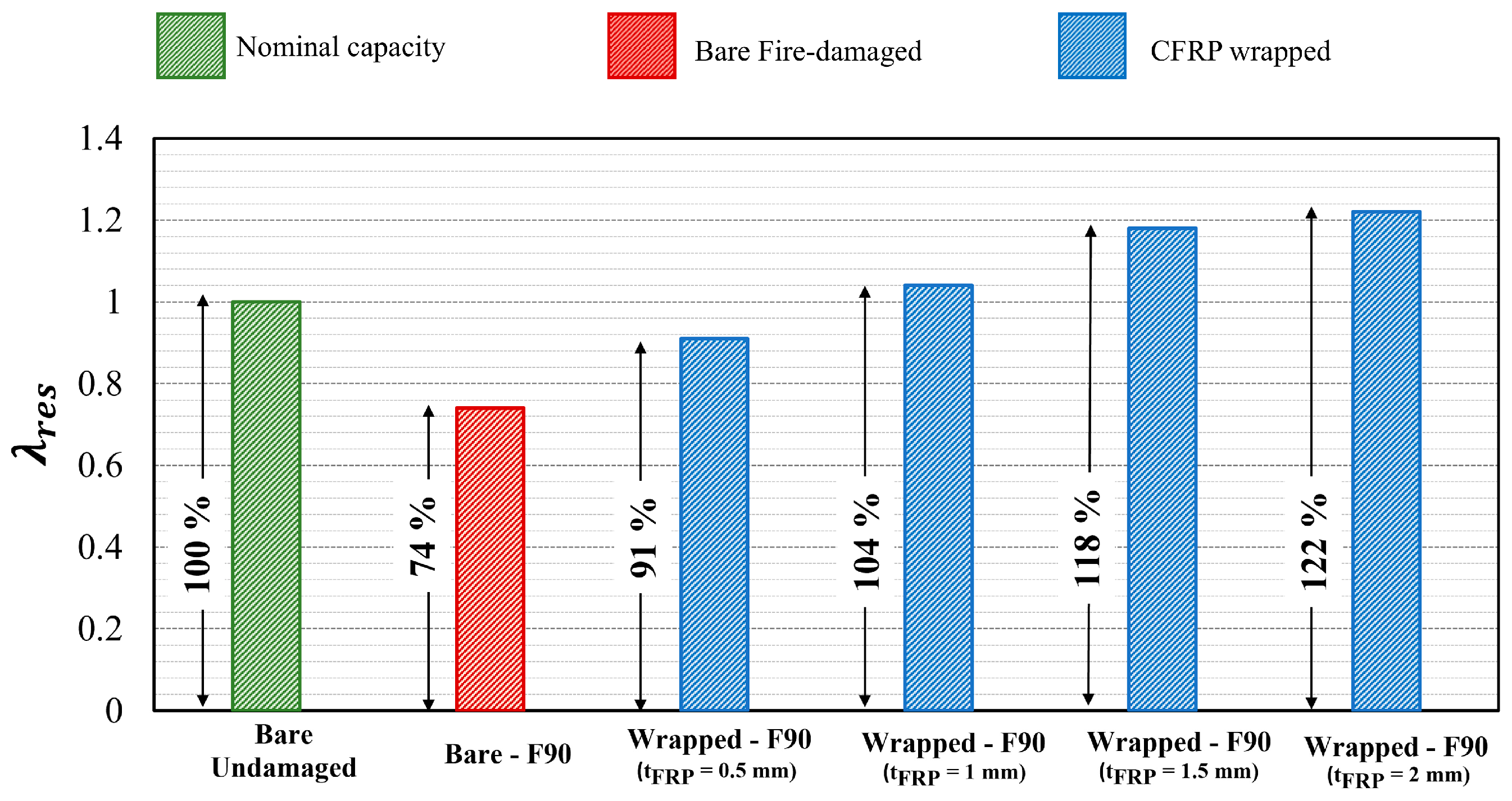
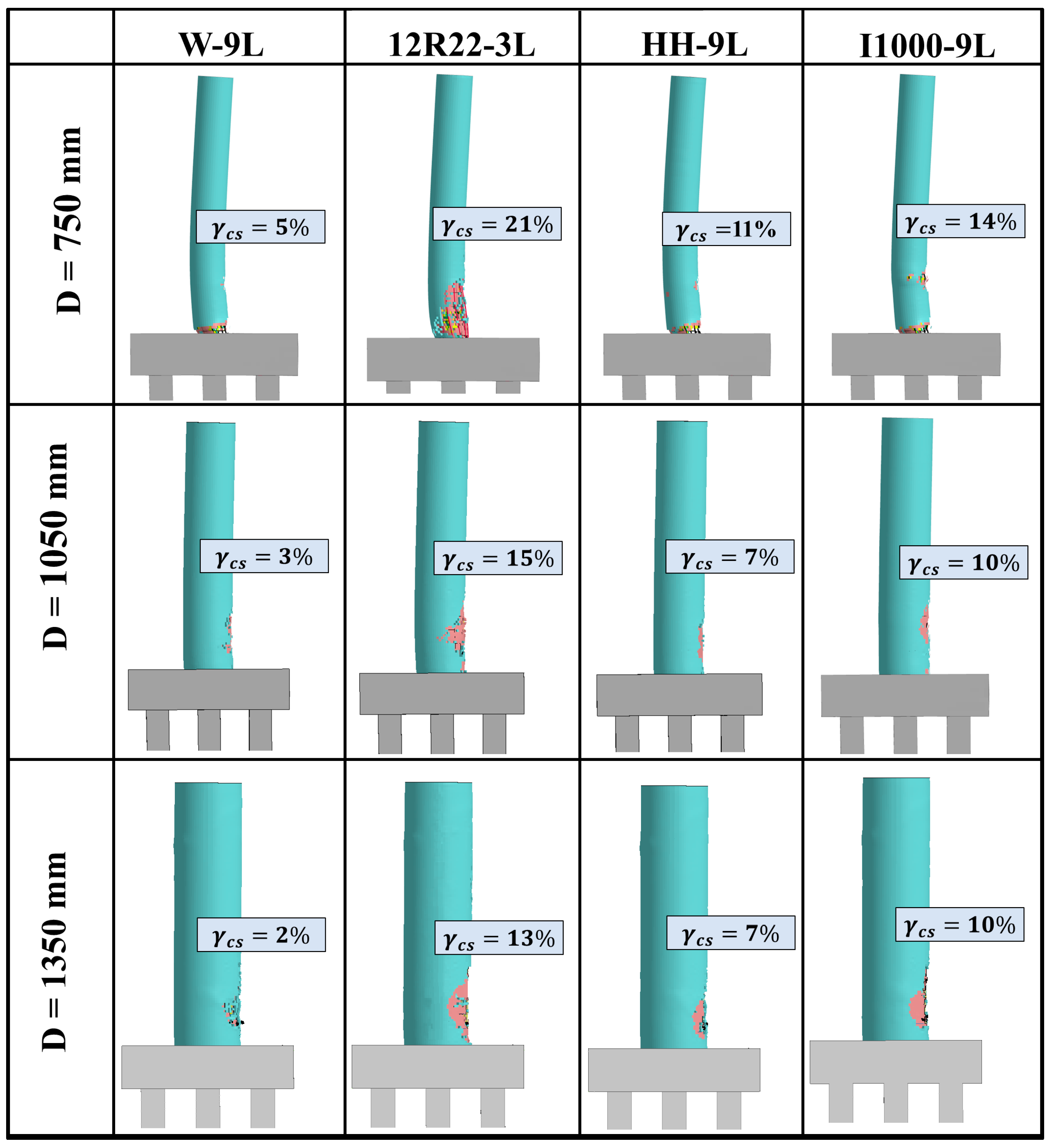
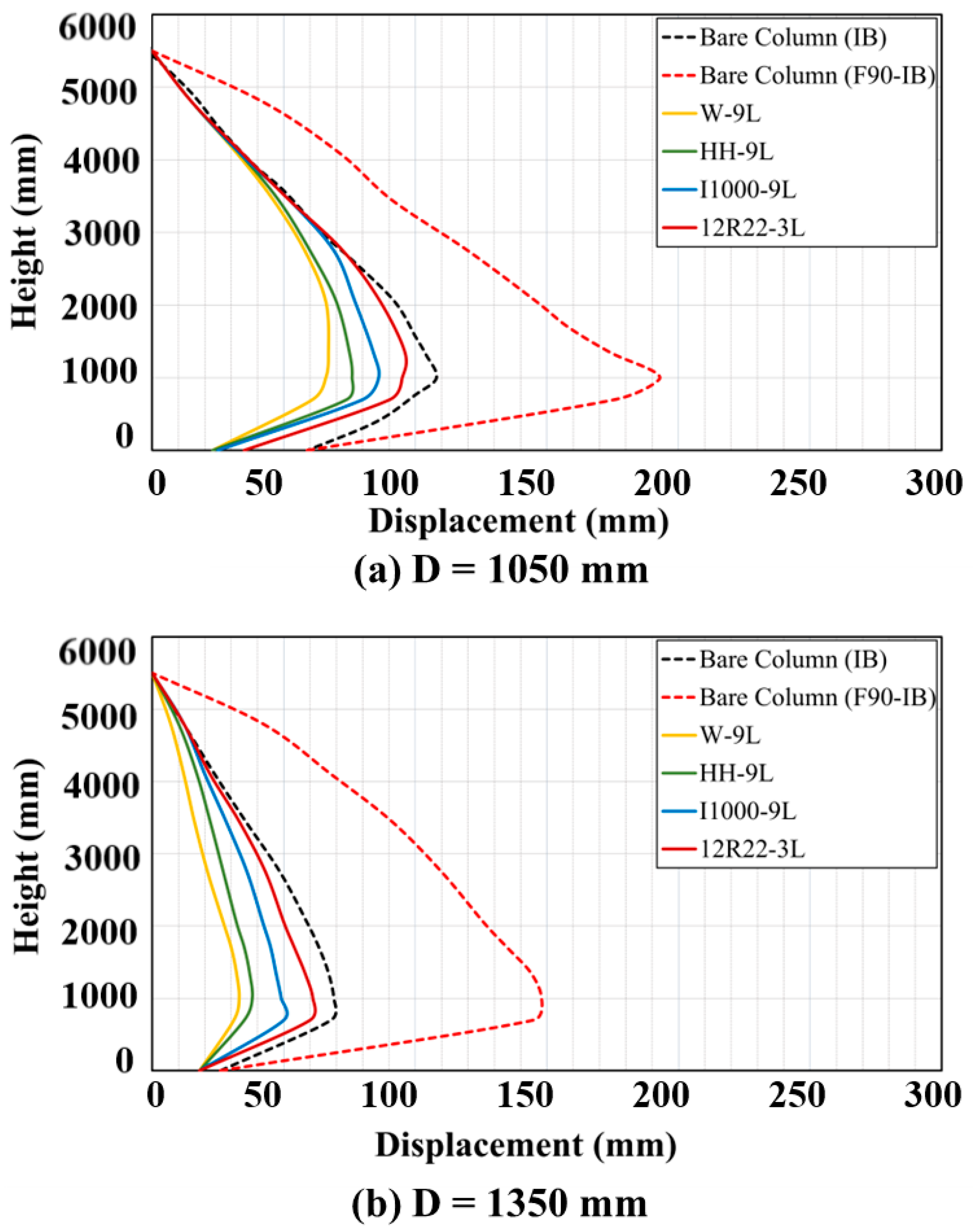
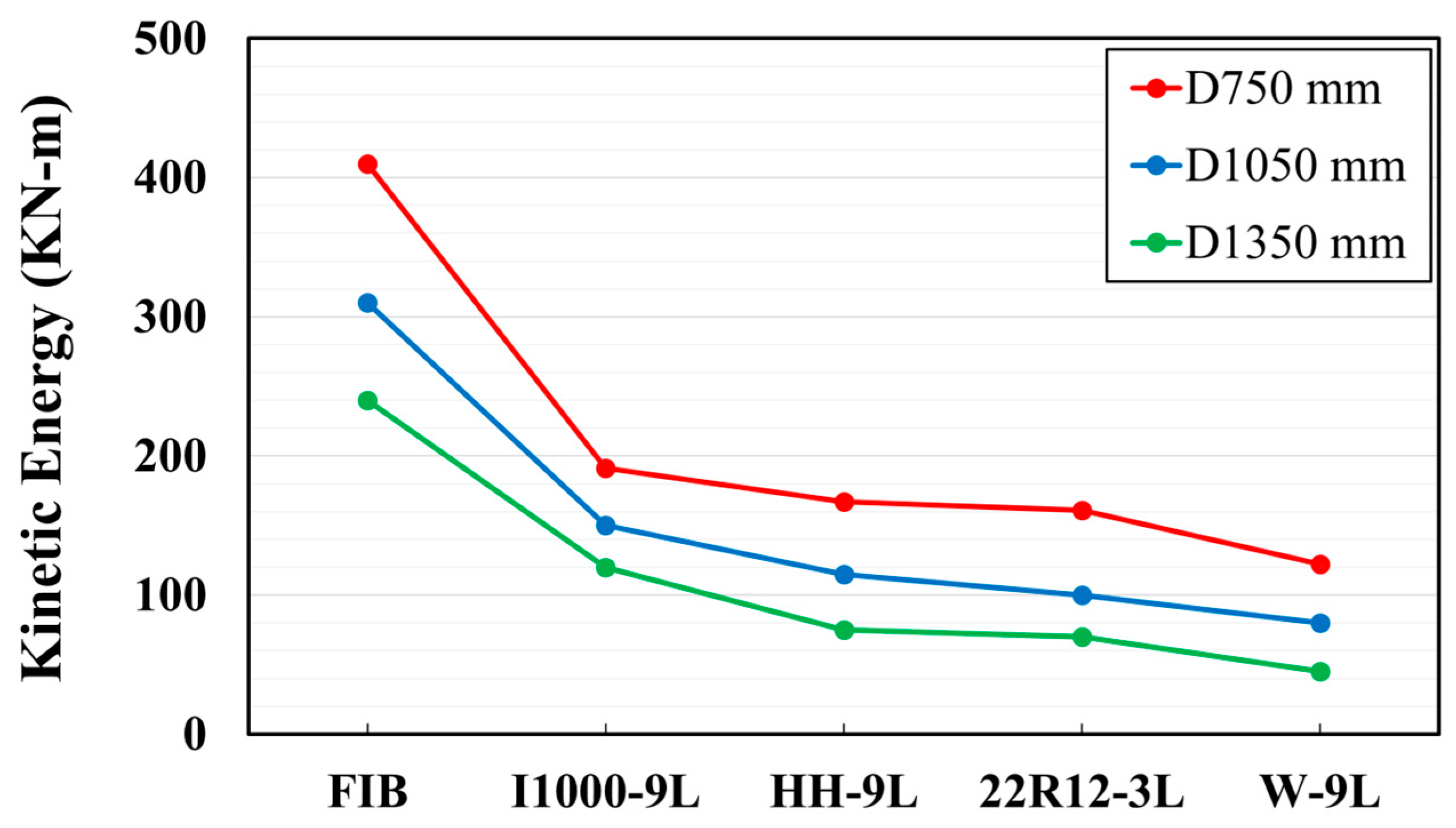
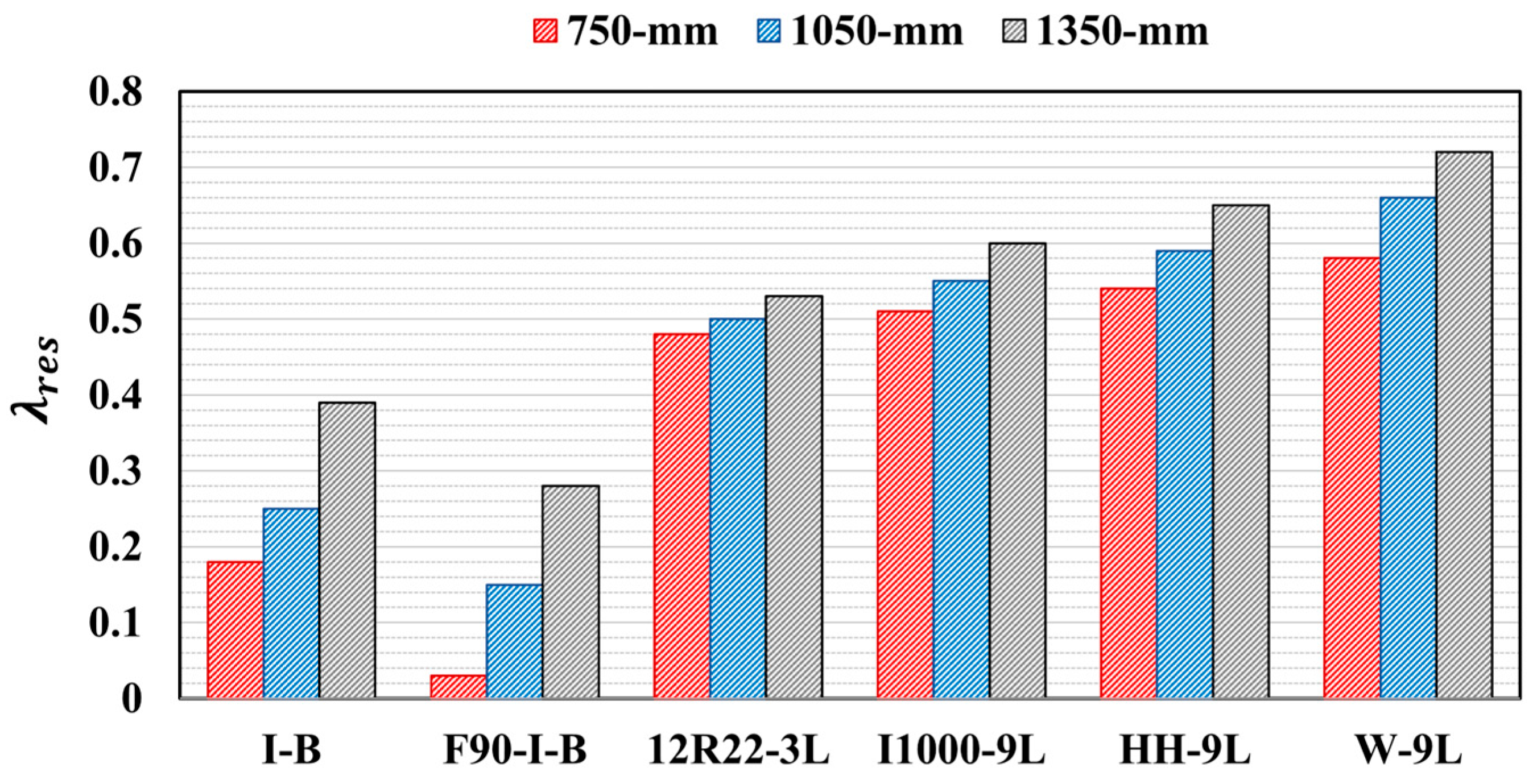
Recent catastrophic bridge fire incidents have highlighted the critical need for effective post-fire assessment of bridges, thereby challenging the dominant practice of complete replacement following these destructive events. This study investigates the post-fire performance of bare, isolated, and Carbon Fiber Reinforced Polymer (CFRP)-repaired Reinforced Concrete (RC) bridge columns under single-unit truck impact followed by air blast. This extreme loading scenario was deliberately selected given the increased vulnerability of bridge columns to this loading scenario in the recent few years. Three-dimensional Finite Element (FE) models of the structural system and surrounding environment were developed and validated in LS-DYNA. The effectiveness of two in-situ retrofitting schemes in mitigating damage and enhancing structural integrity of three column diameters under the selected multi-hazards was assessed. Results demonstrated that wrapping the bottom half of the column height prevents shear failure and significantly reduces the damage under the coupled impact and blast. In contrast, employing a combination of CFRP bars and externally bonded sheets showed limited enhancement on post-fire impact and blast performance. This study provides critical insights into the feasibility and efficacy of retrofitting bridge columns that have experienced fire, thus laying the groundwork for the reconsideration of current design and rehabilitation protocols.
Keywords: bridge column; fire; vehicle impact; air blast; multi-hazards; CFRP; FE modeling; LS-DYNA bridge column; fire; vehicle impact; air blast; multi-hazards; CFRP; FE modeling; LS-DYNA