
Article

Forest Fires: Silvicultural Prevention and Mathematical Models for Predicting Fire Propagation in Southern Italy


by
Pasquale A. Marziliano
1,*,
Fabio Lombardi
1,
Maria F. Cataldo
1,
Michele Mercuri
1,
Salvatore F. Papandrea
1,
Leonardo M. Manti
1,
Silvio Bagnato
1,
Giuseppe Alì
2,
Pierpaolo Fusaro
2,
Pietro S. Pantano
2 and
Carmelo Scuro
3,4
1
Department of AGRARIA, Mediterranean University of Reggio Calabria, 89124 Reggio Calabria, Italy
2
Department of Physics, University of Calabria, Arcavacata di Rende, 87036 Rende, Italy
3
Faculty of Engineering and Architecture, Kore University of Enna, Cittadella Universitaria, 94100 Enna, Italy
4
National Institute for Nuclear Physics (INFN), Associated Group of Cosenza, Arcavacata di Rende, 87036 Rende, Italy
*
Author to whom correspondence should be addressed.
Fire 2024, 7(8), 278; https://doi.org/10.3390/fire7080278
Submission received: 26 June 2024 / Revised: 31 July 2024 / Accepted: 5 August 2024 / Published: 7 August 2024

Abstract

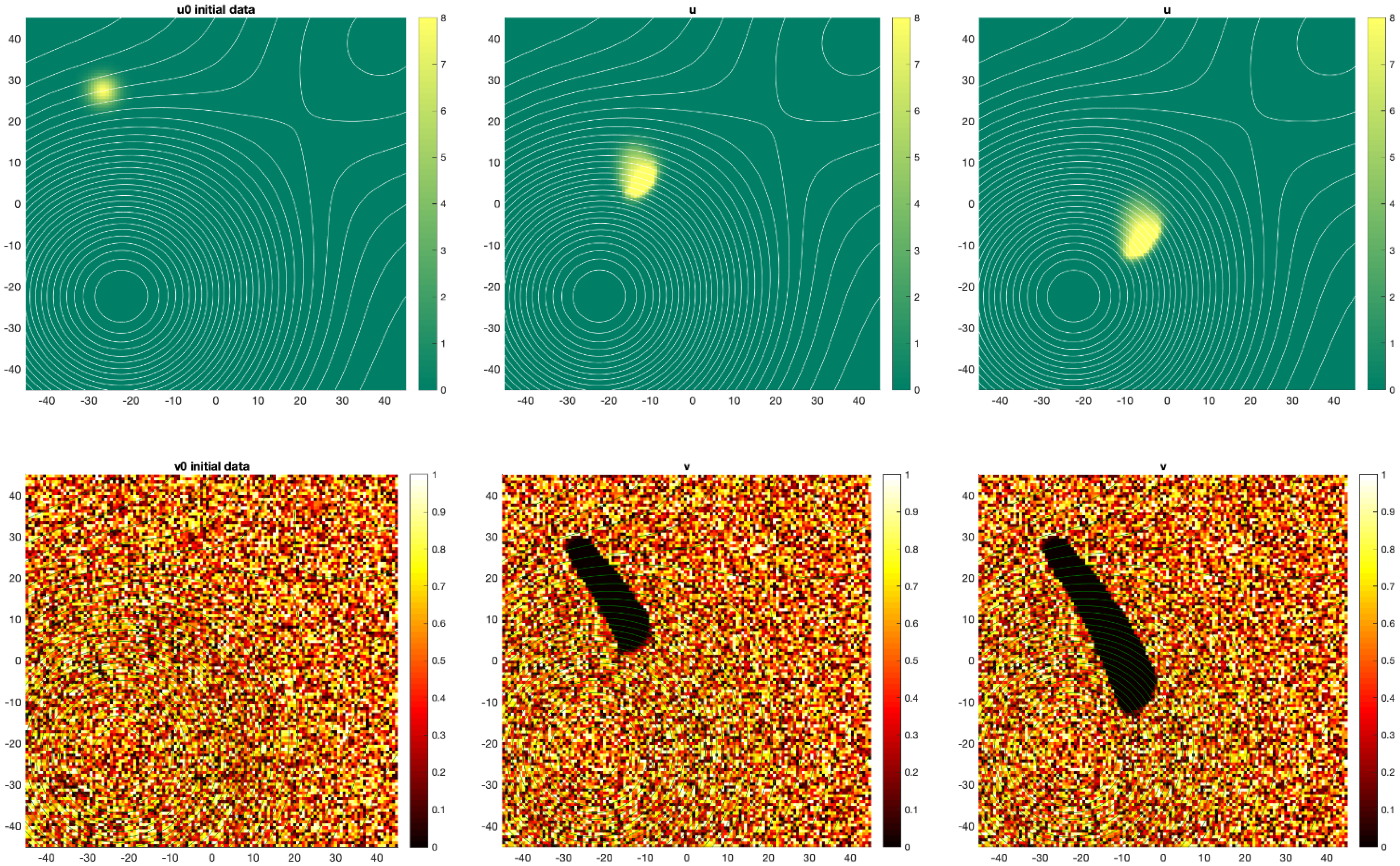
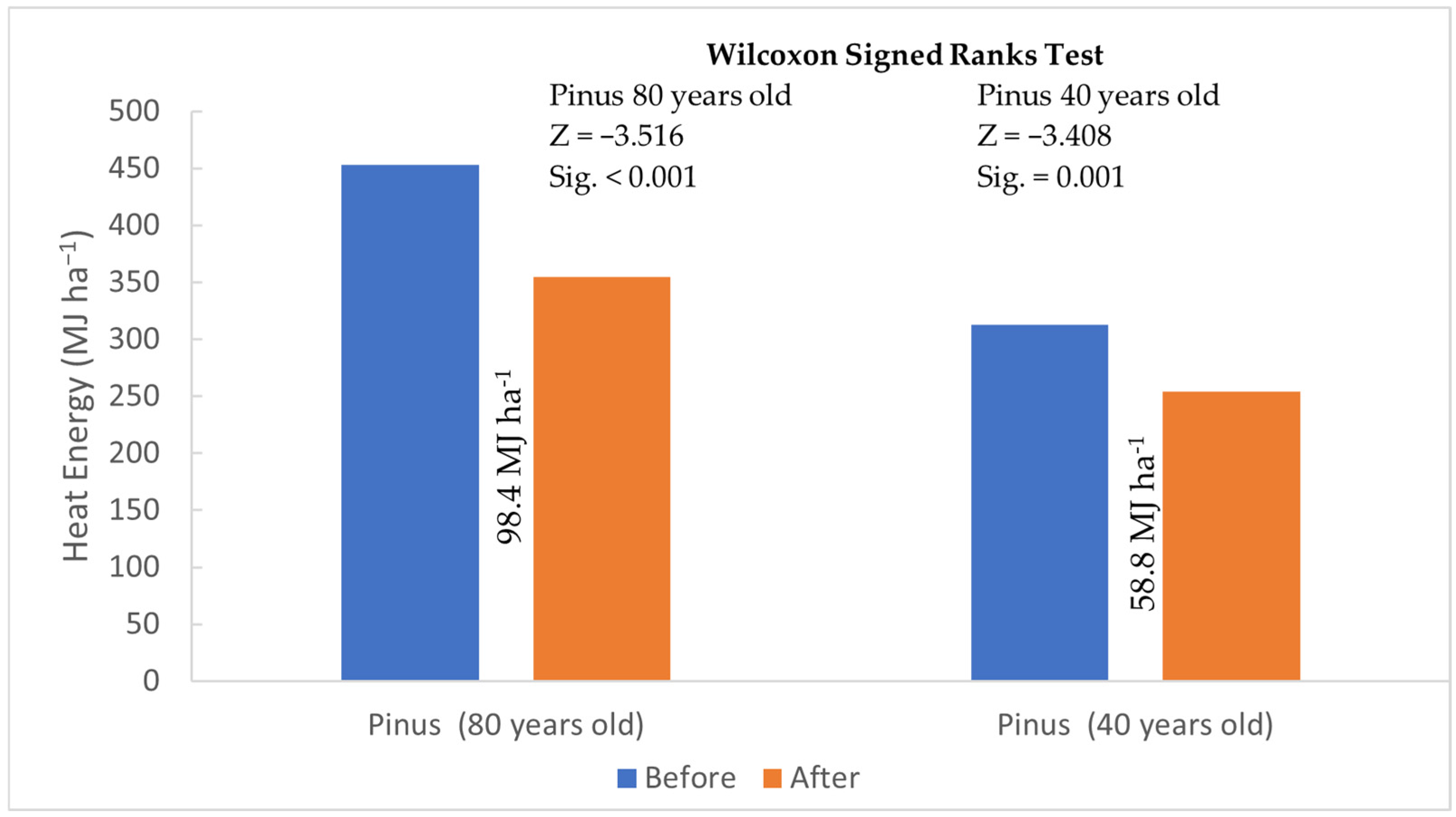
In the Mediterranean basin, coniferous reforestation mainly comprises forest stands highly susceptible to fires. When silvicultural treatments have not been performed for decades after plantation, these stands often exhibit high vertical and horizontal tree density, along with a significant occurrence of lying and standing deadwood, thereby increasing the fuel load. On average, these pine forests are characterized by high values of above-ground biomass, ranging from 175 to 254 Mg ha−1 for the younger and the older ones, respectively. The theoretical heat energy produced per surface unit, in the case of the total combustion of the above-ground biomass, is also high, varying from 300 to 450 MJ ha−1 depending on the stage of stand development. In this study, we demonstrated the importance of silvicultural interventions in reducing the pyrological potential in pine reforested stands located in southern Italy, also giving attention to the water savings needed during extinction phases. In detail, we applied a preliminary mathematical reaction-diffusion model aimed at predicting the development of forest fires. The model was applied using data obtained through the estimation of the pyrological potential in terms of heat energy produced per surface unit (1 hectare) and the variation in the critical surface intensity. We verified that, when silvicultural interventions are applied, they induce a reduction of heat energy ranging between 17 and 21%, while the extinguishing water saved ranges between 600 and 1000 Mg ha−1. Moreover, when the silvicultural interventions are implemented, the probability of the transition from surface fire to crown fire can be reduced by up to 31%. The most effective results on fire risk mitigation are mainly obtained when thinning aimed at reducing canopy and tree density is carried out in the younger phases of the reforested pine stands.
Keywords: Mediterranean mountain forests; forest management; tree density reduction; planted forests; Pinus spp.; heat energy; mathematical model; fire propagation Mediterranean mountain forests; forest management; tree density reduction; planted forests; Pinus spp.; heat energy; mathematical model; fire propagation