1. Introduction
Impedance and modulus studies of (Bi
0.5Na
0.5)TiO
3 (BNT)-based ceramics have established that polarization and conduction are dominated by semiconducting grain interiors, with oxygen vacancy relaxation and grain boundary effects as key contributors, enabling Cole-Cole fitting of non-Debye relaxation [
1,
2].
Lead-based Pb(Zr
xTi
1−x)O
3 (PZT) ceramics exhibit superior energy storage properties, such as a high recoverable energy density of 39.76 J/cm
3 and a breakdown strength of 2157 kV/cm achieved in 0.75Pb(Zr
0.52Ti
0.48)O
3-0.25BiFeO
3 thin films [
3]. These outstanding properties highlight the benchmark performance of Pb-based systems. However, the environmental toxicity of lead and increasingly stringent global regulations have driven extensive research toward lead-free alternatives. Growing demand for RoHS-compliant lead-free devices and high-permittivity, low-loss, power-stable ceramics have made lead-free ceramics a leading PZT replacement [
2,
4]. Building upon optimized compositions, current efforts tailor conduction and relaxation through doping and structural process optimization toward high energy storage, ultrasonic transducer, high-power degradation, and scalable deployment [
2,
5,
6].
The European Union Directives 2002/95/EC and 2002/96/EC strictly restrict the use of lead-containing electronic devices, rendering the research and development of lead-free ferroelectric materials an inevitable trend [
7]. BNT is regarded as the most promising alternative to lead-based materials, owing to its high dielectric constant comparable to PZT, applicable piezoelectric coefficient and large remanent polarization (P
r ≈ 38 μC/cm
2) [
8,
9], and tunable bandgap through A/B-site co-substitution for photovoltaic applications [
10,
11]. At room temperature, the end-component BiFeO
3 crystallizes in a rhombohedral perovskite structure with space group R3c (a = 5.580 Å, c = 13.877 Å, V = 374.26 Å
3) [
12], whereas BNT adopts a tetragonal structure with space group P4mm (a = 3.898 Å, c = 3.948 Å, V = 59.99 Å
3) [
13]. Notably, for the BNT-rich compositions near the morphotropic phase boundary (MPB), such as BNT-0.2BaTiO
3, the symmetry transitions to the tetragonal P4bm phase [
13], providing a structural benchmark for the present solid solution. Constructing multi-component solid solutions is the core strategy for optimizing electrical properties of the BNT-based materials. Researchers have introduced end members such as BaTiO
3 (BT), SrTiO
3 (ST) and Bi
0.5K
0.5TiO
3 (BKT) to form binary or ternary systems, thereby tailoring the phase boundary structure [
7,
11,
14,
15], including BaTiO
3-Bi
0.5Na
0.5TiO
3-CaBi
4Ti
4O
15 compounds with distinct dielectric responses across different compositional regimes [
16].
Near the MPB regions, 0.98(0.72Bi
0.5Na
0.5TiO
3-0.28SrTiO
3)-0.02BaBi
2Nb
2O
9 and 0.8Bi
0.5Na
0.5TiO
3-0.2Bi
0.5K
0.5TiO
3 materials exhibit the coexistence of ferroelectric and relaxor ferroelectric phases, where an enhanced piezoelectric response and dielectric properties can be obtained [
11,
15]. Oxygen vacancy (
) dynamics are recognized as the key factors determining electrical properties and reliability of the BNT-based materials [
17,
18,
19]. In the BNT-based system, volatilization of Bi during sintering process inevitably leads to the formation of oxygen vacancies, resulting in ionic conduction (Type I) or mixed conduction (Type II) mechanisms [
17,
20,
21].
However, the synergistic regulation of phase purity, grain boundary barriers, and oxygen vacancy migration in gradually varied compositions remains elusive. Dy
3+ doping has been reported to improve insulation by blocking oxygen vacancy migration [
22], while Mn modification modulates transport via defect compensation [
23]. Comparatively, lead-based PZT ceramics exhibit low activation energies for conduction (0.58–0.73 eV) [
24], whereas BNT-based ceramics show significantly higher values (>1.2 eV) [
7], indicating superior high-temperature insulation. However, neither of these studies investigated the non-monotonic conduction transition across a compositional series, nor did they elucidate the synergistic competitive relationship among the three influencing factors. In view of this, a ternary solid solution was proposed with gradient modulation of the third-component content in this work, and the competition between grain-boundary blocking and bulk vacancy migration was systematically investigated, in order to uncover the intrinsic physical origin of the non-monotonic conduction transition.
Specifically, the (0.95−x)[(Bi
0.5Na
0.5)
(1−1.5y)Sm
y](Zr
0.2Ti
0.8)O
3-0.05BiFeO
3-xBa(Sn
0.2Ti
0.8)O
3 ceramics were prepared via the solid-state reaction method. The conduction and relaxation behaviors are clarified via dielectric-temperature relationship and impedance spectra, addressing performance degradation under high temperature and high electric field, and providing theoretical support for energy storage application in subsequently fabricated ceramic thick films [
25,
26]. A non-monotonic transition from grain-boundary-blocked ionic conduction to mixed electronic–ionic conduction is revealed, with the optimal composition (x = 0.2) exhibiting the highest resistance and best dielectric stability.
3. Results and Discussion
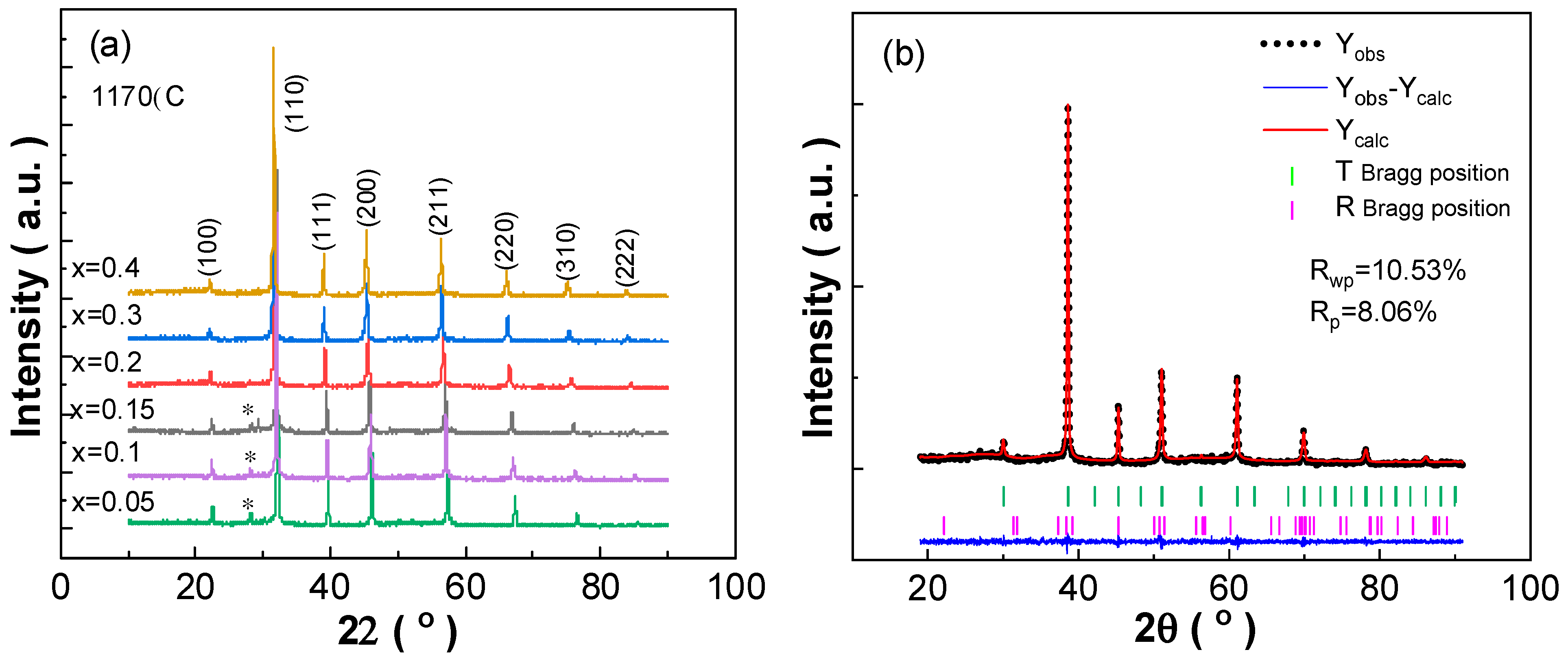
Figure 1 shows XRD patterns of the (0.95−x)BNSmZT-0.05BF-xBaSnT (x = 0.05, 0.1, 0.15, 0.2, 0.3, 0.4) ceramics sintered at 1170 °C for 2 h. For the compositions x > 0.15, pure perovskite structure is obtained in this system, and distinct sharp peaks indicate the formation of a good solid solution. For the compositions with x ≤ 0.15, a secondary phase is found around 2θ of 28.3°, possibly assigned to BiO
2-x (PDF 00-047-1057, cubic structure, space group Fm-3m, a = 5.4754 Å, V = 164.15 Å
3) or Bi
2Ti
2O
7 (PDF 320118, cubic pyrochlore structure, space group Fd-3m, a = 20.68 Å, V = 8844.06 Å
3), partially relating to the high volatility and high content of Bi in these compositions [
27]. As the BaSnT doping content increases, the relative content of Bi
3+ in the lattice decreases gradually, and all characteristic diffraction peaks in the XRD patterns shift evidently toward lower angles. This variation is attributed to the difference in ionic radius, where larger Ba
2+ with an ionic radius of 1.61 Å (12-coordiantion number, 12-CN) substitutes smaller Bi
3+ with an ionic radius of 1.36 Å (12-CN). Thus, the unit cell expands and the interplanar spacing increases, which eventually causes the diffraction peaks to move to the lower 2θ angle region.
Rietveld refinement of the XRD pattern for the x = 0.2 ceramic (
Figure 1b) yields a two-phase model with R factors and goodness of fit (R
wp = 10.53%, R
p = 8.06%, χ
2 = 7.88), presenting acceptable structure convergence reliability. The refined phase fractions reveal a predominant tetragonal phase (P4bm, 95.44%) with a minor rhombohedral component (R3c, 4.56%).
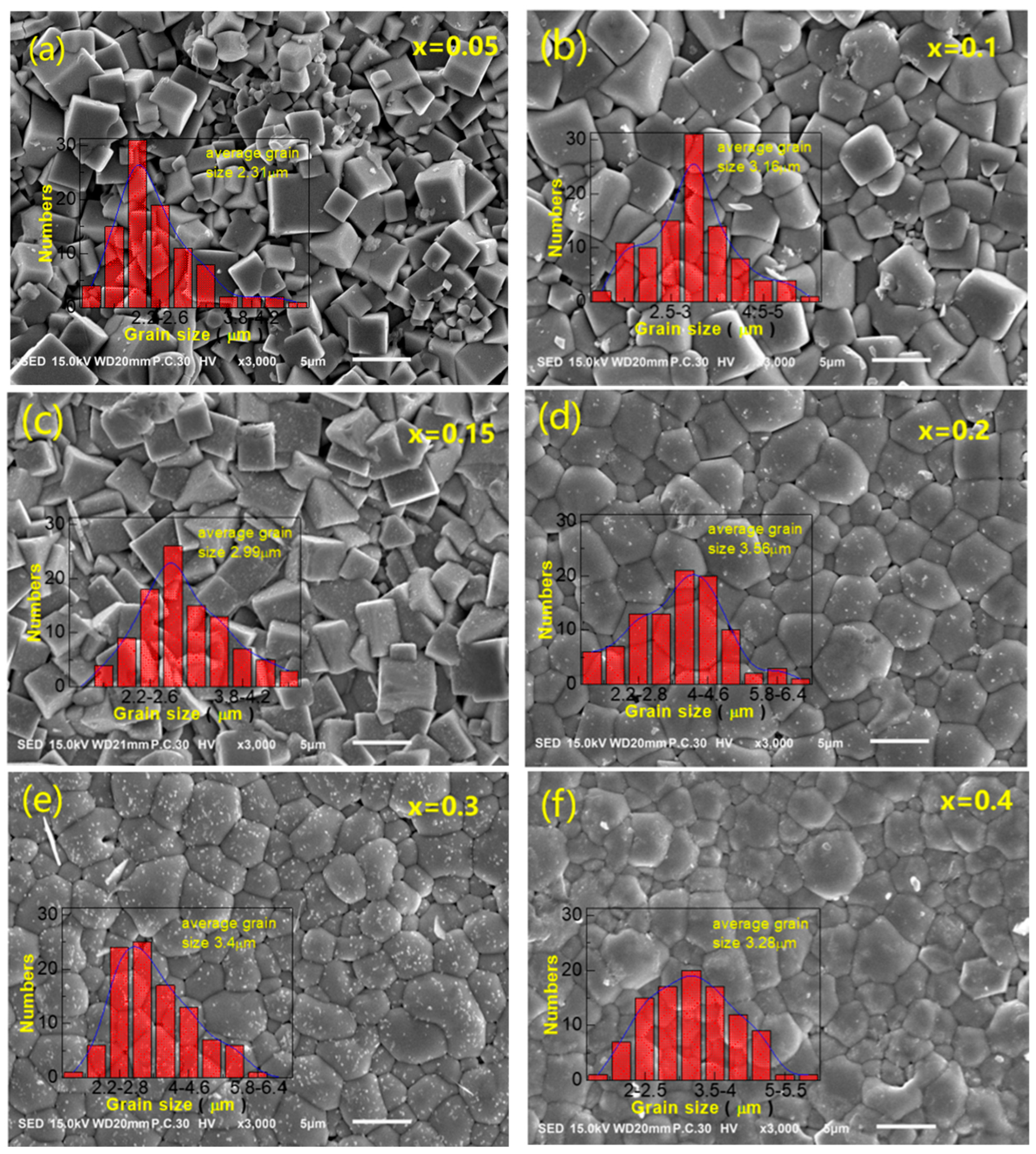
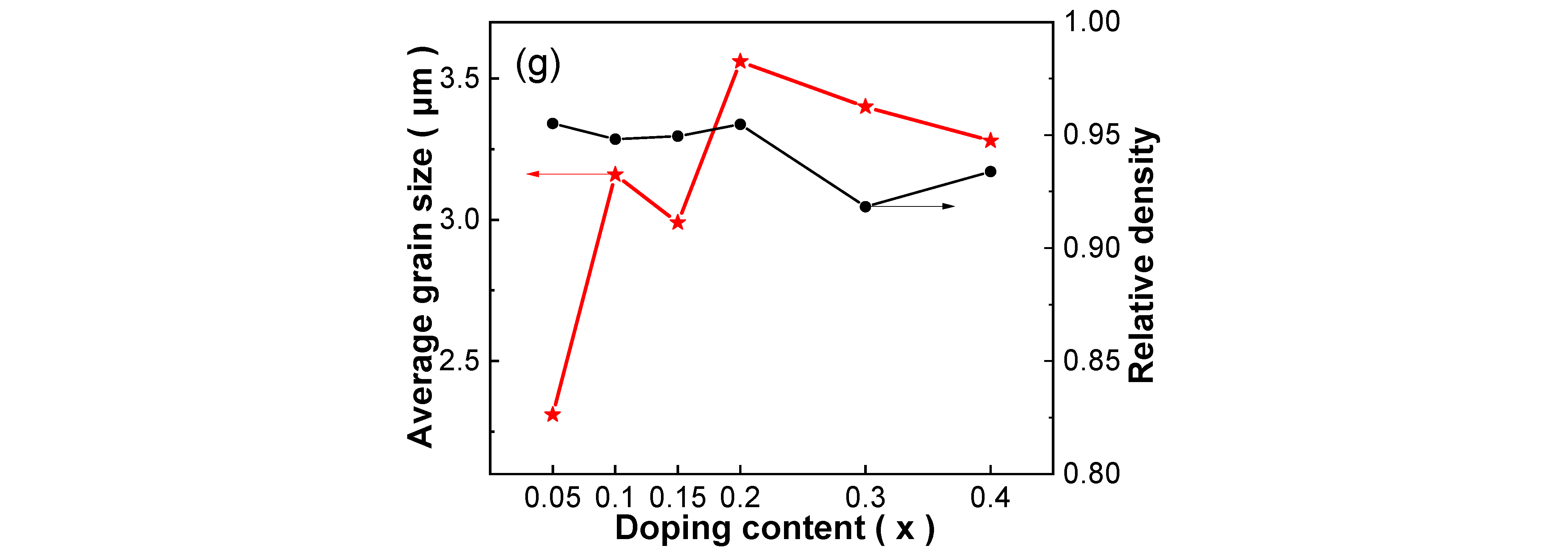
Figure 2 illustrates SEM images and the grain size of the (0.95−x)BNSmZT-0.05BF-xBaSnT samples, insets showing the corresponding grain size distribution histograms. All ceramics exhibit distinct grains and grain boundaries. The white spots on the grain surfaces arise from incompletely cleaned burial calcined powder, which was covered green pellets to compensate for the volatilization of volatile elements Bi and Na during the sintering process. All samples possess a relatively dense microstructure, and very few pores appear in some compositions, being consistent with their high density as all ceramics have relative density higher than 92% (
Figure 2f). For calculating relative density, the cell parameters are refined using XRD patterns and shown in the
Supporting Information Table S1. In this system, the densification of (0.95−x)BNSmZT-0.05BF-xBaSnT ceramics is influenced by composition, in which the x = 0.3 composition has the lowest relative density. Owing partially to the liquid-phase sintering mechanism, the grains of x ≥ 0.2 samples present not typical polyhedral morphology [
26].
With the addition of BaSnT, the average grain size presents a “climbing ascent” trend. The average grain size increases sharply from 2.31 μm to 3.16 μm as x rises from 0.05 to 0.10. It descends slightly at x = 0.15, and climbs again to a peak value of 3.56 μm when x hits 0.20, then gradually decreases to 3.28 μm for x = 0.4 (
Figure 2f).
By increasing the BaSnT content, Bi
3+ content decreases, and the lattice expands due to the difference in ionic radii as discussed in the XRD measurement, in which the ability to incorporate ions and the formation of a solid solution are enhanced. Consequently, the content of impurity phase decreases, and the inhibitory effect of the secondary phase on grain growth is reduced [
28]. At x = 0.15, however, the accumulation of Ba
2+ in the lattice exceeds the solubility limit. According to the charge compensation rule, excessive Bi
3+ is more difficult to swap with Ba
2+, so Bi
3+ is squeezed out instead. The secondary phase reaches its maximum value here, showing the hardest inhibition on grain growth, and resulting in a slight decrease in grain size. Once x reaches 0.20 and beyond, Bi
3+ continues to decrease until it can incorporate neatly into the solid solution. The grain size bounces back up and then decreases slowly again due to lattice distortion.
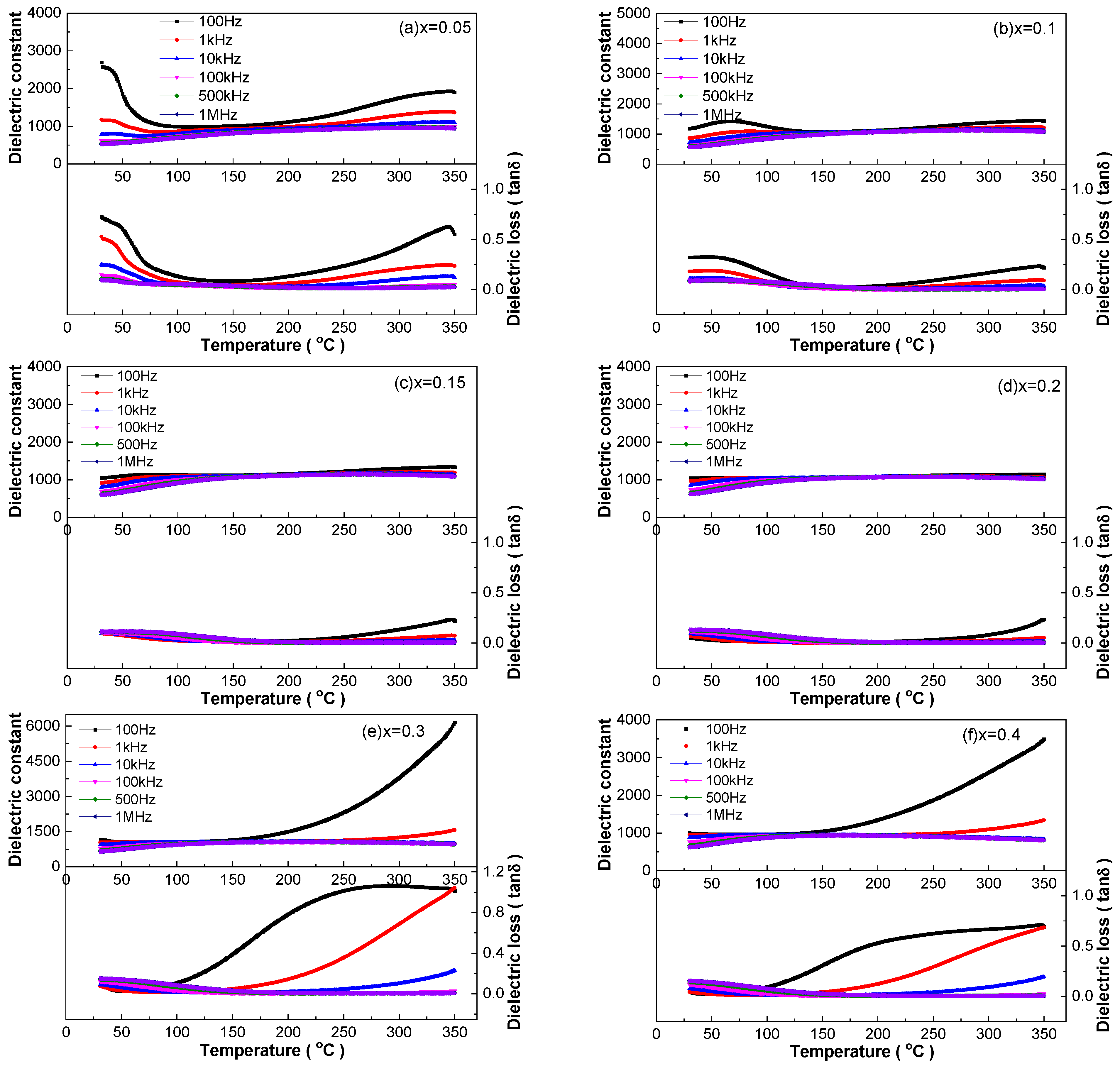
The temperature dependence of dielectric performance of (0.95−x)BNSmZT-0.05BF-xBaSnT ceramics is shown in
Figure 3, a clear dielectric frequency dispersion is observed for all samples, i.e., the dielectric constant is higher at low frequencies, then drops and levels off at high frequencies, showing great dependency on frequency. The low-frequency dispersion is attributed to space-charge polarization, grain-boundary polarization, and ferroelectric domain switching, which can follow the external electric field well at low frequencies. At high frequencies, only electronic and ionic polarizations remain active [
29]. The relaxor behavior likely results from polar nanoregions (due to chemical compositional disorder), oxygen vacancies (from Bi evaporation during sintering), and lattice/local region inhomogeneity [
29,
30]. Meanwhile, the dielectric loss is characterized by significant elevation at low frequencies and high temperatures. Such significant elevation of low-frequency dielectric loss, especially at high temperatures, can be attributed to the enhanced migration of free charge carriers at grain boundaries and intensified space-charge polarization at elevated temperatures [
29,
30].
For the ceramics with compositions x ≤ 0.1, the dielectric constant first decreases around room temperature and then increases at low frequencies. Then, it rises slowly followed by a gentle decline at high frequencies with increasing temperature, presenting wide temperature stability. The pronounced low-temperature dielectric peak and strong frequency dispersion are normally attributed to the non-ergodic to ergodic relaxor (NER→ER) transition [
31]. By increasing the BaSnT content, the enhanced A/B-site chemical disorder weakens the long-range correlation among polar nano-regions (PNRs) and reduces their thermal activation energy, thereby progressively shifting the depolarization temperature (T
d) toward lower temperatures [
15]. At x > 0.1, the T
d temperature moves to below ambient temperature, leaving the ceramics in a stable ergodic relaxor state throughout the measured temperature range. The increased dielectric loss at high temperatures and low frequencies for x = 0.05 and x ≥ 0.3 samples is mainly dominated by the conductive loss resulting from oxygen vacancy migration and space-charge conduction [
32].
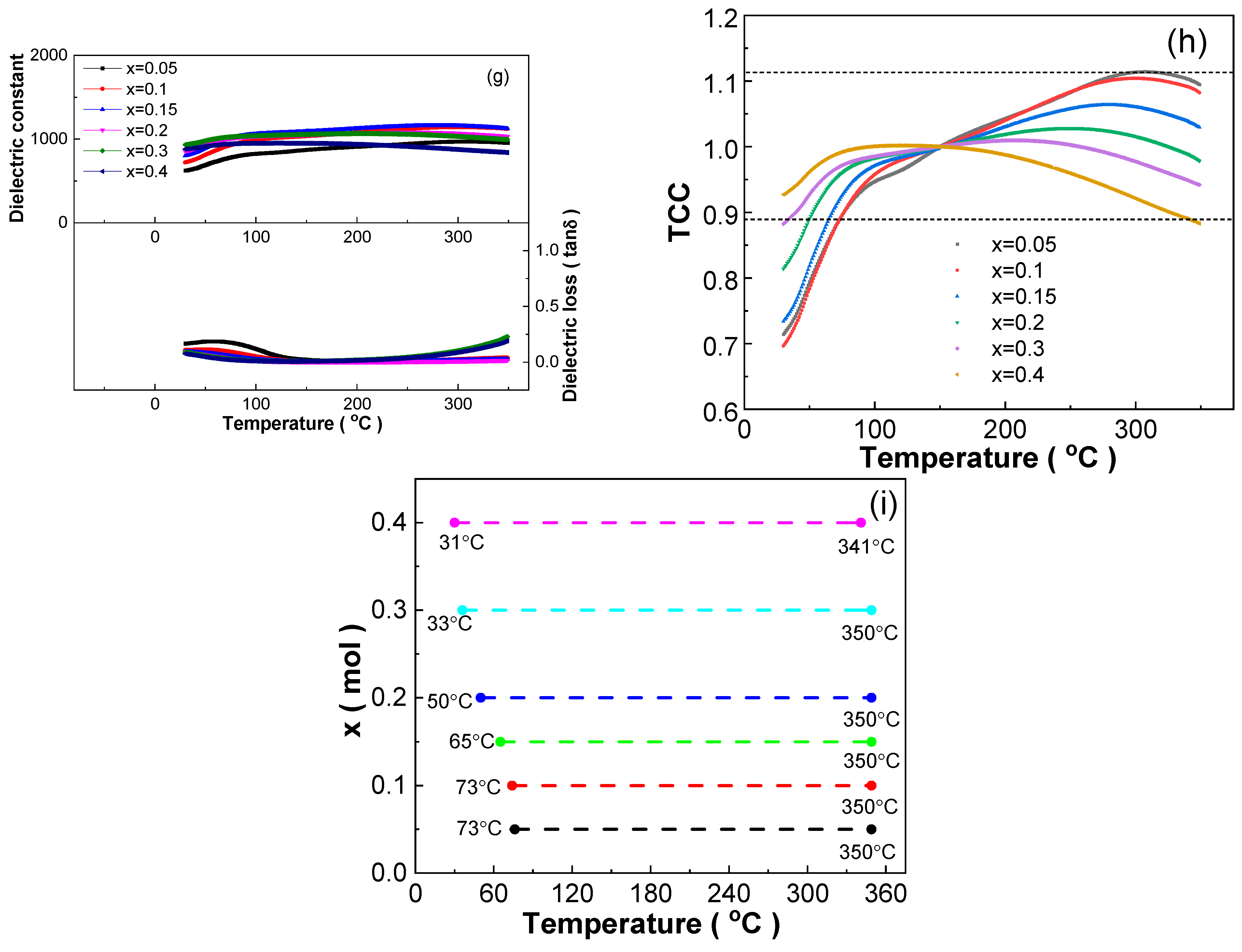
Figure 3g shows the dielectric performance–temperature relationship of the (0.95−x)BNSmZT-0.05BF-xBaSnT ceramics measured at 10 kHz. The dielectric constant of this system first increases and then decreases with the rise in BaSnT content, reaching the maximum values at x = 0.15–0.2 compositions. No sharp Curie phase transition peak is observed in the whole temperature range due to composition design strategy, showing typical ergodic relaxor ferroelectric characteristic and being suitable for energy storage application [
29,
30]. The variation in dielectric performance with BaSnT content can be interpreted as follows. For x = 0.05–0.2 compositions, the system moves closer to the MPB region, resulting in enhanced lattice distortion and ferroelectric polarization. When x > 0.2, excess BaSnT may exceed the solid solubility limitation, leading to lattice mismatch or local phase inhomogeneity. Furthermore, the dielectric stability is weakened by the Bi
2Ti
2O
7 secondary phase in x ≤ 0.1 samples (see
Figure 1) [
29].
The temperature coefficient of capacitance (TCC), defined as the ratio of dielectric constant at a given temperature to its room-temperature reference value, quantifies the relative variation in permittivity with temperature [
26]. In this work, the reference temperature is set to 150 °C for high-temperature applications, and the dielectric temperature stability of (0.95−x)BNSmZT-0.05BF-xBaSnT ceramics in the range of 31–350 °C is shown in
Figure 3h using 10 kHz data. The dielectric temperature stability calculation reveals that the x = 0.2 ceramic possesses the optimal stability. Relative to the dielectric constant at 150 °C (Δε
r/ε
150 °C), the dielectric constant variation in all compositions remains within 11% over the temperature range of 71~341 °C. Ceramics with x ≥ 0.2 compositions exhibit excellent stability (within 11%) over a wide temperature range of 50~341 °C as shown in
Figure 3i, making them promising candidates for high-temperature capacitors [
30,
32].
The complex impedance spectra (Z′–Z′′) of the (0.95−x)BNSmZT-0.05BF-xBaSnT ceramics are shown in
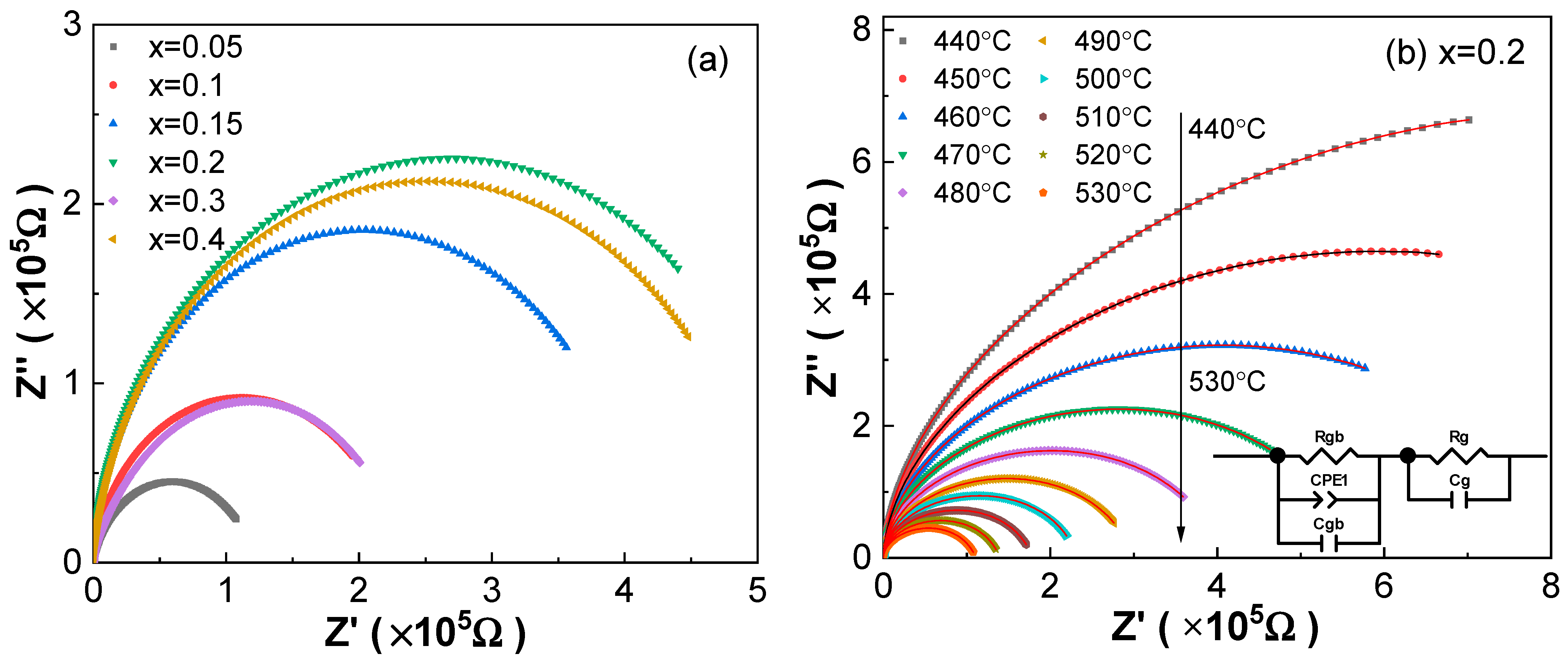
Figure S1. All ceramics exhibit non-ideal semicircular arcs, with a non-monotonic evolution in the curvature radius observed: the semicircle diameter shows an initial increase followed by a decrease by increasing the BaSnT content within x = 0.05–0.3, reaching a maximum value at x = 0.2; at x = 0.4, the impedance increases again but does not exceed the value at x = 0.2, as shown in
Figure 4a, using 470 °C data for comparison. The low-frequency intercept with the real axis corresponds to the total resistance R
total, consistent with the arc radius change trend, indicating optimal insulating characteristic for the x = 0.2 composition [
7,
30].
Figure 4b shows typical complex impedance spectra for the x = 0.2 sample measured at different temperatures, where the non-ideal semicircular arcs are fitted with an equivalent circuit of a parallel R
g-C
g in series with parallel R
gb-CPE
1-C
gb elements using the Zview2 software. R
g is assigned to the grain bulk resistance and R
gb to the grain boundary resistance, with CPE
1 accounting for the non-ideal capacitive behavior at the grain boundaries. The total resistance R
total = R
g + R
gb, obtained from the low-frequency intercept, exhibits a non-monotonic evolution by increasing the BaSnT content, peaking at x = 0.2, as shown in
Figure 4a and
Figure S1.
The impedance variation with BaSnT content is rationalized by three factors. First, moderate BaSnT content (x ≤ 0.2) is found to suppress Bi
3+ loss during sintering, thereby lowering the concentration of oxygen vacancies (
)—the main ionic carriers in BNT-based ceramics—and thus increasing resistivity [
14,
18,
33]. However, for excessive BaSnT content (x > 0.2), lattice strain accumulates, promoting the formation of defect clusters and lowering the migration activation energy for oxygen vacancies, resulting in increased conductivity and diminished impedance [
18,
19]. The modulation of grain boundary barrier and space charge layers play a key role in governing this behavior. The broadened impedance arcs indicate significant grain boundary contribution to the overall resistance [
6,
30].
Second, the appropriate BaSnT content modifies the grain boundary chemistry, in which acceptor-type defects are reduced, space-charge layer potential is raised, and carrier transport across grain boundaries is blocked [
32,
34]. Conversely, excessive Ba enrichment at grain boundaries in over-doped compositions disrupts the continuity of insulating intergranular phases and reduces the barrier height [
7,
30], as corroborated by the systematic leftward shift in impedance arcs shown in
Figure S1.
Third, defect compensation equilibrium and carrier type transition also contribute to the conduction. When Ba
2+ replaces Bi
3+, charge compensation occurs either by the removal of oxygen vacancies or by the adjustment of electron concentration—a standard Kröger–Vink picture [
14,
30,
33].
Therefore, the highest resistance at x = 0.2 is attributed to both fewer oxygen vacancies and better grain boundary barriers [
7,
30,
32,
35]. These findings provide a defect-chemistry-guided composition design strategy for high-insulation lead-free piezoelectric ceramics, consistent with the oxygen vacancy dynamics framework established for the BNT-based ferroelectrics [
18,
35].
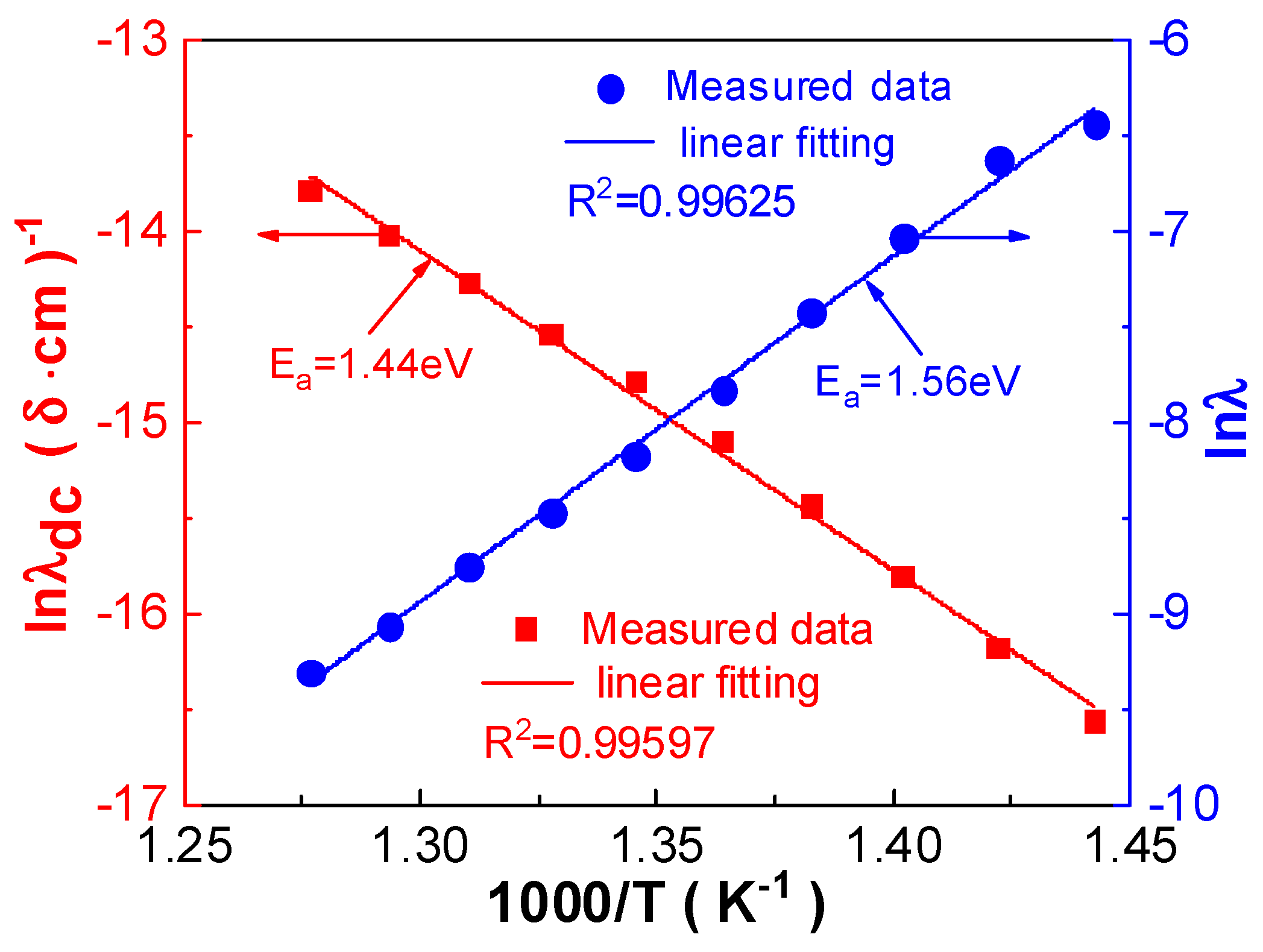
The Arrhenius fitting plots of direct current (DC) conductivity (σ) and relaxation time (τ) as a function of reciprocal temperature for the (0.95−x)BNSmZT-0.05BF-xBaSnT ceramics are presented in
Figure S2 and
Figure 5 and
Table S2, based on which the activation energy (E
a) and the fitted resistance values of grain boundary resistance R
gb and grain resistance R
g are derived from linear regression and equivalent circuit fitting, respectively. A non-monotonic evolution of E
a, extracted from the relaxation time, with the exhibited BaSnT content: increasing from 1.86 eV at x = 0.05 to a maximum value of 2.12 eV at x = 0.1, following by a sharp decline to a minimum value of 1.21 eV at x = 0.15, and subsequently recovering to a relatively stable range of 1.56–1.64 eV for the x = 0.2–0.4 ceramics. The conductivity change trend is inversely correlated with E
a, with the highest E
a value at x = 0.1 corresponding to the lowest conductivity, indicating optimal insulating characteristic. Conversely, the precipitous drop in E
a at x = 0.15 marks a significant transition in the conduction mechanism with enhanced electrical transport [
35].
This behavior originates from the synergistic regulation of oxygen vacancy-mediated conduction by phase purity and lattice strain. For x ≤ 0.1 ceramic, Bi volatilization is indicated by the XRD-detected Bi
2Ti
2O
7 impurity phase (
Figure 1), generating
, according to the Kröger–Vink equation:
[
19]. High-resistivity barrier layers are formed at grain boundaries by the low-melting-point Bi
2Ti
2O
7 s phase, obstructing continuous oxygen vacancy migration channels, elevating the activation energy E
a to 2.12 eV and suppressing conductivity [
7,
18,
32].
At x = 0.15, with excess Bi
3+, the rising Ba
2+ content drives charge compensation via defect formation, and the expelled excess cations subsequently precipitate as a secondary phase, and the formation of secondary phase is accompanied by the generation of oxygen vacancies, resulting in a significant surge in oxygen vacancy concentration. Concurrently, the oxygen vacancy migration barrier reaches its minimum value of 1.21 eV, which promotes ionic conduction and markedly enhances the overall conductivity [
14,
18].
At x = 0.2–0.4, when the bonding between oxygen anions and A-site cations is relatively weak, oxygen anions are more prone to migrate to planes with stronger A-site cation-oxygen bonding. Specifically, the Ba-O-Bi bond is more stable than the Bi-O-Na bond, thereby elevating the ionic migration activation energy required for oxygen vacancy migration. Consequently, the E
a value recovers and stabilizes within the range of 1.56–1.64 eV, and the conduction mechanism transitions from ionic conduction to oxygen vacancy-mediated conduction governed by the robust Ba-O-Bi bonding interaction [
18,
19,
28,
30].
In summary, the non-monotonic evolution of electrical conduction behavior is governed by the competition between the grain boundary blocking effect of the Bi
2Ti
2O
7 impurity phase and A-site defect chemical equilibrium. Such research provides a phase-engineering strategy for regulating insulating properties of the BNT-based ceramics, being consistent with the oxygen deficiency to excess transition reported in the A-site engineered BNT ceramics [
19,
36].
In order to systematically explain the physical parameters covering electrical, mechanical, thermal, and chemical coupling behaviors in ionic disordered systems, a jump relaxation model (JRM) is constructed to quantitatively characterize the frequency and temperature-dependent conductance response. The frequency-dependent conductivity behavior in ionic conductors can be elucidated in a double power law, expressed as
[
29], where A is a constant with temperature;
f represents frequency;
n represents the exponent in the power law equation, which has a value within the range of 0–1 and represents the frequency-dependent index; and B represents a constant that is less dependent on temperature [
7]. To understand the relationship between conductivity behavior and frequency of a material, the alternating current (AC) conductivity is calculated using the formula
ac =
tan
, where
represents the angular frequency,
represents the dielectric constant in the vacuum,
represents the relative dielectric constant, and tan
represents the dielectric loss [
30].
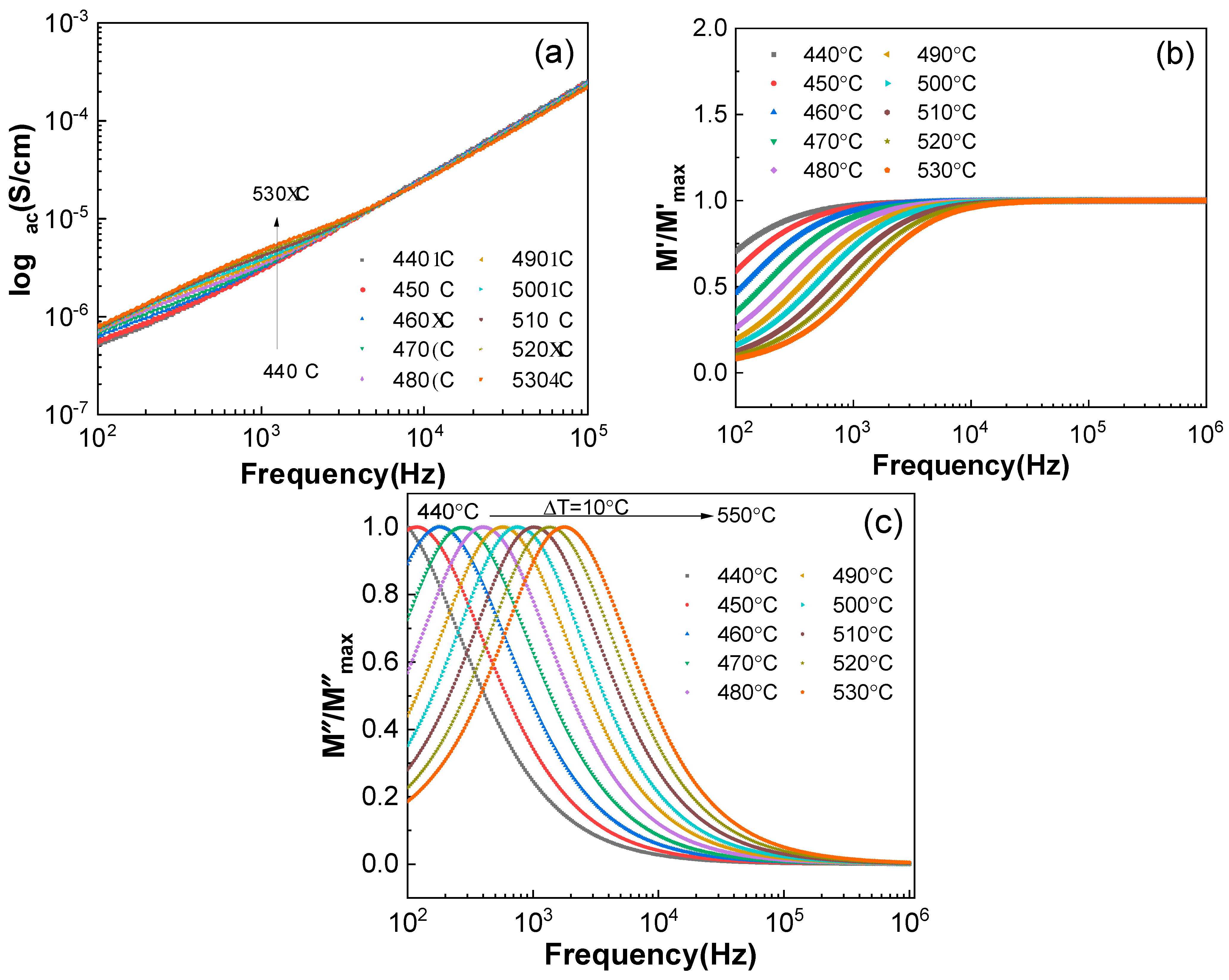
Figure 6a shows the change in AC conductivity with increasing frequency measured at different temperatures for the x = 0.2 ceramic. Many carrier hopping mechanisms are involved in this conduction, including small polarization jumps, correlation barrier jumps, overlapping large pole jumps, quantum tunneling, etc. [
30]. In the low frequency region, frequency-dependent changes are observed in the AC conductivity at all temperatures, with the
n value decreasing monotonically from 0.94 to 0.85 with increasing temperature, indicating that the carrier dynamics deviate from the ideal Debye relaxation and enter the correlation jump, being consistent with the Dyre’s random free-energy barrier model [
37]. An increase in the conductivity is apparent with increasing frequency. The AC conductivity increases monotonically with frequency throughout the entire measured frequency range, without showing an obvious DC conductivity plateau, also confirming the dielectric relaxation behavior of the material. The change in conductivity with temperature indicates that the material exhibits a negative temperature coefficient resistance (NTCR) characteristic [
2]. The charge transport mechanism dominated by thermally activated nearest neighbor association jumping is demonstrated.
To further elucidate the conduction mechanism while suppressing contributions from grain boundaries and electrode polarization, the frequency (
f) dependence of normalized real and imaginary parts of electric modulus, M′/M′
max and M″/M″
max, are presented in
Figure 6b and
Figure 6c, respectively. In
Figure 6b, as frequency increases, the M′/M′
max-
f spectra at all measured temperatures overlap into a single master curve at different high frequencies depending on temperature, indicating that the relaxation dynamics remain unchanged across the entire temperature window [
29]. As temperature rises, the dispersion region shifts toward higher frequencies and the steepness of M′ curves increases, reflecting a thermally activated process with progressively shortened relaxation times [
38].
In
Figure 6c, the peak frequency
fmax moves monotonically to higher frequencies with increasing temperature, and only a single peak is reflected at each temperature, confirming that the charge carriers migrate faster at elevated temperatures without any change in the underlying relaxation mechanism [
15]. The full width at half maximum (FWHM) of the M″/M″
max peaks in the 480–530 °C range is calculated to be 1.30–1.37 decades, substantially exceeding the ideal Debye value of 1.14 decade [
37]. This broadened lineshape provides further evidence for non-ideal relaxation governed by correlated hopping in a randomly disordered energy landscape, being consistent with the Dyre random free-energy barrier model [
30,
37].