

Article

A Novel Bi2O3-TeO2-B2O3-CuO Glass for Copper Metallization of Si3N4: Wettability, Thermal Stability, and Bonding Performance
1
School of Materials Science and Engineering, Shanghai University, Shanghai 200444, China
2
Shanghai Engineering Research Center of Integrated Circuits and Advanced Display Materials, Shanghai University, Shanghai 200444, China
3
Transparent Ceramics Research Center, Shanghai Institute of Ceramics, Chinese Academy of Sciences, Shanghai 201899, China
4
Center of Materials Science and Optoelectronics Engineering, University of Chinese Academy of Sciences, Beijing 100049, China
*
Authors to whom correspondence should be addressed.
Ceramics 2026, 9(4), 37; https://doi.org/10.3390/ceramics9040037
Submission received: 15 February 2026 / Revised: 23 March 2026 / Accepted: 24 March 2026 / Published: 26 March 2026
(This article belongs to the Special Issue Advances in Ceramics, 3rd Edition)

Abstract

To address the lack of suitable glass systems for silicon nitride (Si3N4) surface metallization, which requires high wettability and thermal stability, and robust bonding between the copper layer and the ceramic substrate, a novel Bi2O3-TeO2-B2O3-CuO glass system was developed. This study systematically investigated the influence of Bi2O3 concentration, glass properties, optimized paste composition, and brazing mechanism using phase analysis, microstructural characterization, particle size statistics, thermal analysis, and tensile testing. An optimal glass composition containing 20 mol% Bi2O3 was identified, exhibiting high thermal stability (ΔT = 224 °C) and a coefficient of thermal expansion of 9.63 × 10⁻⁶ °C−1. At a brazing temperature of 750 °C, the glass demonstrated excellent wettability with a contact angle of 27°. A conductive paste comprising 94 wt% Cu and 6 wt% glass yielded a thick film with a minimum resistivity of 6.25 μΩ·cm and a maximum tensile strength of 25.2 MPa. Mechanism analysis revealed that the superior wettability drives the liquid glass phase to form a thin intermediate layer that significantly reinforces adhesion. These findings contribute to the research and development of subsequent novel glass systems with superior performance.

1. Introduction

In the rapidly advancing field of electronic technology, the performance and reliability of semiconductor devices are increasingly affected by thermal management issues. As the power density of electronic devices rises, thermal management has emerged as a critical factor in ensuring the long-term stable operation of such devices. Silicon nitride (Si3N4) ceramic substrates, with their exceptional thermal conductivity, high hardness, outstanding oxidation resistance, and high-temperature stability, have become ideal materials in the field of electronic packaging [1,2,3,4,5]. These properties have facilitated the widespread application of these ceramic substrates in automotive, aviation, and other high-performance electronic systems [6,7]. However, the effective integration of these ceramic substrates into semiconductor devices and the realization of their surface metallization represent a key step as well as a technical challenge.
Traditional surface metallization techniques, such as Active Metal Brazing (AMB), have achieved a certain level of metallization but are plagued by issues including the susceptibility of active metals to oxidation and the requirement for high brazing temperatures. These factors restrict their application in high-performance electronic devices [8,9,10]. AMB is also a prevalent method for the surface metallization of Si3N4 [11,12], which enables the metallization of Si3N4 ceramics via chemical reactions between the ceramics and active metals (e.g., Ti, Zr, or Cr) [13,14,15]. Nevertheless, the AMB procedure has notable limitations due to the high oxidizability of the active components, namely Ti, Zr and Cr [16]. Therefore, the development of novel surface metallization techniques that can achieve favorable wettability and bonding strength at relatively low temperatures, while maintaining high electrical conductivity and mechanical strength, has become a research hotspot.
In recent years, thick-film metallization has been an effective and convenient approach to realize ceramic surface metallization [17,18,19]. For instance, Seo et al. [20] demonstrated the successful metallization of Al2O3 substrates via screen printing, achieving dense microstructures and a minimized thin-layer resistivity. Investigations into adhesion mechanisms revealed that the CaO-BaO-B2O3-SiO2-Al2O3 glass system exhibits strong bonding to pre-oxidized AlN substrates, significantly enhancing the tensile strength of the resulting composite [21].
This method deposits metal layers onto ceramic substrates, such as Si3N4, primarily through screen printing metal pastes (e.g., formulations containing silver, gold, or copper particles dispersed in a glass or organic binder), followed by firing at moderate temperatures (typically 600–900 °C). Compared to high-temperature processes like AMB, it offers significant advantages including high cost-effectiveness, suitability for mass production, reduced thermal stress and lower oxidation risk, while still maintaining adequate electrical conductivity.
The composition of the glass frit within the conductive paste critically influences film properties; e.g., Chen et al. [22] showed that the B2O3-SiO2-ZnO-BaO glass content directly impacts the density of the resultant copper film. Wettability, a key factor for effective metallization, was studied by Chen et al. [23], who found that TeO2-V2O5-CuO glass displays favorable wetting behavior on AlN ceramics. Similarly, Ji et al. [24] emphasized the importance of glass powder wettability for AlN substrate metallization, achieving optimized results through sintering process adjustments. Furthermore, for copper-composited Si3N4 ceramics substrates, Sun et al. [25] utilized a high-melting-point Li2O-MgO-Al2O3-SiO2 glass to fabricate Si3N4/Si3N4 joints; however, the high processing temperature exceeding the melting point of Cu poses a significant limitation. This underscores the critical need for developing novel low-melting-point glass systems suitable for Si3N4 metallization. Then Lin et al. [26] investigated the Bi2O3-B2O3-ZnO system, and identified the formation of Bi-Si-O compounds at the Bi2O3/Si3N4 interface as an essential prerequisite for successful substrate metallization.
Despite significant progress in ceramic metallization, the development of glass systems suitable for Si3N4 surface metallization remains challenging. An ideal glass system must simultaneously achieve optimized wettability, high bonding strength, and low firing temperatures, while also suppressing porosity, mitigating mechanical integrity degradation caused by residual organic binders, reducing copper oxidation during processing (which can impair conductivity), and ensuring long-term reliability under thermal cycling or harsh operating environments. Collectively, these requirements constitute a key research priority for realizing reliable thick-film metallization on Si3N4 substrates.
Based on the above considerations and the limited reports on the Bi2O3-TeO2-B2O3 glass system [27], this study aims to address this gap by developing a Bi2O3-TeO2-B2O3-CuO glass system specifically designed for copper thick-film metallization on silicon nitride ceramics. Glass powders with varying compositions were synthesized and characterized using X-ray diffraction (XRD), differential scanning calorimetry (DSC), and thermal expansion measurements. The influence of Bi2O3 content on the thermal stability, wettability, microstructure, electrical resistivity, and bonding strength of the glass system were systematically investigated. Through this approach, we aim to elucidate the composition–structure–property relationships that govern the performance, thereby providing both an optimized glass composition and the underlying mechanisms governing the performance such as electrical resistivity and bonding strength. This work contributes to the development of reliable copper metallization on Si3N4 ceramic substrates.

2. Materials and Methods

2.1. Materials

The conductive paste was composed of Cu powder (<1 μm, >99.9%, Shanghai Aladdin Biochemical Technology Co., Ltd., Shanghai, China) and the as-prepared glass powder. Raw materials for glass synthesis were purchased from Sinopharm Group Co., Ltd., Shanghai, China, including Bi2O3 (99.99%), TeO2 (99.99%), CuO (99.99%), and B2O3 (99.99%), with detailed compositions listed in Table 1. The general chemical formula of the glasses is xBi2O3·(50 − x)CuO·20TeO2·30B2O3, where x represents the Bi2O3 content in mol%, ranging from 10 to 35 mol%, and the CuO content is correspondingly (50 − x) mol%.
An organic solvent with excellent thixotropic properties was prepared using diethyl carbitol, stearic acid, ethyl cellulose, a silane coupling agent, and a α-terpineol. Commercial Si3N4 ceramic substrates (30 mm × 30 mm × 1 mm) were supplied by Kunpeng Photoelectric Technology Co., Ltd., Cangzhou, China. Tensile test specimens were circular disks with dimensions of Φ 18 mm × 1 mm. Prior to metallization, all substrates underwent ultrasonic cleaning in three sequential steps using acetone, ethanol, and deionized water, respectively.

2.2. Preparation of Cu-Based Thick-Film Layer on Si3N4 Ceramic Substrate

The conductive paste was composed of Cu powder, glass powder, and an organic solvent. Table 2 lists the precise composition of the organic solvent prepared in this study using a dual- solvent technique. Solvents with distinct boiling points, including α-terpinol and diethylene glycol butyl ether, were employed. Stearic acid functioned as a dispersant, ethyl cellulose served as a thickener, and a silane coupling agent was incorporated to enhance the oxidation resistance and electrical conductivity of the Cu thick film subsequent to screen printing.
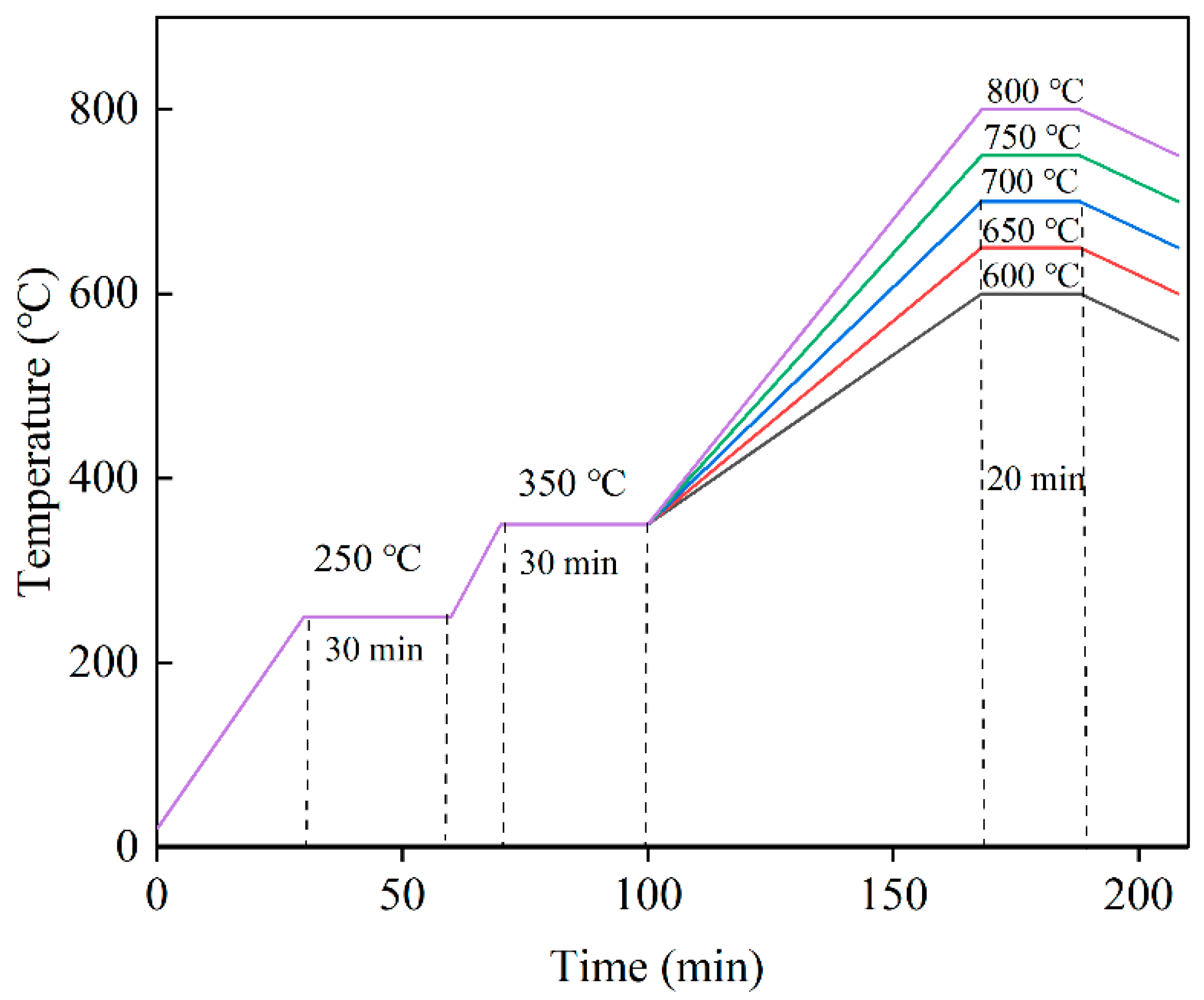
Initially, the ratio of conductive particles to organic solvent was adjusted to form a suitable conductive paste with the viscosity suitable for screen printing (Table 3). After the screen-printing process, the samples were dried at 80 °C for 20 min. Subsequently, the samples were brazed in a tube furnace following a three-step thermal profile: first, the conductive paste was fired at 250 °C for 30 min to ensure that the organic solvent was completely volatilized and thermally decomposed; second, the glass was softened by holding at 350 °C for 30 min, during which the glass transition initiated; finally, the samples were brazed at temperature ranging from 600 °C to 800 °C. The specific brazing temperature profile is illustrated in Figure 1. All brazing processes were carried out in an inert environment to minimize copper oxidation.

2.3. Characterization

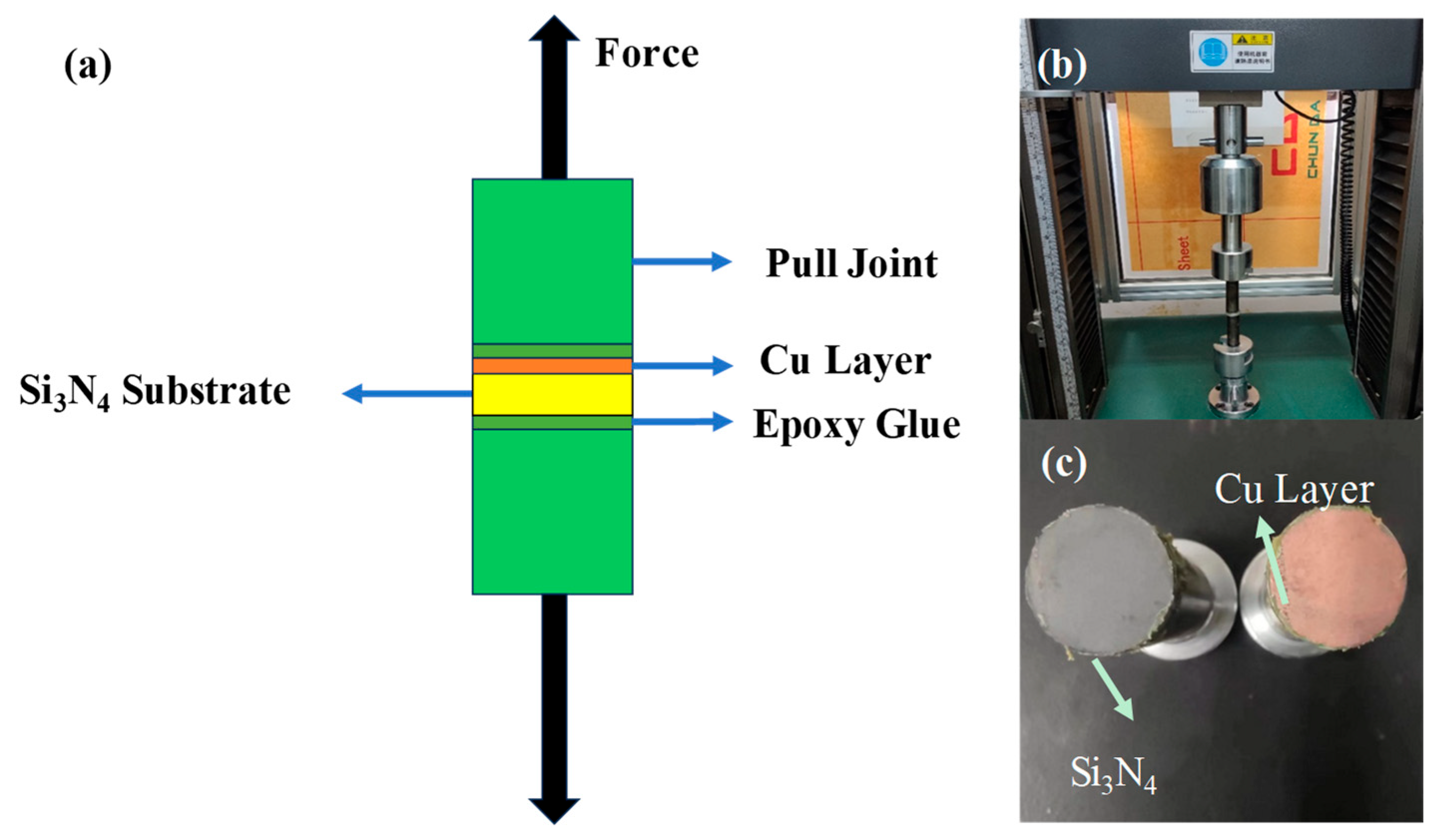
A scanning speed of 8°/min was employed for X-ray diffraction (XRD) experiments conducted on a Rigaku D/max 2200 XRD diffractometer, Tokyo, Japan. XRD was utilized to analyze the samples and identify the specific phases present in their compositions. Energy dispersive spectroscopy (EDS) was coupled with a scanning electron microscope (SEM, EM-30+, COXEM Co., Ltd., Daejeon, South Korea) to characterize the microstructure and interfacial composition. An electronic universal material testing machine (Xinsansi Enterprise Development Co., Ltd., Shanghai, China) was used to measure the tensile strength of the Cu film on the Si3N4 substrate. Figure 2 shows the schematic diagram, actual setup, and post-test sample photograph of the tensile strength test. The glass transition temperature (T9) was measured using a NETZSCH DSC214 Polyma differential scanning calorimeter, NETZSCH-Gerätebau GmbH, Selb, Germany, with samples heated from room temperature to 400 °C at a rate of 10 °C/min. The contact angle of the conductive paste on the Si3N4 substrate under vacuum was observed using a high-temperature sintering real-time optical observation system (TOM-AC). The coefficient of thermal expansion (CTE) of the glasses was determined with a NETZSCH DIL 402C thermomechanical analyzer, NETZSCH-Gerätebau GmbH, Selb, Germany. A dual-channel digital four-probe tester (ST2263, Suzhou Jinge Electronic Co., Ltd., Suzhou, China) was employed to measure the resistivity of the Cu film, with a probe spacing of 2 mm. A surface profiler (ET150, Kosaka Laboratory Ltd., Tokyo, Japan) was used to characterize the thickness of the Cu film.

3. Results and Discussion

3.1. Characterization of Bi2O3-TeO2-B2O3-CuO Glass

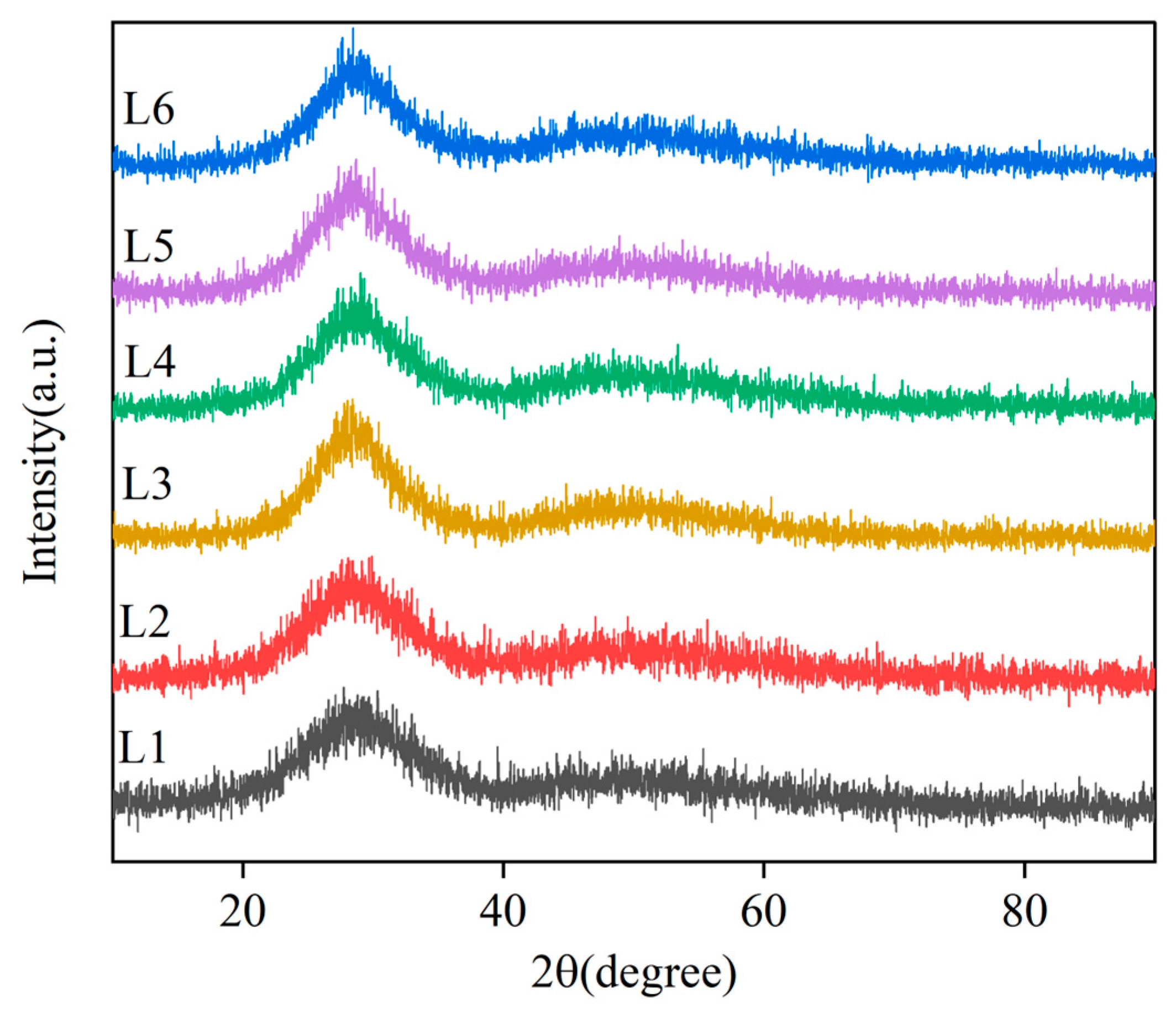
The XRD patterns of the Bi2O3-TeO2-B2O3-CuO glasses are displayed in Figure 3. All obtained samples exhibit only a broad diffuse scattering peak centered at approximately 30° 2θ. No discrete Bragg peaks appear, indicating their amorphous glass structure.
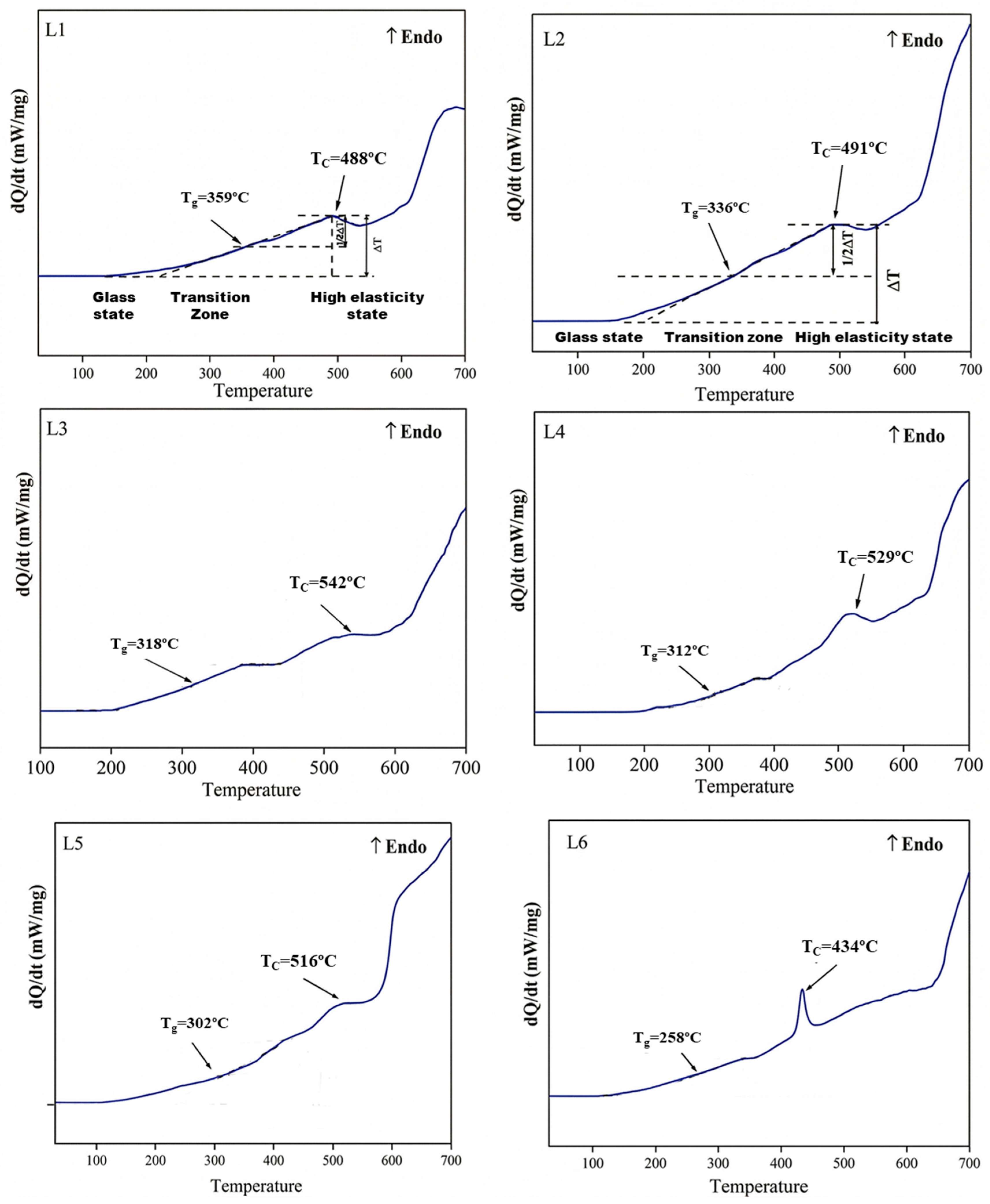
Figure 4 displays the DSC curves of the Bi2O3-TeO2-B2O3-CuO glass system. As the Bi2O3 content increases, the glass transition temperature (Tg) decreases from 359 °C to 258 °C, while the thermal stability of the glasses, defined as the difference between crystallization temperature (TC) and Tg (ΔT = TC − Tg, Table 4) increases initially and then gradually decreases. The glass matrix doped with 20 mol% Bi2O3 (Sample L3) exhibits the highest thermal stability (Table 4, Sample L3). This trend of thermal stability first rising and then falling with increasing Bi2O3 content is consistent with the findings reported in the literature [28,29]. The optimal thermal stability implies that the glass is resistant to crystalline phase precipitation, which facilitates interfacial bonding between the thick-film layer and the ceramic substrate.
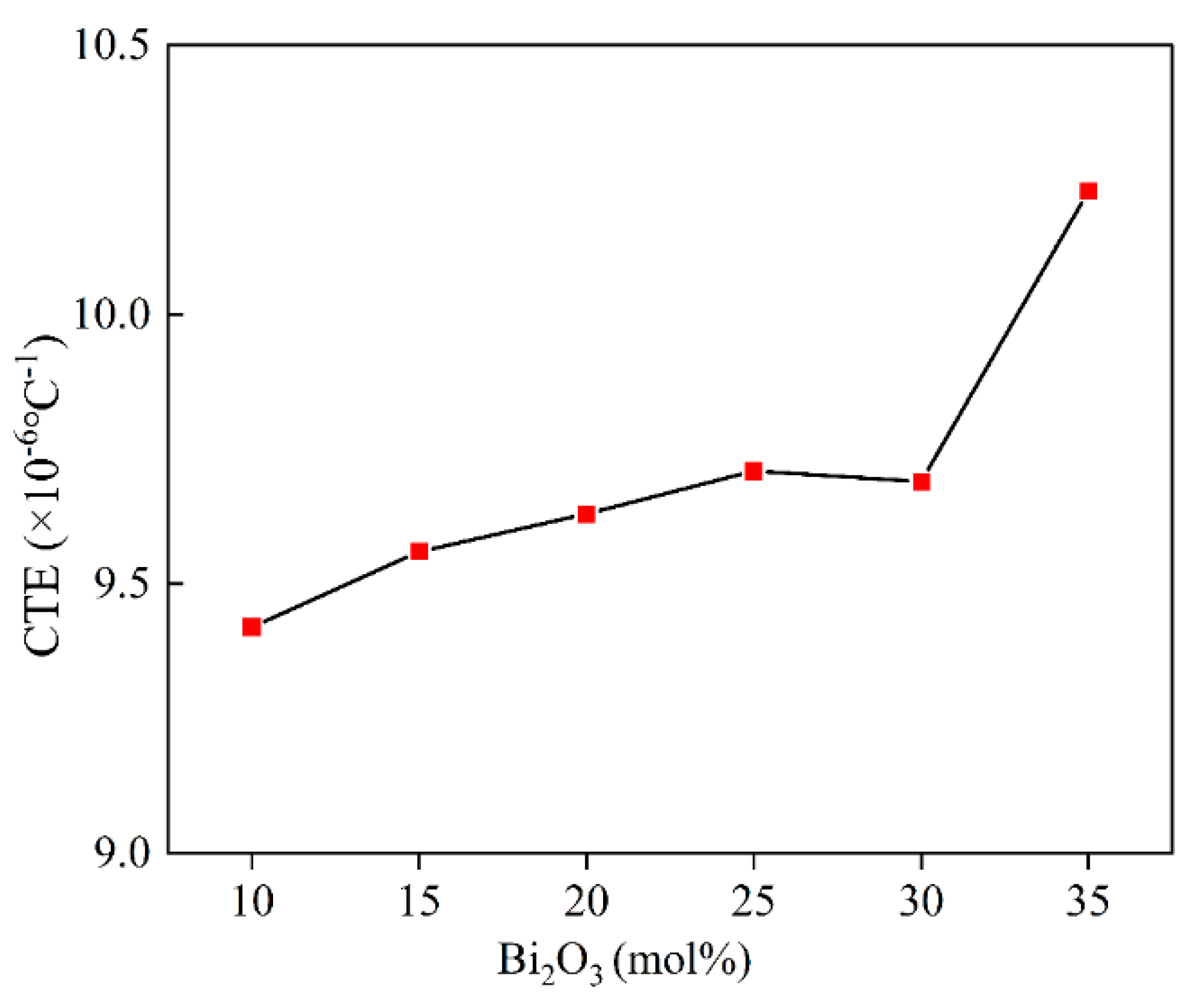
The values of the coefficient of thermal expansion (CTE) are presented in Figure 5. For reference, the Si3N4 substrate exhibits a coefficient of thermal expansion (CTE) of approximately 2.6–3.1 × 10⁻⁶ K−1 in the temperature range of 40–800 °C, as reported by the manufacturer (MARUWA CO., LTD. Owariasahi, Japan). As shown in Figure 5, the CTE of the glass increases significantly with Bi2O3 content up to 15 mol%, remains relatively stable between 15 and 30 mol%, and rises rapidly above 30 mol%. This agrees with the above thermal stability of the glass, evaluated by the temperature interval ΔT (Table 4). Both excessively low (<15 mol%) and excessively high (>30 mol%) Bi2O3 contents result in a narrow ΔT, indicating reduced resistance to crystallization during processing. Optimal thermal stability is achieved in the 20 mol% Bi2O3 range, which coincides with the region where the CTE remains relatively stable.
Saddeek et al. clearly demonstrated through FTIR analysis that in the Bi2O3–TeO2–B2O3 glass system, Bi2O3 acts as a network former, forming [BiO3] structural units. These units facilitate the conversion of [TeO3] into [TeO4] and [BO3] into [BO4]. This process increases the concentration of bridging oxygen species [30]. Furthermore, Laxmikanth et al. in their 2024 study on thulium-doped borotellurite glasses, also confirmed that increasing the Bi2O3 content leads to an increase in bridging oxygen [31]. Additionally, the bond strength of Bi-O bonds is lower than that of Cu-O bonds [32]; therefore, the increasing Bi2O3 content leads to an increase in the number of bridging oxygen atoms in the glass matrix. And with the addition of Bi2O3, the structural unit transformations from [TeO3] to [TeO4] and from [BO3] to [BO4] increase the tendency for phase separation and crystallization in the glass [31,32,33]. This indicates that as Bi2O3 content rises, the number of Bi-O bonds increases, which participates in constructing the glass network structure but results in relative instability of the network.
Therefore, the non-monotonic behavior of the CTE is attributed to the dual structural role of Bi2O3: at lower concentrations, Bi3+ ions predominantly form [BiO3] network-forming units, which enhance network connectivity and reduce the CTE; at higher concentrations, the formation of [BiO6] octahedral units introduces non-bridging oxygen species, loosening the network structure and leading to an increased CTE [30,31,32,33].
The CTE mismatch between the glass and the Si3N4 substrate generates residual thermal stresses during cooling from the brazing temperature. Minimizing this mismatch is critical for achieving reliable seals, as excessive thermal stress can lead to interfacial cracking or delamination. As shown in Figure 5, glass compositions within the 15–30 mol% Bi2O3 range exhibit a CTE that provides improved matching with the Si3N4 substrate, thereby contributing to enhanced mechanical reliability. Ngo et al. (2024) demonstrated that CTE values are essential for calculating thermal stress and strain in Cu-metallized Si3N4 substrates, and that stress accumulation during thermal cycling can lead to failure if CTE mismatch is not properly managed [34]. This CTE matching effect, combined with favorable thermal stability in this composition range, supports the selection of 20 mol% Bi2O3 as the optimal composition for copper thick-film metallization on Si3N4 ceramics.
In conclusion, the glass sample with 20 mol% Bi2O3 (Sample L3) exhibits excellent thermal stability and a suitable CTE of 9.63 × 10⁻⁶ °C−1. This CTE meets the requirements for sealing glasses and can effectively mitigate thermal stress mismatch at the Cu/Si3N4 interface.
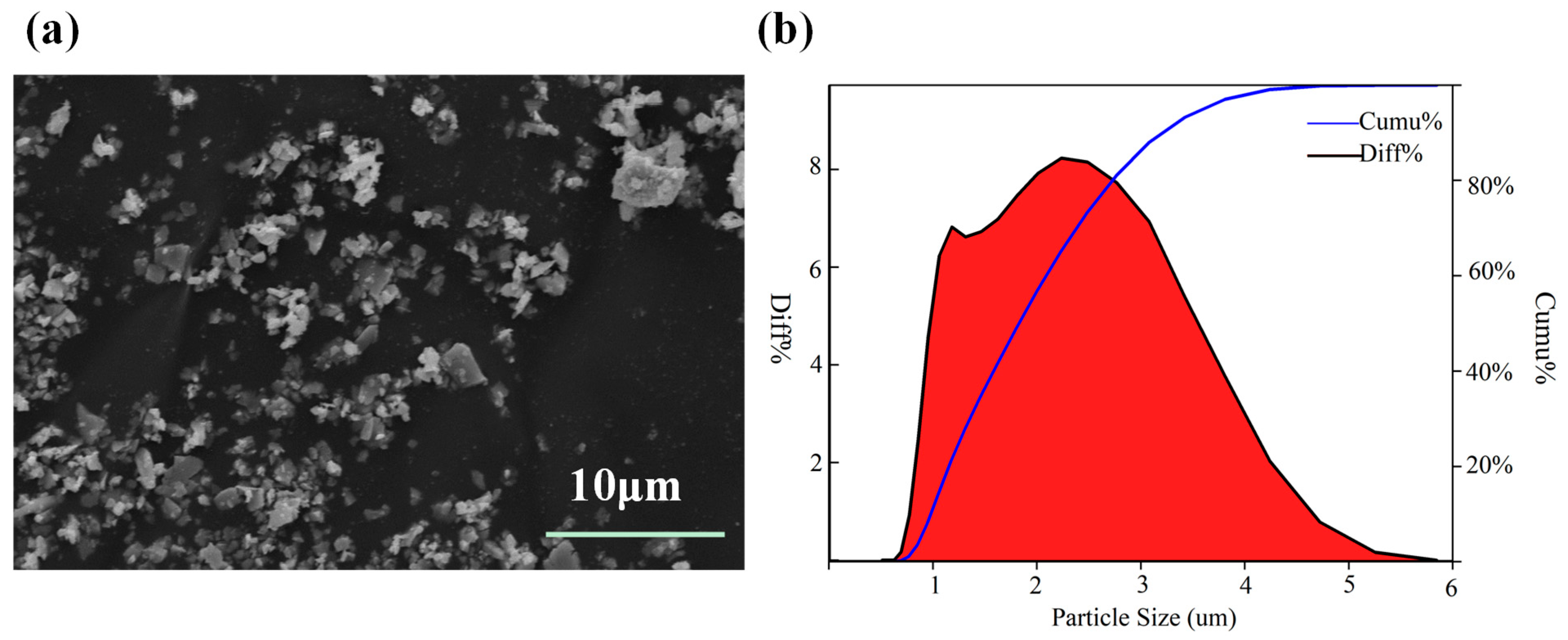
The microstructure and particle size distribution of the selected glass powder sample, designated as L3, are presented in Figure 6. The statistical graph in Figure 6b displays two key distribution curves: the differential distribution (Diff%), which represents the percentage of particles (by number, volume, or mass) within a specific narrow size interval (e.g., 1–3 μm), and the cumulative distribution (Cumu%), which shows the percentage of particles smaller than or equal to a given size. The differential curve reveals an asymmetric bimodal distribution. The primary Gaussian peak is centered at approximately 2.5 μm, which is consistent with the key statistical parameters derived from the cumulative curve, namely a median particle size (D50) of 2 μm and a D80 of 3 μm. Consequently, the glass powder exhibits a relatively narrow particle size distribution with fairly uniform granules. This characteristic is advantageous for the brazing process, as it promotes uniform heating and consistent diffusion.
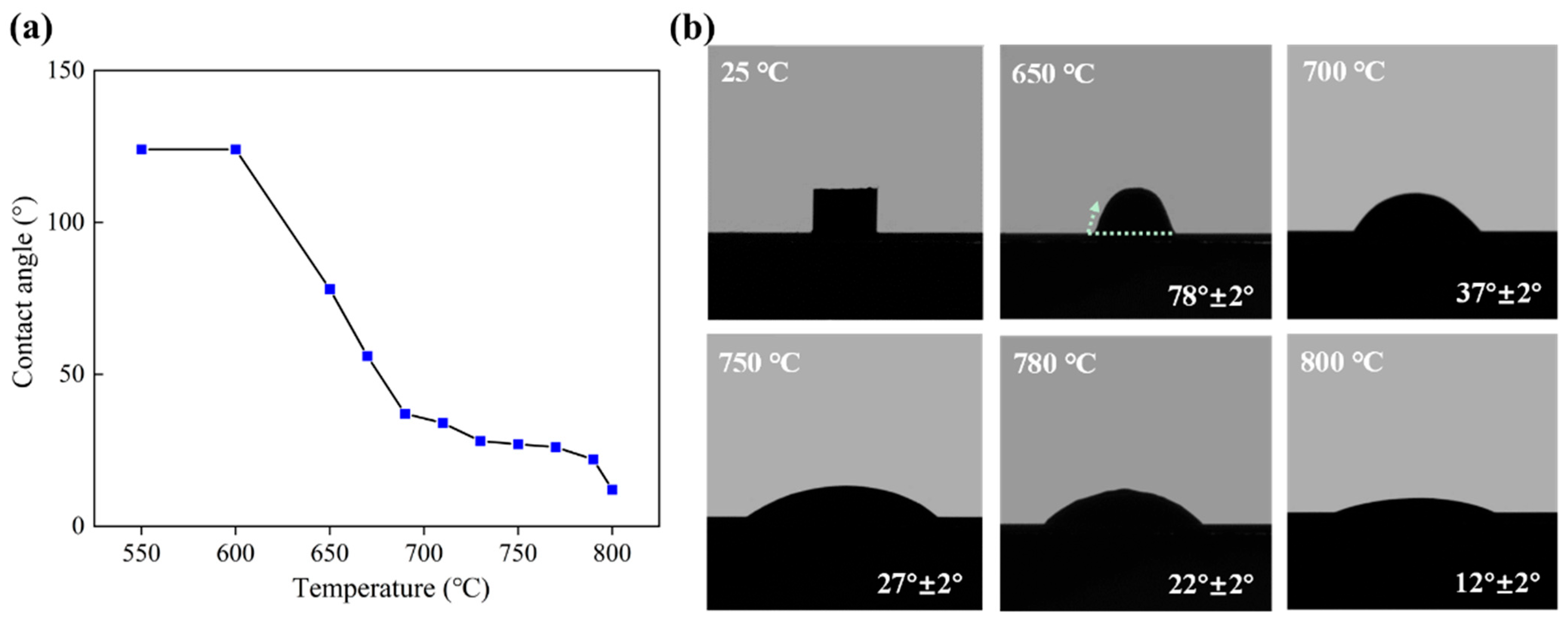
As shown in Figure 7, the contact angle of glass on the surface of Si3N4 ceramic substrates varies with temperature under vacuum. Experimental samples (Φ 5 mm × 3 mm) were prepared using the glass composition with 20 mol% Bi2O3 (Sample L3). All Si3N4 substrates used in the wettability tests were prepared under identical polishing conditions to ensure consistent surface topography, allowing for reliable comparison of contact angles across different temperatures. The samples were heated to 800 °C, and changes in the contact angle were recorded. When the furnace temperature reached 650 °C, the glass columns began to soften gradually, and the contact angle decreased to 78°. As the temperature rose to 700 °C, the contact angle further dropped to 37°, and it reached 27° at 750 °C. When the heat treatment temperature was increased to 780 °C, the contact angle of the samples decreased to 22°; however, surface bulges appeared due to volatilization of the glass melt, indicating that high temperatures are unfavorable for bonding the thick-film layer to the ceramic substrate [35]. Therefore, 750 °C was determined as the optimal brazing temperature [36], at which the glass powder maintains good wettability on the Si3N4 ceramic substrate surface without inducing glass melt volatilization.

3.2. Effect of Bi2O3-TeO2-B2O3-CuO Glass Content on the Properties of Composite Substrates

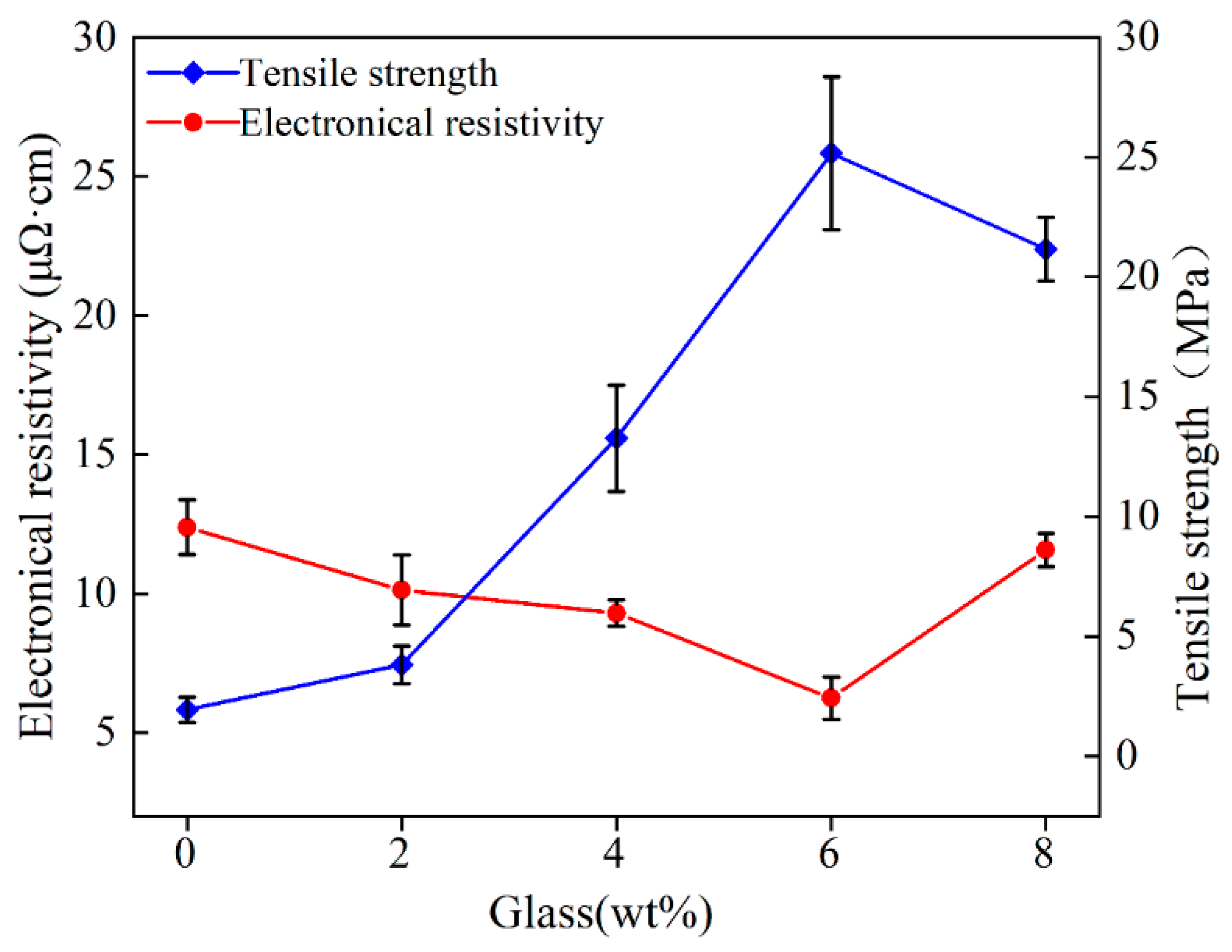
Figure 8 illustrates the effect of L3 glass powder content on the electrical resistivity of the thick-film layer and its bonding performance with the ceramic substrate at 750 °C. As the glass powder content increases, the electrical resistivity of the thick-film layer first decreases, reaching a minimum of 6.25 μΩ·cm at a glass powder content of 6 wt%, and then increases.
The primary reason for these results is that the glass powder promotes densification of the film layer, and the glass phase closely connects the isolated Cu particles within the thick film, which sinter together to form a continuous conductive network, thereby enhancing the electrical resistivity. However, a further increase in glass powder content leads to higher resistivity of the thick film, as the non-conductive glass powder blocks the conductive channels between Cu particles. This experimental phenomenon is also consistent with the findings reported by Chen and Wang et al. [22,37].
The bonding performance of the thick-film layer to the ceramic substrate is characterized by the tensile strength between the Cu thick film and the Si3N4 substrate. This strength gradually increases with rising glass powder content, reaching a maximum of 25.2 MPa, which also corresponds to the glass powder content of 6 wt%. This indicates that an appropriate increase in glass powder content facilitates interfacial bonding between the thick-film layer and the Si3N4 substrate, while higher glass powder content causes a slight reduction in bonding strength between the thick-film layer and the substrate.
In conclusion, the sample fabricated using a conductive paste composed of 94 wt% Cu and 6 wt% glass powder exhibits excellent comprehensive performance, featuring low electrical resistivity and high bonding strength. Therefore, this sample was selected for the following discussion of the metallization mechanism.

3.3. Effect of Heat Treatment Temperature on Surface Metallization of Composite Substrates

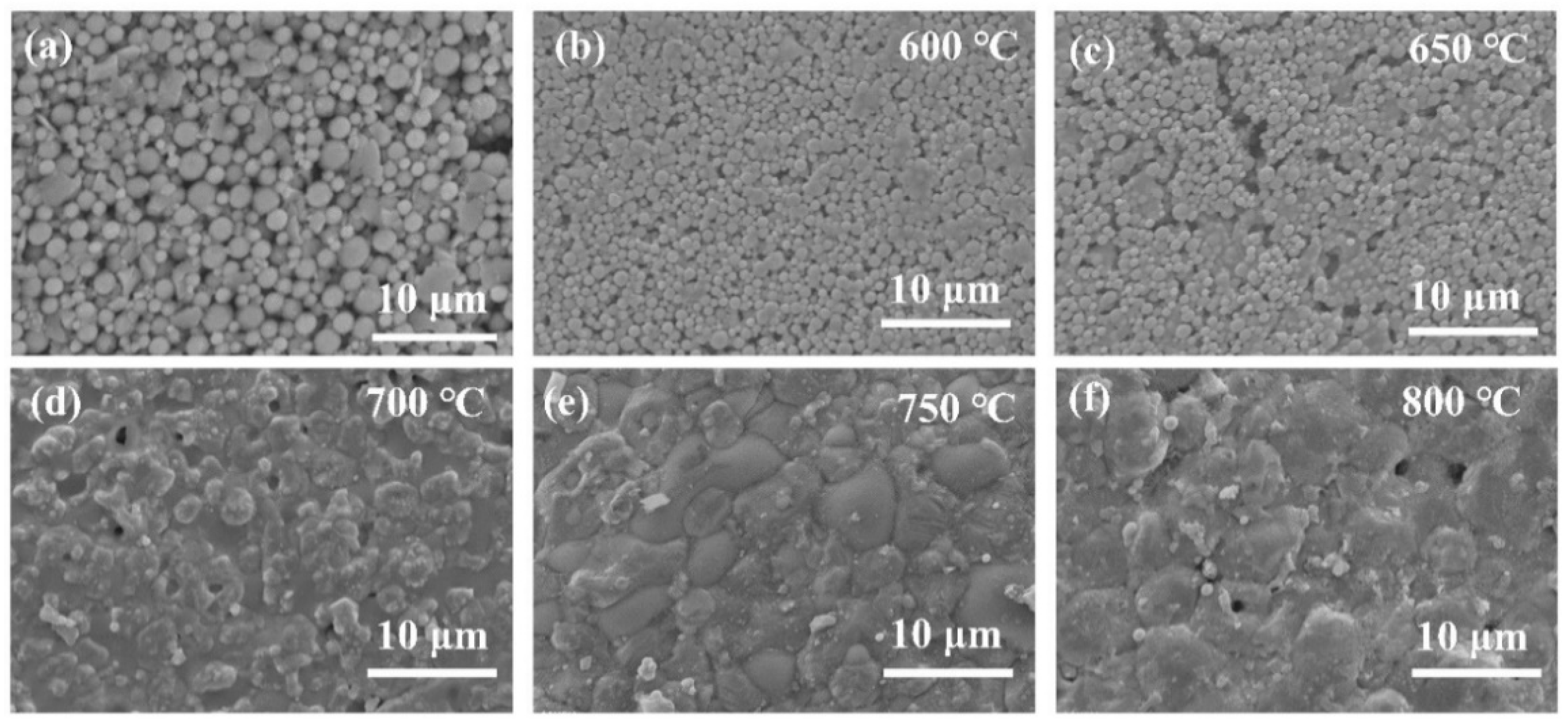
Figure 9 shows the surface morphology evolution of the composite ceramic substrate. Figure 9a presents the surface topography of the thick film after drying at 80 °C for 20 min. Irregular L3 glass powder and regular spherical copper particles are observed in the sample. From the surface morphologies of the Cu layer shown in Figure 9b,c, it can be seen that the spherical copper particles retain their morphology. In addition, the Cu particles spread out as the glass becomes slightly molten. In Figure 9d, the Cu particles exhibit obvious growth, leading to a significant reduction in voids and interconnection between Cu particles, while some large pores are formed simultaneously. When the brazing temperature increased to 750 °C (Figure 9e), the Cu particles grew further, and the Cu layer formed a dense integrated structure. As the brazing temperature increased further (Figure 9f), pores appeared on the thick-film surface. The main reason for this phenomenon is the volatilization of the glass phase at high temperatures (as shown in Figure 7), which reduces the density of the thick film.
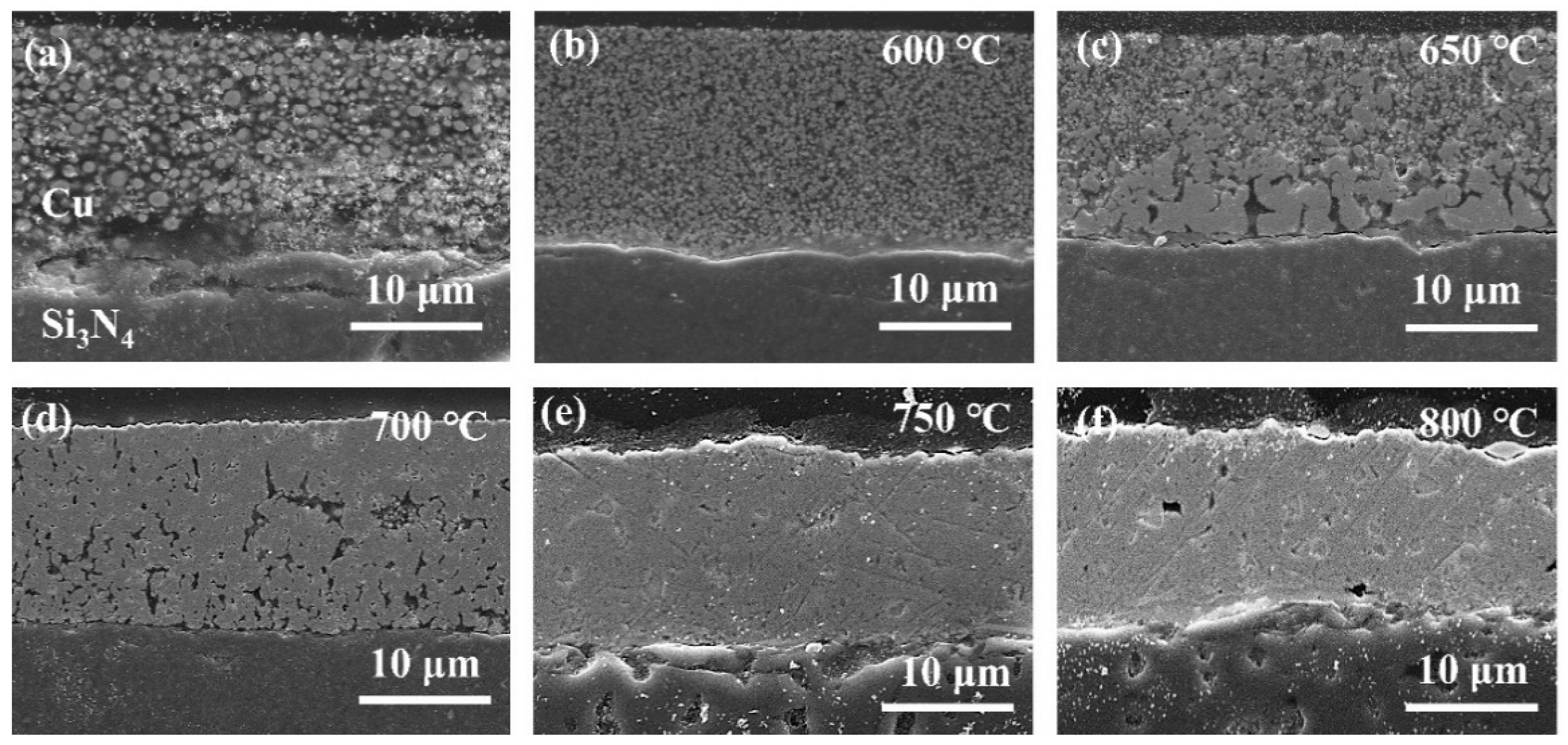
Figure 10 shows the cross-sectional morphology evolution of the thick-film layer and the Si3N4 ceramic substrate at different brazing temperatures. Figure 10a presents the morphology of the Cu film after drying at 80 °C for 20 min, where glass and Cu particles are uniformly distributed on the film surface. After initial brazing at 600 °C, the thick-film layer has a loose structure with numerous pores (Figure 10b). When the brazing temperature reached 650 °C, a creeping structure formed at the interface between the film and the ceramic substrate, constructed by Cu powder particles and liquid glass (Figure 10c). At a brazing temperature of 700 °C, the liquid glass fully infiltrated the entire thick-film layer (Figure 10d). However, the bonding between the glass phase and the ceramic substrate is not sufficiently dense, and a large number of pores were present inside the thick-film layer. As shown in Figure 10e, at a brazing temperature of 750 °C, the Cu particles grew adequately, and the film layer formed a highly dense structure. When the brazing temperature increased to 800 °C, pores reappeared inside the thick film (Figure 10f), primarily due to the volatilization of the liquid glass during the high-temperature process.
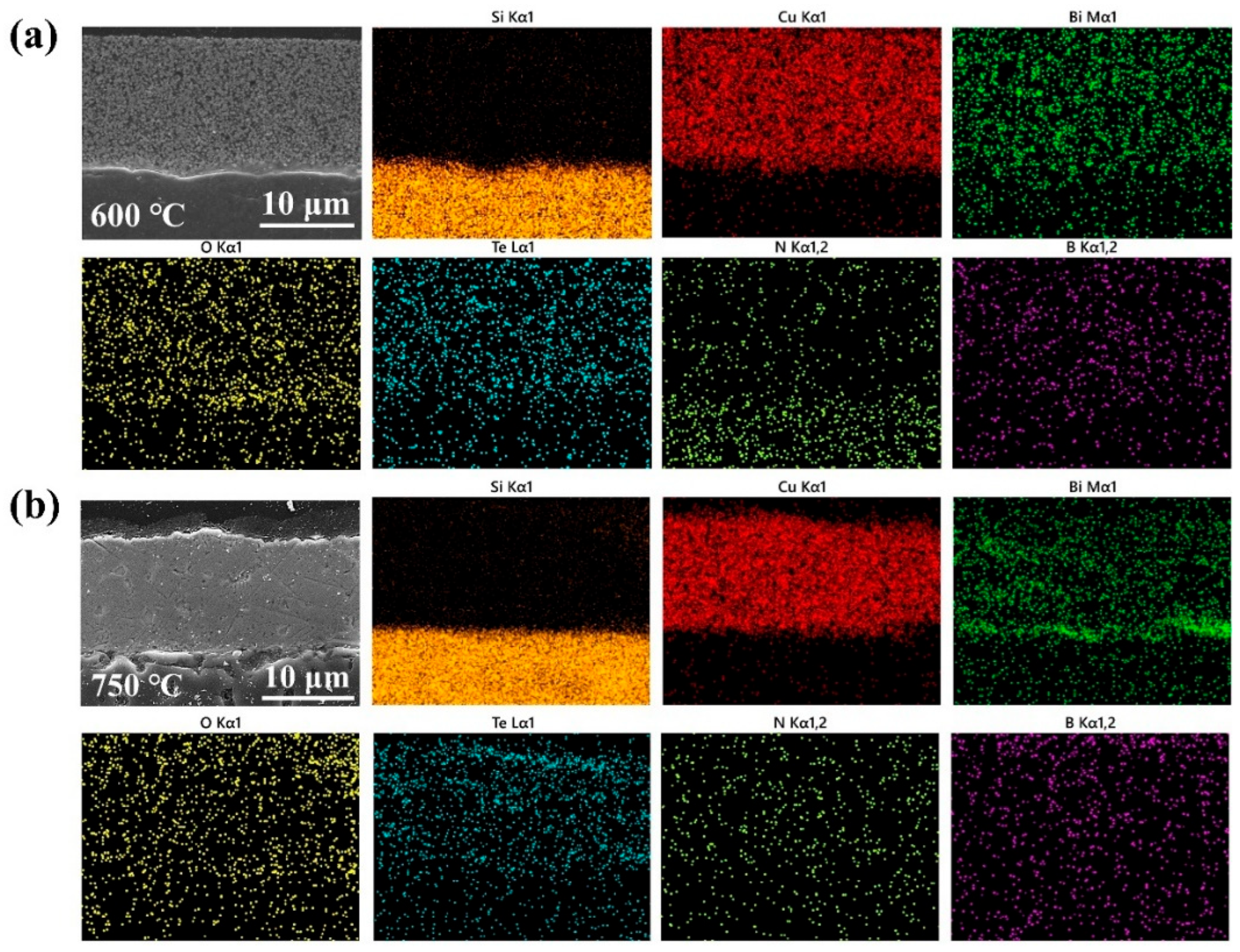
Figure 11 shows EDS elemental maps for investigating the element distribution at the interface between the Cu layer and Si3N4 substrate. The elemental distribution in cross-sections of the Cu film on Si3N4 substrates was analyzed after brazing at 600 °C and 750 °C. The results indicate that at a brazing temperature of 600 °C, Bi, B, Te and O from the glass system were uniformly distributed within the Cu layer. When the brazing temperature reached 750 °C, Bi became enriched at the interface region between the Cu/glass film and the Si3N4 ceramic substrate; in contrast, the distributions of B, Te and O remained similar to those observed at 600 °C. It must be noted that the B, Te and O originating from the glass powder were also obviously distributed across the interface and diffused into the substrate layer, which corresponds to the reverse diffusion behavior of N from the Si3N4 substrate.
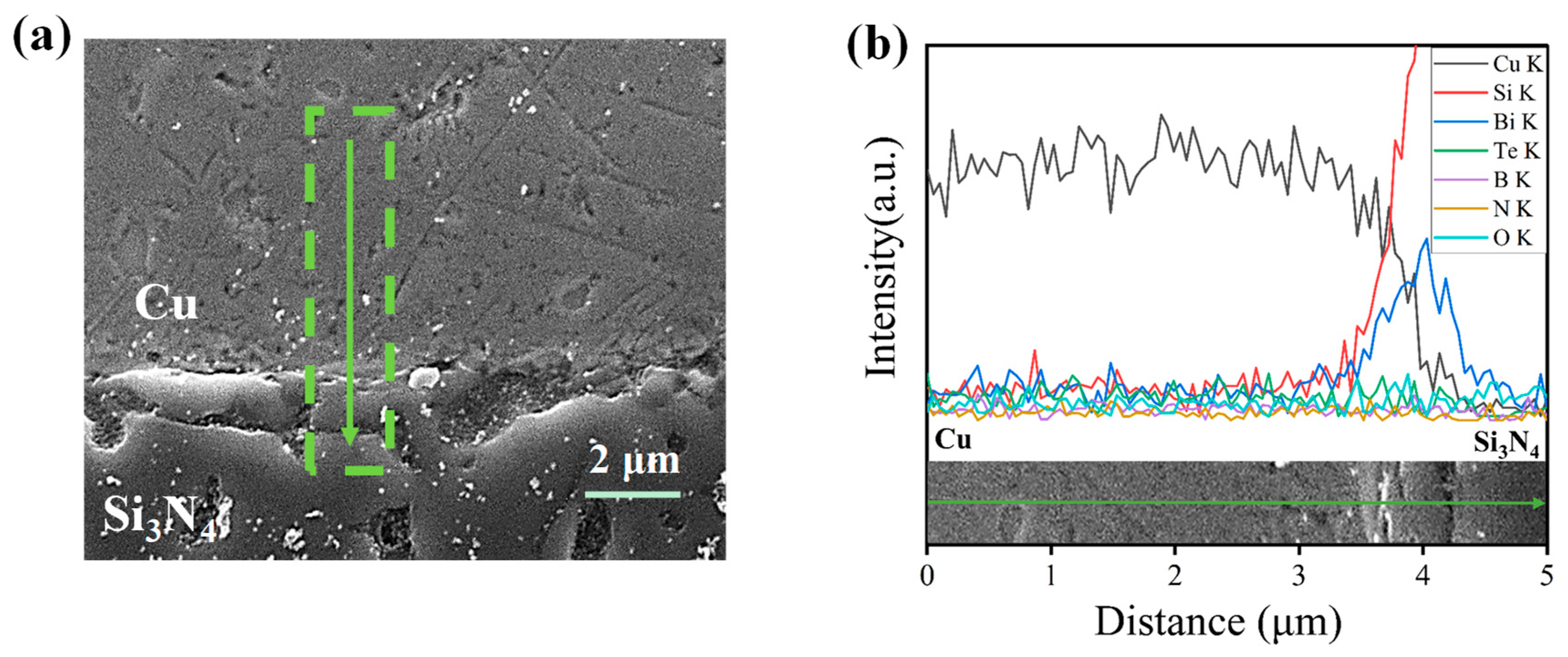
The distribution can be further supported in Figure 12, which illustrates the EDS elemental line scan of the cross-section of the Cu/glass layer on the Si3N4 ceramic substrate. As shown in Figure 12b, Cu and Si were primarily distributed in their corresponding layers along with a clear transition region at the interface between the copper layer and the Si3N4 substrate, while Bi was obviously enriched at the interface. Other elements, such as Te, B, O and N, exhibited similar distributions within the several-micrometer range near the Cu layer/Si3N4 interface, indicating some diffusion from their original layers to the adjacent layer. Te, B and some Bi ions diffuse into the intergranular glass film (IGF) within the Si3N4 ceramic and N diffuses from the IGF into the Cu/glass layer. The mutual interdiffusion suggests the formation of chemical bonds—such as Bi–O–Si or Te–O–Si linkages—at the glass–substrate interface. All these elemental distribution characteristics can be attributed to the excellent wettability of the glass powder, which clearly facilitates the strong bonding between the copper layer and the ceramic substrate, and alleviate the internal stress induced by the thermal expansion coefficient mismatch between the Cu layer and the Si3N4 ceramic substrate [38]. Furthermore, while SEM/EDS analysis confirms elemental interdiffusion at the interfaces, further investigation using X-ray photoelectron spectroscopy (XPS) would be beneficial to elucidate the detailed chemical bonding states and reaction mechanisms. This direction is planned for future work.
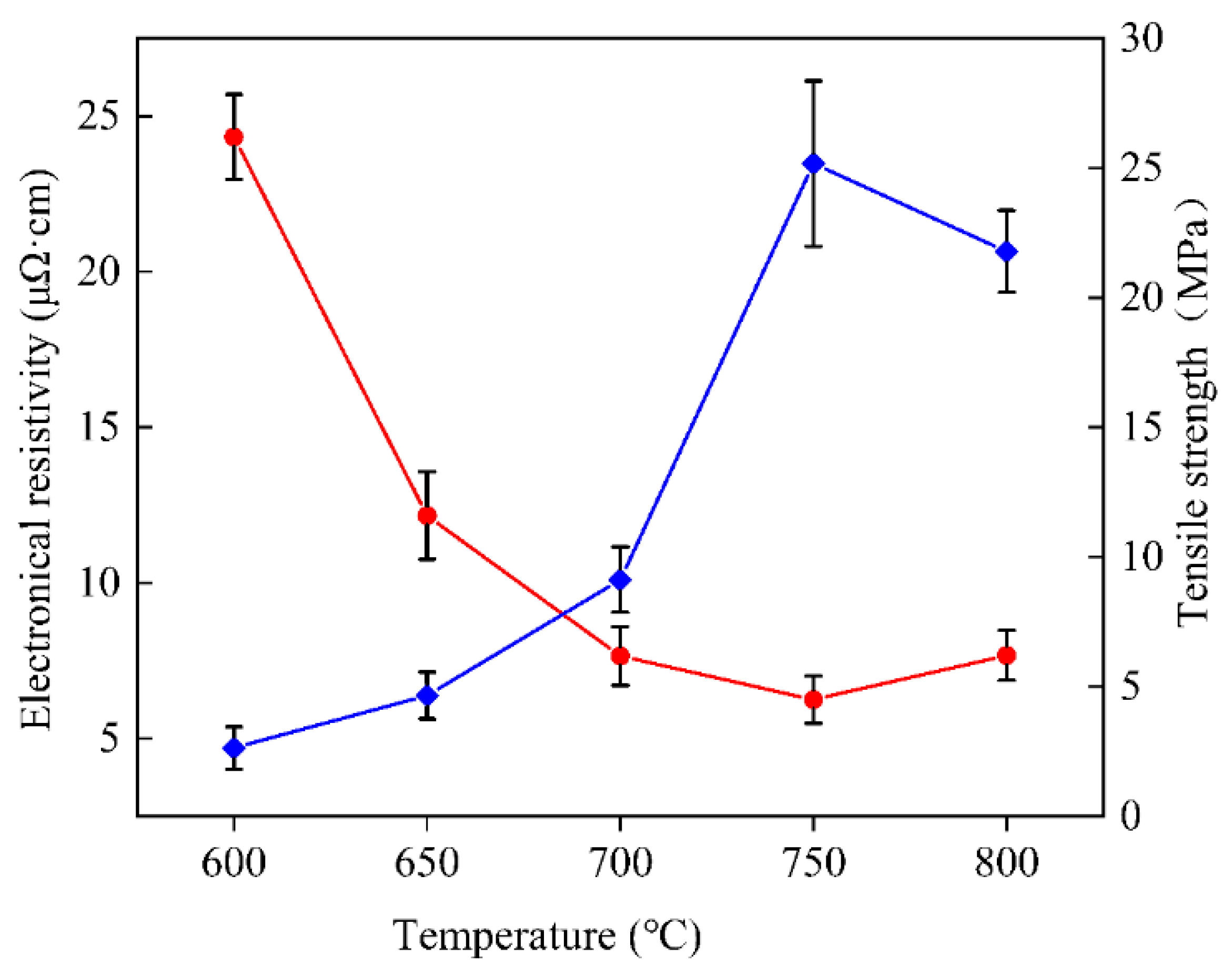
As the brazing temperature increases, the resistivity of the thick-film layer drops sharply from 24.3 μΩ·cm to 6.25 μΩ·cm (Figure 13). This variation is consistent with the surface microstructure evolution shown in Figure 9, and the results are similar to those reported by Chen et al. [32]. When the brazing temperature reached 700 °C, partial melting of the glass powder (Sample L3) occurred and infiltrated the Cu particles. At 750 °C, complete melting facilitated the diffusion of Cu atoms, accelerating the growth of Cu particles, enhancing the density of the thick-film layer, and increasing the number of conductive networks within the layer.
The bonding strength between the thick-film layer and the Si3N4 ceramic substrate, as indicated by the tensile strength, increases from 2.64 MPa to 25.2 MPa with rising temperature. The primary reason is that the glass powder transforms from a solid phase to a liquid phase, driving the Cu particles to rearrange into a novel configuration [39]. The liquid glass phase promotes the diffusion and migration of Cu atoms, and strengthens the growth and sintering of Cu particles, resulting in a close-packed configuration of the Cu micro-particles. At a brazing temperature of 750 °C, the Cu layer achieves the highest densification and tensile strength. When the brazing temperature increased to 800 °C, the bonding strength decreased to 22.8 MPa. The previous contact angle tests (Figure 7) confirm that this decrease in bonding strength is caused by the volatilization of the liquid glass phase at the elevated brazing temperature.
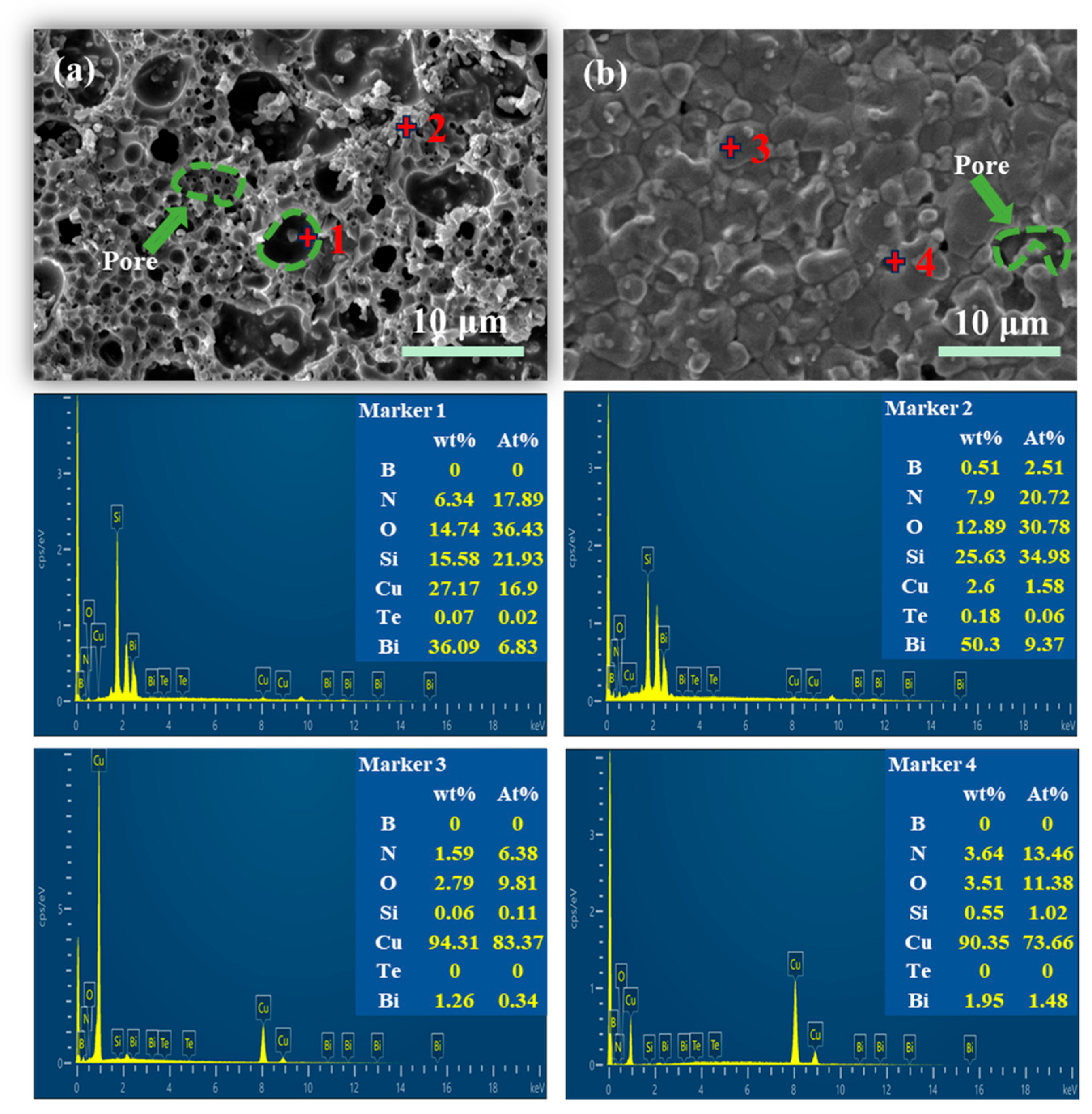
Figure 14 presents the elemental analysis of selected sampling points on the fracture surfaces after tensile strength testing. Figure 14a reveals that a network structure with micropores was formed on the fracture surface of the ceramic substrate. The elemental composition of Marker 1 (a micropore) was dominated by Bi, Cu and Si, while that of Marker 2 (a surface particle) mainly consisted of Bi, Si, Te, and O with a small amount of Cu. Figure 14b shows the fracture surface of the Cu layer, where the main elements of Markers 3 and 4 were Cu, along with small amounts of Bi, O and N. These results indicate that the liquid-phase glass filling the gaps between Cu particles can effectively enhance the bonding between the thick-film layer and the ceramic substrate [40].
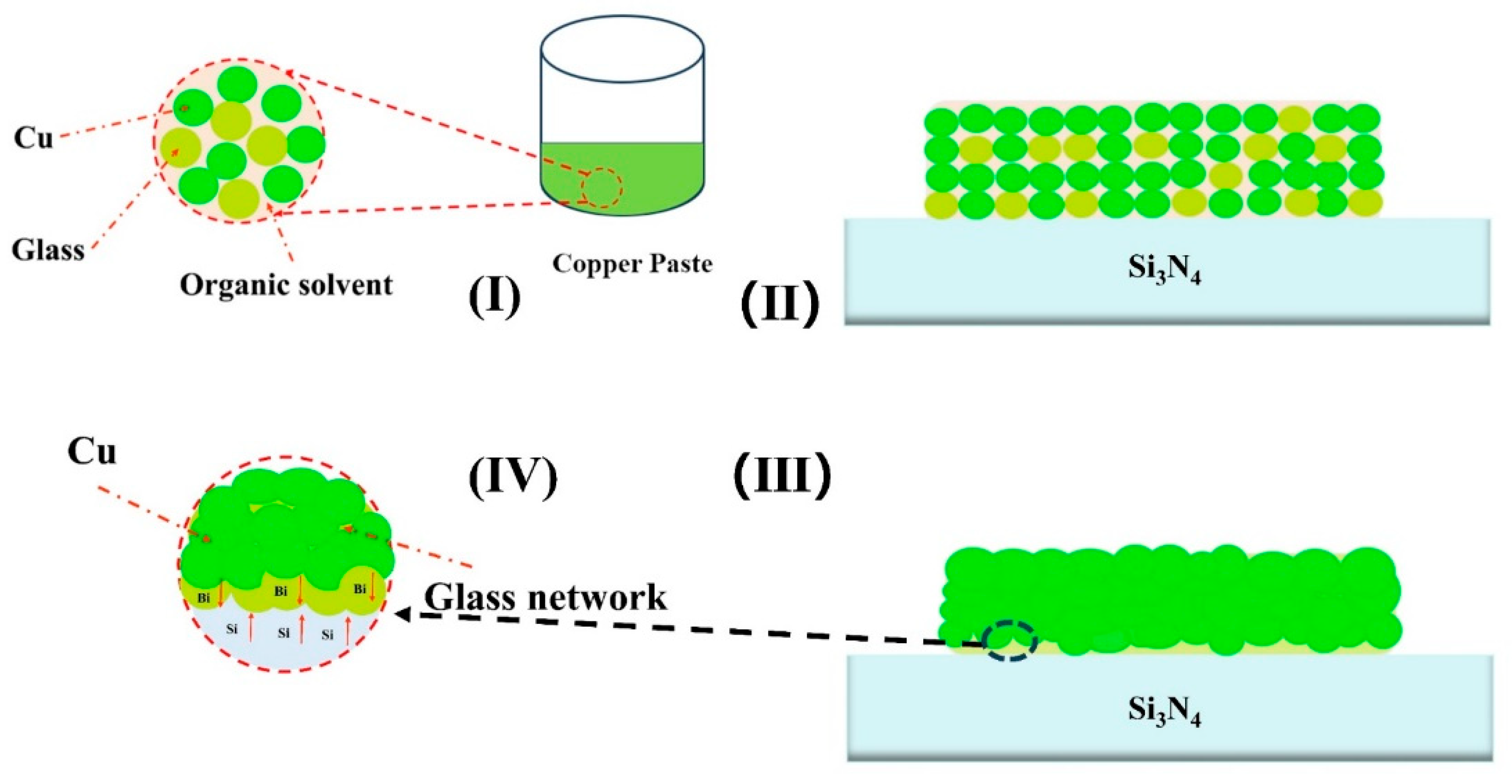
Based on all the above discussions, the schematic illustration of the interfacial bonding model is presented in Figure 15, which can be described as follows:
The first stage: A conductive paste was prepared by uniformly mixing glass powder, Cu powder and an organic solvent in a certain proportion.
The second stage: Thick-film samples were fabricated via screen printing.
The third stage: Dense thick-film layers were obtained through high-temperature heat treatment.
Throughout the sintering process, the thick copper film, which formed during the brazing stage, is composed of Cu particles and glass phases. The liquid glass with high viscosity and fluidity fills the internal gaps of the thick-film layer. The Cu particles sinter together to form a continuous contacting network. Driven by gravitational potential energy, the glass phase diffuses out of the layer and is deposited at the Si3N4 substrate interface to form a thin Bi-rich glass layer, which could mitigate the thermal stress caused by the mismatch between the Cu film and Si3N4 substrate and enhance the tensile strength of the bonding between the thick-film layer and the ceramic substrate. However, excessively high brazing temperatures would result in low density of the glass component deposited at the ceramic substrate interface. This would prevent the thick-film layer from tightly bonding with the substrate, and may lead to an insufficiently effective contact area between Cu particles and the glass phase, ultimately resulting in poor mechanical properties.

4. Conclusions

A novel Bi2O3-TeO2-B2O3-CuO glass system was developed to enable surface metallization of Si3N4 ceramics. The effect of Bi2O3 concentration on the thermal stability was studied. When the Bi2O3 content was 20 mol%, the glass powder with optimal stability was obtained, with a Tg of 318 °C, TC of 542 °C, and CTE of 9.63 × 10⁻⁶ °C−1. At a brazing temperature of 750 °C, the contact angle of the glass powder on the Si3N4 ceramic surface decreased to 27°, which effectively facilitated the spreading of the conductive paste. The resulting thick film, fabricated using a conductive paste consisting of 94 wt% Cu and 6 wt% of the glass powder, exhibited a minimum resistivity of 6.25 μΩ·cm and a maximum tensile strength of 25.2 MPa. The results indicate that the excellent wettability drives the liquid glass phase to concentrate on the ceramic substrate surface, forming a thin glass layer that effectively enhances the tensile strength of the thick-film layer. All the findings are valuable for addressing the current research gap in realizing effective Si3N4 surface metallization and pave the way for the development of advanced electronic packaging materials capable of withstanding the stringent operating conditions of next-generation semiconductor devices.

Author Contributions

Conceptualization, F.L. and C.C.; methodology, F.L.; validation, C.C. and F.L.; formal analysis, H.C.; investigation, C.C.; resources, F.L. and Y.S.; data curation, C.C.; writing—original draft preparation, C.C. and S.D.; writing—review and editing, H.C. and F.L.; visualization, C.C., H.Z. and H.C.; supervision, F.L. and H.C.; project administration, F.L.; funding acquisition, H.C. and Y.S. All authors have read and agreed to the published version of the manuscript.

Funding

This research was funded by the National Natural Science Foundation of China [Grant No. 52372129].

Data Availability Statement

The raw data supporting the conclusions of this article will be made available by the authors on request.

Conflicts of Interest

The authors declare no conflict of interest.

References

  1. Fan, B.; Hu, Z.; Zhao, S.; Zhao, D.; Wang, B.; Zhang, S.; Chen, Z.; Du, S.; Li, F.; Zhang, J.; et al. Fabrication of Si3N4 ceramics with improved thermal conductivity by carbothermal reduction and two-step sintering. J. Am. Ceram. Soc. 2024, 107, 7319–7330. [Google Scholar]
  2. Jing, J.; Guo, X.; Lu, J.; Ashfaq, M.Z.; Wang, Z.; Sun, F.; Gong, H.; Feng, Y.; Zhang, Y.; Zhang, W. Hot-pressing-oriented graphene in Si3N4 composites for enhanced electromagnetic wave absorption in X and Ku bands. J. Alloys Compd. 2024, 1002, 175516. [Google Scholar]
  3. Ye, J.; Zhang, B.; Ren, Y.; Zhong, Z.; Wang, Y.; Ye, F. Lightweight, high-strength, and broadband transmission porous Si3N4 ceramics. J. Eur. Ceram. Soc. 2024, 44, 116715. [Google Scholar] [CrossRef]
  4. Zhang, L.; Ma, W.; Ren, Z.; Tang, H.; Yu, Y.; Wang, L.; Li, T.; Qiao, Z. Micro/nanostructure constructed by in situ growth of SiC nanowires in porous Si3N4 ceramics. J. Am. Ceram. Soc. 2024, 107, 7619–7628. [Google Scholar] [CrossRef]
  5. Liu, J.; Huang, G.; Wang, R.N.; He, J.; Raja, A.S.; Liu, T.; Engelsen, N.J.; Kippenberg, T.J. High-yield, wafer-scale fabrication of ultralow-loss, dispersion-engineered silicon nitride photonic circuits. Nat. Commun. 2021, 12, 2236. [Google Scholar] [CrossRef]
  6. Mao, A.; Zhou, S.; Hong, Y.; Osborn, O.; Saiz, E.; Bai, H. Three-Dimensional Printing of Cuttlebone-Inspired Porous Ceramic Materials. ACS Appl. Mater. Interfaces 2024, 16, 41202–41210. [Google Scholar] [CrossRef] [PubMed]
  7. Ye, Z.; Wang, S.; Zou, Y.; Chen, G.; Zhao, X.; Wen, L.; Zhang, G.; Zhao, L.; Wang, Y.; Zhou, Y. A promising high-temperature thermal protection performance of silicide-based ceramic coating based on multi-particles/multilayer synergistic design strategy. Chem. Eng. J. 2024, 496, 153556. [Google Scholar]
  8. Ong, F.S.; Nishi, R.; Tobe, H.; Sato, E. Strength optimization of two-step-bonded Ti-6Al-4V/Si3N4 joint with Nb interlayer via transient-liquid-phase bonding and active-metal brazing. J. Eur. Ceram. Soc. 2022, 42, 2707–2717. [Google Scholar] [CrossRef]
  9. Rajendran, S.H.; Lee, G.A.; Park, J.Y.; Kang, Y.S.; Jung, J.P. Joining Si3N4 ceramic to Invar using Mo mesh and Cu foil interlayer. Mater. Chem. Phys. 2024, 313, 128732. [Google Scholar]
  10. Zhao, T.; Mo, D.; Shi, X.; Sun, W.; Li, X.; Gong, H. Microstructure and Mechanical Properties of the Joint between Si3N4 and Mo Brazed by Near-Eutectic Ag-Cu-In-Ti Filler Alloy. Adv. Eng. Mater. 2023, 25, 2300964. [Google Scholar] [CrossRef]
  11. Sivaprahasam, D.; Sujitha, T.; Gowtham, U.; Jayachandran, B.; Gopalan, R. Microstructure and heat transfer characteristics of active brazed Ceramic–Metal joints. Ceram. Int. 2021, 47, 16133–16140. [Google Scholar] [CrossRef]
  12. Schulz-Harder, J. Advantages and new development of direct bonded copper substrates. Microelectron. Reliab. 2003, 43, 359–365. [Google Scholar] [CrossRef]
  13. Nakao, Y.; Nishimoto, K.; Saida, K. Reaction Layer Formation in Nitride Ceramics (Si3N4 and AlN) to Metal Joints Bonded with Active Filler Metals. ISIJ Int. 1990, 30, 1142–1150. [Google Scholar] [CrossRef]
  14. Tanaka, S.-I. Direct bonding of Cu to oxidized silicon nitride by wetting of molten Cu and Cu(O). J. Mater. Sci. 2009, 45, 2181–2187. [Google Scholar] [CrossRef]
  15. Singh, M.; Martinez Fernandez, J.; Asthana, R.; Rico, J.R. Interfacial characterization of silicon nitride/silicon nitride joints brazed using Cu-base active metal interlayers. Ceram. Int. 2012, 38, 2793–2802. [Google Scholar] [CrossRef]
  16. Xiangyong, Z.; Haixian, X.; Jiaxu, Z.; Hao, Z.; Song, C.; Jingwei, L.; Wenming, T. Recent Advances in Improving Interfacial Bonding Strength of Ag-Cu-Ti Series Alloys Brazed Copper/Ceramic Substrates. J. Ceram. 2022, 43, 539–550. [Google Scholar]
  17. Ionkin, A.S.; Fish, B.M.; Li, Z.R.; Lewittes, M.; Soper, P.D.; Pepin, J.G.; Carroll, A.F. Screen-Printable Silver Pastes with Metallic Nano-Zinc and Nano-Zinc Alloys for Crystalline Silicon Photovoltaic Cells. ACS Appl. Mater. Interfaces 2011, 3, 606–611. [Google Scholar] [PubMed]
  18. Reboun, J.; Hromadka, K.; Hermansky, V.; Johan, J. Properties of power electronic substrates based on thick printed copper technology. Microelectron. Eng. 2017, 167, 58–62. [Google Scholar] [CrossRef]
  19. Zou, Y.; Fu, R.; Liu, X.; Liu, H.; Wang, H. Enhanced adhesion strength of silver paste on AlN ceramic substrate via sintered nano-CuO. Ceram. Int. 2021, 47, 9471–9476. [Google Scholar] [CrossRef]
  20. Seo, D.S.; Park, S.H.; Lee, J.K. Sinterability and conductivity of silver paste with Pb-free frit. Curr. Appl. Phys. 2009, 9, S72–S74. [Google Scholar] [CrossRef]
  21. Xu, X.; Zhuang, H.; Li, W.; Jiang, G. Bonding behavior of copper thick films containing lead-free glass frit on aluminum nitride substrates. Ceram. Int. 2004, 30, 661–665. [Google Scholar] [CrossRef]
  22. Chen, J.; Yang, D.; Zhai, T.; Gui, B.; Wang, Q. Influence of B2O3–SiO2–ZnO–BaO glass ratio and sintering temperature on the microstructure and property of copper thick film for low temperature co-fired ceramic. J. Mater. Sci. Mater. Electron. 2016, 27, 1929–1937. [Google Scholar] [CrossRef]
  23. Chen, Y.; Shi, Y.; Xie, J.; Lei, F.; Fan, L.; Zhang, L. Fabrication of lead-free low melting temperature TeO2-V2O5-CuO glasses and wetting behavior on AlN ceramic substrate. J. Eur. Ceram. Soc. 2020, 40, 5991–6001. [Google Scholar] [CrossRef]
  24. Ji, S.; Shi, Y.; Chen, C.; Zhang, C.; Hu, C.; Xie, J. Investigation of interfacial properties of Cu/AlN composite ceramic substrates derived from copper paste containing TeO2–V2O5–CuO glass frit. J. Mater. Sci. Mater. Electron. 2022, 33, 13339–13351. [Google Scholar] [CrossRef]
  25. Sun, L.; Liu, C.; Zhang, J.; Fang, J. Joining pre-oxidized dense Si3N4 to porous Si3N4 with β-spodumene based glass-ceramic interlayer. Appl. Surf. Sci. 2019, 481, 515–523. [Google Scholar] [CrossRef]
  26. Lin, Y.; Qi, X.; Niu, G.; Sun, Q.; Ji, H.; Li, M.; Li, Y. Surface metallization of Si3N4 ceramics with high-performance silver thick paste containing Bi-B-Zn glass frit. J. Mater. Sci. 2023, 58, 9395–9408. [Google Scholar] [CrossRef]
  27. Zhao, G.; Tian, Y.; Fan, H.; Zhang, J.; Hu, L. Properties and Structures of Bi2O3–B2O3–TeO2 Glass. J. Mater. Sci. Technol. 2013, 29, 209–214. [Google Scholar] [CrossRef]
  28. Yang, W.; Sun, Q.; Lei, Q.; Zhu, W.; Li, Y.; Wei, J.; Li, M. Formation of a highly conductive thick film by low-temperature sintering of silver paste containing a Bi2O3-B2O3-ZnO glass frit. J. Mater. Process. Technol. 2019, 267, 61–67. [Google Scholar] [CrossRef]
  29. He, F.; Wang, J.; Deng, D. Effect of Bi2O3 on structure and wetting studies of Bi2O3–ZnO–B2O3 glasses. J. Alloys Compd. 2011, 509, 6332–6336. [Google Scholar] [CrossRef]
  30. Saddeek, Y.B.; Aly, K.A.; Shaaban, K.S.; Ali, A.M.; Alqhtani, M.M.; Alshehri, A.M.; Sayed, M.A.; Abdel Wahab, E.A. Physical properties of B2O3–TeO2–Bi2O3 glass system. J. Non-Cryst. Solids 2018, 498, 82–88. [Google Scholar] [CrossRef]
  31. Laxmikanth, C.; Elias, A.M.; Sichone, S.; Mwankemwa, B. Tailoring structural, thermal, and optical properties of Tm3+-doped borotellurite glasses through Bi2O3 incorporation for optical fiber construction. Next Mater. 2025, 6, 100274. [Google Scholar] [CrossRef]
  32. Boulesteix, C.; Hewitt, K.C.; Irwin, J.C. Temperature-induced frequency shift of the Raman-active CuO2 planar oxygen vibrational modes of Bi-2212 related to a change of the Cu-O bonding. J. Phys. Condens. Matter 2000, 12, 9637–9643. [Google Scholar] [CrossRef]
  33. Wang, W.W.; Cao, X.; Cao, F.F.; Zhong, Z.J.; Li, J.W.; Ma, L.Y. Effect of Bi2O3/ZnO Ratio on Structure and Properties of Low-melting Sealing Glass Used in Vacuum Glass. Bull. Chin. Ceram. Soc. 2019, 38, 2942–2946. [Google Scholar]
  34. Ngo, M.C.; Miyazaki, H.; Hirao, K.; Ohji, T.; Fukushima, M. Stress–strain behavior of Cu on the AMB-Si3N4 substrate undergoing thermal cycles via in situ strain measurement. J. Am. Ceram. Soc. 2024, 107, 8415–8425. [Google Scholar] [CrossRef]
  35. Joshi, R.; Chhibber, R. Effect of SiO2/B2O3 ratio on the thermophysical and wetting properties of borosilicate glass sealant for glass-metal joint. J. Mater. Process. Technol. 2018, 259, 186–194. [Google Scholar] [CrossRef]
  36. Chen, B.; Zou, W.-J.; Li, W.-W.; Wu, S.-B.; Xiong, H.-P.; Wu, X. Joining of SiO2f/SiO2 composite to Nb using Ag-Cu-In-Ti brazing alloys. J. Mater. Sci. Technol. 2020, 50, 13–20. [Google Scholar] [CrossRef]
  37. Wang, J.Y.; Lin, Y.X.; Wu, C.Y.; Chiu, C.Y.; Lee, C.H.; Yeh, C.Y.; Huang, B.R.; Liu, C.Y. Effect of mixing glass frits on electrical property and microstructure of sintered Cu conductive thick film. J. Am. Ceram. Soc. 2020, 104, 1707–1715. [Google Scholar] [CrossRef]
  38. Kerstan, M.; Thieme, C.; Kobeisy, A.; Rüssel, C. Crystallizing glass seals in the system BaO/ZnO/SiO2 with high coefficients of thermal expansion. J. Mater. Sci. 2017, 52, 1789–1796. [Google Scholar] [CrossRef]
  39. Huang, Y.; Fu, R.; Chen, X.; Cheng, B.; Agathopoulos, S. Interfacial strength and microstructure of AlN/Cu joints produced by a novel brazing method facilitated by porous copper layer and Ag foil. J. Mater. Sci. Mater. Electron. 2021, 32, 15826–15836. [Google Scholar]
  40. Zhang, F.; Duan, G.; Cao, L.; Yang, D.; Liu, Z. Preparation and properties of antioxidative BaO–B2O3–SiO2 glass-coated Cu powder for copper conductive film on LTCC substrate. J. Mater. Sci. Mater. Electron. 2017, 29, 130–137. [Google Scholar] [CrossRef]
Figure 1. Thermal profile of the brazed process for preparing Cu thick film.
Ceramics 09 00037 g001
Figure 2. (a) Schematic diagram, (b) actual setup of the tensile strength test, and (c) post-test sample photograph.
Ceramics 09 00037 g002
Figure 3. XRD patterns of Bi2O3-TeO2-B2O3-CuO glass samples with different Bi2O3 content (L1–L6: 10 mol%, 15 mol%, 20 mol%, 25 mol%, 30 mol%, 35 mol%).
Ceramics 09 00037 g003
Figure 4. DSC curves and corresponding TC and Tg values of different glass samples. The diagrams for samples L1 and L2 provide an example of the processing procedure to obtain Tg and TC, and the temperature ranges corresponding to different states.
Ceramics 09 00037 g004
Figure 5. Dependence of the CTE on Bi2O3 content for the glass samples.
Ceramics 09 00037 g005
Figure 6. Micromorphology (a) and particle size distribution (b) of L3 glass powder.
Ceramics 09 00037 g006
Figure 7. Wettability of glass powder on Si3N4 ceramic substrate: (a) variation in contact angle with temperature; (b) micrographs of glass samples after wettability tests.
Ceramics 09 00037 g007
Figure 8. Effect of L3 glass powder content on the resistivity and tensile strength of the thick film after brazing at 750 °C.
Ceramics 09 00037 g008
Figure 9. Surface micrographs ofthe Cu/glass layer fabricated on Si3N4 ceramic substrates: (a) without heat treatment; (bf) brazed at different temperatures for 20 min.
Ceramics 09 00037 g009
Figure 10. Cross-sectional SEM micrographs of the Cu/glass layer fabricated on Si3N4 ceramic substrates: (a) without heat treatment; (bf) interfacial images at different brazing temperatures for 20 min.
Ceramics 09 00037 g010
Figure 11. Elemental maps of the cross-section of the Cu/glass layer fabricated on Si3N4 ceramic substrates after firing at (a) 600 °C and (b) 750 °C for 20 min.
Ceramics 09 00037 g011
Figure 12. Element distribution in the cross-section of the Cu/glass layer fabricated on Si3N4 ceramic substrate brazed at 750 °C for 20 min: (a) interfacial topography and (b) EDS elemental Spectra.
Ceramics 09 00037 g012
Figure 13. Effect of brazing temperature on resistivity and tensile strength of the Cu/glass layer fabricated on Si3N4 ceramic substrates.
Ceramics 09 00037 g013
Figure 14. SEM micrographs of the fracture surfaces of (a) the ceramic substrate and (b) the Cu film after the tensile test, along with their corresponding EDS results ((a): Marker 1 and Marker 2; (b): Marker 3 and Marker 4).
Ceramics 09 00037 g014
Figure 15. Schematic diagram of the bonding mechanism between the copper layer and Si3N4 substrate: (I) Paste preparation, (II) Screen-printing onto ceramic substrate; (III) Brazing and (IV) Schematic diagram of interdiffusion of different ions during brazing.
Ceramics 09 00037 g015
Table 1. Composition of Bi2O3-TeO2-B2O3-CuO glass system.
SampleNominal Compositions (mol%)
Bi2O3TeO2B2O3CuO
L110203040
L215203035
L320203030
L425203025
L530203020
L635203015
Table 2. Composition and content of organic solvent.
ComponentAlpha-TerpineolDiethylene Glycol ButylEthyl CelluloseStearic AcidSilane Coupling Agent
Content (wt%)47.431.6858
Table 3. Content of Cu conductive paste.
ComponentCu (wt%)Glass (wt%)Organic Solvent
Content100 − xx (0–8)12
Table 4. Characteristic temperatures of Bi2O3-TeO2-B2O3-CuO glass system (ΔT = TC − Tg).
SampleTC (°C)Tg (°C)∆T (°C)
L1488359129
L2491336155
L3542318224
L4529312217
L5516302214
L6434258176
Disclaimer/Publisher’s Note: The statements, opinions and data contained in all publications are solely those of the individual author(s) and contributor(s) and not of MDPI and/or the editor(s). MDPI and/or the editor(s) disclaim responsibility for any injury to people or property resulting from any ideas, methods, instructions or products referred to in the content.