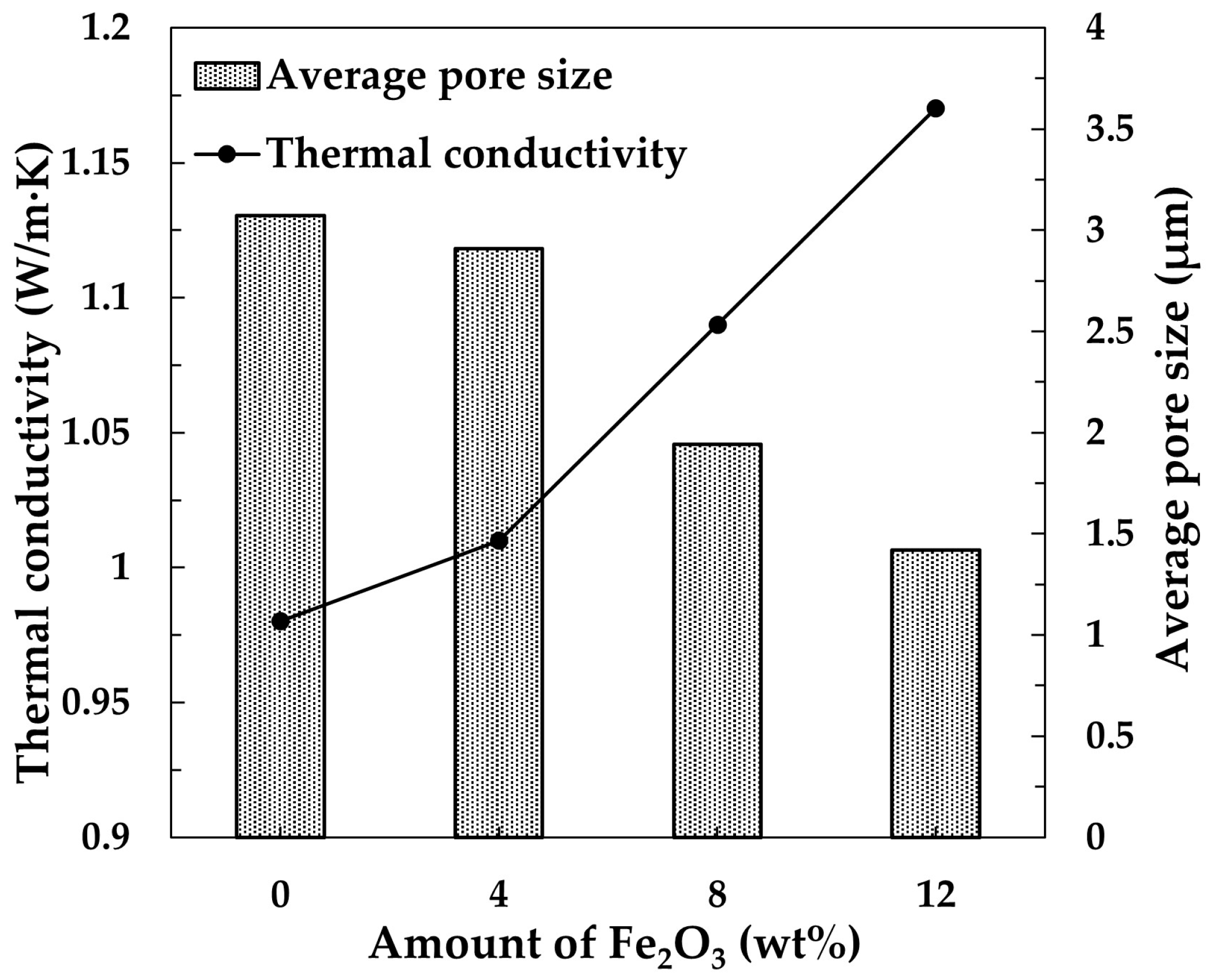

Effect of Fe2O3 on Compressive Strength and Microstructure of Porous Acicular Mullite


Abstract
Share and Cite
Omerašević, M.; Krsmanović, M.; Adamović, N.; Wang, C.-A.; Bučevac, D. Effect of Fe2O3 on Compressive Strength and Microstructure of Porous Acicular Mullite. Ceramics 2025, 8, 111. https://doi.org/10.3390/ceramics8030111
Omerašević M, Krsmanović M, Adamović N, Wang C-A, Bučevac D. Effect of Fe2O3 on Compressive Strength and Microstructure of Porous Acicular Mullite. Ceramics. 2025; 8(3):111. https://doi.org/10.3390/ceramics8030111
Chicago/Turabian StyleOmerašević, Mia, Miomir Krsmanović, Nada Adamović, Chang-An Wang, and Dušan Bučevac. 2025. "Effect of Fe2O3 on Compressive Strength and Microstructure of Porous Acicular Mullite" Ceramics 8, no. 3: 111. https://doi.org/10.3390/ceramics8030111
APA StyleOmerašević, M., Krsmanović, M., Adamović, N., Wang, C.-A., & Bučevac, D. (2025). Effect of Fe2O3 on Compressive Strength and Microstructure of Porous Acicular Mullite. Ceramics, 8(3), 111. https://doi.org/10.3390/ceramics8030111