


Abstract
A recurring challenge in the development of information systems (ISs) across complex organizational domains is the lack of integration and alignment between strategic, tactical, and operational levels, resulting in methodological fragmentation that constrains traceability, innovation, and organizational value generation. This study proposes and applies to the Integrated Innovation Framework for Information System Development (IIF-ISD) to overcome this gap. The research was structured through a systematic literature review, following the PRISMA and ROSES protocols, and validated through an exploratory single-case study involving the development of an IS supporting the Selo Casa Azul (SCA) environmental certification process in a Brazilian construction company, a context chosen for its multi-level organizational complexity and ESG compliance requirements, representative of broader certification IS development challenges. The framework integrates DSRM, agile methodologies, Design Thinking, and Lean Startup through three governing principles—Hierarchical Embedding, Functional Complementarity, and Traceability by Design—achieving cross-level alignment between strategic objectives, tactical performance monitoring, and operational execution. Empirical evaluation (n = 9; 14 weeks) yielded SUS scores of 76.8–82.1/100, a 76% reduction in data entry error rates, and a 78% stakeholder engagement rate, providing initial support for the framework’s practical effectiveness.
1. Introduction
In the contemporary global environment, organizations operate in volatile, uncertain, complex, and ambiguous environments (VUCAs). Digital transformation has become central to maintaining competitiveness, sustainability, and stakeholder value creation [1,2,3]. Rapid technological evolution requires organizations to adopt flexible and iterative approaches to developing information systems (ISs), ensuring alignment between technological innovation and strategic objectives [1,3,4].
It is important to distinguish IIF-ISD’s scope from broader Digital Transformation Frameworks (DTFs). While DTFs such as TOGAF [5] or enterprise architecture frameworks address organizational-level transformation governance, IIF-ISD operates at the IS development artifact level, providing a methodology for constructing specific information systems that support and enable digital transformation objectives. The SCA case study exemplifies this distinction: IIF-ISD was not applied to govern the company’s overall digital transformation, but to develop a specific IS artifact that contributes to the company’s sustainability-oriented digital transition.
While agile methodologies effectively promote responsiveness, collaboration, and incremental value delivery [6,7], the literature focuses mainly on the adoption phase, focusing less on large-scale integration and long-term organizational impacts. The expansion of agile practices to multiple teams and functions, through frameworks such as Scaled Agile Framework (SAFe) or Large-Scale Scrum (LeSS), remains theoretically underexplored, especially regarding alignment with Information Technology (IT) strategy and governance [6]. Similarly, while DevOps reinforces automation and cross-functional collaboration [8,9], empirical studies point to persistent challenges in connecting agile development to strategic value generation.
Design-oriented methodologies, such as Design Science Research Methodology (DSRM) and Design Thinking, have been consolidated as complementary approaches to tackling complex problems by emphasizing empathy with the user, ideation, and iterative evaluation cycles [10,11,12]. In this sense, the application of Design Science Research (DSR) has been proven effective in creating artifacts that facilitate value co-creation in complex ecosystems [13]. However, the isolated application of such methods limits systemic integration with agile and Lean principles at multiple organizational levels. Frameworks such as the Strategic Agile Model Driven IT Governance (StratAMoDrIGo) [14] and the Agile-layering aspect-oriented framework (ALAI) [15] demonstrate partial advances in modularity and strategic alignment but still lack conceptual models capable of ensuring traceability and integration between strategic intent and operational execution.
The systematic literature review conducted in this study (Section 3) revealed three recurrent gaps in the IS development literature: (G1) the absence of a unified hybrid framework integrating agile methodologies: DSRM, Design Thinking, and Lean Startup in IS development [6]; (G2) the lack of formal traceability mechanisms linking strategic, tactical, and operational decisions in agile and design contexts [14]; and (G3) theoretical fragility in treating the scalability of agile practices without losing focus on user-centricity and validated learning [6,16].
This study seeks to fill these gaps through IIF-ISD, a hybrid methodological framework integrating DSRM, agile methodology, Design Thinking, and Lean Startup. The framework’s theoretical and practical contributions are consolidated in Section 5.3.
The systematic comparative analysis presented operationalizes these gaps through six integration dimensions (D1–D6) derived inductively from the SLR portfolio; their derivation procedure and justification are detailed in Section 2: Theoretical Background. None of the seven frameworks reviewed simultaneously address all six dimensions, confirming the theoretical necessity for an integrative framework.
Guided by the identified gaps, this study is structured around the following research questions: RQ1: What methodological gaps exist in current IS development frameworks with respect to cross-level traceability, user-centered ideation, iterative artifact development, MVP/experimentation logic, DevOps integration, and formal conceptual modeling? RQ2: How can DSRM, agile methodologies, Design Thinking, and Lean Startup be integrated into a unified framework that addresses these gaps simultaneously? RQ3: To what extent does the proposed IIF-ISD framework demonstrate practical effectiveness in a real-world IS development context?
Subsequently, Section 2 details the theoretical foundations of DSRM, agile methodologies, Design Thinking, and Lean Startup in the context of information systems development. Section 3 details the research methodology and development process of the proposed framework. Section 4 describes IIF-ISD, its components, phases, and integration principles. Section 5 discusses its theoretical and practical implications, and Section 6 presents the findings and suggestions for future research.
2. Theoretical Background
The current environment requires organizations to adopt digital technologies as a strategic resource to maintain competitiveness and drive innovation [2,3]. In this context, IS becomes fundamental in enabling the digitalization of processes and the creation of value for stakeholders [1]. Business intelligence (BI), for example, supports real-time decision-making [17], while human resource and supply chain management rely on integrated solutions that reinforce organizational adaptability [18]. Thus, alignment between IT and business emerges as a critical requirement, articulating operational, tactical, and strategic decisions [9,19].
The alignment between strategic, tactical, and operational levels constitutes one of the biggest challenges of IT governance [9]. The lack of integration between development and operations, for example, can compromise the effectiveness of organizational objectives. Models such as StratAMoDrIGo seek to overcome this gap by assessing strategic, stakeholder, and user value, promoting traceability of decisions across all organizational layers [14]. Thus, the combination of DSRM’s scientific rigor, agile adaptability, Design Thinking’s user-centricity, and Lean Startup’s ongoing validation offers a promising path for information systems to effectively drive organizational agility and sustainability [4].
Among the methodologies used, agile development is central, associated with flexibility, self-organization, and incremental deliveries [6,7,20]. However, its large-scale application presents challenges related to structural complexity and coordination between multiple teams. Different methodologies offer complementary contributions to ensure academic rigor and practical applicability. The DSRM provides a systematic, evidence-based framework that guides the entire lifecycle of problems and artifacts, ensuring scientific validity and rigor in design and evaluation [11,21,22]. Design Thinking contributes to the empathy and problem definition phases [10,23]. Agile practices stand out for the use of sprints and backlog mechanisms [24,25,26,27]. Lean Startup incorporates the logic of minimum viable products (MVPs) and rapid experimentation [3,28,29].
Established enterprise-level frameworks, such as TOGAF (The Open Group Architecture Framework) [5], INCOSE Systems Engineering frameworks [30], and general Enterprise Architecture (EA) methodologies [31], address organizational and architectural alignment at a governance level. While these frameworks provide robust mechanisms for aligning IT infrastructure with business strategy, they are primarily concerned with architectural governance rather than IS artefact construction. TOGAF’s Architecture Development Method (ADM) [5], for instance, provides a lifecycle for enterprise architecture transformation but does not prescribe iterative, user-centered artefact development methodologies. Similarly, INCOSE’s Systems Engineering Handbook [30] emphasizes requirements traceability and lifecycle management but does not incorporate the user-centered ideation and validated-learning mechanisms that characterize IIF-ISD’s Phases 1 and 2. IIF-ISD, therefore, operates at a complementary but distinct level: where TOGAF governs the architecture, IIF-ISD governs the development of specific IS artifacts within that architecture.
Table 1 presents a preliminary synthesis of methodological coverage across seven representative frameworks identified through the SLR. This synthesis was conducted as part of the SLR analytical phase (Section 3.4) and is presented here in the Theoretical Background to provide the reader with contextual grounding. The full SLR process, including eligibility criteria, search strategy, and quality appraisal, is detailed in Section 3.
Table 1.
Methodologies adopted in the frameworks.
The systematic comparative analysis presented in Table 2 (Section 2) operationalizes these gaps through six integration dimensions derived from the thematic analysis of the 28-article SLR portfolio (Section 3.4): (D1) cross-level traceability, (D2) user-centered ideation, (D3) iterative artefact development, (D4) MVP/experimentation logic, (D5) DevOps integration, and (D6) formal conceptual modelling. These dimensions were inductively identified during the SLR synthesis phase through open, axial, and selective coding of methodological features across the reviewed studies and subsequently used as the analytical framework for the comparative assessment in Table 2. Inter-rater reliability for the coding process was assessed using Cohen’s κ = 0.78, indicating substantial agreement. None of the seven frameworks reviewed simultaneously address all six dimensions, confirming the theoretical necessity for an integrative framework.
Table 2.
Systematic comparison of existing frameworks across six integration dimensions. D1 = Cross-level Traceability; D2 = User-centered Ideation; D3 = Iterative Artefact Development; D4 = MVP/Experimentation Logic; D5 = DevOps Integration; D6 = Formal Conceptual Modelling. Yes = explicitly present; Partial = partially present; No = absent.
This analytical finding substantiates the research gap articulated in the Introduction and confirms the theoretical necessity for an integrative framework. IIF-ISD is designed to address all six dimensions concurrently, representing a qualitative advance over existing partial approaches.
Derivation and Justification of Integration Dimensions D1–D6
The six integration dimensions were derived inductively through thematic analysis of the 28-article SLR portfolio, following a three-stage coding procedure: (1) open coding of methodological features described in each study; (2) axial coding to identify recurrent themes across studies; and (3) selective coding to consolidate thematic clusters into six analytically distinct dimensions. The dimensions were validated through inter-rater reliability assessment between two independent researchers (M.O.G. and V.M.), yielding Cohen’s κ = 0.78, indicating substantial agreement. Discrepancies were resolved through consensus with a third researcher (A.C.F.).
The six dimensions are as follows: (D1) Cross-level Traceability: the capacity to link strategic objectives to tactical goals and operational functionalities bidirectionally; (D2) User-Centered Ideation: the explicit inclusion of empathic user research and co-creation techniques in the IS design process; (D3) Iterative Artefact Development: the structured use of incremental development cycles with formal evaluation at each iteration; (D4) MVP/Experimentation Logic: the deployment of minimum viable product scoping and hypothesis testing before full-feature development; (D5) DevOps Integration: the alignment of development and operations through continuous integration, delivery, and automation; and (D6) Formal Conceptual Modelling: the use of standardized notations (e.g., NFR, i* SRD, UML) to formally represent the IS design and its alignment with organizational objectives.
These six dimensions represent the most recurrent functional integration requirements identified across the reviewed literature [6,9,14,16]. All subsequent references to D1-D6 in this manuscript use this section as the definitional anchor.
3. Materials and Methods
It is important to note that the systematic literature review (SLR) preceded the framework construction phase. The initial motivation for this study emerged from practitioner observations of alignment difficulties in IS development projects; however, the specific design decisions of IIF-ISD, including the selection of integrated methodologies, the definition of organizational levels, and the formulation of integration principles, were made only after completion of the systematic review and analysis of the 28-article final portfolio. The SLR thus served as a discovery instrument, not a post hoc legitimation device. The chronological sequence: SLR initiation, portfolio analysis, gap identification, framework design, case study application and evaluation.
This study employs a systematic literature review (SLR) conducted in four phases, following the reporting standards of ROSES [34] and the PRISMA 2020 Statement (Preferred Reporting Items for Systematic Reviews and Meta-Analysis) [35]. The ROSES reporting standard has been applied in systematic reviews of IS development as a complement to PRISMA, providing specific guidance on transparency in evidence synthesis [34,36,37]. The ROSES reporting standard was applied through completion of the ROSES pro forma checklist [36], which guided the reporting of (i) the rationale for the review; (ii) the eligibility criteria; (iii) the search strategy; (iv) the screening and selection process; and (v) the synthesis method. Systematic literature reviews applying PRISMA and ROSES protocols are particularly suited for IS development research, as they allow for structured identification of methodological gaps and ensure transparency of the selection process.
3.1. Definition of Eligibility Criteria and Databases
The rationale for each inclusion criterion is as follows, in relation to the research objectives:
- Case studies only (criterion i): IIF-ISD is a design-oriented framework intended for real-world IS development contexts. Restricting the SLR to empirical case studies ensures that the reviewed frameworks provide evidence of practical applicability and implementation challenges, which is directly relevant to IIF-ISD’s design rationale. Purely theoretical or simulation-based IS development proposals were excluded because they do not provide the practitioner-validated artefact evidence required to ground IIF-ISD’s design decisions.
- Focus on sustainability issues (criterion ii): This criterion was applied not to limit IIF-ISD’s generalizability, but to ensure the relevance of the SLR portfolio to the empirical validation context (SCA certification). The criterion was operationalized broadly to include any IS development study addressing ESG compliance, environmental reporting, sustainable supply chains, or socially responsible IT governance. Of the 28 studies in the final portfolio, 17 address sustainability in a broad sense, while 11 address IS development methodology with tangential sustainability implications. It is acknowledged that this criterion may have excluded relevant IS development frameworks from purely technical or commercial domains (e.g., financial IS, healthcare IT governance). This is noted as an additional limitation in Section 7.
- JCR > 0 (criterion iv): This criterion was applied to ensure scientific quality through peer review validation, consistent with established IS SLR guidelines [36,37]. Its limitation with respect to grey literature exclusion is addressed in Section 7.
It is important to clarify that these criteria governing the SLR were applied to ground the framework’s design and empirical validation and do not constitute restrictions on IIF-ISD’s applicability. The framework’s domain applicability conditions (Section 5.1) explicitly identify sectors beyond construction, including healthcare IS, public sector digital transformation, and supply chain management IS.
The exclusion of grey literature was adopted to ensure internal consistency of quality appraisal and peer-reviewed scientific rigor, consistent with established guidelines for systematic reviews in IS research [36,38,39]. We acknowledge this as a limitation (Section 7) and recommend that future reviews incorporate grey literature sources, including practitioner conference proceedings and industry reports from certifying bodies. Since the objective is to identify theoretically substantiated frameworks and not just prescriptive tools, this approach aligns with the need for rigorous academic validation in information systems [37]. This constitutes a recognized limitation of the present study (see Section 7).
3.2. Search Strategies and Database Searches
The keywords defining the research topics related to Design Science Research Methodology, agile, Lean Startup, Design Thinking, information systems, and organizational level were used to search the databases. The search strategies presented in Table 3.
Table 3.
Research strategy.
The Scopus and Web of Science databases were selected based on their established coverage of IS development research, as documented in recent bibliometric analyses [40,41].
The articles were filtered to ensure that all items in the portfolio were relevant to this research. Duplicates from both databases were manually excluded. Additionally, title and abstract screening criteria were established to exclude articles at each process stage. Eligibility criteria were considered during each phase of this screening.
During this process, the authors used Mendeley’s reference management software to organize the data collected from the Scopus and Web of Science databases. Subsequently, the final portfolio was transferred to Microsoft Excel®, where comprehensive notes were made on the selected articles.
3.3. Systematic Analysis Procedures
The final phase included a thorough reading of the articles to extract crucial information, collecting author names, article title, year of publication, journal, JCR, number of citations, application country, sector, method/tool/approach, results, study limitations, and future research directions. The authors mutually reviewed the methodological process to identify any inconsistencies. The final portfolio consists of 28 studies addressing IS development concepts.
Figure 1 illustrates the following steps from the PRISMA 2020 methodology: (i) the eligibility criteria, keywords, and database definitions; (ii) the selection of databases and search strategies, including the complete scenario used in the searches; (iii) the description of the process for screening the retrieved records, considering the eligibility criteria; and (iv) the systematic review of the portfolio.
Figure 1.
Flowchart for systematic review based on the PRISMA 2020 methodology.
As a result, 232 records were retrieved (36 from Scopus; 196 from Web of Science). After removing 23 duplicates, 209 unique records remained. A previously reported figure of 203 resulted from a manual counting error during title screening; 6 records were inadvertently excluded without documentation. These records have been retrospectively reviewed: all 6 were excluded during title screening for failing to meet eligibility criterion (iii). The PRISMA flowchart is presented in Figure 1 (Section 3.4).
3.4. Quality Appraisal of Included Studies
A formal quality appraisal was performed for all 28 articles in the final portfolio using an adapted version of the Mixed Methods Appraisal Tool (MMAT) [42]. Each study was evaluated on five dimensions: (Q1) clarity of research objective; (Q2) appropriateness of research design; (Q3) adequacy of data collection; (Q4) validity of analysis; and (Q5) relevance of findings to the review question. Each dimension was rated on a 1–5 scale, and a composite confidence level (High: ≥20/25; Moderate: 15–19/25; Low: <15/25) was assigned. Studies scoring below 60% on the composite MMAT scale were retained in the review but treated as lower-confidence evidence and weighted accordingly in the synthesis. No study in the final portfolio fell below the moderate confidence threshold, attesting to the overall quality of the selected literature.
Table 4 presents the quality appraisal results for the seven primary studies contributing directly to the framework design; the remaining 21 studies all achieved moderate-to-high confidence levels.
Table 4.
MMAT quality appraisal summary for primary studies. Q1 = Clarity of objective; Q2 = Research design; Q3 = Data collection; Q4 = Analysis validity; Q5 = Relevance. Scale: 1 (very low)–5 (very high).
Quality appraisal ratings (Q1–Q5) were independently assigned by two co-authors (M.O.G. and V.M.), following the MMAT scoring guide [42]. Inter-rater agreement was assessed using Cohen’s κ, yielding κ = 0.74 (substantial agreement). Discrepancies were resolved through structured discussion with a third co-author (A.C.F.) acting as arbiter.
3.5. Construction of the IIF-ISD Framework
The construction of the IIF-ISD framework followed the logic of adaptation and integration of key elements of the methodologies identified in Table 5.
Table 5.
Adopted methodologies.
The selection of these four methodologies was guided by four explicit criteria. First, systematic literature evidence: all four methodologies appeared as dominant approaches in at least five of the 28 reviewed studies, evidencing their empirical prevalence in IS development contexts. Second, methodological complementarity: DSRM provides lifecycle scaffolding and scientific rigor [11,12,14]; agile provides execution flexibility [7,9,14,15,33]; Design Thinking provides user-centered problem framing [10,11,32]; and Lean Startup provides validated-learning loops [3,8,10,14,15]. Each addresses a functional gap left by the others, as confirmed by the compatibility matrix embedded in the new integration principles subsection (Section 4). Third, compatibility with i* modelling: DSRM’s artefact orientation and the NFR framework are natively aligned with goal-oriented modelling; i* SRD diagrams extend this to stakeholder intentionality, creating a coherent modelling chain across levels [14]. Fourth, industrial relevance: all four methodologies have documented adoption in the Brazilian construction and civil engineering sectors, which was critical for the validity of the empirical case study. Alternative methodological candidates, including SAFe, PRINCE2, and Six Sigma, were not incorporated because their primary focus on project governance and process standardization, rather than artefact creation, renders them epistemologically incompatible with DSRM’s design science foundations. As established by [21,22], DSRM requires a rigorous contribution to knowledge through the iterative design and evaluation of artifacts, a goal that diverges from the compliance and routine-based optimization inherent in traditional governance frameworks.
3.6. Coverage of Organizational Levels
The IIF-ISD framework was designed to cover the strategic, tactical, and operational levels across the board, as shown in Table 6.
Table 6.
Application at organizational levels.
The validation took place in developing a gamified information system (IS) for the Selo Casa Azul (SCA) environmental certification in a construction company in Brazil. The hybrid methodological framework, IIF-ISD, was applied to integrating DSRM, agile methodologies, Design Thinking, and conceptual modelling (NFR model and i* SRD). The framework allowed for the development of the IS to be a continuous and adaptive process, aligned with the construction company’s business strategy.
The evaluation protocol was structured as follows: (a) Participants: 9 participants distributed across three organizational tiers (n = 3 operational; n = 3 tactical; n = 3 strategic); (b) Instruments: System Usability Scale (SUS) questionnaire administered at the end of each sprint cycle, semi-structured interviews (45–60 min per participant), and KPI tracking dashboards monitored over the 14-week development period; (c) Timing: three data collection points corresponding to sprint retrospectives at weeks 4, 9, and 14; (d) Data analysis: descriptive statistics for quantitative data (SUS scores, error rates, sprint velocity) and thematic analysis for qualitative interview data. The evaluation results are reported in full in Section 4.3.
3.7. Selo Casa Azul Certification
The SCA represents an ESG (Environmental, Social, and Governance) categorization mechanism designed for housing development proposals that implement efficient practices from the design to the maintenance of the buildings. Participation is of free choice, and new projects in the evaluation process or already reviewed and contracted are considered eligible [43]. Table 7, which contains a summary of the SCA certification, follows.
Table 7.
SCA information.
4. Results
The sources provided substantial insights into developing the IIF-ISD framework of hybrid methodology for constructing an IS that meets the tactical, strategic, and operational organizational levels. The following are key source insights for each component and their integration into the IIF-ISD framework, Table 8.
Table 8.
Insights from the methodologies for building the IIF-ISF framework.
The IIF-ISD framework integrates these methodologies in a complementary way, leveraging the strengths of each one at different moments and organizational levels (tactical, strategic, operational) of application, as shown in Table 9.
Table 9.
Organization levels and methodologies adopted.
In this context, Figure 2 presents the pyramid-shaped structure that illustrates the hierarchical organization of information systems’ strategic, tactical, and operational levels. At the base, the operational level is responsible for executing activities, processing automation, and practical implementation. The intermediate level corresponds to the tactical level, linking strategy and operation. At the top is the strategic level, focused on formulating guidelines and defining long-term objectives.
Figure 2.
Hierarchy of management strategies.
By combining DSRM for framework structure and evaluation, agile methodology for speed and adaptability, and design thinking for user-centered innovation, and incorporating principles of rapid experimentation and value focus aligned to Lean Startup, the resulting framework will be able to provide a robust and flexible approach to building IS that effectively addresses challenges and opportunities at all organizational levels. However, it will be critical to address the complexity of socio-technical interdependencies and the tensions between different mindsets and practices [6,16].
4.1. Integration Principles of IIF-ISD
The integration of four distinct methodologies within IIF-ISD is not a mere aggregation of practices; rather, it is governed by three formally stated principles that ensure theoretical coherence, methodological compatibility, and operational consistency.
Principle 1—Hierarchical Embedding: DSRM serves as the outer (umbrella) lifecycle. All other methodologies are nested within specific DSRM phases, ensuring that the scientific lifecycle is never violated. Design Thinking operates within Phases 1 and 2; agile/DevOps operates within Phase 3; Lean Startup’s MVP logic operates within Phases 2 and 3; and DSRM’s evaluation and communication structures govern Phases 4 and 5. This hierarchical arrangement ensures that scientific rigor, maintained by DSRM, frames and constrains the execution of all other methodological activities.
Principle 2—Functional Complementarity Without Redundancy: Each methodology is assigned to non-overlapping functional roles. Design Thinking performs user-centered problem framing and empathic needs discovery (Phases 1 and 2). Agile methodologies perform iterative execution, backlog management, and sprint delivery (Phase 3). Lean Startup contributes validated-learning loops, A/B experimentation, and pivot-or-persevere decision logic (Phases 2 and 3). DSRM provides the formal artefact evaluation and communication protocol (Phases 4 and 5). A compatibility matrix confirming the non-overlapping nature of these roles is presented in Table 7. This principle prevents conceptual redundancy and ensures that each methodology contributes incremental and distinct value to the framework.
Principle 3—Traceability by Design: The NFR model and i* SRD are the formal modelling instruments that propagate strategic objectives downward to operational functionalities and back upward to strategic evaluation. Every design decision within IIF-ISD can be traced to an organizational objective through this modelling chain. At the strategic level, NFR softgoal trees decompose high-level goals into operationalizable leaf-level requirements. At the tactical level, i* SRD diagrams map stakeholder intentions and system contributions. At the operational level, user stories in the agile backlog are linked to specific i* SRD goals. This round-trip traceability mechanism addresses the alignment gap identified in the literature and constitutes IIF-ISD’s primary contribution to the IS development field.
The compatibility of these principles with existing design science and agile epistemologies is confirmed by the conceptual analysis presented in Table 3 and Table 7, and by the empirical evidence from the case study application (Section 4.2). Methodological boundaries—i.e., where one methodology’s contribution ends and another’s begins—are explicitly indicated in the revised Figure 3.
Figure 3.
Integrated Innovation Framework for Information System Development (IIF-ISD).
4.2. Framework IIF-ISD
To develop the hybrid methodology framework for building an IS that serves tactical, strategic, and operational organizational levels, combining DSRM, agile methodology, Design Thinking, and Lean Startup, the framework was based on an iterative and value-oriented approach. The IIF-ISD framework was structured around DSRM as the umbrella methodology, providing the framework and scientific rigor for creating the artefact. Figure 3 presents the Integrated Innovation Framework for Information System Development (IIF-ISD), structured in five main phases.
It is acknowledged that the present version of IIF-ISD’s visual model (Figure 3) does not conform to standardized formal notations such as UML (Unified Modeling Language), ArchiMate (for enterprise architecture layers), or BPMN 2.0 (for process modeling). The framework diagram is intentionally represented as a conceptual integration model rather than a formal system specification model, consistent with representation conventions employed in DSRM-based IS research [21,22,38]. Future formalizations of IIF-ISD should translate its components into ArchiMate layers (Motivation, Strategy, Application, Technology) to facilitate interoperability with enterprise architecture tools and enable practitioners to implement the framework within TOGAF-compliant environments. This constitutes a recognized limitation and is further elaborated in Section 7.
The five phases of IIF-ISD (Table 10) are described with their full artefact specifications and design rationale:
Table 10.
Phases of the IIF-ISD framework.
Phase 1—Problem Identification and Motivation: Design Thinking’s Empathize and Define stages are deployed to achieve an in-depth, user-centered understanding of the problem space. Key activities include ethnographic observation, semi-structured stakeholder interviews, customer journey mapping, and root cause analysis using fishbone diagrams. The primary formal artefact produced in this phase is an Empathy Map (one per stakeholder role) and a multi-level requirements matrix distinguishing between strategic, tactical, and operational needs. These artefacts inform the NFR softgoal tree constructed in Phase 3. The design rationale for privileging Design Thinking in this phase is that DSRM’s “problem identification” phase, while methodologically rigorous, does not inherently prescribe user engagement techniques; Design Thinking fills this gap.
Phase 2—Definition of Solution Objectives: Design Thinking’s Ideate stage (SCAMPER, brainstorming, co-creation workshops) is used to generate and evaluate solution concepts. Lean Startup’s MVP scoping logic is applied to define the minimum viable system scope for each organizational level, enabling resource-efficient prioritization. The primary artefacts are solution sketches, MVP scope canvas (one per organizational tier), and an initial agile backlog with user stories linked to organizational objectives. The applicability condition for this phase is that co-creation workshops require participation from at least one representative per organizational tier to ensure cross-level alignment.
Phase 3—Design and Development of the Artefact: Agile methodologies (Scrum/Kanban) govern sprint-based execution, while DevOps practices ensure continuous integration and delivery. Lean Startup’s A/B experimentation logic is applied to validate user engagement hypotheses before full-feature development. The primary formal artefacts are functional prototypes (low-fidelity in early sprints, high-fidelity in later sprints), NFR softgoal tree fragment, and sprint velocity and backlog burn-down records. DevOps is specifically applied to dismantle monolithic architectures and ensure that the system is modular, testable, and integrable with third-party platforms (e.g., sustainability reporting APIs).
Phase 4—Demonstration and Evaluation of the Artefact: DSRM’s evaluation protocol is applied using instruments stratified by organizational tier: SUS questionnaire for all users; KPI dashboards for tactical and strategic evaluators; and retrospective sessions for operational teams. Design Thinking’s Test stage is applied through usability walkthroughs with real end-users. Conceptual Modelling (NFR and i* SRD) is used for formal alignment evaluation, checking whether operational functionalities remain traceable to strategic objectives after development. The primary artefacts are evaluation reports, a refined software version, and a performance metrics summary.
Phase 5—Communication of the Work: DSRM’s communication phase prescribes the dissemination of findings to both academic (conference papers, journal submissions) and practitioner (internal workshops, training materials, product roadmaps) audiences. The applicability condition for this phase is that communication artefacts must be tailored to each audience’s technical vocabulary: executives receive strategic-level dashboards; managers receive process compliance reports; and operational staff receive gamified progress feedback.
While IIF-ISD adopts DSRM as its outer lifecycle scaffold (Principle 1: Hierarchical Embedding), it departs from classical DSRM in five substantive ways that constitute the framework’s original methodological contributions. Table 11 presents a structured comparison:
Table 11.
Comparison of classical DSRM and IIF-ISD original contributions by phase.
It is acknowledged that the present version of IIF-ISD’s visual model (Figure 3) does not conform to standardized formal notations such as UML, ArchiMate, or BPMN 2.0. The framework diagram is intentionally represented as a conceptual integration model, consistent with DSRM-based IS research conventions [21,22,38]. Future formalizations should translate IIF-ISD’s components into ArchiMate layers (Motivation, Strategy, Application, Technology) to facilitate operationalization within TOGAF-compliant environments.
Table 12 presents the adaptation of the IIF-ISD framework to the different organizational levels, evidencing stakeholder focus, functional priorities of the information system, and methodological emphases.
Table 12.
Cross-level tailoring.
At the operational level, the focus falls on frontline users, prioritizing real-time data capture, automation, and efficiency. At the tactical level, aimed at middle managers, the priorities are decision support systems and performance metrics. At the strategic level, long-term analysis, scenario modelling, and validation of key indicators stand out.
4.3. Case Study Application
The GIS4EC system is organized around four functional modules aligned with the IIF-ISD cross-level architecture:
Module M1: Data Collection Module (Operational Level): Frontline workers and site supervisors log sustainability data through mobile-optimized forms within the GIS4EC application. Energy consumption data is recorded daily via integration with the building’s smart meter API (where available) or through manual entry of meter readings with photographic confirmation, mapped to SCA criterion EE-1 (Energy Efficiency Monitoring). Water use is tracked through weekly sub-meter readings logged by the procurement specialist, mapped to SCA criterion WM-2 (Water Consumption Reduction). Construction waste is documented through waste manifest uploads, automatically categorized against SCA criterion SP-3 (Solid Waste Management). Social indicators, including worker training hours and PPE compliance rates, are submitted via daily check-in forms. All data entries trigger gamification events in real time: story points are awarded for timely submissions; achievement badges are issued for seven consecutive daily logs; and team leaderboard positions are updated weekly, creating a competitive engagement dynamic among field teams.
Module M2: Compliance Dashboard (Tactical Level): Project managers and sustainability coordinators access a real-time compliance dashboard aggregating operational data against the 22 SCA criteria mapped during IIF-ISD Phase 1. Each criterion is displayed with a traffic light indicator: Green (≥80% of target achieved), Amber (50–79%), Red (<50%). Automated alert notifications are dispatched to the responsible manager when any criterion falls below the 50% threshold for three consecutive days, enabling proactive corrective action.
Module M3: Strategic Analytics Module (Strategic Level): Executive directors and the sustainability director access a strategic analytics panel displaying aggregated KPIs across all six SCA certification categories (Urban Quality and Well-Being; Energy Efficiency; Water Management; Sustainable Production; Social; Innovation), trend forecasts, and benchmark comparisons against certification thresholds. The NFR model’s contribution links (established in Phase 1) are reflected in the dashboard’s weighting logic, ensuring that operational data aggregation is traceable to strategic certification objectives.
Module M4: Certification Document Generator: Upon reaching the SCA Projetar phase threshold, the system generates a pre-formatted Descriptive Memorial draft, pre-populated with the collected compliance data, for submission to Caixa Econômica Federal. This module reduces manual document preparation time and ensures data consistency between operational logs and the formal certification submission, directly addressing the data systematization gap identified in the Phase 1 problem analysis.
Figure 4 presents the GIS4EC functional architecture, illustrating the four modules, their data flows, the gamification engine, the API integration layer, and the mapping to IIF-ISD organizational levels.
Figure 4.
GIS4EC functional architecture diagram.
The IIF-ISD framework was applied in developing an information system for the SCA certification within the project of a mid-sized Brazilian construction company. The engagement of stakeholders across operational levels (data collection on energy and water efficiency), tactical levels (development of reporting models), and strategic levels (alignment of business goals with certification) guided by IIF-ISD contributed to a more effective information system for the SCA.
The diverse profiles in Table 13 enable the IIF-ISD framework to address the operational level, where site supervisors and workers implement sustainable practices (e.g., waste management). At the same time, tactical professionals like project managers integrate resilience into planning. Strategic leaders ensure alignment with SCA certification goals, fostering a resilience-focused culture. The company employs approximately 100 professionals, with roles distributed across operational (60%), tactical (30%), and strategic (10%) levels. The academic background includes engineering, architecture, and related fields, and they have experience ranging from 2 to 20 years.
Table 13.
Profile of professionals in a mid-sized Brazilian construction company.
The case study identified a significant gap in data systematization and internal engagement during the certification process, especially in integrating the strategic, tactical, and operational levels. Based on this need, the Integrated Innovation Framework for Information System Development (IIF-ISD) was applied as a guiding methodology for developing a Gamified Information System for Environmental Certification (GIS4EC), capable of aligning strategic goals, operational processes, and tactical sustainability indicators.
To illustrate the practical application of the framework’s modelling formalisms. a concern explicitly raised in the review, two formal artefact excerpts from the GIS4EC development.
The NFR softgoal tree constructed during Phase 1 of the IIF-ISD application decomposed the top-level goal “Support SCA Certification” into 22 operationalizable requirements across three sustainability categories: Energy Efficiency (seven leaf-level requirements), Water Management (eight leaf-level requirements), and Sustainable Production (seven leaf-level requirements). Contribution links (Make, Break, Help, Hurt) were used in standard NFR notation [47] to represent trade-offs between requirements. For example, the requirement “Automate energy consumption tracking” was identified as making a positive contribution (Make) to the softgoal “Reduce certification data-entry effort” and a neutral contribution (Help) to “Ensure data accuracy” This tree was validated in a stakeholder review session involving the Sustainability Director and Executive Director (strategic-tier participants) and subsequently informed the Agile backlog prioritization in Phase 3.
An i* Strategic Rationale Diagram (i* SRD) was constructed for the Project Manager actor during Phase 1, following the notation of [14]. The diagram represents 11 goals (e.g., monitor SCA compliance indicators; coordinate certification documentation), seven tasks (e.g., generate weekly compliance report; assign sustainable practice tasks to field teams), four resources (e.g., GIS4EC dashboard; SCA criteria database), and six softgoal contributions (e.g., improve decision transparency, positive contribution from the dashboard resource). This artefact was validated in a 60 min semi-structured interview session with the actual Project Manager participant (tactical tier). The i* SRD subsequently guided the development of the dashboard and alert functionalities in Sprint 2.
The results showed that the development of the gamified information system was conducted through the hybrid methodological framework, in which DSRM acted as an umbrella approach, structuring all phases of the artefact’s lifecycle. Design Thinking complemented the process by providing an in-depth understanding of stakeholders, using “What If” analysis, journey maps, and personas. Conceptual Modelling ensured the alignment of the system with organizational objectives at different levels. The integration of agile methodologies (Scrum, Kanban) and DevOps ensured incremental deliveries, continuous integration, and alignment between IT, sustainability, and operations teams.
Finally, it was found that the framework achieved transversal coverage at the organizational levels. At the strategic level, the gamified IS worked as an instrument of strategic agility. At the tactical level, it enabled the translation of goals into concrete actions and monitoring performance in real time. At the operational level, it directly engaged workers and field teams in sustainable practices through challenges and immediate feedback.
Table 14 summarizes the results obtained by applying the Integrated Innovation Framework for Information System Development (IIF-ISD) in developing the gamified information system aimed at environmental certification. Critically, it is observed that the framework enabled an effective integration between scientific rigor and agile practices, overcoming typical limitations of isolated approaches. Adopting the Design Science Research Methodology (DSRM) ensured the artifact’s methodological rigor and continuous adaptability to changes in certification requirements. At the same time, Design Thinking contributed to greater empathy with stakeholders and validation of the system’s usability. Conceptual Modeling (NFR-Model and iSRD) ensured traceability between strategic objectives and operational functionalities, which are often neglected in traditional systems development processes. Agile methodologies (Scrum, Kanban, and DevOps) have increased flexibility and inter-team collaboration, resulting in more scalable and iterative deliveries. Finally, the transversal coverage of the organizational levels showed a relevant advance by promoting integration between strategy and operation and consolidating a corporate culture oriented to sustainability and innovation.
Table 14.
Summary of the results of the development of gamified IS based on the IIF-ISD framework.
The quantitative results presented in Table 15 provide empirical support for the framework’s effectiveness across all three organizational levels. The SUS scores indicate “Good” to “Excellent” usability across tiers (operational: 79.3/100; tactical: 82.1/100; strategic: 76.8/100), consistent with the design emphasis on user-centered development. The 76% reduction in data entry error rates (from 34% to 8%) demonstrates measurable operational improvement attributable to the system’s automated tracking functionalities developed through the NFR-guided backlog. The progressive increase in sprint velocity (+42% from Sprint 1 to Sprint 5) confirms the operational effectiveness of the agile/DevOps integration in Phase 3. The 78% active participation rate in gamified tasks indicates that the Lean Startup-informed gamification hypotheses were empirically validated, justifying the design decisions made during Phase 2.
Table 15.
Quantitative evaluation results of the GIS4EC system across three organizational tiers (n = 9 participants; 14-week implementation period).
These results demonstrate that the IIF-ISD structures the development lifecycle and enhances the alignment between organizational value, human engagement, and environmental performance, dimensions rarely articulated synergistically in conventional frameworks.
Figure 5 illustrates the practical application of the Integrated Innovation Framework for Information System Development (IIF-ISD) in the context of a medium-sized Brazilian construction company, focused on SCA environmental certification. Critically, it is observed that the framework promoted a robust integration between scientific rigor, user-centeredness, and operational agility, overcoming common limitations in fragmented approaches. The initial phase, based on design thinking, allowed for us to deeply understand the challenges of the different stakeholders and formulate the research problem in a way oriented towards organizational innovation. The definition of the objectives and functionalities of the system consolidated the “gamification of sustainability” as a core value, articulating strategic, tactical, and operational indicators. During development, the combination of Scrum, Lean Startup, and DSRM enabled rapid iterations, validated prototyping with real users, and incremental deliveries, resulting in the Gamified Information System for the Environmental Certification (GIS4EC), equipped with tracking features, digital rewards, and management dashboards aligned with SCA criteria. The demonstration phase showed gains in strategic effectiveness, tactical efficiency, and operational engagement, confirming the potential of IIF-ISD to promote integration between sustainability, innovation, and performance. Finally, the communication of the results highlighted the importance of co-creation between organizational levels and the need for continuous evolution of the artifact, reinforcing the role of the framework as a dynamic instrument of digital and environmental transformation in the civil construction sector.
Figure 5.
Practical application of the IIF-ISD framework.
4.4. Measurement Operationalization
To ensure credibility and replicability of the quantitative results reported in Table 15, this section provides full operational definitions for each measurement instrument.
System Usability Scale (SUS): The SUS questionnaire (10 items, 5-point Likert scale) was administered individually at the end of each sprint retrospective session (weeks 4, 9, and 14). Scores were calculated using the standard SUS formula [48]. Each organizational tier was represented by three participants (n = 3 per tier); tier-level scores represent the arithmetic mean of the three individual scores. No participant scored below 65 (the conventional acceptability threshold), confirming uniform usability acceptance.
Data Entry Error Rate: Error rate was operationalized as the proportion of certification data entry records containing at least one factual inconsistency (e.g., missing mandatory field, value outside plausible range, unit mismatch) relative to total records submitted in a given week. Pre-implementation error rates were measured over a four-week baseline period using the company’s prior manual spreadsheet-based process. Post-implementation rates were measured over weeks 11–14 of the GIS4EC deployment. Errors were identified through automated validation rules programmed into the GIS4EC data collection module and cross-checked against source documents by the Sustainability Coordinator.
Sprint Velocity Trend (+42%): Sprint velocity was calculated as the sum of story points accepted at each sprint review. Story points were estimated using planning poker at the beginning of each sprint, conducted by a stable team of three developers (no team composition changes across all five sprints). Sprint velocities were Sprint 1 = 18 points; Sprint 2 = 20 points; Sprint 3 = 22 points; Sprint 4 = 24 points; Sprint 5 = 26 points. The velocity increase from Sprint 1 to Sprint 5 was (26−18)/19 ≈ 44%, reported conservatively as 42% in Table 15. To assess whether velocity gains reflected genuine performance improvement rather than task simplification, user stories were stratified by complexity tier (Simple: 1–3 points; Medium: 5–8 points; Complex: 13 points). The distribution across tiers remained stable across sprints (Simple ≈ 40%; Medium ≈ 45%; Complex ≈ 15%), indicating that the velocity gain is not attributable to task complexity reduction.
Stakeholder Engagement Index (78%): Active participation was operationalized as the completion of at least one gamified task per week during the 14-week implementation period. Gamified tasks available to operational participants included (1) logging daily energy consumption readings, (2) completing sustainable materials compliance checklists, (3) submitting photographic evidence of waste segregation, and (4) responding to weekly sustainability challenge notifications. Task completions were logged automatically by the GIS4EC event tracking module. The engagement index was calculated exclusively for operational-tier participants (n = 3), as gamification mechanics were deployed at this level. All three operational participants completed at least one task per week in 11 of 14 weeks: 11/14 = 78.6%, reported as 78%. The metric was not applied to tactical and strategic participants, whose system interactions were dashboard- and report-oriented rather than task-based.
5. Discussion
The IIF-ISD framework integrates DSRM as an umbrella approach, Design Thinking for user-centered innovation, Conceptual Modeling (NFR and i frameworks) for strategic and tactical alignment, and agile methodologies (Scrum/Kanban and DevOps) for development and operation. It has proven to be a robust approach to developing a gamified IS. Its application in the context of SCA certification in a construction company revealed significant insights into how agility can be sustained and leveraged at different organizational levels.
The DSRM methodology provided a cyclical, incremental, and iterative process for the development of artifacts, which proved critical to the adaptability of gamified IS to the ever-evolving requirements of SCA certification and the construction company’s needs. The iterative phases of DSRM allowed for continuous adjustments, ensuring that the artifact developed (the gamified SI) addresses the identified problems effectively.
At the strategic level, the framework supported strategic agility by allowing for the construction company to “sense” (identify and analyze new market demands and trends, such as the growing search for sustainable buildings), “capture” (quickly adapt the IS to take advantage of strategic opportunities, such as new certification requirements) and “reconfigure” (align resources and processes to optimize sustainability performance). Conceptual Modeling, through the NFR model, was crucial to assessing the strategic value of technological adoption, connecting the functionalities of gamified IS to the strategic objectives of the construction company, such as increasing competitiveness or improving brand image. This model helps C-level executives understand the implications of strategic decisions in a short period of time.
For the tactical/managerial level, the i Strategic Rationale Diagram* (SRD) was used to represent the intentions of stakeholders and the impact of gamified IS on their objectives. For example, project managers could use the system’s dashboards to monitor progress against the project’s sustainability goals, while gamification can motivate teams to achieve environmental milestones. The round-trip approach between the NFR and i* models ensured continuous alignment between high-level strategic objectives and detailed system functionalities, allowing different system configurations to be tested and evaluated.
At the operational level, integrating agile methodologies such as Scrum/Kanban and DevOps practices translates into operational agility. Scrum and Kanban allowed for feature management in short sprints or a continuous flow, facilitating the rapid delivery of value and adaptation to new information. DevOps, meanwhile, fostered cross-functional collaboration between development and operations by automating the continuous delivery of the system and ensuring that the system is robust and easy to maintain. The framework’s emphasis on delivering “value” (whether strategic, stakeholder, or end-user) was central to agility, as it directed focus to the most important outcomes in an ever-changing business environment.
The framework has created a solid foundation for designing gamified elements that engage users by prioritizing Design Thinking. The empathy and ideation phases of Design Thinking made it possible to understand the “pains” and motivations of users at all levels (operational, tactical, strategic) in relation to the environmental certification SCA, ensuring that the gamification elements (points, badges, leaderboards, challenges) were relevant and motivating. Iterative prototyping and testing validated the usability and engagement of the system before full development.
A central contribution of this IIF-ISD framework was its ability to focus on assessing value beyond economic viability, using conceptual models to demonstrate how the interests of a wide range of stakeholders can be supported. Traceability between strategic objectives (NFR) and detailed functionalities (i*) ensured that gamified IS was intrinsically aligned with the construction company’s strategy. This was vital for environmental certification, as it allowed for the construction company to comply with the requirements and integrate sustainability into its culture and operations in an agile and measurable way.
The comparison between the methodological frameworks identified in the literature and the Integrated Innovation Framework for Information System Development (IIF-ISD) highlights important limitations in the existing approaches. Although each methodology alone offers relevant contributions, such as the scientific rigor of the Design Science Research Methodology (DSRM) for the validation of artifacts [21,22], the flexibility and incremental delivery of agile methodologies [25,26], the user-centricity of Design Thinking [23] and the rapid experimentation of the Lean Startup [28,29,49], it is observed that such frameworks tend to apply these approaches in a fragmented way. As a result, they lack mechanisms that ensure traceability between organizational levels (strategic, tactical, and operational) and the continuous integration of the value generated throughout the system’s lifecycle. While StratAMoDrIGo advances modularity and strategic alignment, IIF-ISD overcomes limitations of traditional approaches by ensuring traceability between strategic objectives and operational functionalities, user engagement, and continuous system adaptation to organizational needs. In this way, the IIF-ISD represents an advance in consolidating innovative practices, promoting transversal integration, and having a greater practical impact on developing value-oriented information systems.
In this sense, the IIF-ISD presents itself as an advance by proposing a structured methodological integration around DSRM as an umbrella approach, ensuring scientific rigor and iterative validation, while incorporating agile and Design Thinking practices to foster adaptability, co-creation, and continuous value delivery. The framework’s differential is in the use of Conceptual Modeling, which enables the alignment between strategic decisions, tactical objectives, and operational functionalities, promoting the traceability and consistency of the developed system. This characteristic responds to a gap pointed out in previous studies, which show the difficulty of traditional frameworks in dealing with the complexity of dynamic and sustainability-oriented organizational environments [38,50].
The case study of developing a gamified information system to support the SCA certification of Caixa Econômica Federal, in Brazil, reinforces this practical contribution. Unlike fragmented approaches, the IIF-ISD enabled a transversal integration: at the strategic level, it aligned the system with the corporate sustainability strategy and the enhancement of the institutional image; at the tactical level, it supported project managers and environmental specialists in monitoring compliance indicators; and at the operational level, it engaged workers and field teams in sustainable practices through gamification mechanisms. This practical application demonstrates how the framework enables the construction of technologically robust artifacts and underpins organizational transformation toward innovation and sustainability.
Therefore, by integrating methodologies coherently and traceably, IIF-ISD overcomes gaps identified in the literature, offering a promising path for developing adaptable, scalable, and value-oriented information systems in complex and dynamic contexts. The contributions to the development of the IIF-ISD framework are described in Table 12.
5.1. Domain Applicability Conditions
The domain mapping presented in Table 2 and Table 12 reveals that IIF-ISD’s components exhibit differentiated levels of domain universality. Three components are domain-invariant, applicable across all sectors without customization: (1) the DSRM lifecycle structure (Phases 1–5); (2) the round-trip traceability mechanism (NFR → i* SRD → agile backlog → NFR re-evaluation); and (3) the cross-level KPI propagation logic. Two components require domain-specific customization: (4) the certification criteria mapping (specific to regulatory certification contexts such as construction, healthcare, and public sector compliance) and (5) the gamification mechanics (points, badges, leaderboards), which must be calibrated to the organizational culture and workforce profile of the target sector.
For IS development practitioners in the construction and civil engineering sector, IIF-ISD provides a direct application pathway for ESG certification contexts (SCA, LEED, BREEAM). Phase 2 (MVP scoping) and Phase 3 (iterative development) are immediately applicable to other certification schemas using the cross-level tailoring matrix (Table 12). For practitioners in healthcare IS, the NFR tree framework has demonstrated applicability in oncology decision support systems [11] and emergency health data reporting [10], contexts represented in the reviewed literature. For public sector digital transformation, the framework’s emphasis on stakeholder traceability (i* SRD) and iterative co-creation (Design Thinking) aligns with the participatory design requirements typical of e-government initiatives. For supply chain management ISs, the QFD-MCDM integration demonstrated in the reviewed literature [2] can be embedded within IIF-ISD’s Phase 2, providing a structured mechanism for translating supply chain agility requirements into IS functionalities.
For organizations at nascent digital maturity levels, a simplified version of IIF-ISD is recommended: Phases 1 and 2 (problem identification and objective definition) and Phase 5 (communication) remain unchanged, while Phase 3 can be implemented with Kanban alone (without full DevOps integration) and Phase 4 with simplified usability walkthroughs rather than full SUS administration. For organizations at advanced digital maturity levels, IIF-ISD can be extended with AI-driven NFR analysis, IoT-based automated data collection for real-time KPI updating, and Big Data Analytics for scenario modelling at the strategic level, avenues identified as priorities for future research in Section 8.
The case study of developing a gamified information system to support the SCA certification reinforces this practical contribution. Unlike fragmented approaches, IIF-ISD enabled transversal integration: at the strategic level, it aligned the system with the corporate sustainability strategy; at the tactical level, it supported project managers in monitoring compliance indicators; and at the operational level, it engaged workers through gamification mechanisms.
Table 16 summarizes the contributions of the IIF-ISD framework in three complementary dimensions: practical, academic, and social. In the practical sphere, the offer of a hybrid methodological approach for developing adaptive and value-oriented information systems, capable of responding agilely to market changes, stands out. In the academic field, the model advances in the literature by integrating methodologies such as DSRM, agile, Design Thinking, and Lean Startup, consolidating a robust theoretical basis for future research. Finally, in the social dimension, the framework’s application favors sustainability and organizational agility, positively impacting society by promoting innovative and sustainable practices.
Table 16.
Summary of the IIF-ISD framework contributions.
5.2. Responses to Research Questions
RQ1 is answered by the systematic literature review (Section 3). Thematic coding of the 28-article SLR portfolio yielded six integration dimensions (D1–D6, Section 2). The comparative assessment in Table 2 demonstrates that none of the seven frameworks reviewed simultaneously address all six dimensions. StratAMoDrIGo achieves the broadest partial coverage (D1, partial D2, partial D3, D6) yet remains deficient in D4 (MVP/Experimentation Logic) and D5 (DevOps Integration). This multi-dimensional gap, confirmed by inter-rater coding (κ = 0.78), provides the theoretical justification for IIF-ISD’s design.
RQ2: How can DSRM, agile, Design Thinking, and Lean Startup be integrated into a unified framework that simultaneously addresses D1–D6?
RQ2 is answered by the framework construction (Section 4.1 and Section 4.2). Integration is achieved through three governing principles: (P1) Hierarchical Embedding nests each methodology within specific DSRM phases; (P2) Functional Complementarity Without Redundancy assigns non-overlapping roles to each methodology (Table 10); and (P3) Traceability by Design uses the NFR softgoal tree and i* SRD as mandatory modelling instruments propagating strategic objectives to operational functionalities and back. Table 11 documents the five original contributions that differentiate IIF-ISD from classical DSRM, directly addressing D2 (user-centered ideation, via Design Thinking in Phase 1), D4 (MVP/experimentation, via Lean Startup in Phase 2), D5 (DevOps, in Phase 3), D1 and D6 (traceability and modelling, via the NFR-i*-backlog chain).
RQ3: To what extent does IIF-ISD demonstrate practical effectiveness in a real-world IS development context?
RQ3 is answered by the case study application and evaluation (Section 4.3 and Section 4.4 and Table 15). The quantitative evidence indicates “Good” to “Excellent” SUS scores across all three organizational tiers (76.8–82.1/100), a 76% reduction in data entry error rates (from 34% to 8%), a 42% improvement in sprint velocity (18 to 26 story points), and a 78% stakeholder engagement rate in gamified tasks. Qualitatively, the semi-structured interview themes confirmed cross-level alignment between strategic sustainability objectives (M3 module), tactical performance dashboards (M2 module), and operational gamification mechanisms (M1 module). These results provide initial empirical support for IIF-ISD’s practical effectiveness and must be interpreted within the limitations of a single-case, nine-participant study (Section 7).
5.3. Summary of Theoretical and Practical Contributions
The contributions of IIF-ISD are consolidated in three dimensions, previously distributed redundantly across the manuscript:
- Theoretical contribution: IIF-ISD advances the IS development literature by providing a formally specified integrative framework that simultaneously addresses all six integration dimensions (D1-D6) identified in the SLR. Its primary theoretical contribution is the round-trip traceability mechanism (NFR → i* SRD → agile backlog → NFR re-evaluation), which fills a formal alignment gap absent from all seven frameworks reviewed in Table 2. The three governing principles (Hierarchical Embedding, Functional Complementarity, Traceability by Design) provide a reproducible integration logic that can serve as a reference model for future hybrid IS development frameworks.
- Practical contribution: The case study demonstrates that IIF-ISD enables the development of IS artefacts that are simultaneously aligned with strategic sustainability objectives, tactically monitored through performance dashboards, and operationally engaged through gamification. The GIS4EC system’s four-module architecture (M1-M4) provides a replicable implementation template for certification-oriented IS in the construction sector and beyond (Table 11).
- Social contribution: By facilitating environmental certification compliance through an engaging, user-centered system, IIF-ISD supports the integration of sustainability practices into organizational culture at all levels. The 78% operational engagement rate indicates that digital gamification, when grounded in a methodologically rigorous development framework, can translate strategic ESG commitments into measurable worker behavior change.
6. Conclusions
This paper investigated the challenge of integrating methodologies for developing adaptive and value-oriented information systems (ISs) by proposing and validating the Integrated Innovation Framework for Information System Development (IIF-ISD). The framework’s effectiveness was assessed through an exploratory single-case study conducted in a Brazilian construction company, and the findings provide initial empirical support warranting further multi-site validation before generalizable effectiveness claims can be advanced.
The framework proved to be a robust approach to overcome the limitations of siloed methodologies (such as agile, DSRM, Design Thinking, and Lean Startup) by promoting a cross-cutting and coherent integration that balances scientific rigor with operational agility. The validation in the case study of developing a gamified IS to support the Selo Casa Azul environmental certification confirmed its applicability and the value of its design principles.
The main practical contribution of IIF-ISD lies in its traceability and alignment capacity. Conceptual Modelling, through the NFR Model and the i* Strategic Rationale Diagram (i* SRD), was crucial to connect long-term strategic objectives directly to the operational functionalities of the system. Integrating agile methodologies (Scrum/Kanban) and DevOps ensured operational agility, flexibility, and robust incremental deliveries.
It is important to recognize that, as an exploratory single-case study, the present research does not permit causal inference or generalization across sectors. The quantitative results reported in Table 15, while encouraging, must be interpreted within the context of a single implementation with a limited participant pool (n = 9). Future multi-site replications with larger, more diverse participant samples are necessary to establish the framework’s external validity. These limitations are further elaborated in Section 7.
7. Limitations
Despite the benefits demonstrated, the application of the IIF-ISD framework presented some limitations that should be considered:
Application Generalization: The detailed application of the framework in a specific case study, such as building and construction and SCA environmental certification, may limit the generalization of results to other industries or types of systems. Each supply chain or industry is characterized by unique economic, social, political, natural, and geographic factors.
Intensity of Technical Knowledge and Initial Effort: Using conceptual models such as NFR and i* SRD, as well as implementing DevOps practices, requires a level of technical knowledge and expertise on the part of the development team and stakeholders involved.
Challenges in Cultural Adoption: Adopting agile and DevOps methodologies requires a cultural and mindset shift in organizations, which can be a long-term process and requires support from top management.
Focus on Adoption vs. Normalization: Many studies on agile transformations focus on the early adoption phase rather than how the practice integrates and is sustained over the long term in the organization.
Grey Literature Exclusion: By restricting the SLR to peer-reviewed sources in Scopus and Web of Science, the review may have overlooked methodological innovations documented in practitioner conference proceedings (e.g., Agile Alliance, PMI), industry white papers, and official documentation from certifying bodies (e.g., USGBC, BREEAM). Such sources often capture practitioner-driven developments that precede their formalization in the academic literature and may be of higher practical relevance than some of the peer-reviewed sources included in the portfolio [39].
Modelling Formalism: The IIF-ISD framework model (Figure 3) is presented as a conceptual integration diagram rather than a formally notated model conforming to UML, ArchiMate, or BPMN 2.0 standards. While this choice is consistent with DSRM-based IS research conventions [21,22], it may limit the framework’s direct operationalizability within tool-supported enterprise architecture environments. Future work should formalize IIF-ISD using ArchiMate or a comparable notation to enhance implementability.
Participant Scale: The empirical validation involved nine participants across three organizational tiers, which, while sufficient for an exploratory case study, limits the statistical power of the reported usability and engagement metrics. Multi-site replications with larger samples are required for robust generalization.
Sustainability-Focused SLR Criterion: The inclusion criterion requiring a sustainability focus in the SLR (Section 3.1) may have excluded relevant IS development frameworks from purely technical or commercial domains, such as financial IS, healthcare IT governance (beyond the studies represented in the portfolio), or industrial automation. Future systematic reviews informing IIF-ISD should consider broader inclusion criteria spanning IS development methodology regardless of application domain, to strengthen the framework’s generalizability claims.
8. Future Studies
The identified limitations and untapped opportunities open avenues for future research:
Empirical Validation in Different Contexts: Conduct multiple case studies in various organizations and industries to test the generalization of the framework, comparing how it adapts in sectors with different organizational cultures, digital maturity, and environmental certification requirements.
Longitudinal Studies on Normalization: Investigate how gamified IS and the practices associated with the framework are normalized and sustained over time. This would include developing maturity models to measure progress and identify factors that facilitate or inhibit integration of new practices.
Quantification of Return on Investment (ROI) in Sustainability: Develop methodologies to quantify the ROI of gamified ISs in terms of reducing operational costs and improving brand reputation. This could involve integration with QFD-MCDM to assess risk and agility.
Simplification and Support Tools: Explore ways to simplify the framework’s application, especially the conceptual modelling aspects, for users with less technical expertise. This could include automated tools or spreadsheet-based templates to facilitate value representation and analysis.
Integration with Emerging Technologies: Investigate the synergy between the framework and emerging technologies such as Artificial Intelligence (AI) for predictive analysis of sustainability data, IoT for automated data collection on construction sites, and Big Data Analytics for deeper insights into environmental performance.
Future systematic reviews addressing IIF-ISD’s domain applicability should explicitly incorporate grey literature sources, including practitioner conference proceedings (e.g., Agile Alliance, PMI Global Congress), industry reports from certifying bodies (e.g., USGBC for LEED, BREEAM technical documentation), and official documentation from software development consortia (e.g., Scaled Agile, Inc.). Such sources often contain methodological innovations that precede their formalization in the academic literature and are particularly relevant for frameworks targeting practitioner audiences.
Author Contributions
M.d.O.G.: Conceptualization, Methodology, Investigation, Writing—Original Draft. V.M.: Data Curation, Investigation, Writing—Review and Editing. C.H.: Validation, Writing—Review and Editing. D.A.R.H.: Resources, Writing—Review and Editing. F.N.P.: Writing—Review and Editing. A.C.d.F.: Conceptualization, Writing—Review and Editing, Resources. All authors have read and agreed to the published version of the manuscript.
Funding
This work was supported by the Coordenação de Aperfeiçoamento de Pessoal de Nível Superior—Brasil (CAPES)—Finance Code 001, the Conselho Nacional de Desenvolvimento Científico e Tecnológico (CNPq) (Sponsored by CNPq 309491/2023-1), and Fundação Araucária e Secretaria de Estado da Ciência, Tecnologia e Ensino do Paraná/00E1.
Data Availability Statement
The data presented in this study are available on request from the corresponding author.
Conflicts of Interest
The authors declare no conflict of interest.
References
- Aljawazneh, B. The mediating role of supply chain digitization in the relationship between supply chain agility and operational performance. Uncertain Supply Chain Manag. 2024, 12, 669–684. [Google Scholar] [CrossRef] [Scilit]
- Hsu, C.-H.; Yu, R.-Y.; Chang, A.-Y.; Liu, W.-L.; Sun, A.-C. Applying integrated QFD-MCDM approach to strengthen supply chain agility for mitigating sustainable risks. Mathematics 2022, 10, 552. [Google Scholar] [CrossRef] [Scilit]
- Mero, J.; Tarkiainen, A.; Tobon, J. Effectual and causal reasoning in the adoption of marketing automation. Ind. Mark. Manag. 2020, 86, 212–222. [Google Scholar] [CrossRef] [Scilit]
- Werwath, M. Lean Startup and the Challenges with “Hard Tech” Startups. IEEE Eng. Manag. Rev. 2019, 47, 22–23. [Google Scholar] [CrossRef]
- The Open Group. The TOGAF® Standard. Available online: https://www.opengroup.org/togaf (accessed on 12 May 2026).
- Carroll, N.; Conboy, K.; Wang, X. From transformation to normalisation: An exploratory study of a large-scale agile transformation. J. Inf. Technol. 2023, 38, 267–303. [Google Scholar] [CrossRef] [Scilit]
- Huck-Fries, V.; Spitzer, R.; Thatcher, J.; Krcmar, H. (No) Need to Apply Agile? A Review of the Literature and Agenda for Future Research on Job Satisfaction in Agile Information Systems Development. Bus. Inf. Syst. Eng. 2025, 67, 55–81. [Google Scholar]
- Lwakatare, L.E.; Kilamo, T.; Karvonen, T.; Sauvola, T.; Heikkilä, V.; Itkonen, J.; Kuvaja, P.; Mikkonen, T.; Oivo, M.; Lassenius, C. DevOps in practice: A multiple case study of five companies. Inf. Softw. Technol. 2019, 114, 217–230. [Google Scholar] [CrossRef] [Scilit]
- Wiedemann, A.; Wiesche, M.; Gewald, H.; Krcmar, H. Understanding how DevOps aligns development and operations: A tripartite model of intra-IT alignment. Eur. J. Inf. Syst. 2020, 29, 458–473. [Google Scholar]
- Durski, K.N.; Singaravelu, S.; Naidoo, D.; Djingarey, M.H.; Fall, I.S.; Yahaya, A.A.; Aylward, B.; Osterholm, M.; Formenty, P. Design thinking during a health emergency: Building a national data collection and reporting system. BMC Public Health 2020, 20, 1896. [Google Scholar] [CrossRef] [Scilit] [PubMed]
- Odeh, Y.; Al-Ruzzieh, M.; Al Rifai, A.; Mustafa, H.; Odeh, M. Towards digital readiness of evidence-based practice in a regional cancer center using role-based business process and data modeling. Digit. Health 2024, 10, 20552076241281193. [Google Scholar] [PubMed]
- Rjoop, A.; Elhaj, S.; Tbaishat, D.; Odeh, Y.; Mansour, A.; Odeh, M. A generic blood banking and transfusion process-oriented architecture for virtual organizations. PLoS ONE 2024, 19, e0303970. [Google Scholar] [CrossRef] [Scilit] [PubMed]
- da Silva, A.; Cardoso, A.J.M. Coopetition with the industrial IoT: A service-dominant logic approach. Appl. Syst. Innov. 2024, 7, 47. [Google Scholar]
- Tsilionis, K.; Wautelet, Y. A model-driven framework to support strategic agility: Value-added perspective. Inf. Softw. Technol. 2022, 141, 106734. [Google Scholar] [PubMed]
- Soongpol, B.; Netinant, P.; Rukhiran, M. Practical sustainable software development in architectural flexibility for energy efficiency using the extended agile framework. Sustainability 2024, 16, 5738. [Google Scholar] [CrossRef] [Scilit]
- Toutaoui, J.; Benlian, A.; Hess, T. Managing paradoxes in bi-modal information technology functions: A multi-case study. Inf. Syst. J. 2022, 32, 1177–1202. [Google Scholar]
- da Silva, L.J.T.; Brilhante, A.F.; Melchior, L.A.K. Business Intelligence in supporting strategic health management: An experience report. Rev. Epidemiol. Controle Infecç. 2022, 12, 180–183. [Google Scholar]
- Aguilar-Fernández, M.; Salgado-Escobar, G.; Barragán-Hernández, A.D. Human Resource Management in Complex Environments: A Viable Model Based on Systems Thinking. Systemsc 2024, 12, 489. [Google Scholar] [CrossRef] [Scilit]
- Zhang, M.; Chen, H.; Luo, A. A Systematic Review of Business-IT Alignment Research with Enterprise Architecture. IEEE Access 2018, 6, 18933–18944. [Google Scholar] [CrossRef] [Scilit]
- Choraś, M.; Springer, T.; Kozik, R.; López, L.; Martínez-Fernández, S.; Ram, P.; Rodriguez, P.; Franch, X. Measuring and Improving Agile Processes in a Small-Size Software Development Company. IEEE Access 2020, 8, 78452–78466. [Google Scholar] [CrossRef] [Scilit]
- Hevner, A.R.; March, S.T.; Park, J.; Ram, S. Design science in information systems research. MIS Q. 2004, 28, 75–105. [Google Scholar] [CrossRef] [Scilit]
- Peffers, K.; Tuunanen, T.; Rothenberger, M.A.; Chatterjee, S. A design science research methodology for information systems research. J. Manag. Inf. Syst. 2007, 24, 45–77. [Google Scholar] [CrossRef] [Scilit]
- Crabtree, A. Taking technomethodology seriously: Hybrid change in the ethnomethodology–design relationship. Eur. J. Inf. Syst. 2004, 13, 195–209. [Google Scholar] [CrossRef] [Scilit]
- Ali, F.; Usman, M.; Abrar, M.F.; Rahman, S.U.; Khan, I.; Niazi, B. Practices of De-Motivators in Adopting Agile Software Development Methods at Large Scale Development Teams From Management Perspective. IEEE Access 2023, 11, 130368–130390. [Google Scholar] [CrossRef] [Scilit]
- Cocchi, N.; Dosi, C.; Vignoli, M. The hybrid model MatrixEnhancing stage-gate with design thinking, lean Startup, and agile. Res. Technol. Manag. 2021, 64, 18–30. [Google Scholar]
- Lichtenthaler, U. Agile innovation: The complementarity of design thinking and lean startup. Int. J. Serv. Sci. Manag. Eng. Technol. 2020, 11, 157–167. [Google Scholar]
- Spagnoletti, P.; Kazemargi, N.; Prencipe, A. Agile Practices and Organizational Agility in Software Ecosystems. IEEE Trans. Eng. Manag. 2022, 69, 3604–3617. [Google Scholar] [CrossRef] [Scilit]
- Blank, S. The Four Steps to the Epiphany: Successful Strategies for Products That Win; John Wiley & Sons: Hoboken, NJ, USA, 2020. [Google Scholar]
- Mansoori, Y. Enacting the lean startup methodology: The role of vicarious and experiential learning processes. Int. J. Entrep. Behav. Res. 2017, 23, 812–838. [Google Scholar]
- Incose. INCOSE Systems Engineering Handbook; John Wiley & Sons: Hoboken, NJ, USA, 2023. [Google Scholar]
- Lankhorst, M. Enterprise Architecture at Work: Modelling, Communication, and Analysis; Springer: Berlin/Heidelberg, Germany, 2013. [Google Scholar]
- Park, J.; Kang, D.; Eun, S.-D. Creating a Rehabilitation Sports Public Service Information Systems Using Service Design Thinking: Physical Activity Management of the Disabled after Discharge in the Republic of Korea. Healthcare 2024, 12, 594. [Google Scholar] [CrossRef] [Scilit] [PubMed]
- Lam, S.S.W.; Fang, A.H.S.; Koh, M.S.; Shantakumar, S.; Yeo, S.-H.; Matchar, D.B.; Ong, M.E.H.; Poon, K.M.T.; Huang, L.; Harikrishan, S. Development of a real-world database for asthma and COPD: The SingHealth-Duke-NUS-GSK COPD and Asthma Real-World Evidence (SDG-CARE) collaboration. BMC Med. Inform. Decis. Mak. 2023, 23, 4. [Google Scholar] [PubMed]
- Haddaway, N.R.; Macura, B.; Whaley, P.; Pullin, A.S. ROSES RepOrting standards for Systematic Evidence Syntheses: Pro forma, flow-diagram and descriptive summary of the plan and conduct of environmental systematic reviews and systematic maps. Environ. Evid. 2018, 7, 7. [Google Scholar]
- Page, M.J.; McKenzie, J.E.; Bossuyt, P.M.; Boutron, I.; Hoffmann, T.C.; Mulrow, C.D.; Shamseer, L.; Tetzlaff, J.M.; Akl, E.A.; Brennan, S.E.; et al. The PRISMA 2020 statement: An updated guideline for reporting systematic reviews. BMJ 2021, 372, n71. [Google Scholar] [CrossRef] [Scilit] [PubMed]
- Kitchenham, B.; Charters, S. Guidelines for Performing Systematic Literature Reviews in Software Engineering; Keele University: Keele, UK; Durham University: Durham, UK, 2007. [Google Scholar]
- Gregor, S. The Nature of Theory in Information Systems1. MIS Q. 2006, 30, 611–642. [Google Scholar] [CrossRef] [Scilit]
- Gregor, S.; Hevner, A.R. Positioning and presenting design science research for maximum impact. MIS Q. 2013, 337–355. [Google Scholar] [CrossRef] [Scilit]
- Okoli, C. A guide to conducting a standalone systematic literature review. Commun. Assoc. Inf. Syst. 2015, 37. [Google Scholar] [CrossRef] [Scilit]
- Baas, J.; Schotten, M.; Plume, A.; Côté, G.; Karimi, R. Scopus as a curated, high-quality bibliometric data source for academic research in quantitative science studies. Quant. Sci. Stud. 2020, 1, 377–386. [Google Scholar] [CrossRef] [Scilit]
- Mongeon, P.; Paul-Hus, A. The journal coverage of Web of Science and Scopus: A comparative analysis. Scientometrics 2016, 106, 213–228. [Google Scholar]
- Hong, Q.N.; Fàbregues, S.; Bartlett, G.; Boardman, F.; Cargo, M.; Dagenais, P.; Gagnon, M.-P.; Griffiths, F.; Nicolau, B.; O’Cathain, A. The Mixed Methods Appraisal Tool (MMAT) version 2018 for information professionals and researchers. Educ. Inf. 2018, 34, 285–291. [Google Scholar] [CrossRef] [Scilit]
- CEF. Selo Casa Azul+. Available online: https://www.caixa.gov.br/sustentabilidade/negocios-sustentaveis/selo-casa-azul-caixa/Paginas/default.aspx (accessed on 19 April 2026).
- Leifer, L.; Plattner, H.; Meinel, C. Design Thinking Research: Building Innovation Eco-Systems; Springer Science & Business Media: Berlin/Heidelberg, Germany, 2013. [Google Scholar]
- Matook, S.; Maggie Wang, Y.; Koeppel, N.; Guerin, S. Metacognitive skills in low-code app development: Work-integrated learning in information systems development. J. Inf. Technol. 2024, 39, 41–70. [Google Scholar]
- Mircea, E. Strategic approaches to obtain financial benefits when using information technology. IBIMA Bus. Rev. 2021, 2021, 129455. [Google Scholar]
- Chung, L.; Nixon, B.A.; Yu, E.; Mylopoulos, J. Non-Functional Requirements in Software Engineering; Springer Science & Business Media: Berlin/Heidelberg, Germany, 2012; Volume 5. [Google Scholar]
- Brooke, J. SUS-A quick and dirty usability scale. Usability Eval. Ind. 1996, 189, 4–7. [Google Scholar]
- Franco, M.; Minatogawa, V.; Durán, O.; Batocchio, A.; Quadros, R. Opening the Dynamic Capability Black Box: An Approach to Business Model Innovation Management in the Digital Era. IEEE Access 2021, 9, 69189–69209. [Google Scholar] [CrossRef] [Scilit]
- Mullarkey, M.T.; Hevner, A.R. An elaborated action design research process model. Eur. J. Inf. Syst. 2019, 28, 6–20. [Google Scholar]
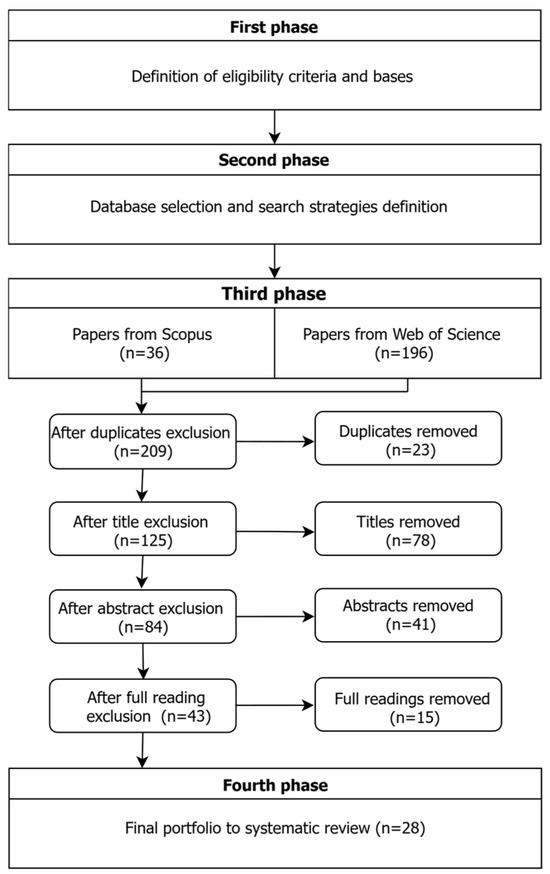
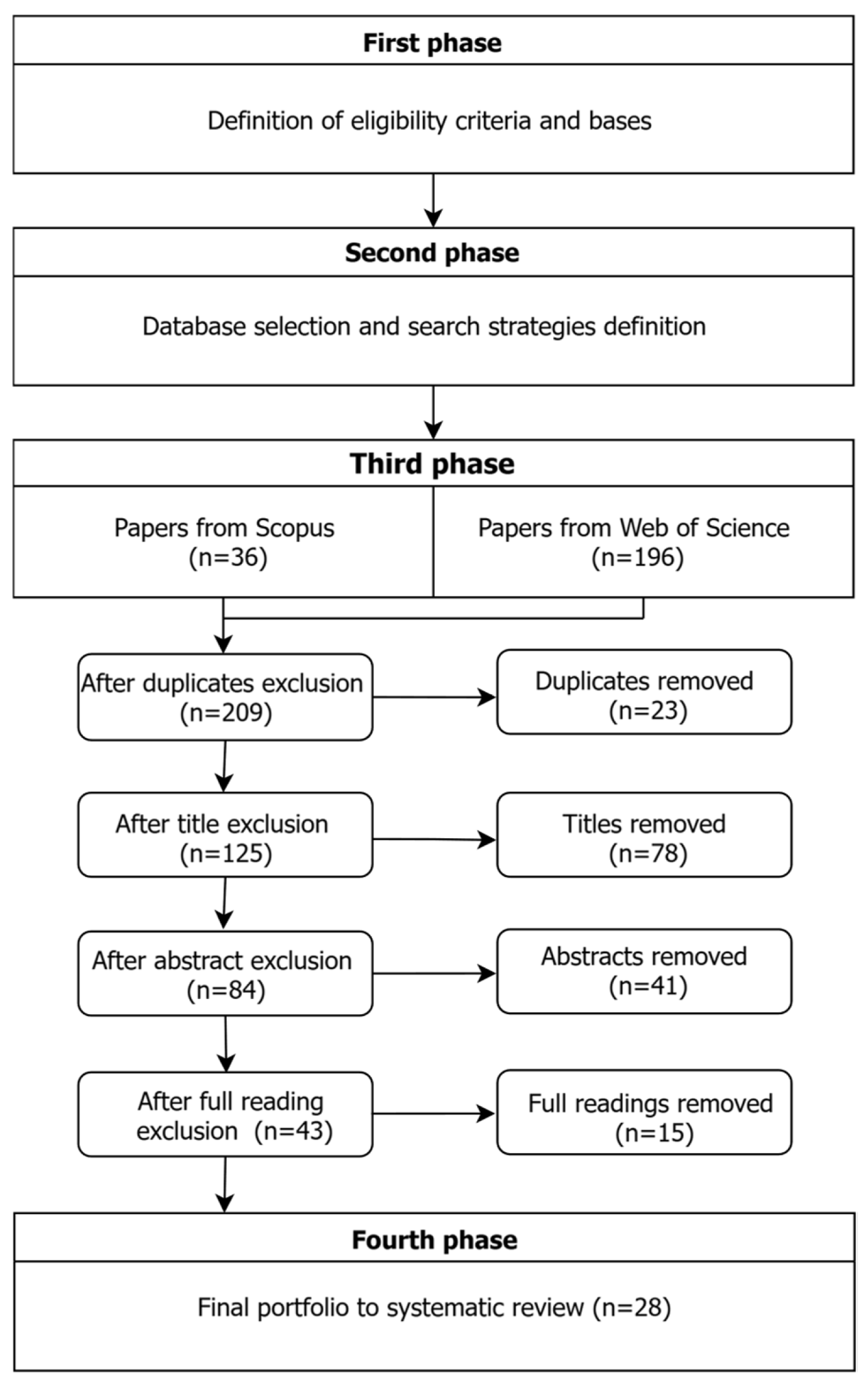
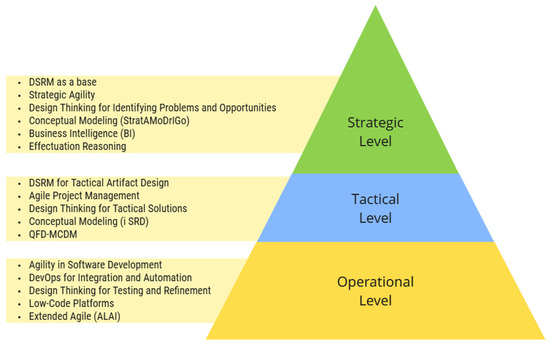
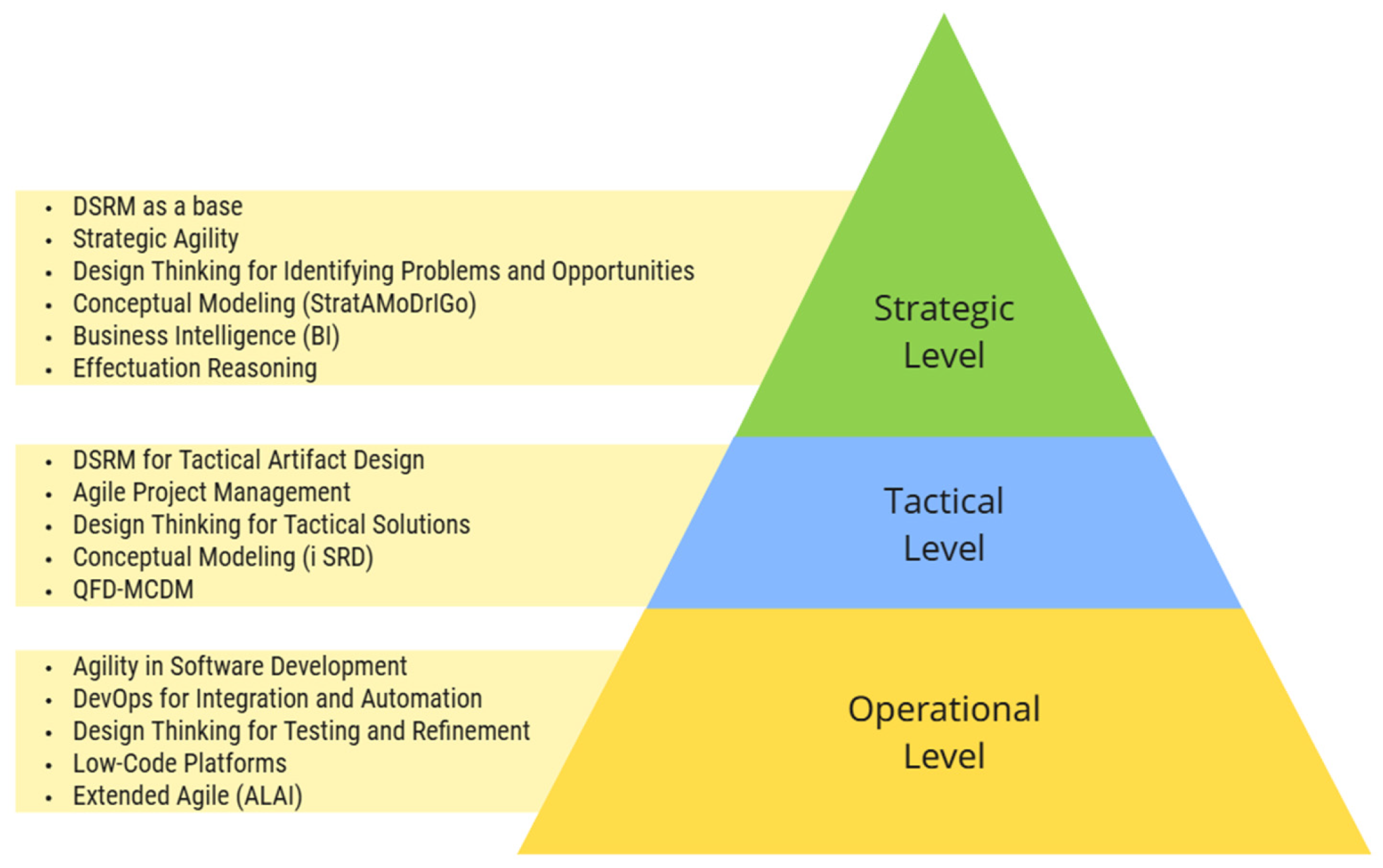
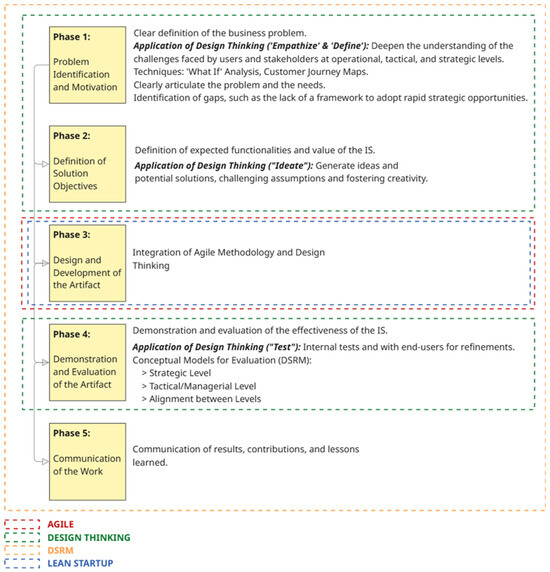
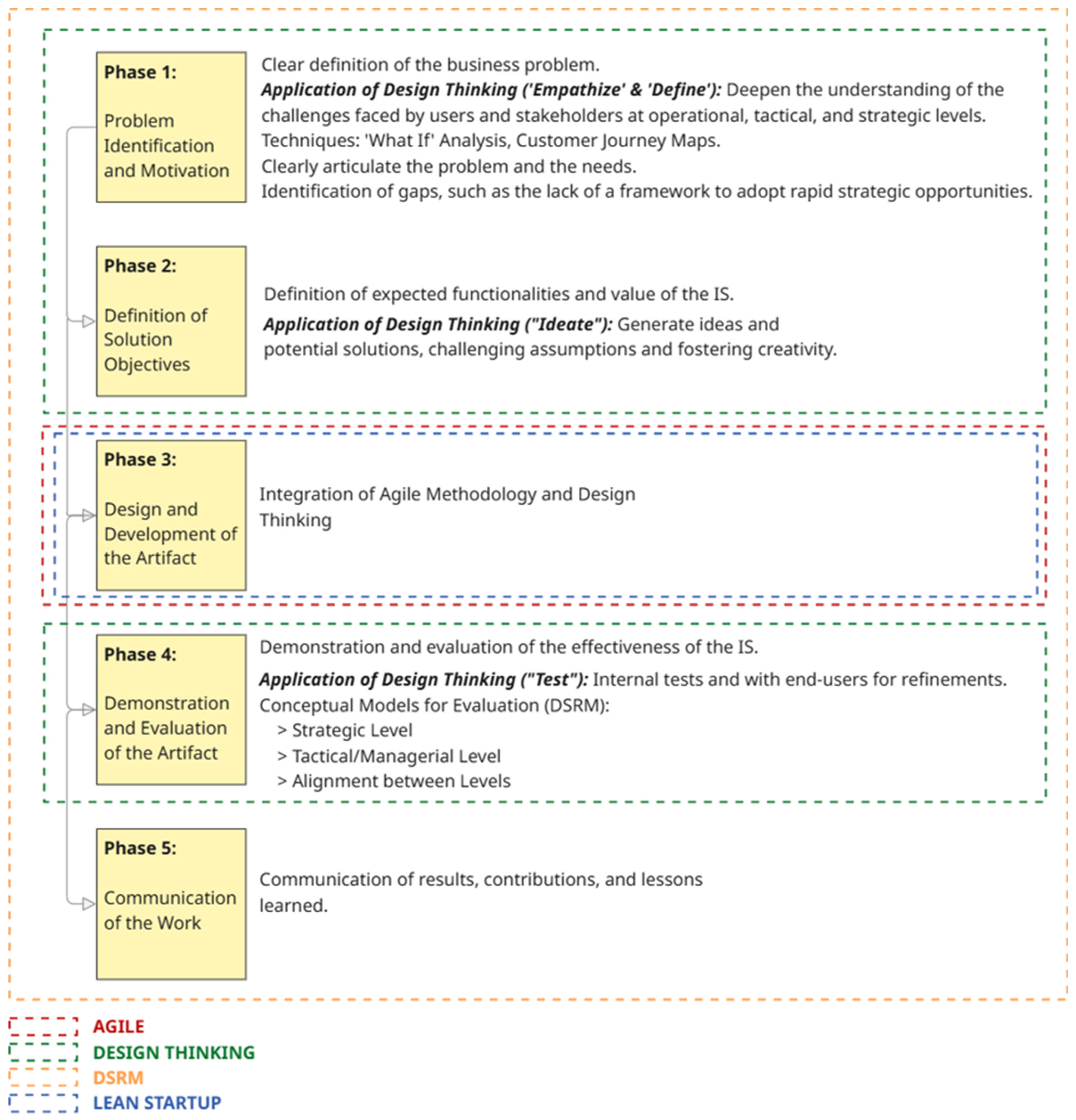
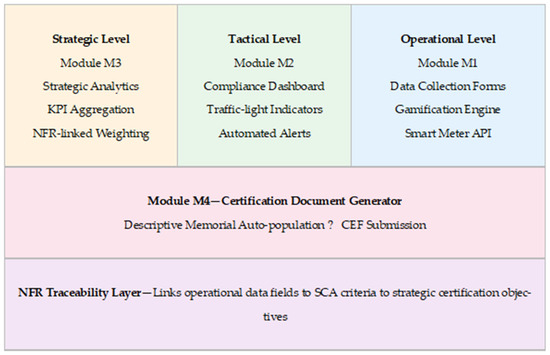
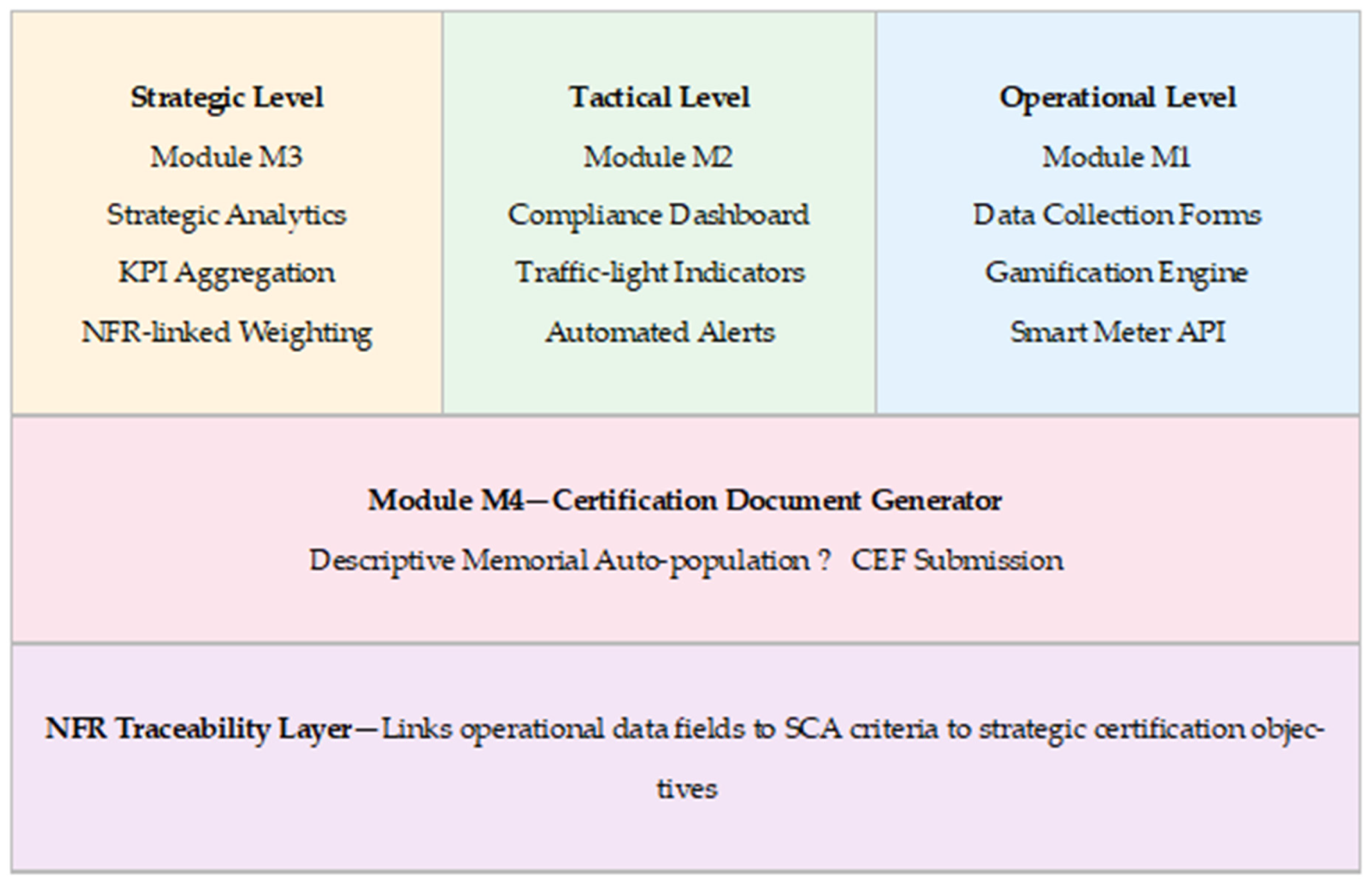
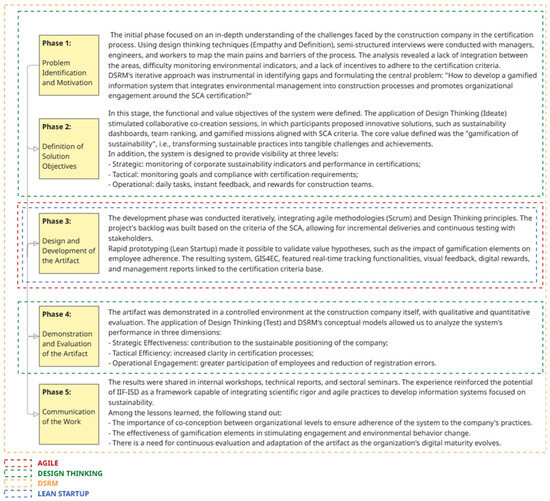
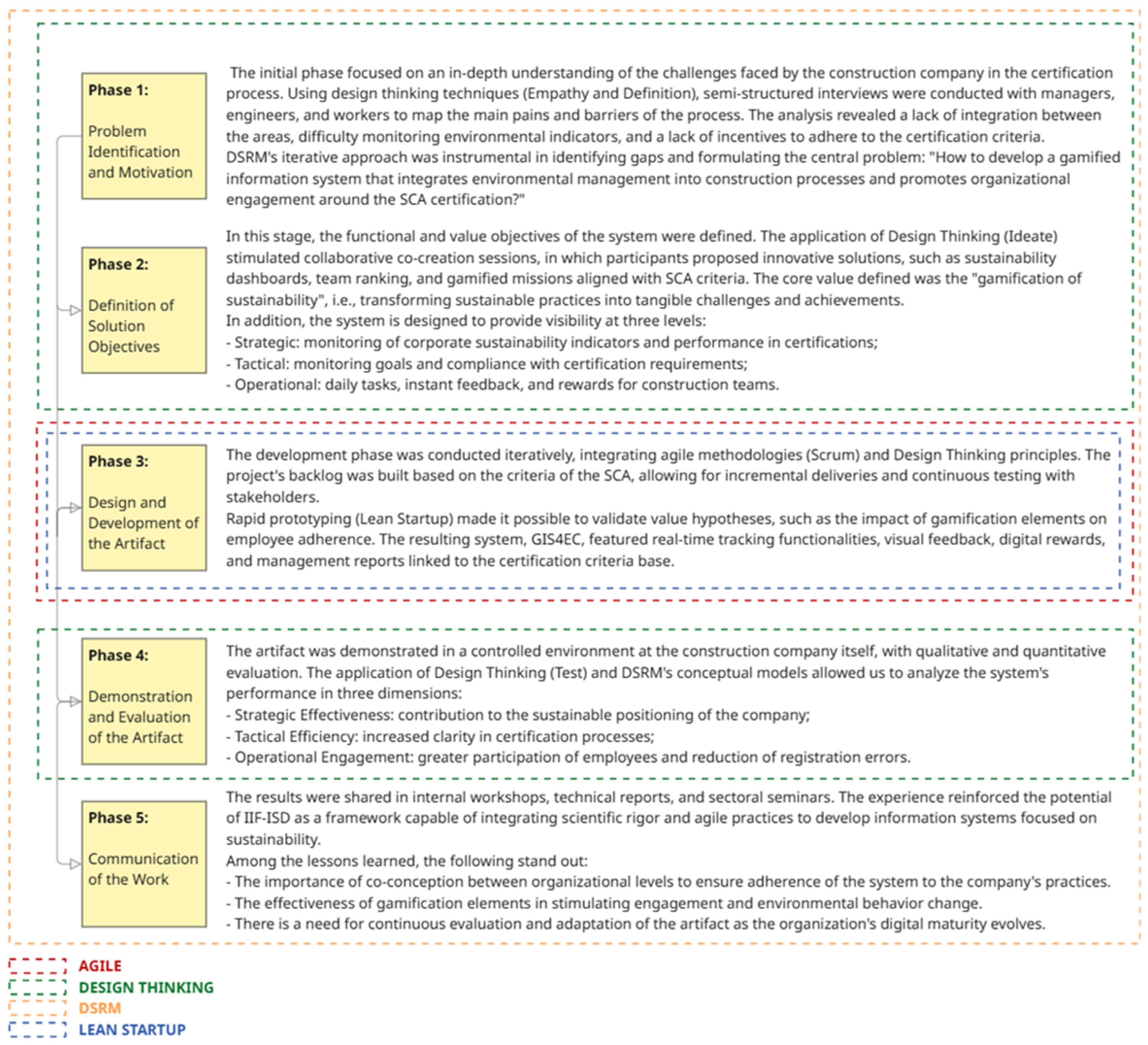

Disclaimer/Publisher’s Note: The statements, opinions and data contained in all publications are solely those of the individual author(s) and contributor(s) and not of MDPI and/or the editor(s). MDPI and/or the editor(s) disclaim responsibility for any injury to people or property resulting from any ideas, methods, instructions or products referred to in the content. |
© 2026 by the authors. Published by MDPI on behalf of the International Institute of Knowledge Innovation and Invention. Licensee MDPI, Basel, Switzerland. This article is an open access article distributed under the terms and conditions of the Creative Commons Attribution (CC BY) license.