
Analysis of Parameter Transition Effects in CPG-Based Control for Multi-Joint Snake-like Robots †


Abstract
1. Introduction
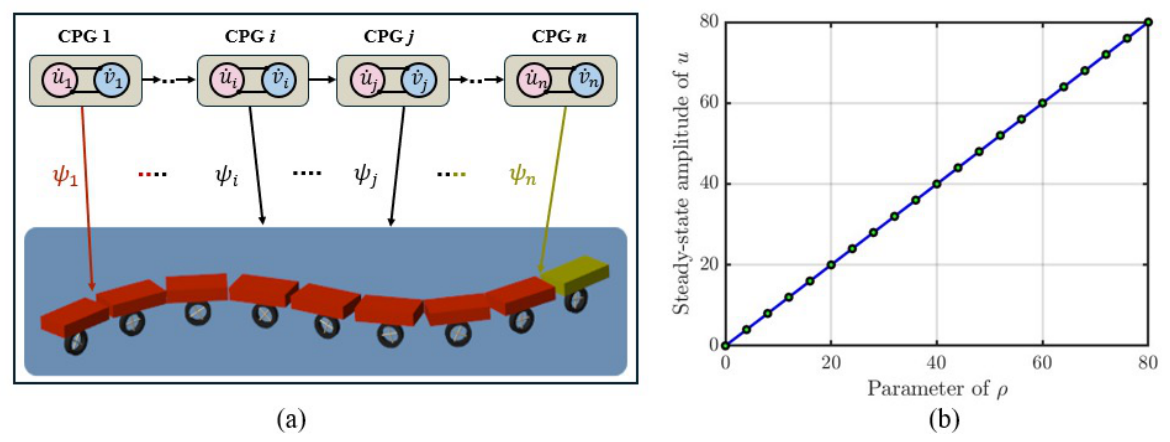
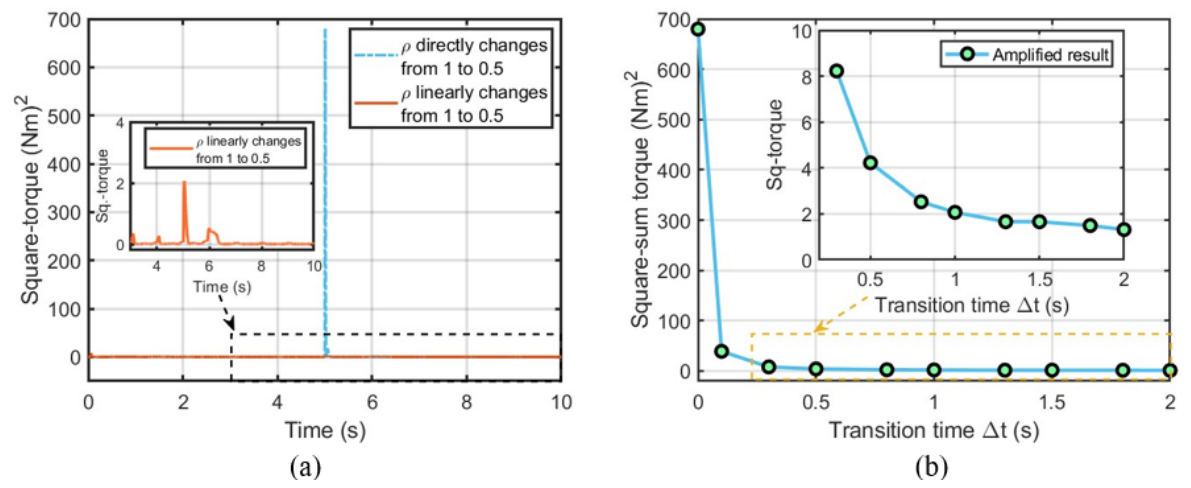
- Abrupt amplitude variation can produce significant transient responses in coupled Hopf oscillators, which lead to torque peaks during parameter transition.
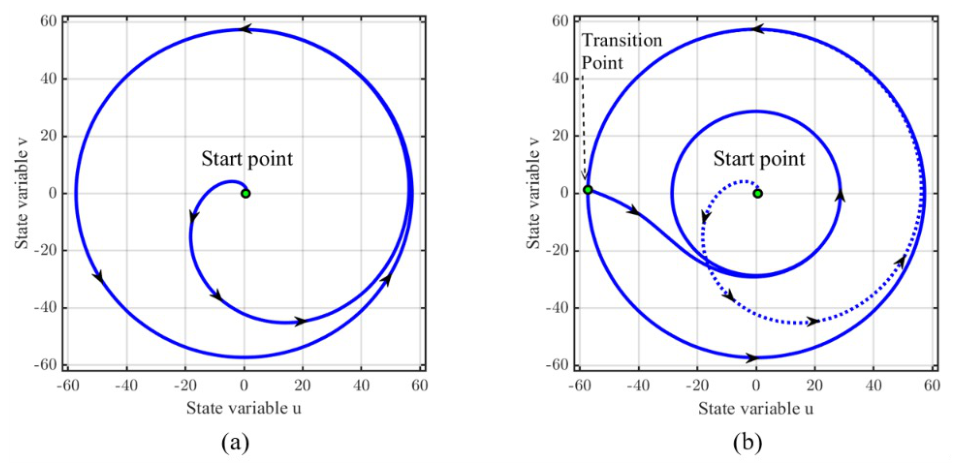
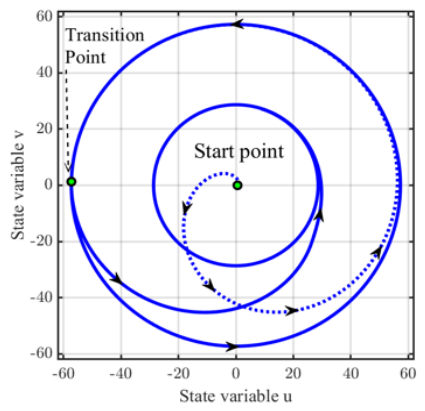
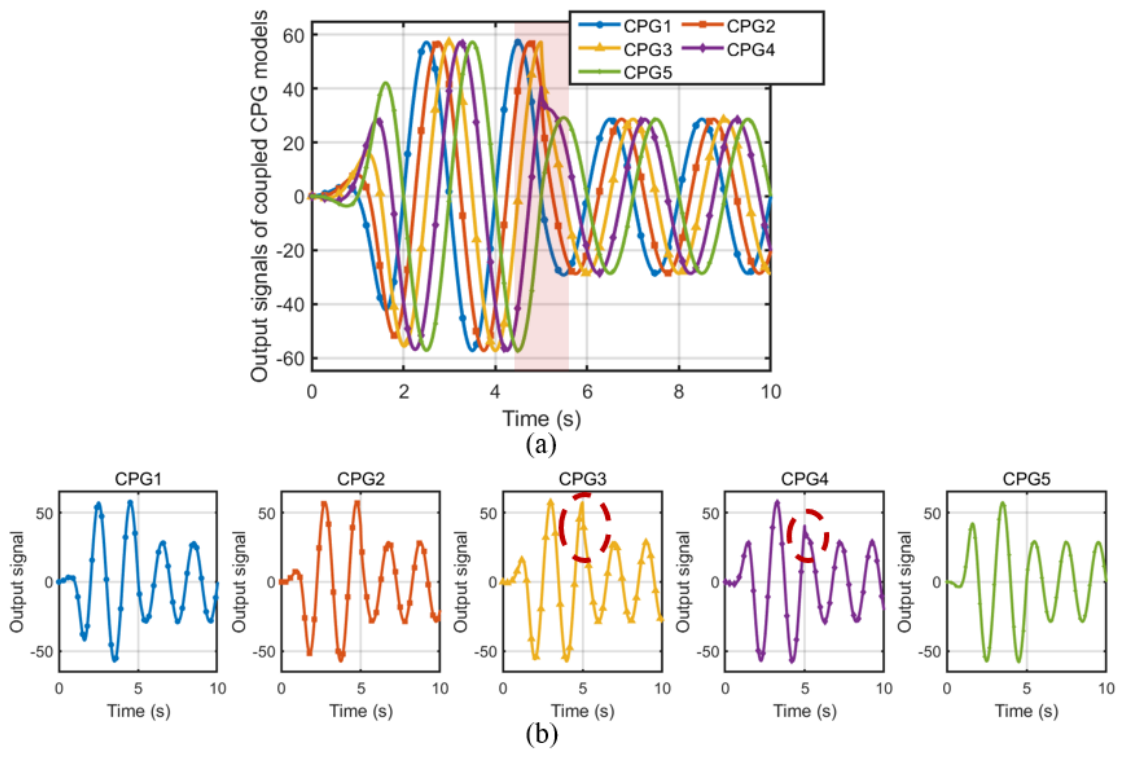
- The transient mismatch between the oscillator state and the shifted attractor is analyzed, which explains the waveform deformation and torque peaks observed during parameter transition.
- A linear parameter transition method is proposed to suppress transient responses during body-shape adaptation of snake-like robots.
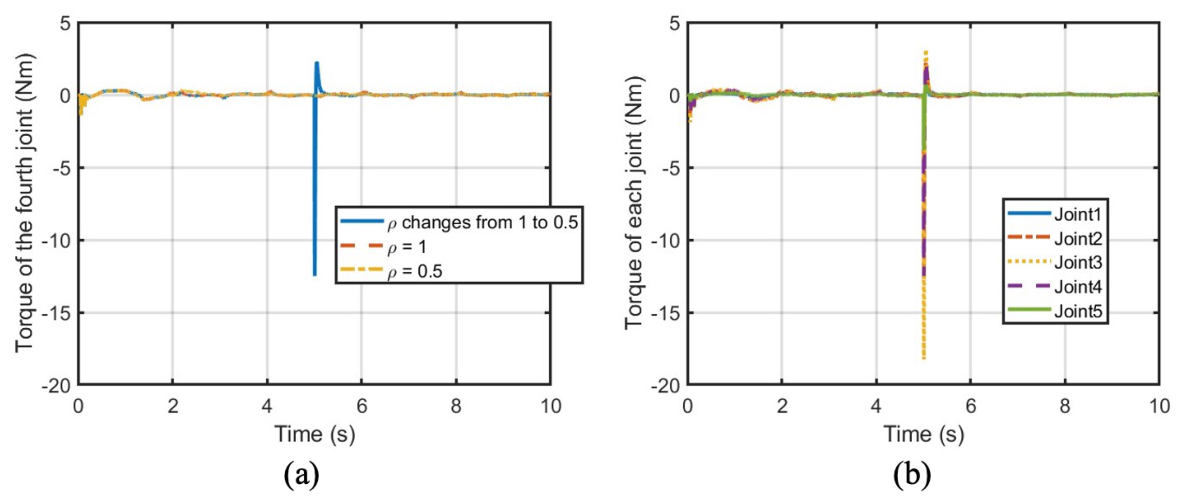
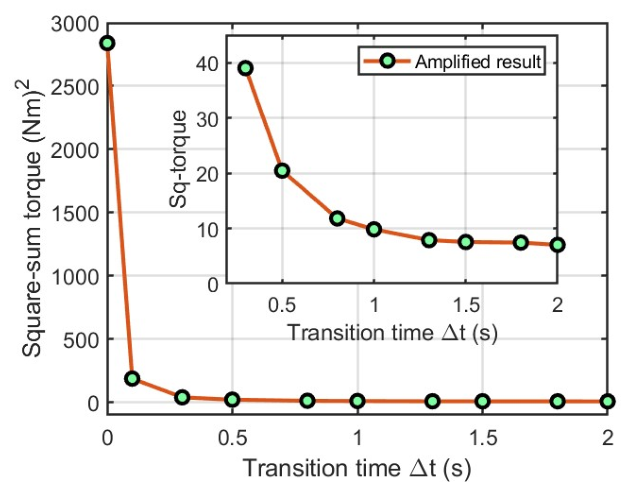
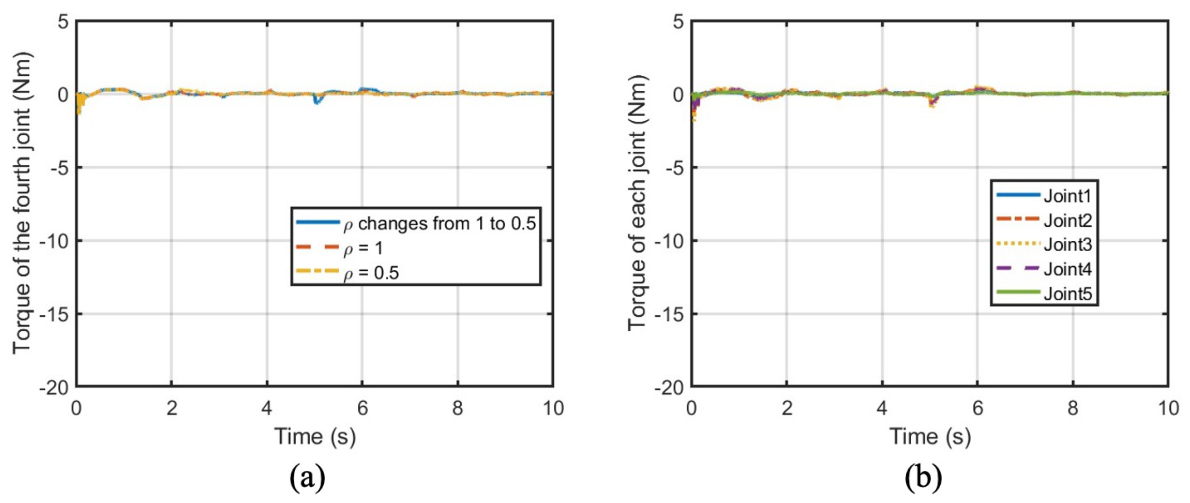
- Simulation results show that transient torque peaks can be significantly reduced during parameter transition, and most of the reduction can be achieved with a transition duration as short as 0.1 s. Experimental results verify body-shape modulation during locomotion.
2. Mathematical Model of CPG Based on Improved Hopf Oscillator
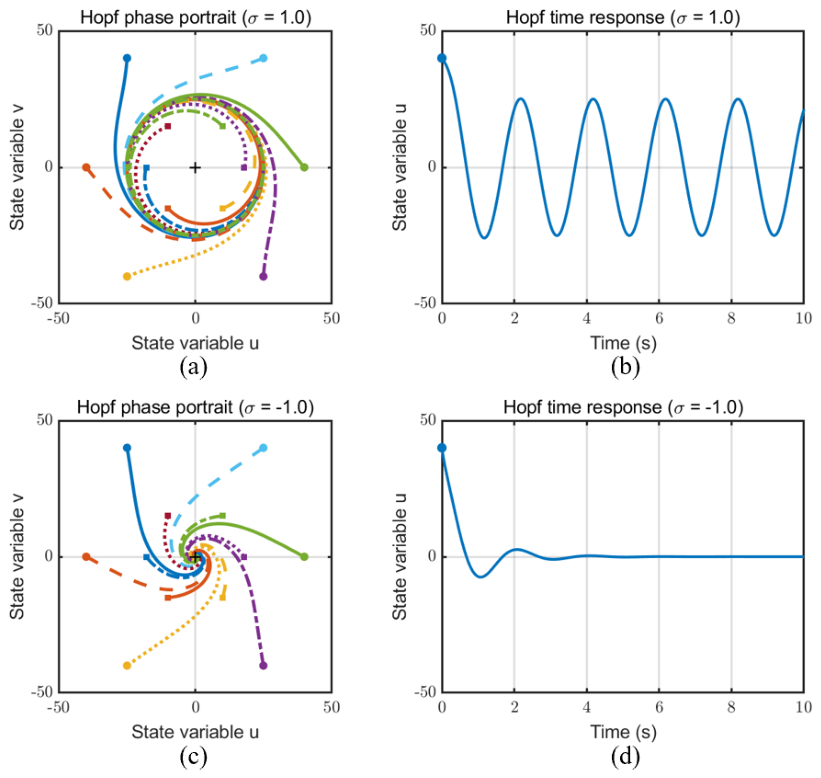
2.1. Classical Hopf Oscillator and Limit Cycle Property
2.2. Parameter–Amplitude Relationship
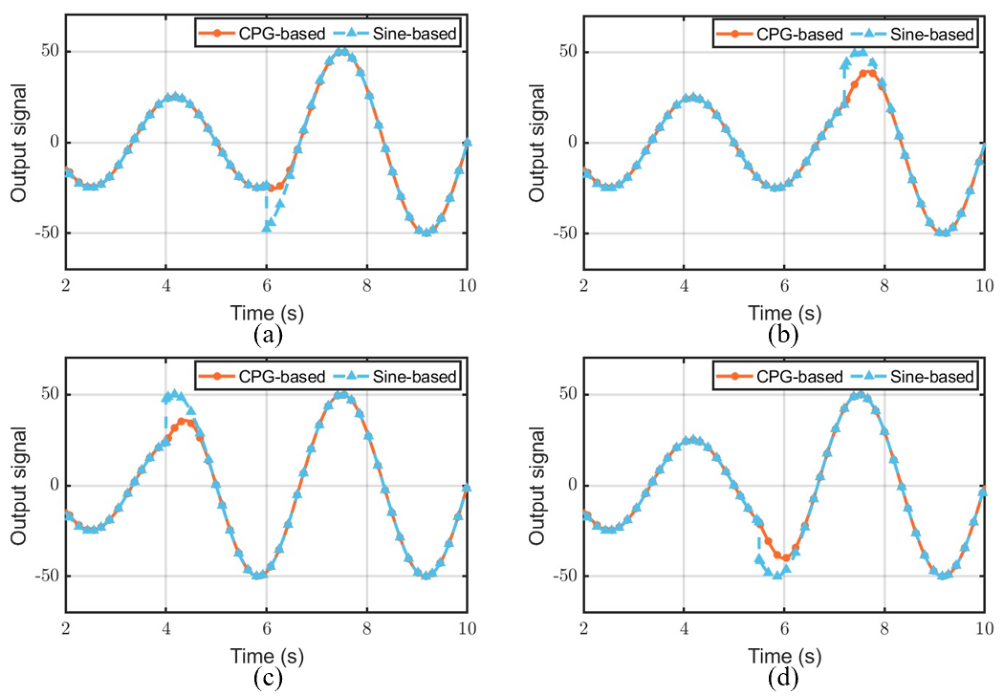
2.3. Effect of Abrupt Parameter Change on System Dynamics
2.4. Smooth Parameter Transition via Linear Scheduling
3. CPG-Based Control Framework for Snake-like Robot
3.1. Coupling Structure and Phase Coordination
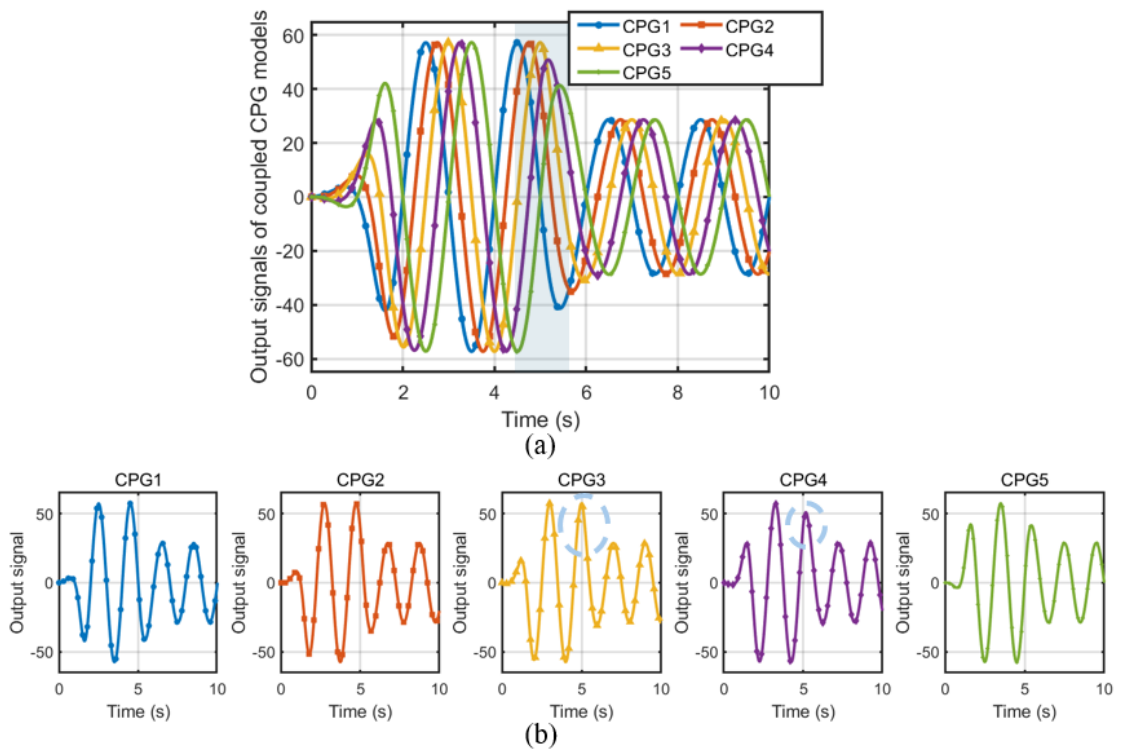
3.2. Effect of Abrupt Parameter Transition
3.3. Linear Transition of the Amplitude Parameter
4. Simulation Analysis
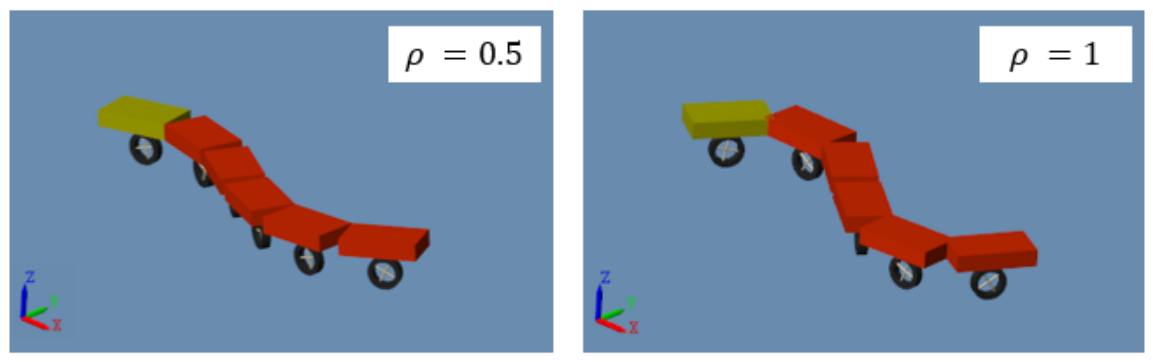
4.1. Simulation Environment Setup
4.2. Effect of Parameter Transition
4.3. Influence of Transition Time
4.4. Simulation Results
5. Experimental Validation
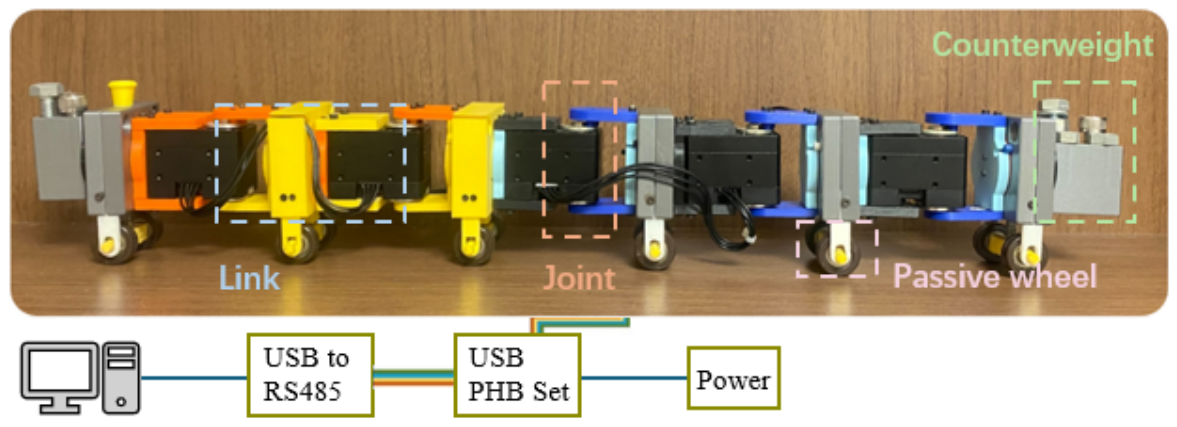
5.1. Experimental Setup
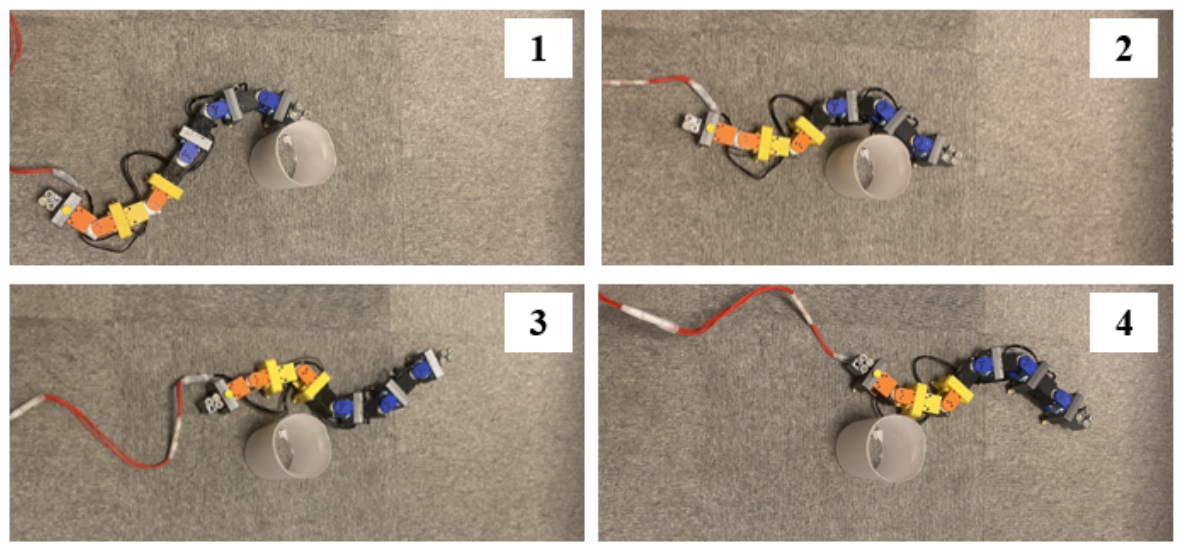
5.2. Experimental Demonstration of Shape Modulation
6. Discussion
7. Conclusions and Future Work
- (1)
- The amplitude parameter was used to modify the body shape of the snake-like robot during locomotion. The relationship between the amplitude parameter and the oscillator output was analyzed based on the Hopf oscillator model.
- (2)
- The influence of parameter transition on the generated locomotion signals was investigated. The results showed that abrupt parameter variation produces transient mismatch during the transition process, which leads to waveform deformation and transient torque peaks.
- (3)
- A linear parameter scheduling method was introduced to reduce the transient response generated during parameter transition. The method was applied to a coupled CPG network for multi-link snake-like robots.
- (4)
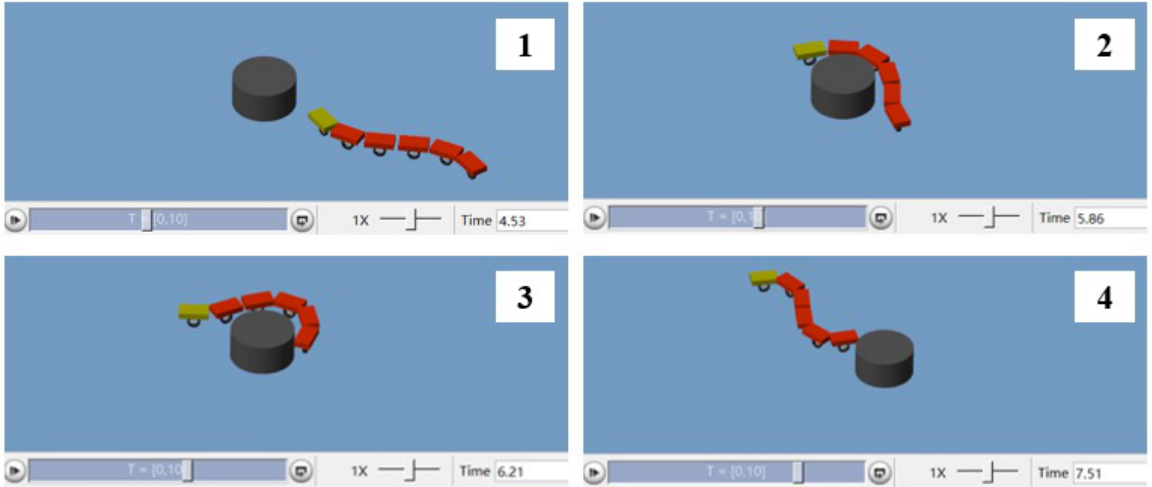
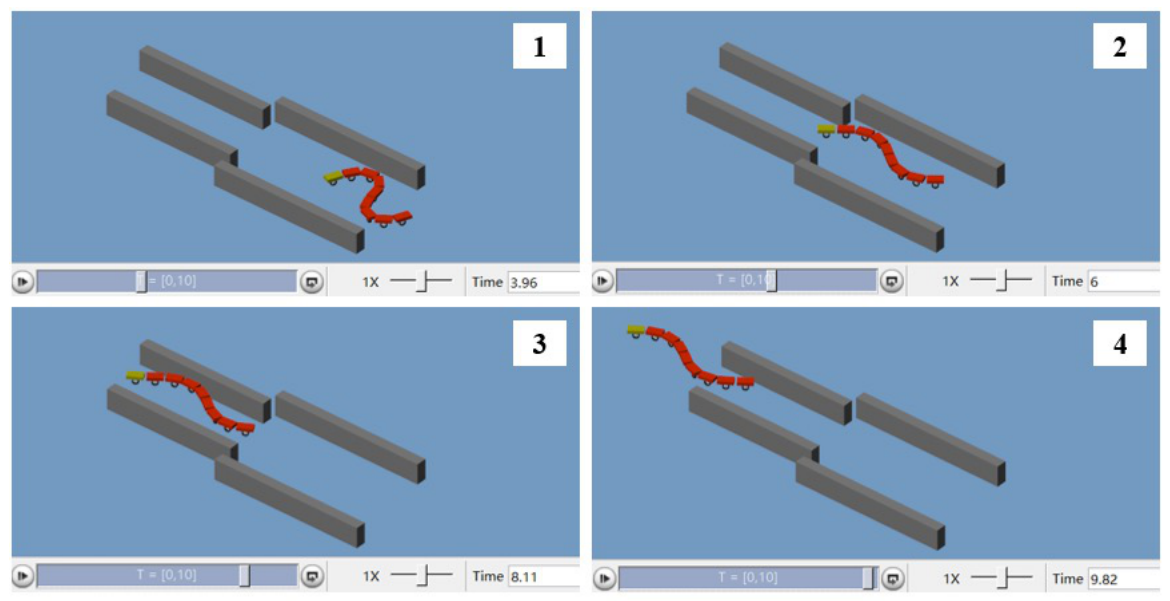
- The proposed method was evaluated through simulations and experiments. The results demonstrated that transient torque peaks can be reduced during body-shape adaptation and that the method can be applied to body-shape modulation and obstacle avoidance during locomotion.
Author Contributions
Funding
Data Availability Statement
Acknowledgments
Conflicts of Interest
References
- Liu, J.; Tong, Y.; Liu, J. Review of snake robots in constrained environments. Robot. Auton. Syst. 2021, 141, 103785. [Google Scholar] [CrossRef]
- Abdulbaqi, A.S.; Alsultan, Q.H.; Nejrs, S.M.; Jassim, S.A.; Sulaiman, B.H.; Al deen Shawqi, O.S.; Abed, T.H.; Khalaf, H.A. Design and fabrication of bio-inspired robotic systems for developed mobility and functionality in unstructured environments. Khwarizmia 2023, 2023, 46–62. [Google Scholar] [CrossRef] [PubMed]
- Li, N.; Wang, F.; Ren, S.; Cheng, X.; Wang, G.; Li, P. A review on the recent development of planar snake robot control and guidance. Mathematics 2025, 13, 189. [Google Scholar] [CrossRef]
- Vaquero, T.S.; Daddi, G.; Thakker, R.; Paton, M.; Jasour, A.; Strub, M.P.; Swan, R.M.; Royce, R.; Gildner, M.; Tosi, P.; et al. EELS: Autonomous snake-like robot with task and motion planning capabilities for ice world exploration. Sci. Robot. 2024, 9, eadh8332. [Google Scholar] [CrossRef] [PubMed]
- Borkar, K.K.; Aljrees, T.; Pandey, S.K.; Kumar, A.; Singh, M.K.; Sinha, A.; Singh, K.U.; Sharma, V. Stability analysis and navigational techniques of wheeled mobile robot: A review. Processes 2023, 11, 3302. [Google Scholar] [CrossRef]
- Arm, P.; Waibel, G.; Preisig, J.; Tuna, T.; Zhou, R.; Bickel, V.; Ligeza, G.; Miki, T.; Kehl, F.; Kolvenbach, H.; et al. Scientific exploration of challenging planetary analog environments with a team of legged robots. Sci. Robot. 2023, 8, eade9548. [Google Scholar] [CrossRef] [PubMed]
- Hirose, S. Biologically Inspired Robots: Serpentile Locomotors and Manipulators; Oxford University Press, Inc.: New York, NY, USA, 1993. [Google Scholar]
- Ma, S. Analysis of creeping locomotion of a snake-like robot. Adv. Robot. 2001, 15, 205–224. [Google Scholar] [CrossRef]
- Saito, M.; Fukaya, M.; Iwasaki, T. Modeling, analysis, and synthesis of serpentine locomotion with a multilink robotic snake. IEEE Control Syst. Mag. 2002, 22, 64–81. [Google Scholar]
- Díaz-Tena, E.; Ugalde, U.; López de Lacalle, L.N.; De la Iglesia, A.; Calleja, A.; Campa, F.J. Propagation of assembly errors in multitasking machines by the homogenous matrix method. Int. J. Adv. Manuf. Technol. 2013, 68, 149–164. [Google Scholar] [CrossRef]
- Ijspeert, A.J.; Crespi, A.; Ryczko, D.; Cabelguen, J.M. From swimming to walking with a salamander robot driven by a spinal cord model. Science 2007, 315, 1416–1420. [Google Scholar] [CrossRef] [PubMed]
- Ijspeert, A.J. Central pattern generators for locomotion control in animals and robots: A review. Neural Netw. 2008, 21, 642–653. [Google Scholar] [CrossRef] [PubMed]
- Ijspeert, A.J. A connectionist central pattern generator for the aquatic and terrestrial gaits of a simulated salamander. Biol. Cybern. 2001, 84, 331–348. [Google Scholar] [CrossRef] [PubMed]
- Liu, Y.; Liu, Z.; Fang, Y.; Liu, H.; Guo, X. A novel design methodology of CPG model for a salamander-like robot. IEEE Robot. Autom. Lett. 2024, 9, 6115–6122. [Google Scholar] [CrossRef]
- Nor, N.M.; Ma, S. Smooth transition for CPG-based body shape control of a snake-like robot. Bioinspir. Biomim. 2014, 9, 016003. [Google Scholar] [PubMed]
- Bing, Z.; Cheng, L.; Chen, G.; Röhrbein, F.; Huang, K.; Knoll, A. Towards autonomous locomotion: CPG-based control of smooth 3D slithering gait transition of a snake-like robot. Bioinspir. Biomim. 2017, 12, 035001. [Google Scholar] [CrossRef] [PubMed]
- Liu, X.; Onal, C.D.; Fu, J. Reinforcement learning of CPG-regulated locomotion controller for a soft snake robot. IEEE Trans. Robot. 2023, 39, 3382–3401. [Google Scholar] [CrossRef]
- Ngamkajornwiwat, P.; Pothita, N. Investigating adaptive CPG-based control of a snake robot with switch signal input for maneuvering in varying environments. J. Res. Appl. Mech. Eng. 2024, 12, JRAME–24. [Google Scholar]
- Wang, Z.; Gao, Q.; Zhao, H. CPG-inspired locomotion control for a snake robot basing on nonlinear oscillators. J. Intell. Robot. Syst. 2017, 85, 209–227. [Google Scholar]
- Seo, K.; Chung, S.-J.; Slotine, J.-J.E. CPG-based control of a turtle-like underwater vehicle. Auton. Robot. 2010, 28, 247–269. [Google Scholar] [CrossRef]
- Liu, X.; Zang, Y.; Gao, Z. Bio-inspired multimodal motion gait control of snake robots with environmental adaptability based on ROS. Electronics 2024, 13, 3437. [Google Scholar] [CrossRef]
- Koch, C.; Segev, I. Methods in Neuronal Modeling: From Ions to Networks; MIT Press: Cambridge, MA, USA, 1998. [Google Scholar]
- Arena, P.; Fortuna, L.; Frasca, M.; Patané, L. A CNN-based chip for robot locomotion control. IEEE Trans. Circuits Syst. I Regul. Pap. 2005, 52, 1862–1871. [Google Scholar] [CrossRef]
- Rico-Mesa, E.-M.; Hernandez-Riveros, J.-A. A novel nonlinear CPG-based oscillator model for quadruped robotic locomotion. Sci 2026, 8, 33. [Google Scholar] [CrossRef]
- Bellegarda, G.; Ijspeert, A. CPG-RL: Learning central pattern generators for quadruped locomotion. IEEE Robot. Autom. Lett. 2022, 7, 12547–12554. [Google Scholar] [CrossRef]
- Wei, S.; Wu, H.; Liu, L.; Zhang, Y.; Chen, J.; Li, Q. A CPG-based gait planning and motion performance analysis for quadruped robot. Ind. Robot. 2022, 49, 779–797. [Google Scholar] [CrossRef]
- Song, Z.; Huang, X.; Xu, J. Spatiotemporal pattern of periodic rhythms in delayed Van der Pol oscillators for the CPG-based locomotion of snake-like robot. Nonlinear Dyn. 2022, 110, 3377–3393. [Google Scholar] [CrossRef]
- Liu, X.; Onal, C.D.; Fu, J. Integrating contact-aware CPG system for learning-based soft snake robot locomotion controllers. IEEE Trans. Robot. 2025, 41, 1581–1601. [Google Scholar] [CrossRef]
- Zhou, Q.; Jia, P.; Fang, H. CPG-based neural control of peristaltic planar locomotion in an earthworm-like robot: Evaluation of nonlinear oscillators. Bioinspir. Biomim. 2025, 20, 026018. [Google Scholar] [CrossRef] [PubMed]
- Zhang, P.; Wu, Z.; Guan, B.; Zang, Y.; Gao, Z. Locomotion control of head orientation strategies based on Hopf oscillators for a snake robot. J. Dyn. Syst. Meas. Control 2026, 148, 061003. [Google Scholar] [CrossRef]
- Cao, Y.; Li, L.; Tian, Y.; Qiu, Z.; Ma, S.; Wang, Z. Suppressing jerky motions in multi-joint snake-like robots via linear CPG parameter adjustment. In Proceedings of the 2025 IEEE International Conference on Real-Time Computing and Robotics (RCAR), Toyama, Japan, 1–6 June 2025; pp. 186–191. [Google Scholar]
- Cortez, R.; Sandoval-Chileño, M.A.; Lozada-Castillo, N.; Luviano-Juárez, A. Snake robot with motion based on shape memory alloy spring-shaped actuators. Biomimetics 2024, 9, 180. [Google Scholar] [CrossRef] [PubMed]
- Salagame, A.; Sihite, E.; Ramezani, M.; Ramezani, A. Reduced-order model-based gait generation for snake robot locomotion using NMPC. In Proceedings of the 2025 IEEE International Conference on Robotics and Automation (ICRA), Atlanta, GA, USA, 19–23 May 2025; pp. 12310–12315. [Google Scholar]
- Cao, Z.; Zhang, D.; Hu, B.; Liu, J. Adaptive path following and locomotion optimization of snake-like robot controlled by the central pattern generator. Complexity 2019, 2019, 8030374. [Google Scholar] [CrossRef]
- Liu, L.; Guo, X.; Xi, W.; Huang, W.; Fang, Y. A reinforcement learning path following strategy for snake robots based on transferable constrained-residual gait generator. IEEE Trans. Ind. Electron. 2024, 71, 16013–16025. [Google Scholar] [CrossRef]
- Ji, Z.; Song, G.; Wang, F.; Li, Y.; Song, A. Design and control of a snake robot with a gripper for inspection and maintenance in narrow spaces. IEEE Robot. Autom. Lett. 2023, 8, 3086–3093. [Google Scholar] [CrossRef]
- Sanfilippo, F.; Azpiazu, J.; Marafioti, G.; Transeth, A.A.; Stavdahl, Ø.; Liljebäck, P. A review on perception-driven obstacle-aided locomotion for snake robots. In Proceedings of the 2016 14th International Conference on Control, Automation, Robotics and Vision (ICARCV), Phuket, Thailand, 13–15 November 2016; pp. 1–7. [Google Scholar]
- Sanfilippo, F.; Azpiazu, J.; Marafioti, G.; Transeth, A.A.; Stavdahl, Ø.; Liljebäck, P. Perception-driven obstacle-aided locomotion for snake robots: The state of the art, challenges and possibilities. Appl. Sci. 2017, 7, 336. [Google Scholar] [CrossRef]
- Cao, Y.; Li, L.; Ma, Z.; Liu, Z.; Kakogawa, A.; Ma, S.; Wang, Z. Investigation of efficient creeping locomotion for snake-like robots with compliant passive joints. Biomim. Intell. Robot. 2026, 6, 100281. [Google Scholar] [CrossRef]
- Rizyaev, L.R.; Or, Y. Locomotion dynamics of an underactuated three-link robotic vehicle. IEEE Trans. Robot. 2026, 42, 1198–1212. [Google Scholar] [CrossRef]







| Parameters | Value |
|---|---|
| Number of Hopf oscillators | 5 |
| Convergence rate | 3 |
| Bifurcation parameter | 1 |
| Intrinsic frequency | |
| Coupling weight | 10 |
| Phase difference |
| Parameters | Value | Unit |
|---|---|---|
| Numbers of joints | 5 | |
| Length of link | = 0.14 | m |
| Hight of link | = 0.08 | m |
| Width of link | = 0.05 | m |
| Weight of link | = 0.1 | kg |
| Width of wheel | = 0.012 | m |
| Radius of wheel | = 0.06 | m |
| Weight of wheel | = 0.01 | kg |
| Friction coefficients | = 0.5 |
Disclaimer/Publisher’s Note: The statements, opinions and data contained in all publications are solely those of the individual author(s) and contributor(s) and not of MDPI and/or the editor(s). MDPI and/or the editor(s) disclaim responsibility for any injury to people or property resulting from any ideas, methods, instructions or products referred to in the content. |
© 2026 by the authors. Published by MDPI on behalf of the International Institute of Knowledge Innovation and Invention. Licensee MDPI, Basel, Switzerland. This article is an open access article distributed under the terms and conditions of the Creative Commons Attribution (CC BY) license.
Share and Cite
Cao, Y.; Li, L.; Xue, Y.; Liu, J.; Wang, Z. Analysis of Parameter Transition Effects in CPG-Based Control for Multi-Joint Snake-like Robots . Appl. Syst. Innov. 2026, 9, 131. https://doi.org/10.3390/asi9060131
Cao Y, Li L, Xue Y, Liu J, Wang Z. Analysis of Parameter Transition Effects in CPG-Based Control for Multi-Joint Snake-like Robots . Applied System Innovation. 2026; 9(6):131. https://doi.org/10.3390/asi9060131
Chicago/Turabian StyleCao, Yiming, Longchuan Li, Yitong Xue, Jiaxin Liu, and Zhongkui Wang. 2026. "Analysis of Parameter Transition Effects in CPG-Based Control for Multi-Joint Snake-like Robots " Applied System Innovation 9, no. 6: 131. https://doi.org/10.3390/asi9060131
APA StyleCao, Y., Li, L., Xue, Y., Liu, J., & Wang, Z. (2026). Analysis of Parameter Transition Effects in CPG-Based Control for Multi-Joint Snake-like Robots . Applied System Innovation, 9(6), 131. https://doi.org/10.3390/asi9060131