1. Introduction
Digital technologies have changed higher education, pushing it away from instructor-centered teaching toward more flexible, learner-centered approaches. In this change, artificial intelligence (AI) is one of the most visible developments in education [
1]. AI-assisted tools are now used for personalized feedback, adaptive learning, language support, content creation, and learning analytics [
2,
3] that provide more support to both teachers and students. As universities increasingly apply these tools in courses, it becomes important to understand how students experience AI-assisted learning environments. AI-supported learning can also be understood as part of the broader development of digital competence. Digital competence refers to the ability to operate digital tools and also to the capacity to search for information, evaluate digital content, communicate effectively, create digital outputs, protect data, and use technology responsibly. Frameworks of digital competences have made clear the need for learners to interact critically with the results of algorithms used by AI-based systems, as well as with the data and ethical aspects derived from this use. Artificial intelligence is not an isolated educational technology, but part of a recent development in a continuous process of digital competences in higher education.
Higher education has been the focus of many researchers and institutions in the past ten years, but much of the literature has focused more on system implementation and functionality or on more measurable educational outcomes, such as course completion and academic success [
4]. The shortcomings of these results are not oversights of the researchers, but rather typical of those working in educational technology, where student experiences are regarded as secondary and only complementary information. This attitude needs to be studied, because the value of any learning tool is based both on its technical features and on students’ perceptions of its value. If a tool does not serve the curriculum or is not trusted, then students will avoid using it to its full extent [
5]. The use of AI in educational research is not an exception.
In AI-assisted classes, the tool–student engagement nexus may take the path of task and feedback directly, as well as motivation, confidence, and learning strategy indirectly. A student-centered perspective is important in this type of research, because students’ perceptions influence whether AI tools are meaningfully used in coursework. However, this does not diminish the instructor’s role. Instructors remain central in selecting tools, designing learning tasks, guiding ethical use, and helping students connect AI-supported activities with course objectives.
This present study therefore examines how students in a Taiwanese higher education context perceive AI-assisted courses and whether those perceptions can predict their academic engagement. The Technology Acceptance Model (TAM) posits that elements influencing technology acceptance are perceived usefulness and perceived ease of use [
6,
7]. Both constructs are relevant to students’ acceptance of new educational technology and their course engagement [
8]. From this viewpoint, this study explores whether students who perceive AI tools as being useful and easy to use report higher academic engagement in AI-supported courses.
While studies showcase the promise of AI-supported learning in higher education, a literature review suggests that the actual use of AI-supported learning may be contextualized by the instructors, curriculum, and students’ experiences using digital tools. In the case of AI tools in higher education in Taiwan, students are expected to adopt and integrate those tools for course learning, but they may not all share the same confidence, drive, or ability to do so effectively. This study explores the perceived usefulness, ease of use, and engagement of students’ AI-supported learning experiences through their courses and addresses the following research questions.
RQ1: What learning attitudes do college students hold toward AI tools used in their courses?
RQ2: How is students’ academic engagement manifested in AI-supported learning environments?
RQ3: What is the relationship between students’ learning attitudes toward AI tools and their academic engagement?
Based on TAM, the study proposes the following hypotheses.
H1. Students’ perceived usefulness of AI tools positively relates to their academic engagement.
H2. Students’ perceived ease of use of AI tools positively relates to their academic engagement.
This paper contributes to the literature in two ways. First, it extends the discussion of AI in higher education from technical adoption to student-centered educational experience. Second, it provides empirical evidence that assists in the design and implementation of AI-supported courses, particularly for educators and instructional designers seeking to improve usability, relevance, and engagement in technology-enhanced learning environments.
2. Literature Review
2.1. Theoretical Framework and Hypotheses’ Development
The present study is grounded in TAM—one of the most widely used frameworks for explaining why individuals adopt and use new technologies. TAM proposes that two beliefs are central to technology acceptance: perceived usefulness and perceived ease of use [
6]. Perceived usefulness is the extent to which users believe that a technology can improve their performance, whereas perceived ease of use is the extent to which they believe that using the technology requires little effort [
6]. One paper noted that these two perceptions are closely related, with ease of use often strengthening perceived usefulness [
7]. Although the present study focuses on students’ perceptions, TAM can also be applied to instructors, since their perceived usefulness and ease of use may influence how they select, introduce, and support AI tools in the classroom. Instructor acceptance is therefore an important complementary issue, but it falls outside the empirical scope of the present student survey.
TAM is broadly applied in education to understand students’ and teachers’ responses to digital learning tools [
8,
9,
10]. The explanation is that its capacity to connect users’ opinions about technology with their behavior in learning is sufficient to keep it relevant. This perspective is especially true for students in AI-supported learning environments, as they will not engage meaningfully with AI tools unless they believe that these tools are beneficial for their learning and manageable in practice. It means even when an instrument is technically advanced that students may not use it as part of their learning if they do not see it as useful or easy to work with.
Rogers’ diffusion of innovations theory offers a broader account of adoption by considering factors such as relative advantage, compatibility, complexity, trialability, and observability. These factors are relevant to AI-supported learning, because students’ acceptance may depend not only on usefulness and ease of use, but also on whether AI tools fit course practices and can be tried in low-risk learning situations. Nevertheless, TAM is kept as the main framework, because this study specifically examines the predictive roles of perceived usefulness and perceived ease of use in relation to academic engagement.
The current study utilizes TAM within AI-supported higher education with two adaptations. First, the outcome variable shifts from behavioral intention to academic engagement, as the educational value of technology in course settings lies in whether it fosters sustained learning participation. Second, the operationalization of TAM’s core constructs adapts to the learning context.
In this study, the foundational TAM constructs are evaluated not through Davis’s original PU and PEOU scales, but rather through contextually adapted proxies. Specifically, Learning Desire is conceptualized as a learning-value-oriented proxy for Perceived Usefulness, reflecting students’ willingness to adopt AI tools and the value they attribute to AI-supported learning. It extends beyond the original PU construct by encompassing motivational and course-specific learning orientations. Similarly, Technology Self-Efficacy serves as a confidence-based proxy for Perceived Ease of Use, capturing students’ confidence in managing AI tools for learning tasks. However, it is not strictly equivalent to PEOU, which more directly assesses the perceived effort required to operate a system. Consequently, the present study should be interpreted as a contextually adapted TAM analysis rather than a direct replication of Davis’s original measurement model.
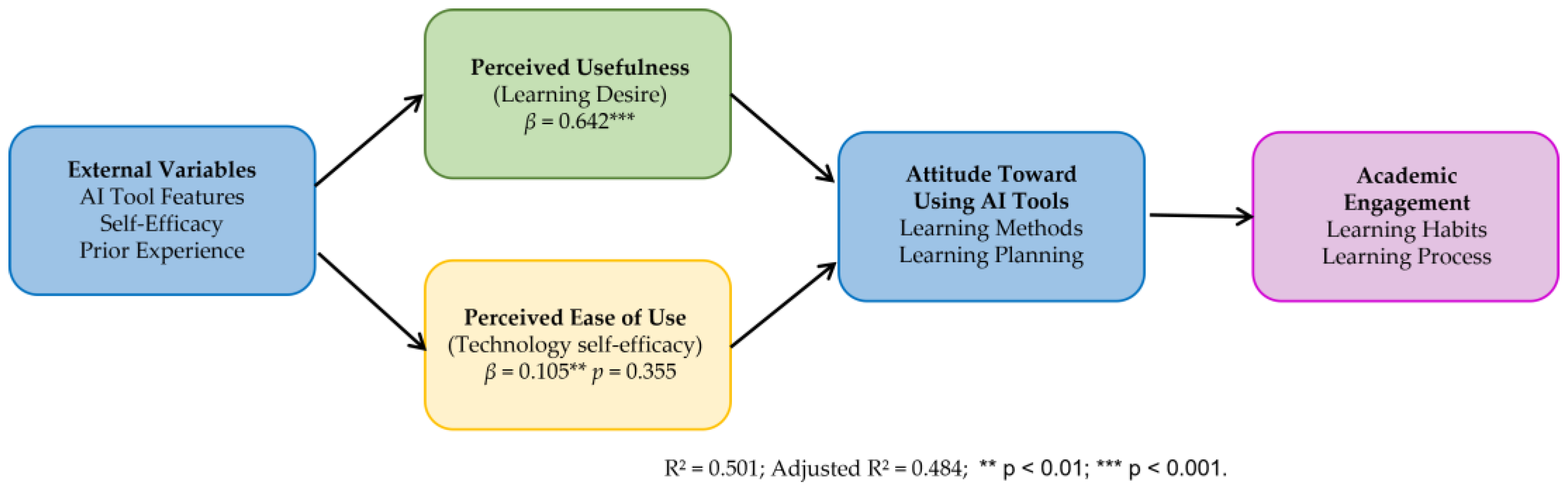
Figure 1 presents the theoretical model and hypotheses tested in this study. H1 proposes that perceived usefulness, operationalized through learning desire, positively relates to academic engagement. H2 proposes that perceived ease of use, approximated through technology self-efficacy, positively relates to academic engagement.
2.2. AI in Educational Settings
AI tools have moved educational technology beyond static digital resources toward more adaptive forms of learning support that can respond to students’ needs, learning progress, and task requirements. Universities and colleges employ AI-supported tools for multiple use cases, covering personalized feedback, automated assessment, intelligent tutoring, language support, generative content, and learning analytics [
2,
3,
4]. With these functions, AI can change the structure of learning activities by shifting some tasks, such as drafting, feedback seeking, revision, and preparation, from teacher-directed classroom interaction to more individualized and tool-mediated learning processes [
2,
3,
4].
Teaching with AI at a university is no longer limited to isolated or loosely integrated applications. More often, students encounter tools provided by AI in their regular scholarly work via classes in which written projects are drafted, language is corrected, thoughts are built, feedback is given, and preparation is handled. This new approach facilitates improved flexibility and efficiency, as well as more customized support [
3,
4]. Nevertheless, it has raised fears about over-dependence on AI, academic integrity, data privacy, and the potential diminishing of critical thinking when not governed by appropriate pedagogical methods [
4,
11,
12]. The educational value of AI-supported learning also depends on the specific tools used, their functions, and their alignment with course tasks. A tool designed for language support, for example, may influence students differently from a tool used for feedback, analysis, or learning management.
What all this means is that academia must avoid solely viewing AI in the context of education in a purely technical way. Its educational benefit also depends on how students understand the role of its tools when engaged in learning, and whether they see them as supporting course objectives. Finally, any AI system must engage; even if technology does its job well, very little is done if it is seen as irrelevant or untrustworthy [
5]. To gain a better understanding of AI-supported learning, we need to conduct evaluations of system functions and also observe students in their actual courses using these tools.
2.3. Student Engagement and Attitudes Toward AI-Supported Learning
Student engagement has been firmly established as a fundamental idea for educational research and is often framed in terms of behavioral, emotional, and cognitive engagement with learning [
13,
14]. Behavioral engagement involves students’ effort and persistence in academic tasks. Emotional engagement relates to their affective responses to learning—that is, their interest in and enjoyment of the learning process and their feeling of connectedness. Cognitive engagement is a type of investment students make in understanding ideas, solving problems, and maintaining attention during difficult learning tasks [
13,
14].
These dimensions are particularly pertinent to AI-supported learning environments. AI tools could also increase behavioral engagement by helping students complete tasks more efficiently, respond to feedback more quickly, and participate more actively in class-related work. They can also affect emotional and cognitive engagement, but the directions and strengths of these effects are not always the same. Research on the use of AI in higher education notes that some AI-supported systems, especially tutoring and feedback tools, can facilitate task engagement and involvement, but effects across multiple dimensions, based on students’ perceptions and deeper learning processes, remain mixed [
2,
11].
The literature introduces a similar mixed pattern about students’ attitudes toward AI in education. Students who find AI tools useful, time-saving, supportive, and relevant to their academic tasks more likely have a positive attitude toward these technologies [
15]. AI-supported chatbots or feedback tools, for instance, are often appreciated, because they promise immediate responses and reduce hesitation at the revision or problem-solving stage [
15]. However, learners may also express concerns about privacy, algorithmic discrimination, over-reliance on AI, and decreased human judgment in learning [
11,
12,
16].
TAM is useful for reframing this discussion in terms of students’ learning behavior and explains how students’ perceptions of AI tools are relevant. Studies in various digital learning contexts have demonstrated that perceived usefulness and perceived ease of use relate to the willingness to adopt educational technologies [
8,
9,
10]. Even though some studies state [
9] that AI-supported learning entails ethical, pedagogical, and relational implications beyond the boundaries of TAM per se, TAM analysis still provides a focused and effective theoretical framework for exploring whether those students who perceive AI tools as useful and easy to use will engage with them in their coursework. Taken together, the literature shows that AI-supported learning has been widely discussed in relation to system functions, adoption intention, and learning outcomes, but less is known about how students’ perceived usefulness and perceived ease of use relate to their academic engagement when AI tools are embedded in regular coursework. This gap is important, because students may use AI tools frequently without necessarily integrating them into meaningful learning habits or sustained engagement. The present study addresses this gap by examining the relationships among perceived usefulness, perceived ease of use, and academic engagement in AI-supported undergraduate courses in Taiwan.
3. Methodology
3.1. Research Design
To address the research questions concerning students’ perceptions of AI-assisted tools and their academic engagement, this study applies a quantitative cross-sectional survey design. This design is appropriate, because the study captures students’ responses within an ongoing course context at one point in time rather than across multiple time points [
17]. The statistical analyses follow standard procedures for descriptive statistics, correlation analysis, multiple regression, and post hoc power analysis [
18].
The analytical framework follows TAM with constructs adapted to the educational context. The analytical model operationalizes perceived usefulness through the Learning Desire dimension, whereas perceived ease of use is approximated through the Technology Self-efficacy dimension. These measures do not directly replicate Davis’ original TAM scales [
6]. They are used as contextually adapted proxies consistent with prior educational applications of TAM and technology acceptance research [
8,
9,
10].
The literature is increasingly investigating AI-supported learning in higher education through students’ perceptions, patterns of use, and engagement-related responses in authentic course settings rather than only through technical performance indicators [
19,
20,
21,
22,
23,
24,
25,
26,
27]. This shift is particularly relevant in university classrooms, where students use AI tools for drafting, feedback, academic support, and task management, and where perceptions of usefulness, ease of use, and relevance may shape actual engagement [
20,
21,
22,
23,
24,
25,
26,
27]. The present design therefore targets students’ reported perceptions and learning-related behaviors in AI-supported courses. The research questions and hypotheses guiding this study are in
Section 1.
The research model follows the theoretical model presented in
Figure 1. Here, perceived usefulness (operationalized as Learning Desire) and perceived ease of use (operationalized as Technology Self-efficacy) are the explanatory variables. Academic engagement is the dependent variable.
The study was conducted in two sections of the undergraduate course Information and Communication and AI Application during the Fall 2025 semester. The courses are offered mainly to first-year students in the Department of Aviation Operations. Students had used AI-supported tools for approximately 6–8 weeks before completing the questionnaire. They include generative AI chatbots and language-support tools, like ChatGPT-5 and Gemini 2.5, which are for drafting, feedback, academic support, content organization, and task management. In this course, students mainly used these tools to generate preliminary drafts, revise wording, organize course-related ideas, obtain formative feedback, and support task preparation. Use of these tools was required for selected course tasks and encouraged for relevant drafting, revision, and preparation activities, although students’ actual frequency of use may have varied across tasks and individuals. Two students from other departments were enrolled in these course sections and completed the same learning activities and questionnaire. They were retained in the total sample, because they participated in the same course context, but they were not treated as separate departmental subgroups due to their very small numbers. The findings should thus be interpreted primarily as evidence from a concentrated aviation-operations course context rather than as cross-departmental evidence. This aligns with the findings of studies reporting higher education students’ increasing use of AI tools as a part of their regular academic work, with similar task-dependent, discipline-dependent, and individual differences in how students apply AI tools [
20,
21,
22,
23,
24,
25,
26,
27].
Students were not given any training prior to completing the questionnaire. They were reminded about the responsible and appropriate use of the AI-supported tools as part of the course activities that utilize AI-supported tools. This is an important aspect to consider while looking at the results, as the students’ perception of usefulness and ease of use could be influenced by their own prior experiences as well as their self-directed trials and exploration. Data analysis covers four stages: descriptive statistics, reliability analysis, correlation analysis, and multiple regression. All analyses were conducted with SPSS 28.0 at a significance level of 0.05. Before regression analysis, standard diagnostic checks for linearity, independence, and homoscedasticity were performed [
17,
18].
3.2. Participants
The participants are 62 undergraduate students enrolled in AI-supported course sections at a university in Taiwan (
Table 1). Most participants are female (
n = 48, 77.4%), while 14 participants are male (22.6%). Most participants are first-year students (
n = 61, 98.4%) from the Department of Aviation Operations (
n = 60, 96.8%). Their mean age is 19.2 years (
SD = 0.8, range: 18–22 years).
Because AI-supported courses were still limited when the study was conducted, participants were recruited from conveniently accessible course sections. This sampling approach results in a concentrated participant profile, and the findings should therefore be interpreted within the specific course and departmental context in which the data were collected [
17]. This caution is necessary, because the literature has shown that students’ attitudes toward technology may vary by gender, academic background, discipline, and institutional context [
20,
24,
26,
28,
29,
30]. Given the modest sample size, the analysis was treated as a preliminary and context-specific examination rather than as a basis for broad generalization or complex latent-variable modeling. For this reason, confirmatory factor analysis was not conducted, and the regression findings are interpreted cautiously.
3.3. Instrumentation
The questionnaire was developed for AI-supported learning contexts by drawing on three sources: works on technology acceptance, established concepts of student engagement, and studies on AI-supported learning in higher education [
17,
19,
27]. The items were adapted to the course context and reviewed by five professors with expertise in educational technology and survey design to assess content relevance, wording clarity, and dimensional appropriateness.
The instrument comprises six dimensions totaling 30 items. Sample items are provided for each of the dimensions to improve clarity. For instance, the technology self-efficacy items include students’ confidence in using AI tools for learning tasks; the sample items for learning desire include students’ willingness to use AI tools to aid learning; items for learning methods include applying AI tools to enhance learning strategies; items for learning planning include using AI tools to organize study plans; items for learning habits include regular learning behaviors supported by AI tools; and items for learning process include students’ engagement levels in AI tool-assisted learning. The complete questionnaire is in
Appendix A for greater clarity on questions’ phrasing and related grouping.
Technology Self-efficacy (5 items) is the indicator for perceived ease of use. Learning Desire (5 items) is the indicator for perceived usefulness. The remaining four dimensions capture academic engagement: Learning Methods (7 items), Learning Planning (5 items), Learning Habits (4 items), and Learning Process (4 items). Learning Habits and Learning Process are combined into a composite dependent variable, because the two most directly reflect ongoing behavioral engagement and are distinct from strategic preferences (Learning Methods) or future-oriented planning (Learning Planning). All items are scored on a five-point Likert scale (1 = strongly disagree, 5 = strongly agree). This structure captures both students’ perceptions of AI-supported learning and the learning habits that may develop from those perceptions. Direct PU and PEOU items were not included because the questionnaire was designed primarily to assess course-specific learning attitudes rather than to replicate the original TAM scale. Therefore, Learning Desire and Technology Self-efficacy are interpreted as contextual TAM-related proxies, not as direct replacements for Davis’s original constructs.
Since studies suggest that students’ responses to AI and generative AI in higher education are multidimensional, we apply a multidimensional instrument. Students tend to assess AI tools on the criteria of utility, confidence, convenience, educational support, writing assistance, ethical anxiety, and real-life use in course-related activities [
19,
20,
21,
22,
23,
24,
25,
27,
28,
30]. Moreover, empirical works suggest that learning-related responses to AI may be domain- and pedagogy-specific, warranting the use of multiple such dimensions instead of a single global score [
21,
22,
26,
30].
3.4. Data Collection and Analysis
The data come through an online survey platform in September 2025. Descriptive statistics are first used to summarize the distribution of each dimension. Because the questionnaire uses five-point Likert-type items, medians and modes are added to the descriptive analysis. Means and standard deviations are reported only for multi-item composite dimension scores and are interpreted descriptively. Reliability analysis then employs Cronbach’s alpha and item-total correlations. Spearman’s rank-order correlation analysis helps examine relationships among the six dimensions, given the ordinal nature of Likert-type responses. Finally, multiple regression analysis tests whether perceived usefulness and perceived ease of use predict academic engagement [
17,
18].
Academic engagement is the dependent variable, while learning desire and technology self-efficacy are the main predictors. Statistical significance is set at
p < 0.05. Post hoc power analysis assesses whether the sample size is adequate for regression testing [
18].
This research’s analytic sequence is consistent with other quantitative studies of AI use in higher education that rely on survey data, descriptive statistics, reliability checks, and regression- or model-based analysis to examine students’ perceptions, adoption, and engagement-related outcomes [
20,
21,
23,
24,
25,
26,
27,
30]. The use of this sequence is appropriate, because the present study wants to describe learning attitudes, examine interrelationships among dimensions, and test whether key TAM-related perceptions relate to academic engagement in an AI-supported course context.
4. Results
The results are reported in four parts: descriptive statistics, reliability analysis, correlation analysis, and regression analysis. The Discussion section separately presents interpretation of the findings in relation to the literature.
4.1. Descriptive Statistics
This study used six dimensions to measure students’ learning attitudes toward AI-supported course activities (see
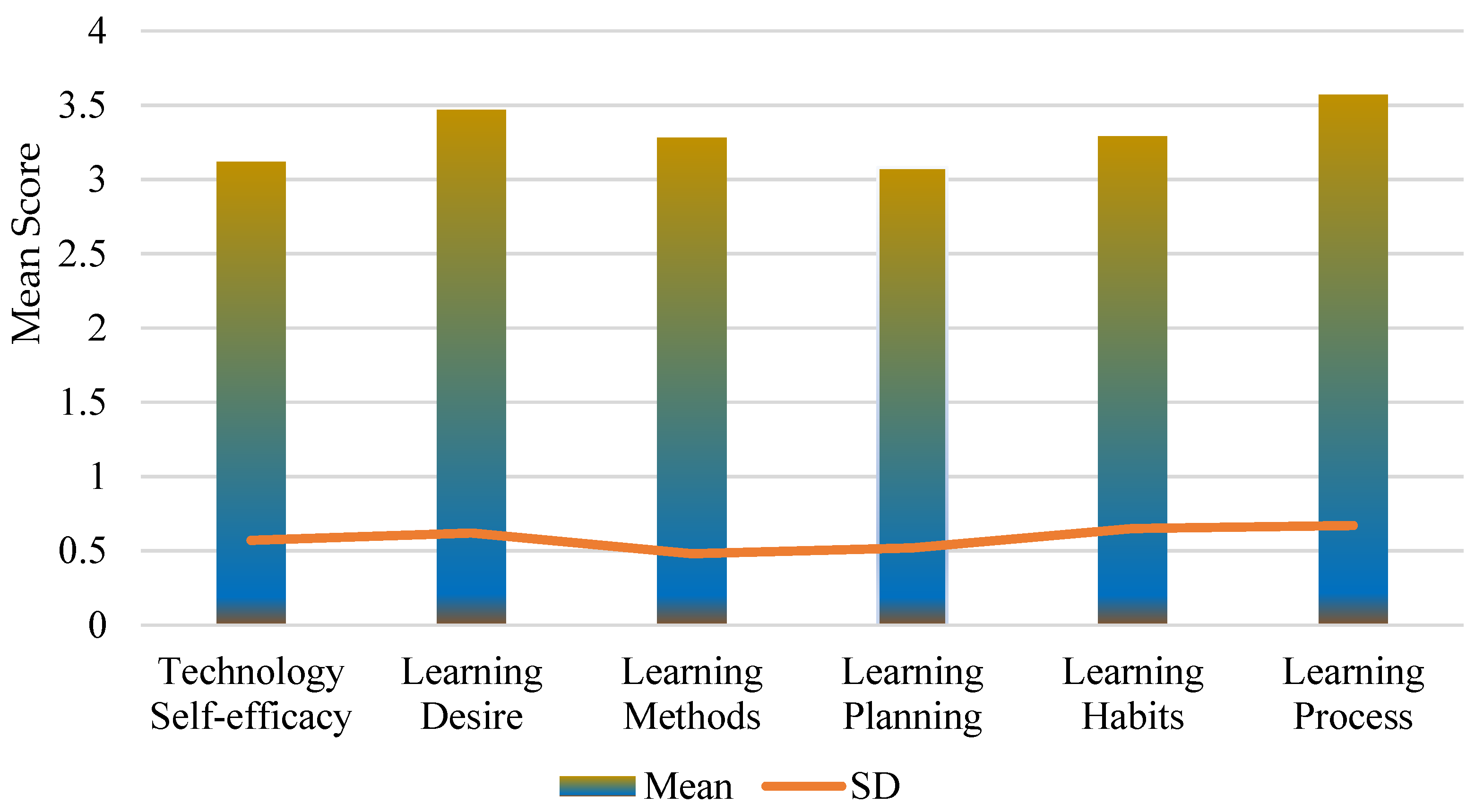
Table 2). The data show that students in general hold moderate to positive attitudes across all these dimensions, ranging from 3.08 (Learning Planning) to 3.57 (Learning Process), as measured using a five-point Likert scale.
The data also show meaningful individual variation across the six dimensions. After reverse coding the negatively worded items, the widest response range appears in Technology Self-efficacy, Learning Desire, Learning Habits, and Learning Process, where scores range from low to high levels of agreement. Learning Process has the highest overall tendency, whereas Learning Planning is the weakest dimension. The median and mode values indicate that many students cluster around moderate agreement, but the minimum and maximum values show that some students have substantially lower or higher confidence, motivation, planning, and engagement. These differences suggest that students did not experience AI-supported learning in a uniform way.
Figure 2 presents the mean scores and standard deviations of the six learning attitude dimensions. Learning Process has the highest mean score (
M = 3.57,
SD = 0.67), whereas Learning Planning has the lowest mean score (
M = 3.08,
SD = 0.52). The remaining dimensions fall within a moderate range, indicating generally moderate to positive attitudes toward AI-supported learning.
The study conducts an exploratory gender comparison to examine whether male and female students differ in their responses. Because the gender groups are unequal in size (with 48 female students and 14 male students), the results should be interpreted cautiously. Mann–Whitney U tests indicate that male students have higher technology self-efficacy than female students, but no statistically significant gender differences appear for learning desire, learning methods, learning planning, learning habits, learning process, or the engagement composite. Therefore, the results do not support a broad gender-based interpretation of AI-supported learning attitudes in this sample.
4.2. Reliability Analysis
Cronbach’s alpha helps examine the internal consistency of each dimension.
Table 3 shows that five of the six dimensions exhibit acceptable to good reliability, with α values ranging from 0.732 to 0.861. However, Learning Planning has lower internal consistency (
α = 0.563), indicating that this dimension should be interpreted cautiously. This lower reliability may reflect the small number of items, the presence of a reverse-coded item, and the heterogeneous nature of planning-related behaviors in this sample.
Mean corrected item-total correlations at the dimension level range from 0.369 to 0.710 [
32]. Most dimensions show acceptable item-level consistency. However, the lower reliability of the Learning Planning dimension suggests that responses to this subscale should be interpreted cautiously. Because the instrument was retained in its original six-dimension structure, no item was removed in the present analysis. Given the modest sample size (
N = 62) relative to the number of estimated parameters in a six-factor model, confirmatory factor analysis was not conducted.
Construct validity is supported preliminarily through two complementary approaches. First, five professors with expertise in educational technology and survey design reviewed the instrument, providing evidence of content validity. Second, the pattern of Spearman correlations (
Table 4) showed that conceptually related dimensions, such as Learning Desire and Learning Methods (
ρ = 0.814), were strongly related. However, because the sample size is modest and one subscale shows lower internal consistency, this evidence should be interpreted as preliminary rather than as formal factorial validation.
4.3. Correlation Analysis
Spearman’s rank-order correlation coefficients help examine the relationships among the six learning attitude dimensions. The study adopts this approach, because the questionnaire is based on Likert-type responses.
Table 4 presents the Spearman correlation matrix, which shows predominantly positive and statistically significant associations among the dimensions.
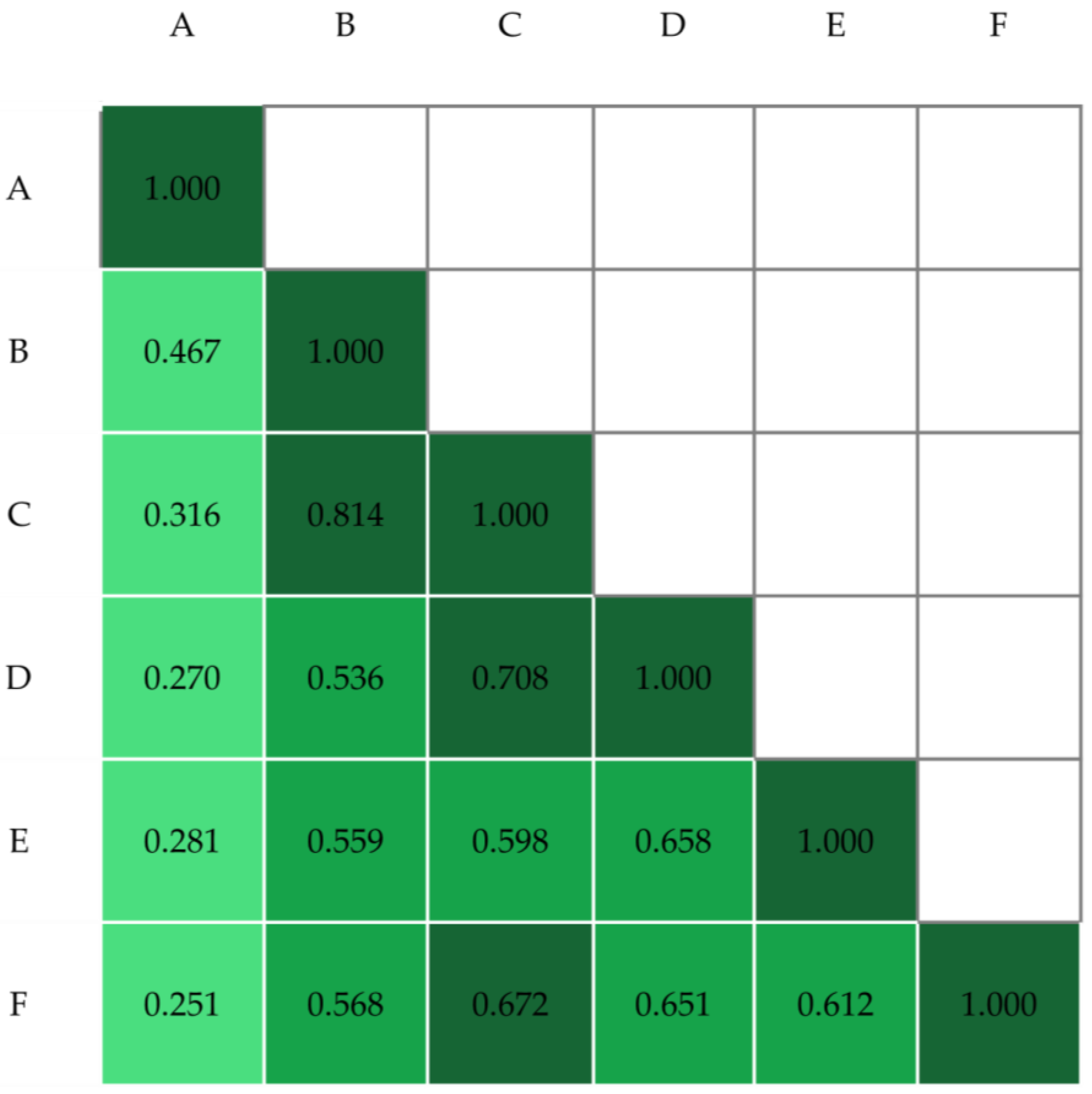
The Spearman correlation matrix is visualized as a heatmap in
Figure 3. The strongest association is between Learning Desire (B) and Learning Methods (C),
ρ = 0.814,
p < 0.01, followed by Learning Methods (C) and Learning Planning (D),
ρ = 0.708,
p < 0.01, and Learning Methods (C) and Learning Process (F),
ρ = 0.672,
p < 0.01. This suggests that students who reported stronger learning desire also tended to report more active learning methods, while learning methods closely relate to planning and learning process dimensions.
Technology Self-efficacy has positive yet weaker associations with the other dimensions, ranging from ρ = 0.251 to ρ = 0.467. This indicates that students’ confidence in using AI tools relates to other learning attitudes, but less strongly than learning desire and learning methods. Overall, the positive Spearman correlations suggest that the six dimensions are related, but not identical aspects of AI-supported learning attitudes.
4.4. Hypothesis Testing
To test the proposed hypotheses, this study conducted multiple regression analyses with academic engagement (operationalized as the composite of Learning Habits and Learning Process dimensions) as the dependent variable and perceived usefulness (operationalized as Learning Desire) and perceived ease of use (operationalized as Technology Self-Efficacy) as independent variables. The regression results are presented in
Table 5.
The regression model is statistically significant (F (2, 59) = 29.577, p < 0.001) and explains 50.1% of the variance in academic engagement (R2 = 0.501, Adjusted R2 = 0.484). Learning Desire, as the proxy for perceived usefulness, is a significantly positive predictor of academic engagement (β = 0.642, t = 5.707, p < 0.001). Therefore, H1 is supported.
Technology Self-efficacy, as the proxy for perceived ease of use, has a positive yet non-significant relationship with academic engagement (β = 0.105, t = 0.933, p = 0.355). Therefore, H2 is not supported in this sample. These findings indicate that students’ perceived learning value of AI tools is more strongly associated with academic engagement than their confidence in using the tools.
4.5. Model Diagnostics and Effect Size Analysis
4.5.1. Multicollinearity and Effect Size
To assess multicollinearity, the study calculates variance inflation factors (VIFs) and tolerance values for both predictors. The VIF values are 1.495 for both Learning Desire and Technology Self-efficacy with corresponding tolerance values of 0.669. These values indicate no serious multicollinearity concern.
Effect sizes are calculated using Cohen’s f2. The overall regression model shows a large effect size (f2 = 1.003). At the predictor level, Learning Desire shows a large unique effect (f2 = 0.552), whereas Technology Self-efficacy has an effect below the small-effect threshold (f2 = 0.015). This result is consistent with the regression analysis, in which Learning Desire is a significant predictor of academic engagement, while Technology Self-efficacy has a positive yet non-significant relationship.
4.5.2. Statistical Power
Post hoc power analysis indicates that the overall regression model has very high statistical power (1 −
β > 0.999). This power estimate refers to the overall model test with two predictors. It should not be interpreted as evidence that each individual predictor has sufficient power, particularly because Technology Self-efficacy shows only a small and non-significant unique contribution.
Table 6 summarizes the model diagnostics, including multicollinearity indicators, effect sizes, and statistical power.
5. Discussion
This section discusses the findings in relation to TAM, student engagement, and AI-supported learning in higher education. While the Results section reports the statistical patterns, the present section interprets what these patterns imply for understanding students’ engagement with AI tools in regular coursework. Overall, the findings denote that perceived usefulness is a significant predictor of academic engagement, whereas perceived ease of use has only a positive yet non-significant relationship after both predictors are entered into the regression model.
5.1. Interpretation of Findings
The findings indicate that students’ attitudes toward AI tools and their academic engagement are related, but the regression results show a clear difference between the two TAM-related predictors. Learning Desire, as the proxy for perceived usefulness, is a significant predictor of academic engagement, whereas Technology Self-efficacy, as the proxy for perceived ease of use, shows only a positive yet non-significant relationship. Thus, the present findings support H1, but do not support H2 in this sample.
One noteworthy finding concerns the Learning Process dimension, which has the highest mean score in this study (M = 3.57, SD = 0.67). This suggests that students responded most positively to AI-supported learning when the tools were embedded in concrete learning activities. Rather than treating AI tools as isolated technologies, instructors may need to connect them directly with course tasks, feedback activities, and learning objectives. Because the study was conducted in an aviation-operations course, this pattern may partly reflect the procedural and task-oriented nature of the curriculum. Students in this context may be more accustomed to structured preparation, applied problem-solving, and step-by-step learning routines; therefore, the association between learning methods and learning process should be interpreted within this specific course context.
The Learning Desire dimension is also relatively high on average (M = 3.47, SD = 0.62). This suggests that students do perceive value in AI-supported learning even though their confidence in using AI tools is not equally strong. This gap between perceived value and technical confidence indicates the need for learning designs that sustain motivation while gradually strengthening students’ practical competence with AI tools.
The students’ moderate Technology Self-efficacy score (M = 3.12, SD = 0.57) means that they do not yet feel very confident in their ability to use AI tools, but this is an area for potential growth. This finding is expected, as the technology development literature notes that students’ confidence with new technologies tends to increase gradually as they experience success with simple tasks and progress to more complex tasks.
5.2. Theoretical Implications
This study offers a modest and context-specific theoretical contribution by applying TAM to examine student engagement in AI-supported higher education. Given the modest sample size and the concentration of participants in one main department, the findings should not be interpreted as broadly generalizable. They do suggest that perceived usefulness more clearly relates to engagement than perceived ease of use within this specific course context.
The findings provide cautious support for extending TAM-related reasoning from adoption intention to engagement in AI-supported learning. However, the support is uneven: perceived usefulness, represented by Learning Desire, is a significant predictor of academic engagement, whereas perceived ease of use, approximated through Technology Self-efficacy, is not significant after both predictors enter the regression model. This pattern suggests that, in this course-based AI-supported learning context, students’ perceived learning value of AI tools may be more theoretically informative for explaining engagement than their confidence in operating the tools.
The pattern of results also suggests the intercorrelation of learning-related attitudes toward AI tools. The highest Spearman association is between Learning Desire and Learning Methods (ρ = 0.814), indicating students who believe AI tools are useful for learning also tend to have more active learning strategies. Though tentative, this result supports a cautious interpretation that learning value perceptions may be an important factor in connecting AI tool use to learning behaviors more generally.
The relatively high percentage of variance accounted for by the regression model (R2 = 0.501) should be viewed with caution, because the predictor and outcome variables are taken from the same questionnaire at a single point in time. Common method bias and conceptual closeness between Learning Desire and some of the dimensions linked to engagement might have affected the results. A more rigorous examination of discriminant validity can be examined by employing independently developed TAM and engagement scales as well as utilizing longitudinal data collection strategies or data from multiple sources. Future studies could reduce this risk by collecting predictor and outcome variables at different time points, using independently validated TAM and engagement scales, and adding behavioral records such as assignment completion, AI-use logs, or learning analytics.
5.3. Practical Implications
In addition to the theoretical implications mentioned above, the findings of this study have implications for practitioners, such as educators, instructional designers, and educational technology developers, in AI-supported higher education courses.
Given that perceived usefulness is the only significant predictor of engagement in the regression model (β = 0.642, p < 0.001), educators should prioritize making the educational value of AI tools transparent in course design. Educators can incorporate the following strategies: (1) explaining reading, writing, and coursework-related functions of AI applications in class so students recognize how those applications support their reading, writing, and coursework directly; (2) integrating coursework that utilizes AI tools in some way so students can practice using AI tools in a meaningful way for their coursework; (3) including AI tools in rubric designs that support the completion of scaffolded tasks; and (4) sharing examples of previous student coursework that effectively utilized AI tools to complete reading- and writing-related tasks as a point of reference.
The moderate Technology Self-efficacy score (M = 3.12) reflects a lack of confidence in AI tool use by many students. This could be remedied by course-specific support provided by the instructor. Tutorials introducing the features of AI tools in a guided approach from simple functions to more complex implementations could be used to assist students. A mentoring program pairing experienced AI tool users with novice users in the same program or department might help ease apprehension. Low-stake practice assignments focused on exploration could encourage students to practice using AI tools without risk. Learning logs reflecting on the use and benefits of AI tools could help track progress.
The AI tools and instructional strategies used herein are specific to the aviation operations course used at this department. Instructional strategies cannot be directly used in other disciplines. Instructors in other disciplines need to calibrate the findings in this paper with their own disciplinary norms, student populations, and institutional resources. Based on the results of this study, it is suggested that, within this course design, perceived learning value more strongly correlates to engagement than to ease of use.
6. Conclusions, Limitations, and Future Research
In summary, this study explores the roles of perceived usefulness and perceived ease of use in undergraduates’ academic engagement in AI-supported learning. In the context of this group of students, the study notes that usefulness significantly relates to students’ engagement, while ease of use positively, but not significantly, relates to engagement.
Several limitations should be acknowledged. First, the sample size is modest, and most participants are from one primary department. Specifically, 77.4% of the participants are female, 98.4% are first-year students, and 96.8% are from the Department of Aviation Operations. Second, the study’s cross-sectional design captures associations at one point in time and does not permit causal inference. Third, the study relies on self-reported questionnaire data, which may be influenced by social desirability, recall bias, or students’ recent course experience. Fourth, learning desire and technology self-efficacy are contextual proxies for TAM constructs rather than direct replications of Davis’ original perceived usefulness and perceived ease-of-use measures. In particular, Learning Desire is broader than Perceived Usefulness because it includes motivational and course-specific learning orientations, while Technology Self-efficacy reflects learner confidence rather than the perceived effort required by the system. Finally, findings regarding the Learning Planning dimension should be interpreted with caution, because of its relatively low internal consistency.
Future research could incorporate a larger and more diverse sample of students, as well as longitudinal or experimental studies, and add behavioral, observational, performance, or learning analytic measures of student learning along with questionnaire measures. Future studies could also consider using standard items of PU and PEOU in addition to the learning-specific facets to compare the extent to which our contextual proxies respond similarly. As AI becomes more pervasive in higher education, the discussion is not likely to center on the ability of students to access AI tools, but the ability to include those tools in learning tasks that engage students in responsible and effective ways.
Author Contributions
Conceptualization, D.-H.H. and Y.-C.W.; methodology, D.-H.H. and Y.-C.W.; data collection, D.-H.H.; formal analysis, D.-H.H. and Y.-C.W.; writing—original draft preparation, Y.-C.W.; writing—review and editing, D.-H.H. and Y.-C.W. All authors have read and agreed to the published version of the manuscript.
Funding
This research received no external funding.
Institutional Review Board Statement
Ethical review and approval were waived for this study, because it involved anonymous questionnaire data collected as part of routine educational activities and posed minimal risk to participants. No personally identifiable or sensitive information was collected. According to the Human Subjects Research Act of Taiwan, studies that do not involve intervention, interaction, or the collection of identifiable personal data may be exempt from review or approval by an Ethics Committee or Institutional Review Board.
Informed Consent Statement
Informed consent was obtained from all subjects involved in the study.
Data Availability Statement
The data presented in this study are not publicly available due to privacy, legal, or ethical considerations.
Conflicts of Interest
The authors declare no conflicts of interest.
Appendix A. Questionnaire Items
The questionnaire consisted of two parts. The first part collected demographic information, including gender, academic year, and department. The second part measured students’ learning attitudes toward AI-supported courses. All questionnaire items were rated on a five-point Likert scale, ranging from 1 = strongly disagree to 5 = strongly agree. Items A5, C7, and D1 were negatively worded and were reverse coded before data analysis.
| Part I. Demographic Information |
| |
| 1. Gender: |
| (1) Male |
| (2) Female |
| |
| 2. Academic year: |
| (1) First-year undergraduate student |
| (2) Second-year undergraduate student |
| (3) Third-year undergraduate student |
| (4) Fourth-year undergraduate student |
| (5) First-year master’s student |
| (6) Second-year master’s student |
| (7) Third-year master’s student |
| (8) Other |
| |
| 3. Department: |
| ______________________________ |
| |
| Part II. Learning Attitudes Toward AI-Supported Courses |
| |
| Response scale: |
| 5 = Strongly agree |
| 4 = Agree |
| 3 = Neutral |
| 2 = Disagree |
| 1 = Strongly disagree |
| |
| A. Technology Self-efficacy |
| |
| A1. I have a good level of understanding in the AI-supported course. |
| A2. I have good computational or problem-solving ability for the AI-supported course. |
| A3. I have good comprehension ability in the AI-supported course. |
| A4. I have a good conceptual understanding of the AI-supported course. |
| A5. The AI-supported course is difficult for me. [reverse-coded] |
| |
| B. Learning Desire |
| |
| B1. I can learn the AI-supported course voluntarily without being urged by others. |
| B2. When I do not understand something in the AI-supported course, I try every possible way to understand it. |
| B3. In addition to the assignments given by the instructor, I do extra practice related to the AI-supported course. |
| B4. Even if I feel that I am not naturally talented, I believe I can learn the AI-supported course well as long as I work hard. |
| B5. I find learning the AI-supported course interesting. |
| |
| C. Learning Methods |
| |
| C1. I feel happy when I think about attending the AI-supported course. |
| C2. When I already know the topic of the AI-supported course, I still try to understand it again. |
| C3. When I encounter a topic in the AI-supported course that I do not understand, I try every possible way to find the answer. |
| C4. I select appropriate reference materials to help me learn the topics of the AI-supported course. |
| C5. When I become interested, I continue studying topics from the AI-supported course, even late into the night. |
| C6. When I encounter a problem, I immediately search for reference materials or ask others for help. |
| C7. I often do not understand the meaning of formulae or topics in the AI-supported course, but still memorize them mechanically. [reverse-coded] |
| |
| D. Learning Planning |
| |
| D1. I think the AI-supported course is not very helpful for my daily life. [reverse-coded] |
| D2. I have made a study schedule for topics in the AI-supported course. |
| D3. When I do not perform well on an AI-supported course assessment, I study harder and try to improve. |
| D4. I plan to study topics from the AI-supported course every day. |
| D5. I can carry out my study plan for the AI-supported course regardless of my mood. |
| |
| E. Learning Habits |
| |
| E1. I review what was taught in the AI-supported course on the same day. |
| E2. I have the habit of previewing the content that will be taught in the AI-supported course the next day. |
| E3. When I think about attending the AI-supported course, I can immediately concentrate on learning. |
| E4. I do not forget to complete the exercises or assignments assigned by the instructor. |
| |
| F. Learning Process |
| |
| F1. When I do not understand something in the AI-supported course, I immediately ask the instructor questions. |
| F2. During the AI-supported course, I take notes on the key points explained by the instructor. |
| F3. When classmates ask questions during the AI-supported course, I pay attention and listen. |
| F4. During the AI-supported course, I do not feel bored and do not do unrelated things. |
References
- Schwab, K. The Fourth Industrial Revolution; Crown Business: New York, NY, USA, 2017. [Google Scholar]
- Zawacki-Richter, O.; Marín, V.I.; Bond, M.; Gouverneur, F. Systematic review of research on artificial intelligence applications in higher education—Where are the educators? Int. J. Educ. Technol. High. Educ. 2019, 16, 39. [Google Scholar] [CrossRef]
- Chen, L.; Chen, P.; Lin, Z. Artificial intelligence in education: A review. IEEE Access 2020, 8, 75264–75278. [Google Scholar] [CrossRef]
- Ouyang, F.; Zheng, L.; Jiao, P. Artificial intelligence in online higher education: A systematic review of empirical research from 2011 to 2020. Educ. Inf. Technol. 2022, 27, 7893–7925. [Google Scholar] [CrossRef]
- Wu, J. What Technological Factors Influence Chinese College Student Engagement in a Smart Classroom Learning Environment: Ease of Use, Perceived Usefulness, or Multiple Sources? In Proceedings of the International Conference on Electronic Business (ICEB 2024), Zhuhai, China, 24–28 October 2024. [Google Scholar]
- Davis, F.D. Perceived usefulness, perceived ease of use, and user acceptance of information technology. MIS Q. 1989, 13, 319–340. [Google Scholar] [CrossRef] [PubMed]
- Venkatesh, V.; Davis, F.D. A theoretical extension of the technology acceptance model: Four longitudinal field studies. Manag. Sci. 2000, 46, 186–204. [Google Scholar] [CrossRef]
- Teo, T. Students’ and teachers’ intention to use technology: Assessing their measurement equivalence and structural invariance. J. Educ. Comput. Res. 2019, 57, 201–225. [Google Scholar] [CrossRef]
- Granić, A.; Marangunić, N. Technology acceptance model in educational context: A systematic literature review. Br. J. Educ. Technol. 2019, 50, 2572–2593. [Google Scholar] [CrossRef]
- Scherer, R.; Siddiq, F.; Tondeur, J. The technology acceptance model (TAM): A meta-analytic structural equation modeling approach to explaining teachers’ adoption of digital technology in education. Comput. Educ. 2019, 128, 13–35. [Google Scholar] [CrossRef]
- Holmes, W.; Bialik, M.; Fadel, C. Artificial Intelligence in Education: Promises and Implications for Teaching and Learning; Center for Curriculum Redesign: Boston, MA, USA, 2019. [Google Scholar]
- Selwyn, N. Should Robots Replace Teachers? AI and the Future of Education; Polity Press: Cambridge, UK, 2019. [Google Scholar]
- Fredricks, J.A.; Blumenfeld, P.C.; Paris, A.H. School engagement: Potential of the concept, state of the evidence. Rev. Educ. Res. 2004, 74, 59–109. [Google Scholar] [CrossRef]
- Appleton, J.J.; Christenson, S.L.; Furlong, M.J. Student engagement with school: Critical conceptual and methodological issues of the construct. Psychol. Sch. 2008, 45, 369–386. [Google Scholar] [CrossRef]
- Kuhail, M.A.; Alturki, N.; Alramlawi, S.; Alhejori, K. Interacting with educational chatbots: A systematic review. Educ. Inf. Technol. 2023, 28, 973–1018. [Google Scholar] [CrossRef]
- Popenici, S.A.D.; Kerr, S. Exploring the impact of artificial intelligence on teaching and learning in higher education. Res. Pract. Technol. Enhanc. Learn. 2017, 12, 22. [Google Scholar] [CrossRef]
- Creswell, J.W.; Creswell, J.D. Research Design: Qualitative, Quantitative, and Mixed Methods Approaches, 5th ed.; SAGE Publications: Thousand Oaks, CA, USA, 2018. [Google Scholar]
- Faul, F.; Erdfelder, E.; Buchner, A.; Lang, A.-G. Statistical power analyses using G*Power 3.1: Tests for correlation and regression analyses. Behav. Res. Methods 2009, 41, 1149–1160. [Google Scholar] [CrossRef] [PubMed]
- Wang, S.; Wang, F.; Zhu, Z.; Wang, J.; Tran, T.; Du, Z. Artificial intelligence in education: A systematic literature review. Expert Syst. Appl. 2024, 252, 124167. [Google Scholar] [CrossRef]
- Stöhr, C.; Ou, A.W.; Malmström, H. Perceptions and usage of AI chatbots among students in higher education across genders, academic levels and fields of study. Comput. Educ. Artif. Intell. 2024, 7, 100259. [Google Scholar] [CrossRef]
- Vieriu, A.M.; Petrea, G. The impact of artificial intelligence (AI) on students’ academic development. Educ. Sci. 2025, 15, 343. [Google Scholar] [CrossRef]
- Campillo-Ferrer, J.M.; López-García, A.; Miralles-Sánchez, P. Student perceptions of the use of Gen-AI in a higher education program in Spain. Digital 2025, 5, 29. [Google Scholar] [CrossRef]
- Xia, Q.; Li, W.; Yang, Y.; Weng, X.; Chiu, T.K.F. A systematic review and meta-analysis of the effectiveness of generative artificial intelligence (GenAI) on students’ motivation and engagement. Comput. Educ. Artif. Intell. 2025, 9, 100455. [Google Scholar] [CrossRef]
- Shuhaiber, A.; Kuhail, M.A.; Salman, S. ChatGPT in higher education—A student’s perspective. Comput. Hum. Behav. Rep. 2025, 17, 100565. [Google Scholar] [CrossRef]
- Nelson, A.S.; Santamaría, P.V.; Javens, J.S.; Ricaurte, M. Students’ perceptions of generative artificial intelligence (GenAI) use in academic writing in English as a foreign language. Educ. Sci. 2025, 15, 611. [Google Scholar] [CrossRef]
- Anghel, G.A.; Zanfir, C.M.; Matei, F.L.; Voicu, C.D.; Neacșa, R.A. The integration of artificial intelligence in academic learning practices: A comprehensive approach. Educ. Sci. 2025, 15, 616. [Google Scholar] [CrossRef]
- Wu, F.; Dang, Y.; Li, M. A systematic review of responses, attitudes, and utilization behaviors on generative AI for teaching and learning in higher education. Behav. Sci. 2025, 15, 467. [Google Scholar] [CrossRef]
- Venkatesh, V.; Morris, M.G. Why don’t men ever stop to ask for directions? Gender, social influence, and their role in technology acceptance and usage behavior. MIS Q. 2000, 24, 115–139. [Google Scholar] [CrossRef]
- Cai, Z.; Fan, X.; Du, J. Gender and attitudes toward technology use: A meta-analysis. Comput. Educ. 2017, 105, 1–13. [Google Scholar] [CrossRef]
- Agyare, B.; Asare, J.; Kraishan, A.; Nkrumah, I.; Adjekum, D.K. A cross-national assessment of artificial intelligence (AI) chatbot user perceptions in collegiate physics education. Comput. Educ. Artif. Intell. 2025, 8, 100365. [Google Scholar] [CrossRef]
- George, D.; Mallery, P. IBM SPSS Statistics 29 Step by Step: A Simple Guide and Reference; Routledge: New York, NY, USA, 2024. [Google Scholar]
- Field, A. Discovering Statistics Using IBM SPSS Statistics, 6th ed.; SAGE Publications: London, UK, 2024. [Google Scholar]
- Hair, J.F., Jr.; Black, W.C.; Babin, B.J.; Anderson, R.E. Multivariate Data Analysis, 7th ed.; Pearson: Upper Saddle River, NJ, USA, 2010. [Google Scholar]
| Disclaimer/Publisher’s Note: The statements, opinions and data contained in all publications are solely those of the individual author(s) and contributor(s) and not of MDPI and/or the editor(s). MDPI and/or the editor(s) disclaim responsibility for any injury to people or property resulting from any ideas, methods, instructions or products referred to in the content. |
© 2026 by the authors. Published by MDPI on behalf of the International Institute of Knowledge Innovation and Invention. Licensee MDPI, Basel, Switzerland. This article is an open access article distributed under the terms and conditions of the Creative Commons Attribution (CC BY) license.