1. Introduction
Prolonged seated activities are increasingly common in military, transportation, and industrial environments, where operators are required to maintain stable sitting postures under dynamic mechanical conditions. Continuous exposure to vibration, constrained seating geometry, and repetitive postural adjustments may lead to biomechanical fatigue, discomfort, and long-term musculoskeletal risks [
1,
2,
3]. Conventional ergonomic monitoring approaches primarily rely on visual observation, questionnaire-based assessment, or single-modality sensing, which often fail to capture the spatial distribution and temporal evolution of pressure interactions between the human body and seating surfaces [
4,
5,
6]. As a result, understanding how seated posture evolves over time and how fatigue manifests across anatomical regions remains a significant challenge in wearable and embedded sensing research.
Recent advances in sensor technologies have introduced pressure mats, inertial measurement units, and vision-based systems for posture monitoring [
7,
8,
9,
10]. Vision-based approaches offer non-contact observation but often suffer from occlusion, privacy concerns, and limited capability to quantify localized pressure dynamics [
5,
6]. Meanwhile, single-modality pressure sensing provides spatial information but lacks contextual understanding of thermal contact and micro-vibration behavior, which are important indicators of subtle ergonomic changes [
10,
11,
12]. Multimodal sensing platforms have begun to emerge as a promising alternative; however, many studies focus primarily on static posture classification or short-duration experiments without addressing temporal fatigue progression during prolonged sitting [
11,
13].
Another limitation in existing research lies in the lack of comparative biomechanical validation. Many ergonomic sensing systems are evaluated either on human participants alone or using simplified mannequins without systematic comparison between artificial and human responses [
14,
15]. Such comparison is essential to understand how mechanical stability differs from adaptive human behavior, particularly when evaluating fatigue-related pressure redistribution [
16]. Furthermore, most analytical pipelines emphasize classification accuracy rather than interpretable spatiotemporal visualization, making it difficult to identify anatomical regions associated with fatigue development.
To address these challenges, this paper presents a multimodal smart-skin sensing framework designed for spatiotemporal ergonomic fatigue analysis in seated postures. The proposed system integrates distributed pressure, temperature, and vibration sensors embedded across anatomical seating and backrest regions, enabling continuous monitoring of human–seat interaction patterns. Instead of relying solely on classification outcomes, the framework employs anatomical heatmap visualization, temporal evolution analysis, delta pressure mapping, fatigue intensity estimation, and hotspot detection to characterize dynamic pressure redistribution over time. These visual and quantitative analyses provide interpretable insight into biomechanical adaptation during prolonged seated conditions.
The effectiveness of the proposed approach is evaluated across multiple seated postures, including neutral sitting, reclining, leaning, and vibration-induced movements. A comparative framework is established using both a biomechanical mannequin and human participants to investigate differences in pressure stability, lateral redistribution, and fatigue-related dynamics. This study focuses on analyzing how multimodal smart-skin sensing can capture adaptive interaction patterns between the body and seating surface through spatiotemporal pressure variations. The resulting framework aims to support ergonomic monitoring, intelligent seating design, and human–machine interface applications by providing interpretable spatial and temporal insights into seated posture behaviour.
The main contributions of this work can be summarized as follows:
The development of a multimodal smart-skin sensing platform for anatomical monitoring of seated posture interactions.
The introduction of a spatiotemporal fatigue analysis framework based on anatomical heatmaps, temporal evolution, delta mapping, and hotspot detection.
A comparative evaluation between mannequin and human measurements that highlights biomechanical differences in fatigue-related pressure redistribution.
The remainder of this paper is organized as follows.
Section 2 reviews related work on multimodal sensing and ergonomic posture monitoring.
Section 3 describes the smart-skin system architecture and data acquisition process.
Section 4 presents the results and discussion session.
Section 5 concludes the paper with future research directions.
3. Smart-Skin System Architecture
3.1. Multimodal Smart-Skin Architecture and Anatomical Layout
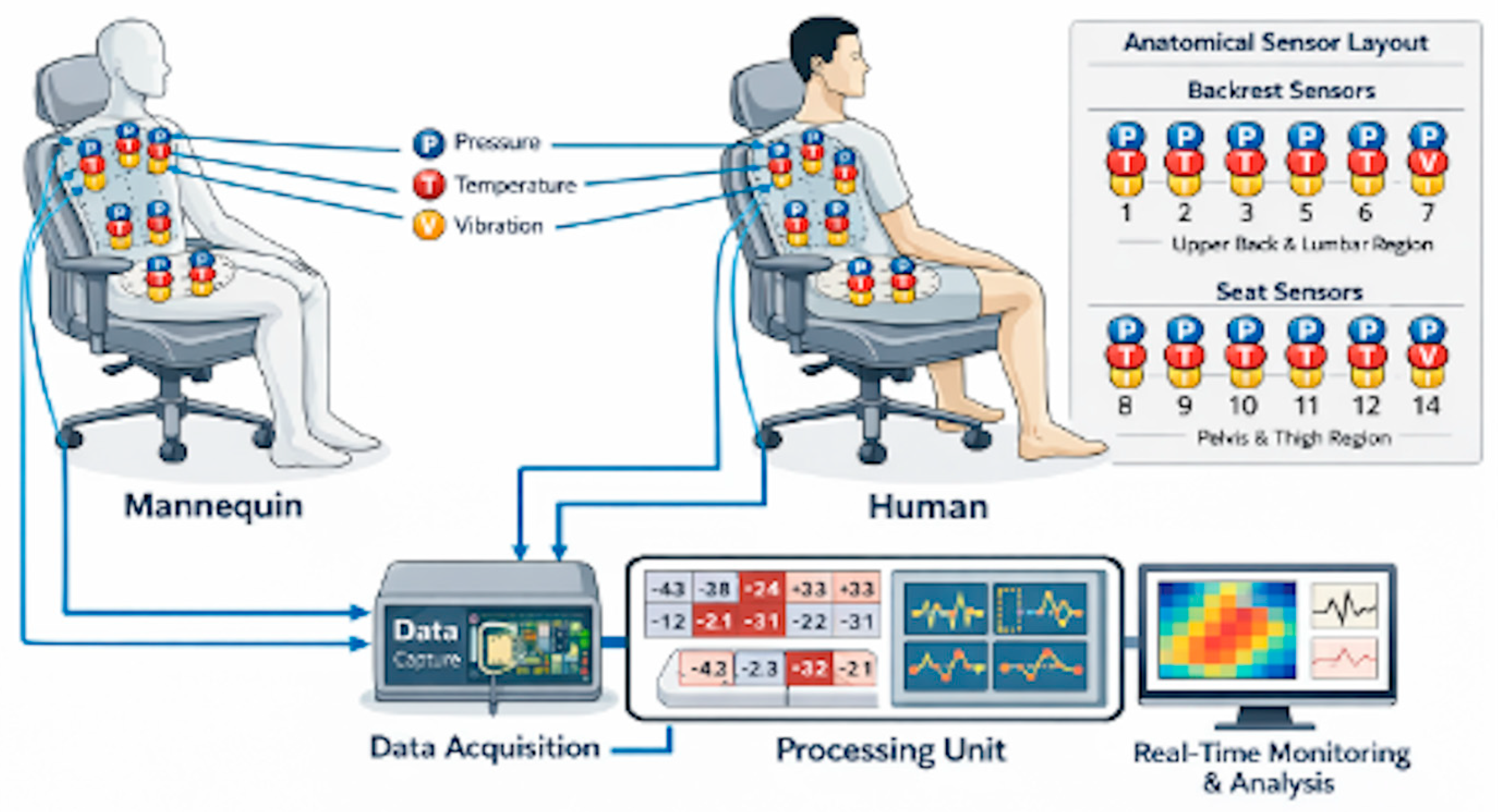
The proposed smart-skin system is designed to capture spatial and temporal interactions between the seated body and the contact surface through a multimodal sensing architecture. A total of 42 distributed sensors, consisting of 14 pressure sensors, 14 temperature sensors, and 14 vibration sensors, are embedded across anatomically relevant seating and backrest regions to form a trimodal sensing network. Each anatomical sensing location contains three co-located sensing modalities, forming a trimodal sensing node that enables synchronized acquisition of mechanical load, thermal contact, and micro-vibration signals.
Each sensing modality plays a complementary role within the multimodal sensing framework. Pressure sensors measure spatial load distribution across anatomical contact regions and serve as the primary biomechanical indicator for analyzing pressure redistribution during seated interaction. Temperature sensors capture thermal contact dynamics associated with prolonged body–seat interaction, providing contextual information related to contact persistence and localized heat accumulation. Vibration sensors detect micro-movement responses and externally induced dynamic perturbations that occur during seated conditions involving posture adjustments or environmental excitation. The integration of these sensing modalities provides a richer representation of seated posture behavior, where pressure reflects mechanical loading, temperature indicates contact persistence, and vibration captures dynamic perturbations affecting seated stability.
The multimodal design enables complementary sensing, allowing the system to capture both static posture configuration and dynamic behavioral changes over time. The hardware specifications can be seen in
Table 1.
Prior to data acquisition, all sensing modalities were calibrated to ensure measurement consistency across the sensing nodes. Pressure sensors were calibrated using controlled static loads applied uniformly to the sensing surface to establish the pressure–voltage response relationship. Temperature sensors were verified using a controlled thermal reference to confirm measurement stability within the expected operating range. Vibration sensors were validated using controlled excitation signals within the frequency range of the experimental setup. These calibration procedures ensured consistent sensor responses prior to the experimental sessions.
Meanwhile, as illustrated in
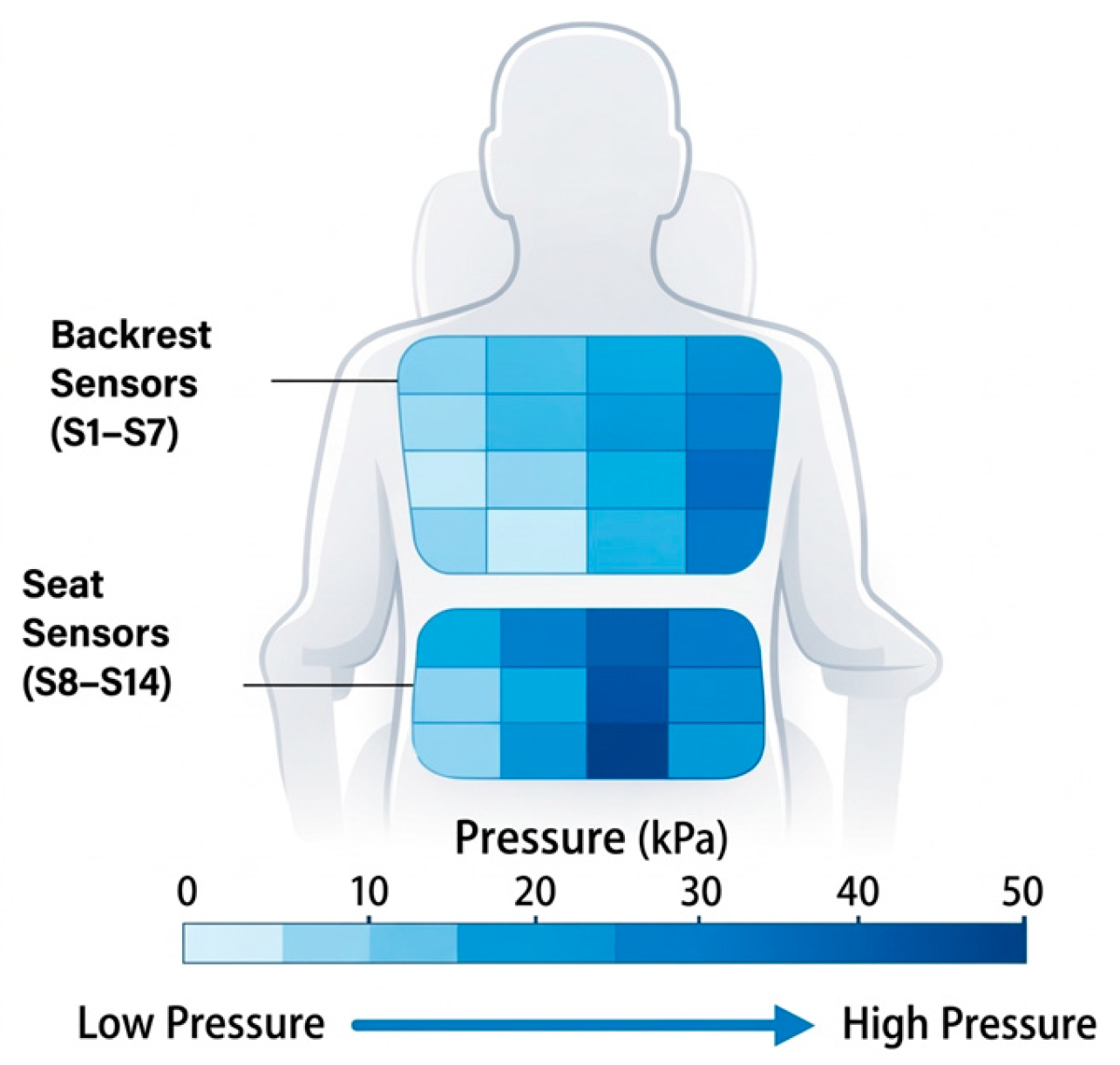
Figure 1, the sensing layout follows an anatomically inspired arrangement covering key biomechanical contact zones, including the upper back, lumbar region, pelvis, and thigh support areas. The backrest region corresponds to Sensors 1–7, while the seat region corresponds to Sensors 8–14. The sensing nodes are distributed with an inter-sensor spacing of approximately 7–8 cm, providing sufficient spatial coverage of anatomical contact regions while maintaining adequate resolution for heatmap-based spatial analysis. This structured placement allows the system to capture posture asymmetry, lateral leaning behavior, and pressure redistribution across seated conditions.
The multimodal data streams acquired from the sensing nodes are transmitted to a central processing unit where synchronized signals are integrated for real-time monitoring and analysis. All sensing modalities are synchronously sampled at a frequency of 10 Hz to ensure temporal alignment across pressure, temperature, and vibration signals. This sampling rate was selected because the study focuses on posture-related pressure redistribution and low-frequency micro-movement dynamics during seated interaction, rather than high-frequency vibration analysis. Previous ergonomic monitoring studies indicate that posture evolution and fatigue-related pressure redistribution typically occur at relatively low temporal frequencies, making a 10 Hz sampling rate sufficient for capturing the relevant spatiotemporal behavior.
In addition to the sensing architecture, several system-level parameters were considered to support real-time monitoring and practical deployment of the smart-skin sensing platform. The sensing nodes are connected to an embedded microcontroller unit responsible for signal acquisition, synchronization, and data transmission. The acquired multimodal data are transmitted to a monitoring interface through a serial communication interface (UART, 115,200 baud), enabling continuous real-time visualization and recording of sensor responses during the experiment.
The embedded processing unit performs basic preprocessing operations including signal synchronization, filtering, and temporal segmentation before data logging and visualization. The average processing latency of the acquisition cycle is maintained below 100 ms, allowing near real-time monitoring of posture-related pressure redistribution and fatigue evolution. The sensing controller and communication module are integrated into a compact hardware unit with approximate dimensions of 120 mm × 80 mm × 40 mm, enabling integration within seating structures without interfering with user posture or comfort.
During continuous operation, the smart-skin sensing platform consumes approximately 2–3 W of power, primarily driven by the sensing nodes and the embedded microcontroller. This relatively low power consumption supports practical implementation for embedded ergonomic monitoring applications, including intelligent seating systems, vehicle-mounted monitoring platforms, and future wearable ergonomic sensing environments.
Finally, the anatomical sensing layout enables spatial heatmap construction in which sensor responses are mapped into a structured grid representing body–seat interaction patterns. This configuration supports subsequent spatiotemporal analysis, including anatomical heatmap visualization, delta pressure mapping, fatigue intensity estimation, and hotspot detection, as described in the following subsections. Through this spatial representation, the smart-skin system captures anatomically meaningful pressure redistribution patterns associated with seated posture dynamics.
3.2. Data Acquisition and Experimental Protocol
The next stage of the study involves multimodal data acquisition under controlled seated posture conditions. Data acquisition was conducted to capture multimodal sensing responses using a biomechanical mannequin and a single human participant with identical anthropometric characteristics (approximately 165 cm height and 62 kg body mass). The human participant was a 19-year-old healthy male with a body height of approximately 165 cm and body mass of 62 kg (BMI: 22.8 kg/m2). The participant reported no history of musculoskeletal disorders or posture-related health issues. Prior to the experiment, informed consent was obtained from the participant in accordance with the ethical guidelines of Telkom University. The experimental procedure complied with institutional research ethics standards to ensure safe and voluntary participation in the study.
The experimental setup, illustrated in
Figure 1, consists of the smart-skin sensing layer integrated into the seating and backrest surfaces, a processing unit for synchronized signal collection, and a monitoring interface for real-time observation. The experimental protocol was designed to capture both static posture configurations and dynamic posture adjustments occurring during prolonged seated interaction.
A series of experimental sessions were performed across multiple seated conditions, including neutral sitting, full recline, lean forward, lean right, lean left, periodic shifting, and vibration-induced movements with varying intensity levels. In total, nine seated conditions were evaluated in this study to capture a wide range of posture interactions between the body and the seating surface. All conditions were recorded as continuous time-series sessions to capture spatial and temporal variations in pressure distribution and posture behavior.
To ensure experimental reproducibility, the sitting postures were defined using quantitative geometric parameters. Neutral sitting was defined with the hip joint angle at approximately 90° and the backrest positioned at 90° relative to the seat surface. The reclined posture was defined with a backrest angle of approximately 120°. Leaning postures (forward, left, and right) were characterized by a torso inclination of approximately 15° relative to the vertical axis. These definitions provide a consistent geometric reference for posture classification during the experiment.
Each posture condition was maintained for approximately 45 min and divided into three temporal phases (early, middle, and late), each representing 15-min intervals, to analyze the progression of pressure redistribution and ergonomic fatigue during prolonged sitting. Short rest intervals of approximately 5 min were provided between posture conditions to minimize cumulative fatigue effects and maintain consistency across experimental sessions. During acquisition, multimodal signals from pressure, temperature, and vibration sensors were sampled simultaneously to ensure temporal alignment across sensing modalities. Each posture condition was performed once for both the human participant and the biomechanical mannequin, generating continuous multimodal time-series data that were subsequently segmented into temporal phases for analysis.
For vibration-induced conditions, controlled excitation levels were applied to simulate different external disturbance intensities during seated interaction. Three vibration levels were used in the experiment: light vibration (5 Hz, 0.2 g), medium vibration (10 Hz, 0.5 g), and high vibration (15 Hz, 1.0 g). These vibration parameters were selected to represent increasing levels of dynamic excitation that may occur in real seating environments.
To support controlled comparison between mechanical and human responses, a biomechanical mannequin was used as a mechanically stable reference baseline rather than a physiological ground truth. Unlike human participants who exhibit neuromuscular adaptation and posture adjustment during prolonged sitting, the mannequin provides consistent structural loading conditions that enable repeatable measurement of baseline pressure distribution patterns. To minimize potential positional bias, the mannequin was positioned using identical seating configurations across all trials and subjected to the same experimental conditions, including posture configuration and vibration excitation levels. This setup allows the comparative analysis to focus on distinguishing mechanically stable load responses from adaptive human biomechanical behavior during seated interaction.
To maintain consistency between mannequin and human measurements, identical seating configurations and experimental durations were applied. The mannequin provided a mechanically stable reference baseline, while human trials captured adaptive biomechanical responses associated with posture adjustment and fatigue progression. The mannequin used in this study was constructed from rigid plastic material with fixed joint configurations and no soft-tissue simulation capability. While it reproduces the anthropometric geometry of a seated human body, it does not replicate muscular activity, tissue deformation, or neuromuscular adaptation. Consequently, the mannequin serves as a mechanically stable reference model for evaluating structural load distribution rather than representing physiological human responses. The collected raw data were organized into posture-based sessions and subsequently processed through filtering, synchronization, and segmentation procedures to produce a clean and labeled dataset.
The resulting dataset forms the basis for spatial anatomical mapping and spatiotemporal fatigue analysis described in the following subsections, enabling systematic comparison between posture conditions and between mannequin and human responses.
3.3. Signal Processing and Temporal Segmentation
After data acquisition, the dataset generated by multimodal signals from pressure, temperature, and vibration sensors is processed to ensure temporal consistency and robustness to noise before spatial analysis. Raw sensor streams were first synchronized across modalities to maintain aligned timestamps between anatomical sensing nodes. Basic preprocessing steps included signal smoothing and outlier removal to reduce measurement fluctuations caused by environmental disturbances and micro-movement artifacts.
According to Equation (1), let
denote the recorded signal from sensor
at time
, where
represents anatomical sensing locations. For each posture condition
, the multimodal time-series data are expressed below.
To analyze fatigue progression during prolonged sitting, each recording session was divided into three temporal segments representing early, middle, and late exposure phases the formula is shown in Equation (2).
Temporal segmentation enables consistent comparison of pressure evolution across posture conditions while preserving spatial anatomical structure. For each temporal segment, the mean sensor response was calculated as Equation (3), where
denotes the number of samples within the segment.
Meanwhile, the resulting vector represents the anatomical pressure profile for a given posture and temporal phase as seen in Equation (4).
This temporal representation forms the basis for subsequent anatomical heatmap construction, delta pressure analysis, and fatigue intensity estimation described in the following subsections. By structuring the signals into spatially aligned temporal segments, the proposed framework enables systematic analysis of spatiotemporal ergonomic behavior without relying solely on static posture snapshots.
3.4. Anatomical Heatmap Modeling
Next, to provide an interpretable spatial representation of seated posture interaction, the processed sensor responses were transformed into anatomical heatmaps. The heatmap modeling approach maps the averaged sensor signals into a structured spatial layout corresponding to the anatomical seating and backrest regions described in
Section 3.1. This transformation enables visualization of pressure distribution patterns across different posture conditions and temporal phases.
The equation shown in (5) involving (4) denotes the mean pressure vector obtained from the temporal segmentation process in
Section 3.3. The anatomical heatmap
is constructed by reshaping this vector into a two-dimensional grid, where the first row represents sensors located in the backrest region and the second row corresponds to sensors positioned on the seat surface. This arrangement preserves the anatomical relationship between sensing nodes, allowing spatial interpretation of posture-induced load distribution.
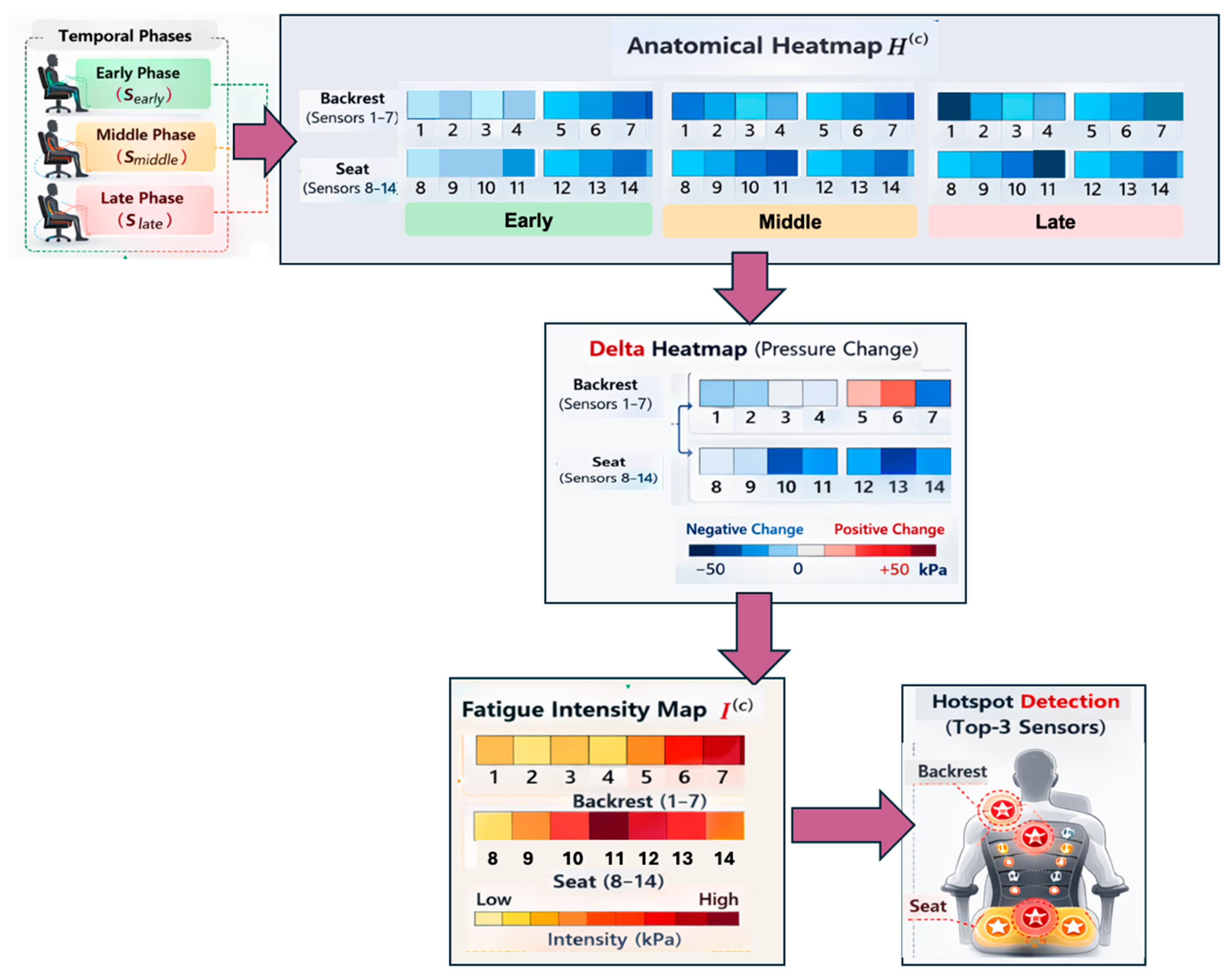
As illustrated in
Figure 2, blue-gradient visualization is applied to emphasize variations in pressure intensity across anatomical zones. Lighter color regions indicate lower pressure levels, whereas darker regions correspond to higher load concentration. This visualization approach facilitates comparison between posture classes and supports identification of asymmetry, leaning behavior, and localized ergonomic stress.
The anatomical heatmap modeling serves as a foundational representation for subsequent spatiotemporal analysis. By converting one-dimensional sensor vectors into structured spatial maps, the framework enables delta pressure computation, fatigue intensity estimation, and hotspot localization, as described in the following subsections.
3.5. Delta Mapping and Fatigue Analysis
This subsection aims to quantify spatiotemporal changes in pressure distribution associated with prolonged sitting; a delta mapping approach was applied to anatomical heatmaps derived from different temporal segments. Delta mapping captures the variation between early and late posture phases, allowing identification of pressure redistribution patterns that may indicate fatigue-related biomechanical adaptation.
In Equation (6), let
and
denote the anatomical heatmaps corresponding to the early and late temporal segments of posture class
. The delta heatmap is defined where positive values represent increased pressure over time, while negative values indicate pressure reduction due to posture adjustment or load redistribution. This formulation enables direct visualization of spatial pressure shifts that are not observable through static heatmaps.
To further characterize fatigue-related dynamics, a fatigue intensity map is computed based on the absolute magnitude of delta values is defined in Equation (7).
The fatigue intensity representation emphasizes the strength of anatomical pressure changes regardless of direction, highlighting regions experiencing significant biomechanical variation during seated exposure. High-intensity zones typically correspond to areas with increased load concentration or adaptive posture correction.
As illustrated in
Figure 3, the combination of delta heatmaps and fatigue intensity maps provides complementary insight into both directional pressure redistribution and overall fatigue magnitude. Delta mapping reveals how pressure shifts spatially, while intensity mapping highlights the level of ergonomic stress experienced across anatomical regions.
This delta-based analysis serves as an intermediate stage between anatomical heatmap modeling and hotspot detection, enabling systematic evaluation of fatigue progression across posture conditions and between mannequin and human measurements. While fatigue intensity maps provide a spatial overview of the magnitude of pressure variation across anatomical regions, they do not explicitly identify which sensing nodes contribute most significantly to biomechanical adaptation. To address this limitation, the subsequent subsection introduces an anatomical drift analysis that quantifies sensor-level pressure variation and enables hotspot detection based on localized fatigue dynamics. This transition allows the proposed framework to move from global spatiotemporal magnitude analysis toward anatomically interpretable fatigue characterization.
3.6. Hotspot Detection and Anatomical Drift Analysis
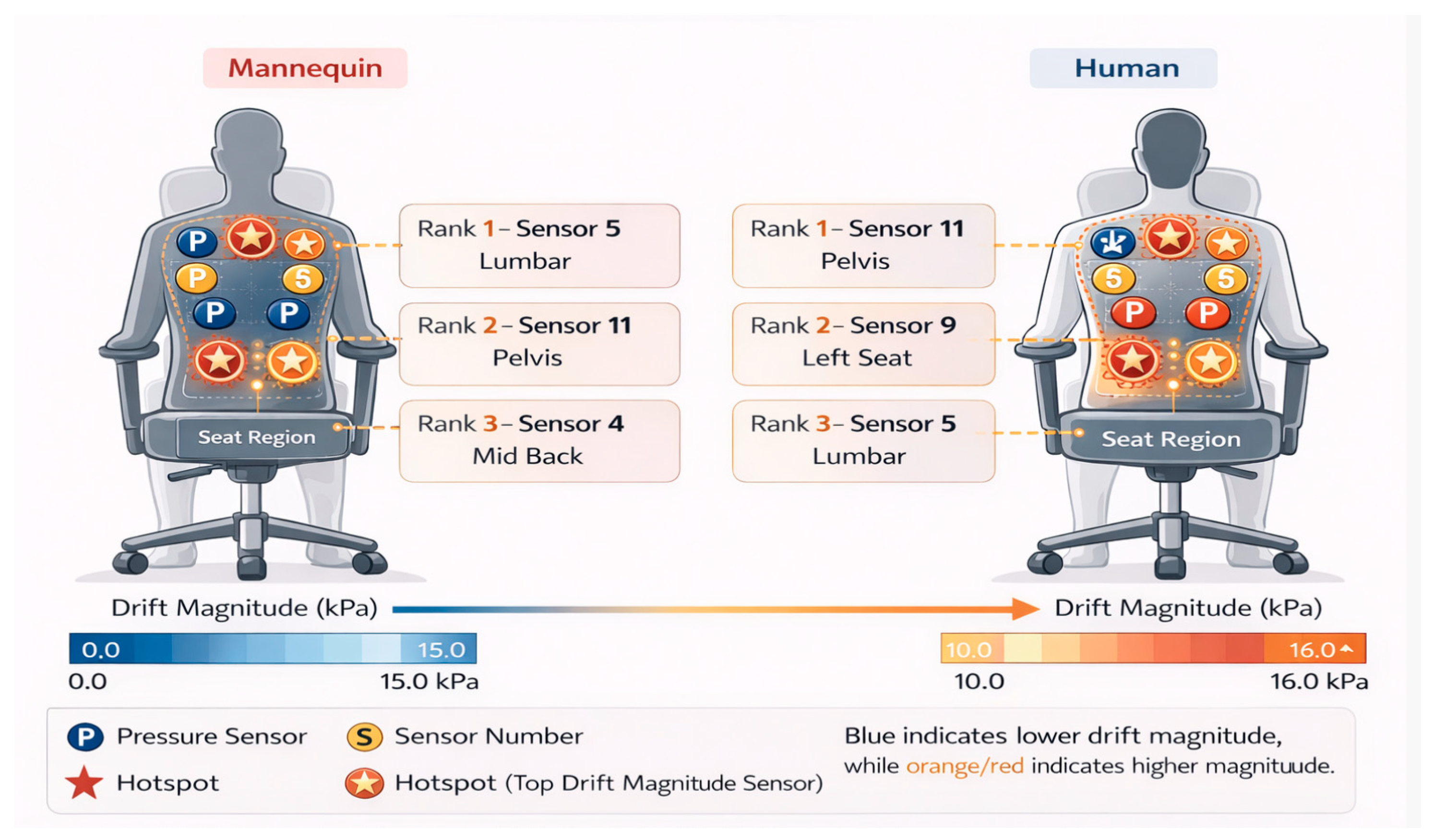
The next phase is hotspot detection and anatomical drift analysis. To identify anatomical regions that experience dominant fatigue-related changes, a hotspot detection strategy was applied based on sensor drift magnitude. Anatomical drift represents the variation in pressure response between temporal phases and provides a quantitative indicator of localized biomechanical adaptation during prolonged seated exposure.
The anatomical drift for each sensing node is defined in Equation (8). Let
and
denote the mean pressure responses of sensor
for posture class
during early and late temporal segments, respectively.
This formulation measures the magnitude of pressure variation at each anatomical location, allowing comparison across posture conditions while remaining independent of pressure direction. To ensure fair comparison between mannequin and human measurements with different baseline pressure levels, a normalized drift coefficient is introduced in Equation (9), where
is a small constant used to avoid numerical instability. This normalized representation emphasizes relative biomechanical change rather than absolute pressure magnitude.
Sensors are ranked according to their normalized drift coefficients values to determine dominant fatigue zones. The top-
sensors with the highest drift magnitude are selected as anatomical hotspots in Equation (10), where
represents the number of hotspot regions considered in this study. In this work,
was selected to capture the most prominent fatigue-related pressure redistribution regions while maintaining clear anatomical interpretability of the spatial analysis. Empirical observation of the drift magnitude distribution across the 14 sensing nodes indicates that a small subset of sensors consistently exhibits substantially higher drift values compared to the remaining nodes. Selecting the three highest drift sensors therefore enables identification of the dominant fatigue concentration regions without introducing excessive fragmentation of the spatial fatigue representation. This ranking strategy provides a compact representation of spatial fatigue behaviour by highlighting anatomical areas that undergo the most significant pressure redistribution.
Furthermore, to quantify the relative biomechanical adaptation between mannequin and human responses, an adaptation gain metric is defined as Equation (11), where
represents the amplification of human biomechanical response relative to the mechanically stable mannequin baseline and
is a small positive constant used to avoid numerical instability in cases where the baseline mannequin drift is close to zero. Values greater than one indicate stronger adaptive fatigue dynamics in human measurements.
As illustrated in
Figure 4, hotspot detection enables mapping of high-fatigue zones across backrest and seat regions. By combining drift magnitude with anatomical layout, the proposed method transforms temporal pressure variation into interpretable spatial indicators that support ergonomic assessment and comparative analysis between mannequin and human measurements.
The hotspot-based anatomical drift analysis serves as the final stage of the spatiotemporal fatigue modeling pipeline, bridging delta mapping and fatigue intensity estimation with interpretable ergonomic visualization. Through the integration of multimodal sensing, structured data acquisition, temporal segmentation, anatomical heatmap modeling, delta mapping, and hotspot detection, the proposed framework establishes a complete spatiotemporal pipeline for analyzing seated posture interaction patterns. By transforming synchronized sensor measurements into spatially interpretable representations, the system enables systematic investigation of pressure redistribution and fatigue-related dynamics across anatomical regions. The methodological stages described in this section provide the foundation for evaluating spatiotemporal behaviour under different seated conditions. The experimental outcomes and comparative analysis between mannequin and human measurements based on this framework are presented and discussed in
Section 4.
3.7. Statistical Analysis
Statistical analysis was conducted to quantify the significance of the observed differences between mannequin and human measurements across posture conditions and temporal phases. For each posture condition, the mean and standard deviation of sensor responses were computed across anatomical sensing nodes for the early, middle, and late temporal segments.
The mean sensor response for each temporal segment was calculated as shown in Equation (12), where
represents the sensor response at anatomical location
, and
denotes the total number of sensing nodes.
To measure the variability of pressure responses across anatomical locations, the standard deviation was computed as shown in Equation (13).
To evaluate whether the pressure redistribution patterns observed in human measurements differ significantly from the mechanically stable mannequin baseline, an independent Welch two-sample
t-test was performed between the corresponding temporal segments. The Welch formulation was adopted because it does not assume equal variance between datasets and therefore provides a more robust statistical comparison when analyzing biomechanical responses from human and mannequin measurements. The statistical significance was evaluated using the
t-test statistic defined in Equation (14), where
and
denote the mean pressure values for human and mannequin measurements, respectively, and
and
represent their corresponding standard deviations. The variables
and
denote the number of observations for each dataset.
Differences between mannequin and human responses were considered statistically significant when p < 0.05. In addition to statistical significance testing, effect size analysis using Cohen’s d was performed to quantify the magnitude of differences between human and mannequin measurements.
Additionally, descriptive statistics were used to characterize the magnitude and variability of pressure redistribution across anatomical sensing locations. These statistical indicators support the interpretation of spatiotemporal fatigue dynamics by quantifying whether the observed pressure shifts represent meaningful biomechanical adaptation rather than random measurement fluctuations.
The statistical evaluation complements the anatomical heatmap visualization, delta pressure mapping, and hotspot detection framework by providing quantitative validation of the spatiotemporal fatigue patterns observed in the experimental results. All statistical analyses were performed using Python 3.10 statistical libraries.
4. Results and Discussion
4.1. Anatomical Heatmap Analysis
The multimodal heatmap visualization provides an initial spatial overview of pressure, temperature, and vibration responses across the 14 anatomical sensing locations for both mannequin and human measurements. Pressure responses reflect spatial load distribution across anatomical contact regions, temperature responses indicate thermal contact accumulation associated with prolonged seating interaction, and vibration responses capture dynamic perturbations and micro-movement activity occurring during seated posture adjustments.
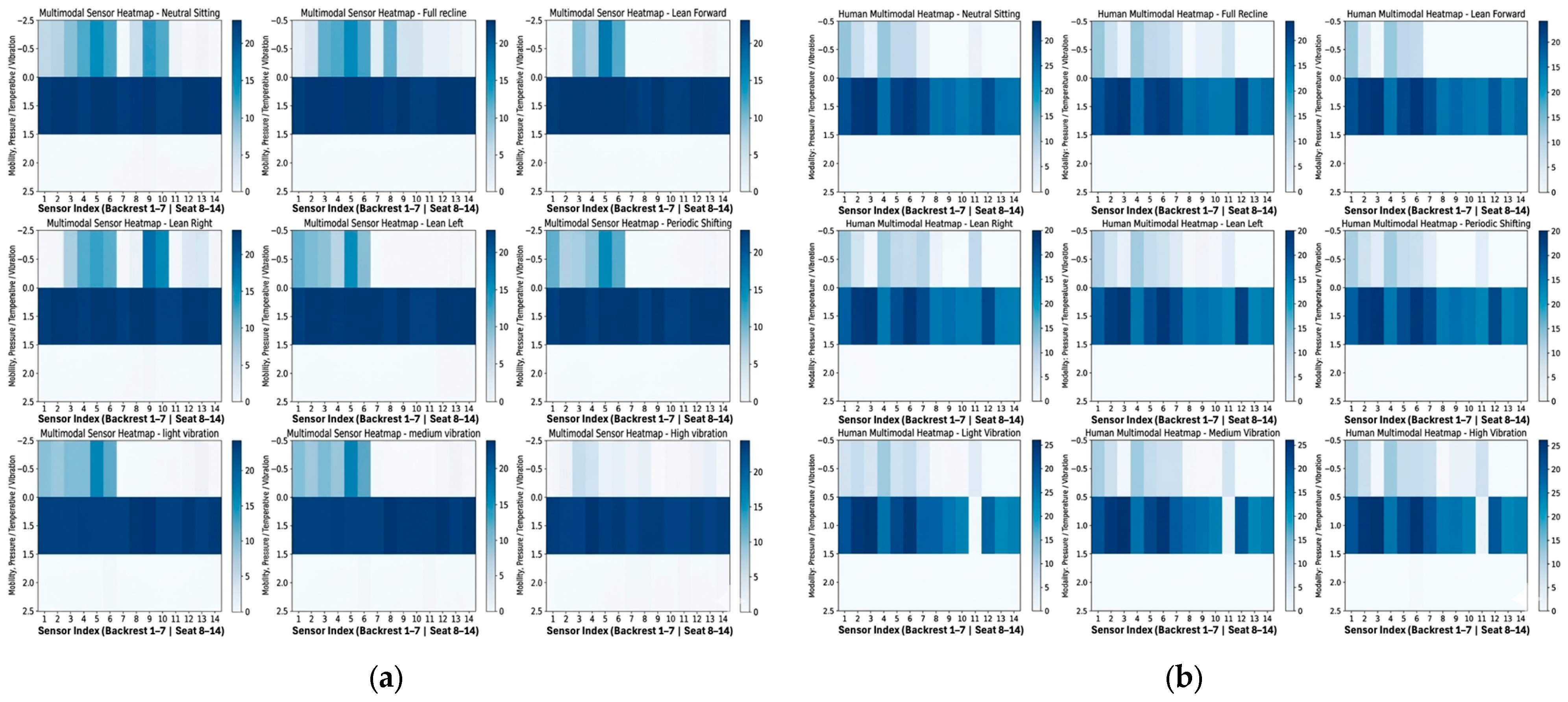
As shown in
Figure 5, each posture condition is represented as a sensor-index heatmap, where the horizontal axis corresponds to anatomical sensor indices distributed across the seating system and the vertical axis represents sensing modalities including pressure, temperature, and vibration. Sensors 1–7 at the backrest region and Sensors 8–14 at the seat region, allowing spatial interpretation of body–seat interaction patterns across the anatomical contact surface. Pressure is in upper panel, temperature is in the middle panel, and the vibration is in lower panel. The blue-gradient intensity highlights the magnitude of multimodal responses, enabling direct comparison between mechanically stable and adaptive seated behaviour.
Because the mechanical and biomechanical characteristics of mannequin and human measurements differ, the color scales of the heatmaps are independently normalized for each dataset in order to preserve the relative spatial distribution patterns within each condition. This approach allows meaningful visualization of intra-condition response variability without suppressing spatial patterns due to scale differences between datasets.
Across posture conditions, mannequin measurements exhibit relatively uniform multimodal responses, particularly along the seat region, indicating stable load transfer without significant adaptive redistribution. Temperature and vibration channels in the mannequin dataset remain relatively stable due to the rigid mechanical structure of the mannequin. In contrast, human measurements demonstrate greater spatial variability, with noticeable intensity fluctuations across lateral sensor indices during leaning postures. This difference suggests that human seated behaviour involves continuous micro-adjustments that redistribute pressure dynamically while also producing localized thermal contact changes and vibration responses associated with posture adjustment.
As shown in
Table 2, under neutral sitting, both mannequin and human heatmaps show balanced multimodal intensity across sensor indices; however, the human data reveal localized intensity gradients, implying subtle posture corrections even in nominally static conditions. Lean-right and lean-left postures produce asymmetric intensity patterns, with increased sensor responses concentrated on the corresponding anatomical side in human measurements. These lateral shifts are less pronounced in the mannequin data, reinforcing the role of biomechanical adaptation in human seating dynamics.
Vibration-induced conditions further emphasize multimodal differences. While the mannequin heatmaps show modest variation primarily within the vibration channels, human measurements present broader intensity transitions across pressure, temperature, and vibration modalities. Temperature channels show localized increases in regions experiencing prolonged body–seat contact, while vibration channels capture dynamic perturbations associated with posture adjustment and external excitation conditions. These observations indicate that human subjects respond to dynamic excitation through coordinated redistribution across anatomical contact regions rather than through isolated modality changes.
Overall, the multimodal heatmap analysis highlights that spatial variability is a key differentiator between mannequin and human seated behaviour. While the mannequin provides a mechanically consistent reference profile, human measurements exhibit distributed intensity changes across anatomical locations, reflecting dynamic ergonomic responses. Importantly, these spatial differences emerge before temporal fatigue modelling is introduced, indicating that multimodal sensing responses themselves already capture meaningful biomechanical signatures of seated posture adaptation.
Rather than relying solely on absolute pressure magnitude, the sensor-index heatmap representation reveals how multimodal responses are distributed across anatomical regions under different posture conditions. However, spatial visualization alone does not fully capture how these responses evolve during prolonged seated interaction. Therefore, to further investigate the progression of pressure redistribution and fatigue-related changes over time, the following subsection introduces temporal delta mapping and fatigue intensity analysis.
4.2. Temporal Fatigue Evolution Analysis
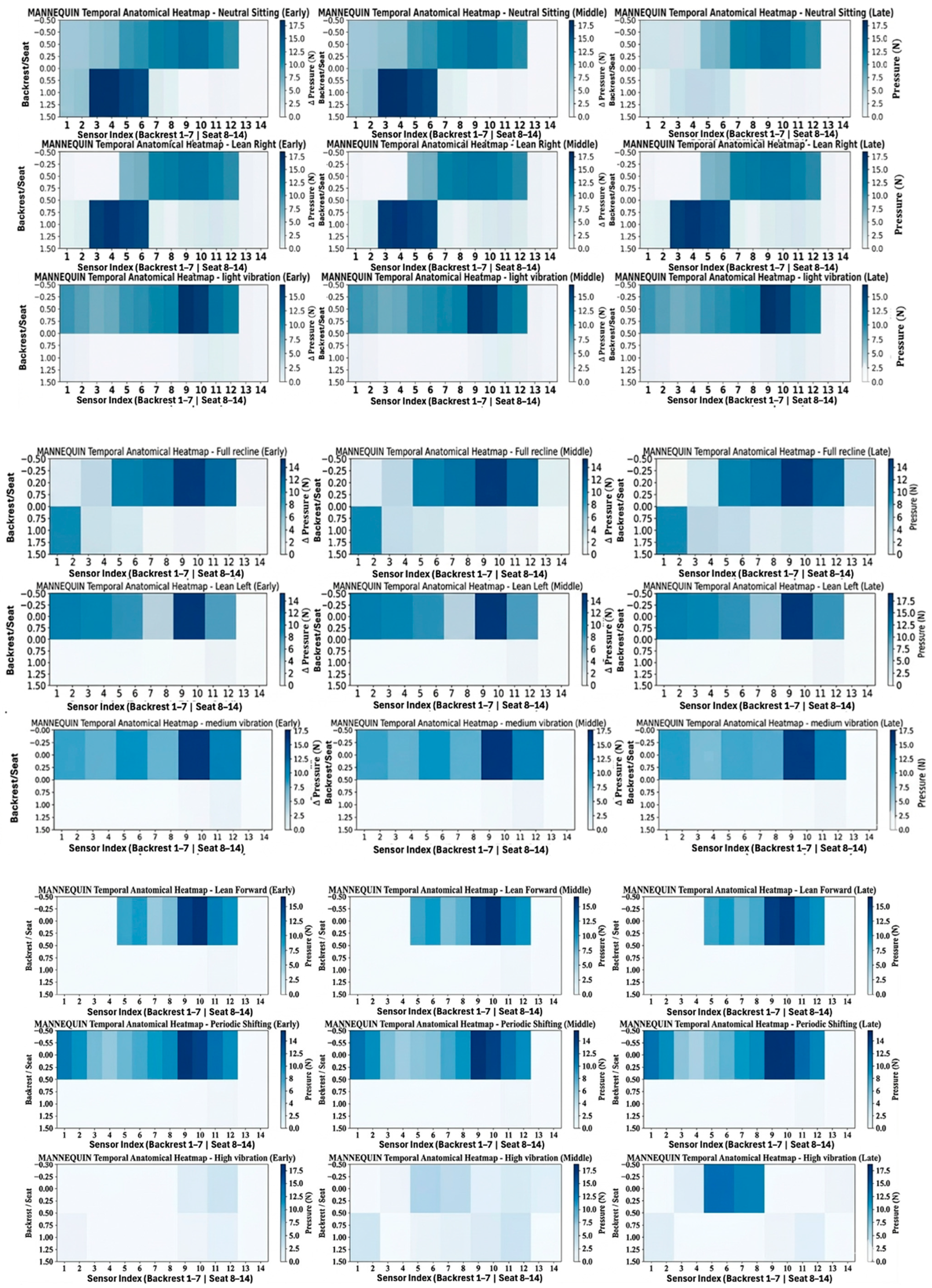
Temporal evolution analysis was conducted to examine how anatomical pressure distributions change across prolonged seated exposure. As illustrated in
Figure 6, the temporal panels present Early, Middle, and Late phase heatmaps for mannequin measurements, enabling visualization of the temporal progression of sensor responses under each posture condition. In these heatmaps, the horizontal axis represents the anatomical sensor indices (Sensors 1–7 on the backrest at upper panel and Sensors 8–14 on the seat region at lower panel, while the vertical axis represents the sensing modality consisting of pressure, temperature, and vibration channels. The color intensity indicates the relative magnitude of sensor responses across temporal phases.
In the mannequin dataset, pressure patterns remain largely consistent between temporal phases, indicating mechanically stable load transfer over time. Across neutral sitting and leaning conditions, only minor intensity variation is observed, primarily confined to vibration-induced scenarios. This behaviour confirms that the mannequin acts as a structurally rigid reference, where temporal variation is dominated by external excitation rather than intrinsic biomechanical adaptation.
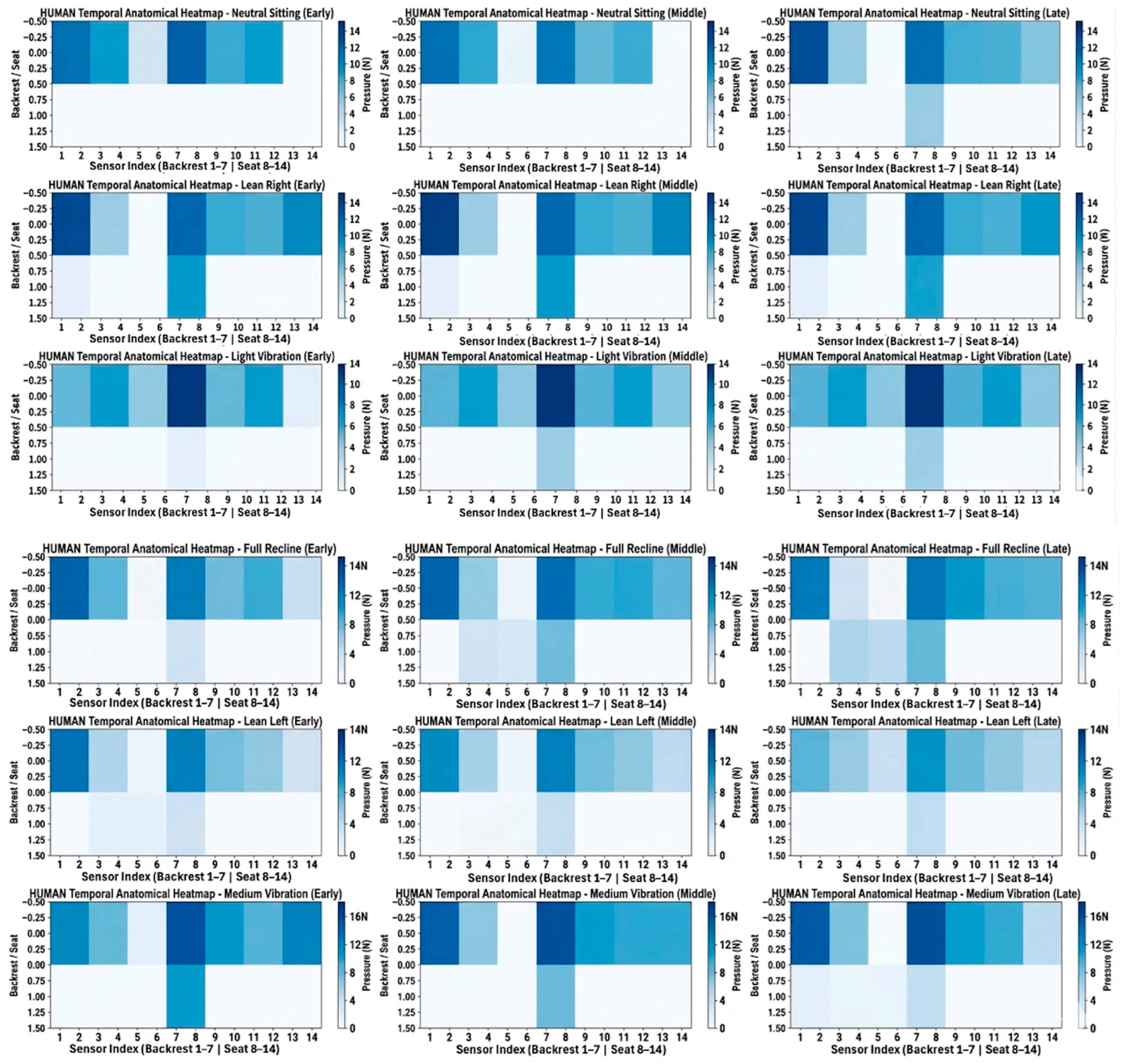
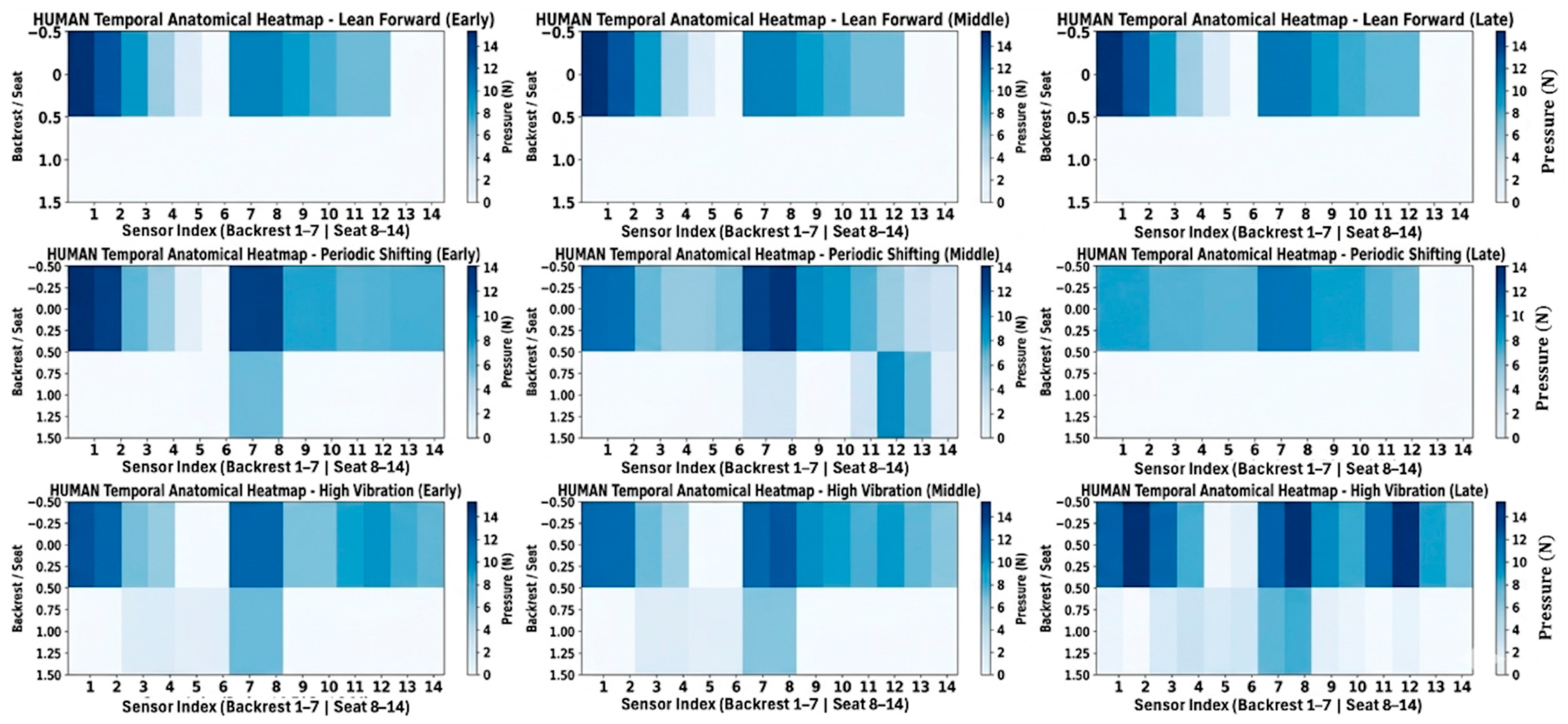
Conversely, the human temporal panels (
Figure 7) reveal progressive spatial redistribution from early to late phases. Similar to
Figure 6, the heatmaps in
Figure 7 present temporal sensor responses across the same anatomical sensor layout and sensing modalities, allowing direct comparison of temporal pressure evolution between human and mannequin measurements. Under neutral sitting, localized intensity increases emerge around central seat sensors during the late phase, suggesting gradual pelvic load adjustment associated with prolonged sitting. Lean-right and lean-left postures exhibit increasing lateral intensity gradients over time, indicating sustained asymmetric loading and the onset of localized fatigue accumulation. These temporal shifts are particularly evident in the seat region, where human measurements demonstrate expanding intensity zones not observed in the mannequin data.
Dynamic conditions such as periodic shifting show distributed temporal variation, reflecting continuous micro-adjustments that prevent sustained pressure concentration. Similarly, vibration-induced scenarios produce broader temporal transitions in human measurements, with coordinated changes across both backrest and seat sensors. In contrast, mannequin responses remain comparatively uniform, emphasizing the absence of adaptive muscular behaviour.
Overall, the temporal evolution results highlight that fatigue-related dynamics emerge gradually through spatial redistribution rather than abrupt magnitude changes. The divergence between mannequin stability and human adaptation observed in
Figure 6 and
Figure 7 supports the hypothesis that temporal multimodal sensing provides critical insight into ergonomic fatigue progression beyond static posture analysis.
4.3. Delta Pressure Redistribution Analysis
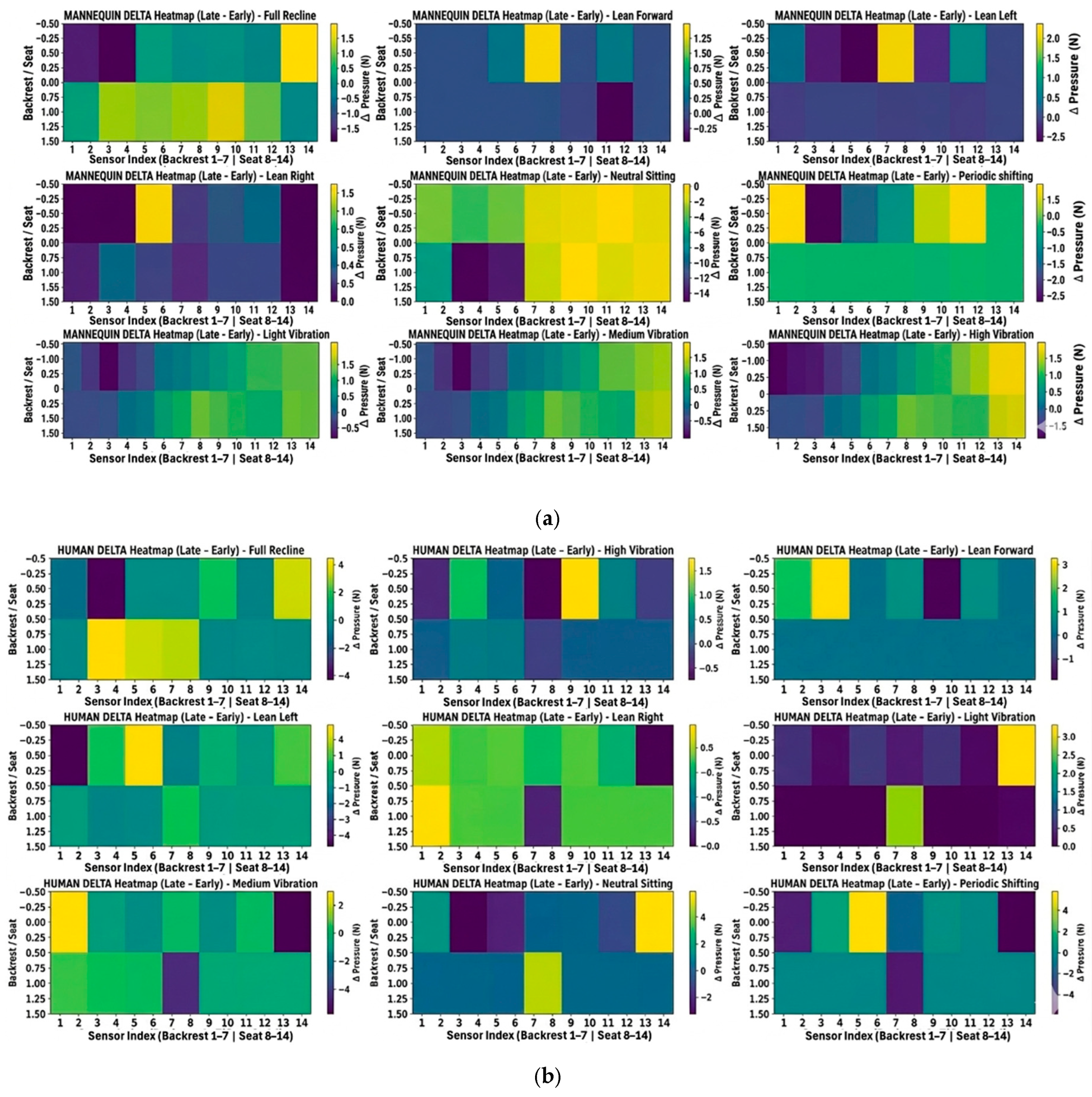
Delta pressure redistribution analysis was performed to quantify spatial changes in anatomical load distribution between early and late temporal phases. The delta heatmaps presented in
Figure 8 visualize pressure variation as positive and negative changes between temporal phases. In these heatmaps, the horizontal axis represents anatomical sensor indices distributed across the seating system (Backrest Sensors 1–7 located in upper panel and Seat Sensors 8–14 located in lower panel), while the vertical axis corresponds to the sensing modality consisting of pressure, temperature, and vibration channels. Warm color tones indicate increased pressure accumulation over time, whereas cool tones represent pressure reduction between the early and late phases. This representation enables direct observation of how seated posture evolves beyond static spatial patterns.
In the mannequin measurements (
Figure 8a), delta maps reveal relatively small pressure variations across most posture conditions. Changes are primarily localized and exhibit symmetric patterns between backrest and seat regions. Even under leaning and vibration-induced scenarios, pressure redistribution remains limited, indicating mechanically stable structural behaviour with minimal adaptive adjustment.
In contrast, the human delta heatmaps (
Figure 8b) show pronounced spatial redistribution, particularly within seat sensors associated with pelvic support and lateral contact regions. Neutral sitting demonstrates gradual pressure increase at central seat sensors, suggesting progressive load concentration during prolonged exposure. Lean-right and lean-left conditions exhibit strong lateral delta patterns, where pressure shifts toward the dominant side over time, reflecting sustained asymmetric loading and emerging fatigue dynamics.
Forward-leaning postures produce increased positive delta values along anterior seat sensors, indicating progressive forward load transfer. Meanwhile, periodic shifting conditions show mixed positive and negative changes distributed across anatomical regions, suggesting alternating load redistribution that may help mitigate localized pressure buildup. Under vibration-induced scenarios, human measurements demonstrate broader delta regions compared to mannequin responses, implying coordinated biomechanical adaptation to dynamic perturbation. The summarized delta redistribution characteristics are presented in
Table 3.
The delta heatmap analysis highlights that fatigue-related behaviour emerges through spatial redistribution rather than absolute pressure magnitude alone. While mannequin responses remain largely symmetric and temporally stable, human measurements exhibit directional pressure shifts that correspond to sustained postural loading. These findings reinforce the importance of spatiotemporal sensing, where delta mapping reveals subtle biomechanical adaptation not visible in static anatomical heatmaps or temporal snapshots alone. The observed redistribution patterns provide the foundation for quantifying fatigue intensity and identifying dominant anatomical hotspots in the following subsection.
4.4. Fatigue Intensity and Hotspot Analysis
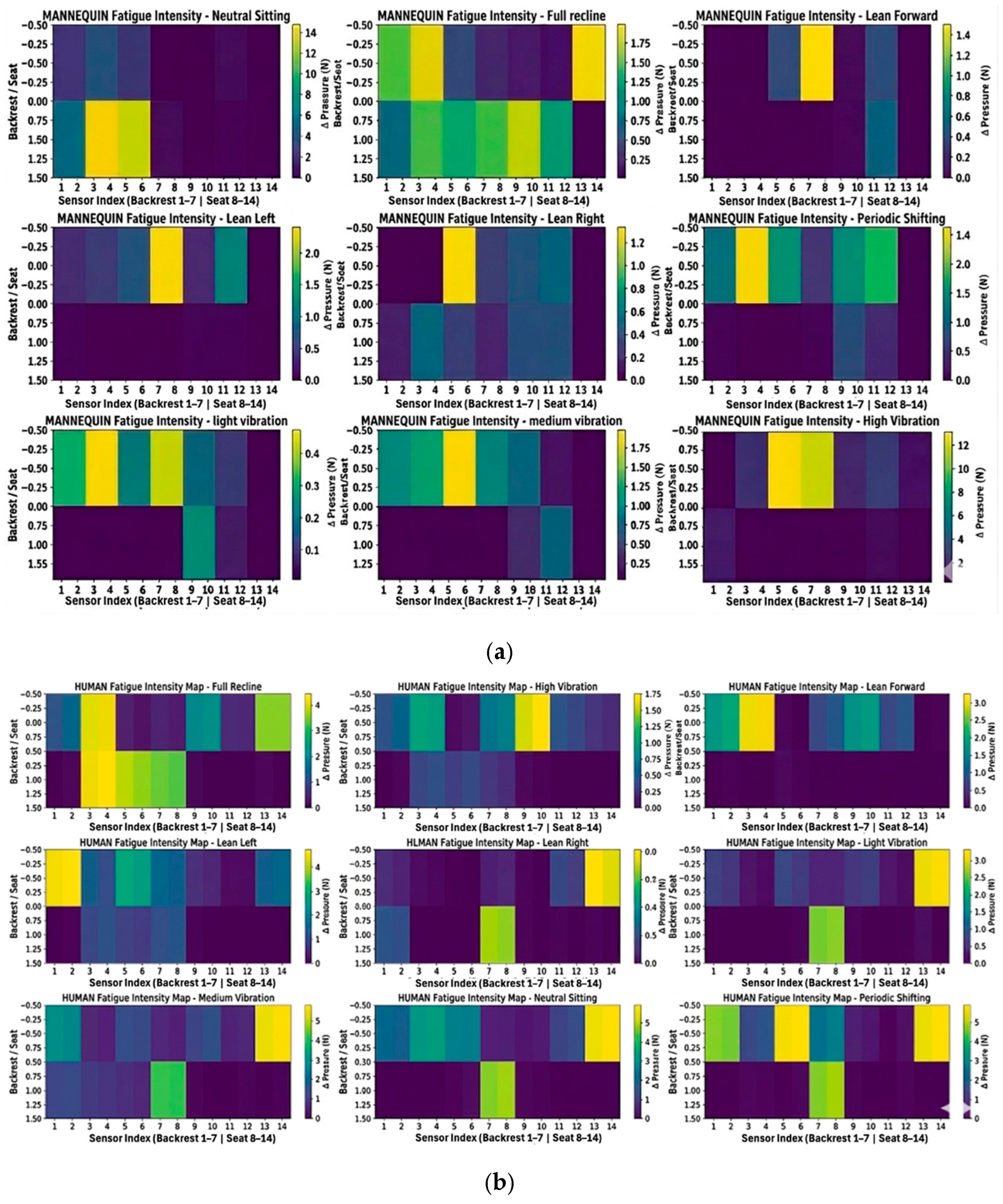
Fatigue intensity analysis was conducted to quantify the magnitude of pressure redistribution derived from delta heatmap evolution. The fatigue intensity maps presented in
Figure 9 visualize the absolute magnitude of anatomical pressure variation accumulated between temporal phases, enabling the identification of regions experiencing sustained biomechanical load changes during prolonged seated exposure. In these heatmaps, the horizontal axis represents anatomical sensor indices distributed across the seating interface (Backrest Sensors 1–7 located in the upper panel and Seat Sensors 8–14 in the lower panel), while the vertical axis represents the sensing modality consisting of pressure, temperature, and vibration channels. The color gradient indicates the magnitude of fatigue intensity, where higher intensity values correspond to stronger and more persistent pressure redistribution across temporal phases. Unlike delta heatmaps, which emphasize directional pressure shifts, fatigue intensity representations highlight the overall strength and spatial persistence of postural adaptation across different sitting conditions.
In the mannequin dataset (
Figure 9a), fatigue intensity values remain relatively uniform across anatomical regions, indicating mechanically stable load transfer with limited localized drift. Elevated intensity levels are primarily observed under vibration-induced conditions, suggesting that mannequin responses are predominantly driven by external excitation rather than intrinsic posture adaptation. The absence of strongly concentrated hotspots further reinforces the role of the mannequin as a controlled structural baseline, reflecting rigid mass distribution without active biomechanical compensation.
Conversely, human fatigue intensity maps (
Figure 9b) reveal pronounced localized high-intensity zones, particularly within seat sensors associated with pelvic support and lateral leaning regions. These localized intensity concentrations correspond to anatomical regions experiencing sustained pressure redistribution across temporal phases. During neutral sitting, localized intensity emerges around central seat indices, indicating gradual load accumulation over time. Lean-right and lean-left postures exhibit clear lateral hotspot formation, where fatigue intensity increases along the dominant support side, reflecting sustained asymmetric loading behaviour. Forward-leaning configurations demonstrate intensified anterior seat regions, suggesting progressive load transfer toward the thigh–pelvic interface.
Hotspot detection results, summarized in
Table 4, further emphasize the contrast between mechanical and biomechanical responses by ranking sensors according to anatomical drift magnitude and normalized drift coefficients. In this study, hotspot regions were defined as the top K = 3 sensing nodes with the highest-pressure drift coefficients for each posture condition. The selection of K = 3 was based on exploratory analysis of the drift magnitude distribution across all sensing nodes. The ranking of drift values consistently showed that the first three sensors capture the dominant pressure redistribution patterns, while the remaining sensors exhibit substantially smaller drift magnitudes. This distribution resembles an elbow-like pattern commonly observed in ranking-based feature analysis, where the highest-ranked values represent the most significant contributors. By focusing on the three sensors with the largest drift coefficients, the analysis highlights the most critical anatomical fatigue regions while avoiding fragmentation of hotspot detection across minor pressure variations.
Across all seated conditions analyzed in this study, the mannequin exhibits relatively stable and spatially distributed drift patterns, confirming its role as a structural baseline for load transfer evaluation. In contrast, human measurements demonstrate amplified and localized fatigue signatures, with adaptation gain values frequently exceeding a twofold increase relative to mannequin responses. These findings indicate that prolonged seated interaction is governed not only by static pressure distribution but also by dynamic neuromuscular adaptation mechanisms that lead to progressive pelvic loading, lateral stabilization, and anterior load transfer.
The integration of fatigue intensity mapping with hotspot-based anatomical drift analysis therefore provides a unified framework for identifying ergonomic risk zones and interpreting spatiotemporal fatigue dynamics in multimodal smart-skin sensing environments.
4.5. Comparative Discussion: Mannequin vs. Human
4.5.1. Overall Spatial and Temporal Trend Consistency
The comparative evaluation between mannequin and human measurements demonstrates a globally consistent spatial distribution pattern across all seated postures, validating the anatomical smart-skin layout. Multimodal heatmaps (
Section 4.1) reveal similar baseline pressure concentration zones, particularly along the lower backrest and central seat regions. This spatial agreement confirms that the biomechanical mannequin successfully reproduces the fundamental mechanical loading characteristics of a human-sized body with comparable anthropometry.
Despite this spatial consistency, temporal evolution analysis (
Section 4.2) highlights clear differences in dynamic behaviour. The mannequin exhibits relatively stable temporal responses with minimal lateral redistribution, whereas human measurements show gradual pressure migration across adjacent sensing nodes. These temporal variations indicate active biomechanical adaptation processes during prolonged seated interaction, reflecting neuromuscular adjustments that cannot be replicated by passive mechanical structures.
4.5.2. Pressure Redistribution and Adaptive Behavior
Delta heatmap analysis (
Section 4.3) further distinguishes passive mechanical responses from adaptive human behaviour. Mannequin measurements present largely symmetric and localized pressure changes that correspond primarily to posture transitions. In contrast, human data demonstrate asymmetric redistribution patterns, particularly during leaning and periodic shifting conditions.
Such redistribution suggests that humans naturally adjust load distribution to mitigate localized discomfort and maintain stability. During prolonged neutral sitting, progressive shifts across seat sensors indicate continuous fatigue compensation through micro-adjustments. The mannequin, lacking muscular response and postural correction capability, maintains a comparatively rigid redistribution profile, reinforcing its role as a mechanical reference rather than a physiological model.
4.5.3. Fatigue Intensity and Anatomical Hotspot Formation
Fatigue intensity mapping and hotspot detection (
Section 4.4) provide additional insight into ergonomic stress development. Human measurements consistently exhibit higher fatigue intensity values and stronger anatomical drift across lateral seat sensors and lumbar backrest regions, indicating localized biomechanical strain accumulation. Conversely, mannequin fatigue intensity distributions remain more uniform, reflecting structurally driven load transfer without adaptive response.
Hotspot ranking analysis identifies pelvis-adjacent and lower lumbar sensing locations as dominant fatigue zones in both datasets. While anatomical locations remain broadly aligned, human measurements show higher normalized drift coefficients and greater adaptation gain values. These findings suggest that fatigue evolves as a distributed biomechanical process involving continuous load redistribution rather than isolated mechanical pressure accumulation.
The hotspot formation observed in this study is consistent with findings reported in previous ergonomic investigations. For example, Huang et al. [
23] demonstrated that prolonged seated exposure can generate significant lumbar fatigue and localized pressure redistribution around pelvic support regions when analyzed using combined pressure and electromyography sensing. The emergence of pelvic-adjacent fatigue hotspots in the present study therefore supports existing biomechanical evidence regarding pressure redistribution patterns during prolonged seated interaction.
Recent research has also explored computational biomechanical approaches for assessing injury risks associated with prolonged seated loading. For instance, Zhang et al. [
32]. proposed a hybrid framework combining finite element analysis and machine learning to estimate internal tissue stress and strain distributions in the buttock region based on personalized biomechanical characteristics. While such approaches provide valuable insight into internal soft-tissue deformation mechanisms, they typically rely on complex biomechanical models and computational simulations that are not easily applicable to real-time monitoring scenarios.
Several studies have investigated pressure-based monitoring systems for posture analysis. For example, Odesola et al. [
4] analyzed pressure distribution patterns using a pressure mat system to evaluate seated posture behavior. While pressure mat systems provide valuable spatial pressure information, they primarily rely on single-modal pressure sensing and therefore capture only the mechanical load distribution at the contact interface.
In contrast, the multimodal smart-skin architecture proposed in this work focuses on real-time sensing of surface interaction dynamics during seated posture adaptation. Compared with earlier ergonomic monitoring systems based primarily on pressure sensing, such as posture recognition systems using pressure sensor arrays [
7,
10], the proposed framework provides a more comprehensive representation of seated fatigue dynamics. While pressure-based systems capture spatial load distribution, the integration of temperature and vibration sensing enables the detection of additional biomechanical indicators associated with prolonged contact persistence and micro-movement behavior.
Furthermore, the anatomically structured sensor layout used in this study contributes to improved interpretability of spatial redistribution patterns. Unlike conventional grid-based pressure mapping systems, the anatomically aligned sensing nodes allow fatigue hotspots to be directly associated with specific biomechanical contact regions such as the lumbar, pelvic, and thigh support areas. This structured placement facilitates clearer biomechanical interpretation and enhances the ability of the sensing system to identify ergonomic risk zones during prolonged seated interaction.
To further position the proposed sensing framework within the landscape of existing ergonomic monitoring approaches, representative studies are summarized in
Table 5. As summarized in
Table 5, most existing ergonomic monitoring systems rely primarily on single-modal pressure sensing or computational biomechanical modeling. In contrast, the proposed multimodal smart-skin framework integrates multiple sensing modalities and spatiotemporal analysis, enabling real-time observation of fatigue-related pressure redistribution across anatomically structured sensing locations.
4.5.4. Ergonomic Implications for Intelligent Seating Systems
It is important to emphasize that the biomechanical mannequin is not intended to replace human measurements in ergonomic evaluation. Instead, the mannequin functions as a controlled mechanical surrogate that enables precise calibration of spatial pressure parameters and repeatable baseline assessment. By providing stable and reproducible loading conditions, mannequin-based sensing supports quantitative characterization of ergonomic variables that may be difficult to isolate in dynamic human experiments.
Within the proposed framework, mannequin measurements complement human data by establishing a mechanical reference for interpreting adaptive fatigue dynamics. The integration of spatiotemporal heatmaps, delta pressure analysis, fatigue intensity modeling, and hotspot detection demonstrates the potential of multimodal smart-skin systems for:
Importantly, the observed temporal fatigue signatures indicate that ergonomic assessment should extend beyond static pressure distribution. Monitoring dynamic pressure evolution and hotspot emergence may provide earlier indicators of discomfort progression and musculoskeletal risk. To further validate the observed pressure redistribution patterns, a statistical analysis of temporal pressure dynamics was performed as described in the following subsection.
4.5.5. Statistical Validation
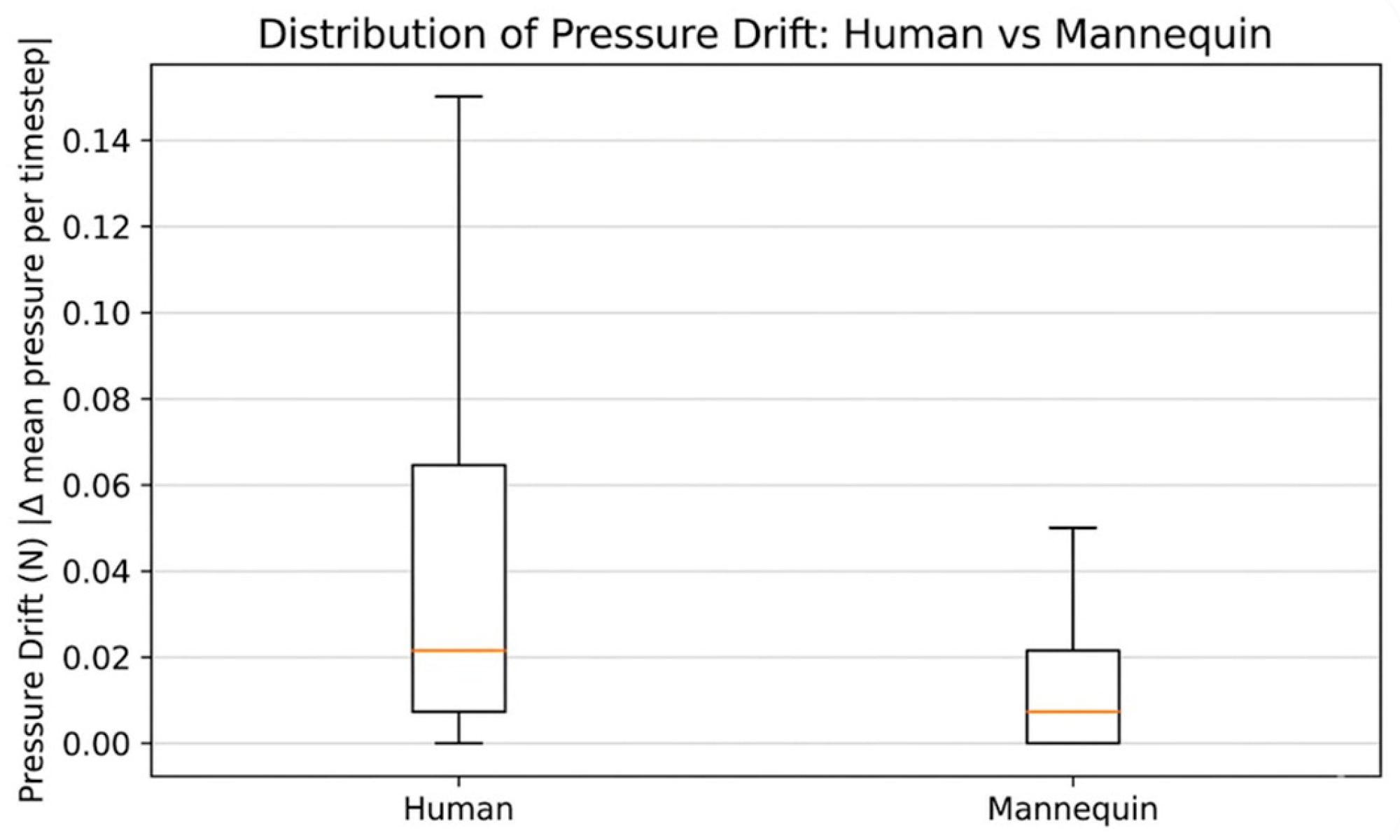
To quantitatively validate the observed differences between human and mannequin measurements, a statistical comparison was performed based on the pressure drift coefficient, which represents the magnitude of temporal pressure redistribution between consecutive timestamps across the 14 anatomical sensing nodes. This metric captures the dynamic load redistribution occurring during prolonged seated interaction and serves as an indicator of biomechanical fatigue adaptation.
For each dataset, the pressure drift coefficient was computed as the absolute change in the mean pressure across sensing nodes between consecutive time steps. The resulting drift distributions for the human and mannequin datasets were analyzed using descriptive statistics and statistical hypothesis testing.
Table 6 summarizes the statistical comparison between the two datasets. The results show that the human dataset exhibits a substantially higher mean pressure drift (0.074 ± 0.149) compared with the mannequin dataset (0.024 ± 0.083). This indicates that human seated behavior involves continuous micro-adjustments that redistribute pressure across anatomical regions, whereas the mannequin maintains relatively stable pressure patterns due to its rigid mechanical structure.
To determine whether this difference is statistically significant, an independent Welch two-sample t-test was conducted between the two distributions. The statistical test confirms that the pressure drift differences between human and mannequin datasets are highly significant (p < 0.001). In addition to statistical significance testing, effect size analysis using Cohen’s d was performed to evaluate the magnitude of the observed difference. The computed effect size (d = 0.43) indicates a moderate practical difference between the two datasets, confirming that the observed pressure redistribution patterns are not only statistically significant but also biomechanically meaningful.
Figure 10 presents the boxplot distribution of the pressure drift coefficients for human and mannequin measurements. The figure clearly illustrates the broader distribution and higher median drift values observed in the human dataset, reflecting dynamic posture adjustments during prolonged sitting. In contrast, the mannequin dataset shows a more compact distribution, consistent with mechanically stable loading conditions.
Overall, the statistical validation confirms that the proposed smart-skin sensing framework successfully captures quantifiable biomechanical differences between human and mannequin seated behavior. The results demonstrate that human subjects exhibit significantly greater temporal pressure redistribution, reflecting adaptive posture adjustments and fatigue-related load shifts during prolonged sitting. These findings support the effectiveness of the multimodal smart-skin sensing system for ergonomic monitoring and fatigue analysis.
4.5.6. Multimodal Interpretation of Smart-Skin Sensing Signals
Although the statistical validation presented in the previous subsection primarily focuses on pressure redistribution dynamics, the proposed smart-skin architecture was designed as a multimodal sensing system that integrates pressure, temperature, and vibration sensors to capture complementary aspects of human–seat interaction. Each sensing modality provides distinct yet interrelated information regarding biomechanical loading, contact persistence, and external mechanical disturbances that collectively influence ergonomic fatigue development during prolonged seated interaction.
Pressure sensing serves as the primary modality for quantifying biomechanical load redistribution across anatomical seating regions. The spatial distribution of pressure directly reflects how body weight and posture adjustments interact with the seating surface, making it a reliable indicator of mechanical load transfer and fatigue-related pressure drift. As demonstrated in the statistical analysis presented in
Section 4.5.5, human measurements exhibit significantly greater temporal pressure redistribution compared with mannequin measurements, reflecting adaptive biomechanical behavior during prolonged sitting. These pressure-based metrics therefore provide a direct quantitative representation of fatigue-related load dynamics across the anatomically distributed sensing nodes.
Temperature sensing provides complementary information related to contact persistence and localized thermal accumulation. During prolonged seated interaction, regions that maintain sustained pressure contact with the seating surface tend to exhibit gradual increases in surface temperature due to reduced airflow and continuous body-seat interaction. Consequently, temperature measurements can serve as indirect indicators of prolonged contact regions and limited micro-movement. In the context of ergonomic fatigue monitoring, localized temperature changes may therefore support the interpretation of fatigue hotspot formation observed in pressure-based heatmap analyses. Regions that exhibit both sustained pressure and gradual temperature increase may indicate areas experiencing prolonged load concentration and reduced posture variability.
Vibration sensing contributes an additional dimension by capturing external mechanical disturbances and micro-vibration responses during seated interaction. In dynamic environments such as vehicle seating or industrial operation platforms, vibration exposure can influence posture stability and induce subtle adjustments in body position. The vibration sensors embedded in the smart-skin layer record these dynamic excitation patterns, enabling the system to capture how external mechanical stimuli interact with human posture behavior. Differences in vibration response patterns between the biomechanical mannequin and the human participant may therefore reflect the role of neuromuscular adaptation in maintaining posture stability under dynamic conditions.
The integration of these three sensing modalities enables the smart-skin platform to capture a more comprehensive representation of ergonomic interaction dynamics compared with conventional single-modal pressure monitoring systems. Pressure measurements characterize the mechanical load distribution, temperature sensing reflects contact persistence and thermal interaction, and vibration sensing captures dynamic environmental disturbances and micro-movement responses. Together, these modalities provide complementary signals that support the interpretation of spatiotemporal fatigue development during prolonged seated exposure.
While the present study primarily utilizes pressure-based metrics for quantitative fatigue analysis, the multimodal architecture establishes the foundation for future multimodal fatigue assessment models. For instance, pressure drift coefficients, localized temperature variation, and vibration response metrics (e.g., vibration root mean square values) may be integrated as joint indicators within data-driven ergonomic monitoring frameworks. Such multimodal fusion approaches could enable more comprehensive fatigue assessment by simultaneously considering mechanical load redistribution, contact persistence behavior, and external dynamic excitation. Future work will therefore explore multimodal signal fusion strategies and machine learning-based models to further enhance the predictive capability of smart-skin ergonomic monitoring systems.
4.5.7. Limitations and Future Directions
Despite the promising findings, several limitations should be acknowledged. The present study involves a single human participant with a specific anthropometric configuration under controlled seated scenarios, which may limit the generalization of the results across broader populations. While the mannequin–human comparative framework provides valuable insight into biomechanical differences in pressure redistribution patterns, the experimental results should therefore be interpreted as preliminary observations obtained under controlled conditions rather than universal ergonomic conclusions. Future studies involving multiple participants with diverse anthropometric characteristics will be necessary to further validate the robustness and generalizability of the proposed sensing framework.
In addition, the fatigue assessment framework in this study primarily relies on objective sensor-derived indicators, particularly pressure redistribution metrics obtained from the multimodal smart-skin sensing system. While these indicators provide measurable biomechanical signatures associated with prolonged seated interaction, the current experimental design does not incorporate complementary subjective or physiological validation measures.
In ergonomic and fatigue-related research, subjective fatigue assessments such as the Visual Analog Scale (VAS) and physiological measurements such as electromyography (EMG) are often used to evaluate perceived discomfort and muscular activation during prolonged seated exposure. The integration of such measurements could further strengthen the relationship between sensor-derived indicators and human fatigue perception. For example, VAS scores collected across posture conditions and temporal segments could provide subjective validation of fatigue progression, while EMG measurements of lumbar and thigh muscles could reveal underlying neuromuscular responses associated with pressure redistribution and posture stabilization.
Future work will therefore incorporate multimodal validation strategies by integrating subjective fatigue ratings and physiological monitoring into the smart-skin sensing framework. Such extensions will enable correlation analysis between objective sensor indicators (e.g., pressure drift coefficients, temperature variation, and fatigue intensity) and human fatigue perception or muscular activation patterns. In addition, future studies will extend the experimental evaluation to multi-subject datasets with varying anthropometric characteristics, explore long-duration monitoring scenarios, and integrate temporal deep learning architectures to enable predictive modeling of fatigue progression in real-time ergonomic environments.




 ,
,