1. Introduction
Electrical power systems are constantly growing and evolving due to the urgent need to supply increasing human activities with electrical energy and the responsibility to produce it through renewable sources, while integrating devices that enhance system versatility, efficiency, and control.
Nowadays, distribution grid operators face significant challenges in analyzing and protecting these systems, mainly due to the high penetration of distributed energy resources, especially inverter-based types [
1,
2]. To guarantee the safe and stable operation of such systems, it is necessary to develop models that accurately represent the components interacting within the grid. This becomes particularly relevant under fault, unbalanced, and harmonic scenarios.
Zigzag-connected transformers constitute critical components in contemporary three-phase system engineering, particularly in applications requiring ground return control, harmonic mitigation, and compatibility with power electronics-based sources. The zigzag connection, achieved through the interlacing of adjacent phase coils, facilitates a low-impedance pathway for zero-sequence currents without substantially impacting the balanced currents across the three phases. This configuration generates an artificial neutral point in systems that are not directly grounded, thereby conditioning the ground-fault response [
3,
4]. Such characteristics render the zigzag connection an appealing solution for protection coordination as well as for passive harmonic filtering applications, particularly concerning triplen harmonics circulating along the neutral path.
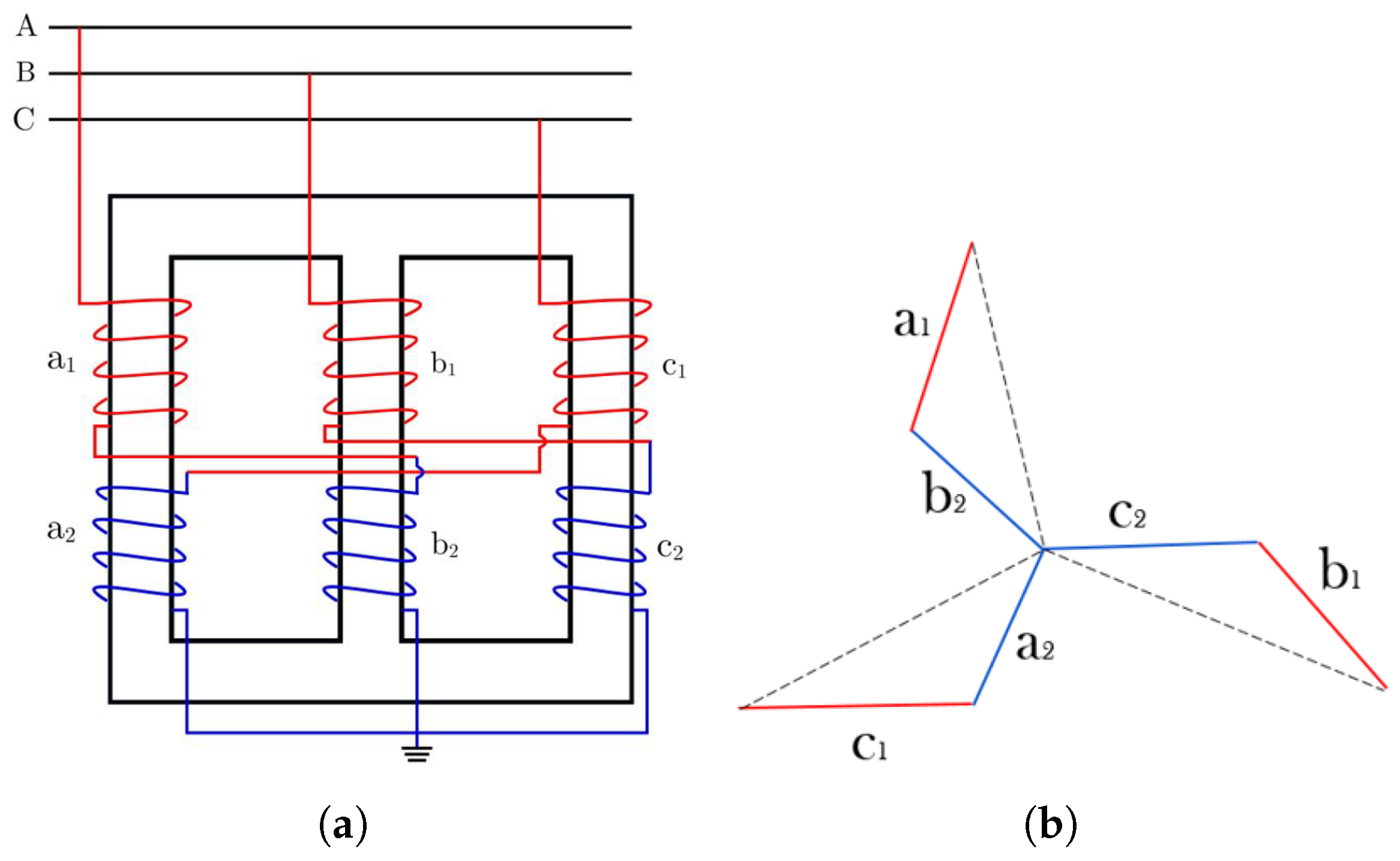
The zigzag transformers consist of three primary and three secondary windings arranged in a zigzag configuration, with all six windings having the same number of turns. In each phase, the primary winding belonging to that phase and the secondary winding of another phase are connected in opposition [
5].
Figure 1a illustrates the internal connection of the transformer windings, while
Figure 1b shows the corresponding voltage phasor diagram.
The magnitude and behavior of zero-sequence impedance are influenced by various construction and magnetic factors that necessitate meticulous modeling. Relevant parameters encompass leakage inductance between windings, mutual inductances, coil geometry, core configuration, and the presence of structural elements such as tank walls. Recent research has indicated that while analytical methods are beneficial for preliminary sizing and sensitivity analysis, they may overlook three-dimensional and edge effects that can significantly modify leakage reactance. Consequently, the integration of analytical formulations with finite element simulations, both 2D and 3D, has been proposed as the best practice for attaining precise estimates [
6,
7]. Specifically, Dawood et al. [
6] conduct a comparative analysis of different approaches, emphasizing the necessity of three-dimensional models in scenarios where the geometric complexity of winding and core discontinuities yields non-trivial flux distributions.
The interaction of zigzag transformers with power electronics systems has become an increasingly pertinent concern for designers and manufacturers. In rectification schemes and three-phase converters, zero-sequence components and harmonics, whose spectral content may encompass subharmonics or high frequencies, are generated. These currents establish a circulation path within the zigzag transformer, enabling controlled null current injection, which enhances the sinusoidal nature of the input currents or, conversely, limits harmonic propagation to the grid. The work of Choi, et al. [
8] exemplifies this strategy by utilizing a virtually harmonic-free rectification scheme that incorporates zero-sequence current injection via transformers, resulting in input currents that closely approximate sinusoidal forms. In a similar vein, Karthi et al. [
4] demonstrate that a shunt-connected zigzag transformer reduces neutral current arising from triplen harmonics in the context of nonlinear loads, consequently diminishing voltage distortion and leading to lower thermal losses and enhanced system efficiency.
Another notable application is the integration of renewable energy sources and unified AC-DC systems. In this scenario, zigzag leakage inductance may serve as a design variable that improves overall efficiency and power density. Das, et al. [
9] present an optimized methodology for a low-frequency zigzag transformer employed in a unified AC-DC system. By selectively determining the magnetic flux density, the insulation distance between coils, and managing leakage inductance, it is possible to achieve component reduction, create a more compact design, and enhance performance under nominal operating conditions. This optimization process necessitates multiparameter modeling and experimental validation to ensure that the resultant zero-sequence impedance concurrently satisfies power quality requirements as well as the operational conditions of the unified system.
Moreover, it is imperative to integrate electromagnetic interactions with the structural components of transformers into the modelling processes. Research by Zirka et al. [
10] and Ngnegueu et al. [
11] shows that tank walls and three-dimensional saturation can significantly alter zero-sequence flux paths and magnetization behavior. Such alterations can affect impedance and heat dissipation; therefore, excluding them can lead to substantial prediction inaccuracies. Hameed [
7] demonstrates that well-calibrated two-dimensional finite element models can accurately replicate zero-sequence impedance compared with real-world assessments, thereby reducing the need for costly prototypes. Additionally, Novosel et al. [
12] show that fluid-structure interactions between the insulating oil and the tank steel modify vibrational and acoustic responses; consequently, it is essential to consider mechanical factors alongside electrical and magnetic factors.
Therefore, best practices in design advocate an integrated methodology: beginning with analytical analyses to establish initial criteria and evaluate sensitivity, followed by the application of two- and three-dimensional finite element models to capture flux distributions, saturation effects, tank influences, and thermal behavior. This approach should be corroborated with experimental testing whenever feasible [
3,
6,
7,
10,
12]. Such a comprehensive strategy ensures that the calculated zero-sequence impedance effectively fulfills the objectives of protection, harmonic mitigation, and compatibility with integrated AC-DC converters or systems, while preserving the transformer’s thermal and structural integrity.
In conclusion, the zigzag connection and a thorough assessment of zero-sequence impedance serve as versatile and vital design tools for addressing contemporary challenges in power systems. The integration of analytical methods, advanced numerical modeling, and empirical validation is the most robust approach to developing transformers that meet the requirements of power quality, protection, and efficiency in environments increasingly reliant on power electronics and distributed generation.
In this study, two three-dimensional finite element models were developed and implemented to calculate the zero-sequence impedance of a zigzag grounding transformer. The results indicate that the proposed models exhibit errors of less than 4% relative to the nominal value, demonstrating accuracy that surpasses that of traditional analytical methods and closely aligns with laboratory-measured values, thereby providing robust validation. This indicates that the methodology serves as a reliable resource for transformer manufacturers and designers, especially concerning zigzag grounding transformers, which are increasingly prevalent in contemporary electrical systems, including wind turbines, inverter-based systems, and applications aimed at harmonic mitigation. Unlike approximate analytical techniques, the proposed approach integrates the principle of magnetic energy storage and explicitly addresses the distribution of zero-sequence fluxes during fault conditions, significantly enhancing predictive accuracy. The practical contribution of this work lies in its provision of a validated method that supersedes conventional calculations and improves the precision of ground-fault protection design and optimization.
To address the limitations of simplified analytical estimations and the strong influence of external flux paths under zero-sequence excitation, this paper investigates the following research question: How accurately can the zero-sequence impedance () of a three-legged zigzag grounding transformer be predicted using 3D FEM based on the stored magnetic energy method, and to what extent does explicitly modeling the metallic tank (including tank-induced currents via impedance boundary conditions) and the nonlinear core B–H behavior affect the resulting compared with analytical manufacturer calculations and laboratory measurements?
3. Electromagnetic Modeling
Electromagnetic field computation using finite element techniques is an important and powerful tool for the analysis and design of electrical machines due to its versatility for handling complex geometries, different materials, and types of excitation [
21,
22]. The electromagnetic field inside the transformer is governed by Maxwell’s equations. Given that transformer excitation varies sinusoidally at low frequency, Maxwell’s equations can be employed in the time-harmonic domain as follows:
with the constitutive relationships:
Vector fields
and
are the electric field intensity and the current density; material properties
and
are the magnetic permeability and the electrical conductivity, respectively. For FEM analysis, the problem is formulated in terms of potentials, which reduces the number of unknowns in some regions and decreases computational effort [
23]. In each transformer region, according to the medium and the presence of excitation sources, the reduced scalar magnetic potential
, the scalar magnetic potential (
), or the magnetic vector potential (
) can be used as a field variable. The 3D finite element model developed for the zigzag transformer consists of the following regions:
3.1. Conductive Region
In conductive regions, where
, the electromagnetic distribution is obtained through magnetic vector potential
, which is defined by:
In this region the governing equation, obtained from (
8)–(
13) is:
This region accounts for the presence of eddy currents. In the model, the transformer tank is treated as a conductive region.
3.2. Non-Conductive Region with Source Current
In regions free of eddy currents, where
, the magnetic field intensity can be considered composed of two parts:
where
is the magnetic field produced by source currents and
is known as the reduced magnetic potential, and its gradient represents the induced magnetization. The field
can be calculated using the Biot–Savart law from the current density specified in the region. The equation in this region is obtained by substituting (
15) in (
9):
In the transformer model, the windings are modeled in this way.
3.3. Non-Conductive Region Free of Source Current
For non-conductive regions free of source current and with a high permeability, the problem can be solved employing the total scalar potential
, defined as follows:
The use of this potential avoids some numerical errors that can be present if
is used in these regions [
24,
25]. The governing equation in this region is:
The magnetic field distribution in the transformer core is obtained using (
18), thus the eddy currents in this region are neglected.
4. Zigzag Transformer Under Study and 3D Finite Element Model
4.1. Design Aspects of Zigzag Transformer
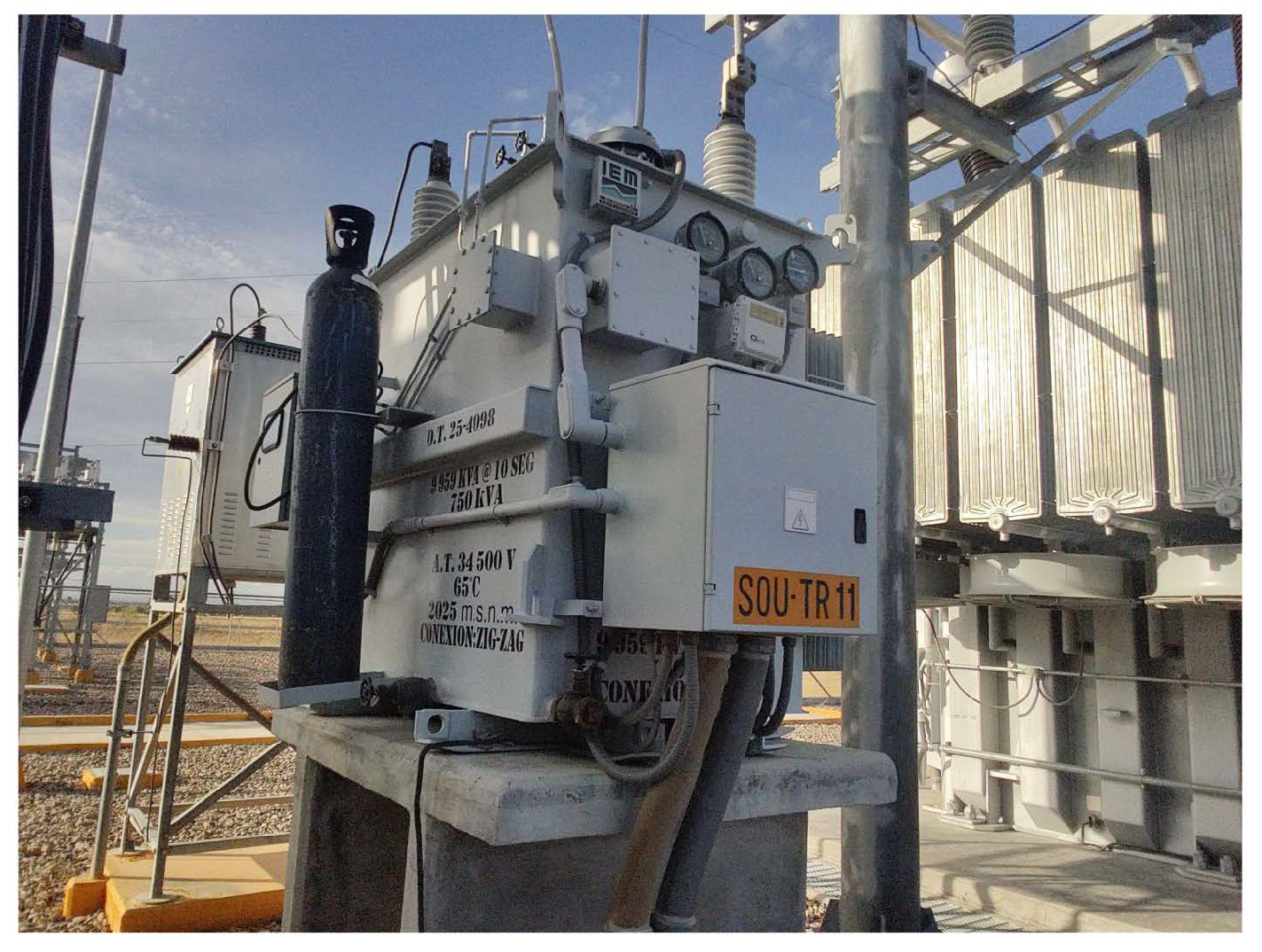
The zigzag grounding transformer under analysis in this work is a three-legged core type, oil-immersed, designed to be used in a distribution network.
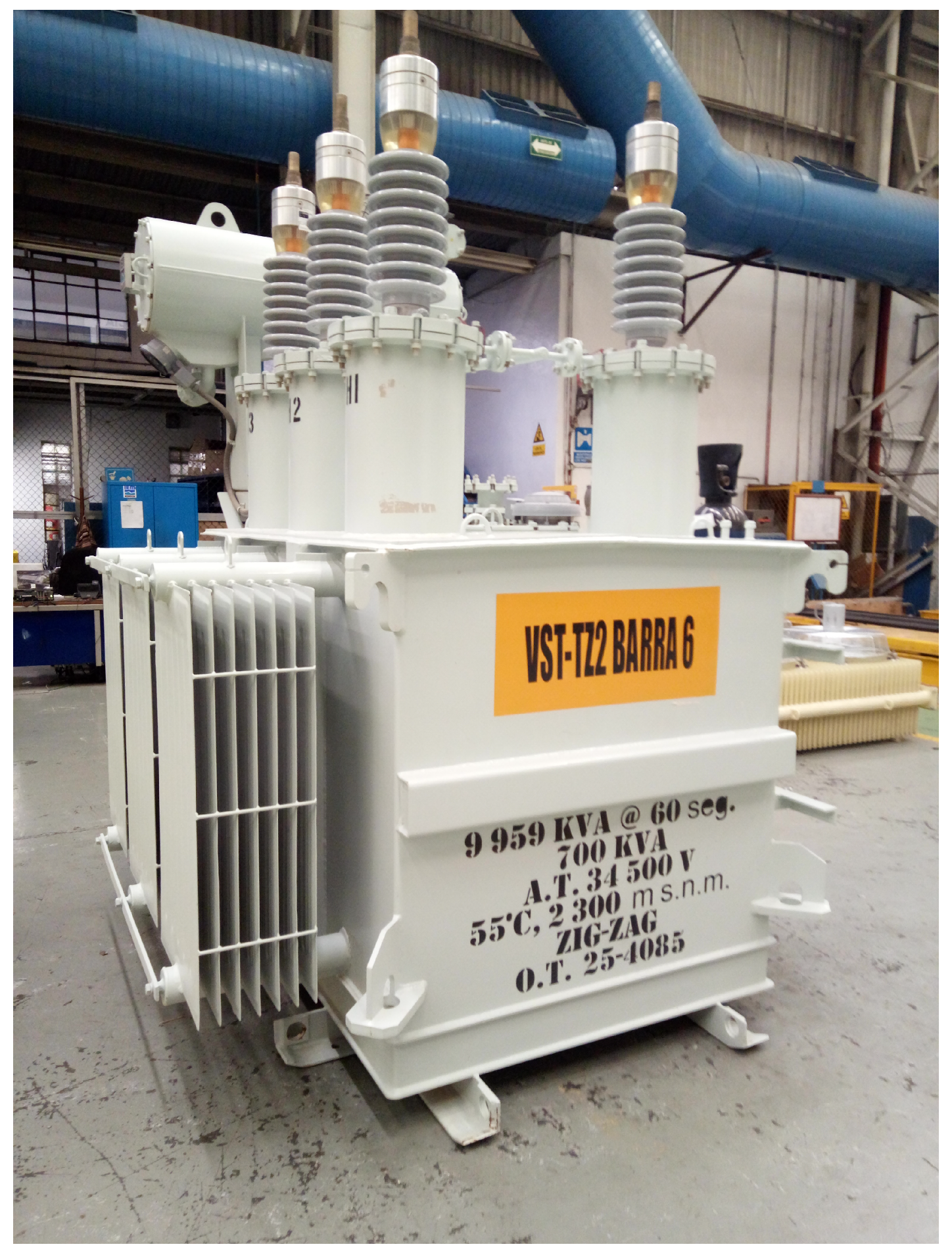
Figure 4 shows the transformer at the manufacturer’s facility.
Table 1 presents the nameplate values of the machine, where its nominal
is included.
The specific application of this transformer under study is for a solar power generation plant.
Figure 5 presents the transformer at its installation site.
4.2. 3D Finite Element Model
The use of a three-dimensional model allows us to represent the zigzag transformer with higher accuracy under different operating points, such as during the test for determining its zero-sequence impedance. Although it could be possible to use two-dimensional models, they do not capture the complete phenomena due to the assumptions required for their implementation.
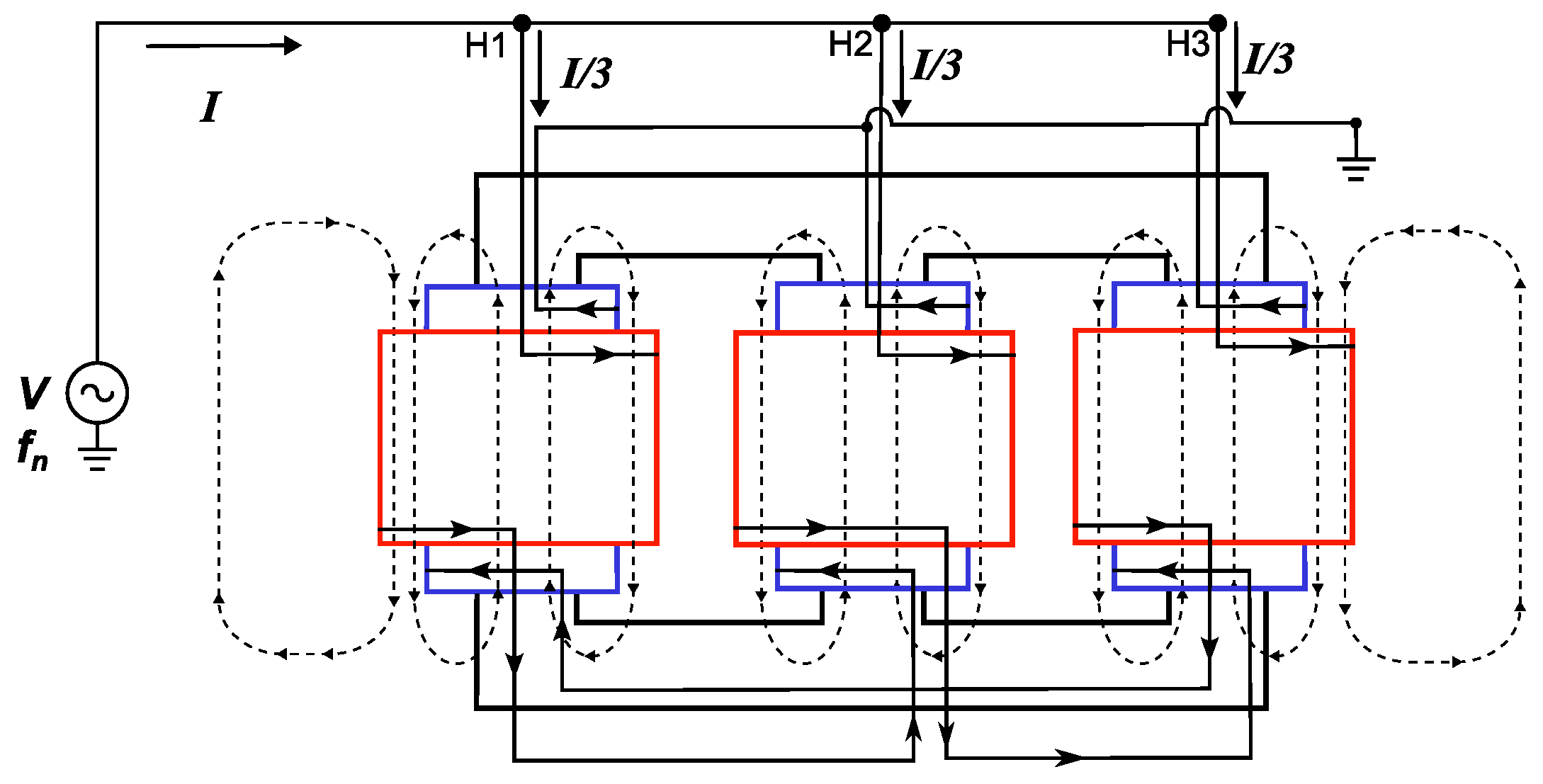
As described previously, the zero-sequence magnetic field distribution involves not only the active part of the transformer but also the surrounding elements, such as the transformer tank. For this reason, two 3D FEM models were developed for the
calculation. The first model neglects the effect of the transformer tank, considering only an air region enclosing the core and windings. The second model includes the effect of the transformer tank.
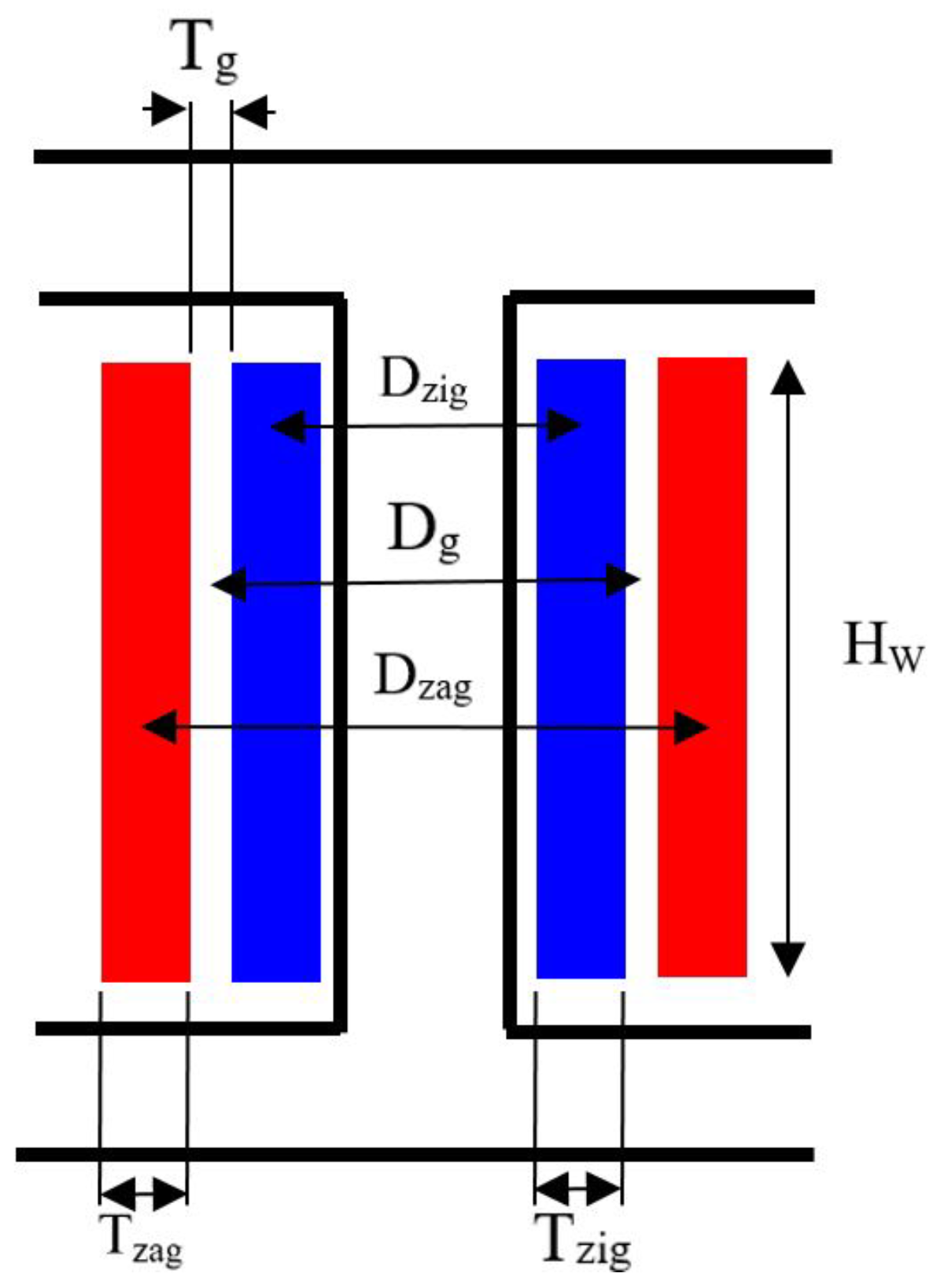
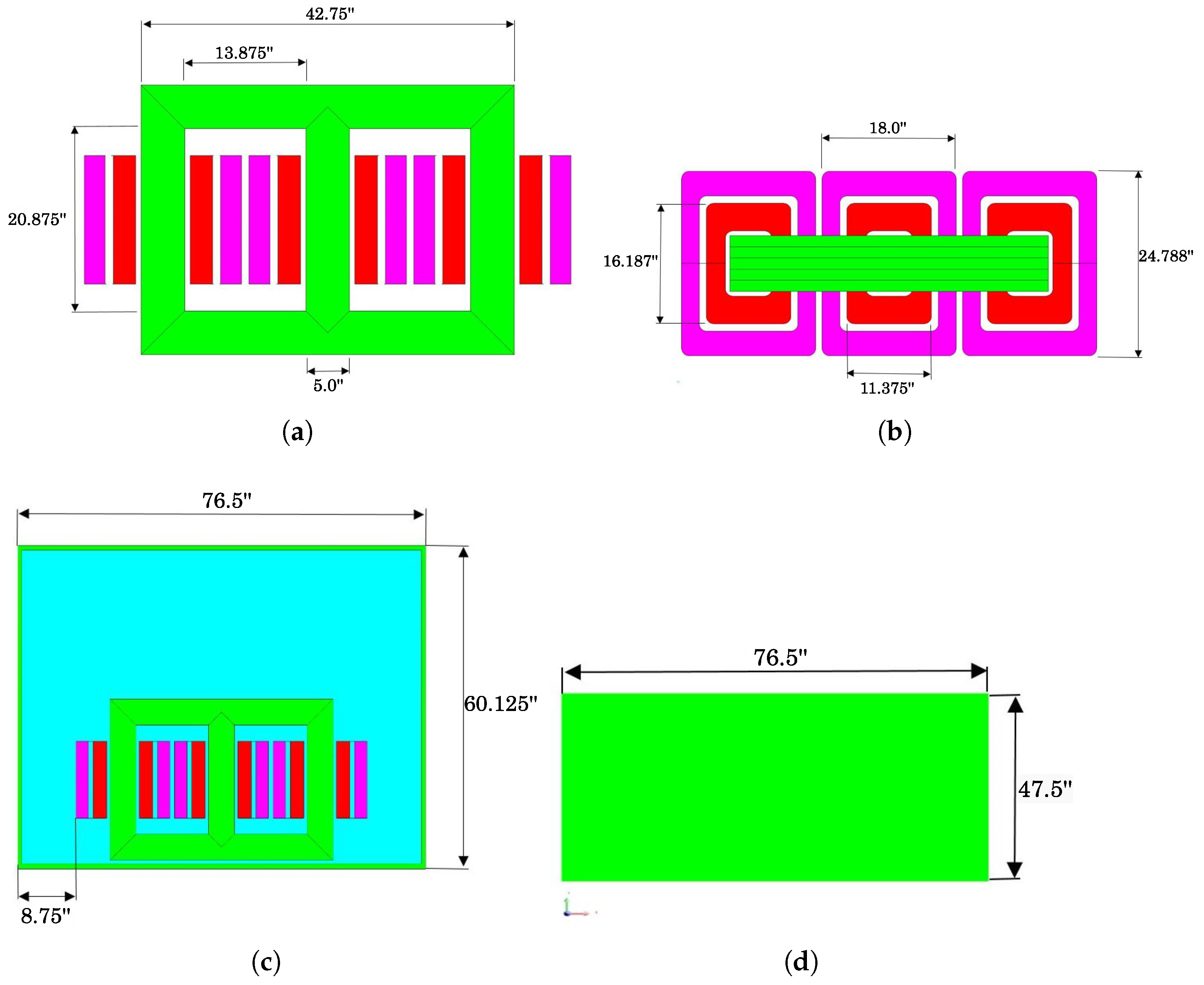
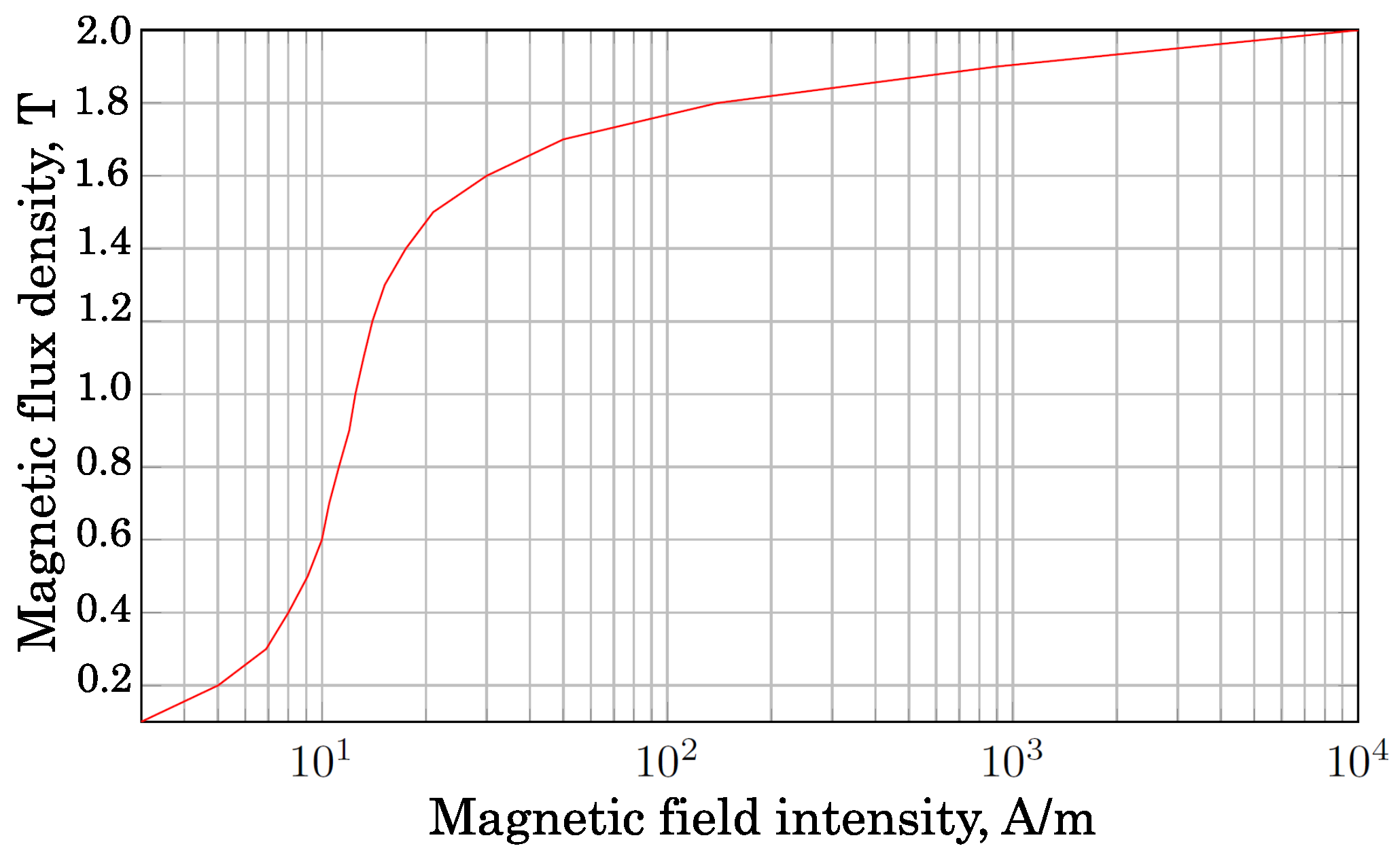
Figure 6 shows the dimensions of the active part and the tank of the zigzag transformer under study. The magnetic core is modeled as a non-conductive, isotropic material made of grain-oriented silicon steel (23JGSD085), with the B–H curve shown in
Figure 7. The transformer windings have a rectangular cross-section and are modeled as copper flat bars measuring 0.051 × 0.229 inches, with a total number of turns
N = 1134.
For the case where the transformer tank wall is included, the tank is considered made of A36 steel with a constant relative permeability
and electrical resistivity of
ρ = 1.219
μΩ·m [
26]. The justification for using a constant permeability:
The tank is usually made of structural steel (not grain-oriented electrical steel). Its actual B–H curve depends on composition, rolling condition, welds, residual stresses, and temperature. Obtaining a reliable B–H curve is not always feasible; therefore, an effective constant is often used as an engineering approximation.
For stray losses, the dominant factors are typically the electrical conductivity and the distribution of leakage flux near the walls. If the tank operates far from saturation in most of its volume, a constant permeability provides a reasonable representation.
Modeling the tank as nonlinear adds iterations and can hinder convergence, especially in 3D with a fine mesh to resolve skin depth. Using a constant permeability reduces computation time and numerical risk.
The articles [
27,
28,
29,
30,
31,
32,
33,
34] use a constant permeability for the transformer tank. We are not aware of any published article that models the tank wall with a nonlinear permeability.
To simulate the zigzag transformer under the zero-impedance test, an excitation voltage of 19.1 kV is applied at the transformer terminals. The 3D FEM models are developed and solved under sinusoidal steady-state conditions using the commercial software Altair
® Flux
® 2026. For the model without the tank, an infinite box is attached to the analysis domain, whereas in the model with the tank, a surface impedance condition is assigned to the inner wall of the tank [
35].
The mesh-generation stage is very important in the modeling process. When creating the mesh, its adaptation to the physical properties of the problem to be solved must be considered. When building a mesh, the element size must be taken into account, since this decision affects both the obtained results and the computation time. A mesh with smaller elements can provide accurate results, but the computation time may be greatly affected; conversely, a mesh with larger elements can significantly reduce computation time, but the accuracy of the results may be compromised. Therefore, mesh quality is strongly related to the balance between computation time and the accuracy required for the solution.
When generating the mesh in this work, several requirements were considered:
The element density in some regions of the domain must be high.
The variation in size between adjacent elements must be progressive.
If triangular elements are used, obtuse angles should be avoided, as they can reduce accuracy and destabilize the solution.
Different meshes were proposed for the transformer model before selecting the most suitable size. To determine it, simulations were performed using a range of mesh sizes, which was then progressively refined until the results changed as little as possible, reaching a final mesh with 981,494 nodes and 684,839 volume elements. Since the highest concentration of magnetic fields occurs in the region near the coils, this is where the mesh must be densest. The mesh in this work was generated in Altair Flux
® [
35] using the advanced mesher settings, which allow the user to control mesh construction in the different regions of the problem.
When analyzing the original mesh, a high percentage of elements with excellent quality (97.01%) was obtained; however, the study of computation time and memory usage showed that it is not efficient due to the large number of nodes employed. For this reason, different mesh models were generated and progressively refined until the stored magnetic energy values did not change by more than ±3%.
The core was meshed using tetrahedral elements because this type of element allows the mesh to better conform to the core geometry. The finest mesh in the model was applied to the tank walls, due to the penetration depth previously calculated for this type of material.
The boundary conditions employed correspond to an infinite domain, which is artificially extended through a coordinate transformation. For practical purposes, this approach allows the zero reference of the potential to be placed at a finite distance, sufficiently far from the region of interest to ensure that the potential has effectively decayed to zero. A detailed explanation of this procedure can be found in the Altair Flux manual.
In Altair Flux, magnetodynamic problems are treated using an equivalent magnetic material approach. Starting from the quasi-static B–H characteristic of the material, an equivalent constitutive relation is constructed by linearizing the B–H curve around the operating point and introducing a complex, frequency-dependent permeability. The real part of the permeability represents the reversible magnetic behavior, while the imaginary part accounts for magnetic losses due to hysteresis and eddy currents. This equivalent B–H relationship does not represent a physical hysteresis loop but ensures that the same energy dissipation per cycle is reproduced, enabling efficient and stable finite element solutions of nonlinear magnetodynamic problems.
The surface impedance boundary condition [
36] is employed to replace a three-dimensional conducting material with an equivalent surface representation. At power frequencies, electromagnetic fields penetrate conductive materials only over a finite distance, defined by the skin depth:
The relationship between the tangential components of the magnetic and electric fields is derived from the analytical solution of the field distribution in a semi-infinite conducting slab [
37]. In practice, this approach relates the tangential component of the magnetic field intensity
to the electric field
at the surface of the eddy-current region through
where
and
is the outward unit normal vector to the conductor surface. These equations define a boundary condition that eliminates the need for explicit volumetric modeling of eddy-current regions. In this work, both the frame and the tank are modeled using impedance surface conditions.
All numerical models are inherently approximate representations of physical reality and are therefore subject to modeling errors. Furthermore, to make three-dimensional finite element models computationally tractable, additional simplifications are often introduced, such as the use of surface impedance boundary conditions and equivalent B–H curves. The adoption of more detailed models would significantly increase the computational cost without necessarily leading to improved accuracy. Consequently, the discrepancies that will be observed in the next section between numerical results and experimental data may arise from several sources, including measurement uncertainties, material property variability, geometric tolerances, and the inherent assumptions associated with the adopted modeling simplifications.
4.3. Methodology
The methodology of our research is described below:
Collect data for the 3D FEM model (geometry, materials, windings, tank, and operating conditions).
Define the zero-sequence excitation case as the FEM simulation setup (frequency, excitation magnitude, connections).
Build the 3D FEM model of the transformer (core + windings + surrounding air domain).
Implement the nonlinear core (B–H curve) in FEM.
Include the metallic tank in FEM using IBC (impedance boundary conditions) to capture tank-induced currents.
Define boundary conditions and the external domain in FEM to represent flux paths outside the core.
Mesh the FEM model and verify mesh independence (critical regions: leakage paths, corners, tank).
Compute from FEM using the stored magnetic energy method.
Design comparative FEM cases (without/with tank).
Post-process FEM results: extract , generate flux maps, and induced-current distributions.
Compare FEM vs. manufacturer analytical calculations vs. laboratory measurements to validate the FEM approach and quantify the impact of the tank and core nonlinearity.
5. Results and Discussion
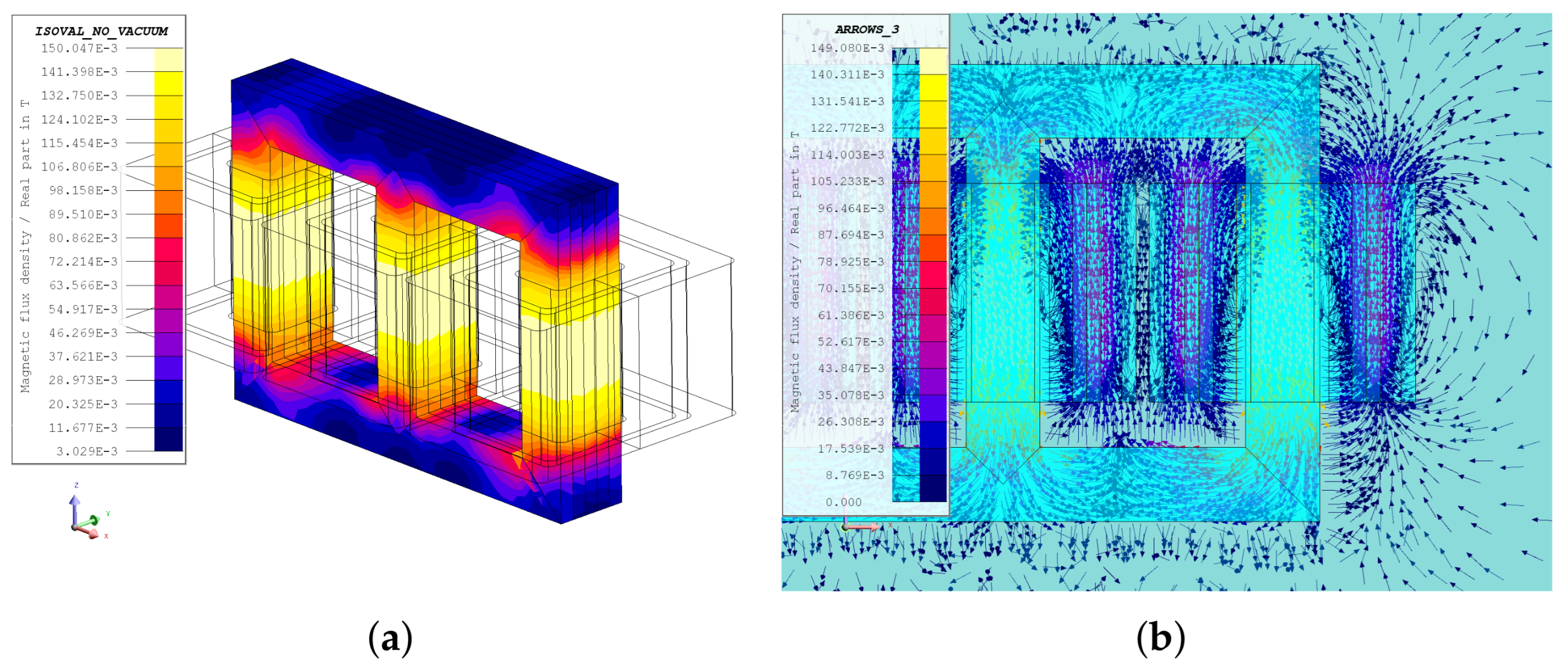
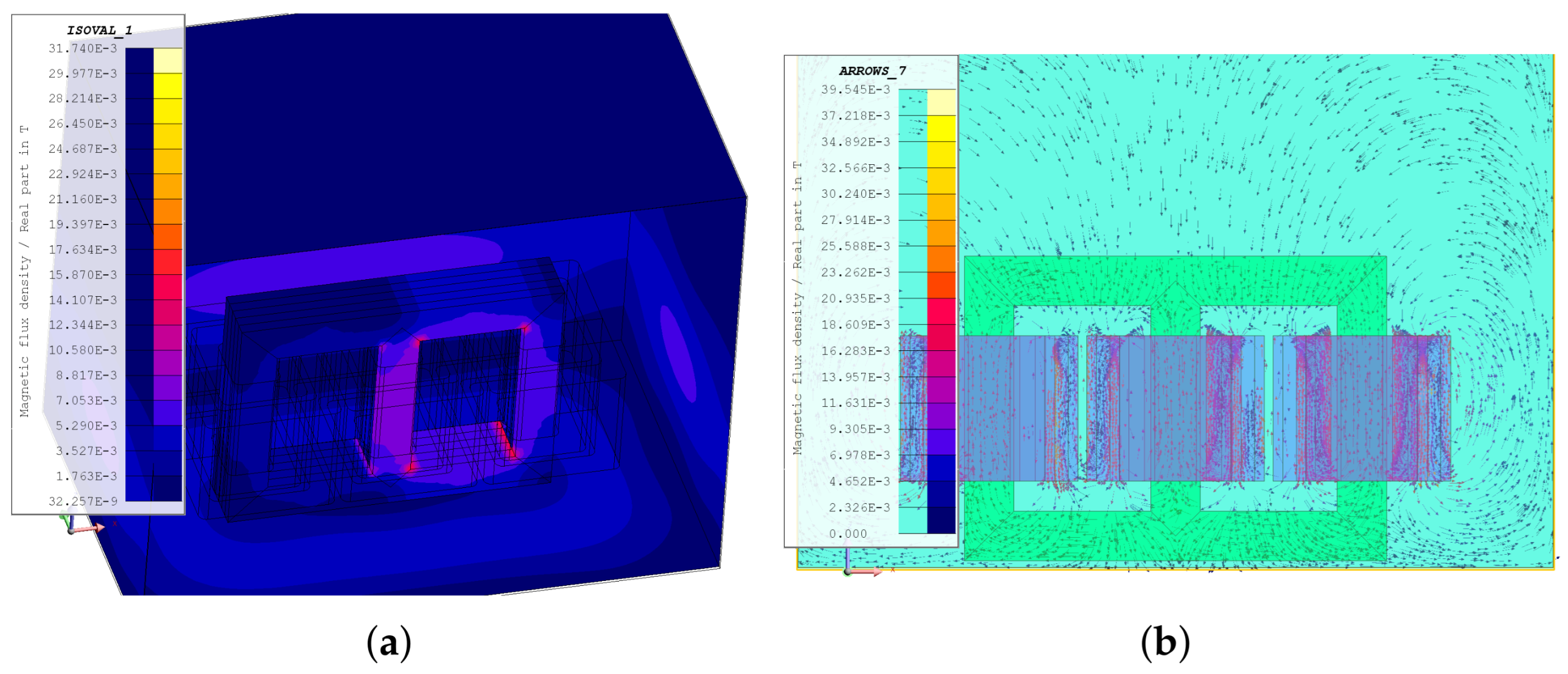
Figure 8 shows the magnetic flux distribution obtained for the model without the tank (use zoom to view the numerical values). In
Figure 8a, a uniform distribution of magnetic flux density along the transformer columns can be observed, which results from the zero-sequence excitation condition.
Figure 8b presents the magnetic flux density vector field in a plane, where the closed magnetic-field trajectories outside the core can be seen, as expected. The maximum value of
= 0.149 T. The current phase in each winding obtained from the simulation is 165 A, which is close to the 166 A measured experimentally. The stored magnetic energy computed for this model is
= 12,234 J.
For the model that includes the tank in the zero-impedance determination, the magnetic field distribution obtained is shown in
Figure 9.
Figure 9a illustrates how the zero-sequence magnetic flux is distributed throughout the transformer elements; a higher magnetic field is observed in the regions of the tank located closer to the windings.
Figure 9b presents the magnetic flux density vector field for this case. The presence of the transformer tank causes the magnetic flux paths to close through it in the external region. The obtained average current in the windings is 161 A, which is also close to the measured value. The stored magnetic energy computed for this model is 12,735.38 J.
Table 2 shows the
values obtained with each method. The table also includes the relative error for each value, using as a reference the nominal zero-sequence impedance of the equipment. For the FEM models, the relative error is less than 4%, validating the developed models for the zero-impedance determination and confirming that the error falls within the standard tolerance. Moreover, the FEM models present greater precision than the analytical estimation, where an error of 6.61% was obtained. The model without the tank presents the lowest error. These results also show a difference in the zero-sequence impedance values between the FEM models due to the inclusion of the tank. As expected, the model that includes the tank exhibits a slightly higher
because the presence of this structural element reduces the reluctance of certain closed magnetic-field paths.
The differences between the values calculated by the FEM models and the measured values can be attributed to dimensional tolerances that occur during the equipment manufacturing process, tolerances that also exist during laboratory measurements, and the fact that the models do not consider all mechanical elements, such as core support structures, tank reinforcement hardware, etc. These components were not included due to computational limitations. Additionally, the tank model assumes perfect magnetic continuity and homogeneous properties; this situation may overestimate the effect of the tank compared to reality.
However, the simulation results indicate consistency in that the zero-sequence impedance should increase due to the presence of the tank. Although it is true that the error calculated with the model without the tank was lower than that calculated with the tank, the impact of the tank on the magnetic flux distributions was demonstrated. In both cases, the errors are less than the 10% limit established in the Standards. We believe that in this particular case the aforementioned tolerances were responsible for the measured value being closer to the case without a tank, but definitely the model with a tank is closer to reality. The difference between the two models (≈2%) is within the expected range for this type of calculation and does not contradict the physical validity of the tank model.
In practice, the tank wall thickness is not a free design variable for this type of equipment; industry specifications commonly require the tank to withstand 15 psig internal pressure without rupture, so thickness is selected primarily for mechanical integrity and safety, not for electrical optimization. In the transformer studied here, the tank walls are 0.25 in thick, and the tank alone weighs approximately 850 kg. Increasing the wall thickness by 1/16 in represents a 25% increase in thickness (and approximately the same order of increase in steel mass for the wall plates), implying an added mass of roughly 210 kg, which directly increases manufacturing cost. Conversely, reducing thickness would compromise mechanical robustness and safety margins. Therefore, although thickness variation is academically interesting, it is not economically viable from a manufacturer’s perspective.
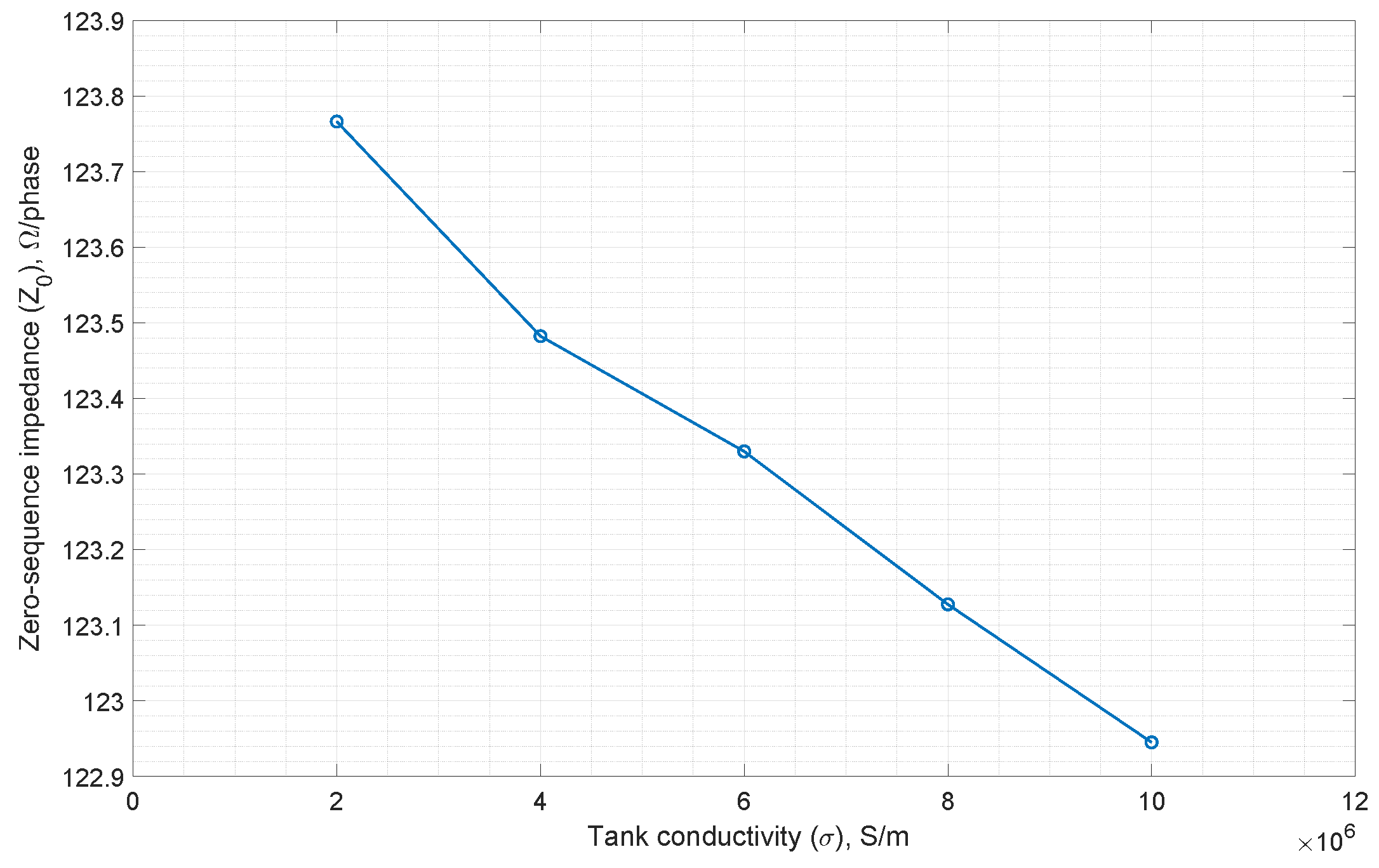
Zero-sequence impedance is sensitive to the electrical conductivity of the transformer tank, as the tank provides a return path for zero-sequence flux. Variations in tank conductivity due to material properties, temperature, and construction details can lead to changes in the calculated zero-sequence impedance;
Figure 10 shows the variation of the transformer’s zero-sequence impedance as a function of changes in the tank’s conductivity. In this case, the calculated impedance decreases with increasing tank conductivity.
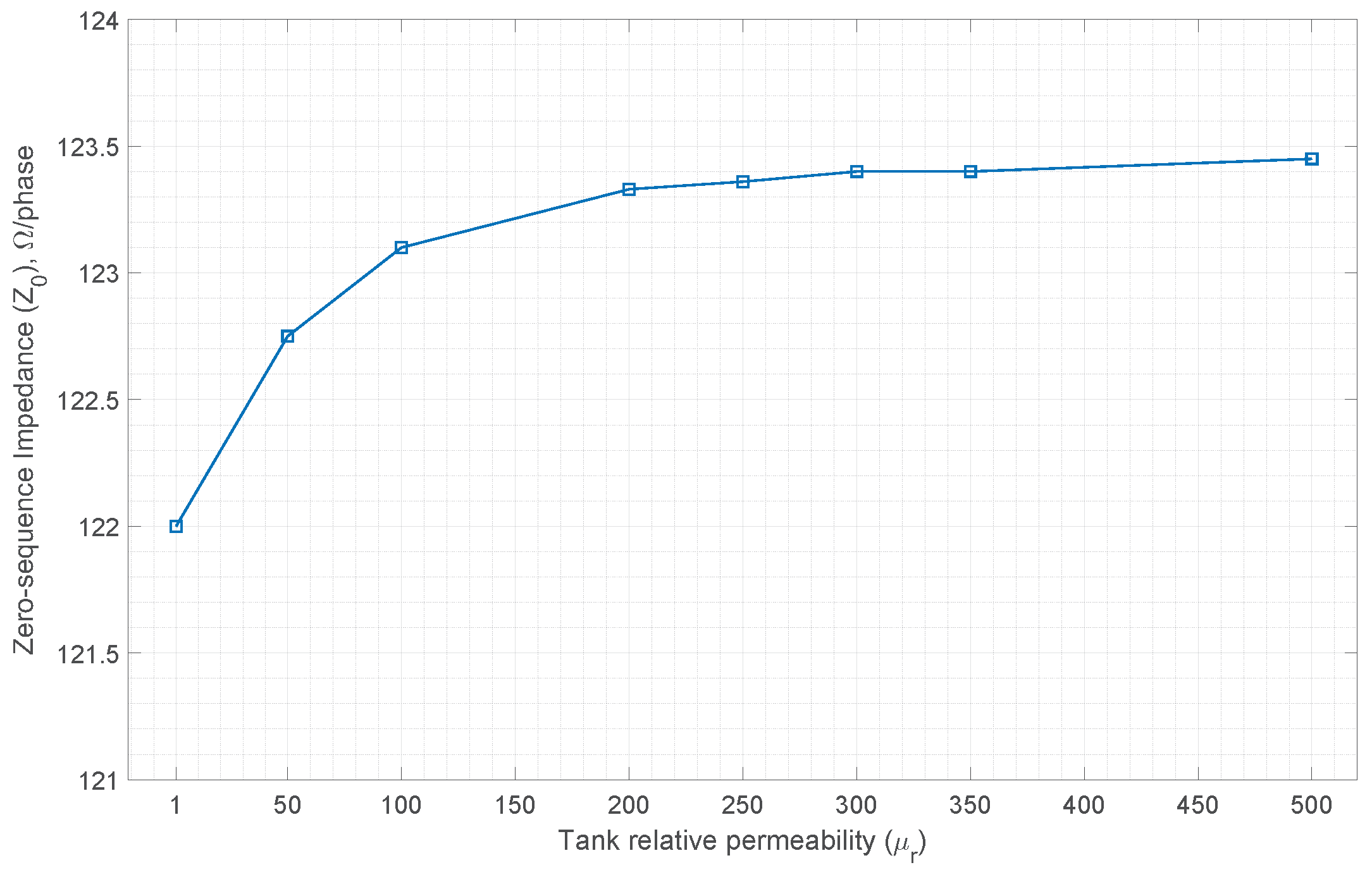
Similarly, changes in the relative permeability of the tank affect the zero-sequence impedance value; however (see
Figure 11), the change is not linear, and it is observed that above 200 the effect is less. This also depends on the distances between the tank walls and the windings, but these are normally determined by magnetic or dielectric aspects of the design itself.
As future work, following the optimization technique of [
38], we propose that the design of the zigzag transformer integrate classical analytical calculation with an iterative cycle of numerical simulation using the 3D Finite Element Method (FEM). The process begins by establishing an objective function to minimize the cost or weight of the active materials (copper and steel), subject to strict technical constraints, such as the zero-sequence impedance (
) and magnetic saturation limits. Using a parametric sweep, the geometric design variables (such as core cross-section and winding spacing) would be dynamically modified in the virtual environment, evaluating regulatory compliance and material efficiency at each iteration.




 ,
,