Article

Middle Bronze Age Funerary Practices in Southwest Portugal Hypogea: An Interdisciplinary Approach to Social and Ritual Dynamics

by
Marta Borges
1,*,
Hugo Aluai Sampaio
2,3 and
Ana M. S. Bettencourt
2,3
1
Empatia, Arqueologia Conservação e Restauro, Lda., Rua da Escola Central, Avintes, 4430-822 Vila Nova de Gaia, Portugal
2
Laboratório de Paisagens, Património e Território (Lab2PT-UM), Campus de Azurém, 4800-058 Guimarães, Portugal
3
Departamento de História, Universidade do Minho, Rua da Universidade, 4710-057 Braga, Portugal
*
Author to whom correspondence should be addressed.
Quaternary 2026, 9(2), 32; https://doi.org/10.3390/quat9020032
Submission received: 6 January 2026 / Revised: 12 March 2026 / Accepted: 7 April 2026 / Published: 16 April 2026

Abstract

This study analyses the funerary practices in hypogea (rock-cut tombs) of the Middle Bronze Age in southern Portugal with the aim of deepening our understanding of Bronze Age funerary rituals in southwestern Iberia. A total of 57 hypogea from seven archaeological sites were examined. The study followed an interdisciplinary approach integrating data from biological anthropology and archaeology, articulating chronology, osteological analysis, funerary architecture, and material culture. The hypogea date to the first half of the 2nd millennium BCE, corresponding to the regional Middle Bronze Age. Of the 95 individuals analysed, 82% were adults; females represented 34% and males 21% of the total sample. The hypogea present several architectural typologies, with entrances oriented towards southeast (30%), northeast (23%), southwest (22%), and northwest (22%), possibly related to moments of the solar cycle. Burials were single (54%), double (17%), or multiple (11%), with 68% primary inhumations and 32% secondary inhumations, reflecting the re-use of funerary spaces. Grave goods, present in 57% of the cases, were more frequent and diversified among women, including ceramic vessels (79%) and metal awls (61%). Like male individuals, women were also associated with weapons, suggesting an elevated social status for both sexes.

1. Introduction

Archaeological interventions carried out in the interior of Baixo Alentejo, in the Southwestern Iberian Peninsula, have led to the identification of a significant number of hypogeum funerary contexts, which had previously been poorly documented in this region. It was only with Schubart, in 1975, that a distinct archaeological entity was recognised in the westernmost area of Iberia, spanning Alentejo, Algarve, and Huelva, with extensions into Seville and Badajoz [1,2].
The chronology of the Southwestern Bronze Age, initially structured by Schubart [3,4] on the basis of typological distinctions in material culture and funerary practices, distinguished the “Ferradeira Horizon” (c. 1800–1500 BCE), Southwestern Bronze I (c. 1500/1400–1100 BCE), and Southwestern Bronze II (c. 1100–800/700 BCE). These limits were later revised based on new radiocarbon dates [5,6], the most recent proposal being that of Mataloto et al. [7], who argued for the absence of an Early Bronze Age, replacing it with a Late Chalcolithic (c. 2650–1930 BCE), a Middle Bronze Age (c. 2070–1170 BCE), and a Late Bronze Age (c. 1170–780 BCE). In parallel, critical historiographical analyses have questioned the operational value of the “Ferradeira Horizon”, arguing that it was constructed on a limited empirical basis and no longer reflects the variability revealed by recent excavation and dating programmes [8]. Together, these works highlight the ongoing debate surrounding the temporal and cultural definition of the Southwestern Bronze Age.
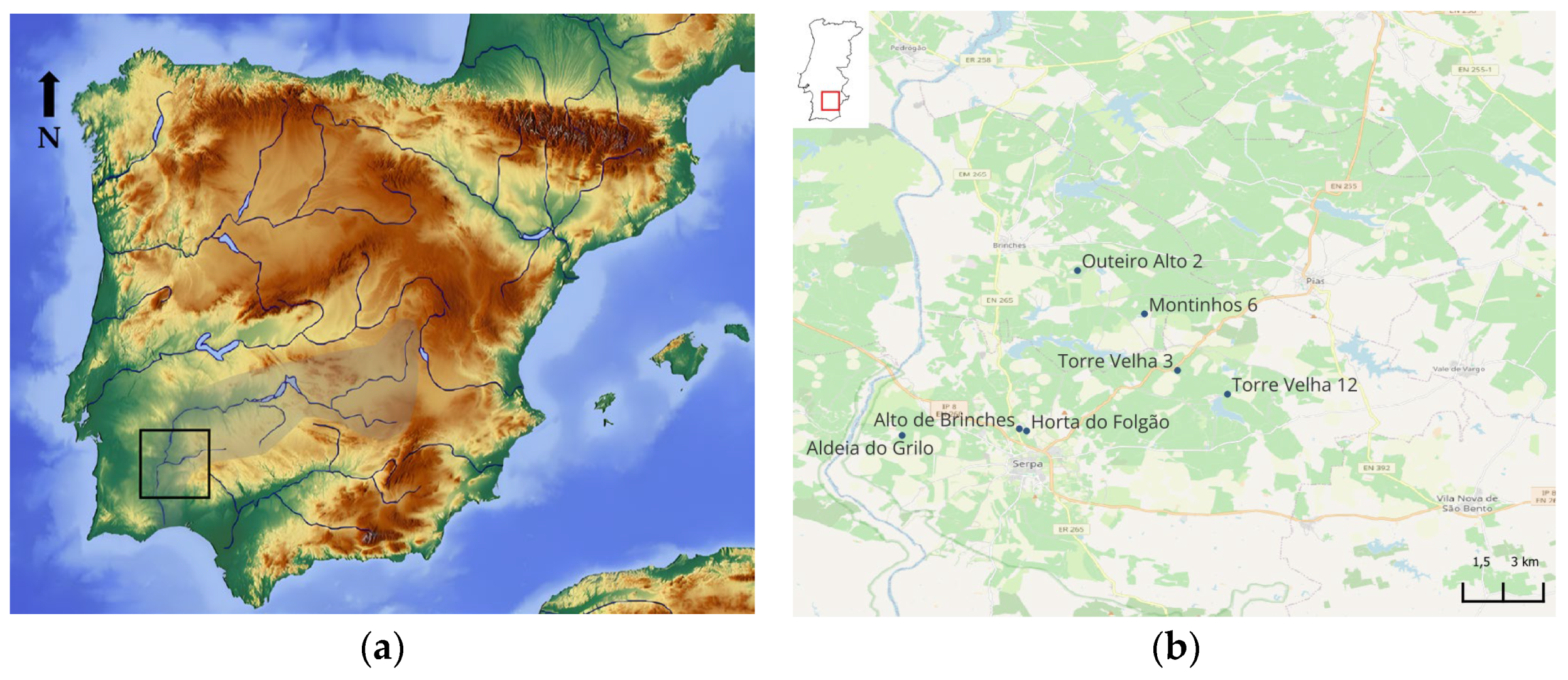
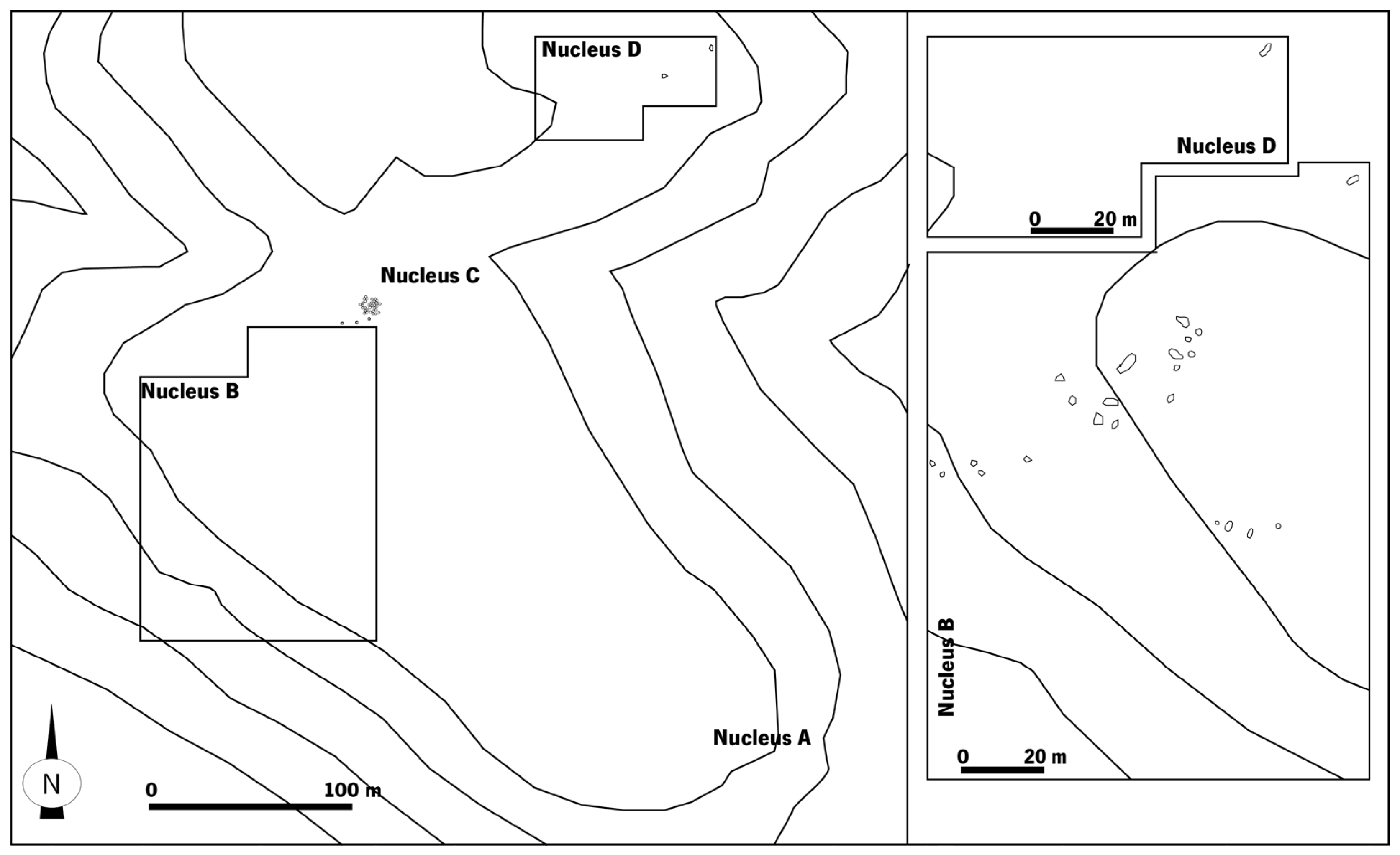
In the funerary domain, until the late 20th century, cist burials were the main focus of archaeological research. These typically contained one or two inhumations placed in a foetal position and were sometimes accompanied by ceramic vessels or metal objects. Pit burials were also known [9], as well as only one hypogeum burial, from Belmeque [1,6,8]. Archaeological interventions linked to the construction of the Alqueva dam on the Guadiana River in the early 2000s revealed around 41 archaeological sites containing a considerable number of hypogea, as well as cists and pits [10] (Figure 1a). These findings demonstrated for the first time that this burial architecture is a notable component of the wider regional funerary system. However, only part of these sites and contexts has been published [11,12,13,14,15], which justifies the relevance of an integrated study bringing together dispersed published and unpublished information.
Recent regional research has emphasised that the funerary record of the Southwestern Bronze Age is marked by strong architectural and ritual variability, with hypogea representing one of the most informative contexts for discussing ritual practice, depositional choices, and social differentiation [8,10,12]. Within this context, hypogea are particularly significant due to their architectural complexity, evidence of repeated use, and frequent association with selected grave goods. These features have been interpreted as signalling socially meaningful spaces linked to memory, identity construction, and the negotiation of social status [8,10,12].
Over the last two decades, several authors have produced detailed analyses of individual funerary contexts based on excavated sites, particularly within the framework of preventive and rescue archaeology, identifying recurring patterns in architectural morphology, body position, orientation, reuse practices, and the composition of funerary assemblages [11,12,13,14,15,16,17]. These works have advanced hypotheses concerning social organisation, kinship relations, ritual standardisation, and processes of differentiation within local communities. In particular, variability in hypogeum morphology, patterns of body positioning, selective deposition of animal remains, and evidence of repeated reopening and reduction of human remains have been interpreted as reflecting socially regulated practices rather than random behaviour [11,12,13,14,15,16,17,18]. However, these interpretations have generally been developed within site-specific frameworks and remain unevenly integrated.
Despite these advances, significant gaps remain regarding the spatial organisation of burials, the orientation of structures and individuals, and the relationships between biological variables and funerary assemblages. It should be emphasised that the present study focuses exclusively on hypogeum funerary contexts and therefore analyses only one component of the broader regional mortuary record, which also includes cists and pit graves. Accordingly, the main objective of this study is to present the first integrated, multi-site analysis of Middle Bronze Age hypogea in southern Portugal, systematically gathering and analysing dispersed information in order to integrate previous site-based interpretations and discuss them within a broader regional framework.

2. Materials and Methods

In this study, 57 hypogea were analysed, originating from seven archaeological sites: Montinhos 6, Outeiro Alto 2, Torre Velha 3, Torre Velha 12, Aldeia do Grilo 1, Horta do Folgão, and Alto de Brinches 3 (Figure 1b). Only those with technical–scientific reports from both archaeology and anthropology were included, and only when these provided methodological detail, plans and photographic records of the excavations, as well as documentation concerning the layout and deposition of bone remains or offerings (cf. Table A1, Table A2 and Table A3 in Appendix A).
The analytical framework incorporated the premises of Pearson [19,20], according to which funerary rituals represent structured moments of social action capable of expressing, reinforcing, or concealing collective relationships and practices. The interpretation of sex/gender categories followed Sofaer and Sørensen [21], distinguishing sex as a biological category and gender as a social and symbolic construction, thereby avoiding deterministic inferences based solely on the presence or absence of objects associated with the burial. Classical descriptions of two-phase mortuary rites [22] provided a theoretical framework for interpreting the observed displacement and partial rearrangement of skeletal remains, which are primarily understood as practical interventions related to successive interments rather than as clear evidence of intentional secondary funerary rituals. For the purposes of this study, secondary deposits are defined as reductions resulting from the partial rearrangement and displacement of previously deposited skeletal remains within the same funerary structure. These are characterised by the loss of anatomical articulation and by the grouping of skeletal elements along the margins of the chamber or at the back of the hypogeum, generally associated with the successive reuse of funerary space [23]. This classification follows archaeothanatological criteria and does not imply the presence of formal or intentional secondary burial rites but rather reflects practical strategies of spatial management within confined subterranean contexts [23], morphological, and palaeopathological data in the interpretation of funerary behaviour.
Data were analysed from an interdisciplinary perspective, integrating information from biological anthropology and archaeology obtained from reports and publications. This allowed for multi-scale interpretation combining palaeodemographic and funerary anthropological data with the architecture of the hypogea, body treatment, and funerary assemblages. This approach consisted of identifying patterns in the archaeological record and statistically verified relationships between variables to understand the community’s social dynamics.
A total of 20 radiocarbon dates were compiled from various publications. These dates were obtained from human and faunal remains or from textile fragments associated with hypogea from nearly all the analysed sites, except Aldeia do Grilo 1 and Alto de Brinches 3. The radiocarbon dates discussed here were selected from critically assessed regional datasets, in which samples with doubtful contextual association were excluded [7]). They were calibrated during the course of this study using the latest online version of OxCal 4.4 [24], together with the IntCal20 calibration curves [25]. These data are synthesised in Table 1. Although it was not possible to obtain absolute dates for all hypogea, their contextual and artefactual associations clearly correspond to the material horizon of the others, and thus similar chronologies were assigned.
The typology of the hypogea followed the proposals of Alves et al. [26], Baptista et al. [12], and Filipe et al. [13], simplified and integrated into a single classificatory scheme distinguishing types A, A1, B, B1, C, C1, D, and E (Table 2). Ages at death were grouped following Buikstra and Ubelaker [27] (Table 3). Depositional categories—primary inhumation, secondary inhumation, and reduction/collective bone rearrangement—followed the definitions of Duday [23]. The funerary assemblage was recorded regarding ceramic, metal, and faunal typologies, relative position within the burial, and association with the individual. Adornments and the use of red pigments were also recorded.
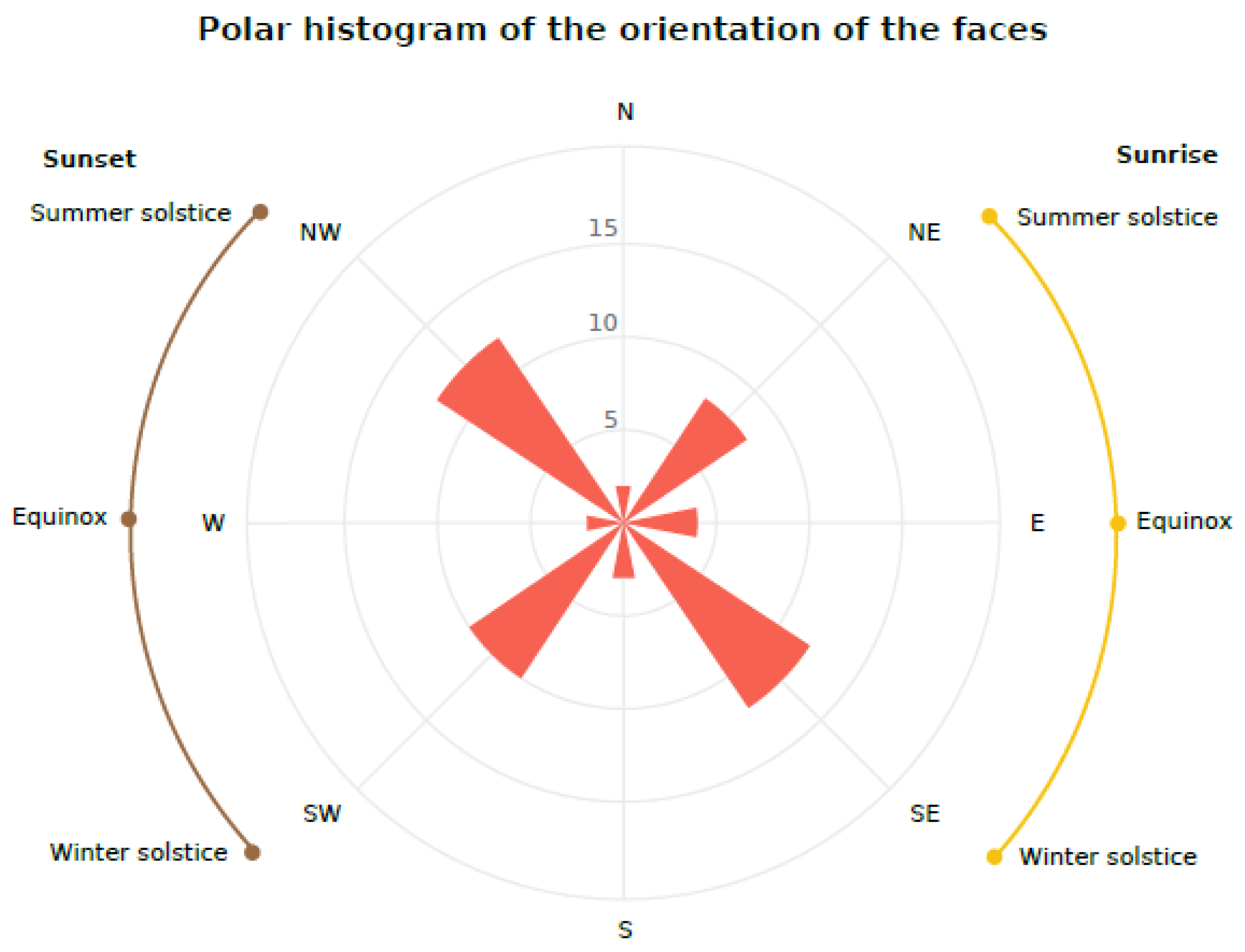
Data were systematised in a database created in Microsoft Excel. To assess the statistical significance of associations between archaeological and biological variables, the Chi-Square test was applied; whenever conditions for its use were not met, Fisher’s exact test was used, with significance set at p ≤ 0.05, using online web statistical calculators (astaatsa.com). The polar histograms were generated in the statistical software R to visualise the distribution of data angles. This integration of structural, biological, and material data allowed for the identification of patterns of hypogea use, depositional practices, and internal organisation of funerary contexts, contributing to the interpretation of social and ritual dynamics of Middle Bronze Age communities of southwestern Portugal. It should be noted that the biological data compiled from published reports and grey literature were not always obtained using identical methodological criteria. Variability in skeletal preservation between sites, as well as differences in the methods applied for sex and age-at-death estimation, may introduce bias into comparative analyses. In cases where diagnostic criteria were not fully specified in the original reports, classifications were accepted as published. These constraints are inherent to studies based on previously excavated assemblages and should be taken into account when interpreting the patterns presented here.
Table 1. Absolute dates of the hypogea.
Lab. Ref.HypogeumSampleData BP1 Sigma Cal BCE2 Sigma Cal BCEReference
Sac-248051 (TV3)Bos sp. (radius)3410 ± 601770–16201770–1620[11,28]
Sac-249045 (TV3)Bos sp. (radius; ulna)3410 ± 601770–16201830–1540[11,28]
Sac-287614 (MT6)Human bone3350 ± 801696–15321782–1492[29]
Sac-255761 (HF)Human bone3400 ± 501750–16161779–1540[15]
Sac-282747 (TV3)Human bone3340 ± 801692–15181778–1445[11,28]
Sac-28786 (MT6)Human bone3390 ± 401698–16221771–1598[29]
Sac-28676 (MT6)Human bone3380 ± 401696–16161751–1538[29]
Sac-28778 (MT6)Human bone3360 ± 451692–16081748–1516[29]
Sac-287917 (MT6)Human bone3360 ± 401691–16081744–1532[29]
Sac-266624 (OA2)Human bone3320 ± 501631–15141698–1498[7]
Sac-246546 (TV3)Bos sp. (radius; ulna)3300 ± 501617–15101691–1492[11,28]
Sac-283155 (TV12)Human bone3250 ± 701563–14441691–1396[29]
Sac-248940 (TV3)Bos sp.(radius)3300 ± 451616–15161688–1496[11,28]
Beta-26219941 (TV3)Ovis aries (radius)3300 ± 401688–14961645–1497[11,28]
Sac-282535 (TV3)Human bone3280 ± 501612–15031642–1439[11,28]
Sac-246652 (TV3)Bos (radius)3250 ± 601545–14461642–1410[11,28]
Sac-28457 (MT6)Human bone3250 ± 601545–14461642–1410[29]
Sac-282648 (TV3)Human bone3170 ± 901533–13751636–1207[11,28]
Sac-283256 (TV12)Human bone3200 ± 601518–14141616–1379[29]
Sac-28449 (MT6)Human bone3240 ± 401536–14461566–1428[29]
Table 2. Hypogea typology.
TypeDescriptionPlan ViewProfile View
AQuadrangular/rectangular antechamberQuaternary 09 00032 i001Quaternary 09 00032 i002
A1Quadrangular/rectangular antechamber with a pre-existing pit
BQuadrangular/rectangular antechamber with two chambersQuaternary 09 00032 i003Quaternary 09 00032 i004
B1Quadrangular/rectangular antechamber with two chambers and a pre-existing pit
COval antechamberQuaternary 09 00032 i005Quaternary 09 00032 i006
C1Oval antechamber with a pre-existing pit Quaternary 09 00032 i007
DCircular shaft-type antechamberQuaternary 09 00032 i008
ESmall circular pit with access to an underground chamberQuaternary 09 00032 i009Quaternary 09 00032 i010
Table 3. Age ranges (Years).
CategoryAge Range
FoetusPrenatal
Infant0–3
Child3–12
Adolescent13–18
Young adult19–35
Middle-aged adult36–50
Older adult>50

3. Results

3.1. Spatial Distribution of Burials

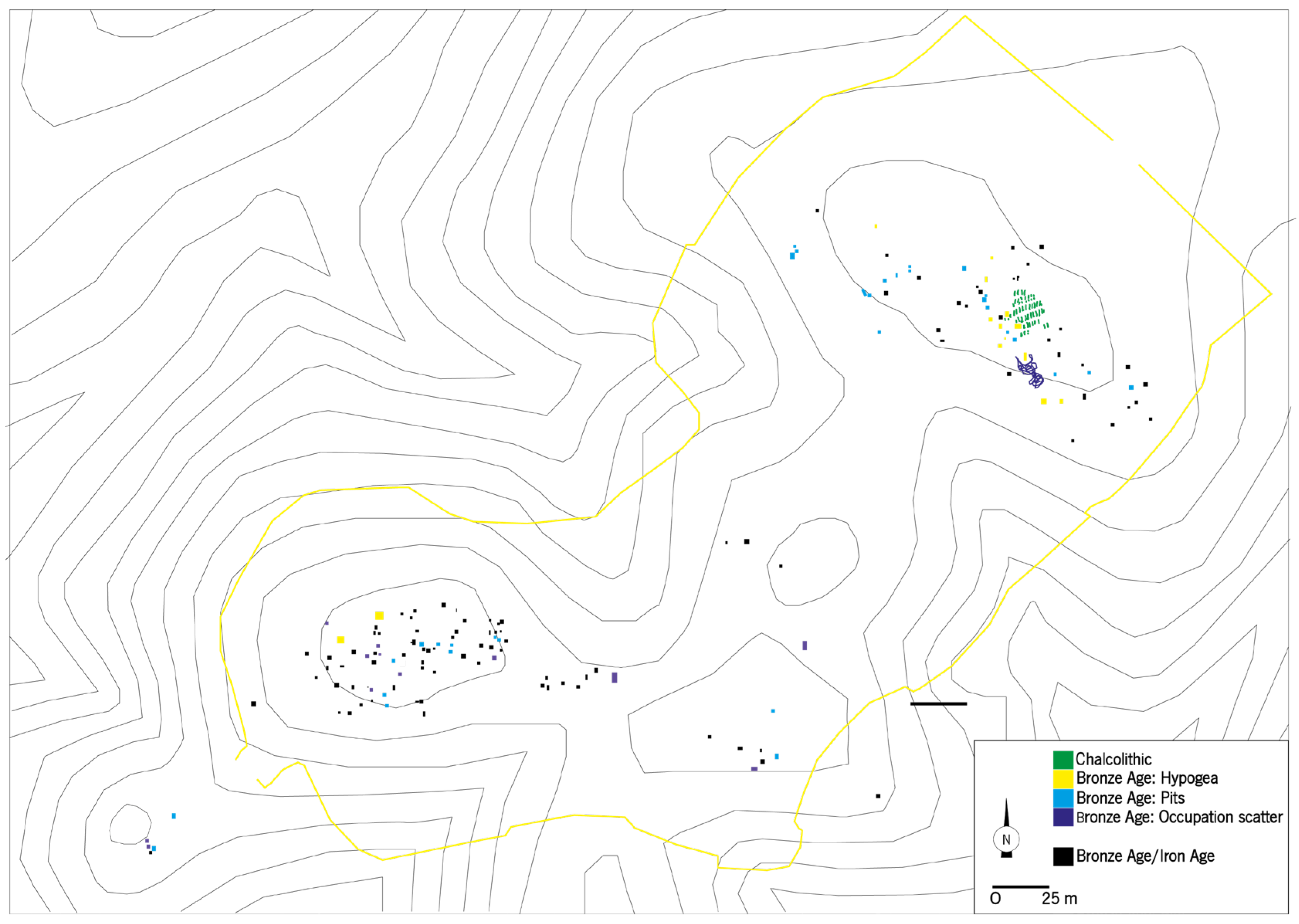
Regarding the topographic context, it was observed that all hypogea were constructed in elevated, well-ventilated locations with good visibility over the surrounding landscape—that is, on the flattened summit of a hill or on a spur—with the exception of Montinhos 6, where the hypogea extended across the summit and the slopes of two hills separated by a gentle depression [30] (Figure 2).
The studied sites resulted from rescue archaeology interventions, and for this reason, the excavated areas were limited to the zones where infrastructure related to irrigation systems was to be installed, often preventing a broader understanding of the site. Consequently, the archaeological context of the hypogea can only be reconstructed with caution. It should also be noted that these sites may originally have reached significant dimensions, although this is difficult to establish due to the circumscribed nature of the archaeological interventions [31]. Nevertheless, the possibility that some sites with different designations may correspond to the same site, or to sub-areas of a single site, as seems to be the case for Horta do Folgão and Alto Brinches 3, or Torre Velha 2 and Torre Velha 12, located very close to one another, appears to support this hypothesis [29,32].
The locations where the hypogea were established have often been described as open lowland settlements, because they were found alongside other types of structures (such as occupation scatters and pits cut into the bedrock, with or without human remains). However, this classification is subject to debate as there is no unequivocal evidence of habitational structures, such as circulation floors, hearths, or similar features, in the vicinity of the hypogea [31,33,34].
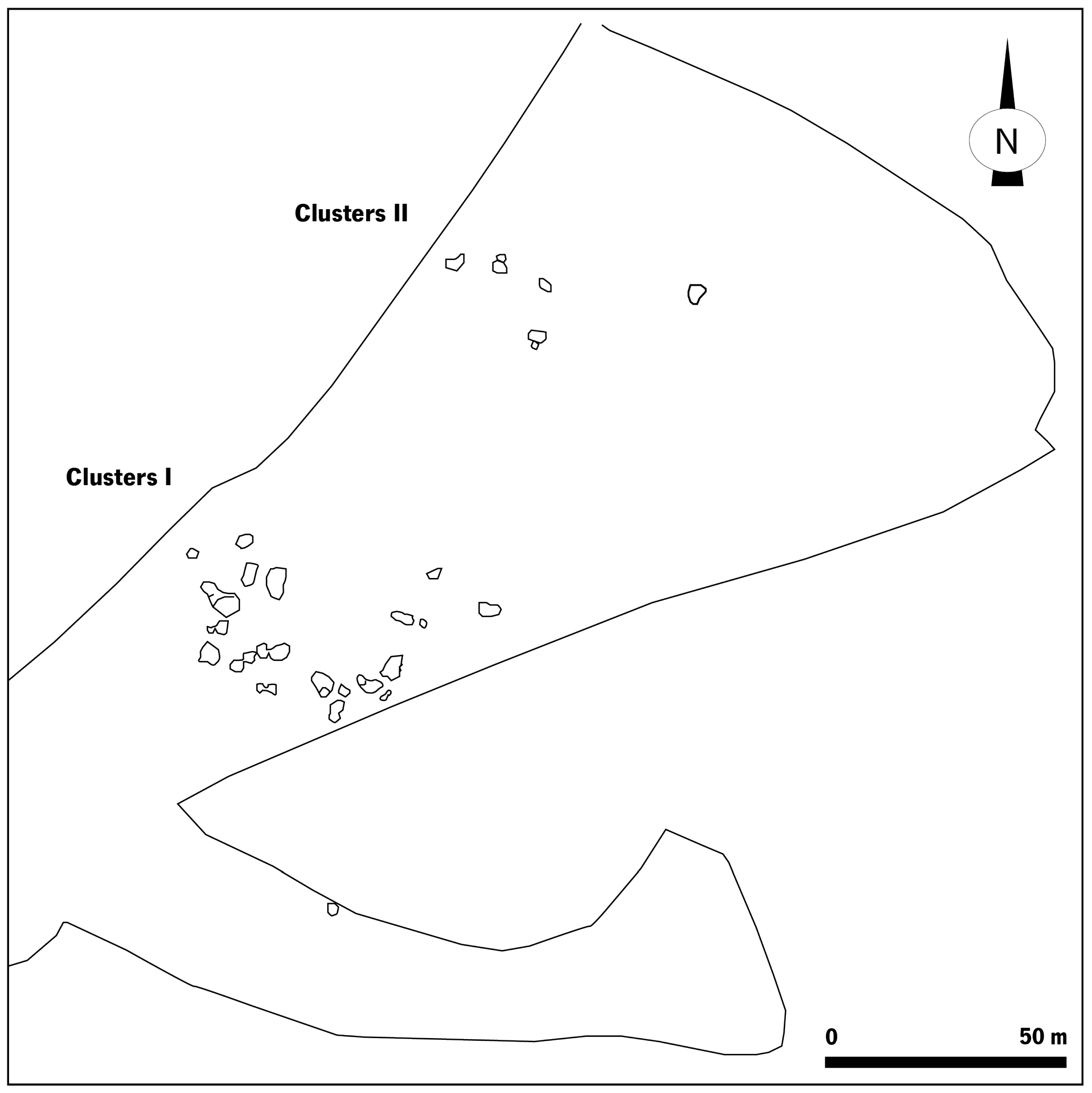
With the exception of the hypogea from Alto de Brinches 3, which appear to have been spatially isolated, in the sites where larger areas were excavated—such as Montinhos 6, Torre Velha 3, and Outeiro Alto 2—and where other contemporary structures were documented, it was possible to observe that hypogea tended to be organised in clusters [11,12,13] (Figure 3 and Figure 4).
At Montinhos 6, these clusters developed in areas previously occupied by Chalcolithic pit structures and activity zones [30]. At Torre Velha 3, Bronze Age hypogea were implanted within areas characterised by earlier and contemporary domestic and productive structures, including storage pits, refuse deposits, combustion features, and associated artefact scatters [26]. At Outeiro Alto 2, funerary areas overlap with nuclei containing Late Neolithic pits, ditches, and hypogea [13].
These patterns indicate the long-term use and reoccupation of these locations, which gradually acquired funerary significance during the Middle Bronze Age.

3.2. Construction Features of Hypogea

The most frequent hypogea are those of typology A, corresponding to structures with quadrangular or rectangular chambers, representing 46% (26/57) of the cases. These are followed by type C, with an oval antechamber (16%, 9/57); type D, with a circular shaft-like antechamber (11%, 6/57); and type A1, featuring a quadrangular or rectangular antechamber associated with a pre-existing pit (9%, 5/57). Less frequent are hypogea of types C1 (5%, 3/57), B1 (4%, 2/57), B (2%, 1/57), and E (2%, 1/57) (Figure 5) (cf. Table A4 in Appendix A).
The entrances to the funerary chambers of the hypogea were oriented towards specific cardinal directions. A total of 18 entrances were oriented to the southeast (30%, 18/60); 13 to the southwest (22%, 13/60); 14 to the northeast (23%, 14/60); 13 to the northwest (22%, 13/60), and east (3%, 2/60). No orientations towards west, north, or south were recorded (Figure 6).

3.3. Demographic Data

Among the studied hypogea, 82% of the individuals (78/95) were adults, 15% (14/95) were non-adults, and 3% (3/95) were of indeterminate age.
Age-range estimation was possible for only 22.1% of the individuals (21/95). Within this group, one infant (1%; 1/95), nine children (10%; 9/95), two adolescents (2%; 2/95), seven young adults (7%; 7/95), and two older adults (2%; 2/95) were identified, while foetuses and middle-aged adults were absent.
Regarding sex estimation, 34% of the individuals (32/95) were female and 21% (20/95) were male, whereas in 45% of cases (43/95), sex could not be determined (cf. Table A5 and Table A6 in Appendix A). Among individuals with a determined age range (n = 21), children represented the most frequent group (43%), followed by young adults (33%), while adolescents and older adults each accounted for 10% and infants for 5% (Table A6). Among individuals with determined sex (n = 52), females predominated (62%), whereas males accounted for 39% (cf. Table A5 and Table A6 in Appendix A).

3.3.1. Primary Versus Secondary Inhumations

Table 4 presents the distribution of individuals by type of deposition (primary and secondary), considering age and sex. Of the 95 individuals analysed, 68% (65/95) corresponded to primary inhumations and 32% (30/95) to secondary depositions. Within primary inhumations, 80% (52/65) were adults, 17% (11/65) were non-adults, and 3% (2/65) had indeterminate age. In secondary depositions, 87% (26/30) were adults, 10% (3/30) were non-adults, and 3% (1/30) had indeterminate age.
Regarding sex, in primary inhumations, 40% (26/65) corresponded to female individuals, 23% (15/65) to males, and 37% (24/65) to individuals of indeterminate sex. In secondary depositions, 20% (6/30) were female, 17% (5/30) male, and 63% (19/30) were indeterminate.
When deposition was analysed according to age categories, based on percentages relative to each category (Table A5), 67% (52/78) of adults were associated with primary inhumations and 33% (26/78) with secondary contexts. Among non-adults, 79% (11/14) were recovered from primary contexts and 21% (3/14) from secondary contexts, whereas among individuals of indeterminate age, 67% (2/3) were associated with primary and 33% (1/3) with secondary inhumations.
Regarding specific age ranges, all infants, 100% (1/1); adolescents, 100% (2/2); and older adults, 100% (2/2), were recorded in primary contexts. Likewise, most children, 89% (8/9), and young adults, 71% (5/7), were associated with primary inhumations, whereas 11% (1/9) of children and 29% (2/7) of young adults were recovered from secondary contexts. However, a high proportion of individuals presented indeterminate age ranges, corresponding to 64% (47/74) in primary and 37% (27/74) in secondary contexts.
With regard to sex, considering percentages relative to each category, 81% (26/32) of females were associated with primary inhumations and 19% (6/32) with secondary contexts, whereas among males, 75% (15/20) were recorded in primary and 25% (5/20) in secondary inhumations. Among individuals of indeterminate sex, 56% (24/43) were associated with primary and 44% (19/43) with secondary contexts (cf. Table A7 in Appendix A).

3.3.2. Number of Burials per Hypogea

Burials could be individual, double, or multiple, with individual burials being the most common (54%, 32/59), followed by double burials at approximately 17% (10/59). Only 11% (7/59) of the hypogea contained three or more burials. Three hypogea contained more than three inhumations: one with four, one with five, and another with six inhumations (cf. Table A8 in Appendix A).
Two hypogea (3%, 2/59) contained no inhumations: hypogea [1395–1394] and [573–574] from Torre Velha 3. In the first case, the absence of burials was explained by the non-preservation of the skeleton due to taphonomic processes, as the structure had been destroyed by later constructions. In the second case, the absence was considered intentional, as the funerary chamber was sealed with a stone structure filled with a clay binder [35] (Figure 7).
Adults were predominantly found in hypogea containing multiple individuals (56%, 44/78), particularly young adults (86%, 6/7), whereas a smaller proportion (44%, 34/78) were found in single-individual hypogea. A similar pattern was observed among non-adults, with 71% (10/14) occurring in multiple-individual hypogea and 29% (4/14) in single-individual hypogea.
Considering age groups, the only infant (100%, 1/1) and the majority of children (78%, 7/9) were preferentially buried in multiple-individual hypogea (cf. Table A9 and Table A10 in Appendix A).
Regarding sex distribution, a slight difference was observed between males and females, with a higher proportion of females in single-individual hypogea (59%, 19/32) compared to males (35%, 7/20). However, it should be noted that a substantial number of individuals could not be sexed, particularly in multiple-individual hypogea, where secondary deposits complicate biological profiling (cf. Table A9 and Table A10 in Appendix A).

3.4. Burial Position Versus Age and Sex

Burial position could be determined for 64 individuals out of a total of 75 with sufficient anatomical preservation within the analysed sample.
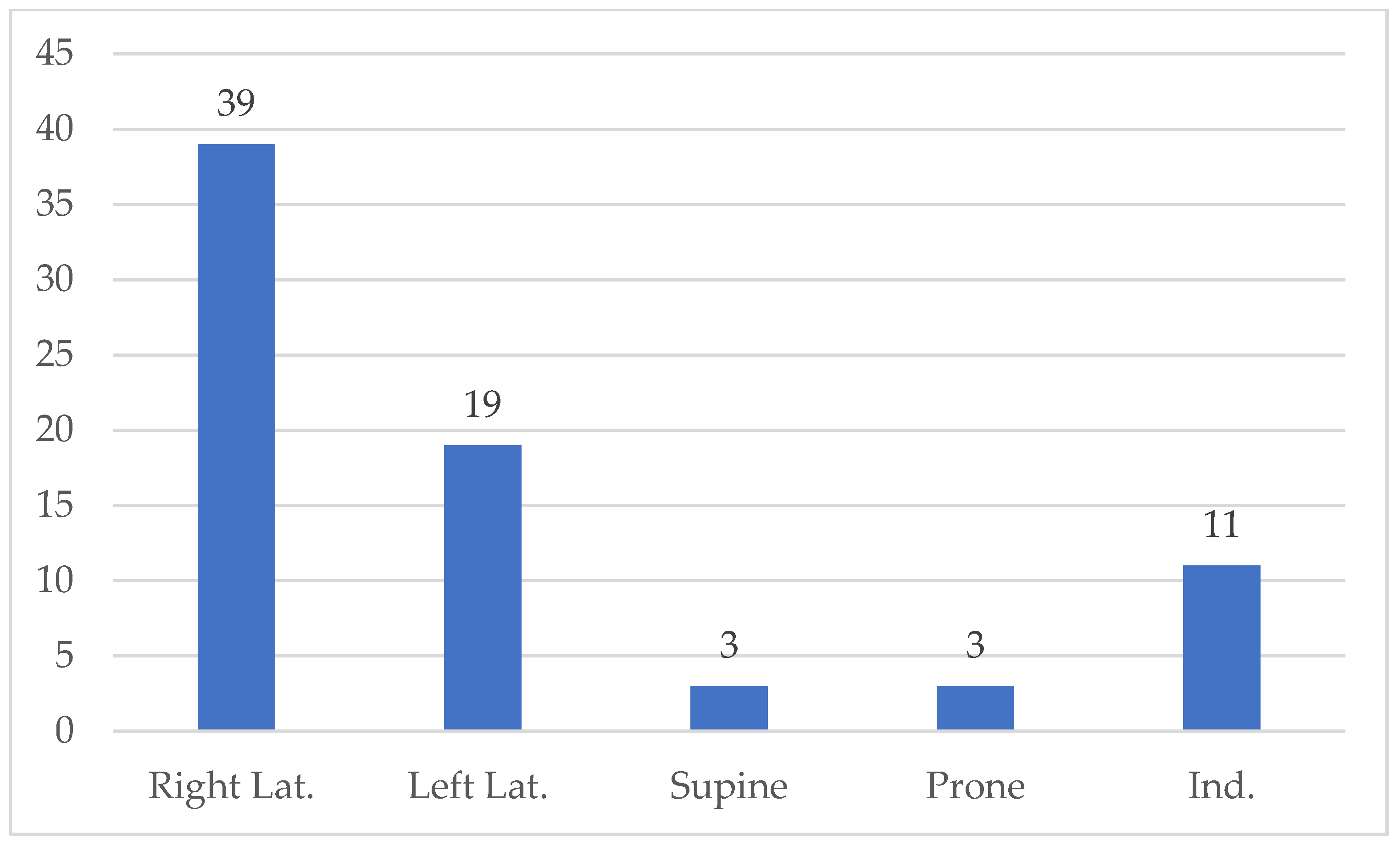
The majority were buried in a flexed position lying on the right side, which was the most frequent position, observed in approximately 61% (39/64) of cases, followed by individuals lying in a flexed position on the left side (30%, 19/64). Prone and supine burials were rare, each documented in only three individuals (Figure 8; cf. Table A11 and Table A12 in Appendix A).
Considering age groups, adolescents (2/2), older adults (1/2), children (6/9), and young adults (2/7) were predominantly deposited in a flexed position on the right side. However, some individuals were also found in the supine position, including one older adult (1/2) and one young adult (1/7) (cf. Table A11 and Table A12 in Appendix A).
Regarding sex distribution, females were more frequently buried in a flexed position on the right side (61%, 17/28), whereas males were more commonly found in a flexed position on the left side (53%, 10/19). Nevertheless, individuals of both sexes were identified in both lateral positions (cf. Table A11 and Table A12 in Appendix A).

3.5. Body Orientation

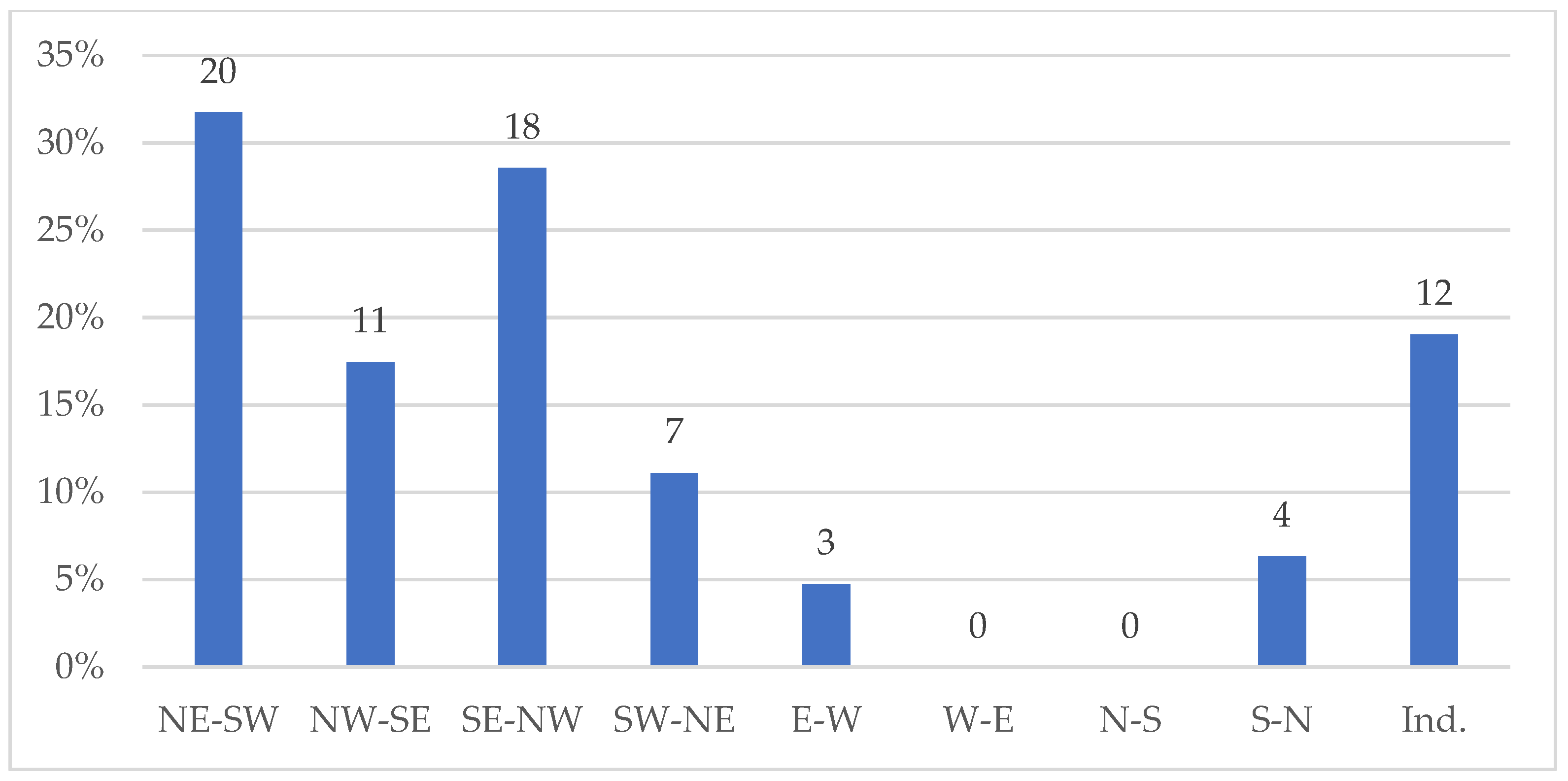
Body orientation could be observed in 84% of cases (63/75). The most frequent orientation was northeast–southwest (head–feet), recorded in 32% of cases (20/63) (Figure 9).
The second most frequent orientation was southeast–northwest (head–feet) at 29% (18/63), followed by northwest–southeast (head–feet) at 17% (11/63), and southwest–northeast (head–feet) at 11% (7/63).
Less frequent were east–west orientations (head–feet), representing 5% (3/63). No west–east or north–south orientations were identified, whereas south–north orientations were recorded in four individuals (4/63) (Figure 9).
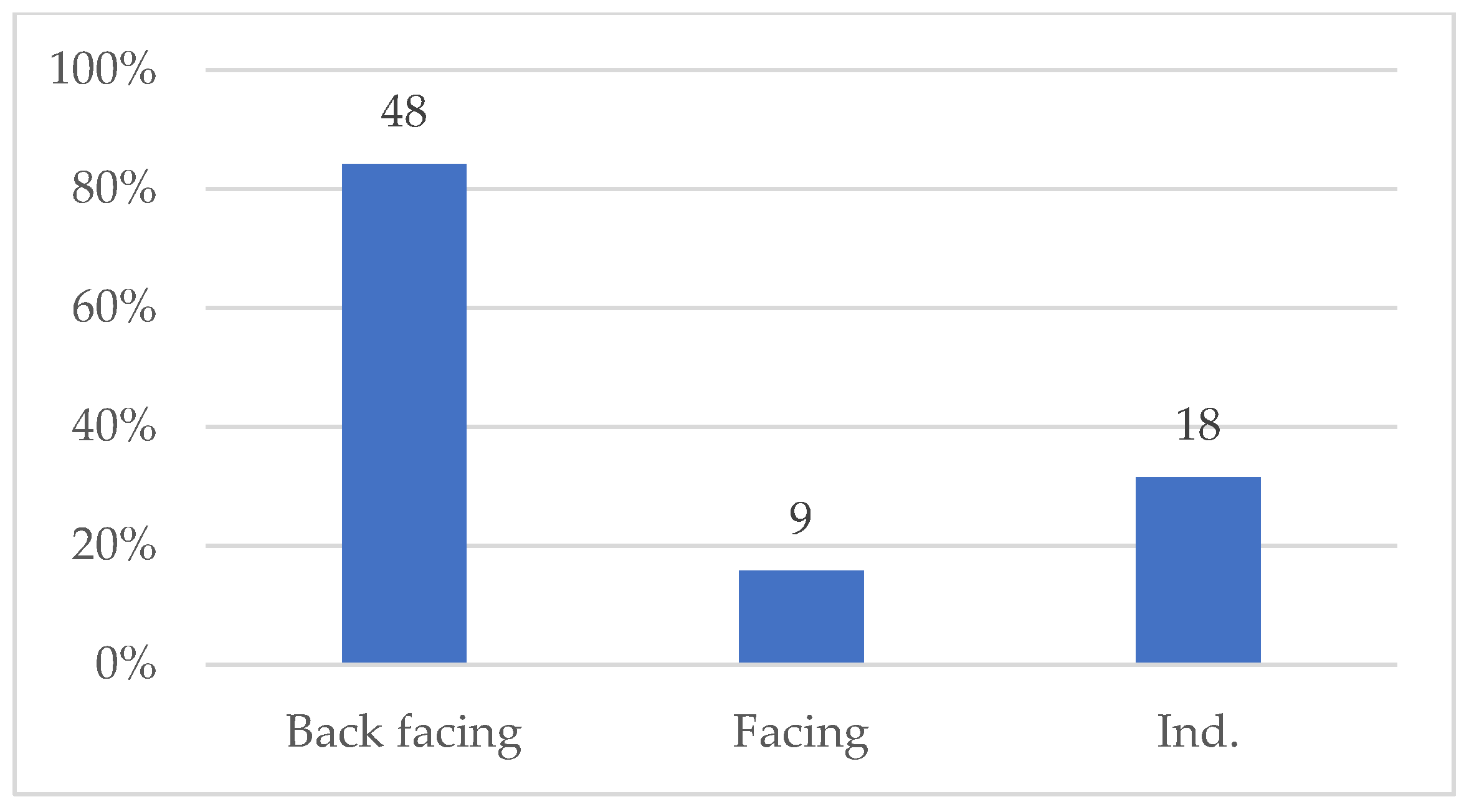
The relationship between body position and the entrance of the hypogeum could be assessed in 57 individuals, excluding 18 indeterminate cases. Of these, 84% (48/57) were positioned with their backs to the entrance, while 16% (9/57) were facing the entrance (Figure 10; cf. Table A13 and Table A14 in Appendix A).
When age categories were considered, no clear age-based differentiation was observed, as older adults (2/2), young adults (3/7), adolescents (2/2), and children (6/9) could all be positioned with their backs to the entrance. Only one young adult (1/7) and two children (2/9) were found facing the hypogeum entrance.
Considering biological sex, female individuals were preferentially buried with their backs to the entrance (82%, 23/28), as were male individuals (47%, 9/19), although the latter occurred at a substantially lower proportion (cf. Table A13 and Table A14 in Appendix A).
Regarding face orientation, orientation could be determined for 52 individuals (out of 75, with 23 indeterminate cases). Most faces were directed towards the southeast, northeast, and east, representing 46% (24/52). A similar proportion (44%, 23/52) was oriented towards the northwest, southwest, and west. North and south orientations were rare, totalling 5 out of 52 (9%) (Figure 11).

3.6. Grave Goods

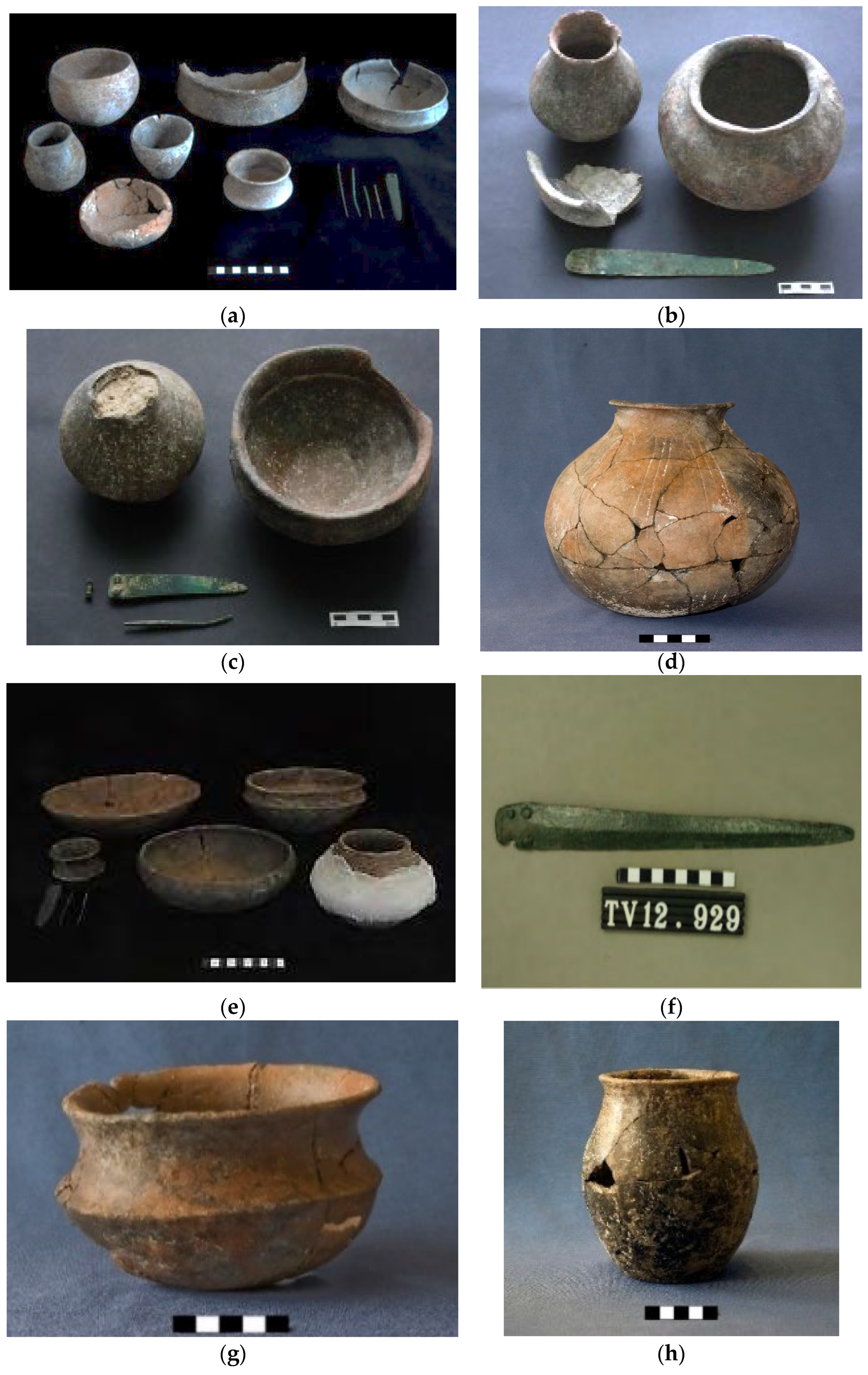
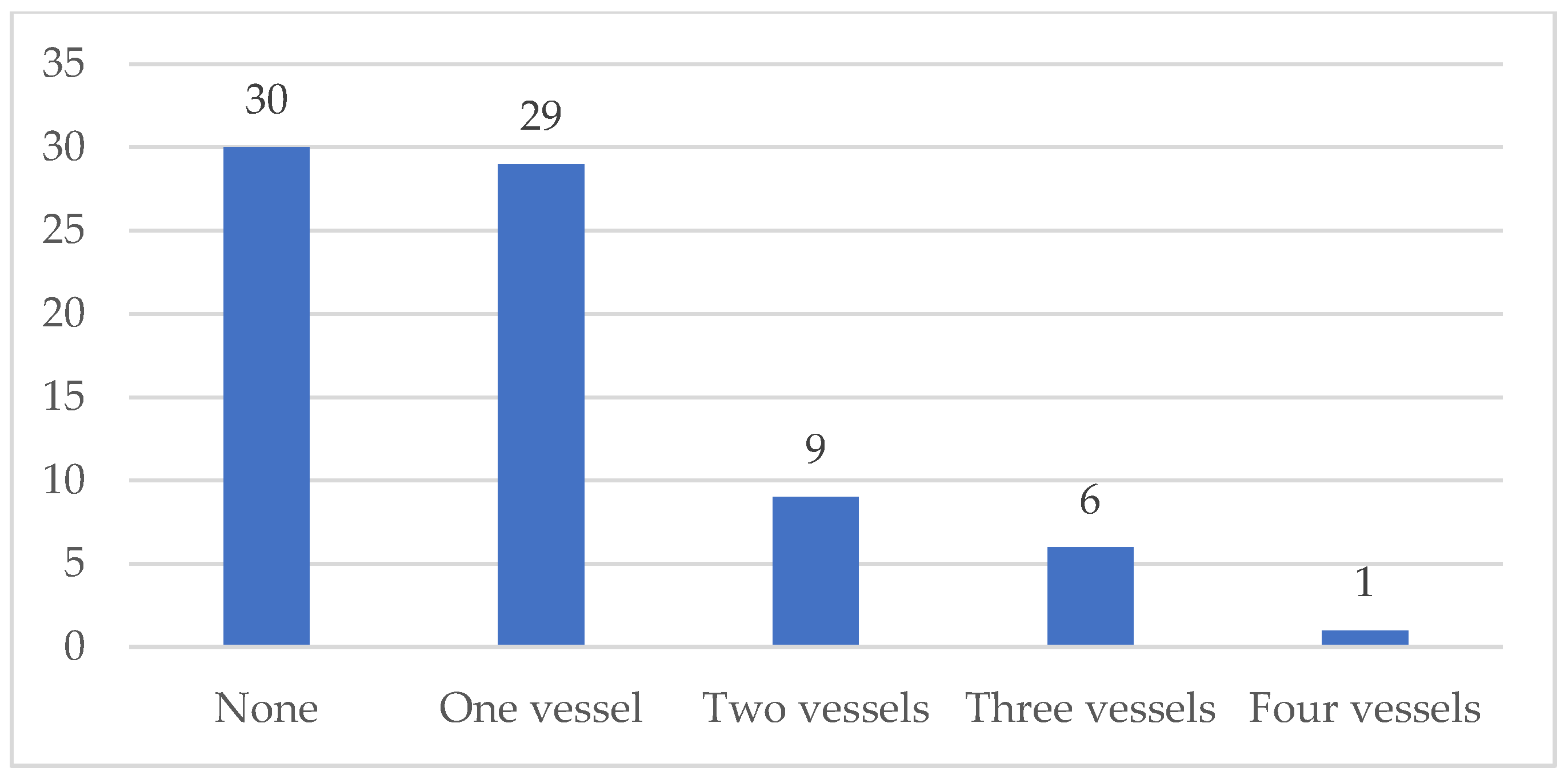
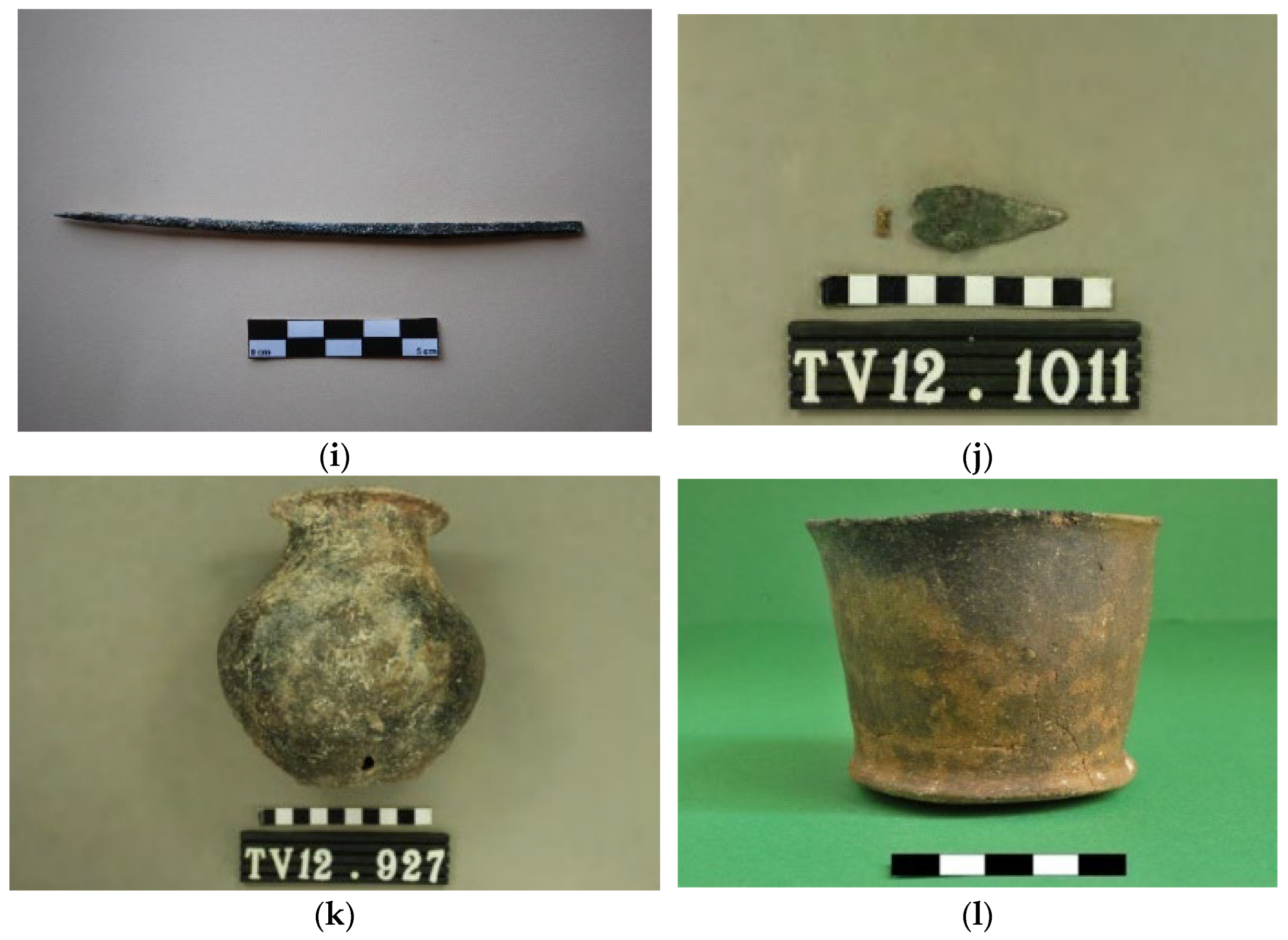
Regarding ceramic offerings, 45 individuals had at least one associated vessel (60%, 45/75) (cf. Table A15; Figure 12a–d,g,h,k,l). Their internal distribution shows that most of these individuals had only one vessel (39%, 29/75), followed by those with two (12%, 9/75), three (8%, 6/75), or four vessels (1%, 1/75) (Figure 13) (cf. Table A15 and Table A16).
The presence of ceramics occurred mainly among adults (67%, 40/60), while it was minimal among non-adults (8%, 1/13) (cf. Table A15 and Table A16 in Appendix A). This difference was statistically significant (cf. Table A17 in Appendix A).
Within the age subcategories, ceramic offerings were recorded among young adults (4/7), older adults (2/2), children (2/9), and adolescents (1/2), whereas no offerings were associated with infants (0/1) (cf. Table A15 and Table A16).
Differences were also observed according to sex, with females showing higher frequencies of ceramic offerings (79%, 22/28) compared to males (47%, 9/19), a difference that proved to be statistically significant (cf. Table A15, Table A16 and Table A18 in Appendix A).
Metal awls were identified in 27 individuals (36% of the sample) and were absent in 48 (64%) (Figure 12b,c,e,f,i,j). Their presence occurred mainly among adults (40%, 24/60) and was minimal among non-adults (8%, 1/13), a difference that proved to be statistically significant (Fisher’s exact test, adult versus non-adult, p = 0.0278).
Within the age subcategories, occasional occurrences were recorded among young adults (1/7) and older adults (1/2), whereas the remaining groups showed reduced or absent presence (cf. Table A19 and Table A20 in Appendix A).
Differences by sex were also observed, with females exhibiting a higher frequency of awls (61%, 17/28) compared to males (11%, 2/19), a difference that proved to be statistically significant (Fisher’s exact test, female versus male, p = 0.0007).
Overall, the distribution of metal awl offerings by age, age ranges, and sex is presented in Table A17 and Table A18, while the contingency tables used for Fisher’s exact test are provided in Table A21 and Table A22 in Appendix A.
Regarding weapons, they were identified in 12 individuals (16% of the sample) and were absent in 63 (84%). Considering age, weapons occurred mainly among adults (17%, 10/60) and were minimal among non-adults (8%, 1/13), a difference that was not statistically significant (Fisher’s exact test, adult versus non-adult, p = 0.6760; cf. Table A24 and Table A25 in Appendix A).
Within the age subcategories, occasional occurrences were recorded among children (1/9) and older adults (1/2), whereas no weapons were associated with infants (0/1), adolescents (0/2), or young adults (0/7) (cf. Table A23 and Table A24 in Appendix A).
Distribution by sex shows a slightly higher presence among males (21%, 4/19) compared to females (18%, 5/28); however, this difference was not statistically significant (Fisher’s exact test, female versus male, p = 1.0000; cf. Table A23, Table A24 and Table A26 in Appendix A). Among meat offerings, these were identified in 26 individuals (35% of the sample) and were absent in 49 (65%). Their presence occurred mainly among adults (40%, 24/60) and minimally among non-adults (8%, 1/13), a difference that was statistically significant (Fisher’s exact test, p = 0.0277; cf. Table A27, Table A28 and Table A29 in Appendix A).
Distribution by sex shows similar values between females (46%, 13/28) and males (47%, 9/19), with no statistically significant differences (Fisher’s exact test, p = 1.0000; cf. Table A27, Table A28 and Table A30 in Appendix A).
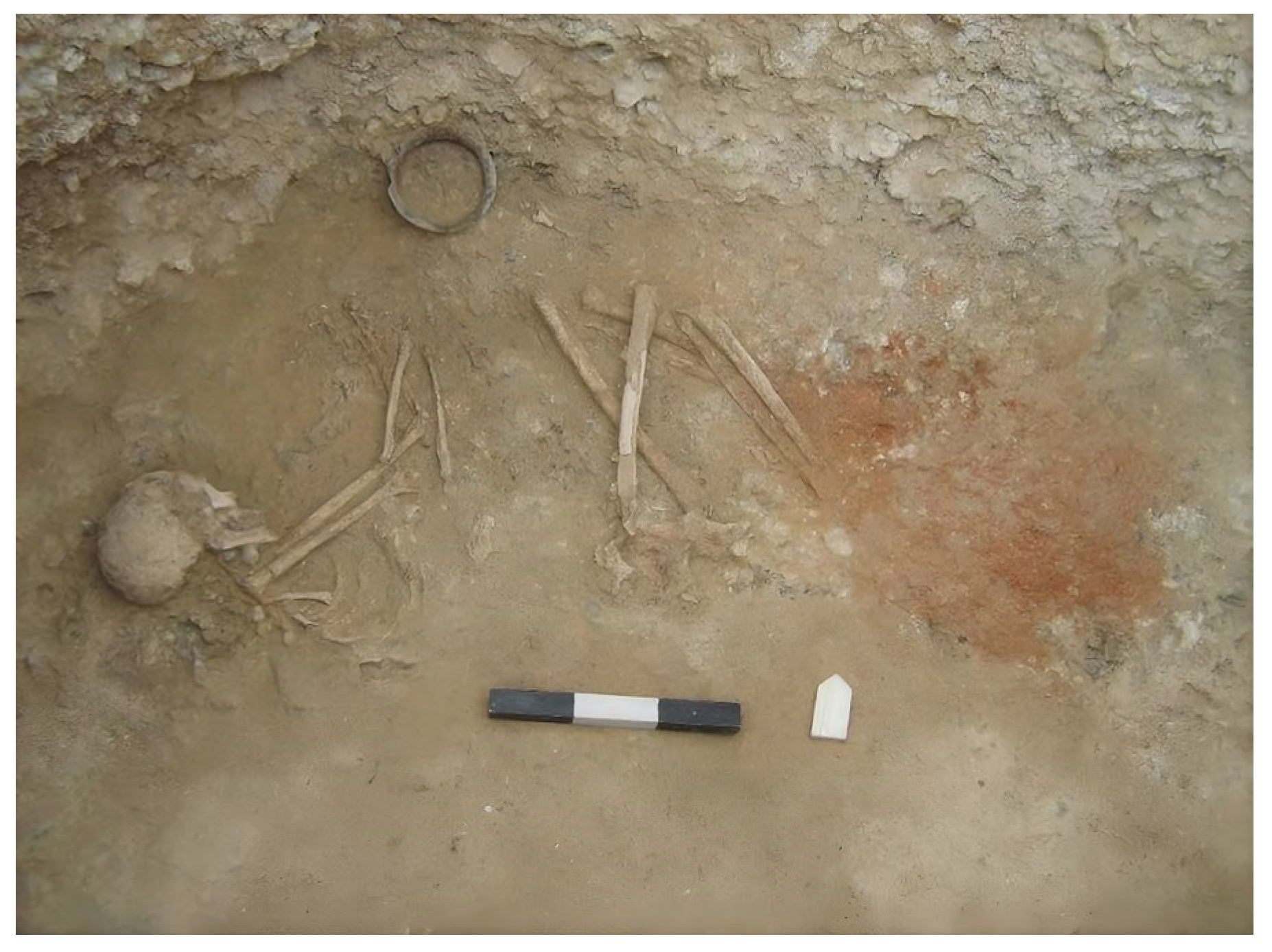
Red pigment was identified in eight individuals (11%, 8/75) and was largely absent (89%, 67/75) (Figure 14). A slightly higher occurrence was observed among adults (12%, 7/60) compared to non-adults (1/13), while occasional occurrences were recorded among children (1/9) and individuals of indeterminate sex (2/28) (cf. Table A31 and Table A32 in Appendix A).
Regarding sex, similar frequencies were observed between females (14%, 4/28) and males (11%, 2/19). No statistically significant differences were identified according to age (Fisher’s exact test, p = 1.0000) or sex (Fisher’s exact test, p = 1.0000) (cf. Table A31, Table A32, Table A33 and Table A34 in Appendix A).
Personal adornments associated with the body (e.g., beads and pendants), interpreted as elements of dress or bodily display rather than as intentionally deposited grave offerings, were recorded in only six individuals, including four adults (4/60) and two non-adults (2/13). No statistically significant differences were observed between these groups following the application of Fisher’s exact rest (p = 0.2888; cf. Table A35, Table A36 and Table A37 in Appendix A).
With respect to biological sex, the presence of ornaments was slightly higher among female individuals (3/28) compared to male individuals (1/19); however, this difference was not statistically significant (Fisher’s exact test, p = 0.6376; cf. Table A35, Table A36 and Table A38 in Appendix A).
Regarding the diversity of grave goods, it was observed that only adult individuals exhibited associations with two, three, four, or five offerings, whereas non-adults were predominantly found without associated offerings or, more rarely, with a small number of items (Table 5).
With respect to sex, female individuals generally displayed a greater diversity of associated offerings, including the only cases with four and five offerings, whereas among male individuals the diversity remained more limited (Table 6).

4. Discussion

Within the set of seven Bronze Age sites with hypogea analysed here, it should be noted that hypogea represent only one component of a broader funerary landscape, frequently coexisting with pit burials and other negative structures from the same chronological horizon [11,12,13]. The conclusions drawn in this study therefore pertain specifically to this architectural category of Middle Bronze Age mortuary behaviour.
Most of the analysed sites (Montinhos 6, Outeiro Alto 2, Torre Velha 3, Torre Velha 12, Horta do Folgão, and Aldeia do Grilo 1) also contained structures from earlier periods, namely, the Neolithic and Chalcolithic (4th and 3rd millennia BCE). This indicates places with broad occupational diachrony. The recurrent presence of funerary contexts from the Neolithic through to the Bronze Age suggests continuity in the occupation and reoccupation of specific locations that appear to have remained symbolically active over time, even though the meanings associated with them may have undergone transformations. This pattern has been documented across the middle Guadiana basin, where Neolithic and Bronze Age funerary architectures are spatially contiguous or superimposed [40]. In this sense, the concept of landscapes as places of memory, where socially significant people, events, and practices are inscribed, as proposed by Daróczi [41], is particularly relevant. In this regard, Valera (11 of [42]) notes that the social performance of these sites extends far beyond their original social context, functioning as catalytic poles and spatial markers, actively interfering in the construction of later landscapes and territories and contributing to the formation of sites with a strong symbolic charge.
Within this long-term framework, the internal organisation of funerary contexts is particularly relevant for understanding the social practices associated with death. Since the spatial structuring of funerary contexts may relate to social organisation and to the reaffirmation of kinship relations and ancestral ties [19], the meaning of the different clusters identified at several of the studied sites deserves careful consideration. The individual analysis of each cluster revealed the presence of individuals of both sexes and different age groups, which may suggest the existence of family-based groupings. However, this hypothesis can only be robustly tested through the integration of ancient DNA and isotopic analyses, including carbon (12C/13C), nitrogen (14N/15N), oxygen (δ18O), and strontium (86Sr/87Sr), which allow the assessment of kinship relations, mobility patterns, and dietary practices.
In southern Portugal, published strontium and oxygen isotope studies remain largely restricted to Neolithic and Chalcolithic contexts, particularly at Perdigões. Isotopic analyses of faunal remains indicate that most analysed animals display 87Sr/86Sr and δ18O values consistent with the local or regional geological background, while a smaller number show non-local signatures [43]. Sequential isotopic analysis of caprine tooth enamel has further expanded this evidence base [44]. Isotopic data from human remains have also been published for Perdigões and associated megalithic monuments [45], as well as for a late 3rd millennium BCE individual from the Beja region [46]. Together, these data provide useful baseline information for mobility and diet during the Late Neolithic and Chalcolithic, though their direct application to Middle Bronze Age hypogeal contexts remains limited. Complementarily, analyses of δ13C and δ15N from Late Prehistoric burial contexts in central-western Portugal (Estremadura) reveal diets characterised by cereal-based agriculture and variable consumption of animal protein, with intra-site differences sometimes associated with age or social status [47]. At the genomic level, while earlier studies document broader population changes during the Bronze Age and occasional biological relationships [48], more recent investigations provide clear evidence that, in several Portuguese Bronze Age funerary contexts, individuals buried together were biologically related [49]. In parallel, a recent ancient DNA study focusing on human populations from the 3rd and 2nd millennia BCE in the Douro basin revealed complex kinship configurations within collective funerary contexts, combining closely related and unrelated individuals [50]. Together these results highlight the interpretative potential of biomolecular approaches and demonstrate that the combined application of genetic and isotopic analyses, already proven effective in southern Portugal, constitutes the most robust framework for testing hypotheses concerning kinship, mobility, and social structuring in the contexts analysed here.
An integrated reading of the analysed sites shows that hypogea rarely functioned as the sole funerary structures, often coexisting with pits containing human burials from the same chronological period, as observed at Torre Velha 3, Montinhos 6, and Outeiro Alto 2 [11,12,13]. This coexistence points to a complex funerary landscape in which different architectural solutions operated simultaneously.
The present study focuses specifically on hypogeal contexts, which represent a distinct architectural and social investment within this broader mortuary framework. The architectural variability documented across the studied sites also warrants consideration. Typology A, corresponding to quadrangular or rectangular chambers, is clearly dominant in the analysed sample, while structures incorporating antechambers or more elaborated access sequences, such as typologies B, C, and D, represent a meaningful although less frequent component. At Outeiro Alto 2, Filipe et al. [13] noted that the observable differences between type A and type B structures, both in morphology and associated assemblages, could suggest the existence of social differentiation between the individuals buried in each type, while acknowledging that these differences might equally reflect a chronological dimension that only systematic radiocarbon dating could resolve. A similar interpretive tension applies to the broader sample analysed here, where the current data do not allow for a systematic cross-analysis between architectural typology, demographic profiles, and grave good assemblages across all sites. This remains an avenue that future research, combining typological analysis with absolute dating programmes, could clarify. In this regard, Soares and Silva [34] have suggested that such diversity may reflect social differentiation, with hypogea implying higher status due to their greater constructive investment. Although Valério et al. [28] stress the importance of broader comparative approaches, the available evidence from hypogeal contexts, particularly at Torre Velha 3, suggests that individuals buried in these structures may have held specific social relevance, as indicated by the presence of artefacts commonly interpreted as prestige items, such as metal objects. However, these observations should be understood within the wider diversity of contemporaneous funerary practices, rather than as evidence of a rigid hierarchical model, bearing in mind that a systematic study of pit burials has yet to be undertaken.
Regarding the internal organisation of the hypogea, both single and multiple burials were identified, following the terminology used in the original excavation reports, which do not always specify whether multiple interments were contemporaneous. While multiple burials may in some cases reflect simultaneous depositions, several hypogea display taphonomic and spatial evidence consistent with successive use, including the reorganisation and reduction of human remains to accommodate new interments. These practices suggest the recurrent reopening of certain structures and a sustained relationship between communities and specific funerary spaces. Noteworthy as well is the case of hypogeum [573–574] at Torre Velha 3, in which no human remains were recorded and whose chamber had been deliberately sealed with a stone structure bonded with clay [37]. While the absence of inhumations may reflect taphonomic destruction, the intentional nature of the closure raises questions about the significance of this structure within the funerary ensemble that the available data do not allow us to resolve.
Within the context of southern Portugal, negative funerary structures from the Late Neolithic and Chalcolithic were already conceived as open and revisitable contexts, subject to repeated intervention, manipulation of human remains, and spatial reconfiguration within the same period of use [40]. This tradition of successive deposition within individual funerary structures appears to have undergone a significant transformation during the Bronze Age. As noted by Senna-Martínez [51], one of the defining features of Bronze Age funerary practices in southwestern Iberia is the individualisation of the burial ritual, with a marked preference for primary depositions of single individuals. The evidence from the sites analysed here is broadly consistent with this pattern.
Nevertheless, the presence of ossuaries, reductions, and multiple interments in several of the studied hypogea indicates that individualisation was not absolute. As documented at Torre Velha 3 [11], Outeiro Alto 2 [13], and Montinhos 6 [12], Bronze Age communities continued to reopen funerary chambers to accommodate new depositions, reorganising pre-existing remains in the process. This practice of successive use within the same structure—distinct from the multi-period reoccupation of funerary spaces documented for earlier periods—suggests that certain hypogea functioned as loci of repeated funerary investment, maintained over time by the same community or kin group. This pattern is further attested during the Late Bronze Age at Monte da Ramada 1, where hypogeum 2 yielded a complex stratigraphic sequence of primary inhumations and ossuaries spanning multiple phases of use [52]. Taken together, these data indicate that while the Bronze Age saw a clear shift towards individual primary burial, the boundaries of that individualisation remained socially negotiated, with some funerary spaces continuing to serve as sites of communal memory and repeated engagement with the dead.
The analysis of hypogeum entrance orientations presented here constitutes, to our knowledge, the first systematic examination of this dimension across multiple Middle Bronze Age hypogea sites in southern Portugal. It should be noted that this analysis is based exclusively on orientation data recorded in the original excavation reports—which themselves note the orientations descriptively without interpretative comment [11,12,13] and do not employ formal archaeoastronomical methods. The tendencies identified are therefore descriptive in nature and must be interpreted with appropriate caution.
With this caveat in mind, the non-random tendencies observed may reflect a shared sensitivity to celestial phenomena that could have structured funerary space symbolically, consistent with approaches that understand the skyscape as a domain shaped by human action and social construction [53]. Within this framework, Bronze Age communities may have mobilised celestial references as part of broader conceptions of time, cyclical renewal, and cosmological order [54,55]. Similar tendencies are observable in the orientation of bodies, predominantly aligned along NE–SW and SE–NW axes. These alignments may relate to specific “windows of visibility” on the horizon where solar movement becomes particularly meaningful, yet they should be interpreted as structural possibilities rather than rigid astronomical correspondences [55]. The distribution of facial orientations among individuals with determinable facial direction adds a further layer to this picture. Faces were directed predominantly towards the southeast, northeast, and east on one hand, and towards the northwest, southwest, and west on the other, in roughly equal proportions, while north and south orientations were markedly rare. This broad bipartition along an east–west axis, combined with the near-total absence of north and south orientations documented both for facial direction and for hypogeum entrances, reinforces the impression of a structured spatial logic underlying funerary deposition. Whether this reflects an awareness of solar references, such as sunrise and sunset positions at particular moments of the year, remains a possibility that cannot be evaluated without formal archaeoastronomical analysis, and should be treated as a descriptive tendency rather than a demonstrated cosmological pattern. The distribution of body positions, with a tendency towards right lateral position among women and left lateral position among men, adds a social dimension to funerary organisation, potentially reflecting identity categories or ritual conventions embedded in the construction of bodily meaning [20]. The spatial relationship between the body and the hypogeum entrance adds a further dimension to this pattern. The predominance of individuals deposited with their backs to the entrance, observed in 84% of the cases assessed here, extends and confirms the pattern previously identified in site-specific studies of some of the contexts included in this sample, notably at Outeiro Alto 2 [13] and Montinhos 6 [12]. However, this regularity may partly reflect practical constraints rather than deliberate ritual choice, given that the narrow access passages of these structures would have made the introduction of a body in that position considerably easier. Whether the pattern also carries symbolic or social meaning is difficult to assess independently of this functional explanation. At Montinhos 6, a possible sex-based nuance has been noted, with male individuals more frequently facing the entrance [12], which may be harder to explain on purely practical grounds and could suggest an additional layer of intentionality, though the limited number of sexed individuals prevents firm conclusions.
Cumulativaly the articulation between architectural orientations, bodily alignments, and patterns of body positions suggests that deposition in hypogea may have been informed by shared cosmological conceptions and socially embedded ritual practices, expressed as recurring and flexible tendencies rather than uniform prescriptive rules, and remains an avenue open to future formal archaeoastronomical investigation.
The data concerning funerary offerings reveal significant patterns. Not all individuals buried in hypogea were accompanied by grave goods, and these patterns should be understood as reflecting socially mediated decisions made by relatives or community members rather than direct choices or possessions of the deceased [20]. In general, adulthood proved to be a determining criterion for access to offerings, with adults more frequently associated with ceramic vessels, metal awls, and meat offerings. Weapons and red pigments occur more rarely, reinforcing the selective nature of these deposits.
Despite this general pattern, some non-adult individuals were identified with funerary offerings, including occasional associations with metal artefacts or more diverse assemblages. Notable cases include individual [5405] from Outeiro Alto 2, associated with an awl; individual [1534] from Torre Velha 3, accompanied by a ceramic vessel and faunal remains; individual [604] from Torre Velha 3, associated with a shell necklace and red pigments; and individual [2004] from Torre Velha 3, recorded with a ceramic vessel and a copper dagger. Although rare, these situations may suggest the existence of mechanisms for the social transmission of prestige through family affiliation, raising the possibility that status may have been, at least in some cases, partly hereditary, a hypothesis that, given the limited number of cases, must be treated with caution.
Female individuals were more frequently accompanied by ceramic offerings—a statistically significant association—and also presented, on average, more than one vessel. The same pattern was observed for metal awls, whose presence was significantly more frequent in female burials.
In the specific case of Torre Velha 3, this trend is particularly relevant, as female funerary contexts concentrate not only awls in arsenical copper but also the most technologically exceptional examples. Hypogea [1267]–[1792], [2356]–[2357], and [2417]–[2418], all associated with adult female individuals, include bronze awls, and in hypogea [1267]–[1792] and [2417]–[2418], bronze daggers were also recorded, the former additionally yielding silver rivets [28]. Archaeometallurgical analyses demonstrated that these bronze artefacts present tin contents between 8 and 12% (Sn), compatible with a fully developed bronze metallurgy and suggesting an exogenous origin, since in southern Portugal this type of alloy only became widespread during the Late Bronze Age [28]. This is a notable finding, as it situates these women in funerary contexts associated with access to prestige objects of non-local origin during the Middle Bronze Age.
By contrast, daggers in arsenical copper are associated with different contexts, namely, an adult individual of undetermined sex (hypogeum [1298]–[1695]) and a non-adult individual (hypogeum [2215]–[2231]) [28]. Although weapons do not reveal statistically significant differences between sexes at the overall sample scale, the concentration of bronze weapons and silver elements in female burials at Torre Velha 3 suggests differentiated funerary practices compatible with specific forms of social recognition.
Assuming that adornments function as symbols of identity construction, social transmission, and prestige [56], these occur in both female and male individuals, albeit with differences in expression and contextual association. At Torre Velha 3, two female burials stand out, hypogea [2356]–[2357] and [2417]–[2418], in which metal elements interpreted as possible components of a head-dress were identified [28], in association with diverse grave good assemblages, suggesting a particularly elaborate funerary treatment. A metal ring was also identified in hypogeum [1019]–[1018] at Torre Velha 12, associated with a male individual accompanied by a ceramic vessel, a copper-alloy dagger, a meat offering, and pigments. Sporadic cases of non-adult individuals with adornments were also recorded, as well as a ring in association with an ossuary from hypogeum [5922]–[5921] at Montinhos 6.
Overall, the observed differences reveal specific practices in the treatment of the dead according to age and sex, suggesting patterns compatible with social differentiation and indicating a possible association between adult female individuals and enhanced funerary investment, as well as tentative evidence for mechanisms of intergenerational status transmission.

5. Conclusions

Archaeological interventions conducted in the interior of Baixo Alentejo have led to the identification of a significant number of hypogeum funerary contexts that were previously poorly documented in this region. This study presents the first integrated, multi-site analysis of these contexts for the Middle Bronze Age of southern Portugal, combining bioanthropological, spatial, archaeometallurgical, and funerary data across a regionally representative sample.
Most of the analysed hypogea date between the mid-18th and late 15th centuries BCE. From a spatial perspective, their organisation into clusters suggests structured funerary areas that may have held sustained significance within the landscape, indicating recurrent and possibly deliberate spatial choices over time. The architectural variability documented across the sample, spanning several distinct typologies, may reflect functional or social distinctions within this broad funerary category, a dimension that remains to be systematically explored.
Bioanthropological analysis indicates that access to hypogea was not restricted to a specific age group or biological sex, although certain criteria appear to have influenced funerary treatment. The frequent coexistence of primary inhumations with reductions and ossuary deposits evidences recurrent reuse of these structures, situating them within a long-term depositional tradition rooted in the Chalcolithic and persisting throughout the Bronze Age.
Recurrent behavioural patterns were identified in architectural orientation, body positioning, and the distribution of grave goods. A tendency for female individuals to be deposited in right lateral position and male individuals in left lateral position suggests patterned funerary differentiation associated with biological sex. The orientations of both entrances and bodies display non-random tendencies that may reflect structured spatial choices and potentially symbolic considerations. The distribution of facial orientations, broadly bipartite along an east–west axis with a marked absence of north and south directions, is consistent with this pattern. However, in the absence of formal archaeoastronomical analysis, any cosmological interpretation must remain tentative and warrants dedicated future investigation.
The analysis of grave goods indicates that age was an important factor in their distribution, with offerings occurring predominantly among adult individuals. Female burials more frequently exhibited a greater diversity of offerings, including ceramic vessels, metal awls, and in specific contexts, weapons. A particularly significant finding concerns the bronze artefacts from Torre Velha 3, whose tin contents of 8–12% suggest a non-local technological tradition, given that this alloy composition only becomes widespread in southern Portugal during the Late Bronze Age [28]. The concentration of these technologically distinctive objects in female burials may indicate differentiated forms of social recognition and tentatively raises the possibility of intergenerational mechanisms of status transmission, a hypothesis that requires further bioarchaeological testing. The predominance of individuals deposited with their backs to the hypogeum entrance, observed across the sample, further attests to the existence of shared behavioural conventions in funerary deposition, whose precise meaning, whether practical, ritual, or both, remains open.
Taken together, these results contribute to a more nuanced understanding of Middle Bronze Age societies in southwestern Iberia. The evidence suggests communities in which funerary practices appear to have been structured by age, biological sex, and possible social differentiation and in which funerary architecture may have functioned as arenas for social memory, identity negotiation, and potentially symbolic expression. The absence of isotopic (strontium, carbon, oxygen) and ancient DNA data for Middle Bronze Age populations in southwestern Iberia represents a significant limitation in assessing residential mobility, diet, biological affinity, and kinship patterns. Future research integrating isotopic and genomic analyses would allow direct testing of the intergenerational status transmission hypothesis suggested here and clarification of the biological relationships between individuals sharing the same funerary spaces.


Author Contributions

Formal analysis, M.B.; investigation, M.B.; writing—original draft, M.B.; writing—review and editing, M.B., H.A.S. and A.M.S.B. All authors have read and agreed to the published version of the manuscript.

Funding

This research received no external funding.

Data Availability Statement

The data presented in this study are included in the article and Appendix A.

Acknowledgments

I would like to thank the EDIA Documentation Centre, Empatia Arqueologia, Conservação e Restauro, Ltd., and Lídia Baptista for providing various information and the reports of the sites studied. This work is the result of the projects Estudo das práticas funerárias em hipogeus da Idade do Bronze do Sudeste de Portugal, developed at the University of Minho between 2022 and 2024.

Conflicts of Interest

The authors declare that the research was conducted in the absence of any commercial or financial relationships that could be construed as a potential conflict of interest.

Abbreviations

The following abbreviations are used in this manuscript:
BPBefore Present
Ind.Indeterminate
Lab. Ref.Laboratory Reference
NNorth
NENortheast
NWNorthwest
SSouth
SESoutheast
S.U.Stratigraphic unit
SWSouthwest
WWest

Appendix A

Table A1. Burial type and age-at-death and sex estimates of individuals from hypogeal contexts.
Archaeological SiteHypogeum (S.U.)Burial TypeIndividual (S.U.)Estimated AgeEstimated Sex
Montinhos 6[4707]–[4706]Primary deposition[4703]AdultIndeterminate
[4915]–[4913]Primary deposition[4906]AdultMale
[4915]–[4913]Ossuary[4907]AdultFemale (1)
[5922]–[5921]Primary deposition[5911]Adult (25–30)Female
[5922]–[5921]Primary deposition[5913]AdultFemale
[5922]–[5921]Ossuary[5912], [5918], [5920]AdultFemale (1)/Male (1)
[8912]–[8911]Primary deposition[8909]AdultIndeterminate
[15320]–[15319]Primary deposition[15305], [15306], [15307], [15308], [15309], [15310], [15311]AdultFemale
[15527]–[15518]Primary deposition[15513]AdultFemale
[15527]–[15529]Primary deposition[15524]AdultFemale
[15604]–[15613])Primary deposition[15612]AdultFemale
[15814]–[15815]Primary deposition[15805]AdultIndeterminate
[15814]–[15815]Primary deposition[15806]AdultIndeterminate
[16715]–[16714]Primary deposition[16709]AdultMale
[16715]–[16714]Bone reduction[16710]AdultIndeterminate
[16910]–[16909]Primary deposition[16904]AdultMale
[16910]–[16909]Bone reduction[16908]IndeterminateIndeterminate
[2011]Primary deposition[2007]AdultMale
[2011]Primary deposition[2008]AdultFemale
[2011]Bone reduction[2009]AdultMale
[10212]Primary deposition[10205]AdultMale
[10212]Primary deposition[10209]AdultFemale
[10212]Ossuary[10206], UE [10207] e UE [10208]Adults (NMI 3)/Non-adult (NMI 3)2 Female
[11815]–[11806]Primary deposition[11805]Non-adult (8)Indeterminate
[11815]–[11814]Primary deposition[11812]AdultFemale
[15312]Primary deposition[15910]Adult (>50)Female
[15312]Primary deposition[15913]Adult (18–21)Female
[15917]Primary deposition[15914]AdultIndeterminate
[15917]Primary deposition[15915]Non-Adult (18)Indeterminate
Outeiro Alto 2[502]–[504]Primary deposition[508]AdultFemale
[4618]/[4602]Primary deposition[4624]AdultFemale
[4618]/[4602]Ossuary[4623]Not evaluatedNot evaluated
[4618]/[4602]Ossuary[4611]Not evaluatedNot evaluated
[5204]Primary deposition[5205]AdultIndeterminate
[5204]Ossuary[5208]Not evaluatedNot evaluated
[5402]Primary deposition[5405]Non-Adult (8–10)Indeterminate
[5402]Ossuary[5406]Not evaluatedNot evaluated
[5502]=[5511]Primary deposition[5513]AdultIndeterminate
[5702 = 5706]Primary deposition[5709]AdultIndeterminate
[5702 = 5706]Bone reduction[5710]AdultIndeterminate
[6202]Primary deposition[6208]AdultMale
[6302]Primary deposition[6315]AdultFemale
[6302]Ossuary[6314]Not evaluatedNot evaluated
[6302]Ossuary[6308]Not evaluatedNot evaluated
[6402]Primary deposition[6413]IndeterminateIndeterminate
[6402]Ossuary[6412]Not evaluatedNot evaluated
[6502]Primary deposition[6507]IndeterminateIndeterminate
[6802]Primary deposition[6808]AdultFemale
Alto de Brinches 3[439–440]Primary deposition[261]Non-adult (6 ± 2)Indeterminate
Torre Velha 3[697–710]Primary deposition[604]Non-adult (4–5)Indeterminate
[1395–1394]Not present---
[1086]–[1622]Primary deposition[1514]AdultMale
[1157]–[1158]Primary deposition[1134]Adult (21–24)Female
[1267]–[1792]Primary deposition[1714]AdultFemale
[1284]–[1415]Primary deposition[1340]AdultFemale
[1298–1695]Primary deposition[1570]AdultIndeterminate
[1307]–[1370]Primary deposition[1363]AdultIndeterminate
[1319]–[1320]Primary deposition[1169]AdultIndeterminate
[1489]–[1490]Primary deposition[1382]AdultMale
[1662]–[1664]Primary deposition[1361]AdultMale
[1662]–[1664]Primary deposition[1534]Non-adult (12–14)Indeterminate
[1662]–[1664]Bone reduction[1532]AdultFemale
[1712]–[1713]Primary deposition[1565]Non-adult (14–19)Indeterminate
[1769]–[1770]Primary deposition[1575]AdultFemale
[1947]–[1948]Primary deposition[1781]AdultMale
[1947]–[1948]Bone reduction[1782]AdultFemale
[1949]–[1950]Primary deposition[1799]AdultFemale
[2119]–[2120]Primary deposition[2007]AdultMale
[2356]–[2357]Primary deposition[2051]AdultFemale
[2417]–[2418]Primary deposition[2241]AdultFemale
[2415]–[2231]Primary deposition[2004]Non-adult (5–9)Indeterminate
[2471–2472]Primary deposition[2367]Non-adult (5–9)Indeterminate
[2471–2472]Primary deposition[2368]Non-adult (5–9)Indeterminate
[2471–2472]Bone reduction[2365] e [2358]Adult (approx. 35)Male
[2498]–[2497]Primary deposition[2032]Adult (approx. 35)Male
[2498]–[2497]Bone reduction[2033]Adult (approx. 35)Male
[2550]–[2551]Primary deposition[2069]Adult (approx. 35)Female
[2550]–[2551]Bone reduction[2068]–[2000]AdultMale
[573–574]Not present---
[2236]–[2237]Primary deposition[2203]AdultFemale
Torre Velha 12[915]–[931]Primary deposition[926]Adult-advanced ageFemale
[1019]–[1018]Primary deposition[1014]AdultMale
[1019]–[1018]Bone reduction[1013]Non-adult (5–6)Indeterminate
Aldeia do Grilo 1[609]Primary deposition[608]AdultMale
[709]Primary deposition[708]AdultIndeterminate
Horta do Folgão[171–174]Primary deposition[087]Adolescent (15–19)Indeterminate
[097–101]Primary deposition[120]AdultFemale
[177–126]Primary deposition[127]AdultMale
References: [32,35,36,38,39,57,58,59,60,61,62,63,64,65,66,67].
Table A2. Burial position, head–feet orientation, body facing, and face orientation in hypogea.
SiteHypogeum (SU)OrientationIndividual (SU)Burial PositionHead–Feet OrientationBody FacingFace Orientation
Montinhos 6[4707]–[4706]Southeast[4703]Flexed on the right sideNE–SWBack-facingNorthwest
[4915]–[4913]Southwest[4906]Flexed on the left sideNE–SWFront-facingSouthwest
[4915]–[4913]Southwest[4907]IndeterminateIndeterminateIndeterminateIndeterminate
[5922]–[5921]Northwest[5911]Flexed on the left sideNE–SWBack-facingEast
[5922]–[5921]Northwest[5913]Flexed on the left sideNE–SWBack-facingIndeterminate
[5922]–[5921]Northwest[5912], [5918], [5920]IndeterminateIndeterminateIndeterminateIndeterminate
[8912]–[8911]Northeast[8909]Flexed on the right sideNW–SEBack-facingIndeterminate
[15320]–[15319]Southeast[15305], [15306], [15307], [1530], [15309], [15310], [15311]Flexed on the right sideIndeterminateIndeterminateIndeterminate
[15527]–[15518]Southeast[15513]Flexed on the right sideSE–NWBack-facingNorth
[15527]–[15529]Southeast[15524]Flexed on the right sideNE–SWBack-facingNorthwest
[15604]–[15613])Southwest[15612]Flexed on the right sideSE–NWBack-facingNortheast
[15814]–[15815]Northeast[15805]Flexed on the right sideNE–SWBack-facingIndeterminate
[15814]–[15815]Northeast[15806]IndeterminateIndeterminateIndeterminateIndeterminate
[16715]–[16714]Southwest[16709]Flexed on the left sideSE–NWFront-facingSouthwest
[16715]–[16714]Southwest[16710]IndeterminateIndeterminateIndeterminateIndeterminate
[16910]–[16909]Southeast[16904]Flexed on the left sideNE–SWFront-facingSoutheast
[16910]–[16909]Southeast[16908]IndeterminateIndeterminateIndeterminateIndeterminate
[2011]East[2007]Flexed on the left sideSE–NWBack-facingSouth
[2011]East[2008]Flexed on the left sideE–WBack-facingSouth
[2011]East[2009]IndeterminateIndeterminateIndeterminateIndeterminate
[10212]Northeast[10205]Flexed on the right sideSW–NEFront-facingSoutheast
[10212]Northeast[10209]Flexed on the right sideSW–NE IndeterminateIndeterminate
[10212]Northeast[10206], [10207], [10208]IndeterminateIndeterminateIndeterminateIndeterminate
[11815]–[11806]Southeast[11805]Flexed on the right sideSE–NWBack-facingWest
[11815]–[11814]Northeast[11812]SupineE–WBack-facingSouth
[15312]Northwest[15910]Flexed on the right sideE–WBack-facingSoutheast
[15312]Northwest[15913]SupineNE–SWFront-facingIndeterminate
[15917]East[15914]Flexed on the right sideS–NFront-facingNorthwest
[15917]East[15915]Prone NE–SWIndeterminateIndeterminate
Outeiro Alto 2[502]–[504]Southeast[508]Flexed on the left sideSW–NEBack-facingNortheast
[4618]–[4602]Southwest[4624]Flexed on the right sideNE–SWBack-facingNorthwest
[4618]–[4602]Southwest[4623]IndeterminateIndeterminateIndeterminateIndeterminate
[4618]–[4602]Southwest[4611]IndeterminateIndeterminateIndeterminateIndeterminate
[5204]Northeast[5205]Flexed on the right sideNW–SEIndeterminateSoutheast
[5204]Northeast[5208]IndeterminateIndeterminateIndeterminateIndeterminate
[5402]Northwest[5405]Flexed on the left sideNE–SWBack-facingSoutheast
[5402]Northwest[5406]IndeterminateIndeterminateIndeterminateIndeterminate
[5502] = [5511]Northwest[5513]Flexed on the right sideSW–NE Back-facingNorthwest
[5702 = 5706]Southwest[5709]ProneSW–NEBack-facingNorthwest
[5702 = 5706]Southwest[5710]Flexed on the right sideSW–NEIndeterminateNorthwest
[6202]Southeast[6208]Flexed on the left sideSW–NEBack-facingNorth
[6302]Northeast[6315]ProneNW–SE Back-facingIndeterminate
[6302]Northeast[6314]IndeterminateIndeterminateIndeterminateIndeterminate
[6302]Northeast[6308]IndeterminateIndeterminateIndeterminateIndeterminate
[6402]Southeast[6413]SupineNW–SEBack-facingSouthwest
[6402]Southeast[6412]IndeterminateIndeterminateIndeterminateIndeterminate
[6502]Southeast[6507]Flexed on the left sideSE–NWFront-facingSouthwest
[6802]Southwest[6808]Flexed on the right sideSE–NWBack-facingSouthwest
Alto de Brinches 3[439–440]Northwest[261]Flexed on the left sideNW–SEBack-facingSoutheast
Torre Velha 3[697–710]Southwest[604]Flexed on the right sideSE–NWBack-facingNorthwest
[1395–1394]Northwest-IndeterminateIndeterminateIndeterminateIndeterminate
[1086]–[1622]Southeast[1514]Flexed on the right sideNE–SWBack-facingNorthwest
[1157]–[1158]Southwest[1134]Flexed on the right sideNE–SWBack-facingNorthwest
[1267]–[1792]Southeast[1714]Flexed on the right sideNE–SWBack-facingNorthwest
[1284]–[1415]Northeast[1340]Flexed on the right sideSE–NWBack-facingNortheast
[1298–1695]Southeast[1570]Flexed on the right sideNW–SEBack-facingSouthwest
[1307]–[1370]Northwest[1363]IndeterminateIndeterminateIndeterminateIndeterminate
[1319]–[1320]Northwest[1169]IndeterminateIndeterminateIndeterminateIndeterminate
[1489]–[1490]Northeast[1382]Flexed on the left sideSE–NWBack-facingSouthwest
[1662]–[1664]Southeast[1361]Flexed on the left sideSE–NWIndeterminateNortheast
[1662]–[1664]Southeast[1534]Flexed on the right sideNE–SWBack-facingSouthwest
[1662]–[1664]Southeast[1532]IndeterminateIndeterminateIndeterminateIndeterminate
[1712]–[1713]Southeast[1565]Flexed on the right sideNE–SWBack-facingIndeterminate
[1769]–[1770]Southeast[1575]Flexed on the right sideNE–SWBack-facingNorthwest
[1947]–[1948]Northeast[1781]Flexed on the left sideSE–NWBack-facingSoutheast
[1947]–[1948]Northeast[1782]IndeterminateIndeterminateIndeterminateIndeterminate
[1949]–[1950]Southeast[1799]Flexed on the right sideNE–SWBack-facingWest
[2119]–[2120]Northwest[2007]Flexed on the right sideNE–SWBack-facingEast
[2356]–[2357]Northwest[2051]Flexed on the right sideNW–SEBack-facingSoutheast
[2417]–[2418]Southwest[2241]Flexed on the right sideSE–NWBack-facingNortheast
[2415]–[2231]Northeast[2004]Flexed on the left sideNW–SEBack-facingNortheast
[2471–2472]Southwest[2367]Flexed on the left sideSE–NWFront-facingIndeterminate
[2471–2472]Southwest[2368]Flexed on the left sideSE–NWFront-facingIndeterminate
[2471–2472]Southwest[2365], [2358]IndeterminateIndeterminateIndeterminateIndeterminate
[2498]–[2497]Northeast[2032]SupineNW–SEIndeterminateSoutheast
[2498]–[2497]Northeast[2033]IndeterminateIndeterminateIndeterminateIndeterminate
[2550]–[2551]Southwest[2069]Flexed on the right sideSE–NWBack-facingNortheast
[2550]–[2551]Southwest[2068]–[2000]IndeterminateIndeterminateIndeterminateIndeterminate
[573–574]Northwest-IndeterminateIndeterminateIndeterminateIndeterminate
[2236]–[2237]Northeast[2203]Flexed on the right sideNW–SEBack-facingSoutheast
Torre Velha 12[915]–[931]Northwest[926]Flexed on the left sideNE–SWBack-facingSoutheast
[1019]–[1018]Southwest[1014]Flexed on the right sideSE–NWBack-facingNortheast
[1019]–[1018]Southwest[1013]IndeterminateIndeterminateIndeterminateIndeterminate
Aldeia do Grilo 1[609]Northwest[608]Flexed on the left sideSE–NWBack-facingSouthwest
[709]Northeast[708]Flexed on the right sideS–NBack-facingIndeterminate
Horta do Folgão[171–174]Northeast[087]Flexed on the right sideNW–SEBack-facingSoutheast
[097–101]Southwest[120]Flexed on the right sideS–NBack-facingEast
[177–126]Southeast[127]Flexed on the left sideS–NBack-facingEast
References: [32,35,36,38,39,57,58,59,60,61,62,63,64,65,66,67].
Table A3. Associated materials (ceramics, metal, fauna, pigments, and ornaments) and funerary data: burial position, head–feet orientation, body facing, and face orientation in hypogea.
SiteHypogeum (SU)Individual (SU)CeramicsMetalFaunaPigmentsOrnaments
Montinhos 6[4707]–[4706][4703]Three ceramic vesselsOne riveted dagger and one copper-alloy awlNo associatedNo associatedNo associated
[4915]–[4913][4906]One ceramic vesselsNo associatedNo associatedNo associatedNo associated
[4915]–[4913][4907]Two ceramic vesselsOne copper-alloy awlNo associatedNo associatedNo associated
[5922]–[5921][5911]Two ceramic vesselsNo associatedBos taurus radius and ulna, unfusedNo associatedNo associated
[5922]–[5921][5913]One ceramic vesselOne copper awlRight radius, ulna, and cubitus, unfused, from Ovis aries/CapraNo associatedNo associated
[5922]–[5921][5912], [5918], [5920]Three ceramic vesselsOne bronze awl and one riveted dagger, made of copper alloyNo associatedNo associatedCopper-alloy earring
[8912]–[8911][8909]One ceramic vesselone copper-alloy awlNo associatedNo associatedNo associated
[15320]–[15319][15305], [15306], [15307], [1530], [15309], [15310], [15311],One metal-alloy awlRemains of the species Oryctolagus cuniculusNo associatedNo associated
[15527]–[15518][15513]Three ceramic vesselsOne copper-alloy awlNo associatedNo associatedNo associated
[15527]–[15529][15524]Two ceramic vesselsOne awl and one dagger, both made of copper alloyLeft radius, ulna, and cubitus, fused, from the species Bos taurusNo associatedNo associated
[15604]–[15613])[15612]No associatedNo associatedNo associatedNo associatedNo associated
[15814]–[15815][15805]Three ceramic vesselsNo associatedNo associatedNo associatedNo associated
[15814]–[15815][15806]No associatedOne awl and one riveted dagger in copper alloyNo associatedNo associatedNo associated
[16715]–[16714][16709]Two ceramic vesselsNo associatedNo associatedNo associatedNo associated
[16715]–[16714][16710]No associatedNo associatedNo associatedNo associatedNo associated
[16910]–[16909][16904]One ceramic vesselOne metal awlRight radius, fused, from the species Ovis aries/CapraNo associatedNo associated
[16910]–[16909][16908]No associatedNo associatedNo associatedNo associatedNo associated
[2011][2007]No associatedNo associatedNo associatedNo associatedNo associated
[2011][2008]Two ceramic vesselsUnidentified bronze fragmentNo associatedNo associatedNo associated
[2011][2009]One ceramic vesselNo associatedNo associatedNo associatedNo associated
[10212][10205]No associatedNo associatedNo associatedNo associatedNo associated
[10212][10209]No associatedNo associatedNo associatedNo associatedNo associated
[10212][10206–10208]No associatedNo associatedNo associatedNo associatedNo associated
[11815]–[11806][11805]No associatedNo associatedNo associatedNo associatedNo associated
[11815]–[11814][11812]No associatedNo associatedLeft radius, humerus, and carpals, unfused, from the species Bos taurusNo associatedNo associated
[15312][15910]One ceramic vesselOne metal awlRight radius, fused, from the species Ovis aries/CapraNo associatedNo associated
[15312][15913]No associatedNo associatedNo associatedNo associatedNo associated
[15917][15914]No associatedNo associatedNo associatedNo associatedNo associated
[15917][15915]No associatedNo associatedNo associatedNo associatedNo associated
Outeiro Alto 2[502]–[504][508]One ceramic vesselOne metal awlLeft radius and ulna, fused, from the species Bos taurusRed pigmentNo associated
[4618]–[4602][4624]Two ceramic vesselsNo associatedNo associatedNo associatedNo associated
[4618]–[4602][4623]Two ceramic vesselsTwo metal awlsNo associatedNo associatedNo associated
[4618]–[4602][4611]No associatedNo associatedNo associatedNo associatedNo associated
[5204][5205]No associatedNo associatedNo associatedNo associatedNo associated
[5204][5208]Three ceramic vesselsNo associatedMammalian faunaNo associatedNo associated
[5402][5405]No associatedOne metal awlNo associatedNo associatedNo associated
[5402][5406]No associatedNo associatedNo associatedNo associatedNo associated
[5502] = [5511][5513]One ceramic vesselNo associatedNo associatedNo associatedNo associated
[5702 = 5706][5709]Three ceramic vesselsNo associatedRadius from the species Bos taurus, fusedNo associatedNo associated
[5702 = 5706][5710]Four ceramic vesselsOne metal awlNo associatedNo associatedNo associated
[6202][6208]Three ceramic vesselsOne riveted daggerRadius and humerus from the species Bos taurusNo associatedNo associated
[6302][6315]One ceramic vesselNo associatedNo associatedNo associatedNo associated
[6302][6314]Three ceramic vesselsNo associatedNo associatedNo associatedNo associated
[6302][6308]No associatedNo associatedNo associatedNo associatedNo associated
[6402][6413]One ceramic vesselTwo metal awlsNo associatedNo associatedNo associated
[6402][6412]Two ceramic vesselsNo associatedNo associatedNo associatedNo associated
[6502][6507]Two ceramic vesselsOne riveted dagger in copper alloyRadius and humerus from the species Bos taurusNo associatedNo associated
[6802][6808]Two ceramic vesselsOne riveted knife and one metal awlLeft radius and humerus from the species Bos taurusNo associatedNo associated
Alto de Brinches 3[439–440][261]No associatedNo associatedNo associatedNo associatedNo associated
Torre Velha 3[697–710][604]No associatedNo associatedNo associatedRed PigmentNecklace of perforated shells
[1395–1394]-IndeterminateIndeterminateIndeterminateIndeterminateIndeterminate
[1086]–[1622][1514]No associatedNo associatedLeft radius, ulna, and carpals, with epiphyseal fusion, belonging to the species Bos taurusNo associatedNo associated
[1157]–[1158][1134]One ceramic vesselNo associatedNo associatedNo associatedNo associated
[1267]–[1792][1714]One ceramic vesselOne metal awl and one riveted dagger A set of bones from the species Bos taurus, represented by the left radius and ulna with epiphyseal fusionNo associatedNo associated
[1284]–[1415][1340]One ceramic vesselOne metal awlNo associatedNo associatedNo associated
[1298–1695][1570]Three ceramic vesselsOne metal awlLeft radius, ulna, and carpals, fused, belonging to the species Bos taurusRed pigmentNo associated
[1307]–[1370][1363]One ceramic vesselOne metal awlNo associatedNo associatedNo associated
[1319]–[1320][1169]One ceramic vesselNo associatedNo associatedNo associatedNo associated
[1489]–[1490][1382]No associatedNo associatedLeft radius and ulna, unfused, belonging to the species Bos taurusNo associatedNo associated
[1662]–[1664][1361]No associatedNo associatedNo associatedNo associatedNo associated
[1662]–[1664][1534]One ceramic vesselNo associatedLeft carpal bone with epiphyseal fusion, belonging to the species Ovis aries/CapraNo associatedNo associated
[1662]–[1664][1532]No associatedNo associatedNo associatedNo associatedNo associated
[1712]–[1713][1565]One ceramic vesselNo associatedNo associatedNo associatedNo associated
[1769]–[1770][1575]One ceramic vesselOne metal awlNo associatedNo associatedNo associated
[1947]–[1948][1781]No associatedNo associatedLeft radius and ulna of Bos taurus, unfusedNo associatedNo associated
[1947]–[1948][1782]No associatedOne metal awlNo associatedNo associatedNo associated
[1949]–[1950][1799]One ceramic vesselOne metal awlRight ulna, radius, and cubitus of Bos taurusRed pigmentNo associated
[2119]–[2120][2007]No associatedOne metal awlRight radius and ulna of the species Bos taurus, with epiphyseal fusionNo associatedNo associated
[2356]–[2357][2051]One ceramic vesselTwo metal awls Left radius, ulna, and cubitus of the species Bos taurus, with epiphyseal fusionNo associatedHeaddress with appliqués
[2417]–[2418][2241]One ceramic vesselOne awl and one daggerNo associatedRed pigmentHeaddress with appliqués
[2415]–[2231][2004]One ceramic vesselOne daggerNo associatedNo associatedIn the metatarsal region, it was possible to recover a ring
[2471–2472][2367]No associatedNo associatedNo associatedNo associatedNo associated
[2471–2472][2368]No associatedNo associatedNo associatedNo associatedNo associated
[2471–2472][2365], [2358]One ceramic vesselNo associatedDecorated phalanxNo associatedNo associated
[2498]–[2497][2032]No associatedNo associatedNo associatedNo associatedNo associated
[2498]–[2497][2033]No associatedNo associatedRight radius, ulna, and cubitus with epiphyseal fusion, from the species Bos taurusNo associatedNo associated
[2550]–[2551][2069]One ceramic vesselOne awlMeat offering, in poor state of preservationNo associatedNecklace composed of eight beads made from different raw materials: bone (two); metal (two fragments); shells (one decorated gastropod shell); an indeterminate, purple-coloured material (two); and an indeterminate material (one).
[2550]–[2551][2068]–[2000]No associatedNo associatedNo associatedNo associatedNo associated
[573–574]------
[2236]–[2237][2203]One ceramic vesselOne metal awlNo associatedNo associatedNo associated
Torre Velha 12[915]–[931].[926]One ceramic vesselOne copper-alloy daggerLeft radius and ulna, with epiphyseal fusion, from the species Bos taurusNo associatedNo associated
[1019]–[1018][1014]One ceramic vesselOne three-riveted dagger in copper alloyRight carpals, juvenile, from the species Bos taurusRed pigmentOne copper-alloy ring that may correspond to an earring
[1019]–[1018][1013]No associatedNo associatedNo associatedNo associatedNo associated
Aldeia do Grilo 1[609][608]One ceramic vesselOne metal blade from a riveted knifeOne unidentified faunal boneNo associatedNo associated
[709][708]No associatedNo associatedNo associatedNo associatedNo associated
Horta do Folgão[171–174][087]No associatedNo associatedNo associatedNo associatedNo associated
[097–101][120]Two ceramic vesselsOne metal awlNo associatedNo associatedNo associated
[177–126][127]One ceramic vesselOne copper-alloy sword with a triangular blade and a riveted hiltNo associatedNo associated
References: [32,35,36,38,39,57,58,59,60,61,62,63,64,65,66,67].
Table A4. Frequency of hypogeum typologies (n = 57).
Hypogea Typen%
A2646
A159
B12
B124
C916
C135
D611
E12
Indeterminate47
Total57100
References: [32,35,36,38,39,57,58,59,60,61,62,63,64,65,66,67].
Table A5. Age and sex distribution (percentages relative to the total sample; n = 95).
Categoryn%
AgeAdult7882
Non-adult1415
Indeterminate33
Age rangeFoetus00
Infant11
Child910
Adolescent22
Young adult77
Middle-aged adult00
Older adult22
Indeterminate7478
SexFemale3234
Male2021
Indeterminate4345
References: [32,35,36,38,39,57,58,59,60,61,62,63,64,65,66,67].
Table A6. Age and sex distribution (percentages relative to each category).
Categoryn%
AgeAdult7885
Non-adult1415
Total92100
Age rangeFoetus00
Infant15
Child943
Adolescent210
Young adult733
Middle-aged adult00
Older adult210
Total21100
SexFemale3262
Male2039
Total52100
References: [32,35,36,38,39,57,58,59,60,61,62,63,64,65,66,67].
Table A7. Distribution of primary and secondary inhumations by age and sex (percentages relative to each category; n = 95).
CategoryTotal Primary%Secondary%
AgeAdult7852672633
Non-adult141179321
Indeterminate3267133
Age rangesFoetus00000
Infant1110000
Child9889111
Adolescent2210000
Young adult7571229
Middle-aged adult00000
Older adult2210000
Indeterminate7447642737
SexFemale322681619
Male201575525
Indeterminate4324561944
References: [32,35,36,38,39,57,58,59,60,61,62,63,64,65,66,67].
Table A8. Number of burials per hypogeum (n = 59).
Type of Burialn%
Single3254
Double1017
Multiple
Three deposits47
Four deposits12
Five deposits12
Six deposits12
Without in23
Indeterminate814
Total59100
References: [32,35,36,38,39,57,58,59,60,61,62,63,64,65,66,67].
Table A9. Distribution of age and sex by type of inhumation (percentages relative to the total sample; n = 95).
CategoryTotalSingle%Multiple%
AgeAdult7834364446
Non-adult14441011
Indeterminate30033
Age rangeFoetus00000
Infant10011
Child92277
Adolescent22200
Young adult71166
Middle-aged adult00000
Older adult21111
Indeterminate74007478
SexFemale3219201314
Male20771314
Indeterminate4319202425
References: [32,35,36,38,39,57,58,59,60,61,62,63,64,65,66,67].
Table A10. Distribution of age and sex by type of inhumation (percentages relative to each category; n = 95).
CategoryTotalSingle%Multiple%
AgeAdult7834444456
Non-adult144291071
Indeterminate3003100
Age rangeFoetus00000
Infant1001100
Child9222778
Adolescent2210000
Young adult7114686
Middle-aged adult00000
Older adult2150150
Indeterminate740074100
SexFemale3219591341
Male207351365
Indeterminate4319442456
References: [32,35,36,38,39,57,58,59,60,61,62,63,64,65,66,67].
Table A11. Distribution of inhumation position by age and sex (percentages relative to the total sample; n = 75).
CategoryTotalRight Lat. Dec.%Left Lat. Dec.%Supine%Prone%Ind.%
AgeAdult60314116212323912
Non-adult1381123001123
Indeterminate20011110000
Age rangesFoetus00000000000
Infant10000001100
Child96834000000
Adolescent22300000000
Young adult72345110000
Middle-aged adult00000000000
Older adult21100110000
SexFemale28172368111134
Male19451013110045
Indeterminate28182434112345
Total753952192533341114
References: [32,35,36,38,39,57,58,59,60,61,62,63,64,65,66,67].
Table A12. Distribution of inhumation position by age and sex (percentages relative to each category; n = 75).
CategoryTotalRight Lat. Dec.%Left Lat. Dec.%Supine%Prone%Ind.%
AgeAdult60315116272323915
Non-adult138622150018215
Indeterminate2001501500000
Age rangesFoetus00000000000
Infant10000001100
Child9667333000000
Adolescent2210000000000
Young adult72294571140000
Middle-aged adult00000000000
Older adult2150001500000
SexFemale2817616211414311
Male1942110531500421
Indeterminate2814509321427414
References: [32,35,36,38,39,57,58,59,60,61,62,63,64,65,66,67].
Table A13. Distribution of body position in relation to the hypogeum entrance (percentages relative to the total sample; n = 75).
CategoryTotalBack Facing%Facing%Indeterminate%
AgeAdult603952681520
Non-adult138112334
Indeterminate2111100
Age rangesFoetus0000000
Infant1000011
Child9682311
Adolescent2230000
Young adult7341134
Middle-aged Adult0000000
Older Adult2230000
SexFemale2823311145
Male199124568
Indeterminate28162145811
References: [32,35,36,38,39,57,58,59,60,61,62,63,64,65,66,67].
Table A14. Distribution of body position in relation to the hypogeum entrance (percentages relative to each category; n = 75).
CategoryTotalBack Facing%Facing%Indeterminate%
AgeAdult6039656101525
Non-adult13862215323
Indeterminate215015000
Age rangesFoetus0000000
Infant100001100
Child9667222111
Adolescent221000000
Young adult7343114343
Middle-aged Adult0000000
Older Adult221000000
SexFemale28238214414
Male19947421632
Indeterminate281657414829
References: [32,35,36,38,39,57,58,59,60,61,62,63,64,65,66,67].
Table A15. Distribution of ceramic offerings by age, age ranges, and sex (percentages relative to the total sample; n = 75).
CategoryTotalAbsent%Present%
AgeAdult6020274053
Non-adult13121611
Indeterminate20023
Age rangesFoetus00000
Infant11100
Child97923
Adolescent21111
Young adult73445
Middle-aged adult00000
Older adult20023
SexFemale28682229
Male191013912
Indeterminate2816211216
Total7530434560
References: [32,35,36,38,39,57,58,59,60,61,62,63,64,65,66,67].
Table A16. Distribution of ceramic offerings by age, age ranges, and sex (percentages relative to each category; n = 75).
CategoryTotalAbsent%Present%
AgeAdult6020334067
Non-adult13129218
Indeterminate2002100
Age rangesFoetus00000
Infant1110000
Child9778222
Adolescent2150150
Young adult7343457
Middle-aged adult00000
Older adult2002100
SexFemale286212279
Male191053947
Indeterminate2816571243
References: [32,35,36,38,39,57,58,59,60,61,62,63,64,65,66,67].
Table A17. Contingency table used in Fisher’s exact test for the presence of ceramic offerings by age (adult versus non-adult; n = 73).
AgeAbsentPresentTotal
Adult204060
Non-adult12113
Total324173
Fisher’s exact test p = 0.0001.
Table A18. Contingency table used in Fisher’s exact test for the presence of ceramic offerings by sex (female versus male; n = 47).
SexAbsentPresentTotal
Female62228
Male10919
Total163147
Fisher’s exact test p = 0.0339.
Table A19. Distribution of metal awls by age, age ranges, and sex (percentages relative to the total sample; n = 75).
CategoryTotalAbsent%Present%
AgeAdult6036482432
Non-adult13121611
Indeterminate20023
Age rangesFoetus00000
Infant11100
Child981111
Adolescent22300
Young adult76811
Middle-aged adult00000
Older adult21111
SexFemale2811151723
Male19172323
Indeterminate28233157
Total7548642736
References: [32,35,36,38,39,57,58,59,60,61,62,63,64,65,66,67].
Table A20. Distribution of metal awls by age, age ranges, and sex (percentages relative to each category; n = 75).
CategoryTotalAbsent%Present%
AgeAdult6036602440
Non-adult13129218
Indeterminate2002100
Age rangesFoetus00000
Infant1110000
Child9889111
Adolescent2210000
Young adult7686114
Middle-aged adult00000
Older adult2150150
SexFemale2811391761
Male191789211
Indeterminate282382518
References: [32,35,36,38,39,57,58,59,60,61,62,63,64,65,66,67].
Table A21. Contingency table used in Fisher’s exact test for the presence of metal awls by age (adult versus non-adult; n = 73).
AgeAbsentPresentTotal
Adult362460
Non-adult12113
Total482573
Fisher’s exact test p = 0.0278.
Table A22. Contingency table used in fisher’s exact test for the presence of metal awls by sex (female versus male; n = 47).
SexAbsentPresentTotal
Female111728
Male17219
Total281947
Fisher’s exact test p = 0.0007.
Table A23. Distribution of weapons by age, age ranges, and sex (percentages relative to the total sample; n = 75).
CategoryTotalAbsent%Present%
AgeAdult6050671013
Non-adult13121611
Indeterminate21111
Age rangesFoetus00000
Infant11100
Child981111
Adolescent22300
Young adult77900
Middle-aged adult00000
Older adult21111
SexFemale28233157
Male19152045
Indeterminate28233157
Total7563841215
References: [32,35,36,38,39,57,58,59,60,61,62,63,64,65,66,67].
Table A24. Distribution of weapons by age, age ranges, and sex (percentages relative to each category, n = 75).
CategoryTotalAbsent%Present%
AgeAdult6050831017
Non-adult13129218
Indeterminate2150150
Age rangesFoetus00000
Infant1110000
Child9889111
Adolescent2210000
Young adult7710000
Middle-aged adult00000
Older adult2150150
SexFemale282382518
Male191579421
Indeterminate28233157
References: [32,35,36,38,39,57,58,59,60,61,62,63,64,65,66,67].
Table A25. Contingency table used in Fisher’s exact test for the presence of weapons by age (adult versus non-adult; n = 73).
AgeAbsentPresentTotal
Adult501060
Non-adult12113
Total621173
Fisher’s exact test p = 0.6760.
Table A26. Contingency table used in Fisher’s exact test for the presence of weapons by sex (female versus male; n = 47).
SexAbsentPresentTotal
Female23528
Male15419
Total38947
Fisher’s exact test p = 1.0000.
Table A27. Distribution of faunal offerings by age, age ranges, and sex (percentages relative to the total sample; n = 75).
CategoryTotalAbsent%Present%
AgeAdult6036482432
Non-adult13121611
Indeterminate21111
Age rangesFoetus00000
Infant11100
Child981111
Adolescent22300
Young adult74534
Middle-aged Adult00000
Older Adult20023
Sex
Age
Female2815201317
Male191013912
Indeterminate28243245
Total7549652635
References: [32,35,36,38,39,57,58,59,60,61,62,63,64,65,66,67].
Table A28. Distribution of faunal offerings by age, age ranges, and sex (percentages relative to each category; n = 75).
CategoryTotalAbsent%Present%
AgeAdult6036602440
Non-adult13129218
Indeterminate2150150
Age rangesFoetus00000
Infant1110000
Child9889111
Adolescent2210000
Young adult7457343
Middle-aged adult00000
Older adult2002100
SexFemale2815541346
Male191053947
Indeterminate282589311
References: [32,35,36,38,39,57,58,59,60,61,62,63,64,65,66,67].
Table A29. Contingency table used in Fisher’s exact test for the presence of faunal offerings by age (adult versus non-adult; n = 73).
AgeAbsentPresentTotal
Adult362460
Non-adult12113
Total482673
Fisher’s exact test p = 0.0277.
Table A30. Contingency table used in Fisher’s exact test for the presence of faunal offerings by sex (female versus male; n = 47).
SexAbsentPresentTotal
Female151328
Male10919
Total252247
Fisher’s exact test p = 1.0000.
Table A31. Distribution of the presence of red pigment by age, age ranges, and sex (percentages relative to the total sample; n = 75).
CategoryTotalAbsent%Present%
AgeAdult60537179
Non-adult13121611
Indeterminate22300
Age rangesFoetus00000
Infant11100
Child981111
Adolescent22300
Young adult77900
Middle-aged adult00000
Older adult22300
SexFemale28243245
Male19172323
Indeterminate28263523
Total756790811
References: [32,35,36,38,39,57,58,59,60,61,62,63,64,65,66,67].
Table A32. Distribution of the presence of red pigment by age, age ranges, and sex (percentages relative to each category; n = 75).
CategoryTotalAbsent%Present%
AgeAdult605388712
Non-adult13129218
Indeterminate2210000
Age rangesFoetus00000
Infant1110000
Child9889111
Adolescent2210000
Young adult7710000
Middle-aged adult00000
Older adult2210000
SexFemale282486414
Male191789211
Indeterminate28269327
References: [32,35,36,38,39,57,58,59,60,61,62,63,64,65,66,67].
Table A33. Contingency table used in Fisher’s exact test for the presence of red pigment by age (adult versus non-adult; n = 73).
AgeAbsentPresentTotal
Adult53760
Non-adult12113
Total65873
Fisher’s exact test p = 1.0000.
Table A34. Contingency table used in Fisher’s exact test for the presence of red pigment by sex (female versus male; n = 47).
SexAbsentPresentTotal
Female24428
Male17219
Total41647
Fisher’s exact test p = 1.0000.
Table A35. Distribution of the presence of ornaments by age, age ranges, and sex (percentages relative to the total sample; n = 75).
CategoryTotalAbsent%Present%
AgeAdult60567545
Non-adult13111523
Indeterminate22300
Age rangesFoetus00000
Infant11100
Child97923
Adolescent22300
Young adult76811
Middle-aged adult00000
Older adult22300
SexFemale28253334
Male19182411
Indeterminate28263523
Total75699268
References: [32,35,36,38,39,57,58,59,60,61,62,63,64,65,66,67].
Table A36. Distribution of the presence of ornaments by age, age ranges, and sex (percentages relative to each category; n = 75).
CategoryTotalAbsent%Present%
AgeAdult60569347
Non-adult131185215
Indeterminate2210000
Age rangesFoetus00000
Infant1110000
Child9778222
Adolescent2210000
Young adult7686114
Middle-aged adult00000
Older adult2210000
SexFemale282589311
Male19189515
Indeterminate282610027
References: [32,35,36,38,39,57,58,59,60,61,62,63,64,65,66,67].
Table A37. Contingency table used in Fisher’s exact test for the presence of ornaments by age (adult versus non-adult; n = 73).
AgeAbsentPresentTotal
Adult56460
Non-adult11213
Total67673
Fisher’s exact test p = 0.2888.
Table A38. Contingency table used in Fisher’s exact test for the presence of ornaments by sex (female versus male; n = 47).
SexAbsentPresentTotal
Female25328
Male18119
Total43447
Fisher’s exact test p = 0.6376.

References

  1. Parreira, R. Aspectos da Idade do Bronze no Alentejo Interior. In A Idade do Bronze em Portugal—Discursos de Poder; Jorge, S.O., Ed.; IPM/Museu Nacional de Arqueologia: Lisbon, Portugal, 1995; pp. 131–134. [Google Scholar]
  2. Soares, J.; Silva, C.T. O Alentejo Litoral no contexto da Idade do Bronze do Sudoeste Peninsular. In A Idade do Bronze em Portugal—Discursos de Poder; Jorge, S.O., Ed.; IPM/Museu Nacional de Arqueologia: Lisbon, Portugal, 1995; pp. 136–139. [Google Scholar]
  3. Schubart, H. La cultura del Bronce en el Sudoeste peninsular. Distribución y definición. Misc. Arqueol. 1974, 2, 345–379. [Google Scholar]
  4. Schubart, H. Die Kultur der Bronzezeit im Südwesten der Iberischen Halbinsel; Walter de Gruyter: Berlin, Germany, 1975. [Google Scholar] [CrossRef]
  5. Barceló, J.A. El Bronce de Sudoeste y la cronologia de las estelas alentejanas. Arqueologia 1991, 2, 15–24. [Google Scholar]
  6. Soares, A.M.M. O Bronze do Sudoeste na margem esquerda do Guadiana. As necrópoles do concelho de Serpa. In Actas das V Jornadas Arqueológicas; Associação dos Arqueólogos Portugueses: Lisbon, Portugal, 1994; pp. 179–197. [Google Scholar]
  7. Mataloto, R.; Martins, J.; Soares, A.M.M. Cronologia absoluta para o Bronze do Sudoeste. Periodização, base de dados, tratamento estatístico. Estud. Arqueol. Oeiras 2013, 20, 303–338. [Google Scholar]
  8. Soares, A.M.A. The “Ferradeira Horizon” will it still be worth it? Ophiussa 2024, 8, 57–79. [Google Scholar]
  9. Soares, A.M.M.; Santos, F.; Dewulf, J.; Deus, M.; Antunes, A. Práticas Rituais no Bronze do Sudoeste. Alguns dados. Estud. Arqueol. Oeiras 2009, 17, 433–456. [Google Scholar]
  10. Serra, M.; Porfírio, E. Estratégias de povoamento entre o Bronze Pleno e Final na Região de Beja. Sci. Antiq. 2017, 1, 209–232. [Google Scholar]
  11. Alves, C.; Costeira, C.; Estrela, S.; Porfírio, E.; Serra, M.; Soares, A.M.; Moreno-Garcia, M. Hipogeus funerários do Bronze Pleno da Torre Velha 3 (Serpa, Portugal). O Sudeste no Sudoeste? Zephyrus 2010, 66, 133–153. [Google Scholar]
  12. Baptista, L.; Rodrigues, Z.; Pinheiro, R. Espacialidades dos cadáveres em Montinhos 6: Contributos para uma compreensão das práticas funerárias da Idade do Bronze no Sudoeste Peninsular. In Actas do V Encontro de Arqueologia do Sudoeste Peninsular; Deus, M., Ed.; Município de Almodôvar: Almodôvar, Portugal, 2012; pp. 149–170. [Google Scholar]
  13. Filipe, V.; Godinho, R.; Granja, R.; Ribeiro, A.; Valera, A.C. Bronze Age funerary spaces in Outeiro Alto 2 (Brinches, Serpa, Portugal): The Hypogea Cemetery. Zephyrus 2013, 71, 107–129. [Google Scholar]
  14. Gomes, S.; Baptista, L.; Rodrigues, Z. Tradições de Inumação durante a Idade do Bronze em Torre Velha 12 (Salvador, Serpa). In VI Encuentro de Arqueología del Suroeste Peninsular; Jiménez, A.J., Bustamante, M., García, C.M., Eds.; Ayuntamiento de Villafranca de los Barros: Villafranca de los Barros, Spain, 2013; pp. 710–732. [Google Scholar]
  15. Ponte, T.; Soares, A.M.M.; Araújo, M.F.; Ribeiro, I.; Rodrigues, Z.; Silva, R.J.C.S.; Valério, P. O Bronze Pleno do Sudoeste da Horta do Folgão (Serpa, Portugal): Os hipogeus Funerários. O Arqueól. Port. 2012, 2, 265–295. [Google Scholar]
  16. Porfírio, E.; Serra, M. Rituais funerários e comensalidade no Bronze do Sudoeste da Península Ibérica: Novos dados a partir de uma intervenção arqueológica no sítio da Torre Velha 3 (Serpa). Estud. Quat. 2010, 6, 49–66. [Google Scholar] [CrossRef]
  17. Costa, C.; Bettencourt, A.M.S.; Senra, M. The symbolic meaning of cattle and sheep/goat in the Bronze Age: Faunal inclusions in funerary contexts of South-Western Iberia. Int. J. Osteoarchaeol. 2019, 29, 602–612. [Google Scholar] [CrossRef]
  18. Costa, A.; Cabaço, M. Associação de restos de animais vertebrados a contextos arqueológicos. Apont. Arqueol. E Patrim. 2012, 8, 43–47. [Google Scholar]
  19. Pearson, M.P. Mortuary Practices, Society and Ideology: An Ethnoarchaeological Study. In Symbolic and Structural Archaeology; Hodder, I., Ed.; Cambridge University Press: Cambridge, UK, 1982; pp. 99–113. [Google Scholar]
  20. Pearson, M.P. The Archaeology of Death and Burial; Sutton Publishing Ltd.: Stroud, UK, 1999. [Google Scholar]
  21. Sofaer, J.; Sørensen, M.L.S. Death and Gender. In The Oxford Handbook of Archaeology of Death and Burial; Tarlow, S., Nilsson Stutz, L., Eds.; Oxford University Press: Oxford, UK, 2013; pp. 527–540. [Google Scholar]
  22. Hertz, R. Contribution à une étude sur la représentation collective de la mort. L’Année Sociol. 1907, 10, 48–137. [Google Scholar]
  23. Duday, H. The Archaeology of the Dead: Lectures in Archaeothanatology; Oxbow Books: London, UK, 2009. [Google Scholar]
  24. Ramsey, C.R. Bayesian analysis of radiocarbon dates. Radiocarbon 2009, 51, 337–360. [Google Scholar] [CrossRef]
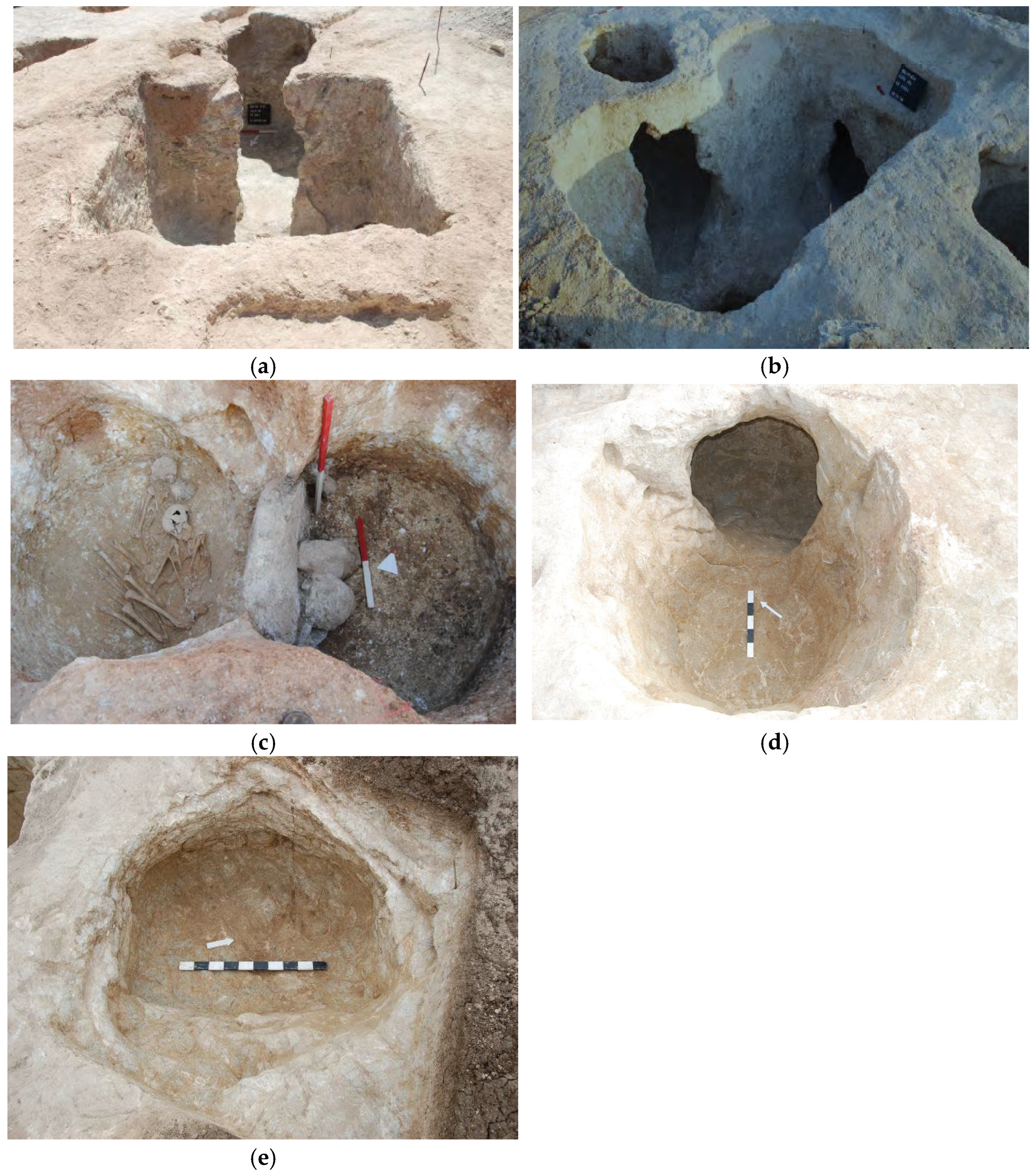
  25. Reimer, P.J.; Austin, W.E.; Bard, E.; Bayliss, A.; Blackwell, P.G.; Ramsey, C.B.; Butzin, M.; Cheng, H.; Edwards, R.L.; Friedrich, M.; et al. The IntCal20 Northern Hemisphere radiocarbon age calibration curve (0-55 cal kBP). Radiocarbon 2020, 62, 725–757. [Google Scholar] [CrossRef]
  26. Alves, C.; Estrela, S.; Costeira, C.; Porfírio, E.; Serra, M. Torre Velha 3, Serpa: Dados Preliminares. Al-Madan 2012, 17, 31–38. [Google Scholar]
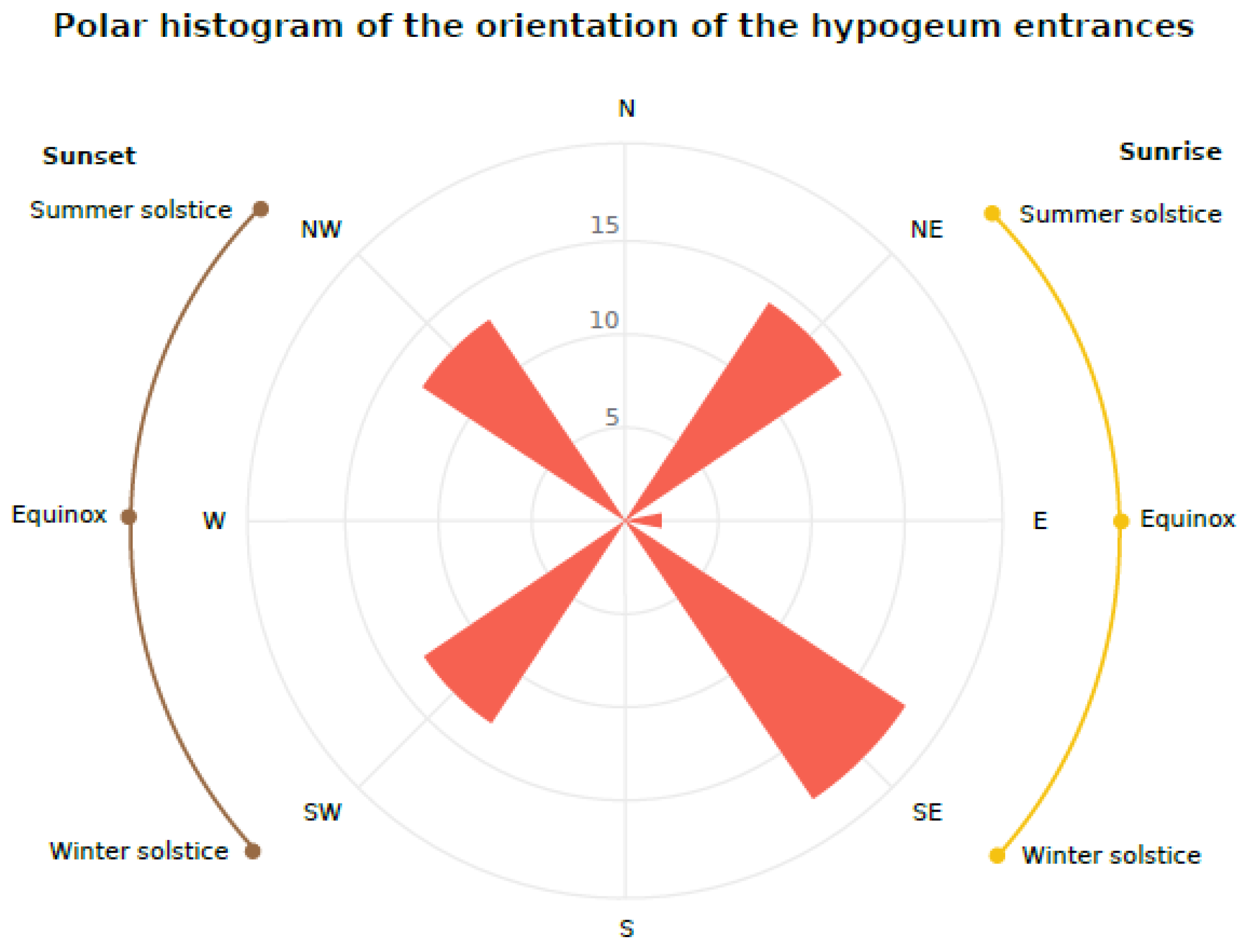
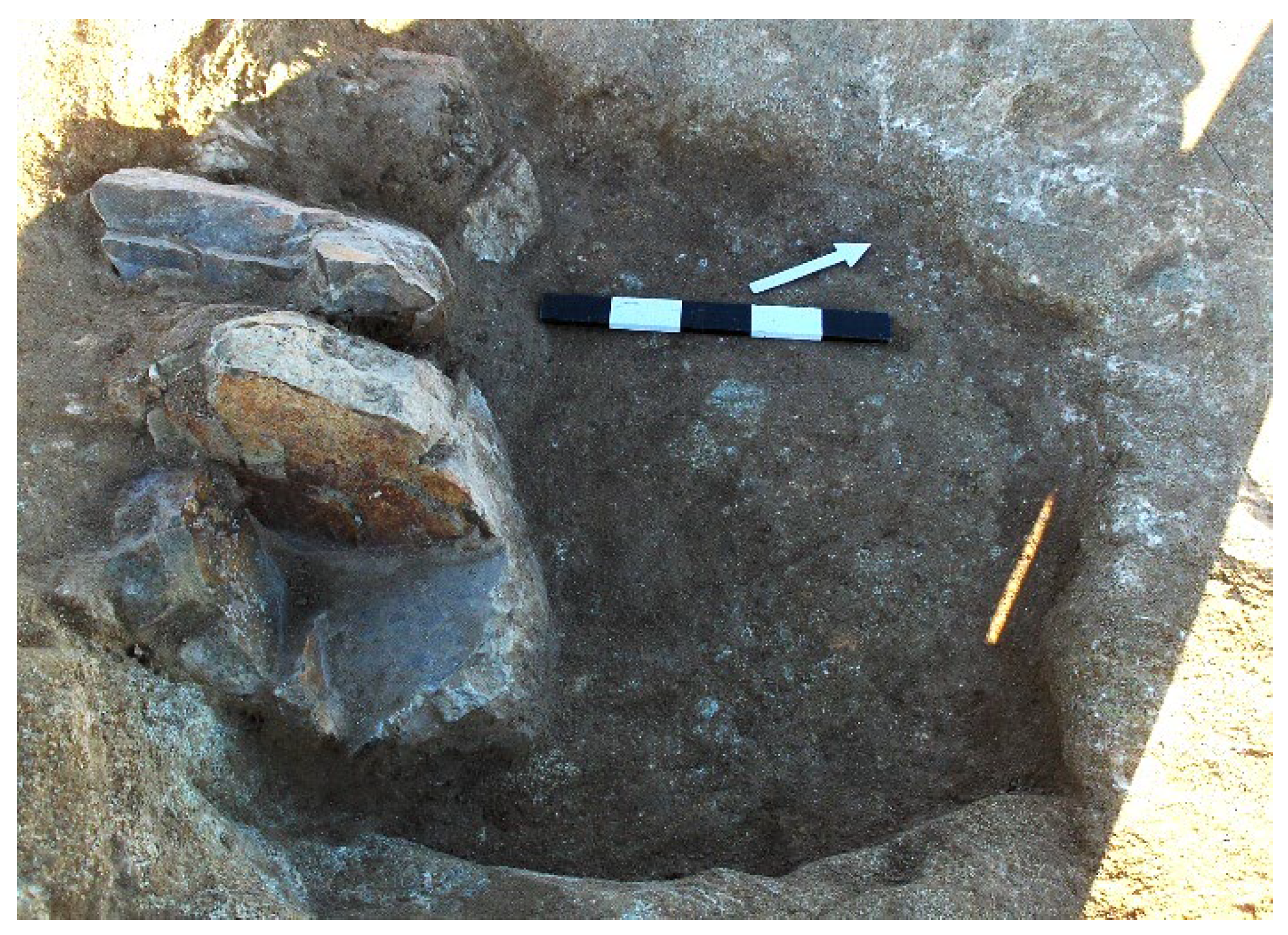
  27. Buikstra, J.; Ubelaker, D. Standards for Data Collection from Human Skeletal Remains; Archaeological Survey Research Series: Fayetteville, AR, USA, 1994. [Google Scholar]
  28. Valério, P.; Soares, A.M.M.; Araújo, M.F.; Silva, R.J.C.; Porfírio, E.M.B.; Serra, M. Arsenical copper and bronze in Middle Bronze Age burial sites of southern Portugal: The first bronzes in Southwestern Iberia. J. Archaeol. Sci. 2014, 42, 68–80. [Google Scholar] [CrossRef]
  29. Valério, P.; Soares, A.M.M.; Araújo, M.F.; Silva, R.J.C.; Baptista, L. Middle Bronze Age Arsenical Copper Alloys in Southern Portugal. Archaeometry 2016, 58, 1003–1023. [Google Scholar] [CrossRef]
  30. Baptista, L.; Gomes, S. Sítios da Pré-história Recente da Ribeira do Enxoé (Serpa): Apontamentos acerca da variabilidade das estruturas em negativo. In Arqueologia em Portugal, 150 Anos; Associação dos Arqueólogos Portugueses: Lisbon, Portugal, 2013; pp. 351–359. [Google Scholar]
  31. Serra, M. Os senhores da planície: A ocupação da Idade do Bronze nos “Barros de Beja” (Baixo Alentejo, Portugal). In Antrope—Série Monográfica 1; Centro de Pré-História, Instituto Politécnico de Tomar: Tomar, Portugal, 2014; pp. 270–297. [Google Scholar]
  32. Ponte, T. Minimização de Impactes Sobre o Património Cultural Decorrentes da Execução do Bloco de Rega de Serpa (Fase de Obra). Folgão, Santa Maria, Serpa. Relatório Final; Empatia Arqueologia: Avintes, Portugal, 2012. [Google Scholar]
  33. Antunes, A.S.; Deus, M.; Soares, A.M.M.; Santos, F.; Arez, L.; Dewulf, J.; Baptista, L.; Oliveira, L. Povoados abertos do Bronze Final no Médio e Baixo Guadiana. In Sidereum Ana II. El Rio Guadiana en el Bronce Final; Ávila, J.J., Ed.; Anejos de Archivo Español de Arqueología: Madrid, Spain, 2012; pp. 277–308. [Google Scholar]
  34. Soares, J.; Silva, C.T. Bronze Médio do Sudoeste. Indicadores de complexidade social. In Terra e Água. Escolher Sementes, Invocar a Deusa. Estudos em Homenagem a Victor S. Gonçalves; Sousa, A.C., Carvalho, A., Viegas, C., Eds.; UNIARQ: Lisbon, Portugal, 2016; pp. 359–384. [Google Scholar]
  35. Baptista, L.; Gomes, S. Bloco de Rega Brinches-Enxoé. Intervenção Arqueológica em Montinhos 6. Relatório Final; Arqueologia e Património: Matosinhos, Portugal, 2011. [Google Scholar]
  36. Baptista, L.; e Gomes, S. Bloco de Rega de Brinches-Enxoé. Intervenção arqueológica em Torre Velha 12; Relatório Final; Arqueologia e Património: Santa Cruz do Bispo, Portugal, 2012. [Google Scholar]
  37. Alves, C.; Porfírio, E.; Estrela, S. Minimização de Impactes Sobre o Património Cultural Decorrentes da Construção da Barragem da Laje (Serpa). Torre Velha 3. Relatório Final (2.ª fase); Palimpsesto: Madrid, Portugal, 2009. [Google Scholar]
  38. Filipe, V. Minimização de Impactes Sobre o Património Cultural Decorrentes da Execução do Bloco de Rega de Brinches (Fase de Obra)—Sub-bloco de Cangueiros. Outeiro Alto 2—Fase 2. Núcleo B. Relatório dos Trabalhos Arqueológicos; ERA Arqueologia: Cruz Quebrada, Portugal, 2011. [Google Scholar]
  39. Filipe, V. Minimização de Impactes Sobre o Património Cultural Decorrentes da Execução do Bloco de Rega de Brinches (Fase de Obra)—Sub-bloco de Cangueiros. Monte do Gato de Cima 3. Relatório dos Trabalhos Arqueológicos; ERA Arqueologia: Cruz Quebrada, Portugal, 2011. [Google Scholar]
  40. Valera, A.C.; Godinho, R.; Calvo, E.; Moro Berraquero, F.J.; Filipe, V.; Santos, H. Um mundo em negativo: Fossos, fossas e hipogeus entre o Neolítico Final e a Idade do Bronze na margem esquerda do Guadiana (Brinches, Serpa). In Memórias d’Odiana – 2.ª Série, 4.º Colóquio de Arqueologia do Alqueva; EDIA/DRCALEN: Évora, Portugal, 2014; pp. 55–74. [Google Scholar]
  41. Daróczi, T. Death, Disposal and Social Memory—Towards a Definition of Funerary Landscapes. J. Anc. Stud. 2012, 3, 199–207. [Google Scholar]
  42. Valera, A.C. A necrópole da Sobreira de Cima no contexto das práticas funerárias neolíticas no Sul de Portugal. In Sobreira de Cima. Necrópole de hipogeus do Neolítico (Vidigueira, Beja); Valera, A.C., Ed.; Série ERA Monográfica 1; Núcleo de Investigação de Arqueologia—NIA: Lisbon, Portugal, 2013; pp. 113–129. [Google Scholar]
  43. Žalaitė, I.; Maurer, A.-F.; Grimes, V.; Silva, A.M.; Ribeiro, S.; Santos, J.F.; Barrocas Dias, C.; Valera, A.C. Diet and mobility of fauna from Late Neolithic–Chalcolithic site of Perdigões, Portugal. J. Archaeol. Sci. Rep. 2018, 21, 1203–1214. [Google Scholar] [CrossRef]
  44. Leite, A.; Gillis, R.E.; Almeida, N.J.; Relvado, C.; Valera, A. Sheep and goat management practices at Perdigões (Southern Portugal, 4th millennium BC) via sequential carbon and oxygen isotopic analyses of tooth enamel. Archaeol. Anthropol. Sci. 2026, 18, 58. [Google Scholar] [CrossRef]
  45. Valera, A.C.; Žalaitė, I.; Maurer, A.F.; Grimes, V.; Silva, A.M.; Ribeiro, S.; Santos, J.F.; Barrocas Dias, C. Addressing human mobility in Iberian Neolithic and Chalcolithic ditched enclosures: The case of Perdigões (South Portugal). J. Archaeol. Sci. Rep. 2020, 30, 102264. [Google Scholar] [CrossRef]
  46. Valera, A.C.; do Pereiro, T.; Nogueira, S.; Evangelista, L.S.; Maurer, A.F.; Barrocas Dias, C.; Ribeiro, S.; Santos, J.F.; Bottaini, C. The ‘Ferradeira’ individual burial of Herdade do Álamo (Beja): Facets of social change in the late 3rd millennium BC in South Portugal. Spal 2022, 31, 92–112. [Google Scholar] [CrossRef]
  47. Waterman, A.; Silva, A.M.; Tykot, R.H. Stable isotopic indicators of diet from two late Prehistoric burial sites in Portugal: An investigation of dietary evidence of social differentiation. Open J. Archaeom. 2014, 2, 22–27. [Google Scholar] [CrossRef]
  48. Martiniano, R.; Cassidy, L.M.; Ó’Maoldúin, R.; McLaughlin, R.; Silva, N.M.; Manco, L.; Fidalgo, D.; Pereira, T.; Coelho, M.J.; Serra, M.; et al. The population genomics of archaeological transition in west Iberia: Investigation of ancient substructure using imputation and haplotype-based methods. PLoS Genet. 2017, 13, e1006852. [Google Scholar] [CrossRef]
  49. Roca-Rada, X.; Davidson, R.; Williams, M.P.; Villalba-Mouco, V.; Ravishankar, S.; Collen, E.; Haakbøtter, C.; Taufik, L.; Faustino Carvalho, A.; Cuesta-Aguirre, D.R.; et al. The genetic history of Portugal over the past 5,000 years. Genome Biol. 2025, 26, 37. [Google Scholar] [CrossRef] [PubMed]
  50. Palomo-Díez, S.; Esparza-Arroyo, Á.; Gomes, C.; Rickards, O.; Labajo-González, E.; Perea-Pérez, B.; Martínez-Labarga, C.; Arroyo-Pardo, E. Family history in the Iberian Peninsula during Chalcolithic and Bronze Age: An interpretation through the genetic analysis of plural burials. Genealogy 2024, 8, 25. [Google Scholar] [CrossRef]
  51. Senna-Martinez, J.C. Armas, lugares e homens: Aspectos das práticas simbólicas na Primeira Idade do Bronze. Estud. Arqueol. Oeiras 2009, 17, 467–488. [Google Scholar]
  52. Soares, A.M.M.; Baptista, L.; Mataloto, R.; Melo, L.; Silva, A.M.; Soares, R.M.; Valério, P. The Bronze Age of Southwestern Iberian Peninsula: Endogenous evolution versus migration stimuli. Rev. Port. Arqueol. 2021, 24, 59–82. [Google Scholar]
  53. Silva, F.; Campion, N. Skyscapes: The Role and Importance of the Sky in Archaeology; Oxbow Books: Oxford, UK, 2015. [Google Scholar]
  54. Hoskin, M. Tombs, Temples and their Orientations: A New Perspective on Mediterranean Prehistory; Ocarina Books: Bognor Regis, UK, 2001. [Google Scholar]
  55. Silva, F. A Tomb with a View: New Methods for Bridging the Gap Between Land and Sky in Megalithic Archaeology. Adv. Archaeol. Pract. 2014, 2, 24–37. [Google Scholar] [CrossRef]
  56. Wells, P.S. Identities, Material Culture, and Change: “Celts” and “Germans” in Late-Iron-Age Europe. J. Eur. Archaeol. 1995, 3, 169–185. [Google Scholar] [CrossRef]
  57. Pereira, G.; Piedade, M. Minimização de Impactes sobre o Património Cultural decorrentes da execução do Bloco de Rega de Serpa (Fase de obra), Aldeia do Grilo 1. Santa Maria, Serpa; Relatório Final; Empatia Arqueologia: Avintes, Portugal, 2010. [Google Scholar]
  58. Alves, C.; Porfírio, E.; e Estrela, S. Minimização de Impactes sobre o Património Cultural Decorrentes da Construção do Reservatório Serpa-Norte (Serpa); Relatório Final da Escavação Arqueológica; Palimpsesto: Lisbon, Portugal, 2010. [Google Scholar]
  59. Rodrigues, Z. Minimização de Impactes Sobre o Património Cultural Decorrentes da Execução do Bloco de Rega de Serpa (Fase de Obra). Folgão, Santa Maria, Serpa; Relatório antropológico de campo; Empatia Arqueologia: Avintes, Portugal, 2009. [Google Scholar]
  60. Rodrigues, Z. Minimização de Impactes sobre o Património Cultural Decorrentes da Implantação do Bloco de Rega de Serpa. Trabalhos Arqueológicos e Antropológicos no Sítio do Alto de Brinches 3 (Serpa); Relatório Antropológico de Campo; Palimpsesto: Lisbon, Portugal, 2010. [Google Scholar]
  61. Rodrigues, Z. Minimização de Impactes Sobre o Património cultural Decorrentes da Implementação do Bloco de Rega de Brinches-Enxoé Intervenção em Montinhos 6; Relatório Antropológico; Arqueologia e Património: Santa Cruz do Bispo, Portugal, 2011. [Google Scholar]
  62. Rodrigues, Z. Minimização de Impactes Sobre o Património Cultural Decorrentes do Bloco de Rega de Brinches-Enxoé—Intervenção em Torre Velha 12; Relatório Antropológico; Arqueologia e Património: Santa Cruz do Bispo, Portugal, 2012. [Google Scholar]
  63. Granja, R. Minimização de Impactes Sobre o Património Cultural Decorrentes da Execução do Bloco de Rega de Brinches (Fase de Obra)-Sub-bloco de Cangueiros. Monte do Gato de Cima 3; Relatório dos Trabalhos Antropológicos; Era Arqueologia: Lisbon, Portugal, 2011. [Google Scholar]
  64. Granja, R. Minimização de Impactes Sobre o Património Cultural Decorrentes da Execução do Bloco de Rega de Brinches (Fase de Obra)—Sub-bloco de Cangueiros. Outeiro Alto 2-Fase 2. Núcleo B; Relatório dos Trabalhos Antropológicos; Era Arqueologia: Lisbon, Portugal, 2011. [Google Scholar]
  65. Ferreira, M.T. Torre Velha 3, (Barragem da Laje, Serpa) Relatório dos Trabalhos Antropologia Biológica Desenvolvidos no Âmbito da Minimização de Impactes no Sítio de Torre Velha 3; STYX: Tomar, Portugal, 2009. [Google Scholar]
  66. Ferreira, M.T. Aldeia do Grilo 1, Bloco de Rega de Serpa; Relatório de Antropologia; STYX: Tomar, Portugal, 2010. [Google Scholar]
  67. Fidalgo, D.F. Contextos Funerários e Estudo Antropológico dos Restos Ósseos Humanos dos Hipogeus de Torre Velha 3 (São Salvador, Serpa): Uma Aproximação ao Estudo das Comunidades Humanas do Bronze do Sudoeste. Master’s Thesis, Universidade de Coimbra, Coimbra, Portugal, 2014. [Google Scholar]
Figure 1. (a): hypsometric map showing the study area, with the Guadiana River basin highlighted. The black box indicates the location of the studied archaeological sites (adapted from author, licensed under Creative Commons Attribution-ShareAlike 3.0 (CC BY-SA 3.0) https://creativecommons.org/licenses/by-sa/3.0/ (accessed 2 January 2026). (b): spatial distribution of the studied hypogea sample (Map elaborated by the authors using QGIS 3.44 and OpenStreetMap base layer (© OpenStreetMap contributors, https://www.openstreetmap.org/copyright (accessed on 6 April 2026)).
Quaternary 09 00032 g001
Figure 2. Hypogea clusters at Montinhos 6 (adapted from [12]).
Quaternary 09 00032 g002
Figure 3. Spatial distribution of the archaeological nuclei at the Outeiro Alto 2 site (source: adapted from [13]): Cluster A (Late Neolithic/Chalcolithic ditches and pits), Cluster B (Bronze Age hypogea cemetery), Cluster C (Late Neolithic pits and hypogea), and Cluster D (Bronze Age funerary structures).
Quaternary 09 00032 g003
Figure 4. Spatial distribution of the hypogea clusters at Torre Velha 3 (source: adapted from [11]).
Quaternary 09 00032 g004
Figure 5. General view of the hypogea and typologies. (a) Typology A, hypogeum [5922–5921] from Montinhos 6 (adapted from [35]; photo: Arqueologia e Património | Lídia Baptista). (b) Typology B, hypogeum [15527–15518, 15529] from Montinhos 6 (adapted from [35]; photo: Arqueologia e Património | Lídia Baptista). (c) Typology C, hypogeum [171–174] from Torre Velha 12 (adapted from [36]; photo: Arqueologia e Património | Lídia Baptista). (d) Typology D, hypogeum [2417–2418] from Torre Velha 3 (adapted from [37]; photo: Palimpsesto-Lda). (e) Typology E, hypogeum [2236–2237] (adapted from [37]; photo: Palimpsesto-Lda).
Quaternary 09 00032 g005
Figure 6. Distribution and orientation of the hypogea’s entrances (n = 60).
Quaternary 09 00032 g006
Figure 7. Stone structure closing hypogeum [573–574] at Torre Velha 3 [adapted from 37, photo: Palimpsesto-Lda].
Quaternary 09 00032 g007
Figure 8. Distribution of the inhumation position (n = 75).
Quaternary 09 00032 g008
Figure 9. Distribution of head–feet orientation of individuals with determinable orientation (n = 75). Values are expressed as percentages; absolute counts (n) are indicated above each bar.
Quaternary 09 00032 g009
Figure 10. Distribution of body position in relation to the hypogeum entrance (n = 75). Values are expressed as percentages; absolute counts (n) are indicated above each bar.
Quaternary 09 00032 g010
Figure 11. Distribution of face orientation in individuals with determinable facial direction (n = 52).
Quaternary 09 00032 g011
Figure 12. Offerings associated with burials. (a) Ceramic and metal assemblage associated with the burials of hypogeum [5922–5921] (adapted from [35]; photo: Arqueologia e Património|João Molha). (b) Assemblage associated with individual [6208] (adapted from [38]; photo: Era-Arqueologia|Victor Filipe). (c) Assemblage associated with individual [6808] (adapted from [38]; photo: Era-Arqueologia|Victor Filipe). (d) Ceramic vessel associated with individual [1169] (adapted from [37]; photo: Palimpsesto|Rui Clemente). (e) Ceramic and metal assemblage associated with the burials of hypogeum [15527–15518, 15529] (adapted from [35]; photo: Arqueologia e Património|João Molha). (f) Dagger associated with individual [926] (adapted from [36]; photo: Arqueologia e Património|João Molha and João Grilo). (g) Ceramic vessel associated with individual [2051] (adapted from [37]; photo: Palimpsesto|Rui Clemente). (h) Ceramic piece associated with individual [1714] (adapted from [37]; photo: Palimpsesto | Rui Clemente). (i) Awl associated with individual [1714] (adapted from [37]; photo: Palimpsesto | Rui Clemente). (j) Riveted copper-alloy dagger associated with individual [1014] (adapted from [36]; photo: Arqueologia e Património|João Molha and João Grilo). (k) Assemblage associated with individual [926] (adapted from [36]; photo: Arqueologia e Património|João Molha and João grilo). (l) Ceramic element associated with individual [1570] (adapted from [37]; photo: Palimpsesto|Rui Clemente).
Quaternary 09 00032 g012aQuaternary 09 00032 g012b
Figure 13. Number of ceramic containers per individual (n = 75).
Quaternary 09 00032 g013
Figure 14. Red pigment deposition on the tibial region and feet of individual [508] from Outeiro Alto 2 [39]; photo Era-Arqueologia|Victor Filipe.
Quaternary 09 00032 g014
Table 4. Distribution of the sample by age and sex in primary and secondary inhumation.
CategoryPrimary%Secondary%Total%
AgeAdult528026877882
Non-adult11173101415
Indeterminate231333
SexFemale26406203233
Male15235172021
Indeterminate243719634345
Total (n)651003010095100
Table 5. Distribution of the diversity of offerings by age (percentages relative to the total sample; n = 75).
AgeTotal None%Two%Three%Four%Five%
Adult60293914199127911
Non-adult13101323110000
Ind.20011110000
Total753952172311157911
Table 6. Distribution of the diversity of offerings by sex (percentages relative to the total sample; n = 75).
SexTotal None%Two%Three%Four%Five%
Female2891268576823
Male19121634340011
Ind.281723811231100
Total753851172310137934
Disclaimer/Publisher’s Note: The statements, opinions and data contained in all publications are solely those of the individual author(s) and contributor(s) and not of MDPI and/or the editor(s). MDPI and/or the editor(s) disclaim responsibility for any injury to people or property resulting from any ideas, methods, instructions or products referred to in the content.