Article

First Find of Hippopotamus cf. amphibius in the Quaternary of Bosnia and Herzegovina: Notes on Its Regional Distribution


by
Siniša Radović
1,
Jadranka Mauch Lenardić
2,
Dražen Japundžić
3,
Jadranka Sulić Šprem
4 and
Vibor Novak
1,*
1
Institute for Quaternary Palaeontology and Geology, Croatian Academy of Sciences and Arts, Ante Kovačića 5, 10000 Zagreb, Croatia
2
Independent Researcher, Kraljevec 11a, 10000 Zagreb, Croatia
3
Department of Geology and Palaeontology, Croatian Natural History Museum, Demetrova ul. 1, 10000 Zagreb, Croatia
4
Dubrovnik Natural History Museum, Androvićeva ul. 1, 20000 Dubrovnik, Croatia
*
Author to whom correspondence should be addressed.
Quaternary 2026, 9(1), 15; https://doi.org/10.3390/quat9010015
Submission received: 8 October 2025 / Revised: 29 November 2025 / Accepted: 5 February 2026 / Published: 9 February 2026

Abstract

The discovery of hippopotamid remain from a cave near the village of Grebci, Bosnia and Herzegovina, represents the first confirmed record of Hippopotamus in this part of southeastern Europe. The specimen, a partially preserved right os coxae, is housed at the Dubrovnik Natural History Museum. Morphological and metric analyses identify it as Hippopotamus cf. amphibius, although its fragmentary state prevents a more precise taxonomic attribution, while lack of stratigraphic context prevents chronological assessment. Despite the uncertain stratigraphic context, taphonomic analysis reveals evidence of mineralization, surface abrasion, and post-depositional fracturing, consistent with long-term cave deposition. This find fills a long-standing paleogeographic gap in the distribution of the Pleistocene hippopotamids in southeastern Europe, as no remains have previously been documented from the region outside Greece. Its presence supports the hypothesis that the Balkan Peninsula functioned as a migratory corridor for hippopotamids dispersing from Africa into Europe. Further research integrating stratigraphic, geochronological, and comparative morphological data is needed to clarify its evolutionary and biogeographic significance.

1. Introduction

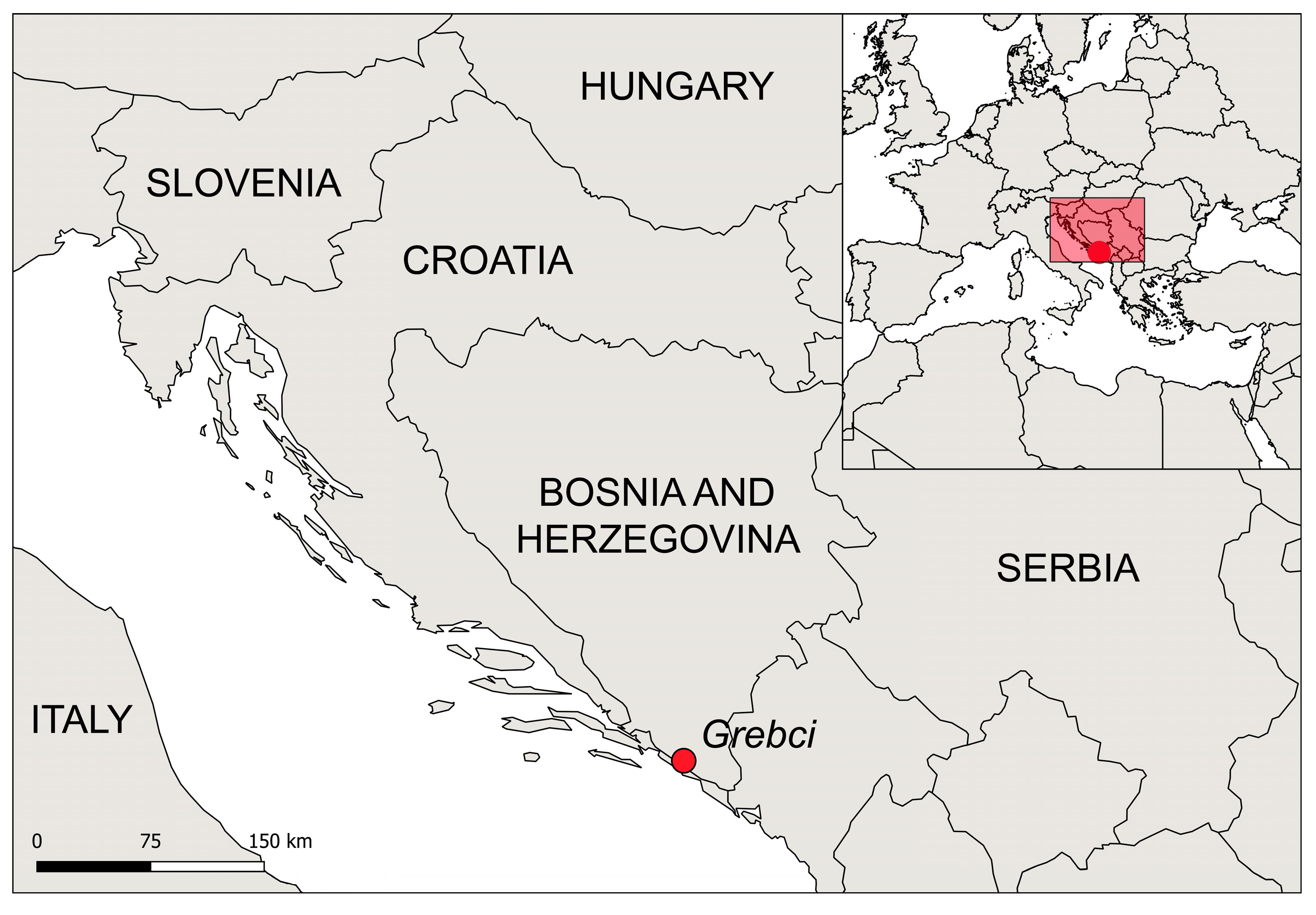
In the wider Balkan region, northwest of the Peloponnese and Thessaly in Greece, Pleistocene occurrences of Hippopotamidae have not yet been documented. The only exception, located at the far western margin of this area in the pre-Alpine region, is a site in Slovenia [1,2]. Recently, however, a fragmentary bone specimen belonging to the genus Hippopotamus became available for analysis at the Institute for Quaternary Palaeontology and Geology of the Croatian Academy of Sciences and Arts. Although the specimen’s precise stratigraphic context remains uncertain, it was collected from a cave near the village of Grebci in Bosnia and Herzegovina (Figure 1), close to the Croatian border. This unique find represents the first of its kind in the region and establishes the eastern Adriatic within the broader paleogeographic distribution of the genus.
Hippopotamid remains in the Quaternary of Europe have been recovered from many localities, including Slovenia [1,2], Italy [3,4,5,6,7,8,9], Spain [10,11,12], Hungary [13], Germany [14,15,16,17], the Netherlands [18], France [19], the United Kingdom [20,21] and Greece [22,23]. However, until now, no hippopotamid remains have been recovered from the part of the Balkan region including Bosnia and Herzegovina, Croatia, Montenegro, Serbia, Kosovo and North Macedonia.
Based on currently available hypotheses, either the single-entry model [24,25,26,27] or an alternative hypothesis involving up to three distinct dispersal waves [28], the Balkan region should have been the migration route for hippopotamids from North Africa. The fossil specimen studied in this paper provides crucial evidence regarding hippopotamid migration routes, although its uncertain stratigraphic provenance does not allow us to participate in the ongoing debate about the timing of these migrations [5,24,28].

1.1. Pleistocene Megafauna of the Western Balkans: Regional Context

The Pleistocene megafaunal record of Slovenia, Croatia, Bosnia and Herzegovina, Serbia, Montenegro, North Macedonia, and Albania provides an essential regional framework for assessing the significance of rare or unexpected taxonomic occurrences in the western Balkans. Across this area, large mammal remains are unevenly distributed both spatially and temporally, reflecting the combined influence of regional geomorphology, depositional environments, and research biases. Although megafaunal taxa such as proboscideans [29] and rhinoceroses [30,31] are repeatedly documented, their occurrence is closely conditioned by depositional setting, while hippopotamids are conspicuously absent. This pattern highlights the importance of contextualizing any isolated finds of rare taxa within the broader landscape of Pleistocene mammal research in the region.
In Bosnia and Herzegovina, the recently documented site of Cebara near Tomislavgrad provides crucial evidence of Late Pliocene to earliest Pleistocene megafauna, yielding remains of Anancus arvernensis alongside other taxa indicative of Pliocene age [32,33]. As one of the few well-dated early megafaunal sites in the country, Cebara establishes a valuable reference framework for interpreting other rare or unexpected large mammal occurrences in the western Balkans.
Lower Pleistocene megafaunal evidence is relatively scarce but informative. In Slovenia, Late Pliocene to earliest Pleistocene remains from the Velenje coal mine represent some of the oldest large-mammal occurrences, documenting mastodons associated with warm and humid conditions prior to the establishment of fully developed Pleistocene climatic cycles [34]. Comparable early records are rare elsewhere and largely confined to isolated finds from lacustrine or karstic contexts, such as those from the Črnotiče quarry [35]. In Croatia, the Lower Pleistocene is best represented at a few key sites. Strmica near Knin is particularly noteworthy, yielding Mammuthus meridionalis alongside rhinoceroses and other large mammals indicative of open landscapes [29,36]. Another important locality is Šandalja I near Pula, where a rich assemblage preserved in cemented bone breccia includes large faunal taxa typical of open and semi-open environments [37]. Overall, most Lower Pleistocene open-air faunal finds along the eastern Adriatic derive from karstic breccias, underscoring the role of fissure and cavity infillings as primary repositories of early large mammals.
Middle Pleistocene sites are considerably rarer and often difficult to distinguish from earlier or later deposits. In Croatia, only a few localities can be confidently assigned to this interval, with Dubci on Mt. Biokovo being particularly informative. This site preserves both microfauna and megafauna, including proboscideans and rhinoceroses, and is generally associated with temperate to warm climatic conditions during the Early–Middle Pleistocene transition [37]. In the central Balkans, the Trlica cave in northern Montenegro represents a key late Lower to early Middle Pleistocene site, with stratified deposits yielding a diverse assemblage of large mammals distinct from the typical cave bear–dominated contexts [38,39]. In Serbia, Early to Middle Pleistocene megafaunal remains are known from open-air sites such as Drmno [40,41] and cave sites like Pešturina [42], where large mammals occur alongside rich microfaunal assemblages.
In contrast, the Upper Pleistocene record is far more abundant, particularly in the karst regions of the eastern Adriatic. Croatia, in particular, is characterized by a very high density of Upper Pleistocene cave sites, many of which functioned as carnivore dens or cave bear hibernation sites, producing extensive faunal assemblages dominated by Ursus spelaeus [37,43]. Rhinoceroses are recorded at several Upper Pleistocene sites, most notably at Krapina [31], although elsewhere they occur sporadically. Similar patterns likely extend throughout the wider Dinaric karst, even if they remain less comprehensively synthesized.
A markedly different preservation pattern characterizes the continental lowlands of northern Croatia and adjacent regions, where megafaunal remains occur predominantly in fluvial contexts. Numerous proboscidean finds—mostly isolated teeth—are known from the alluvial deposits of major river systems such as the Sava, Drava, and Danube, documenting repeated occupations of open landscapes throughout the Neogene and Pleistocene [29]. Rhinoceros remains of comparable fluvial provenance are also well documented [30].
This heterogeneous Pleistocene megafaunal landscape, shaped by strong environmental and taphonomic biases, provides the necessary framework for evaluating individual rare finds from atypical depositional settings, serving as a natural prelude to the discussion of significant new discoveries from southern Bosnia and Herzegovina.

1.2. The Provenance of Fossil Finds from the Grebci Area

Precise information on the locality and stratigraphic context of the specimen is lacking. The 1897 inventory of the Dubrovnik Natural History Museum briefly notes a donation of cave bear bones from the “Pećina nad Grebcima” (Cave above Grebci) in southeastern Bosnia and Herzegovina. Although the original note does not explicitly mention hippopotamid remains, these bones were stored together with ursid material and only later recognised as distinct and catalogued separately. While their stratigraphic association cannot be confirmed, the available evidence indicates that the hippopotamid and ursid remains were recovered from the same cave locality near Grebci. To better constrain the possible origin of the specimen, the geological and speleological setting of the Grebci area is briefly outlined below.
The studied fragments originate from the southeastern part of the Dinaric karst region, encompassing eastern Herzegovina (Bosnia and Herzegovina) and the Dubrovnik Littoral (Croatia). This area between the Adriatic coast and Popovo polje (the closest polje to the studied locality, approximately 5 km north of Grebci) is today characterised by a Mediterranean climate, with mild winters and warm, dry summers. According to the geological map [44], the area is underlain by Mesozoic and Tertiary sedimentary rocks. The coastal zone southwest of Grebci is built predominantly of Late Cretaceous to Eocene deposits that are thrust and folded onto Late Triassic formations. Towards the northeast, in the direction of Popovo polje, the stratigraphic succession exposes a characteristic sequence of Mesozoic carbonates, from Norian–Rhaetian massive dolomites, through limestones of the complete Jurassic succession, into bedded Cretaceous limestones and dolomites that underlie Popovo polje. This thick carbonate succession, together with intense tectonic fracturing, has promoted deep karstification and the formation of extensive cave systems, shafts and closed depressions in the region. These conditions provide abundant potential traps for vertebrate remains and favourable settings for long-term subsurface preservation.
The wider surroundings of the studied locality are locally covered by Quaternary deposits. These are mainly unconsolidated sediments infilling karst poljes, river valleys, uvalas and sinkholes, while alluvial sediments occupy active and former river valleys. Terra rossa is commonly developed in uvalas and sinkholes, whereas clay-rich sediments occur both at the surface and within karst conduits and caverns. The distribution of terra rossa and clay-rich sediments in dolines and cave conduits is particularly relevant for fossil preservation, as such fine-grained, often water-lain deposits can both concentrate and protect vertebrate remains from mechanical destruction.
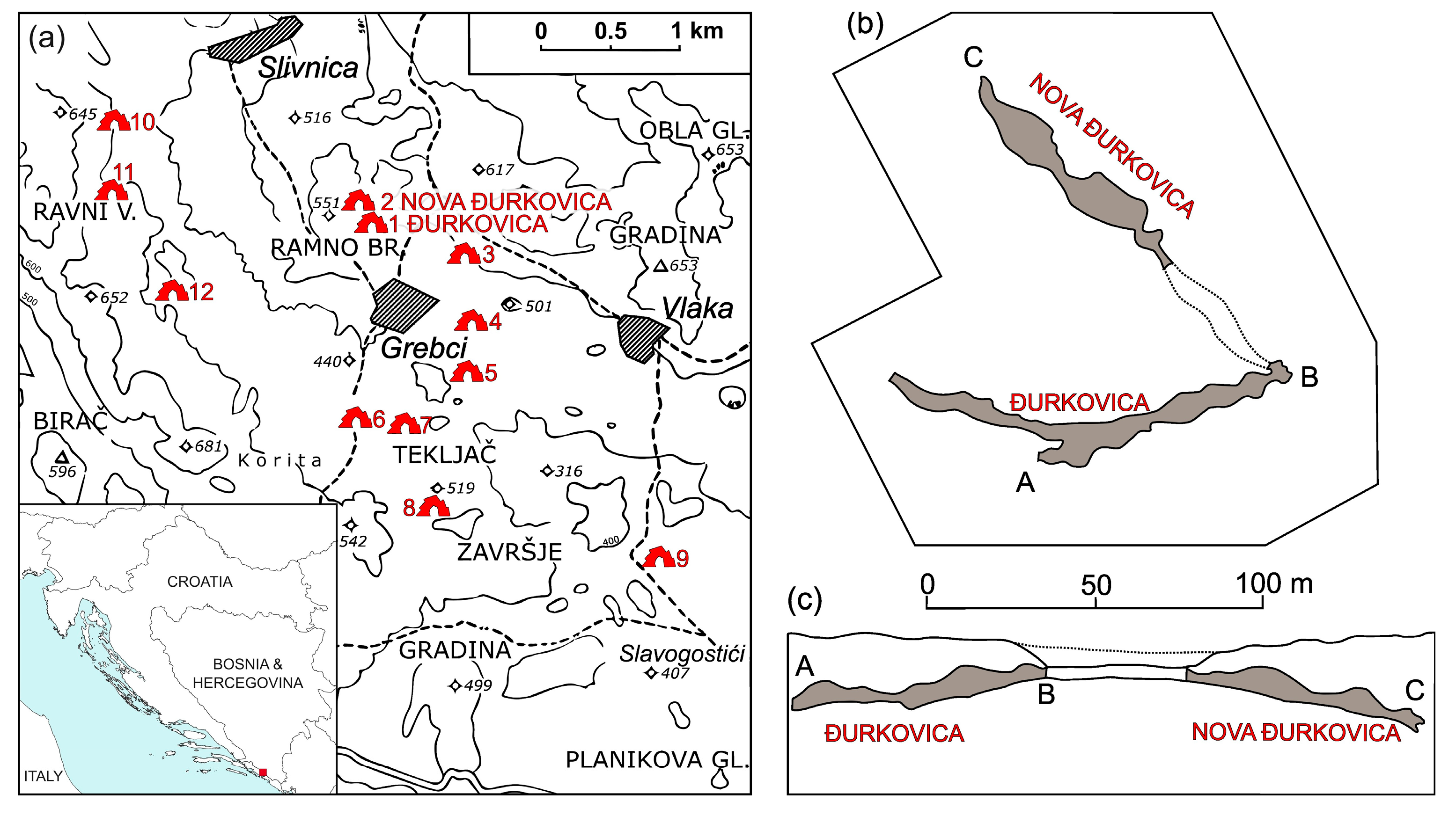
The area near the village of Grebci was intensively surveyed in 1957 and 1958 [45,46,47], when twelve caves were surveyed (Figure 2a). Owing to the systematic nature of these investigations and the lack of comparable later work, these surveys remain the principal source of information on the speleological and geological framework of the Grebci karst area. Each speleological site was examined in detail, including precise locations plotted on topographic maps, geodetic surveying, and the preparation of plan views, profiles and cross-sections. The geological and hydrogeological relationships in the wider surroundings of each speleological site were investigated, and speleogenesis was reconstructed based on these observations. In some caves, probing of sedimentary infill was carried out, yielding important data for Quaternary geology, vertebrate palaeontology and prehistoric material culture in the area.
Of the twelve caves studied, remains of Pleistocene animals were found only in Đurkovica Cave [49,50,51], located north of Grebci village on the southeastern side of Ramno Hill. At present, the entrance to the cave is narrow, as it is partially blocked by stone blocks resulting from ceiling collapse. The cave entrance is oriented towards the northwest and lies at 520 m a.s.l. The cave is developed in well-bedded Upper Cretaceous limestones, intersected by joints in several places, and was formed by the erosive and later corrosive action of water along fracture and joint systems. Based on its morphology, it appears to represent a remnant of a former underground watercourse. About 40 m to the southwest, another cave, Nova Đurkovica, was discovered (Figure 2b). It is most likely that, earlier in geological history, both caves formed a single underground channel, but a collapse of the ceiling in the central part divided the original conduit into two caves that now appear as separate entrances to the same system (Figure 2c). However, very few fossil remains were recovered from Nova Đurkovica, including only a fragmentary cave bear skull and two deer femora.
As no other site in the vicinity has so far produced abundant Pleistocene vertebrate faunas, it is reasonable to assume that all this material originated from Đurkovica Cave. In this context, the combination of historical archival evidence, cave survey data and the distribution of Pleistocene faunas converges on Đurkovica as the most likely source of the assemblage. Therefore, although the exact provenance remains uncertain at the level of both cave and stratigraphic position, the likely origin within the Grebci karst area, and possibly within Đurkovica Cave, provides an important contextual framework for interpreting this rare hippopotamid specimen.

2. Materials and Methods

The specimen (Inv. no. PMD 2370-1 GEO 263), hosted in the Dubrovnik Natural History Museum (PMD), consists of the fragmentary right half of the os coxae, reconstructed from four fragments during recent restoration at the Croatian Natural History Museum (HPM).
Anatomical assessment and taxonomic identification were carried out through direct comparison with extensive collections of recent and fossil pelvic material of comparable size. Comparative specimens were examined in the following institutions in Zagreb (Croatia): the Institute for Quaternary Palaeontology and Geology of the Croatian Academy of Sciences and Arts (modern osteological comparative collection and rich mammalian assemblages from Pleistocene sites in Croatia), the Department of Geology and Palaeontology of the Croatian Natural History Museum (osteological collections of Tertiary and Quaternary mammals and reptiles), and the Department of Anatomy, Histology and Embryology of the Faculty of Veterinary Medicine, University of Zagreb (osteological collections of domestic and wild animals and the Osteological Museum).
This comparative survey enabled the exclusion of all large taxa commonly represented in the regional Pleistocene megafauna, including proboscideans, rhinocerotids, large bovids, large cervids, and equids. Because published osteological references for pelvic morphology of many large mammals are limited, additional comparisons were made using available literature, with emphasis on securely identified Hippopotamidae pelves from Eurasian Pleistocene sites [4,52,53], as well as photographic documentation of modern African material (Jane Sanford, pers. comm., November 2019).
The morphological description follows standard anatomical nomenclature [54] and descriptive protocols commonly applied in hippopotamid osteology [4,53,55]. Metric analysis was conducted according to measurement procedures outlined in [4,56]. Bone surface modifications and fracture morphology were recorded following the protocols of [57,58].

3. Results

3.1. Taphonomy of the Remain

A taphonomic analysis was conducted to document bone surface modifications and fractures, aiming to reconstruct the specimen’s post-depositional history. Given that only a single anatomical element was recovered and its discovery context and stratigraphy are unknown, such analysis is essential for interpreting preservation and depositional conditions.
The bone is predominantly reddish dark brown with yellowish and orange patches. Older fractures have a darker patina (dirty yellow to dark grey), whereas recent breaks expose cortex and spongiosa in pale beige to dirty white. Discoloration is uneven, likely reflecting multiple phases of burial or exposure to different environmental conditions. Reddish staining suggests iron-rich sediments, and darker tones may indicate manganese dioxide deposition. The specimen is relatively heavy, with the trabecular bone filled by lithified calcareous deposits consistent with mineralisation, and small greyish carbonate concretions occur on the surface and older breaks.
Surface modifications include fine linear scratches, likely caused by friction with surrounding sediment, and irregular pits that appear recent, probably resulting from handling during or after recovery. Weathering is minimal, with only minor superficial exfoliation, possibly due to chemical alteration in a cave environment rather than open-air exposure. Abrasion occurs mainly along edges and flaked areas, especially at the dorsal margin (spina ischiadica), where faint transverse smoothing suggests limited contact with fine sediment. There is no evidence of water transport.
The specimen also exhibits older transverse fractures with jagged edges, suggesting post-depositional breakage from sediment pressure, trampling, or other processes. Pronounced erosion along the acetabular margin exposes trabecular bone, obscuring original surfaces and taphonomic traces, limiting the accuracy of measurements.
Overall, the taphonomic evidence indicates mineralisation, localized chemical staining, and dry-bone fracturing. Other, more recent surface damage reflects the specimen’s curation history rather than ancient depositional processes.

3.2. Morphological Description

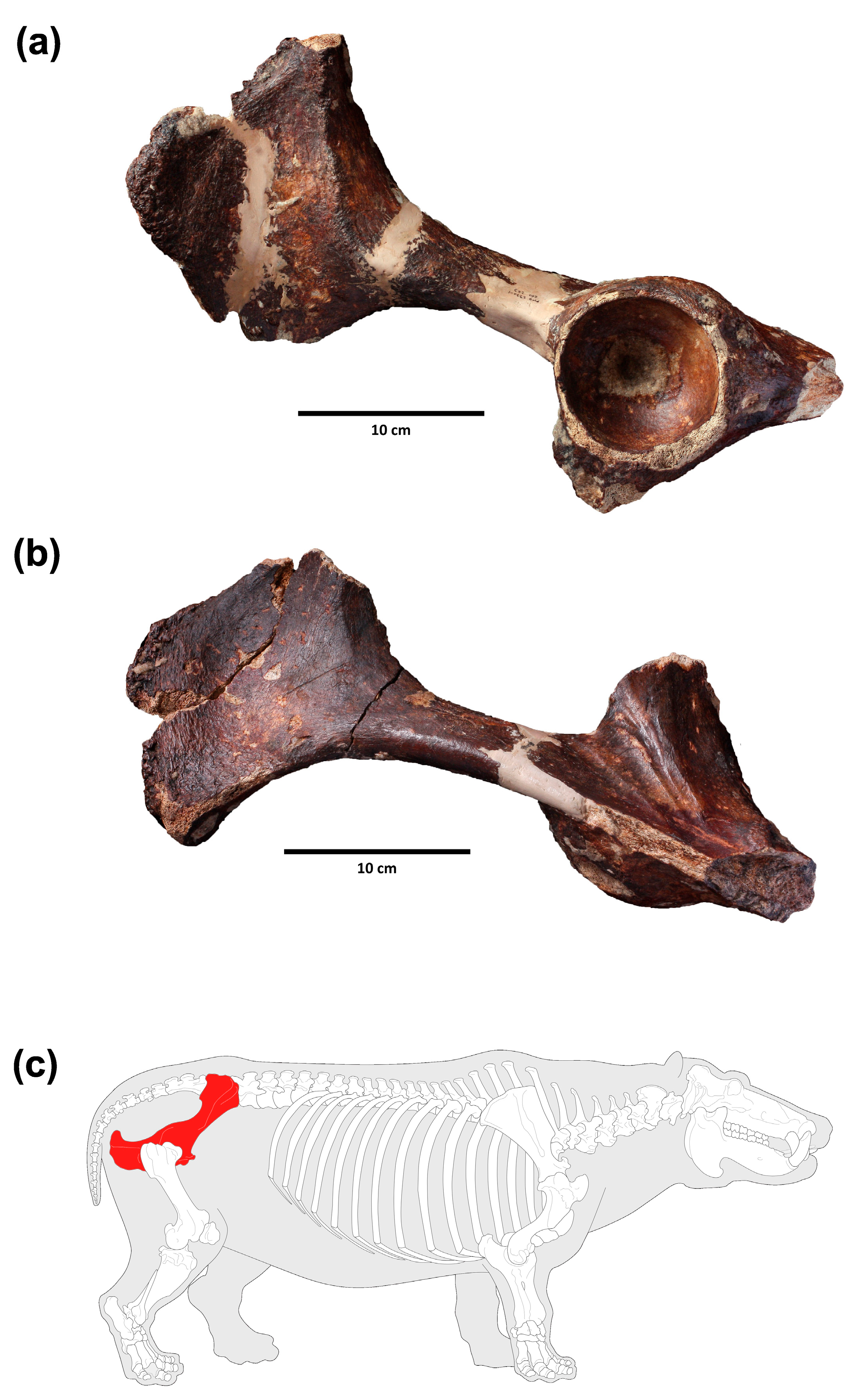
The specimen is fragmentary and only partially preserved. It represents the right half of the pelvis (os coxae dextrum), comprising the complete acetabulum and nearly entire ischium (Figure 3).
The acetabulum is fully preserved. Its articular surface (facies lunata) appears to form a complete circle, with no visible acetabular notch (incisura acetabuli). The acetabular fossa (fossa acetabuli) is relatively deep and has a roughened bottom. The elevated acetabular margin (margo acetabuli) is narrow and forms a continuous circular rim, although it is eroded along most of its circumference except for the lateral portion. The ilium is not preserved, aside from a very small portion of the body (corpus ossis ilii), where it contributes to the acetabulum. The pubis is similarly absent.
The ischium is nearly complete. Its body (corpus ossis ischii), partly reconstructed, is elongated and robust, terminating in a broad and sturdy ischiatic plate (tabula ischiadica). The lesser sciatic notch (incisura ischiadica minor) forms an angle of about 135 degrees. On the ventral surface of the flattened plate, a well-defined line marking the attachment of posterior thigh muscles is visible, running roughly parallel to the sciatic notch. The ischial tuberosity (tuber ischiadicum) is partially preserved and shows clear signs of damage. The medial portion of the ischium, including the symphyseal surface (facies symphysialis ossis ischii) and the ischial ramus (ramus ossis ischii), is missing. As a result, the caudal and medial margins of the obturator foramen (foramen obturatum) are not preserved.

3.3. Metric Analysis

Given the state of preservation, only measurements of the acetabulum and the shaft of the ischium could be obtained (Table 1).
The length of the acetabulum on the rim (LAR; after [4]) was measured as close as possible to the presumed inner edge, despite erosion, and the breadth of the corpus ossis ischii (medial-lateral; after [56]) was measured as accurately as possible, since this portion of the bone had been largely reconstructed. Given these limitations, minor deviations from the original bone dimensions cannot be excluded; however, the recorded values represent the most accurate approximations attainable and provide critical data for taxonomic assessment.

3.4. Taxonomic Attribution

A comprehensive comparative assessment shows that all diagnostic features, most notably the acetabular morphology, indicate that the specimen belongs to a hippopotamid. Based on the morphological features described, it can be identified as an adult individual of the genus Hippopotamus. The relatively slender corpus ossis ischii [53] and the comparatively smaller values of the measured parameters (Table 1) are within the variability of Hippopotamus amphibius, and the specimen can cautiously be attributed to H. cf. amphibius (common hippopotamus). The fragmentary nature of the material prevents the determination of the individual’s sex.

4. Discussion

4.1. The Deposition of Hippopotamus Remains

The exact provenance of the hippopotamid specimen is unknown, but its state of preservation offers some indications of a cave origin. The bone is heavily mineralised, exhibits localised chemical staining, and bears small carbonate concretions—features consistent with long-term burial in a humid, carbonate-rich subterranean environment and difficult to reconcile with open-air weathering or fluvial transport. These characteristics differ sharply from the unmineralized, lightly stained cave bear bones donated to the museum by the same collector, indicating different depositional histories. However, because mineralisation alone cannot be used to infer the specimen’s age, its chronological relationship to the cave bear material must remain unresolved. The assemblage was also clearly selected by the original collector, and it remains unknown whether other hippopotamid material was originally present.
The hippopotamid bone shows no cut marks, carnivore damage, or other traces of biological agency, and thus most plausibly represents a naturally accumulated element that entered the cave environment without human or predator involvement. Its fractures and surface modifications are consistent with post-depositional processes rather than deliberate transport or accumulation. Given that neither the broader assemblage nor the stratigraphic context is known, the circumstances of deposition cannot be reconstructed beyond this general inference. Future geochemical analyses may help determine whether the hippopotamid bone and the cave bear remains share a common depositional environment, although such work was beyond the scope of this study. Based on current evidence, a cautious working hypothesis is that the specimen most likely originated from a cave context, probably the locality recorded in the museum archive as Pećina nad Grebcima, likely referring to Đurkovica, though this cannot be confirmed. Regardless, this specimen represents a notable addition to the regional fossil record.

4.2. The Palaeogeographical Significance

Hippopotamuses are physiologically dependent on water and spend the day in rivers, lakes, swamps, or mud wallows that keep their sensitive skin moist. They do not feed on aquatic vegetation. Instead, they leave the water at dusk to graze, typically travelling from several hundred meters up to a few kilometres, and occasionally much farther during dry seasons. Although primarily freshwater animals, they also inhabit estuaries and coastal lagoons and may enter shallow marine waters, moving by pushing off the bottom rather than swimming. Despite these movements, they generally maintain stable territories along water margins [60].
Considering the species’ ecology, the specimen prompts consideration of where this hippopotamus once lived. Today, the nearest major watercourse is the Trebišnjica River, about 8 km from the village of Grebci; two large artificial lakes in the area are irrelevant in this context. Further west lies the Neretva, the region’s largest river, which formed its extensive delta during the Late Quaternary [61]. Although Middle/Late Pleistocene hydrology may have differed, the Neretva was likely the dominant water body in the region, and the hippopotamus probably inhabited one of its tributaries.
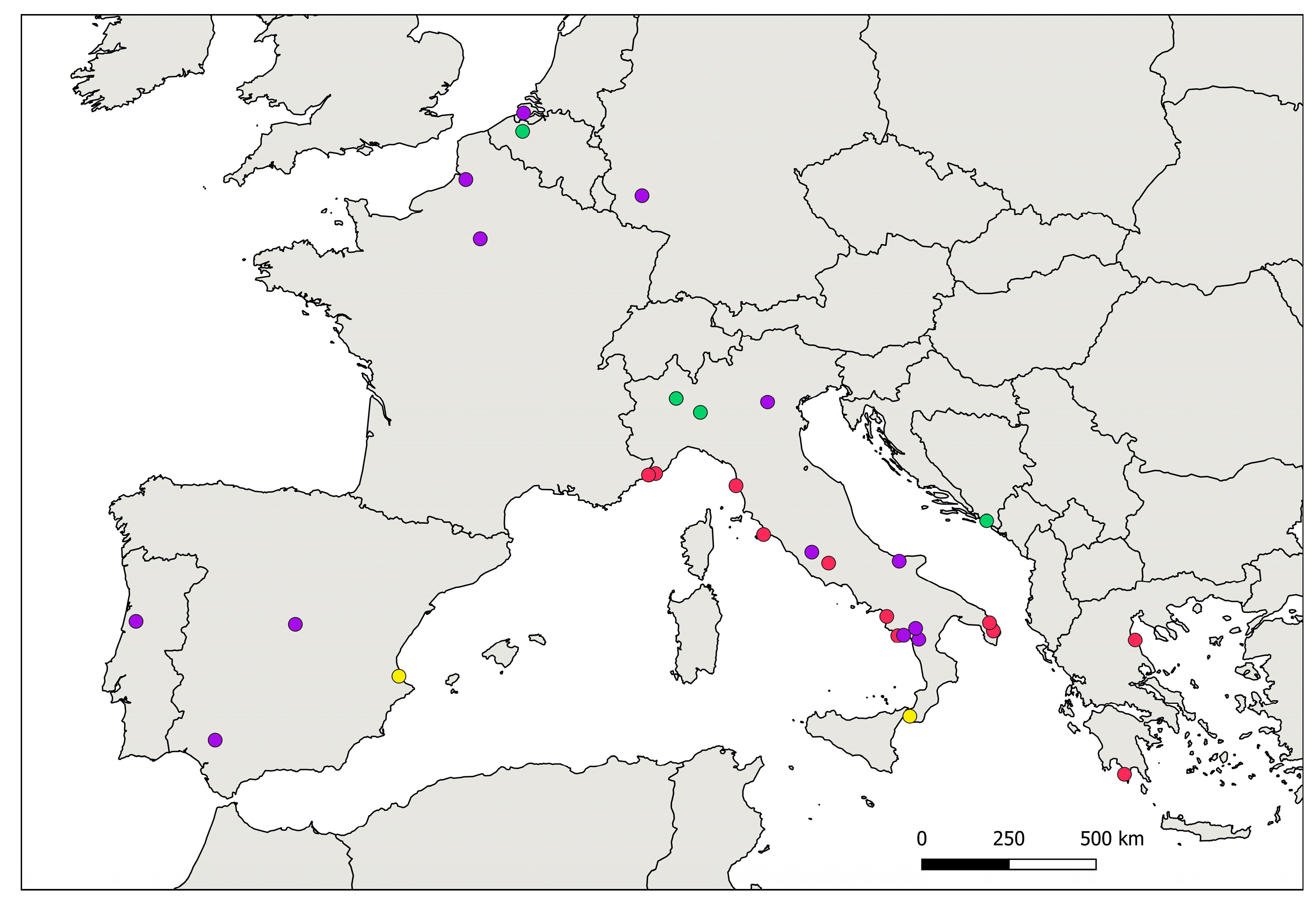
In the Balkans, excluding Greece [22,23], no Pleistocene hippopotamid remains have been recorded prior to this study. Confirmed findings of hippopotamid fossils from neighbouring countries include localities in Slovenia [1,2,36] and Hungary [13]. In addition to them, there are two questionable reports of hippopotamuses from Croatia. Malez [62,63] repeatedly listed a hippopotamus from the Krapina MIS 5e assemblage, usually as “? Hippopotamus sp.”, but only in general taxon lists and never in detailed palaeontological discussions. By the late 1980s, he no longer mentioned it [49], suggesting he himself doubted the identification, possibly mistaking a rhinoceros remain for a hippopotamus. A later revision of the entire Krapina faunal assemblage confirmed no hippopotamus remains [48]. The second is a reference to a “hippopotamus skull” from the lacustrine deposits of Čepić field in Istria, cited without a source [31], which is also considered a misidentification. The Grebci specimen therefore stands as the only confirmed Pleistocene hippopotamus in the region between Greece and Slovenia, and—identified as H. cf. amphibius—the sole record of this taxon in southeastern Europe northwest of Greece (Figure 4). Its presence in the hinterland of the eastern Adriatic is particularly significant, extending the known Pleistocene range of the H. amphibius on the European mainland.
The timing and nature of hippopotamid dispersal into Europe remain subjects of considerable debate [5,24,28]. The earliest confirmed records derive from Italy [6,64] and Greece [65], dated to approximately 2.1–2.0 million years ago and are attributed to Hippopotamus antiquus. While some authors interpret these occurrences as evidence for a single dispersal event, others advocate more complex scenarios involving multiple immigration waves. The single-entry model proposes that H. antiquus was the sole hippopotamid species present in Early Pleistocene Europe, descended from African ancestors [24,25,26,27].
In contrast, ref. [28] propose an alternative hypothesis involving up to three distinct dispersal waves. The first, between 2.0 and 1.8 Ma, involved Hippopotamus kaisensis-like forms that gave rise to H. antiquus. The second, shortly before 1.2 Ma, introduced H. gorgops-like taxa from Africa via the Levant, giving rise to the debated species H. tiberinus, which persisted across Europe until the Late Middle Pleistocene. The third wave involved H. amphibius incognitus, which appeared during the Late Middle Pleistocene and survived into the Late Pleistocene.
Our data are compatible with both models, but the lack of stratigraphic information precludes any discussion of the timing of dispersal events. The main contribution of our study is the confirmation of hippopotamid presence in this part of the Balkans, filling a previously unrecognized geographic gap. This finding enhances knowledge of the regional Pleistocene distribution of hippopotamids without implying any conclusions about migration chronology.

5. Conclusions

The hippopotamid specimen from a cave near the village of Grebci represents the first confirmed evidence of Hippopotamus in Bosnia and Herzegovina and, more broadly, in southeastern Europe outside Greece. Despite the limitations imposed by its fragmentary preservation and uncertain stratigraphic context, the find provides critical palaeogeographical insight by bridging a previously unrecognized gap in the distribution of Pleistocene hippopotamids. Its attribution to Hippopotamus cf. amphibius is consistent with later phases of hippopotamid dispersal into Europe, though its precise chronological position remains unresolved. This occurrence is coherent with the hypothesis that the Balkan Peninsula played a role as a migration corridor linking Africa with Europe. Future discoveries, combined with detailed stratigraphic, geochronological, and morphological studies, will be essential for reconstructing the timing, routes, and diversity of hippopotamid dispersal in southeastern Europe. This specimen not only enriches our understanding of regional Pleistocene faunal dynamics but also highlights the broader palaeogeographical significance of the Balkans within the framework of hippopotamid expansion across Europe.

Author Contributions

Conceptualisation: S.R. and V.N.; Investigation: S.R. and V.N.; Methodology: S.R. and V.N.; Resources: D.J. and J.S.Š.; Visualization: S.R. and V.N.; Writing—original draft: S.R., V.N. and J.M.L.; Writing—review and editing: S.R., V.N., J.M.L., D.J. and J.S.Š. All authors have read and agreed to the published version of the manuscript.

Funding

This research received no external funding.

Data Availability Statement

The original contributions presented in this study are included in the article material. Further inquiries can be directed to the corresponding author.

Acknowledgments

We are grateful to Mateo Petrović (Institute for Quaternary Palaeontology and Geology, Croatian Academy of Sciences and Arts) for his assistance with photographing the specimen. The authors would also like to thank anonymous reviewers whose constructive criticism and insightful comments greatly improved the quality of this manuscript.

Conflicts of Interest

The authors declare no conflicts of interest.

References

  1. Malez, M. Die quartären Vertebraten-faunen in der SFR Jugoslawien. Quartärpaläont 1986, 6, 101–117. [Google Scholar]
  2. Rakovec, I. Hippopotamus from the Postojna basin. Razprave Slov. Akad. Znan. Umetn. 1954, 2, 299–316. [Google Scholar]
  3. Leonardi, G. L’Ippopotamo del Valdarno. Palaeontogr. Ital. 1948, 43, 17–43. [Google Scholar]
  4. Mazza, P. New evidence on the Pleistocene hippopotamuses of western Europe. Geol. Rom. 1995, 31, 61–241. [Google Scholar]
  5. Mazza, P.P.; Bertini, A. Were Pleistocene hippopotamuses exposed to climate-driven body size changes? Boreas 2013, 42, 194–209. [Google Scholar] [CrossRef]
  6. Pandolfi, L.; Petronio, C. A brief review of the occurrences of Pleistocene Hippopotamus (Mammalia, Hippopotamidae) in Italy. Geol. Croat. 2015, 68, 313–319. [Google Scholar] [CrossRef]
  7. Martino, R.; Pandolfi, L. The Quaternary Hippopotamus records from Italy. Hist. Biol. 2022, 34, 1146–1156. [Google Scholar] [CrossRef]
  8. Martino, R.; Marra, F.; Ríos, M.I.; Pandolfi, L. The Middle Pleistocene Hippopotamus from Malagrotta (Latium, Italy): New data and future perspectives. Quaternary 2024, 7, 13. [Google Scholar] [CrossRef]
  9. Mecozzi, B.; Iannucci, A.; Arzarello, M.; Carpentieri, M.; Moncel, M.-H.; Peretto, C.; Sala, B.; Sardella, R. Middle Pleistocene Hippopotamuses from the Italian Peninsula: An Overview. Quaternary 2024, 7, 20. [Google Scholar] [CrossRef]
  10. Martínez-Navarro, B.; Palmqvist, P.; Madurell-Malaperia, J.; Pérez-Claros, J.A. El registro de Hippopotamus antiquus en el Pleistoceno inferior de Europa: Implicaciones paleoambientales e inferencias paleobiológicas. In XX Jornadas de la Sociedad Española de Paleontología, Alcalá de Henares, Spain, 2004; Libro de Resúmenes; SEPA: Madrid, Spain, 2004; pp. 121–122. [Google Scholar]
  11. Fidalgo, D.; Rosas, A.; Madurell-Malapeira, J.; Pineda, A.; Huguet, R.; García-Tabernero, A.; Cáceres, I.; Ollé, A.; Vallverdú, J.; Saladie, P. A review on the Pleistocene occurrences and palaeobiology of Hippopotamus antiquus based on the record from the Barranc de la Boella Section (Francolí Basin, NE Iberia). Quat. Sci. Rev. 2023, 307, 108034. [Google Scholar] [CrossRef]
  12. Fidalgo, D.; Madurell-Malapeira, J.; Martino, R.; Pandolfi, L.; Rosas, A. An updated review of the Quaternary hippopotamus fossil records from the Iberian Peninsula. Quaternary 2024, 7, 4. [Google Scholar] [CrossRef]
  13. Jánossy, D. Pleistocene Vertebrate Faunas of Hungary; Elsevier: Amsterdam, The Netherlands, 2011; Volume 8. [Google Scholar]
  14. Kahlke, R.D. Die Hippopotamus-Reste aus dem Unterpleistozän von Untermaßfeld. In Das Pleistozän von Untermaßfeld bei Meiningen (Thüringen), Teil 1; Kahlke, H.-D., Ed.; Monographien des Römisch-Germanischen Zentralmuseums: Mainz, Germany, 1997; pp. 277–374. [Google Scholar]
  15. Kahlke, R.D. Die Unterpleistozäne Komplexfundstelle Untermaßfeld—Zusammenschau des Kenntnisstandes sowie synthetische Betrachtungen zu Genesemodell, Paläoökologie und Stratigraphie. In Das Pleistozän von Untermaßfeld bei Meiningen (Thüringen), Teil 3; Kahlke, H.-D., Ed.; Monographien des Römisch-Germanischen Zentralmuseums: Mainz, Germany, 2001; pp. 931–1030. [Google Scholar]
  16. Kahlke, R.D.; García, N.; Kostopoulos, D.S.; Lacombat, F.; Lister, A.M.; Mazza, P.P.; Spassov, N.; Titov, V.V. Western Palaearctic palaeoenvironmental conditions during the Early and early Middle Pleistocene inferred from large mammal communities, and implications for hominin dispersal in Europe. Quat. Sci. Rev. 2011, 30, 1368–1395. [Google Scholar] [CrossRef]
  17. Martino, R.; Ríos, M.; Rook, L.; Pandolfi, L. Is Hippopotamus antiquus (Mammalia, Hippopotamidae) affected by body size variations? The contribution of the Mosbach (Germany, Middle Pleistocene) specimen. PalZ 2025, 99, 385–405. [Google Scholar] [CrossRef]
  18. Vervoort-Kerkhoff, Y.; van Kolfschoten, T. Pleistocene and Holocene mammalian faunas from the Maasvlakte near Rotterdam (The Netherlands). Meded. Werkgroep Tert. Kwart. Geol. 1988, 25, 87–98. [Google Scholar]
  19. Faure, M. Les hippopotames quaternaires non-insulaires d’Europe occidentale. Publ. Mus. Conflu. 1985, 23, 13–79. [Google Scholar] [CrossRef]
  20. Stuart, A.J. Insularity and Quaternary vertebrate faunas in Britain and Ireland. Geol. Soc. Lond. Spec. Publ. 1995, 96, 111–125. [Google Scholar] [CrossRef]
  21. Adams, N.F.; Candy, I.; Schreve, D.C. An Early Pleistocene hippopotamus from Westbury Cave, Somerset, England: Support for a previously unrecognized temperate interval in the British Quaternary record. J. Quat. Sci. 2022, 37, 28–41. [Google Scholar] [CrossRef]
  22. Athanassiou, A. The fossil record of continental hippopotamids (Mammalia: Artiodactyla: Hippopotamidae) in Greece. In Fossil Vertebrates of Greece; Vlachos, E., Ed.; Springer: Cham, Switzerland, 2022; Volume 2, pp. 281–299. [Google Scholar]
  23. Athanassiou, A.; Bouzas, D. New hippopotamid finds in Eurotas Valley (Laconia, Greece). Sci. Ann. 2010, 99, 57–62. [Google Scholar]
  24. Fidalgo, D.; Galli, E.; Madurell-Malapeira, J.; Rosas, A. Earliest Pleistocene European hippos: A review. Comun. Geol. 2021, 108, 65–69. [Google Scholar]
  25. Petronio, C. Note on the taxonomy of Pleistocene hippopotamuses. Ibex J. Mt. Ecol. 1995, 3, 53–55. [Google Scholar]
  26. Martínez-Navarro, B.; Madurell-Malapeira, J.; Ros-Montoya, S.; Espigares, M.P. Sobre la paleobiología de Hippopotamus antiquus: ¿Un megaherbívoro acuático sin análogos vivientes? In XXXI Jornadas de Paleontología; Sociedad Española de Paleontologia: Baeza, Spain, 2015. [Google Scholar]
  27. Pandolfi, L.; Martino, R.; Rook, L.; Piras, P. Investigating ecological and phylogenetic constraints in Hippopotamidae skull shape. Riv. Ital. Paleontol. Stratigr. 2020, 126, 37–49. [Google Scholar]
  28. Van der Made, J.; Sahnouni, M.; Boulaghraief, K. Hippopotamus gorgops from El Kherba, Algeria and the context of its biogeography. In Proceedings of the II Meeting of African Prehistory, Burgos, Spain, 15–16 April 2015; pp. 135–169. [Google Scholar]
  29. Lenardić, J.M. Miocene to late Pleistocene proboscideans of Croatia. Quat. Int. 2012, 276, 120–128. [Google Scholar] [CrossRef]
  30. Kramberger, D.G. Fosilni rinocerotidi Hrvatske i Slavonije s osobitim obzirom na Rhinoceros Mercki. Djela Jugosl. Akad. JAZU Knjizara Jugosl. Akad. Zagreb 1913, 8, 1–70. [Google Scholar]
  31. Miracle, P.T. The Krapina Paleolithic Site: Zooarchaeology, Taphonomy, and Catalog of the Faunal Remains; Croatian National History Museum: Zagreb, Croatia, 2007. [Google Scholar]
  32. Mandić, O.; Göhlich, U.B.; Hrvatović, H.; Mauch Lenardić, J.; Čvorović, B.; Glamuzina, G.; Radoš, D. New Proboscidean Site from the High Karst Dinarides in Southern Bosnia and Hercegovina. In Neogene to Quaternary Geological Evolution of Mediterranean, Paratethys and Black Sea: Abstract Book; Istanbul Technical University: Istanbul, Turkey, 2013; p. 189. [Google Scholar]
  33. Mauch Lenardić, J. Pliocenski “praslon”, vrsta Anancus arvernensis (Croizet i Jobert, 1828). In Duvanjski Praslon, div iz Pretpovijesti; Ćurčić, S., Ed.; Franjevački muzej: Tomislavgrad, Bosnia and Herzegovina, 2019; pp. 32–34. [Google Scholar]
  34. Rakovec, I. Razvoj kvartarne sesalske favne v Sloveniji. Arh. Vest. 1973, 24, 225–270. [Google Scholar]
  35. Ratajczak-Skrzatek, U.; Polak, S.; Karbowski, K.; Temovski, M.; Mackiewicz, P.; Savorelli, A.; Stefaniak, K. Fossil records of Bovidae and Cervidae from the Late Pliocene and Early Pleistocene of Slovenia: Implications for Eurasian correlations and evolution of ungulate fauna communities. Quat. Int. 2026, 753, 110060. [Google Scholar] [CrossRef]
  36. Malez, M. Kvartarna fauna Jugoslavije. In Praistorija Jugoslavenskih Zemalja I: Paleolitsko i Mezolitsko Doba; Benac, A., Ed.; Centar za Balkanološka Ispitivanja, Akademija Nauka i Umetnosti Bosne i Hercegovine: Sarajevo, Bosnia and Herzegovina, 1979; pp. 55–78. [Google Scholar]
  37. Lenardić, J.M.; Sršen, A.O.; Radović, S. Quaternary fauna of the Eastern Adriatic (Croatia) with the special review on the Late Pleistocene sites. Quat. Int. 2018, 494, 130–151. [Google Scholar] [CrossRef]
  38. Vislobokova, I.A.; Agadjanian, A.K. New data on large mammals of the Pleistocene Trlica fauna, Montenegro, the Central Balkans. Paleontol. J. 2015, 49, 651–667. [Google Scholar] [CrossRef]
  39. Crégut-Bonnoure, E.; Dimitrijević, V. New insights on carnivora (Mammalia) from trlica (Pljevlja, Montenegro). Rev. Paléobiol. 2022, 41, 281–311. [Google Scholar]
  40. Dimitrijević, V.; Mrdjić, N.; Korać, M.; Chu, S.; Kostić, D.; Jovičić, M.; Blackwell, B.A. The latest steppe mammoths (Mammuthus trogontherii (Pohlig)) and associated fauna on the Late Middle Pleistocene steppe at Nosak, Kostolac Basin, Northeastern Serbia. Quat. Int. 2015, 379, 14–27. [Google Scholar] [CrossRef]
  41. Muttoni, G.; Scardia, G.; Dimitrijević, V.; Kent, D.V.; Monesi, E.; Mrdjić, N.; Korać, M. Age of Mammuthus trogontherii from Kostolac, Serbia, and the entry of megaherbivores into Europe during the Late Matuyama climate revolution. Quat. Res. 2015, 84, 439–447. [Google Scholar] [CrossRef]
  42. Ochando, J.; Carrión, J.S.; Magri, D.; Marín-Arroyo, A.B.; Di Rita, F.; Munuera, M.; Michelangeli, F.; Amorós, G.; Milošević, S.; Bogićević, K.; et al. Balkan Neanderthals: The late Pleistocene palaeoecological sequence of Pešturina cave (Niš, Serbia). Quat. Sci. Rev. 2024, 330, 108600. [Google Scholar] [CrossRef]
  43. Miracle, P.T. Carnivore dens or carnivore hunts? A review of Upper Pleistocene mammalian assemblages in Croatia and Slovenia. Rad Hrv. Akad. Znan. Umjet. 1991, 458, 193–219. [Google Scholar]
  44. Natevic, L.J.; Petrovic, V. Osnovna Geološka Karta SFRJ; List Trebinje. K 34-37 IGI Sarajevo, 1964/65; Savezni Geološki Zavod: Belgrade, Serbia, 1967. [Google Scholar]
  45. Malez, M. Caves in the region of Popovo polje and Dubrovnik. Car. Iug. 1970, 7, 21–68. [Google Scholar]
  46. Malez, M. Paleontološka i speleološka istraživanja u 1957. god. Ljetop. Jugosl. Akad. Znan. Umjet. 1960, 64, 289–307. [Google Scholar]
  47. Malez, M. Paleontološka i speleološka istraživanja u 1958. god. Ljetop. Jugosl. Akad. Znan. Umjet. 1961, 65, 298–310. [Google Scholar]
  48. Milanović, P. Karst of East Herzegovina and Dubrovnik Littoral; Springer Nature: Cham, Switzerland, 2023. [Google Scholar]
  49. Hawelka, V. Geologische Reiseskizzen aus der Hercegovina, Südostbosnien und dem angrenzenden Teile der Crna Gora (Montenegros). III. Teil. Glasnik Zemalj. Muzeja Bosni Hercegovini 1931, 43, 5–54. [Google Scholar]
  50. Brodar, S. Das Paläolithikum in Jugoslawien. Quartär–Intern. Jahrb. Erforsch. Eiszeitalt. Steinzeit 1938, 1, 140–172. [Google Scholar]
  51. Malez, M. Nalazišta pećinskog medvjeda u Hrvatskoj. Speleolog 1955, 3, 15–24. [Google Scholar]
  52. Nesti, F. Descrizione Osteologica Dell’ippopotamo Maggiore Fossile dei Terreni Mobili del Valdarno Superiore in Toscana; Presso la Societa tipografica: Florence, Italy, 1820. [Google Scholar]
  53. Nomina Anatomica Veterinaria, 6th ed.; World Association of Veterinary Anatomists: Zurich, Switzerland, 2017.
  54. Hooijer, D.A. The Fossil Hippopotamidae of Asia, with Notes on the Recent Species. Zool. Verh. 1950, 8, 1–124. [Google Scholar]
  55. Fisher, R.E.; Scott, K.M.; Adrian, B. Hind limb myology of the common hippopotamus, Hippopotamus amphibius (Artiodactyla: Hippopotamidae). Zool. J. Linn. Soc. 2010, 158, 661–682. [Google Scholar] [CrossRef]
  56. von den Driesch, A. A Guide to the Measurement of Animal Bones from Archaeological Sites; Peabody Museum of Archaeology and Ethnology, Harvard University: Cambridge, MA, USA, 1976. [Google Scholar]
  57. Lyman, R.L. Vertebrate Taphonomy; Cambridge University Press: Cambridge, UK, 1994. [Google Scholar]
  58. Fernández-Jalvo, Y.; Andrews, P. Atlas of Taphonomic Identifications; Springer: New York, NY, USA, 2016. [Google Scholar]
  59. Coutureau, M. Hippopotamus sp. (Linnaeus, 1758). In Die Vergleichende Osteologie; Pander, C.H., Alton, E., Eds.; U.S. Copyright Office: Washington, DC, USA, 2015; pp. 1821–1838. [Google Scholar]
  60. Eltringham, S.K. The Hippos: Natural History and Conservation; T & A D Poyser: London, UK, 1999. [Google Scholar]
  61. Felja, I. Karstic Estuaries Along the Eastern Adriatic Coast: Late-Quaternary Evolution of the Mirna and Neretva River Mouths. Ph.D. Thesis, University of Zagreb, Zagreb, Croatia, 2017. [Google Scholar]
  62. Malez, M. Rezultati revizije pleistocenske faune iz Krapine. In Krapina 1899–1969; Malez, M., Ed.; Jugoslavenska Akademija Znanosti i Umjetnosti: Zagreb, Croatia, 1970; pp. 45–56. [Google Scholar]
  63. Malez, M.; Malez, V. The Upper Pleistocene fauna from the Neanderthal man site in Krapina (Croatia, Yugoslavia). Geol. Vjesnik 1989, 42, 49–57. [Google Scholar]
  64. Bellucci, L.; Mazzini, I.; Scardia, G.; Bruni, L.; Parenti, F.; Segre, A.G.; Naldini, E.S.; Sardella, R. The site of Coste San Giacomo (Early Pleistocene, central Italy): Palaeoenvironmental analysis and biochronological overview. Quat. Int. 2012, 267, 30–39. [Google Scholar] [CrossRef]
  65. Reimann, K.C.; Strauch, F. Ein Hippopotamus-Schädel aus dem Pliozän von Elis (Peloponnes, Griechenland). Neues Jahrb. Geol. Paläontol. Abh. 2008, 249, 203–222. [Google Scholar] [CrossRef]
Figure 1. Map showing the location of the village of Grebci, near which a Hippopotamus specimen has been found.
Quaternary 09 00015 g001
Figure 2. (a) Detailed map showing the locations of speleological objects (1—Đurkovica, 2—Nova Đurkovica, 3—Sječena peć, 4—Poganjača, 5—Reznica, 6—Poleguša, 7—Babja peć, 8—Mrcine, 9—Debelin, 10—Žuljevica, 11—Grabrovica, 12—Kali) near Grebci (adapted from [45]), (b) plan view and (c) profile view of Đurkovica and Nova Đurkovica caves (adapted from [48]).
Quaternary 09 00015 g002
Figure 3. Right half of the pelvis (os coxae dextrum) of Hippopotamus cf. amphibius from Grebci: (a) ventral side, (b) dorsal side, (c) schematic skeletal illustration of the hippopotamus with the marked bone (in red), after [59].
Quaternary 09 00015 g003
Figure 4. Map showing Pleistocene H. amphibius distribution in Europe (adapted from [7]): purple dots—Middle Pleistocene, yellow dots—Middle/Late Pleistocene, red dots—Late Pleistocene, green dots—Pleistocene.
Quaternary 09 00015 g004
Table 1. Measurements of the hippopotamus os coxae from Grebci compared to Pleistocene hippopotamuses in Europe, after [4] (p. 177, Table 23); B = breadth.
PMD 2370-1 GEO 263H. antiquus H. amphibius
(mm)Range (mm)NRange (mm)N
LAR88.799–113669–883
B corpus ossis ischii32.8----
Disclaimer/Publisher’s Note: The statements, opinions and data contained in all publications are solely those of the individual author(s) and contributor(s) and not of MDPI and/or the editor(s). MDPI and/or the editor(s) disclaim responsibility for any injury to people or property resulting from any ideas, methods, instructions or products referred to in the content.