Article

Green Synthesis of Antibacterial Silver Nanocolloids with Agroindustrial Waste Extracts, Assisted by LED Light

1
Department of Chemical Engineering, Universidad San Francisco de Quito USFQ, Diego de Robles s/n y Av. Interoceánica, Quito 170157, Ecuador
2
Centro de Nanociencia y Nanotecnología, Universidad de las Fuerzas Armadas ESPE, Sangolquí 171103, Ecuador
3
Instituto de Microbiología, Universidad San Francisco de Quito USFQ, Diego de Robles s/n y Av. Interoceánica, Quito 170157, Ecuador
4
Instituto de Investigaciones Biológicas y Ambientales BIOSFERA, Universidad San Francisco de Quito USFQ, Diego de Robles s/n y Av. Interoceánica, Quito 170157, Ecuador
5
Instituto de Investigaciones en Biomedicina, Universidad San Francisco de Quito USFQ, Diego de Robles s/n y Av. Interoceánica, Quito 170157, Ecuador
*
Authors to whom correspondence should be addressed.
Colloids Interfaces 2022, 6(4), 74; https://doi.org/10.3390/colloids6040074

Submission received: 1 September 2022 / Revised: 8 November 2022 / Accepted: 25 November 2022 / Published: 1 December 2022
(This article belongs to the Special Issue Biocolloids and Biointerfaces)

Abstract

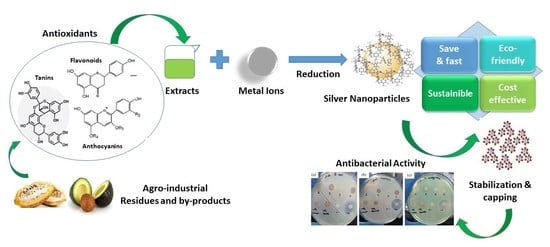
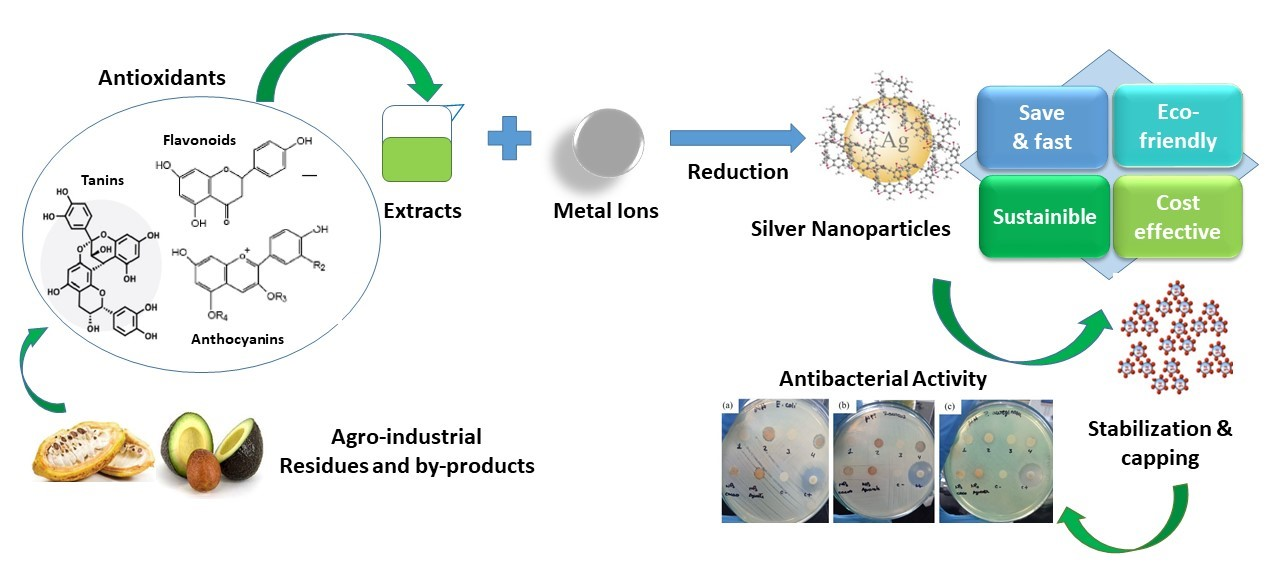
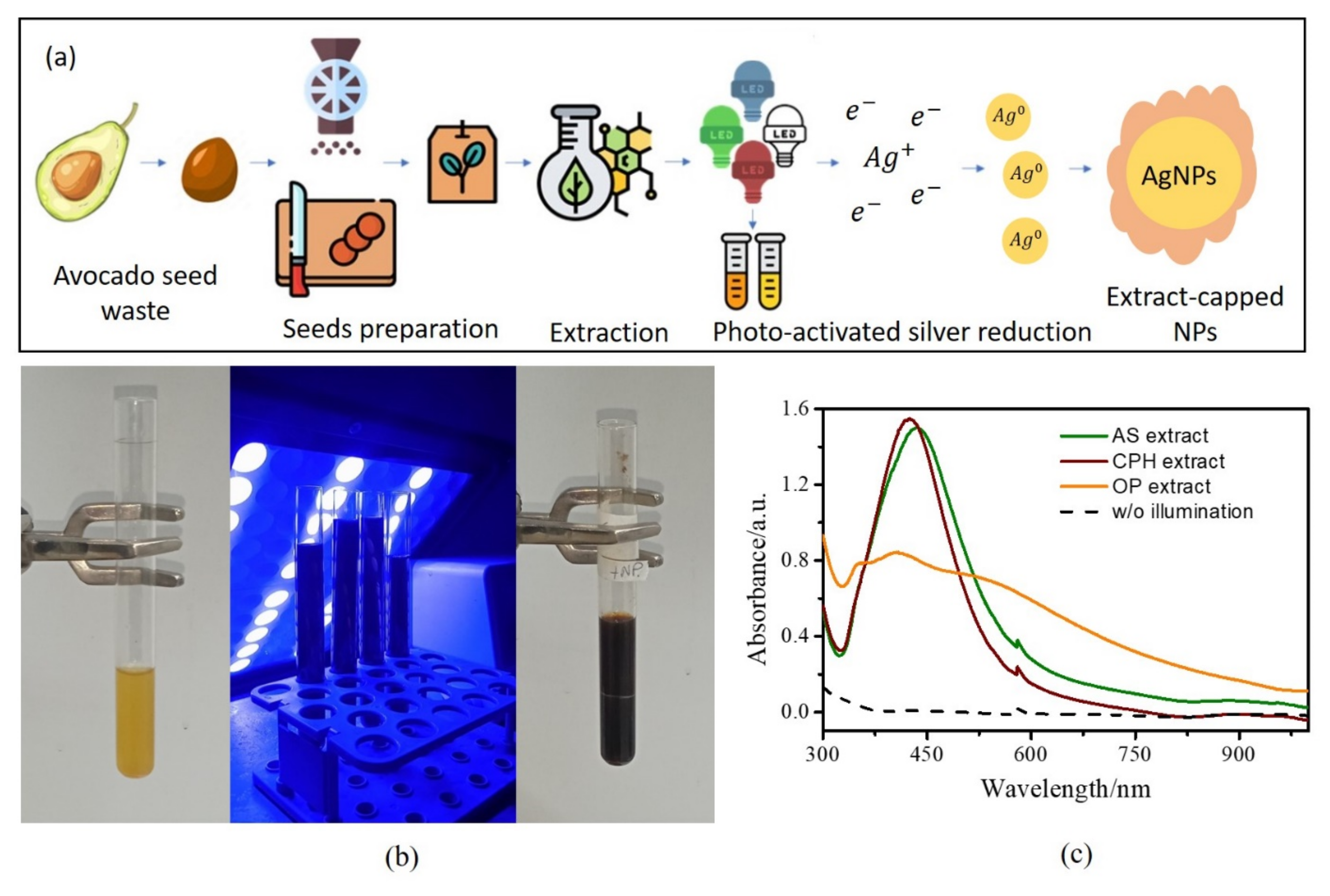
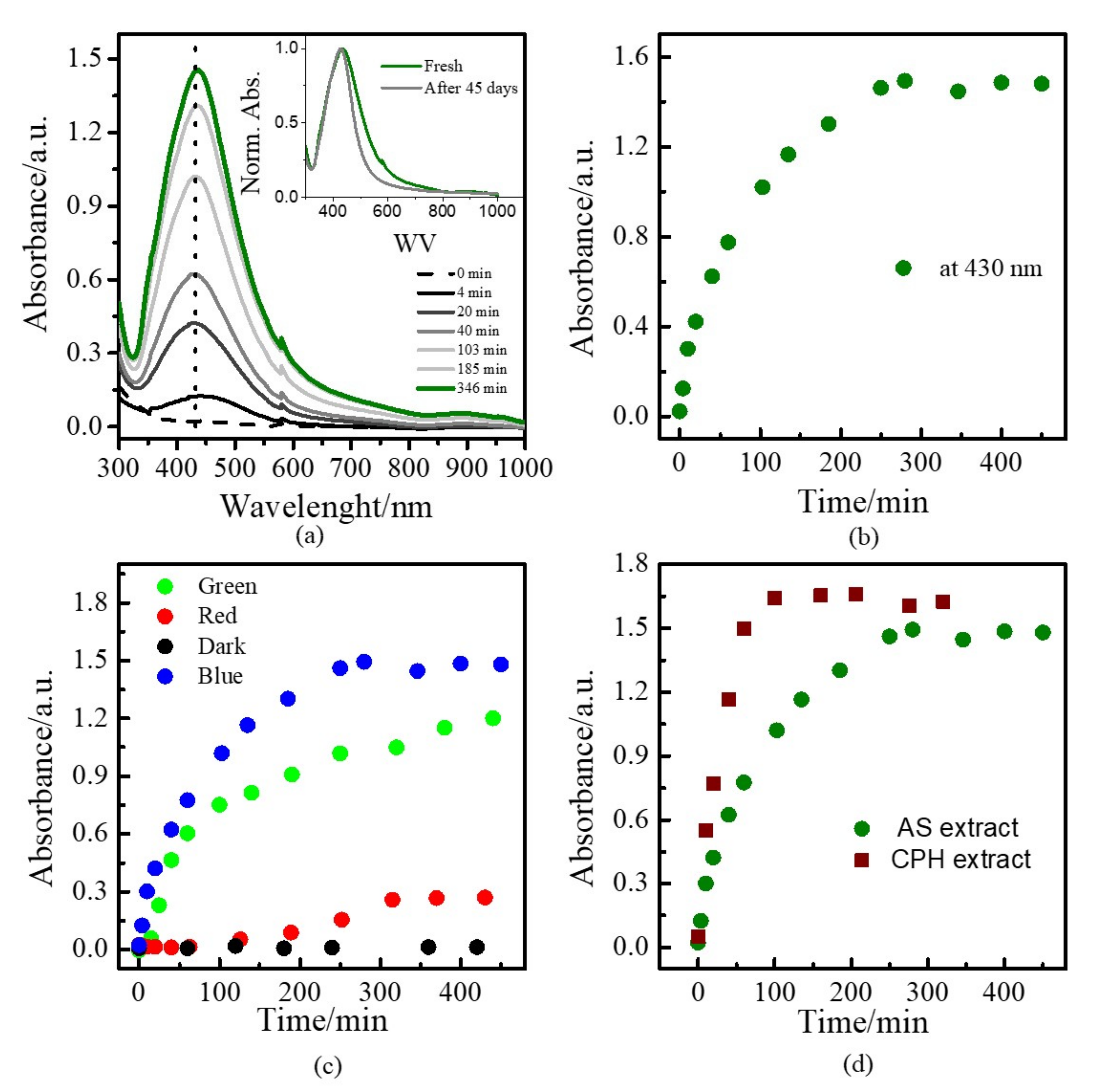
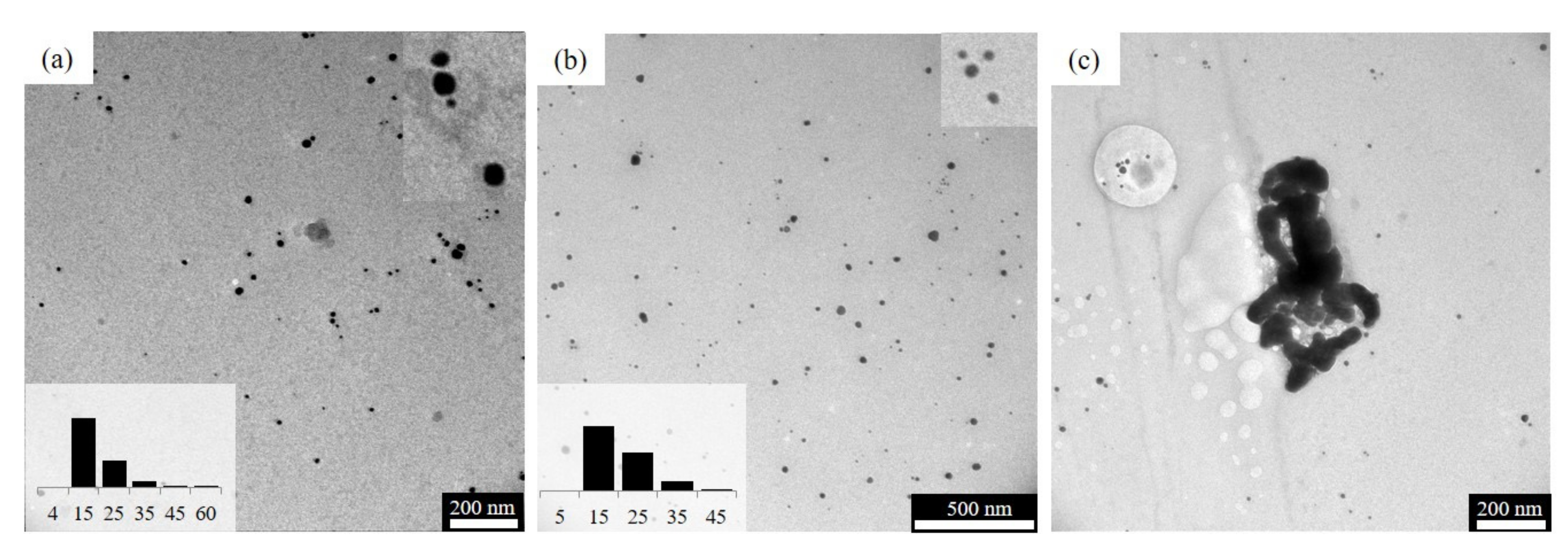
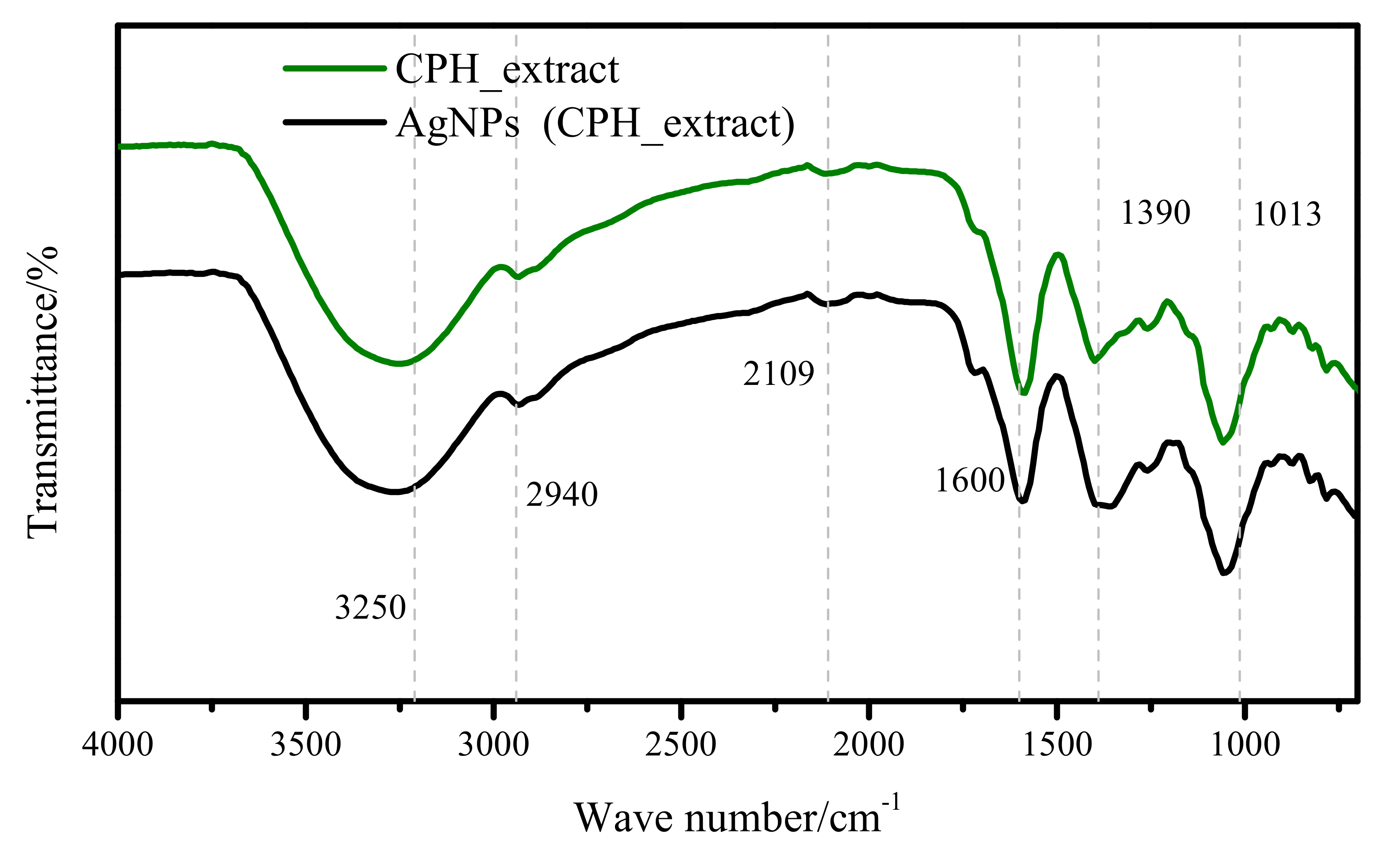
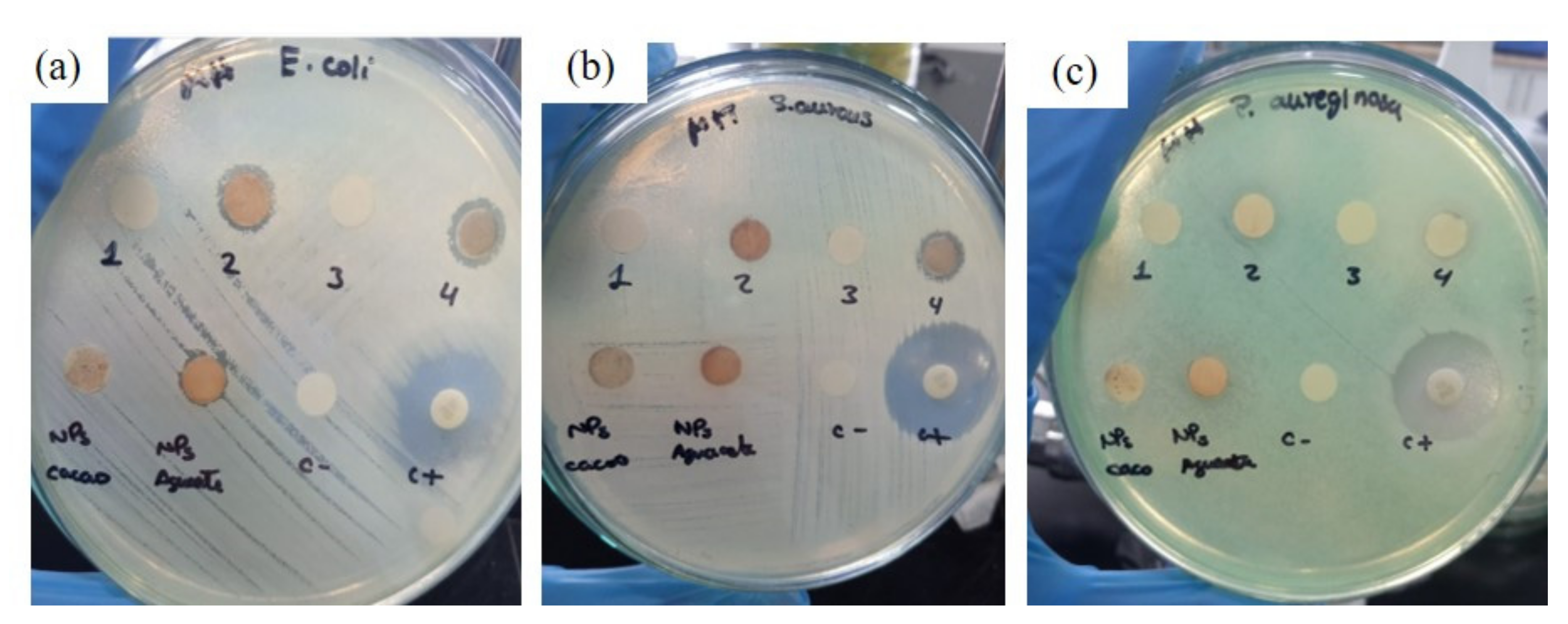
Herein, the green synthesis of silver nanoparticles (AgNPs), assisted by LED light, using the aqueous extracts of agroindustrial waste products, such as avocado seeds (ASs), cocoa pod husks (CPHs), and orange peels (OPs), is presented. Surface plasmon resonance analysis showed faster and complete NP formation when irradiated with blue LED light. Green and red light irradiation showed non- and limited nanoparticle formation. TEM analyses confirmed the semispherical morphology of the synthesized AgNPs, with the exception of OP–AgNPs, which showed agglomeration during the light irradiation. For AS–AgNPs and CPH–AgNPs, the average particle diameter was about 15 nm. Interestingly, the CPH extract demonstrated faster nanoparticle formation as compared to the AS extract (100 min vs. 250 min irradiation time, respectively). FTIR spectroscopy assessed the involvement of diverse functional groups of the bioactive phytochemicals present in the plant extracts during nanoparticle photobiosynthesis. The antioxidant activity, as determined by ferric reducing antioxidant power (FRAP) assay, varied from 1323.72 µmol TE/mL in the AS aqueous extract to 836.50 µmol TE/mL in the CPH aqueous extract. The total polyphenol content was determined according to the Folin–Ciocalteu procedure; the AS aqueous extract exhibited a higher polyphenol content (1.54 mg GAE/g) than did the CPH aqueous extract (0.948 mg GAE/g). In vitro antibacterial assays revealed that the AS–AgNPs exhibited promising antibacterial properties against pathogenic bacteria (E. Coli), whereas the CPH–AgNPs showed antibacterial activity against S. aureus and E. coli. The green synthesis of AgNPs using AS, CPH, and OP aqueous extracts reported in this work is environmentally friendly and cost-effective, and it paves the way for future studies related to agroindustrial waste valorization for the production of advanced nanomaterials, such as antibacterial AgNPs, for potential biomedical, industrial, and environmental applications.
Keywords: green synthesis; agroindustrial waste extracts; bioactive phytochemicals; antibacterial activity; nanoparticles; circular bioeconomy green synthesis; agroindustrial waste extracts; bioactive phytochemicals; antibacterial activity; nanoparticles; circular bioeconomy
Graphical Abstract