
Polymer Retention Leading to Non-Darcy Flow in Porous Media—Influence of Molecular Weight, Composition and Mechanical Degradation



Abstract
1. Introduction
2. Materials and Methods
2.1. Fluids
2.2. Polymer
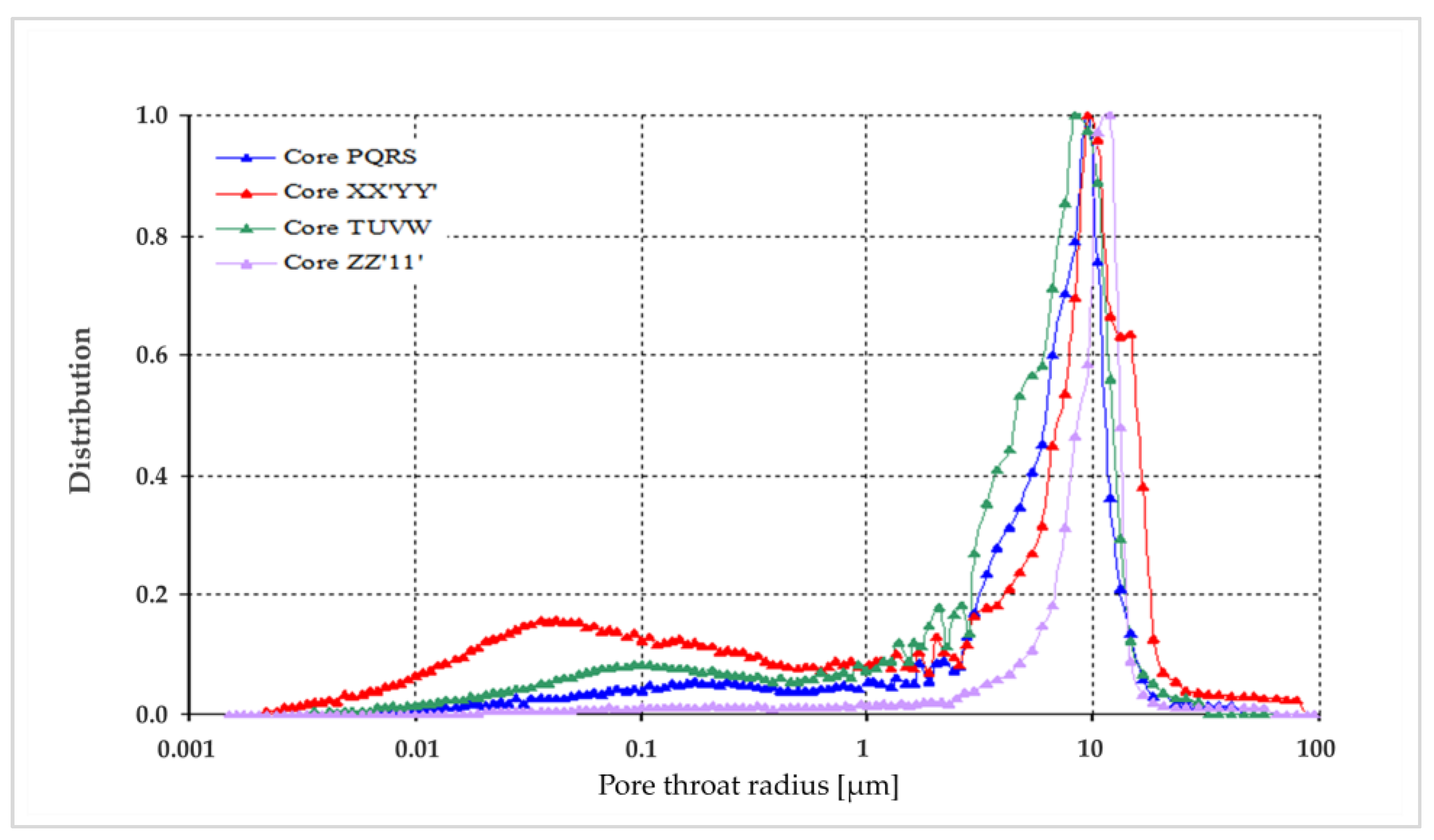
2.3. Porous Medium
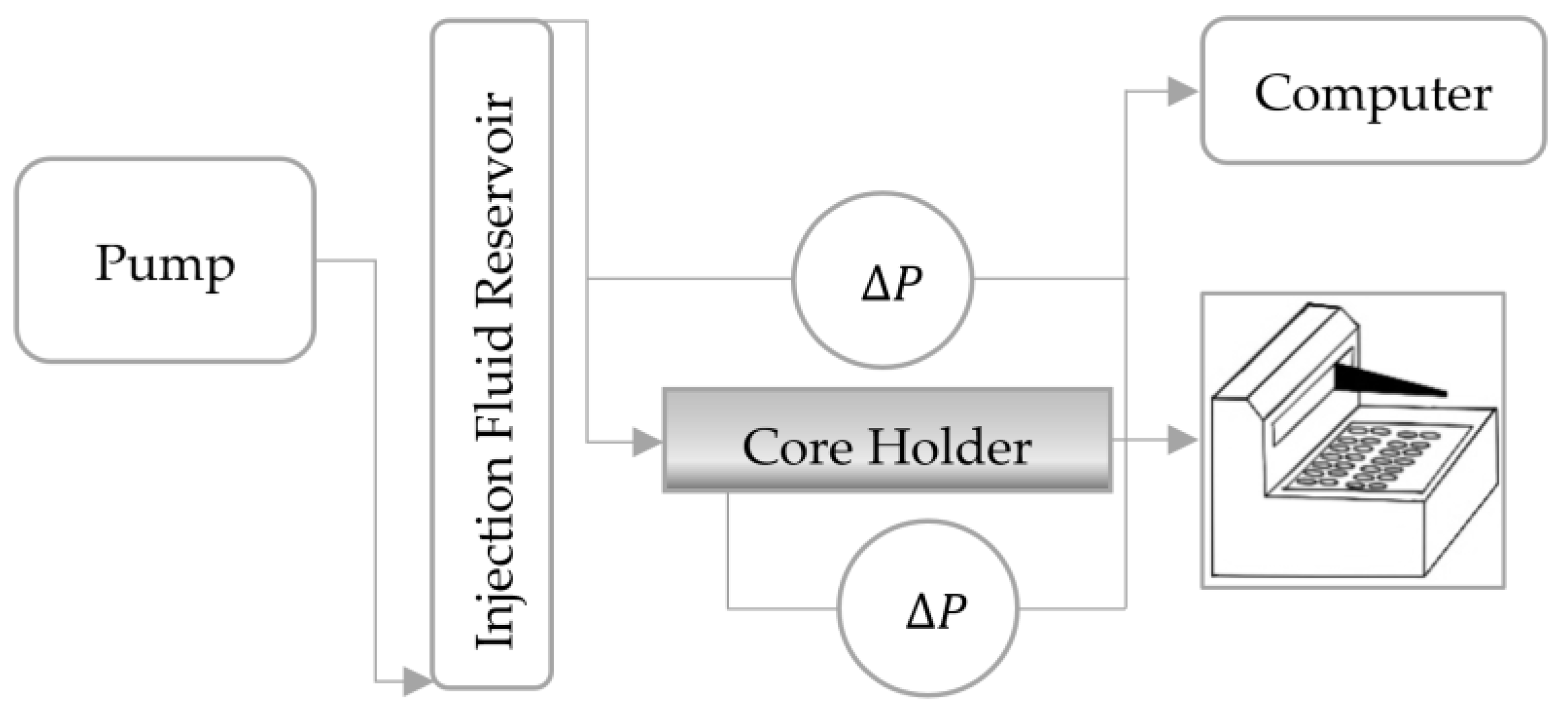
2.4. Experimental Setup
2.5. Procedure
- Injected 2 PV of polymer solution at a flow rate of 0.5 mL/min.
- Injected polymer solution at flow rates of 2.0, 1.0, 0.3, 0.1, and 0.05 mL/min until differential pressure was stable at each flowrate.
- Tapered the polymer solution by injecting 2 slugs of 50% and 25% of original polymer concentration at a flow rate of 1 mL/min, 0.5 PV each.
- Flushed the core with 10 PV of SSW at a flow rate of 5.0 mL/min.
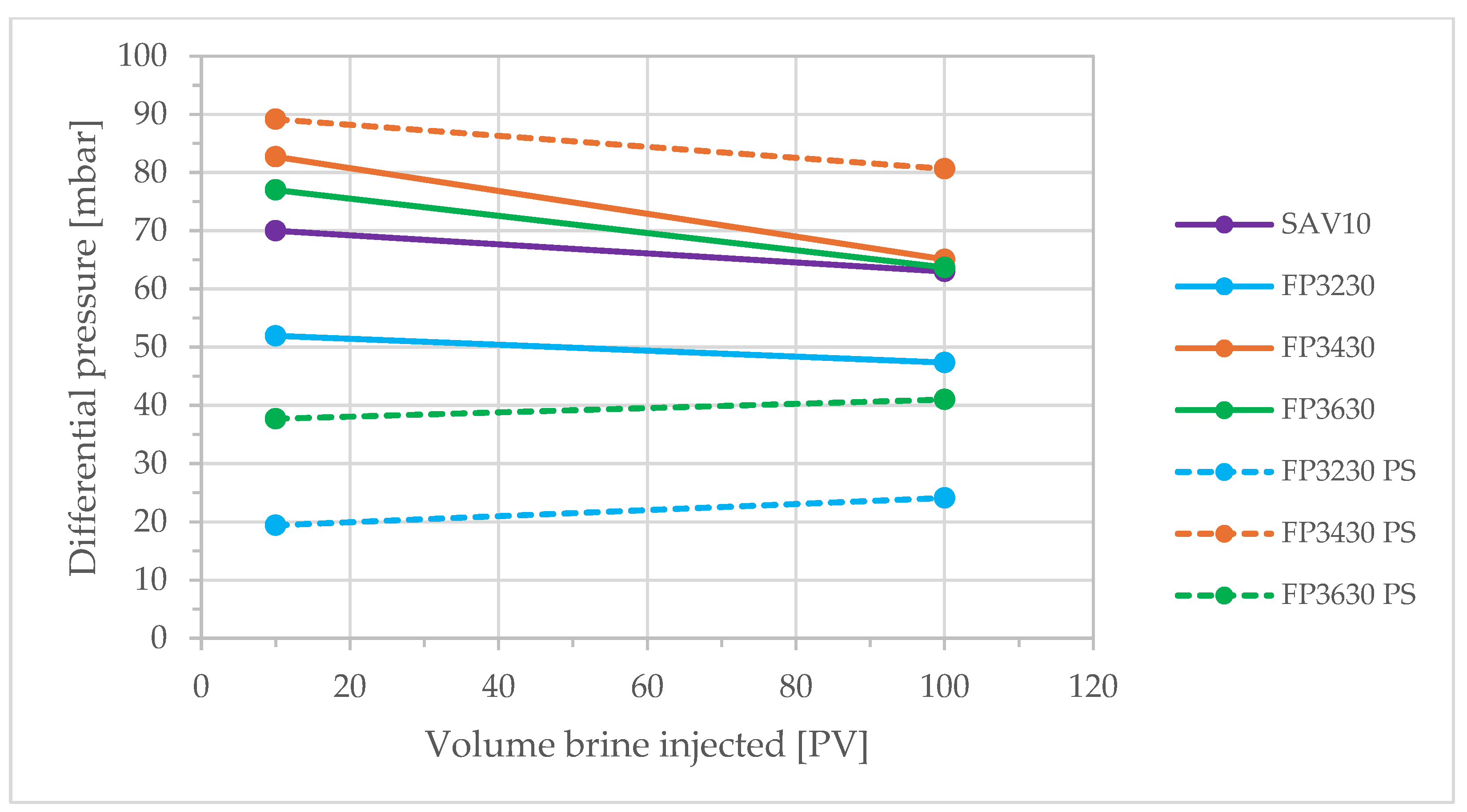
- Measured the core permeability after polymer flood with SSW ().
- Flushed the core with 90 PV of SSW.
- Re-measured the core permeability with SSW .
2.6. Method
2.6.1. In Situ Rheology
2.6.2. Effective Shear Rate
2.6.3. Residual Resistance Factor
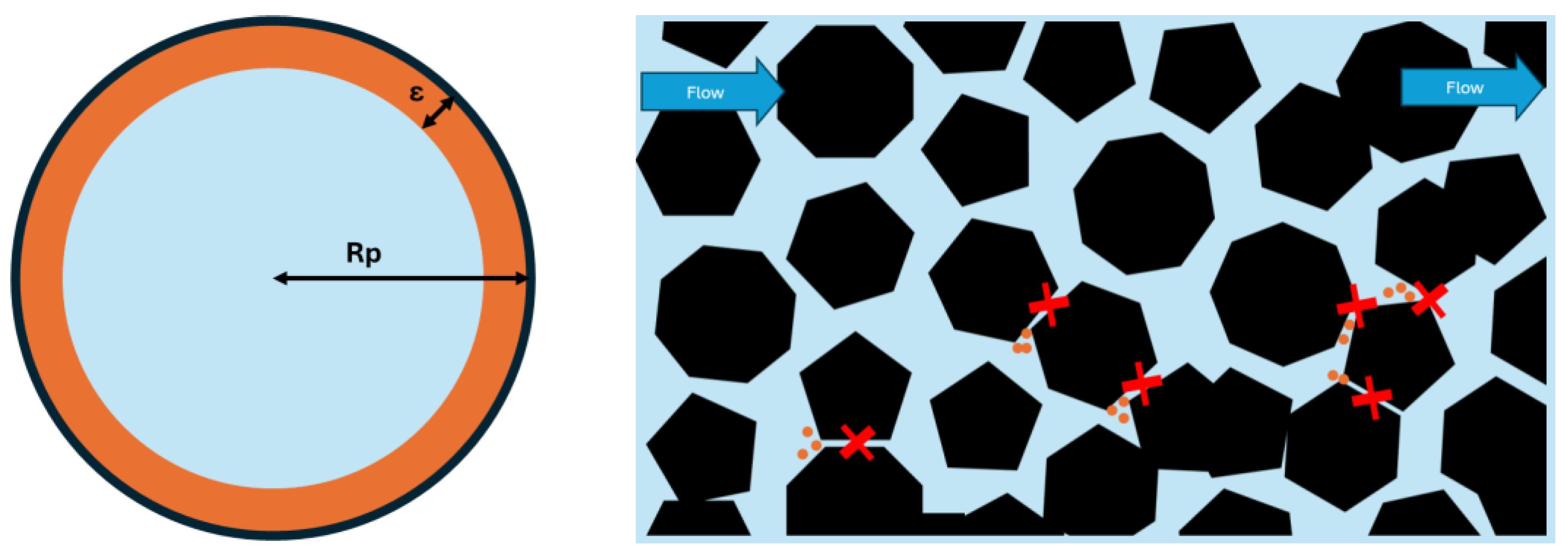
- Adsorption: Polymer molecules adsorb on the surface of the pores and reduce the effective pore size, generating resistance to flow. It is regarded as the main mechanism by many and leads to the concept of adsorbed layer thickness, εh, which is proposed to be a function of the permeability reduction [16]: εh = Rp(1 − RRF−1/4) where Rp is the effective pore radius. It assumes that the adsorbed polymer generates a permanent, impenetrable layer and that there are no contributions to RRF other than adsorption.
- Desorption: Absorbed polymer may desorb from the rock surface as it is exposed to large volumes of brine and/or high injection rates. Desorption is regarded only to occur at a very low rate and is not expected to be a major contributor to RRF after large PV of brine post-flush. It can, however, be of larger importance when low amount of PV of brine has been applied in the post-flush.
- Mechanical entrapment: Polymer coils and aggregates get physically trapped in pore throats smaller than approximately 3 times their hydrodynamic size. The hydrodynamic diameter of dilute solutions of HPAM-type polymers in sea water is in the order of 50 to 300 nm [5]. It is a function of molecular weight, type of polymer, brine salinity and temperature. The blocking of pores may lead to higher inaccessible pore volume (IPV) and increased tortuosity and resistance to flow.
- Unstable displacement: A polymer slug is followed by brine injection in the field and in core flood experiments. This process is unstable because of the difference in mobility between brine and polymer. Injected brine may finger or channel through the remaining polymer in the porous media, leading to bypassed polymer. This may lead to restriction of flow by reduction in the effective pore volume.
- Sweep: Poor sweep by brine may leave sections of the porous media containing polymer. In the porous media, narrow pore throats filled with polymer may effectively seal off downstream areas for the brine flow, normally determined as inaccessible pore volume (IPV) in laboratory experiments. This may reduce the effective pore volume leading to higher resistance to flow.
3. Results and Discussion
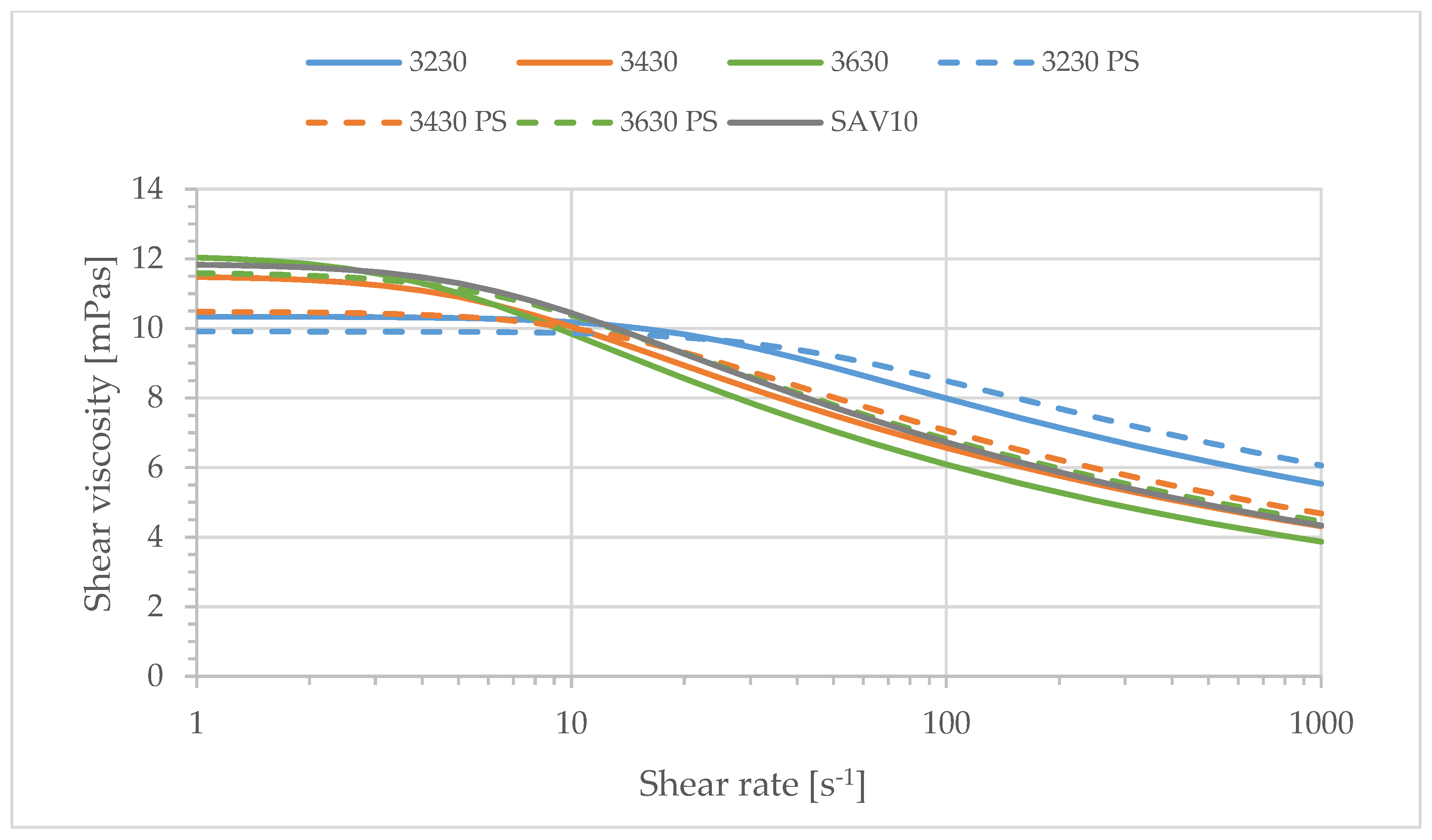
3.1. Bulk Rheology
3.2. In Situ Rheology
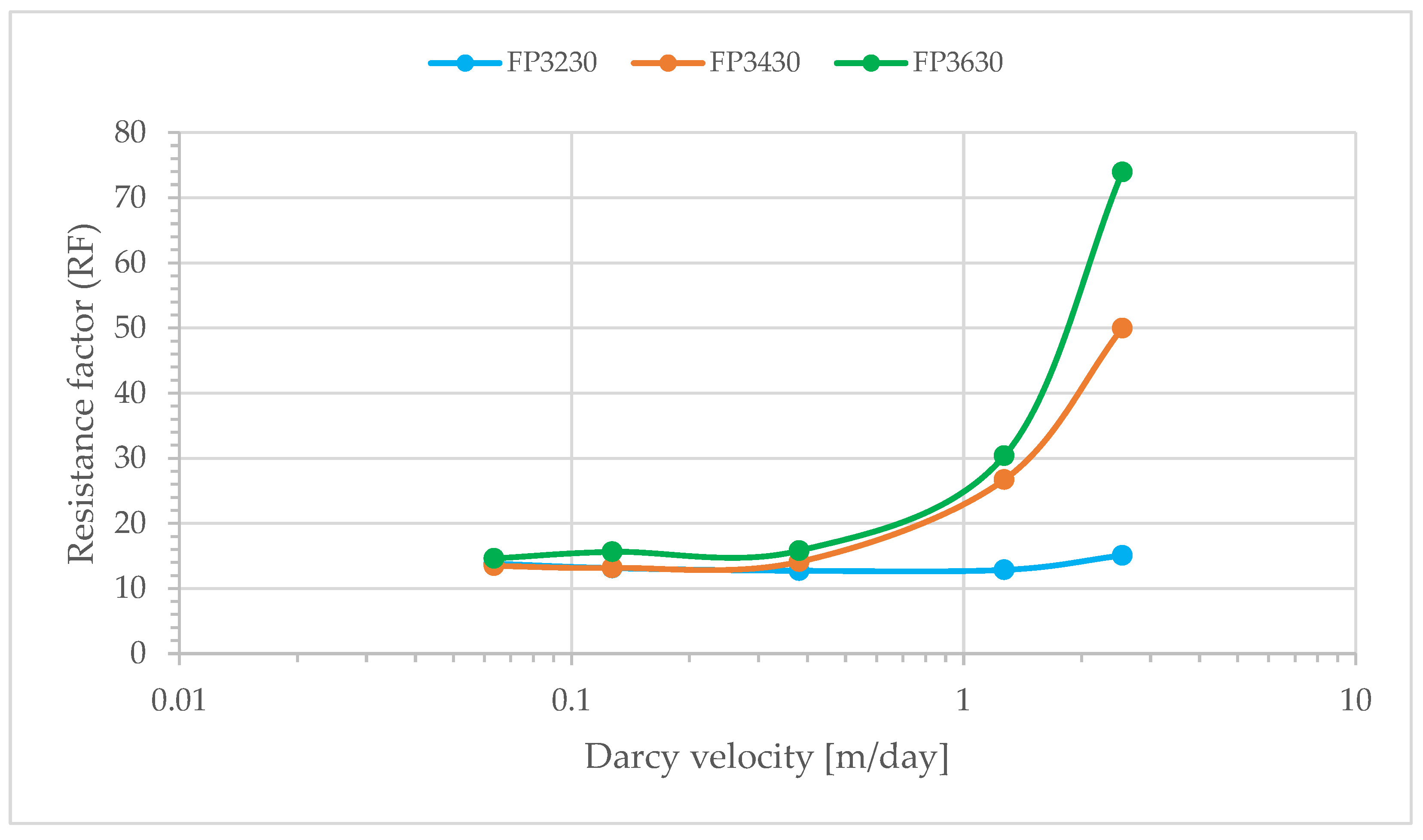
3.2.1. Effect of Molecular Weight
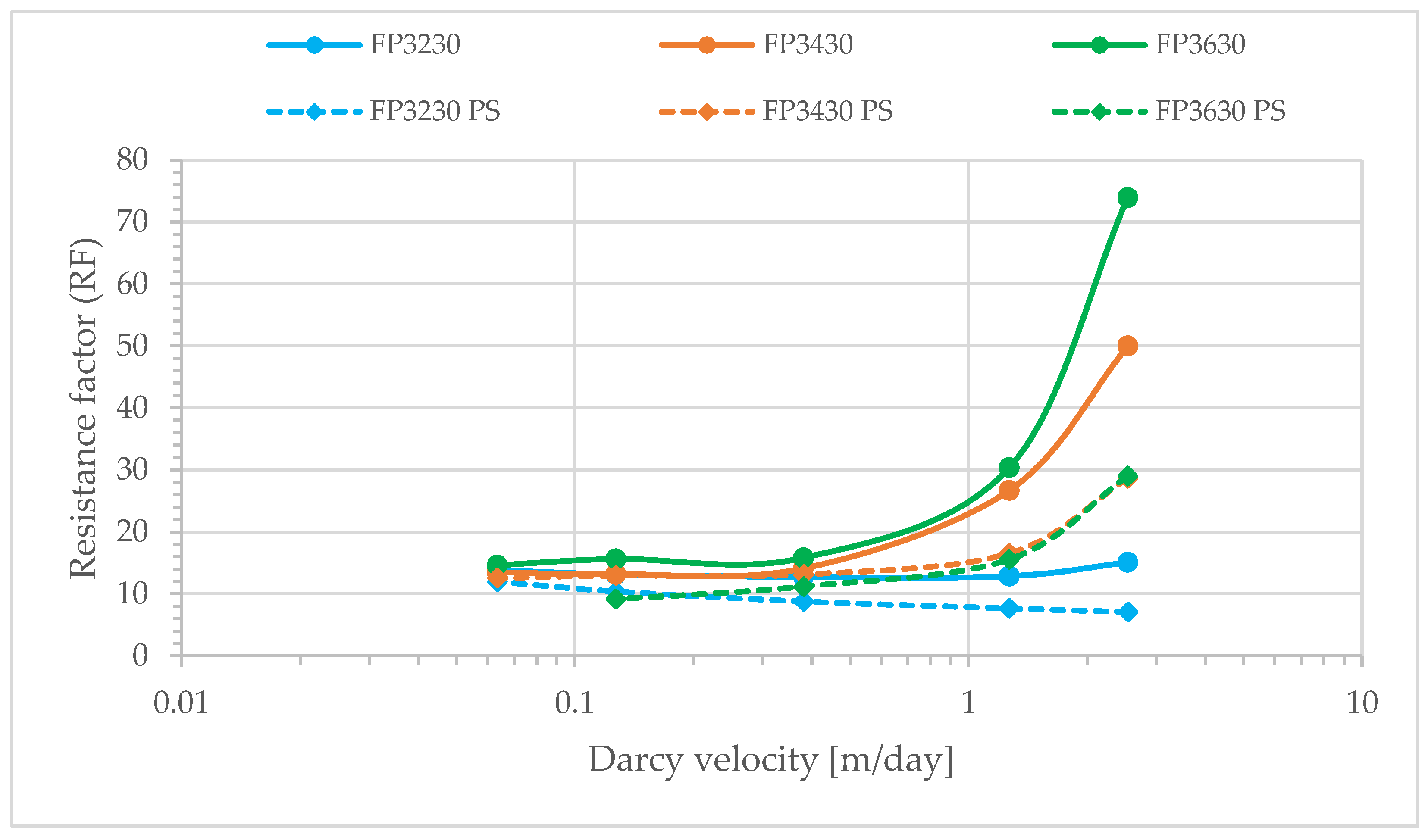
3.2.2. Effect of Pre-Shearing
3.2.3. Effect of Polymer Chemistry
3.3. Permeability Reduction and Apparent Viscosity
3.3.1. Experimental Determination of Residual Resistance Factor
3.3.2. Determination of Permeability Reduction Under Non-Darcy Conditions
3.3.3. Effect of Molecular Weight on RRF
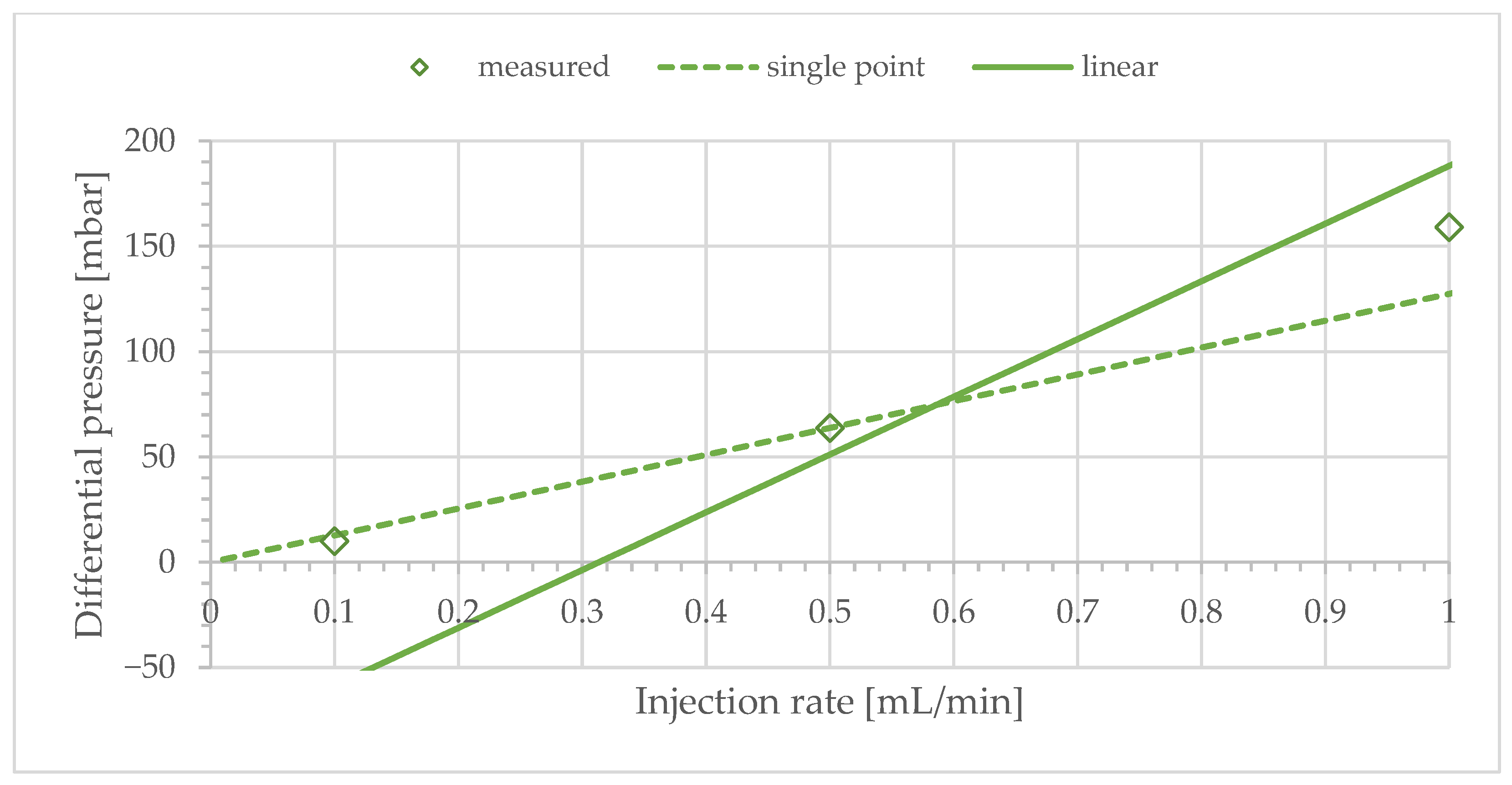
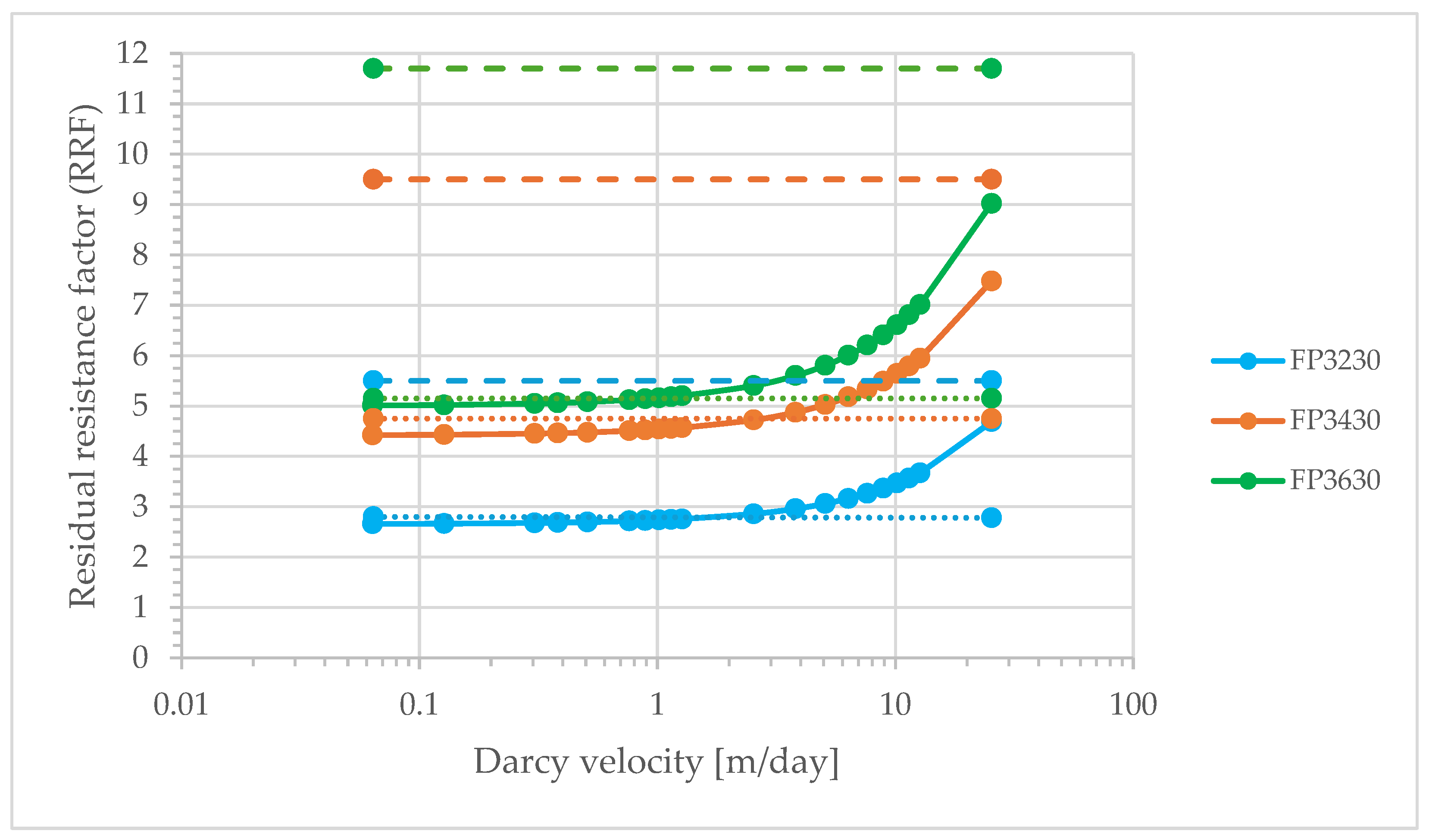
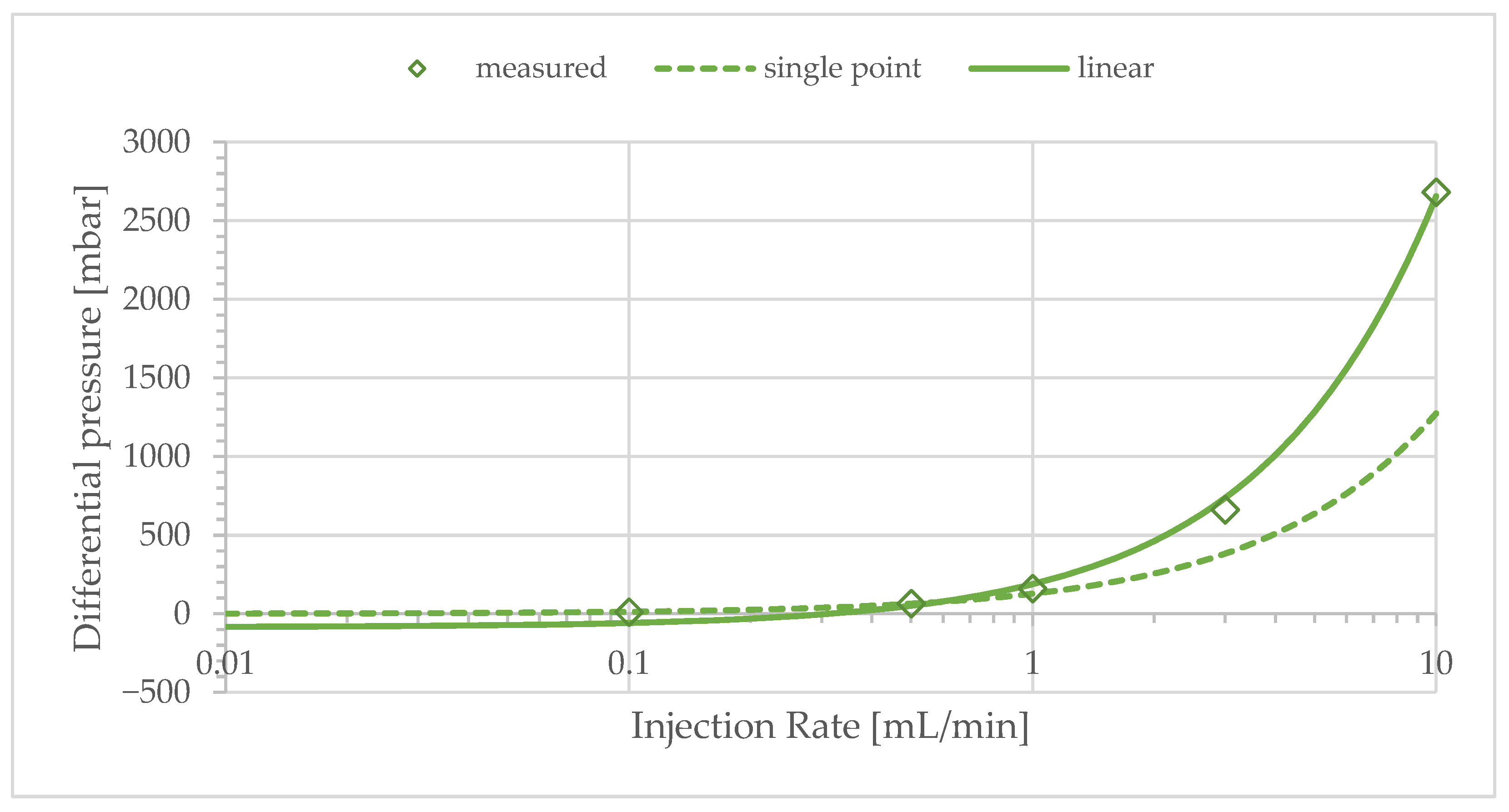
- Single-rate estimation: RRF = dPw,e/dPw,i at a given flow rate, here Q = 0.5 mL/min.
- Darcy-based permeability from a linear fit over the full rate range, RRF = kw,i/kw,e.
- A non-Darcy approach in which dPw,e is calculated from the Ma–Ruth Forchheimer formulation (Equation (8)) where RRF = dPw,e(u)/dPw,i(u) and dPw,i is calculated from kw,i.
3.3.4. Effect of Pre-Shearing on RRF
3.3.5. Effect of Polymer Chemistry on RRF
4. Conclusions
Author Contributions
Funding
Data Availability Statement
Conflicts of Interest
Abbreviations
| ATBS | Acrylamido Tertiary Butyl Sulfonate |
| EOR | Enhanced Oil Recovery |
| FP | Flopaam |
| HPAM | Hydrolyzed Polyacrylamide |
| IPV | Inaccessible Pore Volume |
| PS | Pre-sheared |
| PV | Pore Volume |
| RMSE | Root Mean Square Error |
| SSW | Synthetic Sea Water |
Appendix A

| u [m/Day] | Q [mL/min] | dP [mbar] | ||||||
|---|---|---|---|---|---|---|---|---|
| SAV10 | FP3230 | FP3430 | FP3630 | FP3230 PS | FP3430 PS | FP3630 PS | ||
| 0.13 | 0.1 | 9.0 | 6.8 | 4.8 | 9.9 | 4.6 | 13.7 | n.a. * |
| 0.63 | 0.5 | 63.0 | 47.4 | 65.1 | 63.7 | 24.1 | 80.6 | 41.0 |
| 1.27 | 1.0 | 140.0 | 110.7 | 169.5 | 159.0 | 50.5 | 190.5 | 97.5 |
| 3.81 | 3.0 | 487.7 | 430.1 | 704.4 | 660.0 | 167.5 | 723.0 | 375.8 |
| 12.70 | 10.0 | 1843.0 | 1741.9 | 2784.7 | 2680.0 | 638.3 | 2942.0 | 1482.0 |
| kw,e [mbar] | 72.1 | 88.5 | 54.4 | 55.3 | 214.0 | 51.5 | 97.6 | |
| β (1/nm) | 21.5 | 29.7 | 43.8 | 49.9 | 7.4 | 51.8 | 22.9 | |
| RMSE | 9.2 | 12.5 | 28.9 | 24.8 | 1.6 | 19.1 | 12.4 | |
| RRF | 3.0 | 3.4 | 5.6 | 6.3 | 1.5 | 4.2 | 3.2 | |
| a | 554 | 897 | 1083 | 1219 | 350 | 1131 | 730 | |
| u [m/Day] | Q [mL/min] | SAV10 | FP3230 | FP3430 | FP3630 | FP3230 PS | FP3430 PS | FP3630 PS |
|---|---|---|---|---|---|---|---|---|
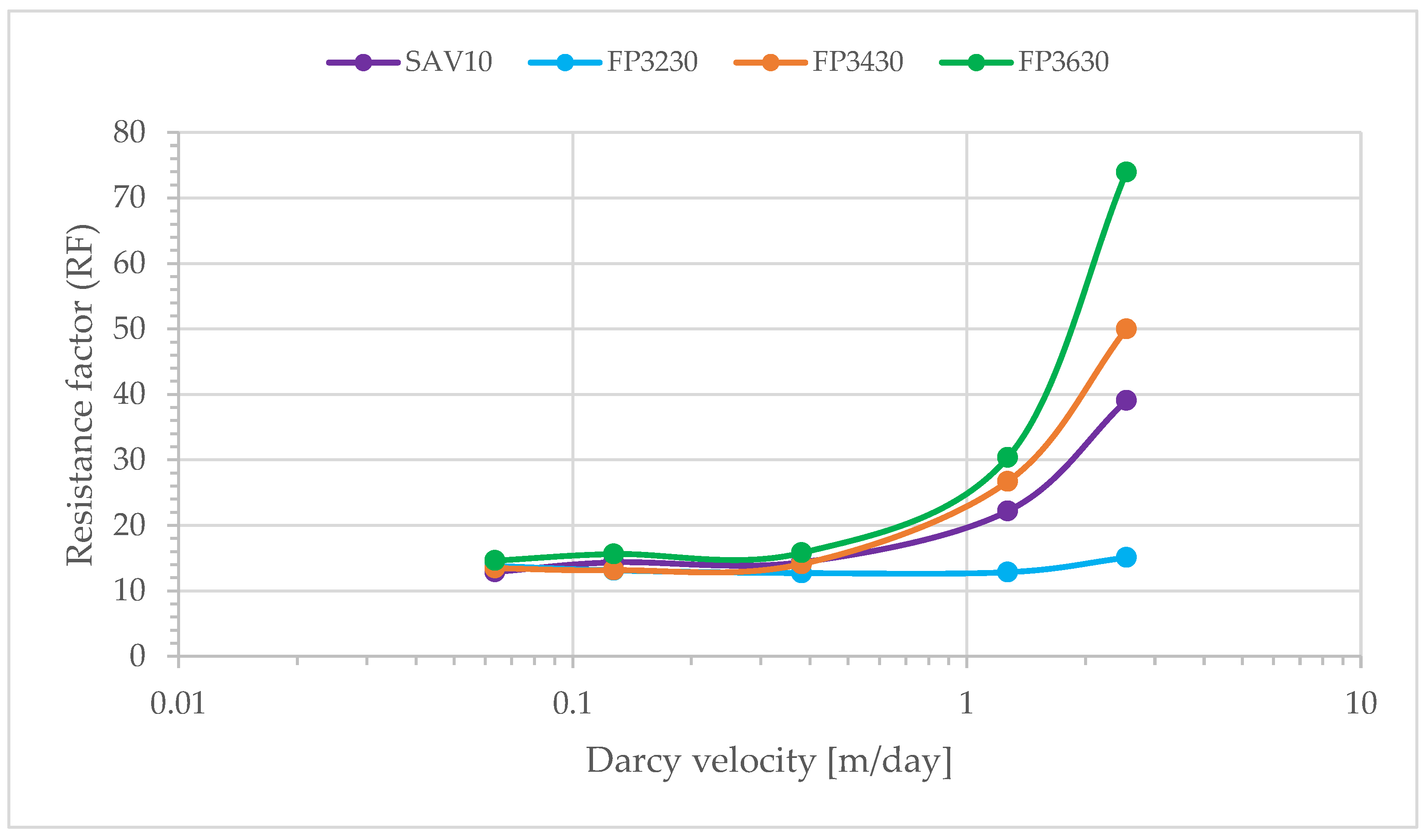
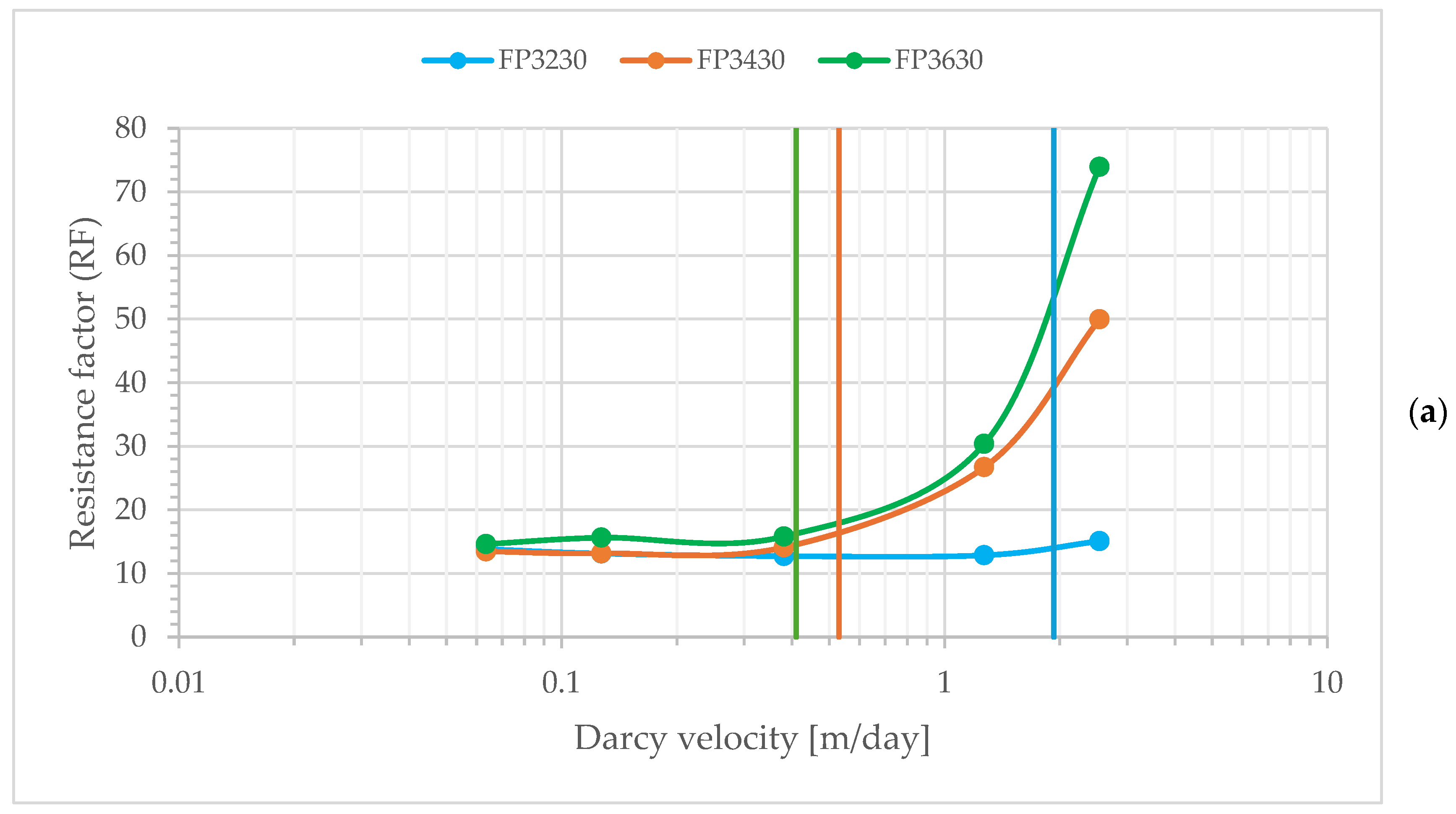
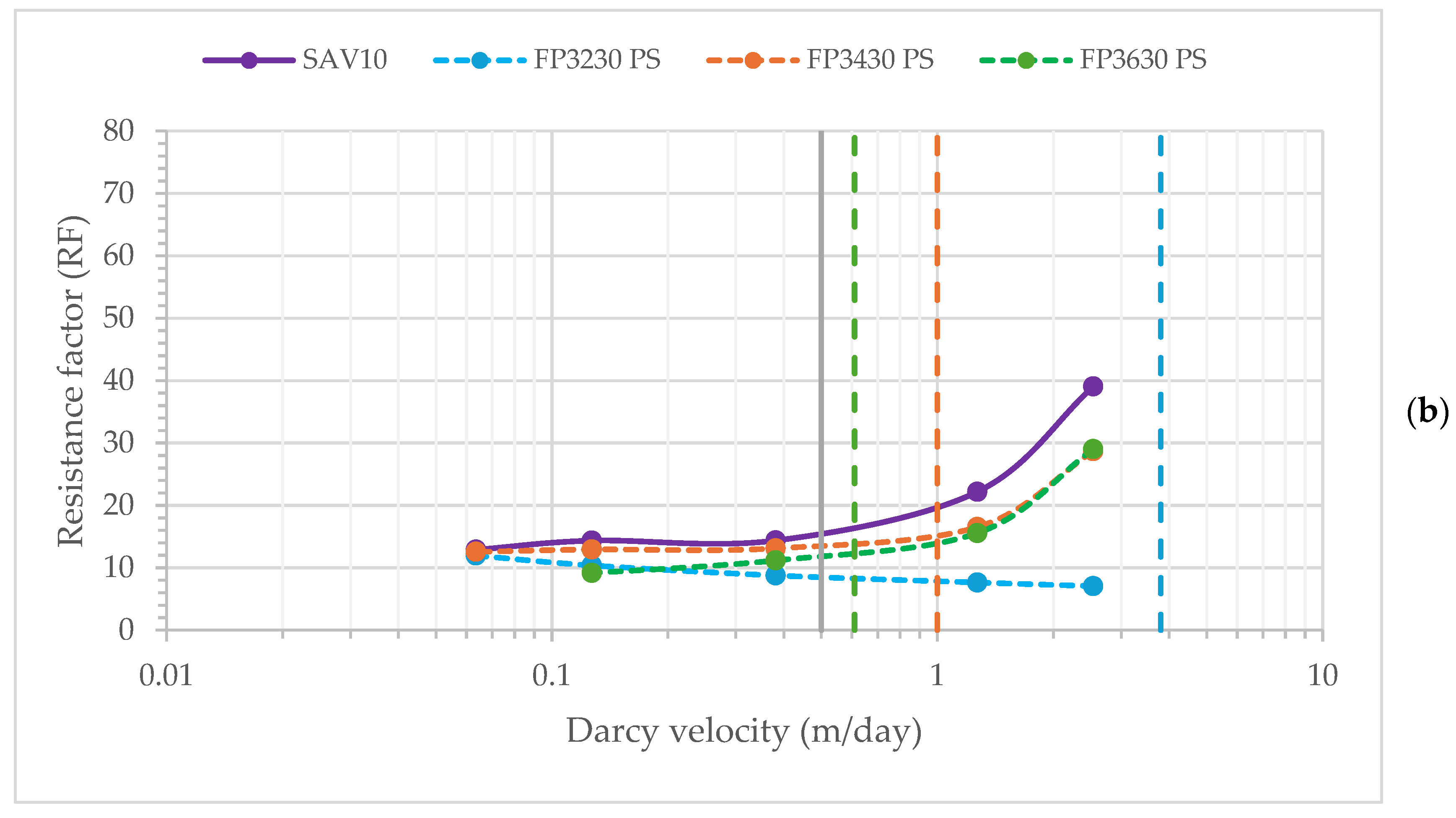
| 2.54 | 2.0 | 39.1 | 15.1 | 50.0 | 73.9 | 7.1 | 28.7 | 29.0 |
| 1.27 | 1.0 | 22.2 | 12.9 | 26.7 | 30.4 | 7.6 | 16.5 | 15.6 |
| 0.38 | 0.30 | 14.4 | 12.7 | 14.1 | 15.8 | 8.8 | 13.1 | 11.2 |
| 0.13 | 0.10 | 14.4 | 13.1 | 13.2 | 15.6 | 10.4 | 12.9 | 9.2 |
| 0.06 | 0.05 | 12.9 | 13.8 | 13.5 | 14.6 | 12.0 | 12.6 |
| u [m/Day] | Q [mL/min] | SAV10 | FP3230 | FP3430 | FP3630 | FP3230 PS | FP3430 PS | FP3630 PS |
|---|---|---|---|---|---|---|---|---|
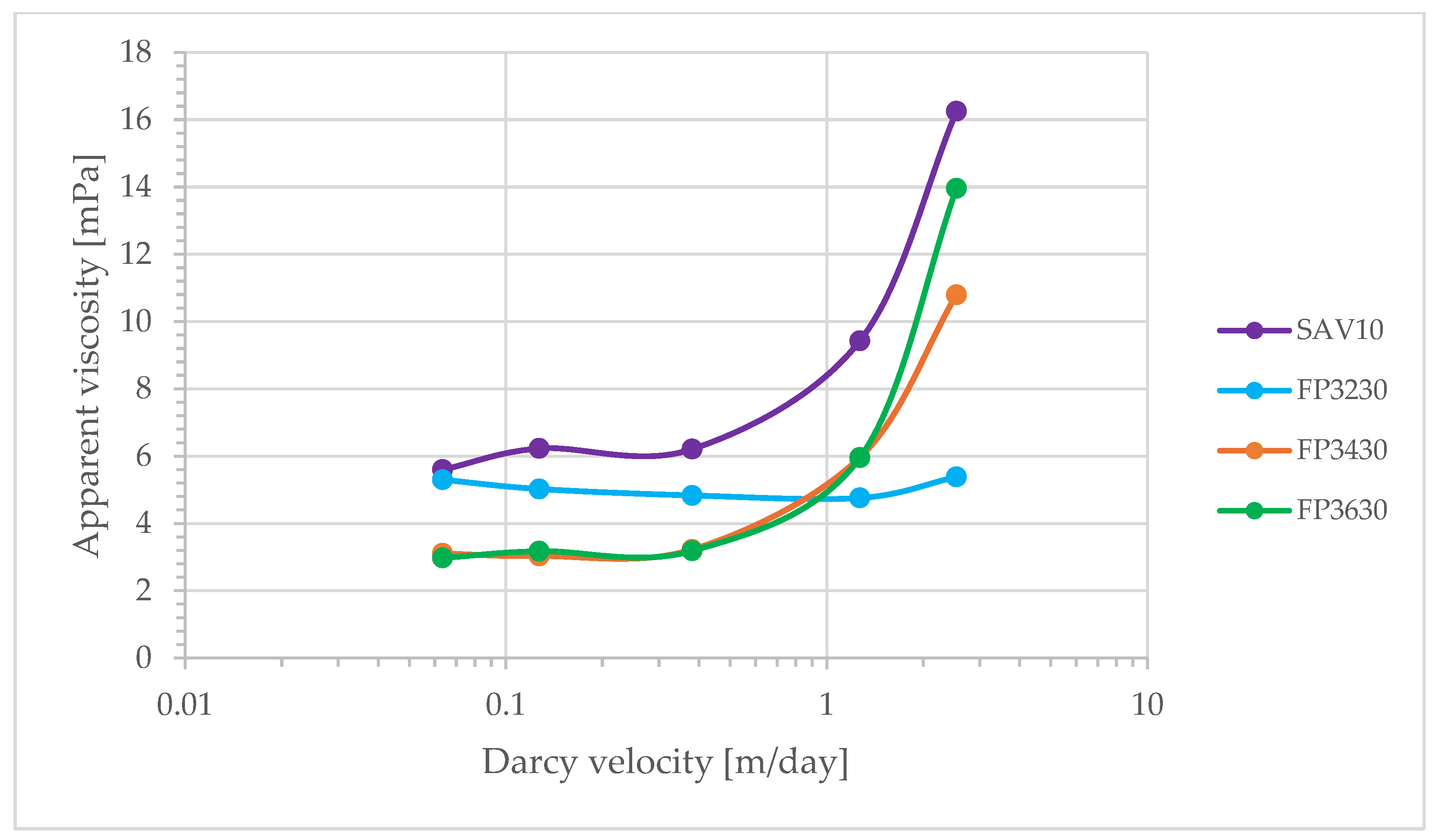
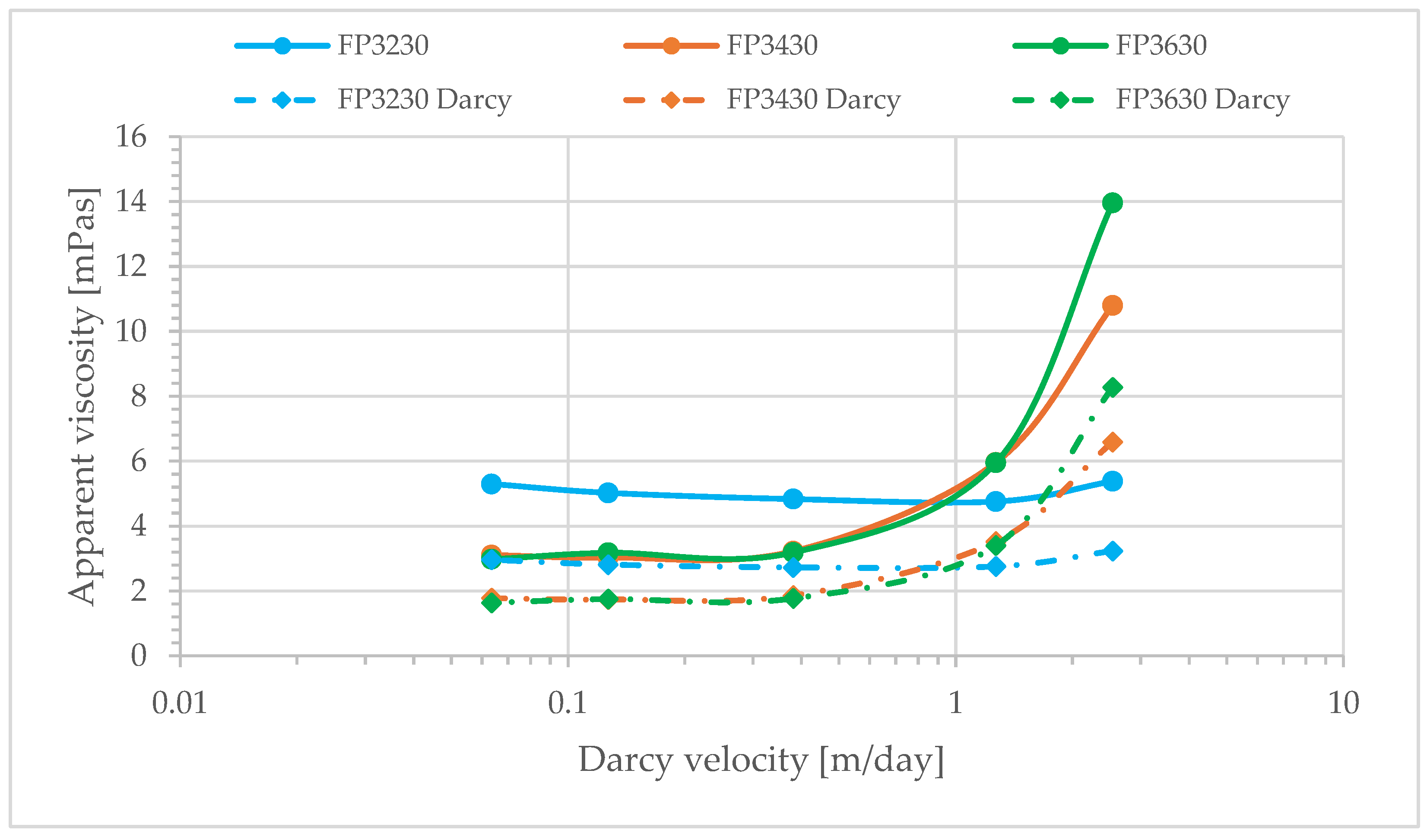
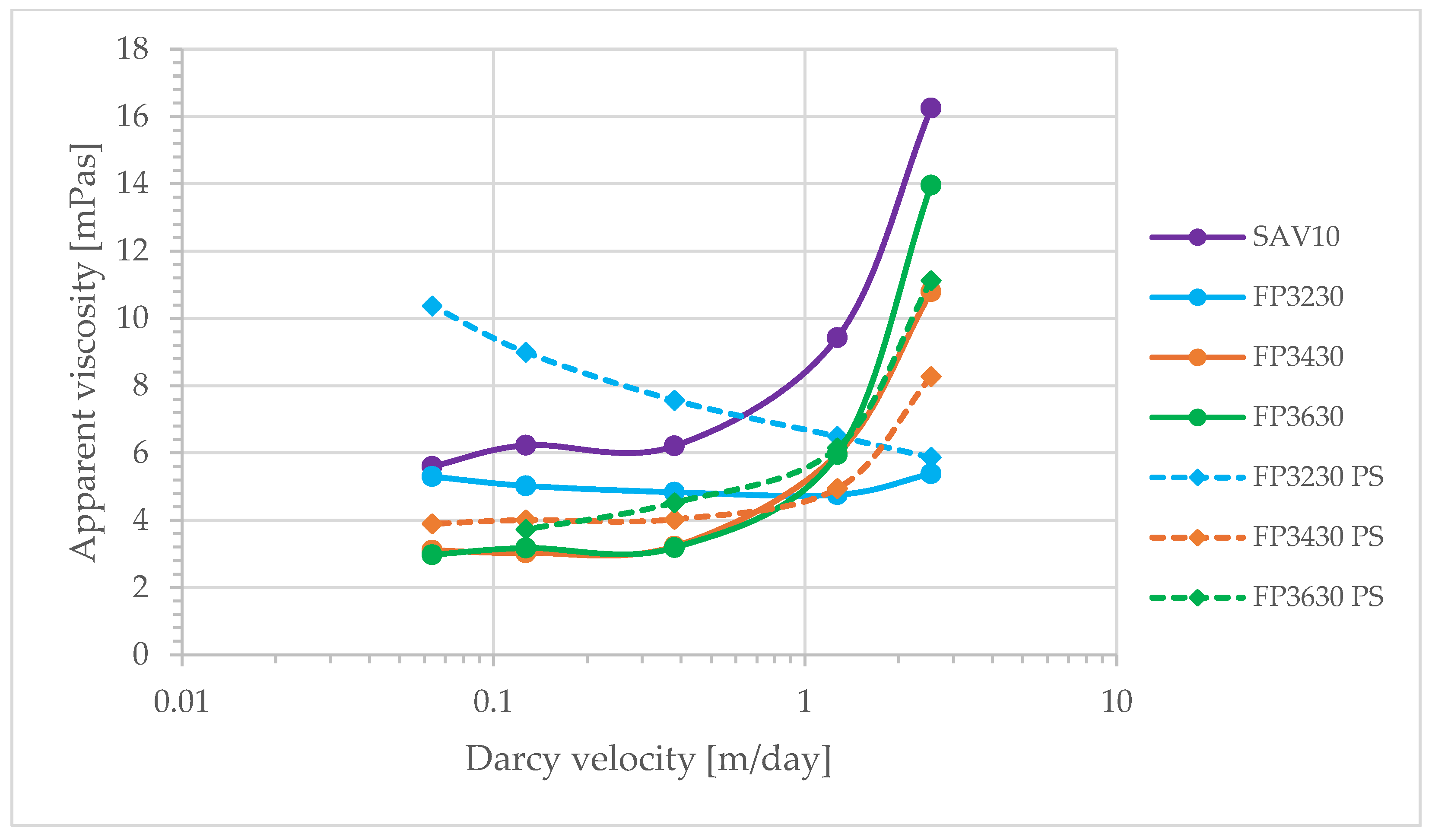
| 2.54 | 2.0 | 16.2 | 5.4 | 10.8 | 14.0 | 5.9 | 8.3 | 11.1 |
| 1.27 | 1.0 | 9.4 | 4.8 | 6.0 | 6.0 | 6.5 | 4.9 | 6.2 |
| 0.38 | 0.30 | 6.2 | 4.8 | 3.2 | 3.2 | 7.6 | 4.0 | 4.5 |
| 0.13 | 0.10 | 6.2 | 5.0 | 3.0 | 3.2 | 9.0 | 4.0 | 3.7 |
| 0.06 | 0.05 | 5.6 | 5.3 | 3.1 | 3.0 | 10.4 | 3.9 |
References
- Lake, L.; Johns, R.T.; Rossen, W.R.; Pope, G.A. Fundamentals of Enhanced Oil Recovery; Society of Petroleum Engineers: Richardson, TX, USA, 2014. [Google Scholar]
- Skauge, A.; Ormehaug, P.A.; Gurholt, T.; Vik, B.; Bondino, I.; Hamon, G. 2-D Visualisation of Unstable Waterflood and Polymer Flood for Displacement of Heavy Oil. In Proceedings of the SPE Improved Oil Recovery Symposium, Tulsa, OK, USA, 14–18 April 2012. [Google Scholar] [CrossRef] [Scilit]
- Delamaide, E. Selecting Injected Viscosity in Polymer Flood Projects: A Controversial and Critical Question. In Proceedings of the ADIPEC, Abu Dhabi, United Arab Emirates, 4–7 November 2014. [Google Scholar] [CrossRef] [Scilit]
- Beteta, A.; Sorbie, K.; Skauge, A.; Skauge, T. Viscous Crossflow as the Mechanism for Polymer Enhanced Oil Recovery in Viscous Oils: Evidence of Crossflow between Bypassed Oil and Viscous Fingers. Geoenergy Sci. Eng. 2025, 253, 213968. [Google Scholar] [CrossRef] [Scilit]
- Sorbie, K.S. Polymer-Improved Oil Recovery; Springer: Dordrecht, The Netherlands, 1991. [Google Scholar]
- Zamani, N.; Bondino, I.; Kaufmann, R.; Skauge, A. Effect of Porous Media Properties on the Onset of Polymer Extensional Viscosity. J. Pet. Sci. Eng. 2015, 133, 483–495. [Google Scholar] [CrossRef] [Scilit]
- Li, W.; Liao, J. Microscopic Analysis of Flow Resistance of Oil Displacement Fluid in Reservoir Fractures. Reserv. Sci. 2026, 2, 16–33. [Google Scholar] [CrossRef] [Scilit]
- Howe, A.M.; Clarke, A.; Giernalczyk, D. Flow of Concentrated Viscoelastic Polymer Solutions in Porous Media: Effect of MW and Concentration on Elastic Turbulence Onset in Various Geometries. Soft Matter 2015, 11, 6419–6431. [Google Scholar] [CrossRef] [Scilit]
- Skauge, A.; Zamani, N.; Gausdal Jacobsen, J.; Shaker Shiran, B.; Al-Shakry, B.; Skauge, T. Polymer Flow in Porous Media: Relevance to Enhanced Oil Recovery. Colloids Interfaces 2018, 2, 27. [Google Scholar] [CrossRef] [Scilit]
- Chauveteau, G. Fundamental Criteria in Polymer Flow Through Porous Media. In Water-Soluble Polymers; Advances in Chemistry; American Chemical Society: Washington, DC, USA, 1986; Volume 213, pp. 227–267. [Google Scholar]
- Jouenne, S. Polymer Flooding in High Temperature, High Salinity Conditions: Selection of Polymer Type and Polymer Chemistry, Thermal Stability. J. Pet. Sci. Eng. 2020, 195, 107545. [Google Scholar] [CrossRef] [Scilit]
- Berg, S.; Van Wunnik, J. Shear Rate Determination from Pore-Scale Flow Fields. Transp. Porous Media 2017, 117, 229–246. [Google Scholar] [CrossRef] [Scilit]
- Al-Shakry, B.; Skauge, T.; Shaker Shiran, B.; Skauge, A. Polymer Injectivity: Investigation of Mechanical Degradation of Enhanced Oil Recovery Polymers Using In-Situ Rheology. Energies 2018, 12, 49. [Google Scholar] [CrossRef] [Scilit]
- Glasbergen, G.; Wever, D.; Keijzer, E.; Farajzadeh, R. Injectivity Loss in Polymer Floods: Causes, Preventions and Mitigations. In Proceedings of the SPE Kuwait Oil and Gas Show and Conference, Mishref, Kuwait, 11–14 October 2015. [Google Scholar] [CrossRef] [Scilit]
- Smith, F.W. The Behavior of Partially Hydrolyzed Polyacrylamide Solutions in Porous Media. J. Pet. Technol. 1970, 22, 148–156. [Google Scholar] [CrossRef] [Scilit]
- Chauveteau, G. Molecular Interpretation of Several Different Properties of Flow of Coiled Polymer Solutions Through Porous Media in Oil Recovery Conditions. In Proceedings of the SPE Annual Technical Conference and Exhibition, San Antonio, TX, USA, 4–7 October 1981. [Google Scholar] [CrossRef]
- Chauveteau, G.; Denys, K.; Zaitoun, A. New Insight on Polymer Adsorption Under High Flow Rates. In Proceedings of the SPE/DOE Improved Oil Recovery Symposium, Tulsa, OK, USA, 13–17 April 2002. [Google Scholar] [CrossRef]
- Dupuis, G.; Metidji, M.O. Better Understanding of Polymer Behaviour in Porous Media Allowing Reducing OPEX of EOR Projects; European Association of Geoscientists & Engineers: Utrecht, The Netherlands, 2023; Volume 2023, pp. 1–22. [Google Scholar]
- Zaitoun, A.; Kohler, N. Two-Phase Flow Through Porous Media: Effect of an Adsorbed Polymer Layer. In Proceedings of the SPE Annual Technical Conference and Exhibition, Houston, TX, USA, 2–5 October 1988. [Google Scholar] [CrossRef]
- Mansour, A.M.; Al-Maamari, R.S.; Al-Hashmi, A.S.; Zaitoun, A.; Al-Sharji, H. In-Situ Rheology and Mechanical Degradation of EOR Polyacrylamide Solutions Under Moderate Shear Rates. J. Pet. Sci. Eng. 2014, 115, 57–65. [Google Scholar] [CrossRef] [Scilit]
- Idahosa, P.E.G.; Oluyemi, G.F.; Oyeneyin, M.B.; Prabhu, R. Rate-Dependent Polymer Adsorption in Porous Media. J. Pet. Sci. Eng. 2016, 143, 65–71. [Google Scholar] [CrossRef] [Scilit]
- Ma, H.; Ruth, D. Physical Explanations of Non-Darcy Effects for Fluid Flow in Porous Media. SPE Form. Eval. 1997, 12, 13–18. [Google Scholar] [CrossRef] [Scilit]
- Sebastian, A.; Mushtaq, M.; Al-Shalabi, E.W.; AlAmeri, W.; Mohanty, K.; Masalmeh, S.; AlSumaiti, A.M. Investigating the Effects of Make-Up Water Dilution and Oil Presence on Polymer Retention in Carbonate Reservoirs. Sci. Rep. 2024, 14, 27924. [Google Scholar] [CrossRef] [Scilit]
- American Petroleum Institute. Recommended Practices for Evaluation of Polymers Used in Enhanced Oil Recovery Operations; API RP 63; American Petroleum Institute: Washington, DC, USA, 1990. [Google Scholar]
- Churcher, P.L.; French, P.R.; Shaw, J.C.; Schramm, L.L. Rock Properties of Berea Sandstone, Baker Dolomite, and Indiana Limestone. In Proceedings of the SPE International Symposium on Oilfield Chemistry, Anaheim, CA, USA, 20–22 February 1991. [Google Scholar] [CrossRef]
- Cannella, W.J.; Huh, C.; Seright, R.S. Prediction of Xanthan Rheology in Porous Media. In Proceedings of the SPE Annual Technical Conference and Exhibition, Houston, TX, USA, 2–5 October 1988. [Google Scholar] [CrossRef]
- Seright, R.S.; Jouenne, S.; Aften, C. Effect of Salinity and Hardness on Hydrolyzed Polyacrylamide Rheology in Sandstone. SPE J. 2025, 30, 4908–4926. [Google Scholar] [CrossRef] [Scilit]
- Dean, R.M.; Britton, C.J.; Driver, J.W.; Pope, G.A. State-of-the-Art Laboratory Methods for Chemical EOR. In Proceedings of the SPE Improved Oil Recovery Conference, Virtual, 25–29 April 2022. [Google Scholar] [CrossRef] [Scilit]
- Sagyndikov, M.; Dupuis, G.; Seright, R.; Thomas, A.; Wilton, R. Revisiting Water Injection Post-Polymer Flooding: A Global Perspective on Project Performance. In Proceedings of the IOR+ 2025—23rd European Symposium on IOR, Edinburgh, Scotland, UK, 2–4 April 2025; European Association of Geoscientists & Engineers: Utrecht, The Netherlands, 2025; pp. 1–25. [Google Scholar]
- Thomas, A. Polymer Flooding. In Essentials of Polymer Flooding Technique; John Wiley & Sons, Ltd.: Hoboken, NJ, USA, 2019; pp. 64–88. [Google Scholar]
- Seright, R.S. How Much Polymer Should Be Injected During a Polymer Flood? Review of Previous and Current Practices. SPE J. 2017, 22, 1–18. [Google Scholar] [CrossRef] [Scilit]
- Skauge, T.; Kvilhaug, O.A.; Skauge, A. Influence of Polymer Structural Conformation and Phase Behaviour on In-Situ Viscosity. In Proceedings of the IOR 2015-18th European Symposium on Improved Oil Recovery, Dresden, Germany, 14–16 April 2015. [Google Scholar]
- Rock, A.; Hincapie, R.E.; Tahir, M.; Langanke, N.; Ganzer, L. On the Role of Polymer Viscoelasticity in Enhanced Oil Recovery: Extensive Laboratory Data and Review. Polymers 2020, 12, 2276. [Google Scholar] [CrossRef] [Scilit]
- Zeynalli, M.; Mushtaq, M.; Al-Shalabi, E.W.; Alfazazi, U.; Hassan, A.M.; AlAmeri, W. A Comprehensive Review of Viscoelastic Polymer Flooding in Sandstone and Carbonate Rocks. Sci. Rep. 2023, 13, 17679. [Google Scholar] [CrossRef] [Scilit]
- Azad, M.S.; Seright, R.S. Are Field Polymer Enhanced Oil Recovery Projects Reaping the Benefits of Residual Oil Saturation Reduction Due to Polymer Viscoelasticity? SPE J. 2025, 30, 3792–3809. [Google Scholar] [CrossRef] [Scilit]
- Sugar, A.; Serag, M.; Buttner, U.; Habuchi, S.; Hoteit, H. A Single-Molecule Study on Polymer Fluid Dynamics in Porous Media. Lab Chip 2023, 23, 4104–4116. [Google Scholar] [CrossRef] [Scilit] [PubMed]
- Zaitoun, A.; Chauveteau, G. Effect of Pore Structure and Residual Oil on Polymer Bridging Adsorption. In Proceedings of the SPE/DOE Improved Oil Recovery Symposium, Tulsa, OK, USA, 19–22 April 1998. [Google Scholar] [CrossRef]
- Alfazazi, U.; Thomas, N.C.; AlAmeri, W.; Al-Shalabi, E.W.; Shaik, A.R. An Experimental Investigation of Polymer Performance in Harsh Carbonate Reservoir Conditions. In Proceedings of the SPE Gas & Oil Technology Showcase and Conference, Dubai, United Arab Emirates, 21 October 2019. [Google Scholar] [CrossRef] [Scilit]
- Han, M.; Zhou, X.; Alhasan, F.B.; Zahrani, B.; AlSofi, A.M. Laboratory Investigation of the Injectivity of Sulfonated Polymer Solutions into Carbonate Reservoir Rocks. In Proceedings of the SPE EOR Conference at Oil and Gas West Asia, Muscat, Oman, 16–18 April 2012. [Google Scholar] [CrossRef] [Scilit]
- AlSofi, A.M.; Wang, J.; Kaidar, Z.F. SmartWater Synergy with Chemical EOR: Effects on Polymer Injectivity, Retention and Acceleration. J. Pet. Sci. Eng. 2018, 166, 274–282. [Google Scholar] [CrossRef] [Scilit]
- Alfazazi, U.; Thomas, N.C.; Alameri, W.; Al-Shalabi, E.W. Experimental Investigation of Polymer Injectivity and Retention under Harsh Carbonate Reservoir Conditions. J. Pet. Sci. Eng. 2020, 192, 107262. [Google Scholar] [CrossRef] [Scilit]
- Jones, D.M.; Walters, K. The Behaviour of Polymer Solutions in Extension-Dominated Flows, with Applications to Enhanced Oil Recovery. Rheol. Acta 1989, 28, 482–498. [Google Scholar] [CrossRef] [Scilit]
- Seright, R.S.; Wang, D. Polymer Flooding: Current Status and Future Directions. Pet. Sci. 2023, 20, 910–921. [Google Scholar] [CrossRef] [Scilit]
- De Gennes, P.G. Polymer Solutions near an Interface. Adsorption and Depletion Layers. Macromolecules 1981, 14, 1637–1644. [Google Scholar] [CrossRef] [Scilit]
- Fang, J.; Zhu, T.; Sheng, J.; Jiang, Z.; Ma, Y. Thickness Dependent Effective Viscosity of a Polymer Solution near an Interface Probed by a Quartz Crystal Microbalance with Dissipation Method. Sci. Rep. 2015, 5, 8491. [Google Scholar] [CrossRef] [Scilit] [PubMed]
- Geertsma, J. Estimating the Coefficient of Inertial Resistance in Fluid Flow Through Porous Media. SPE J. 1974, 14, 445–450. [Google Scholar] [CrossRef] [Scilit]
- Ruth, D.; Ma, H. On the Derivation of the Forchheimer Equation by Means of the Averaging Theorem. Transp. Porous Media 1992, 7, 255–264. [Google Scholar] [CrossRef] [Scilit]
- Forchheimer, P. Wasserbewegung Durch Boden. Z. Des Vereines Dtsch. Ingenieure 1901, 45, 1731. [Google Scholar]
- Muljadi, B.P.; Blunt, M.J.; Raeini, A.Q.; Bijeljic, B. The Impact of Porous Media Heterogeneity on Non-Darcy Flow Behaviour from Pore-Scale Simulation. Adv. Water Resour. 2016, 95, 329–340. [Google Scholar] [CrossRef] [Scilit]
- Thauvin, F.; Mohanty, K.K. Network Modeling of Non-Darcy Flow Through Porous Media. Transp. Porous Media 1998, 31, 19–37. [Google Scholar] [CrossRef] [Scilit]
- Elsanoose, A.; Abobaker, E.; Khan, F.; Rahman, M.A.; Aborig, A.; Butt, S.D. Characterization of a Non-Darcy Flow and Development of New Correlation of NON-Darcy Coefficient. Energies 2022, 15, 7616. [Google Scholar] [CrossRef] [Scilit]
- Ergun, S.; Orning, A.A. Fluid Flow through Randomly Packed Columns and Fluidized Beds. Ind. Eng. Chem. 1949, 41, 1179–1184. [Google Scholar] [CrossRef] [Scilit]
- Marshall, R.J.; Metzner, A.B. Flow of Viscoelastic Fluids through Porous Media. Ind. Eng. Chem. Fund. 1967, 6, 393–400. [Google Scholar] [CrossRef] [Scilit]
- Durst, F.; Haas, R.; Interthal, W. The Nature of Flows Through Porous Media. J. Non-Newton. Fluid Mech. 1987, 22, 169–189. [Google Scholar] [CrossRef] [Scilit]
- Heemskerk, J.; Janssen-van Rosmalen, R.; Holtslag, R.J.; Teeuw, D. Quantification of Viscoelastic Effects of Polyacrylamide Solutions. In Proceedings of the SPE Enhanced Oil Recovery Symposium, Tulsa, OK, USA, 15–18 April 1984. [Google Scholar] [CrossRef]
- Azad, M.S.; Trivedi, J.J. Quantification of the Viscoelastic Effects During Polymer Flooding: A Critical Review. SPE J. 2019, 24, 2731–2757. [Google Scholar] [CrossRef] [Scilit]
- Rashidi, M.; Sandvik, S.; Blokhus, A.M.; Skauge, A. Static and Dynamic Adsorption of Salt Tolerant Polymers. In Proceedings of the IOR 2009—15th European Symposium on Improved Oil Recovery, Apr 2009; European Association of Geoscientists & Engineers: Utrecht, The Netherlands, 2009; p. cp-124. [Google Scholar]
- Rashidi, M.; Blokhus, A.M.; Skauge, A. Viscosity and Retention of Sulfonated Polyacrylamide Polymers at High Temperature. J. Appl. Polym. Sci. 2011, 119, 3623–3629. [Google Scholar] [CrossRef] [Scilit]
- Seright, R.S.; Wang, D. Impact of Salinity, Hardness, Lithology, and ATBS Content on HPAM Polymer Retention for the Milne Point Polymer Flood. In Proceedings of the SPE Western Regional Meeting, Anchorage, AK, USA, 22–25 May 2023. [Google Scholar] [CrossRef] [Scilit]
- Lew, J.H.; Hue, K.Y.; Matar, O.K.; Müller, E.A.; Luckham, P.F.; Santos, A.S.; Myo Thant, M.M. Atomic Force Microscopy and Molecular Dynamic Simulation of Adsorption of Polyacrylamide with Different Chemistries onto Calcium Carbonate. Polymers 2024, 16, 494. [Google Scholar] [CrossRef] [Scilit] [PubMed]





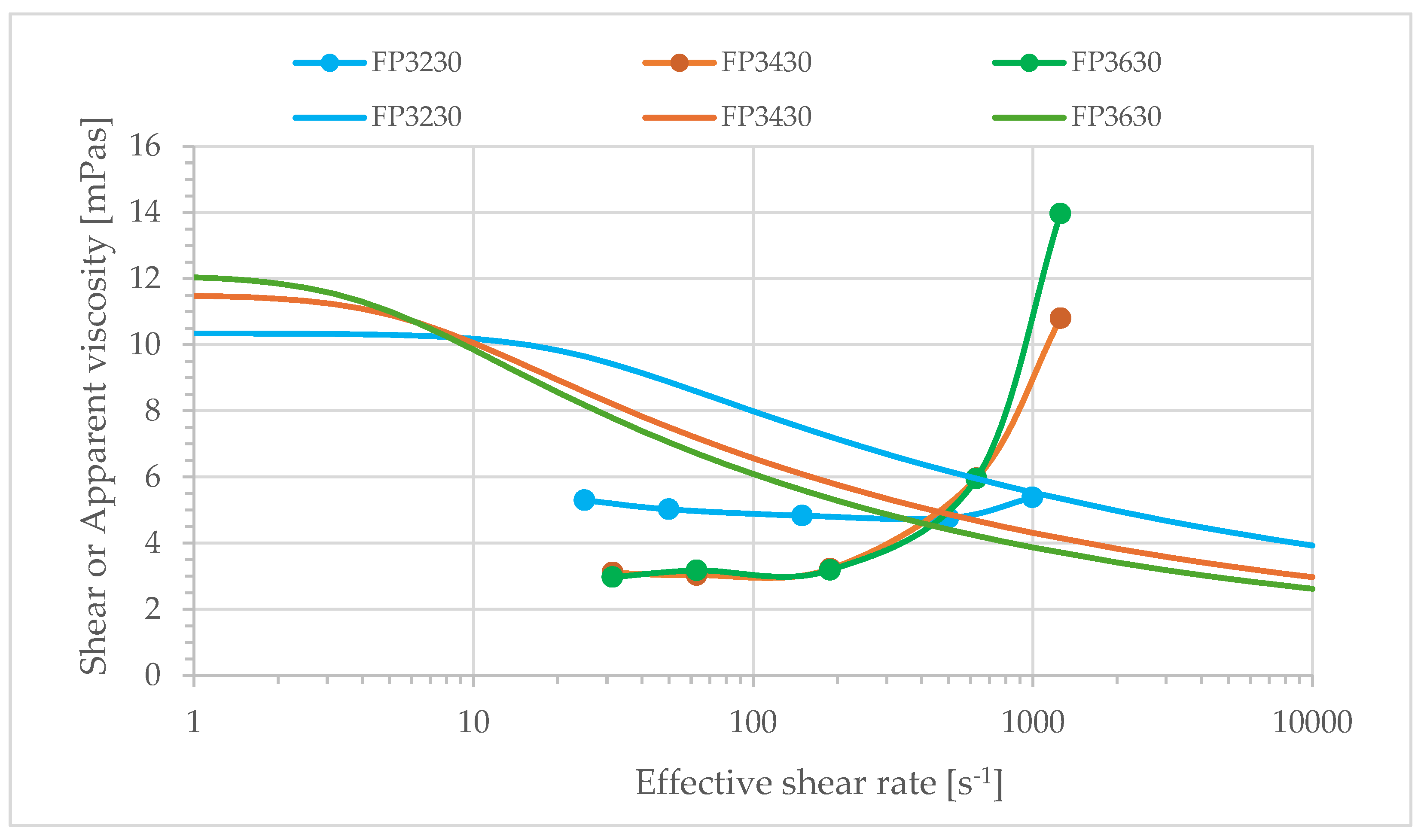



| Salt | Concentration [wt%] |
|---|---|
| NaCl | 2.489 |
| CaCl2∙2H2O | 0.173 |
| MgCl2∙6H2O | 1.112 |
| NaHCO3 | 0.019 |
| Na2SO4 | 0.406 |
| KCl | 0.067 |
| Total | 3.630 |
| Experiment | Polymer Type | Conditioning | Concentration [ppm] | Shear Viscosity [mPas, at 10 s−1] |
|---|---|---|---|---|
| R1 | FP3230 | None | 2500 | 10.13 |
| R2 | FP3430 | None | 1400 | 10.00 |
| R3 | FP3630 | None | 1150 | 9.87 |
| R4 | FP3230 | Pre-sheared (PS) | 3000 | 9.75 |
| R5 | FP3430 | Pre-sheared (PS) | 1750 | 9.90 |
| R6 | FP3630 | Pre-sheared (PS) | 1450 | 10.31 |
| R7 | SAV10 | None | 2500 | 10.36 |
| Parameter | R1 | R2 | R3 | R4 | R5 | R6 | R7 |
|---|---|---|---|---|---|---|---|
| length [cm] | 7.34 | 7.40 | 6.96 | 7.31 | 7.18 | 7.18 | 7.13 |
| diameter [cm] | 3.80 | 3.80 | 3.80 | 3.80 | 3.80 | 3.80 | 3.80 |
| porosity [%] | 22.02 | 22.66 | 22.36 | 22.17 | 21.24 | 22.08 | 21.18 |
| [mD] | 313 | 320 | 340 | 335 | 225 | 325 | 225 |
| Polymer | Average Mw [MDa] | Concentration [ppm] | Zero-Shear Viscosity [mPas] | λ [s] | n-Exponent |
|---|---|---|---|---|---|
| FP3230 | 6 | 2500 | 10.3 | 0.04 | 0.81 |
| FP3430 | 12 | 1400 | 11.5 | 0.17 | 0.77 |
| FP3630 | 18 | 1150 | 12.1 | 0.23 | 0.75 |
| FP3230 PS | <6 | 3000 | 9.9 | 0.02 | 0.82 |
| FP3430 PS | <12 | 1750 | 10.5 | 0.08 | 0.78 |
| FP3630 PS | <18 | 1450 | 11.6 | 0.14 | 0.77 |
| SAV10 | 6 | 2500 | 11.9 | 0.15 | 0.76 |
| Q [mL/min] | Differential Pressure [mbar] | u [m/Day] | ||
|---|---|---|---|---|
| FP3230 | FP3430 | FP3630 | ||
| 0.1 | 6.8 | 4.8 | 9.9 | 0.13 |
| 0.5 | 47.4 | 65.1 | 63.7 | 0.63 |
| 1.0 | 110.7 | 169.5 | 159.0 | 1.27 |
| 3.0 | 430.1 | 704.4 | 660.0 | 3.81 |
| 10.0 | 1741.9 | 2784.7 | 2680.0 | 12.70 |
| kw,e [mbar] | 88.5 | 54.4 | 55.3 | |
| β [1/nm] | 29.7 | 43.8 | 49.9 | |
| a | 897 | 1083 | 1219 | |
| RMSE | 12.5 | 28.9 | 24.8 | |
| u at Fo = 0.01 [m/day] | 0.33 | 0.37 | 0.32 | |
Disclaimer/Publisher’s Note: The statements, opinions and data contained in all publications are solely those of the individual author(s) and contributor(s) and not of MDPI and/or the editor(s). MDPI and/or the editor(s) disclaim responsibility for any injury to people or property resulting from any ideas, methods, instructions or products referred to in the content. |
© 2026 by the authors. Licensee MDPI, Basel, Switzerland. This article is an open access article distributed under the terms and conditions of the Creative Commons Attribution (CC BY) license.
Share and Cite
Murad, A.; Skauge, A.; Skauge, T. Polymer Retention Leading to Non-Darcy Flow in Porous Media—Influence of Molecular Weight, Composition and Mechanical Degradation. Colloids Interfaces 2026, 10, 30. https://doi.org/10.3390/colloids10020030
Murad A, Skauge A, Skauge T. Polymer Retention Leading to Non-Darcy Flow in Porous Media—Influence of Molecular Weight, Composition and Mechanical Degradation. Colloids and Interfaces. 2026; 10(2):30. https://doi.org/10.3390/colloids10020030
Chicago/Turabian StyleMurad, Abdulmajeed, Arne Skauge, and Tormod Skauge. 2026. "Polymer Retention Leading to Non-Darcy Flow in Porous Media—Influence of Molecular Weight, Composition and Mechanical Degradation" Colloids and Interfaces 10, no. 2: 30. https://doi.org/10.3390/colloids10020030
APA StyleMurad, A., Skauge, A., & Skauge, T. (2026). Polymer Retention Leading to Non-Darcy Flow in Porous Media—Influence of Molecular Weight, Composition and Mechanical Degradation. Colloids and Interfaces, 10(2), 30. https://doi.org/10.3390/colloids10020030