
Article

Enhanced Lipid-Based Nanofungicide Formulation for Effective Control of Ganoderma boninense in Oil Palm

by
Azren Aida Asmawi
1,2,
Nur Ain Izzati Mohd Zainudin
3,
Nurul Aini Mohd Azman
4,
Fatmawati Adam
4,5,
Nurul Farhana Ahmad Aljafree
2,6,
Mohamad Firdaus Ahmad
7 and
Mohd Basyaruddin Abdul Rahman
2,6,*
1
Faculty of Pharmacy and Biomedical Sciences, MAHSA University, Bandar Saujana Putra, Jenjarom 42610, Selangor, Malaysia
2
Department of Chemistry, Faculty of Science, Universiti Putra Malaysia, Serdang 43400, Selangor, Malaysia
3
Department of Biology, Faculty of Science, Universiti Putra Malaysia, Serdang 43400, Selangor, Malaysia
4
Faculty of Chemical and Process Engineering Technology, Universiti Malaysia Pahang Al-Sultan Abdullah, Lebuhraya Persiaran Tun Khalil Yaakob, Kuantan 26300, Pahang, Malaysia
5
Centre for Research in Advanced Fluid and Processes, Universiti Malaysia Pahang Al-Sultan Abdullah, Kuantan 26300, Pahang, Malaysia
6
Foundry of Reticular Materials for Sustainability, Institute of Nanoscience and Nanotechnology, Universiti Putra Malaysia, Serdang 43400, Selangor, Malaysia
7
Department of Plant Protection, Faculty of Agriculture, Universiti Putra Malaysia, Serdang 43400, Selangor, Malaysia
*
Author to whom correspondence should be addressed.
Colloids Interfaces 2026, 10(2), 24; https://doi.org/10.3390/colloids10020024
Submission received: 20 January 2026 / Revised: 19 February 2026 / Accepted: 27 February 2026 / Published: 3 March 2026
(This article belongs to the Special Issue State of the Art of Colloid and Interface Science in Asia)

Abstract

Palm oil is a major agricultural commodity and an important economic driver in Asia. However, the sustainability and productivity of this crop are constantly threatened by a range of pathogenic fungi, especially Ganoderma boninense. Therefore, this study aimed to develop an eco-friendly hexaconazole-loaded nanoemulsion (Hexa-NE) for effective and targeted fungicide delivery while reducing environmental and health impacts. The optimized Hexa-NE formulation was evaluated for particle size, polydispersity index (PDI), zeta potential, pH, viscosity, and morphology using Transmission Electron Microscopy (TEM) and Scanning Electron Microscopy (SEM). Fungicide release, stability, and antifungal activity were conducted to assess the overall efficacy and performance of the formulation. The Hexa-NE exhibited particle size of 105.8 nm, a PDI of 0.358, a zeta potential of −53.53 mV. The formulation remained stable over three months of storage. It also demonstrated favourable physicochemical properties including low viscosity (30.24 mPa·s), low surface tension (23.87 mN/m), and suitable pH (6.14) for foliar application. TEM and SEM analyses confirmed spherical droplets and revealed significant hyphal damage to G. boninense. The antifungal test showed a higher inhibition of 97.1% at 0.1 µM of Hexa-NE as compared to hexaconazole solution which only 40% at the same concentration. Release studies exhibited a sustained release of hexaconazole, which may prolonged fungicidal activity. In conclusion, Hexa-NE showed promising laboratory-scale antifungal performance against G. boninense. These findings support its potential for further investigation as a nanoformulated fungicide for future greenhouse and field evaluations.

1. Introduction

Palm oil dominates the global vegetable oil market and accounts for approximately 35.7% of total consumption. The use of palm oil was found to outweigh soybean, rapeseed, and sunflower oils [1]. Global demand for palm oil is expected to continue increasing, due to the rising need for vegetable oils worldwide [2]. Despite this increase, the sustainability and productivity of oil palm cultivation are continuosly threatened by various pathogenic fungi including Ganoderma boninense. This fungus is the causative agent of basal stem rot (BSR) which is considered to be the most devastating fungal disease in Southeast Asia to date [3,4]. BSR has caused a significant reduction in the density of oil palm trees per hectare and can decrease in the productivity of fresh fruit bunches up to 80% in advanced stages of infection. This results in substantial yield losses [5]. Conventional control strategies rely heavily on the use of chemical fungicides. However, their widespread use has raised environmental and health concerns [5,6]. This challenge shows the urgent need to obtain an alternative, efficient, and sustainable approaches for managing this fungal disease.
Nanotechnology has emerged as a promising platform to improve the delivery efficiency of agrochemicals. The system offers targeted delivery, enhanced penetration, and controlled release properties. Among them, nanosized lipid-based emulsions have gained increasing attention as colloidal delivery systems due to their favorable biocompatibility, ease of preparation and ability to solubilize hydrophobic active compounds. The small droplet size of lipid-based emulsions provides a high surface-area-to-volume ratio. This characteristic enhances wetting, spreading, and adhesion on plant surfaces, which in turn facilitates more efficient uptake and prolonged retention of the active ingredient [7,8]. Besides, Campos et al. (2015) reported that lipid-based nanoformulations improved systemic motility and bioefficacy of fungicides in palm oil plantations [9]. This approach not only increases the effectiveness of active compounds but also reduces environmental risks and potential for resistance development. This system can be classified into microemulsions and nanoemulsions, which differ fundamentally in their stability and formulation requirements.
Microemulsions are thermodynamically stable systems that form spontaneously and require high concentrations of surfactants and co-surfactants [10]. Although they can produce very small droplet sizes, the high surfactant content may raise concerns related to cost, phytotoxicity, and environmental impact, particularly in large-scale agricultural applications. In contrast, nanoemulsions are kinetically stable dispersions typically produced using high-energy methods such as high-shear homogenization or ultrasonication [10,11]. They can achieve comparable droplet sizes with significantly lower surfactant concentrations. High-energy emulsification method also allows better control over droplet size distribution and formulation composition. This makes them more suitable for sustainable agrochemical delivery.
Based on these considerations, this study aimed to develop a potent and an environmentally friendly hexaconazole-loaded nanoemulsion using clove oil as the dispersed phase for the control of G. boninense. Clove oil, which is rich in phenolic compounds such as eugenol, represents a promising lipid phase for the nanoemulsion system due to its intrinsic antifungal activity and favourable interfacial behaviour [12,13]. Incorporation of hexaconazole into a clove oil-based nanoemulsion may provide synergistic effects. These effects include enhanced fungicide solubilization, improved interfacial adhesion, and sustained release at the target site. As a result, effective antifungal inhibition may be achieved at lower active ingredient concentrations compared to conventional formulation.
In this study, the nanoemulsion was optimized through controlled variation of surfactant and co-stabiliser compositions. Its physicochemical properties were thoroughly characterized. By integrating colloidal science with biological performance evaluation, this work provides insight into the design of stable and eco-friendly nanofungicide systems for managing BSR while addressing environmental and health concerns associated with traditional fungicide use.

2. Materials and Methods

2.1. Materials

Hexaconazole (95%) was purchased from Haihaing Industry (Jinan, China), non-ionic tween series were purchased from Sigma-Aldrich (Darmstadt, Germany), sucrose ester was a gift from Sisterna (Roosendaal, The Netherlands), while phosphate-buffer saline (PBS), clove oil and potato dextrose agar (PDA) were purchased from Merck (Darmstadt, Germany). Glycerol was purchased from J.T. Baker (Phillipsburg, NJ, USA) and solvents including acetonitrile and methanol were purchased from Fisher Scientific (Waltham, MA, USA). Ganoderma boninense were provided by the Faculty of Agriculture, Universiti Putra Malaysia.

2.2. Selection of Nanoemulsion Compositions and Process Parameters

Preliminary screening was conducted to identify suitable surfactants and stabilizing agents for the development of a stable nanoemulsion with minimal particle size and polydispersity index (PDI). The formulations were prepared using a high-energy emulsification technique with different Tween series surfactants (5% w/w), namely Tween 20, Tween 40, Tween 60, Tween 80, and Tween 85, while maintaining constant concentrations of clove oil (5% w/w), glycerol (2% w/w). Hexaconazole concentration was fixed at 1% (w/w) for all screening and optimization experiments. Due to its hydrophobic nature, hexaconazole was first dissolved in the oil phase (clove oil) prior to emulsification to ensure uniform fungicide incorporation. Nanoemulsions were prepared by separately stirring oil and aqueous phase at 300 rpm until all components were completely dissolved. The oil phase was then gradually added to the aqueous phase and homogenized at 3000 rpm for 2 min using a high shear homogenizer (PT3100, Kinematica AG, Luzern, LU, Switzerland). The pre-mixed emulsion was then ultrasonicated (Q500, Qsonica, Newtown, CT, USA) for 1.5 min at 30% amplitude using intermittent mode (15 s on, 5 s off). In parallel, the effect of different stabilizing agents (2% w/w), including guar gum, xanthan gum, polyethylene glycol (PEG), pluronic F127 (F127), poloxamer 188 (P188), and sucrose ester (SE), was evaluated under identical formulation compositions and processing conditions. The prepared nanoemulsions were characterized for particle size and PDI using dynamic light scattering (DLS) as described in Section 2.3.
The surfactant and stabilizer that produced the smallest particle size and lowest polydispersity were selected for further formulation optimization. The One-Factor-At-a-Time (OFAT) method was used to optimize the nanomulsion compositions’ concentration [14]. Formulations with varying concentrations of clove oil (2–10%, w/w), Tween 60 (2–10%, w/w), sucrose ester (1–5%, w/w) and glycerol (1–3%, w/w) were prepared. The optimized formulation composition was then subjected to ultrasonication at different durations (1–5 min) and amplitudes (10–50%). The optimal sonication time and amplitude were determined based on attaining the smallest particle size with minimal energy input and stable.

2.3. Particle Size Distribution and ζ-Potential Determination

The mean particle size, polydispersity index (PDI), and ζ-potential of the three independent sample were analyzed using a Zetasizer (Malvern Instruments, Worcestershire, UK) based on Dynamic Light Scattering (DLS) as described by Asmawi et al. [15]. To reduce multiple scattering effects, sample was diluted 1000-fold using deionized water.

2.4. Viscosity Measurement

The viscosity of the Hexa-NE was determined using a rotational digital viscometer (Brookfield DV-II+, Middleboro, MA, USA) with a spindle SC4-18 at 25 ± 1 °C. The viscosity was measured in centipoise (cP), relied on a rotary transducer that gauged the deflection of the calibrated spring. The measurements were repeated in triplicate and the average viscosity value was recorded.

2.5. pH Measurement

The pH of the Hexa-NE was determined using a calibrated digital pH meter (Delta 320, Mettler Toledo, Tokyo, Japan). To ensure accuracy, the glass probe was rinsed with deionized water and then directly immersed in the sample without dilution. The measurement was conducted using three independent formulation samples at room temperature (28 ± 1 °C), and the average pH value of the sample was recorded.

2.6. Scanning Electron Microscope (SEM) and Transmission Electron Microscope (TEM)

The morphology of the Hexa-NE was observed using an Inspect F50 field emission scanning electron microscope (FEI, Hillsboro, OR, USA) and a transmission electron microscope (Hitachi H7100, Tokyo, Japan) [16].

2.7. In-Vitro Release Studies

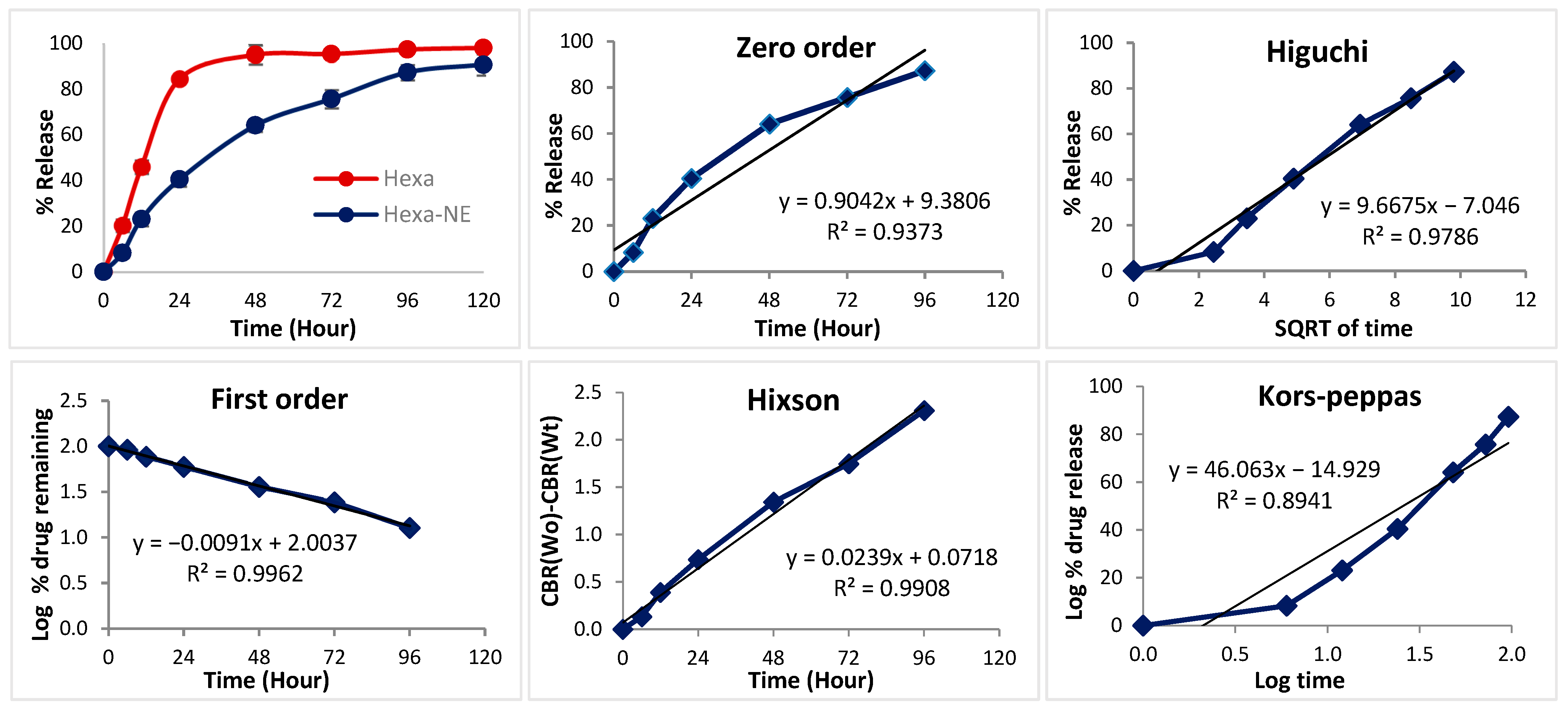
Phosphate-buffered saline (PBS; pH 5.5) supplemented with 0.2% (w/v) Tween 80 was used as the dissolution medium to investigate the in-vitro release of hexaconazole from the nanoemulsion using a dialysis membrane diffusion method [17]. The pH 5.5 medium was used to simulate the conditions of potato dextrose agar used in the in vitro antifungal assays. The release study was carried out using three independent formulation samples by loading Hexa-NE formulation equivalent to 2 mg of hexaconazole into cellulose membrane dialysis bag with molecular weight cutoff 12 kDa. The prepared samples were immersed in dissolution media at 37 ± 1 °C and stirred at 250 rpm. At specified time intervals, 1 mL aliquots were withdrawn and immediately replaced with an equal volume of fresh medium to maintain sink conditions. The hexaconazole concentration in the collected samples was analysed using HPLC method [17]. The release profile was then evaluated using several kinetic models, including zero-order, first-order, Higuchi, Hixson–Crowell, and Korsmeyer–Peppas models. The experimental release data were fitted to each model, and the corresponding plots were analyzed to determine the model that provided the highest correlation coefficient of determination (R2).

2.8. In-Vitro Antifungal Activity Efficacy Studies

The in vitro antifungal efficacy of hexaconazole solution and the Hexa-NE formulation against G. boninense was assessed using the poisoned medium technique on potato dextrose agar (PDA) [18]. The PDA medium was supplemented with either pure hexaconazole or freshly prepared Hexa-NE at various concentrations of the active ingredient (0, 0.1, 0.5, 1, and 2 μM), while PDA without the active ingredient served as the control. A 7 mm mycelial plug taken from the actively growing edge of G. boninense cultures was aseptically placed at the center of each treated agar plate. The inoculated plates were incubated at 28 ± 2 °C, and radial mycelial growth was monitored daily for seven days (n = 5). The antifungal activity was quantified by calculating the percentage inhibition of mycelial radial growth relative to the control.

2.9. Statistical Analysis

One-way analysis of variance (ANOVA) was performed, followed by Tukey’s post hoc multiple-comparison test using GraphPad Prism (version 10.4.1, San Diego, CA, USA) to examine the data and identify significant differences between the experimental groups. Statistical significance was established at p < 0.05.

3. Results and Discussion

3.1. Screening of Formulation Compositions

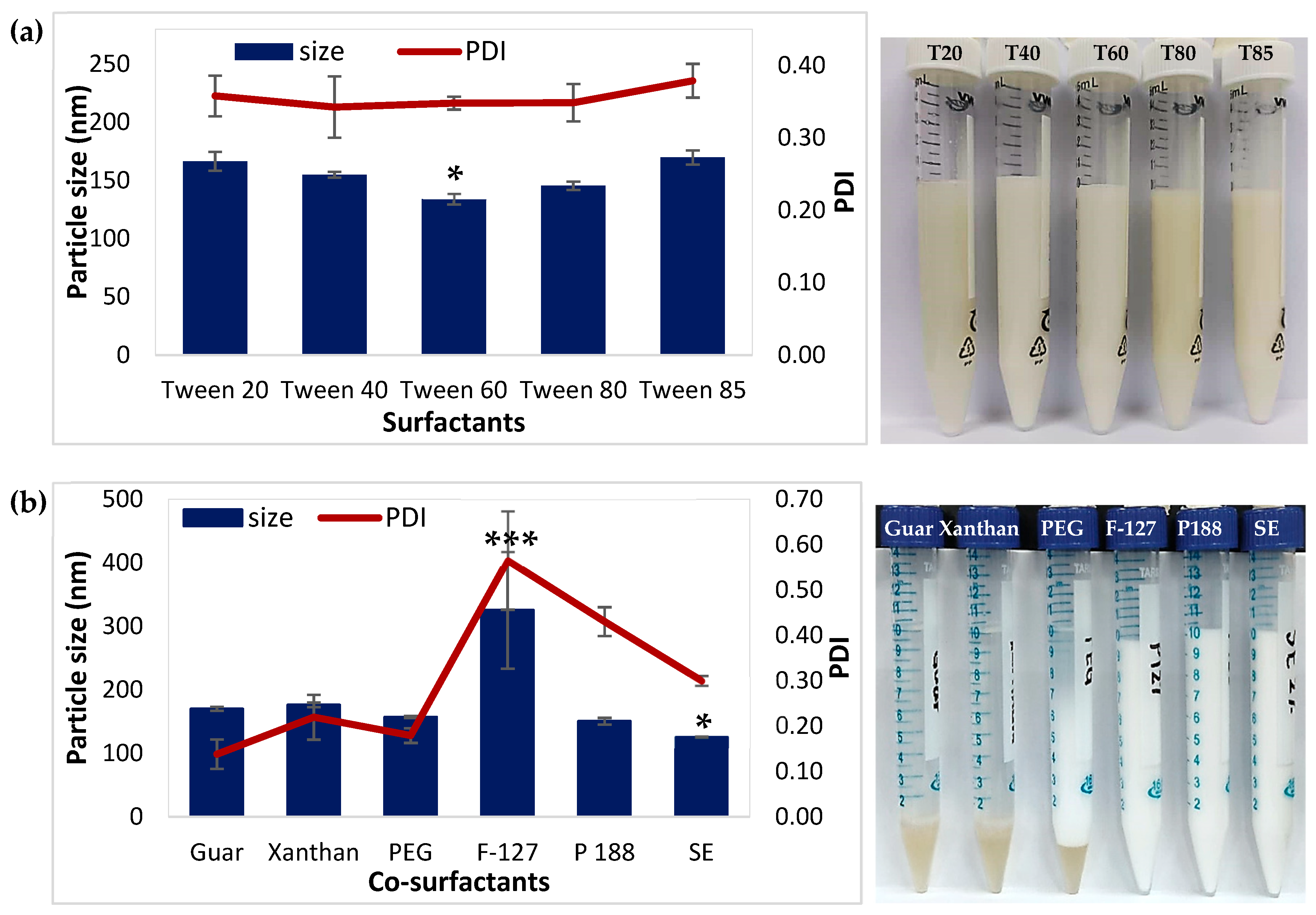
As shown in Figure 1, this study investigated the effects of different Tweens series surfactants (Tween 20, 40, 60, 80, and 85) as well as various stabilizing agents on the particle size and polydispersity index (PDI). The results indicate that Tween 60 produced the smallest particle size and the lowest PDI compared to the other surfactants. Similarly, among the stabilizing agents tested, sucrose ester (SE) resulted in the smallest particle size and lowest PDI value, making it the most effective stabilizer. Therefore, Tween 60 and sucrose ester were chosen to be used for subsequent experiments.
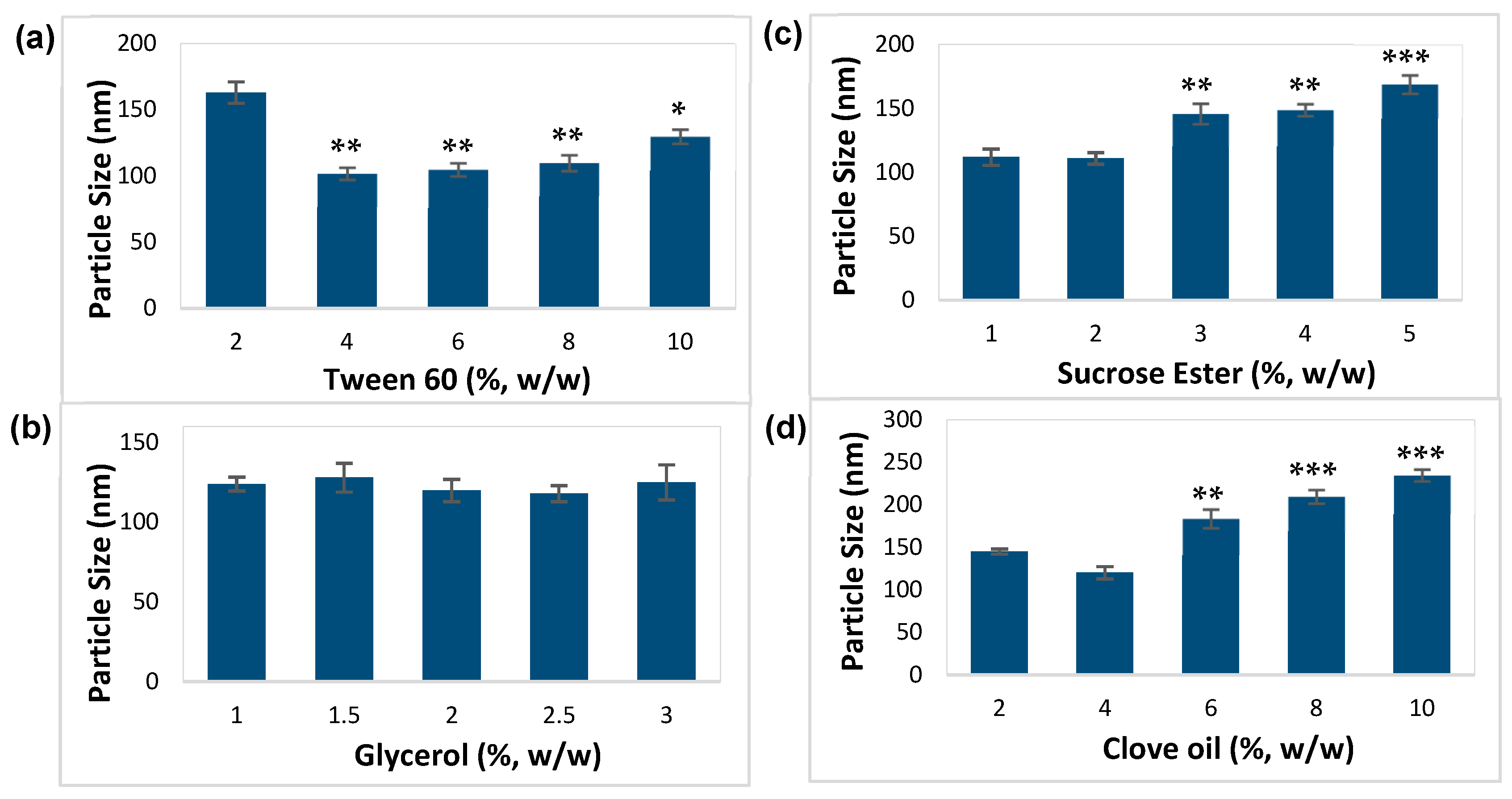
The One-Factor-At-a-Time (OFAT) approach was utilized to systematically determine the optimal concentration of each nanoemulsion component to achieve stable formulation with minimal particle size. Figure 2 presents the effects of varying the concentrations of different excipients, namely Tween 60, sucrose ester (SE), oil, and glycerol, on particle size of the nanoemulsion. The results indicated that increasing the concentrations of Tween 60, SE, and oil generally led to an increase in particle size. This effect may be attributed to the excess presence of surfactant and oil. Such excess can promote the formation of larger droplets or aggregates due to incomplete stabilization and possible coalescence when the interfacial area becomes oversaturated [19,20]. Conversely, at lower Tween 60 concentrations, insufficient surfactant molecules were available to fully surround the oil droplets. This led to poor stabilization and droplet aggregation due to incomplete interfacial coverage. However, variation in glycerol concentration did not significantly affect particle size. However, it plays an important role in modulating the osmotic balance and viscosity of the formulation [21]. Based on the optimization results, a nanoemulsion formulation known as Hexa-NE was developed. It contained 6% w/w clove oil, 2% w/w sucrose ester, 4% w/w Tween 60, 2% w/w glycerol, 1% w/w hexaconazole, and water q.s. to 100% w/w. This composition was selected to achieve an optimal balance between interfacial stabilization, droplet size reduction, and formulation stability.
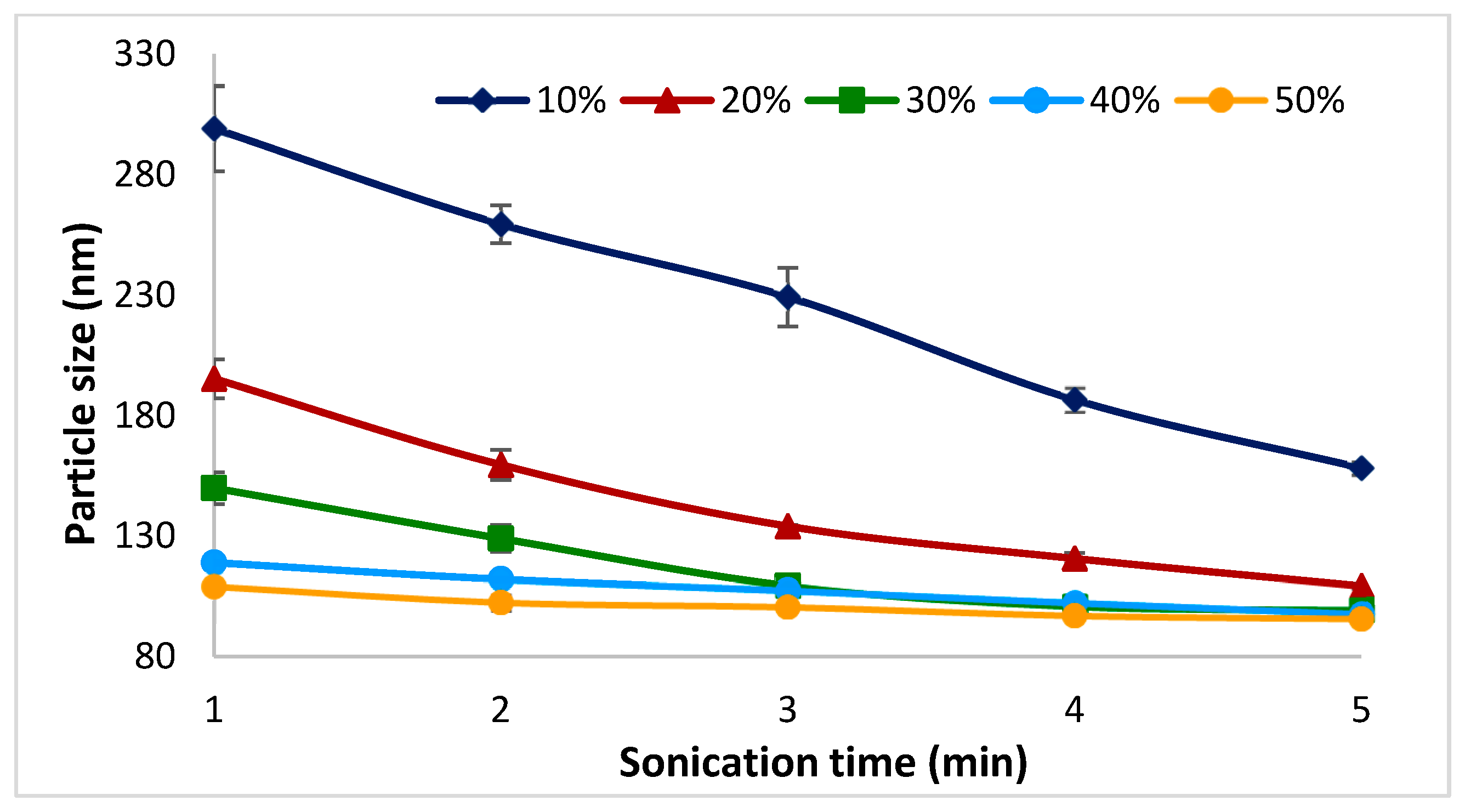
The effect of processing parameters on particle size and distribution were further evaluated. In general, increasing sonication time reduced nanoemulsion particle size across all formulation (Figure 3). Similar observations were reported by Guttoff et al. [22] and Saberi et al. [21], whereby the particle size exhibits reduction with increased in homogenization energy. This confirms the effectiveness of ultrasonic homogenization in droplet size reduction. Larger droplets observed at shorter sonication times may be attributed to insufficient cavitation energy. Increasing sonication time enhances shear forces and promotes droplet breakup [23,24]. Although higher ultrasonic power can reduce processing time, excessive energy input may cause droplet recoalescence and localized heating. This effects may compromise nanoemulsion stability [23]. Therefore, an intermediate ultrasonic amplitude combined with an optimized sonication time was selected to achieve efficient droplet size reduction while minimizing thermal and mechanical stress. As shown in Figure 3, beyond 3 min of sonication at higher amplitude (40% and 50%), particle size reduction showed no further substantial decrease. This indicates an optimal sonication duration for efficient nanoemulsion formation. Accordingly, sonication time (3 min) and amplitude (30%) were selected based on achieving the smallest particle size with minimal energy input and without signs of instability.

3.2. Physicochemical and Characterization of Hexa-NE Nanoemulsion

The physicochemical characteristics of the Hexa-NE play important roles in defining its long-term stability and suitability as an efficient foliar fungicide delivery system. With a mean particle size of 105.8 ± 2.9 nm, the formulation falls within the optimal nanoscale range. This small particle size provides a high surface area that promotes strong adhesion to plant surfaces and improved permeability through the cuticle barrier. This finding is consistent with previous reports indicating that nanoemulsions with droplet sizes below 200 nm were able to significantly and effectively increase the foliar uptake of active ingredients [25]. Hexa-NE showed moderate polydispersity, as reflected by its polydispersity index (PDI) which is 0.358 ± 0.038. Generally, reduced particle size and narrower size distribution improve nanoemulsion stability and minimize Ostwald ripening. Although further reduction may be obtained through multivariate optimization strategies or higher-energy processing techniques, the moderate polydispersity observed in this study was sufficient to maintain physical stability. Hence, contributes to minimize droplet aggregation during storage [26]. The stability of Hexa-NE is further supported by its highly negative zeta potential (−53.53 ± 0.86 mV). A strong surface charge generates strong electrostatic repulsion between droplets, thus minimizing the likelihood of coalescence [27]. This aligns with the findings of Kumar et al. (2021), who reported that zeta potential values exceeding ±30 mV are critical for maintaining stable nanoemulsion systems [28].
Additionally, the viscosity of Hexa-NE was low (30.24 ± 1.06 mPa·s) and suitable for an efficient aerosolization while still allowing sufficient retention on leaf surfaces. The formulation also exhibited a lower surface tension (23.87 ± 1.86 mN/m) as compared to water. This reduction promotes enhanced wetting and spreading over hydrophobic plant cuticles. High viscosity and surface tension can reduce aerosolization efficiency, as greater energy is required to generate fine droplets. This may also contributes to an increase in aerodynamic diameter [29]. Improved spreading behavior has been directly linked to increased pesticide coverage and deposition, as previously demonstrated by Chen et al. [30]. Moreover, the formulation’s pH of 6.14 ± 0.01 lies within a safe range for plant tissues. This minimizes the risk of phytotoxicity and ensures compatibility with foliar application practices [31].
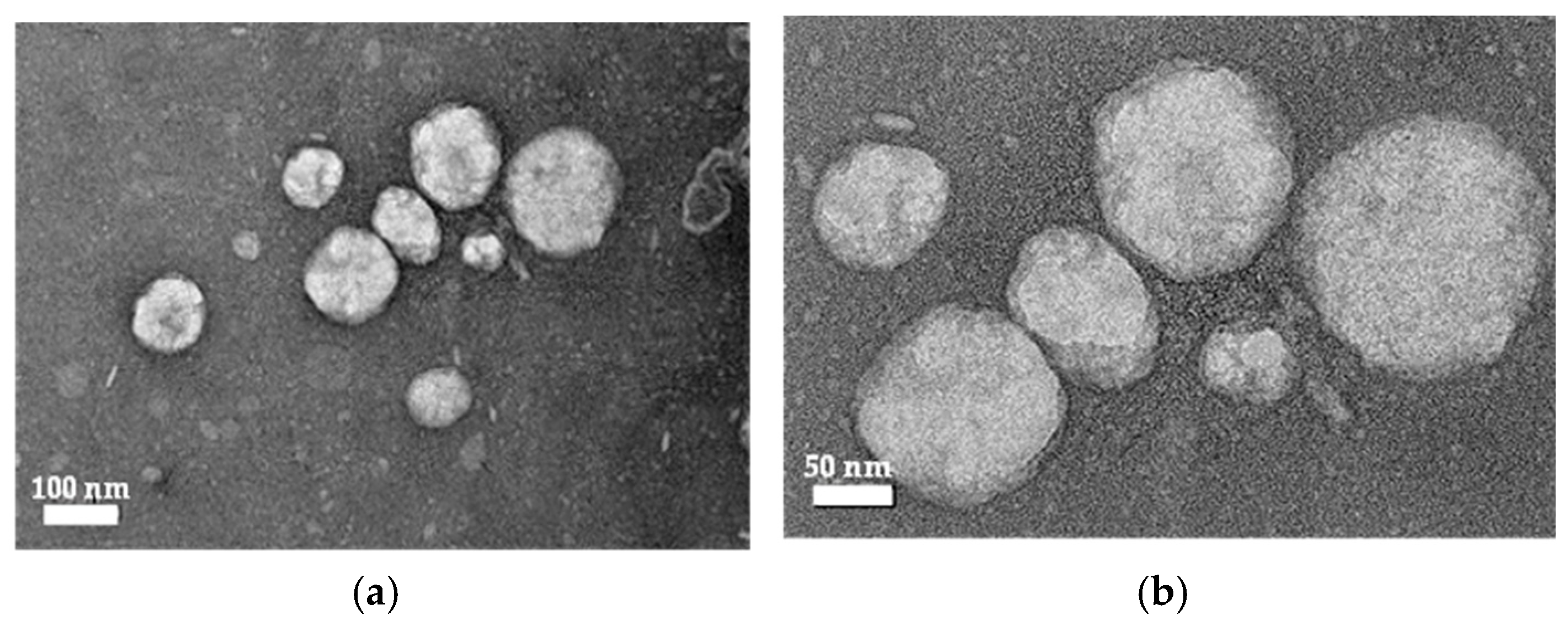
Transmission Electron Microscopy (TEM) was utilized to determine the particle shape of nanoemulsions and the particle size and homogeneity measured using DLS was consistent with TEM analysis (Figure 4). The absence of aggregation and the well-defined droplet boundaries, further confirm the structural stability of the nanoemulsion. This observations further support its suitability for foliar application where consistency and stability are critical for performance.

3.3. In Vitro Fungicide Release

The release profiles of hexaconazole solution and Hexa-NE at pH 5.5 demonstrated different release behaviors. The hexaconazole solution exhibited rapid and nearly complete release within the initial 24 h, indicating immediate availability of the hexaconazole in the dissolution medium. While such an immediate release may provide a quick onset of antifungal action, it may also result a shorter duration of effectiveness and a higher likelihood of rapid depletion of the active ingredient. In contrast, Hexa-NE displayed a controlled and sustained release profile over 120 h. Although an initial burst release was observed during the early stage, likely due to the release of hexaconazole located at or near the oil-water interface. However, the overall release rate was substantially slower than that of the hexaconazole solution. The sustained release behavior of Hexa-NE can be attributed to the encapsulation of hexaconazole within the oil phase of the nanoemulsion droplets. Additional time is required for the hexaconazole to diffuse through the oil droplet core and the surrounding surfactant interfacial layer before reaching the dissolution medium, which consequently slows its release rate. Additionally, the presence of surfactant and stabilizer layers surrounding the droplets further modulates hexaconazole diffusion [20,32].
The mechanism for fungicide release from formulation was predicted by fitting the release data to zero-order, first-order, Higuchi, Hixson-Crowell and Korsmeyer-Peppas models. In this study, linear regression analysis was used to determine correlation coefficients (R2) for each model. As shown in Figure 5, among the tested models, the first-order kinetic model provided the best fit for Hexa-NE formulation having the highest R2 value. This finding indicates that hexaconazole release from Hexa-NE is governed predominantly by concentration-driven diffusion from the oil core, modulated by interfacial and droplet-size effects. The absence of an excessive burst effect and the gradual increase in cumulative release over 120 h further support the controlled and sustained release behavior. This release profile of Hexa-NE may contribute to prolonged antifungal exposure at the target site, which is consistent with the enhanced in vitro growth inhibition observed at low concentrations. However, further in planta and field evaluations are required to confirm whether this translates into extended protection under agricultural conditions.

3.4. In Vitro Antifungal Activity Assay on G.boninense

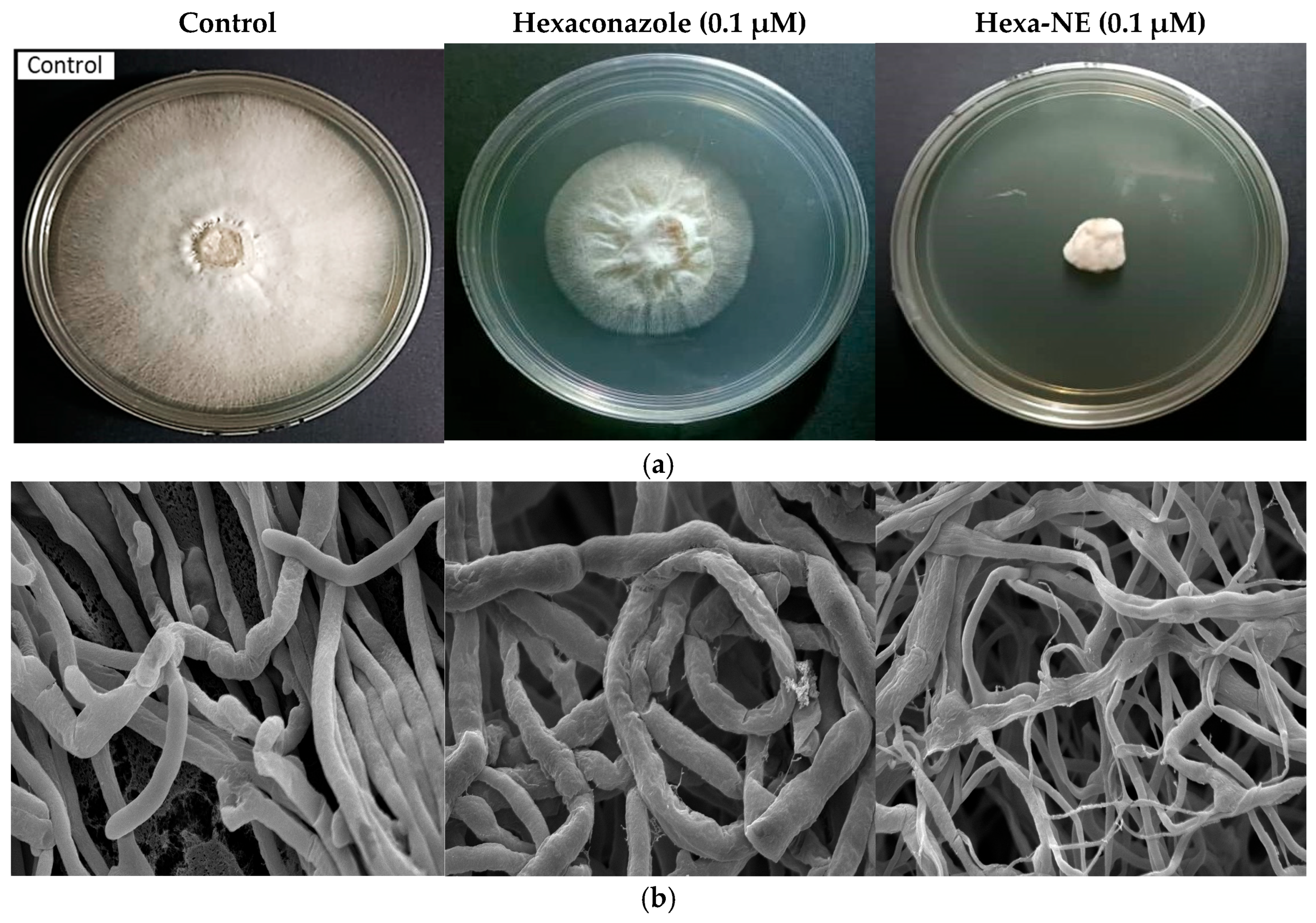
The antifungal efficacy of hexaconazole and Hexa-NE against G. boninense was tested through agar plate assays, as shown in Figure 6a. The untreated agar plate (control) showed aggressive and dense growth of G. boninense mycelial almost filling the plate after seven days of incubation. However, agar plate containing 0.1 µM hexaconazole solution showed reduced fungal growth. This can be seen through the smaller colony size compared to the control. These observations confirm that hexaconazole has antifungal activity against G. boninense, which works by inhibiting the biosynthesis of ergosterol, an important component of fungal cell membranes [33]. Interestingly, agar plate containing same concentration of Hexa-NE (0.1 µM) exhibited the most significant inhibition of fungal growth compared to hexaconazole solution, producing a very small and compact colony.
In addition, SEM analysis was also conducted to obtain more information about the mechanism behind the increased antifungal activity of Hexa-NE. As shown in Figure 6b, the untreated hyphae of G. boninense showed healthy fungal growth and normal morphology with branching filamentous, smooth tubular surfaces, and rigid cell walls. Conversely, hyphae treated with hexaconazole solution showed moderate structural alterations, including uneven surfaces, tubular shrinkage, and partial deformation. These structural changes are consistent with disturbance in membrane integrity and cell wall synthesis affected by ergosterol depletion [3,34]. Nevertheless, higher frequency of morphological hyphae damage was observed in the Hexa-NE treated sample with concentration of 0.1 μM. The hyphae appear severely distorted, with thinning, wrinkling and breakage. This severe damage indicates loss of membrane integrity and cytoplasmic leakage, which results in the death fungal cell [35]. The enhanced antifungal activity of Hexa-NE may be attributed to improved penetration of hexaconazole across the fungal cell wall. This might be due to its nanosized and lipid-based properties as it can interact strongly with ergosterol-rich membrane and improves the fusion into the fungal cell [36].
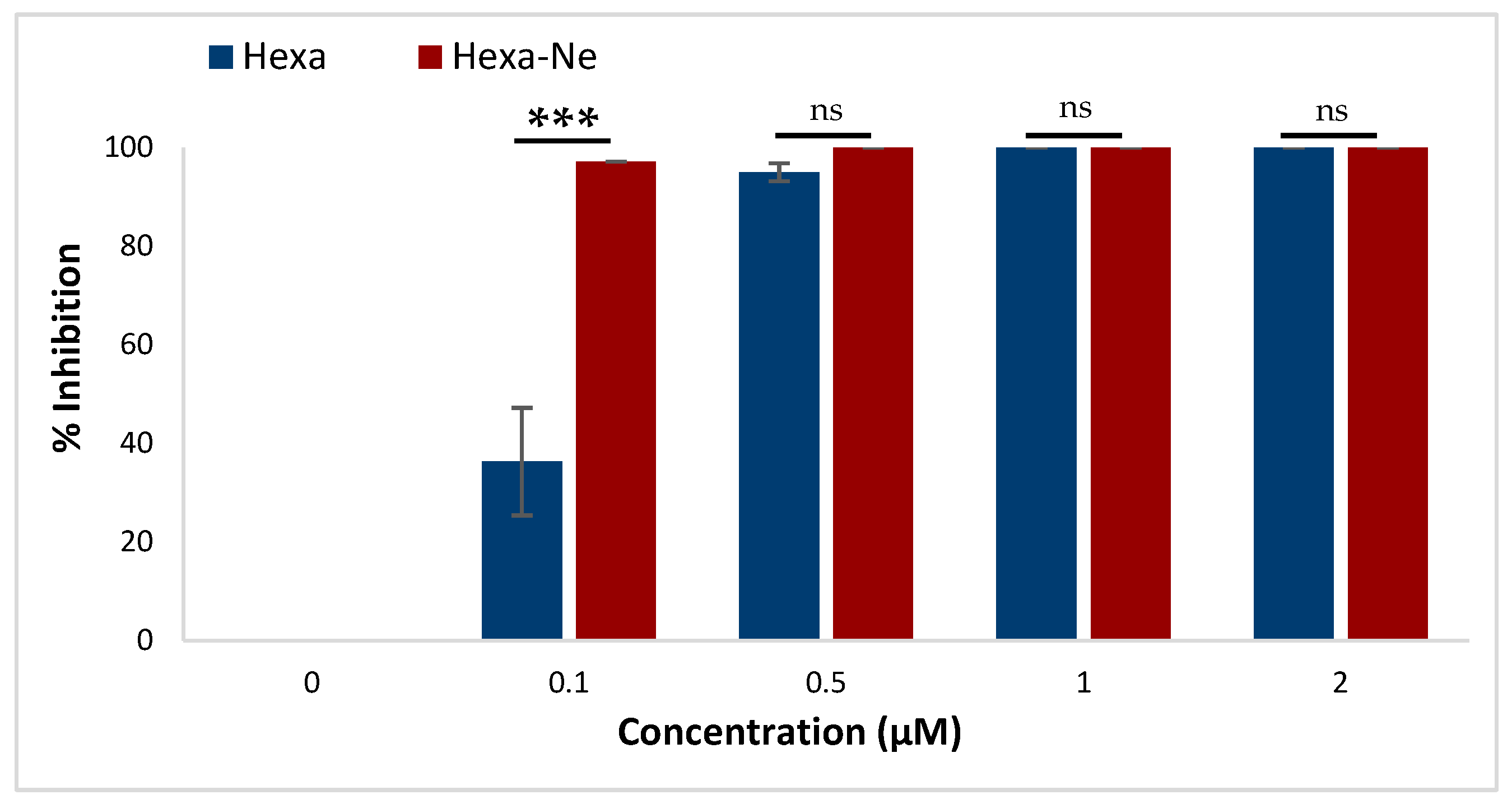
To further confirm the antifungal effectiveness as observed on the plate assay and SEM analysis, growth inhibition of G. boninense was further evaluated using different concentrations of hexaconazole and Hexa-NE (Figure 7). The results displayed a concentration-dependent inhibition pattern for both samples. However, Hexa-NE consistently exhibits high antifungal activity compared to hexaconazole solution, especially at lower concentrations. At 0.1 µM, hexaconazole solution showed moderate inhibitory activity, reaching approximately 40% growth inhibition. Conversely, Hexa-NE at the same concentration produced an almost total growth inhibition (97.1%), exhibiting a significant increase in antifungal potential when nanoemulsified. This observation strongly supports the very small and compact colony size, and significant hyphae deformation seen earlier in Figure 6b.
These findings indicate that Hexa-NE can achieve enhanced antifungal activity at lower active ingredient concentrations compared to the conventional hexaconazole solution. This may allow reduction of fungicide dosage, which may reduce overall chemical input. Nevertheless, further investigations including ecotoxicity, effects on non-target organisms, and phytotoxicity assessments are required to confirm whether such dose reduction translates into measurable environmental and health benefits. In comparison with previously reported hexaconazole-loaded nanoparticles [18,37,38], which demonstrated improved stability and antifungal performance through polymeric encapsulation, the present Hexa-NE system offers a lipid-based delivery approach incorporating clove oil as a functional dispersed phase without complex crosslinking steps. Besides, the sustained release behavior observed in Hexa-NE, together with its strong in vitro efficacy at low concentration, highlights an alternative formulation strategy that may offer practical advantages in terms of preparation simplicity and potential scalability for agricultural application.

4. Conclusions

This study successfully developed a stable hexaconazole-loaded nanoemulsion (Hexa-NE) with optimized formulation and process parameters using OFAT method. The developed Hexa-NE produced nano-scale particle size and exhibited physicochemical properties suitable for foliar application. This has been proven by the significant antifungal effectiveness against G. boninense compared to hexaconazole solution. In addition, Hexa-NE achieved almost complete inhibition of fungal growth at low concentrations and caused severe hyphae damage as shown in SEM analysis. This indicates Hexa-NE’s ability to penetrate better into the fungal and disrupt its membranes. These findings also suggest that nanoemulsification able to increase dose efficiency and anti-fungal performance that has more sustainable potential to manage basal stem rot disease in palm oil. Nevertheless, this study is limited to in vitro antifungal evaluation and single-factor formulation optimization. Future research should incorporate multivariate experimental designs, field-scale validation, long-term storage stability, and comprehensive environmental impact studies to fully establish the applicability of Hexa-NE in oil palm plantations.

Author Contributions

Conceptualization, A.A.A., M.B.A.R. and N.A.I.M.Z.; methodology, A.A.A., M.B.A.R. and N.A.I.M.Z.; software, A.A.A.; validation, A.A.A.; formal analysis, A.A.A., N.F.A.A. and M.F.A.; investigation, A.A.A., N.F.A.A. and M.F.A.; resources, M.B.A.R., N.A.I.M.Z., N.A.M.A. and F.A.; data curation, A.A.A. and M.B.A.R.; writing—original draft preparation, A.A.A.; writing—review and editing, M.B.A.R., N.A.M.A. and F.A.; visualization, A.A.A.; supervision, M.B.A.R., N.A.I.M.Z., N.A.M.A. and F.A.; project administration, A.A.A., M.B.A.R. and N.A.M.A.; funding acquisition, A.A.A. and M.B.A.R. All authors have read and agreed to the published version of the manuscript.

Funding

This research was funded by the Kurita Water and Environment Foundation (KWEF), grant number 22Pmy249-R3.

Data Availability Statement

All data relevant to the publication are included.

Acknowledgments

Sincere appreciation to Universiti Putra Malaysia (UPM) and Universiti Malaysia Pahang Al-Sultan Abdullah (UMPSA) for the facilities provided throughout this research. The authors take full responsibility for the content of this publication. English editing, including grammar and sentence structure improvement, was assisted using Grammarly. All authors have reviewed and approved the final manuscript.

Conflicts of Interest

The authors declare no conflict of interest. The funders had no role in the design of the study; in the collection, analyses, or interpretation of data; in the writing of the manuscript; or in the decision to publish the results.

Abbreviations

The following abbreviations are used in this manuscript:
TEMTransmission Electron Microscopy
SEMScanning Electron Microscopy
PDIPolydispersity index
HexaHexaconazole
Hexa-NEHexaconazole nanoemulsion
PBSPhosphate-buffer saline
PEGPolyethylene glycol
SESucrose Ester
F-127Pluronic F-128
P188Poloxamer 188

References

  1. Statista. Production Volume of Palm oil Worldwide from 2000/2001 to 2025/2026. Available online: https://www.statista.com/statistics/613471/palm-oil-production-volume-worldwide/ (accessed on 10 October 2023).
  2. Cheah, W.Y.; Siti-Dina, R.P.; Leng, S.T.K.; Er, A.C.; Show, P.L. Circular Bioeconomy in Palm Oil Industry: Current Practices and Future Perspectives. Environ. Technol. Innov. 2023, 30, 103050. [Google Scholar] [CrossRef]
  3. Zakaria, L. Basal Stem Rot of Oil Palm: The Pathogen, Disease Incidence, and Control Methods. Plant Dis. 2023, 107, 603–615. [Google Scholar] [CrossRef]
  4. Asmawi, A.A.; Adam, F.; Mohd Azman, N.A.; Abdul Rahman, M.B. Advancements in the Nanodelivery of Azole-Based Fungicides to Control Oil Palm Pathogenic Fungi. Heliyon 2024, 10, e37132. [Google Scholar] [CrossRef]
  5. Maluin, F.N.; Hussein, M.Z.; Idris, A.S. An Overview of the Oil Palm Industry: Challenges and Some Emerging Opportunities for Nanotechnology Development. Agronomy 2020, 10, 356. [Google Scholar] [CrossRef]
  6. Hazra, R.S.; Roy, J.; Jiang, L.; Webster, D.C.; Rahman, M.M.; Quadir, M. Biobased, Macro-, and Nanoscale Fungicide Delivery Approaches for Plant Fungi Control. ACS Appl. Bio Mater. 2023, 6, 2698–2711. [Google Scholar] [CrossRef]
  7. Kumar, S.; Nehra, M.; Dilbaghi, N.; Marrazza, G.; Hassan, A.A.; Kim, K.H. Nano-Based Smart Pesticide Formulations: Emerging Opportunities for Agriculture. J. Control. Release 2019, 294, 131–153. [Google Scholar] [CrossRef]
  8. Mosa, M.A.; Youssef, K.; Hamed, S.F.; Hashim, A.F. Antifungal Activity of Eco-Safe Nanoemulsions Based on Nigella Sativa Oil against Penicillium Verrucosum Infecting Maize Seeds: Biochemical and Physiological Traits. Front. Microbiol. 2023, 13, 1108733. [Google Scholar] [CrossRef] [PubMed]
  9. Campos, E.V.R.; De Oliveira, J.L.; Da Silva, C.M.G.; Pascoli, M.; Pasquoto, T.; Lima, R.; Abhilash, P.C.; Fernandes Fraceto, L. Polymeric and Solid Lipid Nanoparticles for Sustained Release of Carbendazim and Tebuconazole in Agricultural Applications. Sci. Rep. 2015, 5, 13809. [Google Scholar] [CrossRef]
  10. Magrode, N.; Poomanee, W.; Kiattisin, K.; Ampasavate, C. Microemulsions and Nanoemulsions for Topical Delivery of Tripeptide-3: From Design of Experiment to Anti-Sebum Efficacy on Facial Skin. Pharmaceutics 2024, 16, 554. [Google Scholar] [CrossRef]
  11. Souto, E.B.; Cano, A.; Martins-Gomes, C.; Coutinho, T.E.; Zielińska, A.; Silva, A.M. Microemulsions and Nanoemulsions in Skin Drug Delivery. Bioengineering 2022, 9, 158. [Google Scholar] [CrossRef] [PubMed]
  12. Hashem, A.H.; Abdelaziz, A.M.; Hassanin, M.M.H.; Al-Askar, A.A.; AbdElgawad, H.; Attia, M.S. Potential Impacts of Clove Essential Oil Nanoemulsion as Bio Fungicides against Neoscytalidium Blight Disease of Carum carvi L. Agronomy 2023, 13, 1114. [Google Scholar] [CrossRef]
  13. Ahmad, I.; Farheen, M.; Kukreti, A.; Afzal, O.; Akhter, M.H.; Chitme, H.; Visht, S.; Altamimi, A.S.A.; Alossaimi, M.A.; Alsulami, E.R.; et al. Natural Oils Enhance the Topical Delivery of Ketoconazole by Nanoemulgel for Fungal Infections. ACS Omega 2023, 8, 28233–28248. [Google Scholar] [CrossRef] [PubMed]
  14. Ngan, C.L.; Fard Masoumi, H.R.; Basri, M.; Abdul Rahman, M.B. Development of Nano-Colloidal System for Fullerene by Ultrasonic-Assisted Emulsification Techniques Based on Artificial Neural Network. Arab. J. Chem. 2016, 12, 4162–4170. [Google Scholar] [CrossRef]
  15. Asmawi, A.A.; Salim, N.; Abdulmalek, E.; Abdul Rahman, M.B. Size-Controlled Preparation of Docetaxel- and Curcumin-Loaded Nanoemulsions for Potential Pulmonary Delivery. Pharmaceutics 2023, 15, 652. [Google Scholar] [CrossRef] [PubMed]
  16. Asmawi, A.A.; Salim, N.; Ngan, C.L.; Ahmad, H.; Abdulmalek, E.; Masarudin, M.J.; Abdul Rahman, M.B. Excipient Selection and Aerodynamic Characterization of Nebulized Lipid-Based Nanoemulsion Loaded with Docetaxel for Lung Cancer Treatment. Drug Deliv. Transl. Res. 2018, 9, 543–554. [Google Scholar] [CrossRef]
  17. Ahmad Aljafree, N.F.; Ahmad, M.F.; Abd Aziz, U.; Borzehandani, M.Y.; Mohamad Jaafar, A.; Asib, N.; Nguyen, H.L.; Mohamed Tahir, M.I.; Mohammad Latif, M.A.; Cordova, K.E.; et al. Calcium L-Malate and d-Tartarate Frameworks as Adjuvants for the Sustainable Delivery of a Fungicide. ACS Appl. Mater. Interfaces 2025, 17, 17672–17683. [Google Scholar] [CrossRef]
  18. Maluin, F.N.; Hussein, M.Z.; Yusof, N.A.; Fakurazi, S.; Idris, A.S.; Hilmi, N.H.Z.; Daim, L.D.J. Preparation of Chitosan-Hexaconazole Nanoparticles as Fungicide Nanodelivery System for Combating Ganoderma Disease in Oil Palm. Molecules 2019, 24, 2498. [Google Scholar] [CrossRef]
  19. Mushtaq, A.; Mohd Wani, S.; Malik, A.R.; Gull, A.; Ramniwas, S.; Ahmad Nayik, G.; Ercisli, S.; Alina Marc, R.; Ullah, R.; Bari, A. Recent Insights into Nanoemulsions: Their Preparation, Properties and Applications. Food Chem. X 2023, 18, 100684. [Google Scholar] [CrossRef]
  20. Sarheed, O.; Dibi, M.; Ramesh, K.V.R.N.S. Studies on the Effect of Oil and Surfactant on the Formation of Alginate-Based O/W Lidocaine Nanocarriers Using Nanoemulsion Template. Pharmaceutics 2020, 12, 1223. [Google Scholar] [CrossRef]
  21. Saberi, A.H.; Fang, Y.; McClements, D.J. Effect of Glycerol on Formation, Stability, and Properties of Vitamin-E Enriched Nanoemulsions Produced Using Spontaneous Emulsification. J. Colloid Interface Sci. 2013, 411, 105–113. [Google Scholar] [CrossRef]
  22. Guttoff, M.; Saberi, A.H.; McClements, D.J. Formation of Vitamin D Nanoemulsion-Based Delivery Systems by Spontaneous Emulsification: Factors Affecting Particle Size and Stability. Food Chem. 2015, 171, 117–122. [Google Scholar] [CrossRef]
  23. Li, W.; Leong, T.S.H.; Ashokkumar, M.; Martin, G.J.O. A Study of the Effectiveness and Energy Efficiency of Ultrasonic Emulsification. Phys. Chem. Chem. Phys. 2017, 20, 86–96. [Google Scholar] [CrossRef]
  24. Ascrizzi, G.I.; Fuenmayor, C.A.; Piazza, L. Ultrasound-Assisted Nanoemulgel Preparation: A One-Step Approach for Enhanced Rheo-Tribological Properties. Innov. Food Sci. Emerg. Technol. 2025, 106, 104246. [Google Scholar] [CrossRef]
  25. Yanasan, N.; Wangkananon, W.; Natakankitkul, S.; Kiattisin, K. Nanoemulsions Containing Passiflora Quadrangularis L. Fruit Extracts for Cosmetic Application and Skin Efficacy Study. Cosmet 2024, 11, 57. [Google Scholar] [CrossRef]
  26. Moreira, J.B.; Goularte, P.G.; Morais, M.G.; Costa, J.A.V. Preparation of Beta-Carotene Nanoemulsion and Evaluation of Stability at a Long Storage Period. Food Sci. Technol. 2019, 39, 599–604. [Google Scholar] [CrossRef]
  27. Kurpiers, M.; Wolf, J.D.; Steinbring, C.; Zaichik, S.; Bernkop-Schnürch, A. Zeta Potential Changing Nanoemulsions Based on Phosphate Moiety Cleavage of a PEGylated Surfactant. J. Mol. Liq. 2020, 316, 113868. [Google Scholar] [CrossRef]
  28. Kumar, A.; Gradzielski, M.; Kanwar, R.; Mehta, S.K. Optimization and Stability of Geraniol Nanoemulsion Stabilized Synergistically Using Mixed Biosurfactant System of Saponin and Lecithin. Langmuir 2025, 41, 10108–10121. [Google Scholar] [CrossRef]
  29. Nasr, M.; Nawaz, S.; Elhissi, A. Amphotericin B Lipid Nanoemulsion Aerosols for Targeting Peripheral Respiratory Airways via Nebulization. Int. J. Pharm. 2012, 436, 611–616. [Google Scholar] [CrossRef] [PubMed]
  30. Chen, Y.F.; Yang, C.H.; Chang, M.S.; Ciou, Y.P.; Huang, Y.C. Foam Properties and Detergent Abilities of the Saponins from Camellia Oleifera. Int. J. Mol. Sci. 2010, 11, 4417–4425. [Google Scholar] [CrossRef]
  31. Carrasco-Sandoval, J.; Aranda-Bustos, M.; Henríquez-Aedo, K.; López-Rubio, A.; Fabra, M.J. Bioaccessibility of Different Types of Phenolic Compounds Co-Encapsulated in Alginate/Chitosan-Coated Zein Nanoparticles. LWT 2021, 149, 112024. [Google Scholar] [CrossRef]
  32. Wilson, R.J.; Li, Y.; Yang, G.; Zhao, C.X. Nanoemulsions for Drug Delivery. Particuology 2022, 64, 85–97. [Google Scholar] [CrossRef]
  33. Roy, I.; Thapa, M.; Goswami, A. Nanohexaconazole: Synthesis, Characterisation and Efficacy of a Novel Fungicidal Nanodispersion. IET Nanobiotechnol. 2018, 12, 864. [Google Scholar] [CrossRef]
  34. Haw, Y.H.; Lai, K.W.; Chuah, J.H.; Bejo, S.K.; Husin, N.A.; Hum, Y.C.; Yee, P.L.; Tee, C.A.T.H.; Ye, X.; Wu, X. Classification of Basal Stem Rot Using Deep Learning: A Review of Digital Data Collection and Palm Disease Classification Methods. PeerJ Comput. Sci. 2023, 9, 1–30. [Google Scholar] [CrossRef] [PubMed]
  35. Zhai, S.; Guo, H.; Sun, T.; Chen, J.; Guo, M.; Chen, G. 3-Methyl-1-Butanol Inhibited Gray Mold of Red Grape by Damaging Cell Membrane Integrity and the Antioxidant Capacity of Botrytis Cinerea under Oxidative Stress. LWT 2025, 231, 118328. [Google Scholar] [CrossRef]
  36. Ermakova, E.; Zuev, Y. Effect of Ergosterol on the Fungal Membrane Properties. All-Atom and Coarse-Grained Molecular Dynamics Study. Chem. Phys. Lipids 2017, 209, 45–53. [Google Scholar] [CrossRef]
  37. Mustafa, I.F.; Hussein, M.Z. Synthesis and Technology of Nanoemulsion-Based Pesticide Formulation. Nanomaterials 2020, 10, 1608. [Google Scholar] [CrossRef] [PubMed]
  38. Gao, S.; Guo, X.; Li, F.; Zhang, Y.; Yu, Y.; Fu, Y.; Ye, F. Delivery of Hexaconazole by the Carboxymethylcellulose Grafting and Cellulase/PH Responsiveness Hollow Mesoporous Silica Nanoparticles. Carbohydr. Polym. 2025, 365, 123822. [Google Scholar] [CrossRef] [PubMed]
Figure 1. Effect of the nanoemulsion composition (a) surfactants; * p < 0.05 when compared to Tween 20; and (b) co-surfactants; * p < 0.05; *** p < 0.001 when compared to xanthan gum on the particle size and polydispersity index (PDI) value. Data presented as mean ± standard deviation, n = 3.
Colloids 10 00024 g001
Figure 2. Effect of formulation components at different concentration of (a) Tween 60, (b) sucrose ester, (c) glycerol, and (d) clove oil on the particle size of Hexa-NE using the One-Factor-At-a-Time (OFAT) approach. *** p < 0.001; ** p < 0.01, * p < 0.05 when compared with the lowest concentration of each component. Data presented as mean ± standard deviation, n = 3.
Colloids 10 00024 g002
Figure 3. Effect of sonication time and amplitude for preparation of nanoemulsion using ultrasonicator homogenizer on the particle size of Hexa-NE.
Colloids 10 00024 g003
Figure 4. The transmission electron microscope (TEM) images of Hexa-Ne with scale bar (a) 100 nm and (b) 50 nm.
Colloids 10 00024 g004
Figure 5. The release profiles of hexaconazole from Hexa-NE at pH 5.5 and kinetic model fitting of the release data using zero-order, first-order, Higuchi, Hixson-Crowell, and Korsmeyer-Peppas models.
Colloids 10 00024 g005
Figure 6. The antifungal activity against G. boninense after seven days of incubation at 28 ± 2 °C. (a) Images of G. boninense on potato dextrose agar plates and (b) SEM images of hyphae of G.boninense untreated (control) and after treatment with hexaconazole solution and Hexa-NE at 0.1 μΜ concentration.
Colloids 10 00024 g006
Figure 7. Antifungal effect on the growth inhibition of G. boninense by Hexaconazole solution (Hexa) and Hexaconazole-loaded nanoemulsion (Hexa-NE) after seven days incubation at 28 ± 2 °C. Data presented as mean ± standard deviation, n = 3. *** p < 0.001 when compared to 0.1 μM Hexa-NE and ns represents non-significant.
Colloids 10 00024 g007
Disclaimer/Publisher’s Note: The statements, opinions and data contained in all publications are solely those of the individual author(s) and contributor(s) and not of MDPI and/or the editor(s). MDPI and/or the editor(s) disclaim responsibility for any injury to people or property resulting from any ideas, methods, instructions or products referred to in the content.