Article

Influence of Shungite from the Bakyrchik Deposit on the Properties of Rubber Composites Based on a Blend of Non-Polar Diene Rubbers


1
Center of Physico-Chemical Methods of Research and Analysis, Al-Farabi Kazakh National University, Al-Farabi Ave., 71, 050040 Almaty, Kazakhstan
2
Institute of Polymers, Kazan National Research Technological University, 68 K. Marx Str., 420015 Kazan, Russia
3
Department of Polymer and Biomaterials Science, West Pomeranian University of Technology in Szczecin, Al. Piastow 45, 71-311 Szczecin, Poland
*
Author to whom correspondence should be addressed.
J. Compos. Sci. 2025, 9(12), 707; https://doi.org/10.3390/jcs9120707
Submission received: 12 November 2025 / Revised: 6 December 2025 / Accepted: 15 December 2025 / Published: 18 December 2025

Abstract

The study investigates the influence of a hybrid filler system based on carbon black, silica (SiO2) and shungite from the Bakyrchik deposit on the curing behavior of rubber compounds as well as on the physical–mechanical properties and thermal stability of vulcanizates based on a blend of butadiene-alpha-methylstyrene and isoprene rubbers. The morphology and elemental composition of shungite were examined using SEM-EDS analysis. Thermogravimetric analysis of shungite was also performed. The introduction of shungite led to a decrease in Mooney viscosity and an increase in scorch time. Rubber composites containing 10–20 phr (parts per hundred rubber) of shungite exhibited a satisfactory balance between the processing properties of the rubber compounds and the physical–mechanical properties of the vulcanizates (tensile strength, elongation at break, and rebound resiliency), which makes them promising for practical application. When 10 phr of shungite was added, the tensile strength of the rubber composites after thermal aging remained at the level of the control sample, while the changes in elongation at break, rebound resilience, and hardness were less pronounced than in the control.

1. Introduction

The development and use of fillers that enhance the mechanical and operational characteristics of rubber products while reducing their production cost is one of the pressing tasks facing the rubber and tire industries [1]. Traditionally, reinforcing carbon black is used to improve the operational properties of rubber, providing high strength and wear resistance to products [2,3,4]. However, the incorporation of carbon black markedly alters the dynamic behavior of rubber by forming a reinforcing structure that restricts macromolecular mobility and increases resistance to deformation. The aggregates generate an interparticle contact network that continuously breaks and reforms under cyclic loading, resulting in higher internal losses, increased hysteresis, and reduced resilience. Simultaneously, the dynamic modulus rises due to the stiffer bound rubber–carbon black interphase, enhancing the load-bearing capacity of the material but also promoting heat buildup, which limits the use of such composites under intensive cyclic deformation. In this regard, increasing attention has been paid to alternative and hybrid fillers that can not only maintain or improve the physical and mechanical properties of rubber composites, but also enhance the technological effectiveness of production [5,6,7]. Among them, silica (SiO2) is one of the most effective fillers. Its use increases tensile strength and tear resistance, wear resistance, and enhances the dynamic and thermal properties of rubbers, thereby extending the service life of rubber products. Silica is widely used in the production of colored rubbers, cable coatings, hoses, seals and «green» tires [8,9,10,11,12]. Despite its advantages, the widespread industrial use of silica is limited by its relatively high cost and the difficulty of achieving uniform particle dispersion within the polymer matrix [13]. Therefore, an important research direction involves the search for more cost-effective and technologically efficient silicon-containing fillers, as well as the development of hybrid filler systems that combine the benefits of carbon-based and mineral components [14].
Shungite is a promising material in this area. It is a natural carbon-containing mineral with a complex chemical composition that includes silicon, aluminum, iron, and titanium oxides, as well as carbon compounds [15,16,17,18]. This shungite composition provides pronounced reinforcing and stabilizing properties. A number of studies have shown that partial replacement of traditional fillers with shungite (up to 10–20%) does not impair, and in some cases improves the elasticity and strength characteristics of rubber composites while reducing their cost [19,20,21,22,23,24,25,26].
The use of shungite in combination with silica allows the creation of a hybrid filler system that combines the reinforcing properties of silicon dioxide with the structure-forming properties of carbon-containing mineral. This combination can provide a synergistic effect of improving the physical and mechanical properties of rubbers and their thermal stability while reducing their cost [27,28,29].
The most common polymer base for studying such systems is a blend of butadiene–styrene and isoprene rubbers, which combine well and allow the ratio of stiffness and elasticity of rubber composites filled with mineral fillers to be adjusted [30,31,32,33]. These rubbers are widely used in the manufacture of products operating under dynamic loads, friction, and elevated temperatures, such as conveyor belts, hoses, and shock absorbers.
Shungite from the Bakyrchik deposit (Eastern Kazakhstan) is of particular research interest, as it is characterized by a high carbon content and pronounced polar and nonpolar characteristics that promote good compatibility with both organic and inorganic substances [29]. This study aims to investigate the influence of the ratio of “silica-shungite” hybrid filler components on the physical and mechanical properties and thermal stability of vulcanizates based on a blend of butadiene-alpha-methylstyrene and isoprene rubbers and their thermal stability.

2. Materials and Methods

2.1. Materials

As the polymer base, synthetic rubbers were used: butadiene-alpha-methylstyrene rubber SBR-1705 HI-AR (grade 1, group 1, State Standard GOST 11138-78, Omsk Rubber Plant JSC, Omsk, Russia) and synthetic isoprene rubber IR SKI-3 (group 2, technical specifications TU 2294-037-48158319-2010, Nizhnekamskneftekhim PJSC, Nizhnekamskneftekhim, Russia). Technical sulfur (grade 9995, 1st class, SERA CJSC, Orenburg, Russia) was used as a vulcanizing agent. 1,3-Diphenylguanidine (DPG, 1st class, Volzhsky Orgsintez JSC, Volzhsky, Russia) and benzothiazole disulfide (MBTS, 2,2′-dithiobis(benzothiazole), State Standard GOST 7087-75, BINA Group LLC, Moscow, Russia) served as vulcanization accelerators. Zinc oxide (ZnO, grade A, Empils-Zinc LLC, Rostov-on-Don, Russia) and stearic acid (grade T-32, Nefis Cosmetics JSC, Kazan, Russia) were used as vulcanization activators. The fillers included carbon black P 324 (Sterlitamak Petrochemical Plant JSC, Sterlitamak, Russia, specific surface area is 60–100 m2/g), precipitated silica BS-100, (State Standard GOST 18307-78, Bashkir Soda Company JSC, Sterlitamak, Russia, specific surface area is 100 ± 20 m2/g), and shungite ore from the Bakyrchik deposit (Almaty, Kazakhstan). The shungite filler was prepared using a grinding complex to obtain a powder with a particle size of 1–20 µm [29].

2.2. Preparation of Rubber Compounds and Vulcanizates

A standard formulation based on butadiene-alpha-methylstyrene rubber with synthetic isoprene rubber was used to prepare the rubber compounds (Table 1). The SBR-1705 HI-AR/IR SKI-3 rubber blend (80/20) was chosen as the polymer matrix, providing, according to literature data, an optimal combination of processability, strength and elasticity. In samples Sh10, Sh15, and Sh20, 10, 15, and 20 phr of CB-100 were partially replaced with shungite filler, respectively. The total content of mineral fillers in all compounds was maintained at 45 phr (BS-100 + shungite). The replacement levels of 10, 15, and 20 phr were chosen based on literature data [23,29] and preliminary experiments as technologically feasible values that enable assessment of the effects of partial substitution without changing the overall filler loading. The compounds were prepared in a closed laboratory internal mixer Plasti-Corder Lab-Station W50 E (Brabender, Duisburg, Germany) at a temperature of 60 ± 3 °C and a rotor speed of 60 rpm. The resulting compounds were kept for 24 h at (23 ± 2) ℃ to allow relaxation of internal stresses before vulcanization.
Vulcanization of the rubber compounds was carried out using a laboratory vulcanization press with induction-heated plates (model 100-400-2E, Krasin Plant CJSC, Kirov, Russia) at a temperature of 160 °C in accordance with State Standard GOST 269-66. The vulcanization time corresponded to the optimum vulcanization time (t90), determined in accordance with State Standard GOST 12535-84. The thickness of the test sheets was 2.0 ± 0.2 mm.

2.3. Methods

2.3.1. SEM-EDS

The microstructure and energy-dispersive analysis of the samples were performed using an SEM3200 scanning electron microscope (CIQTEK Co., Ltd., Hefei, China) equipped with an energy-dispersive X-ray spectroscopy (EDS) system with a tungsten cathode (XFlash Detector 730M-300, Bruker, Billerica, MA, USA), which enabled additional determination of the chemical composition of the examined regions. The analyses were carried out at an accelerating voltage of 15 kV in low-vacuum mode. Backscattered electron (BSE) detectors were used to obtain the micrographs.

2.3.2. Determination of the Elemental Composition of Shungite Materials

The elemental composition of the shungite fillers was examined using a 1430 VP scanning electron microscope (LEO Electron Microscopy Ltd., Oberkochen, Germany) coupled with an energy-dispersive X-ray spectrometer Quantax 200 (Bruker AXS, Karlsruhe, Germany). The oxide composition of the shungite materials was determined using an electron probe microanalyzer Superprobe-733 (JEOL, Tokyo, Japan) equipped with an energy-dispersive spectrometer INCA Energy (Oxford Instruments, Oxfordshire, UK). The analyses were performed at an accelerating voltage of 25 kV and a probe current of 25 nA.

2.3.3. Determination of the Specific Surface Area of Fillers

The specific surface area of the shungite fillers was determined by gas adsorption according to the Brunauer–Emmett–Teller (BET) theory using a Sorbtometer instrument (Katakon CJSC, Cheboksary, Russia) with liquid nitrogen as the adsorbate.

2.3.4. Scanning Electron Microscopy (SEM)

The surface morphology of ShO was investigated using a Quanta 3D 200i DualBeam scanning electron microscope (FEI, Hillsboro, OR, USA) at the National Nanotechnology Laboratory, Al-Farabi Kazakh National University.

2.3.5. Determination of Mooney Viscosity

The Mooney viscosity of the rubber compounds was measured using a Mooney Viscometer UGT7080S2 (Gotech, Taichung, Taiwan) at 100 °C. The preheating time of the material was 1 min, followed by 4 min of rotor rotation.

2.3.6. Studying the Kinetics of Vulcanization

The rheometric properties of the rubber compounds were measured using a Moving Die Rheometer (MDR) MD-3000A (Gotech, Taichung, Taiwan) in accordance with State Standard GOST 12535-84. The measurements were conducted at a chamber temperature of 160 °C for 30 min.

2.3.7. Dynamic Mechanical Analysis (DMA)

Dynamic mechanical parameters (storage modulus E′, tan δ) of the vulcanizates were examined using a DMA 242 C dynamic mechanical analyzer (NETZSCH Group, Selb, Germany). The measurements were carried out in the temperature range from −80 to +80 °C, at a heating rate of 5 °C/min, a frequency of 1 Hz, and in the penetration deformation mode.

2.3.8. Physicomechanical Properties and Thermal Aging Resistance of Rubbers

The physical and mechanical properties of the rubber samples were evaluated in accordance with State Standard GOST 270-75 to determine tensile strength and elongation at break. The tests were performed using a universal electromechanical testing machine TRM-P 50 C1 Tochline (NPO Tochpribor LLC, Rostov-on-Don, Russia). Shore A hardness was measured on each sample using a portable hardness tester TH-200 (Time Group, Beijing, China) in accordance with State Standard GOST 263-75 (ASTM D2240-15). Rebound resilience was determined using a Shoba-type device UMR-1 (Polymermash Group LLC, St. Petersburg, Russia) according to State Standard GOST 27110-86. The thermal aging resistance of the rubbers in air was evaluated by changes in tensile strength and elongation at break after conditioning at 100 °C for 72 h. The tests were carried out according to State Standard GOST 9.024-74.

2.3.9. Thermogravimetric Analysis (TGA)

The thermal stability of the prepared rubber composites was evaluated in the temperature range of 25–600 °C under a nitrogen atmosphere using a thermal analyzer STA 6000 (PerkinElmer, Waltham, MA, USA) at a heating rate of 5 °C/min. The sample mass was 20 mg.

2.3.10. Fourier-Transform Infrared Spectroscopy

To study interfacial chemical interactions (Si–OH or Si–O–Si) and possible reactions of shungite with the rubber matrix during vulcanization, both before and after thermal aging, an IR Fourier spectrometer Nicolet iS10 (Thermo Fisher Scientific, Waltham, MA, USA) was used. The measurements were performed in the range of 600–4000 cm−1 with a spectral resolution of 2 cm−1. IR spectra were recorded in ATR mode.

3. Results and Discussions

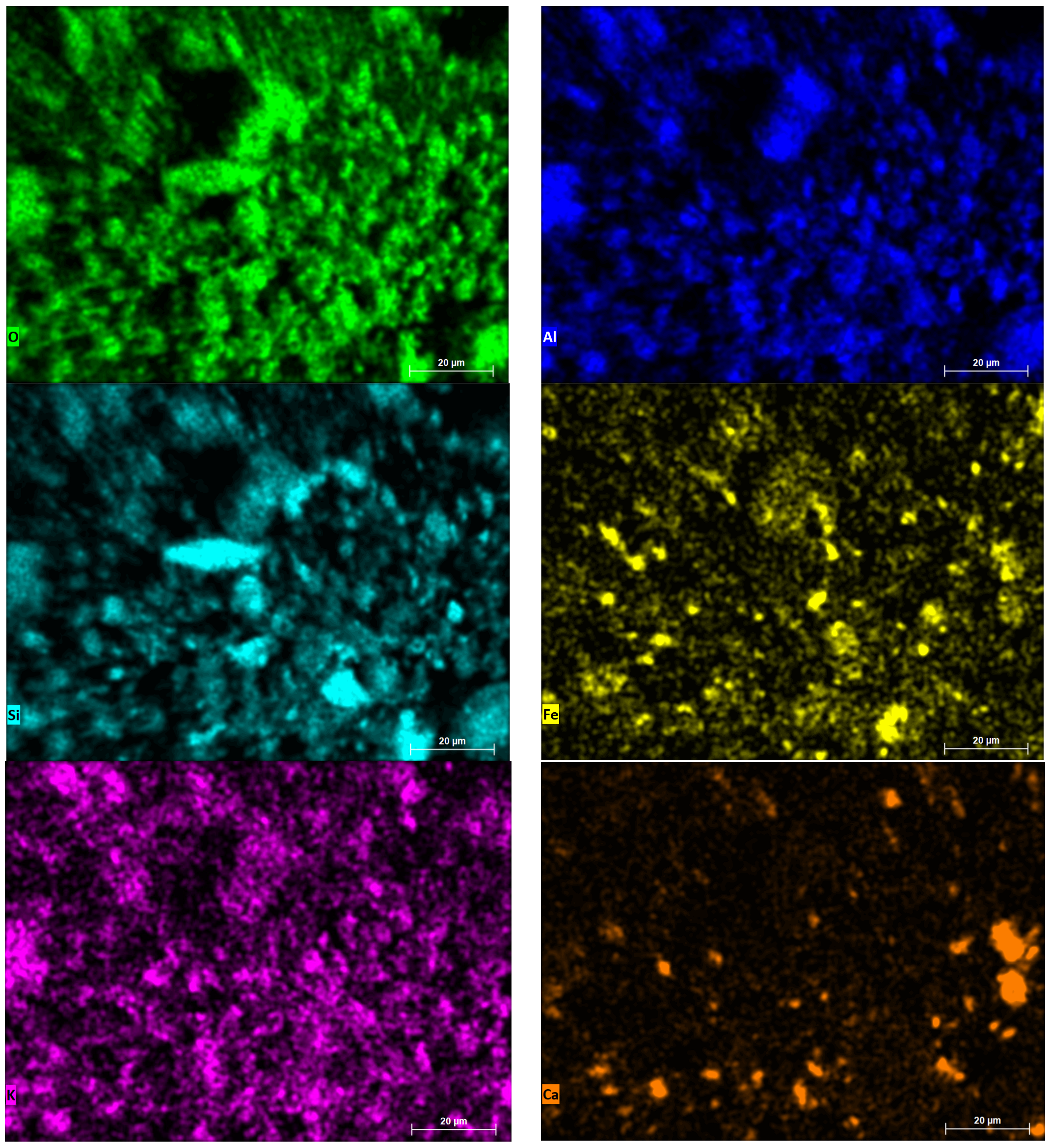
The elemental composition of the shungite ore was determined by SEM–EDS (Figure 1). The image obtained in backscattered electron (BSE) mode shows the microstructure of the shungite ore, characterized by a heterogeneous matrix with various mineral inclusions. Elemental maps display the distribution of the main chemical elements: carbon (C, red), oxygen (O, green), aluminum (Al, blue), silicon (Si, cyan), iron (Fe, yellow), potassium (K, magenta), and calcium (Ca, orange). The scale bar is 20 μm. From the elemental maps, it can be seen that carbon is uniformly distributed throughout the matrix, consistent with the carbonaceous nature of shungite.
Silicon and aluminum are primarily concentrated in the silicate phases, iron is found in isolated mineral inclusions, and calcium and potassium are localized in certain areas, likely associated with minor carbonate and feldspar components.
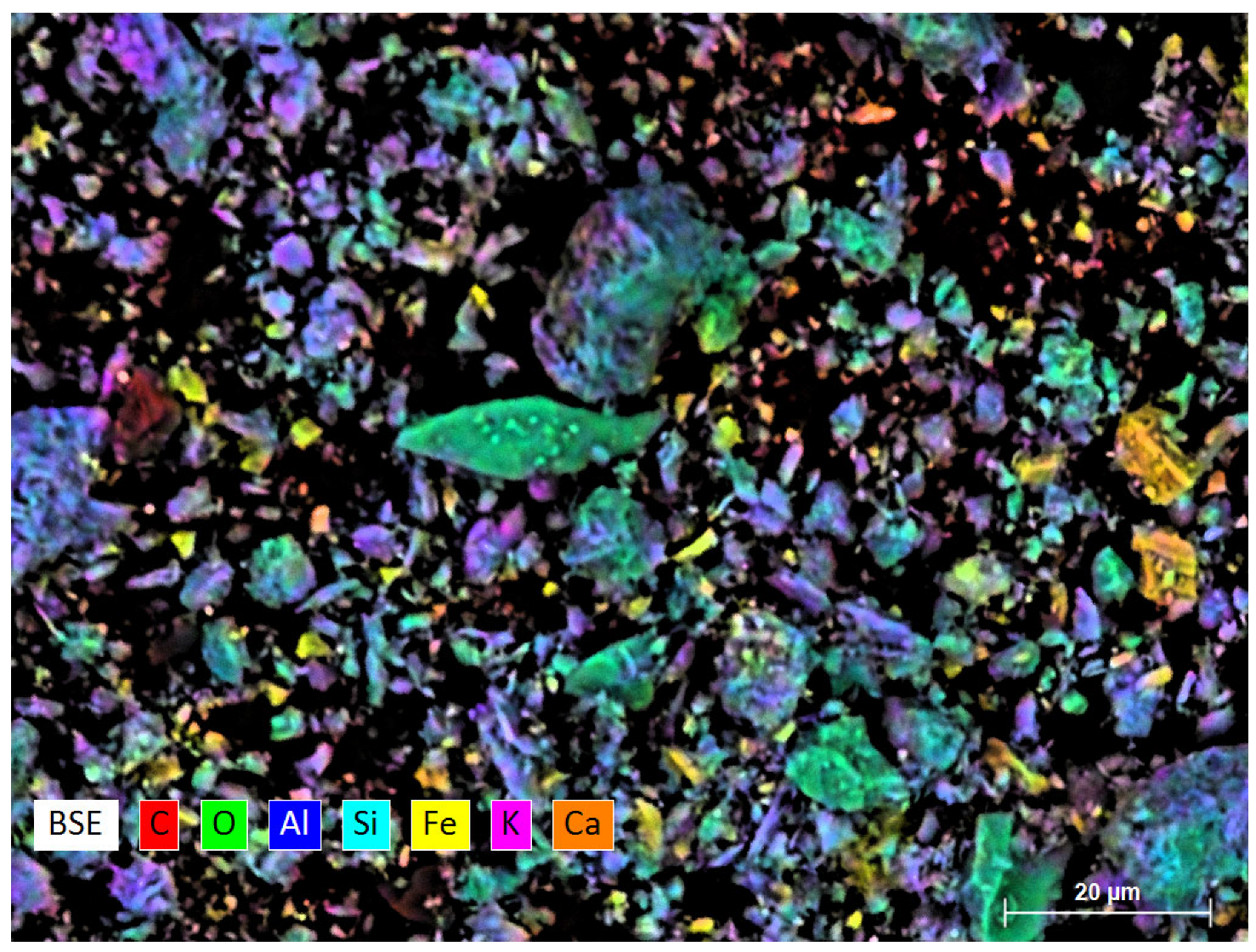
The analysis of the obtained data (Figure 2) showed that the main matrix of the mineral consists of carbon and oxygen, while silicon, aluminum, potassium, and iron are localized in individual mineral inclusions. This combination of elements indicates the mixed mineral–carbon nature of the studied shungite.
Table 2 presents the quantitative elemental composition of the shungite ore (wt.%). These data are provided solely to characterize the mineral–carbon nature of the filler. The combination of a silica-based matrix enriched with carbon and minor oxides (Al, Fe, K, etc.) indicates the organo-mineral origin of shungite and helps explain its potential contribution to interfacial interactions in rubber composites.
Shungite from the Bakyrchik deposit is characterized by a high silica content: SiO2 accounts for 49.44 wt.%, Al2O3 for 21.13 wt.%, C for 13 wt.%, Fe2O3 for 6.75 wt.%, and K2O for 3.42 wt.% (Table 3). Minor mineral impurities include CaO, MgO, and TiO2 (1–3 wt.%). Oxides of phosphorus, manganese, and sulfur are present in trace amounts (<0.3 wt.%). This oxide composition provides high chemical activity and multifunctionality of shungite, contributing to its effectiveness as an active component in polymer composites.
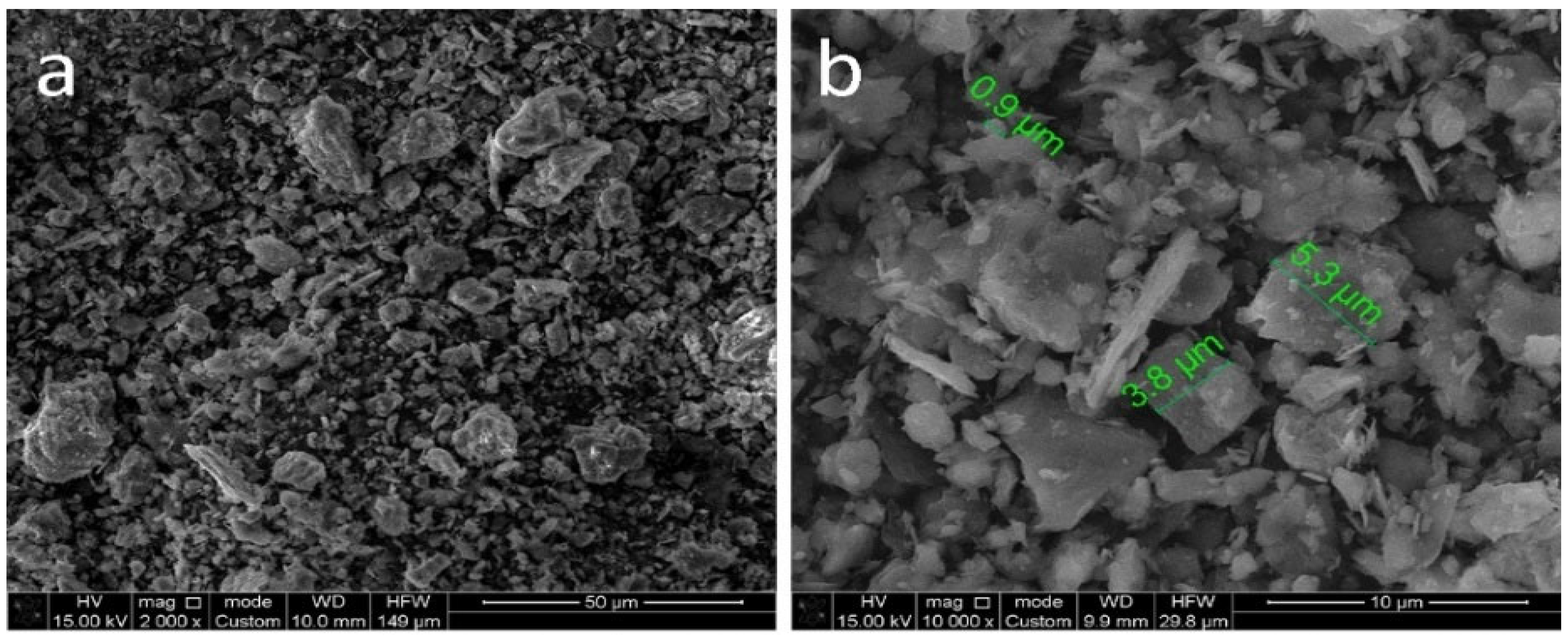
It should be noted that the data presented in Table 2 correspond to the surface elemental composition, whereas Table 3 reports the oxide composition, where oxygen is distributed among the respective oxide phases. Consequently, the discrepancies in the total oxygen content between the tables are attributable to the differing methodologies used for representing the chemical composition. Morphological analysis of the shungite performed by SEM (Figure 3) revealed that its particles constitute irregularly shaped carbon–mineral aggregates exhibiting pronounced microstructural heterogeneity of the surface. The shungite particles are characterized by thin, lamellar platelets and their fractured fragments. This morphology is attributed to the presence of a carbon phase characterized by a structure typical of amorphous carbon materials, which is also observed in a number of layered minerals. The particle size of the initial shungite filler ranges from 0.9 to 5 μm, indicating that the filler particle size in the composite remains within the range determined for the filler in isolation, which suggests the absence of identifiable agglomerates in the composites. These values were obtained for the powder prior to its incorporation into the rubber compound.
The reinforcement of elastomers by dispersed fillers is largely governed by their dispersity and high specific surface area. Numerous studies have demonstrated that finely dispersed fillers—such as precipitated silica and carbon black—provide substantial improvements in tensile strength, hardness, and abrasion resistance under otherwise identical conditions, primarily due to the large interfacial area available for polymer–filler interactions [3,34,35]. In the present study, mixed filler systems incorporating such highly dispersed components (BS-100 and P 324) were employed as reinforcing agents, which substantiates their use for enhancing the mechanical performance of the vulcanizates.
The specific surface area of BS-100 silica and carbon black P 324 is (100 ± 20 m2/g) and 60–100 m2/g, respectively [27]. In comparison, the specific surface area of the shungite ore from the Bakyrchik deposit is approximately 9 m2/g, which is an order of magnitude lower. These structural features suggest weaker interfacial interactions between the shungite filler and the polymer matrix relative to BS-100 or carbon black.
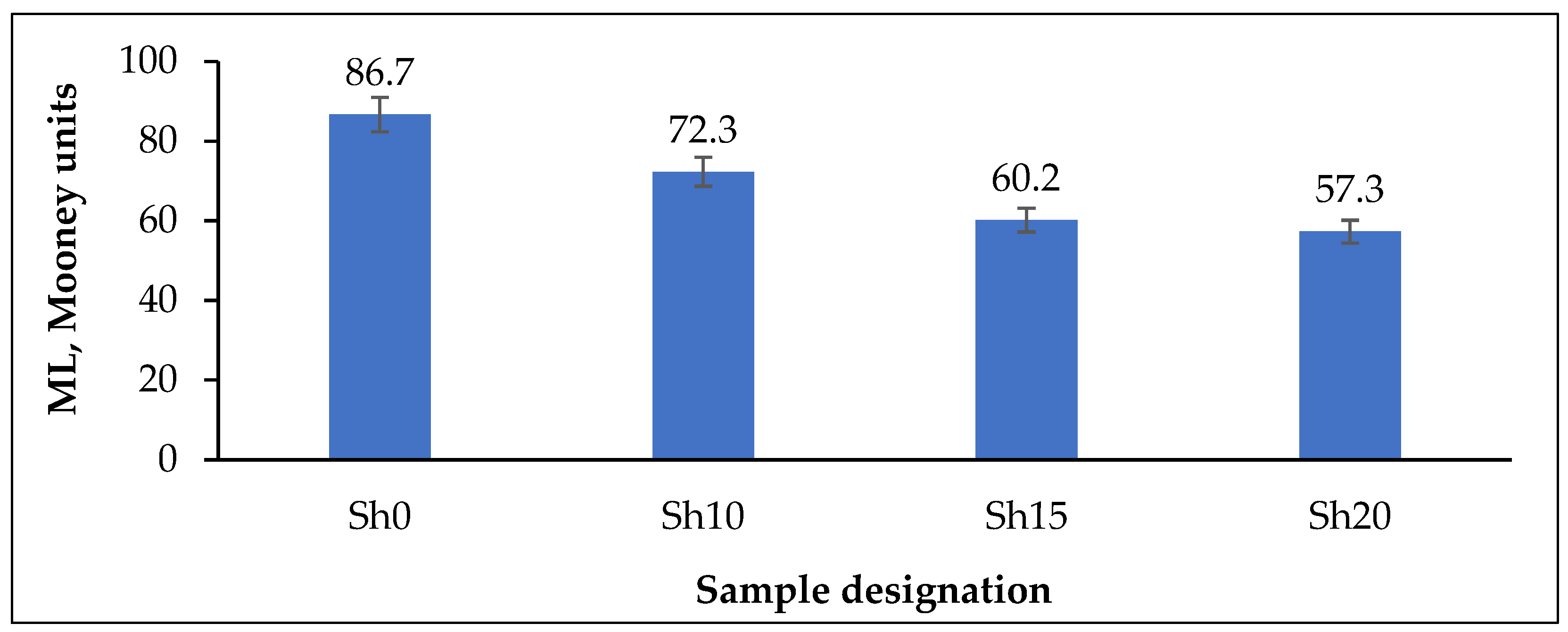
The morphology of shungite particles and their specific surface area directly affect the viscosity and vulcanization kinetics of the rubber compounds (Figure 4, Table 4).
The Mooney viscosity (ML) measurements of the rubber compounds demonstrate that partial replacement of silica with shungite leads to a reduction in viscosity (Figure 4). When 15 phr of BS-100 is substituted with shungite (equivalent to one-third of the silica content) the Mooney viscosity decreases by 30% (from 86.7 to 60.2 Mooney units). This behavior can be attributed to the structure of the carbon phase in shungite, which contains ordered graphite-like and fullerene-like domains [36,37,38]. The carbon phase of shungite may contain layered, graphite-like structures that facilitate enhanced sliding of rubber macromolecules under shear, thereby reducing the internal resistance of the compound. This behavior is analogous to effects reported for composites containing graphite nanoplatelets and related carbonaceous materials [36]. Furthermore, the surface properties of the mineral component (SiO2–Al2O3), characterized by relatively low surface activity, may weaken the adsorption of macromolecules onto the particle surfaces, thereby reducing mixing resistance and lowering impediments to deformation.
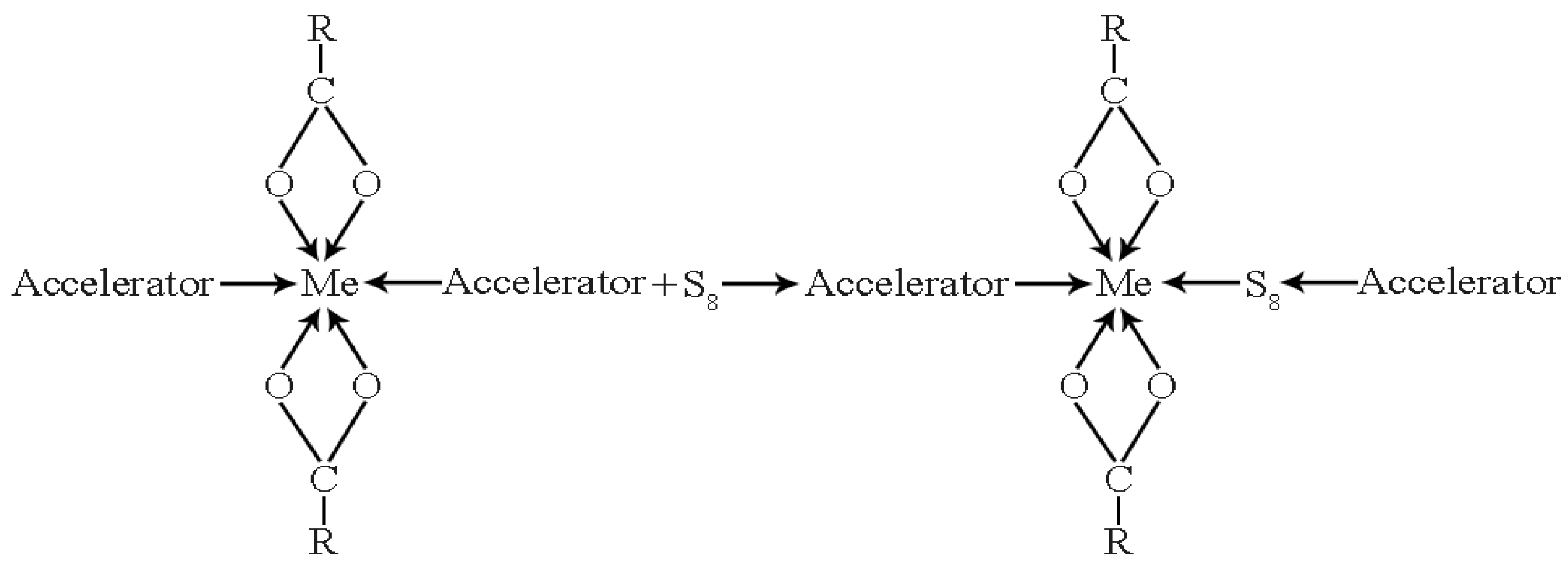
It is well established that, during sulfur vulcanization in the complex system comprising rubber, sulfur, an accelerator or a group of accelerators, and an activator, coordination interactions occur with the formation of intermediate complexes, which can be represented by the following Scheme 1 [29,39].
Analysis of the rheometric properties of the rubber compounds (Table 4) shows that increasing the shungite content leads to an increase in scorch time (ts) from 0.41 to 4.44 min. At the same time, a decrease in both the minimum (ML) and maximum (MH) torque values is observed. Meanwhile, the optimum curing time (t90) remains nearly unchanged (16–18 min).
This behavior is likely associated with the presence of metal oxides (Fe3+, Ca2+, K+) and the mineral matrix in shungite, which partially adsorb accelerators and activators and compete with the ZnO–stearic acid system, thereby extending ts. A plausible explanation is that, over time, a portion of the adsorbed components is nevertheless involved in the reaction; therefore, t90 remains almost unchanged. On the other hand, shungite is a low-structure mineral–carbon filler with a relatively small specific surface area and is less effective than carbon black or silica in forming a bound rubber–filler phase. Consequently, the incorporation of shungite leads to a decrease in the viscosity of the rubber compound, as reflected by the lower ML. At the same time, the weaker reinforcing effect and the competition of metal oxides with the zinc-based system result in a less dense and less rigid crosslinked network, which is manifested in a reduced MH.
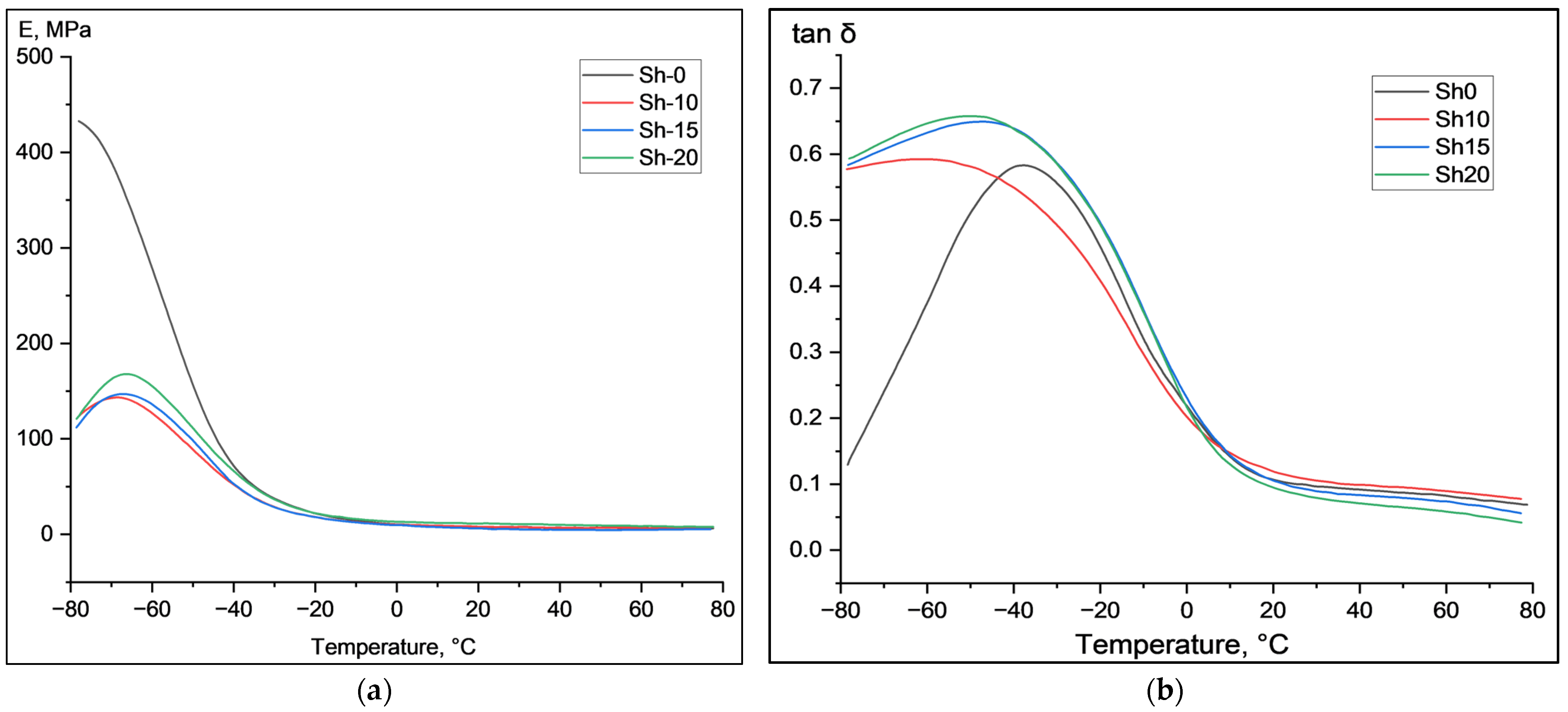
The data obtained by dynamic mechanical analysis (DMA) (Figure 5) clearly demonstrate that the incorporation of shungite filler into the polymer matrix significantly alters the viscoelastic behavior of the vulcanizates. In particular, the storage modulus (E′) decreases sharply at sub-zero temperatures (Figure 5a). For the sample without shungite (Sh0), E′ is 409 MPa at −75 °C, whereas for the shungite-filled samples (Sh10–Sh20), the peak E′ values are substantially lower: 158 MPa (Sh10, −64.7 °C), 140 MPa (Sh15, −45.1 °C), and 135 MPa (Sh20, −63.7 °C). This indicates a weakening of the glassy structure, accompanied by a decrease in stiffness and an increase in material flexibility at sub-zero temperatures. At the same time, the analysis of tan δ reveals a shift of the mechanical loss peak toward lower temperatures—from −36.7 °C for the sample without shungite Sh0 to −58.6…−46.0 °C for Sh10–Sh20—which indicates enhanced segmental mobility and a broader temperature range in which the shungite-filled samples retain elastomeric behavior and exhibit effective energy dissipation (Figure 5b). Taken together, these results confirm that shungite reduces glassy stiffness and modifies the temperature profile of energy dissipation, thereby improving the low-temperature performance characteristics of the vulcanizates.
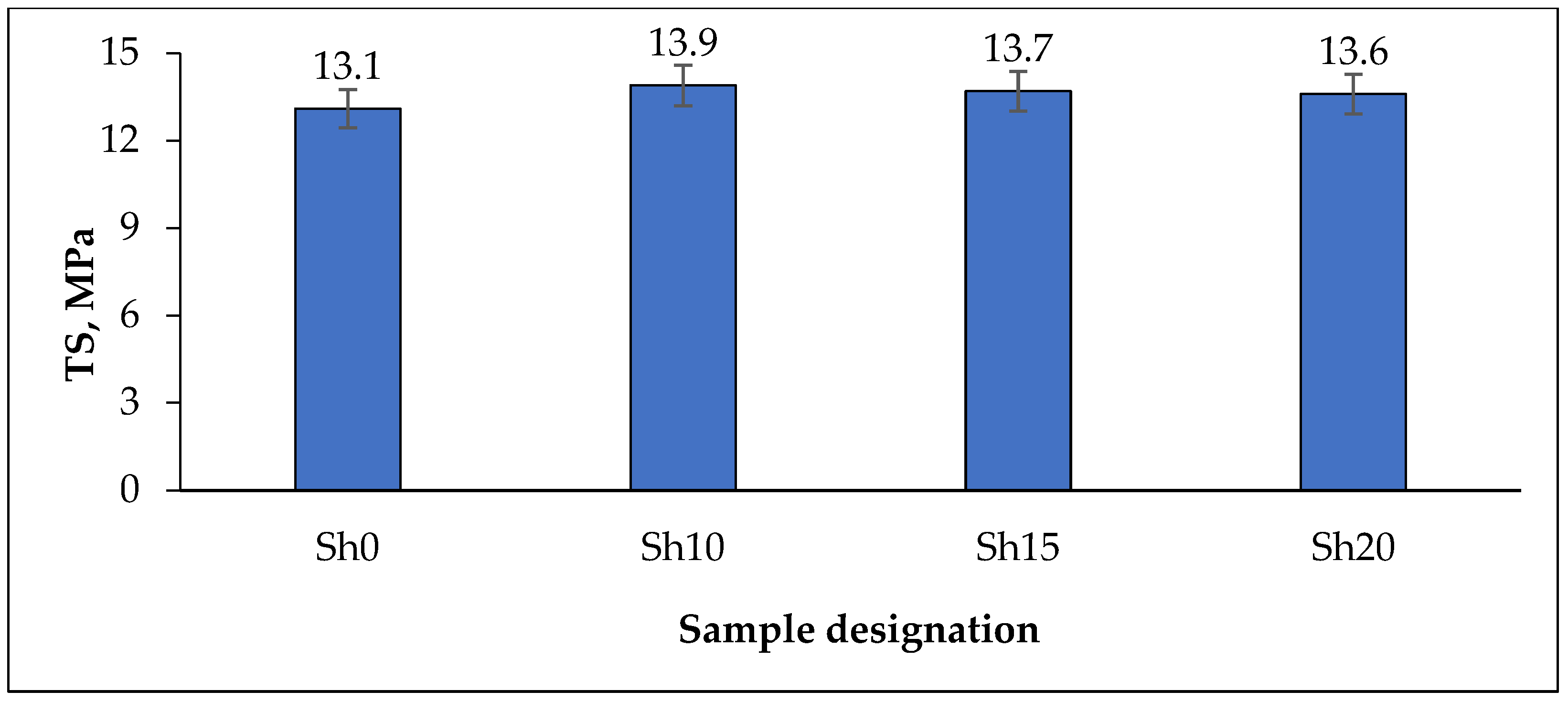
Despite the fact that the introduction of 10–20 phr of shungite alters the rheometric and viscosity characteristics of the rubber compounds, the tensile strength (TS) remains no lower than that of the control sample without shungite (Sh0) (Figure 5). The highest TS value (13.9 MPa) was recorded at a shungite content of 10 phr. When the amount was increased to 15 and 20 phr, the tensile strength slightly decreased (to 13.7 and 13.6 MPa, respectively), but still remained above the control level (Figure 6).
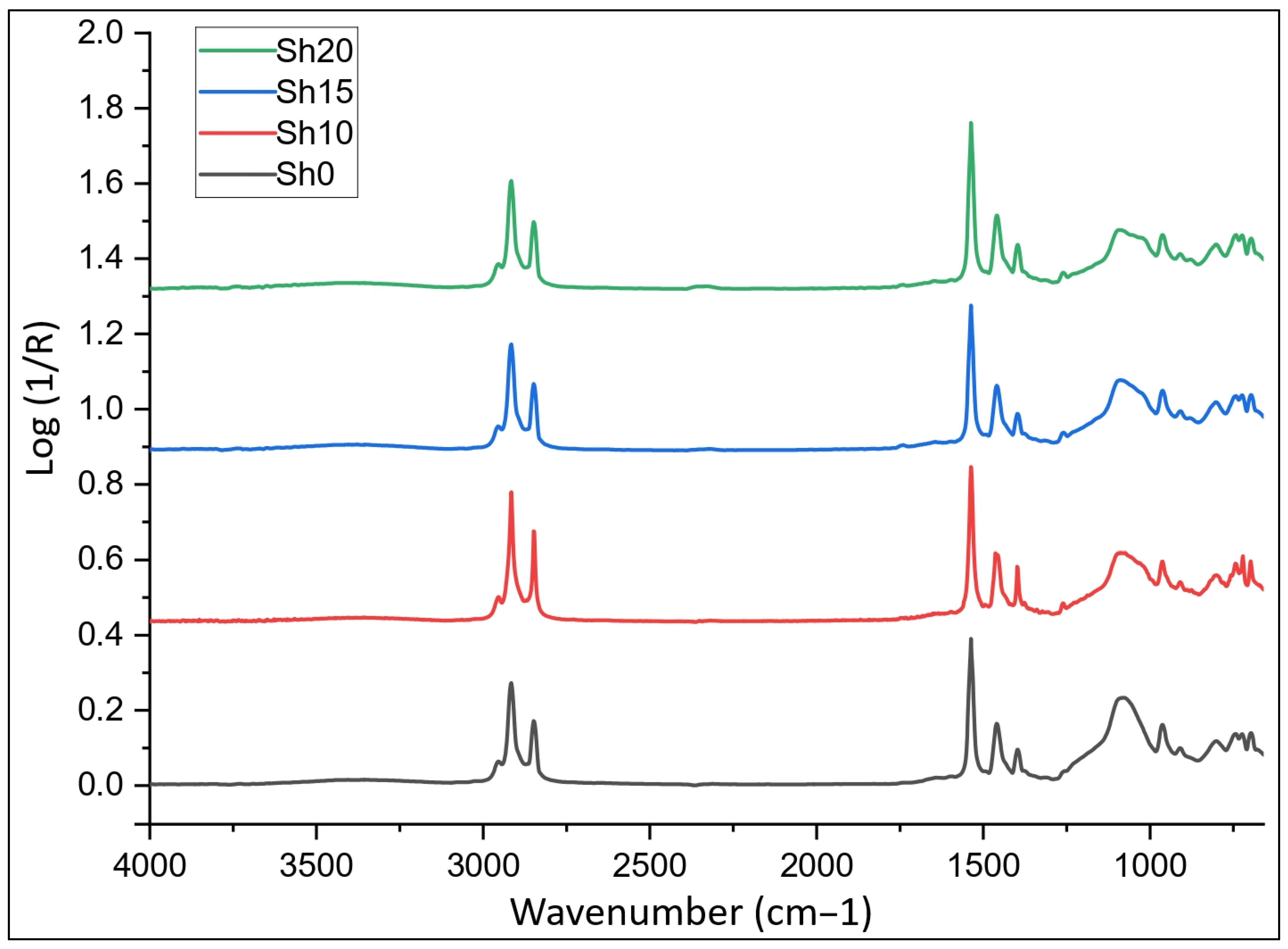
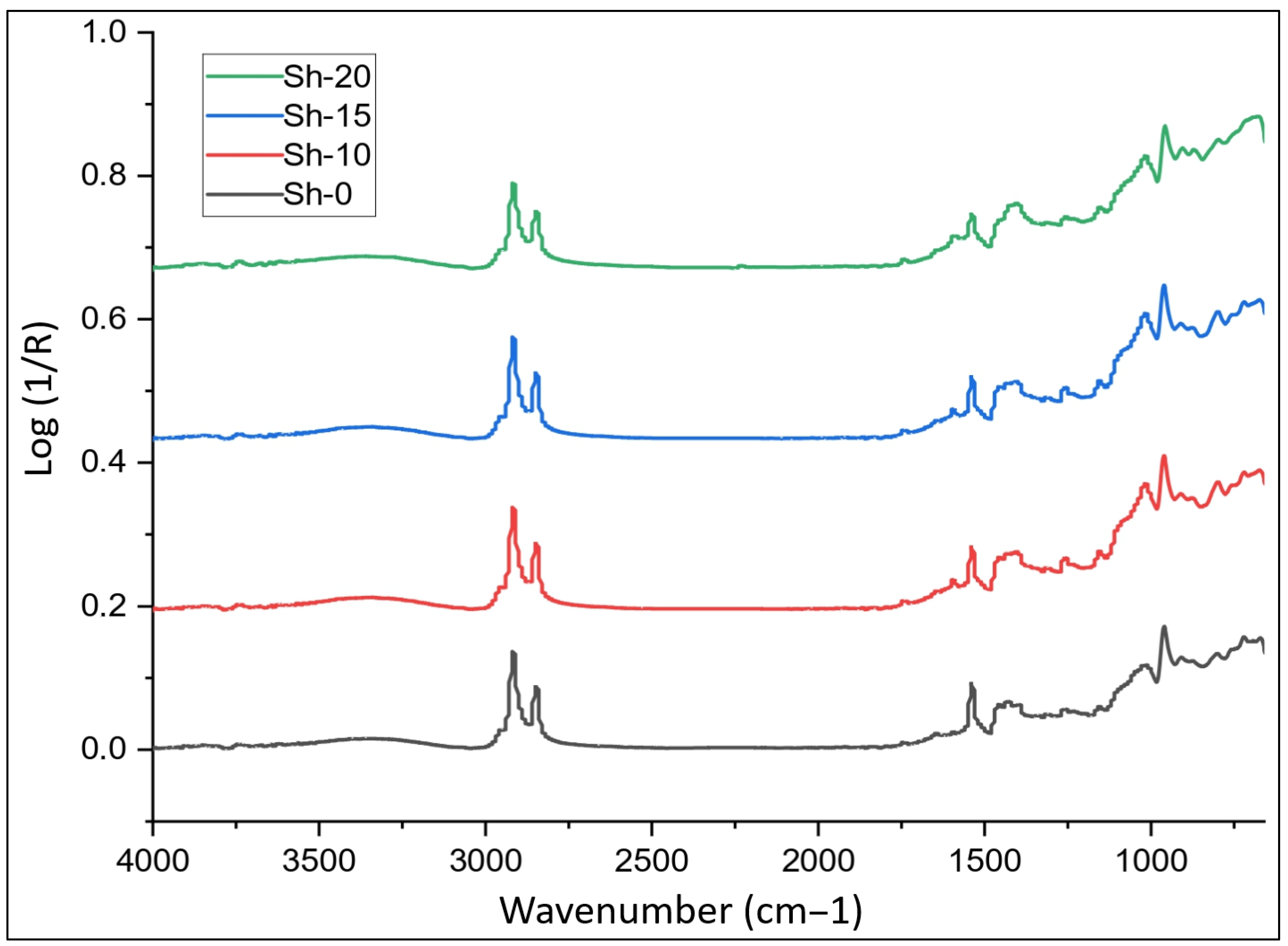
To confirm interfacial interactions at the polymer–filler boundary, FTIR spectra were recorded in the range of 4000–600 cm−1 [40]. In the spectra (Figure 7), characteristic C–H stretching vibrations of chain-type rubbers are observed at 2955, 2916, and 2848 cm−1, along with bands assigned to the aromatic ring of the styrene units in SBR at 1490 and 700–760 cm−1. The silica-related bands include intense asymmetric Si–O–Si stretching vibrations in the region of 1000–1250 cm−1 (maximum at 1080–1100 cm−1) and a signal of silanol groups (Si–OH) at approximately 950–960 cm−1. The band at 950 cm−1 may include contributions from related Si–O vibrations (overlapping with the Si–O–Si/Si–O–Mt components, where Mt denotes montmorillonite), which was taken into consideration during the spectral interpretation. The A950/A1080 ratio was used as a relative indicator of the Si–OH/Si–O–Si fraction under a consistent normalization procedure [41]. A broad O–H band in the 3200–3600 cm−1 range is attributed to hydrogen-bonded Si–OH groups or adsorbed water on the SiO2 surface.
In the shungite-containing samples, a shoulder is observed in the 1200–1260 cm−1 region, which is consistent with the contribution of the LO mode of Si–O–Si vibrations in amorphous SiO2 (1200 cm−1) and, possibly, with the presence of organosilicon fragments (Si–C/Si–CH3) originating exclusively from the internal structure of shungite. The formation of Si–O–C bonds at the interface with the matrix is excluded due to the absence of COH or COOH groups in the latter. Therefore, the assignment of the band near 1260 cm−1 is made with caution and is supported by a combined analysis of the bands in the 1000–1150 cm−1 region [42].
The A950/A1080 ratio (Si–OH/Si–O–Si) decreases sequentially with increasing shungite content: Sh0 = 0.43; Sh10 = 0.36; Sh15 = 0.28; Sh20 = 0.31. This trend indicates a reduction in the fraction of free silanol groups Si–OH and an increasing degree of siloxane condensation/interfacial bonding, which is most pronounced at 10–15 phr of shungite. Such behavior indicates enhanced filler–filler and filler–matrix interactions driven by the presence of shungite.
A mechanistic interpretation suggests that shungite particles interact with the modified silica surface, promoting the formation of Si–O–Si and Si–O–C linkages. These interfacial bonds enhance filler–matrix adhesion and facilitate a more uniform dispersion of the filler within the rubber matrix, thereby improving the mechanical strength and structural stability of the vulcanizates [6,43].
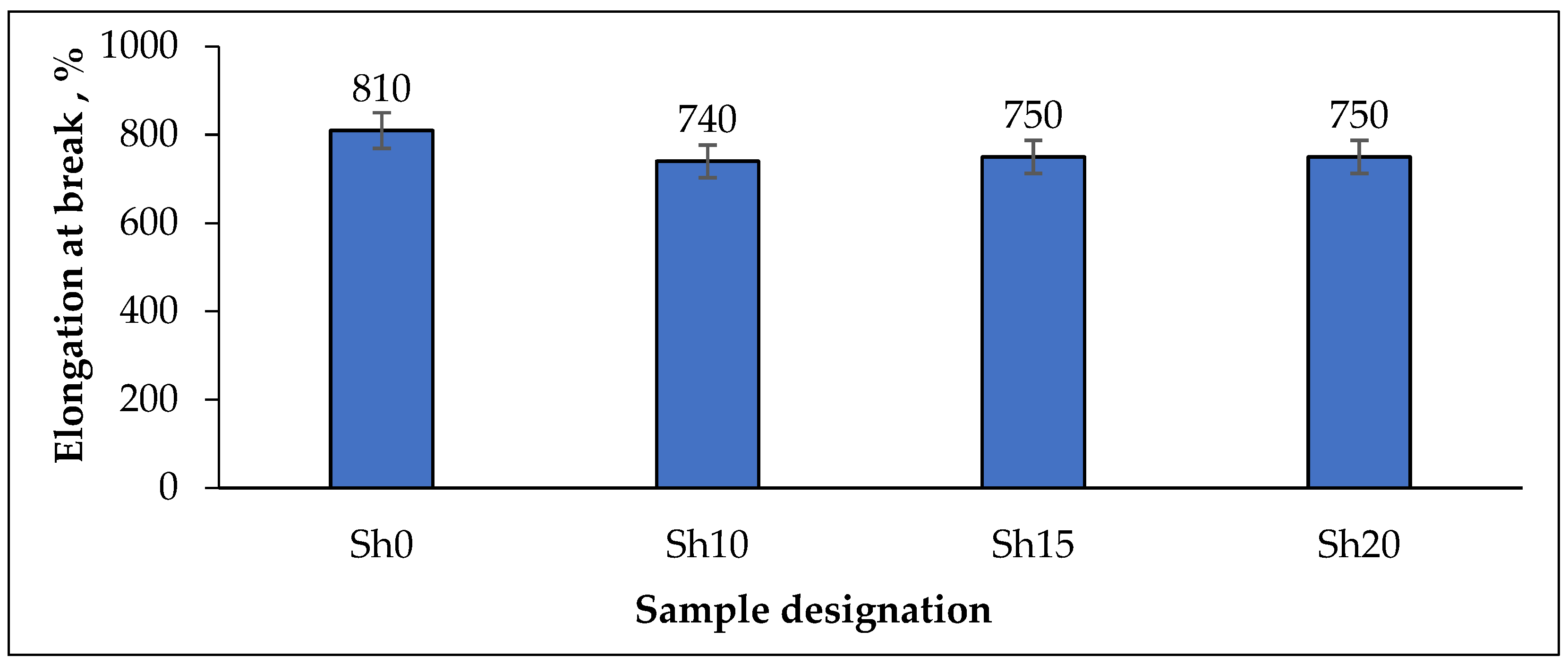
According to the data presented in Figure 8, the introduction of shungite within the studied concentration range results in a decrease in at break from 810% to 740–750%. Such a reduction in elongation is expected for mineral fillers and is associated with the partial restriction of macromolecular mobility; however, the range of variation remains relatively narrow, indicating that the material retains high deformability even at elevated shungite contents.
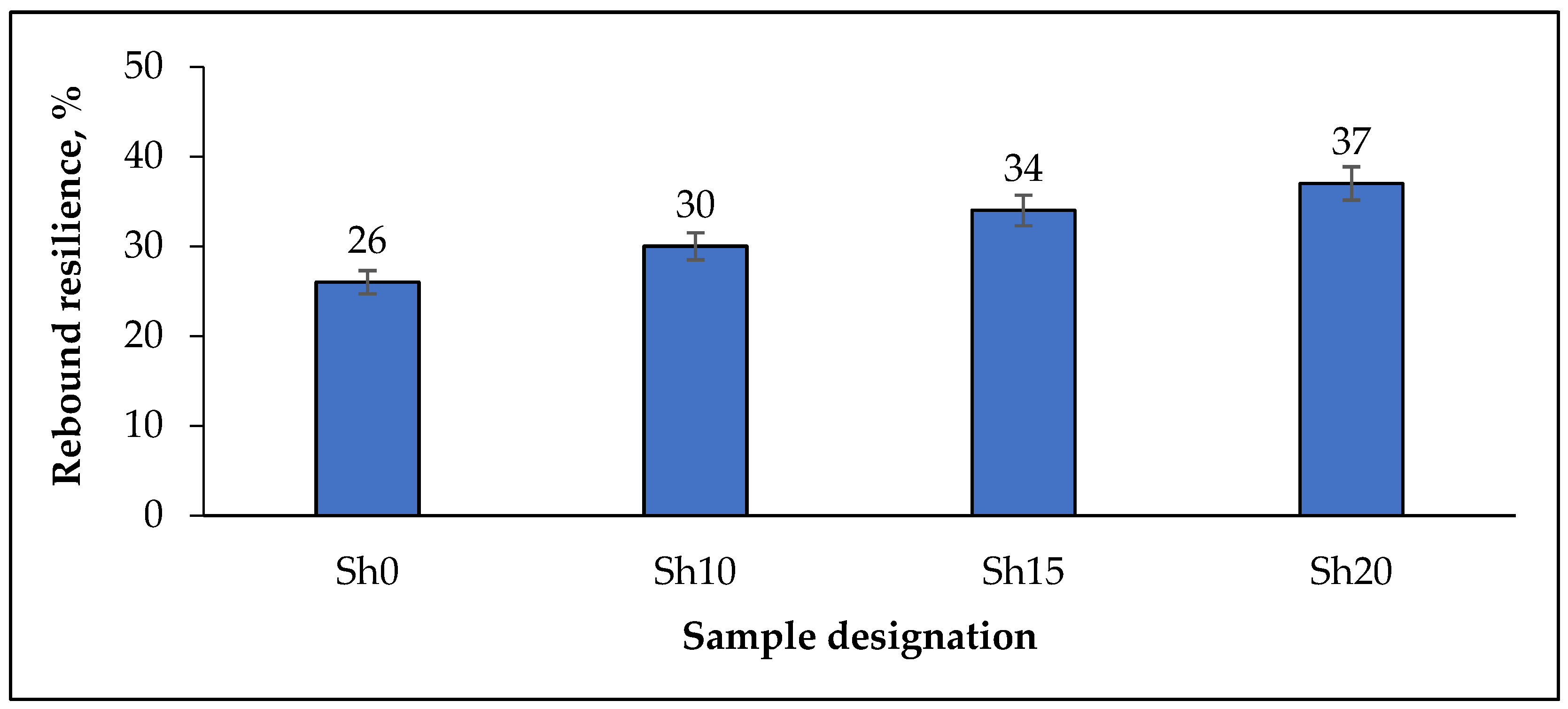
However, according to the data presented in Figure 9, increasing the shungite content leads to a rise in the rebound resilience of the rubbers—from 26% for the control sample (Sh0) to 37% at a filler loading of 20 phr (Sh20).
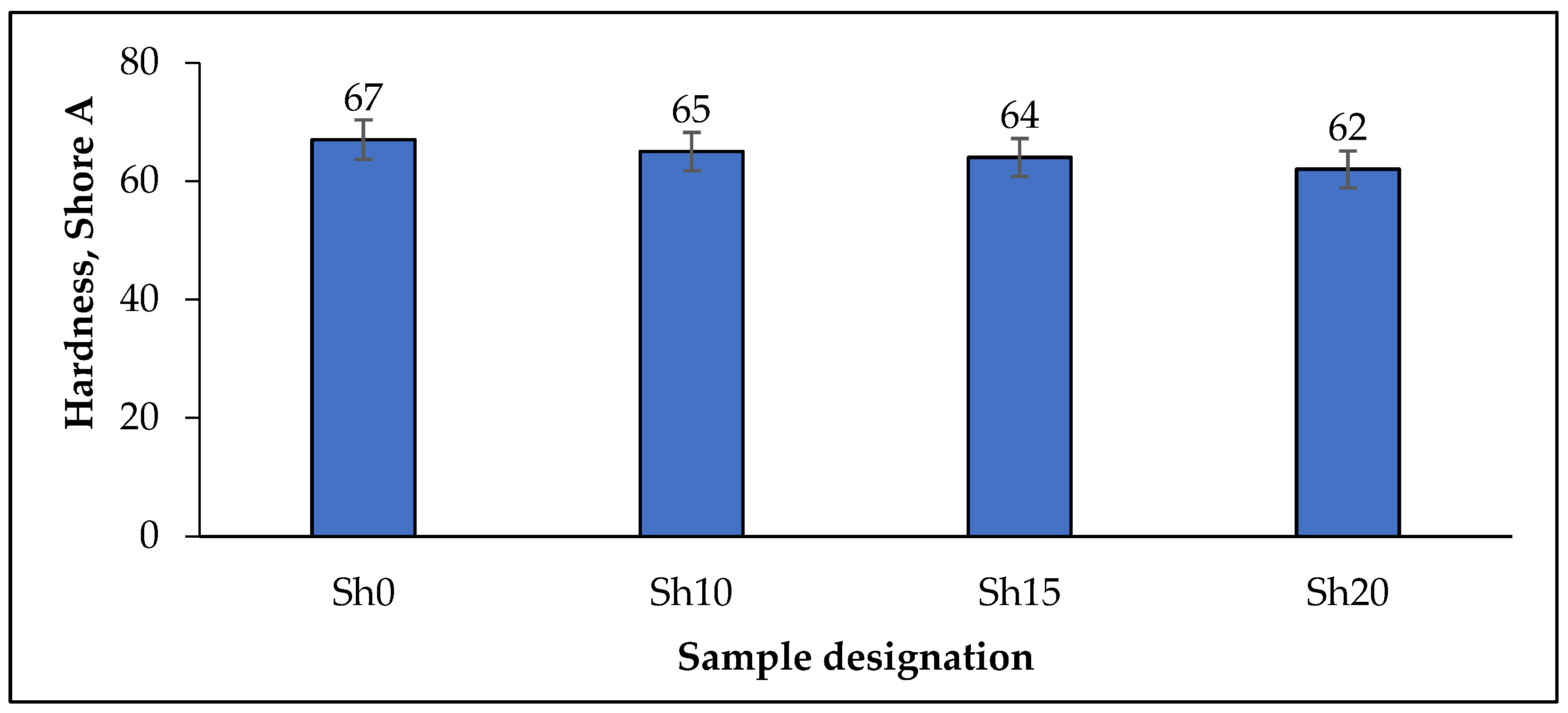
At the same time, the Shore A hardness of the vulcanizates decreases progressively from 67 to 62 units (Figure 10). This trend is fully consistent with the established regularities governing the influence of fillers on the properties of rubber composites: as demonstrated in several studies, the morphology, particle size, and dispersion of the filler have a pronounced effect on the stiffness and hardness of the material [44].
The results of the tensile strength tests after thermal aging (72 h at 100 °C), presented in Table 5, show that when 10 phr of BS-100 is replaced with shungite, the thermal stability of the rubber is largely retained with only minimal loss in strength. In contrast, at shungite contents exceeding 15 phr, a more pronounced decrease in tensile strength and elongation at break after thermal aging is observed. At the same time, it cannot be conclusively stated that this reduction is caused solely by the transition-metal oxides present in shungite. Other factors—such as filler dispersion, interfacial adhesion, crosslink density, and microstructural defects—are also likely to play a significant role. The influence of the mineral component of shungite on the durability of the sulfide network during aging remains a subject for further investigation. Several authors have noted [45,46] that the presence of mineral fillers may affect the oxidative stability of elastomers depending on their chemical nature, surface characteristics, and dispersity. However, definitive evidence for catalytic acceleration by this particular metal oxide in diene-based rubbers is currently lacking. The changes in other physical–mechanical parameters (elongation at break, rebound resilience, and hardness) also reflect the structural transformations occurring upon heating (Table 5). For the control sample (Sh0), thermal aging results in a 32.8% decrease in elongation at break, a 26.9% increase in rebound resilience, and a 4.5% reduction in Shore A hardness. Substitution of 10 phr of silica with shungite reduces the relative loss in elongation at break to 22.2%, while changes in rebound resilience and hardness are limited to 20% and 3.1%, respectively, demonstrating enhanced elastic recovery and structural integrity. At higher shungite loadings (15–20 phr), the aged vulcanizates also retain more favorable elongation at break, rebound resilience, and hardness values compared to the control, indicating that shungite improves the thermo-mechanical stability of the rubber network.
To assess the extent of oxidative degradation, changes in the IR spectra were used: after aging, the appearance (or enhancement) of the carbonyl band at 1710–1730 cm−1 was observed (Figure 11). This approach is consistent with the practice adopted in the literature, where this band is regarded as a reliable marker of the formation of C=O-containing fragments in polymers [47,48,49]. For example, it has been shown [47] that, under artificial aging and natural weathering of polyolefins and other plastics, a “carbonyl band” appears in the 1700–1750 cm−1 region, which is used as an indicator of chemical changes [50]. At a shungite loading of 20 phr, signs of particle agglomeration and intensified oxidative processes become more pronounced, correlating with vulcanizate degradation and a reduction in tensile strength.
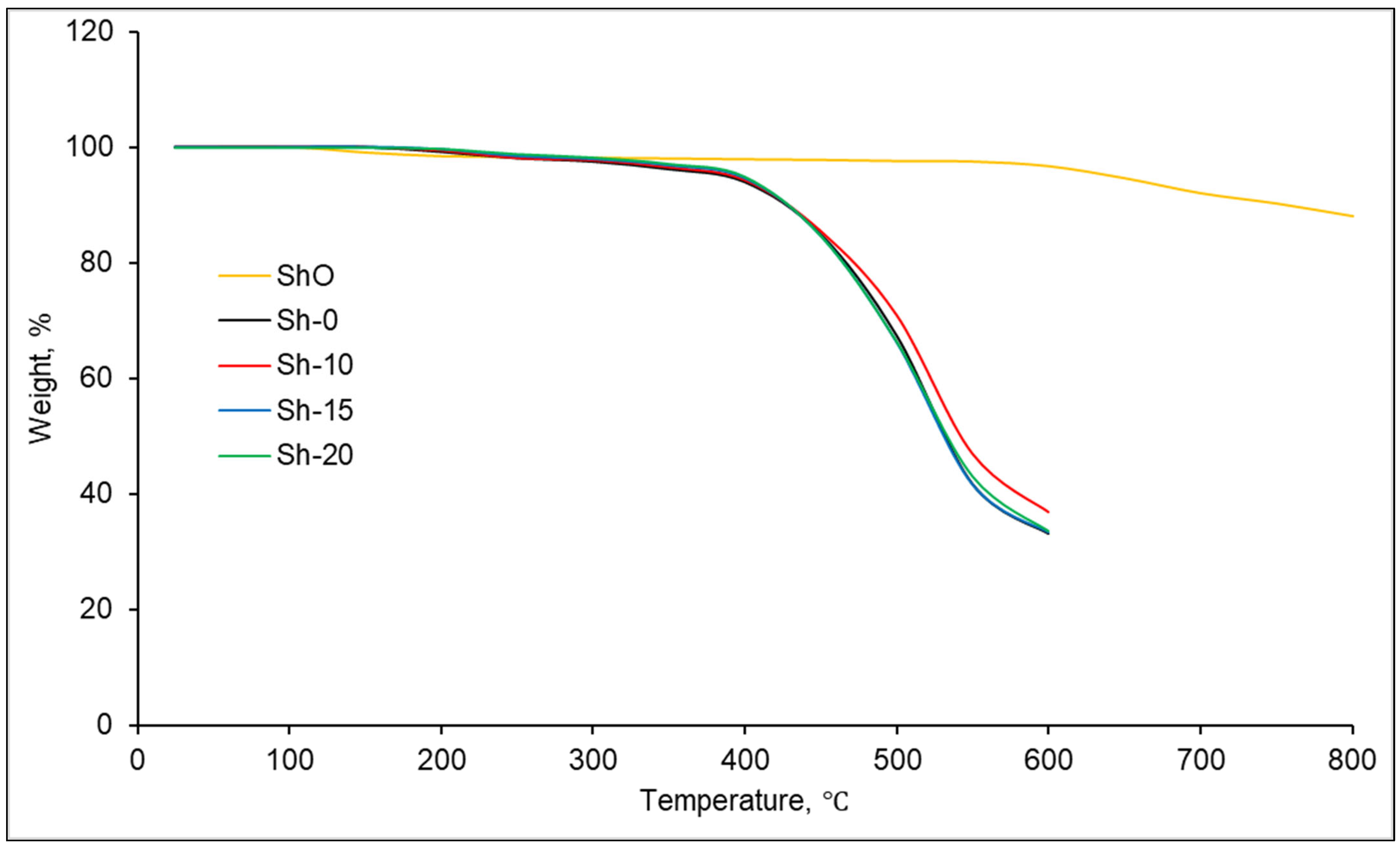
The combined data (namely, the minimum A950/A1080 ratio at Sh/BS-100 ratios of 10/35 and 15/30, the smallest loss in tensile strength at a Sh/BS-100 ratio of 10/35 (Sh10), and the increase in carbonized residue in the TGA curves (Figure 12) at ratios of 15/30 (Sh15) and 20/25 (Sh20)) indicate that the optimal shungite content lies in the range of 10–15 phr. Within this interval, a more stable interfacial layer is formed, and the best balance between tensile strength and thermal stability is achieved.
Thermogravimetric analysis (Figure 12) shows that the vulcanizates decompose within a single temperature interval. The mass-loss stage observed in the range of 300–600 °C corresponds to the degradation of the polymer matrix. Shungite does not undergo mass loss within this temperature interval. Below 300 °C, the mass remains nearly unchanged; in this range, only adsorbed moisture and low-molecular-weight volatile components are removed [51]. The primary mass loss occurs in the 300–500 °C range. The onset of weight reduction at approximately 300 °C is associated with the degradation of the polymer matrix. Subsequently, an intensive mass-loss stage is observed for all vulcanizates in the 400–550 °C region. The total mass loss in this range reaches 45–50%, which corresponds to the pyrolysis of the polymer matrix and the evolution of volatile products, accompanied by the cleavage of crosslinks and the breakdown of the macromolecular chains [52]. The residual mass remaining above 550 °C is attributed to thermally stable components (carbonaceous filler and mineral phases) as well as the intrinsic structure of shungite, which undergoes negligible decomposition and contributes to the enhanced thermal stability of the composites. At 600 °C, approximately 33–37% of the mass is retained, indicating the formation of a thermally stable carbonaceous char. Shungite itself exhibits minimal thermal degradation: its mass decreases by only 12% when the temperature increases from 600 to 800 °C. Several studies [53,54] have shown that the incorporation of shungite into rubber matrices is accompanied by a shift of the onset temperature of thermal degradation by 25–40 °C and an increase in the ash residue.
A comparison of the physical–mechanical properties and thermal effects indicates that a shungite loading of 10–15 phr provides the optimal balance between tensile strength and thermal resistance.

4. Conclusions

This study investigated the effect of a hybrid filler system based on silica and Kazakhstani shungite from the Bakyrchik deposit on the properties of rubber compounds and vulcanizates based on a blend of butadiene-alpha-methylstyrene and isoprene rubbers. It was found that the incorporation of shungite reduces Mooney viscosity and increases scorch time. In comparison with precipitated silica, shungite reduces both the minimum and maximum torque values because it possesses a substantially lower specific surface area and structurality. Consequently, it produces a weaker increase in compound viscosity and stiffness, acting predominantly as an inert mineral filler, which results in lower shear resistance during vulcanization, thereby improving the processability of the rubber compounds.
The incorporation of shungite into the rubber compound leads to a marked improvement in the low-temperature performance. The decrease in storage modulus within the glassy region and the shift of the tan δ peak toward lower temperatures indicate that the shungite-filled samples retain elasticity and effective energy dissipation under dynamic loading at sub-zero temperatures.
Thermogravimetric analysis demonstrated that shungite does not significantly decrease the thermal stability of the vulcanizates, although the presence of resin–asphaltene components leads to partial mass loss above 300 °C. Physicomechanical testing showed that an optimal shungite loading lies in the range of 10–15 phr, where the best balance between tensile strength, elongation at break, and rebound resilience is achieved. Among the studied compositions, the formulation containing 10 phr of shungite is the most promising, providing improved processing behavior of the rubber compounds, high resistance to thermal-oxidative aging, and satisfactory performance characteristics of the vulcanizates. Overall, shungite can be regarded as a cost-effective alternative for the partial replacement of silica in rubber composites. It should also be noted that the adverse effects associated with the presence of Fe2+ species extend to other fillers, such as talc, and that this drawback can be mitigated by the introduction of chelating additives.

Author Contributions

Conceptualization, A.N. and Y.K.; methodology, K.B., A.N., A.K. and W.I.; software, A.K.; validation, K.B., A.N. and R.T.; formal analysis, K.B., A.N. and Y.K.; investigation, A.N.; resources, K.B. and W.I.; data curation, A.N. and E.C.; writing—original draft preparation, A.N., E.C. and Y.K.; writing—review and editing, A.N., E.C. and Y.K.; visualization, A.N.; supervision, E.C., R.T. and M.N.; project administration, M.N.; funding acquisition, K.B. All authors have read and agreed to the published version of the manuscript.

Funding

This research has been funded by the Science Committee of the Ministry of Education and Science of the Republic of Kazakhstan (Grant No. AP22686318).

Data Availability Statement

The raw data supporting the conclusions of this article will be made available by the authors on request.

Acknowledgments

The author expresses gratitude to the Ministry of Culture and Information of the Republic of Kazakhstan (grant “Tauelsizdik urpaktary” 2024).

Conflicts of Interest

The authors declare no conflicts of interest.

Abbreviations

The following abbreviations are used in this manuscript:
IR SKI-3Synthetic isoprene rubber
SEMScanning electron microscopy
SBRbutadiene-alpha-methylstyrene rubber
ShOShungite ore
TGAThermogravimetric Analysis

References

  1. Dadkhah, M.; Messori, M. A Comprehensive Overview of Conventional and Bio-Based Fillers for Rubber Formulations Sustainability. Mater. Today Sustain. 2024, 27, 100886. [Google Scholar] [CrossRef]
  2. Fan, Y.; Fowler, G.D.; Zhao, M. The Past, Present and Future of Carbon Black as a Rubber Reinforcing Filler–A Review. J. Clean. Prod. 2020, 247, 119115. [Google Scholar] [CrossRef]
  3. Robertson, C.G.; Hardman, N.J. Nature of Carbon Black Reinforcement of Rubber: Perspective on the Original Polymer Nanocomposite. Polymers 2021, 13, 538. [Google Scholar] [CrossRef]
  4. Hamed, G.R.; Al-Sheneper, A.A. Effect of Carbon Black Concentration on Cut Growth in NR Vulcanizates. Rubber Chem. Technol. 2003, 76, 436–460. [Google Scholar] [CrossRef]
  5. Wang, J.; Jia, H. The Effects of Carbon–Silica Dual-Phase Filler on the Crosslink Structure of Natural Rubber. Polymers 2022, 14, 3897. [Google Scholar] [CrossRef] [PubMed]
  6. Zou, M.; Gao, W.; Li, Z.; Liu, B.; Li, B.; Liu, K.; Liu, J. Hybrid Carbon Black/Silica Reinforcing System for High-Performance Green Tread Rubber. Polymers 2024, 16, 2762. [Google Scholar] [CrossRef]
  7. Božeková, S.; Ondrušová, D.; Pajtášová, M.; Ďurišová, S.; Mičicová, Z.; Labaj, I.; Moricová, K.; Klepka, T.W. Effect of Alternative Carbon-Based Filler on Rubber Compounds Properties. Polimery 2023, 68, 585–592. [Google Scholar] [CrossRef]
  8. Yakovlev, I.; Fleck, F.; Finger, S.; Sztucki, M.; Karimi-Varzaneh, H.A.; Lacayo-Pineda, J.; Giese, U. Effects of Silica Content on the Durability of Rubber Compounds Described by (Ultra) Small-Angle X-Ray Scattering. Polymer 2025, 321, 128097. [Google Scholar] [CrossRef]
  9. Suci, I.R.R.; Rahmah, A.U.; Budiyati, E.; Purnama, H. The Effect of Silica Filler Source on the Mechanical Properties of Composite Rubber. E3S Web Conf. 2024, 517, 12006. [Google Scholar] [CrossRef]
  10. Phumnok, E.; Khongprom, P.; Ratanawilai, S. Preparation of Natural Rubber Composites with High Silica Contents Using a Wet Mixing Process. ACS Omega 2022, 7, 8364–8376. [Google Scholar] [CrossRef]
  11. Choophun, N.; Chaiammart, N.; Sukthavon, K.; Veranitisagul, C.; Laobuthee, A.; Watthanaphanit, A.; Panomsuwan, G. Natural Rubber Composites Reinforced with Green Silica from Rice Husk: Effect of Filler Loading on Mechanical Properties. J. Compos. Sci. 2022, 6, 369. [Google Scholar] [CrossRef]
  12. Hait, S.; Kumar, L.; Ijaradar, J.; Ghosh, A.K.; De, D.; Chanda, J.; Ghosh, P.; Das Gupta, S.; Mukhopadhyay, R.; Wießner, S.; et al. Unlocking the Potential of Lignin: Towards a Sustainable Solution for Tire Rubber Compound Reinforcement. J. Clean. Prod. 2024, 470, 143274. [Google Scholar] [CrossRef]
  13. Neethirajan, J.; Parathodika, A.R.; Hu, G.-H.; Naskar, K. Functional Rubber Composites Based on Silica-Silane Reinforcement for Green Tire Application: The State of the Art. Funct. Compos. Mater. 2022, 3, 7. [Google Scholar] [CrossRef]
  14. Abdallah Khalaf, E.S. A Comparative Study for the Main Properties of Silica and Carbon Black Filled Bagasse-Styrene Butadiene Rubber Composites. Polym. Polym. Compos. 2023, 31, 09673911231171035. [Google Scholar] [CrossRef]
  15. Kabulov, A.T.; Beknazarov, K.I.; Tokpayev, R.R.; Atchabarova, A.A.; Bulybaev, M.E.; Khassanov, D.A.; Kubasheva, D.B.; Slyambayeva, A.K.; Kishibayev, K.K.; Nauryzbayev, M.K. Production of Dry Building Mixes Using Waste of the Mining and Metallurgical Complex of Kazakhstan. Int. J. Biol. Chem. 2022, 15, 83–90. [Google Scholar] [CrossRef]
  16. Tokpayev, R.R.; Atchabarova, A.A.; Abdullayeva, S.A.; Nechipurenko, S.V.; Yefremov, S.A.; Nauryzbayev, M.K. New Supports for Carbon-Metal Catalytic Systems Based on Shungite and Carbonizates of Plant Raw Materials. Eurasian Chem. J. 2015, 17, 223. [Google Scholar] [CrossRef]
  17. Atchabarova, A.A.; Tokpayev, R.R.; Kabulov, A.T.; Nechipurenko, S.V.; Nurmanova, R.A.; Yefremov, S.A.; Nauryzbayev, M.K. New Electrodes Prepared from Mineral and Plant Raw Materials of Kazakhstan. Eurasian Chem. J. 2016, 18, 141. [Google Scholar] [CrossRef]
  18. Kishibayev, K.K.; Serafin, J.; Tokpayev, R.R.; Khavaza, T.N.; Atchabarova, A.A.; Abduakhytova, D.A.; Ibraimov, Z.T.; Sreńscek-Nazzal, J. Physical and Chemical Properties of Activated Carbon Synthesized from Plant Wastes and Shungite for CO2 Capture. J. Environ. Chem. Eng. 2021, 9, 106798. [Google Scholar] [CrossRef]
  19. Wang, J.; Li, S.; Yang, L.; Liu, B.; Xie, S.; Qi, R.; Zhan, Y.; Xia, H. Graphene-Based Hybrid Fillers for Rubber Composites. Molecules 2024, 29, 1009. [Google Scholar] [CrossRef]
  20. Wang, J.; Zhang, K.; Fei, G.; Salzano de Luna, M.; Lavorgna, M.; Xia, H. High Silica Content Graphene/Natural Rubber Composites Prepared by a Wet Compounding and Latex Mixing Process. Polymers 2020, 12, 2549. [Google Scholar] [CrossRef]
  21. Liu, H.; Yang, L.; Liu, X.; Cao, J.-P.; Zhang, J.; Luo, Z.; Gao, Z. Silicon Dioxide Nanoparticle Decorated Graphene with Excellent Dispersibility in Natural Rubber Composites via Physical Mixing for Application in Green Tires. Compos. Part B Eng. 2023, 258, 110700. [Google Scholar] [CrossRef]
  22. Egorov, E.N.; Salomatina, E.V.; Vassilyev, V.R.; Bannov, A.G.; Sandalov, S.I. Effect of Polynorbornene on Physico-Mechanical, Dynamic, and Dielectric Properties of Vulcanizates Based on Isoprene, α-Methylstyrene-Butadiene, and Nitrile-Butadiene Rubbers for Rail Fasteners Pads. J. Compos. Sci. 2023, 7, 334. [Google Scholar] [CrossRef]
  23. Ushmarin, N.F.; Efimovskii, E.G.; Petrova, N.N.; Sandalov, S.I.; Kol’tsov, N.I. The Influence of Powder Shungytes on Properties Of Oil-And Benzo Resistant Rubbers. Izv. Vyss. Uchebnykh Zaved. Khimiya I Khimicheskaya Tekhnologiya 2018, 62, 54–60. [Google Scholar] [CrossRef]
  24. Yefremov, S.A.; Kabulov, A.T.; Atchabarova, A.A.; Tokpayev, R.R.; Nechipurenko, S.V.; Nauryzbayev, M.K. Production of Shungite Concentrates–Multifunctional Fillers for Elastomers. In Proceedings of the XVIII International Coal Preparation Congress, Saint-Petersburg, Russia, 28 June–1 July 2016; Springer International Publishing: Cham, Switzerland, 2016; pp. 1193–1196. [Google Scholar]
  25. Polunina, I.A.; Vysotskii, V.V.; Senchikhin, I.N.; Polunin, K.E.; Goncharova, I.S.; Petukhova, G.A.; Buryak, A.K. The Effect of Modification on the Physicochemical Characteristics of Shungite. Colloid. J. 2017, 79, 244–249. [Google Scholar] [CrossRef]
  26. Komova, N.N.; Potapov, E.E.; Prut, E.V.; Solodilov, V.I.; Kovaleva, A.N. A Quick Method for Assessing the Activity of Shungite Filler in Elastomer Composite Materials. Int. Polym. Sci. Technol. 2018, 45, 19–22. [Google Scholar] [CrossRef]
  27. Nechipurenko, S.V.; Bobrova, V.V.; Kasperovich, A.V.; Yermaganbetov, M.Y.; Yefremov, S.A.; Kaiaidarova, A.K.; Makhayeva, D.N.; Yermukhambetova, B.B.; Mun, G.A.; Irmukhametova, G.S. The Potential of Using Shungite Mineral from Eastern Kazakhstan in Formulations for Rubber Technical Products. Materials 2024, 18, 114. [Google Scholar] [CrossRef]
  28. Bobrova, V.V.; Nechipurenko, S.V.; Yermukhambetova, B.B.; Kasperovich, A.V.; Yefremov, S.A.; Kaiaidarova, A.K.; Makhayeva, D.N.; Irmukhametova, G.S.; Yeligbayeva, G.Z.; Mun, G.A. Application of Carbon–Silicon Hybrid Fillers Derived from Carbonised Rice Production Waste in Industrial Tread Rubber Compounds. Polymers 2025, 17, 2070. [Google Scholar] [CrossRef]
  29. Beknazarov, K.; Tokpayev, R.; Nakyp, A.; Karaseva, Y.; Cherezova, E.; El Fray, M.; Volfson, S.; Nauryzbayev, M. Influence of Kazakhstan’s Shungites on the Physical–Mechanical Properties of Nitrile Butadiene Rubber Composites. Polymers 2024, 16, 3370. [Google Scholar] [CrossRef]
  30. Nechipurenko, S.V.; Efremov, S.A.; Zabara, N.A.; Kasperovich, A.V.; Abzaldinov, K.S.; Stoyanov, O.V.; Yarullin, A.F. Composite materials based on methylstyrene butadiene rubber and carbon-mineral fillers. Her. Technol. Univ. 2023, 26, 87–90. [Google Scholar] [CrossRef]
  31. Kravchenko, E.S.; Potapov, E.E.; Bobrov, A.P.; Smal, V.A.; Erokhin, A.I.; Plotnikova, M.F. A Study of the Possibility of Using Shungite in Latex Rubber Formulations for the Manufacture of Gloves with High Resistance to Aggressive Media. Int. Polym. Sci. Technol. 2016, 43, 21–24. [Google Scholar] [CrossRef]
  32. Garishin, O.K.; Shadrin, V.V.; Belyaev, A.Y.; Kornev Yu, V. Kornev Micro and Nanoshungites—Perspective Mineral Fillers for Rubber Composites Used in the Tires. Mater. Phys. Mech. 2018, 40, 56–62. [Google Scholar] [CrossRef]
  33. Dauylbek, A.; Rakhmatullina, A.; Nakyp, A.; Turmanov, R.; Zhanbekov, K. Zhanbekov Modification of Synthetic Isoprene Rubber with Phospholipid Concentrate during the Stage of Rubber Extraction from Polymerizate. Chem. Methodol. 2026, 10, 49–62. [Google Scholar] [CrossRef]
  34. Heinrich, G.; Klüppel, M.; Vilgis, T.A. Reinforcement of Elastomers. Curr. Opin. Solid. State Mater. Sci. 2002, 6, 195–203. [Google Scholar] [CrossRef]
  35. Boonstra, B.B. Role of Particulate Fillers in Elastomer Reinforcement: A Review. Polymer 1979, 20, 691–704. [Google Scholar] [CrossRef]
  36. Vishnevskii, K.V.; Kurmashov, P.B.; Golovakhin, V.; Maksimovskiy, E.A.; Jin, H.; Shashok, Z.S.; Bannov, A.G. The Role of Graphite-like Materials in Modifying the Technological Properties of Rubber Composites. J. Compos. Sci. 2025, 9, 522. [Google Scholar] [CrossRef]
  37. Zhang, H.; Yang, Y.; Liu, Q.; Ji, L.; Sun, Z.; Sun, J.; Han, Z.; Ma, Q.; Yang, H.; Ke, Y.; et al. Natural Coal-Derived Graphite as Rubber Filler and the Influence of Its Progressive Graphitization on Reinforcement Performance. Compos. Part A Appl. Sci. Manuf. 2024, 184, 108237. [Google Scholar] [CrossRef]
  38. Rozhkova, N.N. Role of Fullerene-like Structures in the Reactivity of Shungite Carbon as Used in New Materials with Advanced Properties. In Perspectives of Fullerene Nanotechnology; Kluwer Academic Publishers: Dordrecht, The Netherlands, 2002; pp. 237–251. [Google Scholar]
  39. Okhotina, N.A.; Kurbangaleeva, A.R.; Panfilova, O.A. Syr’e i Materialy Dlya Rezinovoj Promyshlennosti (Raw and Other Materials for the Rubber Industry); Kazan National Research Technological University: Kazan, Russia, 2014; Izd-vo Kazan. nats. isl. technol. un-ta. [Google Scholar]
  40. Wang, M.-J. Effect of Polymer-Filler and Filler-Filler Interactions on Dynamic Properties of Filled Vulcanizates. Rubber Chem. Technol. 1998, 71, 520–589. [Google Scholar] [CrossRef]
  41. Steinbach, J.C.; Schneider, M.; Hauler, O.; Lorenz, G.; Rebner, K.; Kandelbauer, A. A Process Analytical Concept for In-Line FTIR Monitoring of Polysiloxane Formation. Polymers 2020, 12, 2473. [Google Scholar] [CrossRef]
  42. Liu, H.; Kaya, H.; Lin, Y.; Ogrinc, A.; Kim, S.H. Vibrational Spectroscopy Analysis of Silica and Silicate Glass Networks. J. Am. Ceram. Soc. 2022, 105, 2355–2384. [Google Scholar] [CrossRef]
  43. Ryu, C.S.; Kim, K.-J. Interfacial Adhesion in Silica-Silane Filled NR Composites: A Short Review. Polymers 2022, 14, 2705. [Google Scholar] [CrossRef]
  44. Fröhlich, J.; Niedermeier, W.; Luginsland, H.-D. The Effect of Filler–Filler and Filler–Elastomer Interaction on Rubber Reinforcement. Compos. Part A Appl. Sci. Manuf. 2005, 36, 449–460. [Google Scholar] [CrossRef]
  45. Smejda-Krzewicka, A.; Mrozowski, K. Chloroprene and Butadiene Rubber (CR/BR) Blends Cross-Linked with Metal Oxides: INFLUENCE of Vulcanization Temperature on Their Rheological, Mechanical, and Thermal Properties. Molecules 2025, 30, 2780. [Google Scholar] [CrossRef]
  46. Alfannakh, H.; Alnaim, N.; Ibrahim, S.S. Thermal Stability and Non-Isothermal Kinetic Analysis of Ethylene–Propylene–Diene Rubber Composite. Polymers 2023, 15, 1890. [Google Scholar] [CrossRef]
  47. Campanale, C.; Savino, I.; Massarelli, C.; Uricchio, V.F. Fourier Transform Infrared Spectroscopy to Assess the Degree of Alteration of Artificially Aged and Environmentally Weathered Microplastics. Polymers 2023, 15, 911. [Google Scholar] [CrossRef]
  48. Sandt, C.; Waeytens, J.; Deniset-Besseau, A.; Nielsen-Leroux, C.; Réjasse, A. Use and Misuse of FTIR Spectroscopy for Studying the Bio-Oxidation of Plastics. Spectrochim. Acta Part A Mol. Biomol. Spectrosc. 2021, 258, 119841. [Google Scholar] [CrossRef] [PubMed]
  49. Ngo, D.; Liu, H.; Chen, Z.; Kaya, H.; Zimudzi, T.J.; Gin, S.; Mahadevan, T.; Du, J.; Kim, S.H. Hydrogen Bonding Interactions of H2O and SiOH on a Boroaluminosilicate Glass Corroded in Aqueous Solution. npj Mater. Degrad. 2020, 4, 1. [Google Scholar] [CrossRef]
  50. Shi, Y.; Shi, L.; Huang, H.; Ye, K.; Yang, L.; Wang, Z.; Sun, Y.; Li, D.; Shi, Y.; Xiao, L.; et al. Analysis of Aged Microplastics: A Review. Environ. Chem. Lett. 2024, 22, 1861–1888. [Google Scholar] [CrossRef]
  51. Awosu, E.; Hirano, Y.; Kumagai, S.; Saito, Y.; Tahara, S.; Nasi, T.; Homma, M.; Minato, T.; Hojo, M.; Yoshioka, T. Pyrolysis Characteristics of Tire Rubber at Low Temperatures. ACS Omega 2025, 10, 8119–8126. [Google Scholar] [CrossRef]
  52. Thitithammawong, A.; Saiwari, S.; Salaeh, S.; Hayeemasae, N. Potent Application of Scrap from the Modified Natural Rubber Production as Oil Absorbent. Polymers 2022, 14, 5066. [Google Scholar] [CrossRef]
  53. Olewnik-Kruszkowska, E.; Adamczyk, A.; Gierszewska, M.; Grabska-Zielińska, S. Comparison of How Graphite and Shungite Affect Thermal, Mechanical, and Dielectric Properties of Dielectric Elastomer-Based Composites. Energies 2021, 15, 152. [Google Scholar] [CrossRef]
  54. Żenkiewicz, M.; Richert, J.; Rytlewski, P.; Richert, A. Comparative Analysis of Shungite and Graphite Effects on Some Properties of Polylactide Composites. Polym. Test. 2011, 30, 429–435. [Google Scholar] [CrossRef]
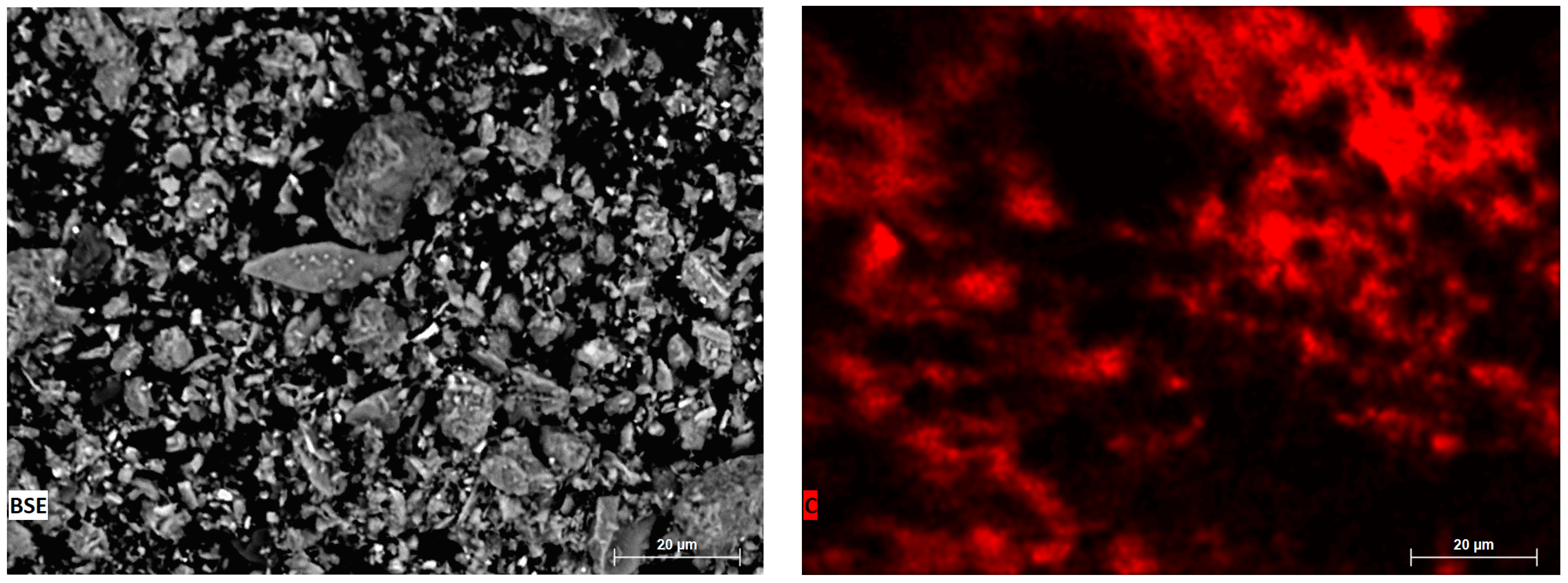
Figure 1. SEM–EDS analysis results of the shungite ore.
Jcs 09 00707 g001aJcs 09 00707 g001b
Figure 2. SEM-EDS micrographs of the shungite ore.
Jcs 09 00707 g002
Figure 3. SEM micrographs of shungite from the Bakyrchik deposit at magnifications of ×2000 (a) and ×10,000 (b).
Jcs 09 00707 g003
Figure 4. Effect of shungite content on the Mooney viscosity of the rubber compounds, ML (1 + 4) at 100 °C.
Jcs 09 00707 g004
Scheme 1. Coordination complexes of the vulcanizing group (sulfur, accelerator, activator).
Jcs 09 00707 sch001
Figure 5. Temperature dependence of the storage modulus (a) and tan δ (b) of the vulcanizates.
Jcs 09 00707 g005
Figure 6. Effect of shungite content on the tensile strength of the vulcanizates.
Jcs 09 00707 g006
Figure 7. FTIR spectra of the vulcanizates.
Jcs 09 00707 g007
Figure 8. Effect of shungite content on the elongation at break of the vulcanizates.
Jcs 09 00707 g008
Figure 9. Effect of shungite content on the rebound resilience of the vulcanizates.
Jcs 09 00707 g009
Figure 10. Effect of shungite content on the Shore A hardness of the vulcanizates.
Jcs 09 00707 g010
Figure 11. FTIR spectra of the vulcanizates after thermal-oxidative aging.
Jcs 09 00707 g011
Figure 12. TG-curves of the vulcanizates with different shungite loadings.
Jcs 09 00707 g012
Table 1. Formulations and designations of the rubber compounds.
NIngredientsSample Designation
Sh0Sh10Sh15Sh20
Content, phr *
1SBR-1705 HI-AR80.080.080.080.0
2IR SKI-320.020.020.020.0
3Sulfur2.02.02.02.0
4DPG0.30.30.30.3
5MBTS1.51.51.51.5
6ZnO5.05.05.05.0
7Stearic acid2.02.02.02.0
8Carbon black P 3545.05.05.05.0
9BS-10045.035.030.025.0
10Shungite010.015.020.0
* Parts per hundred rubber.
Table 2. Elemental composition of shungite from the Bakyrchik deposit (SEM-EDS).
ElementCONaMgAlSiKCaTiFe
wt.%.13.545.91.30.79.519.03.32.10.24.5
Table 3. Mineral–carbon composition of shungite from the Bakyrchik deposit.
ComponentCSiO2Al2O3Fe2O3K2OTiO2CaONa2OMgOP2O5MnOSO3 Total
Content, wt.%1349.4421.136.753.423.062.471.771.310.220.200.23
Table 4. Rheometric characteristics of the rubber compounds (160 °C, 30 min).
ParameterSample Designation
Sh0Sh10Sh15Sh20
ts, min0.413.654.024.44
ML, dN·m3.492.992.211.77
MH, dN·m22.2117.2815.4513.92
t90, min17.9018.3216.1516.95
Table 5. Effect of shungite content on the changes in physical–mechanical properties of the vulcanizates after thermal aging (72 h at 100 °C).
Sample Designation (Table 1)
Sh0Sh10Sh15Sh20
Tensile strength (TS)
TS, MPa11.211.810.39.7
* ∆fp, %−14.5−15.1−24.8−28.7
Elongation at break (ε)
ε, %544576540528
* ∆ε, %−32.8−22.2−28.0−29.6
Rebound resilience (R)
R, %33363840
* ∆R, %26.92011.88.1
Hardness, Shore A (HSA)
HSA 64636362
* ∆HSA, %−4.5−3.1−1.60
* The relative change of the parameter was calculated using the following equation: Δx = x x 0 x 0 100 %   , where x0 is the initial value and x is the current value after thermal aging.
Disclaimer/Publisher’s Note: The statements, opinions and data contained in all publications are solely those of the individual author(s) and contributor(s) and not of MDPI and/or the editor(s). MDPI and/or the editor(s) disclaim responsibility for any injury to people or property resulting from any ideas, methods, instructions or products referred to in the content.