
Antibacterial and Non-Toxic to Mammalian Cell Composite Material Based on Polymethyl-Methacrylate-like Resin Containing Grain-Shaped Copper Oxide Nanoparticles

 ,
,  ,
,  , ,
, , 

Abstract
1. Introduction
2. Materials and Methods
2.1. Synthesis of Copper Oxide Nanoparticles (CopOx NPs)
2.2. Characterization of CopOx NPs
2.3. Addition of CopOx NPs to Photolithographic Resin
2.4. Additive Manufacturing of Composite Material Samples
2.5. Methods for Characterizing Composite Materials
2.6. Measurement of Hydrogen Peroxide Concentration
2.7. Measurement of Hydroxyl Radicals
2.8. Quantitative Determination of 8-Oxoguanine in DNA
2.9. Quantitative Determination of Long-Lived Reactive Protein Species (LRPS)
2.10. Dynamics of E. coli Broth Culture Reproduction
2.11. Evaluation of Antibacterial Activity by Flow Cytofluorimetry
2.12. Cytotoxicity Assessment on Eukaryotic Cells
2.13. Statistical Data Analysis and Visualization
3. Results
4. Discussion
5. Conclusions
- A series of photopolymerizable resins based on a methacrylate-like rubber and containing CopOx NPs grains at concentrations of 0.001%, 0.01%, and 0.1% was successfully synthesized.
- The resulting polymeric materials demonstrated a range of valuable properties, which we attribute to the unique shape and morphology of the incorporated nanoparticles.
- The materials exhibited excellent polishability, making them suitable for the fabrication of optical elements.
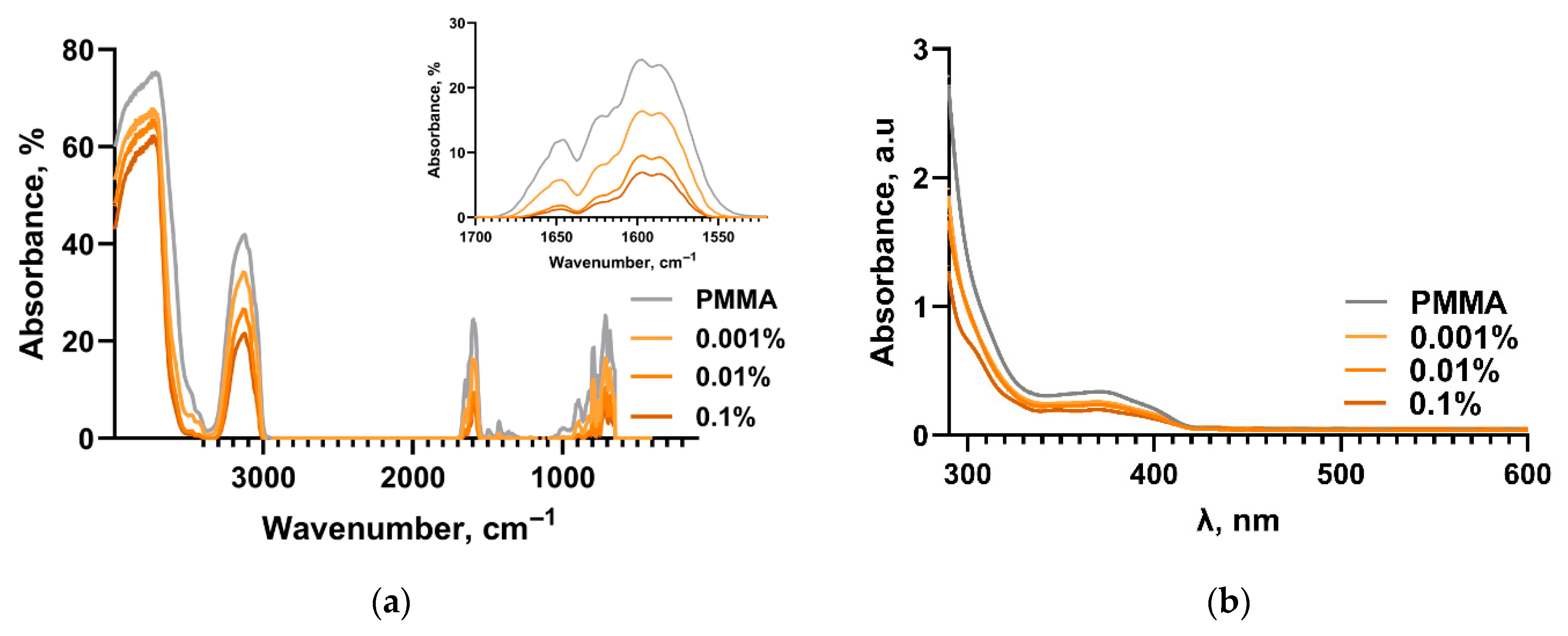
- It was found that the addition of CopOx NPs enhanced the polymerization conversion of the resin. Specifically, in the sample containing 0.1% nanoparticles, the number of unreacted monomers decreased by almost a factor of four, representing a significant technological advantage for the manufacturing process.
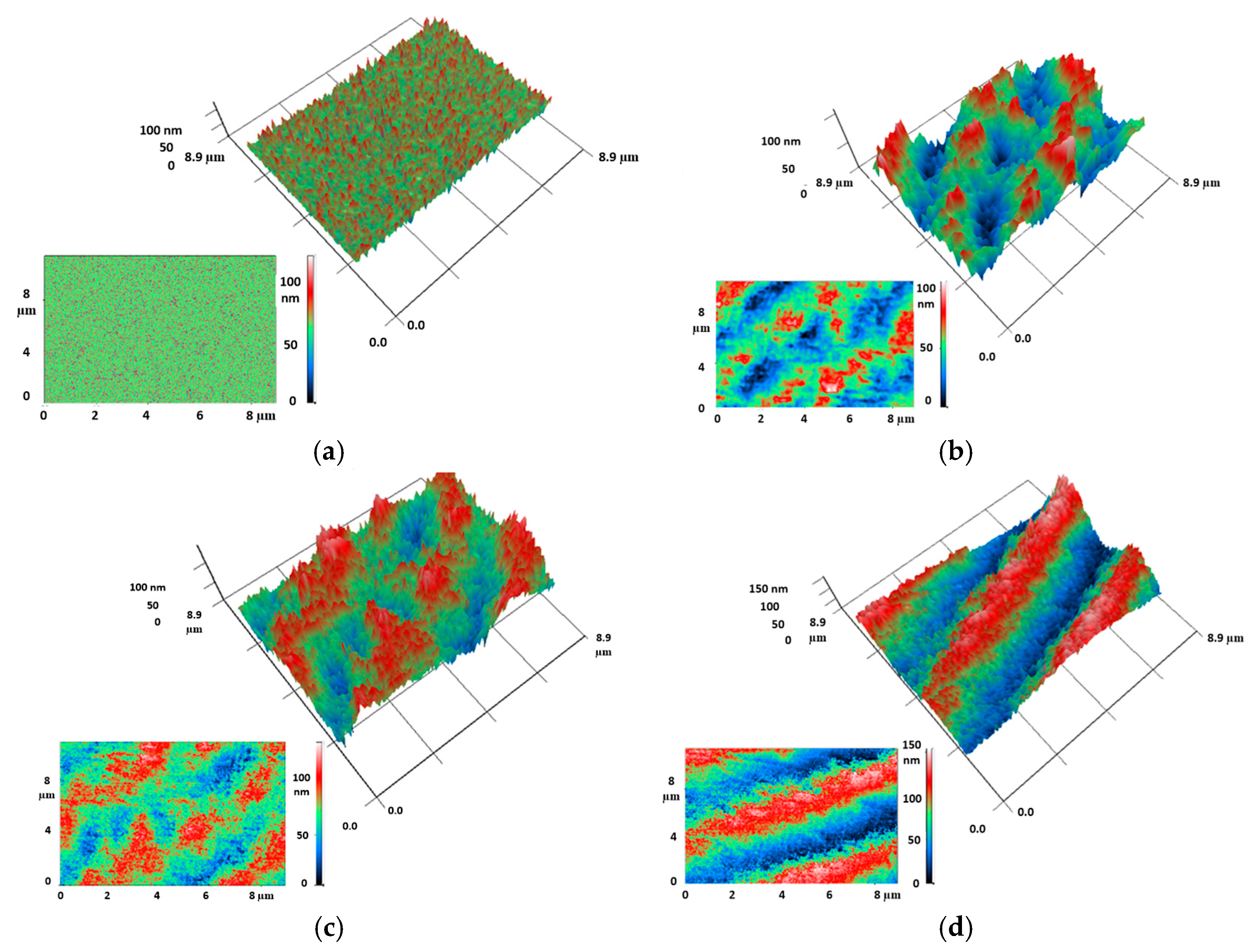
- Modulation interference microscopy revealed that samples with 0.1% CopOx NPs contained extended, alternating regions with a uniform phase shift, a structure reminiscent of the lines in a diffraction grating. This suggests the material’s potential for applications in modulation-interference optics.
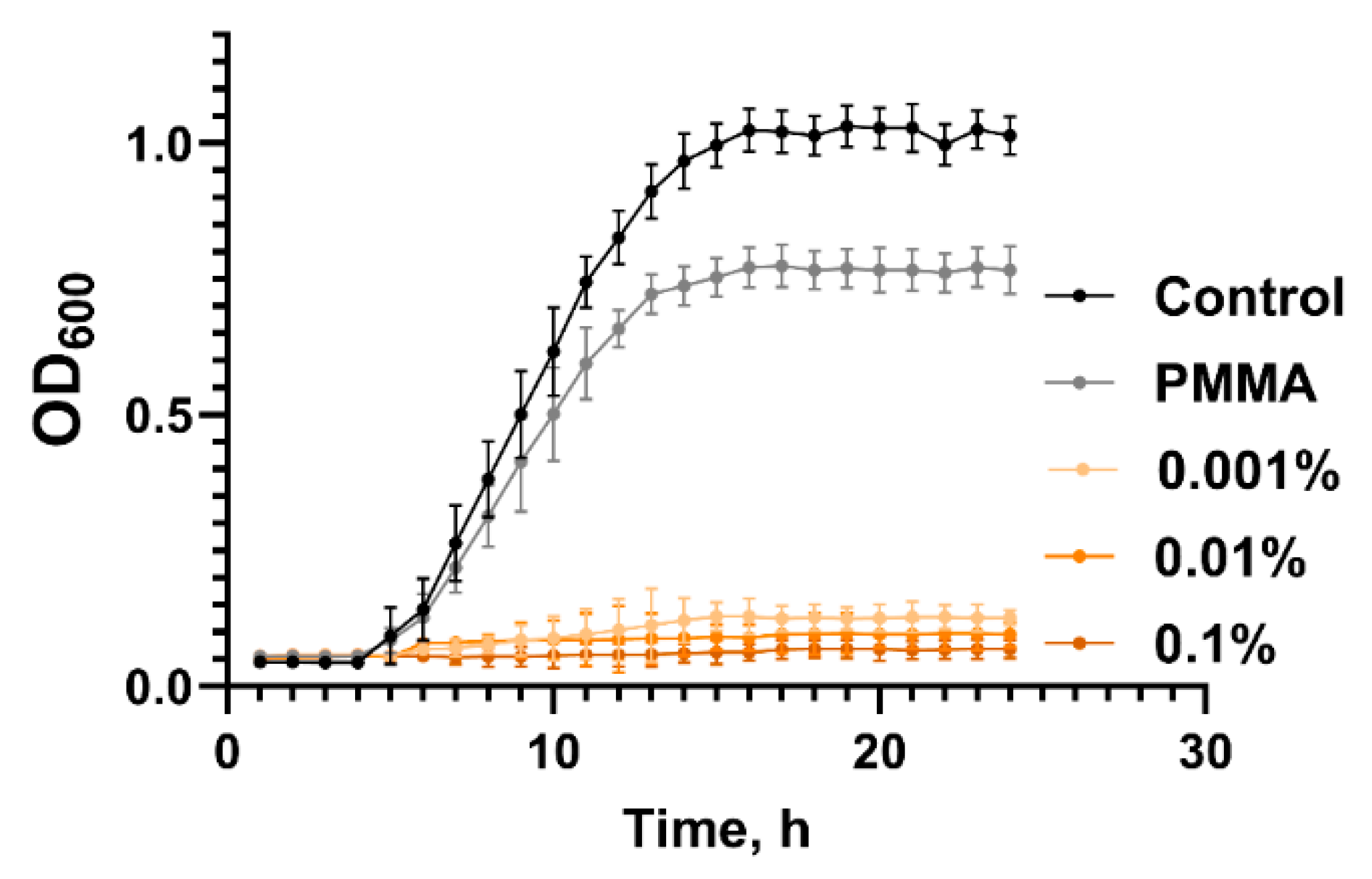
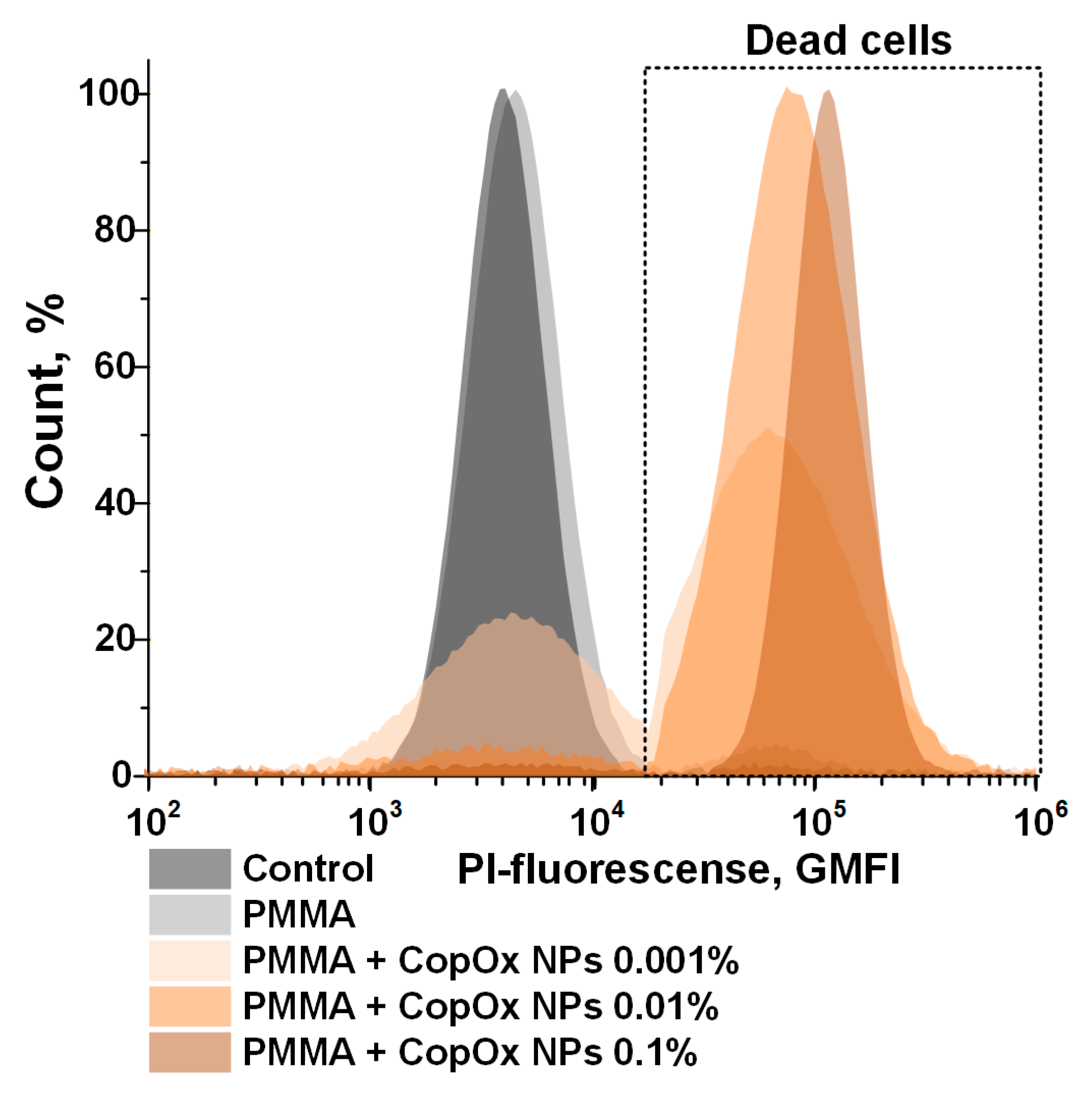
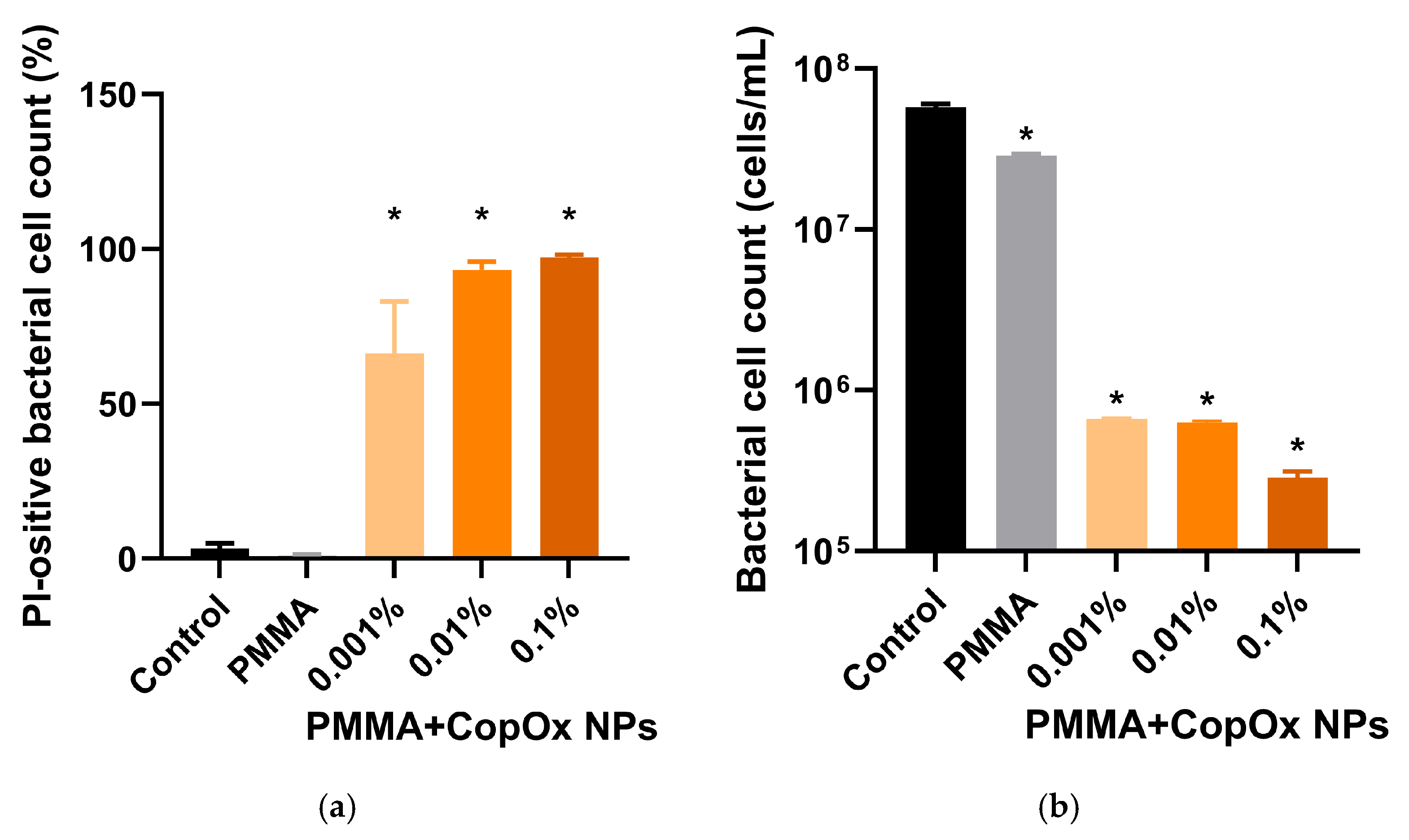
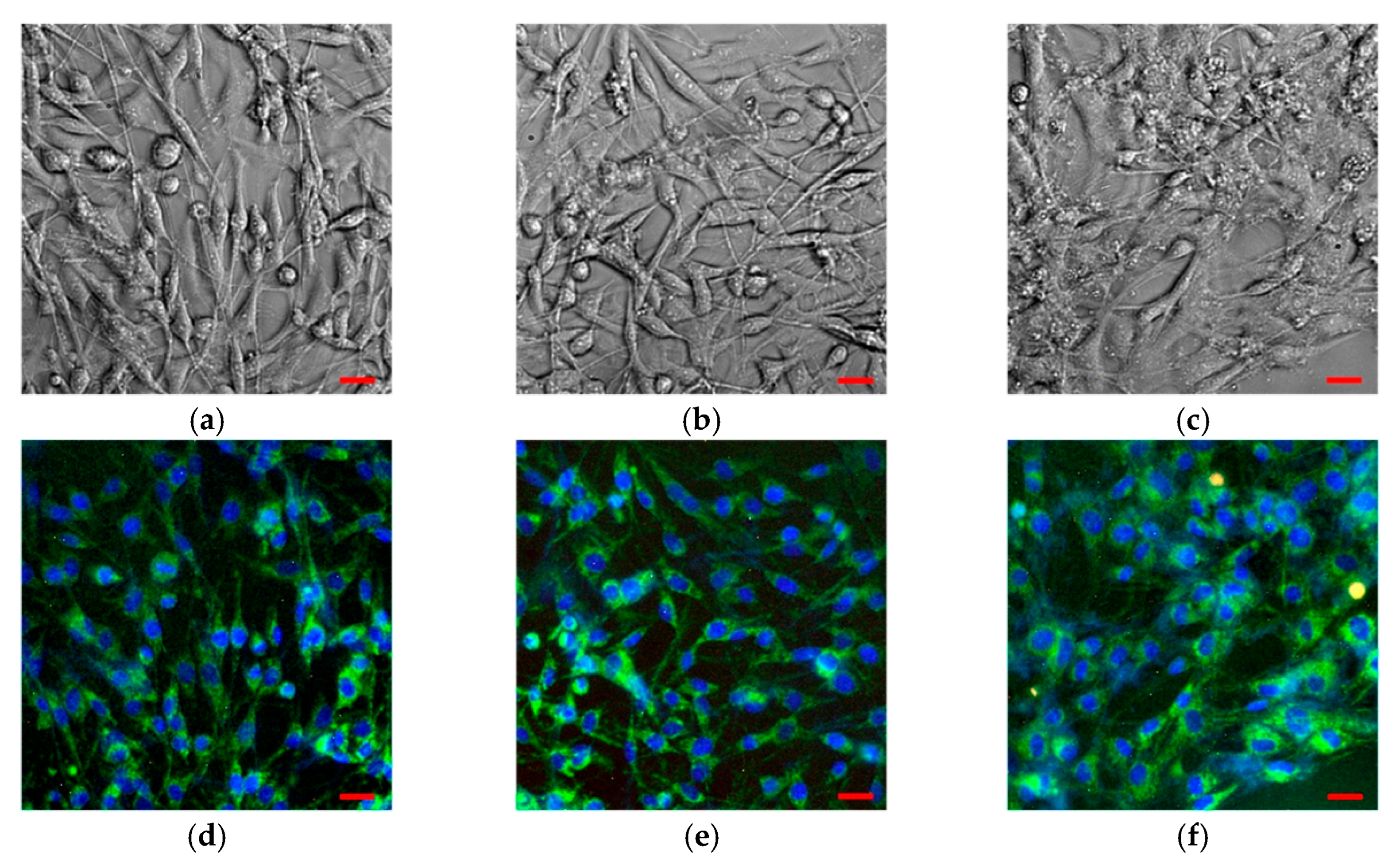
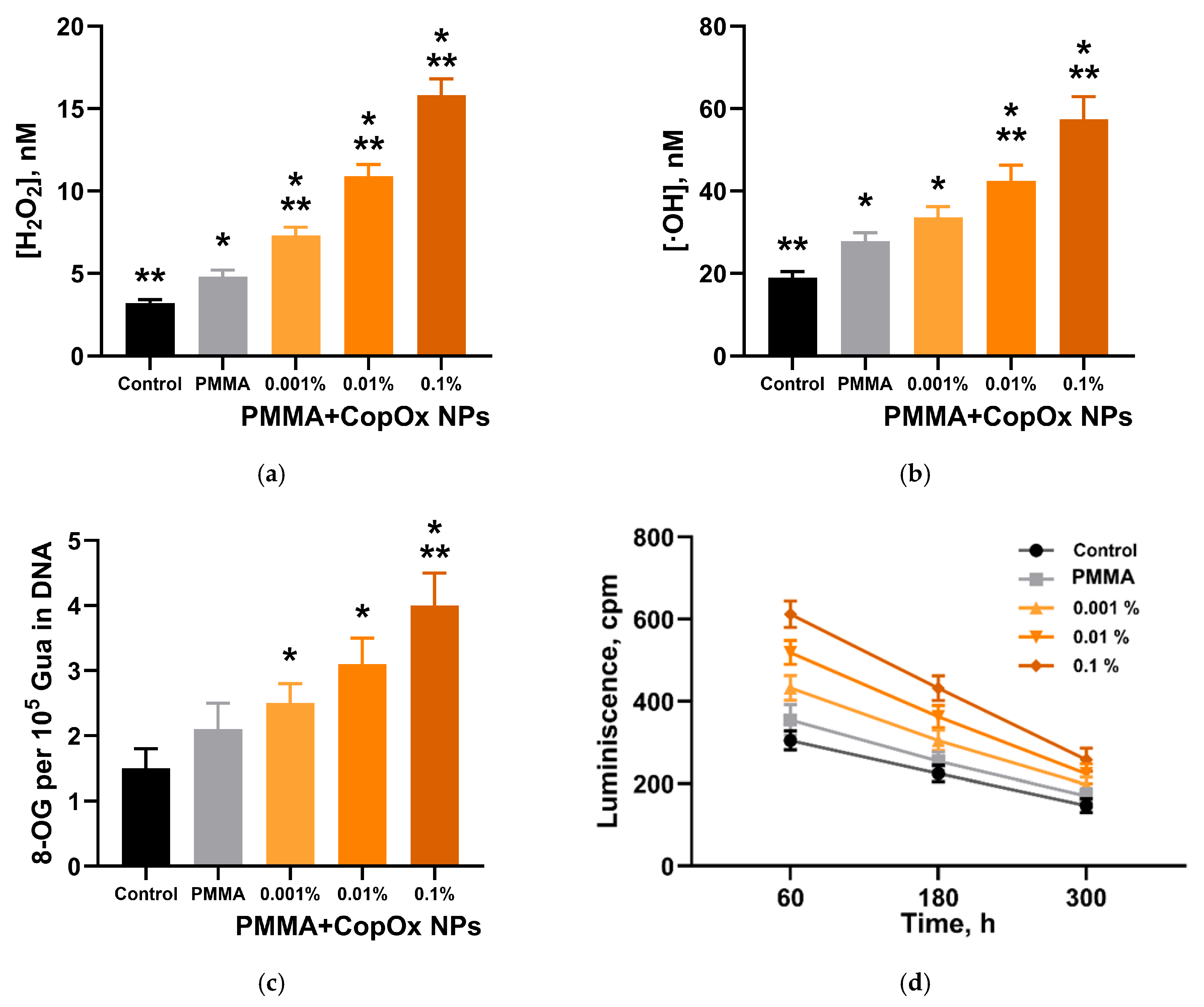
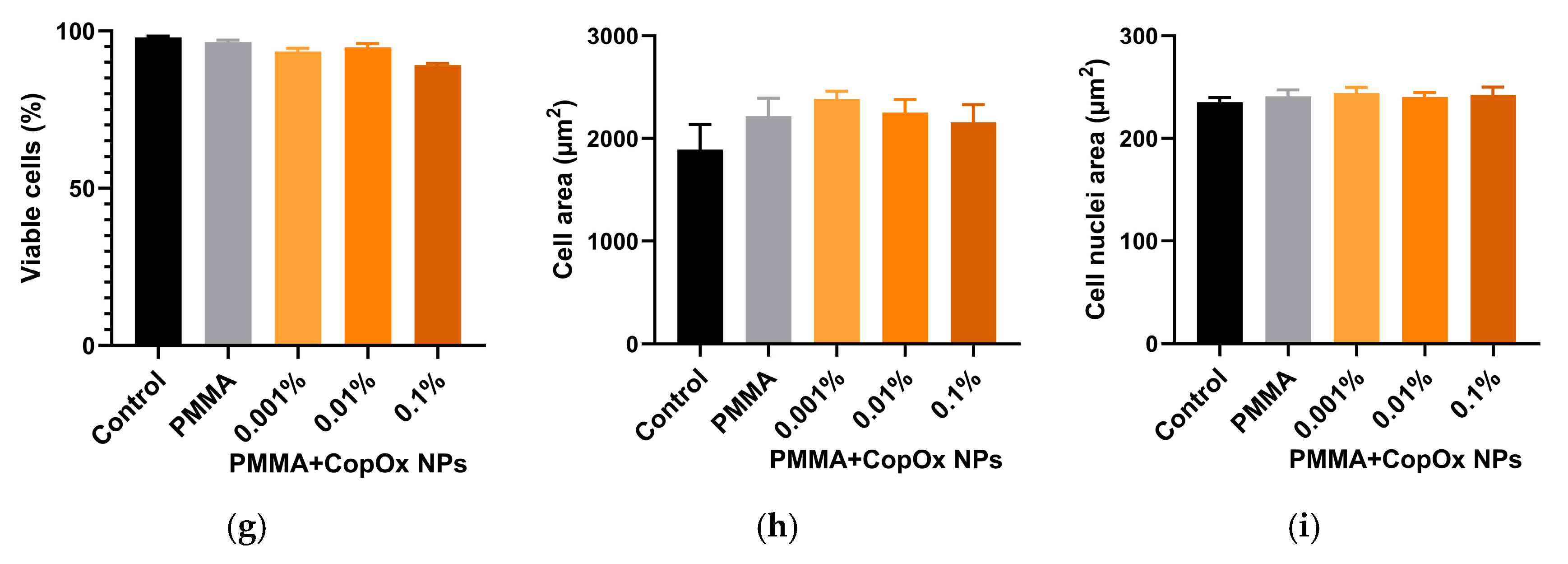
- The developed composites demonstrated pronounced antibacterial properties while showing no acute cytotoxicity towards mammalian cells.
- Owing to their combination of optical, processing, and biological characteristics, these materials show promise for applications in biomedicine, the food industry, and agriculture.
Author Contributions
Funding
Institutional Review Board Statement
Informed Consent Statement
Data Availability Statement
Conflicts of Interest
References
- Zhu, C.; Gemeda, H.B.; Duoss, E.B.; Spadaccini, C.M. Toward Multiscale, Multimaterial 3D Printing. Adv. Mater. 2024, 36, e2314204. [Google Scholar] [CrossRef]
- Hozdić, E. Characterization and Comparative Analysis of Mechanical Parameters of FDM- and SLA-Printed ABS Materials. Appl. Sci. 2024, 14, 649. [Google Scholar] [CrossRef]
- Kantaros, A.; Katsantoni, M.; Ganetsos, T.; Petrescu, N. The Evolution of Thermoplastic Raw Materials in High-Speed FFF/FDM 3D Printing Era: Challenges and Opportunities. Materials 2025, 18, 1220. [Google Scholar] [CrossRef]
- Ali, S.; Deiab, I.; Pervaiz, S. State-of-the-art review on fused deposition modeling (FDM) for 3D printing of polymer blends and composites: Innovations, challenges, and applications. Int. J. Adv. Manuf. Technol. 2024, 135, 5085–5113. [Google Scholar] [CrossRef]
- Biswas, A.; Singh, A.K.; Das, D. Stereolithography-Based Polymer Additive Manufacturing Process for Microfluidics Devices. In Advances in Additive Manufacturing; Wiley: Hoboken, NJ, USA, 2024; pp. 237–268. [Google Scholar]
- Djurović, S.; Lazarević, D.; Mišić, M.; Stojčetović, B.; Blagojević, M.; Biočanin, S. 3D Printing Technologies: Process, Materials, Advantages, Disadvantages and Application; Springer Nature: Cham, Switzerland, 2024; pp. 353–370. [Google Scholar]
- Burmistrov, D.E.; Serov, D.A.; Baimler, I.V.; Gritsaeva, A.V.; Chapala, P.; Simakin, A.V.; Astashev, M.E.; Karmanova, E.E.; Dubinin, M.V.; Nizameeva, G.R.; et al. Polymethyl Methacrylate-like Photopolymer Resin with Titanium Metal Nanoparticles Is a Promising Material for Biomedical Applications. Polymers 2025, 17, 1830. [Google Scholar] [CrossRef] [PubMed]
- Liu, X.; Hu, Y.; Hu, L.; Zhang, M.; Jia, P.; Zhou, Y. Recent progress in bio-based light-curable resins used for 3D printing: From synthetic strategies to structural properties and resin applications. React. Funct. Polym. 2025, 215, 106359. [Google Scholar] [CrossRef]
- Chen, W.; Zeng, Y.; Wen, Z.; Fang, L.; Wu, L. Resveratrol/POSS-based polymethacrylates for DLP 3D printing and fluorescent anti-counterfeiting. React. Funct. Polym. 2025, 216, 106397. [Google Scholar] [CrossRef]
- Class II Special Controls Guidance Document: Polymethylmethacrylate (PMMA) Bone Cement. Guidance for Industry and FDA; FDA: Silver Spring, MA, USA, 2002.
- Edo, G.I.; Yousif, E.; Al-Mashhadani, M.H. Polymethyl Methacrylate (PMMA): An Overview of Its Biological Activities, Properties, Polymerization, Modifications, and Dental and Industrial Applications. Regen. Eng. Transl. Med. 2025, 1, 1–27. [Google Scholar] [CrossRef]
- Burcea, A.; Bănățeanu, A.-M.; Poalelungi, C.V.; Forna, N.; Cumpătă, C.N. Enhanced properties and multifaceted applications of polymethyl methacrylate (PMMA) in modern medicine and dentistry. Rom. J. Oral Rehabil. 2024, 16, 108–123. [Google Scholar] [CrossRef]
- Seesala, V.S.; Sheikh, L.; Basu, B.; Mukherjee, S. Mechanical and Bioactive Properties of PMMA Bone Cement: A Review. ACS Biomater. Sci. Eng. 2024, 10, 5939–5959. [Google Scholar] [CrossRef]
- Zafar, M.S. Prosthodontic Applications of Polymethyl Methacrylate (PMMA): An Update. Polymers 2020, 12, 2299. [Google Scholar] [CrossRef]
- Musa, A.A.; Bello, A.; Adams, S.M.; Onwualu, A.P.; Anye, V.C.; Bello, K.A.; Obianyo, I.I. Nano-Enhanced Polymer Composite Materials: A Review of Current Advancements and Challenges. Polymers 2025, 17, 893. [Google Scholar] [CrossRef] [PubMed]
- Shabalina, A.V.; Kozlov, V.A.; Popov, I.A.; Gudkov, S.V. A Review on Recently Developed Antibacterial Composites of Inorganic Nanoparticles and Non-Hydrogel Polymers for Biomedical Applications. Nanomaterials 2024, 14, 1753. [Google Scholar] [CrossRef]
- Serov, D.A.; Gritsaeva, A.V.; Yanbaev, F.M.; Simakin, A.V.; Gudkov, S.V. Review of Antimicrobial Properties of Titanium Dioxide Nanoparticles. Int. J. Mol. Sci. 2024, 25, 10519. [Google Scholar] [CrossRef]
- Yuan, M.; Han, X.; Zhang, Z.; Wang, R.; Guo, S. Synthesis of ultra-high molecular weight poly(methyl methacrylate) initiated by the combination of copper nanopowder with organic halides. BMC Chem. 2025, 19, 223. [Google Scholar] [CrossRef]
- Kanwel, S.; Gulzar, F.; Alofaysan, H.; Tanriverdiyev, S.; Jing, H. Toxic metal pollution in freshwater ecosystems: A systematic review of assessment methods using environmental and statistical indices. Mar. Pollut. Bull. 2025, 218, 118028. [Google Scholar] [CrossRef]
- Pesode, P.; Barve, S. Biocompatibility of Plasma Electrolytic Oxidation Coated Titanium Alloy for Biomedical Applications. BioNanoScience 2025, 15, 232. [Google Scholar] [CrossRef]
- Danilewicz, J.C. Review of Reaction Mechanisms of Oxygen and Proposed Intermediate Reduction Products in Wine: Central Role of Iron and Copper. Am. J. Enol. Vitic. 2003, 54, 73–85. [Google Scholar] [CrossRef]
- Gudkov, S.V.; Burmistrov, D.E.; Serov, D.A.; Rebezov, M.B.; Semenova, A.A.; Lisitsyn, A.B. Do Iron Oxide Nanoparticles Have Significant Antibacterial Properties? Antibiotics 2021, 10, 884. [Google Scholar] [CrossRef] [PubMed]
- Gudkov, S.V.; Burmistrov, D.E.; Fomina, P.A.; Validov, S.Z.; Kozlov, V.A. Antibacterial Properties of Copper Oxide Nanoparticles (Review). Int. J. Mol. Sci. 2024, 25, 11563. [Google Scholar] [CrossRef]
- Zhang, T.-G.; Miao, C.-Y. Iron Oxide Nanoparticles as Promising Antibacterial Agents of New Generation. Nanomaterials 2024, 14, 1311. [Google Scholar] [CrossRef]
- El-Sherbiny, G.M.; Shehata, M.E.; Kalaba, M.H. Biogenic copper and copper oxide nanoparticles to combat multidrug-resistant Staphylococcus aureus: Green synthesis, mechanisms, resistance, and future perspectives. Biotechnol. Rep. 2025, 46, e00896. [Google Scholar] [CrossRef]
- Khairy, T.; Amin, D.H.; Salama, H.M.; Elkholy, I.M.A.; Elnakib, M.; Gebreel, H.M.; Sayed, H.A.E. Antibacterial activity of green synthesized copper oxide nanoparticles against multidrug-resistant bacteria. Sci. Rep. 2024, 14, 25020. [Google Scholar] [CrossRef]
- Kreutzer, J.; Yagci, Y. Metal Free Reversible-Deactivation Radical Polymerizations: Advances, Challenges, and Opportunities. Polymers 2017, 10, 35. [Google Scholar] [CrossRef]
- di Lena, F.; Matyjaszewski, K. Transition metal catalysts for controlled radical polymerization. Prog. Polym. Sci. 2010, 35, 959–1021. [Google Scholar] [CrossRef]
- Vidakis, N.; Petousis, M.; Velidakis, E.; Liebscher, M.; Tzounis, L. Three-Dimensional Printed Antimicrobial Objects of Polylactic Acid (PLA)-Silver Nanoparticle Nanocomposite Filaments Produced by an In-Situ Reduction Reactive Melt Mixing Process. Biomimetics 2020, 5, 42. [Google Scholar] [CrossRef]
- Pinho, A.C.; Morais, P.V.; Pereira, M.F.; Piedade, A.P. Changes in the Antibacterial Performance of Polymer-Based Nanocomposites Induced by Additive Manufacturing Processing. Polymers 2025, 17, 171. [Google Scholar] [CrossRef] [PubMed]
- Jouault, N.; Zhao, D.; Kumar, S.K. Role of Casting Solvent on Nanoparticle Dispersion in Polymer Nanocomposites. Macromolecules 2014, 47, 5246–5255. [Google Scholar] [CrossRef]
- Bruna, J.E.; QuilodrÁN, H.; Guarda, A.; RodrÍGuez, F.; Galotto, M.J.; Figueroa, P. Development of Antibacterial Mtcu/Pla Nanocomposites by Casting Method for Potential Use in Food Packaging. J. Chil. Chem. Soc. 2015, 60, 3009–3014. [Google Scholar] [CrossRef]
- Shcherbakov, I.A.; Baimler, I.V.; Gudkov, S.V.; Dikovskaya, A.O.; Dubinin, M.V.; Karmanova, E.V.; Klimenko, M.O.; Pustovoi, V.I.; Rebezov, M.B.; Sergienko, K.V.; et al. Influence of Gold Nanoparticles on the Generation of Reactive Oxygen Species under Shock Impact on an Aqueous Solution. Phys. Wave Phenom. 2025, 33, 261–264. [Google Scholar] [CrossRef]
- Ivanov, V.E.; Usacheva, A.M.; Chernikov, A.V.; Bruskov, V.I.; Gudkov, S.V. Formation of long-lived reactive species of blood serum proteins induced by low-intensity irradiation of helium-neon laser and their involvement in the generation of reactive oxygen species. J. Photochem. Photobiol. B Biol. 2017, 176, 36–43. [Google Scholar] [CrossRef]
- Sevostyanov, M.A.; Kolmakov, A.G.; Sergiyenko, K.V.; Kaplan, M.A.; Baikin, A.S.; Gudkov, S.V. Mechanical, physical–chemical and biological properties of the new Ti–30Nb–13Ta–5Zr alloy. J. Mater. Sci. 2020, 55, 14516–14529. [Google Scholar] [CrossRef]
- Shtarkman, I.N.; Gudkov, S.V.; Chernikov, A.V.; Bruskov, V.I. Effect of amino acids on X-ray-induced hydrogen peroxide and hydroxyl radical formation in water and 8-oxoguanine in DNA. Biochemistry 2008, 73, 470–478. [Google Scholar] [CrossRef] [PubMed]
- Gudkov, S.V.; Shtarkman, I.N.; Chernikov, A.V.; Usacheva, A.M.; Bruskov, V.I. Guanosine and inosine (riboxin) eliminate the long-lived protein radicals induced X-ray radiation. Dokl. Biochem. Biophys. 2007, 413, 50–53. [Google Scholar] [CrossRef] [PubMed]
- Simakin, A.V.; Burmistrov, D.E.; Baimler, I.V.; Gritsaeva, A.V.; Serov, D.A.; Astashev, M.E.; Chapala, P.; Validov, S.Z.; Yanbaev, F.M.; Gudkov, S.V. TiO2 Nanoparticles Obtained by Laser Sintering When Added to Methacrylate Photopolymer Resin Improve Its Physicochemical Characteristics and Impart Antibacterial Properties. Inorganics 2025, 13, 233. [Google Scholar] [CrossRef]
- Sevost’yanov, M.A.; Nasakina, E.O.; Baikin, A.S.; Sergienko, K.V.; Konushkin, S.V.; Kaplan, M.A.; Seregin, A.V.; Leonov, A.V.; Kozlov, V.A.; Shkirin, A.V.; et al. Biocompatibility of new materials based on nano-structured nitinol with titanium and tantalum composite surface layers: Experimental analysis in vitro and in vivo. J. Mater. Sci. Mater. Med. 2018, 29, 33. [Google Scholar] [CrossRef]
- Baimler, I.V.; Simakin, A.V.; Dorokhov, A.S.; Gudkov, S.V. Mini-review on laser-induced nanoparticle heating and melting. Front. Chem. 2024, 12, 1463612. [Google Scholar] [CrossRef]
- Nath, A.; Khare, A. Size induced structural modifications in copper oxide nanoparticles synthesized via laser ablation in liquids. J. Appl. Phys. 2011, 110, 043111. [Google Scholar] [CrossRef]
- Fernández-Arias, M.; Boutinguiza, M.; del Val, J.; Riveiro, A.; Rodríguez, D.; Arias-González, F.; Gil, J.; Pou, J. Fabrication and Deposition of Copper and Copper Oxide Nanoparticles by Laser Ablation in Open Air. Nanomaterials 2020, 10, 300. [Google Scholar] [CrossRef]
- Jellicoe, M.; Yang, Y.; Stokes, W.; Simmons, M.; Yang, L.; Foster, S.; Aslam, Z.; Cohen, J.; Rashid, A.; Nelson, A.L.; et al. Continuous Flow Synthesis of Copper Oxide Nanoparticles Enabling Rapid Screening of Synthesis-Structure-Property Relationships. Small 2025, 21, 2403529. [Google Scholar] [CrossRef]
- Gondal, M.A.; Qahtan, T.F.; Dastageer, M.A.; Saleh, T.A.; Maganda, Y.W.; Anjum, D.H. Effects of oxidizing medium on the composition, morphology and optical properties of copper oxide nanoparticles produced by pulsed laser ablation. Appl. Surf. Sci. 2013, 286, 149–155. [Google Scholar] [CrossRef]
- Amendola, V.; Amans, D.; Ishikawa, Y.; Koshizaki, N.; Scirè, S.; Compagnini, G.; Reichenberger, S.; Barcikowski, S. Room-Temperature Laser Synthesis in Liquid of Oxide, Metal-Oxide Core-Shells, and Doped Oxide Nanoparticles. Chem.—A Eur. J. 2020, 26, 9206–9242. [Google Scholar] [CrossRef] [PubMed]
- Mahmoud, M.; Elsayed, H.; Kraxner, J.; Michálek, M.; Pecušová, B.; Anjass, M.; Arya, N.; Bernardo, E.; Galusek, D. Additive manufacturing of scaffolds from porous glass microspheres via masked stereolithography: Printing challenges and sustainable applications. J. Eur. Ceram. Soc. 2025, 45, 117651. [Google Scholar] [CrossRef]
- Hwang, S.; Kim, W. Characterization of Ceria Nanoparticles as Abrasives Applied with Defoaming Polymers for CMP (Chemical Mechanical Polishing) Applications. Polymers 2024, 16, 844. [Google Scholar] [CrossRef] [PubMed]
- AlGhamdi, M.A.; Alatiyyah, F.M.; Almedarham, R.F.; Al Dawood, Z.H.; Alshaikhnasser, F.Y.; Alboryh, S.Y.; Khan, S.Q.; Abualsaud, R.; Gad, M.M. Impact of Nanoparticle Addition on the Surface and Color Properties of Three-Dimensional (3D) Printed Polymer-Based Provisional Restorations. Nanomaterials 2024, 14, 665. [Google Scholar] [CrossRef]
- Rahman, M.M.; Khan, K.H.; Parvez, M.M.H.; Irizarry, N.; Uddin, M.N. Polymer Nanocomposites with Optimized Nanoparticle Dispersion and Enhanced Functionalities for Industrial Applications. Processes 2025, 13, 994. [Google Scholar] [CrossRef]
- Wu, G.; Cai, X.; Lin, X.; Yui, H. Heterogeneous distribution of magnetic nanoparticles in reactive polymer blends. React. Funct. Polym. 2010, 70, 732–737. [Google Scholar] [CrossRef]
- Sudjaipraparat, N.; Suteewong, T.; Tangboriboonrat, P. Facile Control of Structured ZnO Polymeric Nanoparticles through Miniemulsion Polymerization: Kinetic and UV Shielding Effects. Polymers 2021, 13, 2526. [Google Scholar] [CrossRef]
- Vargas-Molinero, H.Y.; Serrano-Medina, A.; Palomino-Vizcaino, K.; López-Maldonado, E.A.; Villarreal-Gómez, L.J.; Pérez-González, G.L.; Cornejo-Bravo, J.M. Hybrid Systems of Nanofibers and Polymeric Nanoparticles for Biological Application and Delivery Systems. Micromachines 2023, 14, 208. [Google Scholar] [CrossRef]
- Skirtach, A.G.; Déjugnat, C.; Braun, D.; Susha, A.S.; Rogach, A.L.; Sukhorukov, G.B. Nanoparticles Distribution Control by Polymers: Aggregates versus Nonaggregates. J. Phys. Chem. C 2007, 111, 555–564. [Google Scholar] [CrossRef]
- Oberdisse, J. Aggregation of colloidal nanoparticles in polymer matrices. Soft Matter 2006, 2, 29–36. [Google Scholar] [CrossRef]
- Bailly, M.; Kontopoulou, M.; El Mabrouk, K. Effect of polymer/filler interactions on the structure and rheological properties of ethylene-octene copolymer/nanosilica composites. Polymer 2010, 51, 5506–5515. [Google Scholar] [CrossRef]
- Drobny, V.F.; Pulfrey, L. Properties of reactively-sputtered copper oxide thin films. Thin Solid Film. 1979, 61, 89–98. [Google Scholar] [CrossRef]
- Beadie, G.; Brindza, M.; Flynn, R.A.; Rosenberg, A.; Shirk, J.S. Refractive index measurements of poly(methyl methacrylate) (PMMA) from 0.4–1.6 μm. Appl. Opt. 2015, 54, F139–F143. [Google Scholar] [CrossRef]
- Rubin, N.A.; Shi, Z.; Capasso, F. Polarization in diffractive optics and metasurfaces. Adv. Opt. Photon. 2021, 13, 836–970. [Google Scholar] [CrossRef]
- Melnikov, P.; Bobrov, A.; Marfin, Y. On the Use of Polymer-Based Composites for the Creation of Optical Sensors: A Review. Polymers 2022, 14, 4448. [Google Scholar] [CrossRef] [PubMed]
- Burunkova, J.A.; Alkhalil, D.; Svjazhina, D.S.; Bonyár, A.; Csarnovics, I.; Kokenyesi, S. Influence of gold nanoparticles in polymer nanocomposite on space-temporal-irradiation dependent diffraction grating recording. Polymer 2021, 214, 123240. [Google Scholar] [CrossRef]
- Kubota, T.; Tokimori, S.; Funato, K.; Kawata, H.; Matsuyama, T.; Wada, K.; Okamoto, K. Optical Properties and Applications of Diffraction Grating Using Localized Surface Plasmon Resonance with Metal Nano-Hemispheres. Nanomaterials 2024, 14, 1605. [Google Scholar] [CrossRef]
- Nazarova, D.; Nedelchev, L.; Berberova-Buhova, N.; Mateev, G. Nanocomposite Photoanisotropic Materials for Applications in Polarization Holography and Photonics. Nanomaterials 2023, 13, 2946. [Google Scholar] [CrossRef]
- Chen, Y.; Hu, P.; Huang, Z.; Wang, J.; Song, H.; Chen, X.; Lin, X.; Wu, T.; Tan, X. Significant Enhancement of the Polarization Holographic Performance of Photopolymeric Materials by Introducing Graphene Oxide. ACS Appl. Mater. Interfaces 2021, 13, 27500–27512. [Google Scholar] [CrossRef]
- Edo, G.I.; Ndudi, W.; Ali, A.B.M.; Yousif, E.; Zainulabdeen, K.; Onyibe, P.N.; Akpoghelie, P.O.; Ekokotu, H.A.; Isoje, E.F.; Igbuku, U.A.; et al. An updated review on the modifications, recycling, polymerization, and applications of polymethyl methacrylate (PMMA). J. Mater. Sci. 2024, 59, 20496–20539. [Google Scholar] [CrossRef]
- Rus, F.; Neculau, C.; Imre, M.; Duica, F.; Popa, A.; Moisa, R.M.; Voicu-Balasea, B.; Radulescu, R.; Ripszky, A.; Ene, R.; et al. Polymeric Materials Used in 3DP in Dentistry—Biocompatibility Testing Challenges. Polymers 2024, 16, 3550. [Google Scholar] [CrossRef]
- Abbas, A.F.; AL-Kawaz, A.E.; Mezaal, Z.K. Studying the Tribological and Mechanical Properties of the PMMA Nano Composite Coating. Jordan J. Mech. Ind. Eng. 2024, 18, 365–375. [Google Scholar] [CrossRef]
- Ho, H.T.; Rist, K.; Lamparth, I.; Omeragic, S.; Fässler, P.; Cousin, F.; Vidal, L.; Lalevée, J.; Gigmes, D.; Catel, Y.; et al. PMMA-PDMS-PMMA triblock copolymers as toughness modifiers for UV-curable methacrylate resins. Eur. Polym. J. 2025, 235, 114049. [Google Scholar] [CrossRef]
- Che Ab Rahman, A.; Lee, B.-J.; Lim, S. Optimizing polymethyl methacrylate (PMMA)-based stretchable microneedle arrays by vat photopolymerization for efficient drug loading. Addit. Manuf. 2024, 94, 104472. [Google Scholar] [CrossRef]
- Nguyen, M.T.H.; Kim, J.H.; Jang, W.T.; Jung, Y.J.; Park, E.J.; Ha, T.H.; Ahn, S.J.; Kim, Y.H. Role of GO and Photoinitiator Concentration on Curing Behavior of PEG-Based Polymer for DLP 3D Printing. ACS Omega 2024, 9, 3287–3294. [Google Scholar] [CrossRef] [PubMed]
- Tumkur Mahesh, P.; Chazot, C.A.C.; Church, R.B.; Durso, M.N.; Thrasher, C.J.; Creighton, M.A.; Hart, A.J. 3D Printing of Poly(methyl methacrylate) by Interfacial Photopolymerization. ACS Appl. Mater. Interfaces 2025, 17, 53960–53971. [Google Scholar] [CrossRef] [PubMed]
- Wen, Z.; Liu, X.; Chen, W.; Zhou, R.; Wu, H.; Xia, Y.; Wu, L. Progress in Polyhedral Oligomeric Silsesquioxane (POSS) Photoresists: A Comprehensive Review across Lithographic Systems. Polymers 2024, 16, 846. [Google Scholar] [CrossRef]
- El-Khawaga, A.M.; Khafaga, D.S.R.; Fahim, Y.A.; Fadl, A.M. Harnessing copper oxide nanoparticles for advanced photocatalytic, antimicrobial, and larvicidal applications. Sci. Rep. 2025, 15, 40369. [Google Scholar] [CrossRef]
- Noirbent, G.; Dumur, F. Recent Advances on Copper Complexes as Visible Light Photoinitiators and (Photo) Redox Initiators of Polymerization. Catalysts 2020, 10, 953. [Google Scholar] [CrossRef]
- Soni, A.; Kumar, P.; Tomar, V.; Kumar Joshi, R.; Nemiwal, M. Recent advances in copper oxide nanocatalyzed C C cross-coupling transformations. Results Chem. 2022, 4, 100513. [Google Scholar] [CrossRef]
- Thévenot, C.; Khoukh, A.; Reynaud, S.; Desbrières, J.; Grassl, B. Kinetic aspects, rheological properties and mechanoelectrical effects of hydrogels composed of polyacrylamide and polystyrene nanoparticles. Soft Matter 2007, 3, 437–447. [Google Scholar] [CrossRef]
- Hsissou, R.; Bekhta, A.; Dagdag, O.; El Bachiri, A.; Rafik, M.; Elharfi, A. Rheological properties of composite polymers and hybrid nanocomposites. Heliyon 2020, 6, e04187. [Google Scholar] [CrossRef]
- Abbas, S.F.; Haider, A.J.; Al-Musawi, S.; Selman, M.K. Antibacterial Effect of Copper Oxide Nanoparticles Prepared by Laser Production in Water Against Staphylococcus aureus and Escherichia coli. Plasmonics 2024, 19, 2401–2411. [Google Scholar] [CrossRef]
- Liang, Y.-P.; Chan, Y.-B.; Aminuzzaman, M.; Shahinuzzaman, M.; Djearamane, S.; Thiagarajah, K.; Leong, S.-Y.; Wong, L.-S.; Tey, L.-H. Green Synthesis and Characterization of Copper Oxide Nanoparticles from Durian (Durio zibethinus) Husk for Environmental Applications. Catalysts 2025, 15, 275. [Google Scholar] [CrossRef]
- Sharapov, M.G.; Gudkov, S.V.; Lankin, V.Z. Hydroperoxide-Reducing Enzymes in the Regulation of Free-Radical Processes. Biochemistry 2021, 86, 1256–1274. [Google Scholar] [CrossRef] [PubMed]
- Rico, D.; Martín-González, A.; Díaz, S.; de Lucas, P.; Gutiérrez, J.-C. Heavy metals generate reactive oxygen species in terrestrial and aquatic ciliated protozoa. Comp. Biochem. Physiol. Part C Toxicol. Pharmacol. 2009, 149, 90–96. [Google Scholar] [CrossRef]
- Cervantes-Cervantes, M.P.; Calderón-Salinas, J.V.; Albores, A.; Muñoz-Sánchez, J.L. Copper increases the damage to DNA and proteins caused by reactive oxygen species. Biol. Trace Elem. Res. 2005, 103, 229–248. [Google Scholar] [CrossRef] [PubMed]
- Fenton, H.J.H. LXXIII.—Oxidation of tartaric acid in presence of iron. J. Chem. Soc. Trans. 1894, 65, 899–910. [Google Scholar] [CrossRef]
- Shuvalova, M.; Dmitrieva, A.; Belousov, V.; Nosov, G. The role of reactive oxygen species in the regulation of the blood-brain barrier. Tissue Barriers 2025, 13, 2361202. [Google Scholar] [CrossRef]
- Belov, S.V.; Danyleiko, Y.K.; Glinushkin, A.P.; Kalinitchenko, V.P.; Egorov, A.V.; Sidorov, V.A.; Konchekov, E.M.; Gudkov, S.V.; Dorokhov, A.S.; Lobachevsky, Y.P.; et al. An Activated Potassium Phosphate Fertilizer Solution for Stimulating the Growth of Agricultural Plants. Front. Phys. 2021, 8, 618320. [Google Scholar] [CrossRef]
- Sokolov, A.V.; Ivanov, V.A.; Kostevich, V.A.; Gorbunov, N.P.; Voynova, I.V.; Vasilyev, V.B.; Gusev, S.A.; Panasenko, O.M. Ability of lactoferrin to inhibit oxidative/halogenative stress and improve wound healing in rats with experimental hyperglycemia. Med. Acad. J. 2024, 24, 74–83. [Google Scholar] [CrossRef]
- Ren, E.; Zhang, C.; Li, D.; Pang, X.; Liu, G. Leveraging metal oxide nanoparticles for bacteria tracing and eradicating. VIEW 2020, 1, 20200052. [Google Scholar] [CrossRef]
- Kirakosyan, G.; Trchounian, K.; Vardanyan, Z.; Trchounian, A. Copper (II) Ions Affect Escherichia coli Membrane Vesicles’ SH-Groups and a Disulfide-Dithiol Interchange Between Membrane Proteins. Cell Biochem. Biophys. 2008, 51, 45–50. [Google Scholar] [CrossRef]
- Sharma, A.; Yadav, H.O.S.; Bandyopadhyay, P. Understanding Cu+2 binding with DNA: A molecular dynamics study comparing Cu2+ and Mg2+ binding to the Dickerson DNA. Biophys. Chem. 2025, 316, 107347. [Google Scholar] [CrossRef] [PubMed]
- Meghana, S.; Kabra, P.; Chakraborty, S.; Padmavathy, N. Understanding the pathway of antibacterial activity of copper oxide nanoparticles. RSC Adv. 2015, 5, 12293–12299. [Google Scholar] [CrossRef]
- Glazkova, E.A.; Bakina, O.V.; Rodkevich, N.G.; Mosunov, A.A.; Vornakova, E.A.; Chzhou, V.R.; Lerner, M.I. Copper ferrite/copper oxides (I, II) nanoparticles synthesized by electric explosion of wires for high performance photocatalytic and antibacterial applications. Mater. Sci. Eng. B 2022, 283, 115845. [Google Scholar] [CrossRef]
- Dizaj, S.M.; Lotfipour, F.; Barzegar-Jalali, M.; Zarrintan, M.H.; Adibkia, K. Antimicrobial activity of the metals and metal oxide nanoparticles. Mater. Sci. Eng. C 2014, 44, 278–284. [Google Scholar] [CrossRef]
- Kotrange, H.; Najda, A.; Bains, A.; Gruszecki, R.; Chawla, P.; Tosif, M.M. Metal and Metal Oxide Nanoparticle as a Novel Antibiotic Carrier for the Direct Delivery of Antibiotics. Int. J. Mol. Sci. 2021, 22, 9596. [Google Scholar] [CrossRef] [PubMed]
- Thanuja, J.; Udayabhanu; Nagaraju, G.; Naika, H.R. Biosynthesis of Cu4O3 nanoparticles using Razma seeds: Application to antibacterial and cytotoxicity activities. SN Appl. Sci. 2019, 1, 1646. [Google Scholar] [CrossRef]
- Rajamma, R.; Gopalakrishnan Nair, S.; Abdul Khadar, F.; Baskaran, B. Antibacterial and anticancer activity of biosynthesised CuO nanoparticles. IET Nanobiotechnol. 2020, 14, 833–838. [Google Scholar] [CrossRef] [PubMed]
- Manasa, D.J.; Chandrashekar, K.R.; Madhu Kumar, D.J.; Niranjana, M.; Navada, K.M. Mussaenda frondosa L. mediated facile green synthesis of Copper oxide nanoparticles—Characterization, photocatalytic and their biological investigations. Arab. J. Chem. 2021, 14, 202106. [Google Scholar] [CrossRef]
- Abou Baker, D.H.; Abbas, H.S. Antimicrobial activity of biosynthesized Cuo/Se nanocomposite against Helicobacter pylori. Arab. J. Chem. 2023, 16, 105095. [Google Scholar] [CrossRef]
- Kouhkan, M.; Ahangar, P.; Babaganjeh, L.A.; Allahyari-Devin, M. Biosynthesis of Copper Oxide Nanoparticles Using Lactobacillus casei Subsp. Casei and its Anticancer and Antibacterial Activities. Curr. Nanosci. 2020, 16, 101–111. [Google Scholar] [CrossRef]
- Gopinath, V.; Priyadarshini, S.; Al-Maleki, A.R.; Alagiri, M.; Yahya, R.; Saravanan, S.; Vadivelu, J. In vitro toxicity, apoptosis and antimicrobial effects of phyto-mediated copper oxide nanoparticles. RSC Adv. 2016, 6, 110986–110995. [Google Scholar] [CrossRef]
- Talebian, S.; Shahnavaz, B.; Nejabat, M.; Abolhassani, Y.; Rassouli, F.B. Bacterial-mediated synthesis and characterization of copper oxide nanoparticles with antibacterial, antioxidant, and anticancer potentials. Front. Bioeng. Biotechnol. 2023, 11, 1140010. [Google Scholar] [CrossRef] [PubMed]




Disclaimer/Publisher’s Note: The statements, opinions and data contained in all publications are solely those of the individual author(s) and contributor(s) and not of MDPI and/or the editor(s). MDPI and/or the editor(s) disclaim responsibility for any injury to people or property resulting from any ideas, methods, instructions or products referred to in the content. |
© 2025 by the authors. Licensee MDPI, Basel, Switzerland. This article is an open access article distributed under the terms and conditions of the Creative Commons Attribution (CC BY) license (https://creativecommons.org/licenses/by/4.0/).
Share and Cite
Yanbaev, F.M.; Ignatenko, D.N.; Shabalina, A.V.; Baimler, I.V.; Burmistrov, D.E.; Astashev, M.E.; Lednev, V.N.; Nastulyavichus, A.A.; Pishchalnikov, R.Y.; Sarimov, R.M.; et al. Antibacterial and Non-Toxic to Mammalian Cell Composite Material Based on Polymethyl-Methacrylate-like Resin Containing Grain-Shaped Copper Oxide Nanoparticles. J. Compos. Sci. 2025, 9, 706. https://doi.org/10.3390/jcs9120706
Yanbaev FM, Ignatenko DN, Shabalina AV, Baimler IV, Burmistrov DE, Astashev ME, Lednev VN, Nastulyavichus AA, Pishchalnikov RY, Sarimov RM, et al. Antibacterial and Non-Toxic to Mammalian Cell Composite Material Based on Polymethyl-Methacrylate-like Resin Containing Grain-Shaped Copper Oxide Nanoparticles. Journal of Composites Science. 2025; 9(12):706. https://doi.org/10.3390/jcs9120706
Chicago/Turabian StyleYanbaev, Fatikh M., Dmitriy N. Ignatenko, Anastasiia V. Shabalina, Ilya V. Baimler, Dmitry E. Burmistrov, Maxim E. Astashev, Vasily N. Lednev, Alena A. Nastulyavichus, Roman Yu. Pishchalnikov, Ruslan M. Sarimov, and et al. 2025. "Antibacterial and Non-Toxic to Mammalian Cell Composite Material Based on Polymethyl-Methacrylate-like Resin Containing Grain-Shaped Copper Oxide Nanoparticles" Journal of Composites Science 9, no. 12: 706. https://doi.org/10.3390/jcs9120706
APA StyleYanbaev, F. M., Ignatenko, D. N., Shabalina, A. V., Baimler, I. V., Burmistrov, D. E., Astashev, M. E., Lednev, V. N., Nastulyavichus, A. A., Pishchalnikov, R. Y., Sarimov, R. M., Simakin, A. V., & Gudkov, S. V. (2025). Antibacterial and Non-Toxic to Mammalian Cell Composite Material Based on Polymethyl-Methacrylate-like Resin Containing Grain-Shaped Copper Oxide Nanoparticles. Journal of Composites Science, 9(12), 706. https://doi.org/10.3390/jcs9120706