Article

Investigation on Layer Hybridization of Glass/Carbon Fibre Woven Reinforced Composites Subjected to Low-Speed Impact


by
Raluca Maier
* and
Andrei-Cristian Mandoc
Composite Materials Laboratory for Aeronautical Field, Romanian Research & Development Institute for Gas Turbines—COMOTI, 220D Iuliu Maniu Av., 061126 Bucharest, Romania
*
Author to whom correspondence should be addressed.
J. Compos. Sci. 2023, 7(2), 83; https://doi.org/10.3390/jcs7020083
Submission received: 14 December 2022 / Revised: 10 February 2023 / Accepted: 14 February 2023 / Published: 16 February 2023

Abstract

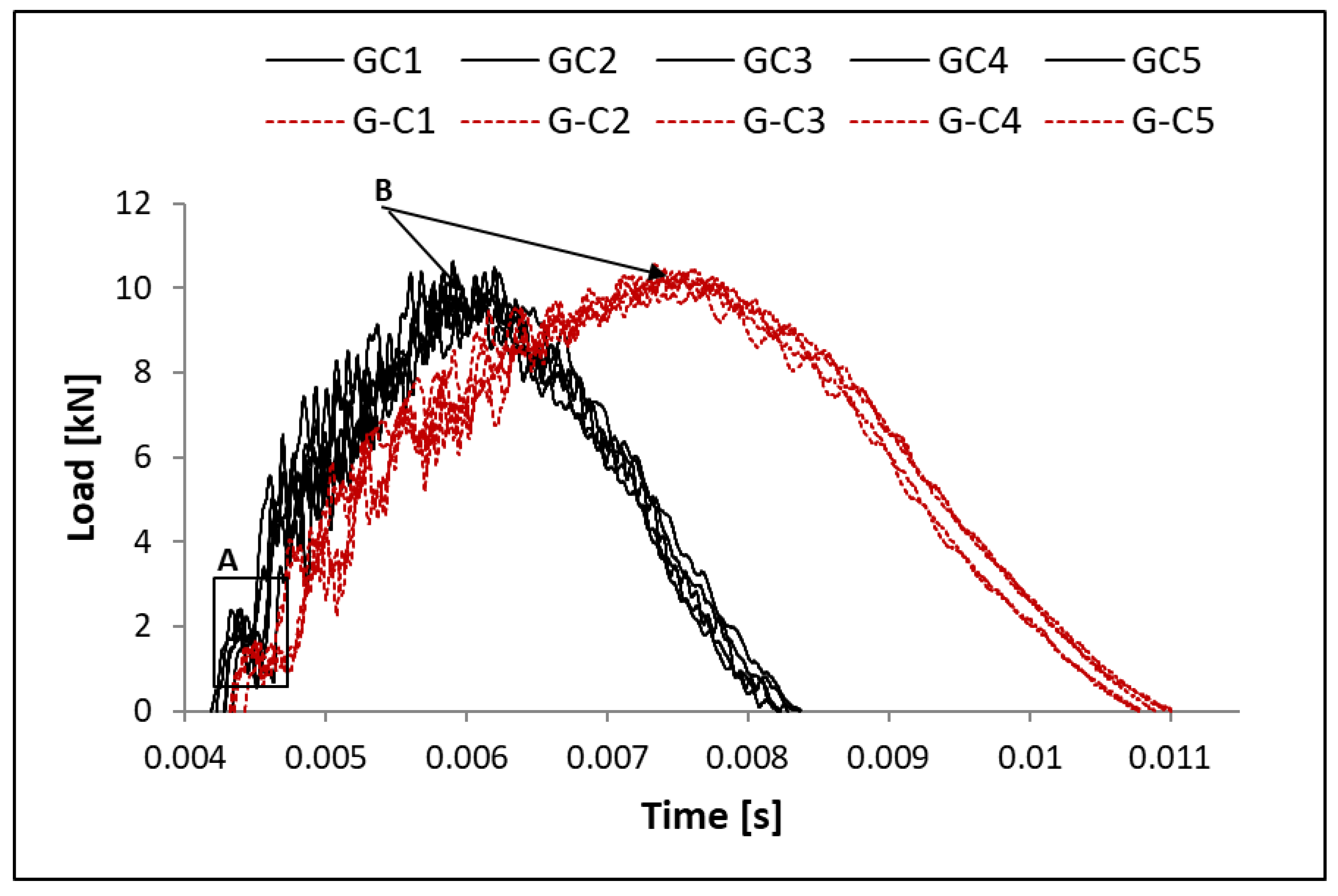
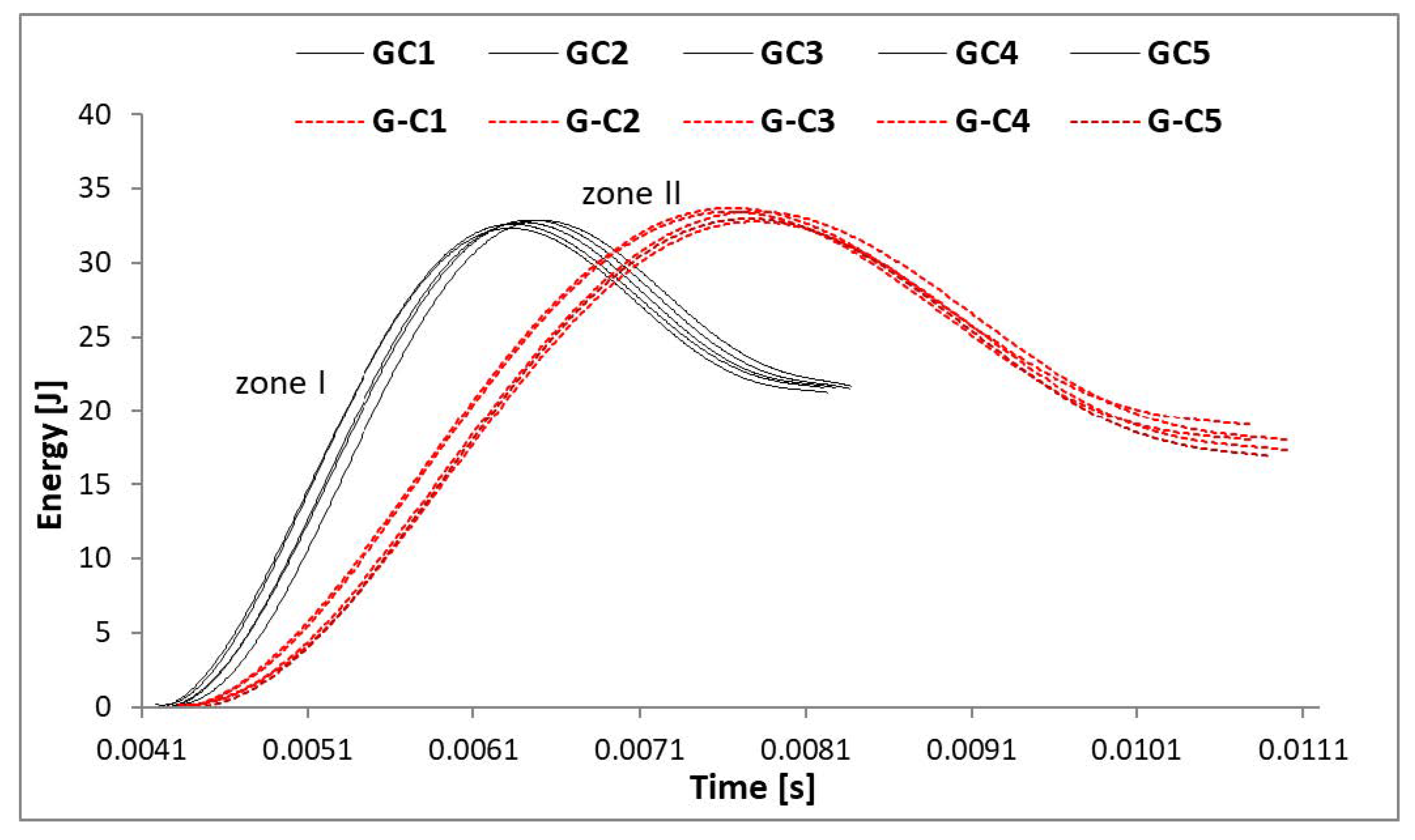
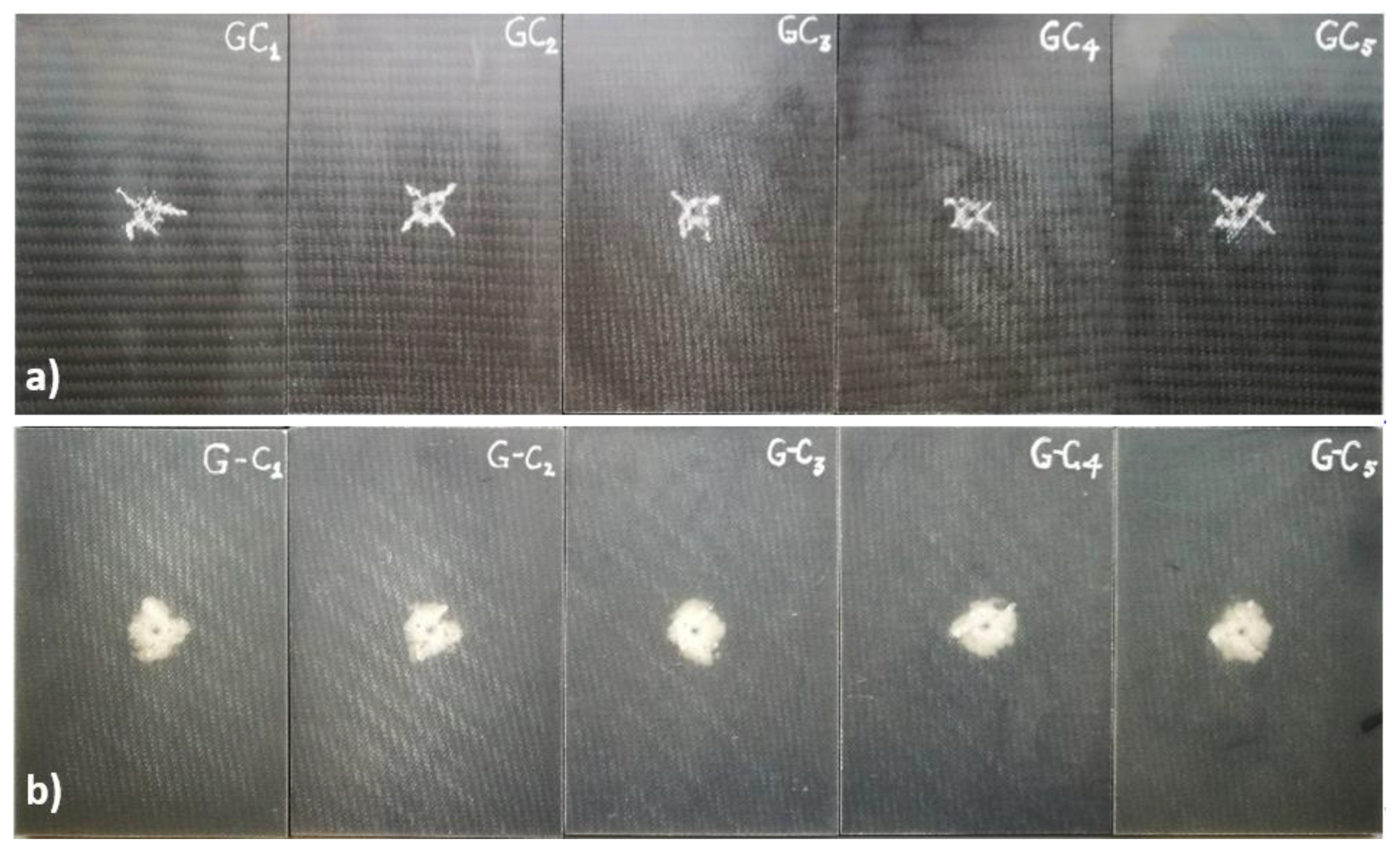
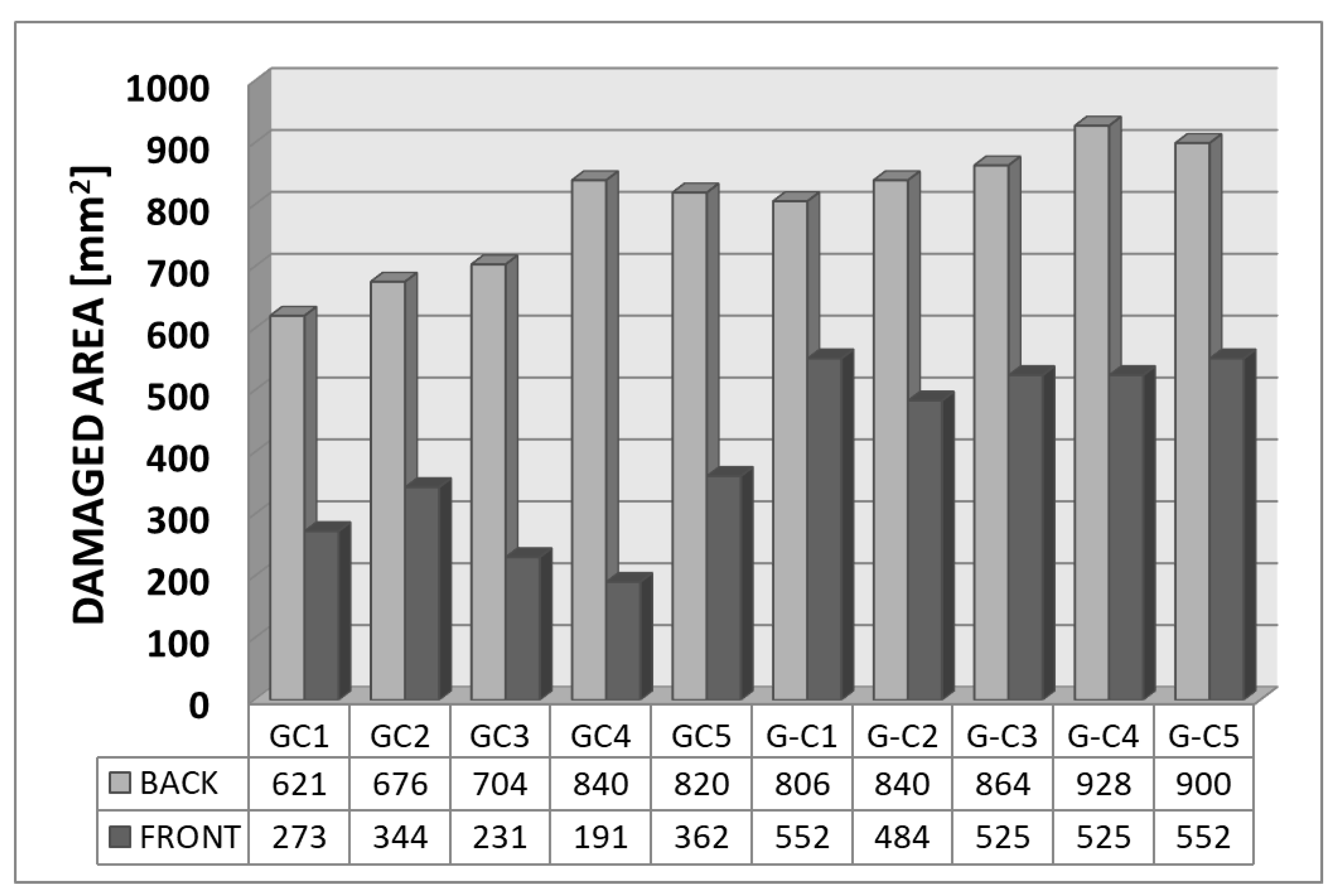
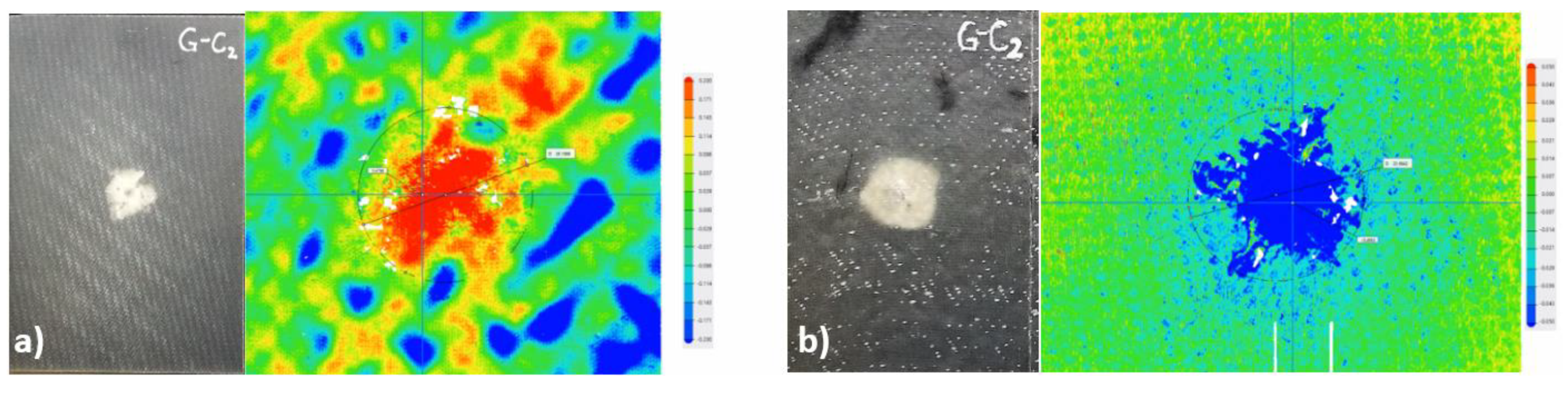
The present investigation was conducted on the low-speed impact response of quasi-isotropic [±45/0/90°]xs hybrid composite through laboratory level experimental tests. The purpose was to understand the behaviour that the different stacking sequences of hybrid glass/carbon fibre composites has on the ability of the material to sustain loads during low-speed impact events without developing critical structural failure in the material and improving the impact energy absorption properties, which is a relevant matter in aerospace and automotive industries. Drop-weight impact tests were carried out on two different laminates, with different stacking sequences, each of which were 16 symmetric inter-ply hybrid laminates named GC [+45G/−45C/0G/90C]4s and, respectively, G-C [+45G/−45G/0G/90G/+45C/−45C/0C/90C]2s, where G stands for glass fibre and C for carbon fibre. Both were comprised of epoxy matrix reinforced carbon/E-glass fibre woven fabric composites. The outcome of changing the hybrid stacking sequence, on the impact performances, was discussed. The damage morphologies and local failure mechanisms were analysed using visual inspection and a high-resolution laser scanner. Under 33 J impact energy, both tested hybrid composites exhibited approximately 10 kN peak load. Nevertheless, one key parameter, the time to peak load, significantly changed; the damage initiation threshold for GC samples occurred immediately before 6 kN, whereas for G-C samples this threshold appeared much earlier. This type of behaviour was partly connected to the delay in the propagation of delamination and fibre breakage, which was influenced by the high elastic energy absorption of the carbon fibres when compared with the glass fibres. The absorbed energy was higher for GC configuration, whereas a higher DI was observed for samples G-C indicating that a high percentage of the total energy was dissipated through the propagation of in-plane and out-of-plane fibre/matrix cracks. No perforation was observed on either configuration; nevertheless, the damage area significantly changed both in size and appearance from one configuration to another.
Keywords: hybrid-laminated composites; carbon fibre; glass fibre; finite element analyses; absorbed energy; low-velocity impact hybrid-laminated composites; carbon fibre; glass fibre; finite element analyses; absorbed energy; low-velocity impact