
Processing–Structure Relationships in Epoxy Nanocomposites Filled with GNP, GO, and MoS2: Contact-Sensitive Impedance and Raman Mapping


Abstract
1. Introduction
2. Materials and Methods
2.1. Materials and Composite Series
2.2. GNP Production
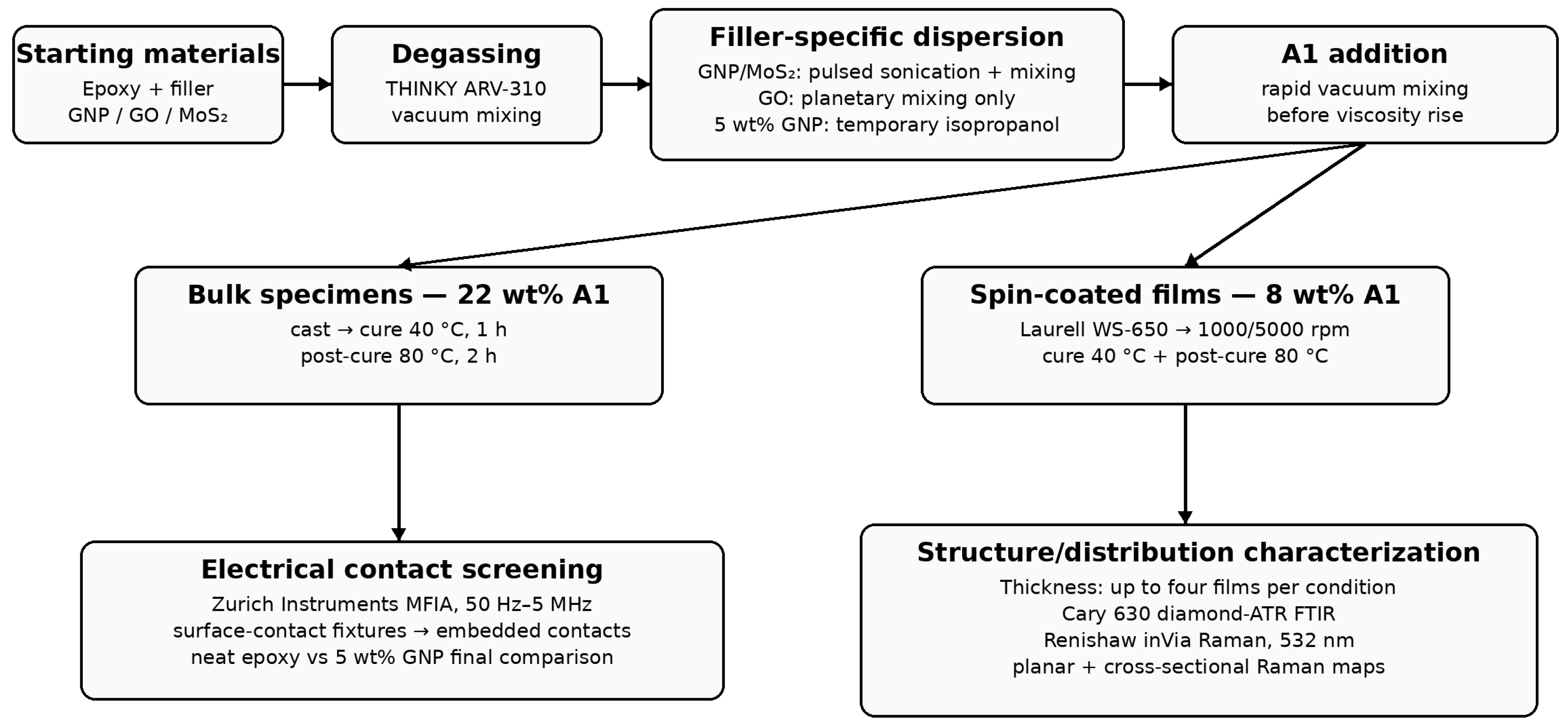
2.3. Degassing, Filler Dispersion and Curing
2.4. Thin-Film Fabrication and Thickness Measurement
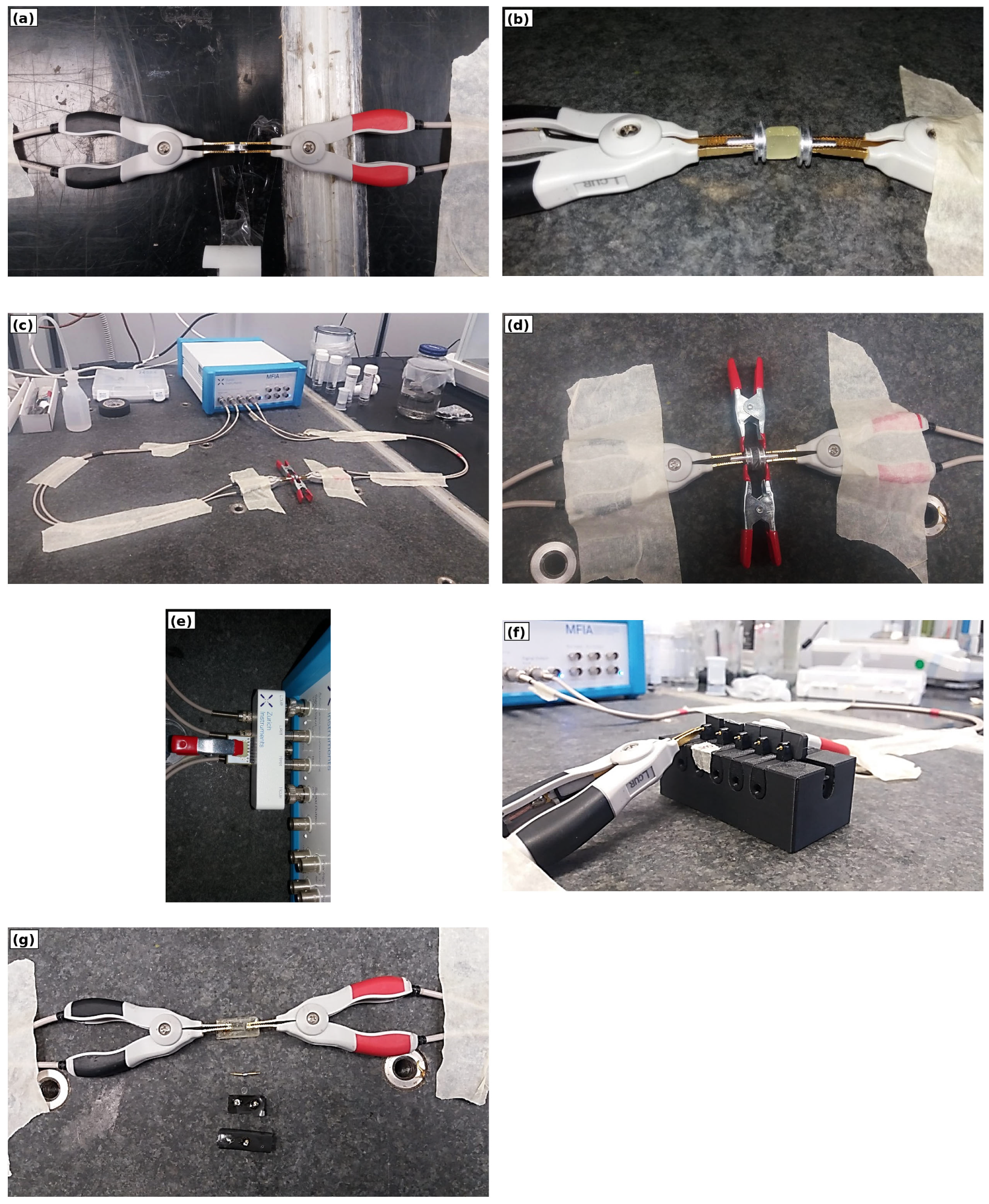
2.5. Low-Frequency Impedance Contact Screening
2.6. Detailed Impedance Fixture Screening
2.7. ATR-FTIR Spectroscopy
2.8. Raman Spectroscopy and Mapping
2.9. Experimental Design, Repeatability and Scope of Inference
3. Results and Discussion
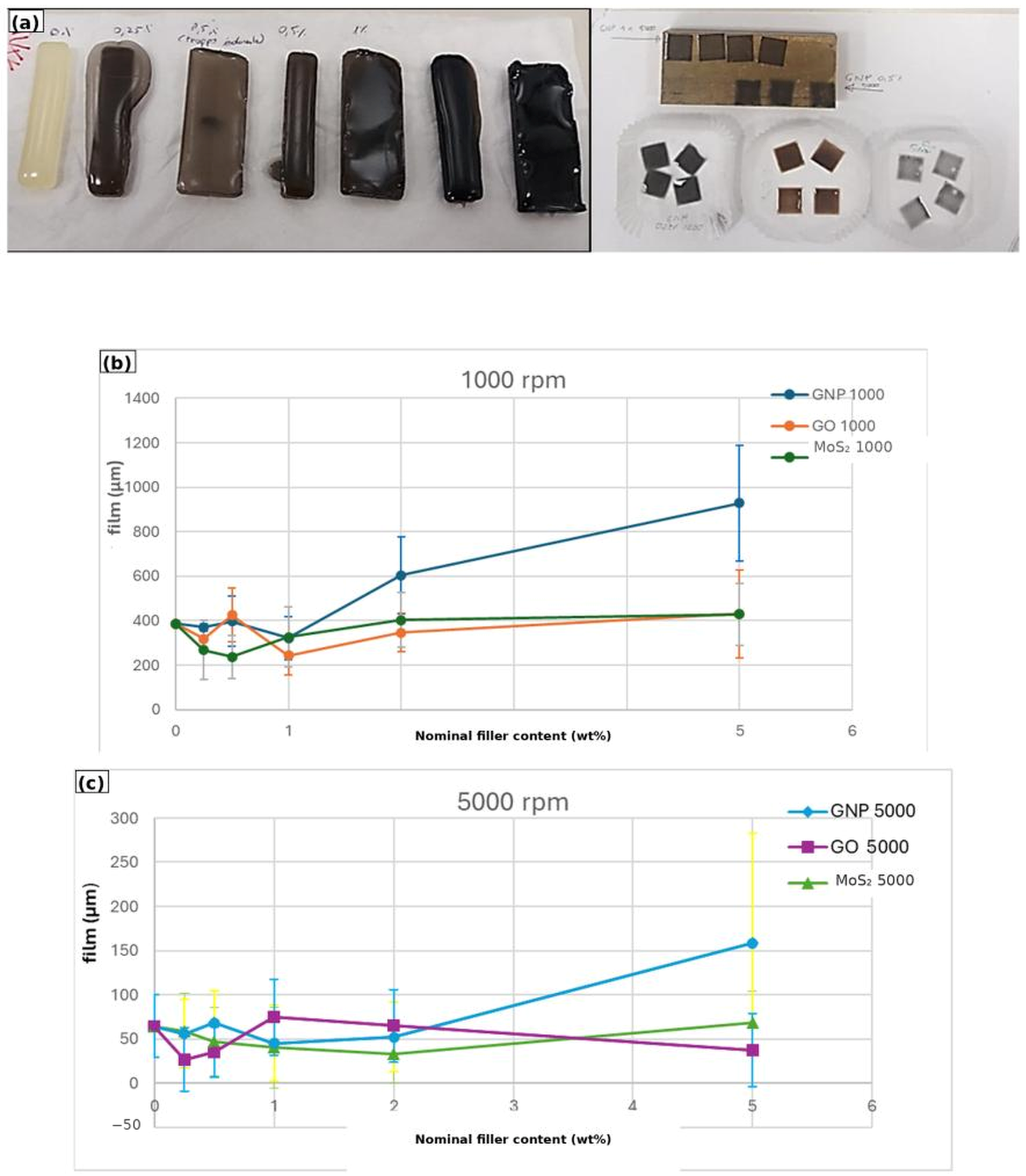
3.1. Specimen Formation and Coating Thickness
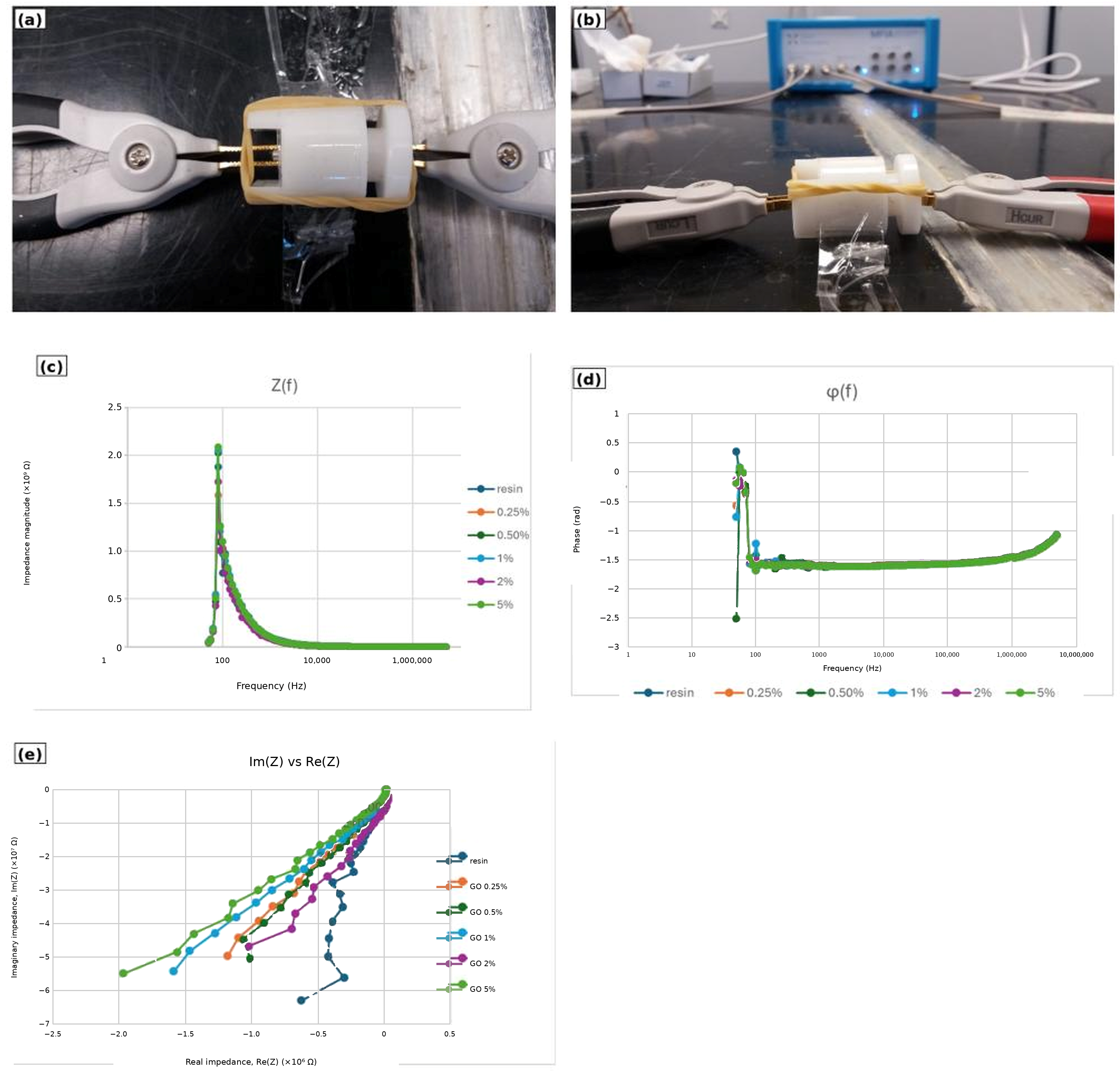
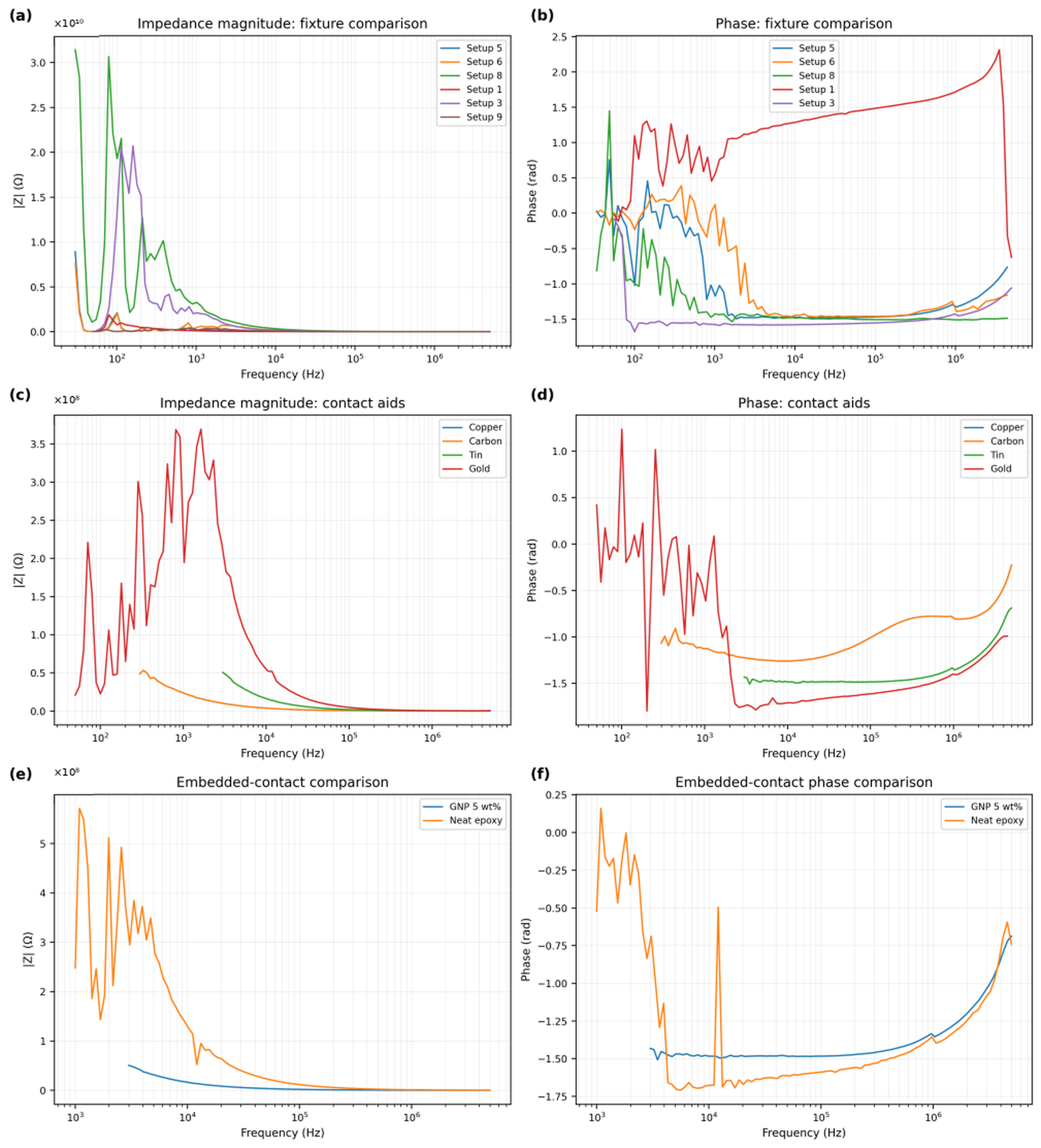
3.2. Electrode–Composite Contact Controls the Measured Impedance
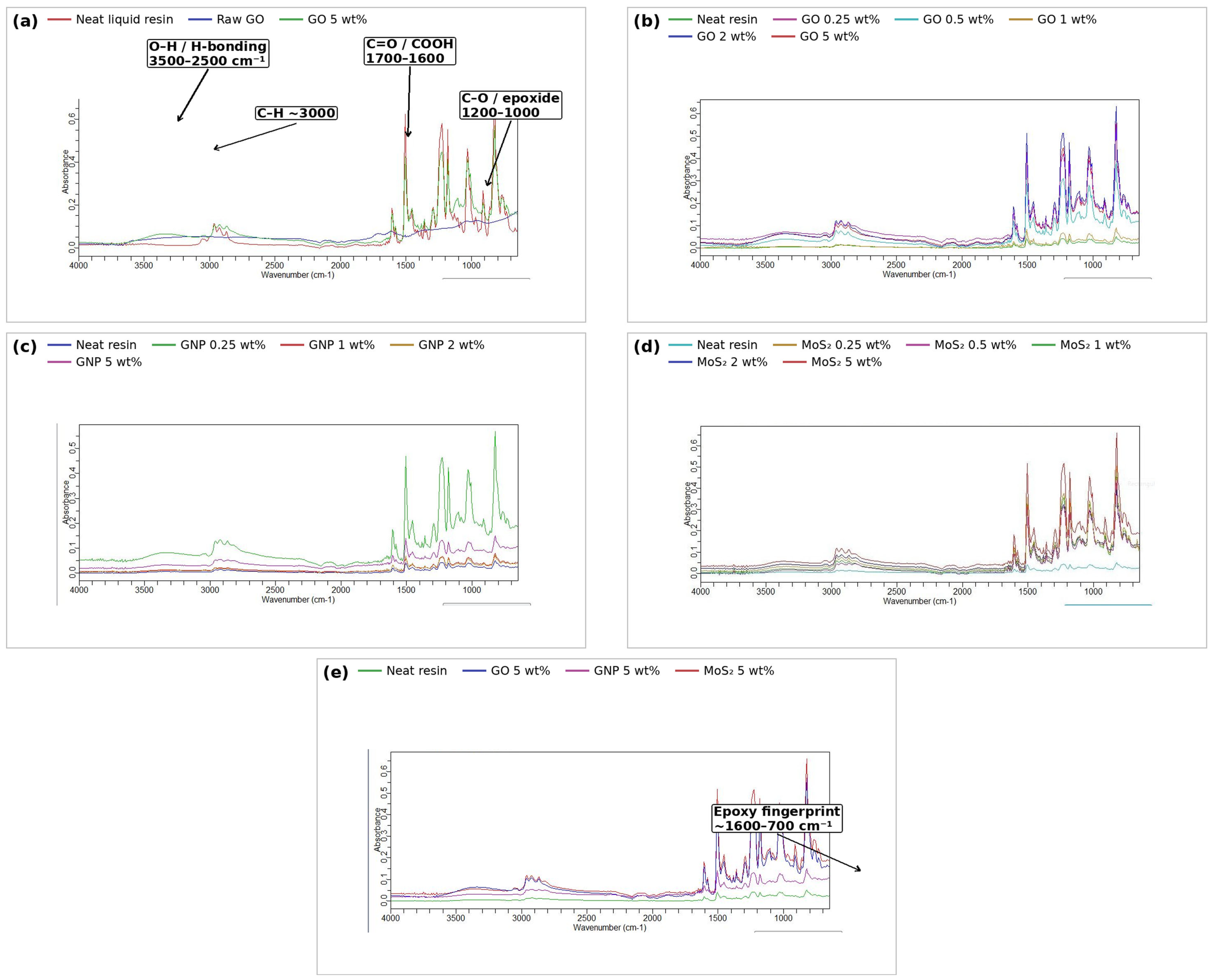
3.3. ATR-FTIR Signatures
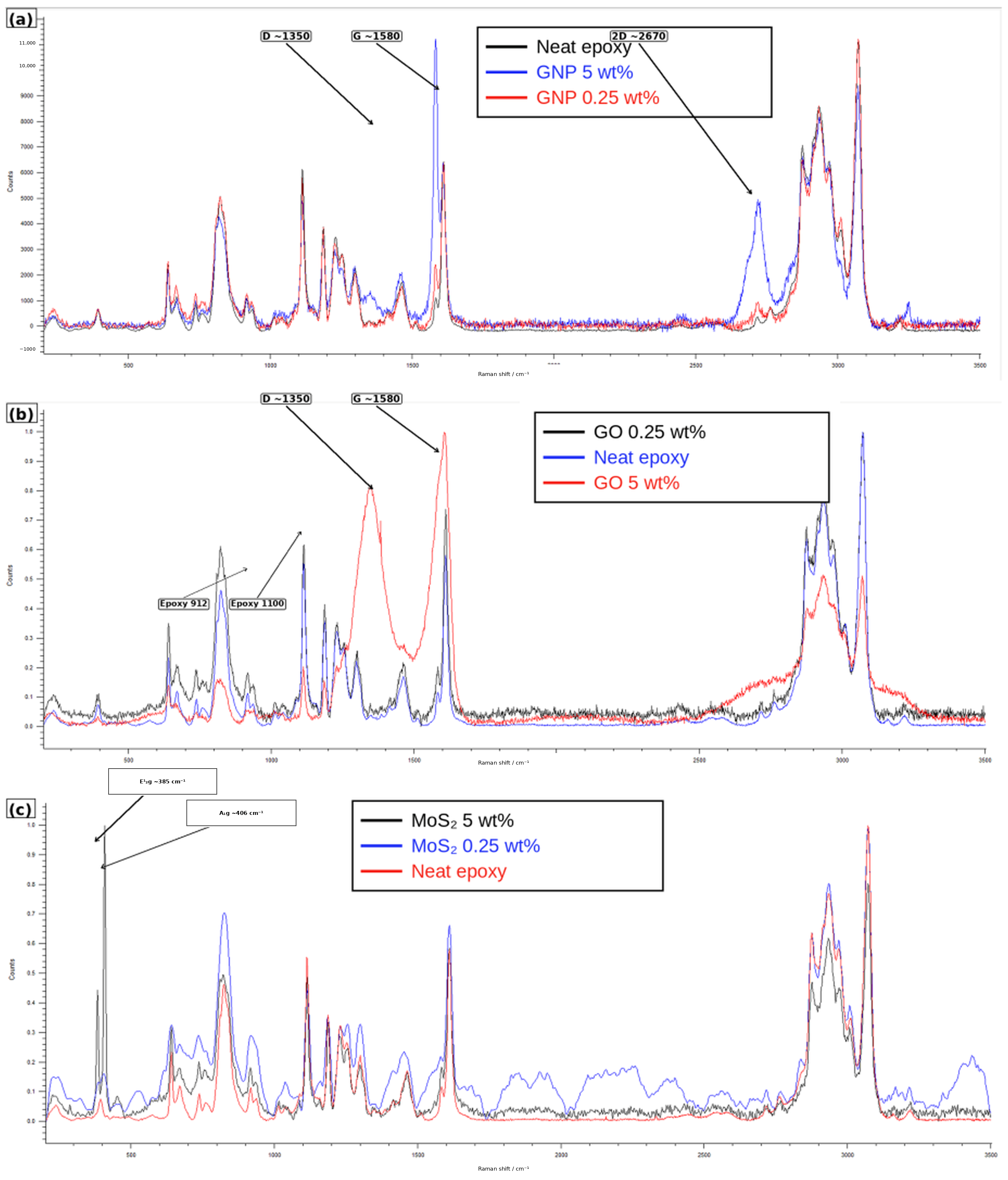
3.4. Raman Fingerprints of the Fillers in the Epoxy Matrix
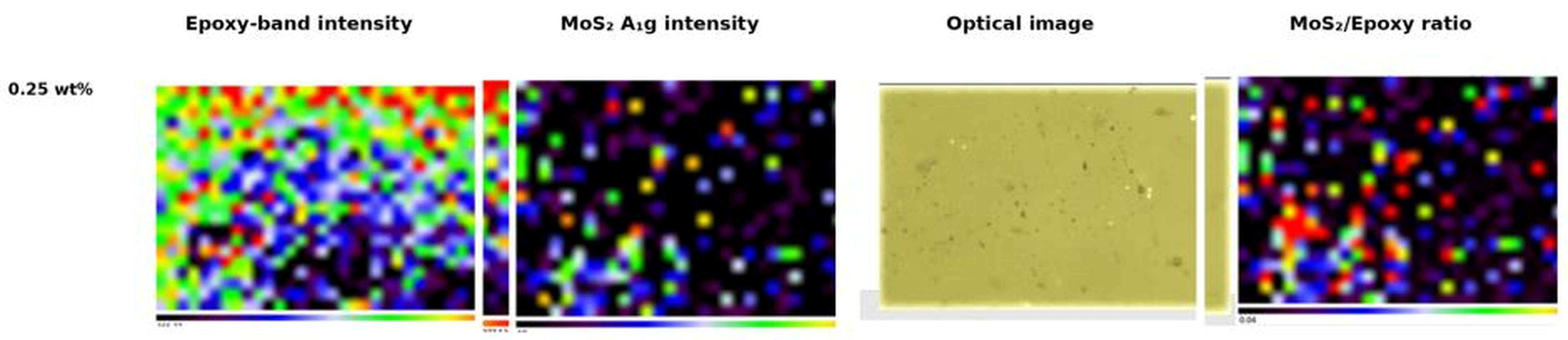
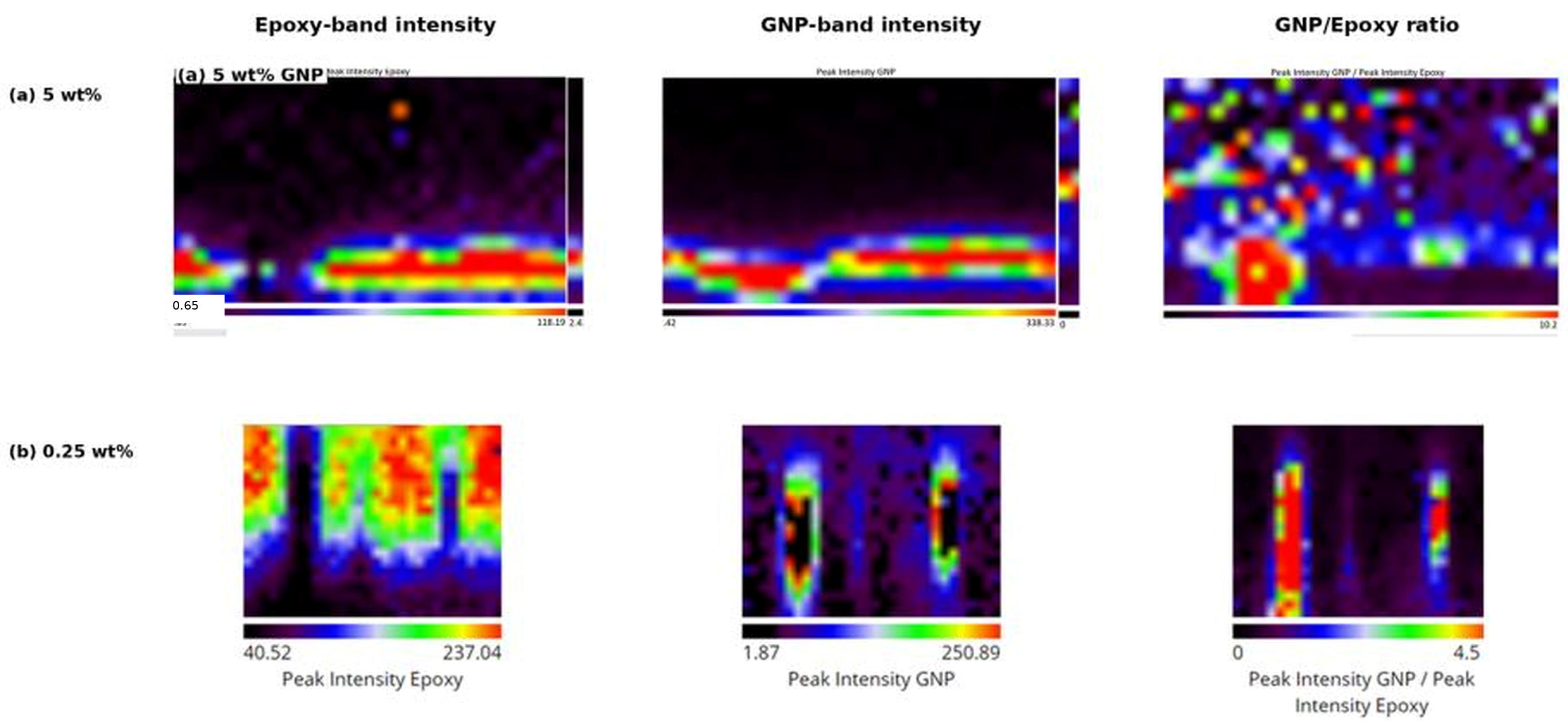
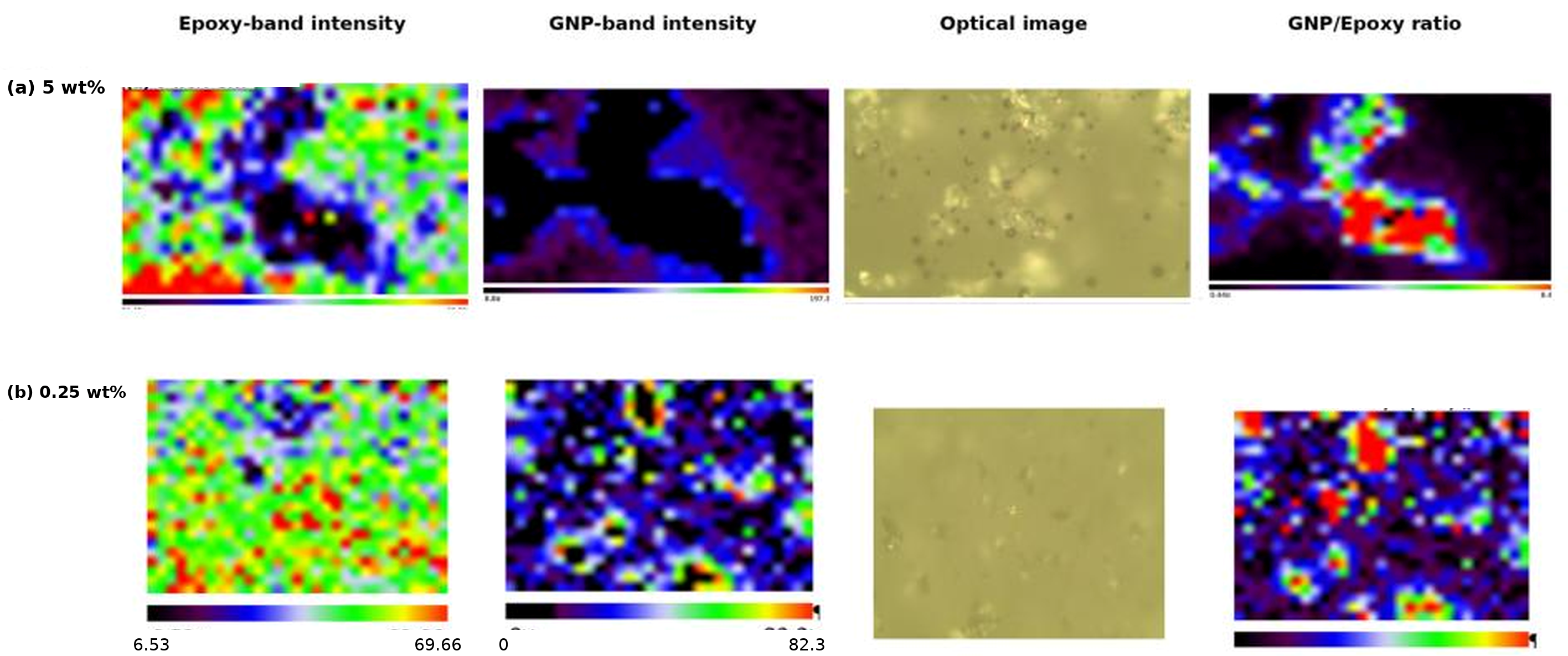
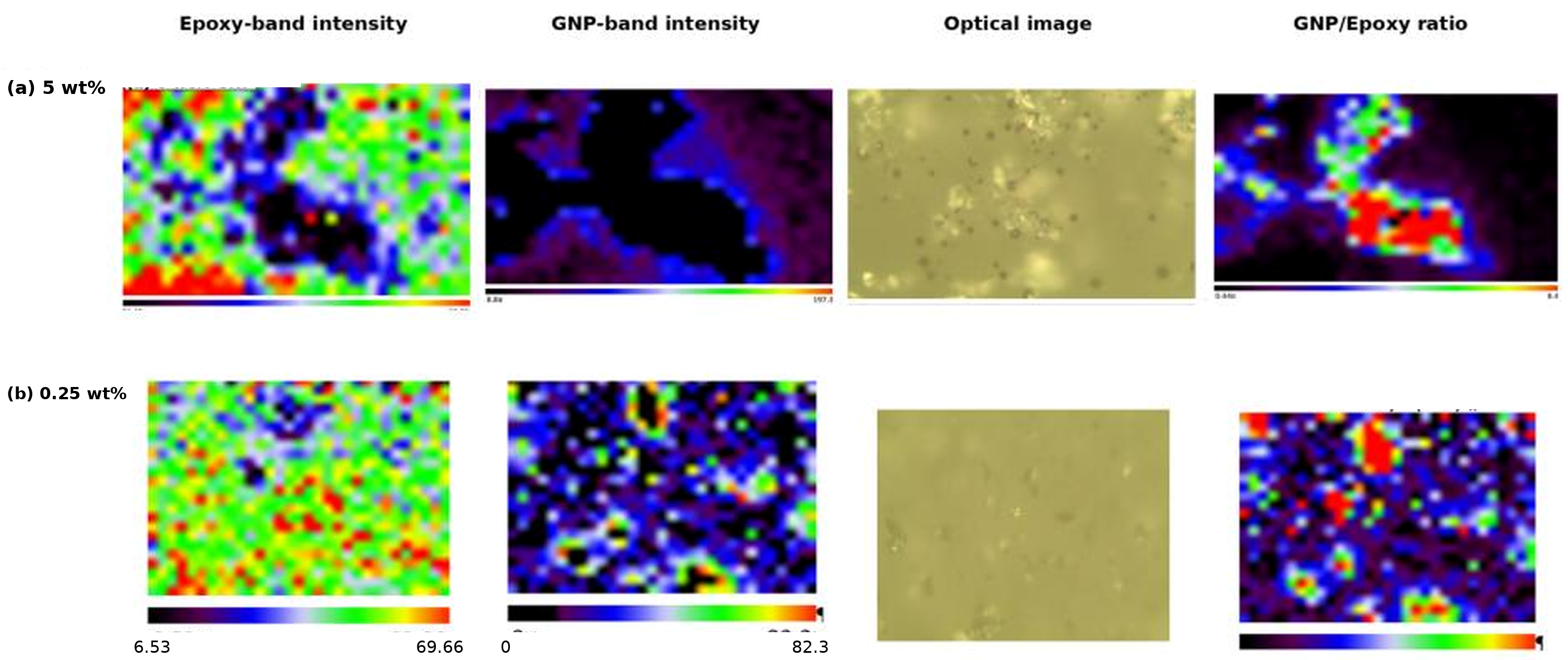
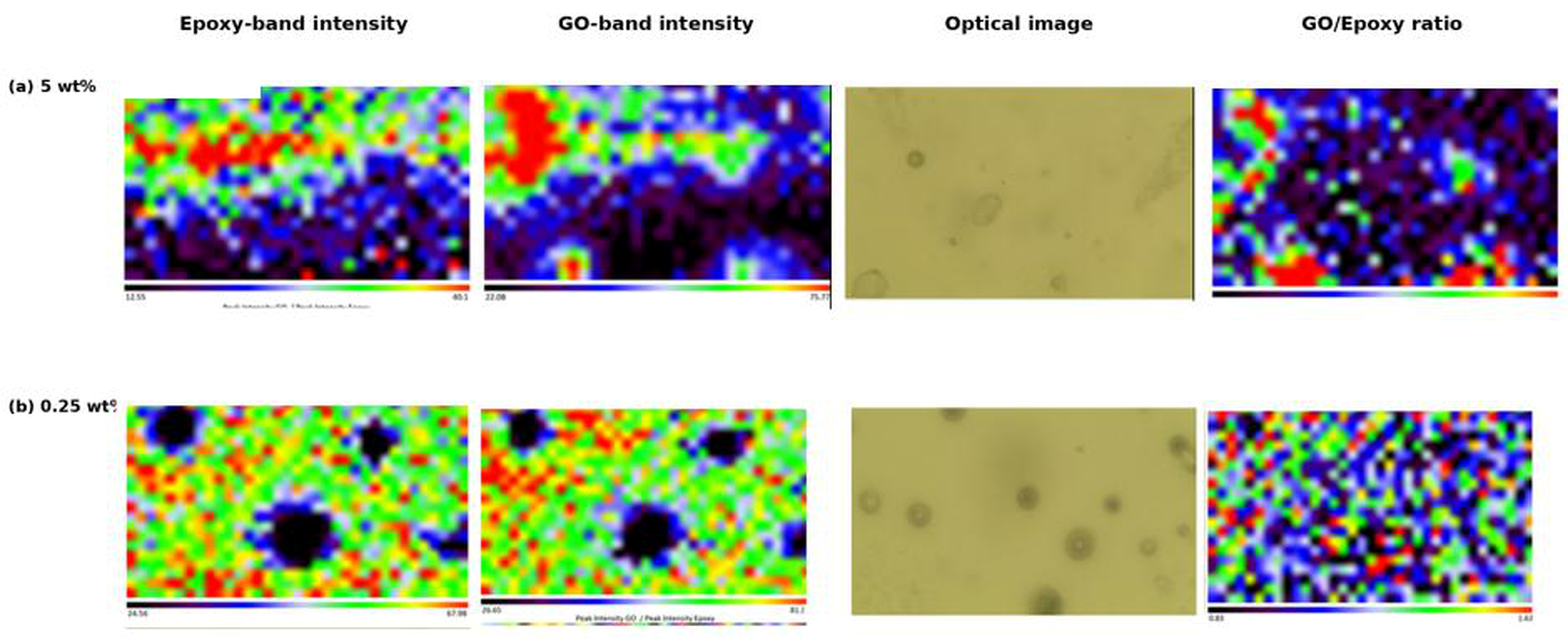
3.5. Planar Raman Maps
3.6. Relation to the Companion Dielectric Study
3.7. Applicability, Limitations and Outlook
4. Conclusions
Funding
Data Availability Statement
Acknowledgments
Conflicts of Interest
References
- Knight, M.; Curliss, D. Composite Materials. In Encyclopedia of Physical Science and Technology, 3rd ed.; Academic Press: Cambridge, MA, USA, 2003. [Google Scholar]
- Ahmadi, Z. Epoxy in nanotechnology: A short review. Prog. Org. Coat. 2019, 132, 445–448. [Google Scholar] [CrossRef] [Scilit]
- Wei, J.; Vo, T.; Inam, F. Epoxy/graphene nanocomposites—Processing and properties: A review. RSC Adv. 2015, 5, 73510–73524. [Google Scholar] [CrossRef] [Scilit]
- Atif, R.; Shyha, I.; Inam, F. Mechanical, Thermal, and Electrical Properties of Graphene-Epoxy Nanocomposites—A Review. Polymers 2016, 8, 281. [Google Scholar] [CrossRef] [Scilit]
- Dabrowska, A.; Bellucci, S.; Cataldo, A.; Micciulla, F.; Huczko, A. Nanocomposites of epoxy resin with graphene nanoplates and exfoliated graphite: Synthesis and electrical properties. Phys. Status Solidi (B) 2014, 251, 2599–2602. [Google Scholar] [CrossRef] [Scilit]
- Plyushch, A.; Macutkevic, J.; Kuzhir, P.; Banys, J.; Bychanok, D.; Lambin, P.; Bistarelli, S.; Cataldo, A.; Micciulla, F.; Bellucci, S. Electromagnetic properties of graphene nanoplatelets/epoxy composites. Compos. Sci. Technol. 2016, 128, 75–83. [Google Scholar] [CrossRef] [Scilit]
- Collado, I.; Jiménez-Suárez, A.; Moriche, R.; Del Rosario, G.; Prolongo, S.G. Electrical, Thermo-Electrical, and Electromagnetic Behaviour of Epoxy Composites Reinforced with Graphene Nanoplatelets with Different Average Surface Area. Polymers 2022, 14, 5520. [Google Scholar] [CrossRef] [Scilit]
- Wang, X.; Xing, W.; Feng, X.; Song, L.; Hu, Y. MoS2/Polymer Nanocomposites: Preparation, Properties, and Applications. Polym. Rev. 2016, 57, 440–466. [Google Scholar] [CrossRef] [Scilit]
- Abdelal, N.; Dib, N.; Young, D.; Slanker, A. Electromagnetic interference shielding and dielectric properties of graphene nanoplatelets/epoxy composites in the x-band frequency range. J. Mater. Sci. 2022, 57, 13928–13944. [Google Scholar] [CrossRef] [Scilit]
- Potts, J.R.; Dreyer, D.R.; Bielawski, C.W.; Ruoff, R.S. Graphene-based polymer nanocomposites. Polymer 2011, 52, 5–25. [Google Scholar] [CrossRef] [Scilit]
- A Rafiee, M.; Rafiee, J.; Wang, Z.; Song, H.; Yu, Z.-Z.; Koratkar, N. Enhanced Mechanical Properties of Nanocomposites at Low Graphene Content. ACS Nano 2009, 3, 3884–3890. [Google Scholar] [CrossRef] [Scilit]
- Ghaleb, Z.; Mariatti, M.; Ariff, Z. Properties of graphene nanopowder and multi-walled carbon nanotube-filled epoxy thin-film nanocomposites for electronic applications: The effect of sonication time and filler loading. Compos. Part A Appl. Sci. Manuf. 2014, 58, 77–83. [Google Scholar] [CrossRef] [Scilit]
- Monti, M.; Rallini, M.; Puglia, D.; Peponi, L.; Torre, L.; Kenny, J. Morphology and electrical properties of graphene–epoxy nanocomposites obtained by different solvent assisted processing methods. Compos. Part A Appl. Sci. Manuf. 2013, 46, 166–172. [Google Scholar] [CrossRef] [Scilit]
- Wu, S.; Ladani, R.B.; Zhang, J.; Bafekrpour, E.; Ghorbani, K.; Mouritz, A.P.; Kinloch, A.J.; Wang, C.H. Aligning multilayer graphene flakes with an external electric field to improve multifunctional properties of epoxy nanocomposites. Carbon 2015, 94, 607–618. [Google Scholar] [CrossRef] [Scilit]
- Amirova, L.; Surnova, A.; Balkaev, D.; Musin, D.; Amirov, R.; Dimiev, A.M. Homogeneous Liquid Phase Transfer of Graphene Oxide into Epoxy Resins. ACS Appl. Mater. Interfaces 2017, 9, 11909–11917. [Google Scholar] [CrossRef] [Scilit]
- An, J.; Zhang, Y.; Zhang, X.; He, M.; Zhou, J.; Zhou, J.; Liu, Y.; Chen, X.; Hu, Y.; Song, X.; et al. Structure and Properties of Epoxy Resin/Graphene Oxide Composites Prepared from Silicon Dioxide-Modified Graphene Oxide. ACS Omega 2024, 9, 17577–17591. [Google Scholar] [CrossRef] [Scilit]
- Bergseth, Z.; Qi, X.; Wang, X. A study on graphene nanoplatelet dispersion methods and their effects on coating abrasion resistance and surface properties. Prog. Org. Coat. 2024, 189, 108352. [Google Scholar] [CrossRef] [Scilit]
- Louis, S.; Arukula, R.; Yang, D.; Kim, T.; Wu, X.; Qi, X. Effects of dispersion methods on dynamic and thermal mechanical properties of GNP–epoxy nanocomposite coatings. Prog. Org. Coat. 2026, 210, 109652. [Google Scholar] [CrossRef] [Scilit]
- Shchegolkov, A.V.; Shchegolkov, A.V.; Kaminskii, V.V. Carbon Nanotubes and Graphene in Polymer Composites for Strain Sensors: Synthesis, Functionalization, and Application. J. Compos. Sci. 2026, 10, 43. [Google Scholar] [CrossRef] [Scilit]
- Ravi, P.; Katiyar, J.K.; Shravan Kumar, C. Physico-tribocorrosion performance of epoxy/MoS2 nanocomposite coating. Mater. Today Commun. 2025, 42, 111219. [Google Scholar] [CrossRef] [Scilit]
- Bellucci, S. Critical Assessment of Dielectric Permittivity Measurements in Epoxy Nanocomposites Based on Two-Dimensional Fillers. Discov. Polym. 2026. [Google Scholar] [CrossRef] [Scilit]
- Seretis, G.; Theodorakopoulos, I.; Manolakos, D.; Provatidis, C. Effect of sonication on the mechanical response of graphene nanoplatelets/glass fabric/epoxy laminated nanocomposites. Compos. Part B Eng. 2018, 147, 33–41. [Google Scholar] [CrossRef] [Scilit]
- Baig, Z.; Mamat, O.; Mustapha, M.; Mumtaz, A.; Munir, K.S.; Sarfraz, M. Investigation of tip sonication effects on structural quality of graphene nanoplatelets (GNPs) for superior solvent dispersion. Ultrason. Sonochem. 2018, 45, 133–149. [Google Scholar] [CrossRef] [Scilit]
- Liu, Y.; Hamon, A.-L.; Haghi-Ashtiani, P.; Reiss, T.; Fan, B.; He, D.; Bai, J. Quantitative Study of Interface/Interphase in Epoxy/Graphene-Based Nanocomposites by Combining STEM and EELS. ACS Appl. Mater. Interfaces 2016, 8, 34151–34158. [Google Scholar] [CrossRef] [Scilit]
- Ferrari, A.C.; Meyer, J.C.; Scardaci, V.; Casiraghi, C.; Lazzeri, M.; Mauri, F.; Piscanec, S.; Jiang, D.; Novoselov, K.S.; Roth, S.; et al. Raman spectrum of graphene and graphene layers. Phys. Rev. Lett. 2006, 97, 187401. [Google Scholar] [CrossRef] [Scilit]
- Ni, Z.; Wang, Y.; Yu, T.; Shen, Z. Raman spectroscopy and imaging of graphene. Nano Res. 2008, 1, 273–291. [Google Scholar] [CrossRef] [Scilit]
- Claramunt, S.; Varea, A.; López-Díaz, D.; Velázquez, M.M.; Cornet, A.; Cirera, A. The Importance of Interbands on the Interpretation of the Raman Spectrum of Graphene Oxide. J. Phys. Chem. C 2015, 119, 10123–10129. [Google Scholar] [CrossRef] [Scilit]
- Li, H.; Zhang, Q.; Yap, C.C.R.; Tay, B.K.; Edwin, T.H.T.; Olivier, A.; Baillargeat, D. From Bulk to Monolayer MoS2: Evolution of Raman Scattering. Adv. Funct. Mater. 2012, 22, 1385–1390. [Google Scholar] [CrossRef] [Scilit]
- Ibrahim, W.L.; Öper, M.; Şar, H.; Ay, F.; Perkgöz, N.K. Evolution of Raman and photoluminescence spectral characteristics of monolayer CVD-MoS2 over a wide temperature range. Vib. Spectrosc. 2022, 123, 103443. [Google Scholar] [CrossRef] [Scilit]
- Tumino, F.; D’agosta, P.; Russo, V.; Bassi, A.L.; Casari, C.S. Raman Spectroscopy of 2D MoS2 Interacting with Metals. Crystals 2023, 13, 1271. [Google Scholar] [CrossRef] [Scilit]
- Wang, Z.; Shen, X.; Han, N.M.; Liu, X.; Wu, Y.; Ye, W.; Kim, J.-K. Ultralow Electrical Percolation in Graphene Aerogel/Epoxy Composites. Chem. Mater. 2016, 28, 6731–6741. [Google Scholar] [CrossRef] [Scilit]
- Najmi, P.; Keshmiri, N.; Ramezanzadeh, M.; Ramezanzadeh, B.; Arjmand, M. Epoxy nanocomposites holding molybdenum disulfide decorated with covalent organic framework: All-in-one coatings featuring thermal, UV-shielding, and mechanical properties. Compos. Part B Eng. 2023, 260, 110785. [Google Scholar] [CrossRef] [Scilit]
- Riaz, S.; Park, S.-J. A comparative study on nanoinclusion effect of MoS2 nanosheets and MoS2 quantum dots on fracture toughness and interfacial properties of epoxy composites. Compos. Part A Appl. Sci. Manuf. 2021, 146, 106419. [Google Scholar] [CrossRef] [Scilit]
- Dong, M.; Bilotti, E.; Zhang, H.; Boland, C.S.; Papageorgiou, D.G. High performing piezoresistive MoS2/epoxy strain sensors for structural health monitoring. Polymer 2024, 309, 127449. [Google Scholar] [CrossRef] [Scilit]






| Filler | Nominal Loadings | Primary Dispersion | Special Processing Feature | Specimen Forms |
|---|---|---|---|---|
| GNP | nominal 0.25, 0.5, 1, 2, and 5 wt% | 30 min pulsed sonication + planetary mixing | Temporary isopropanol aid at nominal 5 wt%; satin-cloth filtration before coating | Bulk specimens (22 wt% A1) and spin-coated films (8 wt% A1) |
| GO | nominal 0.25, 0.5, 1, 2, and 5 wt% | Planetary mixing without sonication | Reduced laser power during Raman acquisition | Bulk specimens (22 wt% A1) and spin-coated films (8 wt% A1) |
| MoS2 | nominal 0.25, 0.5, 1, 2, and 5 wt% | 30 min pulsed sonication + planetary mixing | Approximately 30 min rest before cure | Bulk specimens (22 wt% A1) and spin-coated films (8 wt% A1) |
| Material | Role/Chemical Character | Documented Morphology or State | Processing-Relevant Property | Traceability in Archived Record |
|---|---|---|---|---|
| Epoxy resin | Thermosetting polymer matrix | Commercial liquid resin | Viscous insulating matrix; viscosity evolves after A1 addition | Exact supplier, product code and grade not retained |
| A1 hardener | Formaldehyde-modified TEPA-based amine curing agent | Laboratory-prepared liquid curing agent | 22 wt% in bulk; 8 wt% in films to preserve coatability | Preparation identity retained; no independent cure-conversion measurement |
| GNP | Conductive graphitic 2D filler | In-house; approx. 2–10 µm lateral size; ~4–11 graphitic layers | Requires sonication; high loading increases processing difficulty | Asbury® intercalated graphite precursor documented; post-processing PSD not measured |
| GO | Oxygen-functionalized graphene derivative | Commercial powder, used as received | Polar surface; planetary mixing gave usable macroscopic dispersion without sonication | Supplier, grade, PSD and oxidation degree not retained |
| MoS2 | Layered semiconducting dichalcogenide | Commercial powder, used as received | Requires sonication; high density makes vertical redistribution physically plausible during rest/cure | Supplier, grade and PSD not retained |
| Filler | Raman Feature | Approx. Position (cm−1) | Structural Interpretation in This Work | Quantitative Scope |
|---|---|---|---|---|
| GNP | D | ~1350 | edges/disordered graphitic carbon; clearer in nominal 5 wt% spectrum | presence and qualitative prominence |
| GNP | G | ~1580 | sp2 graphitic carbon | filler identification |
| GNP | 2D | ~2670 | graphitic stacking/line-shape sensitivity | qualitative line-shape comparison only |
| GO | D/G | ~1350/~1580 | disordered sp2-carbon domains | filler identification |
| MoS2 | E12g/A1g | ~385/~406 (Δ ≈ 21) | in-plane/out-of-plane layered-lattice modes | multilayer-compatible; no exact layer count |
| Specimen | Neat Epoxy | GO Nominal 0.25 wt% | GO Nominal 5 wt% | GNP Nominal 0.25 wt% | GNP Nominal 5 wt% |
|---|---|---|---|---|---|
| I(1100 cm−1) | 0.60 | 0.61 | 0.27 | 0.54 | 0.49 |
| I(912 cm−1) | 0.18 | 0.19 | 0.09 | 0.24 | 0.15 |
| I(912)/I(1100) | 0.31 | 0.31 | 0.33 | 0.44 | 0.31 |
| System | Processing Demand | Spectroscopy and Spatial Organization | Functional Interpretation |
|---|---|---|---|
| GNP/epoxy | Highest demand at nominal 5 wt%: pulsed sonication, planetary mixing, temporary isopropanol; filtration before coating. | ATR-FTIR remains matrix-dominated. Raman shows D, G and 2D bands; nominal 0.25 wt% maps contain discrete domains, whereas nominal 5 wt% maps show broader network-like spatial continuity within the sampled fields. | The controlled same-fixture embedded-contact comparison documents substantially lower impedance for the specimen prepared from the nominal 5 wt% formulation than for neat epoxy. The result is retained as a direct specimen-level electrical distinction; independent replication would be required to generalize its magnitude or assign a unique conduction mechanism. |
| GO/epoxy | Planetary mixing produced usable films without the additional sonication applied to GNP and MoS2; reduced Raman laser power was used. | ATR-FTIR shows the strongest oxygen-rich contribution superimposed on the epoxy matrix. Broad Raman D/G bands persist; GO-rich regions become more extended at nominal 5 wt% within the sampled fields. | The oxygen-rich spectral contribution and increased spatial continuity at nominal 5 wt% support a clear processing–structure response for GO/epoxy within the mapped fields. |
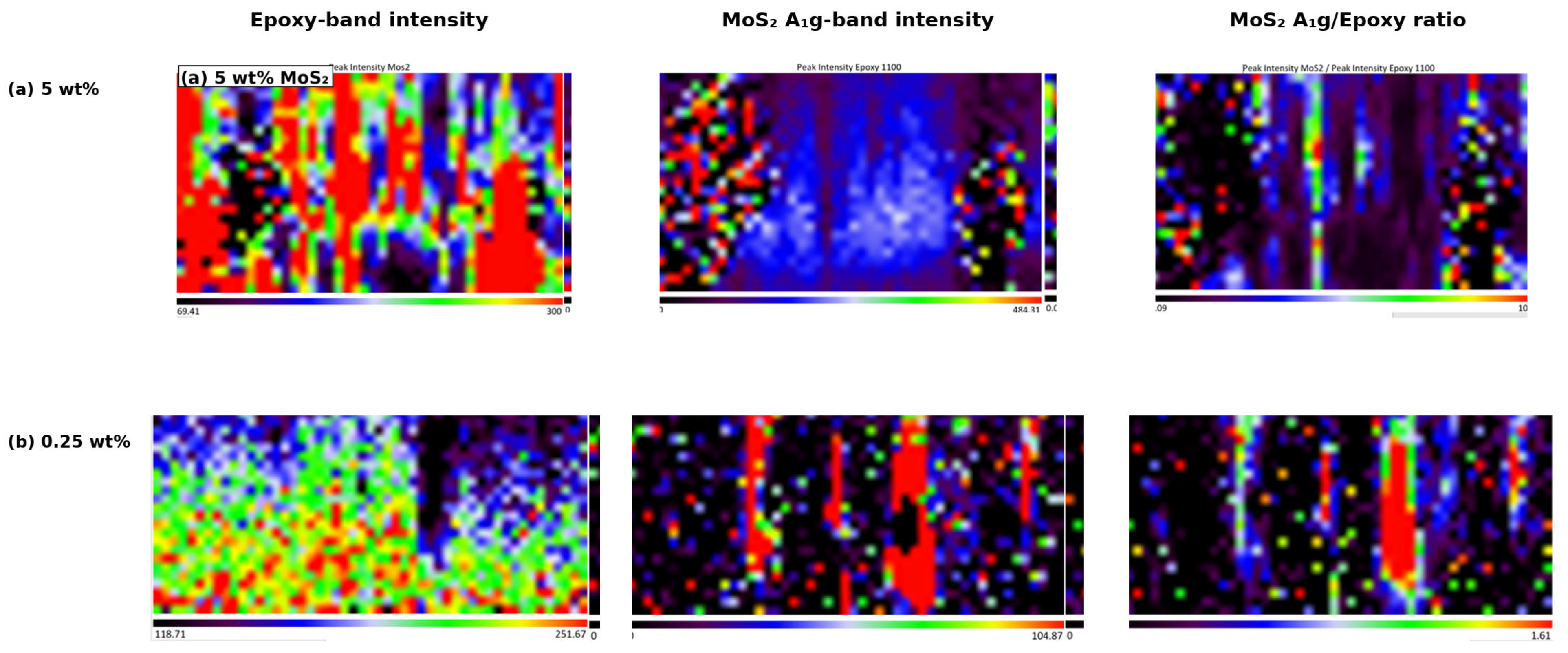
| MoS2/epoxy | Pulsed sonication plus planetary mixing; approximately 30 min rest before thermal treatment. | ATR-FTIR is matrix-dominated in the investigated mid-IR window. Raman E12g and A1g modes (~385/~406 cm−1) persist; the nominal 5 wt% local cross-sectional field contains more laterally extended Raman-active regions than the nominal 0.25 wt% sampled field. | Subsurface MoS2 is directly detected at both endpoint formulations. The nominal 5 wt% sampled cross-section contains more laterally extended Raman-active regions, while possible sedimentation and the absence of a matched planar pair prevent extrapolation to a unique whole-film loading trend. |
Disclaimer/Publisher’s Note: The statements, opinions and data contained in all publications are solely those of the individual author(s) and contributor(s) and not of MDPI and/or the editor(s). MDPI and/or the editor(s) disclaim responsibility for any injury to people or property resulting from any ideas, methods, instructions or products referred to in the content. |
© 2026 by the author. Licensee MDPI, Basel, Switzerland. This article is an open access article distributed under the terms and conditions of the Creative Commons Attribution (CC BY) license.
Share and Cite
Bellucci, S. Processing–Structure Relationships in Epoxy Nanocomposites Filled with GNP, GO, and MoS2: Contact-Sensitive Impedance and Raman Mapping. J. Compos. Sci. 2026, 10, 495. https://doi.org/10.3390/jcs10090495
Bellucci S. Processing–Structure Relationships in Epoxy Nanocomposites Filled with GNP, GO, and MoS2: Contact-Sensitive Impedance and Raman Mapping. Journal of Composites Science. 2026; 10(9):495. https://doi.org/10.3390/jcs10090495
Chicago/Turabian StyleBellucci, Stefano. 2026. "Processing–Structure Relationships in Epoxy Nanocomposites Filled with GNP, GO, and MoS2: Contact-Sensitive Impedance and Raman Mapping" Journal of Composites Science 10, no. 9: 495. https://doi.org/10.3390/jcs10090495
APA StyleBellucci, S. (2026). Processing–Structure Relationships in Epoxy Nanocomposites Filled with GNP, GO, and MoS2: Contact-Sensitive Impedance and Raman Mapping. Journal of Composites Science, 10(9), 495. https://doi.org/10.3390/jcs10090495