Article

Highly Effective Injection Composites with Fly Ash and Microsilica for Soil Stabilization

by
Yasin Onuralp Özkılıç
1,2,*,
Alexey N. Beskopylny
3,*,
Ceyhun Aksoylu
4,
Sergey A. Stel’makh
2,
Evgenii M. Shcherban’
5,
Emrah Madenci
1,6,
Diana M. Shakhalieva
7,
Andrei Chernil’nik
2 and
Alexey Kosykh
2
1
Department of Civil Engineering, Faculty of Engineering, Necmettin Erbakan University, Konya 42000, Turkey
2
Department of Unique Buildings and Constructions Engineering, Don State Technical University, Gagarin Sq. 1, 344003 Rostov-on-Don, Russia
3
Department of Transport Systems, Faculty of Roads and Transport Systems, Don State Technical University, 344003 Rostov-on-Don, Russia
4
Department of Civil Engineering, Faculty of Engineering and Natural Sciences, Konya Technical University, 42075 Konya, Turkey
5
Department of Engineering Geometry and Computer Graphics, Don State Technical University, 344003 Rostov-on-Don, Russia
6
Department of Technical Sciences, Western Caspian University, Baku 1001, Azerbaijan
7
Department of Design, Don State Technical University, 344003 Rostov-on-Don, Russia
*
Authors to whom correspondence should be addressed.
J. Compos. Sci. 2025, 9(12), 675; https://doi.org/10.3390/jcs9120675
Submission received: 24 October 2025 / Revised: 15 November 2025 / Accepted: 1 December 2025 / Published: 4 December 2025
(This article belongs to the Section Composites Applications)

Abstract

Injection composites based on mineral binders are widely used for soil stabilization, using jet grouting technology to solve various geotechnical problems. Cement, which contains toxic components and worsens the ecology of the environment, is typically the main mineral component used to manufacture injection composites. Reducing cement consumption in the production of building materials is currently of great importance. This study developed highly effective, environmentally friendly injection composites for soil stabilization based on three mineral components: Portland cement, fly ash (FA), and microsilica (MS). FA was introduced into the composites as a partial Portland cement substitute, in amounts ranging from 5 to 50% in 5% increments. The properties of fresh and hardened composites, including the density, flow rate, water separation, compressive strength at 7 and 28 days, and the structure and phase composition of the composites, were studied. The inclusion of FA in the composition of composites contributes to a decrease in density by 16.9%, from 1.89 g/cm3 to 1.57 g/cm3, and cone spread by 9%, from 30.1 cm to 27.4 cm, and an increase in water bleeding by 91.4%, from 3.5% to 6.7%, respectively. Based on the results of the experimental studies, the most effective dosage of FA was determined, which amounted to 20%. An increase in compressive strength was recorded for composites at the age of 7 days of 8.3%, from 33.6 MPa to 36.4 MPa, and for compressive strength at the age of 28 days of 9.4%, from 41.3 MPa to 45.2 MPa, respectively. SEM and XRD analysis results show that including FA and MS promotes the formation of additional calcium hydrosilicates (CSH) and the development of a compact and organized composite structure. The developed composites with FA contents of up to 50% exhibit the required properties and can be used for their intended purpose in real-world construction for soil stabilization.

1. Introduction

The global demand for cement, the most popular building material, only increases each year. This trend is largely determined by such factors as the expansion of the field of cement application and the increase in the overall volume of investment in infrastructure development [1,2,3]. However, a considerable amount of carbon dioxide is emitted during cement production. The increase in greenhouse gas emissions has a negative impact on the environment and leads to an increase in global temperatures [4,5,6]. The problem of reducing the carbon footprint is relevant, and one of the options for its solution is the development of environmentally friendly materials [7]. The most popular way to improve the environmental friendliness of building cement materials and the composites based on them is the use of solid industrial waste such as slag, fly ash, and microsilica (FA) [8,9,10]. Fly ash is often used to modify cement composites. Using FA allows for a reduction in cement consumption while improving the properties of composites, which is also confirmed by numerous studies by other authors, which are reviewed further. For example, the inclusion of up to 20% FA instead of part of the binder component provides an increase in strength properties [11]. The addition of FA to foam concretes leads to a compressive strength increase of up to 35.6% and a flexural strength increase of up to 40.8% [12]. In the composition of ultra-high-performance concrete (UHPC), FA increases the strength properties and improves its structure [13]. Green ultra-high-performance concretes with 28% FA showed an excellent compressive strength of 165.3 MPa [14]. Concretes on recycled aggregates, modified with 10–15% FA, have an increased frost resistance, improved strength properties, and an improved modulus of elasticity [15]. Concretes intended for 3D printing with an FA content of up to 50% by weight of the binder have all the required properties and can be used in this technology [16]. The combined inclusion of graphene oxide and 30% FA provided an 18% increase in compressive strength and improved the resistance to chloride ion propagation [17]. Self-compacting concrete with FA has an increased fluidity and improved mechanical properties [18]. In lightweight concretes intended for 3D printing, the inclusion of FA improves printing properties [19]. The additional scientific literature has demonstrated the efficacy of incorporating FA into cement composites, as evidenced by the enhanced strength and durability characteristics [20,21,22,23,24,25]. Microsilica (MS) is a dusty waste product of silicon and ferroalloy production; it is actively used as a modifying additive in cement composite technology and significantly improves its properties and structure [22,26,27]. For example, the combined effect of MS and carbon nanotubes contributed to an improvement in the concrete microstructure and the compressive strength of the composite by 31.5% [28]. The modification of previous concrete with 5% MS based on recycled concrete aggregates improves its strength properties and durability [29]. The positive effects of MS modifications of cementitious composites are further confirmed by other previous studies [30,31,32,33,34].
During construction and engineering works, problems associated with the instability of soil masses, their insufficient bearing capacity, and water leakage often arise [35,36,37]. Increasing stability and strengthening soil masses in actual construction practice are achieved by injecting various composites into the soil. Depending on the hardening component, injection composites are mainly divided into cement and silicate [38,39]. Cementation materials must have the required working characteristics and operational properties. The development of effective, economical, and environmentally friendly cementitious materials for soil stabilization and strengthening is of great importance. Using various types of industrial waste, including FA, is also reflected in the scientific research aimed at the development of cementitious materials for soil strengthening [40,41,42]. For example, the stabilization of subsidence soils by impregnating them with nano clay and Portland cement particles has shown good results, expressed as a uniform improvement in the strength and adhesion of the treated soils [43]. Soil stabilization with cement and SiO2 nanoparticles increases soil strength and reduces its permeability [44]. The inclusion of 20% cement and 0.5% polypropylene fiber in expansive soil significantly improves its mechanical properties and reduces shrinkage [45]. Composite soil stabilization for road surfaces with slag and FA provided an increase in strength of up to 80% [46]. Cement-based soil stabilization systems modified with nano-SiO2 and nano-CaCO3 nanomaterials showed an increase in the mechanical strength of soil by up to 15% [47]. The treatment of the roadbed with cement and ash will significantly improve the bearing capacity of the roadbed [48]. The inclusion of cement and fiber in soft clay soil improves its mechanical properties [49]. Silty soil reinforced with ground granulated blast furnace slag and fly ash shows an increase in uniaxial compressive and tensile strength by 116.60% and 186.16% [50]. The effectiveness of soil modification with cement binders in combination with various types of waste is also confirmed by studies [51,52,53,54]. Current developments in the field of cementitious composites for stabilizing the mechanical properties of soil demonstrate a trend towards obtaining environmentally friendly and cost-effective stabilizing composites with a high content of industrial waste. This work is aimed at the development of effective injection composites for soil stabilization using jet grouting technology. Jet grouting is used to strengthen soil foundations, reduce their permeability, seal cracks, fill voids, and protect against flooding and groundwater penetration [55,56]. The cementitious composites used for this technology must meet the requirements of standards and ensure the working and operational quality indicators [57,58,59]. Incorporating FA into cementitious composites will enable the efficient disposal of accumulated waste and save a significant portion of cement. Thus, the scientific novelty of this work lies in assessing the potential of using FA and MS waste as modifying and partially replacing the binder components of injectable composites for soil stabilization and in deriving new relationships between the properties and structure of these composites and formulation parameters.
The aim of this study is to develop new, highly effective injection composites for soil stabilization based on FA, monitor their properties for compliance with regulatory requirements, and evaluate structural changes resulting from FA and MS modification. The main objectives of the study are as follows:
  • To produce experimental formulations of injection composites for soil stabilization with varying FA dosages and a fixed content of the MS modifying additive.
  • To determine the properties of fresh composites: density, cone spread, and water separation.
  • To determine the properties of hardened composites: density and compressive strength at 7 and 28 days.
  • To study the structural features and phase composition of the composites using SEM and XRD.
  • To analyze the experimental results and select the optimal formulation for highly effective injection composites for soil stabilization with FA and MS.

2. Materials and Methods

2.1. Materials

The raw materials detailed below were selected for the production of injection composites used for soil stabilization.
  • Portland cement CEM II/A-Slag 42.5 N (PC) (Sebryakovcement, Mikhailovka, Russia): Properties: Blaine specific surface area—3050 cm2/g; initial setting time—200 min; final setting time—300 min; standard consistency—30%; bulk density—1281 kg/m3; compressive strength at 28 days—48.2 MPa; flexural strength at 28 days—7.9 MPa. Chemical composition: SiO2—21.3%; Al2O3—4.9%; CaO—61.2%; Fe2O3—3.48%; MgO—1.8%; SO3—3.0%; Na2O—0.3; K2O—0.8%; Na2Oэкв—0.8%; LOI—2.4%; Cl –0.02%.
  • Microsilica (MS) (NLMK, Lipetsk, Russia): Bulk density—150 kg/m3. Chemical composition: SiO2—92.1%; Al2O3—0.66%; Fe2O3—0.85%; CaO—1.5%; MgO—1.03%; Na2O—0.61%; K2O—1.23%; C—0.94%; S—0.27%; LOI—0.81%.
  • Fly ash (FA) (Novocherkassk State District Power Plant, Novocherkassk, Russia): Bulk density is 932 kg/m3. Chemical composition: SiO2—40.92%; TiO2—0.87%; Al2O3—21.9%; Fe2O3—9.38%; CaO—0.82%; MgO—1.68%; MnO—0.36%; K2O—5.25%; Na2O—0.9%; LOI—17.92%.
  • Industrial water [60].
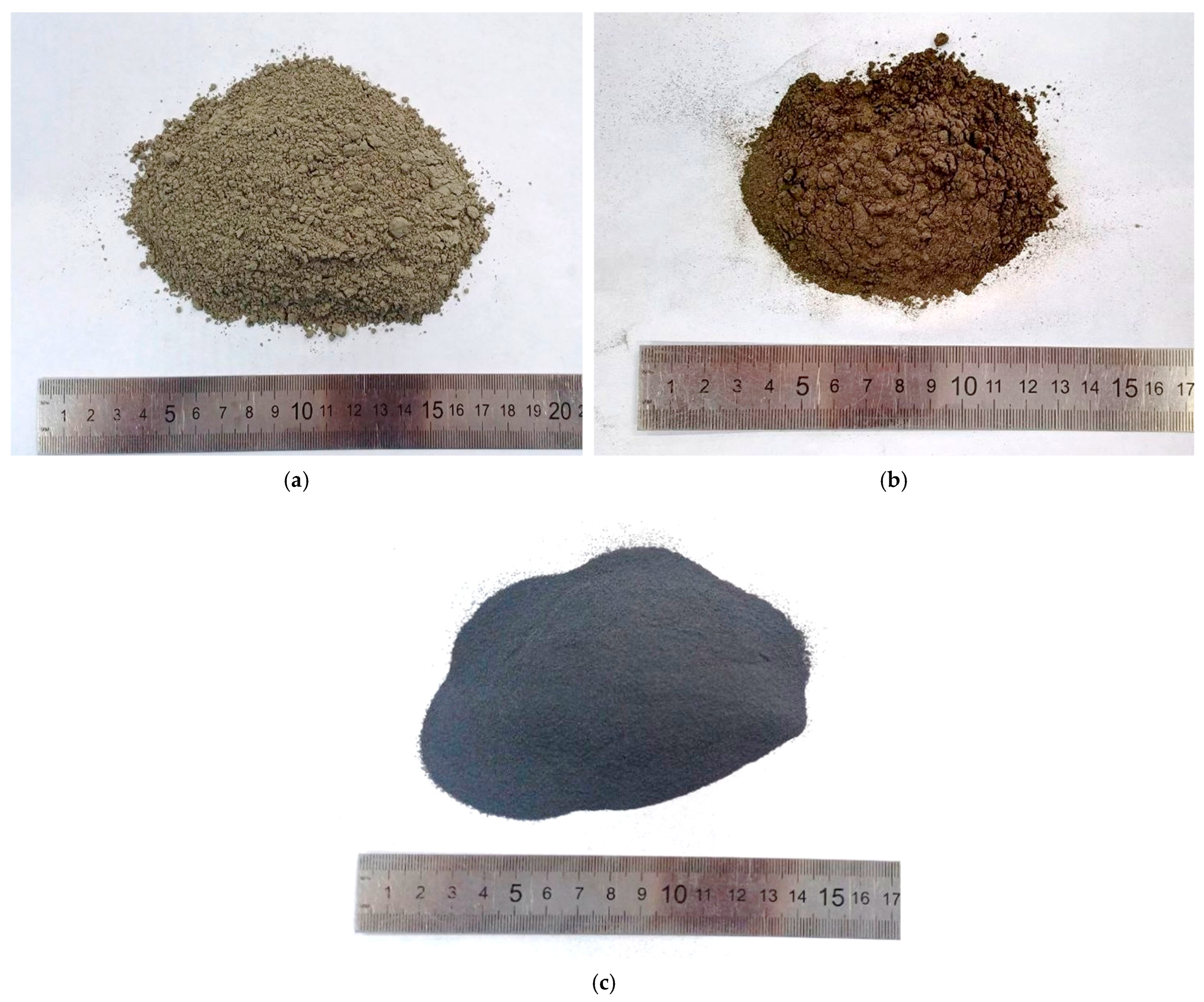
Figure 1 illustrates the visual characteristics of the raw materials.
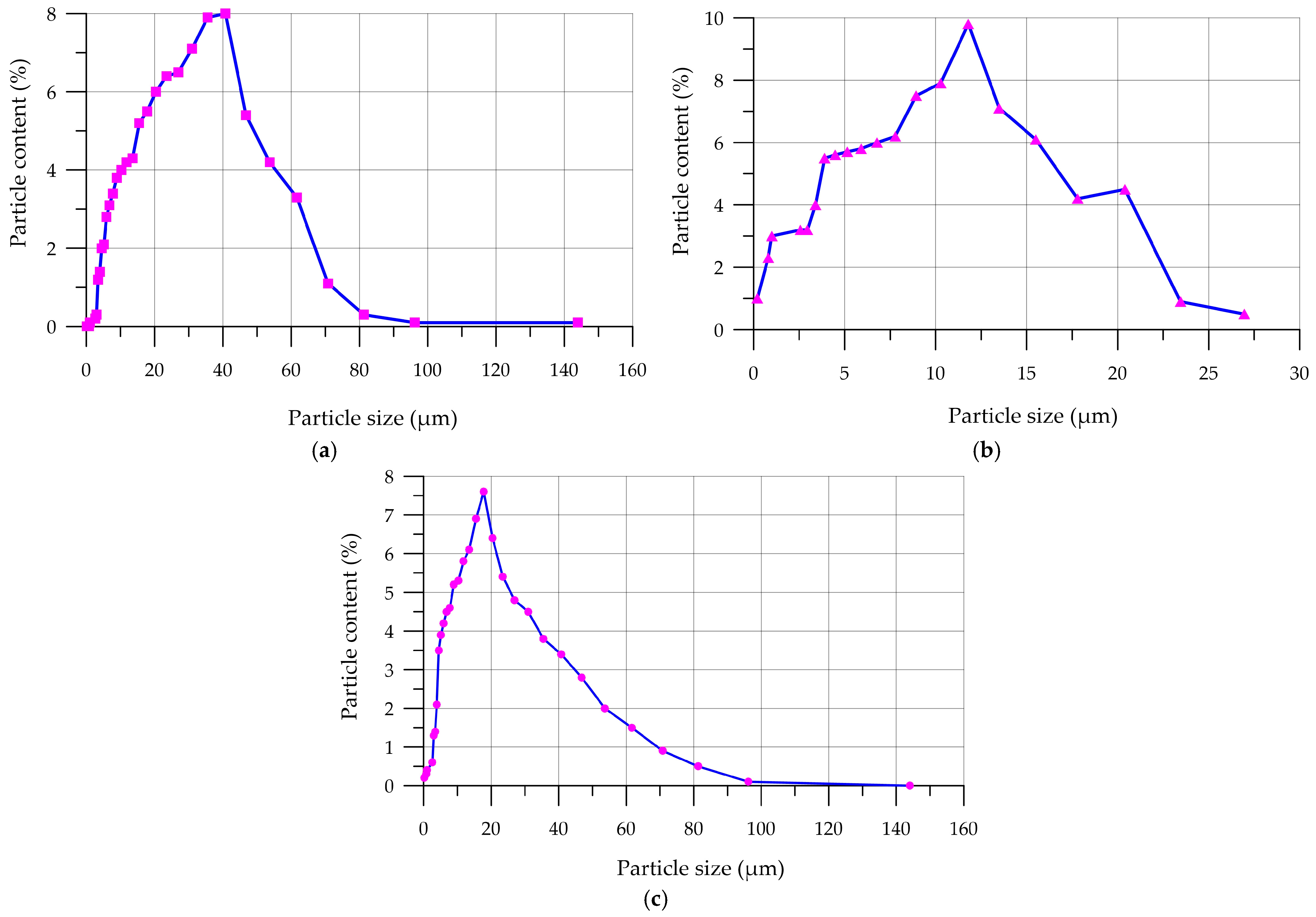
The particle distribution curves of FA, MS, and PC are shown in Figure 2.
FA particles are mostly (81.8%) sized from 8 to 70 µm. MS particles have the following distribution pattern: up to 33.5% are in the size range of up to 5 µm, and the majority (65.1%) of MS particles are in the size range of 6 to 20.4 µm. The largest proportion of PC particles (89.4%) is in the size range from 3 to 41 µm.
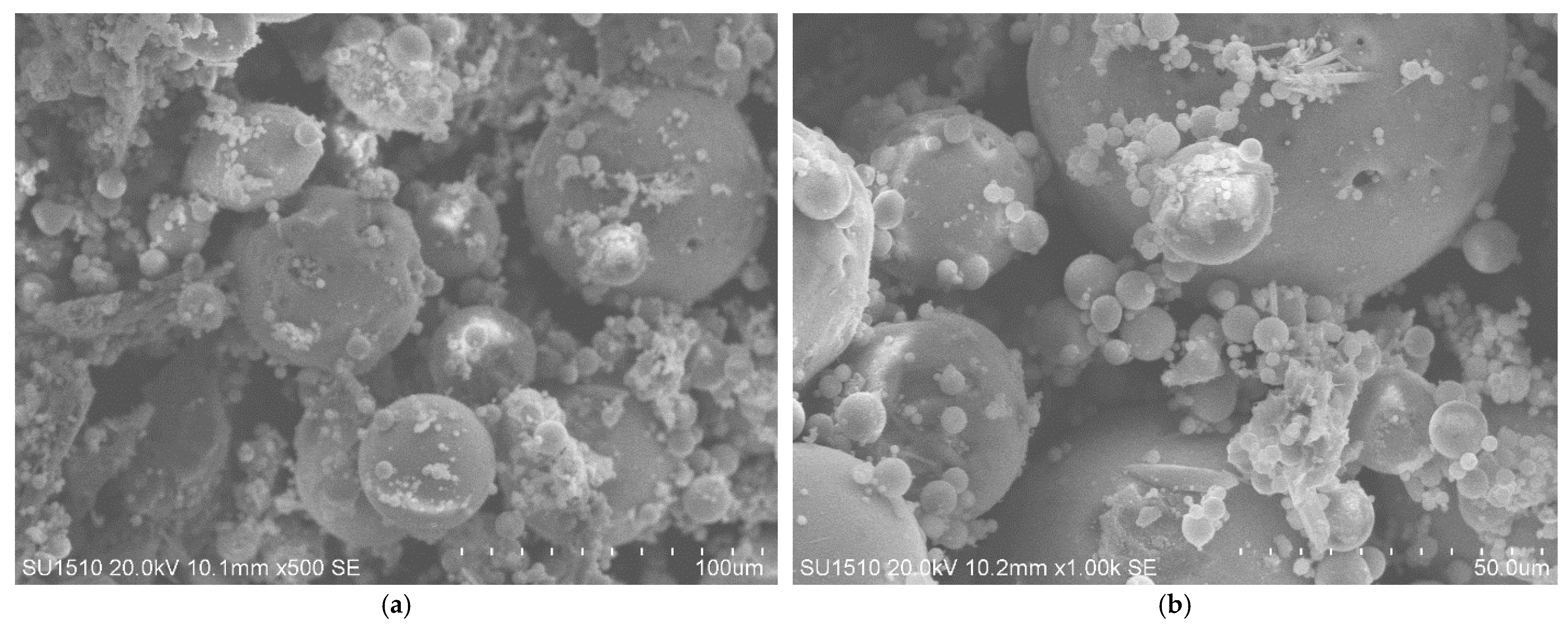
SEM images of FA particles are shown in Figure 3.
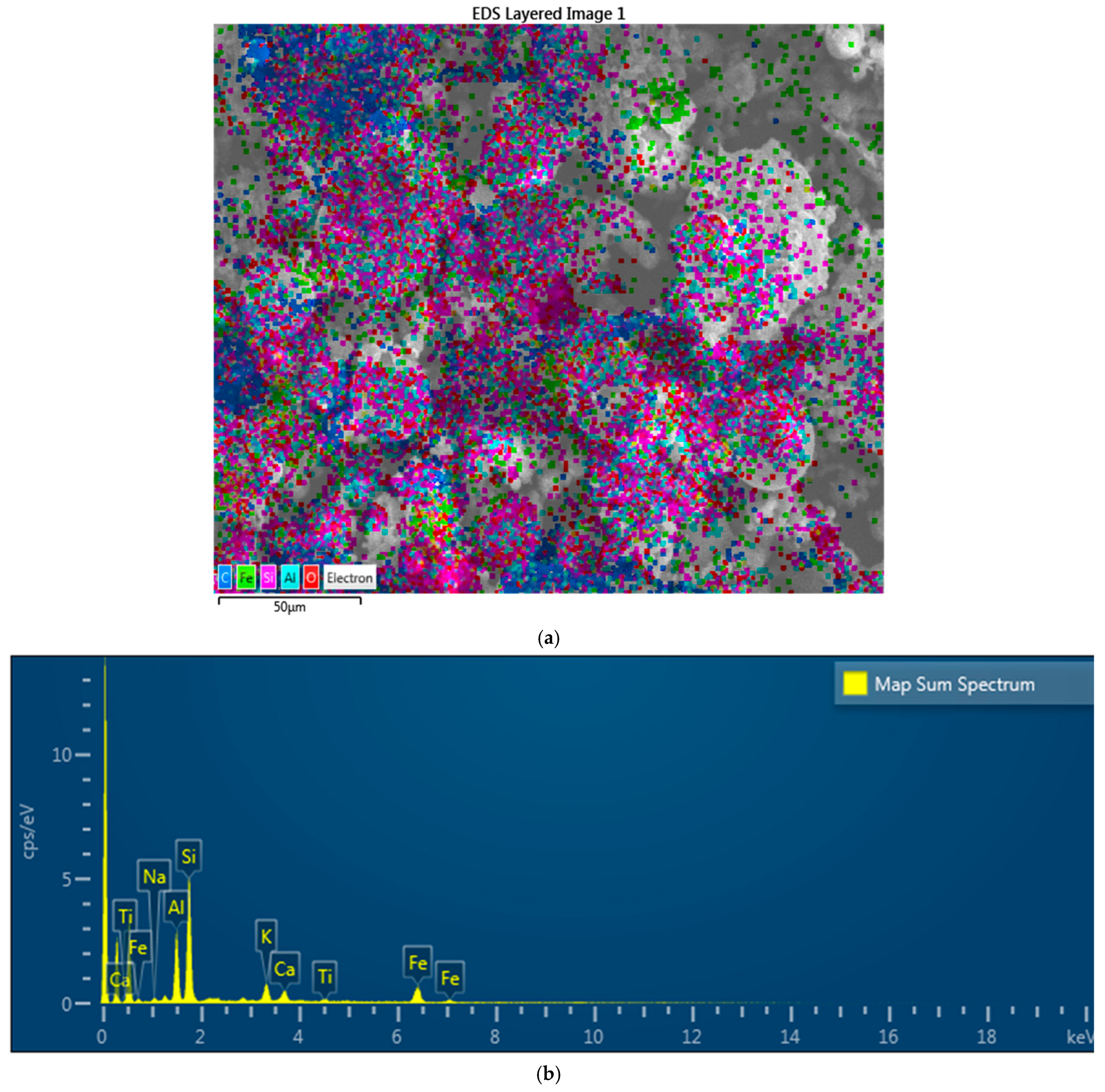
FA is predominantly composed of spherical particles of varying sizes, agglomerated with one another. Smaller particles are attached to the surface of larger particles. The results of the EDS mapping of FA and the full EDS spectrum, reflecting the distributions of chemical elements and their abundance, are shown in Figure 4.
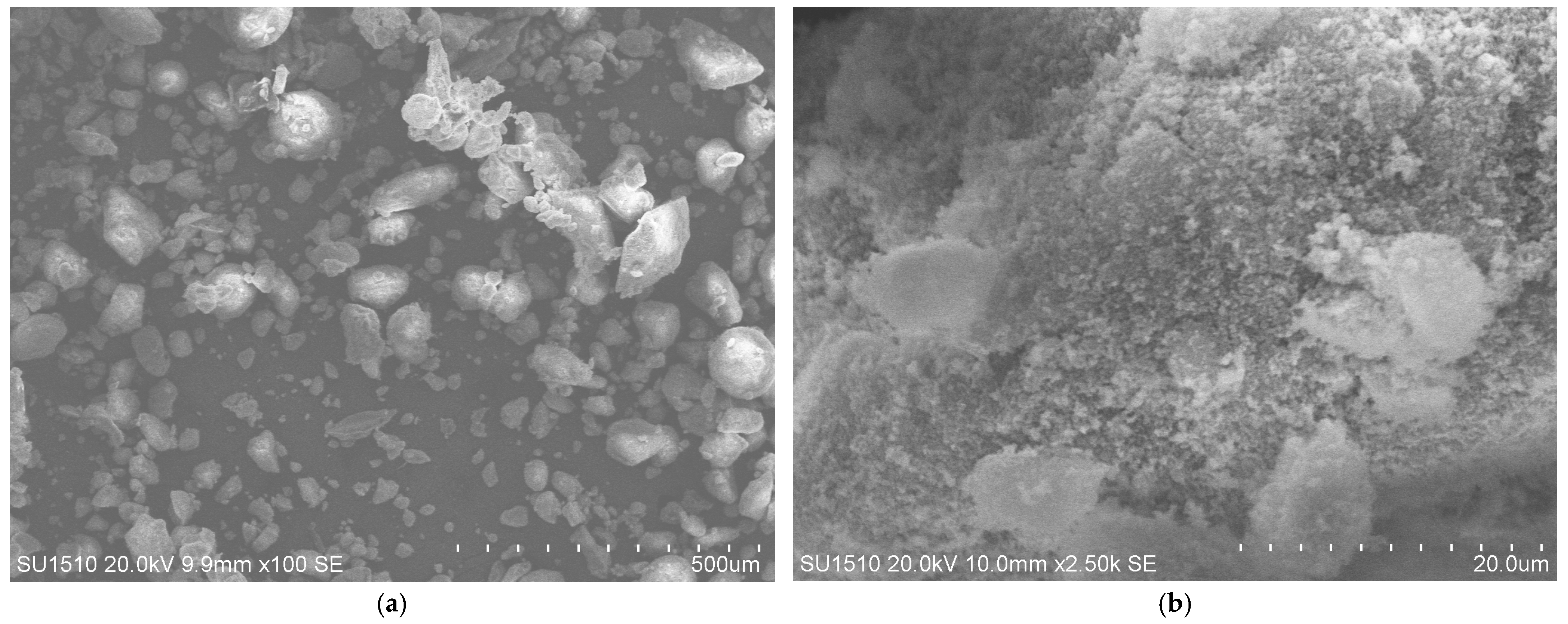
SEM images of MS particles are shown in Figure 5.
MS particles are predominantly spherical and angular, with smaller particles also observed clustering on the surfaces of larger ones.
The elemental compositions of FA and MS, determined through EDS analysis, are presented in Table 1.

2.2. Methods

The control injection composite composition for soil stabilization was prepared by mixing cement and water in a 2:1 ratio. The injection composites were further modified to contain 3% MS by weight of binder. FA was introduced into the composites as a component replacing part of the RS, ranging from 0% to 50% in 5% increments. A range with a step of 5% was adopted as the most optimal based on the analysis of other studies [13,15], trial experiments, and taking into account the properties of FA and its granulometric and chemical composition. The mixing ratios for the experimental composite compositions and the procedure for their preparation are presented below.
The protocol for combining raw materials and generating the experimental composite samples was established through these steps.
In the first step, the raw components were prepared. Next, the FA was sieved, foreign contaminants were removed, and the mixture was dried.
In the second step, the raw components were dosed in the required quantities.
In the third step, the dry components were loaded into the bowl of a Matest E093N laboratory mixer (Matest, Treviolo, Italy) and mixed for 60 ± 5 s. Water was then added, and mixing continued for 180 ± 5 s.
In the fourth step, the resulting mixture was poured into 3FB40 metal molds (RusPribor, St. Petersburg, Russia) and compacted on an SMZh-539 vibrating platform (RusPribor, St. Petersburg, Russia). At the fifth stage, the samples were removed from the molds one day after production and kept for 6 and 27 days under natural curing conditions (air temperature from 15 °C to 25 °C, relative air humidity from 80% to 90%) [61,62].
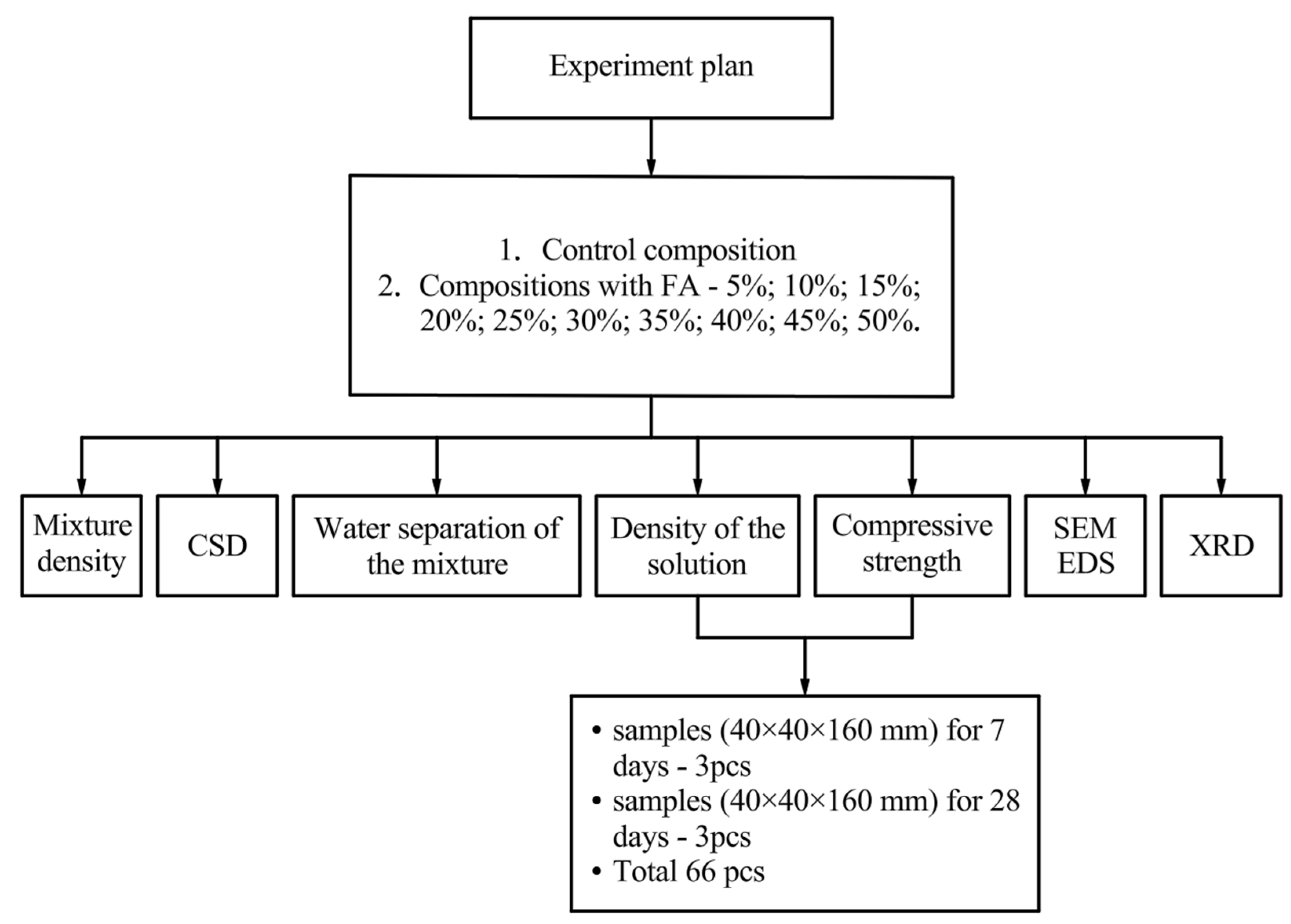
Figure 6 presents an overview of the experimental studies’ design.
In total, according to Table 2 and Figure 6, 11 fresh composite specimens were manufactured and tested for density, 22 mixture specimens for CSD, and 22 specimens for WS; 33 hardened composite specimens were tested for density, and 66 specimens were tested for compressive strength.
Measurements of the mixture’s density, cone spread, and water separation adhered to the standards defined in [63]. The determination of compressive strength adhered to the guidelines presented in [64].
1. Determining the density (ρ) of fresh composites: A pycnometer with a capacity of 100 ± 5 cm3 was used to determine the density. The pycnometer was filled with the mixture and closed with a lid. Excess mixture protruding from the opening in the lid was then removed, and the pycnometer and mixture were weighed. The density of the fresh composite was calculated using Equation (1):
ρ = m 2 m 1 V
where m 1 is the mass of the empty pycnometer (g);
m 2 is the mass of the pycnometer with cement paste (g);
V is the capacity of the pycnometer (cm3).
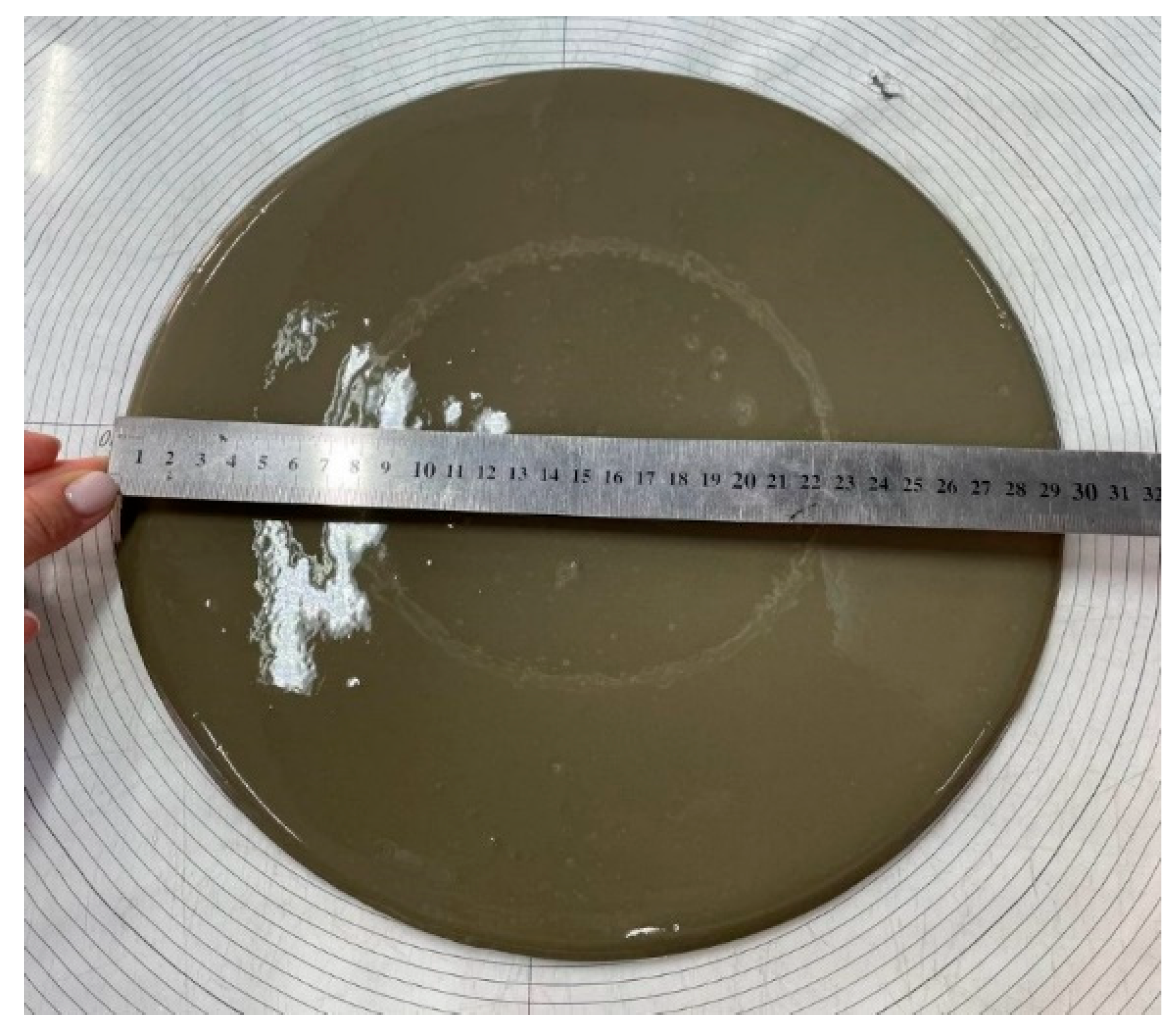
2. Determination of the cone spread (CSD) of fresh composites: The cone mold was placed in the center of the glass. A damp cloth was used to wipe the cone mold and glass before the test. The cone mold was filled with the mixture to the brim, and the excess mixture was trimmed with a knife. The mold was then lifted sharply vertically. The CSD diameter was measured with a 500 mm ruler (RusPribor, St. Petersburg, Russia) in two perpendicular directions (Figure 7). The CSD result was determined by calculating the arithmetic mean of both measurements, with a maximum discrepancy of 10 mm.
3. Determination of water separation (WS) of fresh composites: The mixtures were poured into two cylinders to the 250 cm3 mark and allowed to settle for 120 ± 5 min. The water separated on the surface of the mixture was then collected with a pipette into a 20 cm3 graduated cylinder, and the volume of separated water was measured. Water separation was taken as the arithmetic mean of the results of two parallel determinations, the difference between which did not exceed 0.2 mL.
4. Determination of the density ρ ω of injection composites for soil stabilization: Composite density was determined by testing the samples in a dry state. Before testing, the samples were dried to a constant weight. Density was calculated using Equation (2):
ρ ω = m V 1000
where m is the specimen mass (g) and V is the volume (cm3).
The density of the hardened composites was measured on prism specimens aged 28 days.
5. Determining the compressive strength (R) of hardened injection composites: Prior to testing, the experimental composite specimens were visually inspected for defects (rib chips, blisters, cavities, signs of delamination, incomplete compaction, and foreign inclusions). Before compression testing, the specimen masses were determined, and their geometric dimensions were measured. Prism specimen halves were positioned in specific compression plates and subjected to compression testing, with a load increase rate of 0.6 ± 0.4 MPa/s. Equation (3) was employed to determine the compressive strength.
R = F S
where F is the ultimate load (N);
S is the cross-sectional area of the specimen (mm2), S = 2500 mm2.
The compressive strength of the composites was determined on prism specimens aged 7 and 28 days.
6. To assess the surface morphology and analyze the elemental composition, scanning electron microscopy studies were conducted using a Hitachi SU1510 general-purpose scanning electron microscope (SEM) (Hitachi, Tokyo, Japan) equipped with an X-Max 50 N energy-dispersive spectrometer (EDS) (Oxford Instruments) (Oxford Instruments, Abingdon, England) integrated into the electron microscope.
7. XRD analysis was performed using a Shimadzu XRD6000 X-ray diffractometer (Shimadzu, Kyoto, Japan).

3. Results and Discussion

3.1. Properties of Fresh Soil Stabilization Composites

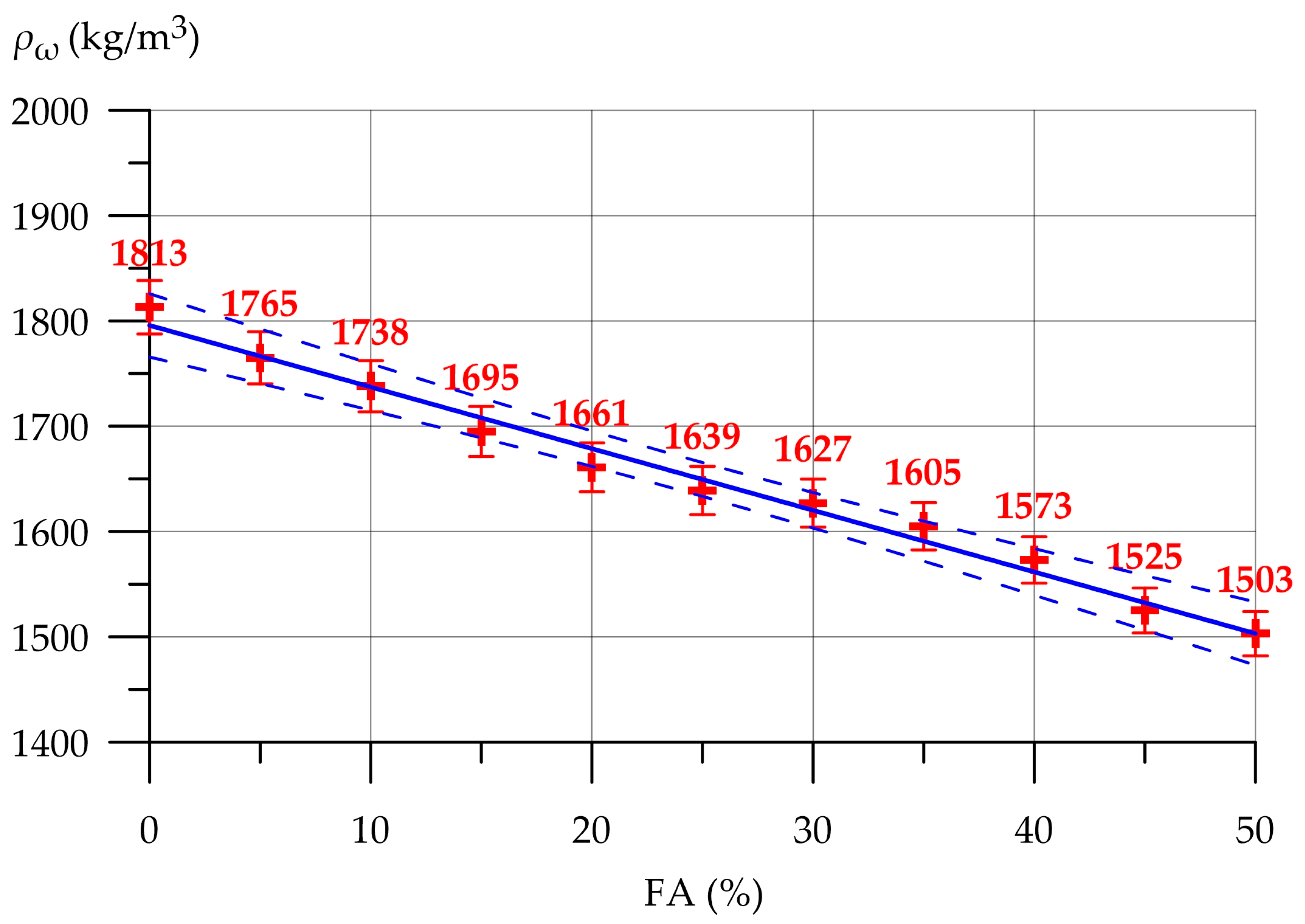
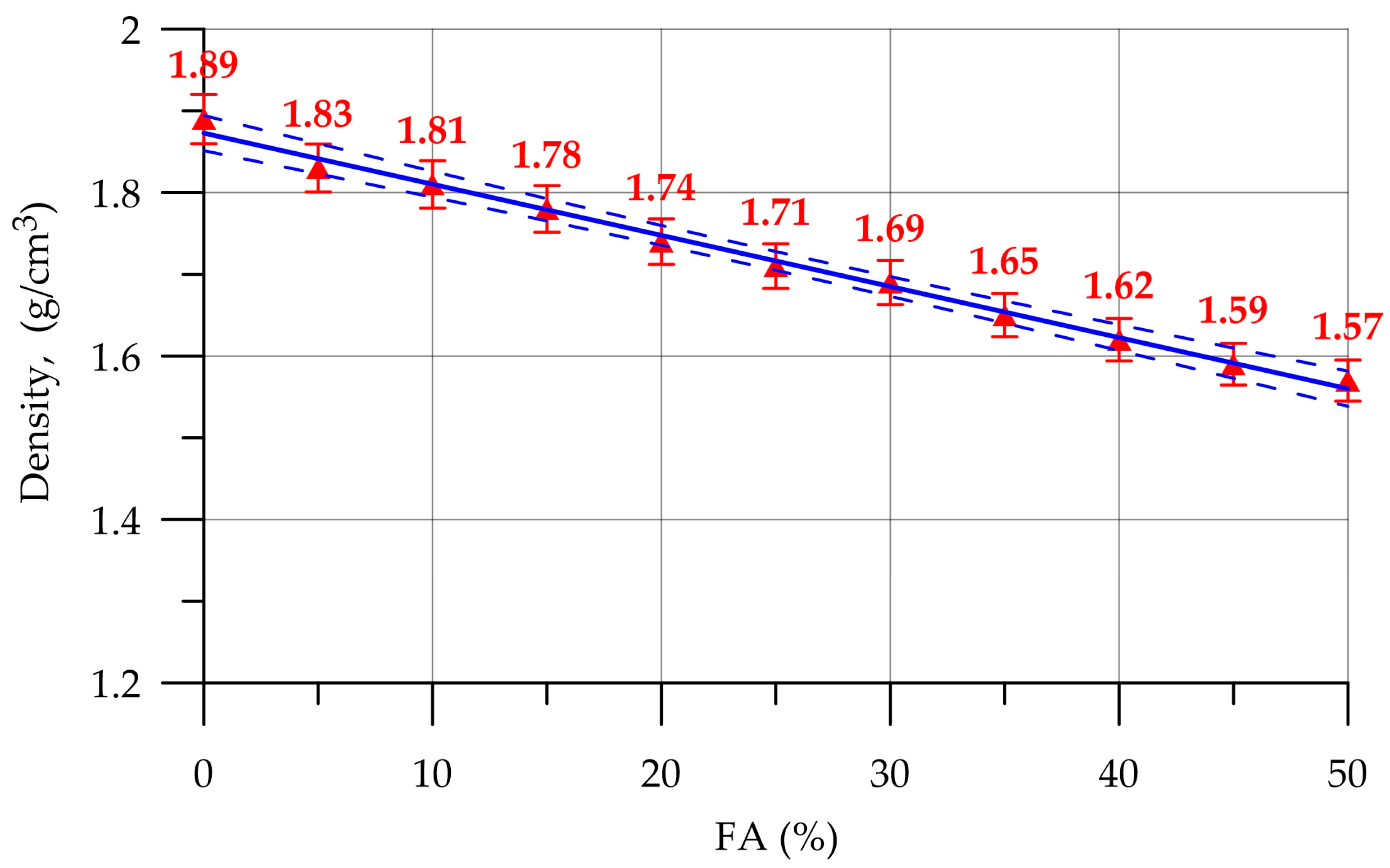
For the injection composites used for soil stabilization during the construction, reconstruction, and repair of capital construction projects, as well as in engineering works aimed at protecting areas from natural and man-made processes, it is important to ensure the required properties of the mixtures, including flowability, to ensure a uniform distribution and the stability of stabilization [57]. Figure 8, Figure 9 and Figure 10 display the experimental data regarding the characteristics of recently developed soil stabilization composites altered with FA and MS. The dependence of the density (ρ) of fresh composites on the amount of FA is shown in Figure 8.
According to Figure 8, the substitution of some cement with FA leads to a decrease in the mixture’s density. An increase in the FA content results in a reduction in the mixture’s density. The maximum density of 1.89 g/cm3 is demonstrated by the 0 FA control composition, while the minimum value of 1.57 g/cm3 is demonstrated by the 50 FA composition. FA has a lower density than cement. This is a determining factor, and a maximum FA content of 50% results in a density reduction of up to 17%. The standard deviation of the mixture density values was 2.8%.
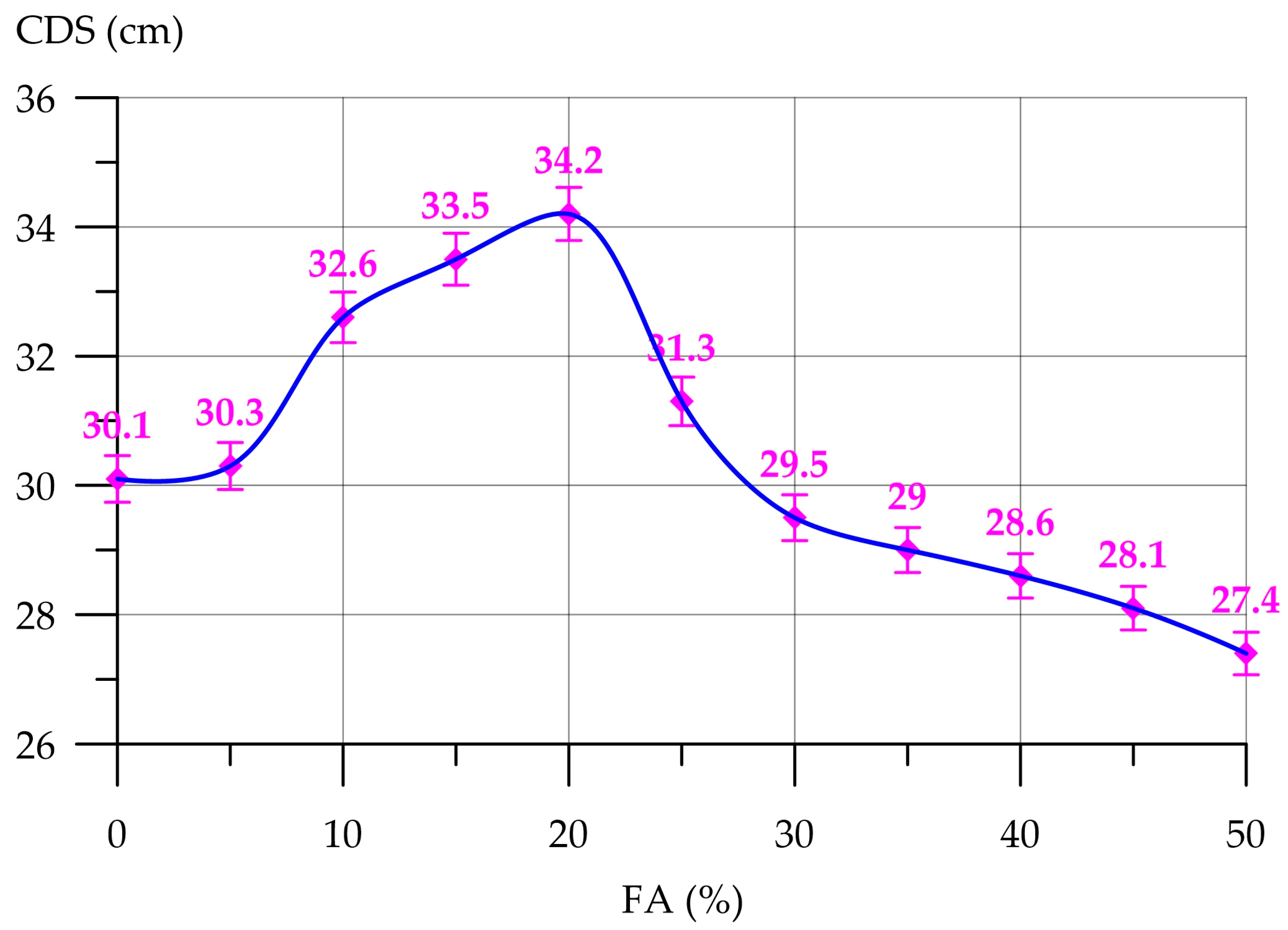
Figure 9 also shows the cone spread distribution (CSD) curve for the mixtures versus the amount of FA added.
The CSD trend shown in Figure 9 is as follows. In the range from 0% to 20%, CSD values are slightly higher compared to the 0 FA control composition. With a higher FA content (from 20% to 50%), CSD values tend to decrease, with a sharp drop in the range from 30% to 50%. The 20 FA composition has the highest CSD value of 34.2 cm, while the 50 FA composition has the lowest CSD value of 27.4 cm. Incorporating up to 50% FA allows for the production of blends with CSD values that meet regulatory requirements [57]. The higher CSD values for FA modification up to 20% are due to the structural features of the FA particles, which are microspheres with a dense, smooth surface. Less water is required to wet the surface of FA particles, and, as a result, the released water remains in the mixture, increasing its fluidity. The decrease in CSD in mixtures with an FA content greater than 20% is explained by the changes in the packing density of cement and FA particles and the quality of mixture homogenization. The degree of mixture homogenization may deteriorate at FA dosages greater than 20% due to particle agglomeration, and, as a result, CSD decreases [65,66]. The standard deviation of the CSD values of the mixture was 3.1%.
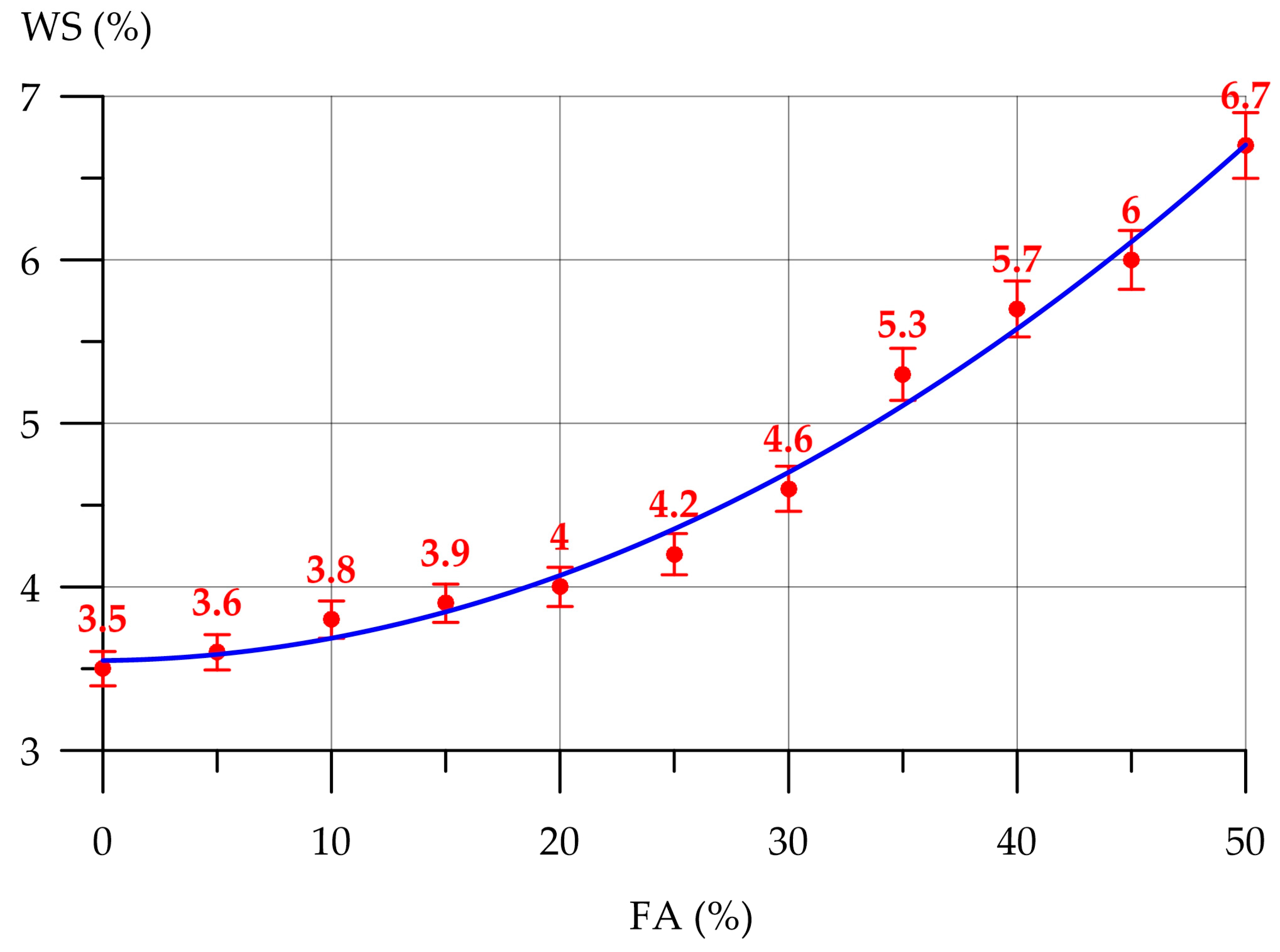
The graphical dependence of the water separation (WS) of mixtures on the amount of FA is shown in Figure 10.
According to the data presented in Figure 10, the water separation of the mixtures increases with an increasing FA content. The control 0 FA composition has a minimum water separation value of 3.5%. The maximum water separation value, 6.7%, was recorded for the 50 FA composition. The enhanced separation of water from the mixtures is attributed to the smooth, spherical morphology of the FA particles. These particles settle faster than irregularly shaped cement particles. This contributes to accelerated sedimentation processes and increased water separation [66,67]. The standard deviation of the WS values of the mixture was 3.0%. The changes in mixture properties depending on the FA content are presented in Table 3.
According to the changes in the mixture properties presented in Table 3, FA is an effective mineral additive for reducing density. The CSD changes for composites containing FA in amounts from 5% to 50% are within the specified limits and correspond to flow ability grades P3–P4 [57]. Water separation values are also within the specified limits.

3.2. Properties of Hardened Injection Composites for Soil Stabilization

The properties of injection composites for soil stabilization modified with FA and MS are presented in Figure 11 and Figure 12. The dependency of the hardened composite’s density ( ρ ω ) on the FA amount is illustrated in Figure 11.
According to the data presented in Figure 11, the density of the composites tends to decrease with increasing FA content, ranging from a maximum of 1813 kg/m3 to a minimum of 1503 kg/m3. The density reduction at 50% FA was 17.1%. As previously established, FA has a lower bulk density than cement, and, as the amount of FA introduced in place of a portion of the cement increases, the density of the composites decreases. The standard deviation of the composite density values was 2.7%. Figure 11 further shows the strength (R) of the composites versus the FA introduced.
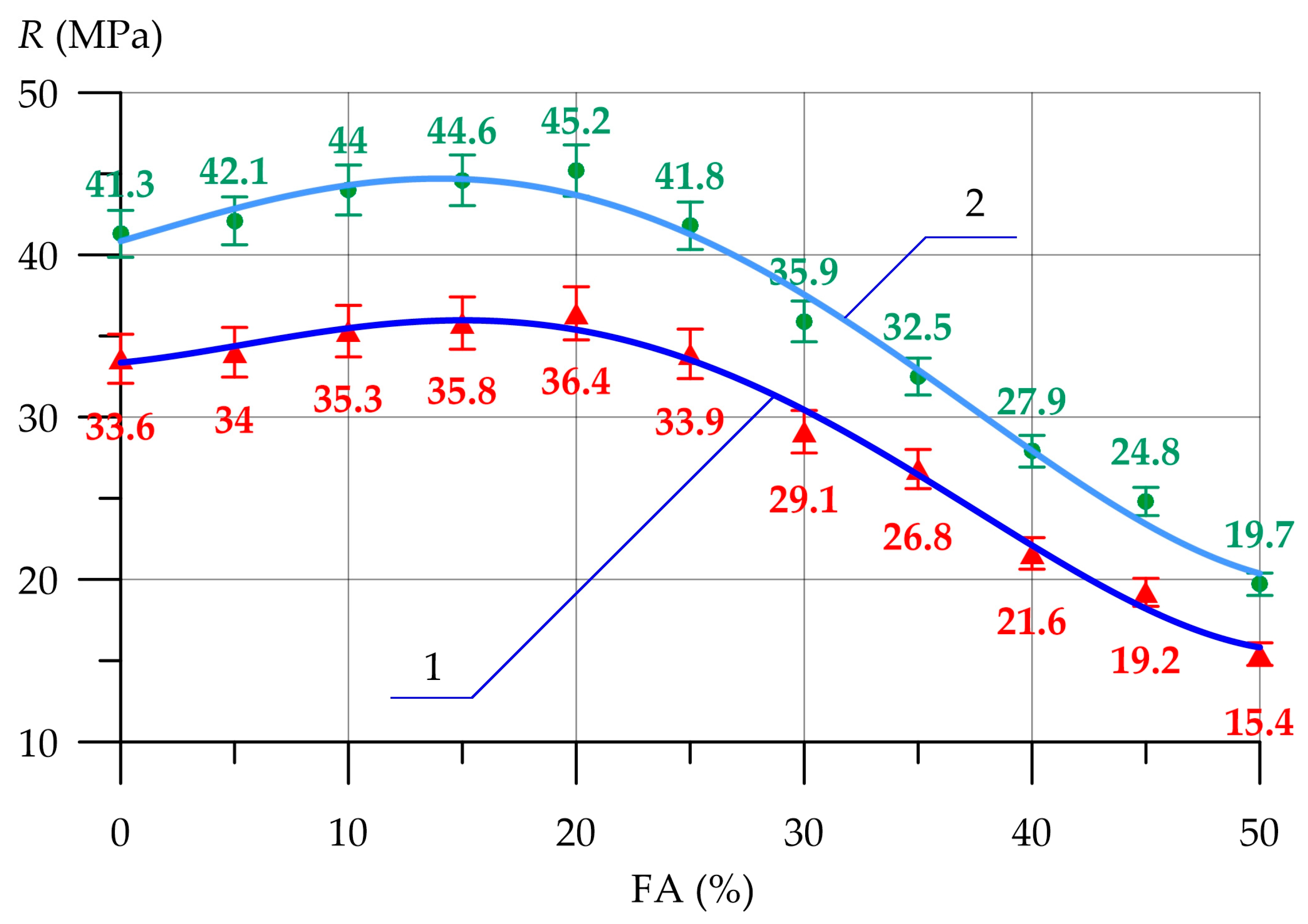
The trend lines shown in Figure 12 are well approximated by 4th order polynomial functions with a coefficient of determination R2. Equation (4) describes the dependence of strength for 7 days of hardening, with Equation (5) for 28 days.
R 7 = 33.36 + 0.135 x + 0.0205 x 2 0.001449 x 3 + 1.687 × 10 5 x 4 , R 2 = 0.991
R 28 = 40.84 + 0.412 x + 0.00307 x 2 0.001196 x 3 + 1.459 × 10 5 x 4 , R 2 = 0.989
The dependence of the change in compressive strength of the composites on the FA content at 7 and 28 days, shown in Figure 11, is as follows. An increase in compressive strength is observed between 0% and 20% FA. The maximum compressive strength values were recorded for the 20 FA composite. At 7 days, the compressive strength was 36.4 MPa, and at 28 days it was 45.2 MPa. These increases were 8.3% and 9.4%, respectively. The compressive strength decreases after a 20% FA content. The minimum compressive strength values were recorded in the 50 FA composite. The compressive strength of the 50 FA composite at 7 and 28 days was 15.4 MPa and 19.7 MPa, respectively, which is 54.2% and 52.3% lower than the strength of the control composition. The standard deviation of the compressive strength values of the composite was 4.9%. The changes in the properties of injection-based soil stabilization composites depending on the FA content are presented in Table 4.
Thus, the results of the experimental studies of injectable soil stabilization composites with varying FA contents revealed the following:
  • Incorporating up to 50% FA reduces the density of fresh and hardened composites.
  • Incorporating up to 20% FA promotes an increase in the CSD values of the mixtures. At higher dosages, the opposite effect is observed. All studied mixture types (0 FA, 5 FA, 10 FA, 15 FA, 20 FA, 25 FA, 30 FA, 35 FA, 40 FA, 45 FA, and 50 FA) have CSD values that meet regulatory requirements [57].
  • Incorporating up to 50% FA increases the water separation properties of the mixtures. All studied mixture types have water separation values ranging from 3.5% to 6.7%, which also meets the regulatory requirements for stable composites [57].
  • The inclusion of up to 20% FA provides an increase in the compressive strength of soil stabilization composites at 7 and 28 days. The increases in compressive strength were 8.3% and 9.4%. At higher FA dosages, compressive strength decreases.
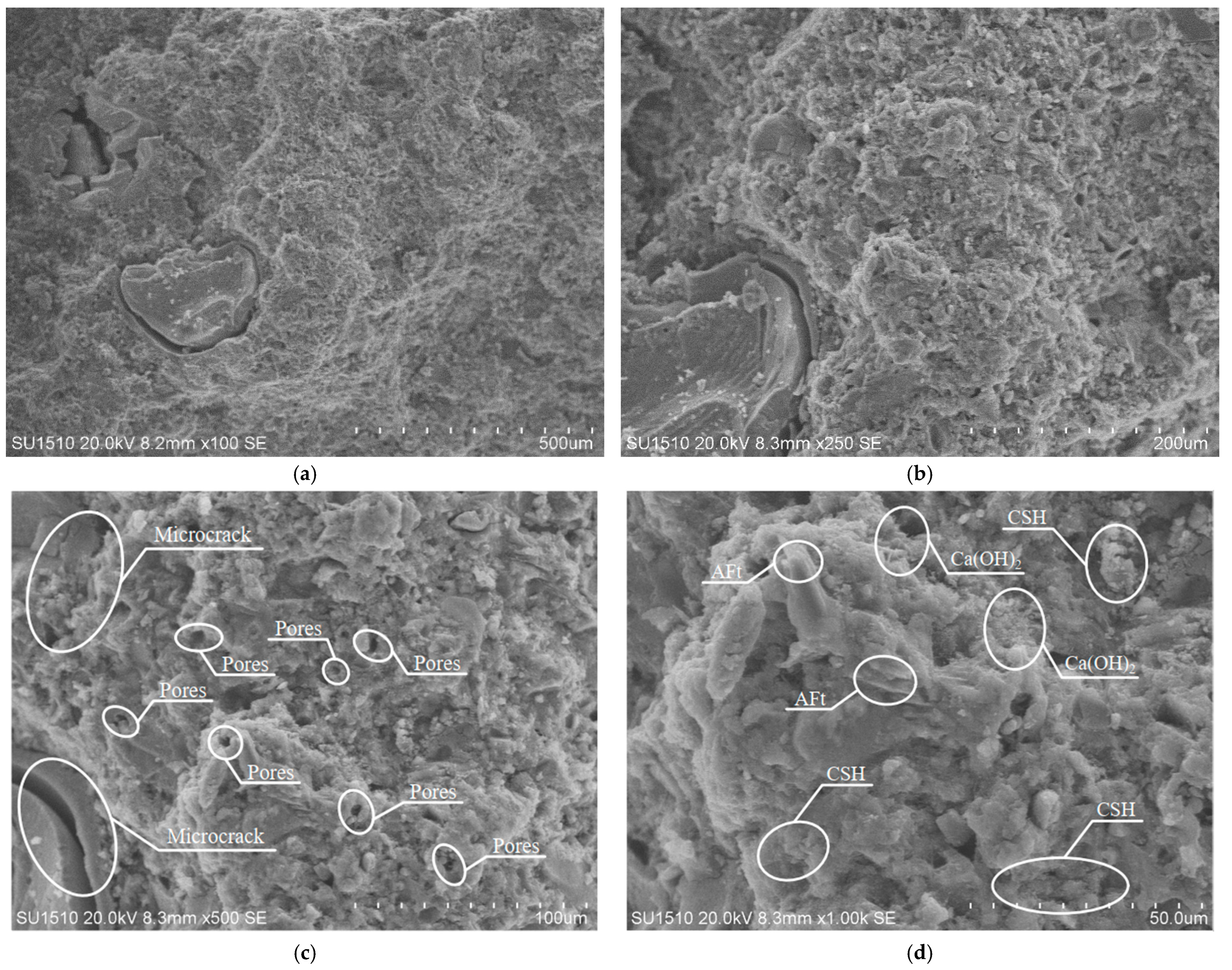
The results of the SEM and XRD analyses of the injected soil stabilization composites are presented in Figure 13, Figure 14, Figure 15 and Figure 16. Microstructural features (Figure 13 and Figure 15) and phase composition (Figure 14 and Figure 16) were compared using samples of the 0 FA control composition and the most effective 20 FA composition. Figure 13 shows SEM photographs of the injected composite structure at various magnifications.
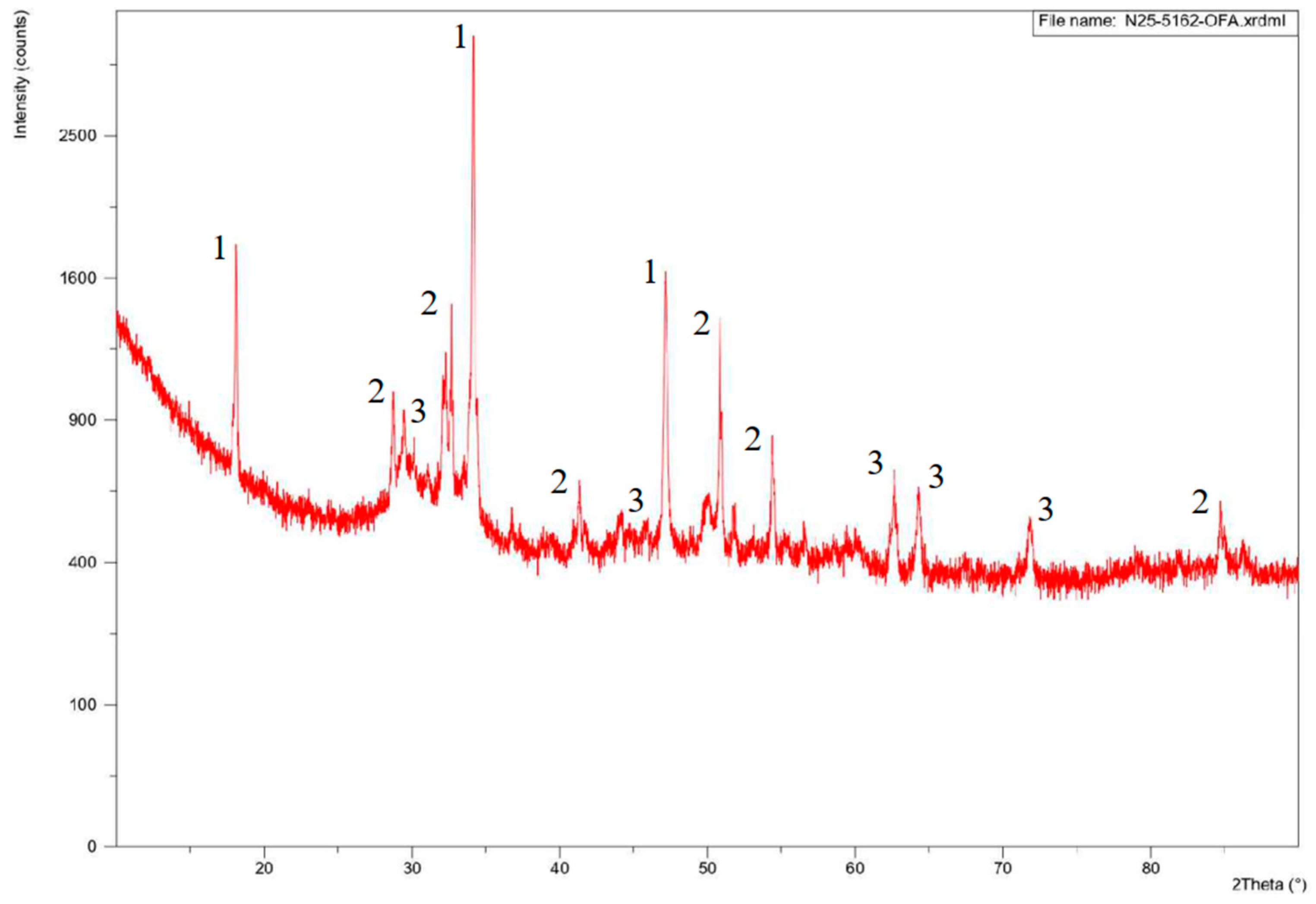
Figure 14 shows the diffraction pattern of the composite of the control composition.
Figure 14 illustrates that the control composition injection composite exhibits a dense structure. Hexagonal and needle-shaped substances, which are calcium hydroxide (Ca(OH)2) and ettringite (AFt), are observed. The zones of accumulation of hydration products, mainly calcium hydrosilicates (CSH), are also visible [68].
The X-ray diffraction spectrum of the control composite shows diffraction peaks corresponding to the following phases [13,69]:
-
Calcium hydroxide, Ca(OH)2.
-
Calcium silicate hydrate (CSH): The hydration reaction of C3S and water results in the formation of calcium silicate hydrate, which is practically insoluble in water, and calcium hydroxide, which is partially soluble in water and is described by the following equation:
2(3CaO·SiO2) + 6H2O = 3CaO·2SiO2·3H2O + 3Ca(OH)2 + 502 J/g
The hydration reaction of C2S and water results in the formation of very small crystals that combine to form a homogeneous, fine-pored structure. This structure determines the final strength of the cement paste and is described by the following equation:
2(2CaO⋅SiO2) + 4H2O → 3CaO⋅2SiO2⋅3H2O + Ca(OH)2 + 260 J/g
-
Calcium aluminate hydrate (CAH): The hydration reaction of calcium aluminate, C3A, and water leads to the formation of hexagonal crystals of calcium aluminate hydrate and is described by the following equation:
3CaO⋅Al2O3 + 6H2O → 3CaO⋅Al2O3⋅6H2O + 867 J/g
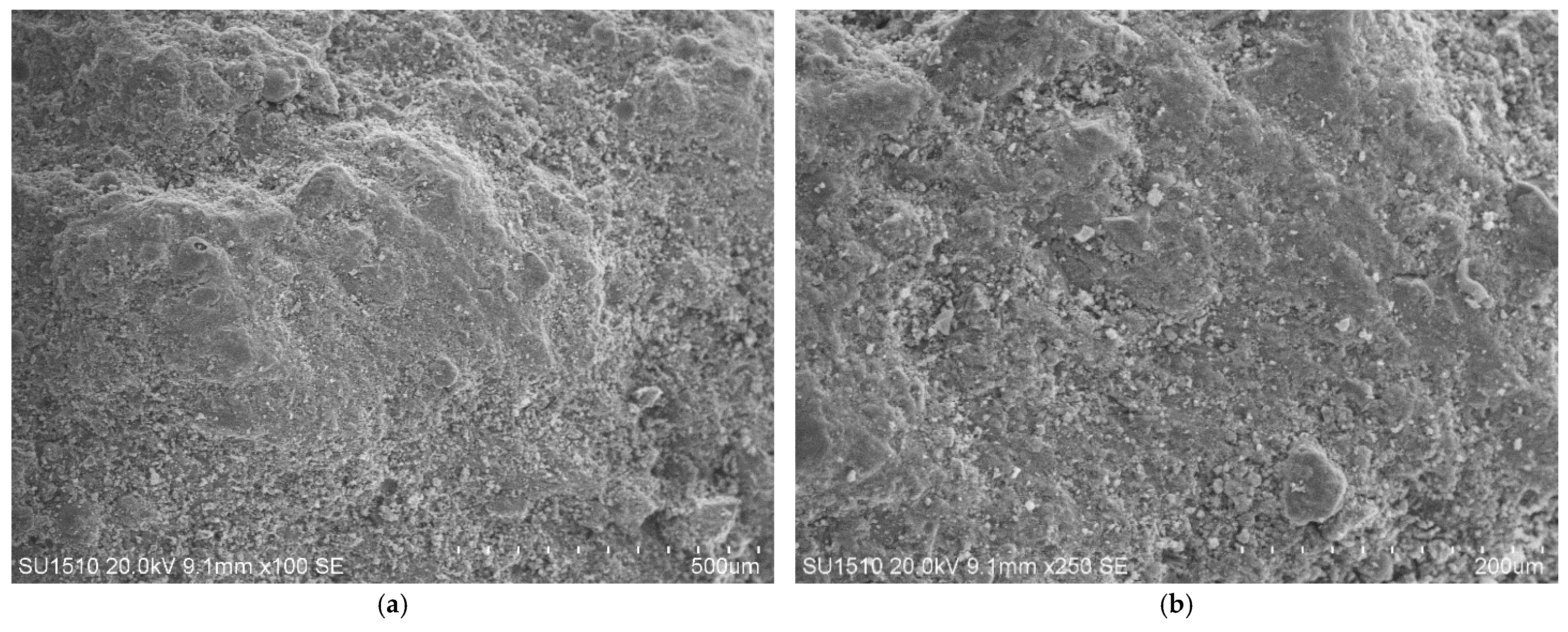
Figure 15 shows SEM images of the 20FA injection composite structure at various magnifications.
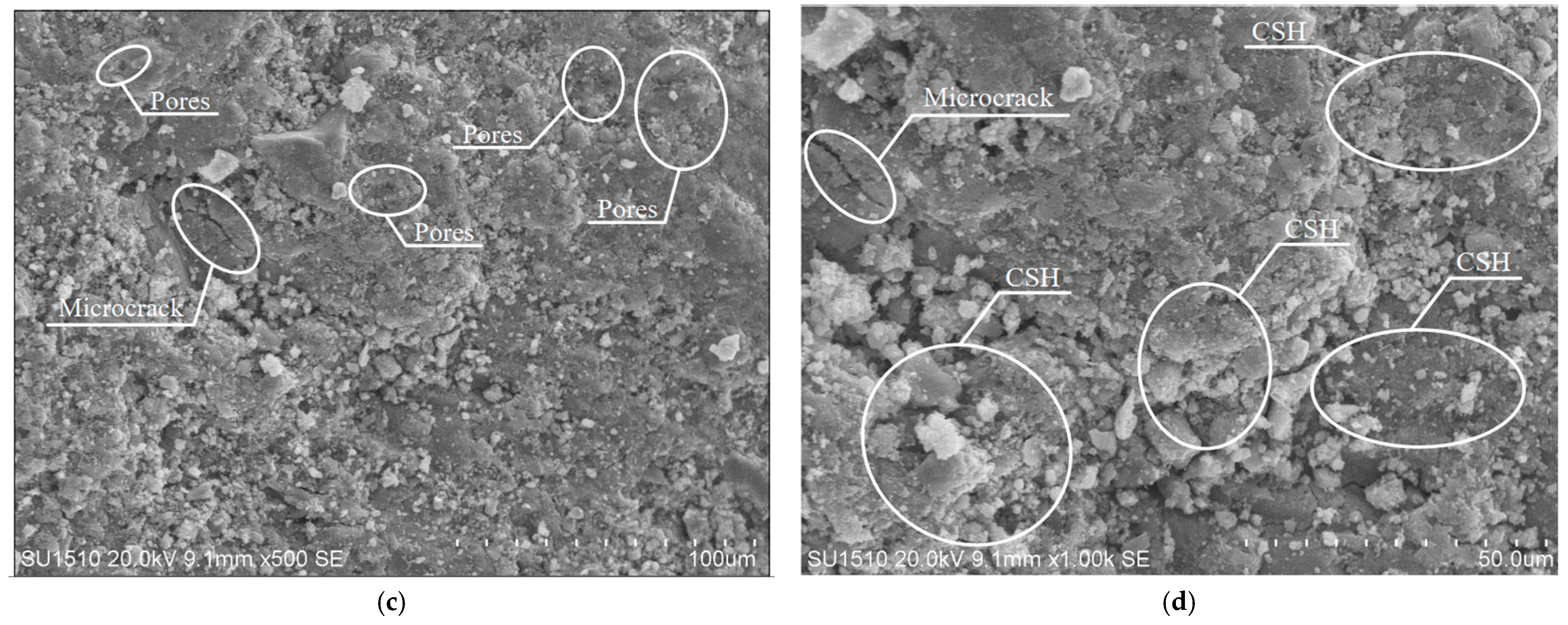
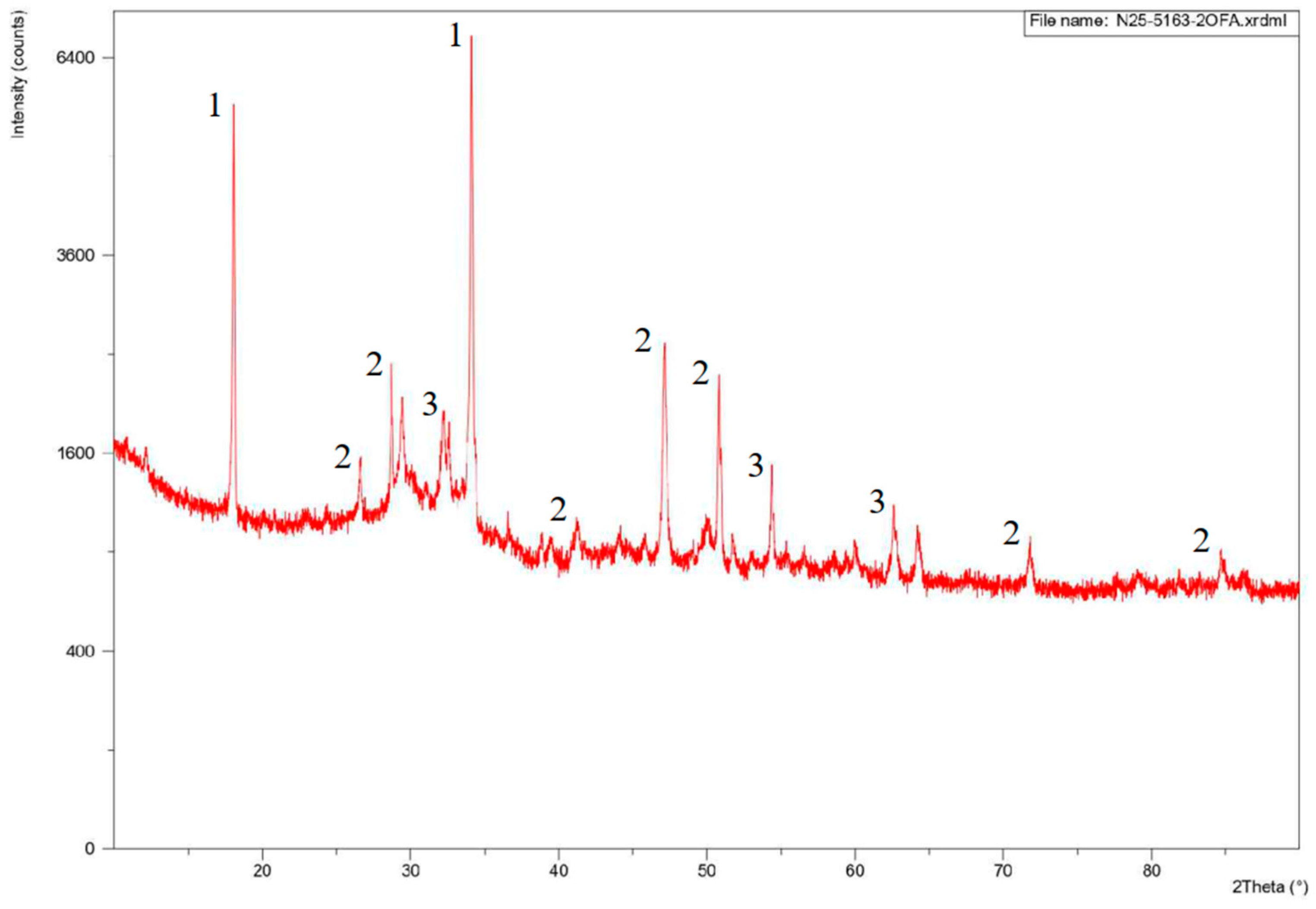
The structure of the injection composite of type 20 FA, shown in Figure 15, is more organized and compact compared to the structure of the control composition. Microcracks and pores are observed. The number of observed pores in the structure of the composite of type 20 FA is smaller than in the control. Multiple zones of CSH accumulation are identified. The inclusion of 20% FA helps to reduce the number of pores. As a rule, this is explained by the active participation of FA particles in cement hydration reactions, promoting the formation of a larger amount of CSH gel, which determines the future strength of the composite [70,71]. Figure 16 shows the diffraction pattern of the composite of type 20 FA.
The X-ray diffraction spectrum of the injection composite of type 20 FA also shows diffraction peaks corresponding to the following phases: 1—Ca(OH)2; 2—CSH; and 3—CAH. The smaller number of diffraction peaks of the Ca(OH)2 phase indicates the active interaction of FA and MS particles with this phase, followed by the formation of CSH phases.
Overall, based on the results of the SEM and XRD analyses of injected soil stabilization composites, the mechanism for the changing strength properties can be described as follows:
-
The inclusion of optimal amounts of pozzolanic active mineral additives (20% FA and 3% MS) in the cementitious composites improves the strength properties due to effects such as denser particle packing and the formation of greater amounts of CSH;
-
Some FA and MS particles act as crystallization centers, actively interacting with free Ca(OH)2 and forming CSH around themselves;
-
Some FA and MS particles act as fillers and reduce the total number of pores in the cement matrix, making its structure more organized and stronger.

3.3. Discussion

The injection composite compositions developed in this study for cement-based soil stabilization with varying FA contents exhibit the required properties and can be used for their intended purpose. It was found that increasing the FA content in injection composites reduces their density to 17.1% at 50% FA. At optimal dosages, FA and MS particles actively participate in cement hydration processes. When interacting with cement particles, MS particles exhibit the following main effects. MS particles can act as a filler, filling the smallest voids between cement particles and serving as crystallization centers [70]. MS exhibits a high pozzolanic activity and interacts with free calcium hydroxide, which is actively released during cement hydration, to form strong, low-basic calcium hydrosilicates. Ultimately, the inclusion of MS particles improves the porous structure of the cement composite by reducing capillary pores and increases the final strength of the composite. FA particles improve the structure of cement composites due to similar effects. They actively bind calcium hydroxide into insoluble compounds, CSH and CAH, and act as a filler [72,73]. However, this statement applies only to the optimal dosage of FA up to 20%. A higher FA content negatively impacts the properties of composites and reduces their strength, which is directly related to the elemental chemical composition of the FA used (Novocherkassk State District Power Plant, Novocherkassk, Russia). A significant carbon content was recorded. At optimal concentrations, FA particles function as a mineral filler and actively participate in hydration reactions. However, when they are in excess, this positive effect is negated and leads to a deterioration in properties. The results obtained in this study are consistent and confirmed by similar studies by other authors examining the development of various types of cementitious composites with FA (Table 5).
In addition to cement composites for soil stabilization, FA is actively used in geopolymer composites designed to stabilize soils in combination with other types of waste [82]. For example, a synthesized geopolymer from binary FA precursors and granulated blast-furnace slag can be effectively used to stabilize soft clay and provides the required strength properties [83]. A geopolymer mixture of steel, carbide, blast-furnace slag, and FA provides the required strength of the stabilized soil on the seventh day; with further hardening, the mechanical strength increases, and the soil structure becomes denser [84]. Soil reinforcement with a geopolymer mixture based on FA and blast-furnace slag, modified with the additive nano-SiO2, allows for an increase in the compressive strength and water resistance of swelling soil [85]. The combination of various types of waste in geopolymer mixtures intended for soil stabilization is a modern and environmentally friendly solution and, with the correct selection of the formulation, allows for the provision of the required properties of the soil base [86,87,88]. Thus, the use of various types of waste for the production of composite materials intended for soil stabilization is one of the most popular areas in the field of materials science. Previous studies in this area [46,86,87,88], including the present study, make a general contribution to the concept of sustainable development in such areas as reducing waste accumulation in landfills and the amount of CO2 emissions due to cement savings. In actual construction practice, when using FA-based composites, including the injection composites developed in this study for soil stabilization, it is important to consider potential environmental risks, for example, the risks associated with the possible leaching of heavy metals. Solutions such as process control for the production of injection composites, namely the chemical analysis of FA for the presence of harmful impurities, the determination of the main quality indicators of all raw materials, and a compliance with the required process mixing parameters will minimize the risk of harmful substance release and ensure long-term environmental stability. This research’s findings facilitated the identification of the following positive consequences.
  • Optimization and development of a binder replacement strategy
Numerous scientific investigations have focused on the advancement of diverse cement- and fly ash-based composites, showcasing the efficacy of this formulation [74,75,76,77,78,79,80,81]. The innovation of this study lies in the development of new types of composite injection mixtures for soil stabilization based on cement and fly ash, whose performance properties meet the requirements of regulatory documentation [57].
2.
Knowledge of the morphology of FA particles and the mechanisms of microstructural compaction of modified composites
Based on the SEM results, the morphology of the particles of the FA used was studied. FA particles are predominantly spherical. Modifying injection composites for soil stabilization with FA in an optimal amount improves their structure. The number of capillary pores and microcracks is reduced. FA acts as a mineral filler and actively participates in hydration processes, providing the formation of additional CSH and CAH [89].
3.
Advances in Low-Carbon Efficiency
The incorporation of FA and MS into cement-based injection composites for soil stabilization offers significant environmental potential. FA and MS are industrial wastes, and their use in cement composites reduces their disposal in landfills and minimizes their environmental impact. The conservation of cement also reduces the overall CO2 emissions generated in large quantities during its production [90].
4.
Economic efficiency
FA is a waste product requiring disposal. Using FA instead of some cement will reduce the cost of producing injection composites for soil stabilization, particularly in terms of cement purchase costs. According to preliminary estimates from industry partners, the cost reduction will be approximately 14%.
Regarding the potential risks and limitations of this study, it should be noted that the performance and properties of these FA-based injection composites for soil stabilization under real-world operating conditions are poorly understood, including the resistance to freeze–thaw cycles and resistance to sulfate and chloride attack. For the developed injection composites, assessing the impact of natural environmental conditions is an important task, and future research plans include examining the key durability properties of injection composites. Based on the durability properties obtained, the application areas of such composites will be further defined, depending on soil aggressiveness and climatic conditions. Furthermore, future work plans to quantify the reduction in CO2 emissions.
The injection-molded soil stabilization composites developed in this study have a wide range of applications in practical soil stabilization and geotechnical design projects. The primary practical applications to which the developed composites can be applied include strengthening the foundations of buildings and structures by grouting the contact zone between the foundation base and the soil in the presence of voids; strengthening the foundation during foundation deepening; increasing the load-bearing capacity of piles; and strengthening the slopes of road cuttings and the walls of excavations.

4. Conclusions

Injectable FA-based soil stabilization composites were developed, and their key performance properties were studied. Fresh composites were evaluated for density, workability, and water separation. For hardened composites, the density and compressive strength at 7 and 28 days, as well as the structure and phase composition, were determined.
(1)
CSD values remain within the required ranges with an FA inclusion in the mixture composition up to 50%. CSD values tend to increase in mixtures with an FA content up to 20%, while, at higher dosages, the opposite effect occurs. The maximum CSD was 34.2 cm, and the minimum was 27.4 cm.
(2)
FA contributes to a decrease in the density of fresh and hardened composites as the FA content increases, which is associated with the lower bulk density of FA. The density of fresh composites varies from 1.89 g/cm3 to 1.57 g/cm3. The density of the hardened composites ranges from 1813 kg/m3 to 1503 kg/m3.
(3)
The water separation of the mixtures increases as the FA content increases from 3.5% to 6.7%. This increase in water separation is primarily due to the morphology of the FA particles, which have a smooth, rounded shape and settle more quickly.
(4)
The inclusion of up to 20% FA in the composites provides the maximum increases in compressive strength at both the 7th and 28th days of 8.3% and 9.4%, respectively. Subsequently, the compressive strength decreases as the FA content increases. The optimal amount of FA in the composition of injection composites for soil stabilization ensures improved strength properties due to the pozzolanic activity of FA and the added MS.
(5)
Composite injection mixtures for soil stabilization with 20% FA have a well-organized and compact structure with fewer pores. The SEM analysis revealed multiple zones of CSH accumulation. The XRD diffraction pattern of the 20 FA composition showed a lower relative peak activity of Ca(OH)2 compared to the control composition. This confirms the higher degree of secondary hydration of the cement, which consumes the largest amount of Ca(OH)2 and promotes the formation of additional CSH.
(6)
The developed composite injection mixtures for soil stabilization with FA are preferred for use in construction practice, including in strengthening and stabilizing subsidence soils.
(7)
Further research is planned to study the performance properties of injection composites for soil stabilization, such as durability, in particular the resistance to freeze–thaw cycles and chloride and sulfate attack.
This study demonstrates that the incorporation of 20% fly ash (FA) in injection composites is not merely a waste management strategy but also represents a mechanical and microstructural optimization. At this optimal dosage, the pozzolanic reactivity of FA and microsilica (MS) created a synergistic effect with cement hydration. This synergy simultaneously improved both the mechanical performance (up to a 9.4% increase in 28-day compressive strength) and the microstructural integrity of the composite matrix. As supported by SEM analyses, the 20 FA sample exhibited a significantly more compact, organized, and less porous structure compared to the control group. The fundamental mechanism behind this superior structural integrity, as confirmed through XRD analysis, is the significant consumption of the weak Ca(OH)2 phase through secondary hydration reactions and the formation of additional calcium silicate hydrate (CSH) gels that enhance strength. These findings provide critical insights for the rational design of injection composites for soil improvement and demonstrate that a 20% FA ratio is structurally optimized.

Author Contributions

Conceptualization, Y.O.Ö., C.A., S.A.S., E.M.S., D.M.S. and A.C.; methodology, S.A.S., E.M.S. and Y.O.Ö.; software, A.C.; validation, S.A.S., E.M.S., Y.O.Ö. and D.M.S.; formal analysis, A.K. and A.N.B.; investigation, E.M., Y.O.Ö., C.A., S.A.S., E.M.S., A.N.B., A.C. and D.M.S.; resources, E.M., A.C. and D.M.S.; data curation, A.K., E.M., S.A.S. and E.M.S.; writing—original draft preparation, Y.O.Ö., C.A., S.A.S., E.M.S. and A.N.B.; writing—review and editing, E.M., Y.O.Ö., C.A., S.A.S., E.M.S. and A.N.B.; visualization, S.A.S., E.M.S. and A.N.B.; supervision, Y.O.Ö.; project administration, Y.O.Ö.; funding acquisition, Y.O.Ö. All authors have read and agreed to the published version of the manuscript.

Funding

This study was supported by the grant of the Russian Science Foundation No. 25-79-32007, https://rscf.ru/project/25-79-32007/ (accessed on 30 November 2025).

Institutional Review Board Statement

Not applicable.

Informed Consent Statement

Not applicable.

Data Availability Statement

The original contributions presented in the study are included in the article; further inquiries can be directed to the corresponding author.

Acknowledgments

The authors would like to acknowledge the administrations of Don State Technical University and Necmettin Erbakan University for their resources and support.

Conflicts of Interest

The authors declare no conflicts of interest.

References

  1. Xu, K.; Yang, J.; He, H.; Wei, J.; Zhu, Y. Influences of Additives on the Rheological Properties of Cement Composites: A Review of Material Impacts. Materials 2025, 18, 1753. [Google Scholar] [CrossRef] [PubMed]
  2. Generowicz-Caba, N.; Kulczycka, J. LCA of Cement with Alternative Additives: Pathways to Sustainable Production. Materials 2025, 18, 3057. [Google Scholar] [CrossRef]
  3. Mailyan, L.R.; Stel’makh, S.A.; Shcherban, E.M.; Zherebtsov, Y.V.; Al-Tulaikhi, M.M. Research of physicomechanical and design characteristics of vibrated, centrifuged and vibro-centrifuged concretes. Adv. Eng. Res. 2021, 21, 5–13. [Google Scholar] [CrossRef]
  4. Wang, C.; Zhang, X.; Nie, Z.; Gajbhiye Meshram, S. Prediction of Annual Carbon Emissions Based on Carbon Footprints in Various Omani Industries to Draw Reduction Paths with LSTM-GRU Hybrid Model. Sustainability 2025, 17, 4940. [Google Scholar] [CrossRef]
  5. Kaptan, K.; Cunha, S.; Aguiar, J. The Effect of Activation Methods on the Mechanical Properties of Cement Mortars with Recycled Powder from Concrete Waste as a Cement Partial Replacement: A Review. Sustainability 2025, 17, 4502. [Google Scholar] [CrossRef]
  6. Fedchenko, E.A.; Gusarova, L.V.; Uskenbayeva, A.R. Green building in the ESG agenda for sustainable development of Russia: Conditions and trends. Constr. Mater. Prod. 2024, 7, 9. [Google Scholar] [CrossRef]
  7. Klyuev, S.V.; Klyuev, A.V.; Ayubov, N.A.; Fediuk, R.S.; Levkina, E.V. Finite Element Design and Analysis of Sustainable Mono-Reinforced and Hybrid-Reinforced Fibergeopolymers. Adv. Eng. Res. 2025, 25, 171–185. [Google Scholar] [CrossRef]
  8. Chen, H.-J.; Lee, M.-G.; Chuo, S.-F. Proportion of Fly Ash in Producing Roller-Compacted Concrete. Eng. Proc. 2025, 91, 5. [Google Scholar] [CrossRef]
  9. Stel’makh, S.A.; Shcherban’, E.M.; Beskopylny, A.N.; Mailyan, L.R.; Meskhi, B.; Shilov, A.A.; Evtushenko, A.; Chernil’nik, A.; El’shaeva, D.; Karalar, M.; et al. Physical, Mechanical and Structural Characteristics of Sulfur Concrete with Bitumen Modified Sulfur and Fly Ash. J. Compos. Sci. 2023, 7, 356. [Google Scholar] [CrossRef]
  10. Stel’makh, S.A.; Shcherban’, E.M.; Beskopylny, A.N.; Mailyan, L.R.; Shilov, A.A.; Razveeva, I.; Oganesyan, S.; Pogrebnyak, A.; Chernil’nik, A.; Elshaeva, D. Enhancing the Mechanical Properties of Sulfur-Modified Fly Ash/Metakaolin Geopolymers with Polypropylene Fibers. Polymers 2025, 17, 2119. [Google Scholar] [CrossRef]
  11. Bu, J.; Liu, Q.; Zhang, L.; Li, S.; Zhang, L. Dynamic Compressive Behavior and Fracture Mechanisms of Binary Mineral Admixture-Modified Concrete. Materials 2025, 18, 2883. [Google Scholar] [CrossRef] [PubMed]
  12. Wang, D.; Xu, Z.; Yu, Y.; Xu, N.; Li, C.; Tian, X.; Wang, H.; Shi, F.; Xia, K. Influence of Carbonized Garbage Fly Ash on the Performance of Foam Concrete. Coatings 2025, 15, 736. [Google Scholar] [CrossRef]
  13. Wang, L.; Tian, X.; Pan, Y.; Wu, D.; Xu, S.; Wang, H.; Tian, X.; Xu, Y.; Guo, H.; Zou, M. The Properties of Self-Compacting Ultra-High Performance Concrete with Different Types of Mineral Admixtures. Coatings 2025, 15, 591. [Google Scholar] [CrossRef]
  14. Liao, Z.; Xue, W.; Liao, L.; Hao, R.; Shen, L.; Cui, D. A Study on the Effect of Different Cementitious Materials on the Mechanical Properties and Microscopic Characteristics of Alkali-Activated Green Ultra-High Performance Concrete (GUHPC). Materials 2025, 18, 2163. [Google Scholar] [CrossRef]
  15. Song, B.; Li, Y.; Zhang, W. Effects of Harmless Municipal Solid Waste Incineration Fly Ash on the Macroscopic Properties and Microstructure of Recycled Aggregate Concrete. Materials 2025, 18, 1866. [Google Scholar] [CrossRef] [PubMed]
  16. Tseng, K.-C.; Chi, M.; Yeih, W.; Huang, R. Influence of Slag/Fly Ash as Partial Cement Replacement on Printability and Mechanical Properties of 3D-Printed Concrete. Appl. Sci. 2025, 15, 3933. [Google Scholar] [CrossRef]
  17. Fonseka, I.; Mohotti, D.; Wijesooriya, K.; Lee, C.-K.; Mendis, P. Synergistic effects of graphene oxide and fly ash on long-term durability and strength properties of concrete. Constr. Build. Mater. 2025, 493, 143130. [Google Scholar] [CrossRef]
  18. Akbulut, Z.F.; Guler, S. Structural self-compacting lightweight concrete: Effects of fly ash and basalt fibers on workability, thermal and mechanical properties under ambient conditions and high temperatures. Constr. Build. Mater. 2025, 481, 141658. [Google Scholar] [CrossRef]
  19. Boddepalli, U.; Gandhi, I.S.R.; Panda, B. Synergistic effect of fly ash and polyvinyl alcohol fibers in improving stability, rheology, and mechanical properties of 3D printable foam concrete. Constr. Build. Mater. 2024, 429, 136464. [Google Scholar] [CrossRef]
  20. Jain, A.; Choudhary, S.; Gupta, R.; Chaudhary, S.; Gautam, L. Effect of granite industry waste addition on durability properties of fly ash blended self-compacting concrete. Constr. Build. Mater. 2022, 340, 127727. [Google Scholar] [CrossRef]
  21. Cao, J.; Zou, Z.; Zeng, P. Mechanical properties of fly ash concrete after the coupling effects of sustained load and sulphate erosion. Constr. Build. Mater. 2025, 460, 139866. [Google Scholar] [CrossRef]
  22. Li, Y.; Liu, Y.; Zhang, W. Mechanical, Chloride Resistance, and Microstructural Properties of Basalt Fiber-Reinforced Fly Ash–Silica Fume Composite Concrete. Minerals 2025, 15, 348. [Google Scholar] [CrossRef]
  23. Abu Taqa, A.; Ebead, U.A.; Mohsen, M.O.; Aburumman, M.O.; Senouci, A.; Maherzi, W.; Qtiashat, D. Experimental Assessment of the Strength and Microstructural Properties of Fly Ash-Containing Basalt Fiber-Reinforced Self-Compacting Sustainable Concrete. J. Compos. Sci. 2025, 9, 79. [Google Scholar] [CrossRef]
  24. Szcześniak, A.; Siwiński, J.; Stolarski, A.; Piekarczuk, A.; Nasiłowska, B. The Influence of the Addition of Microsilica and Fly Ash on the Properties of Ultra-High-Performance Concretes. Materials 2025, 18, 28. [Google Scholar] [CrossRef] [PubMed]
  25. Bilal, H.; Gao, X.; Cavaleri, L.; Khan, A.; Ren, M. Mechanical, Durability, and Microstructure Characterization of Pervious Concrete Incorporating Polypropylene Fibers and Fly Ash/Silica Fume. J. Compos. Sci. 2024, 8, 456. [Google Scholar] [CrossRef]
  26. Beskopylny, A.; Stel’makh, S.A.; Shcherban’, E.M.; Mailyan, L.R.; Meskhi, B. Nano modifying additive micro silica influence on integral and differential characteristics of vibrocentrifuged concrete. J. Build. Eng. 2022, 51, 104235. [Google Scholar] [CrossRef]
  27. Shcherban’, E.M.; Stel’makh, S.A.; Mailyan, L.R.; Beskopylny, A.N.; Smolyanichenko, A.S.; Chernil’nik, A.A.; Elshaeva, D.M.; Beskopylny, N.A. Structure and Properties of Variatropic Concrete Combined Modified with Nano- and Micro-silica. Constr. Mater. Prod. 2024, 7, 3. [Google Scholar] [CrossRef]
  28. Cea, E.J.C.; Omisol, C.J.M.; Tuble, K.A.Q.; Bongabong, A.G.; Aguinid, B.J.M.; Asequia, D.M.A.; Erjeno, D.J.D.; Ahalajal, M.A.N.; Maravillas, F.P.; Cavero, A.I.; et al. Combined Effect of Multi-Walled Carbon Nanotubes and Silica Fume on Mechanical, Physicochemical, and Thermal Properties of Concrete Composites. Buildings 2025, 15, 1087. [Google Scholar] [CrossRef]
  29. El-Mir, A.; Tannouri, P.; Assaad, J.J.; Nasr, D.; Ghannoum, M.; Barraj, F.; El-Hassan, H. Performance Optimization of SBR-Modified Pervious Composite Incorporating Recycled Concrete Aggregates. J. Compos. Sci. 2025, 9, 372. [Google Scholar] [CrossRef]
  30. Li, Z.; Li, G.; Wang, C.; Li, W.; Zheng, H. Optimization Design of Mix Proportion for Fly Ash–Silica Fume–Basalt Fiber–Polypropylene Fiber Concrete under Steam Curing Condition. Materials 2024, 17, 1971. [Google Scholar] [CrossRef]
  31. Chen, W.; Wu, M.; Liang, Y. Effect of SF and GGBS on Pore Structure and Transport Properties of Concrete. Materials 2024, 17, 1365. [Google Scholar] [CrossRef] [PubMed]
  32. Şahin, H.G.; Mardani, A.; Beytekin, H.E. Effect of Silica Fume Utilization on Structural Build-Up, Mechanical and Dimensional Stability Performance of Fiber-Reinforced 3D Printable Concrete. Polymers 2024, 16, 556. [Google Scholar] [CrossRef]
  33. Shcherban’, E.M.; Stel’makh, S.A.; Mailyan, L.R.; Beskopylny, A.N.; Mailyan, A.L.; Shcherban’, N.; Chernil’nik, A.; Elshaeva, D. Composition and Properties of Lightweight Concrete of Variotropic Structure Based on Combined Aggregate and Microsilica. Buildings 2025, 15, 346. [Google Scholar] [CrossRef]
  34. Meskhi, B.; Beskopylny, A.N.; Stel’makh, S.A.; Shcherban’, E.M.; Mailyan, L.R.; Beskopylny, N.; Chernil’nik, A.; El’shaeva, D. Insulation Foam Concrete Nanomodified with Microsilica and Reinforced with Polypropylene Fiber for the Improvement of Characteristics. Polymers 2022, 14, 4401. [Google Scholar] [CrossRef]
  35. Tao, H.; Lv, B.; Wu, Y.; Dai, M.; Pan, Y.; Li, N.; Wang, W.; Jiang, P. Experimental Research on the Mechanical Properties of Recycled Aggregate Particle Gradation and Addition on Modified Cement Soil. Crystals 2022, 12, 428. [Google Scholar] [CrossRef]
  36. Song, X.; Xu, H.; Zhou, D.; Yao, K.; Tao, F.; Jiang, P.; Wang, W. Mechanical Performance and Microscopic Mechanism of Coastal Cemented Soil Modified by Iron Tailings and Nano Silica. Crystals 2021, 11, 1331. [Google Scholar] [CrossRef]
  37. Zhang, J.-S.; Xia, X.-G.; Ren, B. Influences of Curing Period and Sulfate Concentration on the Dynamic Properties and Energy Absorption Characteristics of Cement Soil. Crystals 2021, 11, 1291. [Google Scholar] [CrossRef]
  38. Arabani, M.; Shalchian, M.M.; Payan, M. A state-of-the-art review on interactive mechanisms and multi-scale impacts of nanoparticles in subgrade stabilization. Road Mater. Pavement Des. 2025, 26, 2697–2735. [Google Scholar] [CrossRef]
  39. Abbasi, M.; Hosseinpour, I.; Salimi, M.; Ghanbari Astaneh, A.; Payan, M. A comparative study on stabilization efficiency of kaolinite and montmorillonite clays with fly ash (FA) and rice husk ash (RHA)-based geopolymers. J. Mater. Res. Technol. 2025, 36, 2332–2347. [Google Scholar] [CrossRef]
  40. Bailly, G.C.; El Mendili, Y.; Konin, A.; Khoury, E. Advancing Earth-Based Construction: A Comprehensive Review of Stabilization and Reinforcement Techniques for Adobe and Compressed Earth Blocks. Eng 2024, 5, 750–783. [Google Scholar] [CrossRef]
  41. Turan, C.; Javadi, A.A.; Vinai, R.; Oz, I. Geomechanical Behaviour of Clay Stabilised with Low-Calcium Fly Ash and Alkali Activation. Indian Geotech. J. 2025, 25, 01352. [Google Scholar] [CrossRef]
  42. Nguyen, H.-T.; Nguyen, H.-H.; Nguyen, T.-T.-H. Experimental Study on Fly Ash-Cemented Soil for River Levee Overtopping Protection. Geotech. Geol. Eng. 2025, 43, 109. [Google Scholar] [CrossRef]
  43. Zamanian, M.; Payan, M.; Salimi, M.; Qahremani, F.; Arabani, M.; Shalchian, M.M. Comparative efficacy of grouting and mixing methods for stabilizing collapsible soils with nano-clay and cement. Case Stud. Constr. Mater. 2025, 23, e05159. [Google Scholar] [CrossRef]
  44. Bahmani, S.H.; Huat, B.B.K.; Asadi, A.; Farzadnia, N. Stabilization of residual soil using SiO2 nanoparticles and cement. Constr. Build. Mater. 2014, 64, 350–359. [Google Scholar] [CrossRef]
  45. Zhang, D.; Wang, Y.; Zhang, Z.; Sun, Z.; Wang, C.; Zou, S. Synergistic Control of Shrinkage and Mechanical Properties in Expansive Soil Slurry via Coupled Cement–Fiber Reinforcement. Buildings 2025, 15, 2550. [Google Scholar] [CrossRef]
  46. Yang, C.; Jiang, Y.; Li, Z.; Huang, Y.; Yue, J. Research on the Pavement Performance of Slag/Fly Ash-Based Geopolymer-Stabilized Soil. Materials 2025, 18, 3173. [Google Scholar] [CrossRef] [PubMed]
  47. Lei, B.; Zhang, X.; Fan, H.; Gao, J.; Du, Y.; Ji, Y.; Gao, Z. Effects of Nano-SiO2 and Nano-CaCO3 on Mechanical Properties and Microstructure of Cement-Based Soil Stabilizer. Nanomaterials 2025, 15, 785. [Google Scholar] [CrossRef]
  48. Atef, A.; Hossain, Z. Sustainable Soil Reinforcement by Maximizing Geotechnical Performance with Rice Husk Ash in Subgrade Layers. Materials 2025, 18, 873. [Google Scholar] [CrossRef]
  49. Huang, T.; Hou, L.; Dai, G.; Yang, Z.; Xiao, C. Investigation on Strength and Flexural Behavior of PVA Fiber-Reinforced and Cemented Clayey Soil. Buildings 2024, 14, 2433. [Google Scholar] [CrossRef]
  50. Qiu, X.; Yang, J.; Wu, Y.; Yan, L.; Liu, Q. Effect of Fiber Content on Mechanical Properties of Fiber-Reinforced CGF All-Solid-Waste Binder-Solidified Soil. Materials 2024, 17, 388. [Google Scholar] [CrossRef] [PubMed]
  51. Li, H.; Jia, J.; Lu, X.; Cheng, X.; Zhu, J.; Zhang, L.; Guo, P.; Zhai, G. The Effect of Ionic Soil Stabilizer on Cement and Cement-Stabilized Iron Tailings Soil: Hydration Difference and Mechanical Properties. Materials 2025, 18, 1444. [Google Scholar] [CrossRef] [PubMed]
  52. Zhang, X.; Gao, J.; Fan, H.; Li, X.; Gao, Z.; Xue, L.; Sun, S. Study on the Mechanism of Nano-SiO2 for Improving the Properties of Cement-Based Soil Stabilizer. Nanomaterials 2020, 10, 405. [Google Scholar] [CrossRef]
  53. Ashpiz, E.S.; Lanis, A.L.; Razuvaev, D.A.; Lomov, P.O. Designing and Explanation of Reinforcement of Operated High Fills with the Injection of Solidifying Solutions. Transp. Res. Proc. 2022, 61, 614–620. [Google Scholar] [CrossRef]
  54. Xiang, Z.; Zhang, N.; Pan, D.; Xie, Z.; Zhao, Y. Development and performance characterization of a composite grouting material suitable for sealing and reinforcement of microcracked mudstone. J. Mater. Res. Technol. 2023, 26, 3726–3743. [Google Scholar] [CrossRef]
  55. Ilyichev, V.A.; Nikiforova, N.S.; Konnov, A.V. Temperature Conditions and Stress-Strain State of Permafrost Base Strengthened by Jet Grouting. Constr. Permafr. 2024, 61, 499–504. [Google Scholar] [CrossRef]
  56. Senkaya, A.; Toka, E.B.; Olgun, M. Effects of Cement Grout Characteristics on Formation and Strength of Jet Grouting Columns. Arab. J. Sci. Eng. 2022, 47, 13035–13047. [Google Scholar] [CrossRef]
  57. GOST R 59538-2021; Cement Based Injection Mortars. Specifications. Standartinform: Moscow, Russia, 2021. Available online: https://docs.cntd.ru/document/1200179784 (accessed on 2 October 2025).
  58. Puzatova, A.V.; Dmitrieva, M.A.; Tovpinets, A.O.; Leitsin, V.N. Study of Structural Defects Evolution in Fine-Grained Concrete Using Computed Tomography Methods. Adv. Eng. Res. 2024, 24, 227–237. [Google Scholar] [CrossRef]
  59. Ibragimov, R.A.; Shakirzyanov, F.R.; Kayumov, R.A.; Korolev, E.V. Evaluation of the influence of an aggressive environment on the durability of the cement stone. Constr. Mater. Prod. 2024, 7, 4. [Google Scholar] [CrossRef]
  60. GOST 23732-2011; Water for Concrete and Mortars. Specifications. Standartinform: Moscow, Russia, 2019. Available online: https://docs.cntd.ru/document/1200093835 (accessed on 2 October 2025).
  61. Puzatova, A.V.; Kogai, A.D.; Dmitrieva, M.A. Kinetics of Heat Release of Mechanically Activated Cement-Sand Composition. Mod. Trends Constr. Urban Territ. Plan. 2025, 4, 25–32. [Google Scholar] [CrossRef]
  62. Nesvetaev, G.V.; Koryanova, Y.I. Forecasting the Strength Gaining Kinetics of the Concrete Hardening in the Abnormal Conditions. Mod. Trends Constr. Urban Territ. Plan. 2023, 2, 59–68. [Google Scholar] [CrossRef]
  63. GOST 34532-2019; Well Cements. Test Methods. Standartinform: Moscow, Russia, 2019. Available online: https://docs.cntd.ru/document/1200169419 (accessed on 2 October 2025).
  64. GOST 310.4-81; Cements. Methods of Bending and Compression Strength Determination. IPK Publishing House of Standards: Moscow, Russia, 2003. Available online: https://docs.cntd.ru/document/871001227 (accessed on 2 October 2025).
  65. Fernando, V.; Lokuge, W.; Seligmann, H.; Wang, H.; Gunasekara, C. Sustainable Mortar with Waste Glass and Fly Ash: Impact of Glass Aggregate Size and Life-Cycle Assessment. Recycling 2025, 10, 133. [Google Scholar] [CrossRef]
  66. Pietrzak, A.; Ulewicz, M. The Mechanical Strength of Ecological Cement Mortars Based on Fly Ash from the Combustion of Municipal Waste and Cement Kiln Dust. Appl. Sci. 2025, 15, 3215. [Google Scholar] [CrossRef]
  67. Choi, Y.-C.; Park, B. Effects of Fly Ash Particle Size and Chemical Activators on the Hydration of High-Volume Fly Ash Mortars. Materials 2024, 17, 5485. [Google Scholar] [CrossRef] [PubMed]
  68. Beskopylny, A.N.; Shcherban’, E.M.; Stel’makh, S.A.; Mailyan, L.R.; Meskhi, B.; Varavka, V.; Chernil’nik, A.; Pogrebnyak, A. Improved Fly Ash Based Structural Foam Concrete with Polypropylene Fiber. J. Compos. Sci. 2023, 7, 76. [Google Scholar] [CrossRef]
  69. Liu, H.; Li, T.; Zhang, J.; Xu, P.; Xia, X.; Yu, Y.; Liu, L.; Chen, H. Thermodynamic mechanism of silica dosage and temperature on phase composition of well cement at high temperature and its impact on macro-properties. Appl. Geochem. 2025, 180, 106294. [Google Scholar] [CrossRef]
  70. Khan, M.I.; Abbas, Y.M.; Fares, G.; Alqahtani, F.K. Flowability and Strength Characteristics of Binary Cementitious Systems Containing Silica Fume, Fly Ash, Metakaolin, and Glass Cullet Powder. Materials 2023, 16, 6436. [Google Scholar] [CrossRef]
  71. Beskopylny, A.N.; Stel’makh, S.A.; Shcherban’, E.M.; Mailyan, L.R.; Meskhi, B.; Beskopylny, N.; El’shaeva, D.; Kotenko, M. The Investigation of Compacting Cement Systems for Studying the Fundamental Process of Cement Gel Formation. Gels 2022, 8, 530. [Google Scholar] [CrossRef]
  72. Hawileh, R.A.; Shaw, S.K.; Assad, M.; Dey, A.; Abdalla, J.A.; Kim, J.H. Influence of Fly Ash on the Compressive Strength of Ultrahigh-Performance Concrete: A State-of-the-art Review Towards Sustainability. Int. J. Concr. Struct. Mater. 2025, 19, 25. [Google Scholar] [CrossRef]
  73. Baran, S.; Baran, A.; Bicakci, S.N.; Turkmenoglu, H.N.; Atahan, H.N. Fresh, Setting, and Hardened Properties of Fly Ash Concrete with Nano-Silica. Arab. J. Sci. Eng. 2025, 50, 1683–1702. [Google Scholar] [CrossRef]
  74. Li, L.; Ming, Y.; Ma, Z.; Qu, X.; Chen, F.; Sun, Y.; Zhang, G.; Li, H. Development of Low-Viscosity UHPC Using Fly Ash Microbeads and Modified Polycarboxylic Acid Superplasticizer. Buildings 2025, 15, 3081. [Google Scholar] [CrossRef]
  75. Luo, B.; Dong, X.; Li, R.; Su, D.; Qiao, Y.; Meng, L.; Zhang, C. Optimized Mix Proportion and Microstructural Mechanism of Foamed Concrete for Internal Molds in Hollow Concrete Components. Coatings 2025, 15, 976. [Google Scholar] [CrossRef]
  76. Ahmed, M.; Mim, N.J.; Biswas, W.; Shaikh, F.; Zhang, X.; Patel, V.I. Effects of Partial Replacement of Cement with Fly Ash on the Mechanical Properties of Fiber-Reinforced Rubberized Concrete Containing Waste Tyre Rubber and Macro-Synthetic Fibers. Buildings 2025, 15, 2685. [Google Scholar] [CrossRef]
  77. Zhou, H.; Wu, X.; Han, C.; Wei, Y. Research on durability and multi-index evaluation of carbon emissions for high-strength concrete with fly ash manufactured sand. Case Stud. Constr. Mater. 2025, 23, e05268. [Google Scholar] [CrossRef]
  78. Li, J.; Chen, J.; Bu, C.; Zhang, M.; Yu, J.; Yu, X.; Sun, Y.; Yu, Y. Synergistic enhancement of sulfate resistance in recycled aggregate concrete through multi-pathway blocking via carbonation treatment and fly ash incorporation. Constr. Build. Mater. 2025, 491, 142685. [Google Scholar] [CrossRef]
  79. Ali, T.; Qureshi, M.Z.; Onyelowe, K.C.; Deifalla, A.; Ahmed, H.; Ajwad, A. Optimizing recycled aggregate concrete performance with chemically and mechanically activated fly ash in combination with coconut fiber. Sci. Rep. 2025, 15, 9346. [Google Scholar] [CrossRef] [PubMed]
  80. Khan, A.W.; Kumar, S. Rheological study of high-performance concrete composed of fly ash and silica fume using ICAR rheometer. Innov. Infrastruct. Solut. 2024, 9, 462. [Google Scholar] [CrossRef]
  81. Kang, M.; Jia, Y.; Guo, P.; Ju, Y.; Zhang, H. Influence of Fly Ash Content on Macroscopic Properties and Microstructure of High-Performance Concrete. Buildings 2024, 14, 3844. [Google Scholar] [CrossRef]
  82. Hu, G.; Zhang, J.; Tang, Y.; Wu, J. Analysis on the Ductility of One-Part Geopolymer-Stabilized Soil with PET Fibers: A Deep Learning Neural Network Approach. Buildings 2025, 15, 2645. [Google Scholar] [CrossRef]
  83. Li, S.; Zhou, Z.; Hu, G.; Yao, C.; Niu, F.; Wu, J. Using One-Part Geopolymer in Stabilizing High-Water-Content Soft Clay: Towards an Eco-Friendly and Cost-Effective Solution. Buildings 2025, 15, 477. [Google Scholar] [CrossRef]
  84. Wang, X.; Wang, X.; Fu, P.; Lei, B.; Shi, J.; Xu, M. Synergetic Mechanism of Multiple Industrial Solid Waste-Based Geopolymer Binder for Soil Stabilization: Optimization Using D-Optimal Mixture Design. Processes 2024, 12, 436. [Google Scholar] [CrossRef]
  85. Hu, J.; Zhao, T.; Jia, J.; Guo, J.; Yang, W.; Dong, S.; Li, Z.; Gao, T. Impact of Nano-SiO2 on the Compressive Strength of Geopolymer-Solidified Expansive Soil. Buildings 2024, 14, 3123. [Google Scholar] [CrossRef]
  86. Wang, X.; Xue, Y. Preparation and Immobilization Mechanism of Red Mud/Steel Slag-Based Geopolymers for Solidifying/Stabilizing Pb-Contaminated Soil. Materials 2024, 17, 3353. [Google Scholar] [CrossRef] [PubMed]
  87. Jafari Kermanipour, M.; Bagheripour, M.H.; Yaghoubi, E. Improving Durability and Mechanical Properties of Silty Sand Stabilized with Geopolymer and Nanosilica Composites. J. Compos. Sci. 2025, 9, 397. [Google Scholar] [CrossRef]
  88. Sarici, T.; Geckil, T.; Ok, B.; Aksoy, H.S. An Investigation of the Usability of Alkali-Activated Blast Furnace Slag-Additive Construction Demolition Waste as Filling Material. Materials 2025, 18, 398. [Google Scholar] [CrossRef]
  89. Ding, X.; Du, H.; Wu, E.; Yi, P.; Li, Y.; Luo, Y.; Liu, W. Investigating the Hydration, Mechanical Properties, and Pozzolanic Activity of Cement Paste Containing Co-Combustion Fly Ash. Buildings 2024, 14, 1305. [Google Scholar] [CrossRef]
  90. Saeed, N.M.; Hassan, H.Z. Implementing industrial and agricultural waste materials to produce green concrete: A step towards sustainable construction. Archit. Struct. Constr. 2025, 5, 21. [Google Scholar] [CrossRef]
Figure 1. Appearance of raw materials: (a) PC; (b) FA; (c) MS.
Jcs 09 00675 g001
Figure 2. Particle distribution curves: (a) FA; (b) MS; (c) PC.
Jcs 09 00675 g002
Figure 3. SEM images of FA at magnification (a) 500×; (b) 1000×.
Jcs 09 00675 g003
Figure 4. EDS analysis of FA: (a) EDS mapping; (b) EDS spectrum.
Jcs 09 00675 g004
Figure 5. SEM images of MS at magnification (a) 100×; (b) 2500×.
Jcs 09 00675 g005
Figure 6. Experimental study schematic.
Jcs 09 00675 g006
Figure 7. Cone spread determination (CSD).
Jcs 09 00675 g007
Figure 8. Density (ρ) of fresh composites versus FA content (the dotted lines show the confidence limits).
Jcs 09 00675 g008
Figure 9. Cone spread distribution (CSD) of fresh composites as a function of FA content.
Jcs 09 00675 g009
Figure 10. Water separation (WS) of fresh composites versus FA content.
Jcs 09 00675 g010
Figure 11. Density ( ρ ω ) of injected soil stabilization composites versus FA content (the dotted lines show the confidence limits).
Jcs 09 00675 g011
Figure 12. Compressive strength of injection-molded composites versus FA content: 1—7 days; 2—28 days.
Jcs 09 00675 g012
Figure 13. SEM images of the structure of the injection composite of the control composition 0 FA, with magnifications of (a) 100×; (b) 250×; (c) 500×; (d) 1000×.
Jcs 09 00675 g013
Figure 14. X-ray diffraction pattern of the control composite 0 FA (1—Ca(OH)2; 2—CSH; 3—CAH).
Jcs 09 00675 g014
Figure 15. SEM images of the structure of the injection composite of type 20 FA, with magnification (a) 100×; (b) 250×; (c) 500×; (d) 1000×.
Jcs 09 00675 g015aJcs 09 00675 g015b
Figure 16. X-ray diffraction pattern of injection composite of type 20 FA (1—Ca(OH)2; 2—CSH; 3—CAH).
Jcs 09 00675 g016
Table 1. Elemental compositions of FA and MS.
ElementFAMS
Weight (%)Atomic (%)Weight (%)Atomic (%)
O37.7435.5553.8355.72
Al3.932.19--
Si6.373.4222.8513.48
Fe3.851.040.630.19
K1.430.550.700.30
Ca0.880.33
C45.0756.5521.9930.32
Ti0.340.11
Na0.380.25
Total100.00100.00100.00100.00
Table 2. Mixing ratios for the experimental composite compositions with FA.
Mixture TypePC (g)FA (g)MS (g)Water (mL)
0 FA1200036600
5 FA11406036600
10 FA108012036600
15 FA102018036600
20 FA96024036600
25 FA90030036600
30 FA84036036600
35 FA78042036600
40 FA72048036600
45 FA66054036600
50 FA60060036600
Table 3. Changes in mixture properties depending on FA content.
Properties Content FA (%)
05101520253035404550
∆ρ (kg/m3)0−3.2−4.2−5.8−7.9−9.5−10.6−12.7−14.3−15.9−16.9
∆CSD (cm)00.78.311.313.64.0−2.0−3.7−5.0−6.6−9.0
∆WS (%)02.98.611.414.320.031.451.462.971.491.4
Table 4. Changes in the properties of injection-based soil stabilization composites depending on the FA content.
PropertiesContent FA (%)
05101520253035404550
ρω (kg/m3)0−2.6−4.1−6.5−8.4−9.6−10.3−11.5−13.2−15.9−17.1
R7 (MPa)01.25.16.58.30.9−13.4−20.2−35.7−42.9−54.2
R28 (MPa)01.96.58.09.41.2−13.1−21.3−32.4−40.0−52.3
Table 5. Analysis of the effect of FA on the properties of cementitious composites.
Reference NumberComposite TypeOptimal ContentThe Result Obtained
[74]UHPC10%Reduced UHPC viscosity and increased compressive strength. FA microspheres exhibit a high level of hydration, reducing the number of pores and increasing the compactness of the composites.
[75]Foam concrete5%Improved mechanical strength due to the synergistic interaction of hydration products with FA particles and the porous structure.
[76]Fiber-reinforced rubber concrete25%A stable composite with favorable mechanical properties has been developed.
[65]Mortar10%Reduced expansion, improved strength properties.
[77]HPC15%Increased sulfate resistance and frost resistance.
[78]Concrete with recycled aggregate20%Reduced sulfate penetration and increased compressive strength.
[79]30%Increased compressive and tensile strength by 25% and 17%, respectively.
[80]HPC20%Increased yield strength.
[81]15%Increased strength by 23.2% and settlement up to 264 mm.
Disclaimer/Publisher’s Note: The statements, opinions and data contained in all publications are solely those of the individual author(s) and contributor(s) and not of MDPI and/or the editor(s). MDPI and/or the editor(s) disclaim responsibility for any injury to people or property resulting from any ideas, methods, instructions or products referred to in the content.