Article

Shear Strengthening of RC T-Beams Using Externally Bonded UHPC Composite Layers with Steel Plates and Geotextiles


by
Mustafa Shareef Zewair
1,
Ahid Zuhair Hamoodi
1,
Hawraa S. Malik
2 and
Kadhim Z. Naser
1,*
1
Department of Civil Engineering, College of Engineering, University of Basrah, Basrah 61004, Iraq
2
Department of Civil Engineering, College of Engineering, University of Al-Qadisiyah, Diwaniyah 58001, Iraq
*
Author to whom correspondence should be addressed.
J. Compos. Sci. 2026, 10(7), 357; https://doi.org/10.3390/jcs10070357
Submission received: 21 May 2026 / Revised: 25 June 2026 / Accepted: 29 June 2026 / Published: 3 July 2026
(This article belongs to the Section Composites Manufacturing and Processing)

Abstract

This study presents an experimental investigation of reinforced concrete T-beams strengthened using ultra-high-performance concrete (UHPC) with steel plates, and in some cases, UHPC with a geotextile layer. Ten reinforced concrete specimens with the same internal reinforcement but different strengthening methods were tested. These included a control specimen and nine strengthened specimens. Four of the strengthened specimens had grooves in the wooden formwork before pouring to secure the strengthening composite plates inside it, four had it directly attached to the RC beam surface, and the last had vertical lines 10 mm deep to enhance bonding. The external composite plate consisted of four types: the first type included a composite of UHPC and steel plates as strips with 220 × 150 mm at 105 mm, while the remaining types consisted of a plate along the shear zones made of UHPC with steel, geotextiles, or steel and geotextiles. This study also included increasing the number of steel plate layers and the direction of strengthening placement. The results showed that all the strengthened beams failed in flexure, unlike the control specimen, which failed in shear. The strengthening systems improved the load-bearing capacity and overall structural behavior of the tested beams. Among the investigated specimens, beam IR-2S90SS, strengthened with two layers of steel plates, showed the highest improvement, achieving a 39.2% increase in ultimate load compared to the control beam. Debonding was observed in some specimens and was identified as one of the governing failure mechanisms. Overall, the investigated strengthening techniques demonstrated their effectiveness in improving the structural performance of reinforced T-beams.

1. Introduction

Structural deterioration, increased service requirements, design flaws, and changes in loading conditions can all reduce the shear strength of reinforced concrete beams, compromising the structural integrity and serviceability of existing structures. Consequently, strengthening and restoration techniques have become essential strategies for extending the lifespan of aging infrastructure. Traditional strengthening methods, such as cross-sectional increases, steel cladding, and externally bonded or surface-mounted fiber-reinforced polymer (FRP) composites, have become widely used. However, these techniques may suffer from limitations related to durability, construction time, and incomplete structural effectiveness in some cases [1].
In recent years, UHPC has emerged as a promising material for strengthening and restoring reinforced concrete structures. UHPC is a stress-reinforced cementitious composite characterized by superior durability, high compressive strength, enhanced tensile strength, and excellent toughness, making it particularly well-suited for restoration applications [2]. Previous studies have demonstrated the effectiveness of UHPC in improving the cohesion, flexural strength, and shear strength of various structural elements, including beams, slabs, columns, girders, and column-girder connections [3]. Furthermore, UHPC is considered an attractive alternative to conventional concrete due to its ability to reduce the structural self-weight while enhancing the ultimate strength of interconnected structural systems [4]. It has also been successfully used as a joint filler in precast slab systems, resulting in improved stress and ductility resistance [5].
The incorporation of fibers into cementitious reinforcement materials has expanded the capabilities of UHPC-based systems. Previous investigations have shown that fiber addition enhances crack resistance by increasing the initial cracking load and improving the ductility of structural members [6,7]. The use of steel fibers in conjunction with UHPC external reinforcement panels has been reported to alter the control failure mechanism from brittle shear failure to a more ductile flexural mode, simultaneously enhancing stiffness and deformability [8,9]. Furthermore, increasing the fiber content in high-performance concrete mixes has been found to significantly influence both strength characteristics and the transition between shear- and flexural-controlled failure modes [10]. Combining UHPC with carbon fiber systems has also been proposed as an effective reinforcement approach, with UHPC offering superior mechanical performance and durability, while carbon fiber contributes to lightweight construction and ease of installation [11].
Despite these advantages, the effectiveness of UHPC-based reinforcement systems depends not only on the properties of the reinforcement materials themselves but also on the ability to achieve efficient stress transfer across the interface between the existing concrete substrate and the reinforcement layer. Interfacial behavior plays a crucial role in ensuring composite performance and preventing premature failure. Previous studies have shown that the bonding technique employed at the interface significantly impacts the structural response of the reinforced members. For example, both epoxy bonding and sand surface treatment have been successfully used to bond UHP fiber-reinforced concrete to plain concrete, although epoxy bonding has been found to provide higher cracking loads than sand treatment [12]. Furthermore, epoxy adhesives have demonstrated sufficient bond strength under thermal exposure conditions, effectively preventing unbonding between UHPC and plain concrete substrates [13]. Therefore, understanding and optimizing the stress transfer mechanisms between the two faces remains essential to maximizing the efficiency and reliability of reinforcement systems [14,15,16,17,18,19,20].
Several researchers have explored different reinforcement configurations based on high-performance concrete to improve the behavior of reinforced concrete beams. Kadhim et al. (2023) [21] studied the flexural strengthening of beams by casting layers of fiber-reinforced high-performance concrete onto the bottom of the beam, resulting in a significant improvement. But Liu and charron (2023) [22] found that for T-beams, lateral layers are the preferred configuration to avoid increasing the beam height, while using a bottom layer can cause separation failure. Nadir et al. (2023) [23] suggested using UHPC reinforced with carbon and glass fiber-reinforced polymer bars as a composite element to strengthen concrete beams against shear stress. They found that its use generally increased load-bearing capacity, especially with increasing UHPC thickness, and shifted the failure mode from shear to flexural. However, beams strengthened with glass-FRP bars exhibited greater ductility than those using carbon-FRP bars.
The details of the installation and the mounting configurations have also received increasing attention due to their direct impact on stress transfer efficiency and resistance to separation. Tanarslan et al. (2021) [24] used a plate or strips of high-performance fiber-reinforced concrete (UHPFRC) and employed epoxy and anchorages as bonding methods. They found that the strips provided high load-bearing capacity and that the anchorage bonding method significantly improved the behavior of the beams. Chen et al. (2021) [25] worked on replacing the corroded concrete cover with composite elements of UHPC and carbon-FRP, which controlled the crack width and increased tensile and shear strength, and no separation was observed between the strengthening layers. Ahmed et al. (2024) [26] reviewed previous studies that used UHPC for strengthening RC elements; they found that different bonding techniques had an effect on flexural strengthening but a minimal effect on shear strengthening. They also found that using strengthening on three sides resulted in higher flexural and shear strength.
Several studies have explored the use of steel plates or carbon fiber sheets. The use of stainless-steel sheets is considered a structural solution, especially in long-term performance, due to its ease of maintenance and fire resistance [27]. Ghalla et al. (2024) [27] investigated improving shear strength using steel plates with steel fiber concrete, finding that this combination delayed the appearance of cracks. They also found that increasing the plate thickness improved crack distribution. Furthermore, they investigated the effect of plate angle on shear strength, finding that a 60° angle was the most effective. Also, Jassim et al. (2023) [28] investigated the effect of this angle using carbon steel fiber and found that a 45° angle gave the best results. Thamrin et al. (2023) [29] studied RC beams with different longitudinal reinforcement and without stirrups strengthened with steel plates or steel bars by near-surface mounted (NSM). They found that the use of strengthening increased shear resistance. However, the specimens with greater longitudinal reinforcement collapsed in brittle mode due to shear. Adhikary & Mutsuyoshi (2006) [30] demonstrated that increasing the thickness and depth of steel plates increases shear strength. They also found that these plates perform best when they are at web height, and that increasing depth has a greater impact on shear strength than increasing thickness. Barnes and Mays (2006) [31] found that external steel plate strengthening provided resistance comparable to that provided by the internal stirrups and also controlled crack width and sudden shear failure. Al-Hassani et al. (2013) [32] investigated the possibility of welding a pre-loaded steel plate to the stirrups and its effect on the flexural strength of RC beams. They found that it acts as a composite element, improving flexural strength, and this improvement increased with increasing plate thickness. Aykac et al. (2013) [33] conducted a study to repair RC beams using steel plates of varying thicknesses, fixed with either bolts or collars, and using perforated plates. They found that reducing the thickness increased the beam’s ductility, and that using bolts was effective in preventing premature plate failure. However, the perforated plates fixed with collars proved superior, giving the reinforced beam a load-bearing capacity almost equal to that of an undamaged beam. Ozbek et al. (2021) [34] used steel plates on the underside of beams to strengthen them against flexure, finding it a successful method for increasing the strength and exhibiting some degree of ductility in the samples. Tan et al. (2023) [35] employed UHPC as a strengthening and bonding material between damaged beams and steel plates. They found this method successful, as it improved shear strength and prevented any debonding between the UHPC and the RC beams, nor between the UHPC and the steel layer. This method eliminated the need for epoxy adhesive and is a lightweight strengthening technique. Li et al. (2025) [36] proposed using external steel plates as an alternative to internal supports in high-performance concrete beams. The results showed that beams with externally steel-bonded exhibited lower shear strength than those with stirrups, but with better ductility. Zhang et al. (2023) [37] conducted a study on strengthening RC beams with UHPC alone (RUB) or with the addition of steel plates (SPUB). The results showed that the strengthened beams failed due to debonding. Comparing the RUB and SPUB strengthening, the latter provided higher slip and crack resistance than RUB. They also found that increasing the thickness of the steel layers improved strain behavior and flexural stiffness in RC beams.
Geotextiles have been used in numerous studies due to their lightweight, low cost, compatibility with concrete, and high strength. Majumder and Saha (2021) [38] found that using geotextile and geogrid materials is an effective and very low-cost solution for strengthening concrete beams. These materials improved load-bearing capacity and converted shear failure to flexural failure. Samples strengthened with geogrids showed better performance in terms of load-bearing capacity, post-yield behavior, ductility modulus, and energy dissipation compared to geotextiles. Siddika et al. (2019) [39] found that using geotextiles is a good option for reinforcing beams in terms of economic feasibility and structural safety. When a geotextile layer wraps RC beams, they become more flexible, allowing them to maintain their integrity even after concrete crushing.
Although previous studies have extensively investigated high-performance concrete reinforcement systems, steel sheet reinforcement, fiber-reinforced polymer-based reinforcement techniques, and geotextile applications, these methods have generally been studied separately, focusing primarily on rectangular beam samples using conventional external bonding methods. Limited attention has been paid to T-section reinforced concrete beams strengthened using high-performance concrete-based composite systems incorporating stainless steel sheets or geotextile layers. Also, the impact of different composite configurations and surface preparation techniques—including direct bonding, grooves, vertical surface roughening, and near-surface mounting arrangements—on interfacial stress transfer, composite interaction, separation resistance, and resulting failure mechanisms remains insufficiently understood.
Therefore, this study aims to investigate the shear behavior of T-beam reinforced concrete beams supported by UHPC composite systems incorporating stainless steel sheets and geotextile layers, under various structural configurations. The research focuses specifically on evaluating the efficiency of the composite system, the effectiveness of stress transfer mechanisms between layers, resistance to layer separation, and associated failure modes. Through this approach, the study seeks to provide a clearer understanding of the structural behavior of ultra-high-performance concrete composite reinforcement systems and to develop practical recommendations for improving the shear performance of existing reinforced concrete beams.
Unlike previous studies that focused primarily on the effectiveness of individual strengthening materials, this study provides a mechanistic understanding of the behavior of UHPC composite strengthening systems for T-section reinforced concrete beams. Specifically, it elucidates how different composite configurations affect composite function, stress transfer efficiency between surfaces, resistance to premature separation, and resulting failure patterns. Therefore, this study’s contribution goes beyond simply comparing strengthening schemes; it offers in-depth insights into the mechanisms governing the structural performance of ultra-high-performance concrete systems with stainless steel and ultra-high-performance concrete systems with geotextiles.

2. Experimental Program

2.1. Material Properties

2.1.1. Cement

The cement used is ordinary Portland cement manufactured locally by the Iraqi company Mabrouka. Both the physical and chemical properties listed in Table 1 and Table 2 were determined in the structural engineering laboratory at the College of Engineering, University of Basra, according to (ASTM C150/C150M-24) [40].

2.1.2. Aggregate

Natural fine and coarse aggregates were obtained from the Zubair region of southern Iraq. Crushed gravel with a maximum nominal size of 25 mm was used as coarse aggregate, while natural sand with a fineness modulus of 2.8 was used as fine aggregate. The particle size distribution of both aggregates was determined according to ASTM C33/C33M-24a [44]. The physical properties of the fine and coarse aggregates were evaluated according to ASTM C128 [45], and the results are shown in Table 3.

2.1.3. Fibers

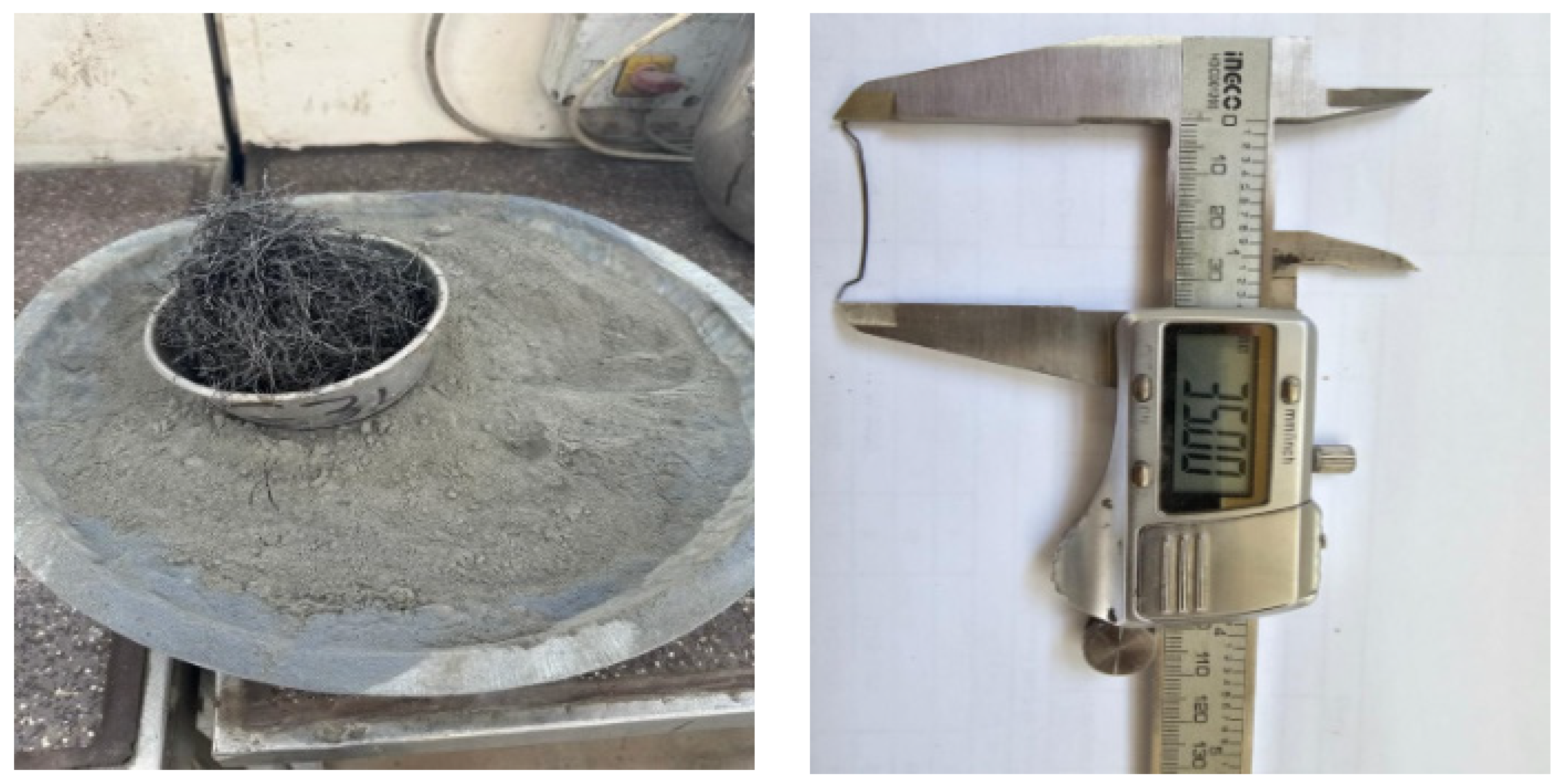
The fibers incorporated in the ultra-high-performance concrete (UHPC) were single hooked-end steel fibers with a length of 35 mm, a diameter of 0.55 mm, and an aspect ratio of 60 and with a percentage of 1.5%. The fibers possessed a tensile strength exceeding 1000 MPa (see Figure 1). The adopted fiber dosage percentages were selected in accordance with ASTM A820/A820M-22 [46].

2.1.4. Steel Plates and Geotextile

The steel plates used in this study were tested in accordance with ASTM A240/240M-20a [47]. The plates had a thickness of 2 mm and exhibited yield and ultimate tensile strengths of 205 MPa and 520 MPa, respectively.
In addition, a geotextile layer (ALYAF A651) with a nominal thickness of 4.8 mm and a tensile strength of 35.4 MPa and an elongation at break (55/60%) was utilized. The tensile properties of the geotextile were determined according to ASTM D4595-17 [48].
In addition, a geotextile layer (ALYAF A651) with a nominal thickness of 4.8 mm was used in the strengthening system. The mechanical and physical properties of the geotextile, derived from the manufacturer’s technical specifications, are summarized in Table 4. The mechanical properties of the geotextile were evaluated according to ASTM D4595-17 [48].

2.1.5. Concrete Mixes

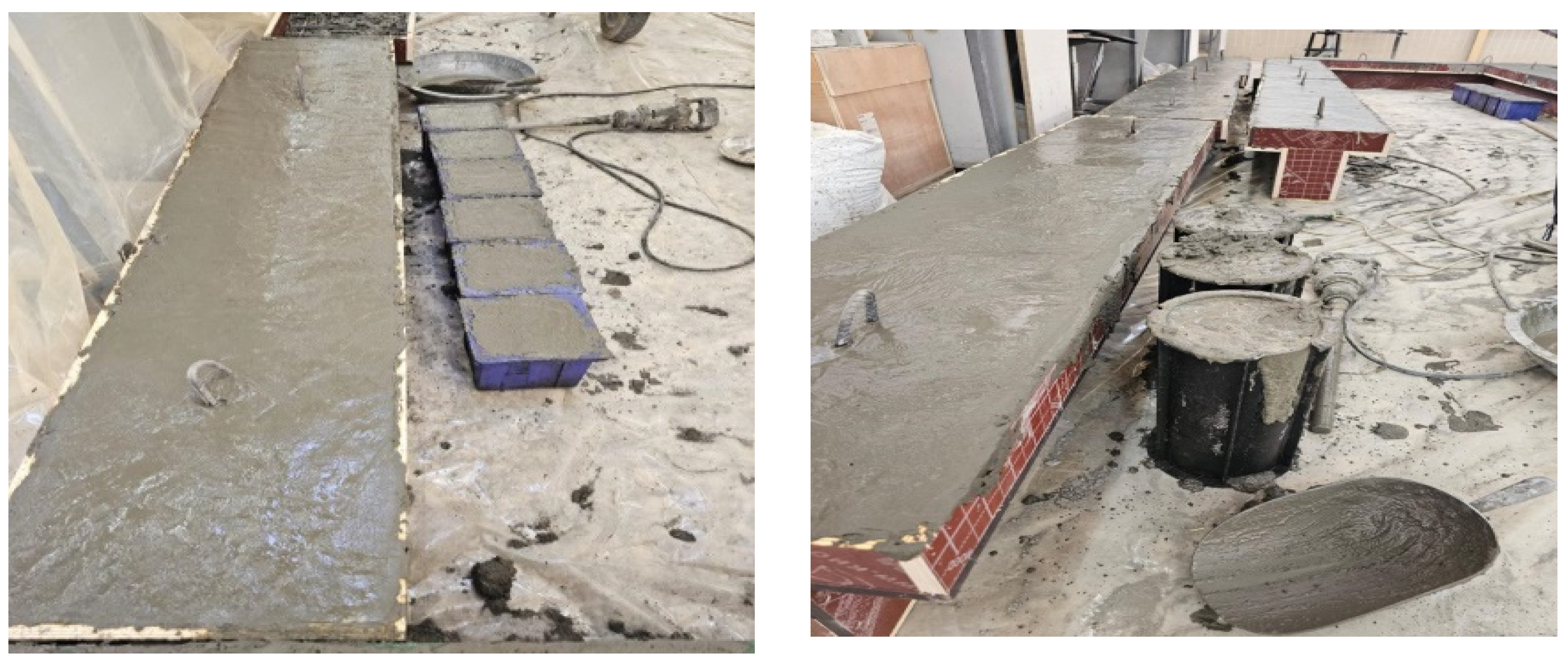
Normal-strength concrete with a target compressive strength of 35 MPa was employed in this study. The compressive strength was determined by testing six cube specimens and three cylindrical specimens (Figure 2) in accordance with ASTM C39/C39M-24 and BS EN 12390-3 [49,50]. The mix proportions adopted for both normal-strength concrete and ultra-high-performance concrete (UHPC) are presented in Table 5.
The reinforcing steel used in the RC beams had a yield strength of 450 MPa, with diameters of 10 mm for longitudinal reinforcement and 8 mm for shear reinforcement, tested in accordance with ASTM A615/A615M-24 [51].
A Sika epoxy adhesive (sikadure-31 CF Slow) was utilized to bond the external strengthening layers to the beam surface.
Sikadur-31 CF Slow epoxy adhesive, manufactured by Sika, was used to bond the external strengthening layers to the surface of the RC beam. The mechanical and physical properties of the epoxy adhesive, as provided by the manufacturer, are presented in Table 6. The strengthening system consisted of high-performance concrete with a compressive strength of 90 MPa combined with either steel plates or geotextile sheets. Additionally, a superplasticizer (F-180 G) was incorporated into the concrete mixtures in accordance with ASTM C494 [52].

2.2. RC T-Beams Specimens

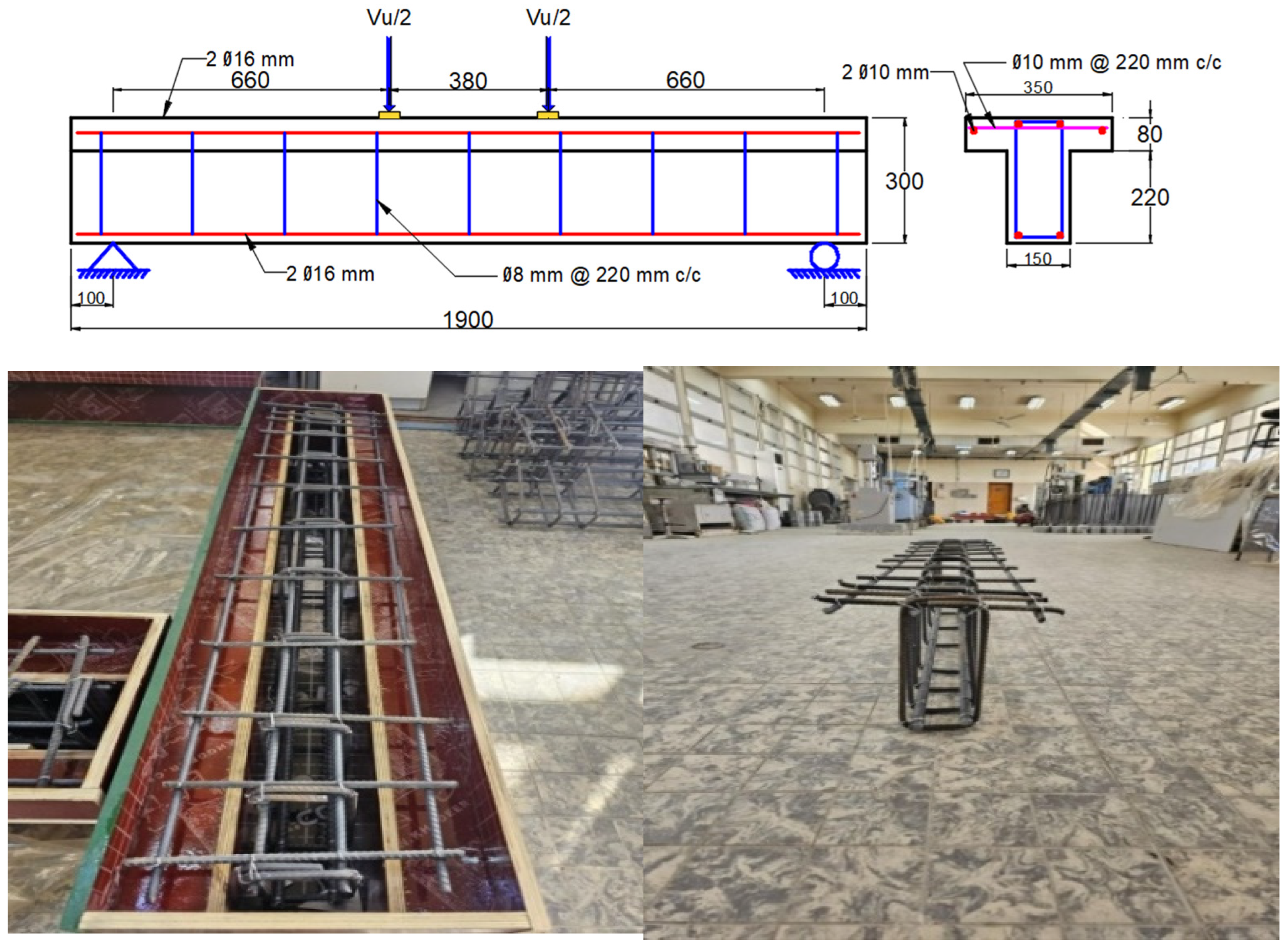
Ten simply supported reinforced concrete T-beams were fabricated and tested. Each beam had a total length of 1900 mm and an effective span of 1700 mm, leaving a 100 mm overhang at each end. The shear span was 660 mm, and the distance between the two concentrated loading points was 380 mm, resulting in a shear span-to-effective depth ratio (a/d) of 1.9. The beams were designed in accordance with ACI Committee 318 [53].
The cross-section was T-shaped, with a flange width and thickness of 350 mm and 80 mm, respectively, and a web depth and width of 300 mm and 150 mm, respectively. A clear concrete cover of 20 mm was provided. Longitudinal reinforcement consisted of two 16 mm diameter steel bars, while shear reinforcement was provided using 8 mm diameter stirrups spaced uniformly at 220 mm along the beam length. Steel bearing plates were installed at the supports to prevent local stress concentration and premature crushing, as illustrated in Figure 3.

2.3. Strengthening Applications

In this study, reinforced concrete (RC) beams were shear-strengthened using ultra-high-performance concrete (UHPC) in combination with steel plates and geotextile sheets. Different numbers of layers, strengthening arrangements, and bonding techniques were adopted to evaluate their effectiveness.
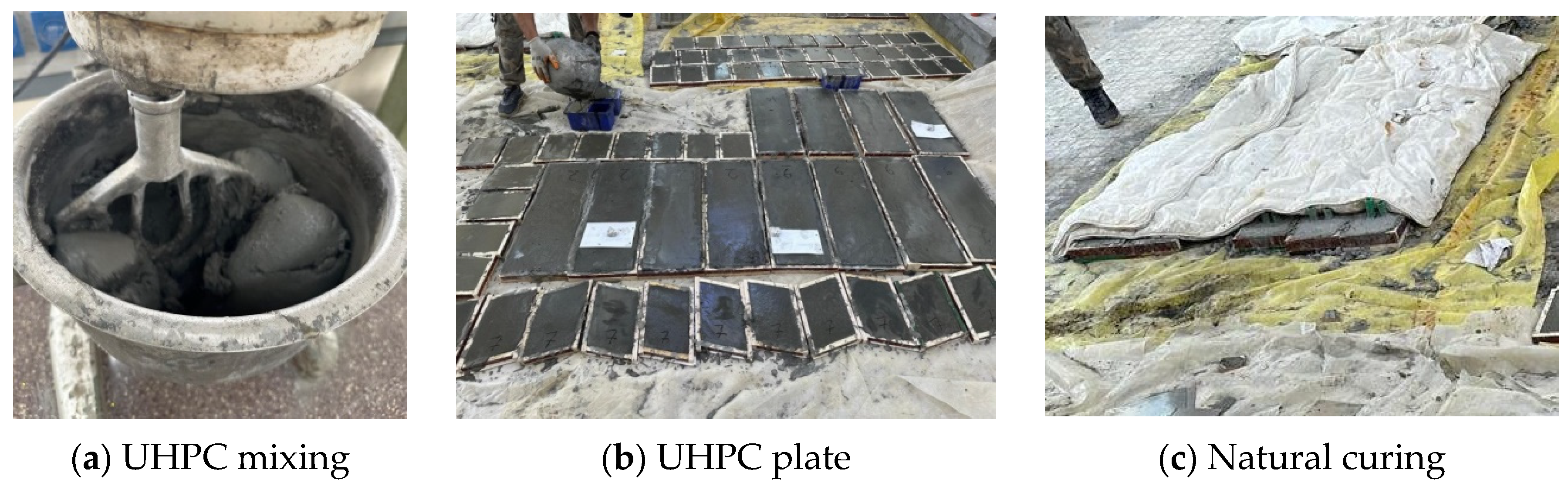
The UHPC was prepared using a vertical shaft mixer, with mixing continued for approximately 8 min until a homogeneous mixture was achieved. The mixture was then cast in layers incorporating steel plates and/or geotextile sheets according to the specified design dimensions and number of layers, using wooden formwork to ensure the 20 mm strengthening thickness, as summarized in Table 7. Two cube specimens were cast for compressive strength testing.
The precast UHPC composite plates were cured for 28 days to attain the target strength (Figure 4). After curing, the plates were externally bonded to both sides of the beams using 1 mm thickness of epoxy adhesive and were allowed to cure for at least seven days prior to testing.
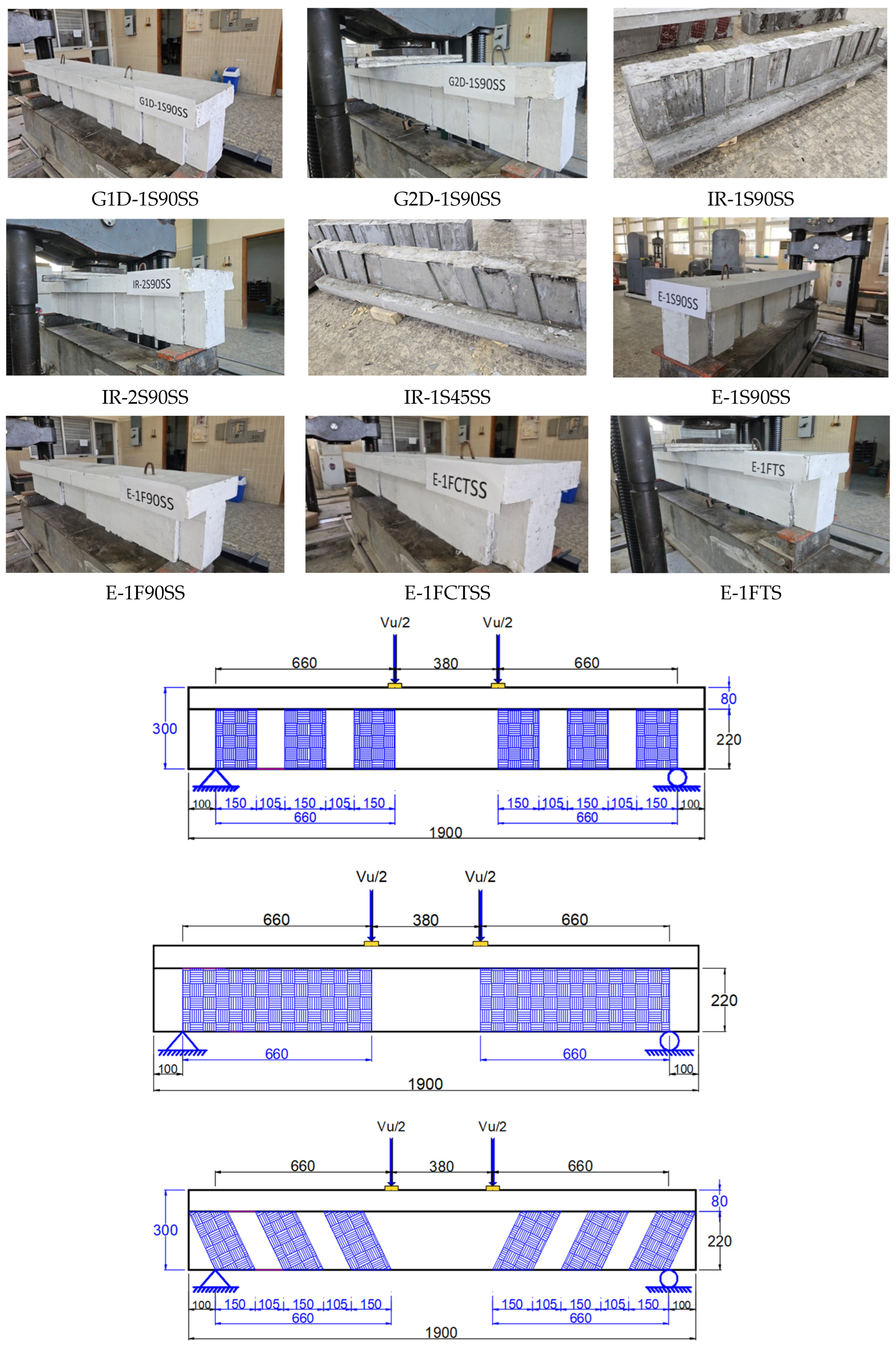
A total of ten beams were tested, including one control beam and nine beams strengthened using different composite systems and installation configurations (Figure 5), as detailed in the following sections.

2.3.1. Control Beam (TC)

This beam represents the control beam, as it does not contain any external strengthening, but it is only used as a reference for the rest of the strengthened samples.

2.3.2. G1D-1S90SS and G2D-1S90SS

The samples were further externally strengthened using three-layer strips: two layers of high-performance concrete with a steel plate in between. Each strip was 220 mm high and 150 mm wide, distributed over 660 mm long at the shear area with a spacing of 105 mm between strips and at a 90° orientation. The difference between the two beams is that in the GID-1S90SS beam, two lines at a depth of 10 mm were created under each strip using a grinder, then epoxy was applied and the strengthening plate was attached. In the G2D-1S90SS beam, grooves were created in the wooden formwork with a depth of 15 mm and the same dimensions as the strengthening plates before the casting process. Also, before attaching the strengthening plate, three lines were made in the beam using a grinder at a depth of 10 mm, after which the plate was fixed as shown in Figure 5. The purpose of these grooves and lines is to increase the bond between the plates and the RC beams.

2.3.3. IR-1S90SS, IR-IS45SS and IR-2S90SS

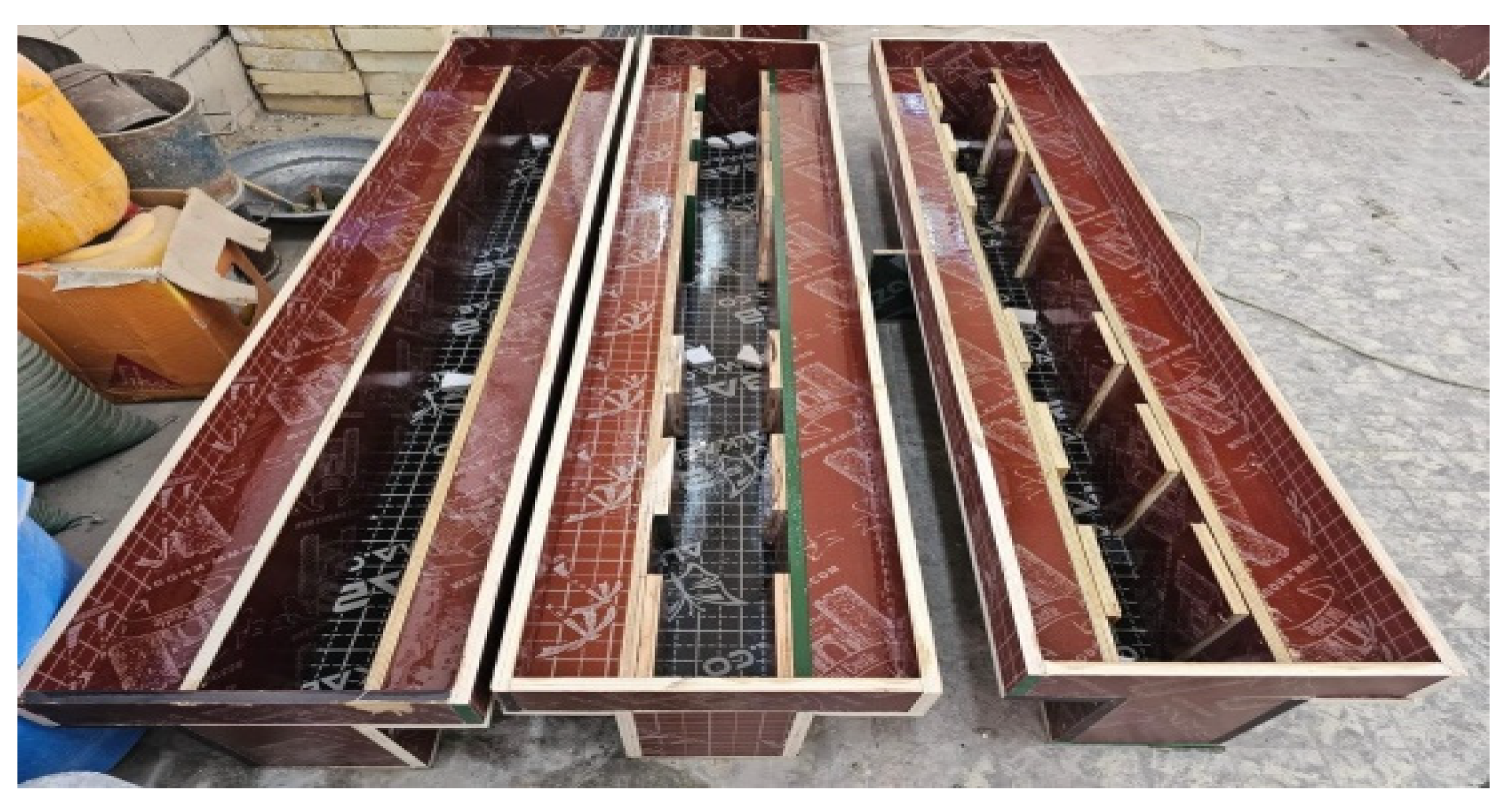
The construction method for these beams involved creating grooves at each side of the beam by placing pieces of wood with dimensions (150 × 220 × 15) mm at 105 mm inside the formwork before pouring the models. This allowed for the external strengthening to be fixed inside using epoxy adhesive, as illustrated in Figure 5. Regarding the strengthening arrangement, models IR-1S90SS and IR-IS45SS were strengthened with two layers of UHPC with a steel plate in between. The angle of inclination for the first model was 90 degrees, while the second one was inclined at a 45-degree angle, based on the pre-made grooves. Model IR-2S90SS differs from the others in that it was strengthened with two layers of steel, meaning three layers of UHPC with two steel layers in between were applied, and the composite strengthening was inclined at a 90-degree angle.

2.3.4. E-1S90SS, E-1F90SS, E-1FTS and E-1FCTSS

In these four models, the external reinforcement was directly bonded to the beams using epoxy. The E-1S90SS beam was strengthened with strips consisting of two layers of high-performance concrete and a steel plate in the middle. These strips were positioned at 660 mm long from the support to the applied point load, with a spacing of 105 mm among them. The other three models were externally reinforced with a single 660 mm long plate extending from the supports at both sides of the beam. The difference between them lay in the strengthening layers: E-1F90SS was similar to E-1S90SS, while E-1FTS consisted of two layers of high-performance concrete with a layer of geotextiles. The last model used three layers of high-performance concrete with a layer of steel and a layer of geotextile in between.

2.4. Instrumentation and Testing Procedure

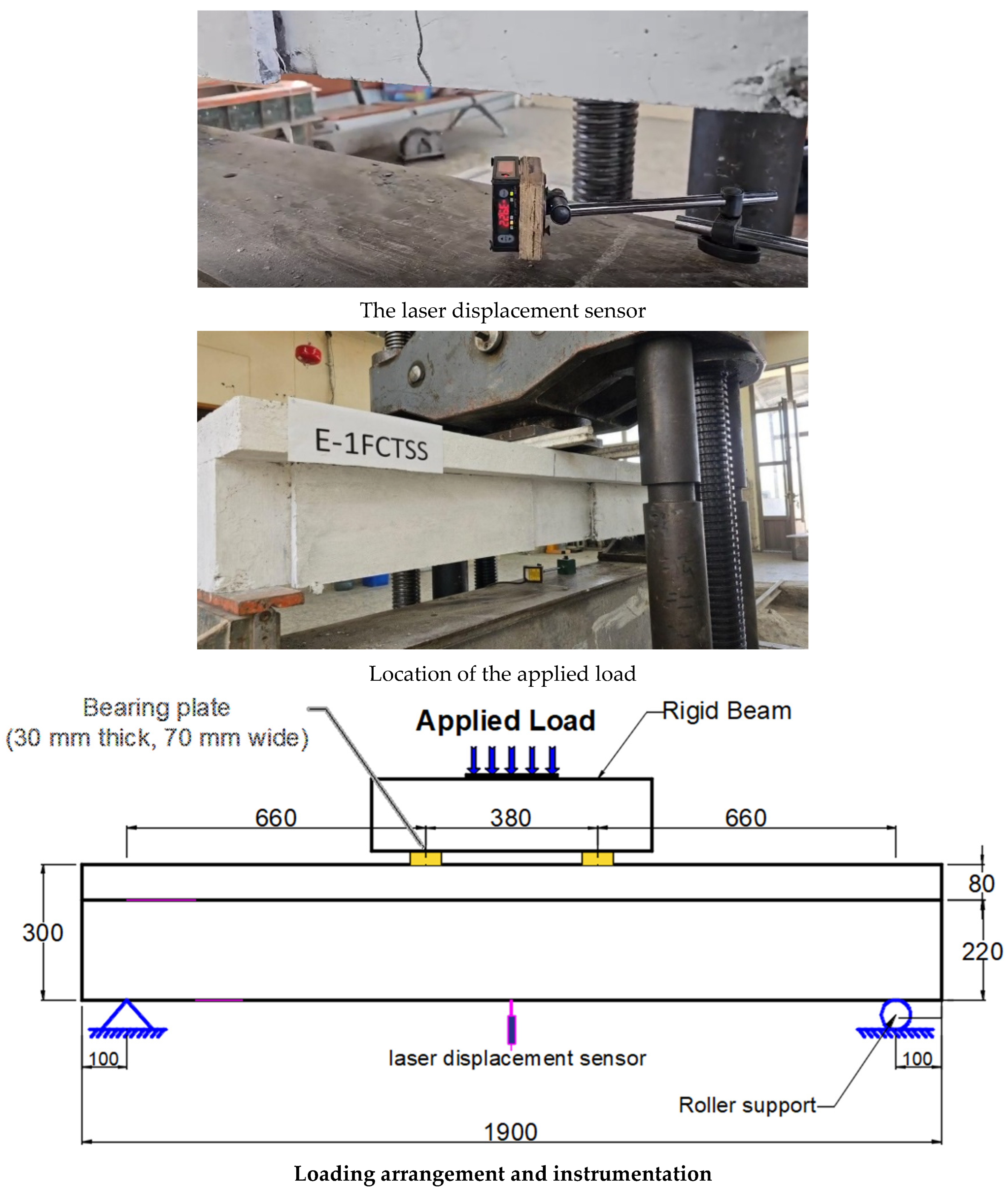
The tests were conducted in the Construction Laboratory at the College of Engineering, University of Basra. A Torsee hydraulic compression testing machine with a capacity of 2000 kN was used to apply the load under load-controlled conditions. The specimens were tested under four-point loading, with a distance of 380 mm between the two loading points. The support span, loading-point locations, shear span, strengthening layout, and strengthening dimensions are illustrated in Figure 5. The strengthening plates were applied within the designated shear regions, extending 660 mm from each support.
The load was applied at a constant rate of approximately 10 kN/min and increased incrementally throughout the test. At each load stage, loading was temporarily paused to record the corresponding measurements and observe crack development before continuing the loading process. This procedure was repeated until specimen failure. The initial cracking load and ultimate load were recorded for all specimens. To monitor the structural response and measure beam deflection during testing, a laser displacement sensor was installed at the mid-span on the bottom surface of the beam, as shown in Figure 6. The load and corresponding deflection readings were recorded at each loading stage throughout the test.

3. Experimental Results and Discussion

3.1. Ultimate Load Capacity of Rc T-Beams

All concrete structures must possess sufficient strength and stiffness to resist sudden shear failure. Therefore, one of the study objectives is to evaluate the potential contribution of added strengthening types on the behavior of these beams. Determining the best method is equally crucial for future application. Table 8 illustrates how much the strengthened beams’ maximum load-bearing capacity increased in comparison to the control beam. All of the strengthened beams showed an improvement in load-bearing capacity, with differences that were not very significant.
Increasing the reinforcement thickness from three layers to five (i.e., using two steel layers, as in the beam (IR-2S90SS)) resulted in a significant improvement in tensile strength, reaching 39.2%, with a change in the type of failure from brittle shear failure to flexural failure.
This was followed by sample E-1F90SS, where the increase was 35.3%. This was due to the use of a full plate along the shear zone, which led to an increase in moment of inertia, uniform stress distribution, and consequently, improved load-bearing capacity.
The connection method also had an effect. The strength increment was 37.6% in sample G2D-1S90SS, where the NSM method was used in addition to roughening the beam surface with vertical lines. This is higher than the increase of 30.8% obtained in sample G1D-1S90SS, where the strengthening was connected to the beam surface by creating vertical lines. Additionally, it is higher than sample IR-1S90SS, which was done using only NSM; the strength increase was 33.6%. This is due to the increased connection between the strengthening and the beam when both methods of fixation were applied together.
The IR-1S45SS beam, despite using the NSM, provided less load-bearing capacity than the other IR group because the bonding was not ideal at all points due to inclination and irregular edges. This led to the separation of more than one stripe, causing uneven stress transfer after separation and ultimately resulting in failure under a lower-than-expected load.
Compared to beam G1D-1S90SS, beam E-1S90SS, which was directly attached to the beam, had a higher strength increment (32.2%). This is because the drilling in the latter resulted in an uneven stress distribution, weakening the beam, even though neither sample experienced any debonding.
The strength of E-1FTS and E-1FCTSS beams increased by 29.3% and 38.6%, respectively. As the geotextile material is weaker than the steel plate, the first beam provided a strength increment less than the others, while the second beam, which was made of steel and geotextile, provided a good increase in strength despite the debonding that prevented it from bearing a larger load.
It should be noted that although the pilot program included several strengthening criteria, each tested sample was designed so that only one principal variable was modified compared to its reference configuration. This approach was adopted to facilitate the assessment of the relative effect of individual strengthening criteria. Given that only one sample was tested for each configuration, the results are presented as indicative behavioral trends rather than statistically proven results. These results are limited to the materials, strengthening regimens, and testing conditions examined in this study. Further studies involving replicated tests and larger experimental datasets are recommended to verify the observed trends and improve the overall applicability of the conclusions.

3.2. Load-Deflection Behavior

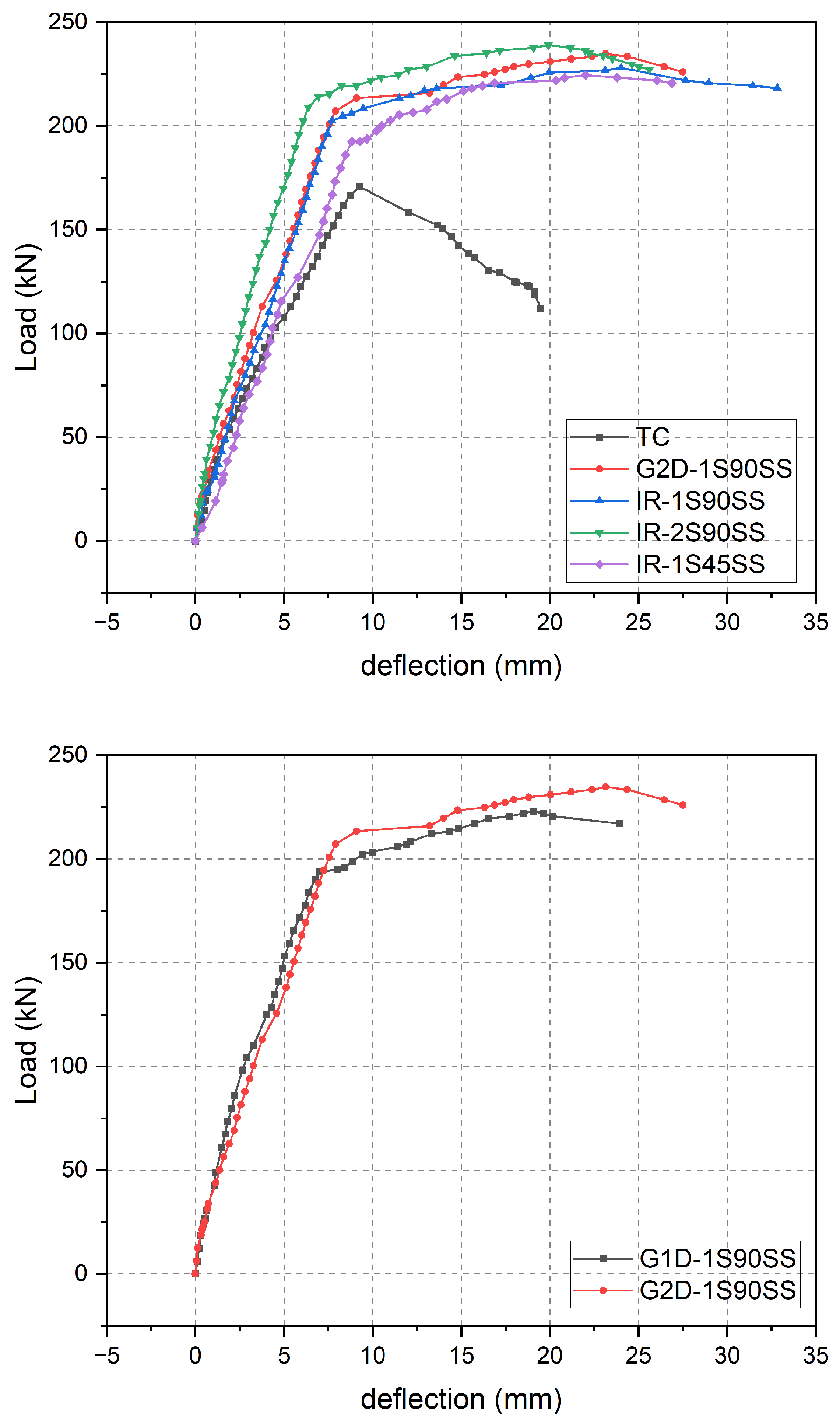
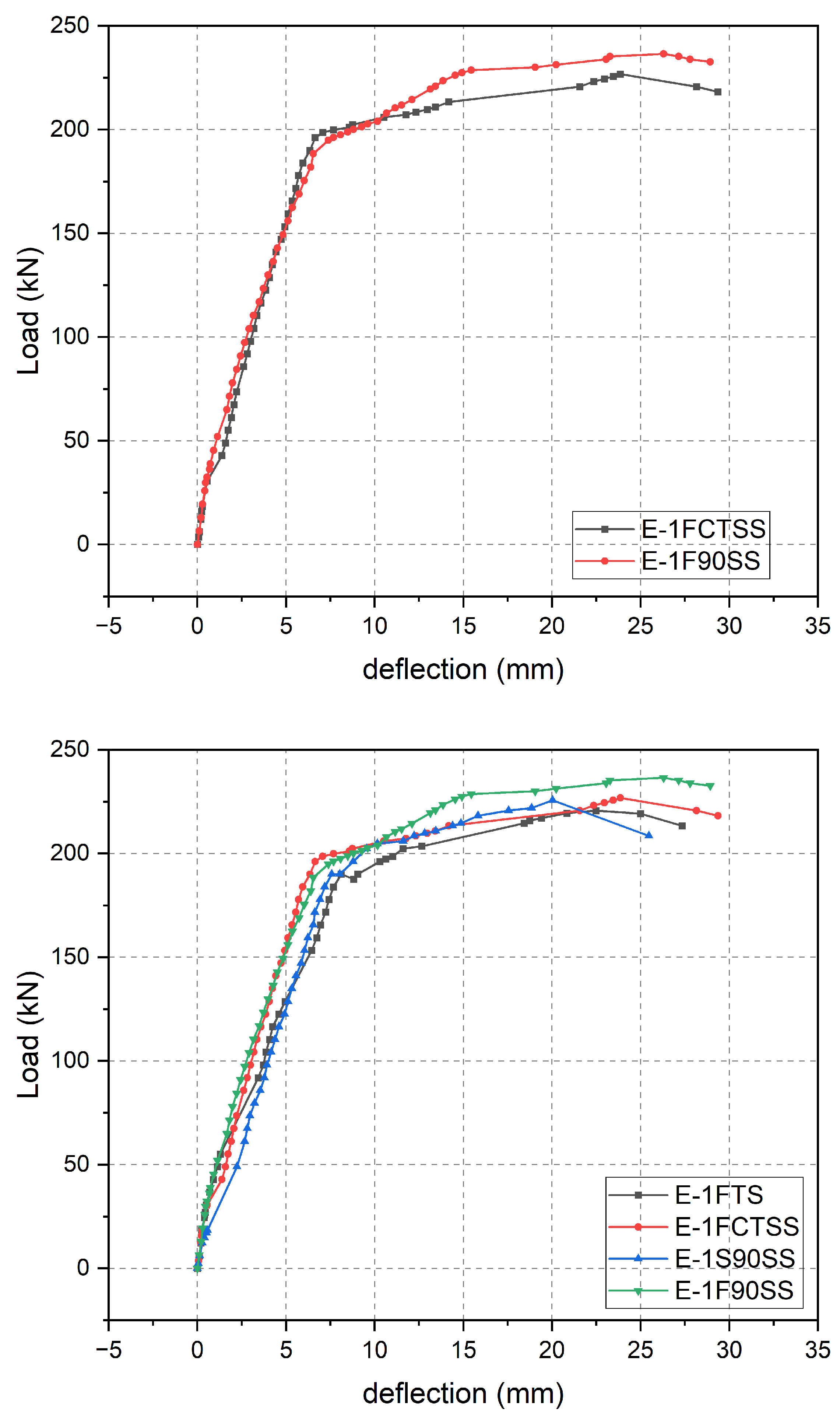
Figure 7 shows the beam deflections under the applied load for all samples, with a summary of the results presented previously in Table 8. All beams exhibited linear behavior at the beginning of the loading phase. However, as the loading stages progressed, the externally strengthened beams’ load-bearing capacity and stiffness improved, attributed to the steel and high-performance concrete used in the strengthening. The samples exhibited high ductility, preventing sudden failure.
The comparison between samples G1D-IS90SS and G2D-1S90SS revealed that the latter exhibited higher load-bearing capacity and displacement than the former. This was due to a more extensive connection with the concrete beam, involving the creation of grooves within the beam itself. These grooves make the external strengthening work with the beam as a single unit, and three vertical lines were applied within them before the epoxy adhesive was applied. In contrast, the first sample only had two vertical lines applied to the beam’s outer surface. However, the second sample suffered from a problem with the strengthening debonding.
Comparing the four samples (IR-1S90SS, IR-2S90SS, IR-1S45SS, AND G2D-1S90SS) in which grooves were created, it was found that both thickness and angle of inclination affect the ultimate load-bearing capacity and crack spreading. This comparison showed that the beams’ resistance improved with an increase in the number of steel layers, which consequently increased the strengthening thickness and, therefore, the moment of inertia. This was observed in sample IR-2S90SS, which exhibited better behavior than the other samples in the same group. It was also noted that the 45° angle of the strengthening in sample IR-1S45SS led to the confinement of diagonal cracks, resulting in a delay in the appearance of the first crack and a reduction in their number, as only one crack appeared in the shear zone.
Comparing beams IR-1S90SS and G2D-1S90SS, the difference between them being the presence of three vertical lines created using a grinder inside the grooves in sample G2D-1S90SS, showed that the difference in ultimate load-bearing capacity between them was very small, almost negligible.
For samples E-1F90SS and E-1S90SS, the former showed a resistance 4.3 kN higher than that of sample E-1S90SS due to its larger strengthening area, which consisted of a single piece along the shear zone. However, this increase in strength is relatively small considering the increase in cost as well as the additional weight on the RC beam resulting from the full external strengthening plate.
From the Comparison of G1D-1S90SS and E-1S90SS samples, it was found that the presence of vertical lines reduced the beam’s load-bearing capacity due to the non-uniform distribution of stresses at the location of the composite strips.
Finally, we have two samples, E-1FTS and E-1FCTSS. We observed that sample E-1FTS, strengthened with a composite of UHPC and geotextiles, did not perform as well as the samples strengthened with UHPC and steel plates. As for the other sample (E-1FCTSS), which was strengthened with a layer of geotextiles, steel plate, and UHPC, it provided good resistance and could have been higher than the beam E-1F90SS, which contained only UHPC and steel plate. However, due to debonding in the strengthening on one side, the sample failed under a load of 236.5 kN.

3.3. Failure Modes and Crack Patterns

Table 8 and Table 9 show the loads at which the first crack occurred, the ultimate load, the deflection at the first crack, the ultimate deflection, the type of failure, the location of the first crack in the beam, and the nature of the failure in terms of whether or not debonding occurred in the external strengthening.
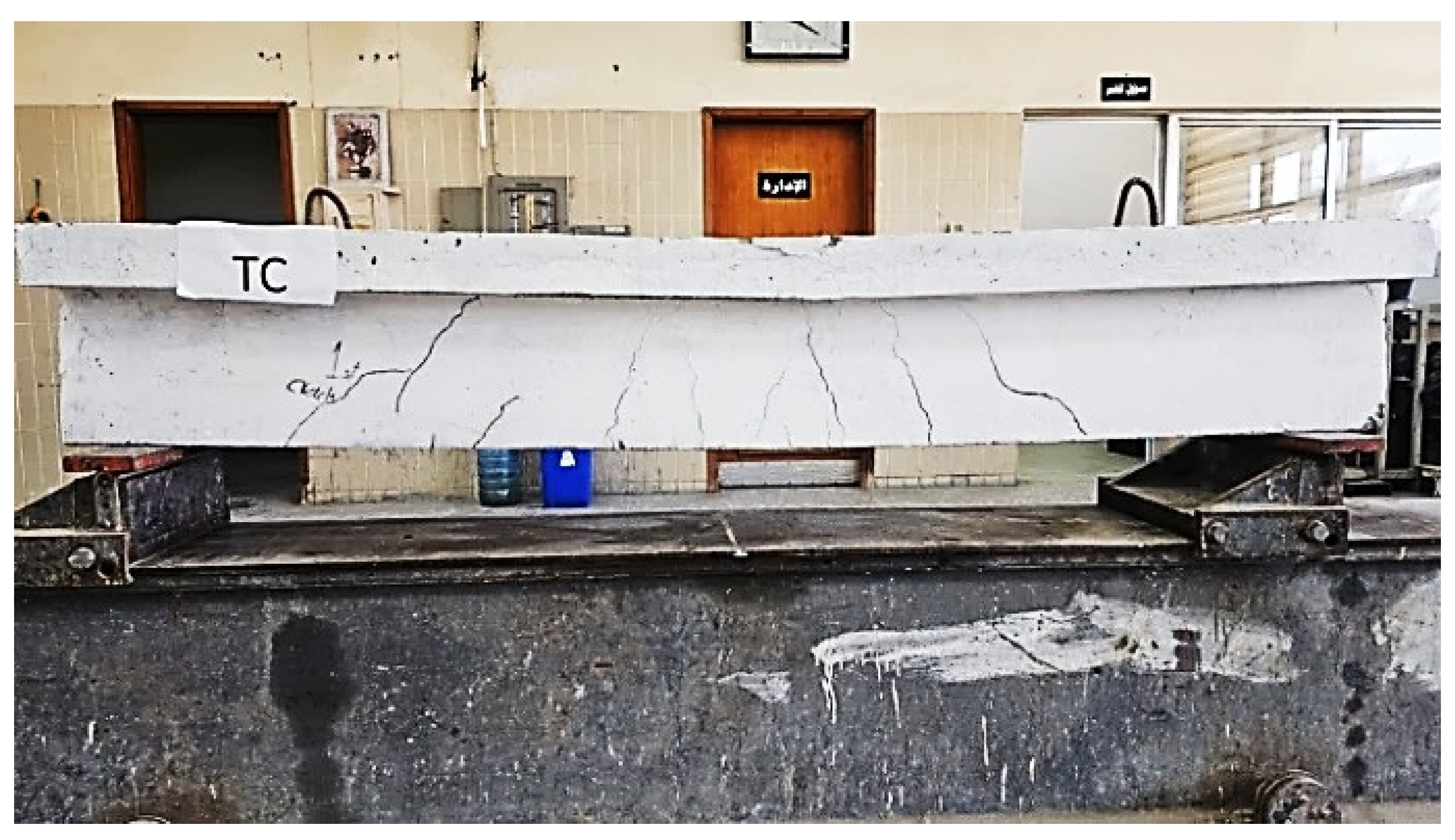
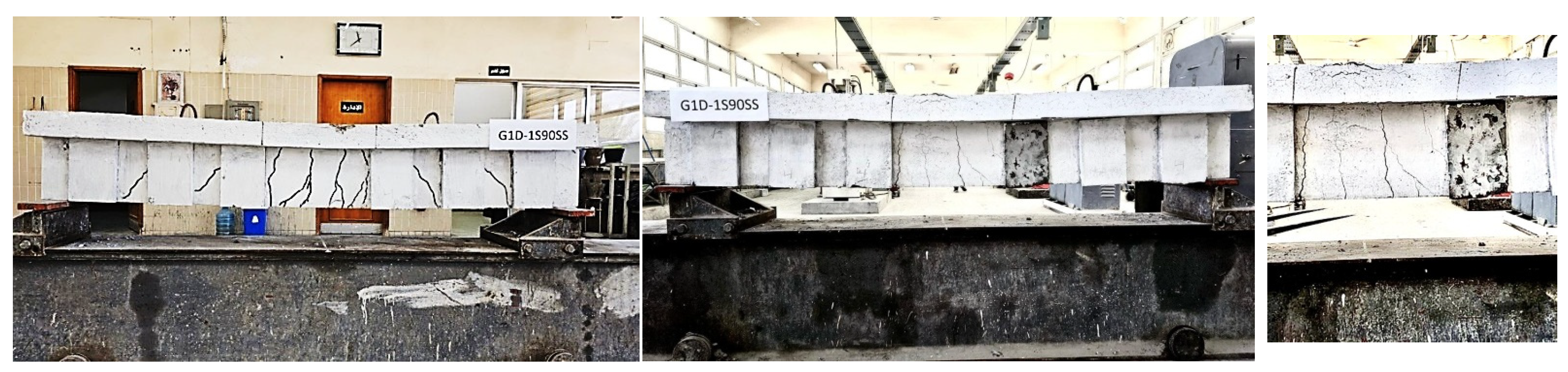
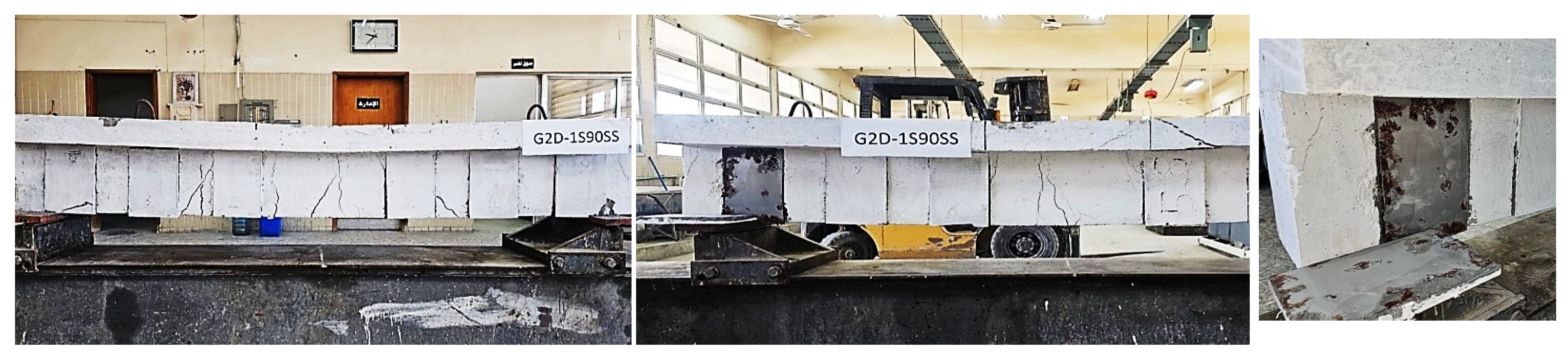
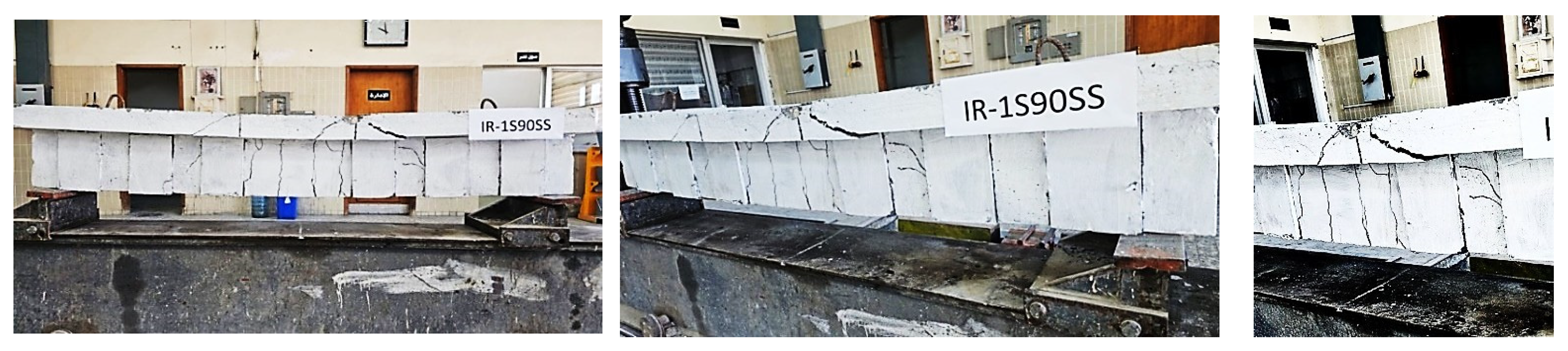
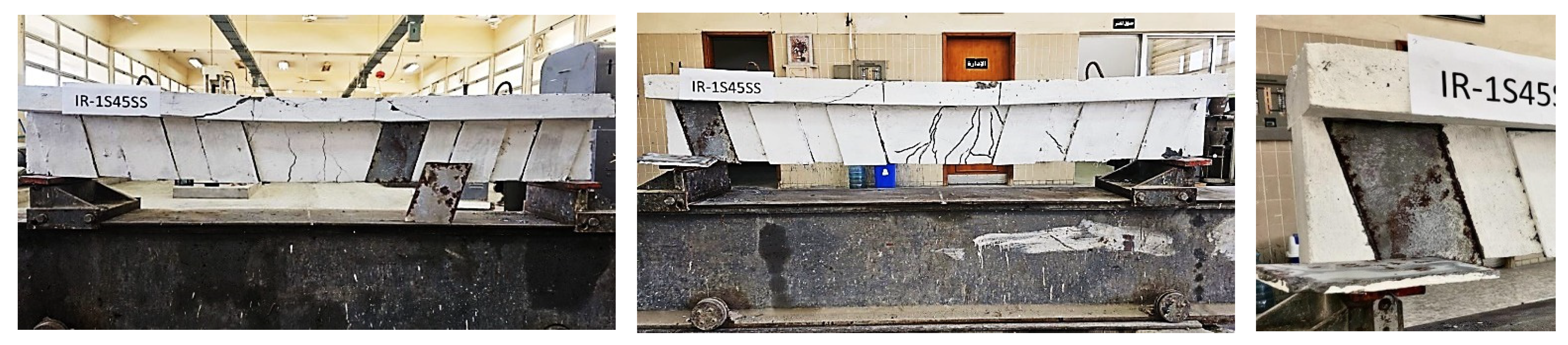
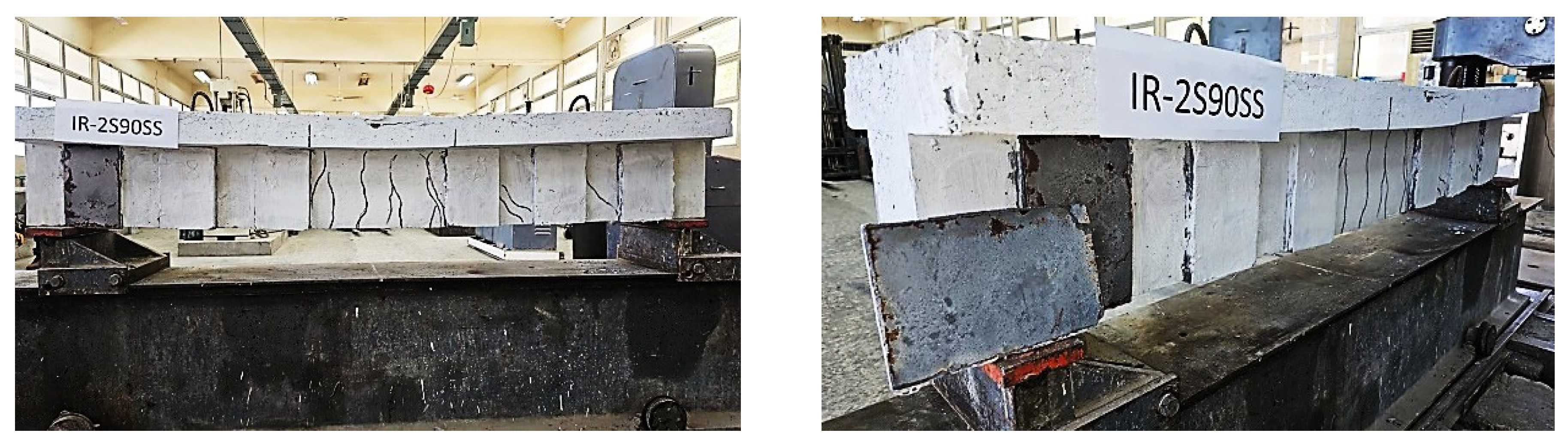
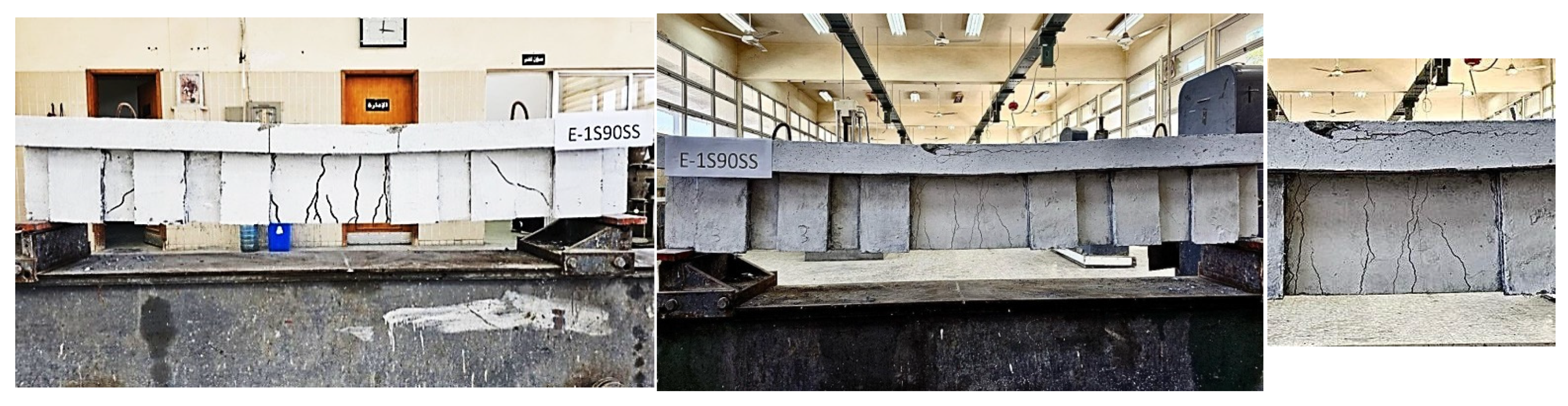
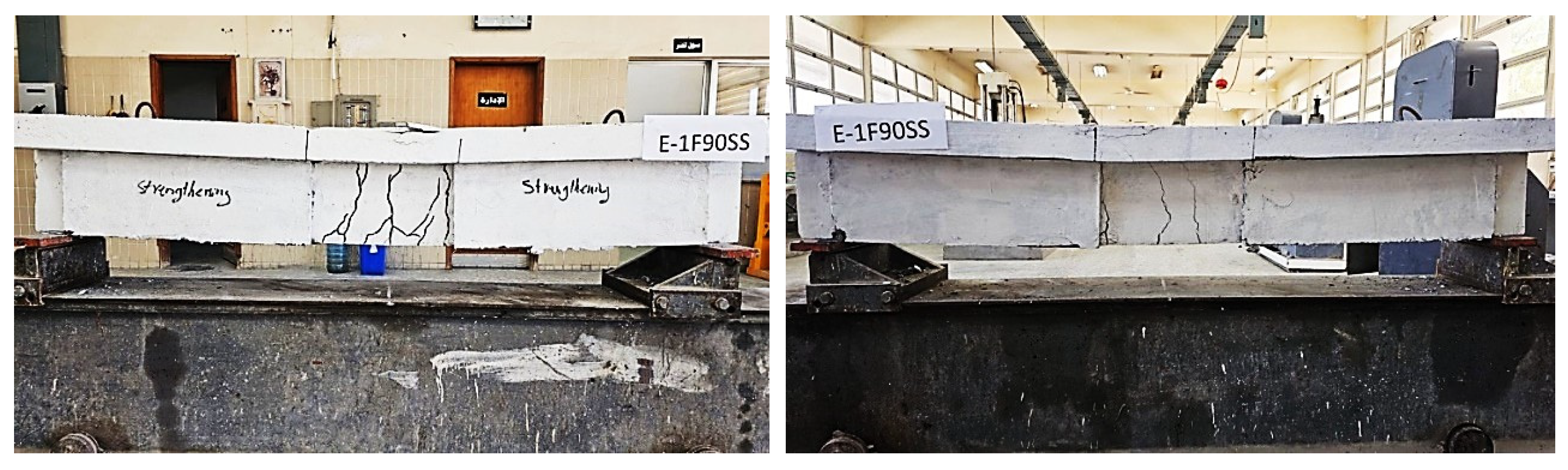
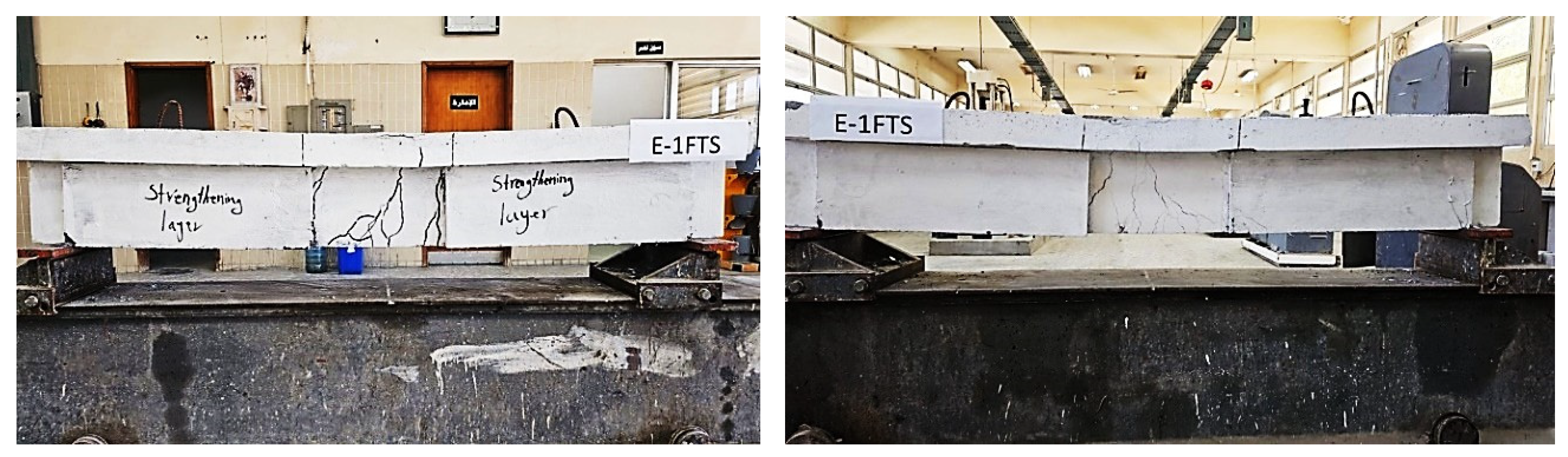
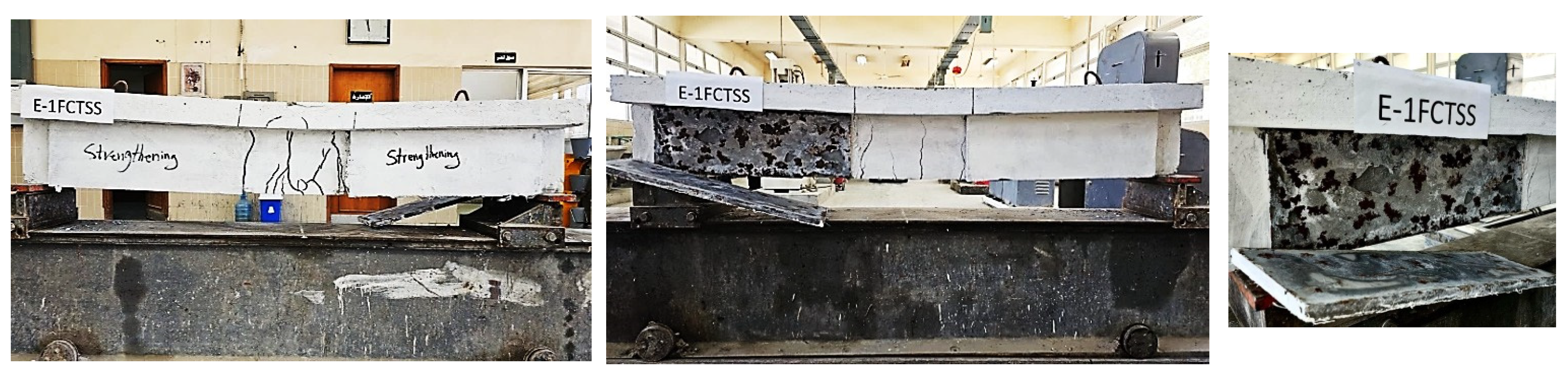
The results show that all the strengthened beams have nearly identical load-bearing capacities, higher than that of the control beam and with better elasticity. The first crack appeared in the pure bending zone, and no cracks were observed in the shear zone under low loads. However, gradually, as the loads increased, diagonal cracks began to appear, and the mid-section cracks began to widen, ultimately leading to bending failure. The exception was the control beam, which showed its first crack in the shear zone and subsequently failed due to shear stress. This indicates a shift in the failure mode from shear to bending stress in the strengthened beams. The failure modes and crack propagation are illustrated in Figure 8, Figure 9, Figure 10, Figure 11, Figure 12, Figure 13, Figure 14, Figure 15, Figure 16 and Figure 17 with a detailed explanation below.
It was also observed that most of the beams that experienced debonding were situated at the interface between the steel plate and the UHPC. This is due to several reasons, including that the stresses at the contact surface between the steel plate and the UHPC are much higher than those between the RC beam and the strengthening plate. Additionally, this surface is smoother compared to the bonding surface between the UHPC and the RC beams. Furthermore, the application of epoxy boosted mechanical and chemical bonding, resulting in better slip resistance, as also observed in a previous study conducted by Zhang et al. [37].
The control beam TC: The first crack appeared in the shear zone extending diagonally towards the load point at a load of 46 kN. Cracks continued to appear even in the pure moment zone as the load increased until shear failure occurred at a load of 170.7 kN. The cracks did not occur at the flange of the beam (Figure 8).
Specimen G1D-IS90SS: Figure 9 illustrates the cracks in the beam. The first of these cracks appeared in the pure bending zone at a load of 36.75 kN. As the load increased, further bending cracks appeared, extending vertically upwards. At a load of 147.1 kN, a crack appeared in the shear zone, extending diagonally toward the loading point between the composite strips. With increasing load, these cracks began to widen, especially at the middle of the beam. As expected, when the beam reached its maximum load capacity at 223.2 kN, failure occurred due to bending stresses. It should be noted that the strengthening strip under the applied load experienced debonding at the steel layer, and no cracks were observed on the UHPC layer beneath. Also, the flanges were unaffected and showed no cracking, indicating the effectiveness of the strengthening technique used, as the failure shifted from bending to shear.
Specimen G2D-IS90SS: In this beam, at a load of 62.8 kN, the first crack appeared in both the bending and shear zones, as well as in the flange of the beam. The cracks were diagonal and extended upwards. As the applied load increased, these cracks widened until, at 234.8 kN, flexure failure occurred. Furthermore, debonding of the strengthening strip near the support occurred, where the steel layer became debonded from the UHPC, as shown in Figure 10.
Specimen IR-IS90SS showed the first diagonal crack in the shear area at a load of 73.6 kN. As the load increased to 134.9 kN, cracks began to appear in the middle of the beam, extending upwards. When the load reached 175.7 kN, the flange cracked. The loading continued until the load reached 228 kN, which led to flexure failure due to the increased width of the cracks in this middle region. Note that no debonding of the strengthening strips occurred (Figure 11).
Specimen IR-IS45SS: similar to Sample IR-1S45SS except that the strengthening was inclined at a 45° angle, exhibited the same behavior but with a lower ultimate load and cracks appearing under a lower load. The first crack appeared in the middle of the beam at a load of 46.8 kN. Subsequently, a diagonal crack appeared in the shear zone at a load of 98.1 kN. These cracks continued to widen in the shear, moment, and flanging zones as the load increased until flexure failure occurred at a load of 224.6 kN. Furthermore, strengthening debonding also occurred, manifested as the separation of the steel plate from the UHPC under the applied load as well as at the support zone due to the inclination of the strengthening, which resulted in its irregularity from below, as shown in Figure 12.
Specimen IR-2S90SS: This model is also similar to model IR-1S90SS, except for the strengthening thickness, as it contains two layers of steel plate. As is known, increasing the thickness or number of steel plates used in external strengthening increases their resistance to loads and the shear stresses generated at their edges. If these stresses exceed the surface stresses, separation will occur. In this model, the first crack appeared in the middle of the beam at a load of 50.2 kN, and at a load of 138.2 kN, cracks began to appear in the shear zone. However, due to the increased strengthening thickness, the number and width of the cracks were less compared to beam IR-1S90SS, and no cracks appeared in the flange of the beam. As the load increased, the width of the cracks in the middle increased until bending failure occurred under a load of 237.7 kN, and the strengthening separation occurred on one side of the beam at the support area due to the contact between the plate edge and the support; this debonding was achieved by separating the second steel layer from the outer layer of high-performance concrete (see Figure 13).
Comparing these three models in terms of crack appearance and strengthening debonding, the first model (IR-1S90SS) is preferred.
Specimen E-1S90SS: This model is similar to Model G1D-1S90SS, except that the strengthening was directly bonded to the beams using epoxy, unlike Model G1D-1S90SS, where vertical lines with 10 mm depth were created using a grinder before bonding. Therefore, the first crack appeared in the middle of the beam under a 30.6 kN load, which was lower than in the G1D-1S90SS model. However, the locations and nature of the cracks are almost identical. As the loads increased, the cracks widened and increased in width in the middle until they caused the beam to fail in flexure under a load of 225.6 kN. It should be noted that the strengthening did not experience any debonding (Figure 14).
Specimens E-1F90SS, E-1FTS, and E-1FCTSS: These three samples exhibited almost identical behavior, exhibiting cracks only in the pure moment region at the mid-beam near the strengthening edge. The first crack appeared under loads of (60.3, 30.6, and 42.9) kN, respectively; no cracks appeared in the shear region, even with increasing load. As the load continued to be applied, these cracks increased until they caused flexure failure in all samples under loads of (231,220.7, and 236.5) kN, respectively. The third sample differed from the other by exhibiting strengthening debonding on one side of the beam (Figure 15, Figure 16 and Figure 17).

3.4. Bonding Performance

The composite performance between reinforced beams and ultra-high-performance concrete plates is governed by the installation method and the degree of bond between them. Epoxy is the primary bonding agent. To optimize its performance, several techniques were employed. These included creating grooves within the wooden formwork, matching the dimensions of the strengthening as in IR-beams, to remove a portion of the concrete cover beforehand (Figure 18); creating vertical lines 10 mm deep on the beam surface (as in model G1D-1S90SS) before applying the adhesive; or both (as in model G2D-1S90SS), in addition to models with direct bonding (i.e., without any grooves in the beam surface). The best technique was used for delaying the crack shown in beam IR-1S90SS, where the first crack occurred under a greater load than the others, and no separation occurred. In all samples, epoxy demonstrated high bonding effectiveness, as any separation observed in some beams was between the strengthening layers themselves and not in the bonding area with the RC beam.
It should be noted that the shift in failure mode from shear failure in the reference beam to flexural failure in the strengthened specimens indicates the effectiveness of the applied strengthening systems in enhancing the shear strength of the beams. However, after optimizing the shear capacity, the final response of the strengthened specimens may have been influenced by both the shear and flexural capacities. Therefore, the observed increase in ultimate load is interpreted as reflecting the overall structural response of the strengthened beams and not the contribution of shear strengthening alone.

4. Conclusions

The research involved testing ten RC samples using different strengthening techniques. These included a composite of UHPC and corrosion-resistant steel sheets, as well as two samples: one incorporating geotextiles and the other a combination of geotextiles and steel sheets alongside UHPC. The bonding methods varied, including direct bonding after cleaning the beams, creating two vertical lines in the concrete beam below the strengthening area, creating grooves the size of the external strengthening, and creating grooves and three vertical lines before applying the composite sheets. The composite plate configurations included samples with full-length strengthening on the shear area or strips measuring 150 × 220 mm. The 45-degree inclination of one of these samples was also studied. This study revealed the following results.
  • The use of composite strengthening systems delayed the onset of shear cracking and improved the overall structural performance of the beams, as evidenced by the load and deflection responses. Furthermore, the 45° angled strengthening design reduced the number of shear cracks compared to the corresponding vertical strengthening arrangement.
  • Increasing the number of steel plate layers improved the load and deflection performance compared to other strengthening designs. However, the effectiveness of the strengthening system was limited by deformation mismatch and localized layer separation near the supports, which reduced stress transfer efficiency.
  • Comparing the use of composite plates along the shear zone with the use of strips showed that the full plates provided higher load-bearing capacity due to the uniformity of stress distribution and the increase in moment of inertia. However, their use also increases the weight on the RC beam.
  • The use of geotextiles with high-performance concrete demonstrated good deformation compatibility, increased beam strength and durability, and reduced crack propagation towards the bending zone. No separation was observed between the composite system and the RC beam. However, the addition of a steel layer increased the load-bearing capacity but also promoted layer separation within the composite system.
  • Most of the samples strengthened by composite strips with NSM suffered from separation, particularly those reinforced with inclined strips. Separation generally began in stress concentration zones and was influenced by the localized geometry irregularity at the strip edges.
  • All the strengthened RC beams tested in this study showed a transition from shear failure to bending failure, indicating a significant improvement in shear resistance. However, the load-bearing capacities varied among the studied strengthening configurations, and practical considerations, such as cost and construction effort, should be taken into account when selecting the appropriate reinforcement technique.
  • The observed separation failures were primarily associated with the interface between the steel plates and the high-performance concrete rather than complete separation from the RC beam. This observation suggests that the steel plate–high-performance concrete interface may influence the overall performance of the strengthening system. The results also indicate that the vertical groove lines had a limited impact on the overall behavior, as separation was mainly observed at the steel plate–high-performance concrete interface.
The study in this area can be further developed by investigating additional parameters such as varying the thickness of the UHPC. It is also possible to experiment with methods for roughening the surface of steel layers to prevent debonding, as well as varying the thickness of the steel layer. Furthermore, different dimensions of the strengthening strips can be studied, along with the economic feasibility of these changes. Additionally, the use of stronger beams in the bending zone can be investigated to ensure maximum benefit from the external strengthening added to the shear zone.

Author Contributions

M.S.Z.: conceptualization and editing. A.Z.H.: method development and writing and editing. H.S.M. and K.Z.N.: conceptualization, method development, and writing and editing. All authors have read and agreed to the published version of the manuscript.

Funding

This research received no external funding.

Data Availability Statement

The raw data supporting the conclusions of this article will be made available by the authors on request.

Conflicts of Interest

The authors declare no conflicts of interest.

References

  1. Wang, G.; Gu, L.; Nie, J.; Qu, T.; Wu, C.; Zhang, Y.; Yang, J. Shear strengthening of full-scale RC beams with externally bonded ultra-high performance concrete (UHPC) plates with embedded CFRP strips. Case Stud. Constr. Mater. 2025, 22, e04851. [Google Scholar] [CrossRef]
  2. Shaikh, F.U.A.; Luhar, S.; Arel, H.Ş.; Luhar, I. Performance evaluation of Ultrahigh performance fibre reinforced concrete—A review. Constr. Build. Mater. 2020, 232, 117152. [Google Scholar] [CrossRef]
  3. Hung, C.-C.; El-Tawil, S.; Chao, S.-H. A Review of Developments and Challenges for UHPC in Structural Engineering: Behavior, Analysis, and Design. J. Struct. Eng. 2021, 147, 03121001. [Google Scholar] [CrossRef]
  4. Xue, J.; Briseghella, B.; Huang, F.; Nuti, C.; Tabatabai, H.; Chen, B. Review of ultra-high performance concrete and its application in bridge engineering. Constr. Build. Mater. 2020, 260, 119844. [Google Scholar] [CrossRef]
  5. He, Z.-Q.; Ou, C.; Tian, F.; Liu, Z. Experimental Behavior of Steel-Concrete Composite Girders with UHPC-Grout Strip Shear Connection. Buildings 2021, 11, 182. [Google Scholar] [CrossRef]
  6. Hamoodi, A.Z.; Zewair, M.S.; Ojaimi, M.F. Shear behavior of fiber-reinforced concrete beams: An experimental study. GEOMATE J. 2021, 21, 167–179. [Google Scholar] [CrossRef]
  7. Zewair, M.S.; Hamoodi, A.Z.; Ojaimi, M.F. Effect of types of fibres on the shear behaviour of deep beam with opening. Period Eng. Nat. Sci. 2021, 9, 1086–1095. [Google Scholar] [CrossRef]
  8. Sakr, M.A.; Sleemah, A.A.; Khalifa, T.M.; Mansour, W.N. Shear strengthening of reinforced concrete beams using prefabricated ultra-high performance fiber reinforced concrete plates: Experimental and numerical investigation. Struct. Concr. 2019, 20, 1137–1153. [Google Scholar] [CrossRef]
  9. Hekal, G.M.; Salama, M.I.; Elsamak, G.; Almaadawy, A.H. Numerical Investigation of Shear Behavior of RC T-beams Strengthened by Ultra High-Performance Fiber Reinforced Concrete (UHPFRC). IOSR J. Mech. Civ. Eng. 2021, 18, 13–28. [Google Scholar]
  10. Hong, S.-G.; Lim, W.-Y. Strengthening of shear-dominant reinforced concrete beams with ultra-high-performance concrete jacketing. Constr. Build. Mater. 2022, 365, 130043. [Google Scholar] [CrossRef]
  11. Morthala, R.R.; Balla, T.M.R.; Prakash, S.S. Experimental Evaluation of Shear Strengthening Techniques for RC Beams Using FRP and UHPC. International Conference on Fibre-Reinforced Polymer (FRP) Composites in Civil Engineering, Lisbon, Portugal, 14–16 July 2025; pp. 453–463. [Google Scholar]
  12. Al-Osta, M.; Isa, M.; Baluch, M.; Rahman, M. Flexural behavior of reinforced concrete beams strengthened with ultra-high performance fiber reinforced concrete. Constr. Build. Mater. 2017, 134, 279–296. [Google Scholar] [CrossRef]
  13. Huang, Y.; Gu, D.; Mustafa, S.; Grünewald, S.; Luković, M. Shear behaviour of reinforced concrete beams strengthened with ultra-high performance fiber reinforced concrete (UHPFRC). Case Stud. Constr. Mater. 2023, 19, e02441. [Google Scholar] [CrossRef]
  14. Abaza, E.; Elshazli, M.T.; Elbelbisi, A.; Shehab, H.; Zaghlal, M. Punching Strengthening of Lightweight Aggregate Reinforced Concrete Flat Slabs Using Fiber-Reinforced Polymers. J. Compos. Sci. 2025, 9, 485. [Google Scholar] [CrossRef]
  15. Al-Abdwais, A.H.; Al-Tamimi, A.K. Evaluation of Bonding Properties Between CFRP Laminate and Concrete Using Externally Bonded Reinforcement on Transverse Grooves (EBROTG) Method. J. Compos. Sci. 2024, 8, 488. [Google Scholar] [CrossRef]
  16. Ojaimi, M.F.; Alabdulhady, M.Y.; Naser, K.Z. Influence of Concrete Compressive Strength on CFRP Strengthening and Repairing of RC Two-Way Slabs. J. Eng. 2024, 2024. [Google Scholar] [CrossRef]
  17. Sadeq, M.N.; Mohammad, H.K.; Allawi, A.A.; Al Zand, A.W.; Khalaf, M.R.; Al-Ahmed, A.H.A.; Ibrahim, T.H.; El-Zohairy, A. Numerical Evaluation of Embedded I-Section Strengthening in Axially Loaded Composite Concrete-Filled Stainless Steel Tubes. J. Compos. Sci. 2025, 9, 470. [Google Scholar] [CrossRef]
  18. Huang, Y.; Huang, G.; Nie, Z.; Zhang, F.; Lu, Q.; Hao, J. Study on the Mechanical Development of Alkali Coral Cementitious Materials Excited by Weak Alkali and the Formation, Development and Evolution of Gel Structure. J. Compos. Sci. 2025, 9, 456. [Google Scholar] [CrossRef]
  19. Lafta, Y.J.; Malik, H.S.; Jassim, M.F. Flexural behavior of RC beams externally reinforced with CFRP composites using various strategies. Open Eng. 2024, 14, 20220492. [Google Scholar] [CrossRef]
  20. Abbaszadeh, A.; Chaallal, O. The Use of Externally Bonded Fibre Reinforced Polymer Composites to Enhance the Seismic Resilience of Single Shear Walls: A Nonlinear Time History Assessment. J. Compos. Sci. 2024, 8, 229. [Google Scholar] [CrossRef]
  21. Kadhim, M.M.; Jawdhari, A.; Nadir, W.; Majdi, A. Experimental study on RC beams strengthened in flexure with CFRP-Reinforced UHPC overlays. Eng. Struct. 2023, 285, 116066. [Google Scholar] [CrossRef]
  22. Liu, T.; Charron, J.-P. Experimental Study on the Shear Behavior of UHPC-Strengthened Concrete T-Beams. J. Bridg. Eng. 2023, 28. [Google Scholar] [CrossRef]
  23. Nadir, W.; Kadhim, M.M.; Jawdhari, A.; Fam, A.; Majdi, A. RC beams strengthened in shear with FRP-Reinforced UHPC overlay: An experimental and numerical study. Structures 2023, 53, 693–715. [Google Scholar] [CrossRef]
  24. Tanarslan, H.M.; Yalçınkaya, Ç.; Alver, N.; Karademir, C. Shear strengthening of RC beams with externally bonded UHPFRC laminates. Compos. Struct. 2021, 262, 113611. [Google Scholar] [CrossRef]
  25. Chen, C.; Cai, H.; Cheng, L. Shear Strengthening of Corroded RC Beams Using UHPC–FRP Composites. J. Bridg. Eng. 2021, 26, 04020111. [Google Scholar] [CrossRef]
  26. Bin Ahmed, F.; Biswas, R.K.; Sen, D.; Tasnim, S. Flexural and Shear Strengthening of Reinforced-Concrete Beams with Ultra-High-Performance Concrete (UHPC). Constr. Mater. 2024, 4, 468–492. [Google Scholar] [CrossRef]
  27. Ghalla, M.; Badawi, M.; Mlybari, E.A.; Hu, J.W. Enhancing shear strength of RC beams through externally bonded reinforcement with stainless-steel strips and FRCM jacket to mitigate the failure risk. Results Eng. 2024, 22, 102246. [Google Scholar] [CrossRef]
  28. Jassim, M.F.; Lafta, Y.J.; Malik, H.S. Shear Behavior of Reinforced Concrete Beams with Different Arrangements of Externally Bonded Carbon Fiber-Reinforced Polymer. J. Eng. 2023, 2023, 1465410. [Google Scholar] [CrossRef]
  29. Thamrin, R.; Zaidir; Wahyuni, A. Shear capacity of reinforced concrete beams strengthened with web bonded steel bars or steel plates. Results Eng. 2023, 17, 100953. [Google Scholar] [CrossRef]
  30. Adhikary, B.B.; Mutsuyoshi, H. Shear strengthening of RC beams with web-bonded continuous steel plates. Constr. Build. Mater. 2006, 20, 296–307. [Google Scholar] [CrossRef]
  31. Barnes, R.A.; Mays, G.C. Strengthening of reinforced concrete beams in shear by the use of externally bonded steel plates: Part 1—Experimental programme. Constr. Build. Mater. 2006, 20, 396–402. [Google Scholar] [CrossRef]
  32. Al-Hassani, H.M.; Al-Ta’aN, S.A.; Mohammed, A.A. Behavior of Damaged Reinforced Concrete Beams Strengthened with Externally Bonded Steel Plate. Tikrit J. Eng. Sci. (TJES) 2013, 20, 48–59. [Google Scholar] [CrossRef]
  33. Aykac, S.; Kalkan, I.; Aykac, B.; Karahan, S.; Kayar, S. Strengthening and Repair of Reinforced Concrete Beams Using External Steel Plates. J. Struct. Eng. 2013, 139, 929–939. [Google Scholar] [CrossRef]
  34. Ciampa, E.; Ceroni, F.; Pecce, M.R. Bond Behavior of Steel Plates Externally Bonded on Concrete Elements. In International Conference on Fibre-Reinforced Polymer (FRP) Composites in Civil Engineering; Springer International Publishing: Cham, Switzerland, 2021; pp. 232–242. [Google Scholar]
  35. Tan, C.; Sun, T.; Zhao, H.; Tu, L.; Qiao, D.; Shao, X. Shear behavior of pre-damaged RC beams strengthened with steel plate and UHPC. J. Constr. Steel Res. 2023, 212, 108287. [Google Scholar] [CrossRef]
  36. Li, L.; Jin, W.; Ye, M.; Tang, J.; Hou, M. Shear behavior of ultra-high-performance concrete (UHPC) beams that replace the stirrups with externally web-bonded steel plates. Eng. Struct. 2025, 332, 120106. [Google Scholar] [CrossRef]
  37. Zhang, Y.; Wang, H.; Qin, Y.; Huang, S.; Fan, W. Experimental and analytical studies on the flexural behavior of steel plate-UHPC composite strengthened RC beams. Eng. Struct. 2023, 283, 115834. [Google Scholar] [CrossRef]
  38. Majumder, S.; Saha, S. Shear behaviour of RC beams strengthened using geosynthetic materials by external and internal confinement. Structures 2021, 32, 1665–1678. [Google Scholar] [CrossRef]
  39. Siddika, A.; Shojib, M.H.H.; Hossain, M.M.; Hossain, M.I.; Al Mamun, M.A.; Alyousef, R.; Amran, Y.H.M. Flexural performance of wire mesh and geotextile-strengthened reinforced concrete beam. SN Appl. Sci. 2019, 1, 1324. [Google Scholar] [CrossRef]
  40. ASTM C150/C150M-24; Standard Specification for Portland Cement. ASTM International: West Conshohocken, PA, USA, 2024.
  41. ASTM C349; Standard Test Method for Compressive Strength of Hydraulic-Cement Mortars (Using Portions of Prisms Broken in Flexure). ASTM International: West Conshohocken, PA, USA, 2019.
  42. ASTM C191; Standard Test Methods for Time of Setting of Hydraulic Cement by Vicat Needle. ASTM International: West Conshohocken, PA, USA, 2019; p. 20.
  43. ASTM C204; Standard Test Methods for Fineness of Hydraulic Cement by Air-Permeability Apparatus. ASTM International: West Conshohocken, PA, USA, 2018; p. 19.
  44. ASTM C33/C33M-24a; Standard Specification for Concrete Aggregates. ASTM International: West Conshohocken, PA, USA, 2025.
  45. ASTMC128-01; Standard Test Method for Density, Relative Density (Specific Gravity), and Absorption. ASTM International: West Conshohocken, PA, USA, 2001.
  46. ASTM A820/A820M-22; Standard Specification for Steel Fibers for Fiber-Reinforced Concrete. ASTM International: West Conshohocken, PA, USA, 2022.
  47. ASTM A36/A36M-19; Standard Specification for Carbon Structural Steel. ASTM International: West Conshohocken, PA, USA, 2019.
  48. ASTM D4595-24; Standard Test Method for Tensile Properties of Geotextiles by the Wide-Width Strip Method. ASTM International: West Conshohocken, PA, USA, 2024.
  49. ASTM C39/C39M-24; Test of Compressive Strength for Concrete Cylinders. Standard Test Method for Compressive Strength of Cylindrical Concrete Specimens. ASTM International: West Conshohocken, PA, USA, 2024.
  50. BSEN 12390-3; Testing Hardened Concrete—Part 3: Compressive Strength of Test Specimens. BSI Standards Limited: London, UK, 2019.
  51. ASTM A615/A615M-24; Steel Reinforcing Bars. Standard Specification for Deformed and Plain Carbon-Steel Bars for Concrete reinforcement. ASTM International: West Conshohocken, PA, USA, 2024.
  52. ASTM C494; Standard Specification for Chemical Admixtures for Concrete. ASTM International: West Conshohocken, PA, USA, 2019.
  53. ACI Committee 318. Building Code for Structural Concrete—Code Requirements and Commentary (ACI Code-318-25); American Concrete Institute: Farmington Hills, MI, USA, 2025. [Google Scholar]
Figure 1. Single hooked steel fiber.
Jcs 10 00357 g001
Figure 2. Specimens of compressive strength test.
Jcs 10 00357 g002
Figure 3. Reinforcement details.
Jcs 10 00357 g003
Figure 4. Preparation of the composite plates.
Jcs 10 00357 g004
Figure 5. Beam’s strengthening techniques.
Jcs 10 00357 g005
Figure 6. Test setup.
Jcs 10 00357 g006
Figure 7. Load-deflection curve for the tested beams.
Jcs 10 00357 g007aJcs 10 00357 g007b
Figure 8. Failure mode and crack propagation of the control beam.
Jcs 10 00357 g008
Figure 9. Failure mode and crack propagation of the G1D-IS90SS Specimen.
Jcs 10 00357 g009
Figure 10. Failure mode and crack propagation of the G2D-IS90SS Specimen.
Jcs 10 00357 g010
Figure 11. Failure mode and crack propagation of the IR-IS90SS Specimen.
Jcs 10 00357 g011
Figure 12. Failure mode and crack propagation of the IR-IS45SS Specimen.
Jcs 10 00357 g012
Figure 13. Failure mode and crack propagation of the IR-2S90SS Specimen.
Jcs 10 00357 g013
Figure 14. Failure mode and crack propagation of the E-IS90SS Specimen.
Jcs 10 00357 g014
Figure 15. Failure mode and crack propagation of the E-IF90SS Specimen.
Jcs 10 00357 g015
Figure 16. Failure mode and crack propagation of the E-IFTS Specimen.
Jcs 10 00357 g016
Figure 17. Failure mode and crack propagation of the E-IFCTSS Specimen.
Jcs 10 00357 g017
Figure 18. Wooden formwork for the IR specimens.
Jcs 10 00357 g018
Table 1. Cement physical properties.
CharacteristicsTest MethodResultUnite ASTM Standards
Compressive Strength3 days19.2 MPaASTM-C349 [41]
7 days26.3 MPa
Setting TimeInitial135 minuteASTMC191 [42]
Final260 minute
FinenessMesh 1706.4%ASTMC204 [43]
Blaine air permeability309 m2/kg
Table 2. Main structure and chemical composition of cement.
Main Components of CementChemical Components of Cement
LOIC4AFC3SC3AC2SInsoluble ResidueSiO2SO3K2OCaOAl2O3Na2OMgOFe2O3
1.410.550.26.8124.30.4720.71.960.6662.85.30.351.943.9
Table 3. Physical properties of fine and coarse aggregate.
Aggregate
Type
Dense Dry
Density
(kg/m3)
Apparent
Specific
Gravity
Bulk Specific
Gravity (SSD)
Sulphate
Content (%)
Loose Dry
Density
(kg/m3)
Absorption
%
Fine Aggregate (sand)18712.742.680.2417221.62
Coarse Aggregate (gravel)16202.52.46---14680.89
Table 4. Properties of Geotextiles (ALYAF A651).
PropertiesTensile Strength (CD) * kNlmTensile Strength (MD) ** kNlmElongation at Break (CD/MD) %CBR Puncture NDynamic Puncture mmPermeability
10−3 ms−1
Flow Rate Normal to the Plane l/m2/sOpening Size (O90) MicronsThickness under 2 kPa
mm
Mass per Unit Area g/m2
ALYAF A651 35.41955/60433573535664.30550
* CD: Cross direction, ** MD: Machine direction (longitudinal direction).
Table 5. Mix Proportions of normal concrete and UHPC.
Concrete TypesCement (kg/m3)Coarse Aggregate (kg/m3)Fine Aggregate (kg/m3)Water (kg/m3)Silica Fume kg/m3Quartz Sand kg/m3FRP kg/m3Super Plasticizer kg/m3
NC4101050765215--------
UHPRC900----188.190990117.916.2
Table 6. Properties of Epoxy (Sikadur-31 CF Slow).
PropertiesDensity kg/LCompressive Str. (7 Days) MPaModulus of Elasticity in Compression MPaFlexural Str. (7 Days) MPaTensile Str. (7 Days) MPaModulus of Elasticity in Tension
MPa
Tensile Strain at Break %Tensile Adhesion Strength MPa
Sikadur-31 CF Slow:
(Component A + B mixed: Concrete gray)
1.93 ± 0.1 52.0260027.013.030000.6 ± 0.1˃4.0
Table 7. Details of Tested Beams and Strengthening Configurations.
Specimen IDStrengthening MethodLength
(mm)
Composite ConfigurationOrientationSurface PreparationRemarks
TCNone (Control) Reference beam
G1D-1S90SSExternally bonded stripsStrip (150 × 220)2 UHPC + 1 Steel plate90°Two 10 mm grinder grooves under each stripSurface-grooved bonding
G2D-1S90SSPreformed formwork grooves + bondedStrip (150 × 220)2 UHPC + 1 Steel plate90°15 mm preformed groove + 3 surface lines (10 mm)Enhanced mechanical interlock
IR-1S90SSInserted (preformed side grooves)Strip (150 × 220)2 UHPC + 1 Steel plate90°15 mm deep pre-cast groovesSemi-embedded system
IR-1S45SSInserted (preformed side grooves)Strip (150 × 220)2 UHPC + 1 Steel plate45°15 mm deep pre-cast groovesInclined strengthening
IR-2S90SSInserted (preformed side grooves)Strip (150 × 220)3 UHPC + 2 Steel plates90°15 mm deep pre-cast groovesDouble steel layers
E-1S90SSDirect epoxy bonding (strips)Strip (150 × 220)2 UHPC + 1 Steel plate90°No groovesStrip configuration
E-1F90SSDirect epoxy bonding (continuous plate)6602 UHPC + 1 Steel plate90°No groovesContinuous plate
E-1FTSDirect epoxy bonding (continuous plate)6602 UHPC + 1 Geotextile90°No groovesGeotextile system
E-1FCTSSDirect epoxy bonding (continuous plate)6603 UHPC + 1 Steel + 1 Geotextile90°No groovesHybrid composite system
Table 8. Ultimate load capacity of the tested beams.
IDFirst Crack Load
(kN)
First Crack Deflection
(mm)
Ultimate Load
(kN)
Load Increment (%)Percentage First/Ultimate LoadUltimate Deflection
(mm)
Change in Ultimate Deflection
TC461.1170.7----26.99.2----
G1D-1S90SS36.750.89223.230.816.519.1105
G2D-1S90SS62.81.91234.837.626.823.1149
IR-1S90SS73.62.522833.632.324.0158
IR-1S45SS46.82.16224.631.620.822137
IR-2S90SS50.21.02237.739.221.119.1105
E-1S90SS30.61.72225.632.213.620.03115
E-1F90SS60.31.4223135.326.126.29183
E-1FTS30.60.5220.729.313.822.47142
E-1FCTSS42.91.38236.538.618.126.99183
Table 9. Test results of beams.
IDLocation of First CrackType of FailureStrengthening State
TCShear zoneShear
G1D-1S90SSpure bending zoneFlexuralNon-Debonding
G2D-1S90SSpure bending zoneFlexuralDebonding
IR-1S90SSpure bending zoneFlexuralNon-Debonding
IR-1S45SSpure bending zoneFlexuralDebonding
IR-2S90SSpure bending zoneFlexuralDebonding
E-1S90SSpure bending zoneFlexuralNon-Debonding
E-1F90SSpure bending zoneFlexuralNon-Debonding
E-1FTSpure bending zoneFlexuralNon-Debonding
E-1FCTSSpure bending zoneFlexuralDebonding
Disclaimer/Publisher’s Note: The statements, opinions and data contained in all publications are solely those of the individual author(s) and contributor(s) and not of MDPI and/or the editor(s). MDPI and/or the editor(s) disclaim responsibility for any injury to people or property resulting from any ideas, methods, instructions or products referred to in the content.