

The Seismic Reduction Effect of Integrated Composite Isolation Bearings with Semi-Metallic Friction Tile Dampers

 , ,
, ,
Abstract
1. Introduction
2. Friction Damper Tests
2.1. Test Method of Friction Dampers
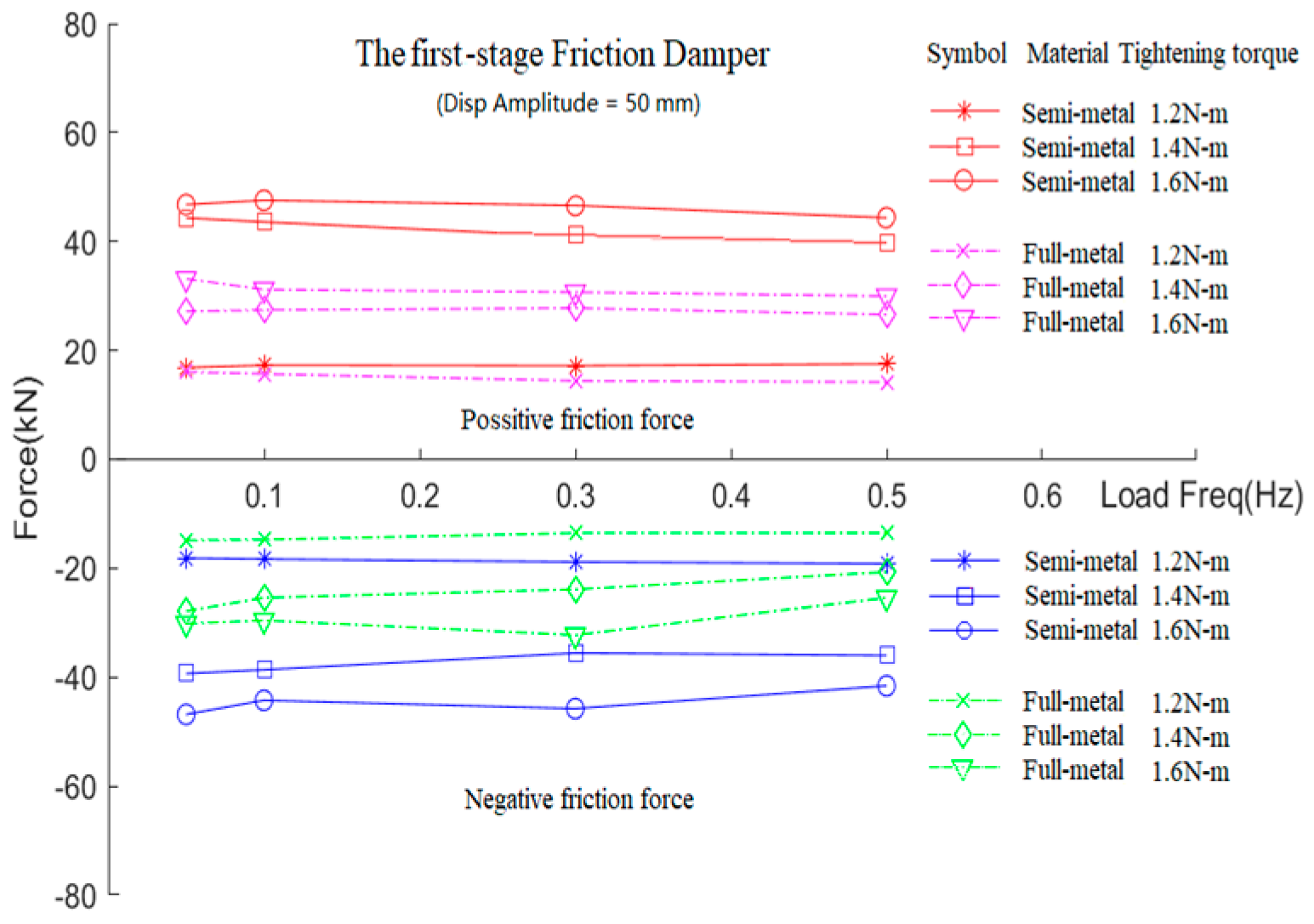
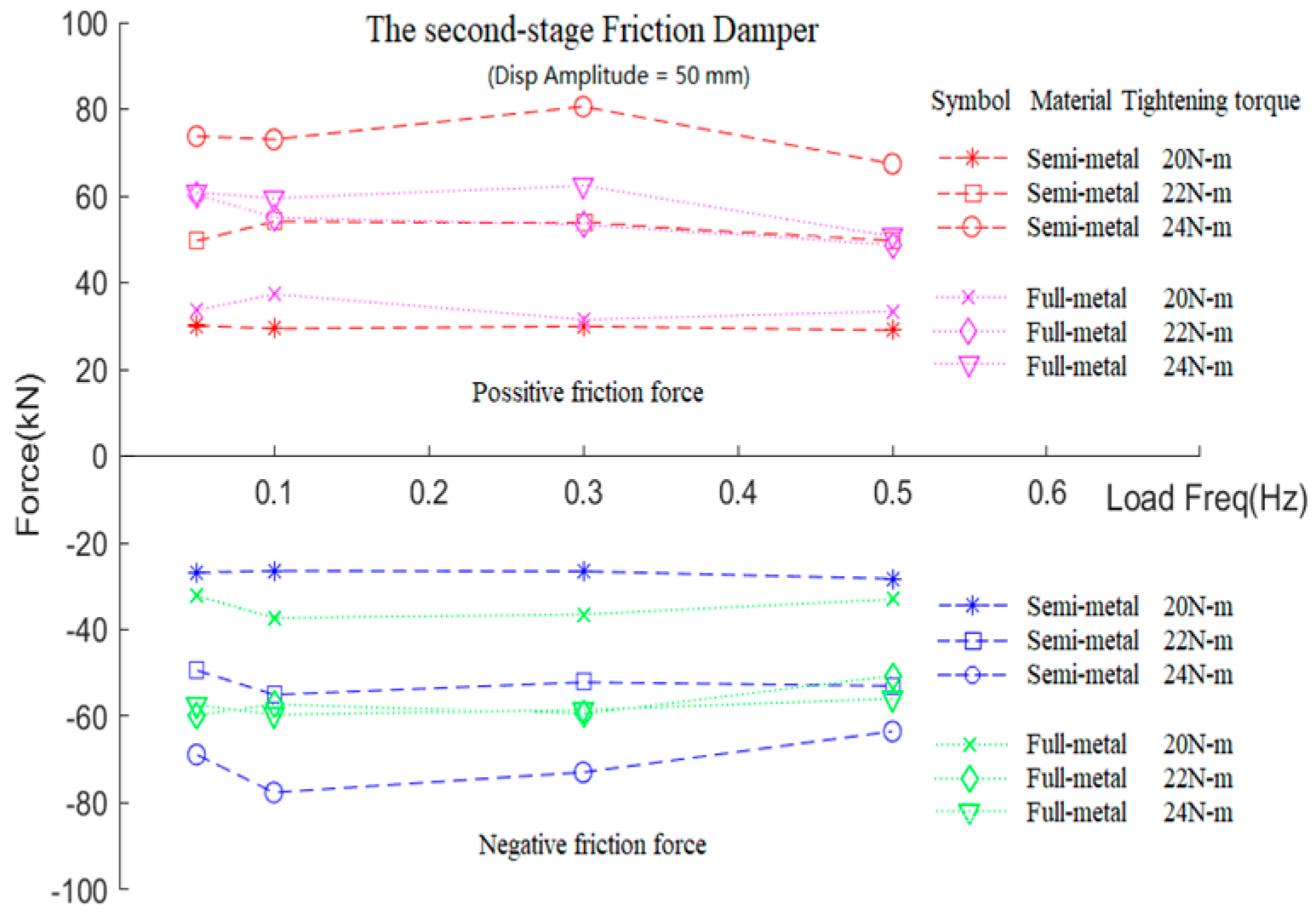
2.2. Main Test Results
2.2.1. Different Pre-Tightened Forces and Variable Displacement Amplitude Tests
2.2.2. Variable Speed Loading Test
2.2.3. Discussion of the Influencing Factors
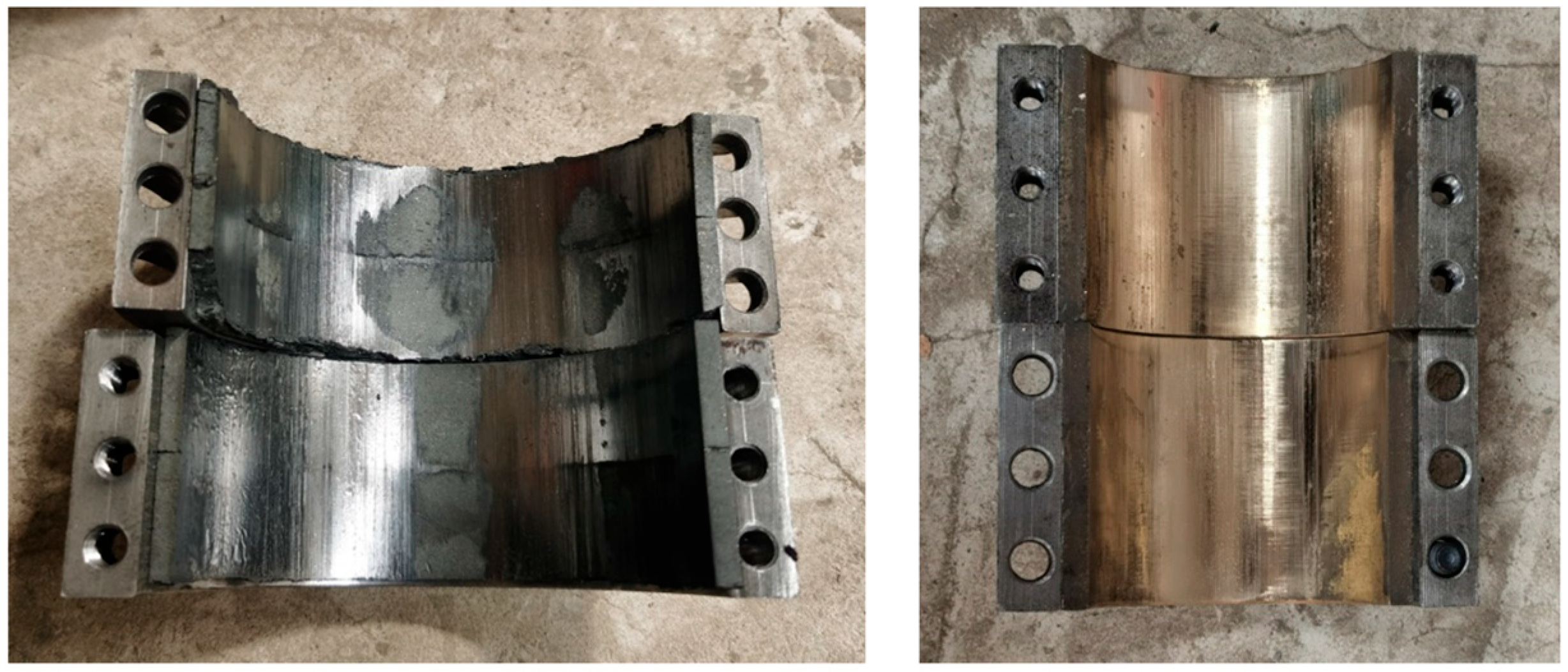
2.2.4. Friction Tiles Wear Phenomenon
3. The Parameter Design Method of Friction Dampers
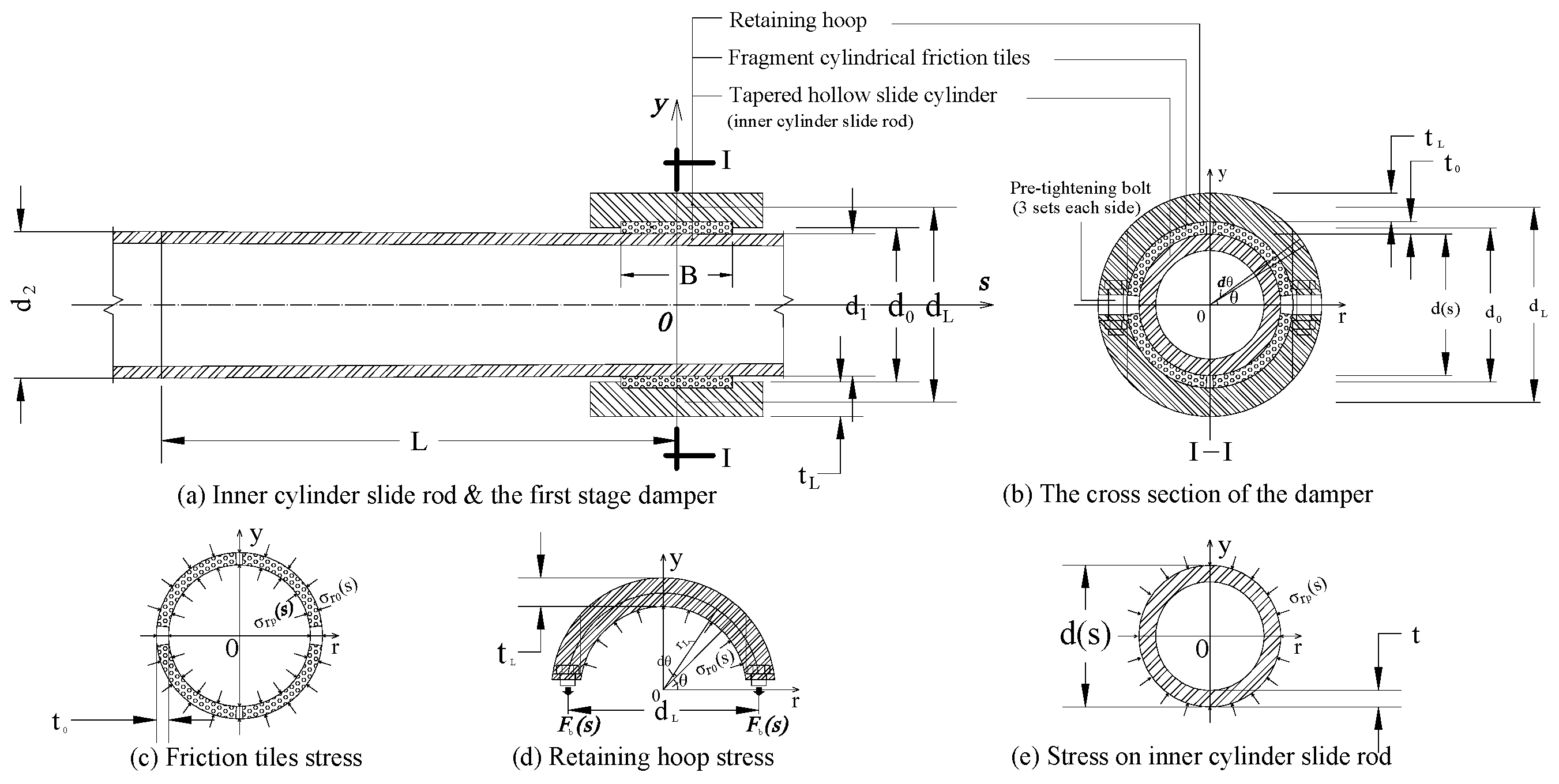
3.1. Stress, Deformation and Force Analysis
3.1.1. Component Stress State
3.1.2. Internal Force and Displacement Analysis
- 1.
- Internal pressure stress and radial deformation of the retaining hoop
- 2.
- Internal and external compressive stresses and radial deformation of the friction tiles
- 3.
- Deformation caused by the tensioning effect of the pre-tightened bolts
- 4.
- Solution for radial deformation and stress of the inner cylinder slide rod
- 5.
- Total radial deformation
3.2. Calculation for Confining Pressure and Friction Force of the Sliding Cylinder Rod
3.2.1. Confining Pressure
3.2.2. Frictional Bearing Capacity
3.2.3. Shear Resistance Capacity
4. Test of the Combined Seismic Isolation Bearing
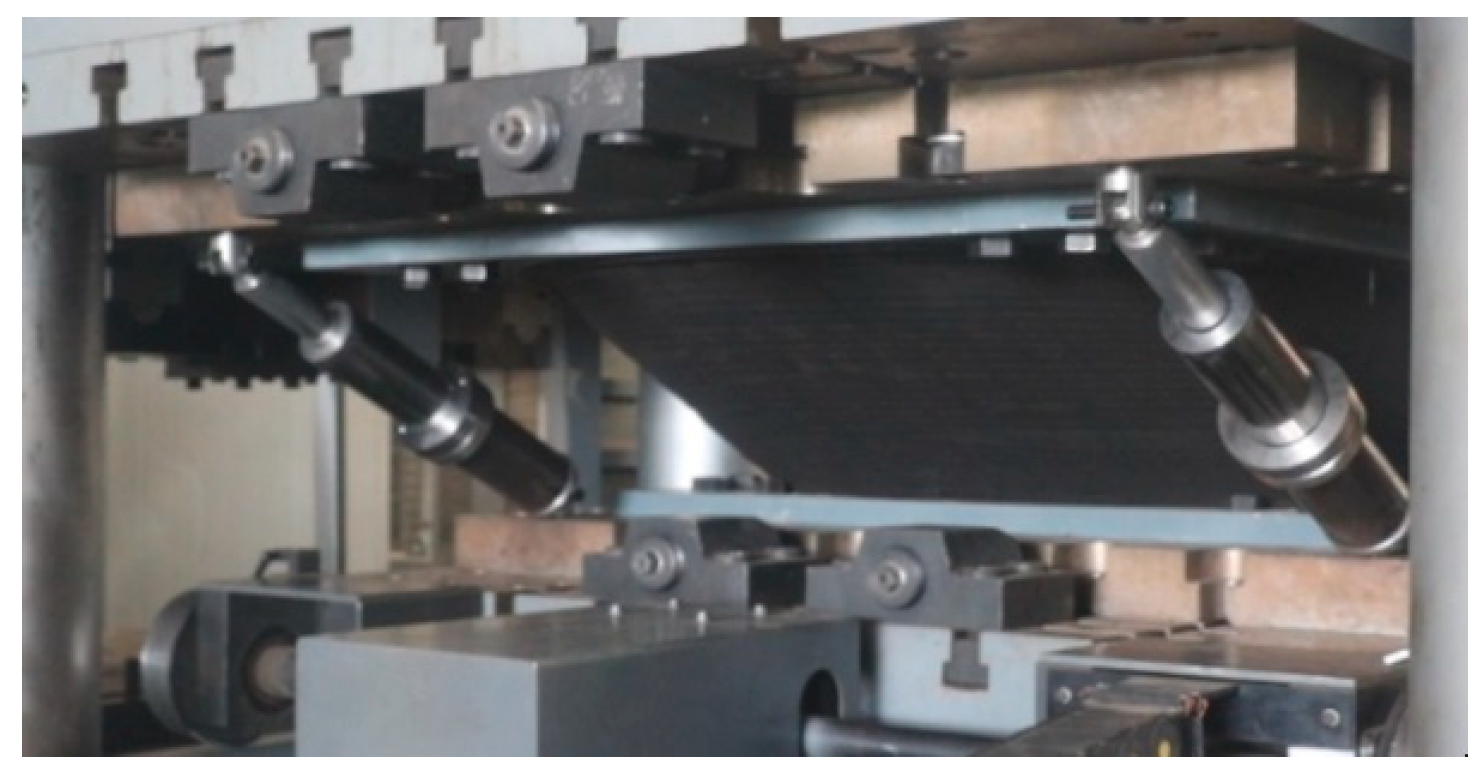
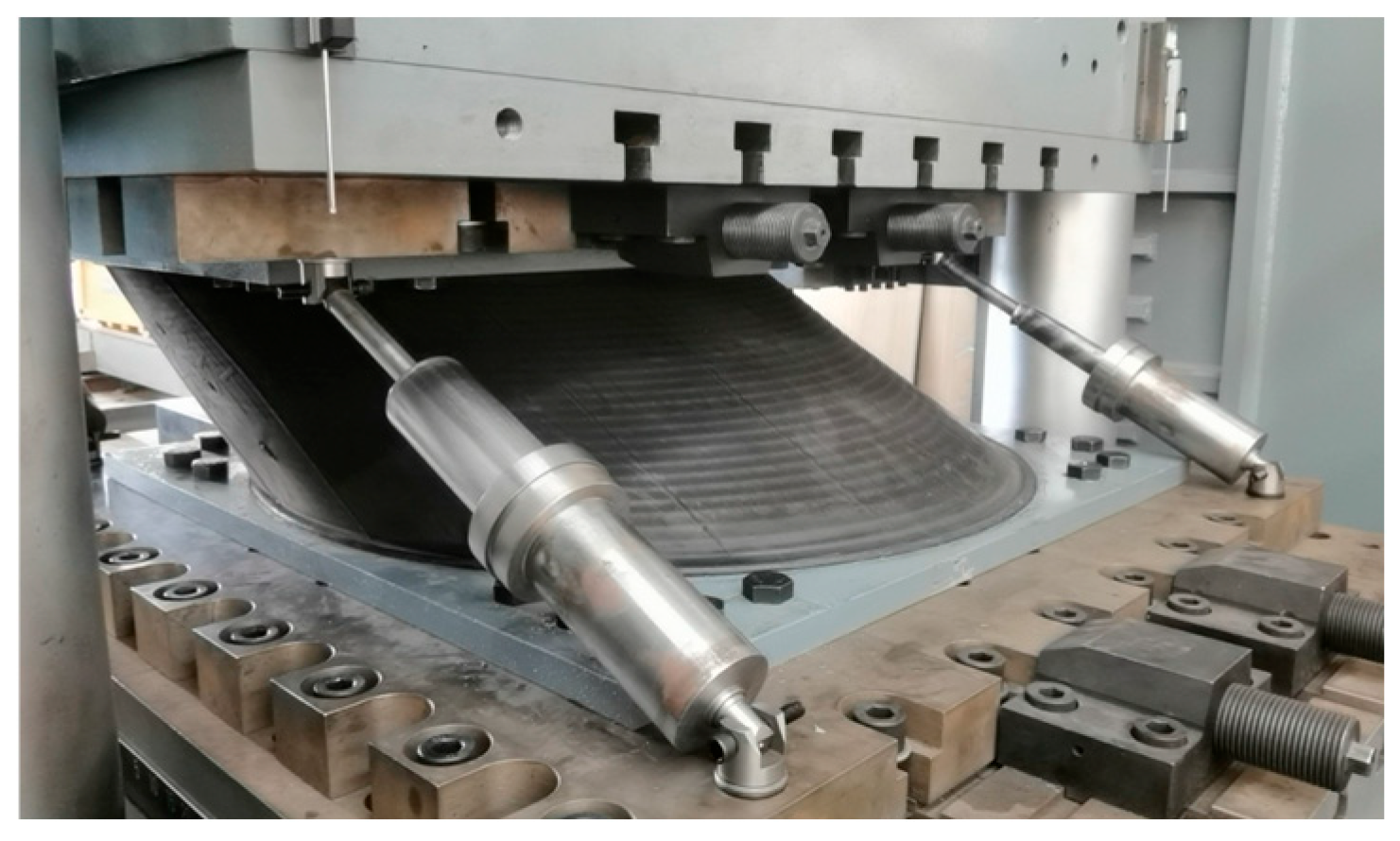
4.1. Test Method of the Bearings
4.2. The Main Test Results
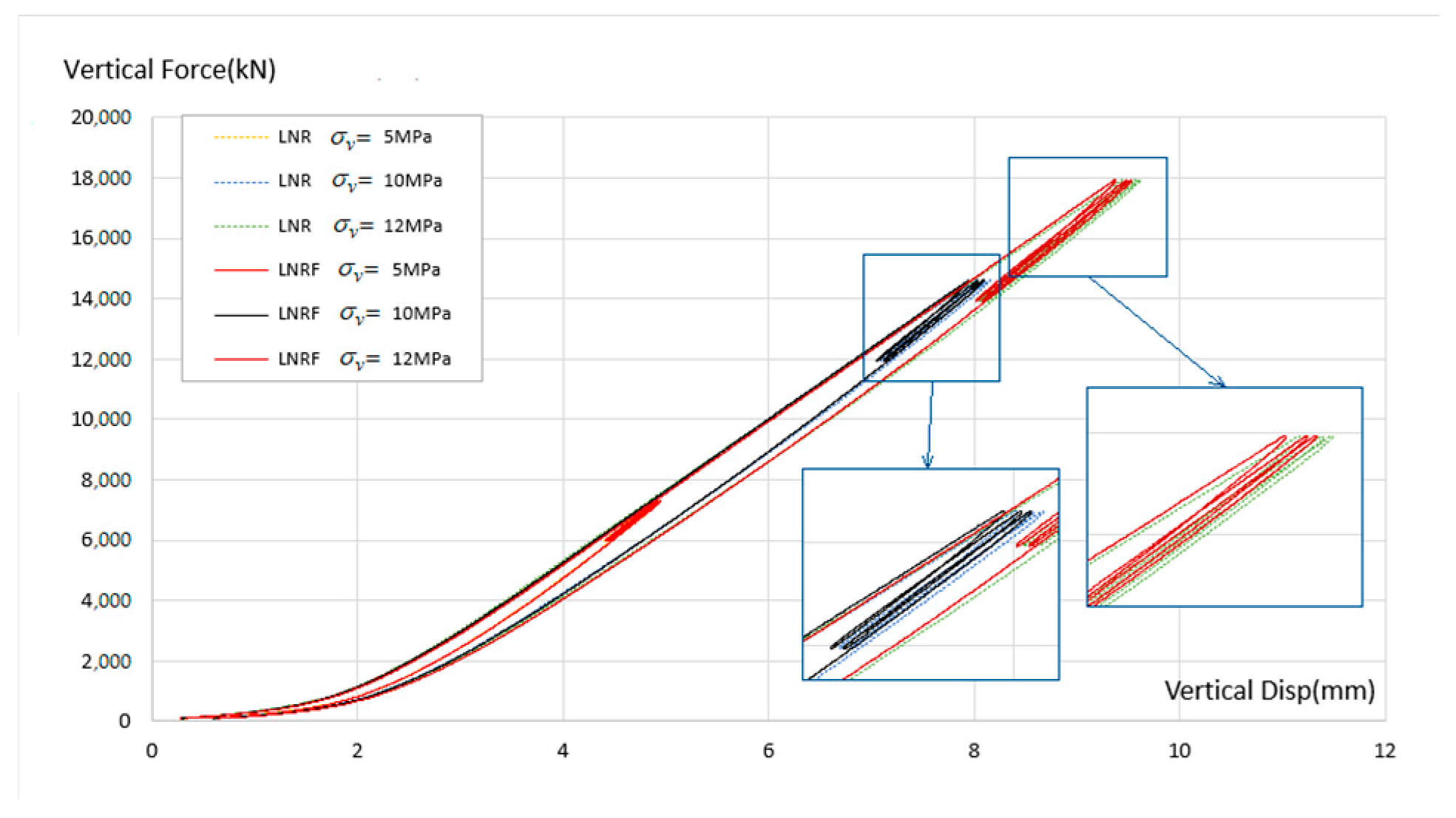
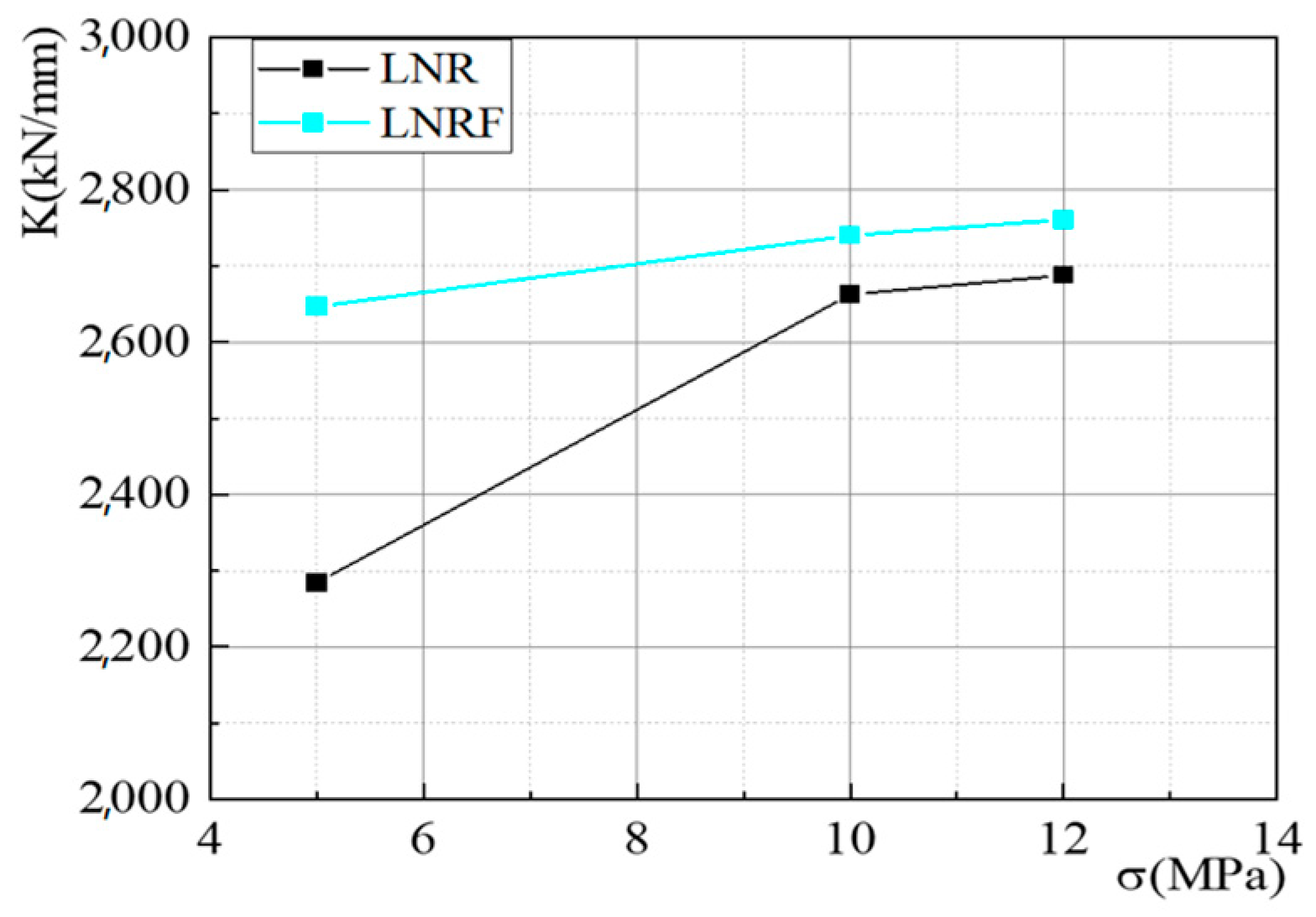
4.2.1. Vertical Loading Tests
4.2.2. Horizontal Loading Test Results
- 1.
- Compressive stress correlation
- 2.
- Influence of σv and γ on energy consumption
- 3.
- Amplitude correlation
- 4.
- The fatigue test
- 5.
- The switching of friction dampers
- 6.
- Characteristics of shear damping force of isolation bearings
- 7.
- Mechanical parameters of hysteresis curve and equivalent viscous damping ratio
5. Conclusions
- (1)
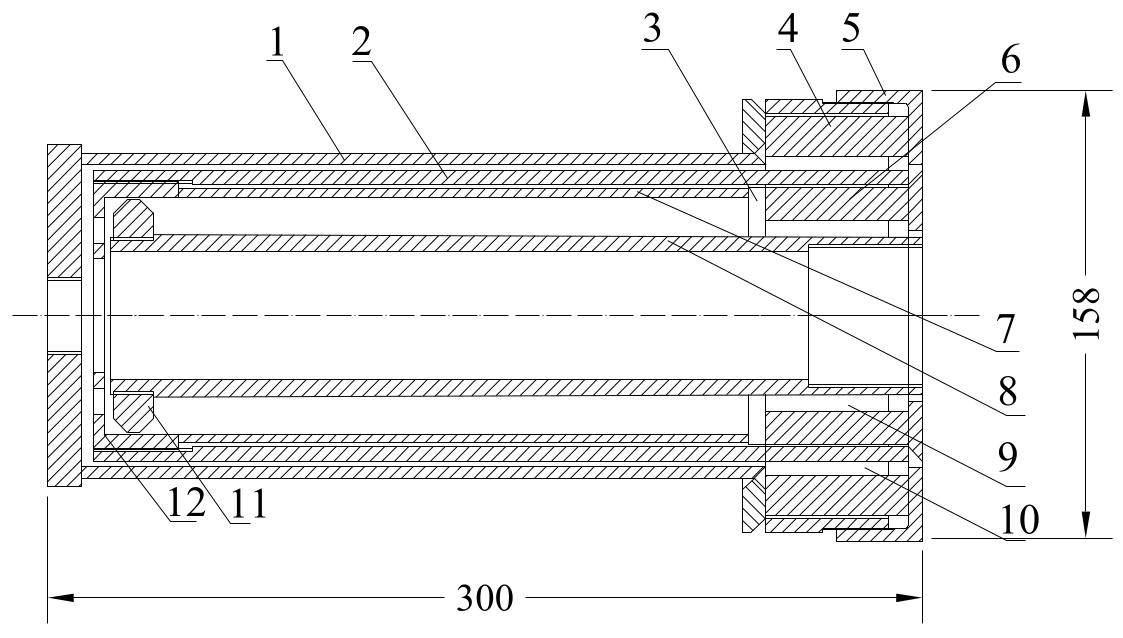
- The sliding rod in the first stage damper is gently tapered cylinder, and the sliding rod in the second one is a cylindrical rod (constant section). The semi-metal friction tiles are compressed by pre-tightened retaining hoop to obtain the required friction capacity. The relayed damper containing the two stages increases the slide range significantly compared with the previous friction damper, and can adapt to the large horizontal displacement requirements of seismic isolated rubber bearing.
- (2)
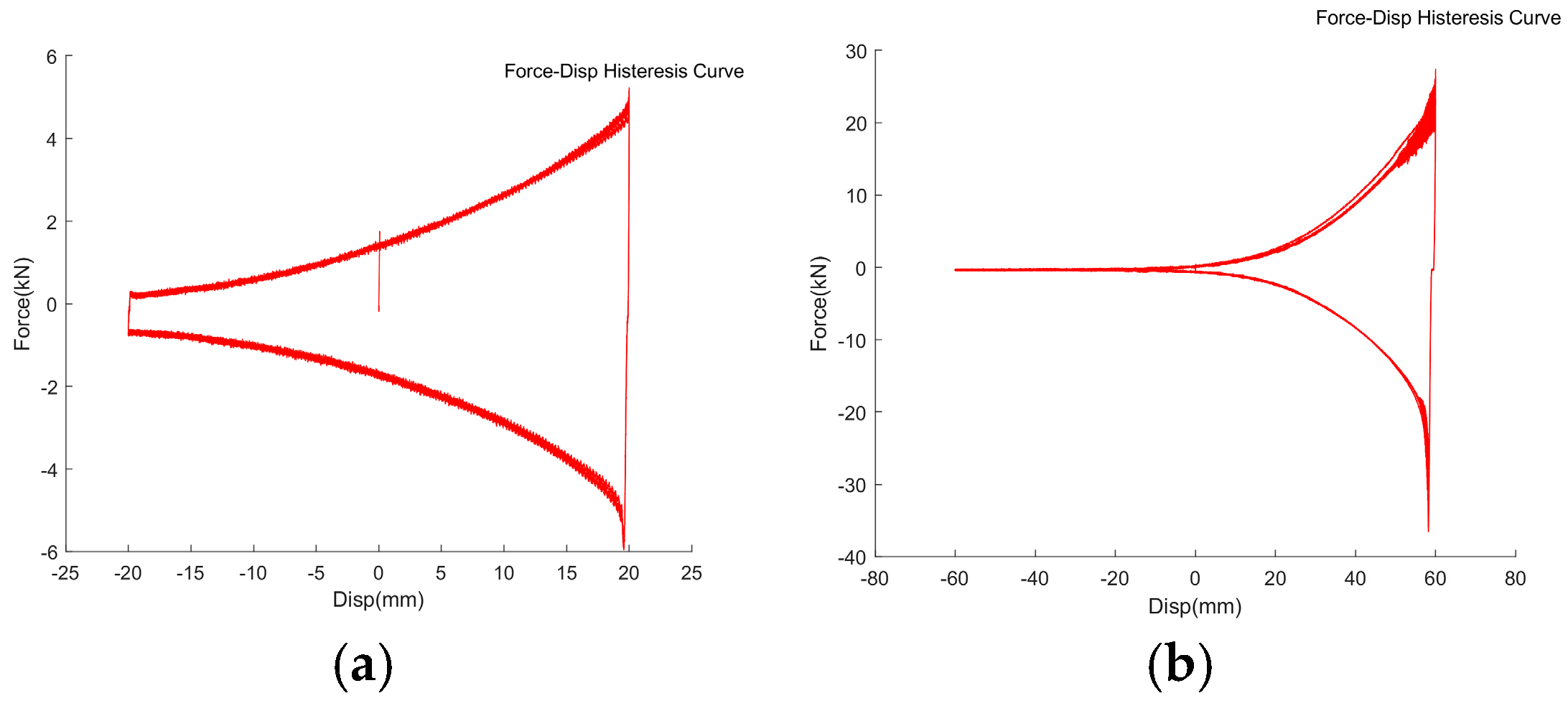
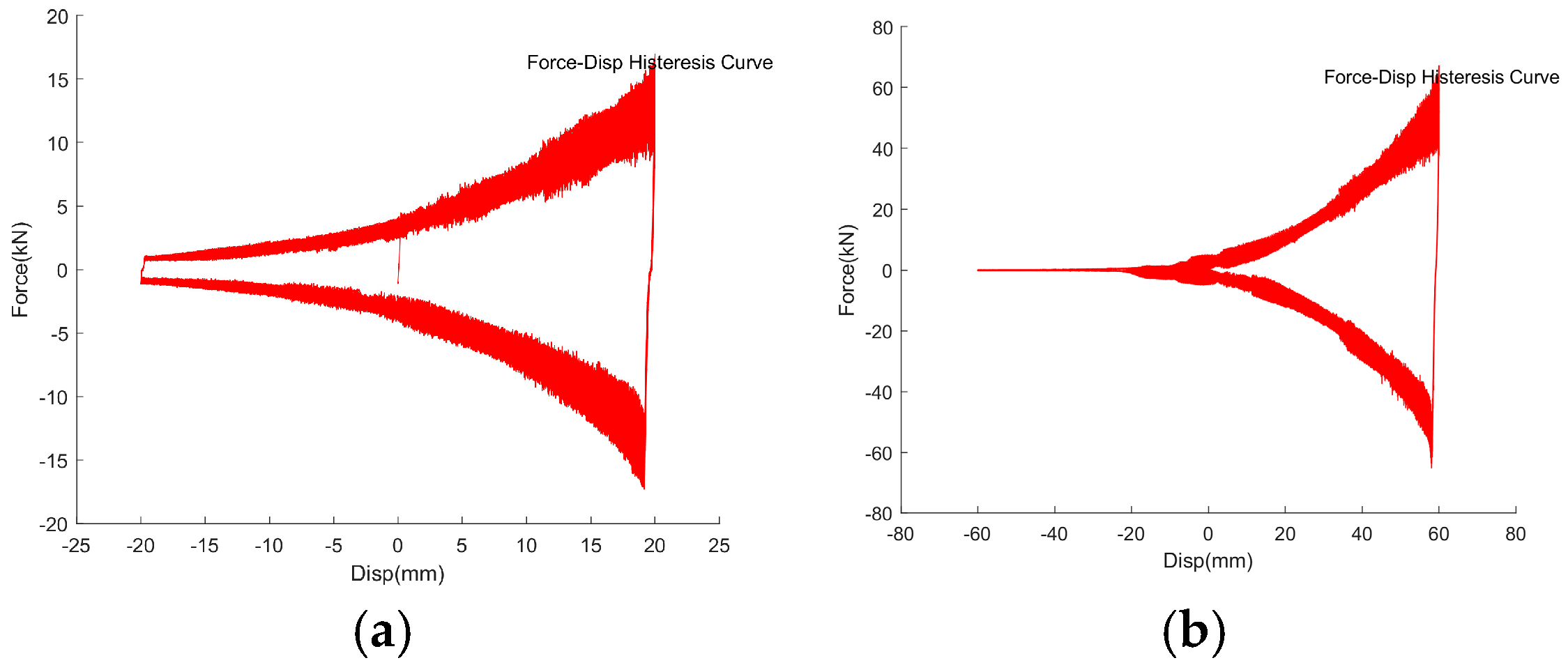
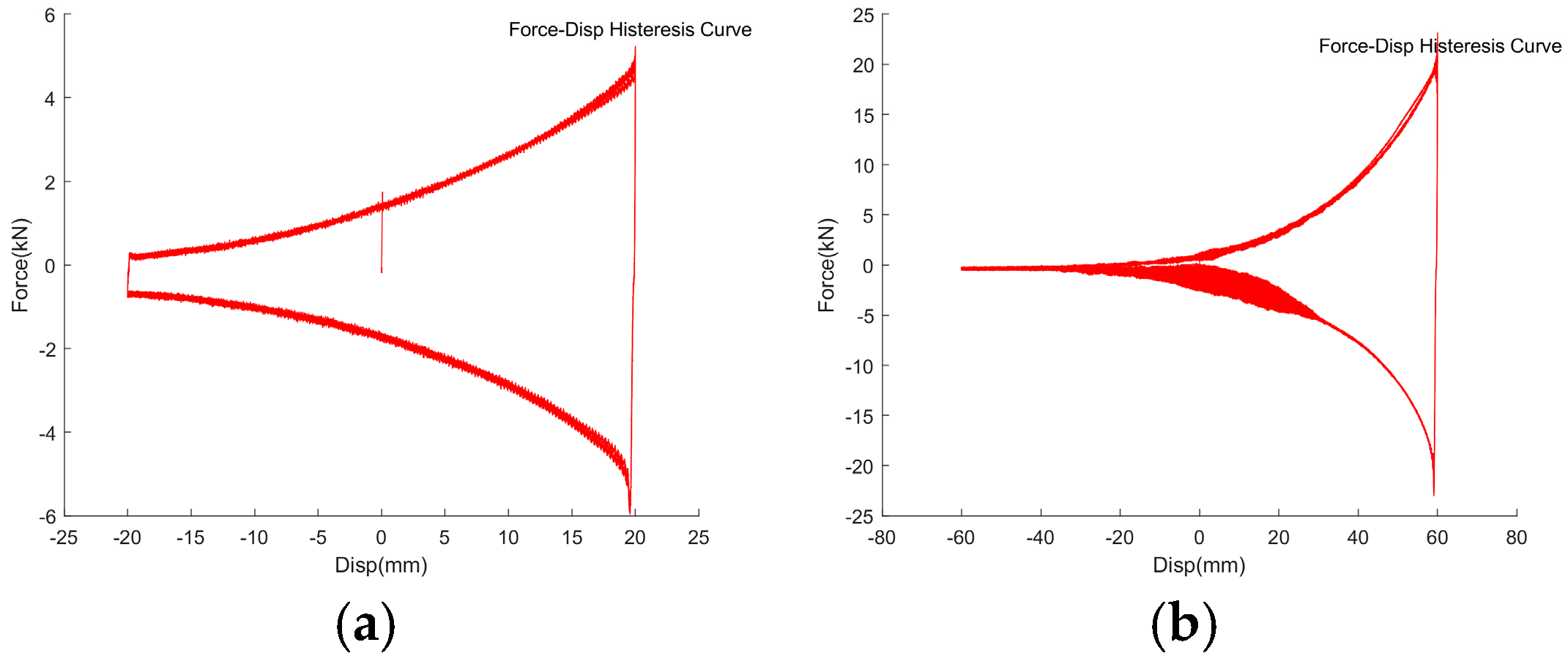
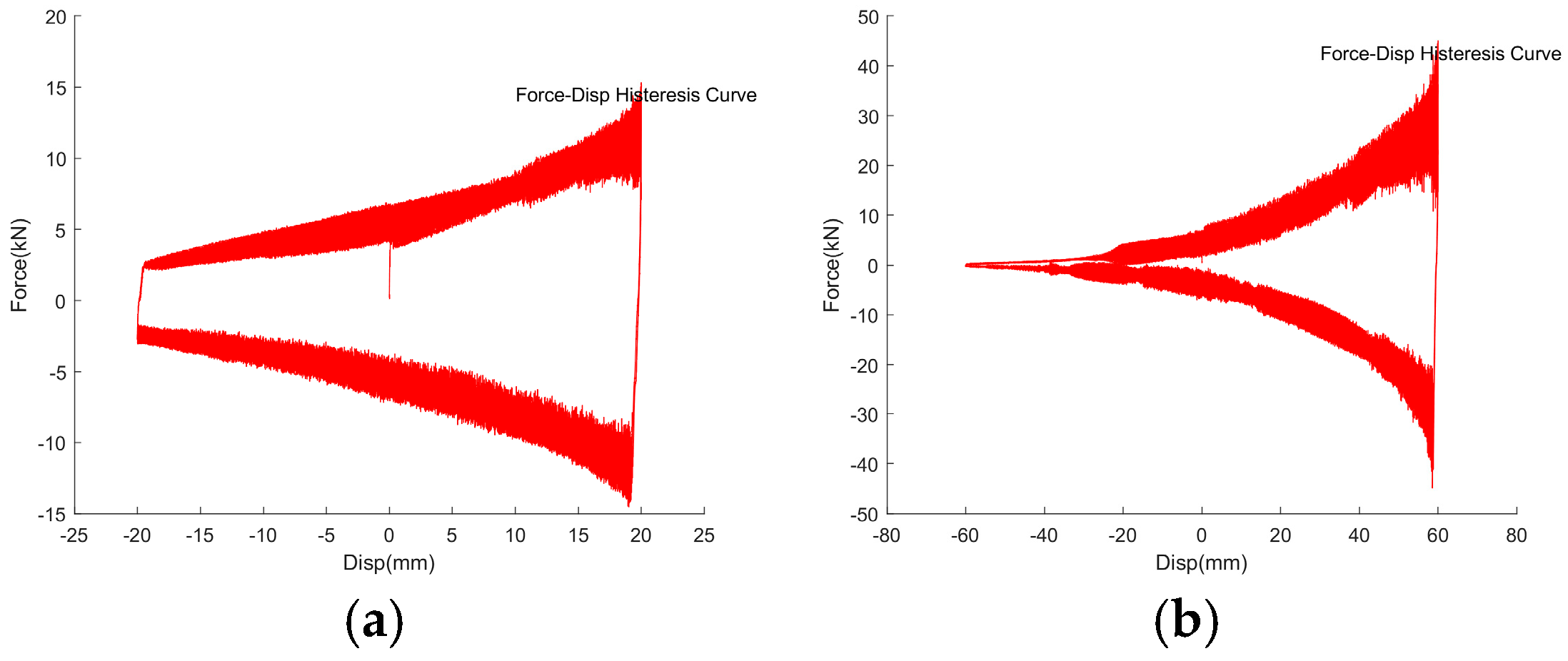
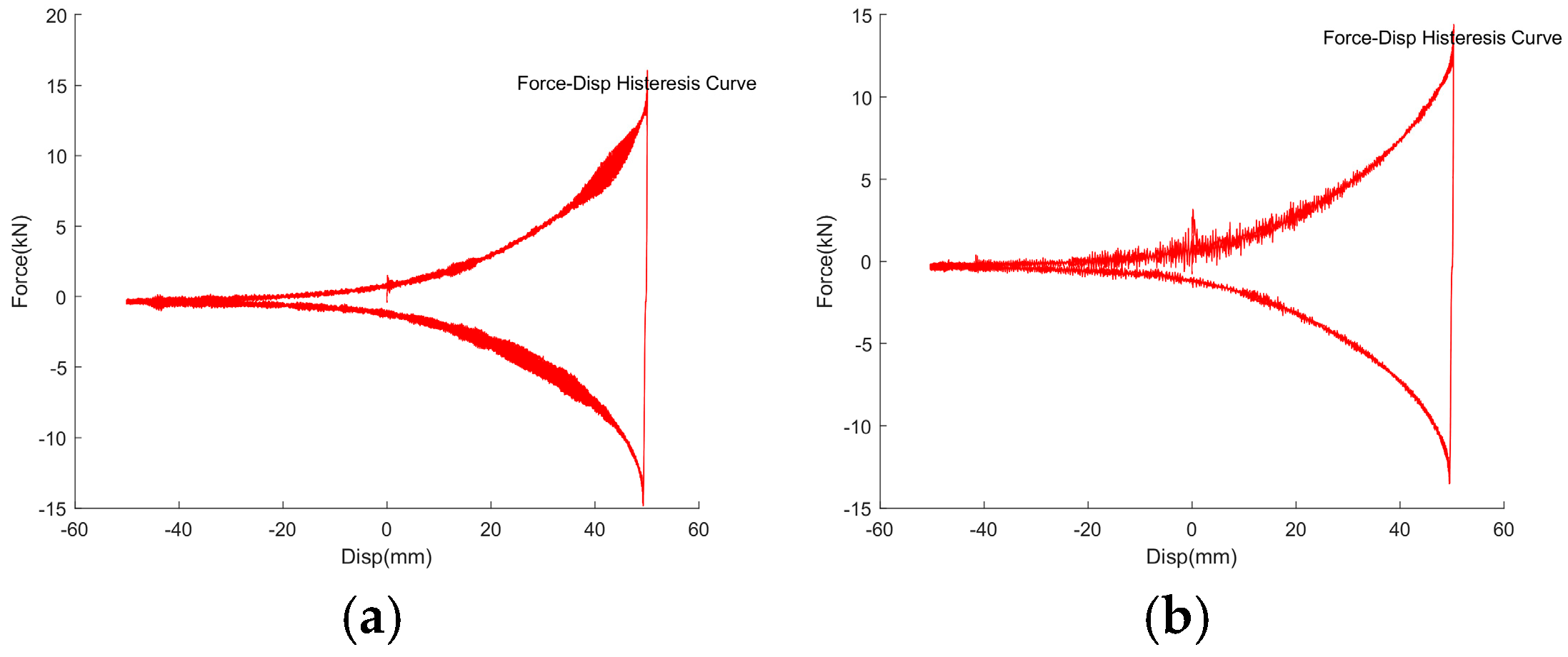
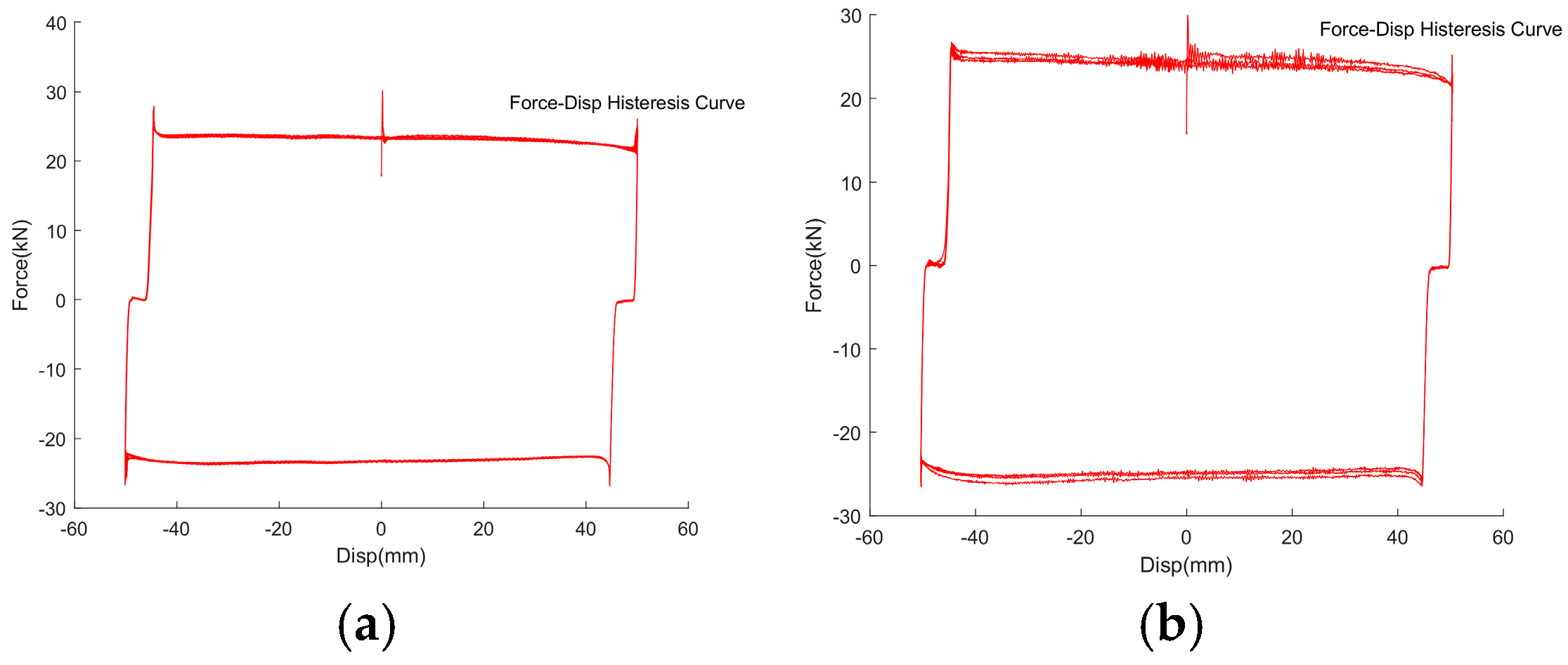
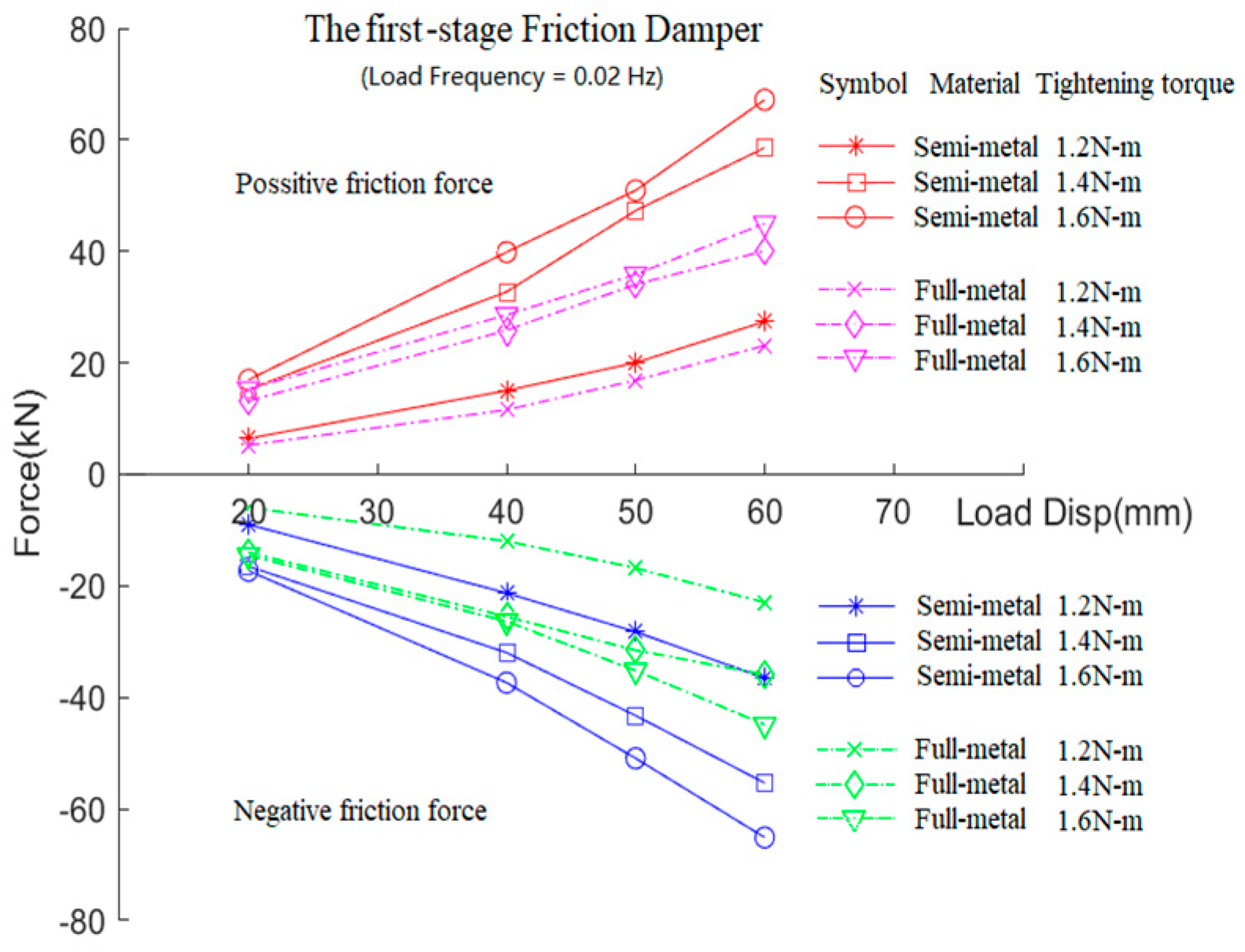
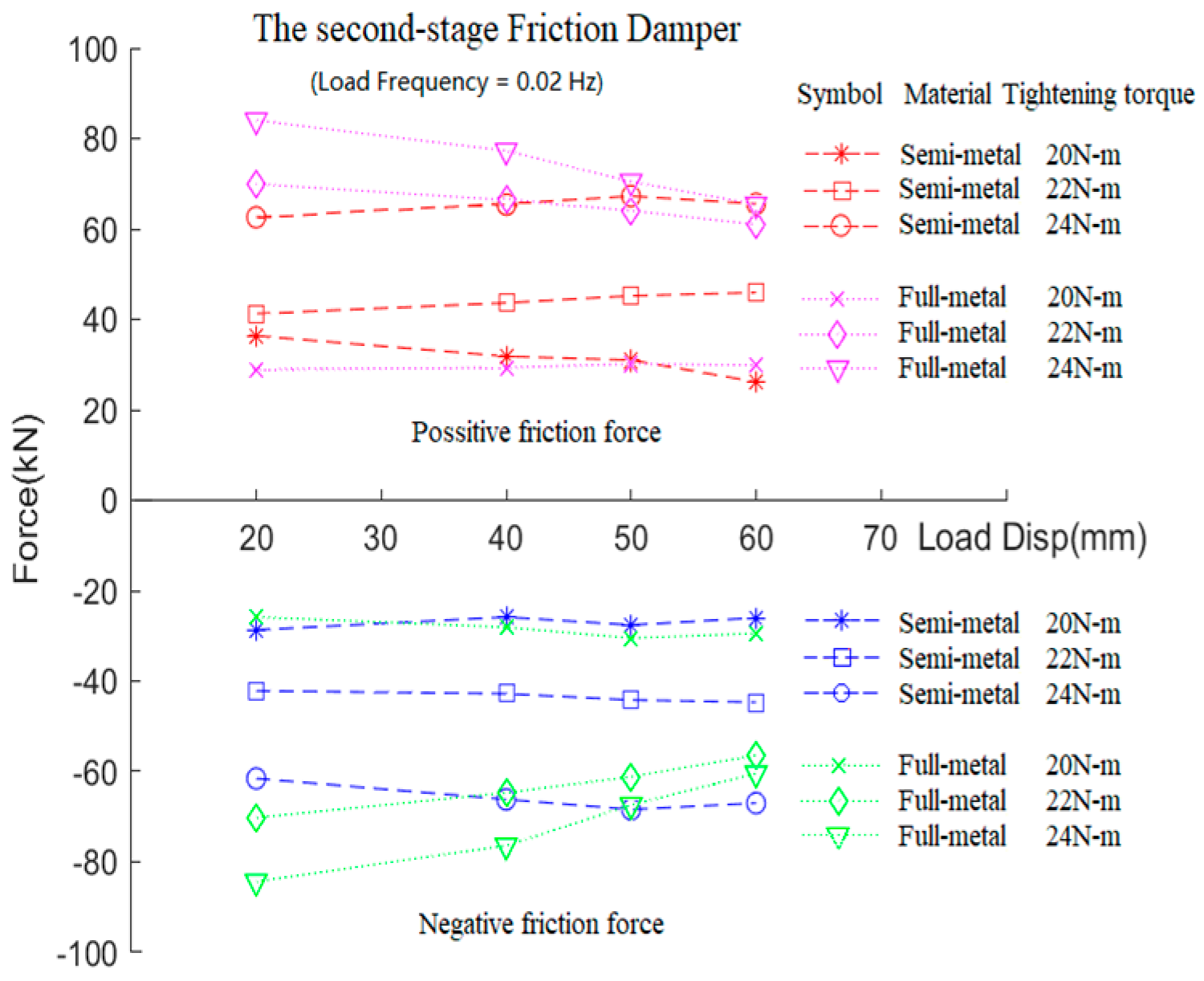
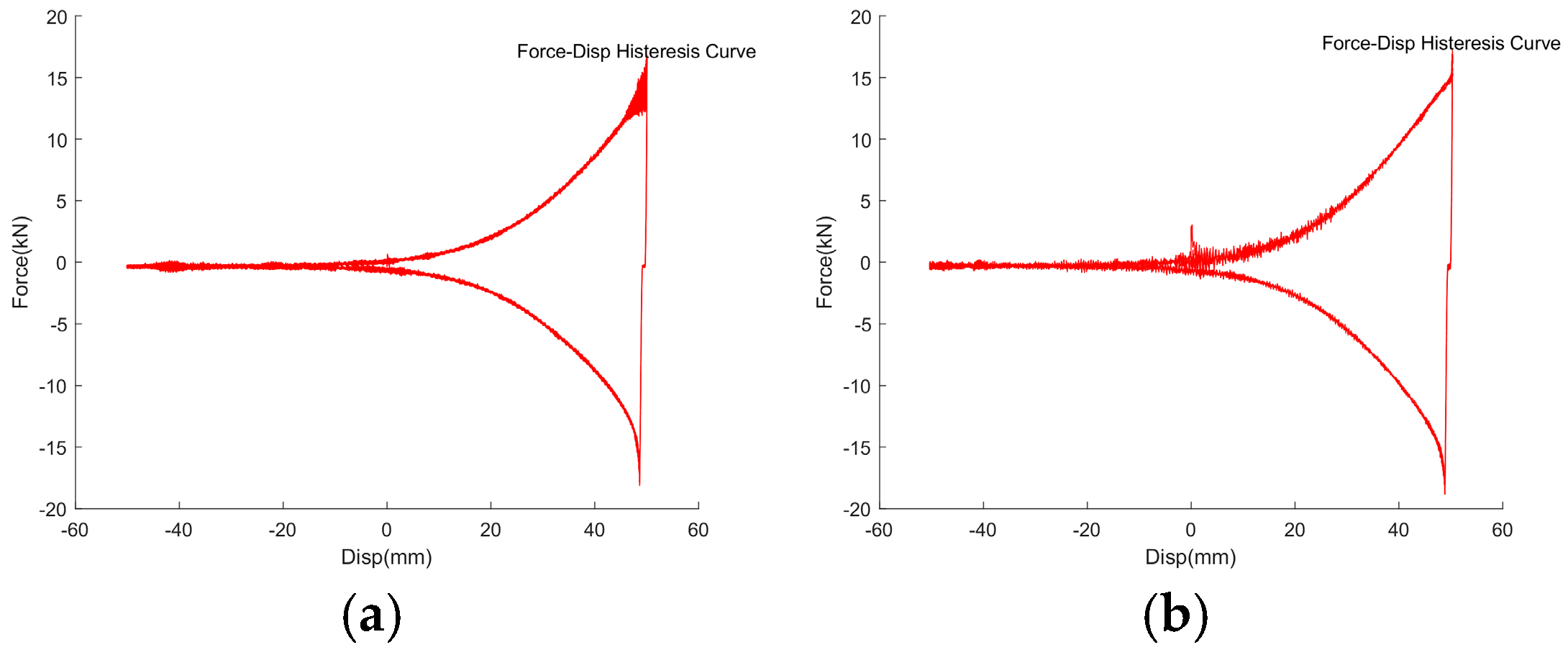
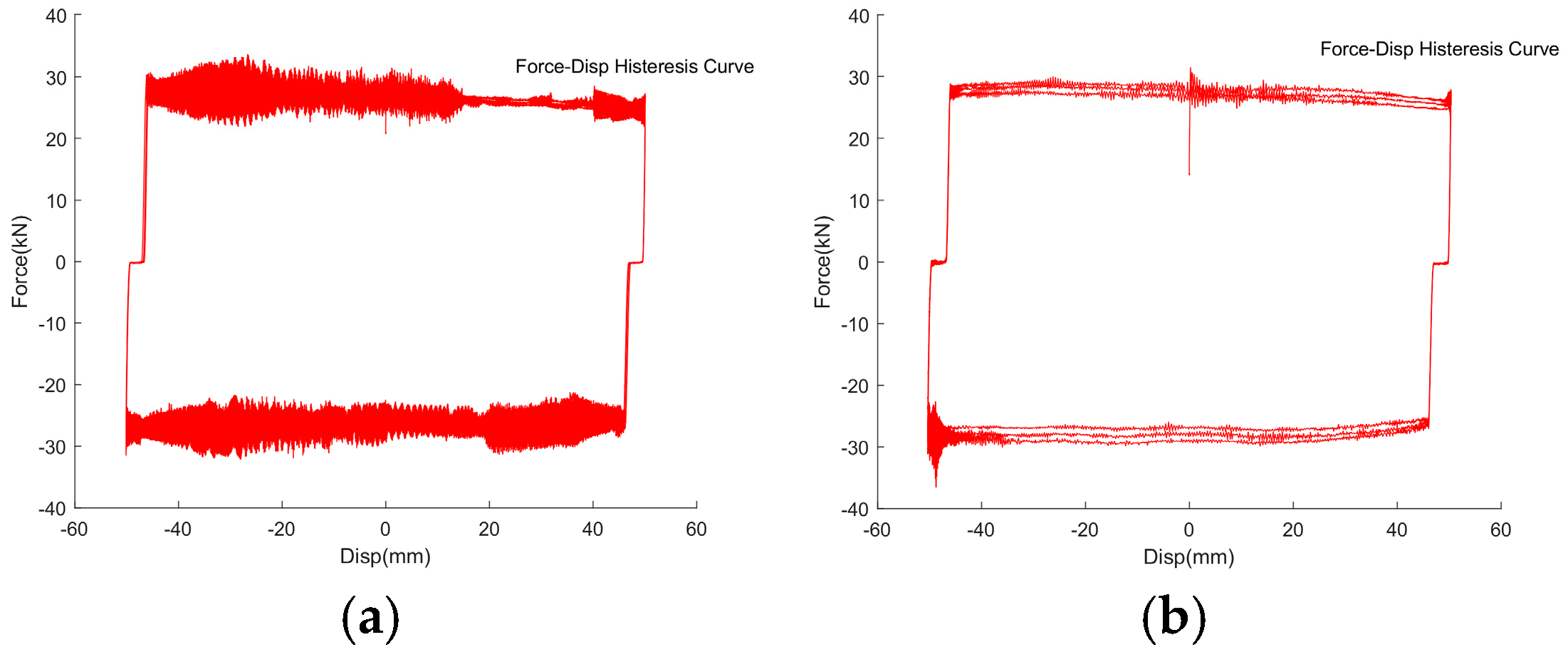
- The characteristics of the force–displacement hysteresis curve of the friction dampers are confirmed, where the 1st stage damper has a trumpet-like curve and the second one is like rectangular, through the individual tests. Technical parameters under the variable amplitude and velocity loading are determined. The combined values of pre-tightened torque suit for the two kinds of friction tiles are provided for the realization of the relay operation. Select a semi-metal friction tile to reduce vibration noise.
- (3)
- A design method for friction dampers has been established through internal forces and deformation analysis based on the theory of elasticity. The construction dimensions, material properties, mechanical parameters, as well as the relationship between output force and displacement are clearly defined. Calculation formulas for the bearing capacity, displacement, and cross-sectional dimensions of the friction dampers are provided. The maximum force value, stiffness, damping ratio, and the number of combinations of the dampers can be adjusted to achieve a compact design, improving the design efficiency. This helps the structural design of combined isolation bearings and the development of various specification products.
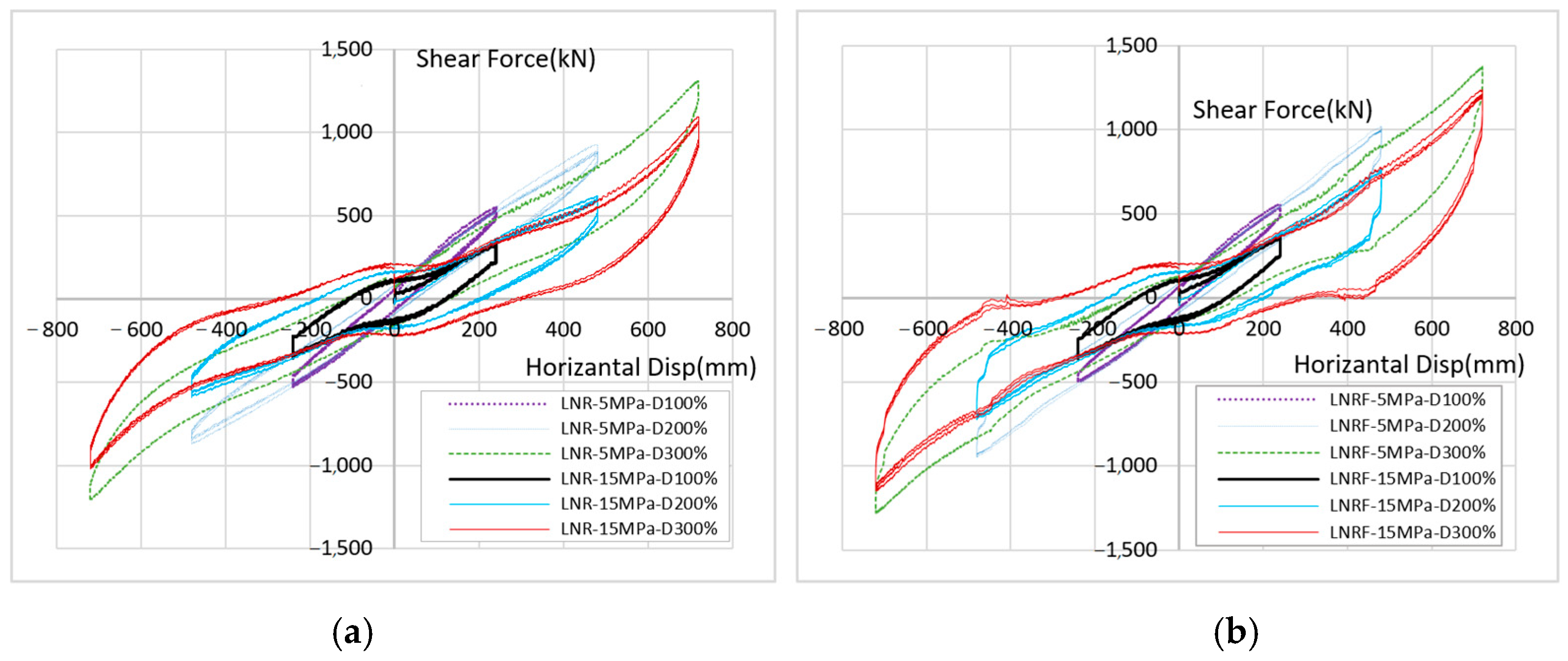
- (4)
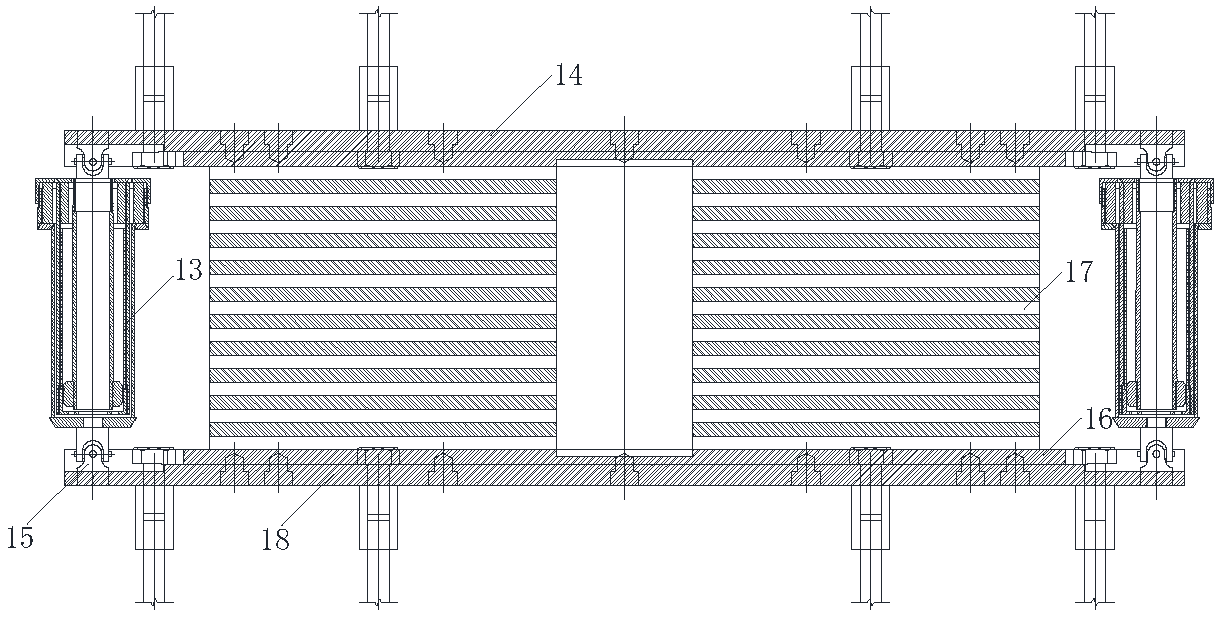
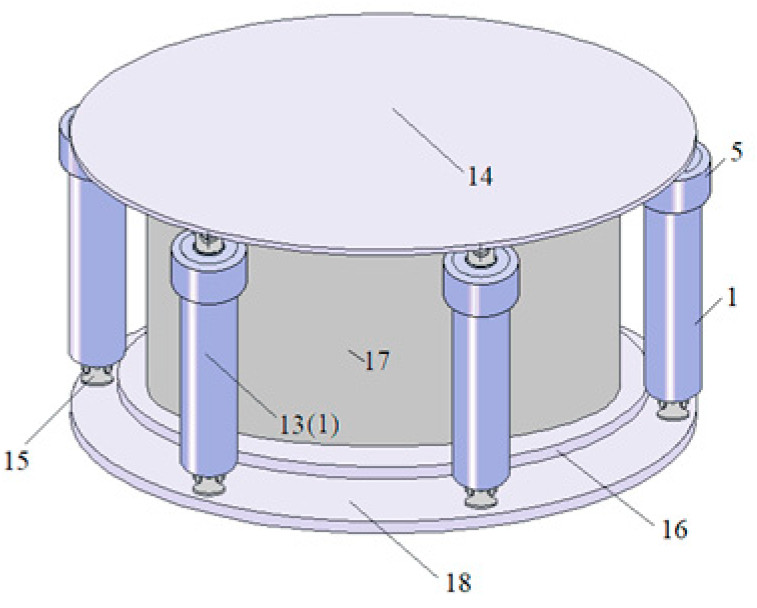
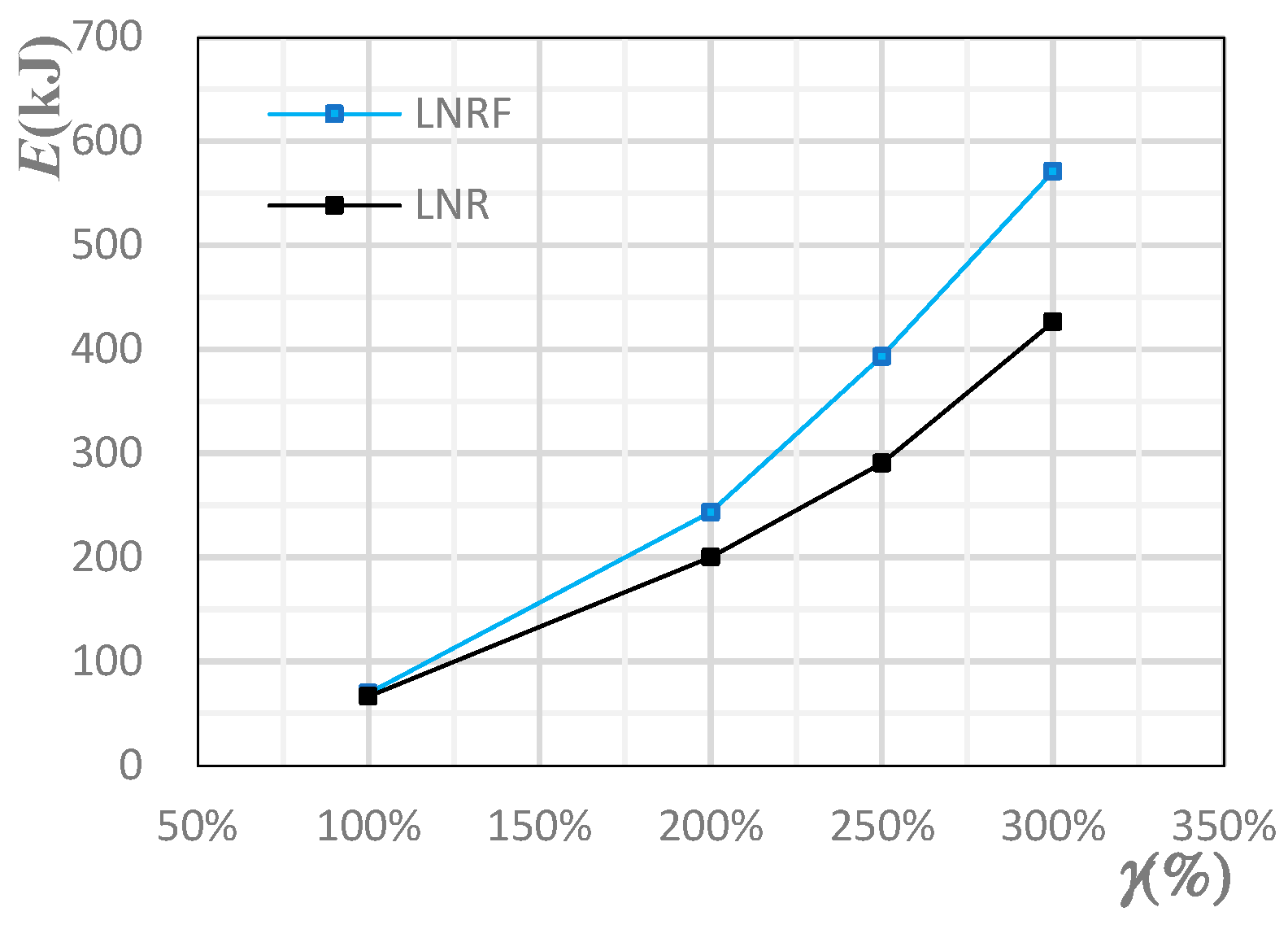
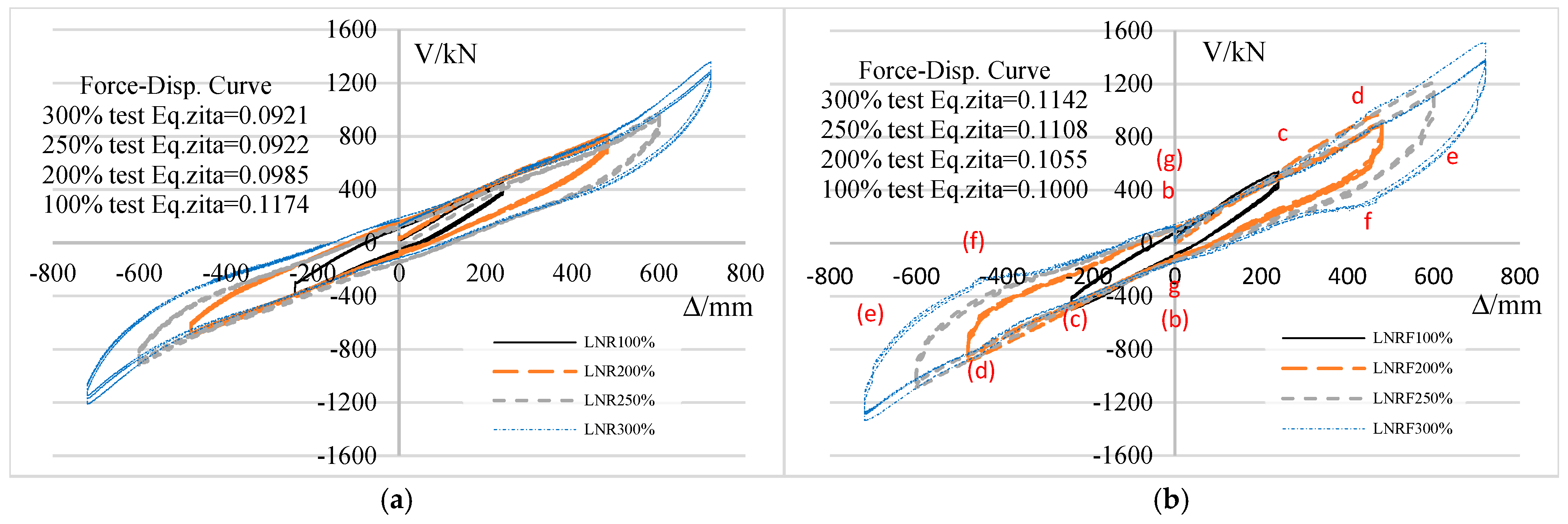
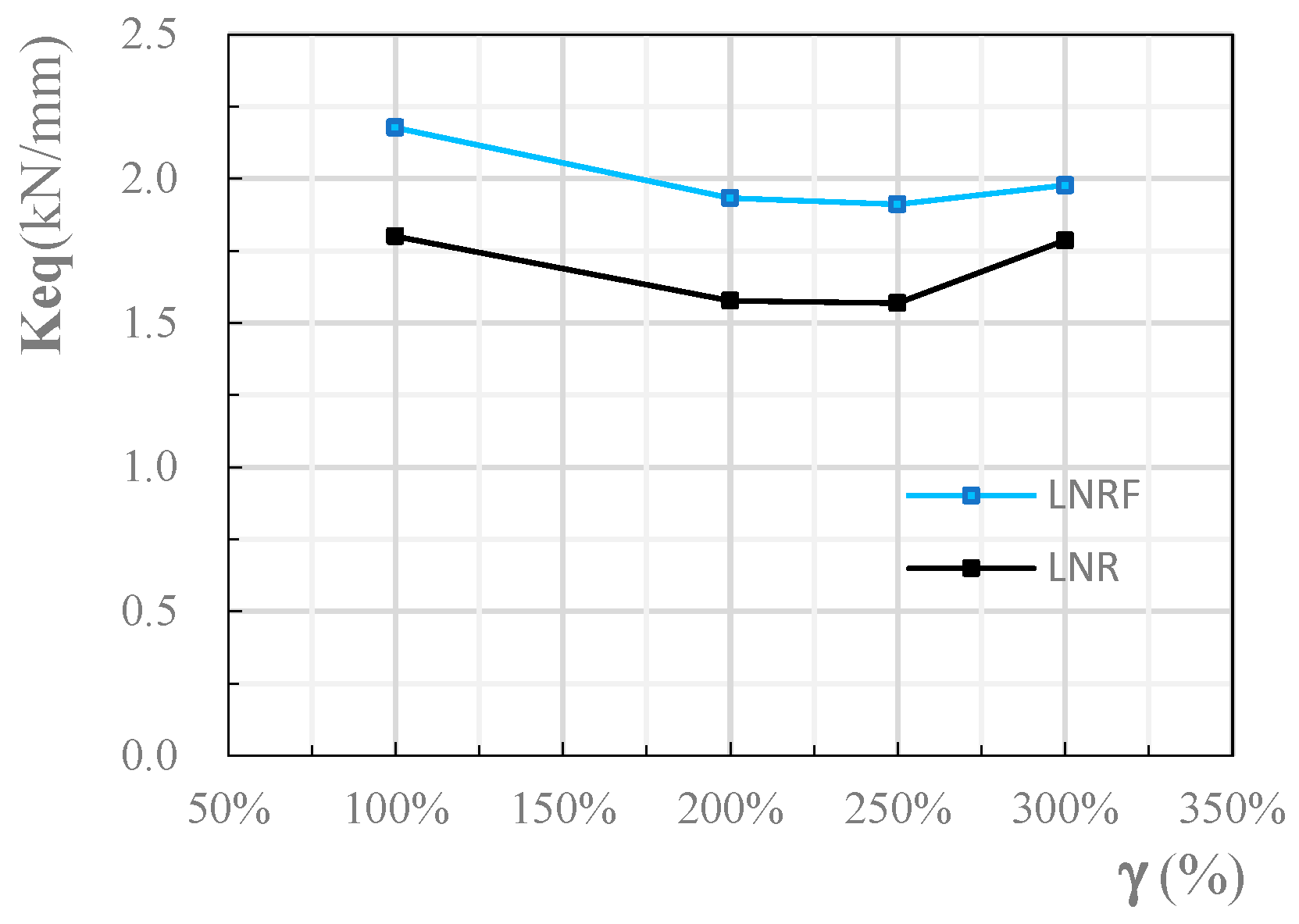
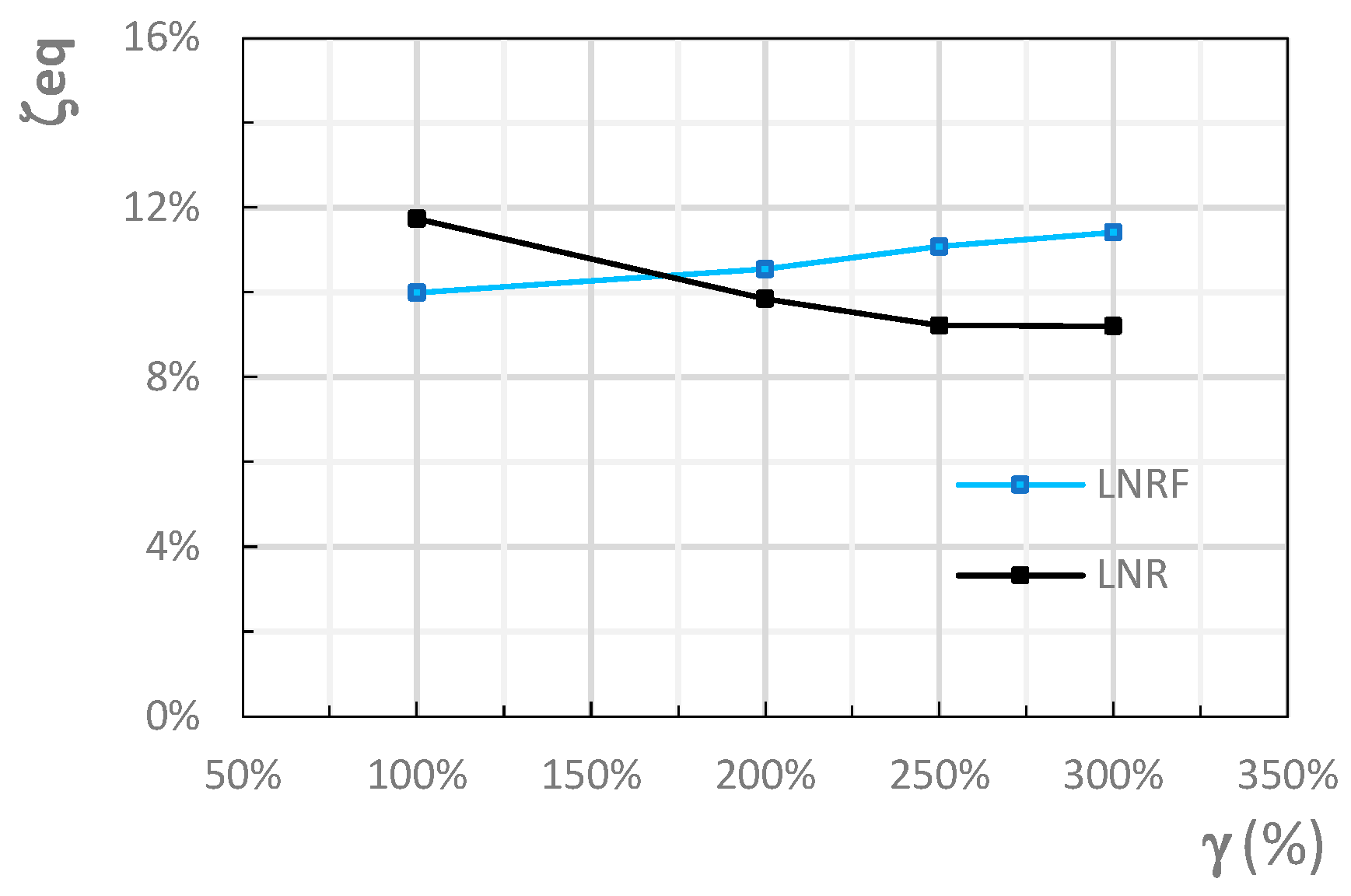
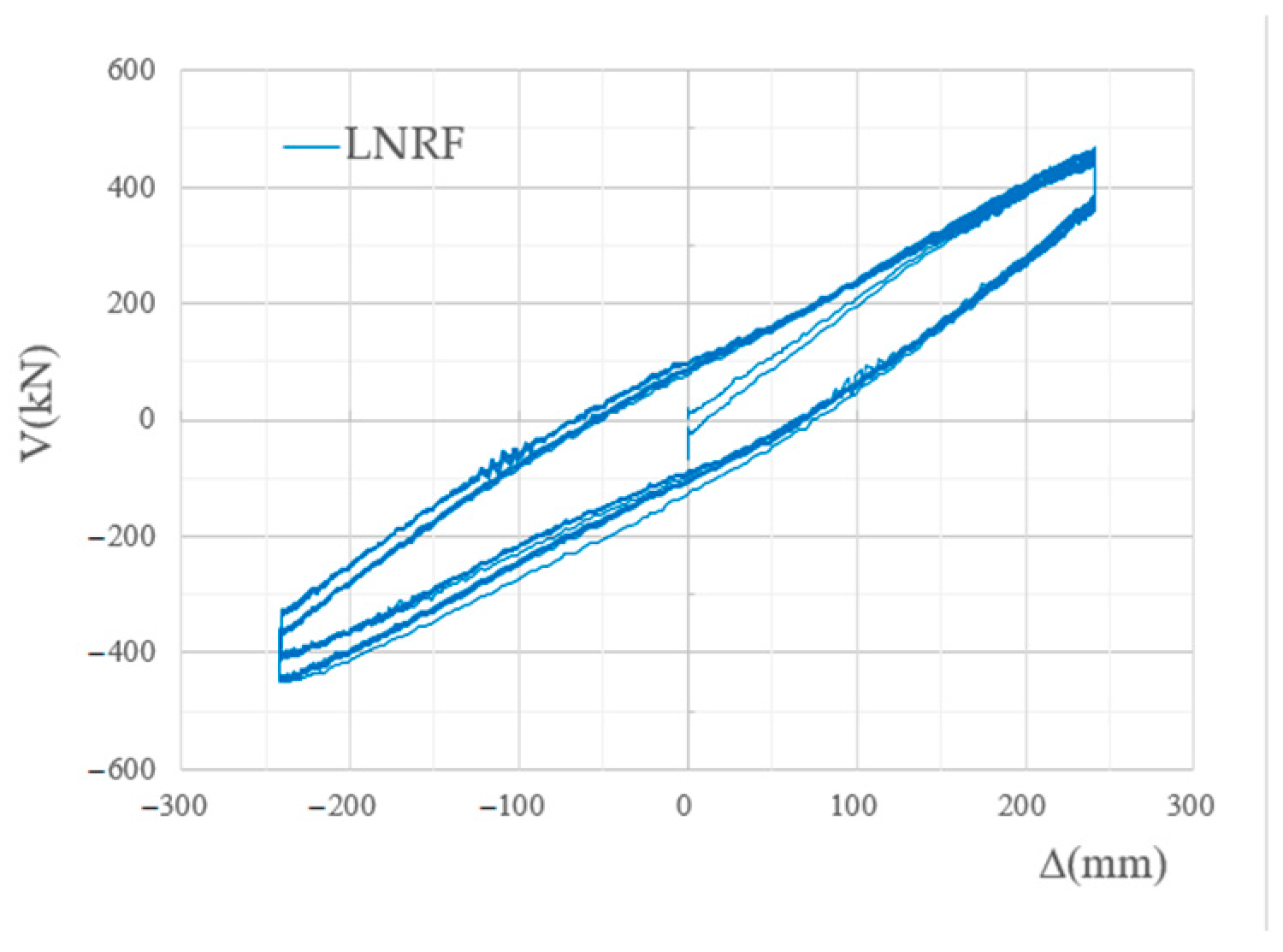
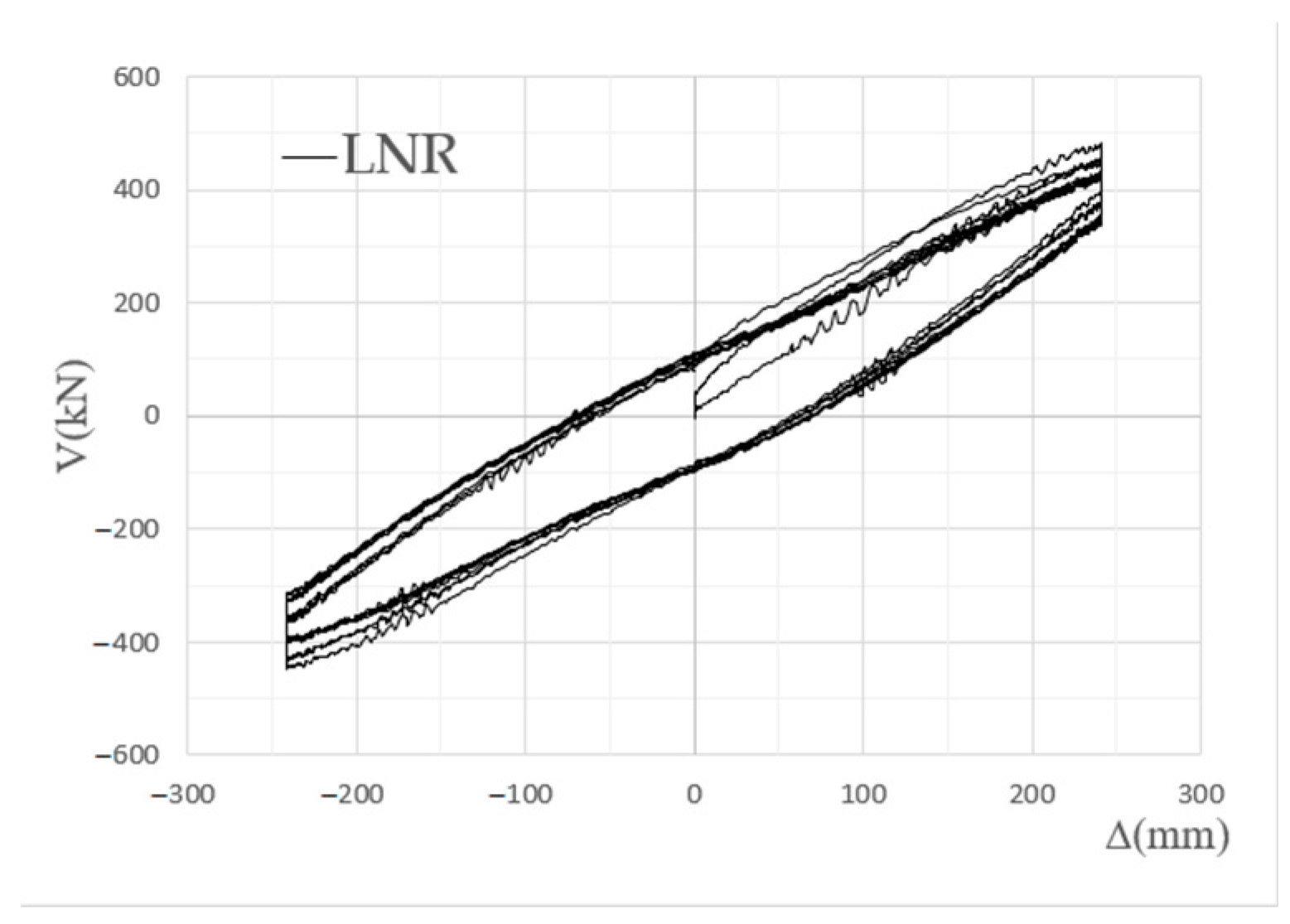
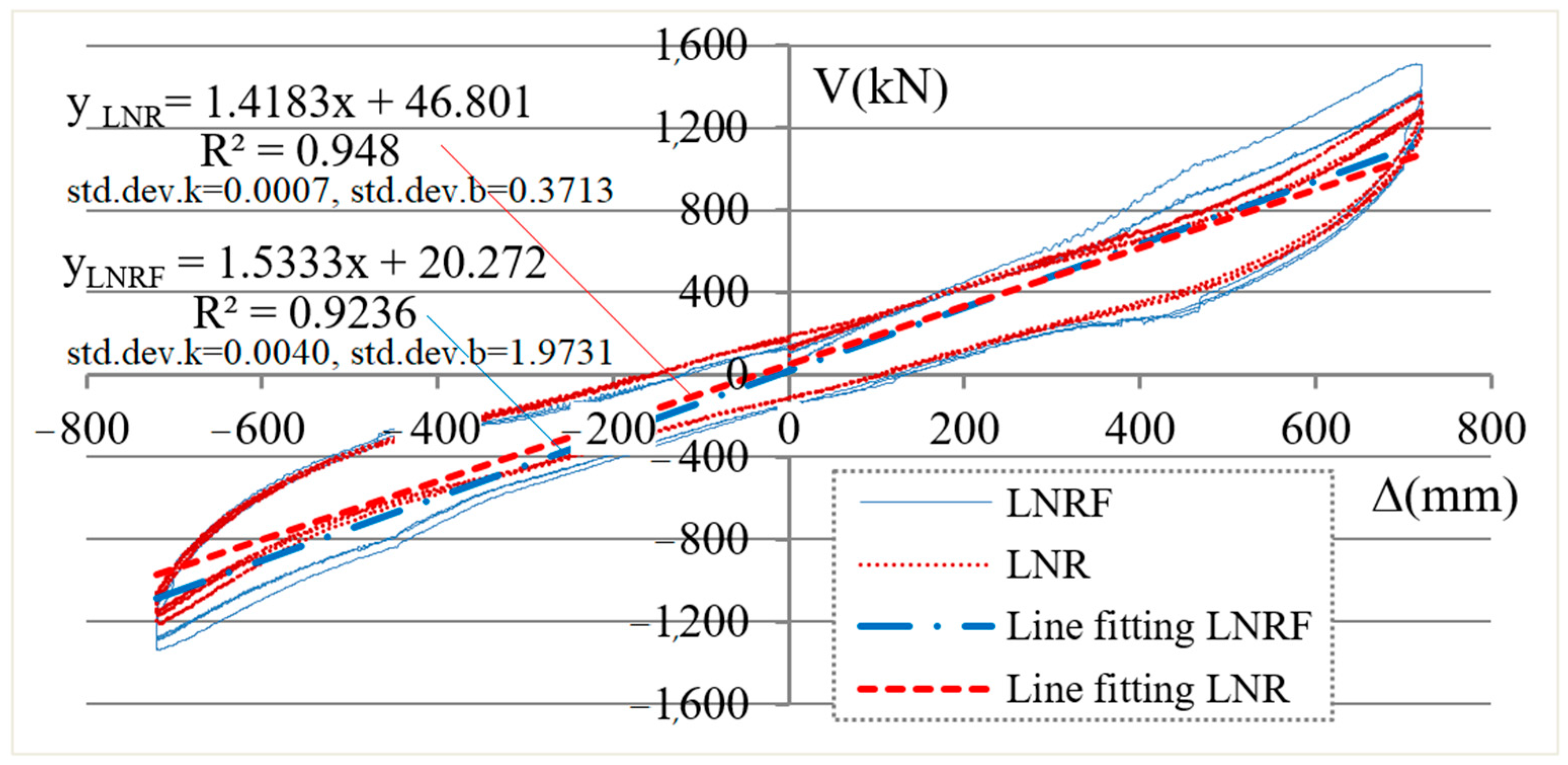
- The combined isolation bearings’ test results demonstrated the effective operation and switching of the two-stage friction dampers, enabling the generation of large shear force output at the large shear displacement end (positive and reverse loading points), achieving a stable output of the bone-shaped horizontal force–displacement hysteresis curve with a variable damping effect. The compression–shear tests of the 1300 mm diameter full-scale laminated rubber bearing (LNR) and the combined isolation bearing (LNRF), at a vertical compressive stress of 10 MPa, showed that, corresponding to a shear angle of 100%, the equivalent viscous damping ratio of LNRF was 14.8% lower than that of LNR (due to the increase in stiffness). Corresponding to shear angles of 200%, 250%, and 300%, the equivalent damping ratios could increase by 7.1%, 20.2%, and 24.0% respectively. The fatigue tests of the dampers and the combined isolation bearings both met or exceeded the requirements of relevant technical standards [18,19].
- (5)
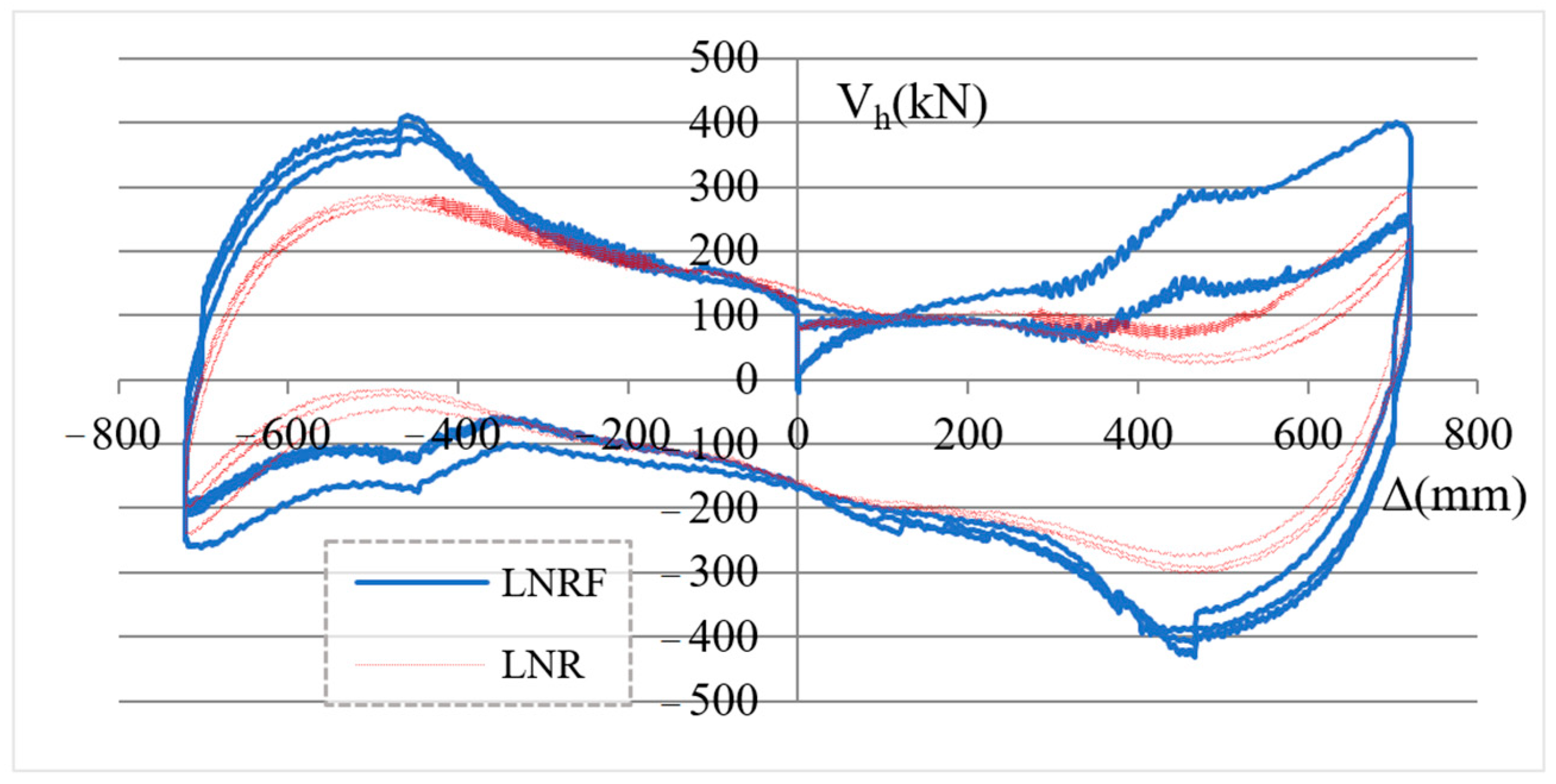
- Based on the test results presented in this article, the analysis of the differences in shear damping forces of these two types of bearings indicates that LNRF can provide variable damping forces, and the hysteresis curve shows a distinct bone-like shape, which is different from traditional isolation bearings (including lead–rubber bearings). The design of these isolation bearings can enhance the comfort of buildings during frequent earthquakes, and, by reducing the displacement during rare earthquakes to decrease the width of the isolation trench, it will have significant benefits in practical engineering.
Author Contributions
Funding
Data Availability Statement
Acknowledgments
Conflicts of Interest
References
- De Domenico, D.; Gandelli, E.; Quaglini, V. Effective base isolation combining low-friction curved surface sliders and hysteretic gap dampers. Soil Dyn. Earthq. Eng. 2020, 130, 105989. [Google Scholar] [CrossRef]
- Sharma, A.; Jangid, R.S. Influence of high initial isolator stiffness on the seismic response of a base-isolated benchmark building. Int. J. Struct. Stab. Dyn. 2011, 11, 1201–1228. [Google Scholar] [CrossRef]
- Providakis, C.P. Effect of LRB isolators and supplemental viscous dampers on seismic isolated buildings under near-fault excitations. Eng. Struct. 2008, 30, 1187–1198. [Google Scholar] [CrossRef]
- Hwang, J.S.; Hung, C.F.; Huang, Y.N.; Wang, S.J. Design force transmitted by isolation system composed of lead-rubber bearings and viscous damper. Int. J. Struct. Stab. Dyn. 2010, 10, 287–298. [Google Scholar] [CrossRef]
- Lu, L.-Y.; Lin, G.-L. Improvement of near-fault seismic isolation using a resettable variable stiffness damper. Eng. Struct. 2009, 31, 2097–2114. [Google Scholar] [CrossRef]
- Nguyena, X.D.; Guizani, L. Analytical and numerical investigation of natural rubber bearings incorporating U-shaped dampers behavior for seismic isolation. Eng. Struct. 2021, 243, 112647. [Google Scholar]
- Qiu, C.; Tian, L. Feasibility analysis of SMA-based damping devices for use in seismic isolation of low-rise frame buildings. Int. J. Struct. Stab. Dyn. 2018, 18, 1850087. [Google Scholar]
- Wang, B.; Zhang, Z.; Chen, P.; Zhu, S.; Dai, K. Self-centering capability of seismically isolated structures after earthquakes. Adv. Eng. Sci. 2023, 55, 5–13, (In Chinese with English Abstract). [Google Scholar]
- Li, X.; Wang, W. Study on numerical simulation of uplift resistance triple friction pendulum isolation bearing. Earthq. Resist. Eng. Retrofit. 2016, 38, 85–88, (In Chinese with English Abstract). [Google Scholar]
- Liu, W.; Sun, X.; He, W.; Zhang, Q.; Zi, D. Experimental study and dynamic response analysis of rotational three-dimensional seismic isolation system. J. Build. Struct. 2021, 42, 47–55, (In Chinese with English Abstract). [Google Scholar]
- He, W.; Qiao, J.; Xu, H.; Huang, J. Experiment investigation and dynamic responses of three-dimensional isolation system with high-static-low-dynamic stiffness. Soil Dyn. Earthq. Eng. 2023, 165, 107679. [Google Scholar]
- Koo, G.-H.; Jung, J.-Y.; Hwang, J.-K.; Shin, T.-M.; Lee, M.-S. Vertical Seismic Isolation Device for Three-Dimensional Seismic Isolation of Nuclear Power Plant Equipment—Case Study. Appl. Sci. 2022, 12, 320. [Google Scholar] [CrossRef]
- Ruano, P.C.; Strauss, A. Finite Element Analysis for Nonlinear Unbonded Circular Fiber-Reinforced Elastomeric Bearings. J. Compos. Sci. 2021, 5, 170. [Google Scholar] [CrossRef]
- Tian, J.; Jiao, D.; Sun, T.; Fang, G.; Peng, L. Experimental study on isolation bearing with constant damping and tensile function. Earthq. Resist. Eng. Retrofit. 2019, 41, 120–125, (In Chinese with English Abstract). [Google Scholar] [CrossRef]
- Mirtaheri, M.; Zandi, A.P.; Samadi, S.S.; Samani, H.R. Numerical and experimental study of hysteretic behavior of cylindrical friction dampers. Eng. Struct. 2011, 33, 3647–3656. [Google Scholar] [CrossRef]
- Han, W.; Gao, X.; Wu, F.; Tian, J.; Wang, Z. Design and performance study of a novel isolation bearing. China Earthq. Eng. J. 2024, 46, 144–155, (In Chinese with English Abstract). [Google Scholar] [CrossRef]
- Zhou, J.; Gao, X.; Xiao, Y.; Su, J.; Chen, J.; Yang, J. Feasibility study of isolation optimization scheme for a nuclear island plant with new combined isolation bearings. Build. Struct. 2025, 55, 44–51, (In Chinese with English Abstract). [Google Scholar] [CrossRef]
- GB/T 51408-2021; Standard for Seismic Isolation Design of Building. Ministry of Housing and Urban Rural Development of the People’s Republic of China: Beijing, China, 2021. (In Chinese)
- JGJ 297-2013; Technical Specification for Seismic Energy Dissipation of Buildings. Ministry of Housing and Urban Rural Development of the People’s Republic of China: Beijing, China, 2013. (In Chinese)
- Blau, P.J. Compositions, Functions, and Testing of Friction Brake Materials and Their Additives; OAK RIDGE National Laboratory, Department of Energy: Oak Ridge, TN, USA, 2001.
- Darius, G.S.; Berhan, M.N.; David, N.V.; Shahrul, A.A.; Zaki, M.B. Characterization of brake pad friction materials. In Computational Methods and Experiments in Material Characterization II, WIT Transactions on Engineering Sciences; WIT Press: Southampton, UK, 2005; Volume 51, ISSN 1743-3533. [Google Scholar]
- Kondoh, K. Powder Metallurgy; InTech: Rijeka, Croatia, 2012; ISBN 978-953-51-0071-3. [Google Scholar]
- Basso, D. Dynamic Characterization of Brake Pads Friction Material in Typical Squeal Frequency Range. Master’s Thesis, Facoltà di Ingegneria Industriale, Politecnico di Milano, Milano, Italy, 2015. [Google Scholar]
- Kim, N. Ultrasonic Evaluation of Young’s Modulus for Reduction of Brake Squeal Noise. IOP Conf. Ser. Mater. Sci. Eng. 2019, 542, 012073. [Google Scholar] [CrossRef]
- Serrano-Munoz, I.; Magnier, V.; Brunel, F.; Dufrenoy, P. Influence of the Composition on the Compressive Behaviour of a Semi-Metallic Brake-Pad, Material. Materials 2022, 15, 7911. [Google Scholar] [PubMed]
- Mege-Revil, A.; Rapontchombo-Omanda, J.; Serrano-Munoz, I.; Cristol, A.-L.; Magnier, V.; Dufrenoy, P. Sintered Brake Pads Failure in High-Energy Dissipation Braking Tests: A Post-Mortem Mechanical and Microstructural Analysis. Materials 2023, 16, 7006. [Google Scholar] [PubMed]
- Chaurasiya, A.K.; Ramakumar, P.; Balasubramanian, M. Effect of aluminum/copper as a metal filler in non-asbestos organic (NAO) brake composites materials for medium duty application. J. Tribol. 2023, 37, 113–127. [Google Scholar]
- Su, D.; Li, D.; Wang, L.; Wang, P. Friction and Wear Behavior of Two Semi-metallic Friction Materials. Tribology 2000, 20, 383–385. [Google Scholar]
- Mao, M. Modeling and Experimental Study of the Friction Behaviors in Micro-Forming of Sheet Metal. Ph.D. Thesis, School of Mechanical Engineering, Shanghai Jiao Tong University, Shanghai, China, 2018. [Google Scholar]
- Zhong, Z.; Xu, C.; Wang, L.; Hua, Y.; Zhang, F. Experimental investigation on frictional properties of stressed basalt. J. Rock Mech. Geotech. Eng. 2023, 15, 1457–1475. [Google Scholar] [CrossRef]
- GB/T 34422-2017; Brake Disc for Automobile. General Administration of Quality Supervision, Inspection and Quarantine of China: Beijing, China; Standardization Administration of China: Beijing, China, 2018.
- J840_201711; Test Procedures for Shear Strength of Automotive Brake Pads and Brake Lining Assemblies. Society of Automotive Engineering International: Warrendale, PA, USA, 2017.
- Xu, Z. Mechanics of Elasticity-the Third Concise Edition. In General Higher Education “Tenth Five-Year” National Planning Textbooks; Higher Education Press: Beijing, China, 2001; ISBN 978-7-04-010719-7. [Google Scholar]
- Olsson, H.; Åström, K.J.; de Wit, C.C.; Gäfvert, M.; Lischinsky, P. Friction Models and Friction Compensation. Eur. J. Control 1998, 4, 176–195. [Google Scholar] [CrossRef]
- Khalil, H.K. Nonlinear Systems, 3rd ed.; Zhu, S.; Dong, H.; Li, Z., Translators; Publishing House of Electronics Industry: Beijing, China, 2005; ISBN 7-121-01142-5. [Google Scholar]
- Skinner, R.A.; Robinson, W.H.; McVerry, G.H. An Introduction to Seismic Isolation; John Wiley and Sons Ltd.: Hoboken, NJ, USA, 1993; ISBN 10:047193433X, 13:9780471934332. [Google Scholar]









| Performance Index | LNRF Shear Angle Level | LNR Shear Angle Level | |||||||
|---|---|---|---|---|---|---|---|---|---|
| 100% | 200% | 250% | 300% | 100% | 200% | 250% | 300% | ||
| Mechanical Properties | Shear disp. amplitude Δm(mm) | 240 | 480 | 600 | 720 | 239 | 478 | 600 | 720 |
| Equivalent stiffness Keq (kN/mm) | 2.18 | 1.93 | 1.91 | 1.98 | 1.8 | 1.58 | 1.56 | 1.79 | |
| Fitted stiffness Kfit (kN/mm) | 1.91 | 1.59 | 1.57 | 1.53 | 1.56 | 1.4 | 1.34 | 1.42 | |
| Shear capacity Vsc (kN) | 523 | 928 | 1147 | 1424 | 433 | 757 | 942 | 1286 | |
| Slicing force V0 (kN) | 87 | 117 | 116 | 150 | 93 | 122 | 137 | 150 | |
| Dissipated energy Wd (kJ) | 69.358 | 243.28 | 393.133 | 571.22 | 66.386 | 200.005 | 290.538 | 426.162 | |
| Equivalent viscos. damping ratio ζeq | 10.00% | 10.55% | 11.08% | 11.42% | 11.74% | 9.85% | 9.22% | 9.21% | |
| ζeq,LNRF/ζeq,LNR | 0.852 | 1.071 | 1.202 | 1.240 | 1.000 | 1.000 | 1.000 | 1.000 | |
Disclaimer/Publisher’s Note: The statements, opinions and data contained in all publications are solely those of the individual author(s) and contributor(s) and not of MDPI and/or the editor(s). MDPI and/or the editor(s) disclaim responsibility for any injury to people or property resulting from any ideas, methods, instructions or products referred to in the content. |
© 2026 by the authors. Licensee MDPI, Basel, Switzerland. This article is an open access article distributed under the terms and conditions of the Creative Commons Attribution (CC BY) license.
Share and Cite
Gao, X.; Su, J.; Guan, Q.; Wang, J.; Wang, C.; Zhou, J.; Han, W.; Wu, F. The Seismic Reduction Effect of Integrated Composite Isolation Bearings with Semi-Metallic Friction Tile Dampers. J. Compos. Sci. 2026, 10, 354. https://doi.org/10.3390/jcs10070354
Gao X, Su J, Guan Q, Wang J, Wang C, Zhou J, Han W, Wu F. The Seismic Reduction Effect of Integrated Composite Isolation Bearings with Semi-Metallic Friction Tile Dampers. Journal of Composites Science. 2026; 10(7):354. https://doi.org/10.3390/jcs10070354
Chicago/Turabian StyleGao, Xiangyu, Jingyu Su, Qingsong Guan, Jiuwei Wang, Chengwei Wang, Jinlai Zhou, Wenli Han, and Fan Wu. 2026. "The Seismic Reduction Effect of Integrated Composite Isolation Bearings with Semi-Metallic Friction Tile Dampers" Journal of Composites Science 10, no. 7: 354. https://doi.org/10.3390/jcs10070354
APA StyleGao, X., Su, J., Guan, Q., Wang, J., Wang, C., Zhou, J., Han, W., & Wu, F. (2026). The Seismic Reduction Effect of Integrated Composite Isolation Bearings with Semi-Metallic Friction Tile Dampers. Journal of Composites Science, 10(7), 354. https://doi.org/10.3390/jcs10070354