1. Introduction
A modern approach to improving the performance properties of steels is the application of coatings, since they are relatively inexpensive compared to the base material [
1]. In addition, such coatings may possess various functional properties, such as corrosion resistance, increased wear resistance, heat resistance, etc. Coatings can be applied using various methods, among which the gas-thermal spraying method is the most widespread due to its mobility and relatively low cost [
2]. Moreover, this method can be used for a wide range of steel grades.
To increase the service life of components, it is sufficient to improve the resistance of the surface layer, which reduces the production cost of the part. It is known that flame spraying includes heating, melting, dispersion of the melt, and transfer of molten material particles by the flame onto the metallic surface of a component, where a stable continuous coating is formed [
3].
For example, steels used for components requiring high wear resistance, strength, and hardness (armor plates, bucket teeth, cams, etc.) generally belong to the pearlitic class. Specifically, their microstructure contains an alloyed α-solid solution and pearlite, which include mixed cementite-type carbides Me3C, where Fe and Cr can act as Me. The structure may also contain VC- and TiC-type carbides, depending on the presence of specific alloying elements.
Such microstructures exhibit hardness values in the range of 350–500 Brinell hardness units. These high hardness values are achieved due to the high metallurgical quality of steels (when using special melting methods, for example, electroslag remelting) and subsequent strengthening heat treatments, usually quenching followed by low-temperature tempering [
4].
The formation of structure and properties during infiltration, free sintering, and spark plasma sintering in powder materials “Cu–(12.5 ÷ 37.5 vol.%) Ti3SiC2” was investigated using electron microscopy, X-ray phase analysis, and energy-dispersive analysis. The independence of the phase composition of composite materials (CMs) from the sintering method and temperature within the range of 900–1200 °C was established [
5].
Composites of the Ti-C-H-Cu system were obtained by mechanosynthesis in liquid hydrocarbon media (petroleum ether, xylene) followed by magnetic-pulse pressing of powders at 500 °C in vacuum under pressure pulse amplitudes of ~1.5 GPa [
6]. Concentrations of Ti and Cu providing the composite composition TiC (90 vol.%)–Cu (10 vol.%) were selected for the study.
To overcome the compromise between the strength and ductility of materials and to obtain titanium composites with superior mechanical properties, in situ synthesized TiC particles and Ti6Al4V (TC4) matrix composites reinforced with Ti-Al-V-Mo-Cr alloy (Ti1400) ((Ti1400 + TiC)/TC4) were fabricated in this study using low-energy ball milling and spark plasma sintering [
7,
8,
9].
Titanium-based laminated composites were successfully produced using metallic powder additives placed between titanium layers and processed by spark plasma sintering [
10]. Mo, Cr, Si, and Co were introduced between titanium layers, and spark plasma sintering was carried out at a temperature of 1250 °C. Analysis of mechanical properties demonstrated the highest Vickers hardness of 1121 ± 32 HV1 for the Ti-Si specimen, indicating the intermetallic nature of the formed material, while the highest bending strength of 998 ± 16 MPa was achieved in the Ti-Cr laminated composite.
In study [
11], an experimental investigation of the microstructure and mechanical properties of NiCrBSi coatings and NiCrBSi coatings reinforced with tungsten carbide deposited onto a low-carbon steel substrate by flame spraying was carried out. X-ray diffraction analysis showed that the phases present in the coatings differed from those of the initial powders. In addition, the presence of hard tungsten carbide particles significantly increased the hardness of the composite coating compared to the metallic alloy.
A composite protective coating consisting of a mixture of titanium carbide, aluminum, and copper was considered. Such a protective coating provides high wear resistance, hardness, and strength.
The proposed protective coating to be developed is a composite coating consisting of titanium carbide (strengthening component) and a mixture of copper and aluminum (damping components). As is known, titanium carbide is a high-temperature compound with a melting point of 3140 °C and possesses high hardness while being chemically inert. Titanium carbide demonstrates high wear resistance, which determines its wide application as a coating or as a base material for products operating under abrasive wear conditions. The main disadvantages of titanium carbide are its brittleness and difficulties associated with its processing [
12,
13,
14,
15].
For damping materials, it is planned to use alloys possessing damping properties based on aluminum, copper, and other materials. The application of such materials in coatings will contribute to a more uniform distribution of impact energy in components operating under impact loading conditions (hammers, balls, etc.) [
16,
17].
Recent studies have also confirmed the effectiveness of carbide-based protective coatings for improving wear resistance and mechanical performance. In particular, TiZrMoC coatings obtained by magnetron sputtering demonstrated a nanocrystalline carbide structure, high hardness, and enhanced tribological properties, indicating the significant potential of multicomponent carbide systems for surface engineering applications [
18]. Furthermore, investigations on Mo–W–C nanocomposite coatings confirm that controlling the phase composition of carbide nanoparticles and their combination with a matrix allows for significant optimization of both the tribomechanical and conductive properties of functional layers [
19,
20].
2. Materials and Methods
Steel 30KhGS with a width of 40 mm and a length of 100 mm was used as the substrate material.
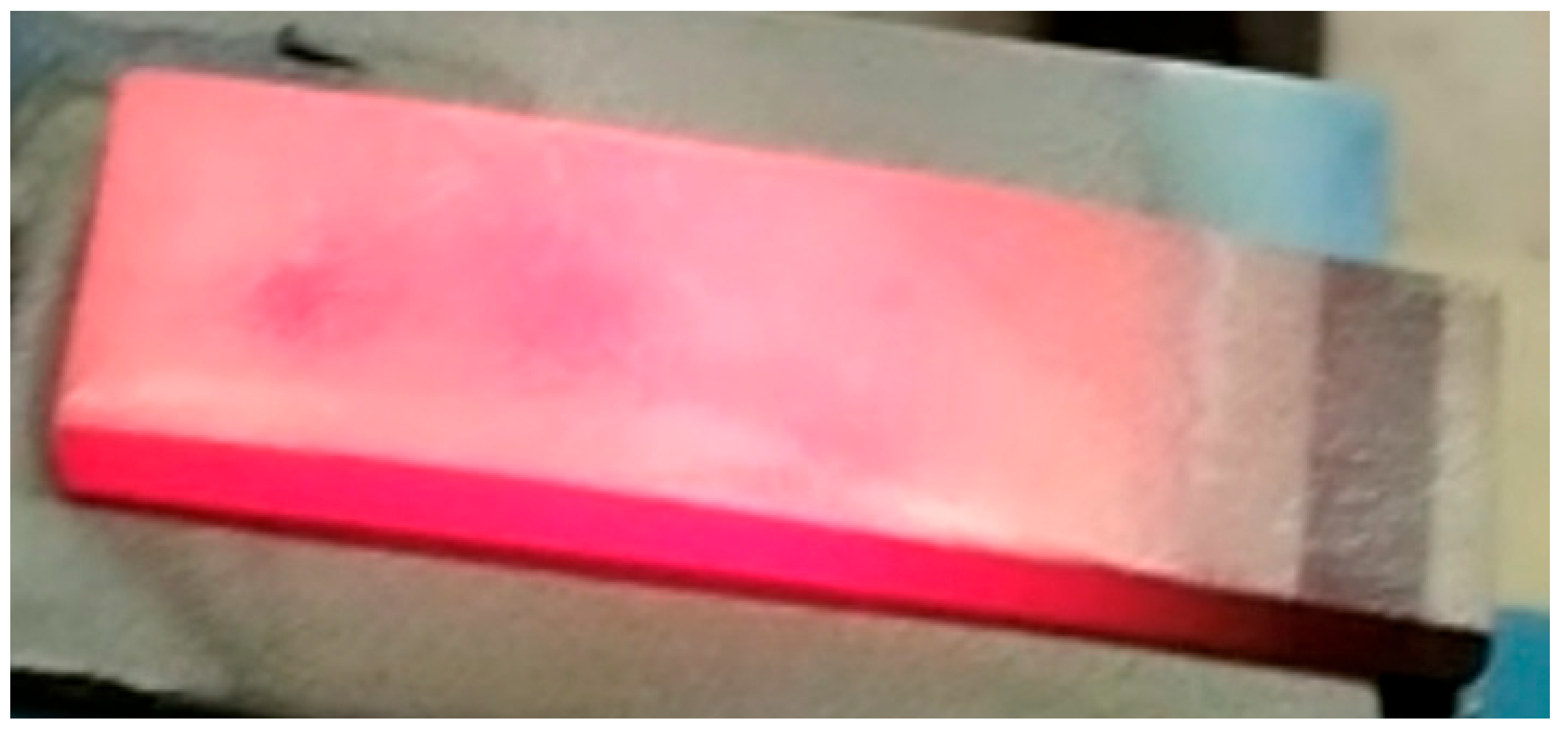
The coating deposition method employed was flame spraying (
Figure 1).
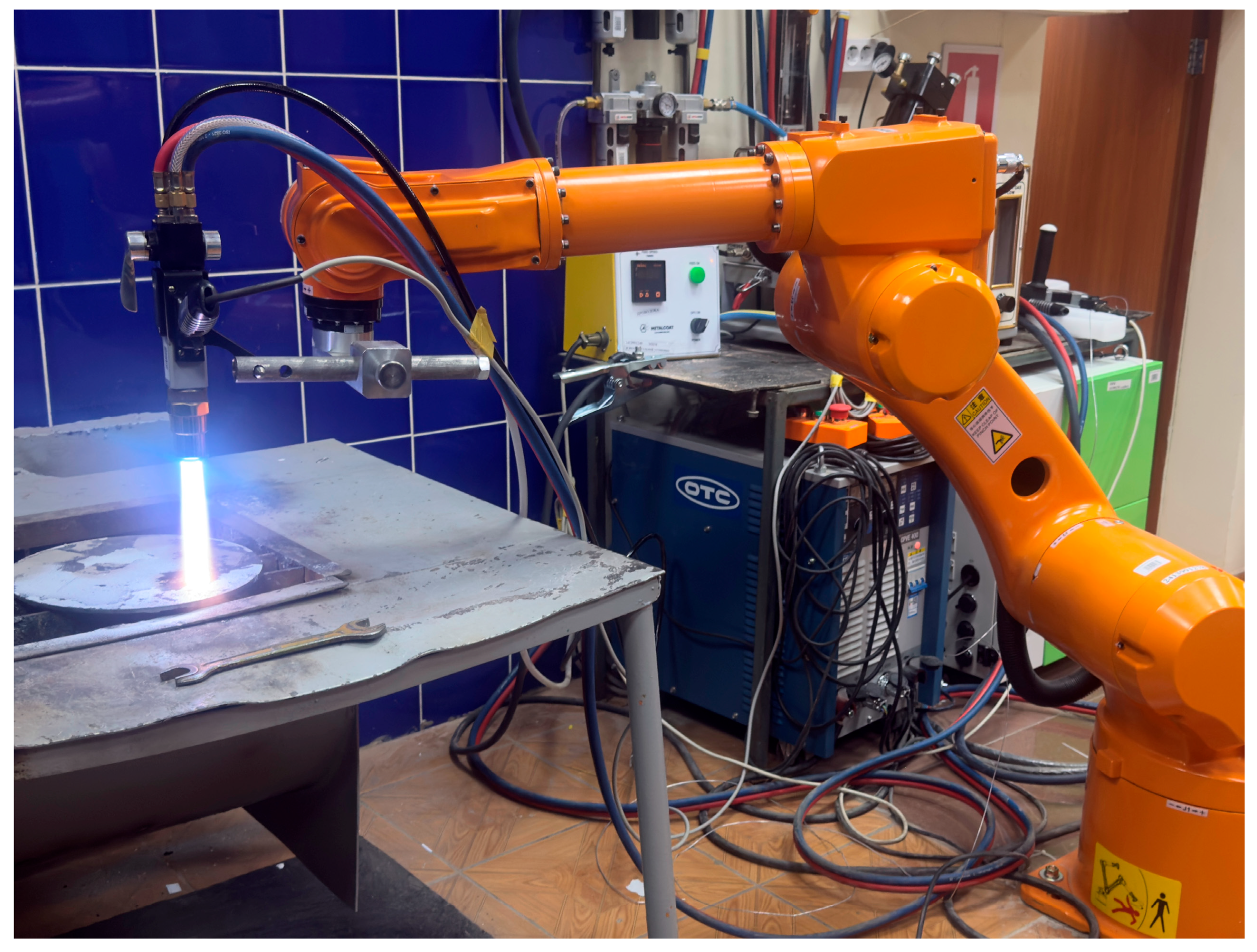
The 6 PM-II Powder Flame Spray System equipment (Jodhpur (Raj.), India) was used for the spraying process (
Figure 2).
The technological parameters of the spraying process are presented in
Table 1.
At the first stage, powders of titanium carbide—50%, copper—40%, and aluminum—10% were mixed.
At the second stage, the coating was sprayed onto the substrate.
The investigation of the surface microstructure after spraying was carried out after each stage using a Jeol JCM-7000 scanning electron microscope (JEOL Ltd., Tokyo, Japan). The elemental composition was analyzed using MPCA with an SDTM 30 energy-dispersive attachment equipped with a Si detector.
Sedimentation analysis was performed using an FSKh-6K photometric sedimentometer (LLC “LabNauchPribor”, Saint Petersburg, Russia). The operating principle of the instrument is based on Stokes’ sedimentation law and the Lambert–Beer law describing radiation attenuation in turbid media.
Microhardness was determined using a PMT-3M microhardness tester (LOMO JSC, Saint Petersburg, Russia). Wear resistance was evaluated using a TABER ABRASER 352G wear resistance tester (Taber Industries, North Tonawanda, NY, USA).
3. Research Results
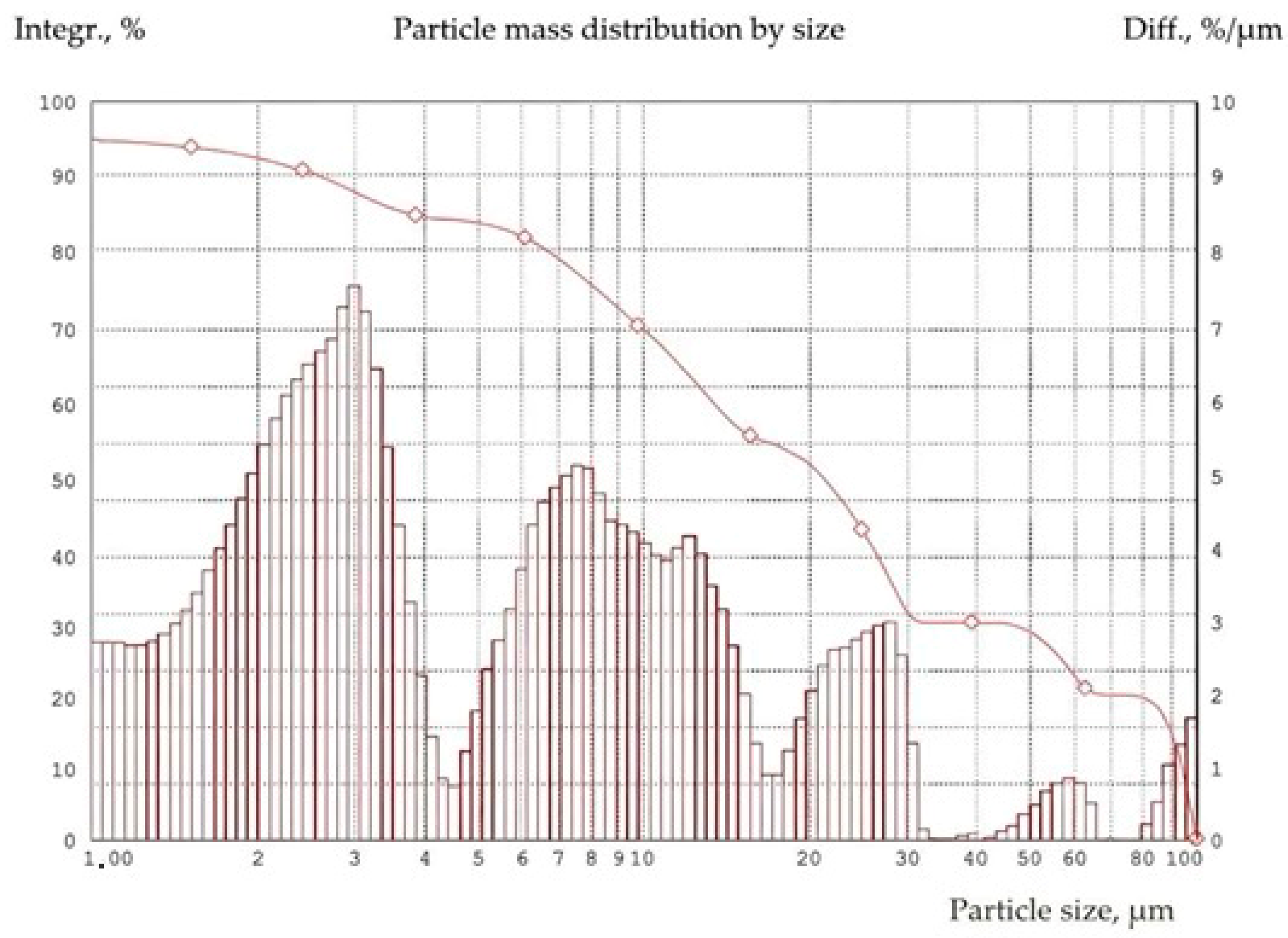
The sedimentation analysis of the powder mixture particles is presented in
Figure 3.
As shown in
Figure 3, the photosedimentometric analysis diagram demonstrates the particle size distribution by mass for the composite powder mixture (titanium carbide, aluminum, and copper). The
x-axis represents the particle size, while the
y-axis shows the integral and differential particle fractions.
Analysis of the distribution curve indicates that the mixture has a polydisperse character, i.e., it consists of several particle fractions of different sizes. The main portion of the powder is concentrated in the range of fine and medium particle sizes.
The presence of a fine-dispersed powder fraction is indicated by the 2–3 μm range, which is associated with fine titanium carbide particles formed due to the relatively brittle nature of the material.
Particles of the medium-size fraction are located in the range of 6–10 μm, mainly represented by copper particles and titanium carbide agglomerates. In the range of 20–30 μm and above, aluminum particles are predominantly observed.
The mixture also contains individual coarse particles with sizes up to 80–100 μm, indicating the presence of isolated agglomerates.
The integral distribution curve shows that approximately 80–90% of the particles have sizes below 10–15 μm, which indicates a sufficiently high dispersion degree of the powder mixture.
Therefore, the powder mixture of titanium carbide, aluminum, and copper is characterized by a predominantly fine-dispersed fraction with the presence of a small amount of larger agglomerates. Such a distribution is favorable for coating formation processes and powder metallurgy applications, since fine particles ensure high packing density, whereas larger particles improve the technological properties of the powder mixture. The resulting particle size distribution is crucial for predicting the physical, mechanical, and process properties of the final material. A predominance of fine particles in the mixture (80–90% of particles smaller than 10–15 µm) ensures high packing density during molding and promotes the formation of a dense, uniform coating with low porosity, which is critical for wear and corrosion resistance. This approach directly correlates with recent studies on Al-TiC composite systems [
20], where optimizing the share of ultra-fine carbide reinforcements allowed researchers to reduce residual porosity below 1.5–2% due to efficient interstitial packing between matrix grains. The presence of a separate fraction of medium (6–10 µm) and large (up to 80–100 µm) particles, primarily aluminum and its agglomerates, can positively influence the rheological properties of the mixture, improving its flowability and processability during application. However, to ensure consistent quality, it is necessary to control the mixing process to minimize the formation of large, mechanically strong titanium carbide agglomerates, which can become stress concentration sites in the finished product. Thus, the identified granulometric composition is technologically balanced and optimal for the processes of gas-thermal spraying and powder metallurgy.
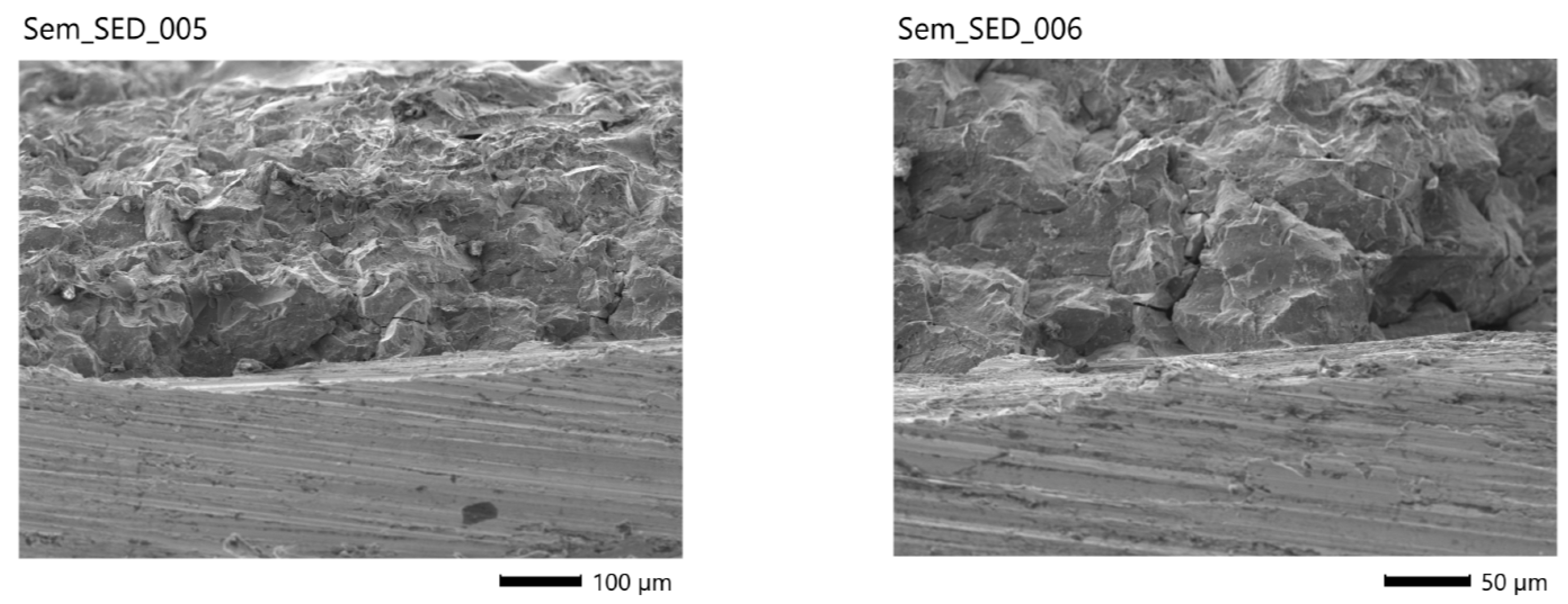
Figure 4 presents a cross-sectional view of the specimen at the “coating–substrate” interface, where the substrate surface is clearly distinguishable. Above the substrate, a sprayed layer with a pronounced heterogeneous structure is observed. The coating consists of individual particles and their agglomerates, which are partially deformed and sintered together during the spraying process. The particle shape is predominantly irregular and angular, which is typical of powders produced by mechanical grinding.
The coating structure exhibits a heterogeneous character, which is associated with the differences in the physical properties of the mixture components. Harder titanium carbide particles retain their angular shape and act as a strengthening phase, whereas aluminum and copper may partially deform and form a metallic binder between the particles.
The presence of hard titanium carbide particles within the aluminum–copper metallic matrix ensures the formation of a composite coating capable of combining enhanced wear resistance with sufficient ductility of the metallic binder.
A series of studies, including photo-sedimentometric analysis of the initial charge and metallographic analysis of a transverse section, established a direct relationship between the powder’s particle size distribution and the structure of the resulting coating. The identified polydisperse composition of the mixture, where 80–90% of the particles are smaller than 10–15 µm, with the presence of individual large agglomerates, is technologically balanced. It ensures high packing density during spraying and promotes the formation of a heterogeneous coating structure. As a result, a composite layer is formed at the coating-substrate interface, in which hard titanium carbide particles act as a reinforcing phase, and a ductile aluminum-copper matrix acts as a binder. This mechanism of forming a highly dense heterogeneous structure with a carbide-reinforcing phase matches the findings of modern studies on Al-TiC composites [
21], where the precise distribution of fine particles around matrix grains suppressed porosity and directly enhanced the interfacial bonding strength. Thus, the effectiveness of this powder mixture for creating wear-resistant coatings combining high hardness with the necessary ductility and adhesion to the substrate has been confirmed.
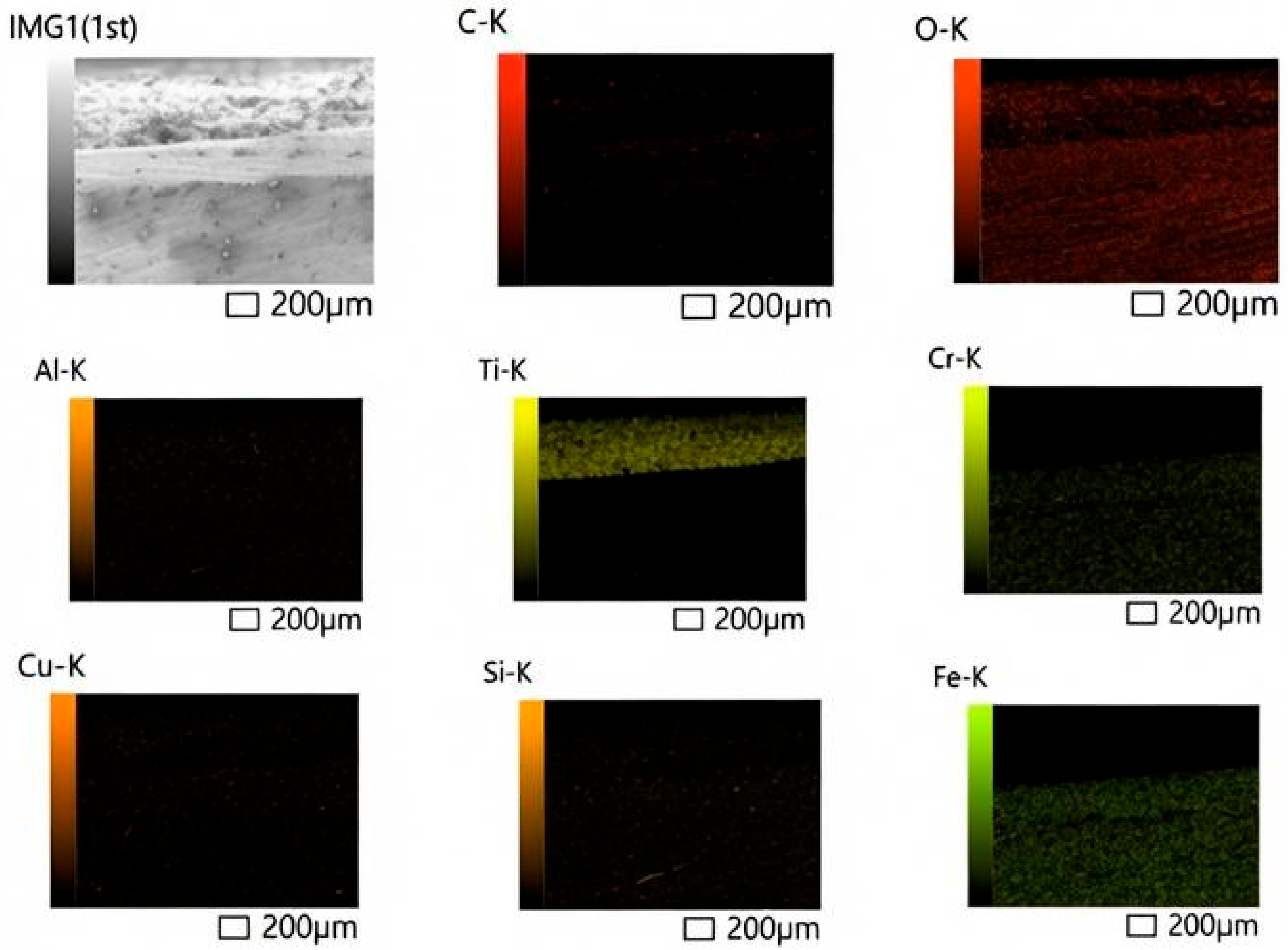
Figure 5 presents the elemental distribution of the sprayed powder.
The upper part of the micrographs corresponds to the sprayed coating, whereas the lower part corresponds to the metallic substrate. A high concentration of titanium is observed within the coating region, confirming the presence of titanium carbide particles. Titanium is distributed relatively uniformly throughout the coating thickness, forming the strengthening phase. The carbon map demonstrates its presence mainly within the coating zone, which may indicate the existence of carbide compounds. Aluminum and copper are also distributed relatively uniformly; however, their intensity is lower, indicating their role as binder components.
Thus, the coating possesses a heterogeneous composite structure represented by titanium carbide particles distributed within a metallic matrix containing aluminum and other elements. The structure is characterized by the presence of oxide inclusions and minor impurities.
A comprehensive analysis, including an assessment of the particle size distribution of the initial charge, the microstructure of the cross-section, and elemental composition mapping, confirms that spraying produces a heterogeneous composite coating. The coating structure consists of a reinforcing framework of titanium carbide (TiC) particles uniformly distributed within a ductile aluminum-copper metal matrix. Mapping data, showing a high concentration of titanium and carbon within the coating zone, definitively verify the presence of a strengthening carbide phase. This architectural design, combining a hard protective phase with a ductile Al-Cu matrix base, correlates with recent findings on the microstructural evolution and sliding wear optimization of engineered Al10Cu alloy systems [
22]. Thus, the research objective has been achieved: a functional composite material has been developed that combines high hardness and wear resistance provided by the carbide phase with the processability and sufficient ductility of the metallic binder, opening up prospects for its successful application in hardening surfaces exposed to intense wear.
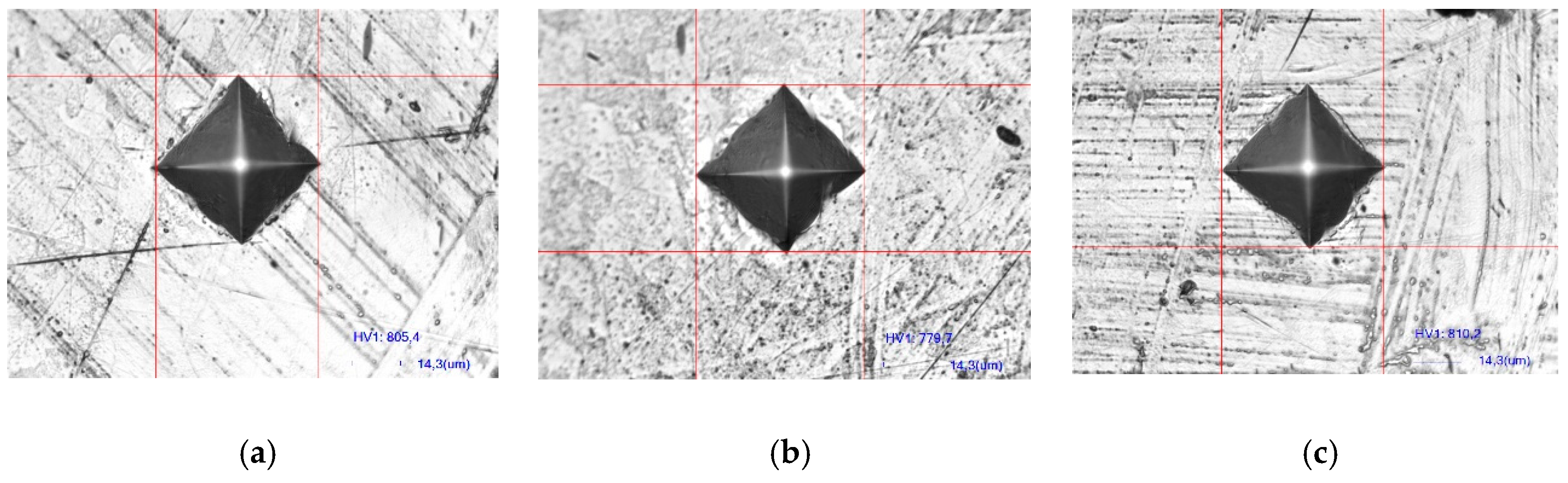
The microhardness of the sprayed layer was also investigated (
Figure 6). The microstructure of the sprayed region is relatively homogeneous and fine-dispersed. A matrix with uniformly distributed fine structural constituents is observed. The microhardness value is HV = 770, indicating high hardness and a significantly strengthened state of the surface layer.
The measured microhardness values demonstrate a nearly uniform distribution throughout the entire thickness of the coating deposited from the proposed composite powder mixture. The variation in microhardness between the measurement points does not exceed 10%, indicating a homogeneous structure of the deposited layer.
To determine the wear resistance, measurements were taken after 10,000, 20,000, and 30,000 revolutions of the abrasive counterbody over the sprayed specimen.
Table 2 presents the results of the wear resistance investigation of specimens coated with the composite composition.
The obtained results demonstrate that the weight loss with an increasing number of revolutions is relatively insignificant and uniform, which indicates the high wear resistance of the coating.
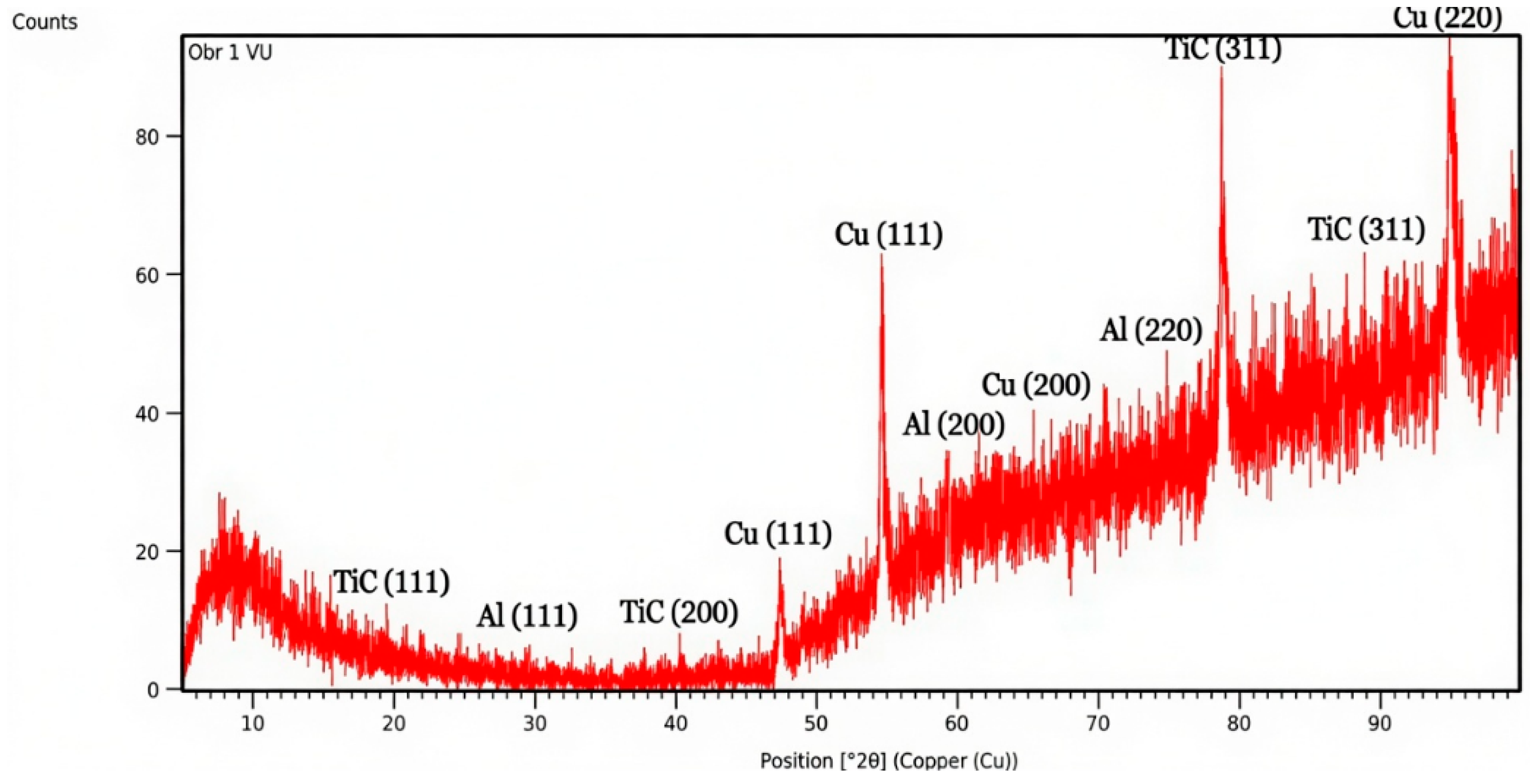
The presented X-ray diffraction pattern of the composite coating (
Figure 7) exhibits a complex scattering behavior, indicating a multiphase structure of the material.
In the low-angle region (approximately 5–20° 2θ), a broad, low-intensity diffuse maximum is recorded. The presence of such a blurred peak may indicate the presence of an amorphous or highly disperse phase, as well as a fine-crystalline state of some coating components.
In the 20–45° 2θ range, the radiation intensity is relatively low, and practically no distinct peaks are observed. This may be due to the fact that the main crystalline phases have characteristic reflections at higher diffraction angles.
Starting from approximately 50° 2θ, pronounced peaks appear on the XRD pattern. The most notable maximum is observed around 55–57°, which may correspond to reflections from the copper crystal lattice.
In the 75–80° 2θ region, another intense peak is recorded, along with a series of less pronounced maxima. These reflections correspond to the TiC phase. Additional peaks in the 90–95° 2θ region also confirm the presence of well-crystallized metallic phases.
Aluminum within the coating composition likely participates in the formation of the metallic binder. Overall, the XRD pattern indicates that the coating possesses a multiphase structure consisting of crystalline titanium carbide particles and metallic copper-aluminum matrices.
No pronounced diffraction peaks corresponding to secondary phases, such as Al–Cu intermetallic compounds or oxide products (TiO2, CuO, and Al2O3), were detected in the XRD pattern. This indicates that the original phase composition of the composite material was largely preserved during the flame spraying process. Within the detection limit of the XRD method, the coating consists of a three-phase TiC–Cu–Al system.




 ,
,