Article

Preparation of Fly Ash-Based Geopolymer Ecological Remediation Materials and Investigation of Their Adsorption and Stabilization Behavior Toward Cr(VI)-Contaminated Soil

1
Guoneng Baoqing Coal Power and Chemical Co., Ltd., Shuangyashan 155600, China
2
School of Materials Science and Engineering, Xi’an University of Science and Technology, Xi’an 710054, China
*
Author to whom correspondence should be addressed.
J. Compos. Sci. 2026, 10(6), 293; https://doi.org/10.3390/jcs10060293
Submission received: 29 April 2026 / Revised: 23 May 2026 / Accepted: 24 May 2026 / Published: 28 May 2026
(This article belongs to the Section Composites Applications)

Abstract

Coal-fired fly ash poses both environmental challenges and resource utilization potential. In this study, a fly ash-based geopolymer ecological remediation material (MFA-MB) was synthesized from fly ash and bentonite through alkaline roasting activation, montmorillonite acidification, and alkali-activated polycondensation. The structural characteristics and Cr(VI) adsorption performance of MFA-MB were systematically investigated. Compared with raw fly ash, MFA-MB exhibited a more developed mesoporous structure, increased surface activity, and enhanced specific surface area from 19.473 m2/g to 30.813 m2/g. Adsorption experiments demonstrated that MFA-MB showed enhanced Cr(VI) adsorption affinity and rapid adsorption equilibrium behavior. The adsorption process was exothermic and likely involved combined physical adsorption and surface interaction effects. Field experiments further showed that MFA-MB effectively reduced Cr(VI) accumulation in Chinese cabbage while promoting plant growth. At the optimal dosage, Cr concentrations decreased from 0.145 mg/kg to 0.015 mg/kg in roots and from 0.081 mg/kg to 0.009 mg/kg in leaves. These results suggest that MFA-MB exhibits promising potential for fly ash resource utilization and Cr(VI)-contaminated soil remediation.

1. Introduction

Fly ash is a large-volume solid waste generated during coal combustion in power plants. In 2023 alone, the global production of fly ash reached 747 million t and continues to increase. In addition to being used in the construction material and chemical industries, more than 20% of the fly ash is currently not effectively utilized [1,2]. Most of the remaining unutilized fly ash is disposed of by stockpiling, which not only leads to significant waste of land resources but also poses environmental risks, as the heavy metals contained in fly ash (such as chromium (Cr), arsenic (As), and lead (Pb)) may migrate under changing environmental conditions, thereby affecting soil and water quality [3,4,5]. In addition, harmful components in fly ash (e.g., polycyclic aromatic hydrocarbons and other organic pollutants) can leach into surface water and soil through rainfall, causing secondary pollution. Consequently, the resource utilization of fly ash has become one of the most active research topics among scholars worldwide [6].
Soil heavy metal contamination is one of the major environmental issues facing the world today [7]. This problem is particularly severe in areas surrounding coal-fired power plants [8,9]. Among the heavy metals present in fly ash, Cr, due to its high toxicity, bioaccumulation potential, and carcinogenicity, poses a serious threat to ecosystems and human health [10]. Developing efficient and cost-effective technologies for remediating contaminated soils has therefore become a major research focus for coal-fired power plants [11,12]. Considering the principle of local utilization and the abundance of silicon (Si), aluminum (Al), and iron (Fe) in fly ash, it has demonstrated potential as an adsorbent for heavy metal ions [13]. Geopolymers, which are inorganic polymeric materials composed of three-dimensional aluminosilicate networks, possess excellent stability, adsorption capacity, and resource utilization potential, providing an important direction for the high-value utilization of fly ash and soil pollution remediation [14]. Previous studies have demonstrated that fly ash-based geopolymers possess excellent potential for Cr(VI) immobilization and environmental remediation. Qiu et al. [15] reported that fly ash-based geopolymer materials exhibited effective adsorption performance toward Cr(VI), indicating that geopolymerization could significantly enhance the adsorption activity of raw fly ash by increasing surface active sites and pore structures; Nikolic et al. [16] further investigated the immobilization behavior of Cr(VI) in fly ash-based geopolymers and found that the geopolymer matrix could effectively suppress chromium mobility through the formation of amorphous aluminosilicate gel networks and physical encapsulation mechanisms. Their results suggested that geopolymerization plays an important role in improving the environmental stability of chromium-bearing systems. However, the adsorption performance of individually modified fly ash for heavy metal ions still has significant room for improvement, and thus, most current studies focus on composite materials [17,18,19]. Bentonite, a natural clay mineral with excellent adsorption and ion-exchange capacities, is widely used in soil improvement and heavy metal remediation [20]. The combination of fly ash and bentonite can form composite adsorbents with enhanced adsorption efficiency for heavy metals such as Cr and As. Barbora [21] prepared composite adsorbents by mixing aluminosilicates (clinoptilolite and bentonite) derived from Central European sediments with two types of fly ash from Czech factories. The results showed that the adsorbent exhibited higher selectivity for cation adsorption, achieving efficiencies of 80% or higher, but was less effective for anion adsorption, with maximum efficiencies for AsO43− and CrO42− of only 30% and below 20%, respectively. Liu [22] developed a novel zero-valent iron particle adsorbent (ZVI-GAM) using fly ash as the structural framework and bentonite as the binder. Experiments conducted under varying contact times, initial dye concentrations, pH values, and temperatures evaluated its removal performance for crystal violet and methylene blue. The results showed that the maximum adsorption capacities of ZVI-GAM for crystal violet and methylene blue were 172.41 mg/g and 151.52 mg/g, respectively. At present, most studies on fly ash–bentonite composites have focused on adsorption performance, with limited attention to verifying their effectiveness in soil remediation. Compared with conventional fly ash geopolymers and fly ash–bentonite composites, the prepared MFA-MB integrates alkaline roasting activation, bentonite modification, and geopolymerization to simultaneously enhance Cr(VI) adsorption, structural stability, and soil remediation performance under planting conditions. Unlike previous studies primarily focusing on aqueous adsorption behavior, this study further evaluates the practical soil remediation potential of MFA-MB through plant growth experiments and chromium uptake analysis. Therefore, assessing the soil remediation performance of modified fly ash composites represents an effective pathway to promote both the efficient utilization of fly ash and the remediation of soils surrounding coal-fired power plants.
Based on the above issues, this study used fly ash generated by a coal-fired power plant from China Energy Investment Corporation as the raw material. Through a series of processes, including alkaline roasting activation, montmorillonite acidification, and alkali-activated polycondensation, a fly ash-based geopolymer ecological remediation material (MFA-MB) was prepared. The morphology, composition, and structure of both fly ash and MFA-MB were characterized using Scanning Electron Microscopy (SEM), X-ray diffraction (XRD), Fourier-transform infrared spectroscopy (FTIR), Brunauer–Emmett–Teller method and Barrett–Joyner–Halenda method (BET and BJH), X-ray photoelectron spectroscopy (XPS) and Inductively Coupled Plasma Optical Emission Spectroscopy (ICP-OES). The adsorption performance and behavior of MFA-MB toward Cr(VI) ions were also investigated. Finally, a practical planting experiment was conducted to evaluate the soil improvement performance of MFA-MB and determine its optimal application rate. This study provides theoretical support for the application of fly ash-based geopolymer ecological remediation materials in soil improvement and heavy metal pollution remediation.

2. Materials and Methods

2.1. Materials

Fly ash (Class III grade) was obtained from a coal-fired power plant under China Energy Group (Shuangyashan, China); Bentonite was sourced from Chifeng, Inner Mongolia; Sulfuric acid (AR, ≥96%) and sodium hydroxide (AR, ≥98%) were purchased from Tianjin Kemio Chemical Reagent Co., Ltd. (Tianjin, China); Sodium silicate (AR, modulus 2.8, Na2O ≥ 18%, SiO2 ≥ 60%), sodium carbonate (AR, ≥99.5%) and potassium dichromate (AR, ≥99%) were purchased from Shanghai Aladdin Co., Ltd. (Shanghai, China); Chinese cabbage seeds (Jingcui 60, purity ≥ 99%) were purchased from Beidahuang Kehong Seed Industry Co., Ltd. (Shuangyashan, China).

2.2. Sample Preparation

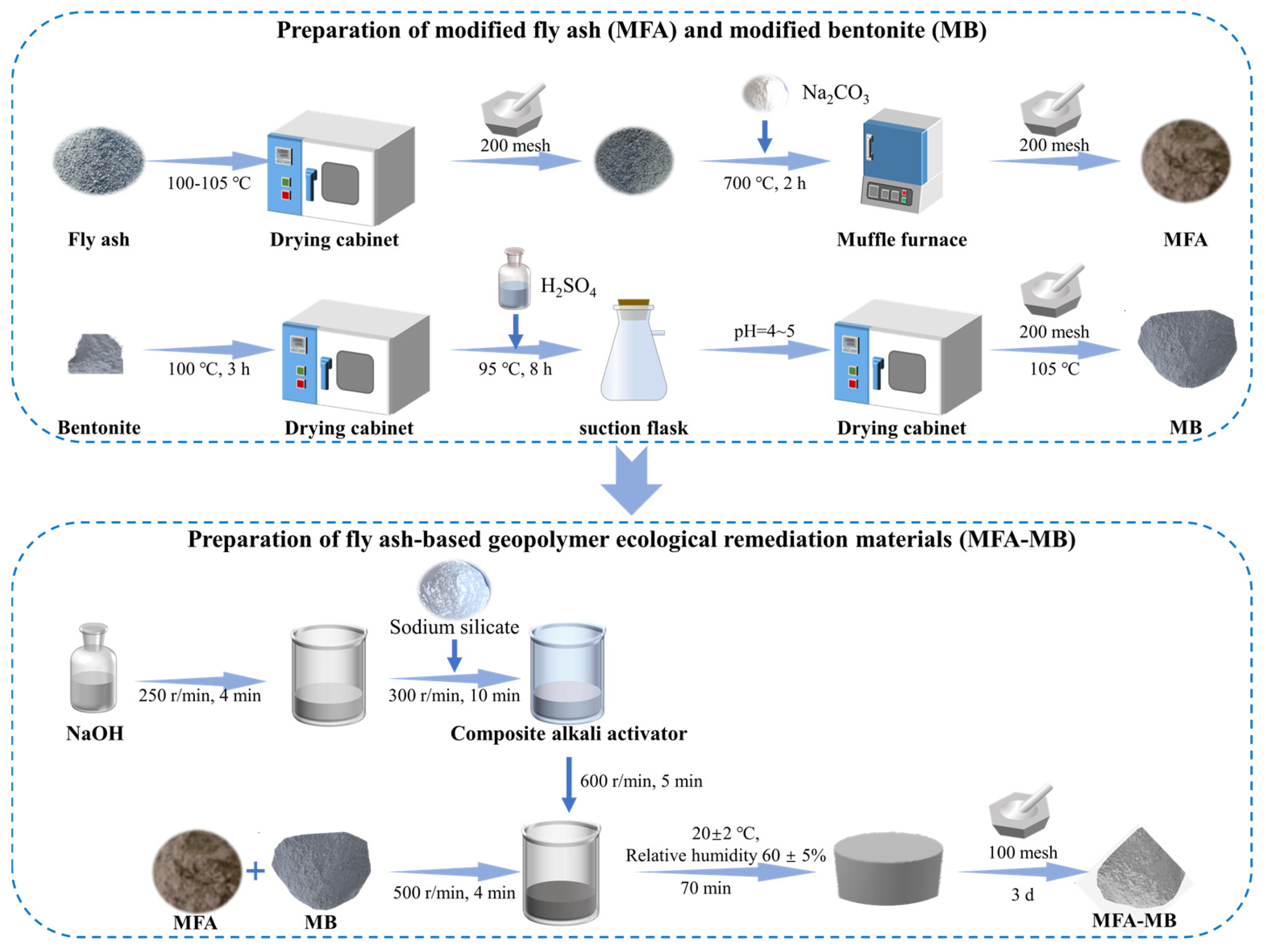
The preparation of MFA-MB mainly involves three key steps: alkaline roasting activation of fly ash, acidification of montmorillonite, and alkali-activated polycondensation of modified fly ash. The detailed preparation procedure is illustrated in Figure 1.

2.2.1. Preparation of Modified Fly Ash and Modified Bentonite

Fly ash with different particle sizes was weighed and dried at 100–105 °C to constant weight, and then ground to pass through a 200-mesh sieve. An alkaline roasting activation process was employed, in which fly ash was uniformly mixed with Na2CO3 at a mass ratio of 10:1, heated in a muffle furnace to 700 °C at a rate of 5 °C/min, and calcined at this temperature for 2 h, followed by natural cooling to room temperature. The product was then sieved through a 200-mesh sieve to obtain modified fly ash (MFA). An appropriate amount of bentonite was weighed and dried at 100 °C for 3.5 h. Subsequently, 20 g of the dried bentonite was mixed with 60 mL of sulfuric acid solution with a mass concentration of 15% and stirred at 95 °C for 8 h. The treated bentonite was then washed with water using a vacuum filtration setup until the pH reached 4–5. The resulting filter residue was dried at 105 °C to constant weight and ground to pass through a 200-mesh sieve to obtain modified bentonite (MB).

2.2.2. Preparation of Fly Ash-Based Geopolymer Ecological Remediation Material

Precisely weigh 4.2 g of NaOH using an electronic balance and dissolve it in 5 mL of deionized water. Stir at 250 r/min for 4 min until the NaOH is completely dissolved and until no visible solid particles remain. After the NaOH solution cools to room temperature, accurately weigh 28.8 g of sodium silicate and slowly add it to the NaOH solution. Stir the mixture using a digital constant-speed stirrer at 300 r/min for 10 min, observing the solution until a homogeneous, transparent to semi-transparent solution without phase separation or precipitation is formed. After stirring, allow the composite alkali activator to stand for 5 min to remove microbubbles generated during mixing. Subsequently, measure the pH to ensure it is within the range of 12–14. The composite alkali activator was prepared by mixing sodium hydroxide and sodium silicate solution, and the measured pH of the final activator solution was 13.42 ± 0.05.
Place 100 g of MFA, 5 g of MB, and 15 mL of deionized water into a beaker and stir at 500 r/min for 3 min. Then slowly add the prepared alkali activator and continue stirring at 600 r/min for 5 min until a homogeneous slurry with no agglomeration and homogeneous slurry with appropriate fluidity is obtained. The slurry is then allowed to stand for polycondensation at 20 ± 2 °C and relative humidity of 60 ± 5% for 70 min. After 3 days, once the slurry has hardened, it is removed, crushed, and sieved through a 100-mesh sieve to obtain the MFA-MB.

2.3. Adsorption Experiments and Models

2.3.1. Adsorption Experiments

The variables are set as the initial concentration of potassium dichromate (100–500 mg/L), adsorbent dosage (0.1–0.5 g), adsorption time (10–180 min), temperature (25–65 °C), and pH (2–8). All adsorption experiments were conducted in triplicate, and the average values are presented in this study. Batch adsorption experiments were performed in 250 mL conical flasks containing 100 mL Cr(VI) solution with predetermined concentrations. A certain amount of MFA-MB adsorbent was added to the solution, and the mixture was shaken in a thermostatic orbital shaker at 150 r/min under controlled temperature conditions. After adsorption, the suspension was filtered through a 0.45 μm syringe filter. The absorbance of the filtrate was measured at a wavelength of 350 nm using a UV–visible spectrophotometer. The concentration of the adsorbate in the solution was determined using the standard calibration curve equation, and the removal efficiency and adsorption capacity were calculated accordingly. The obtained data were used for graphical plotting and further analysis. The Langmuir and Freundlich isotherm models were employed to describe the interaction between the adsorbate and the adsorbent at a given temperature [23]. All experiments were conducted in triplicate, and the results are expressed as mean ± standard deviation. Statistical significance between different experimental groups was evaluated using one-way analysis of variance (ANOVA), with p < 0.05 considered statistically significant.

2.3.2. Langmuir Adsorption Isotherm Model

The specific form of the Langmuir model is shown in Equations (1) and (2) [24].
q e = q m ( K L C e ) 1 + K L C e
C e q e = 1 q m C e + 1 K L q m
where q e is the amount of adsorbate adsorbed at equilibrium (mg/g), C e is the concentration of the adsorbate at equilibrium (mg/L), q m is the maximum adsorption capacity (mg/g), and K L is the Langmuir constant. If the adsorption reaction conforms to the Langmuir isotherm model, it indicates that the adsorption process follows monolayer adsorption. The value of K L is mainly influenced by the properties of the adsorbent, the adsorbate, and the temperature. A larger K L value implies better adsorption performance.

2.3.3. Freundlich Adsorption Isotherm Model

The specific form of the Freundlich model is shown in Equation (3).
q e = K F C e 1 / n
where K F is the Freundlich constant, C e is the equilibrium concentration of the adsorbate (mg/L), and n is the adsorption intensity.
The adsorption isotherm and kinetic parameters were determined using non-linear regression analysis rather than linearized equations to minimize potential distortion of error distribution and parameter bias caused by linear transformation. Previous studies have demonstrated that linearization of adsorption models may alter the original error structure and lead to inaccurate parameter estimation and misleading mechanistic interpretation. Therefore, non-linear fitting was employed in this study to improve the reliability of adsorption model analysis. The adsorption characteristic factor n indicates the difficulty of adsorption: if n < 0.5, adsorption is difficult; if 1 ≤ n ≤ 10, adsorption is easy, and as n increases, the interaction between the adsorbent and adsorbate becomes stronger. If it is necessary to verify whether the adsorption results conform to the Freundlich formula, then Equation (3) should be changed to a linear form as Equation (4):
l n q e = l n K F + 1 n l n C e

2.3.4. Adsorption Kinetic Model

Adsorption kinetics is a research approach used to investigate the relationship between experimental parameters and adsorption rate. The most commonly used kinetic models are the pseudo-first-order and pseudo-second-order kinetic models [25]. The pseudo-first-order kinetic model is expressed in Equation (5), while the pseudo-second-order kinetic model is expressed in Equation (6).
l n ( q e q t ) = l n q e + k 1 t
where q e represents the adsorption capacity at equilibrium (mg/g); t denotes the adsorption time (h); q t is the adsorption capacity at time t (mg/g); and k 1 is the pseudo-first-order rate constant, which is commonly used to evaluate the adsorption rate.
t q t = 1 k 2 · q e 2 + 1 q e t
where q e represents the adsorption capacity at equilibrium (mg/g); t denotes the adsorption time (h); q t is the adsorption capacity at time t (mg/g); and k 2 is the pseudo-second-order rate constant, which serves as an important parameter for determining the adsorption rate.

2.3.5. Adsorption Thermodynamic Model

By analyzing the changes in Gibbs free energy (ΔG), enthalpy (ΔH), and entropy (ΔS), the driving force and spontaneity of the adsorption process can be determined. The mathematical expression is shown in Equation (7), and the calculation formula for the thermodynamic equilibrium constant is given in Equation (8).
Δ G = R T · l n K e
where R represents the universal gas constant (8.314 J/mol·K); T denotes the temperature (K); and K e is the thermodynamic equilibrium constant (mL/L).
K e = ( C o C e ) C e · V m
where V represents the solution volume (mL); m denotes the mass of the adsorbent (g); C o is the initial concentration of the adsorbate (mg/L); and C e is the adsorption equilibrium concentration (mg/L).
The relationship among ΔG, ΔH and ΔS is given in Equations (9) and (10).
Δ G = Δ H T · Δ S
l n K e = Δ G R T = Δ H R T + Δ S R
In this context, if Δ H > 0, the adsorption process is endothermic. When Δ H < 40 kJ/mol, the adsorption is considered physical, whereas Δ H > 40 kJ/mol indicates chemical adsorption. A positive Δ S ( Δ S > 0) signifies an increase in entropy during adsorption, and a negative Δ G (ΔG < 0) indicates that the adsorption process is spontaneous.

2.4. Plant Growth Experiments

The planting experiment was conducted on a site previously used for fly ash storage at the power plant. The planting area measured 10 × 10 m and was divided into five plots, each measuring 2 × 10 m. These plots were designated as EF-x (where EF stands for Experimental Field, and x represents the application rate of MFA-MB: 0 kg/m2, 3 kg/m2, 5 kg/m2, 7 kg/m2, and 9 kg/m2). All other cultivation conditions and management practices were kept identical across the plots. To prevent additional contamination, no external Cr(VI) was introduced, considering that heavy metal diffusion could affect surrounding areas. After 70 days of growth, data were collected from the roots, stems, and leaves, including natural plant height, total biomass, root diameter and weight, and the average length and weight of the three outermost leaves.
In addition, all planting experiments and analytical measurements were conducted under the same experimental conditions and that the reported results represent the average values of repeated measurements.

2.5. Material Characterization

2.5.1. SEM Analysis

The dried fly ash and MFA-MB samples, after gold sputtering, were examined using a field emission scanning electron microscope (JSM-6460LV, JEOL Ltd., Tokyo, Japan) to observe the differences in surface morphology before and after modification. Images captured at 10,000× magnification were further analyzed using energy-dispersive X-ray spectroscopy (EDS, (JSM-6460LV, JEOL Ltd., Tokyo, Japan)).

2.5.2. XRD Analysis

The fly ash and MFA-MB samples were analyzed using an X-ray diffractometer (D8 Advance, Bruker AXS GmbH, Karlsruhe, Germany). Approximately 1–3 g of each sample was dried in an oven to a constant weight, then evenly spread on the sample holder and flattened with a glass slide. The resulting diffraction patterns were compared to evaluate changes in the samples. The measurement parameters included Cu Kα radiation, a scanning range of 10–80°, and a scanning speed of 5°/min.

2.5.3. FTIR Analysis

The chemical structures of fly ash and MFA-MB were analyzed using a Fourier-transform infrared spectrometer (WQF310, Beijing Beifen-Ruili Analytical Instruments Group Co., Ltd., Beijing, China). The scan resolution was set to 4 cm−1, and the scanning range was 0–4500 cm−1.

2.5.4. BET and BJH Analysis

The fly ash and MFA-MB samples were analyzed using a surface area analyzer (ASAP 2460, Micromeritics Instrument Corporation, Norcross, GA, USA). Approximately 5 g of each sample was degassed at 120 °C for 8 h to remove impurities. The total specific surface area of the samples was determined using the BET method, the total pore volume was obtained from the amount of nitrogen adsorbed, and the pore size distribution was analyzed using the BJH method.

2.5.5. XPS Analysis

The surface elemental composition of fly ash and MFA-MB was analyzed using an X-ray photoelectron spectrometer (XSAM800, Kratos Analytical Ltd., Manchester, UK). The instrument employed monochromatic Al Kα X-rays (1486.6 eV) as the X-ray source. The operating voltage and current were set to 12 kV and 12 mA, respectively, and the analysis was conducted under a vacuum of 2 × 10⁻⁷ Pa.

2.5.6. Optical Microscope Analysis

The stems of Chinese cabbage from the EF-x plots were observed using an upright microscope (Axiolab 5, Carl Zeiss Microscopy Deutschland GmbH, Jena, Germany) to evaluate the effects of MFA-MB application on plant microstructure. Stem segments of 1–2 cm in length were collected from each EF-x plot and embedded in 4% low-melting-point agarose. Using a vibrating microtome (VT1200S, Leica Biosystems Nussloch GmbH, Nussloch, Germany), the stems were sectioned into 100 μm thick semi-thin slices, which were then mounted on glass slides. Initial positioning was performed under a low-power objective (10×), followed by high-power observation (40×) with fine and coarse focus adjustments until the cellular structures were clearly resolved.

2.5.7. ICP-OES Analysis

An Agilent inductively coupled plasma optical emission spectrometer (ICP-OES, 5110, Agilent Technologies, Santa Clara, CA, USA) was used to determine Cr(VI) concentrations in the roots and leaves of Chinese cabbage, as well as in soil within a 30 cm radius. Roots and leaves were rinsed with ultrapure water, freeze-dried, and ground into powder. For Cr(VI) analysis in roots and leaves, extraction was conducted using a solution of 0.28 mol/L Na2CO3 and 0.5 mol/L NaOH to prevent reduction of Cr(VI). The extract was centrifuged, and the supernatant was immediately adjusted to pH 7–8 with HNO3 and stored for analysis within 24 h. Soil samples were air-dried, passed through a 100-mesh nylon sieve to remove stones and organic residues, and extracted using 0.1 mol/L Na2CO3 solution (pH ≈ 10) in a water bath at 90 °C for 60 min.

3. Results

3.1. Microscopic Morphology and Structure Analysis of Fly Ash and MFA-MB

3.1.1. Scanning Electron Microscopy Analysis

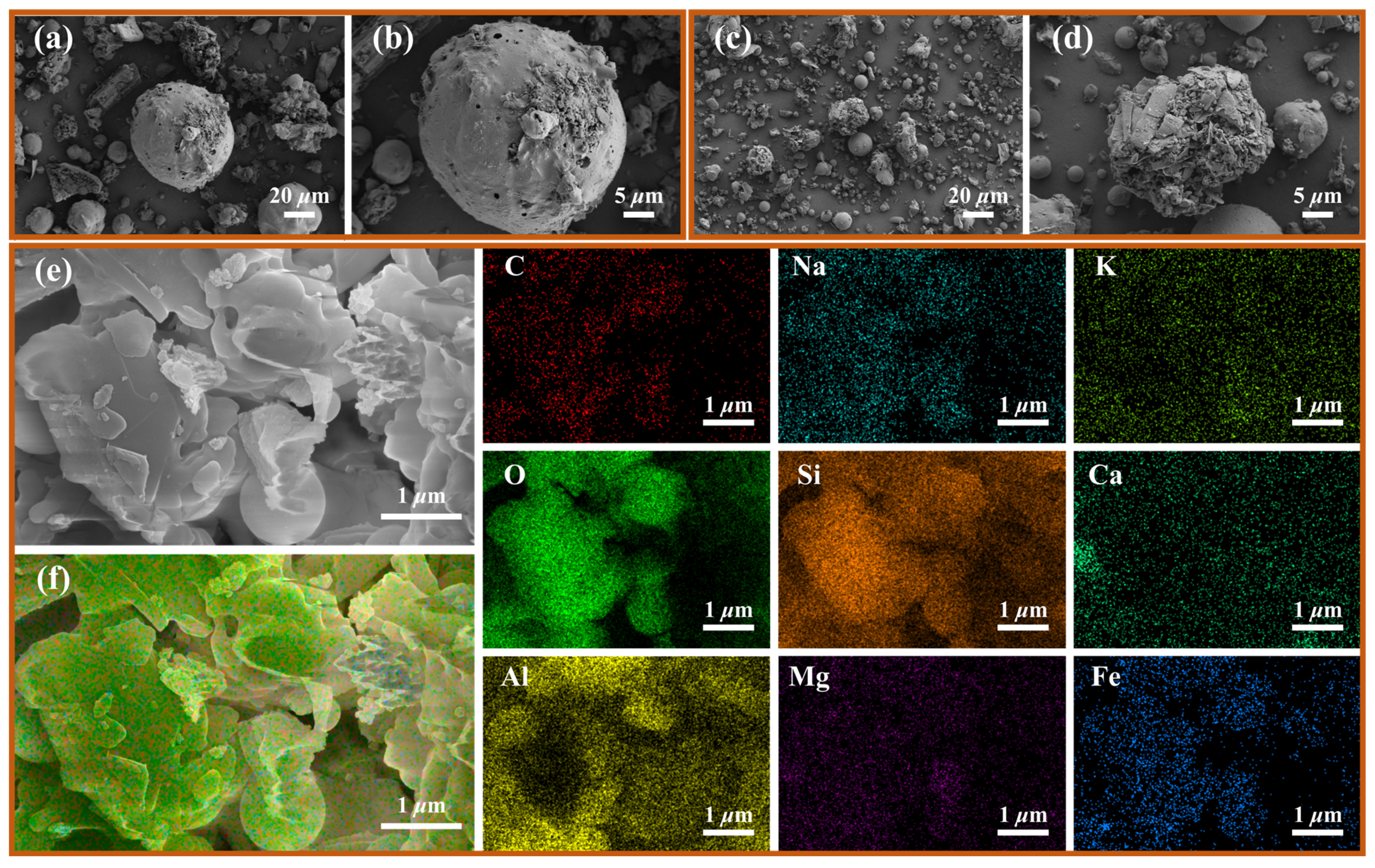
As shown in Figure 2a,b, the corresponding scale bars are shown in all SEM images to indicate the morphological characteristics at different magnifications. The particles of raw fly ash are characterized by spherical glassy bodies as the dominant morphology, which is a typical phase feature of fly ash [26]. The particle surfaces are relatively smooth and dense, with no obvious pores or fractured structures, and exhibit regular spherical contours with good interparticle dispersion. This compact glassy morphology indicates limited surface roughness and relatively few accessible adsorption sites for Cr(VI) immobilization. No significant agglomeration or surface defects are observed. This morphology indicates that, without chemical or physical modification, the glassy structure of fly ash remains largely intact, resulting in limited surface activity and restricted accessibility of adsorption sites for Cr(VI) ions. As shown in Figure 2c,d, after modification through alkaline roasting activation, montmorillonite acidification, and alkali-activated polycondensation, the particle morphology of MFA-MB undergoes significant changes. The smooth spherical particles of raw fly ash are clearly disrupted, with surfaces becoming rough and fragmented, accompanied by the formation of abundant irregular flocculent and layered attachments as well as porous structures [27]. Low-magnification images (Figure 2c) show that the material consists of fragmented fly ash particles mixed with amorphous gel products. High-magnification images (Figure 2d) further reveal the disintegration of the fly ash spheres, forming porous agglomerates composed of interwoven geopolymer gel and acidified bentonite. EDS analysis (Figure 2e,f) indicates that modification disrupted the inert glassy network of fly ash and introduced montmorillonite, increasing particle aggregation of the particles and forming a geopolymer structure composed of a silicon–oxygen–aluminum covalent framework. This structure provides abundant mesoporous channels and active sites for the adsorption of heavy metal ions [28].

3.1.2. Microscopic Structural Analysis

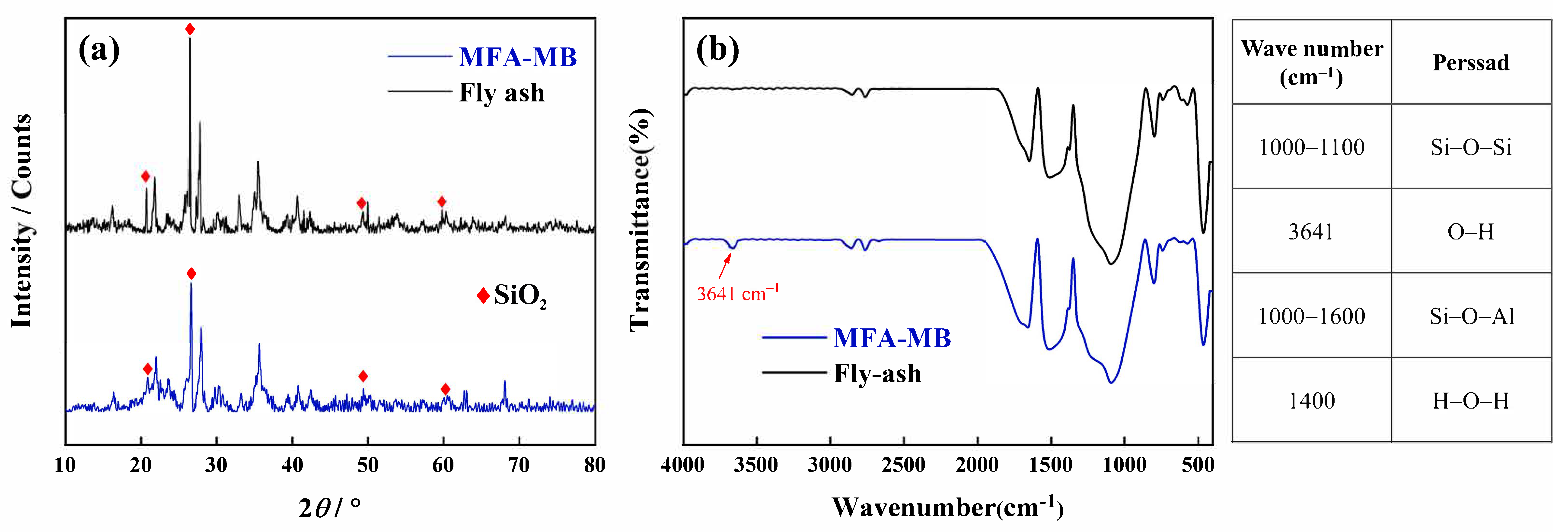
As shown in Figure 3a, both raw fly ash and MFA-MB exhibit distinct characteristic diffraction peaks of quartz (SiO2) at 2θ ≈ 20.8°, 26.6°, 50.1°, and 60.0°, indicating that the quartz phase was not completely dissolved during alkali activation and remained as a relatively stable crystalline component within the geopolymer matrix. Compared with raw fly ash, the XRD pattern of MFA-MB displays a pronounced “hump-shaped” amorphous broad peak in the range of 2θ = 20–30°, while the intensities of some crystalline phase peaks in raw fly ash are weakened or even disappear [29]. This suggests that the amorphous glassy structure in fly ash was partially dissolved under alkali activation, releasing reactive Si and Al species that subsequently underwent dehydration polycondensation to form an amorphous geopolymer gel phase with a Si–O–Al framework. The formation of this geopolymer network contributed to the development of porous aluminosilicate structures and additional surface active sites, which are favorable for Cr(VI) immobilization.
As shown in Figure 3b, the characteristic absorption peaks of raw fly ash are mainly located in the range of 1000–1100 cm−1, corresponding to the asymmetric stretching vibration of Si–O–Si bonds. In contrast, the spectrum of MFA-MB shows significant changes, with a new characteristic absorption peak appearing at ~3641 cm−1, attributed to the stretching vibration of O–H bonds, indicating the introduction of abundant surface hydroxyl groups, which may enhance electrostatic attraction and surface interaction with Cr(VI) species by providing additional adsorption-active sites. Meanwhile, the characteristic peak of MFA-MB near ~1000 cm−1 shifts toward lower wavenumbers. This shift is due to the breakage of Si–O–Si bonds under alkali activation and subsequent polycondensation with Al–O bonds to form Si–O–Al bonds, resulting in a decrease in bond force constant and confirming the formation of a three-dimensional geopolymer network framework with enhanced structural connectivity and surface activity. In addition, the absorption band at 1400–1600 cm−1 corresponds to the bending vibration of water molecules, indicating the presence of bound water in MFA-MB, which is consistent with the structural characteristics of geopolymer gels.

3.1.3. Pore Structure Analysis

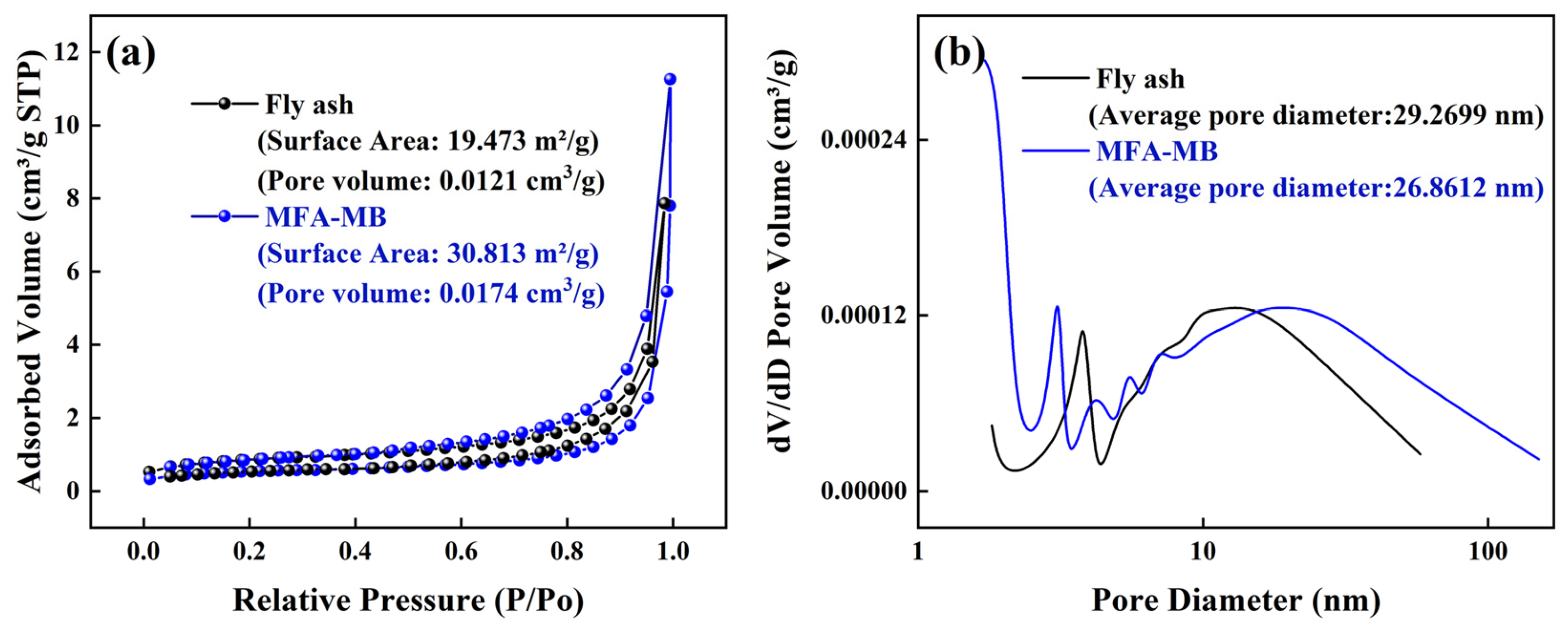
As shown in Figure 4a, the isotherms of both samples exhibit typical type IV characteristics, with a pronounced adsorption–desorption hysteresis loop observed in the high relative pressure region (P/P0 > 0.8), indicating the presence of well-developed mesoporous structures that can facilitate ion transport and adsorption within the internal pore channels [30]. Compared with raw fly ash, MFA-MB shows a significantly increased nitrogen adsorption capacity, with the specific surface area rising from 19.473 m2/g to 30.813 m2/g, representing a 58.2% increase. Additionally, the pore volume increased from 0.0121 cm3/g to 0.0174 cm3/g. This enhancement is attributed to the destruction of the dense glassy phase of fly ash during alkali-activated polycondensation, leading to the formation of abundant geopolymer gel pores and interconnected mesoporous channels [31]. These structural changes increased surface heterogeneity and improved accessibility of adsorption-active sites, thereby facilitating diffusion and immobilization of Cr(VI) species within the geopolymer matrix.
As shown in Figure 4b, the pore sizes of both materials are mainly distributed within the mesoporous range (2–50 nm). The average pore size of MFA-MB decreases from 29.27 nm to 26.86 nm, with a narrower pore size distribution. This further indicates that the modified material develops a better-defined and more uniform mesoporous structure, which is beneficial for enhancing its adsorption performance toward heavy metal ions. The enhanced mesoporous structure and increased specific surface area favored pore filling, facilitated ion diffusion, and improved the physical adsorption capacity of MFA-MB toward Cr(VI).

3.1.4. X-Ray Photoelectron Spectroscopy Analysis

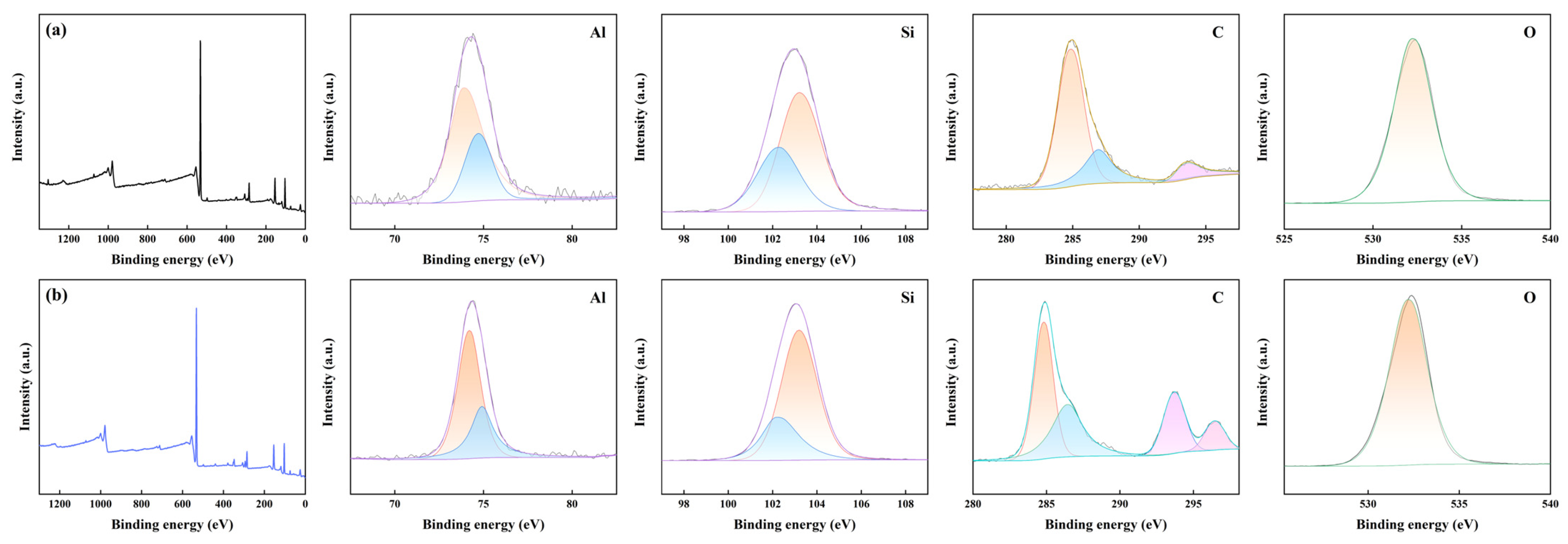
As shown in Figure 5, both materials are mainly composed of Al, Si, C, and O elements, which is consistent with the primary chemical composition of fly ash and bentonite. Compared with raw fly ash (Figure 5a), MFA-MB (Figure 5b) exhibits significant changes in the characteristic peak intensities and binding energies of these elements, indicating that the alkali-activated polycondensation reaction significantly altered the chemical environment and coordination state of the surface elements within the geopolymer framework. High-resolution Al 2p and Si 2p spectra reveal changes in the peak splitting characteristics of Al and Si in MFA-MB, suggesting that the aluminosilicate glassy structure in fly ash was partially disrupted, while the reactive Al and Si species participated in polycondensation reactions to form new Si–O–Al bonding environments, thereby generating an amorphous geopolymer gel phase with enhanced surface activity and adsorption potential. In the C 1s spectrum, MFA-MB shows a newly emerged characteristic peak at 288–290 eV, corresponding to carbonates or surface carboxyl groups, while the relative intensity of the C–C/C–H peak at 284.6 eV decreases. This indicates the introduction of additional oxygen-containing functional groups on the material surface, which may enhance electrostatic attraction and surface interaction with Cr(VI) species by providing additional adsorption-active sites. In the O 1s spectrum, the peak of MFA-MB shifts toward higher binding energy, indicating that oxygen is more predominantly present in the form of Si–O–Al bonds, further confirming the formation of a three-dimensional geopolymer network framework derived from fly ash.

3.2. Adsorption Performance Analysis and Adsorption Model Simulation

3.2.1. Adsorption Performance Analysis

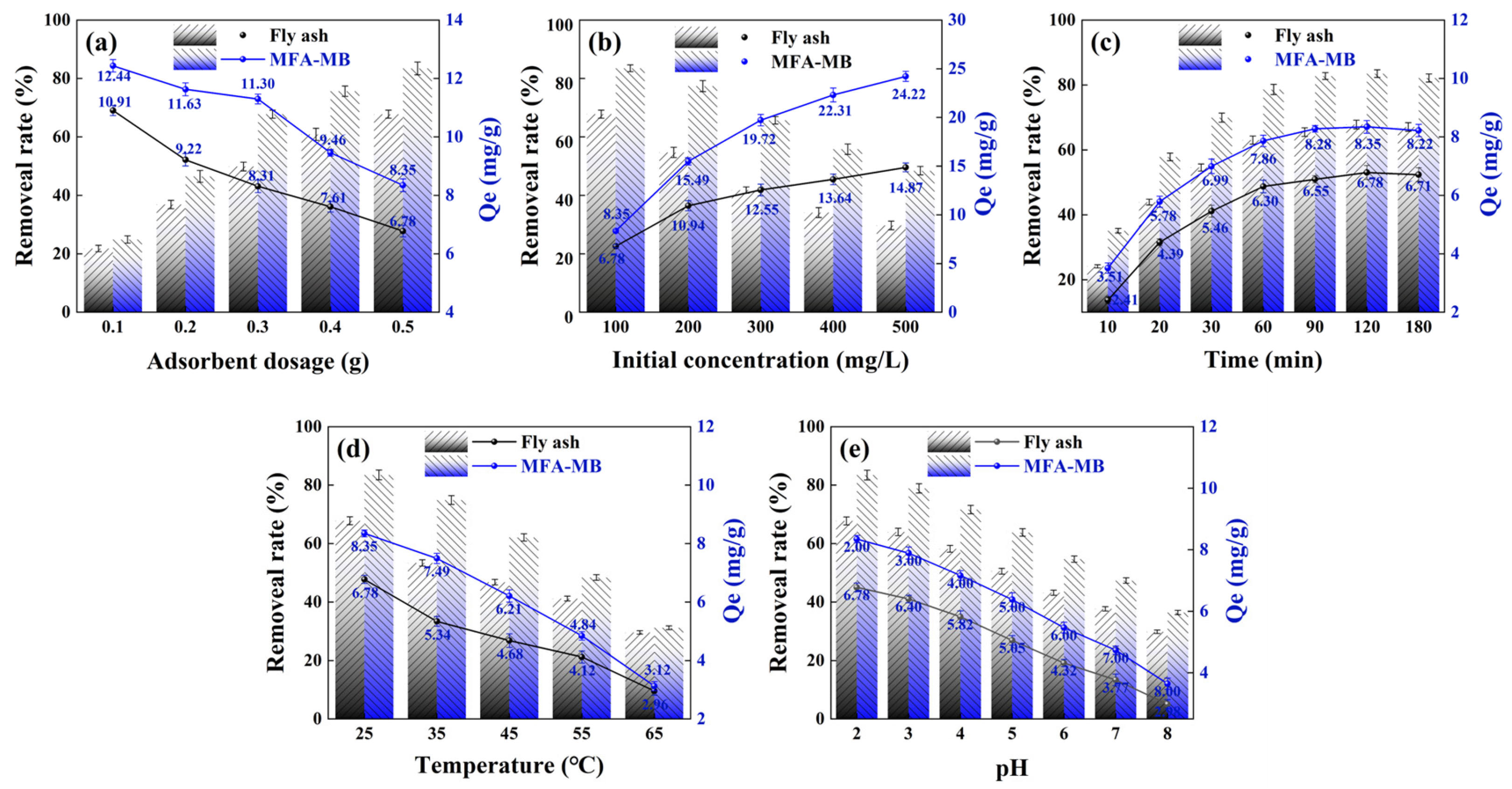
Figure 6a shows that MFA-MB achieves a high removal efficiency at relatively low dosage, which may be attributed to the increased accessibility of adsorption-active sites and the enhanced mesoporous structure formed after geopolymerization, whereas raw fly ash requires a higher dosage to attain a similar effect [32]. As illustrated in Figure 6b, with increasing initial Cr(VI) concentration, the equilibrium adsorption capacity (Qe) of MFA-MB increases significantly, reaching 24.22 mg/g at 500 mg/L, which is significantly higher than that of raw fly ash, indicating that geopolymer modification improved the Cr(VI) adsorption capacity of the material. As shown in Figure 6c, the kinetic results indicate that MFA-MB can rapidly adsorb Cr(VI), reaching adsorption equilibrium within 30 min, with a significantly higher adsorption capacity than fly ash. Figure 6d,e demonstrate that MFA-MB maintains high adsorption stability under elevated temperatures and near-neutral to weakly alkaline conditions (pH 2–8), effectively suppressing desorption of Cr(VI), indicating relatively stable immobilization behavior under varying environmental conditions [33]. Collectively, these results confirm that MFA-MB, as an ecological remediation material, exhibits promising Cr(VI) immobilization and removal performance under the investigated experimental conditions.

3.2.2. Adsorption Isotherm Models

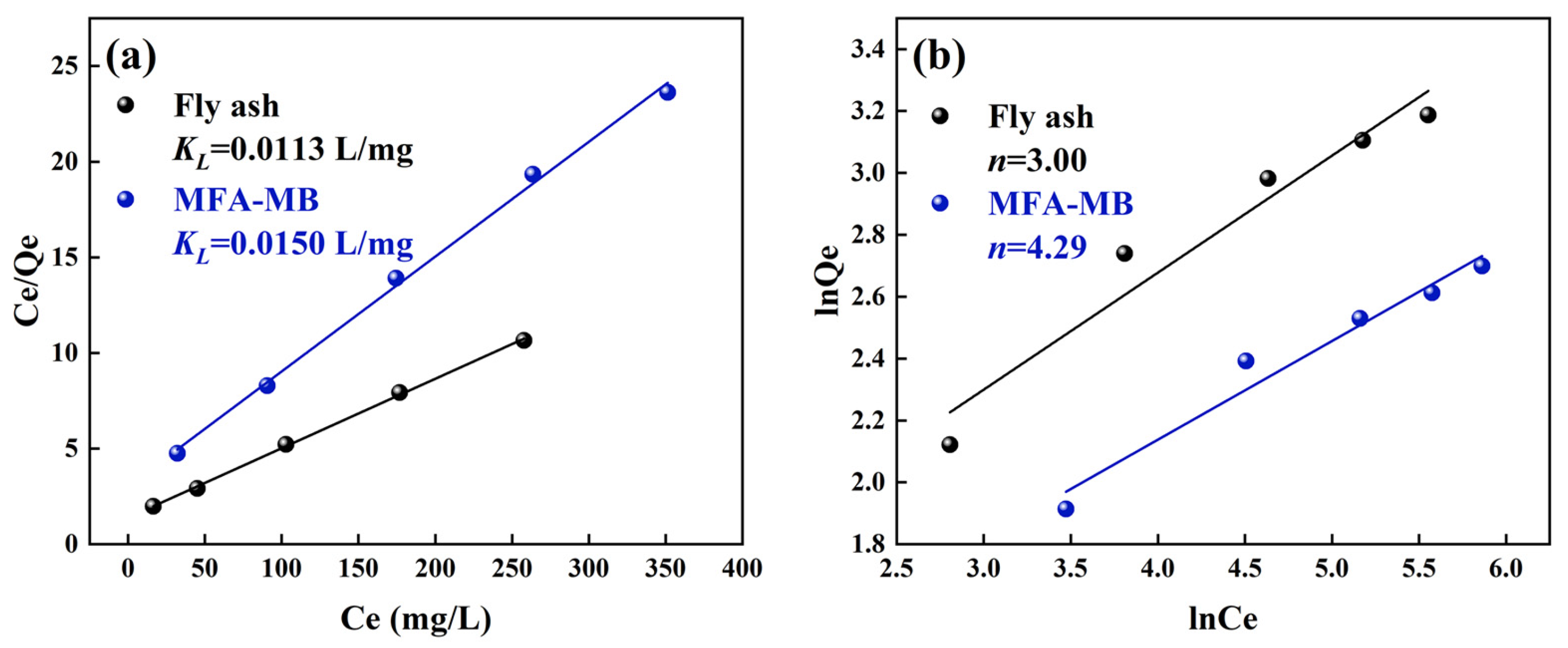
The adsorption equilibrium data were fitted using the Langmuir and Freundlich isotherm models through non-linear regression analysis. The fitting performance was evaluated according to the correlation coefficient (R2) and residual error analysis. The adsorption equilibrium data were fitted using Langmuir and Freundlich models through non-linear regression analysis, and the fitting parameters are summarized in Table 1. As shown in Table 1 and Figure 7a, KL(MFA-MB) is significantly greater than KL(Fly ash), indicating that MFA-MB exhibited enhanced adsorption affinity toward Cr(VI) species compared with raw fly ash. and that the adsorption process more readily reaches equilibrium. As shown in Table 1 and Figure 7b, n(MFA-MB) = 4.29, which is markedly higher than that of fly ash, further demonstrating that the adsorption of Cr(VI) is more favorable for MFA-MB. This behavior is closely related to the abundant mesoporous structure and surface active sites formed after alkali-activated polycondensation, confirming that the modified geopolymer structure significantly enhances the adsorption performance of the material toward Cr(VI). The relatively favorable fitting performance of the Langmuir model suggests that Cr(VI) adsorption mainly occurred on energetically similar adsorption sites within the geopolymer matrix. However, considering the structural heterogeneity of MFA-MB, multilayer adsorption and surface interaction effects may also coexist during the adsorption process.

3.2.3. Adsorption Kinetics Model

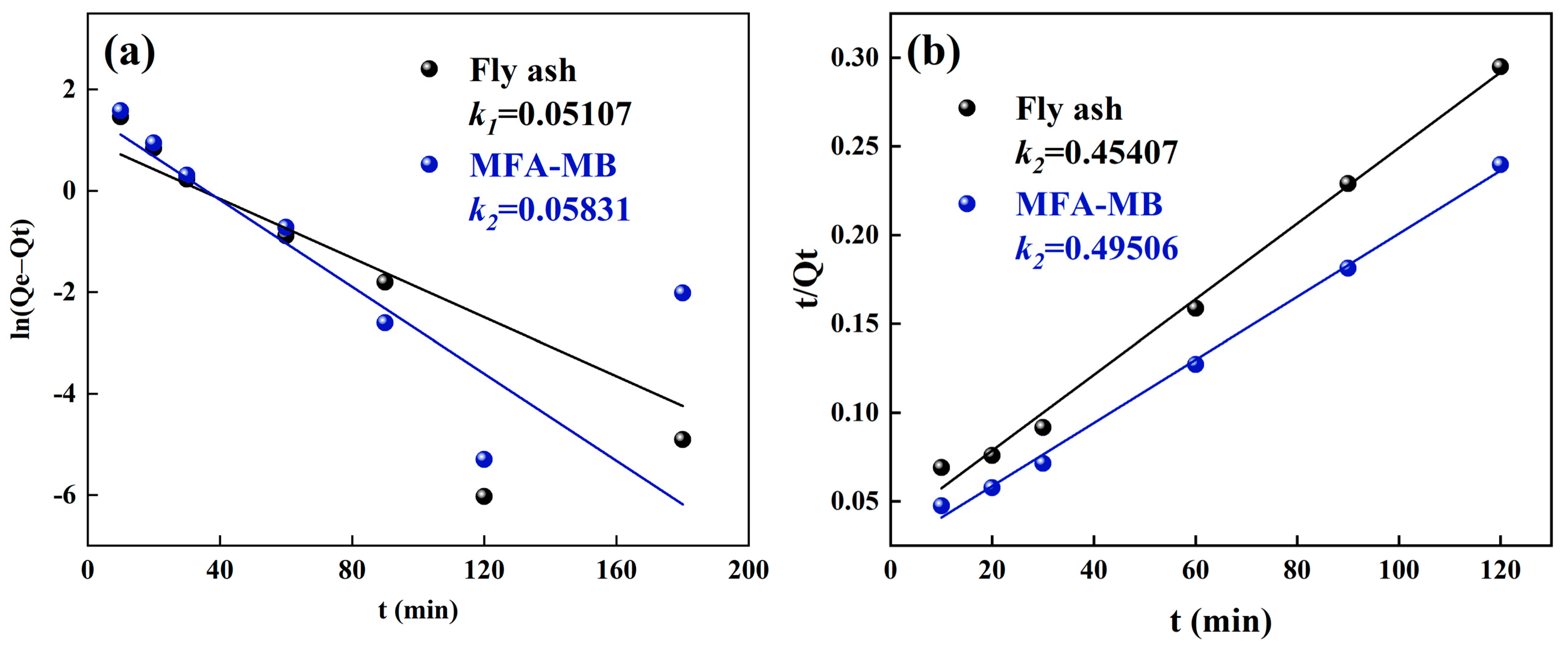
As shown in Figure 8a, k1(MFA-MB) is significantly greater than k1(Fly ash), indicating that the surface active sites of the modified material are more accessible, resulting in a faster initial adsorption rate and a shortened equilibrium time. As shown in Figure 8b, k2(MFA-MB) is also markedly higher than k2(Fly ash), and the experimental data for both materials exhibit excellent agreement with the fitted model curves. These results confirm that the well-developed porous structure and abundant surface active sites formed during alkali-activated polycondensation significantly enhance the adsorption kinetics of MFA-MB toward Cr(VI), enabling more rapid and efficient removal of Cr(VI) from solution. The better fitting performance of the pseudo-second-order model suggests that the adsorption process may involve complex surface interactions; however, adsorption mechanism determination should be interpreted together with thermodynamic and spectroscopic analyses.

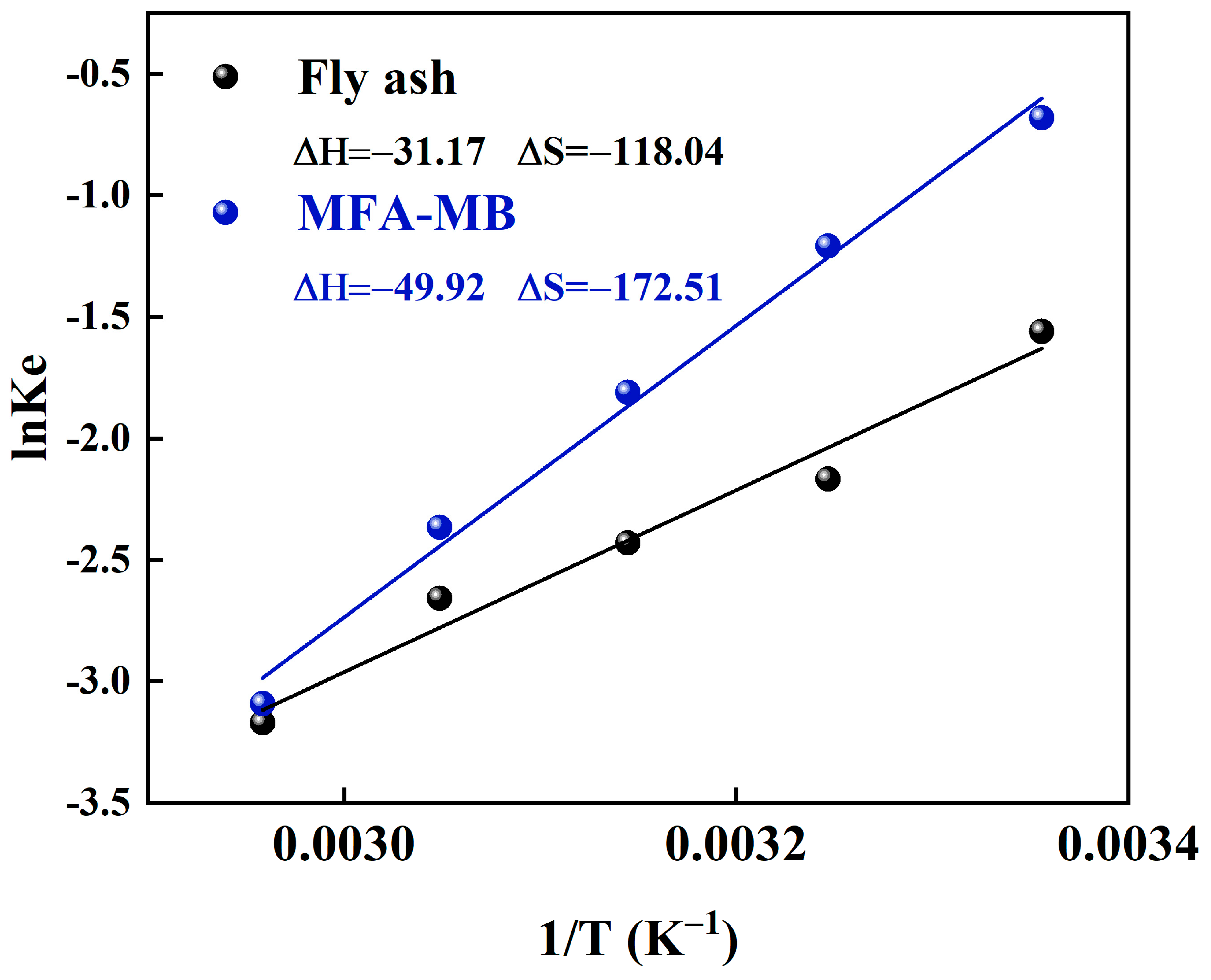
3.2.4. Adsorption Thermodynamics Model

As shown in Figure 9 and Table 2, the ΔH of raw fly ash is −31.17 kJ/mol, whereas that of MFA-MB is −49.92 kJ/mol. Both values are negative, indicating that the adsorption processes are exothermic. The larger absolute value of ΔH for MFA-MB suggests enhanced interaction between Cr(VI) species and the modified geopolymer surface. The ΔS of fly ash is −118.04 J/(mol·K), while that of MFA-MB is −172.51 J/(mol·K). The negative values indicate a decrease in disorder at the solid–liquid interface during adsorption, with adsorbate molecules becoming more orderly arranged on the adsorbent surface. The ΔS of MFA-MB further indicates a more pronounced adsorption process. The positive ΔG values obtained for both fly ash and MFA-MB indicate that the adsorption process was non-spontaneous under the investigated experimental conditions. Moreover, the increase in ΔG with increasing temperature suggests that higher temperatures are unfavorable for Cr(VI) adsorption, which is consistent with the exothermic nature of the adsorption process. Although MFA-MB exhibited enhanced adsorption affinity and capacity toward Cr(VI), the relatively low absolute ΔH values suggest that the adsorption process was still primarily governed by physical adsorption accompanied by surface interaction effects.

4. Discussion

4.1. Natural Growth Data

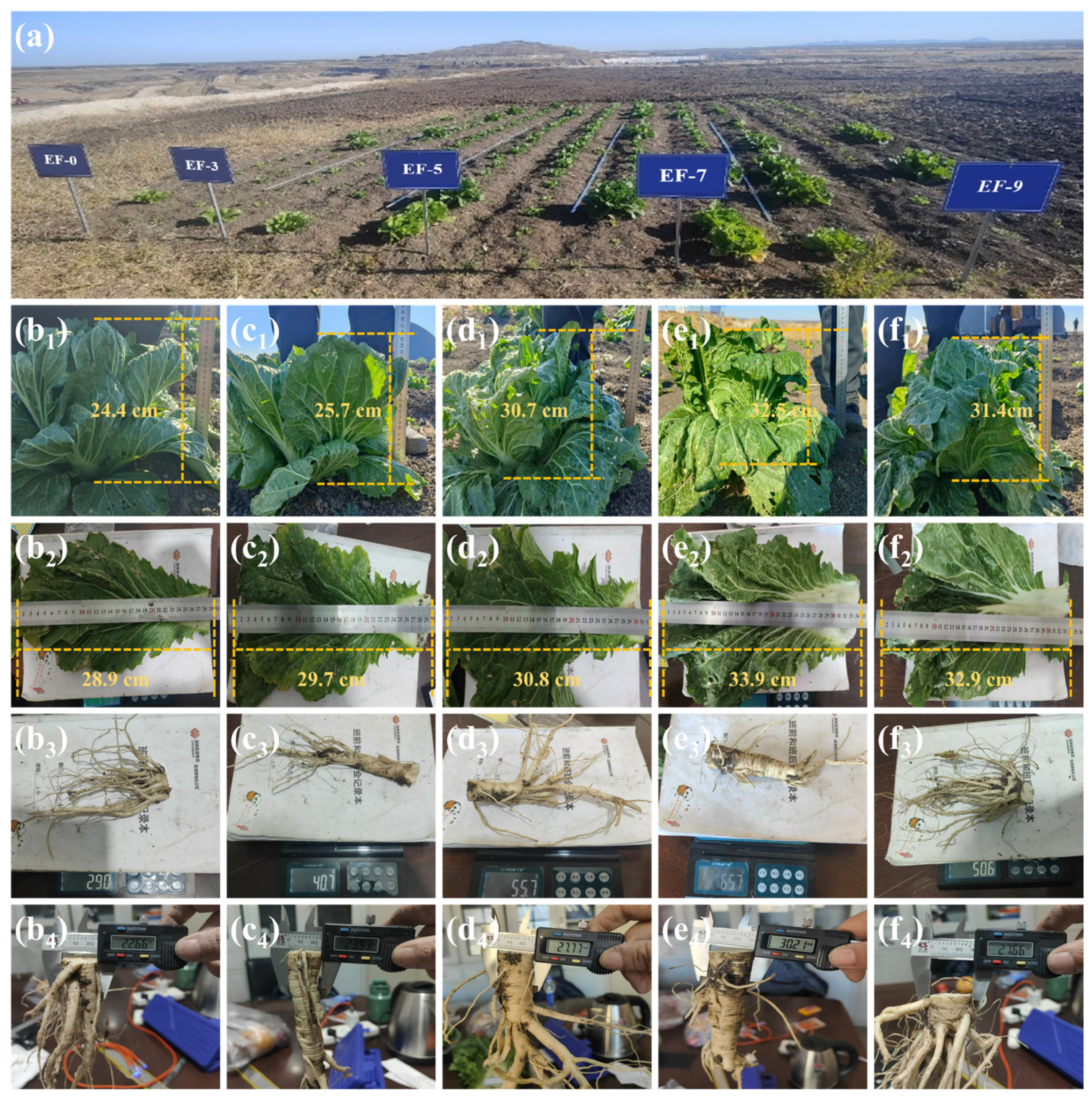
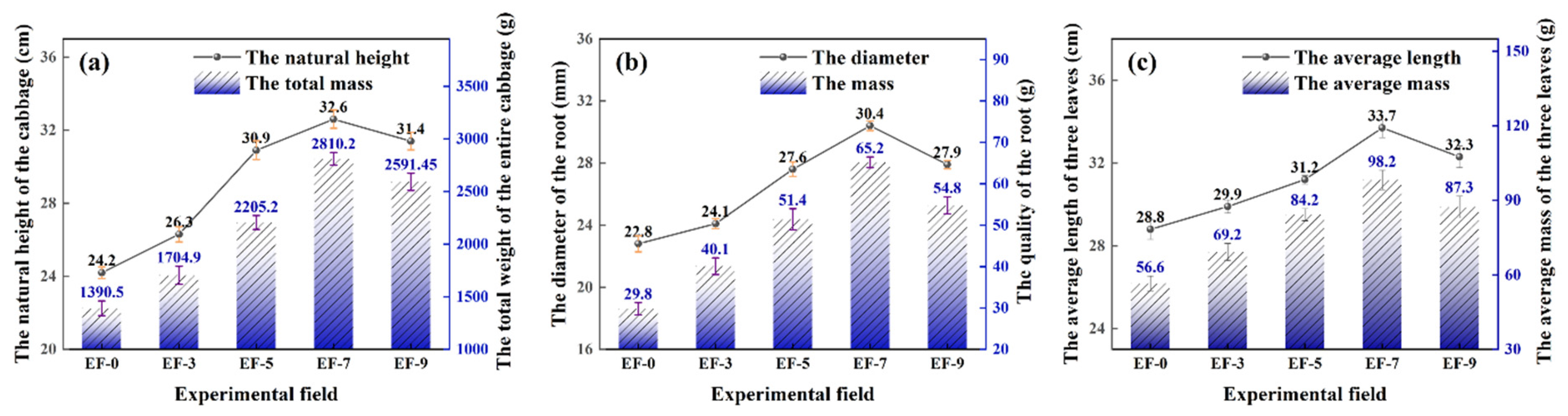
As shown in Figure 10 and Figure 11, the effects of different MFA-MB application rates on Chinese cabbage growth performance initially improved and subsequently declined, indicating the existence of an optimal dosage range. Specifically, when MFA-MB is applied at 7 kg/m2, the plant height, root weight, and leaf weight of cabbage all reach their maximum values, with increases of 34.7%, 118.8%, and 73.5%, respectively, compared with EF-0, indicating this as the optimal application rate. The decline in growth indices in EF-9 may be attributed to soil salt accumulation, ion toxicity, or imbalances in trace elements.

4.2. Cell Structure Analysis

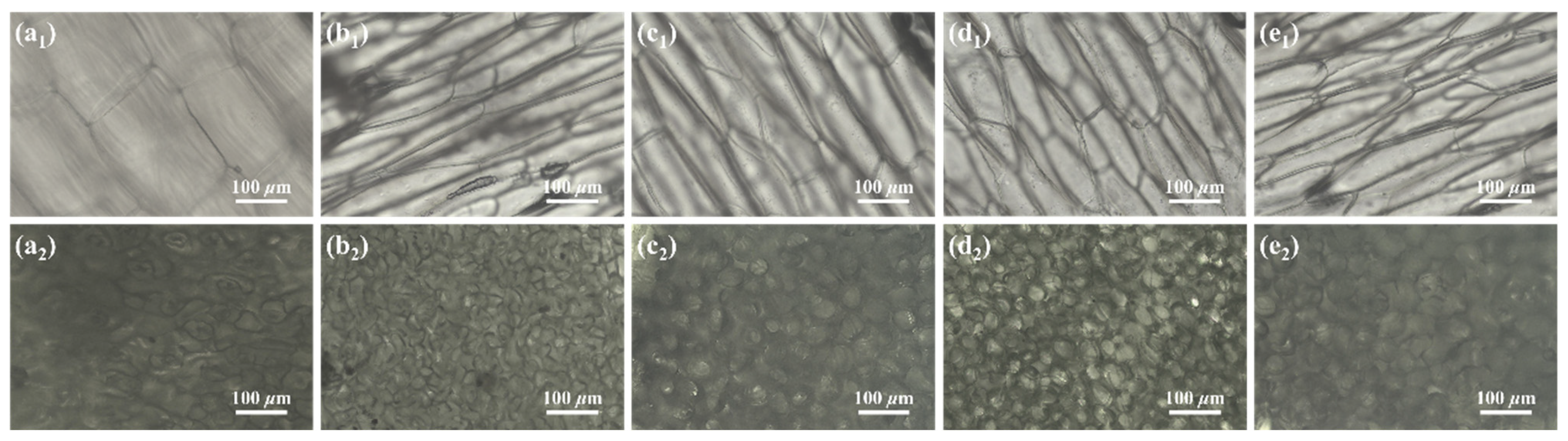
As shown in Figure 12, the Chinese cabbage cells in the EF-0 group are slightly loosely arranged (a1), with some cell boundaries appearing blurred and irregular in shape (a2), indicating mild structural incompleteness. In EF-5, cell boundary clarity is slightly lower than in EF-7 (c1), with somewhat disordered morphology and minor deformation (c2). Cells in the EF-7 group are neatly arranged (d1), with clear boundaries, regular shapes, and uniform sizes (d2), showing no significant breakage, vacuolization, or deformation, indicating optimal cellular integrity. However, at an application rate of 9 kg/m2, cabbage tissue cells exhibit morphological abnormalities, such as irregular thickening of cell walls, plasmolysis, and organelle damage. This may be due to high MFA-MB dosages preferentially affecting the root apical meristem, causing disordered cell arrangement and accelerated sloughing of root cap cells, thereby impairing root development.

4.3. Heavy Metal Ion Content Analysis

As shown in Table 3, with increasing MFA-MB application (from EF-0 to EF-7), the soil Cr concentration decreased from 32.373 mg/kg to 6.252 mg/kg, representing a reduction of 89.3%. According to the Soil Environmental Quality Standard (GB 15618-2018) [34], the Cr limit is 150–250 mg/kg. Although the experimental site falls within this range, the soil Cr content remains relatively high, indicating a residual risk of contamination. The Cr concentration in cabbage roots decreased from 0.145 mg/kg (EF-0) to 0.015 mg/kg (EF-7), and in leaves from 0.081 mg/kg (EF-0) to 0.009 mg/kg (EF-7), indicating restricted Cr mobility. Considering the Cr limit in vegetables is 0.5 mg/kg, these results demonstrate that MFA-MB application substantially inhibits Cr accumulation in both roots and shoots of cabbage.
The present study primarily demonstrates the adsorption capability and short-term remediation potential of MFA-MB toward Cr(VI)-contaminated soil rather than definitive long-term stabilization behavior. Soil physicochemical properties, including pH, conductivity, organic matter content, and cation exchange capacity, may significantly influence Cr(VI) mobility, adsorption behavior, and plant uptake. Therefore, more comprehensive soil characterization and long-term field evaluation should be further investigated in future studies.

4.4. Mechanism of MFA-MB for the Solidification of Cr(VI)

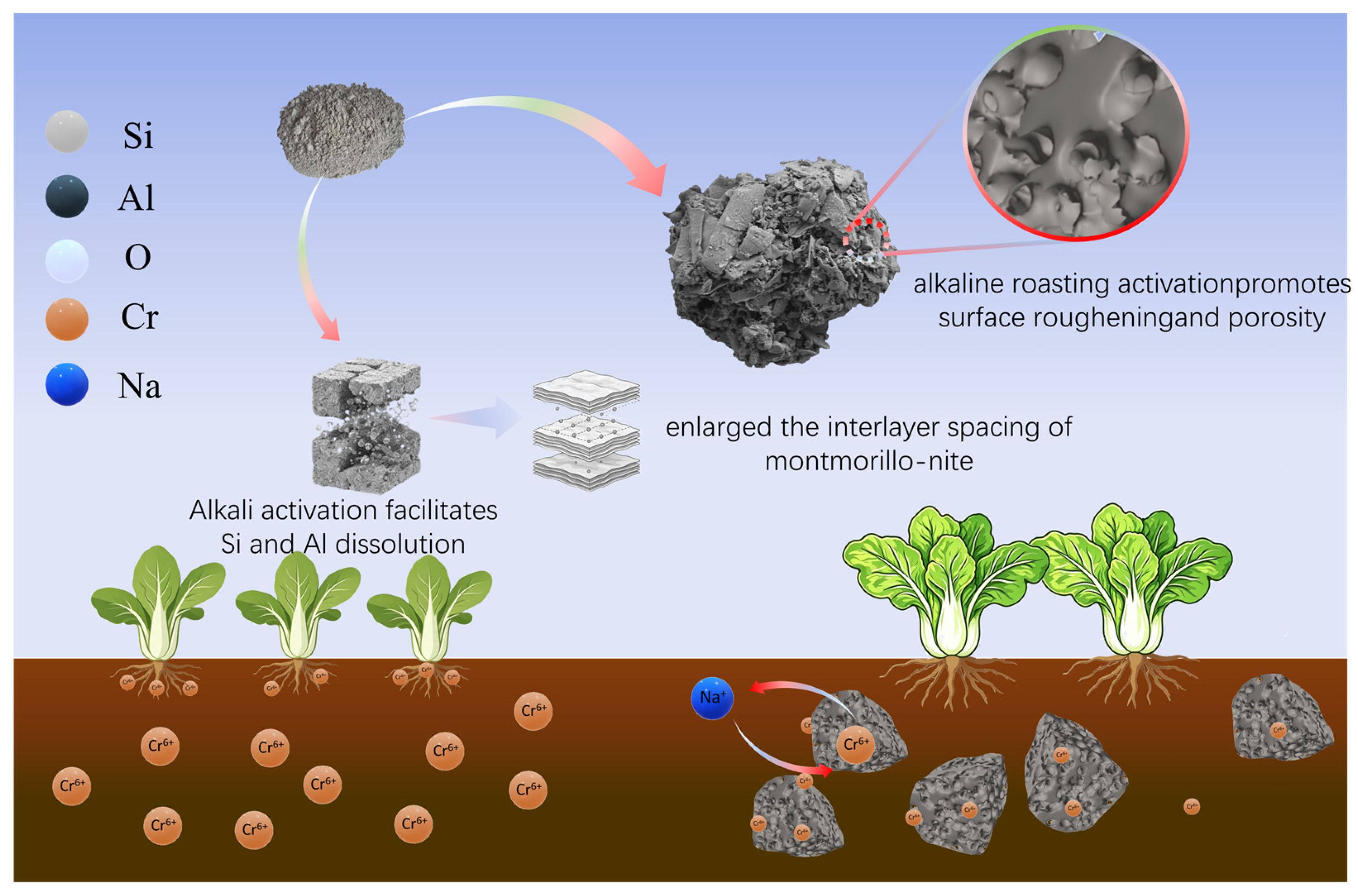
As shown in Figure 13, after alkaline roasting activation, the fly ash surface became significantly rougher and more porous, indicating that the alkaline treatment induced partial destruction of the original vitreous structure and enhanced the exposure of reactive aluminosilicate sites. Meanwhile, alkali activation facilitated the dissolution of Si and Al species, which favors subsequent geopolymerization reactions. Acid modification of bentonite further increased the number of surface active sites and improved its dispersion within the geopolymer matrix. Specifically, acid treatment partially removed exchangeable impurities and enlarged the interlayer spacing of montmorillonite, thereby enhancing the ion-exchange capacity and Cr(VI) adsorption affinity of the material. Compared with individually modified components, the final MFA-MB composite exhibited a denser geopolymer gel structure with a more developed pore network. This confirms that the synergistic effect of alkaline activation and bentonite modification contributes to the enhanced Cr(VI) immobilization performance. In addition, although the thermodynamic analysis suggested that physical adsorption was dominant, the pseudo-second-order kinetic behavior and the relatively high adsorption enthalpy imply that surface complexation, electrostatic interaction, and ion-exchange processes may also participate in Cr(VI) immobilization. Therefore, the adsorption mechanism of MFA-MB is more likely governed by combined physical adsorption and surface interaction effects rather than a purely physical adsorption process.

5. Conclusions

In this study, a fly ash-based geopolymer ecological remediation material was successfully synthesized via alkali calcination activation, bentonite modification, and alkali-activated polycondensation. Structural characterization, adsorption behavior, and soil remediation performance were systematically investigated. The specific investigations are as follows:
Microstructural characterizations (SEM, XRD, FT-IR, XPS, and BET) confirmed that alkali activation destroyed the glassy phase of raw fly ash and induced the formation of a three-dimensional Si–O–Al inorganic polymer network, which significantly increased the specific surface area from 19.473 m2/g to 30.813 m2/g, introduced abundant oxygen-containing functional groups, and created a well-developed mesoporous structure with an average pore diameter of 26.86 nm. Adsorption experiments showed that MFA-MB exhibited superior Cr(VI) removal performance compared with raw fly ash under various conditions (dosage, initial concentration, contact time, temperature, and pH). The adsorption process was well described by the Langmuir isotherm and pseudo-second-order kinetic models. Thermodynamic analysis revealed that the adsorption was an exothermic process, while the positive ΔG values suggested that the adsorption was non-spontaneous under the investigated conditions, with a higher adsorption enthalpy (ΔH = −49.92 kJ/mol) for MFA-MB, indicating enhanced adsorption affinity toward Cr(VI). Plant growth experiments demonstrated that MFA-MB effectively reduced Cr(VI) uptake by Chinese cabbage and promoted plant growth at an optimal dosage of 7 kg/m2. The adsorption mechanism of MFA-MB is more likely governed by combined physical adsorption and surface interaction effects rather than a purely physical adsorption process.
Overall, the prepared fly ash-based geopolymer material provides a promising strategy for the high-value utilization of fly ash and the remediation of Cr(VI)-contaminated soils.

Author Contributions

Conceptualization, B.X.; methodology, Y.L. and C.X.; software, C.W. and H.W.; validation, J.L. and C.X.; formal analysis, B.X.; investigation, L.P.; resources, B.X. and L.P.; data curation, L.P.; writing—original draft preparation, L.P.; writing—review and editing, Y.L.; visualization, Y.L. and H.W.; supervision, Y.L.; project administration, B.X.; funding acquisition, L.P. All authors have read and agreed to the published version of the manuscript.

Funding

This research was funded by the Qinchuangyuan “Scientist + Engineer” Team Development Program of the Shaanxi Provincial Department of Science and Technology, grant number 2024QCY-KXJ-053, and the National Natural Science Foundation of China, grant number 52102144.

Institutional Review Board Statement

Not applicable.

Data Availability Statement

The original contributions presented in the study are included in the article. Further inquiries can be directed to the corresponding author.

Acknowledgments

Thanks to Longgui Peng for his important technical help and the China Energy Group Guoshen Company for the experimental equipment and related materials.

Conflicts of Interest

Longgui Peng was employed by Xi’an University of Science and Technology. Binbin Xu, Chaozhong Wang, Yang Liu, Jia Liu, Changliang Xu, and Heming Wang were employed by the company Guoneng Baoqing Coal Power and Chemical Co., Ltd. The remaining authors declare that the research was conducted in the absence of any commercial or financial relationships that could be construed as potential conflicts of interest.

Abbreviations

The following abbreviations are used in this manuscript:
MFAModified fly ash
MBAcid-modified bentonite
MFA-MBFly ash-based soil amendment
EF-xExperimental Field
CrChromium
AsArsenic
ΔGThe changes in Gibbs free energy
ΔHThe changes in enthalpy
ΔSThe changes in entropy
SEMScanning electron microscopy
EDSEnergy-dispersive X-ray spectroscopy
XRDX-ray diffraction
FT-IRFourier-transform infrared spectroscopy
BETBrunauer–Emmett–Teller
BJHBarret–Joyner–Halenda
XPSX-ray photoelectron spectroscopy
ICP-OESInductively coupled plasma optical emission spectroscopy

References

  1. Valeev, D.; Kondratiev, A. Current state of coal fly ash utilization: Characterization and application. Materials 2022, 16, 27. [Google Scholar] [CrossRef]
  2. Li, Q.; Yang, Y.; Liu, J.; Xin, H.; Chen, J.; Xu, S.; Liu, J.; Hou, X. Present status and prospect of fly ash utilization in China. Energy Res. Manag. 2022, 1, 29–34. [Google Scholar] [CrossRef]
  3. Bu, N.; Liu, X.; Song, S.; Liu, J.; Yang, Q.; Li, R.; Zheng, F.; Yan, L.; Zhen, Q.; Zhang, J. Synthesis of NaY zeolite from coal gangue and its characterization for lead removal from aqueous solution. Adv. Powder Technol. 2020, 31, 2699–2710. [Google Scholar] [CrossRef]
  4. Munyengabe, A.; Kamogelo, L.S.; Ngmenzuma, T.Y.-a.; Banda, M.F. The potential of Helichsryum splendidum (Thunb.) less. for the restoration of sites polluted with coal fly ash. Plants 2024, 13, 2551. [Google Scholar] [CrossRef] [PubMed]
  5. Yu, J.; Bao, J.; Su, Q.; Zhang, W.; Ye, B.; Zhou, X.; Li, H.; Li, X. Stabilization and Remediation of Arsenic-Contaminated Soil: Fly Ash-Based Technology for Industrial Site Restoration. Sustainability 2024, 16, 8132. [Google Scholar] [CrossRef]
  6. Zhang, G. Research on technologies for efficient sorting and comprehensive utilization of power plant fly ash. Fluid Meas. Control 2025, 6, 92–95. [Google Scholar]
  7. Wan, Y.; Liu, J.; Zhuang, Z.; Wang, Q.; Li, H. Heavy metals in agricultural soils: Sources, influencing factors, and remediation strategies. Toxics 2024, 12, 63. [Google Scholar] [CrossRef]
  8. Hu, Y.; You, M.; Liu, G.; Dong, Z. Characteristics and potential ecological risks of heavy metal pollution in surface soil around coal-fired power plant. Environ. Earth Sci. 2021, 80, 566. [Google Scholar] [CrossRef]
  9. Liu, Z.; Fang, Z.; Ding, X. Assessment of heavy metal contamination and health risks in soil at coal-fired power plant ash piles. J. Ecol. Environ. Sci. 2021, 30, 1916–1922. [Google Scholar] [CrossRef]
  10. Itaya, Y.; Kuninishi, K.; Hashimoto, Y. Arsenic, selenium, and chromium speciation in fly ash. J. Mater. Cycles Waste Manag. 2022, 24, 250–258. [Google Scholar] [CrossRef]
  11. Lei, C.; Chen, T.; Zhang, Q.Y.; Long, L.S.; Chen, Z.; Fu, Z.P. Remediation of lead polluted soil by active silicate material prepared from coal fly ash. Ecotoxicol. Environ. Saf. 2020, 206, 111409. [Google Scholar] [CrossRef]
  12. Gu, F.; Zhang, J.; Shen, Z.; Li, Y.; Ji, R.; Li, W.; Zhang, L.; Han, J.; Xue, J.; Cheng, H. A review for recent advances on soil washing remediation technologies. Bull. Environ. Contam. Toxicol. 2022, 109, 651–658. [Google Scholar] [CrossRef]
  13. Li, W.; Zou, P. Research status and progress of fly ash adsorption of heavy metals in wastewater. Ind. Water Treat. 2022, 42, 46–55. [Google Scholar] [CrossRef]
  14. Feng, X.; Yan, S.; Huang, K.; Ren, X.; Du, X.; Xing, P. Preparation and adsorption properties of fly ash-slag based geopolymer particle adsorbent. J. Mater. Metall. 2023, 22, 152–157. [Google Scholar] [CrossRef]
  15. Qiu, J.; Zhao, Y.; Xing, J.; Sun, X. Fly ash-based geopolymer as a potential adsorbent for Cr(VI) removal. Desalin. Water Treat. 2017, 70, 201–209. [Google Scholar] [CrossRef]
  16. Nikolic, V.; Komljenovic, M.; Dzunuzovic, N.; Ivanovic, T.; Miladinovic, Z. Immobilization of hexavalent chromium by fly ash-based geopolymers. Compos. Part B Eng. 2017, 112, 213–223. [Google Scholar] [CrossRef]
  17. Chen, P.; Wu, J.; Li, L.; Yang, Y.; Cao, J. Modified fly ash as an effect adsorbent for simultaneous removal of heavy metal cations and anions in wastewater. Appl. Surf. Sci. 2023, 624, 157165. [Google Scholar] [CrossRef]
  18. Mao, L.; Wu, M.; Zhu, S.; Wang, X.; Zhang, J.; Qin, Y. Adsorption potential and mechanism of sludge-based activated carbon modified with fly ash for removal of heavy metals. Sustainability 2024, 16, 2972. [Google Scholar] [CrossRef]
  19. Zhao, T.; Hai, D.; Bi, Z.; Wang, J.; Wang, T.; Liu, J.; Zhang, Y. Mechanochemically modified fly ash for adsorption of flue gas heavy metals in MSW incineration plants. Fuel 2026, 405, 136615. [Google Scholar] [CrossRef]
  20. Xie, N.; Zhang, J.; Liu, P. Preparation of Fly Ash/Bentonite Particles and Pb2+ Adsorption Experiments. Acta Mineral. Sin. 2020, 40, 41–46. [Google Scholar] [CrossRef]
  21. Doušová, B.; Pilař, L.; Koloušek, D.; Bedrnová, E.; Lhotka, M.; Maxová, K. Adsorption properties of fly ash–clay composites from Central European localities: Case study. Appl. Clay Sci. 2024, 255, 107395. [Google Scholar] [CrossRef]
  22. Liu, J.; Wang, Y.; Fang, Y.; Mwamulima, T.; Song, S.; Peng, C. Removal of crystal violet and methylene blue from aqueous solutions using the fly ash-based adsorbent material-supported zero-valent iron. J. Mol. Liq. 2018, 250, 468–476. [Google Scholar] [CrossRef]
  23. Zhang, B. Study on the Phosphorus Removal Performance and Mechanism of Iron-Modified Peanut Shell Biochar. Master’s Thesis, China University of Geosciences, Beijing, China, 2018. [Google Scholar]
  24. Wang, R. Preparation of Poly Aluminum Chloride-Loaded Porous Carbon and Study on Its Mechanism for Passivating Pb2+-Contaminated Soil. Master’s Thesis, Xi’an University of Science and Technology, Xi’an, China, 2023. [Google Scholar]
  25. Li, X. Preparation of Novel Polymer-Based Composite Adsorbents and Study of Their Adsorption Performance for Heavy Metal Contaminants in Water. Ph.D. Thesis, Lanzhou University, Lanzhou, China, 2013. [Google Scholar]
  26. Sharma, A.; Srivastava, K.; Devra, V.; Rani, A. Modification in properties of fly ash through mechanical and chemical activation. Chem. Sci. Int. J. 2012, 2, 2052. [Google Scholar] [CrossRef]
  27. Koshy, N.; Singh, D.N. Textural alterations in coal fly ash due to alkali activation. J. Mater. Civ. Eng. 2016, 28, 04016126. [Google Scholar] [CrossRef]
  28. Pal, S.K.; Ghosh, A. Volume change behavior of fly ash–montmorillonite clay mixtures. Int. J. Geomech. 2014, 14, 59–68. [Google Scholar] [CrossRef]
  29. Wu, Y.; Zhou, Y.; Zhang, S. Study on process parameters for activating fly ash with alkali by calcination. Inorg. Salt Ind. 2012, 44, 45–47. [Google Scholar]
  30. Zhao, W.; Zeng, W.; Xi, H.; Yu, X. Photocatalytic degradation of gas-phase toluene over CuO loaded BiVO4 hollow nanospheres under visible-light irradiation. Acta Phys.-Chim. Sin. 2014, 30, 761–767. [Google Scholar] [CrossRef]
  31. Luo, Z.; Gao, M.; Ye, Y.; Liu, Y.; Lu, L. Characterization of acid-treated bentonites modified with bis-quaternary ammonium salts and their catalytic activity in esterification reaction. J. Chem. Eng. Chin. Univ. 2015, 29, 116–121. [Google Scholar] [CrossRef]
  32. Jiang, X.; Fan, W.; Li, C.; Wang, Y.; Bai, J.; Yang, H.; Liu, X. Removal of Cr(VI) from wastewater by a two-step method of oxalic acid reduction-modified fly ash adsorption. RSC Adv. 2019, 9, 33949. [Google Scholar] [CrossRef]
  33. Ghasemi, Z.; Sourinejad, I.; Kazemian, H.; Hadavifar, M.; Rohani, S.; Younesi, H. Kinetics and thermodynamic studies of Cr(VI) adsorption using environmental friendly multifunctional zeolites synthesized from coal fly ash under mild conditions. Chem. Eng. Commun. 2020, 207, 808–825. [Google Scholar] [CrossRef]
  34. GB 15618-2018; Soil Environmental Quality—Risk Control Standard for Soil Contamination of Agricultural Land. Ministry of Ecology and Environment of the People’s Republic of China: Beijing, China, 2018.
Figure 1. Preparation process of MFA-MB.
Jcs 10 00293 g001
Figure 2. SEM images of fly ash (a,b), MFA-MB (c,d) and SEM-EDS of MFA-MB (e,f).
Jcs 10 00293 g002
Figure 3. X-ray diffraction spectrogram (a), FTIR patterns (b) of Fly ash and MFA-MB.
Jcs 10 00293 g003
Figure 4. BET (a) and BJH (b) of Fly ash and MFA-MB.
Jcs 10 00293 g004
Figure 5. XPS spectra of Fly ash (a) and MFA-MB (b).
Jcs 10 00293 g005
Figure 6. The effects of different amounts of adsorbents (a), initial concentrations (b), time (c), temperature (d) and pH (e) on the adsorption performance of Fly ash and MFA-MB. Error bars represent standard deviations obtained from triplicate experiments.
Jcs 10 00293 g006
Figure 7. Langmuir (a), Freundlich (b) models for Fly ash and MFA-MB adsorption of Cr(VI).
Jcs 10 00293 g007
Figure 8. Pseudo-first-order (a) and pseudo-second-order kinetics (b) models for Fly ash and MFA-MB adsorption of Cr(VI).
Jcs 10 00293 g008
Figure 9. Thermodynamic model of adsorption of hexavalent chromium by fly ash and MFA-MB.
Jcs 10 00293 g009
Figure 10. Actual planting situation, from left to right, they are EF-0 to EF-9 in sequence (a) and data collection records: EF-0 (b1b4), EF-3 (c1c4), EF-5 (d1d4), EF-7 (e1e4), EF-9 (f1f4).
Jcs 10 00293 g010
Figure 11. Natural height and mass of the cabbage plant (a), diameter and mass of the roots (b), length and mass of three leaves (c). Error bars represent standard deviations (n = 3).
Jcs 10 00293 g011
Figure 12. Microscopic image of Chinese cabbage tissue: EF-0 (a1a2), EF-3 (b1b2), EF-5 (c1c2), EF-7 (d1d2), EF-9 (e1e2).
Jcs 10 00293 g012
Figure 13. The solidification mechanism of Cr(VI) ions in soil by MFA-MB.
Jcs 10 00293 g013
Table 1. The adsorption equilibrium data that were fitted using the Langmuir model and the Freundlich model.
ModelParameterFly AshMFA-MBR2
Langmuirqm (mg/g)13.4128.670.991
LangmuirKL (L/mg)0.01130.01500.988
FreundlichKF2.117.360.982
Freundlichn3.004.290.985
Table 2. Detailed parameters of ΔG.
Temperature (K)Fly Ash (kJ/mol)MFA-MB (kJ/mol)
298.154.0389361.490782
308.155.2194123.215872
318.156.3998024.940962
328.157.5801926.666052
338.158.7605828.391142
Table 3. The concentrations of Cr(VI) in the soil, roots and leaves of Chinese cabbage plants.
EF-0EF-3EF-5EF-7EF-9
Cr(VI)Soil (mg/kg)32.37325.31012.3416.2523.461
Root (mg/kg)0.1450.0960.0440.0150.004
Leaf (mg/kg)0.0810.0470.0200.0090.002
Disclaimer/Publisher’s Note: The statements, opinions and data contained in all publications are solely those of the individual author(s) and contributor(s) and not of MDPI and/or the editor(s). MDPI and/or the editor(s) disclaim responsibility for any injury to people or property resulting from any ideas, methods, instructions or products referred to in the content.