1. Introduction
The increasing demand for sustainable energy systems and the global effort to reduce greenhouse gas emissions have significantly accelerated the development of renewable energy technologies, particularly wind energy [
1,
2,
3,
4]. Wind turbines have become one of the most widely adopted clean energy conversion systems due to their scalability, cost-effectiveness, and rapid technological advancement [
5,
6,
7,
8]. As the installed capacity of wind energy systems continues to grow worldwide, improving cost efficiency and reducing the environmental impact of wind turbine systems have become increasingly important [
9,
10,
11,
12,
13,
14].
Improving cost efficiency and reducing environmental impact in wind turbine systems are closely linked to material selection, which directly influences both manufacturing processes and overall lifecycle performance [
15,
16]. Among the main turbine components, wind turbine blades have been the primary focus of material innovation, where composite materials—particularly fiber-reinforced polymers (FRPs)—have become widely used due to their high strength-to-weight ratio and favorable fatigue performance [
17,
18,
19,
20,
21,
22,
23]. These systems are predominantly based on thermoset resin matrices, which, despite their mechanical advantages, present significant challenges in terms of recyclability and are associated with relatively high carbon emissions during production [
24,
25,
26,
27]. These limitations have motivated the exploration of alternative material systems for more sustainable wind energy applications. In this context, Ciftci et al. [
28] demonstrated that recycled low-density polyethylene (LDPE) reinforced with carbon bars can be effectively utilized as a structural material in wind turbine blade applications, highlighting the potential of thermoplastic-based composite systems as viable alternatives to conventional materials.
While these developments demonstrate the feasibility of alternative material systems in wind turbine blades, improving the sustainability of blade materials alone is not sufficient to minimize the overall environmental impact of wind turbine systems. Previous studies (e.g., [
16,
29,
30,
31]) indicate that environmental impacts are distributed across different turbine components, and tower systems can also contribute significantly to the overall footprint [
32]. In addition, some studies (e.g., [
15,
33,
34,
35]) have identified tower structures as major contributors to environmental impacts in wind turbine systems. These findings suggest that material improvements should not be limited to blade systems and that wind turbine towers also represent a critical component for achieving more sustainable wind energy systems.
Wind turbine towers are traditionally constructed using steel tubular systems due to their well-established structural performance, ease of fabrication, and reliability [
34,
36,
37]. However, as turbine hub heights and capacities continue to increase, steel towers face several challenges, including high self-weight, transportation limitations, and increased material consumption, all of which contribute to higher costs and environmental impact [
29,
33]. To overcome these limitations, alternative tower concepts such as reinforced concrete towers and hybrid steel–concrete systems have been developed [
38]. Despite these developments, these systems still rely on conventional material systems and are associated with notable environmental impact and construction-related challenges, indicating the need for alternative material approaches. Moreover, the exploration of fundamentally different, lightweight, and recyclable material systems for primary load-bearing tower applications remains limited. This gap highlights the need for innovative structural materials that can reduce weight, improve sustainability, and maintain adequate structural performance in wind turbine tower systems.
In this study, a novel wind turbine tower system based on reinforced recycled thermoplastic material is proposed as an alternative to conventional steel tower structures. The primary objective of this study is to develop and evaluate a new structural system with a focus on its mechanical behavior, structural feasibility, and applicability in real-world conditions, rather than to directly quantify its environmental benefits. To achieve this, the mechanical behavior of the developed composite material is experimentally investigated, and its structural performance is evaluated through bending-dominated behavior representative of tower response. This approach demonstrates that the proposed material system can be designed and utilized as a load-bearing structural component, enabling future studies to further assess its environmental and lifecycle performance. The findings of this study contribute to the development of alternative structural systems for wind turbine towers and establish a foundation for future research on lightweight and resource-efficient material applications in renewable energy structures.
2. Materials and Methods
The proposed composite wind turbine tower is composed of two primary materials: a recycled thermoplastic matrix and steel reinforcement bars. The thermoplastic material forms the main structural body of the tower, while the steel reinforcement is incorporated to enhance the load-carrying capacity and govern the majority of the tensile response of the system.
The recycled thermoplastic material used in this study is based on low-density polyethylene (LDPE) obtained from post-consumer plastic waste. This material was selected because of its low density, ease of processing, and potential for reuse in structural applications with reduced environmental impact. However, due to its relatively low stiffness and strength compared with conventional structural materials, it is not suitable for demanding applications such as wind turbine towers without additional reinforcement.
The recycled LDPE used in this study was obtained from post-production sources. According to the supplier data, the material has a melt flow index (MFI) of approximately 1.68 g/10 min, measured at 230 °C under a standard load of 2.16 kg, and a density of approximately 0.93 g/cm
3 [
39]. Due to its recycled nature, the material does not correspond to a strictly controlled commercial grade and may exhibit some variability in its properties.
To improve its structural performance, deformed steel reinforcement bars (i.e., ribbed steel bars typically used in reinforced concrete applications) were embedded within the thermoplastic matrix to enhance the load-carrying capacity of the composite system. In this configuration, the steel bars act as internal reinforcement rather than independent test specimens, primarily resisting tensile forces, while the thermoplastic matrix contributes to compressive resistance and overall stability. Additionally, the composite specimens were manufactured through a thermal molding process, in which recycled thermoplastic granules were placed into molds containing pre-positioned steel reinforcement, as described in detail in
Section 2.4.
The mechanical properties of the recycled thermoplastic material were determined experimentally within the scope of this study. In contrast, the mechanical properties of the steel reinforcement were not experimentally characterized, since they are well established and widely reported in the literature. Therefore, literature-based values were adopted for the steel material in analytical modeling.
2.1. Mechanical Characterization of Recycled Thermoplastic
2.1.1. Compression Tests of Thermoplastic Material
Compression tests were conducted to determine the mechanical behavior of the recycled thermoplastic material in accordance with ASTM D695-15 [
40]. Prismatic specimens with nominal dimensions of 12.7 mm × 12.7 mm × 25.4 mm were prepared as recommended by the standard. A total of five specimens were tested to ensure repeatability.
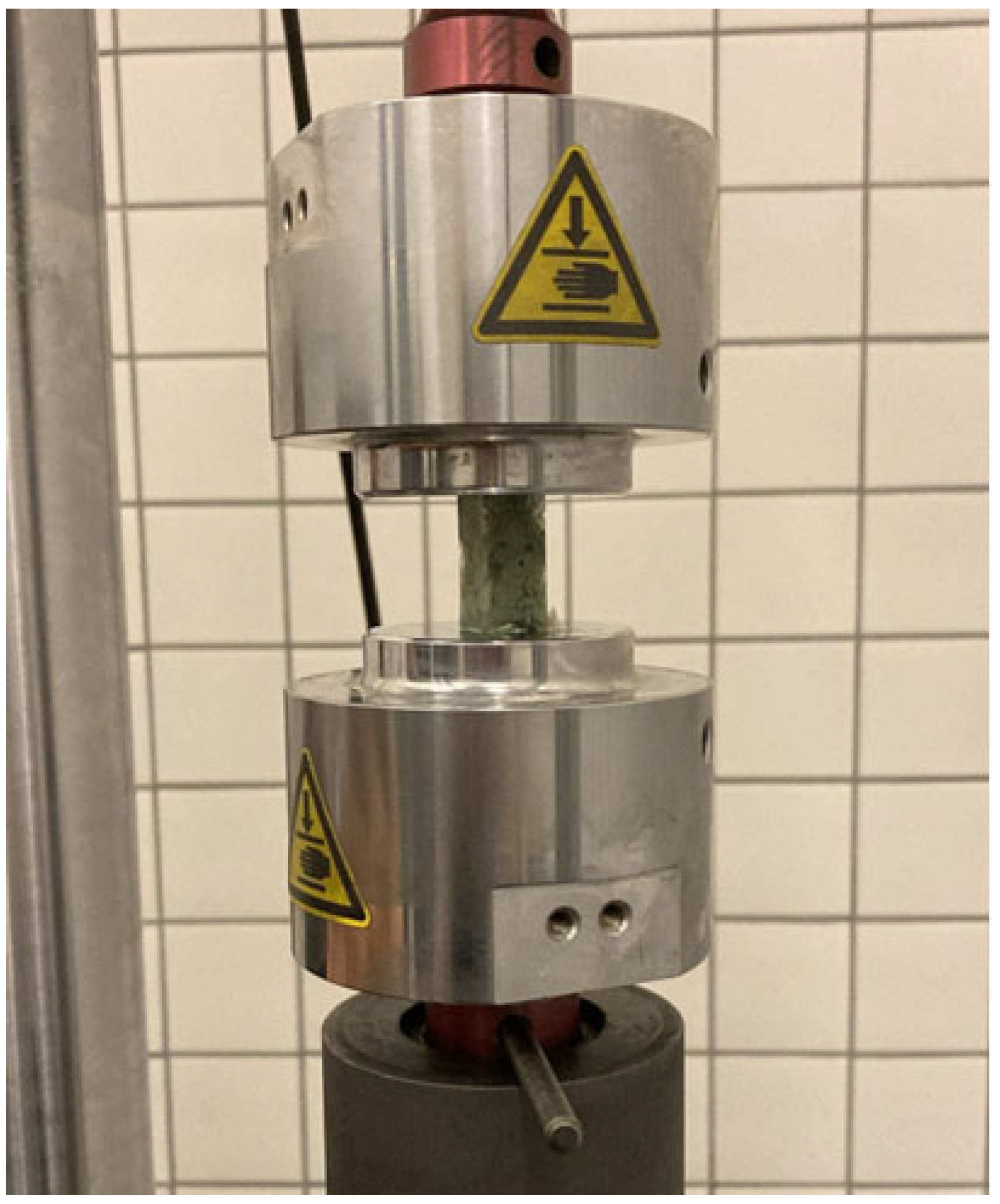
The experimental setup is shown in
Figure 1. The specimens were placed between the loading platens of an Instron universal testing machine (Instron, Norwood, MA, USA) and subjected to displacement-controlled loading. The compression tests were conducted under displacement-controlled loading at a constant loading rate of 1.3 mm/min, in accordance with ASTM D695-15. All tests were performed under ambient laboratory conditions (approximately 28 °C). Care was taken to ensure proper alignment of the specimens to minimize eccentric loading effects. The applied load and corresponding displacement values were recorded throughout the tests, from which the compressive stress–strain responses were obtained. Strain values were calculated based on crosshead displacement measurements. Therefore, the obtained strain values represent global deformations and may include the effects of machine compliance, rather than true local material strains. Strain values were obtained from crosshead displacement, which may include machine compliance effects and introduce some uncertainty in the estimation of the elastic modulus. However, this approach is commonly adopted in standard polymer testing and is considered sufficient for obtaining representative engineering properties for structural analysis.
2.1.2. Tensile Tests of Thermoplastic Material
Tensile tests were conducted to evaluate the mechanical behavior of the recycled thermoplastic material in accordance with ASTM D638-14 [
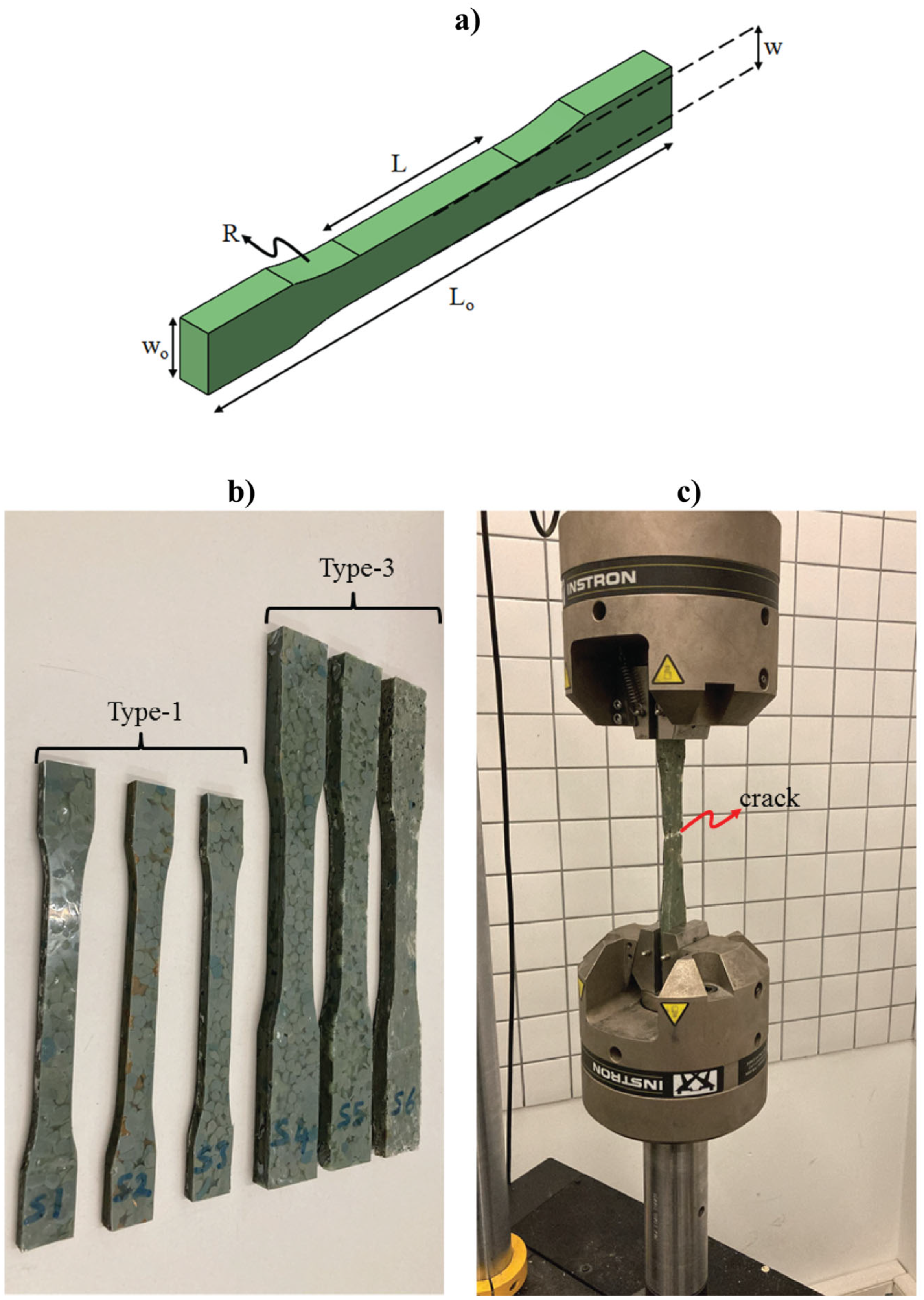
41]. Dog-bone-shaped specimens were prepared in accordance with the standard, considering both Type I and Type III geometries. The geometrical characteristics and dimensions of the specimens are presented in
Figure 2a, while the manufactured specimens are shown in
Figure 2b. The experimental setup is illustrated in
Figure 2c. The tensile tests were conducted under displacement-controlled loading at a constant loading rate of 5 mm/min, in accordance with ASTM D638-14. All tests were performed under ambient laboratory conditions (approximately 28 °C). A total of six specimens were tested, including three Type I and three Type III specimens. The specimens were mounted in an Instron universal testing machine and subjected to displacement-controlled loading, and load–displacement data were continuously recorded until failure.
Strain values were calculated based on crosshead displacement measurements. Therefore, the obtained strain values represent global deformations and may include the effects of machine compliance, rather than true local material strains.
2.2. Temperature-Dependent Behavior
To investigate the temperature-dependent behavior of the recycled thermoplastic material, both field-based and laboratory-controlled studies were conducted.
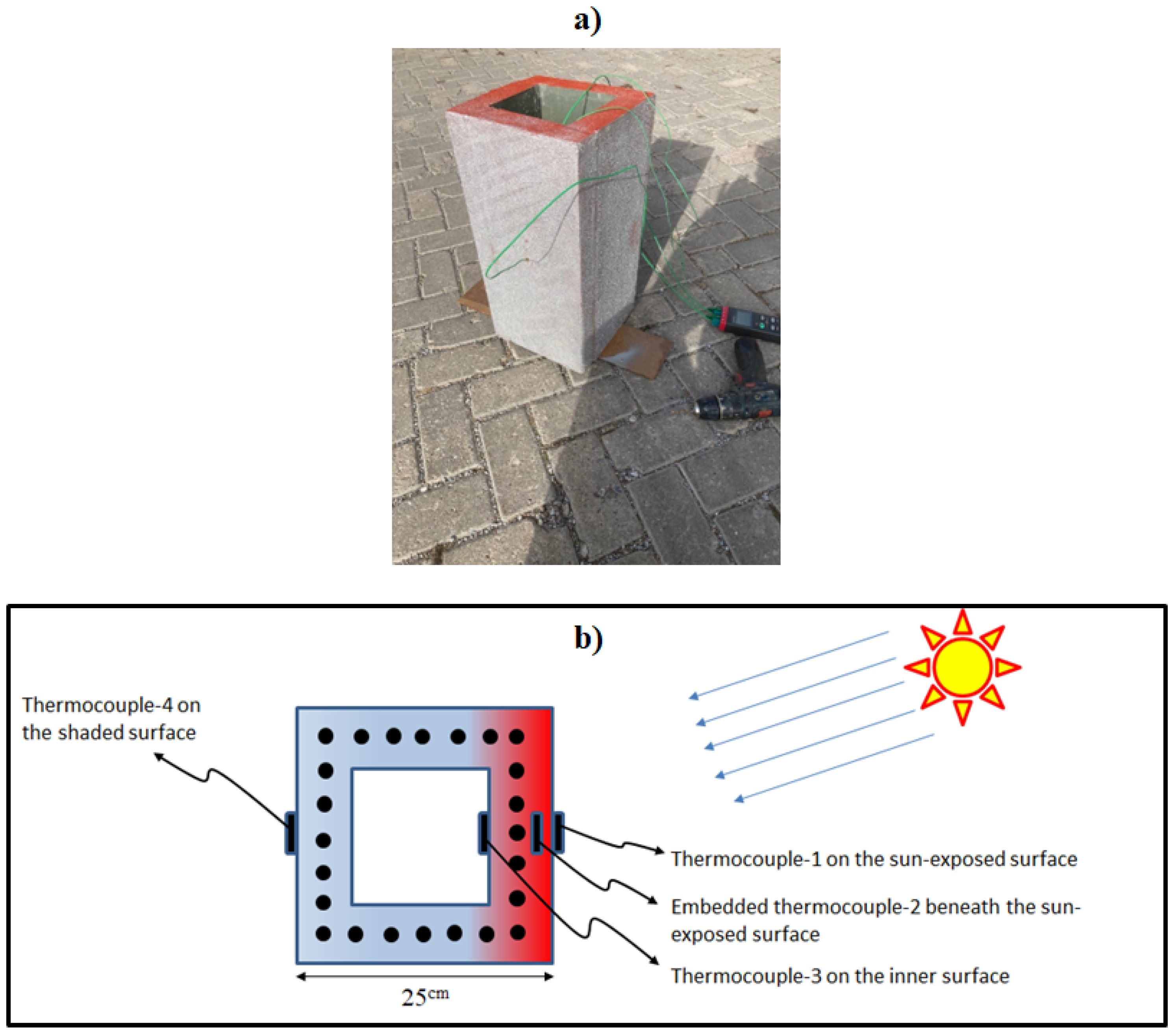
As shown in
Figure 3, a representative thermoplastic specimen with cross-sectional dimensions similar to the proposed composite tower, but with a reduced length of approximately 0.5 m, was exposed to outdoor environmental conditions. The specimen was subjected to solar radiation throughout the day, and temperature distributions at different locations along the cross-section were monitored. The locations of the thermocouples (SagmaTek Measurement Instruments Industry Co., Ankara, Turkey) used for temperature measurements are illustrated in
Figure 3b, providing detailed information on the spatial distribution of the recorded temperatures.
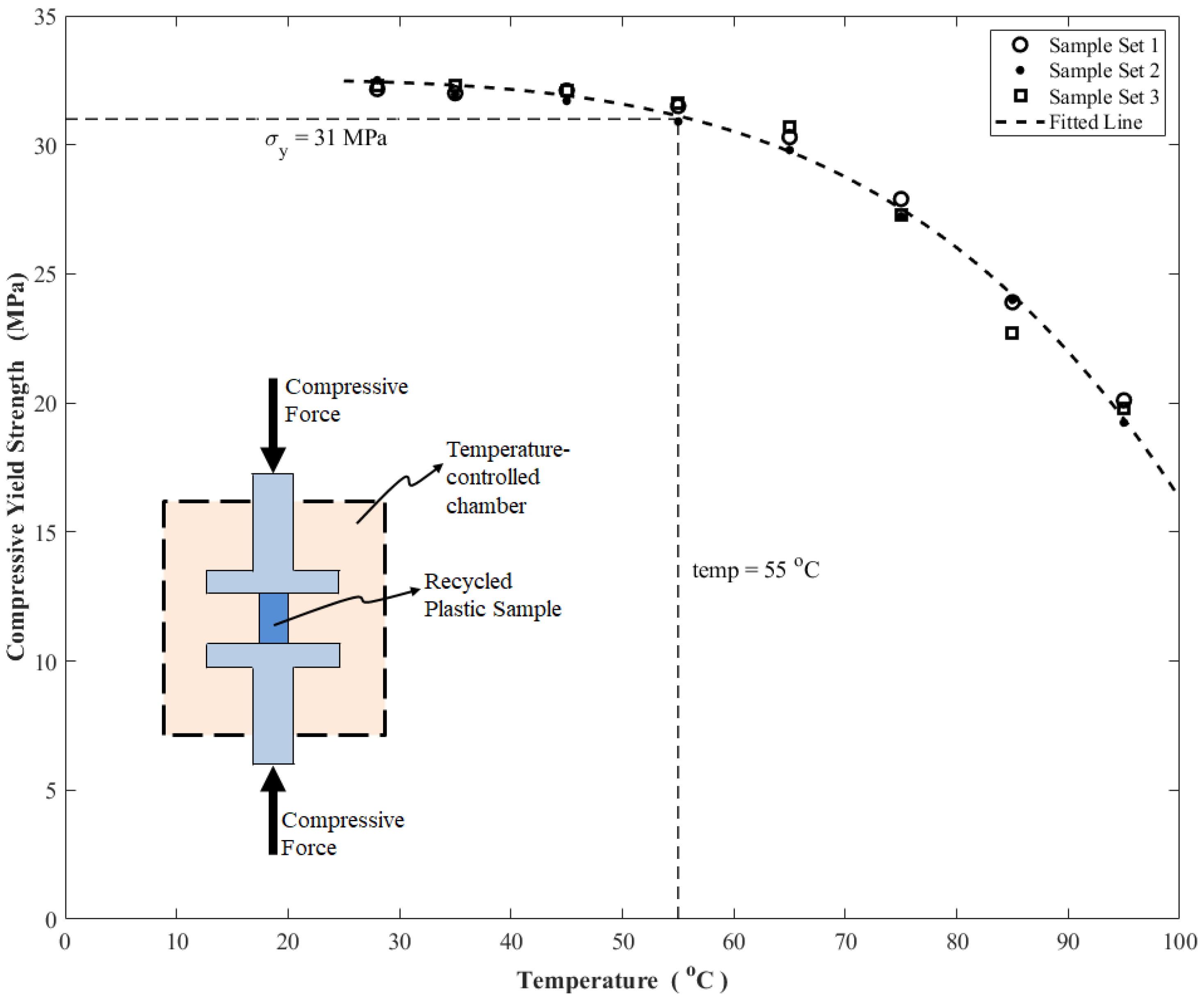
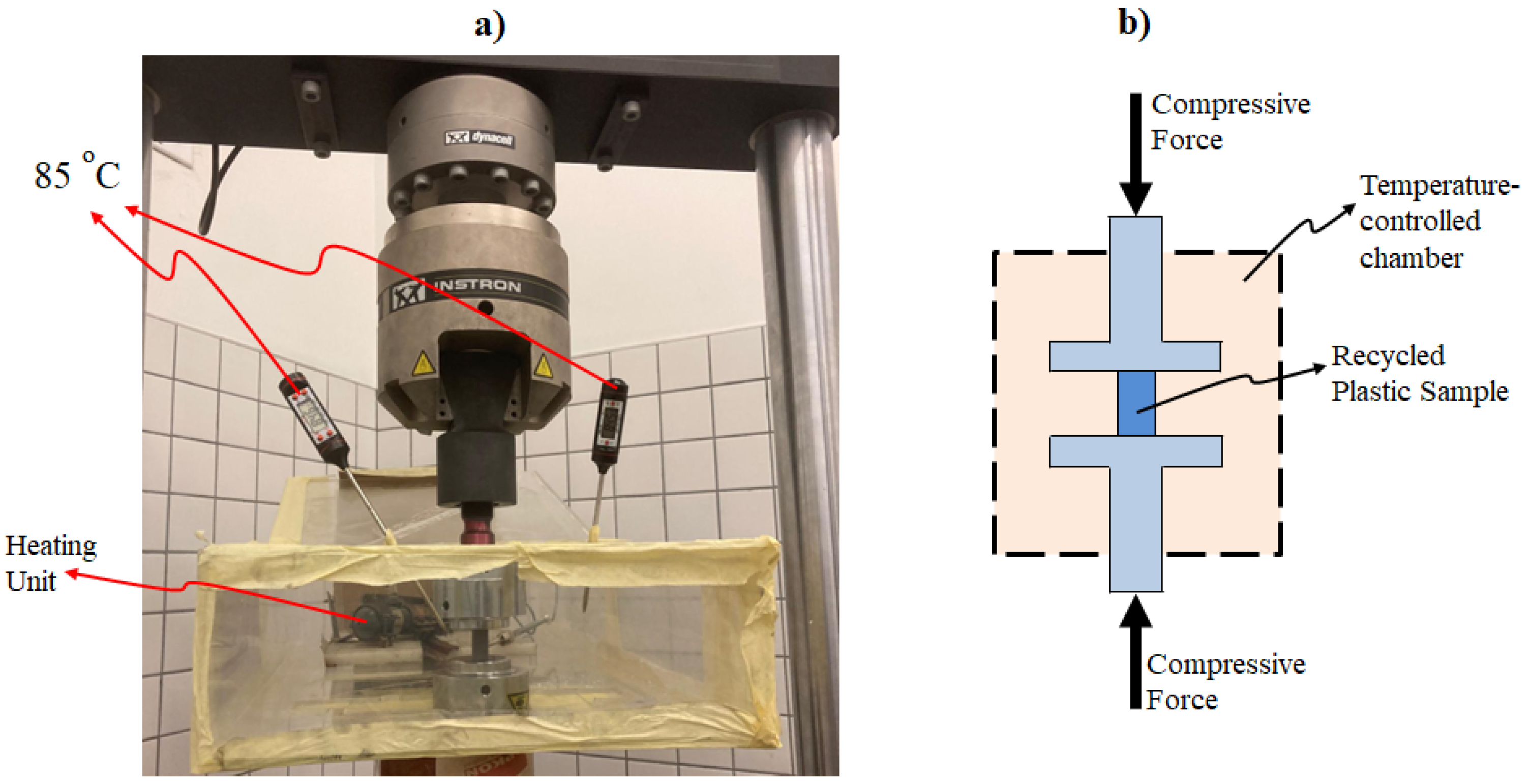
Although the field measurements provided insight into the temperature variations that may occur under outdoor conditions, the compression tests were intentionally conducted over a wider temperature range to comprehensively evaluate the material behavior. As illustrated in
Figure 4, thermoplastic specimens were tested at seven different temperature levels: 35 °C, 45 °C, 55 °C, 65 °C, 75 °C, 85 °C, and 95 °C. For each temperature level, three specimens were tested to ensure the repeatability and consistency of the experimental results, resulting in a total of 21 compression tests.
All compression tests were performed using the same specimen geometry described in
Section 2.1.1. Prior to testing, the specimens were placed inside a temperature-controlled chamber and maintained at the target temperature for a sufficient duration to ensure thermal equilibrium within the specimen. Following this conditioning process, the specimens were subjected to displacement-controlled loading under constant temperature conditions. Load–displacement data were recorded during testing to obtain the corresponding compressive responses at each temperature level.
Prior to testing, the specimens were maintained at the target temperature for approximately 3 h to ensure thermal equilibrium throughout the material. This duration was considered sufficient due to the relatively small specimen dimensions (12.7 × 12.7 × 25.4 mm), which allows the specimen to reach a uniform temperature distribution within a relatively short period. Moreover, this approach is consistent with the intended application, where wind turbine tower components are exposed to elevated temperatures over limited durations during daily solar heating cycles.
In the proposed composite system, the section is doubly reinforced, and the overall flexural response is governed primarily by the steel reinforcement in both tension and compression regions. The thermoplastic material mainly acts as a matrix and contributes to load sharing. Therefore, the temperature-dependent behavior was investigated under compression, as the available results indicate only a limited sensitivity to temperature and the expected influence on the tensile response is not considered critical for the overall structural behavior of the proposed system.
2.3. Analytical Modeling of Composite Section
The flexural response of the steel-reinforced recycled thermoplastic composite section was evaluated using a transformed-section approach. In this method, the steel reinforcement was converted into an equivalent thermoplastic area through the modular ratio, allowing the composite section to be analyzed as a homogeneous transformed section under linear elastic bending. The analysis was based on classical beam theory, assuming linear elastic behavior, perfect bond between the thermoplastic matrix and steel reinforcement, and that plane sections remain plane after bending.
The composite section consists of a thermoplastic matrix with a rectangular cross-section of width
and height
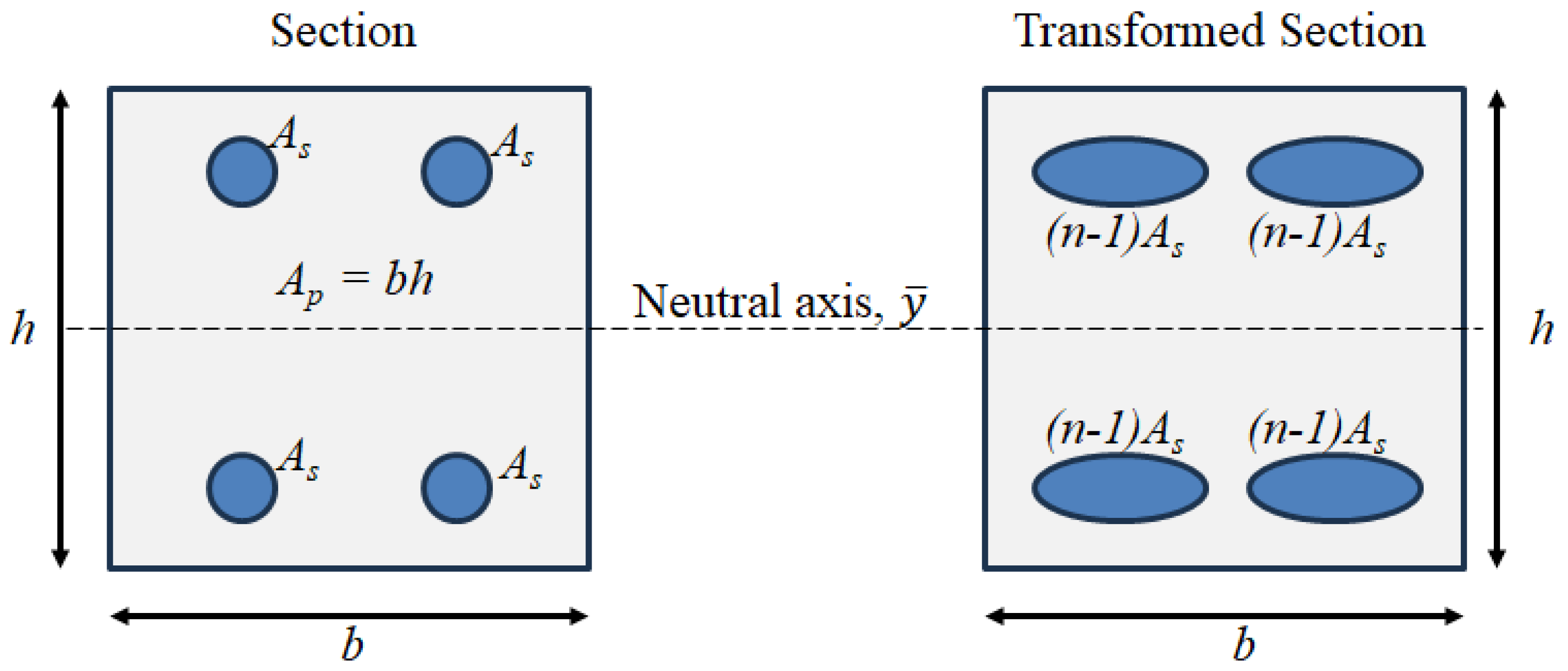
, reinforced by longitudinal steel bars. The idealized transformed section used in the analytical model is illustrated in
Figure 5, where the steel reinforcement is converted into an equivalent thermoplastic area through the modular ratio, which was defined as
Using the transformed-section method, each steel bar was replaced by an equivalent additional area
, where
is the cross-sectional area of one reinforcing bar:
The transformed area of the composite section was then written as
where
and
is the total number of reinforcing bars.
The neutral axis location of the transformed section was obtained from the first moment of area:
where
is the centroid of the thermoplastic section and
is the vertical coordinate of the
-th reinforcing bar.
After determining the neutral axis, the second moment of area of the transformed section was calculated as
where
and
The flexural capacity was determined by checking the bending moment corresponding to the yield or limiting stress of each material component. For the thermoplastic material, separate limiting stresses were considered in compression and tension, denoted by
and
, respectively. The corresponding yield moments were expressed as
where
For each reinforcing bar, the bending moment corresponding to steel yielding was calculated as
where
is the steel yield stress.
The governing flexural capacity of the section was taken as the minimum of all candidate moments:
For the three-point bending configuration used in the beam tests, the corresponding yield load was obtained from static equilibrium as
where
is the span length.
Once the governing moment was determined, the stresses in the reinforcing bars were calculated from the transformed-section bending relation:
Average steel stresses were also evaluated separately for the top and bottom reinforcement layers. Similarly, the thermoplastic stresses at the top and bottom surfaces were calculated as
This formulation allowed the flexural behavior of the composite section to be evaluated by identifying the first governing material limit, whether associated with thermoplastic compression, thermoplastic tension, or yielding of the steel reinforcement. The predictions obtained from this analytical model are subsequently compared with the experimental results from beam tests (see
Section 2.4) to assess its accuracy and applicability.
2.4. Experimental Beam Tests for the Validation of Analytical Model
To validate the proposed analytical model, three beam specimens were produced and tested under bending. Each specimen had a length of 500 mm and a cross-sectional dimension of 60 mm × 60 mm.
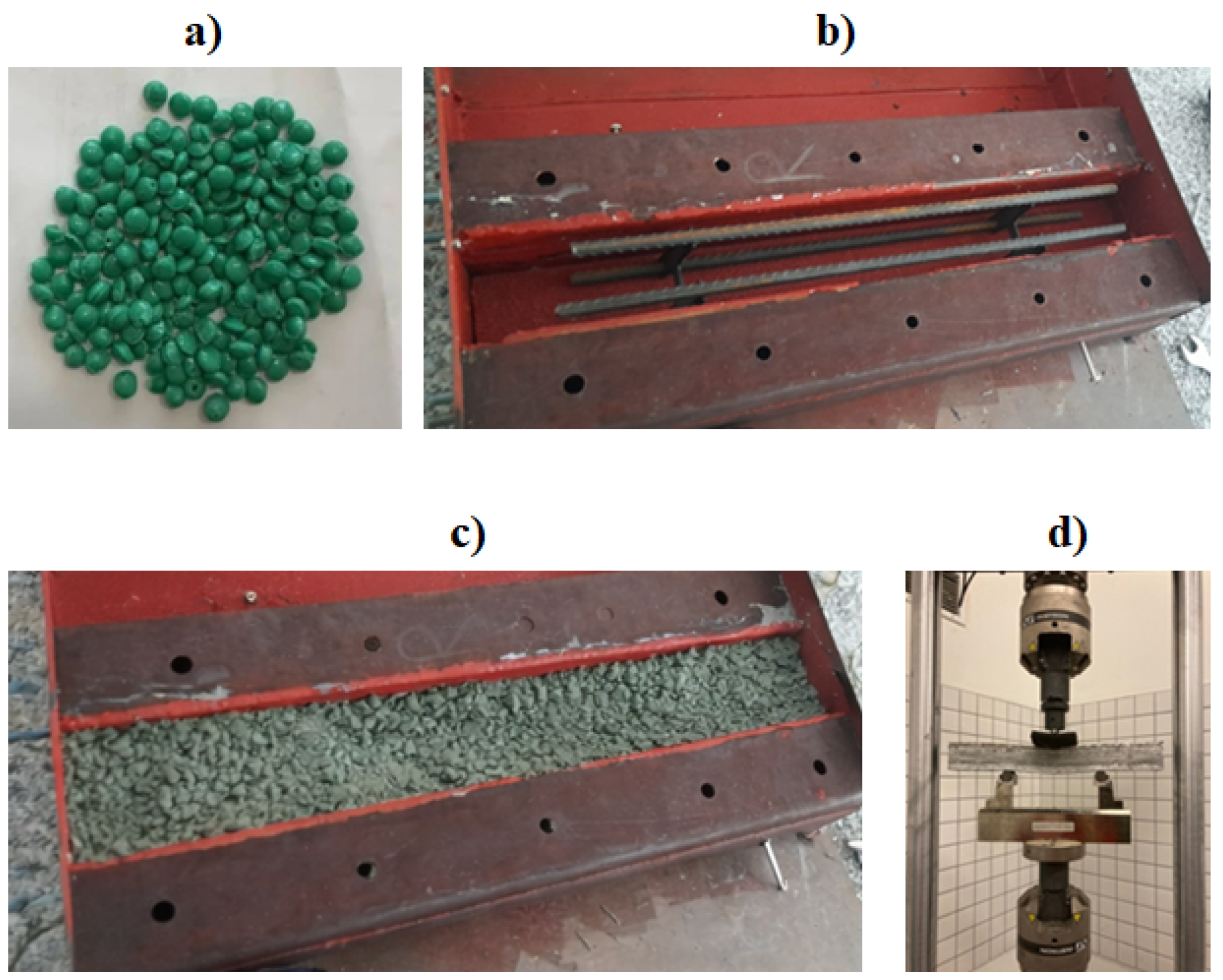
The production process of the specimens is illustrated in
Figure 6. Recycled low-density polyethylene (LDPE) granules were commercially obtained and used as the matrix material (see
Figure 6a). Prior to casting, deformed steel reinforcement bars with a diameter of 8 mm were positioned inside the mold. A total of four longitudinal bars were used, arranged in two layers across the section depth, with two bars placed near the top and two near the bottom of the section. Subsequently, the mold was subjected to thermal processing in an oven at a temperature of 180 °C for a duration of 1.5 h. This temperature and duration were selected to ensure sufficient melting and bonding of the thermoplastic material with the embedded steel reinforcement, while avoiding thermal degradation of the polymer matrix. After the heating process, the specimens were removed from the oven and allowed to cool under ambient conditions.
The composite specimens were manufactured by placing the recycled thermoplastic granules into molds containing pre-positioned steel reinforcement, followed by thermal processing at 180 °C. No external pressure was applied during the molding process; consolidation was achieved solely through thermal softening of the thermoplastic material. Due to the absence of external pressure, small voids may form within the thermoplastic matrix. However, this approach was intentionally adopted to represent a simplified and cost-effective manufacturing process. Accordingly, the compressive and tensile test results mentioned in
Section 2.1 and
Section 3.1 directly reflect the mechanical behavior of the material in the presence of such voids.
Following production, the specimens were tested under three-point bending, as shown in
Figure 6d. The tests were conducted under displacement-controlled loading conditions. The primary objective of these tests was to evaluate the flexural response of the composite beams and to assess the accuracy of the analytical model presented in
Section 2.3.
2.5. Full-Scale Tower Design and Manufacturing
To demonstrate the applicability of the proposed composite system at a structural scale, a full-scale wind turbine tower was designed and manufactured based on the analytical and experimental findings presented in the previous sections.
The produced composite tower has a total length of 8 m. For its fabrication, an industrial oven (Isiker Co., Kayseri, Turkey) with an internal length of 10 m was utilized to accommodate the full-scale geometry during thermal processing.
Unlike circular tower configurations, which require specialized mold geometries, square or rectangular cross-sections can be produced using relatively simpler mold systems. In addition, the necessity of filling the mold with recycled thermoplastic granules makes the manufacturing process more practical and cost-effective for prismatic geometries. Therefore, in this study, a square cross-section was intentionally selected in order to enable a more accessible and economically viable production method for the proposed composite tower system.
Furthermore, to enable a fair comparison between the proposed composite tower and a conventional steel tower, both systems were designed with square cross-sections. A conventional steel tower with a square cross-section of 200 mm × 200 mm was procured from a small-scale wind turbine manufacturer in Türkiye specifically for this study.
Since the steel tower is expected to remain within the elastic range under operational wind loading, its flexural capacity was defined in terms of its yield moment capacity. Accordingly, the composite tower was designed to achieve an equivalent yield moment capacity using the analytical model developed in
Section 2.4 and validated through the experimental results presented in
Section 2.5.
Based on this design approach, the composite tower was determined to require a hollow square cross-section with outer dimensions of 250 mm × 250 mm and a wall thickness of 51 mm. In addition, as shown in
Figure 7, a total of 24 longitudinal steel reinforcement bars with a diameter of 14 mm were embedded within the cross-section to satisfy the required flexural capacity, which is expected to govern the global failure mechanism of the tower system.
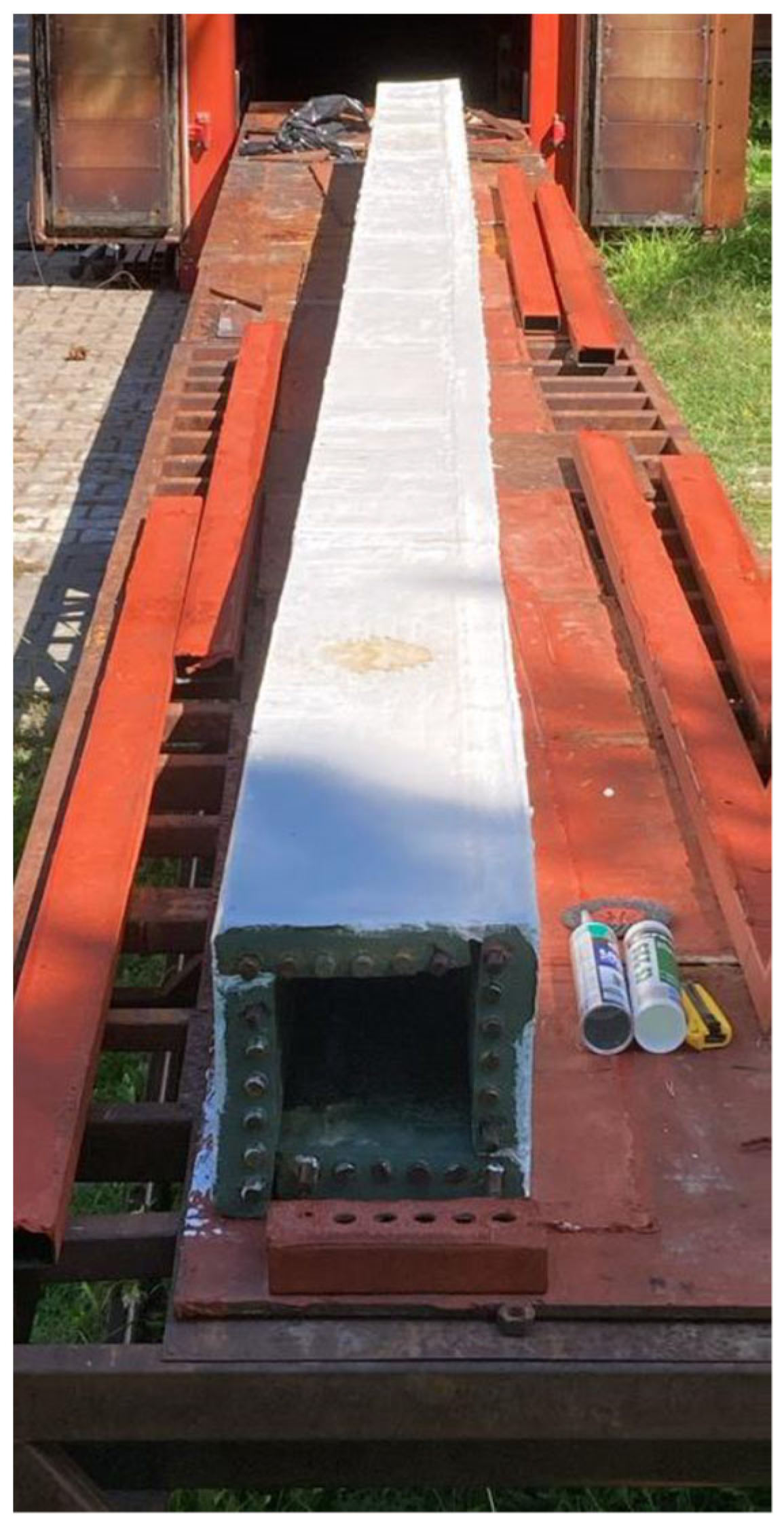
The resulting full-scale composite tower, manufactured according to these specifications, is shown in
Figure 8. The fabricated structure incorporates the same material concept and reinforcement strategy as the beam-scale specimens, consisting of a thermoplastic matrix reinforced with longitudinal steel bars. The successful production of this full-scale member demonstrates the feasibility of implementing the proposed composite system for wind turbine tower applications.
2.6. Field Testing
To evaluate the dynamic response of the tower systems under realistic environmental conditions, field tests were conducted on both the conventional steel tower and the proposed composite tower.
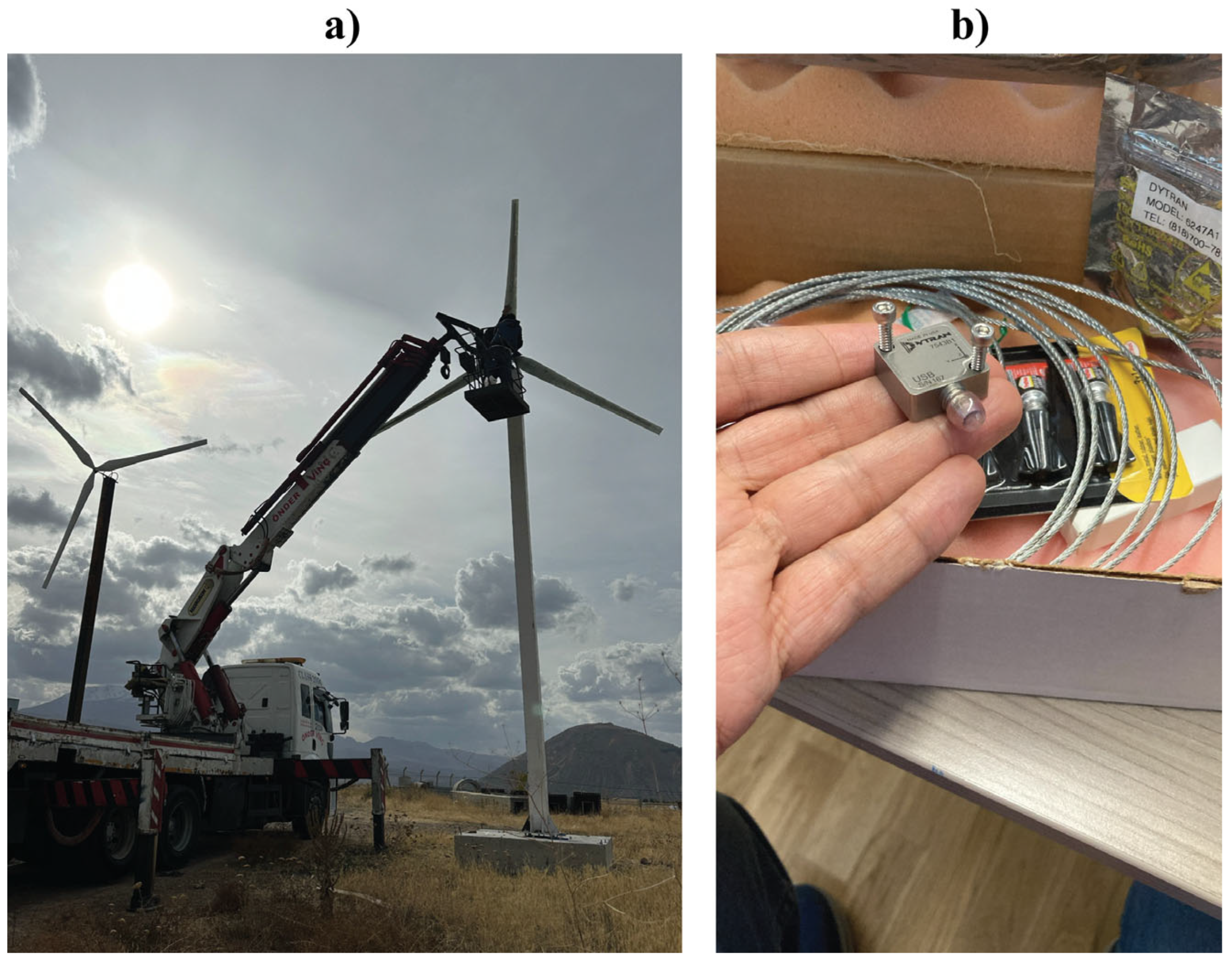
As shown in
Figure 8a, both towers were installed on-site using a crane, and identical wind turbine blades with the same geometry and dimensions were mounted on each tower to ensure consistent loading conditions. To enable a controlled comparison of the aerodynamic response, no generators were installed on either tower. This configuration allowed the turbine blades to rotate with minimal resistance, thereby increasing the aerodynamic drag forces acting on the towers and enhancing the induced structural vibrations.
For the measurement of dynamic response, accelerometers, as shown in
Figure 8b, were installed at the top of both towers. The sensors were used to record acceleration time histories in three orthogonal directions (x, y, and z), corresponding to the global coordinate system of the towers. The acceleration data were collected under natural wind loading conditions in the field environment. These measurements were used to capture the vibration characteristics of the towers, including their response amplitudes and frequency content. The field tests were conducted under natural wind conditions at Abdullah Gul University, Kayseri, Turkiye, between 16 July and 16 August 2024, corresponding to the summer season and capturing representative environmental conditions.
The recorded acceleration signals were processed to enable a consistent comparison between the two tower systems. The data acquisition and signal processing procedures included time synchronization of the signals and selection of representative time segments for analysis. These processed datasets were then used to evaluate and compare the dynamic behavior of the composite and steel towers.
3. Results and Discussion
3.1. Mechanical Behavior of Recycled Thermoplastic Material
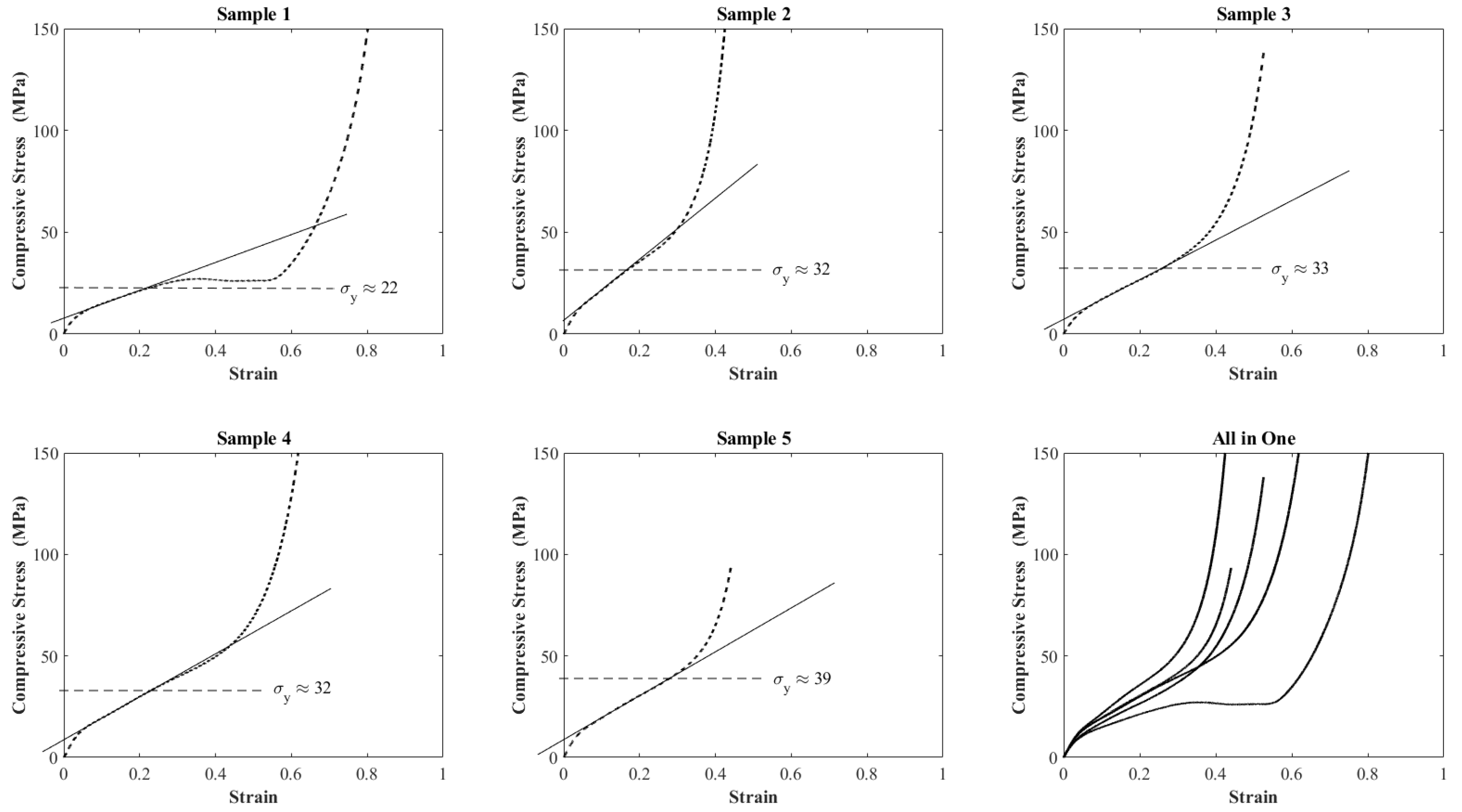
The compressive stress–strain responses of the recycled thermoplastic material are presented in
Figure 9. The curves exhibit a predominantly nonlinear behavior, with no clearly defined initial linear region. This indicates that the material does not display a distinct elastic regime under compression, likely due to its heterogeneous microstructure and progressive deformation mechanisms. Owing to the absence of a well-defined linear region, the compressive yield strength was estimated based on the deviation from the initial response, rather than using a fixed offset criterion. As shown in
Figure 9, the estimated compressive yield strengths vary among the specimens, indicating inherent variability in the material behavior.
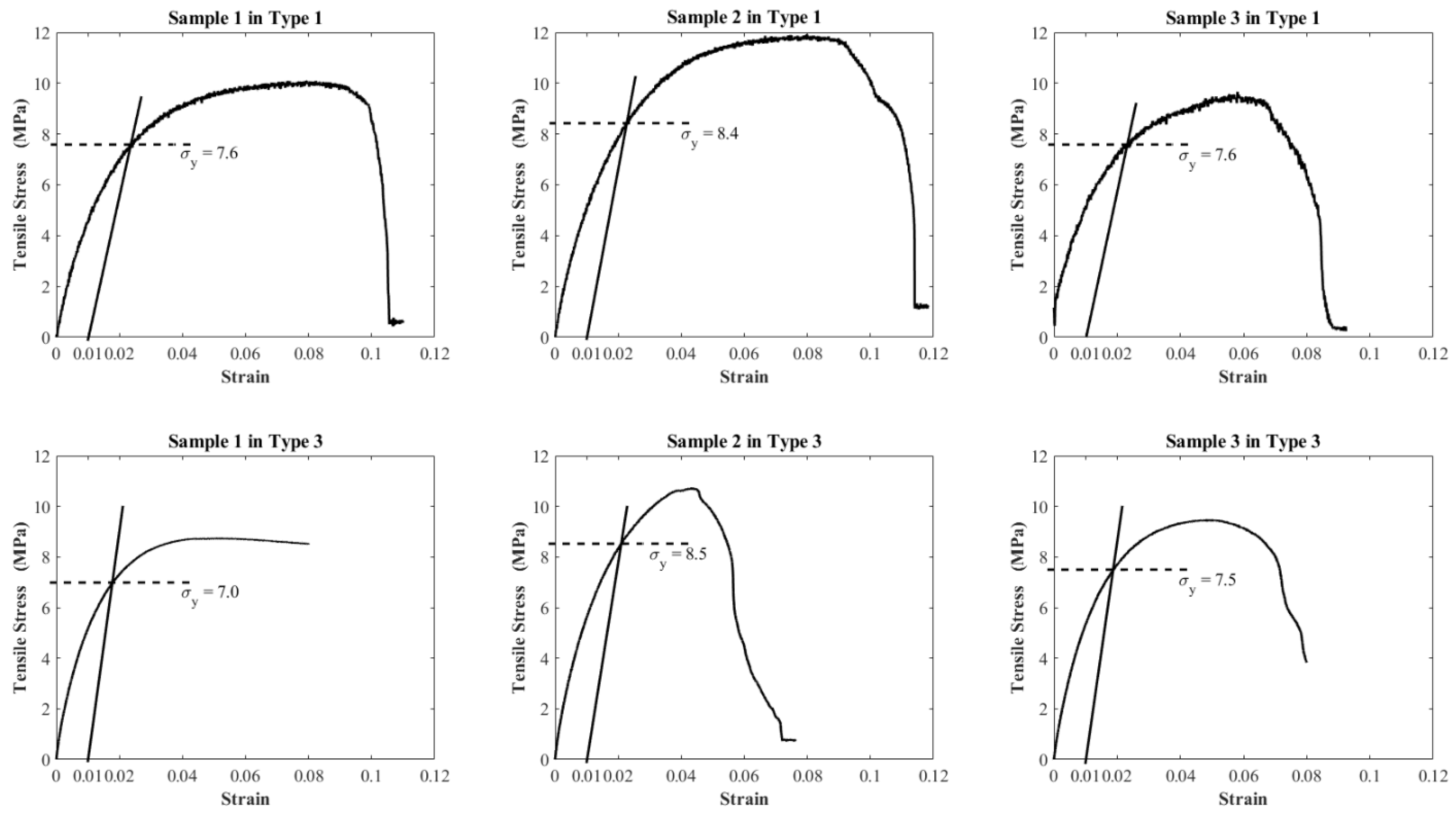
The tensile stress–strain responses obtained from the Type-1 and Type-3 specimens are presented in
Figure 10. In contrast to the compression behavior, the tensile curves exhibit a clearly defined initial linear region, followed by nonlinear response and eventual softening. This well-defined linear region enables a reliable identification of the elastic behavior in tension. Accordingly, the tensile yield strength was determined using an offset-based criterion, as illustrated in
Figure 10. The tensile responses show generally consistent behavior across different specimen types, with only minor variations, which can be attributed to differences in specimen geometry and material heterogeneity.
The compression test results exhibited relatively higher variability, with one specimen showing a lower strength value (see
Table 1). This variability is attributed to the heterogeneous nature of the recycled material and the possible presence of small voids formed during the pressure-free molding process. Although excluding this lower-bound value reduces the standard deviation significantly, all results are reported to reflect the inherent variability of the material under such manufacturing conditions. In contrast, the tensile test results showed relatively consistent behavior, with a significantly lower standard deviation, indicating a more stable mechanical response under tensile loading. This suggests that the influence of such voids is less pronounced under tensile loading compared to compression.
Overall, the material exhibits significantly different mechanical responses under compression and tension. While the compressive behavior is characterized by progressive nonlinearity and the absence of a clearly defined yield point, the tensile response demonstrates a distinct transition from elastic to inelastic behavior. This difference is critical for the structural performance of the composite system, particularly under bending conditions, where compressive and tensile stress regions develop simultaneously.
In addition, it should be noted that the proposed composite system is conceptually inspired by reinforced structural systems, in which overall performance is governed by the interaction between reinforcement and matrix materials rather than by predefined minimum properties of individual components. In structural engineering practice, material suitability is typically evaluated based on structural demand and corresponding capacity, rather than fixed minimum thresholds.
3.2. Temperature-Dependent Compressive Behavior
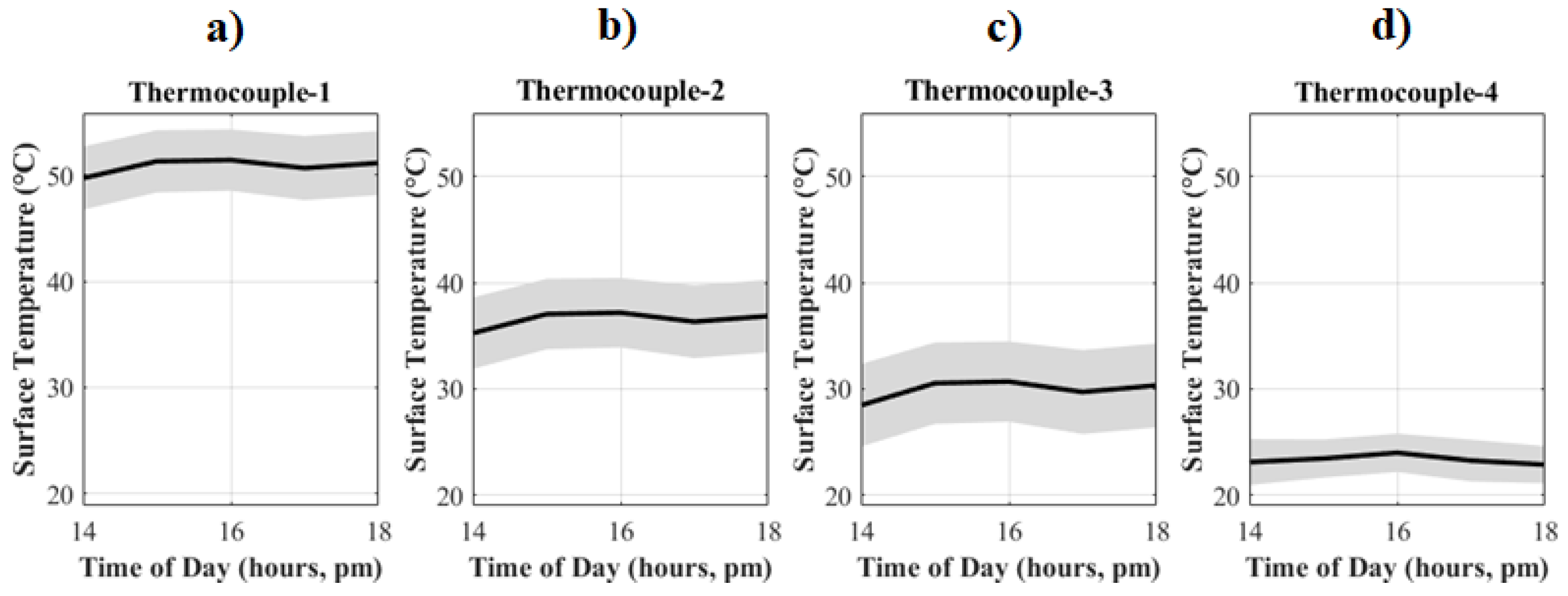
The temperature variations observed under field conditions are presented in
Figure 11. These measurements were obtained by monitoring the temperature distribution across the cross-section of a representative thermoplastic specimen exposed to outdoor conditions, as described in
Section 2.3. The results indicate that the surface temperature of the thermoplastic material can reach values up to approximately 55 °C under summer exposure, particularly on sun-exposed surfaces. This observation provides a realistic reference for evaluating the temperature-dependent mechanical behavior of the material.
Motivated by the temperature range identified from the field measurements, temperature-controlled compression tests were conducted to investigate the effect of temperature on the compressive yield strength of the recycled thermoplastic material. The results, obtained from three independent specimen sets tested at different temperature levels, are presented in
Figure 12. As shown in
Figure 12, the compressive yield strength exhibits a decreasing trend with increasing temperature. A fitted trend line is included to represent the overall variation in strength with temperature. The data points corresponding to approximately 28 °C represent room temperature conditions and were obtained from the compression tests described in
Section 2.1.1, rather than from separate temperature-controlled experiments. The vertical dashed line at approximately 55 °C corresponds to the upper temperature range observed in the field measurements (
Figure 11), enabling a direct comparison between laboratory results and realistic environmental exposure conditions.
It is noteworthy that the maximum temperatures observed under realistic field conditions approach approximately 55 °C. At this temperature level, the reduction in compressive yield strength is relatively limited, decreasing from approximately 32 MPa at room temperature to about 31 MPa. This indicates that, within the temperature range expected under typical service conditions, the influence of temperature on compressive capacity is not significant. However, at higher temperatures exceeding approximately 65 °C, a more pronounced reduction in strength is observed, suggesting that elevated temperature conditions may pose a potential risk to structural performance. Therefore, for realistic environmental exposure scenarios, the effect of temperature on material strength can be considered limited, while higher temperature conditions should be treated with caution.
3.3. Experimental Validation of Analytical Model
The experimental load–displacement responses of the beam specimens are presented in
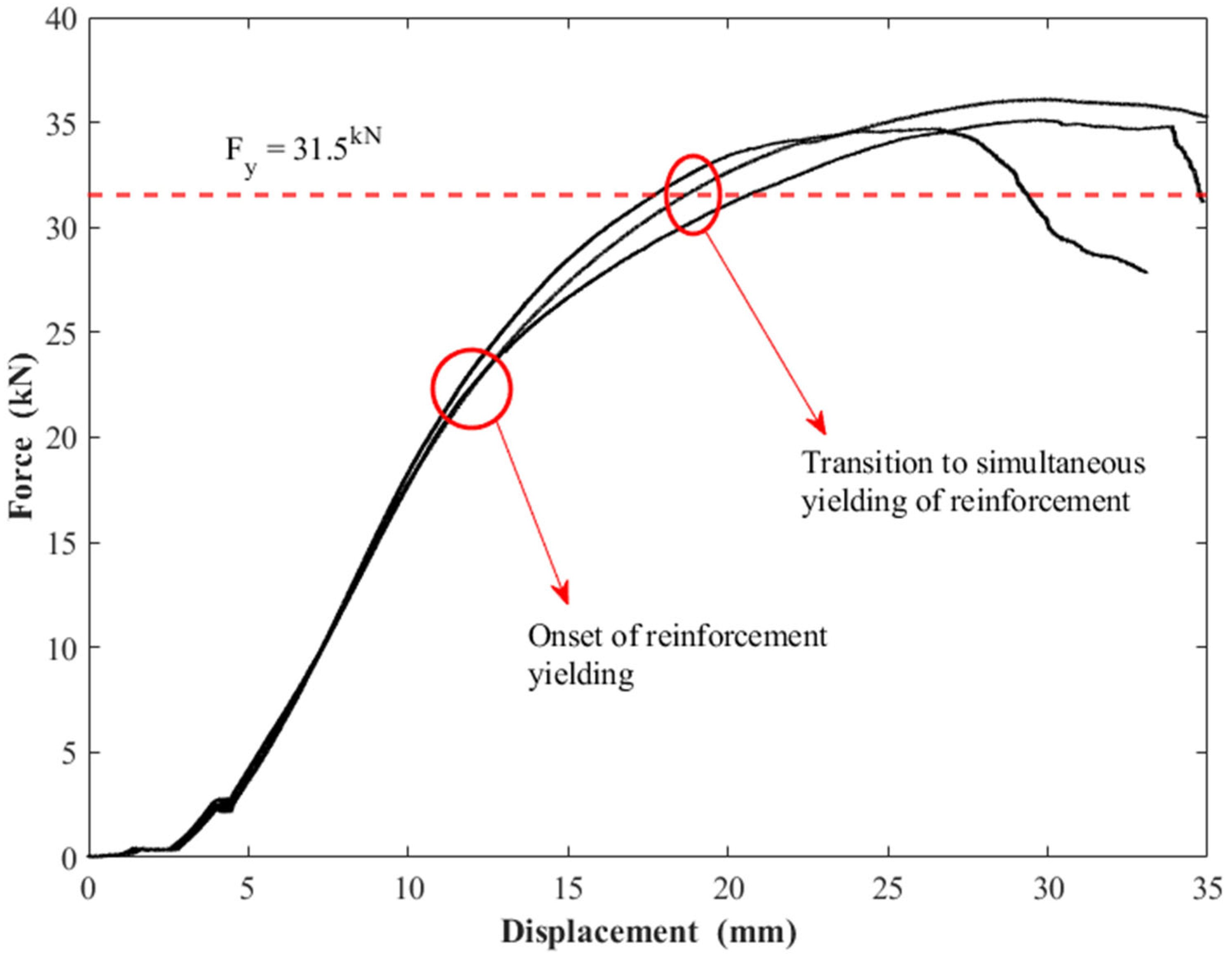
Figure 13. The curves exhibit consistent nonlinear behavior, with a gradual transition from the initial elastic response to yielding and subsequent plastic deformation.
As shown in
Figure 13, the onset of reinforcement yielding can be identified at approximately the point where the slope of the response begins to deviate from linearity. This stage corresponds to the initial yielding of individual steel bars, while the thermoplastic matrix continues to contribute to load resistance. With increasing displacement, a transition to simultaneous yielding of reinforcement is observed, indicating that multiple reinforcement layers reach their yield capacity. Despite this, the load-carrying capacity continues to increase slightly, reflecting the continued contribution of the thermoplastic material, which has not yet reached its limiting stress.
The analytical model developed in
Section 2.4 predicts a yield load of approximately 31.5 kN. As shown in
Figure 13, this value falls within the transition region corresponding to the simultaneous yielding of reinforcement, indicating a good agreement between the analytical prediction and the experimental response. This agreement demonstrates that the analytical model successfully captures the onset and progression of yielding within the composite section. In the analytical calculations, the geometric and material properties used in the model (e.g.,
mm,
mm,
MPa,
MPa, and
MPa) were selected to be consistent with the experimentally characterized properties of the specimens. It should also be noted that the elastic modulus of the thermoplastic material (
) was not directly derived from the experimental stress–strain curves. To recall, strain values were calculated from crosshead displacement measurements. Therefore, they do not represent true local material strains. Instead, a representative modulus value of 500 MPa was adopted as a reasonable engineering assumption for the thermoplastic material. The elastic modulus of steel (
MPa) was taken as a standard material property. A sensitivity analysis was performed by varying the elastic modulus of the thermoplastic material between 100 and 900 MPa. The predicted flexural capacity varies from 30.75 kN to 32.30 kN, corresponding to an overall variation of approximately 5%, and about ±2.5% relative to the reference case (Ep = 500 MPa). This limited variation indicates that the analytical model is not highly sensitive to the elastic modulus. This behavior is mainly attributed to the doubly reinforced nature of the composite section.
As shown in
Figure 13, the load–displacement response exhibits a clear change in stiffness, indicating the onset of reinforcement yielding, followed by a gradual transition toward more extensive yielding. Although strain measurements in the steel reinforcement were not recorded directly, this behavior is consistent with the expected response of a reinforced composite section and supports the interpretation of yielding.
Furthermore, the absence of a sudden drop in load after the initial yielding indicates a ductile response of the composite system. This behavior confirms that the combination of steel reinforcement and thermoplastic matrix provides a stable post-yield response, which is advantageous for structural applications. This validation demonstrates that the proposed analytical model provides a reliable framework for the design and structural assessment of full-scale composite tower systems.
The proposed composite system is conceptually inspired by reinforced structural systems, where the overall performance is governed by the interaction between the reinforcement and the matrix material rather than by predefined minimum properties of individual components. In such systems, including reinforced concrete, design is typically based on structural demand (e.g., forces and moments) and corresponding capacity, rather than fixed minimum material thresholds. Accordingly, for the composite system investigated in this study, the suitability of the material is evaluated based on its ability to meet the structural performance requirements of the tower through analysis and experimental validation, rather than through predefined minimum mechanical property values.
3.4. Comparison of Steel and Composite Towers
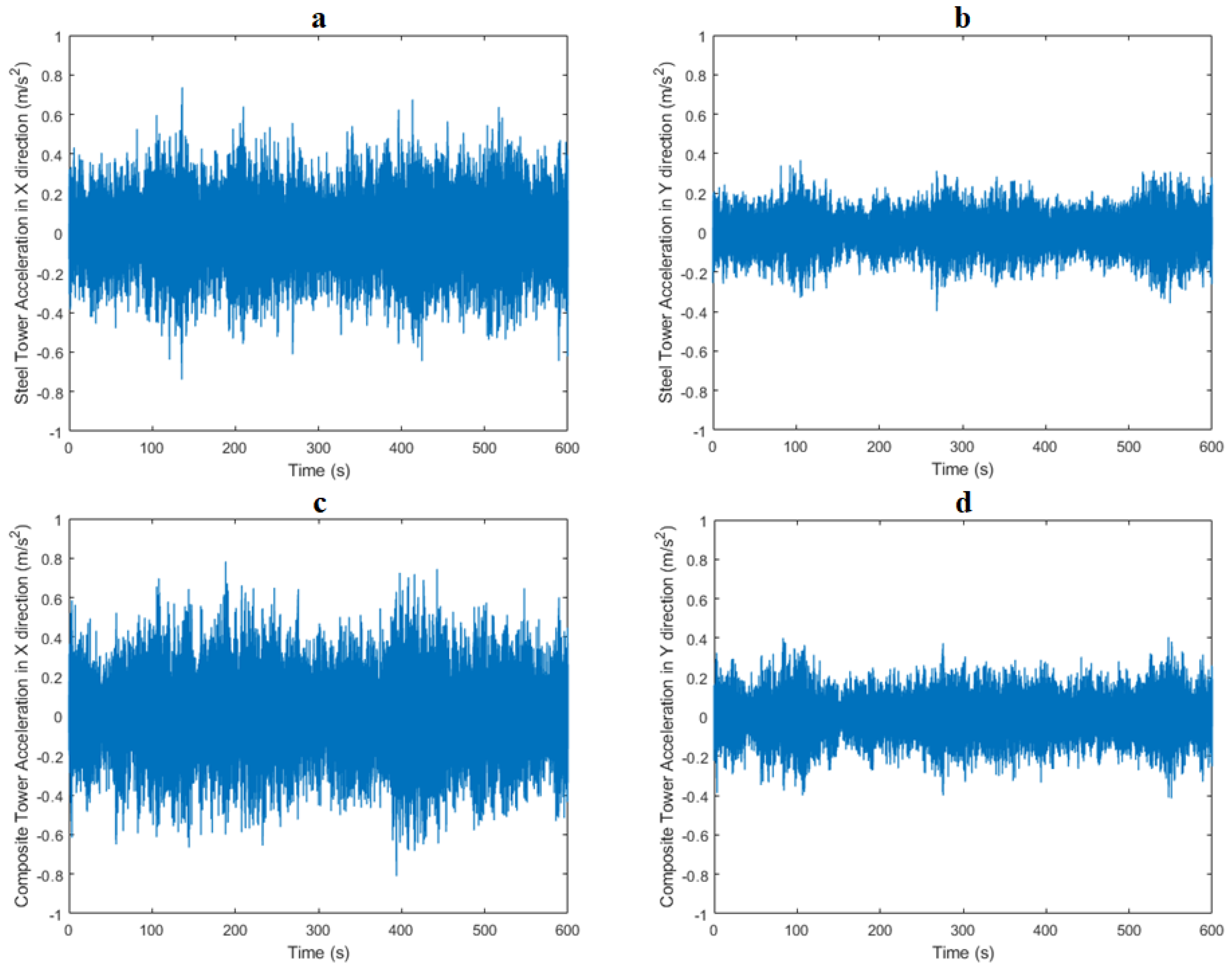
The dynamic responses of the steel and composite towers under wind loading were experimentally evaluated using accelerometers installed at the top of each tower. The towers were positioned at the same field test site, with an approximate spacing of 7 m, and the acceleration time histories were recorded with a sampling interval of 0.02 s. To enable a consistent comparison, the recorded signals were synchronized through appropriate time alignment. Subsequently, selected 600 s segments of the measured acceleration responses in the X and Y directions for both towers are presented in
Figure 14.
As shown in
Figure 14, both tower systems exhibit generally similar dynamic responses under wind excitation. However, the composite tower demonstrates a tendency for faster decay of vibration amplitudes in certain time intervals. This behavior suggests a higher inherent damping capacity of the composite system compared to the conventional steel tower. Such enhanced damping characteristics can be attributed to the internal energy dissipation mechanisms of the thermoplastic-based composite material. The dynamic behavior of the towers can be described by the classical equation of motion:
where
,
,
, and
represent mass, damping coefficient, stiffness, and the wind-induced loading, respectively. An increase in damping leads to a reduction in vibration amplitudes; therefore, the observed faster attenuation in the composite tower suggests improved dynamic performance under wind loading.
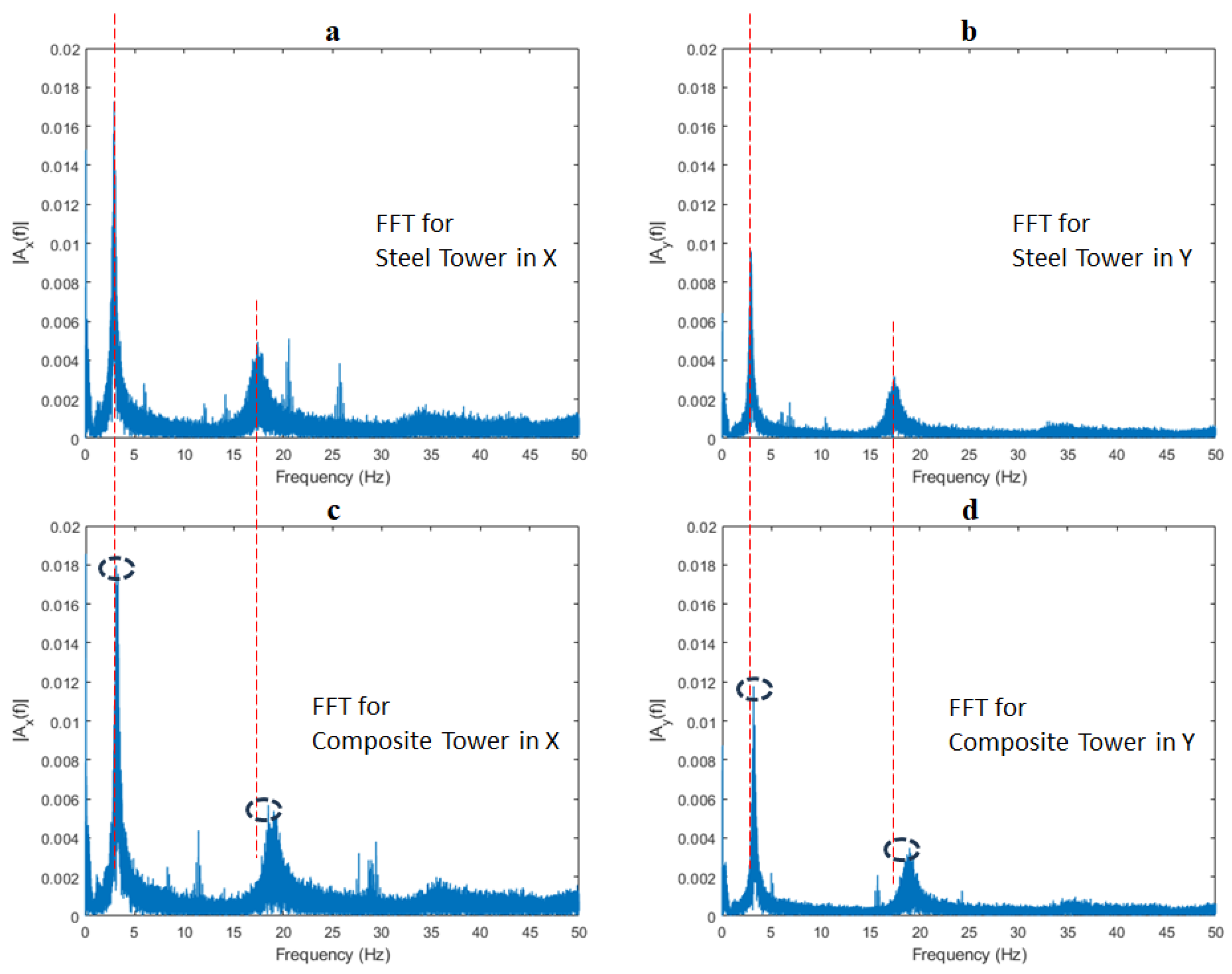
To further investigate the dynamic characteristics, Fourier transforms were applied to the measured acceleration responses, and the resulting frequency spectra are presented in
Figure 15. In field measurements, the interpretation of spectral amplitudes may be influenced by factors such as sensor alignment, measurement noise, and minor differences in wind exposure. Therefore, the positions of spectral peaks along the frequency axis are considered more reliable indicators for comparison.
From the frequency-domain analysis shown in
Figure 15, the first natural frequency of the steel tower is approximately 2.89 Hz, while that of the composite tower is approximately 3.08 Hz. Similar trends are observed for higher modes. For instance, the second and third mode frequencies are approximately 17.43 Hz and 34.17 Hz for the steel tower, and 19.06 Hz and 35.87 Hz for the composite tower, respectively. These results are consistent with the design expectations. Although both towers were designed to have comparable bending stiffness, the composite tower has a lower total mass (approximately 410 kg compared to 560 kg for the steel tower). According to fundamental dynamic principles, a reduction in mass for a system with similar stiffness results in higher natural frequencies.
In practical conditions, it is difficult to ensure identical wind loading on two different structures, making direct comparisons based on displacement or force response not straightforward to apply in a consistent manner. Therefore, the focus of the field measurements was placed on dynamic properties such as natural frequencies and vibration characteristics obtained from acceleration records and FFT analysis, which are considered to provide a more consistent and meaningful basis for comparison.
Considering that wind loading typically contains dominant energy at lower frequencies, the higher natural frequencies of the composite tower reduce the likelihood of resonance. Therefore, from a dynamic performance perspective, the composite tower can be considered a promising alternative structural system compared to the conventional steel tower.
4. Conclusions
This study investigates the structural applicability of steel-reinforced recycled thermoplastic composites as an alternative system for wind turbine tower applications through integrated experimental, analytical, and field-based evaluations.
The mechanical characterization of the recycled thermoplastic material revealed distinct differences between compressive and tensile behavior. While the compressive response exhibited gradual nonlinearity without a clearly defined elastic region, the tensile behavior showed a well-defined linear region, enabling a more reliable determination of yield properties. These characteristics highlight the importance of considering asymmetric material behavior in structural design.
The temperature-dependent analysis demonstrated that, although the compressive yield strength decreases with increasing temperature, the reduction remains limited within the realistic service temperature range. Field measurements indicated that maximum surface temperatures reach approximately 55 °C, at which the strength reduction is minor. However, a more pronounced degradation was observed at temperatures exceeding approximately 65 °C, suggesting that elevated temperature conditions should be considered in extreme scenarios.
The analytical model based on the transformed-section approach was validated through three-point bending tests of composite beam specimens. The predicted yield load showed a good agreement with the experimentally observed transition to simultaneous yielding of reinforcement. This agreement confirms that the proposed analytical framework can reliably capture the flexural behavior and load-carrying mechanisms of the composite tower system for wind turbine applications.
To further demonstrate the applicability of the proposed system, a full-scale composite wind turbine tower was successfully designed and manufactured. Field measurements conducted under natural wind loading conditions demonstrated that the composite tower exhibited comparable dynamic behavior to the conventional steel tower. In addition, the composite system showed enhanced damping characteristics and slightly higher natural frequencies due to its lower mass, contributing to improved dynamic performance and reduced susceptibility to resonance.
Overall, the results indicate that steel-reinforced recycled thermoplastic composites represent a promising and sustainable alternative for wind turbine tower applications. The combination of satisfactory structural performance, improved dynamic behavior, and potential for reduced environmental impact highlights the viability of this material system for future structural applications.
The long-term performance of the proposed composite system under cyclic loading and environmental exposure represents an important aspect for practical applications. While the present study focuses on the initial mechanical characterization and structural performance, the effects of repeated loading and long-term environmental conditions, including thermal cycling, may influence the material behavior and should be investigated in future studies. In addition, polymer-based materials are known to be susceptible to ultraviolet (UV) radiation, which may lead to degradation mechanisms such as chain scission, embrittlement, and reduction in mechanical strength over time. In the present study, although the test specimens were used in their original form, the full-scale composite tower was painted white to reflect solar radiation and reduce UV exposure. This approach is expected to mitigate UV-induced degradation effects in practical applications. Nevertheless, detailed investigation of long-term UV effects remains an important topic for future research.
Beyond wind turbine tower applications, the proposed composite system also shows potential for broader use in civil engineering structures. In particular, its application in bending-dominated structural elements such as beams and slabs may provide advantages due to its relatively low self-weight and enhanced energy dissipation characteristics. The reduced structural mass may influence the dynamic properties of structural systems, resulting in favorable changes in natural frequencies and seismic response. However, further research may be required to comprehensively evaluate the performance of such systems under seismic loading conditions. Therefore, the proposed system offers a promising foundation for the development of lightweight and sustainable structural solutions beyond wind energy applications.
It is noted that, beyond material properties, detailed design considerations such as reinforcement configuration and spacing for such composite systems remain open research topics and may be addressed in future studies.
It should also be noted that long-term effects such as creep behavior of the thermoplastic material were not explicitly considered in this study. While such effects may influence structural performance over extended service periods, they can be addressed through appropriate design considerations. A detailed investigation of creep behavior is beyond the scope of this study and is recommended for future research.
Author Contributions
Conceptualization, C.C. and H.T.A.; methodology, C.C. and H.T.A.; software, C.C. and H.T.A.; validation, C.C. and H.T.A.; formal analysis, C.C. and H.T.A.; investigation, C.C. and H.T.A.; resources, C.C. and H.T.A.; data curation, C.C. and H.T.A.; writing—original draft preparation, C.C.; writing—review and editing, C.C.; visualization, C.C.; supervision, C.C.; project administration, C.C. and H.T.A.; funding acquisition, C.C. and H.T.A. All authors have read and agreed to the published version of the manuscript.
Funding
This research was funded by the Scientific and Technological Research Council of Türkiye (TÜBİTAK), under the 1501 Industrial R&D Projects Support Program, grant number 3240793.
Institutional Review Board Statement
Not applicable.
Data Availability Statement
The data supporting the findings of this study are available from the corresponding author upon reasonable request.
Acknowledgments
During the preparation of this manuscript, the authors used ChatGPT (GPT-5.3), based on OpenAI’s GPT model, for language editing, improving clarity, and refining academic expression. The authors have reviewed and edited the output and take full responsibility for the content of this publication.
Conflicts of Interest
The authors declare no conflicts of interest.
References
- Özgül, S.; Koçar, G.; Eryaşar, A. The Progress, Challenges, and Opportunities of Renewable Energy Cooperatives in Turkey. Energy Sustain. Dev. 2020, 59, 107–119. [Google Scholar] [CrossRef]
- Mello, G.; Ferreira Dias, M.; Robaina, M. Wind Farms Life Cycle Assessment Review: CO2 Emissions and Climate Change. Energy Rep. 2020, 6, 214–219. [Google Scholar] [CrossRef]
- Long, Y.; Chen, Y.; Xu, C.; Li, Z.; Liu, Y.; Wang, H. The Role of Global Installed Wind Energy in Mitigating CO2 Emission and Temperature Rising. J. Clean. Prod. 2023, 423, 138778. [Google Scholar] [CrossRef]
- Osman, A.I.; Chen, L.; Yang, M.; Msigwa, G.; Farghali, M.; Fawzy, S.; Rooney, D.W.; Yap, P.S. Cost, Environmental Impact, and Resilience of Renewable Energy under a Changing Climate: A Review. Environ. Chem. Lett. 2023, 21, 741–764. [Google Scholar] [CrossRef]
- Sahin, A.D. Progress and Recent Trends in Wind Energy. Prog. Energy Combust. Sci. 2004, 30, 501–543. [Google Scholar] [CrossRef]
- Joselin Herbert, G.M.; Iniyan, S.; Sreevalsan, E.; Rajapandian, S. A Review of Wind Energy Technologies. Renew. Sustain. Energy Rev. 2007, 11, 1117–1145. [Google Scholar] [CrossRef]
- Vargas, S.A.; Esteves, G.R.T.; Maçaira, P.M.; Bastos, B.Q.; Cyrino Oliveira, F.L.; Souza, R.C. Wind Power Generation: A Review and a Research Agenda. J. Clean. Prod. 2019, 218, 850–870. [Google Scholar] [CrossRef]
- Bošnjakovi, M. Applied Sciences. In Early Writings on India; Routledge: Abingdon, UK, 2018; pp. 124–134. [Google Scholar] [CrossRef]
- Leung, D.Y.C.; Yang, Y. Wind Energy Development and Its Environmental Impact: A Review. Renew. Sustain. Energy Rev. 2012, 16, 1031–1039. [Google Scholar] [CrossRef]
- Bilgili, M.; Alphan, H. Global Growth in Offshore Wind Turbine Technology. Clean Technol. Environ. Policy 2022, 24, 2215–2227. [Google Scholar] [CrossRef]
- Jung, C.; Schindler, D. Efficiency and Effectiveness of Global Onshore Wind Energy Utilization. Energy Convers. Manag. 2023, 280, 116788. [Google Scholar] [CrossRef]
- Atilgan Turkmen, B.; Germirli Babuna, F. Life Cycle Environmental Impacts of Wind Turbines: A Path to Sustainability with Challenges. Sustainability 2024, 16, 5365. [Google Scholar] [CrossRef]
- Akhtar, N.; Geyer, B.; Schrum, C. Larger Wind Turbines as a Solution to Reduce Environmental Impacts. Sci. Rep. 2024, 14, 6608. [Google Scholar] [CrossRef]
- Xu, K.; Zhu, H.; Zhang, S.; Wang, M.; Li, W.; Zhou, W.; Li, S.; Shi, Z.; Chang, J. Land Use Impacts the Environmental Benefits of Wind Energy Farms in China. Commun. Earth Environ. 2025, 6, 905. [Google Scholar] [CrossRef]
- Vargas, A.V.; Zenón, E.; Oswald, U.; Islas, J.M.; Güereca, L.P.; Manzini, F.L. Life Cycle Assessment: A Case Study of Two Wind Turbines Used in Mexico. Appl. Therm. Eng. 2015, 75, 1210–1216. [Google Scholar] [CrossRef]
- Bonou, A.; Laurent, A.; Olsen, S.I. Life Cycle Assessment of Onshore and Offshore Wind Energy-from Theory to Application. Appl. Energy 2016, 180, 327–337. [Google Scholar] [CrossRef]
- Brøndsted, P.; Lilholt, H.; Lystrup, A. Composite Materials for Wind Power Turbine Blades. Annu. Rev. Mater. Res. 2005, 35, 505–538. [Google Scholar] [CrossRef]
- Veers, P.S.; Ashwill, T.D.; Sutherland, H.J.; Laird, D.L.; Lobitz, D.W.; Griffin, D.A.; Mandell, J.F.; Músial, W.D.; Jackson, K.; Zuteck, M.; et al. Trends in the Design, Manufacture and Evaluation of Wind Turbine Blades. Wind Energy 2003, 6, 245–259. [Google Scholar] [CrossRef]
- Mishnaevsky, L.; Branner, K.; Petersen, H.N.; Beauson, J.; McGugan, M.; Sørensen, B.F. Materials for Wind Turbine Blades: An Overview. Materials 2017, 10, 1285. [Google Scholar] [CrossRef]
- Ciftci, C.; Sas, H.S. A Rational Utilization of Reinforcement Material for Flexural Design of 3D-Printed Composite Beams. J. Reinf. Plast. Compos. 2019, 38, 1040–1054. [Google Scholar] [CrossRef]
- Ciftci, C. Experimental Investigation on the Bonding Strength of Knotted CFRP Bars in Bulk Plastics. Polymers 2023, 15, 2036. [Google Scholar] [CrossRef] [PubMed]
- Martulli, L.M.; Diani, M.; Sabetta, G.; Bontumasi, S.; Colledani, M.; Bernasconi, A. Critical Review of Current Wind Turbine Blades’ Design and Materials and Their Influence on the End-of-Life Management of Wind Turbines. Eng. Struct. 2025, 327, 119625. [Google Scholar] [CrossRef]
- Lagos, F.; Menacer, B.; Salas, A.; Narayan, S.; Medina, C.; Valle, R.; Garrido, C.; Pincheira, G.; Oñate, A.; Hunter-Alarcón, R.; et al. Recent Advances in the Analysis of Functional and Structural Polymer Composites for Wind Turbines. Polymers 2025, 17, 2339. [Google Scholar] [CrossRef] [PubMed]
- Paulsen, E.B.; Enevoldsen, P. A Multidisciplinary Review of Recycling Methods for End-of-Life Wind Turbine Blades. Energies 2021, 14, 4247. [Google Scholar] [CrossRef]
- Mishnaevsky, L. Sustainable End-of-Life Management of Wind Turbine Blades: Overview of Current and Coming Solutions. Materials 2021, 14, 1124. [Google Scholar] [CrossRef]
- Leon, M.J. Recycling of Wind Turbine Blades: Recent Developments. Curr. Opin. Green Sustain. Chem. 2023, 39, 100746. [Google Scholar] [CrossRef]
- Tayebi, S.T.; Sambucci, M.; Valente, M. Waste Management of Wind Turbine Blades: A Comprehensive Review on Available Recycling Technologies with A Focus on Overcoming Potential Environmental Hazards Caused by Microplastic Production. Sustainability 2024, 16, 4517. [Google Scholar] [CrossRef]
- Çiftci, C.; Erdoğan, A.; Genç, M.S. Investigation of the Mechanical Behavior of a New Generation Wind Turbine Blade Technology. Energies 2023, 16, 1961. [Google Scholar] [CrossRef]
- Guezuraga, B.; Zauner, R.; Pölz, W. Life Cycle Assessment of Two Different 2 MW Class Wind Turbines. Renew. Energy 2012, 37, 37–44. [Google Scholar] [CrossRef]
- Chipindula, J.; Botlaguduru, V.S.V.; Du, H.; Kommalapati, R.R.; Huque, Z. Life Cycle Environmental Impact of Onshore and Offshore Wind Farms in Texas. Sustainability 2018, 10, 2022. [Google Scholar] [CrossRef]
- Gomaa, M.R.; Rezk, H.; Mustafa, R.J.; Al-Dhaifallah, M. Evaluating the Environmental Impacts and Energy Performance of a Wind Farm System Utilizing the Life-Cycle Assessment Method: A Practical Case Study. Energies 2019, 12, 3263. [Google Scholar] [CrossRef]
- Demir, A.; Dinçer, A.E.; Çiftçi, C.; Gülçimen, S.; Uzal, N.; Yılmaz, K. Wind Farm Site Selection Using GIS-Based Multicriteria Analysis with Life Cycle Assessment Integration. Earth Sci. Inform. 2024, 17, 1591–1608. [Google Scholar] [CrossRef]
- Stavridou, N.; Koltsakis, E.; Baniotopoulos, C.C. A Comparative Life-Cycle Analysis of Tall Onshore Steel Wind-Turbine Towers. Clean Energy 2020, 4, 48–57. [Google Scholar] [CrossRef]
- Stavridou, N.; Koltsakis, E.; Baniotopoulos, C.C. Lattice and Tubular Steel Wind Turbine Towers. Comparative Structural Investigation. Energies 2020, 13, 6325. [Google Scholar] [CrossRef]
- Guillore, A.; Canet, H.; Bottasso, C.L. Life Cycle Environmental Impact of Wind Turbines: What Are the Possible Improvement Pathways? J. Phys. Conf. Ser. 2022, 2265, 042033. [Google Scholar] [CrossRef]
- Jay, A.; Myers, A.T.; Torabian, S.; Mahmoud, A.; Smith, E.; Agbayani, N.; Schafer, B.W. Spirally Welded Steel Wind Towers: Buckling Experiments, Analyses, and Research Needs. J. Constr. Steel Res. 2016, 125, 218–226. [Google Scholar] [CrossRef]
- Sideris, S.; Gantes, C.J.; Gkatzogiannis, S.; Li, B. Reuse of Decommissioned Tubular Steel Wind Turbine Towers: General Considerations and Two Case Studies. Designs 2025, 9, 92. [Google Scholar] [CrossRef]
- Lavassas, I.; Nikolaidis, G.; Zervas, P.; Efthimiou, E.; Doudoumis, I.N.; Baniotopoulos, C.C. Analysis and Design of the Prototype of a Steel 1-MW Wind Turbine Tower. Eng. Struct. 2003, 25, 1097–1106. [Google Scholar] [CrossRef]
- ASTM D1238-13; Standard Test Method for Melt Flow Rates of Thermoplastics by Extrusion Plastometer. ASTM International: West Conshohocken, PA, USA, 2013.
- ASTM D695-15; Standard Test Method for Compressive Properties of Rigid Plastics. ASTM International: West Conshohocken, PA, USA, 2015.
- ASTM D638-14; Standard Test Method for Tensile Properties of Plastics. ASTM International: West Conshohocken, PA, USA, 2014.
Figure 1.
Compression test setup showing the prism specimen (12.7 mm × 12.7 mm × 25.4 mm) placed between the loading plates of the Instron testing machine.
Figure 1.
Compression test setup showing the prism specimen (12.7 mm × 12.7 mm × 25.4 mm) placed between the loading plates of the Instron testing machine.
Figure 2.
Compression Tensile test specimens and setup. (a) Geometry of the specimens, where L and R are 57, and 76 mm, respectively. For Type-1 specimens, w, w0, and L0 are 13, 19, and 165 mm, respectively, whereas for Type-3 specimens, w, w0, and L0 are 19, 29, and 246 mm, respectively. The specimen thicknesses are 4 and 8 mm for Type-1 and Type-3, respectively. (b) Manufactured specimens (Type-1 and Type-3). (c) Tensile test setup showing a selected specimen and crack formation during loading.
Figure 2.
Compression Tensile test specimens and setup. (a) Geometry of the specimens, where L and R are 57, and 76 mm, respectively. For Type-1 specimens, w, w0, and L0 are 13, 19, and 165 mm, respectively, whereas for Type-3 specimens, w, w0, and L0 are 19, 29, and 246 mm, respectively. The specimen thicknesses are 4 and 8 mm for Type-1 and Type-3, respectively. (b) Manufactured specimens (Type-1 and Type-3). (c) Tensile test setup showing a selected specimen and crack formation during loading.
Figure 3.
(a) Outdoor setup used for temperature measurements of the recycled thermoplastic specimen. The hollow-section specimen, representative of the composite tower geometry, was exposed to direct solar radiation during the summer period. (b) Schematic representation of thermocouple locations within the hollow thermoplastic specimen.
Figure 3.
(a) Outdoor setup used for temperature measurements of the recycled thermoplastic specimen. The hollow-section specimen, representative of the composite tower geometry, was exposed to direct solar radiation during the summer period. (b) Schematic representation of thermocouple locations within the hollow thermoplastic specimen.
Figure 4.
Temperature-controlled compression test setup. (a) Experimental configuration showing the environmental chamber equipped with a heating system and temperature measurement. (b) Schematic illustration of the setup used for compression testing under elevated temperature conditions.
Figure 4.
Temperature-controlled compression test setup. (a) Experimental configuration showing the environmental chamber equipped with a heating system and temperature measurement. (b) Schematic illustration of the setup used for compression testing under elevated temperature conditions.
Figure 5.
Idealized transformed composite section used in the analytical model. The thermoplastic section with dimensions b and h, reinforced with longitudinal steel bars, is transformed into an equivalent homogeneous section using the modular ratio . The location of the neutral axis of the transformed section is shown schematically. The elliptical shapes in the transformed section are used for illustrative purposes only to represent the equivalent transformed area of the reinforcement.
Figure 5.
Idealized transformed composite section used in the analytical model. The thermoplastic section with dimensions b and h, reinforced with longitudinal steel bars, is transformed into an equivalent homogeneous section using the modular ratio . The location of the neutral axis of the transformed section is shown schematically. The elliptical shapes in the transformed section are used for illustrative purposes only to represent the equivalent transformed area of the reinforcement.
Figure 6.
Manufacturing and testing procedure of steel-reinforced recycled thermoplastic composite specimens. The process includes (a) commercially obtained recycled thermoplastic granules, (b) positioning of longitudinal steel reinforcement within the mold, (c) filling of the mold prior to thermal melting, and (d) three-point bending test of the produced specimens.
Figure 6.
Manufacturing and testing procedure of steel-reinforced recycled thermoplastic composite specimens. The process includes (a) commercially obtained recycled thermoplastic granules, (b) positioning of longitudinal steel reinforcement within the mold, (c) filling of the mold prior to thermal melting, and (d) three-point bending test of the produced specimens.
Figure 7.
Full-scale steel-reinforced thermoplastic composite tower produced using the proposed manufacturing approach. The hollow-section geometry and integrated steel reinforcement demonstrate the applicability of the developed system at structural scale.
Figure 7.
Full-scale steel-reinforced thermoplastic composite tower produced using the proposed manufacturing approach. The hollow-section geometry and integrated steel reinforcement demonstrate the applicability of the developed system at structural scale.
Figure 8.
(a) Installation of wind turbine towers and (b) accelerometers (Dytran Instruments Inc., Chatsworth, CA, USA) used to record the dynamic response of the wind turbine towers during testing.
Figure 8.
(a) Installation of wind turbine towers and (b) accelerometers (Dytran Instruments Inc., Chatsworth, CA, USA) used to record the dynamic response of the wind turbine towers during testing.
Figure 9.
Compressive stress–strain responses of the specimens. The dashed horizontal lines indicate the estimated yield strength values.
Figure 9.
Compressive stress–strain responses of the specimens. The dashed horizontal lines indicate the estimated yield strength values.
Figure 10.
Tensile stress–strain responses of Type-1 and Type-3 specimens. The dashed horizontal lines indicate the yield strength values, while the inclined lines represent the offset criterion used for yield determination.
Figure 10.
Tensile stress–strain responses of Type-1 and Type-3 specimens. The dashed horizontal lines indicate the yield strength values, while the inclined lines represent the offset criterion used for yield determination.
Figure 11.
Distributions of the recorded field temperature histories. (
a–
d) Measured temperature variations at the corresponding thermocouple locations (see
Figure 3) during outdoor exposure.
Figure 11.
Distributions of the recorded field temperature histories. (
a–
d) Measured temperature variations at the corresponding thermocouple locations (see
Figure 3) during outdoor exposure.
Figure 12.
Effect of temperature on the compressive yield strength of the recycled thermoplastic material. Results from three specimen sets are presented together with a fitted trend line. The dashed horizontal line indicates the compressive yield strength corresponding to 55 °C, which represents the maximum surface temperature observed under summer field conditions (see
Figure 11).
Figure 12.
Effect of temperature on the compressive yield strength of the recycled thermoplastic material. Results from three specimen sets are presented together with a fitted trend line. The dashed horizontal line indicates the compressive yield strength corresponding to 55 °C, which represents the maximum surface temperature observed under summer field conditions (see
Figure 11).
Figure 13.
Load–displacement response of three specimens, showing the onset of reinforcement yielding and the transition to simultaneous yielding of reinforcement. The dashed horizontal line indicates the analytically predicted yield load corresponding to the transition region.
Figure 13.
Load–displacement response of three specimens, showing the onset of reinforcement yielding and the transition to simultaneous yielding of reinforcement. The dashed horizontal line indicates the analytically predicted yield load corresponding to the transition region.
Figure 14.
Selected 600 s segments of the measured acceleration responses in the X and Y directions for both towers: (a) steel tower in the X direction, (b) steel tower in the Y direction, (c) composite tower in the X direction, and (d) composite tower in the Y direction.
Figure 14.
Selected 600 s segments of the measured acceleration responses in the X and Y directions for both towers: (a) steel tower in the X direction, (b) steel tower in the Y direction, (c) composite tower in the X direction, and (d) composite tower in the Y direction.
Figure 15.
Frequency spectra obtained from the Fourier transform of the acceleration responses shown in
Figure 14: (
a) steel tower in the X direction, (
b) steel tower in the Y direction, (
c) composite tower in the X direction, and (
d) composite tower in the Y direction. The dashed elliptical regions highlight the differences in the locations of the dominant spectral peaks corresponding to the natural frequencies of the tower systems.
Figure 15.
Frequency spectra obtained from the Fourier transform of the acceleration responses shown in
Figure 14: (
a) steel tower in the X direction, (
b) steel tower in the Y direction, (
c) composite tower in the X direction, and (
d) composite tower in the Y direction. The dashed elliptical regions highlight the differences in the locations of the dominant spectral peaks corresponding to the natural frequencies of the tower systems.
Table 1.
Summary of the mechanical properties of the recycled thermoplastic material obtained from experimental tests, including mean values and standard deviations.
Table 1.
Summary of the mechanical properties of the recycled thermoplastic material obtained from experimental tests, including mean values and standard deviations.
| Property | Mean ± Std (MPa) | Number of Samples |
|---|
| Compressive Yield Strength | 31.6 ± 6.1 | 5 |
| Tensile Yield Strength | 7.8 ± 0.6 | 6 |
| Disclaimer/Publisher’s Note: The statements, opinions and data contained in all publications are solely those of the individual author(s) and contributor(s) and not of MDPI and/or the editor(s). MDPI and/or the editor(s) disclaim responsibility for any injury to people or property resulting from any ideas, methods, instructions or products referred to in the content. |