1. Introduction
Polymer composites have been increasingly adopted in aerospace, marine, and high-performance transportation structures due to their outstanding specific strength and stiffness, excellent fatigue resistance, and superior corrosion performance [
1,
2,
3]. In particular, carbon fiber reinforced polymers (CFRPs) have become essential load-bearing materials in modern aircraft and railway vehicles, enabling significant weight reduction and improved structural efficiency [
4]. However, despite these advantages, composite structures are inherently susceptible to damage from impact [
5,
6,
7], manufacturing defects [
8,
9], and in-service degradation, such as barely visible impact damage and delamination [
10,
11,
12,
13]. Given the high cost and long service life of composite components, complete replacement is often impractical [
14]. Consequently, the ability to restore structural integrity and load-carrying capacity through effective repair techniques has become increasingly critical, especially as the scale and complexity of composite applications continue to expand [
15,
16].
Extensive research has been conducted on bonded repair techniques for composite structures, with scarf repair emerging as one of the most effective approaches [
17]. Early work by Wang and Gunnion [
18] developed parametric finite element models to optimize scarf joint configurations, demonstrating how variations in scarf angle, adhesive thickness, and laminate stacking sequence influence stress distribution and load-carrying capacity. Subsequently, Campilho et al. [
19] employed cohesive zone modeling to simulate tensile fracture behavior in CFRP scarf repairs, highlighting the critical role of mixed-mode failure mechanisms in predicting repair performance. Optimization-oriented studies, such as those by Breitzman et al. [
20] and Pierce and Falzon [
21], focused on multidimensional design strategies to minimize adhesive stresses and repair footprint while achieving significant strength recovery under tensile loading of thick laminates. Experimental investigations by Yoo et al. [
22] and Psarras et al. [
23] further examined the static and fatigue strength recovery of scarf-repaired laminates, revealing the sensitivity of repair efficiency to scarf ratio and damage size. More recently, studies by Zhao et al. [
24] and Yan et al. [
25] integrated reliability analysis and machine learning techniques to address uncertainties in material properties and geometric parameters, thereby enhancing predictive capability for practical applications. Collectively, these studies underscore persistent challenges associated with scarf repair, including extensive material removal, stress concentration at ply terminations, and the need for precise selection of scarf angles to balance strength recovery against minimal structural modification [
26].
At the same time, stepped bonded repair techniques offer notable advantages, such as high design flexibility, preservation of aerodynamic surface continuity, and stable load transfer, making them particularly attractive for aerospace composite structures [
27]. Katsumata et al. experimentally and numerically studied multi-step butt joints for CFRP laminates, incorporating progressive damage modeling with fiber discontinuity and delamination, and showed that strength becomes insensitive to further increases in step length beyond a critical threshold [
15]. Orsatelli et al. performed a multiscale experimental–numerical investigation on bonded stepped repairs, demonstrating that equivalent stepped coupons can reliably represent the tensile behavior and failure onset of full-scale repaired panels [
28]. Under compressive loading, Psarras et al. validated finite element models for stepped-scarf repaired stiffened panels and confirmed that optimized repairs can shift failure from the repaired zone to the parent laminate [
29], while Xiao et al. combined progressive failure analysis and cohesive zone modeling to accurately predict compressive failure of stepped-scarf repaired panels with high agreement to experiments [
30]. Additionally, Wu et al. compared scarf and stepped-lap composite joints via 3D FE modeling and reported superior damage tolerance for stepped configurations under linear adhesive behavior [
31]. Collectively, these studies established the mechanical response characteristics and key geometric parameters of stepped repairs, yet predominantly focused on symmetric or conventional geometries.
In practical repair scenarios, the application of conventional stepped repair is frequently constrained by limited available repair dimensions [
32], access restrictions, and surrounding structural features, which can prohibit the use of large-diameter circular or long-scarf configurations required for efficient load transfer [
33]. Under such dimensional constraints, enforcing a uniform repair footprint may lead to excessive material removal or unfavorable stress concentrations [
34]. To address these limitations, an elliptical bonded repair configuration is adopted in this study, as it enables directional adjustment of the repair footprint to accommodate restricted repair spaces while maintaining effective load transfer characteristics.
Accordingly, this work presents a systematic investigation of elliptical bonded repairs for composite laminates. A three-dimensional finite element modeling framework is developed to accurately represent the geometric features of the elliptical repair and the adhesive–laminate interface. The influence of key geometric parameters on stress distribution and load-carrying capacity is comprehensively analyzed. The findings aim to clarify the mechanical response of elliptical repairs under dimensional constraints and to provide practical design guidance for bonded composite repairs in restricted engineering environments.
Conventional circular repairs remain an important baseline in composite bonded repair because of their geometric simplicity and relatively uniform in-plane stress redistribution. However, their design flexibility becomes limited when the allowable repair width is constrained by the surrounding structural geometry. Under such conditions, further enlargement of a circular repair rapidly consumes the available transverse space, whereas an elliptical repair can extend preferentially along the principal loading direction while maintaining a restricted width. From a load transfer perspective, this provides a longer effective bonded path and a larger usable repair area under the same width limitation. Therefore, the potential advantage of the elliptical repair considered in this study is conditional rather than universal, and it is expected to emerge when the transverse repair size is restricted but additional extension along the loading direction remains feasible.
In parallel, recent studies on composite scarf/step repairs have increasingly moved toward semi-analytical design tools, parameterized simulation, optimization algorithms, and machine-learning-assisted design frameworks. However, these approaches still require a reliable mechanics-based foundation, including validated numerical models, identification of governing geometric variables, and a clear understanding of failure-mode transitions. In this context, the objective of the present study is not to establish a complete machine-learning optimization framework, but to provide the physical basis for such future work by investigating the tensile response, failure evolution, and parametric effects of elliptical stepped repairs under spatial-width constraints.
2. Elliptical Step Repair Model
2.1. Definition and Modeling
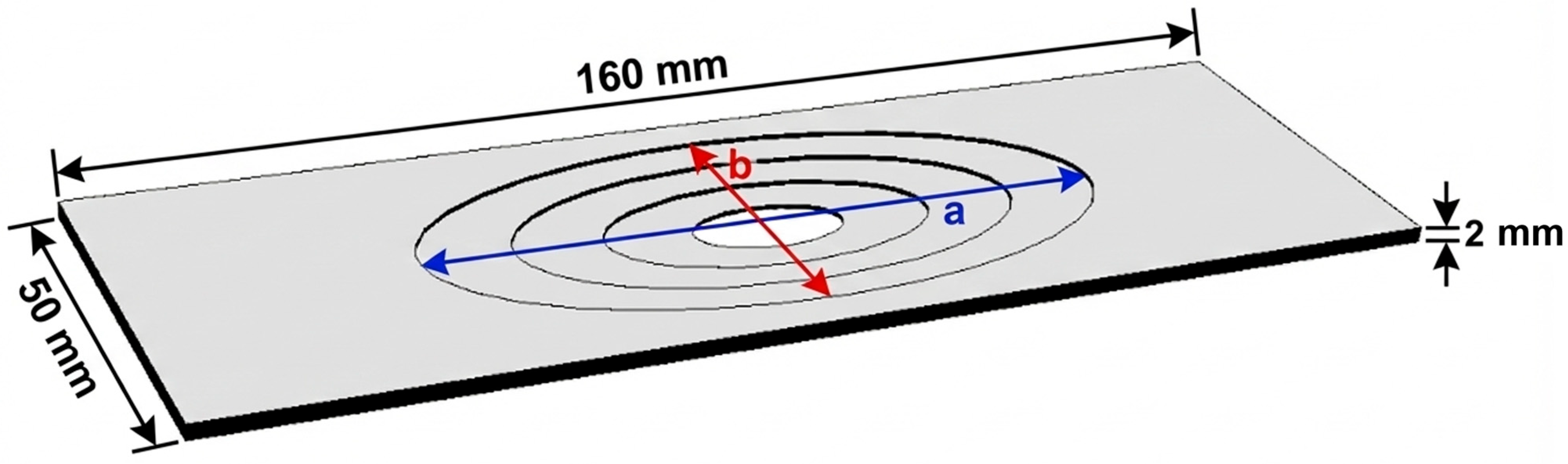
The geometric model consists of two main components: a composite parent laminate and a repair patch. To represent repair scenarios under geometric size constraints commonly encountered in practical engineering applications, the parent laminate is modeled as a rectangular composite plate with dimensions of 160 mm × 50 mm. A centrally located circular through-thickness damage with a diameter of 10 mm is introduced to represent severe impact-induced damage. In the present study, the damage is idealized as a through-thickness perforation-type defect. Accordingly, the damaged material is completely removed through the full laminate thickness and replaced by the repair patch. Under this assumption, the repair patch is designed to recover the removed structural thickness, and its total thickness is therefore taken to be equal to that of the parent laminate. Since the parent laminate consists of 16 plies with a nominal ply thickness of 0.125 mm, the total laminate thickness is 2 mm, and the repaired region is restored to the same thickness after patch insertion. It should be noted that this study focuses specifically on through-thickness damage repair. Partial-depth damage and the corresponding reduced patch-thickness design are not considered here and will be investigated in future work.
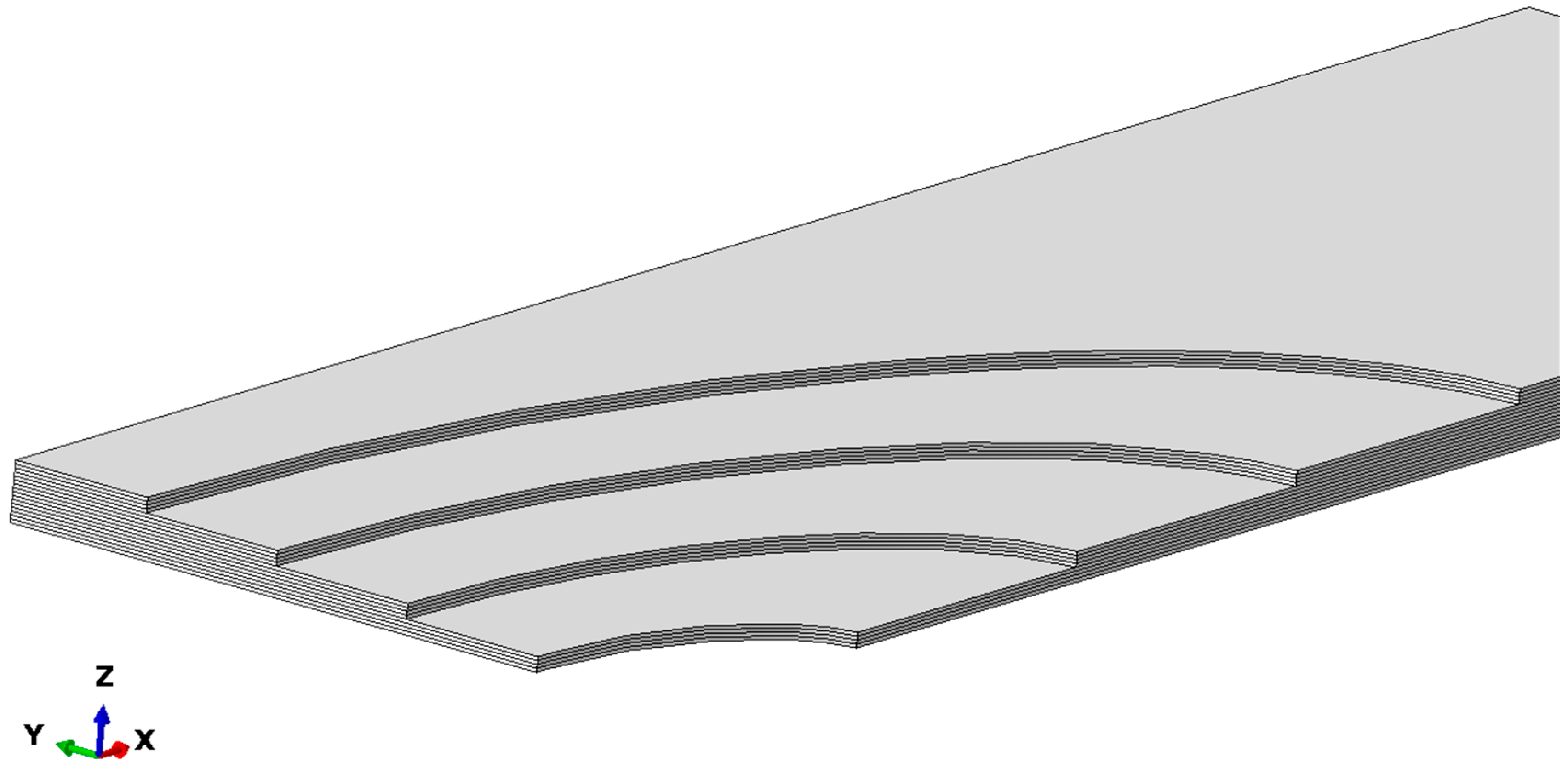
A stepped repair configuration is adopted, as schematically illustrated in
Figure 1, where the damaged material is removed layer by layer and replaced by the corresponding repair patch plies. As shown in
Figure 2, all geometric features of the repair region are controlled through a fully parametric modeling strategy. In particular, the major and minor axes of the elliptical contours at each ply interface can be independently adjusted, allowing flexible control of the scarf angle, patch geometry, and the number of stepped interfaces along the adhesive bondline. The maximum major and minor axes of the outermost elliptical contour are denoted as a and b, respectively.
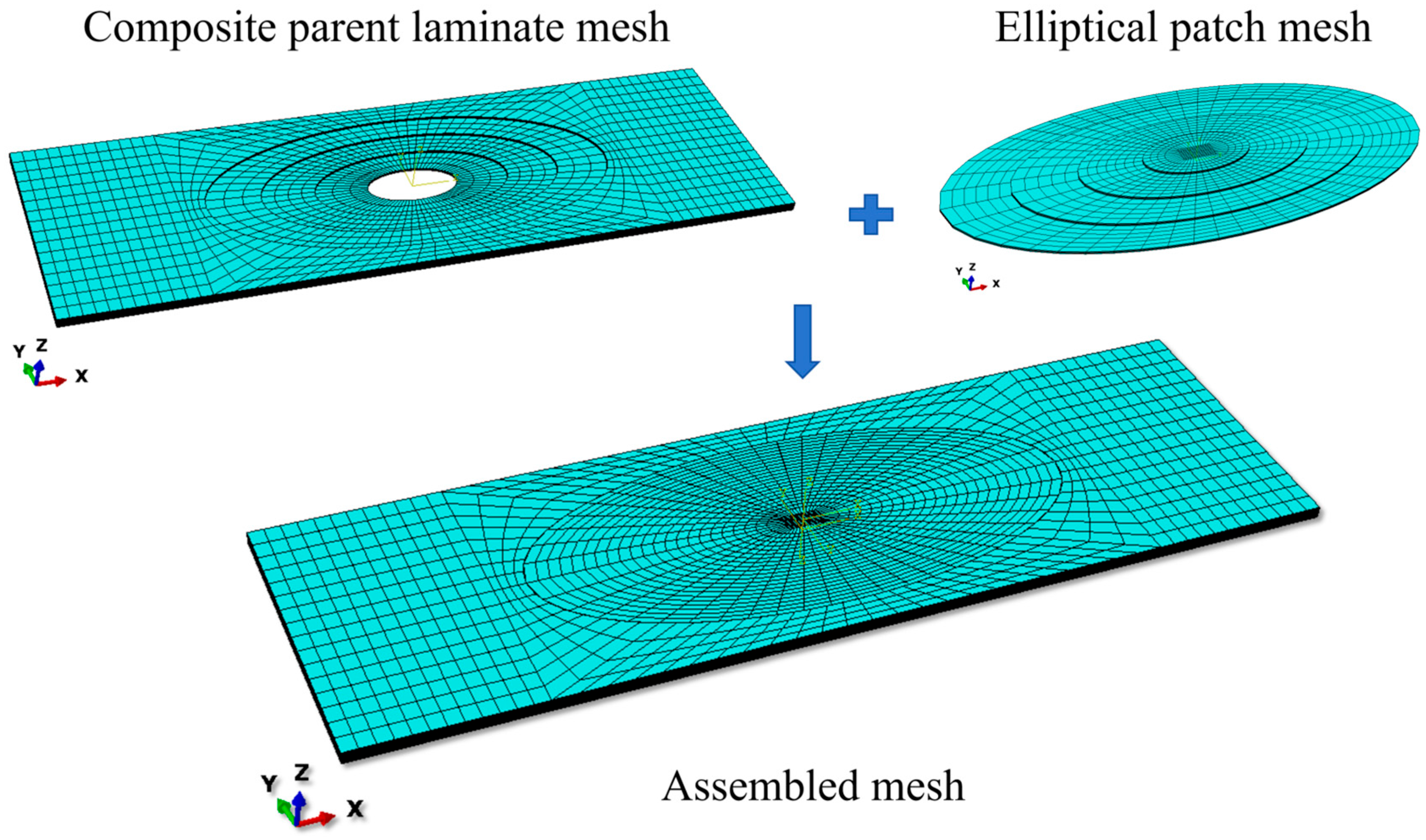
The finite element discretization employs three-dimensional hexahedral elements for both the parent laminate and the repair patch. A structured meshing technique is adopted throughout the model to ensure mesh regularity and numerical stability. Local mesh refinement is applied in the vicinity of the adhesive and repair region to accurately capture the stress transfer and damage evolution in the repaired structure. The final finite element model consists of approximately 30,000 elements and 40,000 nodes. A representative view of the mesh layout is provided in
Figure 3, demonstrating the high-quality structured mesh employed in the analysis.
This modeling framework enables a systematic investigation of the effects of geometric parameters under size-constrained repair conditions, providing a robust basis for subsequent parametric and comparative analyses.
To simulate a uniaxial tensile loading condition, appropriate boundary conditions are applied to the finite element model. The left end surface of the parent laminate is fully constrained, where all translational degrees of freedom are fixed to eliminate rigid-body motion. A prescribed displacement is applied to the right end surface along the longitudinal (x) direction, while the remaining degrees of freedom are left unconstrained. The left end surface is kinematically constrained by coupling all translational degrees of freedom to a reference point, which is fully fixed in space. A reference point is similarly defined at the right end surface, to which a prescribed displacement along the x direction is applied. This coupling strategy ensures a uniform displacement field across the loading surface and avoids artificial stress concentrations. It can accurately capture the progressive damage evolution of the repaired structure up to final failure.
This boundary condition setup effectively represents a quasi-static uniaxial tensile test commonly used in experimental characterization of repaired composite laminates.
In the present study, the laminate and adhesive are modeled at the structural/mesoscopic level using homogenized material properties and a cohesive interface formulation. The purpose of this modeling strategy is to isolate the effect of repair configuration, especially the influence of elliptical stepped geometry, on the global tensile response and failure evolution. Accordingly, manufacturing-related factors such as local resin-rich pockets in transition regions, cure-induced residual stresses, and other process-dependent micromechanical heterogeneities are not explicitly considered. These effects may affect the local stress distribution and damage initiation in practice, but their inclusion would require a coupled process–structure modeling framework that is beyond the scope of the present work.
2.2. Material Properties
The parent laminate is composed of 16 plies of unidirectional composite prepreg, with a nominal single-ply thickness of 0.125 mm, resulting in a total laminate thickness of 2 mm. The stacking sequence of the parent laminate is defined as [45/90/−45/0]2s. The repair patch is made of woven composite plies, each with a thickness of 0.25 mm, and follows a symmetric stacking sequence of [(45,−45)/(0,90)]4.
The material properties assigned to each component in the finite element model, including elastic constants and strength parameters, are summarized in
Table 1 [
35,
36].
4. Numerical Results and Discussion
4.1. Verification Study
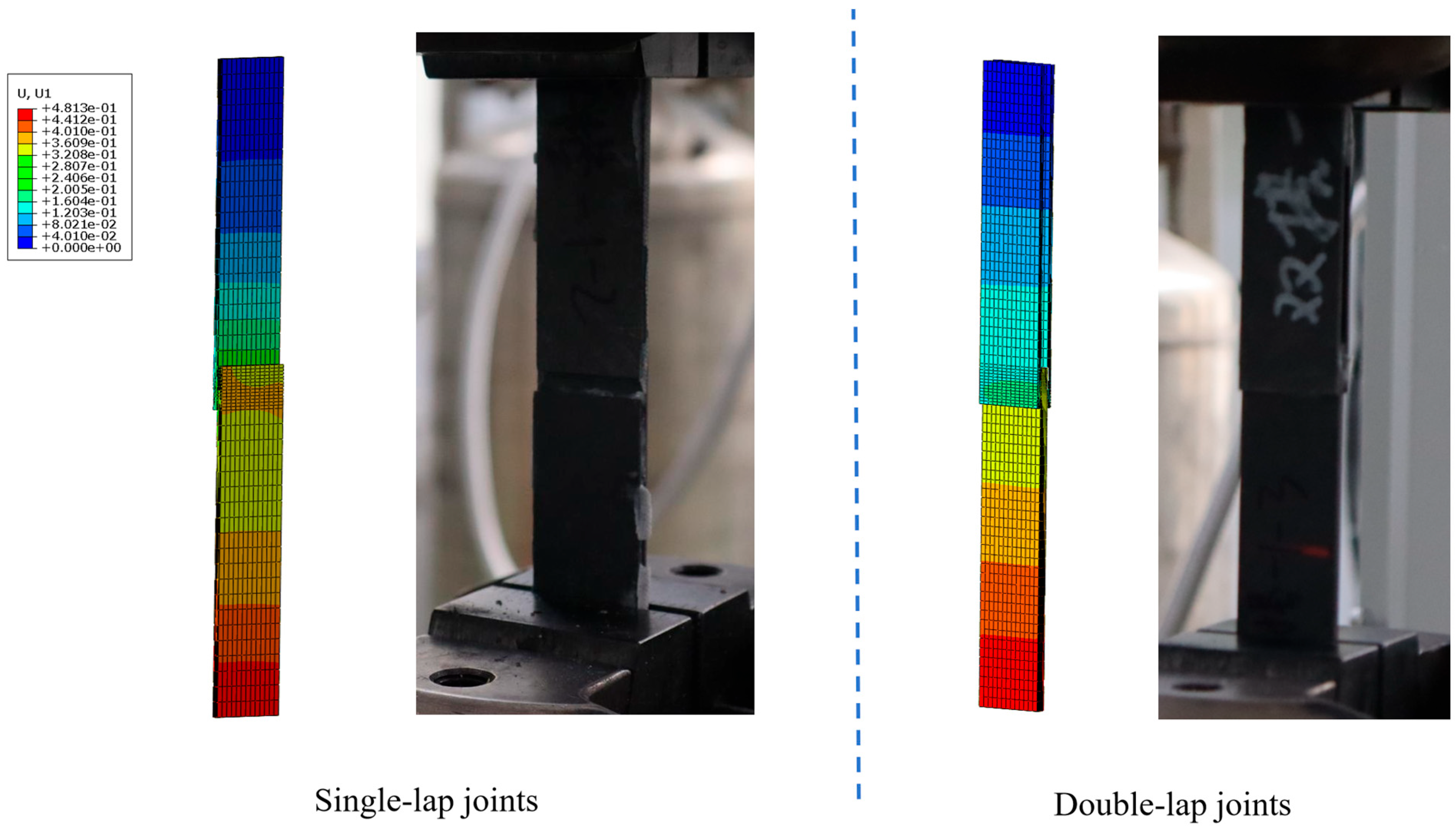
To establish the credibility of the present finite element framework before conducting the parametric study of elliptical repairs, a two-level verification procedure was carried out. First, in Case 1, in-house uniaxial tensile tests on adhesively bonded composite joints, including single-lap joints (SLJ) and double-lap joints (DLJ), were used to validate the adhesive-interface modeling strategy and its interaction with laminate damage. Second, in Case 2, a circular stepped repair tensile benchmark reported in the literature was reproduced numerically to further verify the predictive capability of the model for a repair-relevant configuration. After this model verification, a mesh sensitivity analysis was performed in
Section 4.2.1 to determine the mesh density adopted in the subsequent finite element parametric study. This combined procedure provides the basis for the reliability of the later numerical investigation on elliptical stepped repairs.
Case 1 employs in-house tensile tests on adhesively bonded joints with two representative configurations: single-lap joints (SLJ) and double-lap joints (DLJ). The adherends were manufactured from a T300 large-tow carbon/epoxy prepreg system. All specimens have an overall size of 150 mm (length) × 25 mm (width) × 4 mm (thickness), with a laminate lay-up of [−45/0/45/90/−45]S and a nominal ply thickness of 0.2 mm. The experiments report the ultimate load for each joint configuration. For the bonded-joint experiments in Case 1, the number of tested specimens for each configuration was . The reported experimental results correspond to average values.
The corresponding FE models replicate the tested geometries, laminate stacking sequence, and boundary/loading conditions. The adherends are governed by the same progressive damage model adopted in this work, whereas the adhesive layer/interface is modelled using a bilinear traction–separation cohesive law with mixed-mode damage initiation and energy-based evolution, consistent with the interface modelling described in
Section 3.2. Local mesh refinement is applied along the overlap region and near the overlap ends to capture stress gradients and debonding initiation/propagation. The verification metric is the ultimate load. The experimental and numerical ultimate loads for SLJ and DLJ specimens are summarized in
Table 3, where the relative discrepancy
remains below 10% for both configurations, indicating that the interface formulation and its interaction with laminate damage are captured with satisfactory accuracy. In addition,
Figure 5 presents the experimental results side by side with the corresponding FE models, visually confirming the consistency of the geometries between the experiment and the simulation.
It should be noted that these bonded-joint specimens were used to validate the adhesive/interface modeling methodology rather than to serve as direct geometric analogues of the elliptical stepped repair. These bonded-joint specimens were used to validate the adhesive/interface modeling methodology rather than to serve as direct geometric analogues of the elliptical stepped repair.
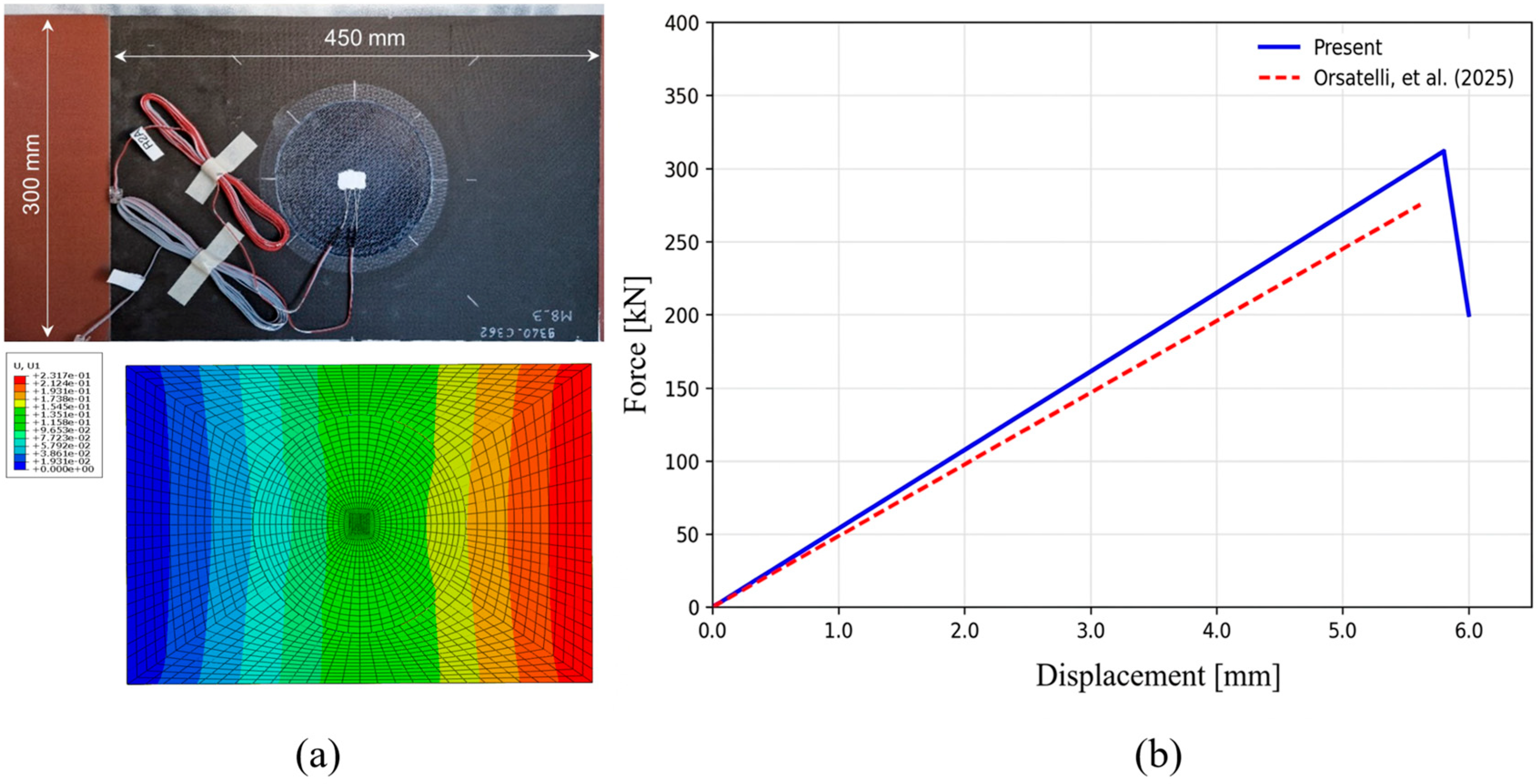
Case 2 adopts an independent benchmark from the literature to verify that the proposed modelling framework remains predictive for a representative bonded stepped repair configuration, where the load transfer mechanism and failure response are governed by the coupled effects of laminate progressive damage and adhesive debonding. Specifically, the experimental study by Orsatelli et al. [
28] is selected, and the tensile test specimen denoted P-T-8M is reproduced numerically. In that work, a circular stepped repair is introduced on a CFRP laminate made of G939 woven fabric, with an initial damage diameter of 30 mm. The reported repair parameters for P-T-8M include a damage depth of eight plies, a step length of 8 mm, and a patch lay-up identical to that of the parent laminate, which provides a stringent verification scenario because the structural response depends simultaneously on the laminate damage evolution and the integrity of the bonded interface.
A finite element model is constructed to replicate the above configuration and loading condition, using the same modelling assumptions as in the main study. The woven laminate is governed by the progressive damage formulation implemented in the VUMAT, while the bonded repair interface is represented using the cohesive traction–separation law with mixed-mode initiation and energy-based evolution consistent with
Section 3.2. The verification metric is the ultimate tensile load. As shown in
Figure 6, the reference experiment reports an ultimate load of 275 kN for P-T-8M, whereas the present simulation predicts 312 kN, corresponding to a relative discrepancy of approximately 9.8%. This level of agreement (within 10%) is considered acceptable for composite repair tests given the inherent scatter associated with manufacturing quality, adhesive thickness variations, and defect sensitivity, and it supports the capability of the proposed framework to predict the load capacity of bonded stepped repairs under tensile loading.
For Case 2, the numerical model reproduced the overall structural response trend of the repaired laminate and predicted an ultimate load reasonably close to the reported experimental result. Nevertheless, some discrepancy can be observed in both the initial stiffness and the peak load. This difference is likely associated with the idealization of the boundary conditions in the numerical model, uncertainty in the laminate and adhesive properties, and unavoidable manufacturing variability in the benchmark specimen reported in the literature. Therefore, the comparison is interpreted here as a structural-level validation of the modeling framework rather than an exact point-by-point reproduction of the experimental response.
The verification conducted in this study is primarily at the structural/macroscopic level. The adopted cohesive-zone parameters were assessed based on their ability to reproduce the global load–displacement response and the macroscopically observed damage behavior of the bonded/repaired specimens. However, no fractographic characterization, such as SEM observation of the fracture surfaces, was performed to distinguish adhesive failure from cohesive failure in the adhesive layer. Therefore, the present study does not claim a strict material-level proof of the CZM parameters, and further fracture-surface analysis would be required to establish that level of validation.
4.2. Mechanical Response and Failure Evolution of a Typical Repaired Specimen
4.2.1. Mesh Sensitivity Analysis
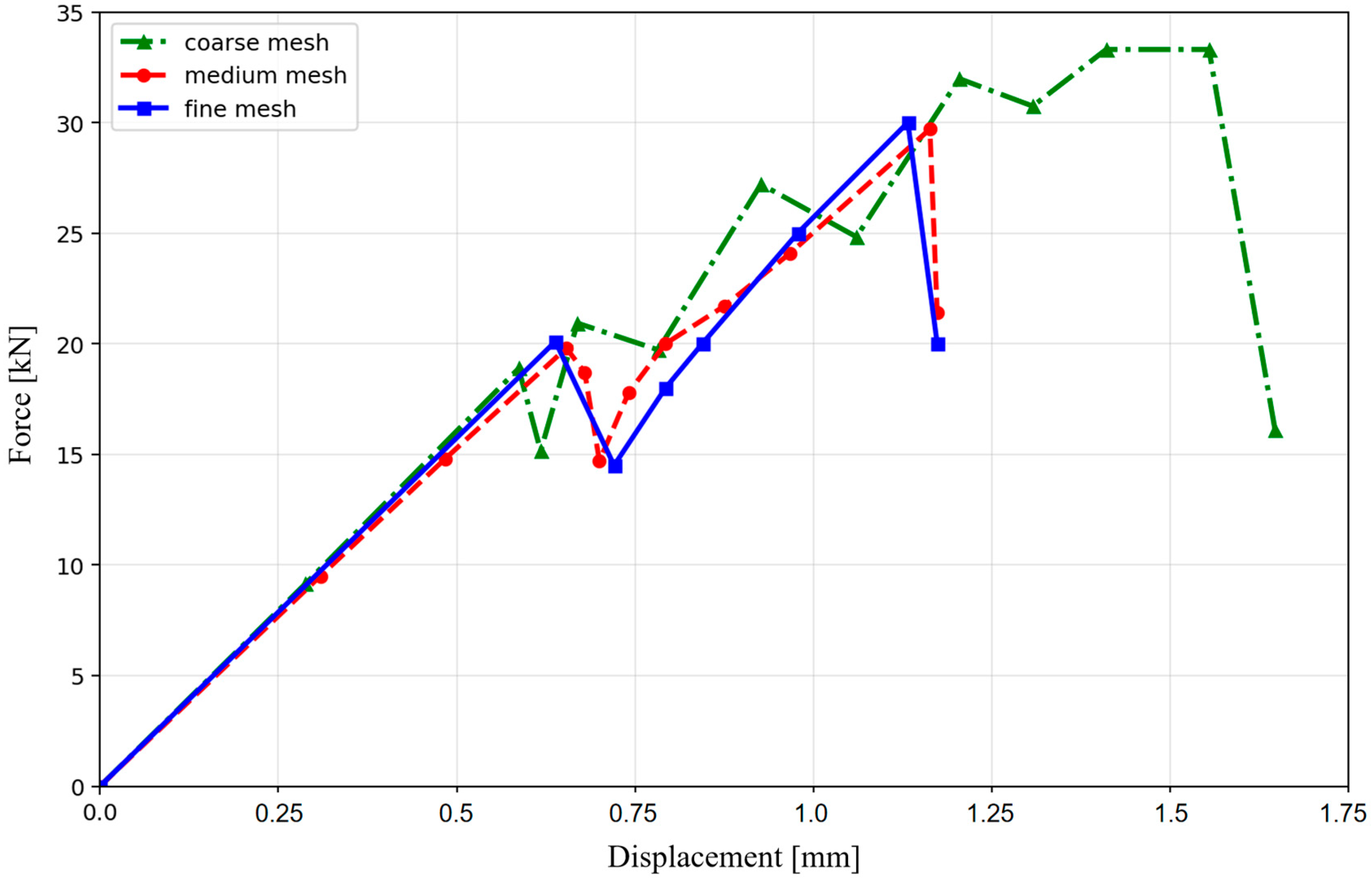
To assess the mesh dependency of the numerical results and to determine an appropriate mesh strategy for subsequent analyses, a mesh sensitivity study is conducted using the circular patch repair configuration as a representative case. Three different mesh densities are considered, with the mesh sizes of the parent laminate and the patch defined as follows:
Coarse mesh: 4 mm × 4 mm for the parent laminate and 2 mm × 2 mm for the patch;
Medium mesh: 2.5 mm × 2.5 mm for the parent laminate and 1 mm × 1 mm for the patch;
Fine mesh: 2 mm × 2 mm for the parent laminate and 0.7 mm × 0.7 mm for the patch.
Figure 7 compares the load–displacement curves obtained with the three mesh densities. It can be observed that the coarse mesh leads to pronounced fluctuations in the load–displacement response, failing to accurately capture the key failure processes, including patch debonding and final fracture of the parent laminate. Moreover, noticeable discrepancies are observed in the predicted load values at critical points, indicating that the coarse mesh is insufficient for reliable progressive damage analysis.
In contrast, the responses obtained with the medium and fine meshes exhibit very similar trends, and both are able to adequately represent the mechanical response associated with patch debonding and subsequent parent laminate fracture, suggesting that the numerical solution has essentially converged. However, the fine mesh results in a significantly increased computational cost.
Considering the trade-off between numerical accuracy and computational efficiency, the medium mesh density is adopted as the optimal mesh strategy for all subsequent simulations.
The mesh convergence analysis was performed based on the full load–displacement response rather than on the ultimate load alone. Different mesh densities were compared throughout the entire tensile process, including the initial linear stage, the nonlinear stage associated with adhesive damage initiation and patch debonding, and the final failure stage. It was found that the adopted mesh size yielded not only a converged ultimate load, but also a stable prediction of the interfacial nonlinear response and damage evolution. Therefore, the selected mesh density was considered sufficient for capturing both the global structural behavior and the cohesive response of the adhesive interface.
4.2.2. Mechanical Response and Failure Mode Comparison Between Circular and Elliptical Repairs
To elucidate the influence of patch geometry on the mechanical response and failure mechanisms of repaired laminates, both circular and elliptical patch repair configurations are investigated under uniaxial tensile loading. For the elliptical repair, an outermost representative configuration with a minor axis of 40 mm, a major axis of 90 mm, and four steps (each step consisting of four unidirectional plies) is selected, and the circular patch with an outermost diameter of 40 mm is taken as an example as a reference case for subsequent parametric studies.
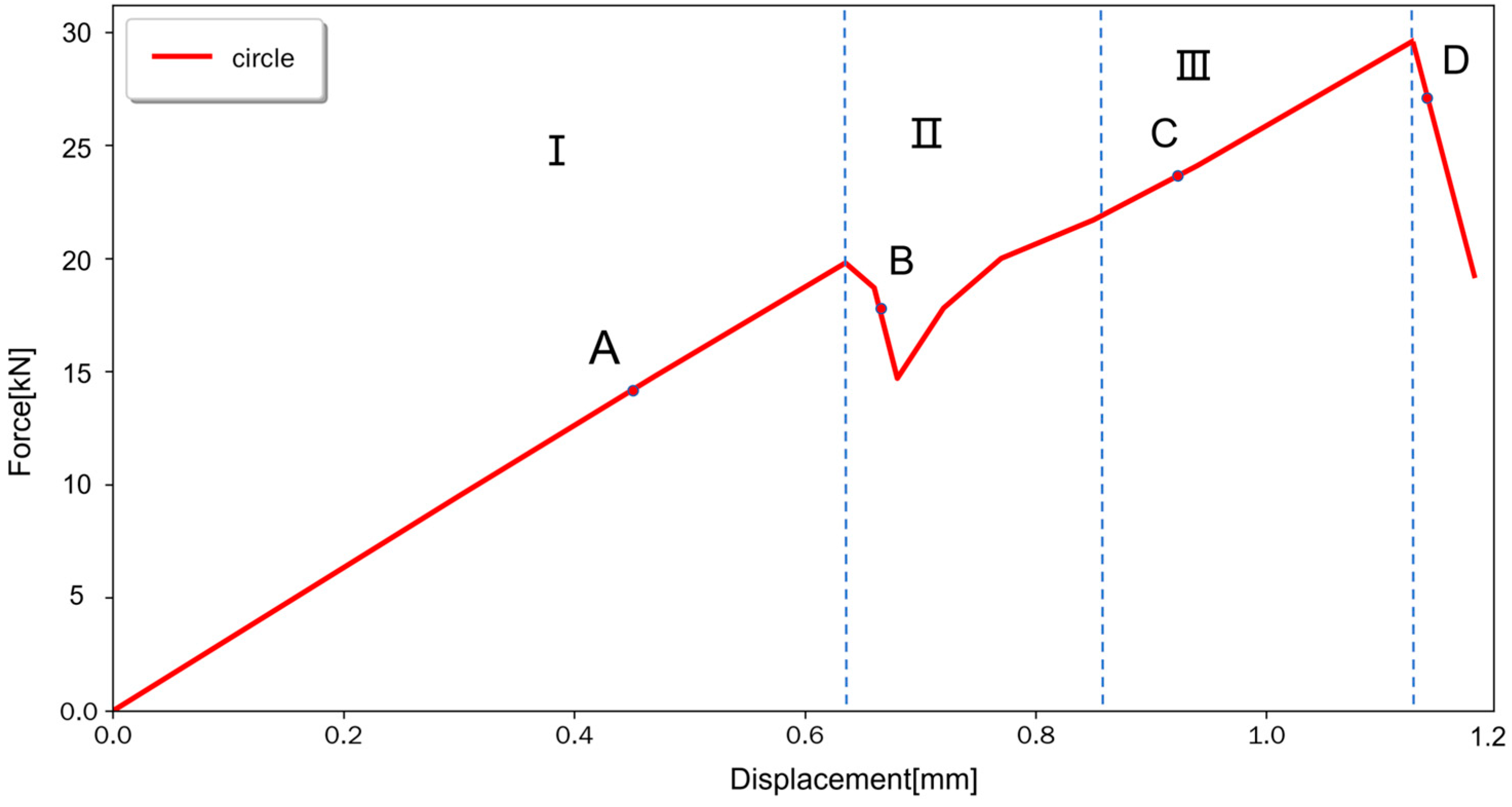
Figure 8 shows the load–displacement curve of the laminate repaired with a circular patch. The curve exhibits a clear three-stage characteristic, corresponding to different mechanical response regimes and damage evolution processes. Stage I represents the linear elastic response, in which a nearly linear load–displacement relationship is observed and the adhesive damage initiation criterion remains below unity, indicating a sound bonding condition between the patch and the parent laminate. As the applied load increases, the response enters Stage II, where the adhesive damage initiation criterion reaches unity and interfacial damage is triggered, accompanied by progressive stiffness degradation. Element deletion initiates at the patch–parent interface, leading to gradual debonding of the patch. Stage III corresponds to the response after extensive or complete patch debonding, during which the load is mainly carried by the parent laminate. Owing to the remaining load-carrying capacity of the parent laminate, the load continues to increase for a short period until the ultimate load is reached, followed by a rapid drop associated with final fracture of the parent laminate. Compared with Stage I, the slope of the load–displacement curve in Stage III is significantly reduced, indicating a pronounced degradation of the overall structural stiffness after patch debonding and highlighting the stiffening contribution of an effectively bonded patch. Specifically, the first peak on the load–displacement curve corresponds to the onset of patch debonding, occurring at a load of 19.8 kN, whereas the final peak represents failure of the parent laminate, with an ultimate load of 29.7 kN.
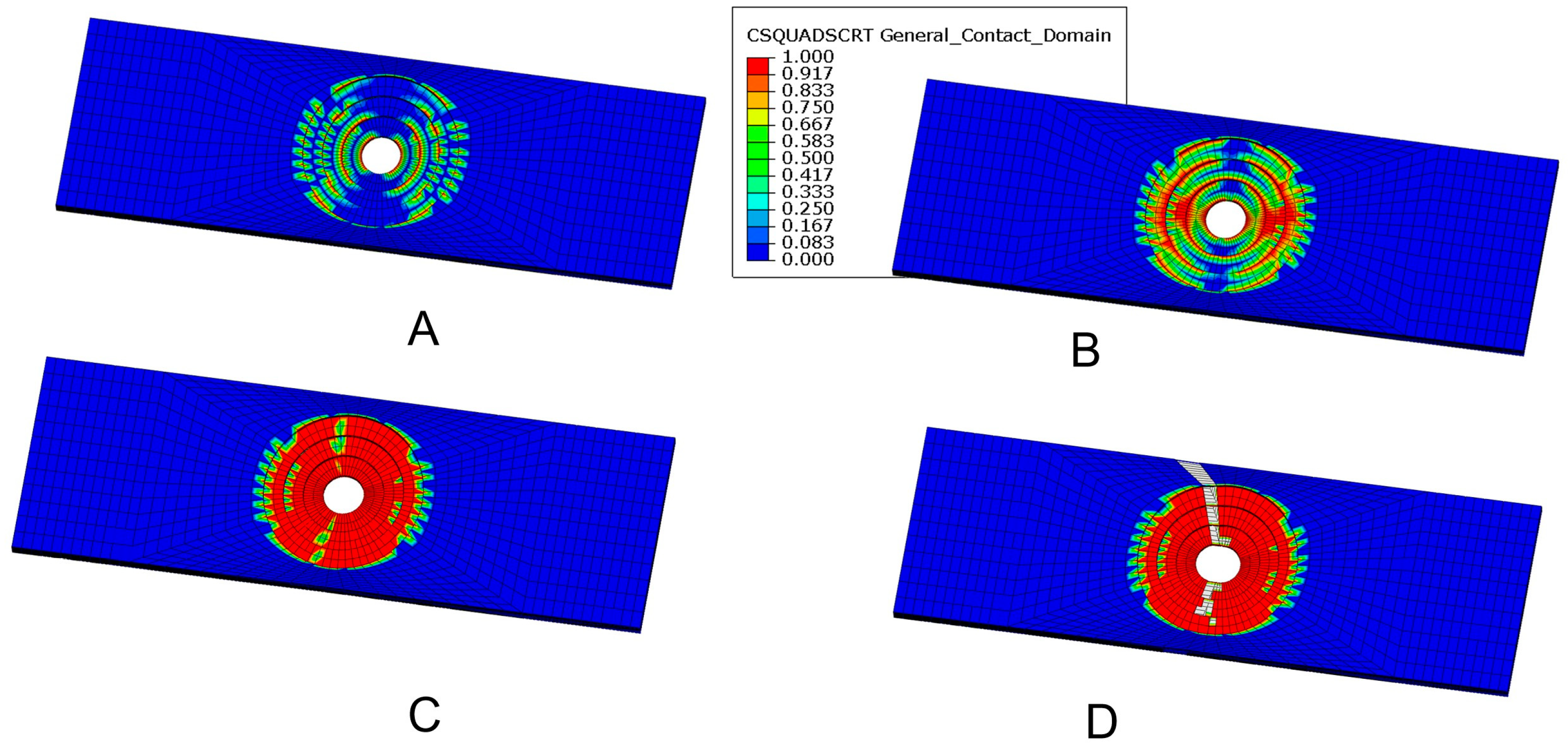
To further illustrate the evolution of adhesive damage, four representative points (A–D) are selected from the load–displacement curve, and the corresponding adhesive damage contours are shown in
Figure 9. At Point A, damage initiates locally at the corners of the stepped interfaces, indicating pronounced stress concentration in these regions. At Point B, adhesive damage becomes more evident and starts to propagate along the interface, leading to progressive debonding of the patch. By Point C, extensive debonding has occurred, and the interfacial bonding capability is nearly lost. Finally, at Point D, the adhesive layer is completely damaged, and noticeable damage initiates in the parent laminate, marking the onset of the final failure stage of the repaired structure.
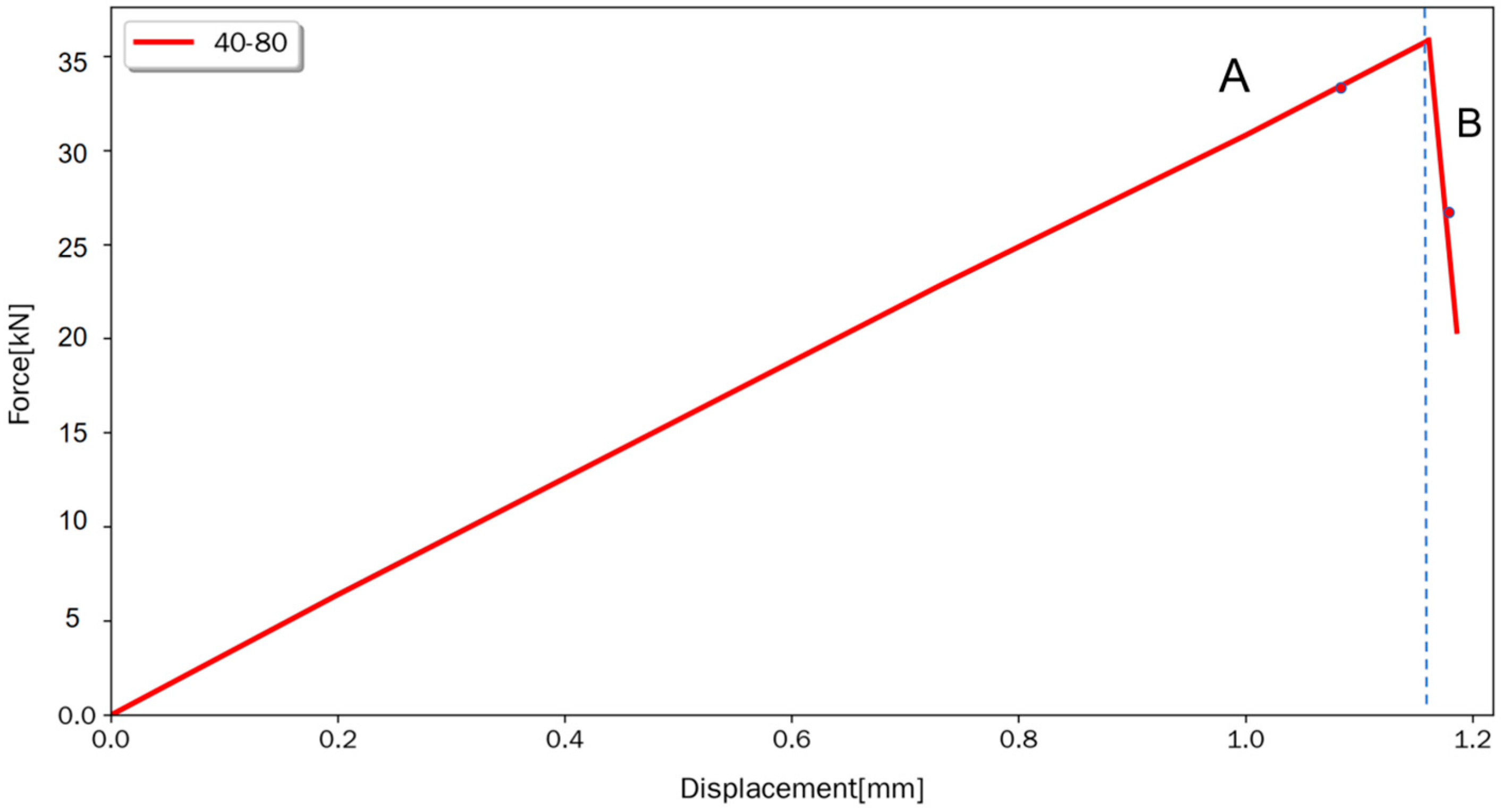
In contrast, the elliptical patch repair exhibits a distinctly different failure mode, as reflected by its load–displacement curve shown in
Figure 10. The curve is relatively simple, with the load increasing almost linearly with displacement until the peak load is reached, followed by an abrupt drop. Throughout the loading process, no apparent adhesive debonding is observed. Instead, a transverse fracture of the parent laminate occurs while the patch remains bonded, indicating that the failure of the elliptical repair is governed by the strength of the parent laminate rather than interfacial debonding.
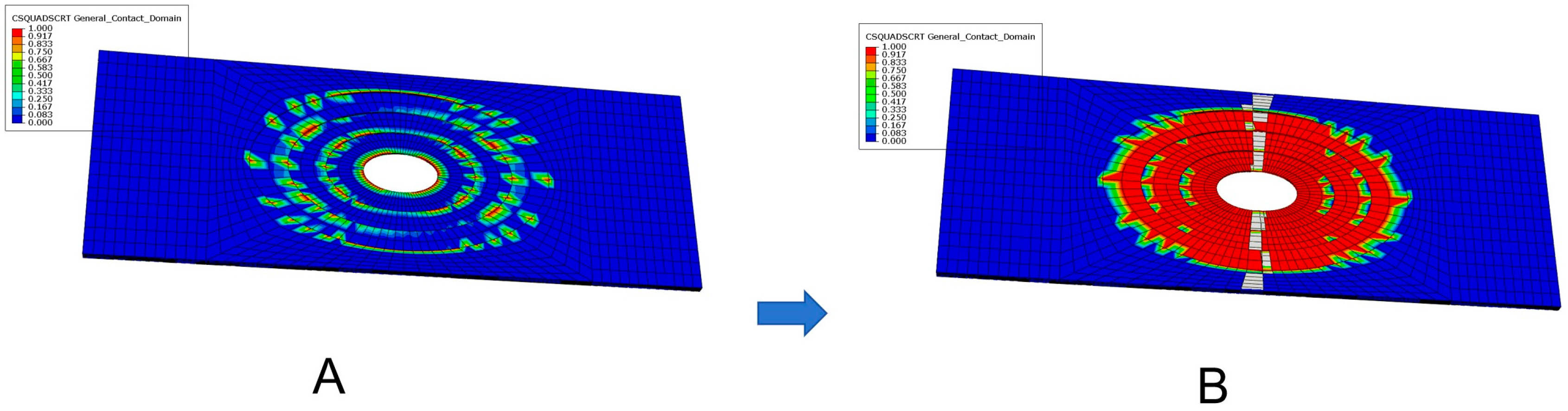
Two representative points, denoted as A and B, are selected in the vicinity of the peak load on the load–displacement curve of the elliptical repair to examine the evolution of adhesive damage before and after fracture. The corresponding adhesive damage contours are shown in
Figure 11. At Point A, i.e., prior to fracture of the parent laminate, the adhesive layer remains largely intact, with no pronounced damage observed, except for a slight tendency of damage initiation at the stepped corners. Upon reaching Point B, a transverse fracture of the parent laminate occurs, after which the adhesive layer rapidly evolves to a fully damaged state. These observations indicate that the failure of the elliptical repair is not governed by adhesive debonding, but is instead dominated by the strength failure of the parent laminate.
For the elliptical patch repair configuration, the load increases almost linearly with displacement until transverse fracture of the parent laminate occurs, resulting in an ultimate load of 35.8 kN. A direct comparison between the two repair configurations reveals that the ultimate load of the elliptical patch repair is significantly higher than that of the circular patch repair. This improvement can be attributed to the optimized patch geometry of the elliptical repair, which facilitates a more favorable load transfer and alleviates stress concentration at the adhesive interface. Consequently, the repaired structure reaches the strength limit of the parent laminate before interfacial failure occurs. Owing to its superior load-carrying capacity and stable failure behavior, the selected elliptical repair configuration is adopted as the baseline case for subsequent investigations on the effects of elliptical repair parameters.
4.3. Effect of Elliptical Patch Geometry on Repair Performance
4.3.1. Elliptical Patch Configurations and Evaluation Criteria
In this section, the influence of the geometric configuration of elliptical patches on the load-carrying capacity of repaired composite structures is systematically investigated. All repair configurations are established based on a four-step repair scheme, in which every four unidirectional plies constitute one repair step. The repaired specimens are subjected to uniaxial tensile loading to evaluate their mechanical performance and failure characteristics.
To ensure consistency and comparability among different configurations, the evaluation of the ultimate load is defined according to the observed failure mode. For specimens exhibiting patch debonding failure, the applied load corresponding to the onset of complete patch–parent laminate debonding is defined as the ultimate load. In contrast, for specimens failing by transverse fracture of the parent laminate, the peak load obtained from the global load–displacement curve is adopted as the ultimate load. This definition allows a unified comparison of the load-bearing capacity among different failure mechanisms.
The parent laminate is modeled as a rectangular composite plate with a length of 160 mm, a width of 50 mm, and a total thickness of 2 mm, consisting of 16 plies. To maintain identical initial damage conditions for all repaired configurations, the minimum elliptical dimensions at the bottom layer are fixed at a minor axis of 10 mm and a major axis of 20 mm. For different repair configurations, the geometry of the elliptical patch is varied by changing the dimensions of the outermost elliptical contour, while the intermediate elliptical layers are generated by linearly decreasing the major and minor axes with a constant decrement for each repair step, corresponding to the four-step repair design.
A total of nine elliptical patch configurations are considered in this study, with the outermost minor axis lengths set to 30, 40, and 46 mm, and the corresponding major axis lengths set to 70, 80, and 90 mm. All other parameters, including material properties, stacking sequence, adhesive properties, and loading conditions, are kept unchanged to isolate the influence of elliptical geometry on the repair performance.
4.3.2. Ultimate Load and Strength Recovery of Different Elliptical Patch Configurations
Table 4 summarizes the ultimate load, strength recovery ratio, and the corresponding failure mode for the nine elliptical repair configurations. The ultimate load of the pristine, undamaged laminate is 53 kN. The strength recovery ratio is therefore defined as the ratio between the ultimate load of the repaired specimen and that of the pristine laminate. This normalized parameter allows a direct and quantitative comparison of the repair efficiency among different elliptical geometries.
To clarify the relative influence of the geometric parameters,
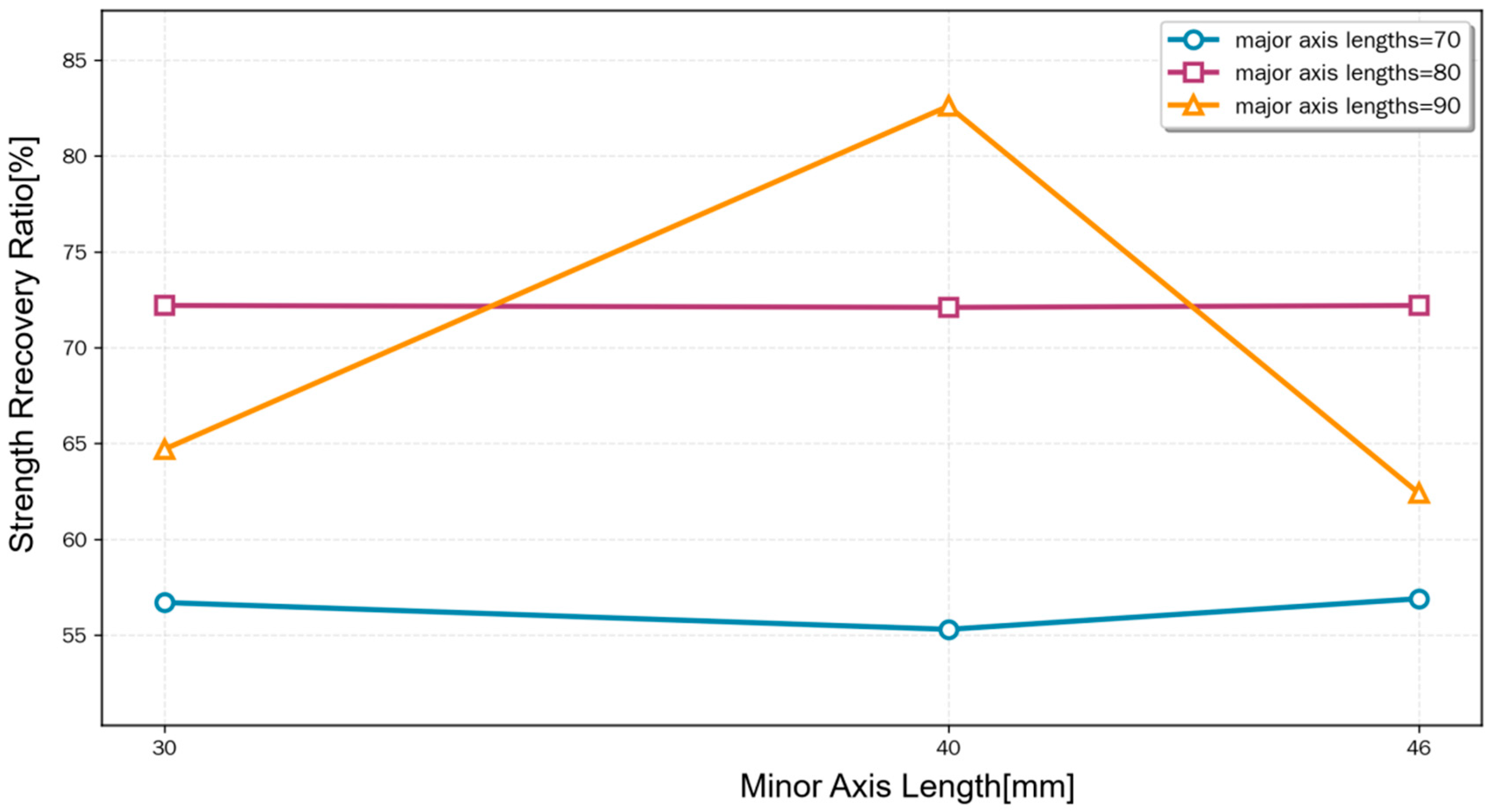
Figure 12 plots the strength recovery ratio as a function of the minor axis length (30, 40, and 46 mm), with three curves corresponding to major axis lengths of 70, 80, and 90 mm. A clear hierarchy among the three curves is observed, indicating that the repair efficiency is primarily controlled by the major axis length. Specifically, the curve associated with a major axis of 70 mm remains nearly flat and lies consistently at the bottom, showing low strength recovery regardless of the minor axis length. Moreover,
Table 4 indicates that all configurations with a major axis of 70 mm fail by patch debonding. This observation suggests that a major axis of 70 mm provides an insufficient load transfer length along the loading direction, leading to pronounced stress concentrations in the adhesive layer and premature interfacial failure, which cannot be effectively mitigated by varying the minor axis within the investigated range.
When the major axis is increased to 80 mm, the corresponding curve in
Figure 12 shifts upward and remains relatively flat, demonstrating a uniformly improved repair efficiency across different minor axis lengths. Compared with the 70 mm cases, the 80 mm major axis appears to provide a sufficiently long load transfer path such that the adhesive layer is less likely to govern the global failure, thereby enabling higher ultimate loads and strength recovery ratios. In contrast, the curve for a major axis of 90 mm lies between those for 70 mm and 80 mm in most cases, indicating that further increasing the major axis does not necessarily yield additional benefits and that the influence of the major axis is non-monotonic. This non-monotonicity implies that beyond an effective load transfer length, geometric enlargement may introduce unfavorable stress redistribution near the patch edge and reduce the marginal contribution of the additional bonded length.
It is also evident from
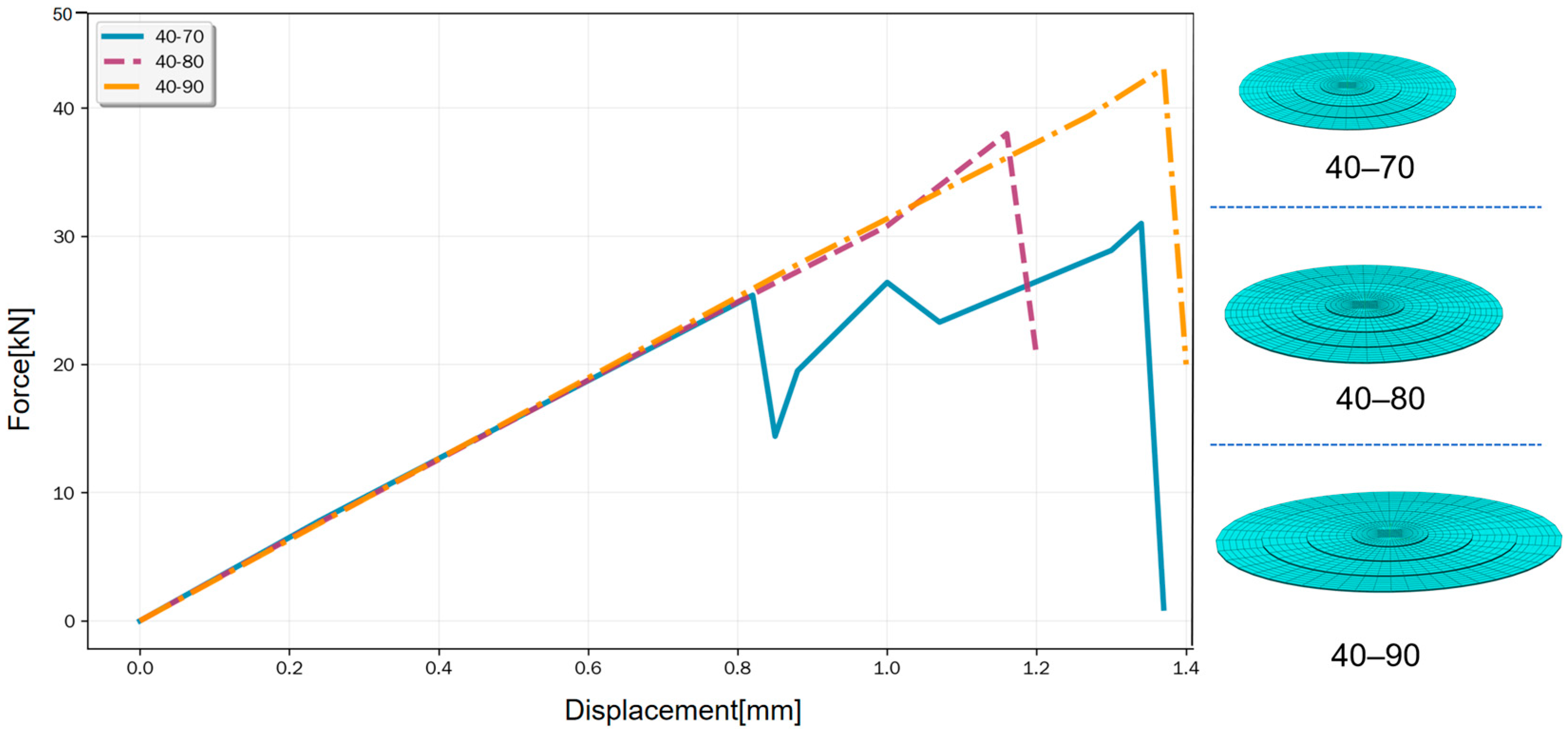
Figure 12 that, when the major axis length is fixed, changing the minor axis from 30 mm to 46 mm causes only limited variations in the strength recovery ratio, confirming that the minor axis plays a secondary role in the explored parameter space. A notable exception is the configuration with a minor axis of 40 mm and a major axis of 90 mm, which exhibits an exceptionally high strength recovery ratio and appears as a pronounced “peak” on the 90 mm curve. This result indicates a synergistic geometric effect: the 90 mm major axis provides an extended load transfer length, while the 40 mm minor axis offers an optimal transverse dimension that promotes effective stress redistribution without inducing excessive stiffness mismatch. Consequently, the 40–90 configuration achieves a superior balance between longitudinal load transfer and transverse load spreading, leading to the highest repair efficiency among the investigated designs.
To further substantiate the above interpretation and to explicitly link the geometric parameters to the global mechanical response and failure mechanism,
Figure 13 compares the load–displacement curves of three representative configurations with the same minor axis (40 mm) but different major axes (70, 80, and 90 mm). The 40–70 configuration exhibits a characteristic multi-stage response with two distinct load peaks. The first peak corresponds to the onset and rapid propagation of patch debonding, which causes a pronounced load drop due to the sudden degradation of interfacial load transfer. With continued displacement, the remaining load-bearing capacity is primarily carried by the parent laminate, leading to a second peak associated with the final transverse fracture of the parent plate. In contrast, the 40–80 and 40–90 configurations show a nearly linear increase in load up to a single maximum, followed by abrupt failure. This behavior indicates that the patch–parent interface remains sufficiently effective throughout the loading process and that the global failure is governed by the parent laminate rather than by premature debonding. These distinct curve shapes provide direct evidence that extending the major axis from 70 mm to 80–90 mm shifts the governing failure mechanism from interface-dominated debonding to parent-laminate-dominated fracture, thereby markedly enhancing the strength recovery of the repaired structure.
Overall, the results in
Table 4 and
Figure 12 indicate that, within the investigated parameter space, the major-axis length has a stronger influence on repair performance than the minor-axis length. Nevertheless, because the present study does not fully isolate the effect of the ellipticity ratio, this conclusion should be understood as applying to the current design space rather than as a universal statement for all elliptical repair geometries.
4.4. Effect of the Number of Steps on the Performance of Elliptical Stepped Repairs
Beyond the elliptical patch geometry discussed in
Section 4.2.2, the step partitioning strategy constitutes another critical design variable for stepped repairs under geometric constraints. In the present configuration, the parent laminate consists of 16 UD plies, whereas the repair patch is a woven laminate whose single-ply thickness is approximately twice that of the UD ply. To maintain ply thickness consistency and manufacturability, the step height must therefore be defined using an even number of UD plies per step, which constrains the admissible step numbers. Previous sections used the four-step configuration as a representative baseline. In this section, three elliptical geometries (40–70, 40–80, and 40–90) are selected to systematically evaluate the influence of the step number on repair efficiency. For each geometry, five step numbers (3, 4, 5, 6, and 8) are considered, yielding 15 numerical configurations. The repair performance is quantified using the ultimate load and the strength recovery ratio, while the damage evolution in the adhesive layer is examined to elucidate the underlying mechanisms. The 3-step case was taken as the lower-bound representative of low-step configurations, while larger step numbers were introduced to examine the trend of repair performance as the interfacial geometry became increasingly segmented.
The global trend is summarized in
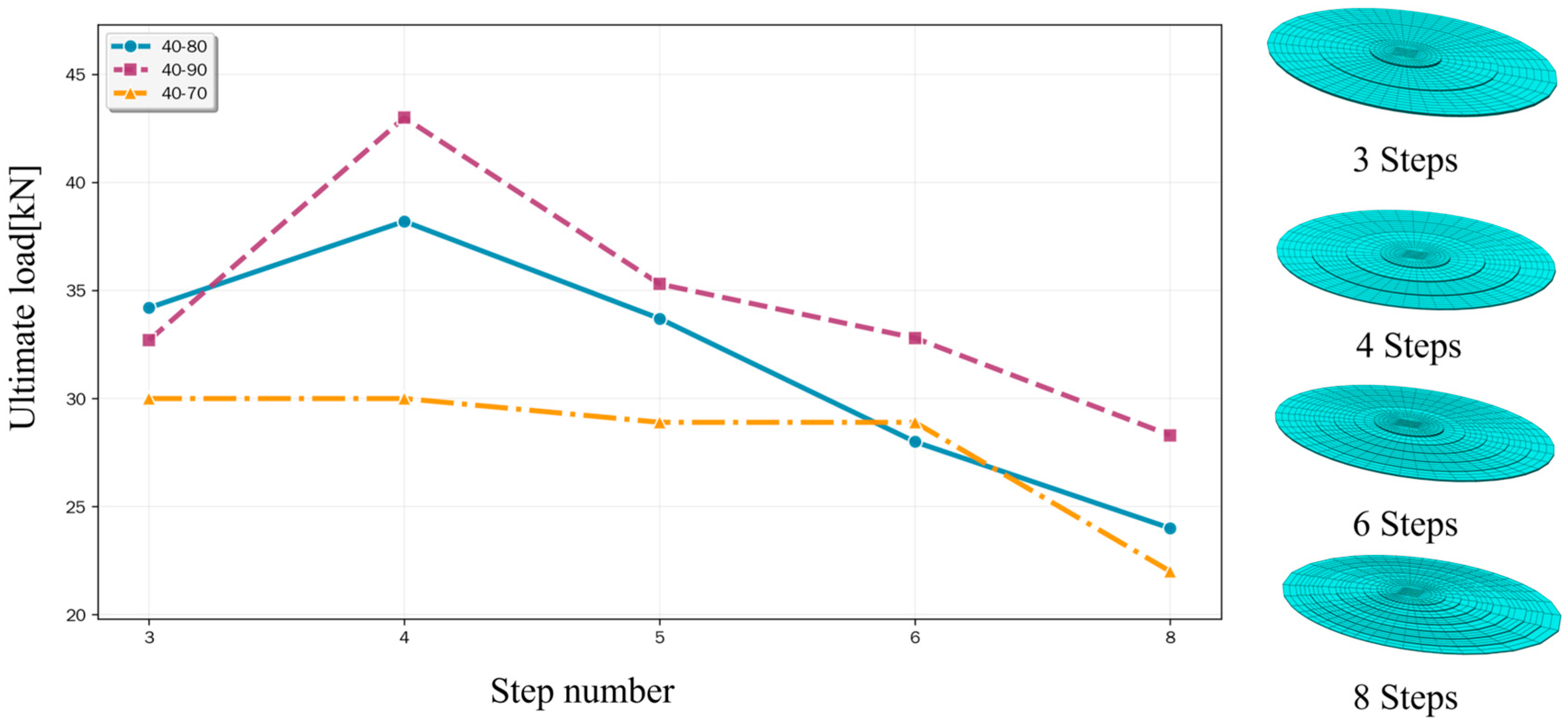
Figure 14, which plots the ultimate load as a function of step number for the three elliptical geometries. A consistent optimum is observed: the four-step configuration yields the maximum ultimate load for all three geometries. For the long-axis-dominant cases (40–80 and 40–90), the ultimate load reaches a clear peak at four steps, followed by a monotonic deterioration as the step number deviates from four, irrespective of whether the interface is coarsened (fewer steps) or overly refined (more steps). In contrast, the 40–70 geometry exhibits a markedly weaker dependence on step number; the ultimate load remains nearly unchanged over the range of 3–6 steps, although a pronounced drop is still observed at eight steps. These results indicate that the step number is not only a governing parameter for stepped repairs, but its influence is also coupled with the elliptical long-axis dimension: configurations with larger long axes are more sensitive to step partitioning.
The observed “four-step optimum” can be rationalized by the competition between two antagonistic mechanisms: insufficient transition smoothness for too few steps versus excessive step-edge effects for too many steps. When the number of steps is small (e.g., three steps), each step involves a larger thickness change and a steeper local transition, forcing the adhesive layer to accomplish load transfer over a shorter effective transition length. This promotes localized peaks in peel and shear tractions, leading to highly non-uniform damage development and an earlier onset of irreversible degradation. In contrast, a very large number of steps (e.g., eight steps) indeed smooths the global thickness transition, but it also multiplies the number of step edges. Each step edge acts as a geometric perturbation that can trigger local stress amplification and cohesive damage initiation. With more potential initiation sites distributed along the interface, damage tends to nucleate at multiple step edges and rapidly coalesce, reducing the effective load-carrying area and shortening the stable damage growth stage. Consequently, a refined step partition does not necessarily improve strength; beyond a certain point, the increased density of geometric discontinuities outweighs the benefit of a smoother transition, giving rise to an optimum step number.
This mechanistic interpretation is directly supported by the adhesive damage contours presented in
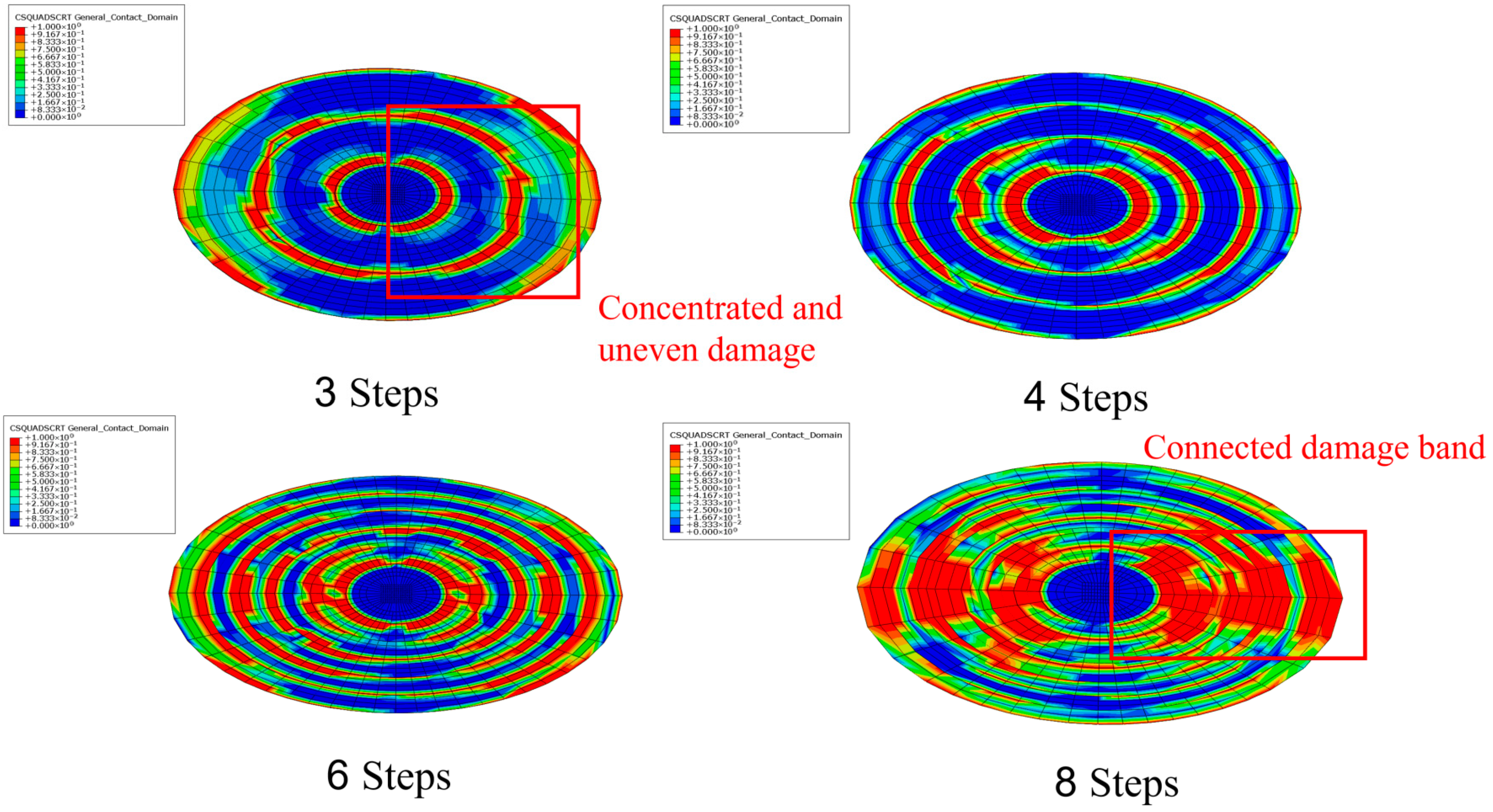
Figure 15 for the 40–80 geometry at a near-failure state. It should be noted that these contours are obtained from the validated finite element model and are used here to interpret the damage localization and coalescence behavior associated with different step numbers, rather than as direct experimental observations. For the eight-step configuration, damage initiates at multiple step edges and develops into an early connected damage band, consistent with the substantial strength reduction observed in
Figure 14. For the three-step configuration, damage is more concentrated and spatially uneven, indicating that load transfer is dominated by localized high-traction regions due to an insufficiently graded interface. By comparison, the four-step configuration exhibits a more balanced damage pattern: the number of step-edge initiation sites is limited, while the transition remains sufficiently graded to avoid severe localization. As a result, the interface sustains a more stable load transfer process prior to catastrophic failure, leading to superior strength recovery. The six-step case lies between these two extremes; although the transition is finer than that of three steps, the increased number of step edges facilitates multi-site damage nucleation, causing a reduction relative to the four-step optimum.
The different sensitivities among the three elliptical geometries can be further interpreted from the characteristic length scale of load transfer. For 40–80 and 40–90, the larger long axis implies a longer transfer path and a wider potential damage band along the interface. Under such conditions, modifying the step number significantly changes the spatial density and distribution of step edges, thereby amplifying the probability of multi-site initiation and early coalescence, which explains the pronounced strength drop away from the four-step configuration. In contrast, the 40–70 geometry features a more compact transfer region, making the dominant load path less sensitive to moderate changes in step number (3–6 steps). However, when the step number increases to eight, the step-edge density becomes sufficiently high to trigger multi-site initiation even for this compact geometry, producing the notable degradation observed at the maximum step number.
In summary, the step number governs repair performance by reshaping the geometric discontinuity pattern at the bonded interface and, consequently, the adhesive traction field and damage coalescence behavior. Within the investigated parameter space, the four-step configuration provides the best overall performance for all three elliptical geometries, while long-axis-dominant repairs (40–80 and 40–90) exhibit substantially higher sensitivity to non-optimal step partitioning.
4.5. Effect of an External Overlay on the Repair Performance of Elliptical Stepped Patches
An external overlay was introduced into the baseline elliptical stepped repair model established in
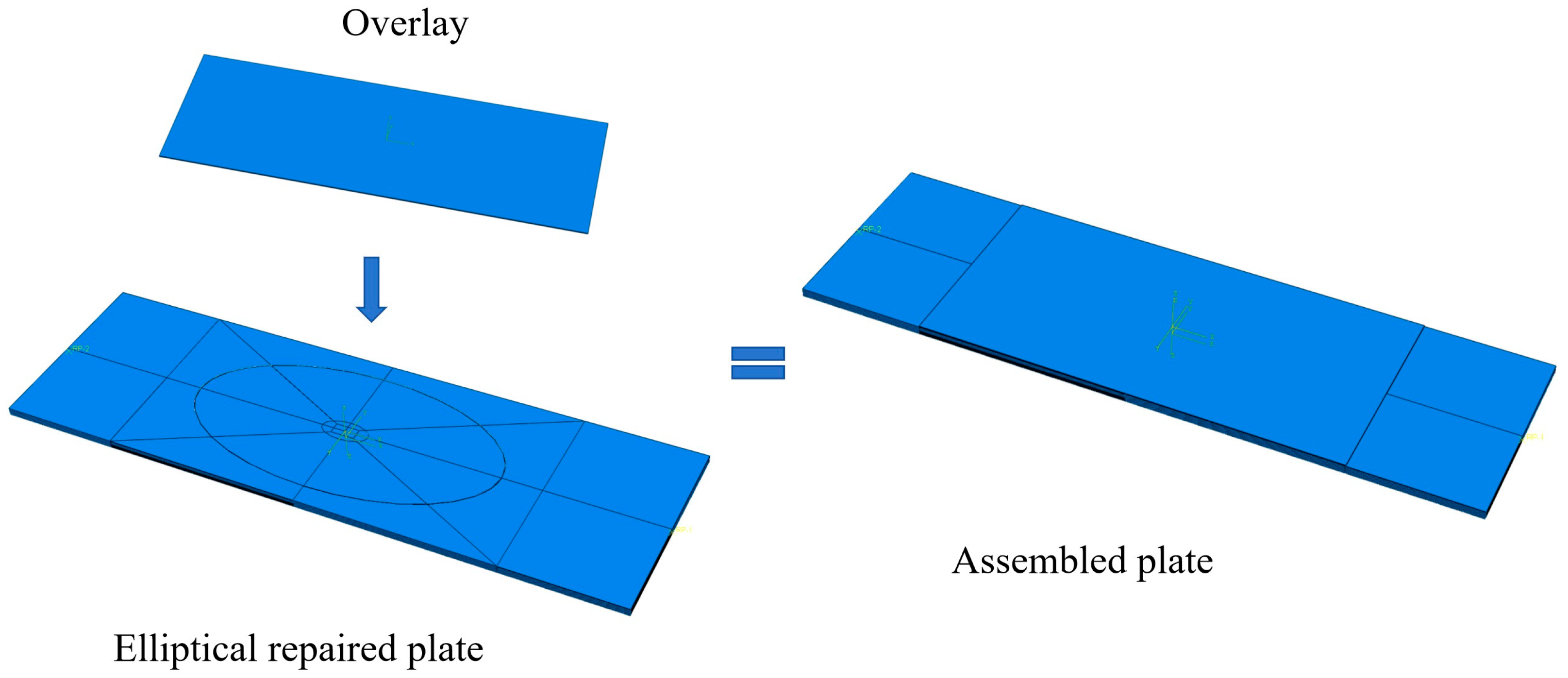
Section 4.2 to assess its influence on the load-carrying capacity and failure evolution. The overlay consisted of one woven ply with a thickness of 0.25 mm and a planform size of 100 × 50 mm. It was bonded to the outer surface of the repaired laminate using the same adhesive constitutive law and cohesive parameters as those adopted for the internal patch, so that the only intentional change between the two cases was the presence of the external overlay. The assembly relationship between the overlay and the repaired plate is illustrated in
Figure 16, where the overlay fully covers the repaired region and provides an additional load transfer path while imposing an overall constraint on the repaired zone.
After the geometric effects of the elliptical stepped repair had been established, the woven overlay was introduced as an additional design variable. To isolate its contribution from that of the repair geometry, each overlay case was compared directly with the corresponding elliptical repair configuration without overlay. In this way, the influence of the woven overlay was evaluated on a fixed geometric baseline rather than through mixed-variable comparison.
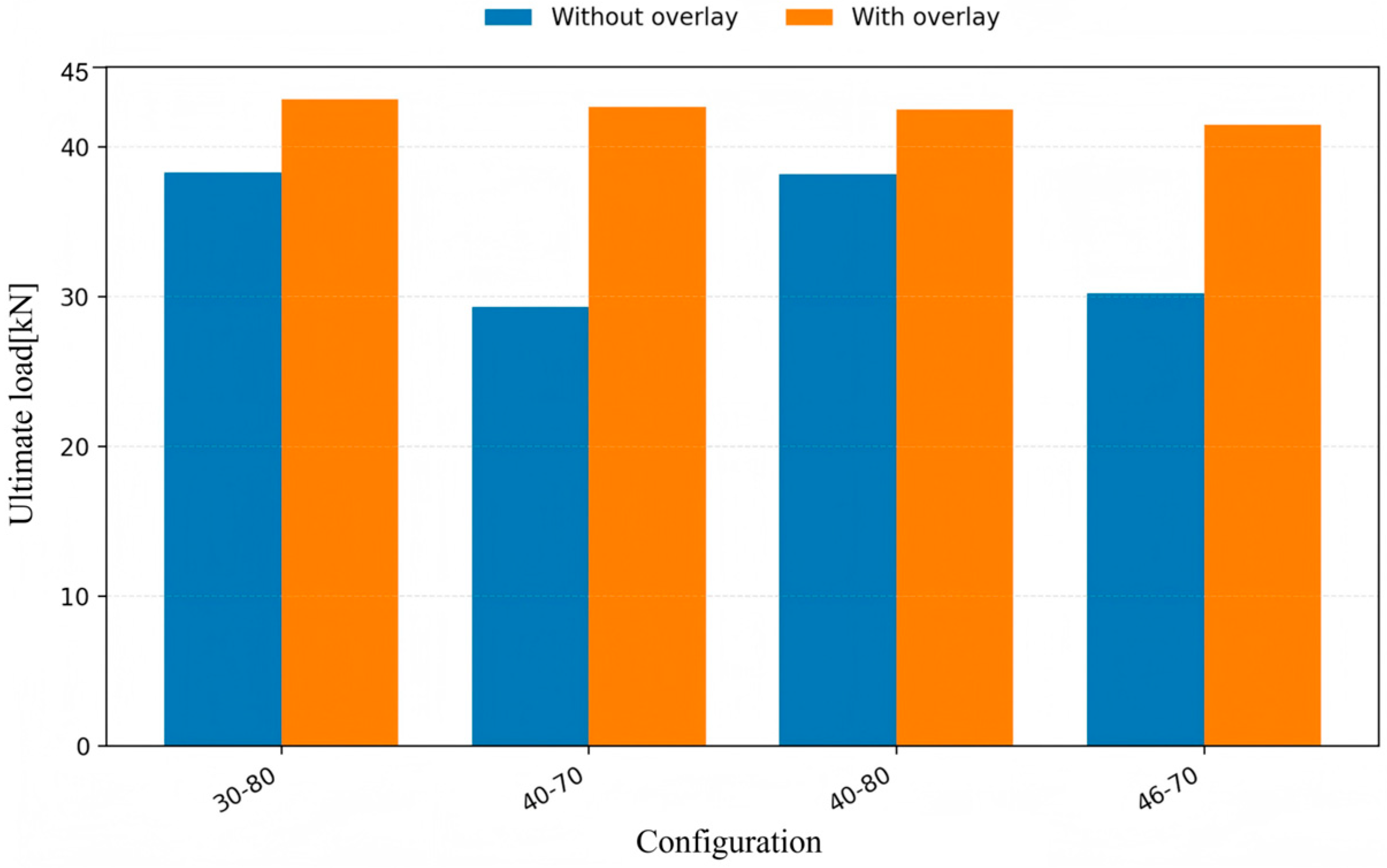
Figure 17 compares the ultimate loads before and after adding the overlay for four representative repair configurations (30–80, 40–70, 40–80, and 46–70). In all cases, the overlay leads to a marked improvement in the ultimate load. More importantly, the ultimate loads of different elliptical geometries converge to nearly the same level once the overlay is applied, indicating that the governing failure mechanism shifts from a geometry-sensitive, locally controlled interfacial response to a more global failure mode dominated by the cooperative load sharing of the overlay–patch–substrate system. In other words, the overlay attenuates the effect of ellipse geometry by reducing the sensitivity of the repaired joint to local stress concentrations at the stepped interface, thereby suppressing the strength scatter originally induced by variations in the elliptical parameters.
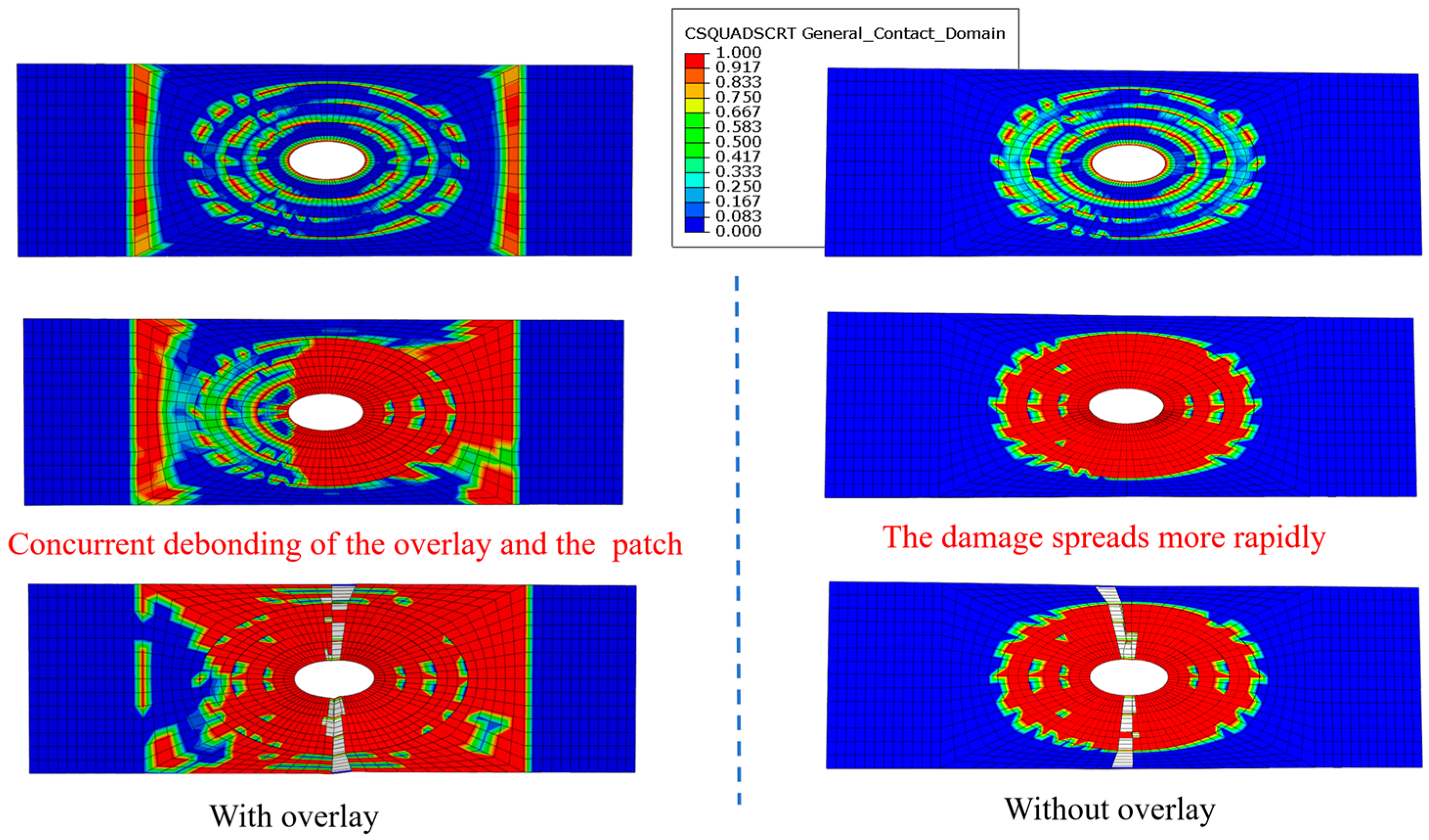
The above mechanisms are directly evidenced by the adhesive damage contours in
Figure 18, where three frames are presented for the 40–70 configuration without and with the overlay. These results are intended to provide a numerical interpretation of the observed changes in global response and ultimate load, based on the validated FE framework. Without the overlay, damage initiates earlier at the stepped interface and rapidly evolves toward extensive degradation, consistent with an interfacial debonding-dominated failure. By contrast, the overlay postpones damage initiation and produces a more gradual damage evolution, indicating alleviated interfacial stress concentration and enhanced damage tolerance of the bonded region. Near final failure, the damage patterns reveal concurrent debonding of the overlay and the internal patch, accompanied by transverse fracture of the parent laminate, rather than a single-interface dominated separation. This synchronized debonding response explains the high consistency of the ultimate loads across different ellipse geometries: once the overlay engages and redistributes the load, failure becomes governed by the global cooperative response of multiple bonded interfaces and the substrate fracture, rendering the geometric differences among the elliptical repairs largely insignificant.
5. Concluding Remarks
This study investigated an elliptical stepped bonded repair strategy for perforation-damaged composite laminates under geometric/space constraints where conventional stepped repairs are difficult to implement. A parametric finite element framework was developed to systematically vary patch geometry and interface morphology, while progressive failure in the laminate and debonding in the adhesive layer were captured using a three-dimensional Hashin damage model and a cohesive-zone traction–separation formulation, respectively. The obtained results are summarized below.
Feasibility of space-constrained repair. The proposed elliptical stepped repair provides an effective and practically implementable solution for constrained repair envelopes, enabling notable restoration of tensile load-carrying capacity without requiring a large scarfed removal region.
Geometry-driven strengthening and failure-mode transition. Patch geometry significantly governs both strength recovery and the dominant failure mechanism. Variations in the elliptical axes alter the interfacial load transfer path and stress concentration at step edges, leading to distinct load–displacement responses and different sequences of adhesive degradation and substrate fracture.
Role of the major axis within the investigated design space. Among the geometric variables considered in this study, the major-axis length exhibited the strongest influence on strength recovery and failure-mode transition, likely because it directly governs the effective load transfer length along the loading direction. Nevertheless, the possible coupled role of ellipticity was not fully isolated and deserves further investigation.
Effect of step number and an optimal range. The number of steps affects the interfacial geometry at the bonding boundary and, therefore, the stress concentration intensity and damage localization. An intermediate step number yielded superior performance for representative geometries, while overly coarse stepping intensified local peaks and overly fine stepping increased the extent of highly stressed step-edge regions, both of which were detrimental to ultimate capacity.
Effectiveness of an external overlay. Introducing an external overlay markedly reduced the scatter of ultimate load among different repair configurations, indicating that the strength-controlling mechanism shifts from localized interfacial debonding to a more global response governed by the laminate/repair assembly. This overlay, therefore, offers a robust means to enhance reliability when geometric parameters must be selected within tight engineering constraints.
Lastly, a design implication could be concluded. For constrained repairs, priority should be given to selecting an appropriate major-axis size and a moderate step number to balance stress smoothing and efficient load transfer; when robustness is critical, an external overlay can be adopted to further stabilize ultimate strength and mitigate parameter sensitivity. It should be noted that the detailed damage contour analyses for the elliptical repair configurations are based on numerical simulations. Although the modeling framework has been validated against experimental benchmarks, direct experimental observation of damage evolution in elliptically repaired laminates is still needed for further confirmation.
The present study focuses on understanding the constrained design space of elliptical stepped repair from a mechanics perspective. The identified governing variables and failure-mode trends will provide the physical basis and dataset-generation strategy for our future machine-learning-assisted optimal design of composite repairs. It also focuses on identifying the configuration-dependent response of elliptical stepped repairs at the nominal-design level. Therefore, the discussion is mainly based on global tensile response, failure evolution, and parametric trends, rather than on a full-field structural-mechanics analysis using stress-flow trajectories or energy-release-rate distributions. In addition, manufacturing-induced geometric deviations, such as angular error and layer-thickness variation, are not included in the current simulations. These aspects are important for improving the mechanics depth and practical robustness assessment of the proposed repair concept, and will be addressed in future work.