1. Introduction
In recent years, the rapid development of global infrastructure has led to a surge in the demand for ordinary Portland cement (OPC), resulting in significant environmental challenges. The production and use of OPC are major contributors to greenhouse gas emissions, with cement production alone accounting for 7–9% of global CO
2 emissions [
1,
2]. During the calcination and decomposition of cement raw materials, substantial amounts of CO
2 are released, exacerbating global warming and hindering sustainable development [
3]. Cement is now recognized as the third-largest source of CO
2 emissions worldwide [
4,
5]. According to the National Bureau of Statistics of China, the country has become the largest producer and consumer of cement globally. Against the background of the full implementation of China’s “dual-carbon” strategy, the traditional cement-based material system can no longer meet the requirements of low-carbon development. Developing a new type of green cementitious material with low energy consumption, low emission and high resource utilization has become an urgent major issue in the field of building materials.
In addition, with the rapid development of the global economy, urbanization and industrialization in various countries have advanced by leaps and bounds. However, urban renewal and industrial production have also given rise to a wide range of problems. The demolition of old buildings and infrastructure during urban renewal generates a large amount of construction waste, and many industrial activities produce substantial by-products [
6]. The continuous generation of such solid wastes has steadily increased the pressure on resource utilization. The long-term stockpiling of massive solid wastes not only occupies a large amount of land resources but may also trigger a series of environmental and safety issues [
7]. The rational resource utilization of these solid wastes to achieve green and sustainable development is also an urgent challenge to be addressed.
Against this background, alkali-activated cementitious materials have emerged as a highly promising solution [
8]. Alkali-activated concrete is a novel green building material that replaces ordinary Portland cement with precursor materials possessing latent reactivity, activated by alkaline solutions (e.g., sodium hydroxide and sodium silicate) to form cementitious hydration products with performance comparable to conventional concrete [
9,
10]. These precursor materials include industrial solid wastes (e.g., slag and fly ash) and construction solid wastes (e.g., waste red brick powder and waste glass powder) [
11,
12,
13]. Compared with ordinary Portland cement, alkali-activated cementitious materials can reduce carbon dioxide emissions by 70–90% during production [
14]. Their application can not only lower cement consumption but also promote the resource utilization of industrial and construction wastes, making a positive contribution to sustainable development [
15].
At present, scholars from various countries have conducted increasingly extensive research on alkali-activated cementitious materials from multiple perspectives. To utilize a wider range of solid waste materials, raw materials are no longer limited to single components such as fly ash or slag, but are developing toward the synergistic utilization of diversified solid wastes [
16,
17]. For instance, Salim et al. [
18] found that alkali-activated geopolymer concrete prepared from a binary reaction system composed of fly ash and metakaolin exhibited higher compressive strength than the single fly ash system. Li et al. [
19] investigated alkali-activated concrete with the synergistic use of multiple solid wastes, including granulated blast-furnace slag, fly ash, steel slag and desulfurized gypsum. They pointed out that compared with binary and ternary systems, this quaternary alkali-activated system possessed higher strength, a better microstructure, and an improved utilization rate of solid waste materials.
In addition to exploring the solid raw materials in alkali-activated systems, researchers have further investigated the types and concentrations of alkaline activators. Nadoushan et al. [
20] used granulated blast-furnace slag and natural pozzolan as raw materials, and KOH solution and NaOH solution as activators, to study the effects of activator type and concentration on material properties. They found that KOH-based specimens exhibited better fluidity and higher compressive strength at all curing ages than NaOH-based ones. The optimal concentration of the alkaline activator was 6–8 mol/L; exceeding 10 mol/L degraded material performance and increased the risk of efflorescence. Chen et al. [
21] experimentally investigated the influence of NaOH concentration on the performance of a novel reactive ultrafine fly ash geopolymer. They reported that N-A-S-H gel was the main hydration product in this system, and increasing NaOH concentration promoted gel formation. The 28-day compressive strength of specimens with 12 mol/L NaOH reached 97.6 MPa, an increase of 1592% compared with those prepared with 4 mol/L NaOH. Lv et al. [
22] studied the mechanical properties of alkali-activated fly ash–slag composites, identifying slag content as a critical factor influencing compressive strength and noting that optimal activator concentrations enhance hydration product formation, while excessive or insufficient concentrations hinder the process.
Fiber modification is a simple and effective method to reinforce concrete, which greatly improves its mechanical properties and practical applicability. Xu et al. [
23] experimentally compared the effects of glass fiber, polypropylene fiber and steel fiber on the performance of alkali-activated concrete at volume fractions ranging from 0.2% to 1.0%. The results showed that all three fibers reduced the fluidity of the paste at any dosage, and their improvement effect on compressive strength was less significant than that on flexural strength. The flexural strength of polypropylene fiber reached the optimum at 0.8% dosage but decreased beyond 0.8%. Maganti et al. [
24] systematically investigated the effects of silica fume content (0–15%) and glass fiber content (0.5–1.0%) on the workability and mechanical properties of alkali-activated concrete with a fly ash–slag–silica fume ternary system. The results indicated that the synergistic effect of fiber and silica fume could effectively enhance the mechanical properties of the material, and the optimal comprehensive performance was achieved when their contents were 0.80% and 11.50%, respectively.
To reduce the dependence on cement and make more efficient use of solid waste resources for the green and sustainable development of the construction industry, this study focuses on the synergistic utilization of diversified solid waste materials. It aims to systematically reveal the synergistic reaction mechanism of the slag–fly ash–silica fume ternary alkali-activated system, clarify the influence of alkali activator concentration and precursor composition on material properties, optimize the mix proportion, and investigate the reinforcing effect of glass fiber on mechanical properties. This study will provide a theoretical basis and data support for the design and application of total solid waste-based alkali-activated concrete.
2. Experimental Program
2.1. Materials
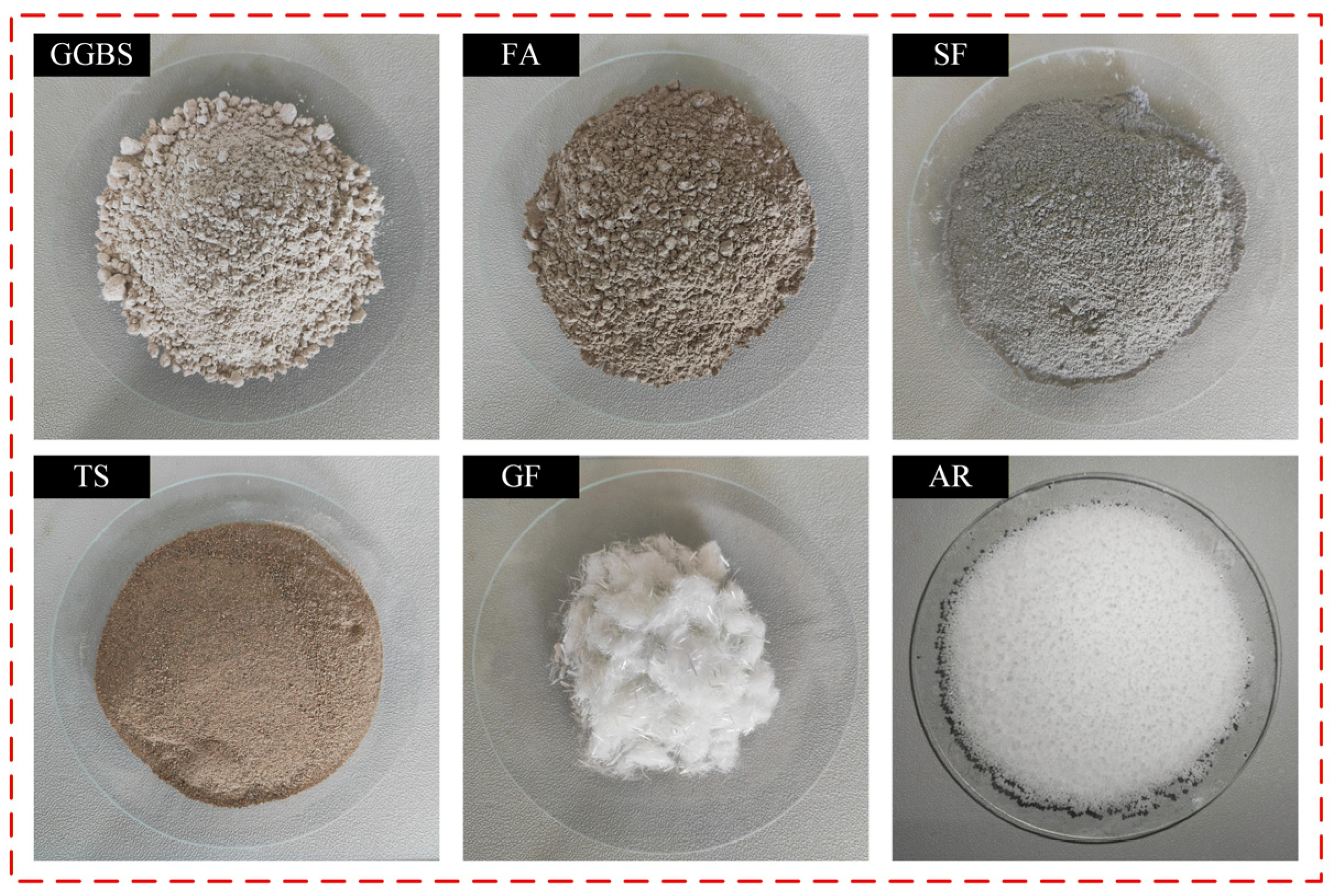
Six solid materials were used in this study, namely ground granulated blast-furnace slag (GGBS), fly ash (FA), silica fume (SF), tailings sand (TS), alkali-resistant glass fiber (GF) and analytical-reagent-grade NaOH (AR). The appearances of all solid materials are shown in
Figure 1.
The alkaline activator used in the experiment was a NaOH solution, prepared from analytical-reagent-grade NaOH. The NaOH (AR), which is a uniform white spherical particle, was supplied by Fu Chen (Tianjin) Chemical Reagent Co., Ltd. (Tianjin, China).
GGBS (in accordance with ASTM C989 [
25]) is a by-product of industrial ironmaking. It is a vitreous granular material with potential hydraulic activity formed by the granulation treatment of molten slag produced in ironmaking blast furnaces. FA (Class F, in accordance with ASTM C618 [
26]) is a fine solid particulate powder captured from the flue gas after coal combustion, which is the main solid waste discharged from coal-fired power plants. SF (in accordance with ASTM C1240 [
27]) is a by-product produced during the smelting of ferrosilicon alloys or industrial silicon, and is an ultrafine glassy spherical particulate powder formed by the rapid oxidation and condensation of silica vapor in air. The above three “precursor” materials can be activated by a strong alkaline solution to undergo an alkali-activated reaction and generate cementitious products similar to cement hydration products. They are all renewable industrial by-products, obtained from Henan Yixiang Building Materials Co., Ltd. (Xuchang, Henan, China).
Tailings sand (in accordance with ASTM C33 [
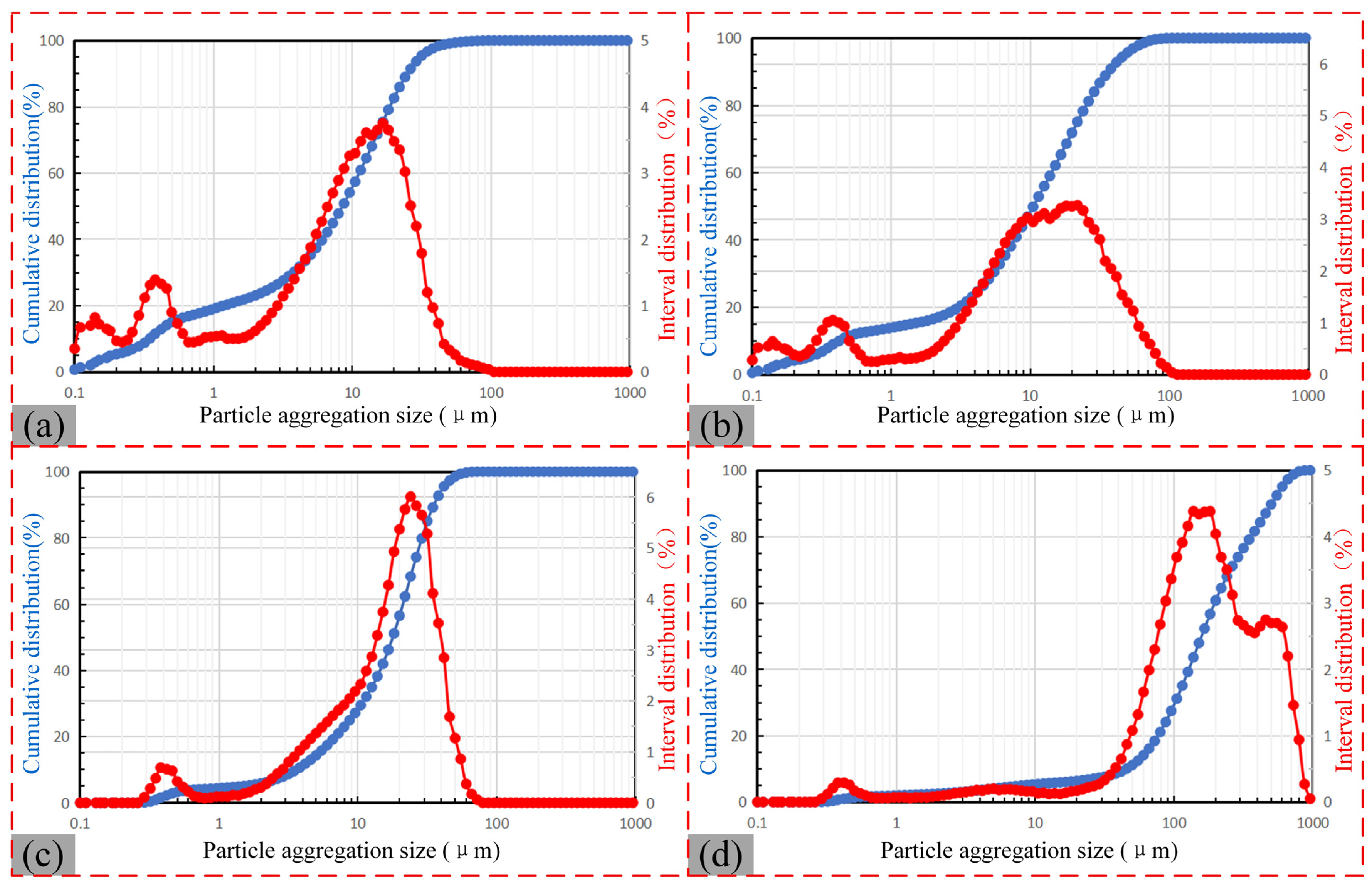
28]) is obtained by crushing, grinding and screening minerals and rocks with no economic value from raw ore. Its main components are quartz and silicate minerals, and its material properties are close to natural sand. In this study, iron tailings sand was used to replace natural sand as a fine aggregate, making full use of solid waste materials to realize green and sustainable development of the environment. The tailings sand used in the experiment had an average particle size of 150 μm and a fineness modulus of 0.7, produced by Zhucheng Jiuqi Building Materials Co., Ltd. (Weifang, Shandong, China).
The particle size distributions of GGBS, FA, SF and TS are shown in
Figure 2; the main oxide compositions and parameters are listed in
Table 1 and
Table 2, respectively.
The fiber used in the experiment was alkali-resistant glass fiber (in accordance with ASTM C1666 [
29]) provided by Shandong Xinrui New Material Co., Ltd. (Binzhou, Shandong, China). It had an average diameter of 14 μm and a length of approximately 3–6 mm, with a core composition of ZrO
2-containing silicate glass. ZrO
2 forms a dense protective layer of calcium zirconate hydrate on the fiber surface, which greatly retards the erosion and dissolution of the glass network structure by the alkaline solution, resulting in significantly better alkali resistance than ordinary E-glass fiber. In addition, compared with high-performance fibers with similar properties, such as polyvinyl alcohol (PVA) fiber and carbon fiber, alkali-resistant glass fiber has a lower material cost and exhibits a high cost–performance ratio in the application of alkali-activated concrete.
2.2. Sample Preparation and Curing Methods
First, the required solid materials were weighed according to the experimental mix design and placed in a mixing bucket, followed by dry mixing until uniform. Glass fiber was added in several batches during dry mixing to avoid fiber agglomeration caused by excessive one-time addition, which may affect subsequent experiments.
The pre-prepared NaOH solution was slowly poured into the mixing bucket in several portions, and the mixture was stirred until uniform. The fresh concrete mixture was then cast into molds for specimen preparation or directly used for performance tests.
Two mold specifications were adopted in the experiment: 50 × 50 × 50 mm3 for compressive strength tests, and 20 × 20 × 100 mm3 for flexural strength tests. The fresh mixture was uniformly poured into silicone molds, then repeatedly vibrated and compacted using a vibrating rod to minimize internal air bubbles, thus reducing strength errors caused by processing operations. Four specimens were prepared for compressive and flexural tests under each mix proportion, respectively.
After casting, the molds were covered with plastic wrap and cured at room temperature. After one day of initial hardening, the molds were removed, and the specimens were cured in a standard curing chamber for 7 days (20 ± 0.5 °C, RH > 95%). After curing, the specimens were dried before performance testing.
2.3. Experimental Test Methods
2.3.1. Flowability Test
The fluidity of the concrete paste was tested using a NLD-3 cement mortar flow tester (Shanghai Luda Experimental Instrument Co., Ltd., Shanghai, China), following the ASTM C1437 [
30] standard. The freshly prepared paste was transferred to the shaking table according to the test procedure. The instrument was set to 25 vibration cycles via the controller before testing commenced. After vibration, the spread diameters were measured in four directions (horizontal, vertical, and two diagonals) using a vernier caliper. The tests were repeated in parallel, and the average value was adopted as the final fluidity result.
2.3.2. Compressive Strength Test
The compressive properties of the specimens were tested using an MTS E45.105 universal (MTS Industrial Systems (China) Co., Ltd., Shanghai, China) testing machine with a load range of 0–100 kN. After drying the surfaces of the cured specimens, a uniaxial compressive load was applied at a constant displacement rate of 5 mm/min. Loading was stopped when obvious cracks or failure occurred in the specimen, and the maximum load P was recorded. Four tests were conducted for each mix proportion, and the average value (n = 4) was taken as the final compressive strength result.
2.3.3. Flexural Strength Test
After curing, three-point bending tests were performed to determine the flexural strength of the specimens. Flexural strength tests were also conducted using the MTS E45.105 (MTS Industrial Systems (China) Co., Ltd., Shanghai, China) universal testing machine, following the ASTM C293 [
31] standard. The specimen was fixed on a fixture with a support span of 60 mm, and a unidirectional load was applied at a constant displacement rate of 2 mm/min. Loading was stopped when obvious cracking or fracture occurred. The maximum load Fmax of each specimen was recorded, and the average value (n = 4) was used in the flexural strength formula to calculate the flexural strength σ
f.
The formula for flexural strength is as follows:
where
σf = flexural strength (MPa), Fmax = maximum load (N), L = support span (mm), b = width of the specimen (mm), and d = height of the specimen (mm).
2.4. Mix Proportion Design and Optimization Method
In this study, the response surface methodology (RSM) was employed to optimize the material mix proportion by using NaOH concentration and GGBS content as two factors. The RSM establishes a mapping relationship between factors (X) and responses (Y) through mathematical models, so as to analyze the correlation between each factor and its corresponding output response. It enables visual analysis of responses and allows multi-objective optimization among different responses to obtain the optimal mix proportion. Central Composite Design (CCD) and Box–Behnken Design (BBD) are common design methods in response surface methodology, and the developed response models can be either linear or high-order polynomial. In this research, the CCD method (ɑ = 1) in Design-Expert
® software was adopted, and a quadratic polynomial model (
k = 2, Equation (2)) was used to establish the response relationship between NaOH concentration, GGBS content, compressive strength and flexural strength, so as to achieve multi-objective optimization.
Based on preliminary experiments, the appropriate concentration range of the alkaline activator was determined, and the three concentration gradients were set as 4 mol/L, 6 mol/L and 8 mol/L. The GGBS in the precursor materials was set at three dosage gradients of 30%, 50% and 70%, according to the total mass of the precursor materials, and FA and SF were evenly distributed to the remaining precursor materials after removing GGBS at a mass ratio of 1:1.
It should be noted that in addition to GGBS, FA and SF were also introduced into the material design. This was aimed at more comprehensively utilizing solid waste resources, investigating the synergistic effect of multi-component solid wastes, and leveraging the potential of FA and SF to enhance the long-term strength of the material. Furthermore, FA and SF were used at a fixed ratio for several reasons. On the one hand, by treating FA and SF as a combined component with a constant ratio, the content of GGBS could be controlled as the sole variable in this study. On the other hand, the synergistic effect of FA and SF helps improve the flowability of mixtures with different GGBS contents, ensuring that all mix proportions exhibit similar workability and reducing the interference of workability differences on the mechanical performance results. Based on extensive preliminary experiments, a certain balance between the components can be achieved when the mass ratio of FA to SF is fixed at approximately 1:1. This allows the workability differences among mixtures to be minimized when the GGBS content varies from 30% to 70%.
A total of 13 mix proportions were designed in the experiment, including 4 repeated runs at the center point to estimate the central point error. The levels and ranges of the factors in the experimental design are shown in
Table 3, and the material mix proportions are shown in
Table 4.
3. Results and Discussion
3.1. Flowability Analysis
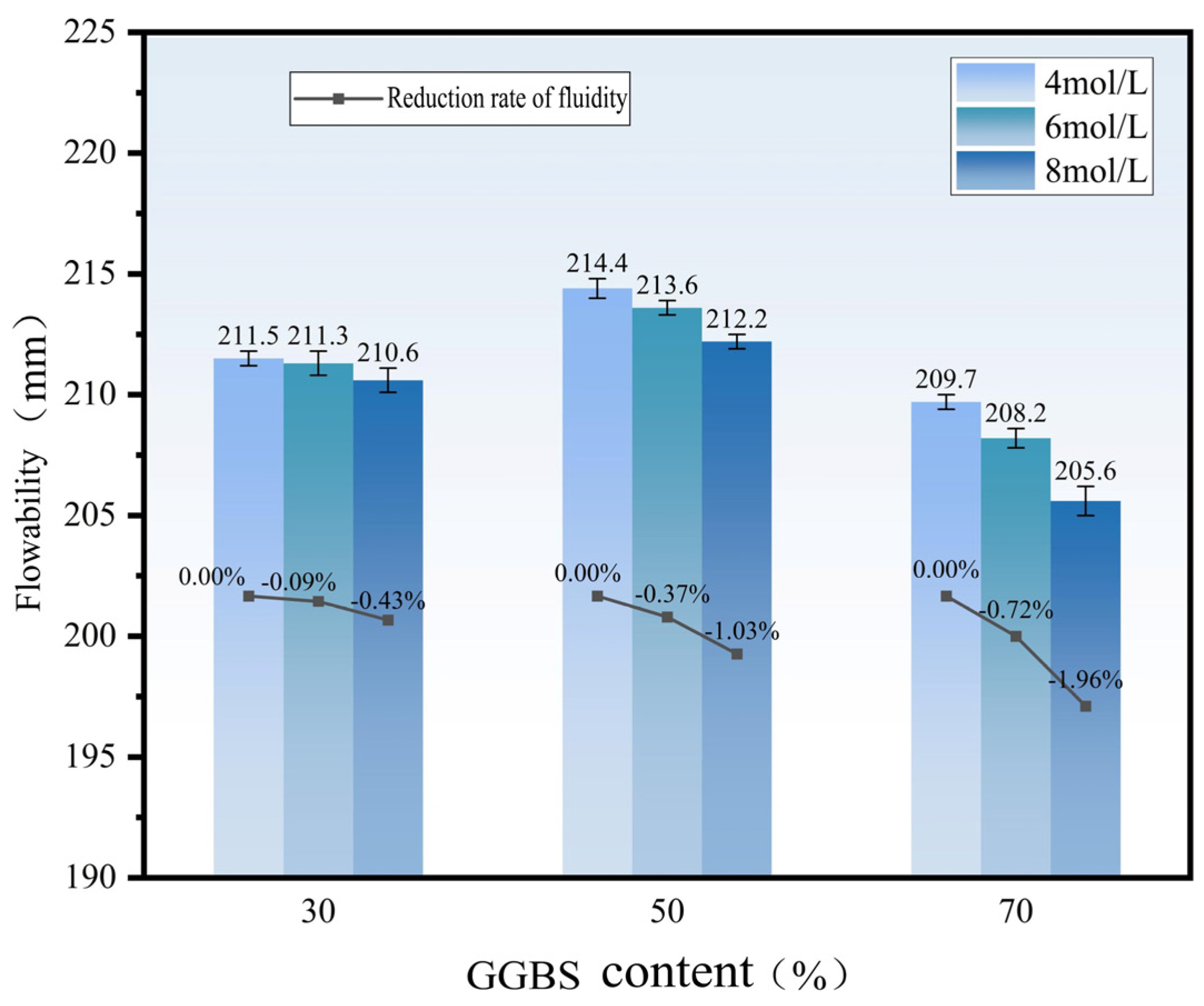
After thorough and uniform mixing of the mixtures in all experimental groups, the initial fluidity of the fresh concrete pastes was tested immediately to analyze the effects of different precursor compositions and activator concentrations on the fluidity of the material. The test results are presented in
Figure 3.
According to the initial fluidity test results, under the same activator concentration, the fluidity of the material did not show a monotonic trend with the variation in GGBS content. Instead, the mixture exhibited the maximum fluidity at 50% GGBS content, while slightly lower fluidity was observed at 30% and 70% GGBS content. This phenomenon is mainly attributed to the synergistic effect of SF in the precursor system. At a fixed liquid–solid ratio, if the system only contained GGBS and FA, the fluidity of the mixture would gradually increase as the GGBS content decreased and FA content increased, making it difficult to ensure similar fluidity among all designed mix ratios. However, the introduction of SF counteracts the ball-bearing effect of FA due to its strong water absorption capacity. Under the designed material proportions, a delicate balance mechanism exists among the three precursor materials, preventing the fluidity of the mixture from changing drastically with variations in GGBS content.
At the same precursor composition ratio, increasing the activator concentration reduces the fluidity of the paste, but the effect is relatively mild. A relatively large decrease in the spreading diameter of the paste only occurs at the highest activator concentration gradient. Moreover, a higher slag content intensifies the influence of activator concentration on fluidity. A similar finding was also observed in the study by Mohamed et al. [
32] on an alkali-activated slag–fly ash system. These phenomena can be explained by two main factors. On the one hand, a higher activator concentration enables the raw materials to react rapidly to form partial gel products, thereby increasing the viscosity of the paste. On the other hand, a higher GGBS content introduces more reactive components into the system, enhancing the reaction potential and amplifying the effect of concentration.
From the initial fluidity results, although the mixtures show certain differences in fluidity under different design ratios, these differences are small, and all mixtures possess sufficient workability. This greatly minimizes the influence of workability differences on mechanical strength.
3.2. Compressive and Flexural Strength Analysis
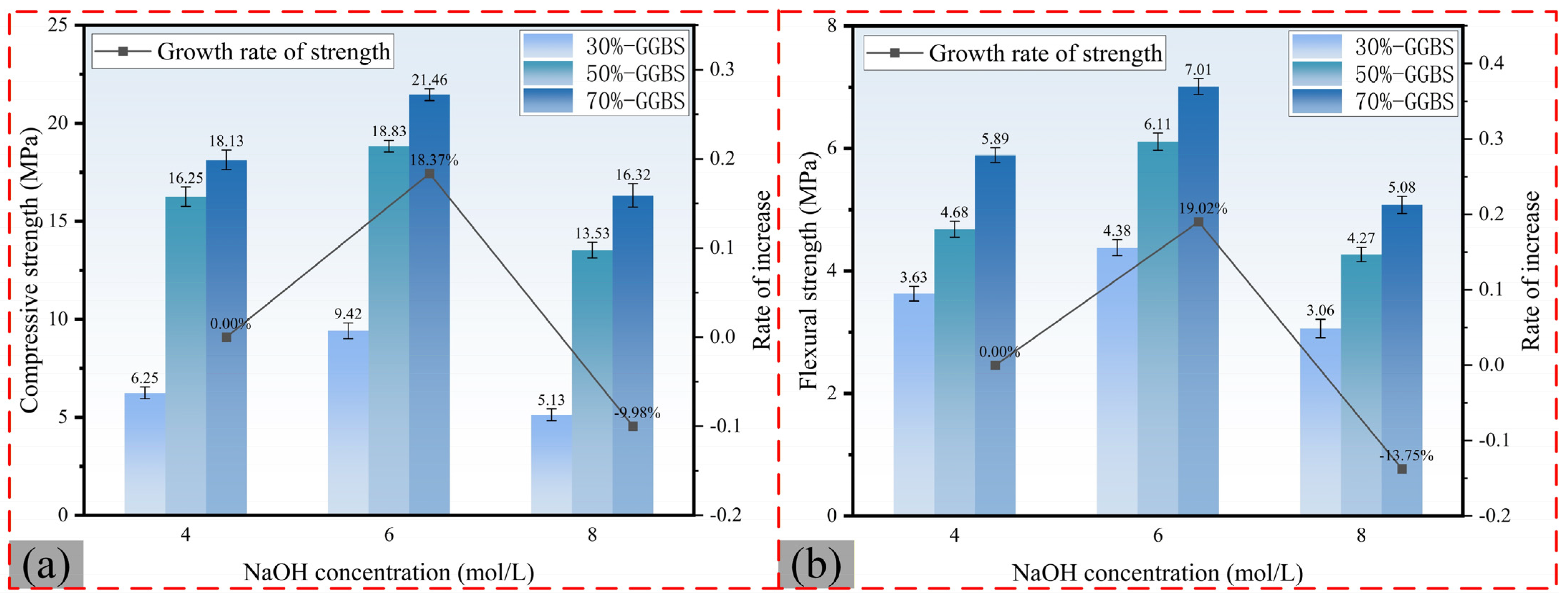
Figure 4 presents the effects of different NaOH concentrations and GGBS contents on the compressive and flexural strengths of concrete specimens after 7 days of standard curing. According to the strength results, the compressive and flexural strengths of concrete specimens first increase and then decrease with the increase in NaOH concentration at the same GGBS content, showing an obvious threshold effect. This indicates that a proper increase in activator concentration is conducive to promoting the alkali-activated reaction process, thus producing more cementitious products to improve the mechanical properties of alkali-activated concrete. Both the compressive and flexural strengths of the specimens reach the peak at a NaOH concentration of 6 mol/L, and the strength begins to decrease when the activator concentration exceeds this value. This threshold phenomenon is similar to the findings reported by Sasui et al. [
33], who set the NaOH concentration in the range of 4–12 mol/L, with the optimal strength achieved at 8 mol/L.
In addition, the compressive and flexural strengths of concrete specimens increase gradually with the increase in GGBS content. Under each NaOH concentration gradient, the compressive and flexural strengths of the specimens show the best performance at a GGBS content of 70%. When the NaOH concentration is 6 mol/L, the compressive strength of concrete specimens increases from 9.42 MPa at 30% GGBS to 21.46 MPa at 70% GGBS, while the flexural strength increases from 4.38 MPa to 7.01 MPa. Finally, in the mix proportions without glass fiber for performance enhancement, the maximum compressive and flexural strengths of concrete specimens are obtained at a NaOH concentration of 6 mol/L and a GGBS content of 70%, which are 21.46 MPa and 7.01 MPa, respectively.
Based on the comprehensive analysis of the initial fluidity of the mixtures and the 7-day mechanical strength results, it can be observed that the variation trends of strength and fluidity differ with changes in GGBS content and activator concentration. At a high GGBS content with relatively poor fluidity, the microstructure was found to be denser (
Figure 5a). This indicates that the mechanical properties of the specimens are mainly attributed to the degree of material reaction itself. Furthermore, all components exhibited sufficient workability, which further eliminated the influence of workability differences on mechanical properties.
3.3. SEM Analysis
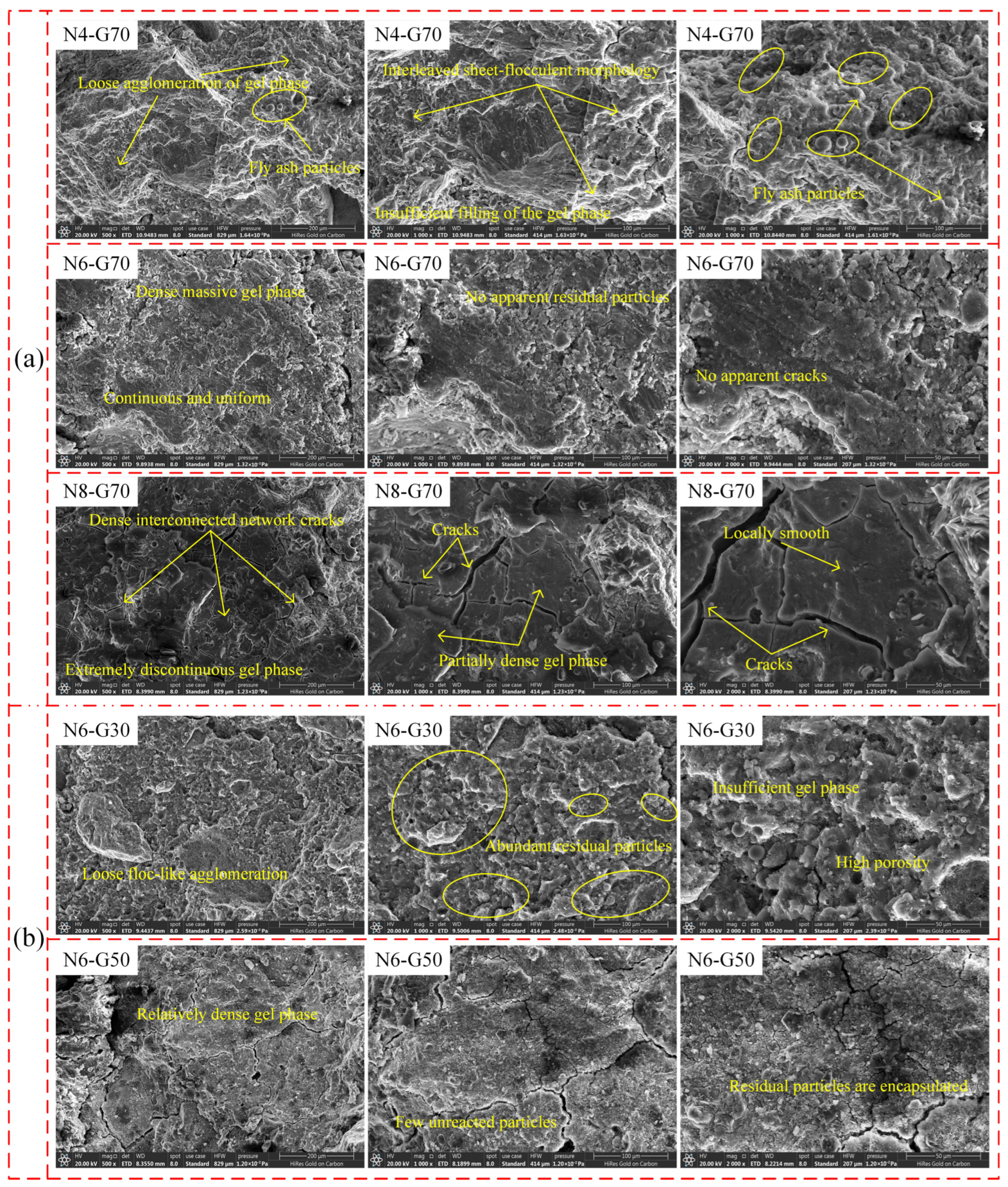
After the compressive and flexural strength tests, the failed specimens were further crushed for sampling. After gold sputtering, field emission scanning electron microscopy (SEM) was performed to observe and analyze the microporous structure of the mixtures under different mix proportions. The micromorphology of the mixtures is shown in
Figure 5.
Figure 5a presents the microstructures of the materials with 70% GGBS content at different NaOH concentrations (N4-G70, N6-G70, and N8-G70).
Figure 5b shows the microstructures of the materials at 6 mol/L NaOH with different GGBS contents (N6-G30, N6-G50, and N6-G70).
Gel phase components can be observed in all SEM images, indicating that GGBS, FA, and SF have undergone alkali-activated reactions with the NaOH solution and formed gel products under all material mix proportions. By comparing the micromorphologies of the three groups in
Figure 5a, it can be found that the gel phase in the N4-G70 group with low activator concentration exhibits an interwoven flaky and flocculent morphology but is generally loosely agglomerated. In addition, some incompletely reacted or uncoated residual particles can be observed in the micromorphology of this group. These spherical particles are mainly fly ash particles with relatively low reactivity, whose dense vitreous shells cannot be completely eroded by the low-concentration activator, resulting in particle residues. With the increase in activator concentration, the quality of the microstructure of the concrete matrix is significantly improved. In N6-G70, with an activator concentration of 6 mol/L, the gel phase content is high with excellent filling effect, showing a dense blocky structure with uniform and continuous distribution. Almost no residual particles or obvious cracks can be observed in the matrix. This is mainly because the increase in activator concentration promotes the alkali-activated reaction process, generating more gel components and greatly optimizing the porous structure of the matrix.
However, the micromorphological quality of the concrete matrix does not continue to improve with the further increase in activator concentration. In N8-G70 with a high activator concentration, a large number of dense net-like through-cracks can be clearly observed. Although a large amount of smooth and dense gel phases appear in the matrix, these gel components are divided into several parts by the dense net-like through-cracks, resulting in extremely discontinuous gel phase distribution. This phenomenon is mainly caused by the excessively high activator concentration, which leads to an uncontrolled alkali-activated reaction rate, excessively fast local reaction and concentrated heat release, inducing uneven shrinkage stress and thus forming through-cracks. The formation of numerous cracks is highly detrimental to the mechanical properties of the material, which is the main reason why the strength of the material decreases as the activator concentration continues to increase.
By observing the micromorphologies of the materials in
Figure 5b, the gel phase in the N6-G30 group with low GGBS content shows a loose flocculent morphology. A large number of residual particles can be found in the matrix, with insufficient gel phase filling and high structural porosity. With the increase in GGBS proportion, the microstructure of the material is improved, the compactness of the gel phase is relatively enhanced, and the unreacted residual particles are greatly reduced. This is because a high proportion of fly ash with relatively low reactivity will slow down the alkali-activated reaction process, resulting in reduced gel phase production. In addition, under a certain alkali content, a large number of unreacted fly ash particles will deteriorate the porous structure. When the GGBS proportion increases, the active components in the system increase, enabling faster and more gel component generation. With the decrease in fly ash content, residual particles are reduced and can be tightly wrapped by gel components, improving the matrix porous structure. Therefore, the increase in GGBS content improves the quality of the concrete matrix and enhances the mechanical properties.
3.4. XRD Analysis
The crushed concrete specimens were finely ground and sieved through an 800-mesh screen, and the obtained powder was used for X-ray diffraction (XRD) analysis to identify the phase composition of the materials.
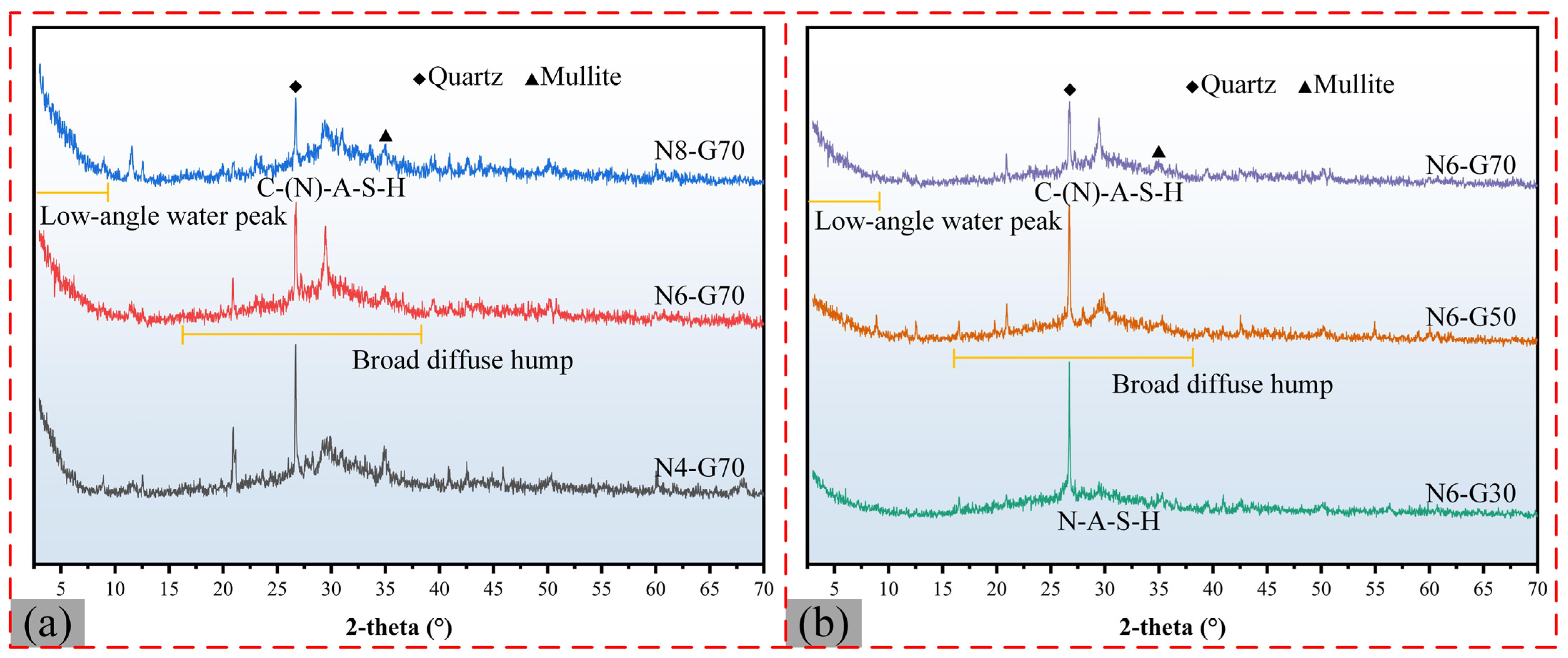
Figure 6 shows the XRD patterns obtained from the tests.
Figure 6a presents the XRD patterns at 70% GGBS content with different NaOH concentrations (N4-G70, N6-G70, and N8-G70).
Figure 6b shows the XRD patterns at 6 mol/L NaOH with different GGBS contents (N6-G30, N6-G50, and N6-G70).
The alkali-activated reaction is essentially a structural reconstruction process of aluminosilicate materials in an alkaline environment [
34,
35]. In the alkali-activated slag–fly ash–silica fume system, high-concentration OH
− first attacks the amorphous aluminosilicate network in the raw materials, breaks the Si-O-Si and Si-O-Al covalent bonds, and decomposes the originally large and continuous aluminosilicate network into small, water-soluble aluminosilicate oligomers (such as [SiO
4]
4−, [AlO
4]
5−, dimers, trimers, etc.) released into the solution. Under the charge balance effect of Ca
2+ and Na
+, aluminosilicate oligomers re-bond to form amorphous gel products [
36,
37]. The type of gel products is usually related to the content of Ca
2+ in the system: in high-calcium systems (e.g., slag-rich mixtures), the reaction products are usually dominated by calcium-based gels (C-(N)-A-S-H and C-A-S-H), while in low-calcium systems (e.g., fly ash-rich mixtures), N-A-S-H gels are the main component [
38,
39,
40]. In this system, with an increase in slag proportion, the dominant gel gradually transforms from N-A-S-H to C-(N)-A-S-H [
41].
Quartz mainly originates from the fly ash and tailings sand components in the system and is an inert crystalline phase that does not participate in the alkali-activated reaction. In
Figure 6a, where the precursor mix proportion remains unchanged, quartz can be used as an internal standard to analyze the intensity changes in other phase peaks. In
Figure 6a, a broad diffuse peak (2θ ≈ 15–40°) and a low-angle water peak (2θ ≤ 10°) can be observed in all X-ray diffraction patterns. These are characteristic peaks dominated by C-(N)-A-S-H gel at high GGBS contents. With a proper increase in activator concentration (N6-G70), the bulge degree and integral area of the broad hump corresponding to the amorphous gel phase increase, and the characteristic peak at 2θ ≈ 30° becomes clear and sharp. This indicates that the amount of amorphous gel phase produced by the reaction increases and the structural orderliness improves, which is beneficial to the enhancement of material properties. This view can be mutually verified with the SEM microstructure analysis. When the activator concentration further increases (N8-G70), the bulge degree and integral area of the amorphous gel-phase broad peak tend to be stable without obvious improvement; the diffraction peak near 2θ = ~30° begins to blur and broaden, and the peak shape is no longer sharp. This suggests that the formation amount of the amorphous gel phase is close to saturation, and excessive alkalinity may inhibit the continuous and ordered growth of the gel [
42]. At this point, the intensity of the low-angle water peak is significantly enhanced compared with that of N6-G70. This may be because the excessive Na
+ inserts into the interlayer of the gel under high alkali concentration, leading to swelling and an increase in interlayer water [
37]. Meanwhile, the excessively fast reaction rate causes the gel to precipitate in a water-rich form. Combined with the microstructure analysis, this will induce crack growth and drying shrinkage, resulting in material cracking.
In
Figure 6b, the bulge degree and integral area of the amorphous gel-phase broad peak increase continuously with the increase in GGBS content, and the diffraction peak near 2θ ≈ 30° becomes narrower and the peak shape gradually becomes sharper. This indicates that the dominant gel type is changing, and gel production increases with rising calcium content. This greatly enhances the microstructural quality and compactness of the material, thereby further improving the mechanical properties of concrete. The XRD analysis results are highly consistent with those of the mechanical property tests and SEM analysis, revealing the variation law of material properties from the mechanism.
3.5. TG Analysis
Thermogravimetric (TG) and its derivative (DTG) curves can be used to obtain the mass loss and mass loss rate of materials at a certain temperature, and quantitatively analyze the formation amount and thermal stability of products, such as gels from alkali-activated reactions.
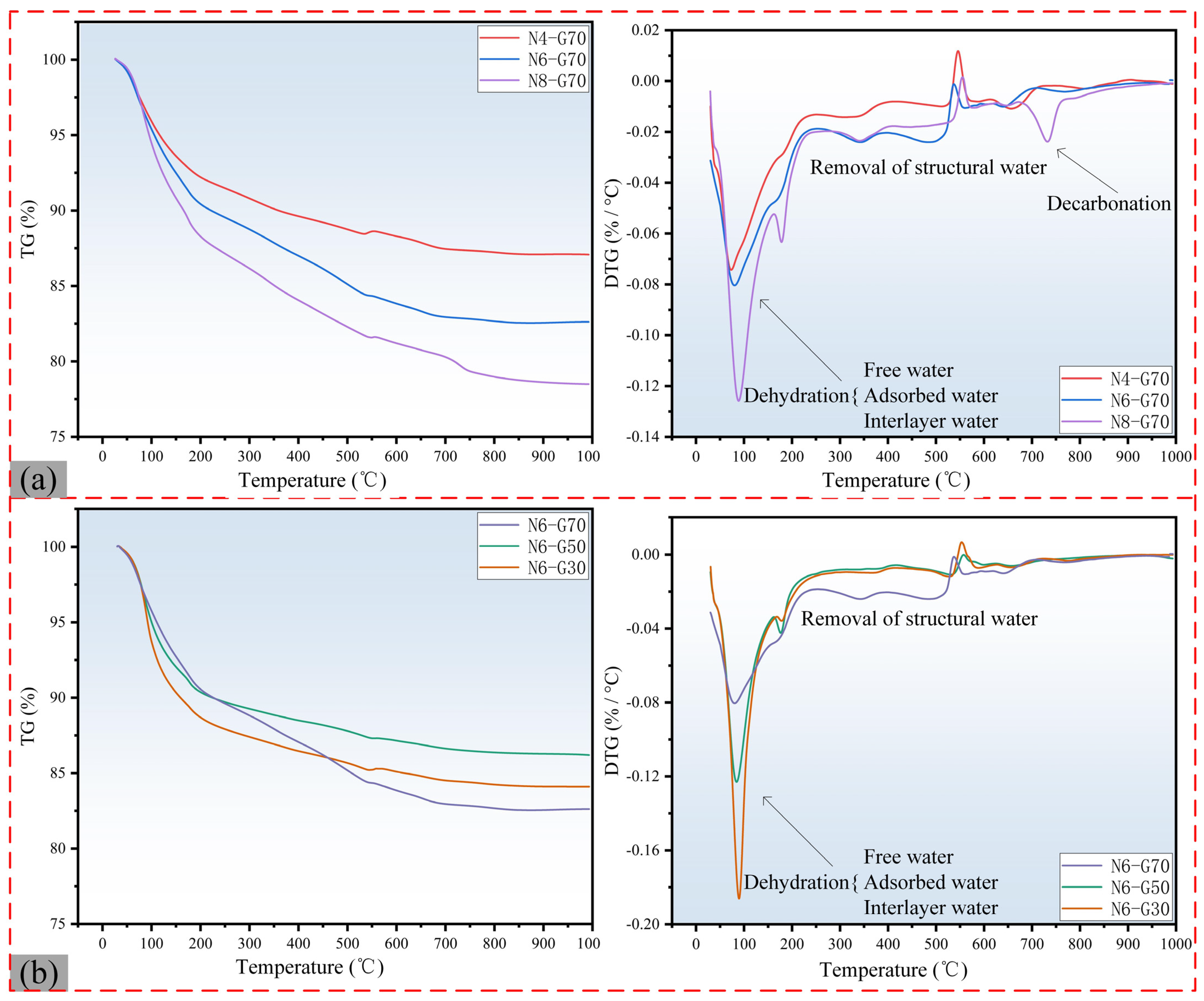
Figure 7 shows the TG and DTG curves of the materials from 0 to 1000 °C.
In all curves, an obvious mass loss peak appears between room temperature and approximately 200 °C, which is mainly caused by the removal of free water, physically adsorbed water, and interlayer water in the materials upon heating [
43]. The mass loss in this stage is closely related to the contents of gel phases in the materials. The higher the contents of gel phases, the more adsorbed water and interlayer water on their surfaces, and the greater the mass loss upon heating. In
Figure 7a, with a proper increase in activator concentration, the mass loss peak of the materials from room temperature to approximately 200 °C shows higher intensity, larger integral area, and greater mass loss. A proper increase in activator concentration promotes the formation of gel phases, leading to more adsorbed water and interlayer water on their surfaces and greater mass loss. When the alkalinity is excessive, the ordered growth of gel phases is inhibited, resulting in larger interlayer spacing. Meanwhile, over-hydration of gel phases further increases the interlayer water content of the materials, eventually forming a higher endothermic mass loss in this temperature stage. In
Figure 7b, the mass loss of the materials in this temperature stage increases with the increase in GGBS content. Combined with SEM and XRD analyses, the main reason for this result is the increase in gel products, which leads to more adsorbed water and interlayer water and thus greater mass loss.
In the temperature range of approximately 200–400 °C, the mass loss is mainly caused by the removal of hydroxyl groups from the gel phases, and the mass loss is directly related to the gel phase content [
44]. In
Figure 7a, with a proper increase in activator concentration, the mass loss of the materials in this stage increases significantly. When the activator concentration further increases, the mass loss of the materials does not increase accordingly, and the TG and DTG curves are almost parallel and overlap in this stage. This proves that gel phase production does not continue to increase beyond the optimal alkali content. In
Figure 7b, 70% GGBS significantly improves the gel phase production of the materials, making the mass loss in this temperature stage obviously higher than that of systems with low slag content.
The stage of approximately 600–800 °C is mainly the process of thermal decomposition of carbonates in the materials to release CO
2, and the mass loss directly quantifies the carbonation degree of the system [
45]. Notably, the DTG curve of the N8-G70 group in
Figure 7a shows a significantly stronger mass loss peak in this stage than other experimental groups, indicating that excessive alkalinity increases the carbonation degree of the materials and is detrimental to the durability of the materials.
3.6. Response Surface Optimization Analysis
The experimental results were imported into the Design-Expert
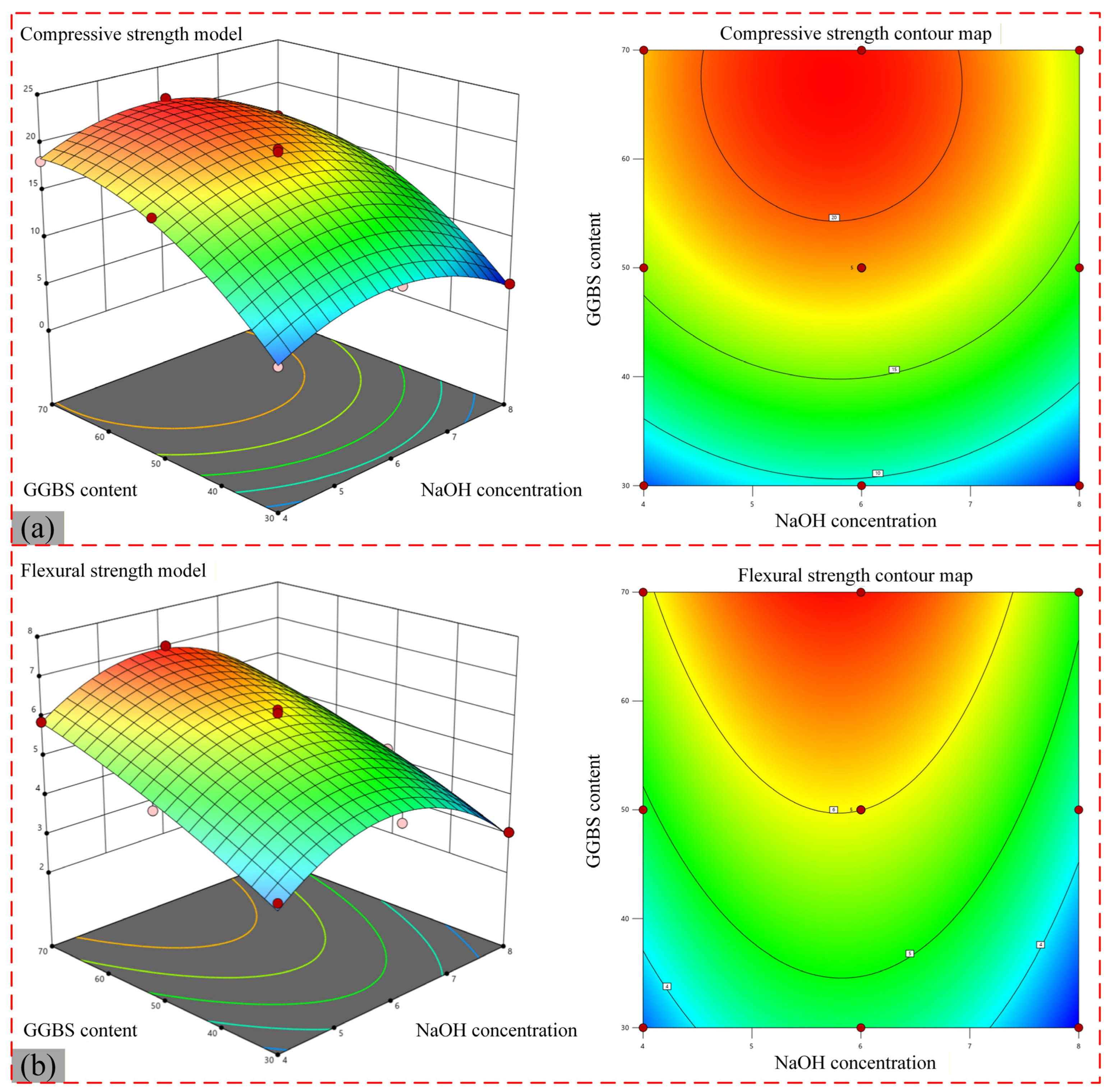
® software (Version: 13.0) to establish response models between GGBS content, NaOH concentration, and compressive and flexural strengths. The response results are presented in
Figure 8. All response surfaces show a single-peak shape, with the red peak region appearing at high GGBS content and moderate NaOH concentration. Both groups of contour lines are approximately elliptical, indicating an interaction between NaOH concentration and GGBS content. From the response surfaces and contour plots, the strength loss of compressive and flexural strengths at high NaOH concentrations is greater than that at low concentrations, and the loss of flexural strength is relatively more significant than that of compressive strength. This is because compressive strength depends more on the overall compactness, while flexural strength is more sensitive to defects such as interfacial transition zones and microcracks. The brittleness of the cementitious system increases and microcracks multiply under high-alkali conditions, which eventually makes flexural strength more sensitive at high alkalinity stages.
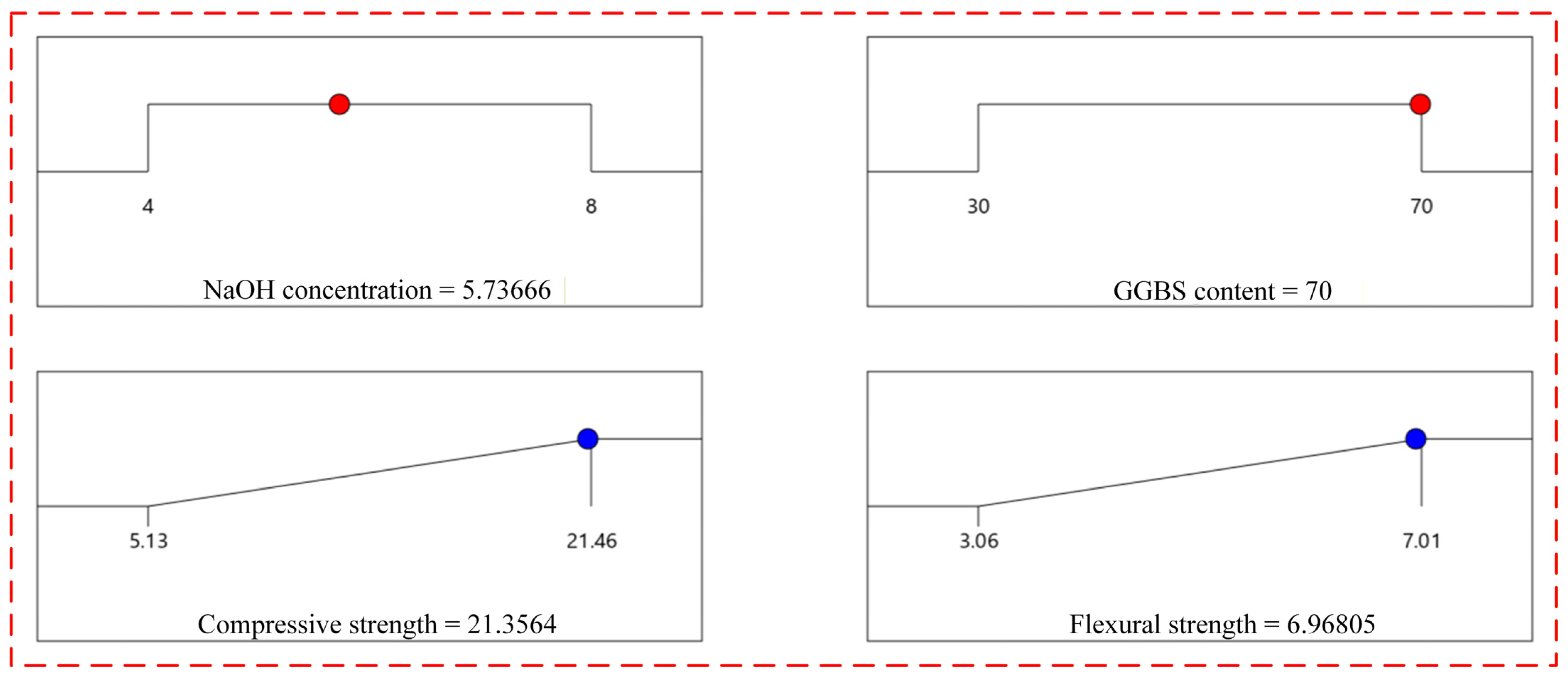
Multi-objective optimization of compressive and flexural strength was carried out using the numerical optimization function in the software to obtain the optimal solution that maximizes the overall mechanical properties within the gradient ranges of GGBS content and NaOH concentration. The optimization guidelines are shown in
Table 5. The optimization results are presented in
Figure 9. The optimal overall mechanical properties are achieved at a NaOH concentration of 5.73 mol/L and a GGBS content of 70%. Under this mix proportion, the predicted values of compressive and flexural strength are 21.36 MPa and 6.97 MPa, respectively.
3.7. Fiber Performance Enhancement
After obtaining the optimal mix proportion by response surface optimization, alkali-resistant glass fiber was introduced on this basis to further improve the material performance. Since the optimized NaOH concentration is very close to the original gradient setting of 6 mol/L, and the predicted optimized strength is also close to the experimental value at 6 mol/L, the activator concentration for the subsequent experiments was determined as 6 mol/L. Alkali-resistant glass fiber was added at six gradients, 0.3%, 0.6%, 0.9%, 1.2%, 1.5%, and 1.8%, of the total solid mass (450 g). The detailed material mix proportions are listed in
Table 6.
3.7.1. Effect of Fiber on Flowability
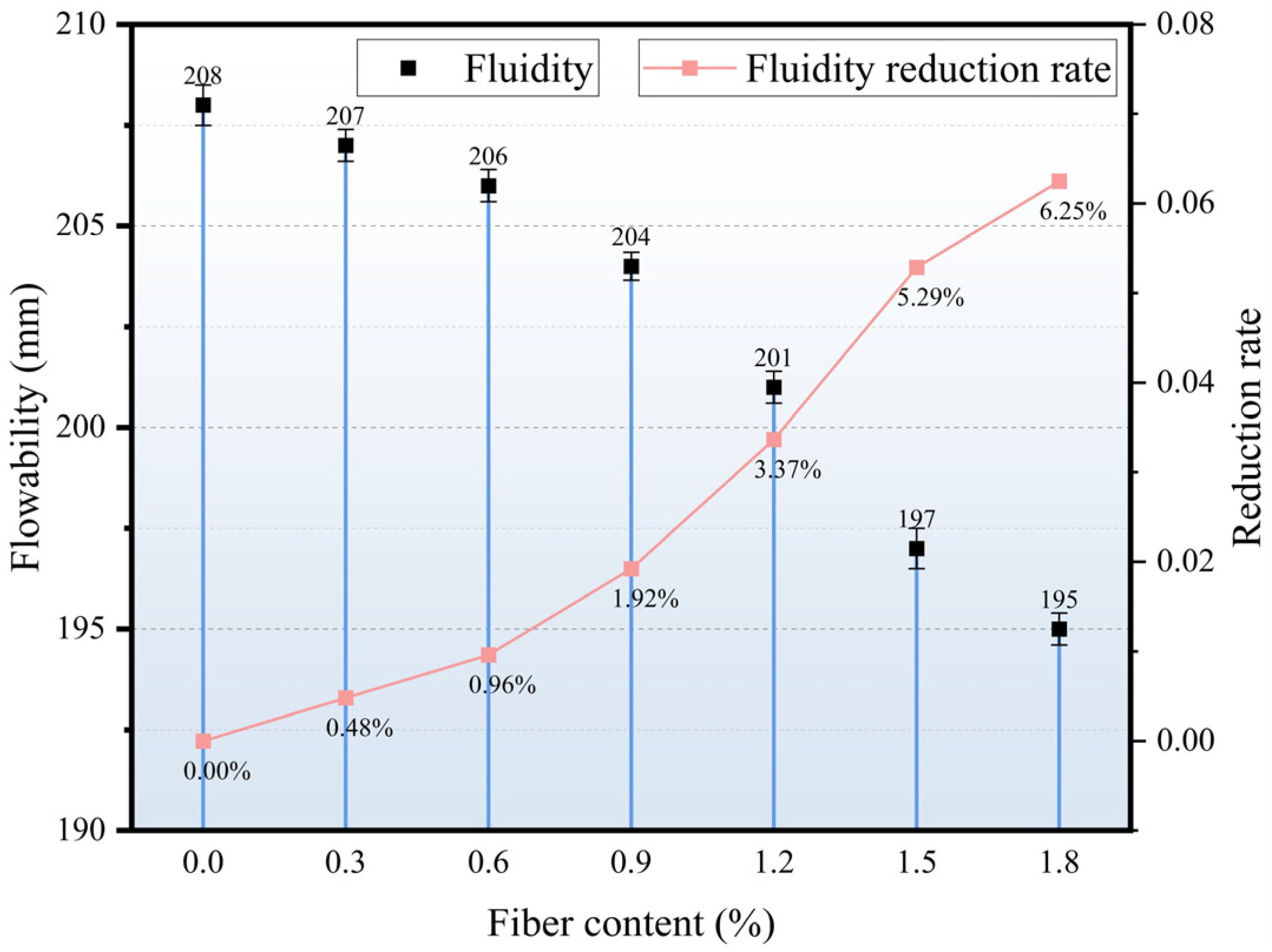
The random distribution of fibers in the concrete paste disturbs the orderly free flow of the paste. As shown in
Figure 10, the flowability of the concrete paste decreases after the addition of fibers, and the decreasing rate accelerates with the increase in fiber content. With the continuous incorporation of fibers, the fluidity of concrete gradually decreases from 208 mm without fiber to 195 mm at 1.8% fiber content, with a total reduction of 6.25%.
3.7.2. Effect of Fiber on Compressive and Flexural Strength
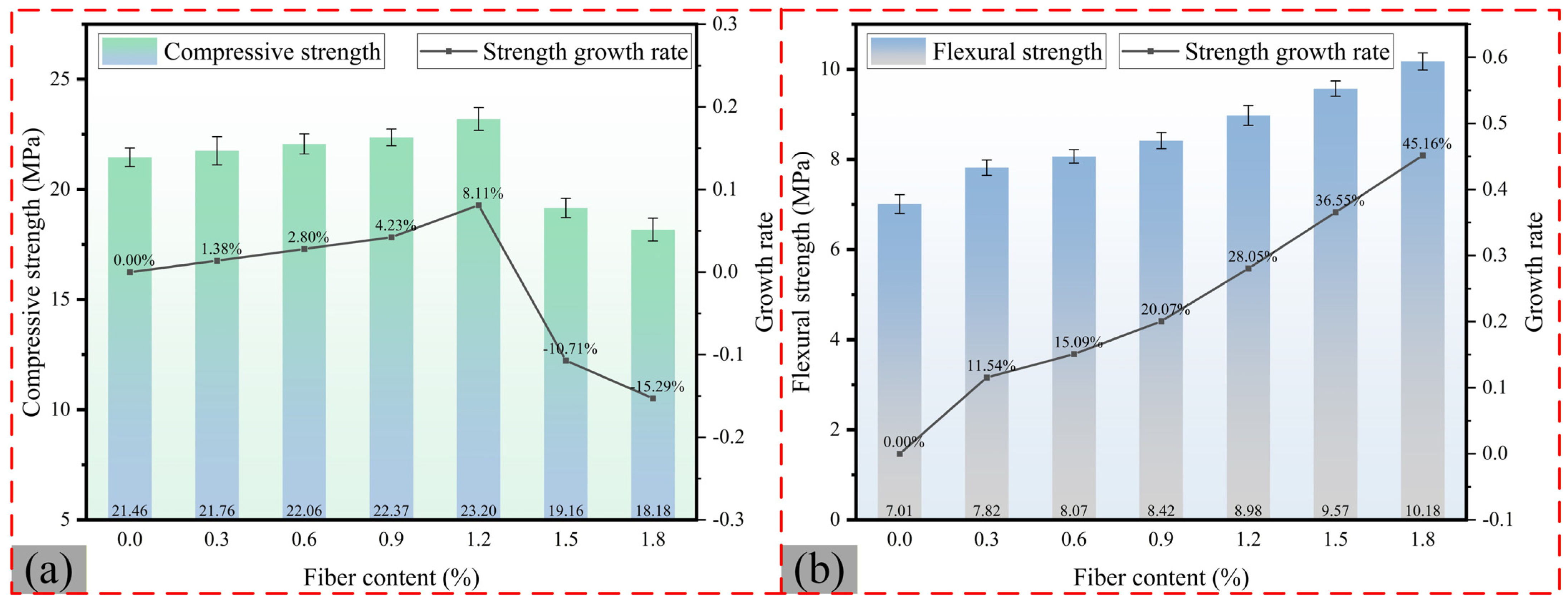
The compressive and flexural strengths after fiber incorporation are shown in
Figure 11. The compressive strength first increases and then decreases with the increase in fiber content, reaching the maximum at 1.2% fiber content, which is an increase of 8.11% compared with the case without fiber. When the fiber content continues to increase, the compressive strength decreases instead of rising further and becomes lower than that without fiber. The flexural strength gradually increases with the increase in fiber content. After adding 1.8% fiber, the flexural strength is increased by 45.16%, showing a significant enhancement effect.
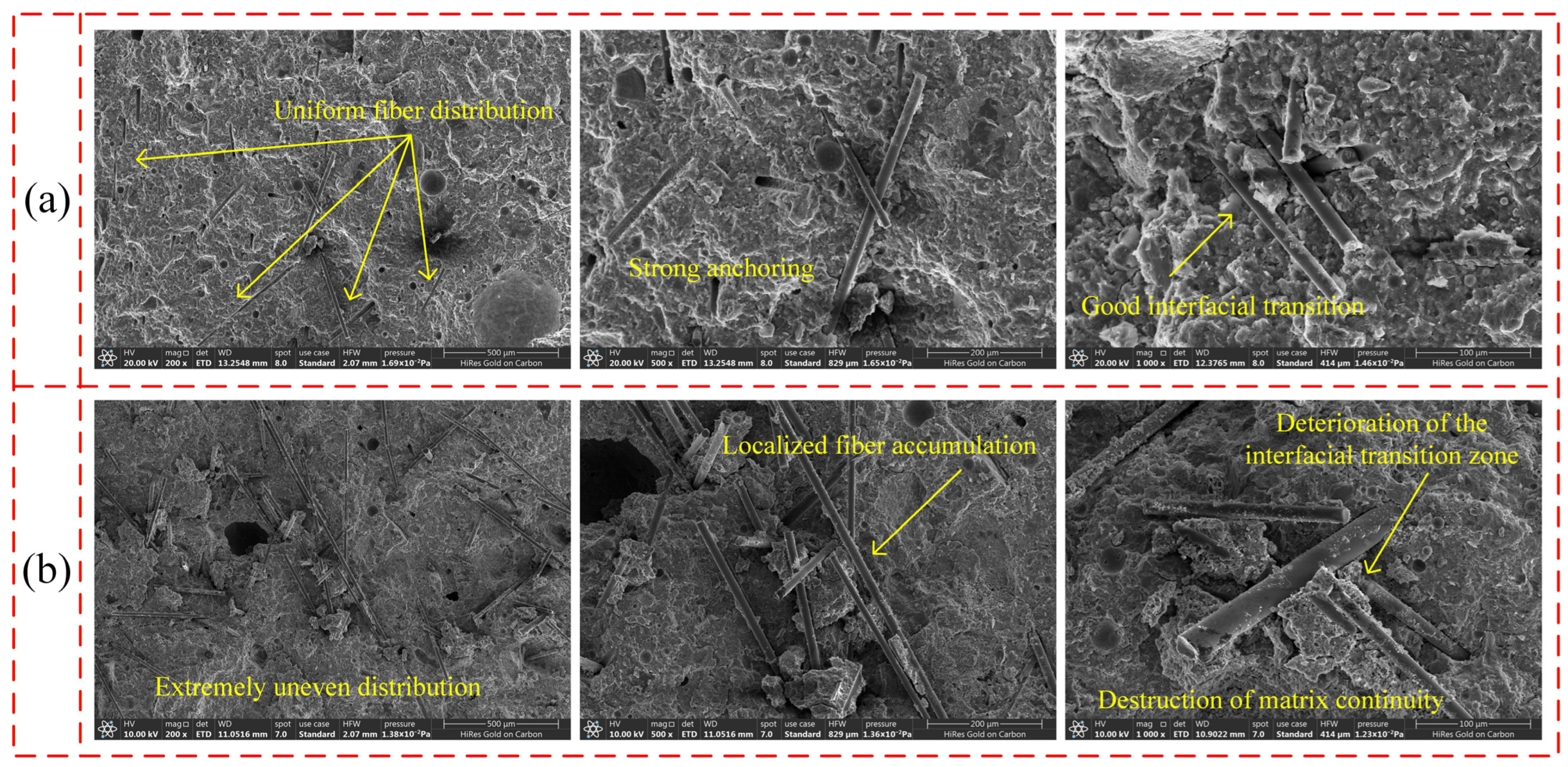
The fibers are uniformly distributed in the material, which can improve the internal stress distribution and restrain crack propagation; the fracture resistance and impact toughness of the material are significantly enhanced through the bridging effect, pull-out effect, etc. According to the compressive and flexural strength results, compared with the improvement in flexural strength, the enhancement effect of fiber on compressive strength is not obvious, which is mainly due to the different failure mechanisms of specimens under compressive and flexural loads. The uniaxial compression test is adopted for compressive strength measurement, and the strength mainly depends on the compactness of the specimen itself. An appropriate amount of fiber can improve the strength to a certain extent, but excessive fiber will cause serious fiber agglomeration (
Figure 12), deteriorate the interfacial transition zone, destroy the continuity of the matrix, and finally lead to strength reduction. Xiong et al. [
46] also observed a threshold effect of fibers on compressive strength improvement in their research on fiber-reinforced concrete, and excessive fibers were detrimental to the compactness of specimens. The three-point bending test is used for flexural strength measurement, which mainly relies on the internal tensile stress of the material to resist failure. The bridging and pull-out effects of fibers can exert greater advantages in resisting such failure, so the improvement in flexural strength is more significant.
Based on the comprehensive mechanical properties of the material, the optimal fiber content was finally determined to be 1.2%. At this dosage, the specimen achieved the optimum overall performance improvement. The compressive strength reached its maximum increase of 8.11%, while the flexural strength was enhanced by 28.05%.
4. Conclusions
This paper focuses on the mix ratio optimization and fiber reinforcement of GGBS-FA-SF ternary alkali-activated concrete. The mechanisms of activator concentration and precursor content on alkali-activated concrete, as well as the influence of alkali-resistant glass fiber on material properties, were revealed through macro–micro characterization and advanced testing methods. The optimal activator concentration, precursor mix proportion, and fiber content were determined. The main conclusions are as follows:
Under the same precursor composition, increasing the activator concentration slightly reduces the initial fluidity of the material. However, the influence of activator concentration on fluidity is intensified with an increase in slag proportion. All designed mix ratios exhibit insignificant differences in initial fluidity and possess sufficient workability.
The activator concentration exhibits a threshold effect. Properly increasing the activator concentration can promote the alkali-activated reaction process, generating more and denser gel products and thus improving the mechanical properties of the material. Excessive alkalinity leads to an uncontrolled reaction rate, excessive hydration, and stress concentration, forming a large number of microcracks and reducing mechanical performance.
In the low-slag system, a high proportion of fly ash with relatively low reactivity results in insufficient dissolution. A large number of unreacted residual particles deteriorate the pore structure and lead to poor mechanical properties. With the increase in GGBS content, the amount of high-activity components increases, providing sufficient calcium sources for the formation of gel products, thus increasing gel production and achieving better mechanical performance.
The response surfaces of compressive and flexural strength both show a single-peak shape, with the peak region located at a moderate activator concentration and high slag content. Through multi-objective optimization, the optimal NaOH concentration for the best overall mechanical properties was determined to be 5.73 mol/L, and the optimal GGBS content was 70%. The optimal compressive and flexural strengths of the specimens were 21.46 MPa and 7.01 MPa, respectively.
Glass fiber can effectively improve the mechanical properties of the material, especially the flexural strength. With 1.2% fiber addition, the compressive strength of the specimens reached 23.20 MPa, representing an increase of 8.11%. Further increasing the fiber content caused severe fiber agglomeration and pore structure deterioration, leading to a decrease in compressive strength. In contrast, flexural strength increased continuously with fiber content. At a 1.8% fiber dosage, the flexural strength reached 10.18 MPa, with a total strength increase of 45.16%. Considering the overall material performance, the optimal fiber content was determined to be 1.2%.
Research Limitations
Although this paper systematically investigates the effects of GGBS content and activator concentration on the performance of an alkali-activated GGBS-FA-SF ternary system from both macroscopic and microscopic perspectives, it still has certain limitations. The experiments were only conducted on the 7-day mechanical strength of the materials, and studies on material durability can be supplemented, such as explorations on long-term strength development, drying shrinkage, frost resistance and other aspects. In the fiber reinforcement test, only one specific type of fiber was selected to study the dosage factor, and the reinforcement effects of fibers with different types and parameters remain to be further studied. In addition, as a highly alkaline and corrosive material, the NaOH solution used as an activator poses certain potential risks, which may, to a certain extent, restrict the free construction of alkali-activated materials in large-scale industrial applications. The improvement in activator performance is also an important direction for further research in the future.